Year in Review: Our Best Stories of 2022

The good and the great.
As we reflect on the past year, we’re proud of the stories we published and grateful for all of our readers – we appreciate you. Before the year closes, we want to revisit some of your favourite stories from 2022, from in-depth reviews of the most significant watches of the year to our fascinating conversations with thought leaders within the industry.


Technical deep-dives

Understanding of today’s most complex timepieces can be a challenge (even for us sometimes). But with our string of in-depth reviews, we aim to help the reader better appreciate these watches.

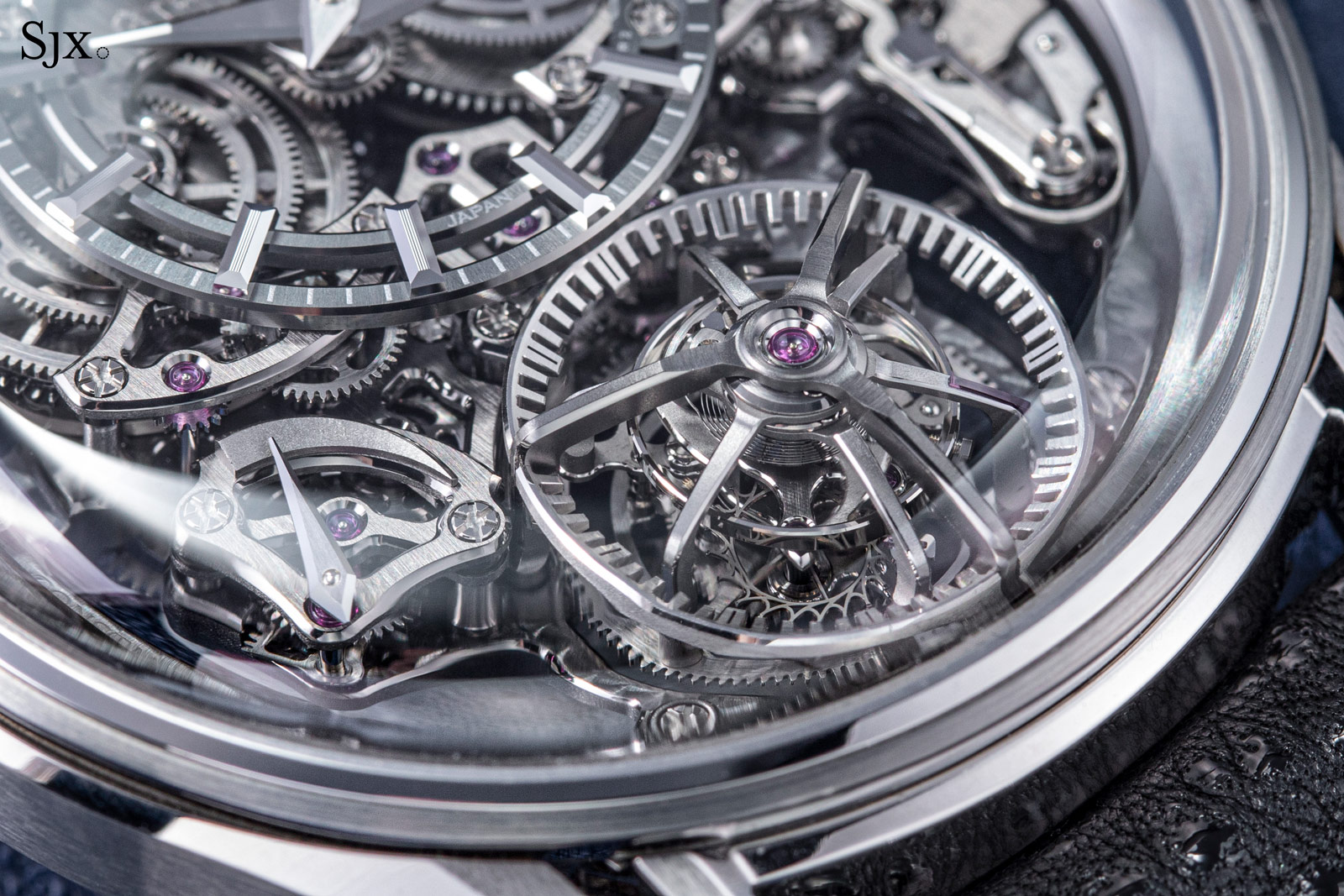
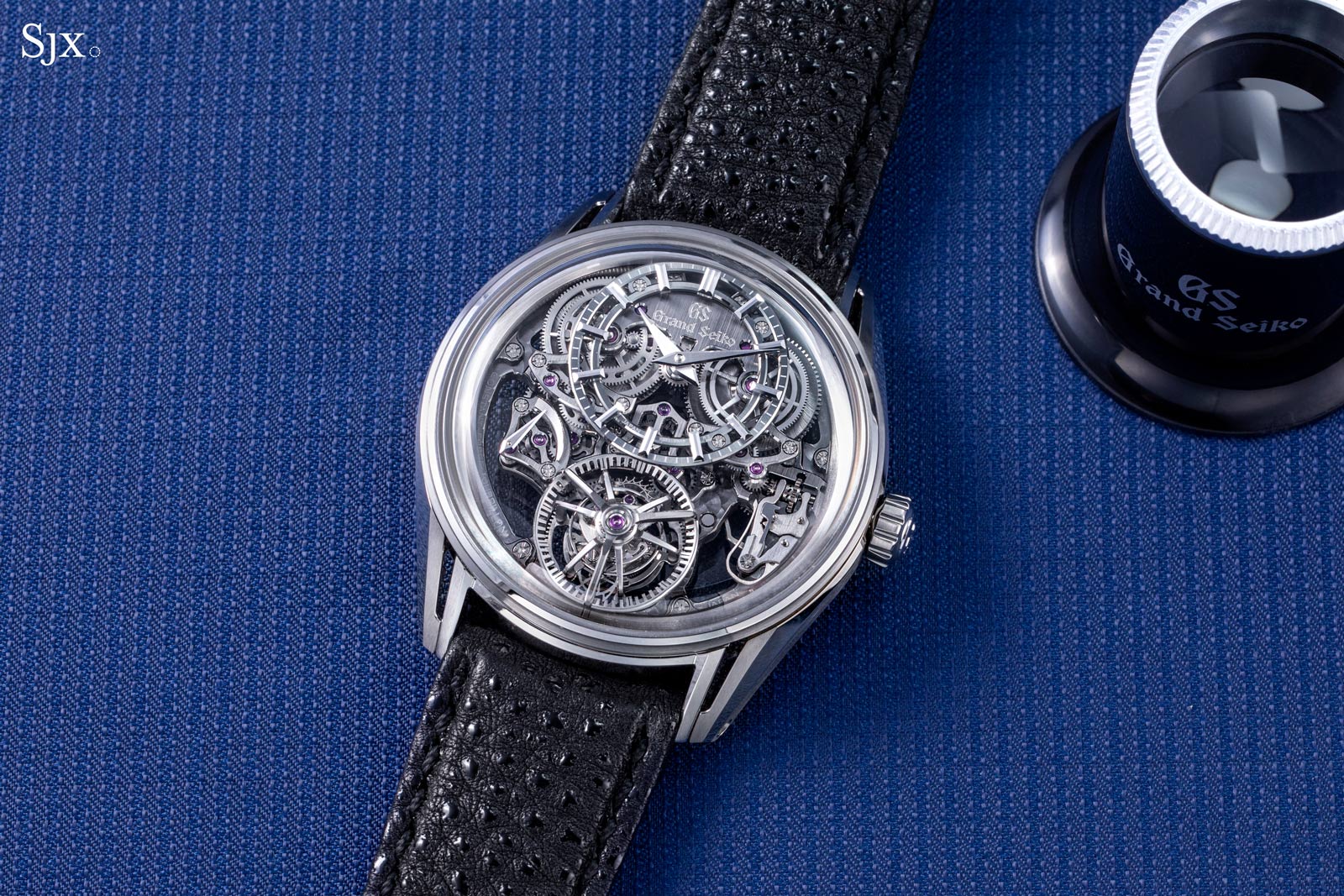
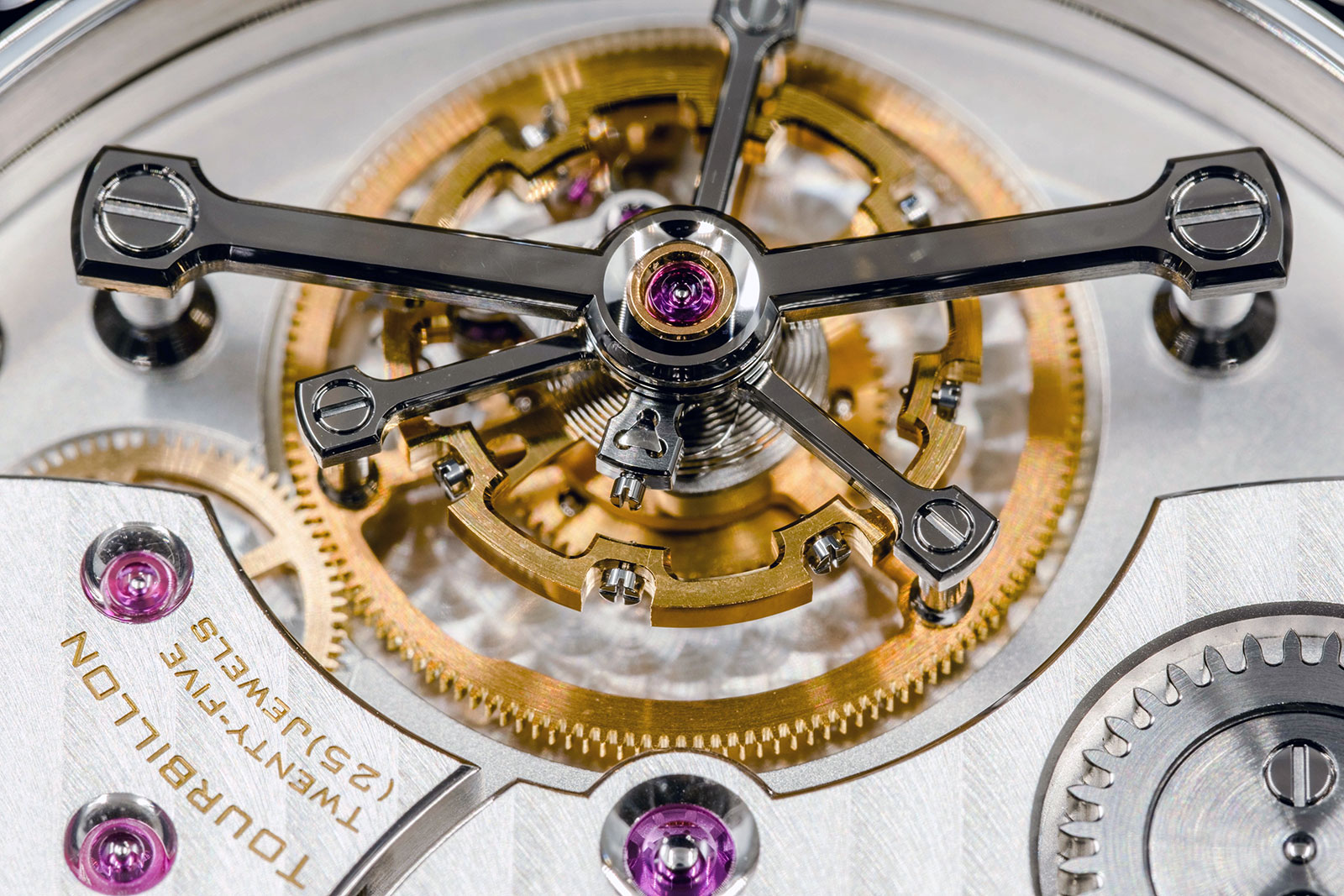
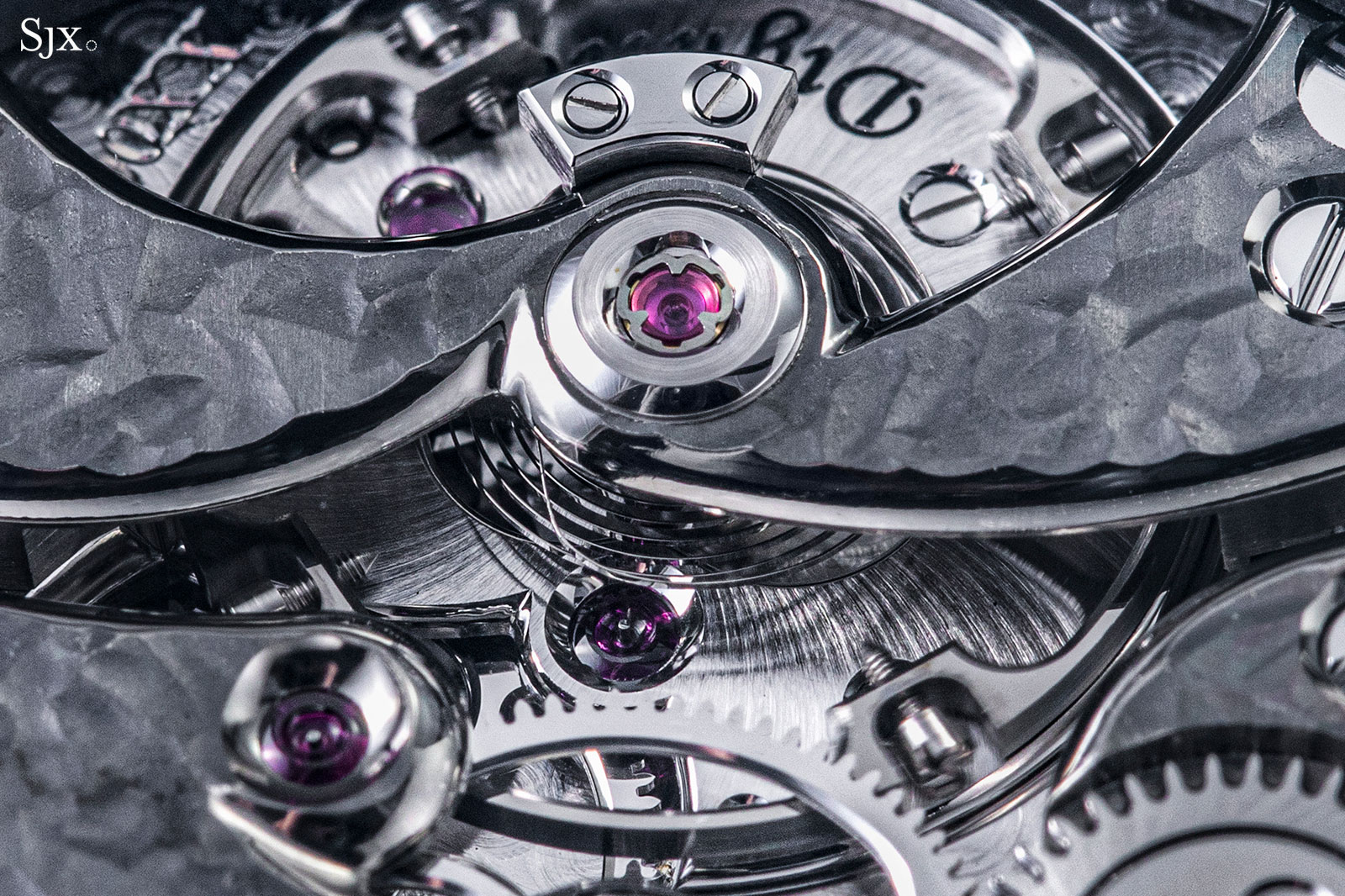
Amongst the year’s highlights us two-part, in-depth examination of the Grand Seiko Kodo Constant-Force Tourbillon SLGT003 (you”ll find the second part here) with its highly skeletonised movement featuring a one-second remontoir and tourbillon mounted on the same axis.

Another story with a substantial focus on Japanese watchmaking was an engineer’s perspective on quartz watches: a personal take on the complexities of the technology and why it can stand on par with the mechanical watches. 
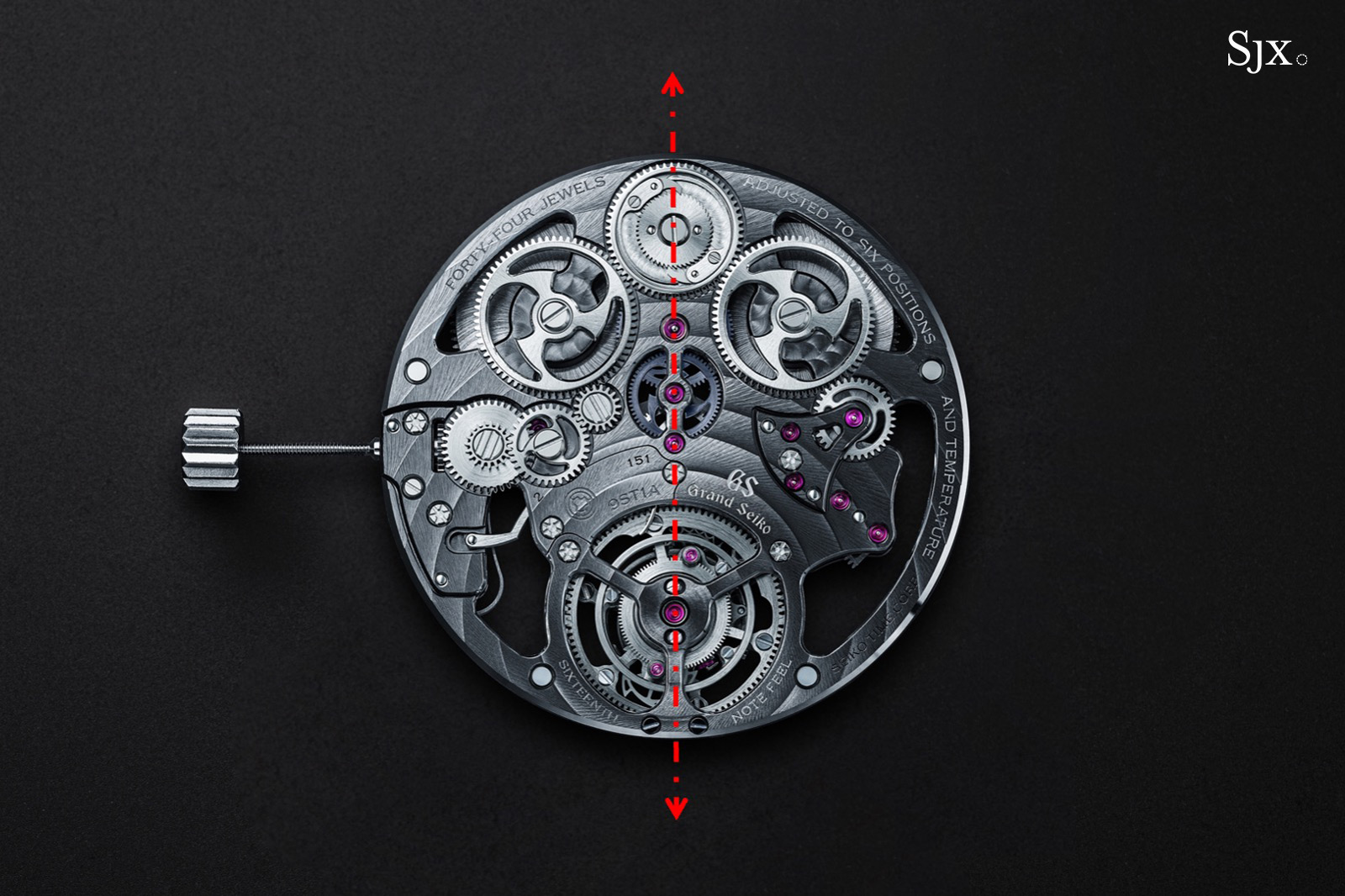
Understanding the symmetrical construction of the Kodo Constant-Force Tourbillon

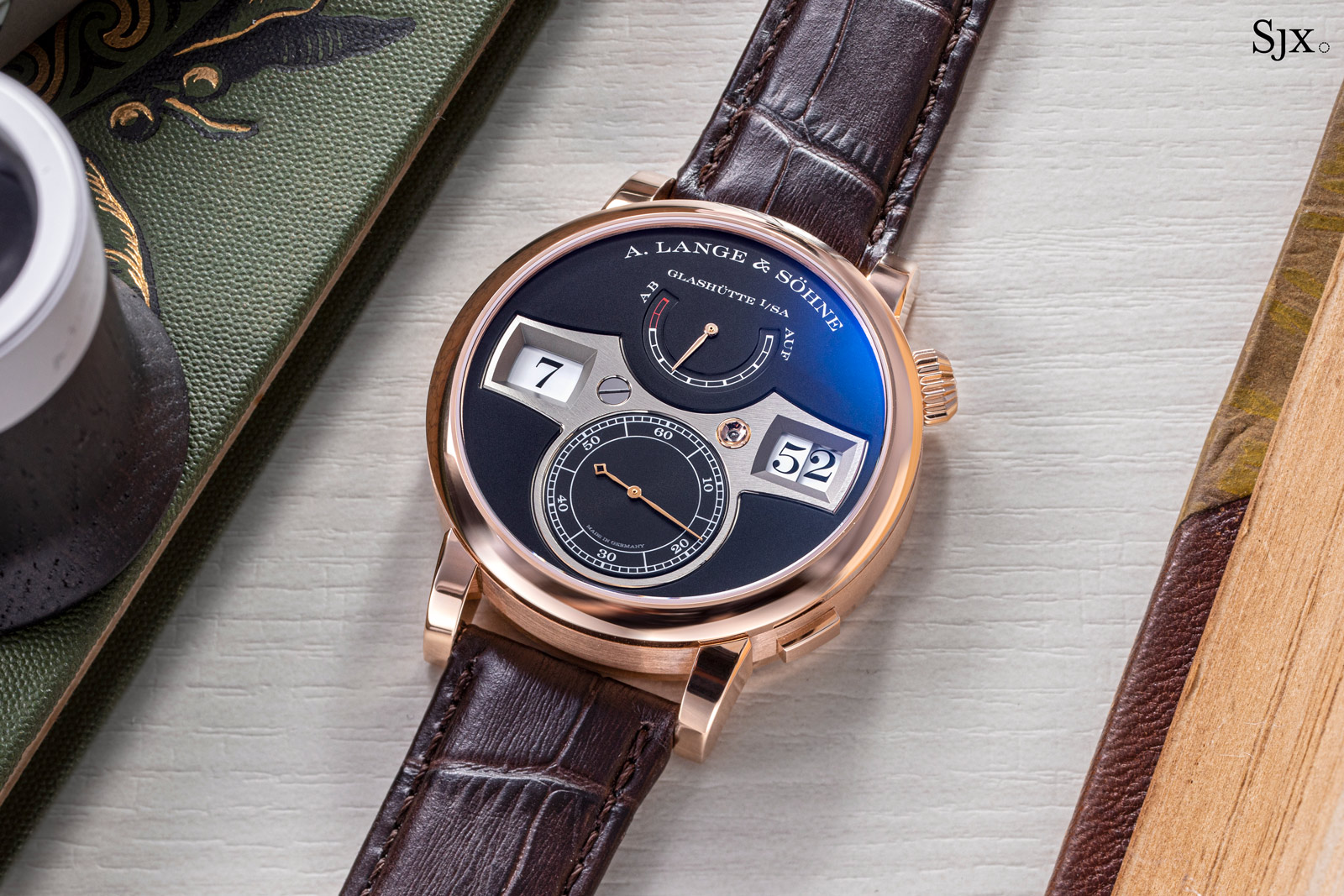
We also covered more conventional high-end watchmaking, but in our unique, detailed manner. We of course looked at the second-generation A. Lange & Söhne Zeitwerk, which received a major upgrade thanks to a revamped movement.

And to help put the new Zeitwerk in context, we published a collector’s guide that compiles all the known variants of the model since its debut in 2009, explaining the short but storied history of the digital watch that began life as a sketch by the late Gunter Blümlein. 
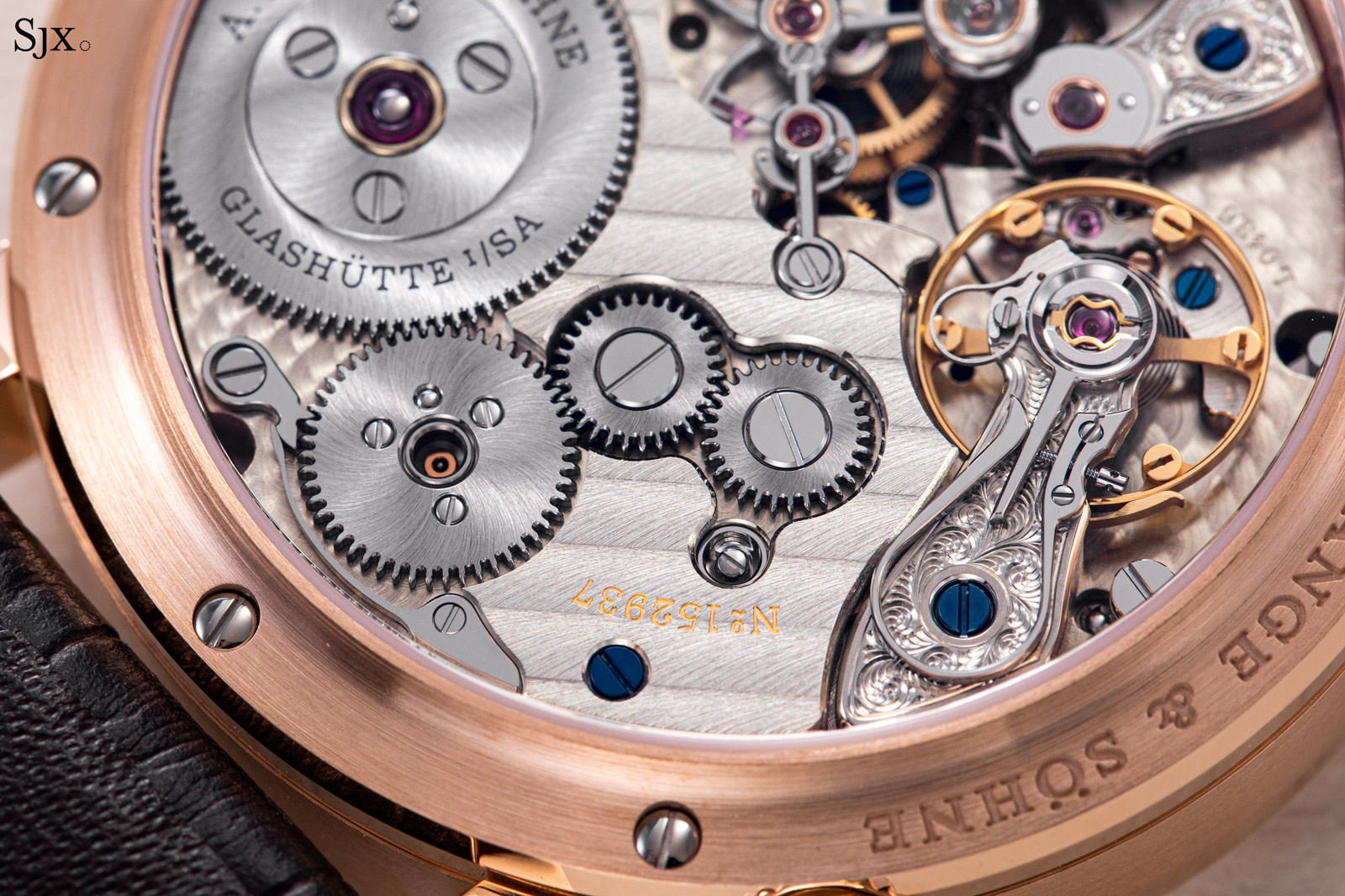
The Zeitwerk’s upgraded cal. L043.6

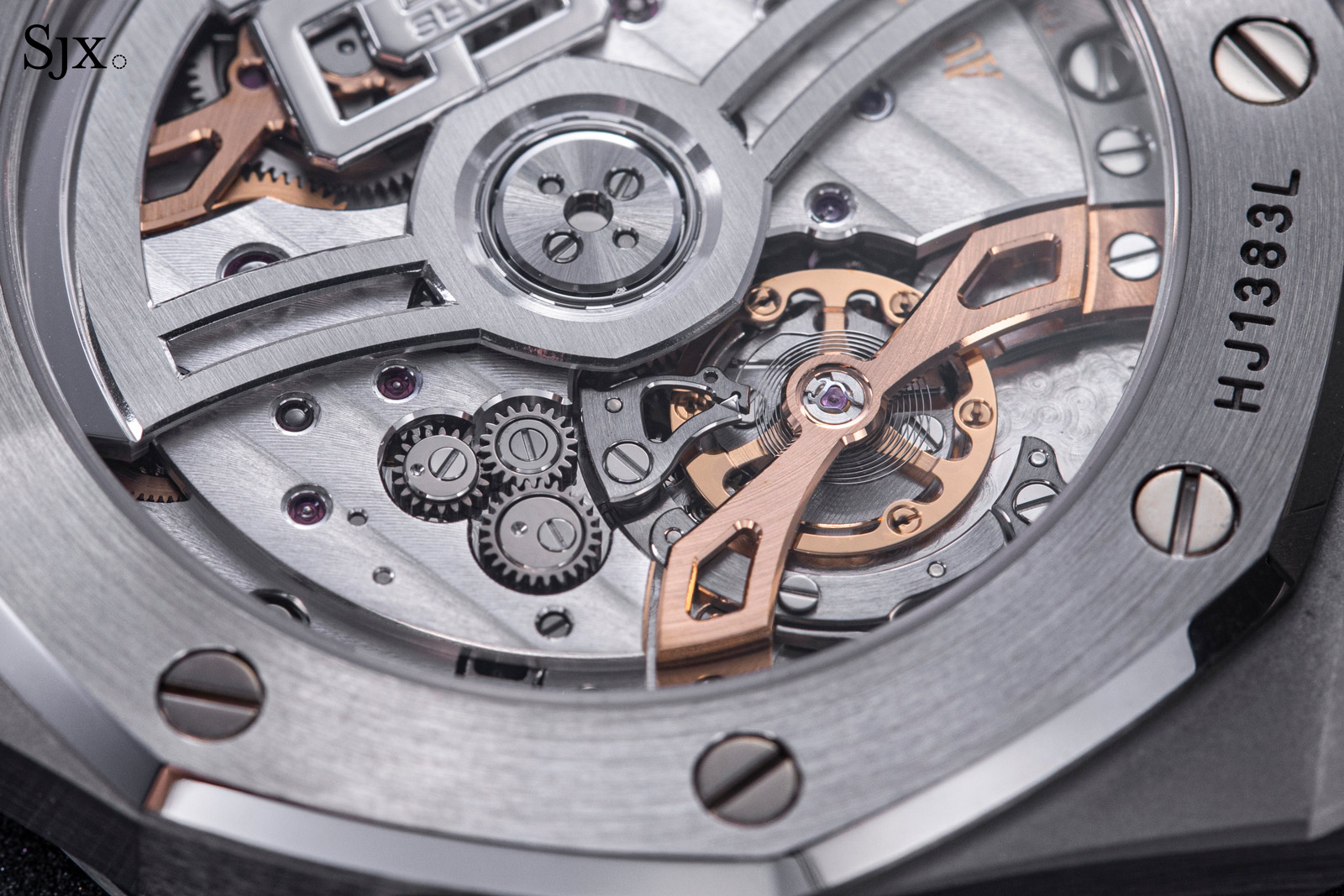
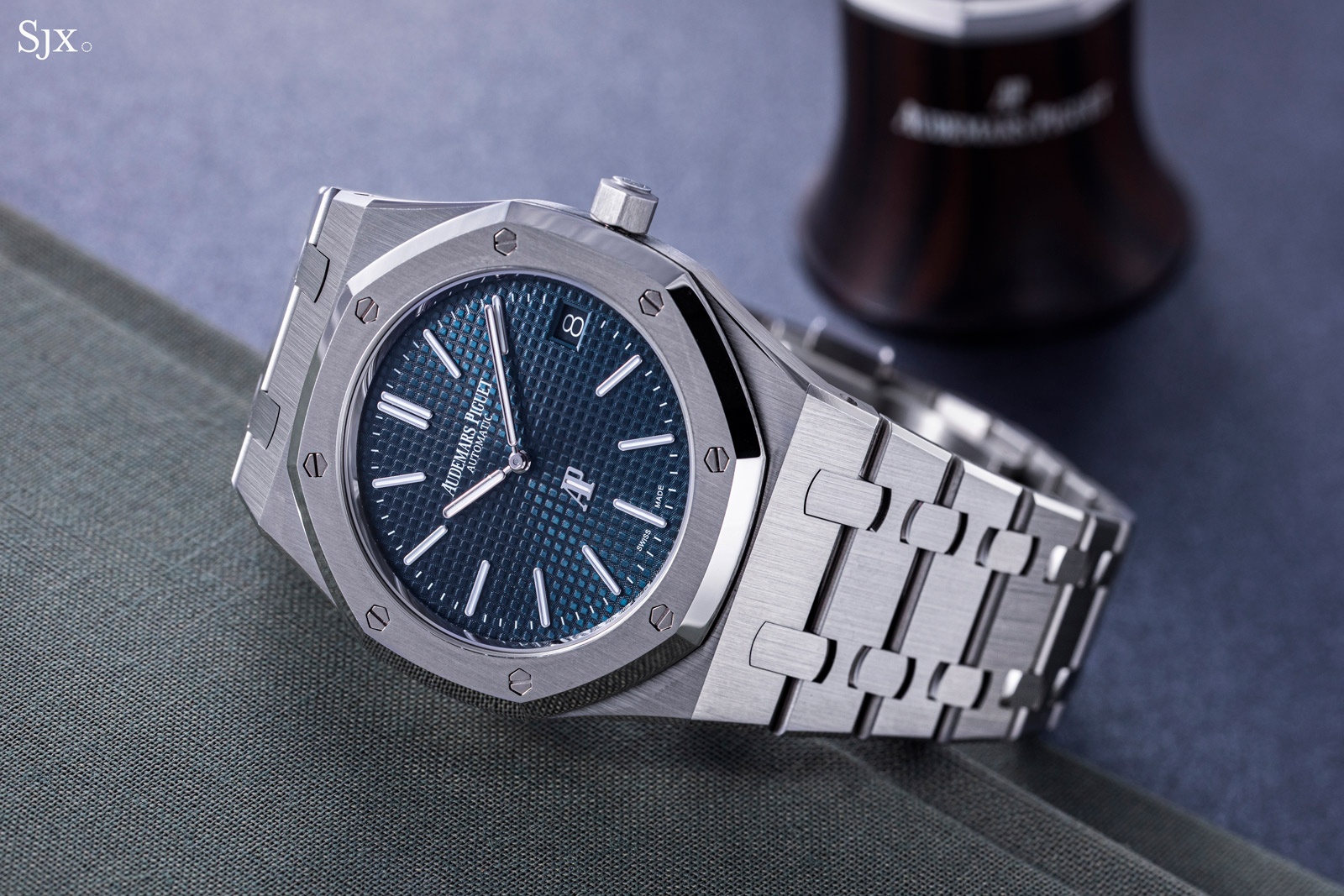
Another familiar watch we looked at was the Audemars Piguet Royal Oak Extra-Thin ref. 16202. We explained the upgrades of the new “Jumbo” – with an emphasis on the technical improvements – which is almost a one-for-one copy of the 1972 original but sports the brand-new cal. 7121, a necessary upgrade for the iconic sports watch.

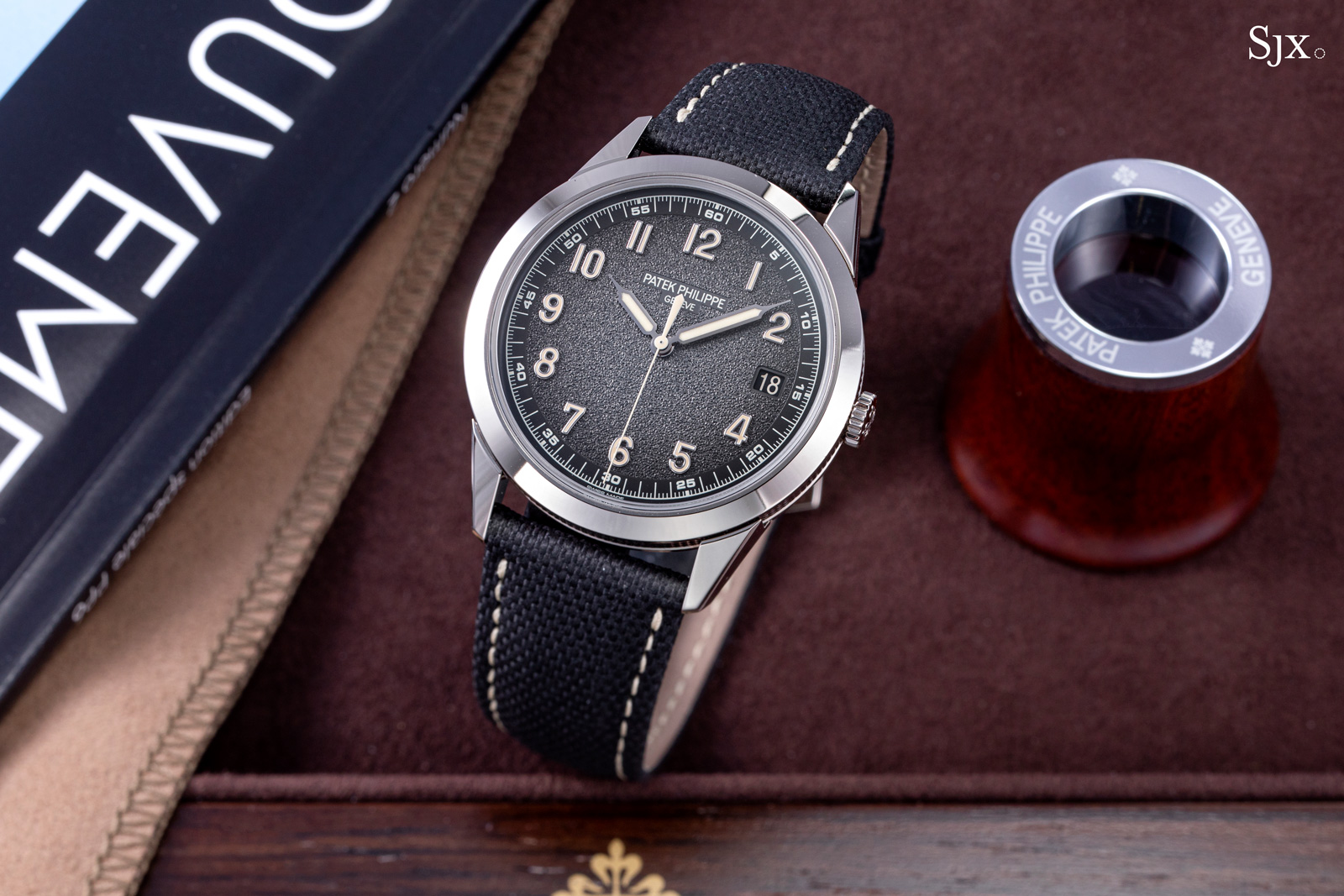
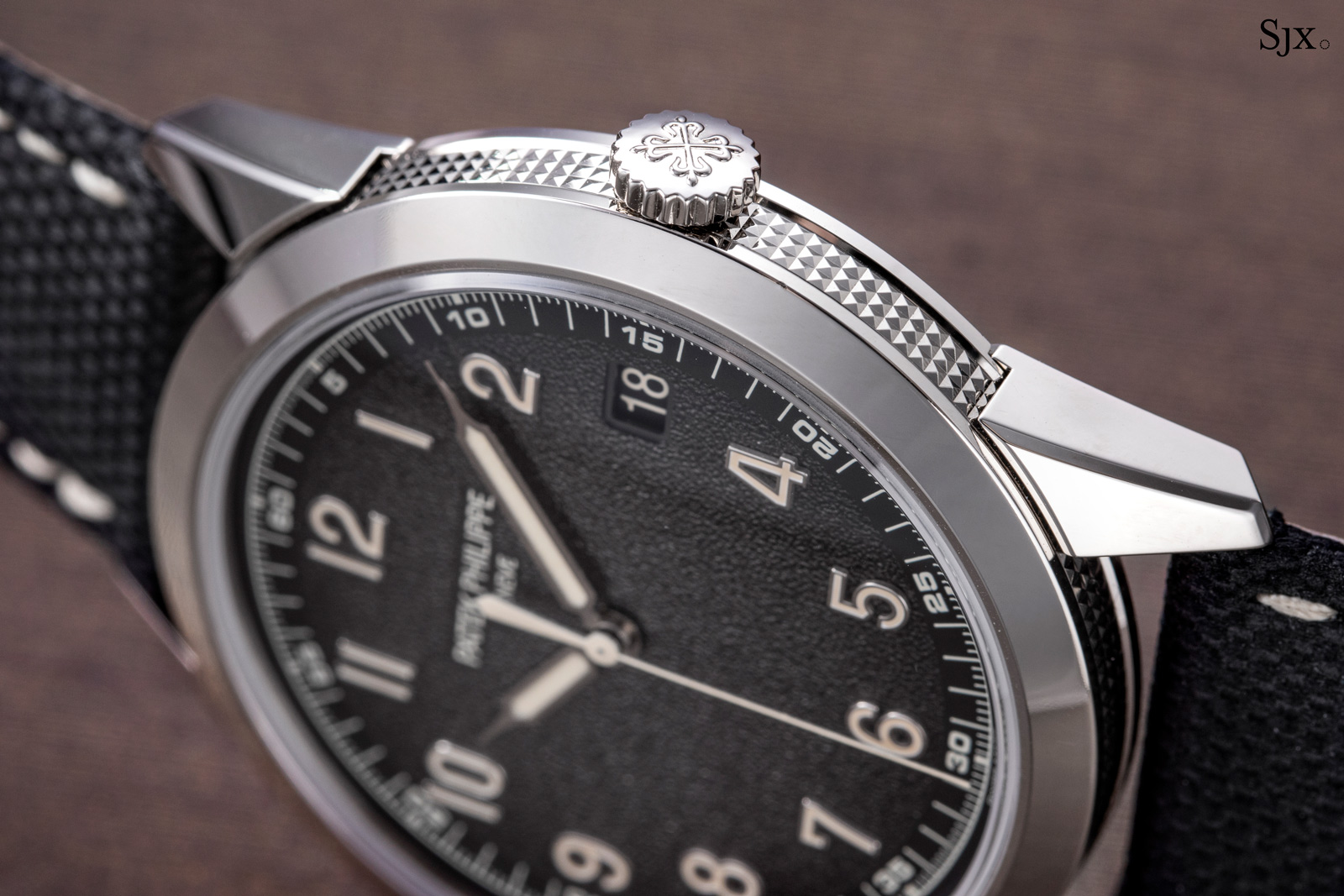
We also gave the Patek Philippe Calatrava ref. 5226G the same treatment. Vintage inspired but a new design nonetheless, we show how the ref. 5226 points the way forward for Patek Philippe. Though an entry-level model, the watch has an elaborately executed case with a clous de Paris guilloche band matched with a patterned dial.

Another of our notable stories on Patek Philippe was a deep dive into its service centre in Singapore. We got a rare chance to visit the brand’s regional serviceing hub, where its watchmakers repair, refinish, and restore. In this behind-the-scenes look, we explored the many processes needed to bring a Patek Philippe timepiece back to factory-specified condition.
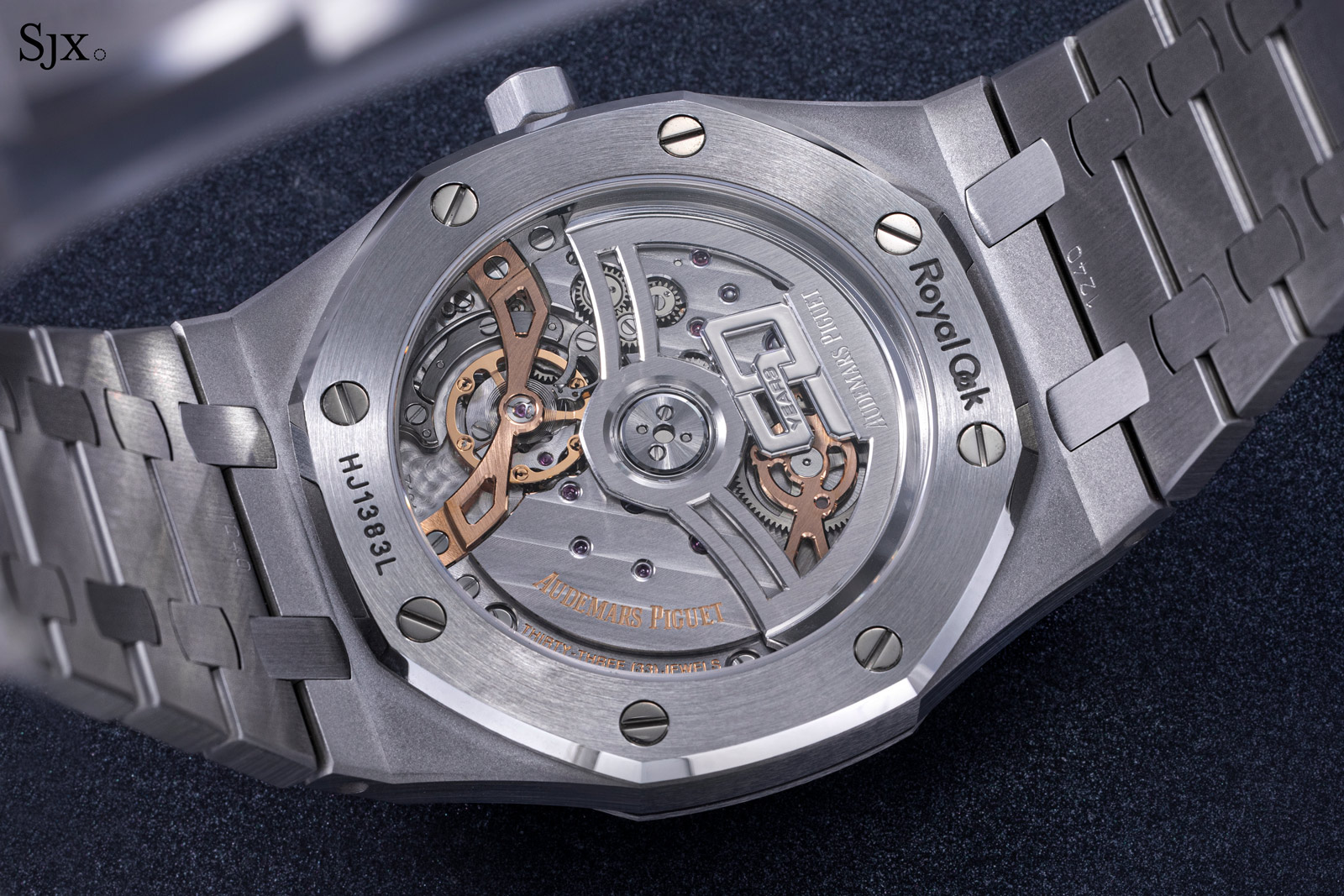
The Royal Oak ref. 16202 with the new cal. 7121
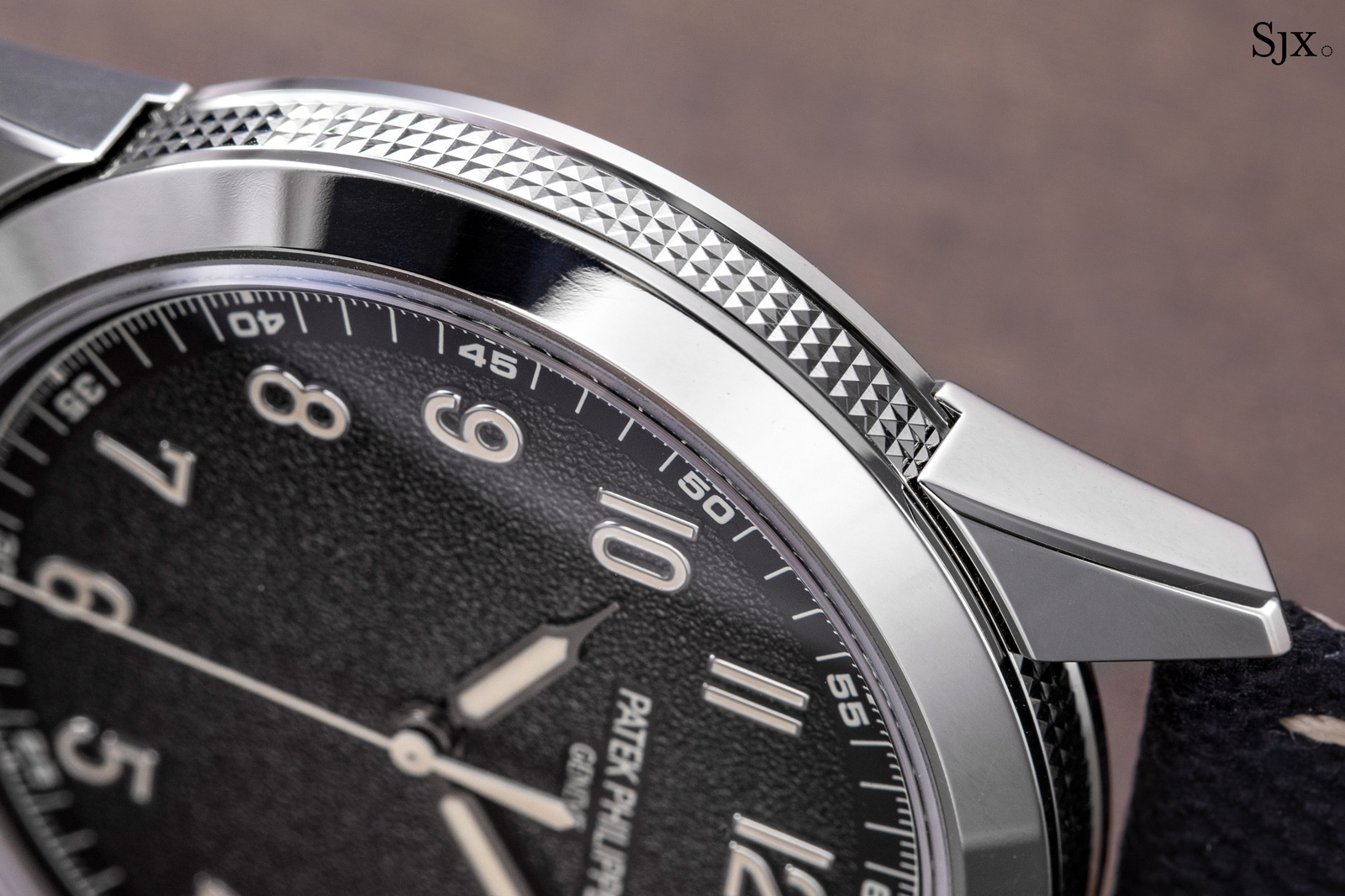
Fine hobnail guilloche on the case middle of the Calatrava ref. 5226G

Independent thought

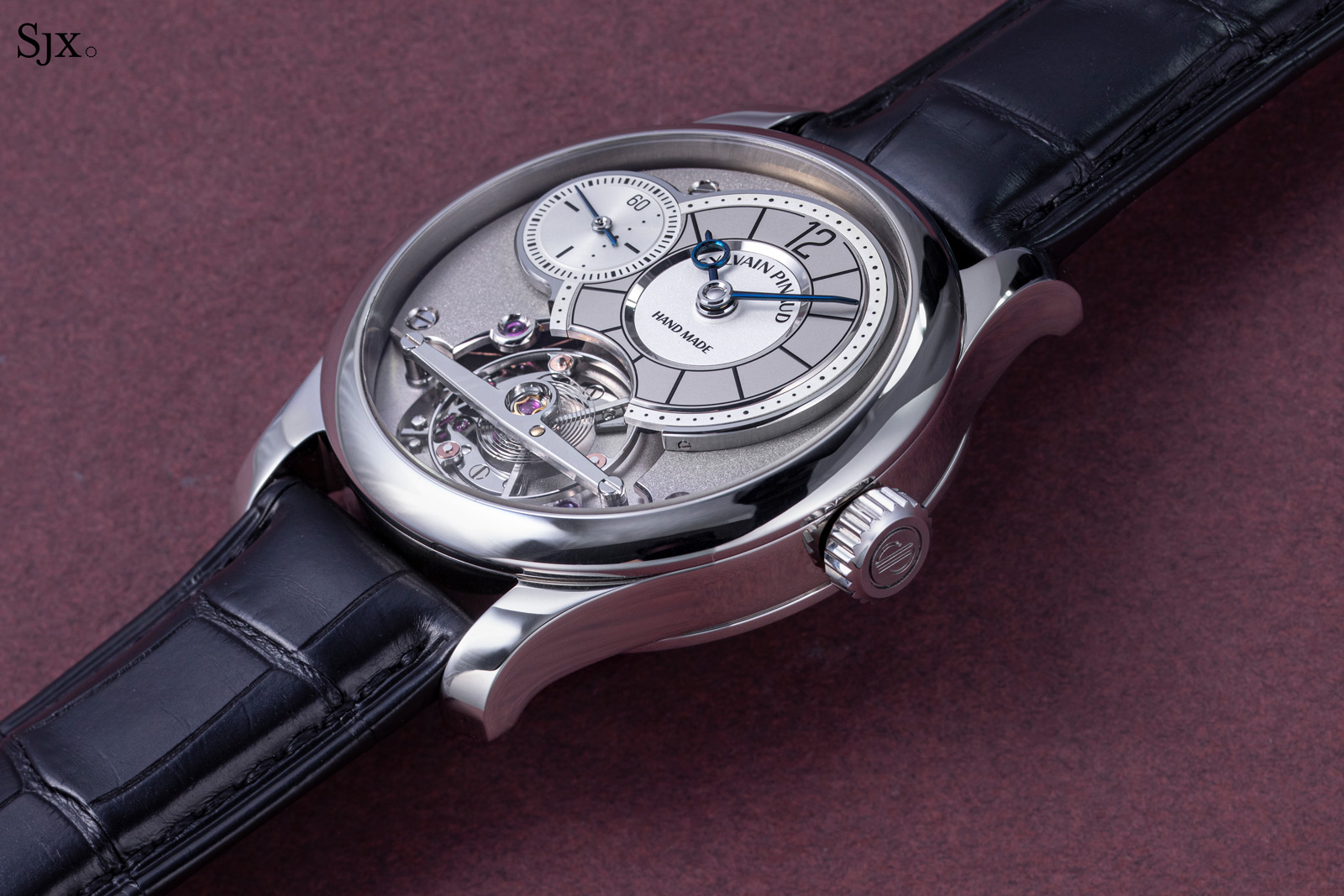
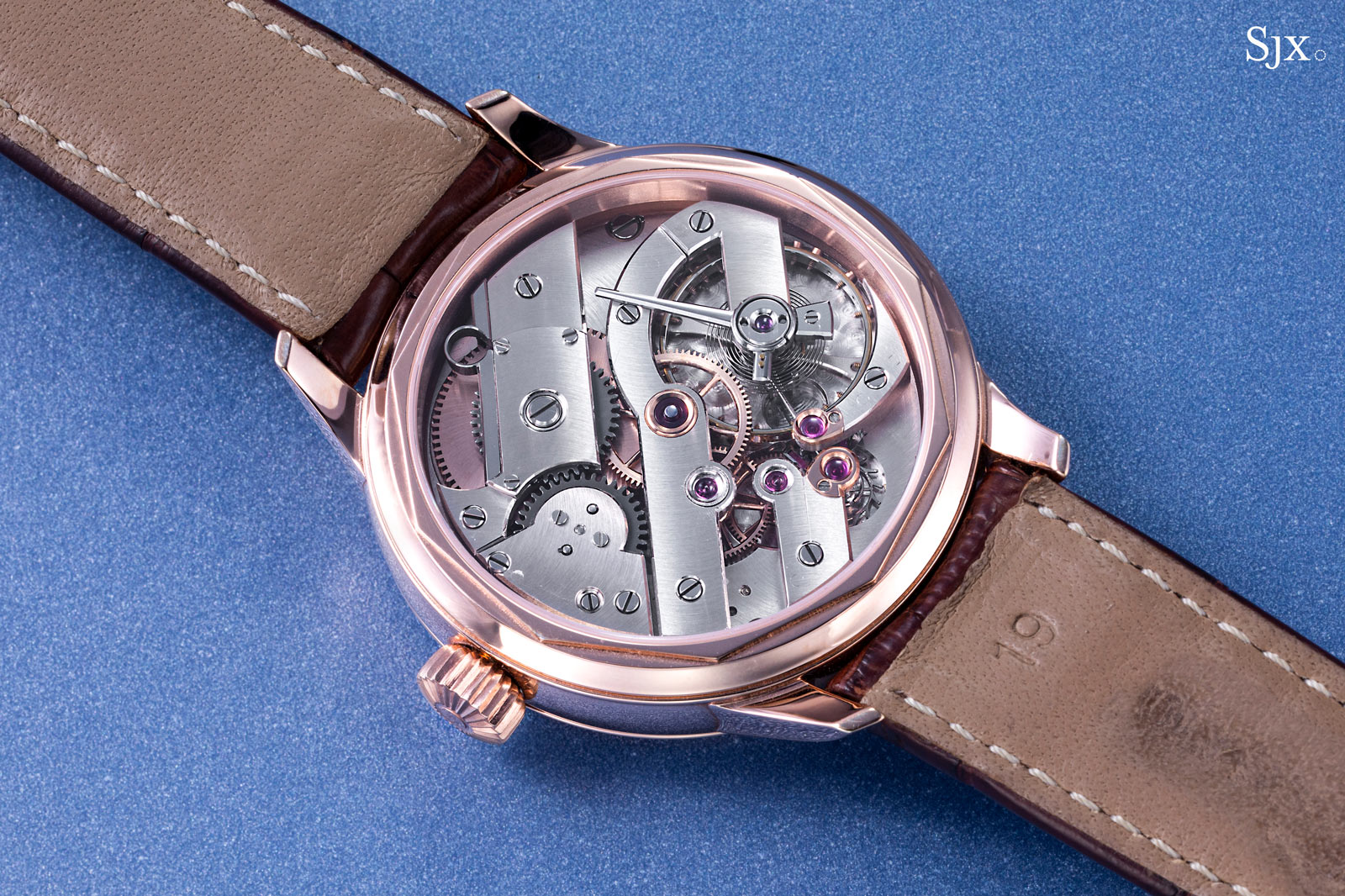
Naturally we covered the year’s most notable in independent watchmaking. One of the standouts was up-and-coming watchmaker Sylvain Pinaud. His Origine is impressive – meticulously crafted in construction and finish – while the design is uncluttered, though he has yet to develop a strong aesthetic for his brand.

Also a one-man show, Yosuke Seikiguchi launched his first watch with the Primevère. It is an elegant composition that focuses on recreating the quality and feel of 19th-century pocket watches from the Vallee de Joux. Mr Sekiguchi even makes most of the movement with antiquated techniques, including cutting the silver bridges with a saw and file.
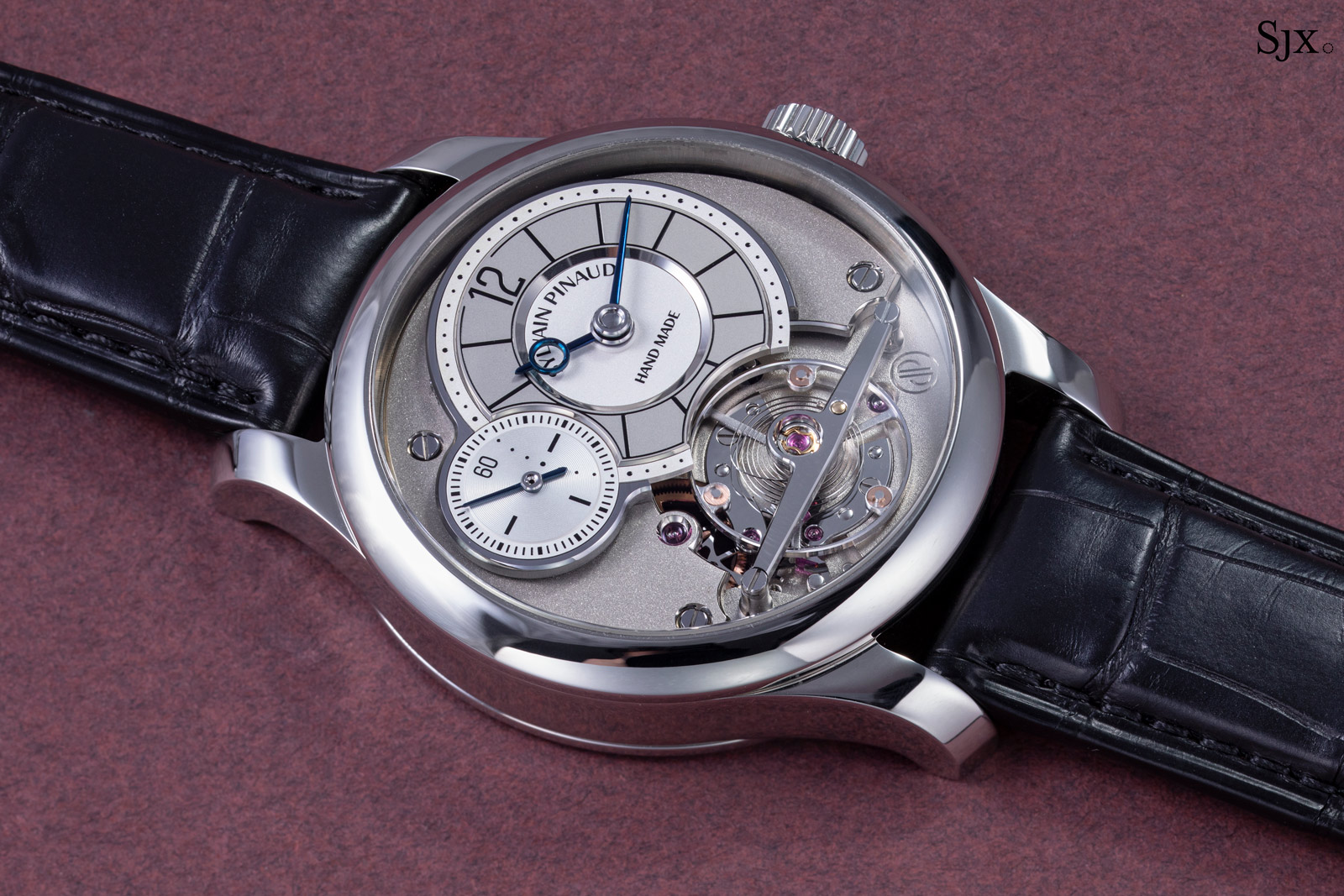
The Sylvain Pinaud Origine
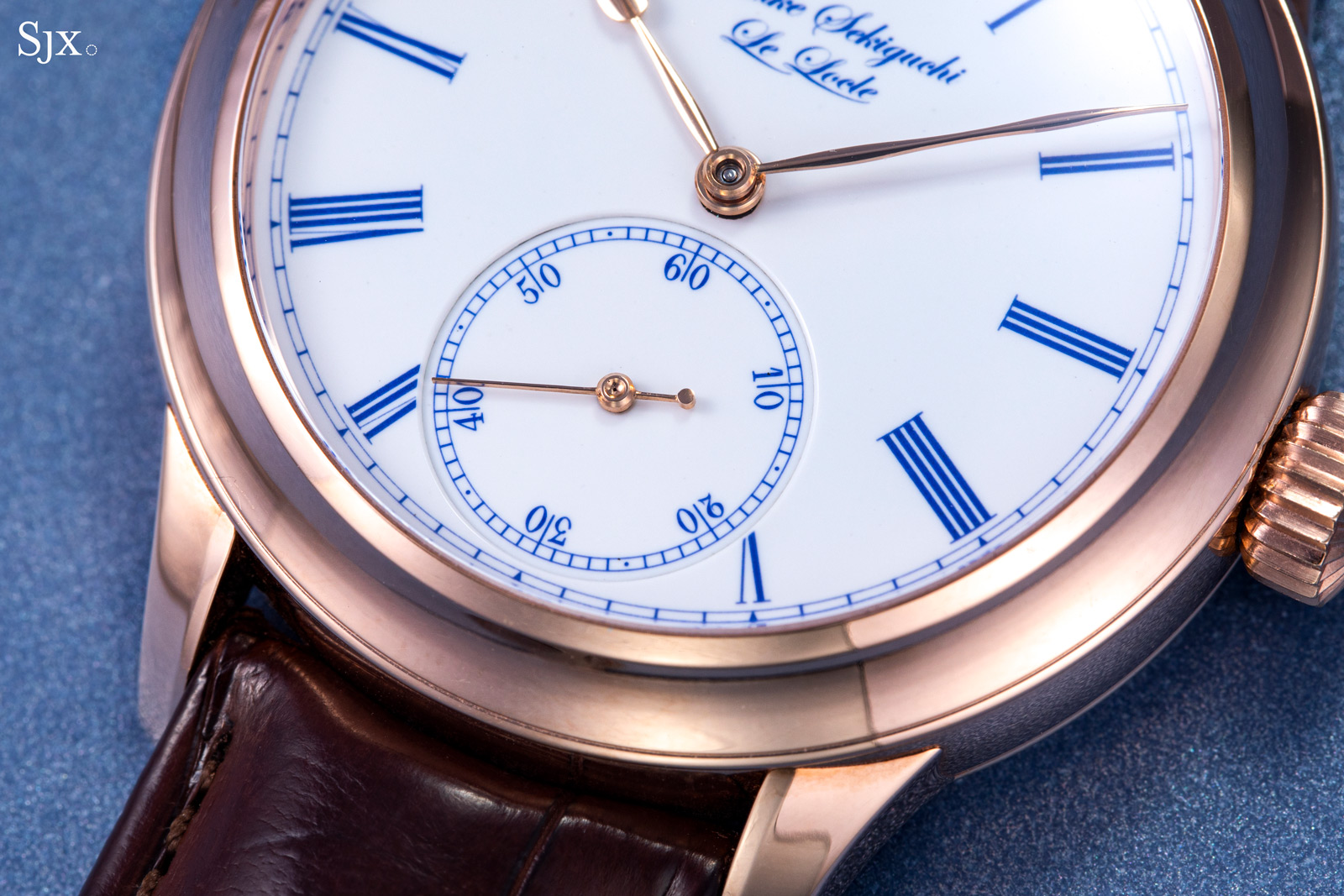
The enamel dial of the Yosuke Seikiguchi Primevère

Another watchmaker that caught our attention was Aaron Becsei. The Hungarian watchmaker collaborated with American knife maker Todd Rexford to create the Bexei Dignitas Pure “Project XX”.

It’s a striking reinterpretation of Bexei’s signature Gothic wristwatch that incorporates”hot-hammered” zirconium. Much of the watch, including the dial and movement bridges, are produced and “hot hammered” by the Mr Rexford, a custom knife maker whose blades sell for five figures. But Mr Bexei then applies his trademark fine finishing to the zirconium parts, which have traditional anglage, while the steel parts sport black polishing. 
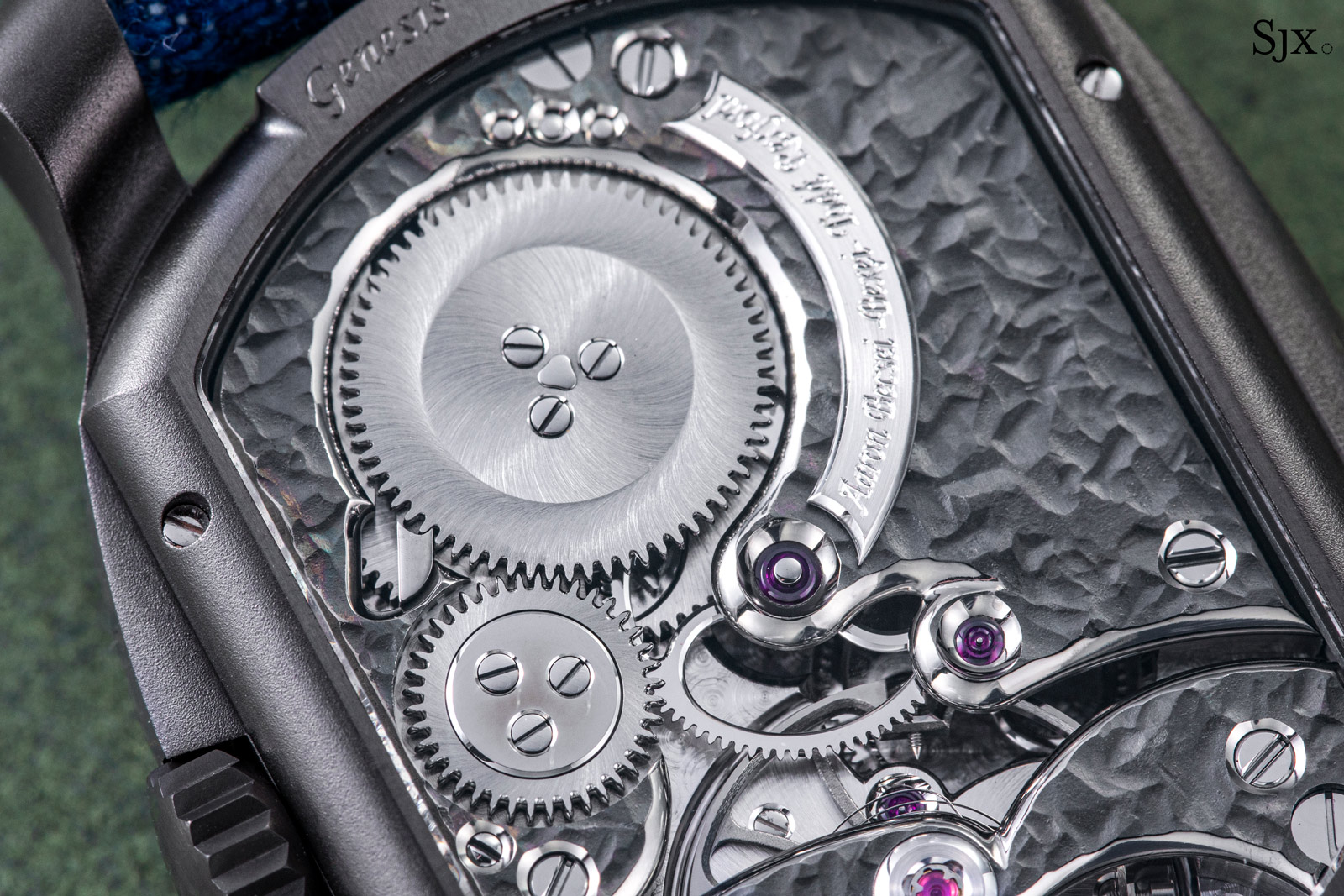
The Bexei Dignitas Pure “Project XX”


Perspectives on history

A somewhat forgotten military instrument of the Cold War, the Tutima Military Chronograph ref. 798 is perhaps the last great pilot’s chronograph – Brandon Moore explained why.

Mr Moore applied his analysis to an entirely different facet of watchmaking with his compelling examination how many watchmakers it takes to build a watch. Using the metric of “watchmaker-hours per watch”, he charts the labour intensive nature of fine watchmaking – and the less intensive nature of mass production.
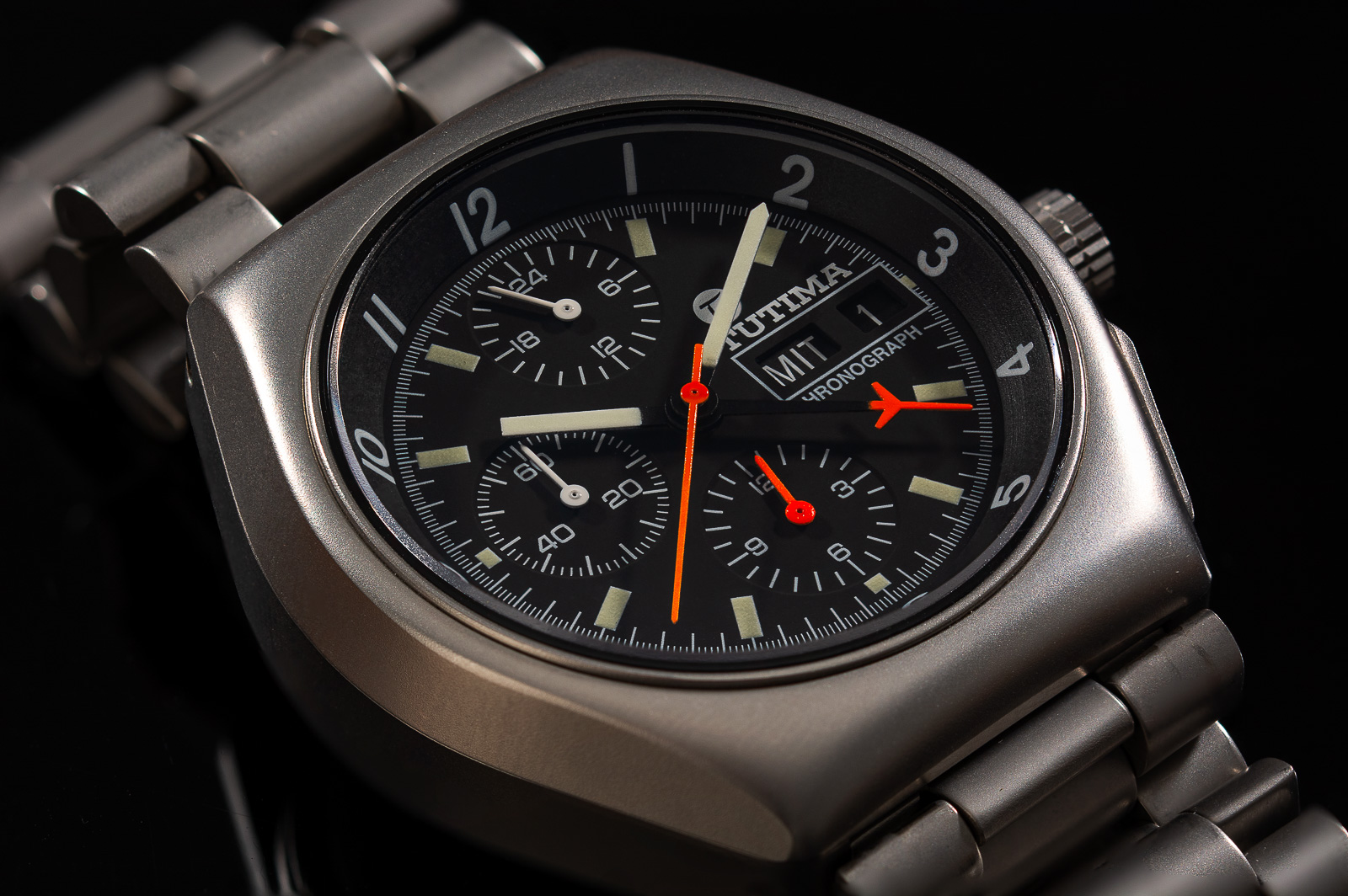
The Tutima Military Chronograph

Finally, our best stories of 2022 must include the insightful interviews with the duo who are each guardians of their respective brand’s heritage: Pierre Rainero of Cartier and Christian Selmoni of Vacheron Constantin. The conversations with the two gentlemen revealed their knowledge of watchmaking, design, and history – and how each of these can elevate a brand.


Back to top.
You may also enjoy these.

Takeaways from Attending My First Live Watch Auction

A first-timer's perspective.

I have always been fascinated by the drama that unfolds at a live watch auction – the excitement, the applause that accompanies a record hammer price, and the occasional silence when there are no bids to be found made. As a collector, the drama that unfolds adds colour to the hobby and adds another dimension to the business. 

I had long tuned in for the livestream of auctions since I purchased my first vintage timepiece almost a decade ago. I followed the blockbuster results in the salerooms of the three leading auction houses, Phillips, Sotheby’s and Christie’s, but I had yet to experience being in the room until my outing to the recent fall sales in Hong Kong. 

Watching the gavel fall on screen

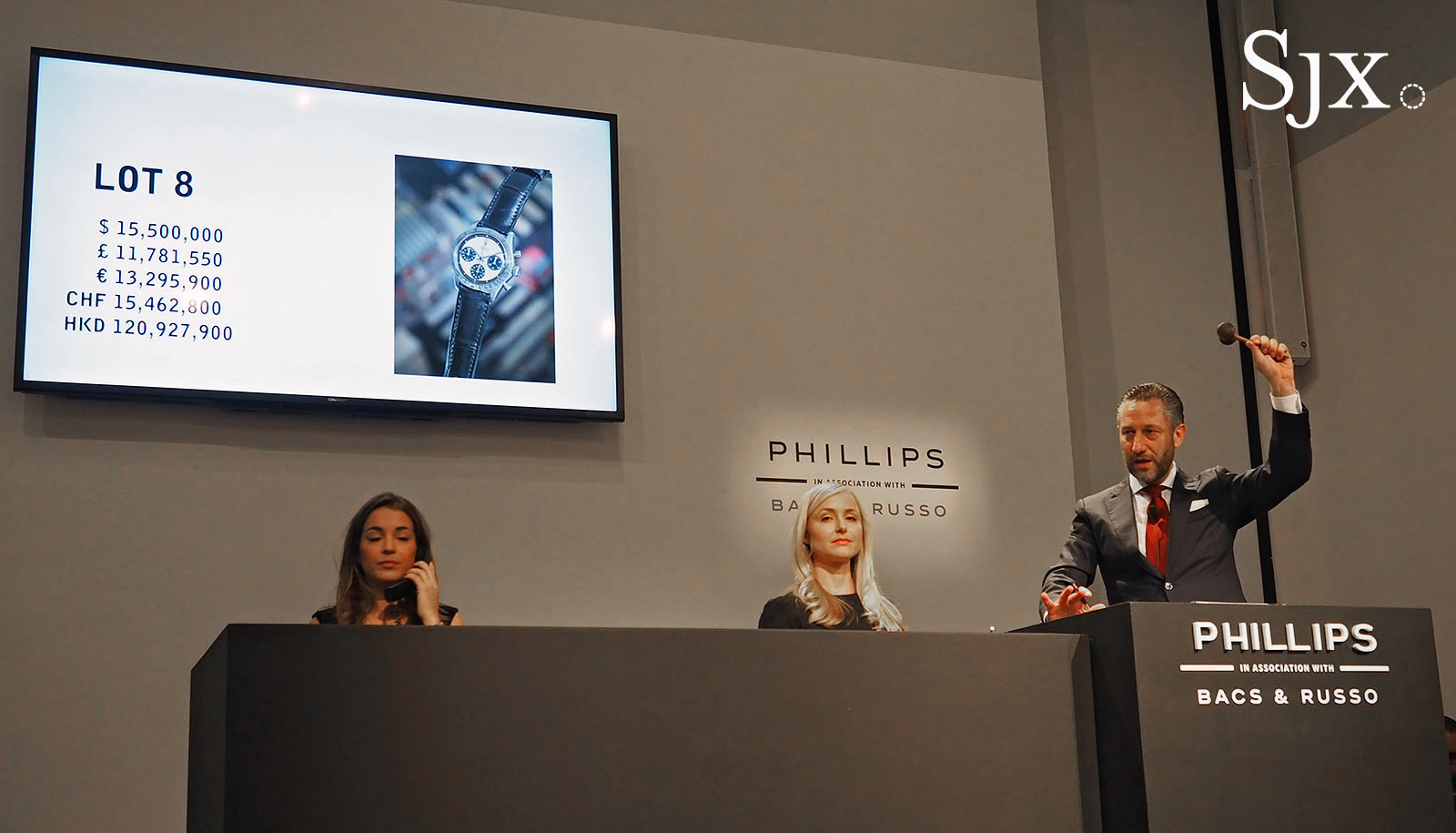
I knew I had to attend a live auction after watching the Sotheby’s Geneva auction that took place in December 2014. On my laptop I saw the sale of the Henry Graves Supercomplication unfold, when the man with the red tie, whom I later discovered to be Aurel Bacs, won the watch for US$24 million. 

A few years later, while commuting to my first job out of college, I caught the exact moment when Paul Newman’s “Paul Newman” Rolex Daytona sold for a record at Phillips’ in New York. More recently, I tuned in for the sale of the F.P. Journe FFC Blue at Only Watch last year. Even though I only watched these sales on a screen, it is clear that watch auctions at the highest level are almost a competitive sport, with bidders from across the world or the aisle locked in a duel until the hammer comes down.

The sale of Paul Newman’s own Rolex Daytona in 2017 at Phillips New York

The saleroom in Hong Kong

When the Hong Kong government announced the lifting of most pandemic restrictions in September 2022, namely the mandatory hotel quarantine, I embarked on my first overseas trip in two years – perfectly timed to coincide with the fall auction season in the city.

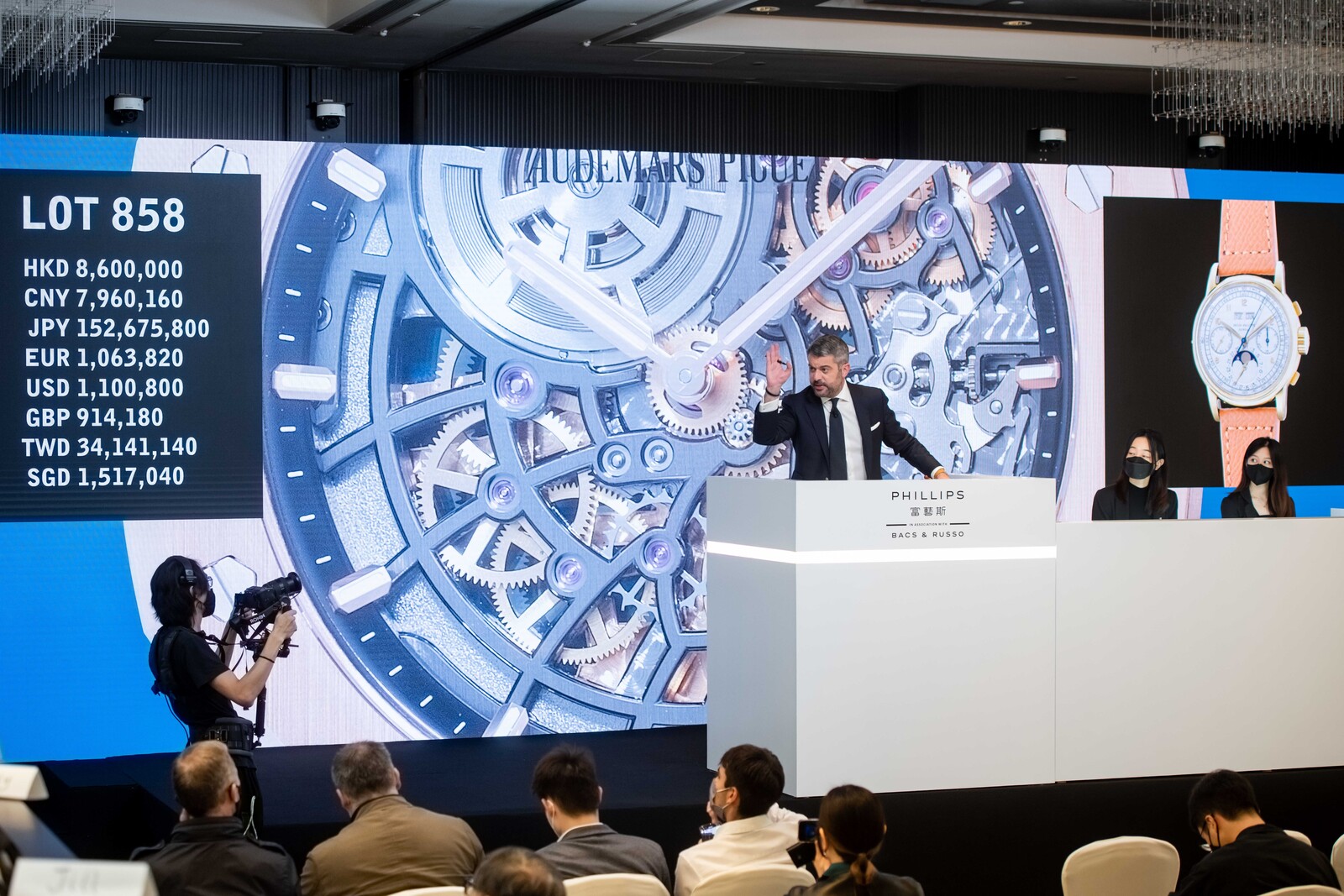
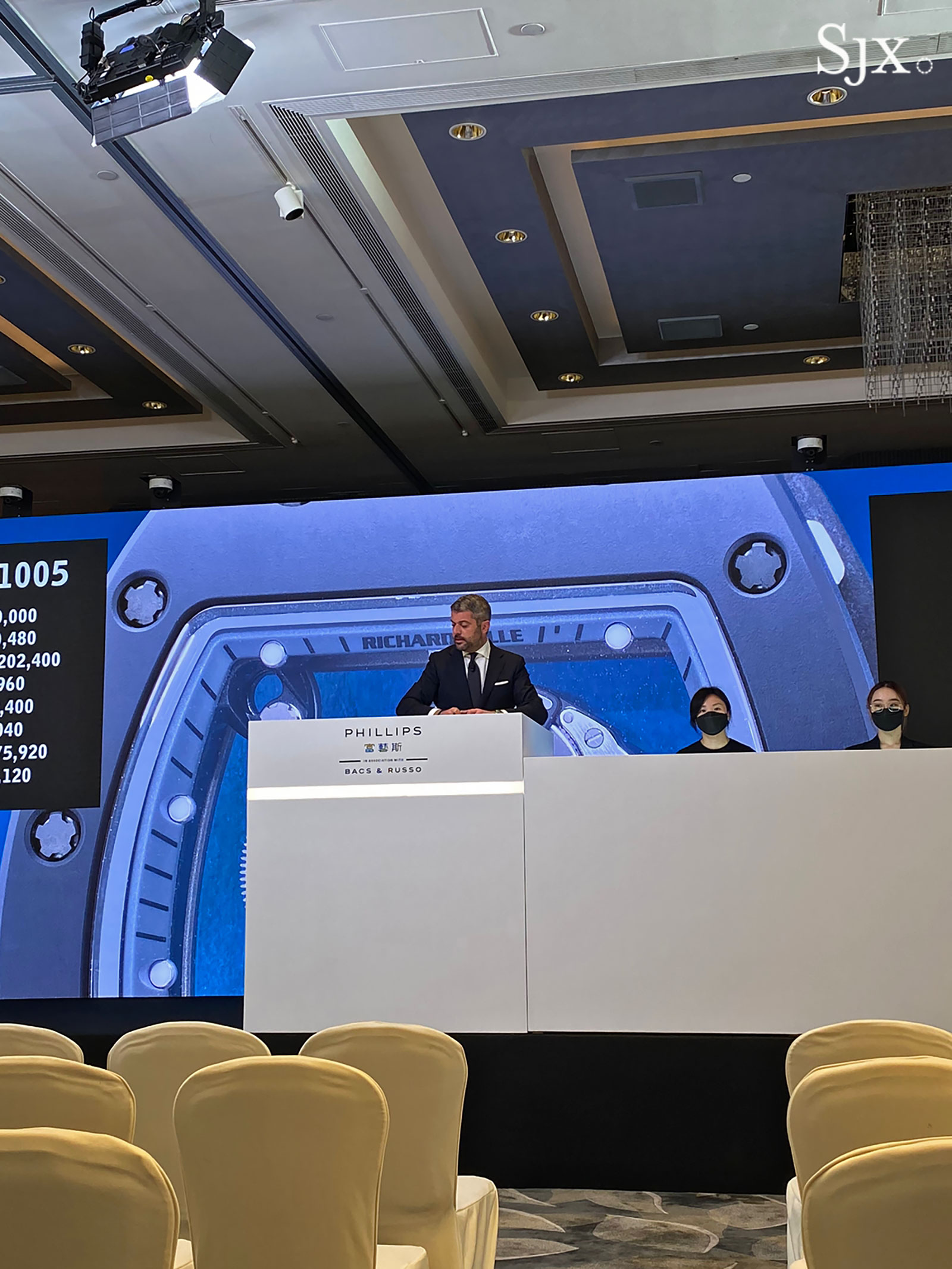
As soon as I landed, I dropped by my hotel for a quick change of clothes before heading to the J.W. Marriott where Phillips was staging the two-day Hong Kong Watch Auction: XV. When I entered the Phillips saleroom, I was struck not by the crowds but by the lack of them. With the removal of many pandemic curbs, I had been expecting the crowds to be out. Only a few seats in at the front of the saleroom were occupied and most of the few bidders in the room sat at the round tables at the back, leafing through the auction catalogue while watching the sale.

My vantage point from the front of the room, with head of department Thomas Perazzi at the rostrum

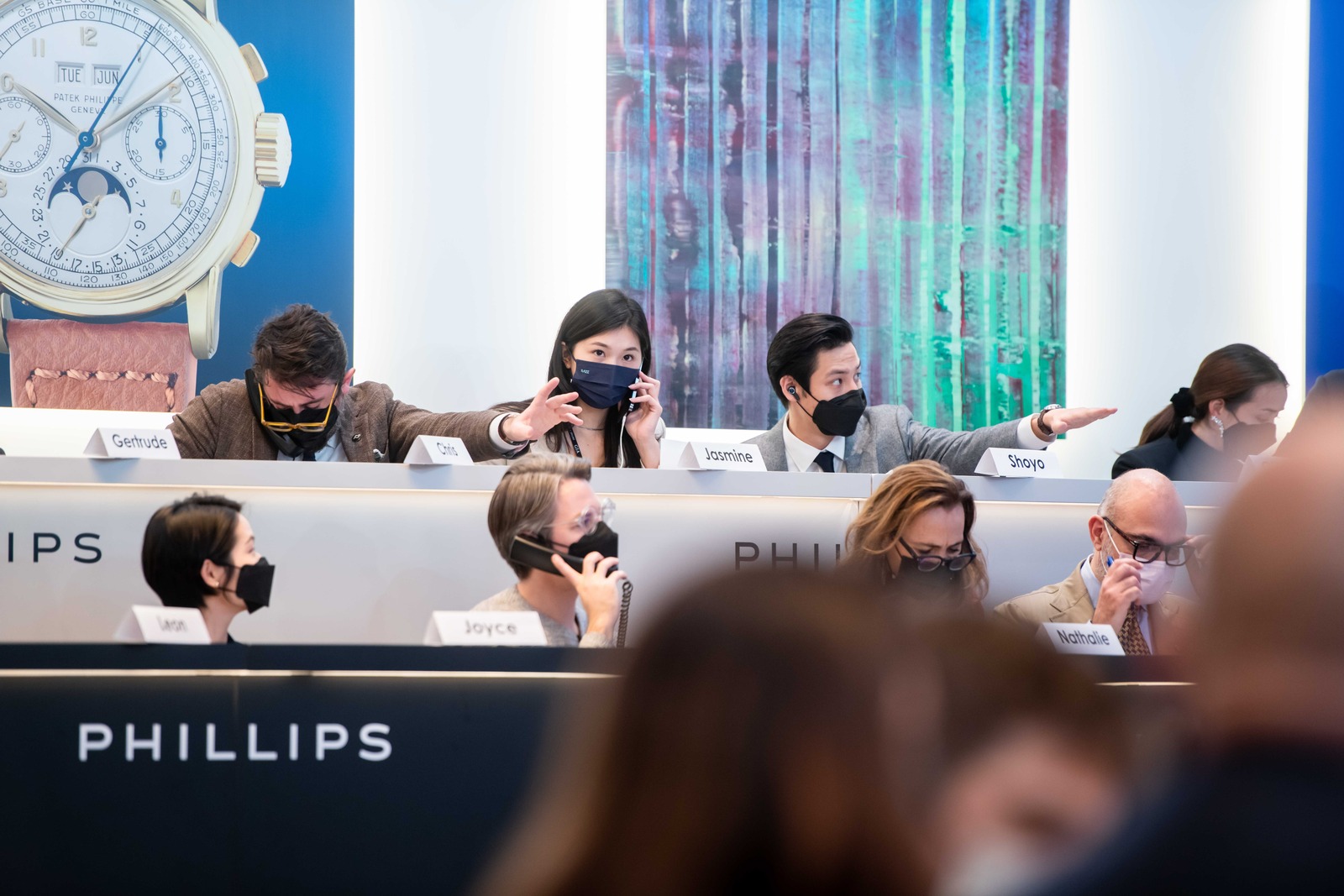
The thin attendance was due in part to the fact that some restrictions on inbound travellers had yet to be lifted; the Hong Kong government only did away with them in December. Instead, most bidders were on the phone or online. The crowd, in fact, was the two dozen or so Phillips staff members manning the telephones. 

Yet the energy in the room was palpable, but in a measured and patient manner – it was clear that all bidders were determined to get the best deal possible. Bids came in from all over the room, and the auctioneer had to work hard to keep up with the pace. While there were a few moments of silence as the sale progressed, the room erupted into a frenzy of activity when it came to popular lots, mostly from the likes of Patek Philippe, Rolex, Audemars Piguet, and even independents like F.P. Journe. The crowd also fluctuated throughout the sale, thinning out with less interesting lots and gaining in number as major lots came up.

A majority of the bidding came through the international phone banks at the J.W. Marriott. Image – Phillips.

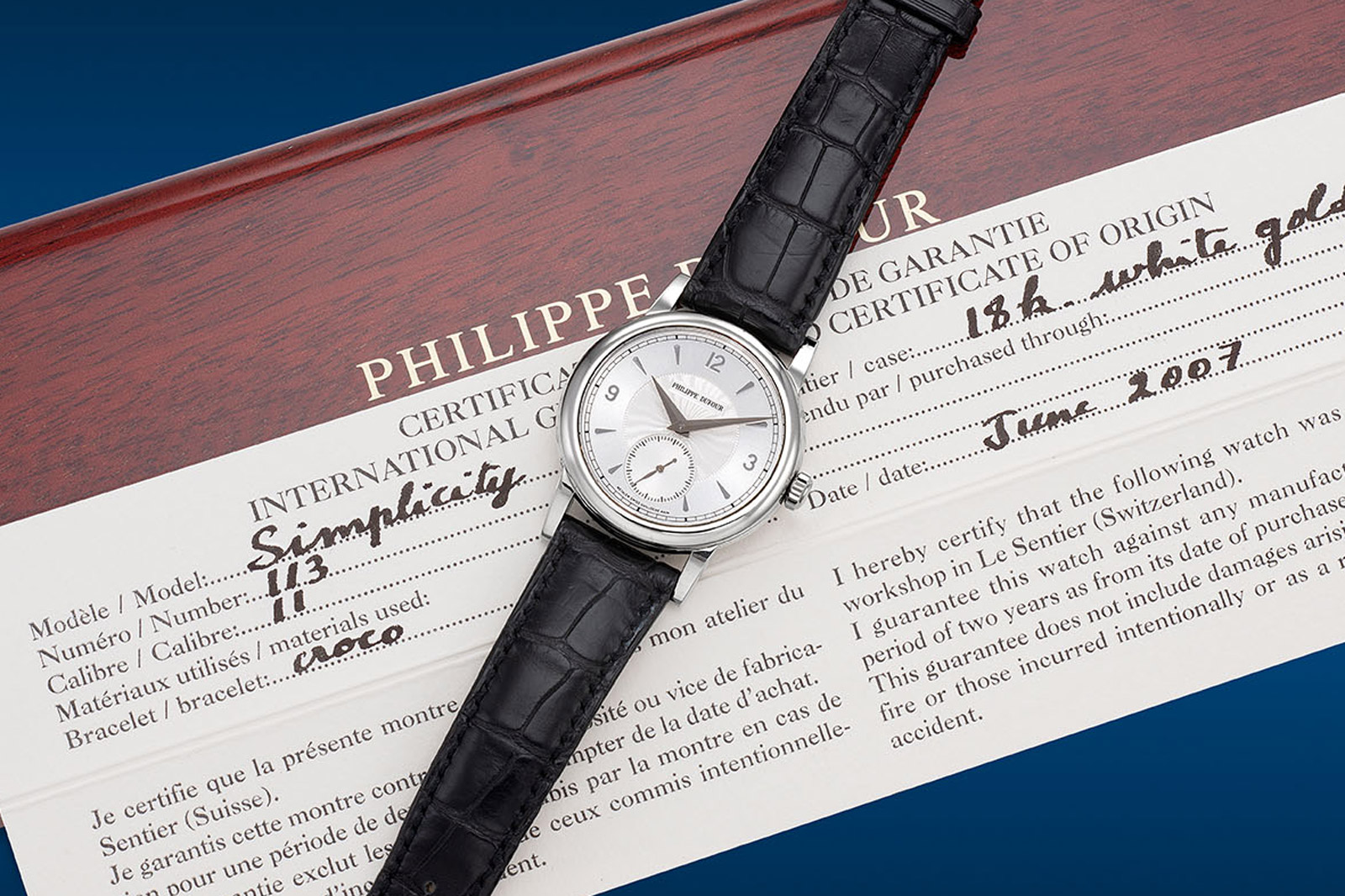
While the top lot of the sale both in terms of prestige and value was undoubtedly the yellow gold Patek Philippe ref. 2499 – the room was probably the most full when this was sold – my personal highlight was the Philippe Dufour Simplicity.

While this was not the first time I saw one in person, the Simplicity has always stood out for me as something truly special. As soon as the lot opened at a mere HK$1 million (about US$130,000), two bidders jumped into the ring. One was an Asian gentleman in the room and the other a phone bidder. Even though it was only the two of them bidding, the price rapidly escalated within a matter of minutes.

The jousting over the Simplicity continued until the phone bidder triumphed with HK$5 million (about US$640,000) and the gentleman in the room waved the white flag. The hammer came down to applause in the room. The total bill for the buyer was HK$6.9 million with fees, equivalent to US$886,000.

The Simplicity at Phillips, a 37 mm example in white gold. Image – Phillips

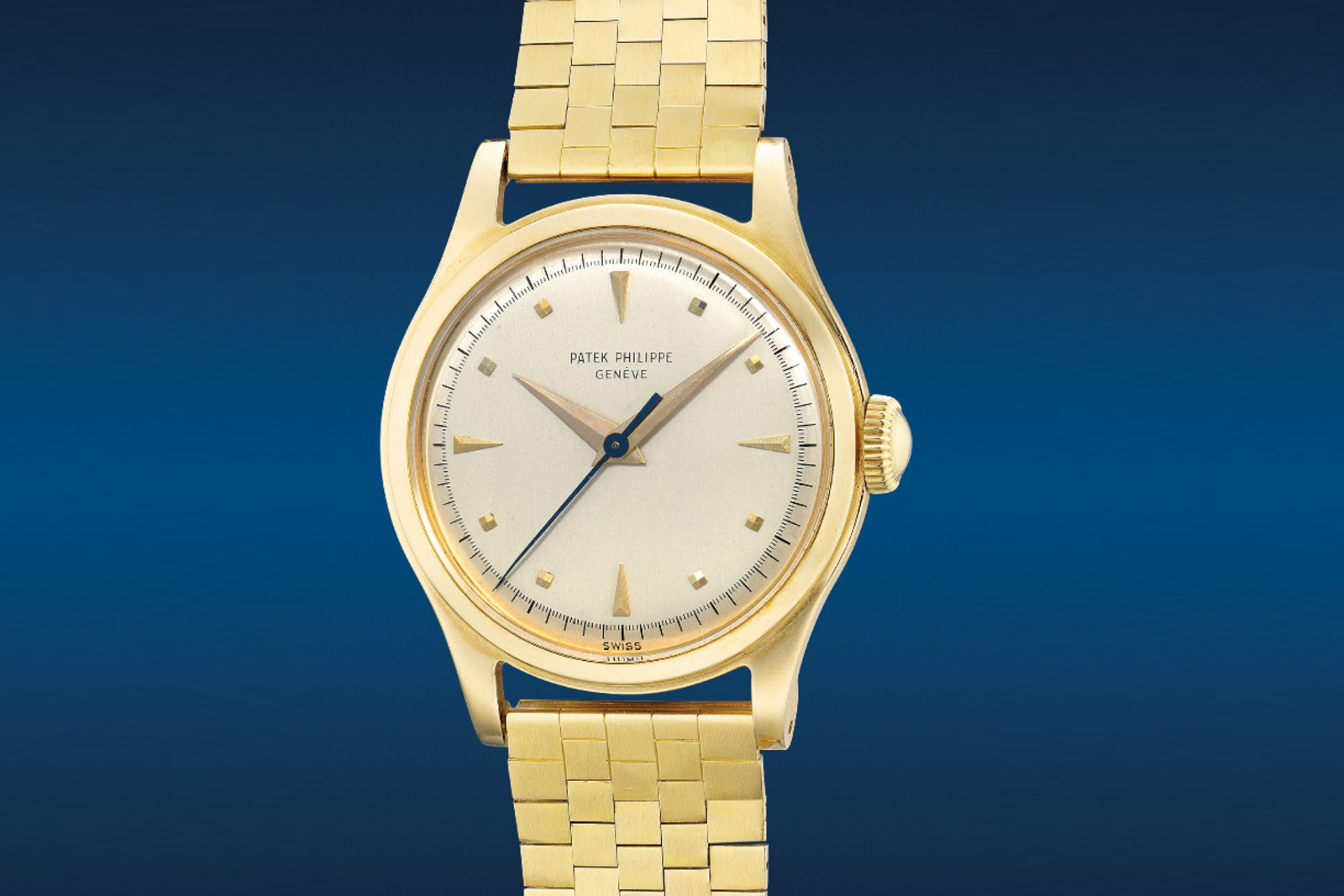
But the fireworks did not end there. About an hour after the Simplicity, it was the turn of a Patek Philippe Calatrava ref. 2508 fitted to a fine, yellow-gold Gay Frères bracelet. It was a simple watch with a modest estimate starting at just HK$95,000 (about US$12,000).

I have to admit I was surprised by the mind-boggling result of HK$756,000 including fees (about US$97,000). By most measures, this was not one of the top lots before the sale and it was barely on my radar.

The ref. 2508 encapsulates auctions perfectly: you can never predict what will happen at a live auction. Watching the bidding war over the ref. 2508 was a real eye-opener. It showed me how passionate and determined collectors can be and illustrates their willingness to pay top, top dollar for something special. And it also reveals that even a seemingly under-the-radar watch will not go unnoticed by keen eyes.

The ref. 2508 and its vintage bracelet

A sense of camaraderie

My first live watch auction was a proper introduction to the world of high-end watch collecting. I got to see some of the world’s best timepieces up close. Even though the turnout was sparse and the atmosphere casual, the buzz in the room was discernible; I could feel the excitement.

But it also showed that the hobby is about people and the scene is a small one. From the handshakes and smiles I could tell that many of the people in the room knew each other. There was a sense of camaraderie among the participants along with a healthy dose of competitive spirit, even between Phillips colleagues bidding against each other on behalf of clients. 

I realised that a major watch auction is not simply a sale of watches; it is a social event where people come to mingle, network, and show off their latest acquisitions. I didn’t raise my paddle and came away empty handed, but I was happy to sit back and watch buyers battle it out for the top lots. Ultimately, I left with a better understanding of watch auctions and a greater appreciation for the beauty of the watches themselves.


Back to top.

You may also enjoy these.

Interview: Jeremy Lim of Cortina Watch on the Family Business and Longevity

50 years of watch retail.

With 2022 revenue of S$716.9 million (equivalent to US$532 million), Cortina Watch is one of the world’s biggest watch retailers. It was founded in 1972 as a single store but has grown into a regional giant with stores across Southeast Asia as well as outposts in Taiwan and Australia.

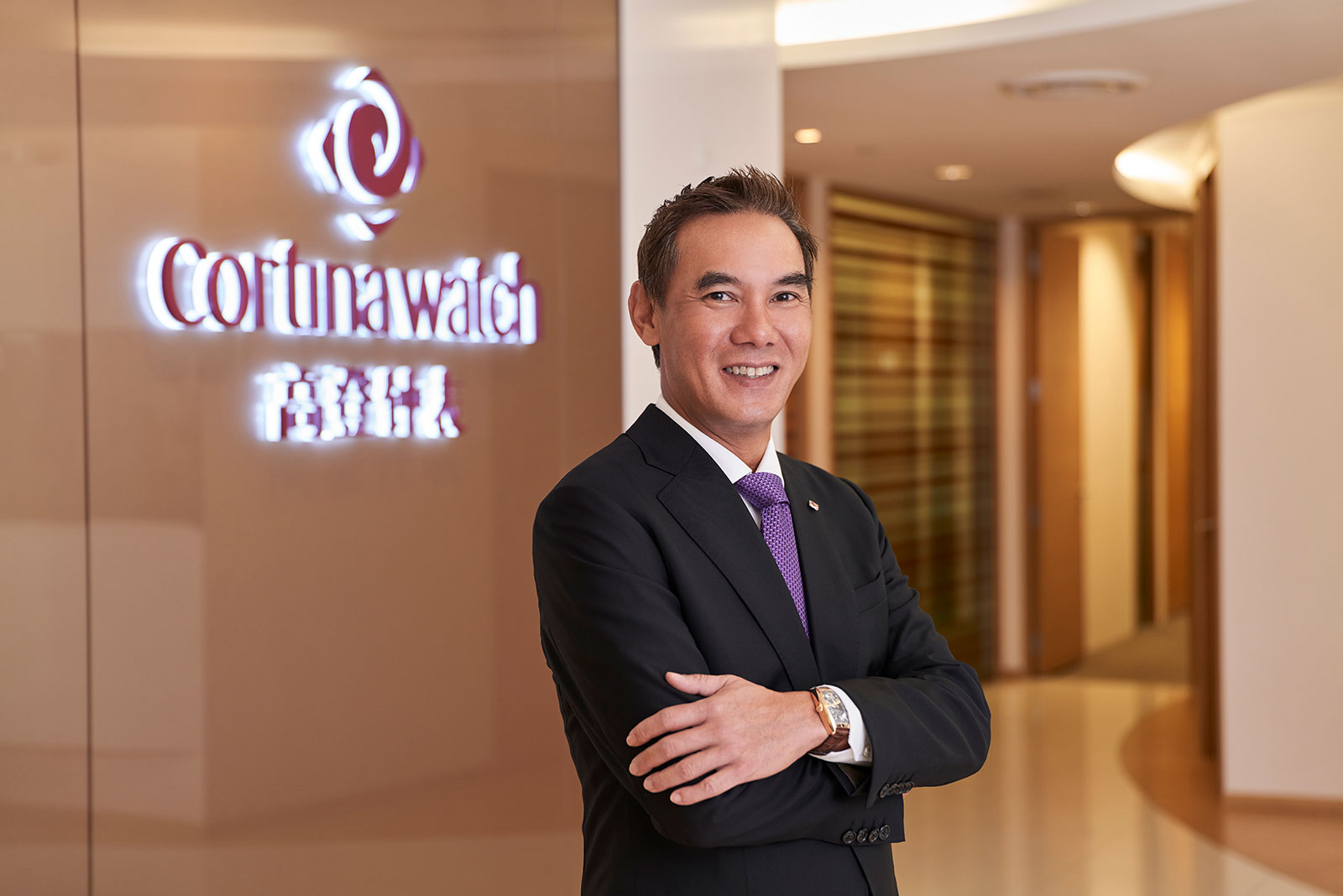
Cortina marked its 50th anniversary this year with a slew of limited editions that reflect its importance, including the Patek Philippe Calatrava ref. 5057 made specifically for it. Though publicly listed, the company remains controlled by the founding Lim family, with the third generation having recently joined the business. A crucial member of management is Jeremy Lim, the younger son of Cortina founder Anthony Lim. Jeremy helms the business alongside his siblings Raymond and Sharon.

I spoke with Jeremy recently to uncover the factors behind the longevity and success of Cortina.

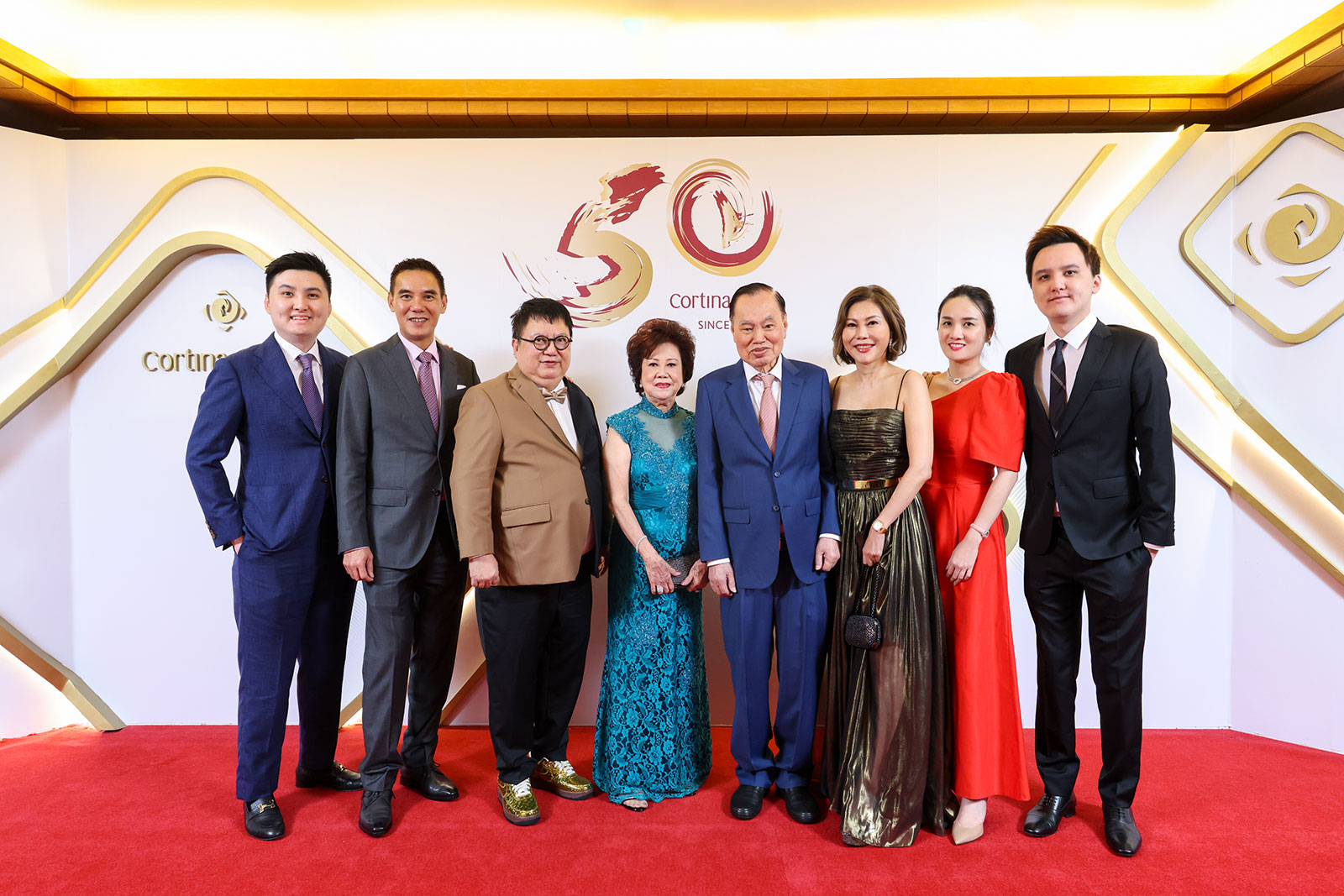
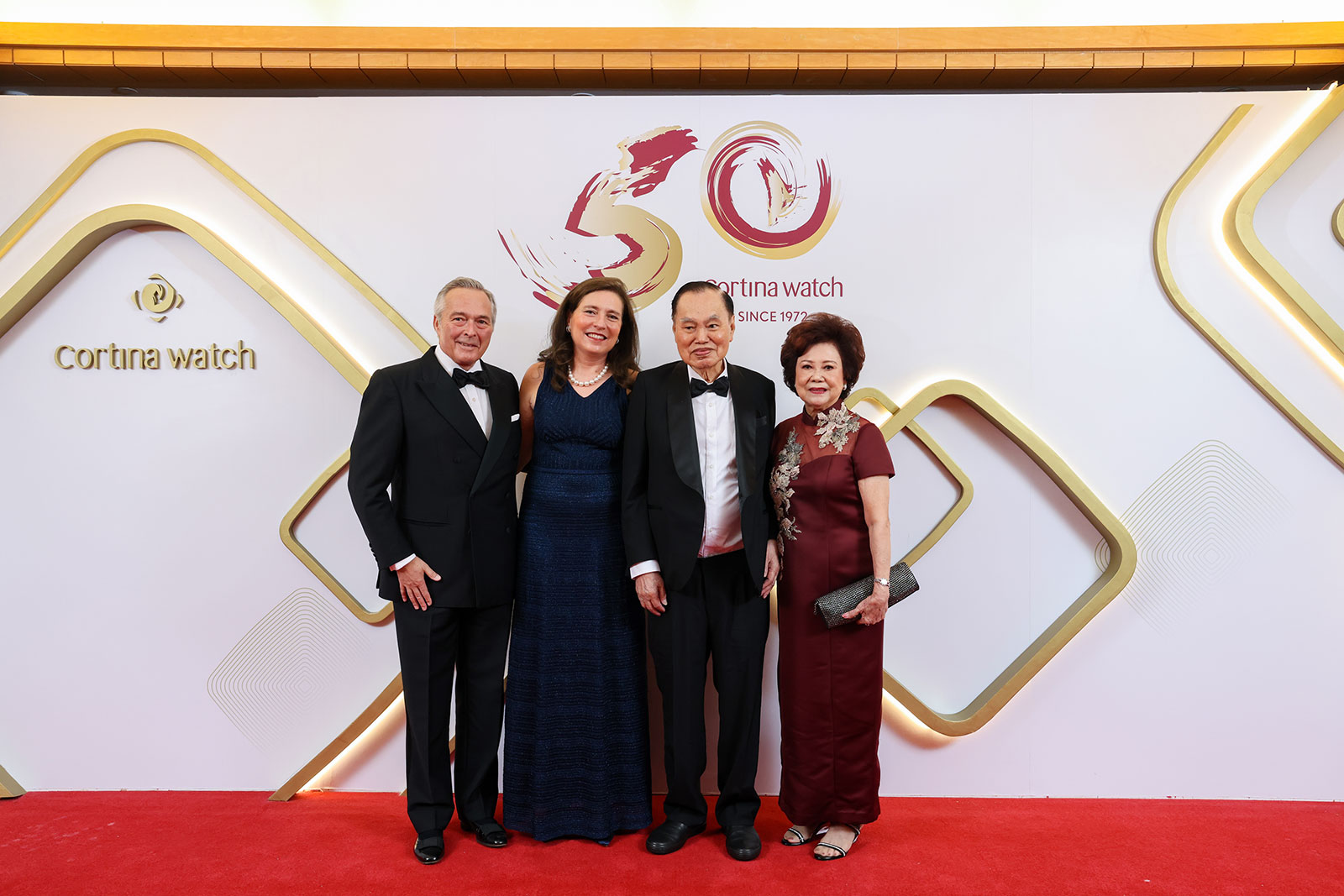
Three generations of the Lim family, with Jeremy Lim second from left. Image – Cortina Watch


SJX: When Cortina was founded 50 years ago by your father, it was one of many watch stores in Singapore. But now Cortina is one of the few left, in fact it’s one of the biggest in the region. What is the secret to the longevity and success?

Jeremy Lim (JL): We were lucky that we had a lot of help from the family when my dad started the business with my mom. [My brother] Raymond started early in the business, then my sister got interested in the business as well, and subsequently I was reeled in.

The old school method of family business was just one or two shops so the founder can keep his eye on them. But with our extended family it allowed us to grow in the region. We have an aunt that runs the business in Hong Kong and initially we also had an uncle in Malaysia. And we were able to build in places like Taiwan, Thailand, and Indonesia with our local partners there.

Then we brought in professionals to run the business after we went public [in 2002]. This transition was very, very important. If the transition did not happen, I would say we probably be stuck with a few stores.

SJX: But it wasn’t all smooth sailing for 50 years. Many of the retailers that were once big names are no longer around.

JL: Like all businesses we had our ups and downs. There’s no single secret that makes things work. We were lucky the family had a passion for the business, whereas it might have been that the next generation at other retailers lost touch with the watch business.

The Patek Philippe ref. 5057G made for Cortina’s 50th anniversary

SJX: Family is clearly central to your business. And it seems like the case for many important players across the industry. Many big retailers are family-owned and also some of the most important watch brands like Patek Philippe.

JL: Exactly, Wempe, Bucherer, Seddiqi…

SJX: In fact, Watches of Switzerland is public and owned by institutions but it is the exception rather than the norm.

JL: This business is very much about personal relationships. When you have the family [that owns a watch brand] in town, they get a lot of attention from us and we can do business. They can speak for the brand without having to go through levels of management. The working relationship is easy; they keep their word when they say yes.

We also deal with professional managers, but over the decades as we work with certain brands or groups of brands, it seems like every three years they change the managing director and every 20 years they change the CEO. When that happens, we don’t know the next person is going to continue on certain things that we agreed upon [with his or her predecessor].

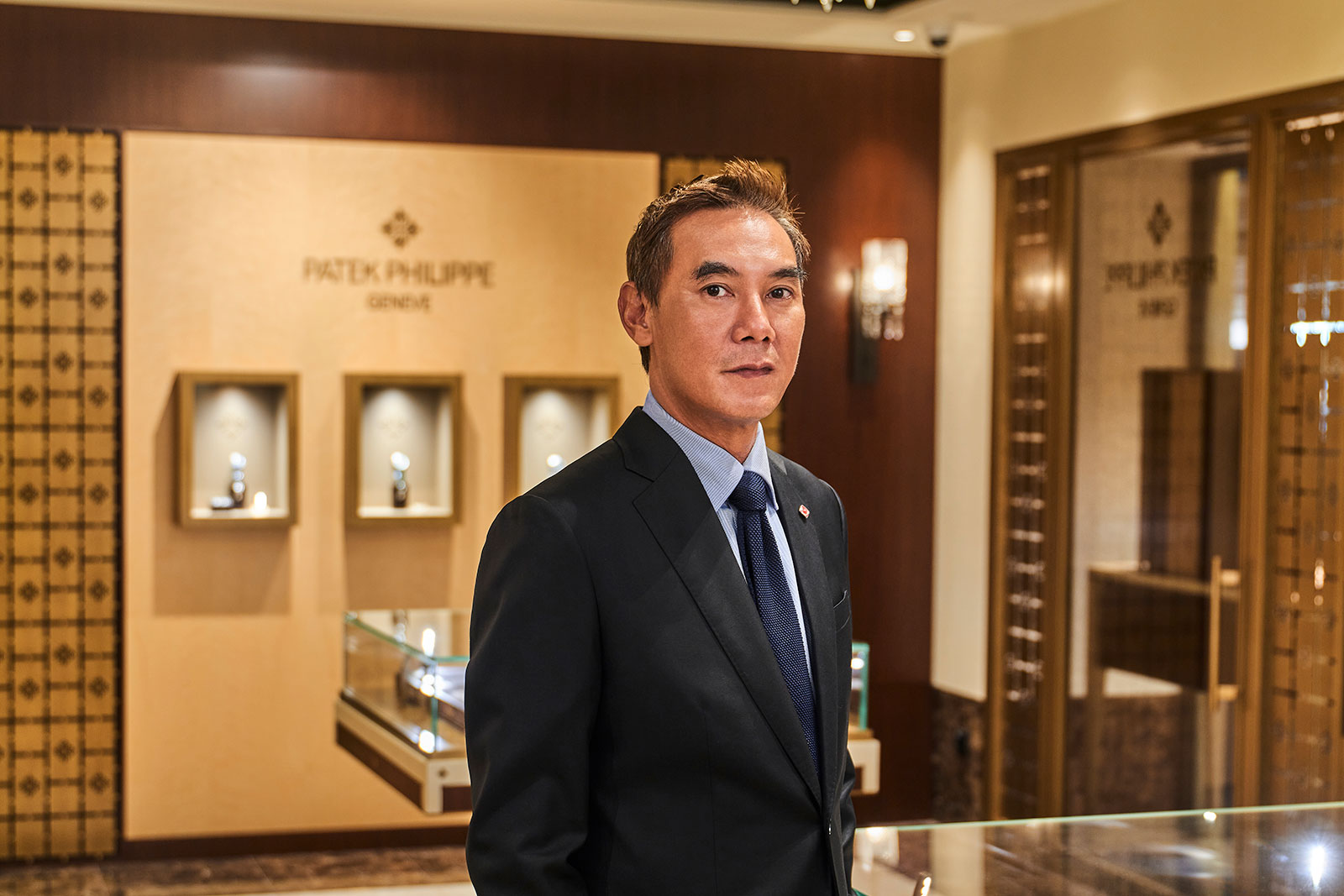
Jeremy Lim at the Patek Philippe boutique in ION Orchard operated by Cortina Watch. Image – Cortina Watch

SJX: So you’re saying is it’s easier to build a long-term relationship with a fellow family-owned business because both of you are in for the long haul?

JL: Exactly. It’s why the working relationship with, for example, Chopard or Patek Philippe is fantastic. When we have a problem, we drop each other an email or call, then we try to find the middle ground. Decisions will be made, and they’ll be on it. It is not necessarily easier, but at least we know that there is a long-term perspective in terms of what we do. And I think it’s just mutual respect [for each other as family-owned companies].

For example, [a major, family-owned brand] decided that they needed to reduce their retail network so they closed one of our points-of-sale. It was a big blow but there was respect in terms of how it was done. We were given a year’s advance notice.

And it so happened that the closure was scheduled for March 2020 and the pandemic happened – lockdown and everything ceased. So I made a call to the brand and asked for an extension so we had time to pivot. They were generous enough to say yes. That made sure our people still had their jobs in the midst of the pandemic. Not all brands do it this way.

Karl-Friedrich and Christine Scheufele of Chopard with Mr and Mrs Anthony Lim. Image – Cortina Watch

SJX: How are you helping the next generation of the Lim family develop such relationships with the brands?

JL: We try to be inclusive with the next generation. For example, when we had lunch recently with [Karl-Friedrich] Scheufele and dinner with [Thierry] Stern, we included them.

I’m open to letting the next generation coming in to learn how I do things because I was given this chance when I joined. My brother gave me a lot of opportunities to prove myself. And my parents also give us a lot of chances, even when we made bad decisions.

[The next generation] needs to be curious about what we do, how we do it, and how we make decisions. Decisions are not always correct, but if it was a bad decision then you make sure it was a calculated risk.

I was given the opportunity, and I don’t see why I should not be giving that opportunity to the next generation. The more they get involved, the quicker I can I can retire. [laughs]

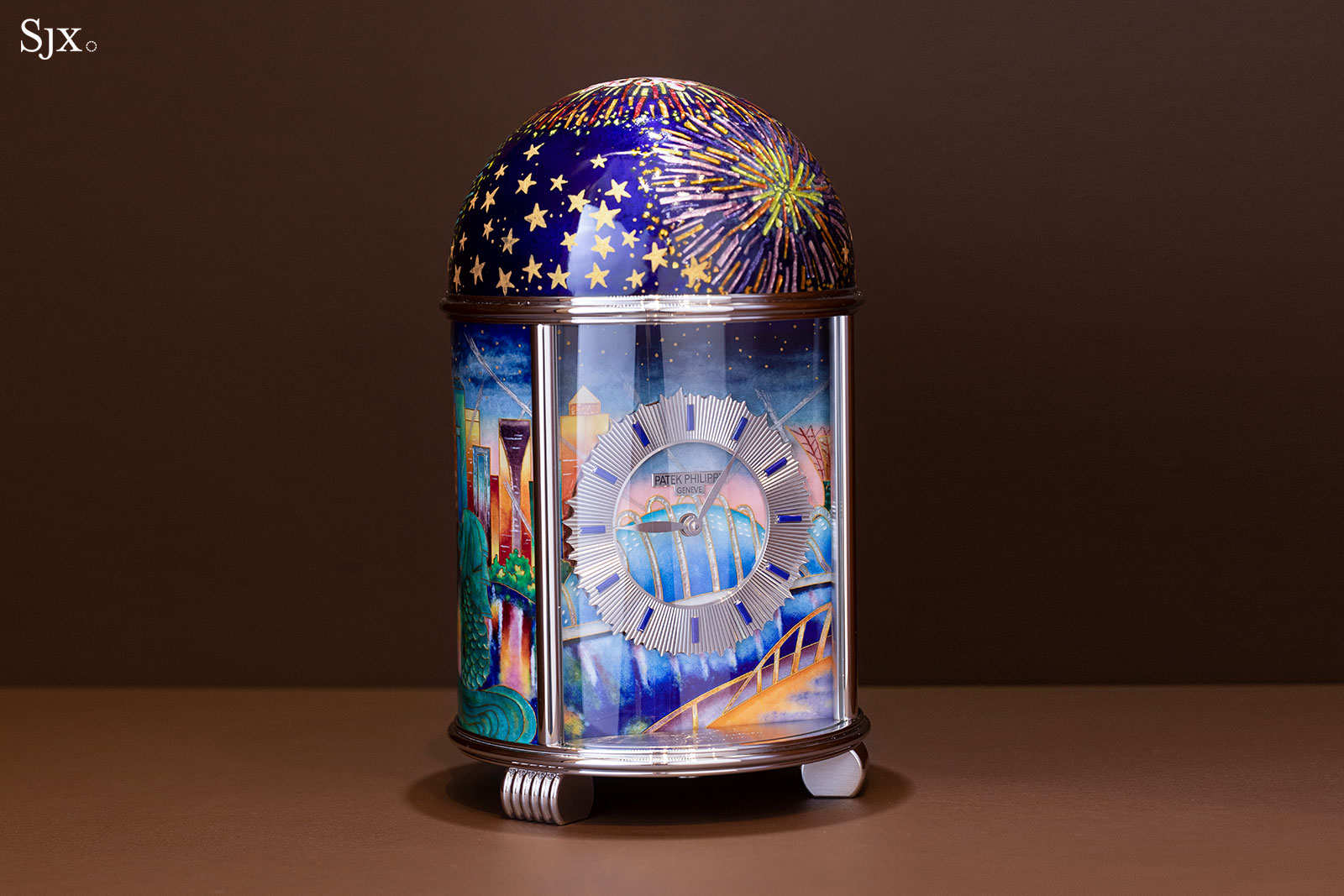
The unique Patek Philippe Dome Clock depicting the Singapore skyline made for Cortina’s anniversary

SJX: Earlier you mentioned the ups and downs of the business. A recession seems to be on the cards after many good years. Maybe because of the goods years, brands have been closing retailers and opening more of their own stores. What are your thoughts about these happenings that seem to happen with every economic cycle?

JL: We always try to work with as many brands as possible. Because one day, we know some brands will close us and run their own boutiques – we have gone through that before. Or even now there are some plans by some groups that want to do their multi-brand boutiques.

We are ready for the challenge, because we have embraced a lot of brands. Sometimes our partners say we have too many brands in the store. But it’s a defence mechanism because it only means that we are not reliant on a group of brands or one or two brands. If a brand decides to go it alone, we can replace them. And that is also what we are doing with Sincere; it’s a platform to embrace the independent brands.

SJX: This is basically diversification…

JL: Yes, diversify, but not outside of the watch industry. We are still very much into watches, but we don’t want to be reliant on one single or group.

SJX: Next year might not be good for industries outside of watchmaking either…

JL: We have had a good run. I think some in our business have forgotten what a recession is. But we should be fine because the demand I see demand [on the primary market] is still strong and it’s not just going to be gone overnight. As long as the industry doesn’t increase production like crazy, the industry should hold up quite well.

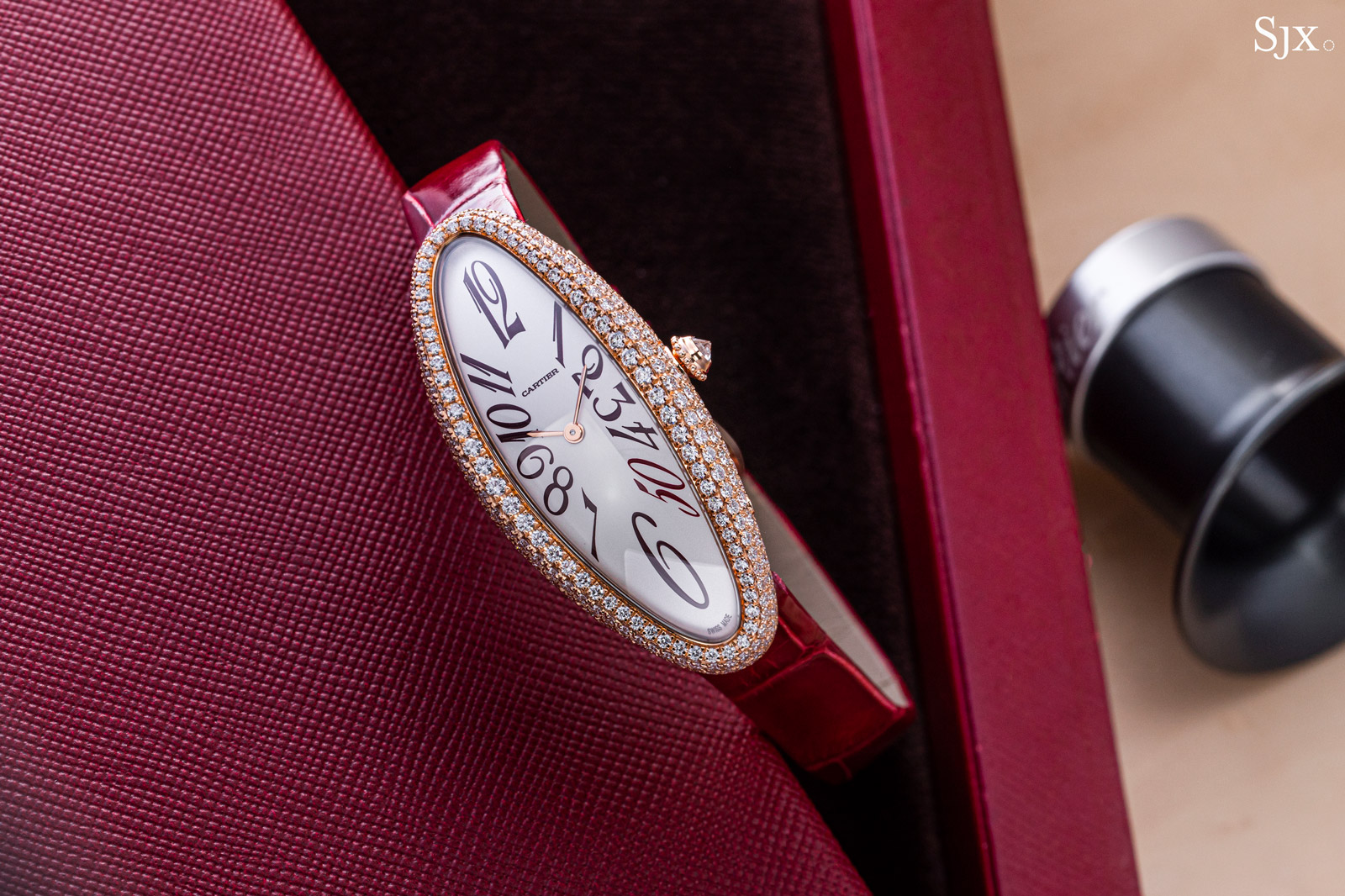
The Cartier Baignoire for Cortina’s anniversary

SJX: Last question. The big European retailers like Watches of Switzerland and Bucherer, have been expanding out of their traditional markets in the last few years.  Do you have plans to continue expanding, even outside of your traditional markets?

JL: The question is, what is our traditional market? Southeast Asia? We are already in Taiwan and Australia. So we are already a bit out of our comfort zone.

We go where we see opportunity. Vietnam is important. The emergence of Cambodia gives it potential as well. And there’s still a lot of room to move in Indonesia, where we are already present. And then of course with Franck Muller, Australia is something we can grow.

And what about China? Is there a dominant player in watch retail? Not really. A lot of the important locations are operated by the brands themselves. So China may be a possibility but it’s not something we are thinking about yet.

Expansion is also about control. Are we able to run a company, say, in the United States? I don’t know. I’d probably say no at this point. For one, the time zone difference is huge.

SJX: Is this something you’ll send the next generation to establish?

JL: Maybe it’s too early for them to venture out because it’s been tough for them to gain international experience with the pandemic. They’ve been with the company for three or four years, but two years were wasted because nobody could travel. Hopefully they’ll do that in the next few years. The quicker they take over from me, the more I can play golf. [laughs]


Back to top.

You may also enjoy these.

Best of 2022: Value Propositions

The best value absolutely and nominally.

We’ve gone through the year’s best watches from independent watchmakers and establishment brands, as well as the most notable complications. Nearly all of the watches on those lists, however, are pricey. So now we round up the best affordable watches of the year, namely those under US$5,000. Put another way, these are the best value proposition of 2022, both in nominal and relative terms.

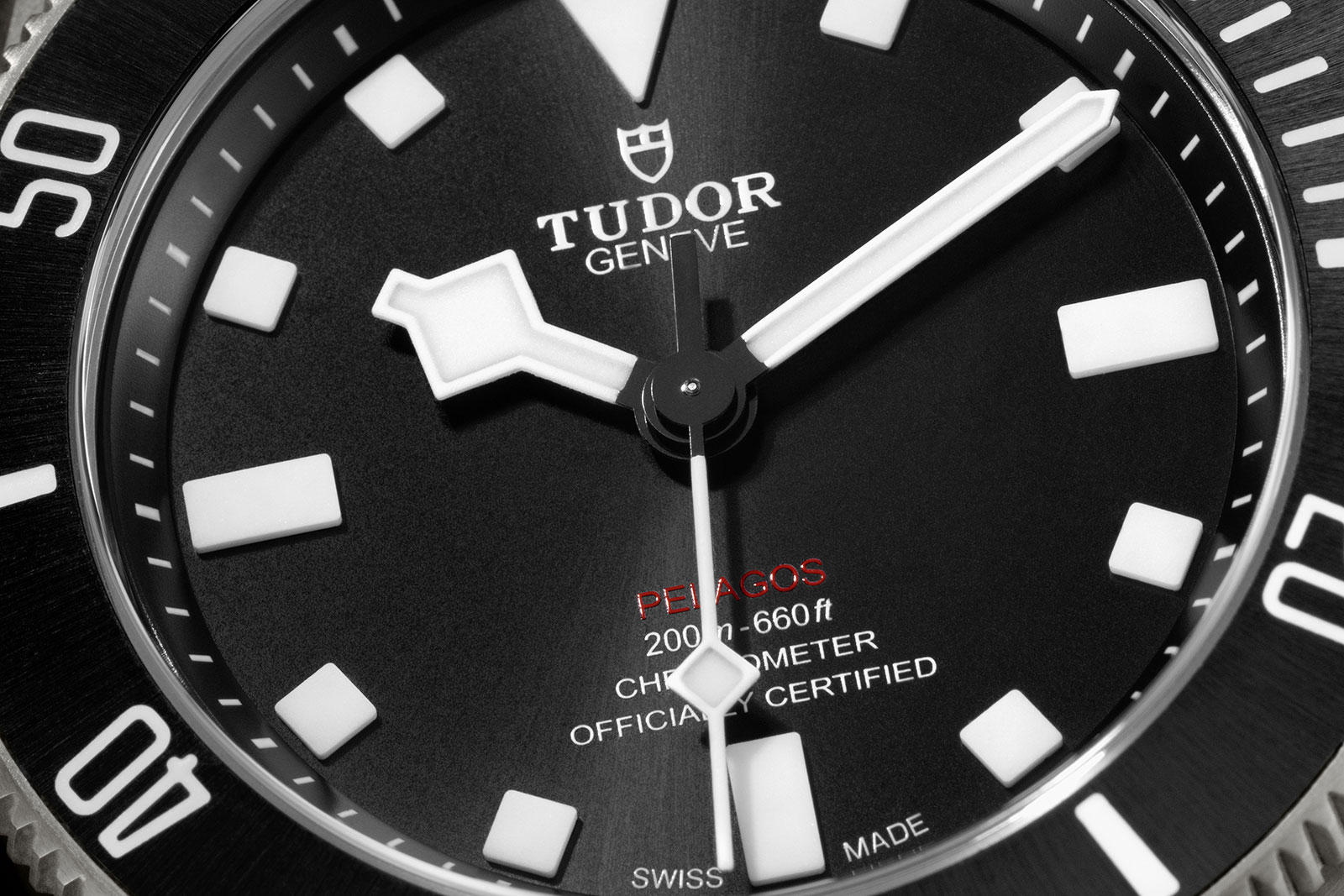
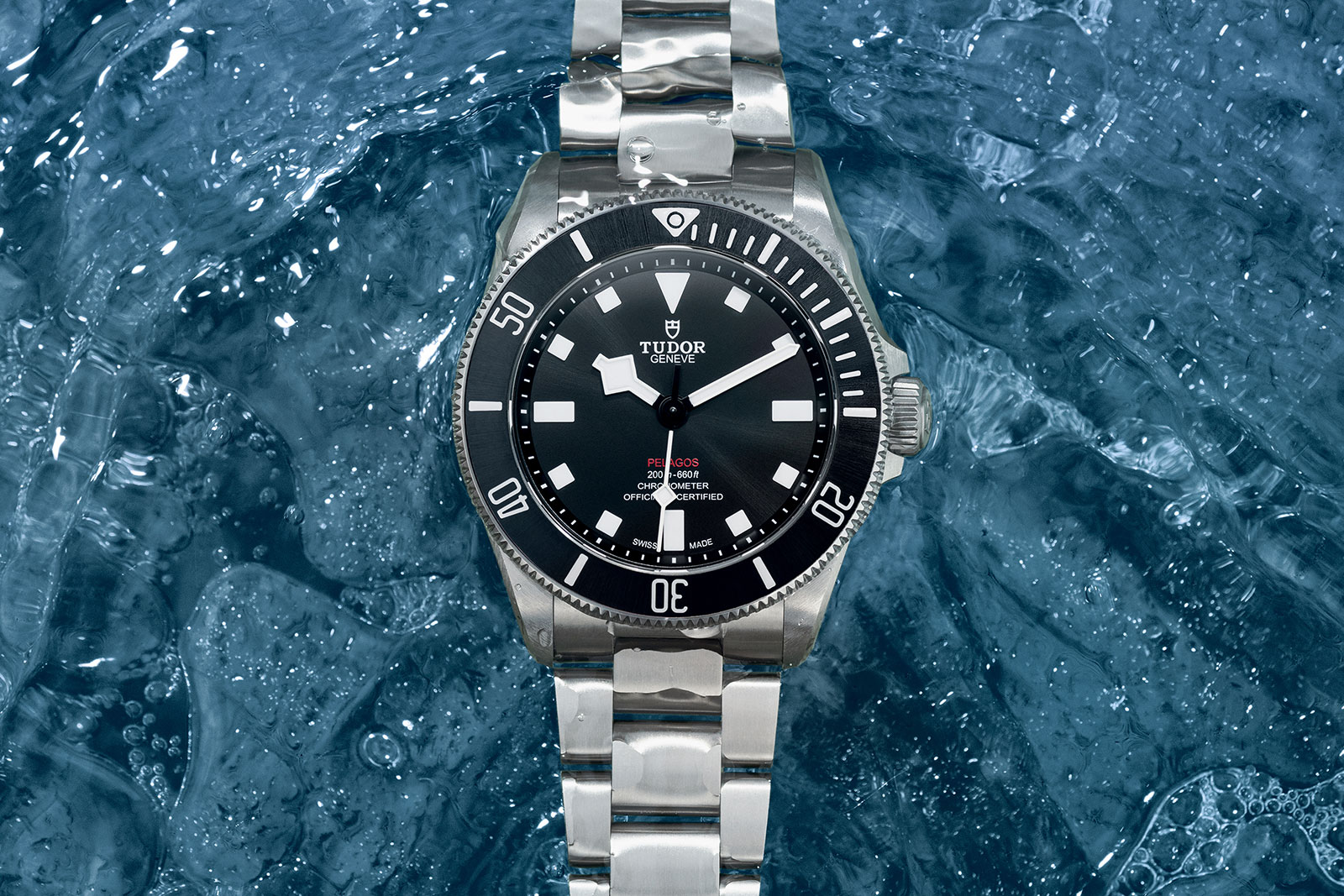
As has become the norm, Tudor is shoo-in when it comes to value propositions. A streamlined version of its deep-sea dive watch, the Pelagos 39 is compact, lightweight, and minimalist. The case is 39 mm and all titanium, while the dial does away with the date but includes a line of red text in a nod to vintaged dive watches. 

While much about the watch has been simplified, the details of the Pelagos 39 are fancier than usual. Both the dial and bezel insert are radially brushed – a matte metallic finish for the dial and brushed ceramic for the bezel – giving the Pelagos 39 a more reflective finish than its peers.

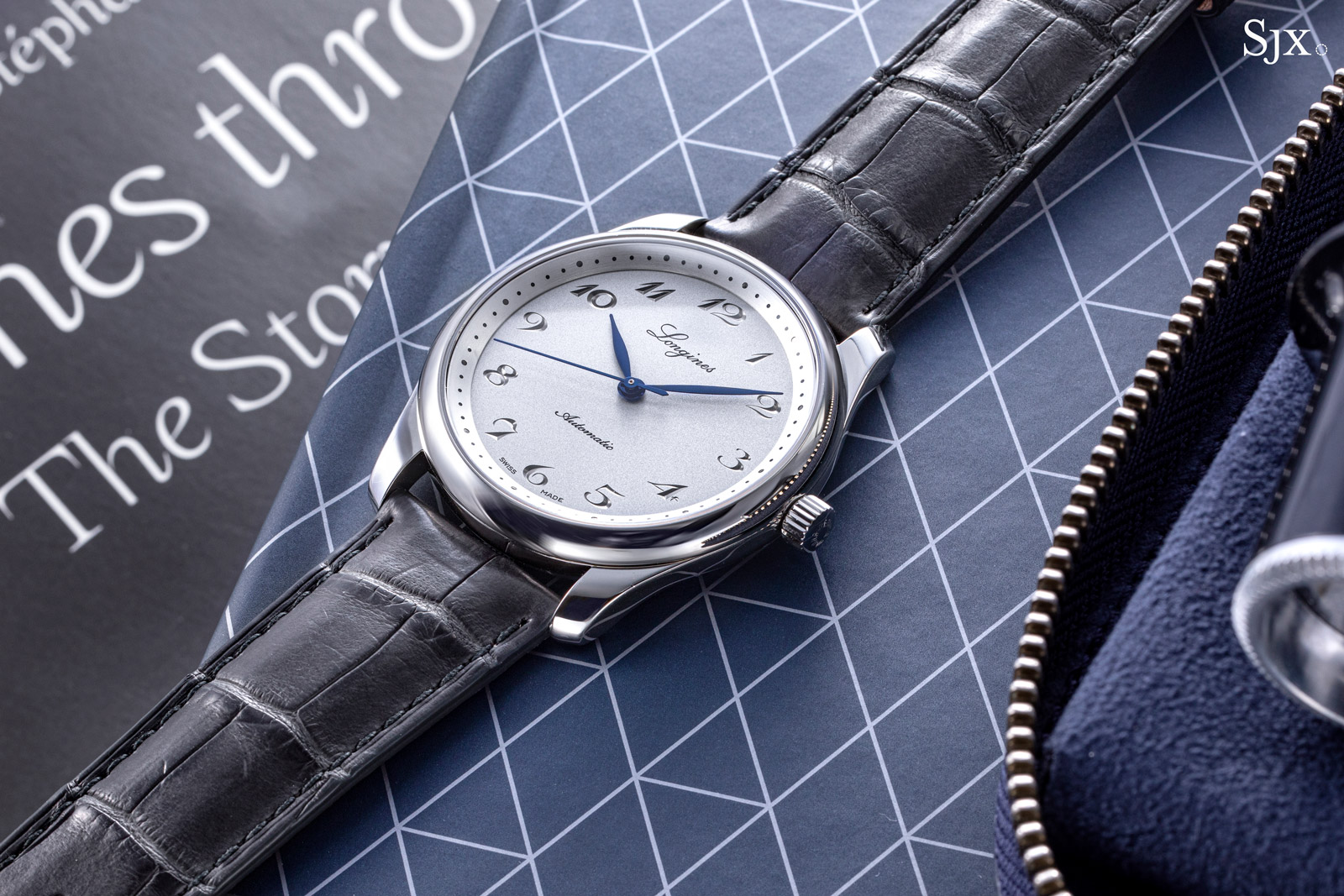
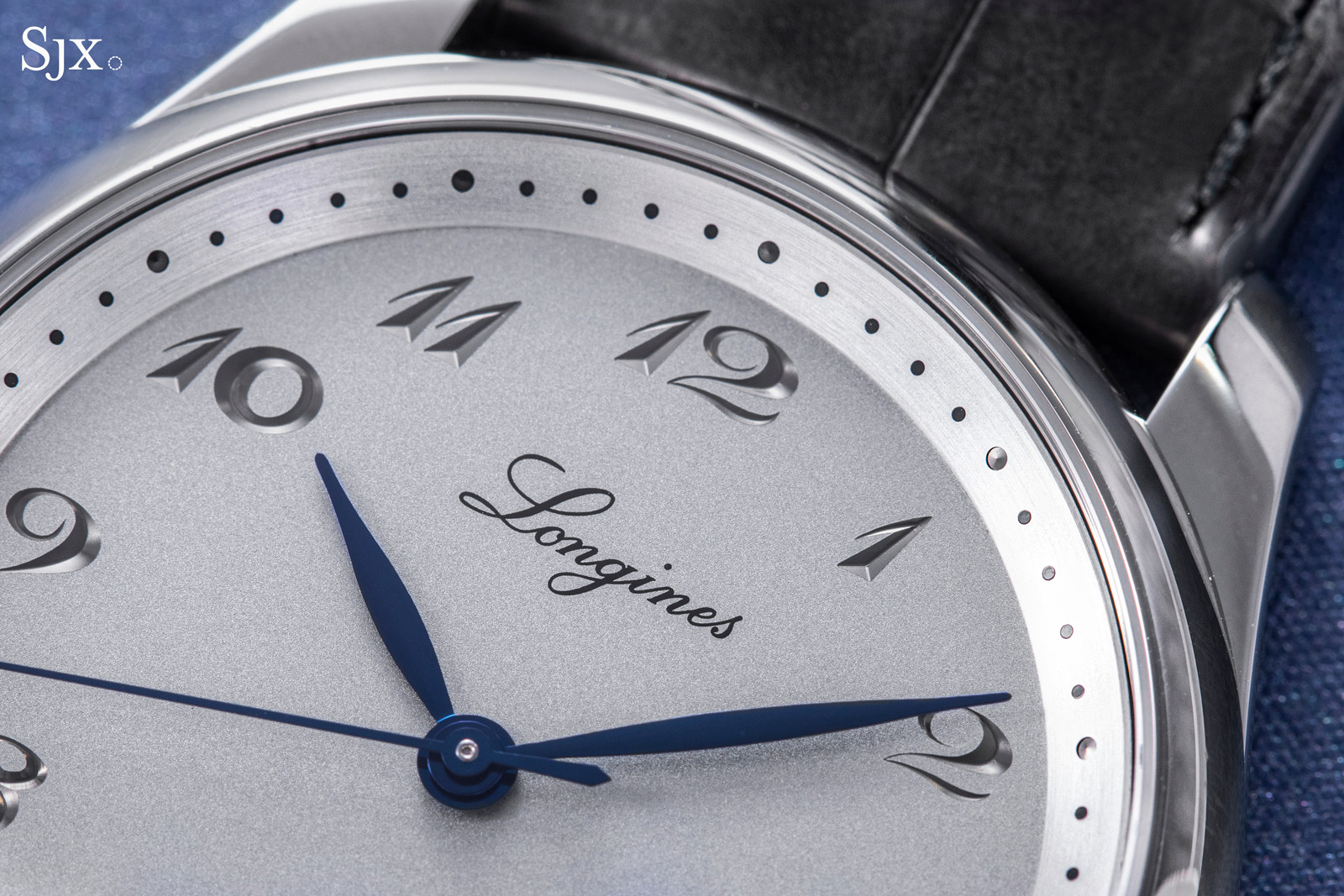
When it comes to dress watches, the Longines Master Collection “190th Anniversary” is amongst the best, particularly at its US$2,000-ish price.

It features a dial that appears to be highly elaborate with Breguet hour numerals that appear to be hand engraved. Naturally the dial is made by machine, but it is done convincingly enough that has a strikingly appealing aesthetic. Thanks to the dial, the watch certainly punches above its price segment.

And like many Longines watches, it is equipped with an upgraded ETA movement, here it’s the cal. L888.5 with a power reserve of 72 hours.  

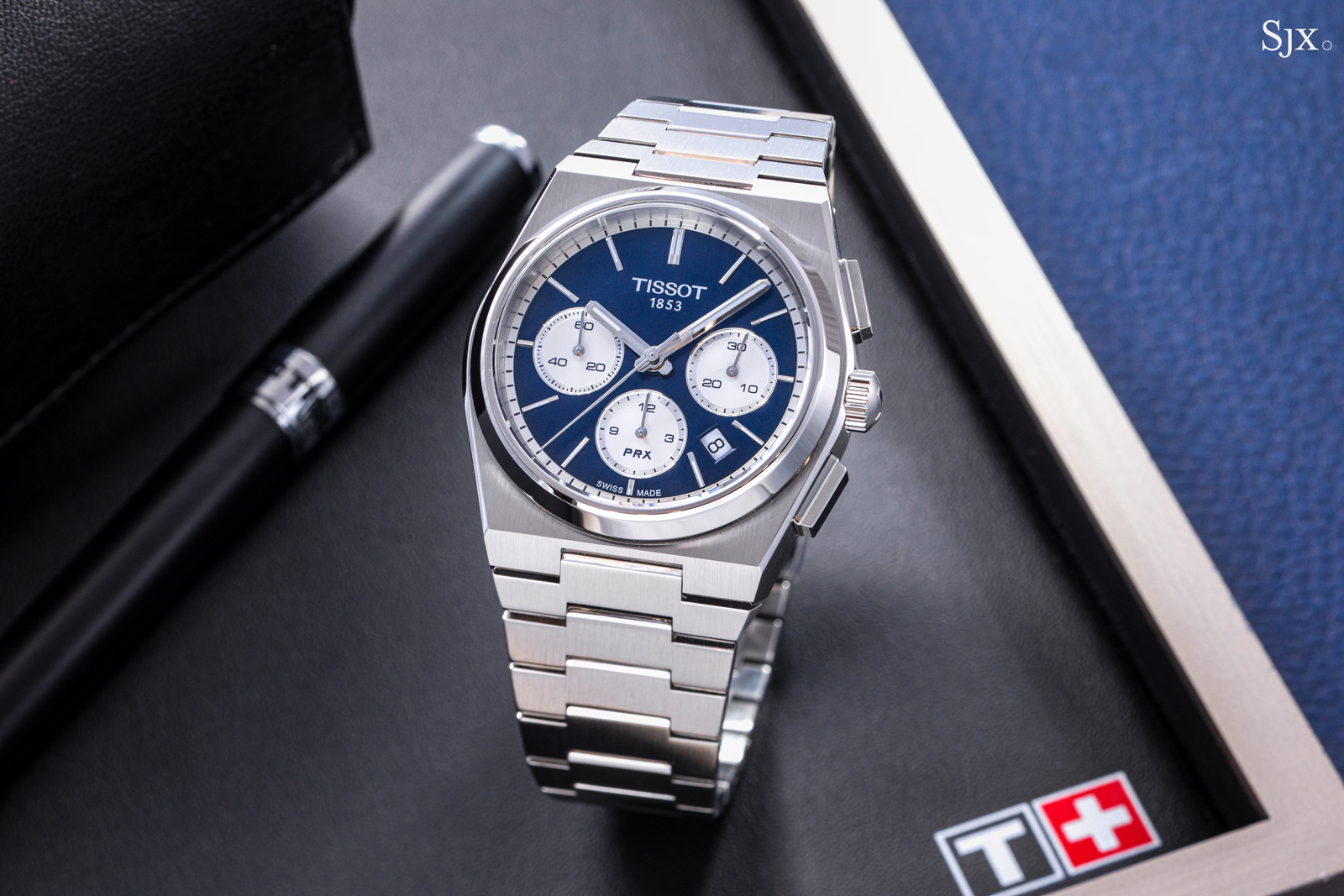
With the time-and-date PRX having been a hit, Tissot unsurprisingly unveiled the PRX Chronograph. Very much catering to the fad for integrated-bracelet sports watches, the PRX Chronograph is stylishly affordable. In absolute terms it remains one of the most accessible automatic chronographs on the market with a price tag of just under US$2,000.

Though substantially pricier than the base-model PRX, the chronograph justifies its price with an upgraded Valjoux cal. A05 H31 movement that has a longer power reserve of 60 hours. And the dial also features details that give it the feel of a more expensive watch, like applied hour markers, recessed sub-dials, and a contrast-finish minute scale on the periphery. 

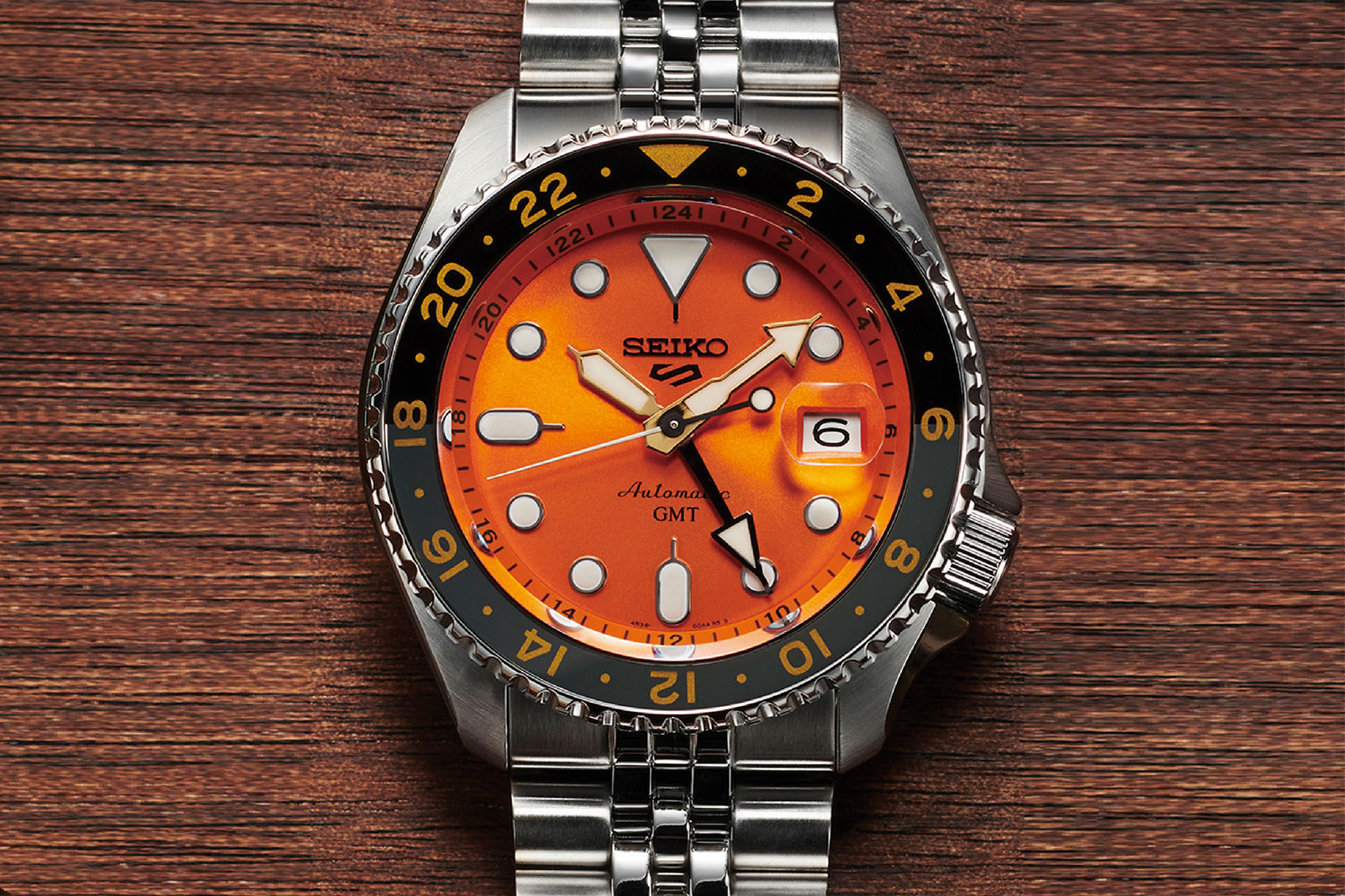
And now for something at the extreme of affordability when it comes to mechanical watches. The Seiko 5 Sport GMT costs under US$500, but it is an automatic watch with a second time zone and date. 

But its price inevitability comes with compromises, namely the fact that it is not a true GMT watch. That’s because it has a 24-hour hand that is independently adjustable in one-hour steps, rather than the local-time hour hand that’s independent as is the case in a bona fide GMT watch. The consequence of that is a slightly more tedious process of setting the time when crossing time zones.

But the Seiko 5 GMT is easily one of the compelling dual-time watches below US$500, though admittedly it has little competition in its price category, perhaps reflecting the challenge of putting together a dual-time watch for that little money.

Seiko’s most-affordable GMT. Image – Seiko

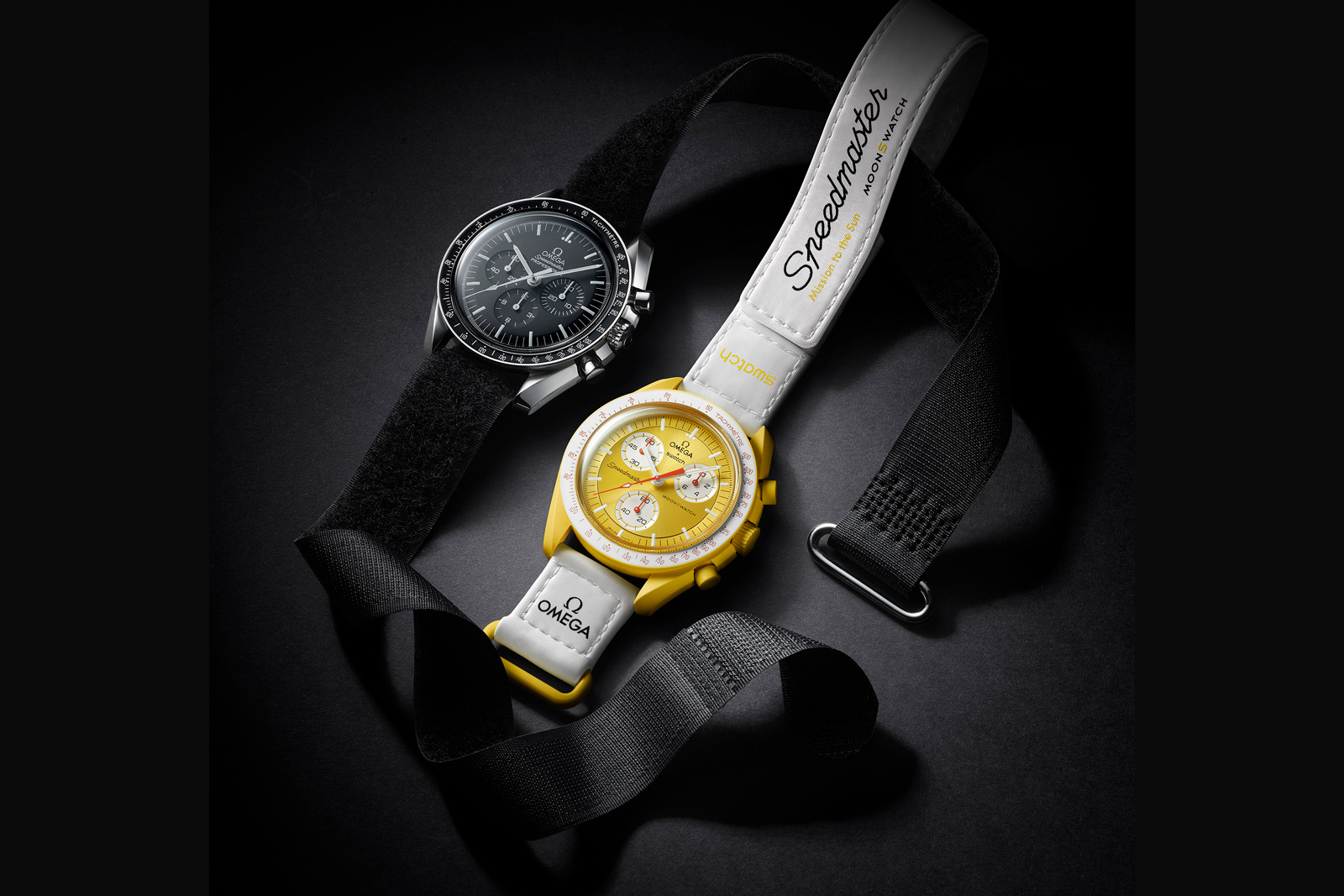
And the honourable mention goes to one of the year’s most high-profile watches, the Omega x Swatch Bioceramic MoonSwatch. Essentially a plastic version of the Omega Speedmaster Moonwatch, the MoonSwatch is affordable – it costs just US$260 – but it is not exactly a value proposition because it feels very much like a two-hundred dollar watch. 

The Moonwatch (left) and MoonSwatch. Image – Swatch

You get what you pay for, and it is very true with the tangible qualities of the MoonSwatch. But it does possess an iconic design borrowed from Omega as well as appealing candy colours, and a price that puts it within easy reach for almost everyone, including young watch enthusiasts. That explains why the MoonSwatch resulted in long queues outside stores, making it a marketing coup that helped revive an ailing Swatch.

The demand for the MoonSwatch so exceeded supply, at least in the initial stages, that Swatch had trouble keeping up, resulting in big premiums to retail on the secondary market. The frenzy has since cooled down, but in some ways the MoonSwatch captures the zeitgeist of 2022 with the hype surrounding it, as well as the rapid rise and fall in its secondary-market value.


Back to top.

You may also enjoy these.

Best of 2022: Compelling Complications

Evolutionary complexity.

Most brands, especially the establishment names, stuck to the evolutionary rather than revolutionary in 2022, which also held true for the latest complications for the year. Nearly all of the year’s most notable complications were derived from past concepts.

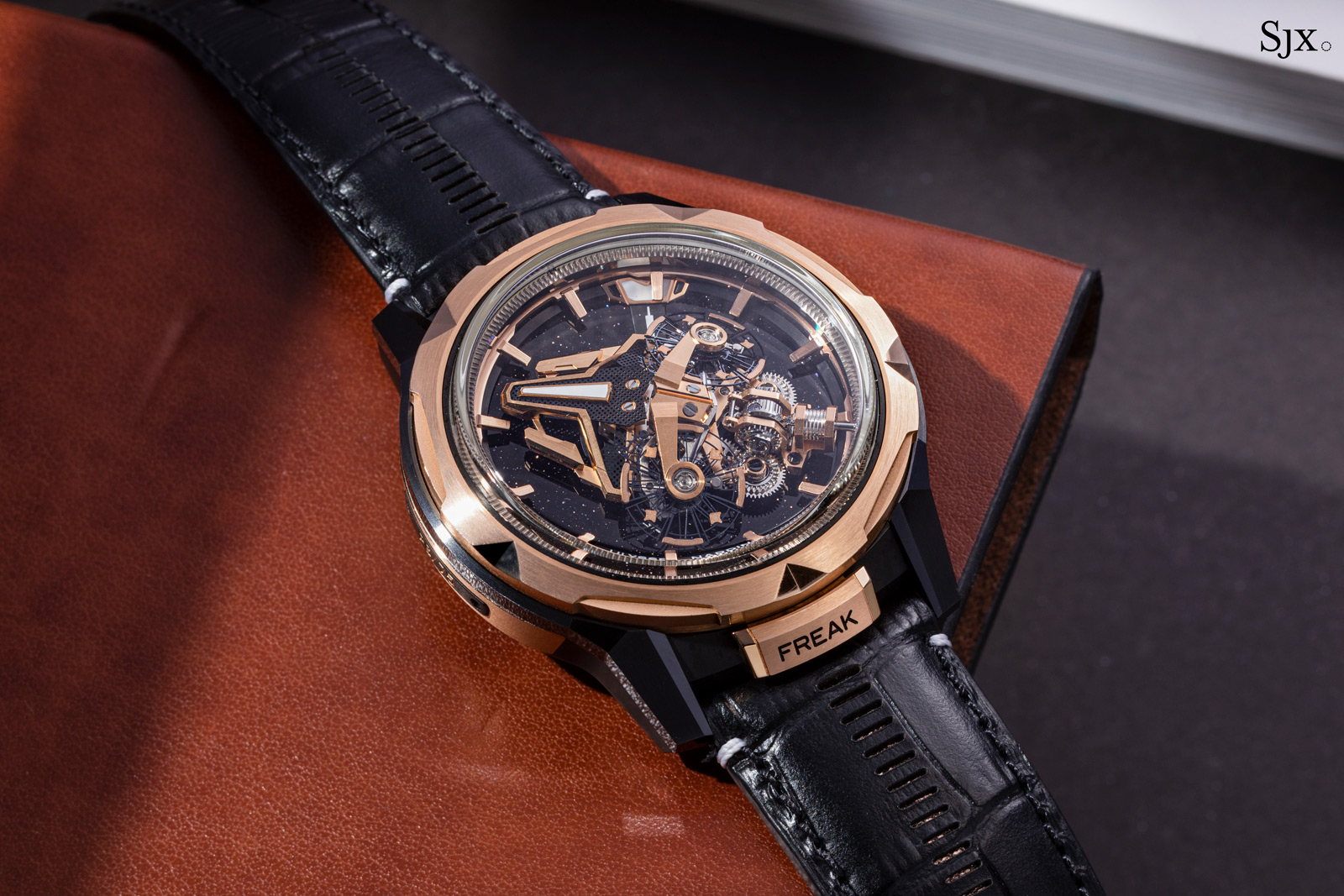
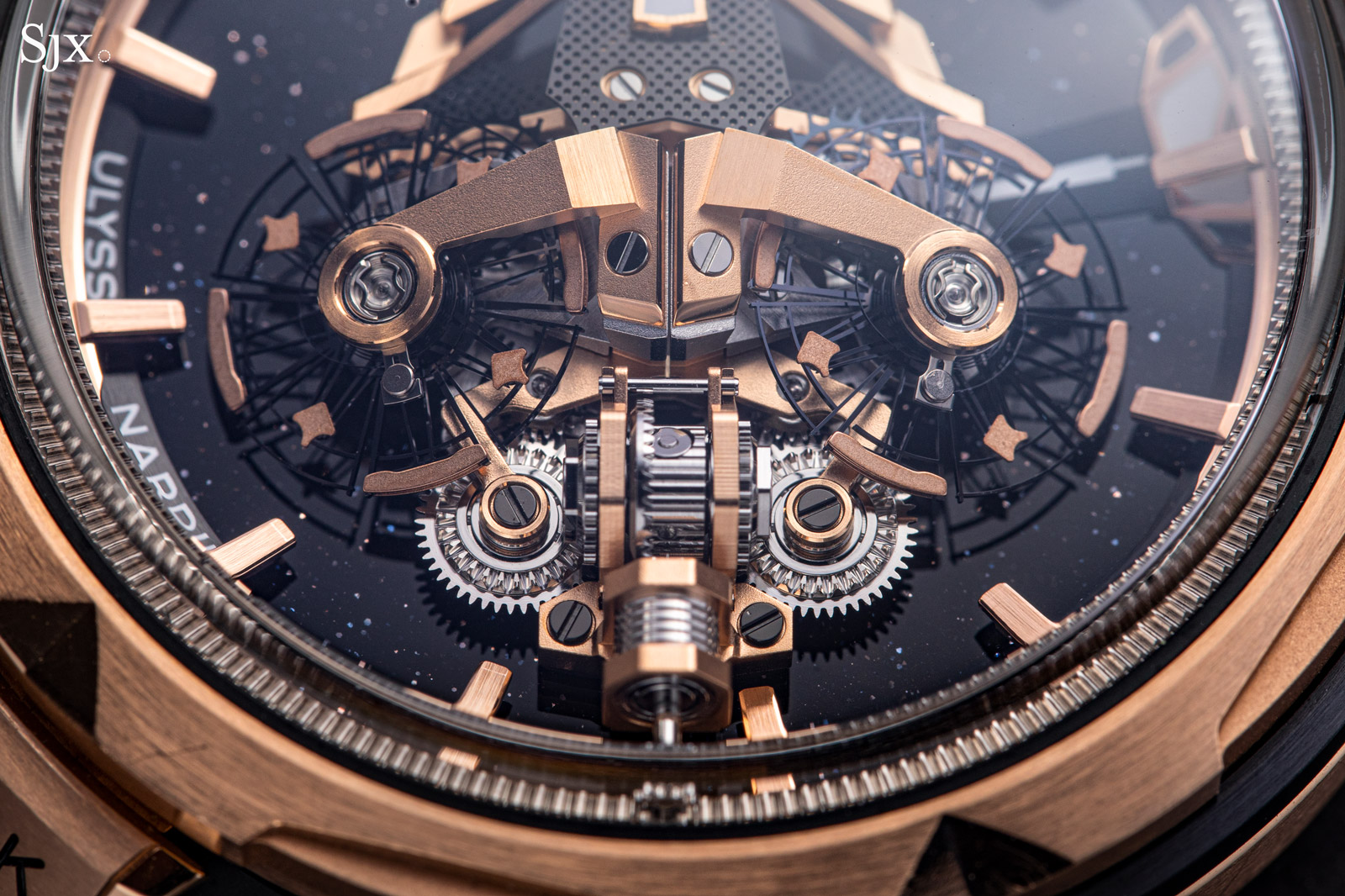
But the result can still be impressive, as demonstrated by the Ulysse Nardin Freak S. The latest version of a watch that was revolutionary when it was introduced in 2001, the Freak S embodies the ideas that made the original Freak a milestone, including the unorthodox movement construction and the liberal use of intricately-shaped silicon components.

But above all it boasts a far more complex regulator that takes the form of twin oscillators connected by a differential. As outlined in our in-depth review, the twin-balance setup was mostly found on classical (and expensive) chronometers from the likes of Greubel Forsey and Philippe Dufour, making the Freak S an outlier with its hyper-modern design. And at US$137,000, it is also more affordable than similar complications from other makers.

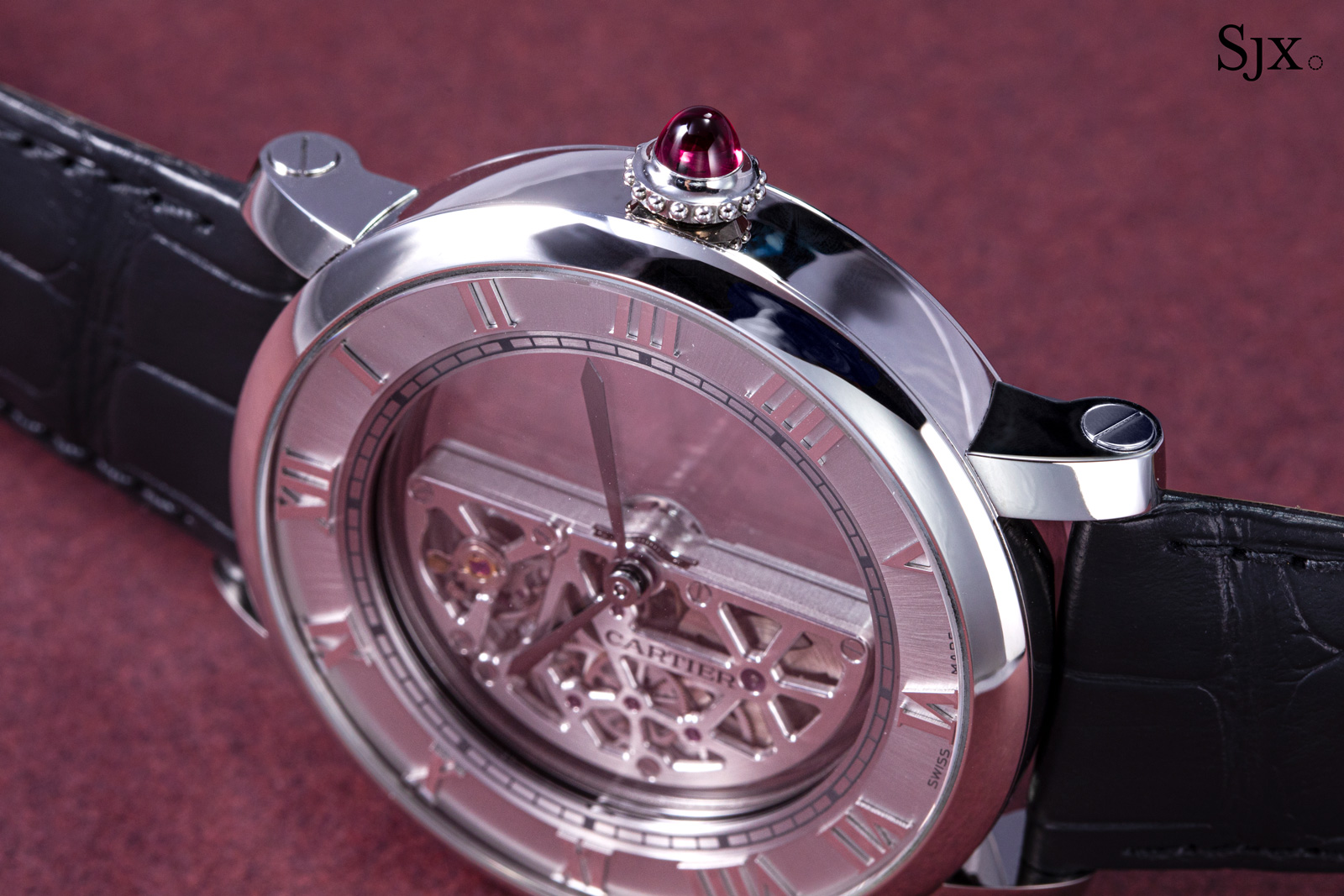
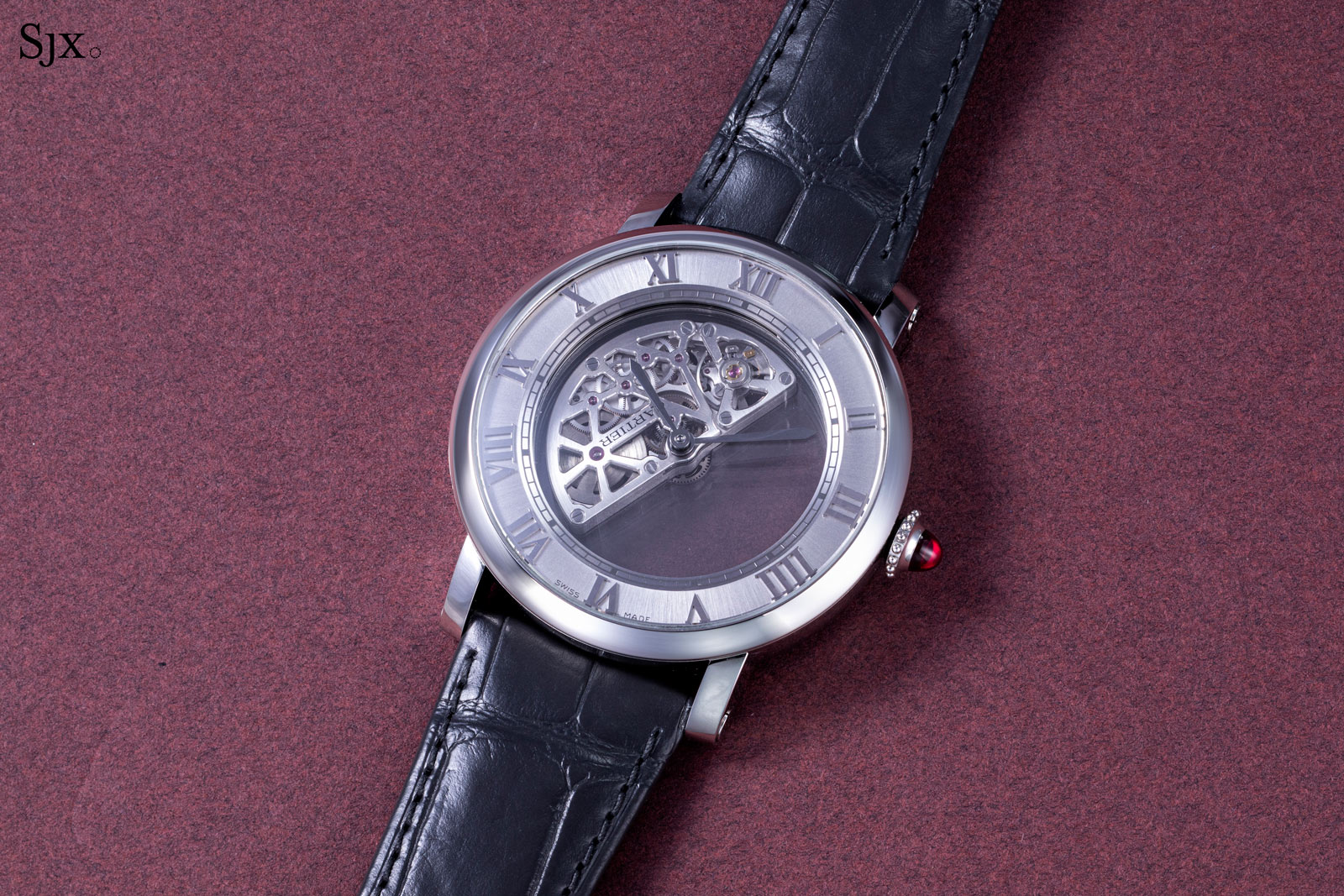
Standing in stark contrast to the aggressively contemporary styling of the Freak S is the Cartier Masse Mystérieuse. Typical of Cartier with its Roman numerals and ruby cabochon in the crown, the Masse Mystérieuse is inspired by the mystery clocks made by the jeweller in the first half of the 20th century.

The result of over eight years of research and development, the Masse Mystérieuse was the final complication devised by Carole Forestier-Kasapi, the former movement chief at Cartier who now holds the same job at TAG Heuer. Reflecting Ms Forestier-Kasapi’s imaginative approach to movement construction and oscillators, the Masse Mystérieuse features a skeletonised automatic movement that is itself the winding rotor. In other words, the movement constantly spins around while the watch is on the wrist. 

The genius of the Masse Mystérieuse lies in the differential gearing that allow the movement to freely rotate around the central axis, while the hour and minute hands on the same axis are stationary and tell the time conventionally. Very few movements incorporate such differential gears due to their complexity, and tellingly, one of the other watches with a comparable mechanism is the Cartier Astroregulator that was also invented by Ms Forestier-Kasapi.

The only downside of the Masse Mystérieuse is its size. Like many of Cartier’s past complications, it is massive at 43.5 mm in diameter and almost 13 mm high. 

More conventional in approach but exceptionally complex, the Grand Seiko Kodo Constant-Force Tourbillon takes a traditional, no-expense-spared pursuit of chronometry. Both of its complications are well established concepts in traditional chronometers, but here they have been refined to a remarkably high standard. The movement boasts a tourbillon with a constant-force mechanism, both rotating on the same axis. Add to that a high level of decoration and the Kodo is easily one of the best complicated watches of 2022.

Beyond its mechanics, the Kodo is notable for not looking like a Grand Seiko at all. Given the brand’s conservative house style, the bold skeletonisation and decidedly modern elements set the Kodo apart from everything the brand has done. While the Kodo is the first and only watch of its kind from Grand Seiko, it certainly sets a promising precedent for things to come.

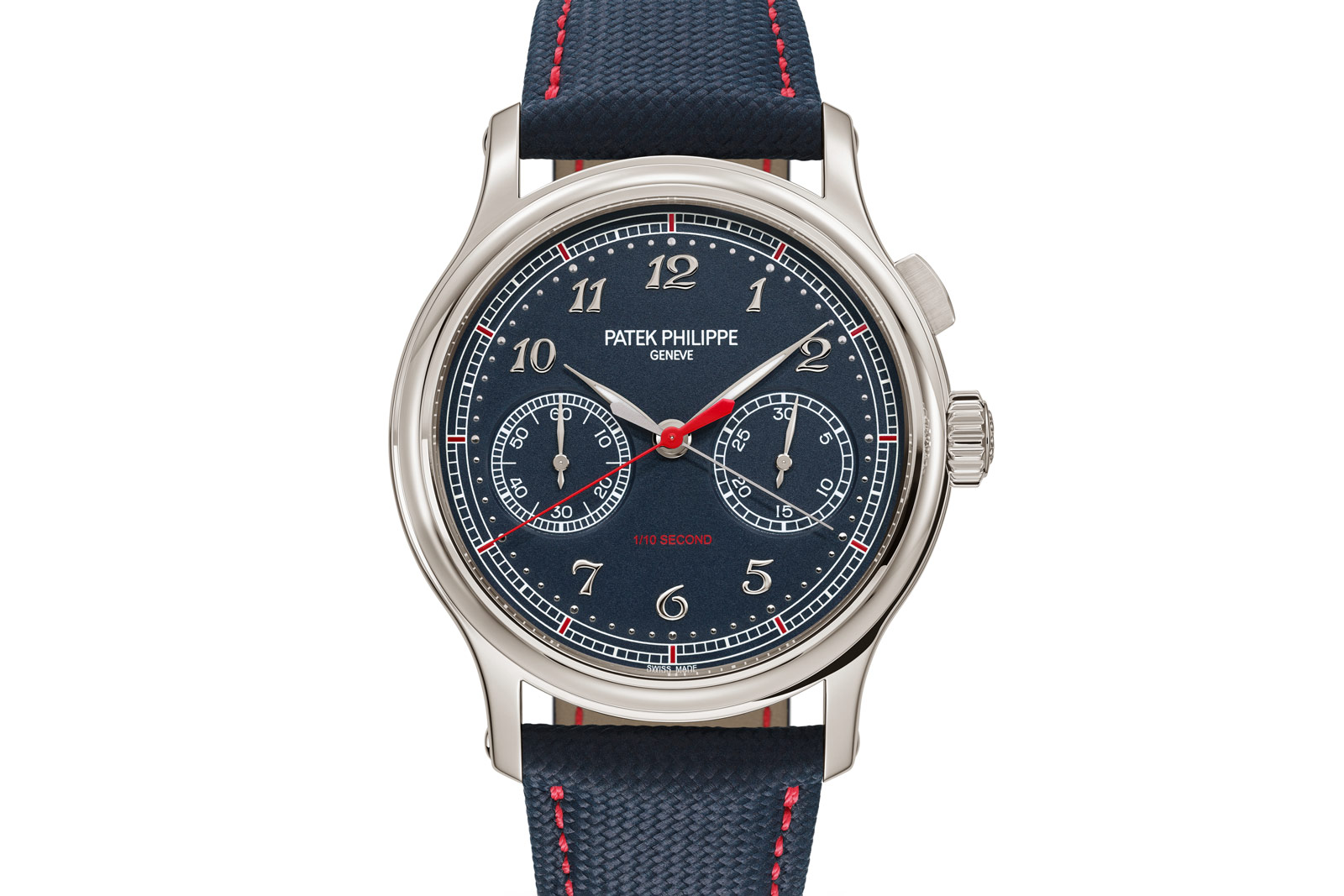
Also unexpected but in a less extreme fashion is the Patek Philippe ref. 5470P 1/10th of a Second Monopusher Chronograph. While Patek Philippe is certainly famous for chronographs, its past models have been eminently traditional. Instead most of the brand’s innovation and even experimental complications have been implemented in its calendar watches and more recently in a minute repeater.

In contrast, the ref. 5470P packs in a substantial amount of tech – at least by the conservative standards of Patek Philippe – while being a traditional, column-wheel chronograph at heart.

Notably a regular production watch, the ref. 5470P. Image – Patek Philippe

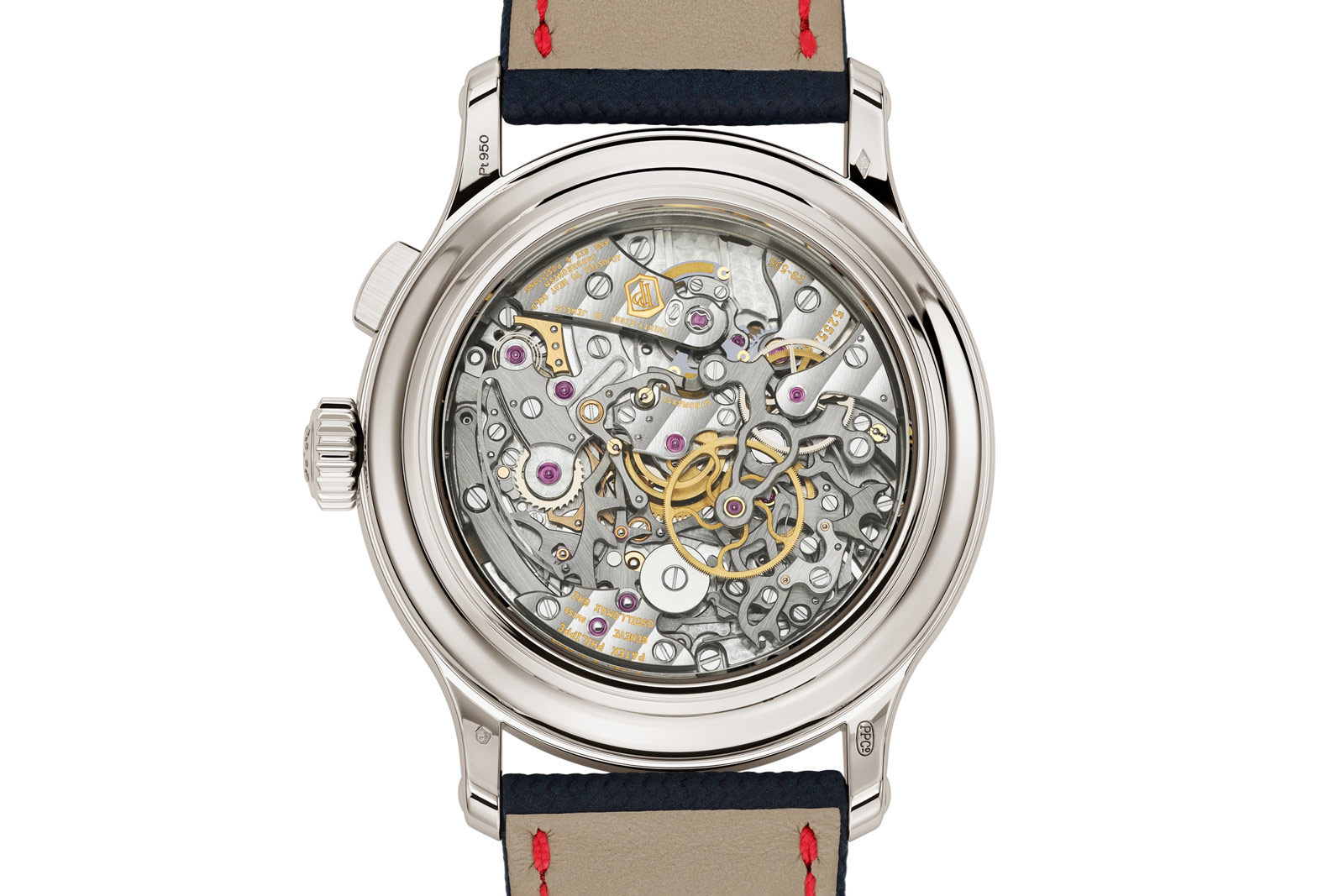
The movement of the ref. 5470P features two key additions to the standard manual-wind chronograph movement. One is the silicon balance assembly running at 36,000 beats per hour, or 5 Hz, making this the brand’s first and only serially-produced high frequency movement. The other is the additional gear train that drives the red, “lightning” seconds hand, which makes one revolution around the dial every second.

Granted, “lightning” seconds chronographs are not novel. However, the various innovations and mechanisms found in the ref. 5470P make it an interesting proposition, particularly in how it points the way to where Patek Philippe is going in terms of technology and complications.

The CH 29-535 PS 1/10 of the ref. 5470P. Image – Patek Philippe

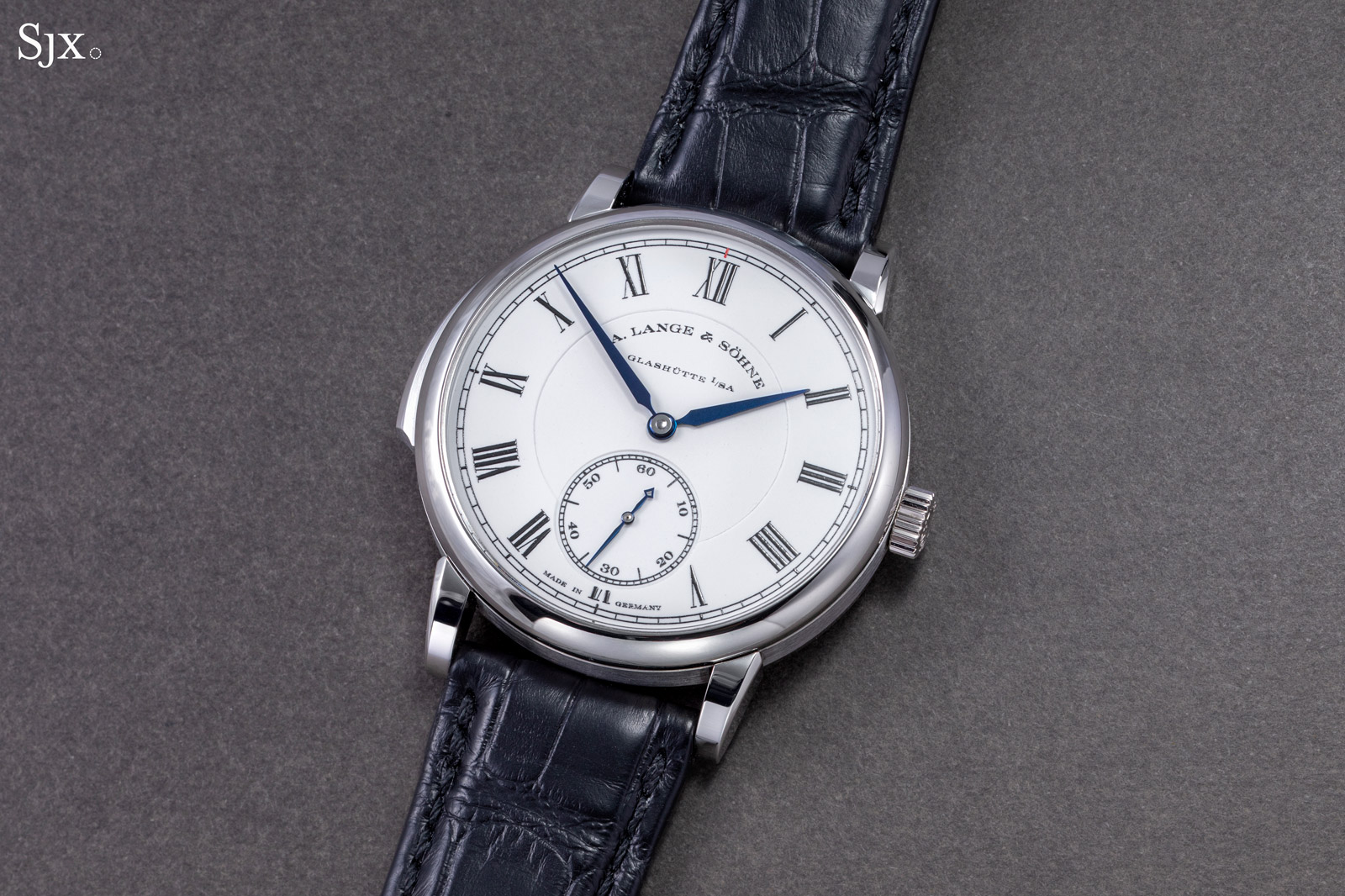
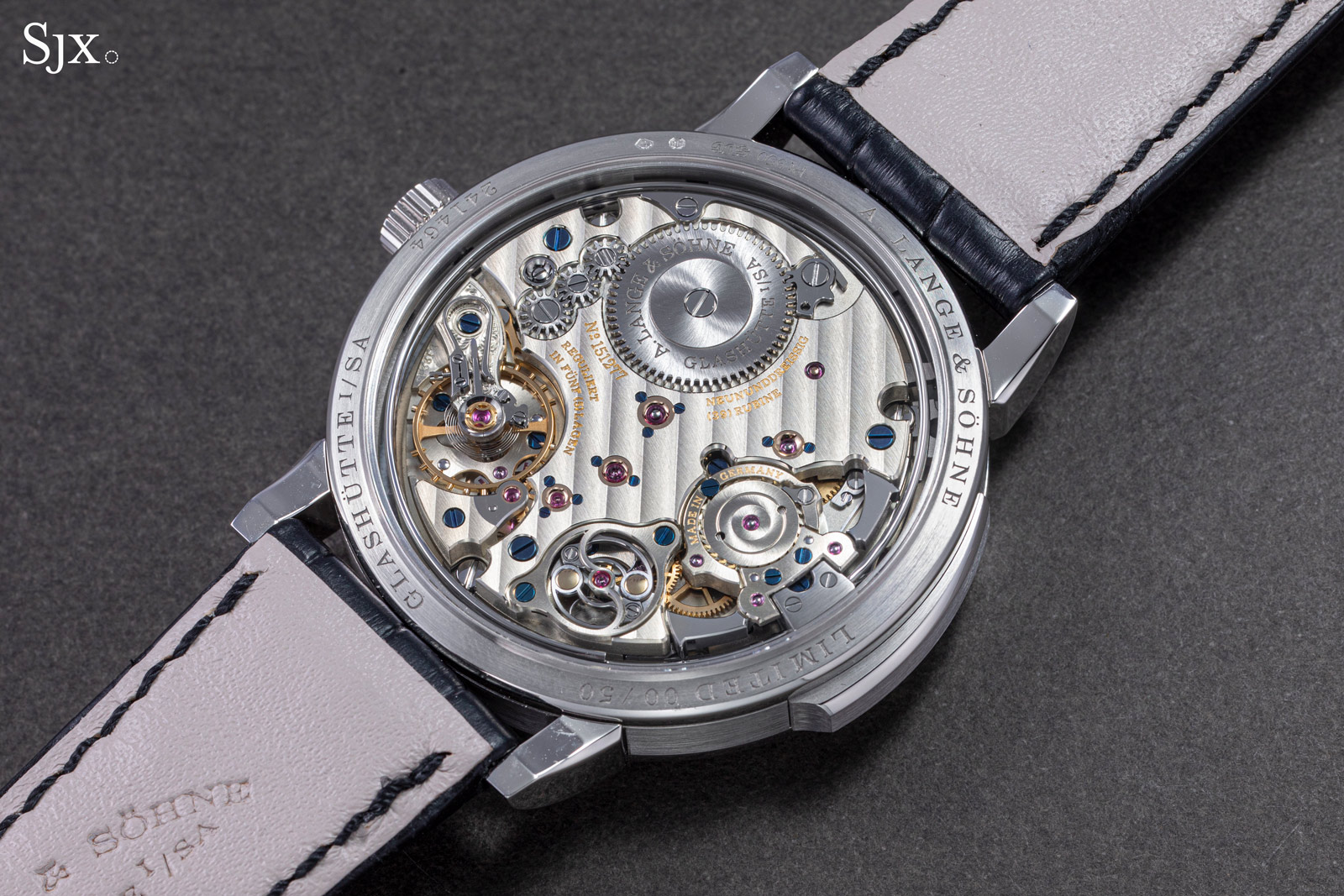
And finally come two watches that deserve an honourable mention. The first is the A. Lange & Sohne Richard Lange Minute Repeater, which is neither innovative nor progressive, but instead an old-school striking watch of extremely high quality. In contrast to the brand’s first minute repeater that was a digital Zeitwerk, the Richard Lange Minute Repeater is conservatively styled with its pocket watch-inspired enamel dial.

Although entirely new and developed specifically for this watch, the L.122.1 movement inside is similarly traditional in layout and details. It does, however, incorporate an invisible but audible innovation: the chiming mechanism has a pause-elimination feature that eliminates the silent period between the hour and minute strikes found in conventional repeating movements.

And the movement was also engineered to be idiot-proof so the crown cannot be pulled out to set the time while the chiming is ongoing, preventing the damage to the movement that occurs when the hands are moved while the repeater is striking. 

Given the brand’s numerous in-house movements with inventive complications, the classical approach taken by the Richard Lange Minute Repeater makes it seem like an oddity to some degree. Having said this, it does hark back to the first decade after the brand was founded, when Lange movements were largely inspired by 19th century German pocket watches. At the same time, the fact that the Richard Lange Minute Repeater manages to improve on the practicality of the minute repeater is an achievement in itself.

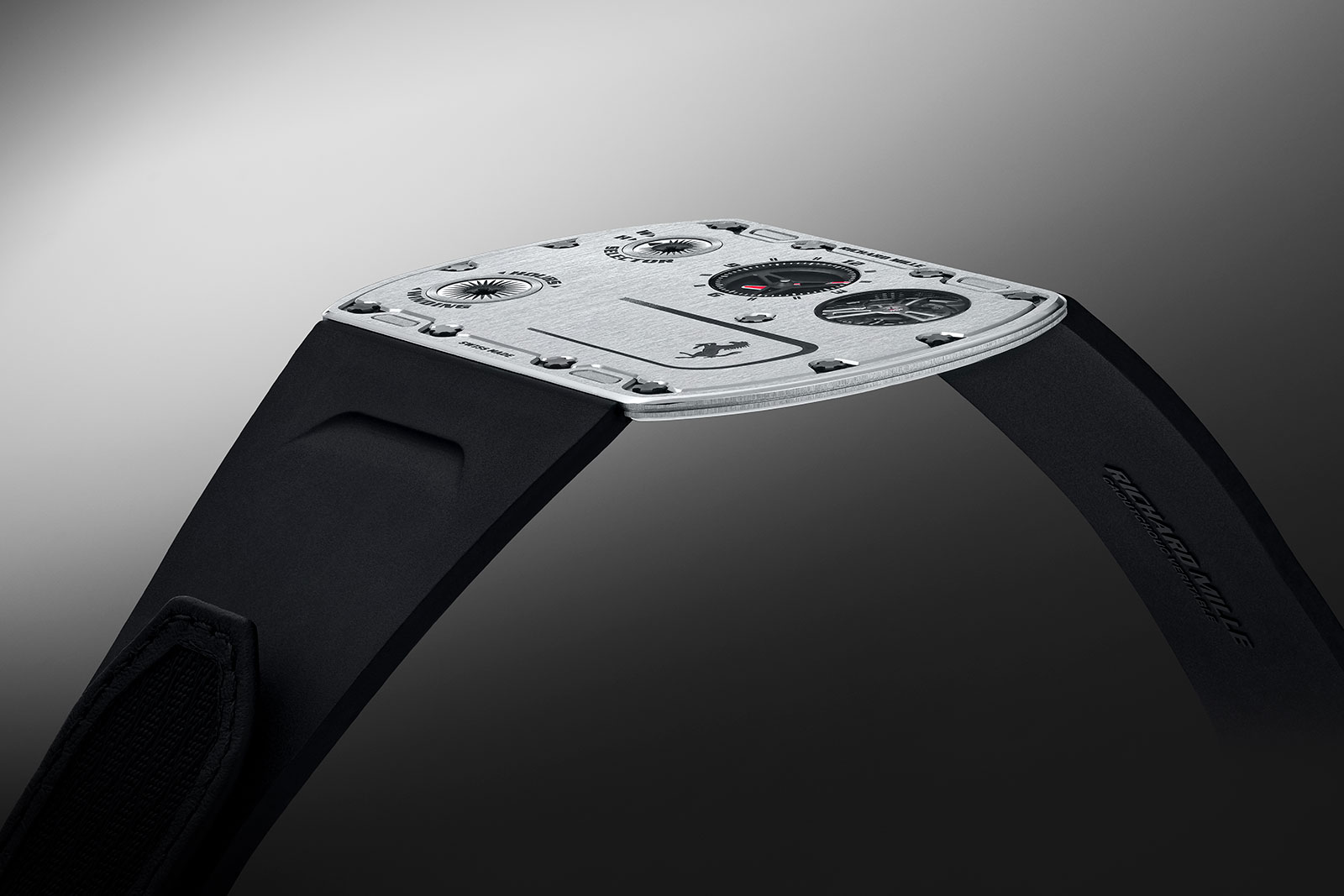
And the second honourable mention goes to the Richard Mille RM UP-01 Ferrari, the thinnest mechanical watch ever. At just 1.75 mm tall in its entirety, the RM UP-01 bests the previous record holder by 0.05 mm, a massive distance by the standards of very-thin watches.

It doesn’t get any flatter than this. Image – Richard Mille

To get there, however, the RM UP-01 relies on many of the methods found in its ultra-thin rivals used, but Richard Mille takes it to a more extreme level. To quote from our original story on the watch, the RM UP-01 is “an incremental improvement – or more accurately, an incremental reduction – in thinness thanks to clever engineering that builds on past ideas.”

Like many of its peers, the thinness of the RM UP-01 dictates a variety of compromises, some of which reduce its practicality. Amongst them is the deconstructed winding and setting mechanisms, both of which require a key to engage. Another is the odd oblong case shape that departs from the trademark Richard Mille tonneau form. The CHF1.7 million price tag, however, is very much typical of the brand.


Back to top.
You may also enjoy these.

Best of 2022: Establishment Favourites

Incremental improvements and one deep, deep dive.

Having covered the year’s best from independent watchmaking, we now turn to the big names (but leaving out the value buys below US$5,000 that we cover in a subsequent story). The notable launches from establishment marques were predominantly evolutionary, either new-and-improved versions of existing models or vintage remakes. Nothing was a landmark achievement – except for the monumental Rolex Deepsea Challenge that is less of a watch than a statement of technical prowess.

While not strikingly novel, many of the year’s best watches are executed very, very well. One of the best is the Audemars Piguet Royal Oak Extra-Thin ref. 16202. Practically unchanged from the 1972 original in terms of design, it doesn’t do anything new in terms of design. The the new “Jumbo” nonetheless is a superior watch, mainly thanks to a brand-new movement as well as subtle improvements to the case. As we detailed in our in-depth review, the “Jumbo” retains the look of the original, right down to the colour of the dial, which is reproduced with PVD treatment.

But it is the new cal. 7121 that’s the star. Amongst the things, it boasts an efficient, bi-directional winding system, as well as a higher beat rate for the balance wheel, resulting in more stable timekeeping. But perhaps most important is the addition of a quick-set date. While getting this watch at the retail price is a Sisyphean task, it is one of the year’s top watches simply because it makes a classic much better.

Unchanged since 1972

The cal. 7121 with its distinctive gold-plated bridges for the balance and barrel

Like the Royal Oak “Jumbo”, the second-generation Lange Zeitwerk is an upgraded iteration of a familiar model. Given the intrinsic complexity of the Zeitwerk, the upgrades are substantial, but the watch remains essentially the same.

Looking much the same on the front, the new Zeitwerk gains conveniences like a power reserve that’s twice as long, a quickset corrector for the hours, and a thinner movement that gives it a slightly thinner profile overall.

The second-generation Zeitwerk in pink gold

While Patek Philippe’s debuts this year included watches that were more “hype”, like the Nautilus ref. 5811/1G, and more “bling”, like the jewelled ref. 5271, the Calatrava ref. 5226G-001 stands out for illustrating how the brand is improving its entry-level watches (in Patek Philippe terms that still means a hefty price of US$39,030).

Though a simple watch, the ref. 5226G has a peculiar yet elegant aesthetic that is slightly vintage and vaguely military. But its most notable features are the case and dial, not in terms of design but execution. Both are decorated elaborately despite this being one of the most affordable watches in the brand’s line-up.

The dial is has a stamped grained surface with a gradient finish and applied white-gold numerals. And the case has an unusual construction that allows the case band to be seamlessly decorated with clous de Paris guilloche.

The ref. 5226G with its finely decorated case band

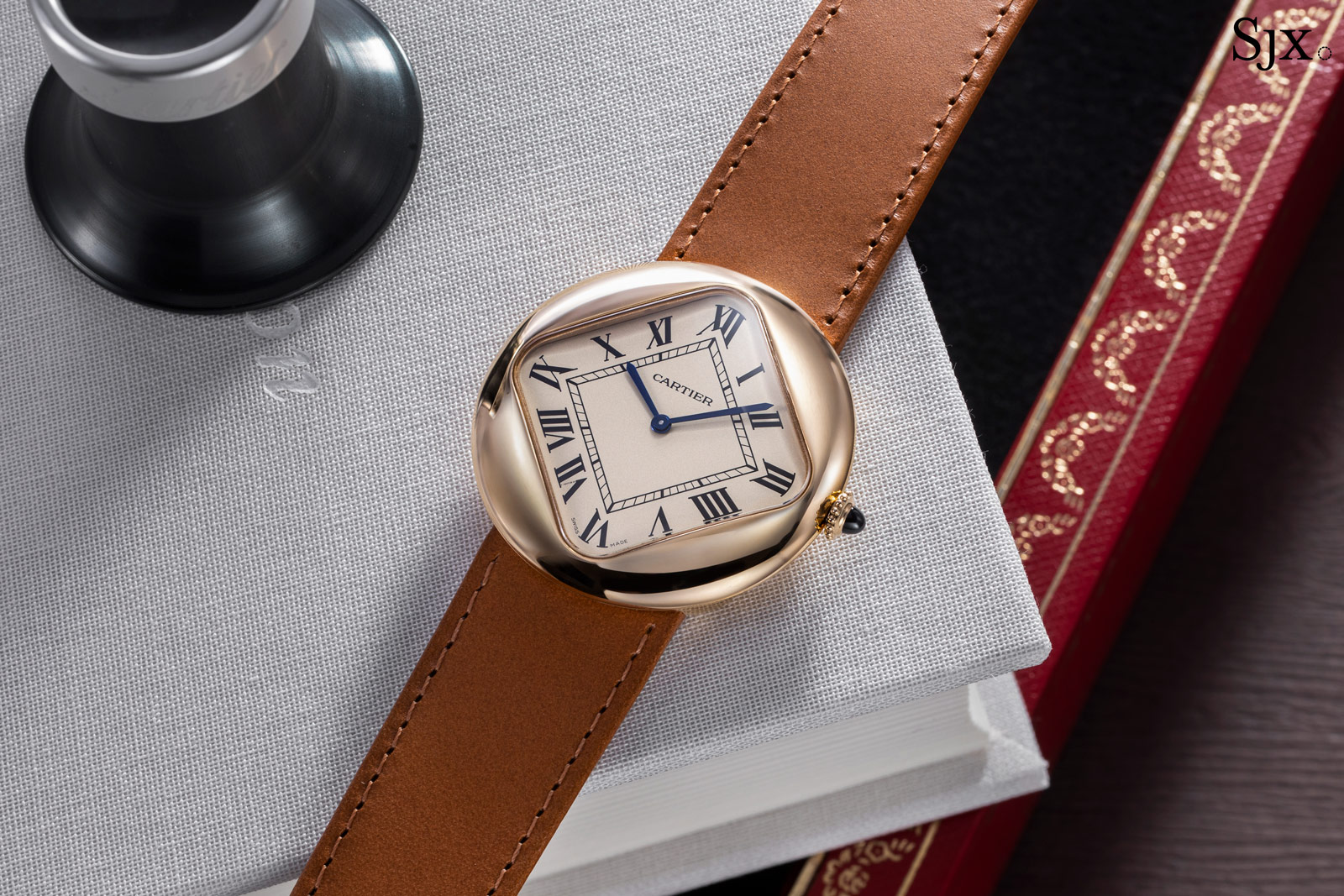
One of the year’s most elegant and unique designs, Pebble reproduces one of Cartier London’s quirky creations of the 1970s, a period when that branch of the jeweller excelled in quirky creations. Though simple in style, it is instantly recognisable as a Cartier, which explains the six-figure values achieved by vintage examples of the Pebble at auction.

But while vintage Pebbles are expensive because they are valuable and rare – only six are known – the modern-day remake is expensive mainly because Cartier has pricing power, for now. It costs about US$44,000, which is a lot for a time-only watch with a simple case containing the Piaget-derived cal. 430 MC.

The Pebble

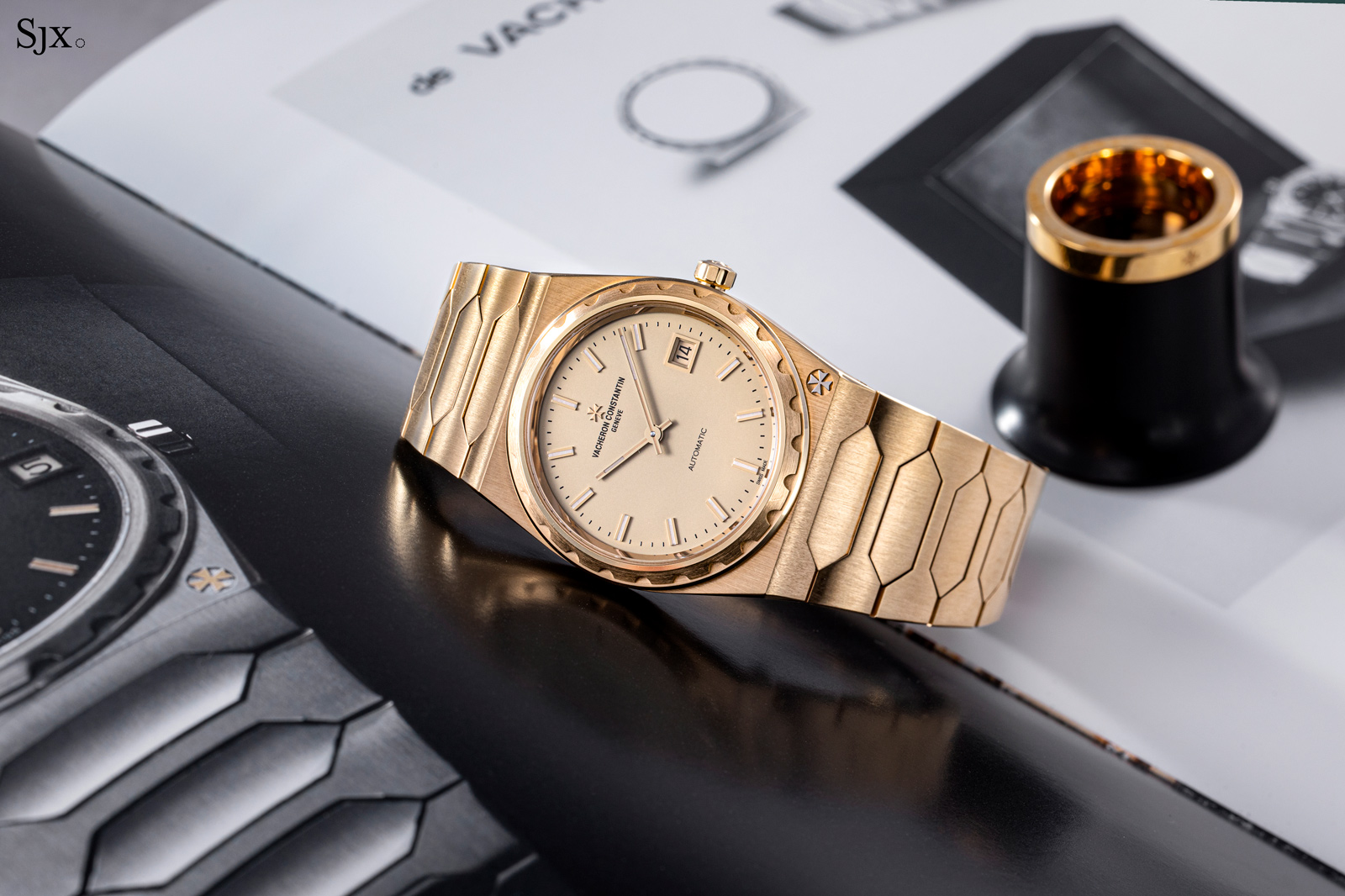
Like the Pebble, the Vacheron Constantin 222 is a good looking watch with lots of intrinsic appeal, but it is a vintage remake so it offers nothing genuinely novel. Relaunched as part of the Historiques collection of vintage remakes, the 222 retains the original size of 37 mm, but is available only in yellow gold for now.

As a remake of Jörg Hysek’s classic from 1977 (unlike its peers of the era that were designed by Gerald Genta), the 222 preserves the design of its integrated bracelet, but refines the bracelet construction for better ergonomics. And inside is the cal. 2455/2, an automatic movement that is robust than the storied but finicky cal. 1120 found in the original.

The 222 returns

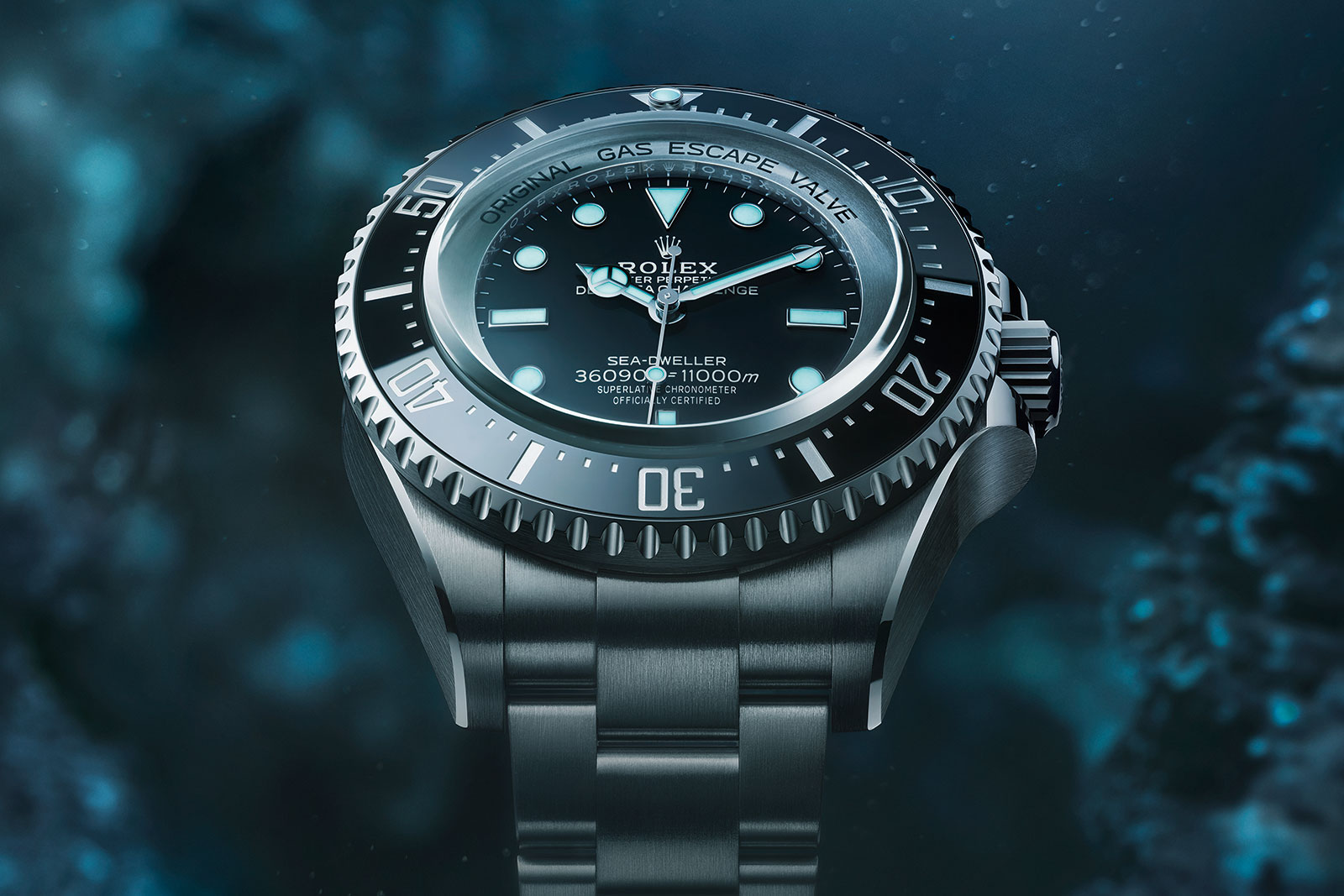
In a surprise announcement late in the year, Rolex released the production version of its experimental dive watch. The Deepsea Challenge is the brand’s first-ever titanium watch.

Patterned after the concept watch that accompanied filmmaker James Cameron to the deepest point of the Marianas Trench in 2012, the Deepsea Challenge has a record-setting water resistance of 11,000 m, albeit in a barely-wearable case of 50 mm by 20 mm that is nevertheless a manageable weight as the case and bracelet are in RLX Titanium.

While this is the priciest non-precious metal watch in the Rolex catalogue, it is arguably worth every penny given the inventive construction and monumental water resistance. And it is perhaps an important statement too – the watch is Rolex announcing that it is, well, Rolex, despite the best attempts by its occasional rival

A monster of the deep. Image – Rolex

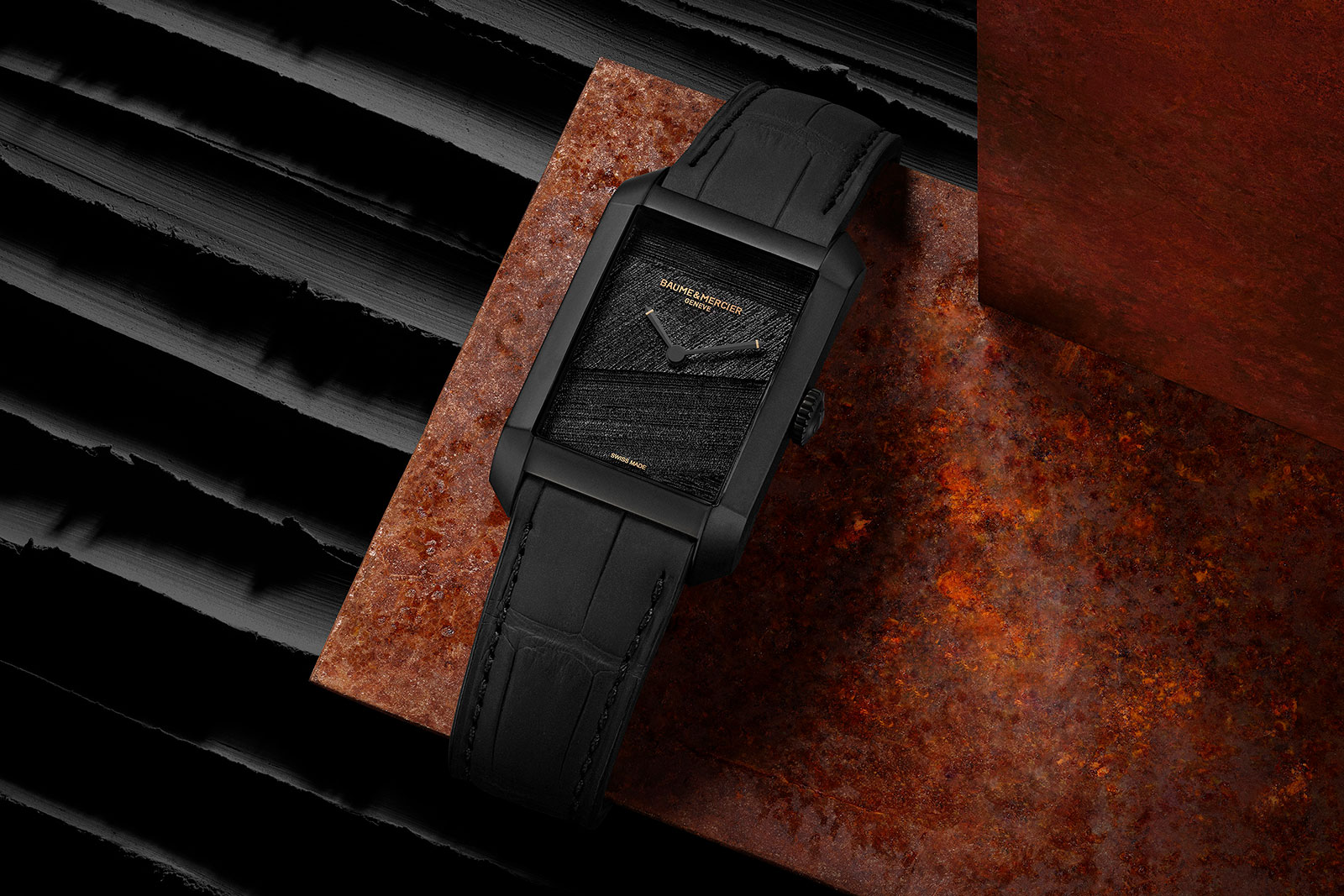
And the honourable mention goes to a surprising brand, Baume & Mercier (B&M). Granted B&M isn’t exactly an establishment brand, but it is owned by Swiss luxury conglomerate Richemont, which makes it a mainstream name.

Probably the only interesting watch B&M has debuted in a long time, the Hampton Hommage à Pierre Soulages pays tribute to the late French abstract painter.

Soulages in miniature. Image – Baume & Mercier

The dial replicates relicating the distinctive, monochromatic impasto of Soulages’ brushstrokes on a minute scale but rich in detail. B&M achieved that with 3D printing – adding tiny amounts of material to build up multiple layers – and finishing it off with semi-matte black lacquer. At just under US$6,000, this is pricey for a B&M (and probably too much given the lack of brand equity), but it is a compelling watch.


Back to top.

You may also enjoy these.

Best of 2022: Independent Watchmaking

A high-volume year with just a few outstanding watches.

Twenty twenty-two will undoubtedly be the best year on record for the luxury-watch industry. Swiss watch exports recorded their highest ever monthly value in November 2022 and the total for the year will top CHF24 billion, another all-time record.

Despite the stellar year – or perhaps because of it – the “novelties” for 2022 are fairly muted. Lots of nice watches made their debut during the year, but the truly outstanding and significant launches were sparse. That could be for a few reasons, including supply chain disruptions due to the pandemic or that brands simply didn’t need to try too hard since sales were easy. During Watches & Wonders, a chief executive of a high-end independent brand conceded that it was better to conserve ammunition for the inevitable slowdown.

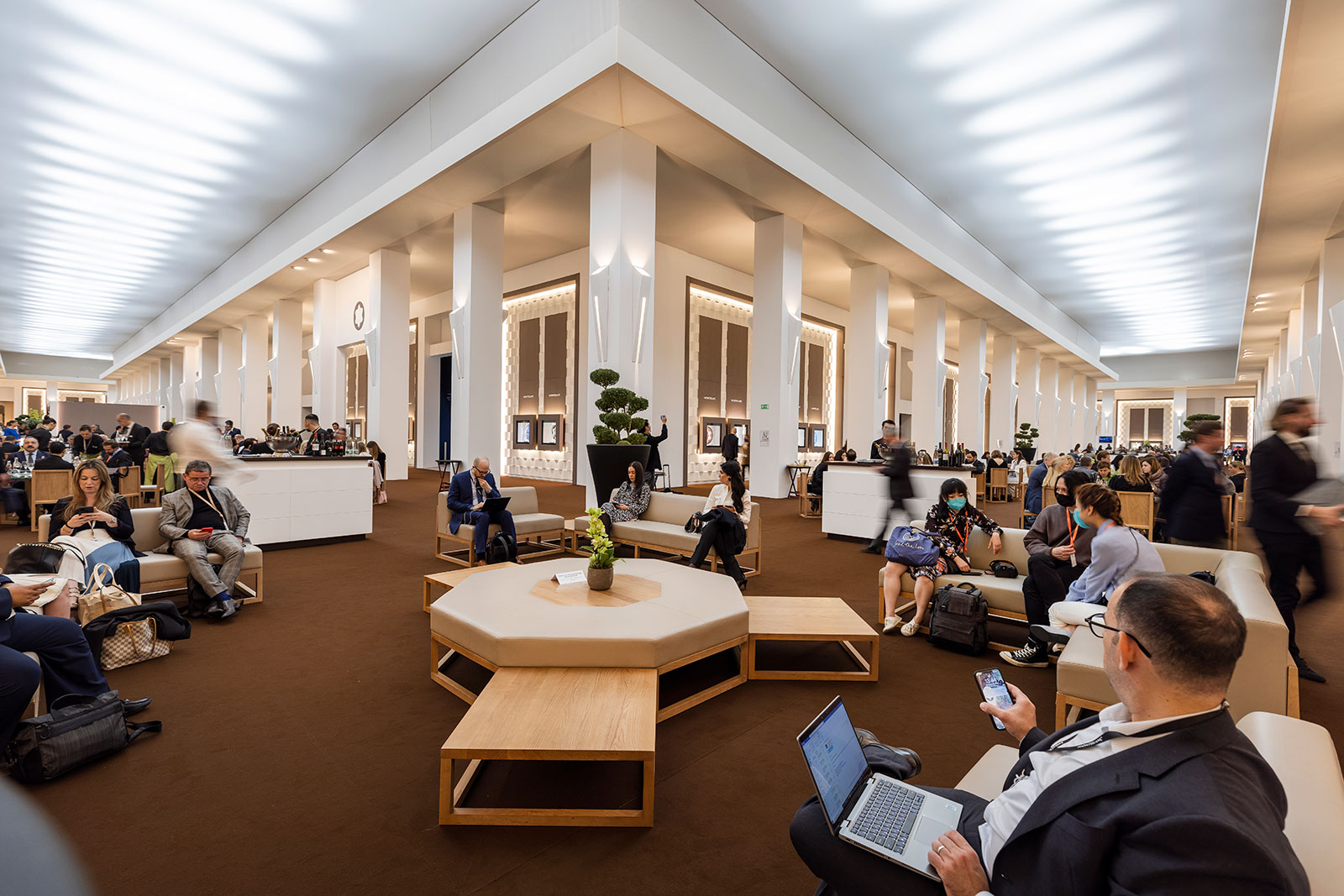
Watches & Wonders 2022, where sales were easy to come by. Image – Watches & Wonders

Even if the genuinely notable were few, the volume of new releases was consistently high throughout the year. And it wasn’t just new models from existing brands, but also new faces, especially in the independent watchmaking space. There was plenty to keep watch aficionados occupied throughout the year. 

Still, the year’s top watches are pretty obvious. The very best will be remembered a decade from now as a significant or important watch. Other picks simply have soul and authenticity.

With that in mind, our team compiled the year’s best in each of the major categories, ranging from establishment favourites (like the new Royal Oak “Jumbo”) to the independents (which includes a made-in-Cambodia tourbillon). We begin here with the independents.


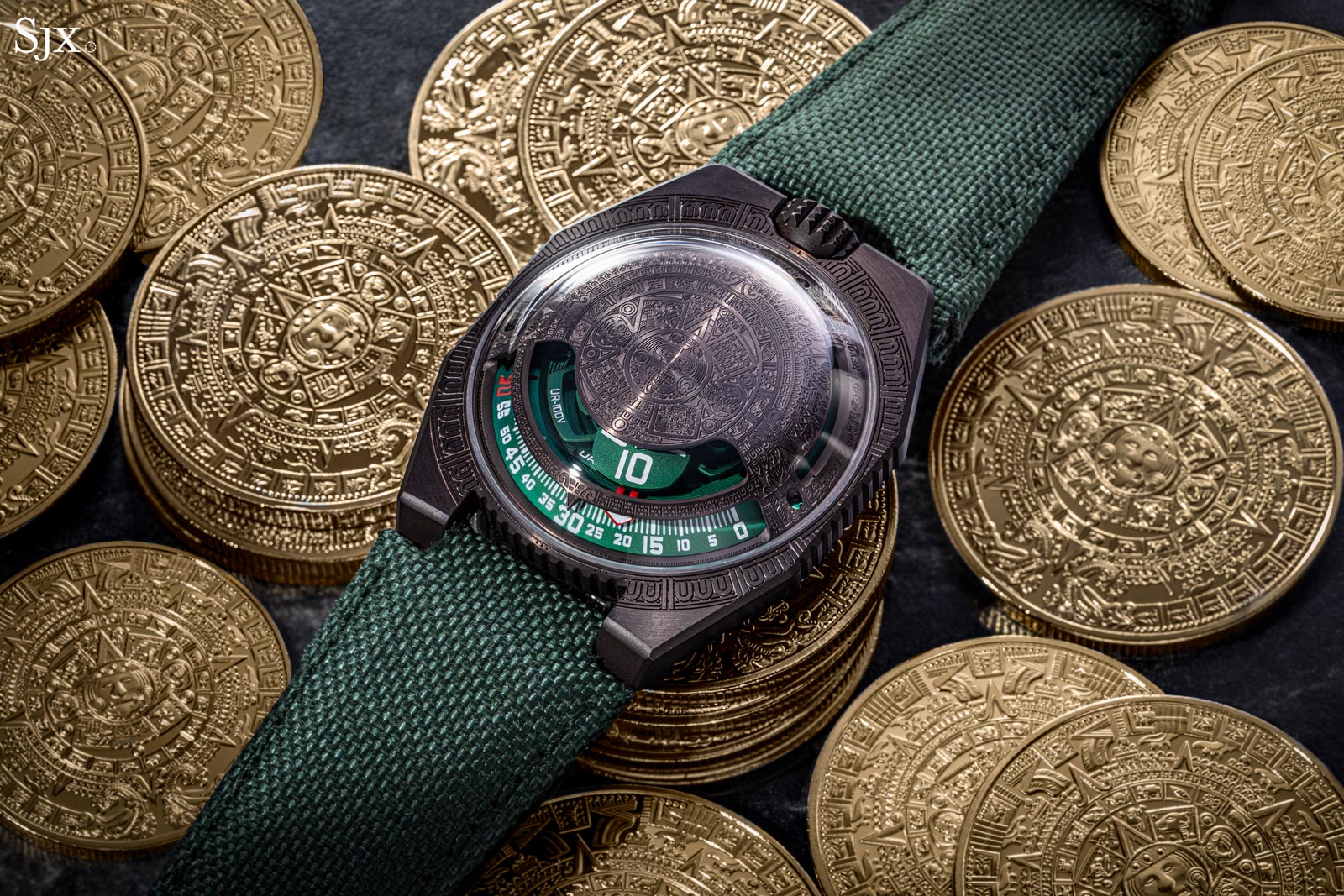
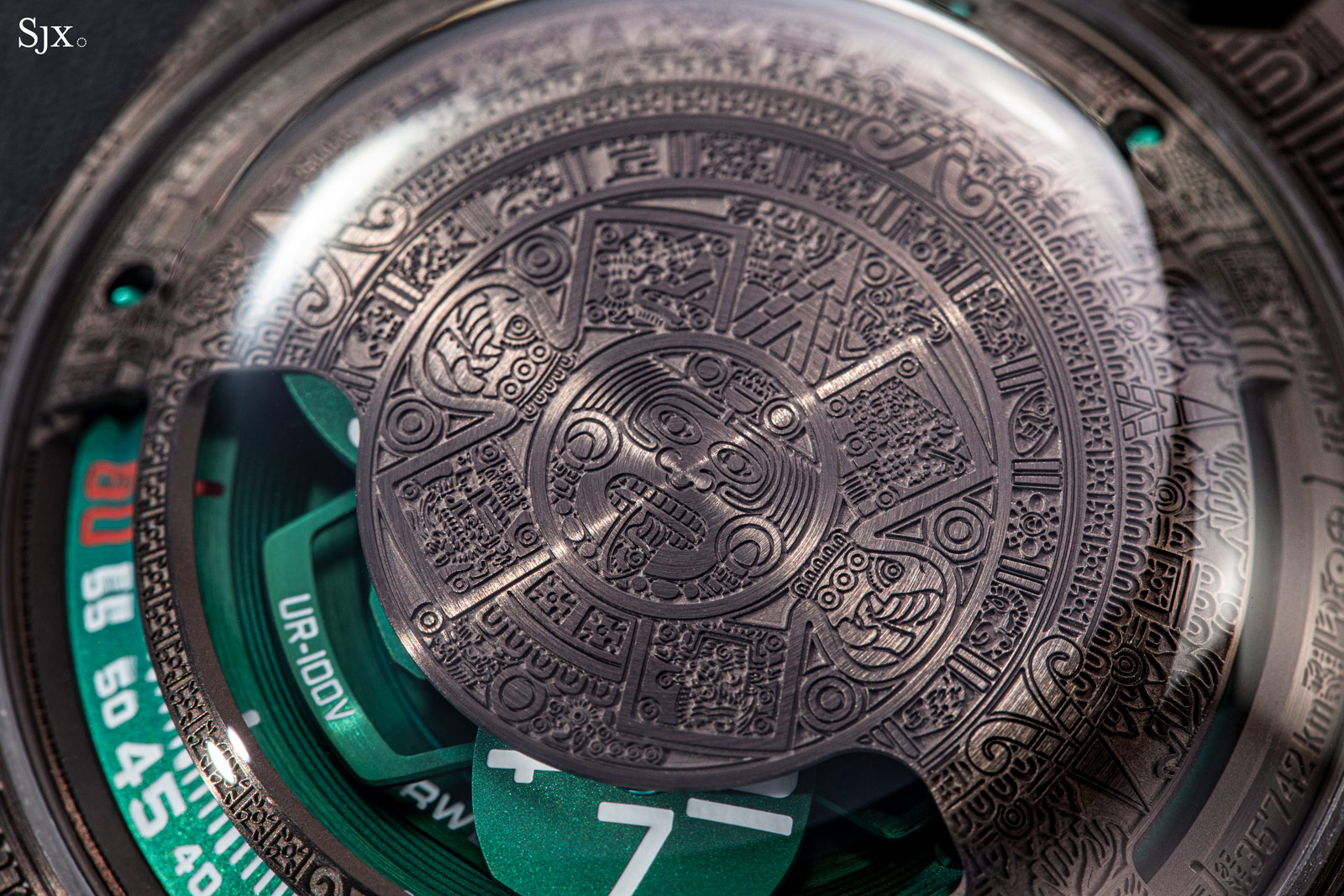
Naturally we have to lead with the UR-100V ‘Time and Culture’, which was designed by our founder in collaboration with Urwerk. Inspired by Aztec motifs, the Time and Culture has a micro engraving on the front plate that sits just under the crystal. It is easily one of the most striking Urwerk watches, bar none.

UR-100V ‘Time and Culture’

The engraving was done with a drill bit of just 0.05 mm in diameter

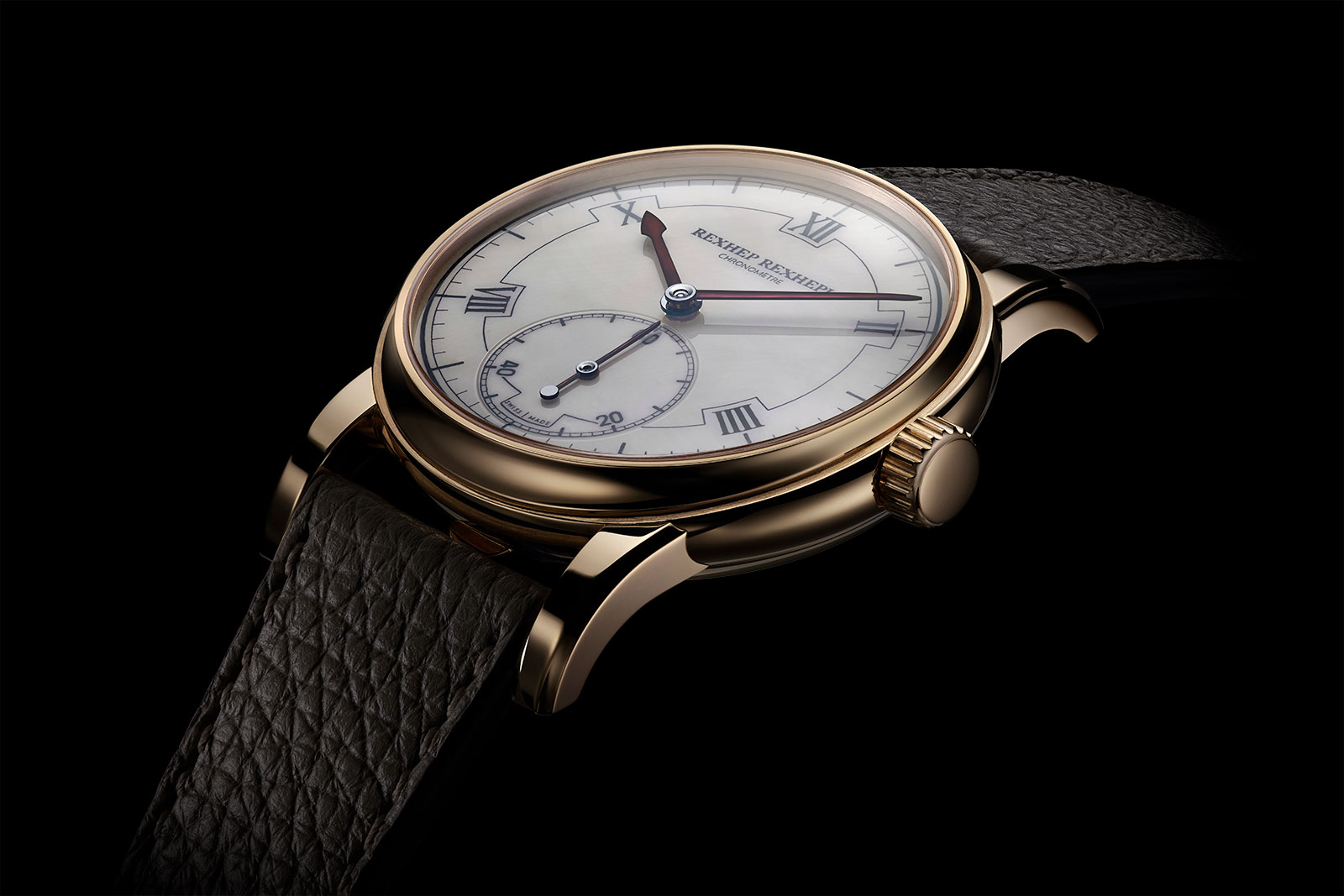
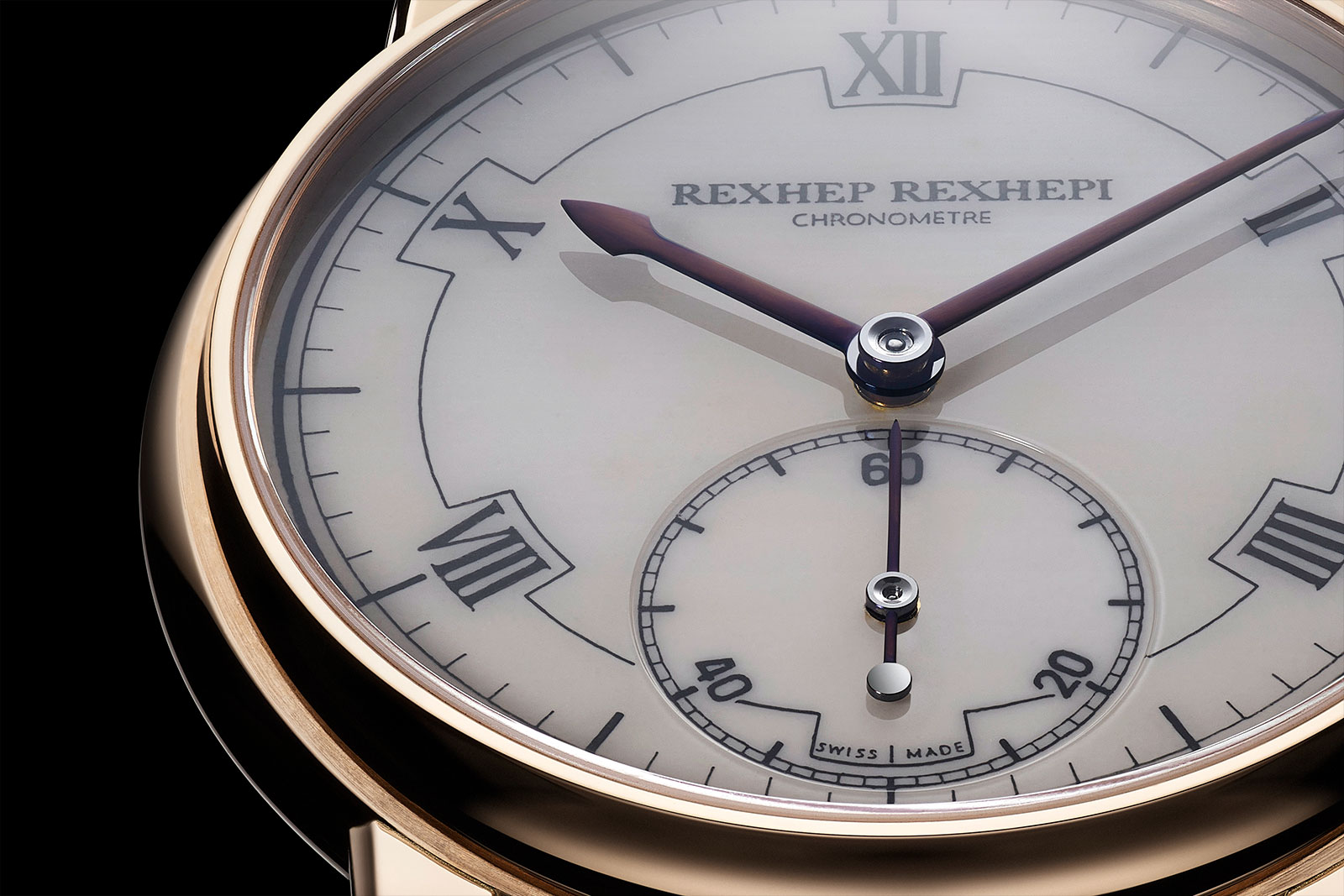
Rexhep Rexhepi needs no introduction. The founder of Akrivia is in his early thirties but unquestionably one of the leading independent watchmakers of the modern era. This year Akrivia released the Chronomètre Contemporain II, following the unique piece created for Only Watch last year. 

While designed in the same mould as its predecessor, the Chronomètre Contemporain II (RRCCII) is an entirely new timepiece with movement developed from the ground up. Inside is the RRCC02 with a deadbeat seconds incorporating hacking and zero-hacking. Its biggest flaw is availability: the RRCCII is a limited edition of only 50 pieces and we understand the waitlist is in the thousands.

The RRCCII in rose gold. Image – Akrivia

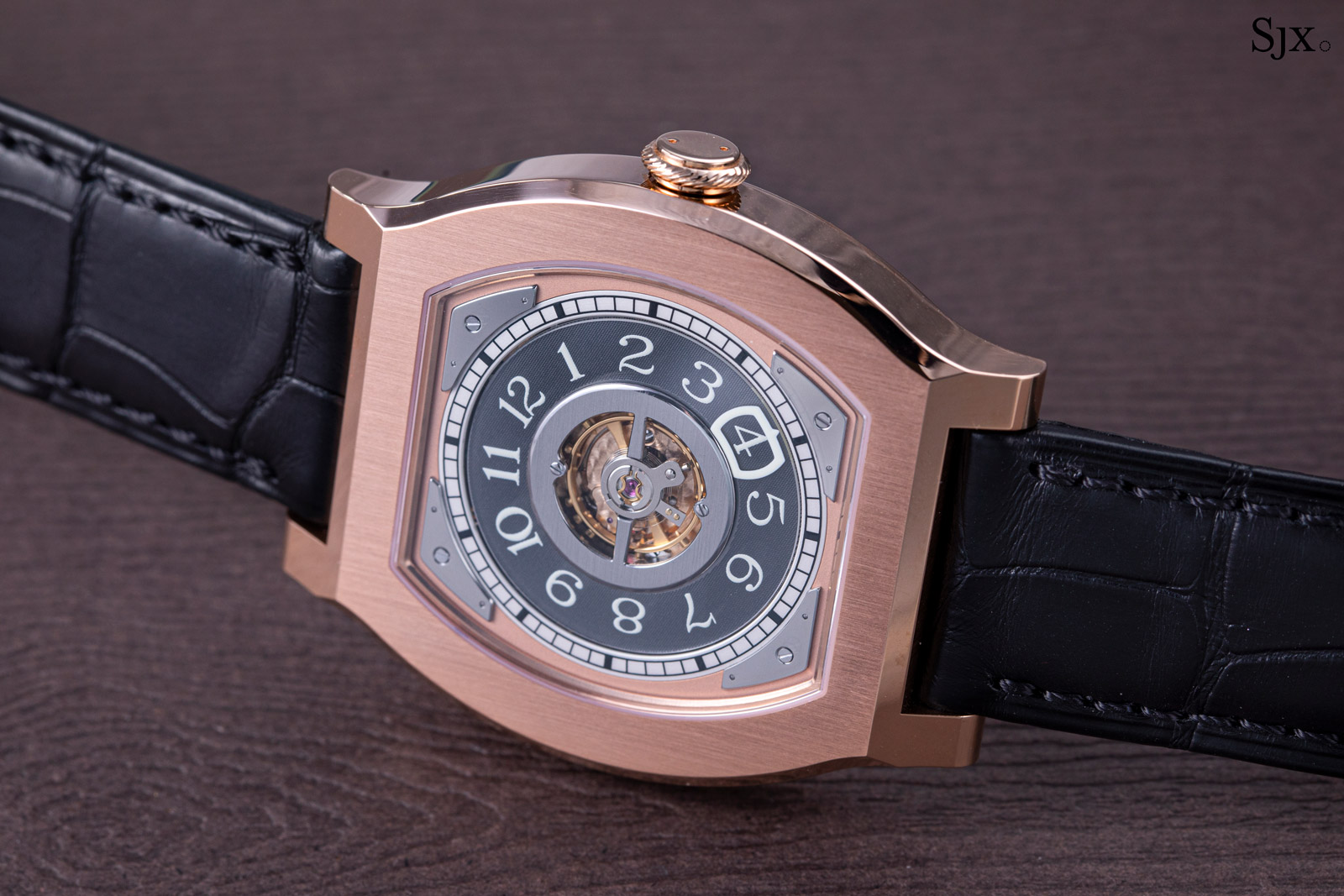
Mr Rexhepi spent some of his formative years at F.P. Journe, indicating the stature of the latter brand. This year saw F.P. Journe bring back one of its quirky classics, the Vagabondage I.

One of the most unusual watches ever made by the brand, the original Vagabondage was a limited edition of just 69 in platinum made in 2004. The subsequent second and third iterations of the Vagabondage were available in both platinum and red gold, explaining the return of the first model. 

Scaled up but visually similar, the new Vagabondage I retains the wandering jumping hour display with an exposed balance wheel in the centre of the dial. And the case is substantially larger at 42 mm and naturally the case is rose gold.

The Vagabondage I

While F.P. Journe is an establishment marque amongst the independents now, two newcomers stood out not only for their quality but the authenticity of concept and execution. One is the Sylvain Pinaud Origine. Although in his forties, Mr Pinaud only started his own brand recently but has made a name for himself with his high-quality execution. 

Conceived to express simplicity in design and elaborate finishing, the Origine is uncluttered on the front but features subtle details evident only up close. Likewise on the back, the manual-wind movement, which was entirely developed and mostly made in-house, is finished perfectly. While Mr Pinaud has yet to develop a distinctive house style, he is clearly a independent watchmaker on the rise. 

Reflecting a comparable level of quality but an entirely different design philosophy is the Yosuke Sekiguchi Primevère. A Japanese transplant to Switzerland who spent two decades working for movement makers, Mr Sekiguchi modelled his inaugural creation on 19th century pocket watches.

He faithfully recreates the feel of a vintage pocket watch and even relies on antiquated manual methods for some components, like cutting the German silver bridges with a saw and file. But Mr Sekiguchi takes the movement decoration to another level, applying an artisanal finish to all components. He also adds a few decorative flourishes of his own, including the black-polished winding click spring shaped like the Greek letter “Ω”.

Sylvain Pinaud’s Origine

The movement of the Yosuke Sekiguchi Primevere

A world away from Switzerland, a tourbillon emerged from a newly-established watchmaking school. The ASEAN Lotus Tourbillon was created by Prince Horology, a horological academy located in the Cambodian capital.

Conceived by the team leading the school and produced with some help from its students, the Lotus Tourbillon is powered by a proprietary movement with a one-minute tourbillon. Although it is muted design-wise, the movement decoration is surprising, with some components verging on the exceptional. Besides the black-polished steel bridge and cage for the tourbillon, even the teeth of the barrel ratchet are individually polished.

Though the initial run of watches were gifts for world leaders who attended the ASEAN Summit in Phnom Penh, the school has indicated a variant of the watch will subsequently be sold to raise funds for the institution.

A closeup of the tourbillon. Image – Prince Horology

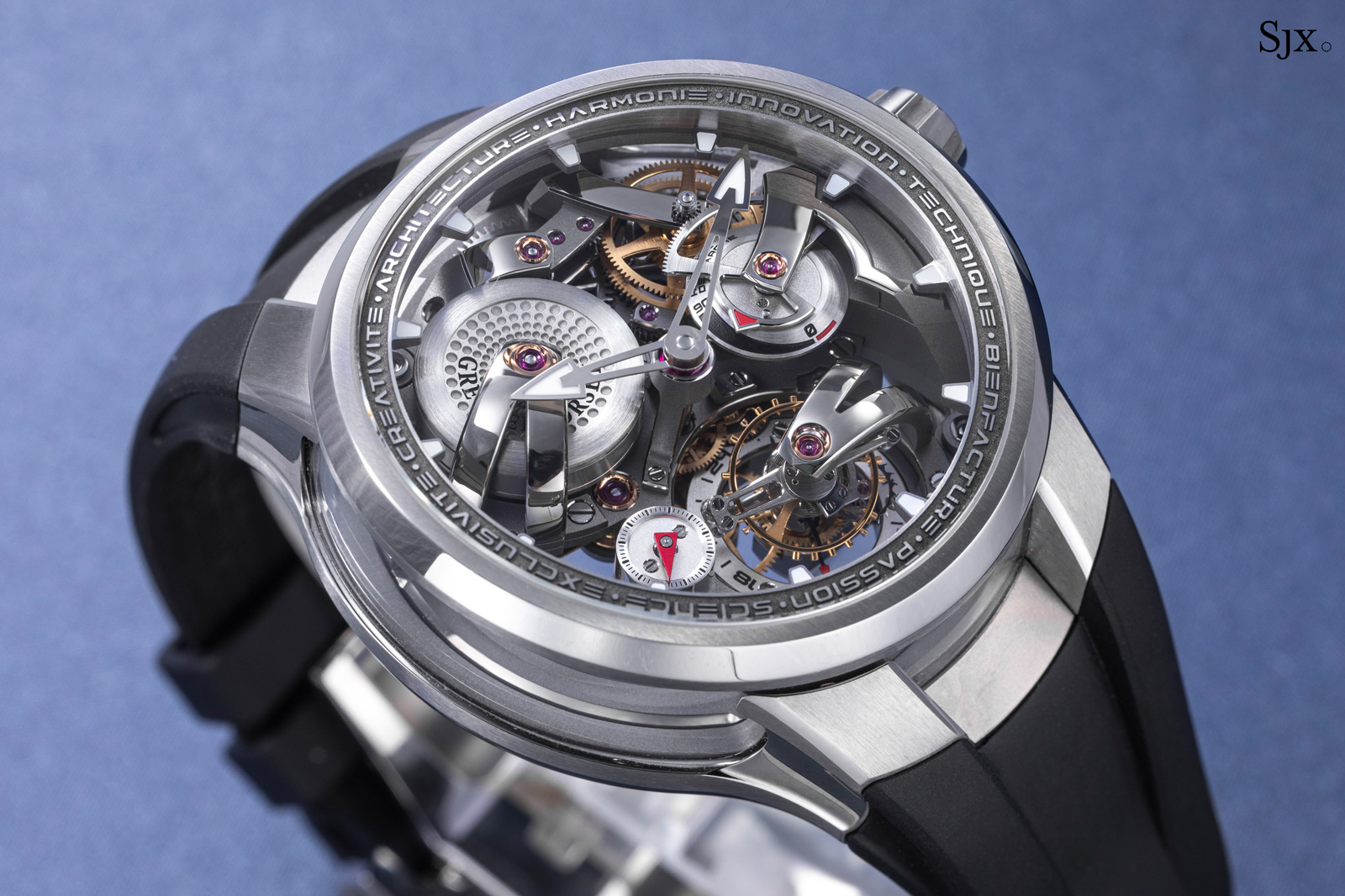
Also a tourbillon but one on another level altogether is the Greubel Forsey Tourbillon 24 Secondes Architecture. The Architecture embodies the brand’s evolved house style that is largely centred on streamlined sports watches and features a streamlined, water-resistant case.

Mechanically, it is fundamentally another version of the brand’s longstanding inclined tourbillon movement. But it reimagines the aesthetics of the calibre by rearranging the layout and further open-working the movement. Most importantly, the redesigned movement incorporates arched bridges in polished titanium.

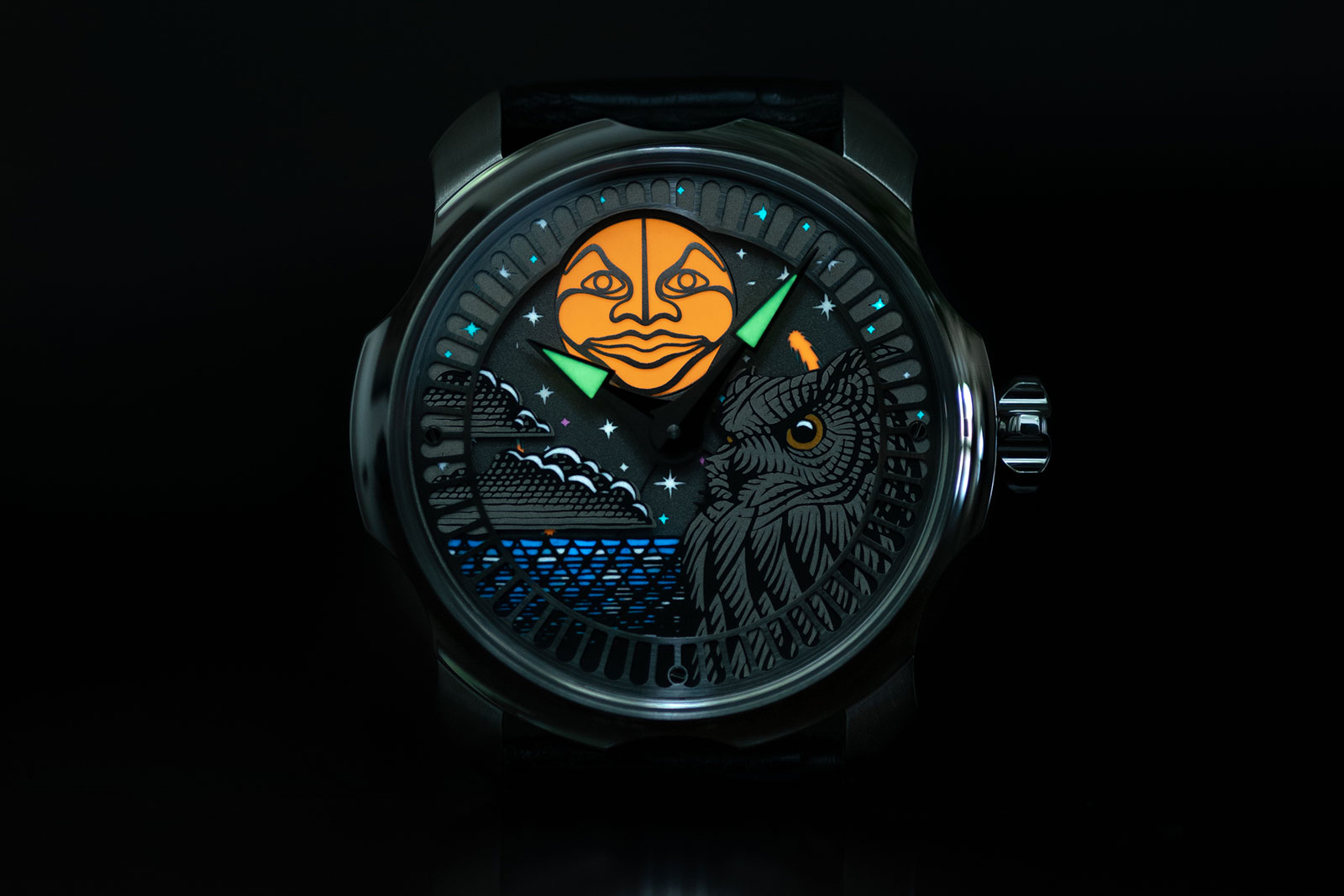
For sheer visual impact, the Nocturne has to be mentioned. It is quintessential Sarpaneva in both style and complication. With a Gothic motif done by a Finnish artist, the Nocturne incorporates Sarpaneva’s signature moon phase display with an oversized face that looms over the dial.

Like its earlier Moomin editions, the Nocturne makes liberal use of Super-Luminova – all applied by hand – to create a striking glow-in-the-dark landscape. At €19,000 it is amongst the priciest of Sarpaneva’s offerings, but the dial is decorated and finished by hand while the elaborately formed case is made in-house, rationalising much of the price.

The Nocturne. Image – Sarpaneva

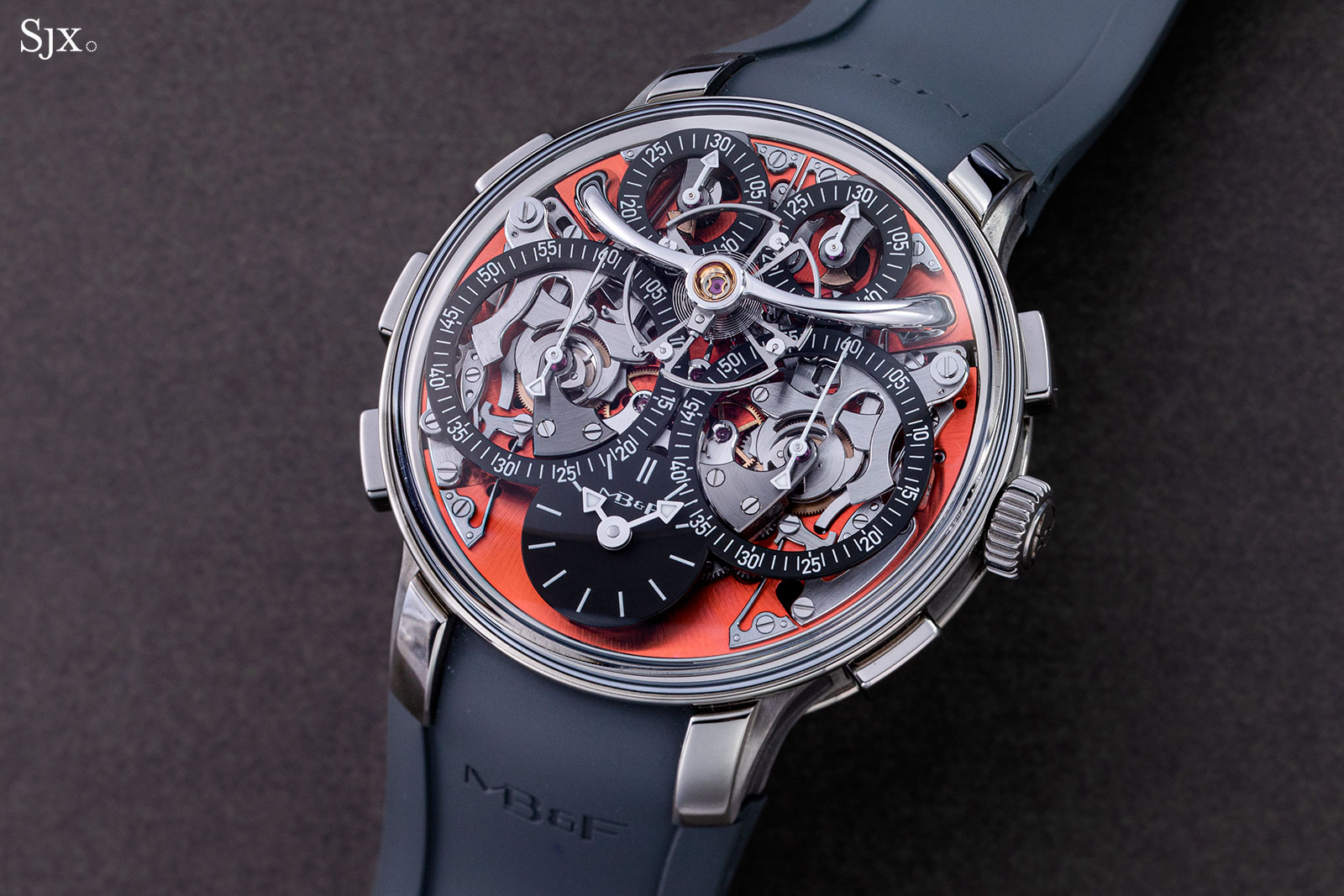
The first chronograph from MB&F, the Legacy Machine Sequential EVO continues the brand’s partnership with Belfast-based watchmaker Stephen McDonnell. As with their previous collaborations, the Sequential EVO is centred on Mr McDonnell’s creative approach to movement construction and retains the trademark feature of an oversized balance wheel on the open-worked dial. 

Appearing to be extraordinarily complex thanks to the dense mass of chronograph levers and wheels on the dial, the Sequential EVO is an innovation approach to the chronograph but conceptually straightforward: it incorporates twin chronograph mechanisms linked by an inverter mechanism allowing the wearer to operate each chronograph independently as well as switch instantaneously between the two. And it is priced at US$180,000, making it pricier than the A. Lange & Söhne Triple Split, which is less imaginative in concept but arguably more complex mechanically. 

Visible on the dial of the Sequential EVO, the twin chronograph mechanisms mirror each other

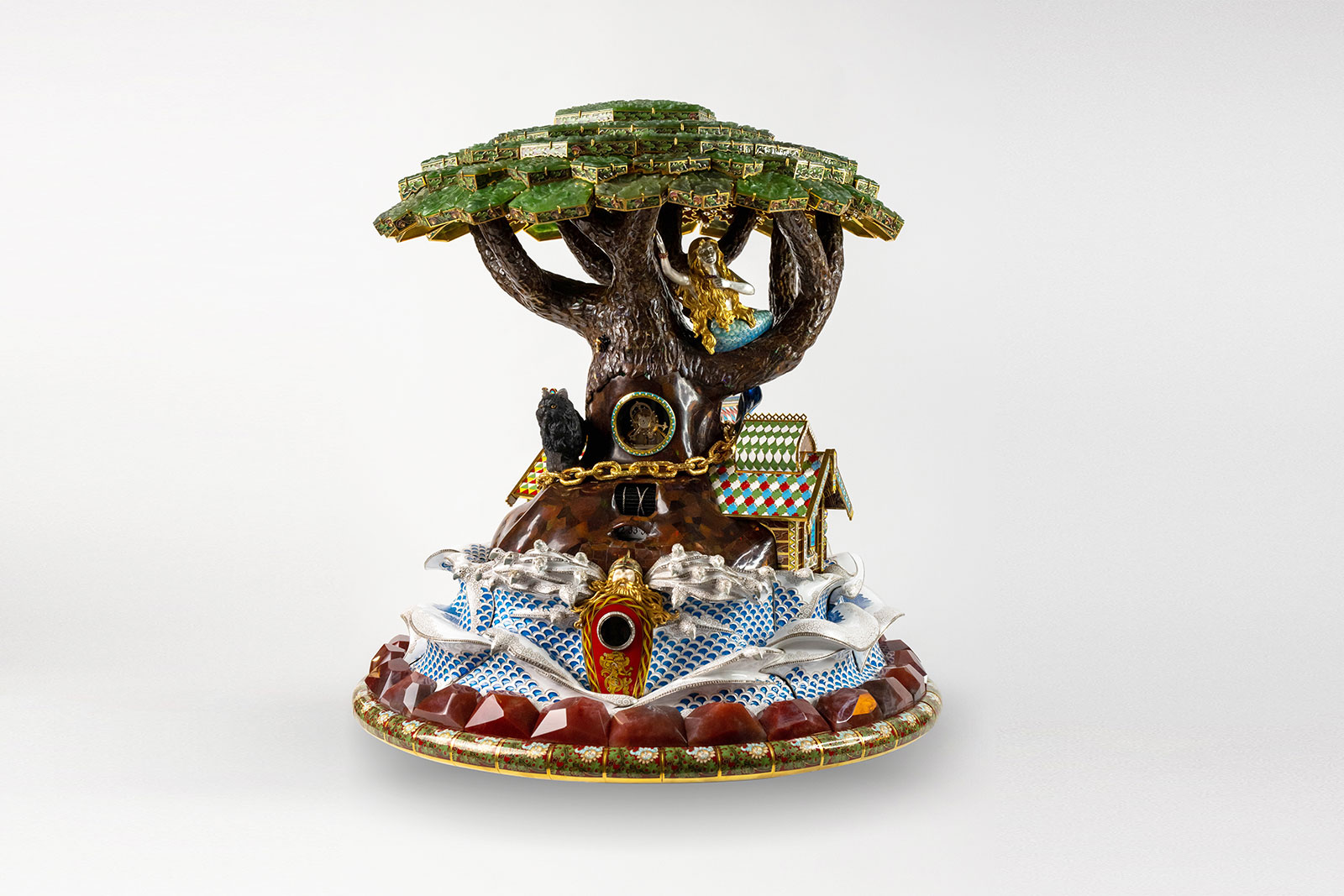
Perhaps more impressive than any of the wristwatches here is the desk clock from Russian watchmaker Konstantin Chaykin. Resembling a fancy cake, the Lucomorye Clock is actually a grand complication made of silver, aluminium, jade, opals, and lots of enamel.

Inspired by an Alexander Pushkin poem, the Lucomorye is powered by a movement comprising 1,119 parts, entirely invented by Mr Chaykin. The fairytale exterior, on the other hand, is the work of a noted Russian jeweller.

Most ingenious is the patented hour display that relies on a tiny chain that wraps around a drum to form a Roman numeral. This requires each hour to have its own set of cams, which in turn control the motion of the carriage that moves the chain into the right position.

The Lucomorye Clock. Image – Konstantin Chaykin

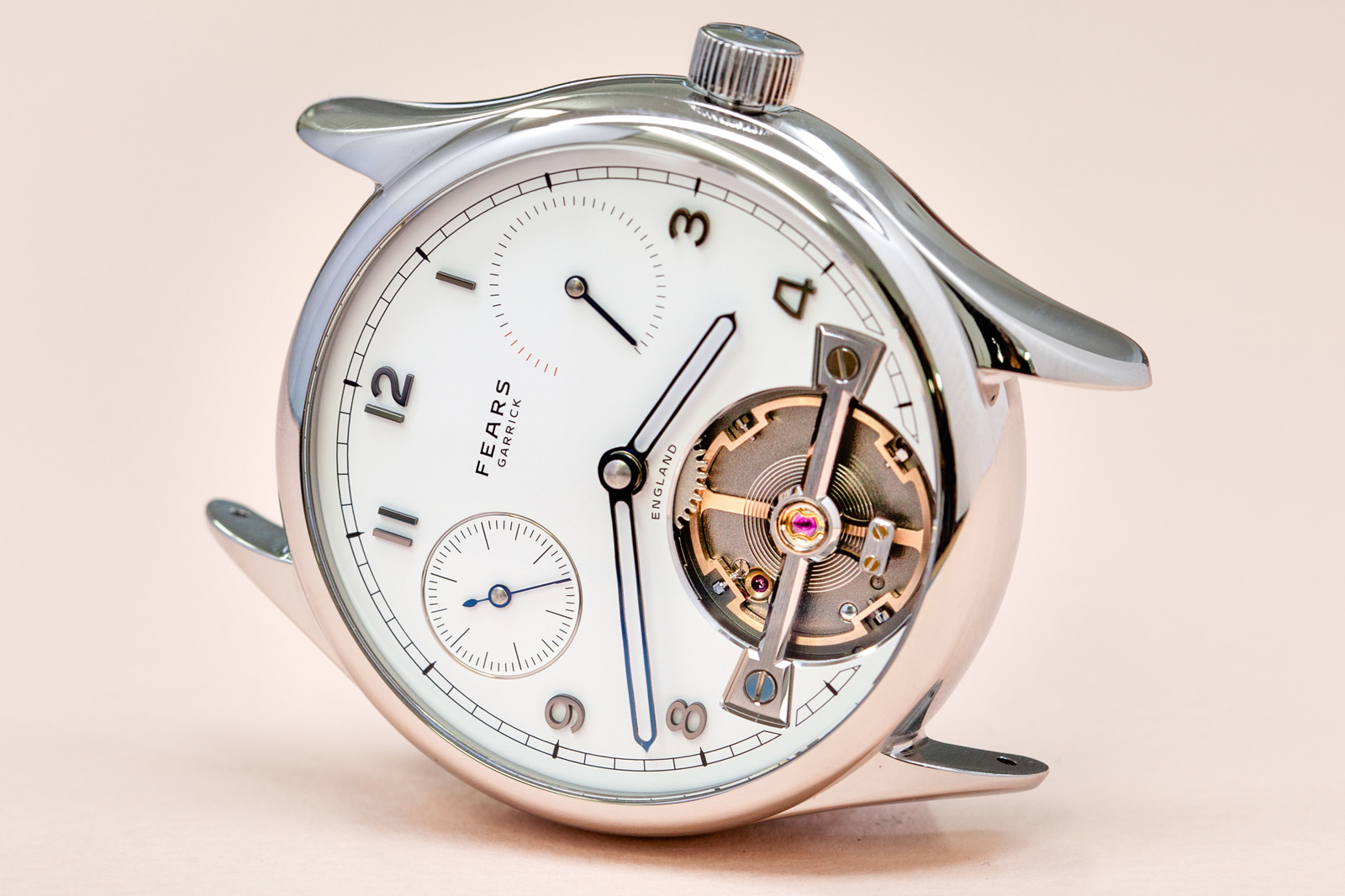
And now for some honourable mentions. A unique collaboration between two British brands, the Fears Garrick combines the retro, minimalist aesthetic of Fears with the mechanics of Garrick (which are in turn supplied by Swiss independent watchmaker Andreas Strehler). While not revolutionary in design, the Fears Garrick has an appealing styling that is simple yet distinctive.

The Fears Garrick. Image – Garrick

The movement of the Habring2 Doppel 38. Image – Habring2

And for sheer value, the Habring² Doppel 38 is a winner. It’s essentially a smaller version of the brand’s split-seconds chronograph so it offers nothing substantially new, but it is certainly one of the best value propositions in the realm of affordable chronographs. The 38 mm case means it is more wearable and definitely more elegant, while retaining the same proprietary A11 hand-wind movement developed by Habring².


Back to top.

You may also enjoy these.

Seiko Introduces the Prospex SPB333, “White Birch” for Less

A "turtle" for the 110th anniversary.

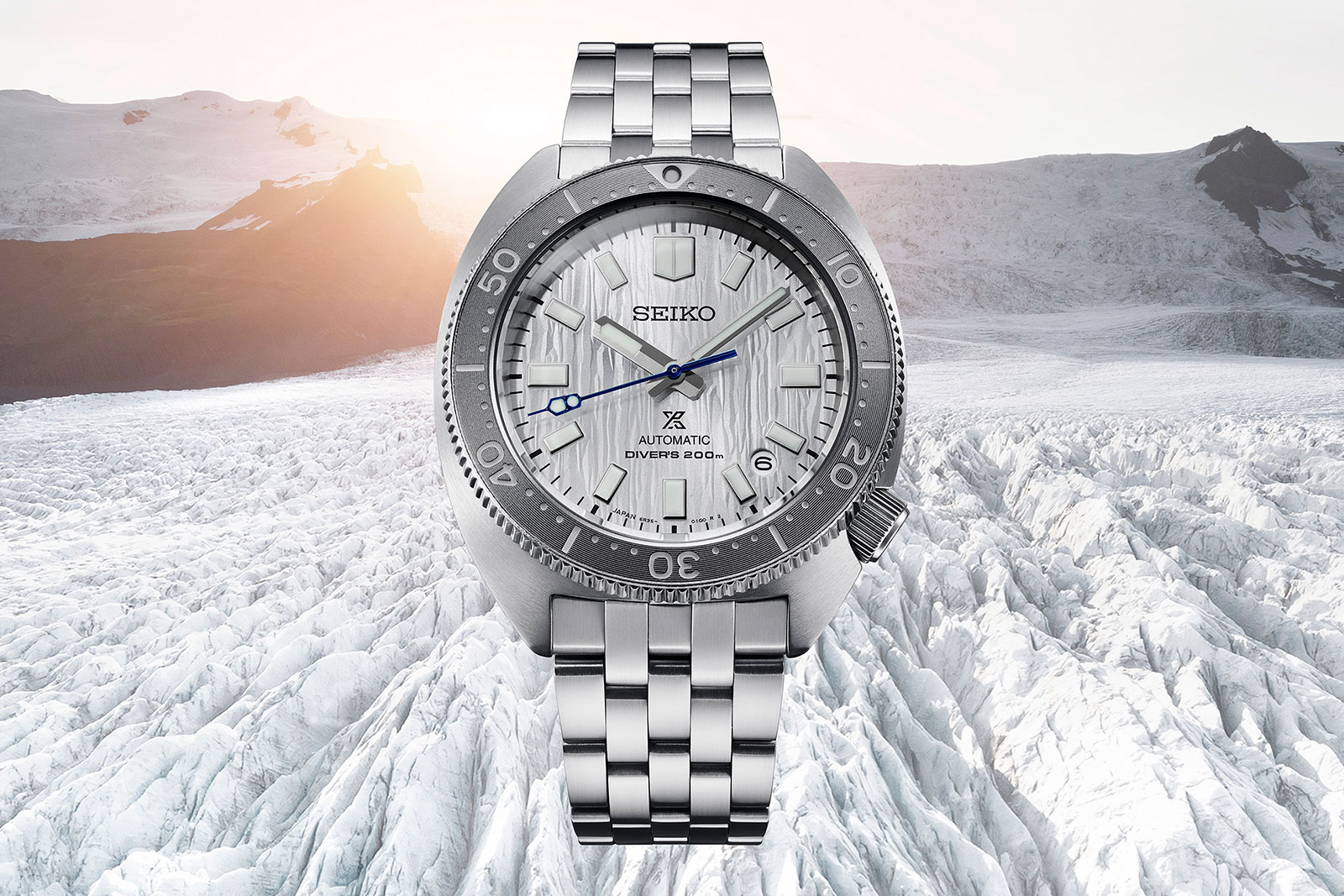
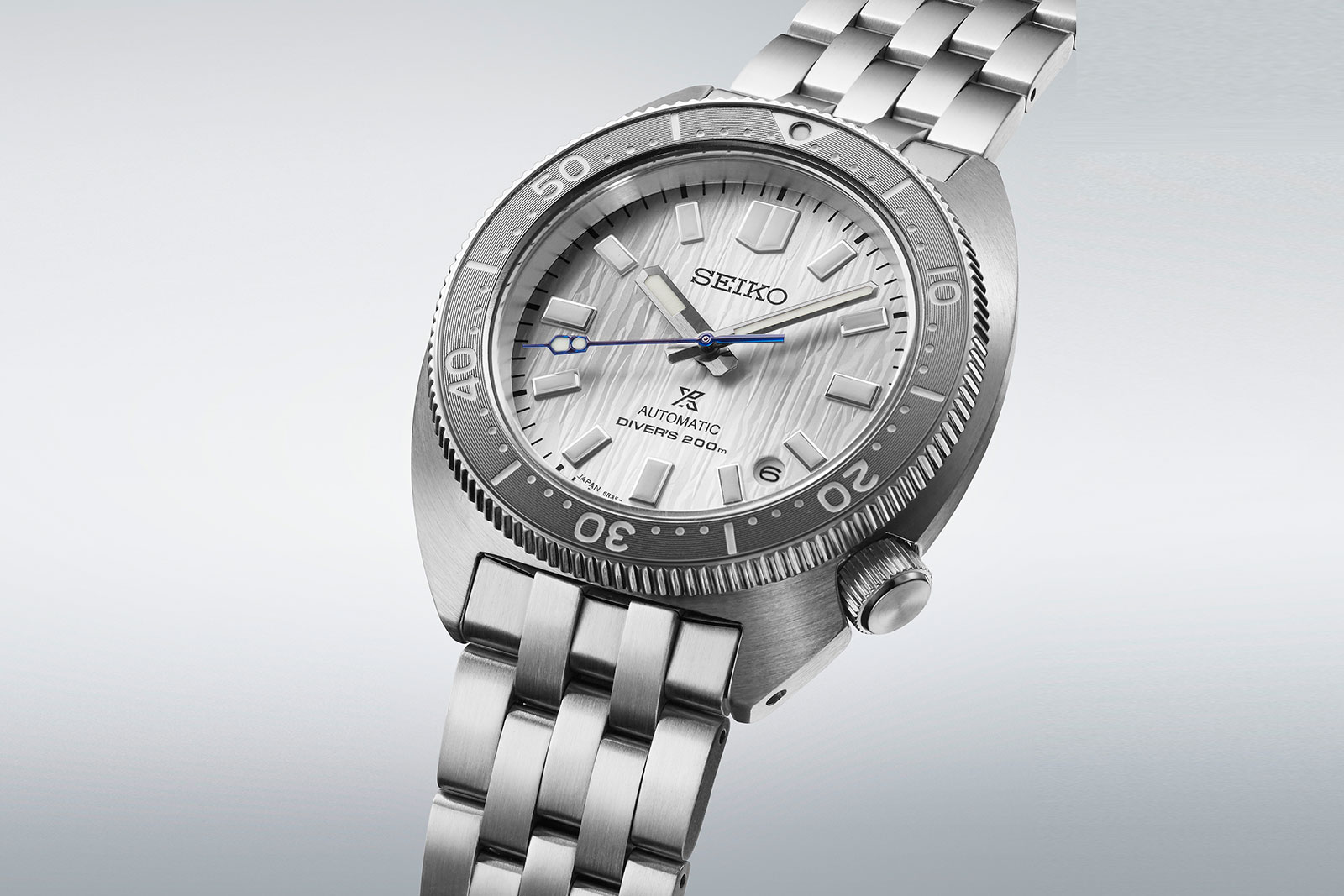
As is its habit, Seiko is marking the 110th anniversary of its first-ever wristwatch with a series of limited editions starting with the recent Presage SBP359. Now the Japanese watchmaker unveils the Prospex Save the Ocean “Seiko Watchmaking 110th Anniversary” based on its “turtle” dive watch but featuring a patterned dial reminiscent of the popular Grand Seiko “White Birch”.

Initial thoughts

When Seiko first announced limited editions for the 110th anniversary, I was expecting a reissue of the original Laurel wristwatch, which turned out to be spot on. But as a longtime fan of Seiko dive watches, I was hoping for something based on the “Turtle” for the occasion. Well, I am happy to say that the SPB333 does not disappoint.

Though it is easily recognisable as a “Turtle”, it is clear that thought went into the styling. Its designers used the classic diver as a template for gentle experimentation and the result certainly delivers.

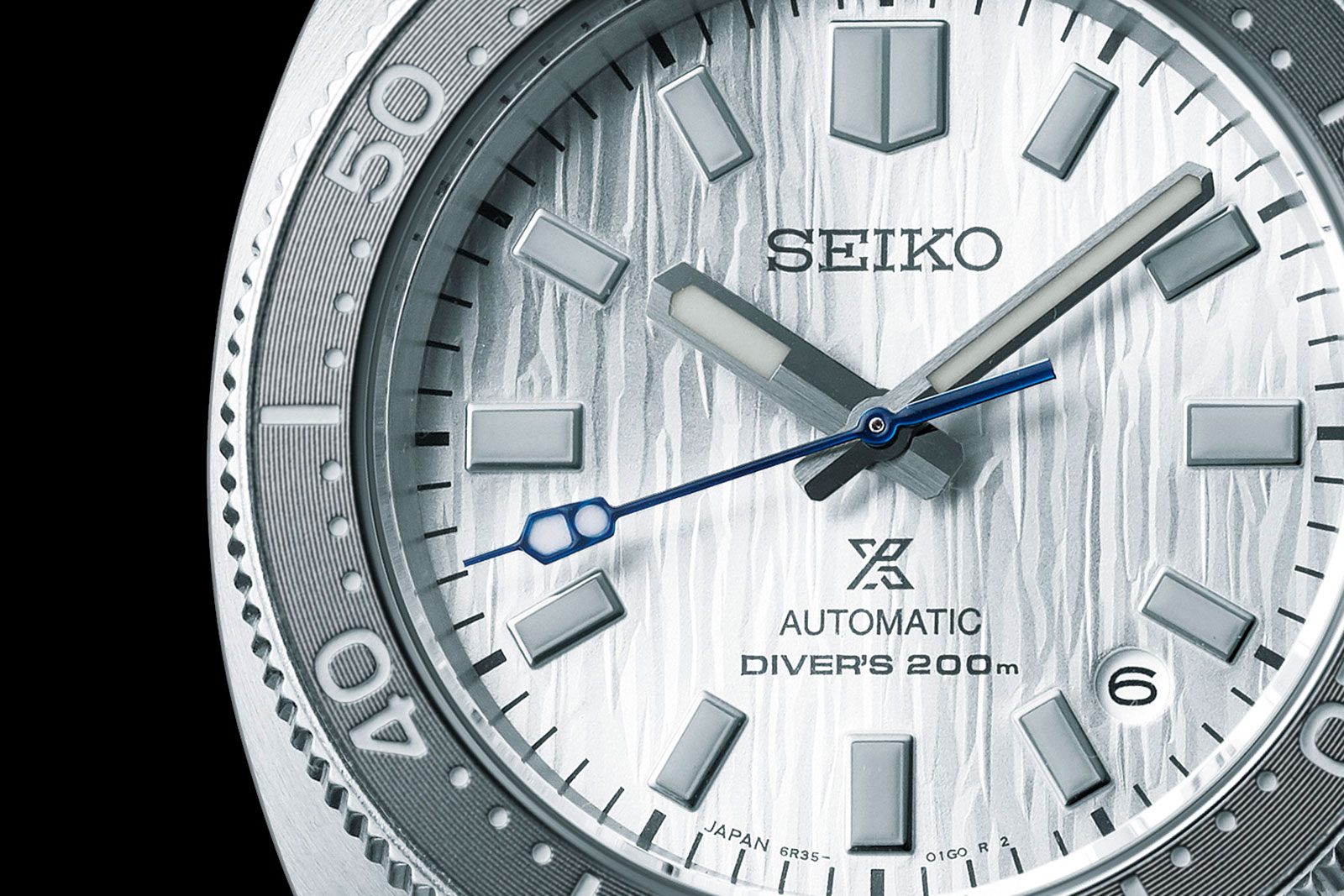
The dial is beautiful and certainly fancier than that on the average Seiko diver. Though ostensibly inspired by glaciers, the textured dial certainly brings to mind the popular “White Birch” pattern found on several Grand Seiko models. This level of dial decoration on a “tool” watch places the SPB333 on my Christmas wish list.

Pattern aside, I do have some bones to pick with the dial design, specifically the date window between four and five o’clock. I find date windows on Seiko divers are far better in the customary position at three o’clock as that better preserves the symmetry, particularly since the hour markers are usually oblong. Another is the fact that it is not exactly a limited edition since 5,000 pieces will be made.

As usual, the SPB333 is priced attractively at US$1,300. It is pretty much a value proposition for anyone who wants a dive watch with an impressive dial that will not break the bank.

Inspired by polar glaciers

The SPB333 takes inspiration from the glaciers of the polar regions, which were explored by Japanese expeditions in the 1960s and 1970s, all of which were equipped with Seiko timekeepers. As a result, the dial is almost entirely silver, including the hands and indices, save for the trademark pointed-baton seconds hand. And the glacier-textured dial is complemented by a grey bezel insert with a concentric patterning.

The rest of the watch is identical to the standard “Turtle”, which is in turn based on the ref. 6105 of 1968 that’s popularly referred to as the “Captain Willard” because the titular character wore it in Apocalypse Now. It’s 41 mm in diameter and 12.3 mm in height, with the cushion-shaped case having the crown at four o’clock. Notably, the brushed steel case has been finished with a “super-hard coating” that boosts scratch resistance.

As with the other Prospex models, the SPB333 is powered by the cal. 6R35, a linchpin in Seiko’s mid-tier offerings. Compared to Seiko’s entry-level movements, it has a longer-than-average power reserve of 70 hours.

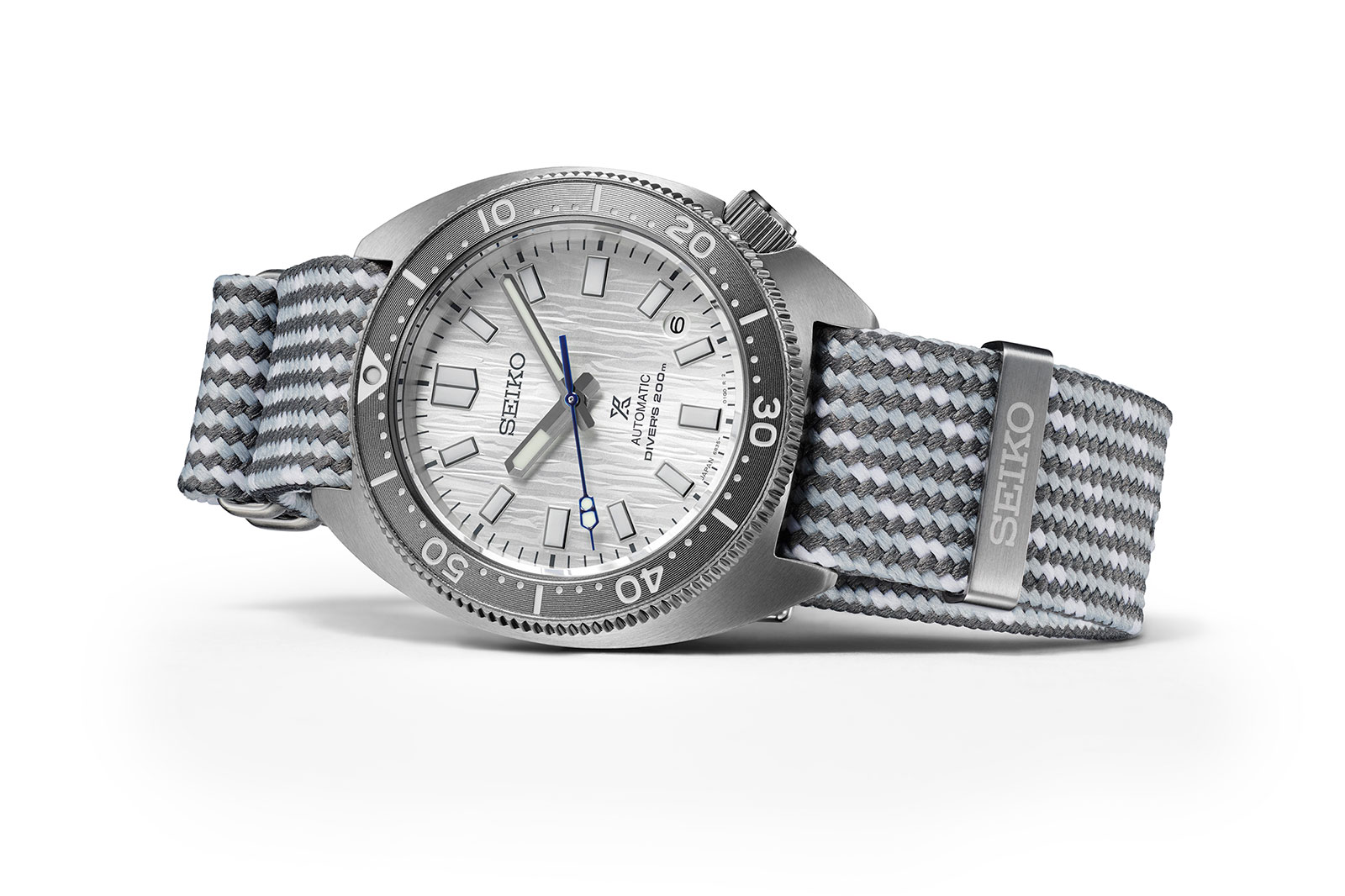
The watch is accompanied by an additional grey and white fabric strap made from polyester recycled from PET bottles that’s woven with a traditional technique known as ‘seichu’


Key facts and price

Seiko Prospex Save the Ocean “Seiko Watchmaking 110th Anniversary”
Ref. SPB333

Diameter: 41 mm
Height: 12.3 mm
Material: Steel with super-hard coating
Crystal: Sapphire
Water resistance: 200 m

Movement: 6R35
Functions: Hours, minutes, seconds, and date
Winding: Self-winding
Frequency: 21,600 beats per hour (3.5 Hz)
Power reserve: 70 hours

Strap: Steel bracelet, additional fabric strap

Limited edition: 5,000 pieces
Availability: Now at Seiko boutiques and retailers
Price: US$1,300

For more, visit seikowatches.com.


Back to top.

You may also enjoy these.

Jaquet Droz Introduces the Rolling Stones Automaton

A micro-mechanical rock-and-roll tribute.

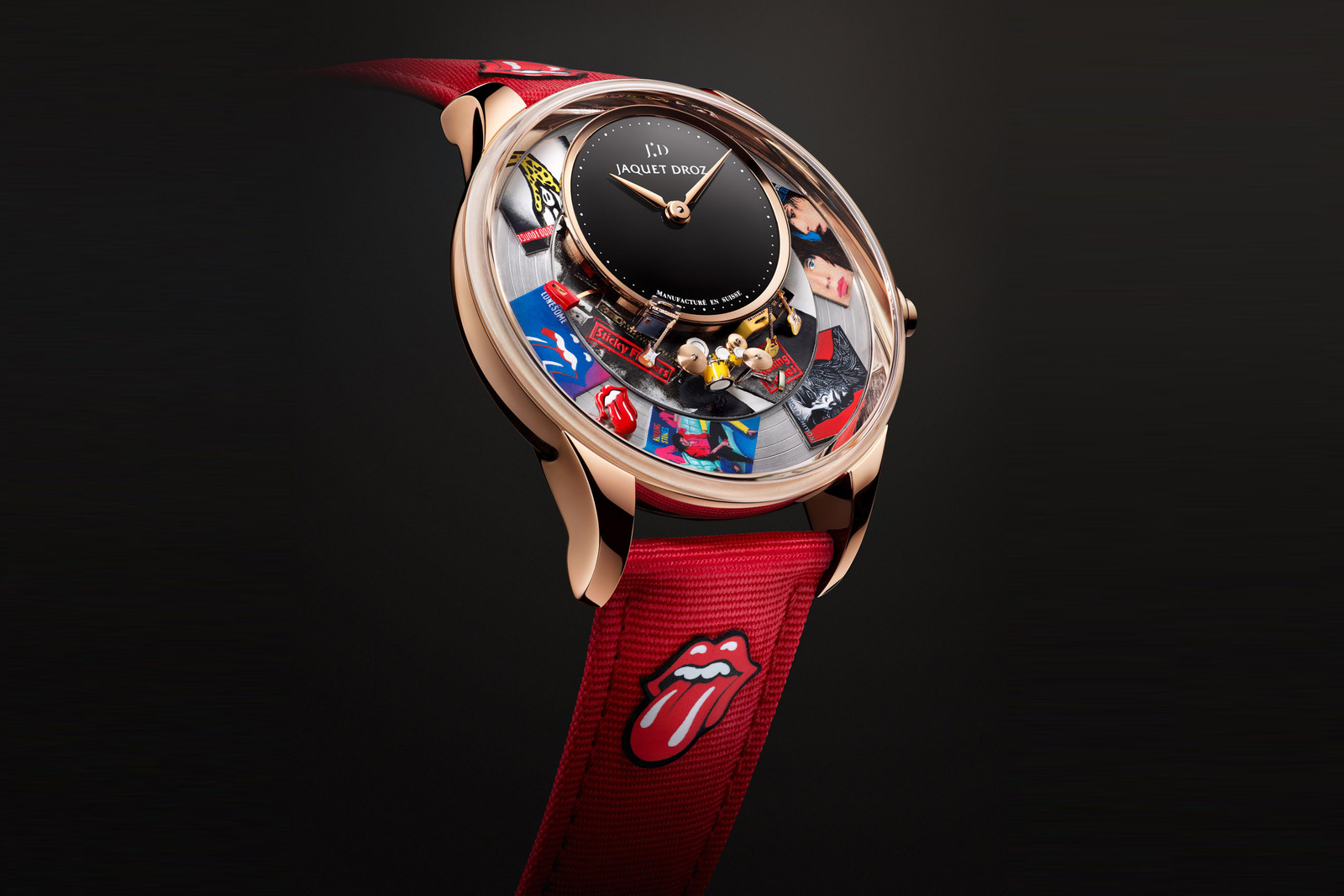
Since playing their first note in 1962, the Rolling Stones have become one of the most iconic rock bands of all time, with music that has transcended generations and left a lasting impact on pop culture. Led by the charismatic Mick Jagger, the Rolling Stones are now in their 60th year, an occasion that is being marked by Jaquet Droz with the Rolling Stones Automaton.

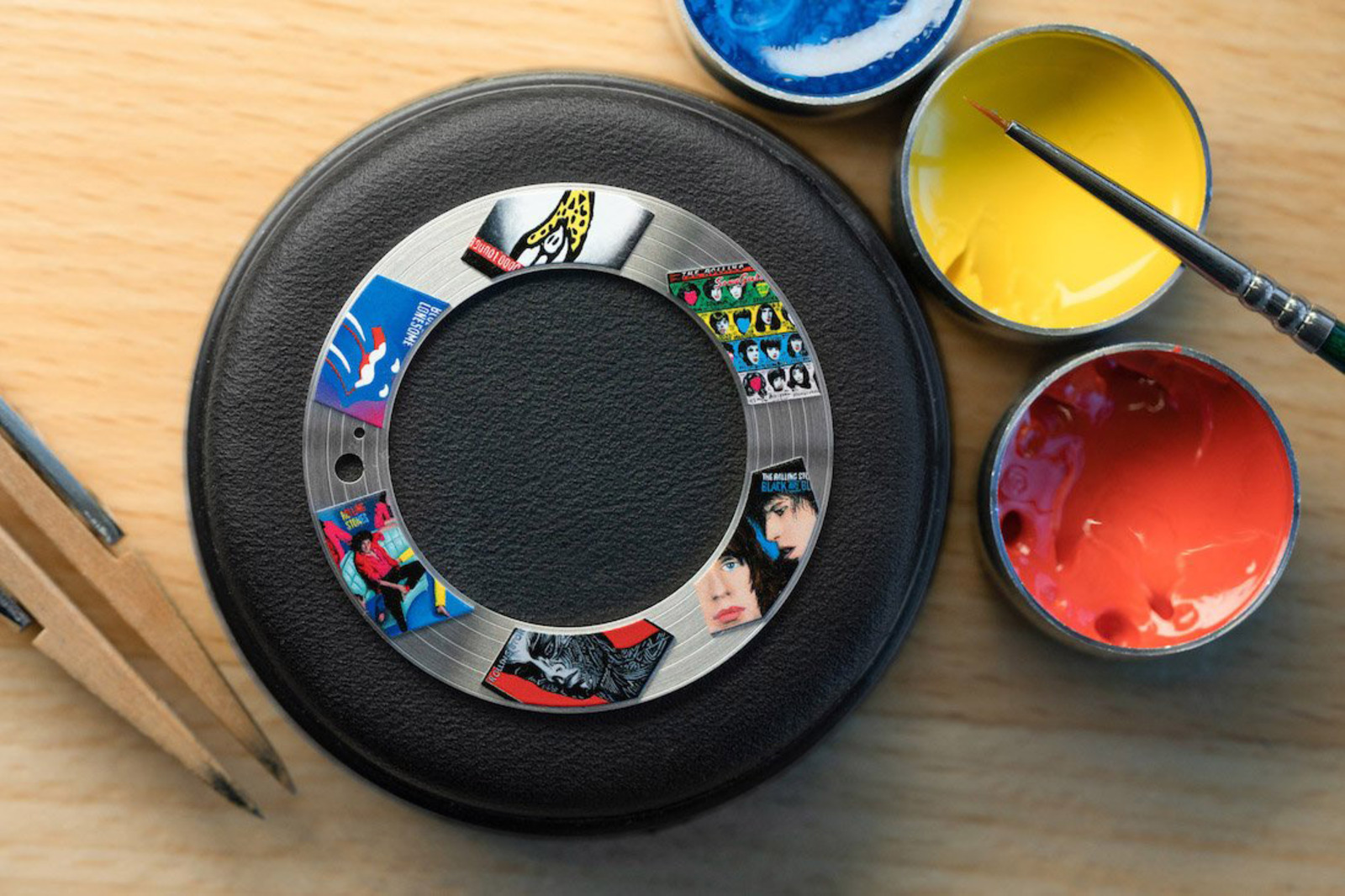
A signature timepiece of Jaquet Droz, the automaton watch is  traditionally decorated with themes from the natural world (and occasionally the fantasy realm of dragons and elves). But the tribute to the Rolling Stones instead reproduces their instruments and rebellious album covers on a rotating vinyl record.

Initial thoughts

Automatons by Jaquet Droz are beguiling thanks to the attention to detail evident in each watch, most of which are made to the client’s specifications and thus unique. The Rolling Stones Automaton very much personifies that ethos but in a very different way. It combines the brand’s trademark micro-automaton with late-20th century pop culture and manages to captures the spirit of the rock icons.

Admittedly, there was some trepidation when I first saw the watch. It did seem a bit kitschy and more like a concert souvenir than a piece of mechanical art. And it departs from Jaquet Droz’s usual fare of elegant, artisanal timepieces like the Magic Lotus Automaton. But then again, the watch is clearly targeted at a very specific audience: the diehard “Stones” fan who appreciates fine watchmaking to the tune of six figures. For someone like that, what better way to pay tribute to the band?

Tribute to the rock legends

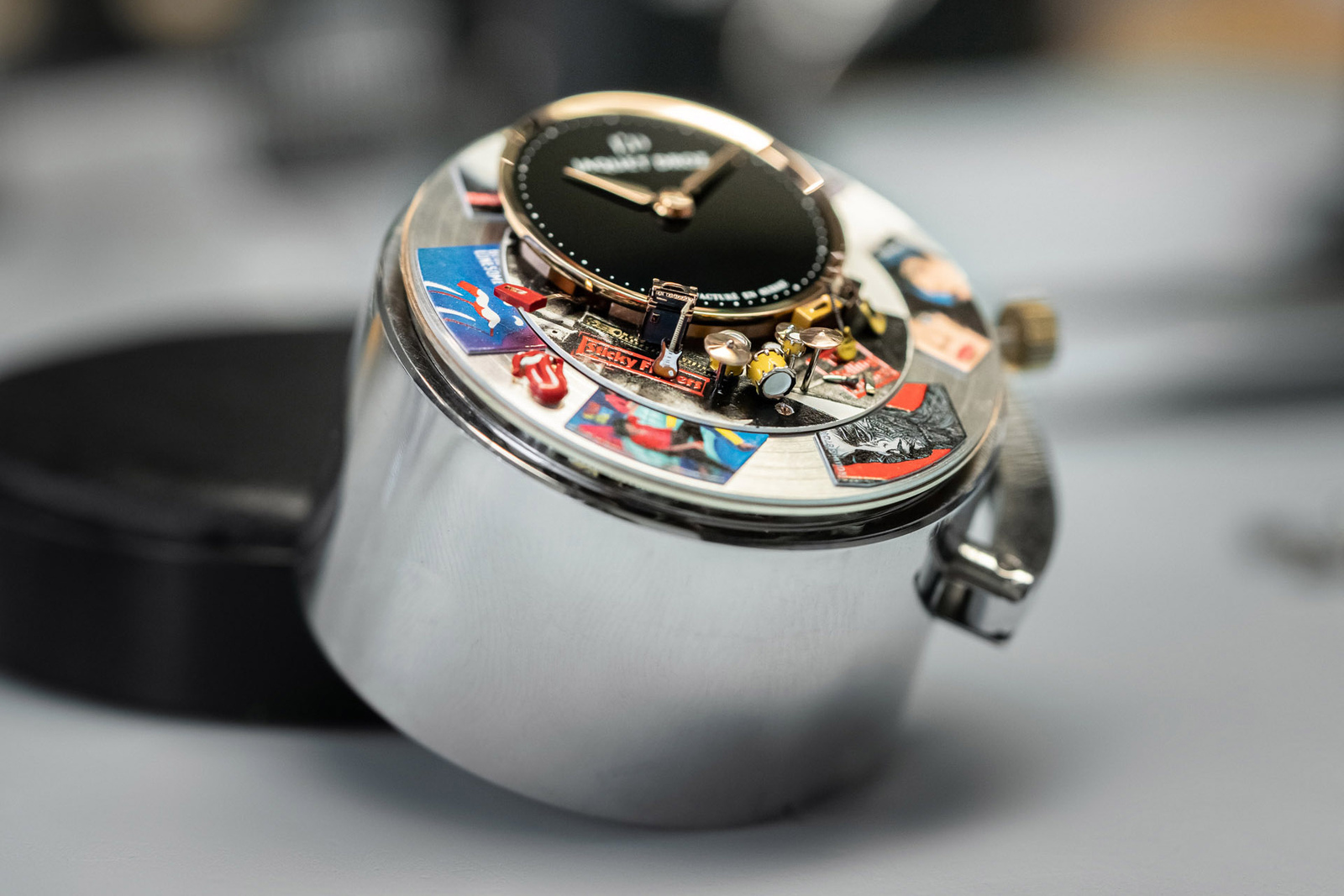
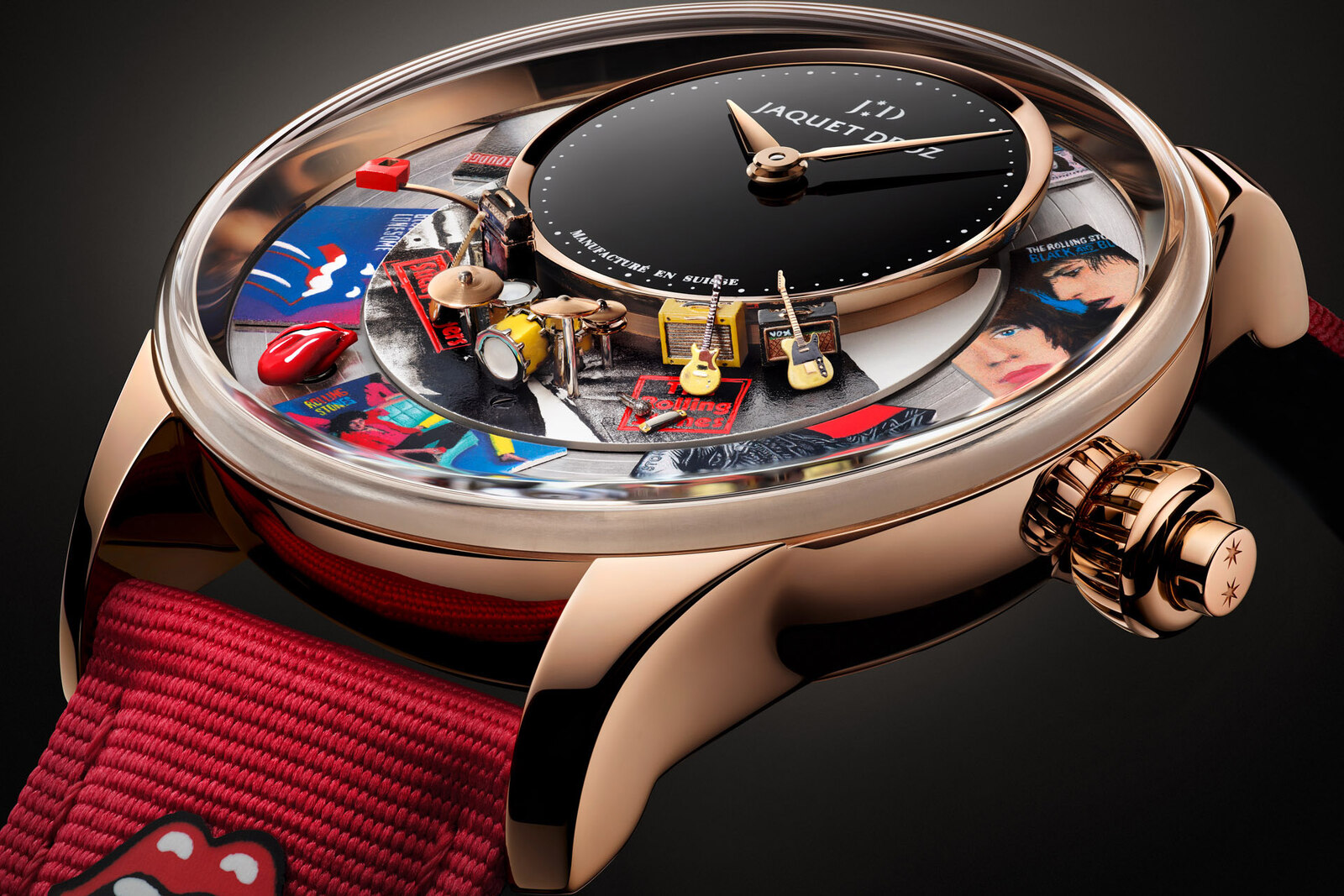
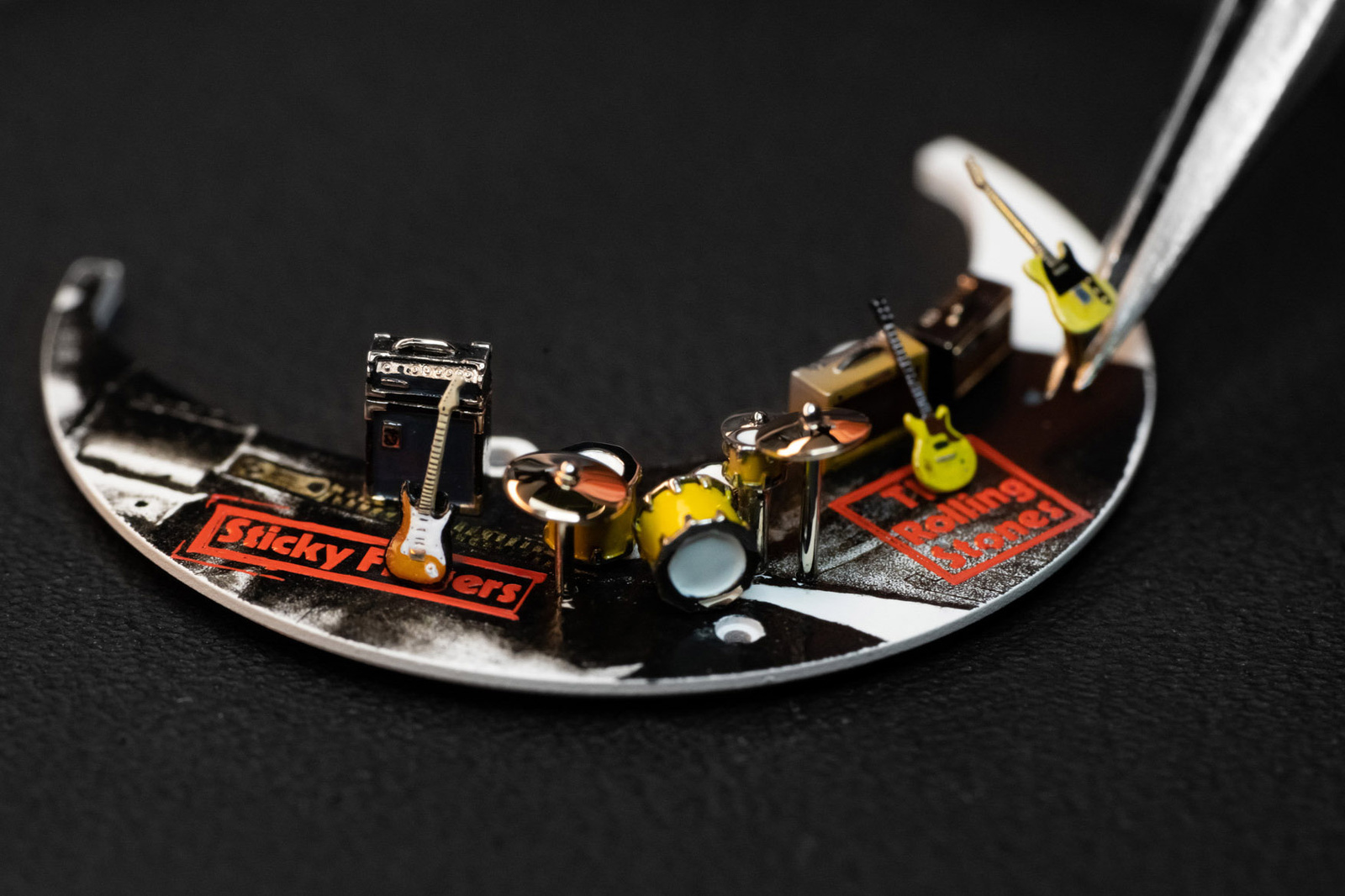
The Rolling Stones Automaton is a miniature homage to the brand’s music. Each band member’s musical instruments are intricately replicated on a tiny scale, including Keith Richards’ famous five-string guitar, Mr Jagger’s harmonica and microphone, along with the minimalist drum set used by the late Charlie Watts.

And around the mini instruments are the band’s album covers on a vinyl record, which can be customised by the buyer. Jaquet Droz offers a selection of 23 albums, including chart toppers like Sticky Fingers and Exile on Main St

The vinyl record is the automaton and meant to evoke a record player. When the automaton is activated by the pusher in the crown, the vinyl disc will spin for at least 30 seconds. And as the disc revolves, the red tongue emblem of the band sways up and down at nine o’clock. On full wind, the automaton can be activated eight times before requiring winding. 

While the Rolling Stones motif sets this apart from the typical Jaquet Droz automaton, the watch is otherwise identical in terms of dimensions and mechanics. So to describe it as large is an understatement. At 43 mm in diameter and 16.96 mm high, it makes a statement on the wrist. But the size contrasts with the minute artistry on the dial, which is literally a rock concert sitting on the wrist.

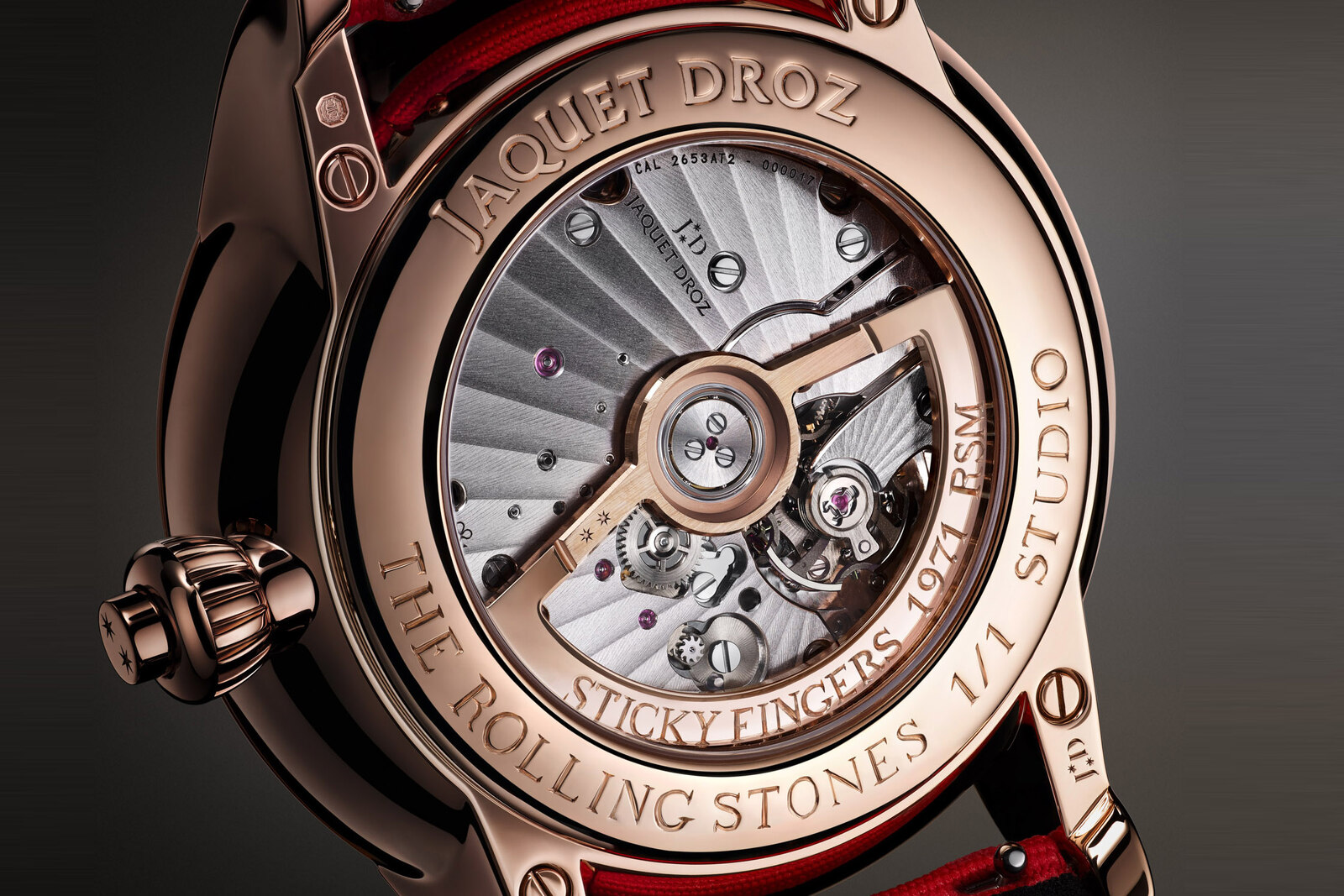
At the heart of the Rolling Stones Automaton lies the manual-wind cal. 2653 AT2, a variant of the movement that powers the brand’s other automaton watches. Each timepiece will feature an engraved rotor that bears the name of a Rolling Stones album, as well as the year and place it was first recorded.


Key Facts and Price

Jaquet Droz Rolling Stones Automaton
Ref. J0328330011

Diameter: 43 mm
Height: 16.96 mm
Material: 18k rose gold
Crystal: Sapphire
Water resistance: 30 m

Movement: Cal. 2653 AT2
Functions: Hours, minutes, and automaton with power reserve indicator
Frequency: 28,800 beats per hour (4 Hz)
Winding: Manual
Power reserve: 68 hours

Strap: Fabric strap with folding clasp

Limited edition: Each made according to client’s specifications
Availability: 
From authorised retailers and boutiques
Price: Unavailable

For more information, visit Jaquet-droz.com.


Back to top.

You may also enjoy these.

Up Close: Blancpain Villeret Tourbillon Heure Sautante Minutes Rétrograde

Elegant, interesting, and executed very well.

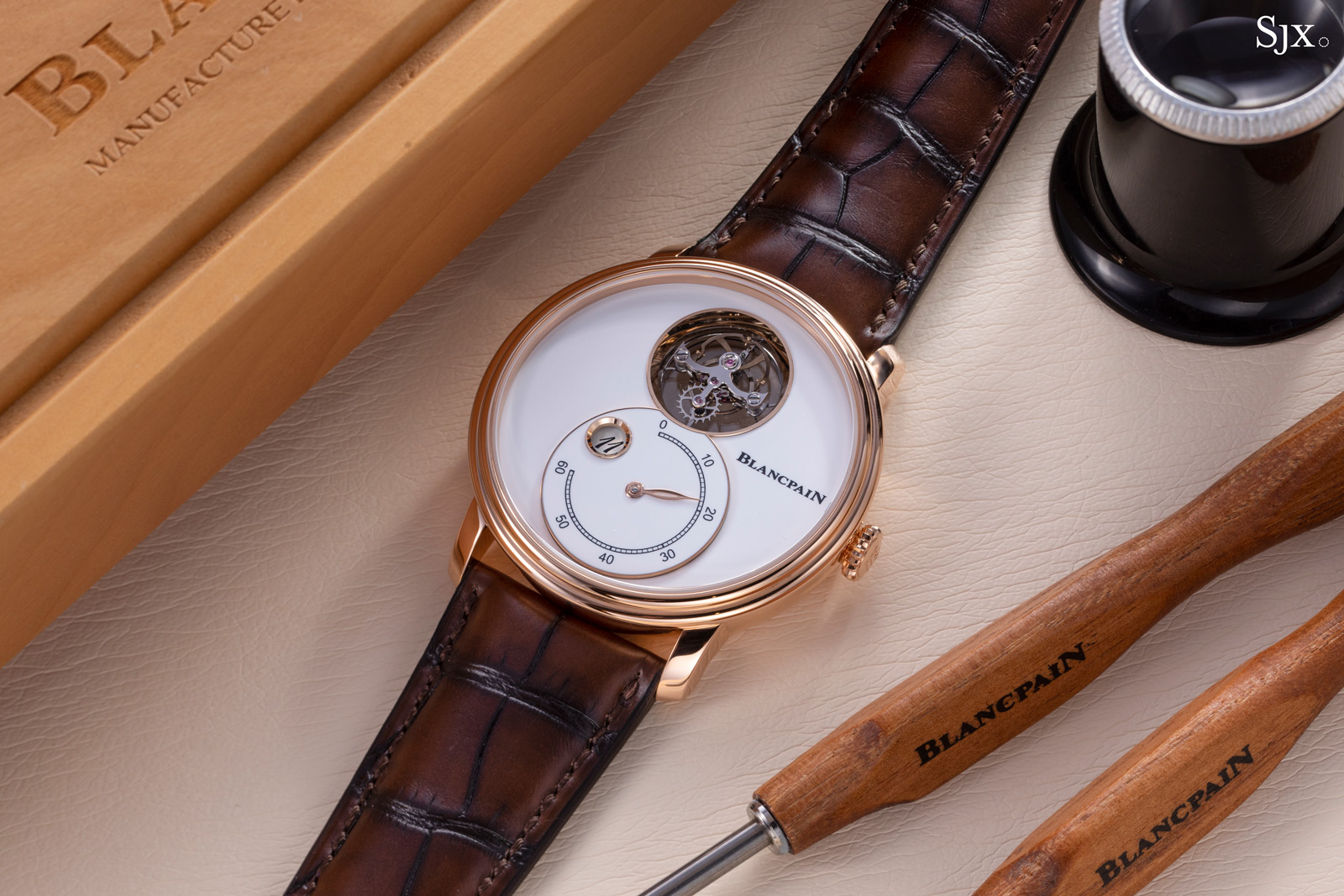
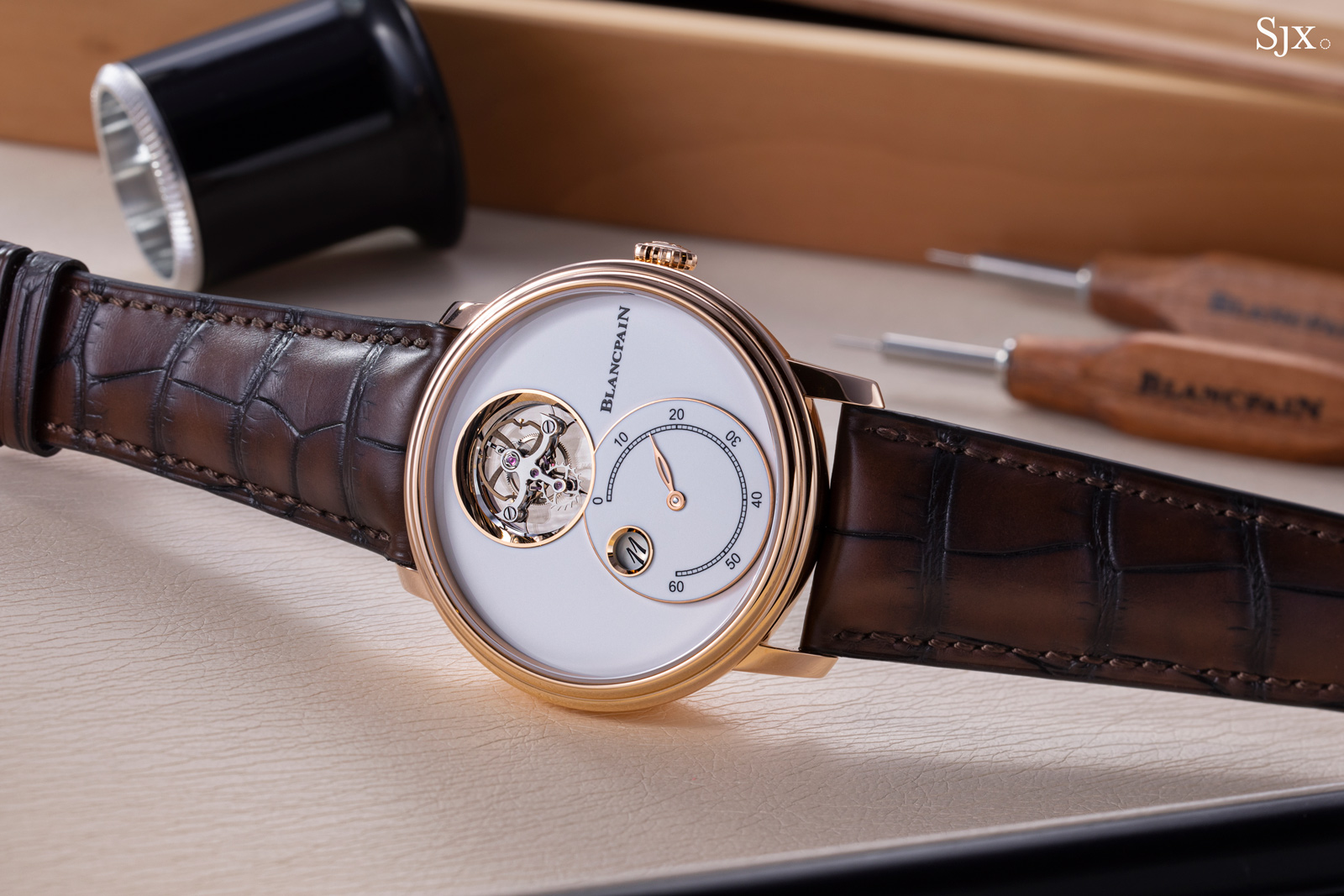
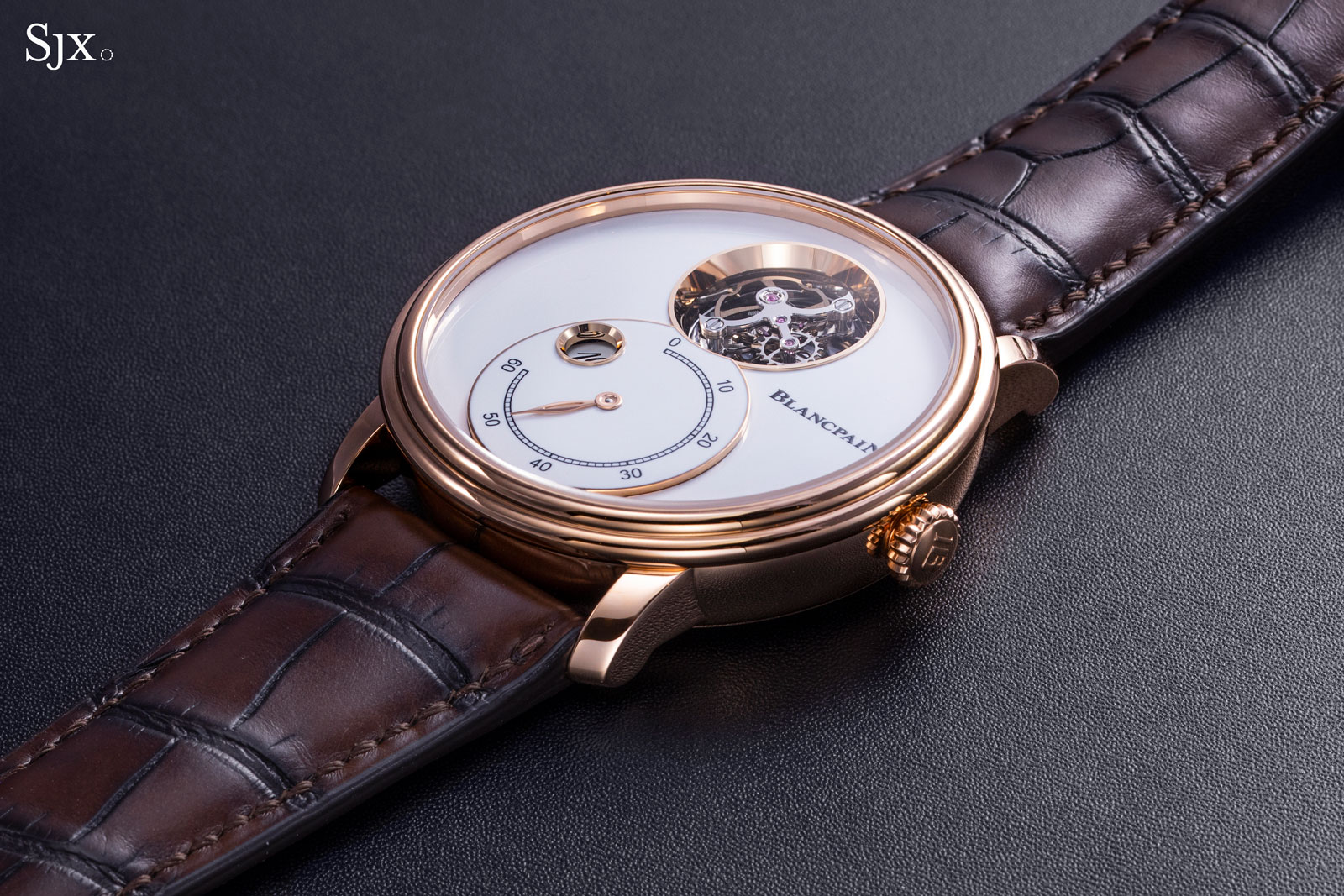
While Blancpain is best known for its retro dive watches and triple calendars, the brand’s catalogue includes a surprisingly broad range of complications, especially for a brand of its scale (but the fact that the brand is part of Swatch Group clearly helps). One of its most interesting recent complications is the Villeret Tourbillon Heure Sautante Minutes Rétrograde, the first Blancpain watch with either a jumping hours or retrograde display.

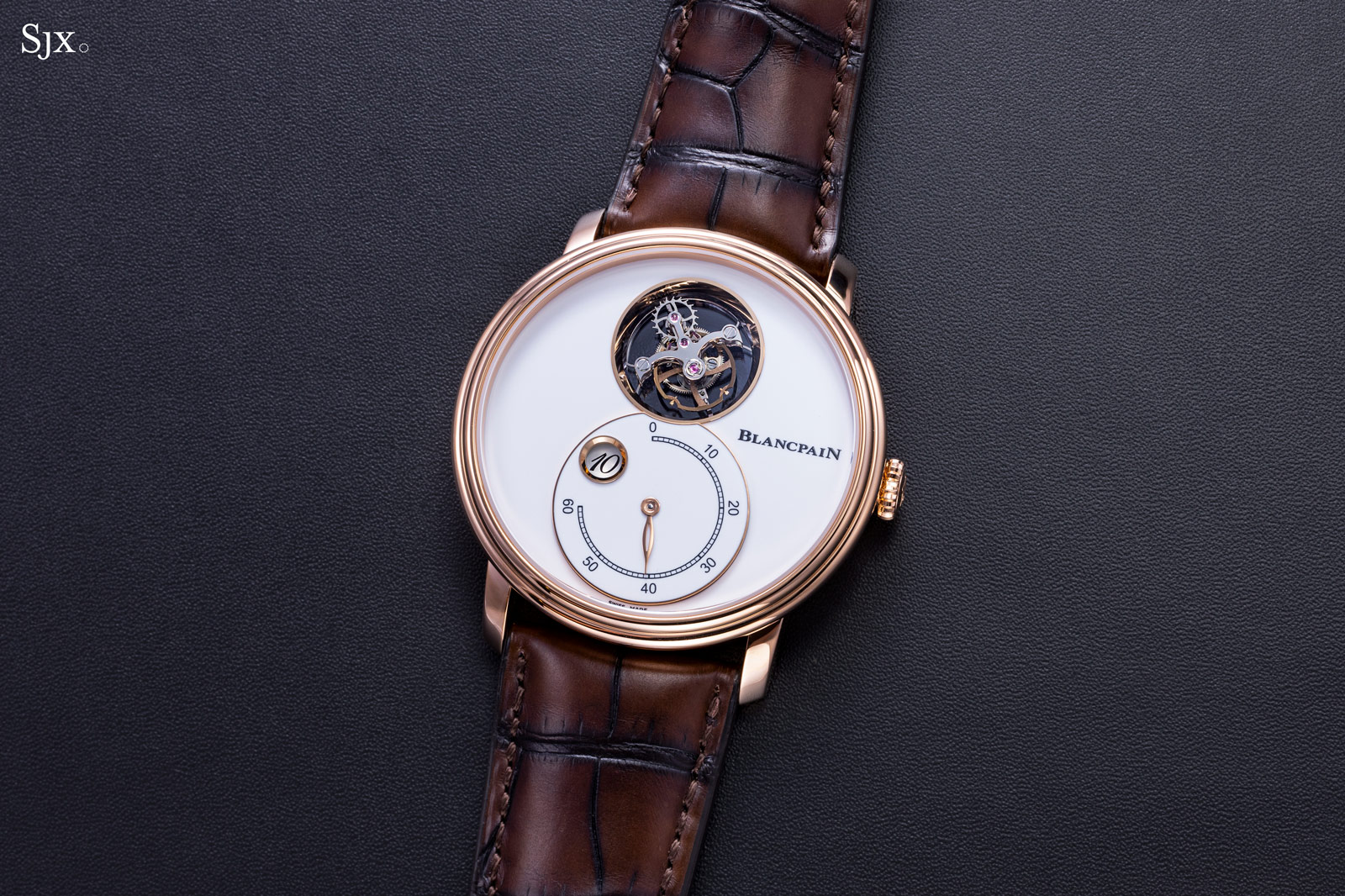
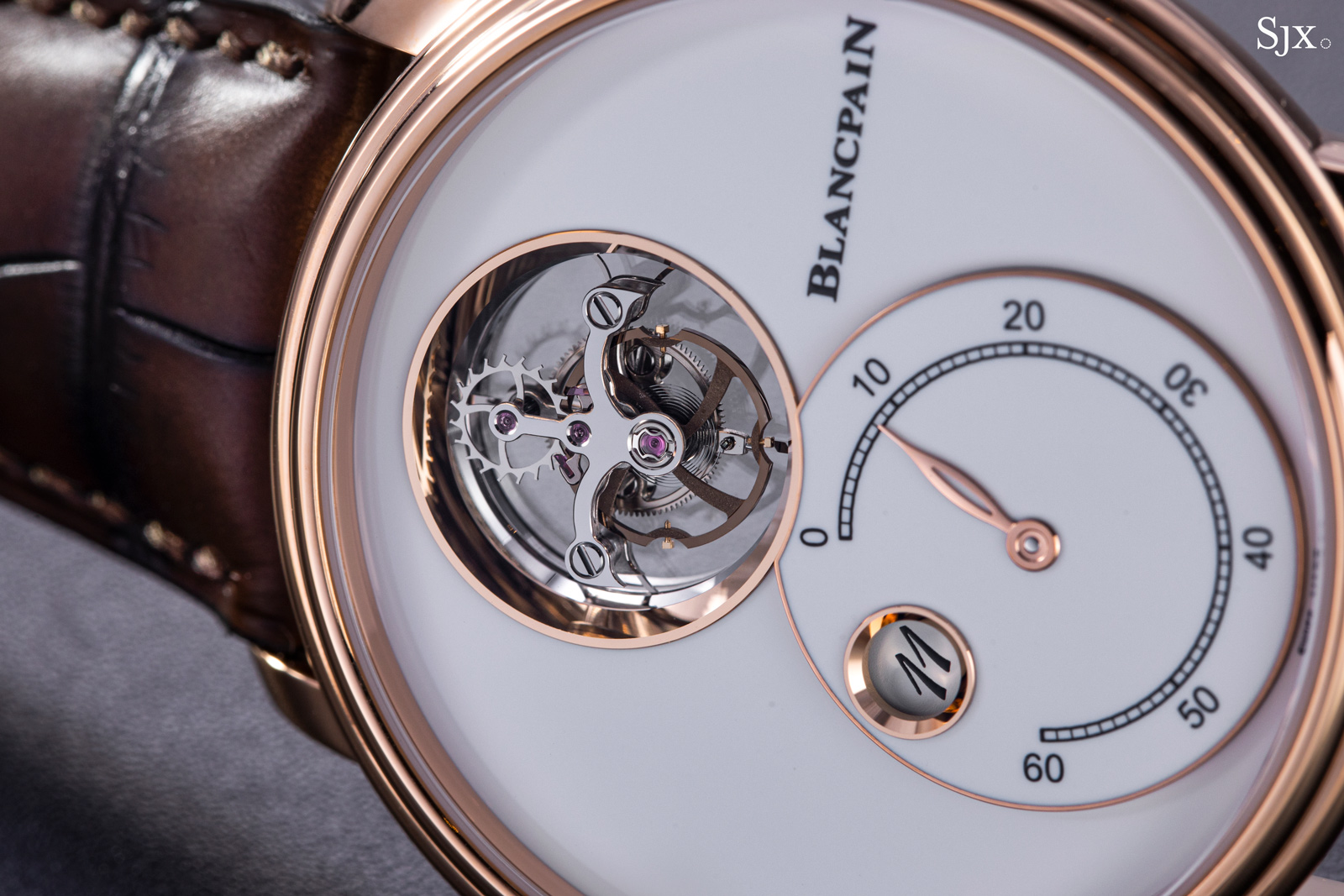
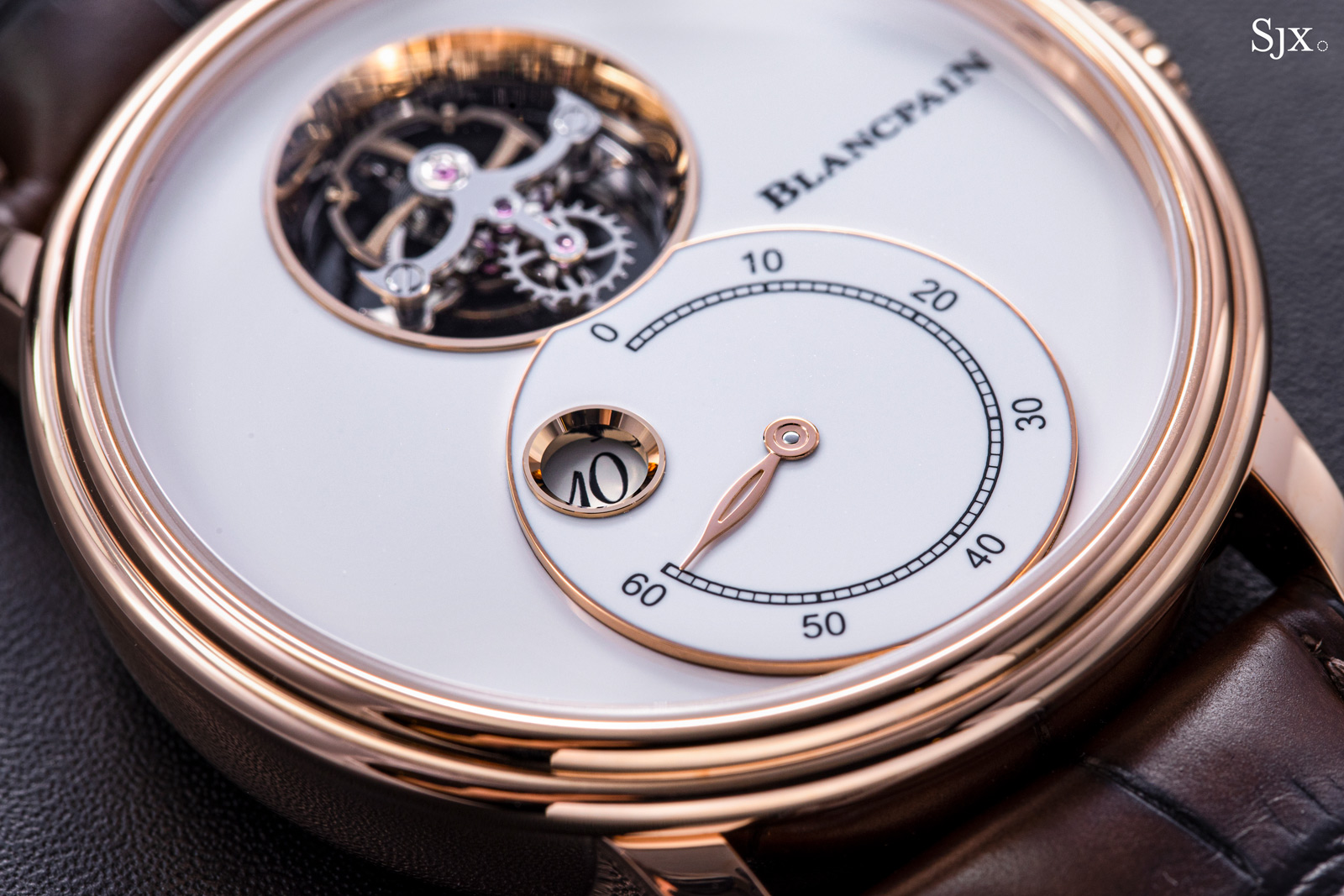
Despite the lengthy name, the Tourbillon Heure Sautante Minutes Rétrograde, from now on simply THSMR, is a simple watch on its face, but one executed in an elaborate manner with details that speak to its quality. The dial is champlevé enamel with a symmetrical time display and “floating” flying tourbillon, while the movement has a six-day power reserve and bridges finished with guilloche.

Initial thoughts

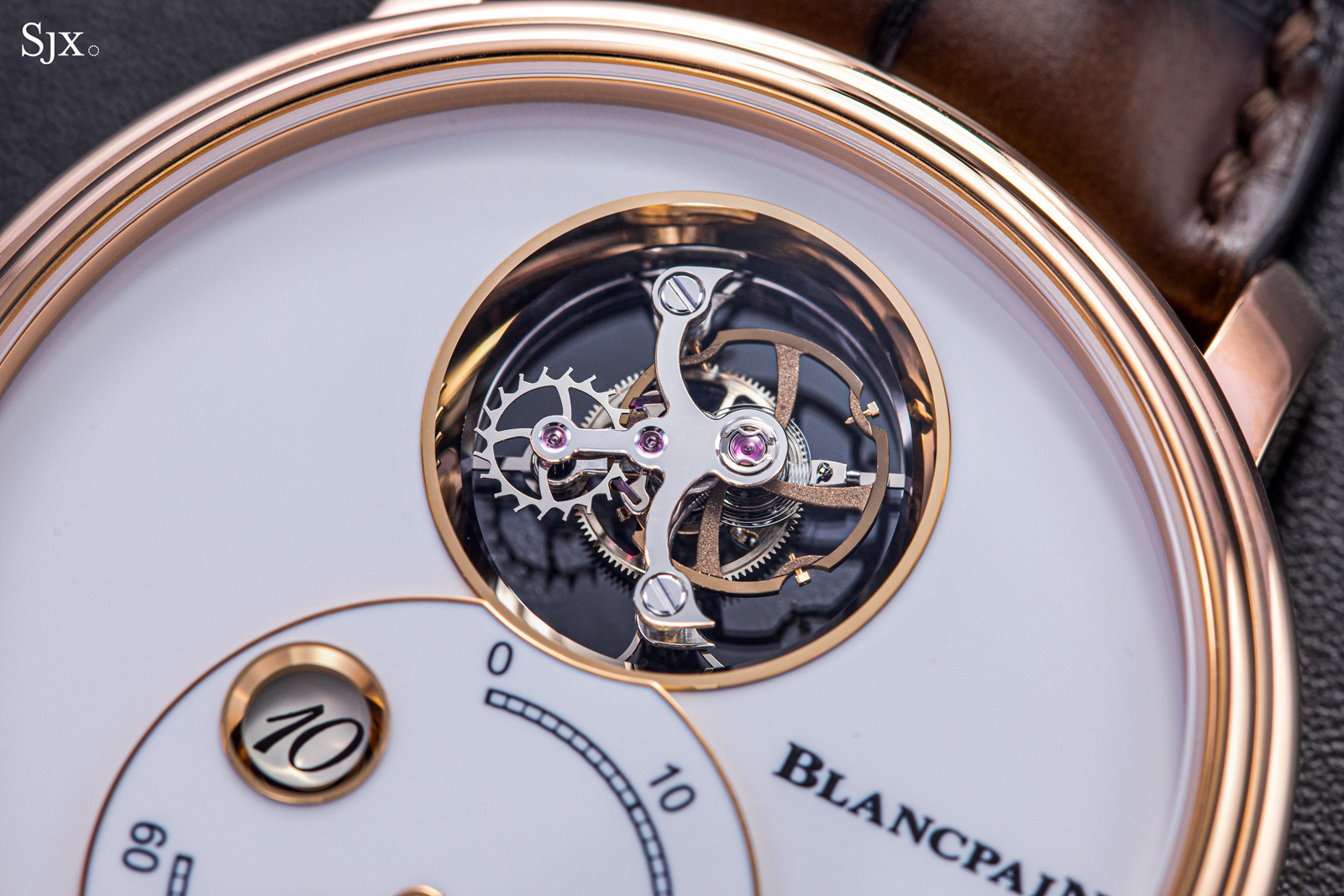
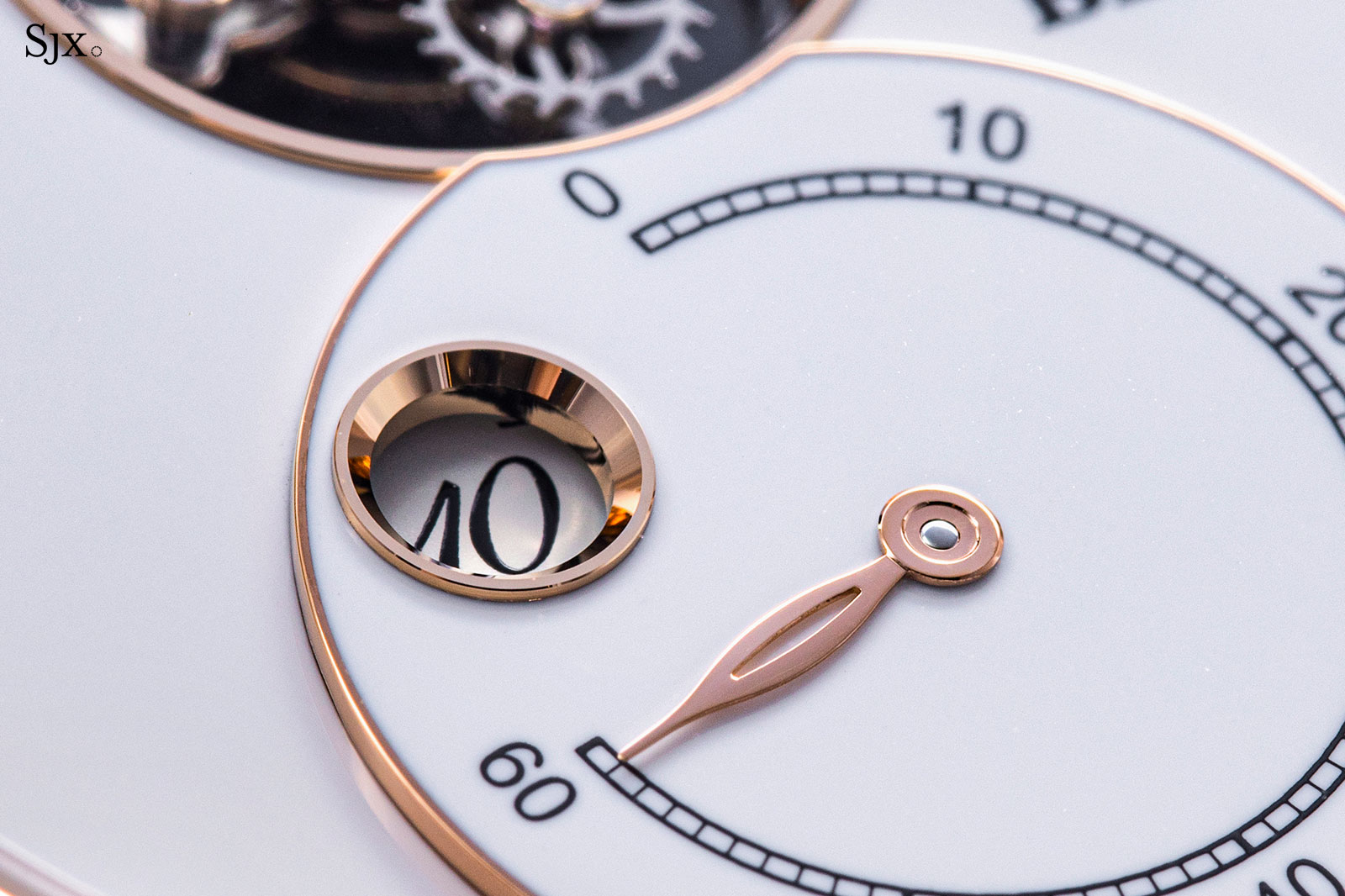
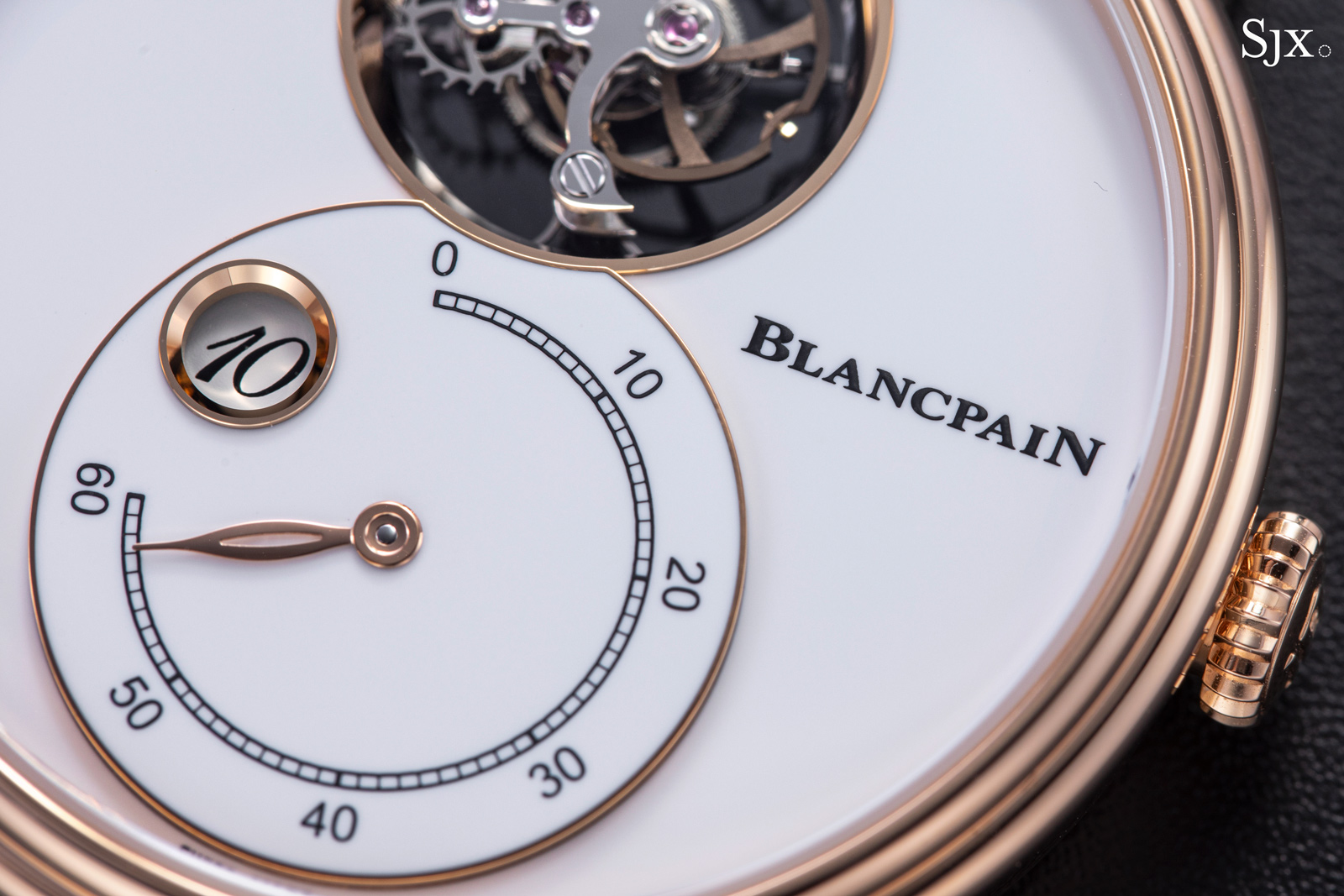
Unlike most of Blancpain’s complications that formal and busy, the THSMR is an elegant watch with an almost minimalist design. The fired enamel dial has a figure-of-eight display that gives it almost perfect symmetry, except for the charmingly quirky hour window that is off-centre but just right. And up close the tourbillon appears to be “floating” thanks to a clear sapphire lower bridge.

It is a fairly large watch as most Blancpain watches now are, though it’s not too thick at just over 11 mm high. But the size is grounded in its mechanics: the cal. 260MR is a sizeable movement with an impressive six-day power reserve.

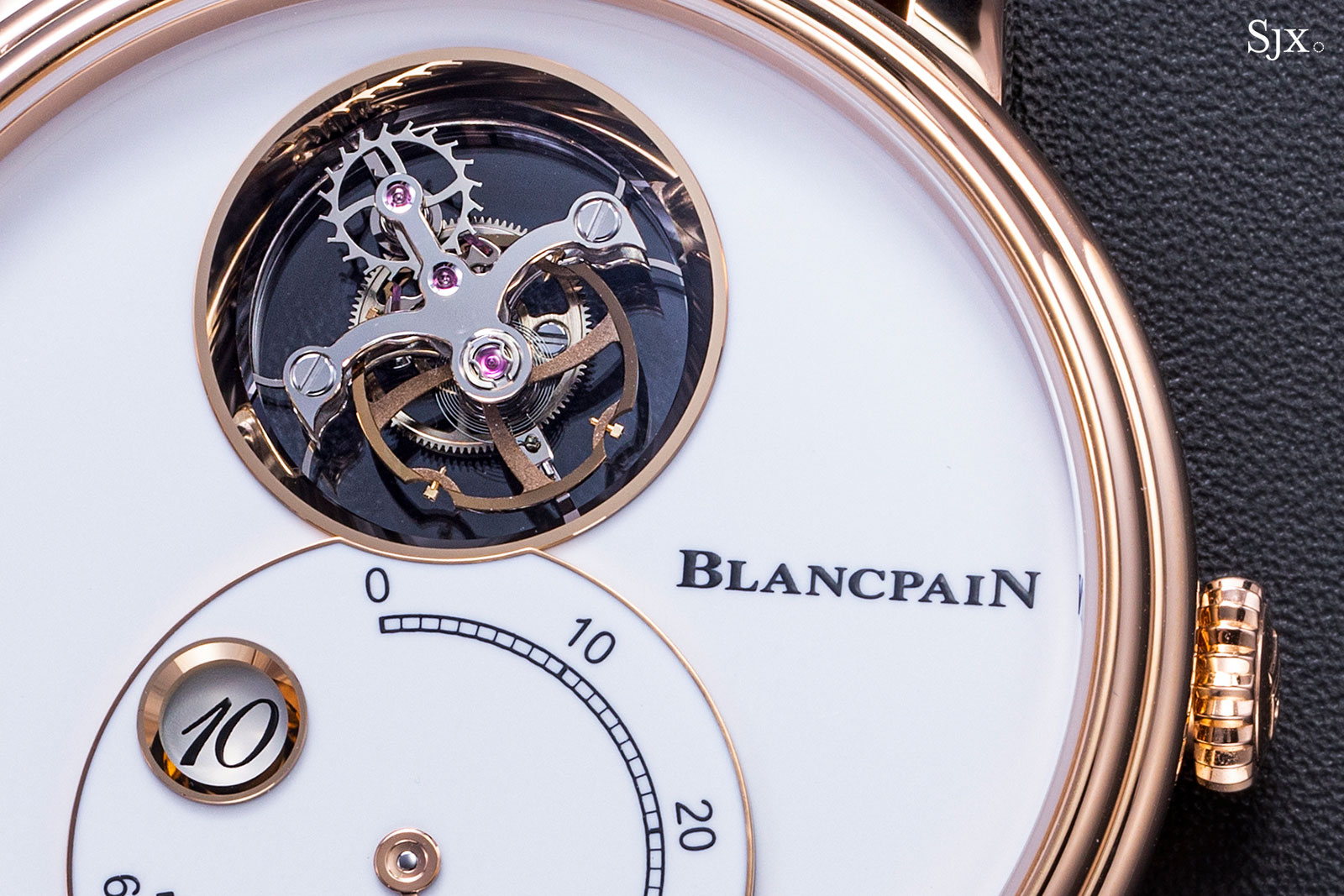
The brand’s trademark bird-shaped tourbillon cage

Though long power reserves are fairly common today, the cal. 260MR is impressive beyond just the numbers. It manages a running time of 144 hours despite having a trio energy-intensive complications, namely the tourbillon, jumping hour, and retrograde minutes.

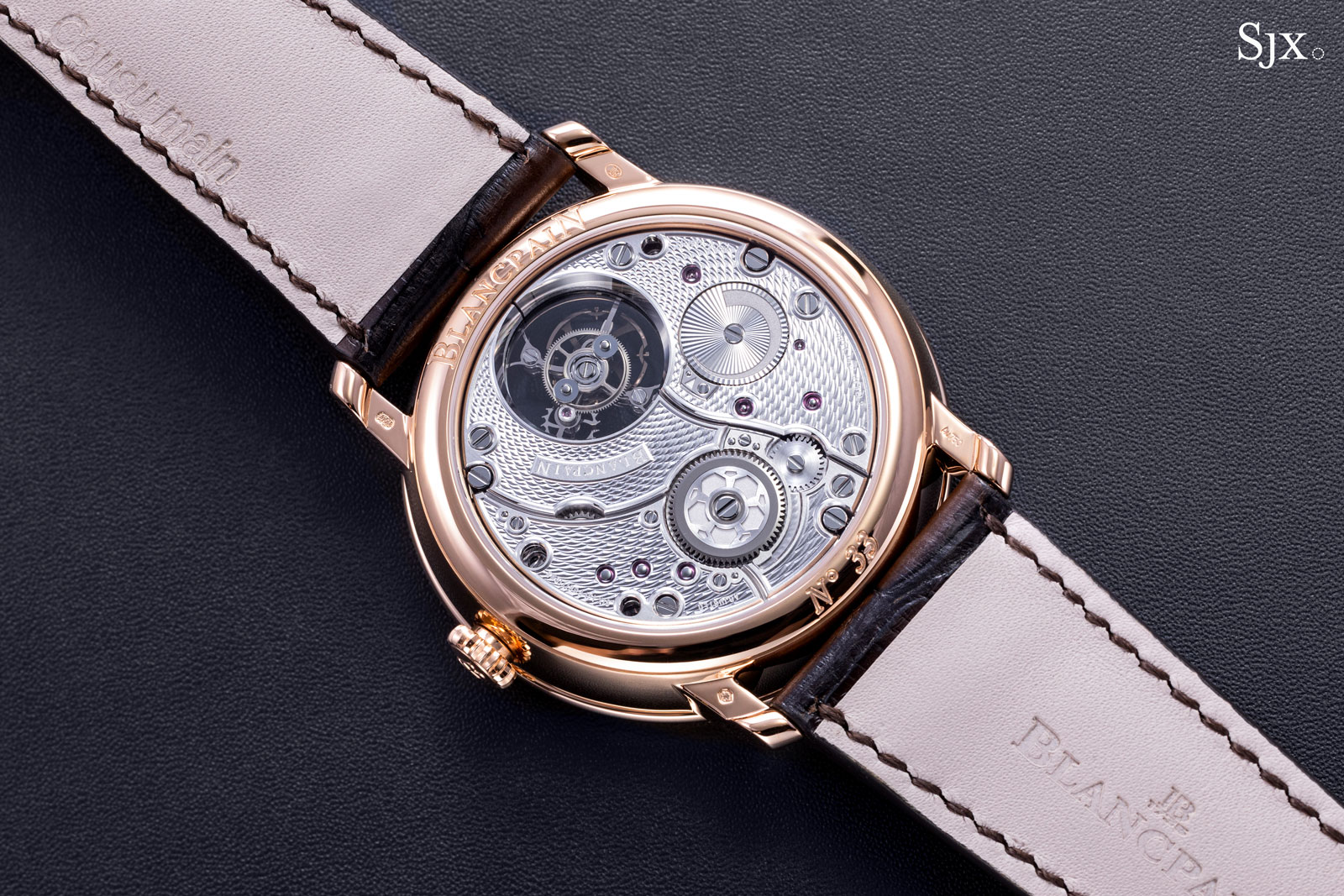
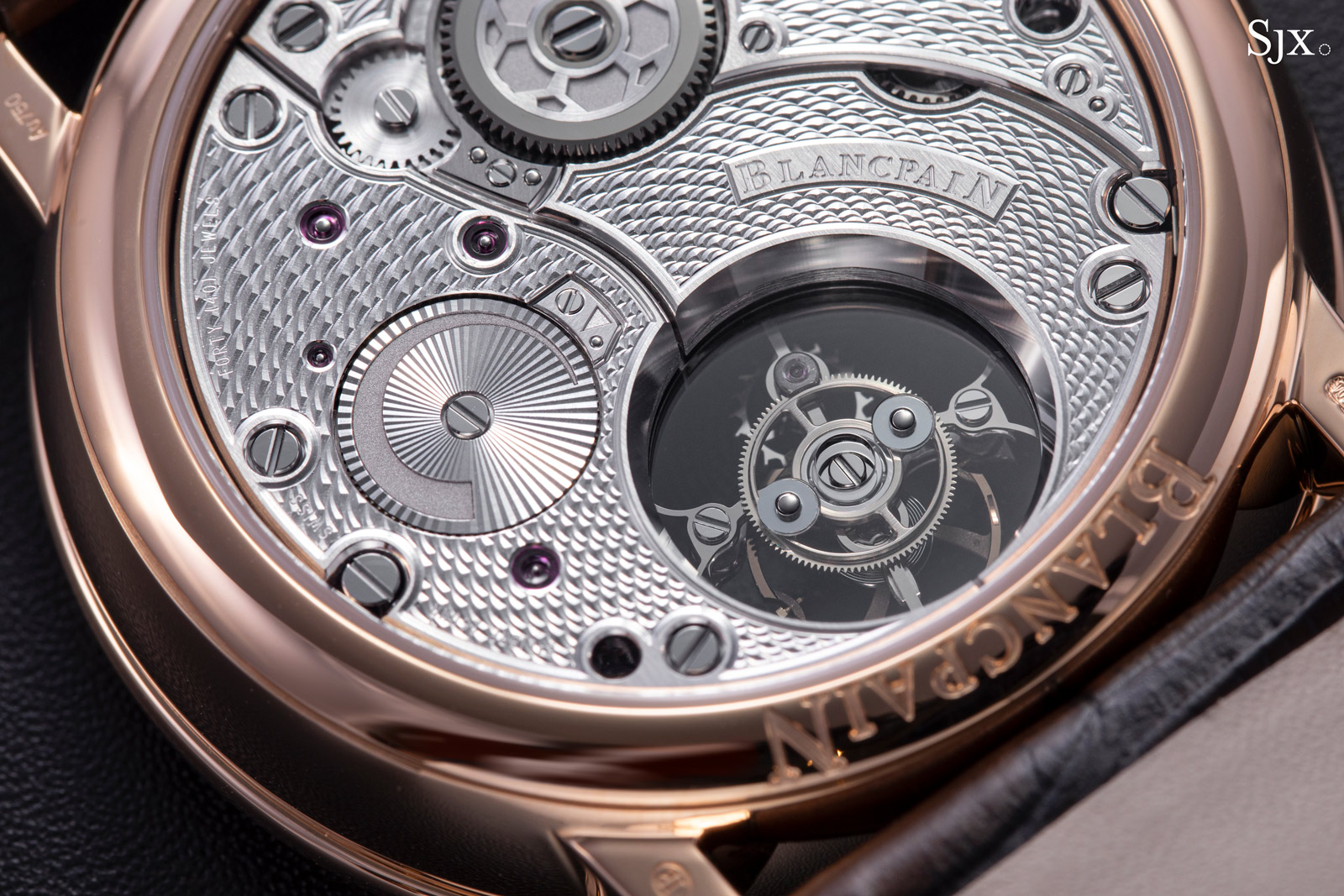
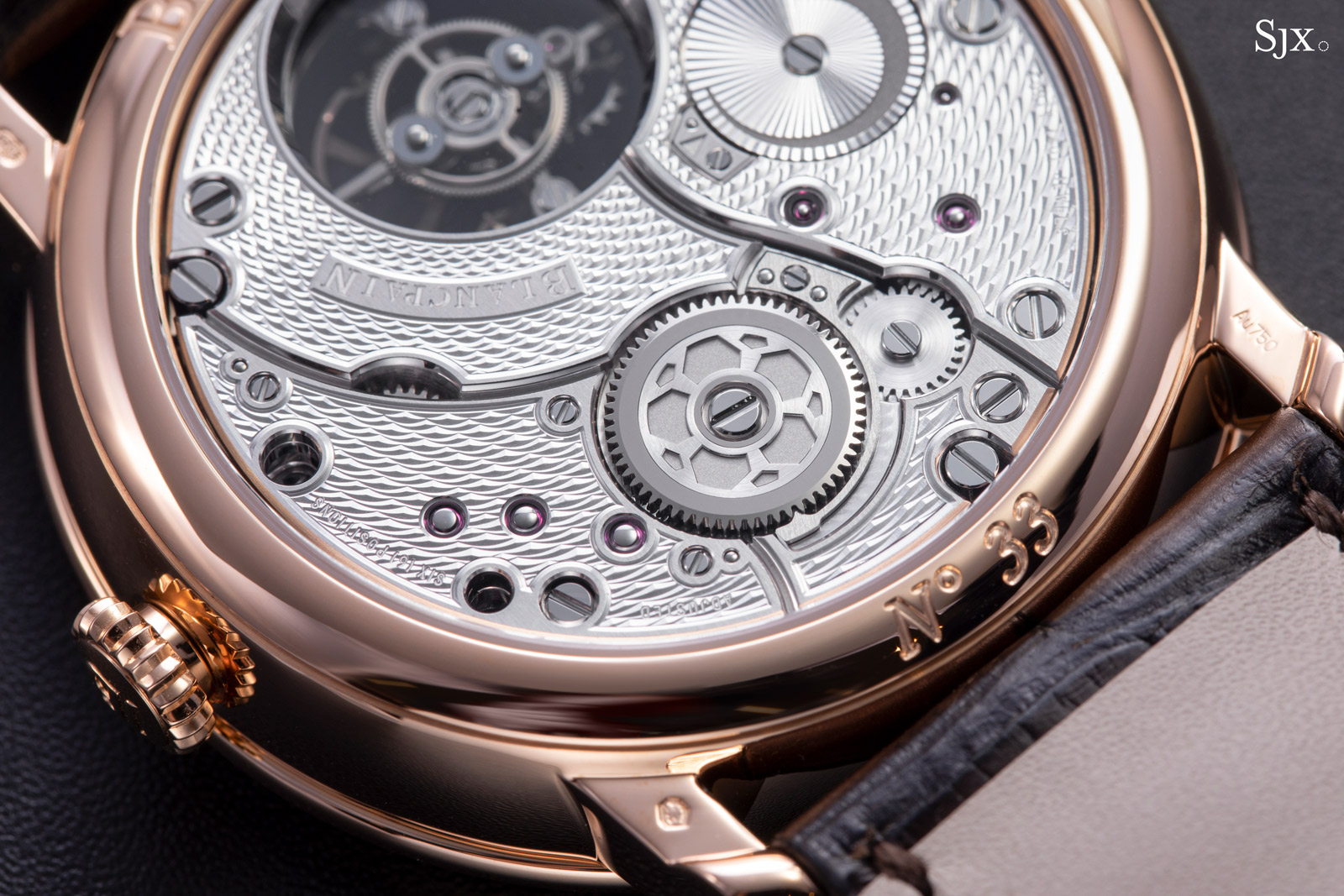
Although the monochromatic palette of the movement makes it difficult to discern, the cal. 260MR is also surprisingly elaborate in its finishing. The bridges, for instance, are engine turned by hand while having the requisite bevelling.

Priced at just under US$150,000 in gold, the THSMR is something of a value proposition as such things go. The price is similar to that of tourbillon-only models from comparable high-end brands like Audemars Piguet and Vacheron Constantin, but it has the bonus of the unusual time display complication and the fired enamel dial.

A minimalist face

The THSMR has an understated dial with a figure-of-eight compassing all of its features, giving it a pleasing, symmetrical appearance. Although the hour aperture and Blancpain logo are asymmetrical, neither throws off the visual balance of the dial but instead give it a bit more character.

Admittedly the figure-of-eight dial does resemble the signature Grande Seconde of Blancpain’s sister brand Jaquet Droz, but it is a good look, especially for complications that are a good fit for the layout, as these are.

The clean dial also helps legibility as there is little to distract from the time display. Legibility is good despite the unconventional time display, but reading the exact minute takes a while due to the fineness of the minute scale.

Though simple in style, the dial is expensively executed. A stark, glossy white, the dial is made up of two discs, one for the main dial and the other for the minute register. Both discs are solid gold and finished with champleve enamel.

Champleve means the discs are first engraved (probably mechanically on a milling machine) to create the raised borders visible around the minute register and tourbillon aperture. The recessed areas are then painted with enamel and the discs fired to set the enamel. Next the discs are lapped to give the enamel a mirror-like surface and ensure it is flush with the borders.

As is typical for Blancpain (and its sister companies in the Swatch Group, particularly Breguet), the enamel is executed almost perfectly. It is smooth, glossy, and betrays no visible imperfections to the naked eye. Even under a loupe it appears practically flawless.

While Blancpain doesn’t reveal the specifics of its enamel dials, the dial quality is likely due to the industrial prowess of the Swatch Group, which no doubt owns a dial maker that has perfected the technique at scale and now supplies all group brands with enamel dials.

The hour display is framed by a round window that’s been milled with a diamond-tipped tool, giving it sharply defined edges and a mirrored surface

The only thing to criticise about the dial has to do with design. The sans serif font for minute numerals contrast with the elegant italic style of the hour numerals. Eliminating the minute numerals or rendering them in an italic font – either would have been preferable to them as they are.

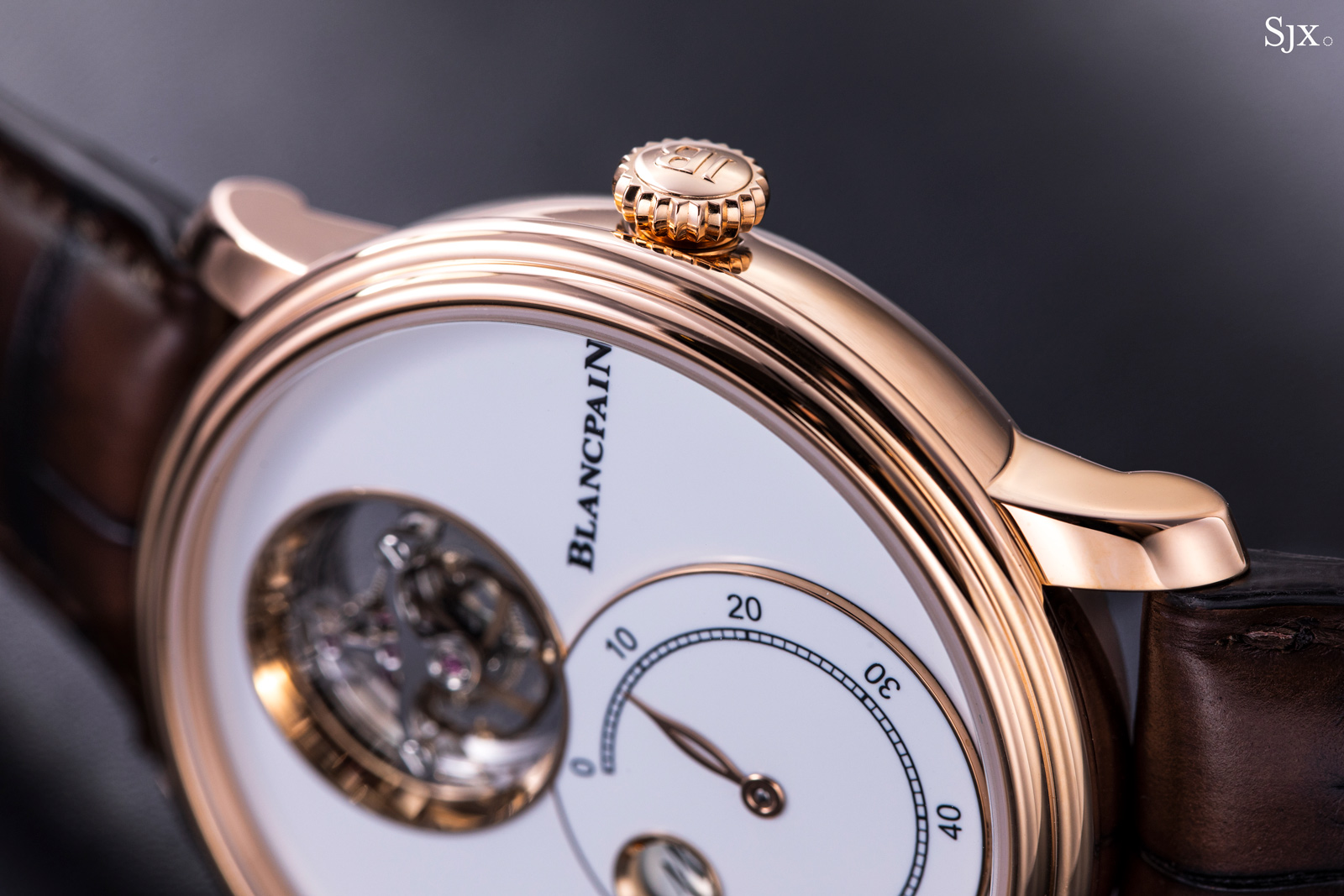
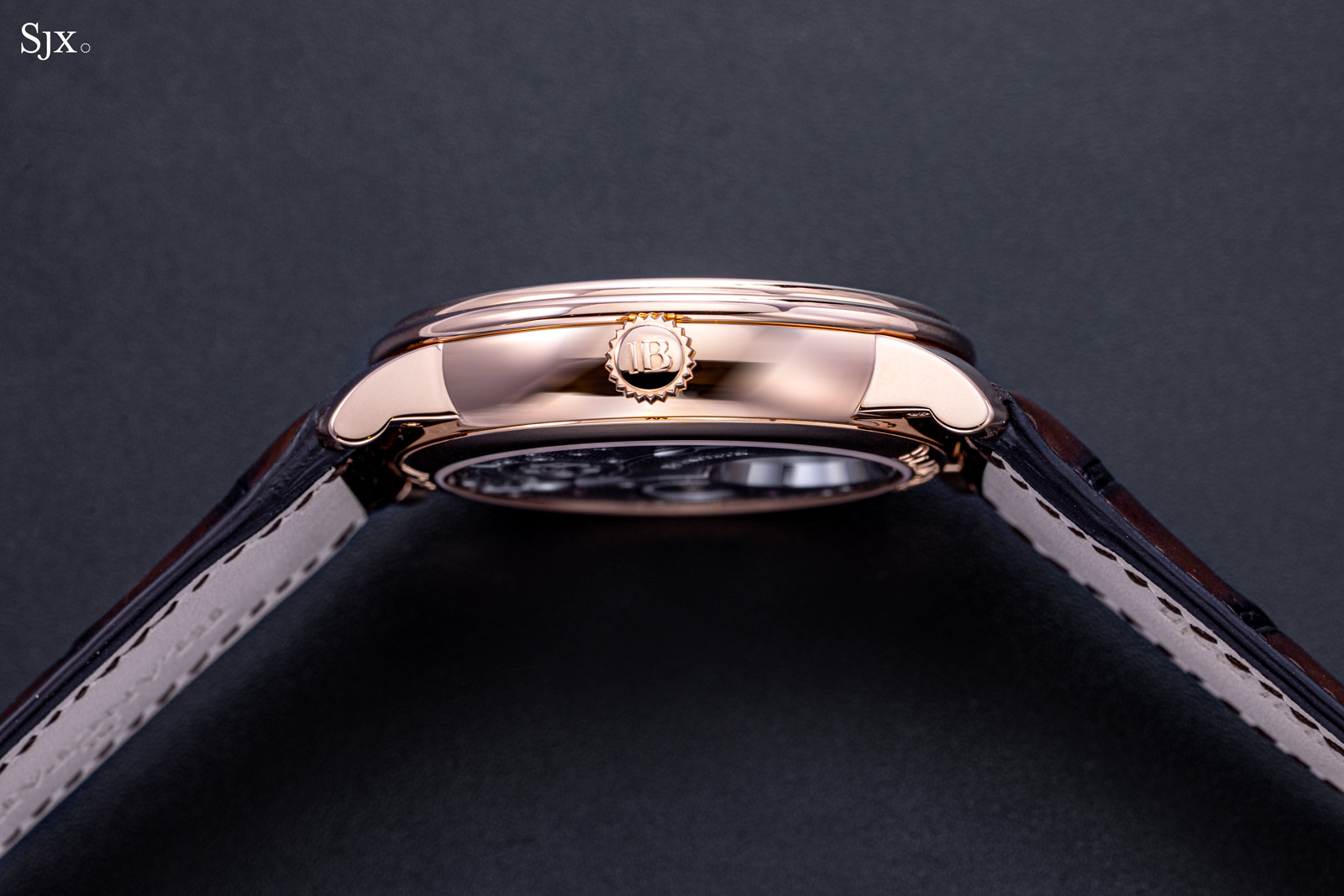
While the dial is unusually clean for Blancpain, the case is very much traditional for the brand. It’s done in the same style that’s been in use since the 1990s with a bowl-shape case middle and double-stepped bezel. Though straightforward in form, it is appropriately elegant for the design.

The case, however, is a little large for an elegant watch, though acceptable for the complications. It measures 42 mm wide and 11.5 mm high, which are the dimensions of a sports chronograph. That gives it a substantial profile on the wrist; the almost chunky feel is perhaps its only shortcoming.

Cal. 260MR

Inside the THSMR is the cal. 260MR that’s essentially a variant of Blancpain’s basic flying tourbillon movement with a 12-day power reserve – if such a movement can be called that. The cal. 260MR gets upgrades in the form of the “floating” tourbillon along with the retrograde minutes and jumping hours – both require substantial energy due to their instantaneously-jumping nature – which trim the power reserve to a still-impressive six days.

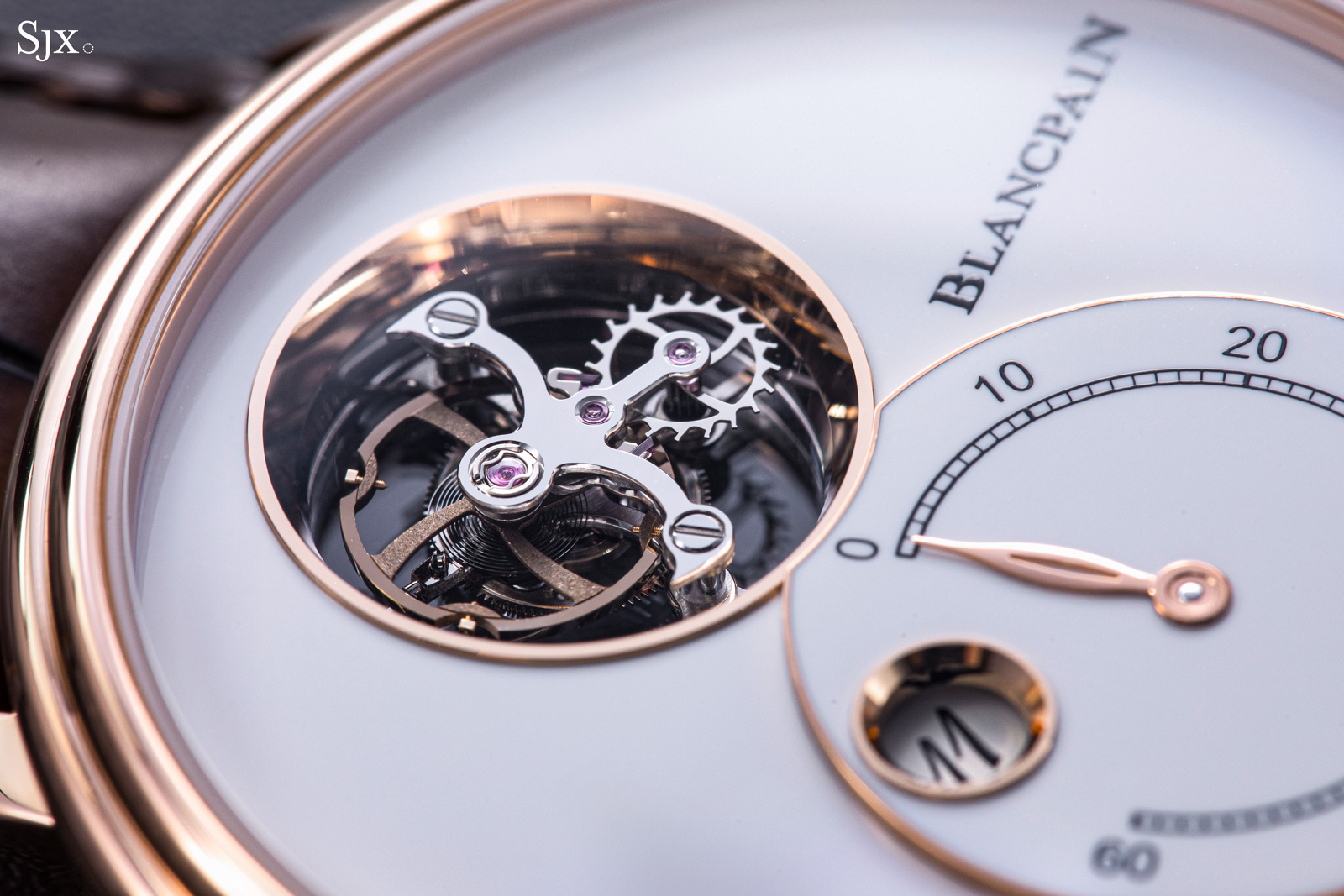
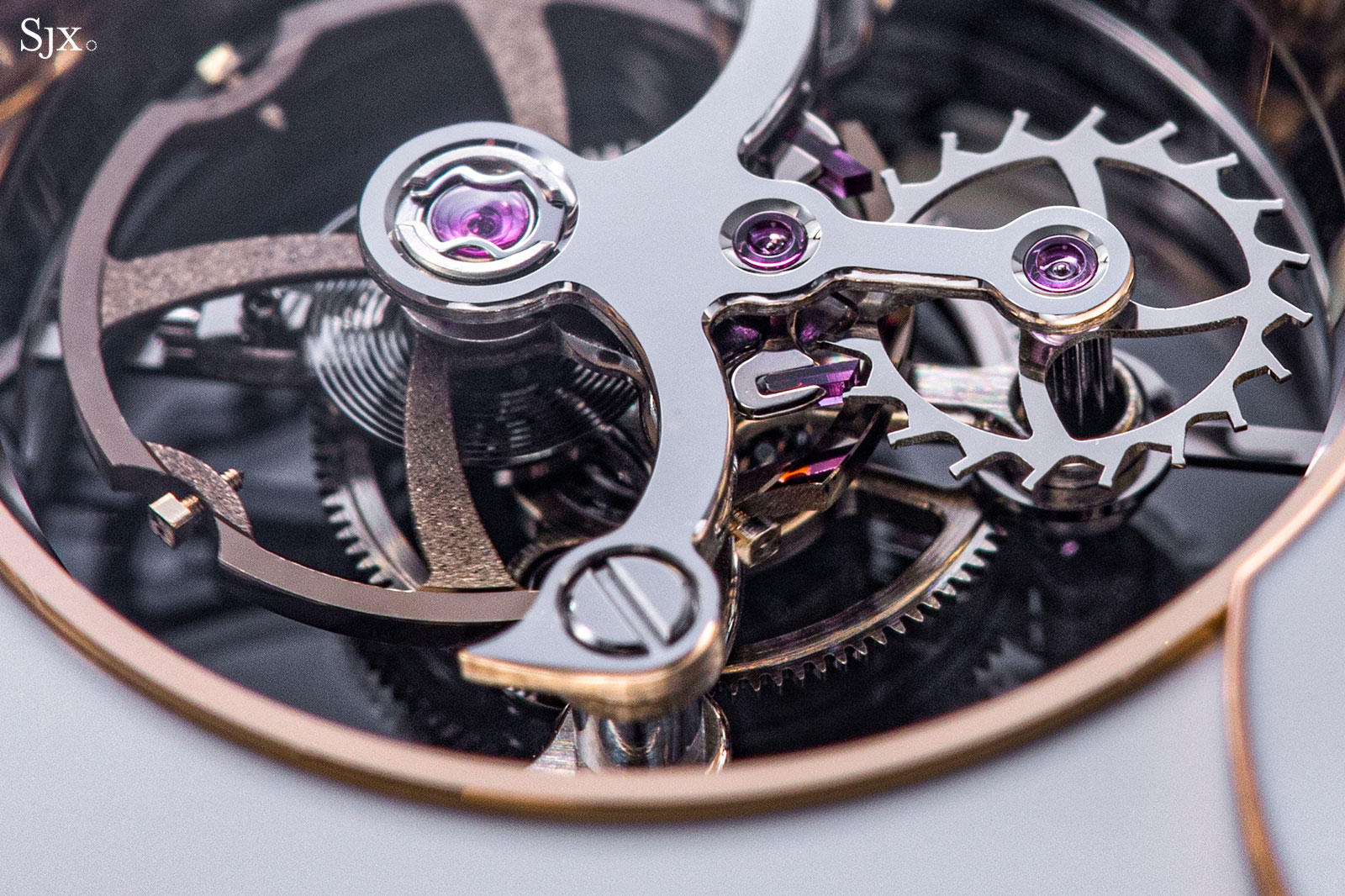
The tourbillon at 12 o’clock is instantly recognisable as Blancpain with its bird-like cage containing a balance wheel on a separate axis. This tourbillon was originally developed for Blancpain in 1989 by Vincent Calabrese, the independent watchmaker of Italian extraction best known for his form movements and creative time displays.

Now a hallmark of the brand, the tourbillon is sometimes mistaken for a carousel (or karrusel), a device similar to a tourbillon but considered less prestigious. That arises from the different axes for the cage and balance, but the Blancpain tourbillon is indeed a tourbillon in a mechanical sense because it lacks the secondary gear train that characterises the carousel.

Although the tourbillon retains the traditional Blancpain style, it has been thoroughly modernised. Amongst other things it has a silicon hairspring that’s resistant to magnetism and a titanium balance wheel.

More striking is the “floating” construction of the flying tourbillon. Unlike the standard Blancpain tourbillon that has a steel bridge on its base, this has a clear sapphire disc that holds the fixed wheel of the tourbillon. As a result, there appears to be no mechanical connection between the tourbillon and the rest of the movement from the front.

The fixed wheel secured to the sapphire plate

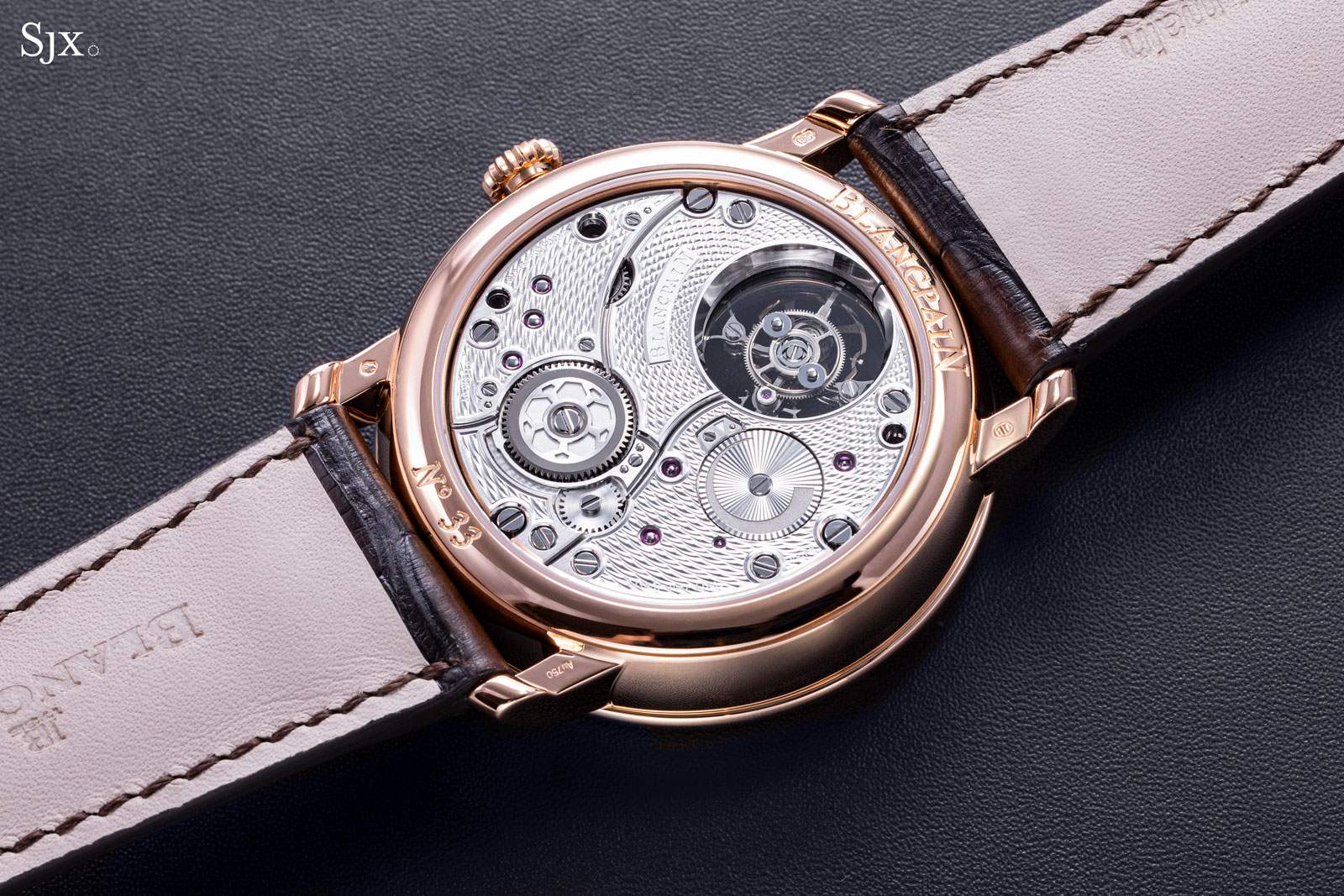
At a distance, the cal. 260MR appears clinical due to its unchanging colour throughout. But closer examination reveals varied, elaborate, and unconventional decoration in manner that is favoured by both Blancpain and its sister company Breguet.

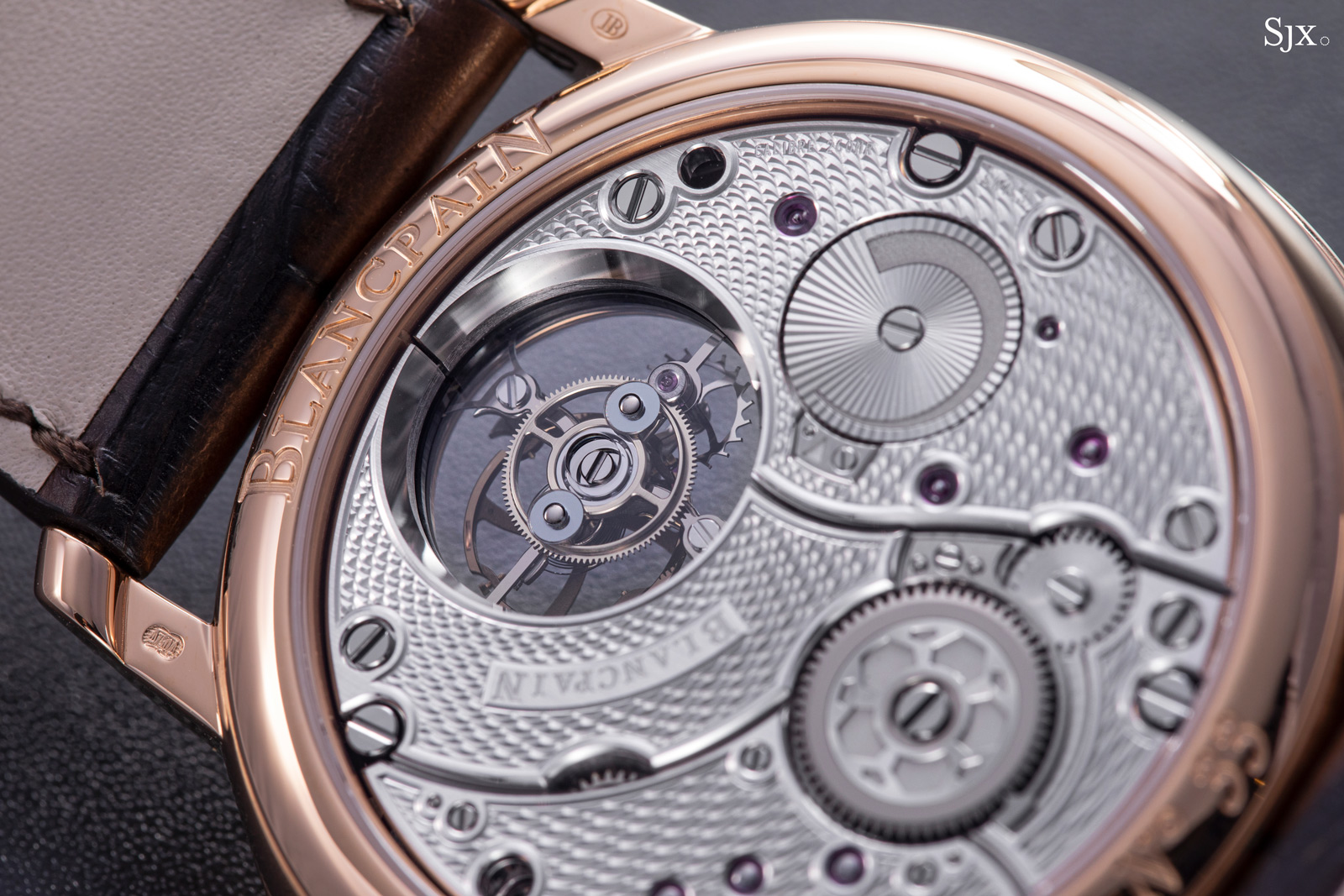
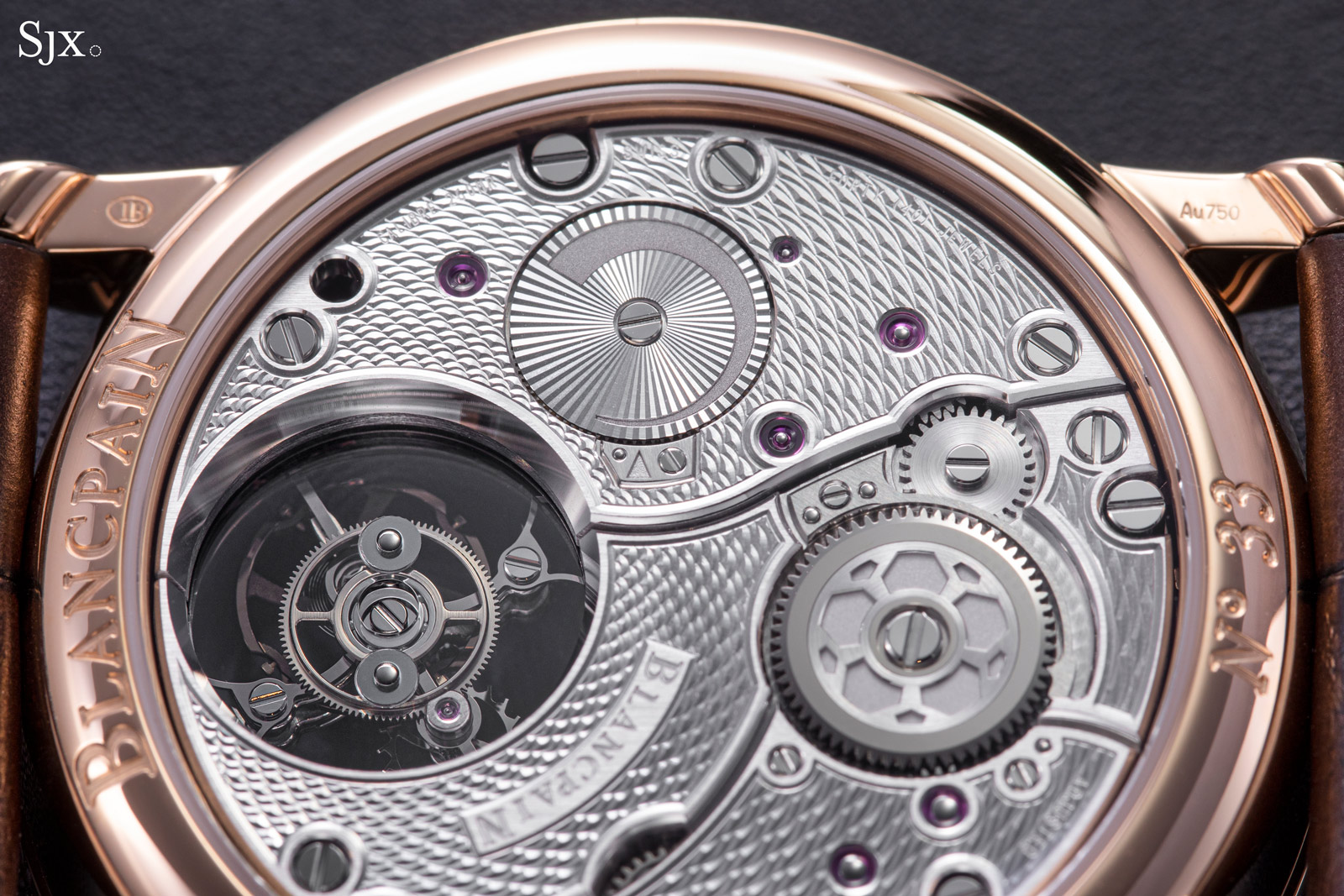
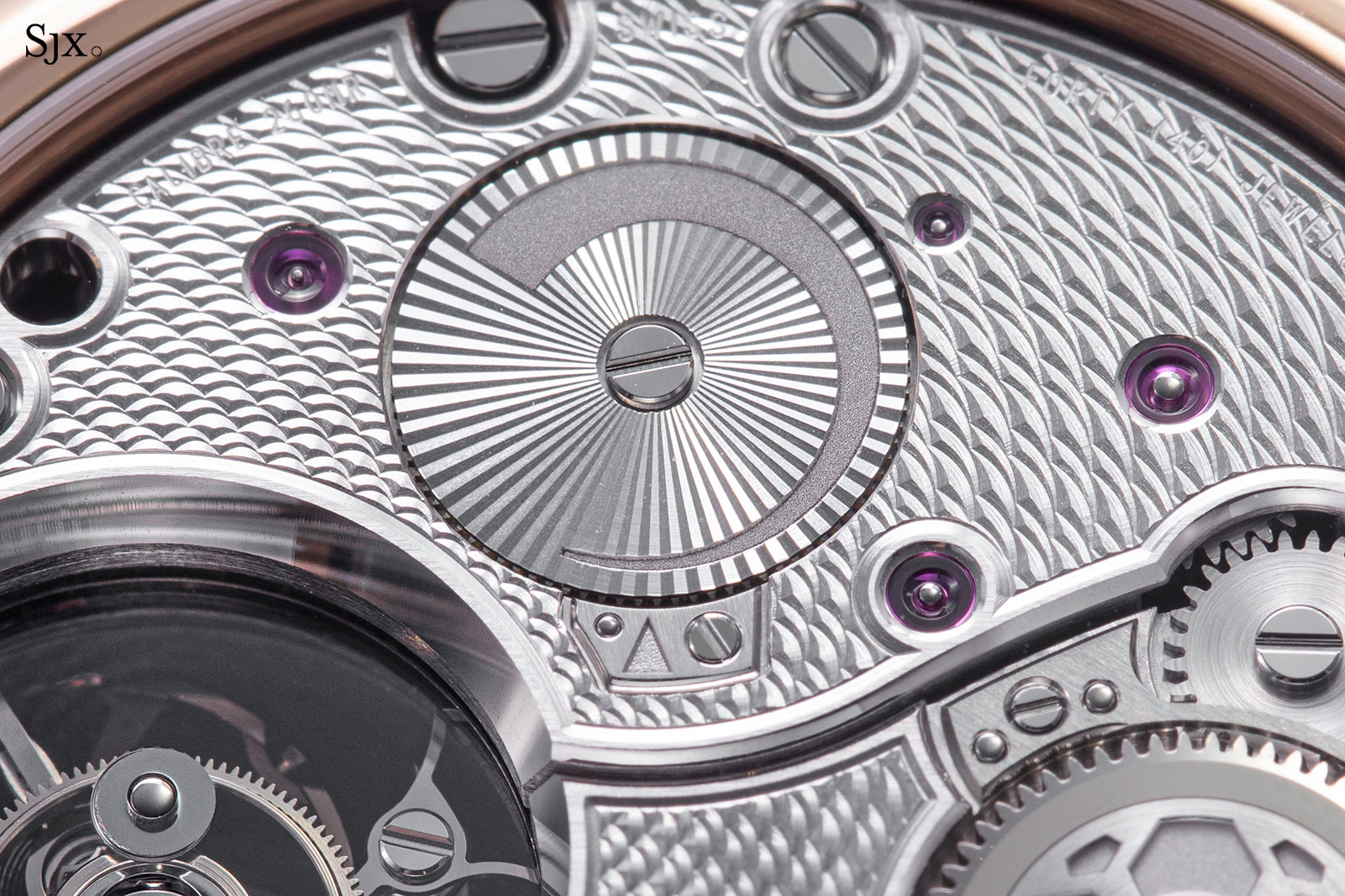
Immediately apparent is the patterning on the bridges. All of them are decorated with barleycorn guilloche done the traditional way according to Blancpain, that is on a hand-operated rose engine. And the disc for the power reserve indicator is similarly engined turned by hand, but with a radial pattern.

Zoom in and the decoration continues to impress. The guilloche portions are neatly demarcated by a deeply engraved border (that is probably engraved by machine and then refined by hand), while the outer edges of the bridges have hand-finished bevelling (except for the extremely wide and steep bevel around the tourbillon aperture that is milled).

Naturally all of the jewels, screws, and pins sit in polished countersinks, and all the screw heads have obviously chamfered slots and edges. Even the tiny plate with the triangle pointer for the power reserve display has countersinks and bevelled edges.

The disc that indicates the power reserve

The large screw holding the barrel ratchet wheel has especially wide bevelling on its slot and circumference, but all the other screws do as well, though it is less prominent due to their smaller size

The tourbillon carriage is black polished and bevelled on its edges

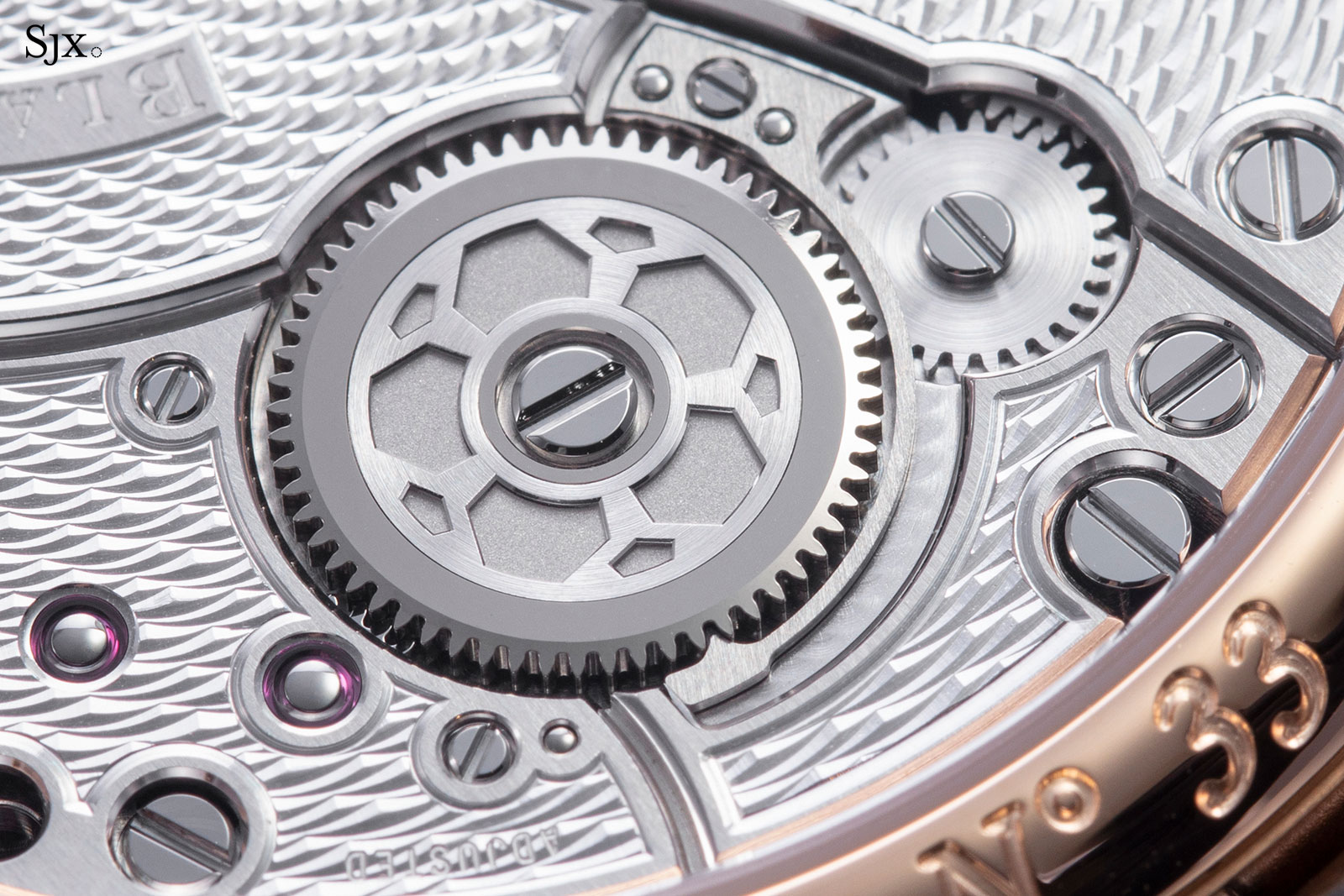
While the effort and skill that went into the movement decoration is overwhelmingly obvious, it feels like too much. There is a lot going on and many of the elements don’t complement each other in terms of style. The honeycomb barrel ratchet wheel, for instance, is jarringly modern against all the old-school engine turning.

Even if the finishing were left unchanged, the movement could do with more colour, like blueing some screws or gilding the engraving. Already it is largely an unbroken expanse of metal because of the full bridges that cover most of the moving parts, so the lack of colour accentuates the monotony.

The barrel ratchet wheel with a hexagon spokes that are a Blancpain trademark but a bit too modern for the movement

Concluding thoughts

The THSMR combines the rare qualities of being visually appealing and technically accomplished. The styling is clean and classical but gently eccentric, and complements the compilations perfectly.

At the same time, the tangible quality of the watch is obvious. The dial and movement in particular are executed to a high standard; the movement is impressive and almost too fancily decorated. Put briefly, it is an elegantly interesting watch.


Key facts and price

Blancpain Villeret Tourbillon Heure Sautante Minutes Rétrograde
Ref. 66260 3433 55B (platinum)
Ref. 66260 3633 55B (red gold)

Diameter: 42 mm
Height: 11.5 mm
Material: Platinum or 18k red gold
Crystal: Sapphire
Water resistance: 30 m

Movement: Cal. 260MR
Functions: Jumping hours, retrograde minutes, and flying tourbillon 
Winding
: Manual
Frequency: 21,600 vibrations per hour (3 Hz)
Power reserve: 144 hours or six days

Strap: Alligator with folding clasp

Limited edition: 50 pieces in platinum; regular production in red gold
Availability
: At Blancpain boutiques and retailers
Price: US$148,800 in red gold, US$180,900 in platinum

For more, visit blancpain.com.


Back to top.
You may also enjoy these.
Welcome to the new Watches By SJX.
Subscribe to get the latest articles and reviews delivered to your inbox.