Hands-On with the Voutilainen Vingt-8 ISO “Oversized” in Platinum

The extra-large, 44.5mm version of the quirky ISO.
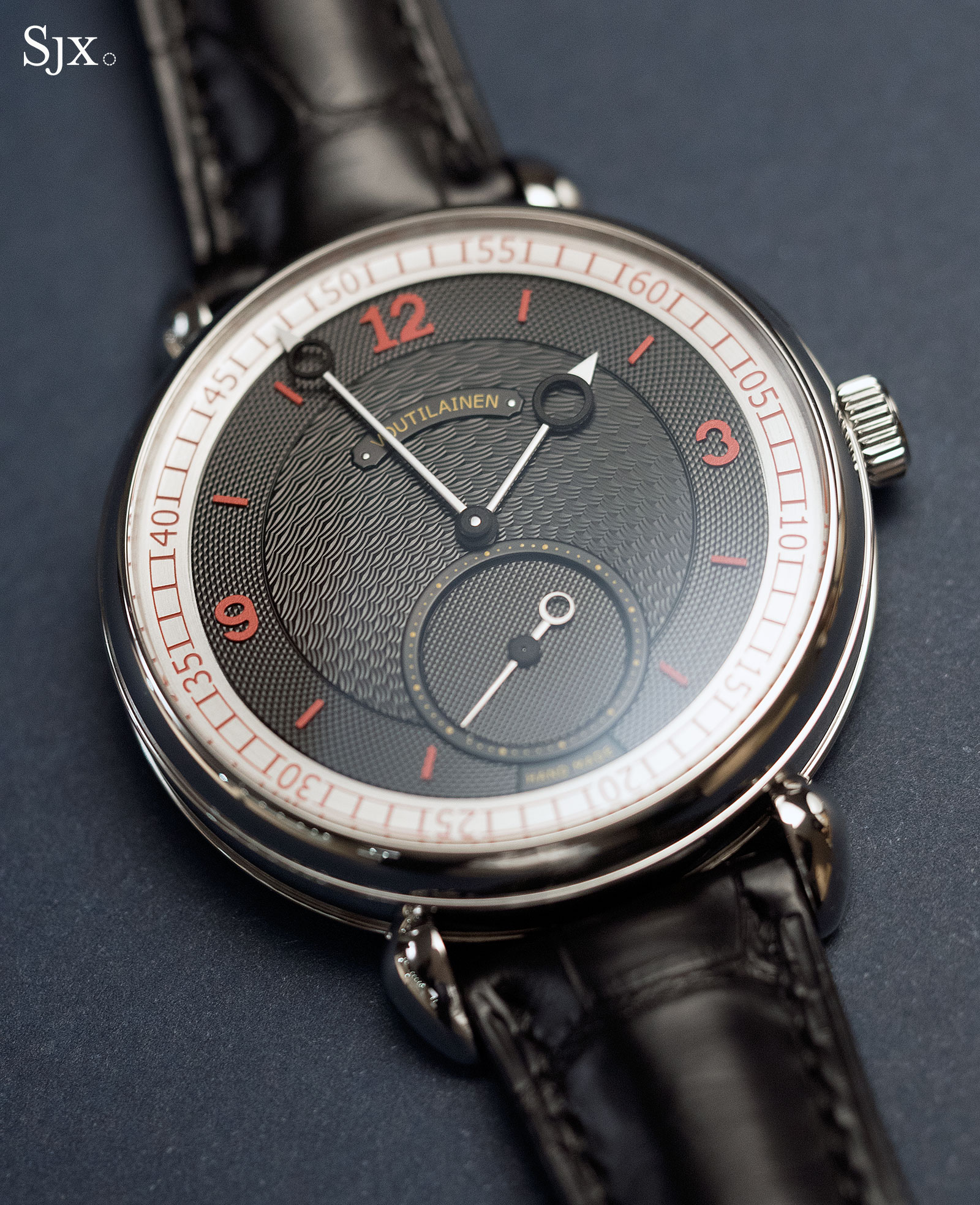
Kari Voutilainen doesn’t often makes oversized watches but occasionally does, having made three to date, including the Vingt-8 in a 44.5mm stainless steel case unveiled earlier this year. Now the same generous size has made its way to the Vingt-8 ISO, combining its unusual time display with striking colours and a weighty platinum case, giving the watch major wrist presence.


Introduced at SIHH 2017, the Vingt-8 ISO looks like a typical Voutilainen timepiece but it’s not. In fact, the Vingt-8 ISO is the Voutilainen timepiece that goes farthest off the beaten track by Voutilainen standards. It’s as quirky as a Voutilainen gets.
Voutilainen Vingt-8 ISO 44.5mm Pt3

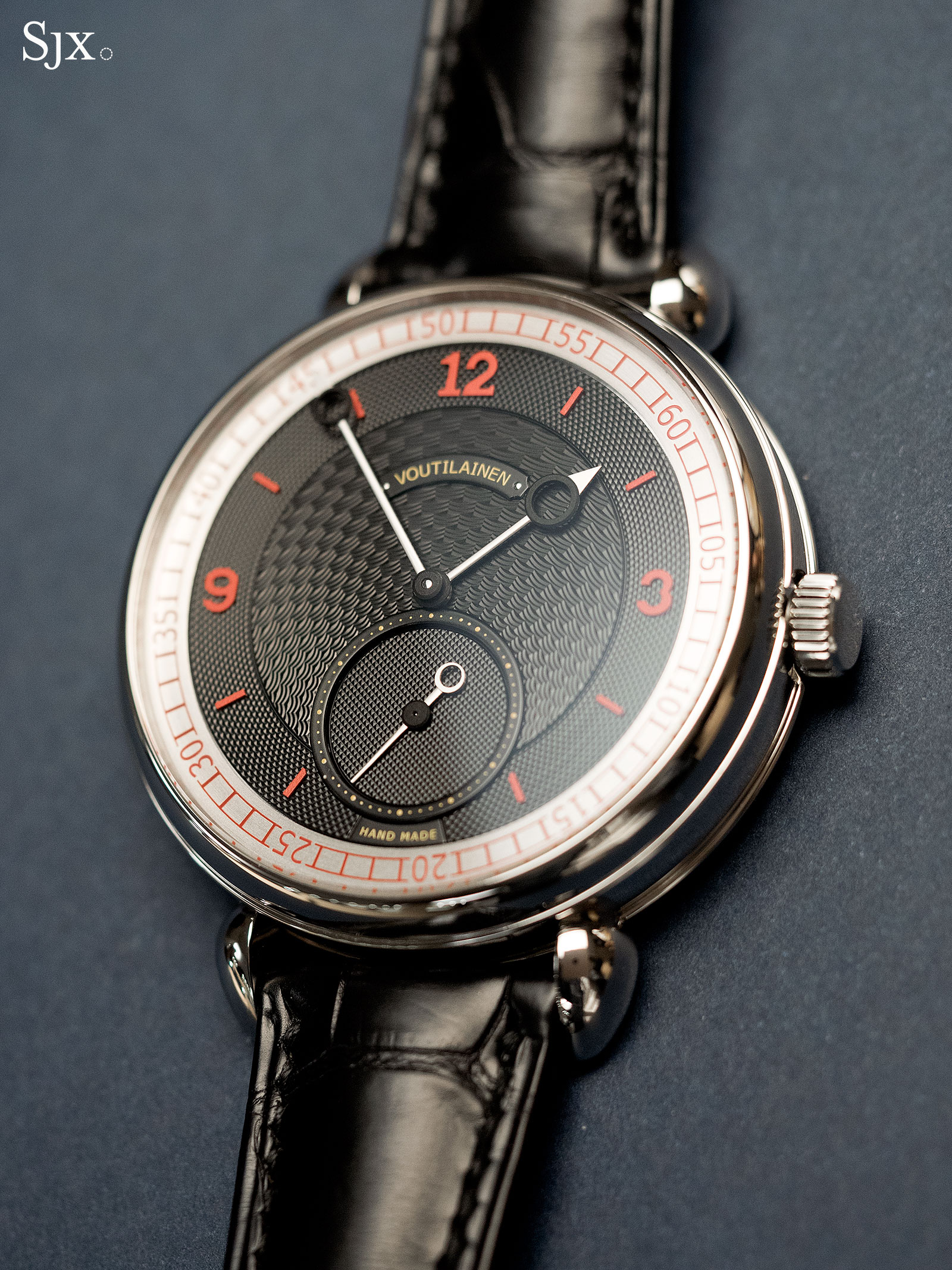
The watch tells the time with conventional hands, except they don’t point to the time as they do on ordinary watches. That’s because the chapter ring bearing the minute track travels with the hour hand, in the same direction but at a different pace.

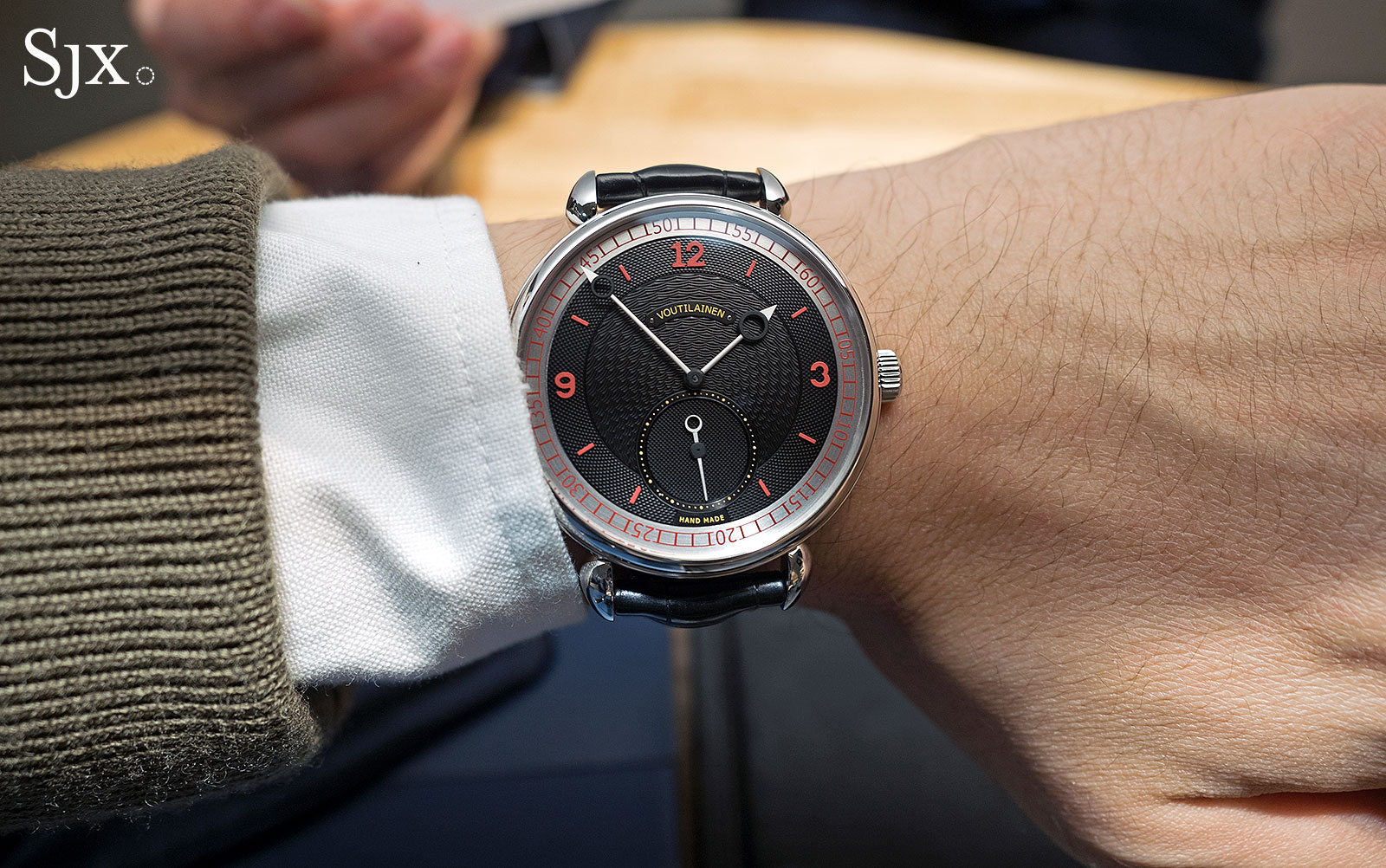
Consequently, at the top of every hour both hands will be pointing to the same hour marker. At eight o’clock for instance, the hour hand points to eight, as does the minute hand. In the photo below, the time is just before 1:45. Once it hits 2:00, both hands will be pointing to two o’clock.
Voutilainen Vingt-8 ISO 44.5mm Pt2

Reading the time takes some getting used to, but is fairly easy to grasp. It’s a clever way of telling the time differently while still retaining the look of an ordinary wristwatch. Voutilainen, however, doesn’t take credit for its invention. According to him, the mechanism was patented by a Spanish clockmaker whose name is now obscure.

The Vingt-8 ISO is usually offered in the standard 39mm Voutilainen watch case – the ISO calibre is the same size as the regular version – making this enormous 44.5mm version a one of a kind timepiece (until another is ordered).

Despite being noticeably larger than the 39mm model, the oversized Vingt-8 retains the same lugs spaced 20mm apart, making the watch seem even larger than it is. That’s not a bad thing, given the style of the watch.
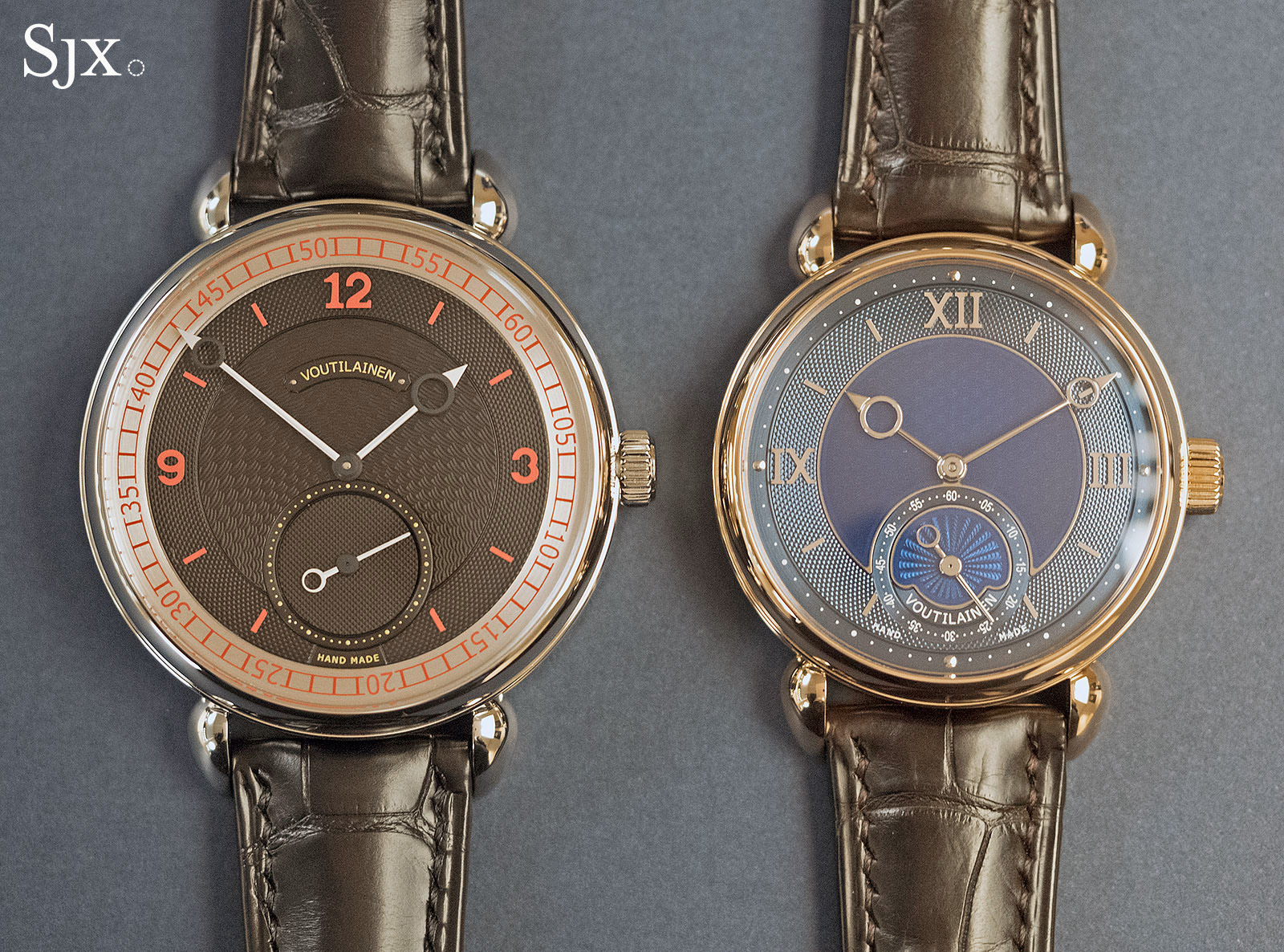
Voutilainen Vingt-8 ISO 44.5mm Pt


Typically Voutilainen’s watches look most handsome in conventional sizes with a restrained colour palette, which the oversized Vingt-8 ISO is anything but.
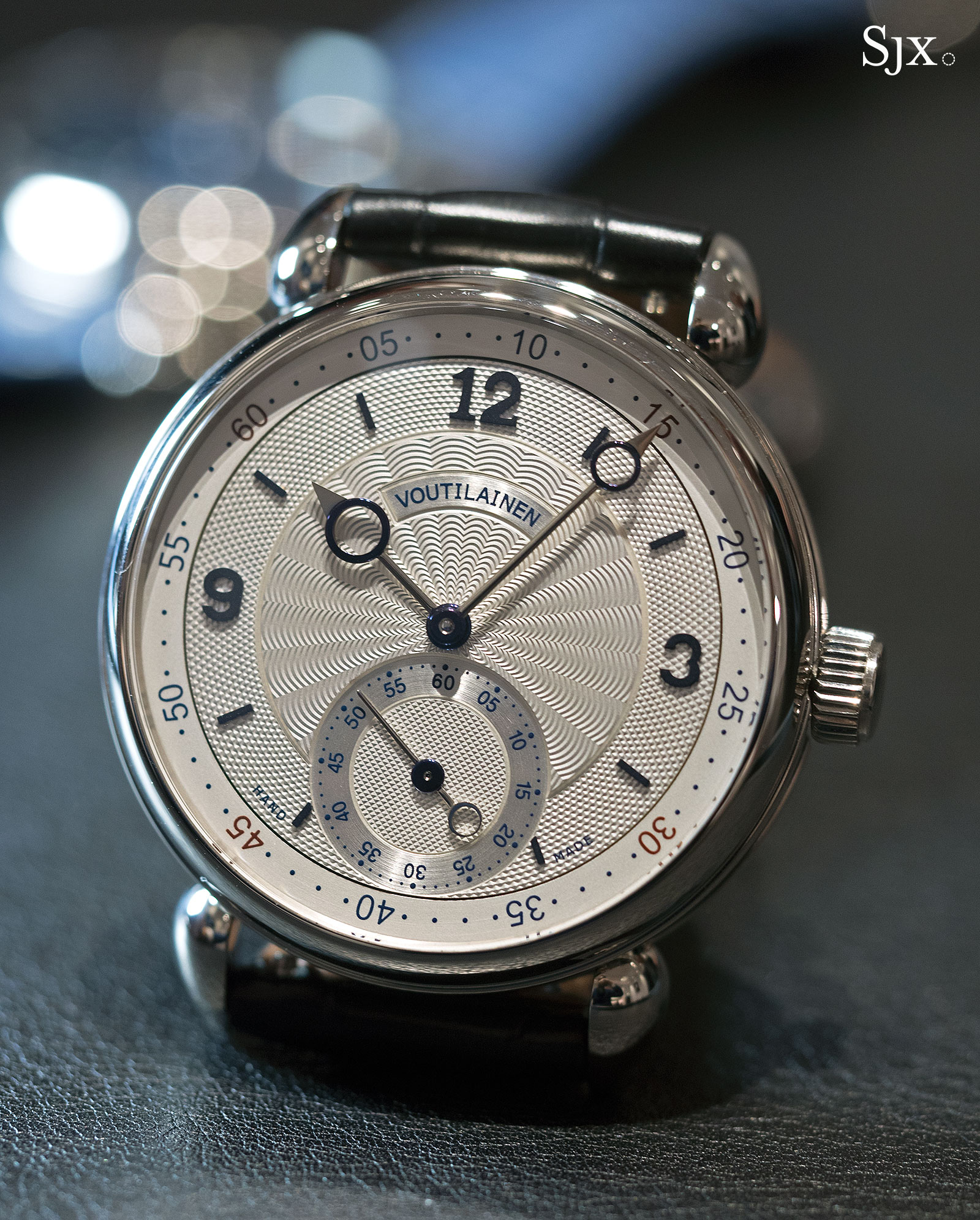
Voutilainen Vingt-8 ISO white gold 2

The front and back of a more conventional version of the Vingt-8 ISO that’s 39mm and white gold

The dial is black with three guilloche patterns, basketweave in the centre, barleycorn on the hour track, and hobnail on the subsidiary seconds. That’s combined with black and white hands – which have a matte, frosted finish – while the lettering and seconds markers are in yellow. And to top it all off, the hour markers and minute track are orange.
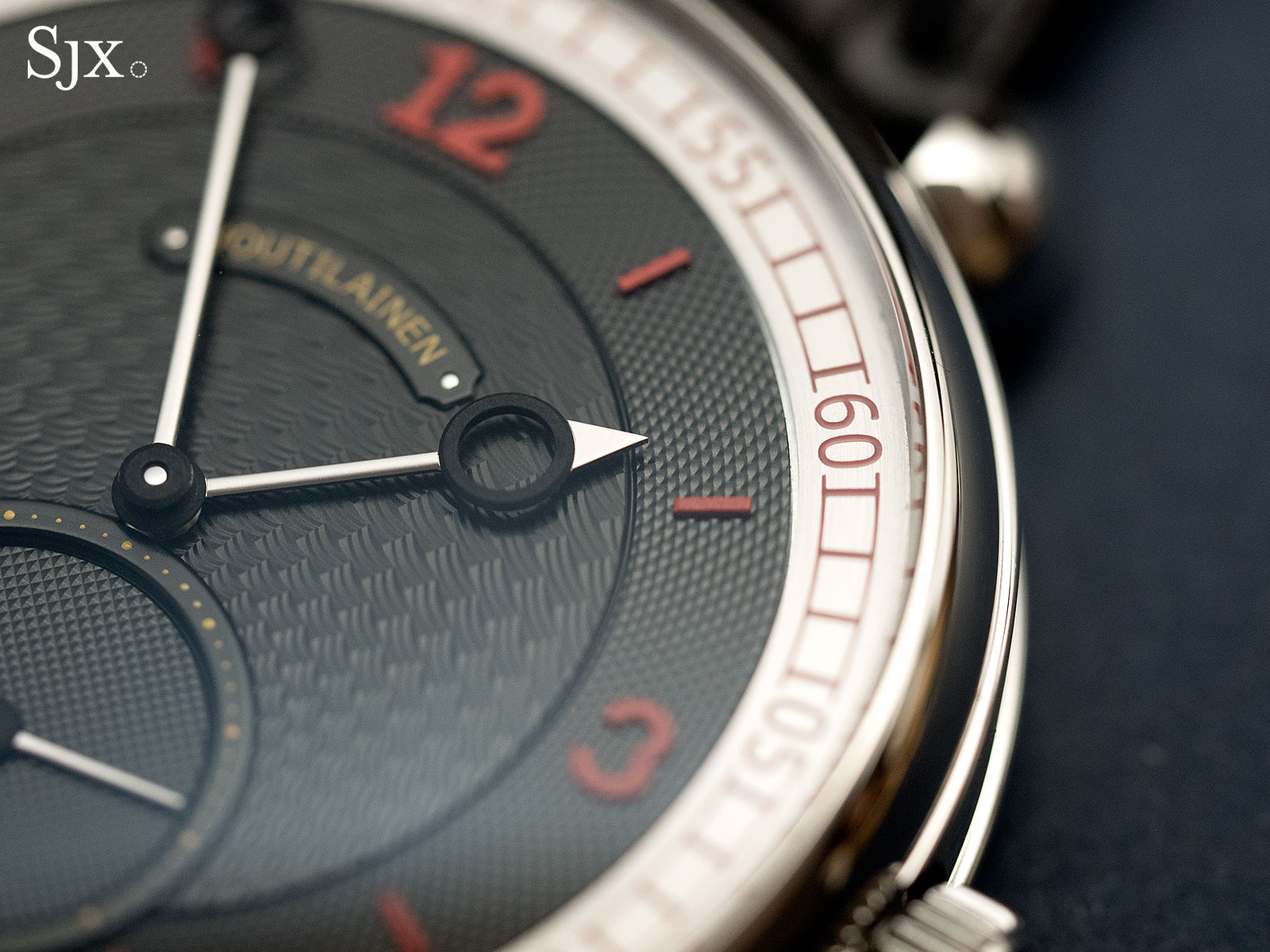
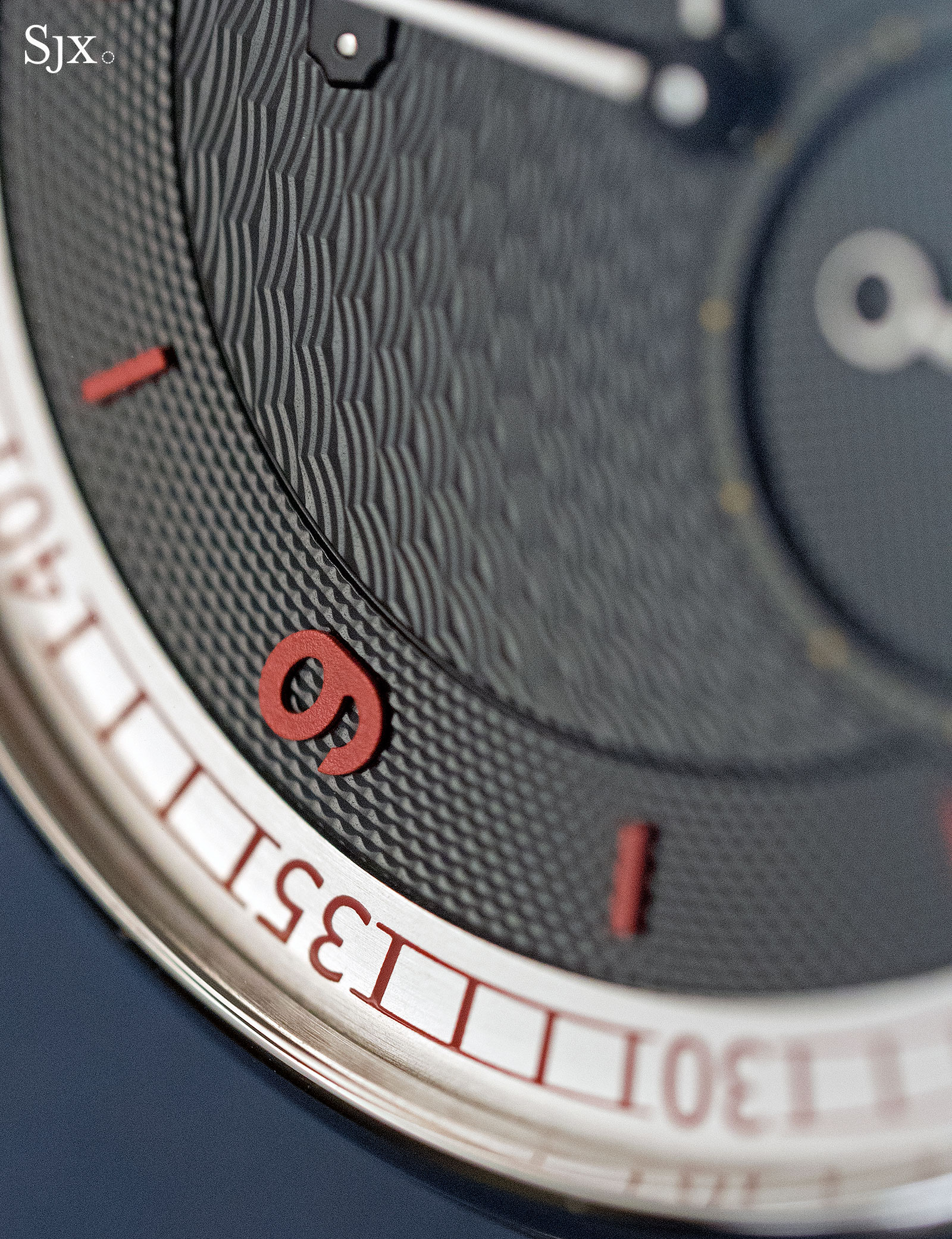
Voutilainen Vingt-8 ISO 44.5mm Pt4

Voutilainen Vingt-8 ISO 44.5mm Pt5

The look is peculiar and initially disconcerting but the combination works with the very large case size, making it feel a bit more fun than the average Voutilainen chronometer.

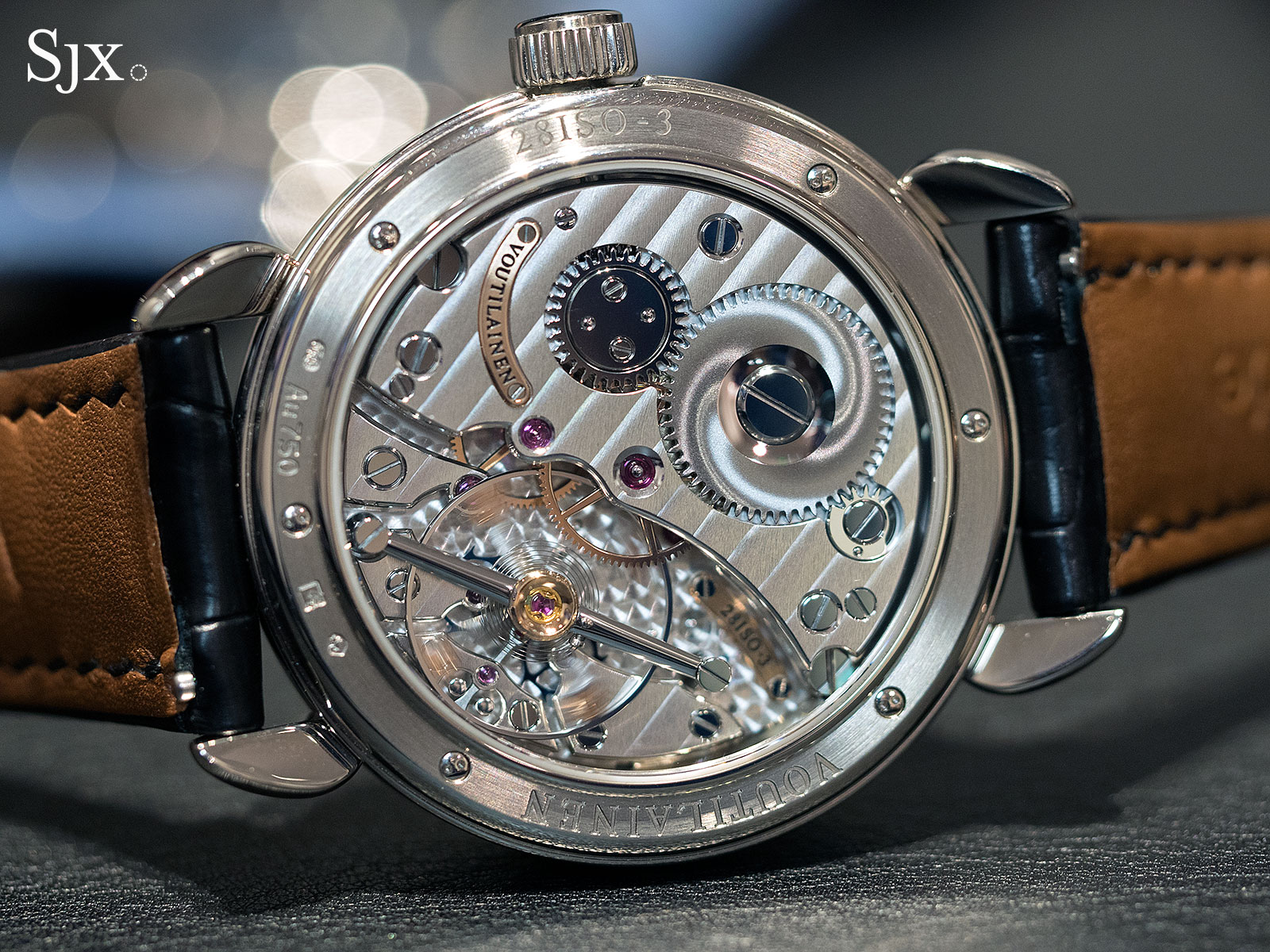
Inside is a variant of the calibre 28, modified for the ISO time display on the front but in terms of construction to suit the larger case size. All of Voutilainen’s oversized Vingt-8 watches have a similar movement inside.
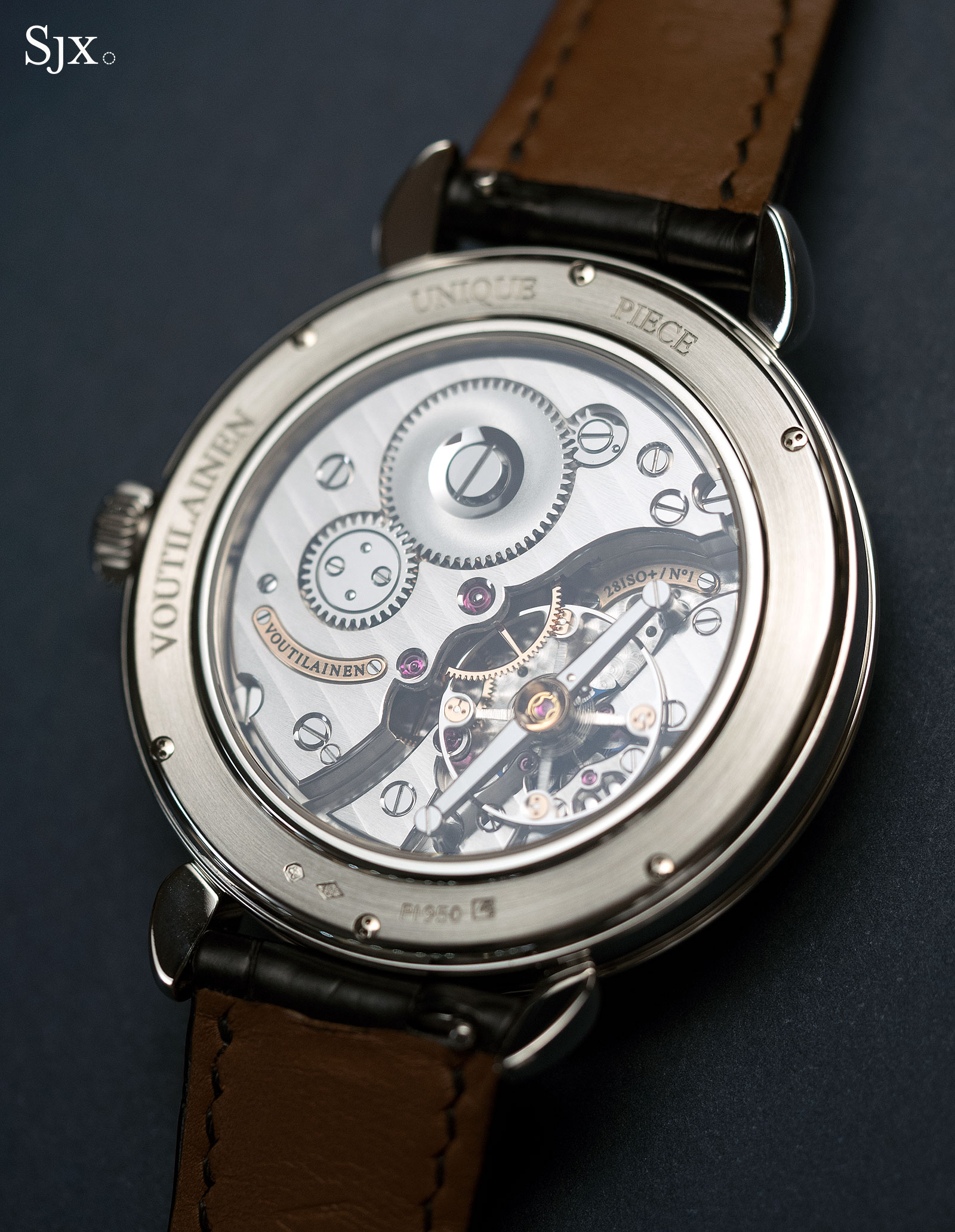
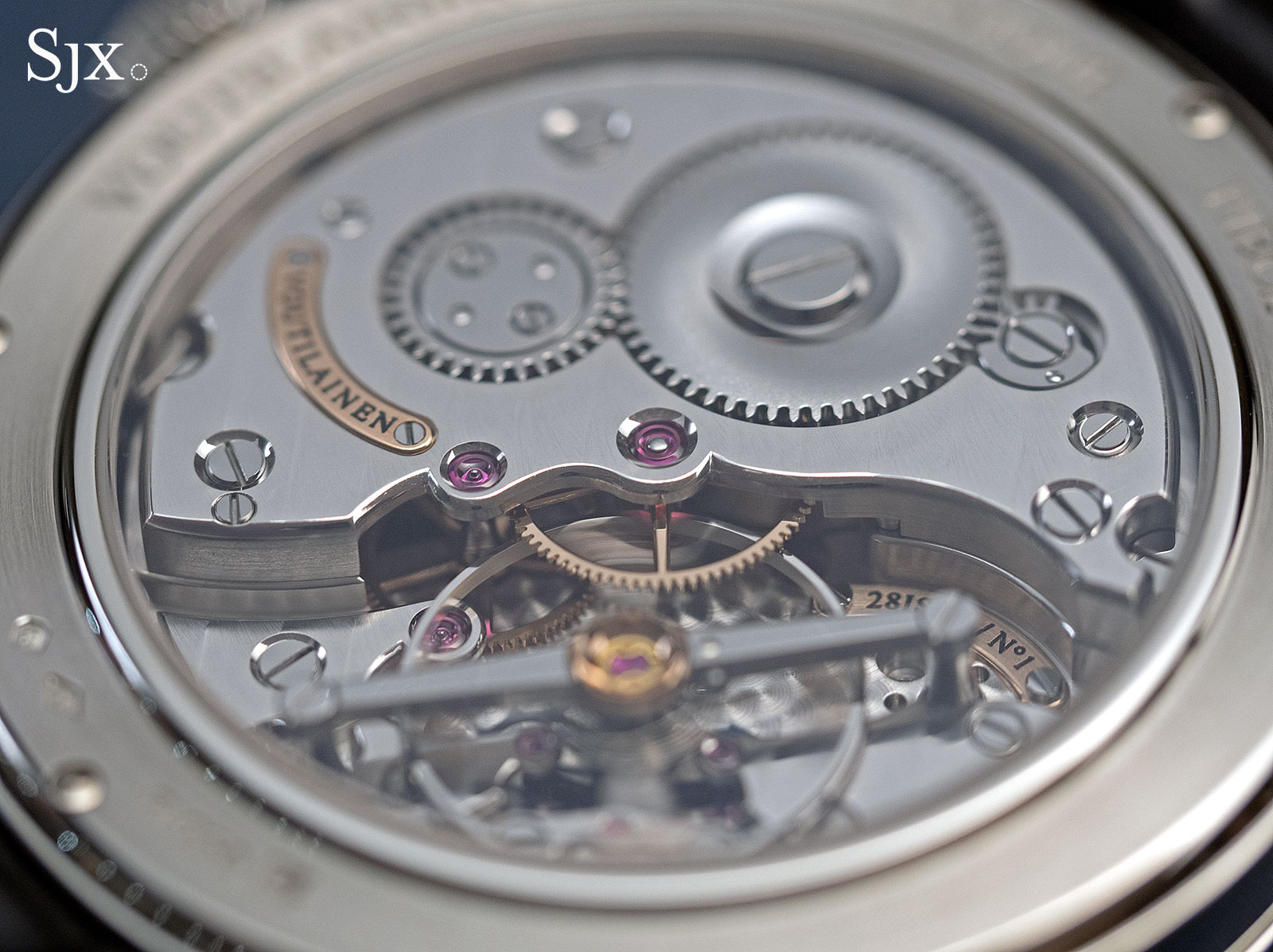
Voutilainen Vingt-8 ISO 44.5mm Pt7

Voutilainen Vingt-8 ISO 44.5mm Pt8

The bridge and base plate are larger, while the barrel bridge has been reshaped, as has the balance bridge. Instead of the usual rounded arms found on most calibre 28s, this has straight, flat-topped arms.
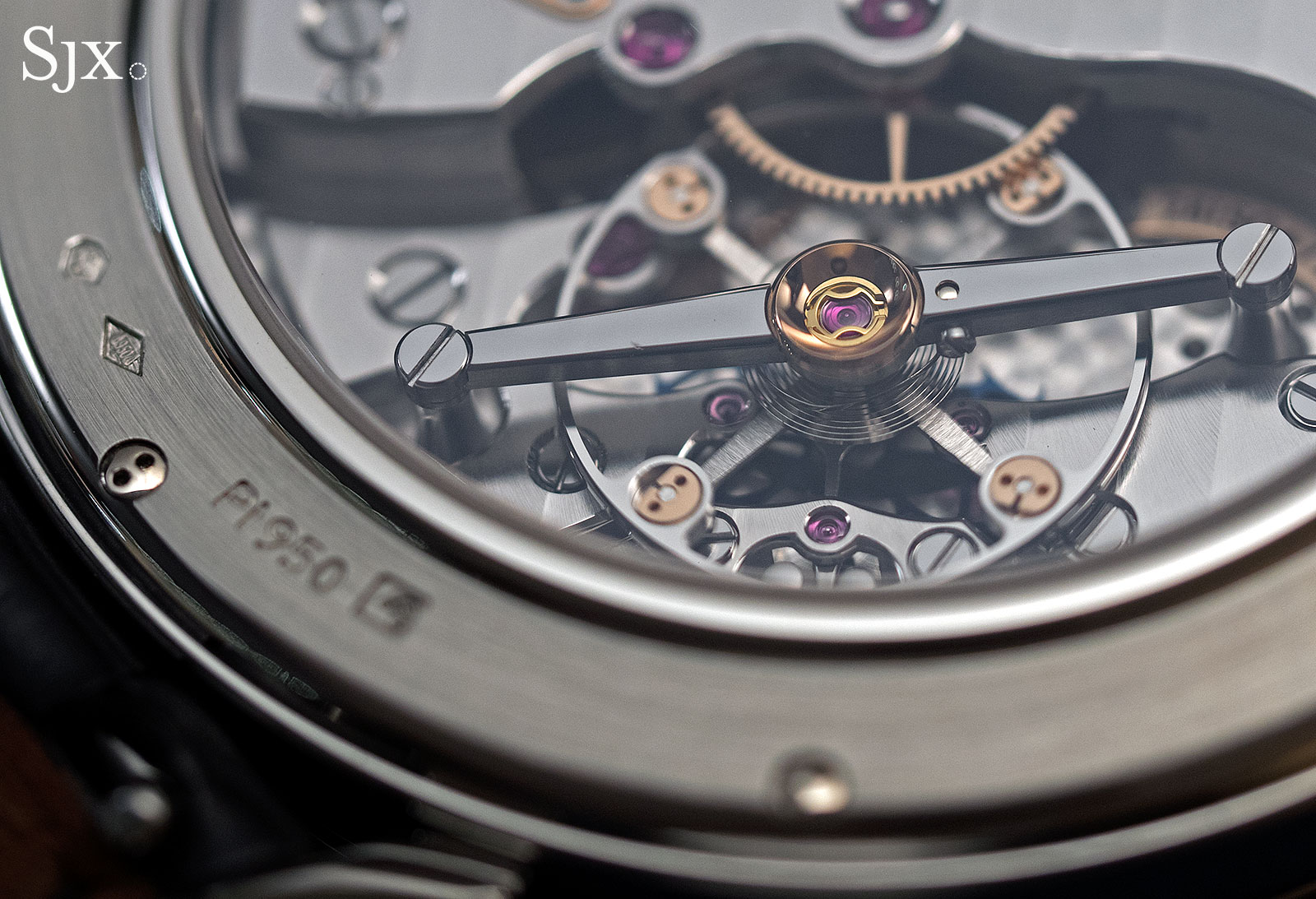
Voutilainen Vingt-8 ISO 44.5mm Pt9

Though larger, the movement is no less refined than a regular sized Voutilainen calibre. Up close it reveals the same degree of thorough hand finishing that characterises Voutilainen’s watches.
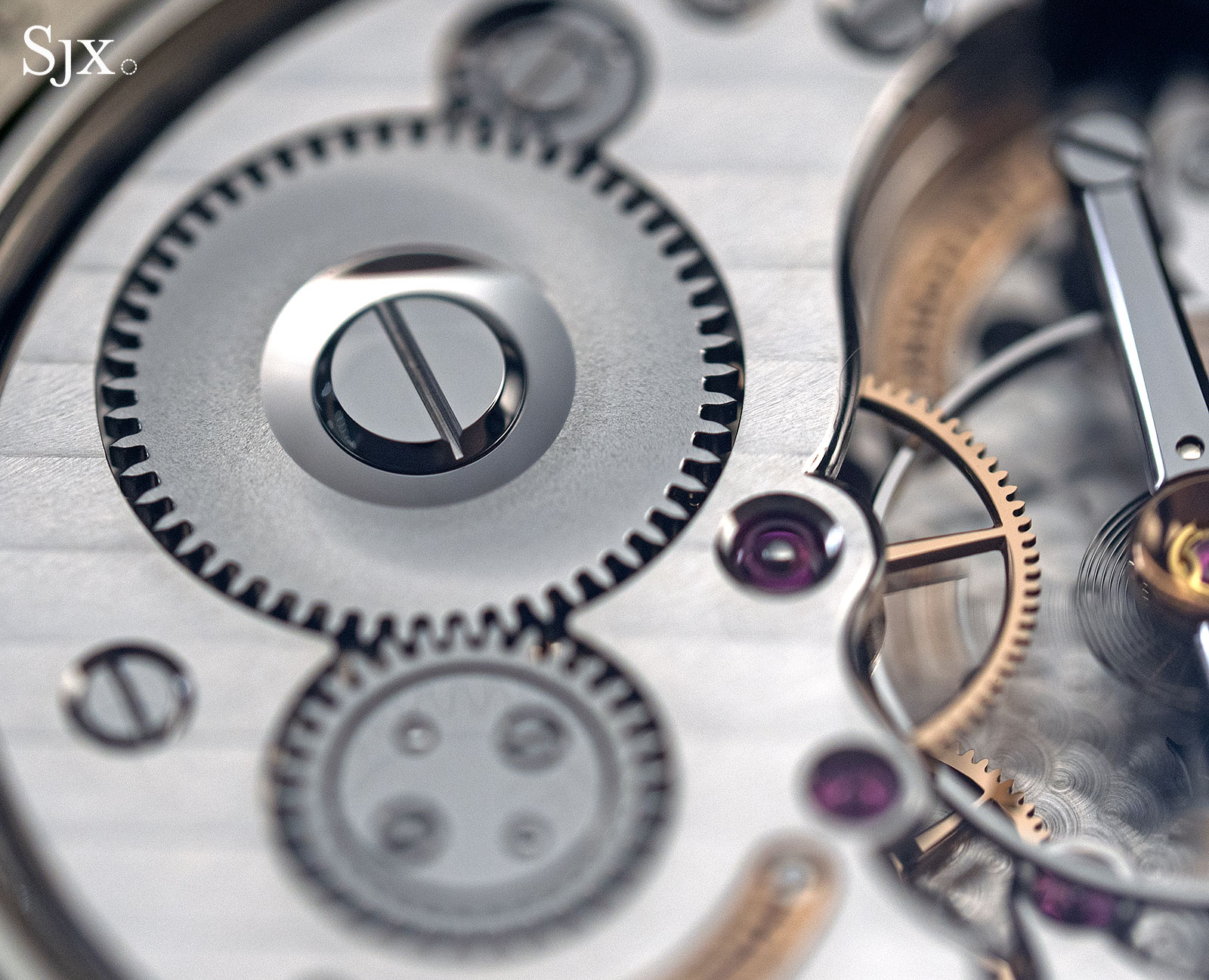
Voutilainen Vingt-8 ISO 44.5mm Pt10

Price and availability 

The oversized Vingt-8 ISO in platinum is a one-off creation, priced at SFr98,000. That’s about 10% more than the standard size, 39mm Vingt-8 ISO in 18k gold that retails for SFr89,000.


Back to top.
You may also enjoy these.

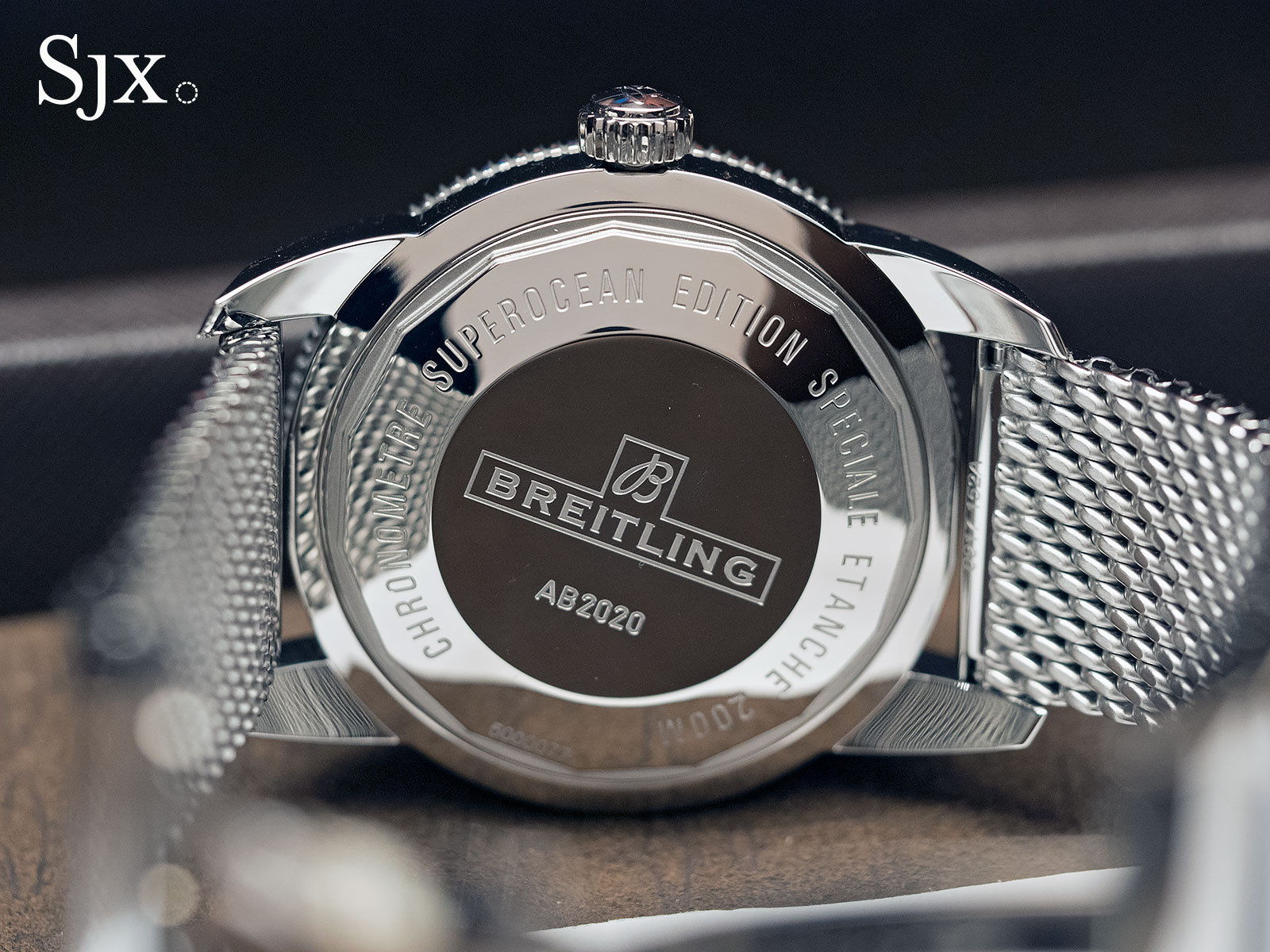
Hands-On with the Breitling Superocean Heritage II, Streamlined & Equipped with a Notable New Movement

Breitling's retro dive watch is restyled and given a calibre produced by Tudor.

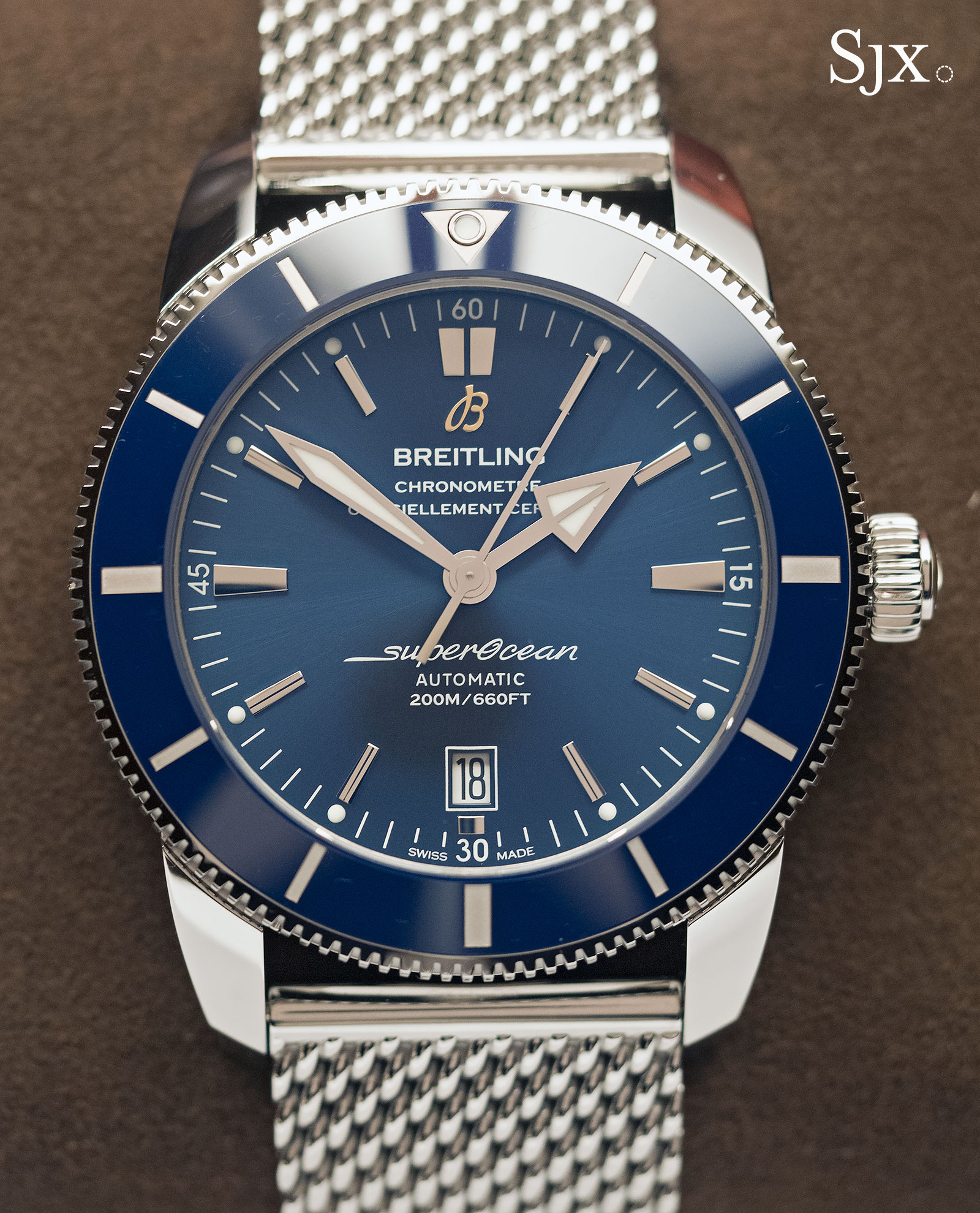
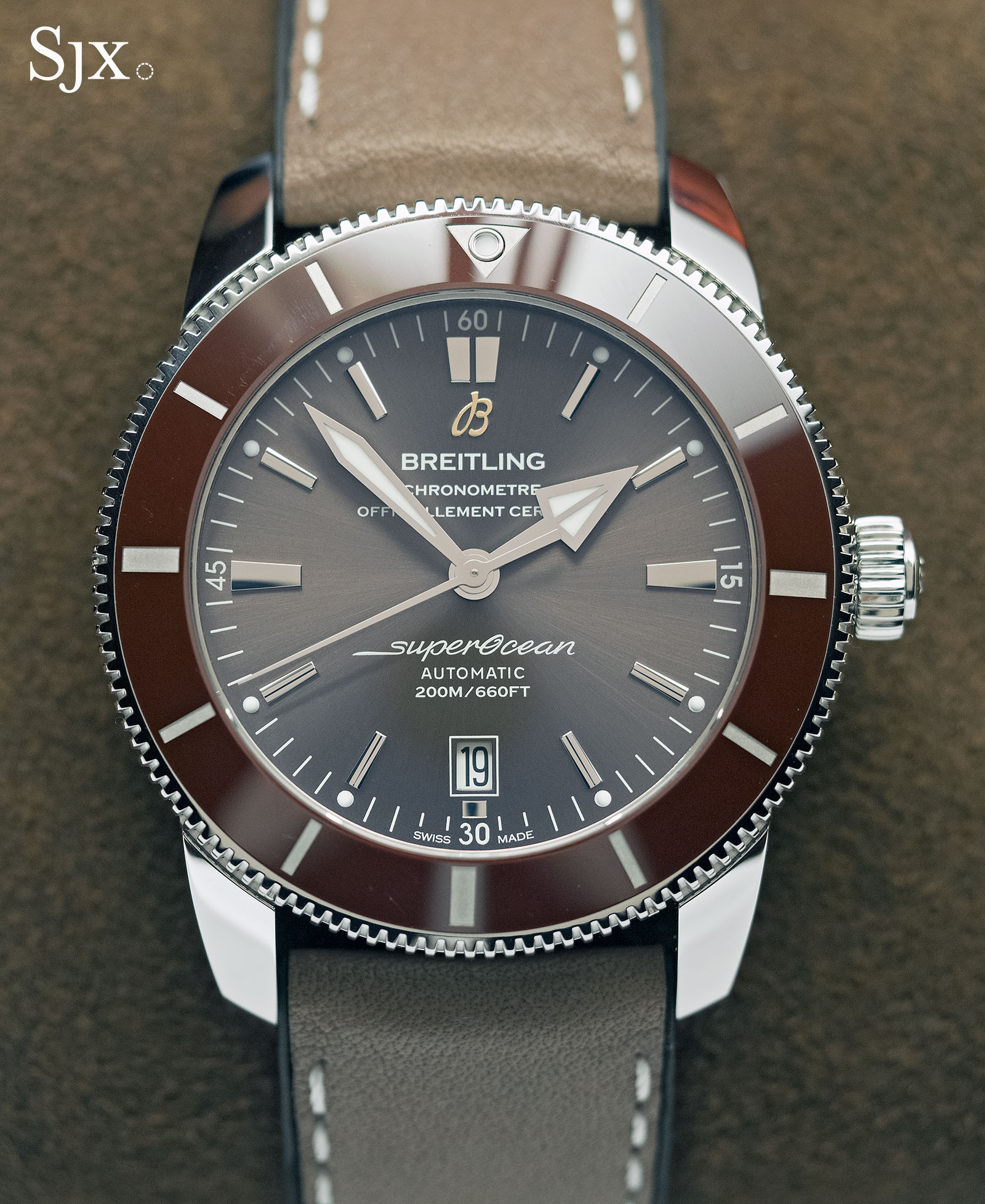
One of the notable pieces of news at Baselworld 2017 was Breitling‘s tie-up with Tudor: the latter gets the Breitling 01 chronograph movement for the Black Bay Chrono, while in return Breitling is supplied the Tudor MT5612 movement, now installed in the Superocean Heritage II, the second generation of Breitling’s retro dive watch.

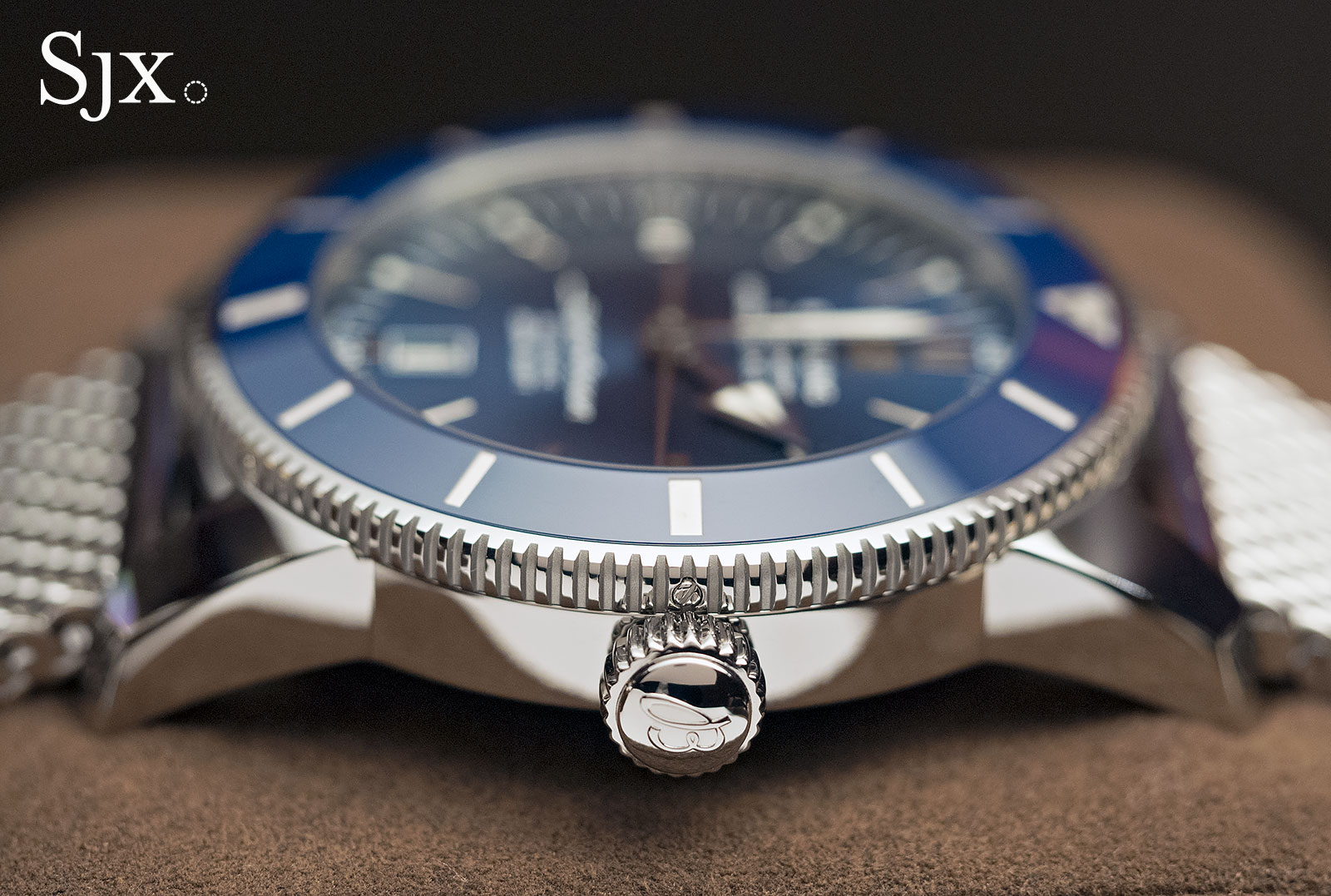
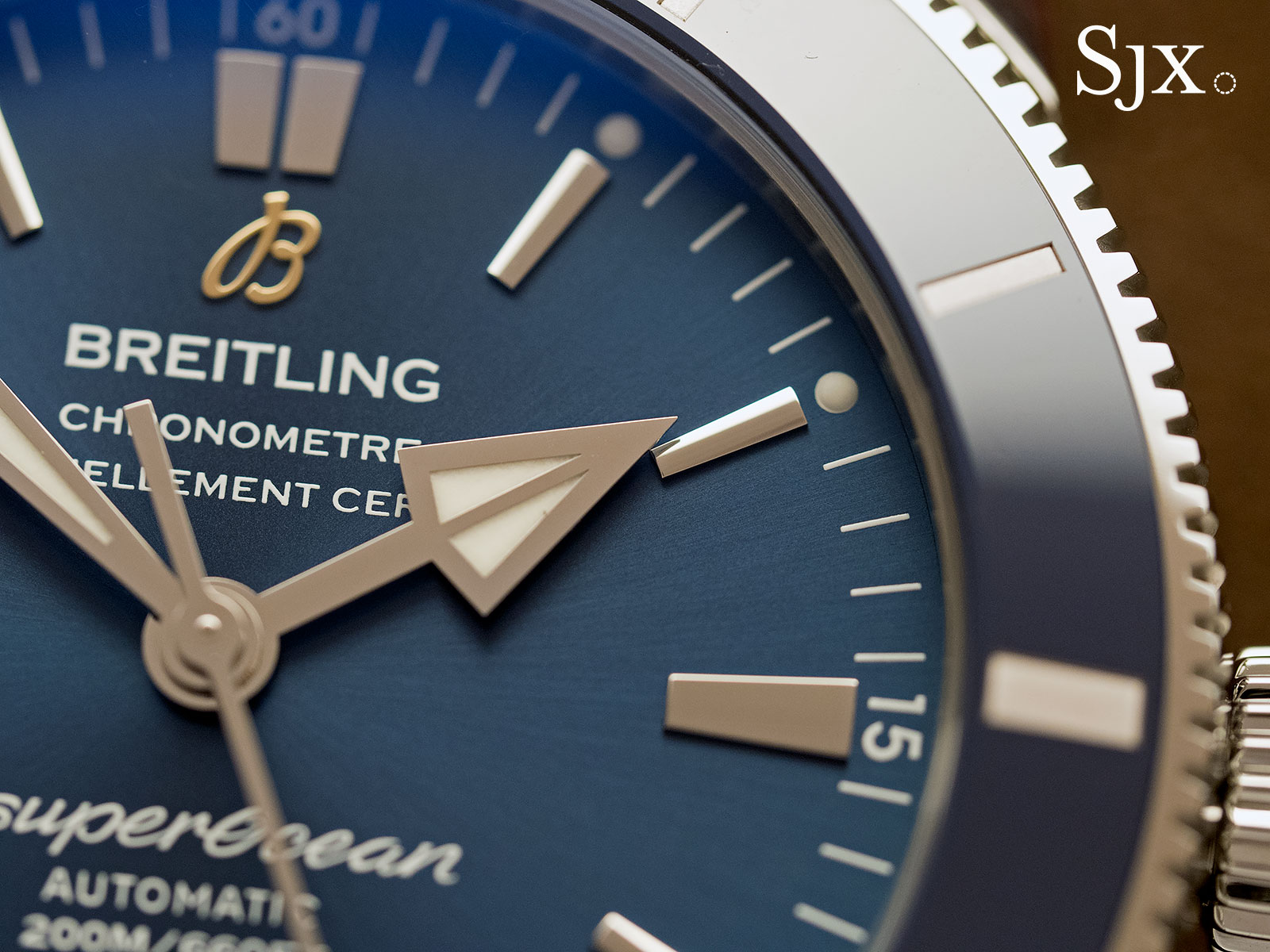
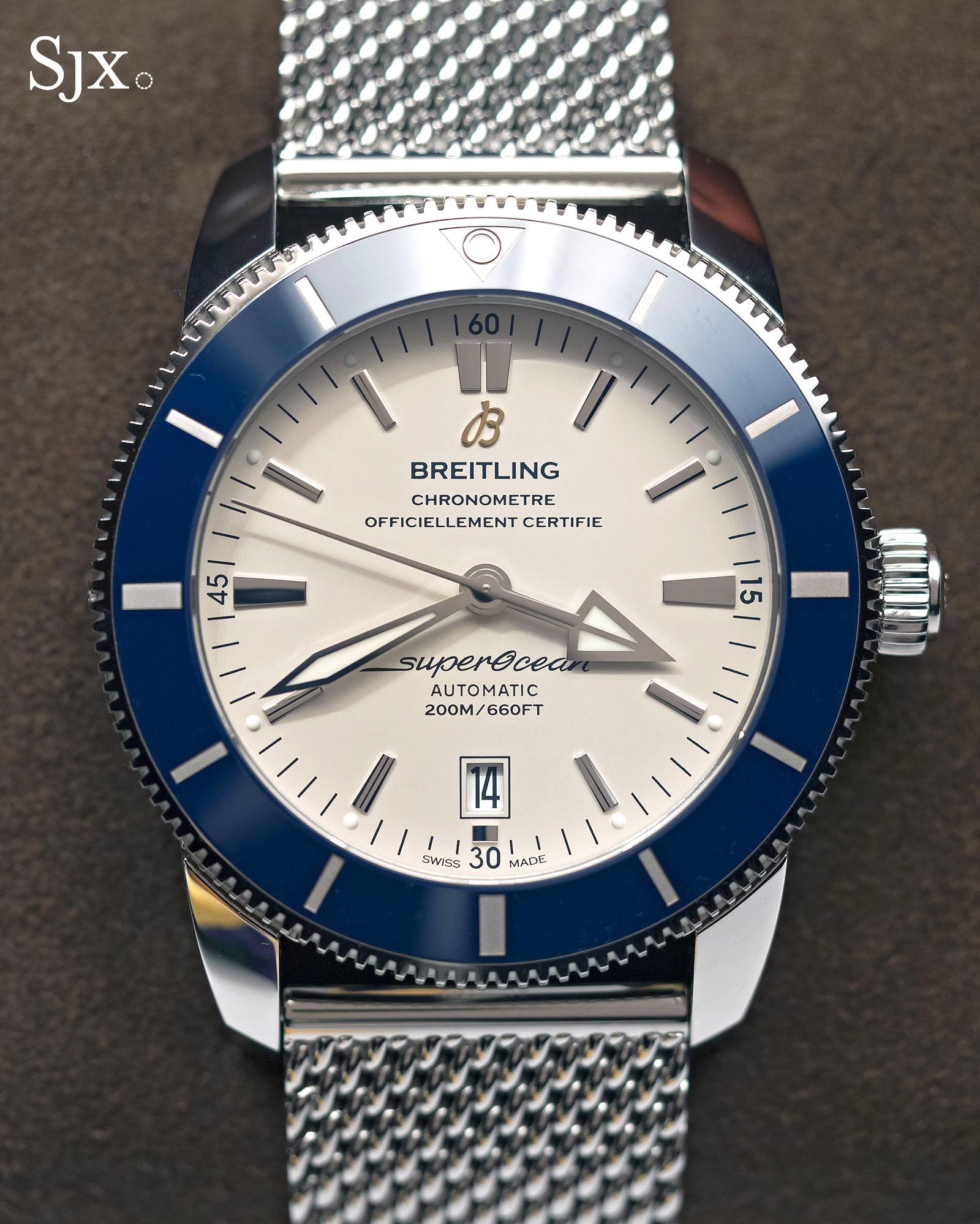
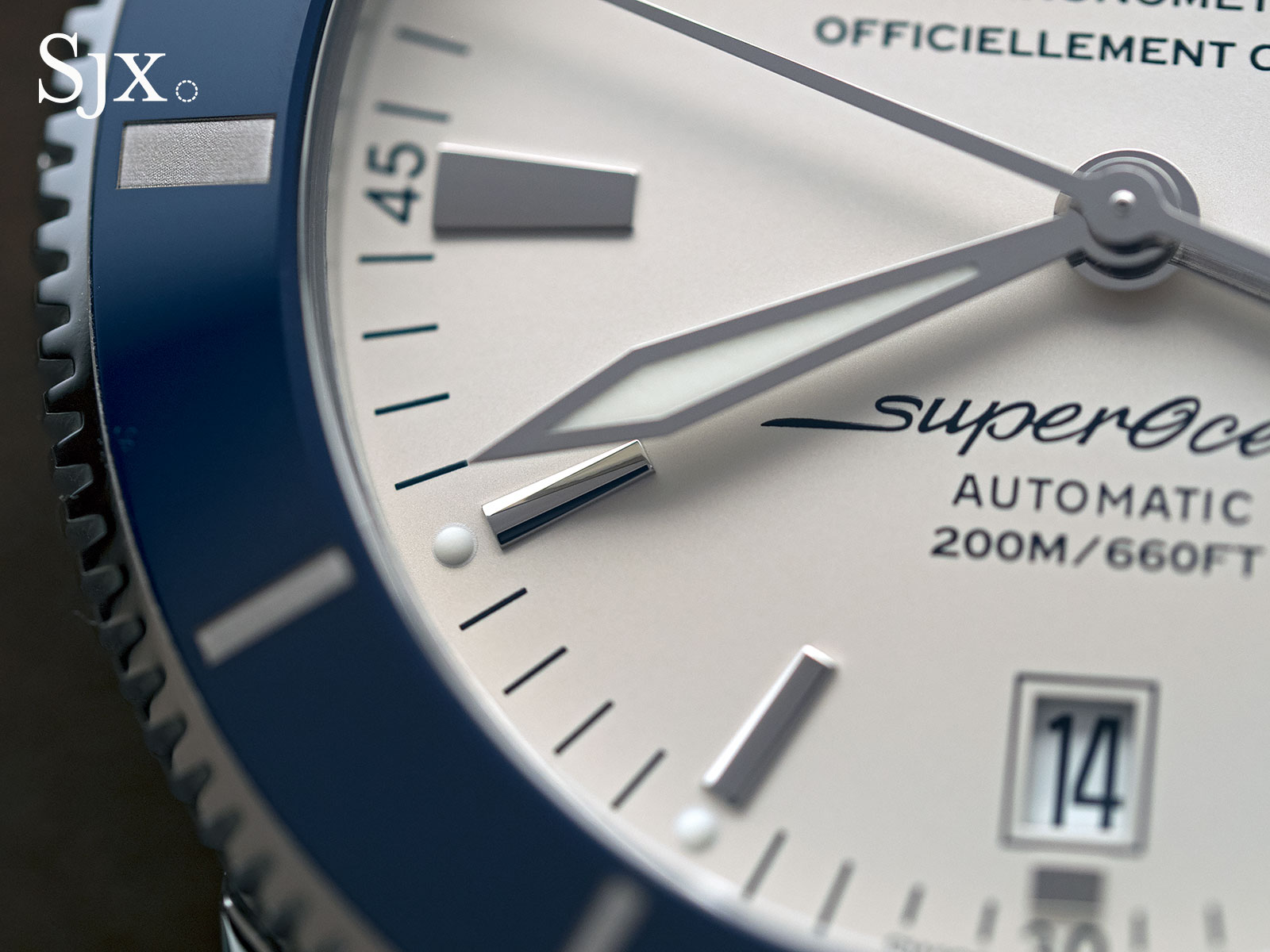
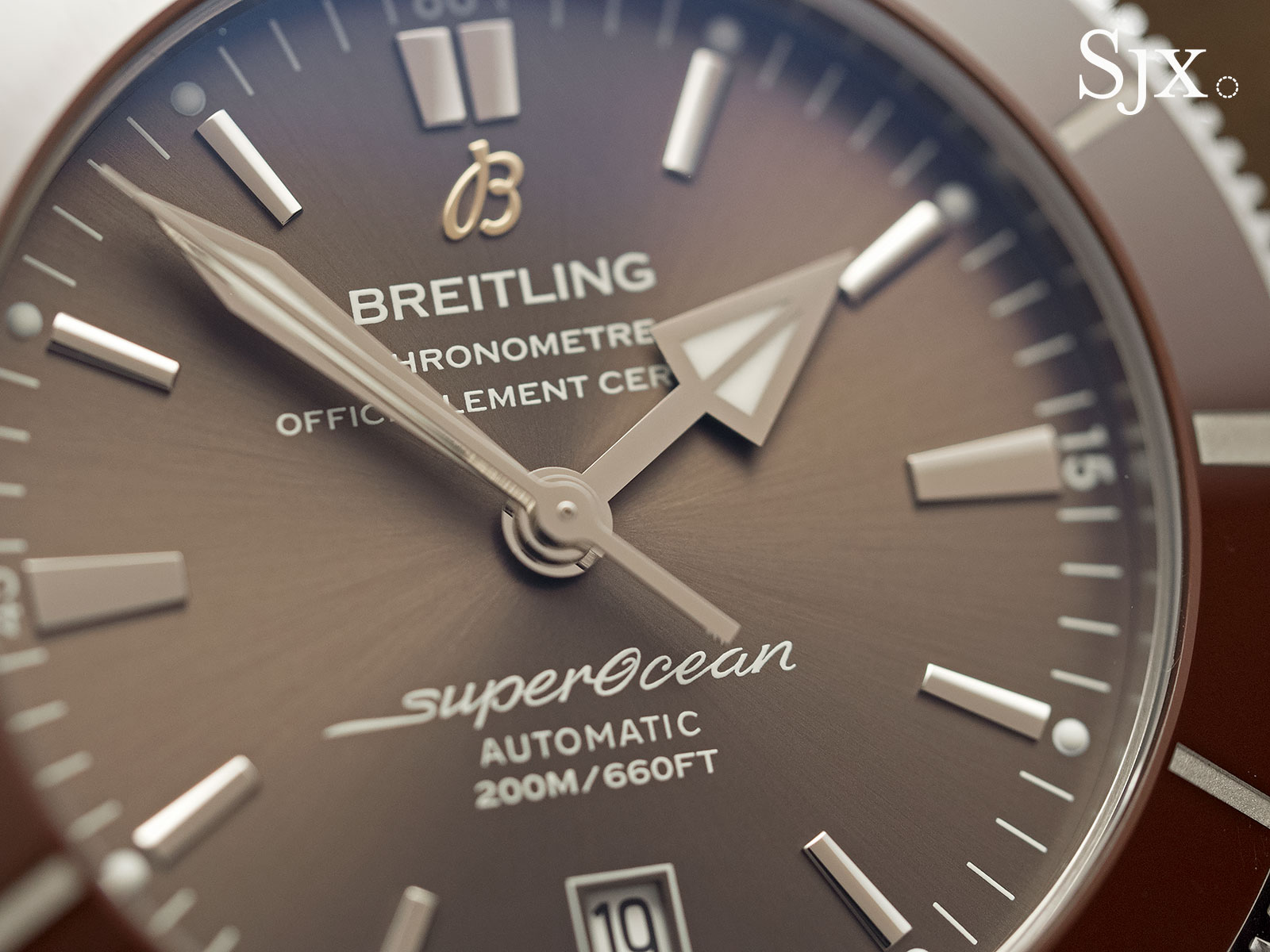
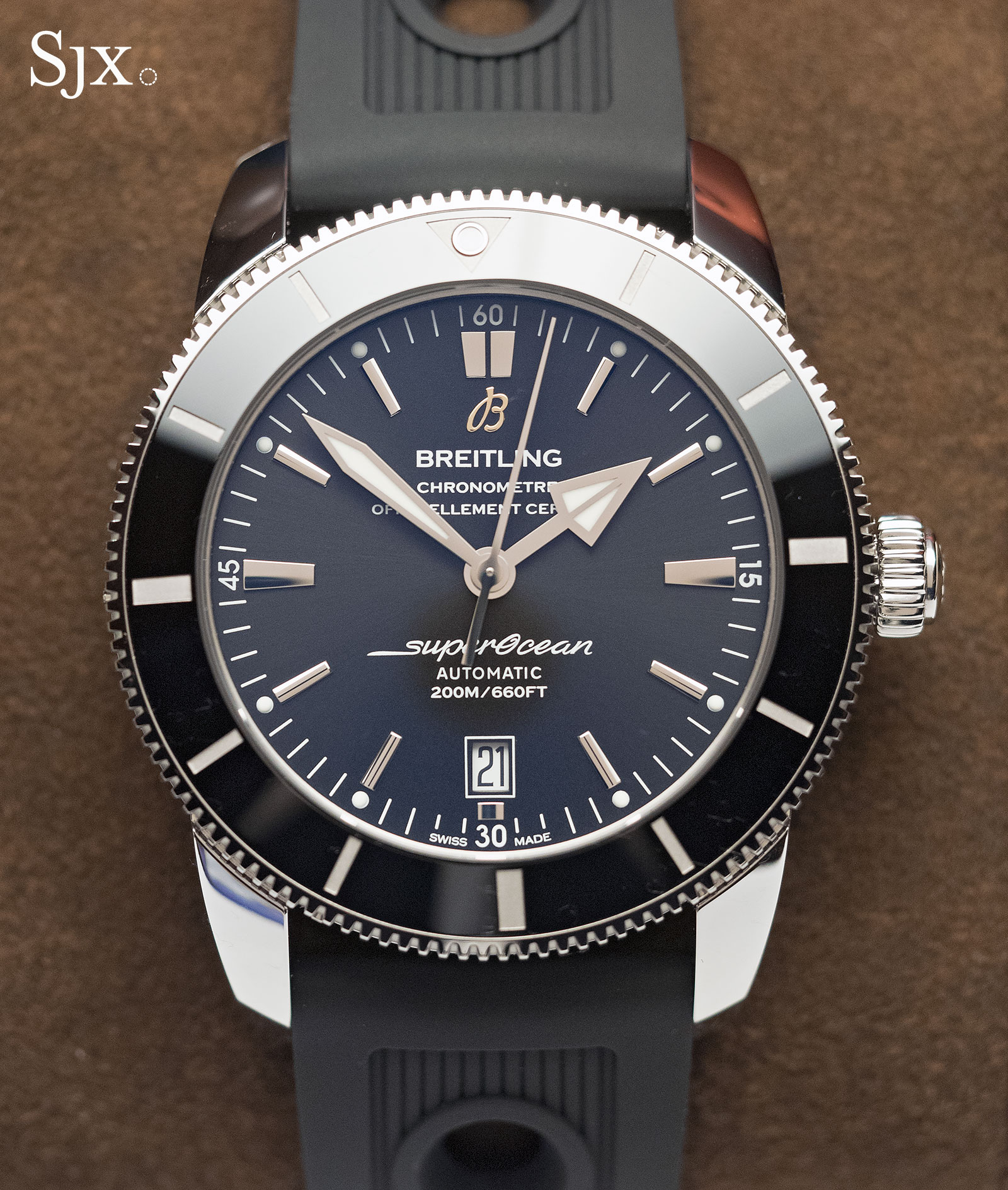
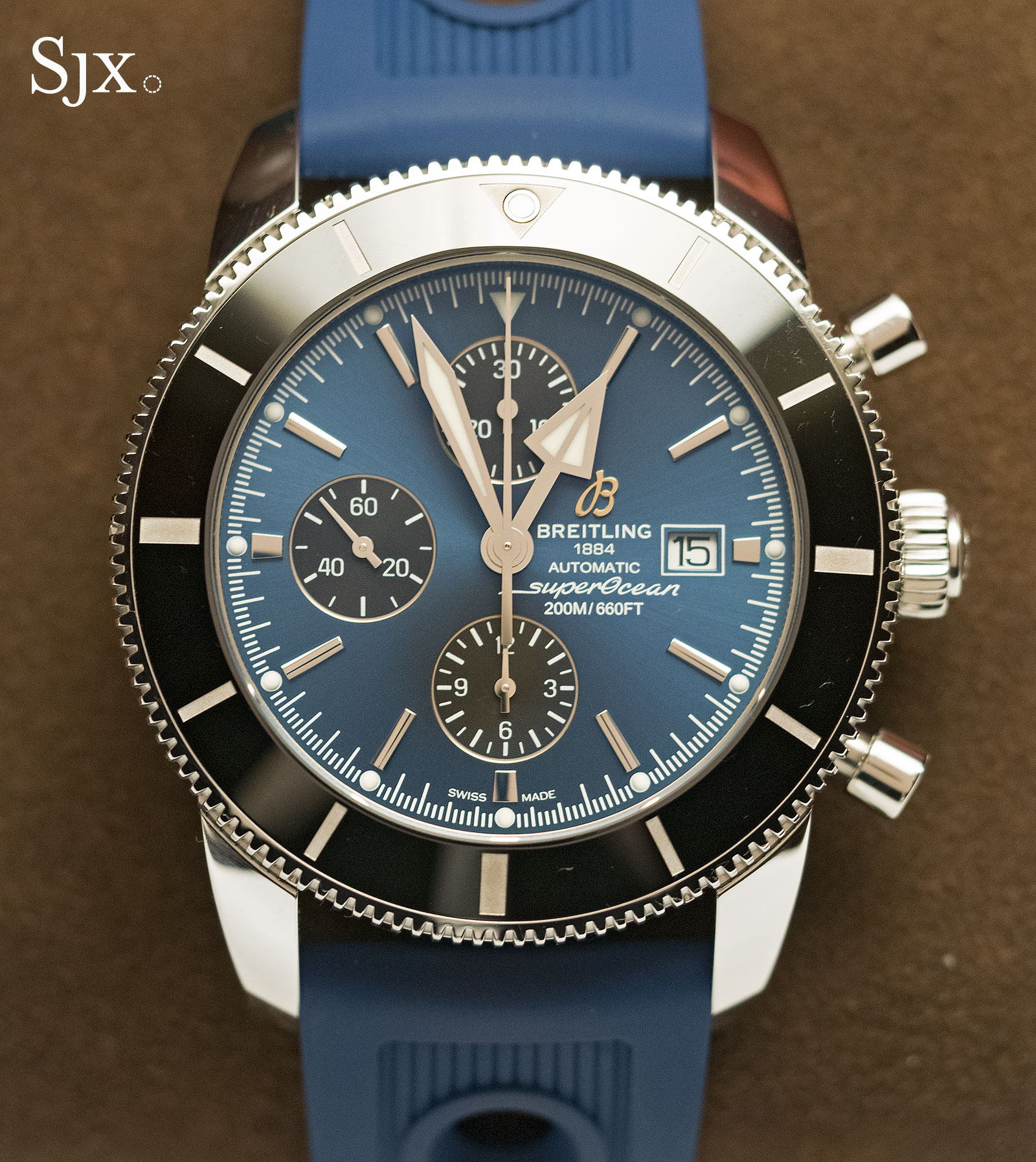
The Superocean Heritage II has slightly restyled, but the design tweaks are slight: minor changes to the shape of the lugs and crown, as well as reshaped hands and hour markers. More substantially, it’s been improved with a ceramic bezel, and a better performing movement.

Breitling Superocean Heritage II 46-1

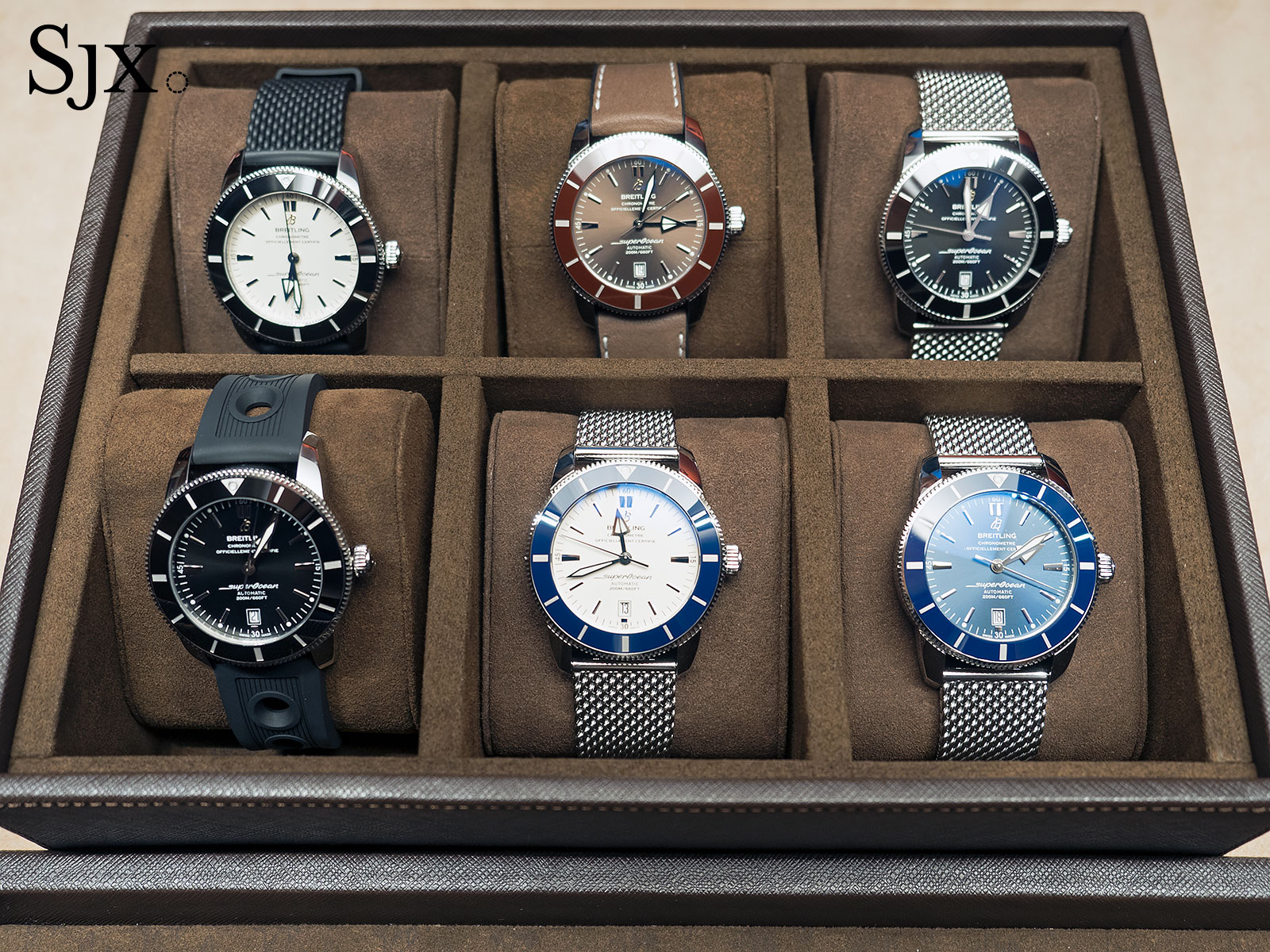
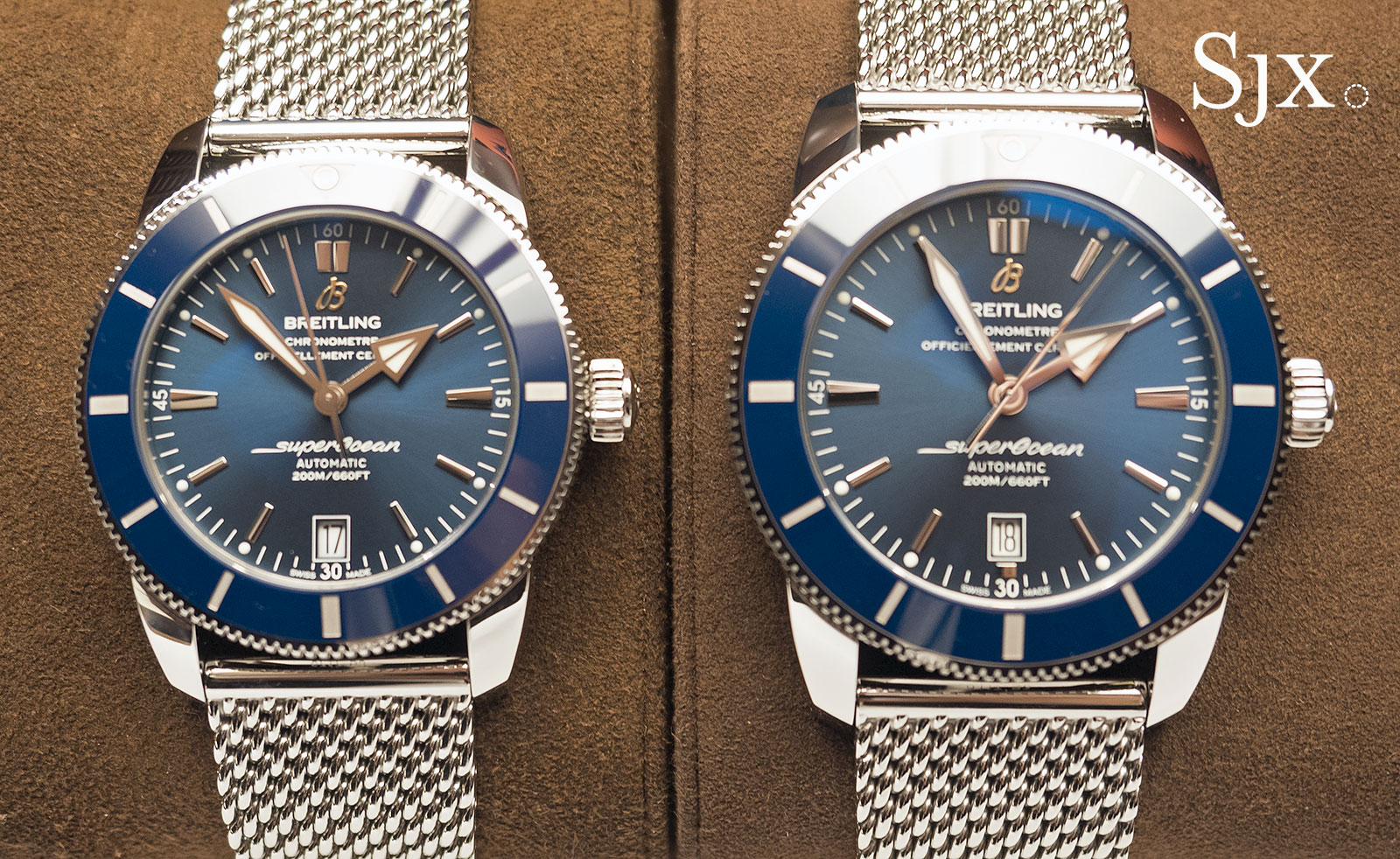
Like the first generation, the new Superocean Heritage is available in two sizes, 42mm and 46mm, with new dial colours available, including an unusual but attractive bronze. Both sizes are near identical in design. The 46mm is suitably large for a sports watch but somewhat mismatched with the vintage-inspired look. On the other hand, the 42mm is closer to the original in size (but still significantly bigger), yet feels diminutive compared to the typical modern Breitling.

Breitling Superocean Heritage II 42 and 46

Breitling Superocean Heritage II 46-12

Breitling Superocean Heritage II 46-5


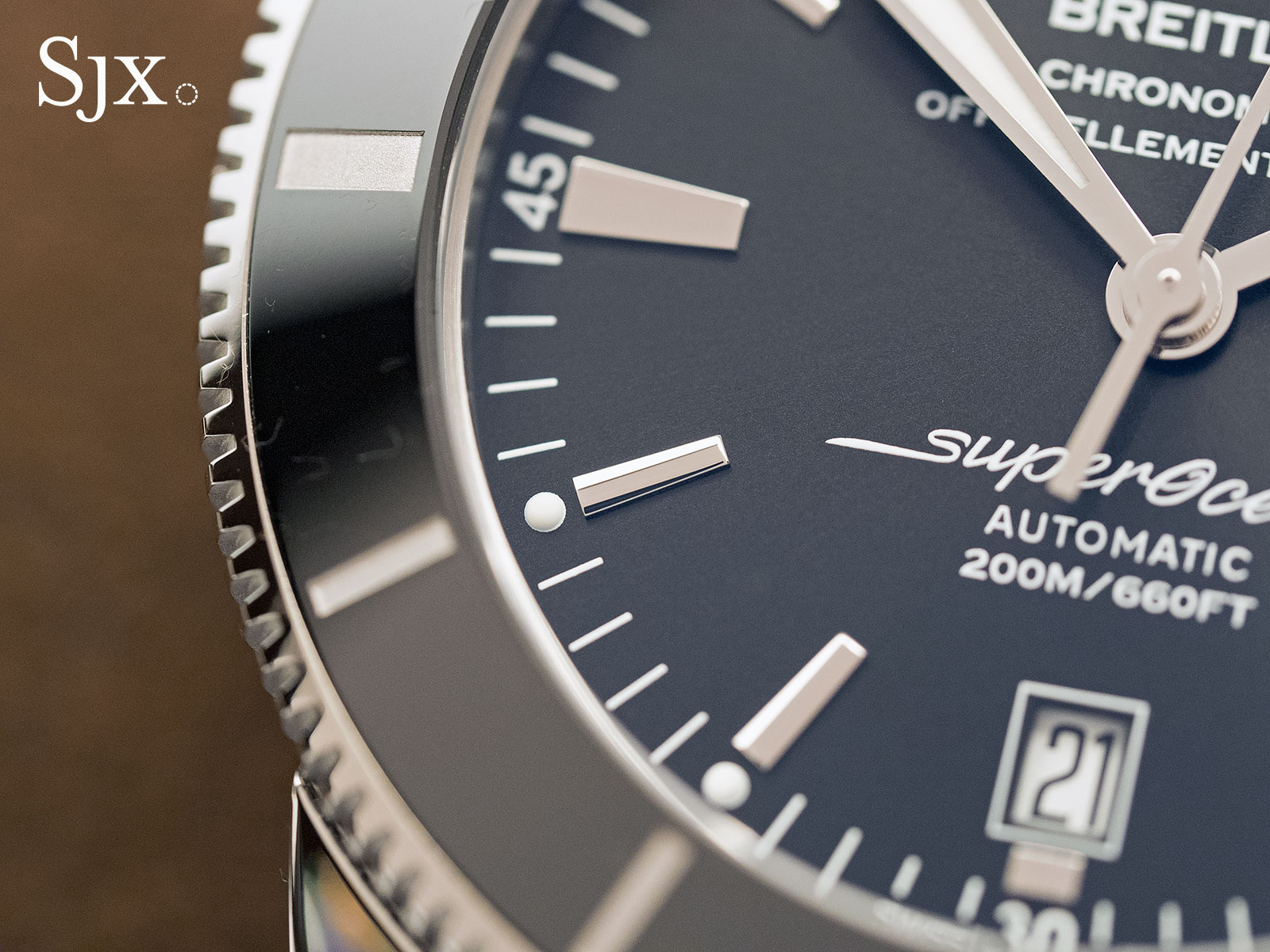
The earlier version had an anodised aluminium bezel insert, which has been replaced by a ceramic insert with an added luminous marker at 12 o’clock. It’s a minor but practical upgrade given the scratch- and fade-resistance of ceramic.

Breitling-Superocean-Heritage-II-46-9a

Breitling Superocean Heritage II 46-10

The new calibre means the case is now thicker, albeit imperceptibly, 15mm high compared to 13.6mm before. The tradeoff, however, is worthwhile.

The movement inside the earlier generation was the Breitling 17, a dressed-up ETA 2824. COSC-certified and robust, the 2824 is nonetheless a economical movement, with a shortish 40-hour power reserve.

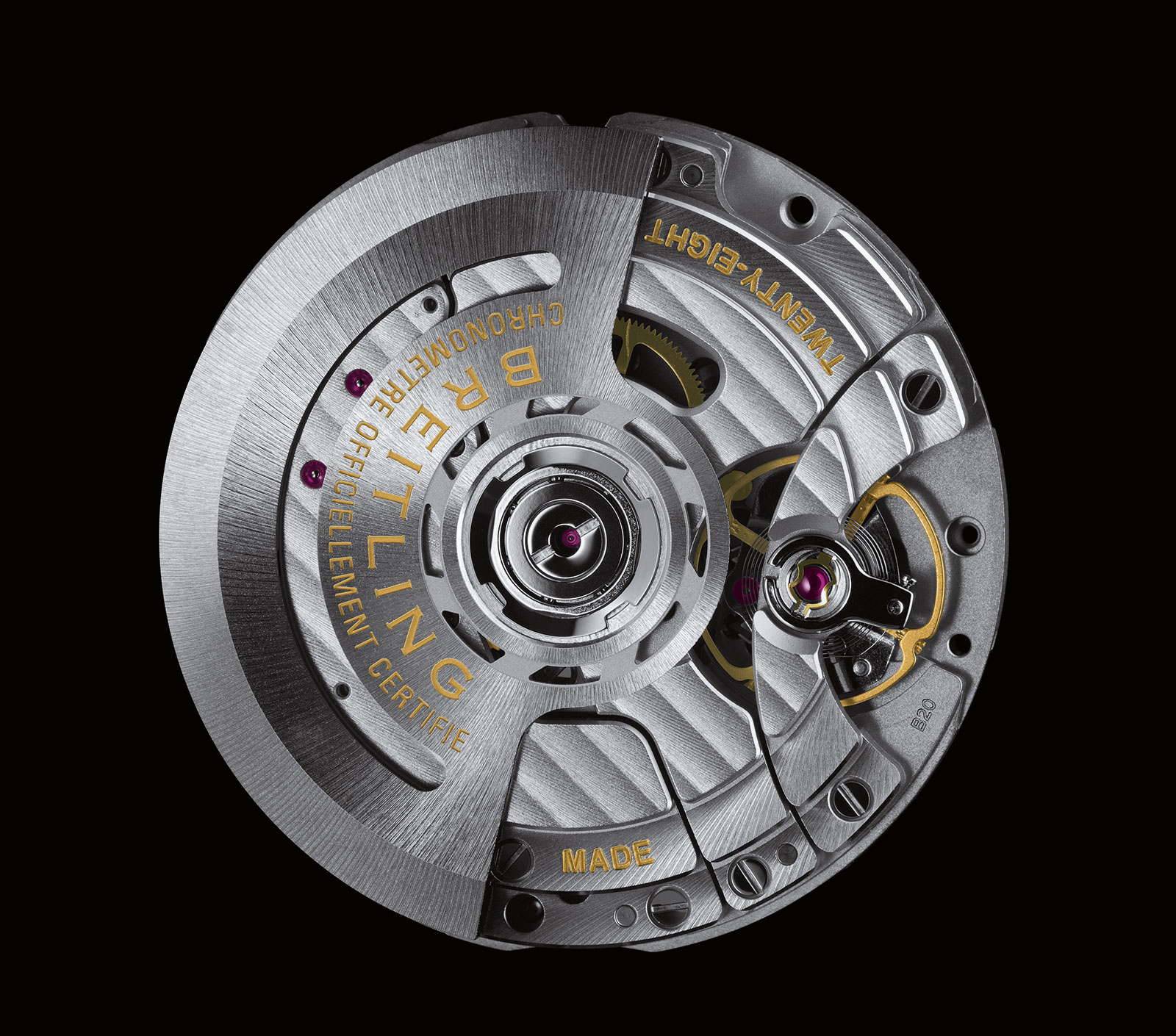
That’s been replaced by the Breitling B20, which is the MT5612, the same calibre in the Tudor Black Bay Steel and two-tone. As the calibre inside Tudor’s new chronograph is produced by Breitling, this movement is made by Tudor, an arrangement that was likely put in place to maximise the production capacity of each brand.

Breitling Superocean Heritage II 46-6

Breitling Superocean Heritage II 46-7

The B20 movement has a convenient power reserve of at least 70 hours, or about three days, as well as a free-sprung, adjustable mass balance wheel. While it is no doubt largely regulated by electronic tools rather than a lone artisan, a free-sprung balance is traditionally a feature of finer chronometers.

Breitling Superocean Heritage II 46-2

Breitling Superocean Heritage II 46-3

Breitling Superocean Heritage II 46-11

It’s also worth pointing out that the Breitling version of the movement is more fancily decorated than Tudor’s (which is an appropriate upgrade since the Breitling is pricier). Though the calibre is hidden behind a steel back, the bridges are finished with Geneva stripes, while the engravings are gold-plated. All of it is purely aesthetic, and applied by machine, but it has visual appeal.

Breitling B20 movement


The face-lift also extends to the Superocean Heritage II Chronographe 46, but the changes are purely cosmetic. This too has the design tweaks on the case and dial, as well as the ceramic bezel and new dial colours, but the movement remains the Valjoux 7750.

Breitling Superocean II Chronograph 46


Price and availability

The Superocean Heritage II costs only about 8% more than the first generation, or less than US$400 in most cases.

It’s reach stores August 2017, starting at US$4140 or S$5900 on a leather strap with a pin buckle. It’s also available on a rubber strap or mesh bracelet.


Back to top.

You may also enjoy these.

Hands-On with the Patek Philippe Ref. 5320G Perpetual Calendar

A modern watch in well tailored period dress.

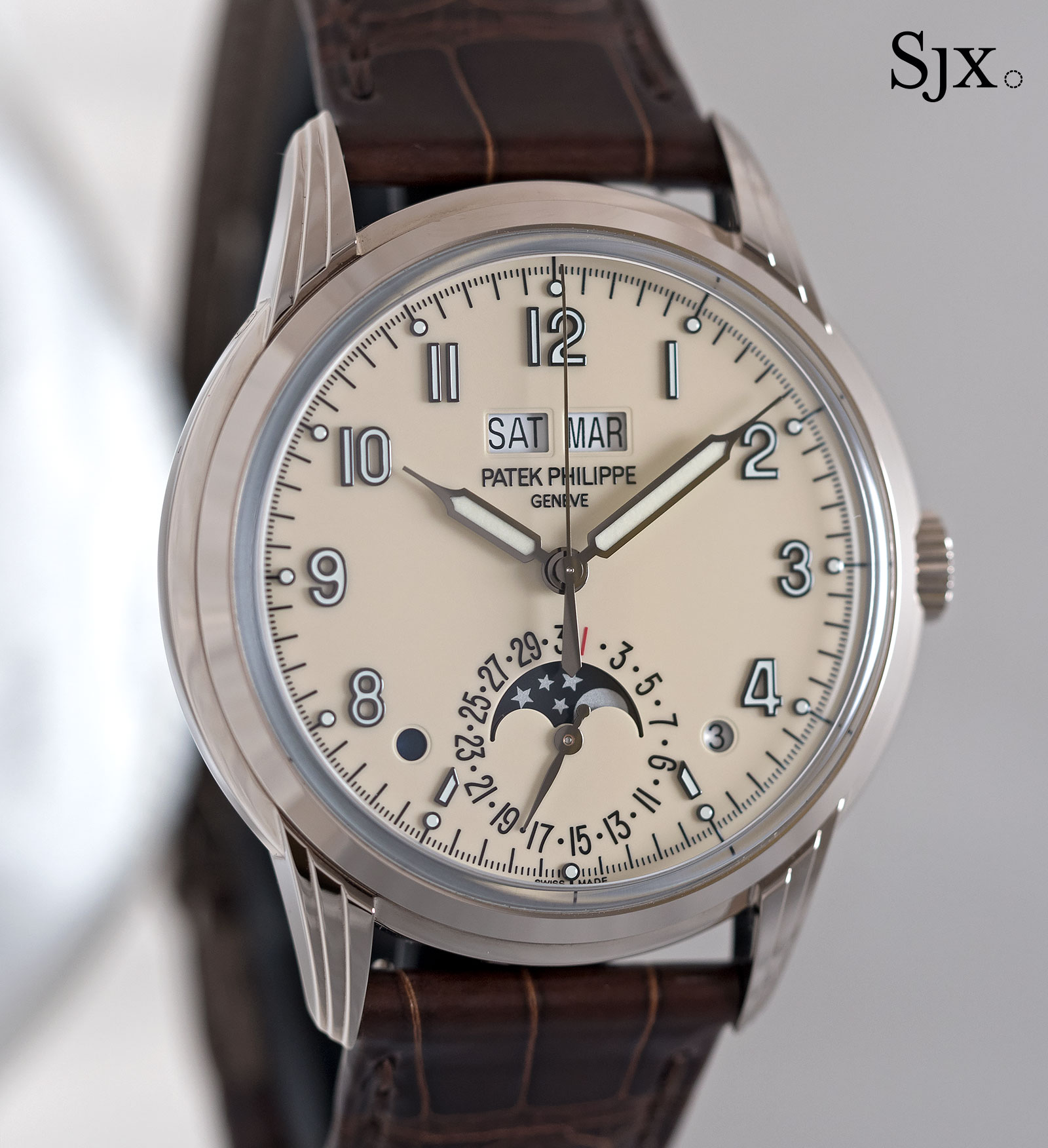
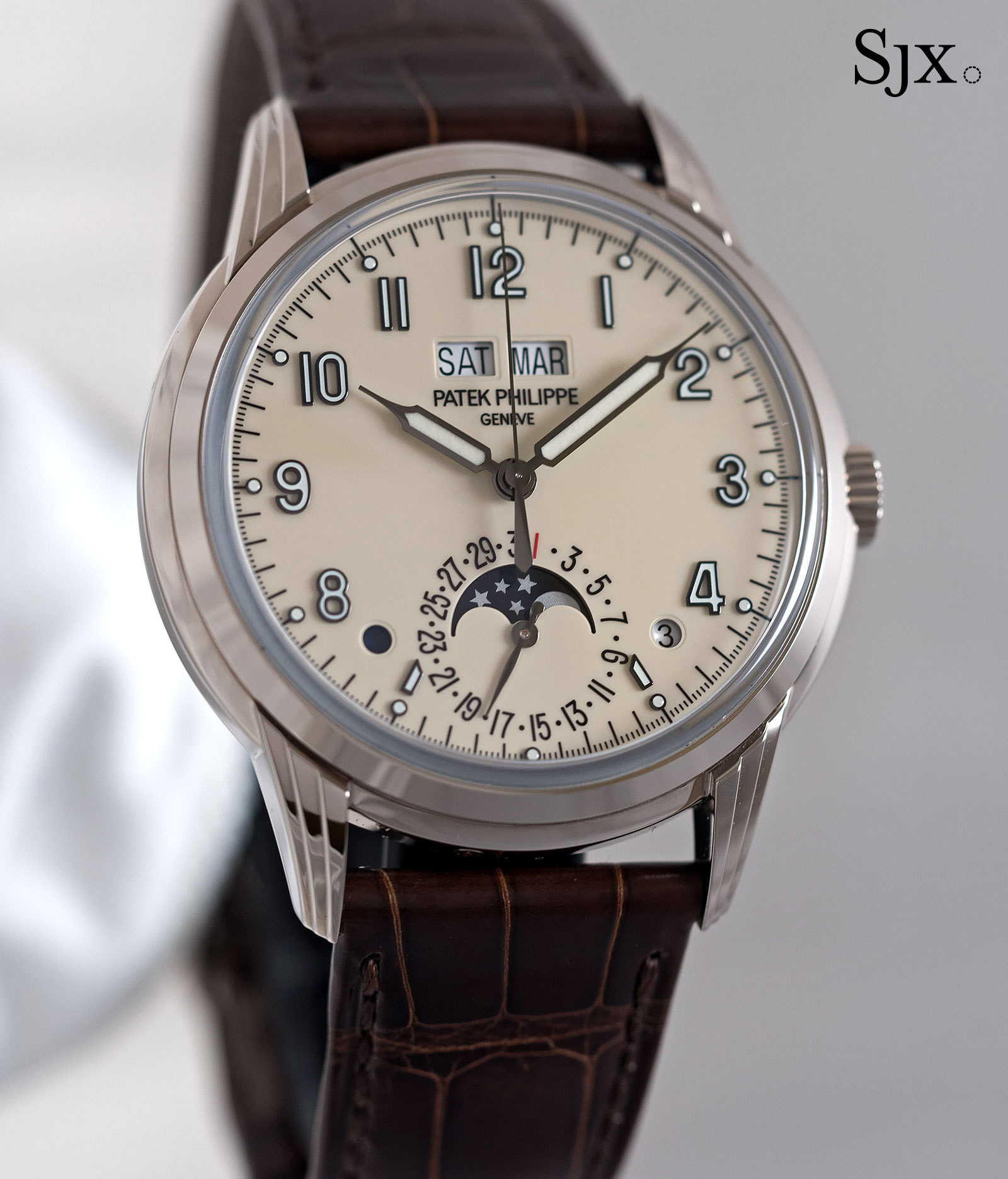
The ref. 5320G-001 is the newest perpetual calendar from Patek Philippe, taking its cues from a pair of watches from the 1950s, the refs. 2497 and 2438, both perpetual calendars with a similar dial style.

But the new has an even more specific inspiration that now sits in the Patek Philippe museum: the steel ref. 1591, a one-off example once owned by a Maharajah that was sold by Christie’s for over US$2m in 2007.

Though the inspiration is mid 20th century, the build quality of the watch is distinctly modern. The dial is retro, even the lugs have tinges of Art Deco style, but the construction of both are impressively detailed in a manner only modern production can achieve. Those elements, more than the somewhat derivative design, are really what make the watch stand out.

Patek Philippe 5320G perpetual calendar 2

Patek Philippe 5320G perpetual calendar 3

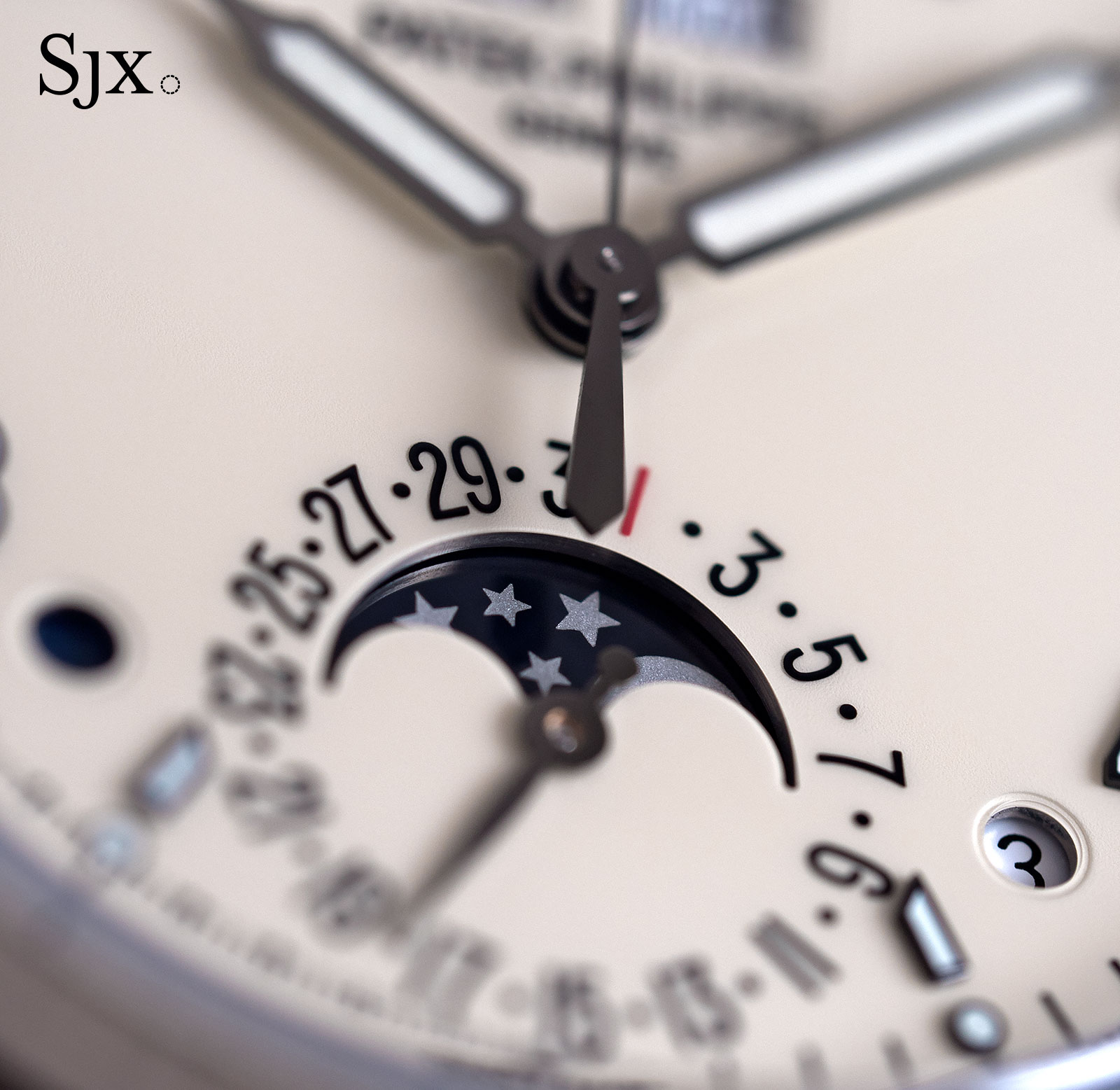
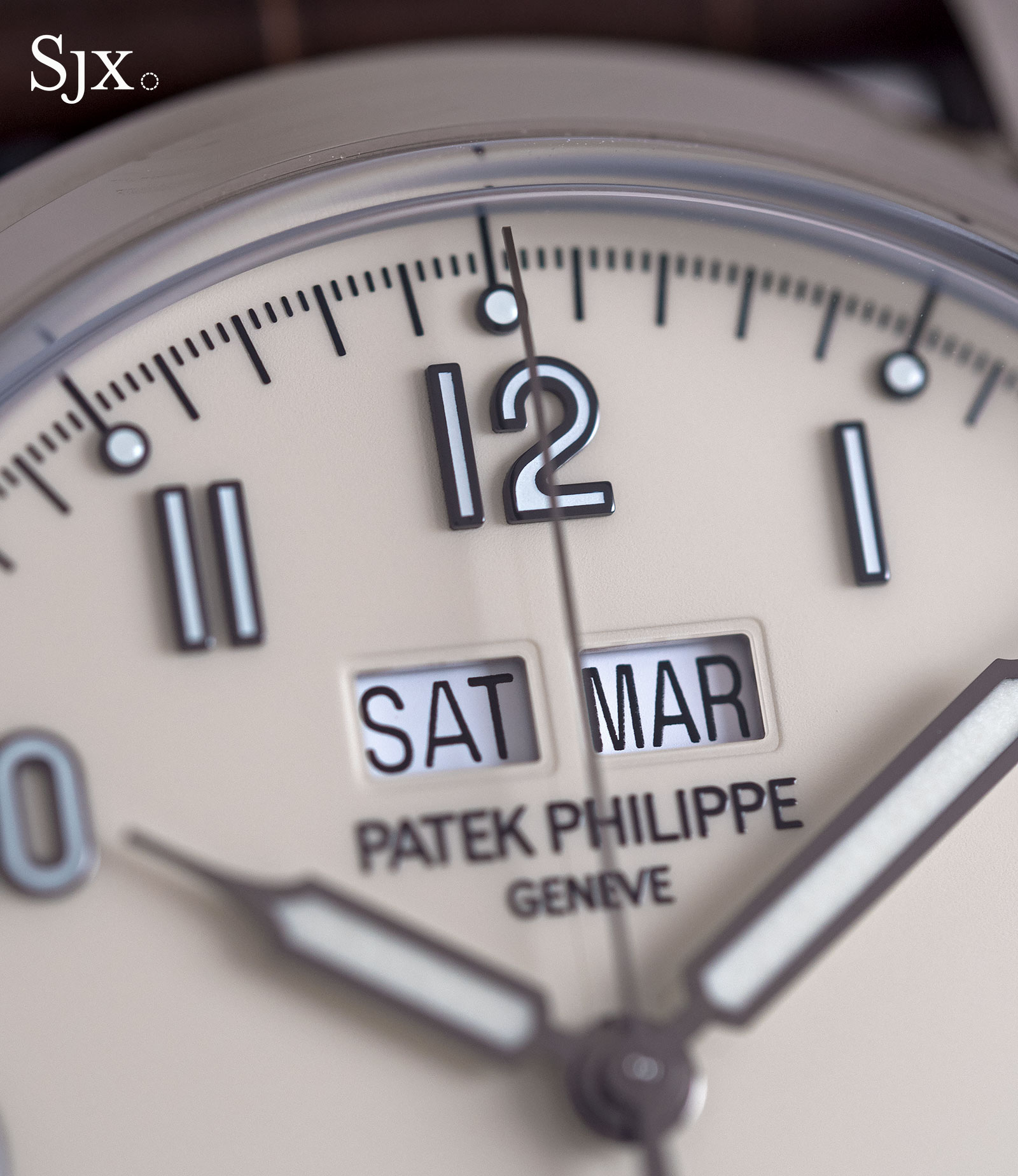
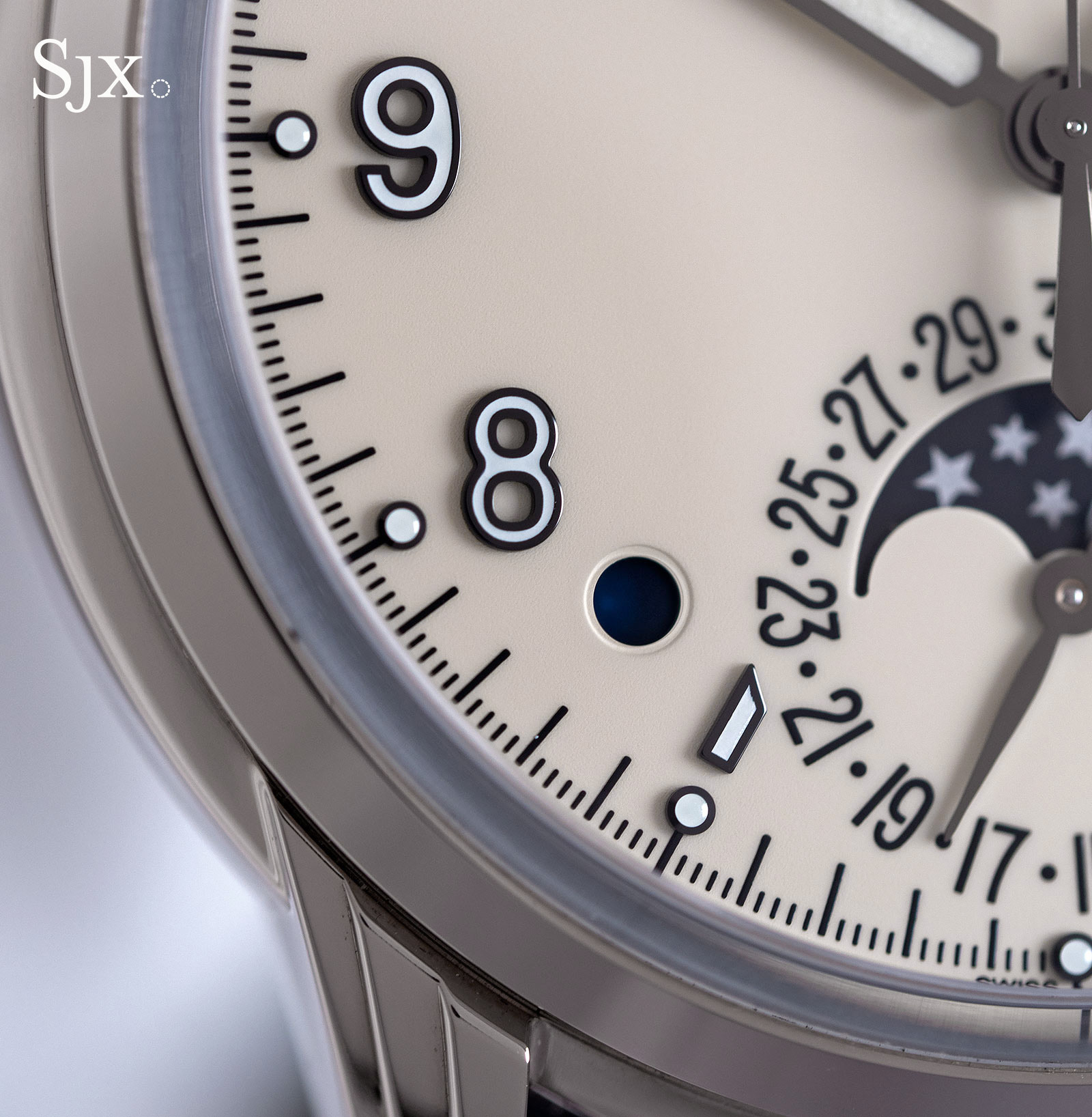
Like the two vintage models that inspired it, the new ref. 5320G has a pair of apertures at 12 o’clock for the day and month, while the date is on a sub-dial at six that also contains the moon phase.

Patek Philippe 5320G perpetual calendar 6

Patek Philippe 5320G perpetual calendar 7

On either side of the moon phase are circular windows, the leftmost a day and night indicator and the other for the leap year. The layout gives the dial a pleasing symmetry and functional appearance, while also being legible. While there’s little to criticise in the utility of the dial, it won’t win any awards for ingenuity.

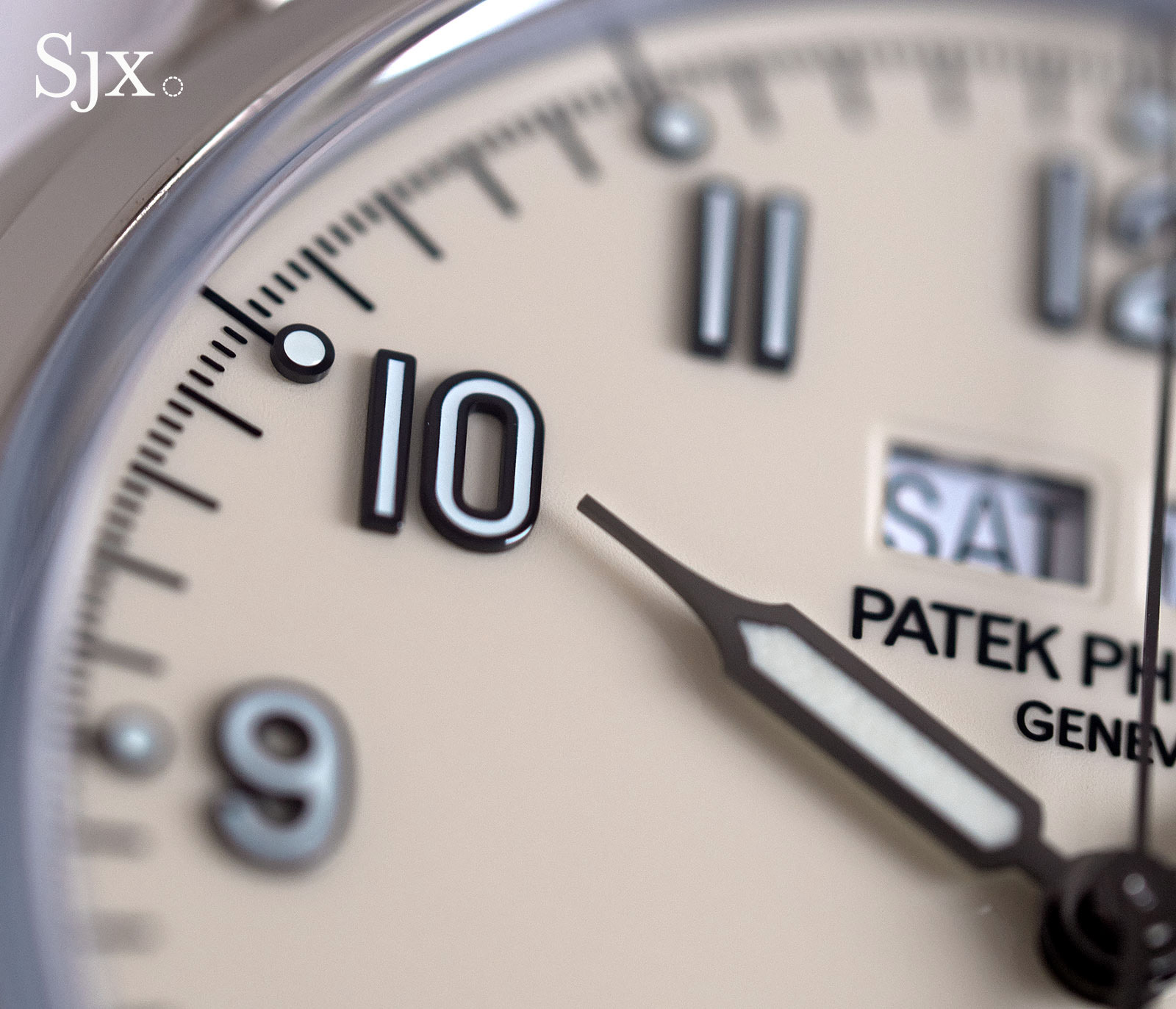
Another strength is the fit and finish of the dial, which is excellent. It has a glossy, cream surface that is lacquer and not enamel (one can fantasise about the day Patek Philippe delivers a fired enamel dial on a perpetual at this price), that suits the look of the watch.

The Arabic numerals and round five minute markers that are made of black-coated 18k gold, as are the hands. These blackened gold elements look very good up close.

Patek Philippe 5320G perpetual calendar 4

Patek Philippe 5320G perpetual calendar 5


And the impression left by the case is similar. Made of white gold and a good 40mm in diameter, not too big or too small as Goldilocks might say, the case has triple stepped lugs with pointed tips that curve downwards, a look adopted from the ref. 2405 of the 1950s. It’s a flamboyant detail that’s only apparent up close.

Patek Philippe 5320G perpetual calendar 14

Patek Philippe 5320G perpetual calendar 9

The lugs meet the flat, sloping bezel, which in turn sits under a “box-shape” sapphire crystal. It’s domed with an angular edge, bringing to mind the Plexiglas crystals on vintage watches.

Patek Philippe 5320G perpetual calendar 8

The rest of the case is equally well made in terms of detailing and finish, significantly surpassing the construction of the cases used for better known Patek Philippe perpetual calendars, which historically had relatively simple cases.

Notably, the case is a single piece, meaning the bezel and case middle are one (the snap-on case back is separate). The case blank is stamped out from a block of gold, then machined to fill out the finer elements like the fluting on the lugs. While stamped cases are usually associated with simpler, inexpensive forms, the case in this case, no pun intended, is properly detailed.


Inside the cal. 324 S Q, a self-winding calibre with a perpetual calendar module on top. Distinguished by its full rotor, the base cal. 324 is usually found in the brand’s annual calendars.

Patek Philippe 5320G perpetual calendar 10

The cal. 324 S Q is a new calibre in the sense that it’s the first time this particular perpetual module is paired with the base movement. Almost identical to the perpetual calendar mechanism found in the ref. 5270 chronograph – both share the same calendar layout – the perpetual calendar module is functionally familiar, and set via recessed pushers in the case band.

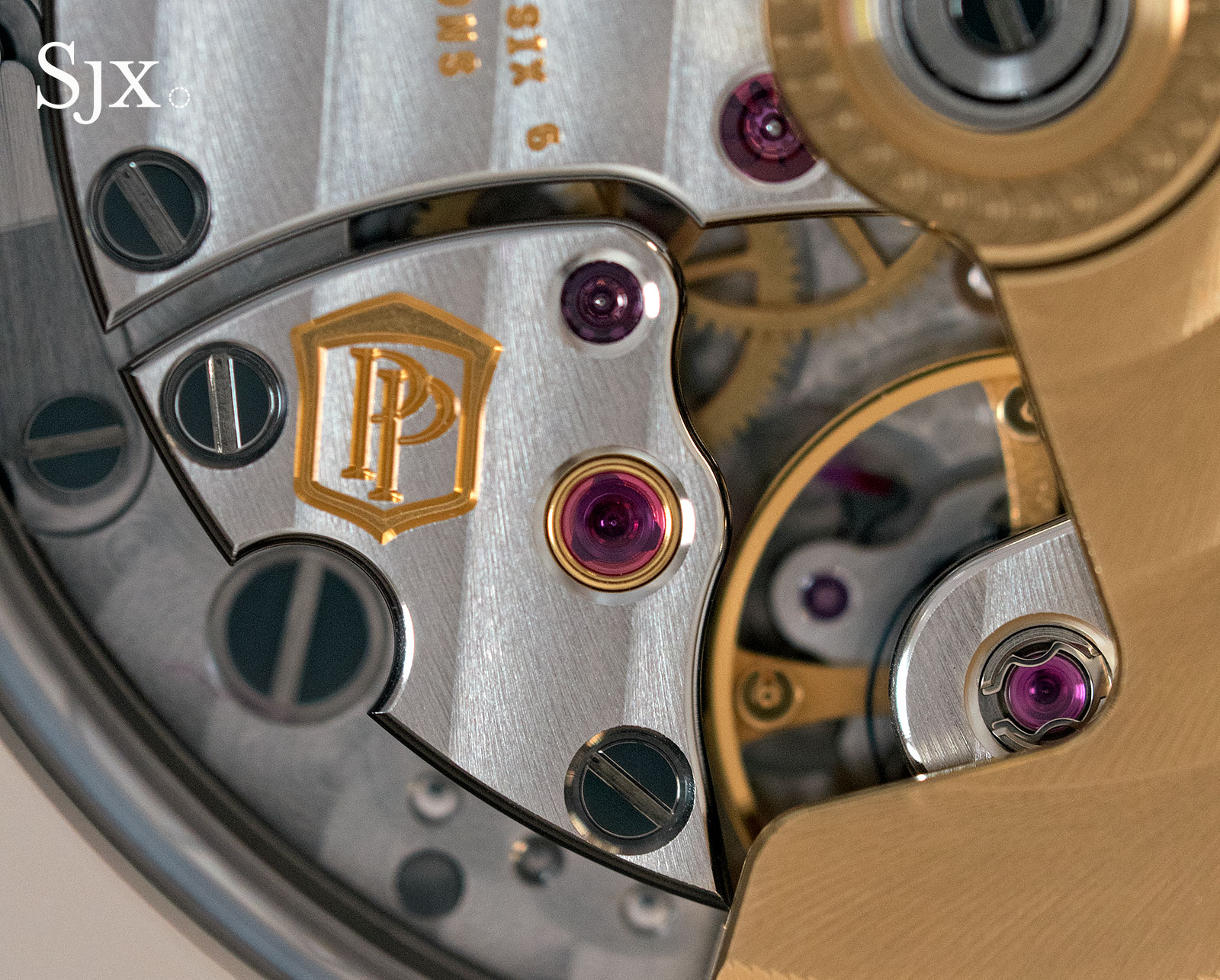
Visually the movement is impossible to distinguish from that in other models. It’s finished in the same manner, decorated to be attractive but with done so with a combination of manual and mechanical application.

Patek Philippe 5320G perpetual calendar 12

Patek Philippe 5320G perpetual calendar 11

On the wrist the ref. 5320G feels like a modern watch, being substantial enough in size and weight, with all the detailing expected of a contemporary timepiece. It just happens to be wearing 1950s period dress.

Patek Philippe 5320G perpetual calendar 13

Price and availability

Priced similar to other Patek Philippe perpetual calendars and comparable watches from other brands that aspire to be Patek Philippe, the ref. 5320G is still a lot of money for what is is. It’ll carry a price tag of SFr73,000 or S$109,000, and be available sometime later this year.


Correction April 2, 2017: The white gold case is not rhodium-plated as stated earlier.
Addition April 16, 2017: Elaboration on the fact that the bezel and case are a single, stamped piece.

Back to top.

You may also enjoy these.

Hands-On with the Zenith Defy El Primero 21, the Affordable, Mechanical 1/100th Second Chronograph

Zenith takes the El Primero into the 21st century with a new calibre featuring twin regulators.

Zenith introduced its El Primero in 1969, becoming one of the first watchmakers to unveil an automatic chronograph. Robust and economical, the El Primero survived the Quartz Crisis and is now regarded as one of the landmark chronograph movements.

In almost 50 years the El Primero has not changed significantly as a chronograph, until Baselworld 2017, when Zenith took the covers off the Defy El Primero 21, powered by the newly developed El Primero 9004 movement.

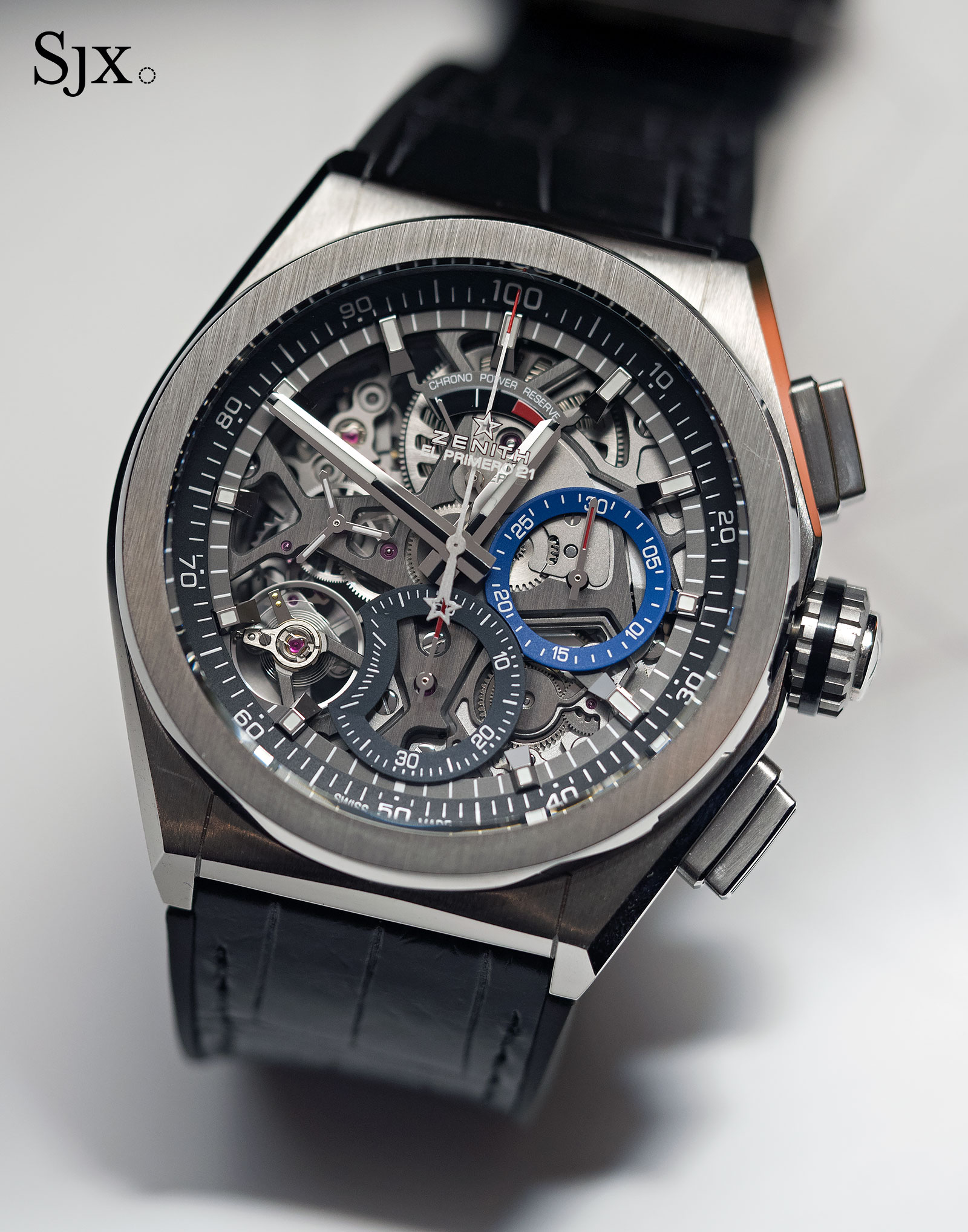
The Defy El Primero 21 in titanium with a skeleton dial

The El Primero 9004 integrates a new layer of complexity into the El Primero, with the addition of a mechanism that counts up to 1/100th of a second.


The basics

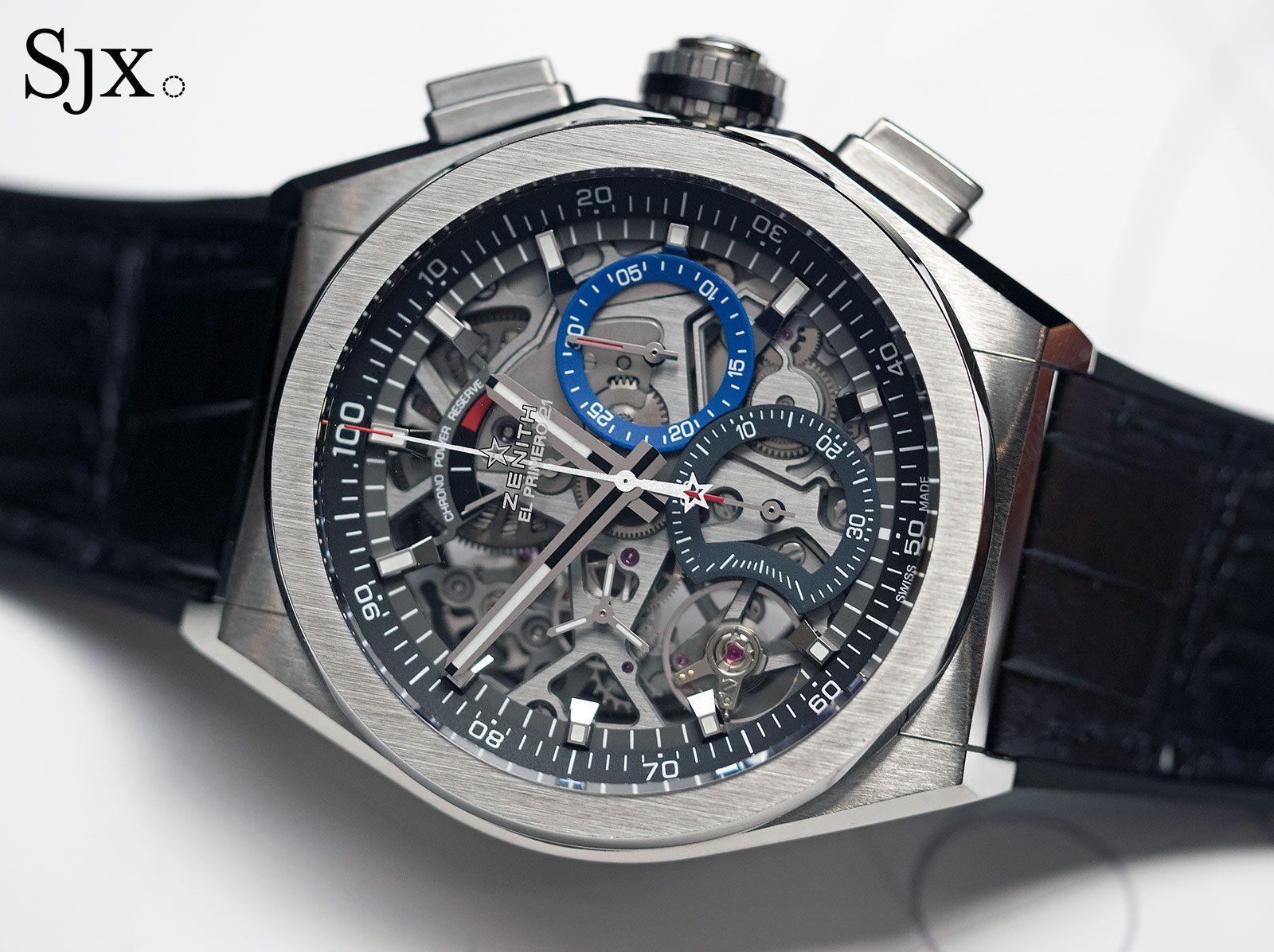
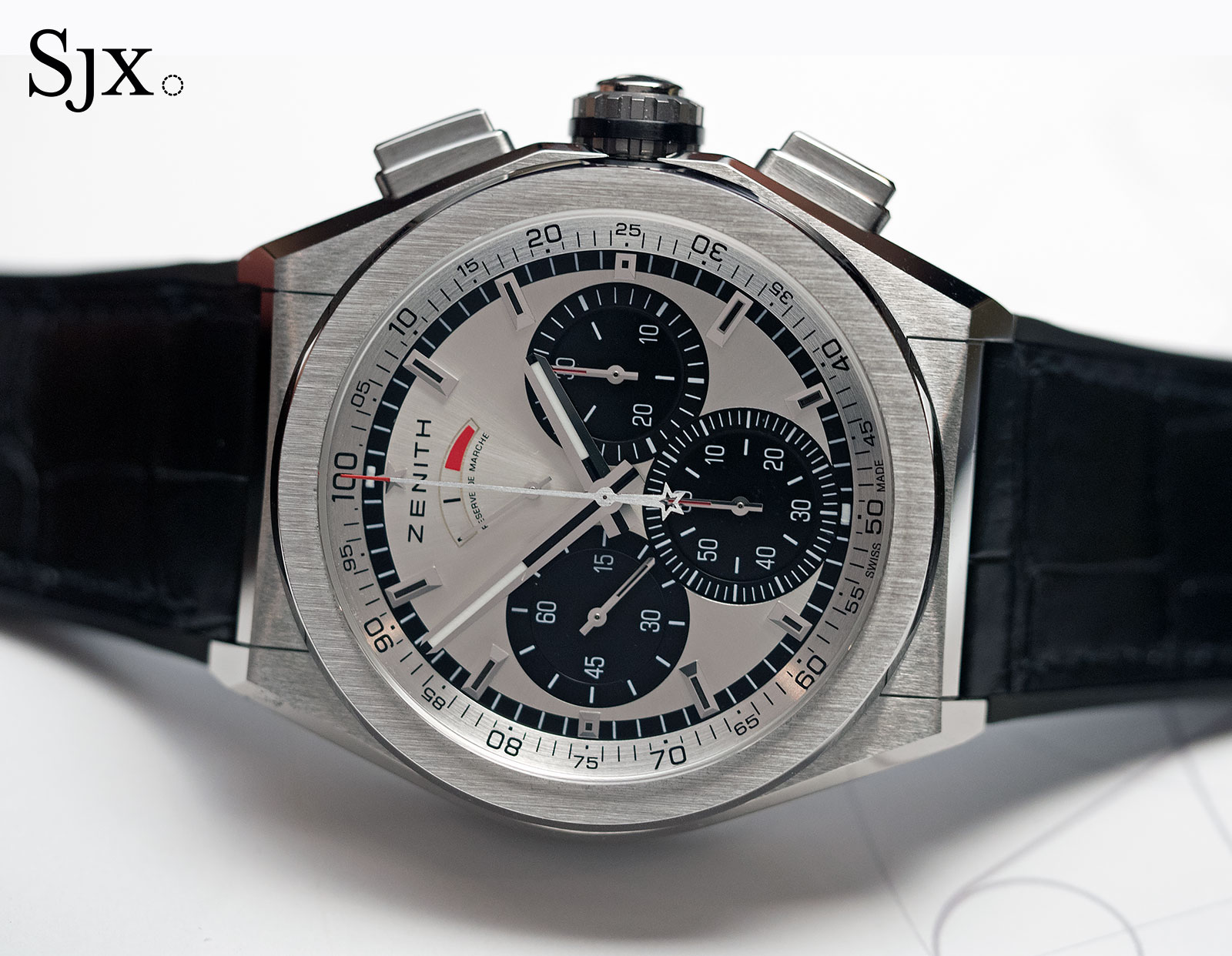
Large and quite thick – the case measures 44mm in diameter and 14.5mm high – the Defy El Primero 21 has the sort of techy look, especially on the open-dial versions, that is fashionable today. While reminiscent of watches from other brands, the look suits the movement and function, making it a coherent package.

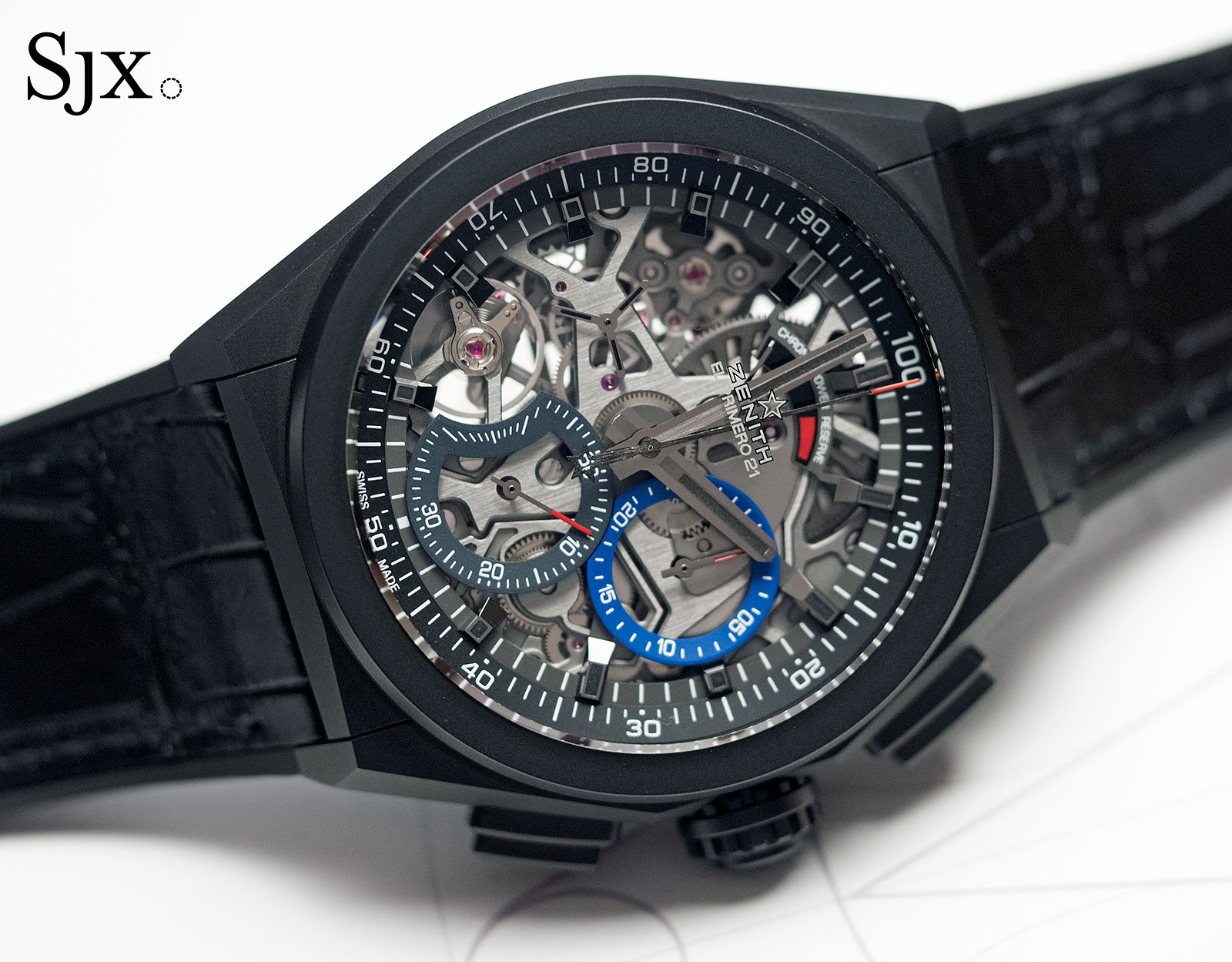
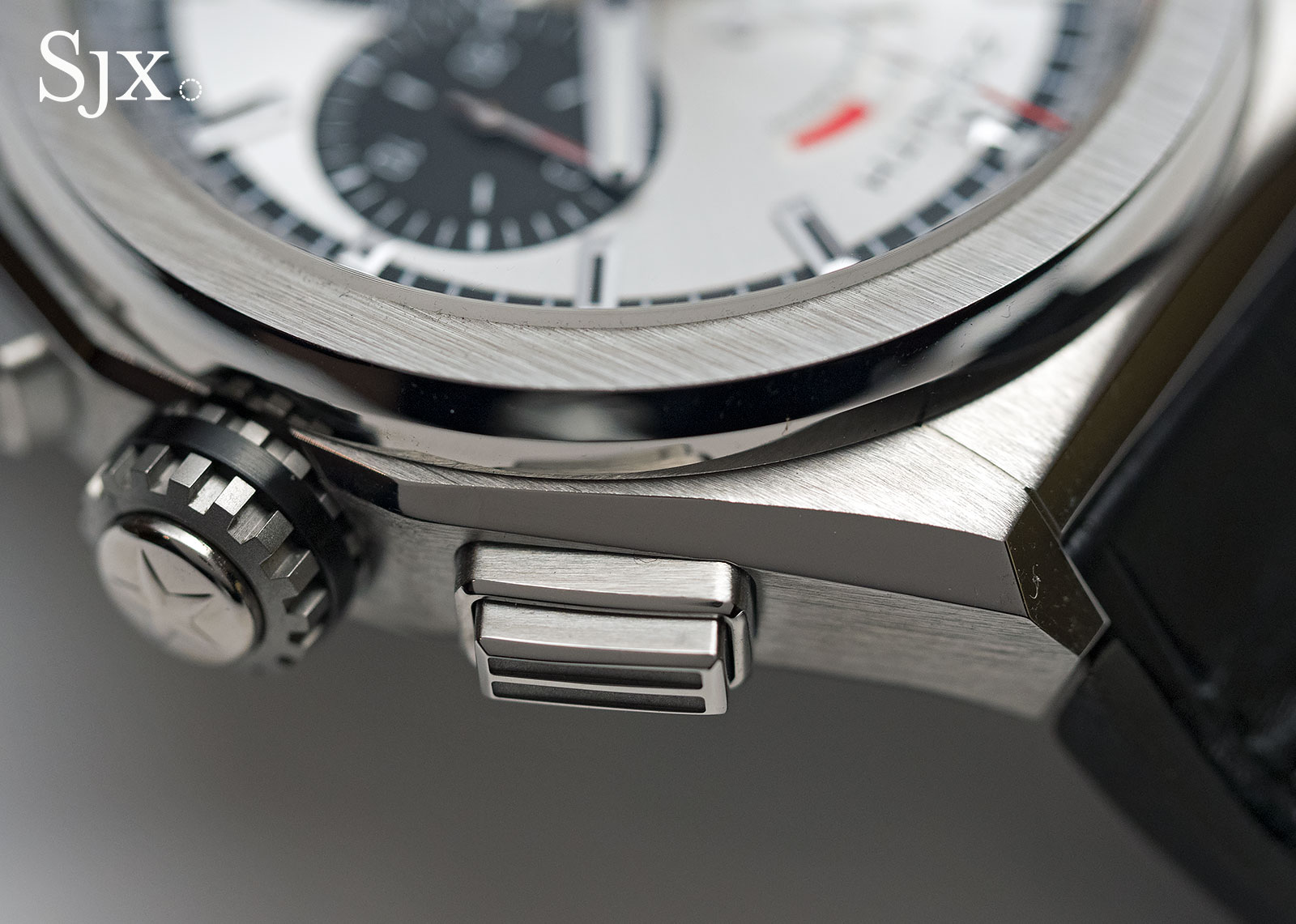
Three variants of the Defy El Primero 21 will be offered, all lightweight despite the size. Two models have titanium cases, the last, ceramised aluminium. Finished with alternating brushed and polished surfaces, the titanium cases have more visual appeal than the all-black ceramised aluminium.

In black ceramic-coated aluminium

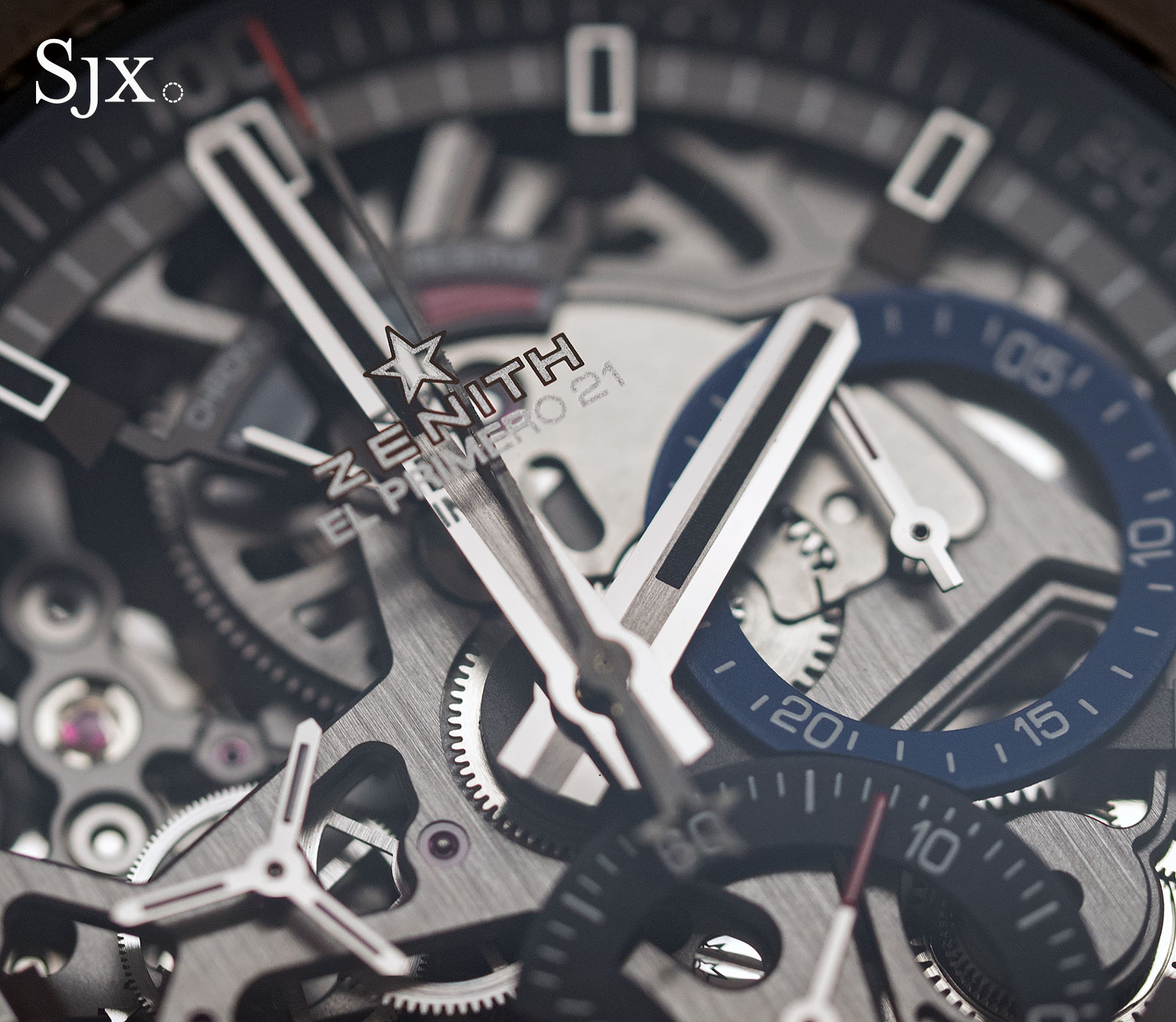
On the front the choices are either a skeletonised dial or a silvered, solid dial. The open-dial models are the most appealing, since the open-worked dials reveal the mechanics under.

Zenith Defy El Primero 21 ceramised 3

Zenith Defy El Primero 21 ceramised 2


100 lightning steps

Pressing the start button of the chronograph sets off the central seconds hand whizzing around the dial once per second. One revolution around the dial is made up of 100 infinitesimal steps that the eye cannot discern. Stopping the seconds hand indicates the hundredths of a second that has elapsed.

The counter at six o’clock measures 60 seconds, with every hashmark on its track representing a second. And the register at three records up to 30 minutes. The triple-armed seconds hand at nine o’clock is constant seconds.

Zenith Defy El Primero 21 titanium skeleton 3


The movement 

The key feature of the calibre is its “double chain” construction, featuring two balance wheels, gear trains and mainsprings – one for timekeeping and the other for the chronograph. Such a construction is not new, having been used by Montblanc and TAG Heuer, but it is still challenging technically.

The movement is mostly exposed on the open-dial versions, with lots to see. But that is due to technical features and construction than finishing, which is muted and simple, with lots of sandblasted and straight grained parts.

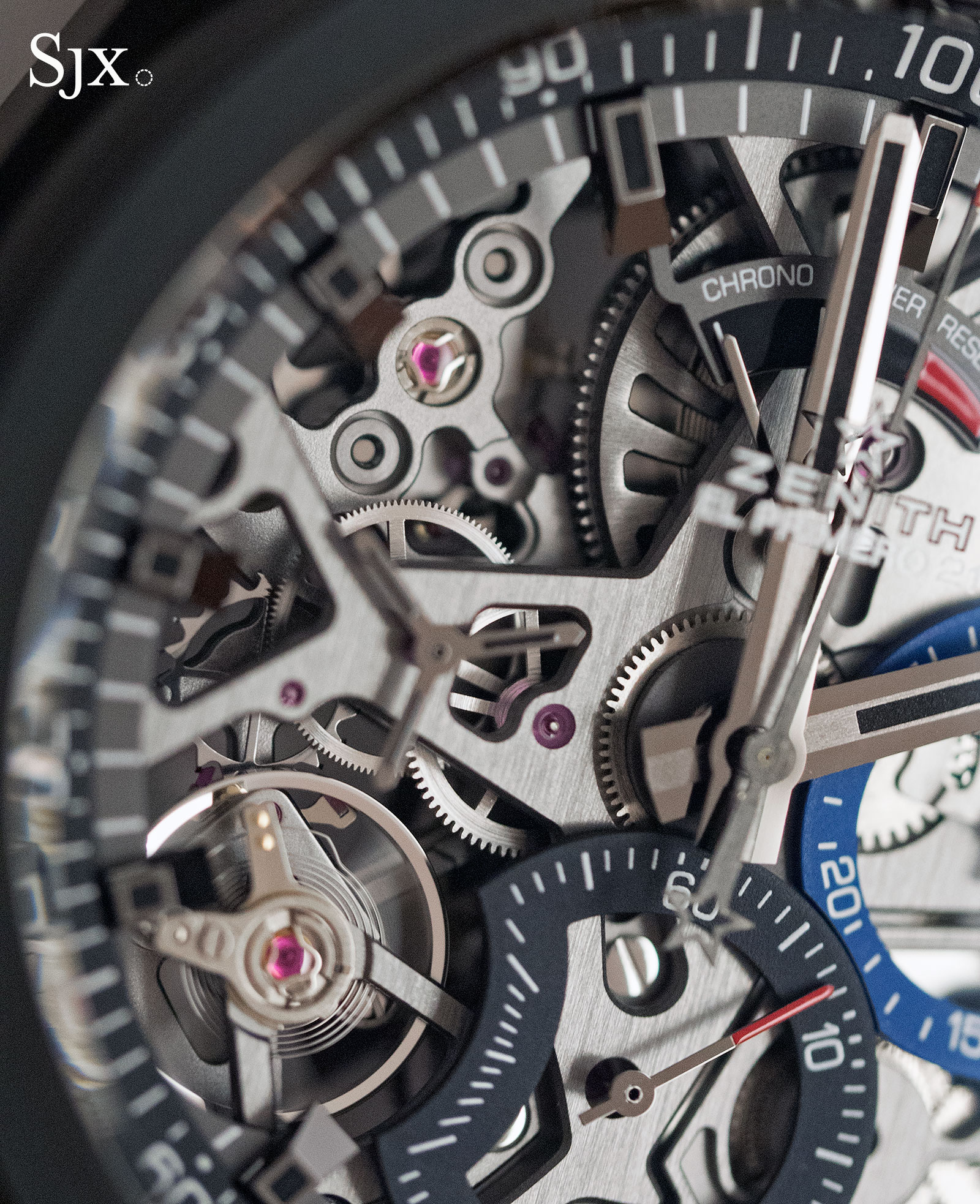
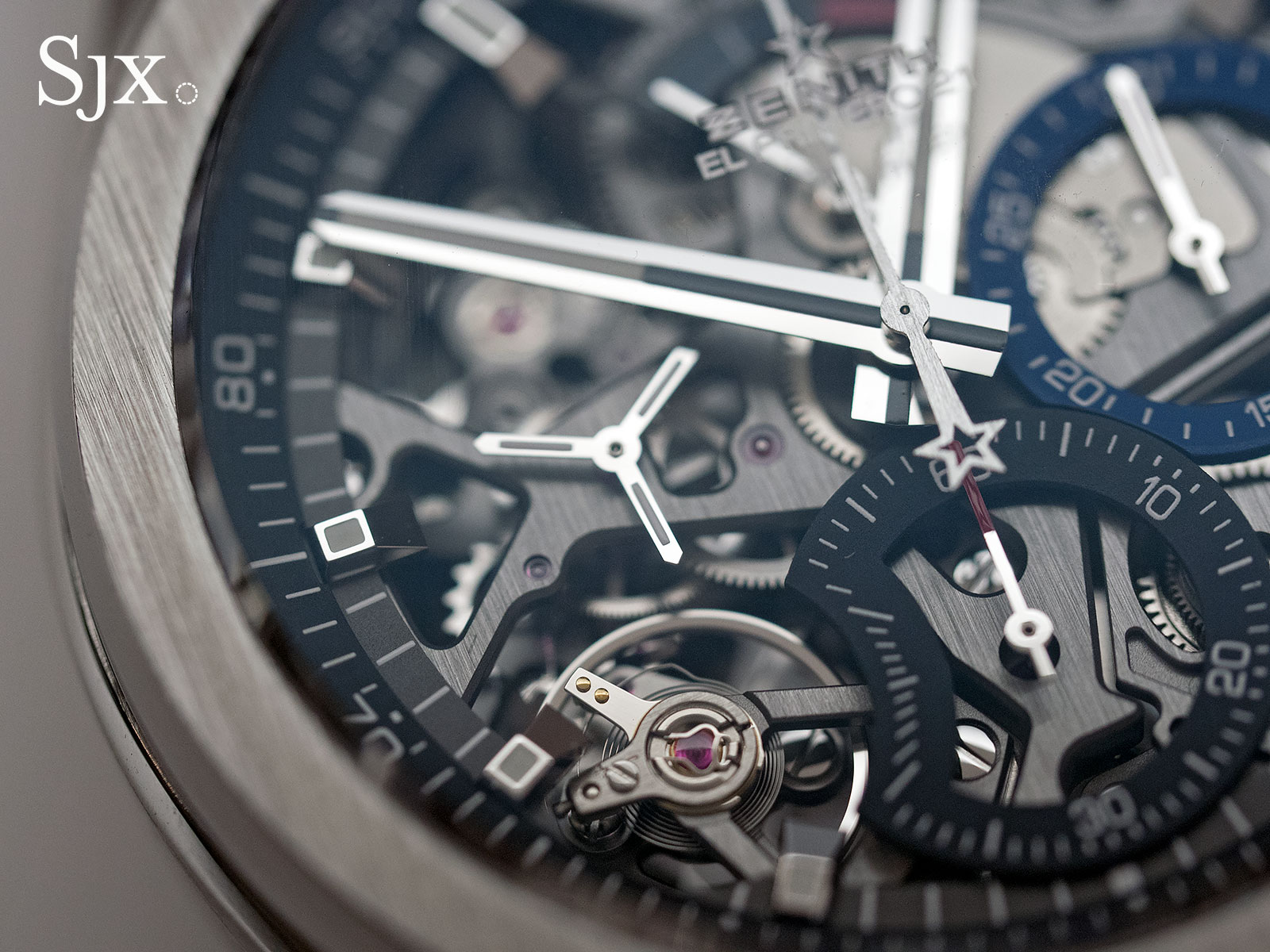
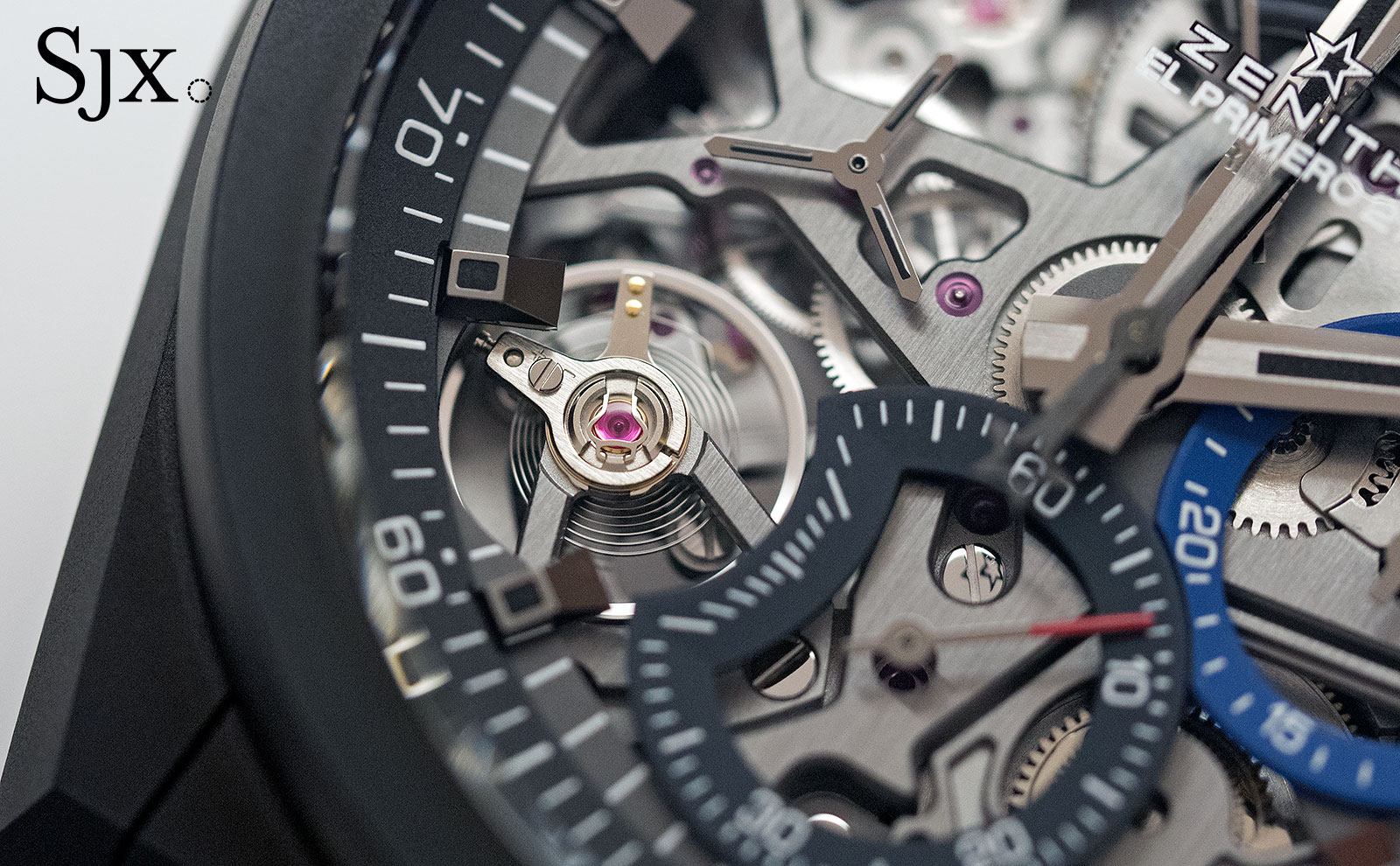
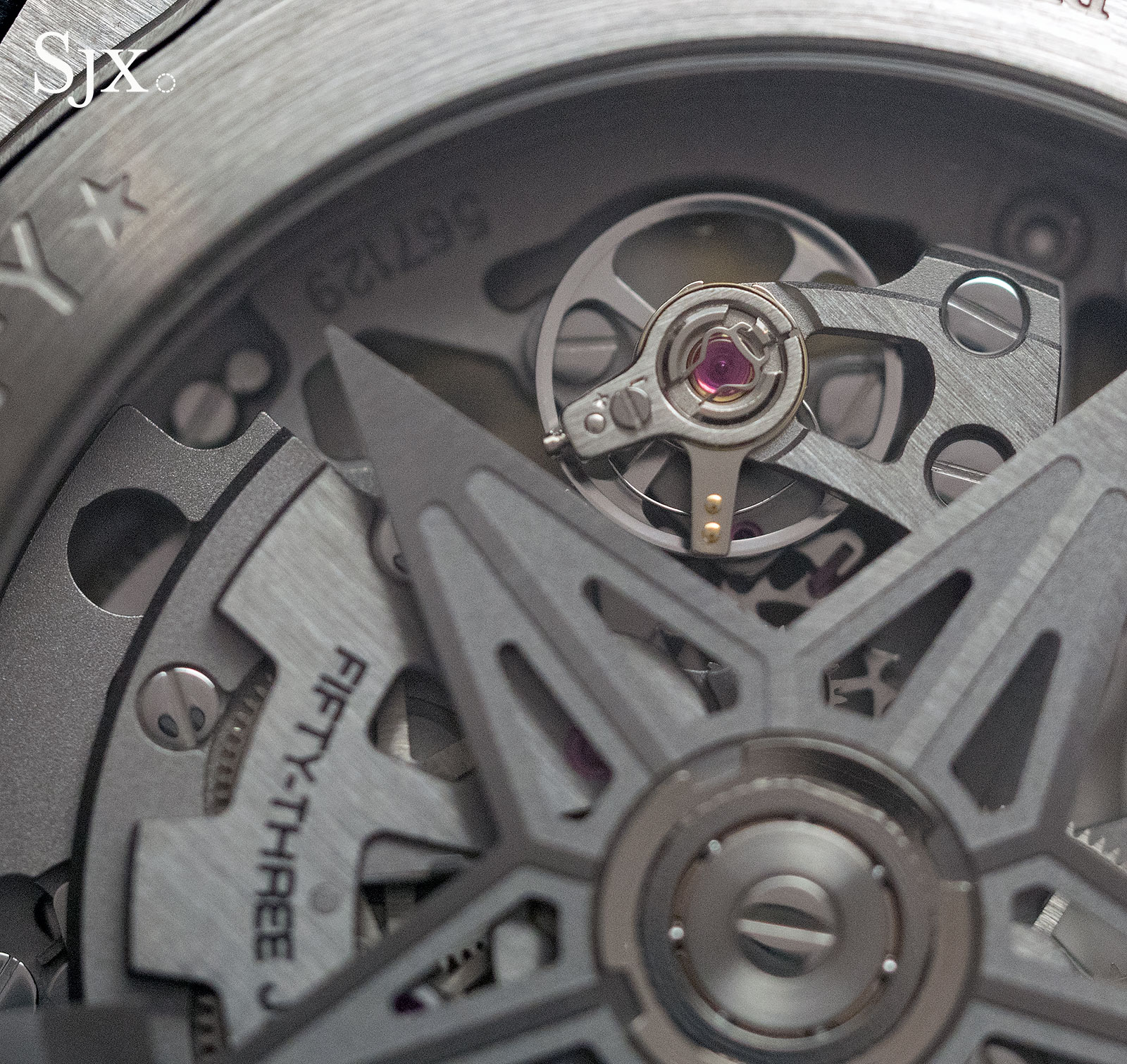
On the open-dial versions of the Defy El Primero 21, the timekeeping balance wheel is visible at eight o’clock, along with its mainspring at one o’clock. This runs at 36,000 beats per hour, the traditional high frequency of the El Primero.

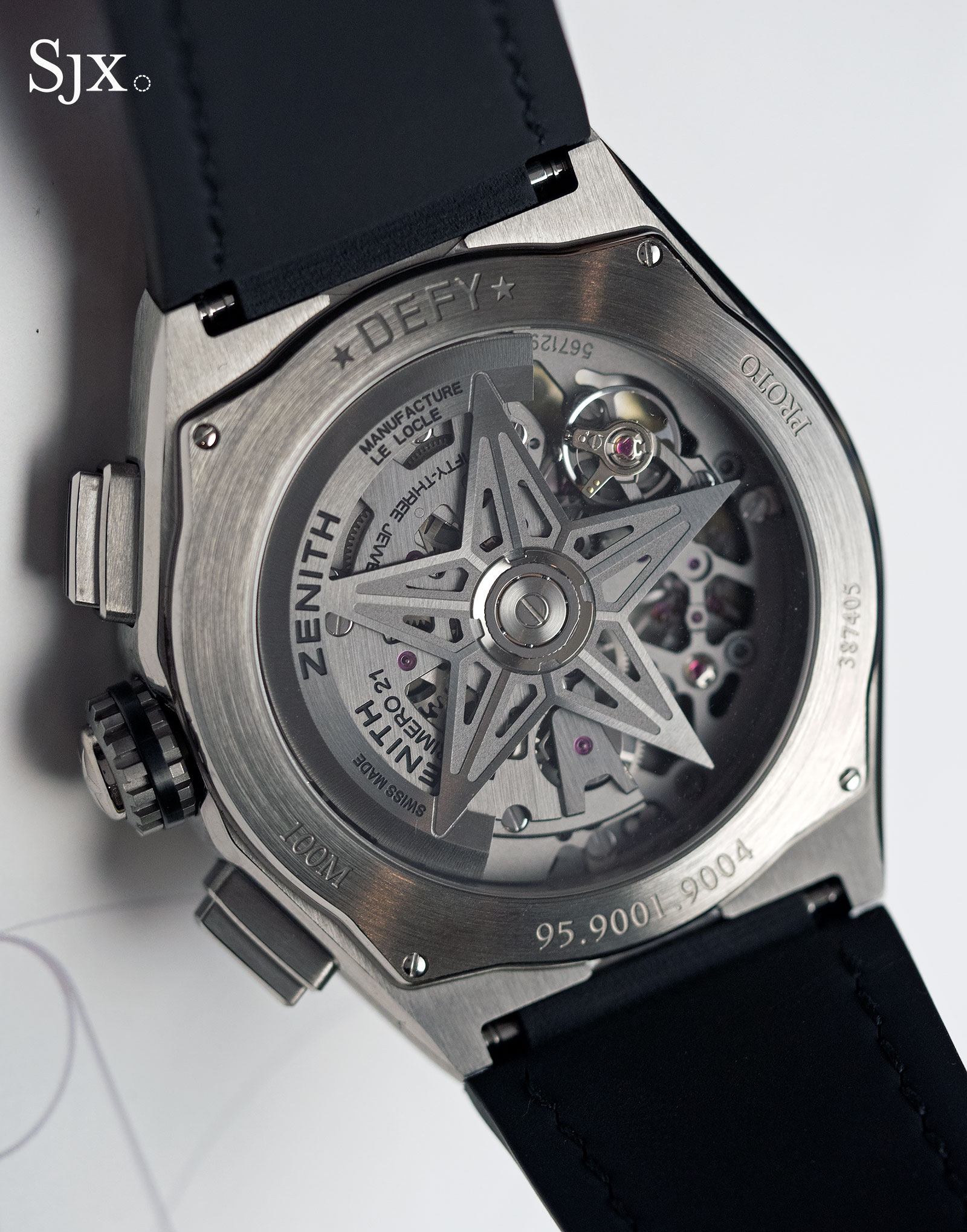
Wound via the star-shaped rotor on the back, the timekeeping portion of the movement has a conventional 50-hour power reserve.

The balance wheel that keeps the time, visible on the front

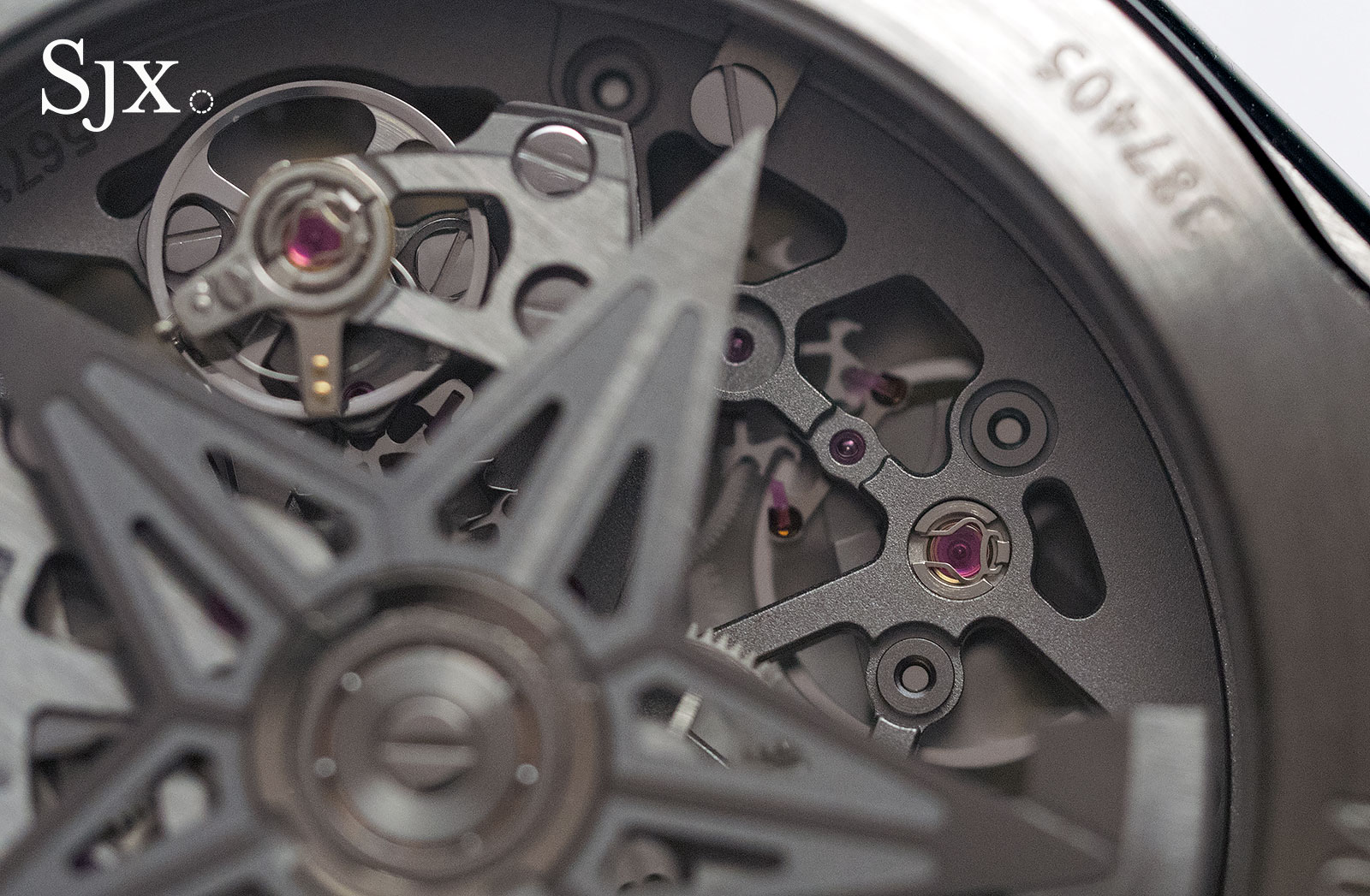
From the back the second, smaller balance wheel for the 1/100th of a second chronograph is visible. The reduced size and much shorter hairspring are because it runs at 360,000bph, ten times as fast as the regular balance wheel.

The star-shaped rotor winds the mainspring for the time

The 360,000bph frequency translates into 100 beats per second, which explains why the central seconds hand blazes around the dial in 100 steps a second.

The smaller balance wheel for the chronograph

Because its balance oscillates at such a high frequency, consuming significant energy, and also because space limits the size of the second mainspring, the fraction of second chronograph has a 50-minute power reserve, which seems brief but is actually 300,000 hundredths of a second.

Because the fraction of a second chronograph has its own power source, it is wound separately via the crown; 25 turns gets it to full wind.

The chronograph balance (top left) and the underside of the timekeeping balance on its right

Both balance wheels are notable for being made of “carbon-matrix carbon nanotube composite”. It’s a composite material injected with carbon nanotubes that’s both light, strong and magnetism resistant, properties ideal for an oscillator, particularly one running at such a high frequency.


Credit where credit is due?

The El Primero 9004 movement inside the Defy El Primero 21 is integrated, meaning the 1/100th of a second mechanism is not a separate module bolted onto the El Primero, a more convenient method of building such a chronograph.

Zenith says the calibre was developed in-house and is distinct from the functionally similar (even the sub-dials are in the same place) movement inside the TAG Heuer Mikrograph.

That being said, Jean-Claude Biver, the chief executive of both TAG Heuer and Zenith, let on in an interview with Swiss newspaper Neue Zürcher Zeitung that the movement was developed by a team comprised of engineers from both brands as well as sister company Hublot.


The first act of defiance 

The Defy El Primero 21 will be the first of a new line of watches named “Defy” that resurrects a name Zenith used on and off for sports watches in the latter half of the 20th century.

Zenith Defy El Primero 21 titanium 1

Titanium case, silvered dial

The new line will likely be similarly styled, taking Zenith a road that’s new for the brand but still familiar.

While the design has elements that are recognisable as drawn from other Zenith watches, the angular case, flat bezel and rectangular pushers are reminiscent of Hublot. In fact, the rubber strap covered with alligator hide and accompanying folding clasp are identical to those found on Hublot watches.

Zenith Defy El Primero 21 titanium 3


Price and availability

For what it is, Defy El Primero 21 is surprisingly reasonably priced, with the base model starting at SFr10,900, or about US$11,000. That’s half the price of the TAG Heuer Mikrograph.

Slated to be available starting end-2017, the Defy El Primero 21 is available in three variants, priced as follows (in Swiss francs and Singapore dollars):

Titanium, silver dial (ref. 95.9001.9004/01.R582) – SFr10,900 or S$16,600

Titanium, open-worked dial (ref. 95.9000.9004/78.R582) – SFr11,900 or S$18,100

Ceramised aluminium, open-worked dial (ref. 24.9000.9004/78.R582) – SFr12,900 or S$19,500


Back to top.

You may also enjoy these.

Hands-On with the Breitling Navitimer Rattrapante, an In-House Split-Seconds Chronograph

Explaining the new B03 calibre featuring a modular split-seconds mechanism.

In the late 1990s Breitling produced a small number of split-second Navitimers (some with perpetual calendars) that were powered by the compact Frederic Piguet cal. 1186 movement. Those were the only split-second Navitimers ever made, until Baselworld 2017 when the Navitimer Rattrapante made its debut.

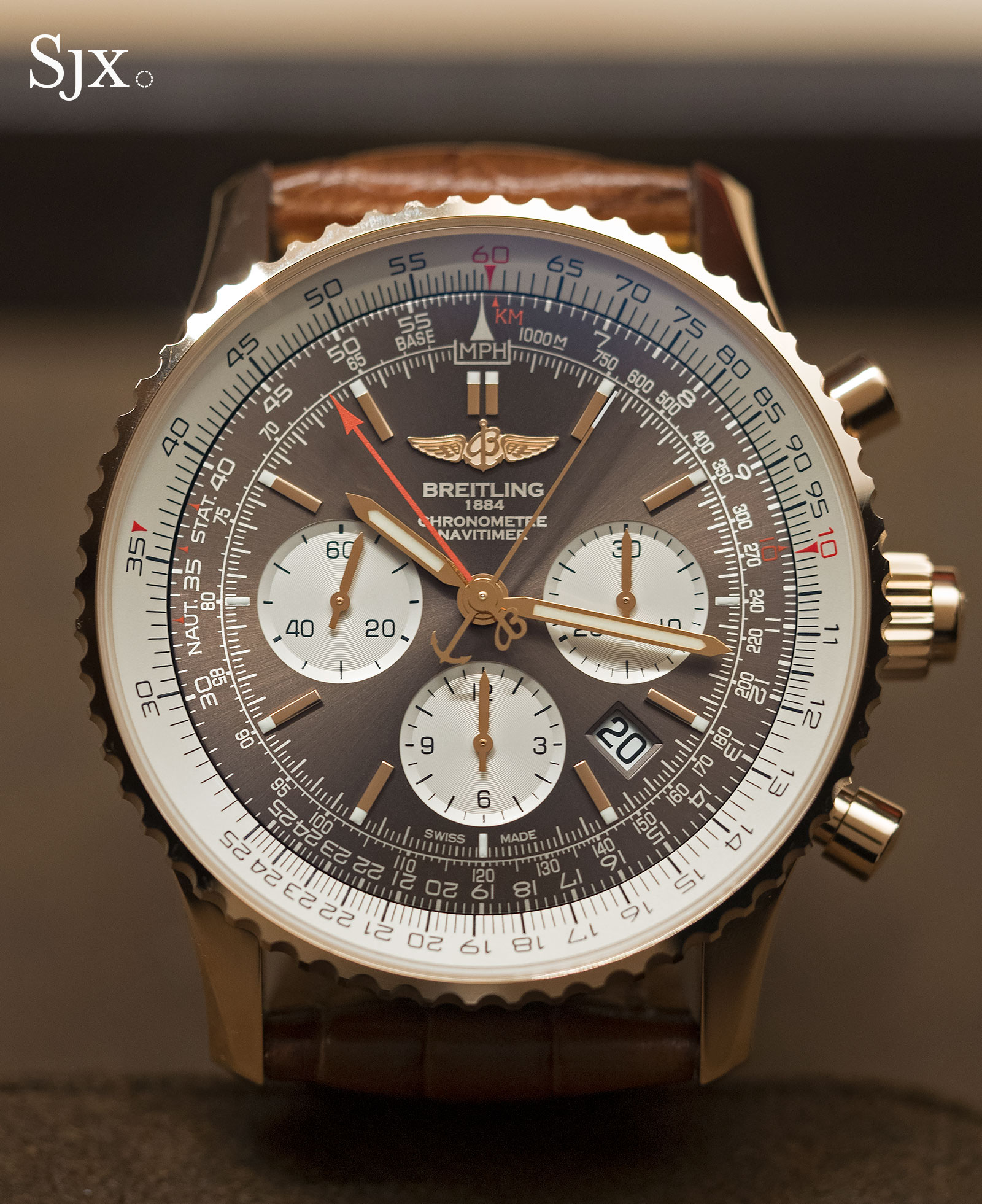
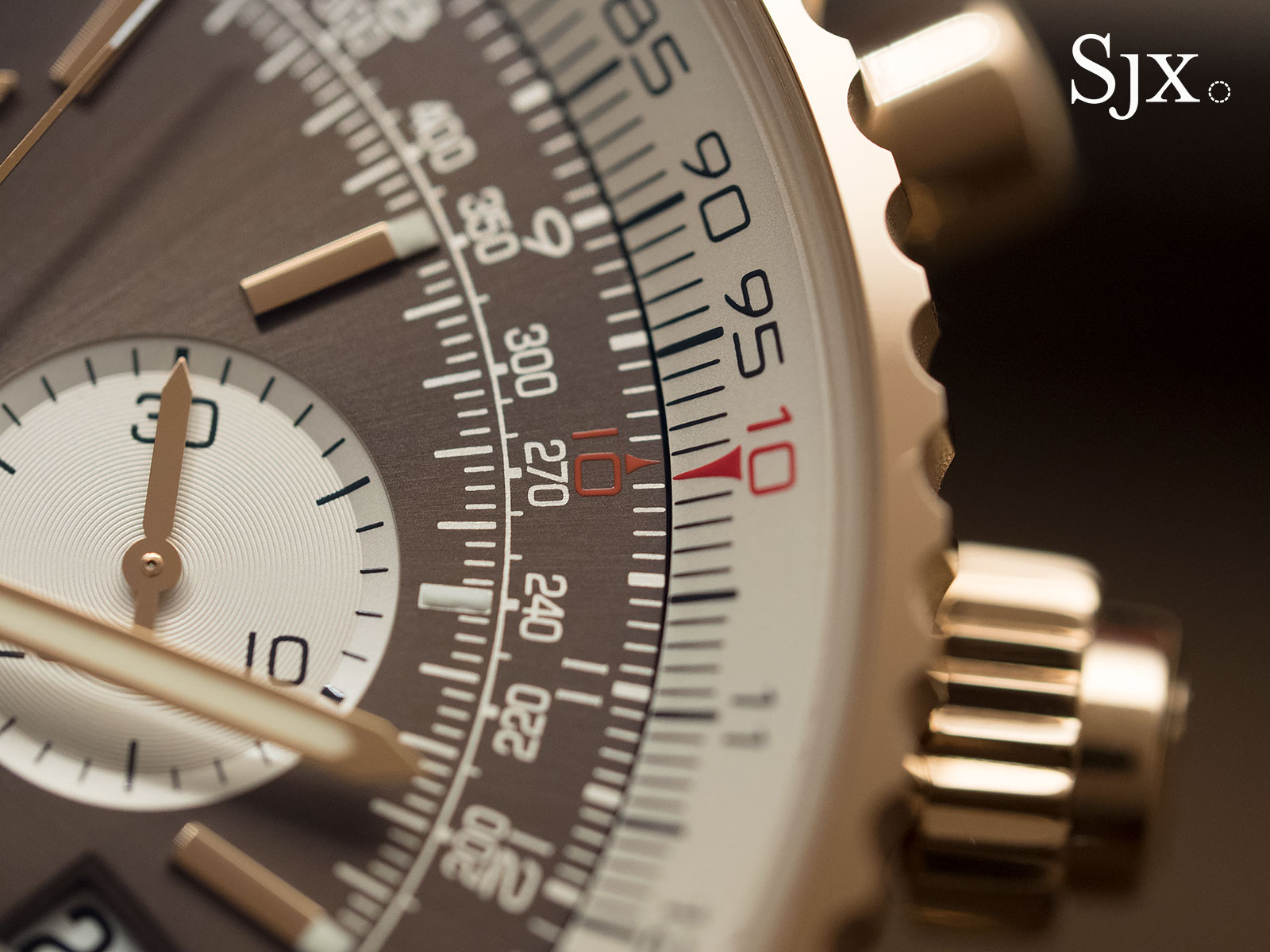
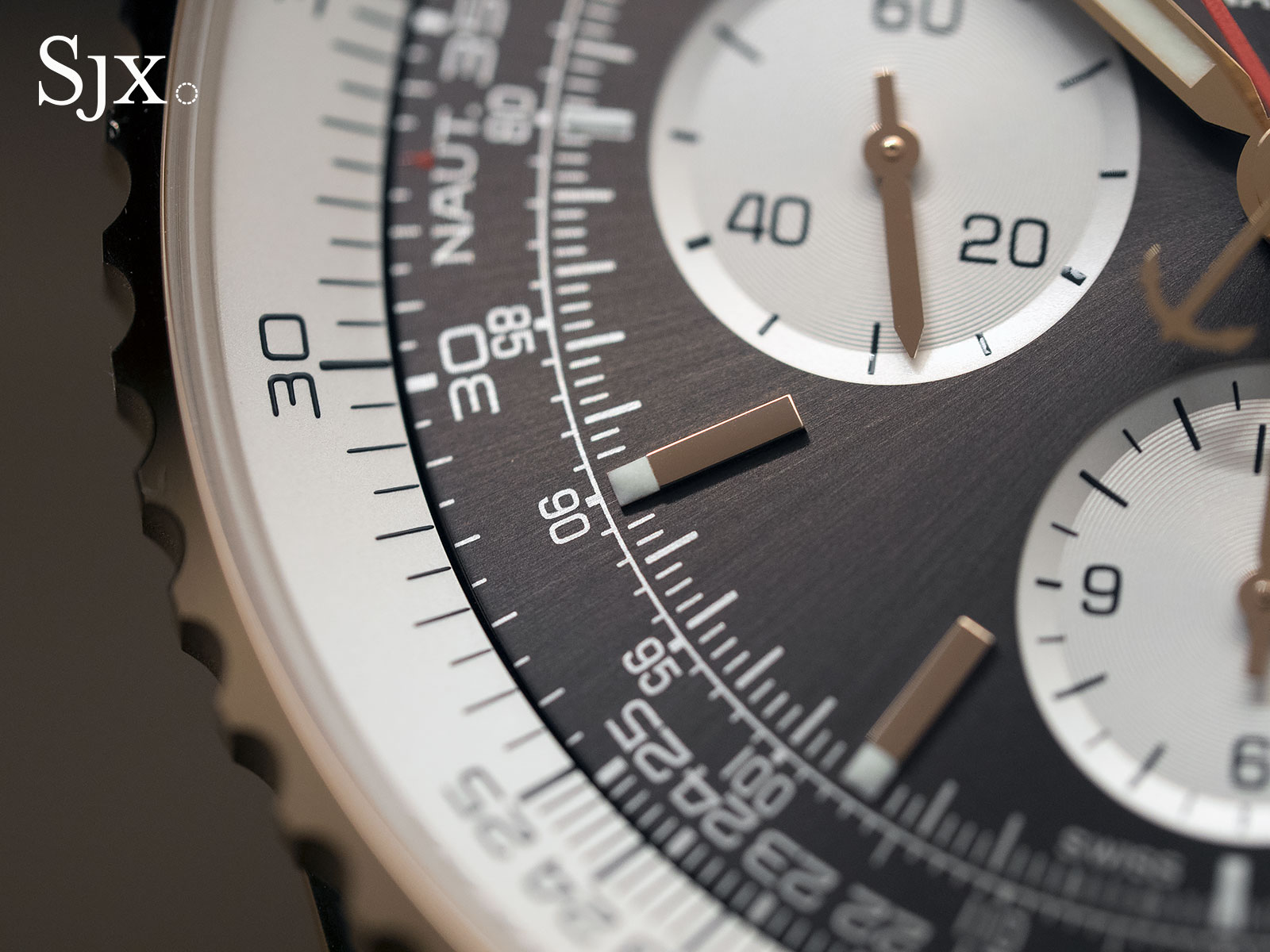
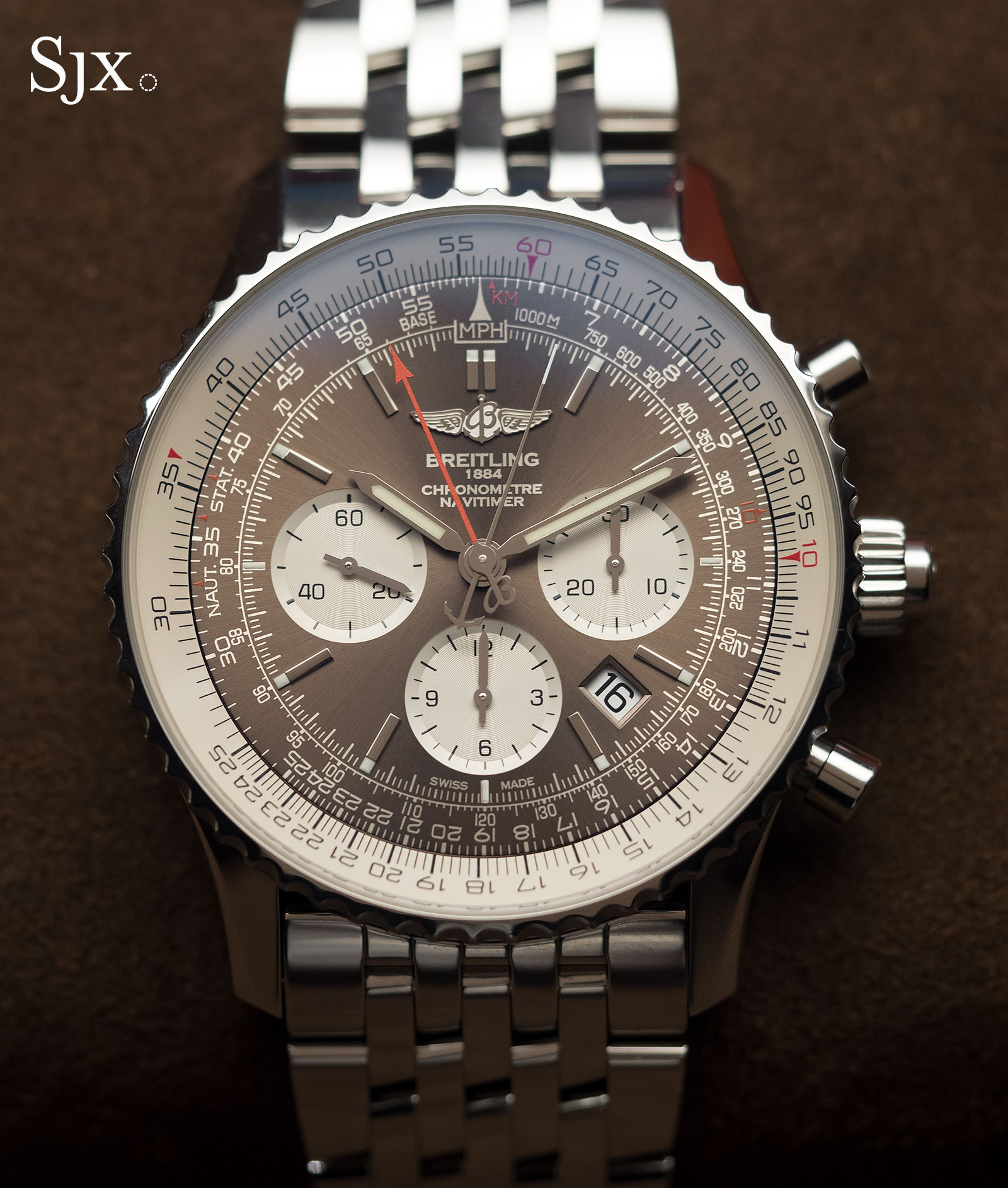
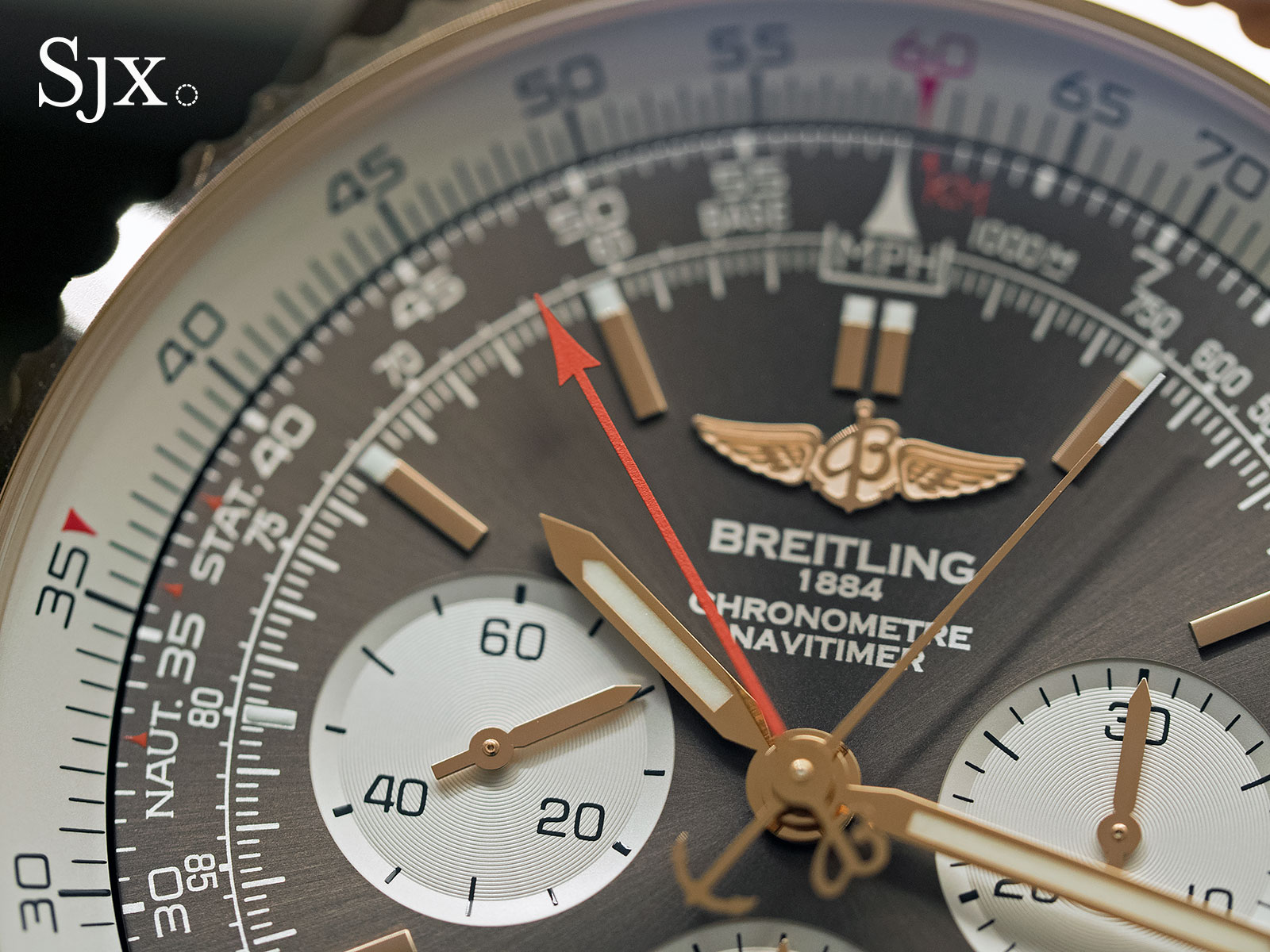
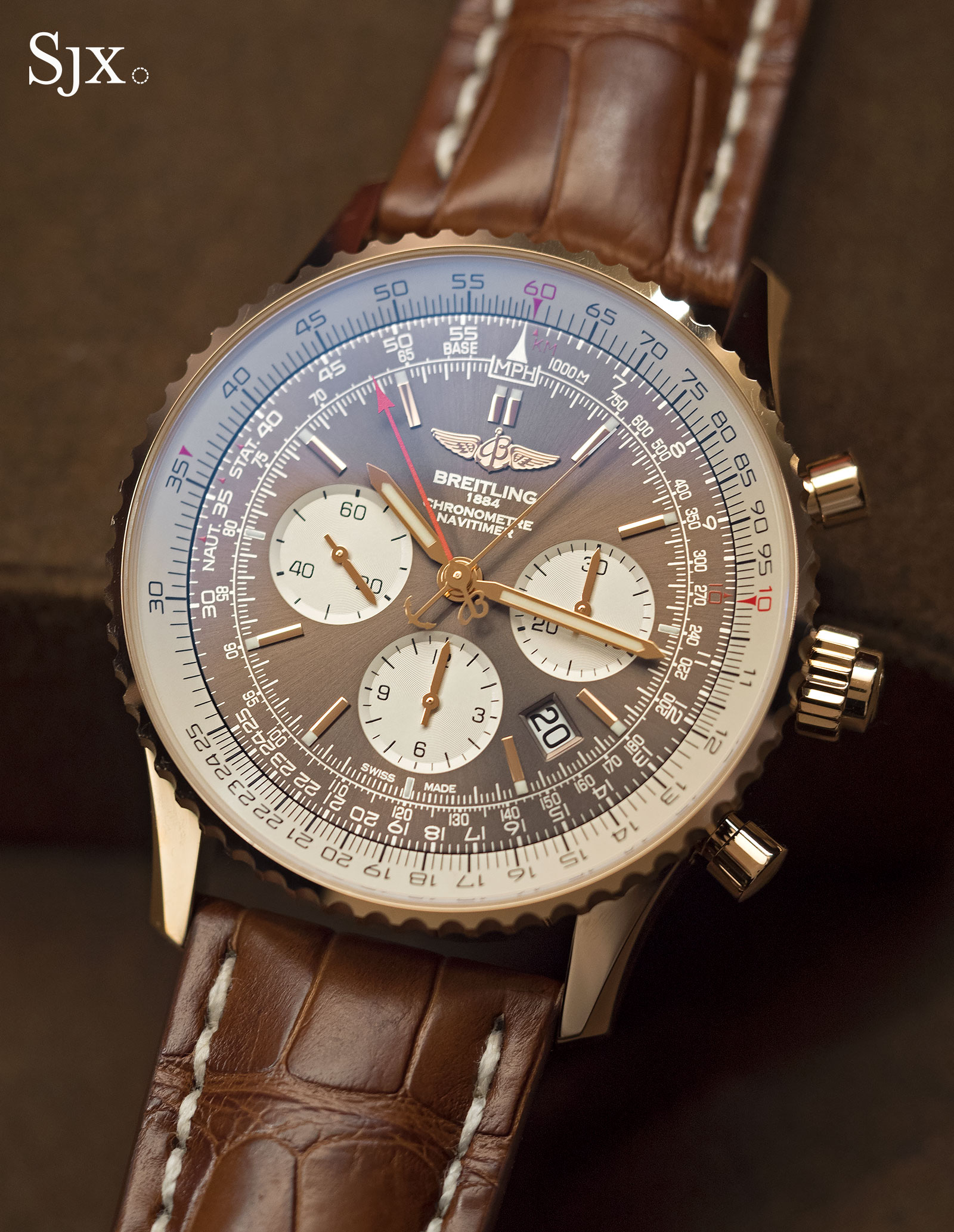
Originally designed for pilots in the 1960s, the Navitimer is characterised by the circular slide rule bezel that allows aviators to perform various calculations on the fly – no pun intended. While the slide rule is now an anachronism that is no longer useful thanks to electronics, the Navitimer has preserved its original look.

Breitling Navitimer Rattrapante red gold 10

Breitling Navitimer Rattrapante red gold 13


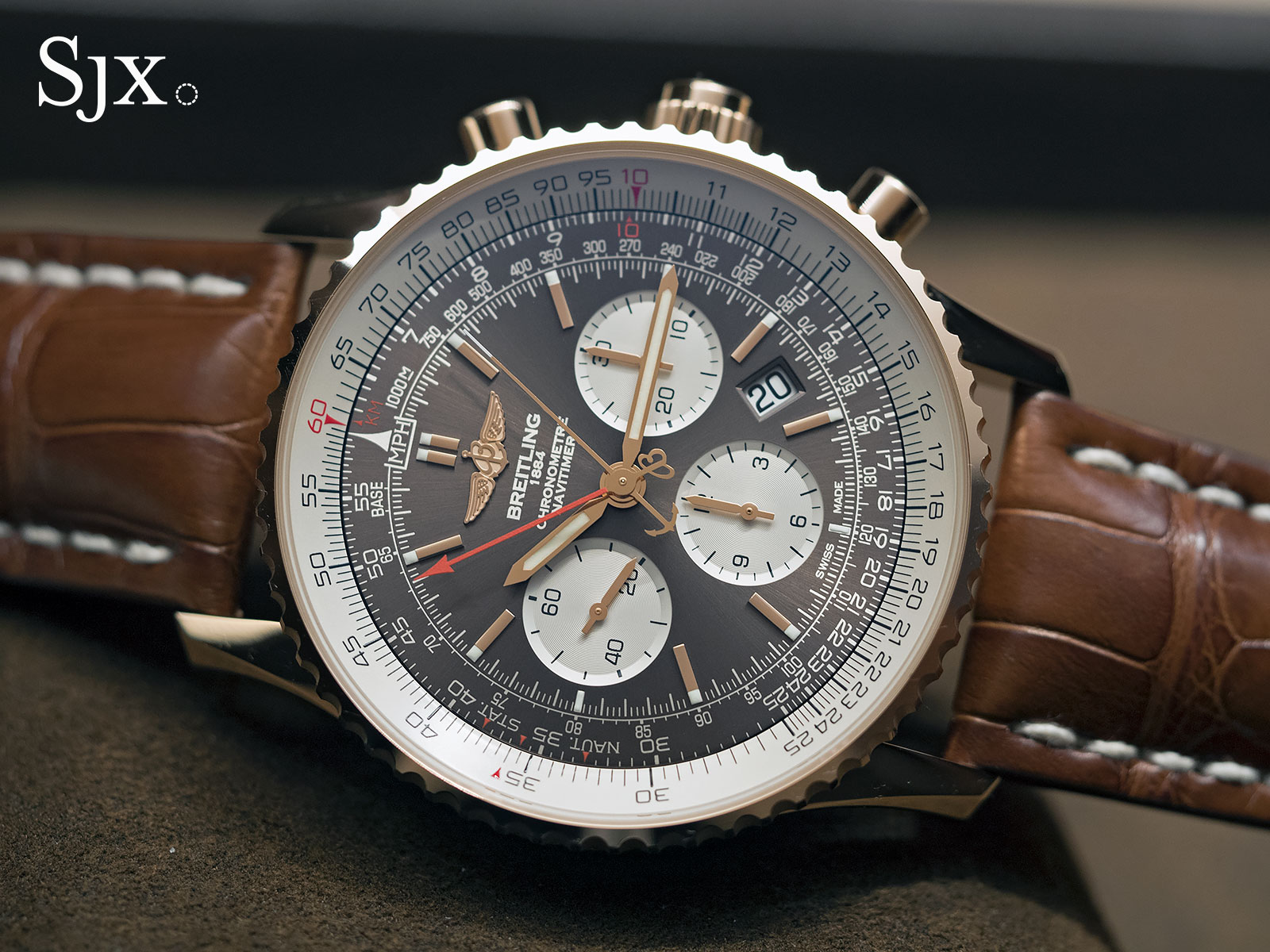
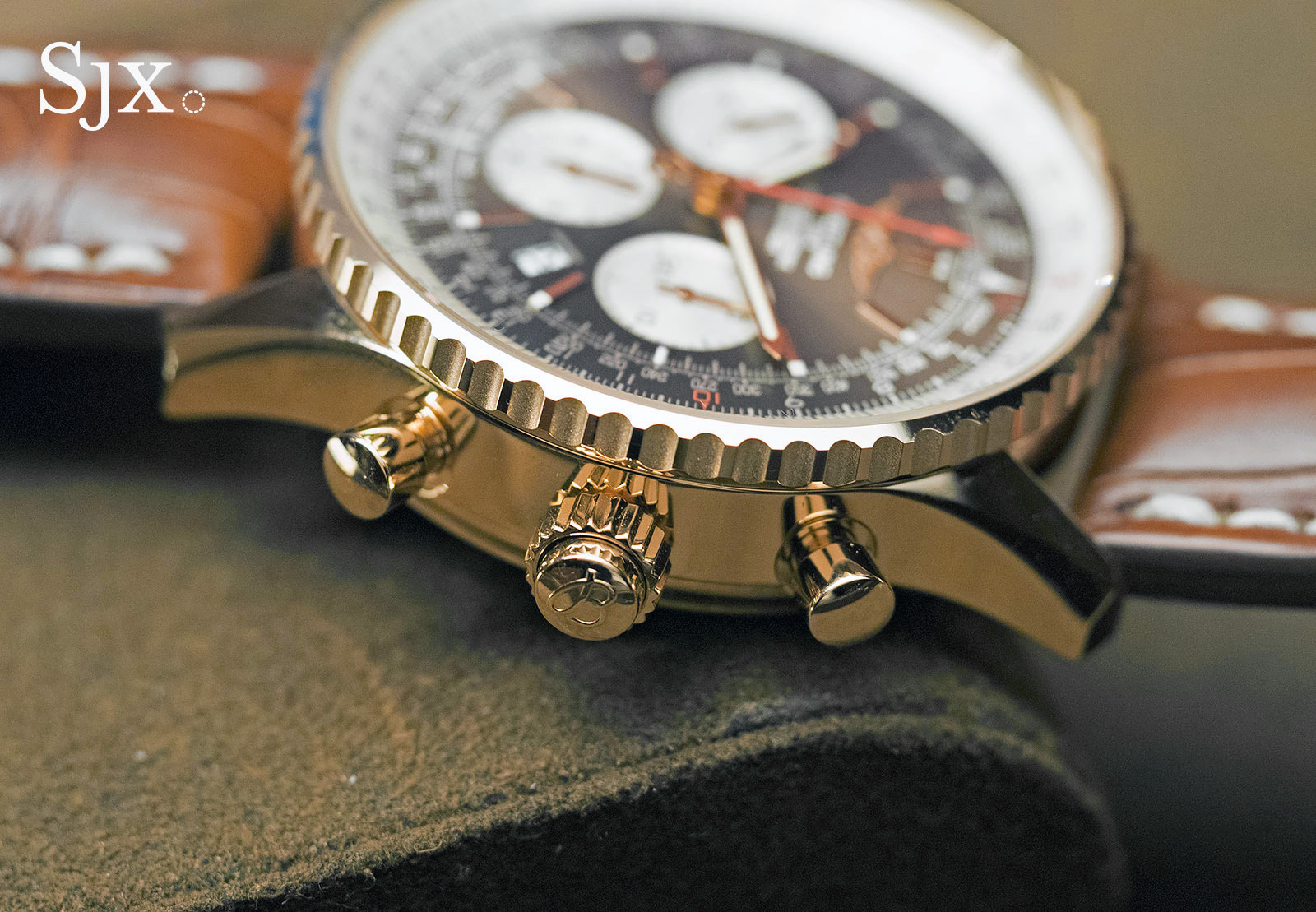
The Navitimer Rattrapante is a large, 45mm wristwatch with a split-seconds that’s activated via a pusher that’s co-axial with the crown, eliminating the extra button at 10 o’clock that split-seconds often have.

Breitling Navitimer Rattrapante red gold 7

Breitling Navitimer Rattrapante red gold 15

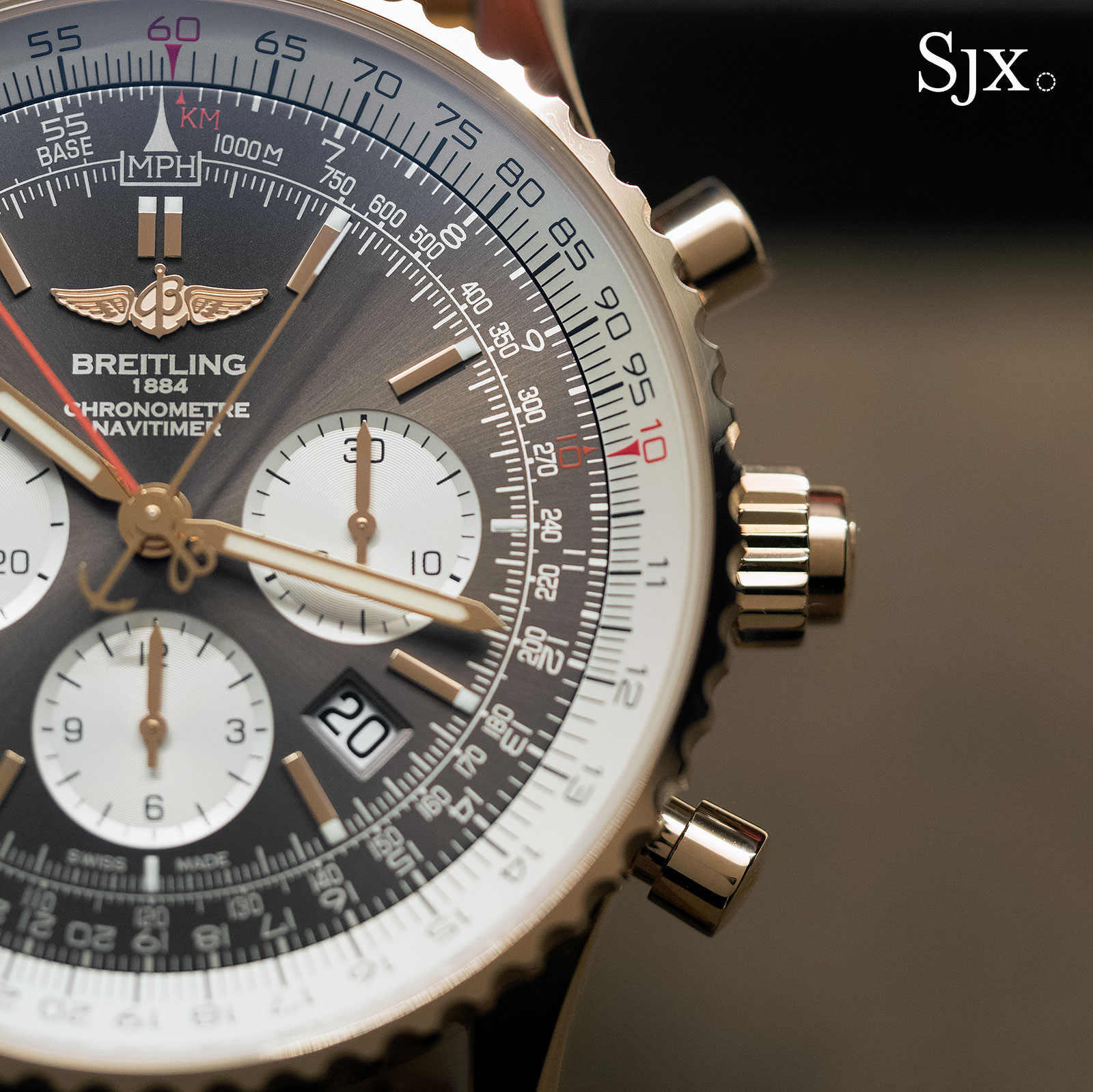
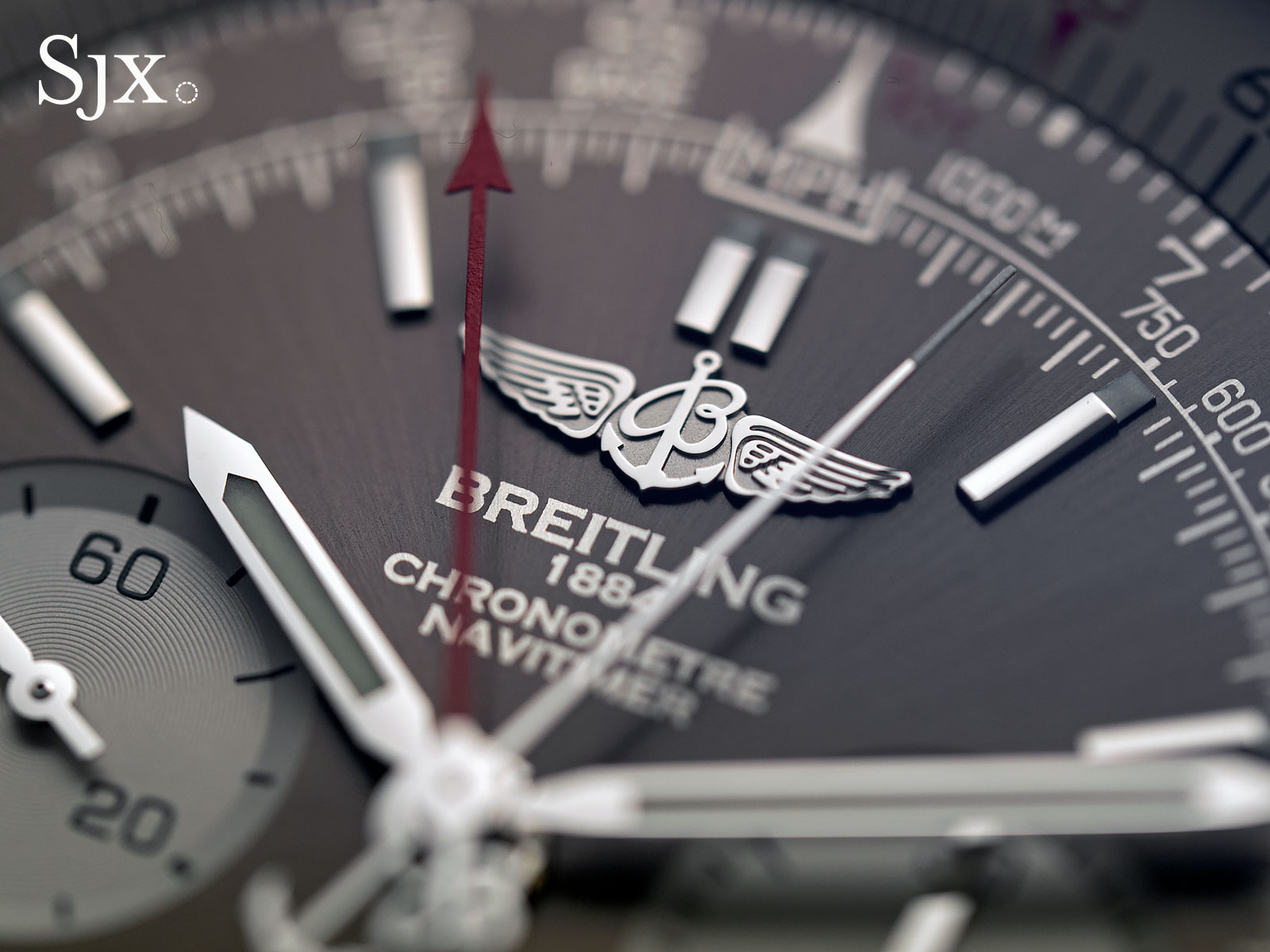
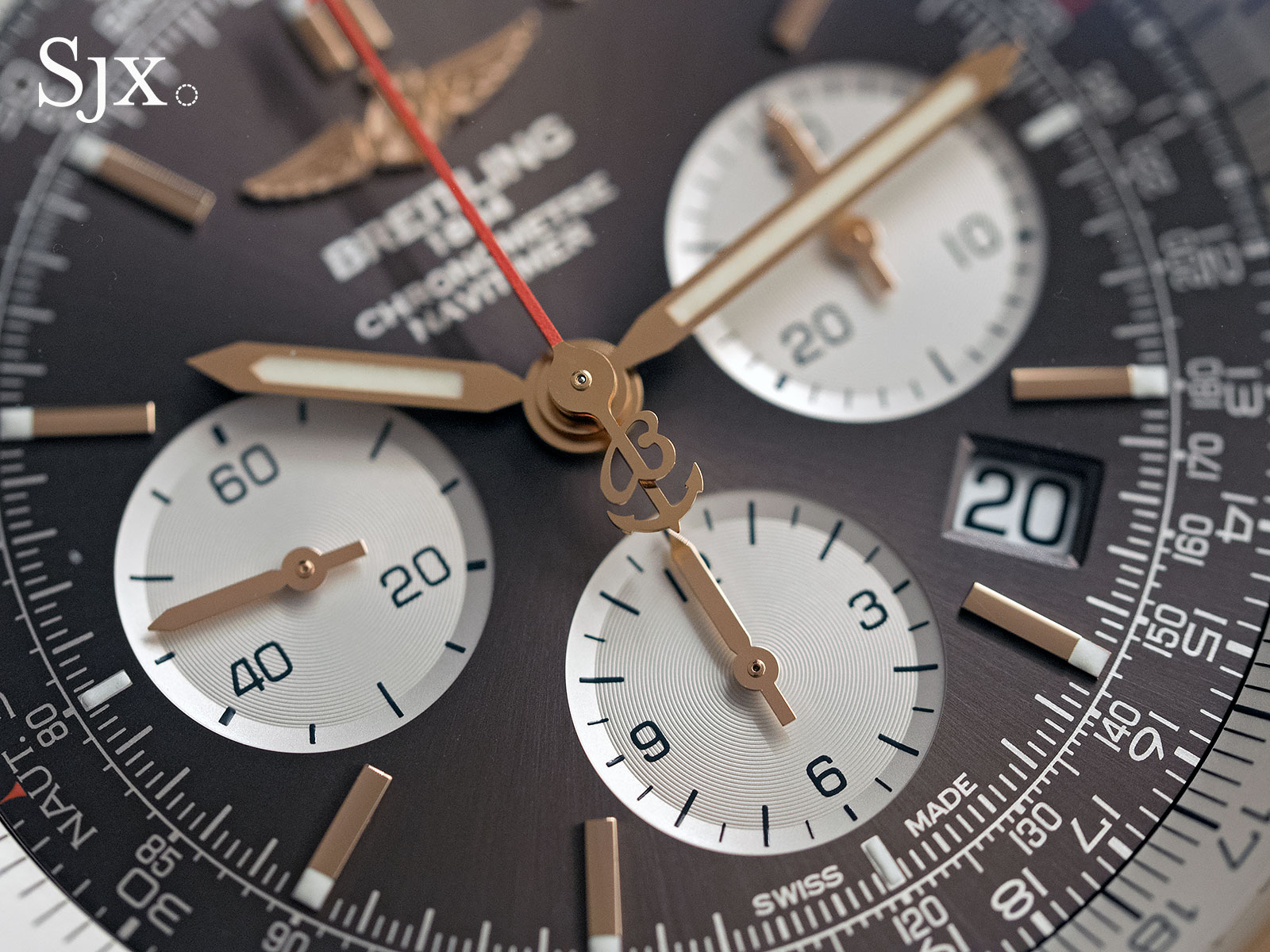
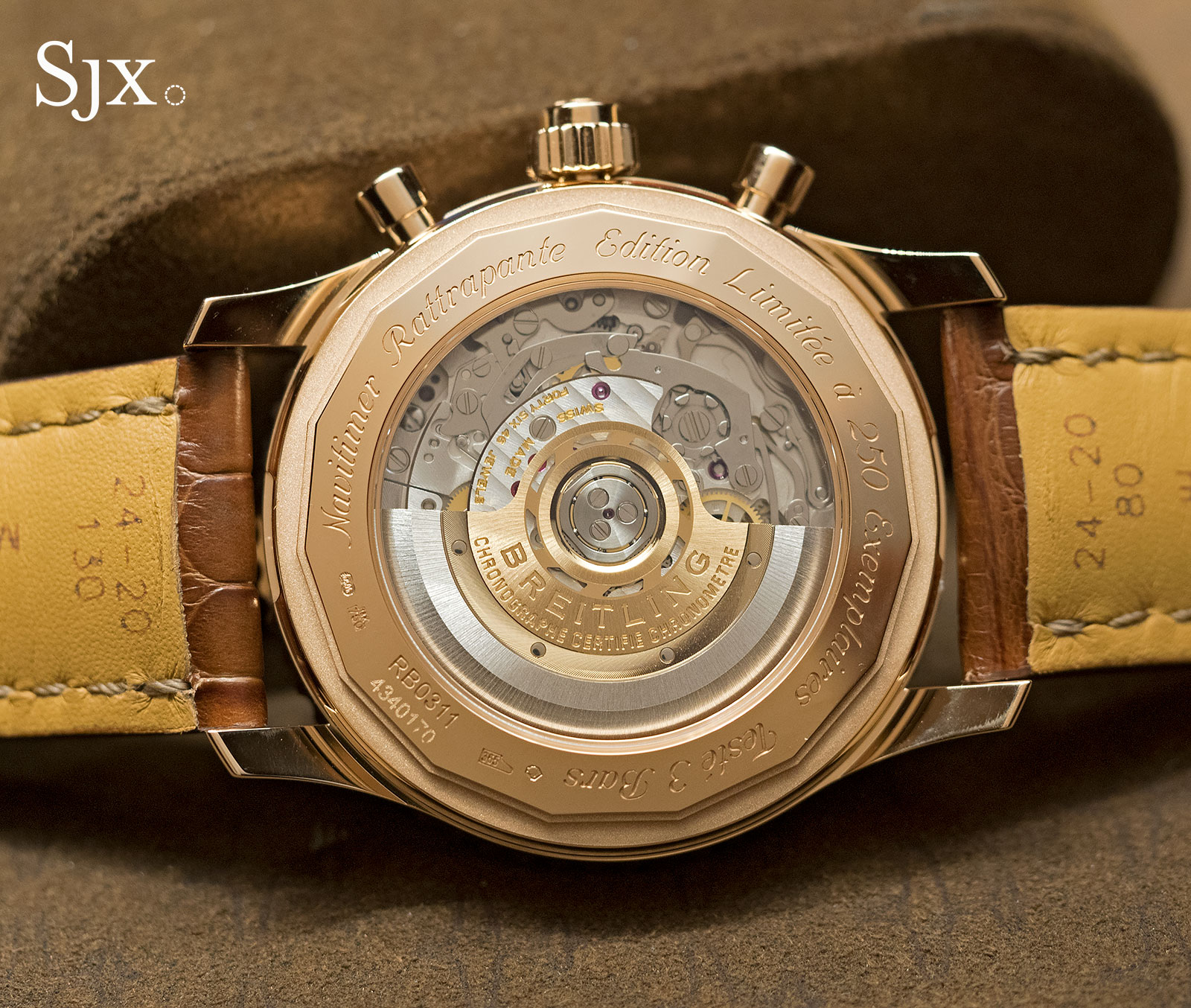
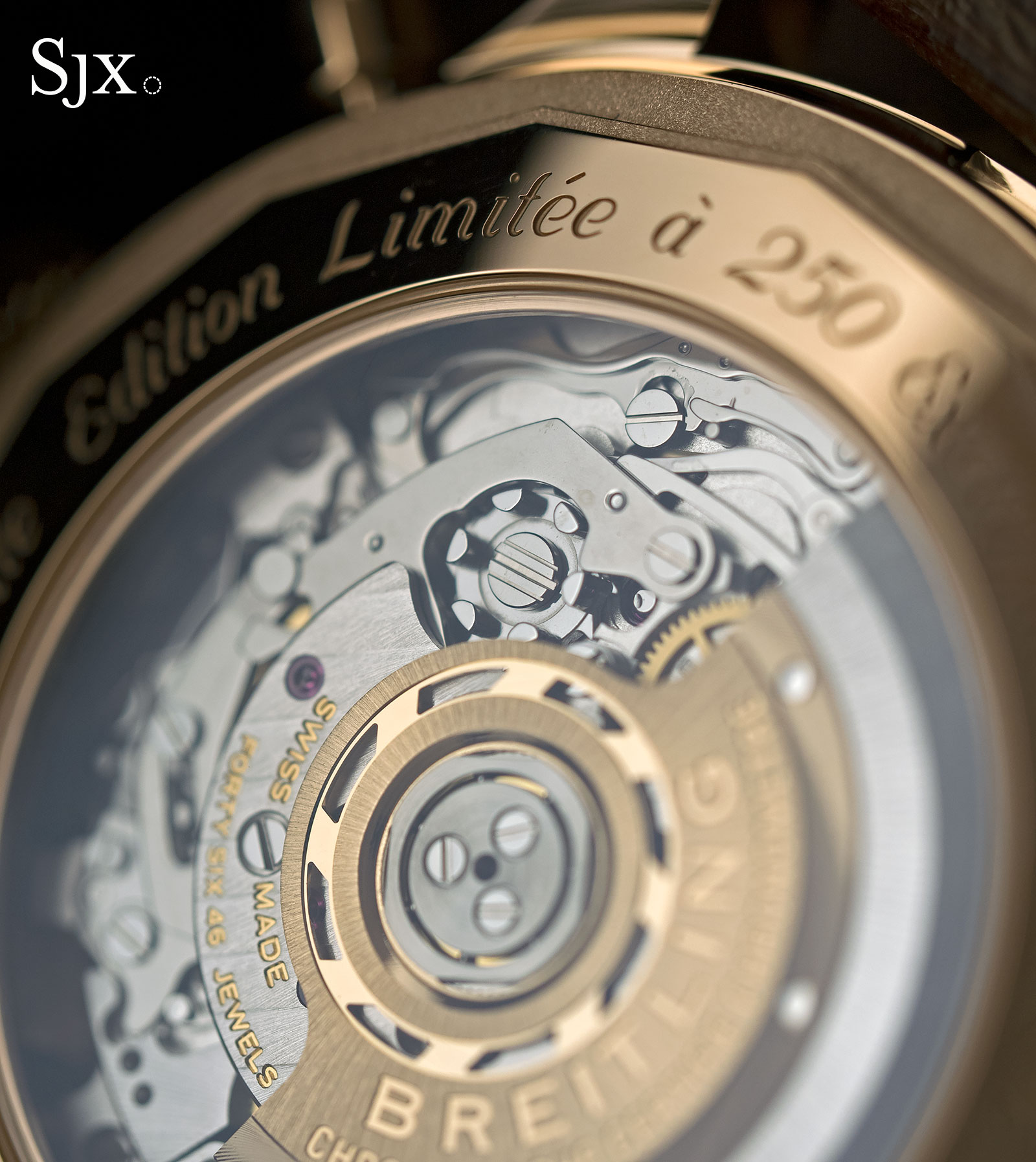
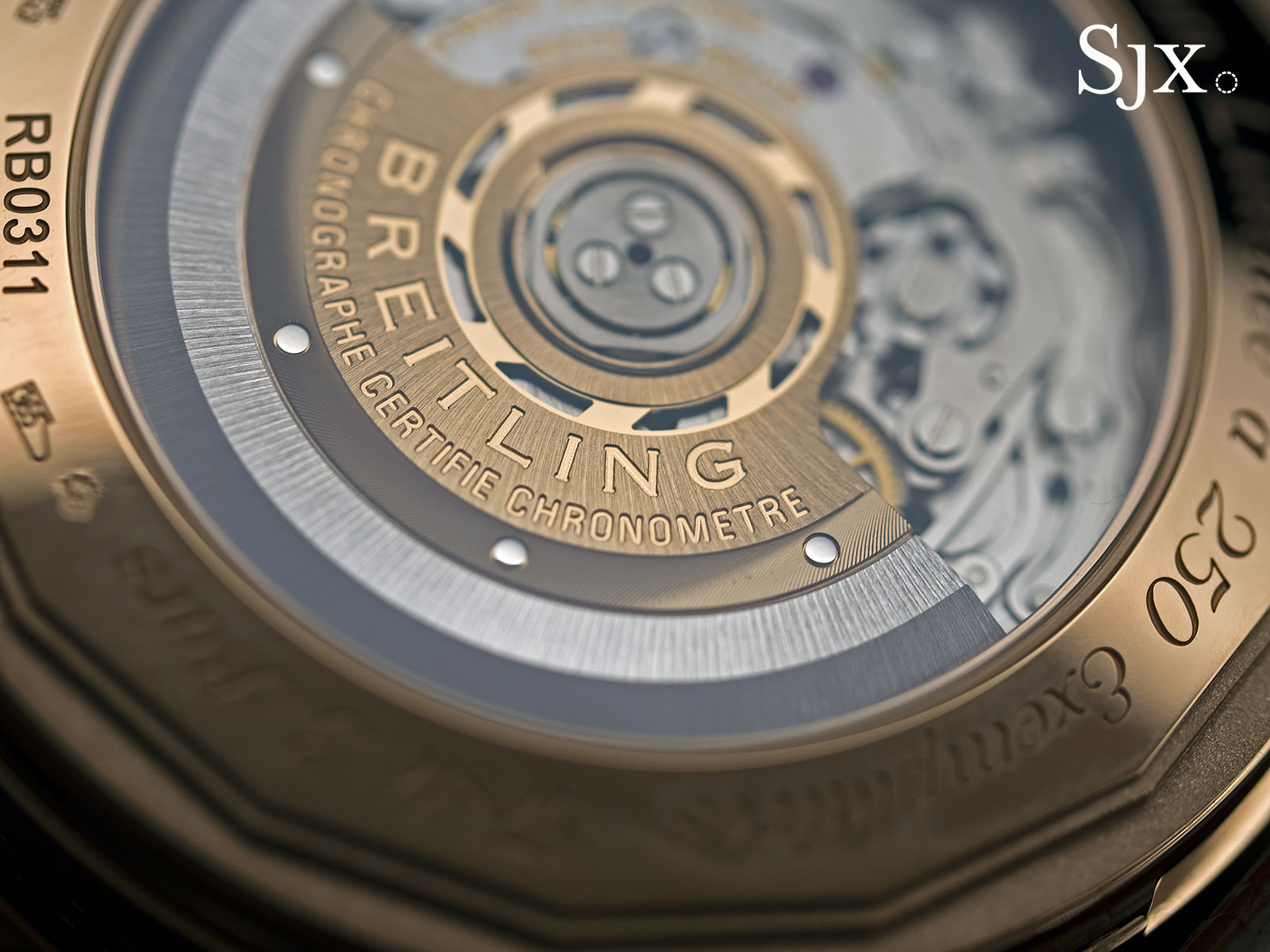
The Navitimer Rattrapante is available in steel or 18k red gold, the latter being a 250-piece limited edition. Both versions are fitted with a “Panamerican Bronze” dial that’s an appealingly shade of brown that has a radial brushed finish.

Breitling Navitimer Rattrapante red gold 8

It has imposing wrist presence and a beautifully finished dial with fine and tidy printing despite the complexity of the slide rule. But the 45mm case will probably be too big for a significant number of people.

While both versions have the same dial colour and design, the hour markers, hands and Breitling colour match the colour of the case metal.

Breitling Navitimer Rattrapante red gold 12

And the other difference between the two versions is the see-through sapphire back on the red gold limited edition, while the steel model has a solid back.

The Navitimer Rattrapante in steel

Breitling Navitimer Rattrapante split-seconds 2

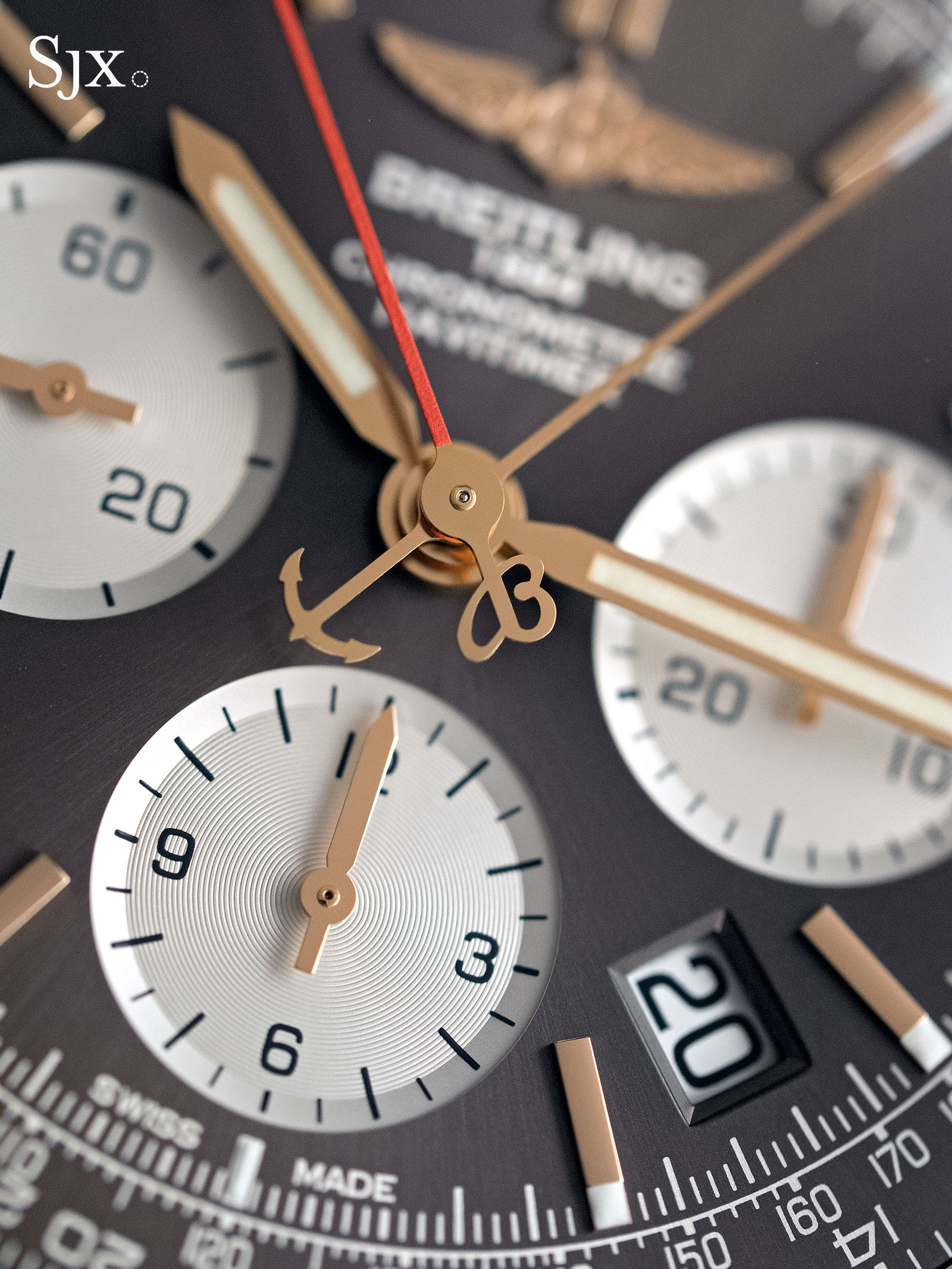
A notable but purely aesthetic feature of the watch are the different counterweights on the ends of each split-seconds hand. Each forms one half of the Breitling logo, a “B” and anchor respectively, combining to form the logo when the hands are reset to 12 o’clock.

Breitling Navitimer Rattrapante red gold 6


Though the design is classic, slide rule and all, the movement inside the Navitimer Rattrapante is new. Automatic and COSC-certified, the Breitling B03 movement inside the Navitimer Rattrapante is built on the Breitling 01 movement, the in-house calibre that Breitling also recently starting supplying to Tudor. It’s a solid movement with all the features expected of a modern chronograph, namely a column wheel and vertical clutch.

Breitling Navitimer Rattrapante red gold 1

Breitling Navitimer Rattrapante red gold 5

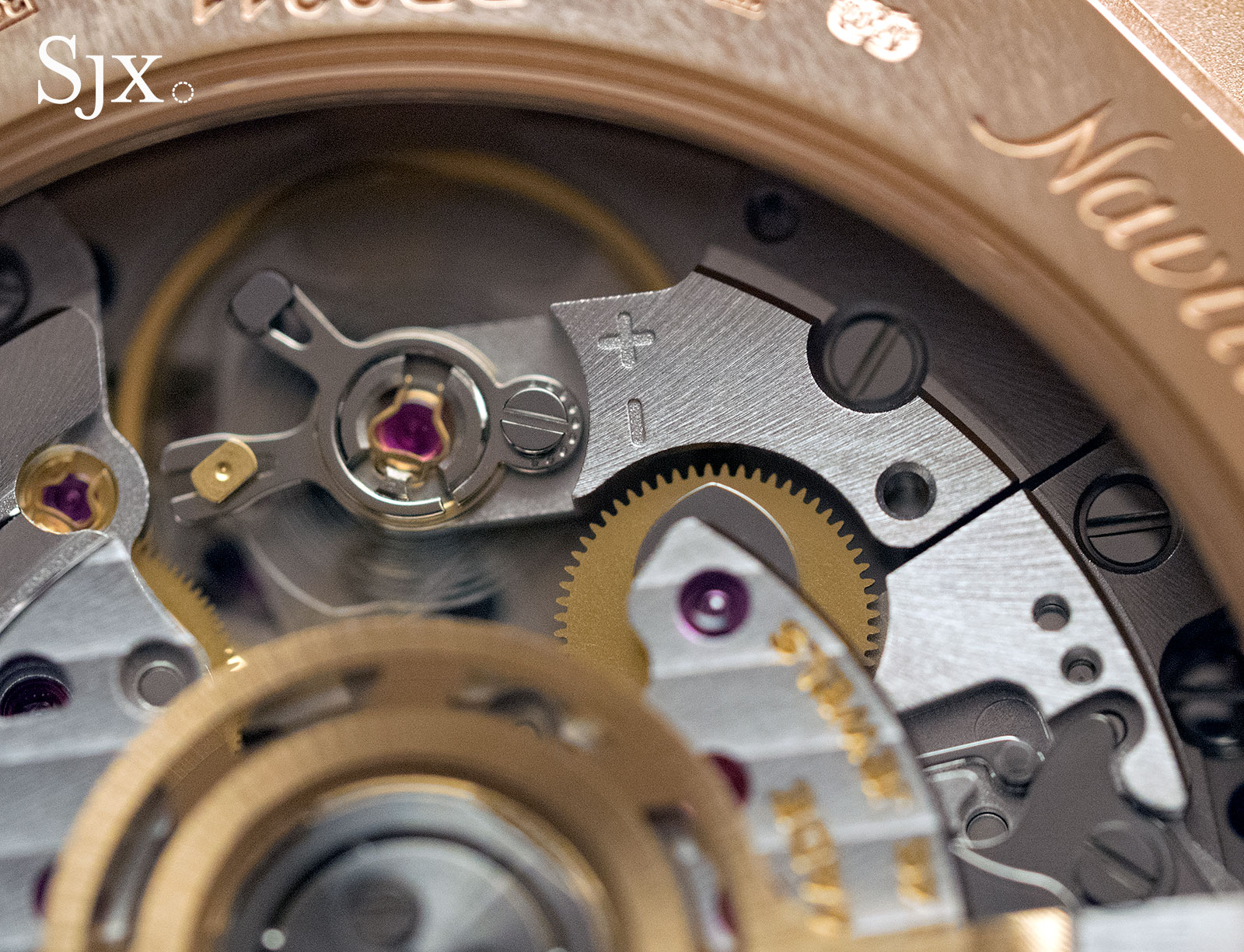
While the split-seconds function of the B03 operates like conventional split-seconds, it has been constructed in a condensed, ingenious manner to improve reliability and ease of servicing. The entire split-seconds mechanism comprises just 28 parts, reducing the grandness of what is traditionally a grand complication, but making it significantly more affordable.

To start with, the split-seconds mechanism is modular – even though the chronograph base movement is integrated – sitting in between the dial and main plate of the base movement. Consequently, when seen from the back, the Breitling B03 movement looks almost identical to the basic B01 movement that’s a pure chronograph.

Breitling Navitimer Rattrapante red gold 4

Breitling Navitimer Rattrapante red gold 3

Also novel is the clamp for the split-seconds wheel. In conventional split-seconds movement the wheel is stopped by brakes that resemble a pair of tongs. This is a complex and occasionally unreliable system, which Breitling replaced with a rubber o-ring that’s pressed against the wheel by a clamp when the split-seconds is stopped. Having been patented by Breitling, the o-ring mechanism results in more precise halting of the split-seconds.

The second patented feature inside the B03 movement is the isolator mechanism, which uses a simpler, stamped lever to replace the traditional pin. While different, the isolator mechanism performs the same function as it always has in a split-seconds: preventing drag on the timekeeping mechanism, and the resulting deterioration in timekeeping, when the split-seconds hand is stopped.

With the isolator in the split-seconds and the vertical clutch in the chronograph mechanism, the B03 movement preserves much of its 70-hour power reserve, even while the chronograph is running.

Breitling Navitimer Rattrapante red gold 11

The simplified split-seconds mechanism translates into a more affordable price, with the steel model priced at just over US$10,000, which is pretty good for an in-house split-seconds chronograph. That’s about 10% less than what IWC asks for its Portugieser Chronograph Rattrapante that has inside a cleverly modified Valjoux 7750.

Breitling Navitimer Rattrapante red gold 9


Price and availability 

The Navitimer Rattrapante in 18k red gold is limited to 250 pieces and priced at US$32,895 or S$48,190 for the version on a rubber strap with 18k red gold folding clasp. There are also less expensive red gold versions fitted to simpler straps and buckles, starting at approximately US$28,000 or S$39,000.

In stainless steel it’s part of the regular collection, starting at US$10,840 or S$15,240 on a leather strap with tang buckle. And on a steel bracelet it’ll cost US$11,840 or S$17,180.


Back to top.
You may also enjoy these.

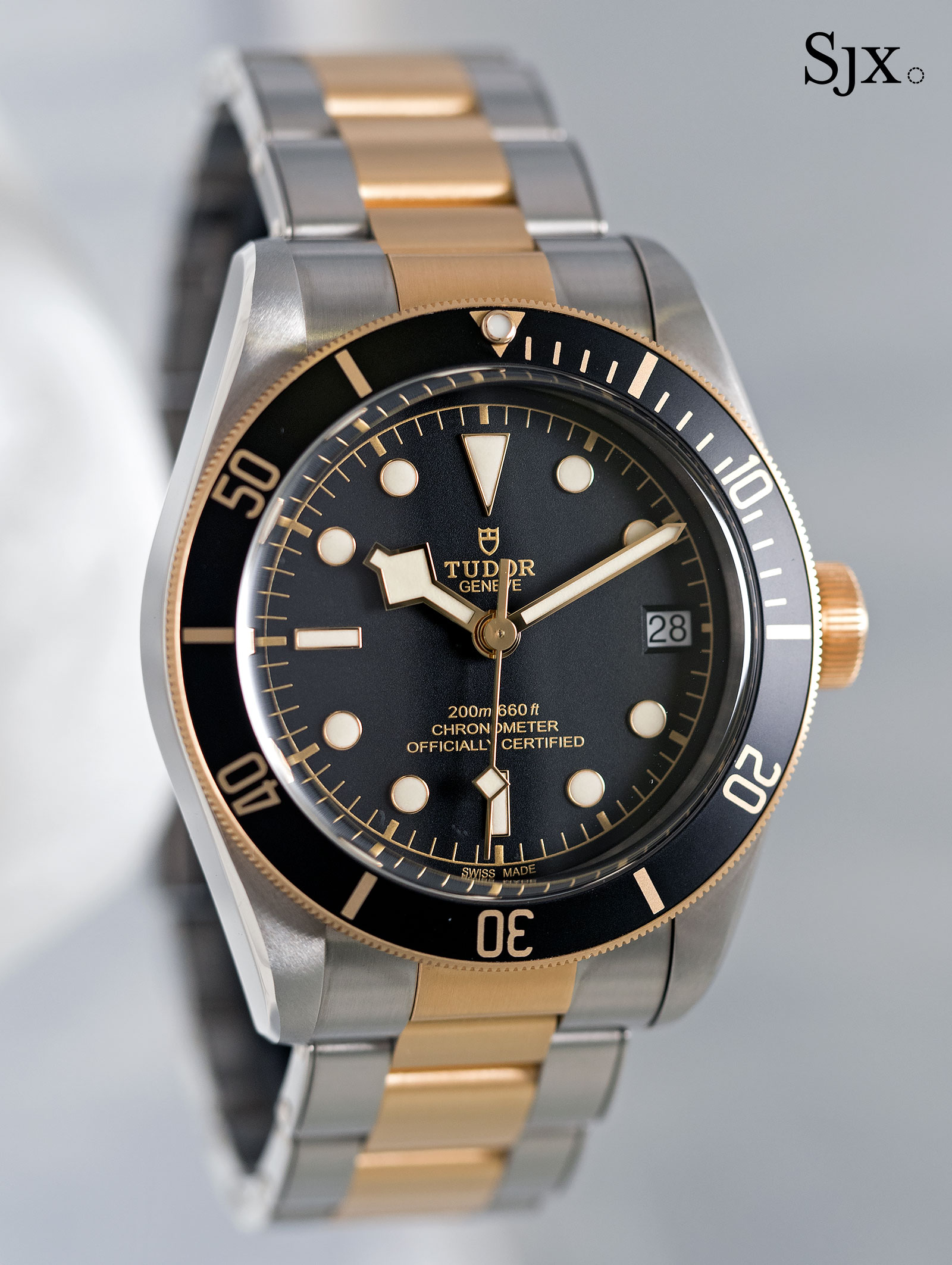
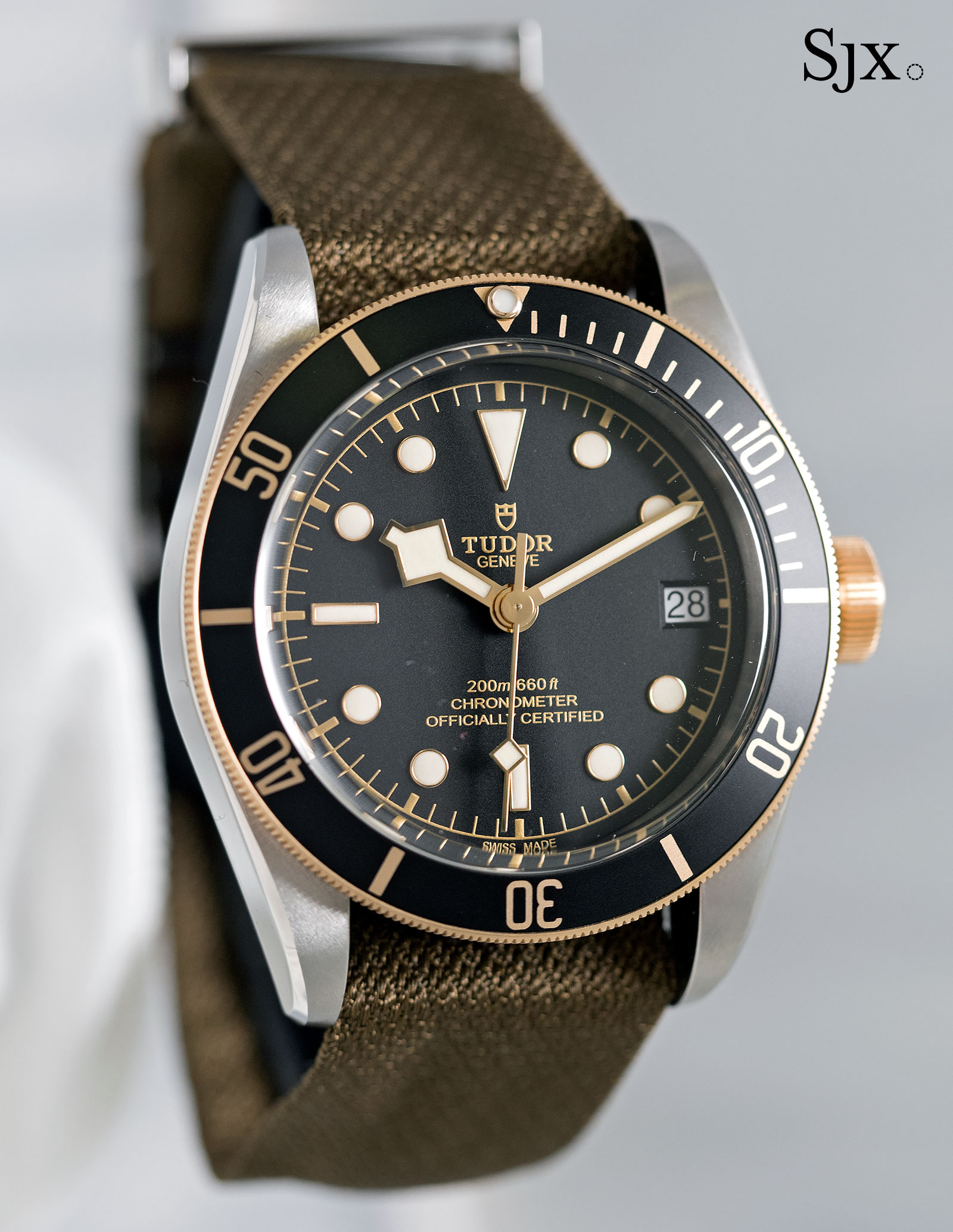
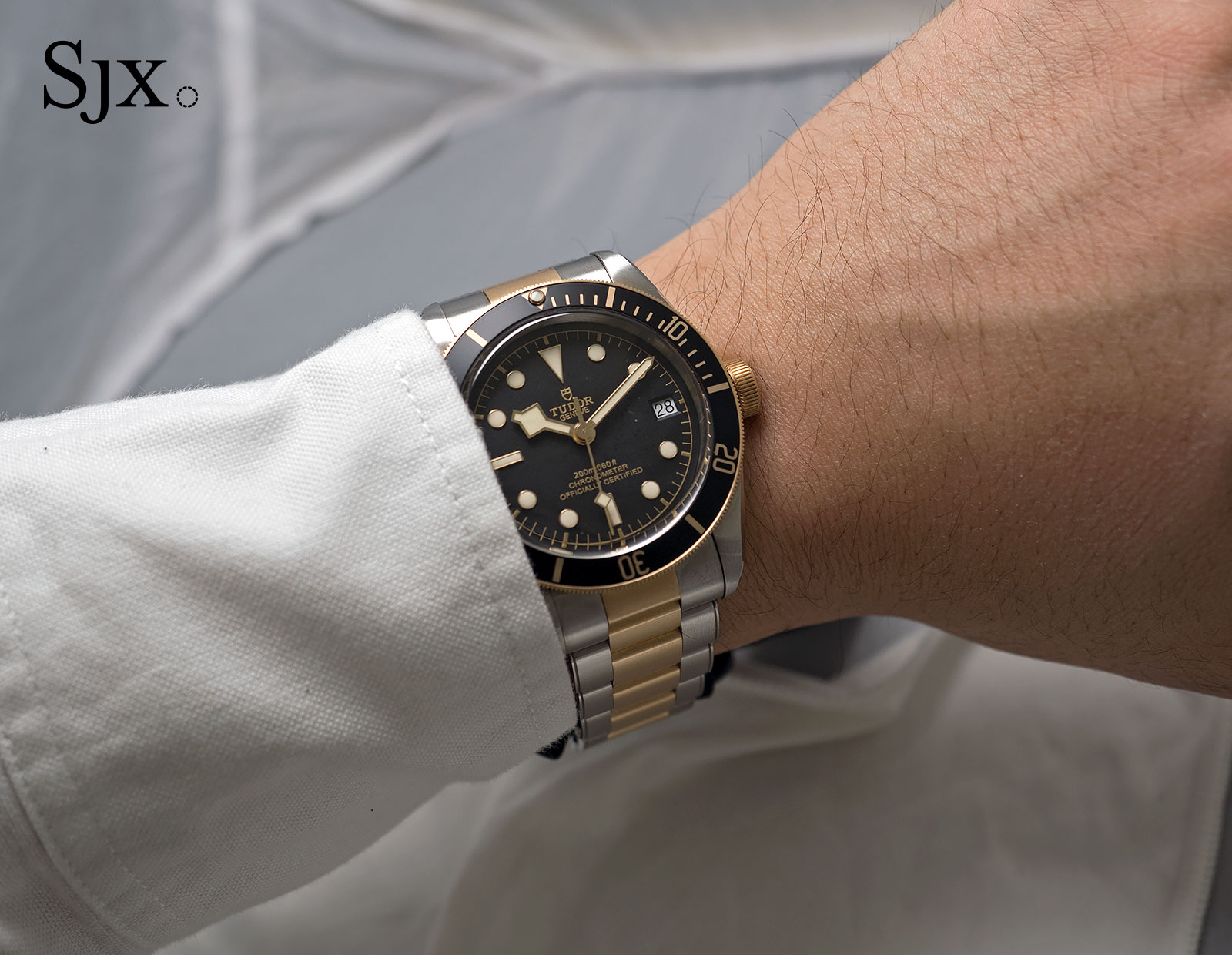
Hands-On with the Two-Tone Tudor Diver, the Black Bay S&G Ref. 79733N

Steel and 18k yellow gold give the Black Bay a more luxe look that's still restrained.

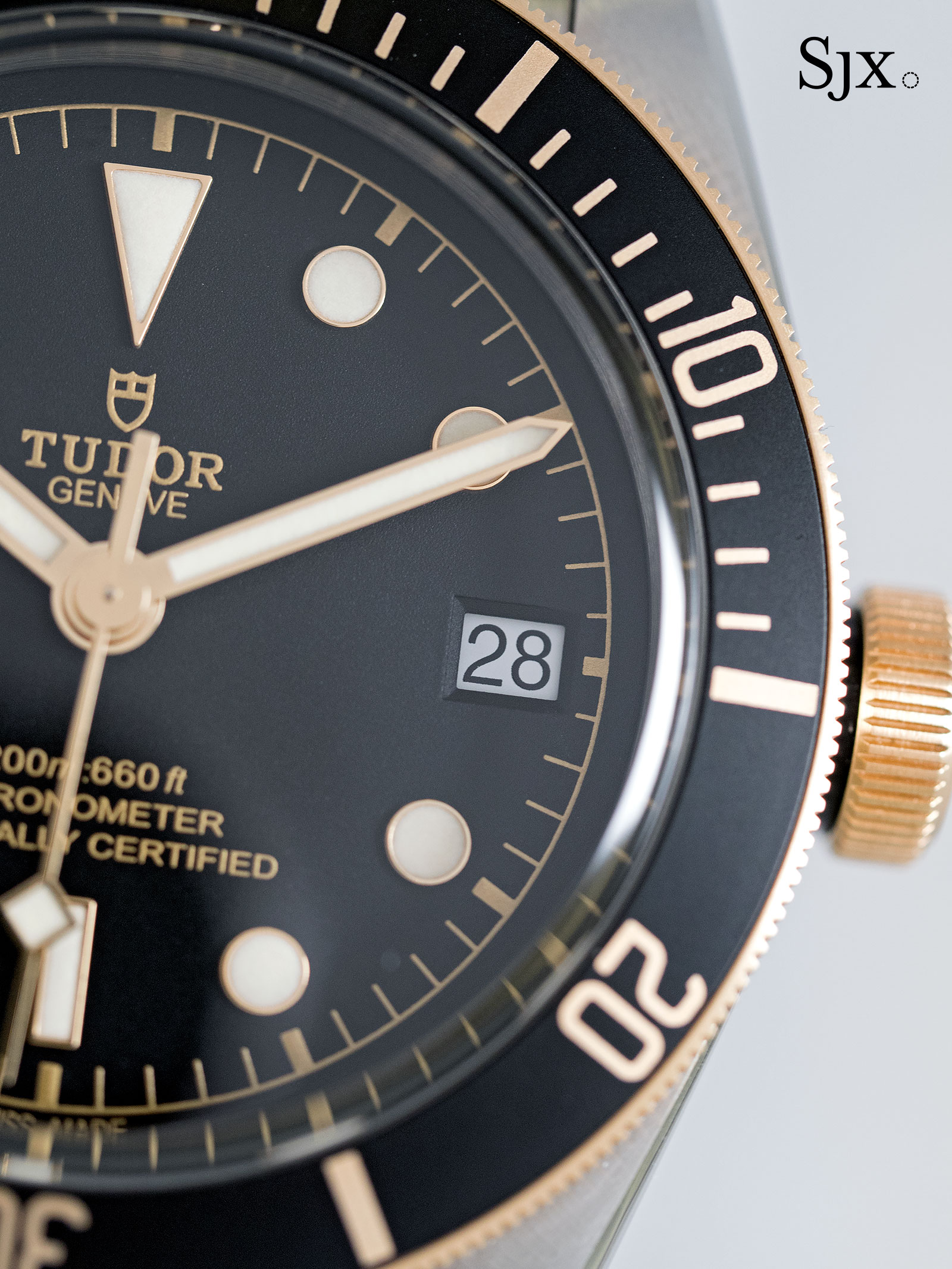
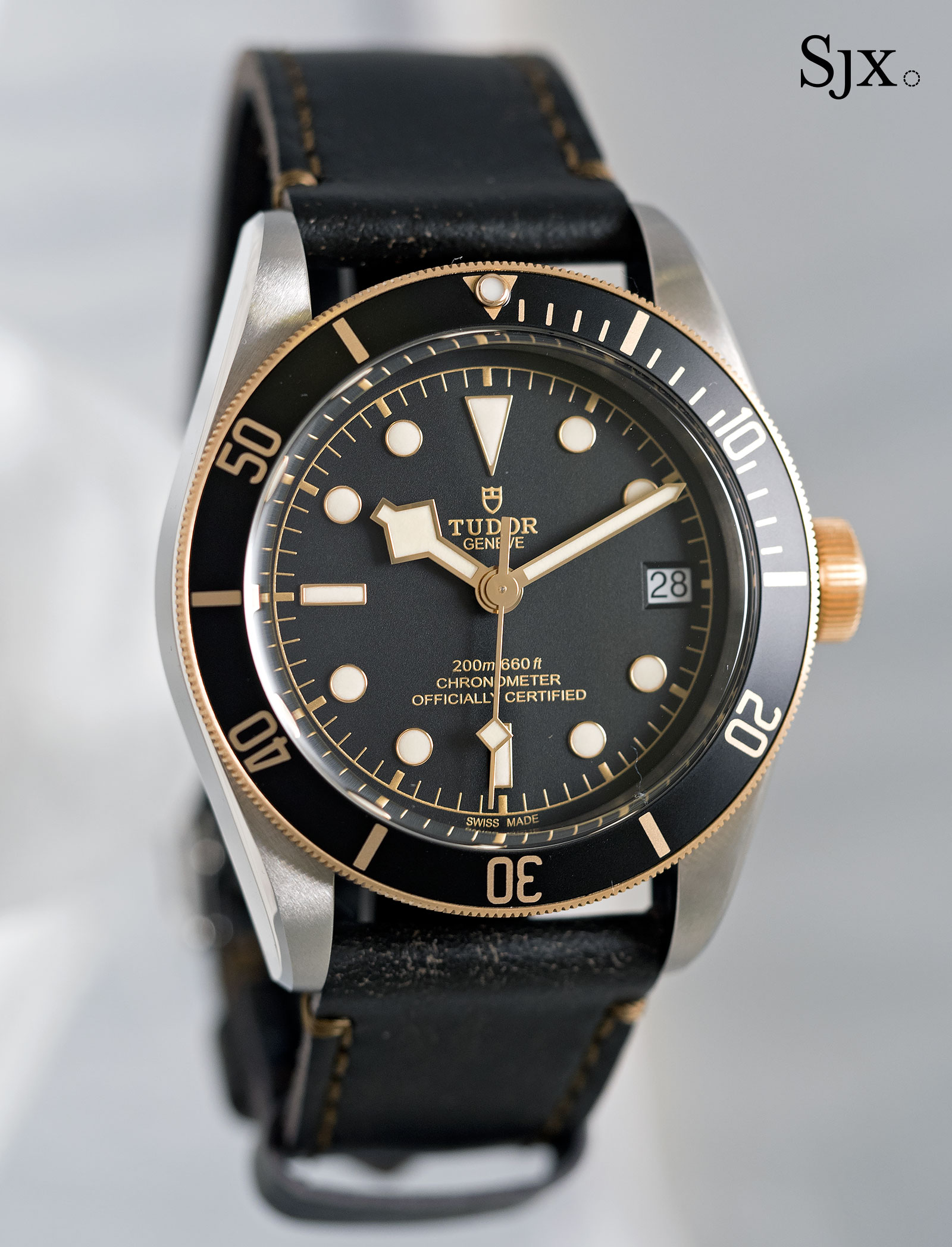
Neither entirely steel nor gold, but a blend of the metals, two-tone sports watches are peculiar but nonetheless popular. So the Tudor Black Bay S&G – short for “steel and gold” – is a natural extension to the line of bestselling vintage-inspired dive watches.

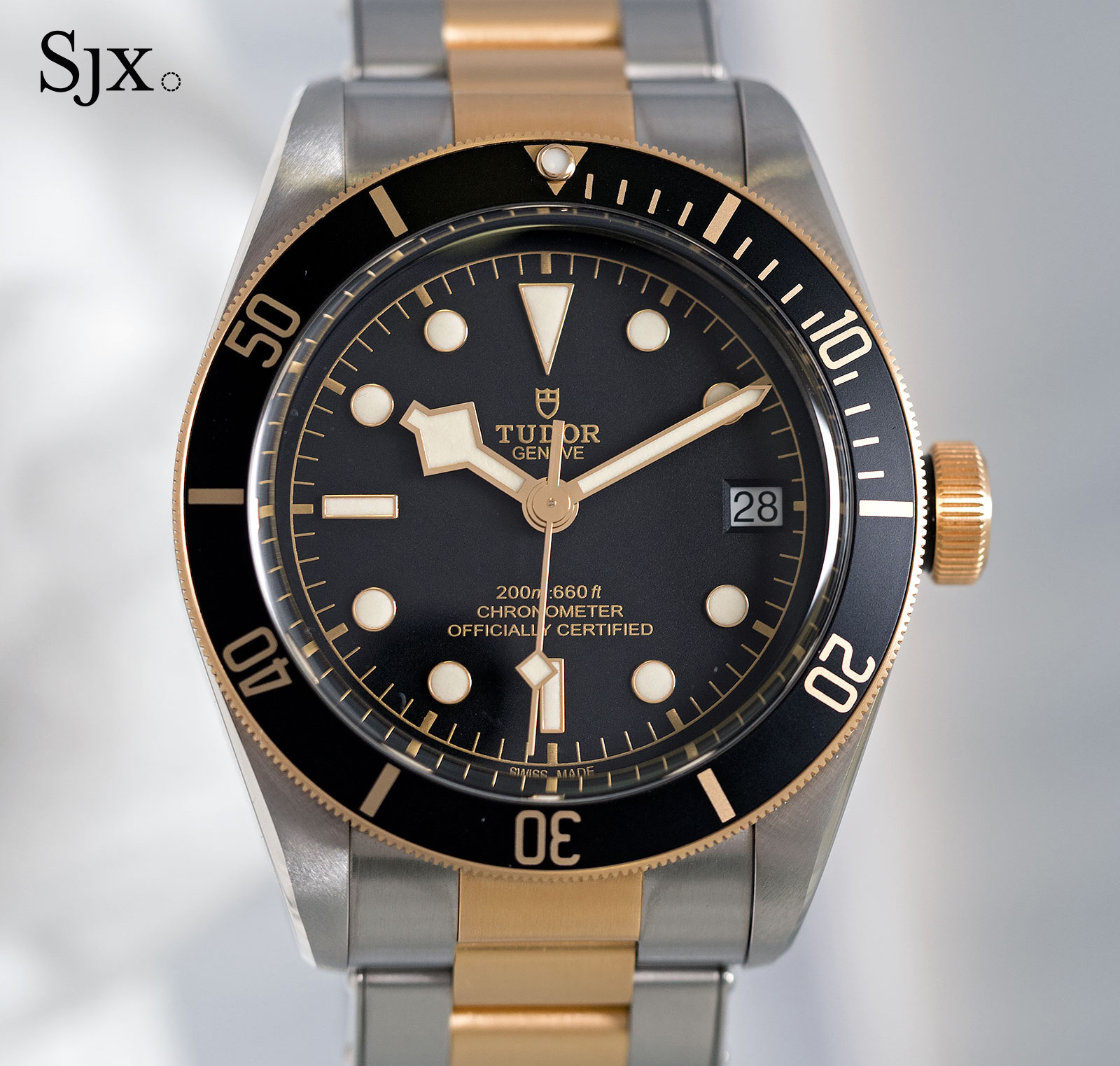
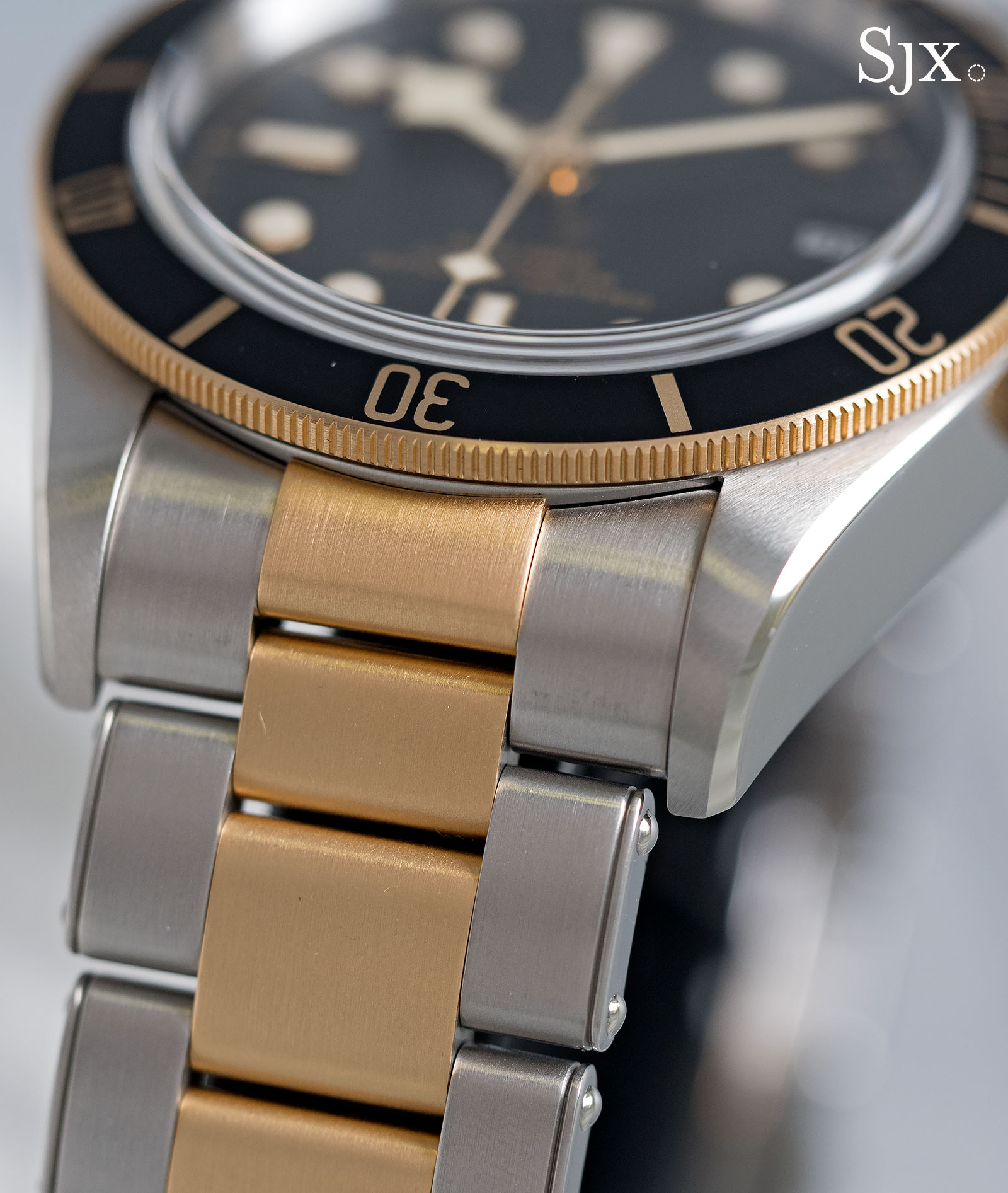
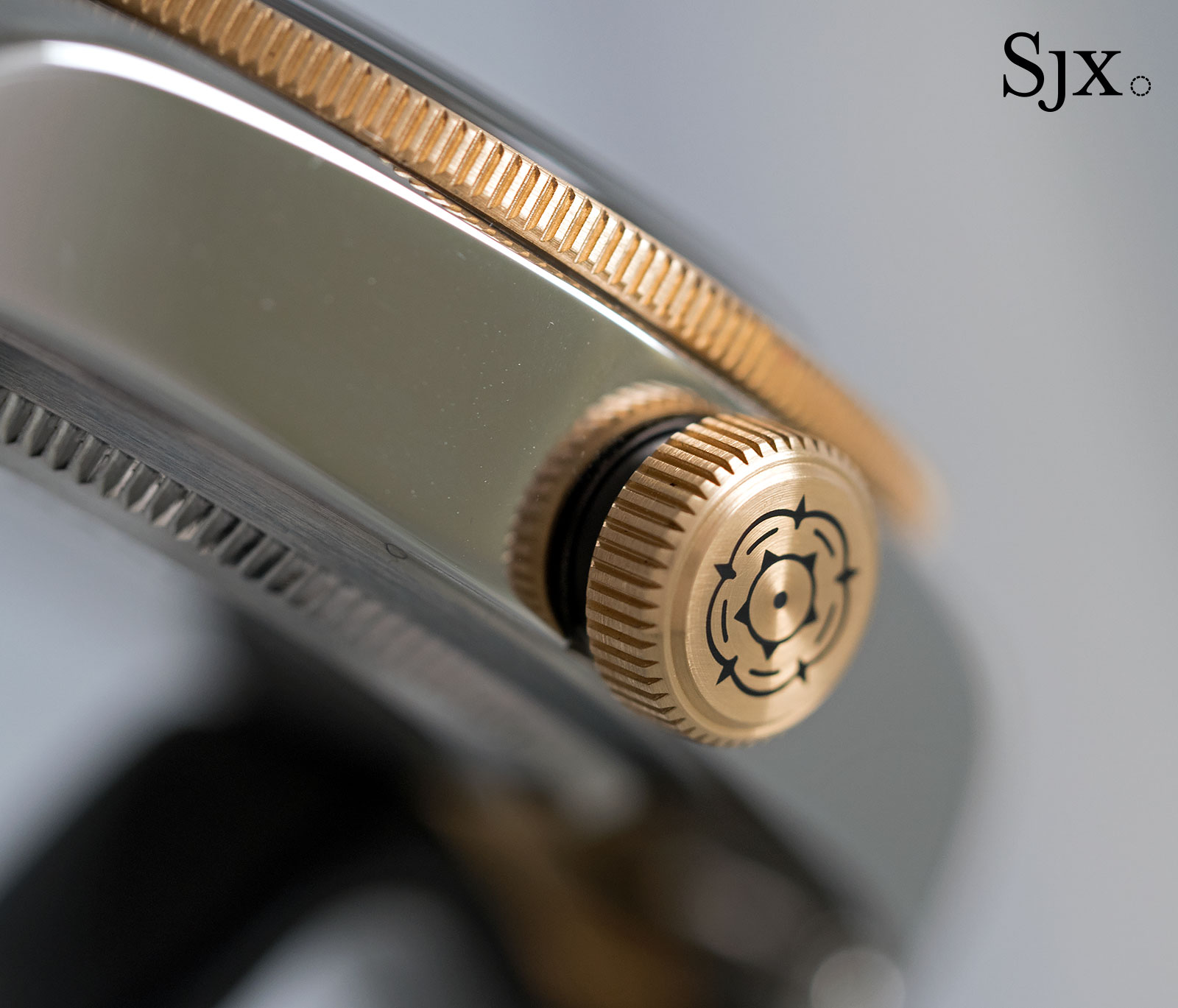
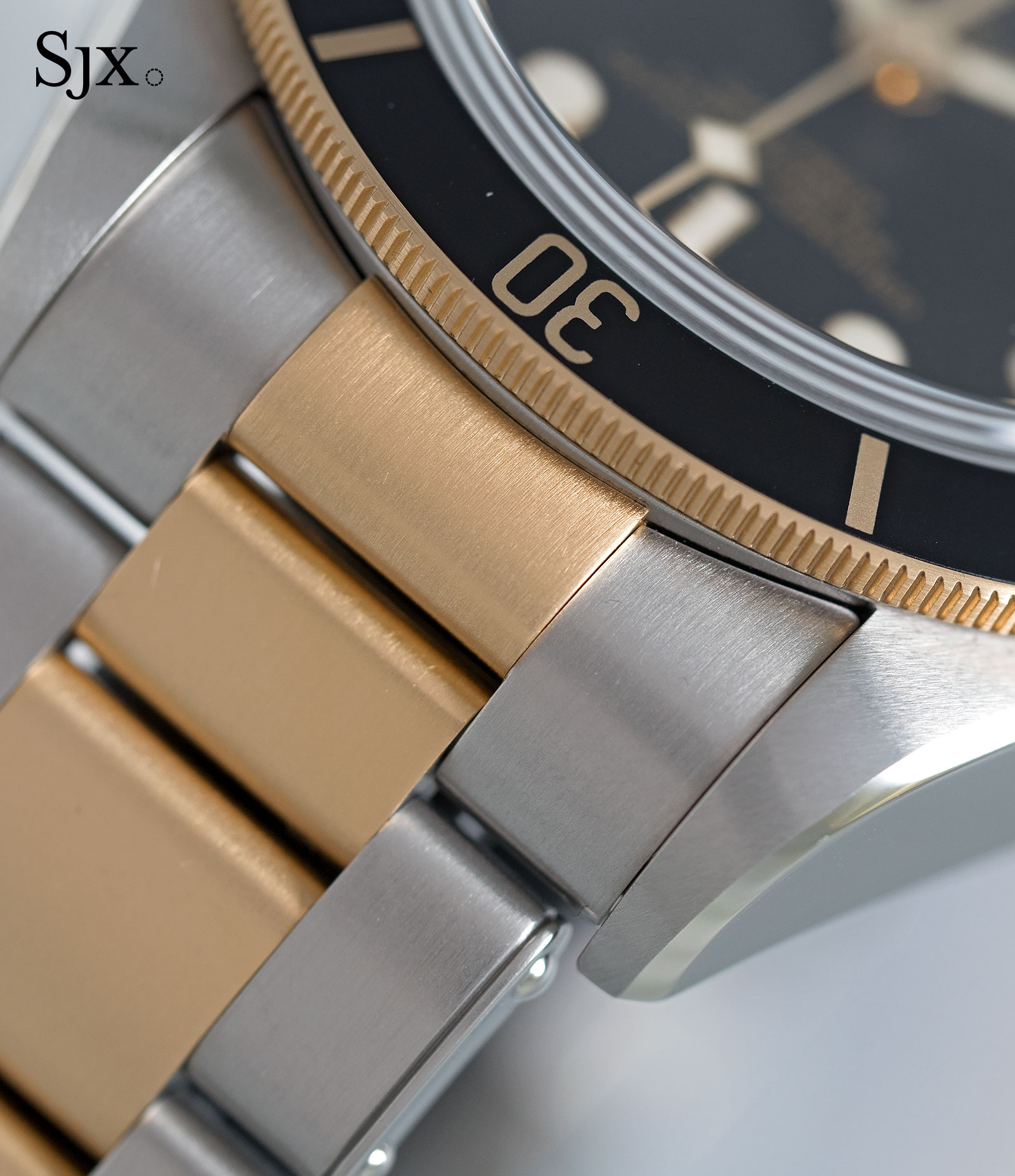
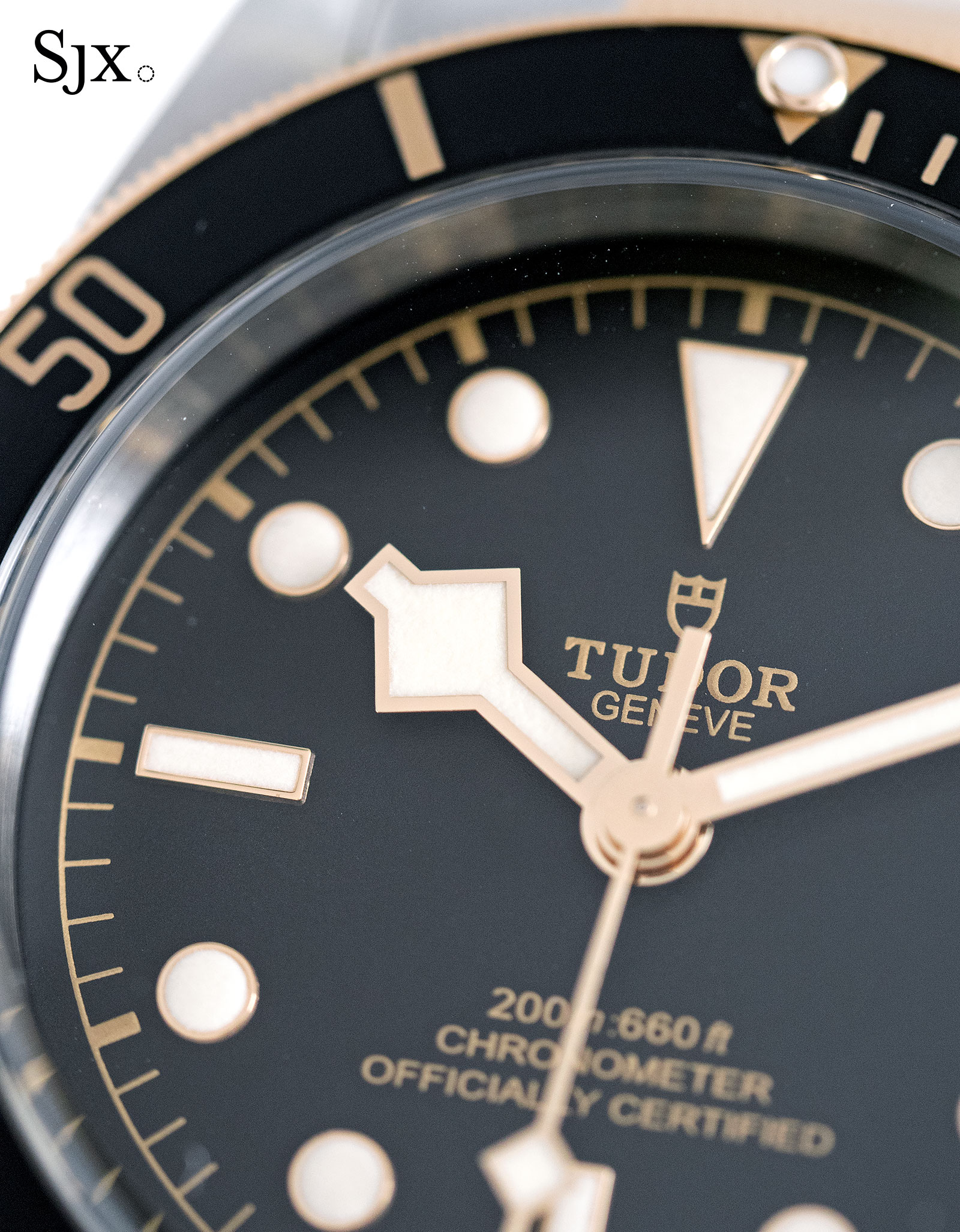
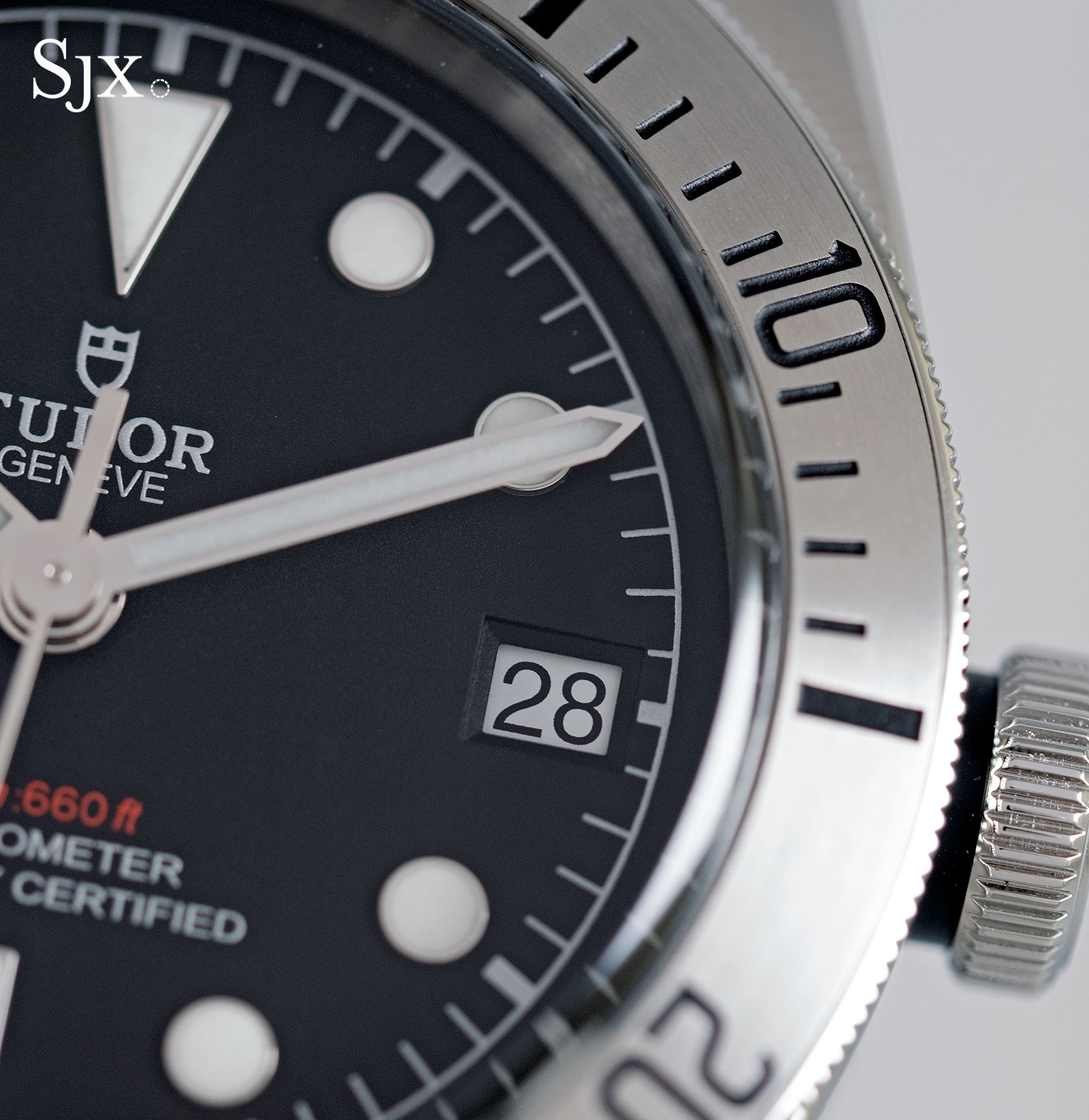
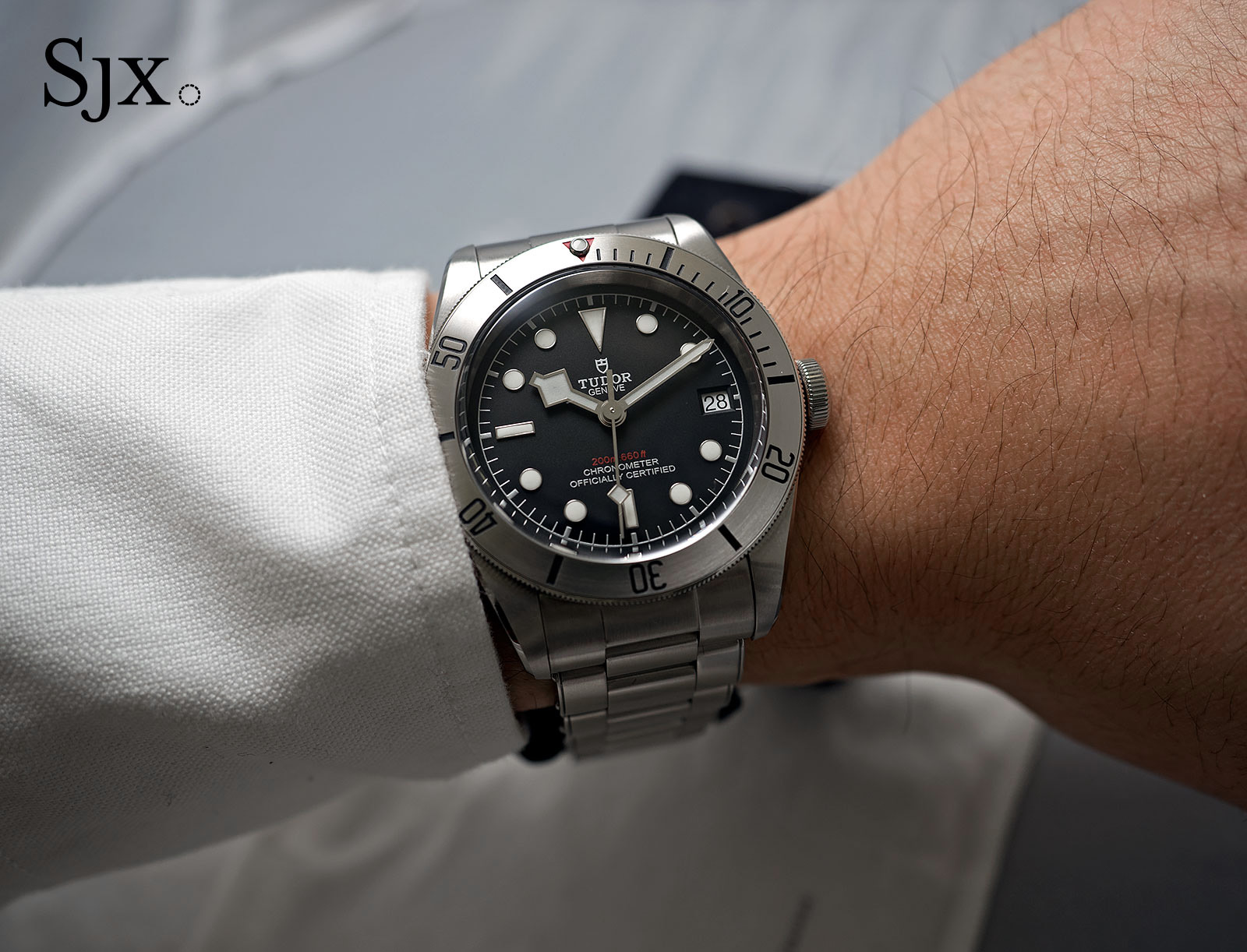
As steel and gold watches go Tudor did a good job with the Black Bay S&G, mainly by dialling back the gold quotient. Though the gold bits are the same as on other two-tone watches, namely the bezel, crown and centre links of the bracelet, they have a brushed finish, instead of the polished surface typical for gold (the two-tone Rolex Submariner, for instance, has polished centre links). This gives the gold parts on the  Black Bay S&G a subdued, even slightly worn look.

Tudor Black Bay S&G 79733N-2

Tudor Black Bay S&G 79733N-5

The bezel and end links of the bracelet are solid 18k gold, while the bracelet centre links and crown are gold-capped. That means they are steel parts covered with a layer of gold that’s bonded to the base with heat and pressure, creating a much thicker layer than electroplating.

Tudor Black Bay S&G 79733N-7

Tudor Black Bay S&G 79733N-6

Besides the two-tone look, the other notable feature of the Black Bay S&G is the date at three o’clock (a feature also shared by the newly launched Black Bay Steel). It’s a practical feature that does not look out of place, since the new Black Bay looks and feels like a modern watch, rather than a retro remake.

Tudor Black Bay S&G 79733N-8

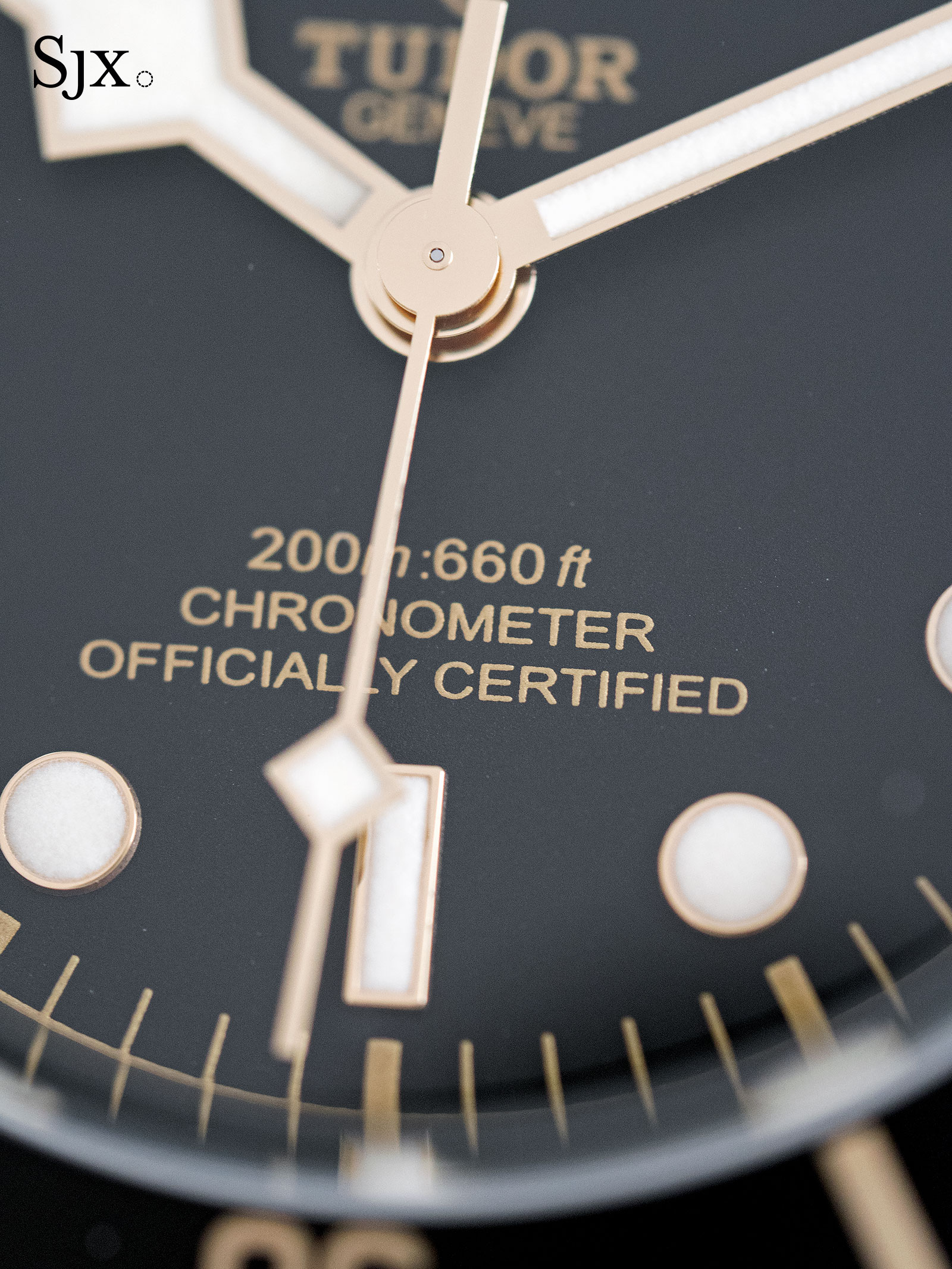
The rest of the watch is similar to the all-steel Black Bay watches. The dial is black with a grained finish and gilt print, matched with snowflake hands.

Tudor Black Bay S&G 79733N-4

Tudor Black Bay S&G 79733N-3

The steel case is 41mm in diameter and rated to 200m. And inside is the COSC-certified MT5612, a calibre from the same family of movements that power most of the Black Bay range.

It is automatic with a 70-hour power reserve, and fitted with a silicon hairspring. More unusually, the calibre has a date function that can be set at any time, even around midnight.

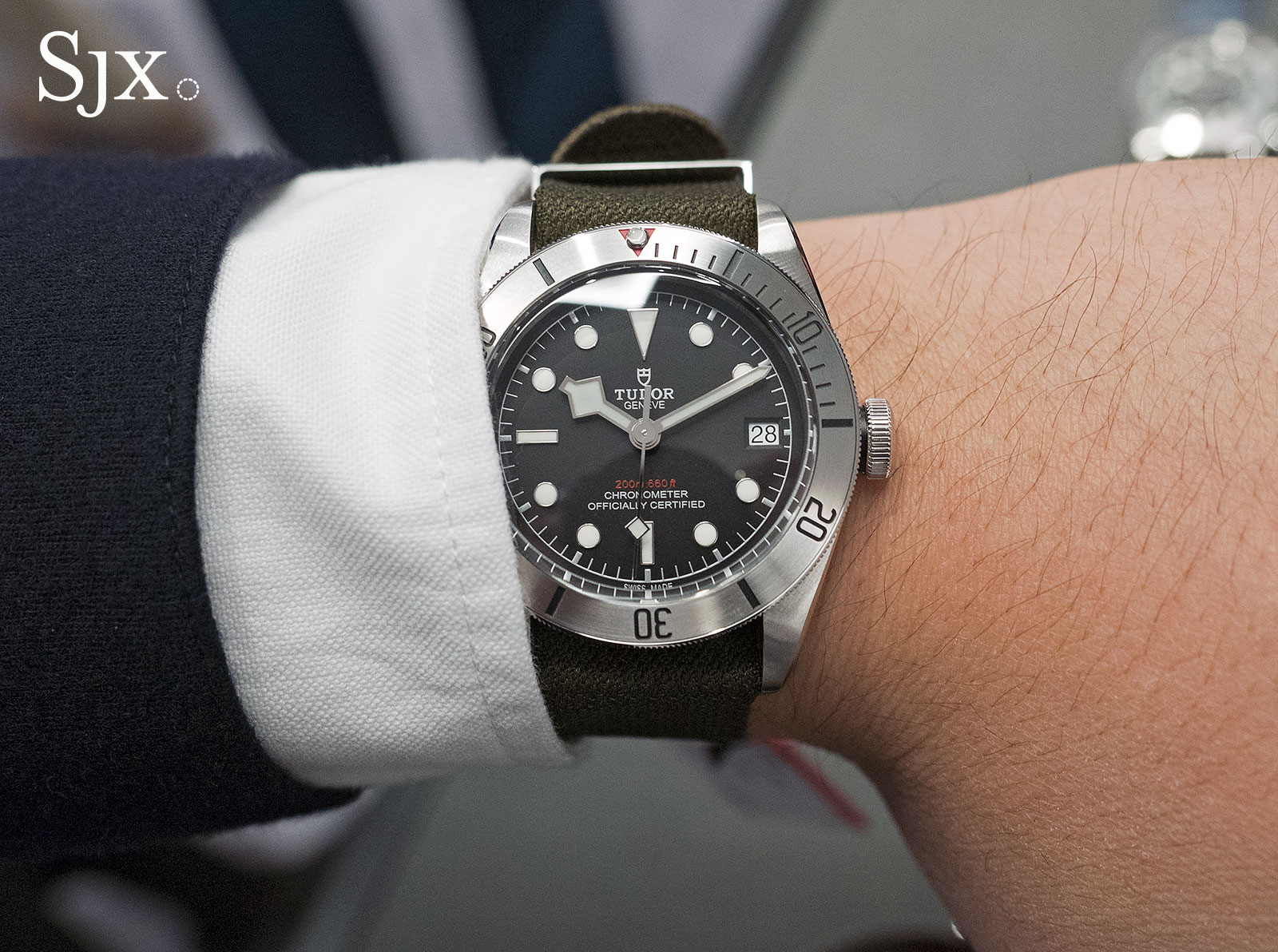
The Black Bay S&G is available with a matching two-tone bracelet or a leather strap. Both versions are delivered with an olive green NATO-style strap. On both the leather and fabric straps the tw0-tone look is less apparent, giving it a more vintage feel.

Tudor Black Bay S&G 79733N-10

Tudor Black Bay S&G 79733N-9

Price and availability

The Heritage Black Bay S&G (ref. 79733N) will be available starting May 2017, priced at SFr4750 on a bracelet and SFr3600 on the leather strap.

The significant disparity between the two version is due to the 18k gold components of the bracelet.

Tudor Black Bay S&G 79733N-11


Back to top.

You may also enjoy these.

A Look at Perhaps the Most Expensive Rolex Ever, Once Owned by the Last Emperor of Vietnam

The ref. 6062 "Bao Dai" that will soon go under the hammer at Phillips.

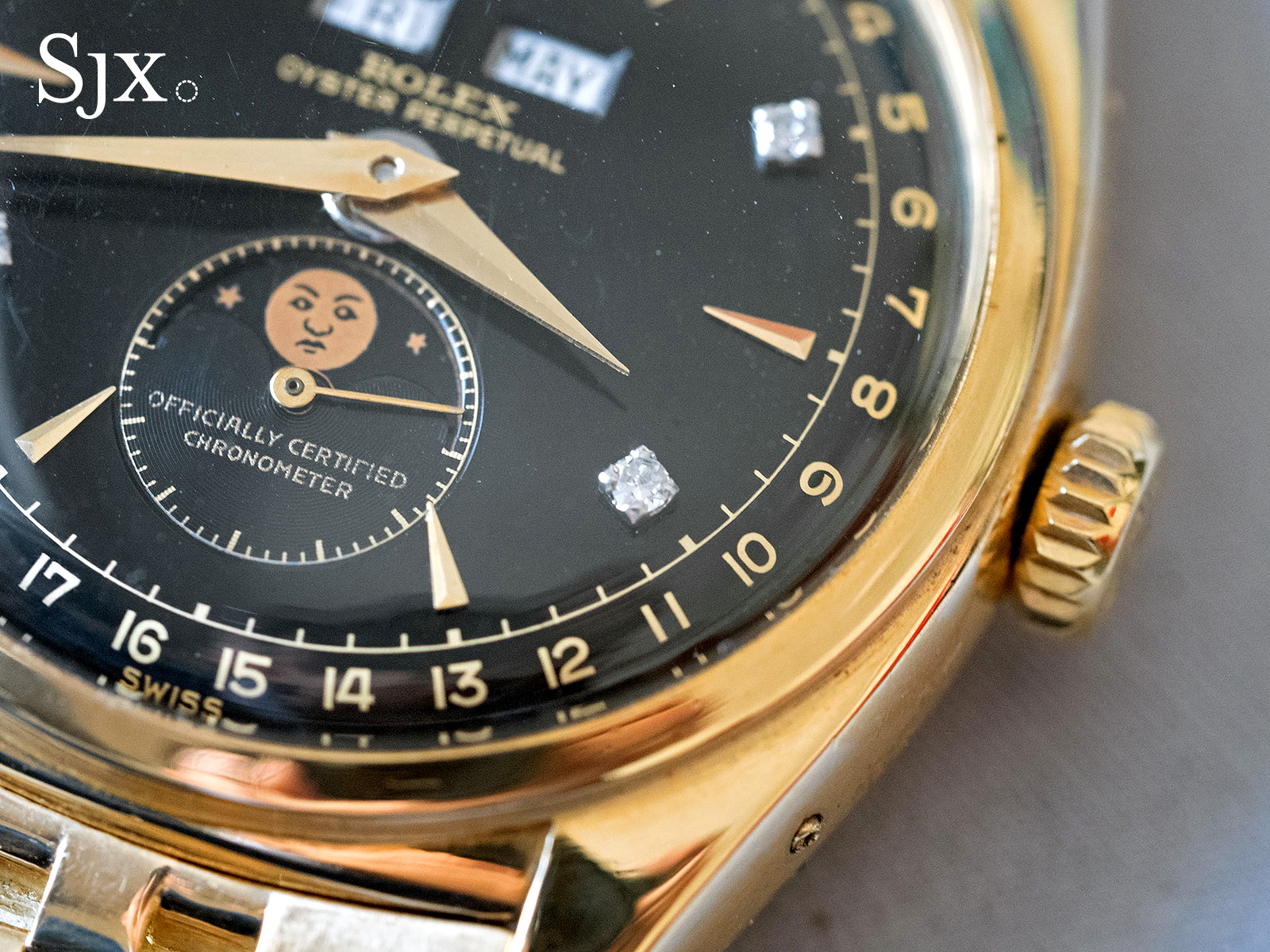
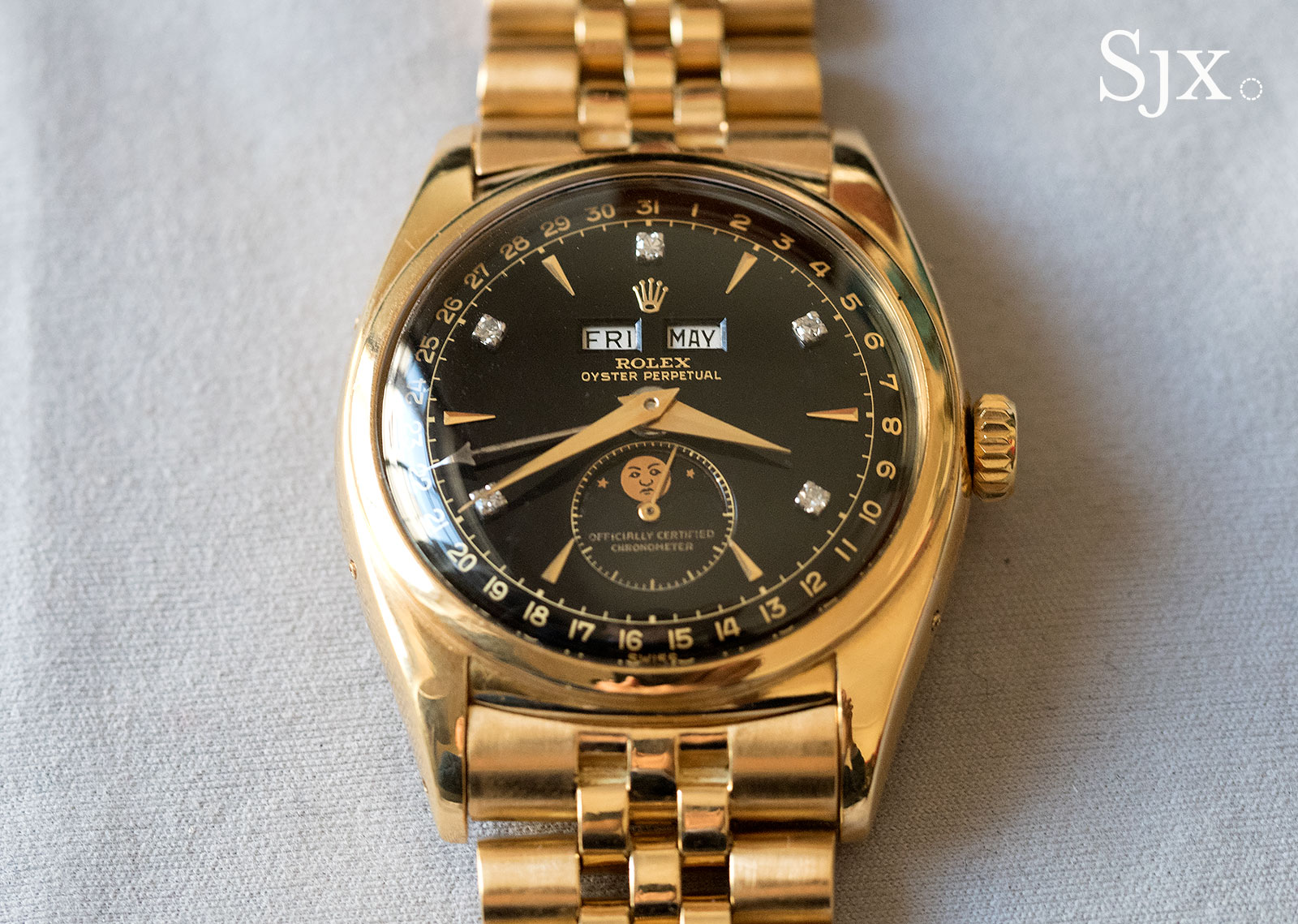
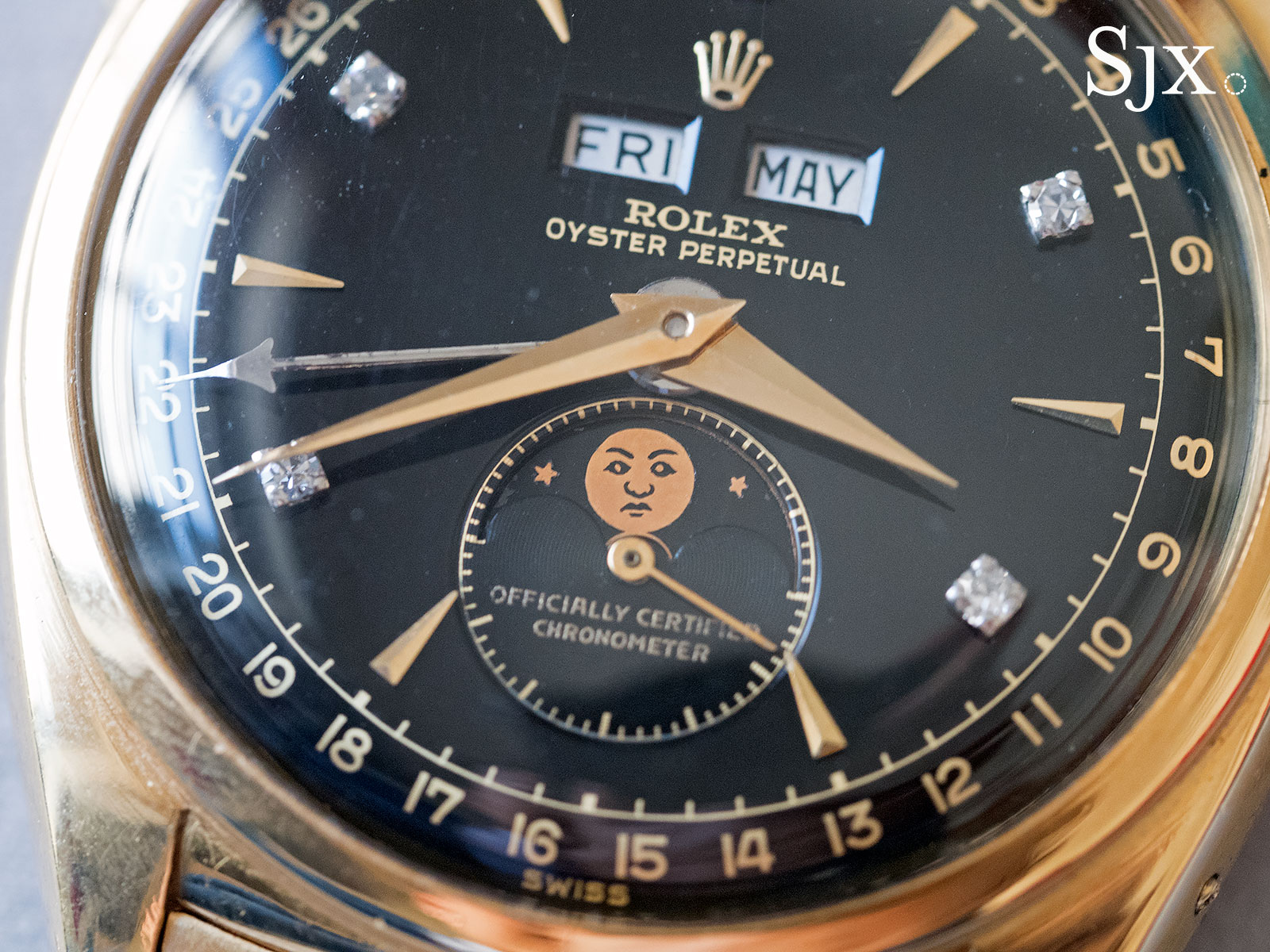
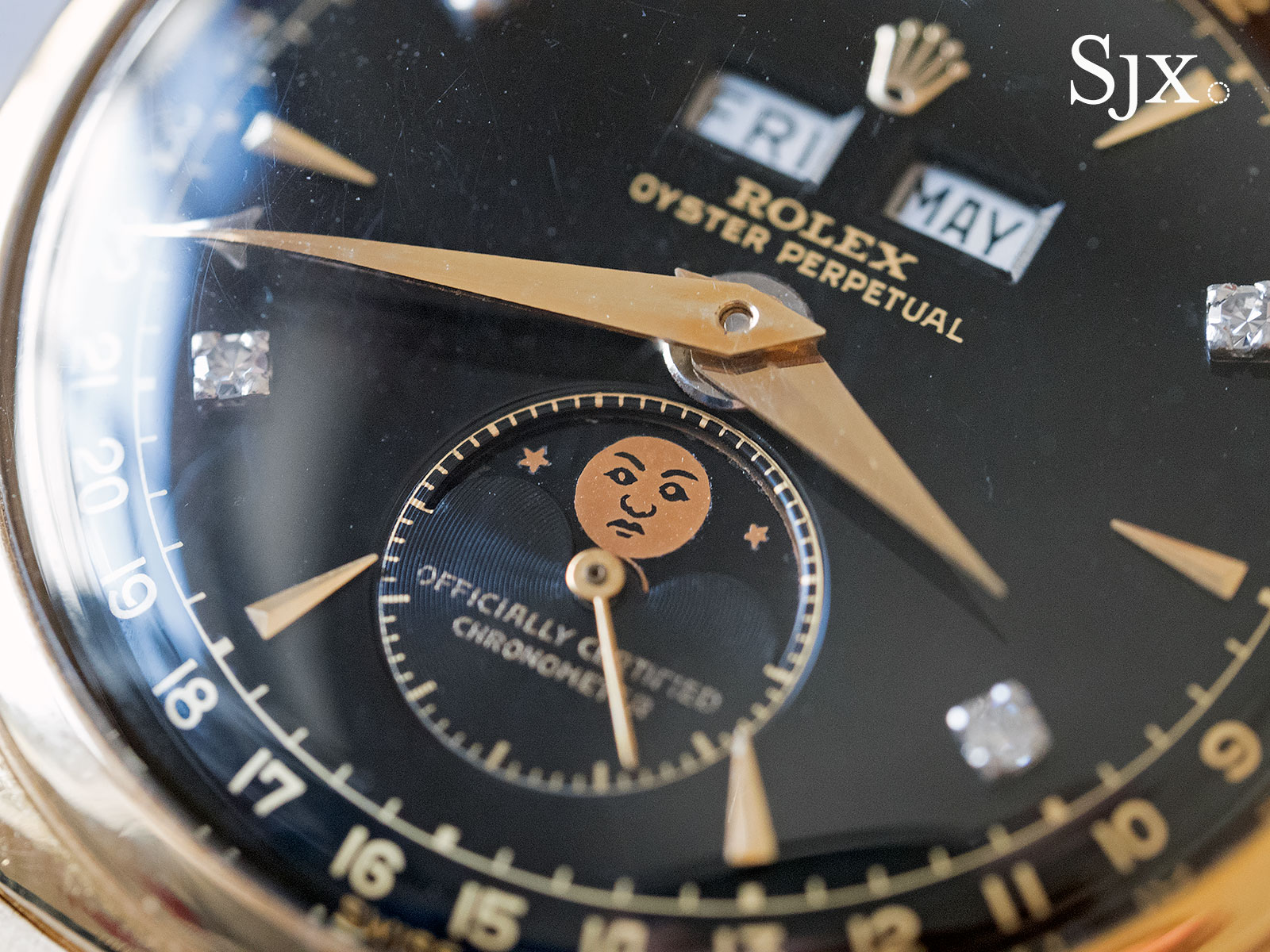
Reigning from 1926 to 1955, Bảo Đại was the last Emperor of Vietnam. While not the greatest success as sovereign rulers go, Bao Dai was a man of great taste who owned many precious things, ranging from a custom-bodied Ferrari 375 MM Spyder to this very Rolex ref. 6062.

Slated to be sold by auctioneers Phillips at their Geneva watch auction on May 13 and 14, 2017, the ref. 6062 “Bao Dai” carries an estimate of between SFr1.5m to SFr3m. With Rolex having just introduced its first moon phase watch since the ref. 6062 was in production, the timing of the sale is apt.

Rolex 6062 Bao Dai 1


Aurel Bacs, the impresario now running Phillips’ watch department, was also the one who procured the watch from Bao Dai’s son when it first came to market in 2002, selling for SFr370,000 at what was then Phillips de Pury. According to Bacs, who got the backstory from the son, the Emperor purchased the ref. 6062 on a whim in the spring of 1954 in Geneva.

As the story goes, Bao Dai was in Geneva for peace talks over the conflicts in Indochina, growing increasingly fatigued during the meetings inside the Hotel des Bergues, now the Four Seasons. Excusing himself to go out for some air, the Emperor crossed the road and entered Philippe Beguin, a now defunct watch retailer.

Announcing himself as the 13th Emperor of Vietnam, Bao Dai asked for the most expensive Rolex watch available. The selection in the  store was unfortunately inadequate for the Imperial client, so the store’s proprietor called Rolex headquarters to plead for something fancier.

Fortunately Rolex had in stock a ref. 6062, in 18k gold with a gold bracelet and diamond-set dial no less, which was promptly despatched to the shop. According to Bacs, the watch at the time cost about SFr4000, almost the same as a Patek Philippe perpetual calendar.

Rolex 6062 Bao Dai 2

Bao Dai wore the Rolex frequently for the rest of his life, leaving it to his son when he passed away. After selling at the 2002 auction, the watch disappeared into a private collection, emerging only now for the second time ever.


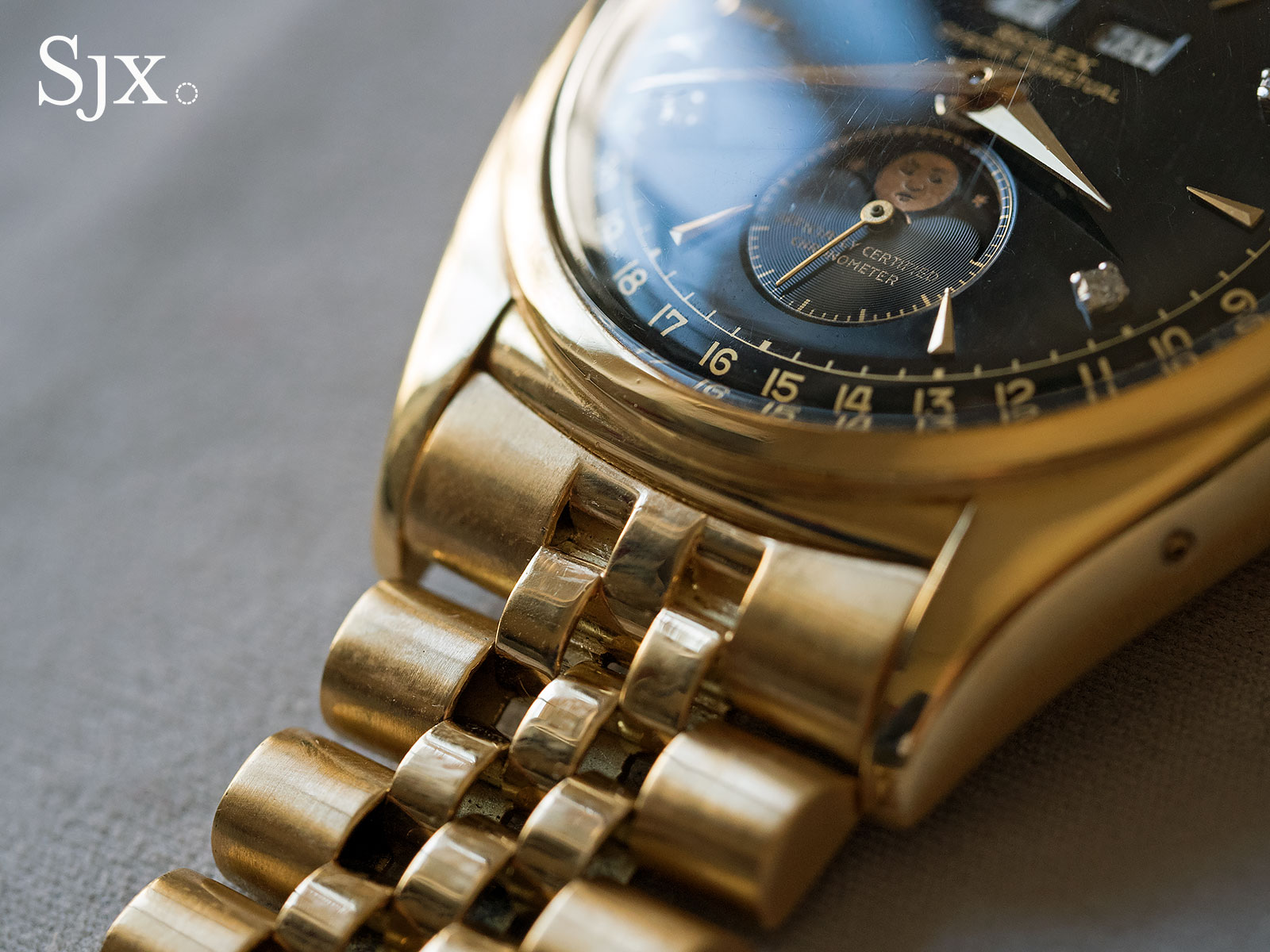
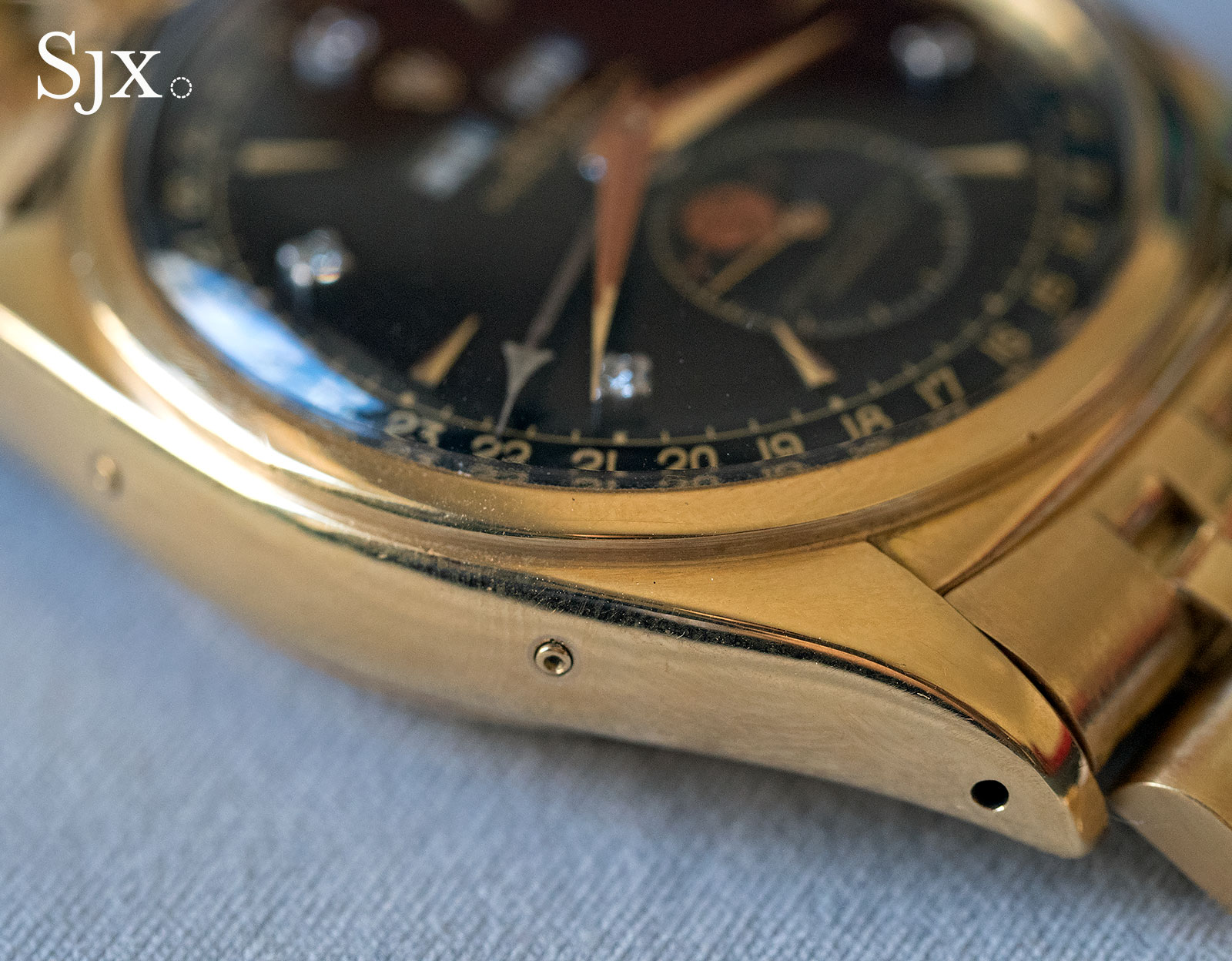
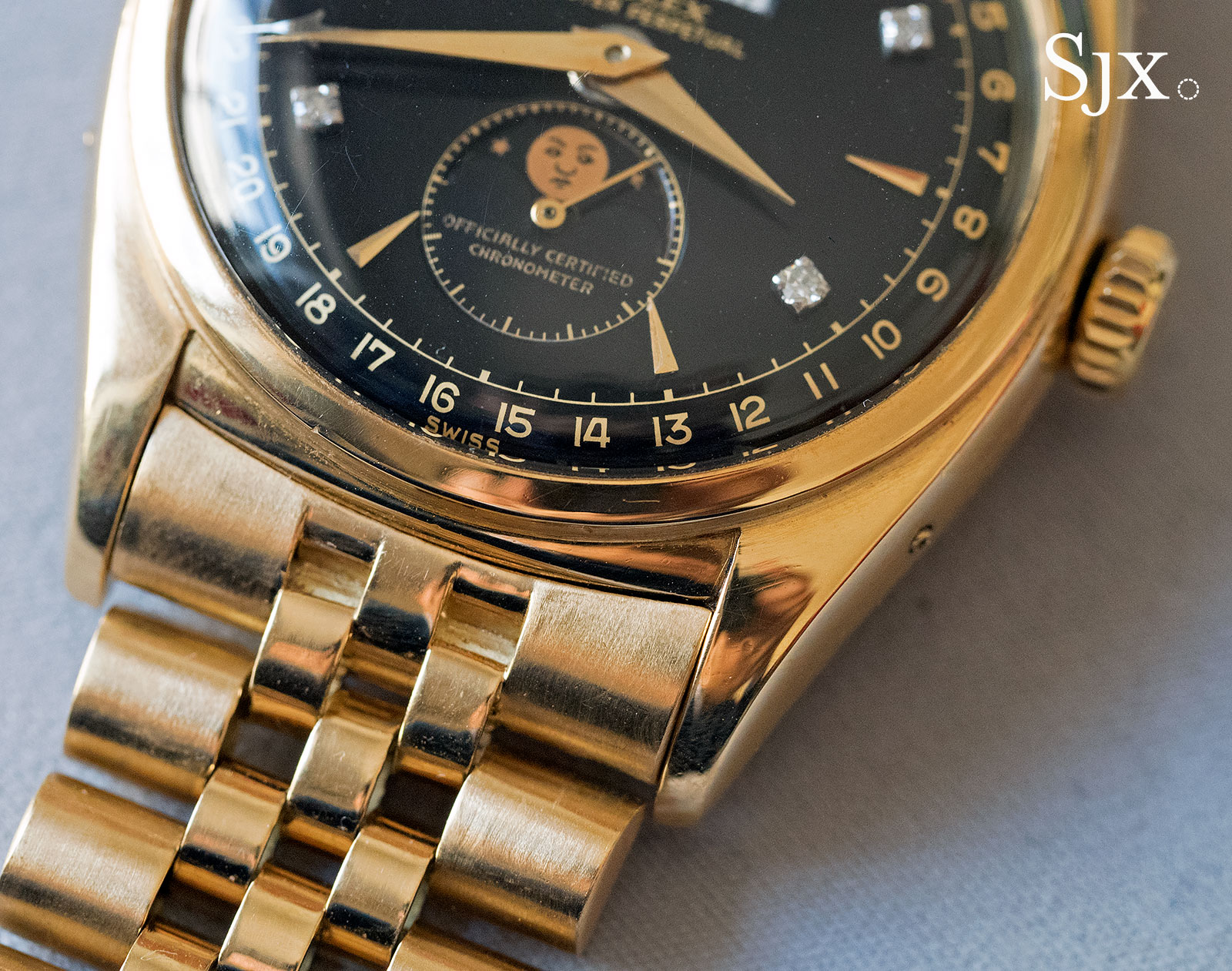
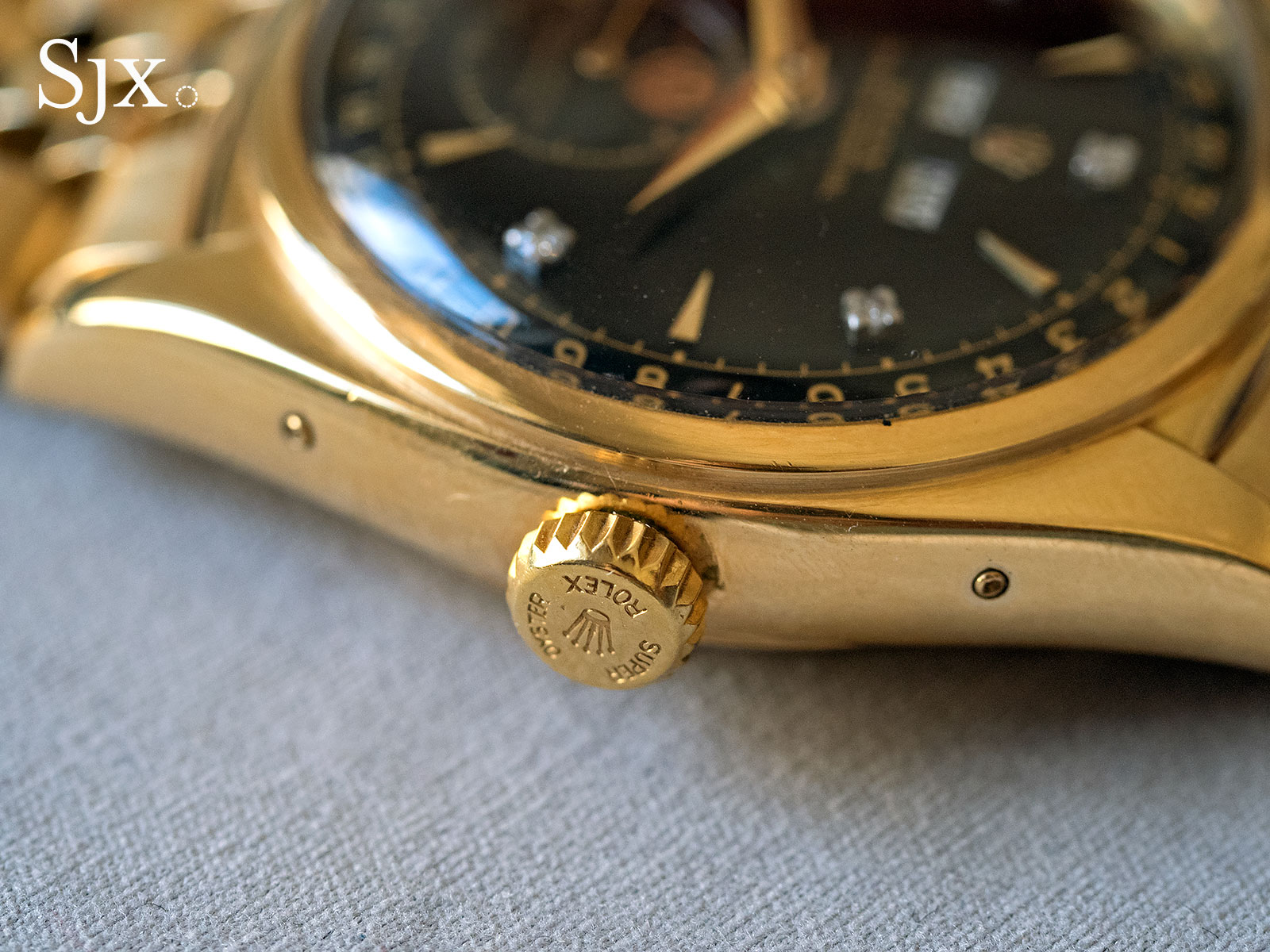
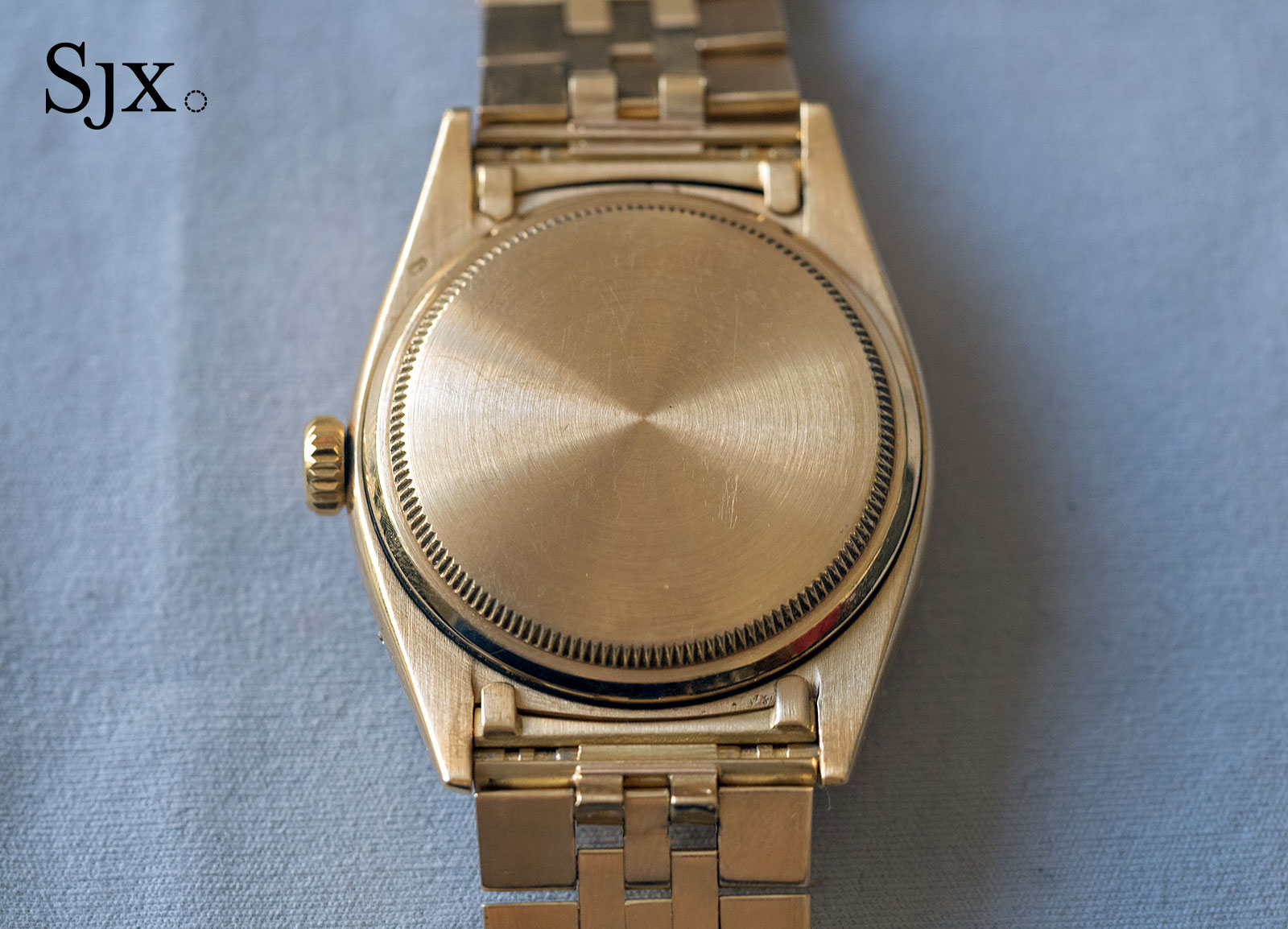
Though well preserved, the ref. 6062 “Bao Dai” shows its age on the case, with visible wear commensurate with having been worn for a long time. The black glossy dial, however, is in exemplary condition.

Rolex 6062 Bao Dai 10

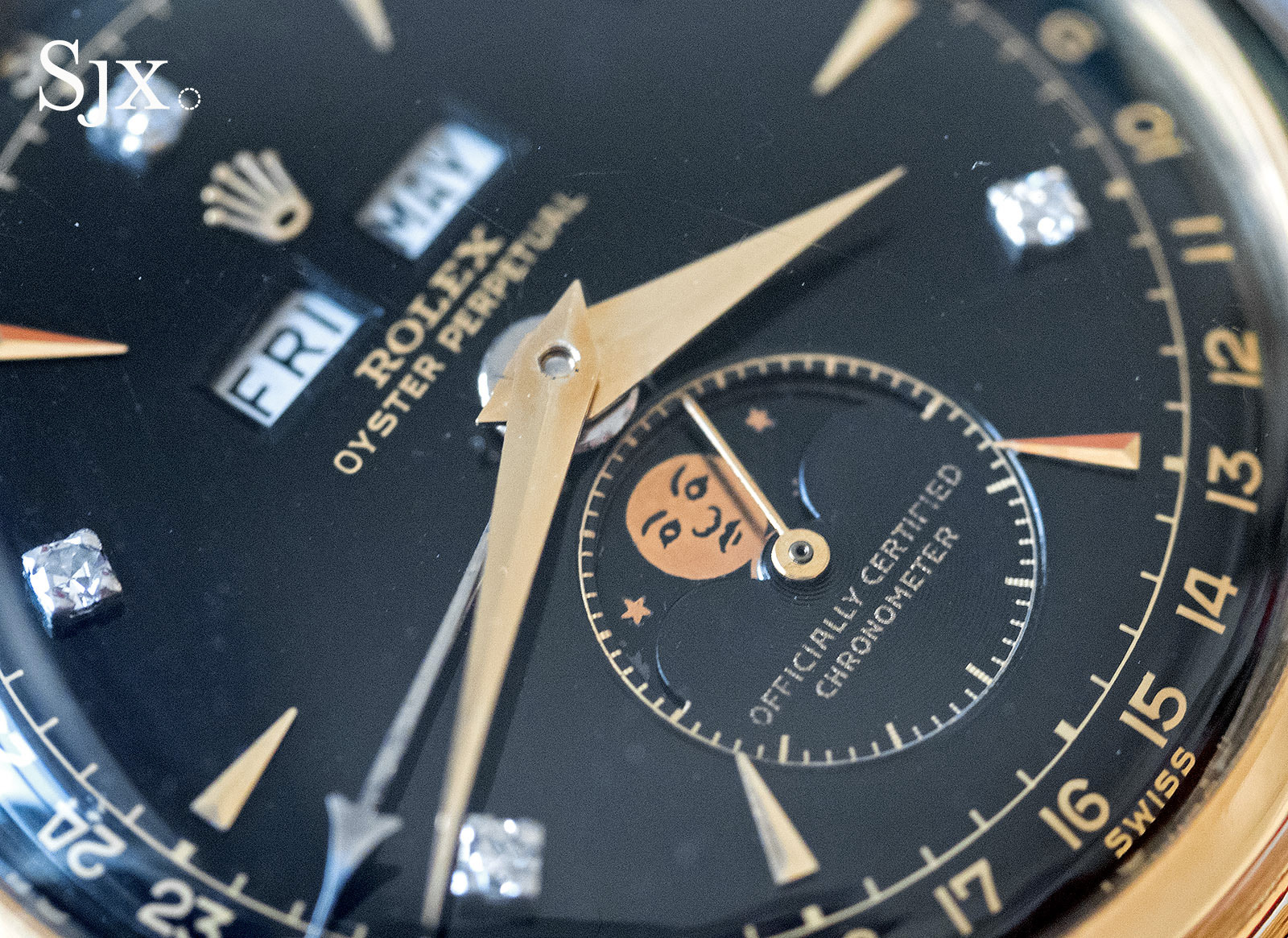
Imperial provenance notwithstanding, the watch is incredibly rare in itself, being one of just three known with a diamond-set dial.

The other two examples, however, both have diamond markers on the odd hours, while the “Bao Dai” has the gemstones as markers for the even hours, making it one of a kind.

Rolex 6062 Bao Dai 3

Rolex 6062 Bao Dai 4

Rolex 6062 Bao Dai 8

While less complicated than the ref. 4113 split-seconds that currently holds the record as the most expensive Rolex ever, the “Bao Dai” is a quintessential Rolex in two crucial respects, explains Bacs.

To start with, the “Bao Dai” has a water-resistant Oyster case, the signature Rolex feature. The ref. 4113 has an ordinary, snap-back case.

Rolex 6062 Bao Dai 7

Rolex 6062 Bao Dai 6

Second, the “Bao Dai” is equipped with a movement that’s both in-house and self-winding, or “Perpetual” in Rolex parlance. In contrast, the ref. 4113 has inside a Valjoux movement.

Rolex 6062 Bao Dai 5

Already the ref. 6062 sells for between SFr500,000 to SFr1m, with rare specimens crossing the seven-figure mark. Given the rarity of the “Bao Dai” and its notable provenance, the “Bao Dai” will very likely sell for above the current record of SFr2.4m, fees included, achieved by the Rolex ref. 4113 split-seconds chronograph in 2016.

The Rolex ref. 6062 “Bao Dai” is lot 93 in Phillips’ The Geneva Watch Auction: Five that takes place on May 13 and 14 in Geneva. The full catalogue and preview schedule is available here.


Update April 7, 2017: Link to catalogue added.

Back to top.

You may also enjoy these.

Hands-On with the Hajime Asaoka Chronograph

The article is no longer available.

Hajime Asaoka’s reproduction of a screenshot and quotation from a now-deleted article appears to be an endorsement – that is not the case. I repeatedly asked the Hajime Asaoka company to remove any content related to SJX from its website, but no response was forthcoming even after multiple attempts over several weeks.

Screen capture of Hajime Asaoka website

Based on my knowledge of a significant number of clients not receiving watches according to schedule, as well as a lack of communication or refunds after non-delivery, I do not endorse Hajime Asaoka-branded watches in any way. I have no comment on any of the other brands, including Kurono Tokyo or Chrono Tokyo, which he designs watches for.

Sincerely,

Jiaxian SU
Founder, SJX Watches


Updated May 20, 2020

Back to top.
You may also enjoy these.

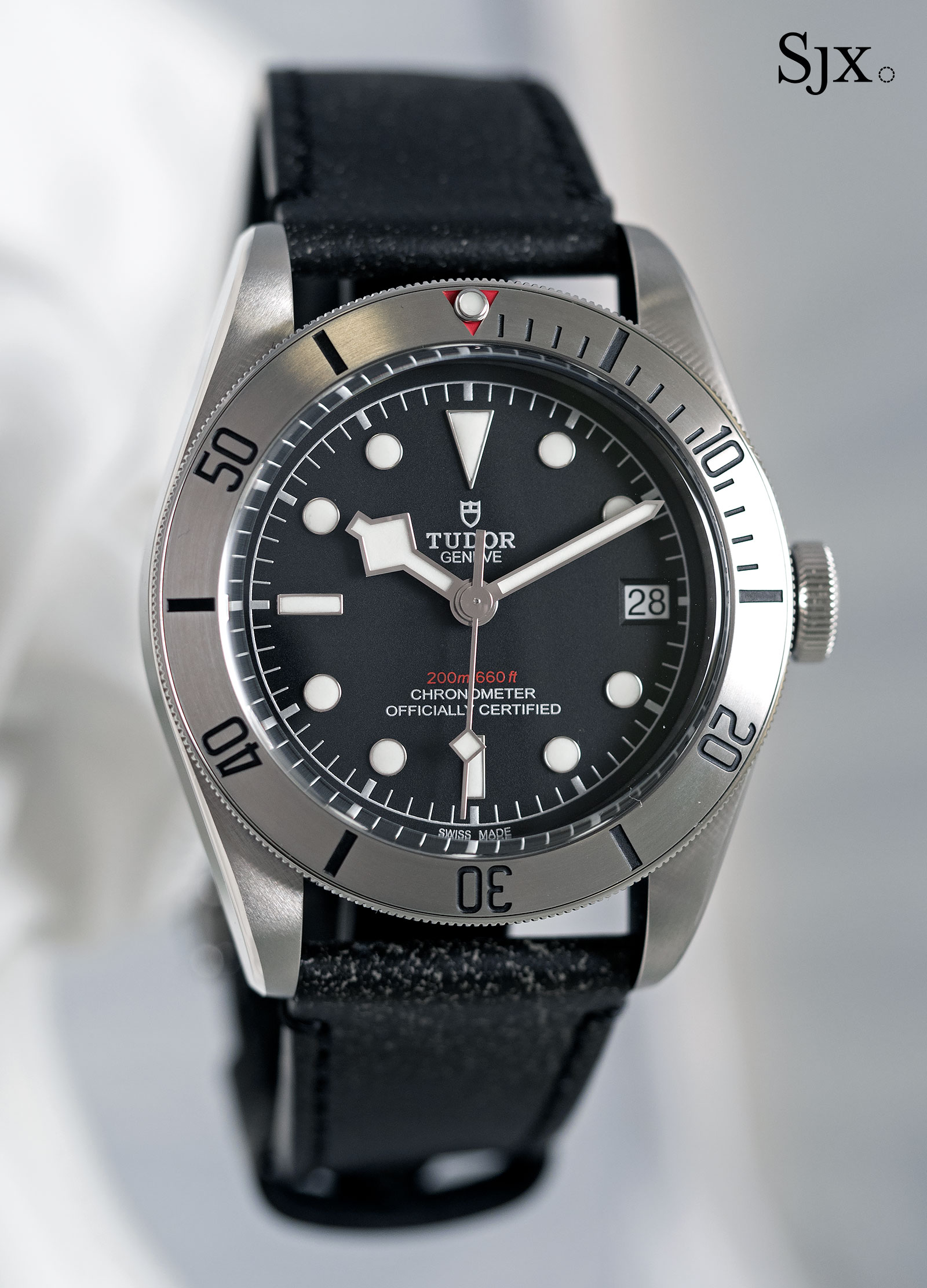
Hands-On with the Tudor Black Bay Steel Ref. 79730 (with Pics, Specs & Price)

The Black Bay matures into a sleeker watch with a steel bezel and date.

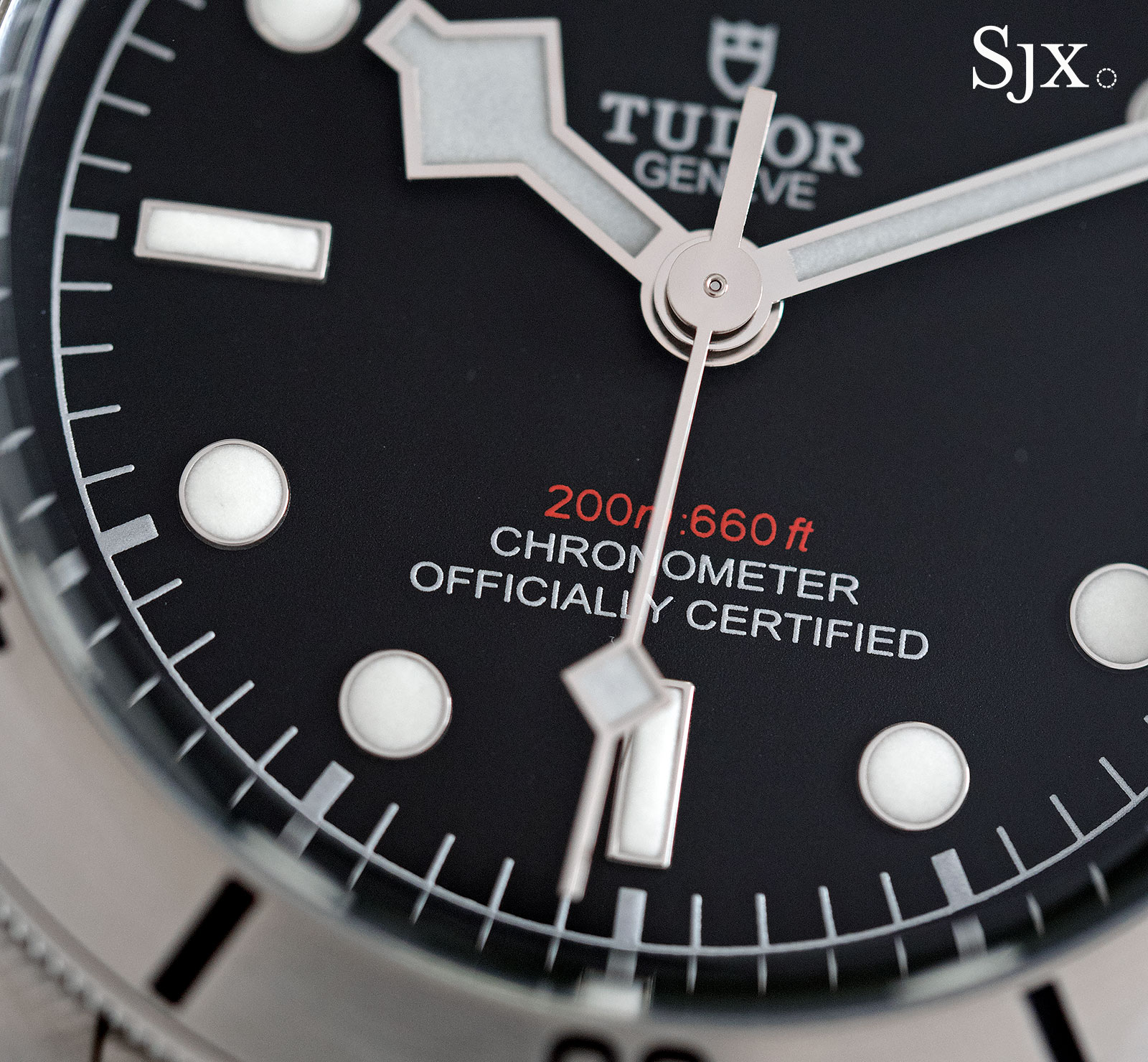
Originally introduced with a red bezel (then variants including bronze and black), the Tudor Black Bay is now cleaner and sleeker with a new stainless steel bezel. While not a significant change to an existing model, the Black Bay Steel offers a new look and function for practically the same affordable price tag.

The basics of the Black Bay Steel are identical to most of the other Black Bay watches: a steel 41mm case rate to 200m, snowflake hands, matte black dial with the depth rating in red, and an in-house movement.

Tudor Black Bay Steel 8 Tudor Black Bay Steel 14

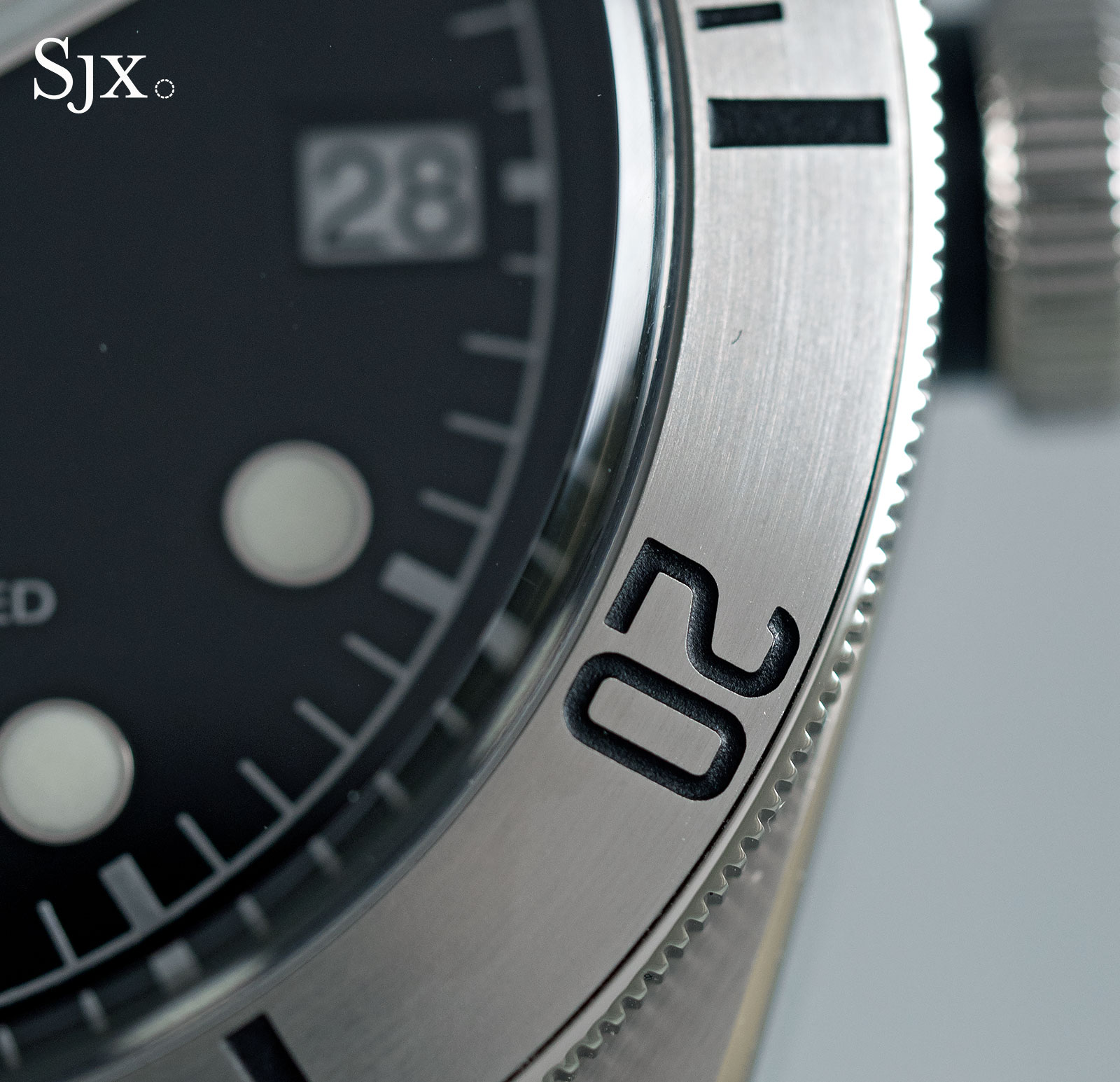
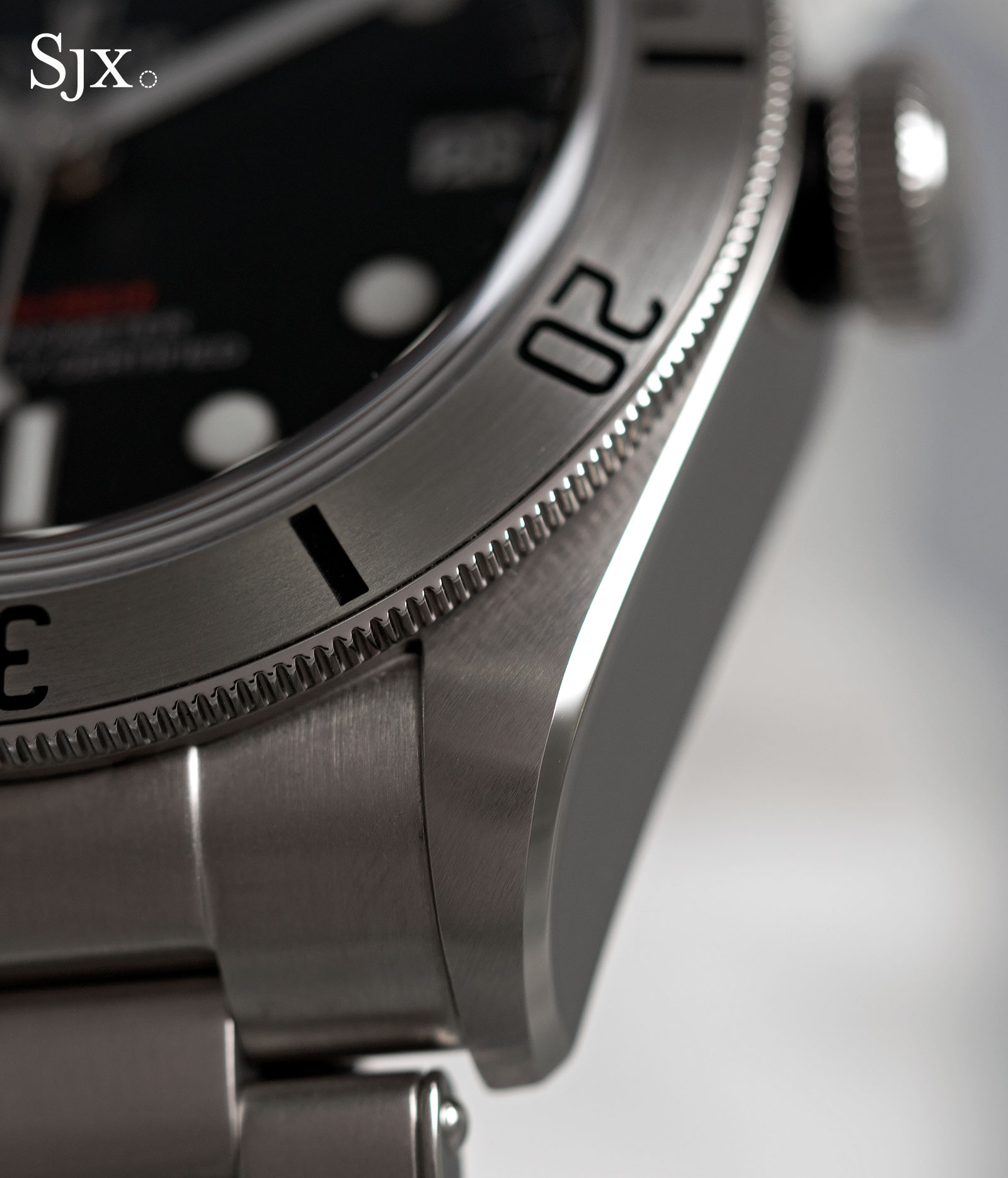
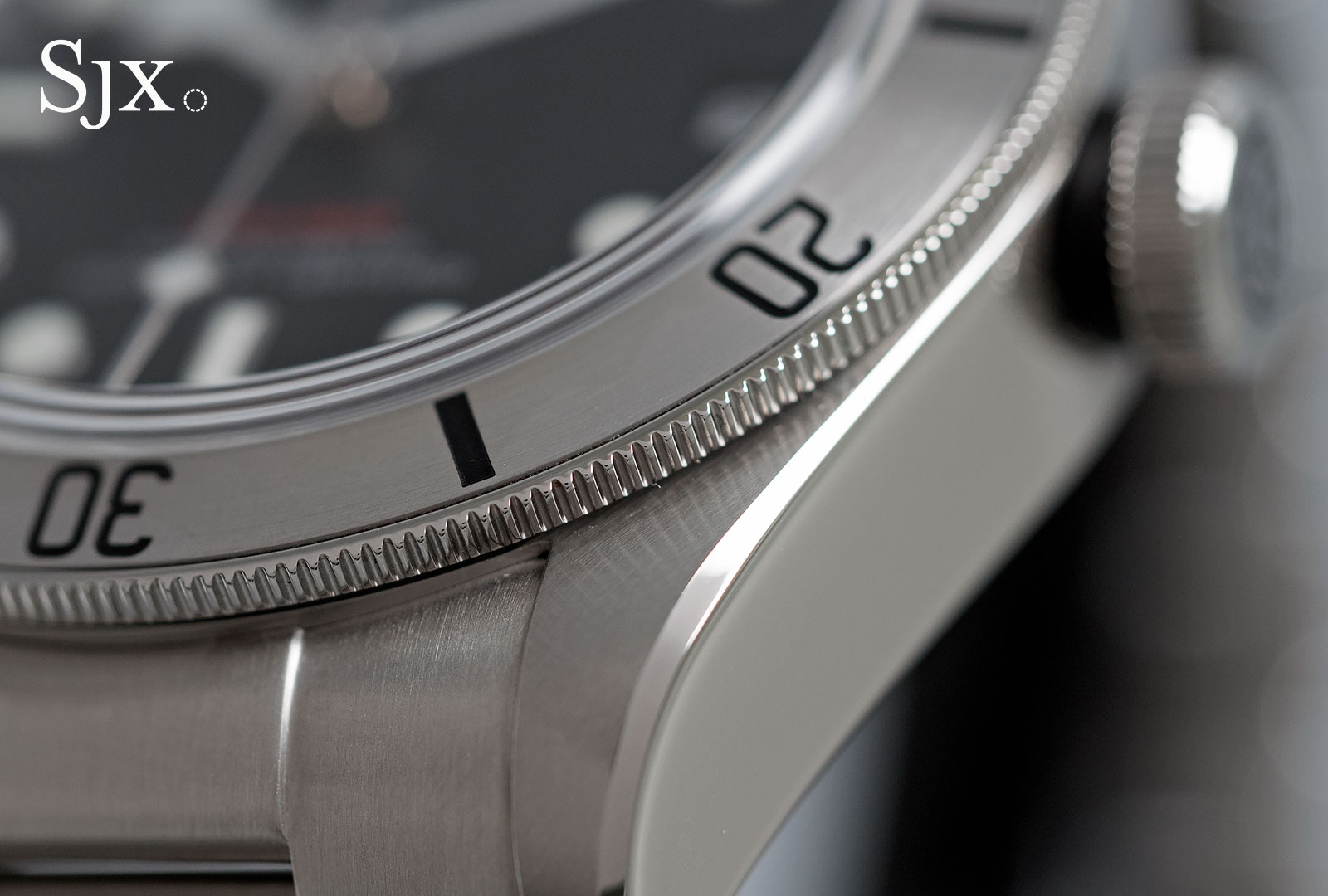
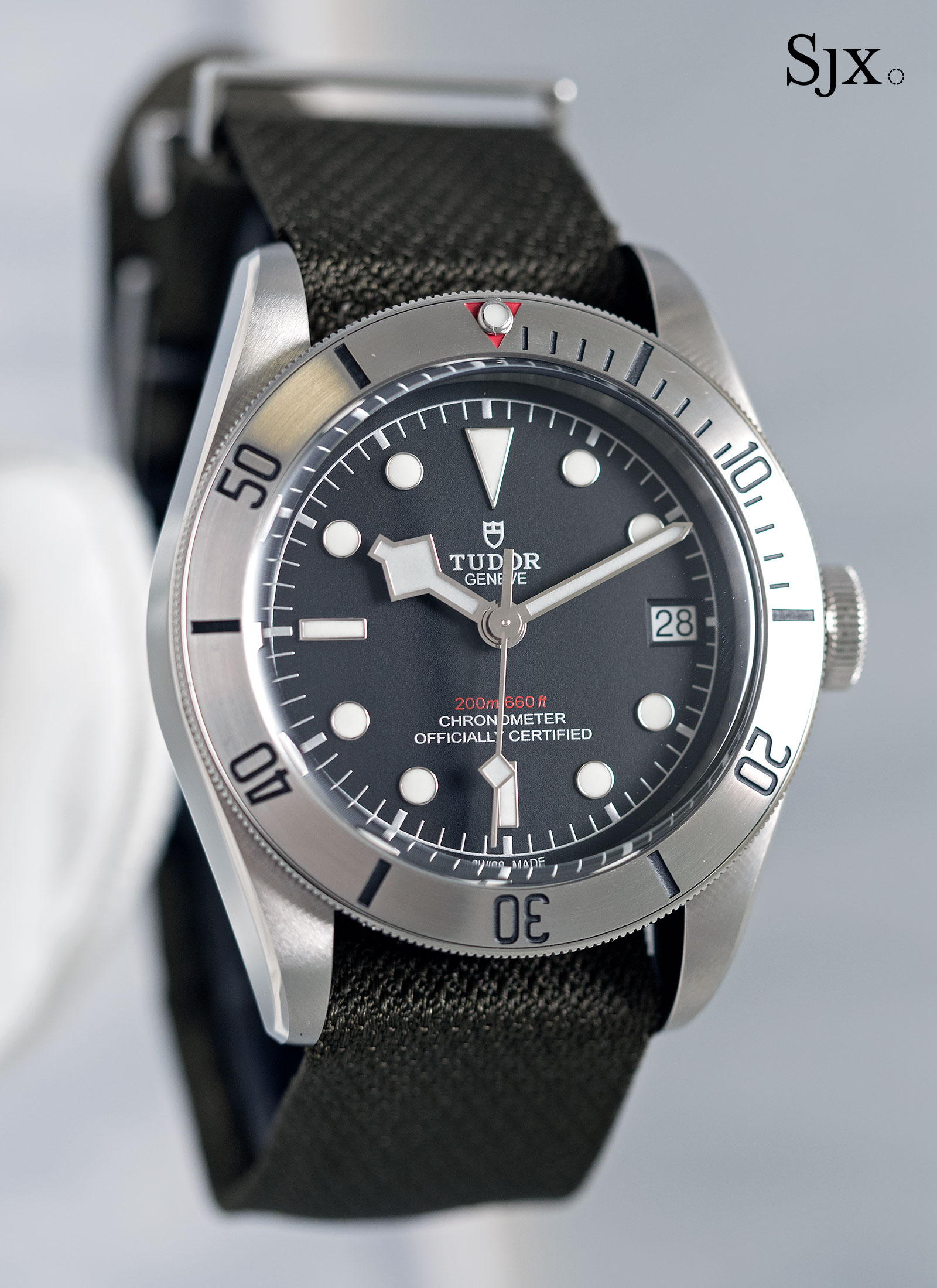
Two elements set it apart, the more obvious being the bezel. The insert on the elapsed time diver’s bezel is stainless steel finished with circular brushing. The markings on the bezel are engraved and then filled with black lacquer, or red in the case of the triangle at 12.

Tudor Black Bay Steel 9

Tudor Black Bay Steel 10

Most bezel inserts on dive watches are aluminium (or increasingly ceramic), just like the coloured bezels on the other Black Bay models. But anodised aluminium is prone to fade with time, resulting in washed out colours that collectors of vintage watches adore (hence the “ghost” bezels). Steel, on the other hand, is fade-resistant and essentially eternal, apart from general wear.

But more important than its metallurgical qualities is the clean, functional appearance of the steel bezel, which makes the Black Bay Steel its own watch.

Tudor Black Bay Steel 11 Tudor Black Bay Steel 12

Many of the other Black Bay models are obviously retro inspired, modern watches that carry the style of something historical. In contrast, the Black Bay Steel has a modern look and feel, making it more original, largely thanks to the steel bezel.

Tudor Black Bay Steel 13

And importantly, the Black Bay Steel has a date window at three o’clock. It’s a practical feature that often looks out of place in vintage remake watches, as on the Longines 1918 for instance. But because the Black Bay Steel feels contemporary, the date window looks at home.

Tudor Black Bay Steel 15

Inside the Black Bay Steel is the MT5612, a COSC-certified automatic calibre that’s part of the in-house MT56 family of movements, which power most of the Black Bay range.

Built to be a reliable workhorse that’s functional and affordable, the MT5612 has a silicon hairspring and free-sprung balance. More evidently convenient to the wearer are its three-day power reserve, and date mechanism that allows setting at any time, even midnight.

Tudor Black Bay Steel 3

Tudor Black Bay Steel 18

Price and availability

The Black Bay Steel (ref. 79730) will reach stores June 2017. Prices will be SFr3300 for the model on a leather strap and SFr3600 for the same on a steel bracelet – that’s just SFr100 over that of the model sans date.

Both versions are accompanied by an additional fabric NATO-style strap in olive green.

Tudor Black Bay Steel 16 Tudor Black Bay Steel 17


Update March 27, 2017: Additional photos included.

Back to top.
You may also enjoy these.

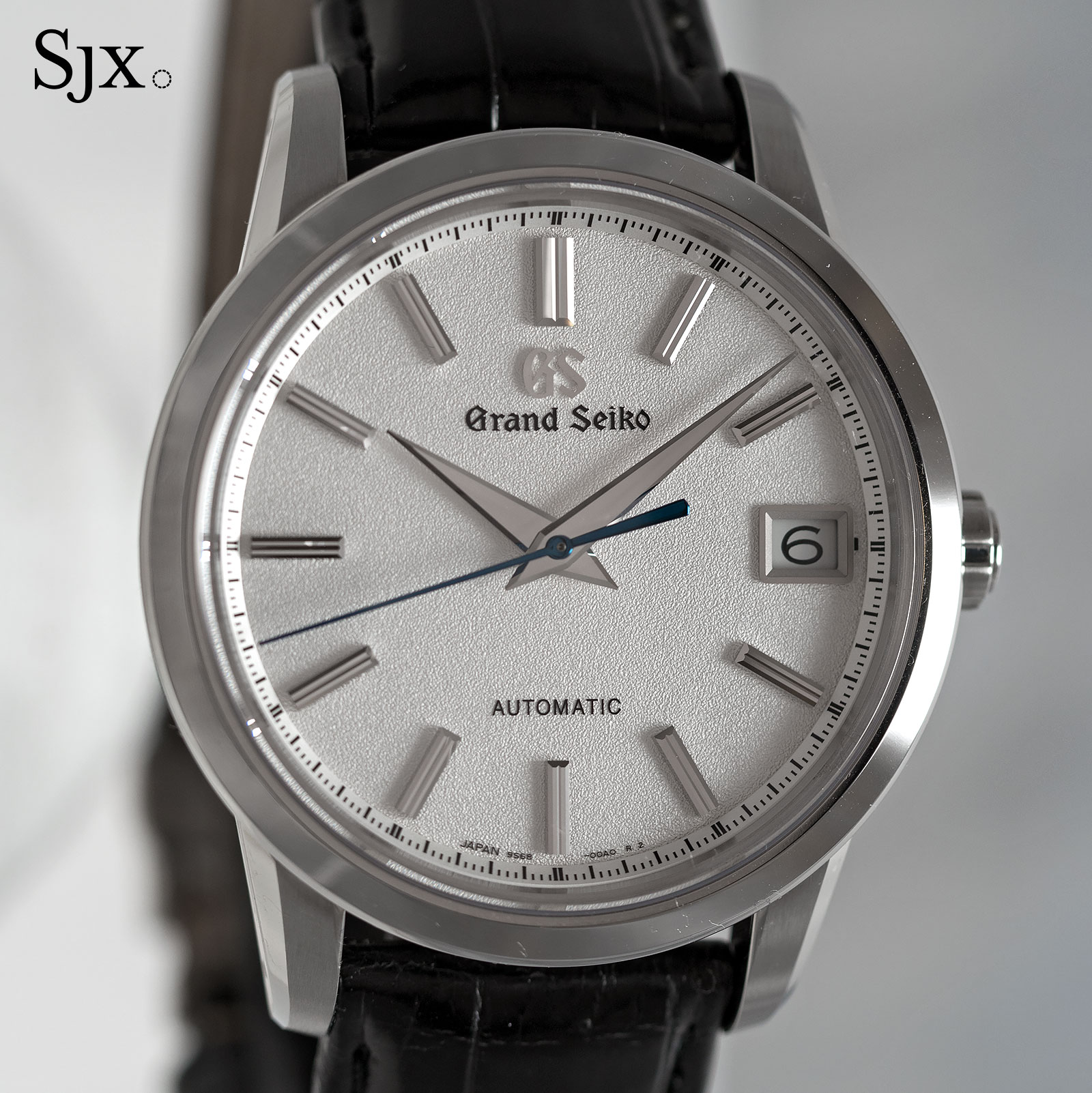
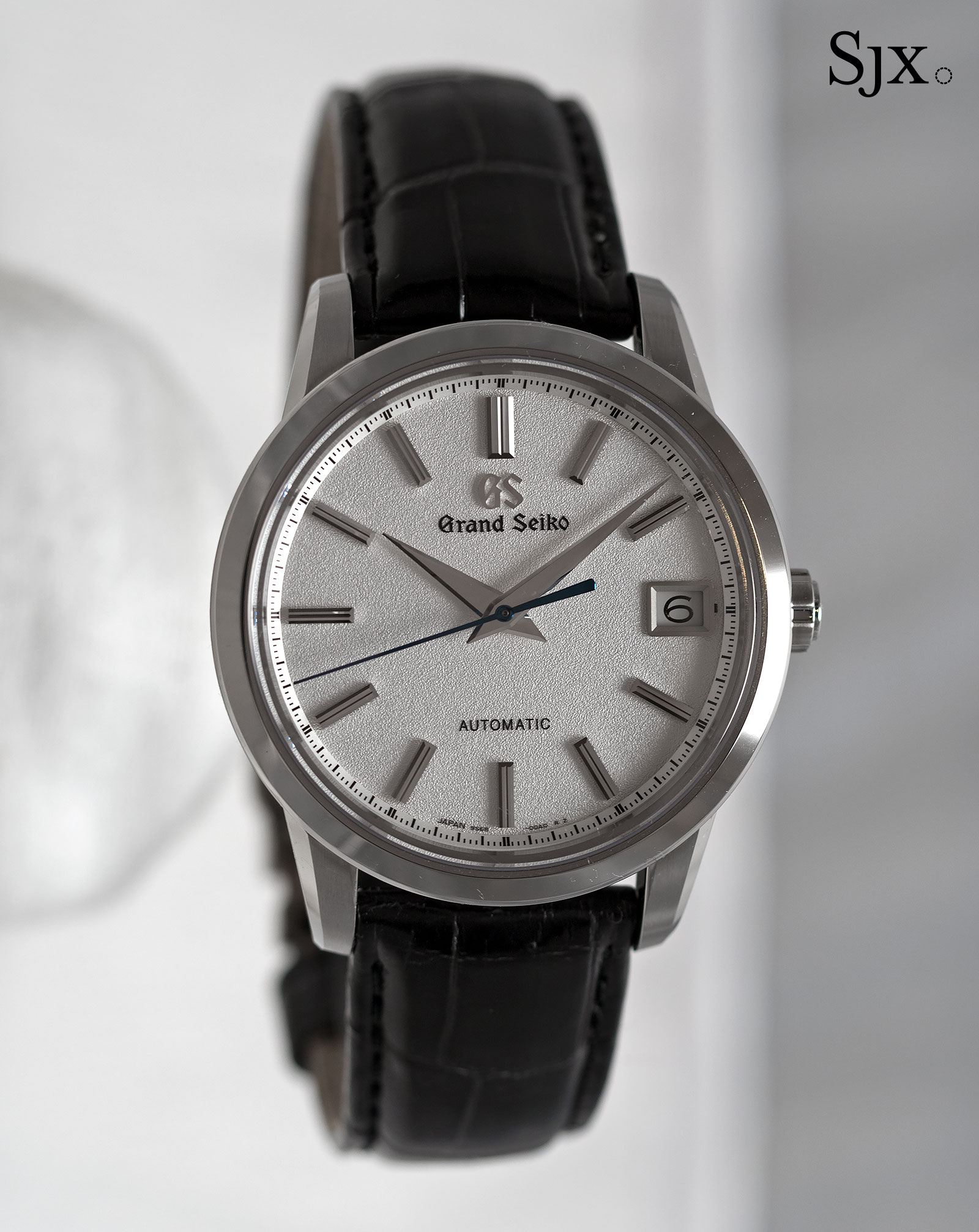
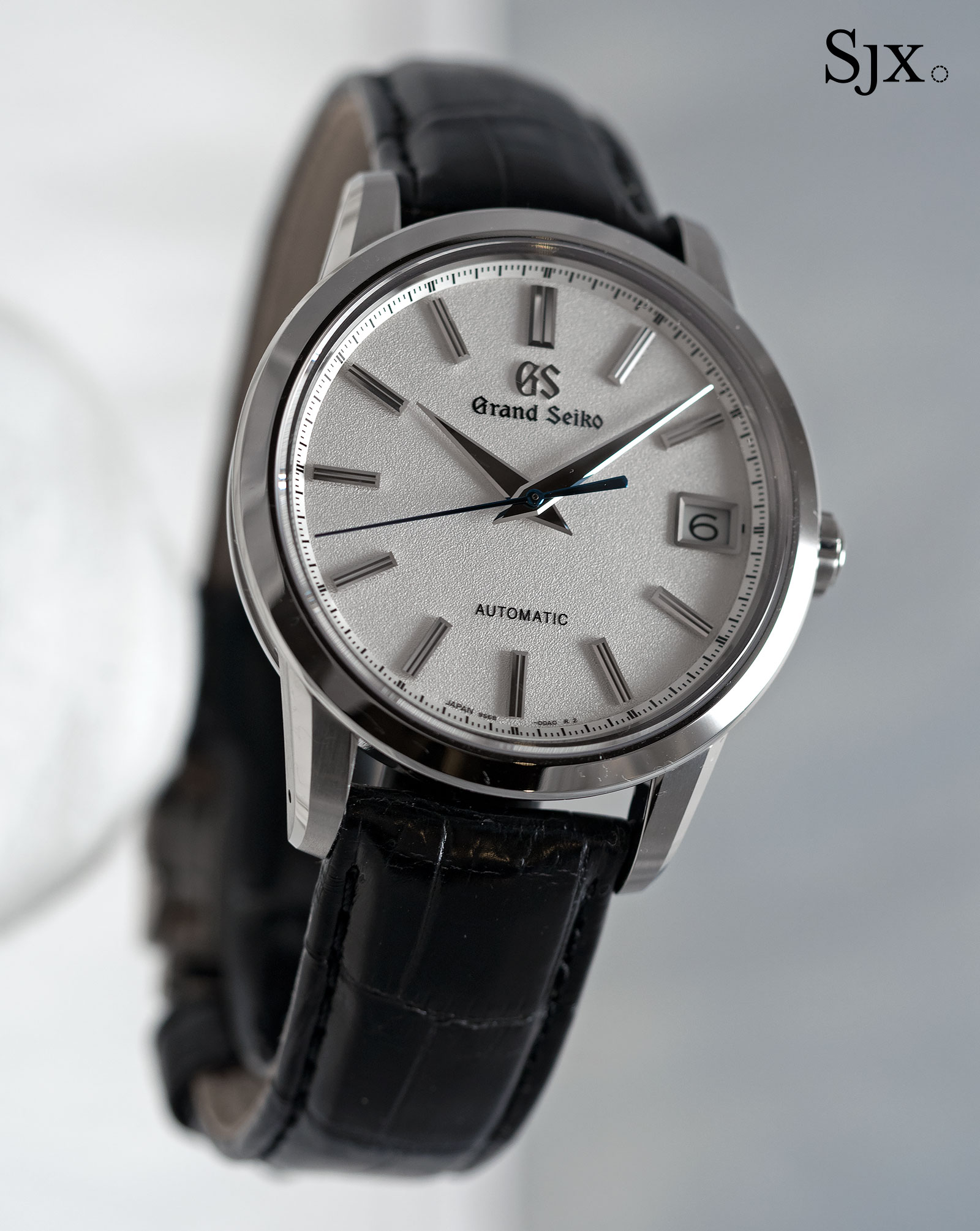
Hands-On with the Grand Seiko SBGR305, a Modern Take on the First GS of 1960

Restyled for contemporary tastes but still remarkably well crafted.

At Baselworld 2017 Grand Seiko became an independent brand, rather than a range of watches offered by Seiko. One of the crucial watches for the decoration of independence is the Grand Seiko SBGR305, a wristwatch inspired by the Grand Seiko ref. 3180.

Released in 1960, the ref. 3180 was the first ever Grand Seiko.  The new SBGR305 takes its cues from the original, but is a distinctly modern watch.


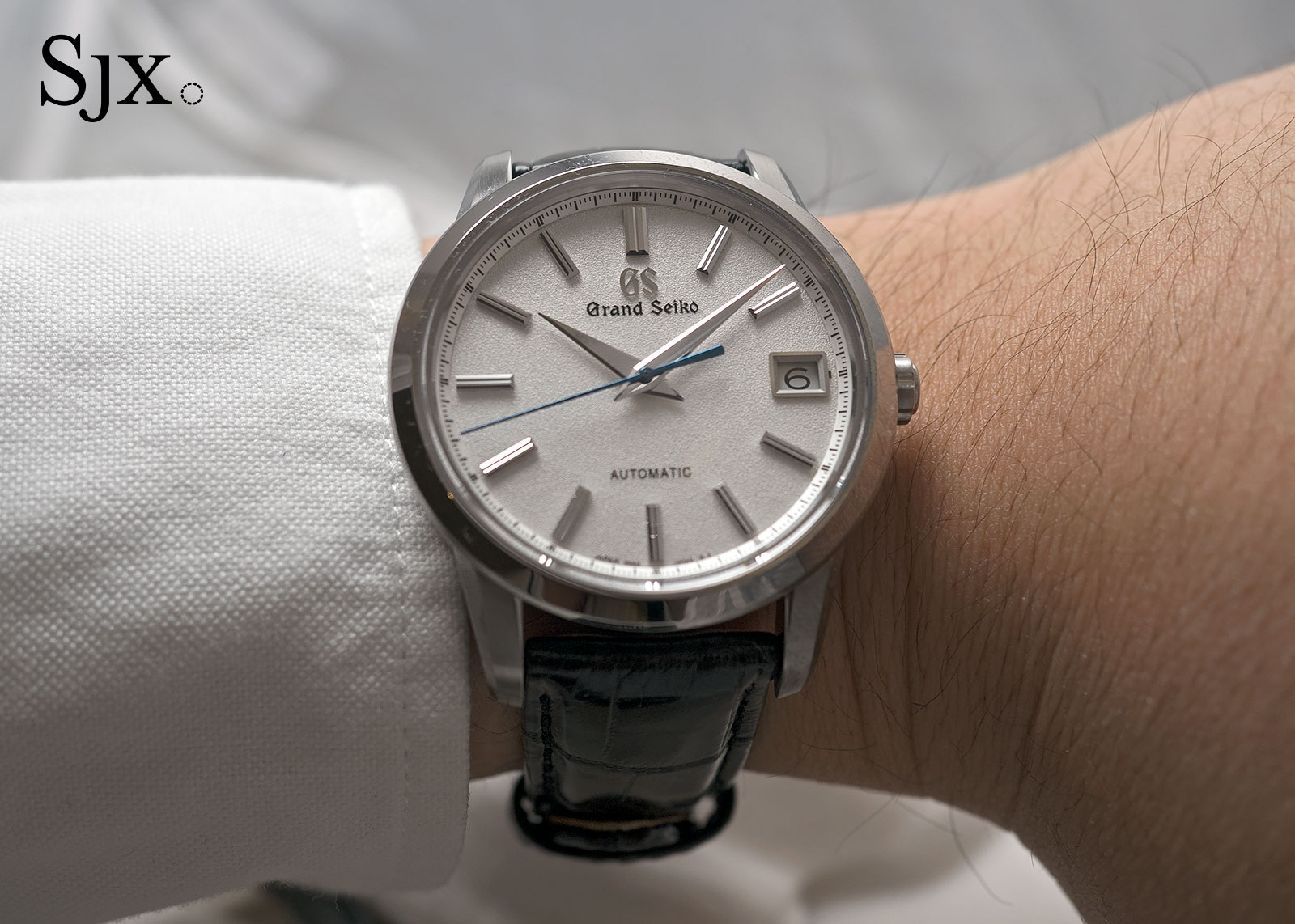
To start with it is 40.5mm in diameter and 13.7mm high, moderately sized by modern standards but large for a Grand Seiko, which tend to be smaller than 40mm. The white dial and narrow bezel further enhance its size.

Grand Seiko SBGR305 titanium 2

But because it’s made of “Brilliant Hard Titanium” – an alloy proprietary to Seiko – the watch is lightweight; lighter in the hand than it looks.

An evolution of “Bright Titanium”, the alloy previously used for all titanium Grand Seiko watches, Brilliant Hard Titanium is a new alloy that’s as light as the usual titanium found in watchmaking (typically grade 5), but much harder. It’s surface hardness is twice as hard as stainless steel, in fact, making it quite scratch resistant.

Grand Seiko SBGR305 titanium 3

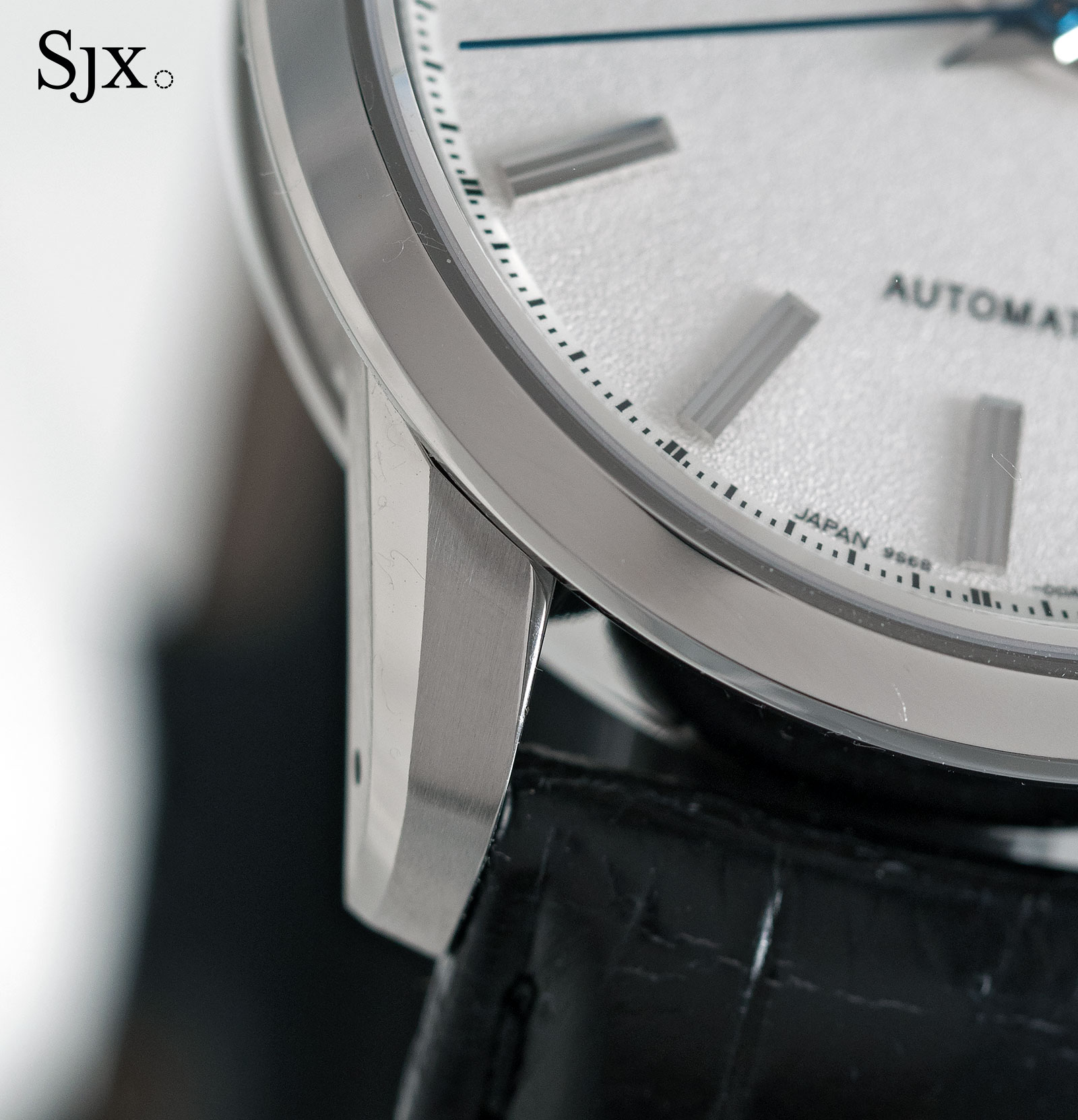
The hardness of the metal means it can be polished to the same definition as steel, resulting in brilliantly finished lugs with brushed top surfaces, polishes bevels running along their length, and a sharp border between the two.

Grand Seiko SBGR305 titanium 6


While the case material and finishing is beyond reproach, the proportions take some getting used to. The watch looks visibly different from the usual Grand Seiko and it takes a moment to figure out why.

The aesthetic difference lies in two elements. First is the narrowness of the lugs relative to the diameter of the bezel, which makes the face of the watch seem larger than it is. And the second is the relatively high, sloping chapter ring with the minute track. The angle gives the face depth, but it also makes the watch seem thicker.

Those factors, however, are not drawbacks, since they make the watch seem larger and less old fashioned, historically two widely cited shortcomings in earlier generations of Grand Seiko watches.

Grand Seiko SBGR305 titanium 14


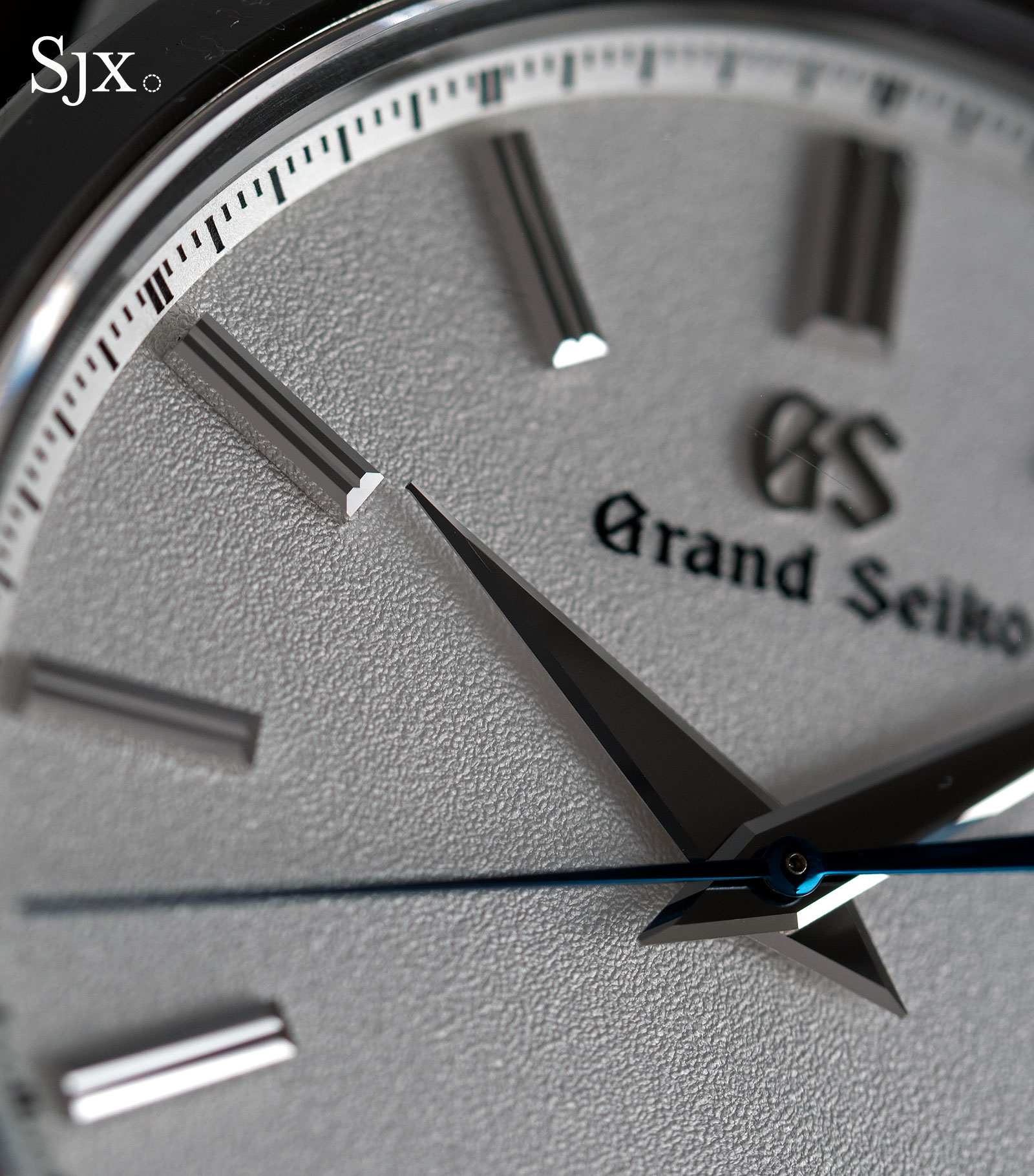
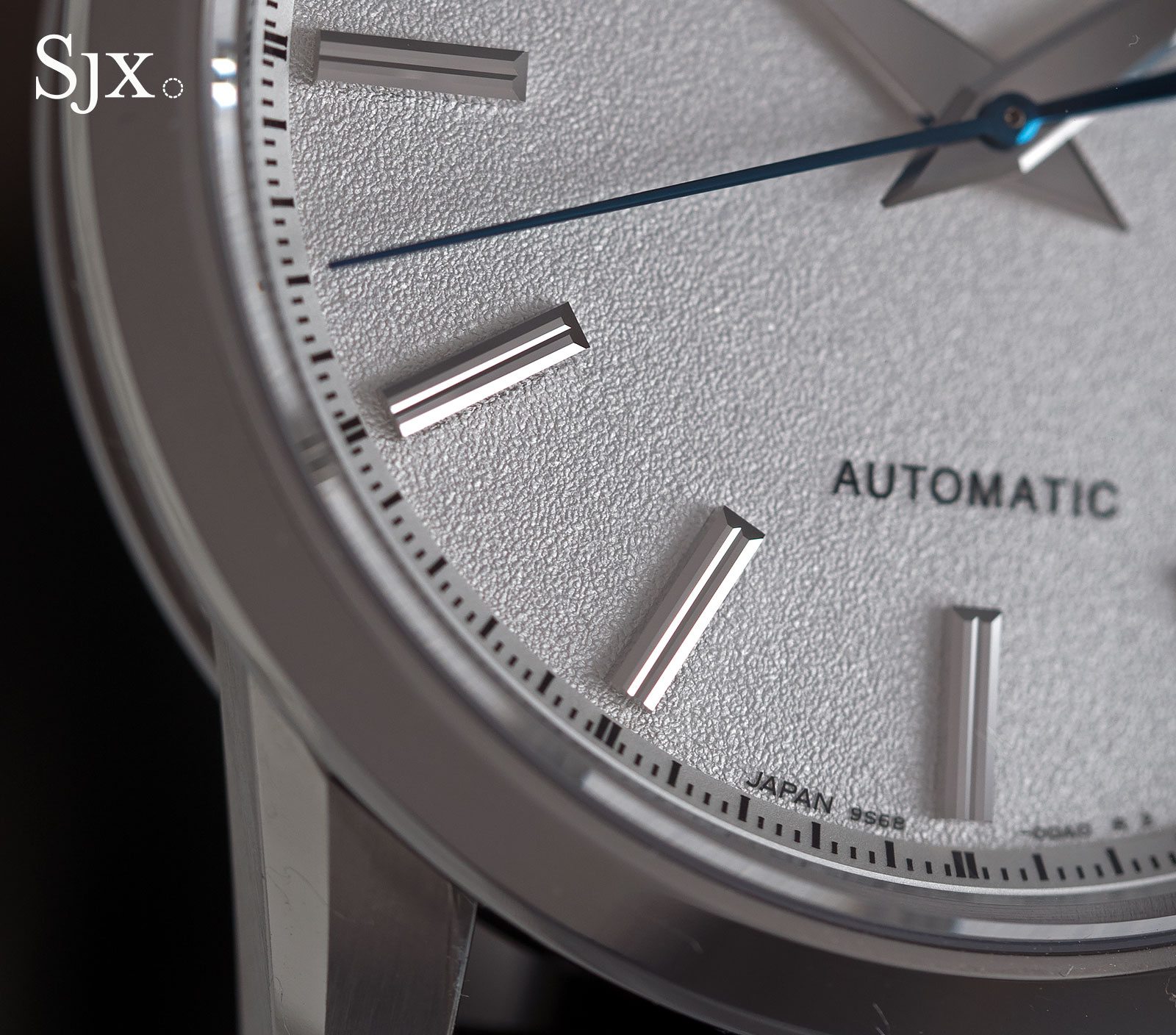
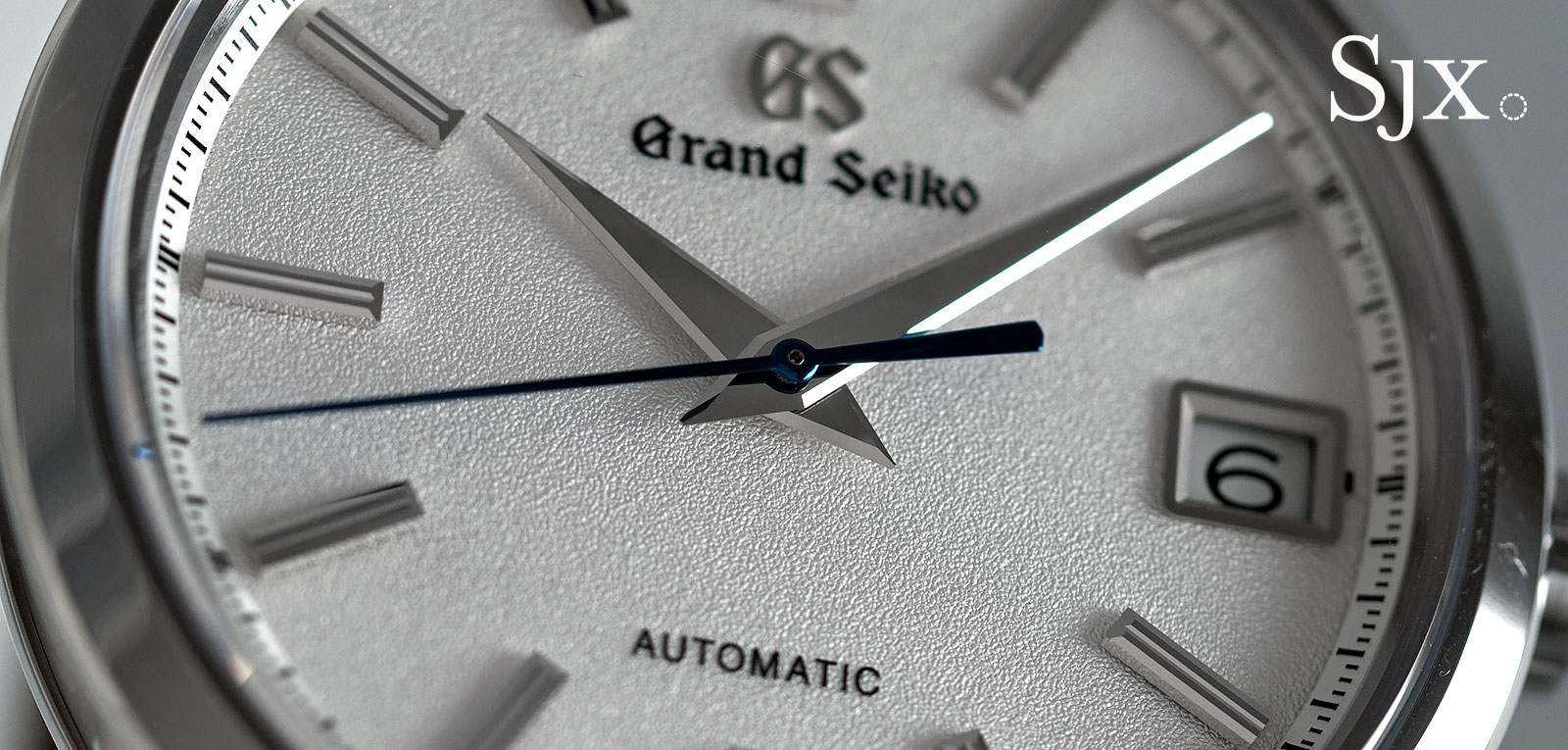
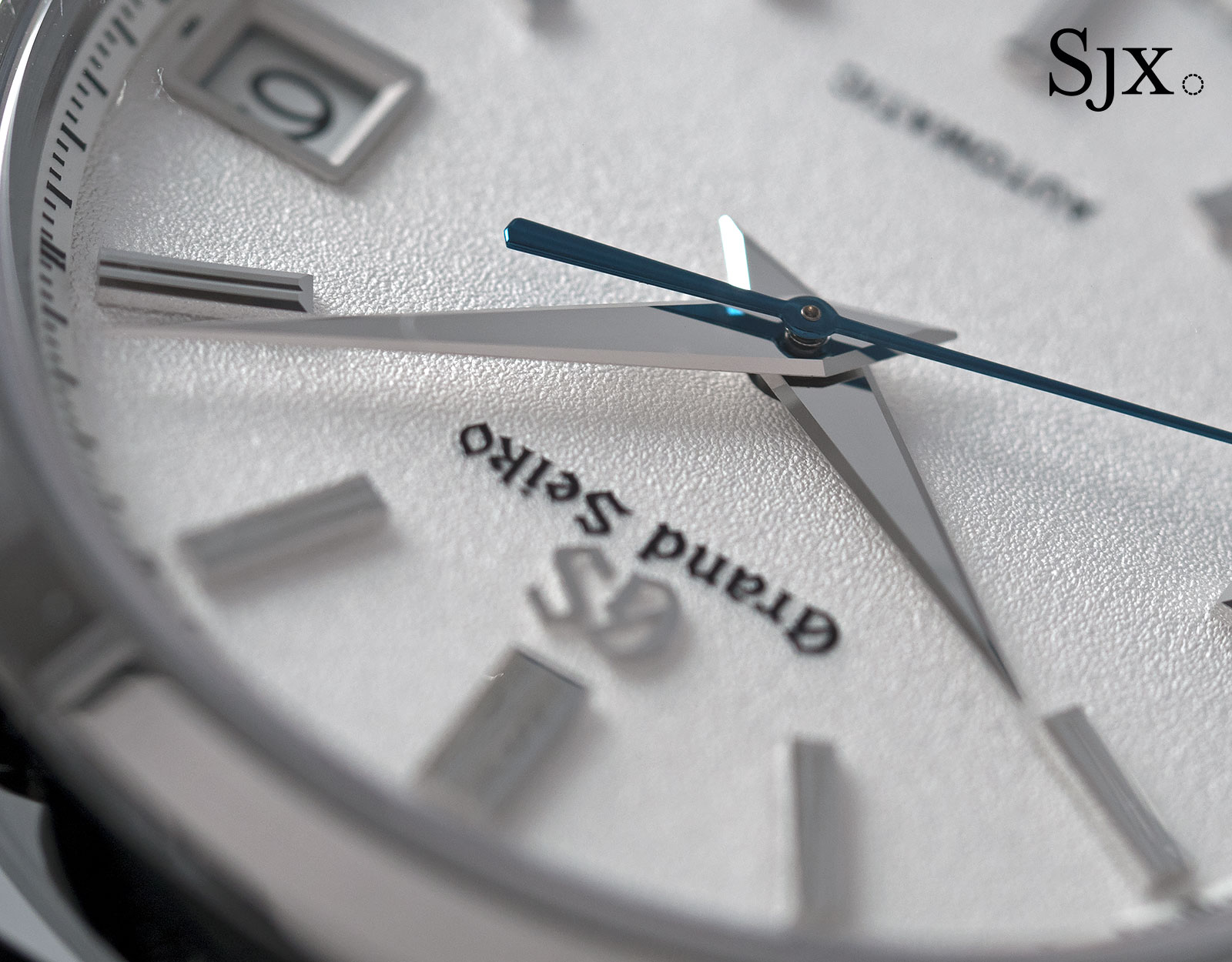
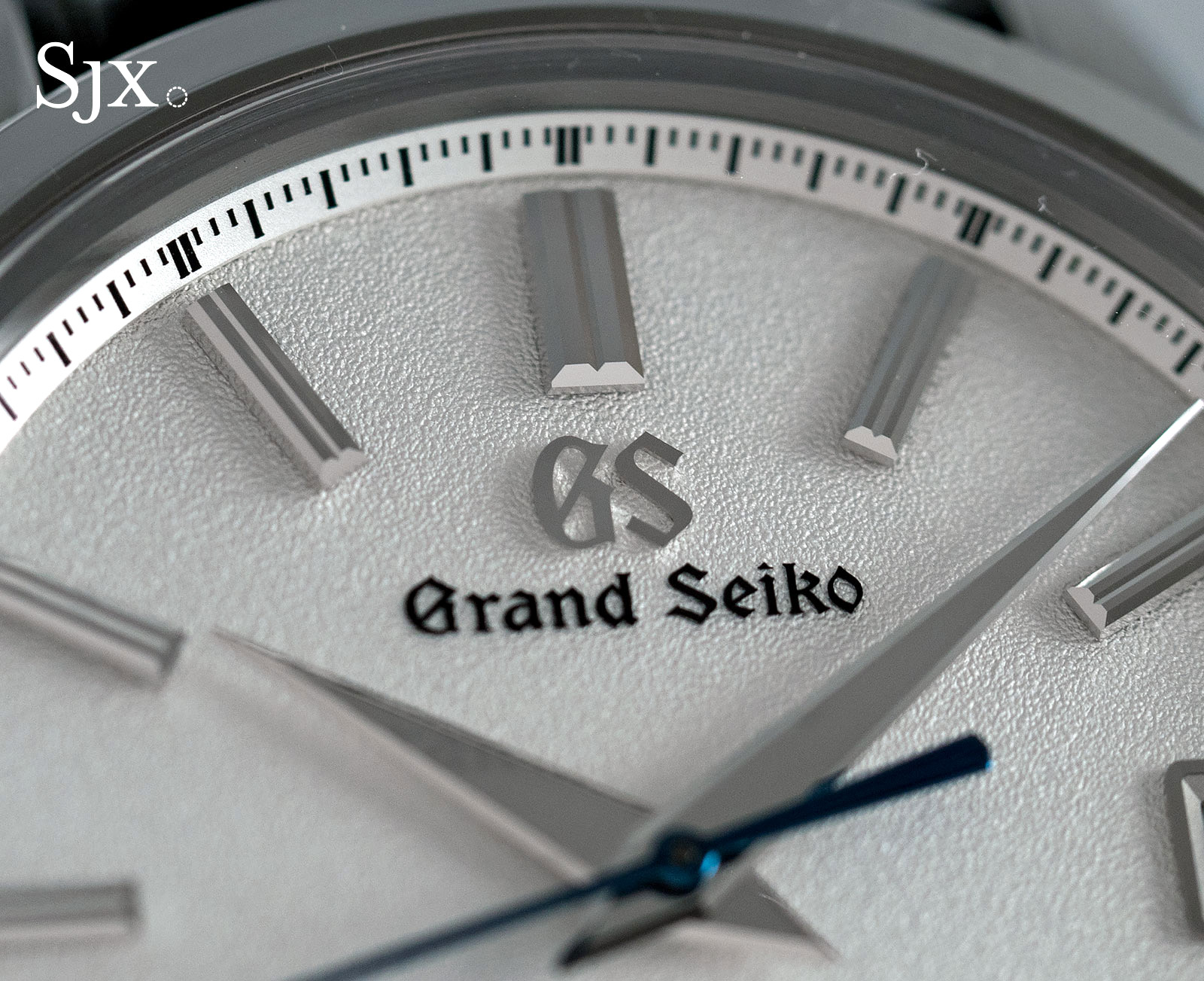
While the design is a departure from past practice, the dial remains a sterling example of dial manufacturing. The dial has a grained, pearly surface that’s similar to that found on last year’s Grand Seiko Spring Drive 8 Day. Both are created with a similar technique, though not identical.

Grand Seiko SBGR305 titanium 5

Grand Seiko SBGR305 titanium 4

The hands and indices are vintage Grand Seiko, precisely cut with a diamond-tipped tool to create razor sharp edges. They catch the light to increase visibility, but also give the dial a sensation of tremendous quality.

Grand Seiko SBGR305 titanium 7

Grand Seiko SBGR305 titanium 8

Because this is a Grand Seiko produced by an independent brand, only its logo sits at 12 o’clock. In contrast, earlier generations had both the Grand Seiko and Seiko logos on the dial. While complaints of cluttered dials in the past were justified, the dial feels slightly empty now.

Grand Seiko SBGR305 titanium 9


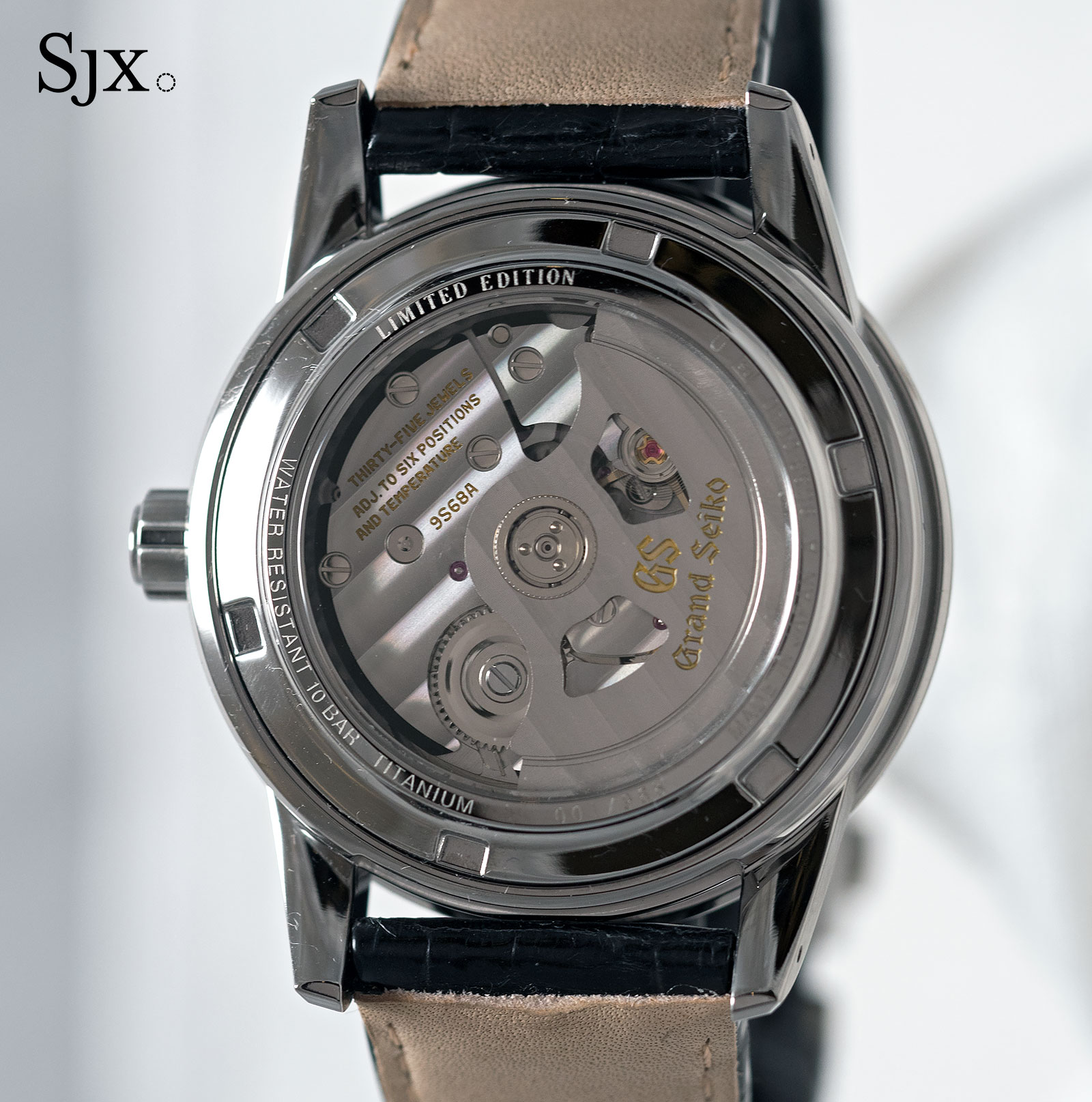
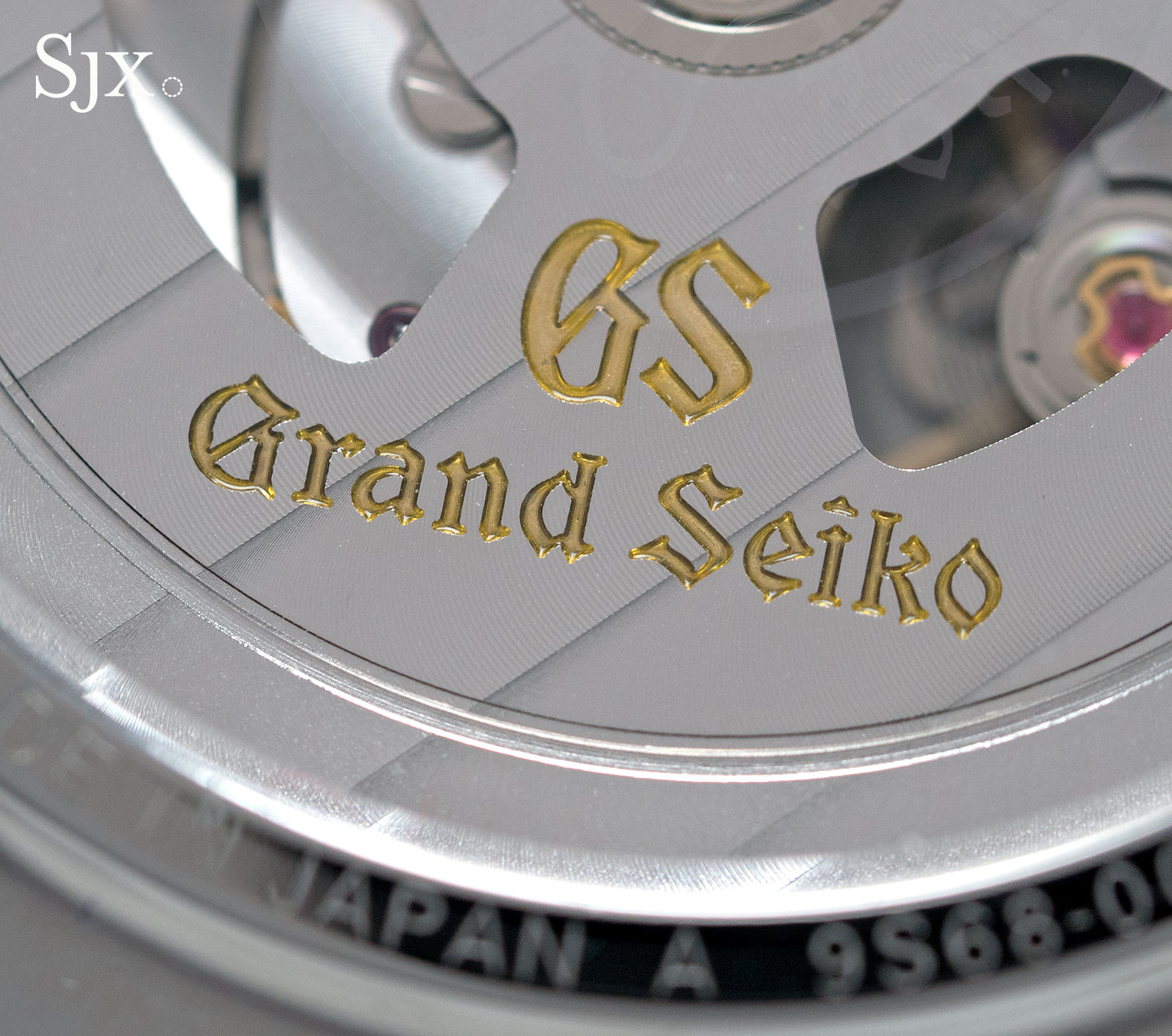
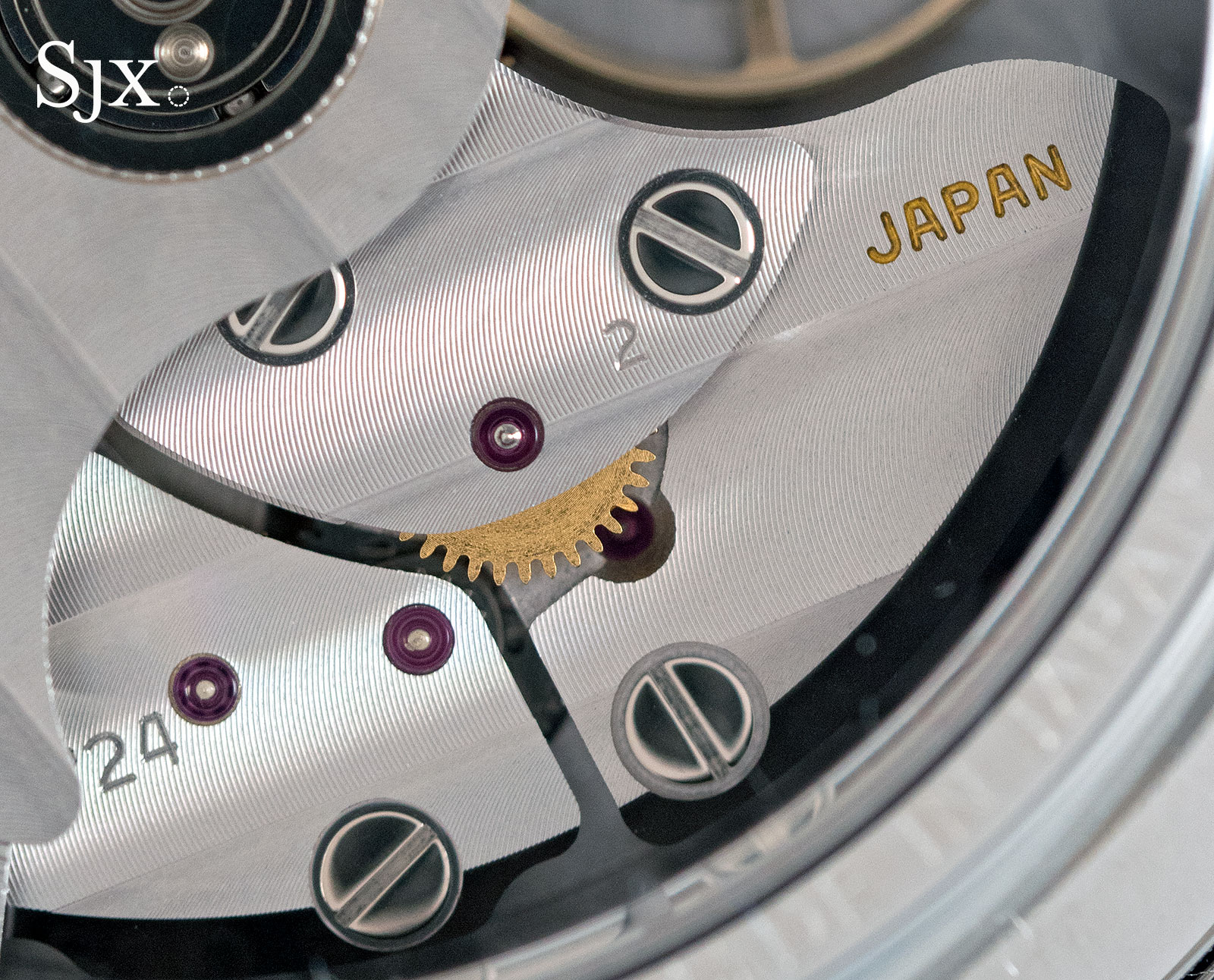
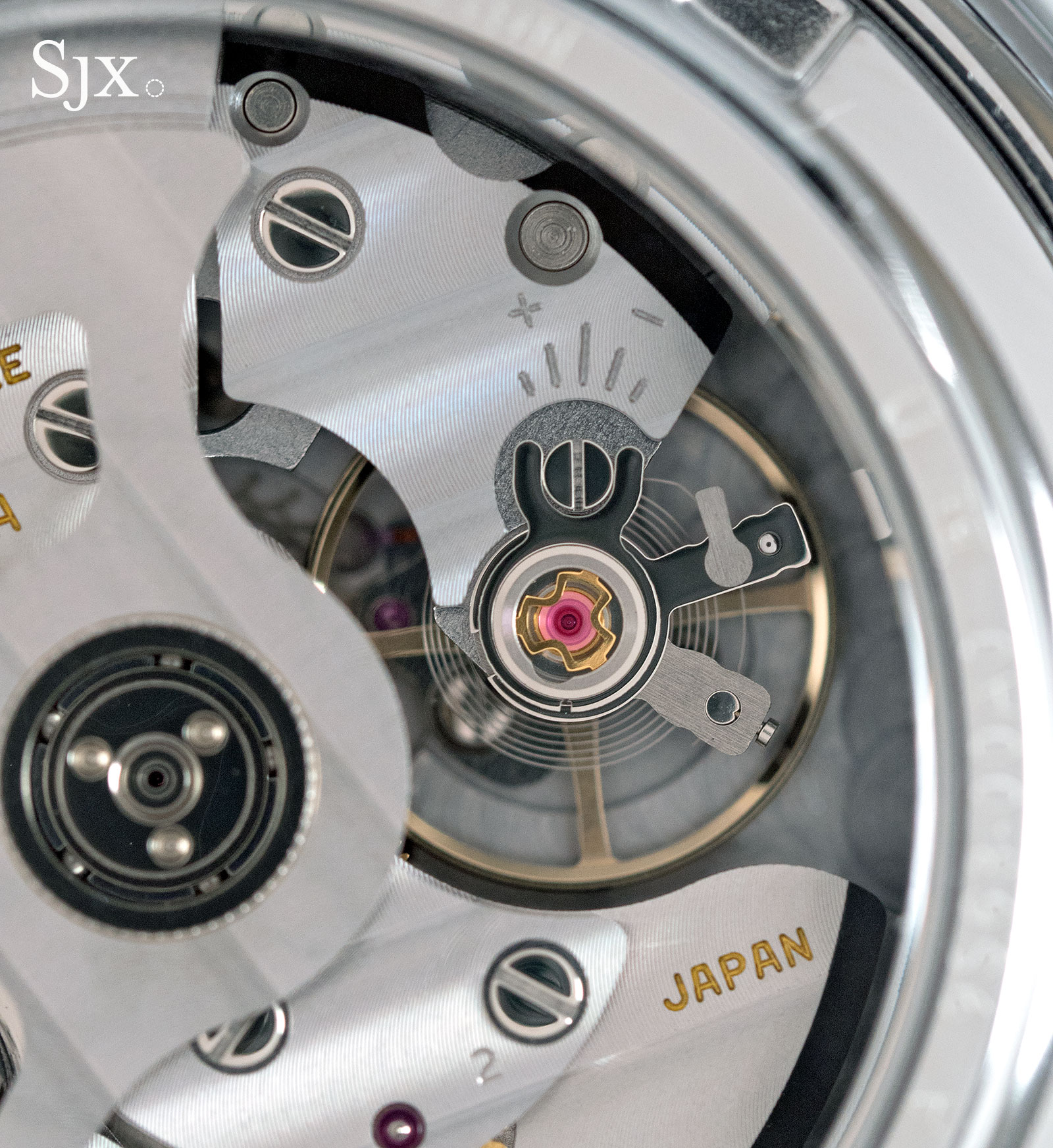
A sapphire back shows off the calibre 9S68, an automatic with a three day power reserve. Rated to -3 to +5 seconds a day, the 9S68 is robustly built and well engineered, but its decoration is typical of Grand Seiko, which is to say obviously applied by machine.

Grand Seiko SBGR305 titanium 10

While not luminously hand finished like the Seiko Credor Eichi II, the Grand Seiko movement has its own charm, being very, very precisely finished.

Grand Seiko SBGR305 titanium 11

Grand Seiko SBGR305 titanium 13

Grand Seiko SBGR305 titanium 12

And where it matters, and cannot be seen, the movement is hand-finished. The pivots of the escapement for instance are polished by hand.

Price and availability

Limited to 968 pieces, the Grand Seiko SBGR305 will be available starting July 2017, priced at €8800, or about US$9510.


Correction March 26, 2017: The dial finish on the SBGR305 is similar to that on the Grand Seiko Spring Drive 8 Days, not identical as stated earlier.

Back to top.
You may also enjoy these.
Welcome to the new Watches By SJX.
Subscribe to get the latest articles and reviews delivered to your inbox.