Patek Philippe’s Celestial Ref. 6105G Blasts Off

A new look with clever sunrise and sunset indications.
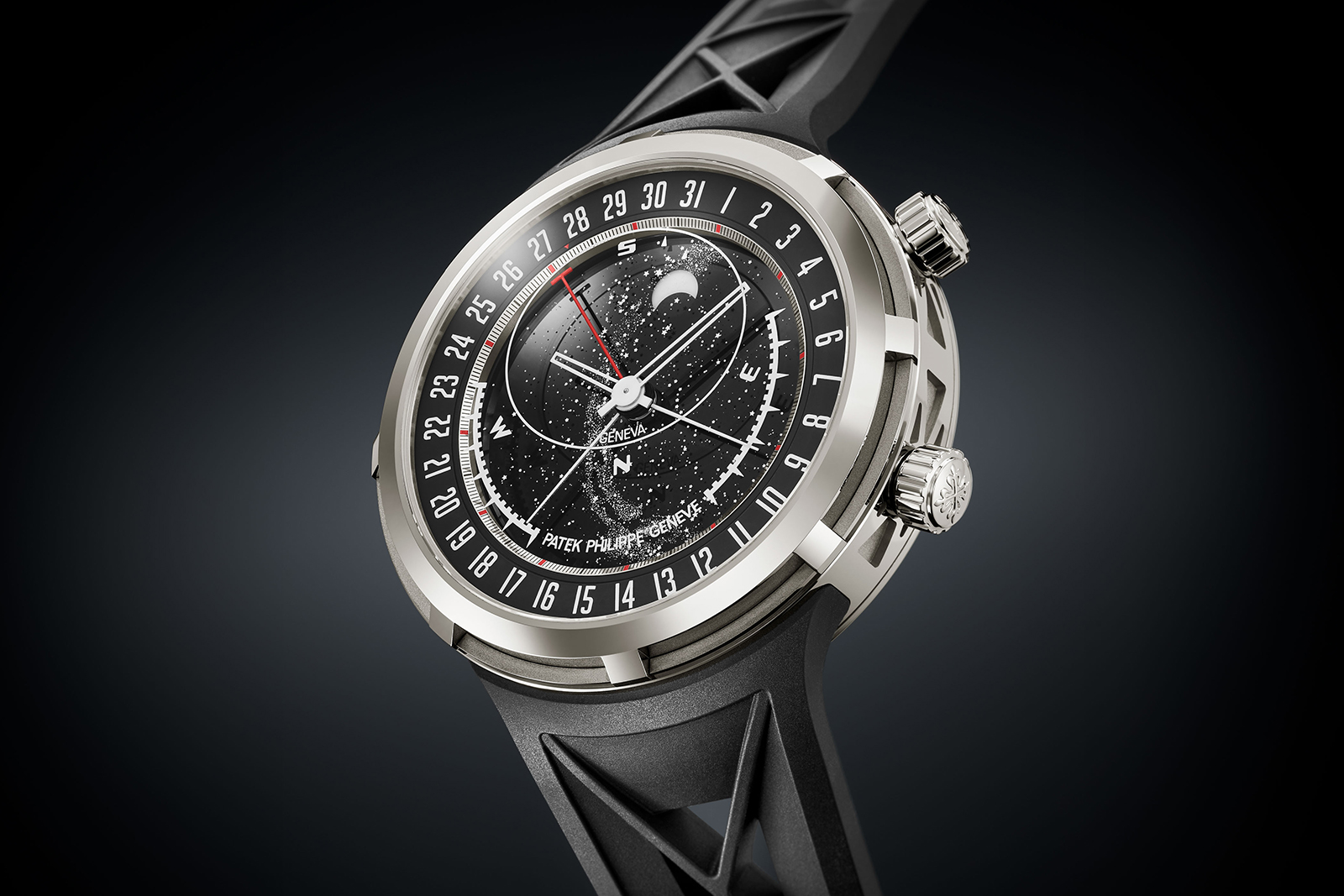
Patek Philippe updates its star chart “Grand Complication” for the third time with the Celestial Sunrise Sunset Ref. 6105G. The ref. 6105G adds the time of sunrise and sunset – cleverly integrated into the date scale – and a daring new design with a formidable, space-age lug-less case in white gold that’s 47 mm across.

The ref. 6105G also introduces a novel way to account for the transition between summer and winter time, adding a corrector that shifts the sunrise and sunset scales, solving a significant shortcoming of astronomical watches for users in Europe and the Americas.
Initial thoughts

I’ve long thought that Patek Philippe’s greatest strength, other than its massive industrial investments, was its remarkable design diversity. Today brands seem to pursue a unified design language across all of their watches. And while this result is a strong visual identity for the brand, it is extremely limiting.

Patek Philippe has no such limits, and the brand has about two dozen different case styles in the current collection, and hundreds in its back catalog. While this leads to its fair share of design misses, at least to my sensibilities, it can also lead to striking successes. I’m sure many will disagree, but I see the new Celestial as the latter.
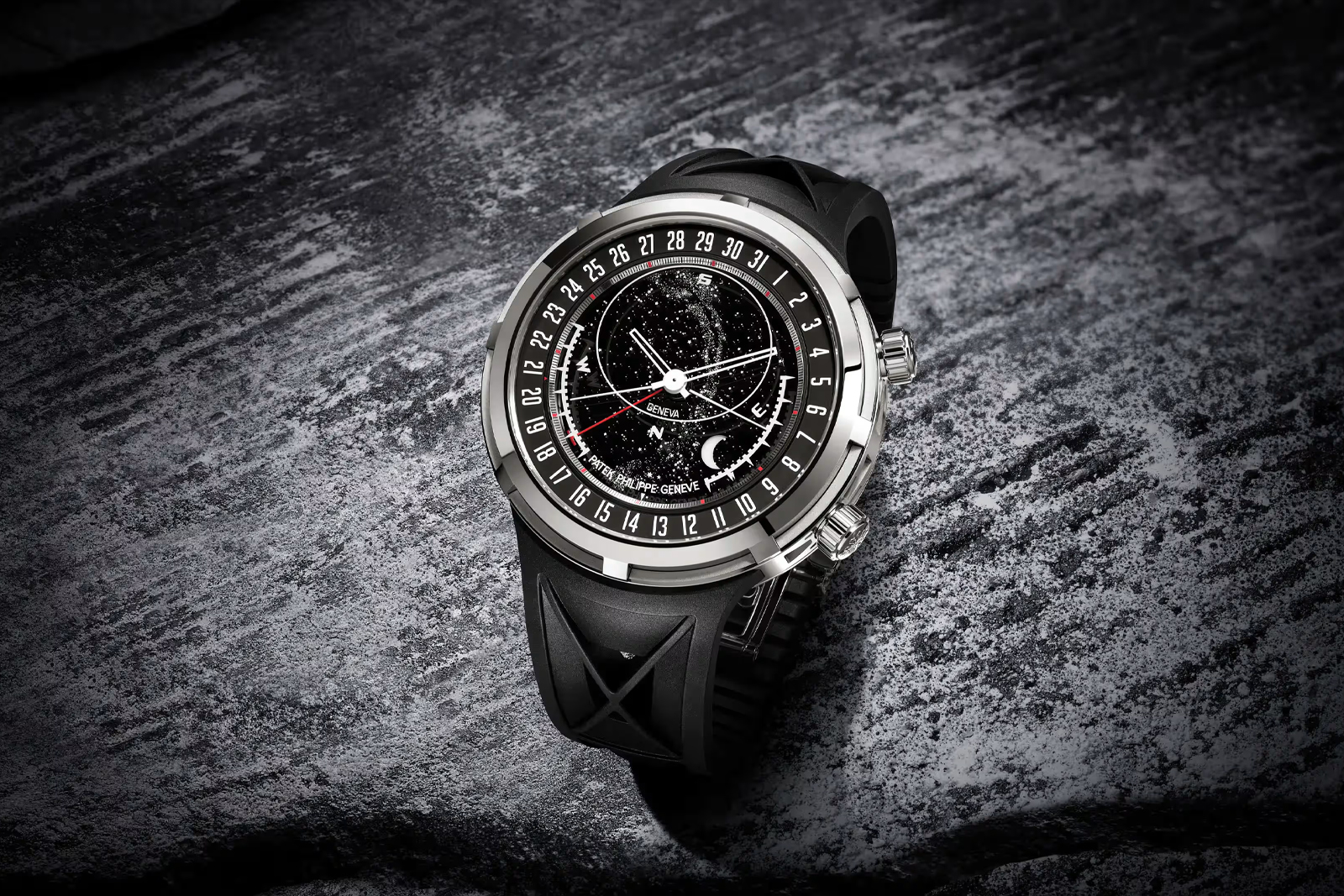
A wristwatch with the time of sunrise and sunset is long overdue from Patek Philippe, and this watch adds the ability to adjust those indications to account for daylight savings time. This addresses the complication’s greatest flaw, but as it is pre-programmed for Geneva, it is somewhat moot if you live at very different latitudes, a flaw the planisphere also shares.

Historically, astronomical watches were deeply personal to their owners, take those of James Ward Packard and Henry Graves Jr. which were programmed for their primary residences. Audemars Piguet’s now-discontinued Equation of Time proved it is possible for a big brand manufacture watches like this add scale, switching out the sunrise and sunset camps, and equation of time chapter ring, for the owner’s city.

Star Calibre 2026

The Celestial roots lead back to the monumental Star Caliber 2000, a massive duoface astronomical Westminster clock watch. It was also astronomically expensive, both to make and at retail. Patek Philippe followed up with the more economical Sky Moon Tourbillon, which uses miniaturised version of the Star Calibre’s 2000 planisphere on the back of the ref 5016’s movement, with some small tweaks.
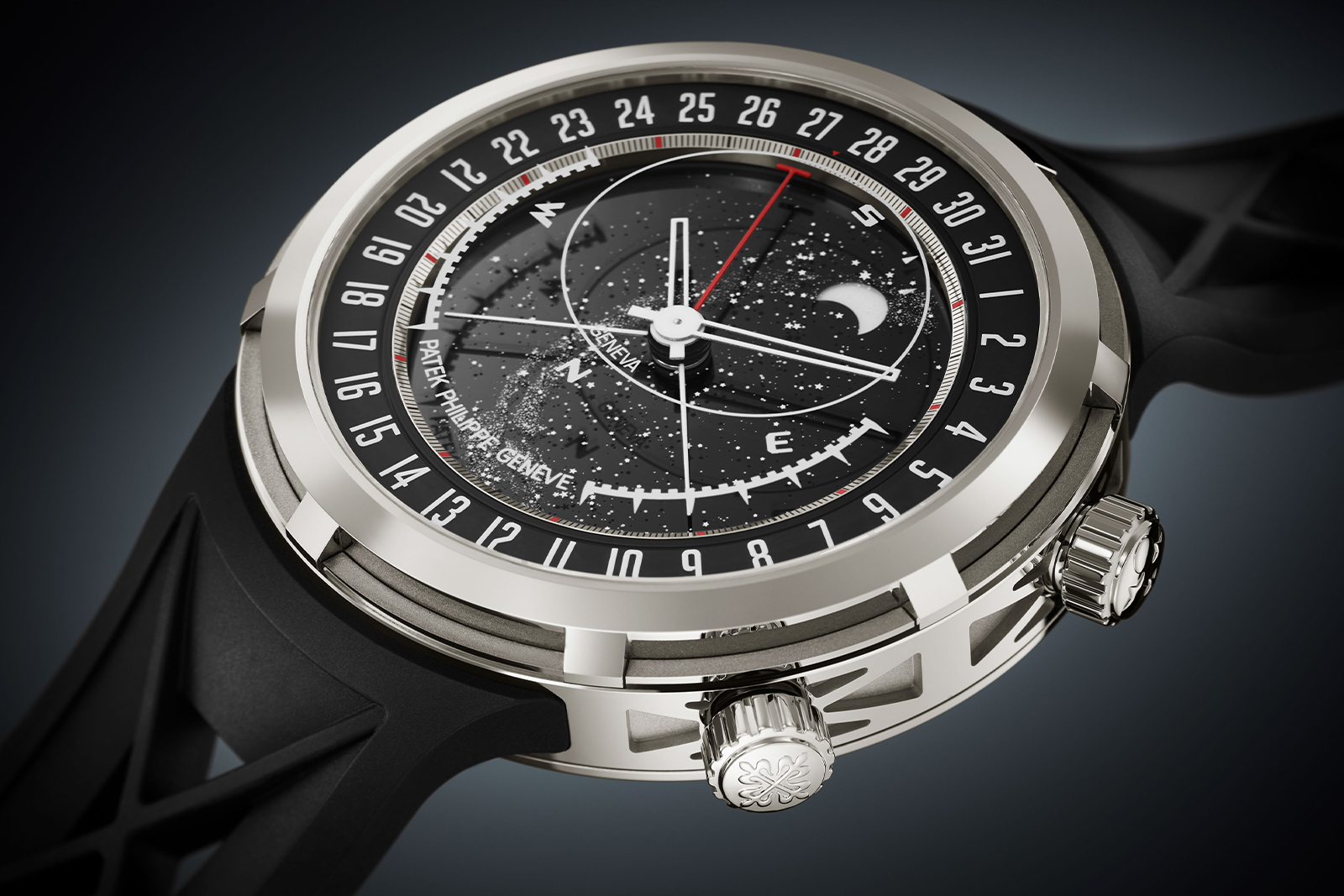
An even more approachable Celestial ref. 5102 soon followed, transposing the planisphere onto the cal. 240, which was then updated in 2012 with a point date. Now, Patek Philippe adds a third layer of complications. The complete roster of complications is now: planisphere, phases and passage of the moon, date, and time of sunrise and sunset.

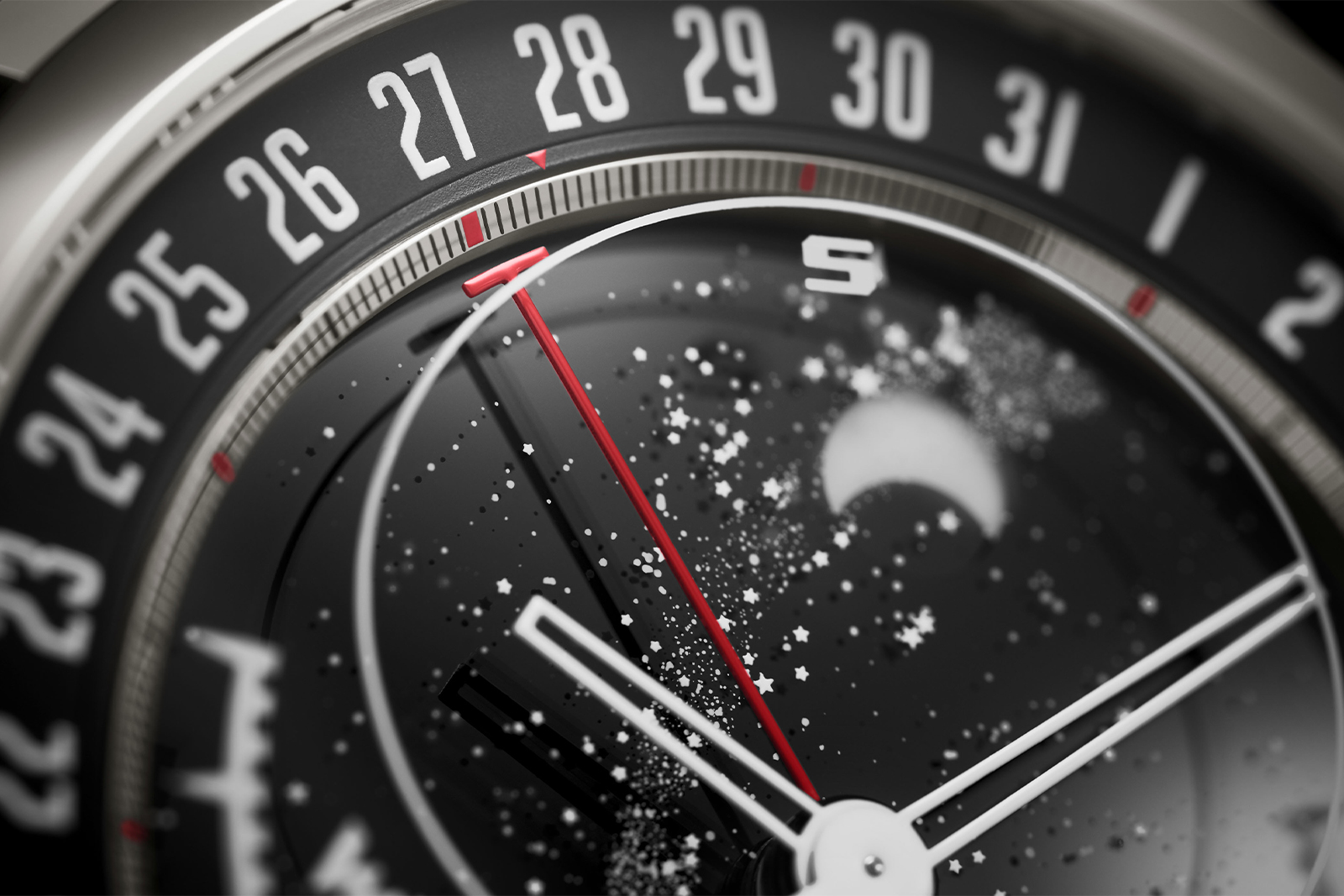
It is not an annual or perpetual calendar, so the date must be corrected manually at end of months with less than 31 days using a pusher in the case band. This is similar to the Krayon Anywhere, which also uses a simple calendar to drive its time of sunrise and sunset complications. Cleverly, the pointer date ring also acts the as scale for the sunrise and sunset hands.
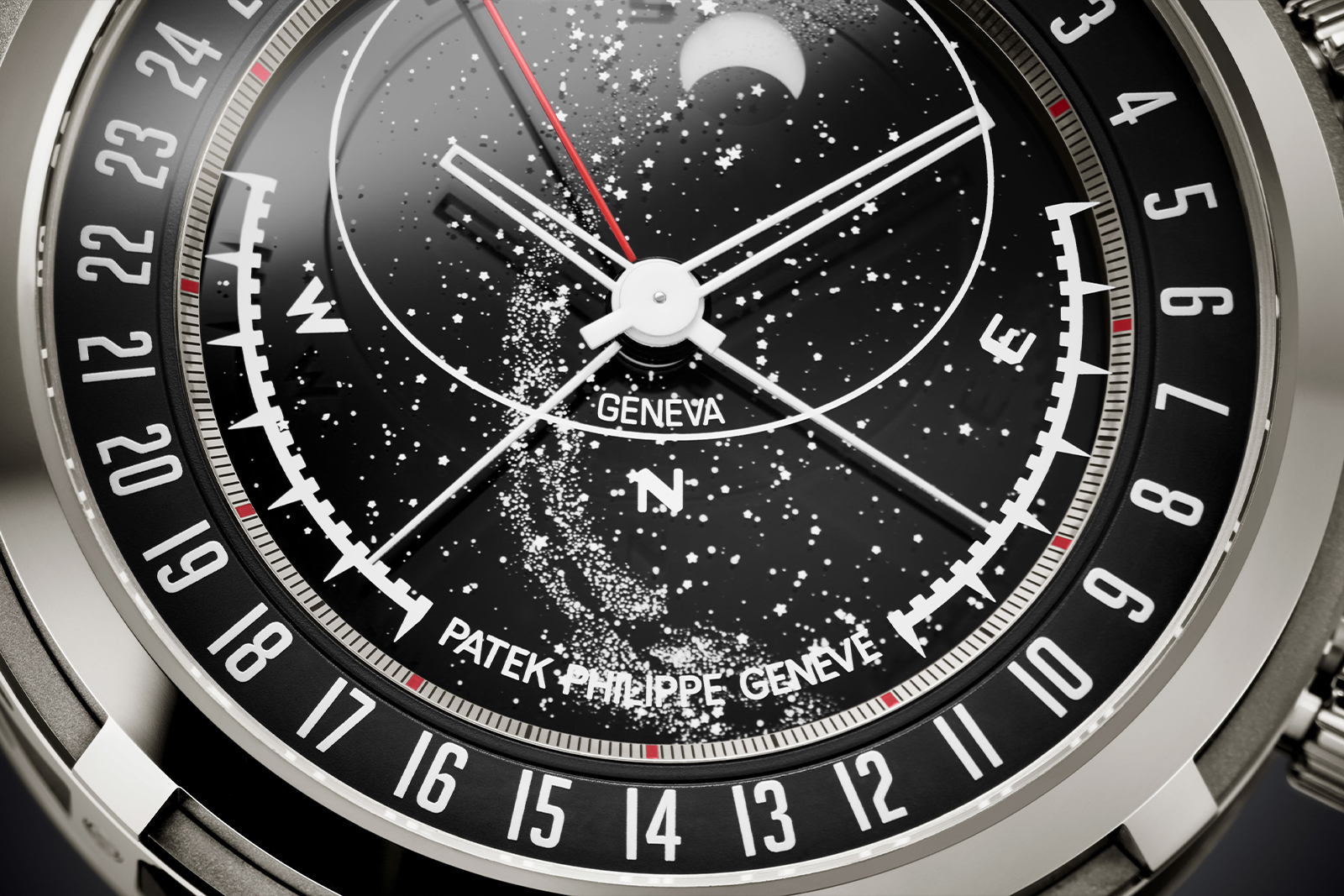
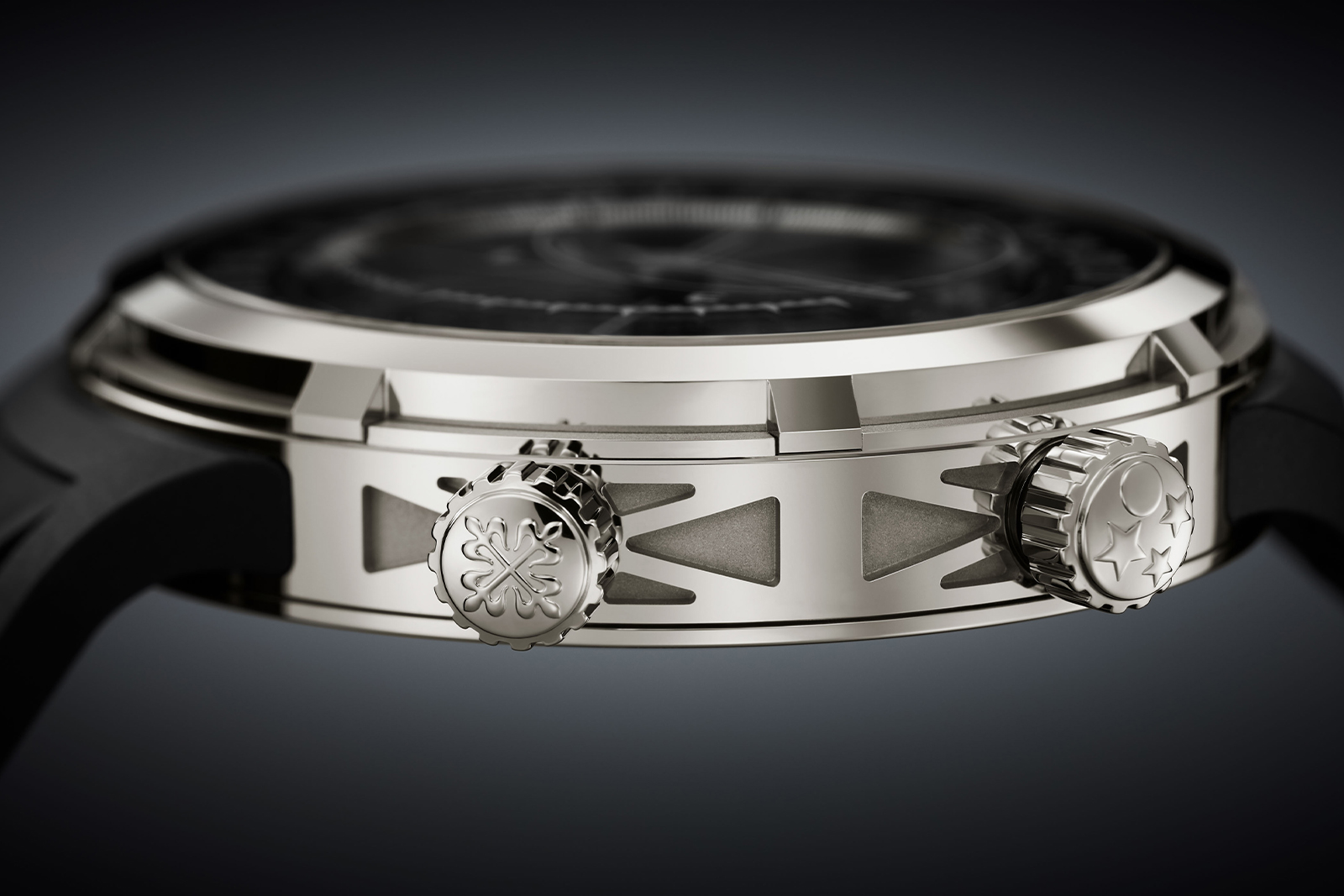
Pressing the pusher at 9 o’clock advances the times displayed by one hour to Summer Time, while the single corrector at 10 o’clock pulls the times back by one hour to Winter Time. Lastly, the second crown adjusts the planisphere by turning in one direction, and the moon in the other. Once set, the moon will take over a thousand years to accumulate an error of one day.
Space case

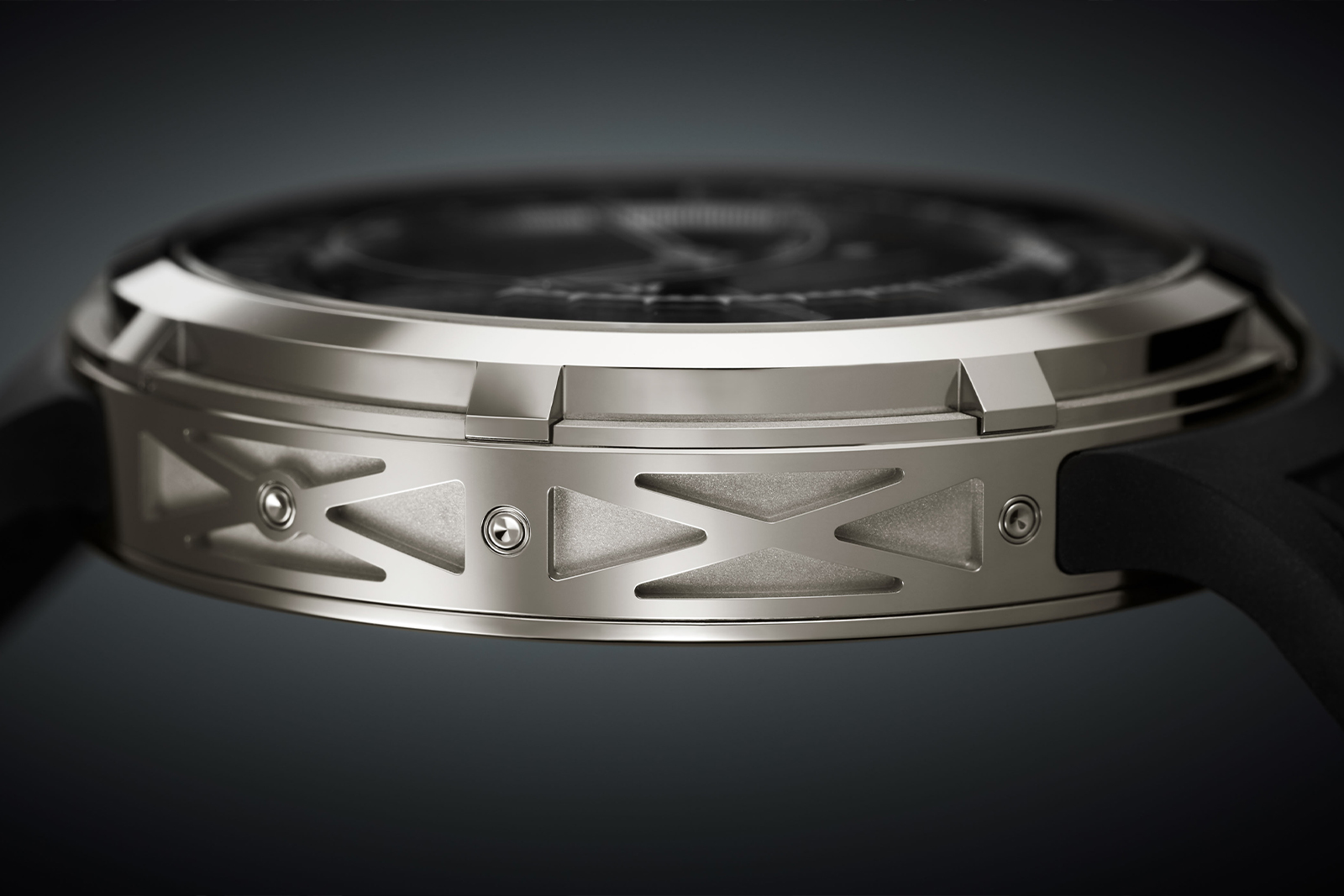
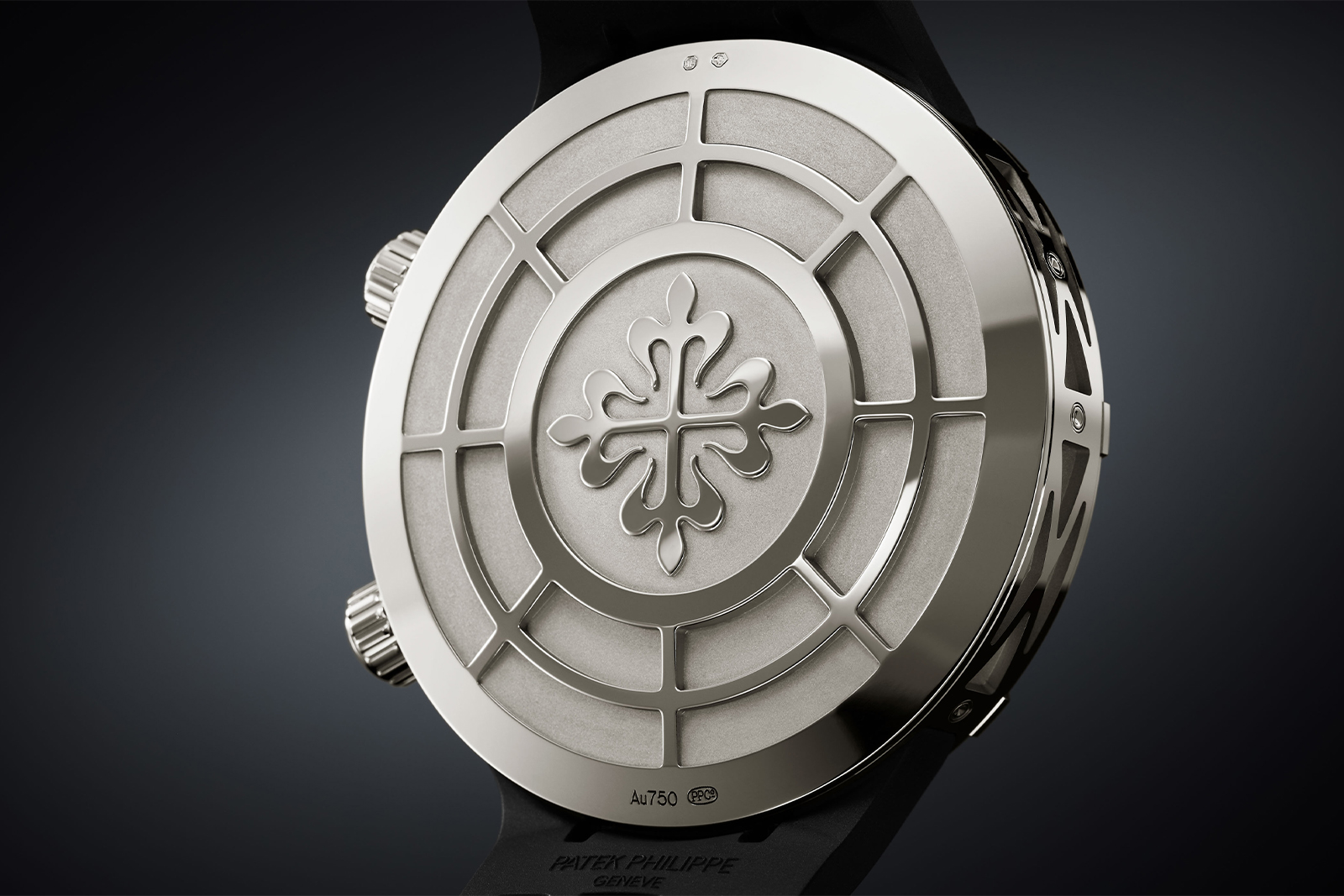
Patek Philippe describes the case as a “striking modern design” which is perhaps an understatement. The case is white gold and an expansive 47 mm, though the legless design should make it more wearable than the specifications suggest. The reoccurring x motif along the case band and on both sides of the strap is inspired by the tubular trusses common on spacecraft and man-made satellites.
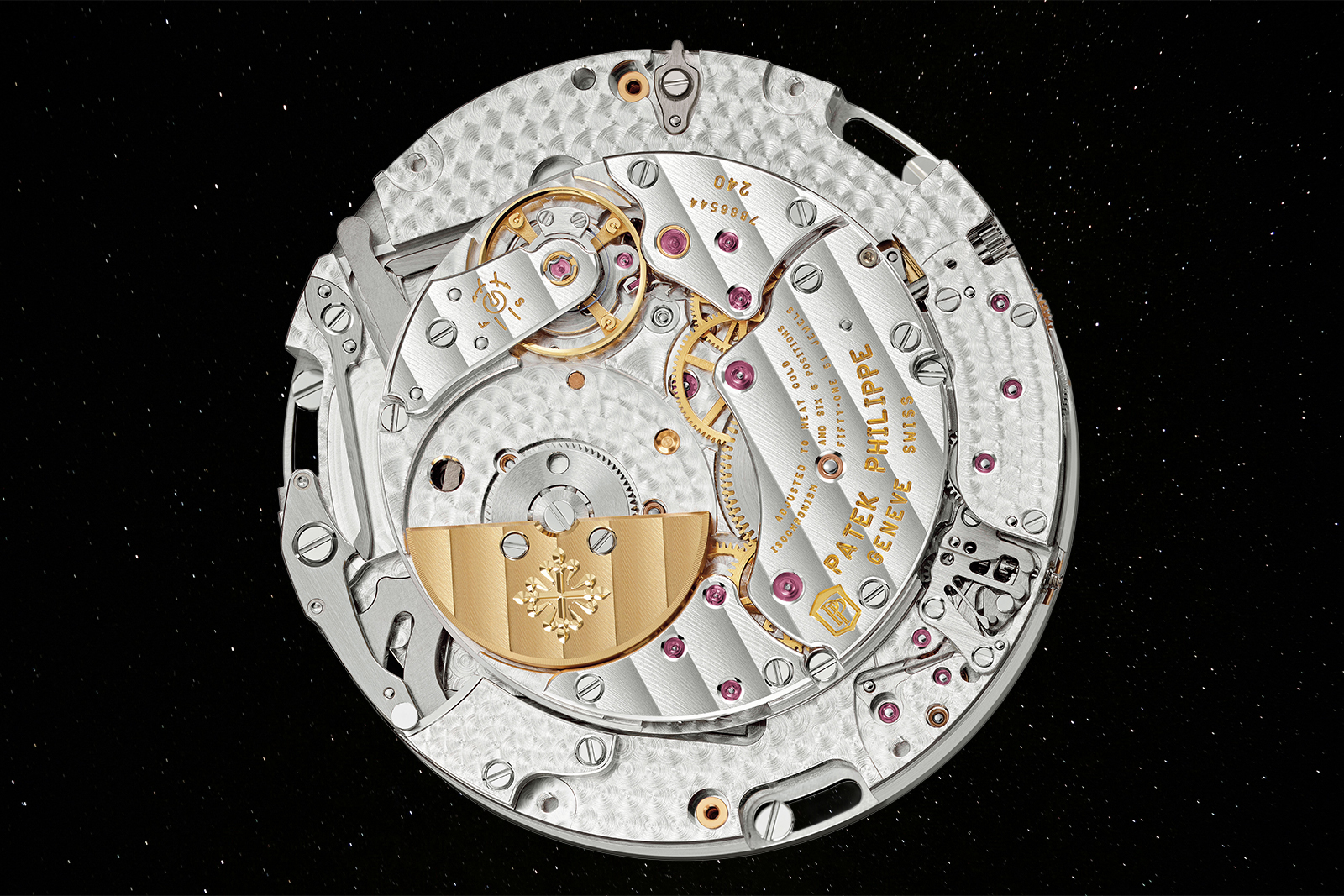
While Patek Philippe launched a larger micro-rotor calibre several years ago, which already powers the in-line perpetual calendar and some travel time complications, Patek Philippe continues to use the 49 year old cal. 240 as a base. The 27.5 mm movement was already too small for the 44 mm ref 6102, and a display back would look comical on this 47 mm case, especially as the module on top is almost twice the size of its base. While this sizing incongruity is unfortunate, Patek Philippe thankfully only offers this watch with a solid case back.
When the cal. 240 is out of sight and out of mind, it is a fine workhorse calibre, capable of keeping good time while somehow supplying enough torque to the massive module while keeping the watch quite slim for what it is, at only 12.29 mm tall.

Key facts and price

Patek Philippe Celestial Sunrise and Sunset
Ref. 6105G-001

Diameter: 47 mm
Height: 12.39 mm
Material: 18k white gold
Crystal: Sapphire
Water resistance: 30 m

Movement: Cal. 240 C LU CL LCSO
Functions: Hours, minutes, date, planisphere, time of sunrise and sunset, date
Frequency: 28,800 beats per hour (4 Hz)
Winding: Automatic
Power reserve: 45 hours

Strap: Rubber with triple-blade clasp

Limited edition: No
Availability:
At Patek Philippe retailers and salons.
Price: US$437,610 excluding taxes

For more, visit Patek.com.


Back to top.

You may also enjoy these.

Patek Philippe’s 50 Years of Nautilus is All Classics Plus a Surprise

But not in steel.

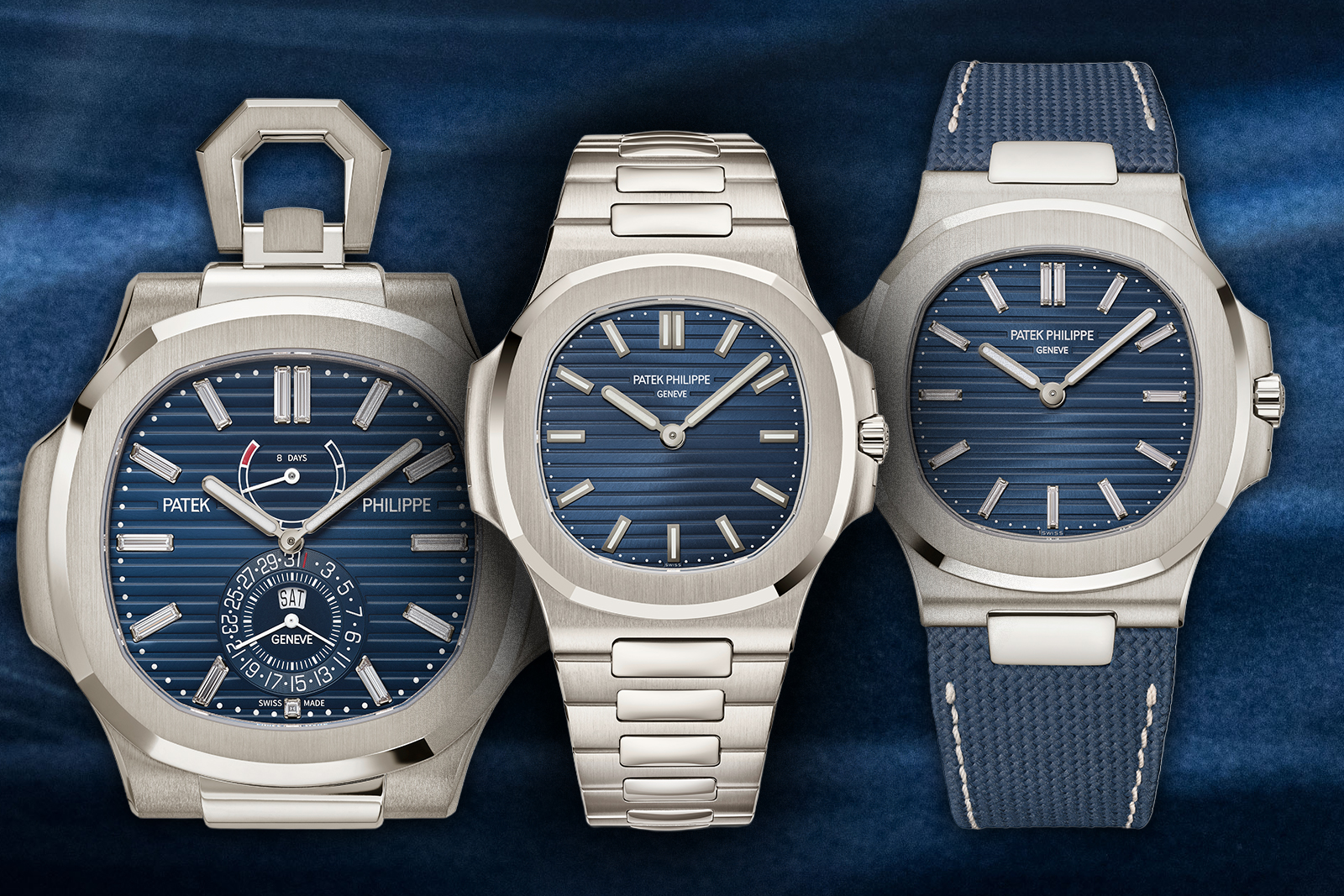
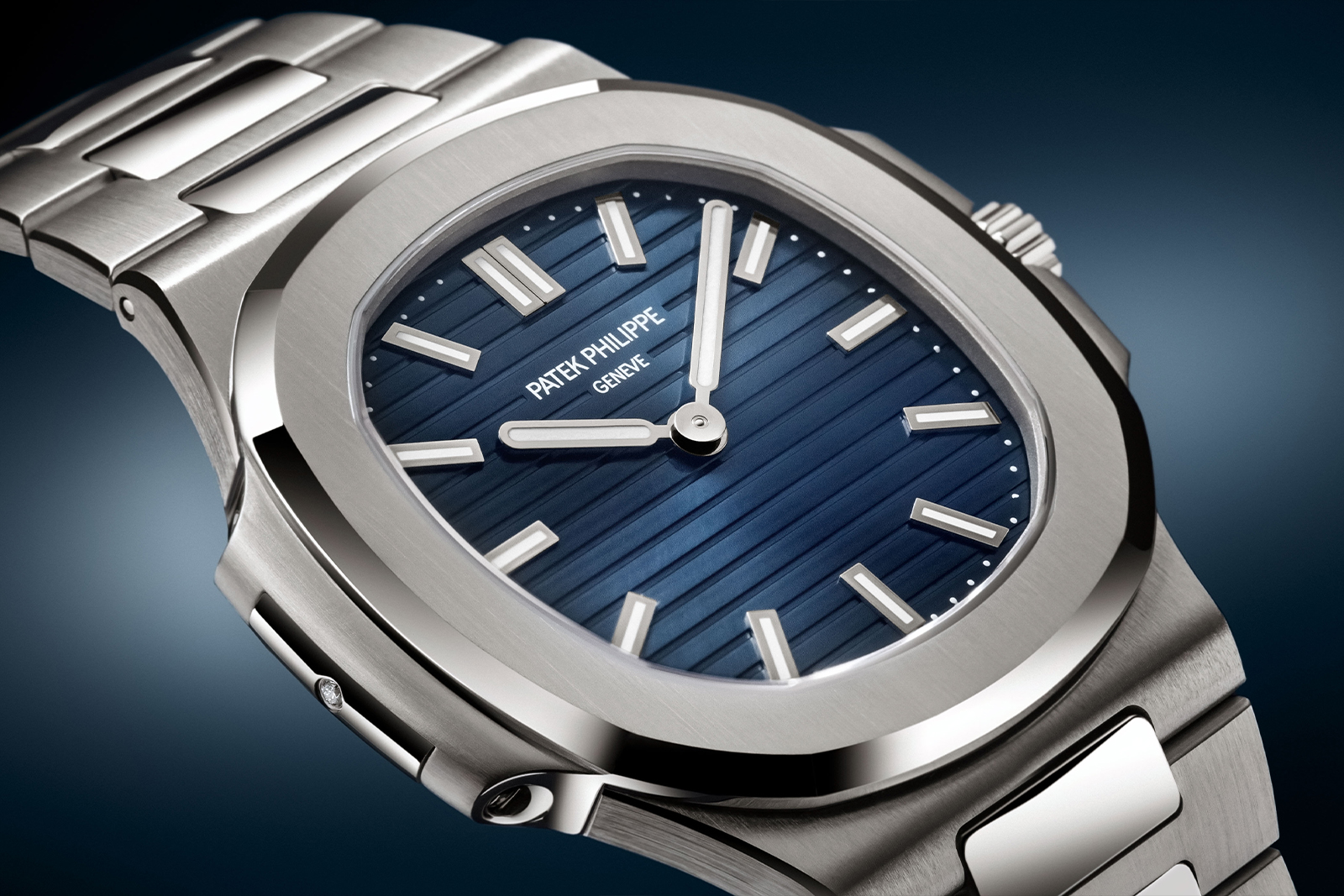
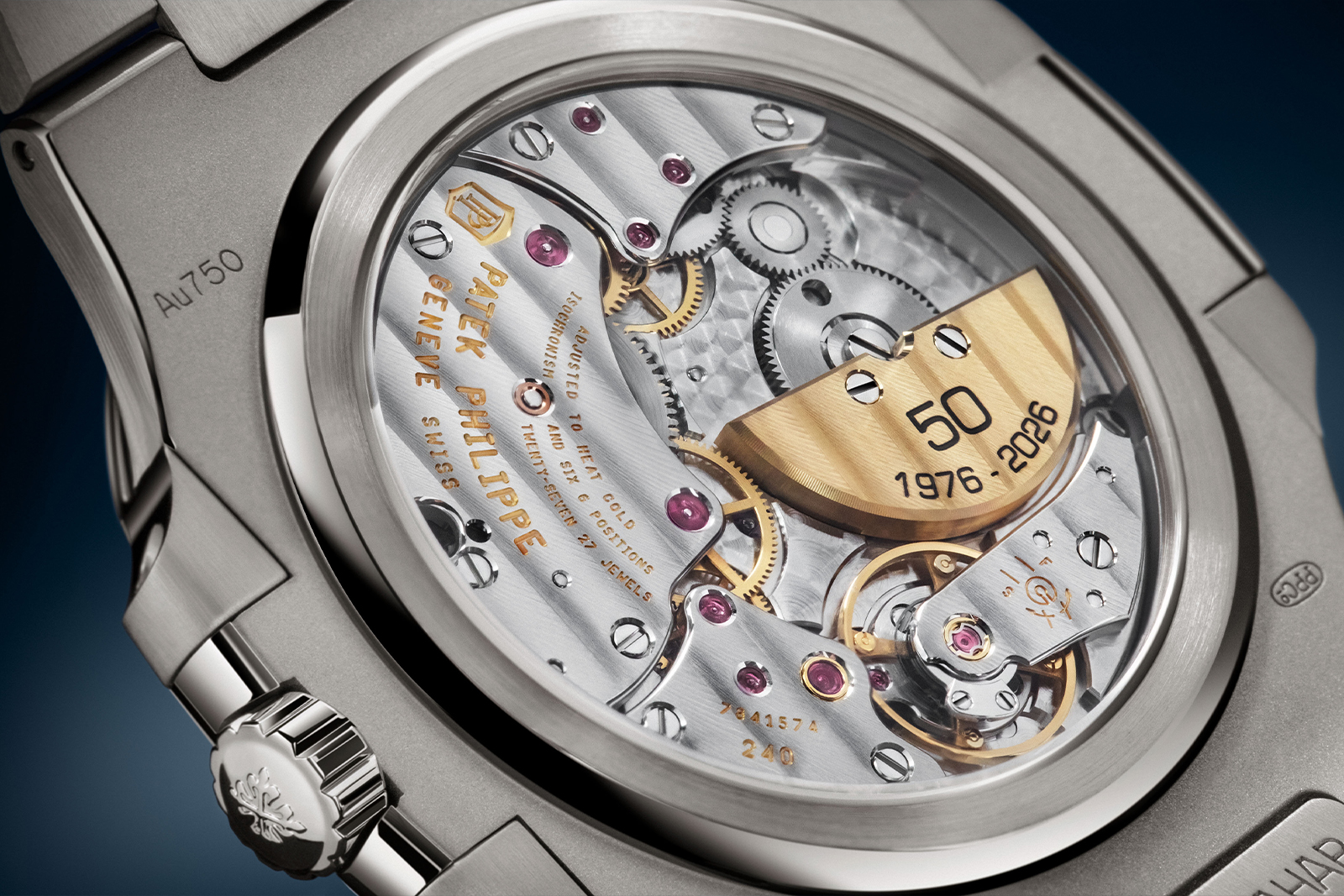
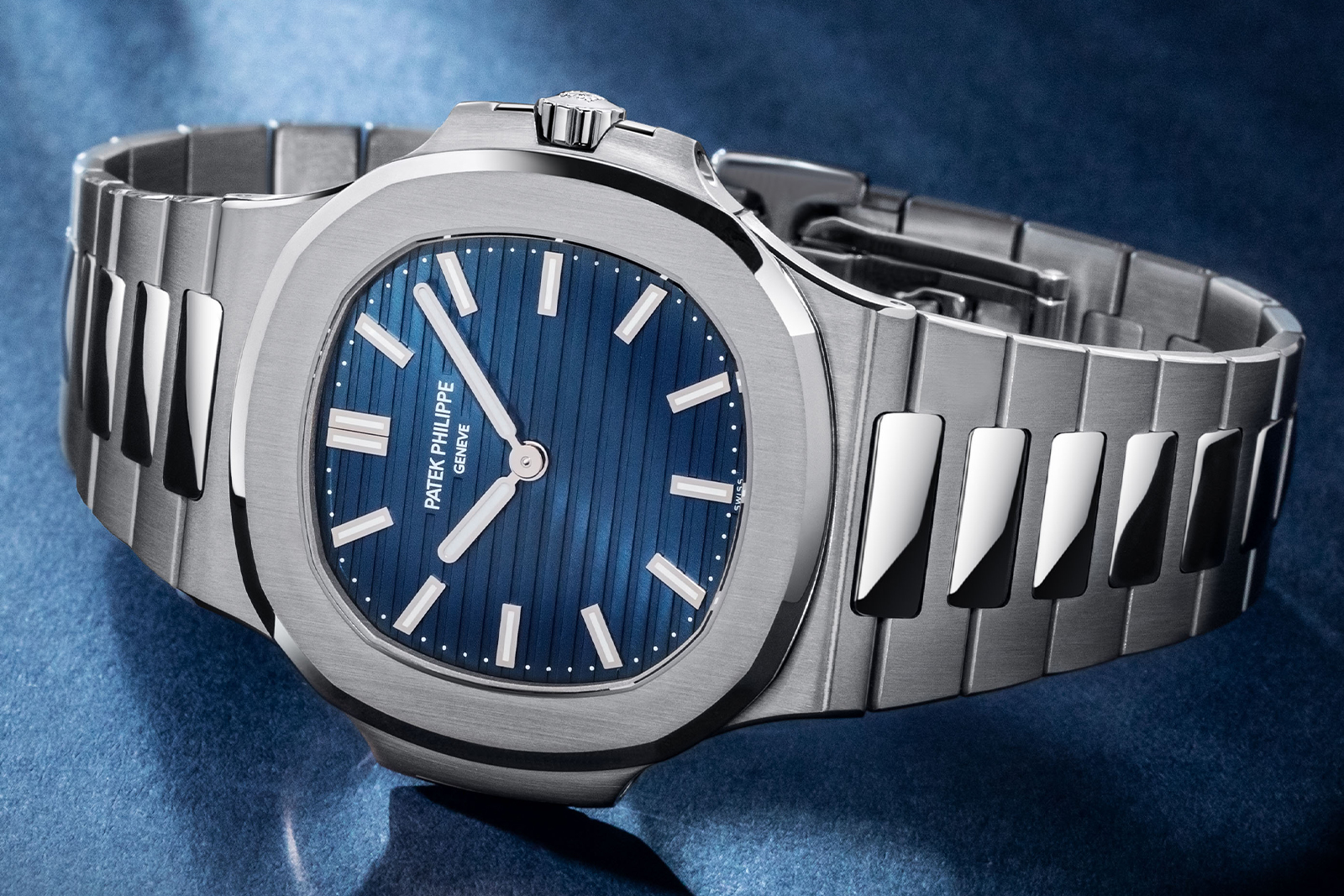
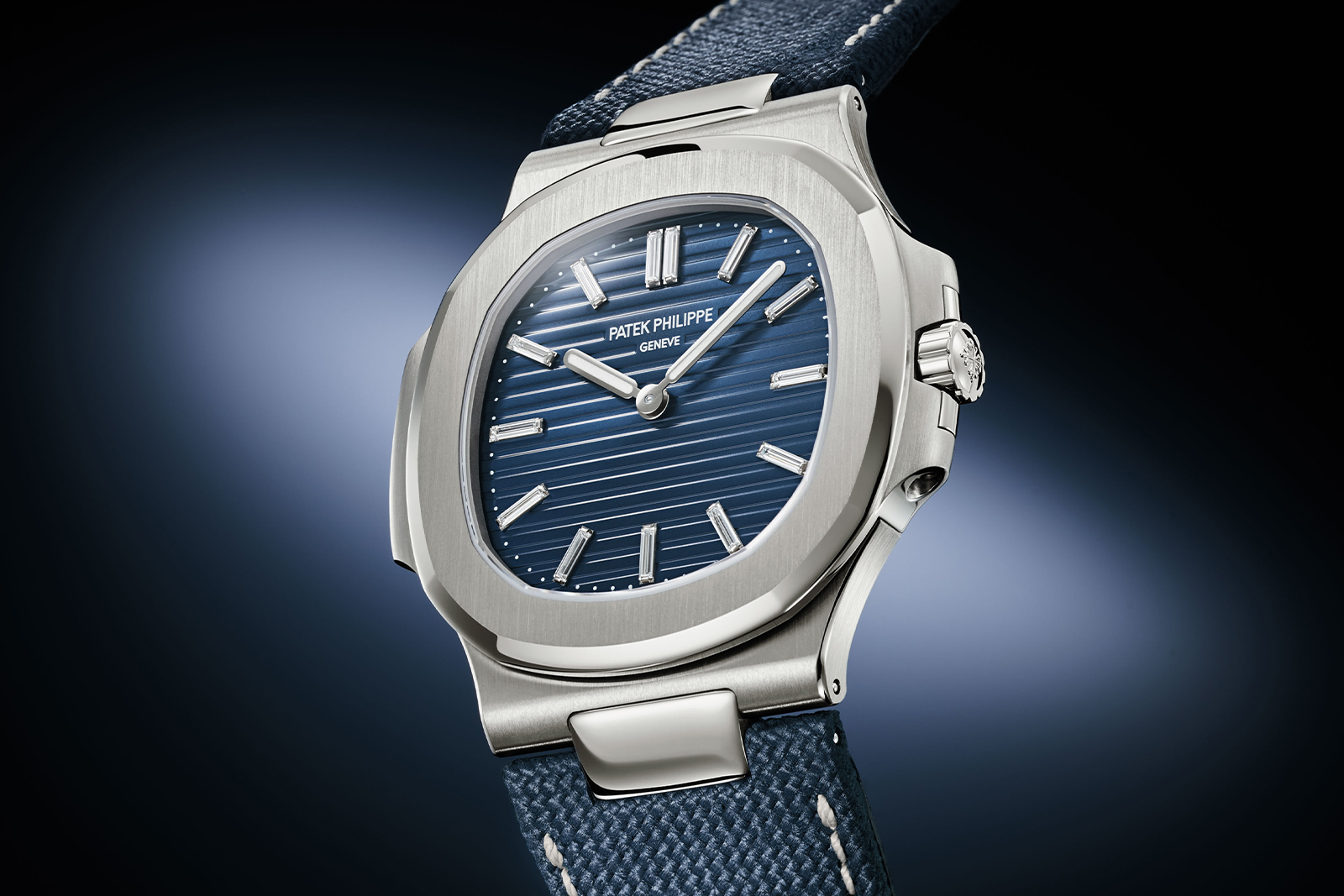
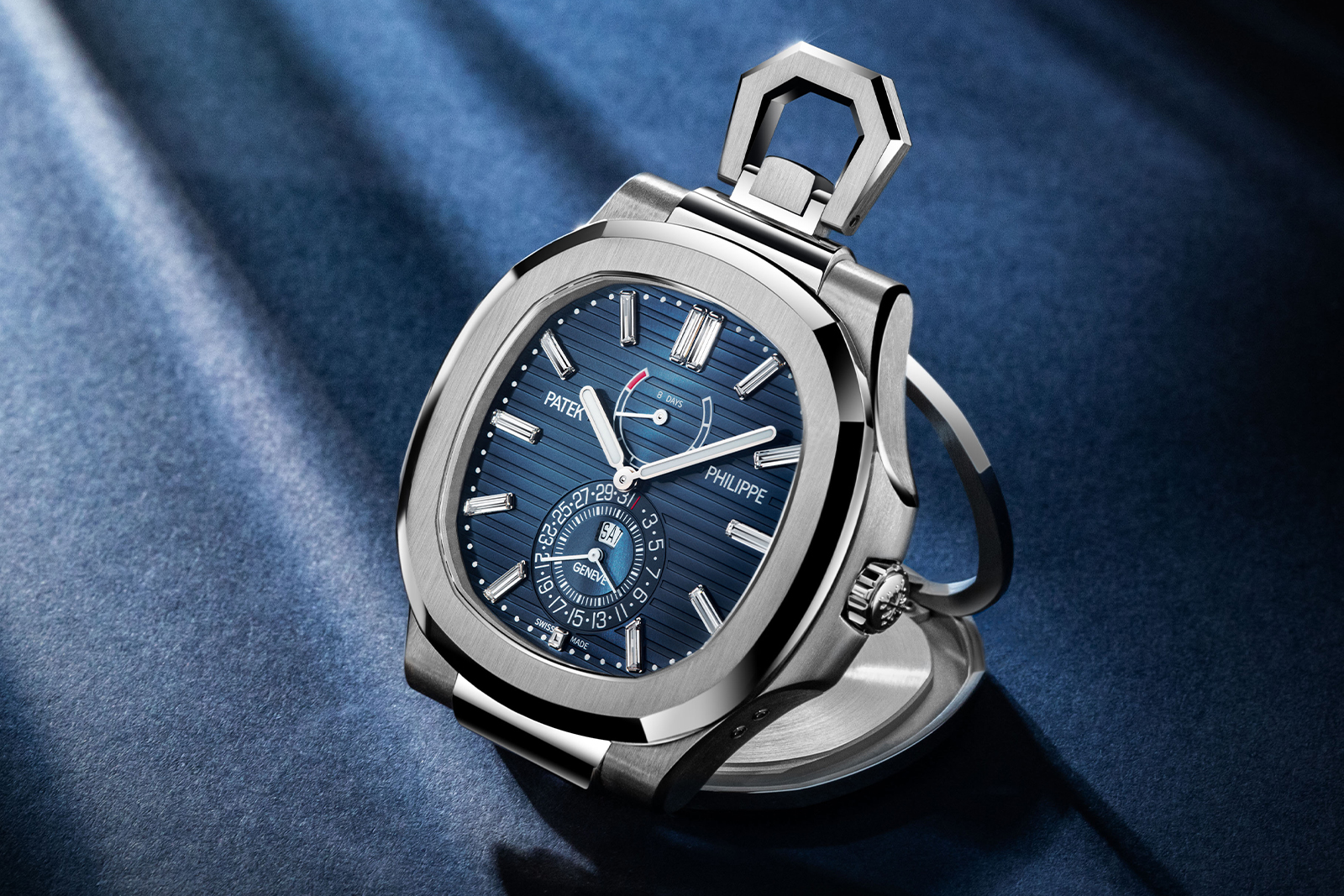
Patek Philippe celebrates the semicentennial of its coveted sports watch with the 50th Anniversary Nautilus Collection, a trio of two hand precious metal watches in white gold and platinum, the refs. 5810/1G and 5610/1P respectively, and an unexpected pocket watch desk clock, the ref. 958G.

The deletion of the seconds hand on the wristwatches is a return to the line’s aesthetic roots, also demonstrated by a new 38 mm case size employed on the platinum model. But the anniversary editions remain on the precious metal path Patek Philippe began in 2021 when it axed the steel ref. 5711.

Initial Thoughts

These anniversary editions are the truest to the original Nautilus that we’ve seen in recent memory. The line launched with the Ref. 3700 in 1976 – without a seconds hand, as was the taste of the time. However, while Audemars Piguet stuck to the two hands plug date format with the Royal Oak Jumbo, Patek Philippe migrated the Nautilus to its new sweep-seconds platform, which would lead to the three-hand Nautilus we know today.

I believe something was lost when Patek Philippe added a sweep seconds hand to the Nautilus, though understandable from a business perspective given that watches with seconds hands generally have broader appeal than those without. That is recovered here, and the deletion of the calendar sets it apart from the original enough to not be a “reissue”. A smaller 38 mm Nautilus, with better proportions than the existing Ladies models, in also appreciated.

The 38 mm platinum ref. 5610/1P-001.

It is a shame then that the return of a two hand Nautilus is to be a fleeting one, as Patek Philippe will only build 5,000 of them, spread across three references. While that is an enormous number of watches considering the price point, Patek Philippe makes just over 70,000 watches per year, and has the brand power to sell every sports watch it makes in short order, so these limited editions will be short lived.

The choice of case materials, white gold and platinum, perhaps leaves the door open to a regular production steel version in the near future, but for now Patek Philippe’s leadership remains set on the Nautilus being a precious metal first collection.

I was quite surprised that Patek Philippe even celebrated the Nautilus’s 50th anniversary during the Watches & Wonders fair, expecting them to save it for the second half of the year, as had been the case for other sports launches in recent years. Perhaps that implies something we will see something else is in the pipeline, or perhaps not. Patek Philippe is rather hard to predict.

Three’s a Crowd

Ref. 5610/1P-001 acts as flagship of the 50th anniversary fleet at 38 mm in diameter with a platinum case and priced at CHF90,000. While platinum is nothing new for the Nautilus line – it also marked the collection’s 40th anniversary – this will be by far the most produced example at 2,000 pieces.

It is extremely thin, only 6.9 mm, thanks to the cal. 240 inside, a movement that has been in Patek Philippe’s portfolio for about as long as the Nautlius (49 years) but remains a reliable workhorse, and thanks to Patek Philippe’s investments, keeps to an outstanding -1/+2 seconds per day, despite the tiny balance.

It comes on a full platinum bracelet, with Patek Philippe’s recently reintroduced quick adjust clasp, and uses the same front loading case construction of the 1978 original. It is worth pointing out that while the ref. 3700/1A is quoted at 42 mm in diameter, that is when measured form winglet to winglet, measured diagonally (as Patek Philippe measures the Ref. 5610) it was a little over 38 mm. That arguably puts the new Ref. 5610 closer between the Ref. 3700 than the smaller Ref. 3800, even if the latter is closer on paper.

41 mm Duo

Patek Philippe also offers a larger, 41 mm variant in white gold – 5810/1G-001, also on the bracelet. Despite its greater size, and the greater cost of white gold to platinum, this variant is significantly less expensive, though still ambitiously priced at CHF75,000.

Additionally, it has a sibling in the ref. 5810G-001, essentially the same watch on the fabric pattern composite strap with baguette diamond hour markers. This variant is the most limited, outside of the 8-day desk clock, though is also the least expensive at “only” CHF60,000.

The First Nautlius Pocket Watch

The most limited off all the semicentennial pieces is ref. 958G-001, which Patek Philippe claims to be a desk clock, even though it is very clearly a pocket watch with a kickstand, even using the three digit reference scheme used for Pocket watches, rather than the five digit one for desk and dome clocks.

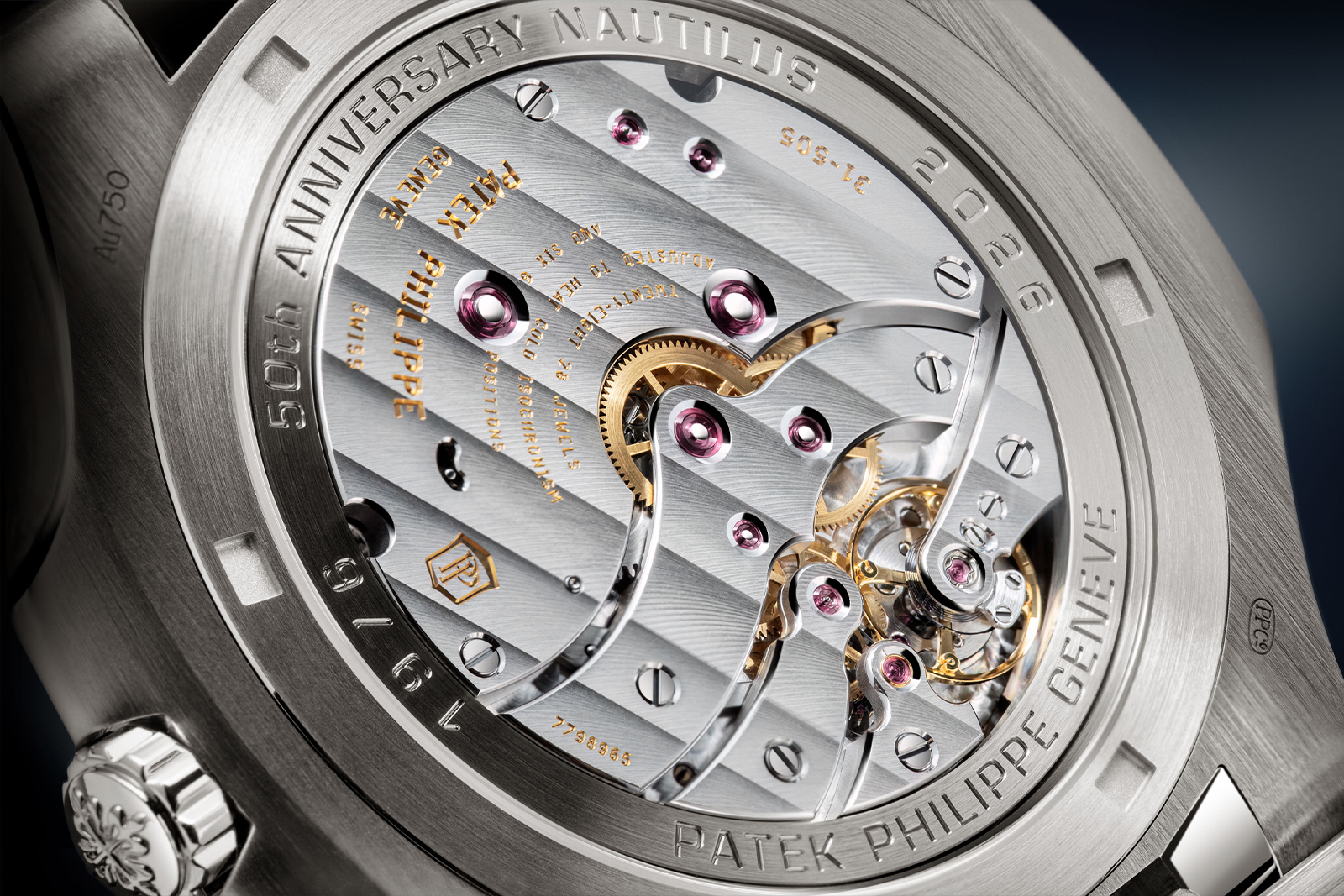
It uses the same verbosely named cal, 31-505 8J PS IRM CI J found in last year’s 8-day Calatrava, with its roots going back to the 10-day Manta Ray models that marked the new Millenium. It sports an instantaneous calendar with day and date, in addition to eight days of going and an up/down indicator.

With a lofty price tag of CHF205,000, not unexpected given the high-end movement, 50.65 mm white gold case and baguette diamond hour markers, though notably doesn’t seem to come with a chain. Not that it needs one, as it is a desk clock, not a pocket watch – even if it has a bow to attach a chain.


Key facts and price

Patek Philippe Nautilus 50th Anniversary Collection
Ref. 5610/1P-001
Ref. 5810/1G-001
Ref. 5810G-001

Diameter: 38 mm (ref. 5610/1P), 41 mm (ref. 5810/1G and 5810G)
Height: 6.9 mm
Material: Platinum 950 (ref. 5610/1P), 18k palladium white gold (ref. 5810/1G and 5810G)
Crystal: Sapphire
Water resistance: 30 m

Movement: cal. 240
Functions: Hours and minutes
Frequency: 21,600 BPH (3 Hz)
Winding: Automatic
Power reserve: 45 hours

Strap: Bracelet in same metal as case (ref. 5610/1P and 5810/1G), composite strap (ref. 5810G)

Limited edition: Yes, 2,000 pieces (ref. 5610/1P and 5810/1G), 1,000 pieces (ref. 5810G)
Availability:
At Patek Philippe retailers and salons.
Price: US$112,529 (ref. 5610/1P) , US$93,774 (ref. 5810/1G), US$75,019 (ref. 5810G)


Patek Philippe Nautilus 50th Anniversary Desk Clock
Ref. 958G-001

Diameter: 50.65 mm
Height: 13.5 mm
Material: 18k palladium white gold
Crystal: Sapphire
Water resistance: Humidity and dust resistaint only.

Movement: cal. 31-505 8J PS IRM CI J
Functions: Hours, minutes, running small seconds, instantaneous day and date, power reserve indication.
Frequency: 21,600 BPH (3 Hz)
Winding: Manual winding
Power reserve: 8 days

Limited edition: Yes, 100 pieces.
Availability:
At Patek Philippe retailers and salons.
Price: US$$256,315

For more, visit Patek.com.


Back to top.
You may also enjoy these.

Rolex Celebrates the Oyster with Anniversary Models

Anniversary Rolesor and colourful "Jubilee Dial".

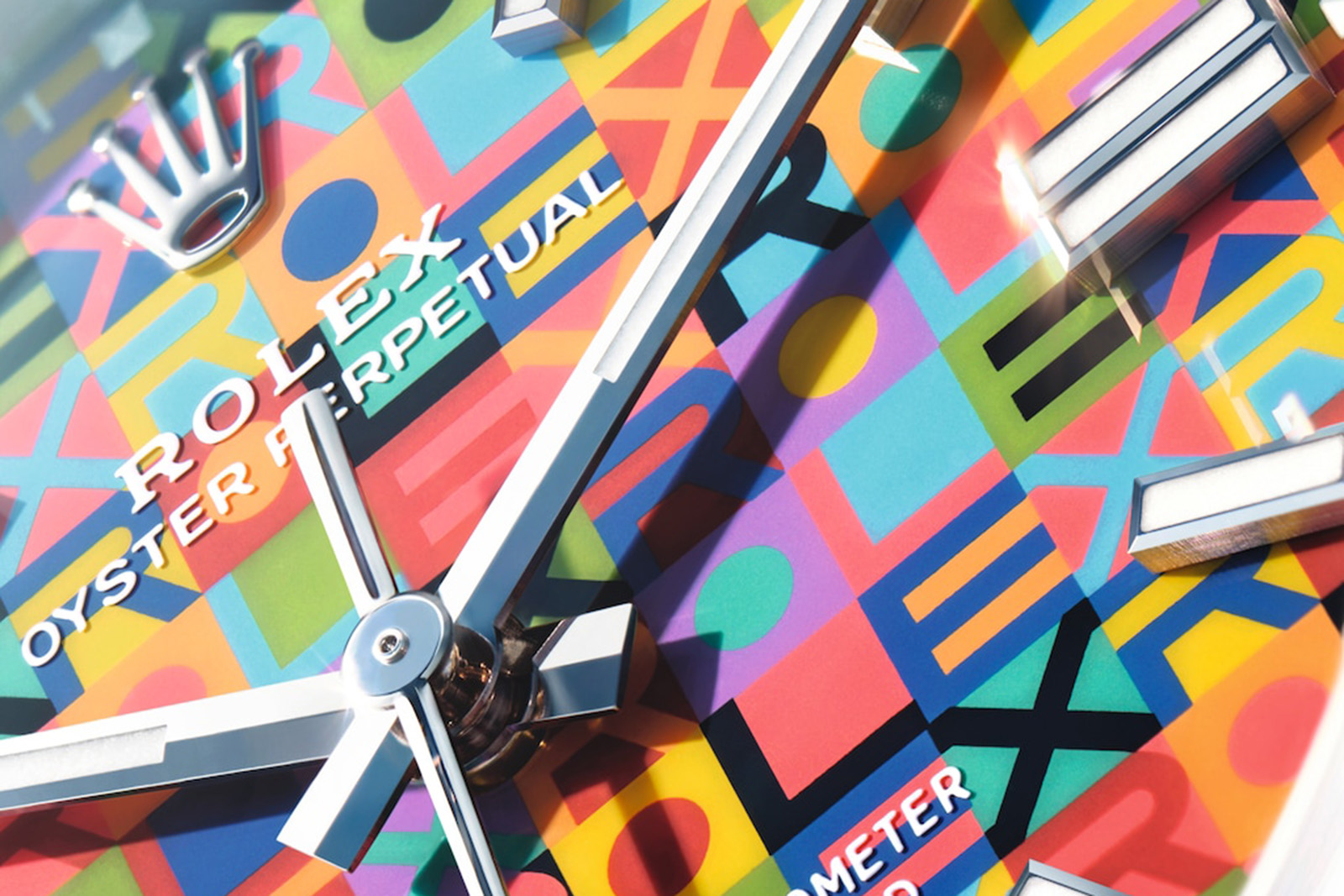
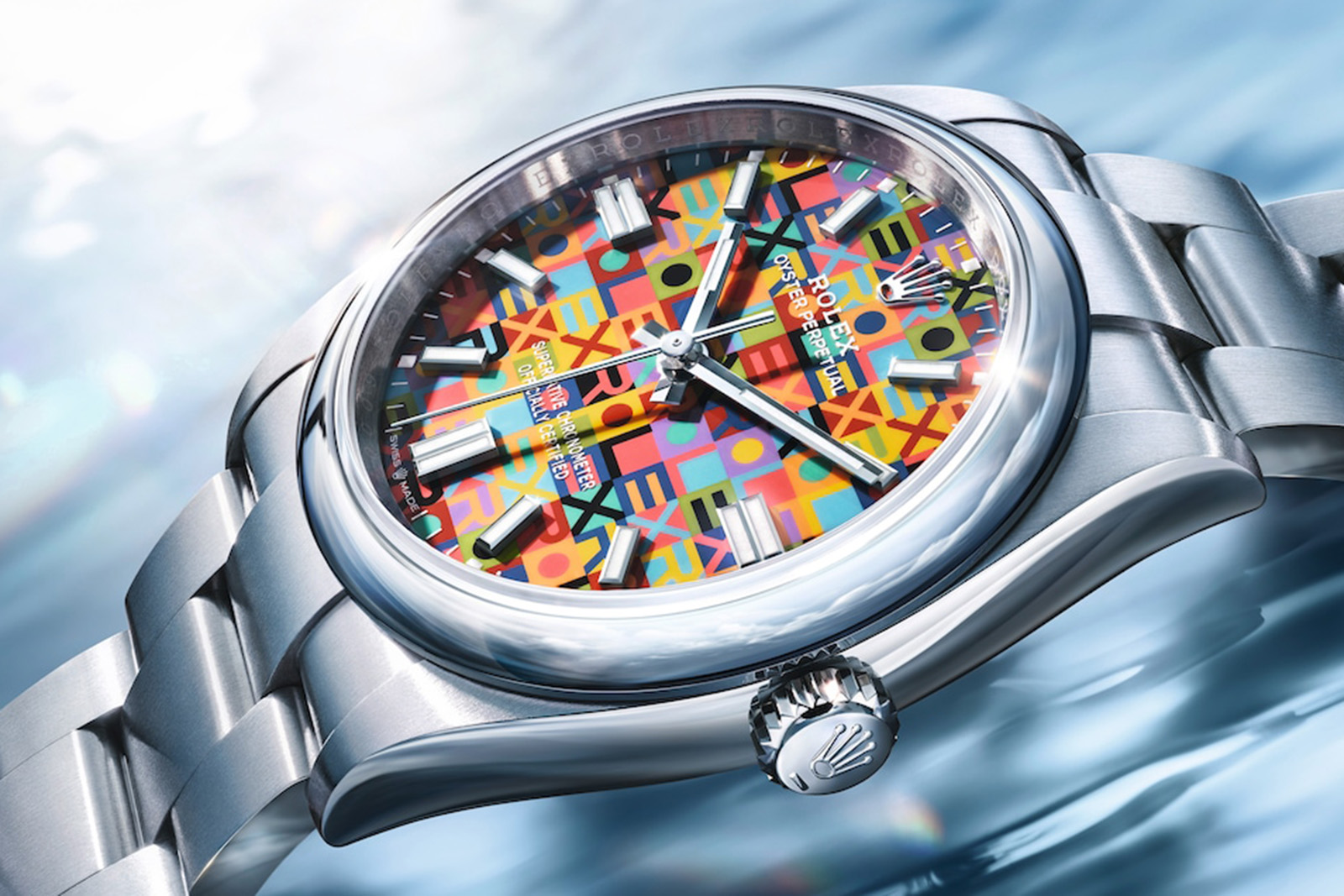
This year marks the 100th anniversary of the Rolex Oyster, the first waterproof watch produced by the brand. Rolex just announced two new Oyster Perpetual models to mark the occasion: the Oyster Perpetual 41 mm Rolesor Anniversary (ref. 134303) in an unusual blend of gold and steel, and the playful Oyster Perpetual “Jubilee Dial” that’s all about colour and patterns with a dial reminiscent of the works of Alighiero Boetti (and is available in 41 mm, 36 mm, and 36 mm variants).

Initial thoughts

Celebrating 100 years of the landmark Oyster case is certainly important to Rolex, as that original invention has been defining the brand ever since. Choosing arguably the plainest model line to mark the occasion is both meaningful and inspired. The entry-level Oyster Perpetual line manages to still bridge the gap between what Rolex has become and what the brand was 100 years ago.

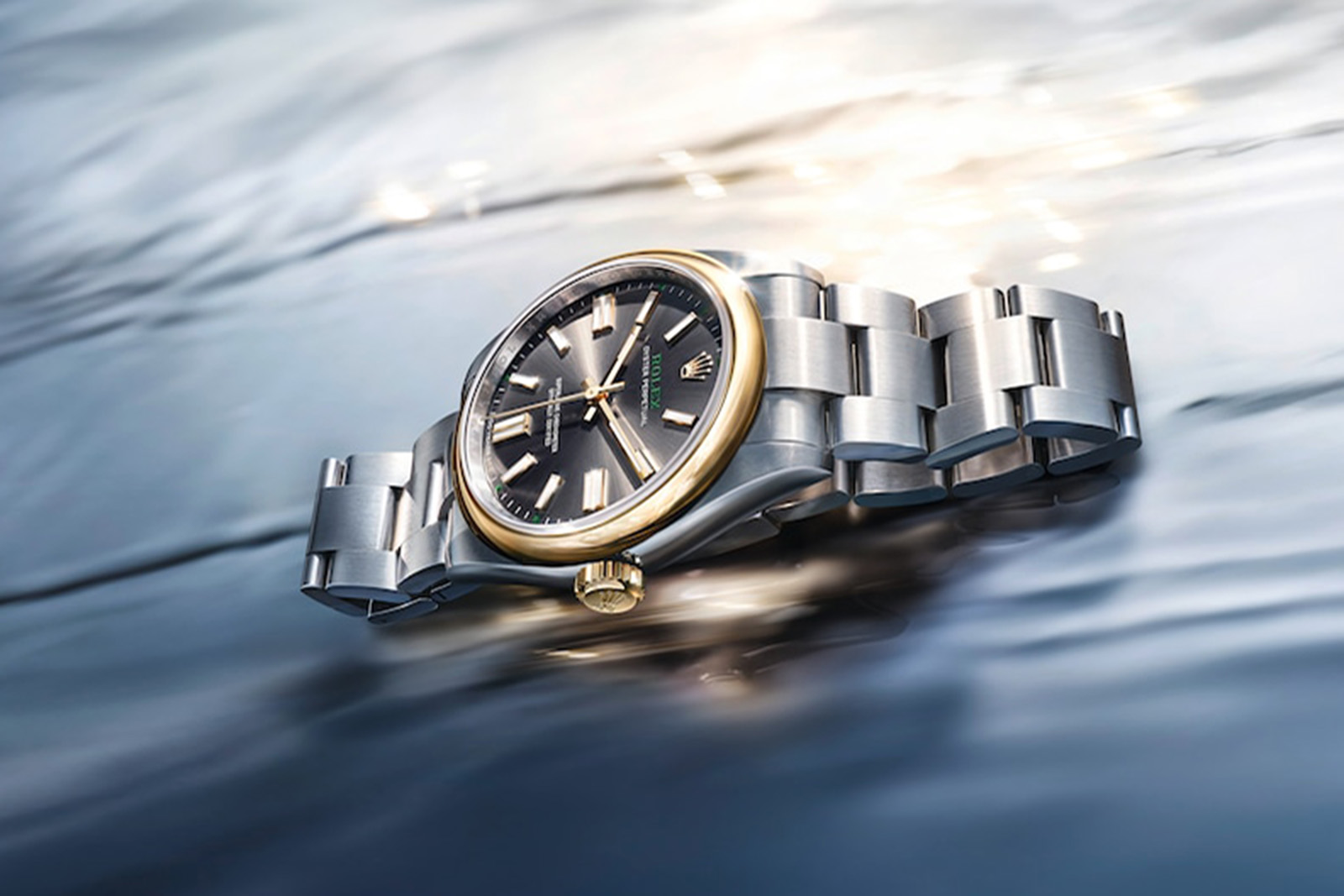
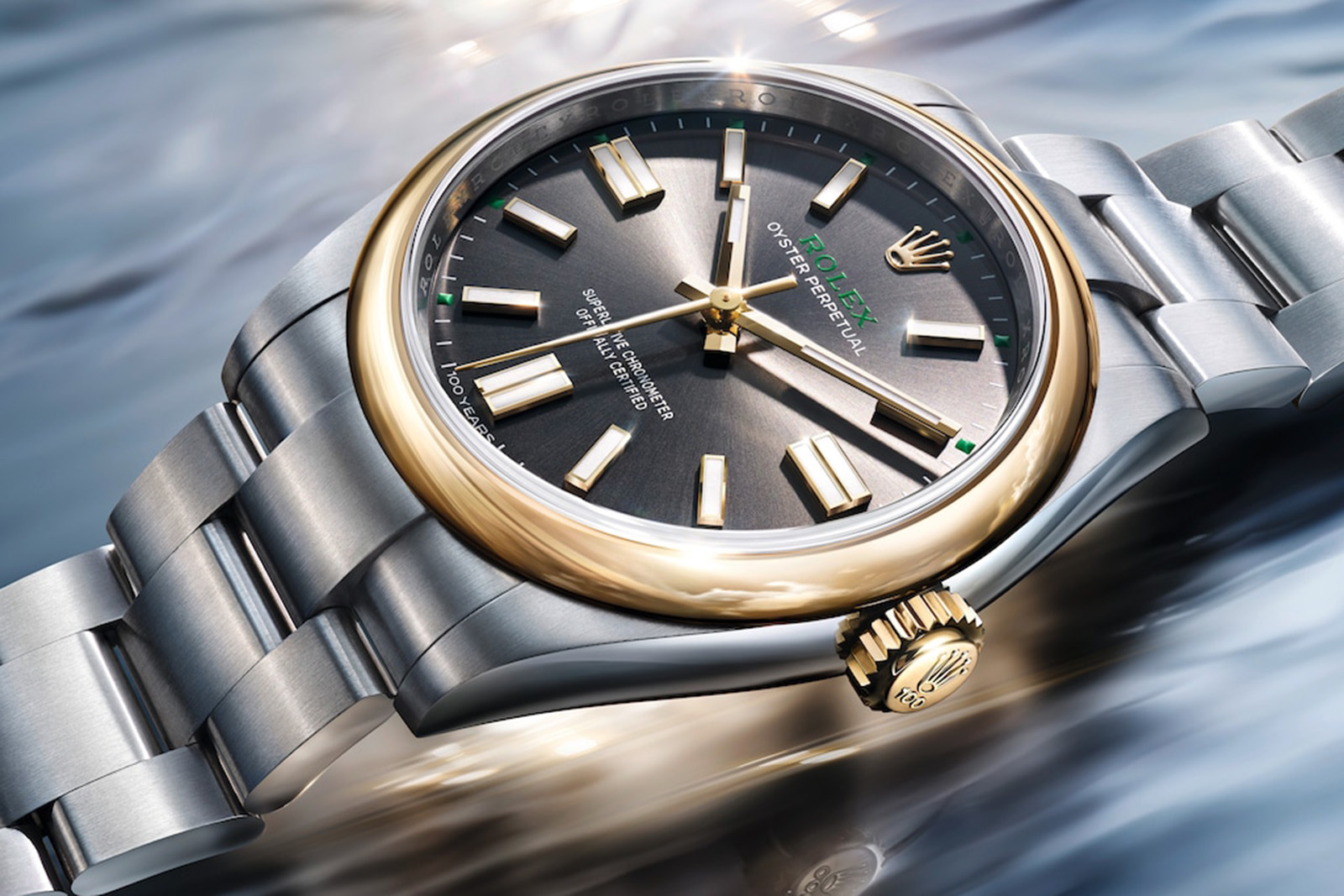
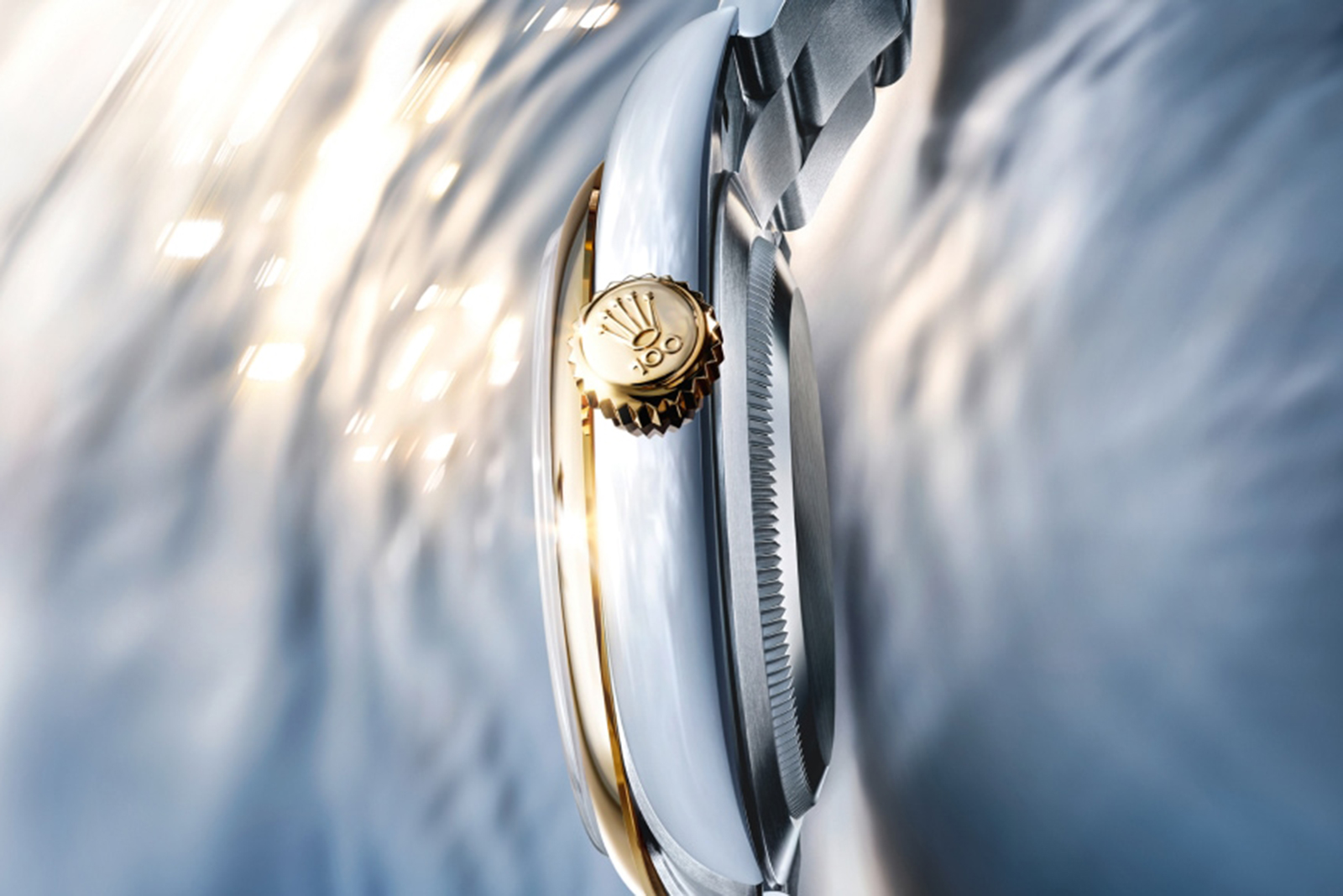
This back-to-basics approach gave birth to interesting models, which couldn’t be more different. The  restrained 41 mm anniversary Oyster Perpetual is dressed in 904L Oystersteel paired with a yellow gold bezel and crown. Complemented by the gold accents on the dial and hands, the final look is very reminiscent of some configurations of the beloved “Bubbleback” Oyster era. 

At the opposite end of the spectrum, the new 36 mm Jubilee loses all celebratory sobriety and instead relies on a colourful reinterpretation of the Jubilee monogram dial introduced back in the 1970s. The blocky letters printed in vivid colours make for a look that is split between vintage inspired and excessively modern. 

This Oyster Perpetual duo manages to bridge the two faces of modern Rolex: the understated aesthetics that have come to define the brad and the lavish, sometimes even playful designs that have come out in recent years.

Interestingly the two pieces are not limited editions. While that might be understandable for the Jubilee model, it is seldom that celebratory pieces like the 41 mm Anniversary are not strictly limited runs. The 41 mm Anniversary model is priced at US$9,650 while the 36 mm Jubilee Oyster Perpetual is priced at US$6,750. 

Celebrating the Oyster in 41 mm

The Anniversary Ref. 134303 Oyster Perpetual is as stripped down as they come. No date and time only, this anniversary model pays proper tribute to the original Oyster pieces, which were conceived as true no-nonsense tools. 

The Anniversary version of the Oyster Perpetual is however slightly indulgent as it pairs the basic Oystersteel construction with 18K yellow gold for the bezel and crown. Rolex calls this particular gold on steel configuration Rolesor.

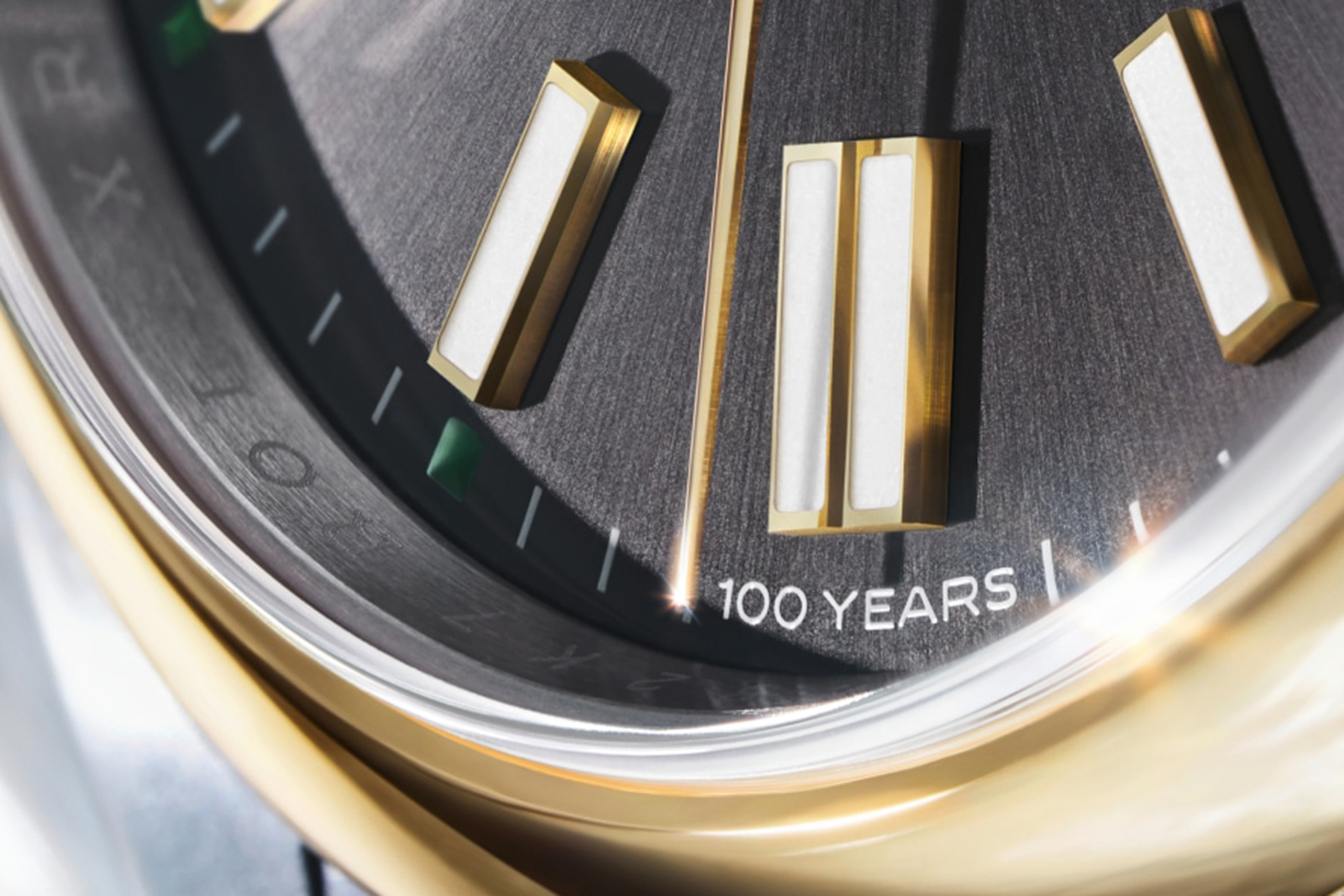
The dial is kept simple but features some discreet celebratory elements. The indices and hands are all made form the same 18K yellow gold as the case elements, which is not encountered in standard Oyster perpetual models. 

The Rolex logo is printed in green, which makes reminds slightly of the Wimbledon Datejust. The usual coronet-embellished “Swiss Made” print at the bottom of the dial was replaced by a “100 Years” inscription — the second openly celebratory marking on this model, with the first being the “100” engraving on the crown. 

Otherwise, the Anniversary model is constructed much like any other 41 mm Oyster Perpetual. The watch is powered by Rolex’s current workhorse movement, the caliber 3230. The time-only movement comes with all the brand’s bells and whistles (Chronergy escapement, Parachrom hairspring) and runs for about 70 hours operating at a 4 Hz frequency. 

A colourful Jubilee

The other notable Oyster Perpetual release is the joyous Jubilee configuration of Ref. 126000. Apart from the extravagantly-patterned dial, the watch is constructed and priced like any standard  36 mm Oyster Perpetual. 

The core element of this particular version is clearly the dial, which reinvents the Art Deco embossed Jubilee pattern championed in the ‘70s. Following similar successful models built on colour and playful prints, the Jubilee Oyster sees the Rolex name printed in blocky, colourful letters. 

Resembling a cross-word puzzle, the colourful Jubilee pattern can be read both vertically and horizontally, which can get a little hypnotic. Since there are many colours involved and the pattern is rather intertwined, each hue is applied separately, so the dial goes through as many painting processes as there are colours in the pattern. All in all, this is one of Rolex’s more intriguing dials. 


Key facts and price

Rolex Oyster Perpetual 41 Aniversary
Ref. 134300

Diameter: 41 mm
Height: 11.6 mm
Material: Rolesor (Oystersteel case with 18K yellow gold bezel and crown)
Crystal: Sapphire
Water resistance: 100 m

Movement: Cal. 3230
Features: Hours, minutes, and seconds
Frequency:  28,800 beats per hour (4 Hz)
Winding: Automatic
Power reserve: 70 hours for 36 and 41

Strap: Oyster bracelet

Limited edition: No
Availability: 
Available at Rolex authorised dealers
Price: US$9,650


Rolex Oyster Perpetual 36 Jubilee
Ref. 126000

Diameter: 36 mm
Height: 11.6 mm
Material: Steel
Crystal: Sapphire
Water resistance: 100 m

Movement: Cal. 3230
Features: Hours, minutes, and seconds
Frequency:  28,800 beats per hour (4 Hz)
Winding: Automatic
Power reserve: 70 hours

Strap: Oyster bracelet

Limited edition: No
Availability: 
Available at Rolex authorised dealers
Price: US$6,650

For more, visit Rolex.com.


Back to top.
You may also enjoy these.

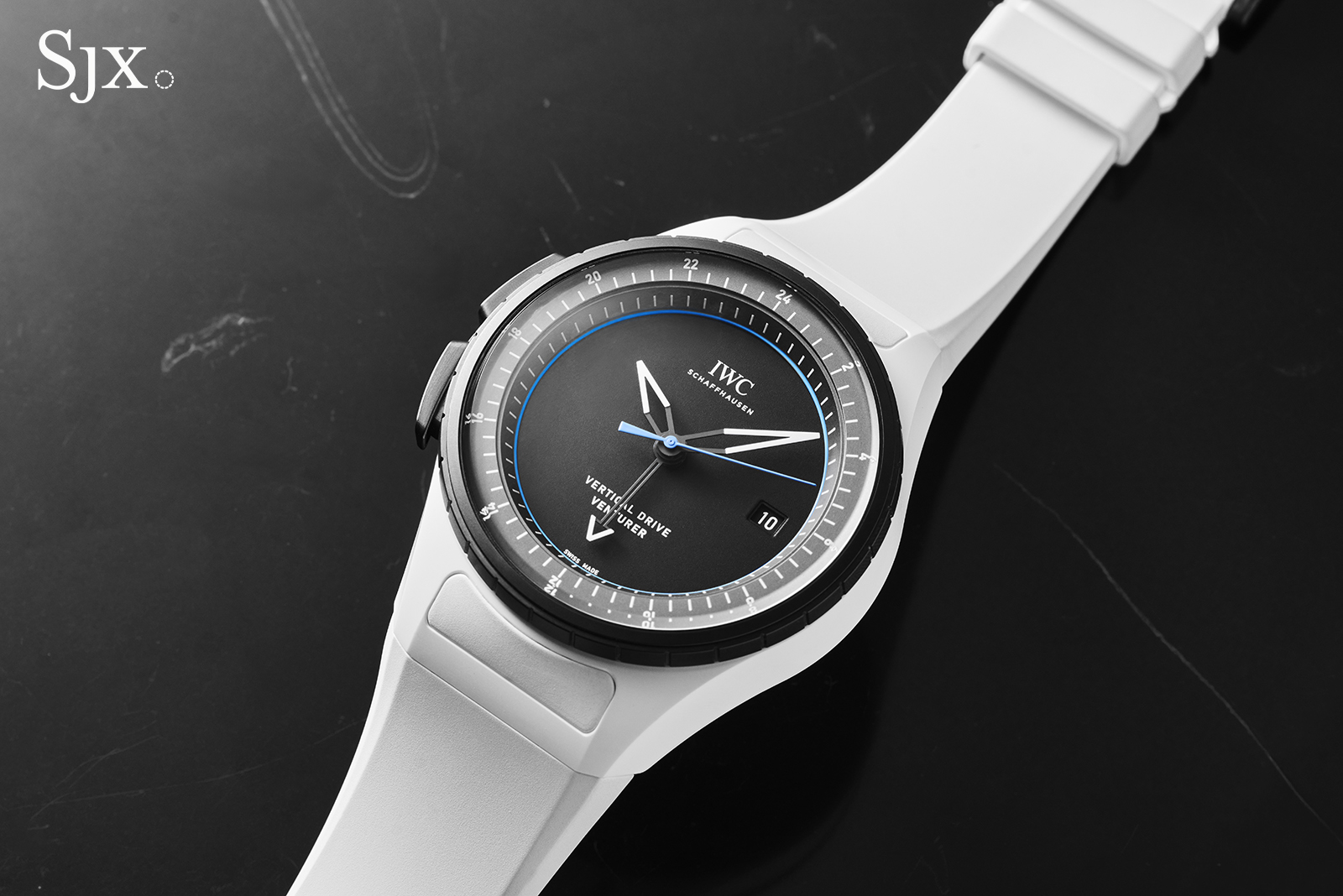
Hands On: IWC Pilot’s Venturer Vertical Drive

The Vast Pilot.

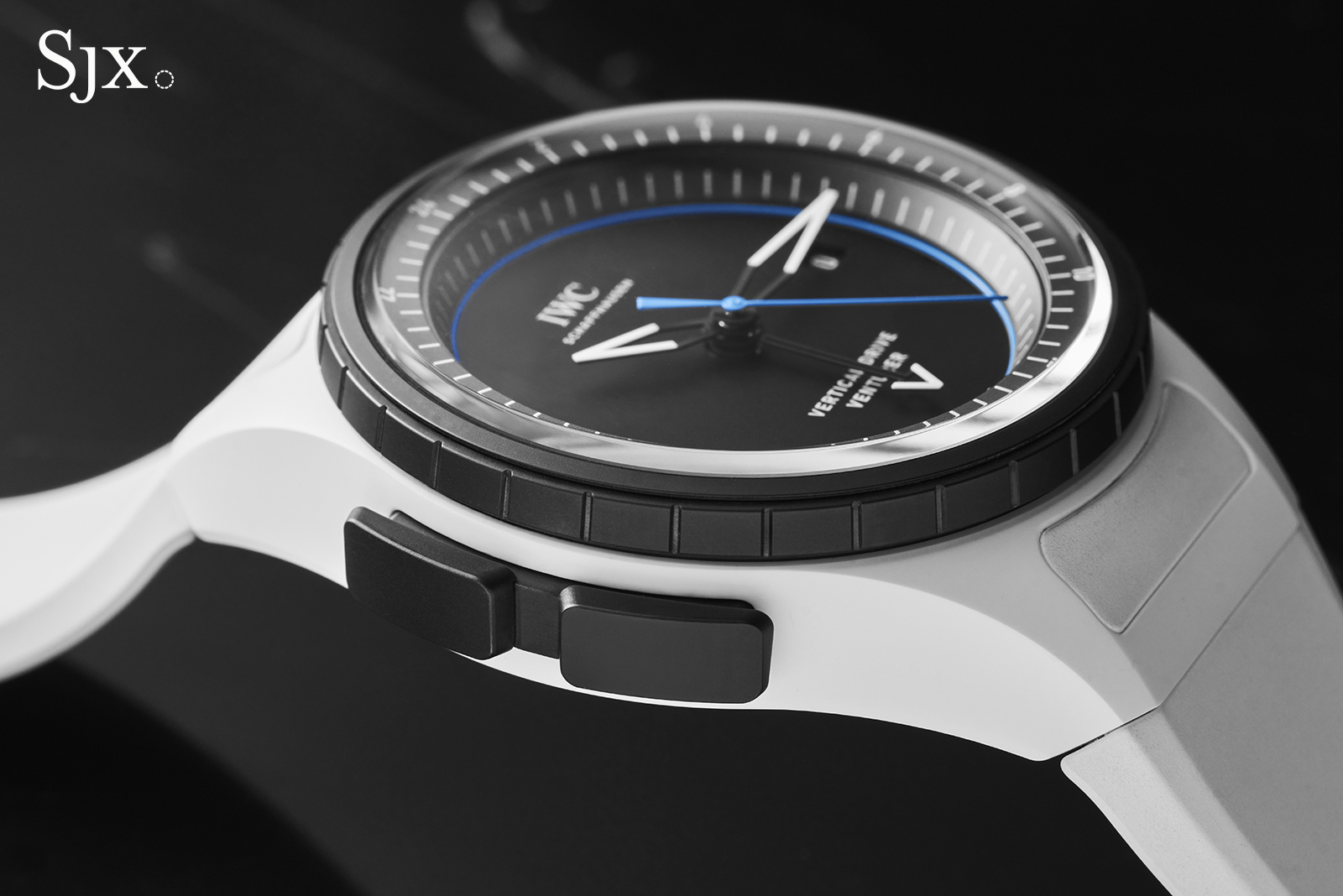
IWC teams up with Vast, prospective constructors of the International Space Station’s private successor, with the IWC Pilot’s Venturer Vertical Drive, a uniquely astronaut-friendly take on a spacefaring watch that breaks new ground for IWC’s signature pilots watches.

If all goes well, these watches pass the Kármán line next year when Vast plans to launch the Haven-1 commercial space station.

Initial thoughts

Vast is an American aerospace company hoping to develop modular commercial space stations (Haven-2), and, at a glance seems more promising than the average ambitious space startup. If all goes to plan, the Vast Pilot will launch with the Vast’s Haven-1 prototype space station in 2027.

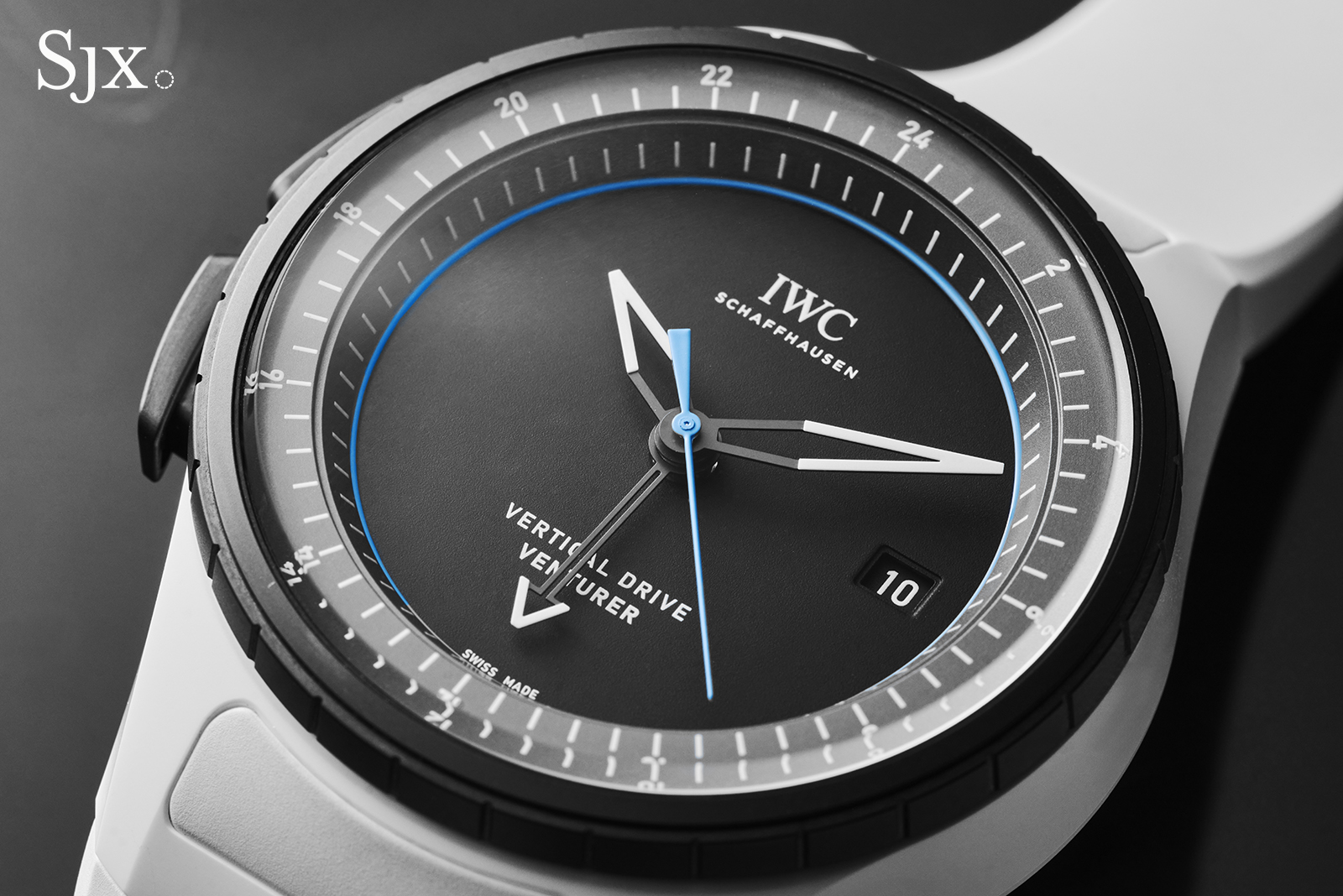
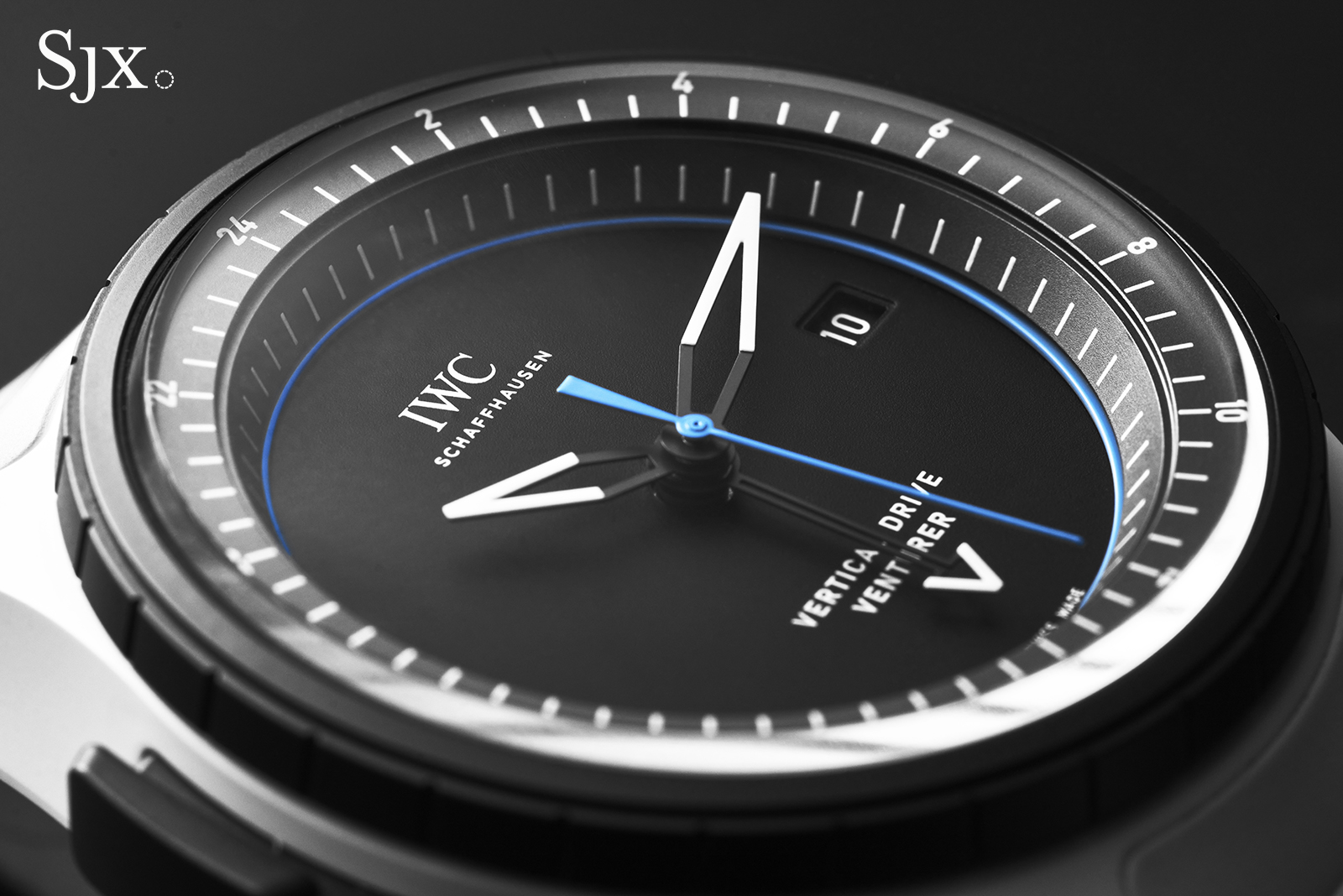
The Pilot’s Venturer Vertical Drive — which could easily have been called the “Vast Pilot” as a play on its popular Big Pilot — is among the most visually appealing watches from IWC in recent memory.

Computer rendering of the Vast Haven-1. Image – Vast Pressroom

The combination of white and dark gray, and a clean but technical look leans into the “NASA Punk” aesthetic. The minimalist industrial look calls to mind watches like the IWC Ocean 2000, designed by Ferdinand Alexander Porsche.

The gradated blue horizon around the dial is an inspired thematic choice, and is paired with a matching seconds hand. The lack of a chronograph is surprising, given IWC’s general affinity for them, as well as their domination of the space watch genre.

I find that refreshing, since the functionality could not hope to replicate that of digital watches designed specifically for modern space flight.

IWC aimed to make the watch easy to manipulate while wearing a space suit, though I am not sure why this is desirable. In fact, being able to disturb the time during extravehicular activity (EVA) seems undesirable. Regardless, luxury mechanical watches are not mission-critical equipment for modern astronauts, so the practical implications are less important than the coolness they add.

Image – IWC

The CHF24,000 price tag is a more serious issue. I expect a specialty product like this to come at a premium, but I’d also expect it to use one of IWC’s higher end seven-day movements, which is also more befitting the 44.3 mm diameter.

Vertical Drive

The Vertical Drive system dispenses with the usual means of interacting with the movement — the crown. Instead, this function is delegated to the rotating bezel. The eponymous “Vertical Drive” system is a clutch that connects the bezel to the movement.

The rocker switch opposite where the crown would normally be switches between modes for time setting, manual winding, and independent hour hand adjustment. In winding mode, turning the bezel counterclockwise winds the watch.

The mode selection rocker.

Time setting mode  stops the movement, which is useful for synchronising multiple timekeepers, but makes it easier to disturb timekeeping during an EVA.

Space case

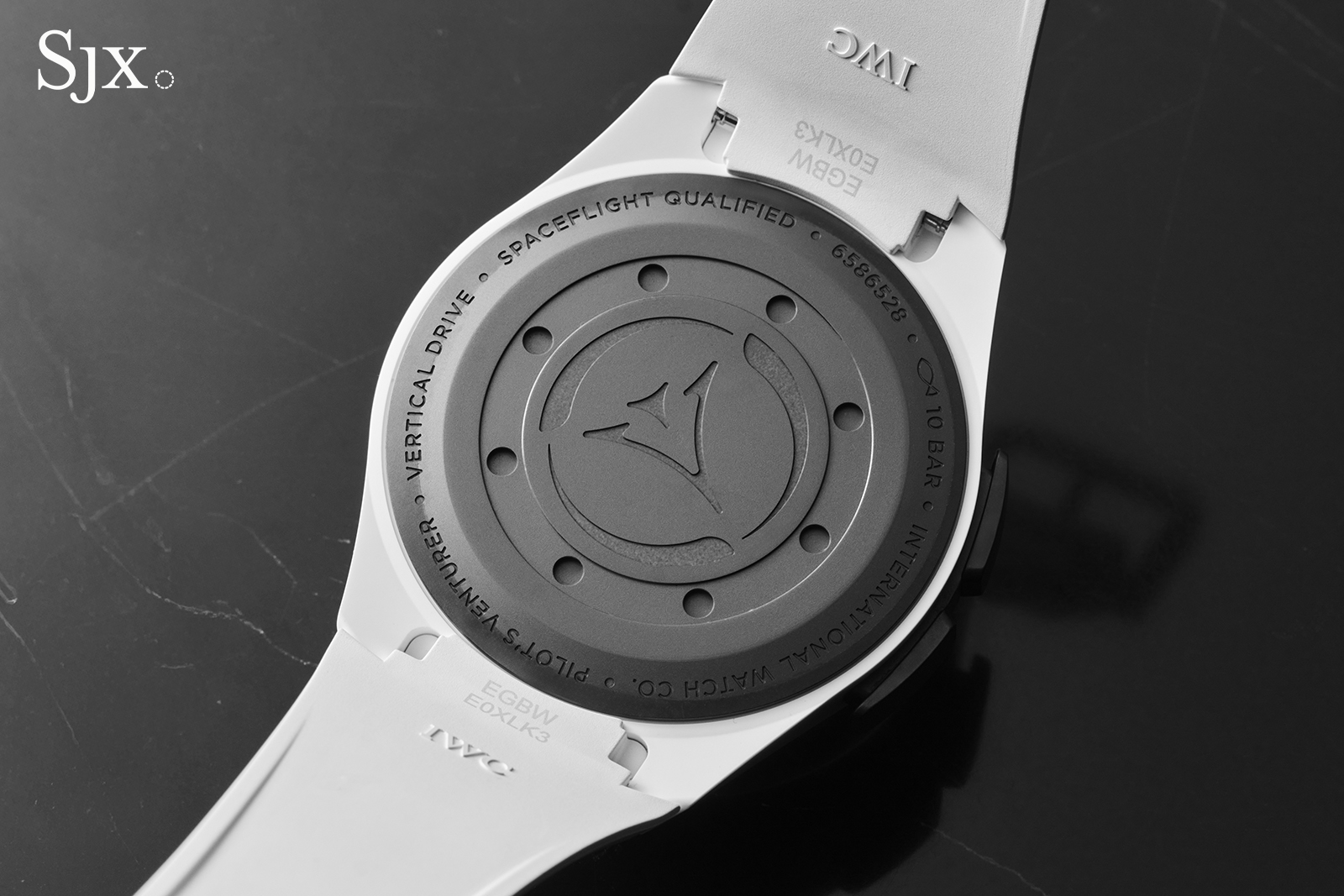
Space lift doesn’t come cheap; it costs several dollars to get a single gram of material into orbit, so the use of a lightweight ceramic and Ceratanium case makes practical sense. The second material, Ceratanium, is IWC’s trade name for titanium blackened by a protective oxide layer.

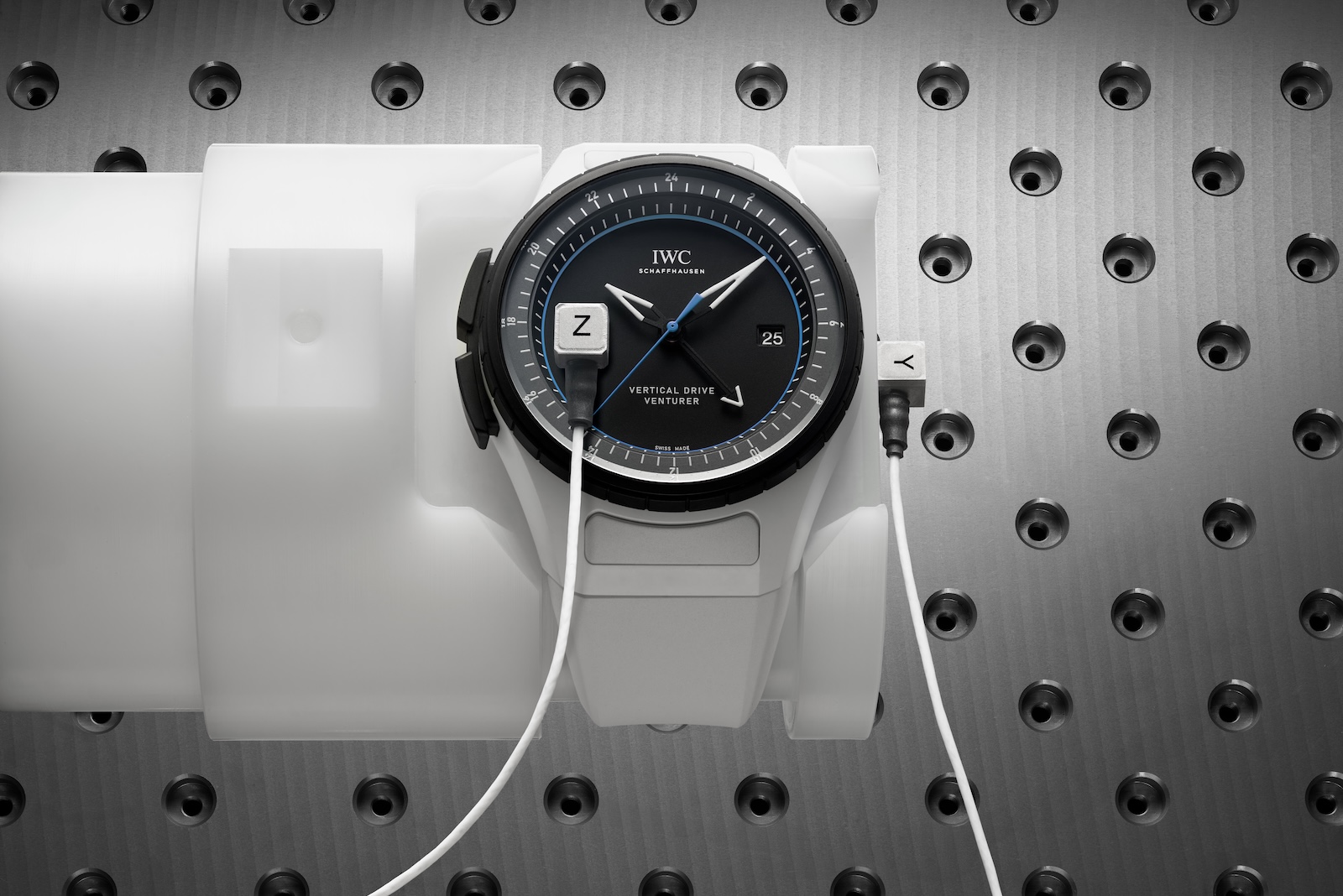
During takeoff, commercial airliners rarely accelerate quicker than three m/s2, less than a third the 9.8 m/s2 of acceleration due to gravity that we feel at all times. You can expect three to four times that onboard a manned rocket during takeoff.

As dramatic as that sounds, it isn’t actually an issue for watches. But, just to be safe, IWC subject the watch to rapid, repeated directional changes at 10g. While a watch technically experiences 5,000g during a 1-metre drop onto a wood floor (see ISO 1413) that is only for an instant, while IWC’s testing seems to be sustained.

Image – IWC

The vibrations, however, can be more of a challenge, though the human wearing the watch acts as a vibration dampener of sorts. IWC used a vibration table to validate this capability. The watches were also tested against over and underpressure, as many lubricants would quickly boil off in the near-vacuum environment of low earth orbit.

Vast’s final requirement was minimal off-gassing, which, depending on the gasses in question, can be harmful to astronauts in such confined quarters. The rubber strap is a fluoroelastomer, which, in addition to excellent UV resistance, is generally very stable at high temperatures or low pressures — factors that tend to increase off-gassing.

Vertical driver

IWC hasn’t releases images of the movement, cal. 32722, but based on its designation and five-day power reserve it is presumably a sibling of the cal. 32111 in the latest Ingenieur — essentially an enlarged version of Cartier’s workhorse cal. MC 1847 with a longer power reserve, thanks to a larger barrel and lightened silicon escapement.

The Baume et Mercier is closely related to IWC’s mid-sized automatics Baumatic. This example boats a free sprung balance, which is hopefully true of the IWC as well.

It is also self-winding, though automatic winding is less efficient during EVA as astronauts (and their watches) are in free-fall. It uses the Magic Lever winding system, originally developed by Suwa Seikosha, which winds in both directions with a small, but variable, dead angle, which on the Seiko Spacewalk proved able to keep the watch wound.


Key facts and price

IWC Pilot’s Venturer Vertical Drive
Ref. IW328601

Diameter: 44.3 mm
Height: 16.7 mm
Material: Ceramic and blackened titanium
Crystal: Sapphire
Water resistance: 100 m

Movement: Cal. 32722
Functions: Hours, minutes, seconds, second time zone.
Frequency: 28,800 beats per hour (4 Hz)
Winding: Automatic
Power reserve: 120 hours

Strap: Matching integrated rubber strap

Limited edition: No, but likely limited production.
Availability: At IWC boutiques
Price: CHF24,000 excluding taxes

For more, visit iwc.com.


Back to top.
You may also enjoy these.

Rolex Bestows a ‘Grand Feu’ Enamel Dial on the Daytona

The iconic chronograph with a traditional twist.

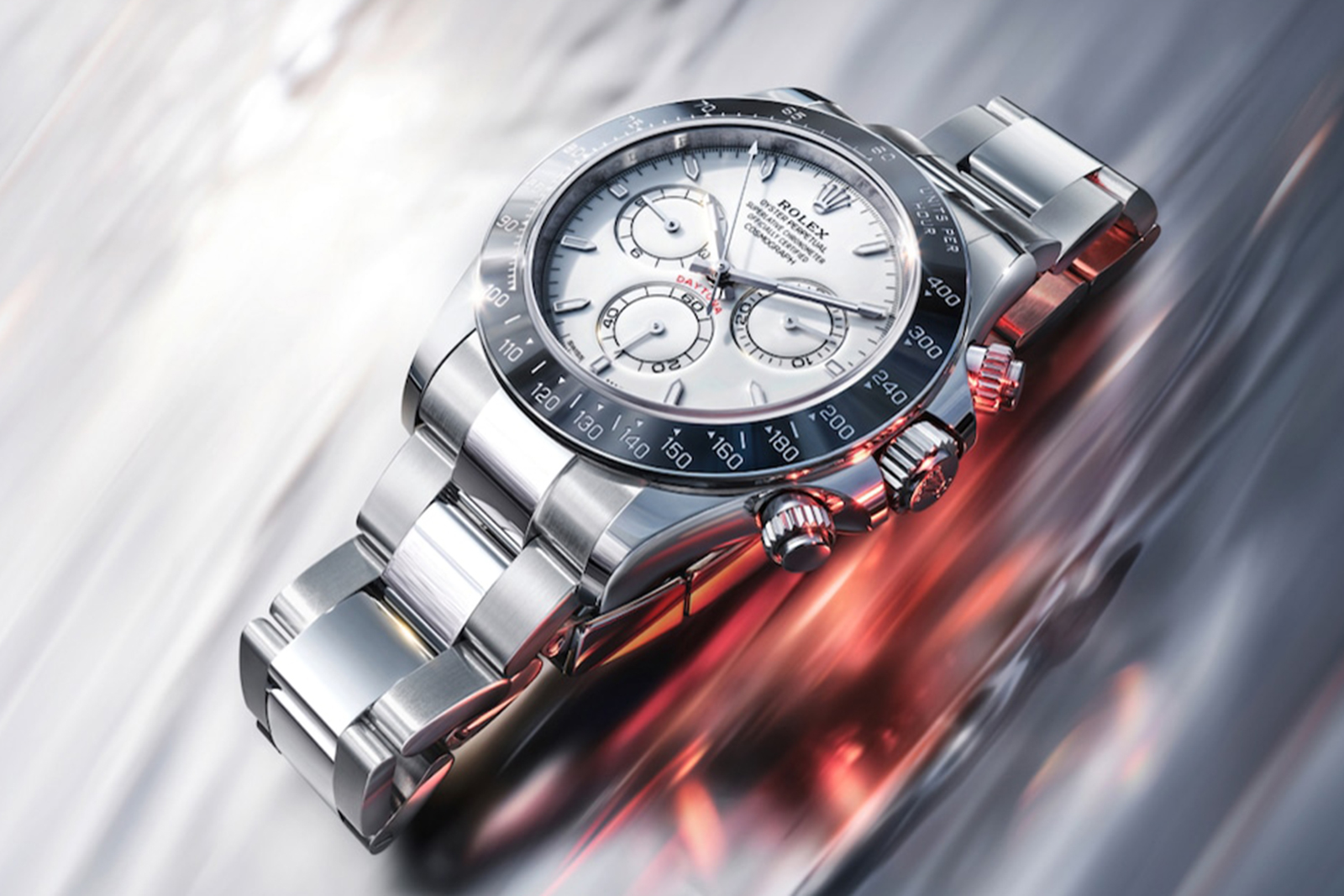
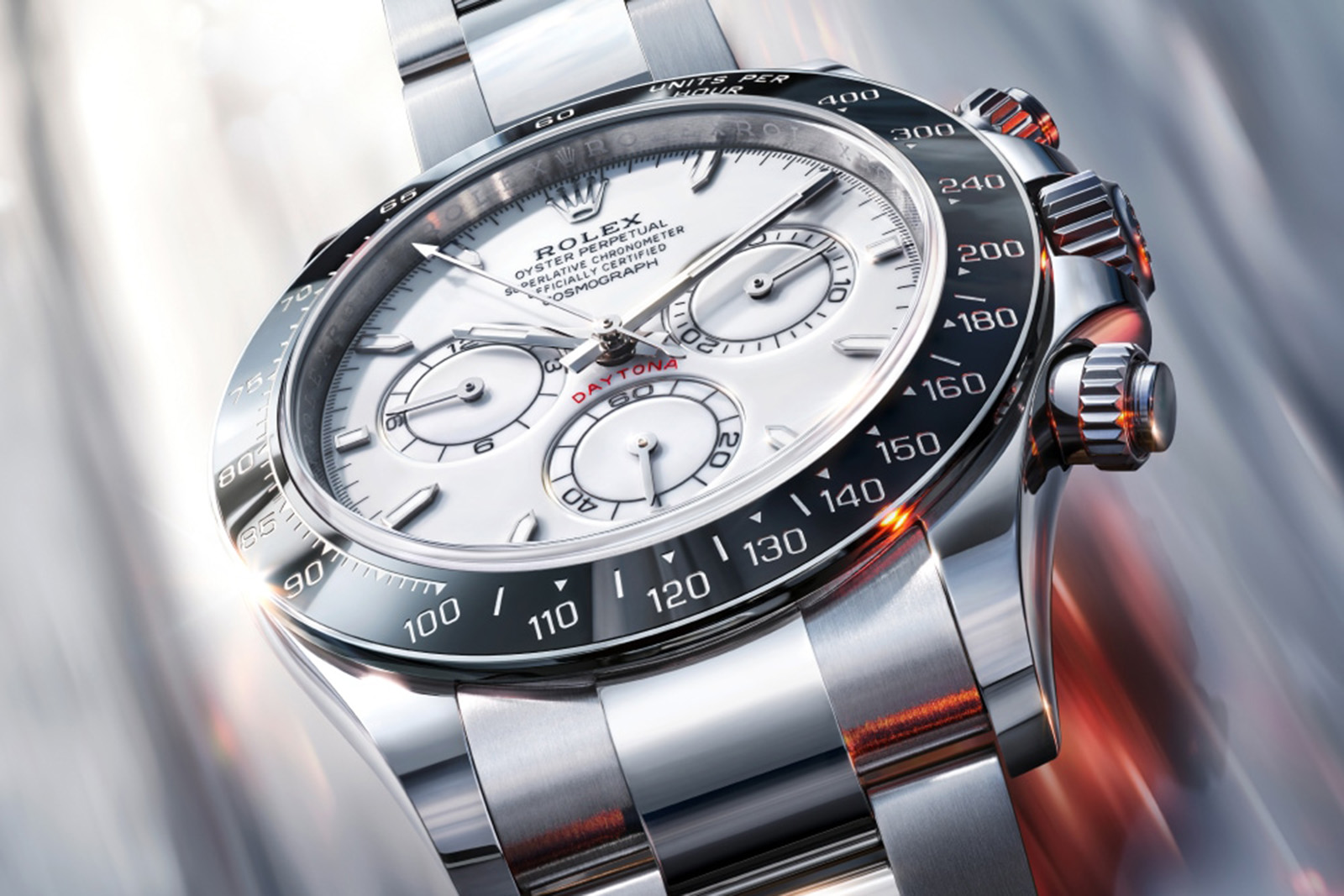
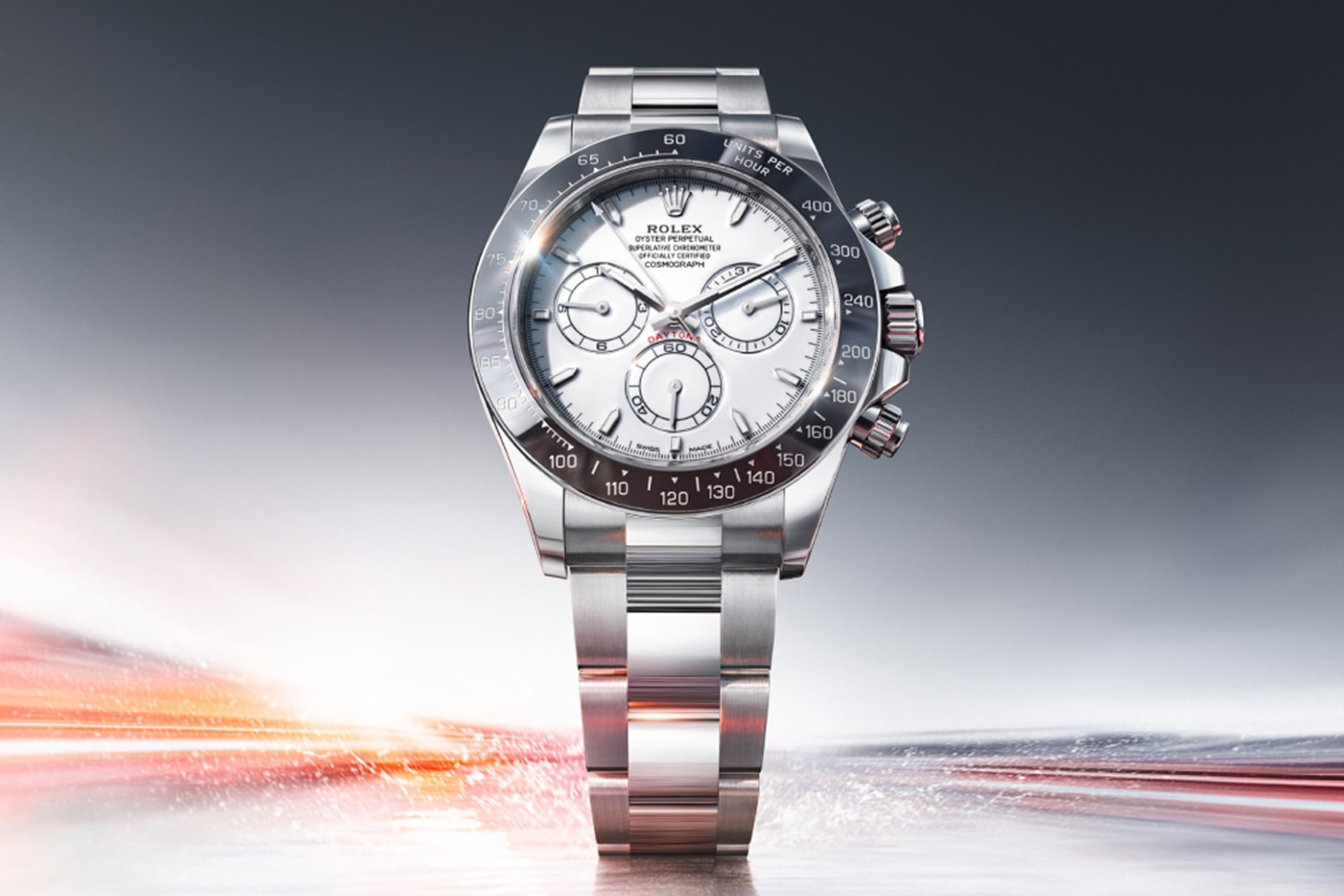
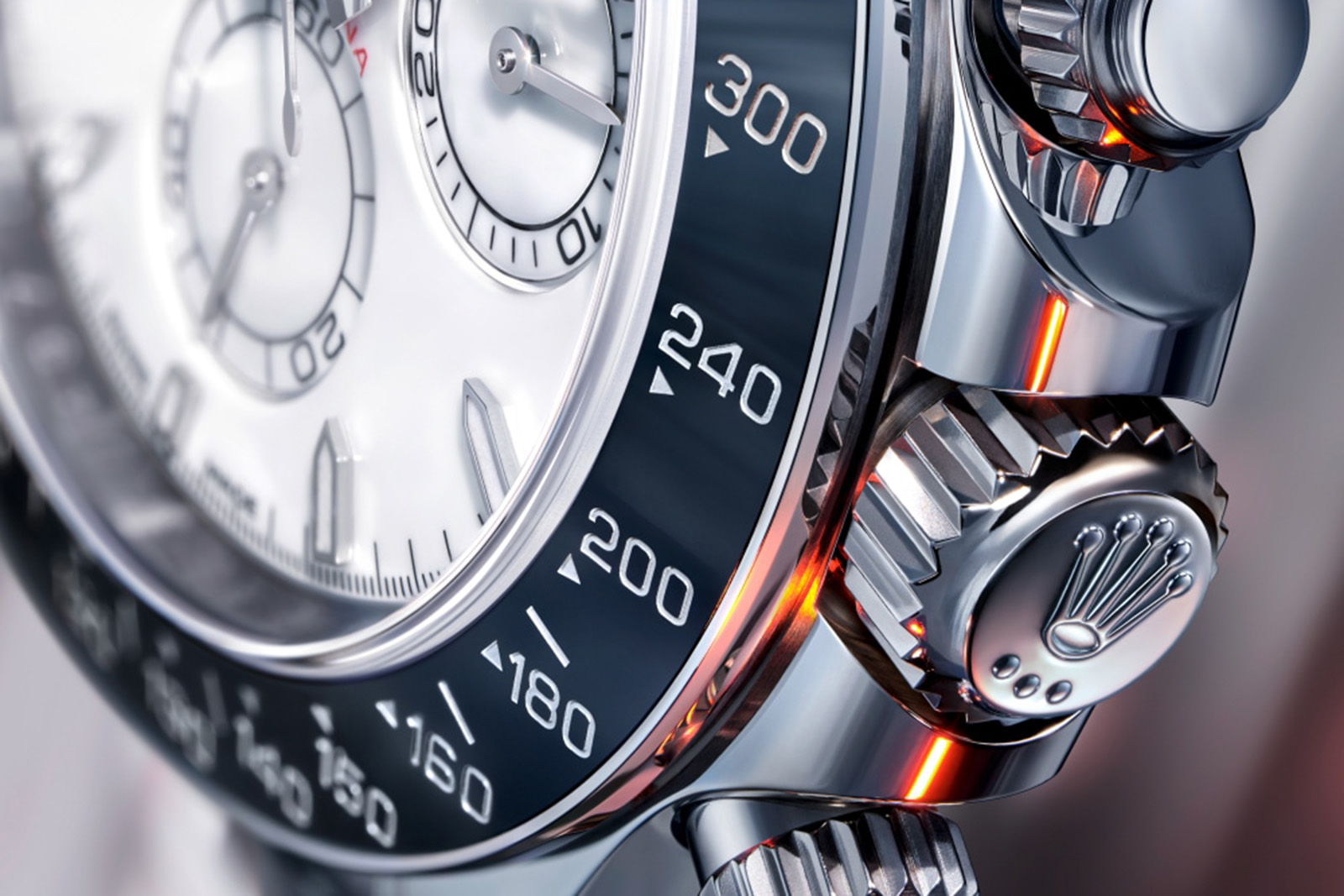
This year’s Watches & Wonders got off with a strong start with Rolex unveiling a number of new models, with a surprising Daytona that is all about novel materials. In a first for the landmark sports chronograph, the Cosmograph Daytona Rolesium combines a platinum and steel in its case, while having a fired grand feu enamel dial.

Initial thoughts

Rolex is known in modern times for its mastery of both industrialised mechanical watchmaking and sound material science. The new Daytona is a product of the latter — it benefits from a new sort of ceramic bezel and notably a white enamel dial executed in an entirely different fashion that results in record thinness for the traditional material.

At first sight, the new model reminds of the “Porcelain” Zenith-powered Daytonas. A sought-after configuration of pre-2000 Daytonas, the “Porcelain” was nicknamed as such due to the glossy finished white dial, which carried some resemblance to classic porcelain. But this enamel dial was the result of years of research to develop an enamel dial of comparable thinness to conventional metal dials.

Thanks to a ceramic substrate with an identical coefficient of thermal expansion, the enamel dial inside the new Daytona is equivalent in thickness to an ordinary dial, resulting in no change in case dimensions. While that might seem like a minor achievement on its face – no pun intended – it is the result of tremendous research and development of the sort that only Rolex can undertake.

With this Rolex successfully raises the appeal of the Daytona in a more intellectual manner, without resorting to extravagant gem setting or more precious metals. The result is a model that is very close to the basic steel configuration, at least in terms of aesthetics. The new Daytona will retail for US$57,800 which seems a bit excessive for a watch that is mostly steel, but arguably justified by the enamel dial and “off catalogue” status of the model.

Anthracite ceramic

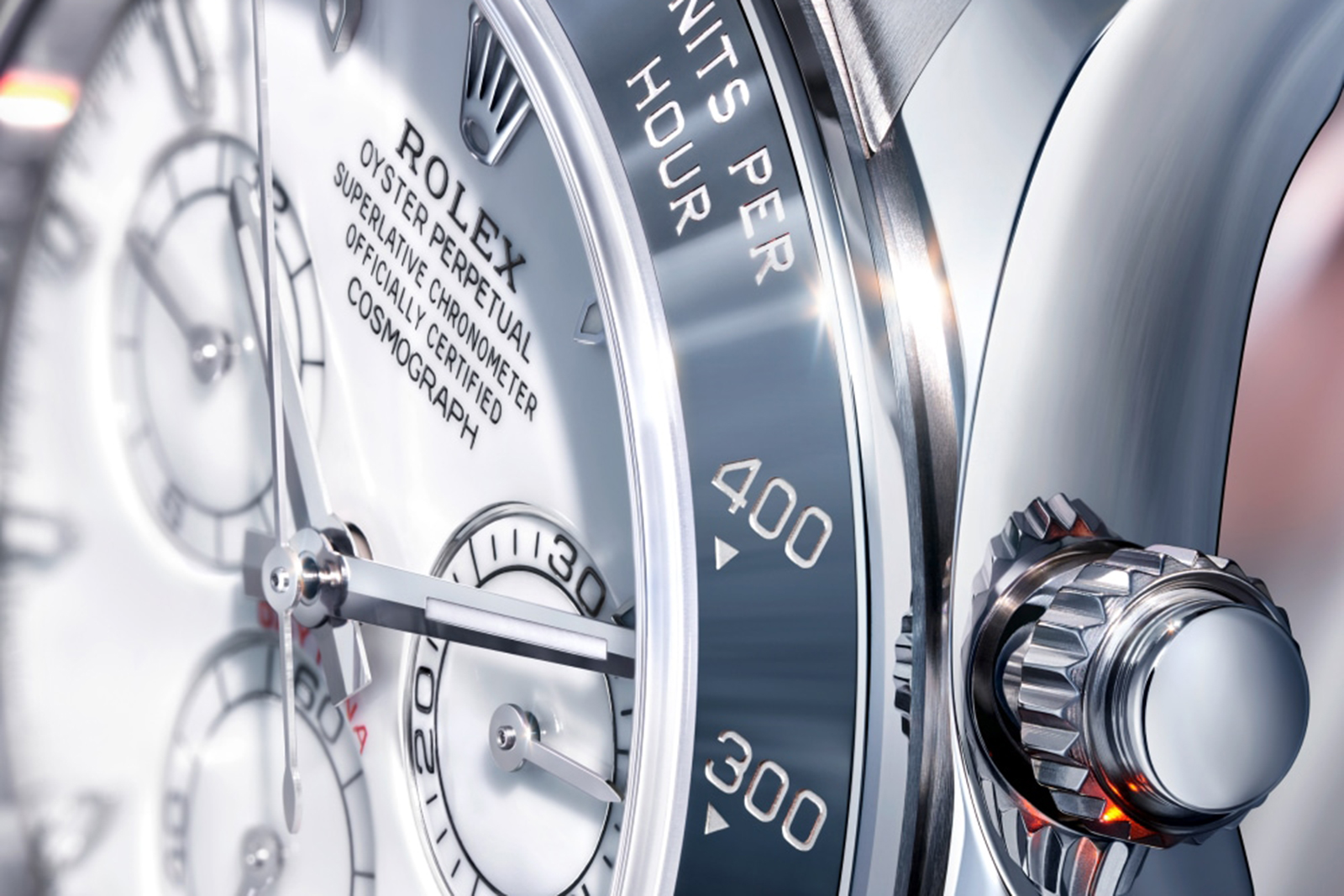
Anthracite is a sort of coal with a high carbon content, which gives it a particular metallic sheen. Rolex emulates that look and feel with their new ceramic composition, which is based on tungsten carbide enriched zirconia.

Ceramic bezels (and any other components for that matter) are known for their dull shine, but the bezel fitted to this new Daytona feels very metallic, sheening more like a precious alloy rather than a piece of industrial ceramic. The particular tungsten-zirconia composition was subject of a patent filed by Rolex as early as 2024.

The particular composition also modified the basic black colour of other Daytona bezels — the new model might look black in certain lighting scenarios and then appear grey in others. The particular nuance works rather well with the milky white enamel dial.

The tachymeter scale is “vertical”, meaning all the numbers area easy to read. The same design was used in original Daytonas from 1963, while most post-2000 versions have the tachymeter markings follow the curvature of the bezel.  

Rolex enamel

The enamel Daytona Dial is made of four pieces, the main dial and the three sub-dials for the chronograph functions. When assembled this way, the dial gets a dynamic, layered look, which aids with legibility. The lack of coloured rings for the sub dials might look odd at first sight, but the clean, milky white surface was kept the main point

Enamel is among the most traditional ways to finish a dial, but the process is tedious and relies heavily on artisanal craft. Linking grand feu enamel with a regular production Rolex model would be rather counterintuitive. Regardless, Rolex went all in on enamel production, which has a notoriously high defect rate. Traditionally enamel powder mixture is applied to a metal blank, then fired at about 800°C in specialised kilns for multiple times. Due to air bubbles forming, creasing or improper handling, many dials are discarded for being defective or tainted. 

Rolex seems to have perfected a large-scale manufacturing of grand feu enamel dials. They did this by first applying ceramic to the metal dial base, and only then firing the enamel on top of the ceramic substrate. The result is not only a much thinner enamel, but also one that forms more uniformly and presumably has a lower failure rate. 

The use of ceramic as base instead of metal also prevents warping — when fired the enamel can contract, slightly bending its base. The rigidity and thermal coefficient of the industrial ceramic employed here ensures this does not happen.

A familiar watch

Rolesium is Rolex’s trade name for a two-metal mix, in this case 950 platinum and 904L “Oystersteel”. We’ve seen a fair share of all-platinum Daytonas, but this is the first in Rolesium. 

The 40 mm case and bracelet of this Daytona are made from Oystersteel but the bezel ring and case back are platinum. It is a bit disappointing to see such little precious metal paired with an enamelled dial, but the steel construction keeps the piece’s price in check. 

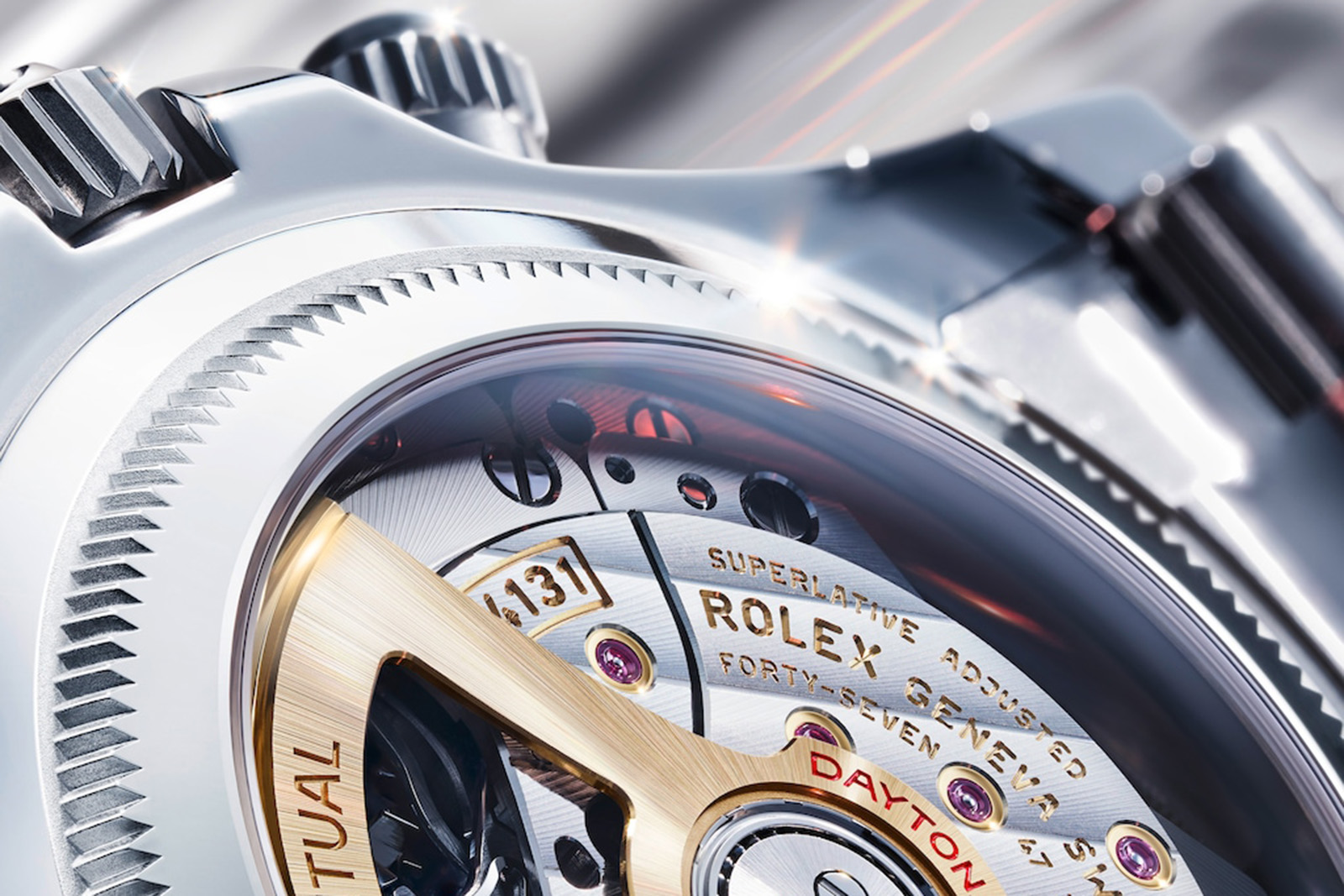
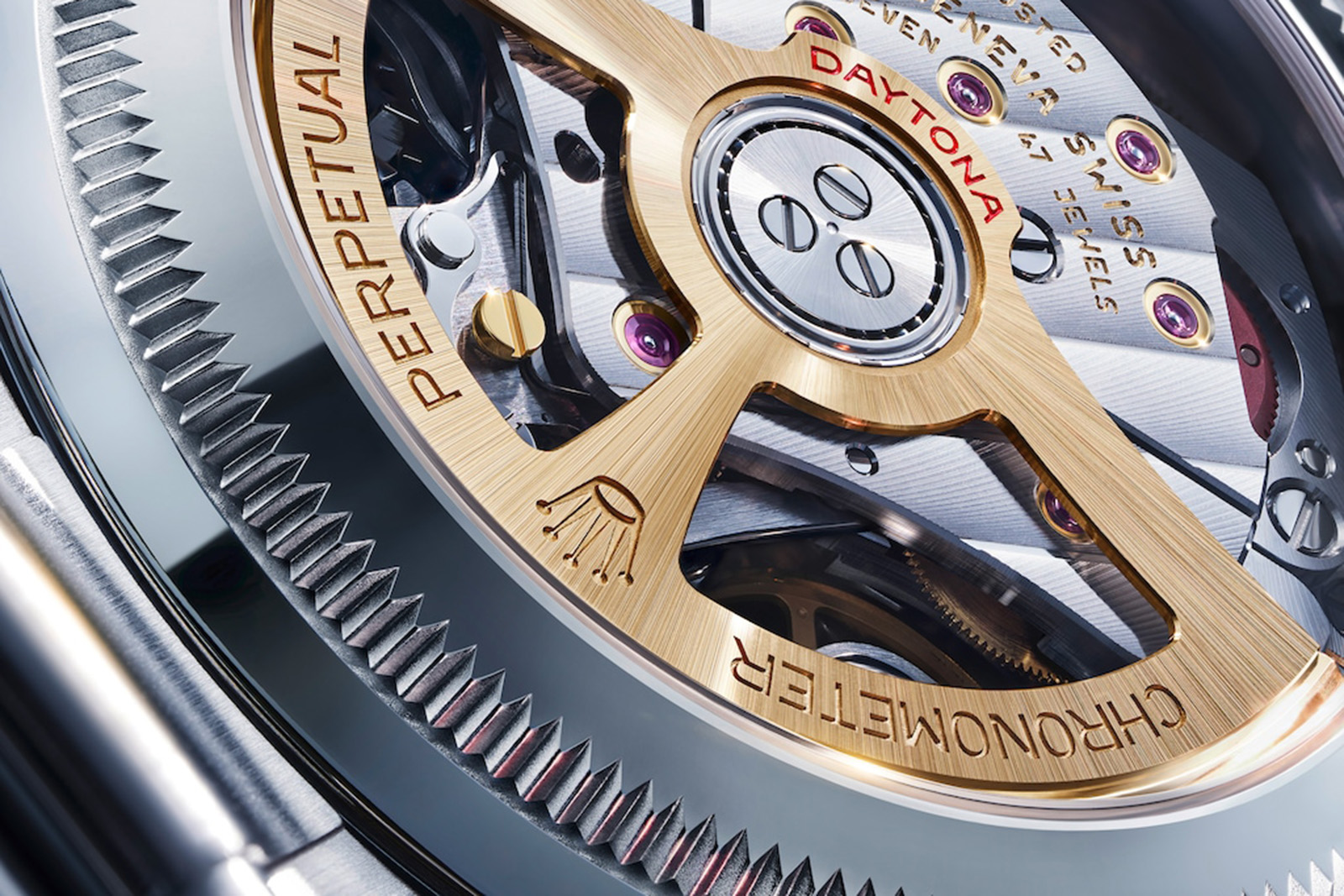
The new Daytona is powered by caliber 4131, an evolution of the landmark cal. 4130. The movement streamlined all the kinks and (few) weaknesses of its predecessor and comes with better finishes, such as the gleaming Rolex Côtes de Genève and in this configuration a solid gold rotor.

The movement runs for 72 hours and beats at the industry-standard 4 Hz while being certified to keep time at -2/+2 seconds per day. 


Key facts and price

Rolex Cosmograph Daytona Rolesium Enamel Dial
Ref. 126502

Diameter: 40 mm
Height: 12.2 mm
Material: 904L Oystersteel with platinum case back and bezel ring
Crystal: Sapphire
Water resistance: 100 m

Movement: Cal. 4131
Functions: Hours, minutes, seconds, and chronograph
Winding: Automatic
Frequency: 28,800 beats per hour (4 Hz)
Power reserve: 72 hours

Strap: Oyster bracelet

Limited edition: Off-catalogue
Availability: From Rolex boutiques and retailers starting
Price: US$57,000 before taxes

For more, visit Rolex.com.


Clarification April 21, 2026: Rolesium is the two-metal combination of platinum and steel, and not an alloy in itself.

Back to top.

You may also enjoy these.

Laurent Ferrier’s Sport Traveller is Ready for Takeoff

Travelling in style.

Laurent Ferrier’s Sport Traveller is a meaningful addition to its collection of sport watches. While the brand’s convenient push-button dual-time complication is not new, it has never been available in the go-anywhere, do-anything format of the Sport line — where it arguably makes the most sense.

It’s also the first time this travel complication has been paired with one of the brand’s lever escapement movements, a change that should provide the resilience against shocks that one expects from a sport watch.

Initial thoughts

The sport has proven to be one of Laurent Ferrier’s most popular watches, introducing the brand to a wider audience by combining sports watch ruggedness with the high-horology independent watchmaking that the brand has become famous for. In this sense, the Sport Traveller is similar in philosophy to other luxury sport watches.

That said, few manage to elevate the concept quite as high as Laurent Ferrier. The A. Lange & Söhne Odysseus and F.P. Journe Octa Sport Titanium are natural peers, as is the Patek Philippe 5164, but only the latter offers a travel time complication.

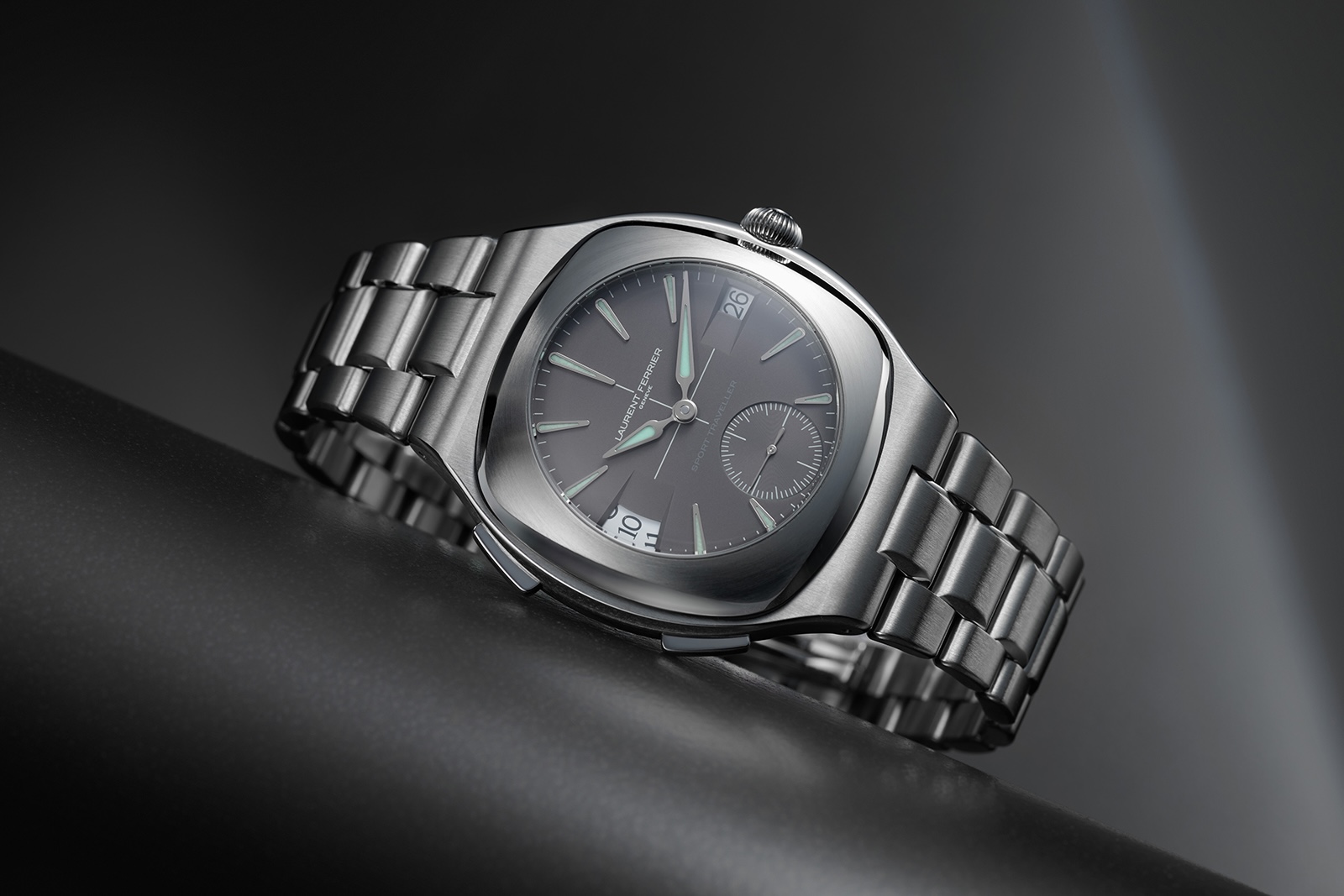
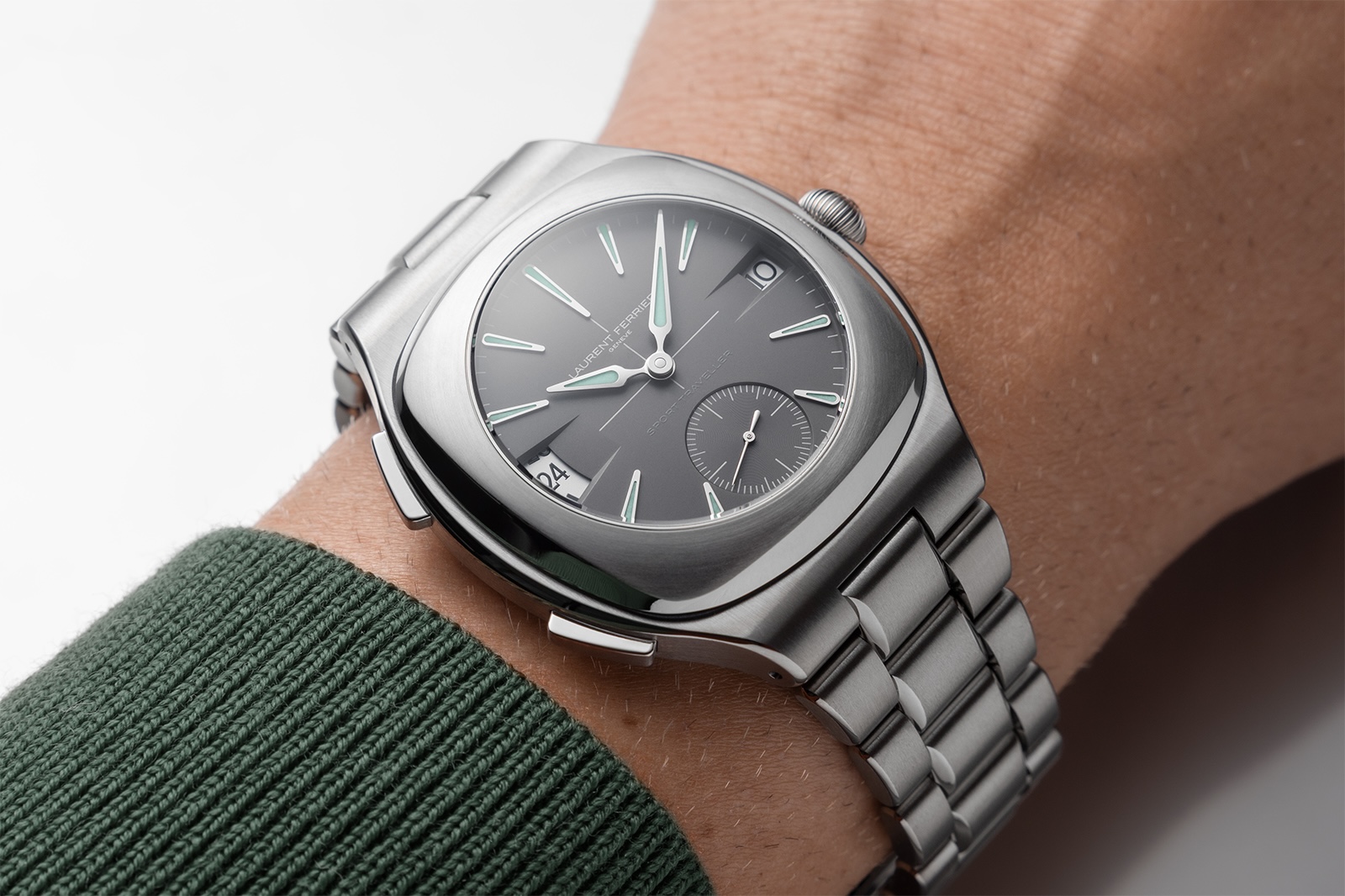
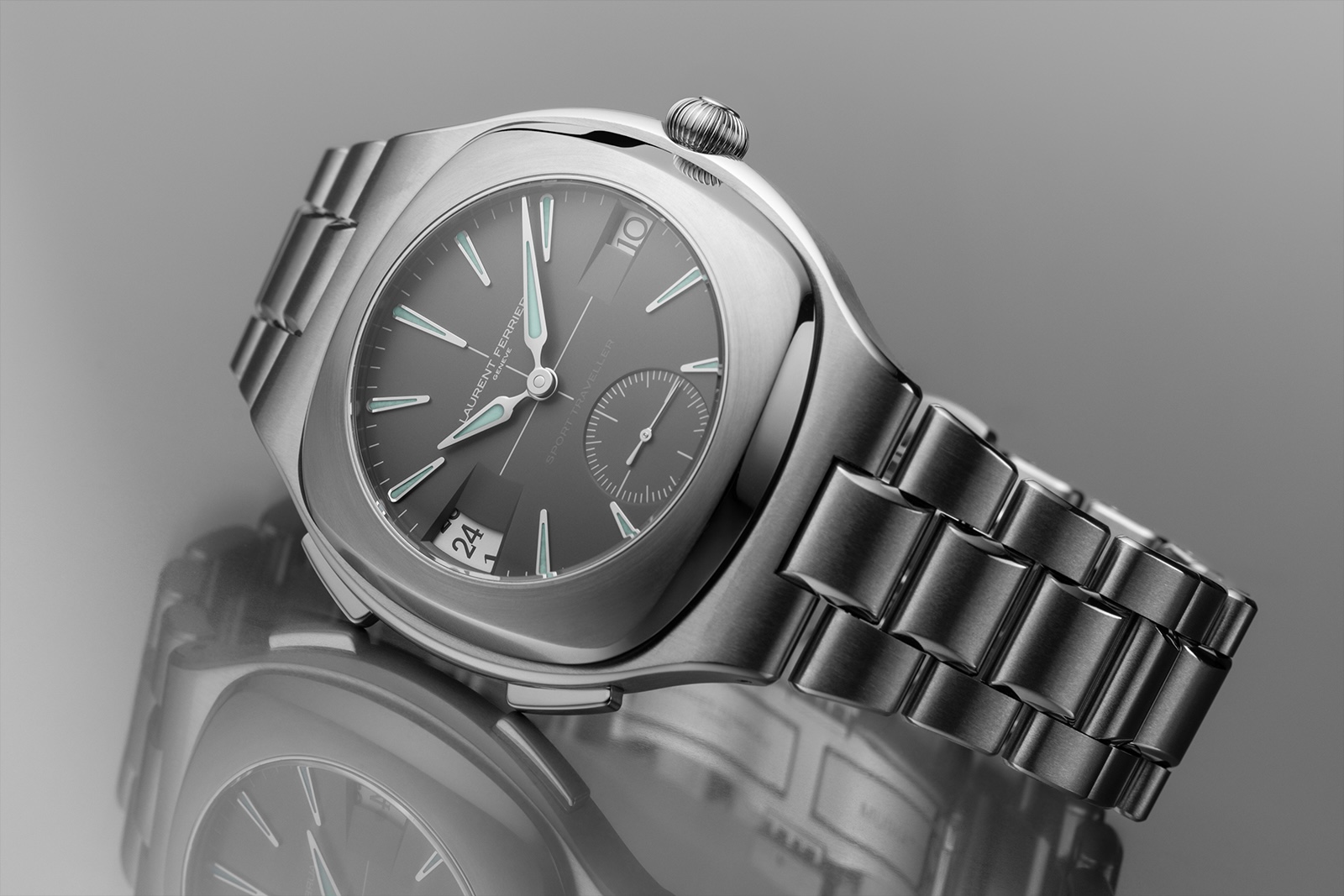
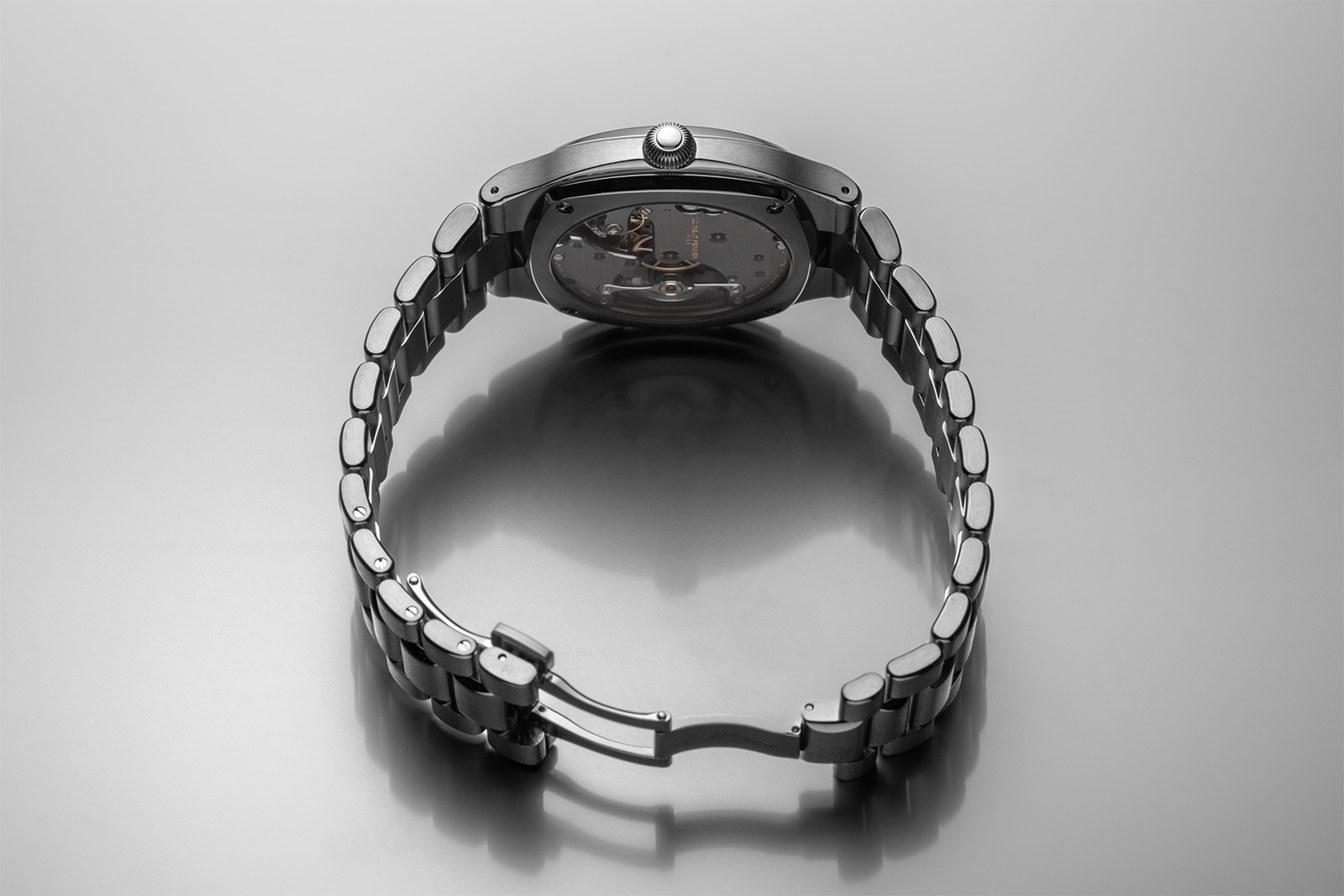
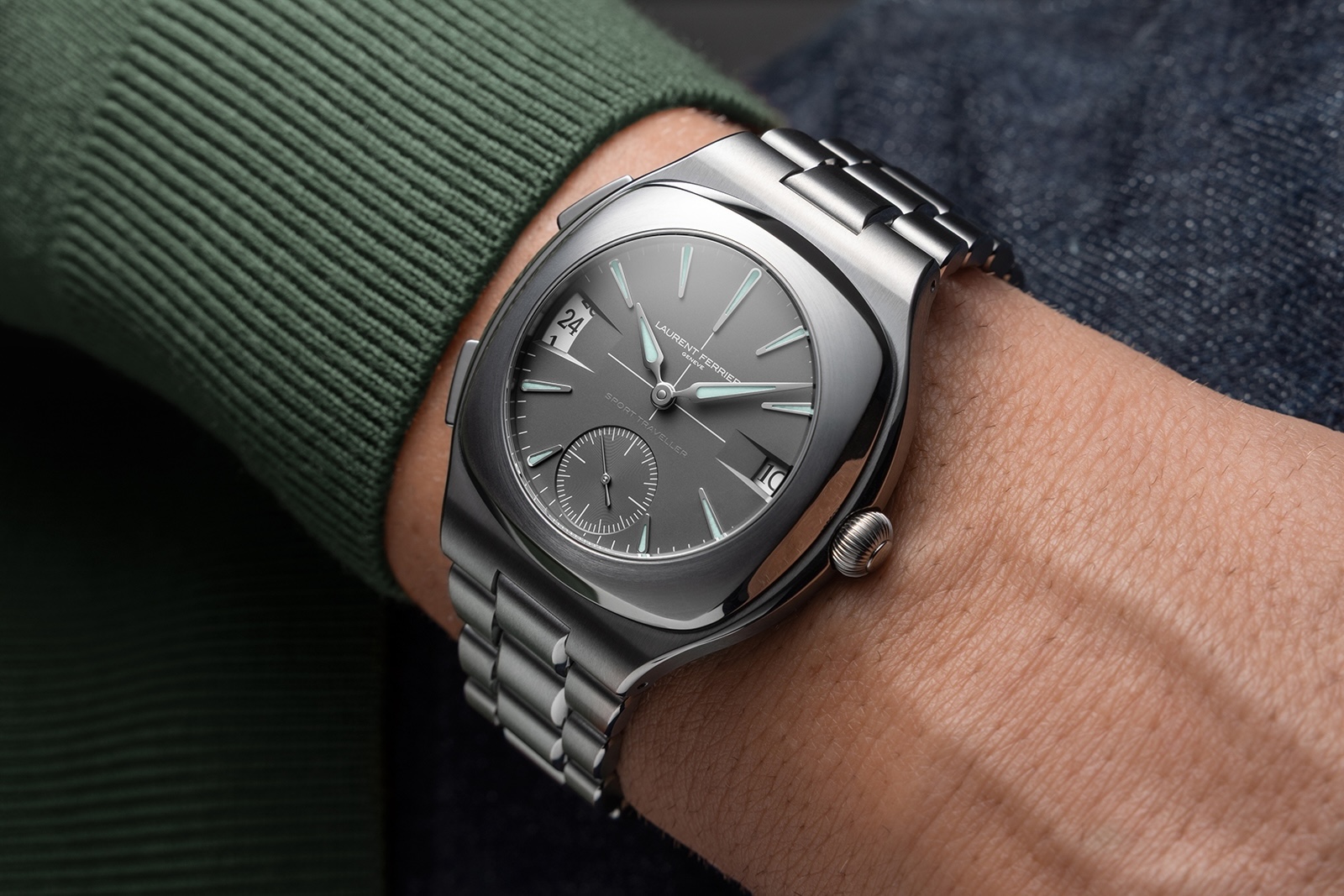
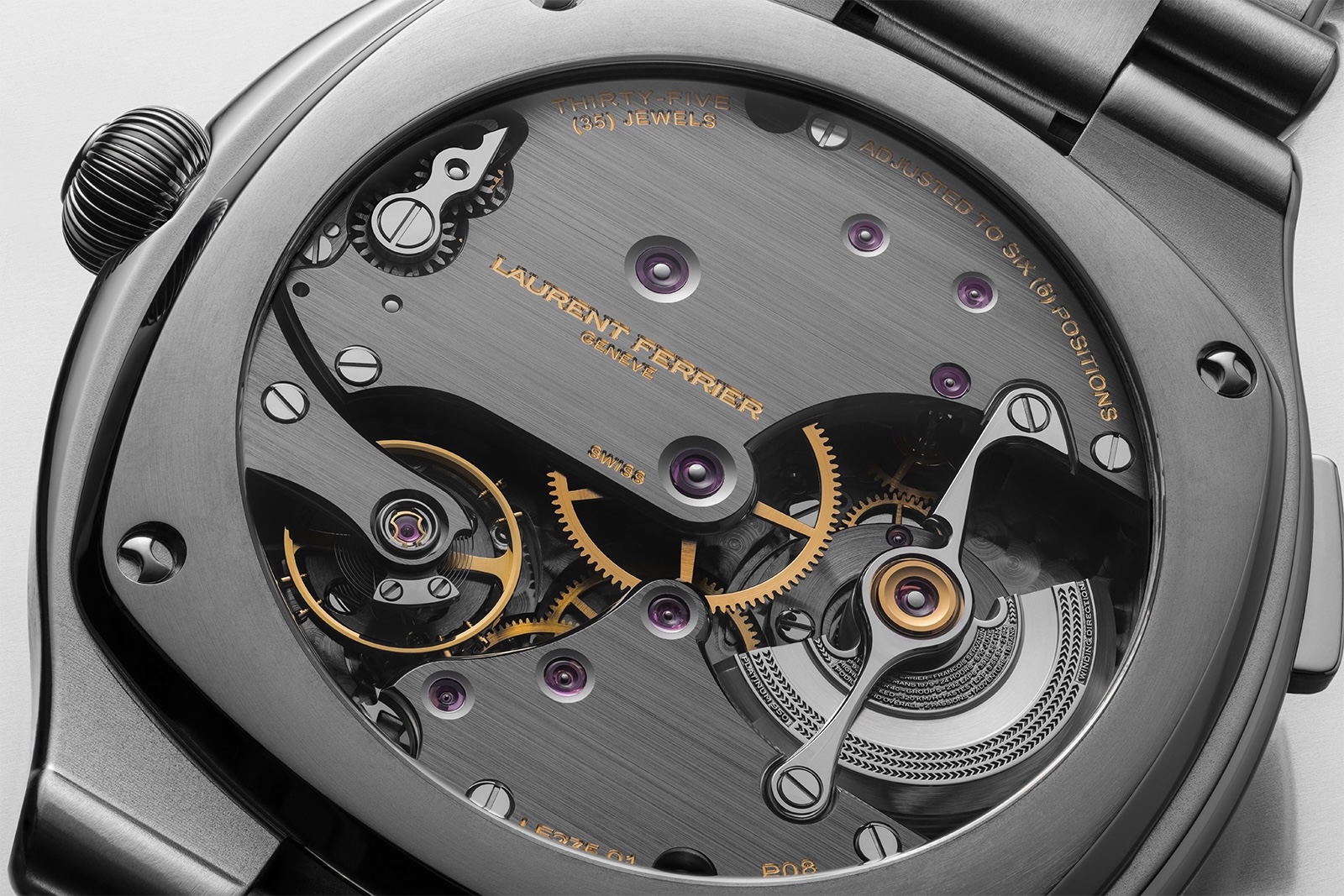
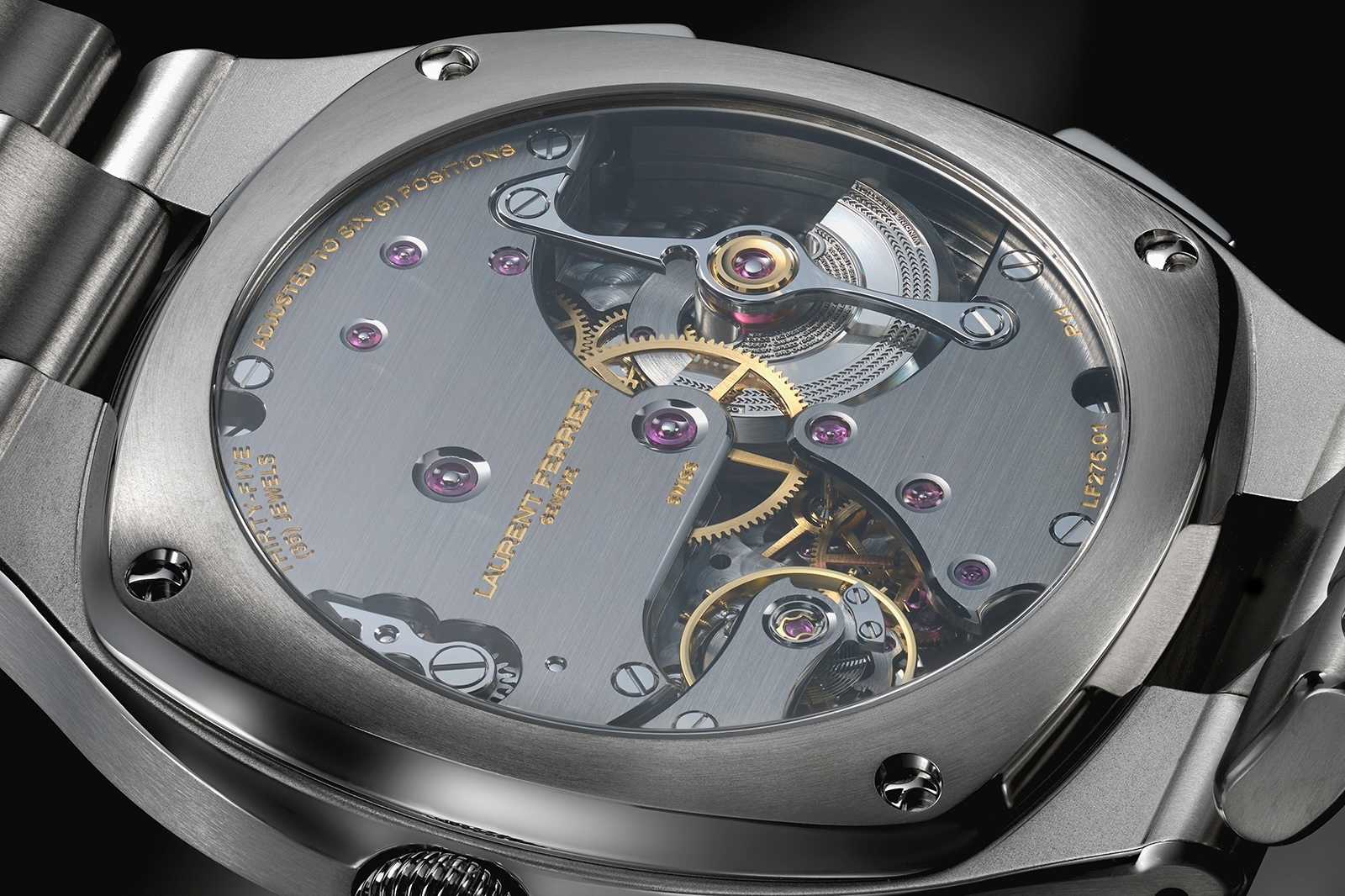
The Sport Traveller is made from grade 5 titanium for a featherweight wrist presence, and debuts in what is likely to be a popular grey-on-grey colourway. Even the Sport Traveller dial text is grey, blending in with the dial to help keep the clutter to a minimum. The cal. LF275.01 continues the monochromatic look with grey-coated bridges and a solid platinum oscillating weight.

Travelling in luxury

The signature complication of the Sport Traveller is simple and intuitive — more so than traditional GMT complications. The left side of the case features two pushers: the upper pusher jumps the hour hand forward in hourly increments, while the lower pusher adjusts it backward. This allows the user to update the watch to local time quickly without using the crown.

This functional simplicity — similar to that of the Patek Philippe Aquanaut 5164 — should appeal to any bleary-eyed jet-setter.

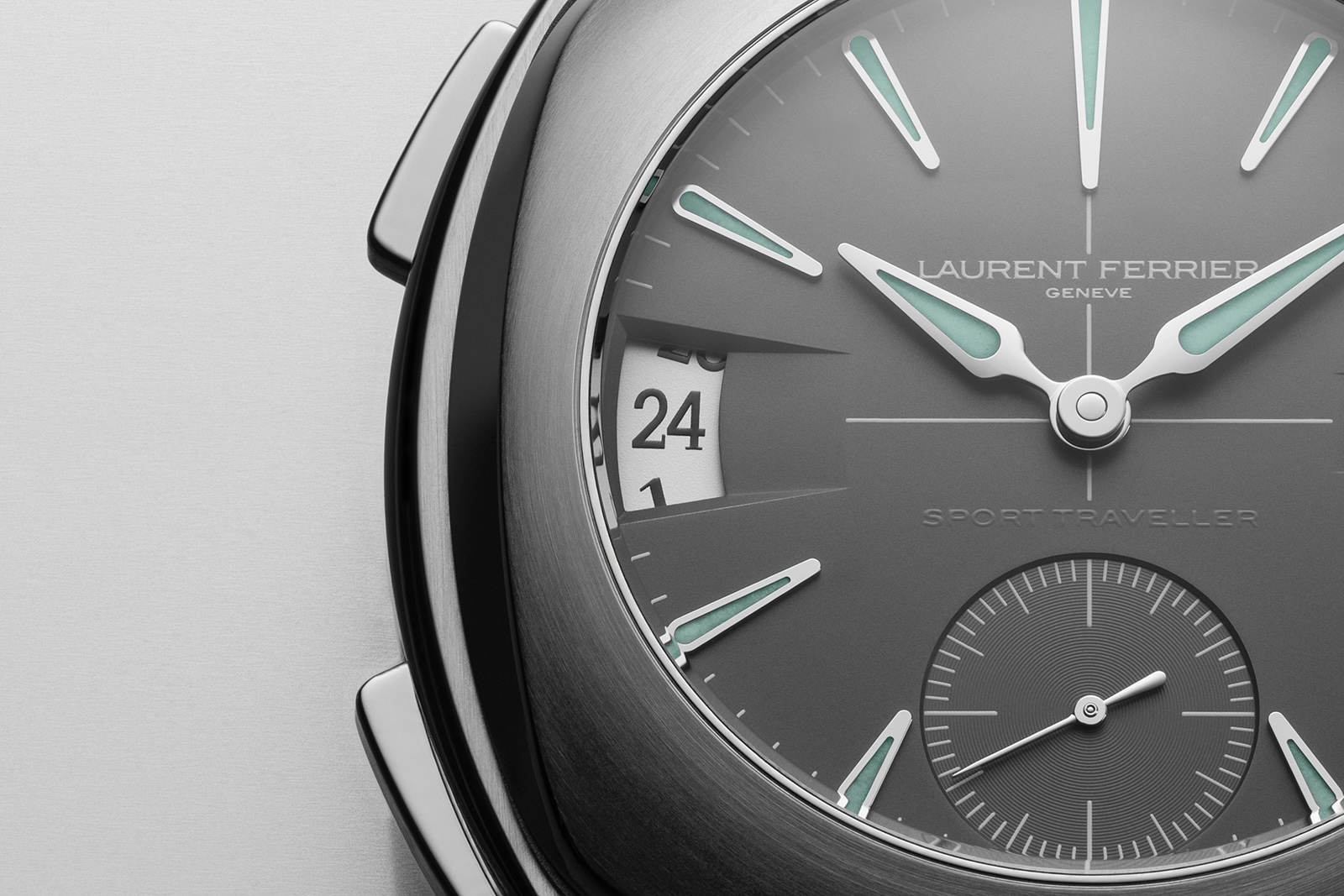
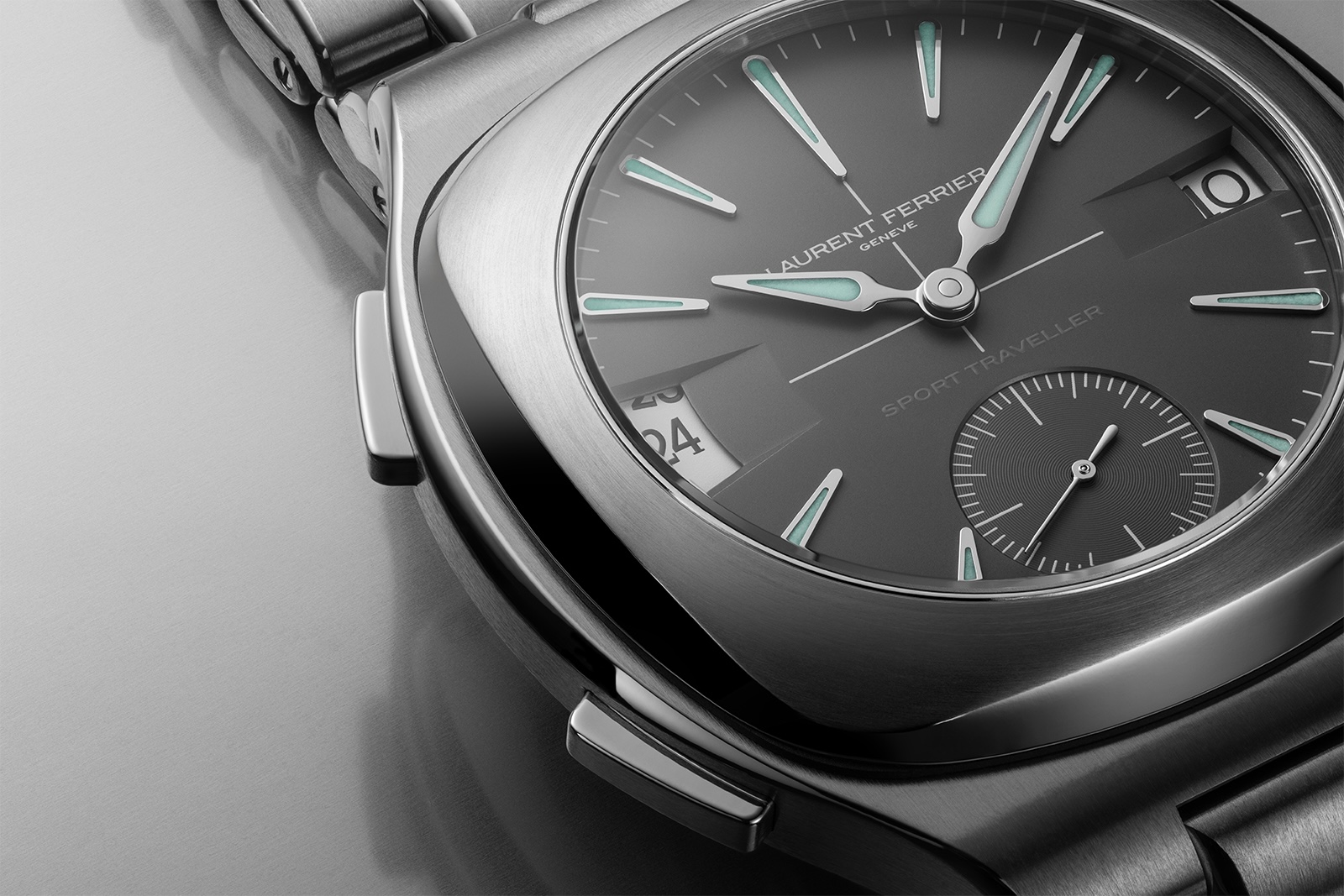
Unlike the Aquanaut, the Sport Traveller uses a 24-hour disc and a nine o’clock aperture to display the home time zone. This format keeps the central hand stack clean and legible, while eliminating the need for an auxiliary day/night indication for home time.

Like the date window on the opposite side of the dial, the home time aperture features the brand’s distinctive sloped opening, intended to allow more light to reach the disc, thereby improving legibility. Even if the effect is minimal, the symmetrical ramps bring some interest to what would otherwise be plain cut-outs.

Grey anatomy

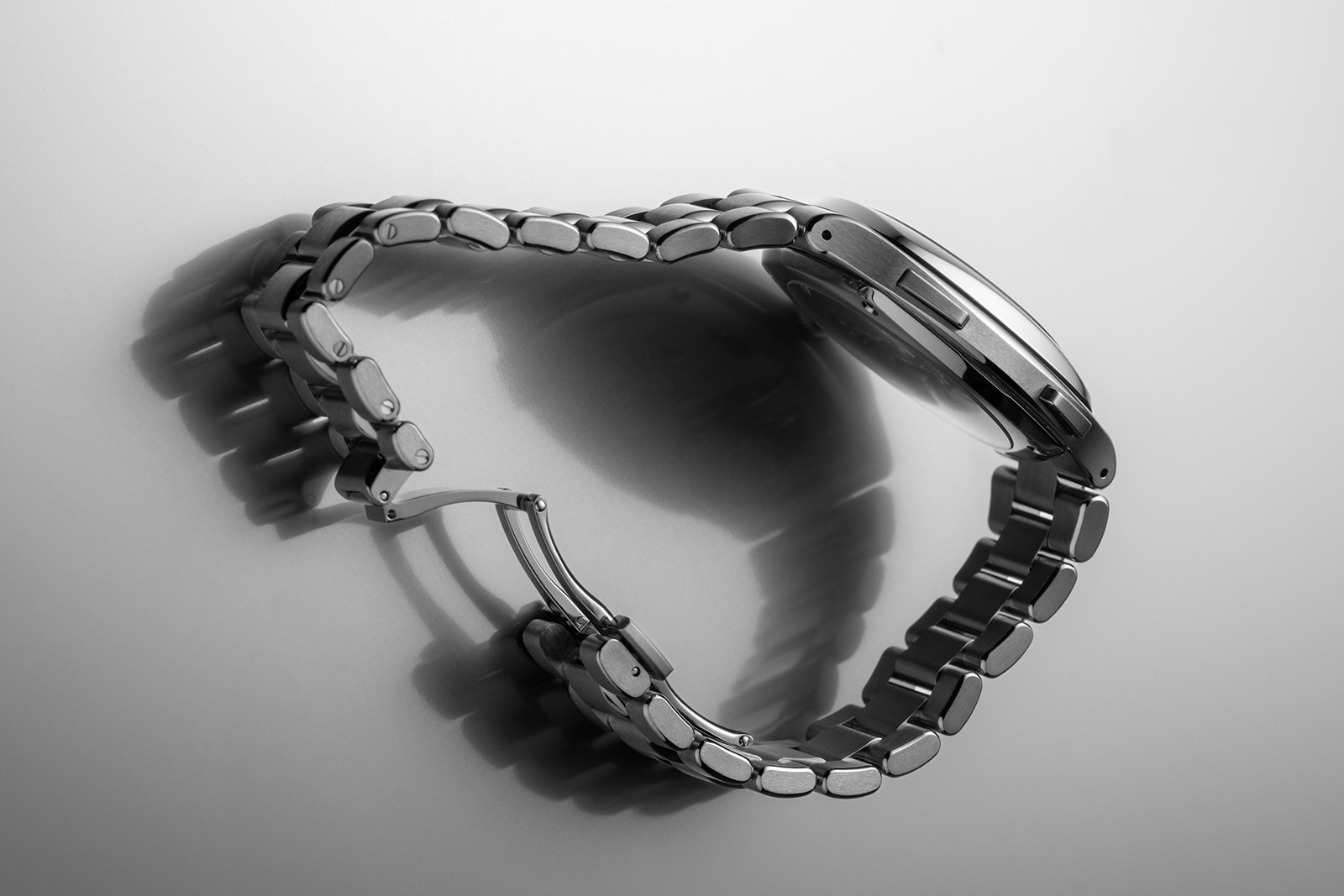
The case and integrated bracelet are made of grade 5 titanium, as is the folding clasp. It’s a lightweight and reasonably hard-wearing material, being more scratch resistant than grade 2 titanium.

The 42 mm case is 13.3 mm thick, and is rated to a reassuring 100 m. These dimensions are nearly identical to those of the time-only Sport, growing just 0.5 mm in diameter and 0.6 mm in thickness. While not a large watch, it is chunkier than some peers in a category that emphasises elegance.

The design of the anthracite grey dial breaks no new ground and is immediately recognisable as a Laurent Ferrier Sport. Befitting its stature, the hands and dial markers are solid 18k white gold, with a high palladium content to head-off oxidation. Those assagi-shaped hands and dagger indices are filled with green-tinged Super-LumiNova, as seen on the time-only Sport.

Expensive dial furniture aside, the highlight of the dial might be the ‘Sport Traveller’ text, which is printed tone-on-tone for maximum discretion.

The three-link integrated bracelet draws some inspiration from popular 1970s designs. On paper, the bracelet seems well-built with strong attention to detail evident in its construction. The fully brushed look suits the restrained nature of the watch, and the screwed links are welcome.

That said, bracelet making is as much an art as a science, and few independent brands have truly mastered the craft, so many smaller brands rely on third-party suppliers — with mixed results. In this case, the Sport’s titanium bracelet feels less refined than the rest of the watch, with links that tend to feel somewhat loose.

Robust and elegant

Laurent Ferrier’s Traveller complication has always been paired with its LF229 micro-rotor platform (taking the name LF230), which features a 3 Hz balance and the brand’s unique take on the natural escapement. Until now, that is.

While intended to reduce or even eliminate the need for lubricated pallets, Laurent Ferrier’s approach to the natural escapement relies on extremely precise tolerances for reliable function. This sensitivity means the escapement is not ideally suited to life in a sports watch.

As a result, the Sport collection relies on the LF27x platform, which features a more robust — if more ordinary — lever escapement. It also ticks at a higher frequency of 4 Hz, which improves rate stability during rough wear.

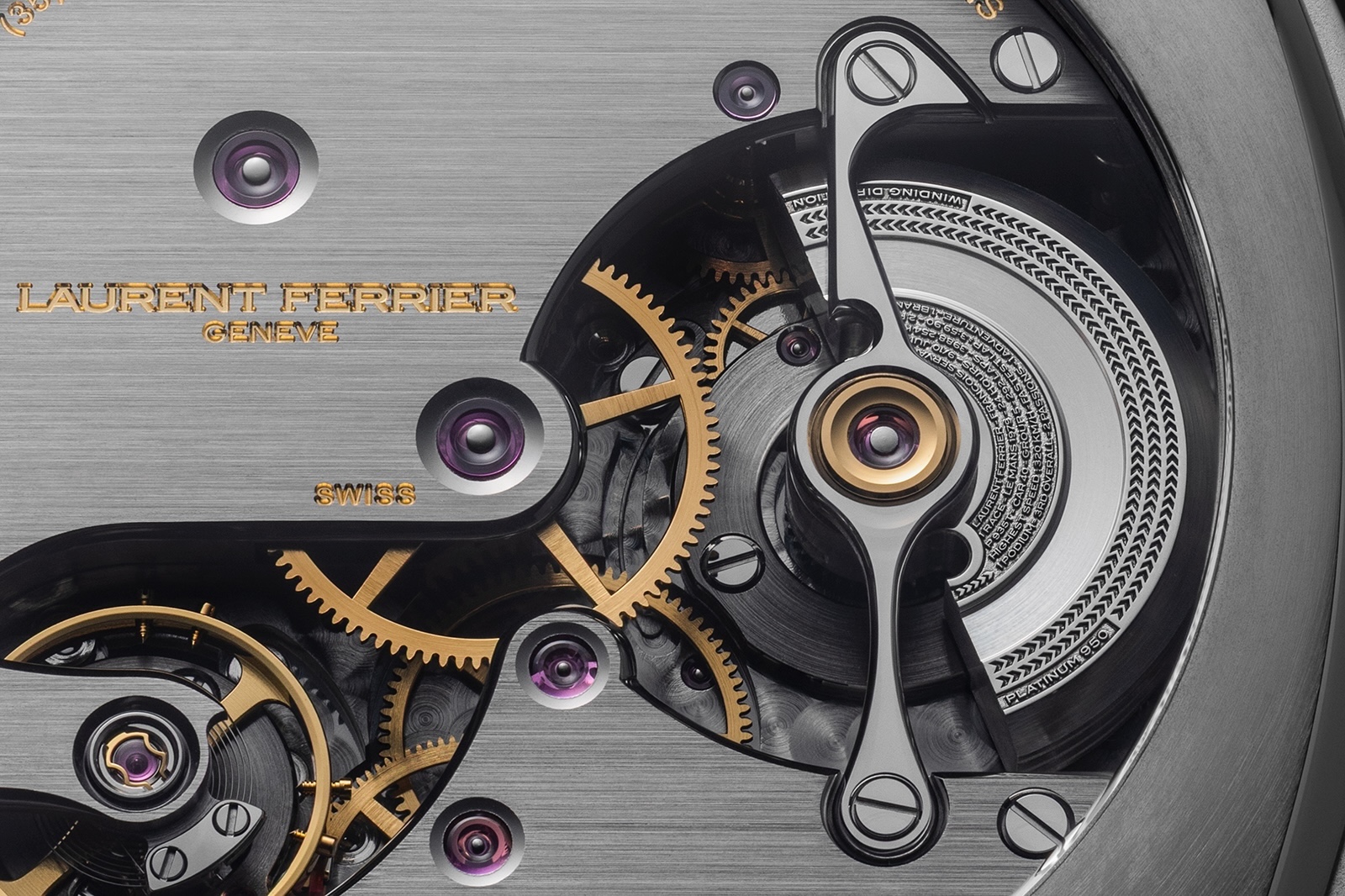
The Sport Traveller’s LF275.01 movement features an all-grey look, right down to the solid platinum micro-rotor, which, unusually, is secured between the mainplate and its own bridge for improved stability.

The winding mass has some interesting details of its own. The rotor’s rim is engraved with arrows pointing in the winding direction — unlike earlier Laurent Ferrier automatics, the LF275.01 winds in just one direction — and the hub is engraved with Mr Ferrier’s exploits as a racing driver, including his 1979 podium at Le Mans.

Laurent Ferrier can usually be counted upon to deliver expert finishing, and that is the case here. Unfortunately, the dark colour and simple texture palette — the large bridge forms feature a simple straight-grained treatment — make it harder to appreciate the quality of the work.

The steelwork is richly black polished and the anglage and countersinks gleam, but this effort is obvious under a narrower range of lighting conditions than is typical for the brand’s more traditional calibres.

On a technical level, the movement holds up to scrutiny, with a convenient 72-hour power reserve and a free-sprung balance that oscillates on an overcoil hairspring.


Key facts and price

Laurent Ferrier Sport Traveller
Ref. LCF045.T1.NG1C7

Case diameter: 42 mm
Height: 13.3 mm
Material: Titanium
Crystal: Sapphire
Water resistance:
100 m

Movement: LF275.01
Features: Hours, minutes, seconds, date, second time zone
Frequency: 28,800 beats per hour (4 Hz)
Winding: Automatic
Power reserve: 72 hours

Strap: Titanium bracelet

Limited edition: No
Availability:
From Laurent Ferrier authorised retailers
Price: CHF61,000 excluding taxes

For more, visit laurentferrier.ch..


Back to top.

You may also enjoy these.

A. Lange & Söhne’s Saxonia Annual Calendar Returns

More compact and refined than ever.

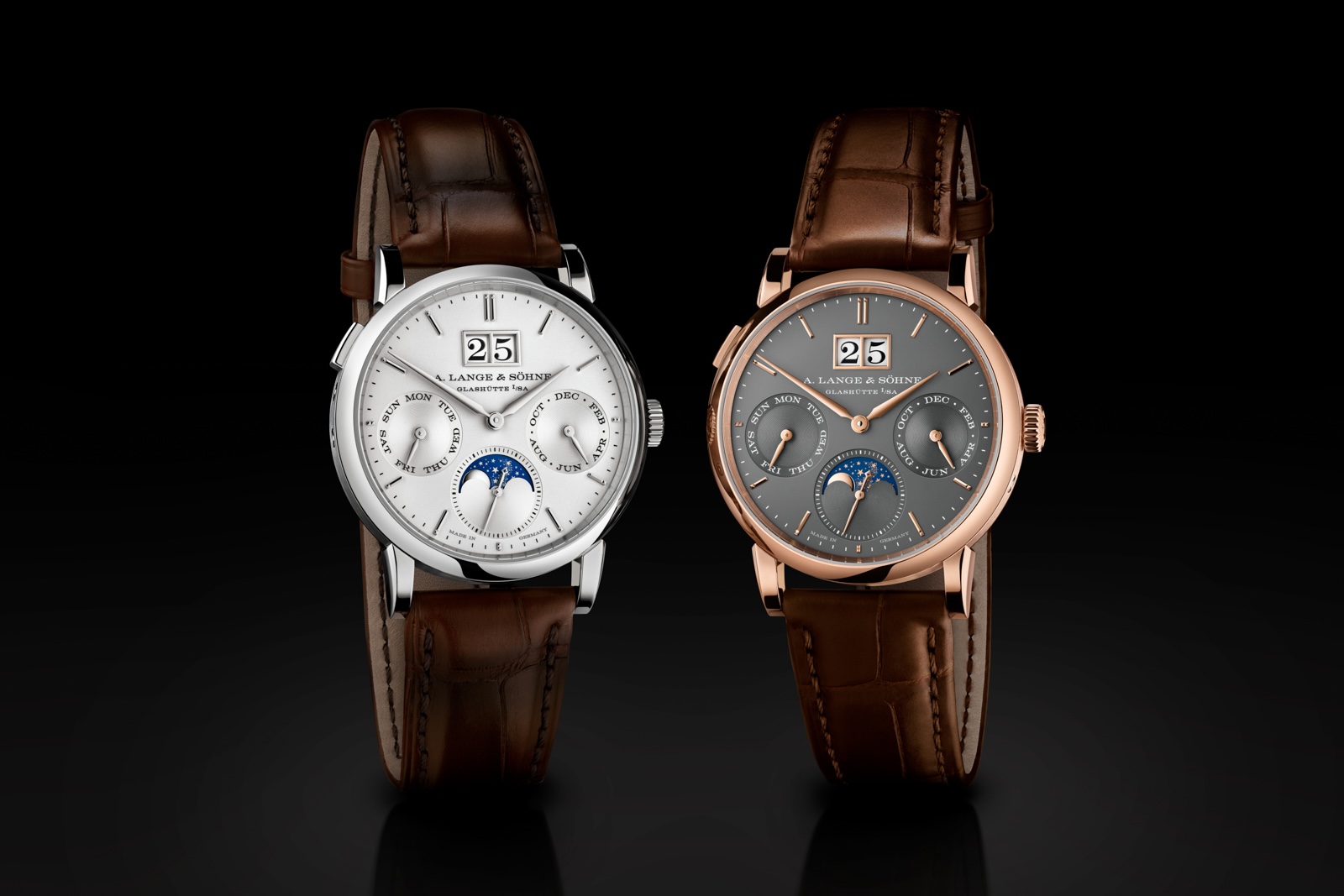
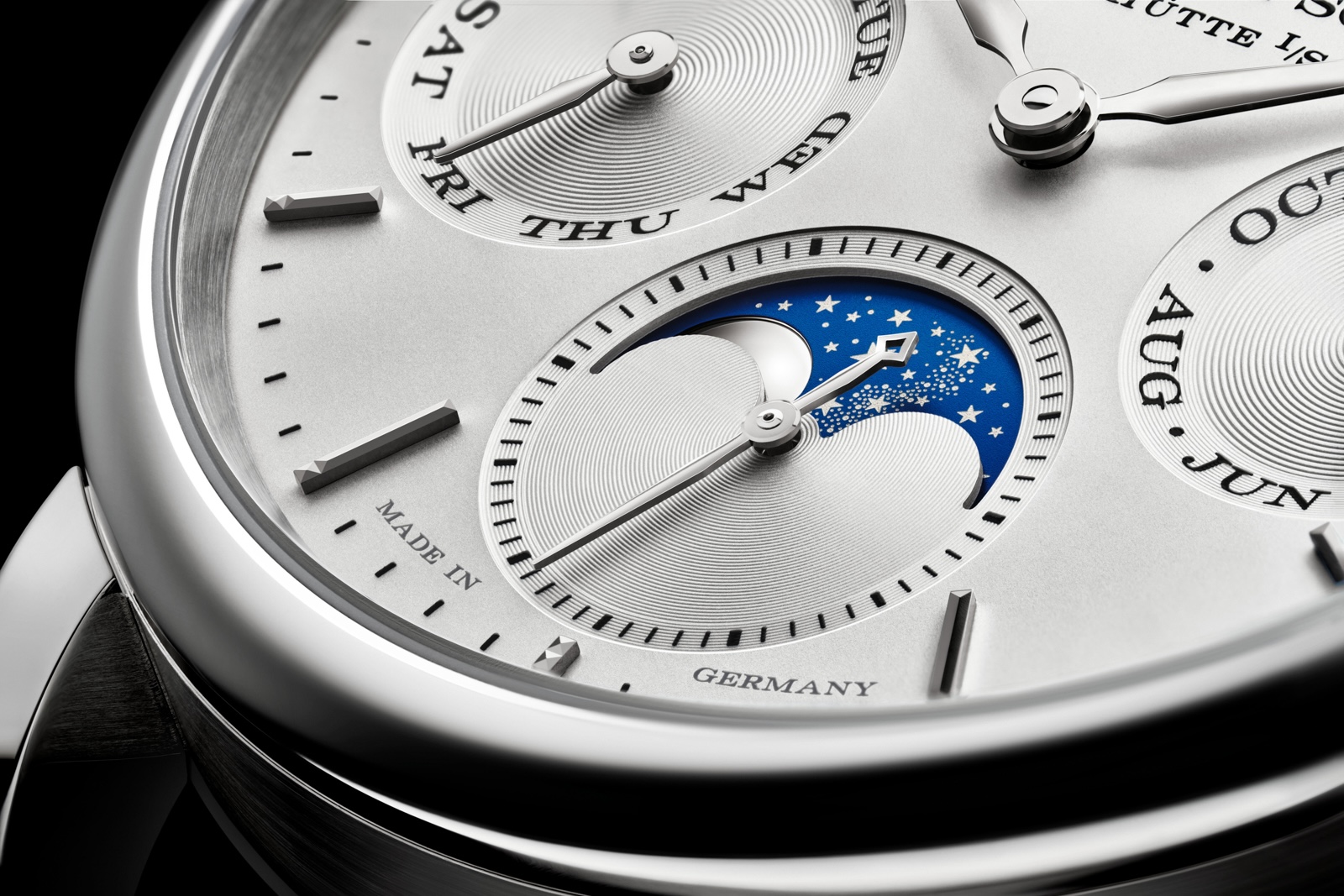
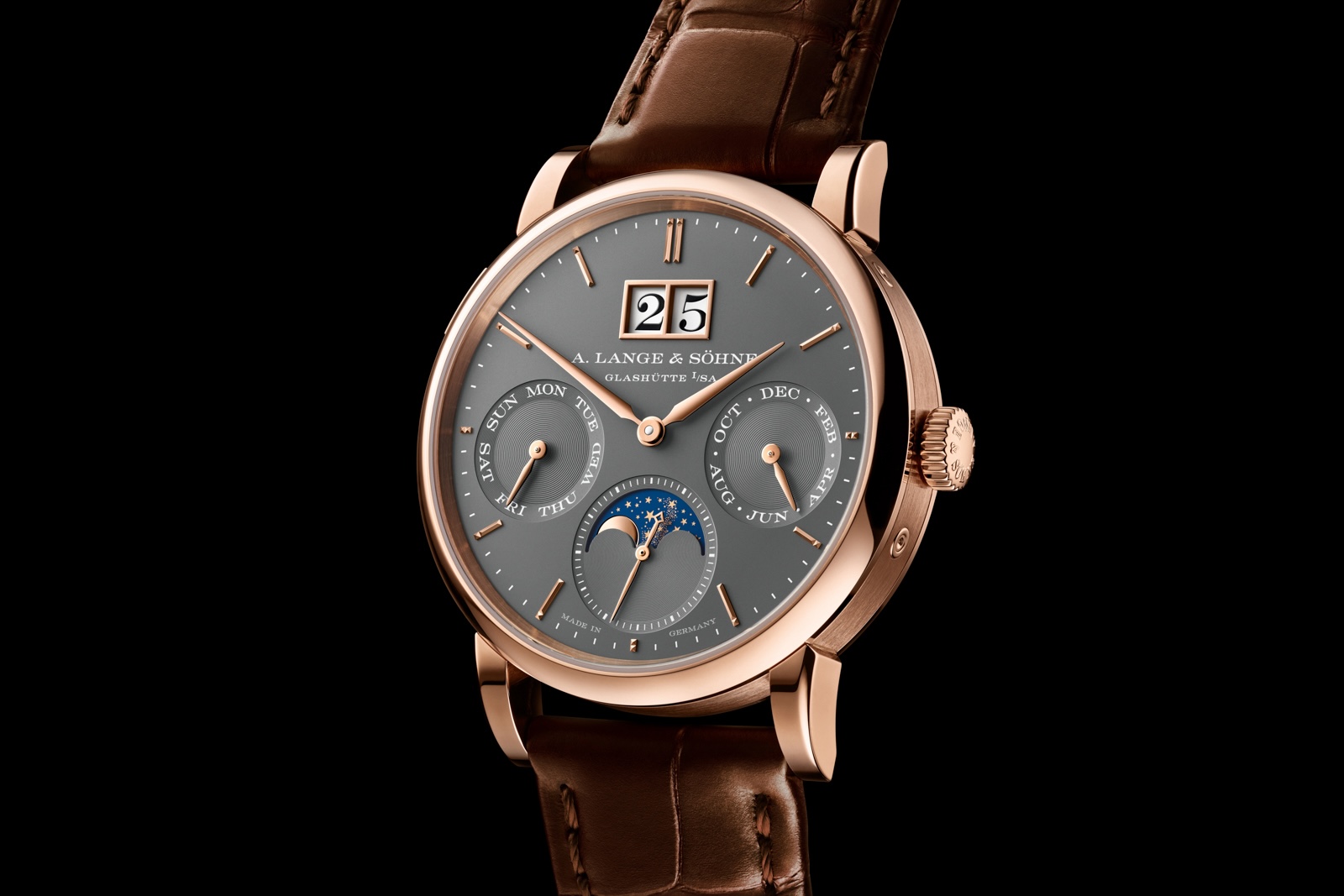
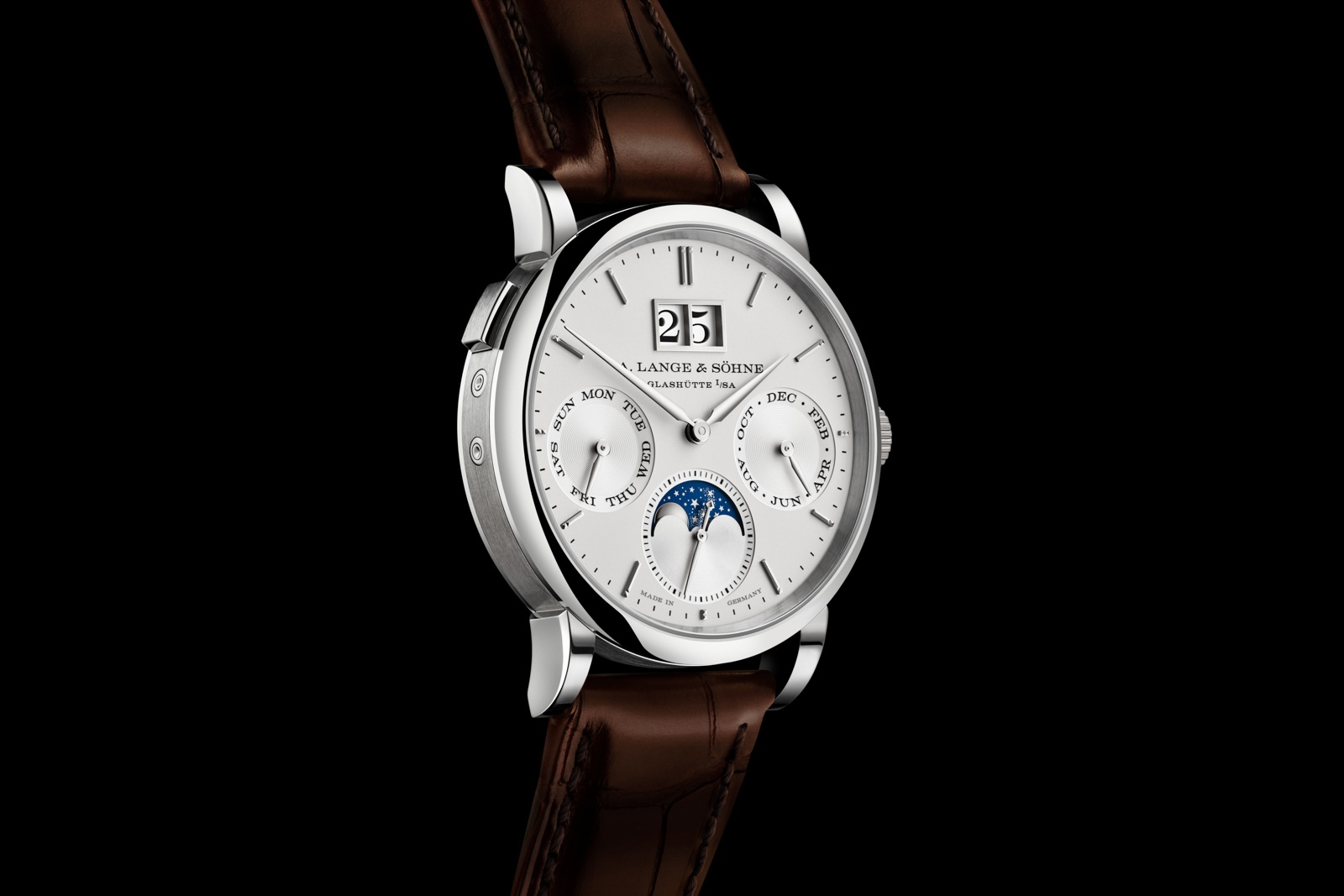
A. Lange & Söhne has introduced the Saxonia Annual Calendar, the brand’s most compact annual calendar to date. Available in 18k white or pink gold, the Saxonia Annual Calendar plays to the strengths of Germany’s foremost watchmaker, combining a compact 36 mm case with an intuitive and legible ‘outsize date’ design reminiscent of the brand’s famed perpetual calendars.

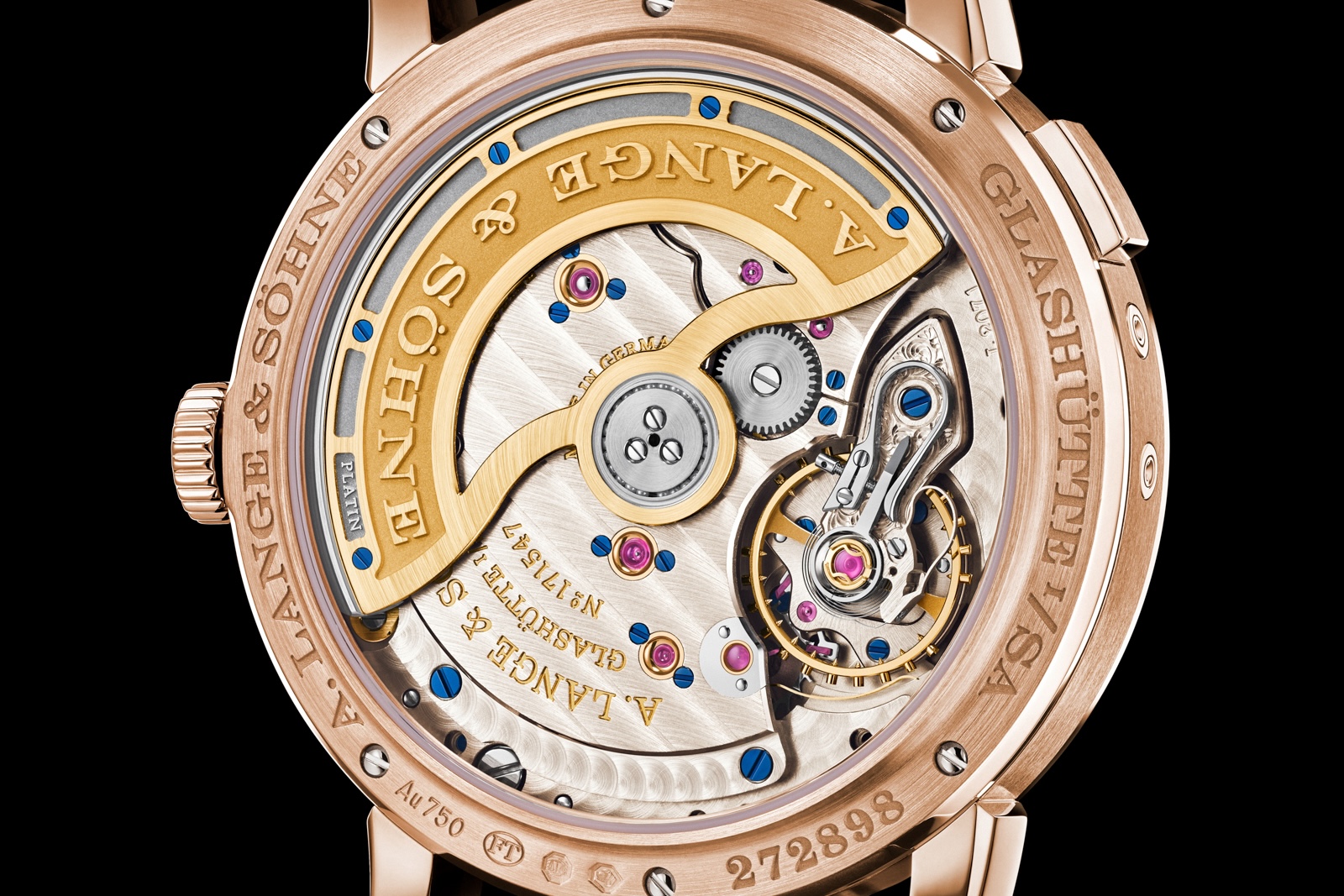
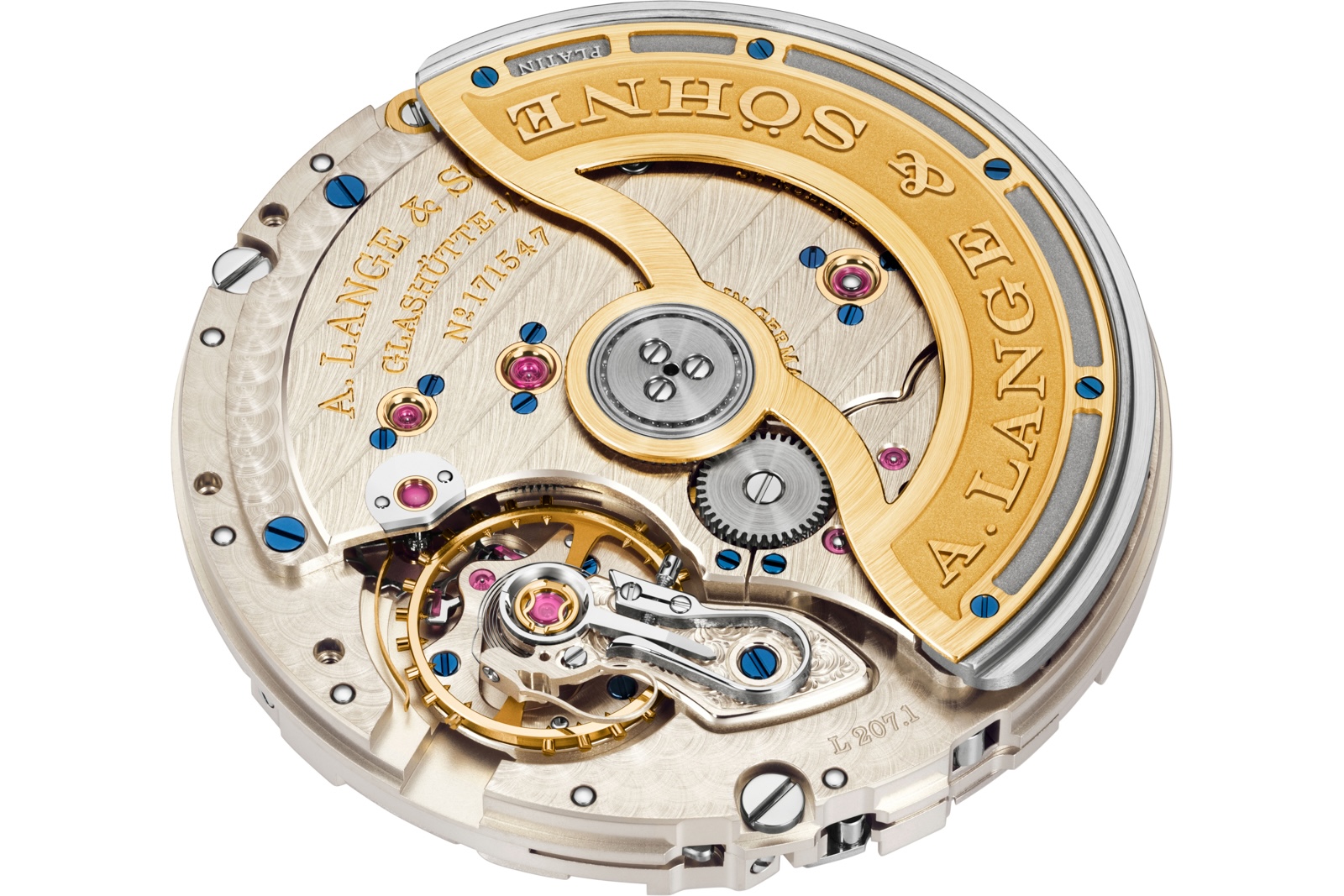
The new cal. L207.1 hints at future developments while incorporating refined details such as gold chatons around the going train jewels — a finishing touch that has been absent from the brand’s ‘entry-level’ automatic movements until now.

Initial thoughts

There’s been a palpable trend toward smaller watches in recent years — Lange’s 34 mm 1815 released last year was a major hit, and it seems like there’s more of a focus on dimensions and thickness than at any other time in the past decade or so. In this context, the Saxonia Annual Calendar should be well-received. At just 36 mm in diameter and under 10 mm thick, the watch is compact even by the standards of time-only watches.

In fact, it’s the most compact annual calendar yet from Lange, and the small size of the dial makes the big date format especially convenient for those, like myself, who have trouble reading pointer dates at arm’s length.

In fact, I’d argue the enhanced legibility and differentiated design of the big date makes the Saxonia Annual Calendar competitive with more complicated (but equally compact) perpetual calendars like the Vacheron Constantin Traditionnelle Perpetual Calendar Ultra-Thin.

The Saxonia Annual Calendar is powered by the new cal. L207.1, which looks a lot like the older L086.1. Visually, the easiest way to distinguish these movements at a glance is to look for the presence of gold chatons around the jewels in the going train — the new calibre has three, the older platform has none. This is a welcome addition that makes for a more dignified appearance, even if the relief detail on the rotor appears a tad more simplistic.

Saxon style

The Saxonia Annual Calendar returns in two variants: 18k white gold with a silver dial, and 18k pink gold with a grey dial. In either case, the dial itself is made of solid sterling silver rather than the more common brass, endowing the watch with reassuring heft.

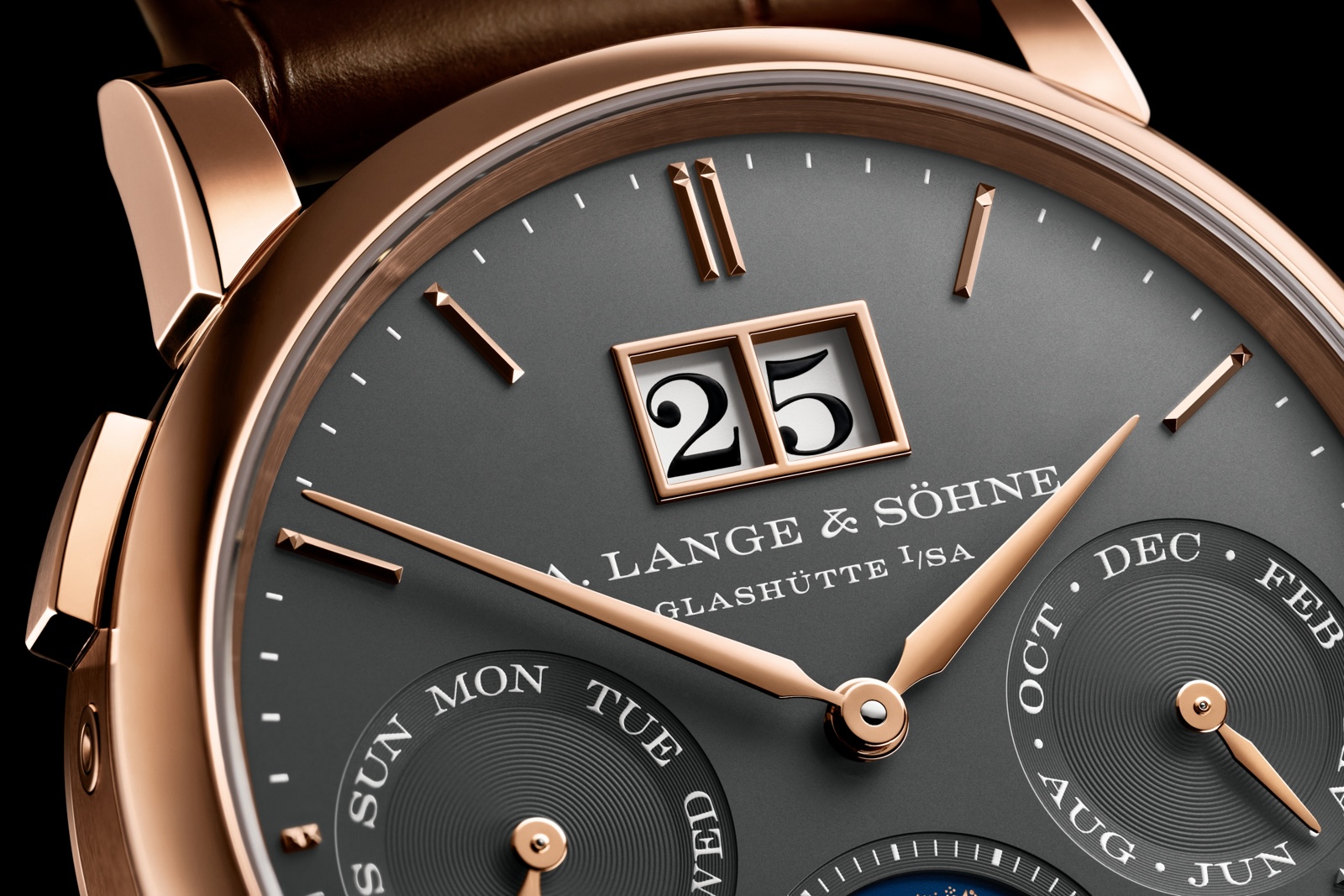
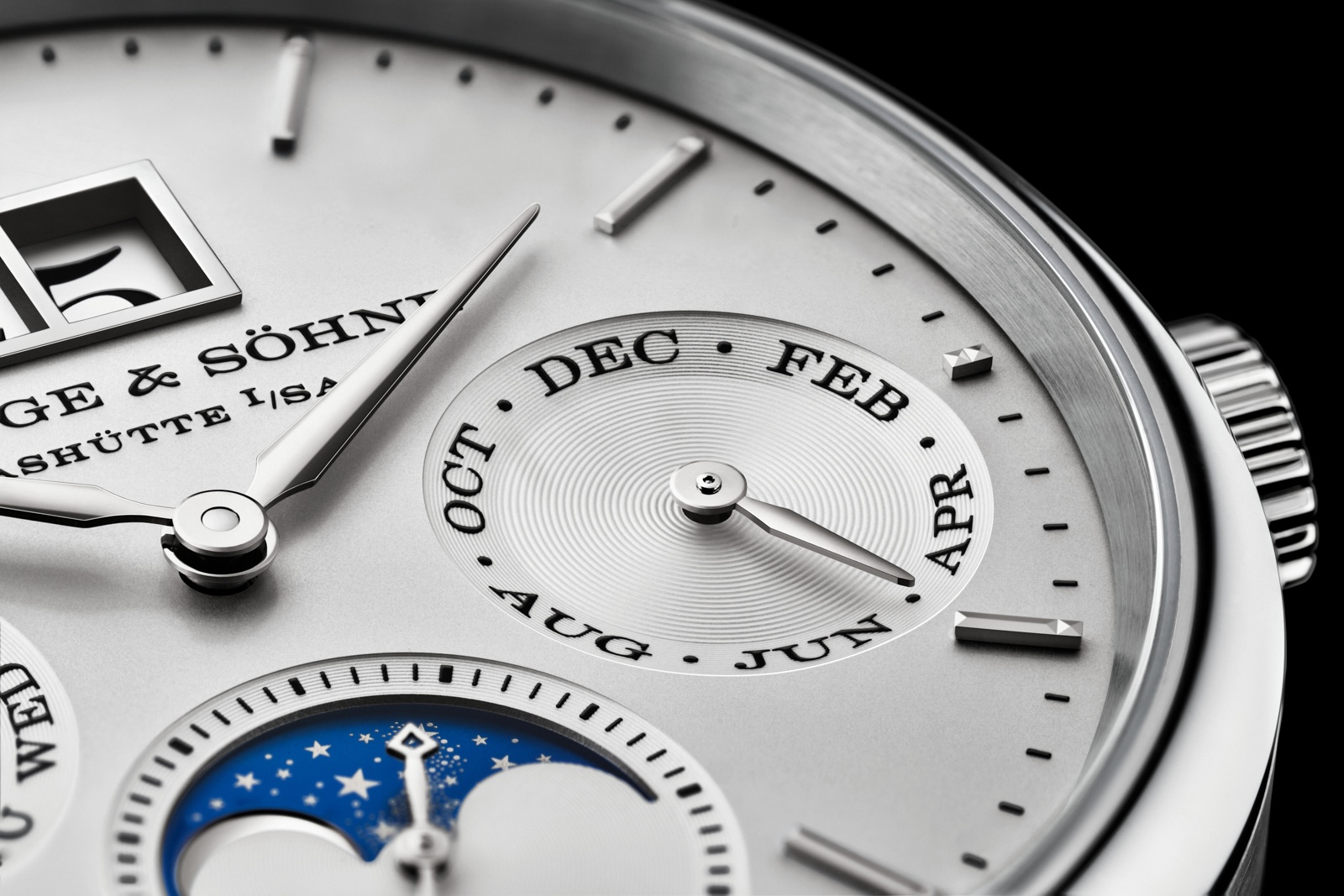
The sunken sub-dials for the day and month are offset below the centre line of the dial to avoiding crowding the big date at 12 o’clock, and are decorated with concentric snailing, giving the dial plenty of depth — an especially satisfying characteristic in a thin watch. The typical Lange hands are solid gold, as are the applied dial markers, which exhibit a new pyramid-like shape at the perimeter.

The case design is typical Lange, which means it’s easily identifiable despite being a simple, round shape. The faceted, welding lugs are the first giveaway, and the brushed case band is another. Like F.P. Journe, Lange developed a simple case and has stuck with it, with very little variation, throughout its history, creating an unmistakable look in the process.

New calibre, familiar look

Lange produces an unusually wide range of movements relative to the number of models the brand produces, to the point that most models feature a distinct calibre. Case in point, the cal. L207.1 is an all-new platform distinct from the similar-looking L086.1.

These movements have a lot in common, including a 3 Hz rate and a 30.4 mm diameter, but the revised automatic movement trades autonomy for torque, with a 60-hour power reserve — 14 hours longer than the micro-rotor cal. L085.1 that powered the first generation Saxonia Annual Calendar from a decade ago, but 12 hours shorter than the L086.1 with big date (sans annual calendar).

This progression may seem counterintuitive, but it suggests the L207.1 has the torque to power a wider range of complications. As expected from Lange, the movement is richly hand-finished in the house style, and exhibits more craftsmanship and care than comparable calibres from the brand’s Swiss rivals.

The black-polished steelwork of the escape wheel cap and swan’s neck fine adjustment system, deployed in this case to adjust the beat, rather than the rate, are features that are increasingly rare. The hand-engraved balance cock is another signature, rooted in a distinctly German identity. Beyond decoration, the movement features an uncommon technical detail: the hairspring is made in-house at the brand’s manufacture in Glashütte.

Lange has always approached movement design with a strong emphasis on user-friendliness and legibility, and that mentality is on full display in the Saxonia Annual Calendar. There’s a clear priority of information discernible from the design, with the big date display front and centre.

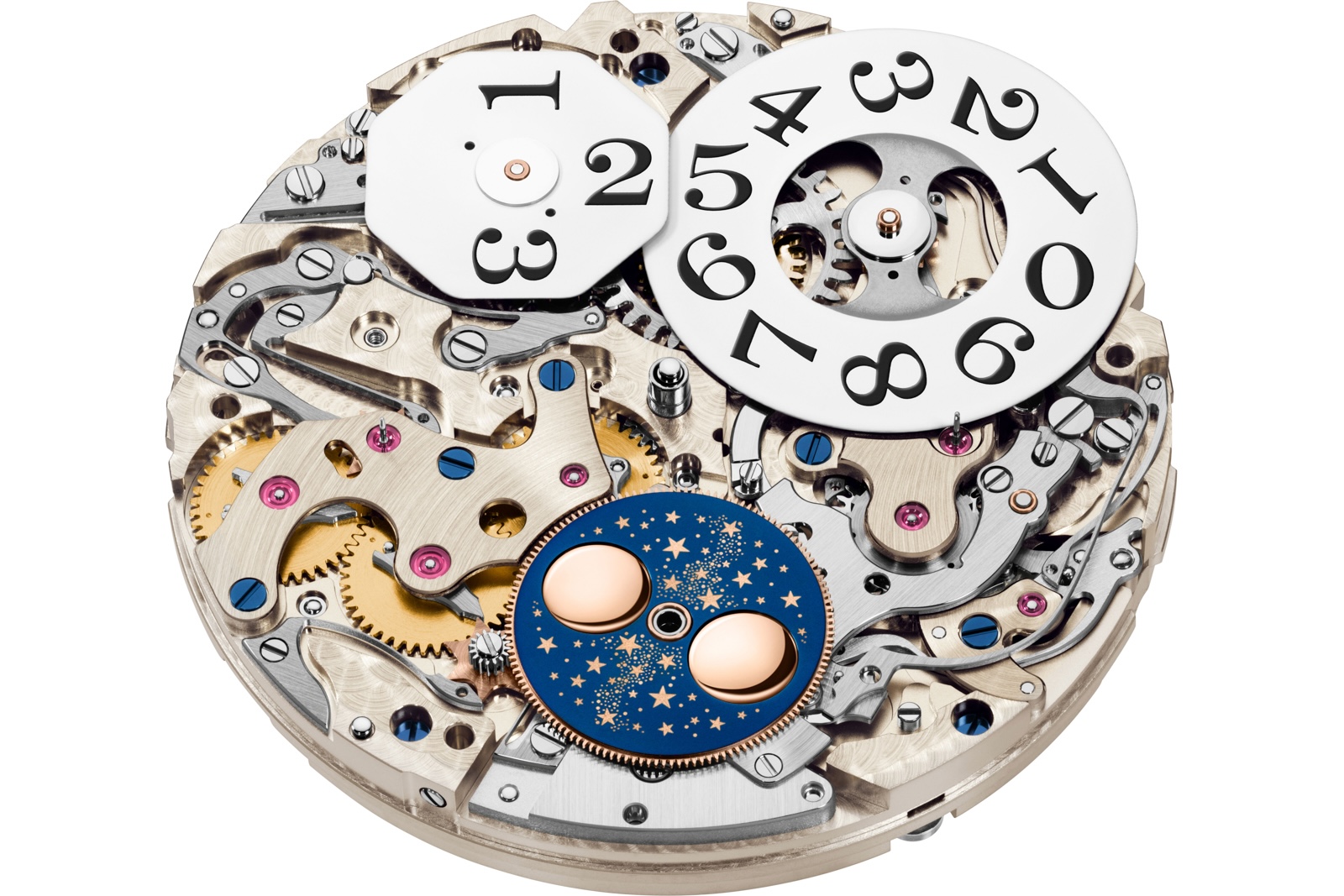
Furthermore, the movement is quick and easy to adjust, with a prominent pusher at 10 o’clock that advances all calendar displays forward simultaneously. Once a year, at the beginning of March or during initial setup, the user will need to adjust the displays manually using a stylus to engage flush-fitting correctors built into the case.


Key facts and price

A. Lange & Söhne Saxonia Annual Calendar
Ref. 331.026E (white gold)
Ref. 331.033 E (pink gold)

Diameter: 36 mm
Height: 9.8 mm
Material: 18k white or pink gold
Crystal: Sapphire
Water resistance: 30 m

Movement: L207.1
Functions: Hours, minutes, seconds, big date, annual calendar, moon phase
Frequency: 21,600 beats per hour (3 Hz)
Winding: Automatic
Power reserve: 60 hours

Strap: Alligator with matching pin buckle

Limited edition: No
Availability: At A. Lange & Söhne boutiques
Price: US$63,000

For more, visit Alange-soehne.com.


Back to top.
You may also enjoy these.

The Uber-Lange 1 Gets the “Lumen” Treatment

Lange 1 Tourbillon Perpetual Calendar "Lumen".

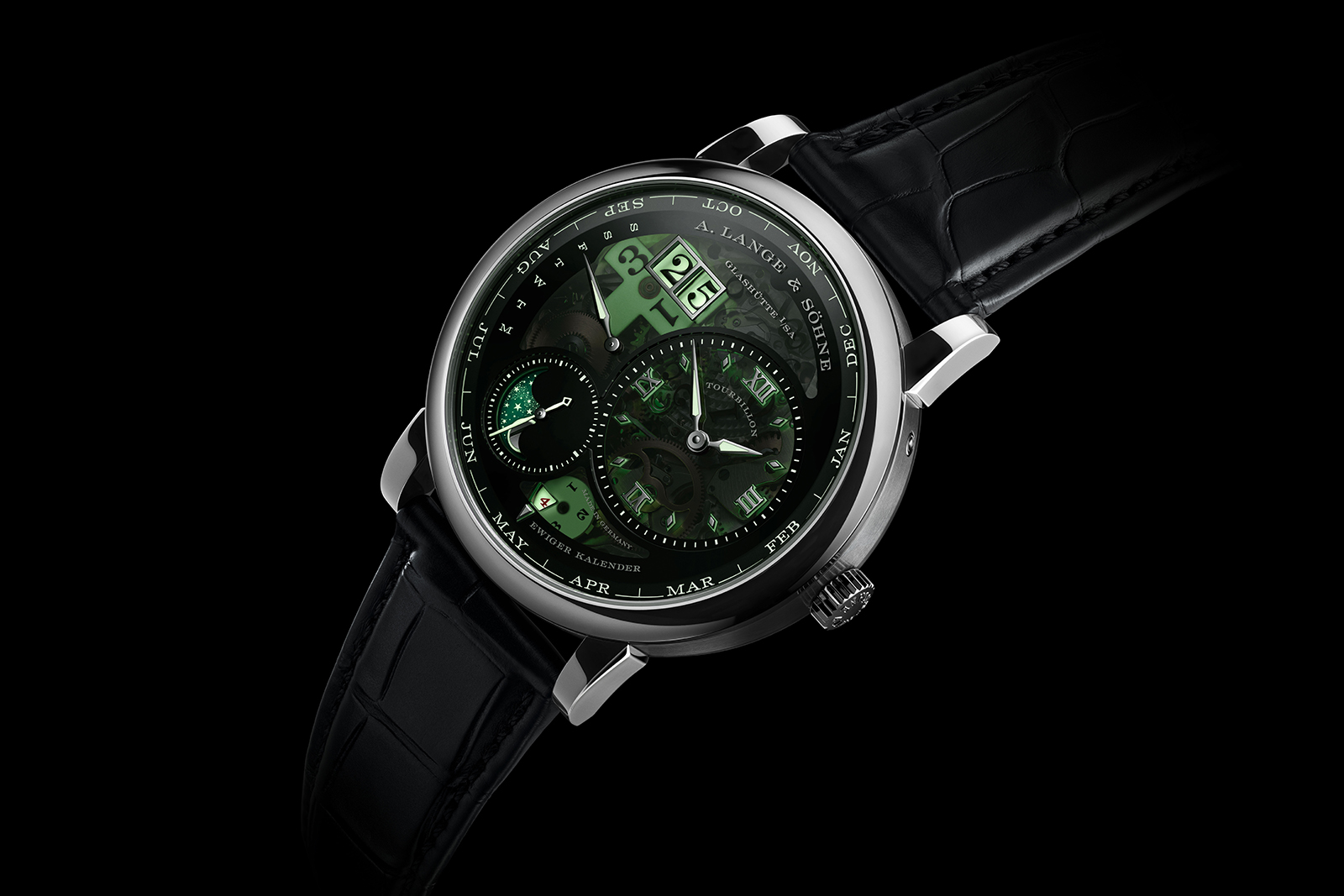
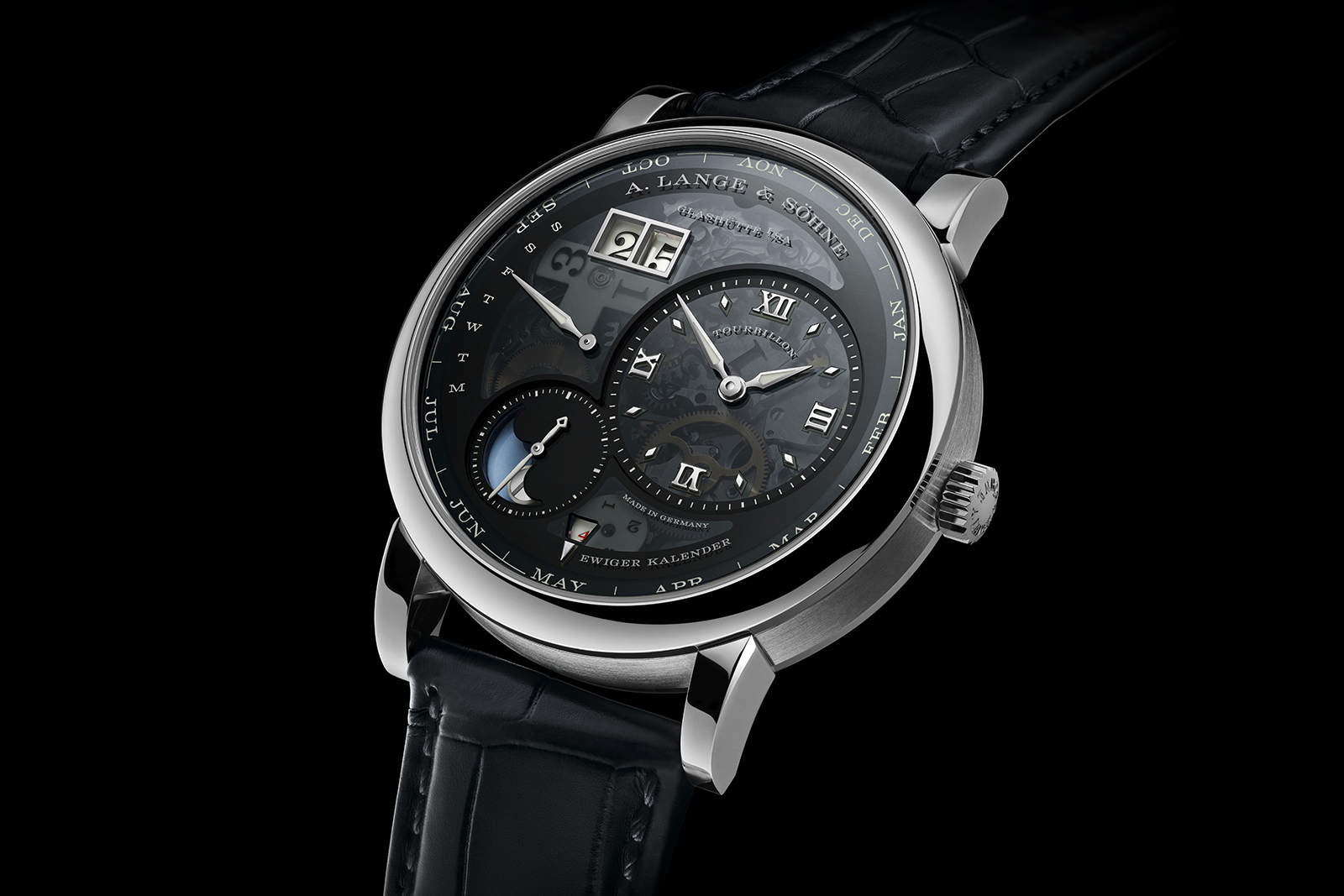
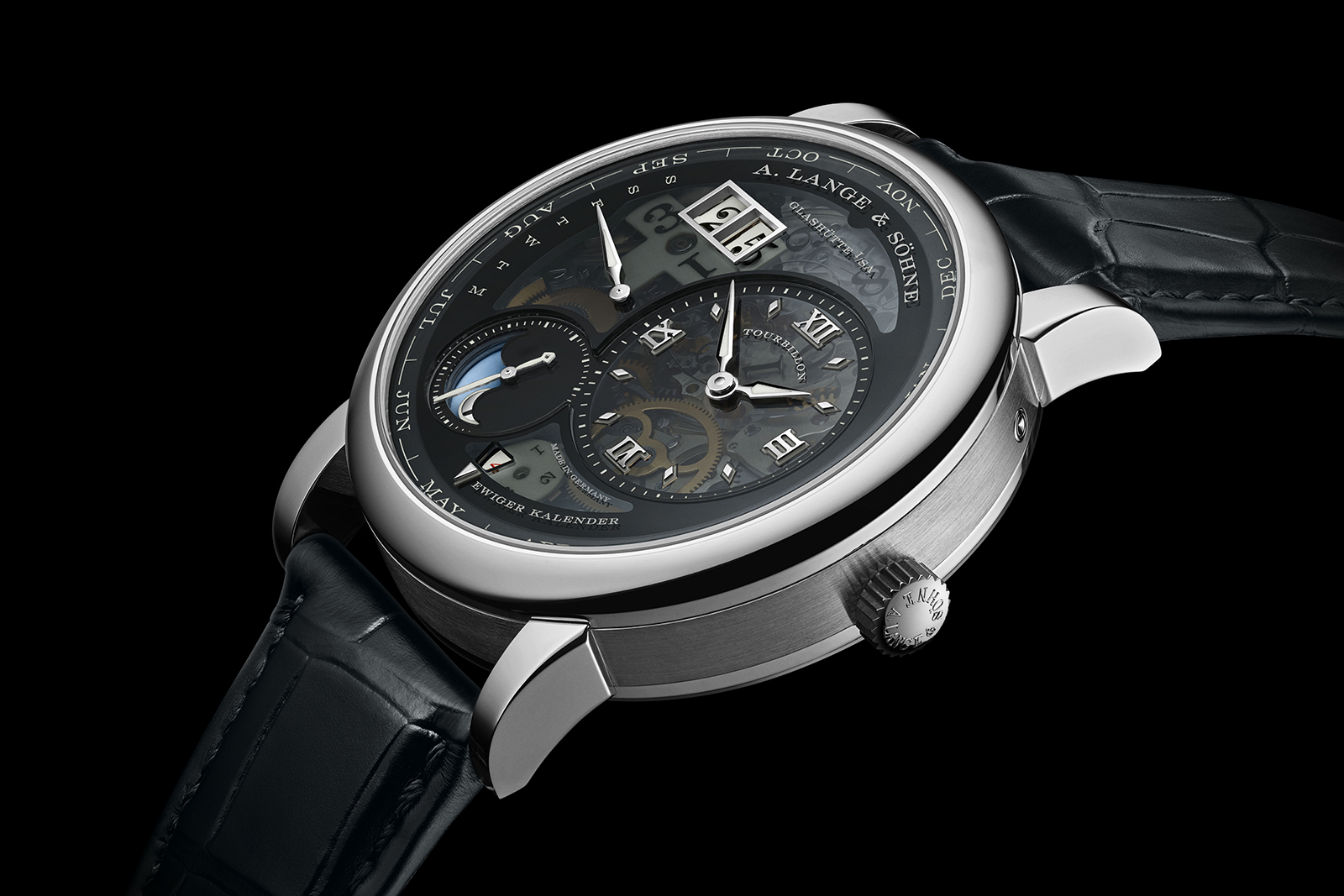
A. Lange & Söhne turns once again to its greatest hits for its flagship launch at Watches & Wonders 2026. The Lange 1 Tourbillon Perpetual Calendar “Lumen” bestows the translucent, luminous treatment to the top-of-the-line Lange 1 in a 50-piece limited edition in platinum.

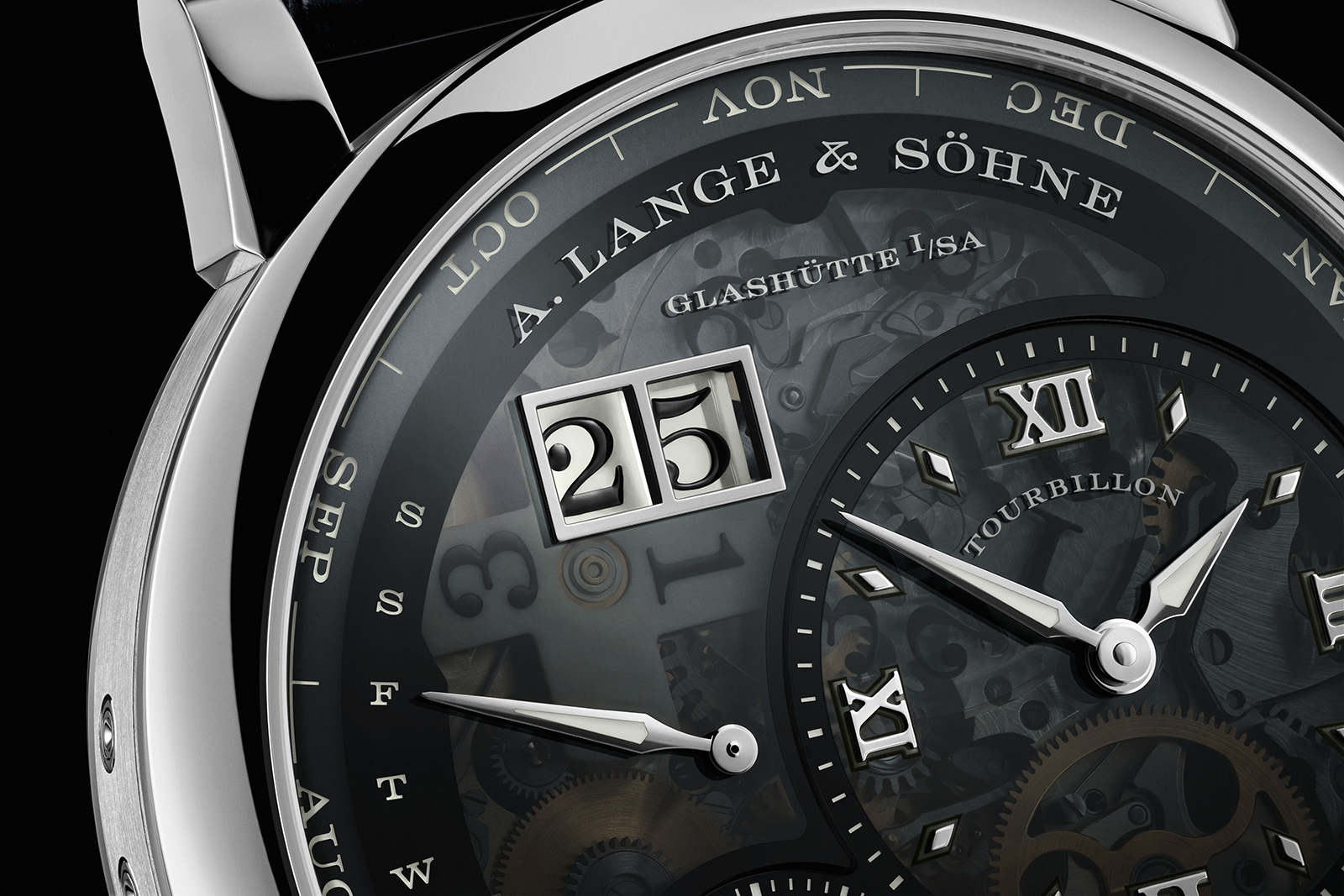
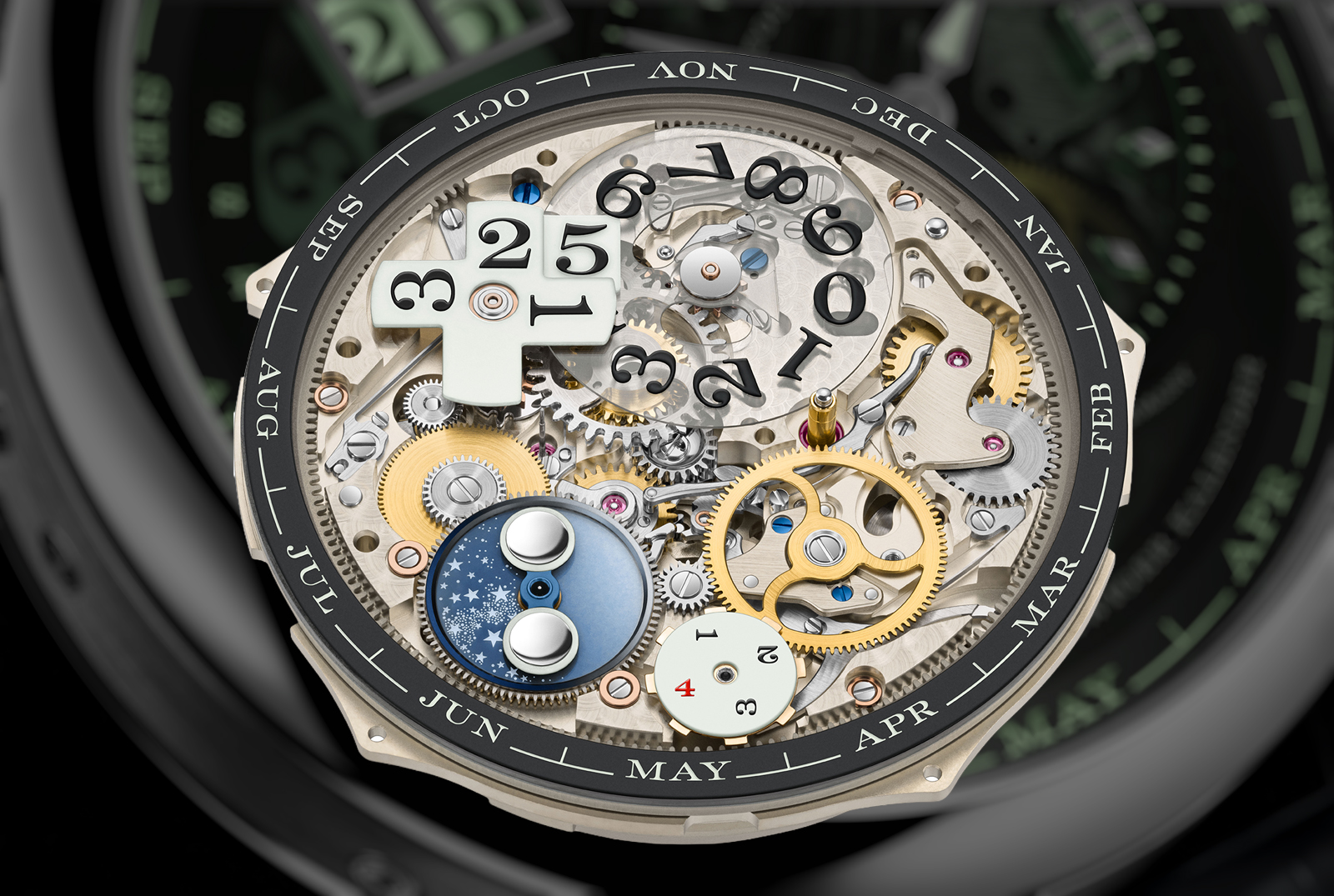
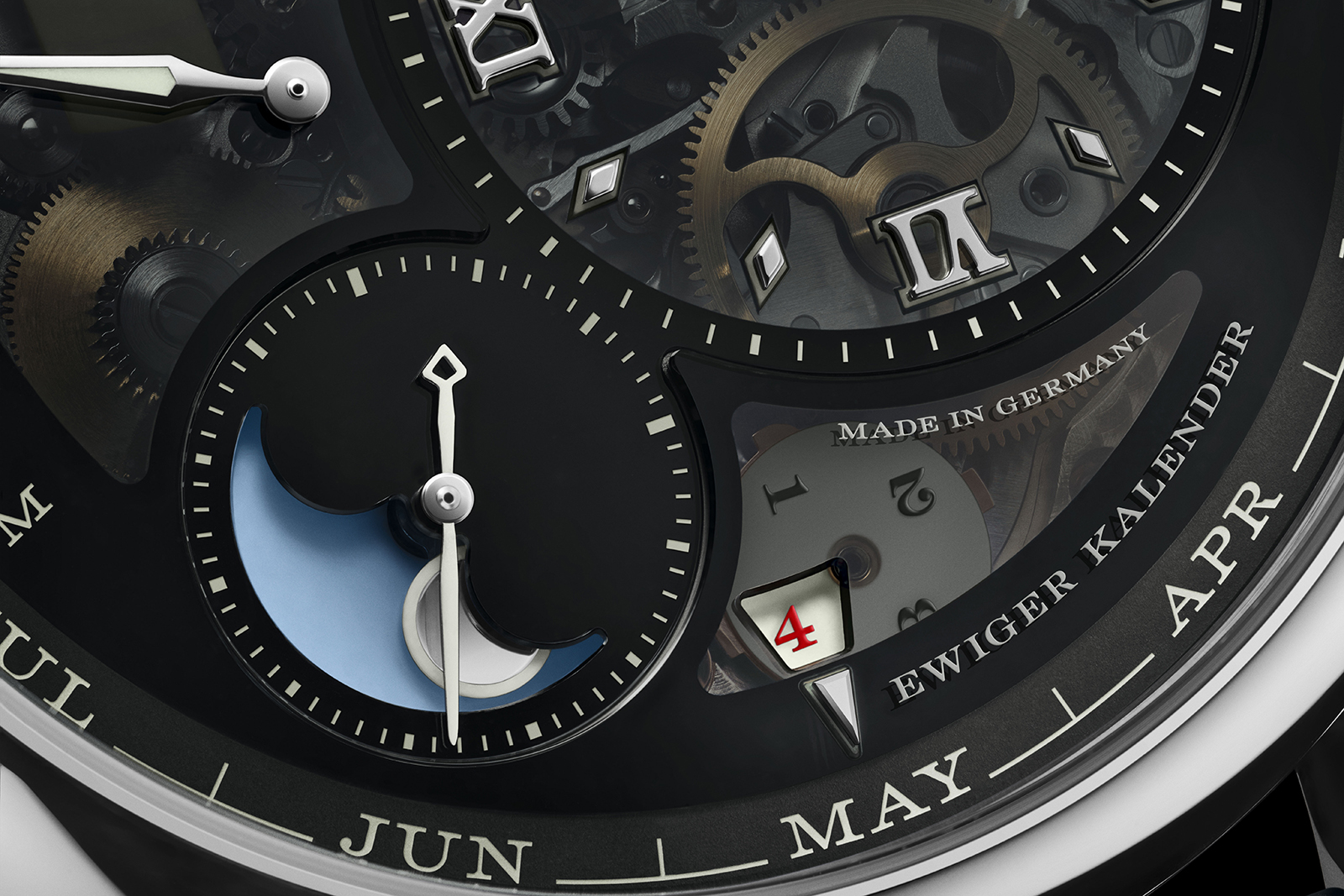
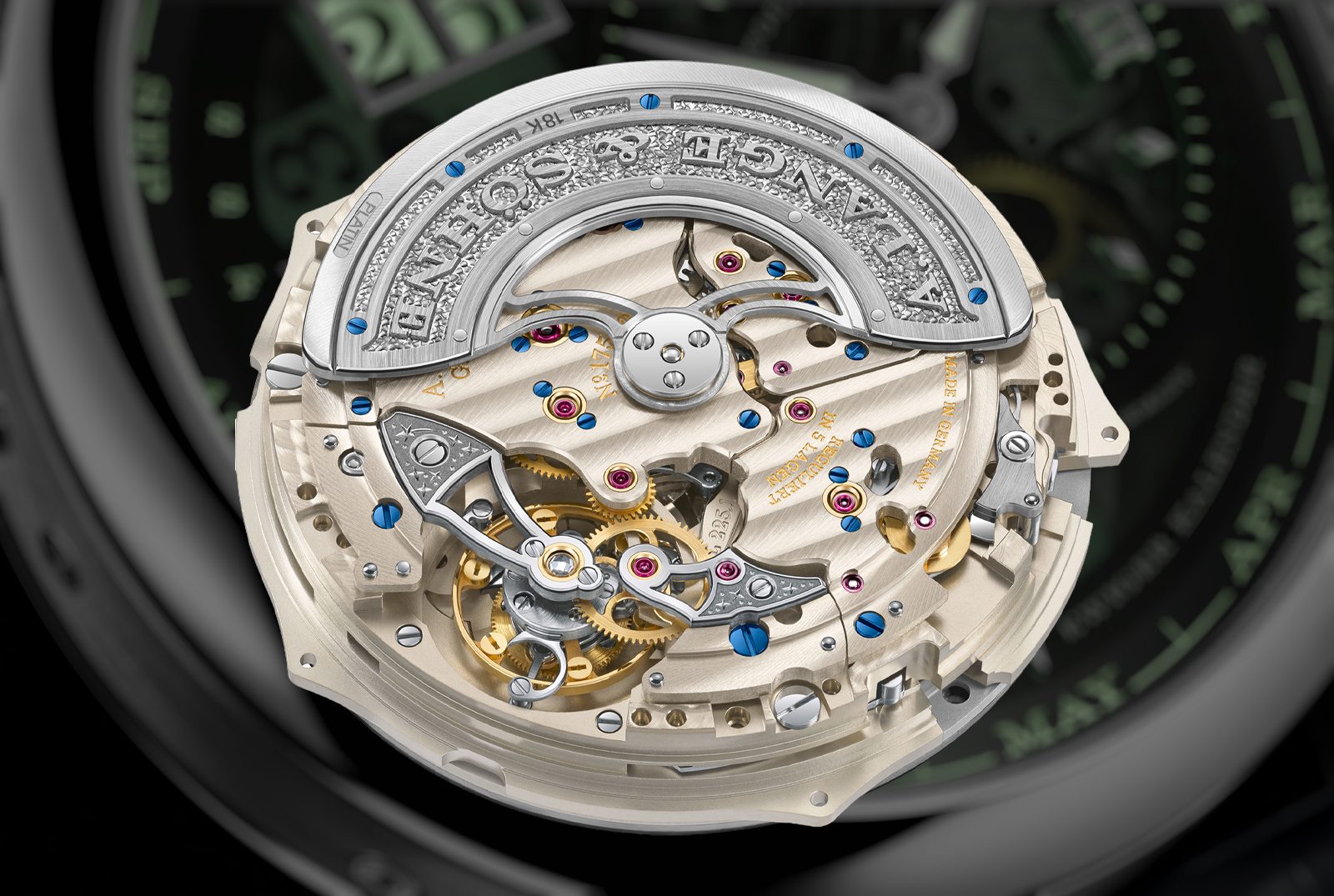
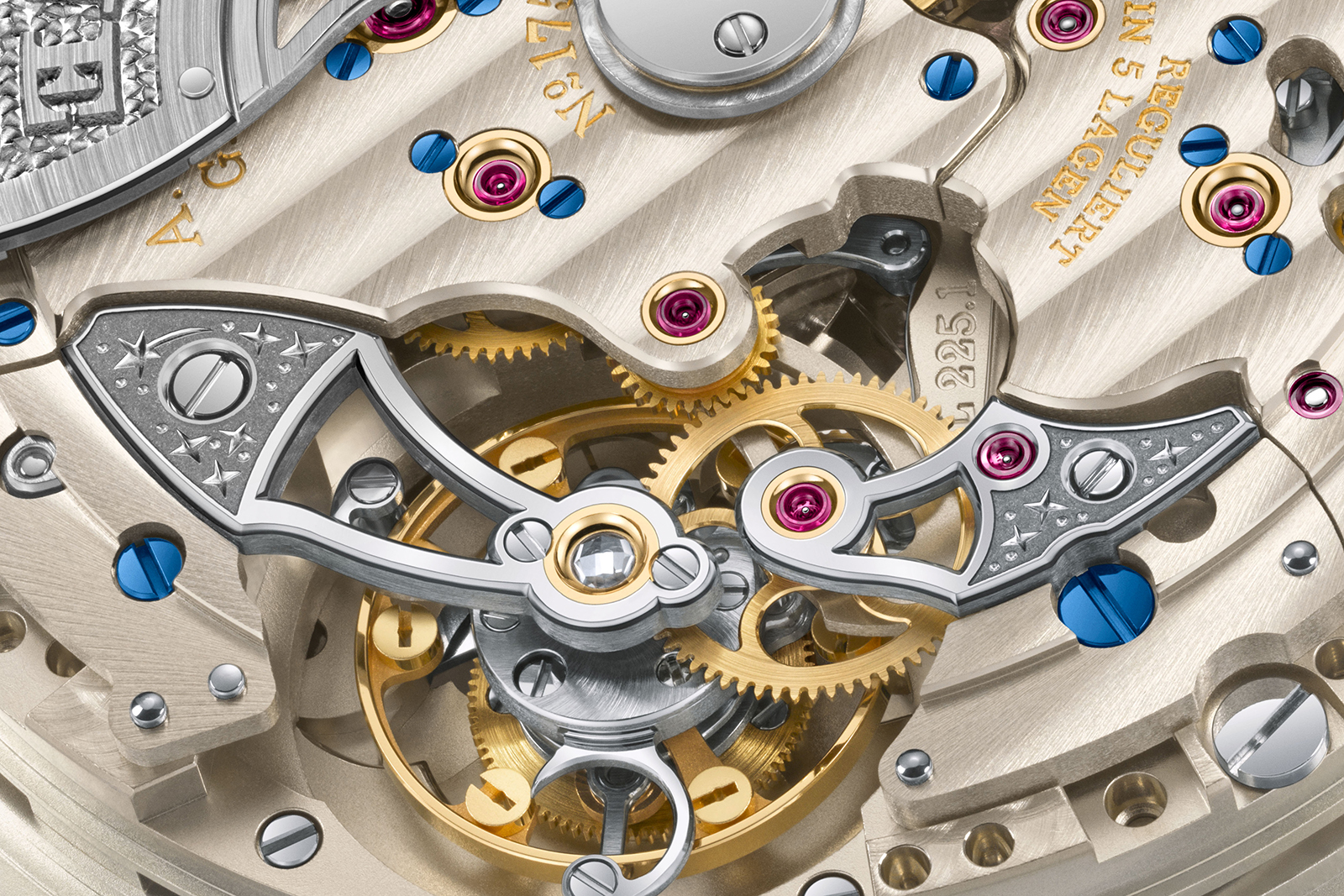
Powered by the L225.1, an upgrade on the previous generation movement, the latest Lumen edition has a grey-tinted sapphire dial that reveals glow-in-the-dark elements, including the date discs and moon phase. Over the back, the edition is also set apart by a pair of steel cocks sporting engraving of stars.

Initial thoughts

The Lange 1 Tourbillon Perpetual Calendar “Lumen” stands out as one of the most appealing Lumen models; I’d rank it up there along with the original Zeitwerk “Phantom” in terms of appeal. The Lumen treatment works best with lot of obvious luminous components, which is the case here.

Flourishes like the luminous bases for each of the Roman hour numerals are a pleasing touch. The twin engraved steel cocks are especially noteworthy; the concept is classic Lange but the engraved star motif adds variety.

That said, the Lange 1 Tourbillon Perpetual Calendar “Lumen” scores highly, maybe even perfectly, in terms of intrinsic and tactile appeal. The technical accomplishment is also top class: the calendar is instantaneous, movement construction is sophisticated, and decoration is outstanding.

But this arguably scores less well in terms of originality or creativity. The movement is a new calibre – it adds a clever day-night display and reworked going train – but it is arguably still a variant of the first generation at heart.

Large, lavish, and Lumen

The new Lumen edition sticks to the same basic format of the original Lange 1 Tourbillon Perpetual Calendar. The platinum case is 41.9 mm wide and 13 mm high, appropriately sized and average for a complicated Lange wristwatch. Like all such Lange wristwatches, this has a substantive heft on the wrist.

The dial similarly retains the familiar perpetual calendar display that was cleverly arranged to fit into the iconic Lange 1 layout. The months indicator, for instance, is smartly positioned on the periphery of the dial, while the day of the week is a retrograde display on a fan-shaped scale on the left of the dial.

This asymmetrical yet logical layout makes for a legible calendar, made all the more easier to read with the instantaneous displays. Visually, it is enhanced by the Lumen makeover, which employs a translucent, grey-tinted sapphire dial that reveals the components below.

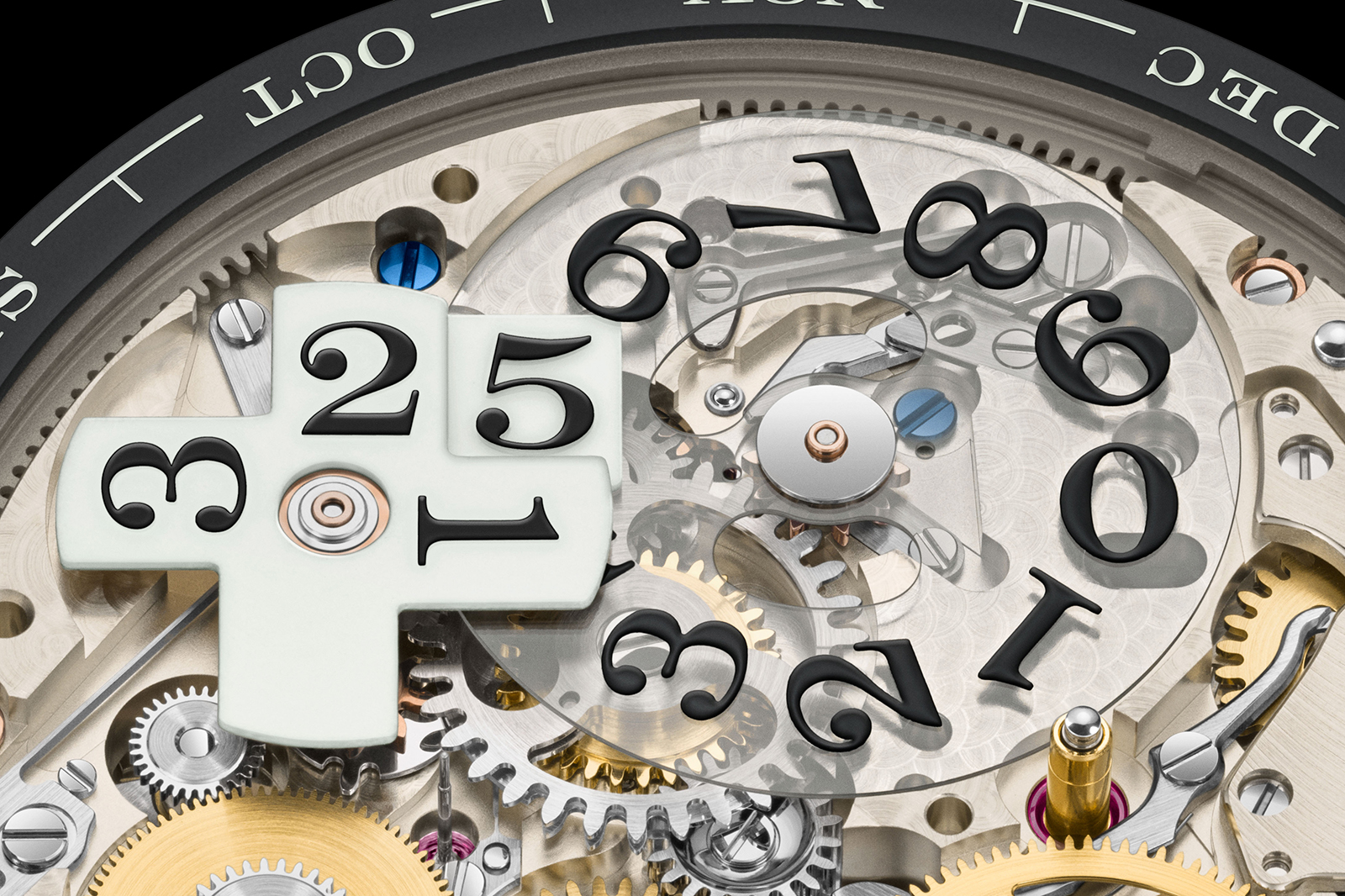
The date, moon phase, and leap year discs are all luminous, as are the months and Roman hour numerals, making for a particularly vivid display in the dark. Notably, the luminous moon phase also incorporates a day and night display that’s superimposed under the moons, making it a double display.

All of the calendar indications are set via pushers in the case band. Though a traditional solution, it has been made more convenient with one pusher that advances all indications together in sync, which is most useful when the calendar only needs to be advanced a relatively short period. A set of additional pushers each advances a specific indicator for more complex adjustments.

Stars on steel

The technical brilliance of the movement inside also extends to the back, which reveals the one-minute tourbillon that features a decorative diamond endstone. Pull the crown and a lever touches the balance wheel, stopping the tourbillon and seconds hand for precise time setting. This patented invention was a world first when Lange debuted it in 2008.

From the rear, the L225.1 resembles the calibre of the original Lange 1 Tourbillon Perpetual Calendar, but with a few enhancements. The most apparent is the monochromatic rotor. In a first for Lange, the rotor is 18k white gold plated with black rhodium, instead of the conventional yellow gold; the outer rim of the rotor remains platinum as it has always been.

Continuing the monochromatic decorative theme, the tourbillon cock and the intermediate-wheel cock are both black-polished steel, giving them a dark grey appearance. Both are further embellished with an engraving depicting a star motif, with the tourbillon cock having the bonus of a shooting star.


Key facts and price

A. Lange & Söhne Lange 1 Tourbillon Perpetual Calendar “Lumen”
Ref. 720.035FE

Diameter: 41.9 mm
Height: 13 mm
Material: Platinum
Crystal: Sapphire
Water resistance: 30 m

Movement: L225.1
Functions: Hours, minutes, seconds, day-night indicator, perpetual calendar with leap year, tourbillon with hacking mechanism
Frequency: 21,600 beats per hour (3 Hz)
Winding: Automatic
Power reserve: 50 hours

Strap: Alligator with folding buckle

Limited edition: 50 pieces
Availability: At A. Lange & Söhne boutiques
Price: US$530,000

For more, visit Alange-soehne.com.


Back to top.
You may also enjoy these.

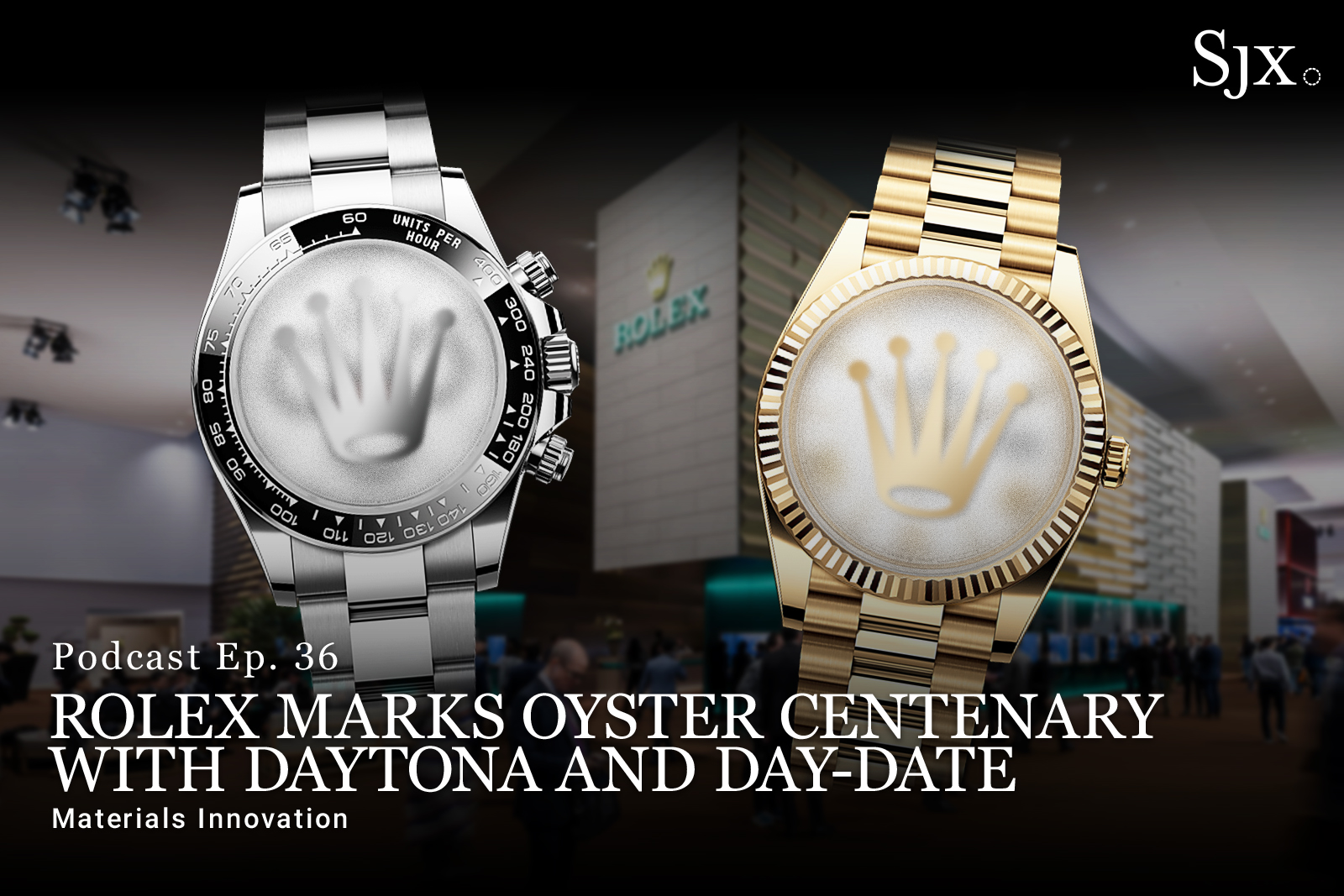
SJX Podcast: Rolex Marks Oyster Centenary with Daytona and Day-Date

Materials Innovation.

Episode 36 of the SJX Podcast comes straight from Watches & Wonders 2026. As ever, all eyes are focused on Rolex during the first hour of the event. SJX and Brandon unpack the brand’s new models, which feature new materials and a novel industrial approach to enamel dial production.

We’ll be back soon with more live coverage of the industry’s biggest event.

Listen now on Apple Podcasts, Spotify, and YouTube.


Back to top.
You may also enjoy these.

Cartier’s Santos-Dumont Gains a Fine Mesh-Link Bracelet

Old school, 15 links across.

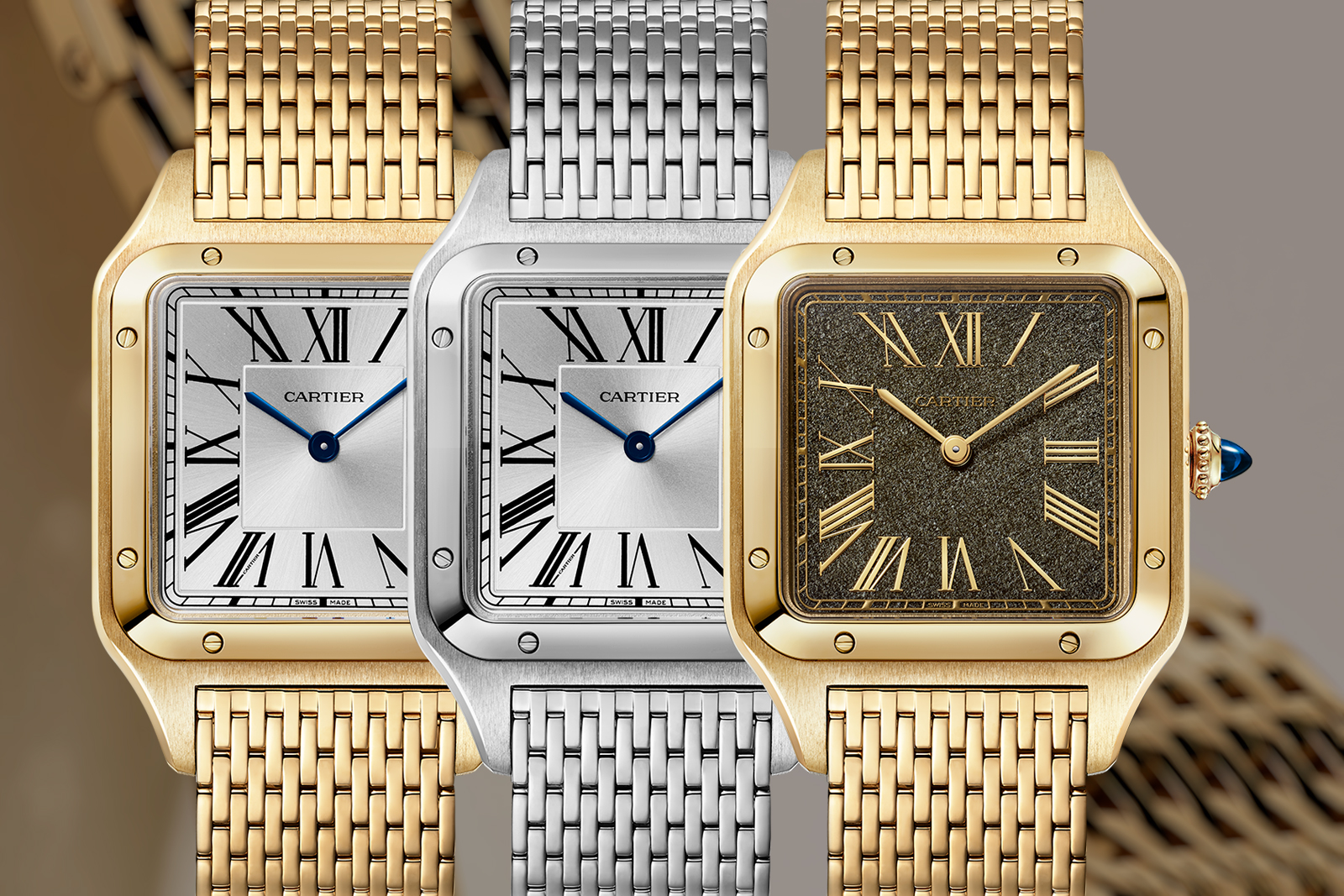
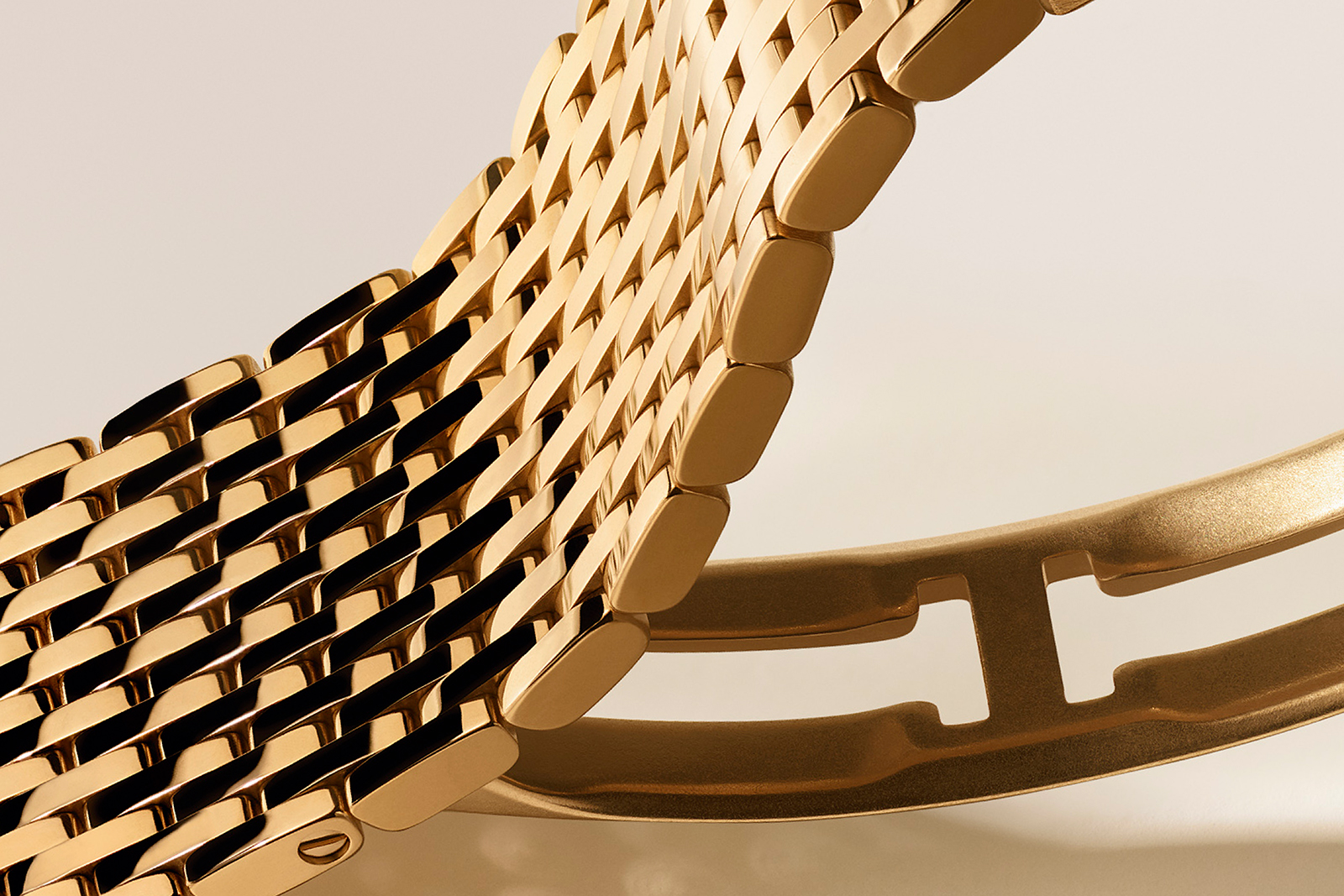
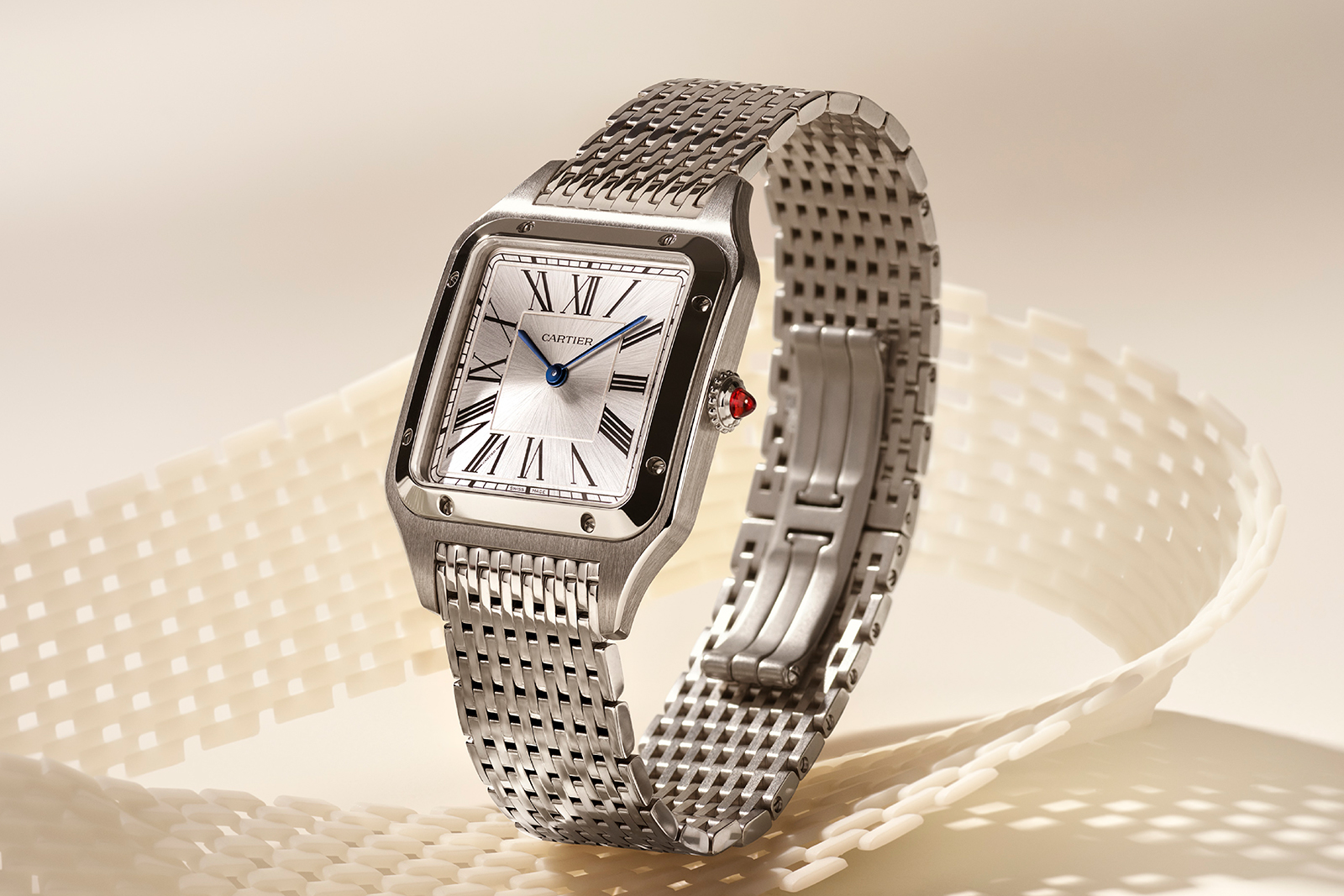
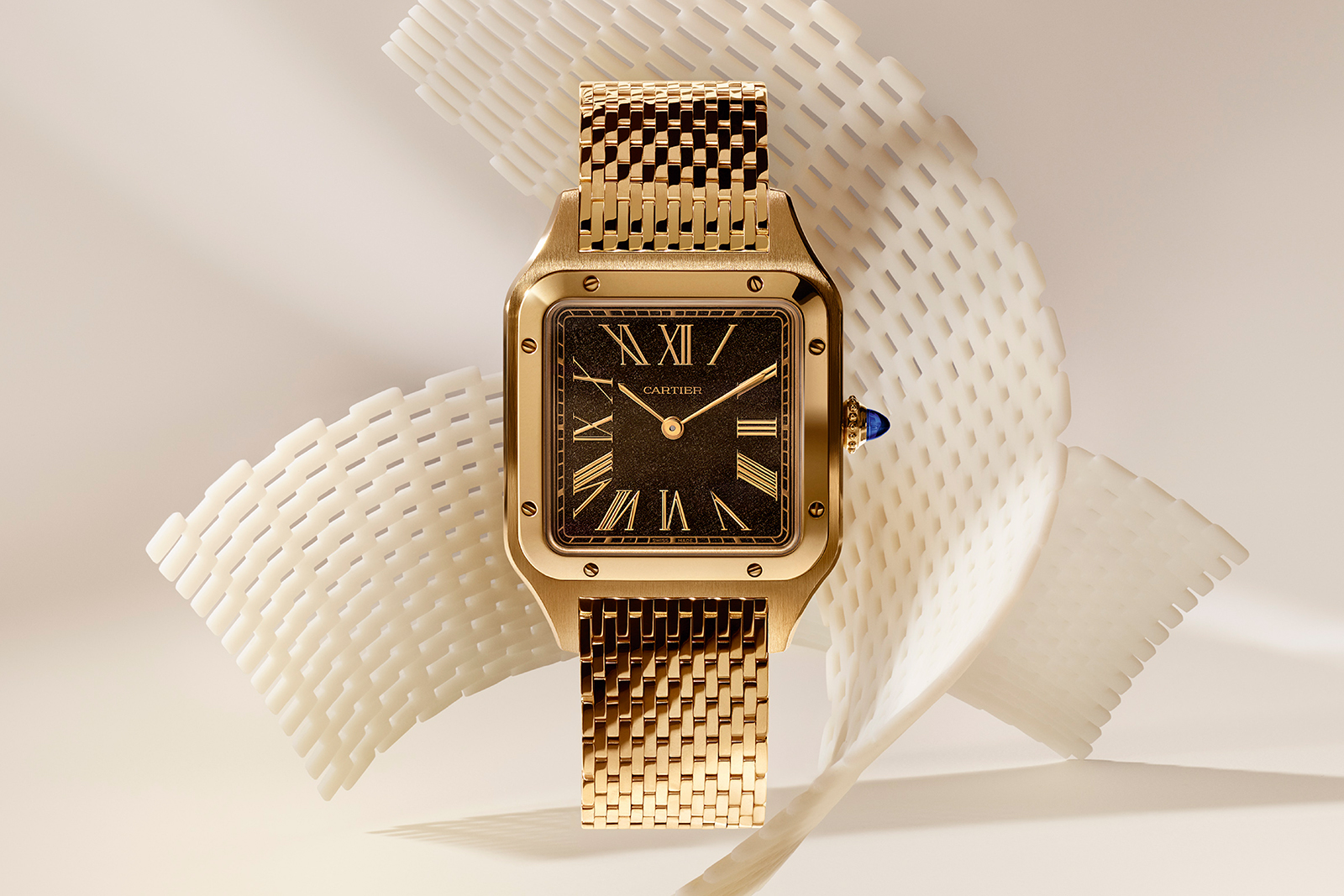
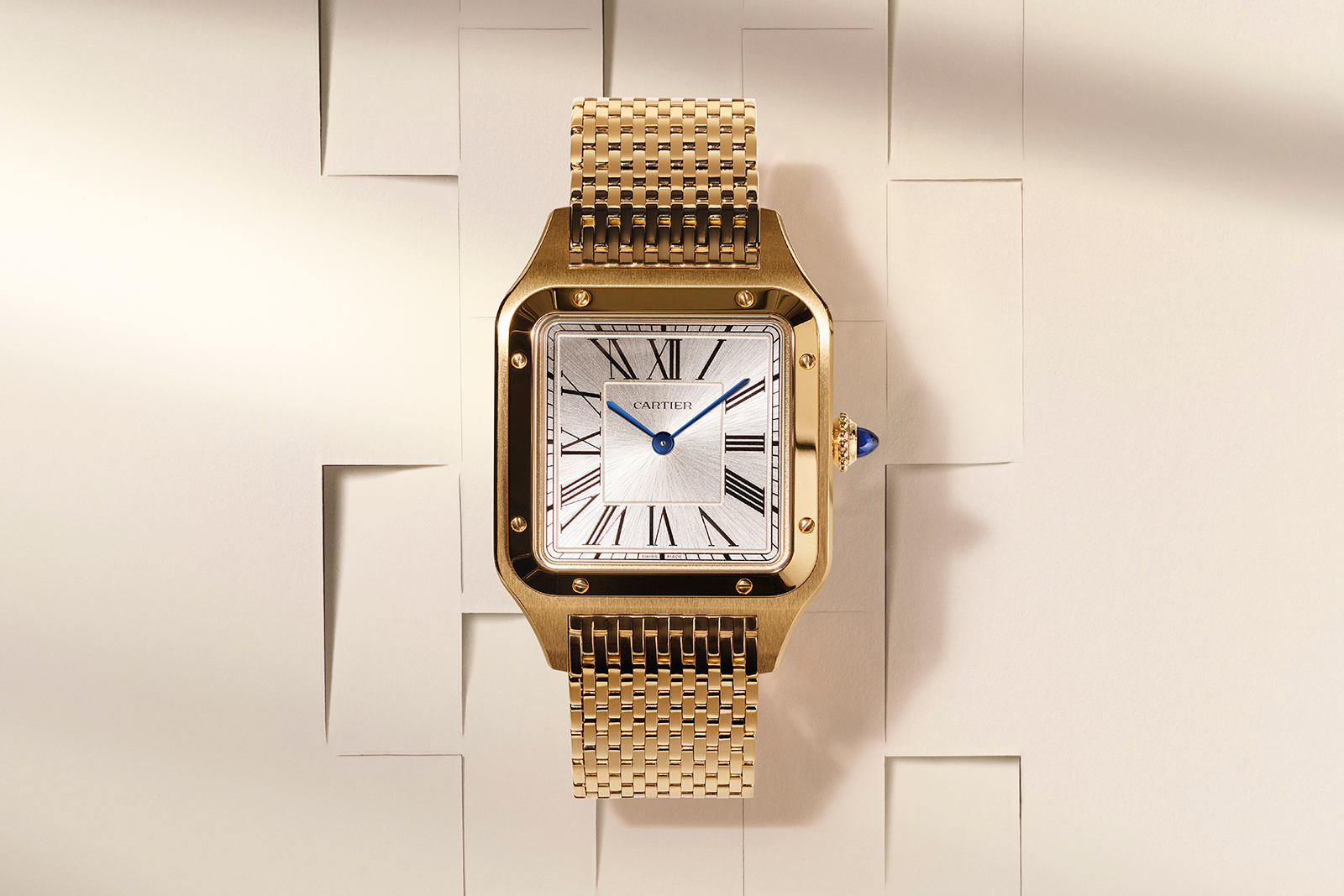
Cartier’s debuts at Watches & Wonders 2026 include notable crowd pleasers, with a standout being the Santos-Dumont LM with a mesh-link bracelet in matching precious metal. Inspired by watch bracelets of the 1920s, the new bracelet is 15 links across with each link just 1.15 mm high, making it supple and ergonomic. Very much catering to fad for such bracelets, it is also removable and sports a double-folding clasp.

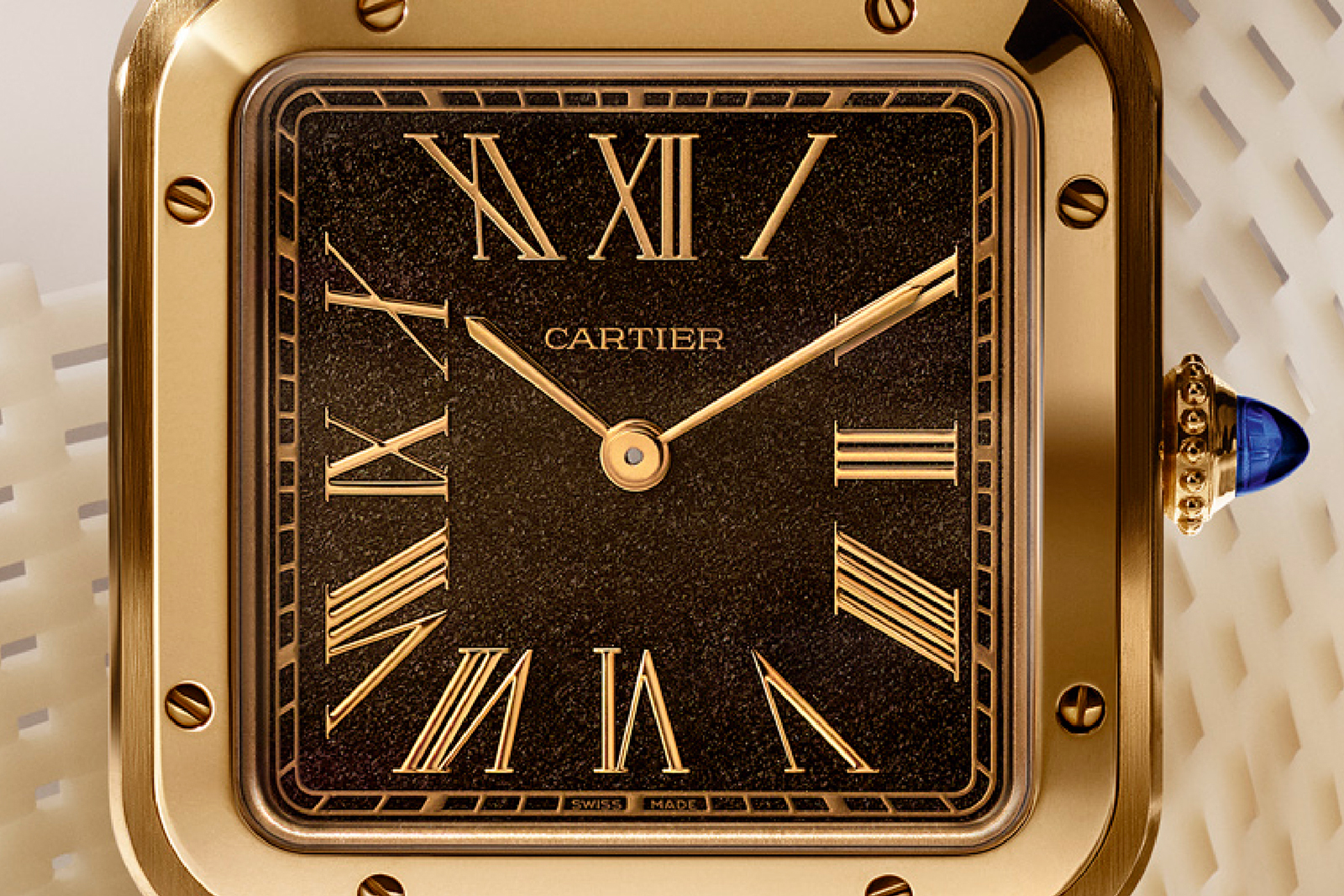
The new Santos-Dumont models themselves are cosmetic variations of the existing model, with the most unusual being the yellow gold version with a dial of obsidian, which is volanic glass.

Initial thoughts

The new Santos-Dumont pairs the familiar square watch with an appropriately retro mesh-link bracelet that fits the design perfectly. Like the Les Opus trio, this Santos-Dumont trio isn’t imaginative or novel, but it is executed well and has tactile appeal.

Both the clasp and flush-fit end links that continue the link pattern are a pleasing touch. In some ways the bracelet is perhaps more fitting for the model given its history as an aviator’s watch, although the Santos-Dumont now is very much a dress watch in the modern sense of the term.

The commercial success of 2023’s Tank Normale with a bracelet probably helped convince Cartier that such bracelets are a winner, despite the substantial cost of a precious metal bracelet today. That said, the new Santos-Dumont on a bracelet is pricey but not outrageously so. It starts at €44,400 in yellow gold and rises to €59,000 in platinum, which is reasonable in the context of today’s market for both luxury watches and precious metals.

The textured obsidian dial

A historical sports watch

The origins of the Santos are now well known: pioneering aviator Alberto Santos-Dumont asked Louis Cartier for a timekeeper that he could wear while piloting a plane, and so the eponymous wristwatch was born. Over its century of existence the Santos has evolved into  a multitude of variations, but the Santos-Dumont is arguably the version closest to the original.

While larger and sportier versions of the Santos have long had matching bracelets, the Santos-Dumont last included a bracelet decades ago. The new trio all share the same bracelet and case in “LM” size, short for “large model”.

Both the base model in yellow gold and platinum version have the same silvered dial with radial brushing that is identical to that on the earlier versions of the model, which were available only on a strap.

The upgraded yellow gold model, however, has a dial in obsidian, glass that forms when a volcanic lava cools. According to Cartier, the dark brown obsidian employed here is from Mexico, and it is polished to a disc that is just 0.3 mm high, then affixed to the brass dial base.

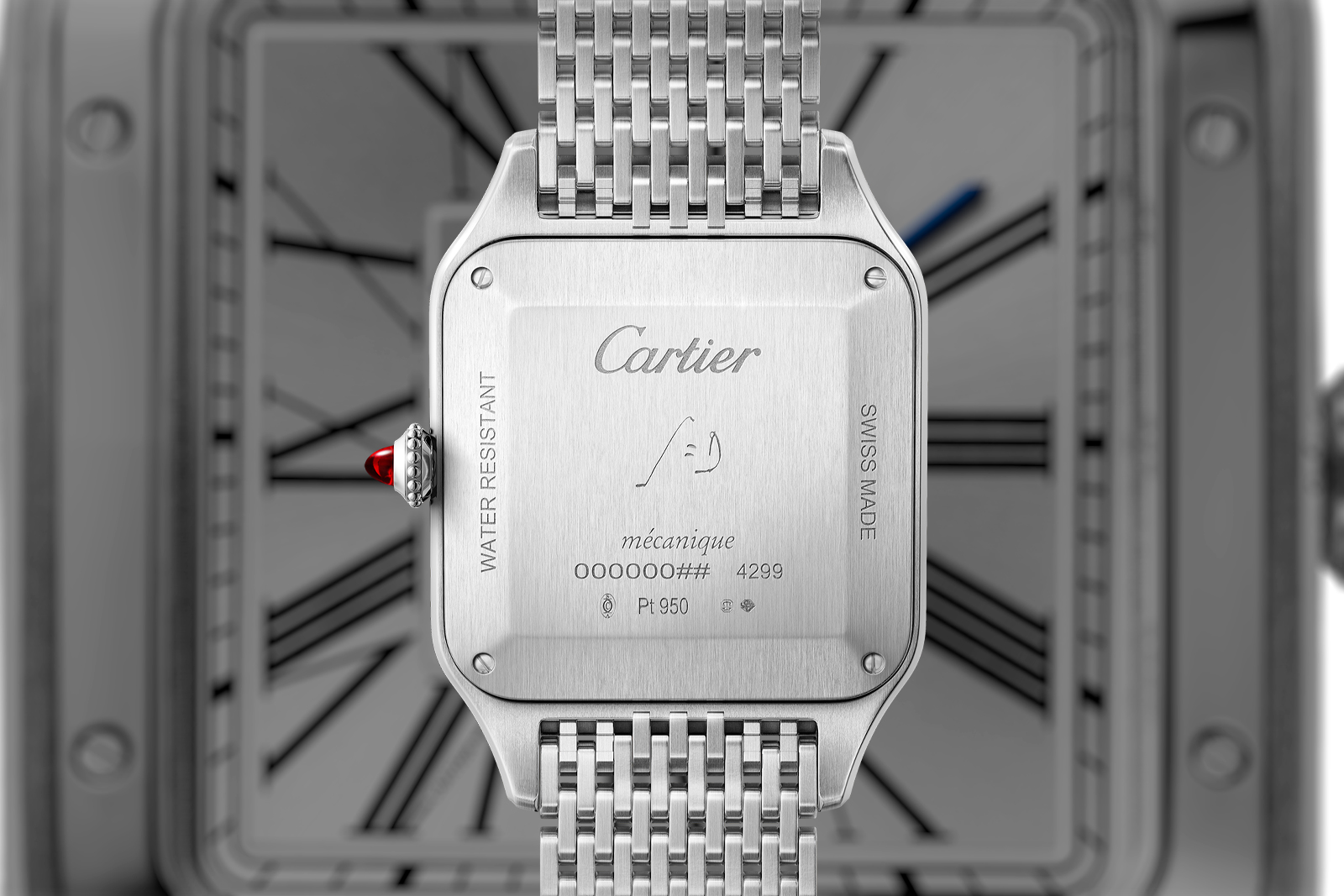
All three versions share the same movement, the cal. 430 MC. It’s a rebadged Piaget cal. 430P, a slim, manual-wind movement that is the ultra-thin workhorse used extensively by both Piaget and Cartier. Now almost 30 years old, the cal. 430P is a little dated – the power reserve is under 40 hours – but still a compact and reliable movement.

The solid case back bears Alberto Santos-Dumont’s initials “S=D”


Key facts and price

Cartier Santos-Dumont LM with bracelet 
Ref. CRWGSA0122 (yellow gold)
Ref. CRWGSA0123 (yellow gold with obsidian dial)
Ref. CRWGSA0124 (platinum)

Diameter: 43.5 mm by 31.4 mm
Height: 7.3 mm
Material: 18k yellow gold or platinum
Crystal: Sapphire
Water resistance: 30 m

Movement: Cal. 430 MC
Features: Hours and minutes
Frequency: 21,600 beats per hour (3 Hz)
Winding: Manual wind
Power reserve: 38 hours

Strap: Matching bracelet in gold or platinum

Limited edition: No
Availability:

Price: Yellow gold and obsidian €46,700; yellow gold €44,400; and platinum €59,000

For more, visit Cartier.com.


Back to top.
You may also enjoy these.

Welcome to the new Watches By SJX.
Subscribe to get the latest articles and reviews delivered to your inbox.