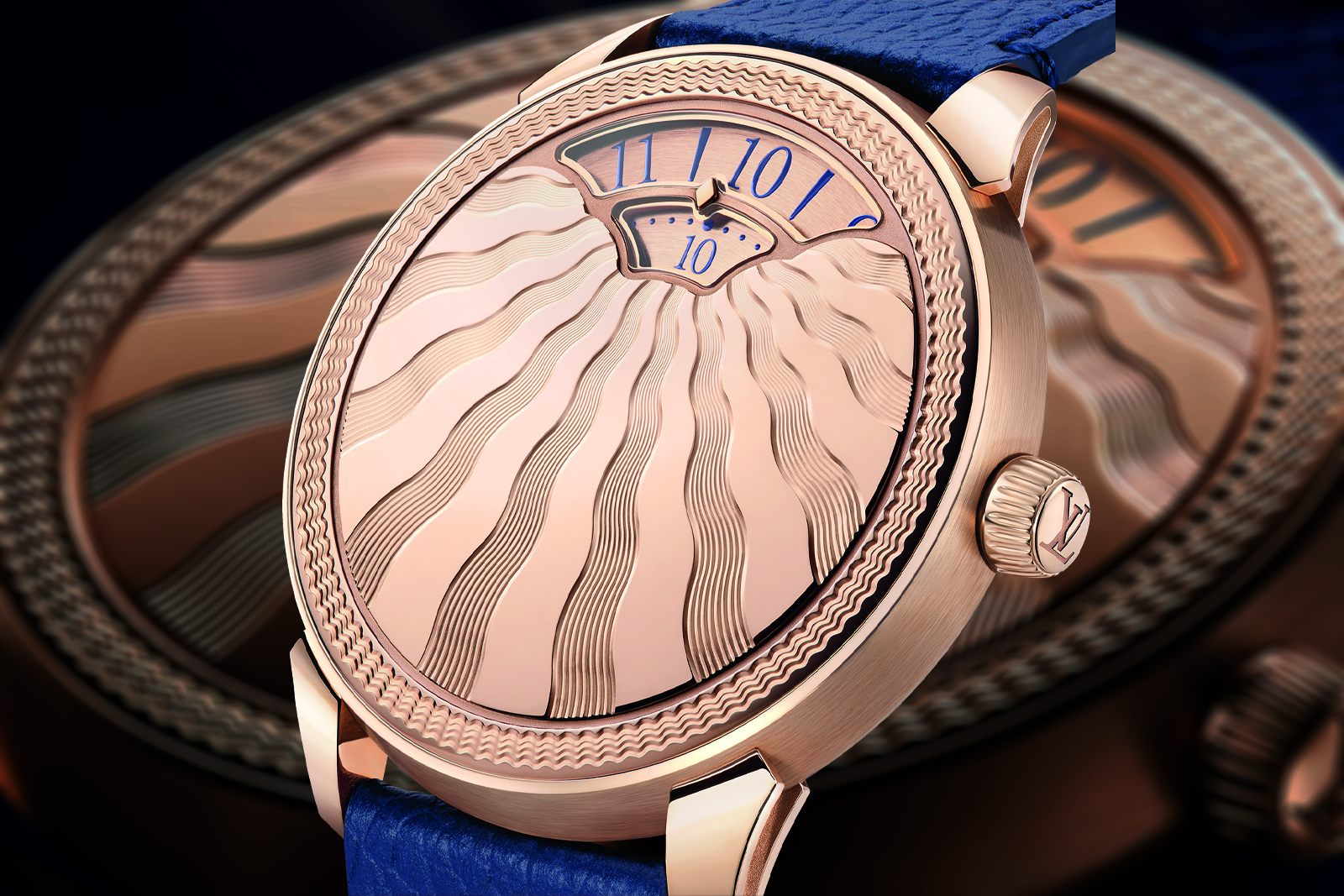
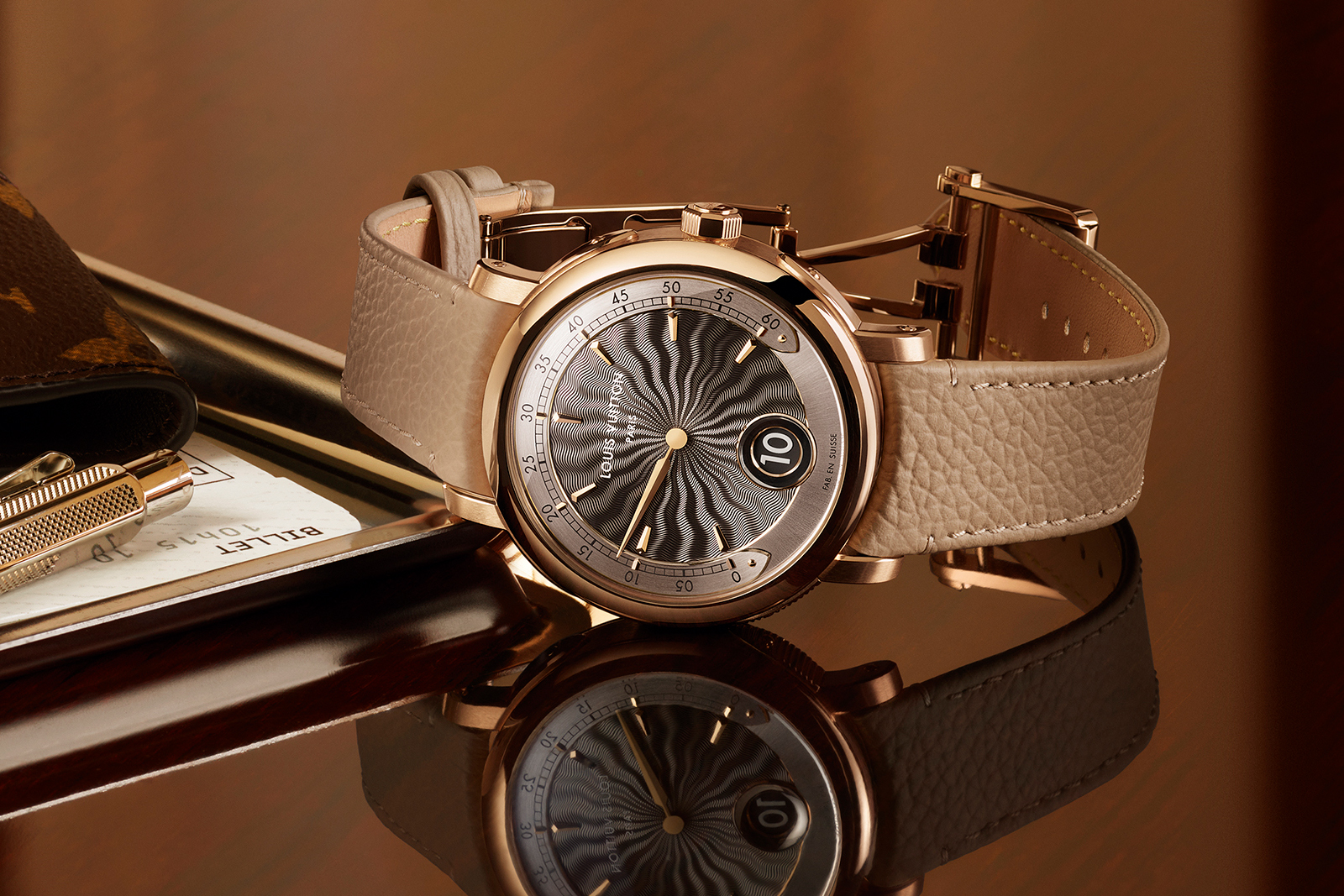
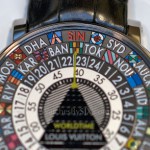
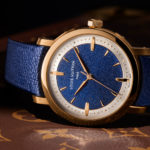
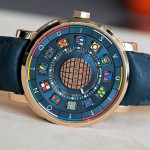
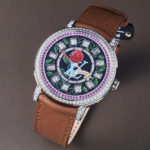
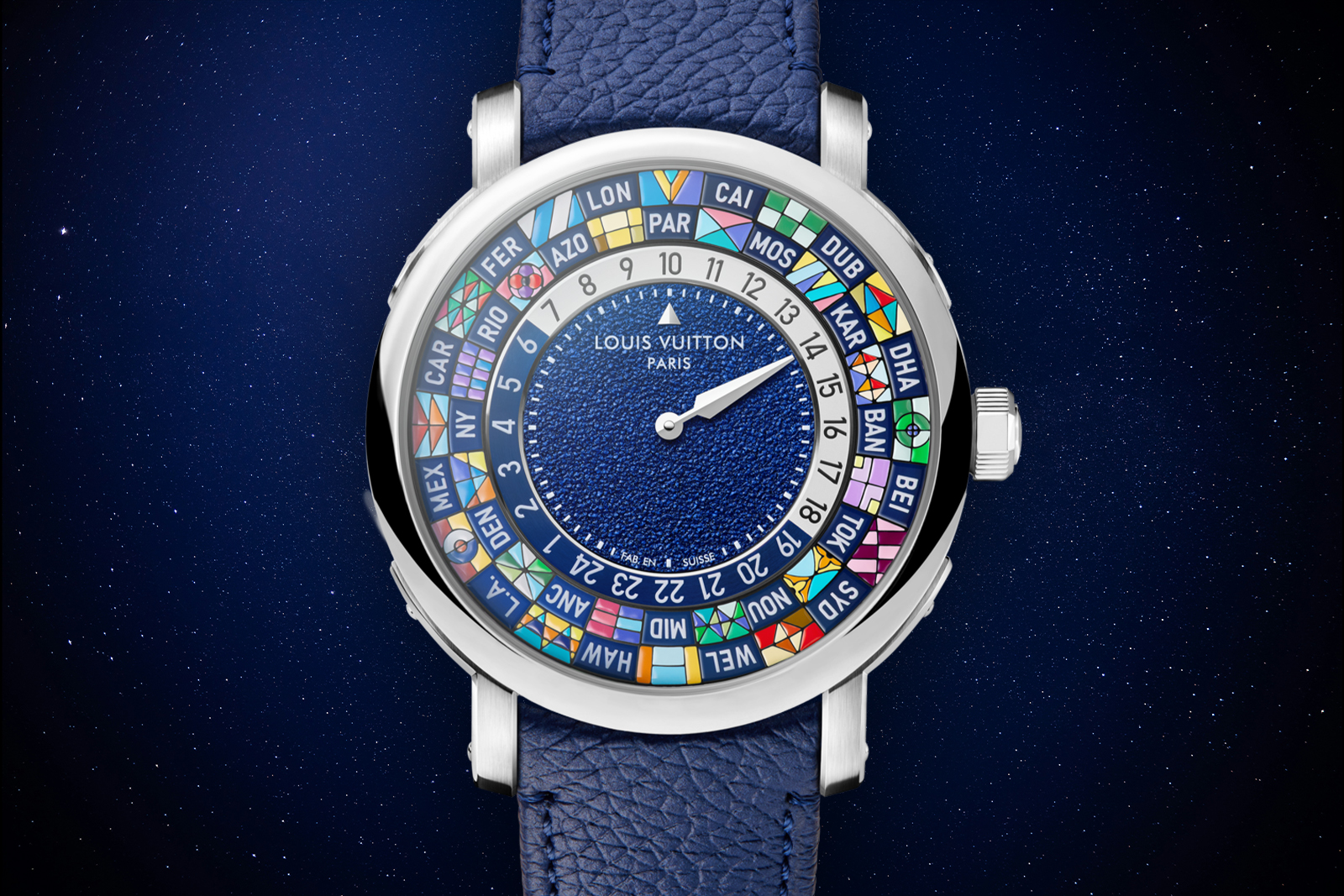
Louis Vuitton revives its emblematic Escale Worldtime complication with significant technical upgrades and metiers d’art craftsmanship. Powered by a new family of mid-sized movement from La Fabrique du Temps, the collection comprises two models distinguished by their decorative treatments: the standard Worldtime features a hand-painted flag disc reproducing the brand’s iconic trunk motifs, while the Worldtime Flying Tourbillon elevates the execution with an arduously made champlevé grand feu enamel city ring requiring 40 firings to achieve its kaleidoscopic palette.
This reimagining of the worldtime complication draws directly from Louis Vuitton’s heritage of hand-painted personalised monograms on historical trunks — a visual language no other watchmaker can authentically claim — translating the brand’s trunk-making legacy into haute horlogerie.
Initial thoughts
Last year, Louis Vuitton launched a new line of high-end movements built and decorated to the standards of industrial-haute horlogerie automatics from the likes of Vacheron Constantin or Patek Philippe. These movements debuted in the Tambour Taiko Spin Time, a complication requiring a small-diameter movement — 23 mm in that case. Though finely made, these movements were arguably too small for a ~40 mm watch, as seen with the otherwise excellent Monterey re-issue.
Demonstrating the impressive capacity of La Fabrique du Temps (LFT), Louis Vuitton has filled that void in its movement portfolio with a line of new (but closely related) mid-sized automatic calibres powering a range of complicated additions to its Escale line. The new family of movements makes the value proposition easier to justify. Case in point, the standard Escale Worldtime retails for about €95,000, which makes it a much better value than the original from 2014, which retailed for almost US$70,000 when it debuted more than a decade ago.
That’s still steep coming from a brand many consider to be a maker of mere ‘fashion watches’ but it’s somewhat justified by the competent construction, top-quality materials, and the unmistakable design of the metiers d’art dial.

Of the two models, I find the standard Worldtime more compelling than the flying tourbillon model — the former is simply more focused and pleasing to my eye. Though (slightly) less labour-intensive to produce, the painted flag disc, with its more vibrant colours, is just as appealing in its own right as the more expensively constructed champlevé enamel city ring on the tourbillon. Naturally, both options represent a big upgrade from the printed city rings on the more affordable Escale Worldtimes of the past.
The world in your hand
The worldtime is arguably Louis Vuitton’s second signature complication, just after the Spin-Time, and the complication most associated with the Escale. Inspired by the brand’s long tradition of colourful hand-painted personalised monograms on historical trunks, the kaleidoscopic colour palette is immediately recognisable.
Louis Vuitton launched the first Escale Worldtime all the way back in 2014, with a La Fabrique du Temps-made module atop an ETA 2892-A2. It returns with a new high-end in-house base movement, yet its functionality remains unchanged with both the reference city and time adjustable from the crown without the need of buttons, or worse, a second crown.
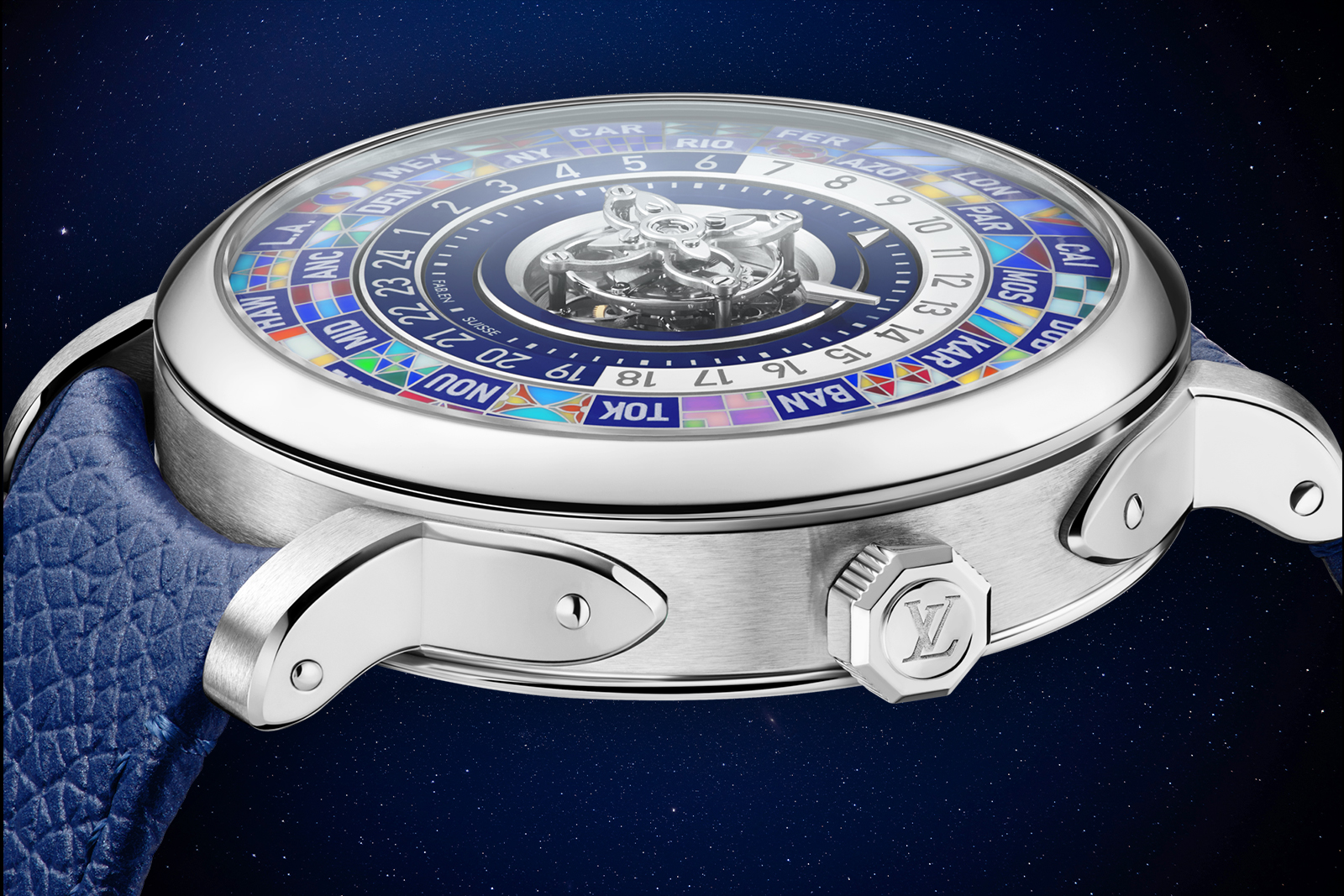
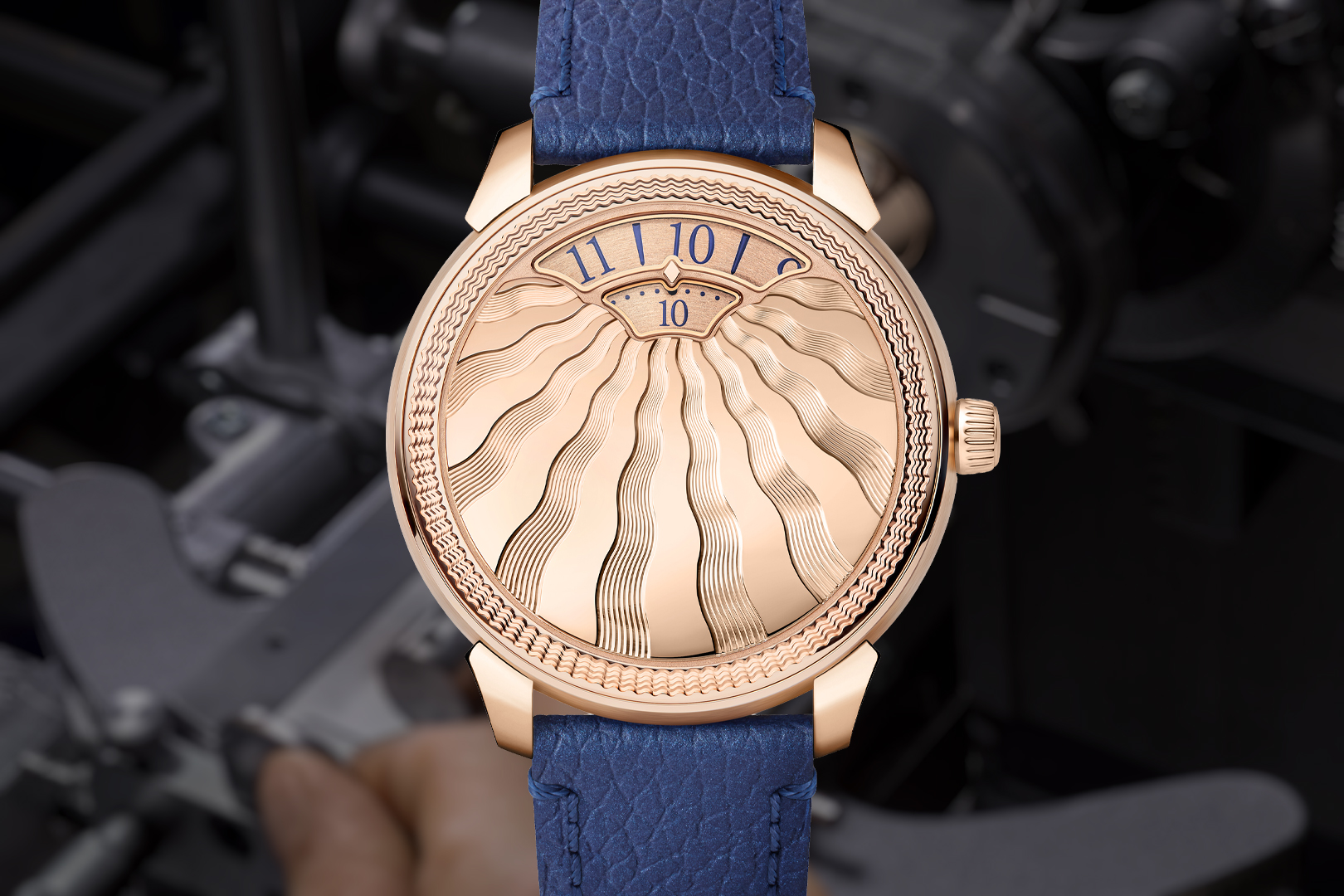
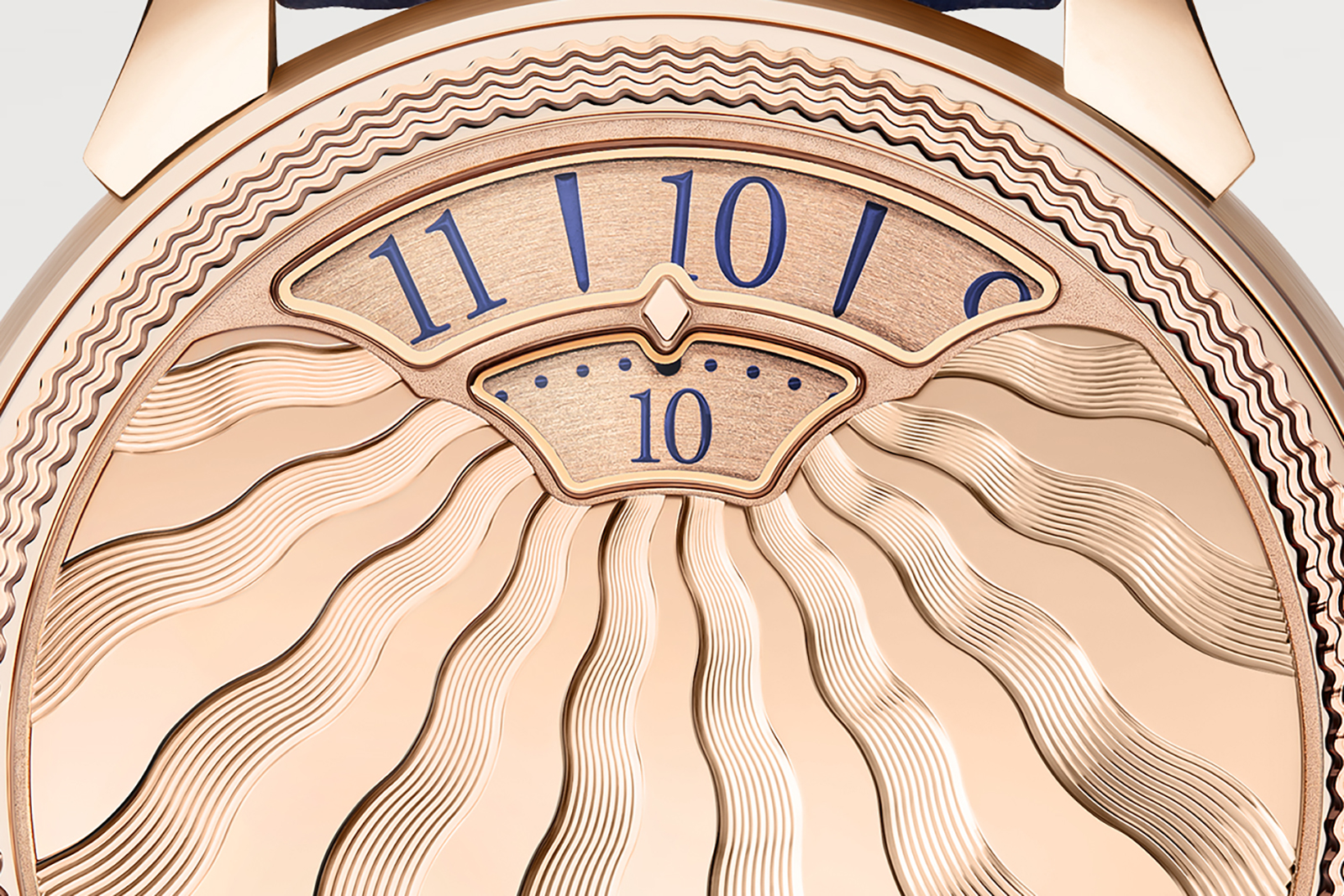
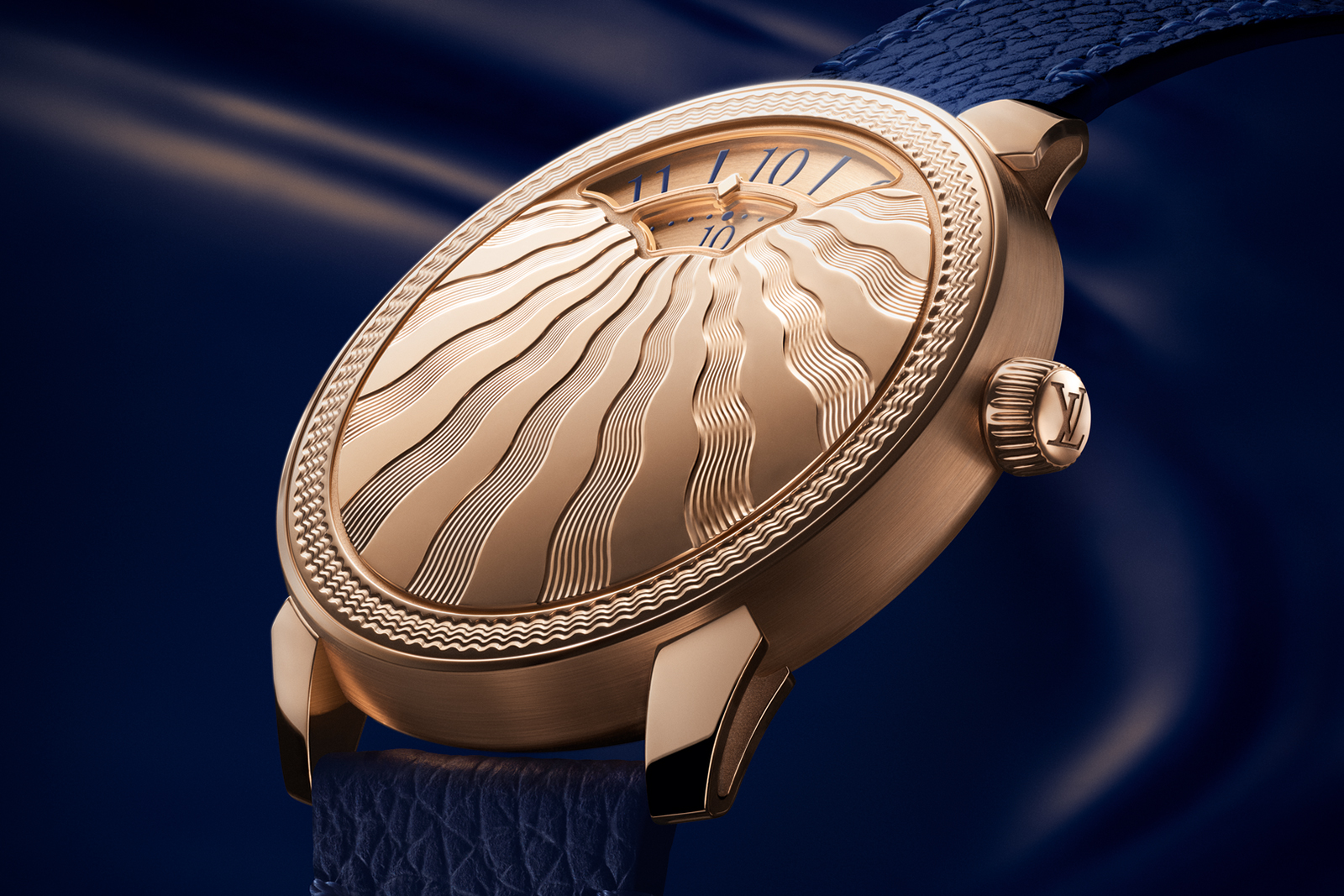
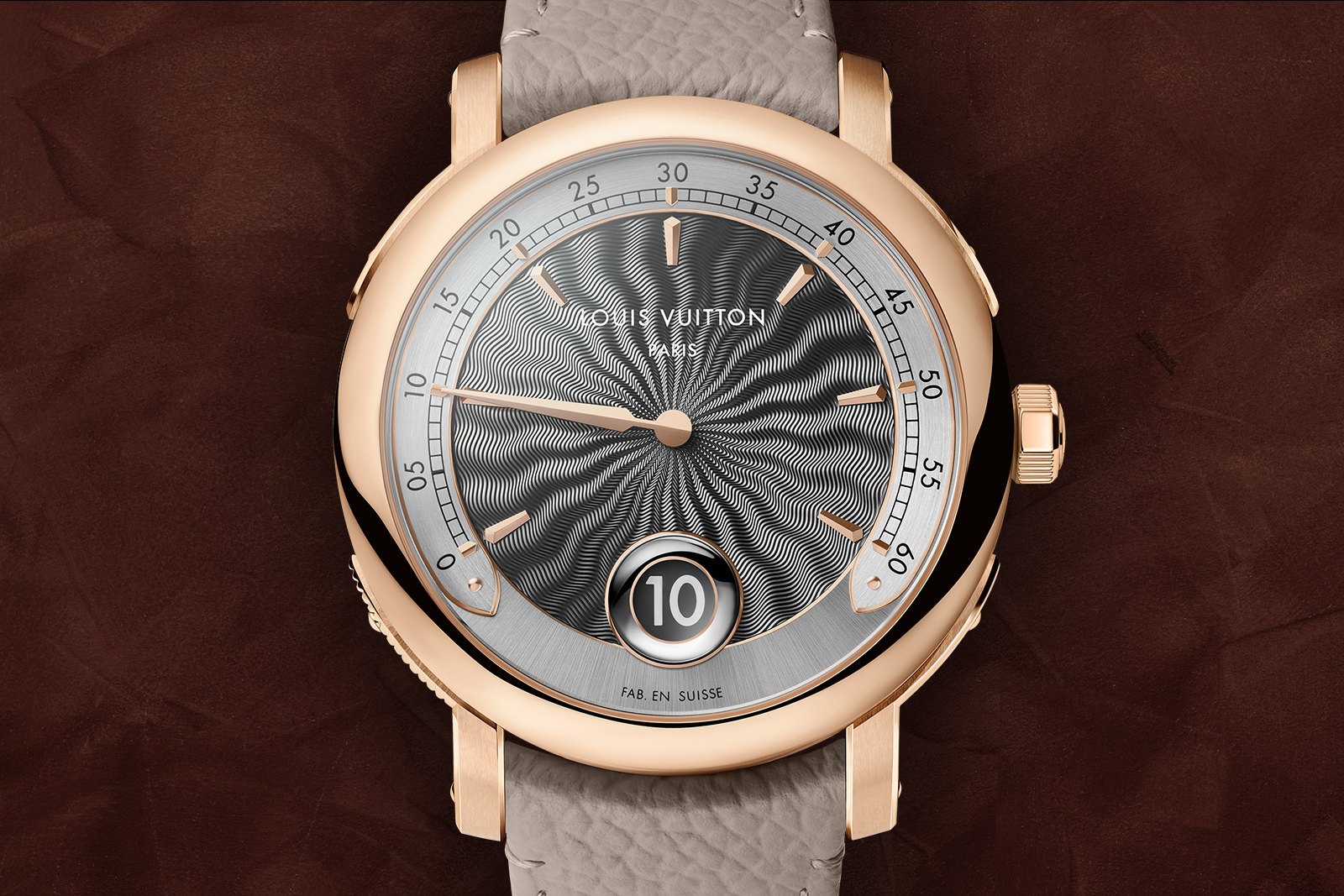
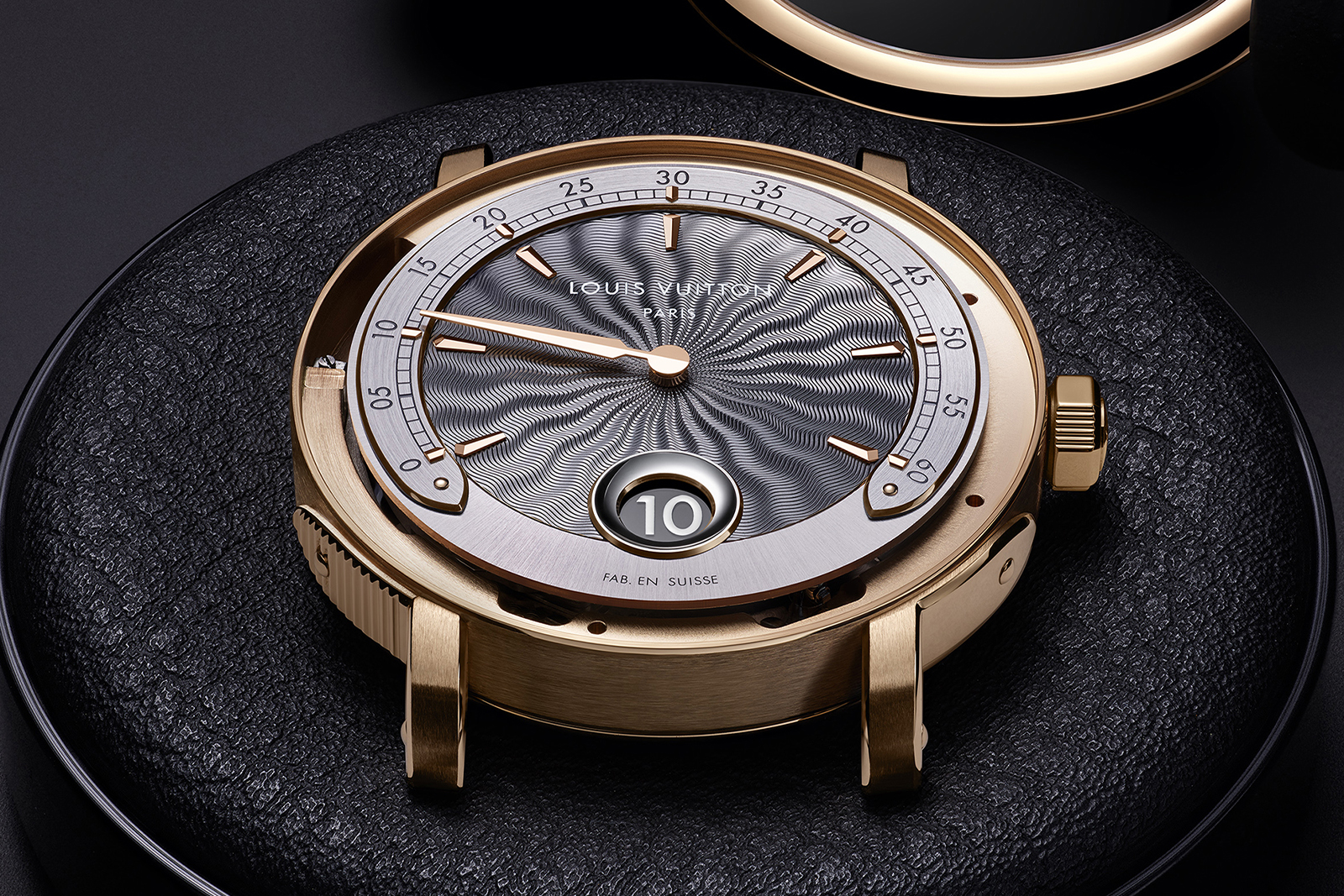
Like the Escale Minute repeater from the original cohort, the Escale Worldtime is a jumping-hours design, which makes the time in each city slightly easier to read. And, thoughtfully, the minute hand doesn’t overlap the hours disc at any point.
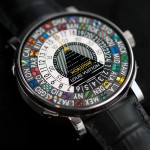
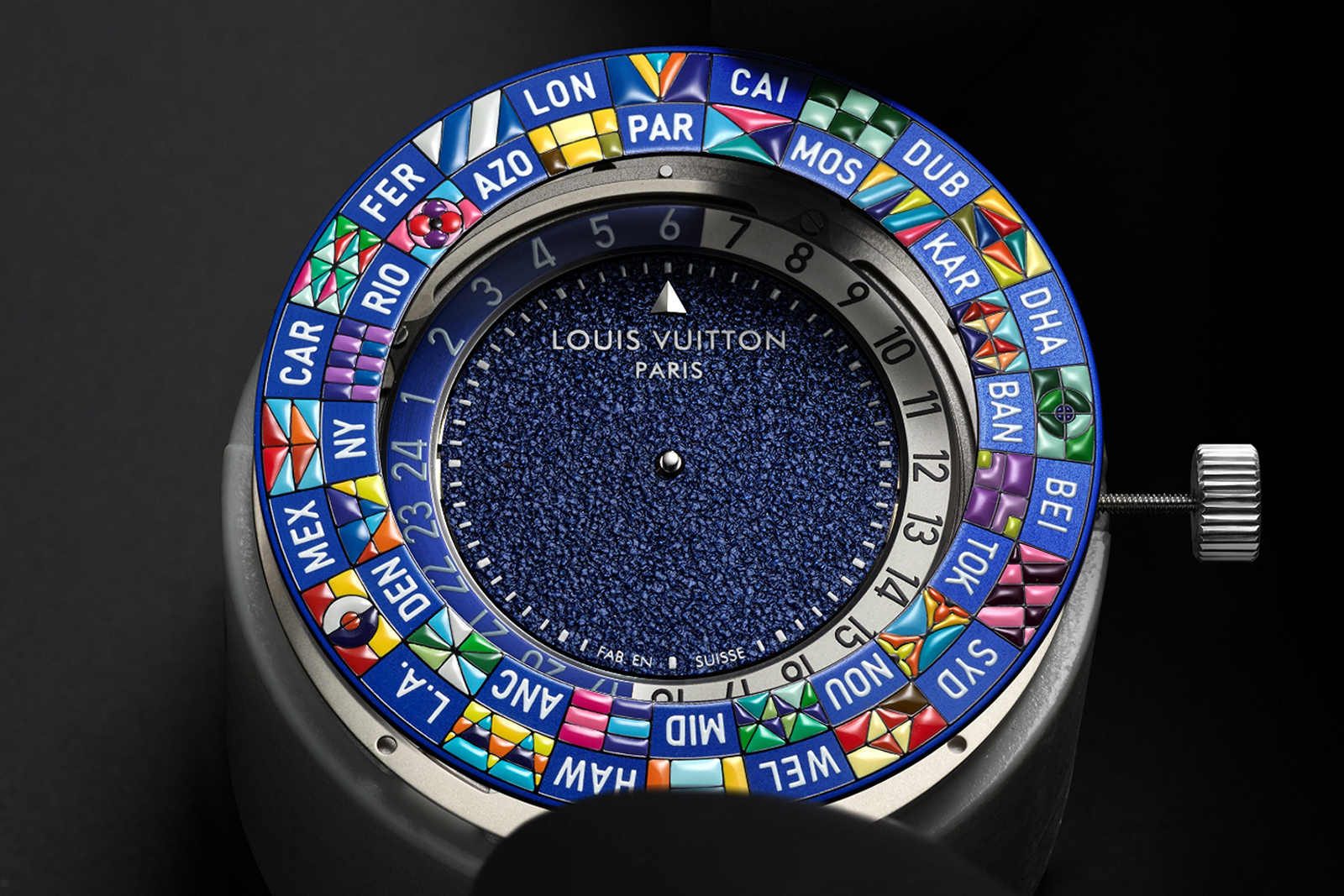
The centre dial, which features a grained blue texture on the standard model but is dominated by the flying tourbillon in the Worldtime Tourbillon, is encircled by a disc bearing 24 hand-painted flags, reproducing the brands famous motifs, including diamond-stitched malletage trunk lining, Damier canvas, the Monogram Flowers pattern and a V for Gaston-Louis Vuitton – which naturally corresponds with Paris. The flags on the base model are hand painted, while the flying tourbillon’s city ring is champlevé enamel.
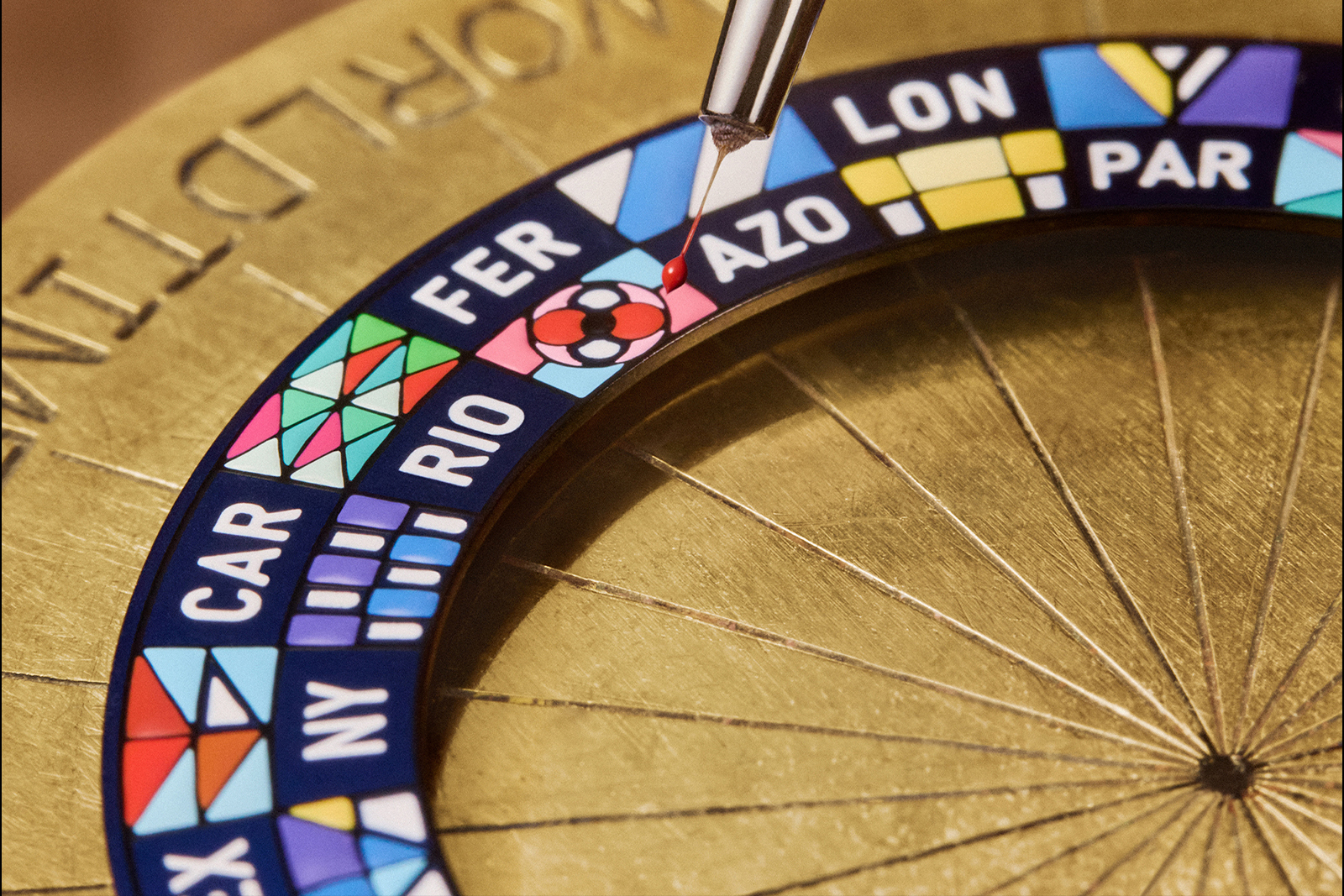
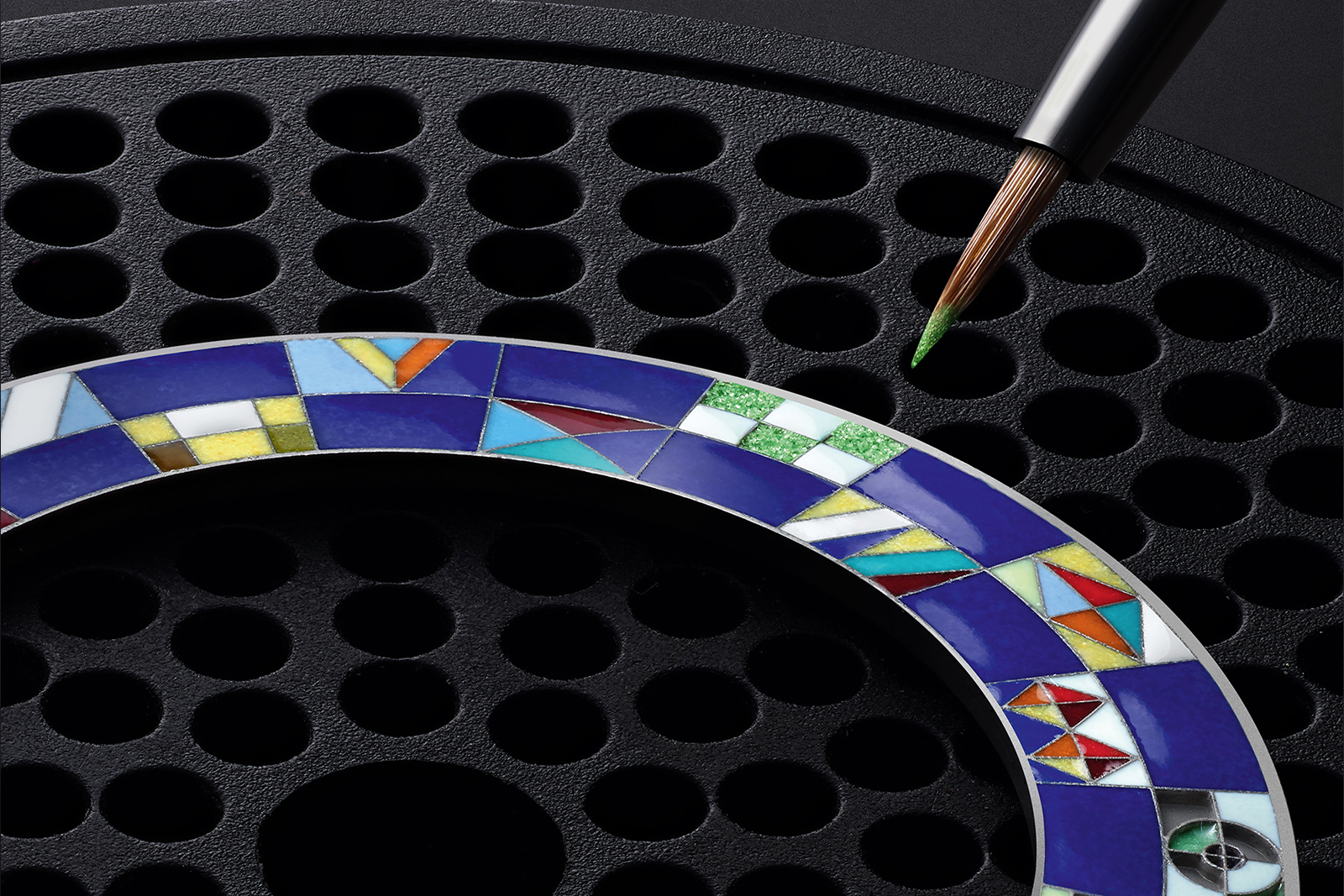
While the city rings of the two watches look the same at first glance, they are very different on close examination. The standard Worldtime features painted flags that are rounded, glossy, slightly raised, and a bit more vibrant. The champlevé city ring of the Worldtime Tourbillon is grand feu enamel, and the indelible result is sharp, flat, slightly matte and somewhat muted.
The champlevé enamel city ring of the Worldtime Tourbillon requires 40 firings due to its many different colours. The brand discovered some pigments could endure more firings that others without a change in colour and developed its process around that. The two most delicate pigments, light pink and green, are applied last. The brand claims it takes about 80 hours of work to make each ring, which is easy to believe considering the extreme number of firings and controlled cooling cycles required.
An emergent house style
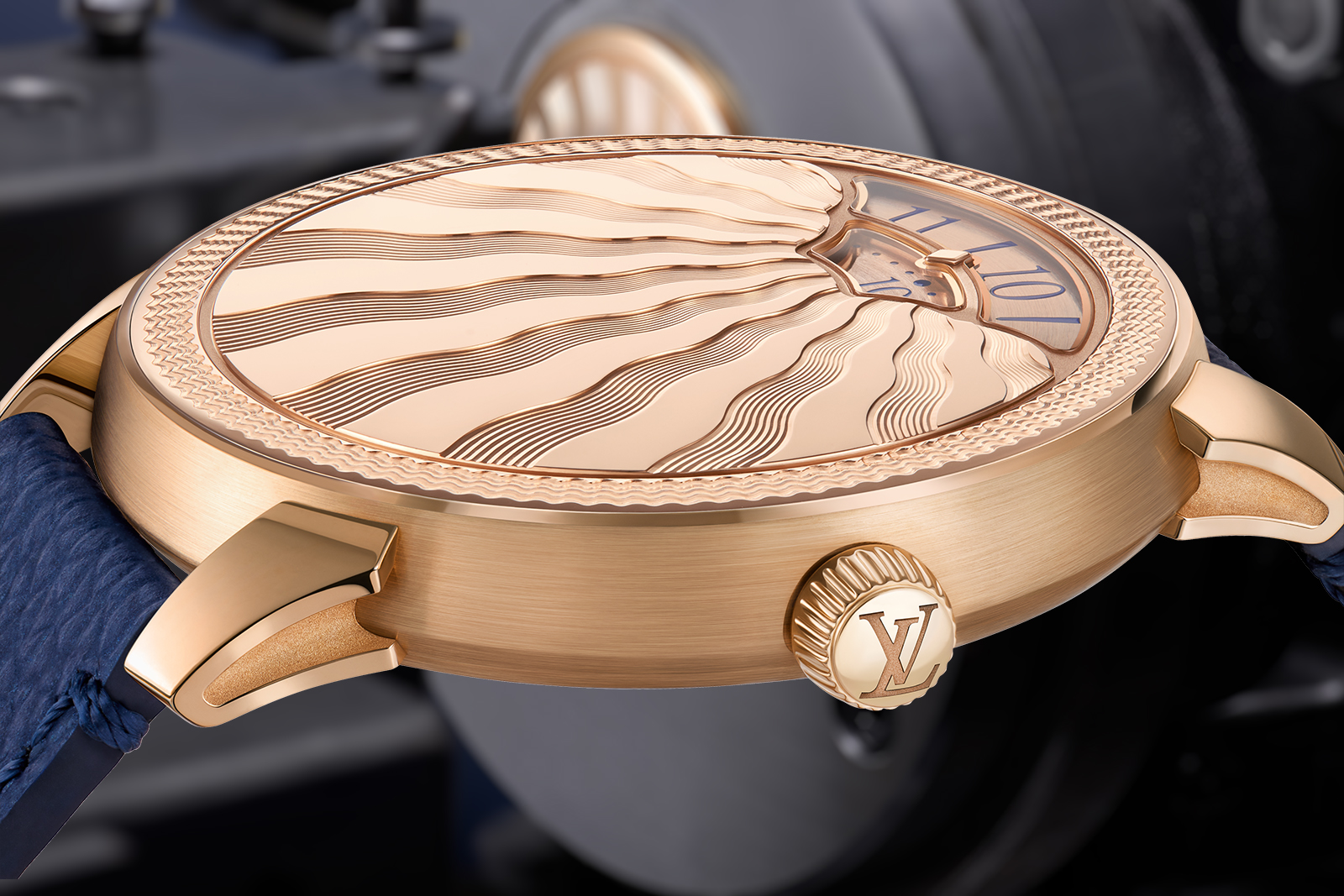
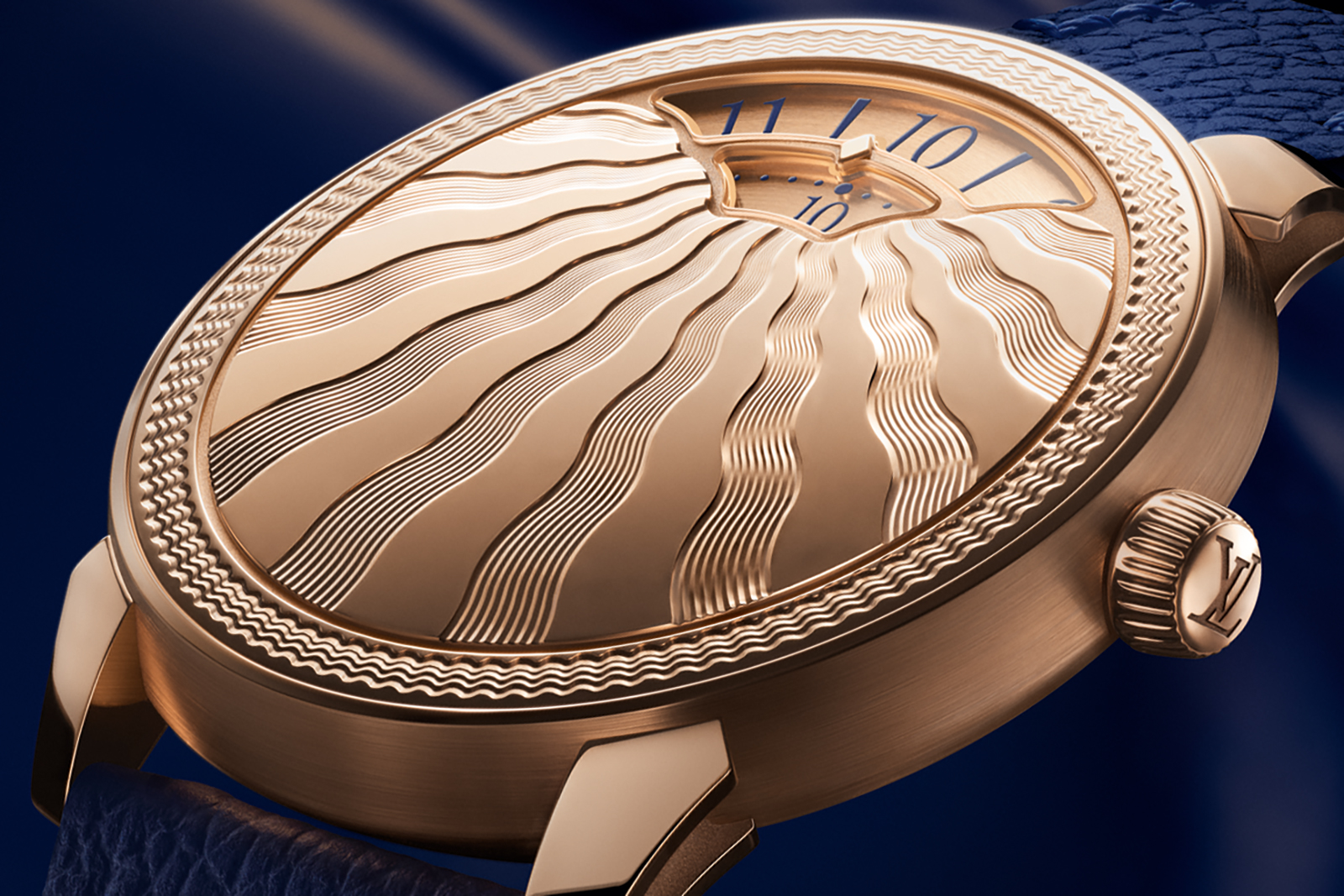
The Escale case takes inspiration from the brass hardware of the Parisian malletier‘s iconic trunks; this influence can be seen most clearly in the design of the lugs. But the homage to the trunks is more than skin deep. One of the factors that made Louis Vuitton’s trunks popular among affluent travelers in the 19th century was their waxed canvas shell that helped prevent moisture from damaging their contents. The Escale Worldtime is likewise water resistant to a comfortable 50 m.
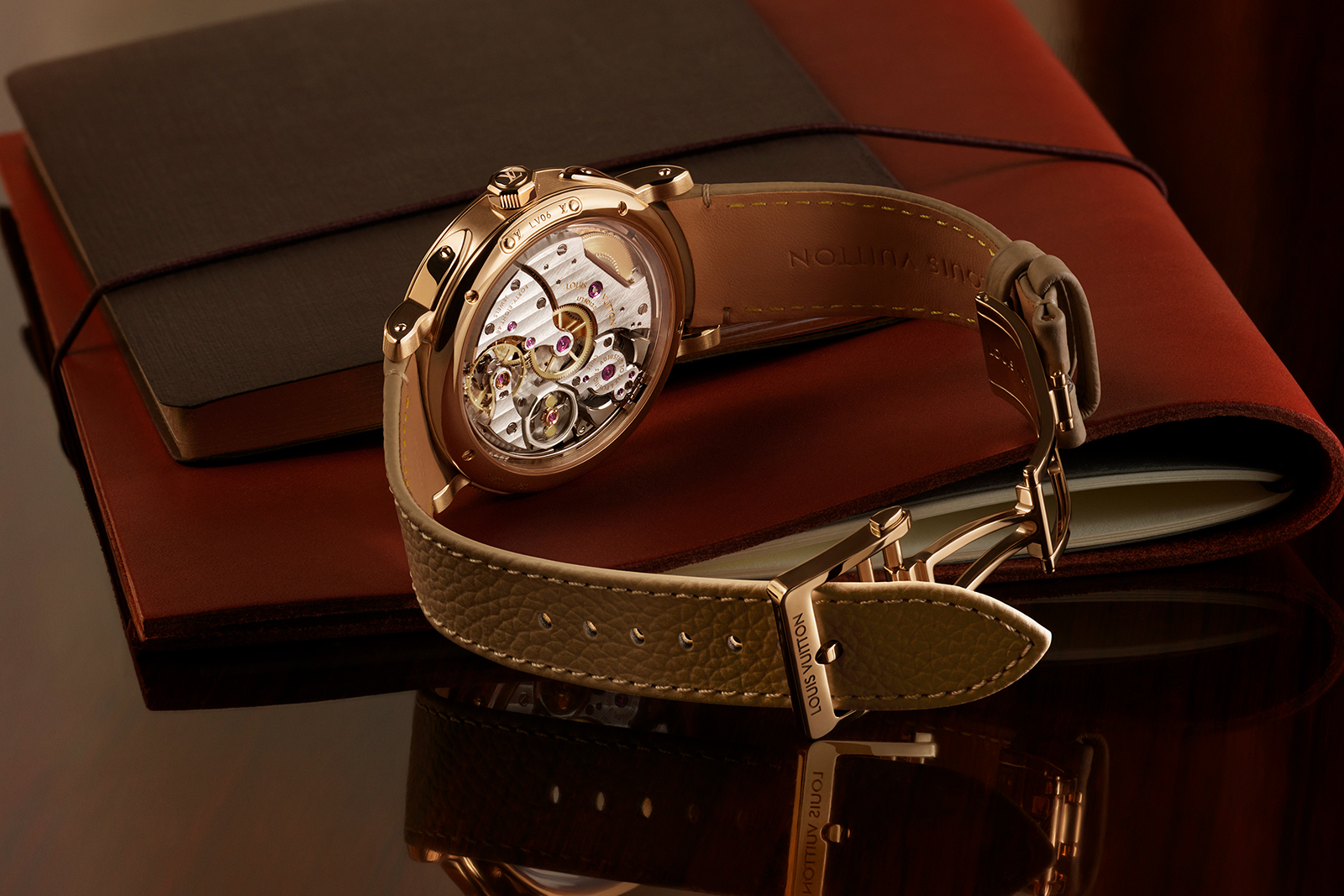
The case back features a saffron sapphire – Louis Vuitton’s corporate colour – to indicate the case is platinum. This subtle Easter Egg is likely inspired by Patek Philippe’s practice of placing a diamond between the lugs of its own platinum watches.
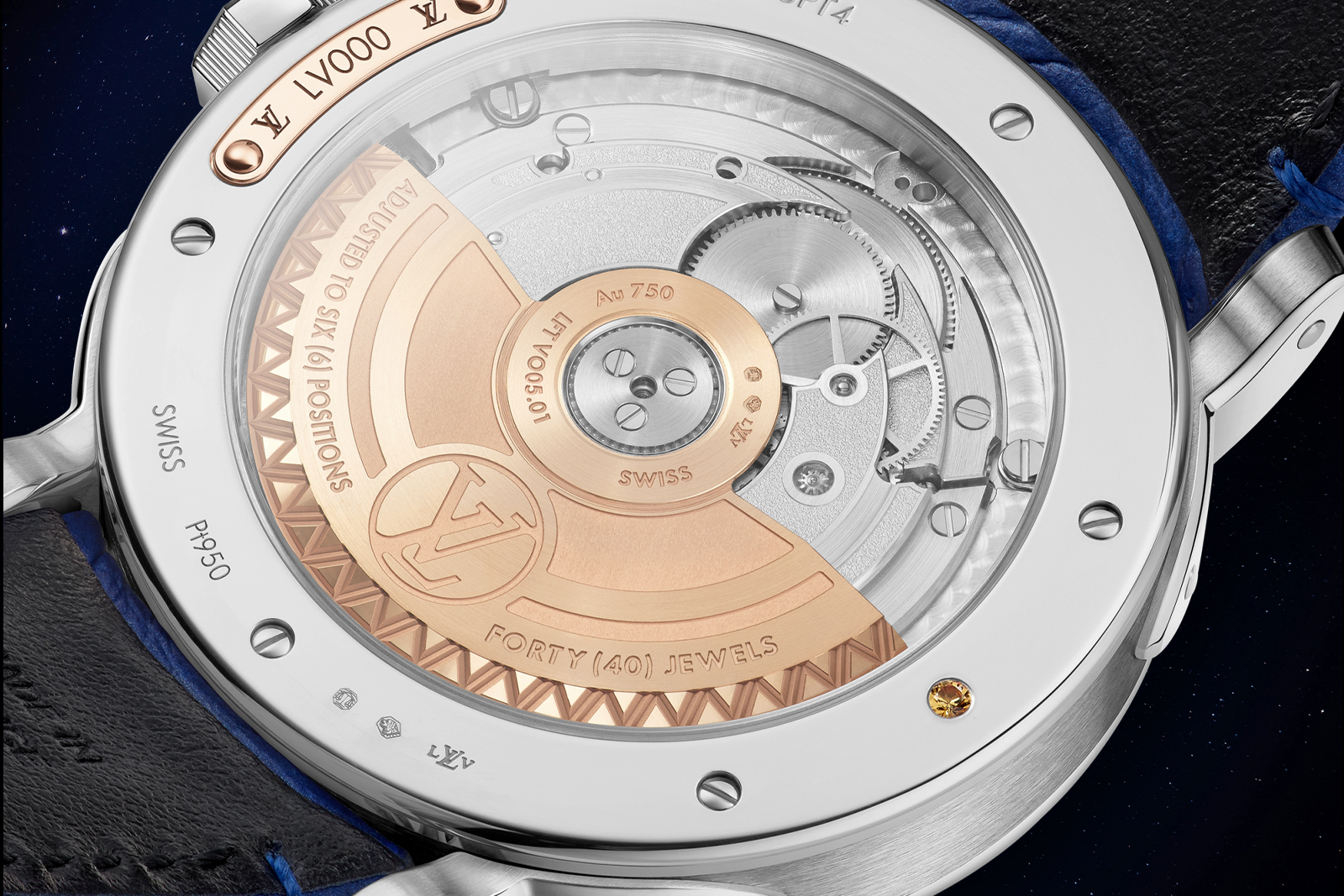
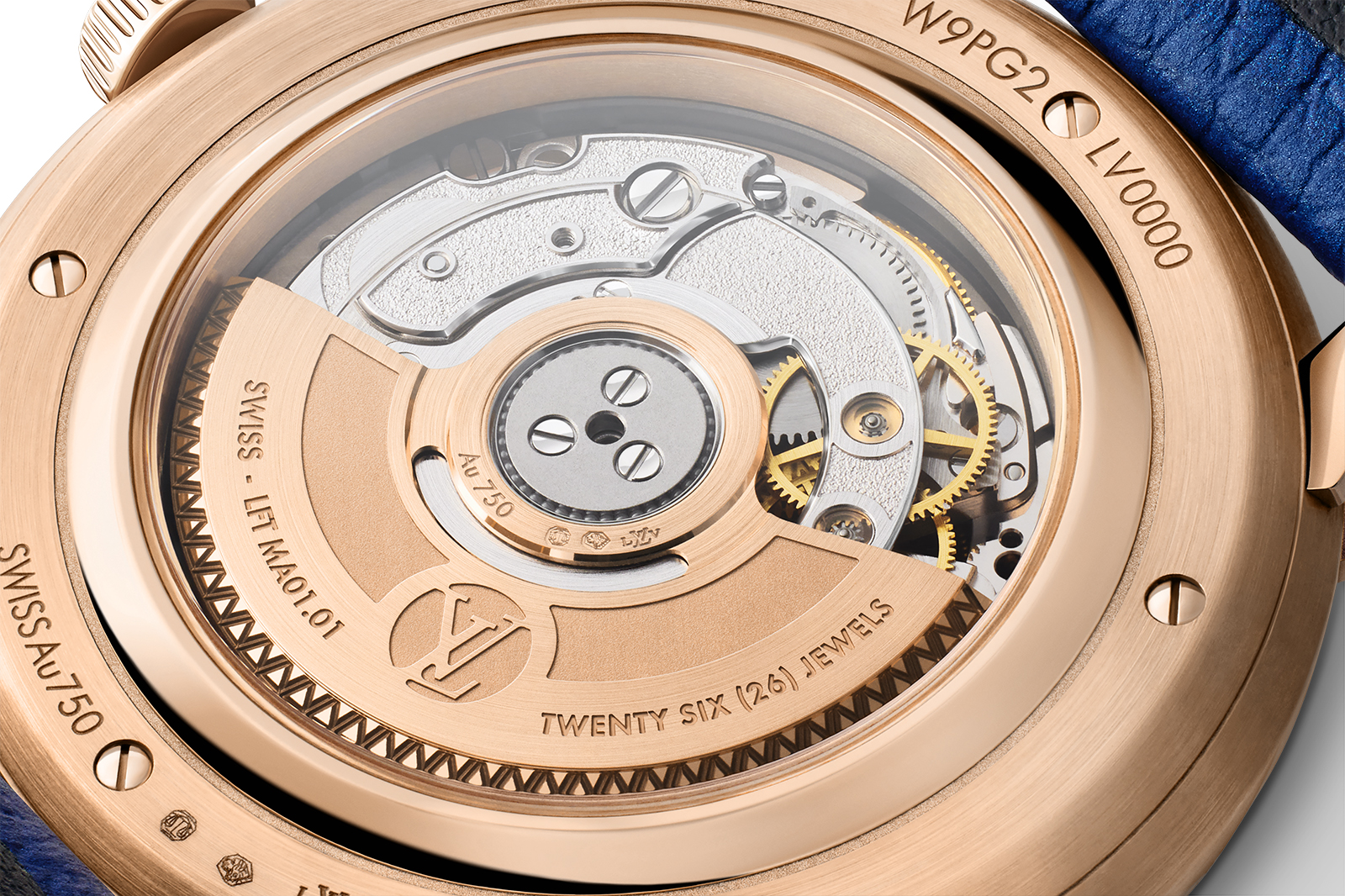
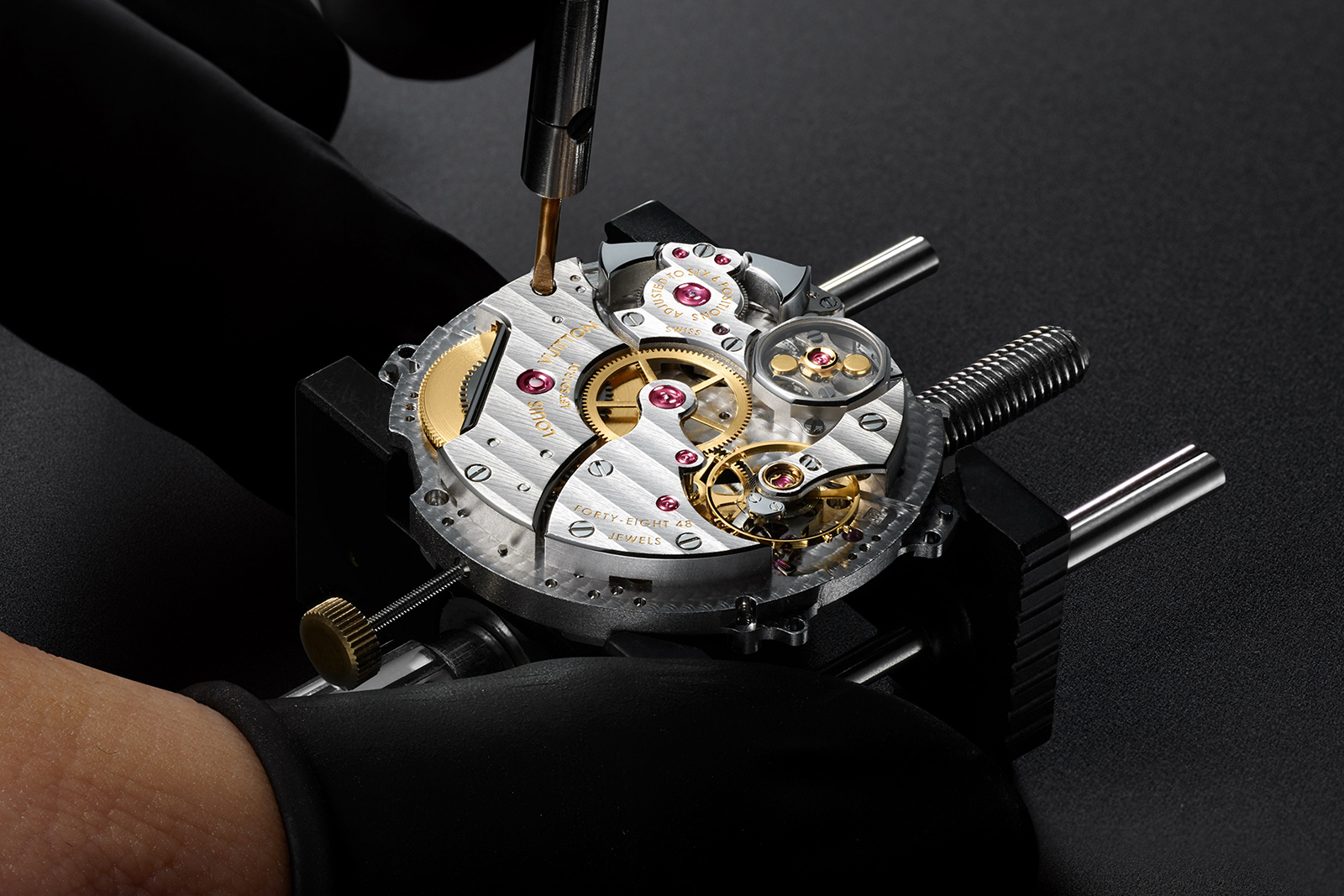
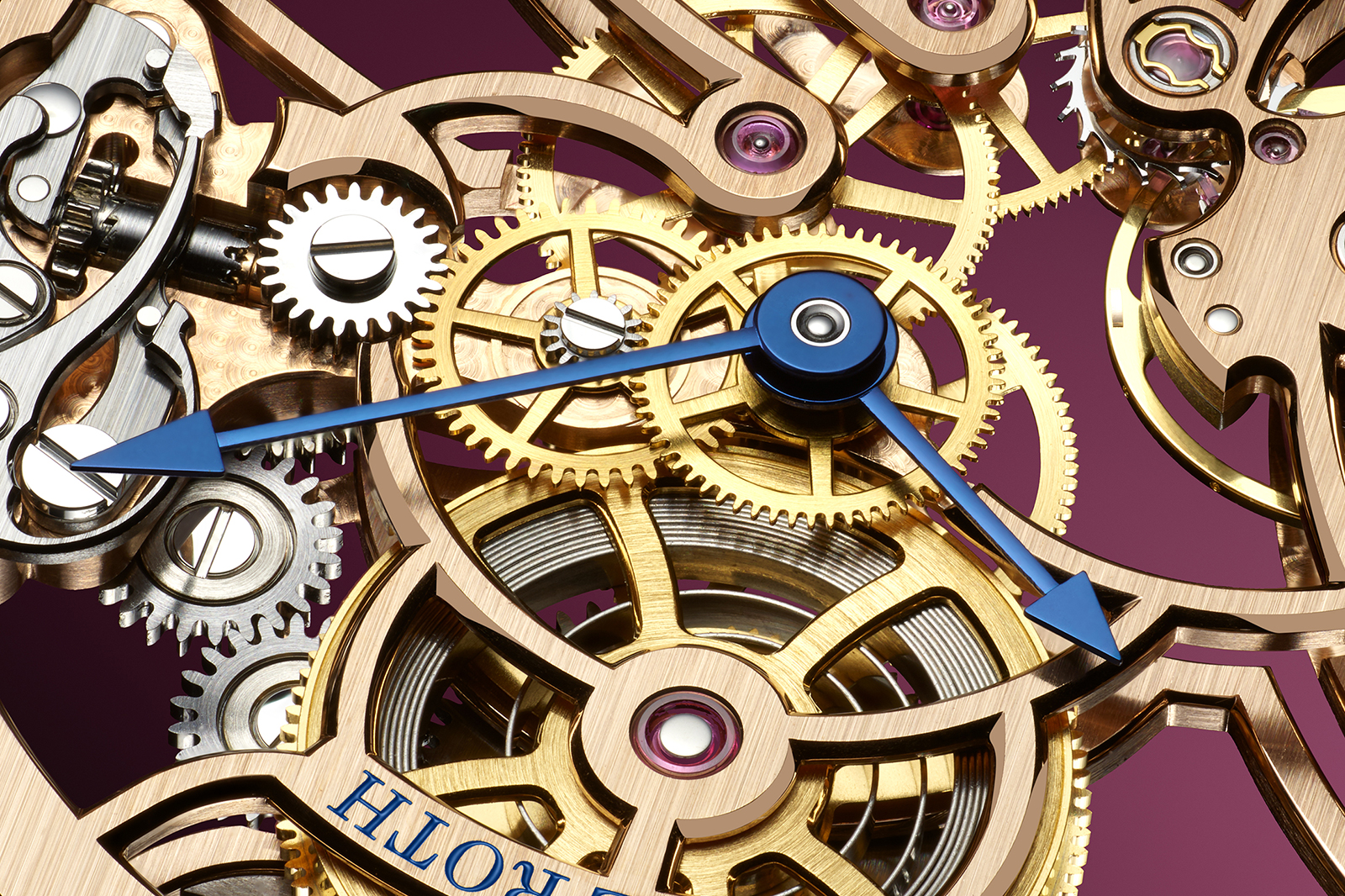
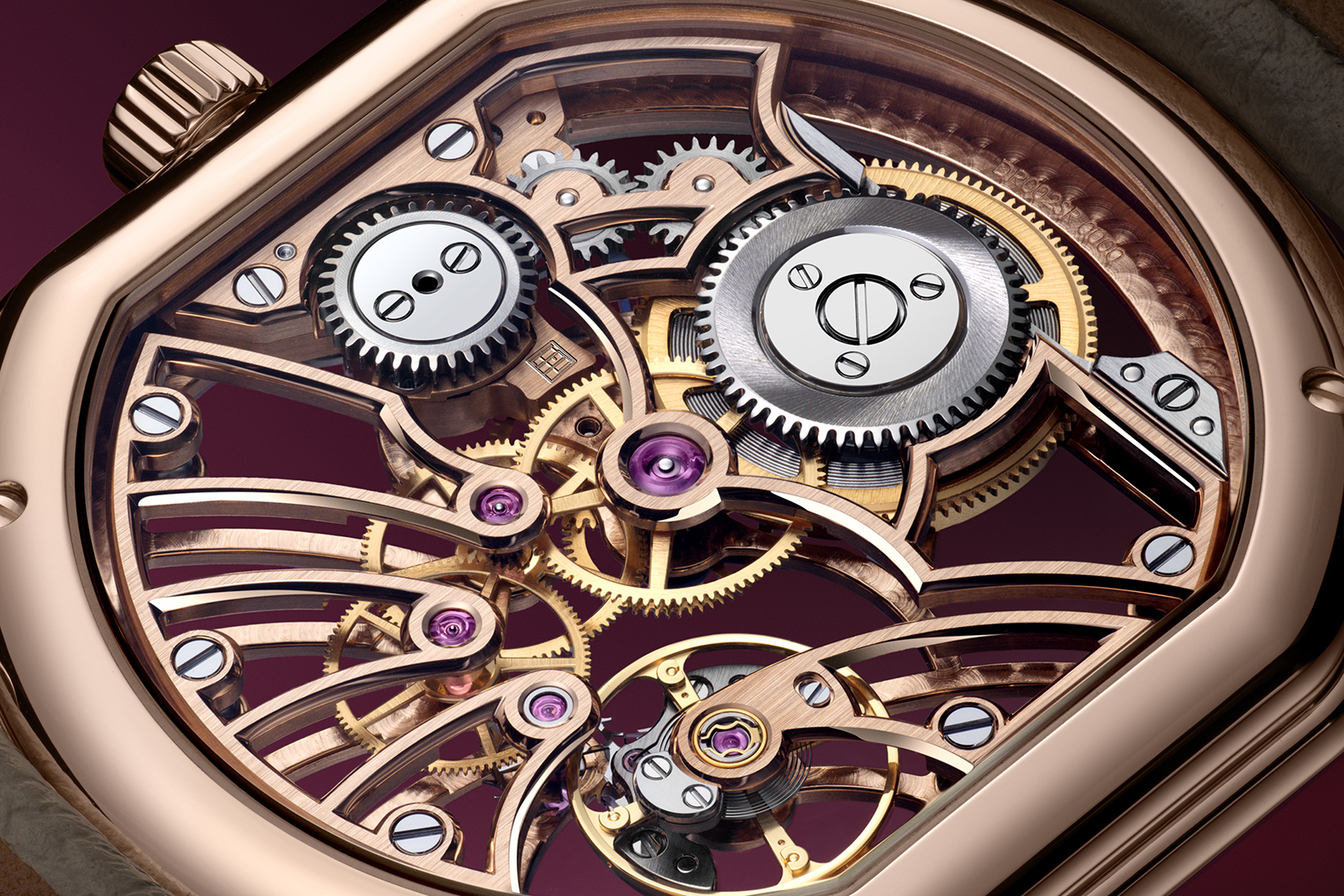
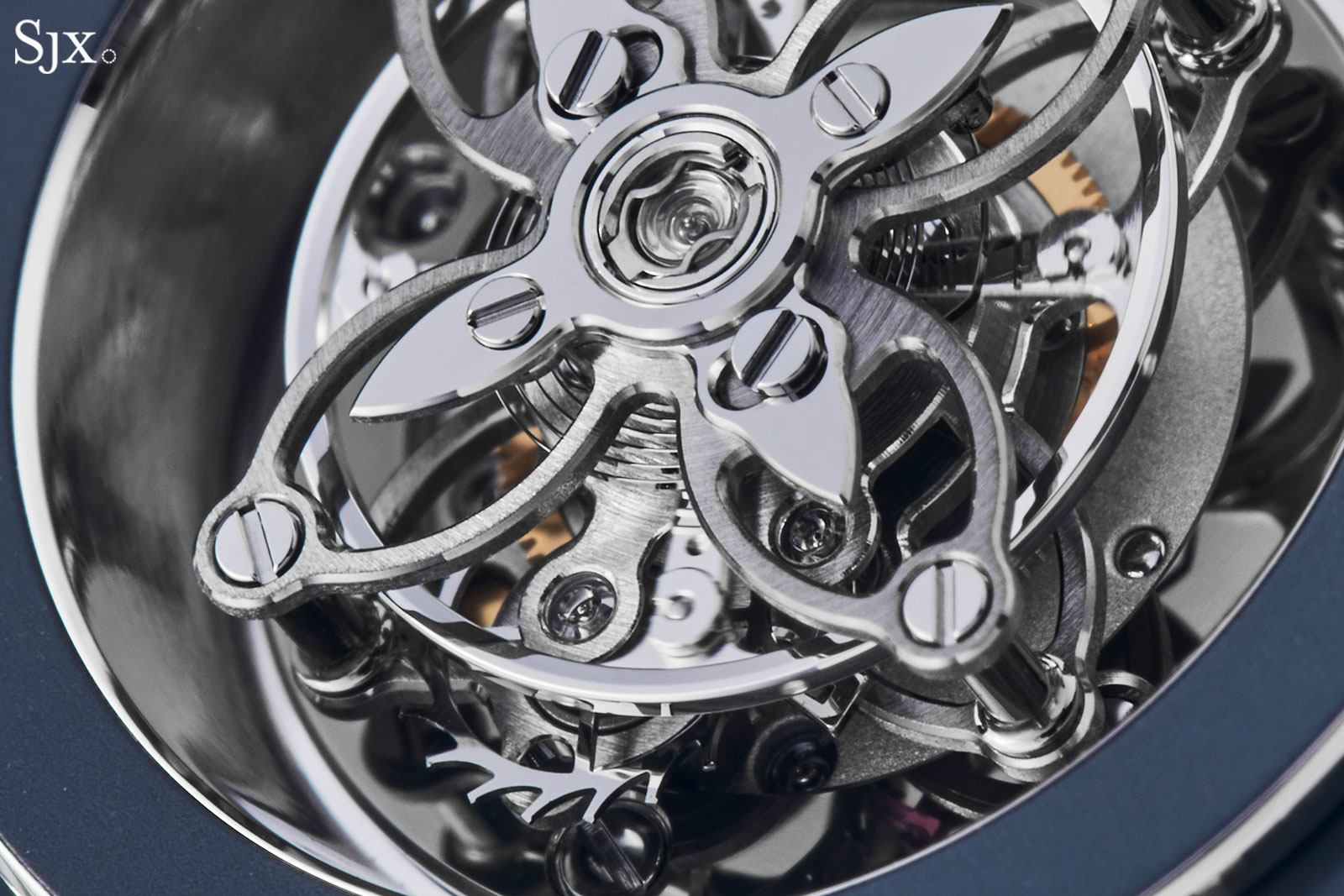
This new LFT VO-series movements maintain the same high-standards for decoration and construction seen in last year’s Tambour refresh, including many of the hallmarks of Genevan fine watchmaking. These details include a Geneva-style stud carrier clamped in place by screws, fixed banking walls, and no wire springs. The distinctive tourbillon carriage, with its four-leaf clover design, was first seen on last year’s Tambour Taiko Spin Time Flying Tourbillon, and houses a free-sprung balance as befits a watch at this price point.
The finishing reinforces the brand’s emerging house style, with frosted plates and colourless sapphire jewels. It also doubles down on the monochromatic look, plating the automatic winding train – which was gilt in the 23 mm movements – in a white metal. The larger footprint also accommodates a larger barrel and extended 62-hour power reserve, charged by a solid 18k rose gold winding mass.
Key facts and price
Louis Vuitton Escale Worldtime
Ref. W3PTA1
Diameter: 40 mm
Height: 10.3 mm
Material: Platinum
Crystal: Sapphire
Water resistance: 50 m
Movement: Cal. LFT VO12.01
Functions: Minutes, jumping hours, world time
Winding: Automatic
Frequency: 28,800 beats per hour (4 Hz)
Power reserve: 62 hours
Strap: Blue calf leather strap
Limited edition: No
Availability: Now at Louis Vuitton boutiques
Price: Approximately €95,000 excluding taxes
Louis Vuitton Escale Worldtime Flying Tourbillon
Ref. W3PT41
Diameter: 40 mm
Height: 12.8 mm
Material: Platinum
Crystal: Sapphire
Water resistance: 50 m
Movement: Cal. LFT VO05.01
Functions: Minutes, jumping hours, world time, flying tourbillon
Winding: Automatic
Frequency: 28,800 beats per hour (4 Hz)
Power reserve: 62 hours
Strap: Blue calf leather strap
Limited edition: No
Availability: Now at Louis Vuitton boutiques
Price: Approximately €250,000 excluding taxes
Back to top.