Marking its 270th anniversary, Vacheron Constantin (VC) has celebrated in grand style, exemplified by the year’s latest, a pair of double-dial grand complications: Les Cabinotiers Cosmica Duo and Les Cabinotiers Moon Dust.
Initial thoughts
Each of the new Les Cabinotiers watches expresses a different facet of VC’s watchmaking identity. The Cosmica Duo stands out as a true wrist-worn observatory, combining 24 astronomical indications with a reversible construction that makes it unusually wearable for its complexity, while the baguette-set Moon Dust translates horological ambition into pure jewellery, with hundreds of diamonds framing a movement that remains uncompromisingly mechanical.
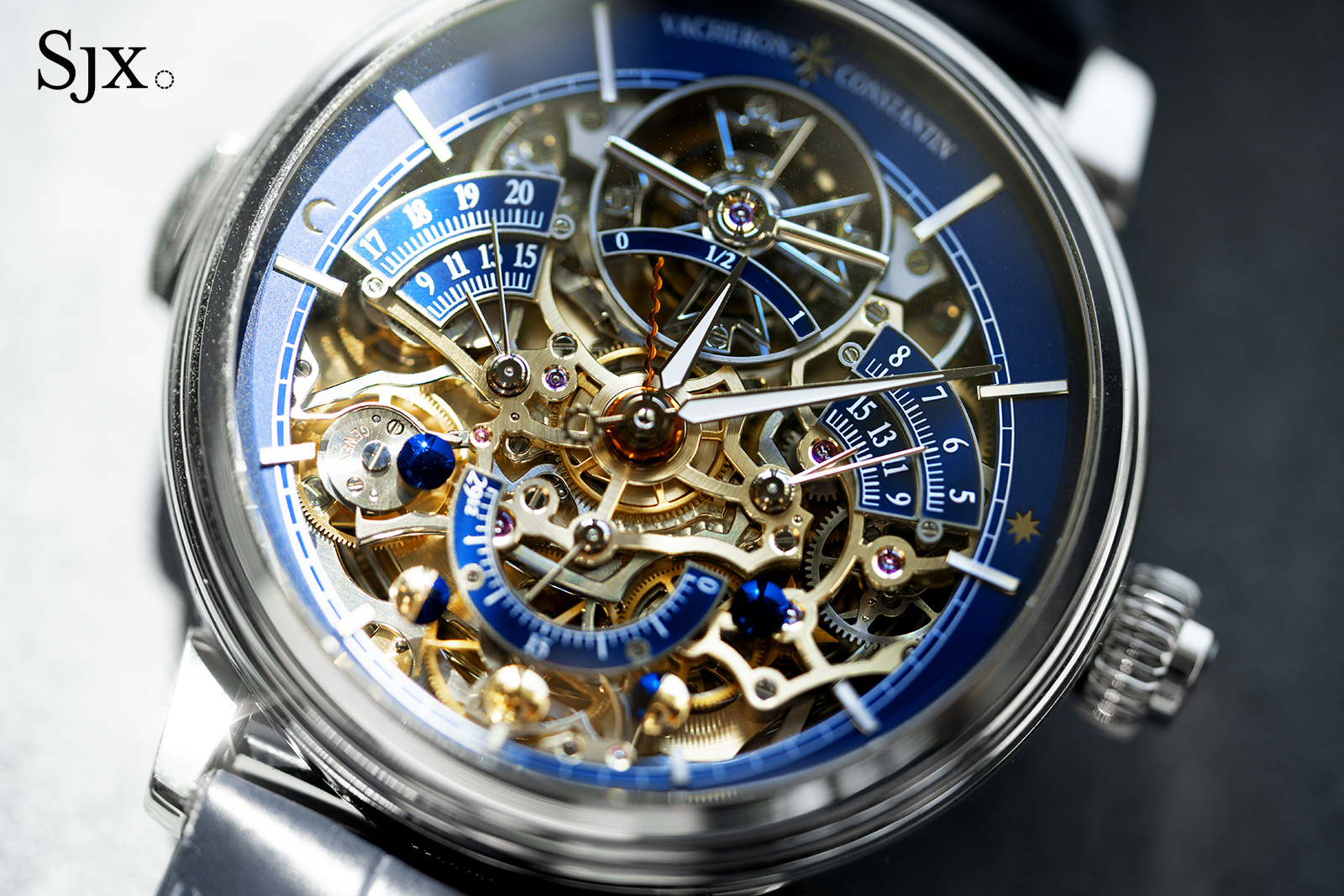
As a group, these watches reinforce the idea that VC’s greatest strength lies in synthesis. Few manufactures can move so fluidly between engineering precision and artistic refinement, or treat engraving, gem-setting, and chiming mechanisms as parallel forms of expression.
As unique pieces, pricing is largely outside the scope of this hands-on evaluation. As is typical for VC’s bespoke Les Cabinotiers department, each watch was almost certainly developed in close collaboration with its eventual owner, making them more commissions than catalogue items. Their value, therefore, lies not only in their material complexity but also in the fact that each represents a personal chapter in the continuing story of Geneva’s oldest watchmaker.
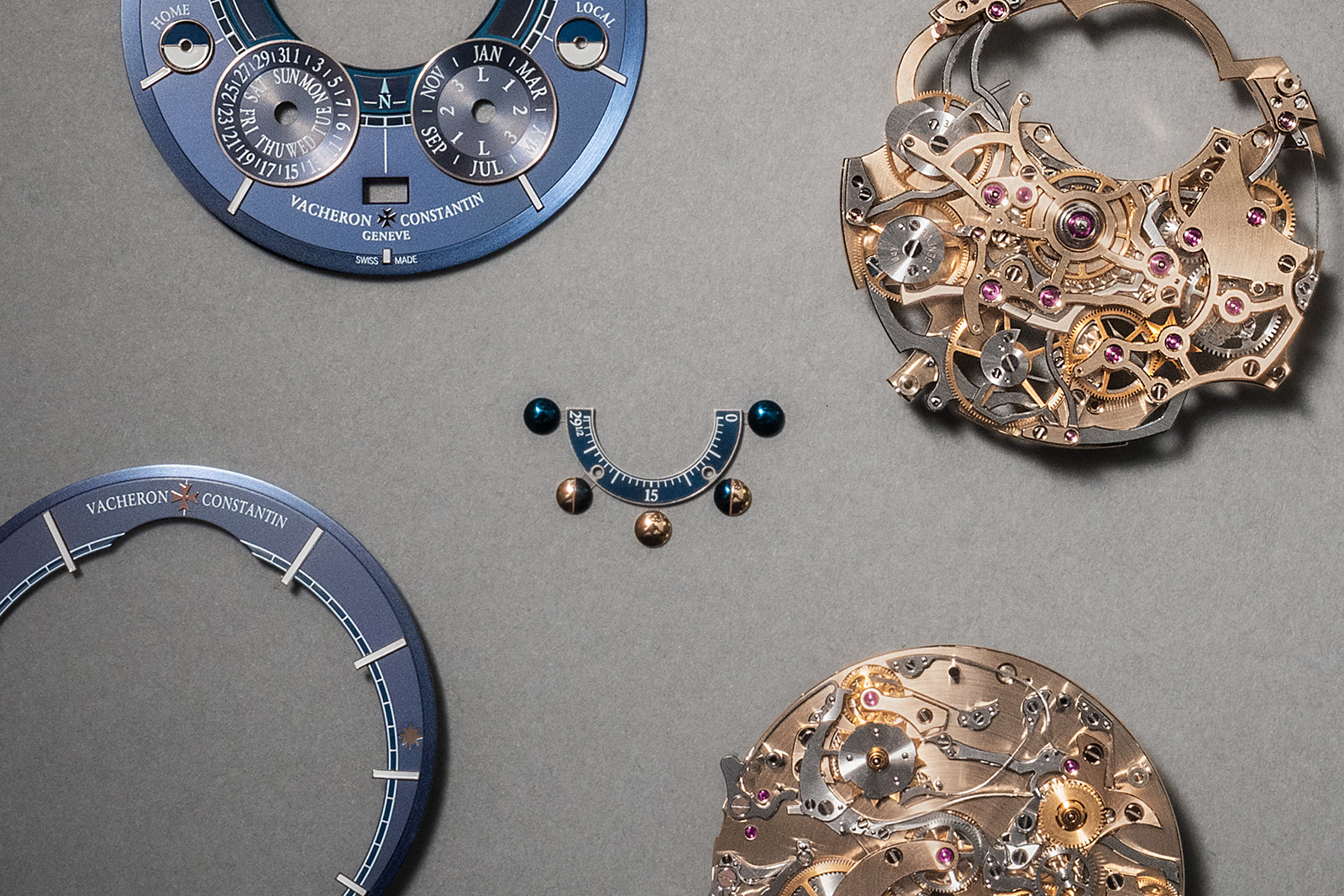
The layered architecture of the Cosmica Duo. Image – Vacheron Constantin
Les Cabinotiers Cosmica Duo – Grand Complication
Vacheron’s latest wrist-worn grand complication once again centres on astronomical indications—a theme that has defined many of the brand’s 270th anniversary creations. Earlier this year, the brand unveiled the Solaria, an extraordinary wristwatch boasting 41 complications.
Now, barely six months later, VC returns with the Cosmica Duo, another grand complication that packs 24 functions into a reversible case that can be worn with either dial facing up.
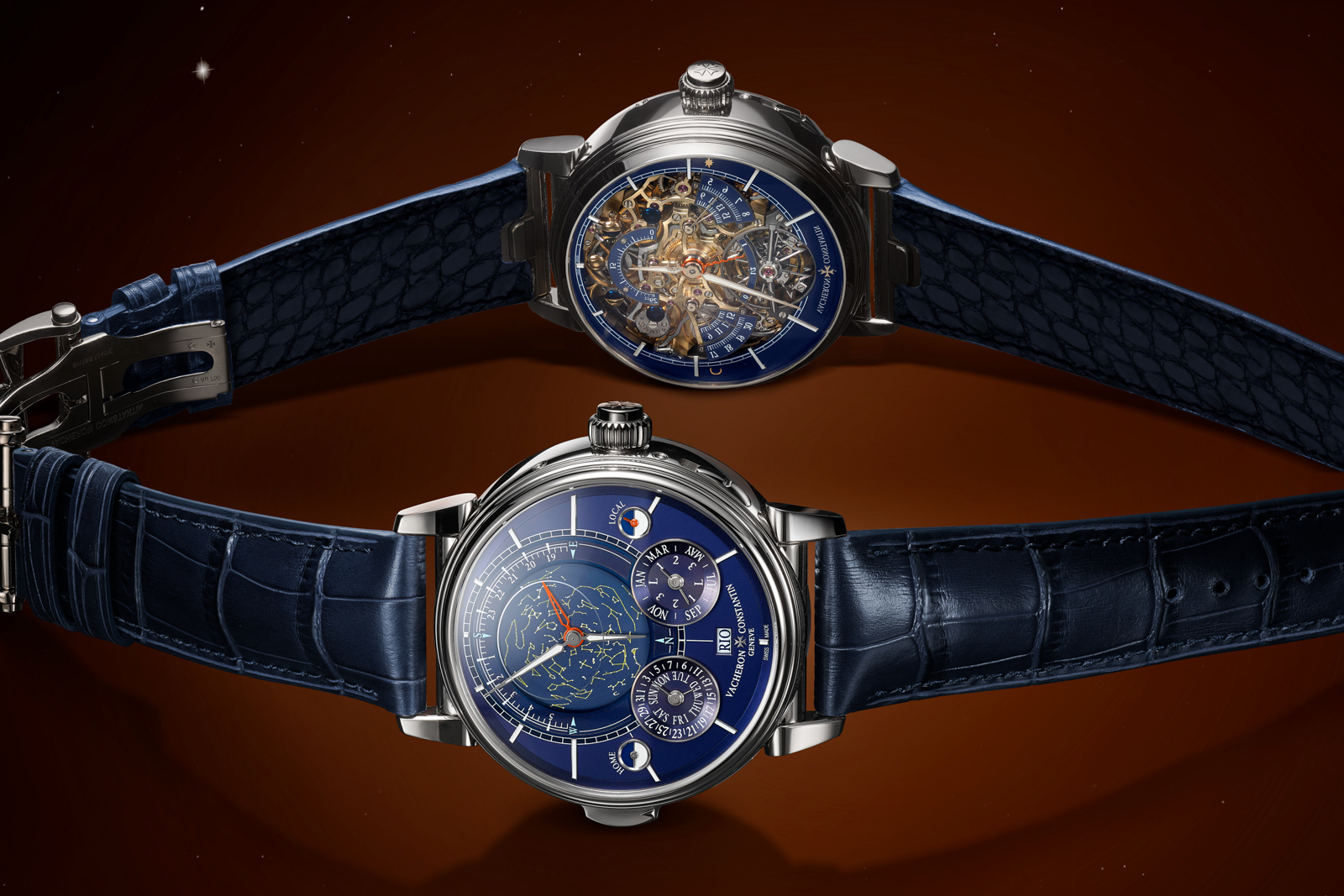
The opposing faces of the Cosmica Duo. Image – Vacheron Constantin
Despite a movement that’s simpler on paper, the Cosmica Duo is larger than the Solaria, at 47 mm in diameter and just over 20 mm thick. Some of this size is the result of the case construction, which features articulating lugs with a reversible strap. That said, it’s not unreasonable for a watch with two fully functional dials (hence the name “Duo”) and a movement comprising 1,003 components.
Before delving into the mechanics, it’s worth pausing to admire the Cosmica Duo as an object. One face is a deep celestial blue, dominated by a symmetrical sky chart and a second-time-zone display that remains surprisingly legible. Flip it over, and a skeletonised dial reveals the gilded mechanics within, including a large tourbillon at 12 o’clock and a display for true solar time—making this side the secondary dial for practical reasons.
The first impression is that of a genuinely wearable grand complication. Most such watches are exercises in excess, but here, pivoted symmetrical lugs and a quick-release strap make the Cosmica Duo properly reversible and unexpectedly ergonomic.
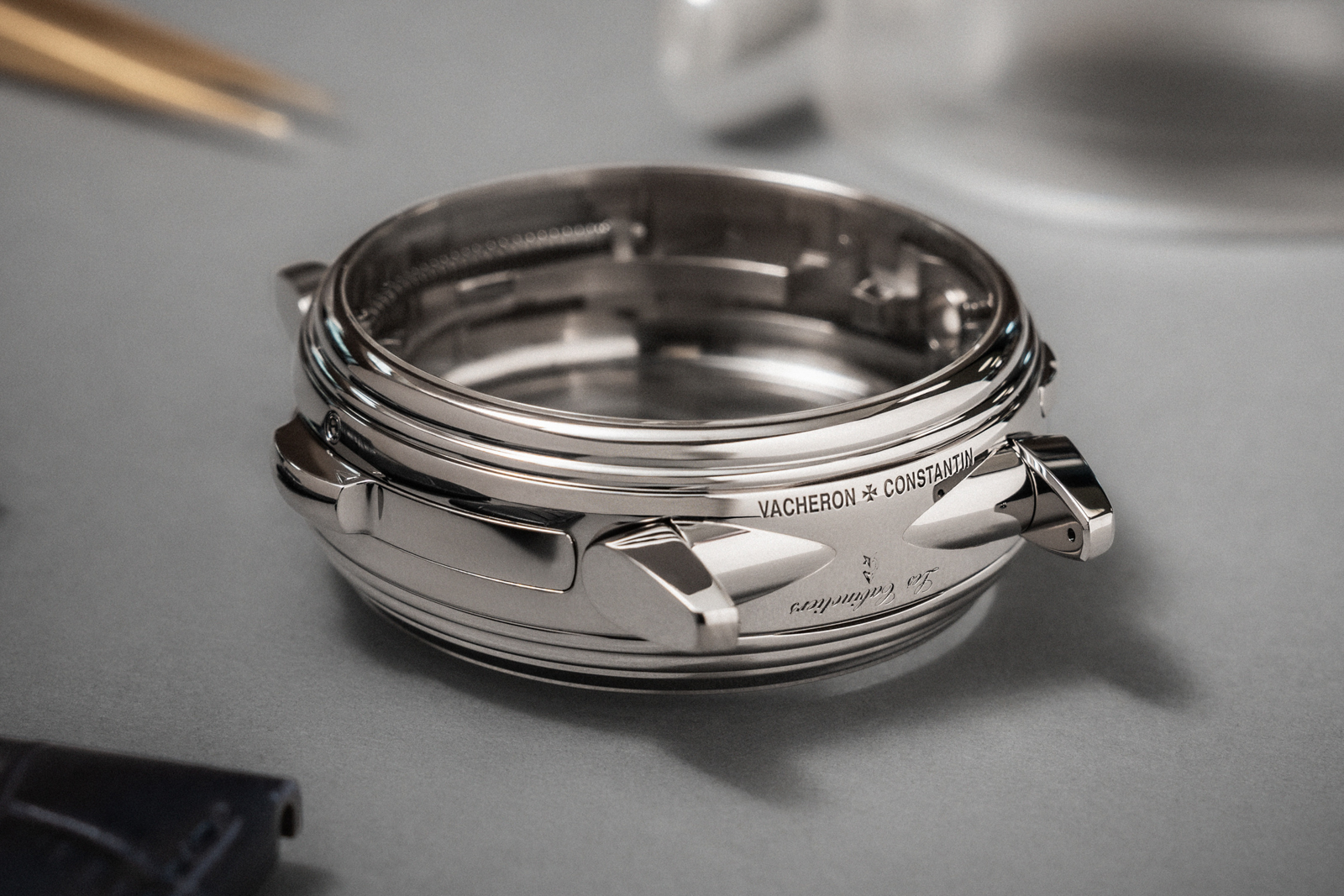
The Cosmica Duo features a reversible case with articulating lugs. Image – Vacheron Constantin
The one-off Cosmica is yet another example of VC’s extensive work with complications and especially their mastery of astronomic indications. There was little spared in building this complex timepiece, even though the same movement probably won’t be reused in this exact finish and configuration.
That said, history suggests that some subassemblies might eventually find their way into more attainable models in the future. The movement is proudly modular, so some of these complications could be adapted for use in other watches.
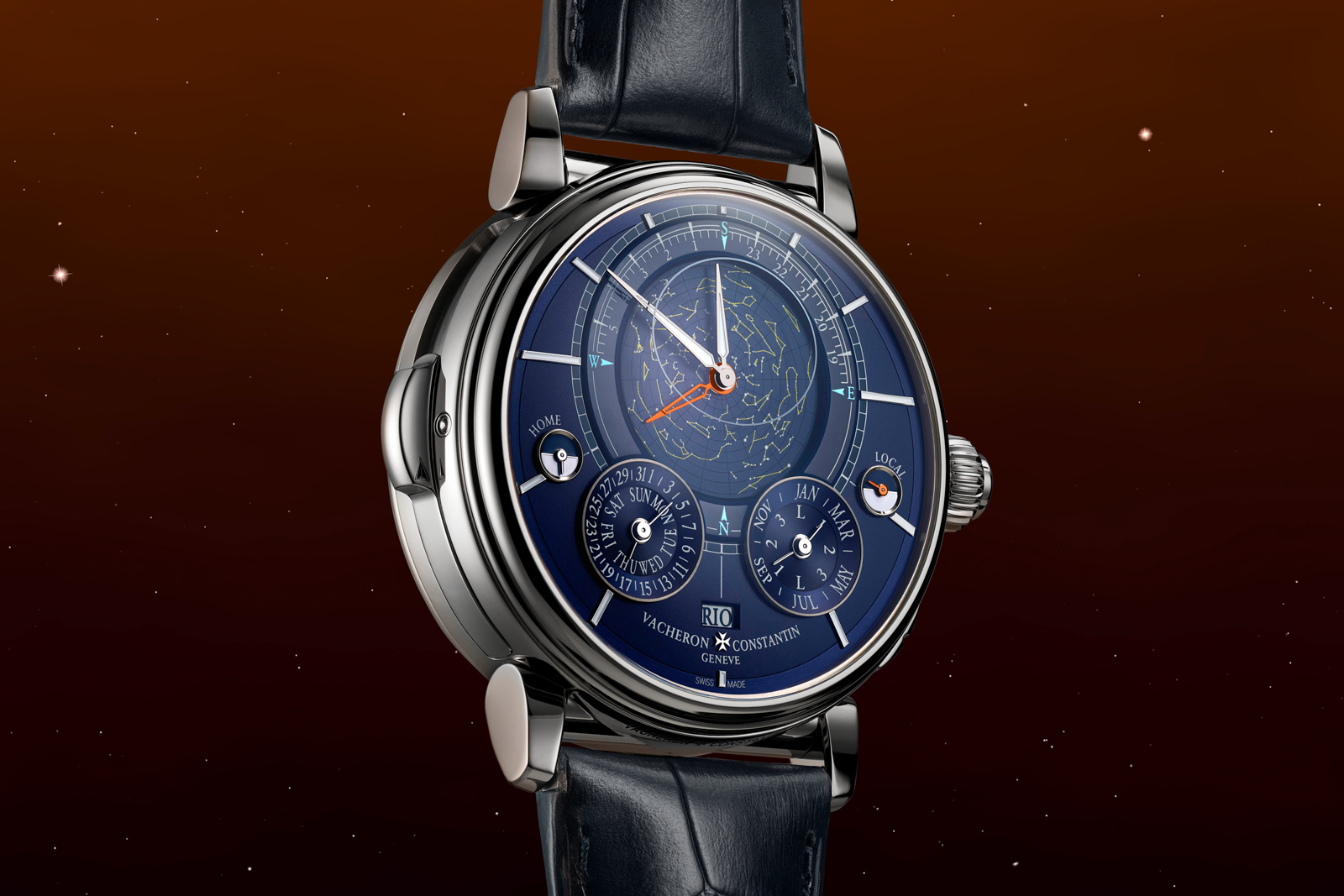
The minute repeater slide has an unusual form, appearing like a pusher, but works like a normal slide. Image – Vacheron Constantin
The blue side of the Cosmica Duo
The Cosmica Duo incorporates 24 complications, most of which relate to celestial phenomena. This goes well beyond what is typically required for a watch to qualify as a grand complication, a loosely defined term normally applied to watches with a tourbillon, perpetual calendar, chiming mechanism and chronograph.
The Cosmica’s list of complications includes a tourbillon, perpetual calendar and minute repeater, but replaces the chronograph with a suite of astronomical functions such as a rotating sky chart, running equation of time and sunrise and sunset indicators. It is powered by the new cal. 2756-B1, an evolution of cal. 2756 that itself draws on the earlier cal. 2755.
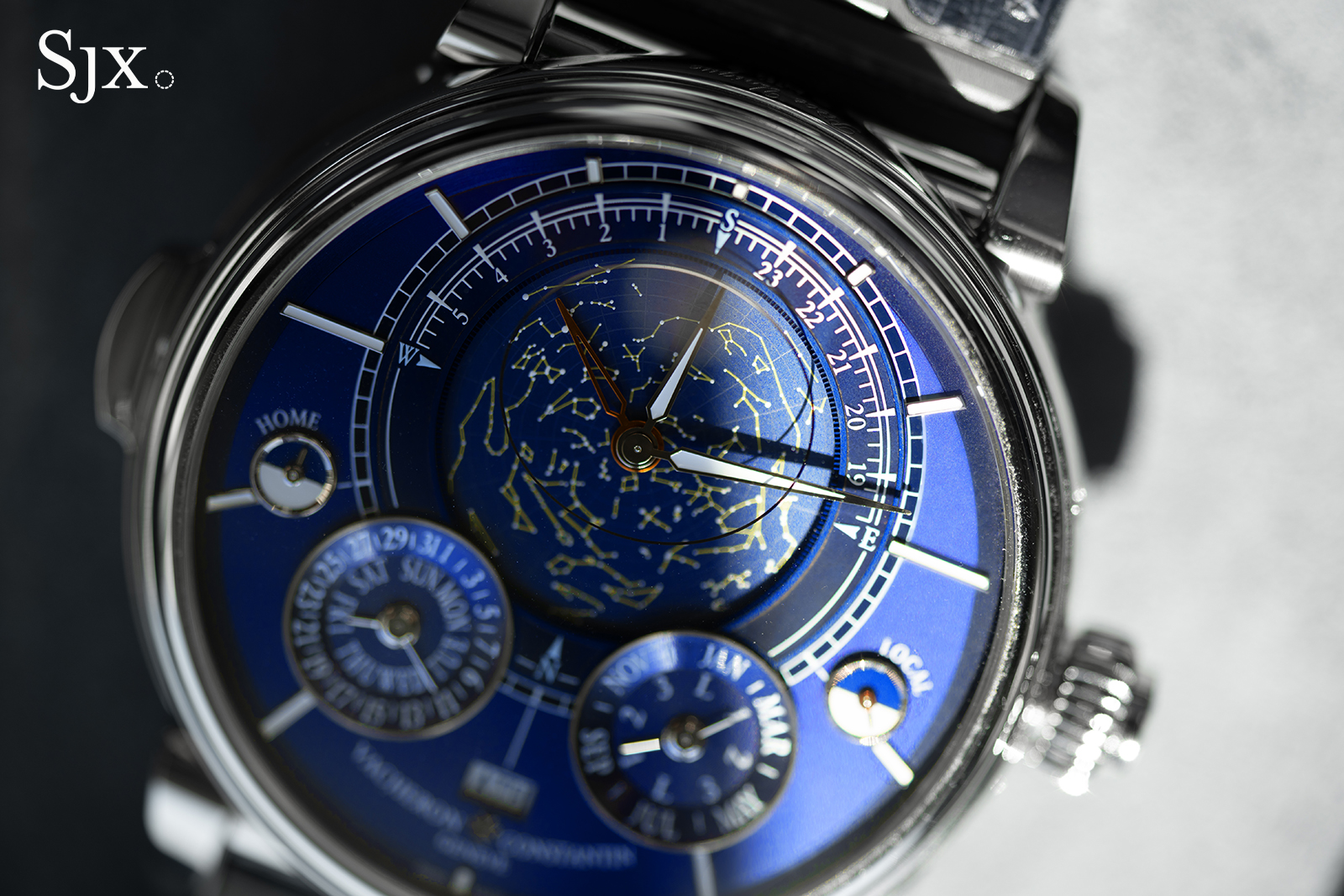
Starting off with the blue dial, which is made out of 22 separate pieces, the wearer is greeted by a framed, circular sky chart, two small night/day dials for the home and local timezones, a pair of symmetrical sub-dials for the perpetual calendar, and an aperture at six o’clock showing the local city code.
This is a lot of information for one dial, so let’s unpack it carefully. The star of the show has to be the sidereal sky chart, which shows the rotation of constellations as observed from earth in real time, turning over the course of a sidereal day. As a reminder, a sidereal day is about four minutes shorter than the standard 24 hours.
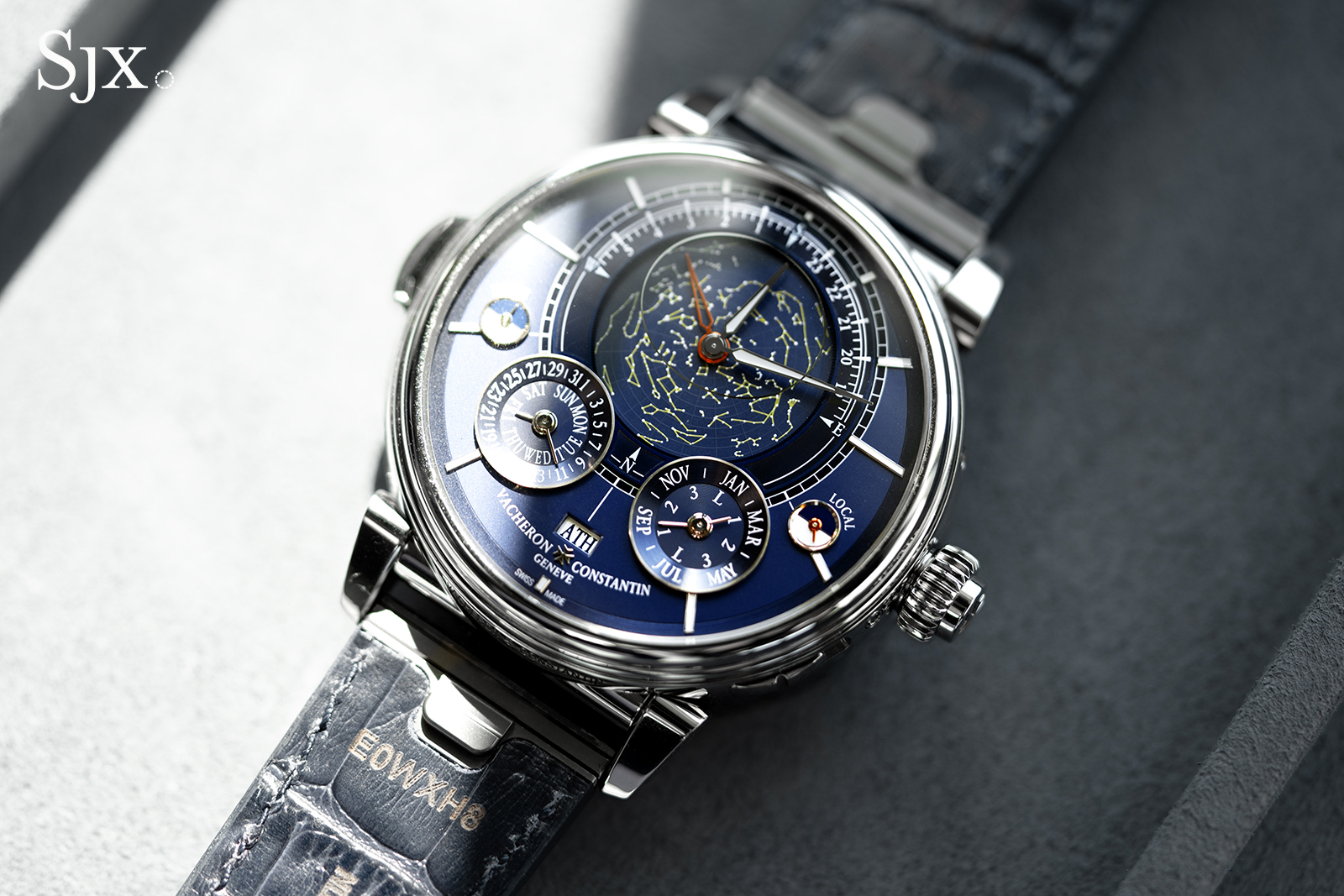
It is a dense display, but carefully arranged; on the wrist, the elaborate dial construction aids legibility. The most striking feature is naturally the sidereal sky chart, which tracks the apparent rotation of the constellations as seen from Earth, completing a revolution every sidereal day (which is about four minutes shorter than the standard solar day).
A sidereal day is the true period of the Earth’s rotation on its axis, and it allows astronomers to locate celestial objects with greater precision. In the Cosmica Duo, it means the position of the constellations on the dial matches what can be seen in the northern sky at any given moment; a pale elliptical outline marks the portion of the heavens above the horizon.
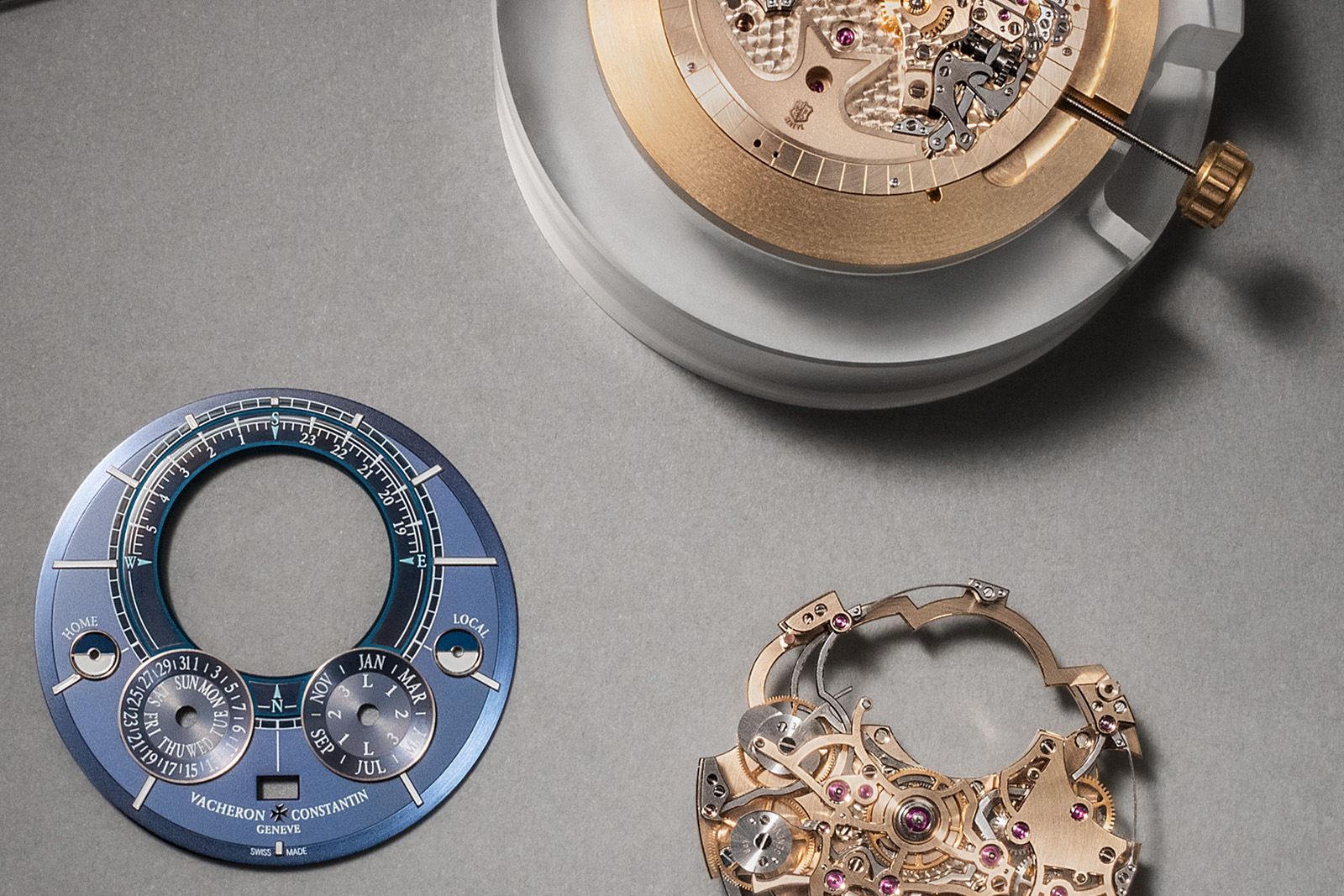
The modular architecture of the cal. 2756-B1
Designing gearing for such an irregular period (23 hours, 56 minutes and 4.1 seconds) demands precise calculation, involving prime-number gear ratios and some sort of epicyclic gearing. A sector around the sky chart displays the sidereal hours, though only from 1 to 5 and 19 to 23, so as not to overlap with the perpetual calendar sub-dials.
At the centre of the dial is a three-hand display showing mean solar time, or standard civil time. Two white hands indicate home time, while a bright orange hand shows local time. Both sets of hour hands complete a 12-hour cycle, and small colour-coded sub-dials indicate day and night for each time zone. The local time can be adjusted in one-hour increments via a pusher integrated into the crown.
Despite the complexity, the watch remains surprisingly legible thanks to the bright, unevenly sized hour indices radiating from the central hand stack like sunbeams. A discreet aperture at six o’clock reveals the city code disc for the local time zone.
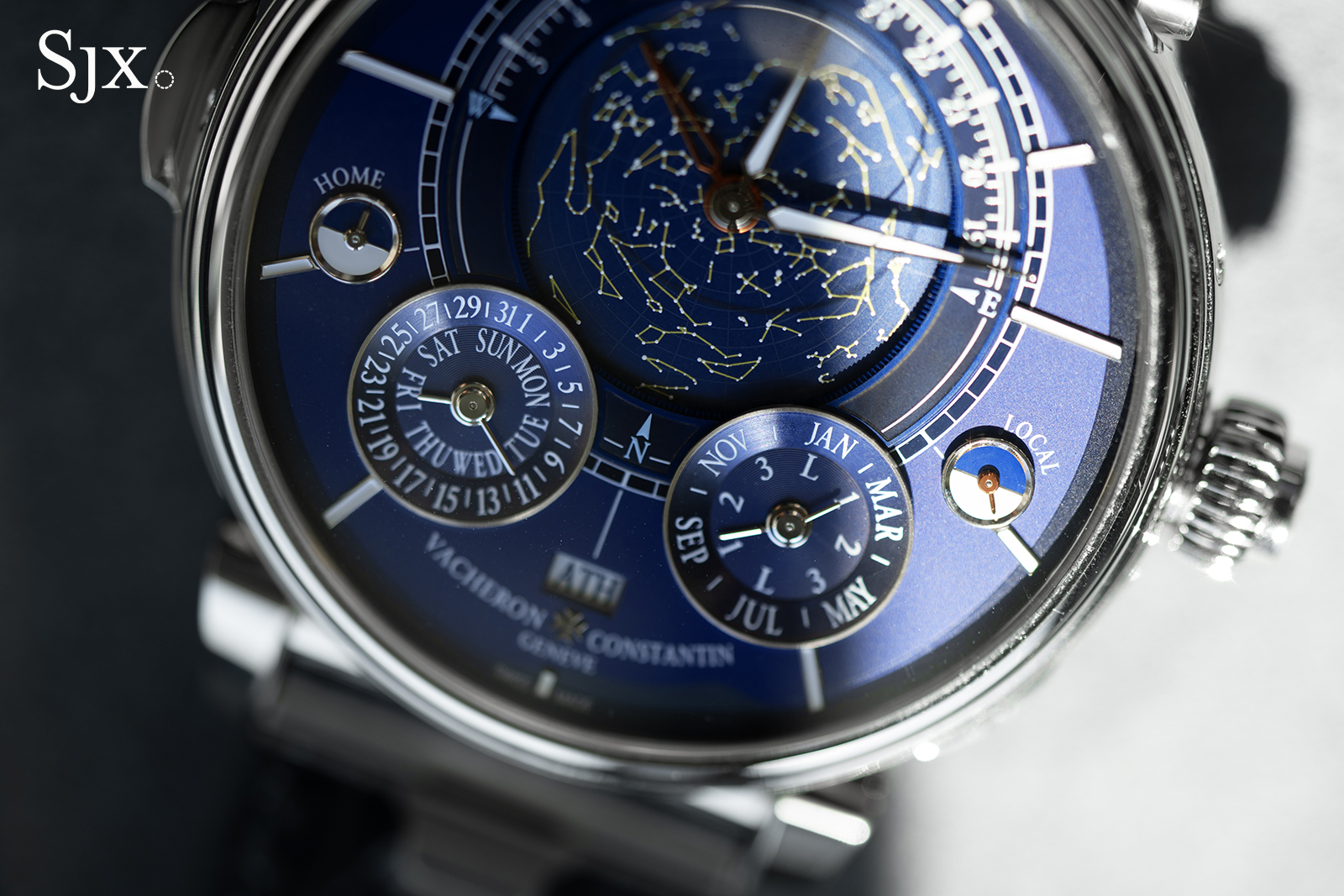
Moving to the lower portion of the dial, the perpetual calendar is packed within two symmetrical sub-dials. On the lefthand side, a co-axial pair of slim hands indicate the day and date, while its counterpart indicates the month and leap year cycle. The display is both impressively efficient and pleasantly well-dimensioned, and is quite readable on the wrist.
The perpetual calendar mechanism itself is of the classical variety, with an eight-year profile cam and lever. The system is remarkably compact and can be made out in the lower portion of the uppermost complication module.
The open-faced side of the Cosmica Duo
Turning the watch over reveals a completely different character. While the blue side is symmetrical and restrained, the opposite side is open and expressive. Much of the dial is skeletonised, revealing the champagne-coloured movement within. As before, most of the indications relate to celestial cycles, with the addition of a large tourbillon at 12 o’clock.
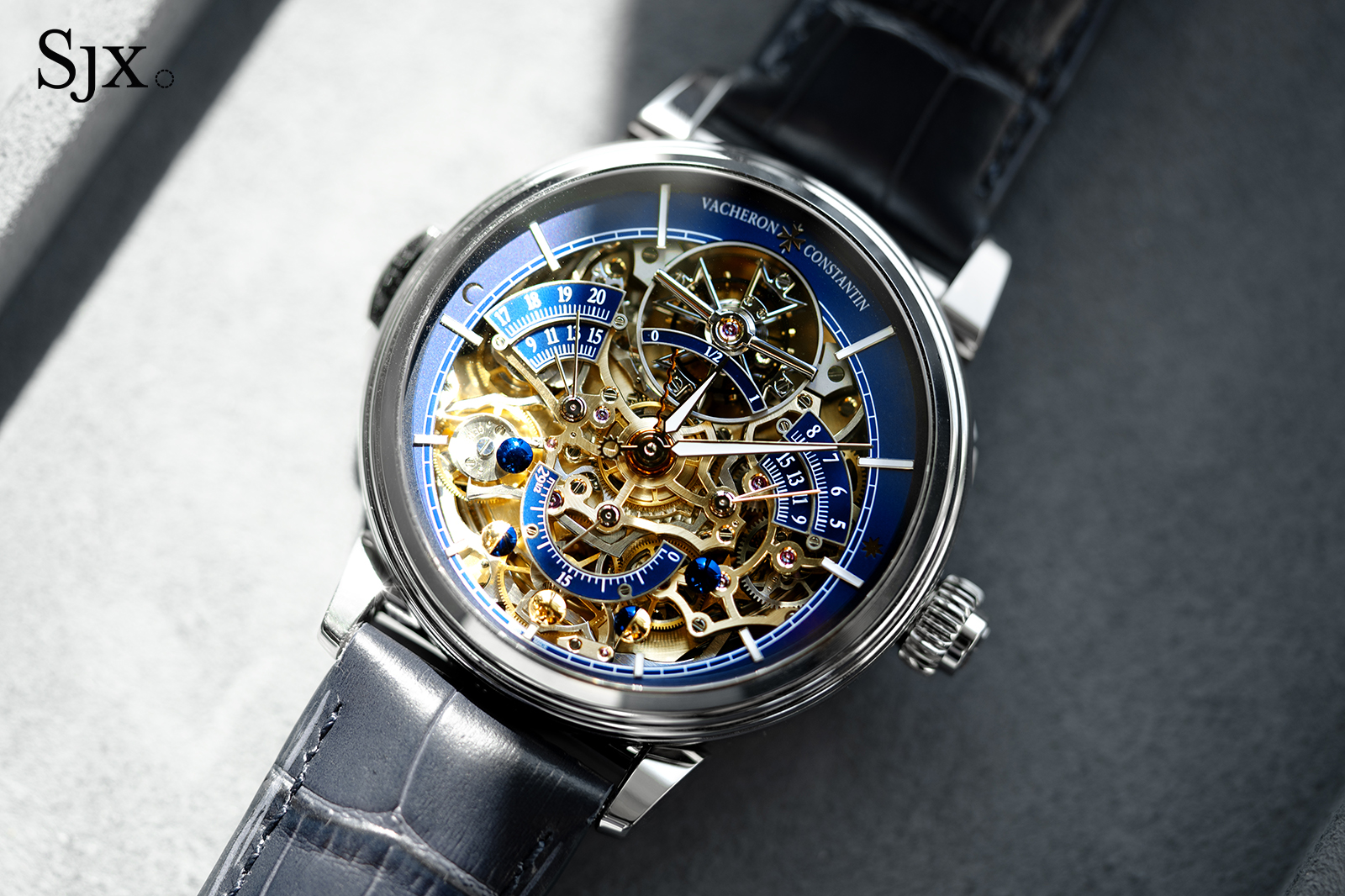
The tourbillon is classic VC, with a four-armed skeleton cage shaped like the brand’s Maltese Cross emblem. Rotating once per minute, it houses a free-sprung balance wheel beating at a leisurely 2.5 Hz. In a watch filled with rare complications, the tourbillon is ironically one of the more conventional features.
Just below it sits the power reserve indicator, displayed on a small blue sector with an orange serpentine hand. Flanking it are two more symmetrical displays: the left indicates sunset time and the length of the night, while the right shows the time of sunrise and the length of the day.
These indications are location-specific, and have no-doubt been adjusted for the owner’s preferred location during production. Based on the graduations on the scales and the star chart on the reverse side, it appears the lucky owner lives somewhere near along the 39th parallel (or thereabouts).
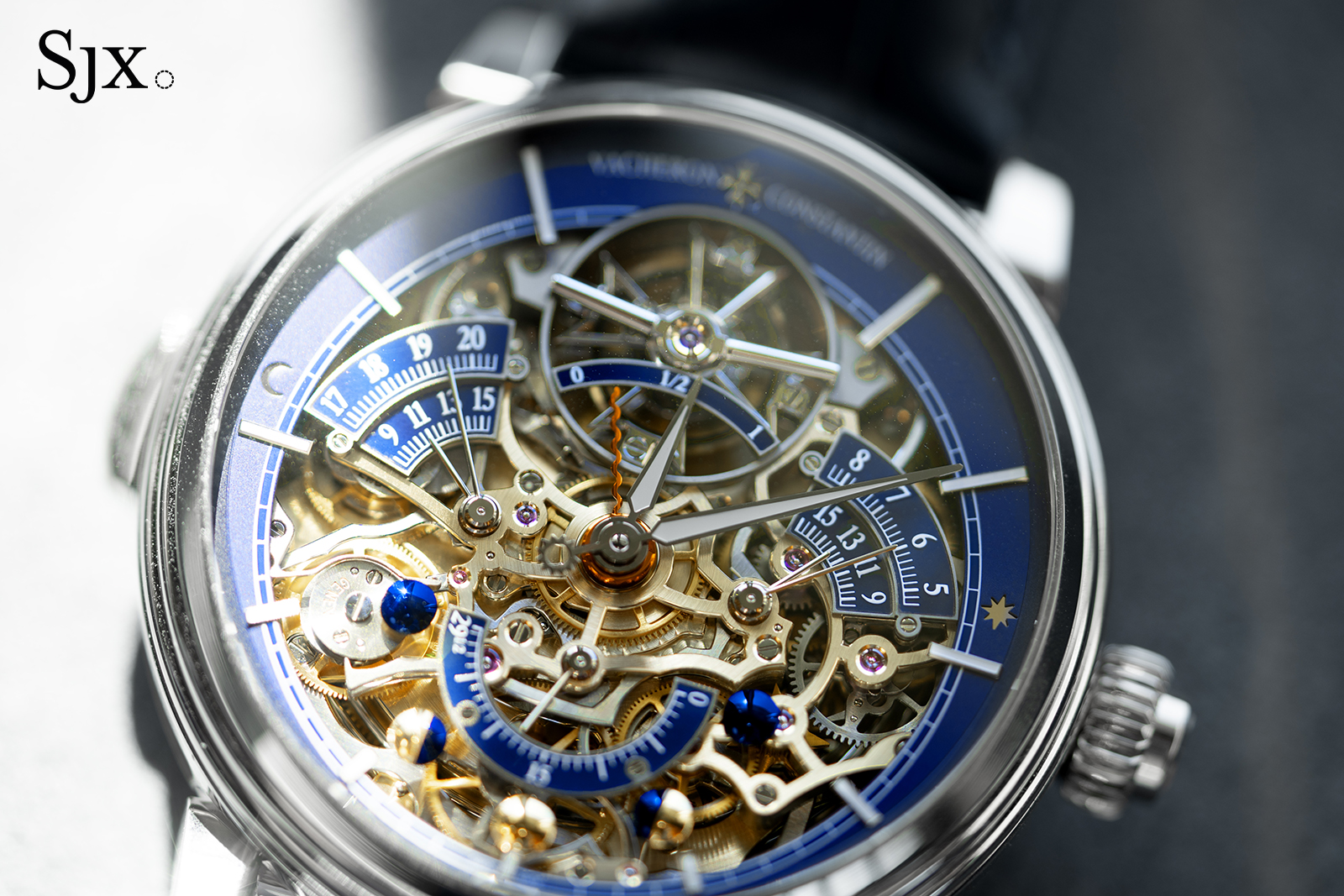
The time-telling handset just below the centre line displays true solar time (as opposed to mean solar time). Not to be confused with sidereal time, the true solar day varies over one year from the mean 24 hours by -16m 23s to +14m 22s, due to the Earth’s axial tilt and elliptical orbit around the Sun.
This slight daily variation is displayed in select watches by an equation of time complication, in which a hand glides over a sector, pointing to the amount of minutes to be added or subtracted from the 24 hours in order to find out the true solar length of the current day. A previous two-part story (parts I and II here) thoroughly recounts the historical pursuit of the equation of time, from ancient times to modern timepieces.
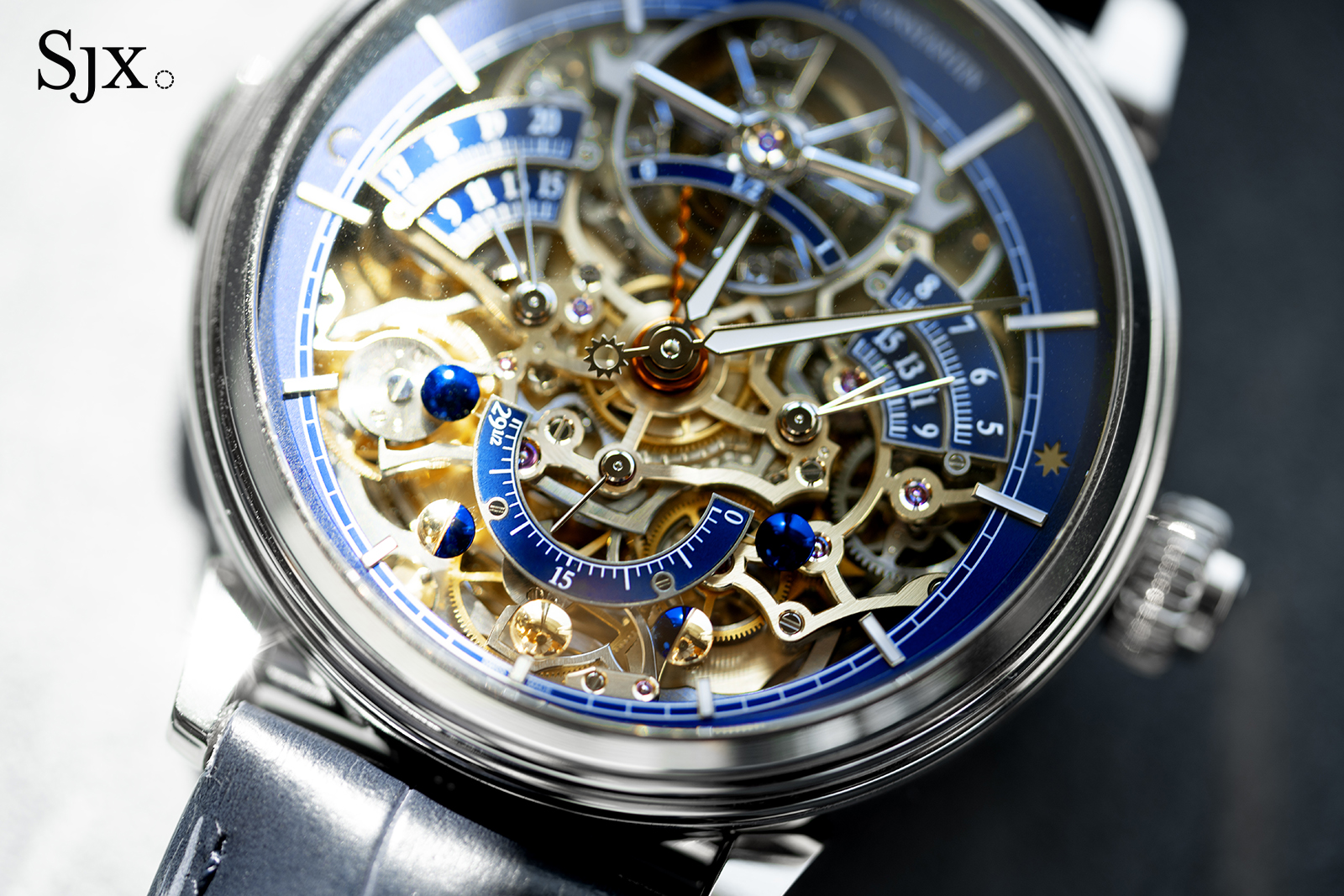
The Cosmica Duo takes the more elegant but infinitely harder road. Instead of making the user mentally calculate the true solar time, it includes the computation directly into the time-telling hand set. This is called a running equation of time and the hands self-adjust daily, depending on the length of the day.
The complicated is identified by a subtle sun-shaped counterweight on the minute hand. Each day, the movement advances or slows the hand slightly, compensating for the daily variation in solar time. Together with the sky chart and mean solar display on the reverse, the Cosmica Duo simultaneously tracks three time systems: sidereal, mean, and true solar time.
The lower part of the dial also features a moon phase indicator accurate to 1,000 years before requiring adjustment. True to form, VC has taken the elaborate route here as well, replacing the traditional rotating moon disc with a retrograde display.
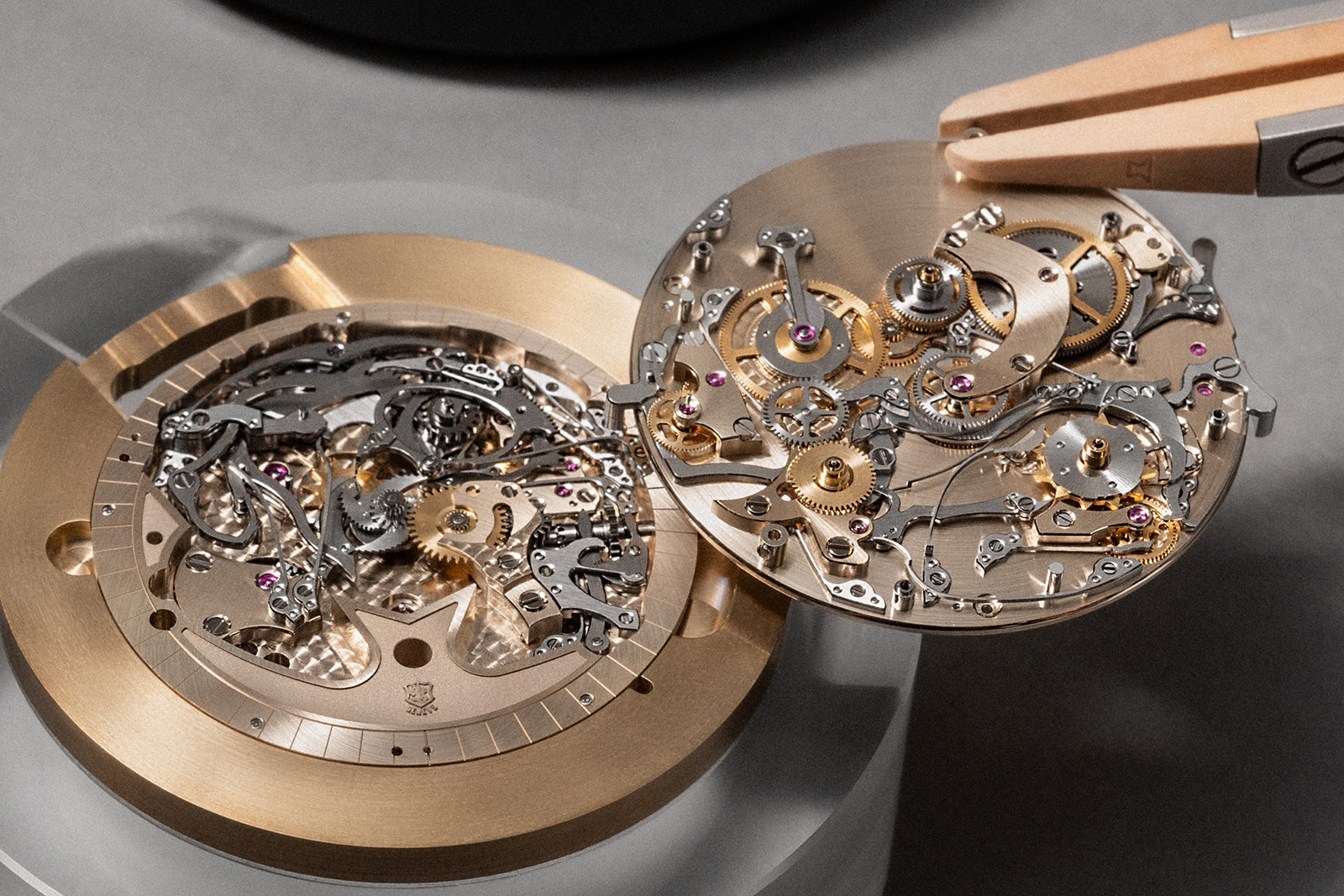
The repeater works are integrated within the core movement.
Among its many complications, the minute repeater is the most traditional. The slider is positioned midway along the case band, allowing comfortable operation regardless of which side is facing up.
The mechanism uses VC’s centripetal governor, first introduced in 2005 on the Tour de l’Île, to control the striking tempo. Compared with other governors, this design reduces wear, operates more quietly and ensures the focus remains on the clarity of the chime.
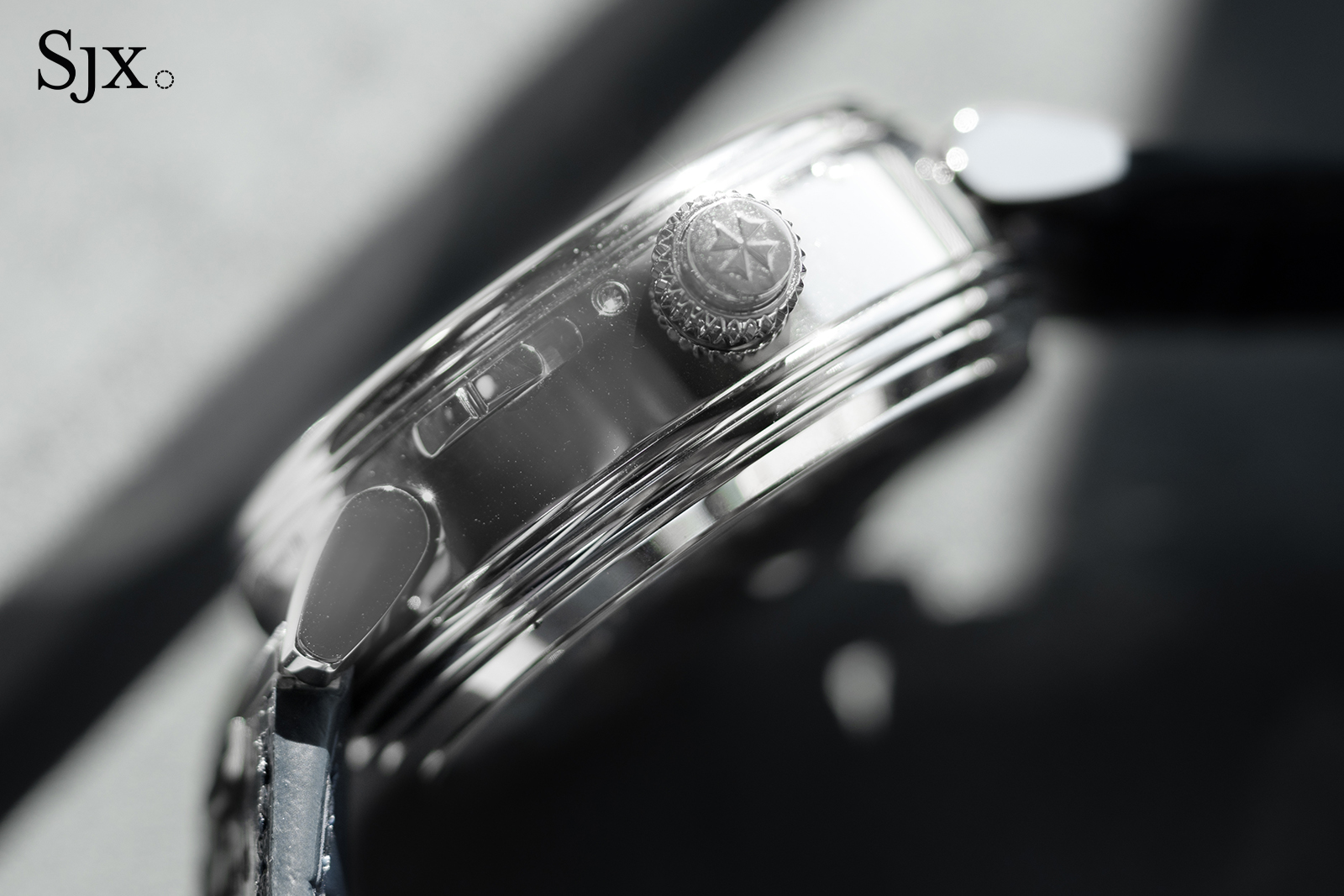
The impressive mechanics of the Cosmica Duo are packed inside a 47 mm diameter 18K white gold case, which is 20.2 mm thick. The diameter is not small by any means but considering this is a fussy grand complication, the watch is wearable enough.
The limiting factor in wearability may actually be the lack of any substantial water resistance; VC, like Patek Philippe, usually seals its repeaters to a minimum in order to improve the sound.
The case lines are clean, polished and clearly meant to frame the dual dials. The pivoted lugs are a nice and practical touch, their profile reminding slightly of modernised Cornes de Vache.
The gem-set Grande Complication — Moon Dust
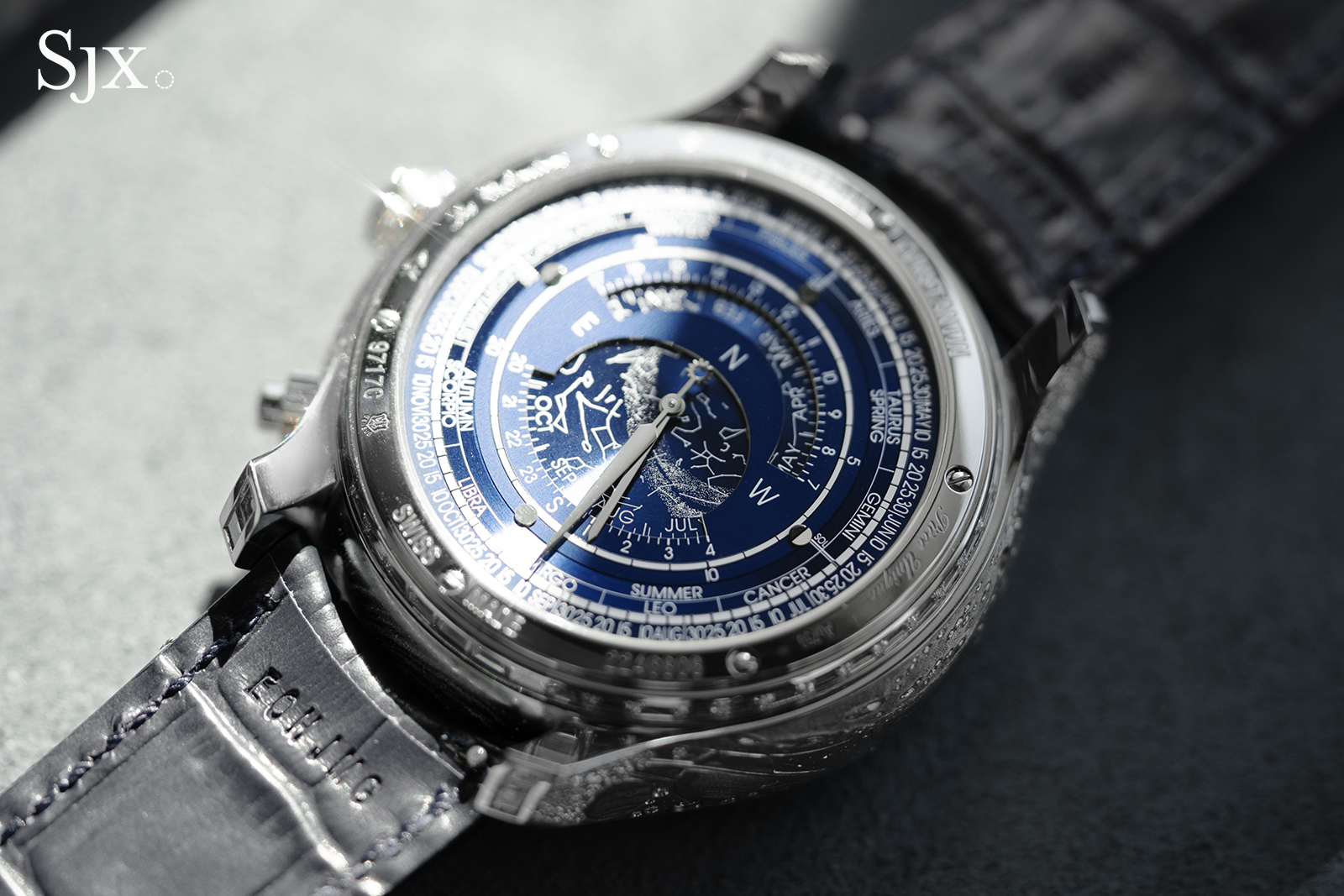
Another double-faced complicated piece reimagined, the Moon Dust unique piece reimagines the Les Cabinotiers Grande Complication with a focus on precious decoration. The timepiece features a “modest” 16 complications, but compensates in terms of decorative extravagance.
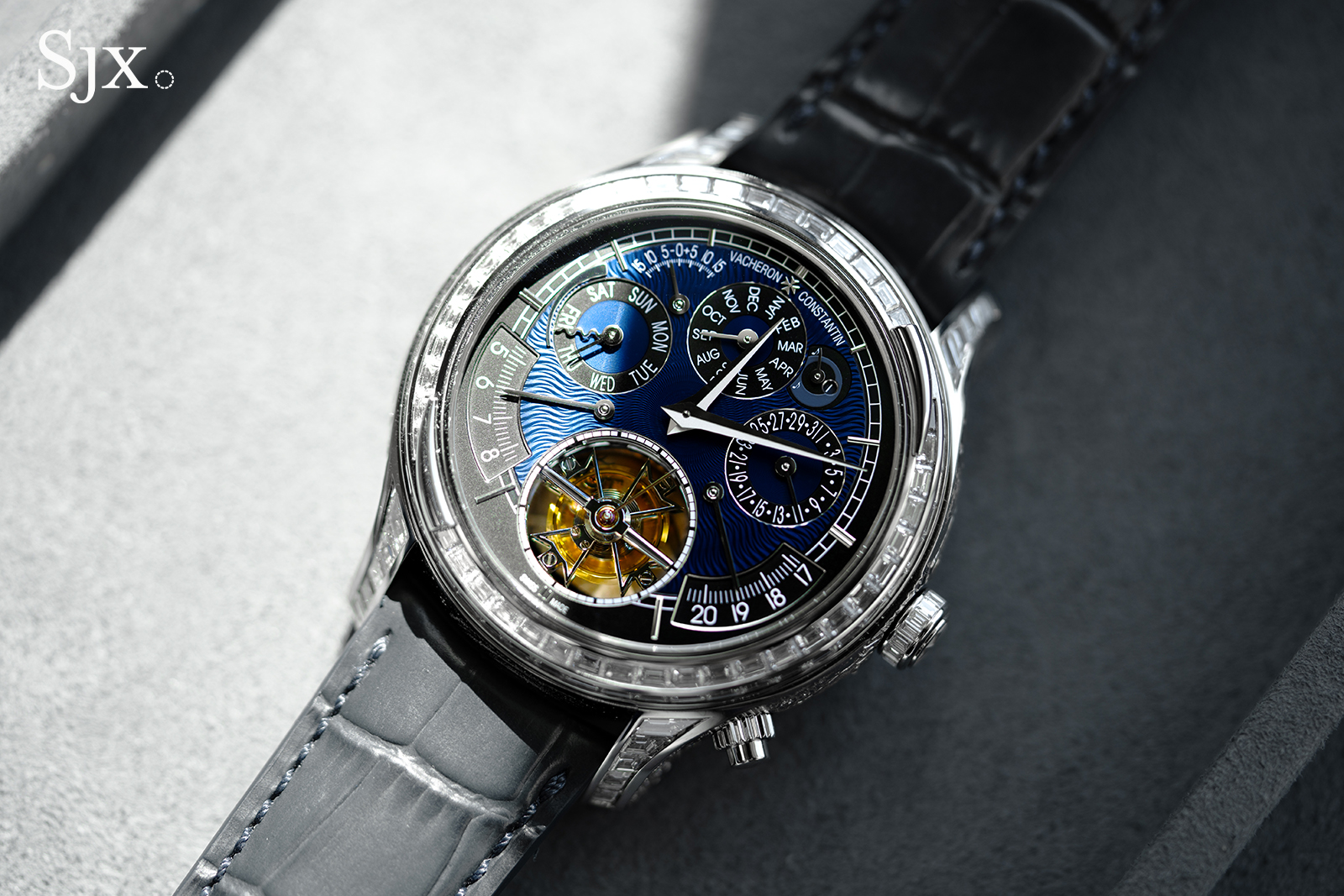
The Moon Dust is set with baguette-cut diamonds on the front bezel in a double row arrangement. The rear bezel is set with a single row of diamonds, framing the secondary dial. Baguette-cut diamonds are also set into the top of the lugs and even into the clasp.
The lug sides are “snow-set” — meaning the brilliant-cut diamonds are not of equal diameters, making for a mosaic-like glittering surface. The case middle is also engraved, one side showing Sundays touching the Earth and the other imagining the planets as seen from the Moon.
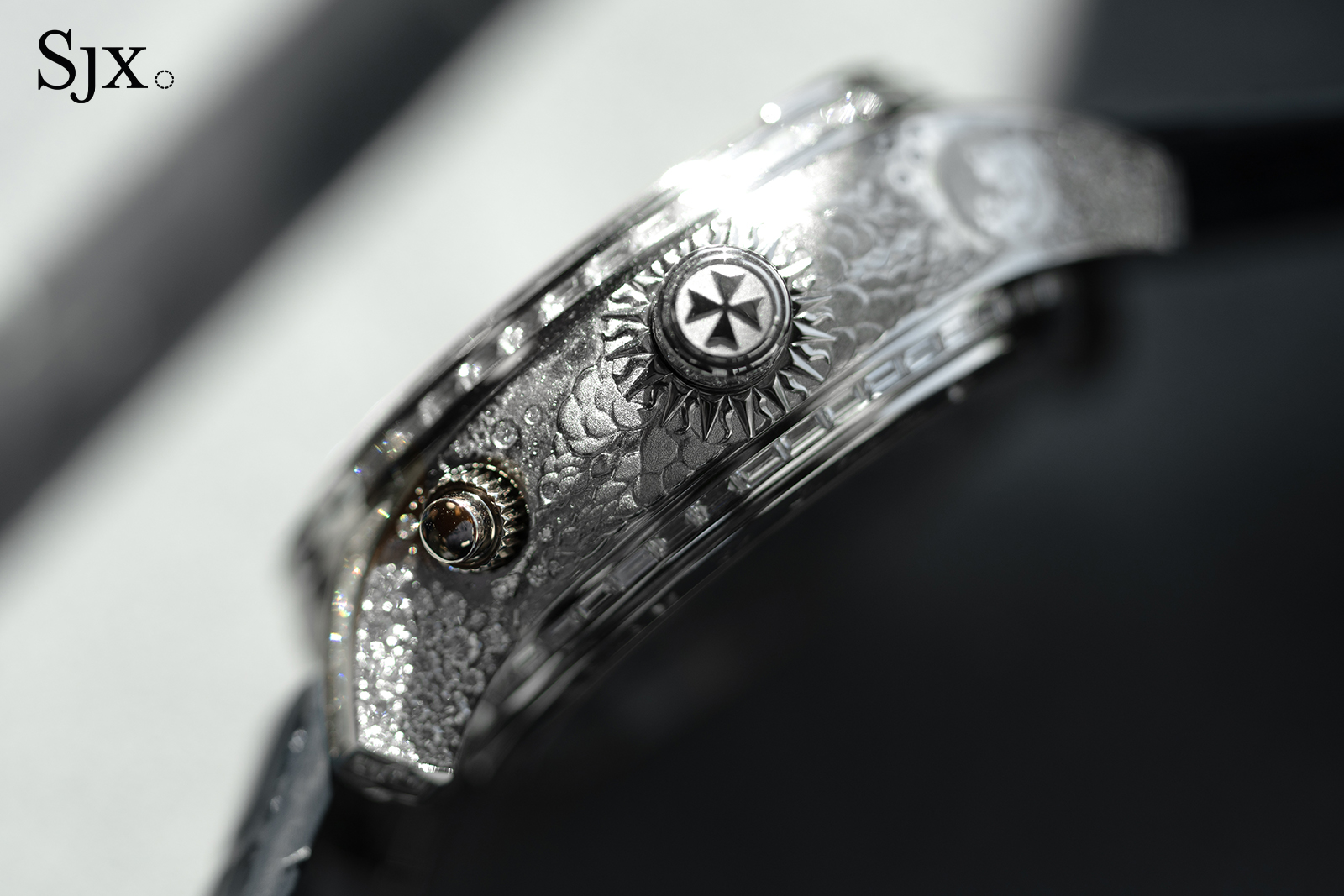
Sun rays emanating from the crown to a cloudy Earth.
There are 200 baguette-cut diamonds and 165 brilliant-cut diamonds, with sizes ranging from 0.7 to 2 mm. The gem-setting alone took 230 hours of work.
The dial is engine-turned by hand with a wavy and radiating pattern, then PVD-coated to a deep blue. Framed by the glittering case, the dark blue dial evokes the vastness of space as seen from the shining Moon. There is also a black opaline border, further giving the impression of deep space.
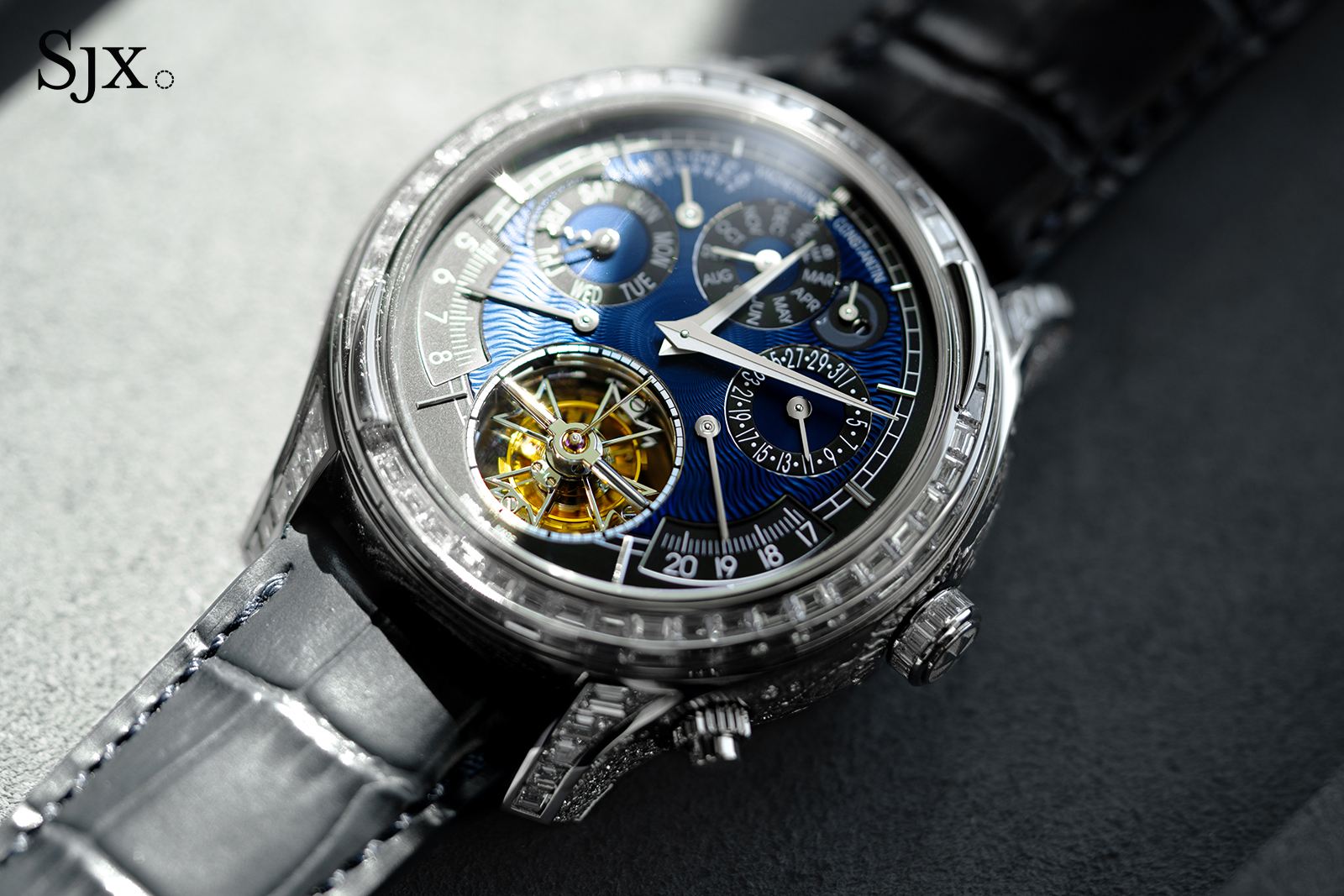
Inside the 18-carat white gold case is cal. 2755 GC16, a modular grand complication derived from the landmark cal. 2755 first introduced in 2005 for the Tour de l’Île. It shares much of its core architecture with the movement found in the new Cosmica Duo, an includes a perpetual calendar, classic equation of time, tourbillon, and sunrise and sunset indications.
The movement also integrates a minute repeater regulated by VC’s silent centripetal governor, operated through the bezel rather than a traditional slide. On the reverse, a sidereal sky chart completes the astronomical display.
Concluding thoughts
The Quest collection quietly reaffirms VC’s rare ability to unite technical sophistication with artistic craft. Each of these one-off creations embodies a different expression of that philosophy, whether in the astronomical logic of the Cosmica Duo, or the gem-set extravagance of the Moon Dust.
Viewed together, they underline the fact that VC’s 270th anniversary has been a year to remember. Few manufactures can match this balance of invention, craftsmanship and restraint, and few anniversaries have been marked with such imagination.
Key facts and price
Vacheron Constantin Les Cabinotiers Cosmica Duo
Ref. 9780C/000G-087C
Case diameter: 47 mm
Case height: 20.2 mm
Material: 18k white gold
Water resistance: Dust and humidity-resistant only
Movement: Cal. 2756-B1
Functions: Hours, minutes, second time zone, twin day/night indicators, perpetual calendar, sky chart, sidereal hours and minutes, minute repeater, running equation of time, sunrise and sunset times, day and night duration, moon phase, and power reserve
Winding: Hand-wound
Power reserve: 60 hours
Strap: Alligator strap with 18k white gold folding clasp
Limited edition: Unique piece
Availability: From Vacheron Constantin boutiques
Price: Upon request
Vacheron Constantin Les Cabinotiers Grand Complication High Jewellery “Moon Dust”
Ref. 9700C/000R-B755
Diameter: 47 mm
Height: 19.1 mm
Material: 18k white gold, set with 184 baguette-cut diamonds and 165 brilliant-cut diamonds
Crystal: Sapphire
Water-resistance: Not water-resistant
Movement: Cal. 2755 GC16
Functions: Time, minute repeater, perpetual calendar with equation of time, sunrise and sunset times, power reserve indication, and tourbillon regulator; on reverse, sky chart with sidereal time and zodiac calendar
Winding: Hand wind
Frequency: 18,000 beats per hour (2.5 Hz)
Power reserve: 58 hours
Strap: Alligator with 18k white gold folding buckle set with 16 baguette-cut diamonds
Limited edition: Unique piece
Availability: From Vacheron Constantin boutiques
Price: Upon request
For more information, visit Vacheron-constantin.com.
Back to top.