Breguet’s Magnificent Magnetic Expérimentale 1

The most advanced chronometer yet.
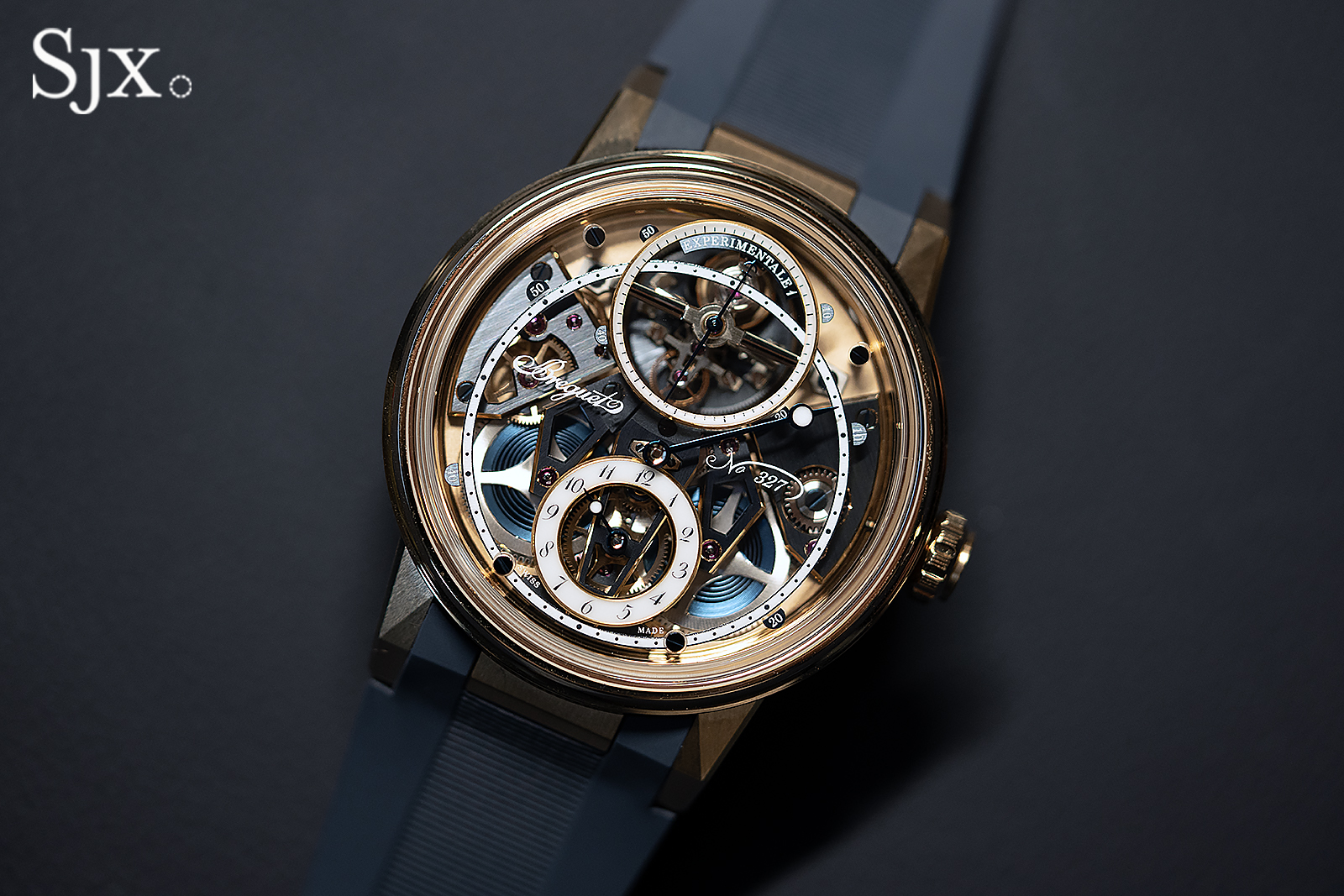
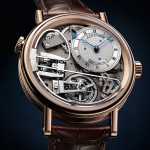
Breguet concludes its 250th anniversary with the brand’s most forward-thinking watch, the Expérimentale 1 that boasts a magnetic, true constant force escapement. Equipped with a frictionless escape wheel and pallet lever driven by magnetic forces, the movement runs at 72,000 beats per hour, or 10 Hz – arguably making the Expérimentale 1 the ultimate Breguet chronometer.

Impressively innovative with its use of silicon, magnets, and clever teeth geometry, the limited edition watch also marks the start of the Expérimentale line, a collection that will serve as a platform to debut new complications, technology, and designs.

Initial thoughts

While some might have been expecting an updated Sympathique, Breguet instead surprised with perhaps the most advanced wrist-borne mechanical chronometer in modern watchmaking.

Taking cues from Abraham-Louis Breguet’s own “constant force” escapements, Breguet today harnessed the power of permanent magnets and unique teeth geometry to built a genuinely friction-less, constant torque escapement. In fact, the new escapement appears to be the only truly frictionless and constant force escapement on the market today. 
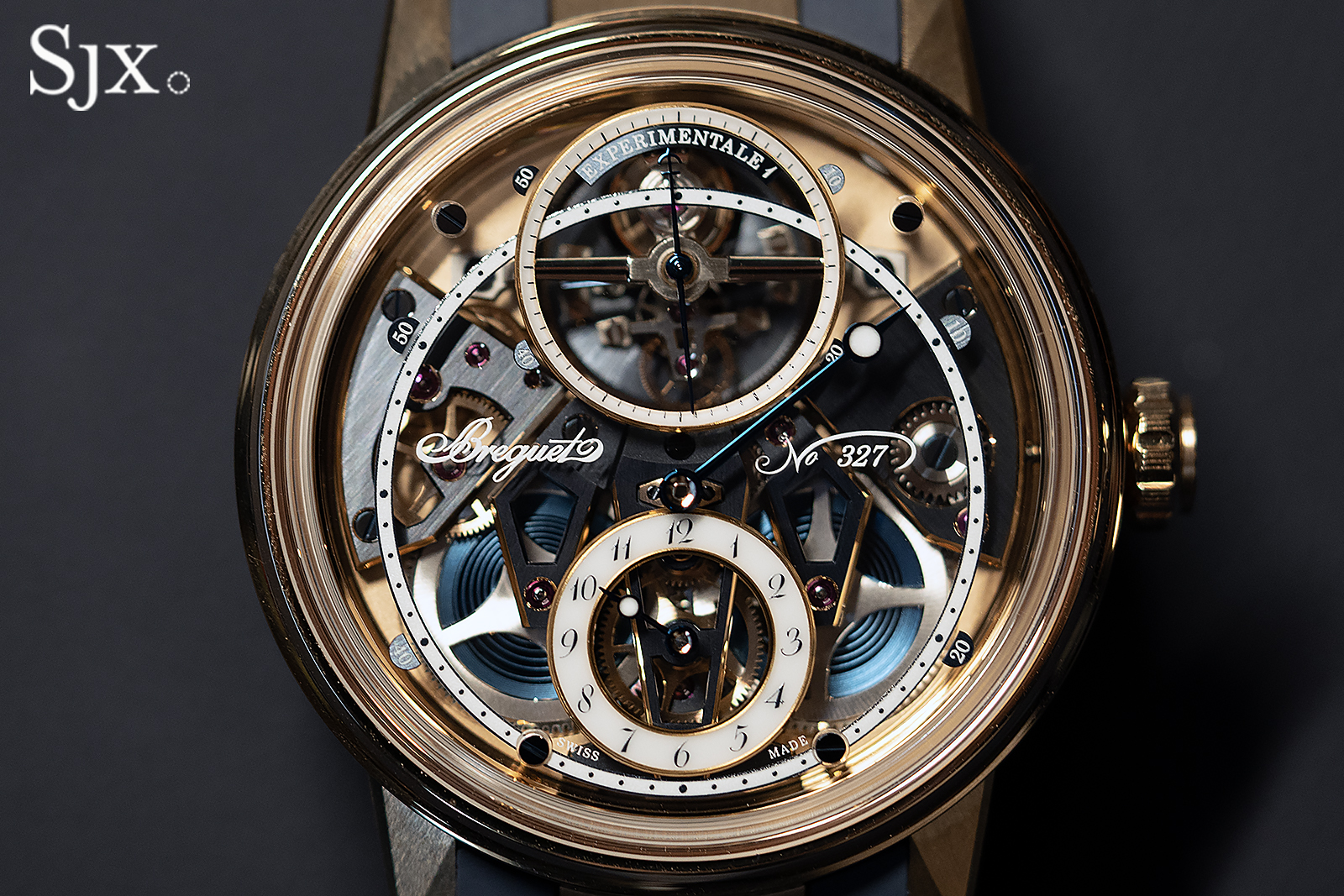
Magnets have been employed in escapements in the past, but this approach was historically unreliable. Breguet appears to have discovered the right formula for a magnetic escapement.

Several functioning prototypes were on show at the launch event. Moreover, Breguet chief executive Gregory Kissling explained that the magnetic escapement was developed over a decade ago, and has been extensively tested in the years since. If this constant force tourbillon works reliably at scale, while delivering on the promised level of accuracy, again at scale, then the future of mechanic chronometry is bright.

Notably, the Expérimentale 1 is an entirely new watch, from movement to case to dial. While the preceding anniversary watches primarily evolved from existing models, the Expérimentale 1 was developed from scratch. In fact, Mr Kissling says a mere three components of the movement are shared with other Breguet calibres, with the rest being unique to the Expérimentale 1.
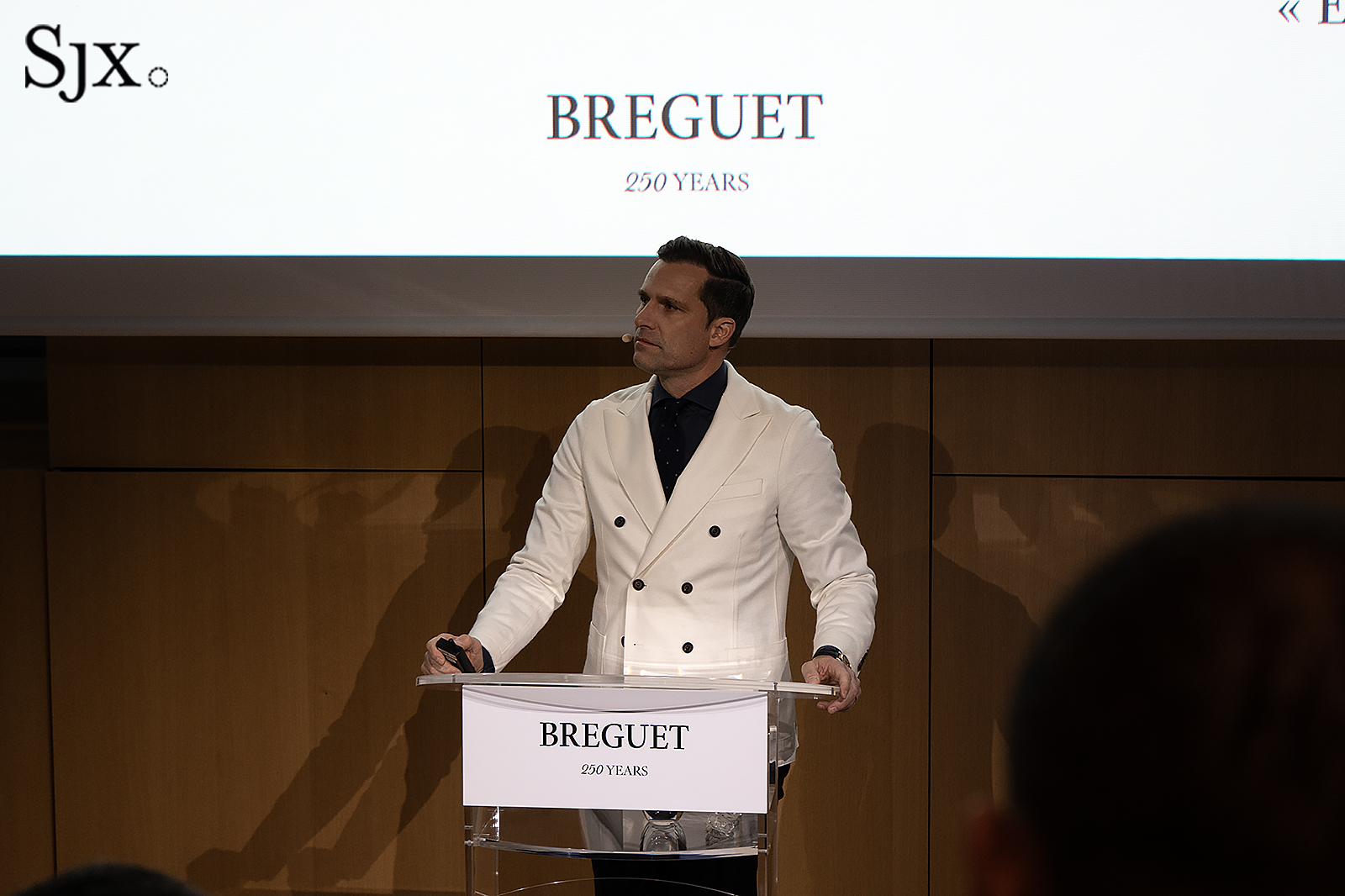
Gregory Kissling launching the Expérimentale 1

Style wise, the Expérimentale 1 much more contemporary than the preceding 250th anniversary launches. It is housed in a futuristic Marine case, with a movement that is heavily open worked and visible through a sapphire dial.

While the angular, modern design is perhaps too aggressive for a Breguet, the technical merits of the Expérimentale 1 go beyond its aesthetic sensibility; its appeal and strength is intrinsic in the movement and innovation.

Despite the modern styling, the basis of the design is historical. The regulator layout traces its lineage to the marine chronometer pocket watch no. 3448 that was sold to astronomer Alexis Bouvard in 1820.
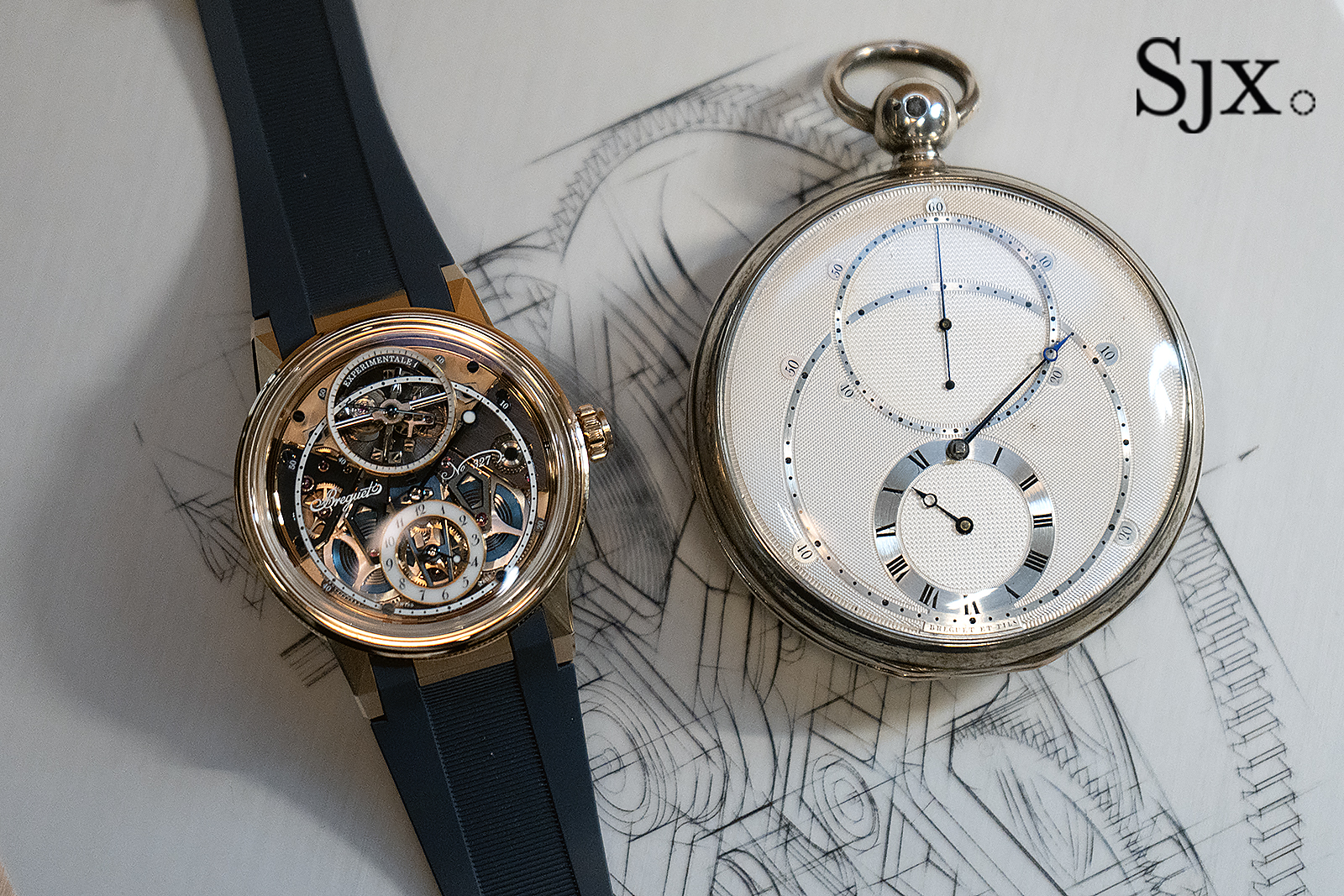
The Expérimentale 1 with pocket watch no. 3448

This historical inspiration hints at the chronometry-focused, scientific direction of the Expérimentale collection, which will be heavy on fundamental research according to Mr Kissling. Simultaneously, it also reflects the renewed emphasis on Breguet’s grand history as perhaps the most storied watchmaker of them all.

The launch of a scientific-oriented collection is surprising, but welcome giving the inventive nature of A.-L. Breguet himself. The Expérimentale’s echoes A.-L. Breguet’s approach to watchmaking and innovation in many respects, and underlines the surprisingly sudden and rapid rejuvenation of the brand under Mr Kissling’s stewardship.
The magnet in the room

The 10 Hz oscillator in the Classique 7225 is familiar, and the tourbillon even more so, but a magnetic constant force escapement is genuinely novel. In a nutshell, it’s an escapement that is constant force because it is magnetic.

Constant force refers to a device’s ability to transmit a consistent level of torque supply to the oscillator even as the mainspring’s power gradually depletes. Such devices are also known as remontoirs, serving as a recharging buffer between the mainspring and escapement.

A constant force escapement, however, is much rarer. Such an escapement is required to impart constant impulse to the oscillator directly, instead of a remontoir mounted upstream on the going train. 

Pendulum gravity escapements are a sort of constant force escapements, relying on the gravitational potential energy to provide constant impulse. The Girard Perregaux Neo Constant Escapement is another example, but paired to a sprung balance and taking advantage of elastic potential energy within buckling silicon blades.
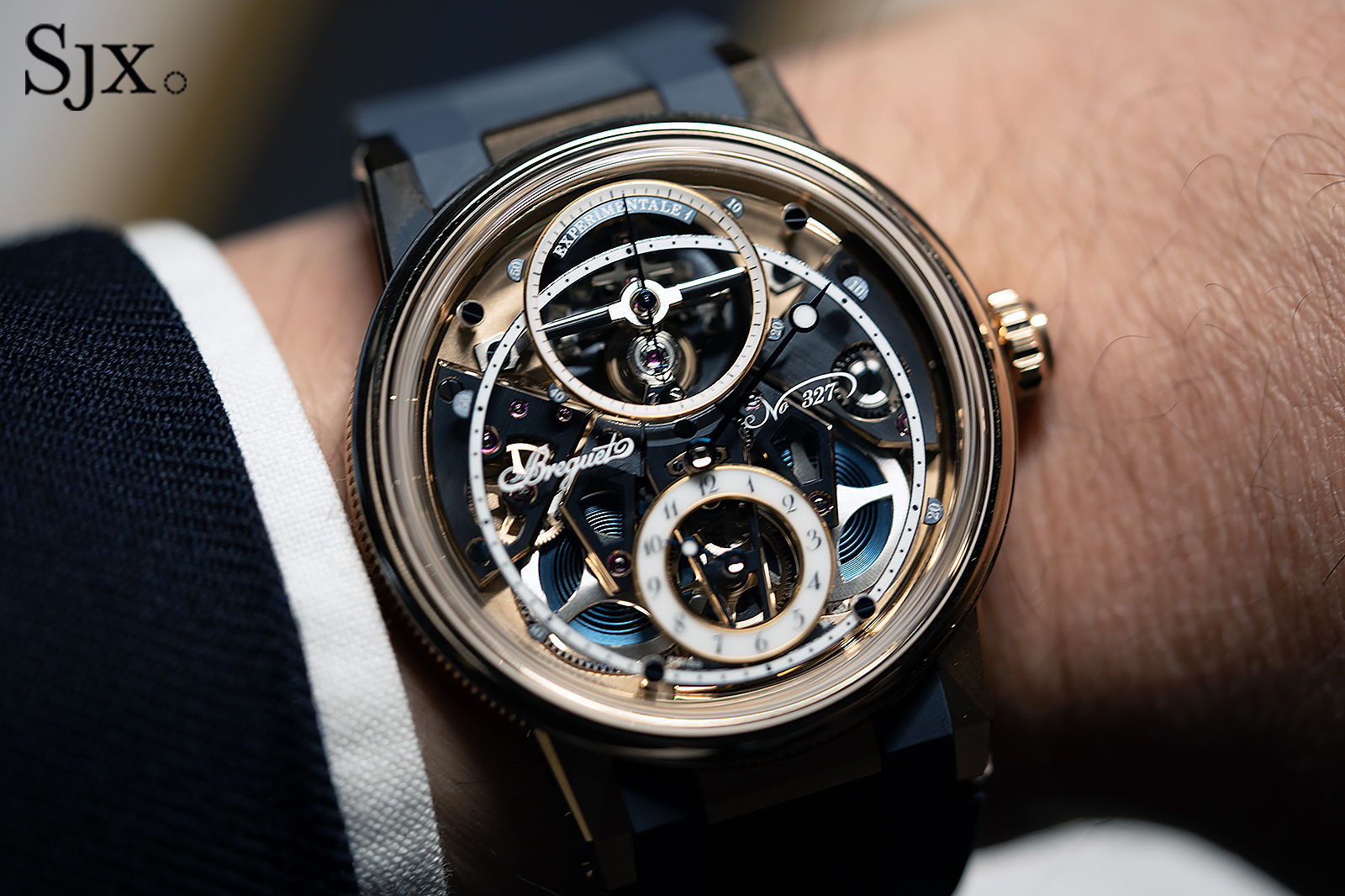
Breguet’s take on the constant force escapement makes use of magnets to transmit both constant and frictionless impulse, making it an exceptionally accomplished invention in the horological context, since both energy transmission and friction are perennial challenges in watchmaking. More than that, Breguet sought to counter accuracy defects stemming from all possible sources, ranging from gravity to magnetism, in conceiving the Expérimentale 1.

The seemingly perfect solution: a 10 Hz balance to resist shock and acceleration, a tourbillon to rotate the balance through all vertical positions and nullify the biasing effects of gravity, and finally a frictionless, constant force escapement driven by magnets to ensure the oscillator vibrates at equal amplitude regardless of available barrel torque.

While the full functioning of this escapement (and the Expérimentale 1 as a whole) will be the subject of a more in-depth story, the gist of the device is simple but subtle genius. The trick lies in the fact that both the escape wheel and lever only engage through permanent magnets. While reminiscent of the Swiss lever, the Breguet magnetic escapement works very differently and does not directly rely on the mainspring torque to impulse the balance. 
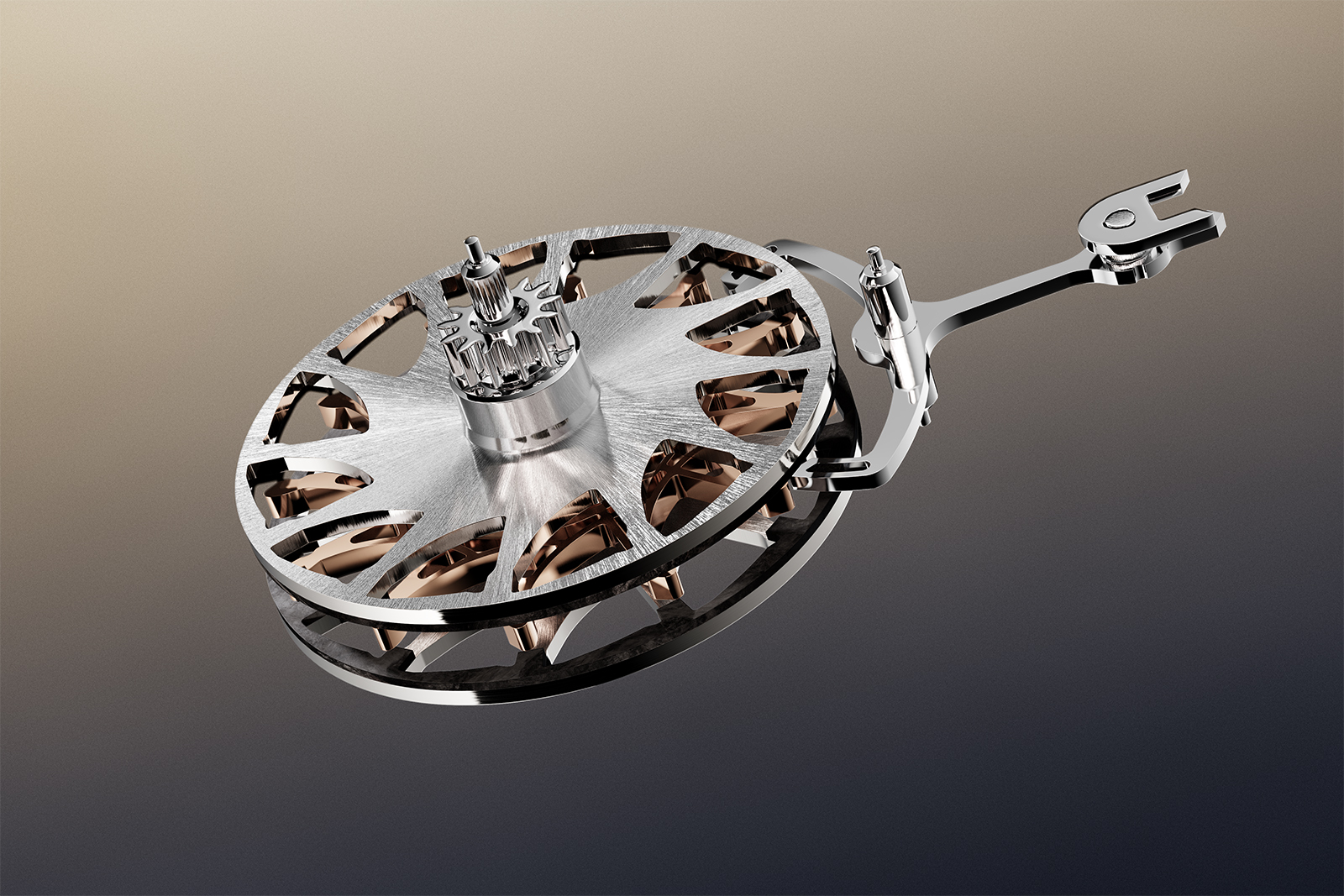
The double level magnetic escape wheel assembly and the impulse lever. Image – Breguet

The balance is impulsed by the lever in a traditional fork-pin fashion, while the lever itself is pushed just by opposing magnetic fields; the escapement advantageously exploits the predictable and constant interaction between magnetic fields and potentials.

The subtleties of the full escapement cycle are nuanced, but the important observation here is the impulse is imparted while the escape wheel remains stationary — thus liberating the impulse from the mainspring torque.

The escape wheel only turns after the impulse phase is done, along with the wide tourbillon platform. In classic iterations the revolving cage can itself influence the strength of the impulse if there are any slight imbalances in its construction. The rotation of the cage, much like the mainspring torque, has no effect on the impulse reaching the regulator. 
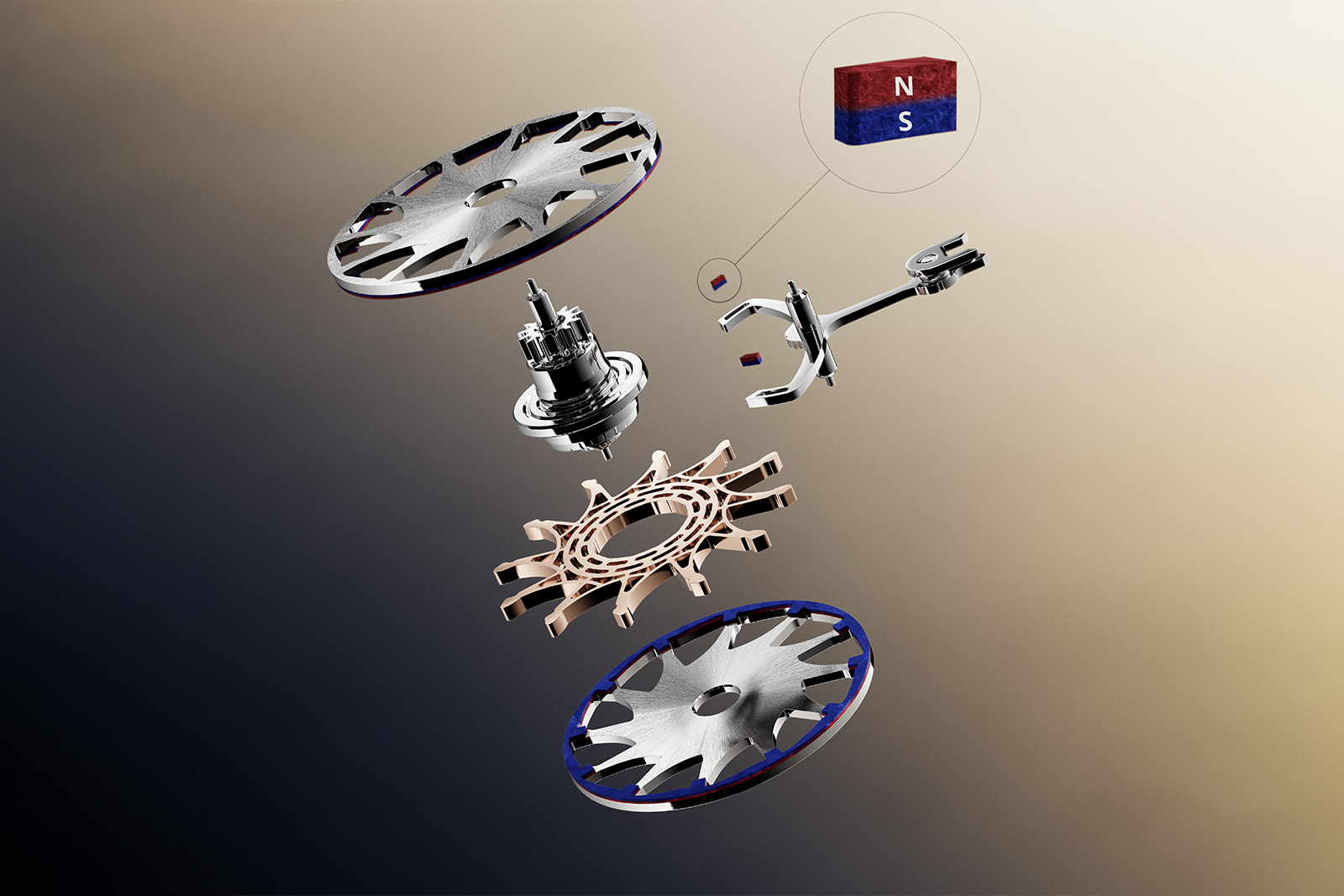
Exploded view the magnetic escapement assembly. Image – Breguet

Equally important is the contactless action of the escape wheel against the lever, with both pushing each other away only through the respective magnets’ opposing fields; there is no metal-to-metal engagement except in the event of an extreme shock.

The free-sprung balance has a small diameter (due to its extremely high 10 Hz frequency), and built to be fully impervious to magnetic influence. The hairspring is etched from silicon and features an optimised geometry. The balance is made from titanium and the arbour is made from another non-magnetic alloy.

The tourbillon assembly. Image – Breguet

Unlike in the Classique 7226, the fast-beating oscillator is not supported by magnetic pivots, but rather by traditional jewels. Due to the intricate escapement construction, the balance’s axis doesn’t coincide with the tourbillon’s revolving axis, making for the off-centred regulator inside the 74-component cage assembly. However, this is still a tourbillon construction and not a carrousel.

Calibre 7250

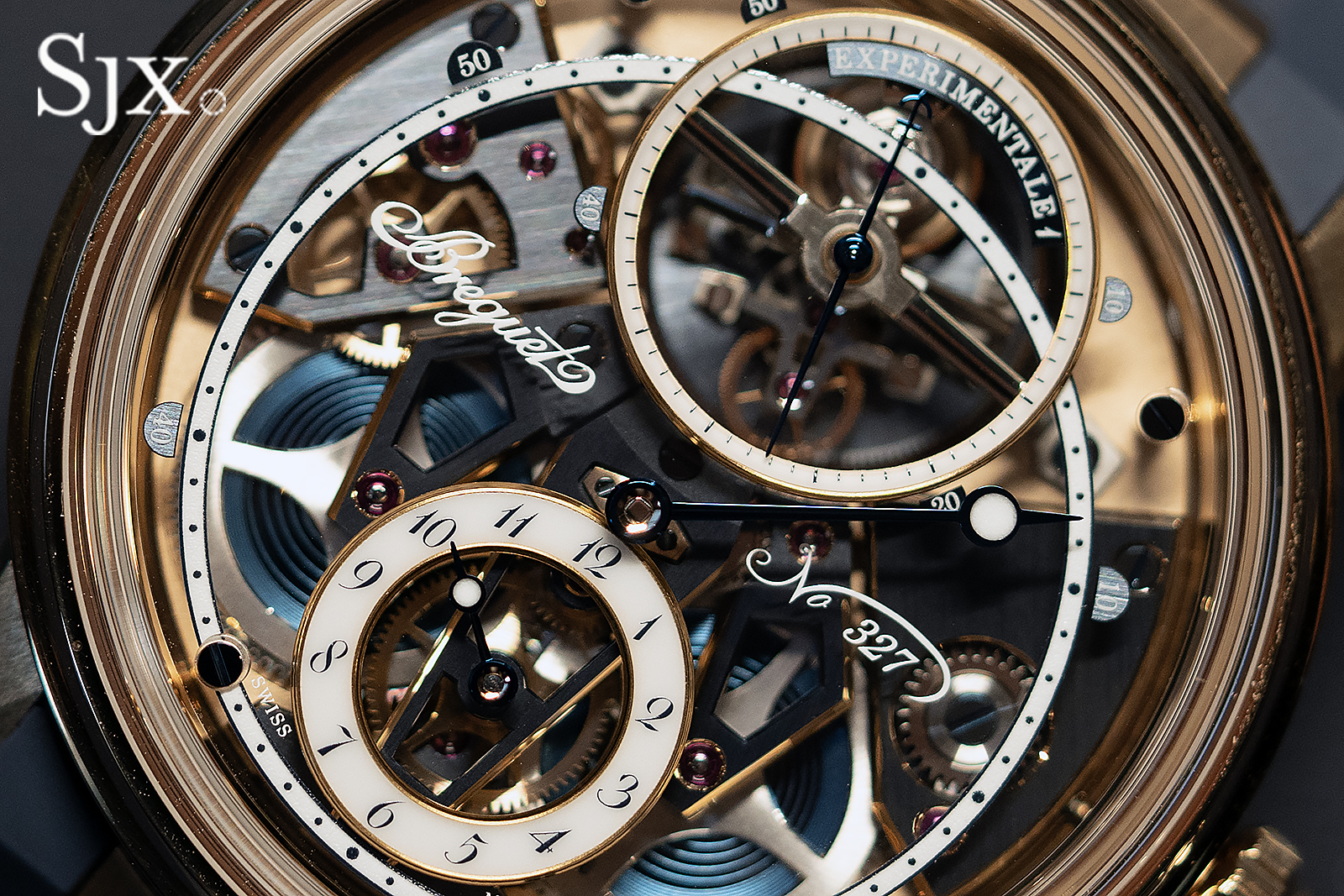
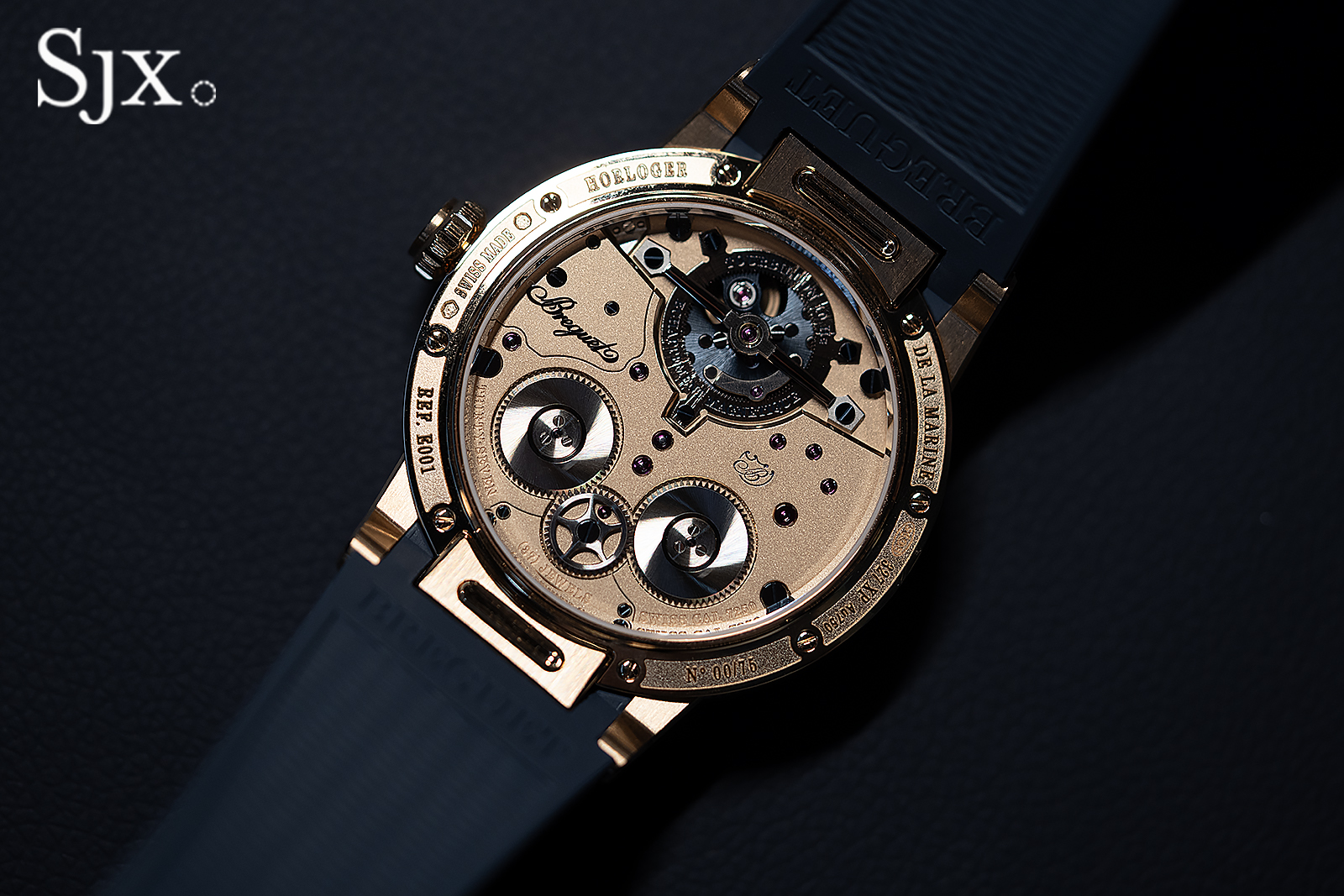
The cal. 7250 is built around the magnetic escapement, and puts newest invention front and centre, with a large tourbillon cage visible at 12 o’clock. And the other complication is the regulator-style time display.

Visually, the cal. 7250 is modern, though the architecture remains true to the French-style watchmaking used by modern-day Breguet.

The cage and bridges of the tourbillon are blued, serving as a neutral background for the intricate magnetic escapement. The main plate and bridges are sculpted from 18k Breguet gold, while some components featuring a blue atomic layer deposition (ALD) coating for contrast and aesthetics. Blue is a recurring colour in Breguet’s anniversary watches.
Most of the movement’s core components are visible on the dial — the dual mainspring, going train, and the tourbillon. Interestingly, the barrels are open-worked to reveal the mainsprings through the dial. According to Mr Kissling, this was done to create a power reserve indicator of sorts, since the coils of the mainspring reveal the state of wind.
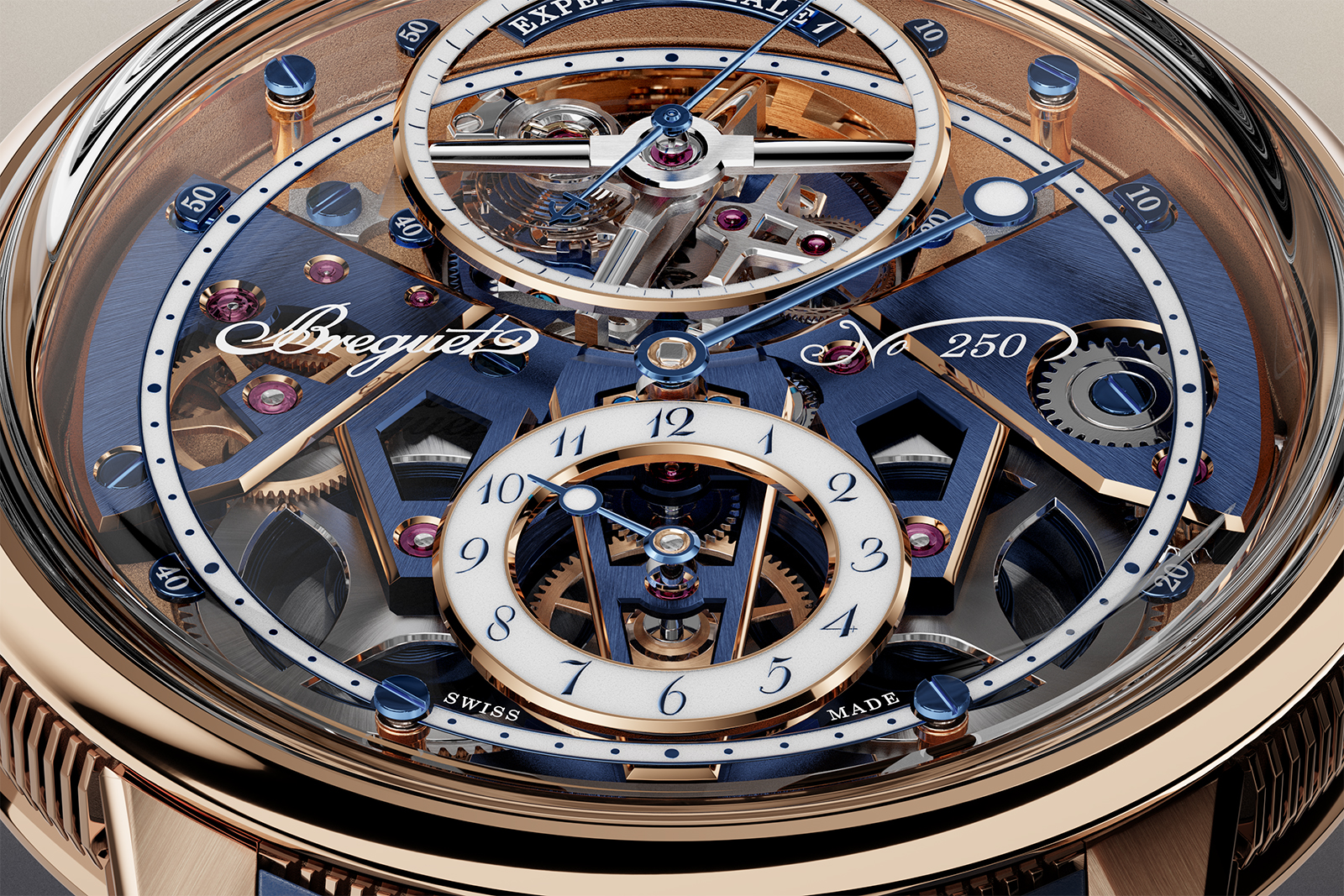
The open-worked dial. Image – Breguet

The barrels themselves are particularly interesting. As is convention, the barrels are coupled in series to extend the power reserve. But each barrel contains two stacked mainsprings that unwind in parallel, which is equivalent to having two barrels linked in parallel. 

In other words, the cal. 7250 runs on two pairs of parallel mainsprings, themselves coupled in series. This elaborate setup accounts for the 72 hour power reserve, which might not seem like much for four mainsprings, but surprisingly lengthy for a 10 Hz tourbillon regulator which is both heavy and energy intensive.
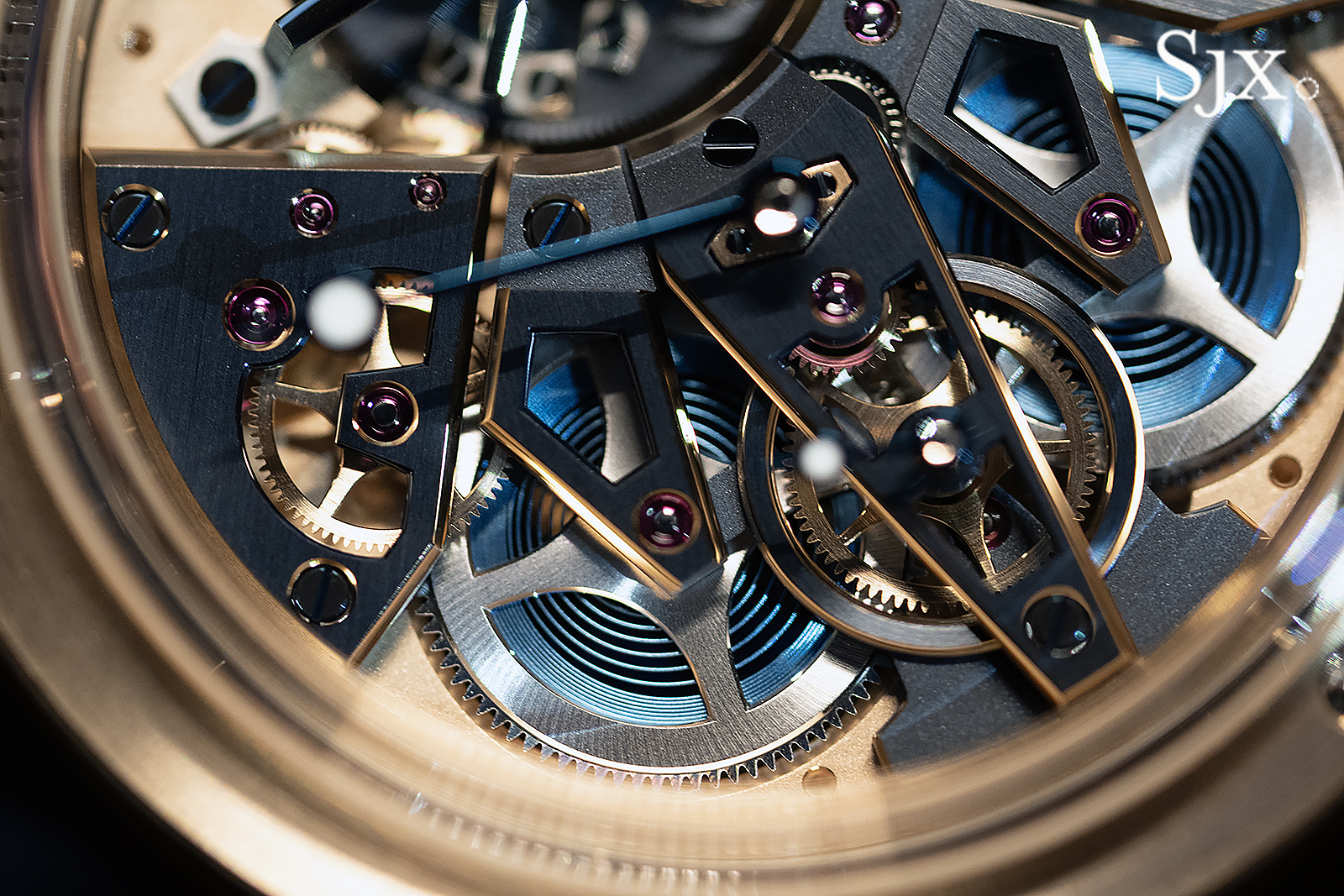
The finishing is true to Breguet’s high standards, with most of it done by hand according to Mr Kissling. One of the most tedious aspects of the decoration, says Mr Kissling, is the bevelling on the blue-coated bridges.

The bridges are first coated blue with ALD, then the bevels are stripped of blue coating by hand, and then mirror polished, again by hand. Removing the blue coating precisely, without damaging the top surface, was one of the most difficult aspects of realising the Expérimentale 1.

Image – Breguet

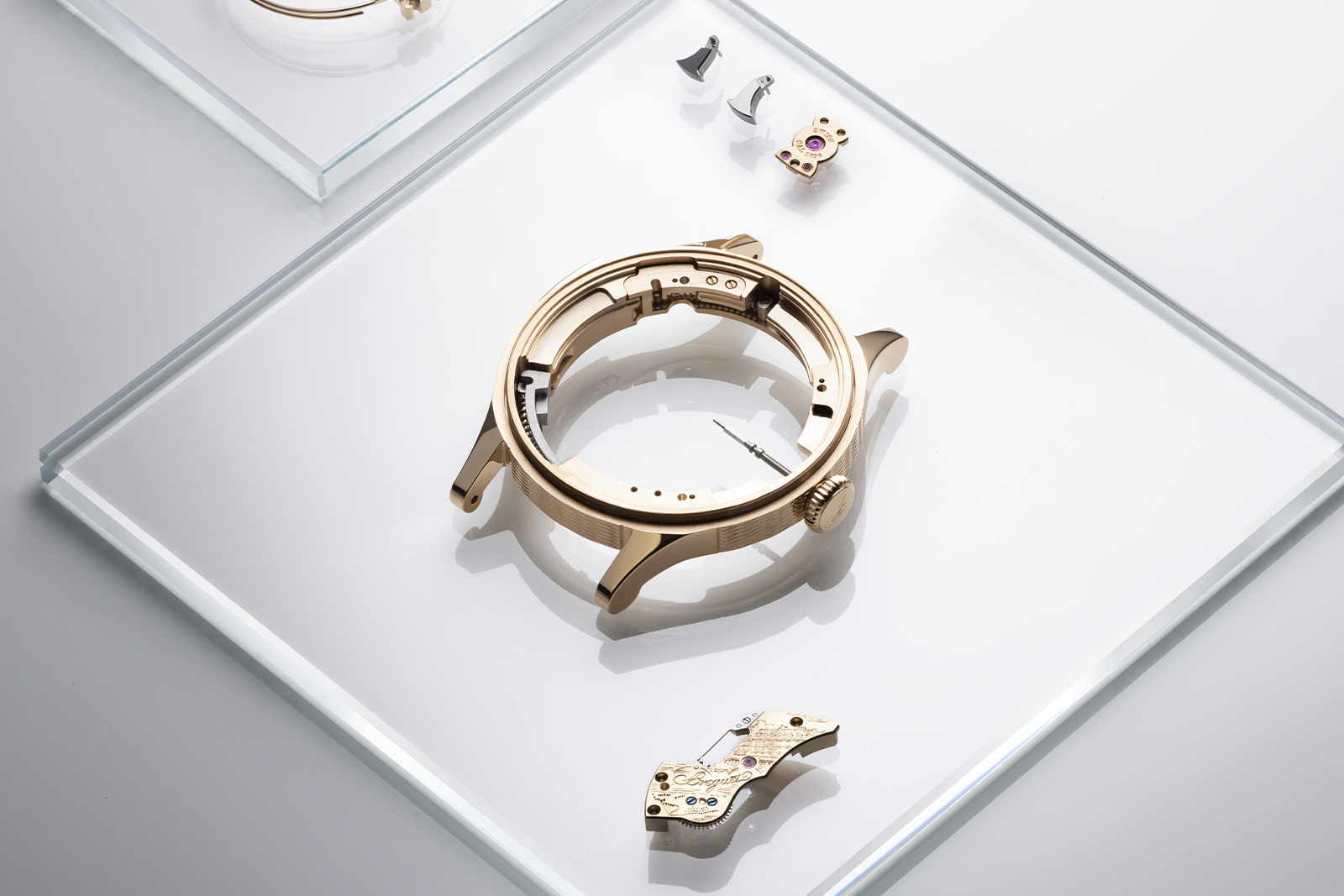
This powerhouse of a movement is housed inside a 43.5 mm Breguet gold case that is based on past generations of the Marine, explaining the unusual “triple” lugs. The case reconciles angular and circular forms, giving it a modern, yet somewhat soft profile. Though relatively large, the case is slim and wears well due to the downward sloping lugs.
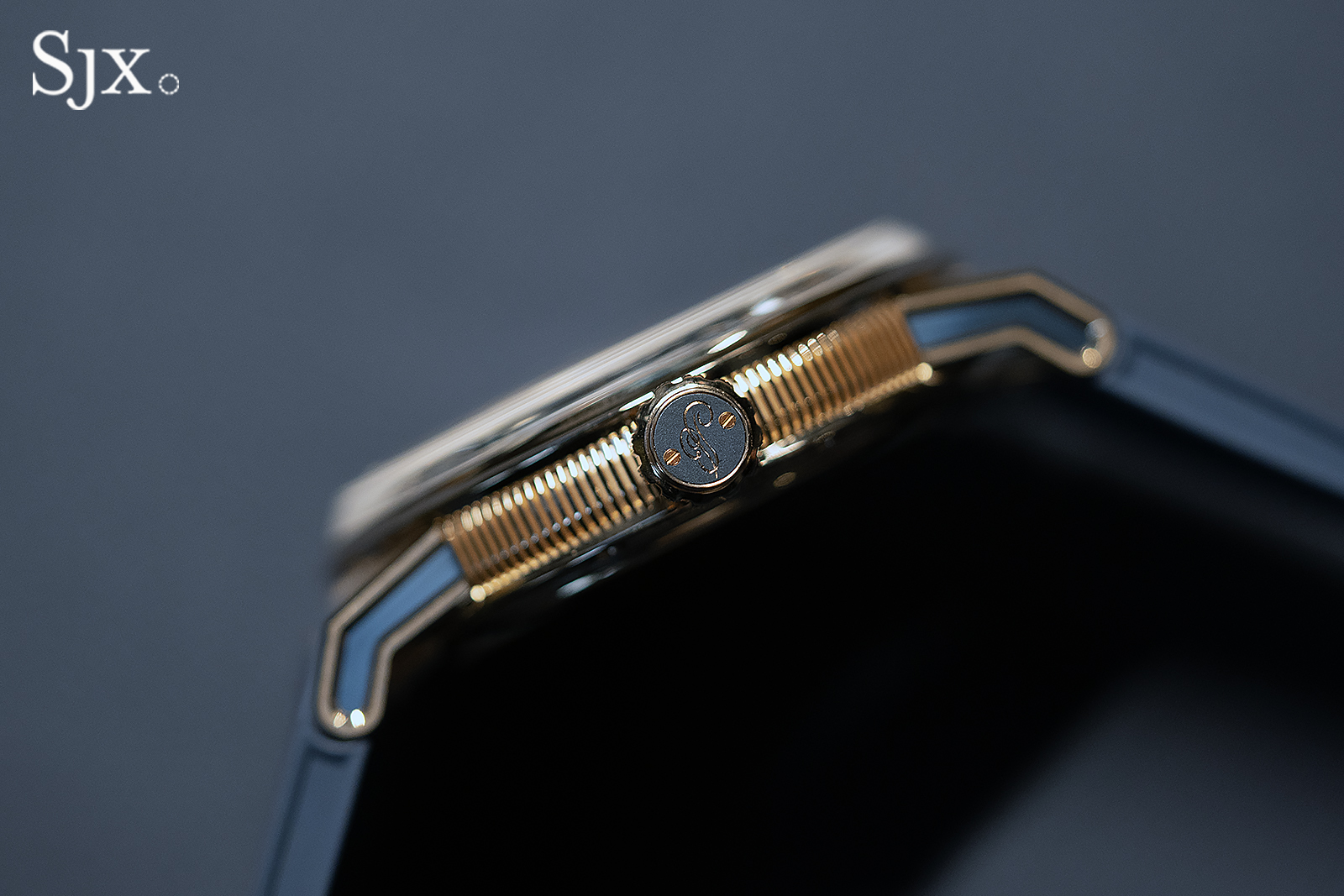
Like the Classique 7225, the Expérimentale 1 carries the Breguet hallmark, specifically certified in the “Scientific” category that guarantees a +/- 1 second accuracy per day, a concrete testament to the movement’s timekeeping ability.

Image – Breguet


Key facts and price

Breguet Expérimentale 1
Ref. E001BH/S9/5ZV

Diameter: 43.5 mm
Height: 13.3 mm
Material: 18k “Breguet” gold
Crystal: Sapphire
Water resistance: 100 m

Movement: Cal. 7250
Functions: Regulator Hours, minutes, seconds, tourbillon with magnetic escapement
Winding: Manual wind
Frequency: 72,000 beats per hour (10 Hz)
Power reserve: 72 hours

Strap: Blue rubber with proprietary interchangeability system

Limited edition: 75 pieces, produced over more than two years
Availability: At Breguet boutiques and retailers
Price: CHF320,000 including tax

For more information, visit Breguet.com.


Back to top.

You may also enjoy these.

Breguet Reimagines the Classic Répétition Minutes

The water-resistant 7365.

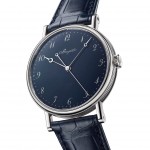
Along with the flagship Classique Grande Sonnerie Métiers d’Art 1905 pocket watch, Breguet just announced its first water-resistant minute repeater, the Classique Répétition Minutes 7365. While this 250th anniversary edition with a Breguet gold case and Bleu de France grand feu enamel dial is limited to 25 examples, it likely represents the future of the brand’s chiming watches: smaller and more robust.

Initial Thoughts

Despite the strong popularity chiming watches have seen at the high end for many years, it has felt like something of a weak point for Breguet, reliant on rather old movements that didn’t always sound the best. The ambitious and wild Tradition Répétition Minutes Tourbillon 7087 promised to fix this in 2018, but for unknown reasons that watch never made it to market.

However, acoustically Breguet’s repeaters have become quite good despite the old bones, proving how key gongs and case construction are to repeaters. The 7087 doubles down on this approach, not even introducing a silent centrifugal governor which has become ubiquitous in modern chiming watches, even at the high end – the sound of which I’ve come to find quaint.

The move to smaller sizes, 42 mm to 39 might be more dictated by market trends rather than any specific vision from the brand, but is one I appreciate either way, and while water resistance isn’t strictly necessary in a chiming watch, the peace of mind is reassuring. In the end, this watch comes down to how much you like blue, and how palatable the strong – but not ridiculous – price is.

More Breguet gold

As with all of Breguet’s releases thus far, the Classique Répétition Minutes 7365 takes the bones of an existing movement (a once ubiquitous Lemania calibre in this case) and gives it a new look. The case takes after the Classique Souscription 2025 launched earlier this year, though with Quai de l’Horloge guilloche adorning the case band.

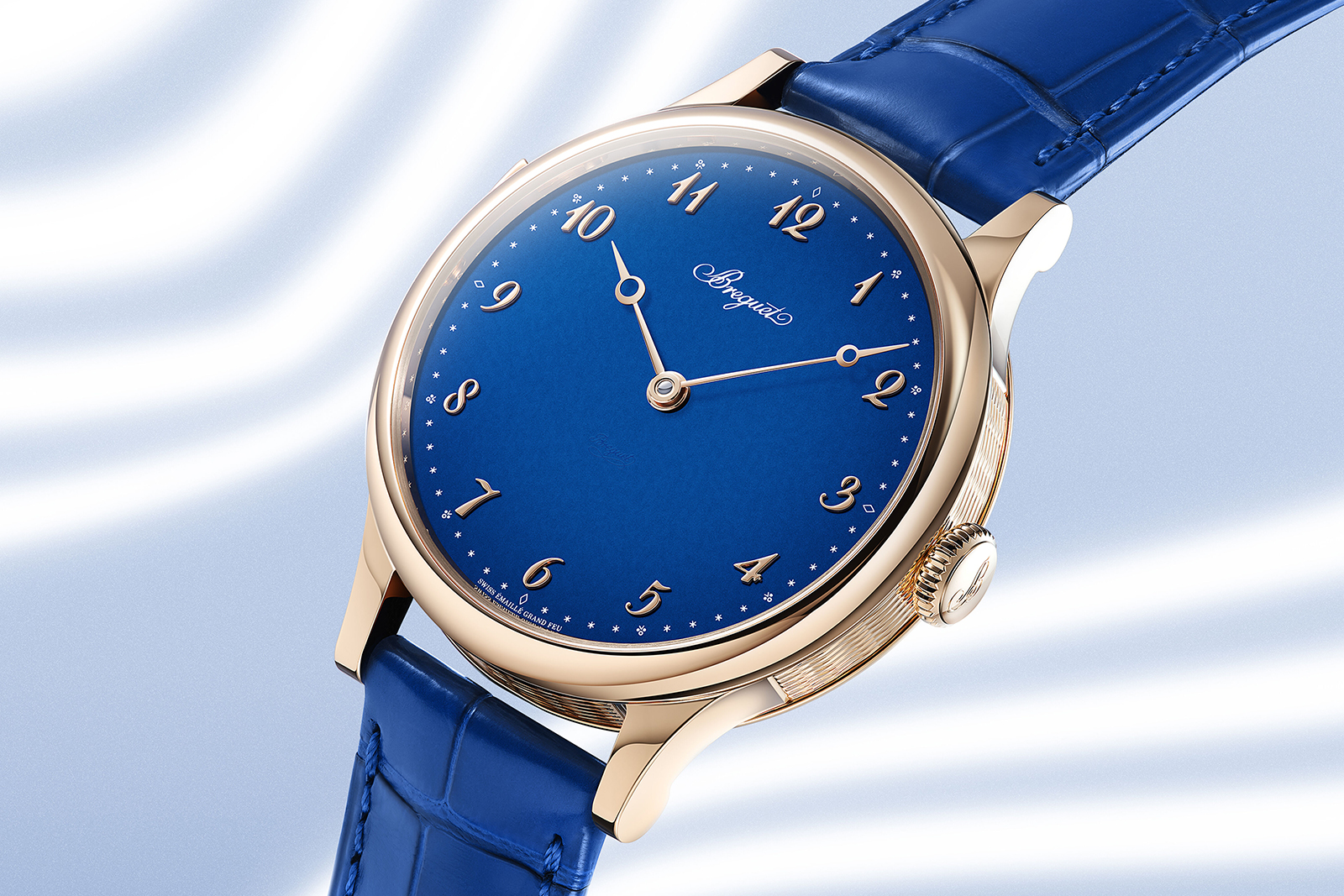
Like the Classique Souscription 2025, this new repeater sports a grand feu enamel dial with pantograph engraved secret signature, though this time in Bleu de France with applied Breguet gold Breguet numerals.

A precision repeater

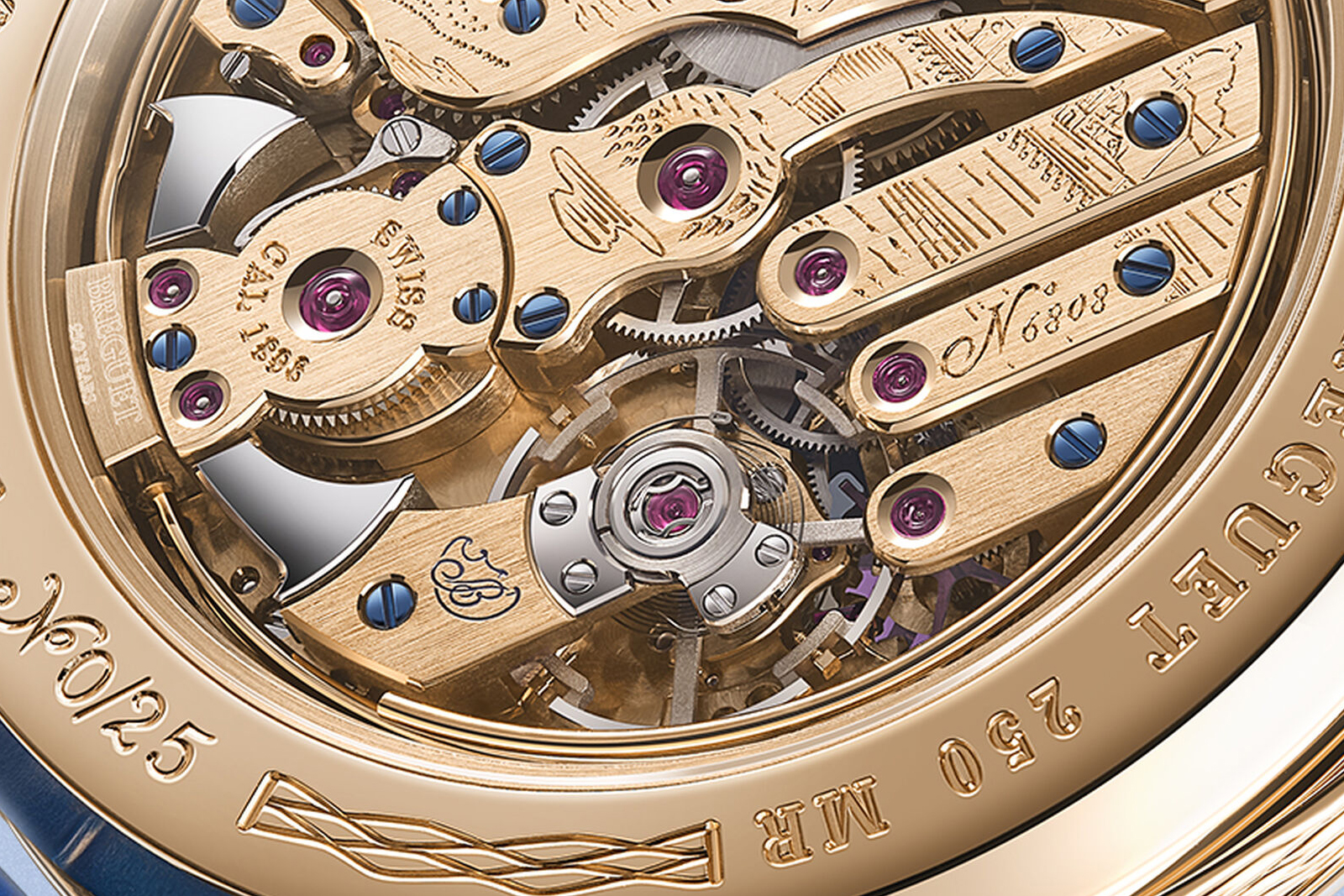
This movement too includes some significant upgrades. While still hailing from the Lemania calibres of the 1980s – which in turn took after movements made around the turn of the century – it now includes a generous 75-hour power reserve, free-sprung balance and silicon overcoil hairspring.

The escape wheel and lever are also silicon, and given a Bleu de France treatment. Interestingly, Orient of all brands embellishes the colour of its silicon components in a similar fashion. It also bears the “Breguet civil hallmark” and self-certification similar to the Patek Philippe seal. Most importantly this means Breguet promises the watch will keep time to within two seconds per day, matching the high standard of Rolex.

Breguet uses white gold gongs, rather than steel as is typical, which are connected to the case instead of the movement. The logic being that this improves the sound of the repeater as the sound waves enjoy better resonance and propagation because the gongs and case are of like materials with similar density and structure. The case walls are also excavated, removing unneeded material that would otherwise deaden the sound.

Full Circle

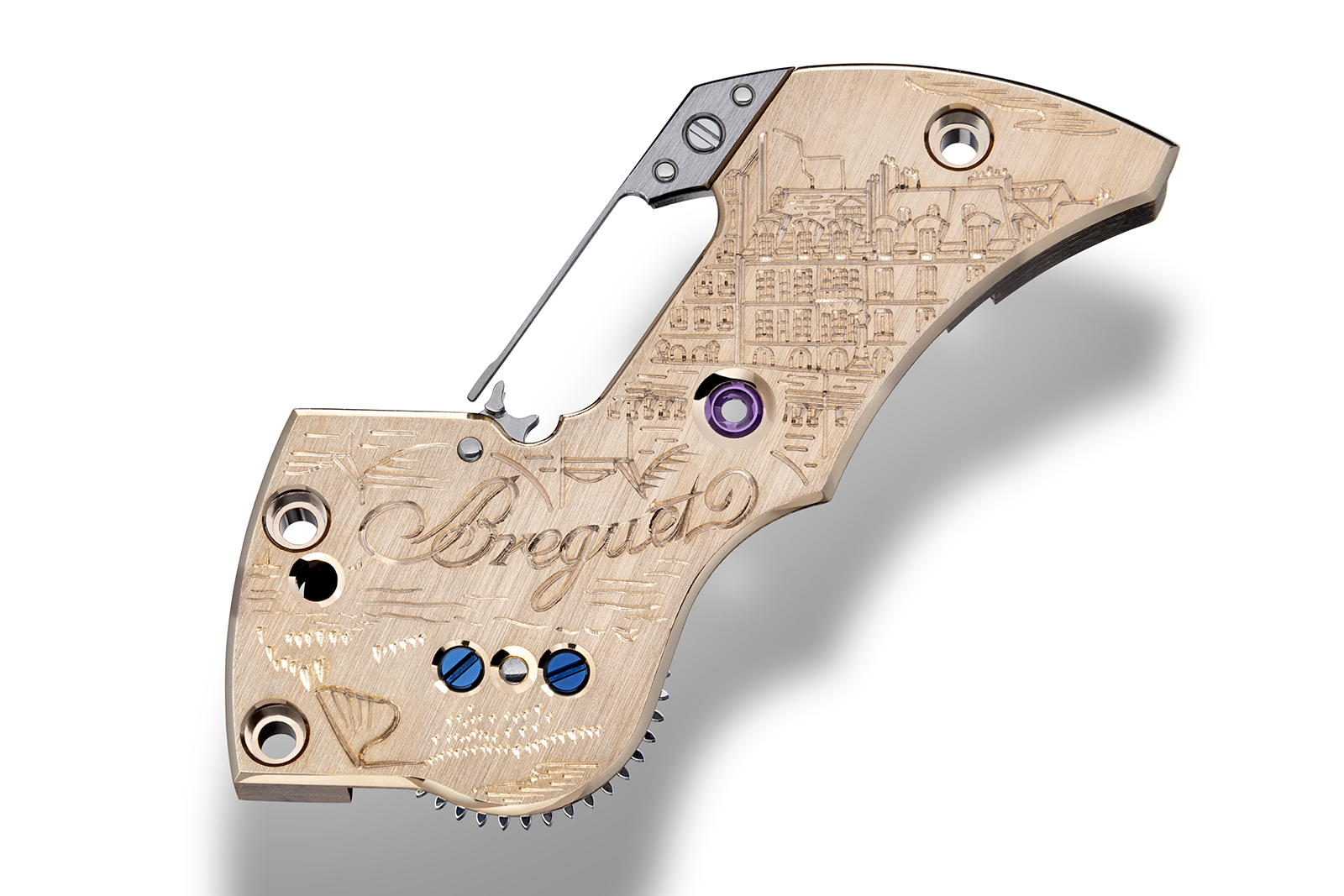
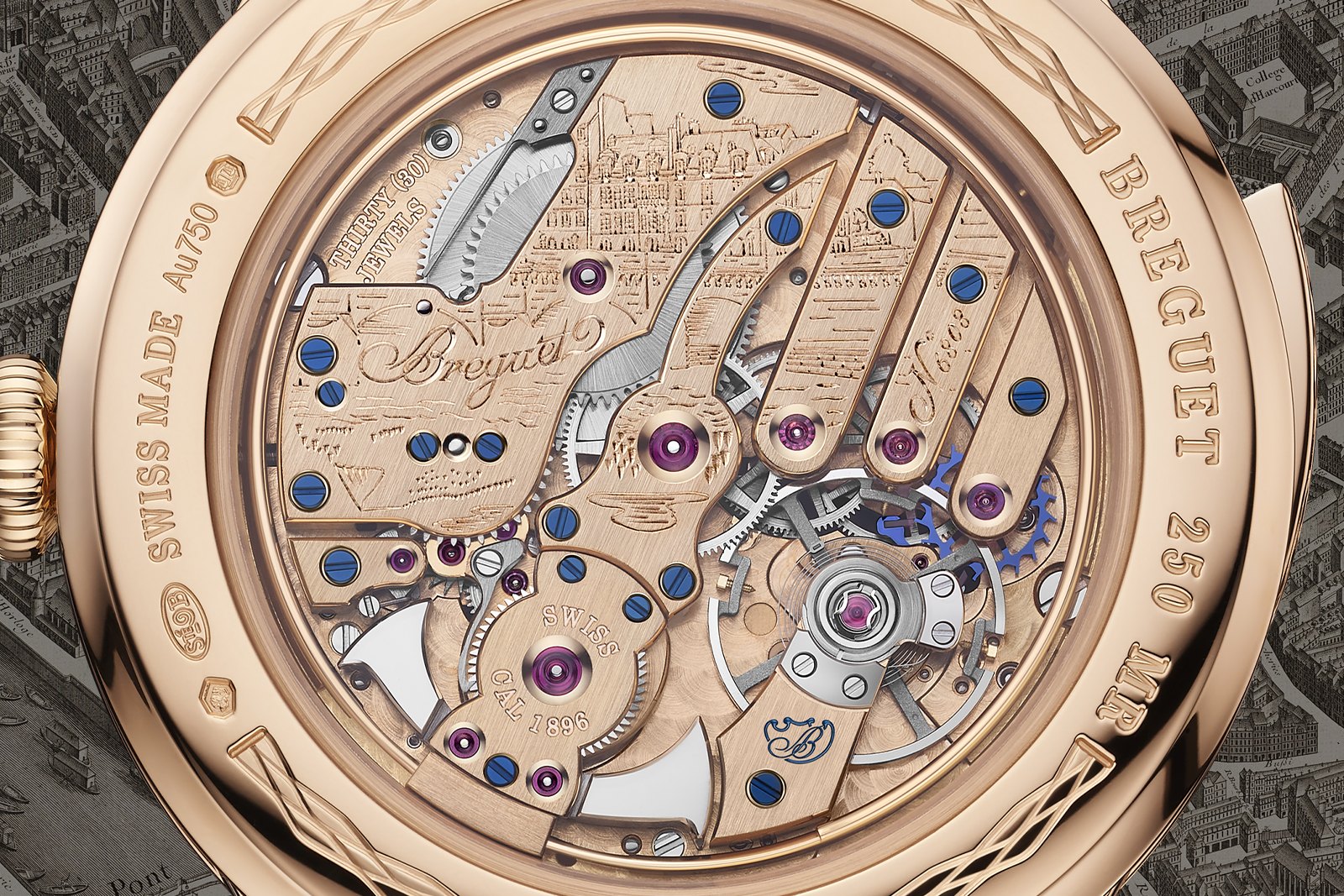
The upper half of the breguet gold movement reproduces, the same scene presented on the pocket watch, Quai de l’Horloge street as seen from across the Seine, though rendered with less detail. Here, on the Île de la Cité and by the famous Pont-Neuf bridge, is where Breguet set down his roots.

The lower half of the movement paints the Vallée de Joux, the nexus of fine watchmaking  and home of the modern Breguet manufacture. Poetically, Abraham-Louis Breguet emigrated to Paris from Neuchâtel, so in a way Breguet’s move to Switzerland brings things full circle.


Key facts and price

Breguet Classique Répétition Minutes 7365
Ref. 7365BH/2Y/986

Diameter: 39.1 mm
Height: 10.8 mm
Material: 18k “Breguet” gold
Crystal: Sapphire
Water resistance: 30 m

Movement: Cal. 1896
Functions: Hours, minutes, minute repeater
Winding: Manual wind
Frequency: 21,600 beats per hour (3 Hz)
Power reserve: 75 hours

Strap: Blue alligator, Breguet gold depolyant buckle

Limited edition: 25 pieces
Availability: At Breguet boutiques and retailers
Price: US$369,000

For more information, visit Breguet.com.


Back to top.
You may also enjoy these.

Breguet Celebrates Striking Heritage with Classique Grande Sonnerie Métiers d’Art 1905

A grand pocket watch.

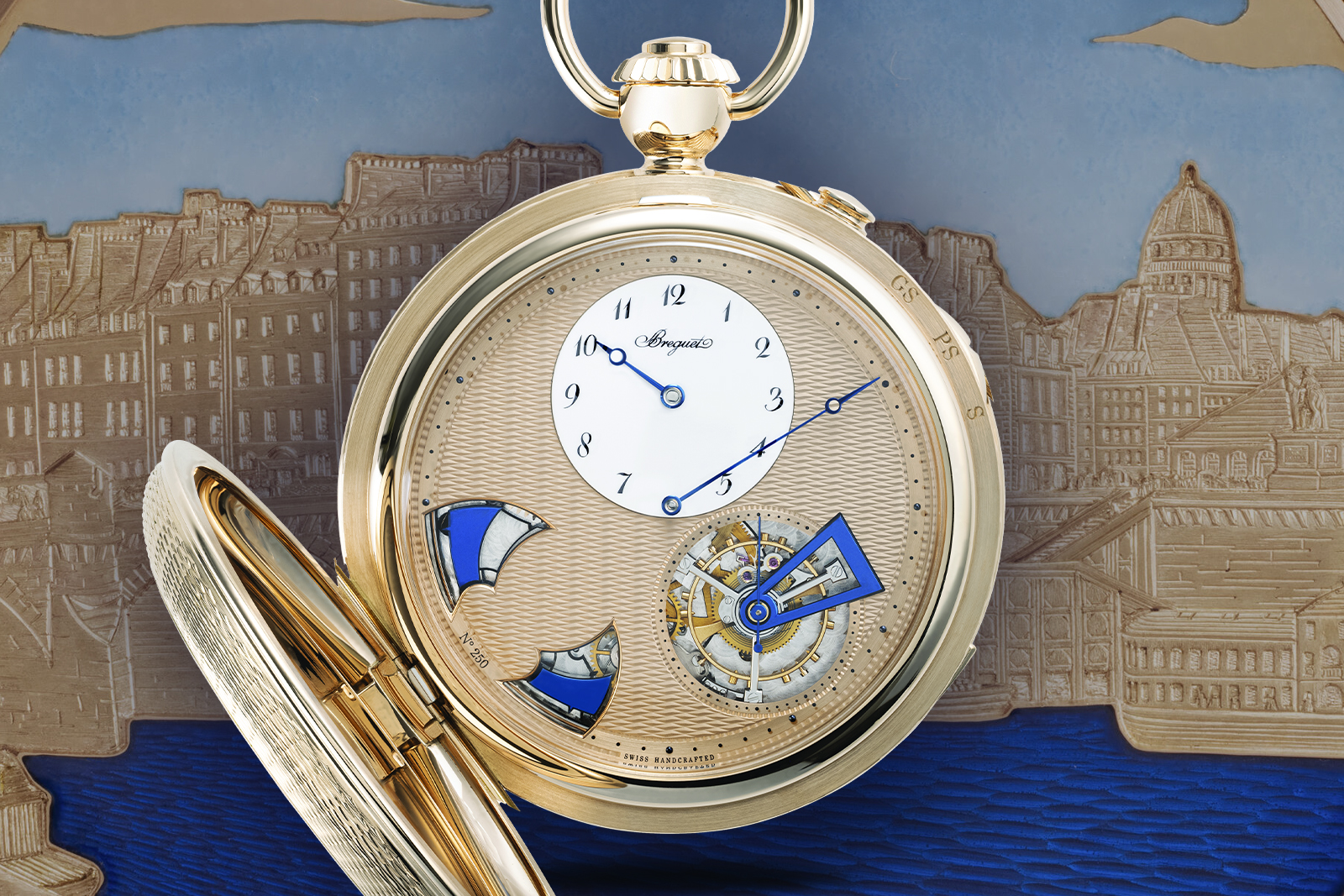
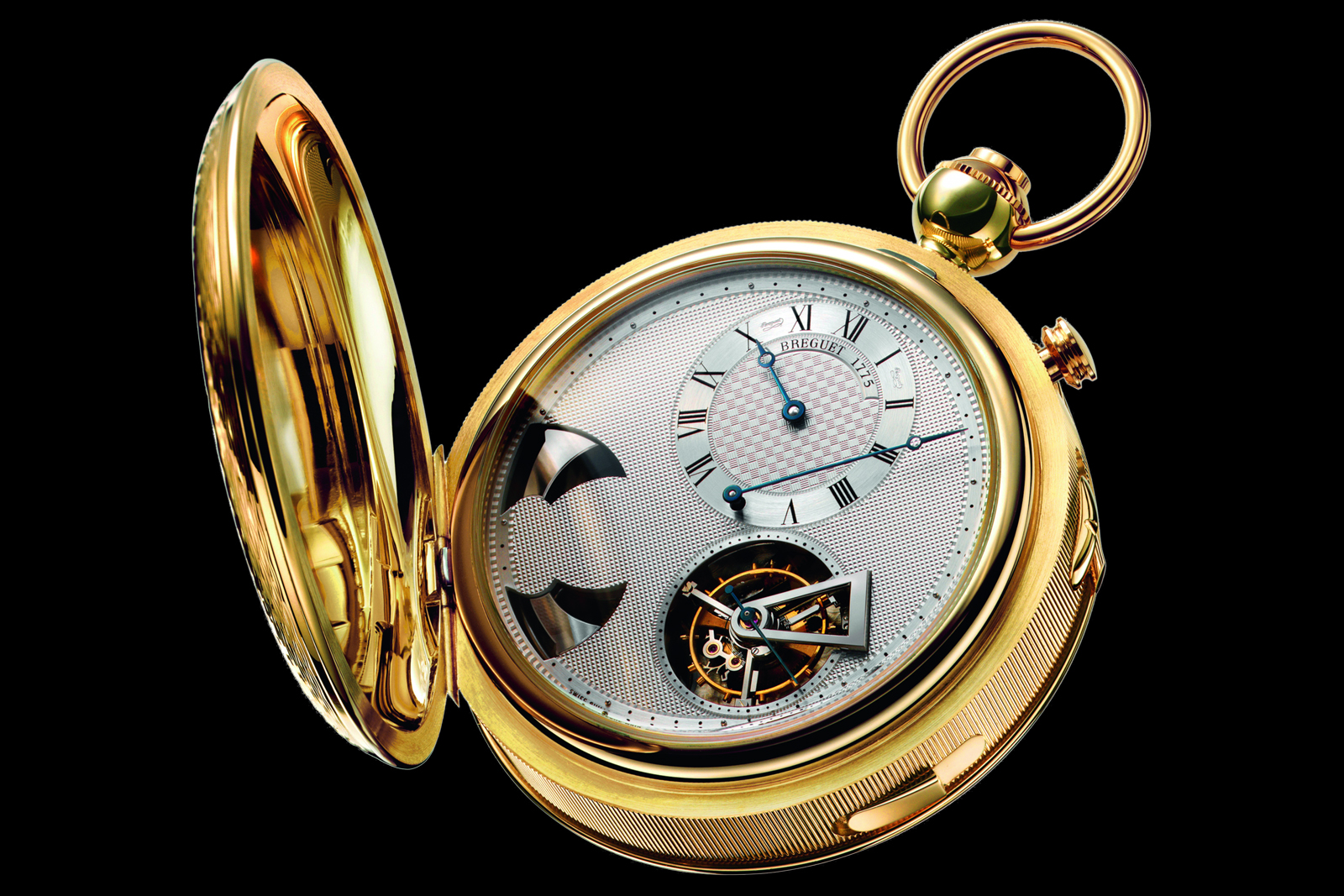
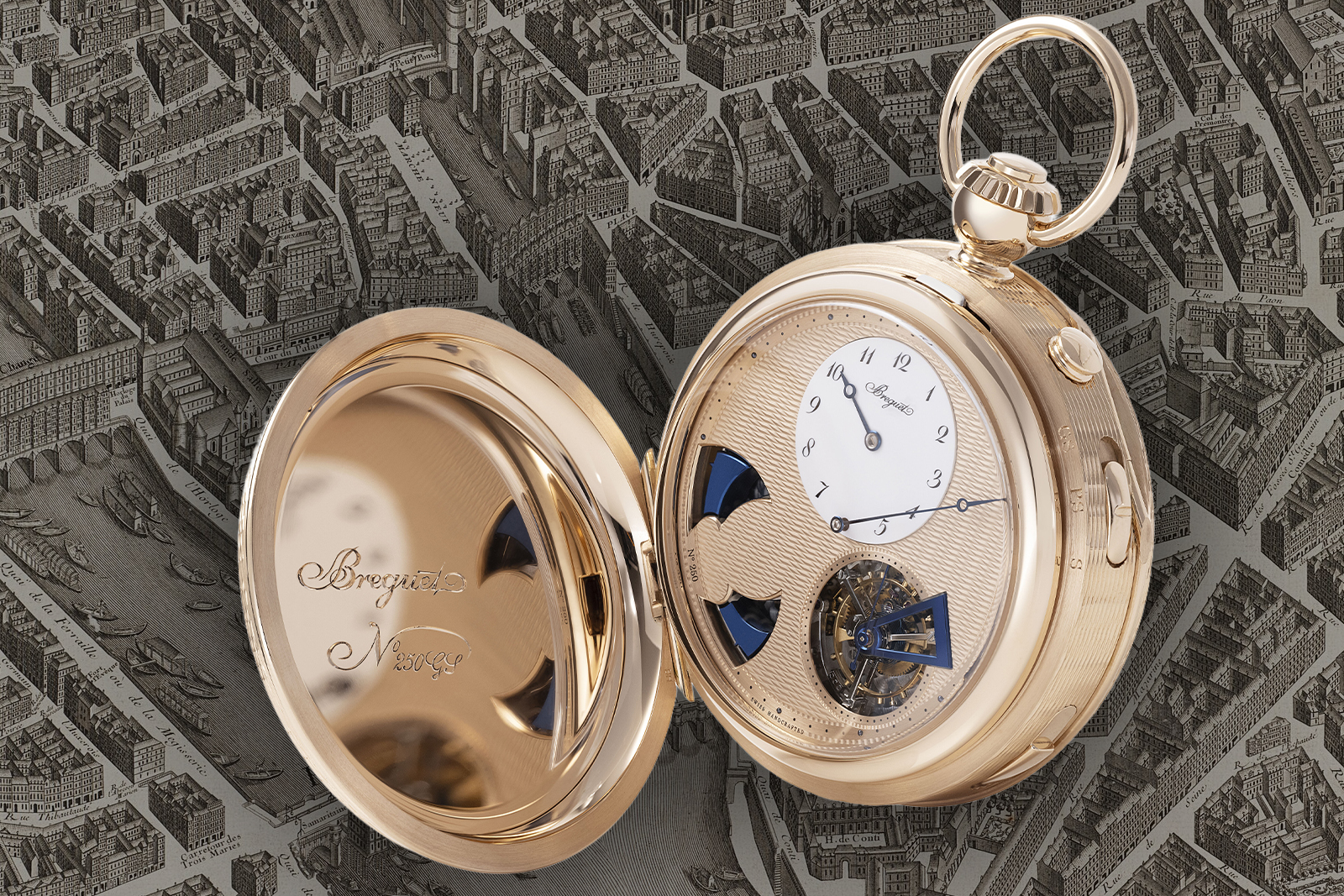
The penultimate entry in Breguet’s 250th celebration is the Classique Grande Sonnerie Métiers d’Art 1905, a complicated pocket watch that unites several of Breguet’s creations, along with the métiers d’art know-how and high-technology of the modern Breguet manufacture.

The 1905 features hand engraving and flinqué enamel, as well as using Breguet’s magnetic strike governor and gold gongs. As with all of the brand’s 250th anniversary creations, the nearly 60 mm case is made of Breguet Gold, with Bleu de France for an additional pop of colour.

Initial thoughts

During the 2000s, Breguet launched the Montre de Poche 1907, a minute repeating tourbillon pocket clock watch with grande et petite sonnerie. At the time, several of the best brands were building new complicated pocket watches, most notably Patek Philippe, rather than scavenging ebauches. In the 20 years since, new production complicated pocket watches have disappeared from nearly every brand’s catalogue – except for Breguet’s.

The Montre de poche 1907BA/12. Image – Breguet

Officially the 1907 has only been offered in yellow gold – though white and rose gold examples probably exist as well. Now, to celebrate 250 years of the house of Breguet, the 1907 gets a new look and technical overhaul with the striking Classique Grande Sonnerie Métiers d’Art 1905 in an 18k “Breguet Gold” case.

The 1905 is not completely novel, mechanically speaking, as none of Breguet’s launches this year have been. Yet it comes with meaningful upgrades to a now two decade-old movement, including a magnetic strike governor and greatly extended strike power reserve of 36 hours in grande sonnerie mode. The latter is an extremely significant improvement over the previous version of this calibre, which was accompanied by this guidance in the user manual: “the strike will function for about 6 hours in great strike and 10 hours in small strike… For a permanent use of the strike, we recommend winding it regularly, for example every 4 hours.”

It retains the odd eight o’clock hinge location of its predecessor, to which I am ambivalent, though I have a strong preference for open-face watches in general. Breguet’s approach allows the watch to use an open-face dial, which is to great benefit if you want suspend it by the bow for display. Perhaps it would have been best to delete the front cover altogether and relocate the métiers d’art aspect to the reverse lid, though that would also erode some of the watch’s character.

A métiers d’art watch is fitting for the 250th anniversary celebrations, but it’s somewhat ironic since A.-L. Breguet’s original style was famously austere for the time. That said, tastes have changed and this is probably the most commercially viable genre of pocket watches in today’s market. Louis Vuitton had good success earlier this year with a pair of quick-selling Jacquemart watches, for example. As grand as the 1905 is, I still hope to see something completely novel for the grande finale.

A striking heritage

A.-L. Breguet was a pioneer of flat repeater gongs, in lieu of striking agains bells or the inside of the case, though the musical gongs we know today are probably more attributable to François Crespe.

Repeaters were the most common complication during Breguet’s day – he referred to them “virtually indispensable” in his unpublished manuscripts –  since being able to tell time in the dark is very useful when it’s dark half the time. This problem was eventually mitigated by gas, and later electric, lighting. Along the way watchmakers figured out how to make watches glow in the dark as well.

Yet chiming watches never quite died even after becoming obsolete, and the Breguet brand continued to sell chiming pocket watches throughout the entire 20th century, often using decades old ebauches, though the movement in the 1905 is of new manufacture.

All that glitters is (Breguet) gold

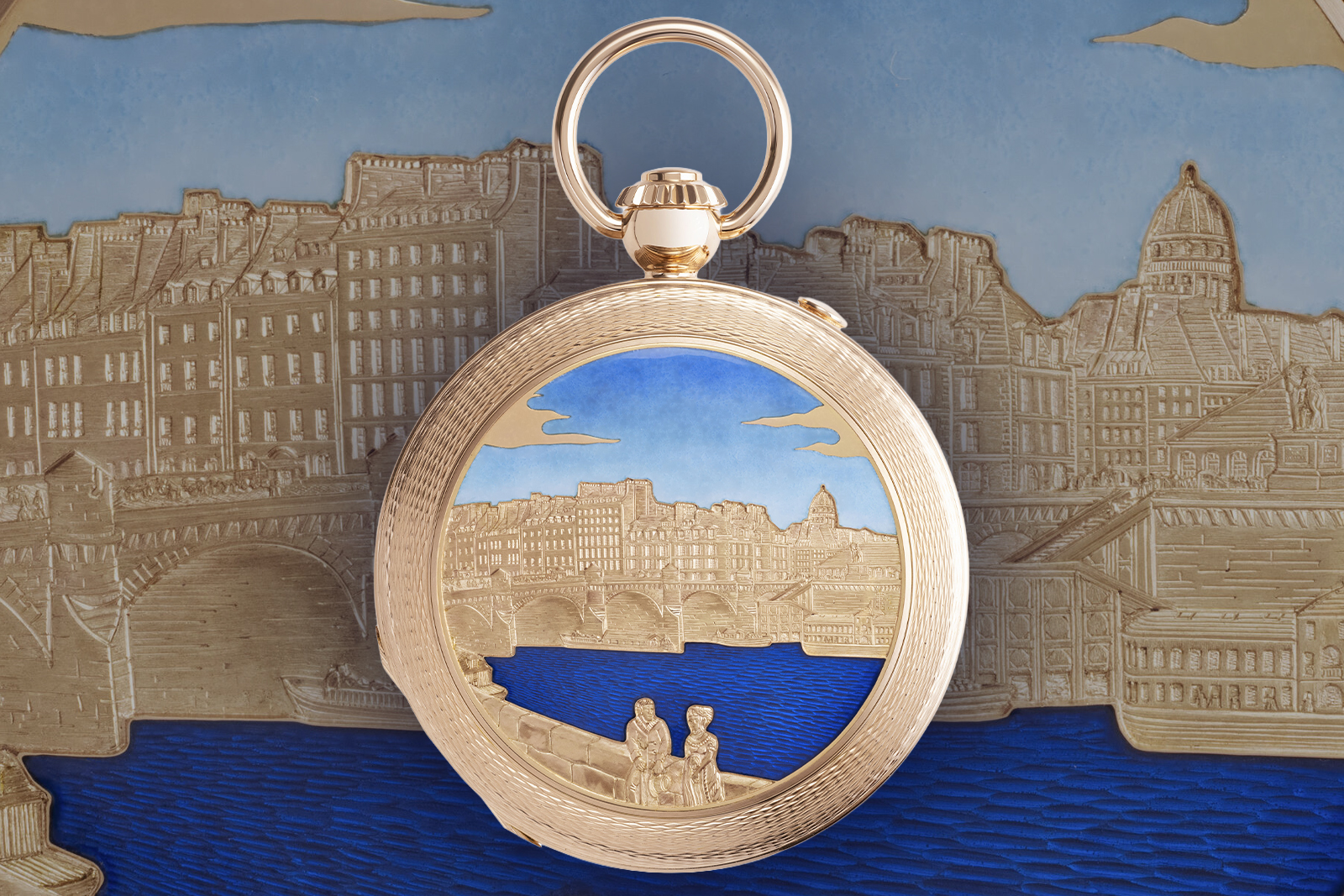
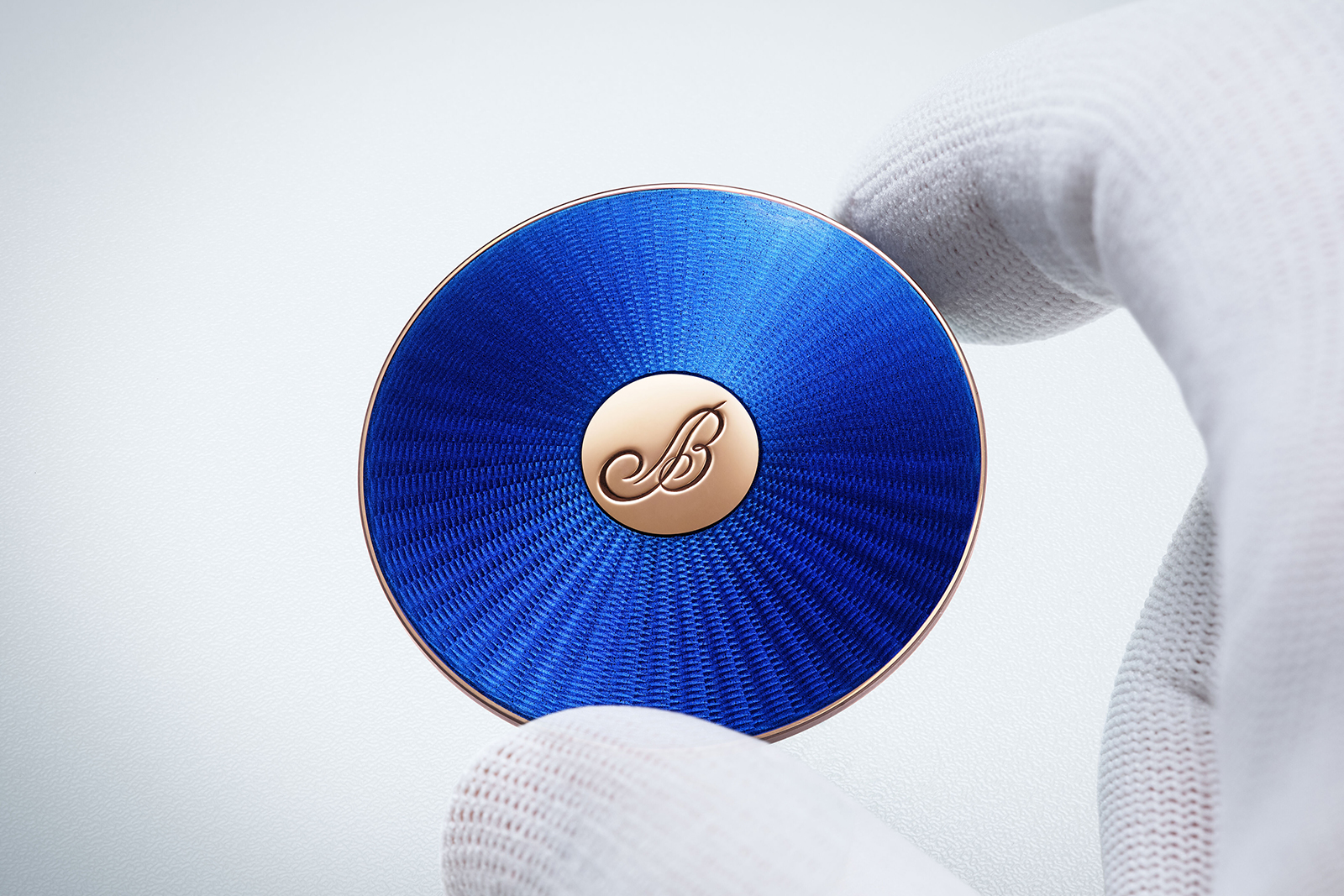
The case band, and rear cover are all Breguet Gold and adorned with a Quai de l’Horloge guilloche pattern, inspired by the famous isometric Turgot map of Paris. The guilloche on the back cover covered with Bleu de France grande feu enamel and the Breguet “B”.

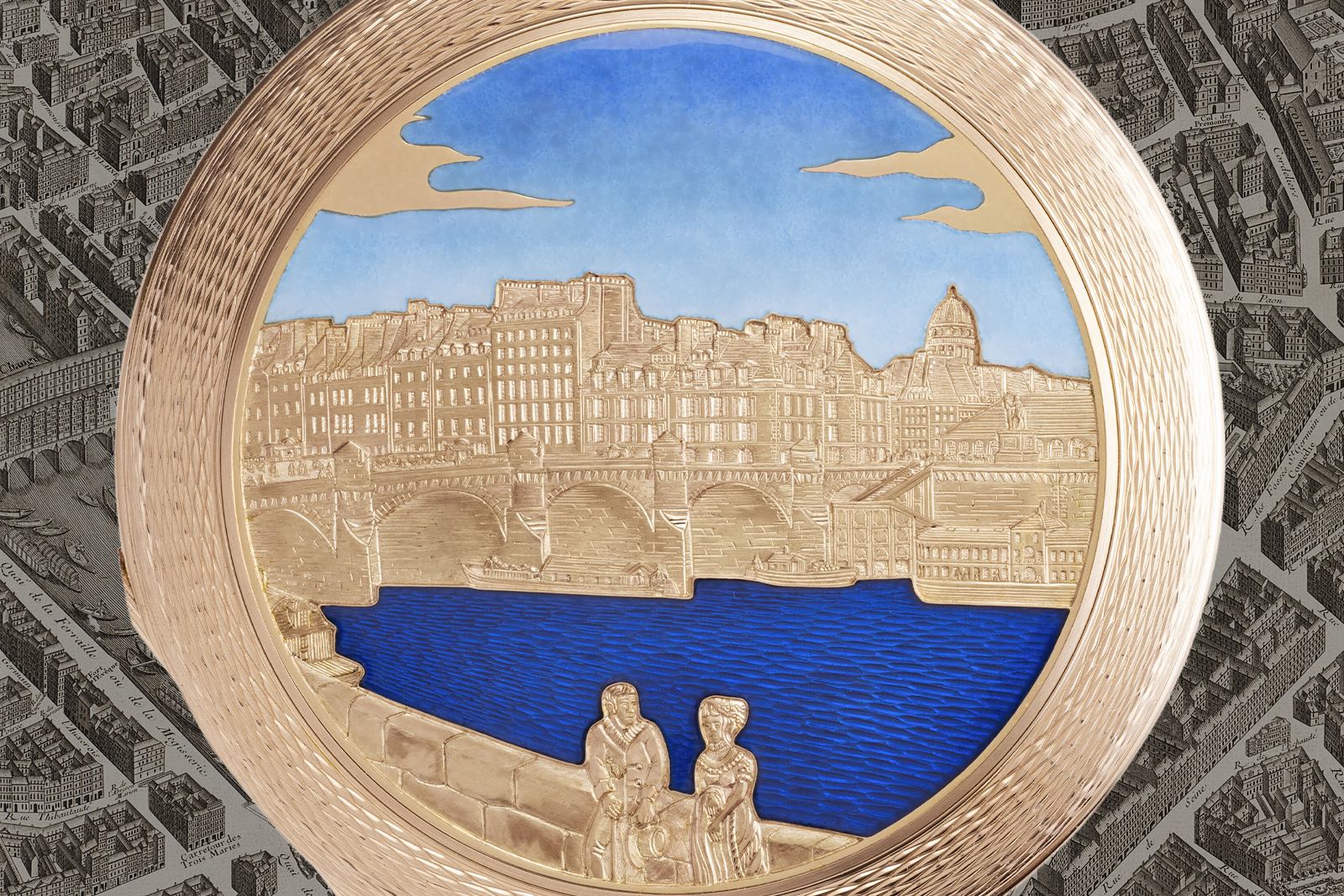
On the front is an intricate, hand engraved depiction of the River Seine, and Quai de l’Horloge, the street on which Breguet’s workshop was located. The building occupied by Breguet, now addressed as 26 Place Dauphine, is at the centre of the scene. The Seine river is also Bleu de France enamel to make it pop.

“Quai de l’Horloge” guilloche returns on the Breguet Gold regulator dial, along with a hand painted white enamel insert (with pantograph engraved secret signature) for the hours, meant to call back to 18th century dials. Interestingly, the hammers and tourbillon bridge are blued not with heat, but via a PVD process.

Teaching an old dog new tricks

The movement is very traditional, reminiscent of the movements made by Victorin Piguet from Reymond Feres ebauches for Breguet, Patek Philippe, and others in days long past. There are quite a few oddities though; most notably the striking and going trains are flipped.

Normally in watches like this turning the crown clockwise winds the strikes and counterclockwise winds the movement, but in the cal. 508 GS, the going train is wound clockwise like a normal watch, and the strike train is wound counterclockwise. The movement is upside-down, putting the strike works on full display through the sapphire cuvette – which has an antireflective coating on both sides.

A few years ago Breguet updated the movement in the 1907, refining the strike mode selector. For the 1905, Breguet has further upgraded the calibre with a magnetic strike governor and a full 36 hours of striking in grande sonnerie mode.

Interestingly, the watch uses gongs made from a white gold alloy, rather than steel as is typical, which are connected to the case instead of the movement. This, in theory, improves the sound of the repeater as the sound waves enjoy better resonance and propagation because the gongs and case are of like materials with similar density and structure. The case walls are also extensively excavated, removing unneeded material that would otherwise deaden the sound – though it still contains about 400 g of 18k gold.

On close inspection you will also notice small rubber o-rings on the gongs, which I presume are to dampen the sounds made by the gongs contacting each other during jolts and shocks. And, of course, it also includes Breguet’s most famous invention – the tourbillon, along with a free sprung balance on a Breguet overcoil balance spring.

A regal presentation

To emphasize just how special this watch is, Breguet will use its remaining supply of “Marie-Antoinette Oak” for the box. Breguet acquired a tree from Versailles that the queen was said to have favored after it was felled due to storm damage. It was also used to make the box for Breguet No. 1160, a replica of (then missing) No. 160, which is often said to have been ordered as a gift for Marie-Antoinette. It is further accompanied by a resonance box made of spruce from the famous Risoud forest in the Vallée de Joux, near Breguet’s factory.


Key facts and price

Breguet Classique Grande Sonnerie Métiers d’Arts 1905
Ref. 1905BH/2H

Diameter: 56.5 mm
Height: 23.5 mm
Material: 18k “Breguet” gold
Crystal: Sapphire
Water resistance: Dust and moisture resistant only.

Movement: Cal. 508 GS
Functions: Hours, minutes, seconds, tourbillon, grande et petite sonnerie, minute repeater
Winding: Manual wind
Frequency: 18,000 beats per hour (2.5 Hz)
Power reserve: 56 hours going, 36 hours striking in grande sonnerie mode

Chain: 18k Breguet gold, with the Quai del’Horloge guilloché fastenings.

Presentation: Box made from “Marie-Antoinette oak” with resonance tray

Limited edition: Made to order, and very low production.
Availability: From Breguet
Price: On request

For more information, visit Breguet.com.


Back to top.
You may also enjoy these.

Vyntage Horology Debuts the Sleek and Sophisticated Strata

Emirati character, Swiss calibre.

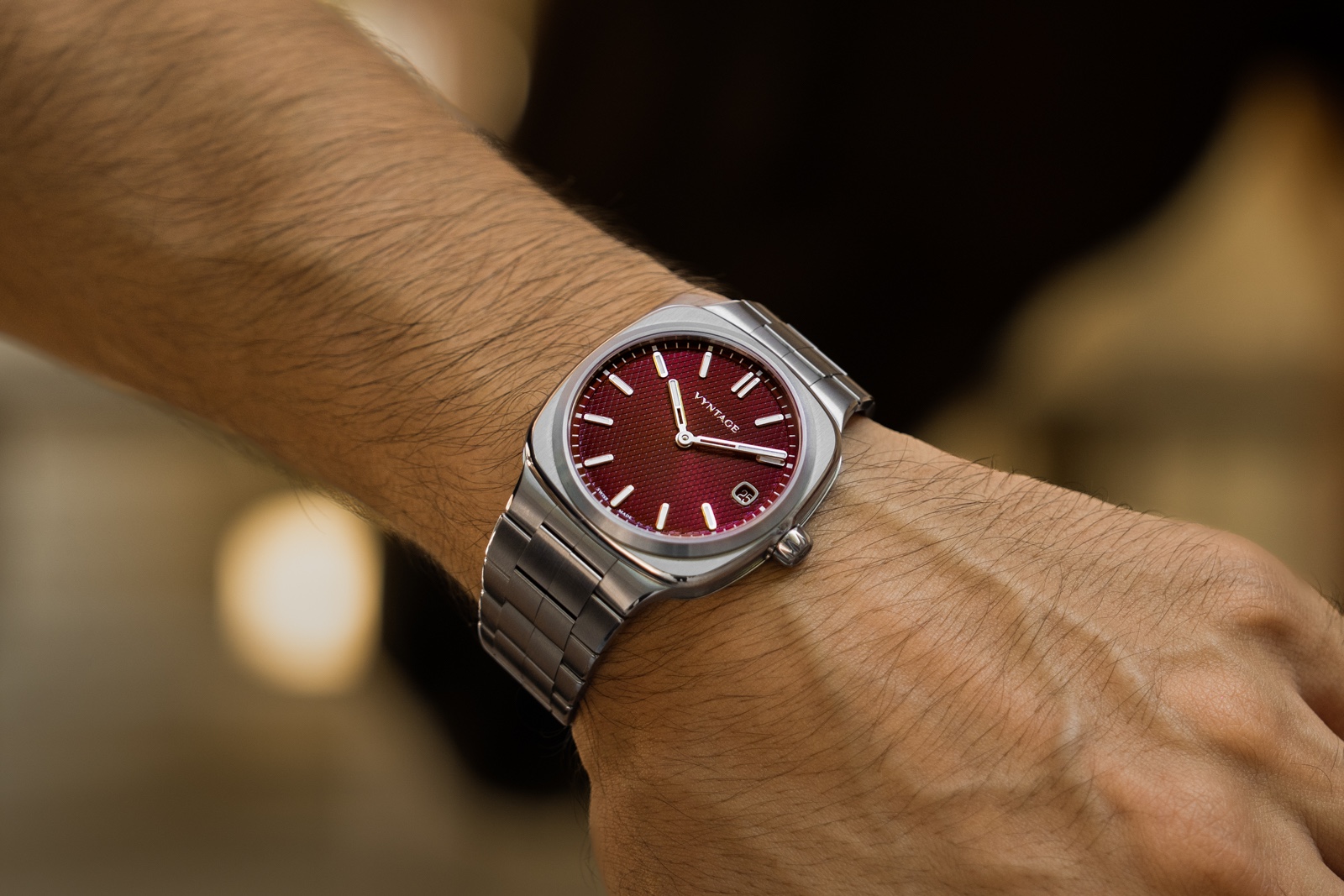
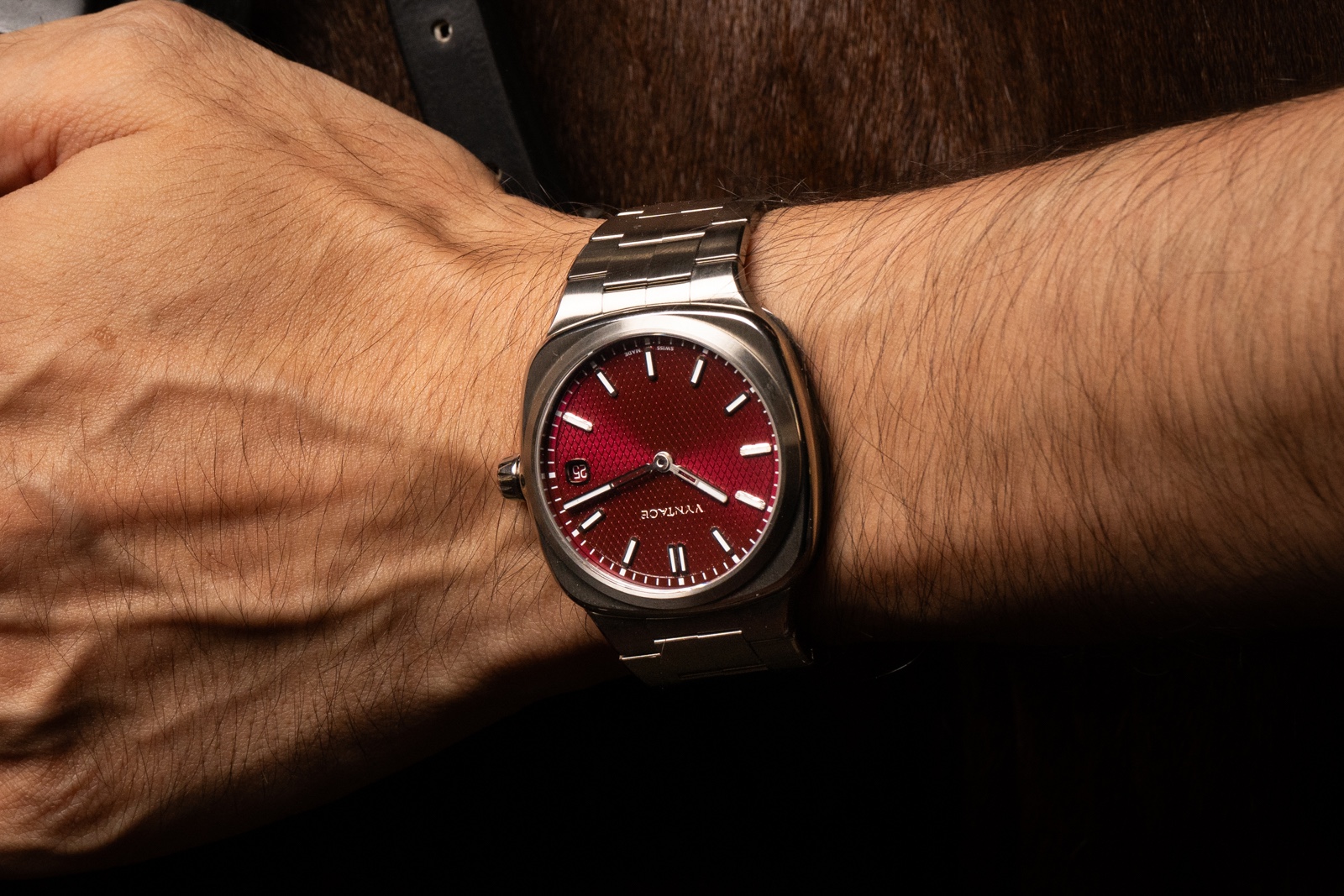
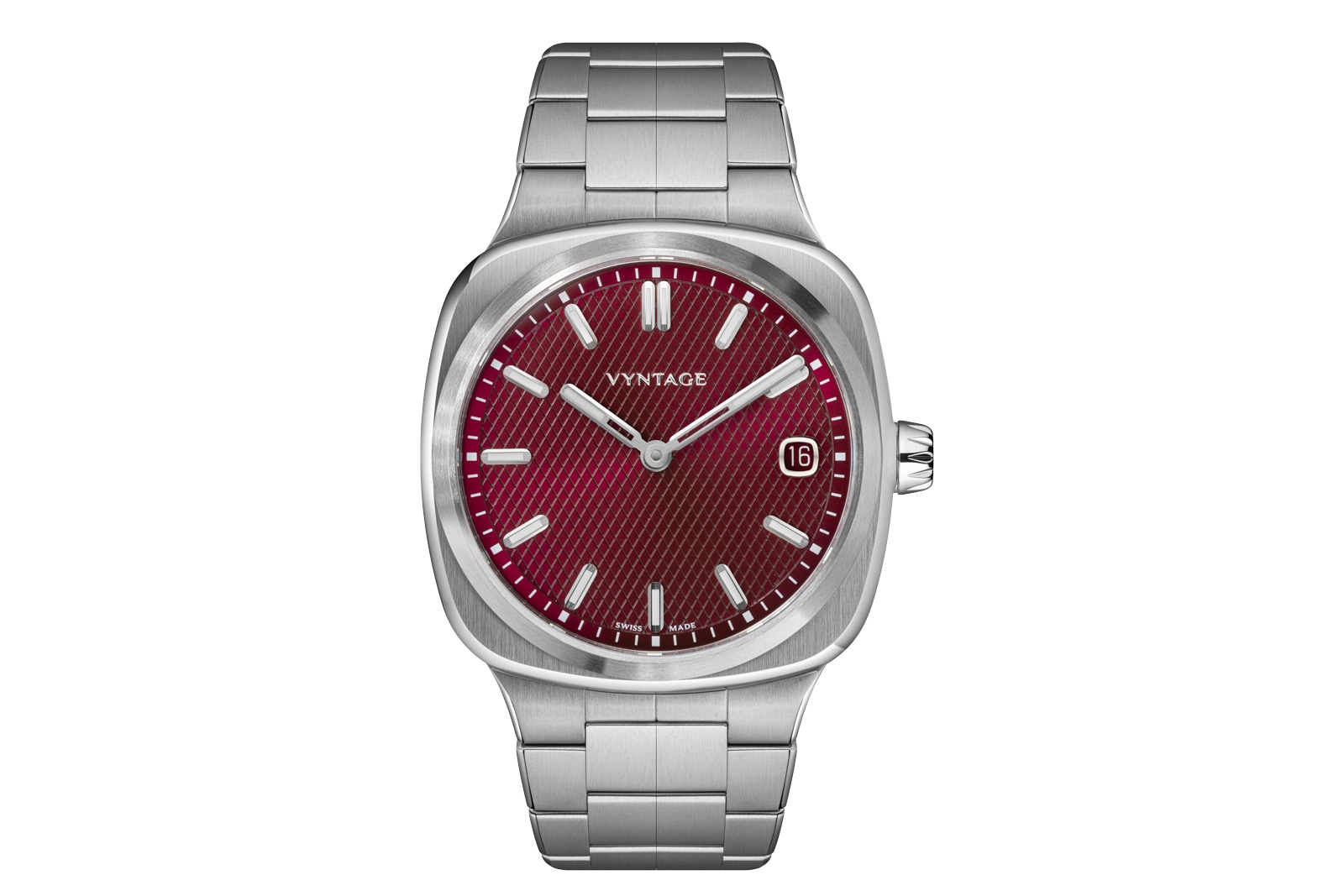
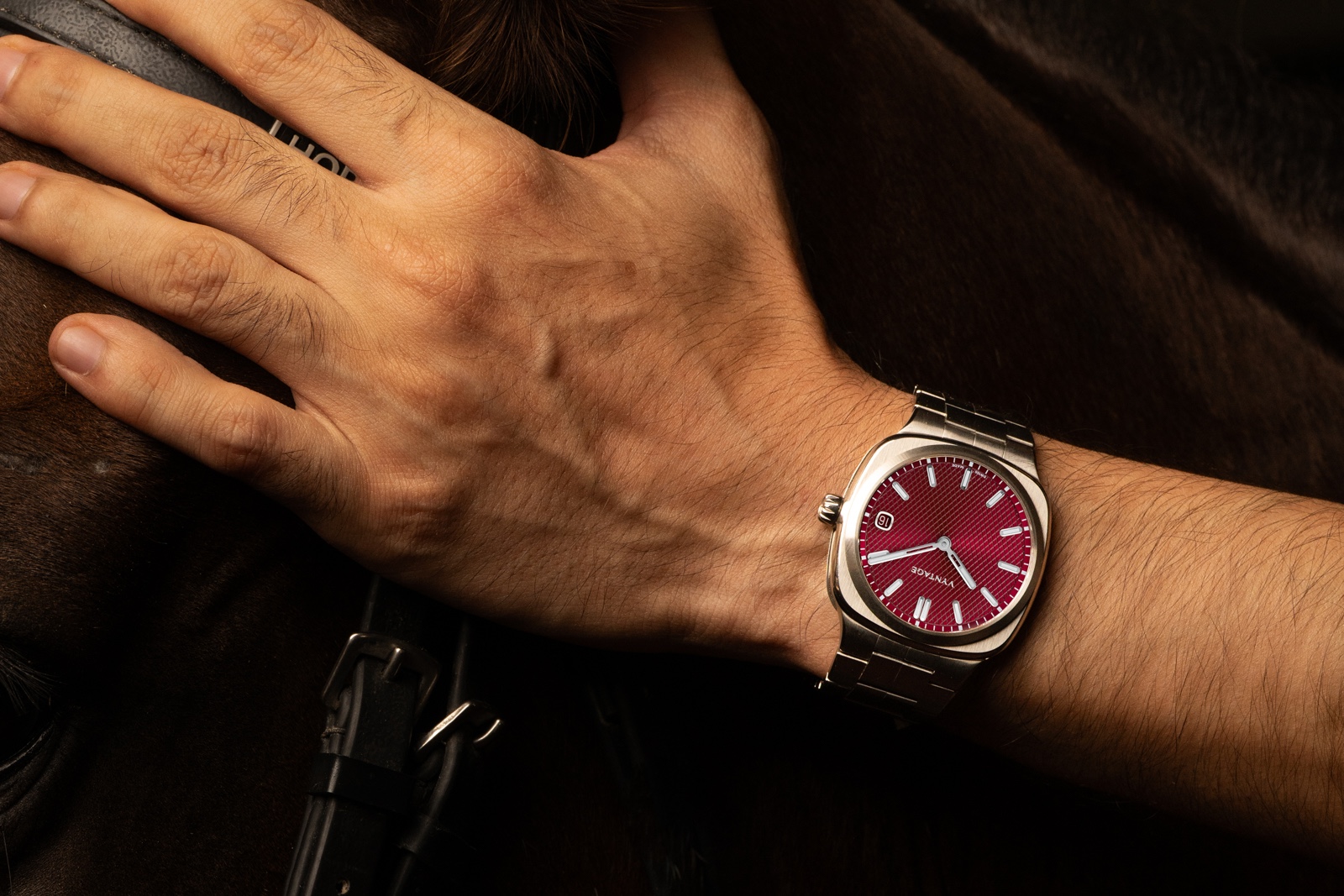
One of the surprises of Dubai Watch Week was the chance to go hands-on with the Strata, the latest watch from Vyntage Horology. Slim, lightweight, and water-resistant to 100 m, the Strata nods to the cushion-case designs of the 1970s without reviving any specific model, instead pairing a radiant burgundy dial with a silky grade 5 titanium case and bracelet for a look that feels contemporary rather than nostalgic.

Vyntage itself was conceived by Mohammed Abdulmagied Seddiqi, chief executive of Ahmed Seddiqi — the Gulf region’s largest retailer and a pillar of Dubai’s watch scene for 75 years. The brand was created to bring an Emirati sensibility to Swiss watchmaking, and its retailer backing gives it a degree of stability and visibility uncommon among small, typically internet-native marques.   

Initial thoughts

The Strata is a ‘go anywhere, do anything’ watch par excellence, managing to be both slim and lightweight, while water resistant to 100 m. Despite its name, Vyntage is not in the business of remakes. The Strata nods to 1970-era cushion-case sport watches with integrated bracelets, but it is not a revival of any specific model. Instead, the combination of a rich burgundy dial and a silky titanium case and bracelet gives the watch a contemporary presence that sets it apart from conventional retro-themed offerings.

Ahmed Seddiqi, the Gulf region’s largest watch retailer and a fixture in Dubai for 75 years, has long catered to a collector base oriented toward Swiss watchmaking. Vyntage Horology was born from a desire to offer clients something with roots closer to home. Conceived by Mohammed Abdulmagied Seddiqi, the company’s chief executive, the brand aims to create Swiss-made watches that carry a distinctly Emirati character.

Being owned by a major retailer like Seddiqi lends Vyntage a measure of stability, signalling that it has the support and runway to endure — something not always guaranteed with smaller, internet-native micro brands. Perhaps more importantly, this connection ensures visibility among influential collectors.

At AED69,000 including taxes, the Strata costs about US$18,700, which is on the lower side for integrated bracelet watches powered by the same Vaucher micro-rotor movement, such as the PS Horology Tsuba or Parmigiani Tonda PF. The value proposition is enhanced by the use of grade 5 titanium for the case and bracelet, which offers substantially lighter weight than stainless steel while being just as scratch resistant.

A watch for all wrists

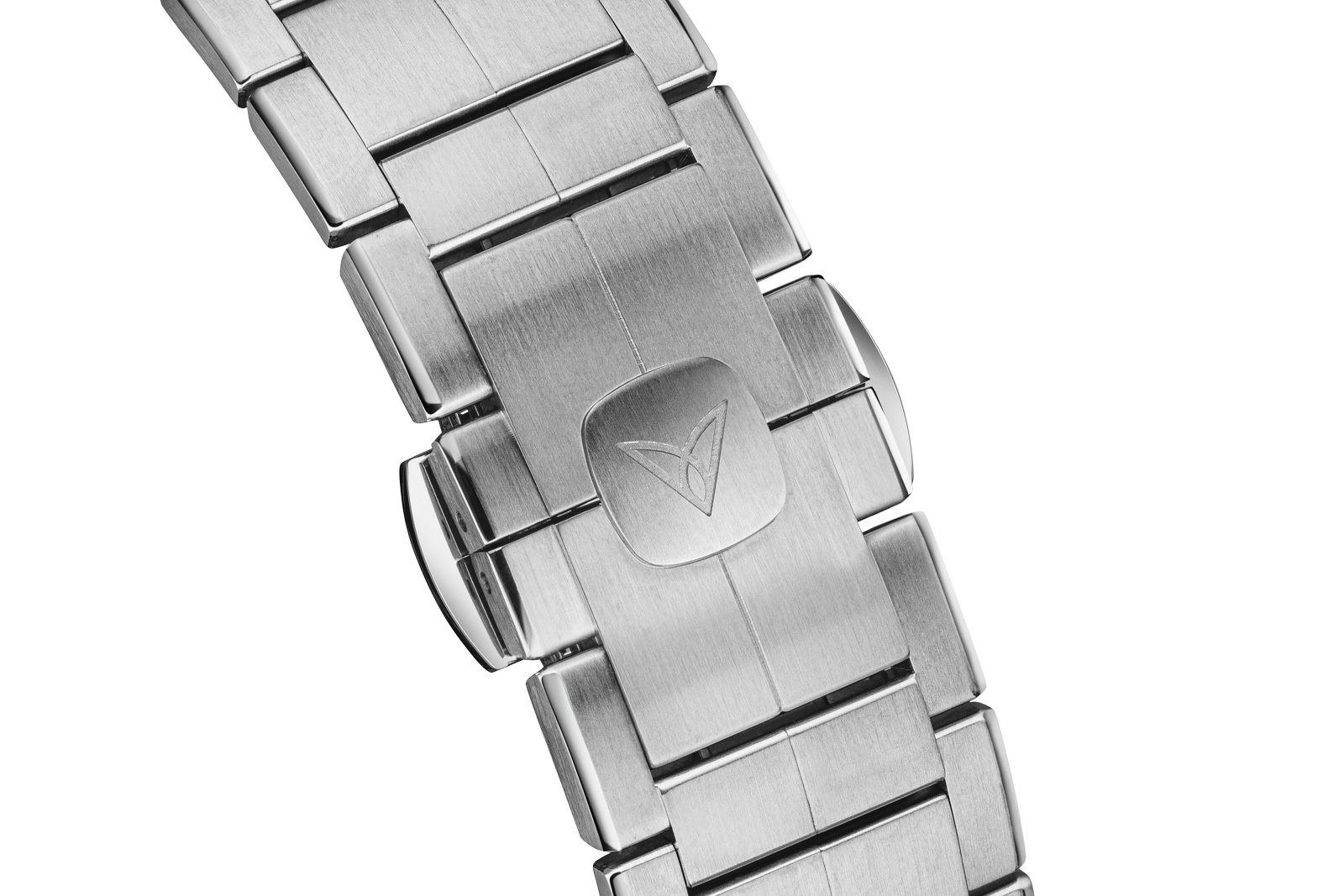
The Strata really comes alive on the wrist thanks to both its slim case and silky titanium bracelet. The latter far exceeds the ‘micro-brand’ norm for quality of execution, with thin links and brushed edges. The prototype I wore will be refined even further for final production; the quick-release tabs in the underside of the bracelet will be redesigned to not hinder the drape of the end links.

The pitch of the links is rather long, but wearing comfort is assured thanks to a simple extension built into the clasp, something that has thankfully become the norm. That said, the light weight and low center of gravity of the Strata mean it’s unlikely to move around too much even if worn slightly loose.

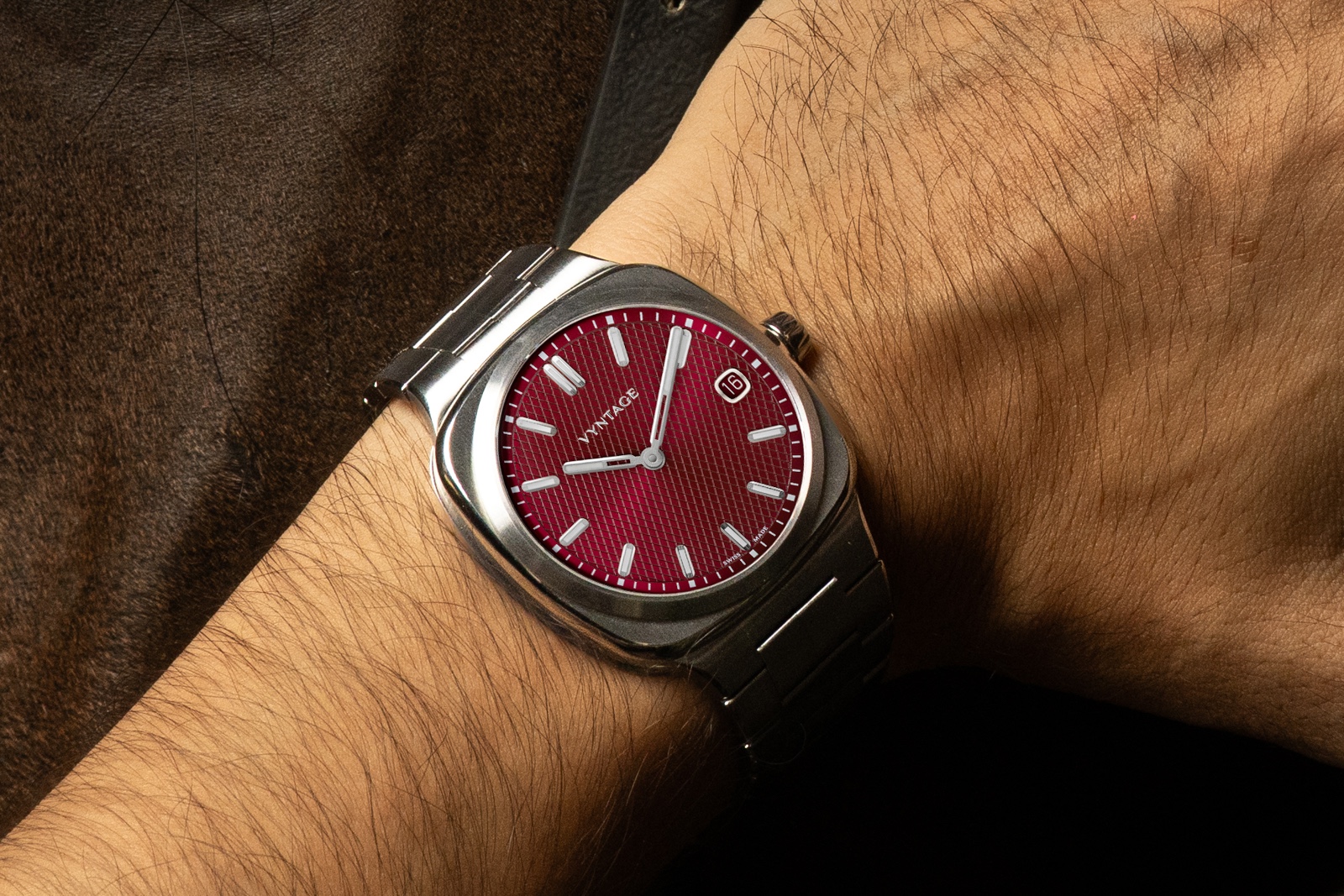
The burgundy dial features an engraved motif dubbed ‘diamond tessellation’ and features a date window frame (around a colour-matched date disc) that echoes the case shape. The Strata skips the seconds hand, opting for a configuration that calls to mind watches like the original Nautilus ref. 3700 and Audemars Piguet Royal Oak ref. 15202. It’s a good look that lets the metallic red dial shine, and the simplified hand stack looks good, with lozenge-style hands and hour markers that are faceted and brushed to catch the light, even before considering the application of Super-LumiNova.

If there’s one thing I’d change about the Strata it’s the applied wordmark on the dial; the calligraphic wordmark used for the Purity collection feels more distinctive and appealing. Applied logos have become something of a trend in recent years, but they’re difficult to pull off.

Bulletproof micro-rotor

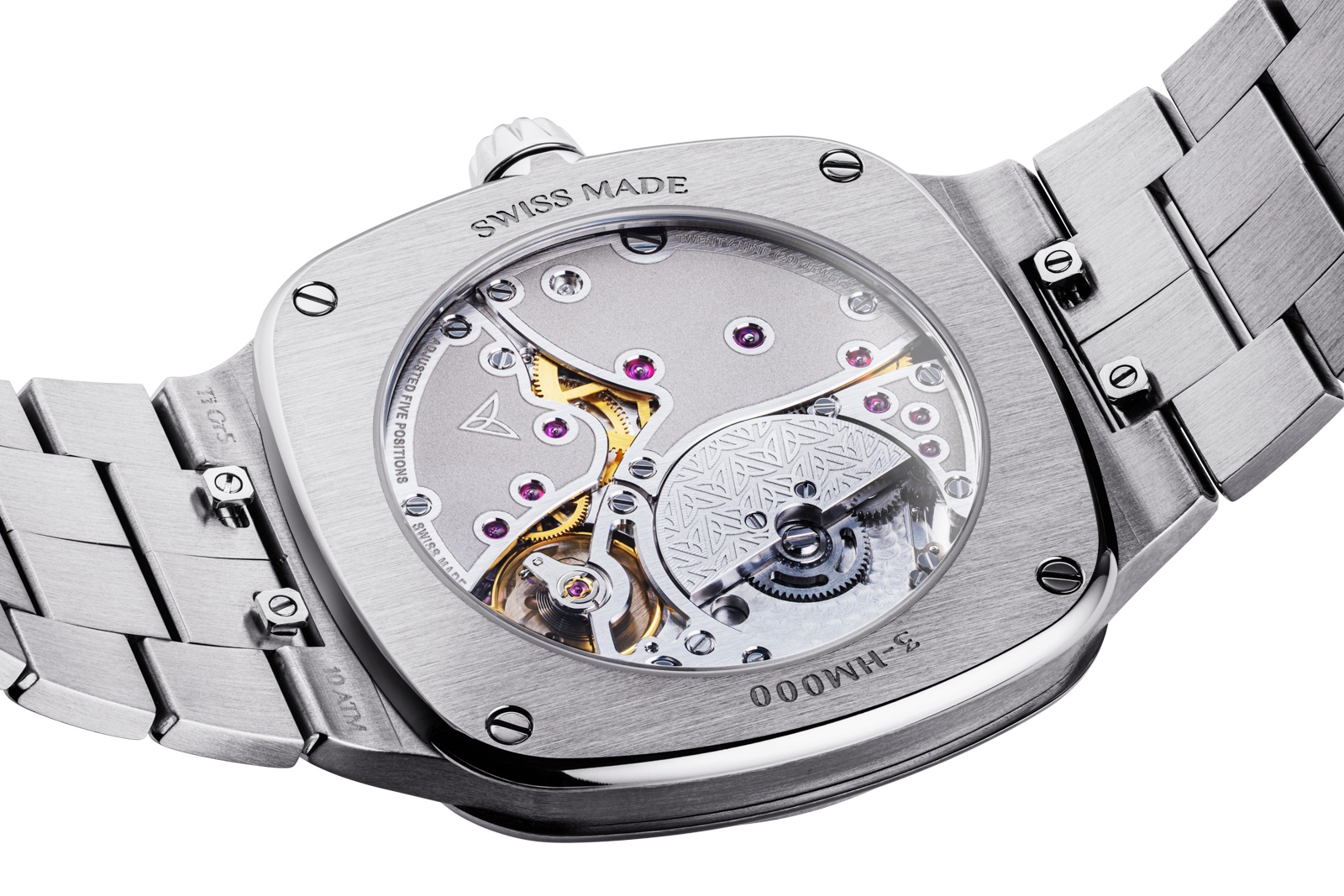
At the heart of the Strata is a Vaucher VHM-3.01 micro-rotor automatic, a movement that has endeared itself to independent watchmakers and collectors alike for its slim dimensions and high-quality construction. Vaucher makes the movement to order, and it can be found in watches from numerous brands big and small, from tiny dial-focused independents like Bradley Taylor and Laine, to big luxury brands like Hermes and Richard Mille.

On paper, the 3 Hz rate and 48-hour power reserve are fairly ordinary, but the movement is slim (just 3 mm thick) without being fragile. Because it’s widely used, there’s ample support infrastructure in place for servicing, which should give buyers confidence. In other words, the Vaucher calibre proves Vyntage is serious about the future, and supports the overall value proposition of the Strata.

For the Strata, the movement has been delivered with a bespoke bridge layout and relief-engraving on the tungsten micro-rotor that depicts the Vyntage logo. While some brands spec this movement with a gold rotor, heavyweight tungsten is a practical choice that should help maximise winding efficiency of the rotor, which is sunk into the same plane as the gear train.


Key facts and price

Vyntage Horology Strata

Diameter: 40 mm
Height: 8.92 mm
Material: Titanium
Crystal: Sapphire
Water resistance: 100 m

Movement: VHM-3.01 by Vaucher
Functions: Hours, minutes and date
Frequency: 21,600 beats per hour (3 Hz)
Winding: Automatic
Power reserve: 48 hours

Strap: Titanium bracelet or rubber strap

Limited edition: No
Availability: At Vyntage Horology’s online boutique or Seddiqi stores
Price: AED69,000 including tax (equivalent to approximately US$18,700)

For more, visit vyntage.com.


Back to top.
You may also enjoy these.
Welcome to the new Watches By SJX.

Subscribe to get the latest articles and reviews delivered to your inbox.