Tokyo Retailer Shellman Celebrates Christiaan Huygens

A two-week exhibition marking 350 years of the hairspring.

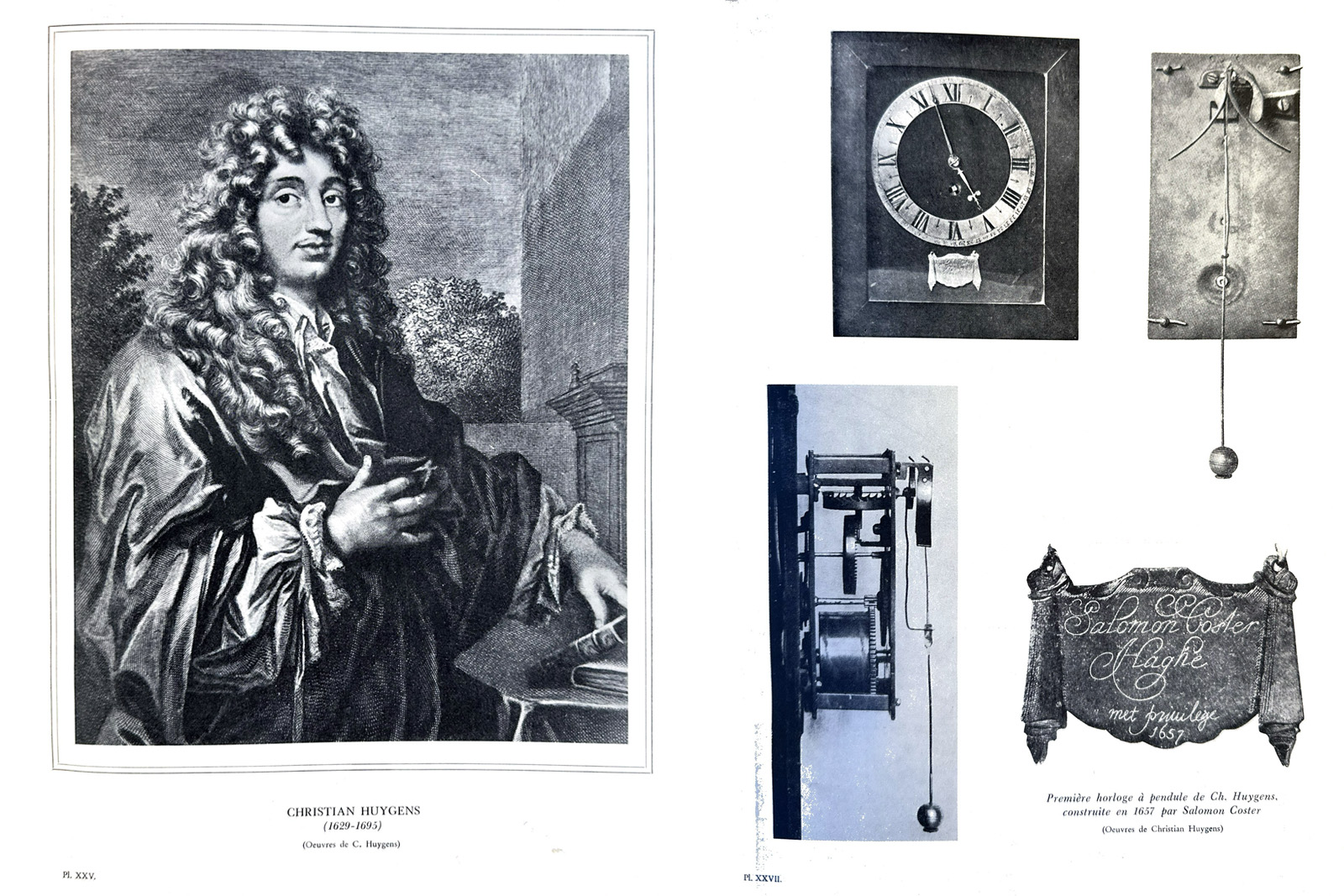
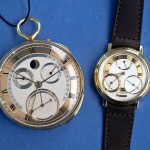
In order to mark the spiral hairspring’s 350th anniversary and celebrate its inventor Christiaan Huygens (1629 – 1695), Japanese watch retailer Shellman presents a two-week exhibition event in Tokyo, The Origins of Time = Astronomy.

Opening November 19 and slated to run through December 2, the Shellman exhibit is a collaboration with the Musée International d’Horlogerie (MIH) in La Chaux-de-Fonds, and showcases the larger extent of Huygens’ work, from horology to optical observation devices.

Themed around the Dutch scientist credited with building the first pendulum clock and with inventing the hairspring, the exhibit also explores larger fields of horology, with a focus on astronomy and modern independent watchmaking.

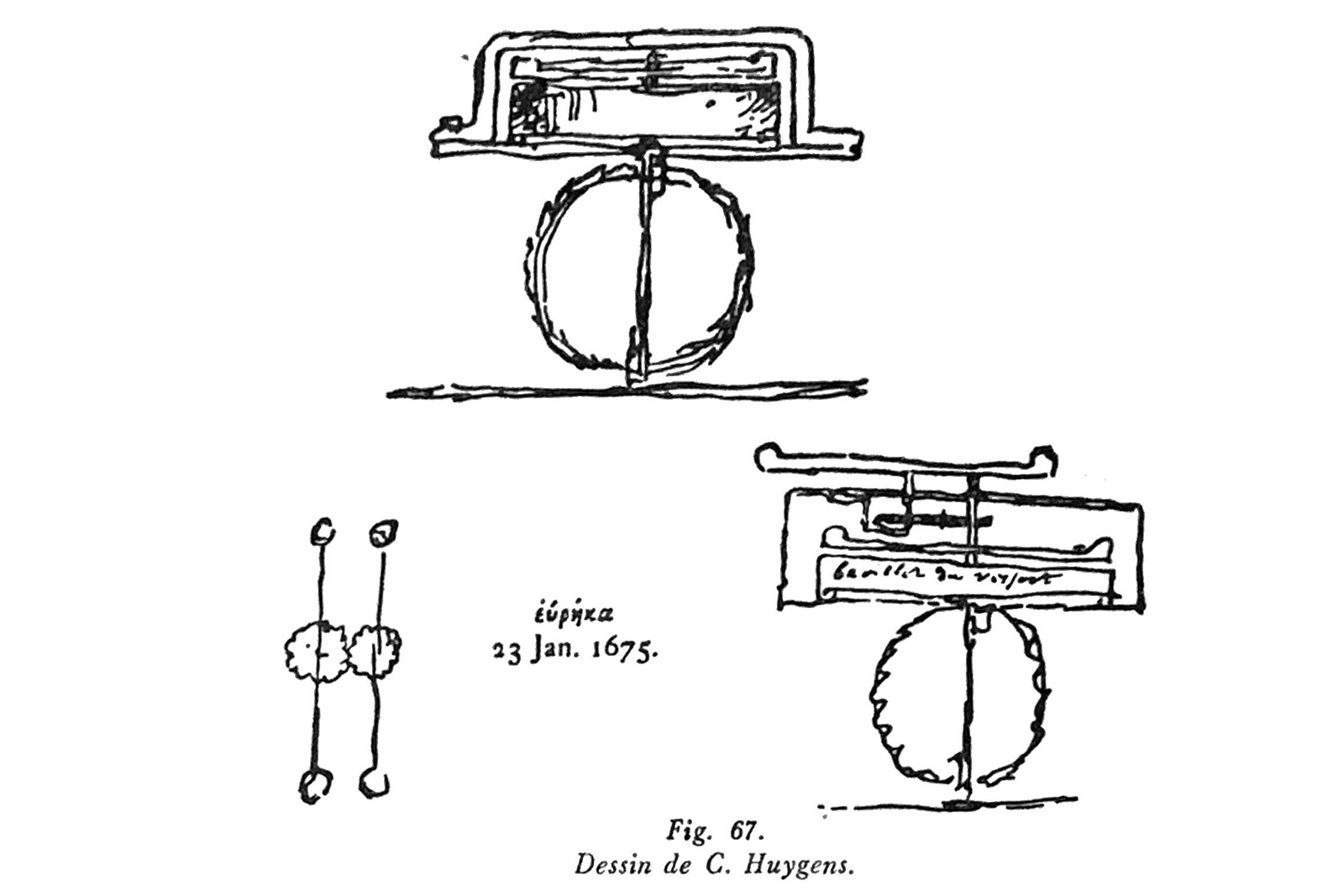
Original drawings showing early attempts at making a sprung balance.

Beyond his practical applications in horology, Huygens left marks on many other scientific fields, from geometry to physics and astronomy. He notably discovered Saturn’s largest moon Titan and cemented the wave theory of light propagation. One could say that he was interested in the celestial bodies as much as he was in understanding motion and measuring time here on Earth. In his honour, the exhibit leans on the astronomical theme as well. 

The exhibition is accompanied by a selection of special watches available for sale. Visitors will have the chance to acquire the world’s smallest wristwatch planetarium, the Planetarium Christiaan Huygens Limited Edition, created by the Dutch watchmaker Christiaan van der Klaauw, and precision pendulum clocks by the German maker Erwin Sattler. Telluriums and Astrolabium pieces by Hermle will also be available for purchase. 

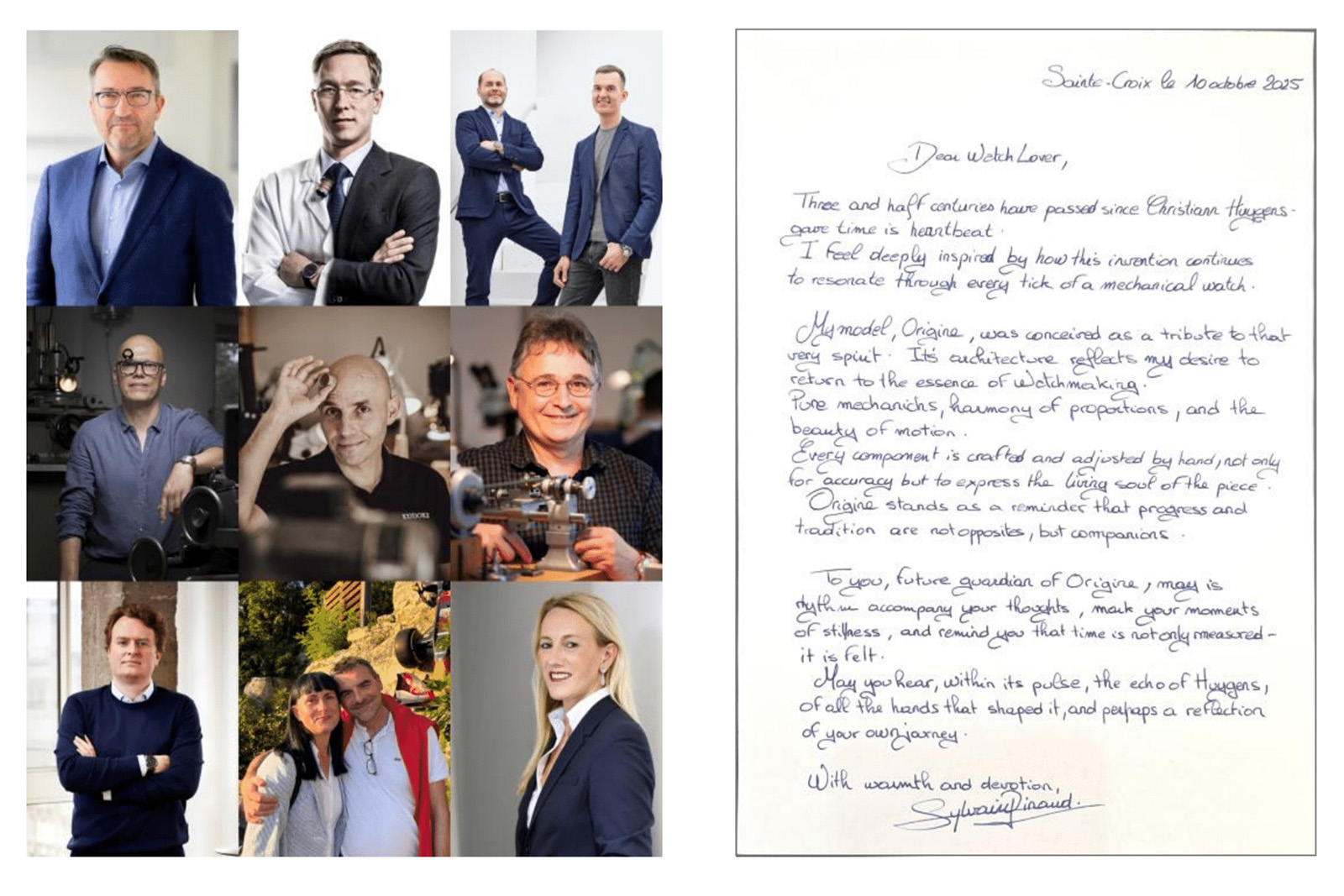
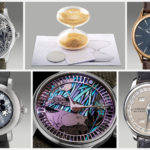
Some of the independent watchmakers involved with the exhibit.

Shellman has long been a champion of independent watchmaking in Japan, so the exhibit will also showcase 20 contemporary creations by independent watchmakers, which will be available for purchase as well. Each piece will come accompanied by a letter hand-written by the watchmaker, Dear Watch Lover.

Among the independent timepieces on display, visitors will find pieces from Habring², Sylvain Pinaud, Czapek and more. The uncommon format of the event, with the exhibition pieces being made available for purchase, is quite appealing to anyone who is moved by Huygens’ legacy. 

The Origins of Time = Astronomy exhibition is open to the public and will run from November 19 to December 2, on the sixth floor of the Nihonbashi Mitsukoshi department store in Tokyo.

Watch Gallery/Shellman
6F Main Building, Nihonbashi Mitsukoshi Main Store
1-4-1 Nihonbashi Muromachi, Chuo-ku
Tokyo 103-8001
Japan

More details on shellman-dearwatchlover.com.


Back to top.

You may also enjoy these.

Highlights: Independent Watchmaking at Phillips Hong Kong Fall 2025

From Louis Cottier to F.P. Journe

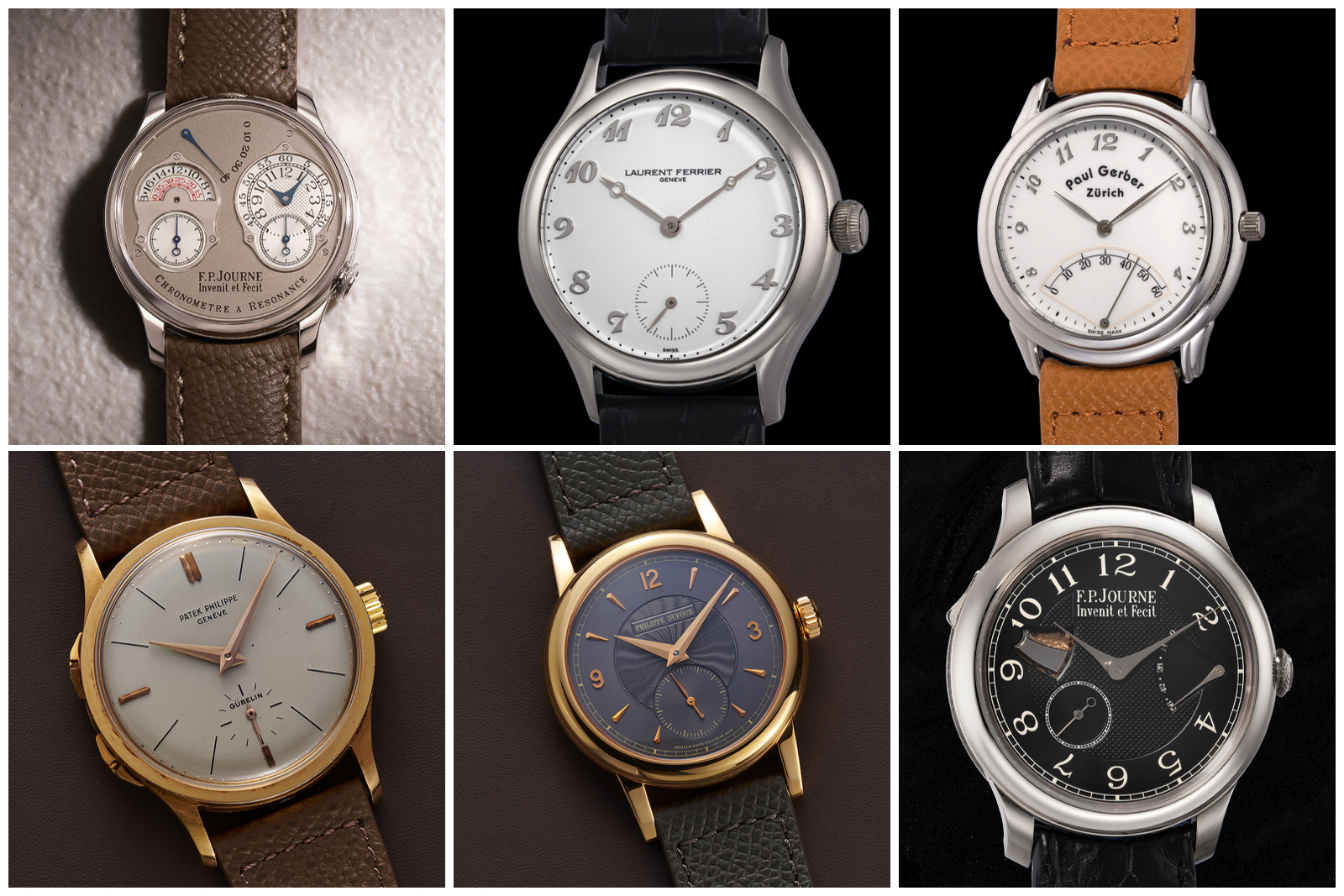
A window into the early days of contemporary independent watchmaking, the upcoming Phillips Hong Kong auction offers an unexpectedly diverse line-up, including a single-owner collection of 1990s watches.

The indie selection ranges from Daniel Roth in the late 1980s to Philippe Dufour’s influential finissage. And the historically-minded enthusiast will also notice the catalog includes work from an era when star independent watchmakers, such as Louis Cottier, counted brands as their clients.


Lot 982 – Daniel Roth Ref. 2187 Tourbillon “Double Face”

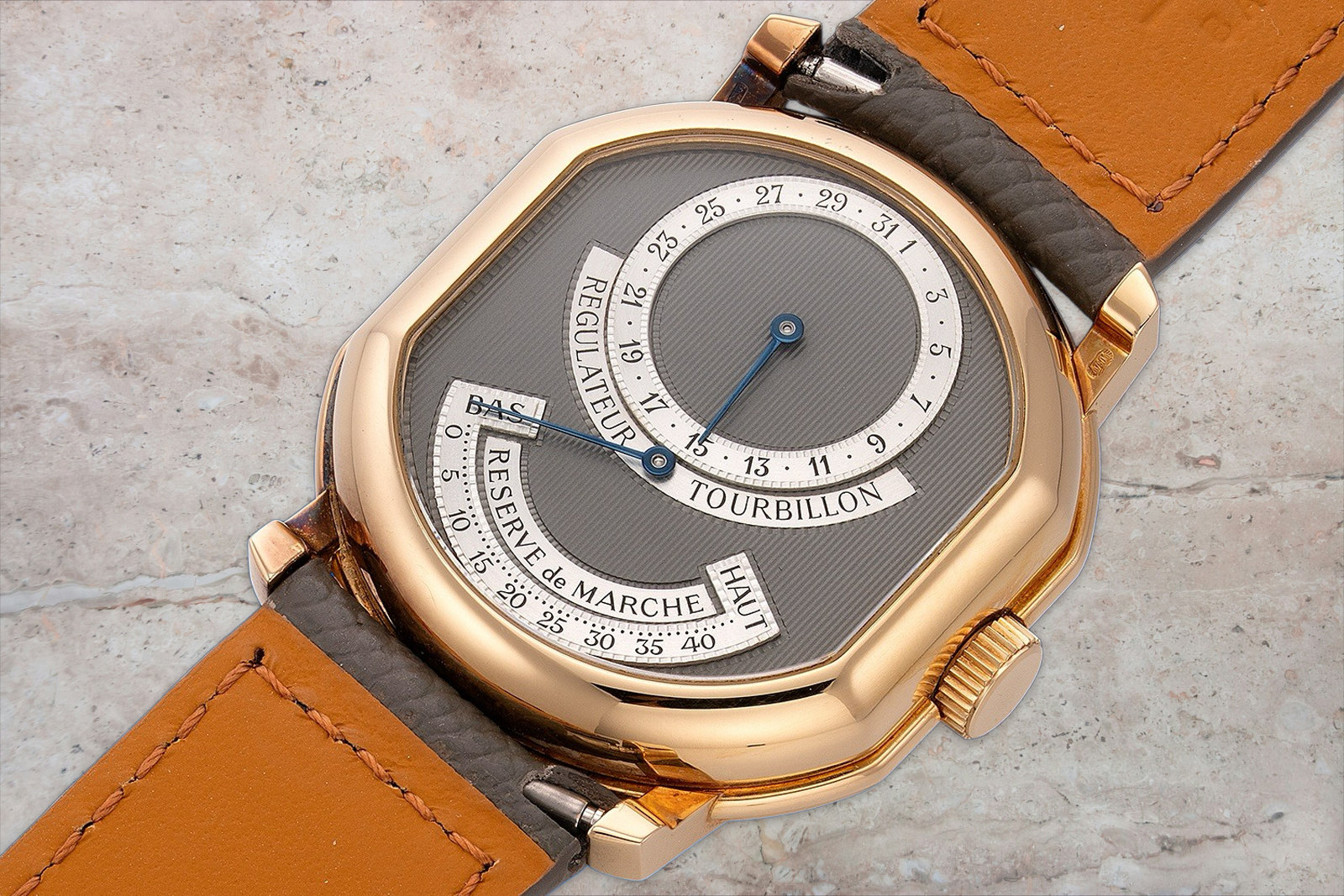
After helping establish Breguet as a Swiss watchmaker, Daniel Roth established his eponymous brand in 1988 with his inaugural model being the ref. C187/2187, a tourbillon wristwatch with two faces. The front indicates the time and showcases the tourbillon at six o’clock, while the reverse is home to the date and power reserve indicator.
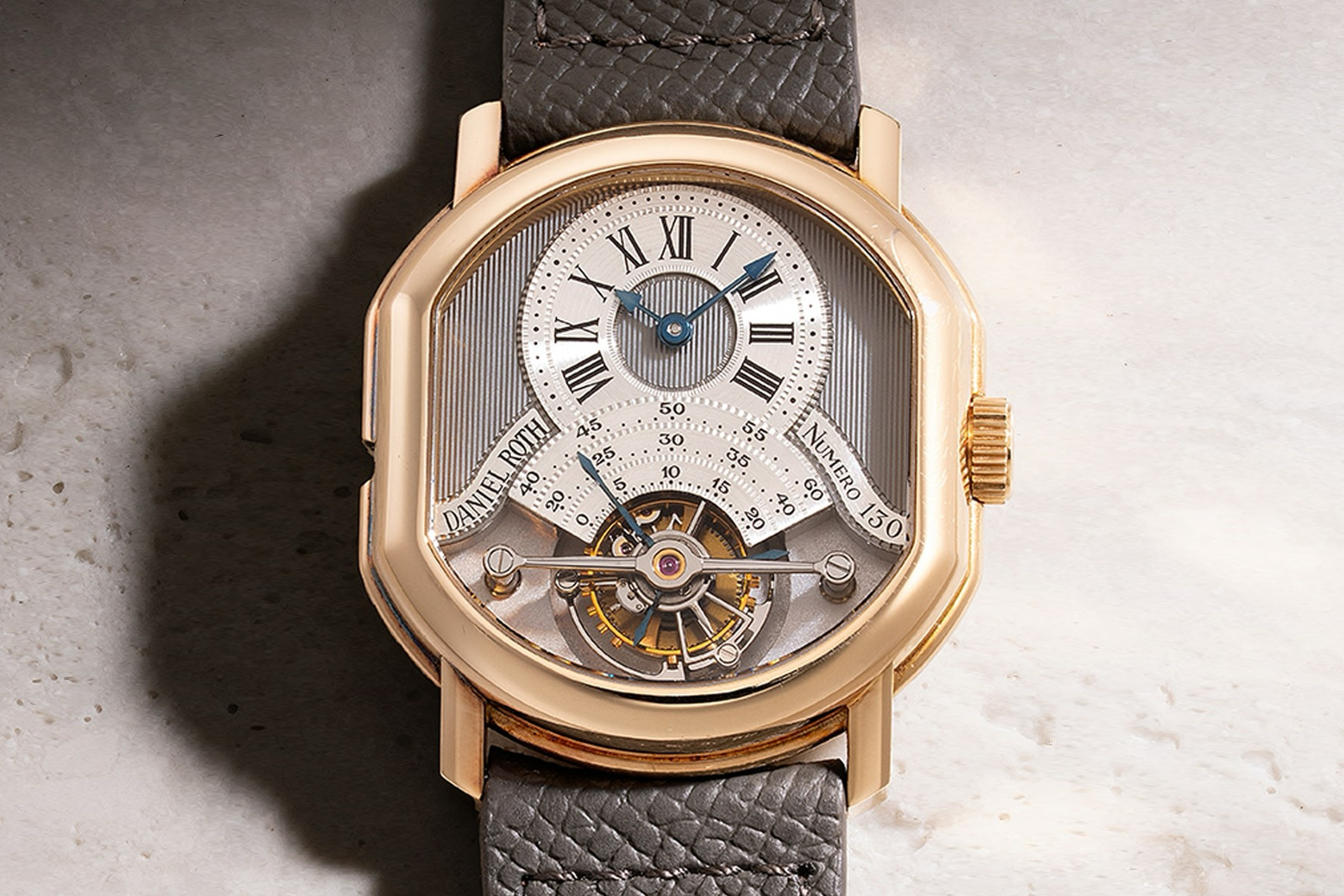
Despite the strikingly exotic look for the time – remember this was the late 1980s – the tourbillon actually employs the familiar Lemania tourbillon calibre, unsurprising given that Mr Roth helped with the construction of the calibre while he was at Breguet. While the bones are Lemania, the aesthetic is uniquely Daniel Roth. The grey dial has a pinstripe guilloche while the three-armed seconds hand indicates the time on a three-layer scale.

Just last year, Louis Vuitton resurrected the Daniel Roth marque with a new generation of the iconic tourbillon powered by an all-new calibre developed by its Geneva manufacture, La Fabrique du Temps. While the latest incarnation is excellent – the new calibre is arguably superior to the original in fact – the modern-day incarnation is missing the reverse dial and the quirky, nineties-era industrial-artisanal feel of the original.
The era of the original was also one where tourbillons were highly regarded for their precision. Rightly or misguided, tourbillons were expected to be accurate, or at lease precise. As such, this watch is accompanied by a timing certificate from COSC’s Le Locle office, dated October 7, 1991. Although the ref. C187/2187 was delivered with this as standard when new, a majority of examples today are missing the certificate.
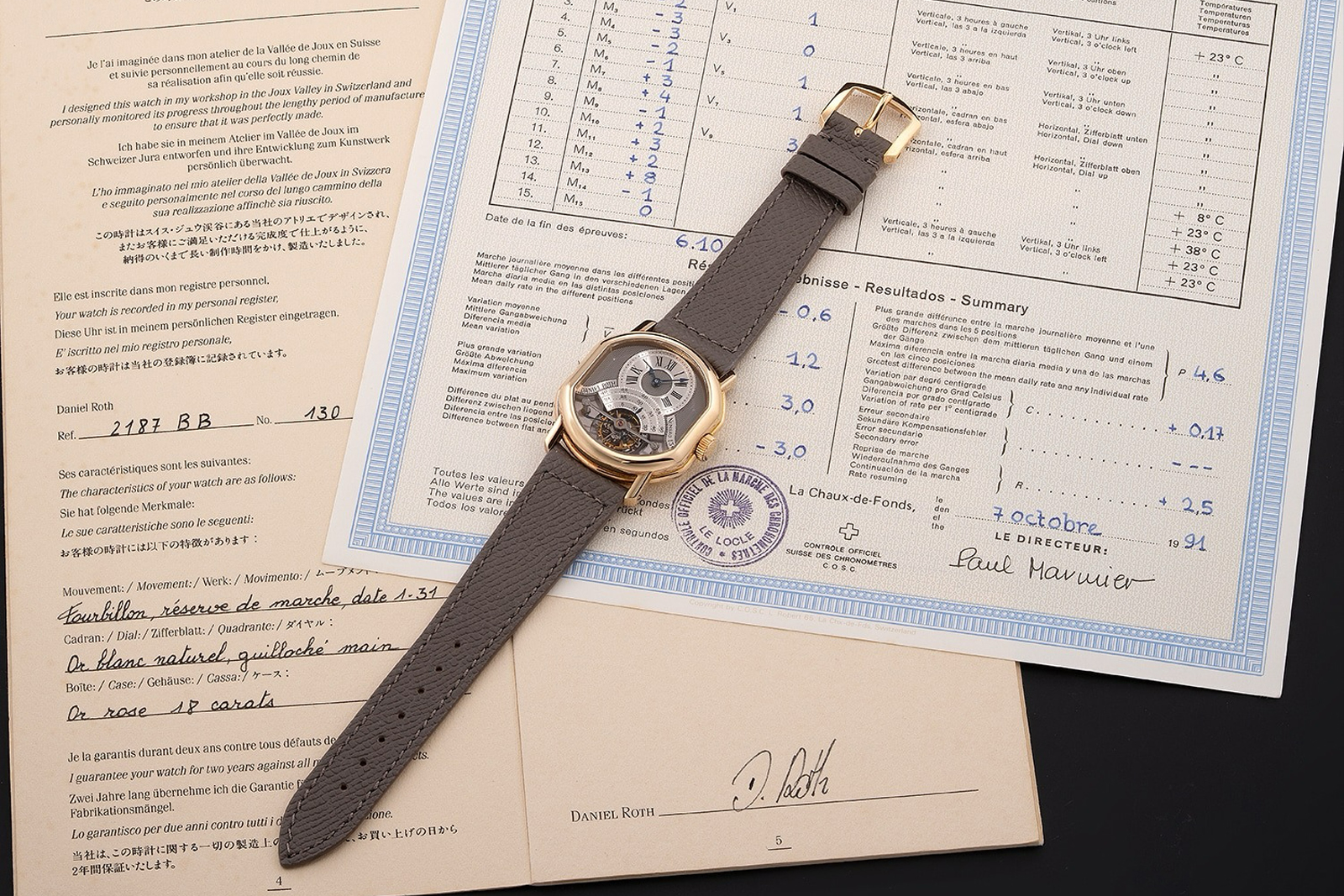
Also, this particular piece is in pink gold. Though almost indistinguishable from yellow gold at a distance, especially with the passage of time, pink gold iterations are far rarer. With that in mind, the estimate of HK$300,000-600,000 (US$38,500-76,900) makes this early Daniel Roth tourbillon an attractive opportunity.


Lot 1045 -Paul Gerber Ref. 152 Retrograd

A member of the pioneering generation of independent watchmakers who came of age in the 1990s, Paul Gerber combines a Swiss-German sensibility with creative ideas, giving him a diverse repertoire of watches ranging from quirky to complicated.
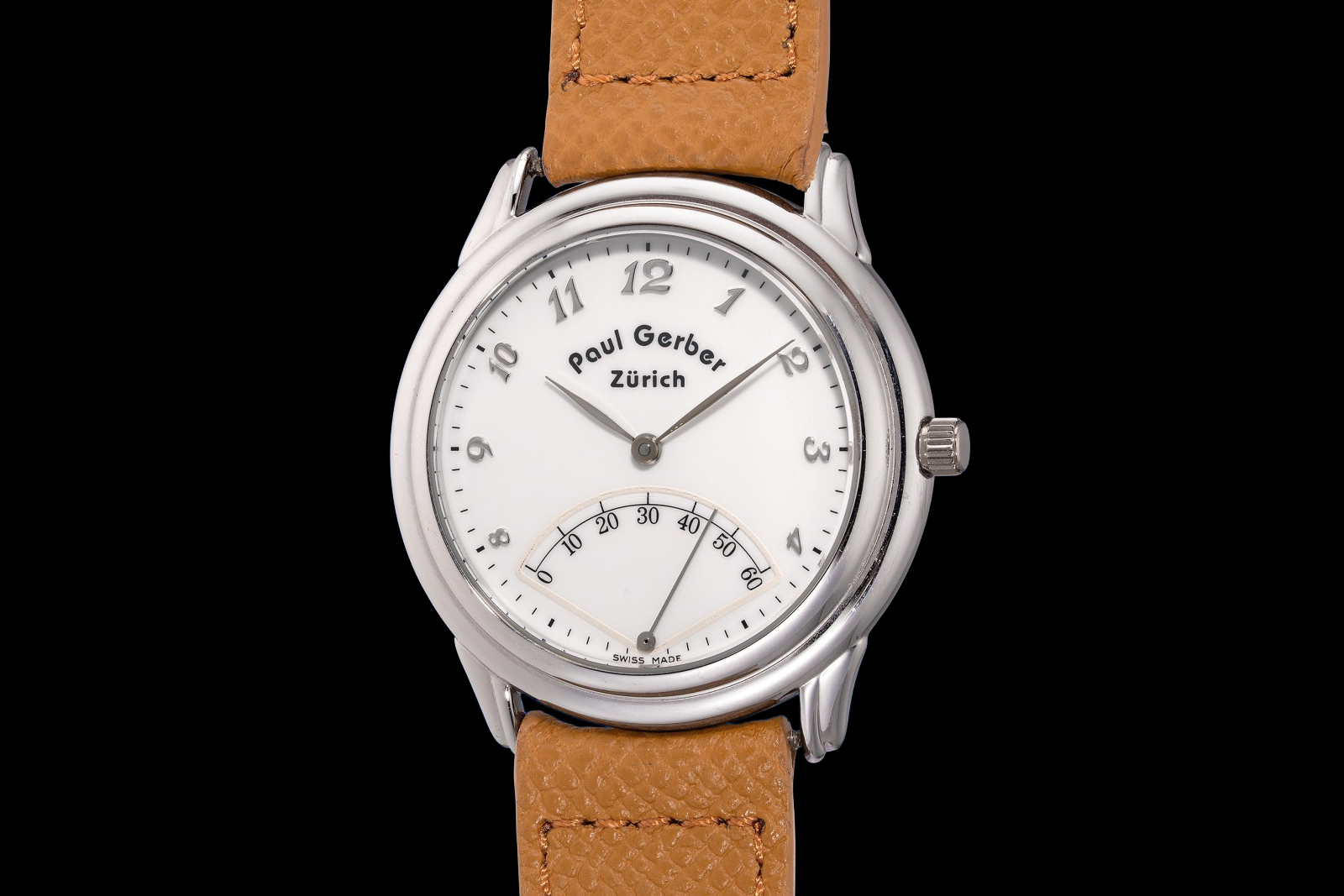
Image – Phillips.

The ref. 152 represents Mr Gerber’s very first concept as an independent watchmaker. Originally launched as the ref. 150 in 1996, the model was soon after upgraded to create the ref. 152. A little larger than its predecessor, the ref. 152 was cased in gold; this example is in white gold, which is a little less common than yellow.
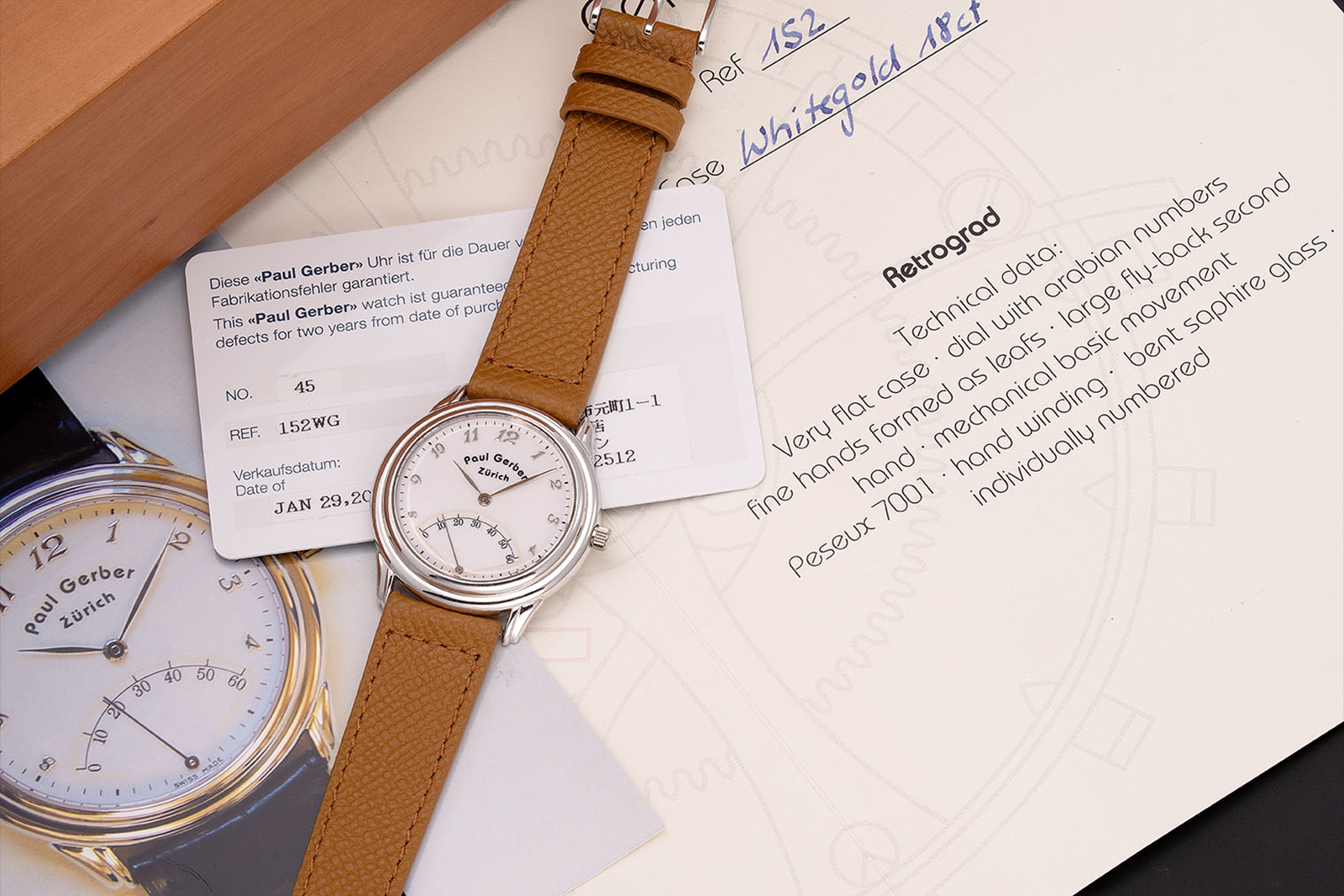
It features the classical-with-a-twist aesthetic devised for this series. The dial is white lacquer, hands are leaf, while the numerals are Breguet but shrink in size towards the retrograde seconds scale. The seconds take pride of place with an oversized scale at six, which might seem odd today, but the complication was extremely exotic in the 1990s and only offered by independent watchmakers at the time.

The back reveals the Peseux 7001 base movement, a no-frills manual wind that’s nonetheless been dressed up. This version is surprisingly thin thanks to the hand-wind calibre; Mr Gerber subsequently developed an automatic version with his patented double rotor that is thicker.
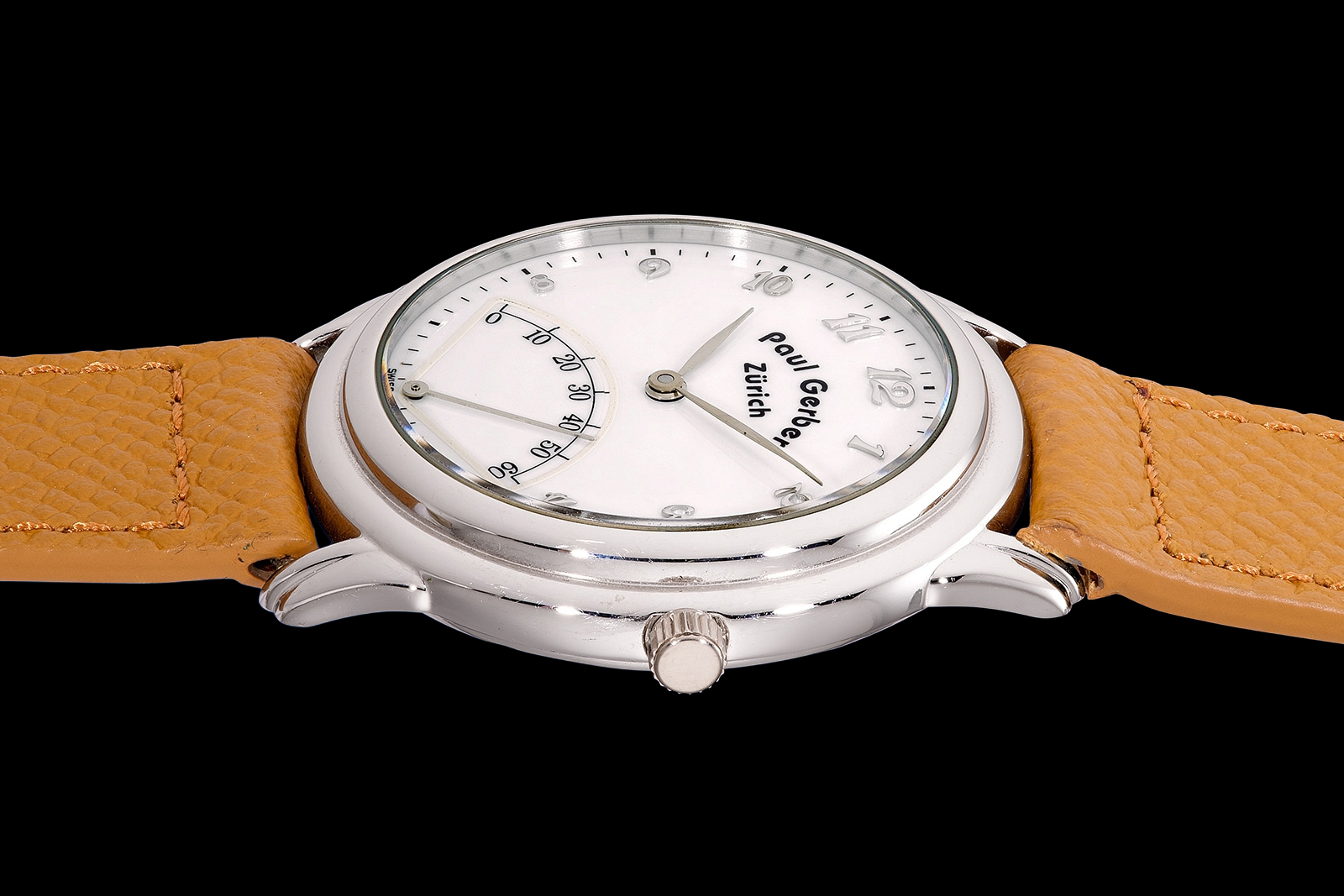
The manual wind movement helps the watch keep a low profile. Image – Phillips
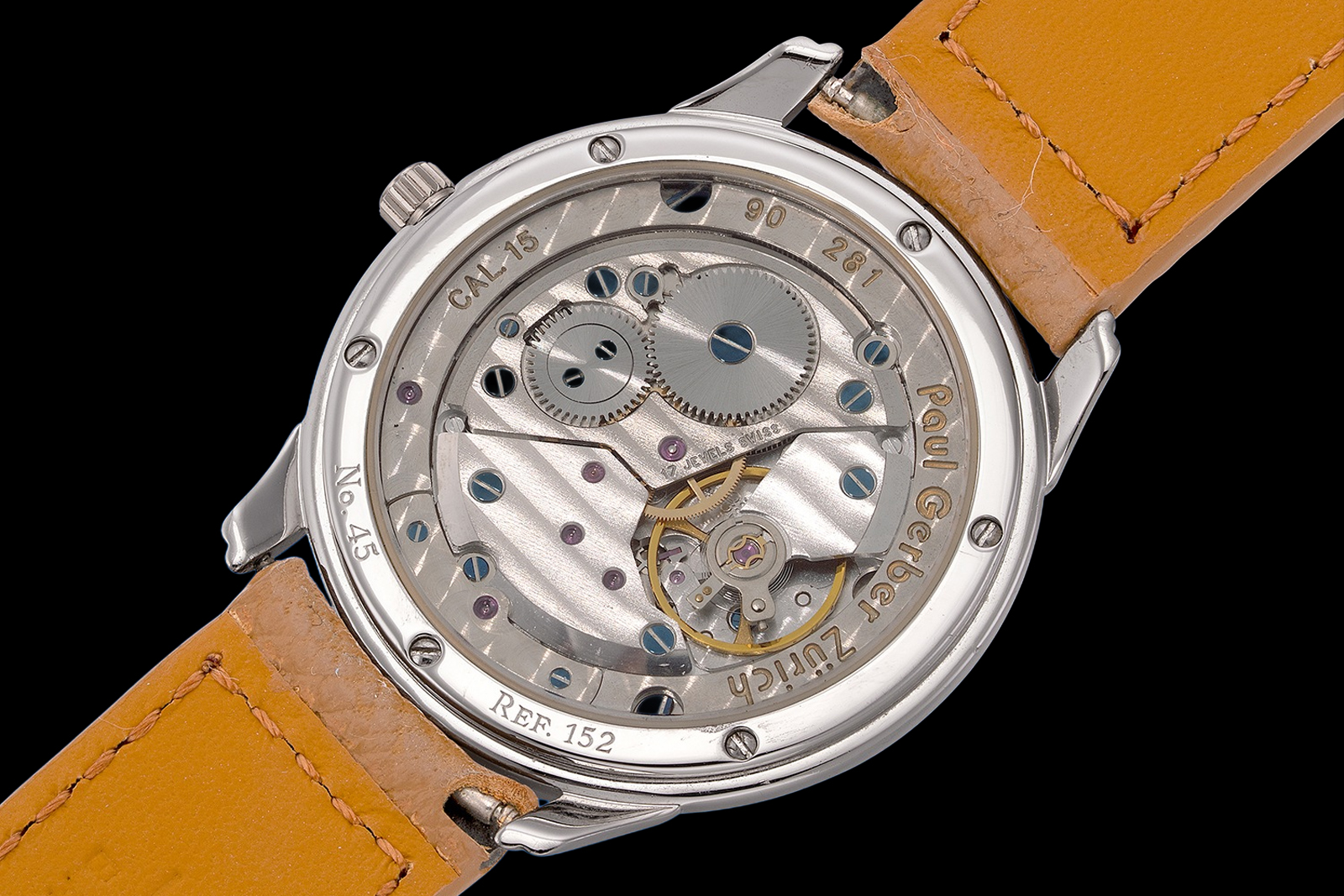
Image – Phillips

Complete with its original box and papers, this ref. 152 has a modest estimate of just HK$64,000-95,000 (US$8,200-12,200), which is good for a gold watch with a “small” complication and even better for a good example of 1990s independent watchmaking – though this example dates to 2013.


Lot 981 – Philippe Dufour Simplicity 37 mm

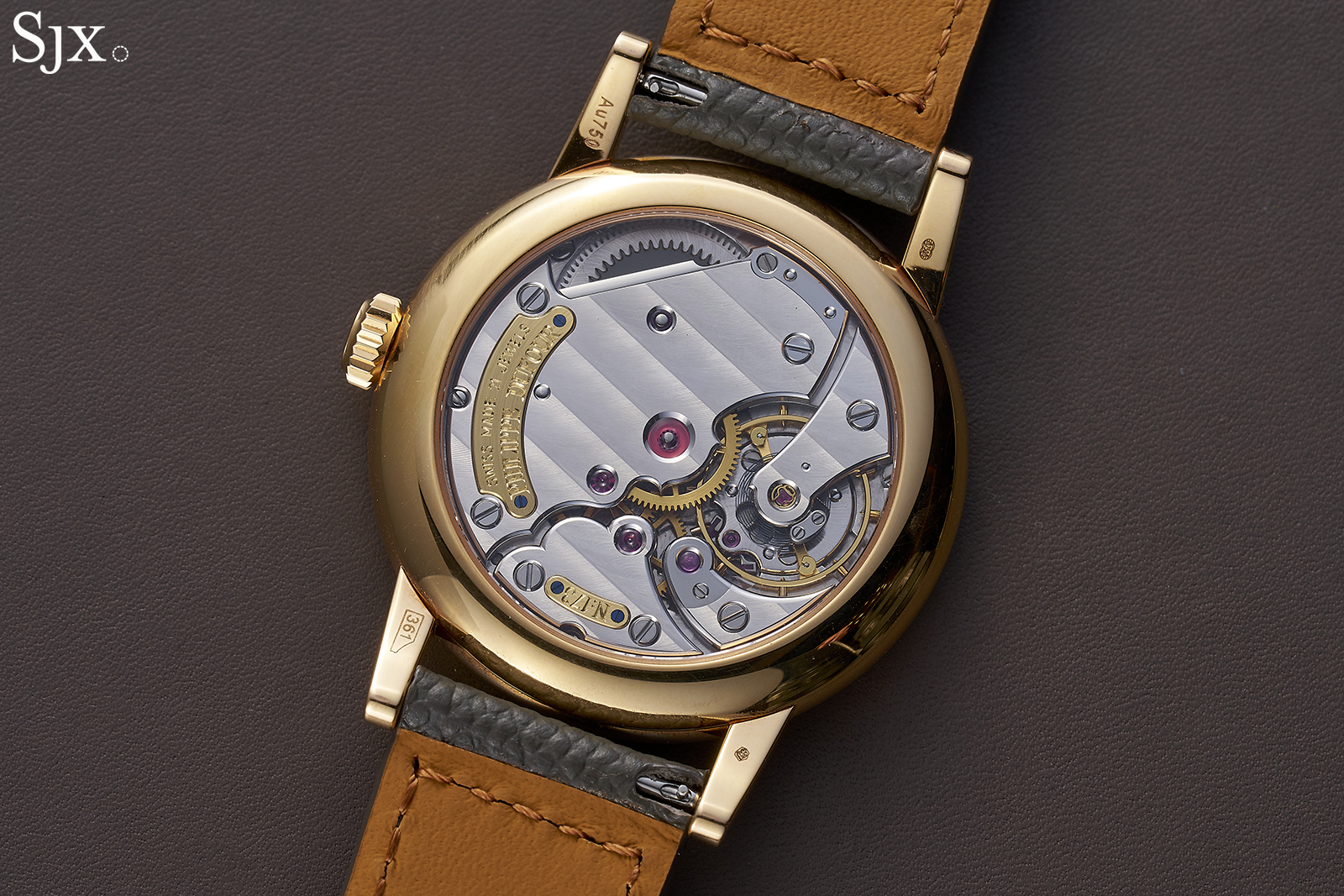
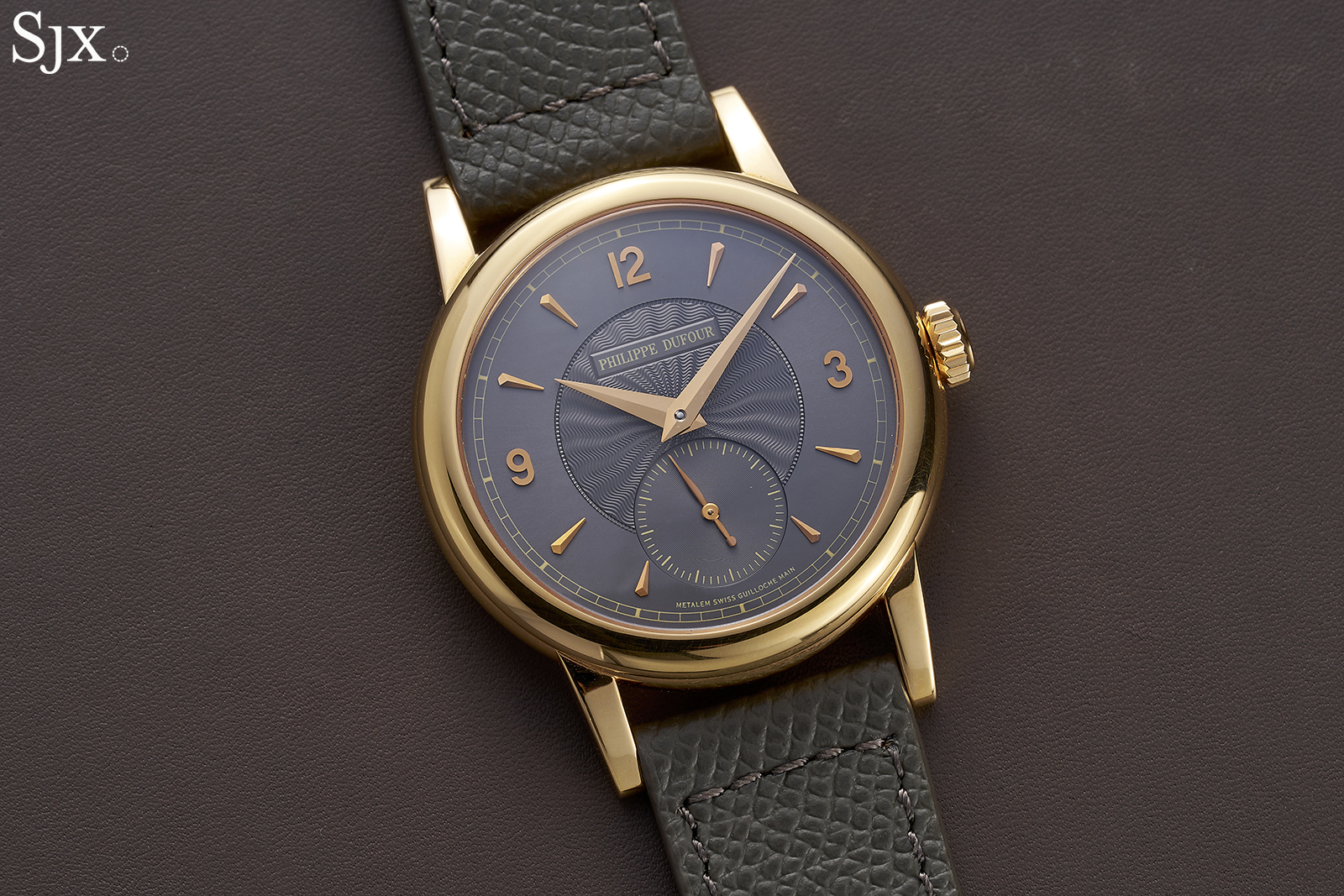
With its current six-figure value, the Simplicity has become a regular offering at major auctions, but this example is unusual with its combination of a pink gold case and dark grey dial, which gives it a more modern aesthetic than the most common silver or lacquer dial. According to Phillips, only two examples like this are known.
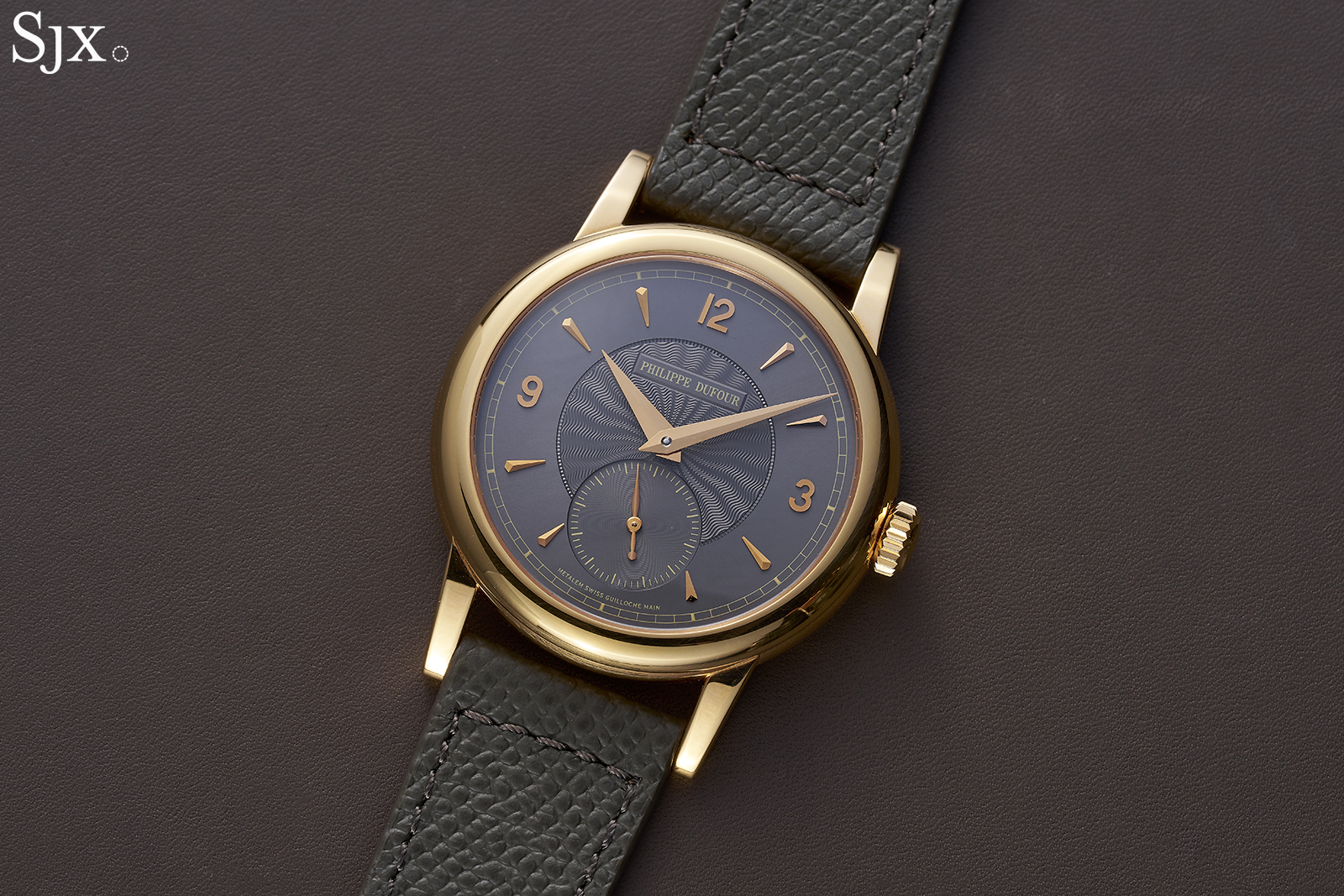
The rest of the watch is classic Simplicity. Simple in form and all polished, the pink gold case is the larger, 37 mm size, which wears better for most than the 35 mm original.
The dial features a guilloche centre and applied gold markers that match the case, and bears the “Metalem” signature at six o’clock, a distinguishing feature of the original, 200-piece edition. According to Mr Dufour, he consented to the dial maker putting its name on the dial, in contrast to prevailing practice, in return for a lower price on the Simplicity dials.
Consigned by the collector who bought this new from Mr Dufour in 2012, the watch is one of the last examples delivered from the original 200-piece run. This includes its original certificate and box. The estimate is HK$2.0-3.2 million (US$256,000-410,000).


Lot 993 – Patek Philippe Ref. 2597/1 “The Australian Pink Travel Time”

Independent watchmaker Cottier is credited with popularising world time watch genre, producing his first for L. Baszanger of Geneva in 1931. From 1937 to 1965 he modified a little under 400 movements for Patek Philippe, mostly adding travel or world time works.
According to Louis Cottier’s records, held by the Musée d’art et d’histoire de Genève, this movement was one of ten cal. 12-400 movements sent by Patek Philippe in 1961 (792’430 – 49) to be endowed with Cottier’s travel time system. Pressing the pins in the case band jumps the hour hand forward or back in one hour increments without disturbing the minutes or seconds.
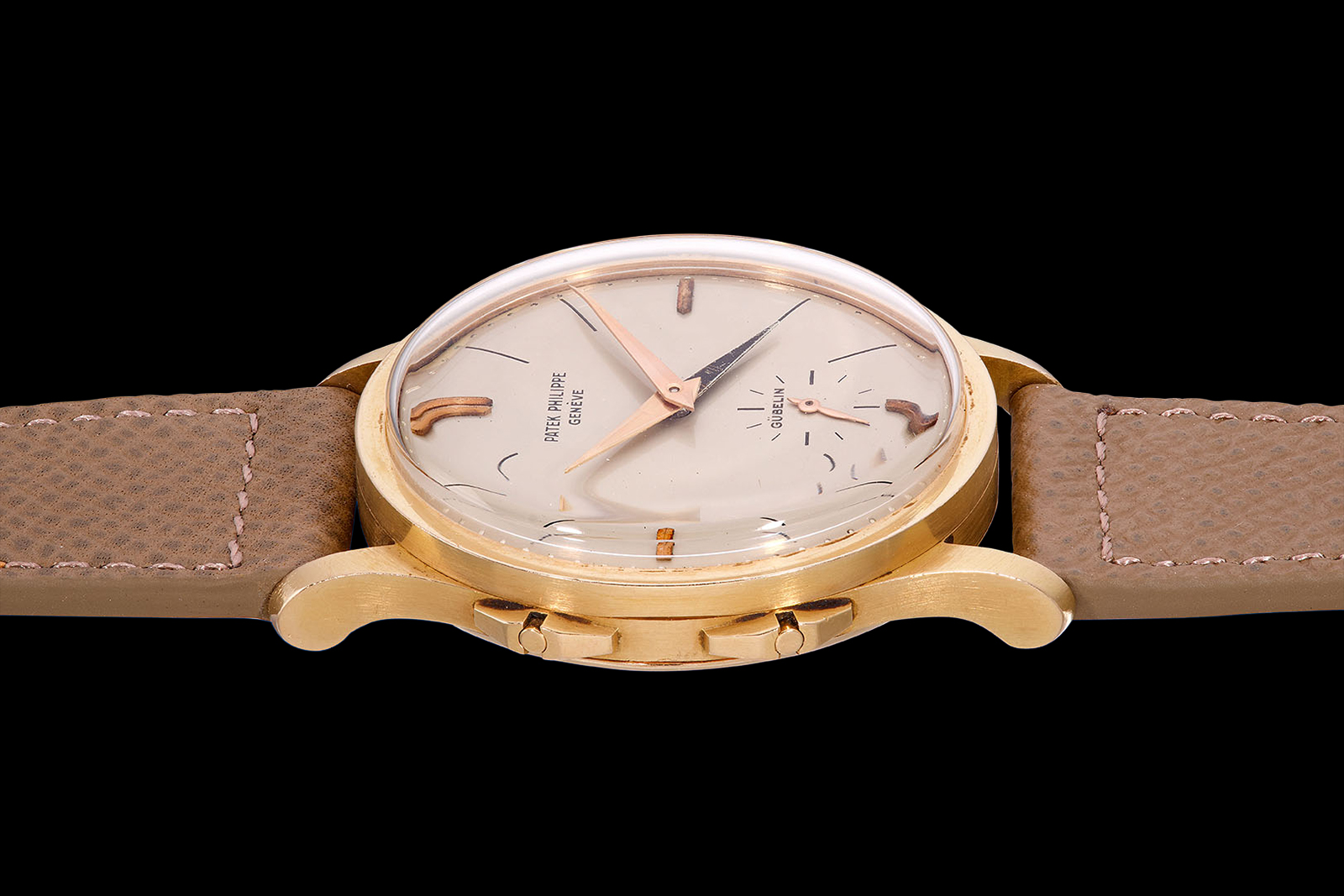
Image – Phillips

Patek Philippe used these movements in the second generation of the ref. 2597 travel time watch, the ref. 2597/1 which added a second, blued steel hour hand for “home” time as standard, which tucks away under the local hour hand when both show the same time, as seen here.
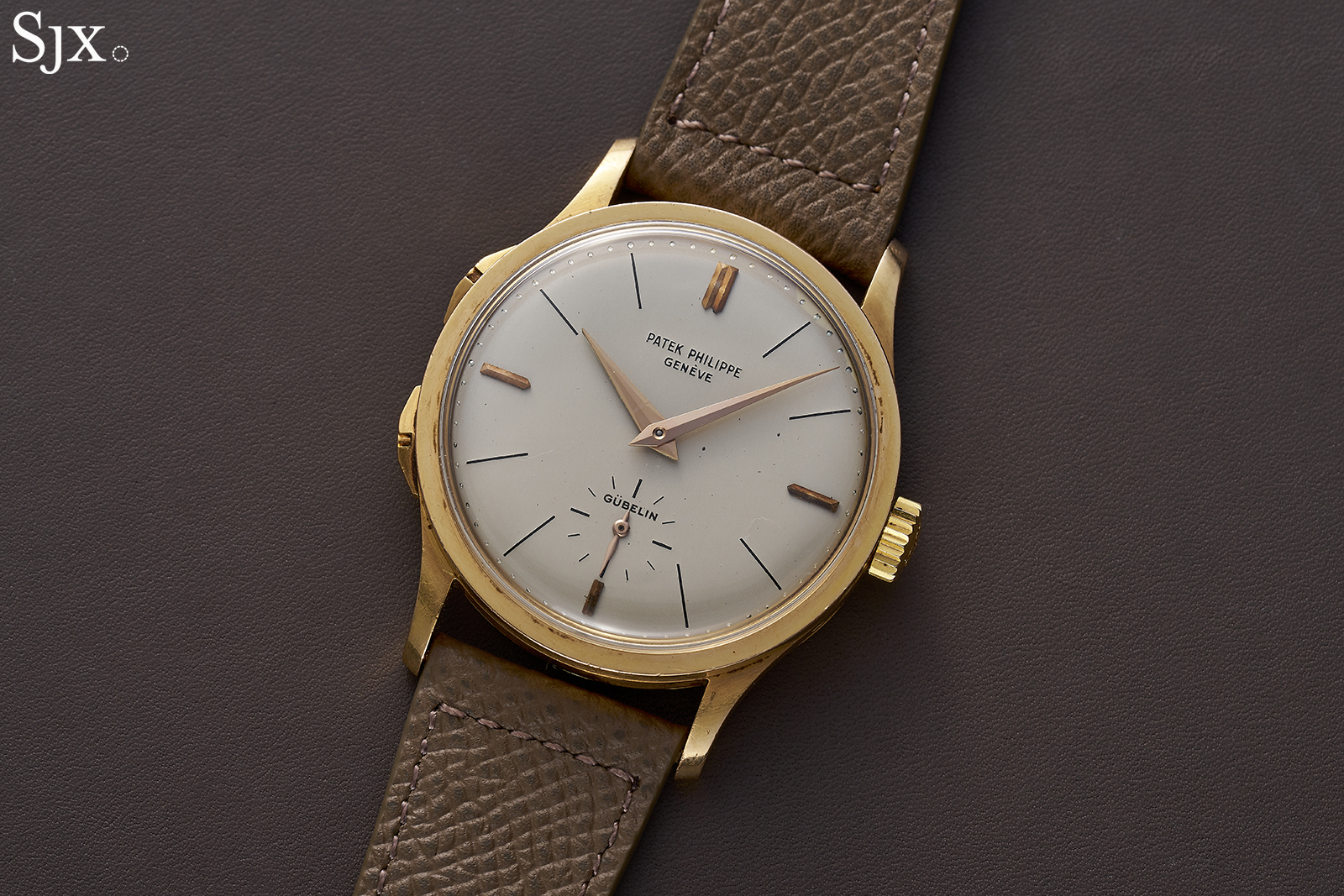
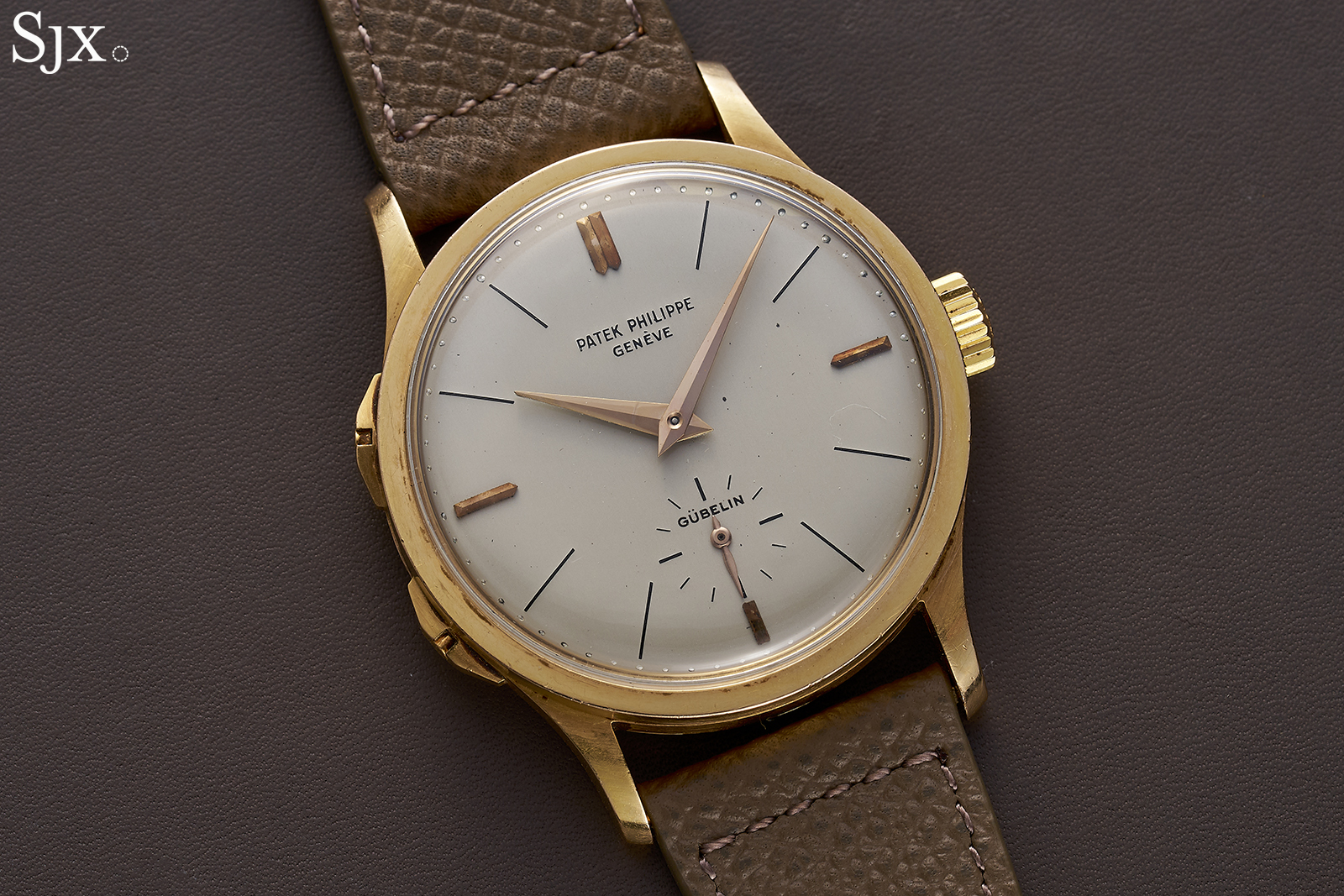
This watch’s history is unusually well documented, accompanied by correspondence between the first owner, an Australian, and Swiss retailer Gübelin. The Australian purchased a yellow gold ref. 2597/1 in 1970, which was stolen in 1976. While in Saint Mortiz the following year, he asked to Gübelin boutique to order a replacement.

While production ended over a decade ago, it used to be common for manufacturers to have niche watches and movements in inventory for years or longer – unthinkable in today’s just-in-time world. Gübelin passed this inquiry on to Patek Philippe, who responded they still had a ref. 2597/1 in stock, but it was rose gold.
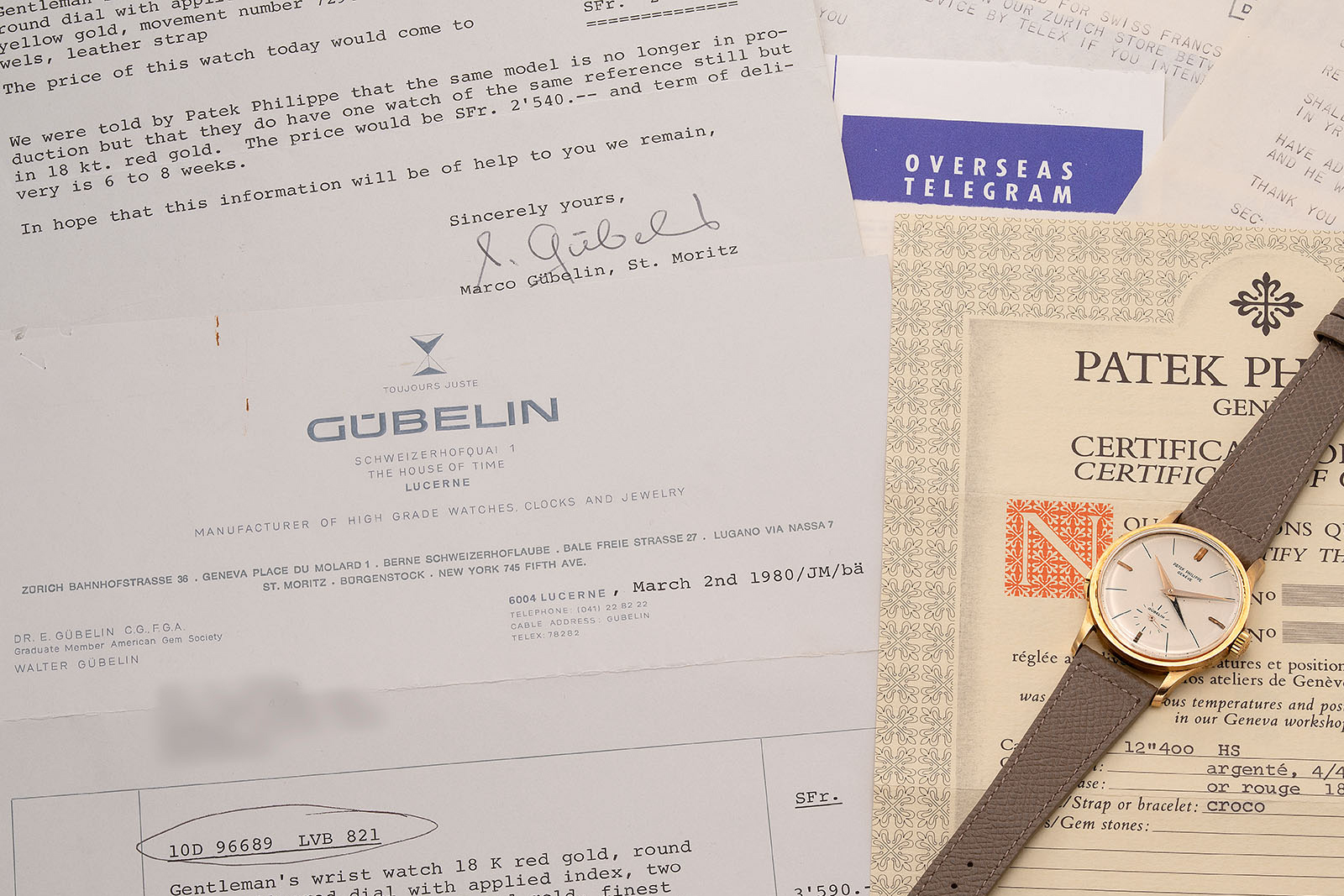
Image – Phillips

The Australian evidently found this acceptable, and Patek Philippe sold it to Gübelin in 1980, where it was marked with the retailer’s signature and forwarded to owner.

Retailer signatures are in vouge these days, that along with the condition and the 2597/1’s general desirably contribute to the high HK$2 – 4 million (US$256,000 – 513,000) estimate for this single owner example.


Lot 953 – F.P. Journe Répétition Souveraine “Black Label”

The Répétition Souveraine is one of the more unusual minute repeaters on the market. Most independents rely on a handful of contemporary specialists like Le Cercle des Horlogers, or near century-old ebauches for repeaters.

In his inimitable style, Francois-Paul Journe did it his own way, smartly and elegantly. He turned to the Chronomètre Souverain as a base and created his first stand-alone minute repeater. Although the height and width of the red gold main plate was increased to accommodate the striking works, the watch remains impressively thin in the typical F.P. Journe style.
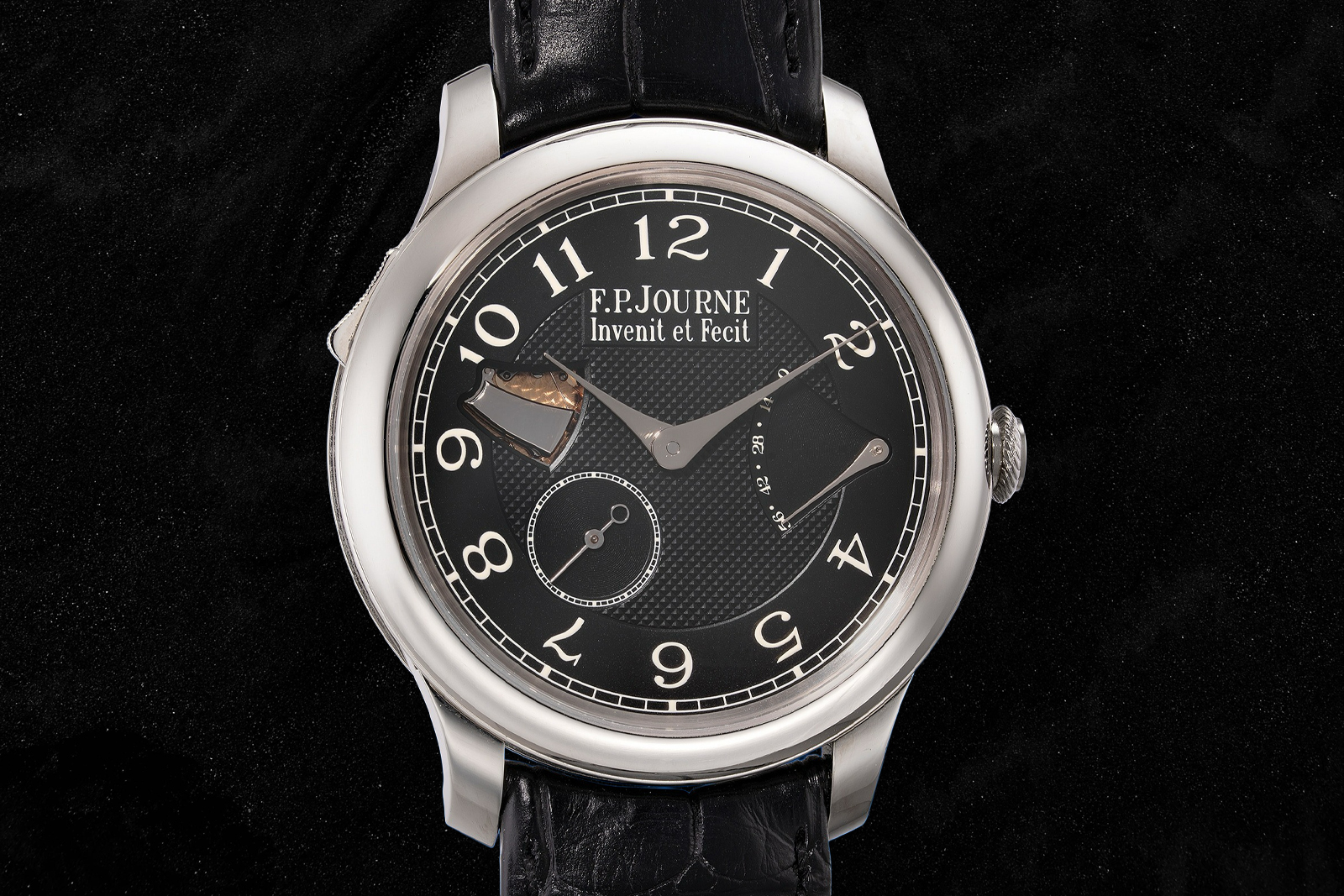
Image – Phillips

In fact, the 8.5 mm tall Répétition Souverain was briefly the thinnest minute repeater wristwatch when launched in 2008. A key aspect of its thinness was the unconventional repeater mechanism. Mr Journe was clearly inspired by the repeaters of A.-L. Breguet’s day, which were in turn based on the work of English watchmaker Matthew Stogden. Such Breguet’s minute repeaters chimed the hours and quarters on the same gong, and then the minutes on a second gong.
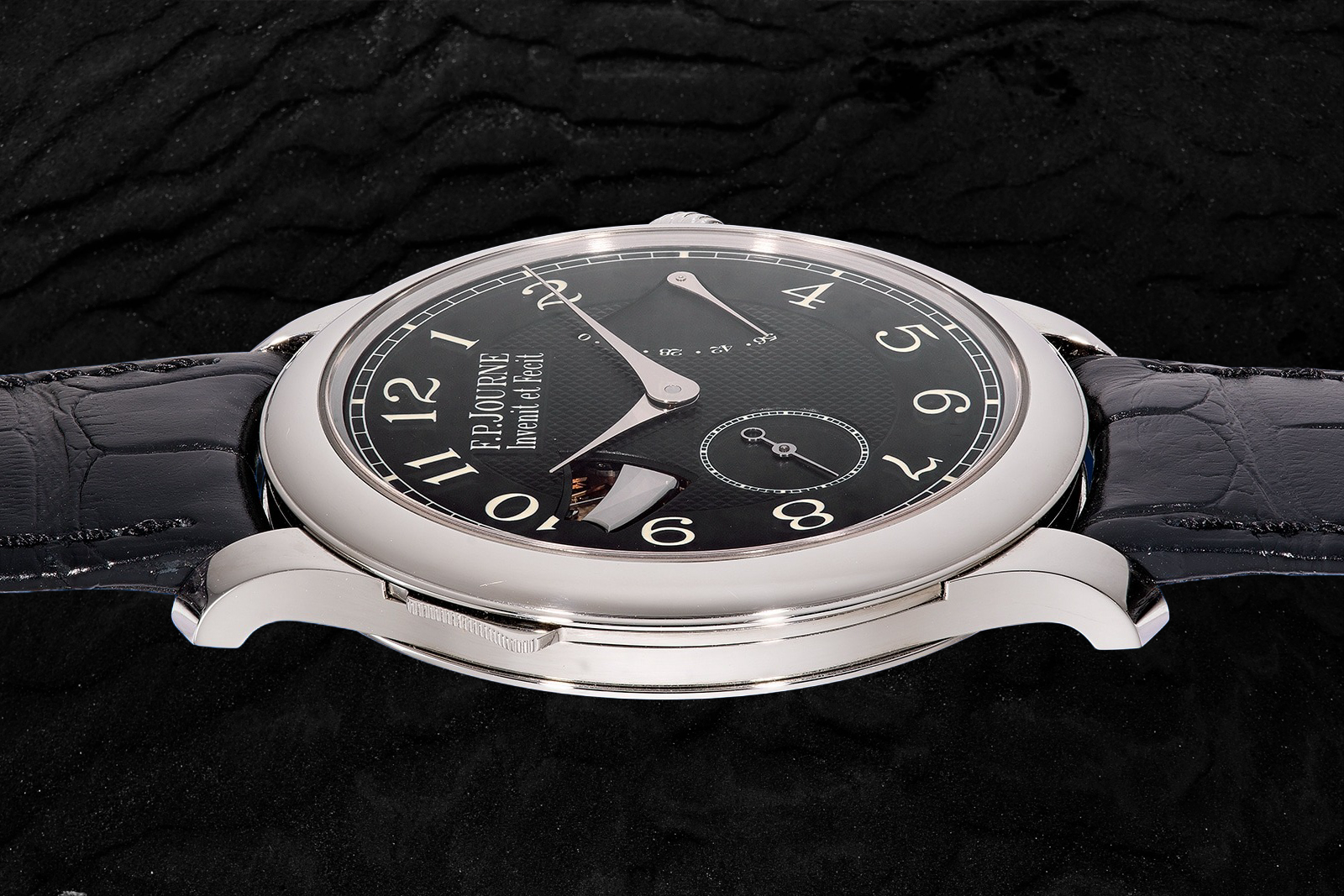
Image – Phillips

Mr Journe’s approach is slightly different but still employs the distinctive “flat” gong found on early Breguet repeaters that allows the gongs to sit flat under the dial Here the hours, minutes, and the note for the quarters use the same gong, while the first quarter note is on a second gong.
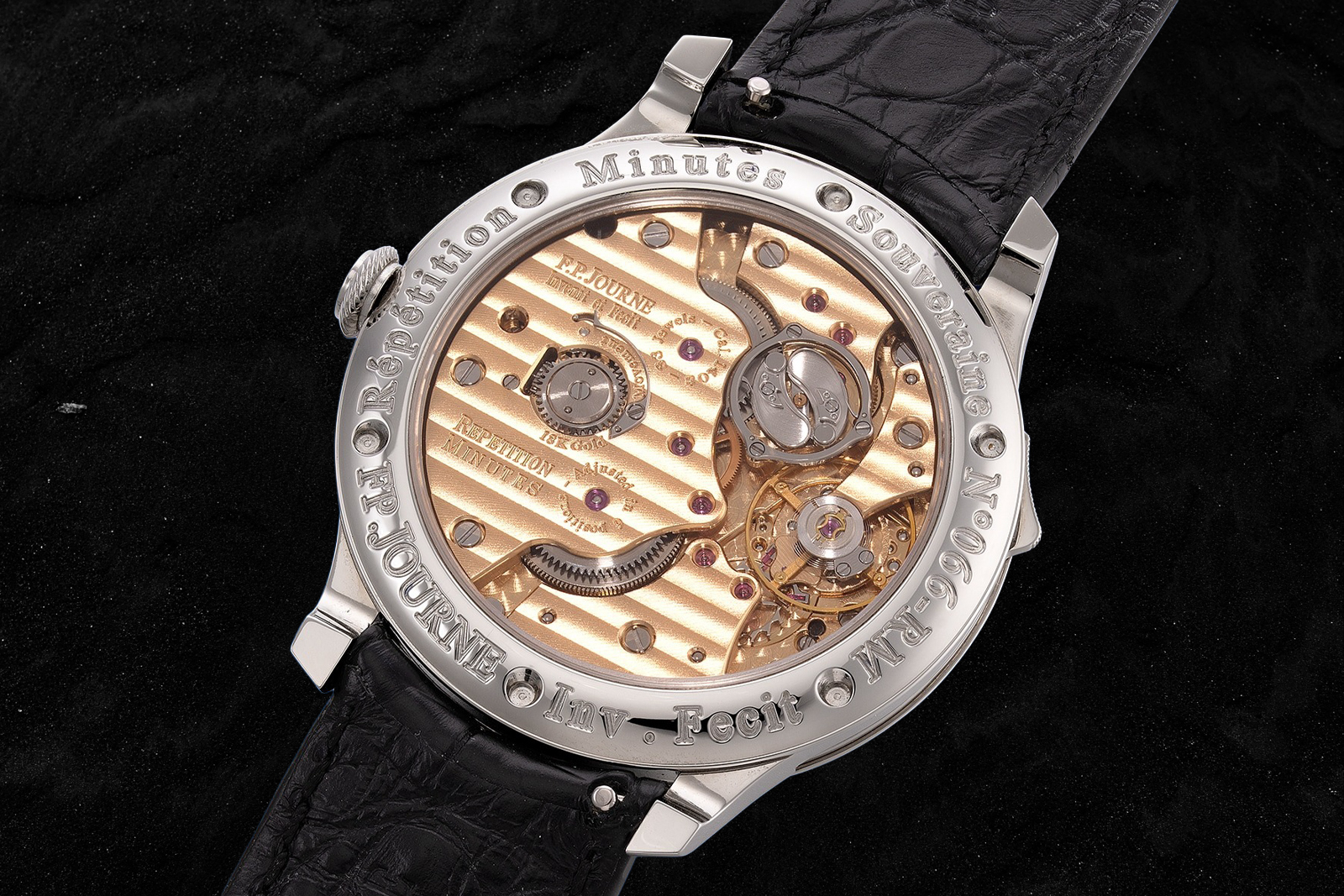
Image – Phillips

This example, however, is no ordinary Répétition Souveraine. It is a Black Label.

The Black Label Collection of watches with black dials – practically any model in the catalogue can be given the Black Label treatment – that are available only to existing customers and made in tiny numbers. Each of the brand’s 12 boutiques receive only 12 black label watches per year, and no more than two of each reference.

That means there is a hard limit of 144 Black Label watches per year. Since there 10 different regular production Black Label models, that actual number is certainly much lower.
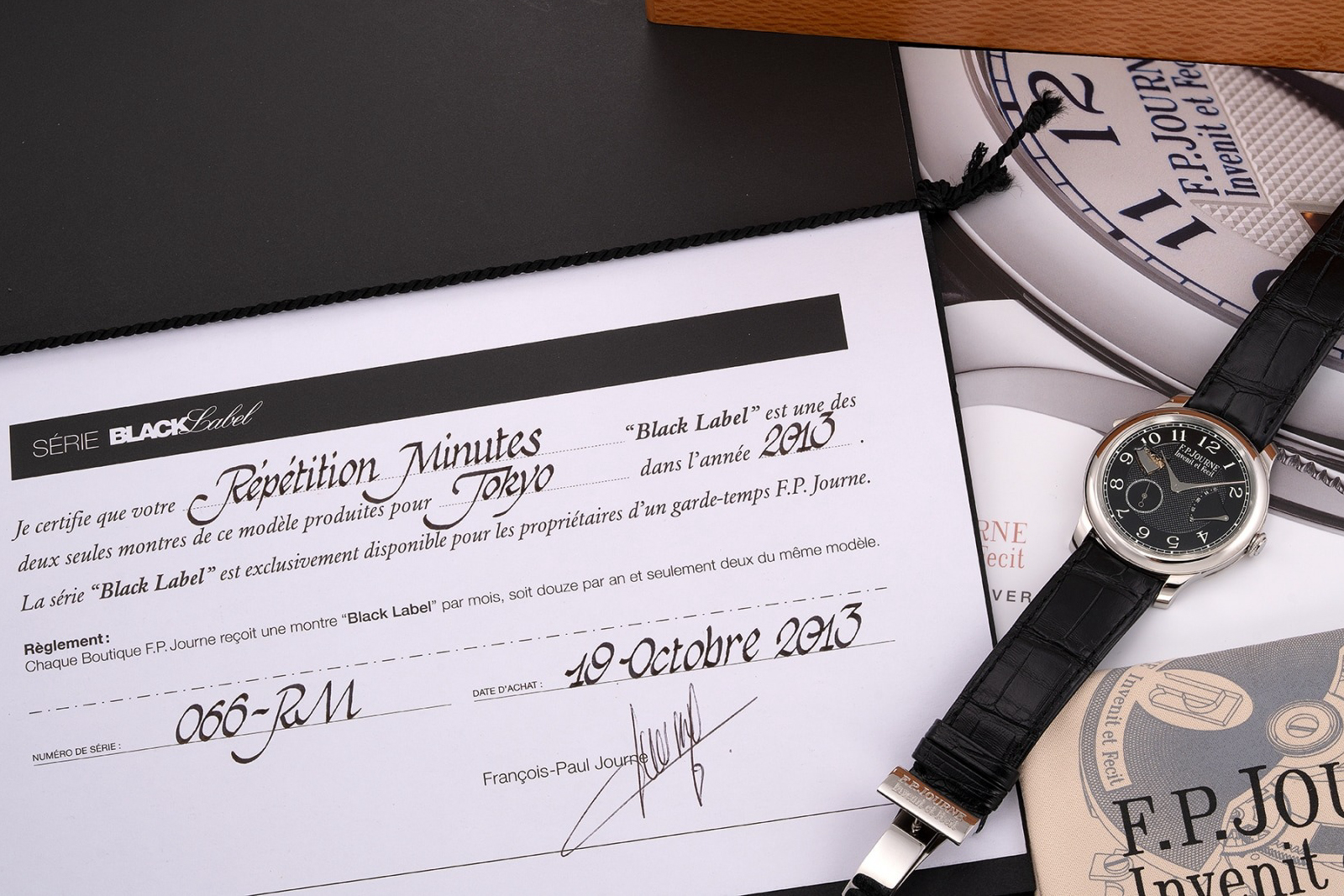
The special “Black Label” certificate, signed by Francois Paul Journe. Image – Phillips

Black Label watches have black dials and platinum cases – except for the striking models that have steel cases, which includes the Répétition Souveraine. In that light, the estimate of HK$2.4-4.8 million (US$308,000-615,000) estimate is unsurprising, though arguably low in today’s market.


Lot 1041 – F.P. Journe Chronomètre À Résonance, “Parking Meter”

Perhaps the most desirable brand of the moment, F.P. Journe is now a fixture in major auctions, so rare F.P. Journe models pop surprisingly often. This Resonance, however, is rarer than most.

For one, it features the “parking meter” dial that was derided at launch for being illegible and spoiling the signature symmetry of the Resonance. Today this dial type is one of the rarest for the model.
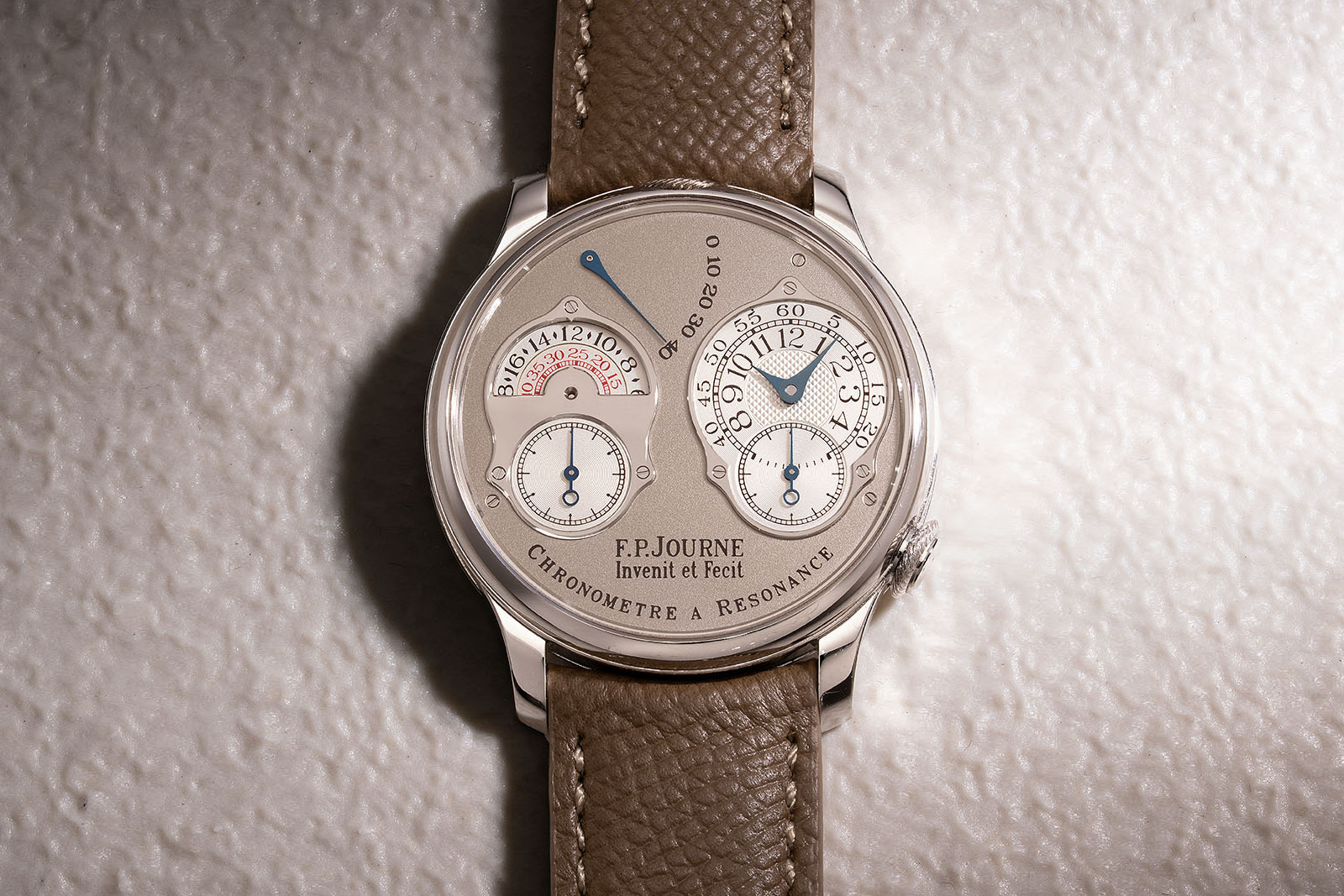
Image – Phillips

And then there’s the 38 mm case that makes this even rarer. Majority of “parking meter” Resonance examples were delivered with in a 40 mm case, which was already the prevailing standard when the “parking meter” dial was introduced in 2010.
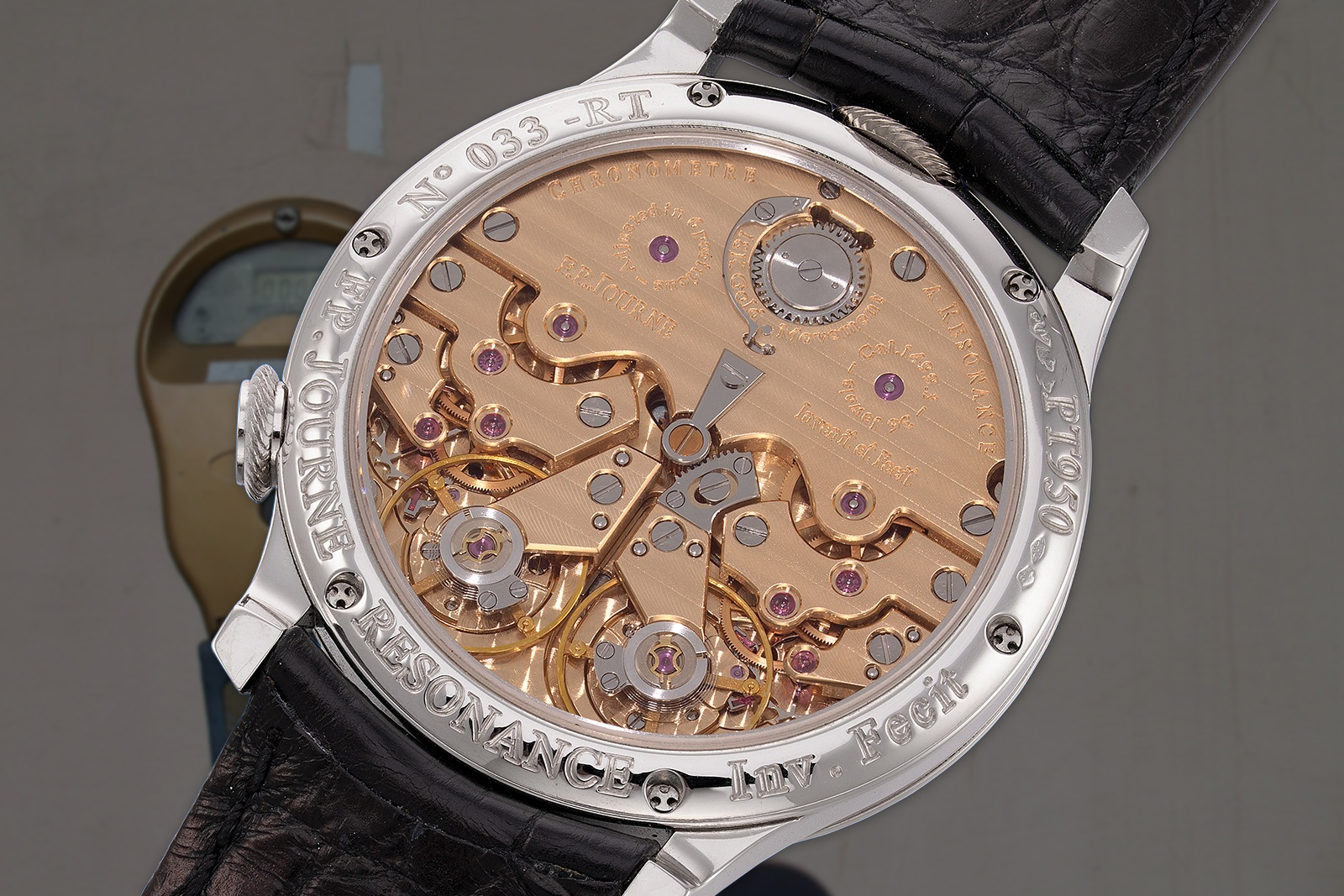
Image – Phillips

This Resonance is complete with its original box and papers dated 2011. The estimate is HK$950,000-1.6 million (US$$122,000-205,000).


Lot 1043 – Laurent Ferrier Galet Micro-Rotor Kamine Edition

One of Japan’s most venerable retailers, Kobe-base Kamine is now in its 119th year and still family run. Though it represents establishment brands like Patek Philippe and Vacheron Constantin, Kamine is also a longtime retailer of independents; it was one of the first retailers to carry Philippe Dufour for instance.

This Galet Micro-Rotor was a limited edition for Kamine’s 110th anniversary. Unsurprisingly, it is exceedingly elegant and reflective of the prevailing Japanese preference for refined, classical style.
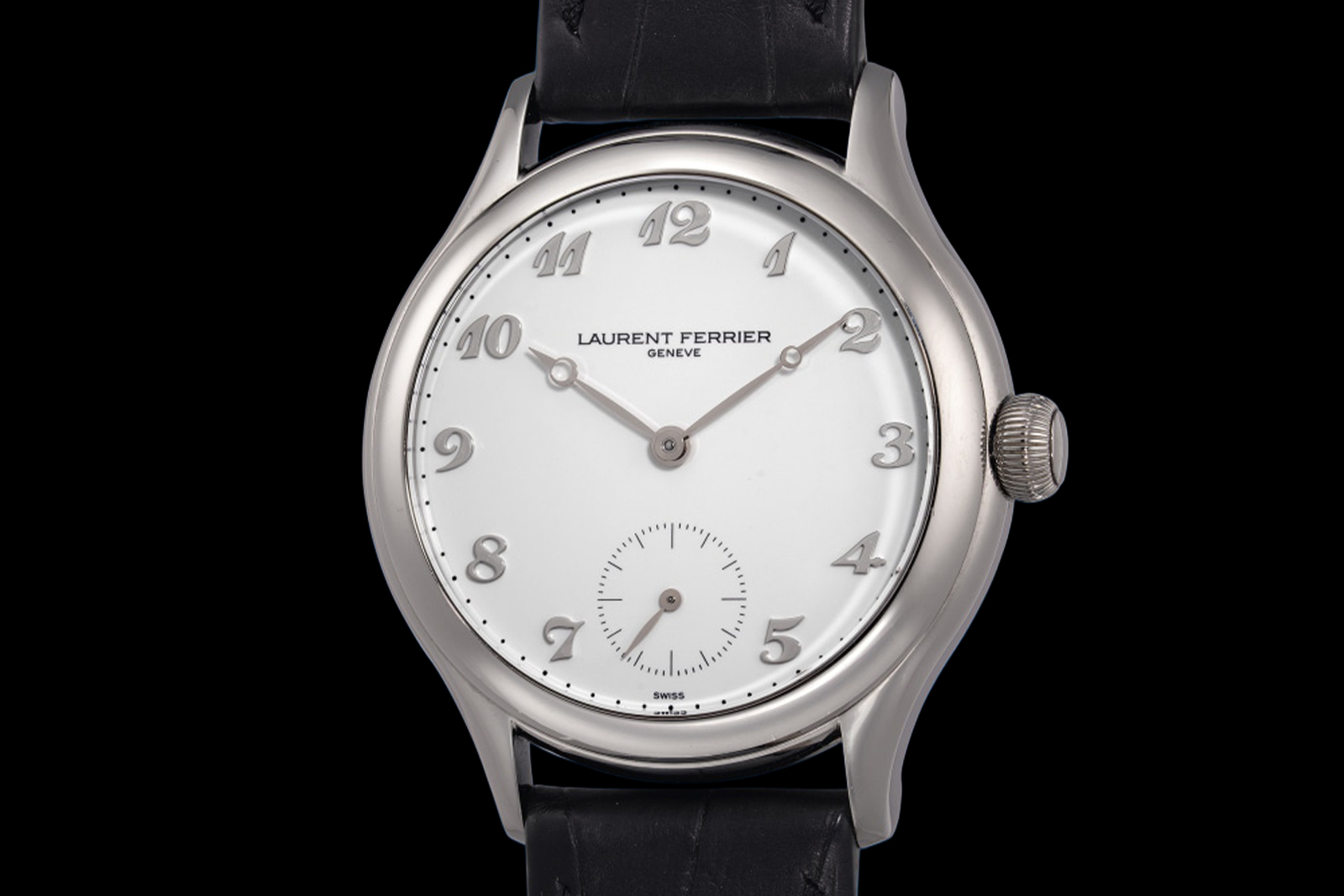
Image – Phillips

The white gold galet (or pebble) case has a white grand feu enamel dial featuring applied Breguet numerals and Breguet hands. Both the hands and numerals are solid white gold to match the case.

And inside is the FBN 229.01 movement that’s one of the brand’s best. Though Laurent Ferrier has introduced simpler movements since, or simpler finishing on its earlier movements, this FBN 229.01 is top quality.
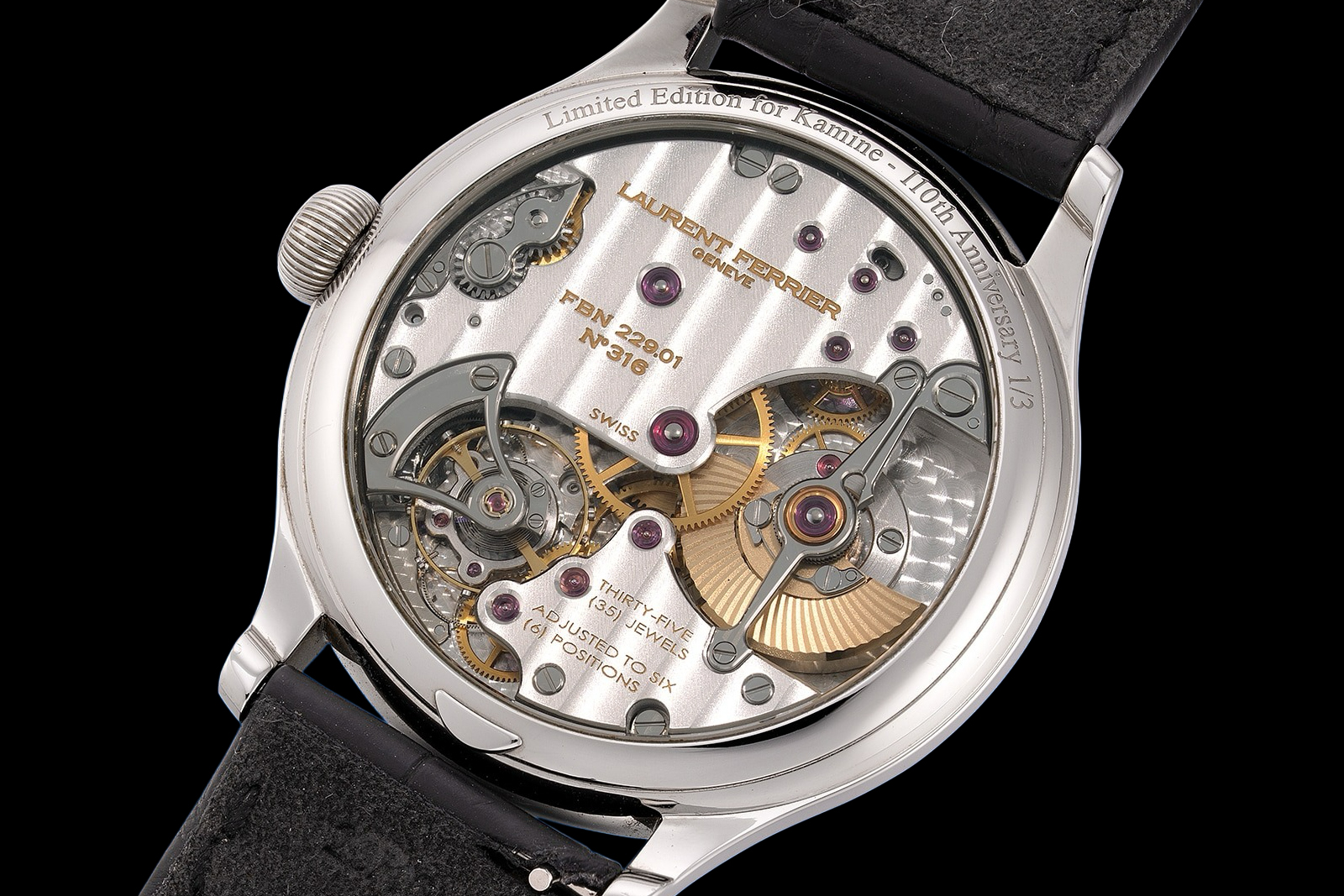
Image – Phillips

Numbered “1/3”, this Kamine edition includes all its original packaging, including a certificate dated 2016, and has an estimate of HK$160,000-240,000 (US$20,500 – 30,800).


Preview and auction

The sale and preview exhibition will take place at Phillips Hong Kong in the West Kowloon Cultural District.

Preview
Open daily November 15-23, 2025, from 10:00 am-7:00 pm

Auction
November 21 – 2:00 pm (Session I lots 801 – 901)
November 22 – 2:00 pm (Session II lots 902 – 1014)
November 23 – 2:00 pm (Session III lots 1015 – 1123)

(All times are local to Hong Kong, GMT+8.)

G/F WKCDA Tower
Cultural District
8 Austin Road West
Kowloon, Hong Kong

For the full catalogue, visit Phillips.com.

This was brought to you in partnership with Phillips.


Back to top.

You may also enjoy these.

Hands On: Vacheron Constantin Celestia Astronomer Duo

Ptolemy and Copernicus.

Marking its 270th anniversary, Vacheron Constantin has approached the milestone with uncommon ambition. The year opened with the debut of the Solaria, a landmark wristwatch that claims the title of the most complicated ever made thanks to its 41 functions. Soon after came La Quête du Temps, an monumental astronomical clock that recently wrapped up its exhibition at the Louvre in Paris. Taken together, these creations underscore not only the scale of VC’s technical reach but also the brand’s talent for blending engineering, artistry, and traditional craft.

The anniversary programme now extends to a duo of one-of-a-kind Les Cabinotiers pieces—Celestia Homage to Ptolemy and Copernicus—developed under the maison’s ongoing “The Quest” theme. These one-off creations showcase the manufacture’s dual mastery of horology and métiers d’art. Presented here is a rare hands-on look at both before they disappear into private collections.

Initial thoughts

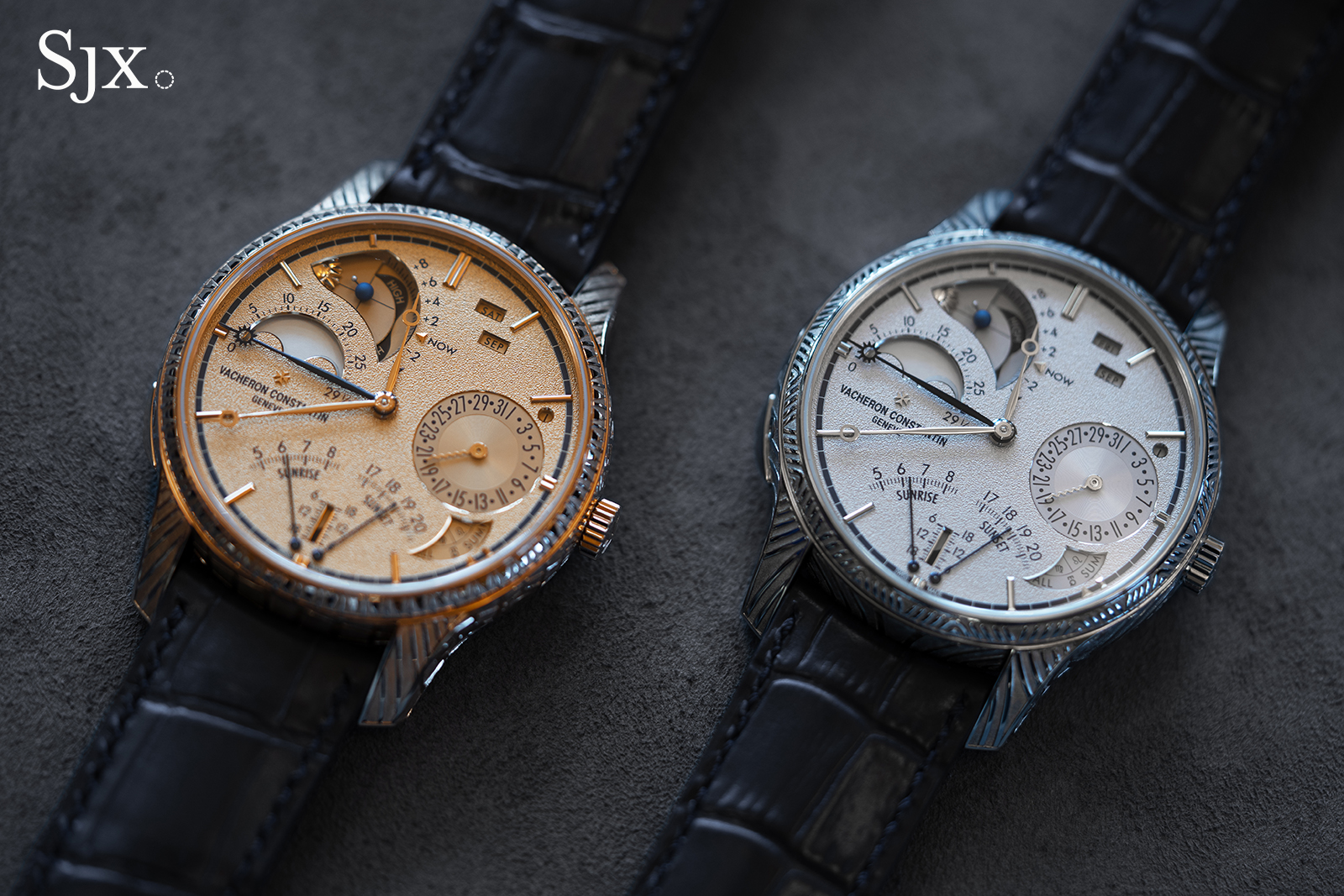
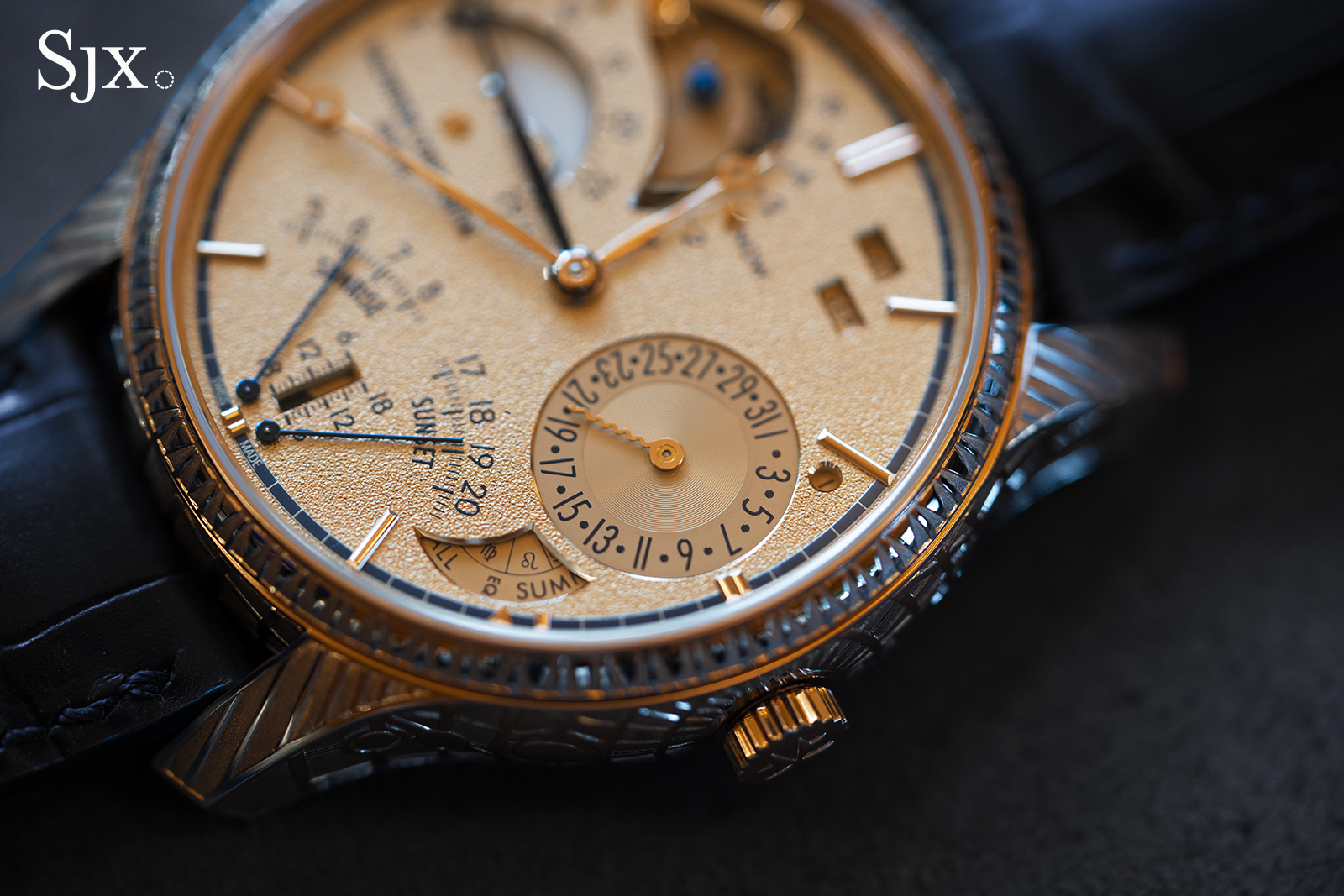
Each of the new Les Cabinotiers watches expresses a different facet of VC’s watchmaking identity. The new Celestia references utilise the brand’s earlier cal. 3600, but elevate it through intricate case engraving that links science with art.

As a pair, these watches reinforce the idea that VC’s greatest strength lies in synthesis. Few manufactures can move so fluidly between engineering precision and artistic refinement.

As unique pieces, pricing is largely outside the scope of this hands-on evaluation. As is typical for VC’s bespoke Les Cabinotiers department, each watch was almost certainly developed in close collaboration with its eventual owner, making them more commissions than catalogue items. Their value, therefore, lies not only in their material complexity but also in the fact that each represents a personal chapter in the continuing story of Geneva’s oldest watchmaker.

Two unique Celestia astronomical grand complications

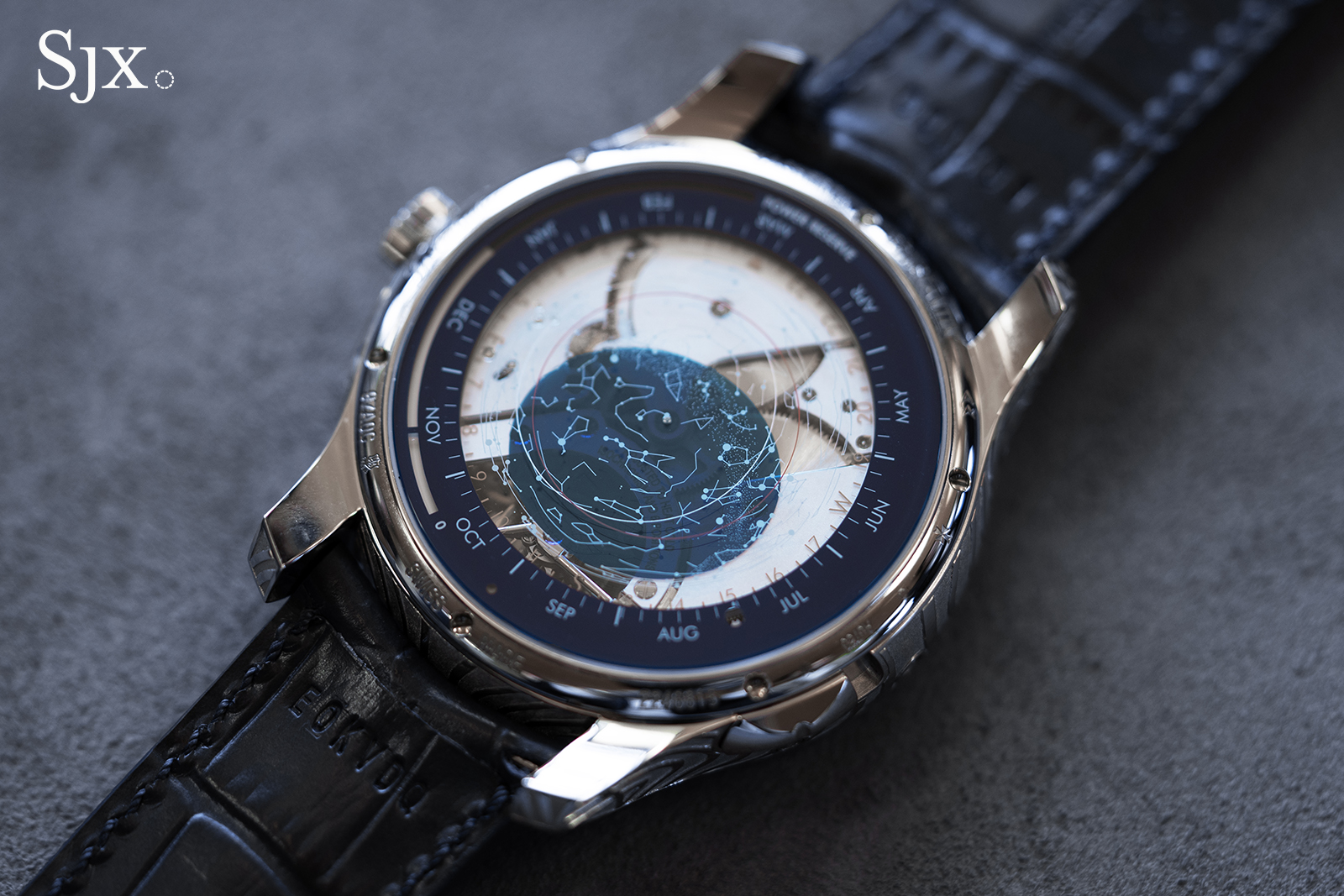
Revisiting one of the most complex astronomical watches in its archives, VC has created two unique versions of the Celestia cal. 3600 as a tribute to two of history’s greatest astronomers: Ptolemy and Copernicus. Ptolemy, who lived in the second century, proposed the geocentric model of the universe, placing the Earth at its centre with the Sun and stars revolving around it.

More than a millennium later, the Polish astronomer Nicolaus Copernicus redefined that understanding with his heliocentric model, positioning the Sun at the centre of the solar system. Both interpretations profoundly shaped how humanity views its place in the cosmos.

Each of the new Celestia models is powered by the formidable Calibre 3600, a movement containing 23 astronomical complications and capable of running for three weeks on a full wind. We covered the standard cal. 3600 previously, but it bears repeating that this calibre remains one of VC’s greatest technical achievements, from the same mind that conceived the Solaria. It displays time in three formats (mean, solar and sidereal) and includes a rotating sky chart alongside a range of additional astronomical indicators.

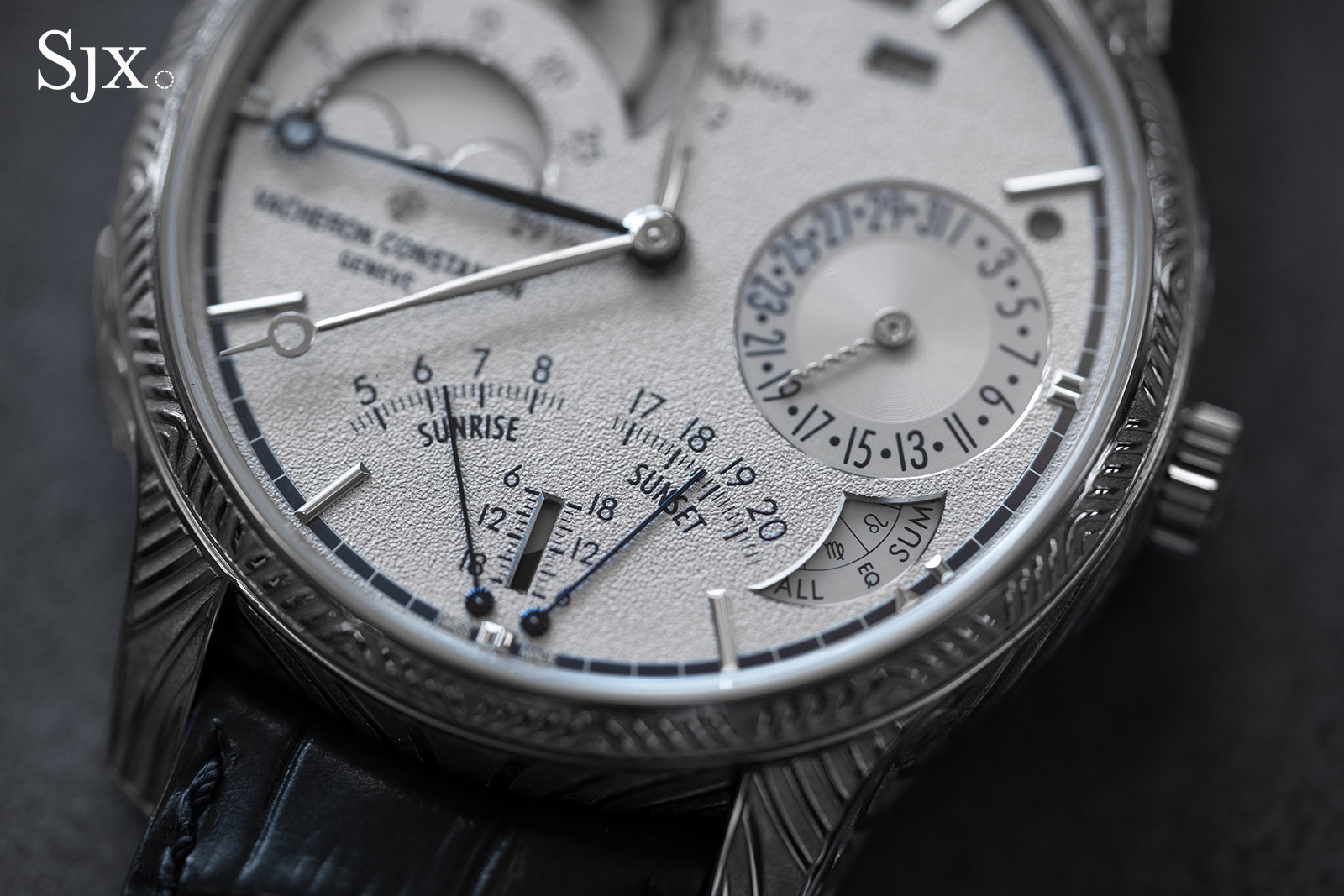
The complex movement includes a rare tidal wave gauge, complemented by a three-dimensional Earth-Moon-Sun alignment indicator. An annual disc also tracks the zodiac signs through an aperture, while the more familiar complications include a perpetual calendar, sunrise and sunset times, and a day-night duration indicator. The six mainspring barrels, linked in a combination of series and parallel, deliver enough torque to power the many complications for roughly 21 days.

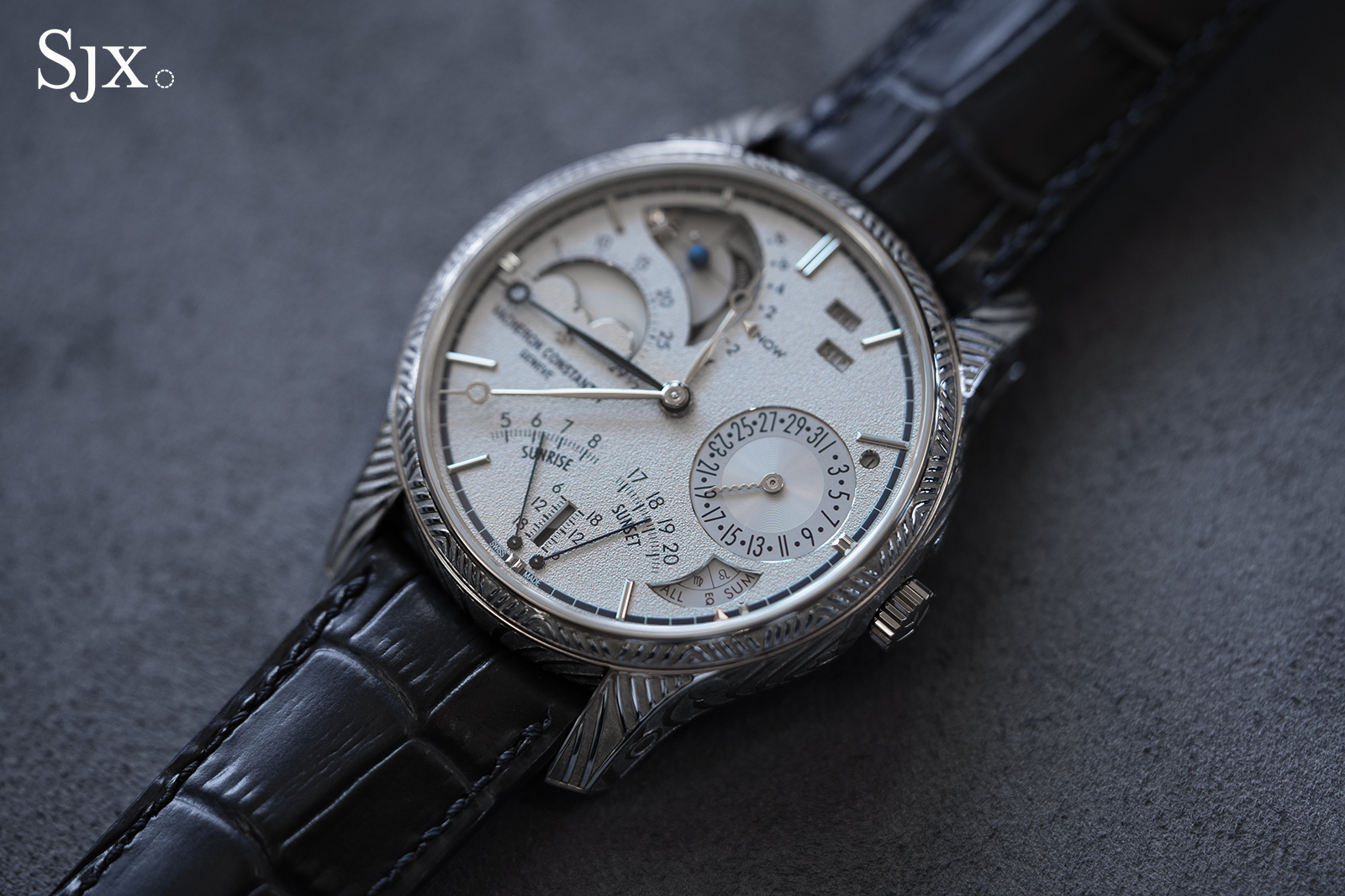
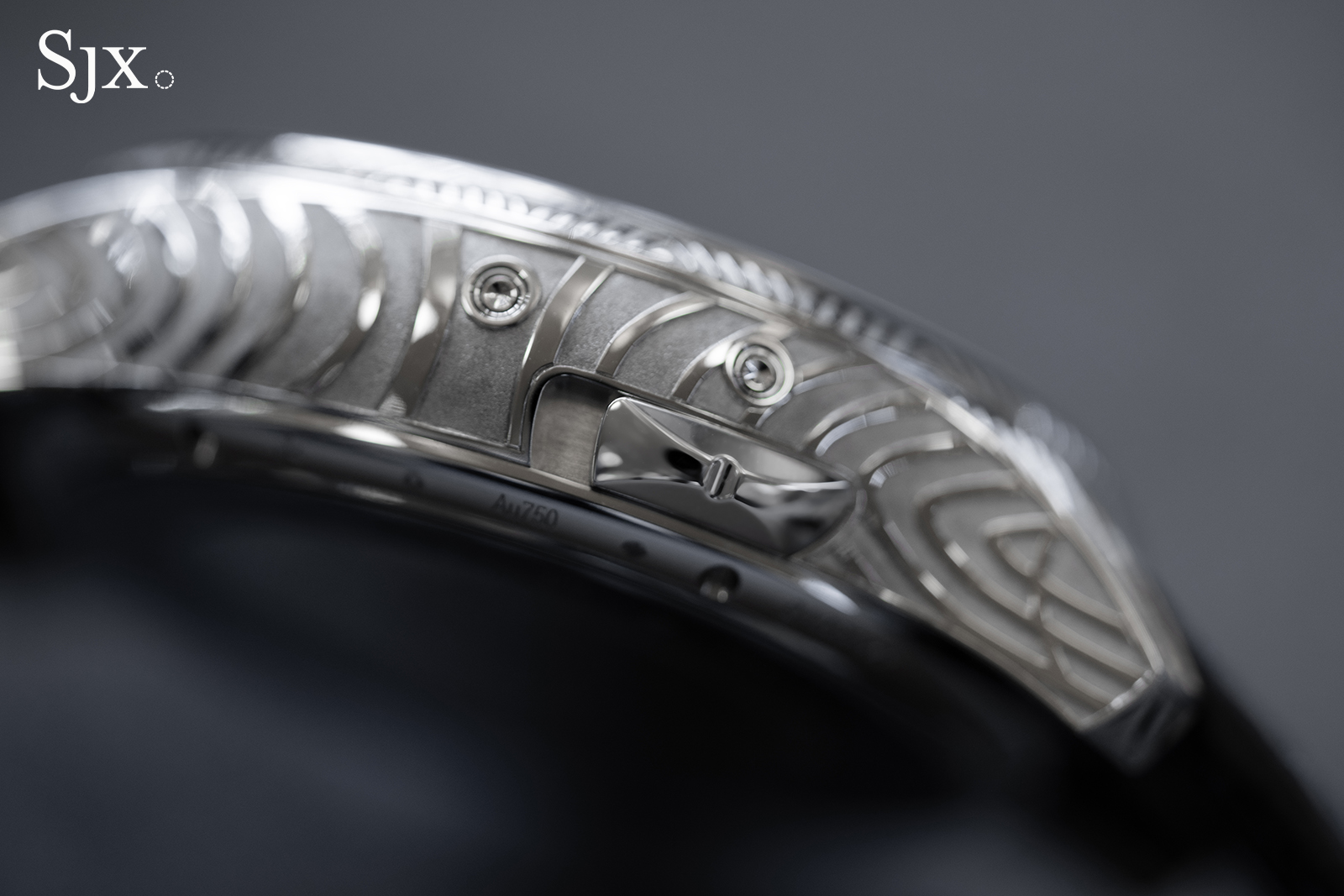
The Homage to Ptolemy is crafted in 18-carat white gold, with soft grey tones lending a restrained, almost scholarly character. The case is engraved with a planisphere, a reference to Ptolemy’s geocentric theories. The primary engraving technique used is champlevé, creating a subtle contrast between raised and recessed surfaces. Wave-like patterns encircle the bezel, case and lugs, evoking the contour lines of a topographical map.

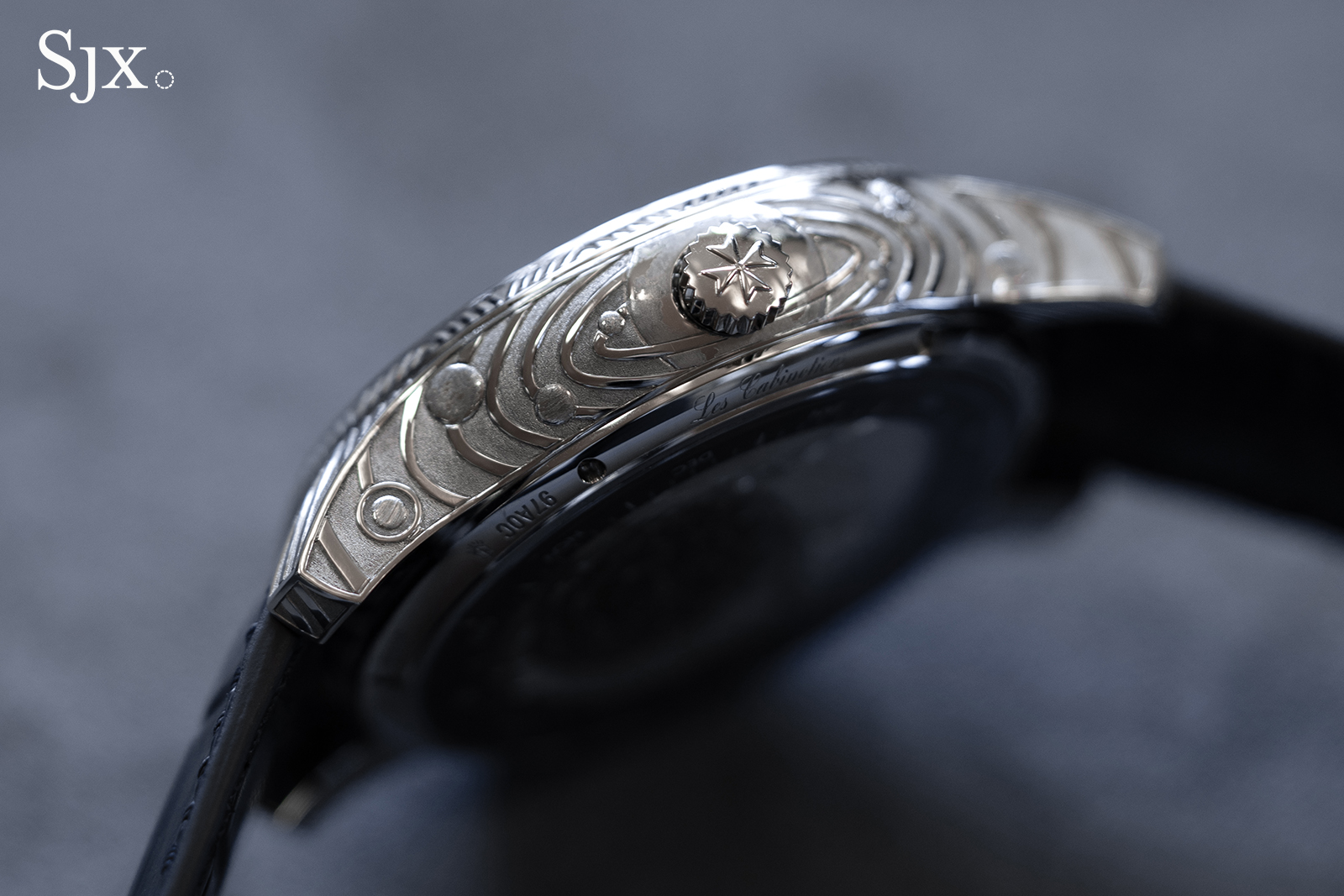
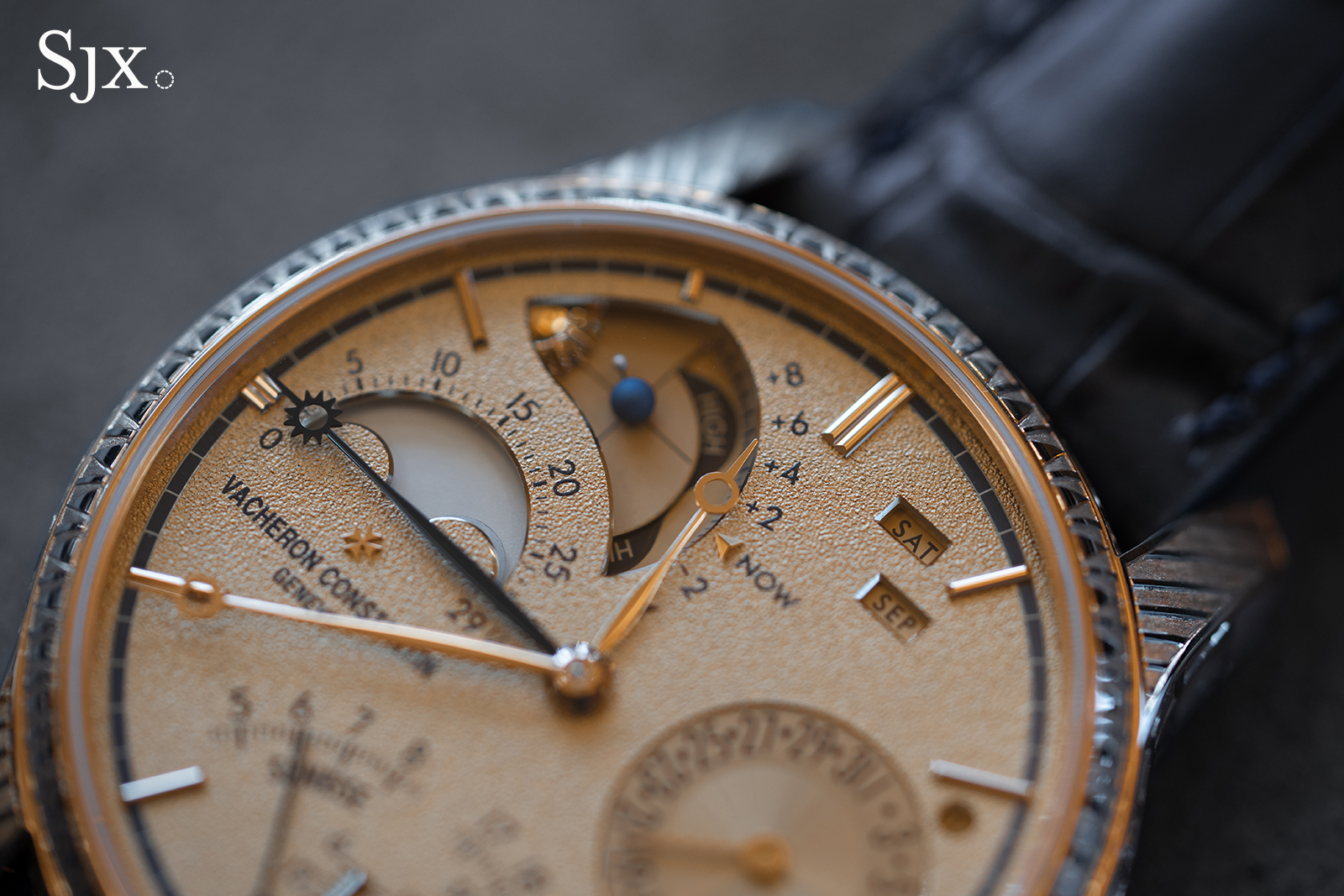
The warmer Homage to Copernicus is done in 18K 5N pink gold — a subtle nod to the Sun itself. The hand-engraved case shows the solar system, with the large crown playing the role of the Sun with the planets swirling around it. The wave patterns on this model are meant to evoke the wide trajectories of planets around the Sun — making them more regular and less arched compared to those engraved on the Ptolemy version. Each of the two cases took about 240 hours of painstaking hand engraving.

Together, these two unique pieces embody VC’s philosophy of blending artistic craftsmanship with advanced micro-mechanics. While Calibre 3600 stands as a technical tour de force, the engraved cases are miniature works of art in their own right. At 45 mm wide and 13.9 mm thick, the watches are substantial but still wearable, providing ample space to showcase both the mechanical and decorative achievements.


Key facts and price

Vacheron Constantin Les Cabinotiers Celestia
Ref. 97A0C/000G-304C (Homage to Ptolemy)
Ref. 97A0C/000R-290C (Homage to Copernicus)

Case diameter: 45 mm
Case height: 13.91 mm
Material: 18k white or pink gold
Water resistance: 30 m

Movement: Cal. 3600
Functions: Hours, minutes, tourbillon regulator, perpetual calendar, moon phase, age of the moon, running equation of time, sunrise and sunset time, day and night length, seasons, solstices, and zodiac signs, tide level, Sun-Earth-Moon conjunction, sky chart, sidereal hours and minutes, and power reserve
Winding: Hand-wound
Power reserve: approx. 500 hours (three weeks)

Strap: Alligator strap with matching folding clasp

Limited edition: Unique piece
Availability: From Vacheron Constantin boutiques
Price: Upon request

For more information, visit Vacheron-constantin.com.


Back to top.
You may also enjoy these.

Viridian Starfall: A New Glow for Orient Star

The Perseid-inspired M34 might be Japan's best-kept secret.

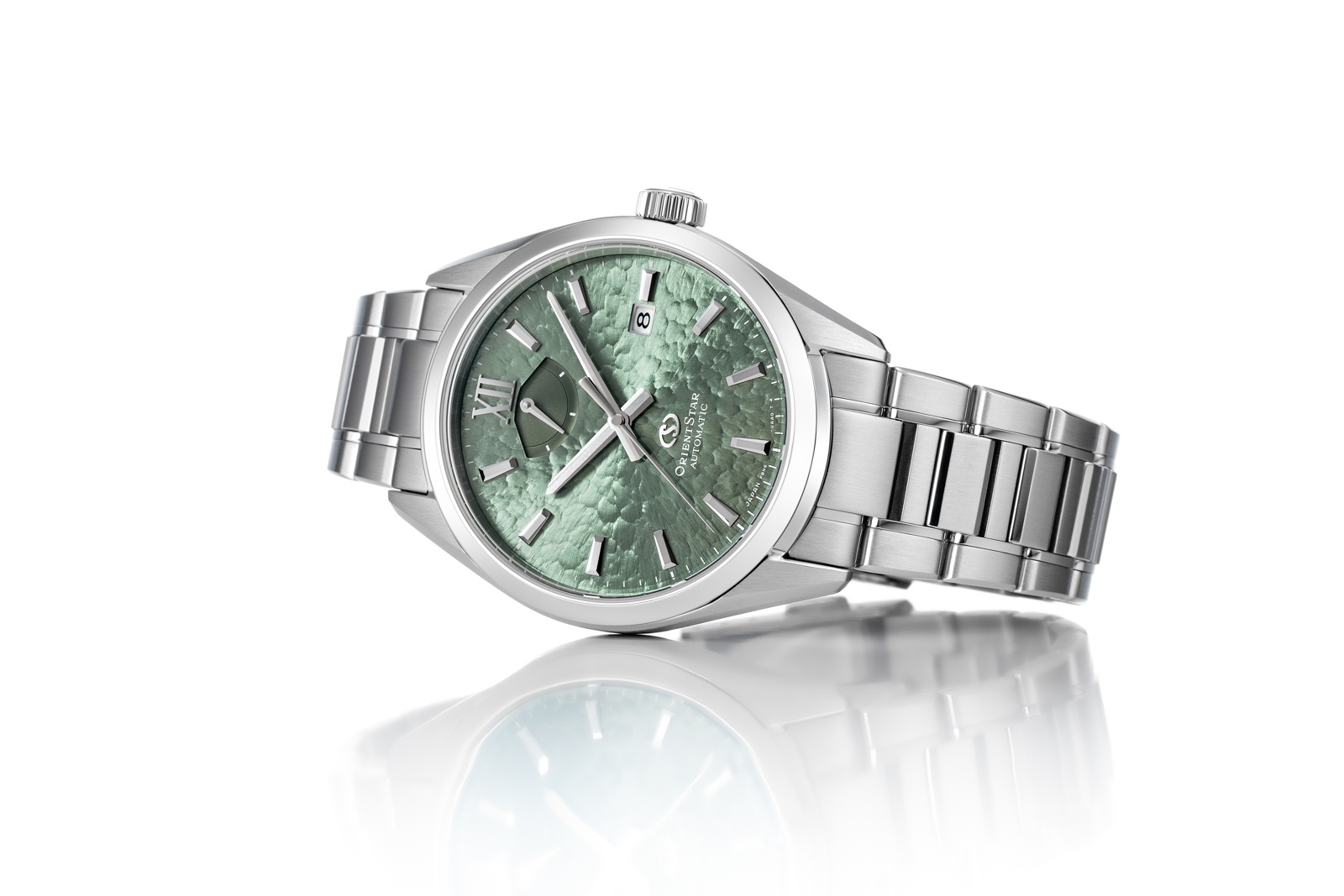
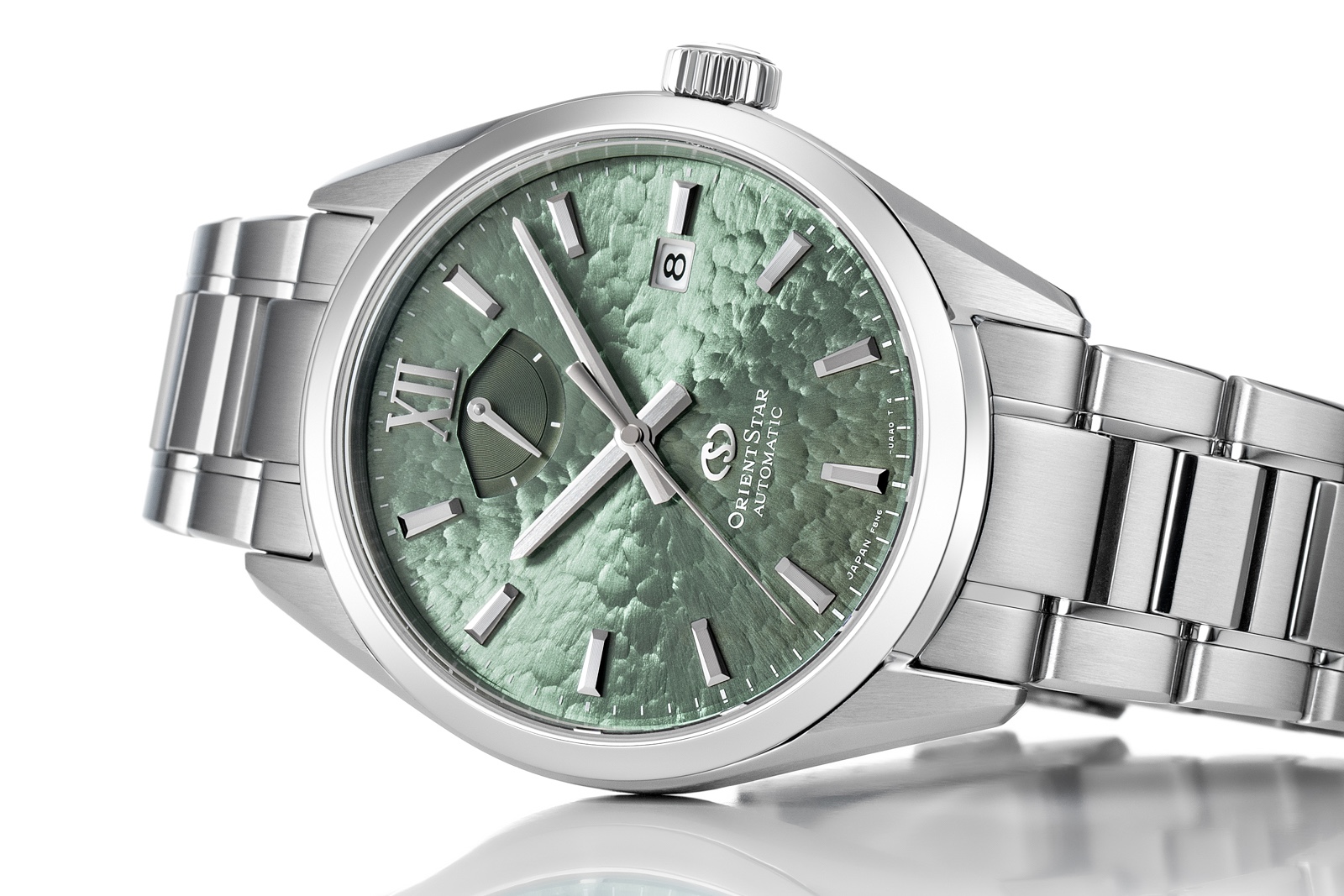
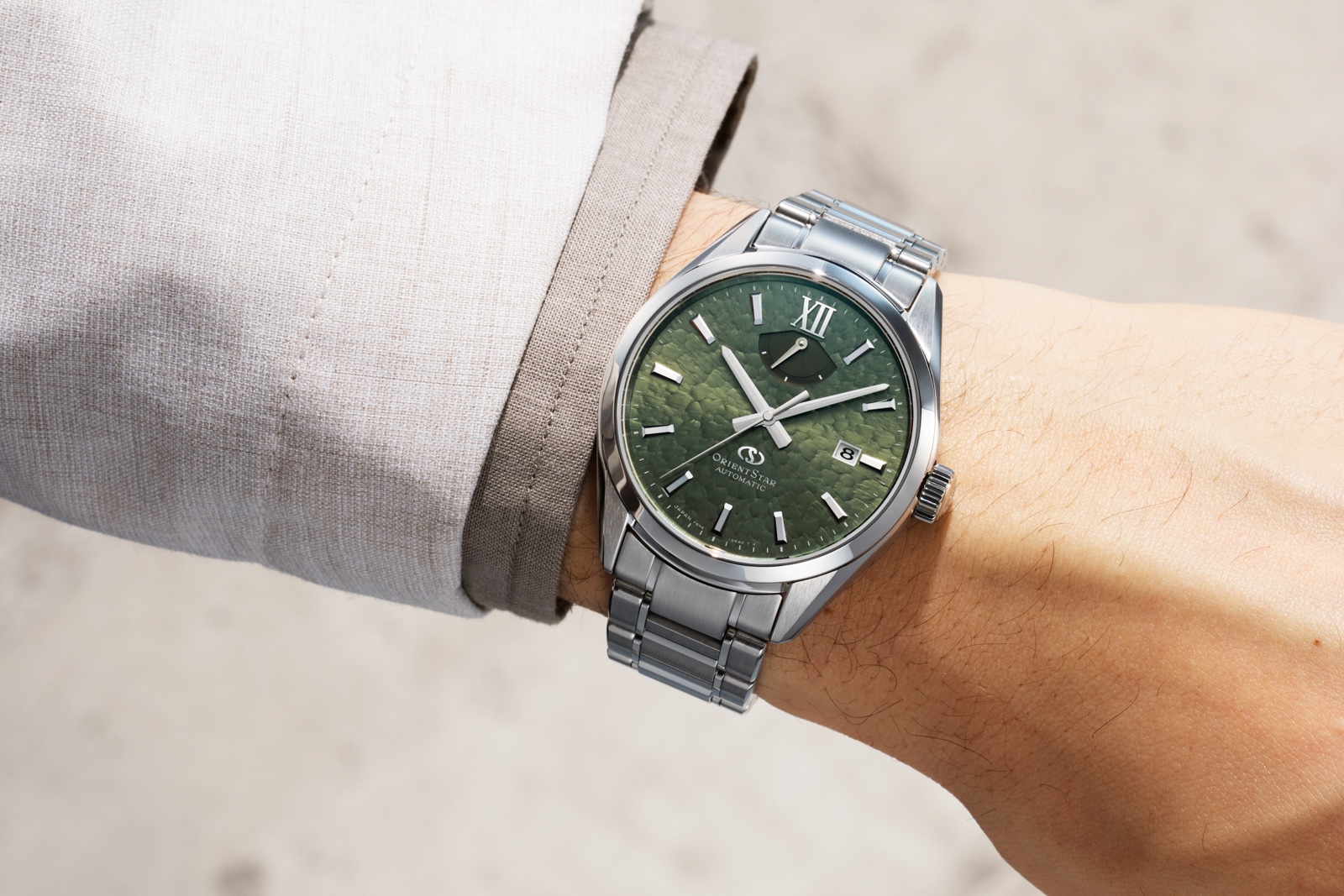
Among Japan’s best-kept secrets, Orient Star occupies an intriguing middle ground between tradition and technology. Its latest creation, the M34 F8 Date Green, captures that duality perfectly by combining an old-school movement with state-of-the-art dial and escapement components drawn from the vast capabilities of its parent company, Seiko Epson. The result is a watch that feels distinctly Japanese in both spirit and execution.

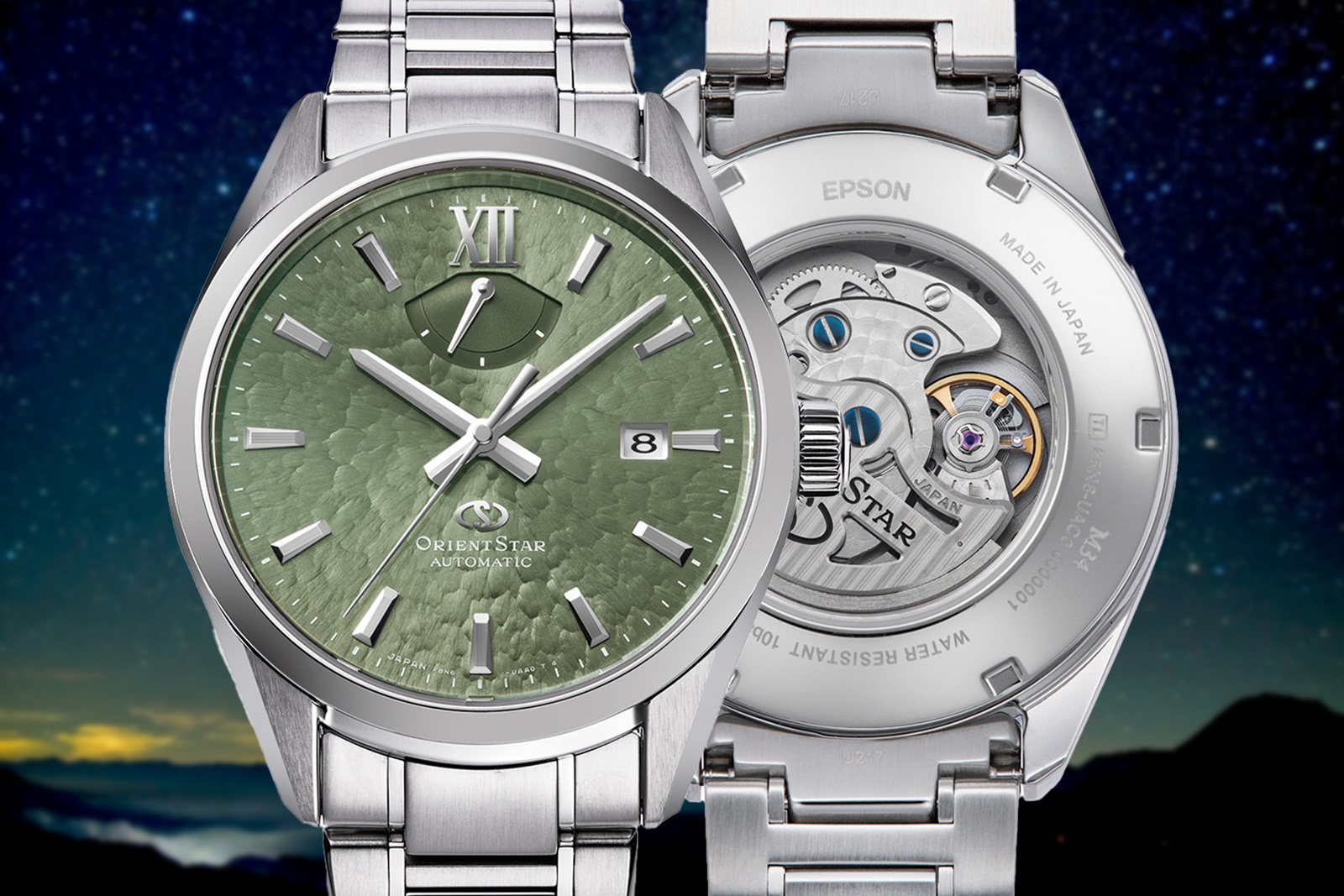
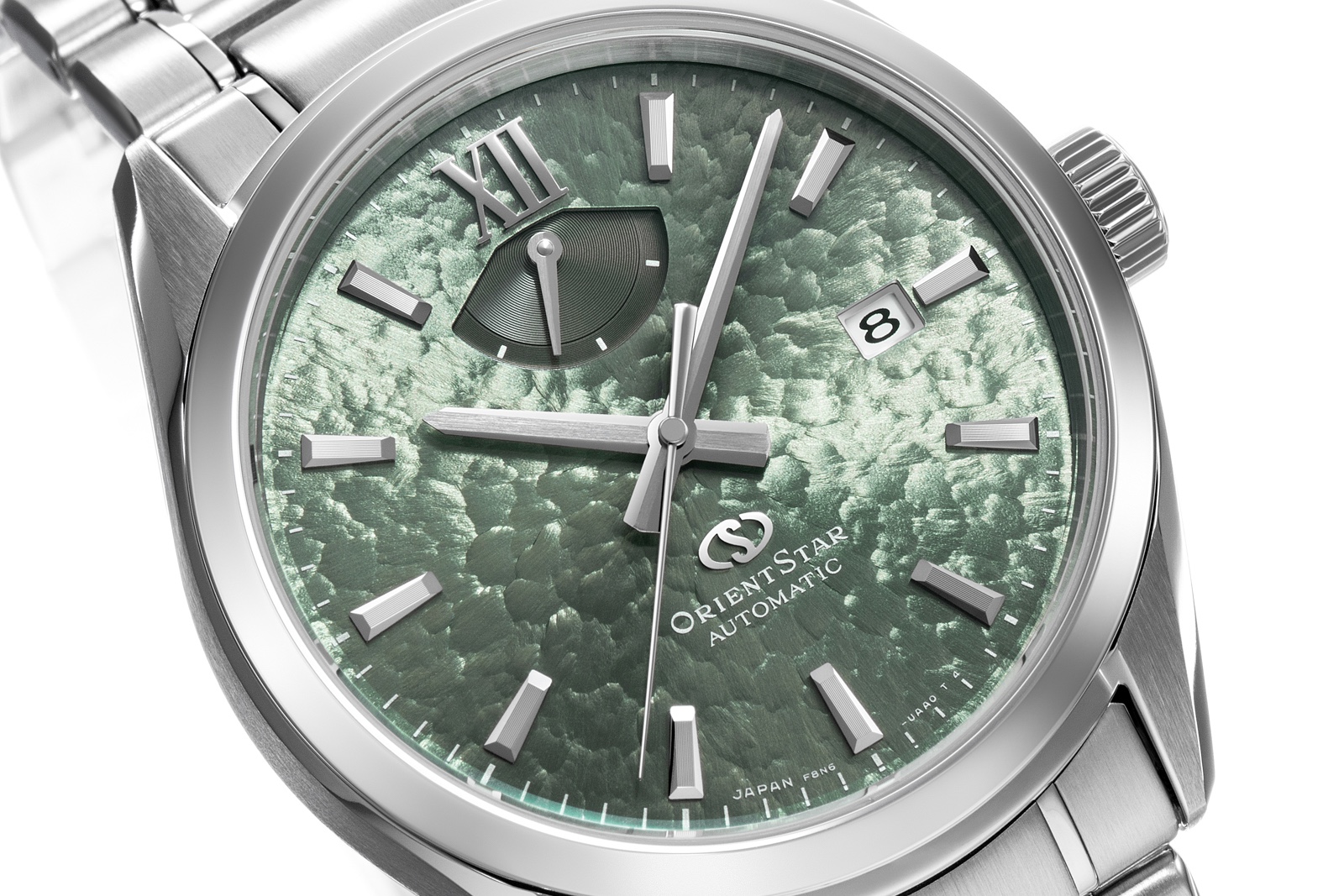
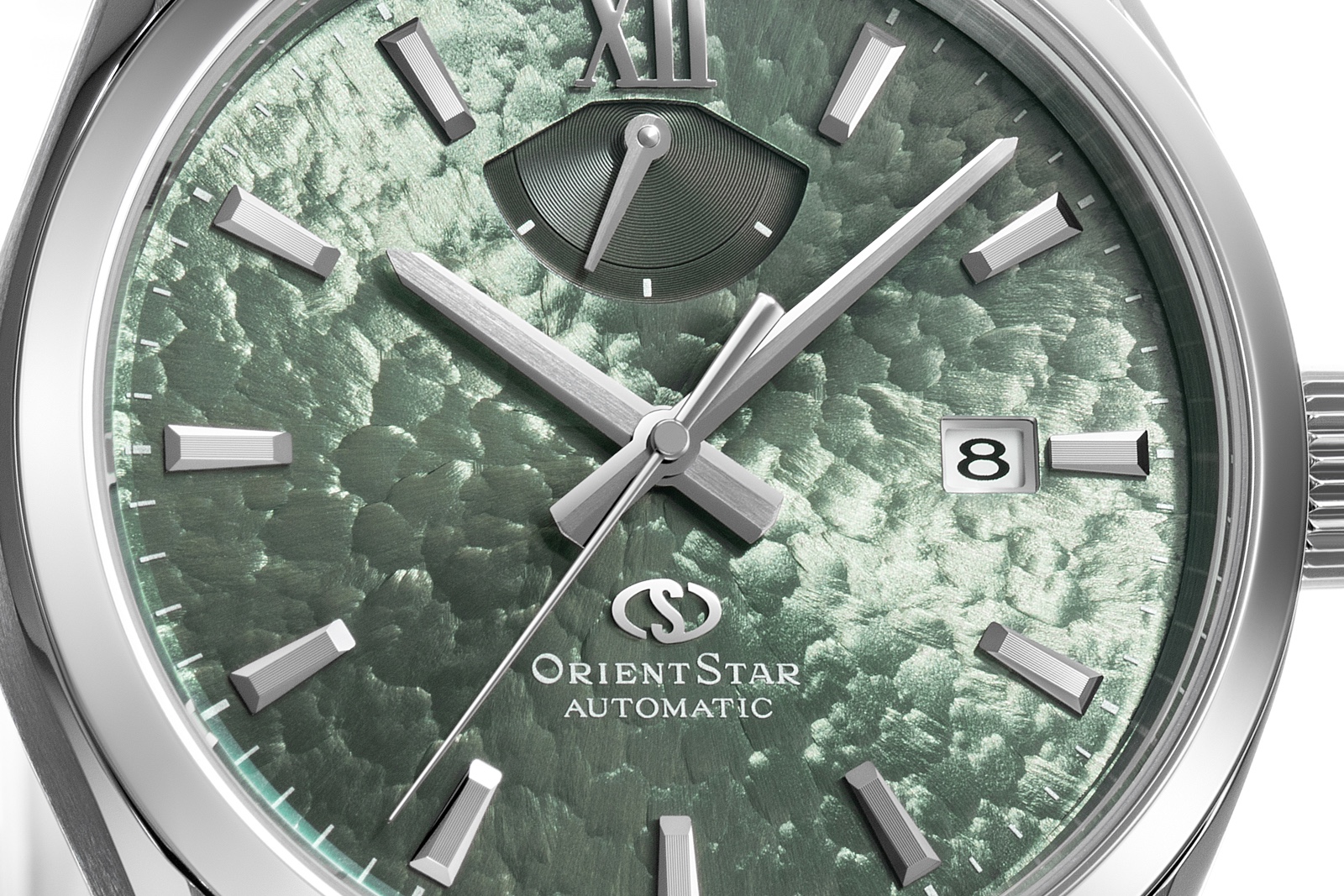
The M34’s new green dial is embossed with a hand-engraved stamp and coated with an optical multi-layer film that creates shifting hues without a trace of pigment — an effect more often associated with much costlier watches. Beneath its shimmering surface lies Orient Star’s enduring in-house F8 movement, which continues a lineage that dates back to 1971.  

Initial thoughts

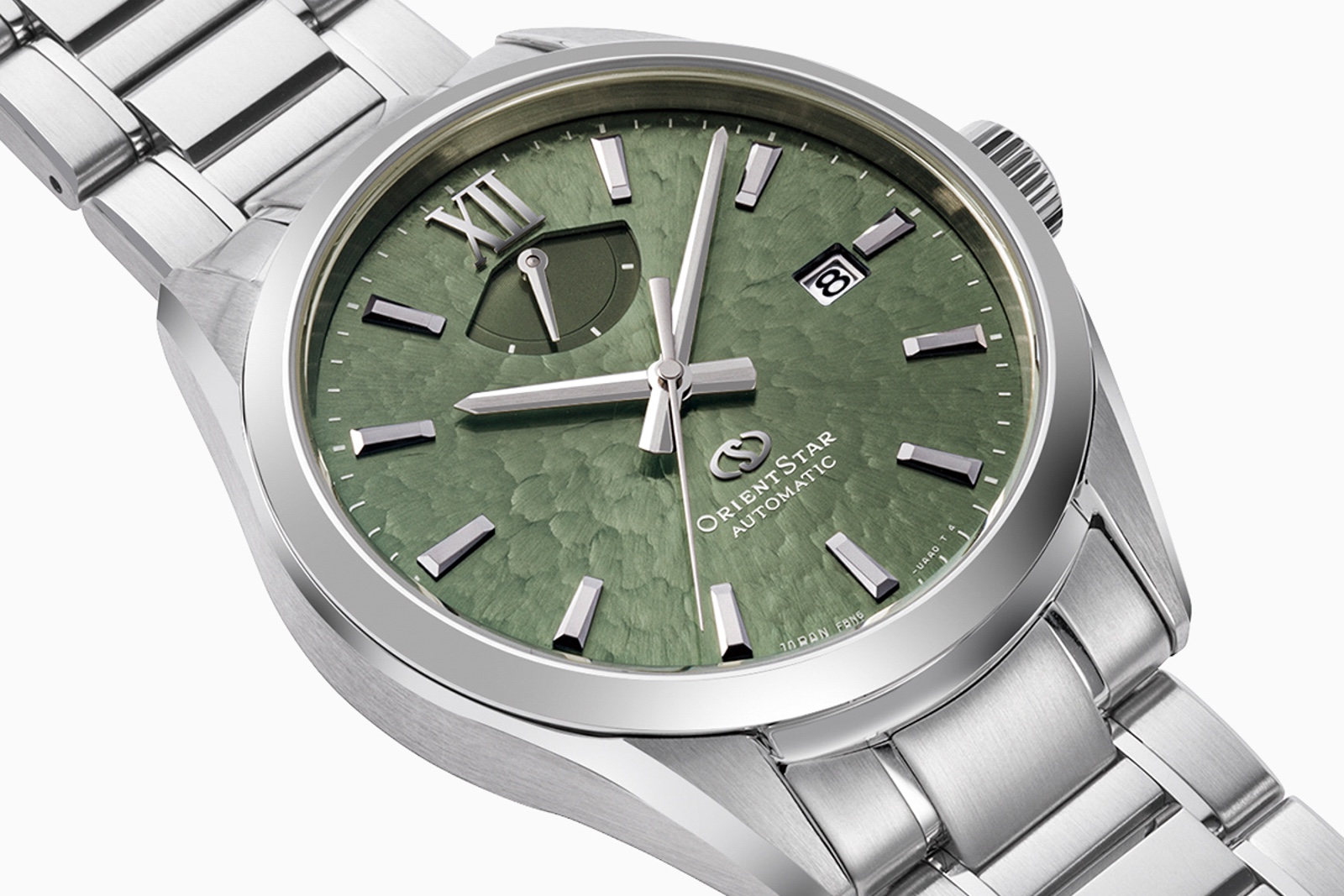
The dial of the M34 immediately distinguishes it within its segment. Its engraved texture, embossed from a hand-engraved die, gives the surface a natural radiance, while the iridescent green tone — created through a PVD-applied optical multi-layer film — shifts fluidly under changing light. It’s a distinctly upmarket look that signals the depth of the Epson manufacturing ecosystem behind it.

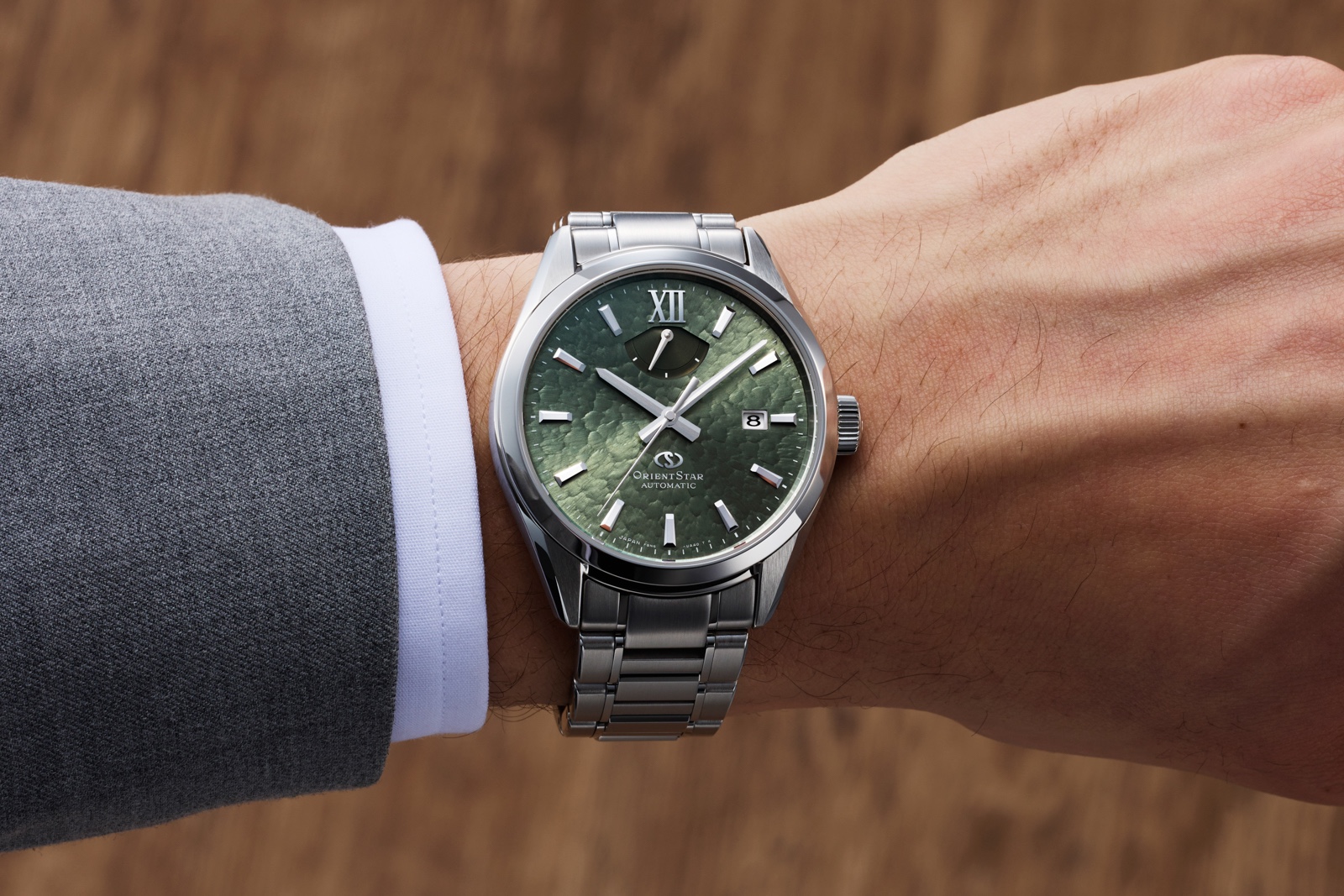
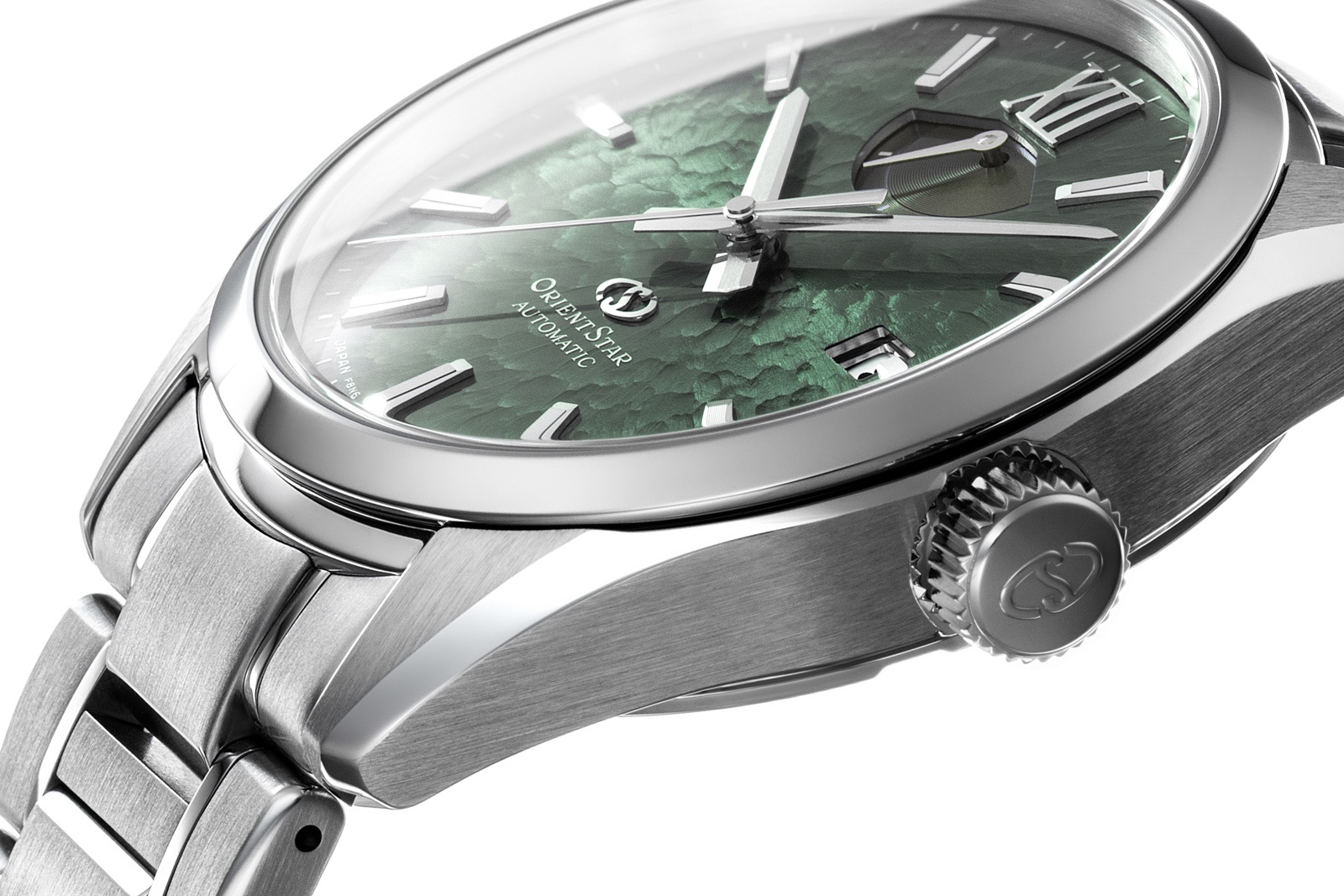
The case reflects that same industrial prowess, made entirely in-house within Seiko Epson’s facilities, using 316L stainless steel finished with Sallaz (more commonly known as ‘Zaratsu’) polishing to achieve distortion-free mirrored bevels. The 40 mm size and H-link bracelet give it a natural ‘go anywhere, do anything’ sensibility.

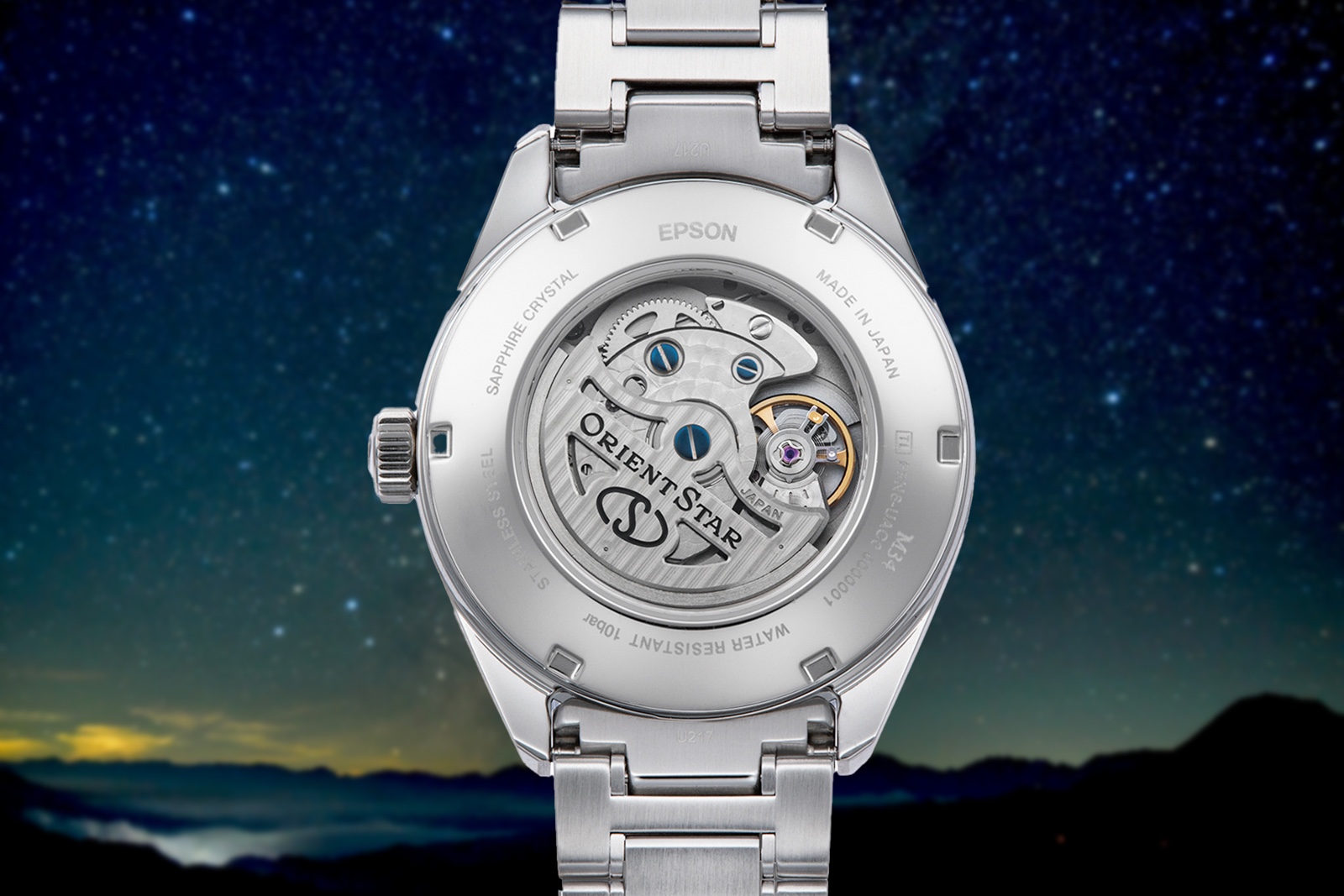
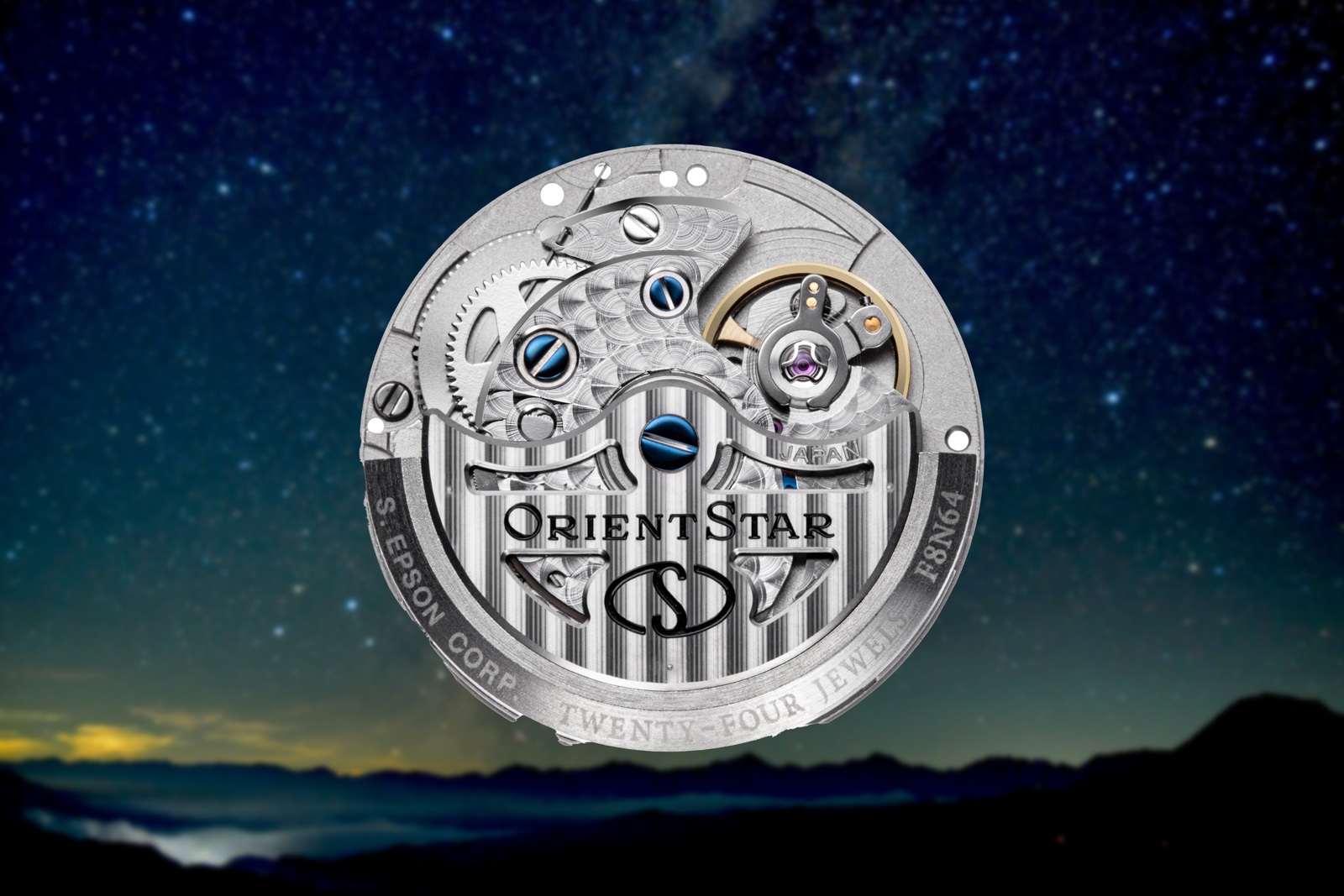
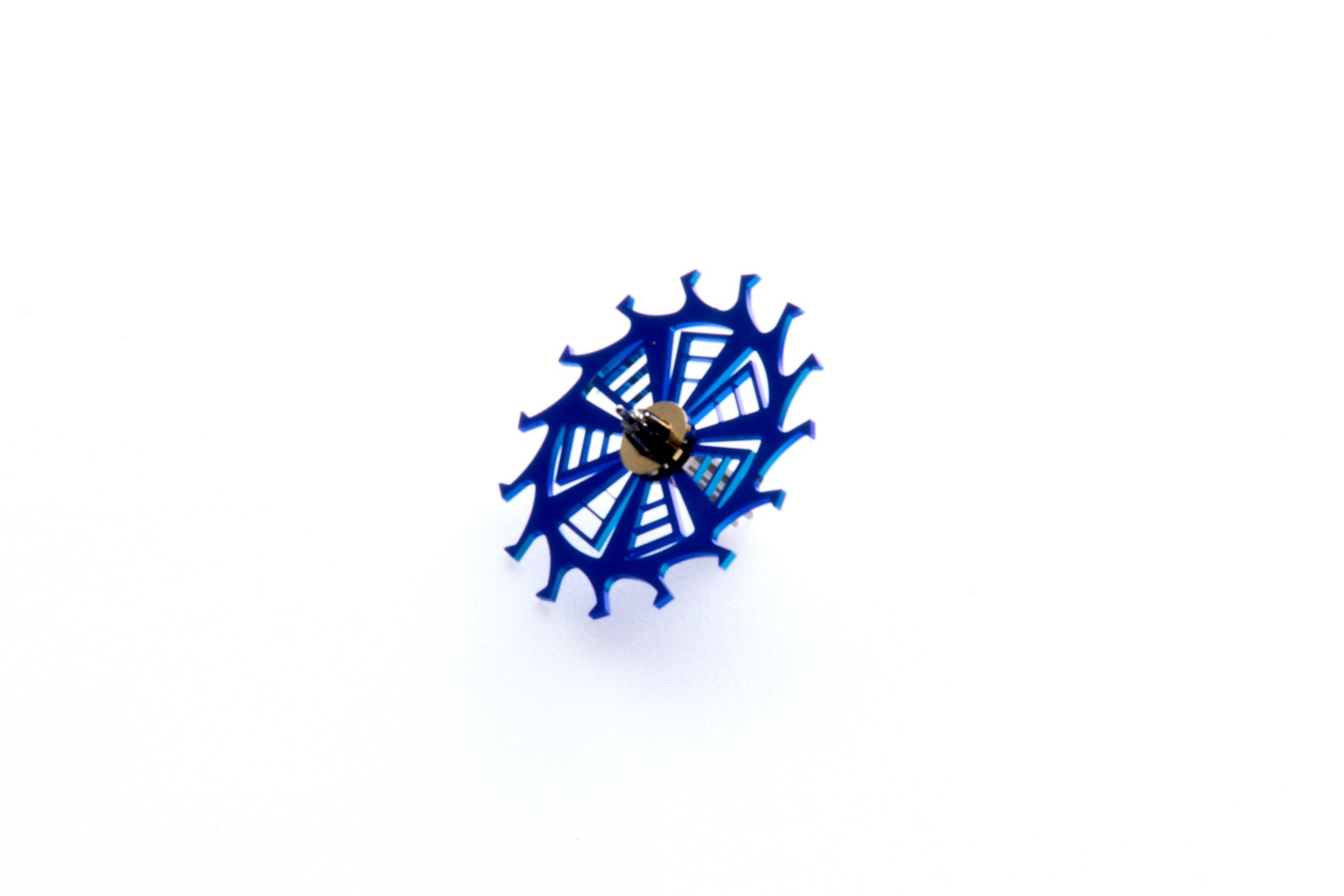
The M34 is powered by the Calibre F8, a direct descendant of Orient Star’s long-running 46-series movement first introduced in 1971. The 3 Hz calibre delivers a 60-hour power reserve and introduces a patented silicon escape wheel that grips the pinion slit with flexible blades, eliminating adhesive and improving durability.

While not the most advanced automatic movement produced in Japan, it’s a thoughtful evolution of a proven architecture. It’s a robust, serviceable calibre refined through five decades of incremental improvement.

At US$2,900, the M34 offers an uncommon value proposition thanks to its in-house movement, silicon escape wheel, expensively crafted dial with its optical multi-layer coating, and a Sallaz-polished case. It’s the kind of substance usually associated with watches costing far more; a comparable mechanical Grand Seiko on a bracelet starts at roughly twice the price.

Understanding Orient Star

To understand Orient Star, it’s illustrative to look at the trajectory of Grand Seiko over the past two decades. What once felt like a secret handshake among insiders has quickly become a mainstream luxury brand. The success has been well earned, but it has also come at a cost. As prices have risen and distribution has expanded, some of Grand Seiko’s early allure as a connoisseur’s secret has inevitably faded.

Yet there is another Japanese marque that offers the same sense of discovery that once defined Grand Seiko. Orient Star, the elevated counterpart to Orient, pursues a comparable philosophy — in-house production, thoughtful design, and competitive pricing.

Interestingly, Orient Star’s history predates that of Grand Seiko, having launched in 1951, nine years before the first Grand Seiko models. More recently, the Orient Star has occasionally anticipated its better-known counterpart, introducing a collection of mechanical watches with power-reserve indicators in 1996 — two years before Grand Seiko reintroduced its own mechanical calibres.

Orient Star has since become part of Seiko Epson, the group responsible for making all spring drive and high-accuracy quartz models for Grand Seiko and Credor. This work takes place at the Shinshu Watch Studio in Nagano Prefecture. This also the location of the Shinshu Dial Studio, which makes dials for both Grand Seiko and Orient Star. This shared ecosystem allows Orient Star to leverage the vast industrial expertise of Epson, which patented the unusual silicon escape wheel found in the M34’s F8N64 movement.

A multi-layered dial

The dial of the M34 is where Orient Star’s connection to Epson truly pays dividends. Two elements stand out in particular: its engraved base and its optical coating. Fittingly, the pattern is inspired by the Perseid meteor shower, echoing the brand’s celestial theme.

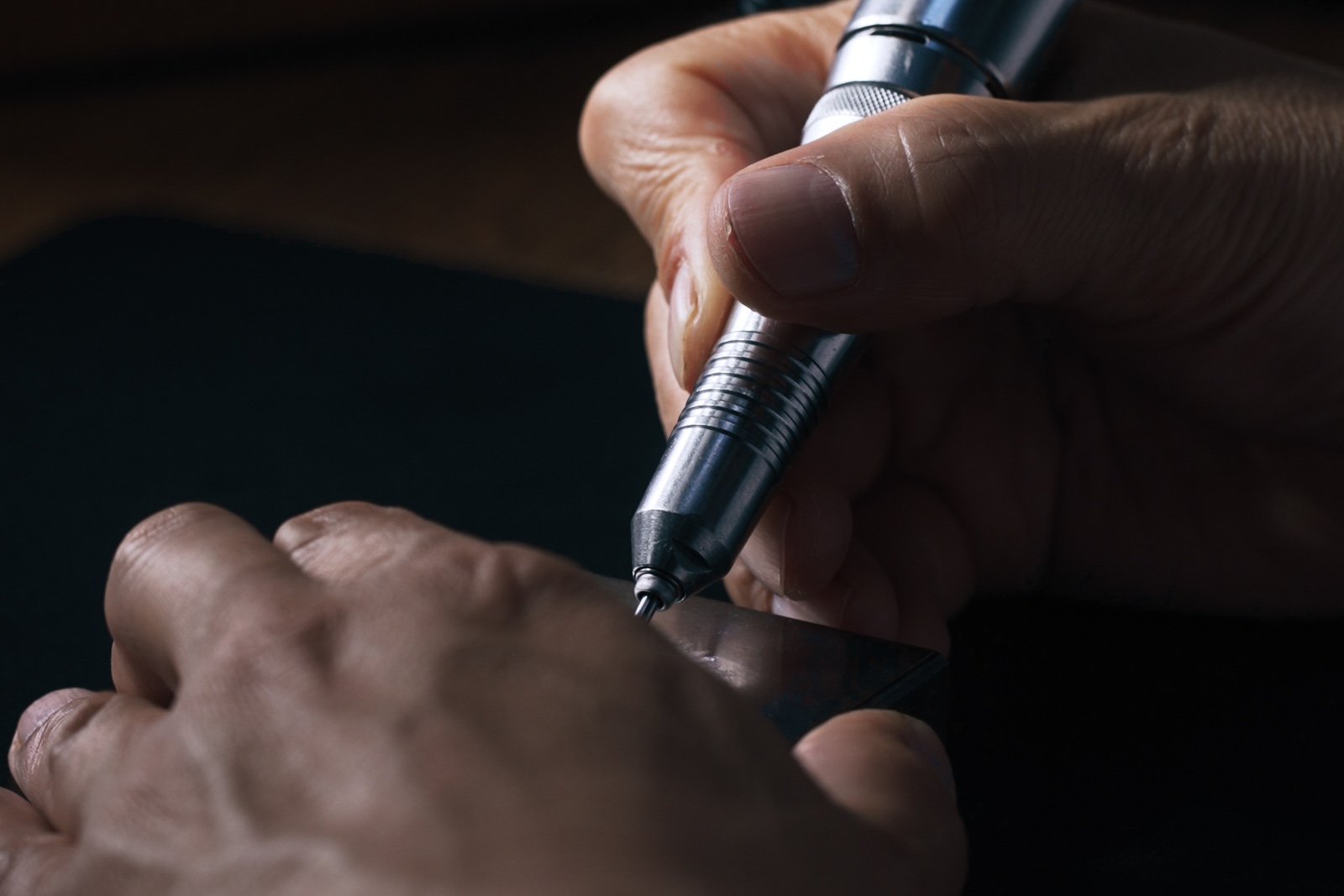
The dial begins as a brass disc stamped using a hand-engraved die. A craftsman employs a rotating engraving tool to cut the pattern directly into the steel mould, which is then used to imprint the intricate texture onto each dial blank. The use of a hand-engraved die results in a pattern with sharper relief and more natural variation than a typical machine-cut texture.

Its subtle, iridescent green tone, however, comes from a far more modern process that’s more science than art. Rather than applying any pigment or lacquer, the colour is created through a Physical Vapour Deposition (PVD) technique that lays down an optical multi-layer film — a stack of ultra-thin coatings that refract and interfere with light to produce a specific visible colour.

The resulting hue shifts gently under changing angles, giving the dial a natural, almost liquid appearance similar to mother-of-pearl. Because the film itself is microscopically thin, it preserves every ridge and groove of the engraved surface below, amplifying the texture.

This technology is often applied to high-performance optical lenses where precise control of light transmission and reflection is critical. But the use of such coatings in watchmaking is quite rare; only a few brands, such as Audemars Piguet and Chronoswiss, have adopted comparable multi-layer optical coatings — and at far higher price points. That Orient Star can offer such material sophistication at this price point underscores the advantages of its parent company’s advanced manufacturing ecosystem.

The hands and hour markers demonstrate the same attention to detail that defines the rest of the watch. In place of lume, Orient Star relies on razor-sharp geometry to ensure legibility; the facets on the markers and hands catch and redirect even the faintest light.

Stellar steelwork

It’s hard to talk about Japanese watchmaking without eventually mentioning ‘Zaratsu’ polishing, which takes its name from the Sallaz polishing machine used to create distortion-free polished surfaces. The term usually comes up in the context of Grand Seiko, but Orient Star employs the very same method for the M34, which explains the razor-sharp bevels on the 316L stainless steel case and bracelet.

The finishing extends seamlessly into the H-link bracelet, which offers a short pitch to improve articulation and fit; shorter links mean finer incremental adjustment when adding or removing links.


The case is appropriately sized for a ‘go anywhere, do anything’ type of watch, measuring 40 mm and 12.9 mm thick. At 47.3 mm lug-to-lug, it should suit most wrists comfortably, despite its substantial presence. Unfortunately, the bracelet lacks any kind of tool-free micro-adjustmentment, but the push-button clasp does feature three adjustment positions, improving the chances of finding a ‘set it and forget it’ sweet spot.

As with the movement, the case is produced entirely in-house within the Seiko Epson group, which helps ensure consistency of tolerances and finishing, underscoring Orient Star’s integrated approach to watchmaking.

A time capsule of Japanese watchmaking

Some collectors, especially those who favour vintage watches, bemoan modern products, complaining, ‘they don’t make them like they used to.’ In Orient Star’s case, they actually still do. The cal. F8 that powers the M34 traces its lineage directly to the brand’s famed 46-series movement, first introduced in 1971, that would later become the backbone of the brand’s mechanical production.

While many brands have abandoned long-standing designs in favour of modern platforms, Orient Star has spent half a century refining a single architecture. The modern F8 represents the pinnacle of that evolution, ticking at 3 Hz and offering a 60-hour power reserve, about ten hours more than its predecessor thanks in part to a newly developed silicon escape wheel.

The escape wheel itself is lighter and possesses a naturally low coefficient of friction, a property inherent to silicon. Though still lubricated, its performance is less dependent on the even distribution and conductivity of lubricant than a traditional steel lever system. The result is greater long-term stability and reduced energy loss across the gear train.

Unlike the conventional Swiss approach, where the pinion is fixed to the escape wheel using adhesive, Seiko Epson’s patented design employs spring-loaded blades that flex around the pinion slit, locking into place without glue. This eliminates a common source of breakage during assembly.

This innovation was made possible through the use of MEMS (Micro-Electro-Mechanical Systems) technology, the same ultra-precise micro-fabrication techniques Epson applies to its printheads. Working at micron-level tolerances, engineers designed flexible silicon arms to give the components the resilience needed to grip the pinion securely without deformation. The result is a silicon escape wheel that is both durable and service-friendly; a rare combination.

Of course, the F8 retains the fan-shaped power reserve display at 12 o’clock that has become something of an Orient Star signature since 1996. Some question the utility of such a feature on an automatic watch, but for collectors who rotate through their watches, or for people who don’t wear their watches all day, a power reserve indicator is a useful and welcome feature.

While the F8 represents the latest in a long line of refinements, its spirit remains unchanged. Like the original 46-series, it is a straightforward, mechanically honest calibre designed for longevity rather than spectacle. Few manufactures have maintained such unbroken continuity between their past and present. In other words, Orient Star still makes them like they used to.


Key Facts and Price

Orient Star M34 F8 Date Green
Ref. RE-BX0006E

Diameter: 40 mm
Height: 12.9 mm
Material: Stainless steel
Crystal: Sapphire
Water resistance: 100 m

Movement: F8N64
Functions: Hours, minutes, seconds, date, and power reserve indicator
Winding: Automatic
Frequency: 21,600 beats per hour (3 Hz)
Power reserve: 60 hours

Strap: Stainless steel bracelet with folding clasp

Availability: At Orient Star retailers
Price: US$2,900 excluding taxes

For more, visit Orient-watch.com.

This was brought to you in partnership with Orient Star.


Back to top.
You may also enjoy these.
Welcome to the new Watches By SJX.

Subscribe to get the latest articles and reviews delivered to your inbox.