De Bethune After Dark: the DB27 “Night Hawk”

A collaboration with EsperLuxe.
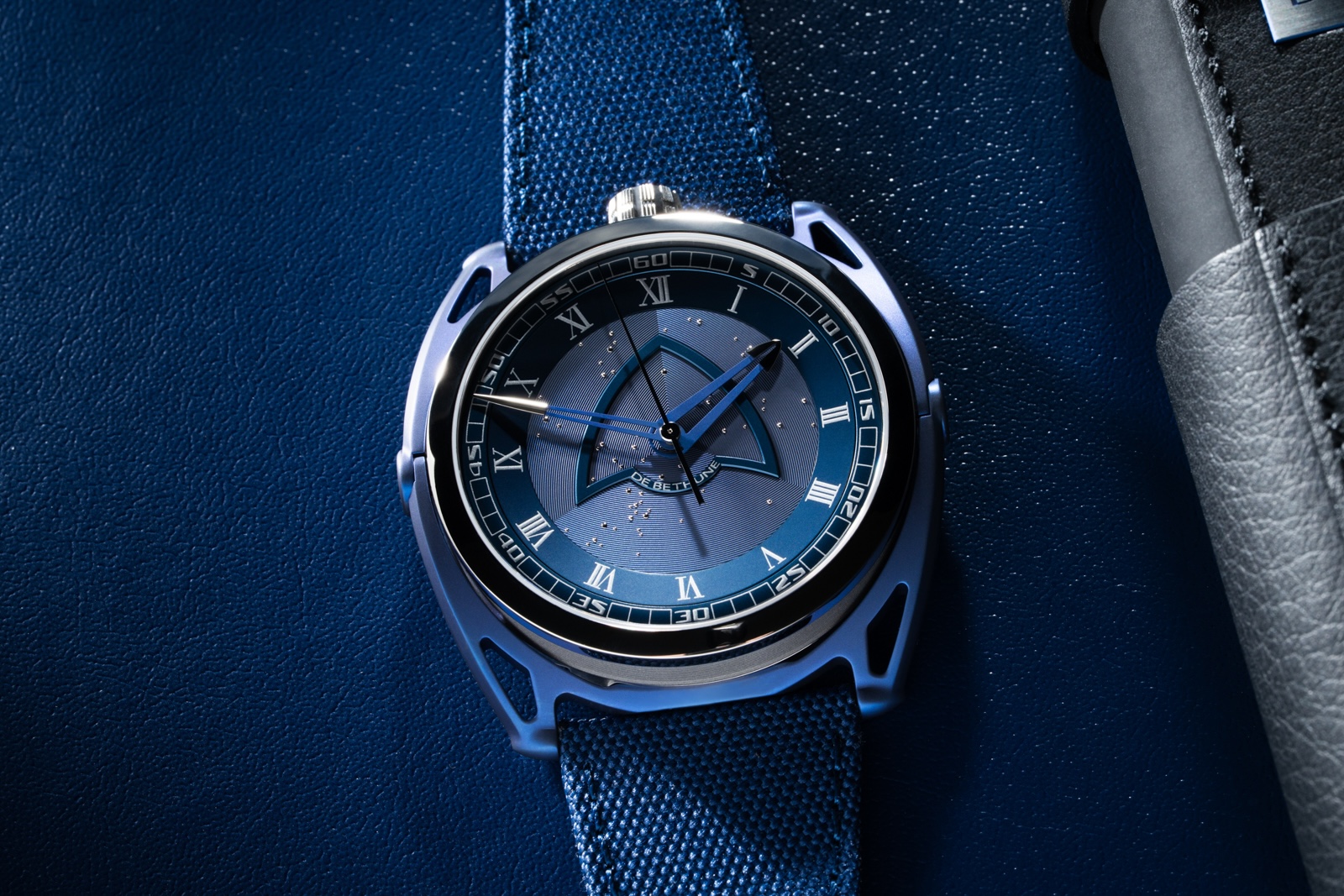
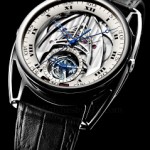
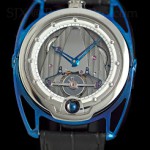
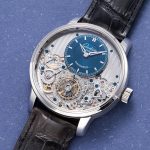
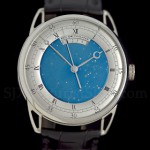
Massachusetts-based retailer EsperLuxe represents many leading names in independent watchmaking, and has just collaborated with De Bethune to create the DB27 Night Hawk. Based on the Titan Hawk V2, the Night Hawk is a 10-piece limited edition with matte-finished blued titanium lugs and a secret meaning expressed in its star-studded titanium dial.

Initial thoughts

De Bethune is quite unlike other contemporary independent watchmakers. Majority owned by The 1916 Company since 2021, De Bethune nonetheless appears to operate much as it did prior to the acquisition, serving as a vehicle for co-founder Denis Flageollet’s prodigious creative output.
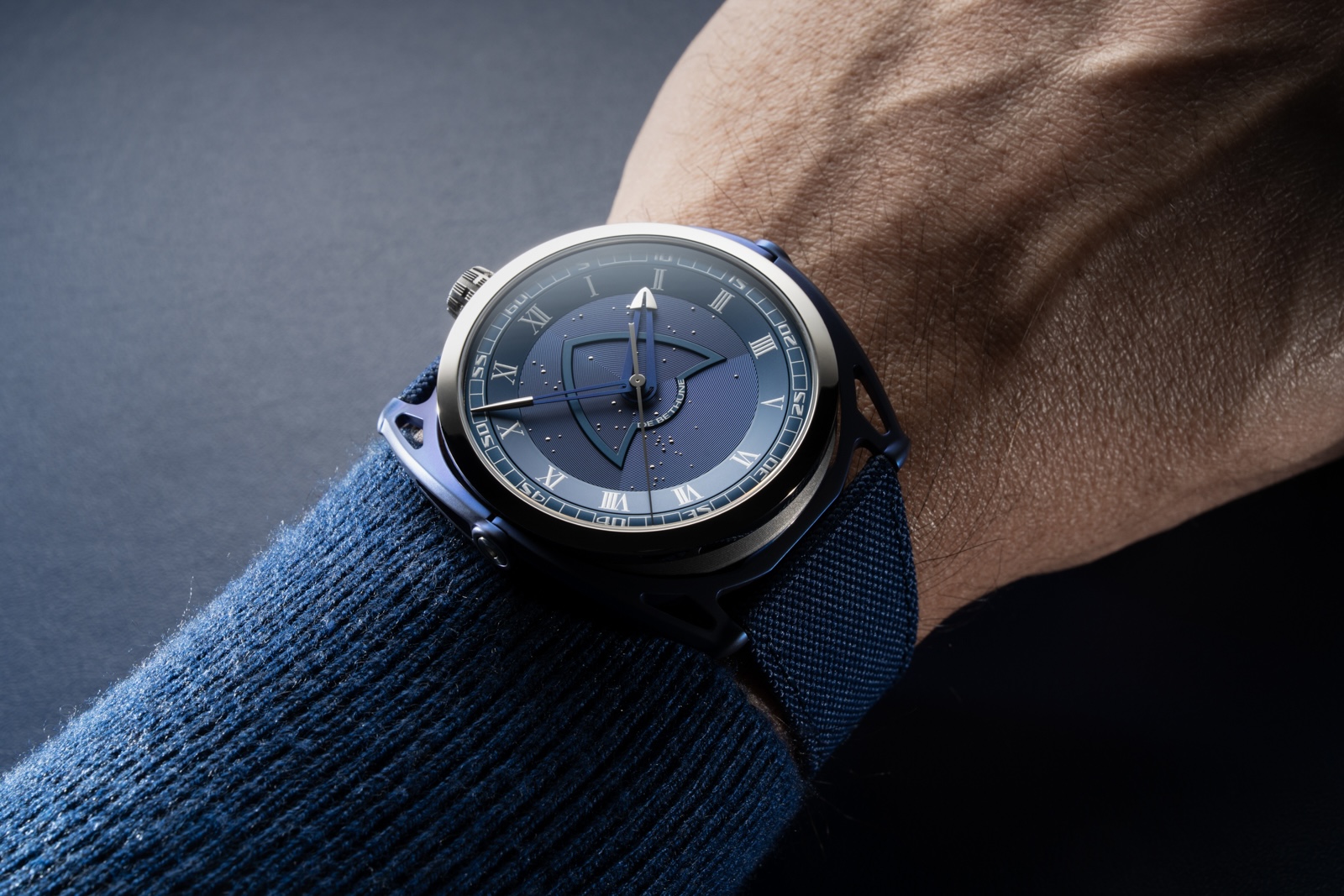
The Night Hawk exemplifies De Bethune’s unique perspective, which fuses in-house technical watchmaking with a science fiction-inspired aesthetic. It’s a difficult balancing act, but the brand has amassed a devoted following by staying outside industry norms for design and decoration.

A creature of the night

The Night Hawk is a variant of the DB27 Titan Hawk V2, which debuted in 2018 as the brand’s ‘entry level’ model. Naturally, that term is somewhat out of place in the world of low-volume watchmaking, but it nonetheless brings many of the brand’s signatures within reach of a wider segment of collectors.

One of those signatures is heat-blued (or purpled) case elements, including the Night Hawk’s blued titanium lugs, which are part of a hinged exterior case frame that articulates from a spring-loaded hinge on each side of the case.
This allows the lightweight grade 5 titanium case to quite literally ‘hug’ the wrist, regardless of wrist size. The ergonomic fit is accentuated by the shortness of the lugs, which give the Night Hawk a compact lug-to-lug length only slightly longer than its 43 mm case diameter.

In other words, it’s big enough to express itself but on most wrists should wear no larger than many 40 mm watches with ordinary lugs. It’s also quite slim as such things go at just 9 mm thick.
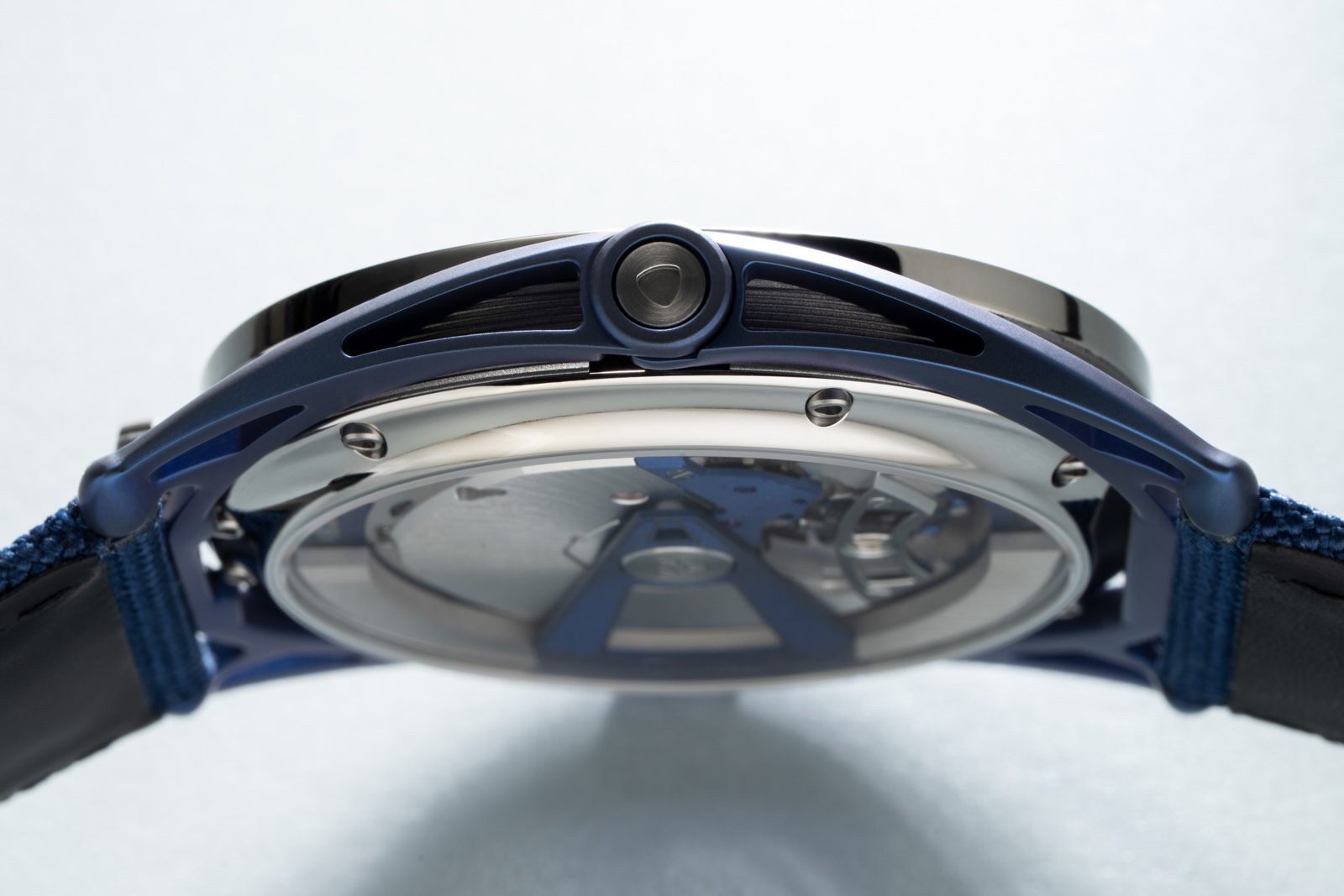
But in the Night Hawk, the lugs’ finish is more interesting than their functionality. While many watchmakers bend over backwards for movement finishing, few have the vision or the resources to create differentiated exterior finishes like De Bethune.

Naturally, the lugs of the Night Hawk are heat-blued titanium, but unlike prior models that offered a polished finish, they have been given a pearlescent matte finish. This is the first time that the brand’s ‘short’ lug format has been finished this way in a production watch.
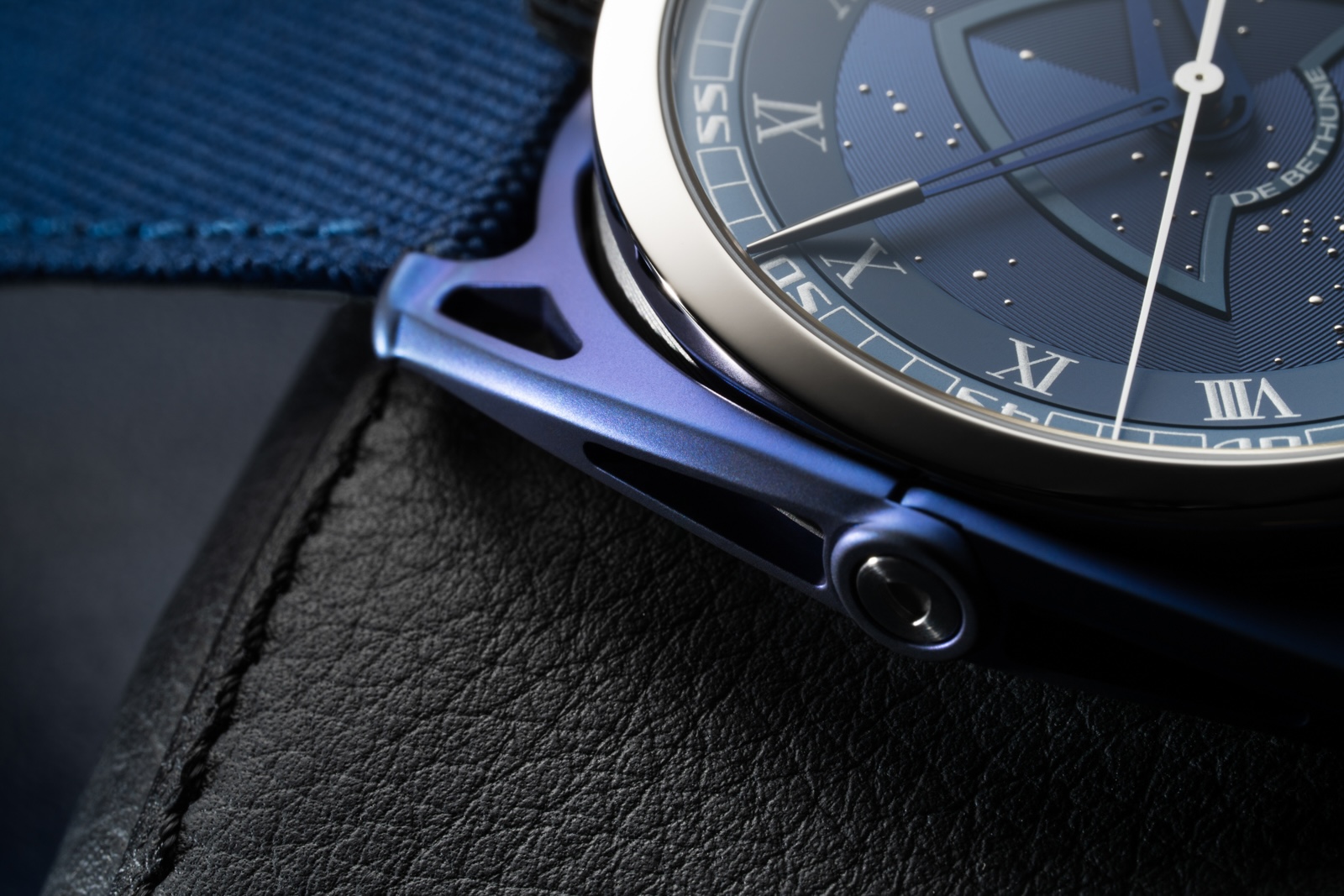
The textural contrast between the highly polished case itself and the blued matte lug frame is striking, and a good reminder that fine watchmaking is about much more than just movements.

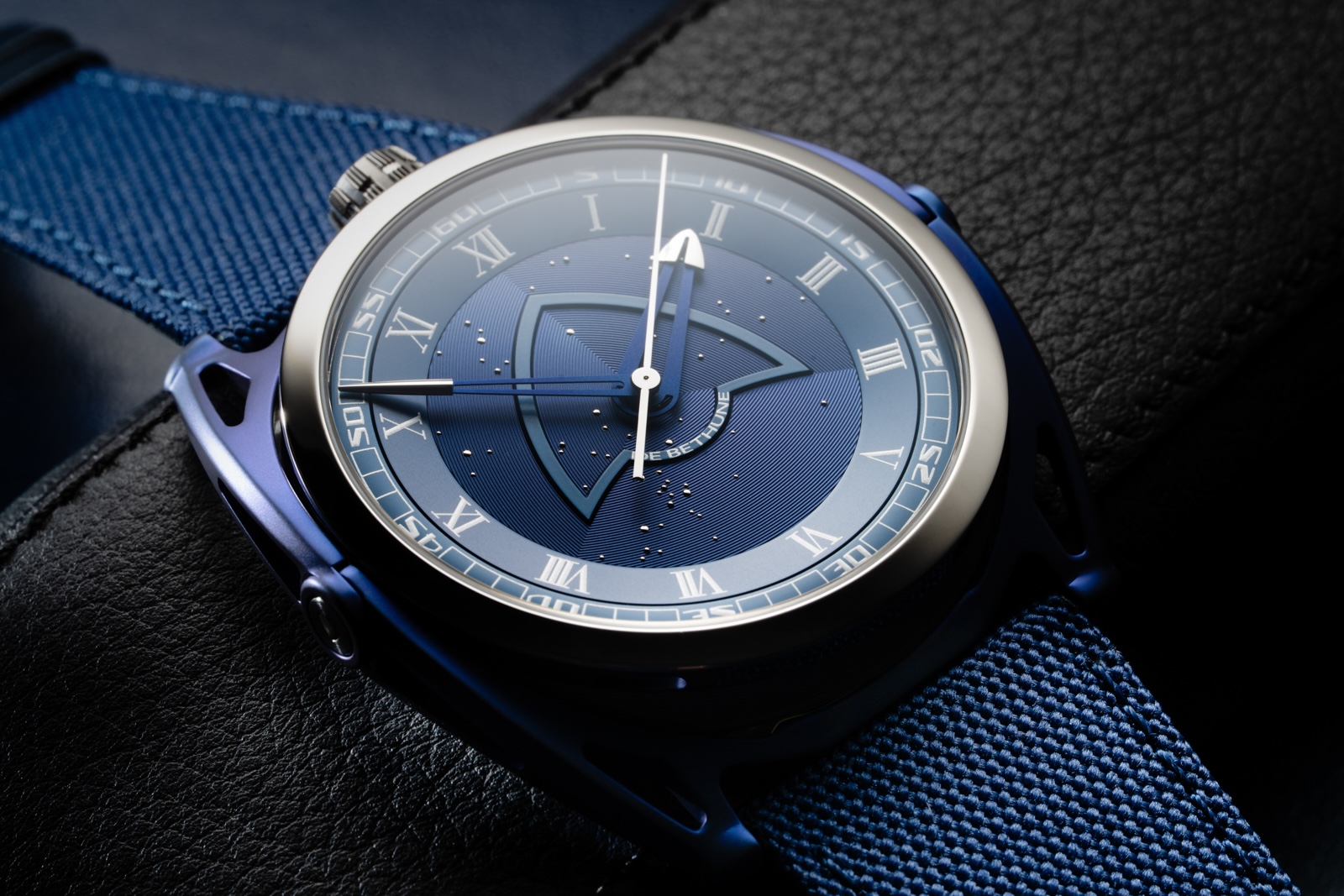
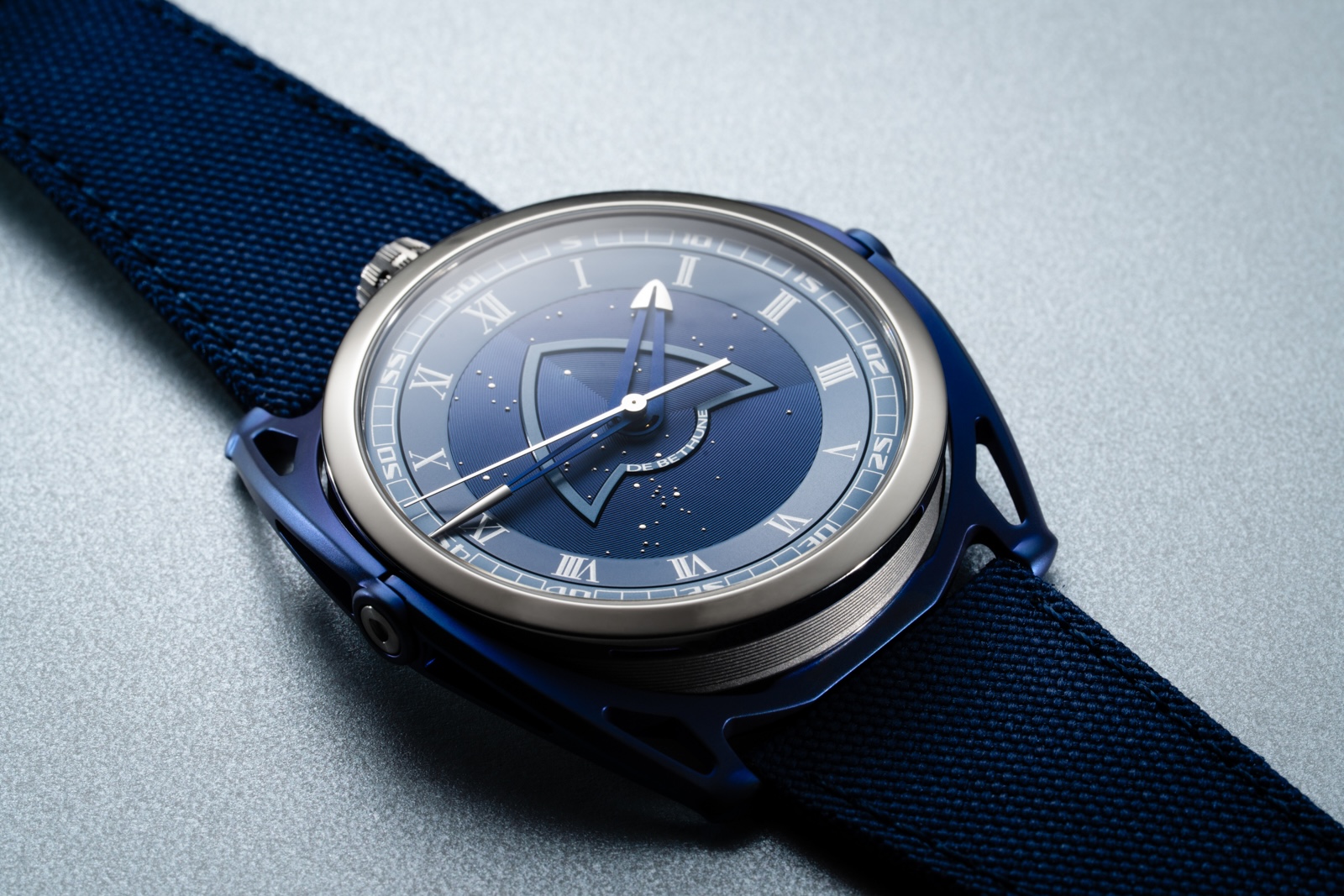
The starry dial is another De Bethune motif. Though the positions of the stars may seem random, they depict the positions of the major stars in the night sky as they appeared on the day that De Bethune first partnered with EsperLuxe. The night sky itself is blued titanium, underscoring the coherence between case, dial, and movement.
Technical watchmaking

Inside, the Night Hawk is powered by the AUTOV2 movement, a relatively straightforward in-house automatic calibre with central seconds, a stable 4 Hz rate, and a 60-hour power reserve.

And because it’s a De Bethune calibre, the hairspring sports the brand’s proprietary flat terminal curve, which was granted a design patent. The shape of the hairspring is intended to improve the spring’s concentricity, much like an overcoil, but with a lower profile design.
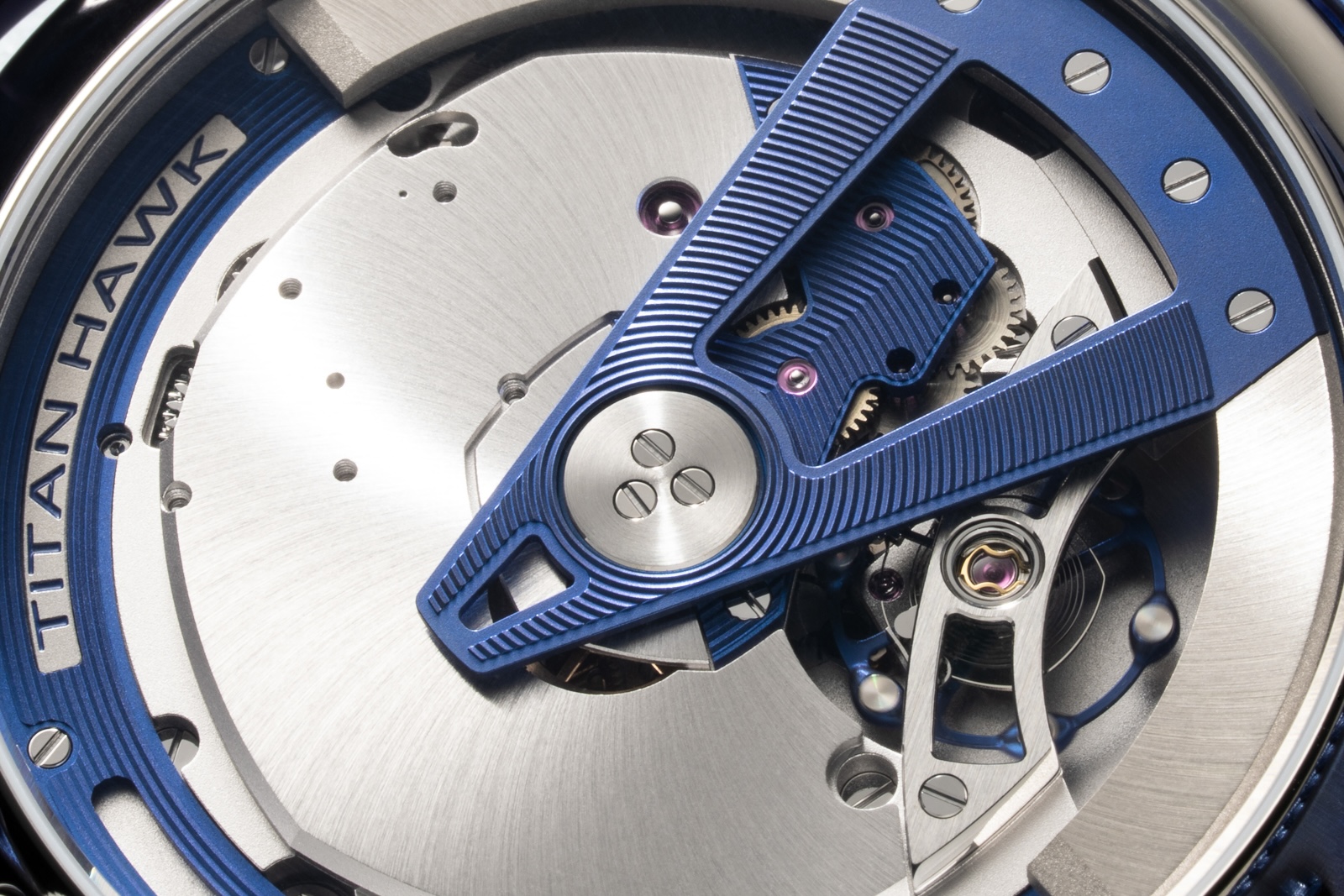
The hairspring supports a large blued titanium balance wheel with inset 18k white gold weights. The weights increase the moment of inertia of the balance, but they are not adjustable — the rate is adjusted via the brand’s own proprietary regulator, which is a clamp-like apparatus underneath the balance bridge functionally similar to a curb-pin regulator.

The entire assembly is mounted to a full balance bridge to optimise rigidity, but the positioning of the AUTOV2 within the portfolio means it misses out on De Bethune’s Triple Pare-Chute anti-shock system. That said, the Incabloc shock absorber that supports the balance staff should be more than sufficient in real-world use.
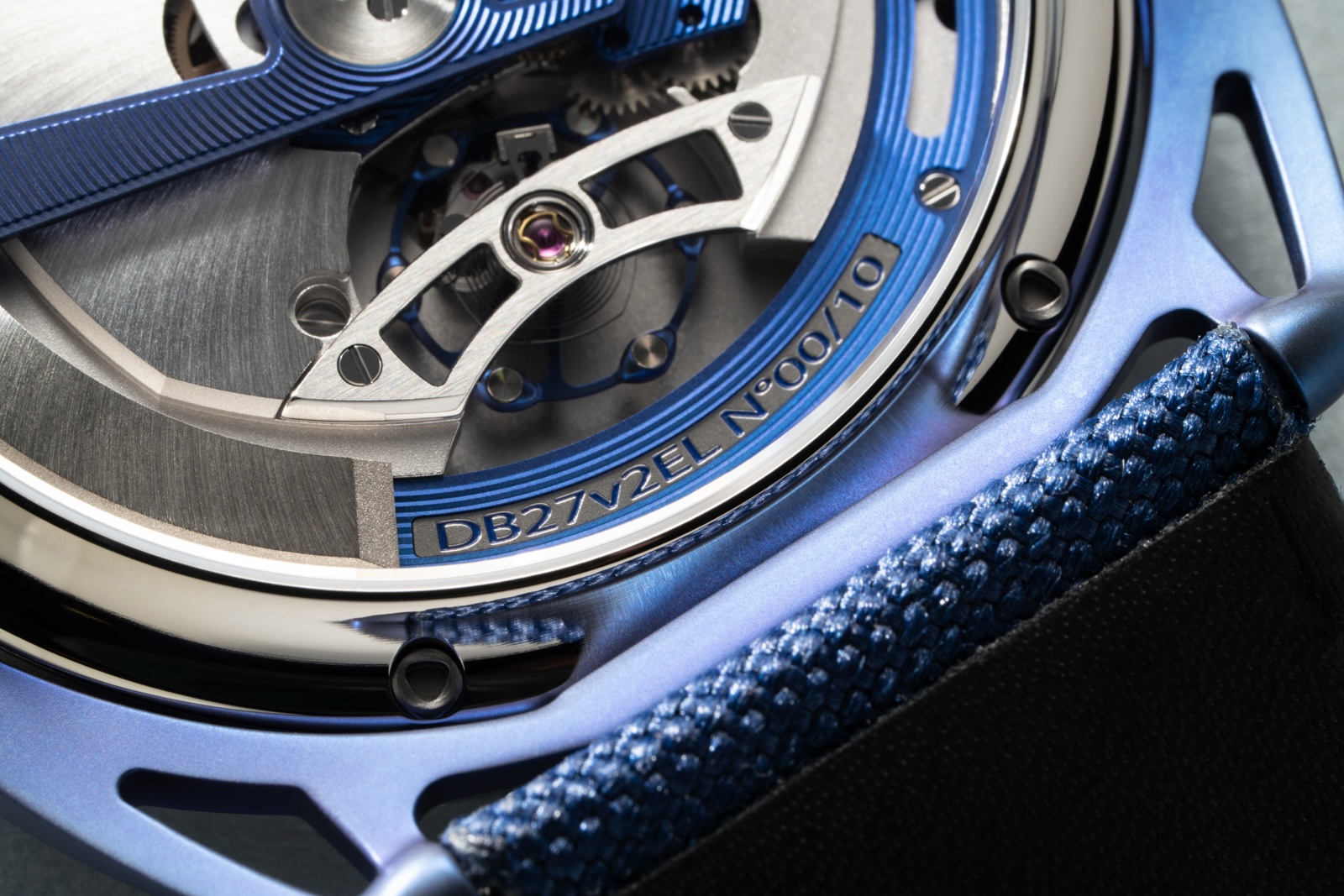
In terms of finish, the movement is solarised on the large surfaces, save for four large blued elements which have been machined with an industrial-looking grooved texture. In short, the Night Hawk opts for a relatively austere look for the movement, possibly to focus attention on the brand’s wide-ranging specialties, which include design and exterior finishing.


De Bethune DB27 “Night Hawk”
Ref. DB27V2EL

Diameter: 43 mm
Height: 9 mm
Material: Titanium
Crystal: Sapphire
Water resistance: 30 m

Movement: AUTOV2
Functions: Hours, minutes and seconds
Winding: Automatic
Frequency: 28,800 beats per hour (4 Hz)
Power reserve: 60 hours

Strap: textile strap with titanium pin buckle and additional leather strap

Limited edition: Yes, 10 pieces and 1 prototype
Availability: Now from EsperLuxe
Price: 
US$70,000 excluding taxes

For more, visit Debethune.ch.


Back to top.
You may also enjoy these.

Hands On: Victor Kullberg Tourbillon Pocket Chronometer

Elaborate simplicity.

Phillips’s upcoming sale The Geneva Watch Auction: XXIII is packed with spectacular watches, including some already well known to collectors like the extra complicated La Royale by Louis Audemars, an unsual Patek Philippe worldtime ref. 2523, and the Golay Fils & Stahl astronomical watch.

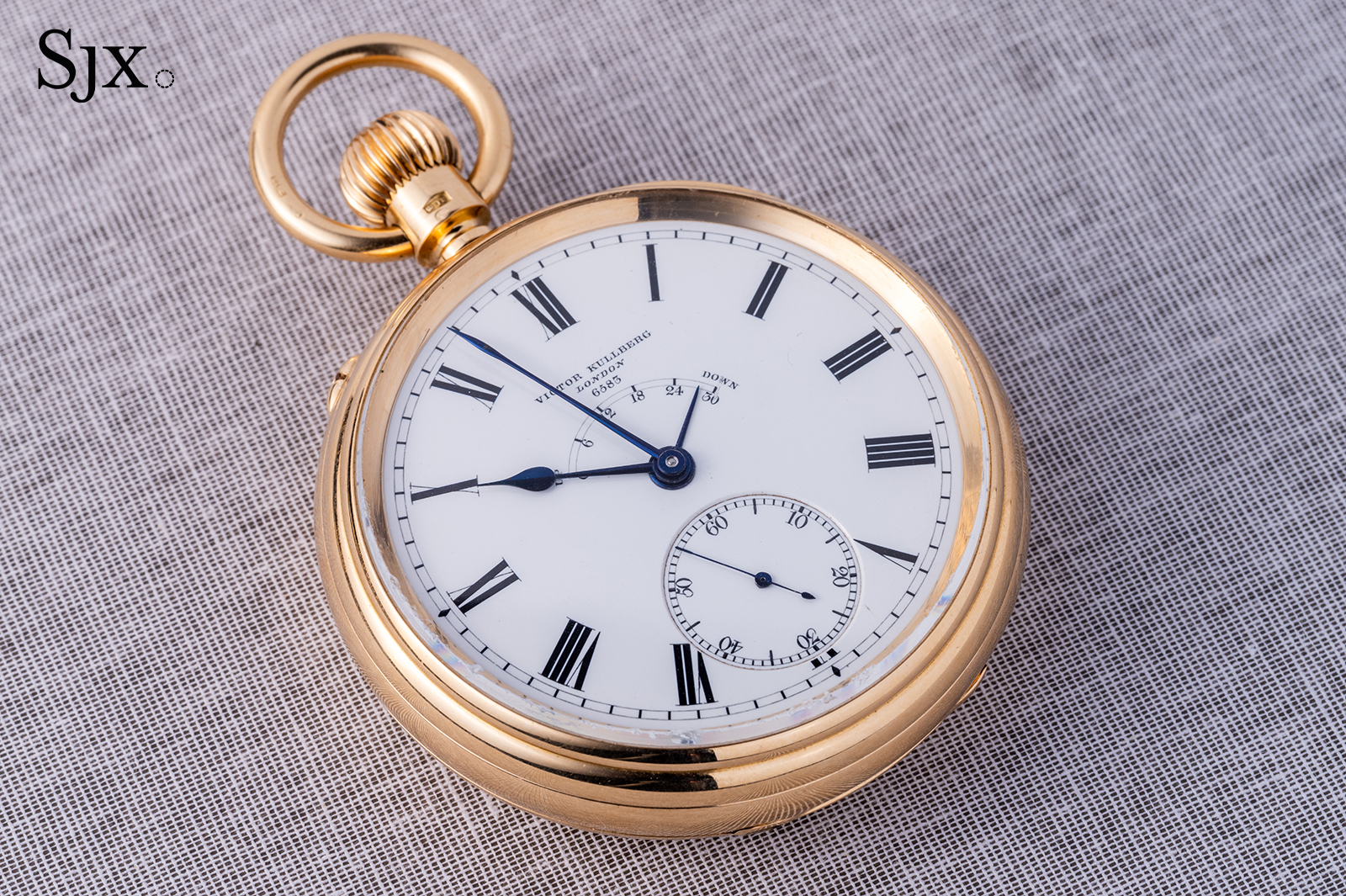
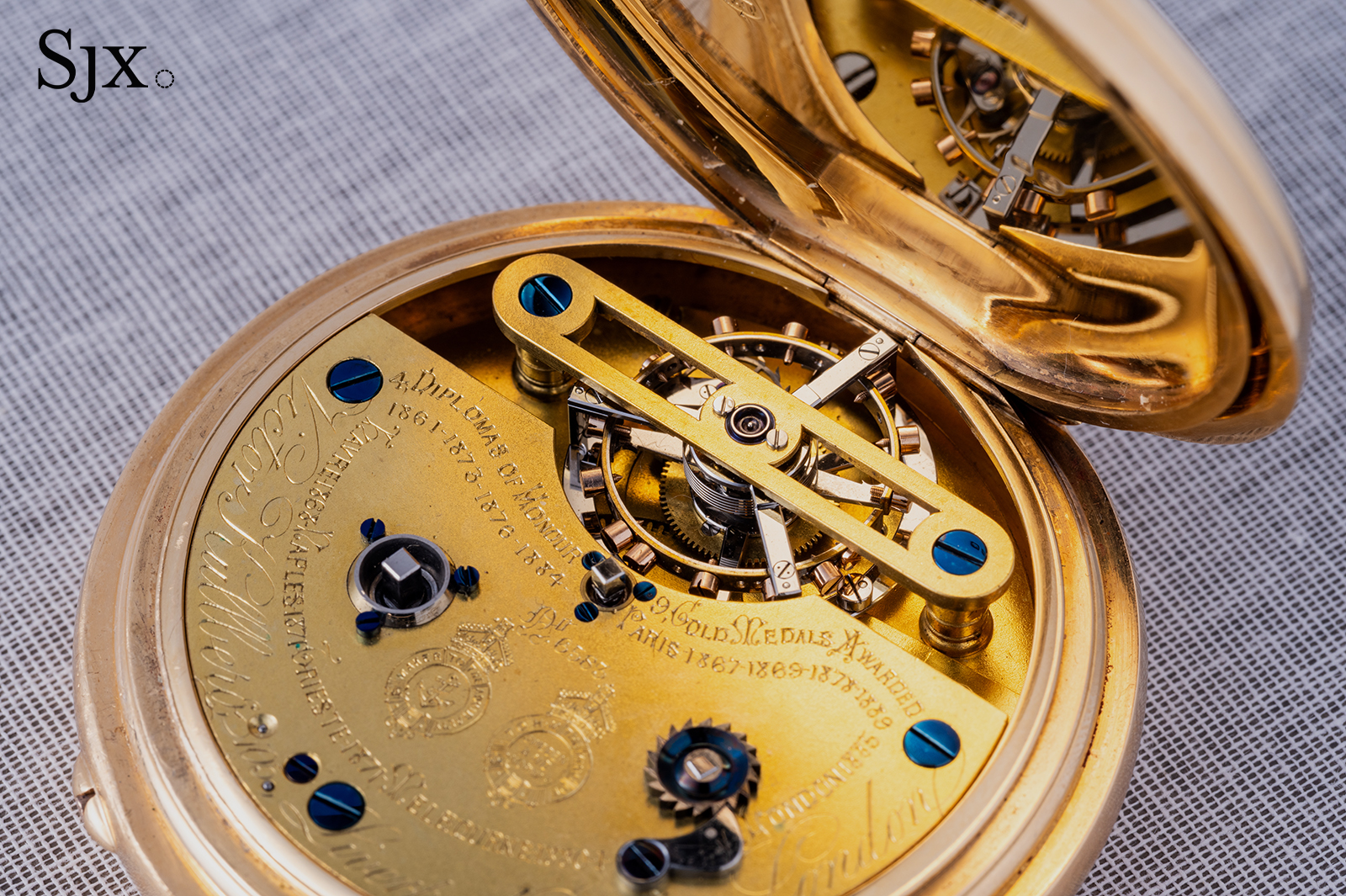
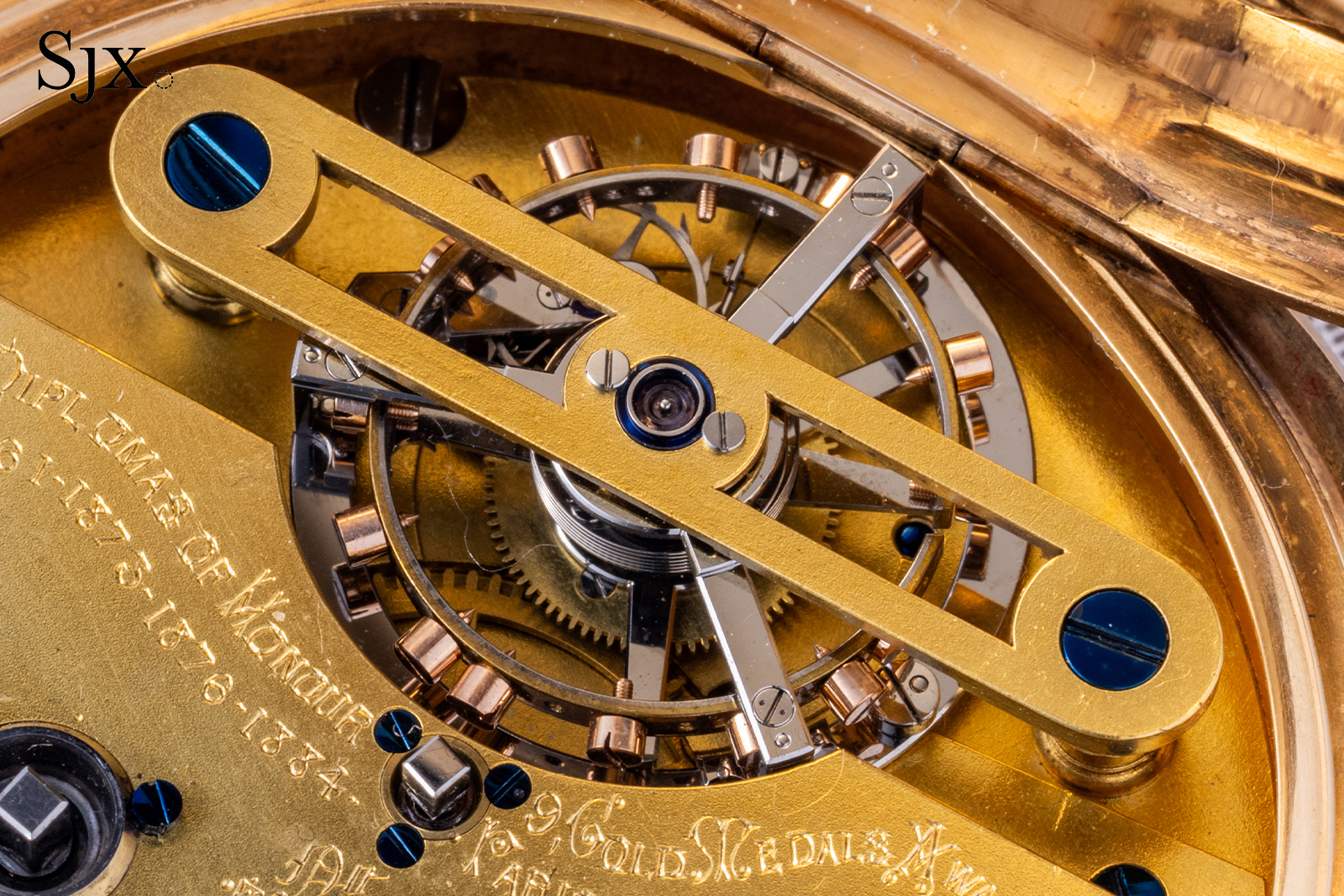
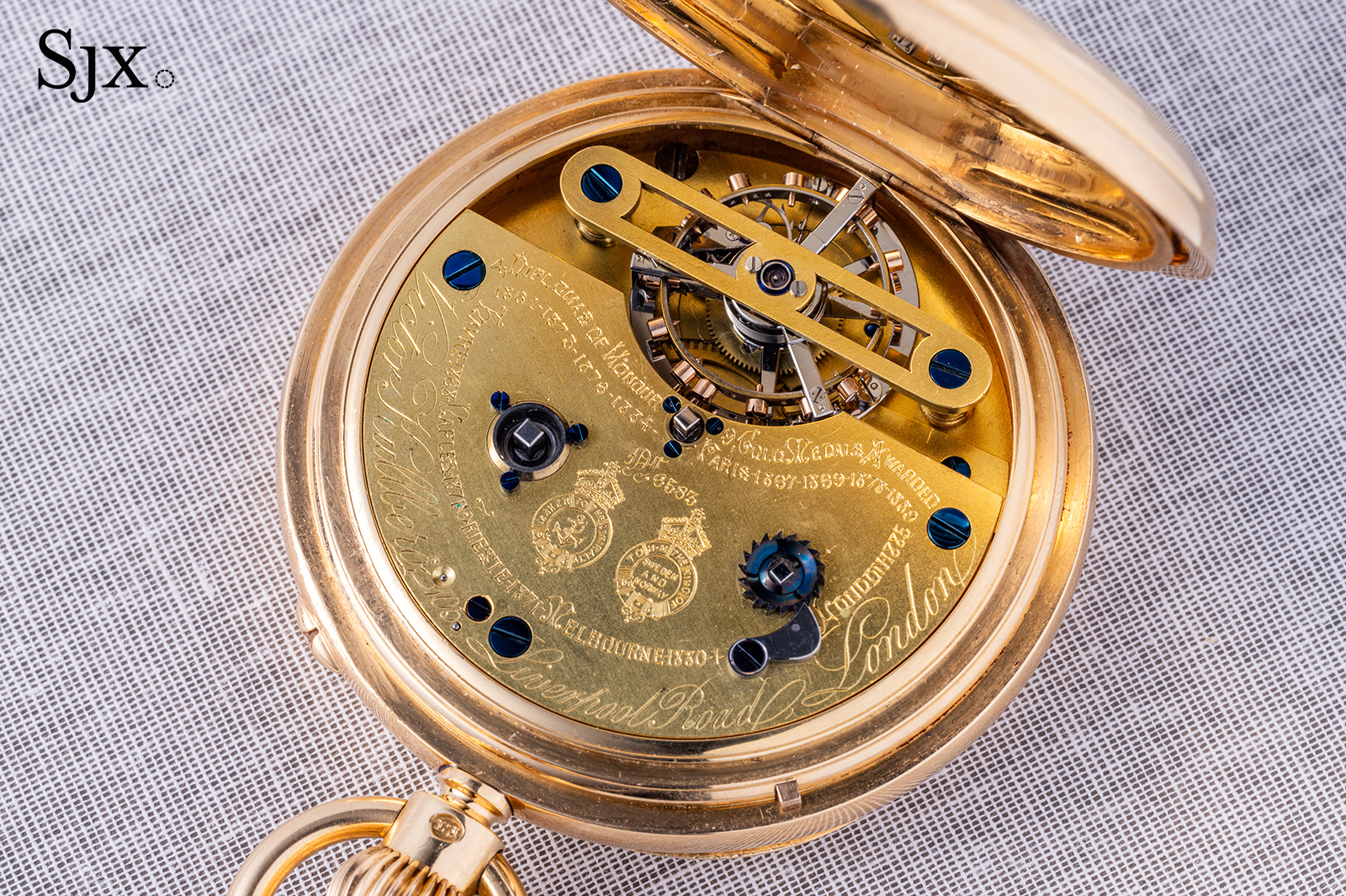
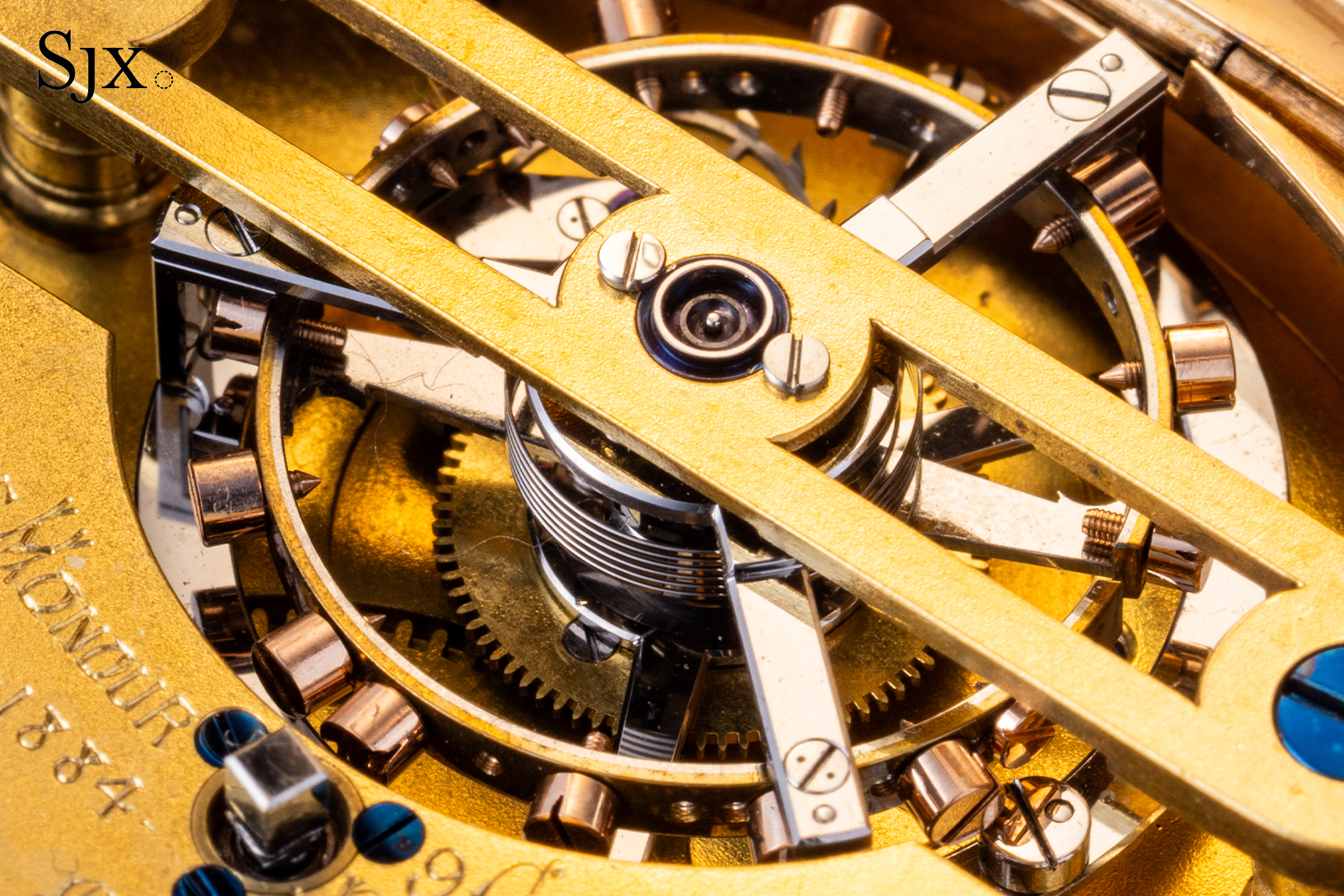
But among the finest is a simple watch that tracks only the time and state of wind, yet is comprised of several hundred parts: Victor Kullberg No 6583. Behind those three hands is a one-minute tourbillon equipped with an Earnshaw detent escapement, a massive free-sprung compensation balance, anti-magnetic helical balance spring and reverse chain and fusee, making it one of the most elaborate three-hand watches imaginable.

Even at its high estimate of US$102,000, this pocket chronometer amounts to something of a steal, especially in an auction where multiple steel sports watches carry much greater estimates.

The cult of the chronometer

Swiss and English horologists disagreed on a great many things, from the ideal shape and material of escape wheels to the definition of a chronometer. To the Swiss, the title of chronometer was bestowed based on merit as a timekeeper. Any watch could be one if it kept good time, especially with a trusted, independent attestation of its accuracy. Watches submitted to observatory trials — or tested according to the ISO 3159:2009 standard today — are chronometers by this reckoning.

England was dominated by the cult of the [marine] chronometer, unsurprising as it sat at the heart of the seafaring British Empire. According to the English, a chronometer must use a chronometer (detent) escapement, while a watch that merely kept good time with a lever or other escapement was termed a “half-chronometer”. While Pierre Le Roy can be credited with inventing the detent escapements in general, the chronometer escapement as we know it today was the work of two Englishmen, John Arnold and Thomas Earnshaw.

Other English chronometer makers built on their work, such as Charles Frodsham, Edward Dent, Thomas Mercer, and, of course, Victor Kullberg. The latter, born 1824, was actually Swedish, but worked for Louis Urban Jürgensen in Copenhagen before moving to London in the 1840s.

He was very good at his craft and had his own firm by 1856. In fact, in 1882, one of Kullberg’s chronometers (No. 4066) set a record with the best performance in the Greenwhich trials’ history. Amusingly, according to The Horological Journal in November 1882, Kullberg was disqualified from first prize of the Clockmakers’ Company, as he’d won it the year before.

Chronometer trials and tribulations

The chronometer escapement, as it shall be called from here on, is ideal for semi-portable timekeepers. Box chronometers live sheltered lives, protected by their boxes and gimbals, but the escapement is a poor fit for watches. There are a few problems with pocket chronometers, from accidental unlocking under shock to difficulty adjusting for positions, that, when combined with the difficulty of manufacture, explain the lever escapement’s dominance.

In his 1887 Treatise on Modern Horology, Claudius Saunier went so far as to say “The remarkable regularity, mainly due to it [the chronometer escapement], that is observed in the chronometers employed by astronomers, naval and scientific men, and constructed chiefly by English and French makers, has led the manufacturers of ordinary watches to fancy that they would secure more accurate timing by the mere employment, in their best watches, of more or less accurate copies of detent escapements. Their attempts have always turned out to be failures.”

Work started on this watch soon after in 1897, and while it’s not a cost-effective, rugged pocket timekeeper like a good lever watch, I certainly wouldn’t call it a failure.

Elaborate but not complicated

The reputation of Kullberg watches in their own time is captured by the official record of the 1880 Melbourne International Exhibition, which describes the firm’s showing at the fair as  “A small exhibit of very high-class watches of exquisite workmanship. The points which most attract attention of the just were the high finish and well-made and heavy compensation balance. The prices were, however, considered somewhat high.”

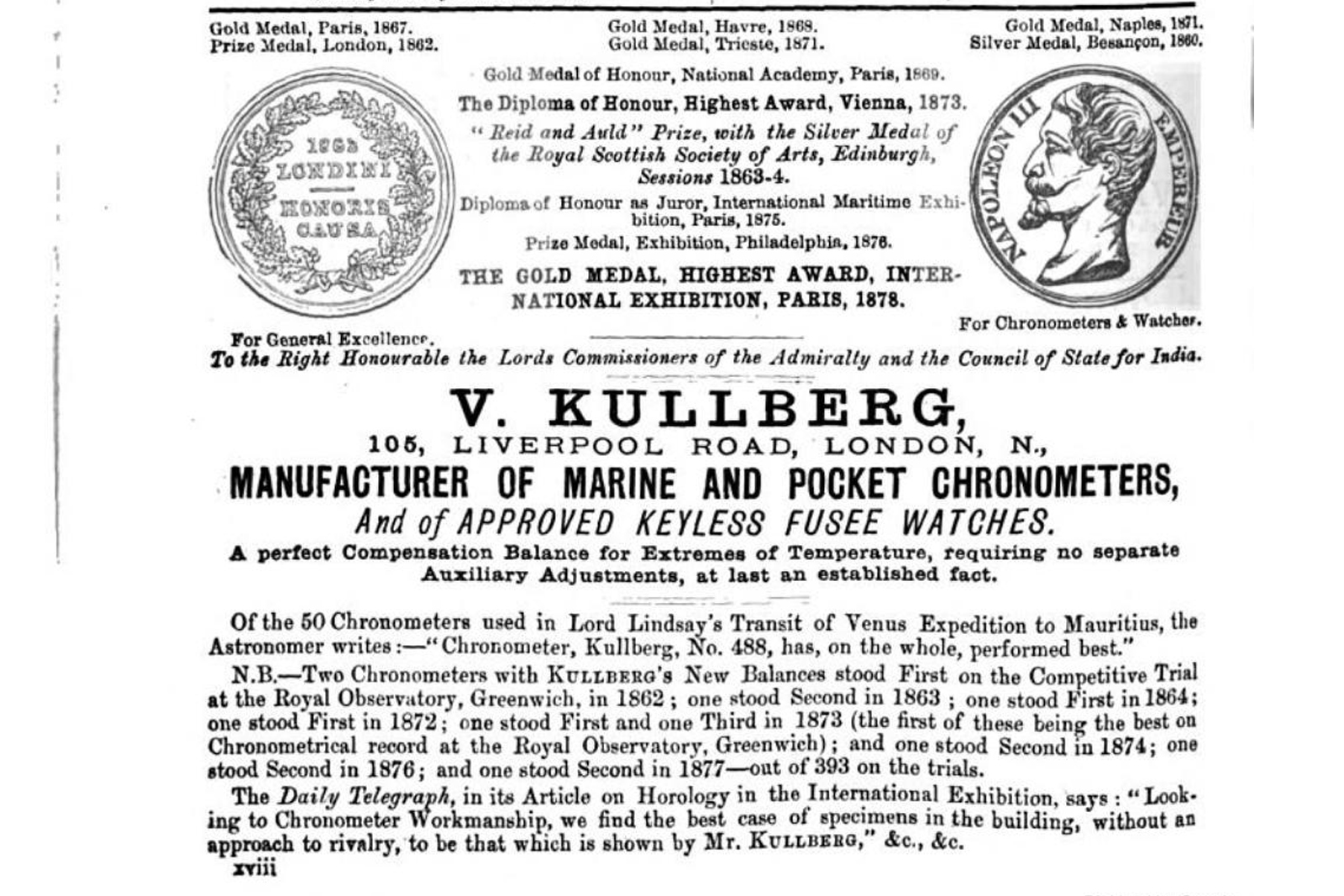
This advertisement for V. Kullberg watches and chronometers was commonly found in The Horological Journal. Image – The Horological Journal, 1887, In the public domain

While this is Kullberg’s only known tourbillon pocket chronometer, this tourbillon bridge can be found as a balance bridge in many other Kullberg watches, especially those with sweep seconds hands. Made to the highest possible standards, the movement is far from modest, openly boasting Kullberg’s many achievements, including a royal warrant from the king of Sweden and Norway, and the years of the firm’s various chronometric conquests.

The massive balance inside the cage is free-sprung, as is the case for most tourbillons, and many fine watches, built in England, which wouldn’t become the standard for Swiss manufactures until well into the wristwatch era. The white metal hairspring is likely a palladium alloy, which is more resistant to weathering and magnetism than steel hairsprings. But the raw material was much more expensive, and these springs demanded more exacting adjustment due to their greater weight.

If you compare this watch — or most full-sized Kullberg box chronometers — to fusee watches or chronometers from another maker you’ll notice the locations of the barrel and fusee are swapped. Kullberg favoured this reverse fusee arrangement, and while it can be found in other watches, it was rare enough to be a signature of his firm’s work. You may also notice this stem wind watch still has squares on the movement for hand setting and winding,

Elliot C. Lee

This watch was sold for GBP85 in August 1913, which comes to about US$415 at a fair exchange rate. For comparison, S. Smith & Son offered karrusels with class A Kew certificates starting at GBP35 around the same time, while a fusee lever tourbillon from Nicole Nielsen cost GBP72. Perhaps unsurprisingly, it was purchased by perhaps the English watch industry’s greatest private patron at the time, Elliot Cabot Lee of Boston.

Upon taking custody of the watch Lee wrote “I beg to send you my best thanks for the chronometer 6583 which came this morning. It is a beautiful watch. I do not remember having seen that special combination of a Karrusel (sic) and chronometer escapement before and should expect it to give a very close rate as it gets rid of the position errors with the additional advantage of chronometer escapement.”

This was just one of many tourbillons Lee owned, but the only I know of with a chronometer escapement. Indeed, this is the only Kullberg watch to combine the two features, which were already esoteric in isolation, which, when coupled with its price, explains why this watch took over a decade to sell.

But, thanks to the wealth of information easily available over the internet and in print (this watch is featured in Das Tourbillon by Reinhard Meis), as well as depressed pocket watch prices, this simple but very elaborate watch is the most accessible it has ever been.

The Victor Kullberg One Minute Tourbillon Chronometer carries an estimate of CHF40,000–80,000 ($50,800–102,000).

The watch will be sold in Phillips’ The Geneva Watch Auction: XXIII running from May 9-10, 2026 in Geneva.

For more, visit Phillips.com.


Back to top.

You may also enjoy these.

Welcome to the new Watches By SJX.

Subscribe to get the latest articles and reviews delivered to your inbox.