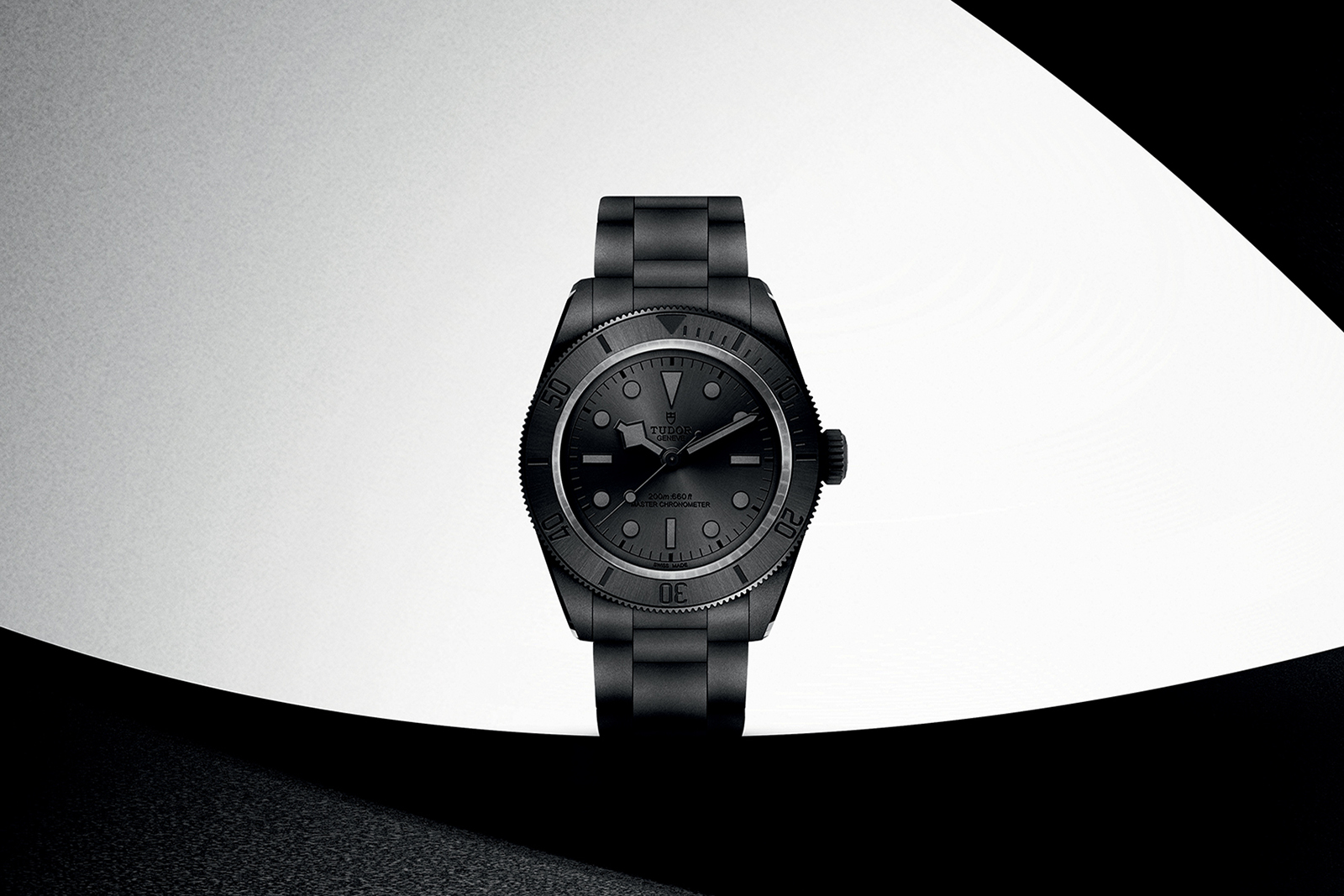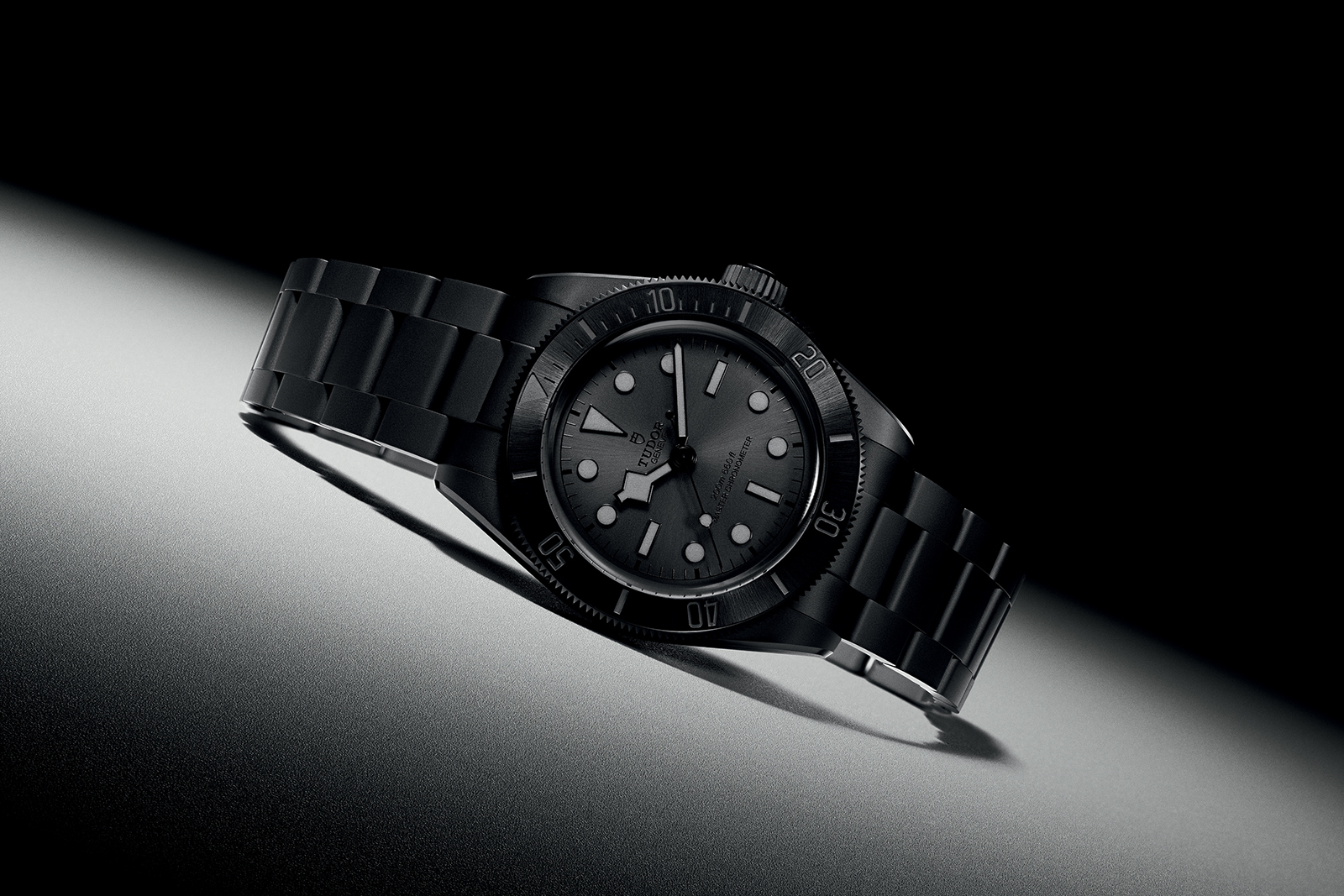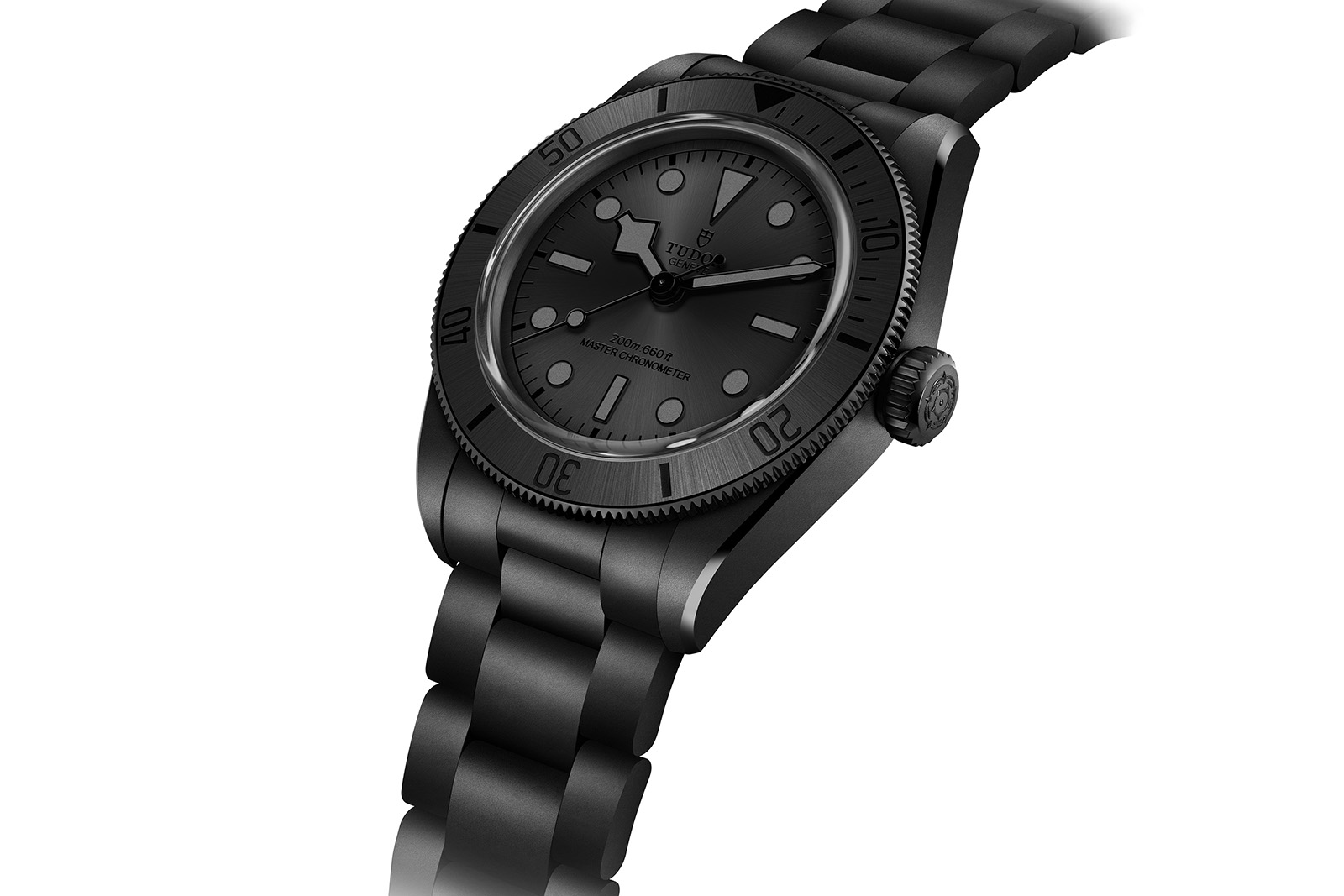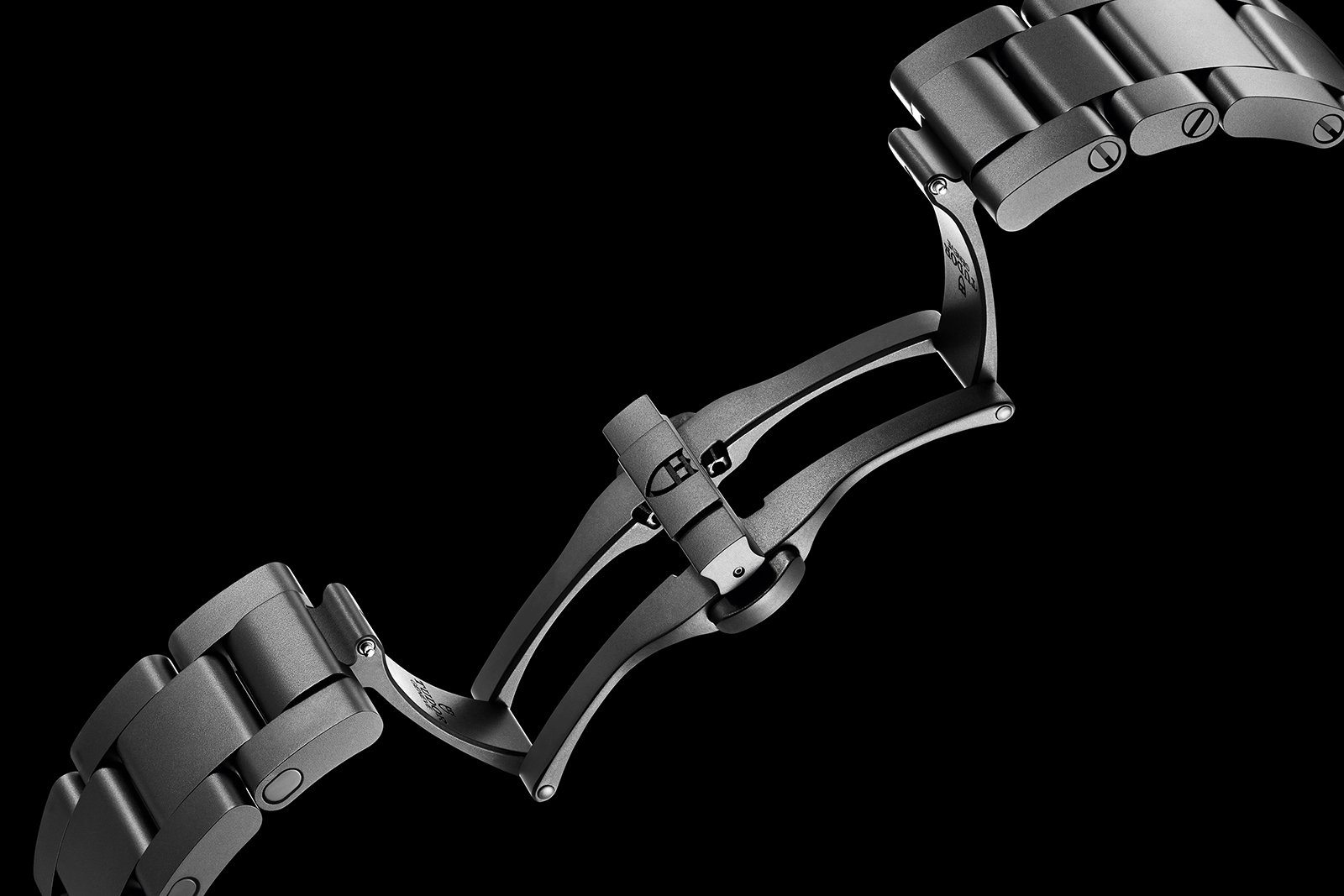
Tudor Ascends the Throne with the Monarch

A successful blend of sports and class.

Tudor celebrates 100 years and marks the occasion by launching the dressy Monarch. A more obscure model in the brand’s catalogue, the original Monarch was retired during the early 2000s. The model makes its return, with an emphasis on movement finishing and quality. 

Initial Thoughts

It is no secret that Tudor had their fair share of hit and misses in terms of design, especially during the ‘90s. The original Monarch was an unfortunate blend of sporty and elegant elements, which resulted in a rather unappealing and mostly forgotten product. 

The new Monarch fortunately has almost nothing to do with his ancestor, save for the name. The new timepiece reimagines the beloved if quirky California dial, improves greatly in terms of movement finishing and manages to blend well both classy and sporty elements.   

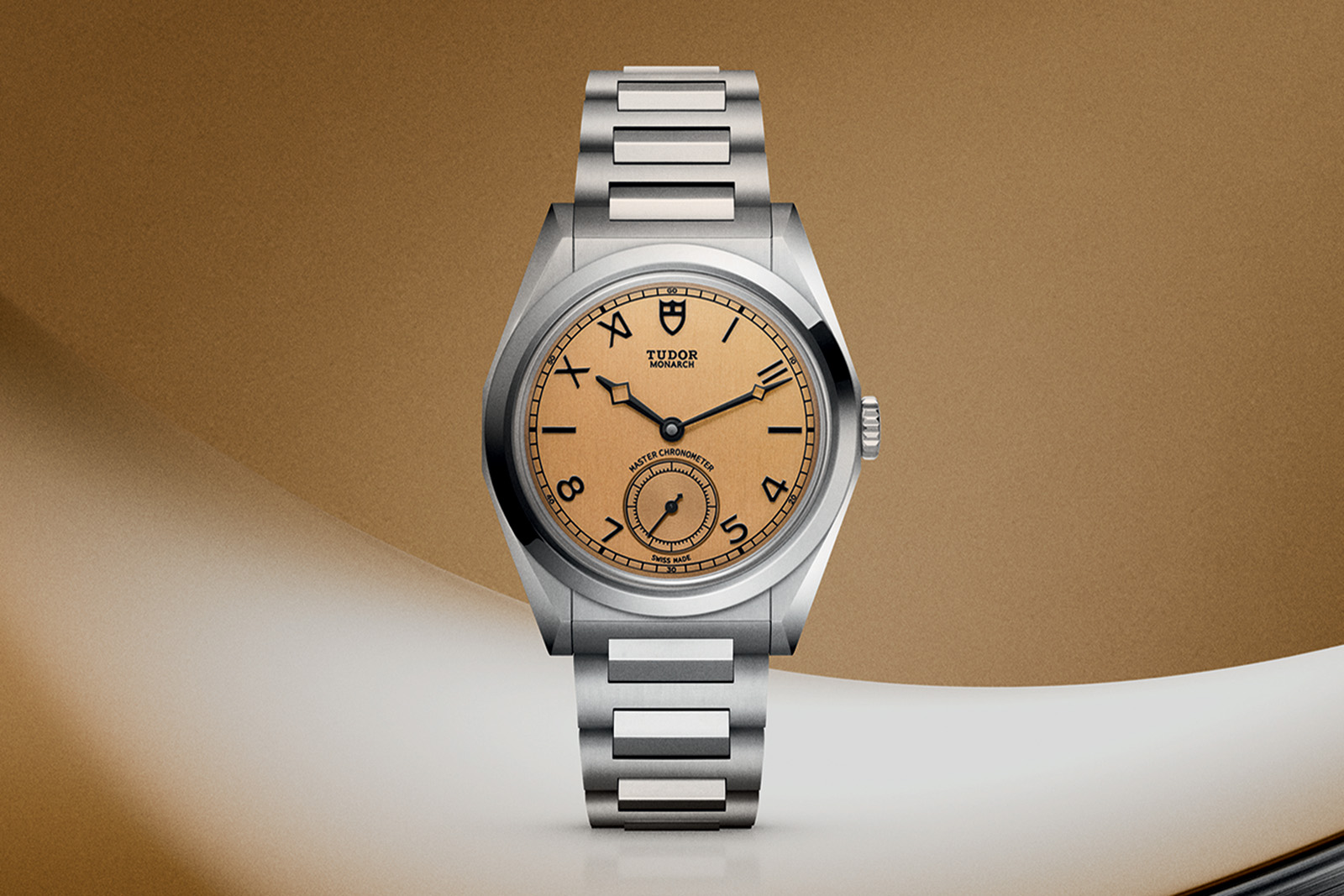
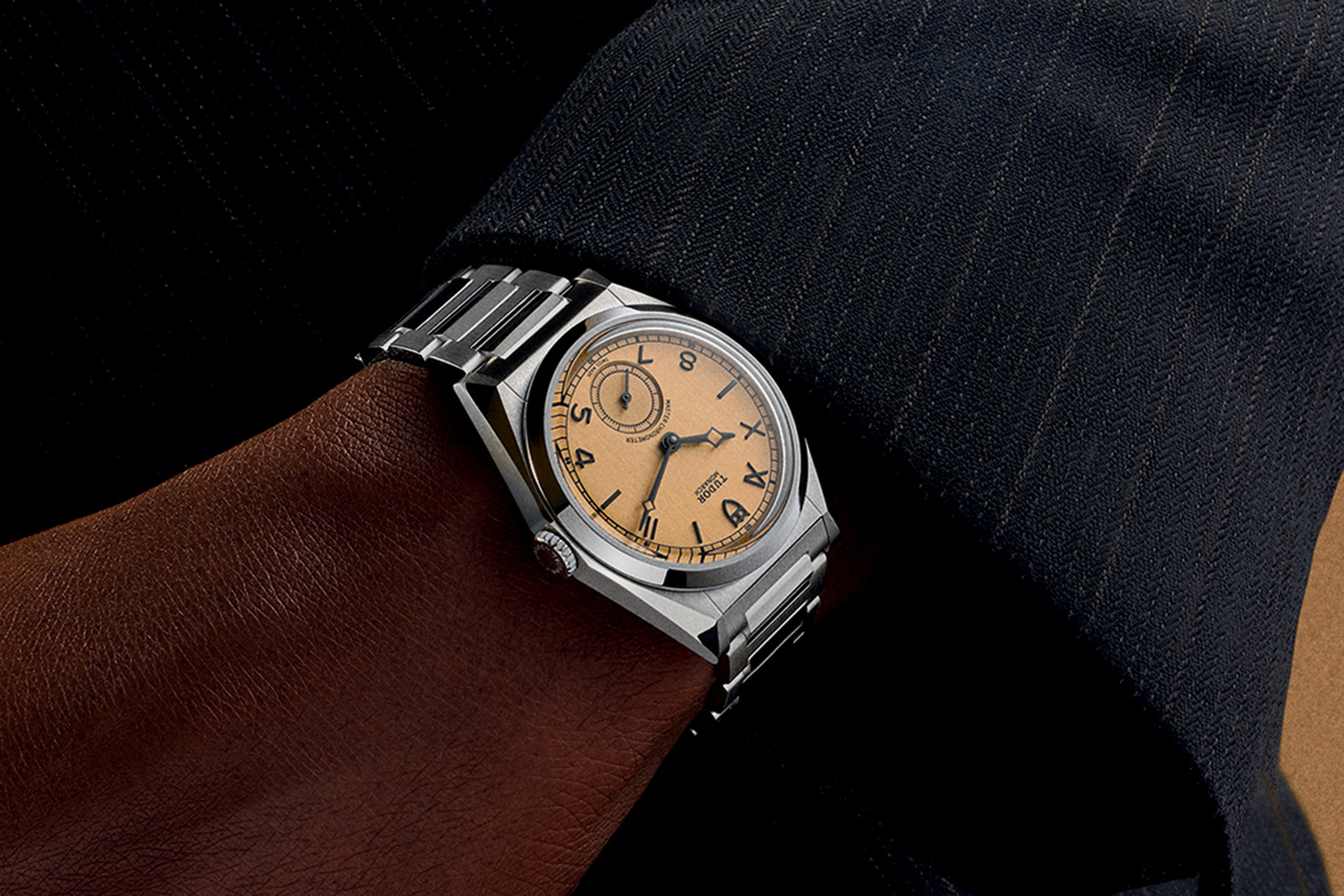
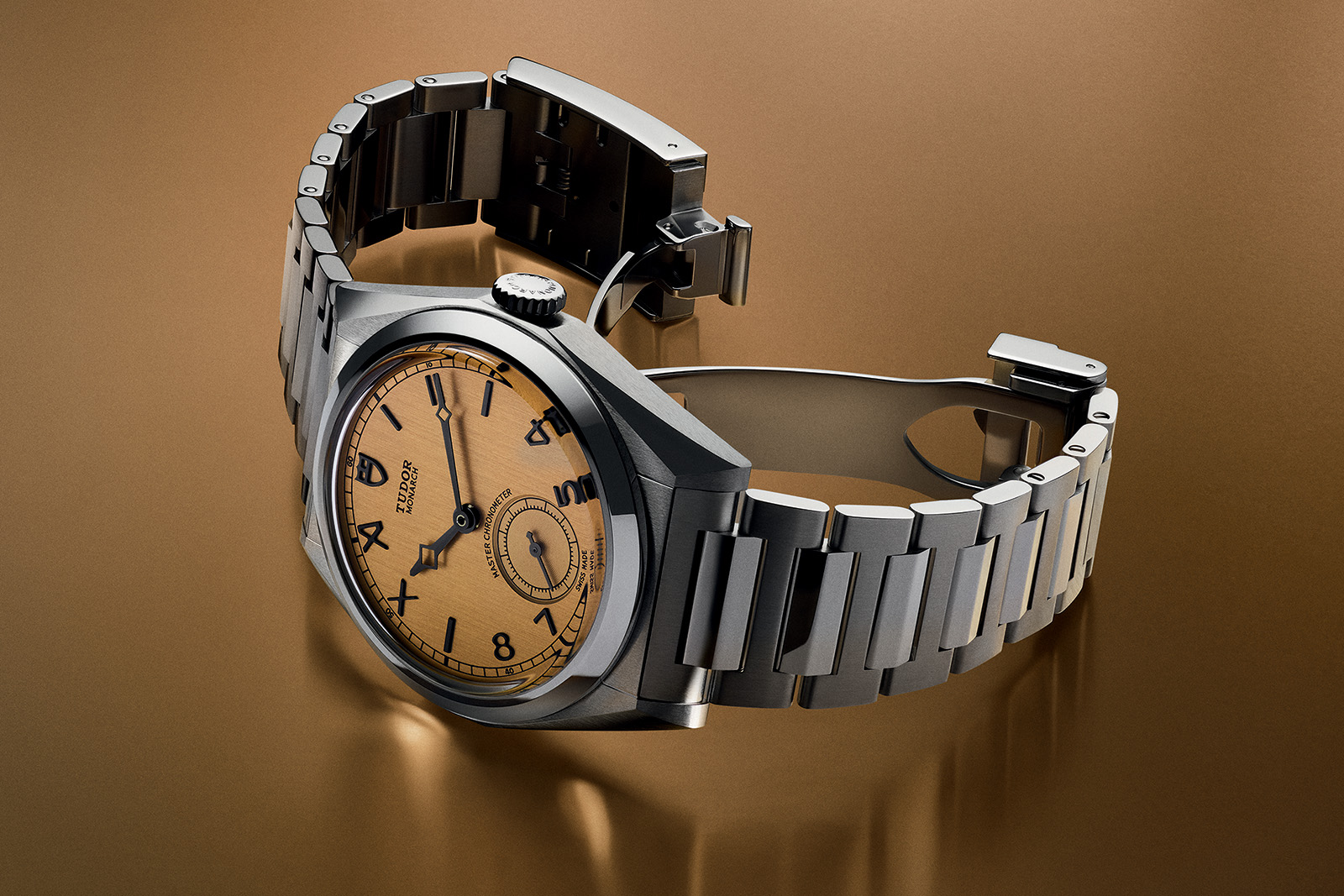
At first sight one might be tempted to assume the Monarch is a dress timepiece, but elements like the metal link bracelet, angular overall profile and screw-down crown give it a sporty, rugged edge. 

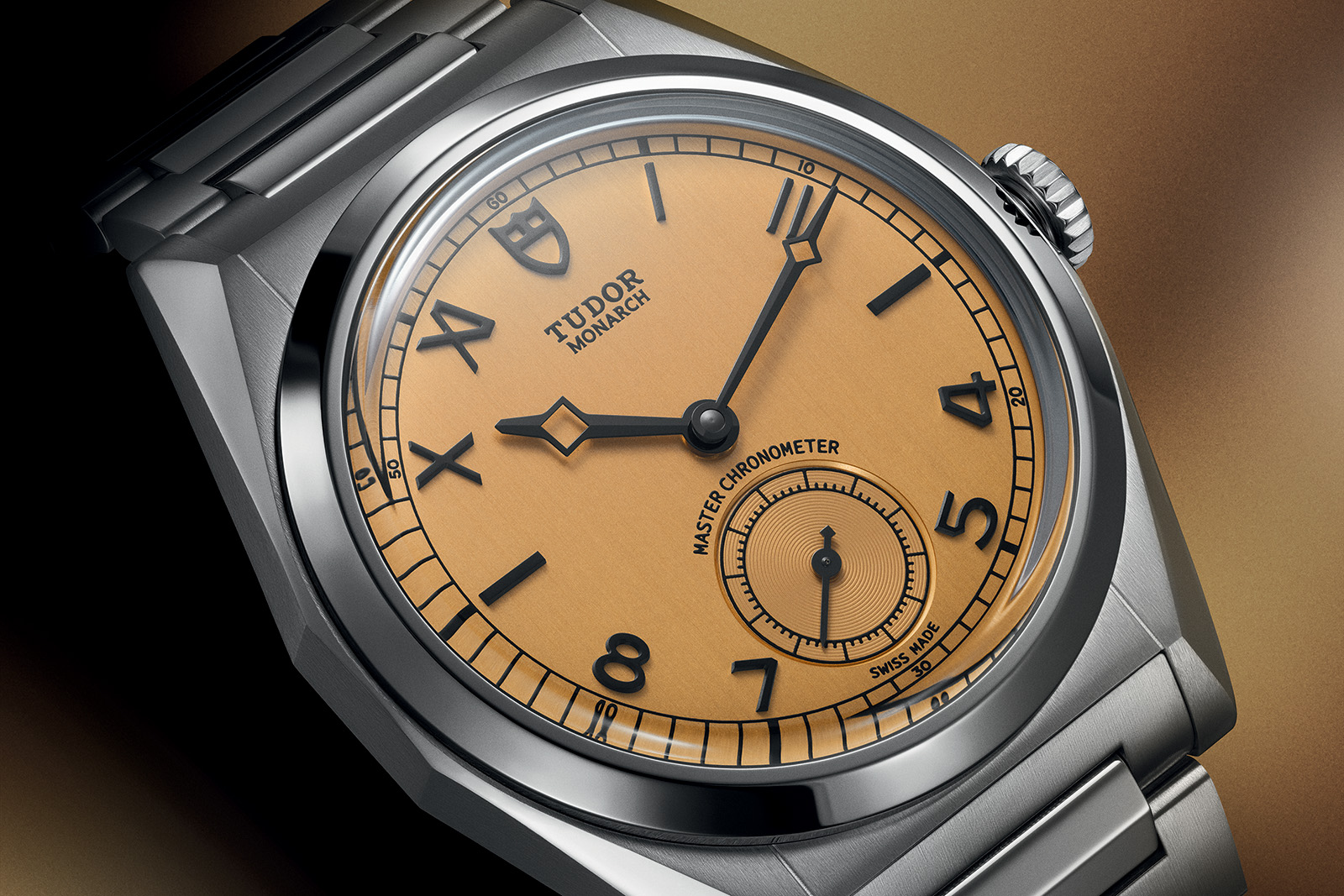
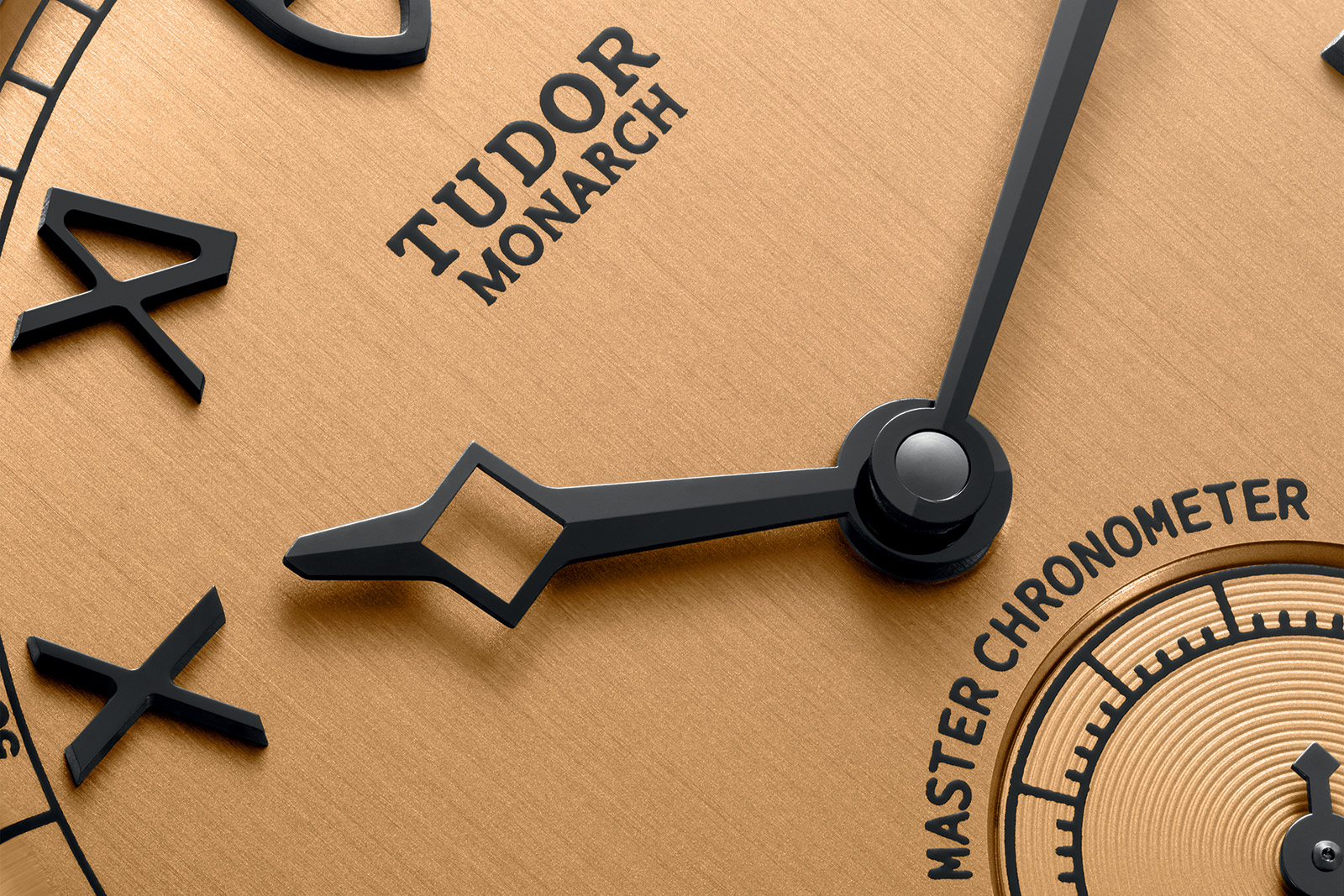
Tudor made an interesting choice with the dial colour, going for a coarsely brushed sand-hued piece paired with black applied indices. The California configuration paired with the small seconds at 6 o’clock is dressy, but the angular case makes for a thoroughly sporty look. 

The specific case shape is vintage-coded but benefits from modern execution techniques. The new bracelet shape is a welcome departure from Tudor’s usual Oyster-inspired straps and fits in well with the vintage trope. 

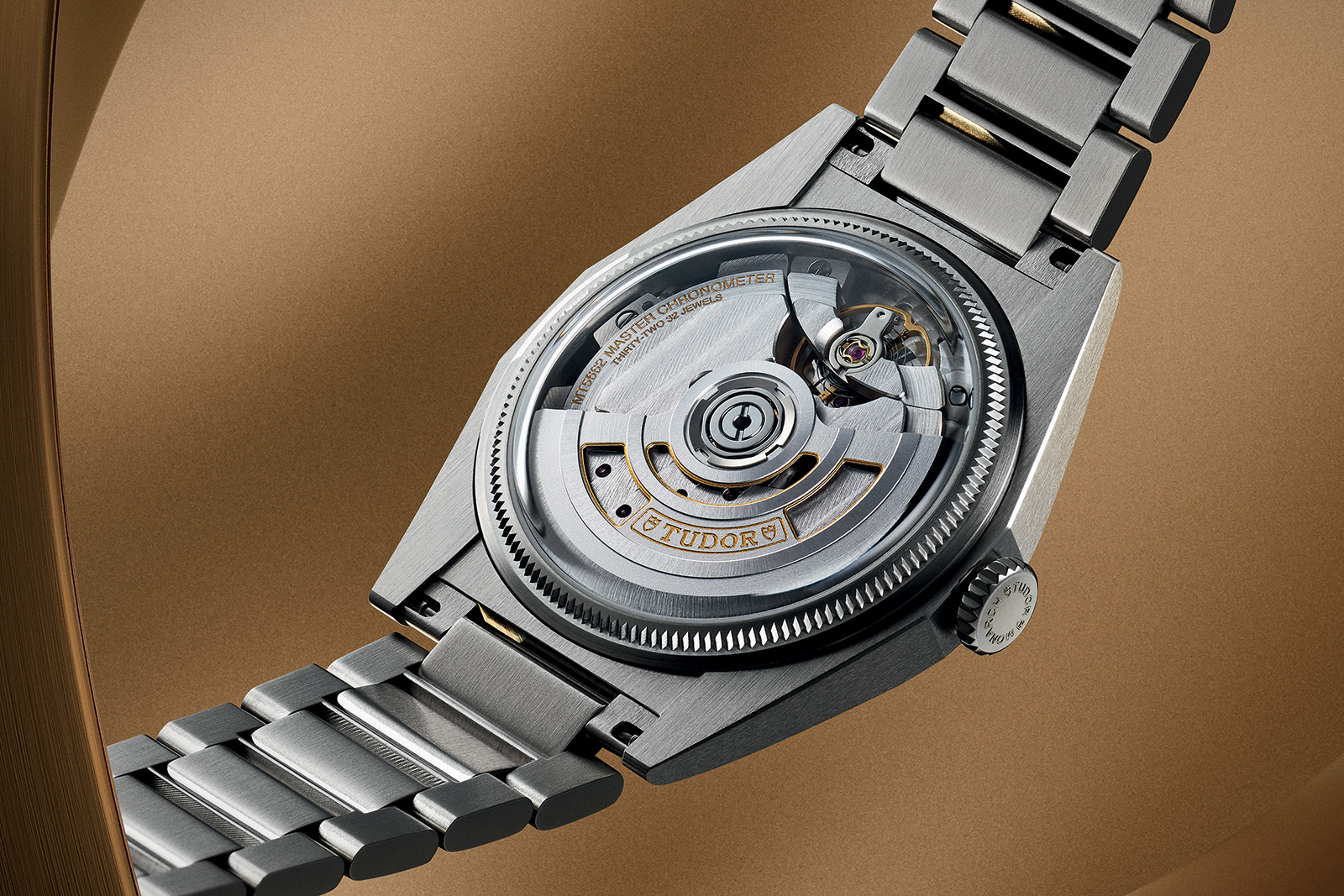
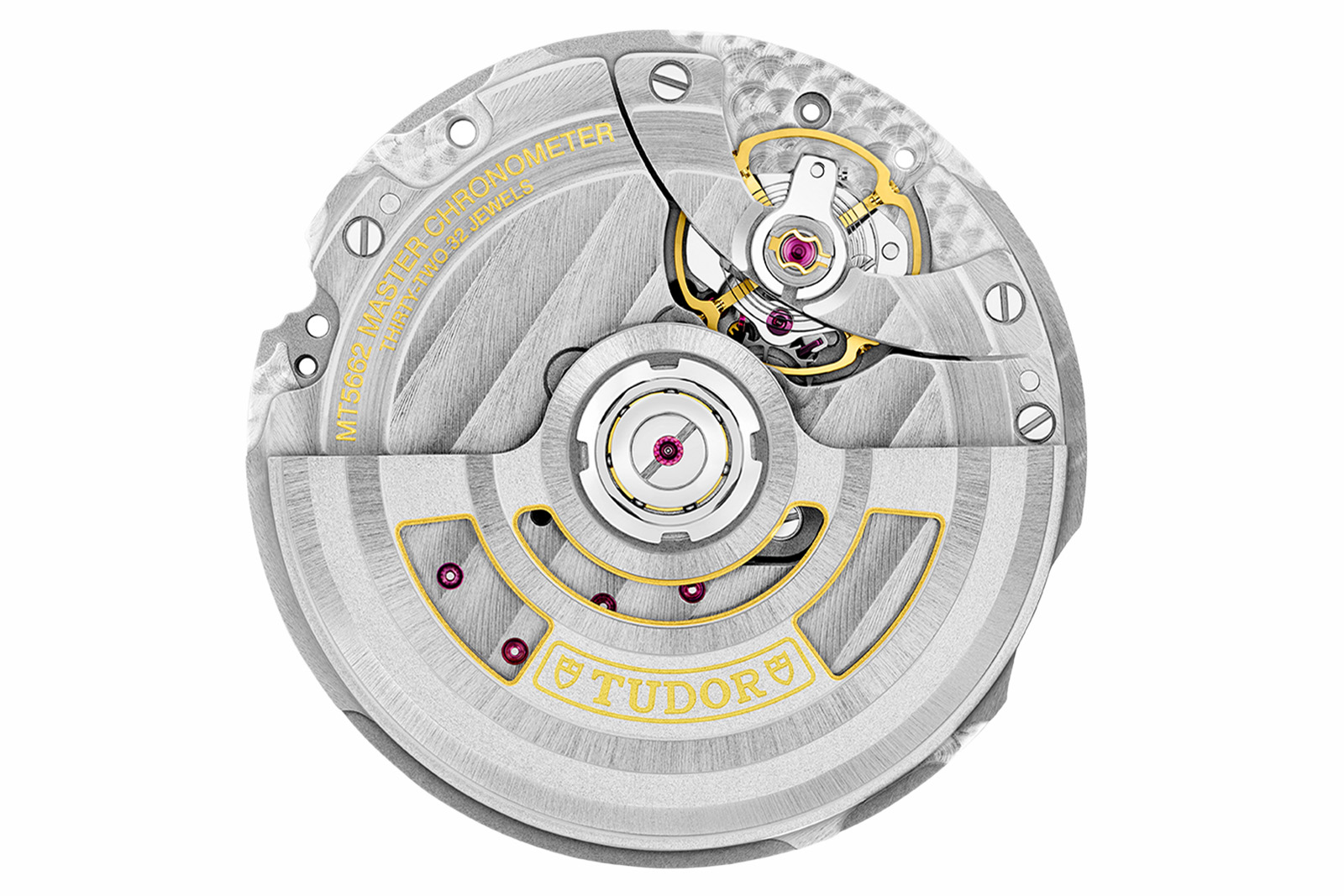
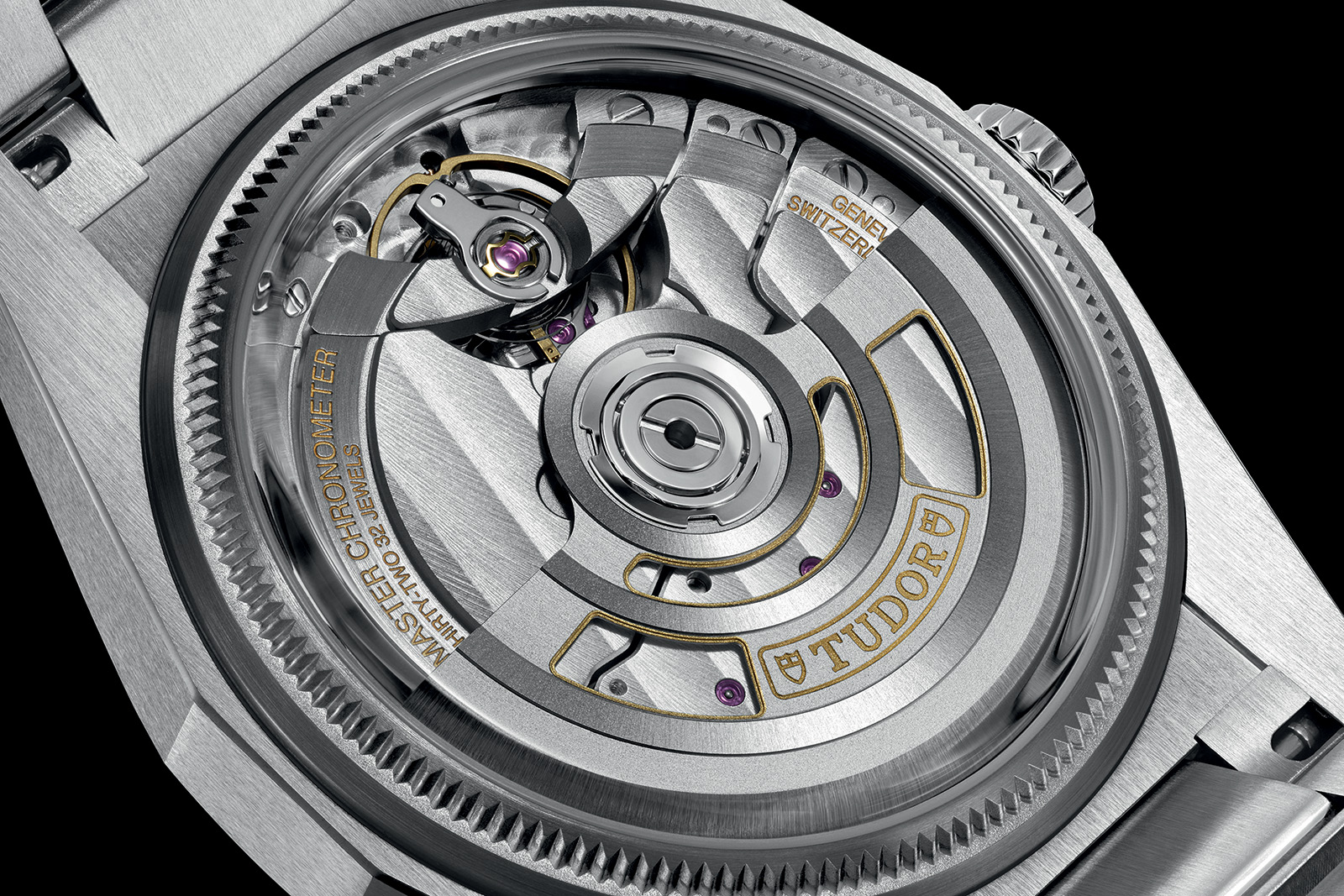
Perhaps the greatest surprise if the new MT5662-2U movement, which is visible through the caseback and decorated to an unexpected degree. Tudor manufacture movements are known for their sturdy industrial look, but it appears the brand might be moving away from that aesthetic. 

The Monarch is an especially compelling package as it offers an original design, a well-decorated METAS-certified movement and comes in the sub-CHF5,000 category, priced at CHF4,800.

Balanced design

Tudor’s new Monarch strays away from the exclusively sporty, diver oriented design language which has come to define the brand. The timepiece embraces vintage design cues (the case in particular reminds strongly of ‘70s’ pieces) without fully emulating a particular watch. 

The case size is a 39 mm in diameter which works rather well with the styling. Made from stainless steel, the case is both polished and brushed, making for a play of textures which smartly complements the angular lugs.

The dial is among Tudor’s more interesting offerings and probably the only fully and unapologetically elegant element of the Monarch. The California configuration blends Roman and Arabic numerals and the classic look is made whole by the small seconds sub-dial. 

A polished movement

Tudor manufacture calibers are among the best in-house workhorse movements on the market today, but rather lacking in terms of finishing. This might be changing in the future, with the METAS-certified caliber MT5662-2U showing us a different side of Tudor. 

The calibre is still based on the reliable MT56xx-platform but has a number of tweaks and improvement, the most notable being the high-end finishing. 

Where past Tudor movements were simply grained, the MT5662-2U is decorated with Côtes de Genève and perlage, not to mention a healthy amount of machine beveled edges. Surely the finishings are all machine applied, but the quality is undeniable. 

The rotor has been redesigned and features a luxurious 18K yellow gold inlay framing the cutouts and filling the Tudor signature. Apart from these cosmetic aspects, the MT5662-2U caliber remains a very reliable and sturdy machine, running for 65 hours on a full wind while beating at the industry-standard 4 HZ using a silicon hairspring. The movement is both COSC and METAS certified inside Tudor’s own licensed facilities, which guarantees the watch will stay inside the +0/+5 seconds per day deviation. 


Key facts and price

Tudor Monarch
Ref. 2639W1A0U – 26060

Diameter: 39 mm
Height: 11.9 mm
Material: Stainless steel
Crystal: Sapphire
Water resistance: 100 m

Movement: MT5662-2U
Functions: Hours, minutes, and small seconds
Winding
: Automatic
Frequency: 28,800 vibrations per hour (4 Hz)
Power reserve: 70 hours

Strap: Steel bracelet with T-fit clasp

Availability: Now at Tudor retailers
Price: CHF4,800, VAT included

For more, visit Tudorwatch.com.


Back to top.
You may also enjoy these.

The Yacht-Master II’s Encore

Easier to use and not as loud as the original.

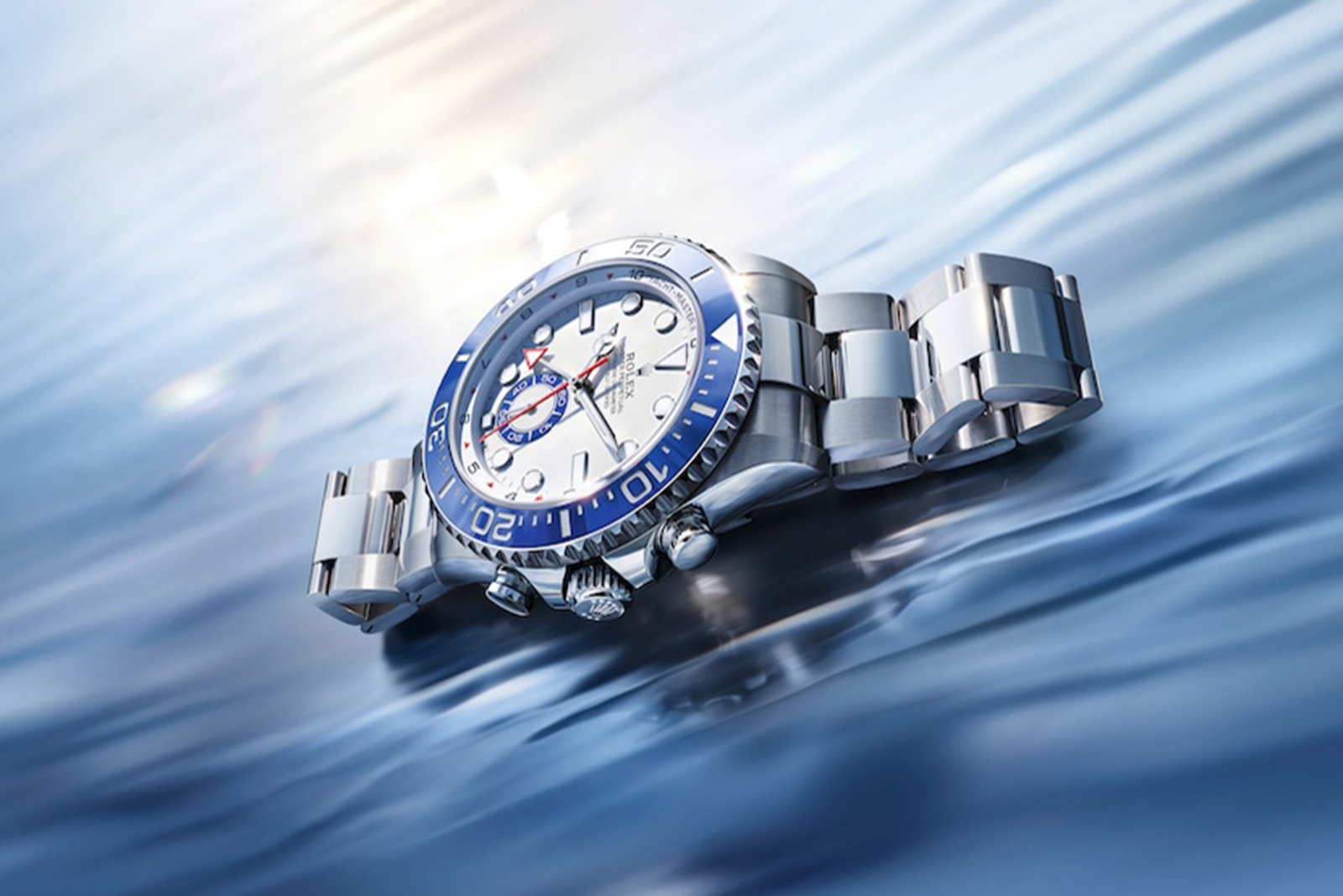
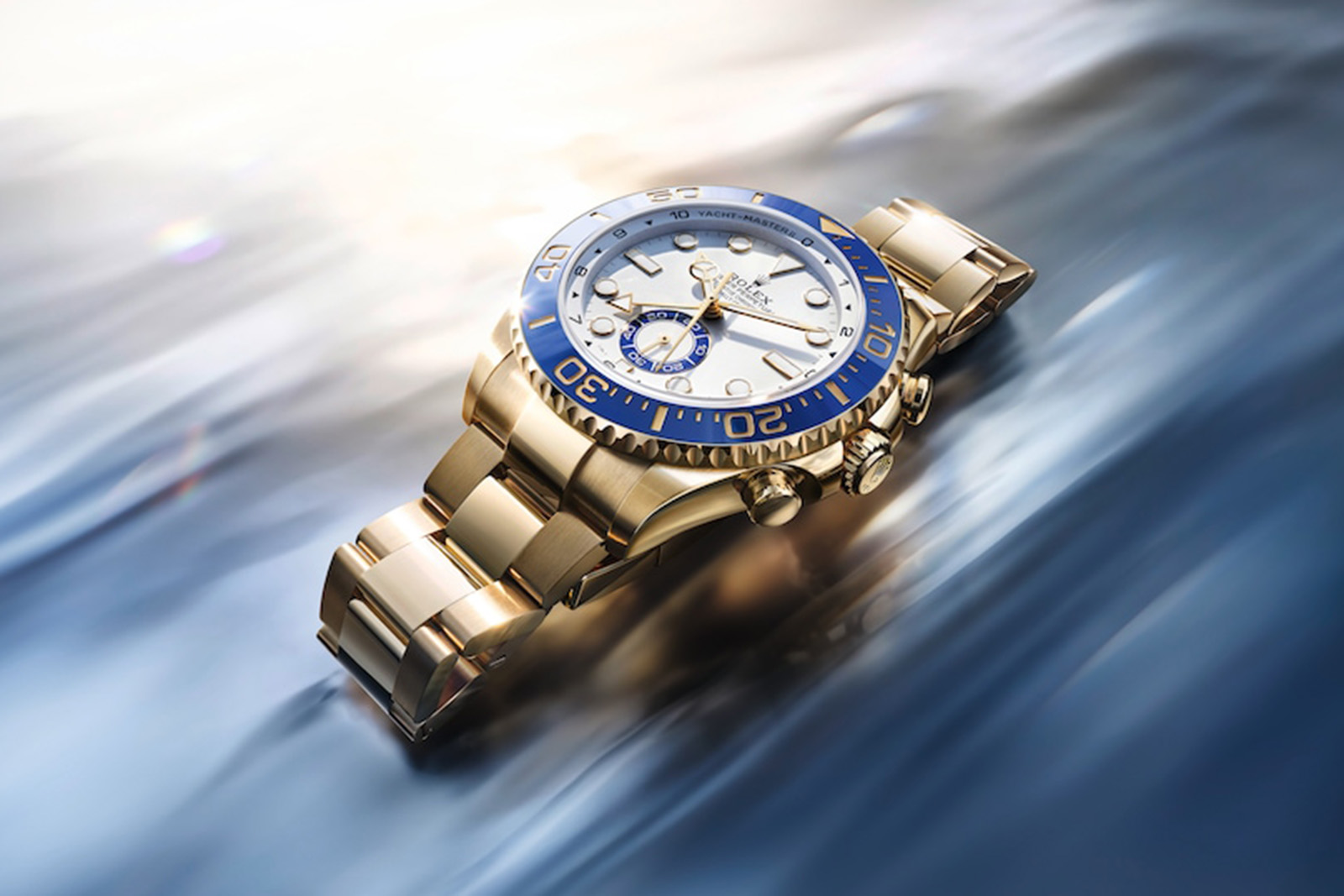
In a rather surprising move, Rolex unveiled a revamped and re-engineered version of the Yacht-Master II. Although the original was discontinued in 2024 the Geneva-based brand decided to give the quirky watch another chance at life, while also making the user’s life much easier. 

Initial thoughts

The original Yacht-Master II was undoubtedly a polarising timepiece. People would either love the bulky aesthetics or instantly dismiss it as an unpalatable timepiece. Add to that the complicated Command Ring bezel programming sequence for the regatta timer and the result is a perhaps the quirkiest Rolex creation in modern times. 

Apparently the timepiece was performing well enough to warrant an encore. The Yacht-Master II was thus updated to include both Rolex’s latest innovations (such as the Chronergy escapement) and a revised user interface. 

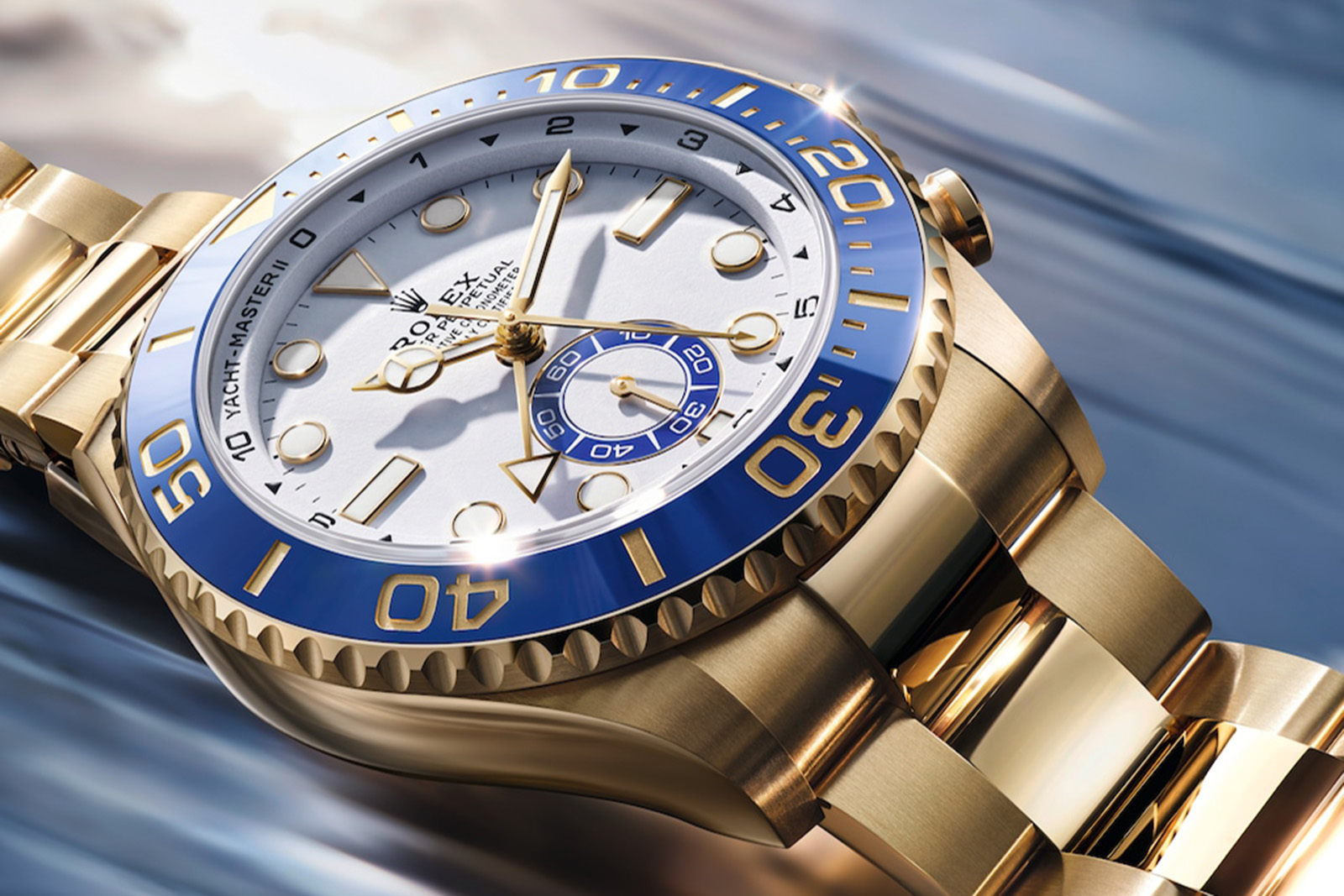
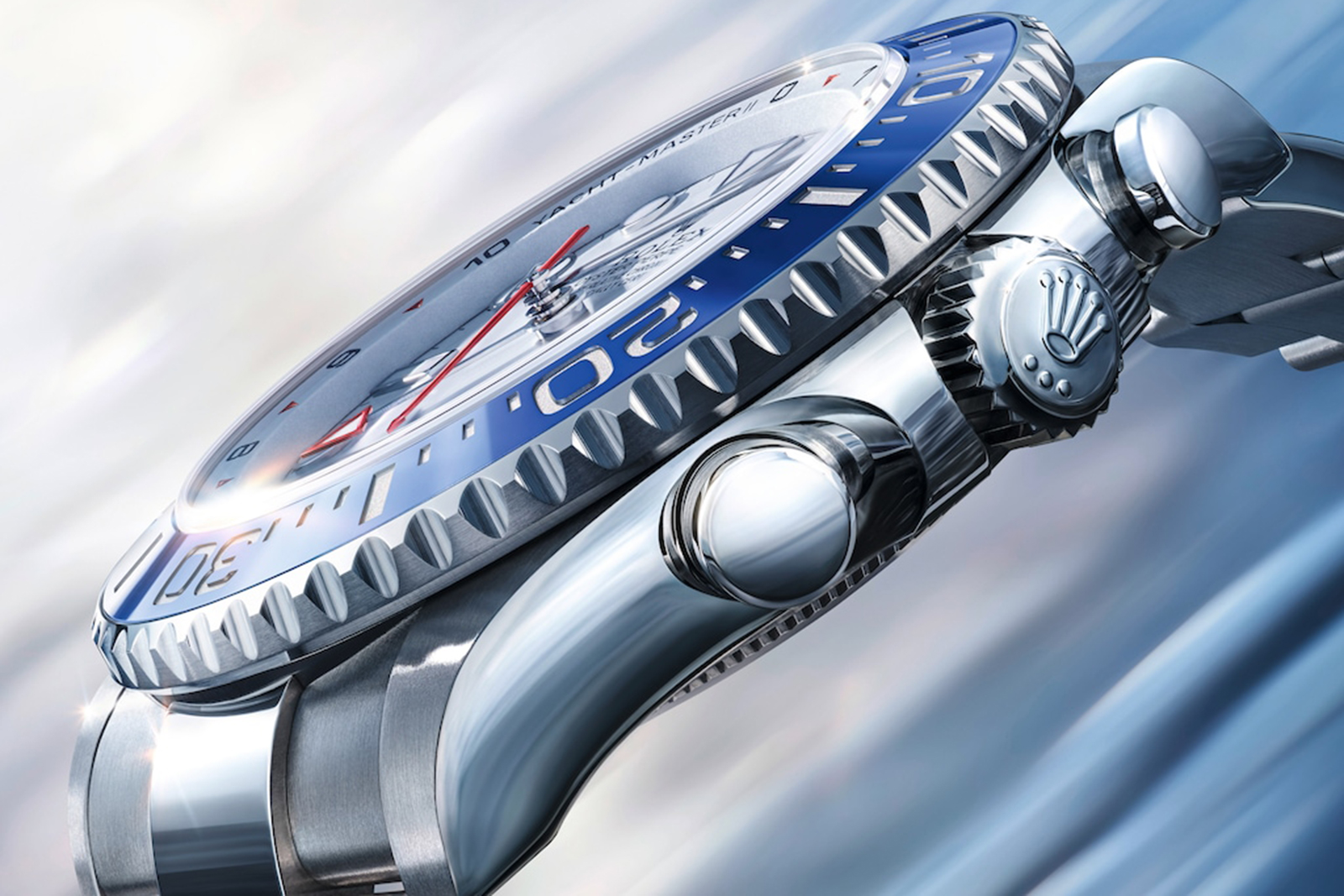
In terms of aesthetics, the 44 mm timepiece is still hard to love at first, but definitely not as excessive as past versions. The biggest change was perhaps the shift to a regular bi-directional 60 minute click bezel, which replaced the cumbersome Command Ring system used previously. 

The ten-minute countdown markings were moved to a raised flange on the dial. The regatta minutes and seconds hands now turn counterclockwise, a suggestive way of approaching countdown. 

Although few Yacht-Master II pieces will realistically be used for yacht race timing, the complication can be as useful as any given chronograph. The new caliber 4162 retains the functionalities of the 4161, but narrows the countdown timer’s programming to just the two pushers. The pusher at 4 o’clock sets the period to be timed down (maximum is 10 minutes) while the pusher at 2 o’clock works as a start and stop actuator. 

The new generation will surely prove successful, as many clients have grown to love the particular Yacht-Master II aesthetic. With the watch being now easier to use and understand, this new generation will be sure to reach a high degree of  popularity. 

The Yacht-Master II second generation comes in two metal configurations, either in Oystersteel or in 18K yellow gold. My personal favourite between the two would have to be the steel version, since it features a red countdown seconds hand and a red-tipped minutes hand, which work well with the blue accents. The gold version is comparatively monochromatic. The watches will retail for $20,300 in Oystersteel and $57,800 for the yellow gold version.

Streamlined design

The second generation Yacht-Master II borrows the main elements of the first generation’s design,  such as the bulky crown guards, blue ceramic bezel insert and the small seconds at 6 o’clock. An interesting change comes in the form of hour indices, which are now the traditional Rolex dots, rectangles and triangle. 

Compared to the Explorer II, where similar white indices on white dial are used, here the indices are not that legible. However, the Explorer II uses black-coated indices filled with Super-LumiNova, so there is some contrast with the white dial background. Here the metals are matched to the case, resulting in a look that feels unfinished. The gold version is slightly better, as the indices are yellow gold themselves, creating some contrast.

Otherwise this Yacht-Master II is a serious improvement compared to the old version in terms of overall aesthetics. In a way, it looks as if the new version is a beefed up, complicated Submariner. Moving the countdown scale to the edge of the dial was surely an inspired choice, since the watch face is more legible. 

The old version had a central retrograde sector for the 10 minute countdown scale, which sometimes interfered with an easy and quick readout of the time. 

Updated mechanics

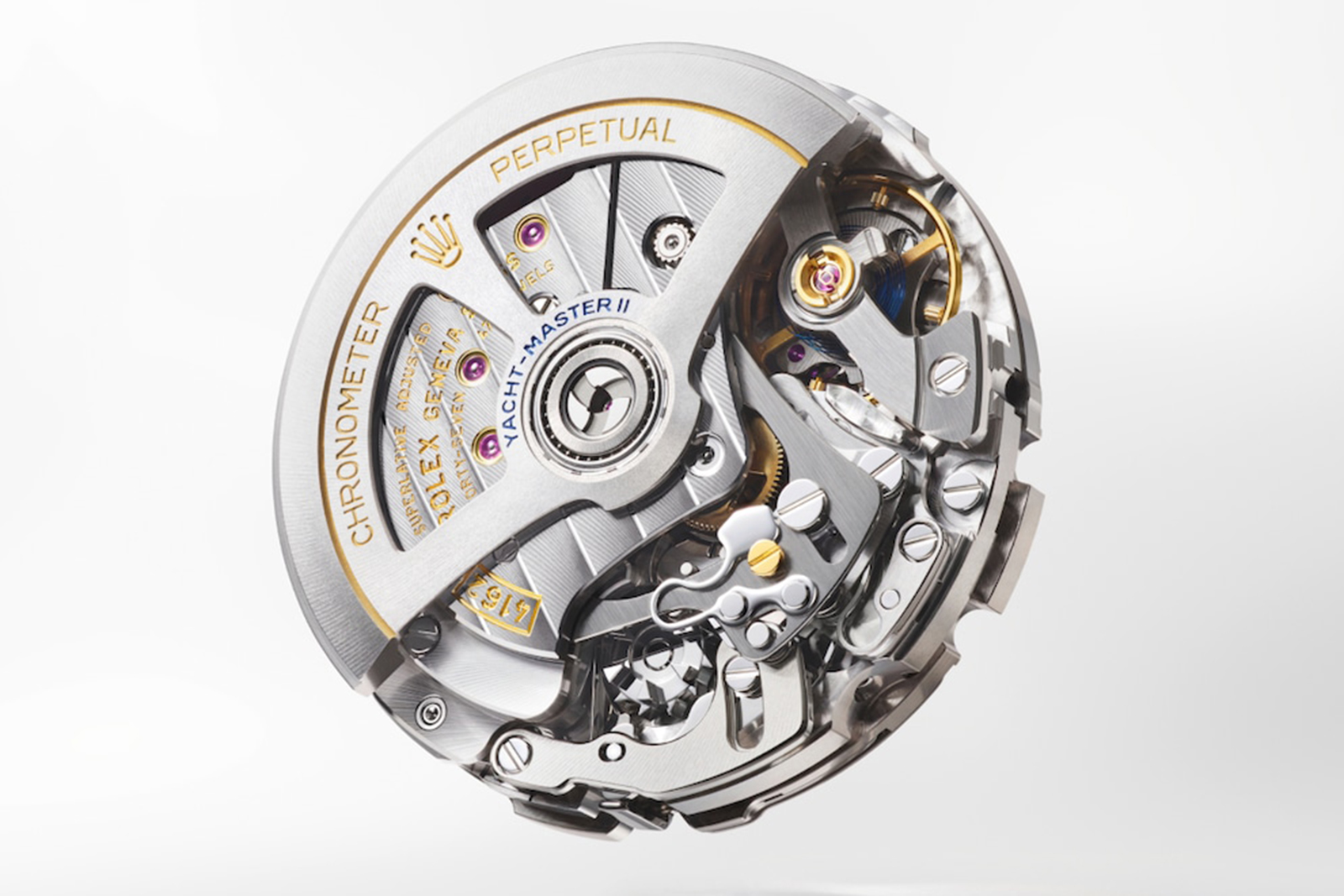
Apart from the improvement in overall aesthetics, caliber 4162 inside when through some extensive rework in order to accommodate a simplified programming sequence. Most of the regatta timer works are placed dial-side, meaning the core architecture of caliber 4161 didn’t change much. 

The new caliber looks almost identical to its predecessor, save for better finishing and notably the addition of Rolex Côtes de Genève decoration on the upper bridges. The core system works much like a chronograph, and caliber 4162 reminds a little of the 413x-series of chronograph movements used in Daytona models.  

There is also a flyback function of sorts, which engages when the 4 o’clock is pushed during a running countdown. The seconds hand flies back to zero while the minute counter indexes to the nearest minute marking. The feature is useful for actual regatta races, but perhaps not so much for more mundane tasks. 

The lack of a movement-integrated Command Ring bezel also makes the Oyster case theoretically easier to waterproof, although the Yacht-Master II remains only resistant to 100 meters.

Much like it has become the norm with the newer Rolex movements, the power reserve is rated at 72 hours and the frequency is the industry-standard 4 Hz. 


Key facts and price

Rolex Oyster Perpetual Yacht-Master II
Ref. 126680 (Oystersteel)
Ref. 126688 (18K yellow gold)

Diameter: 44 mm
Height: 13.9 mm
Material: 904L Oystersteel or 18K yellow gold
Crystal: Sapphire
Water resistance: 100 m

Movement: Cal. 4162
Functions: Hours, minutes, seconds, and regatta countdown timer
Winding: Automatic
Frequency: 28,800 beats per hour (4 Hz)
Power reserve: 72 hours

Strap: Oyster bracelet in matching metal

Limited edition: No
Availability: From Rolex boutiques and retailers starting
Price: US$20,300 (Oystersteel), US$57,800 (18K yellow gold)

For more, visit Rolex.com.


Back to top.
You may also enjoy these.

Roger Dubuis Debuts Biretrograde Calendar in Steel

The everyday Excalibur.

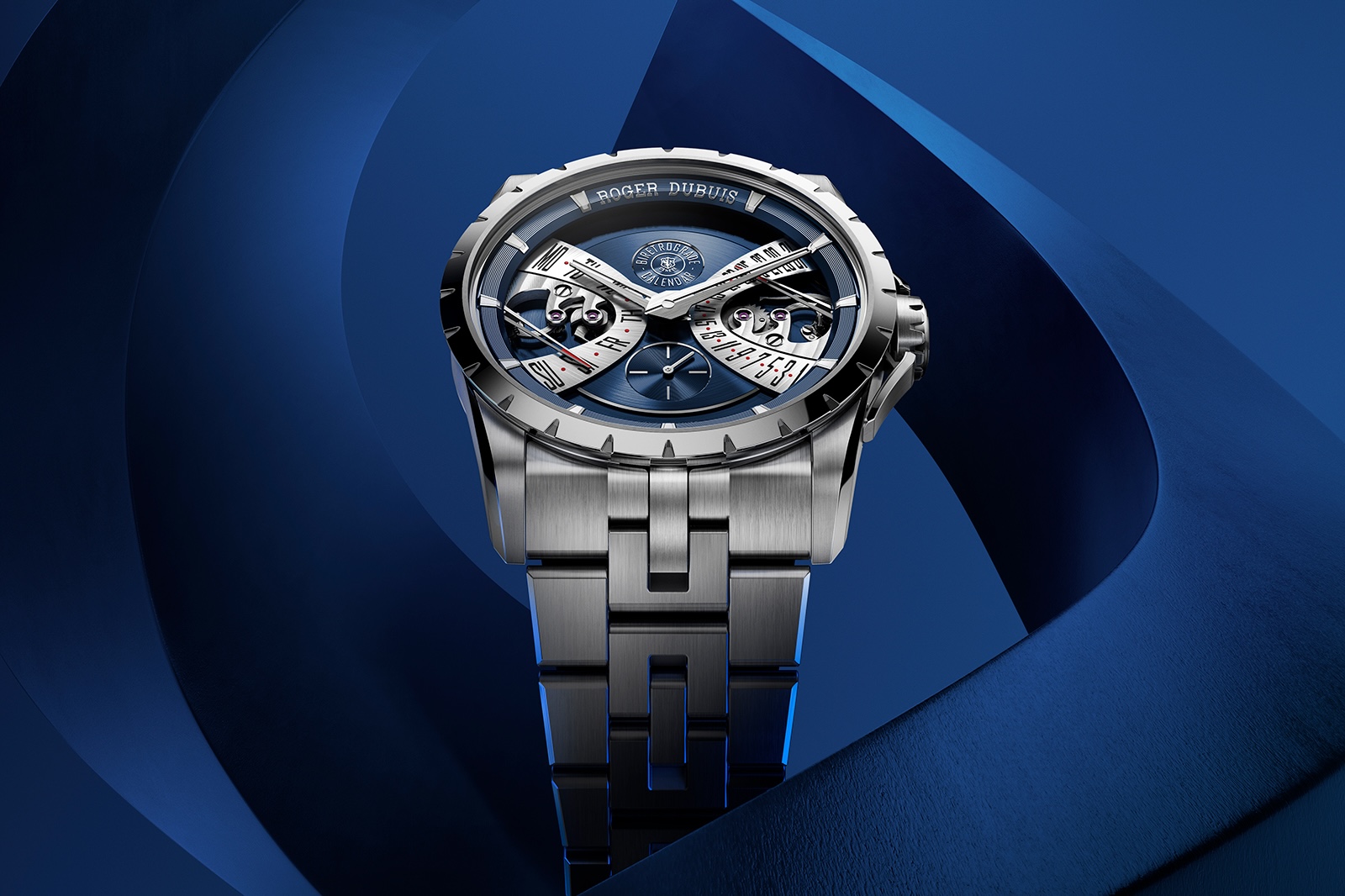
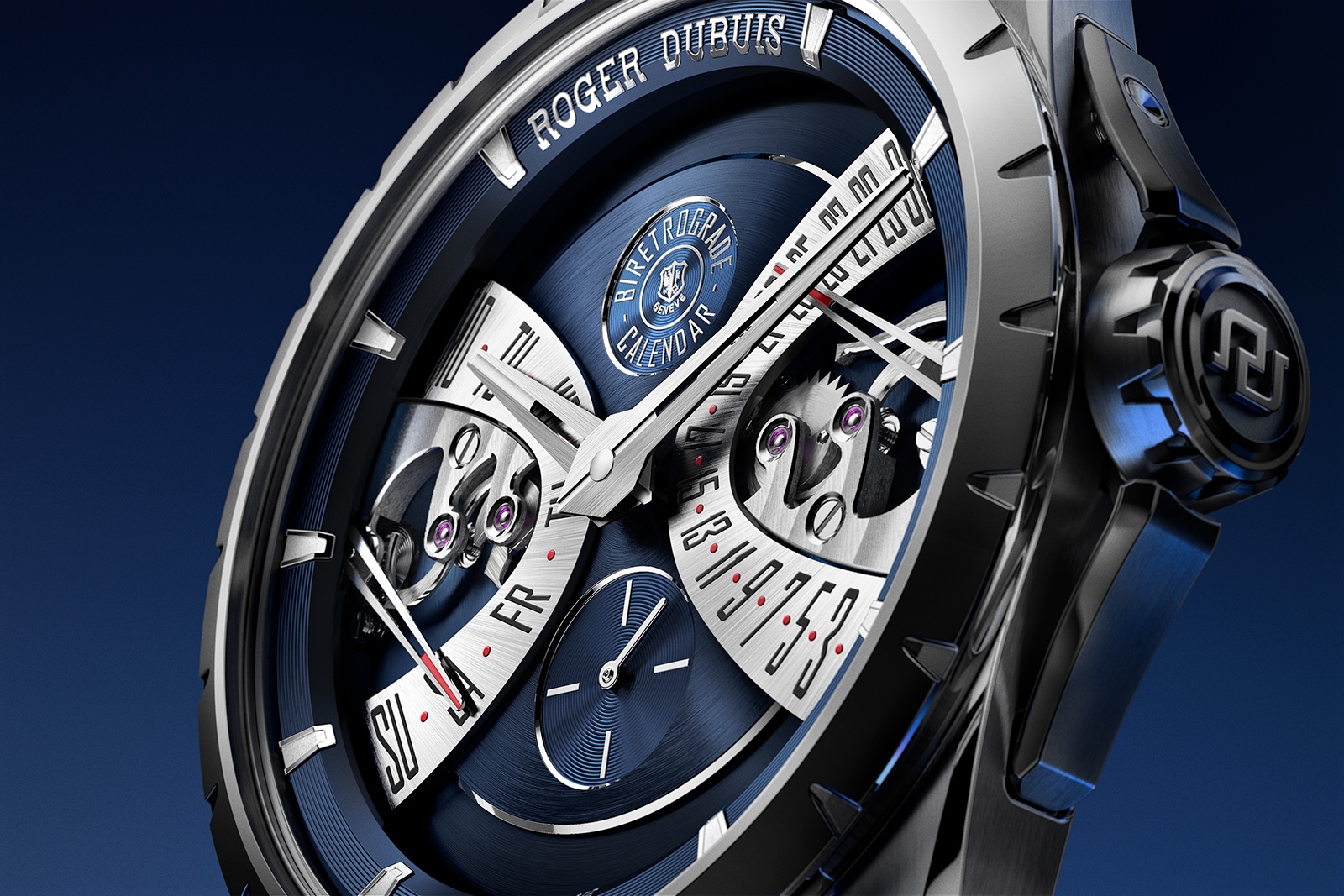
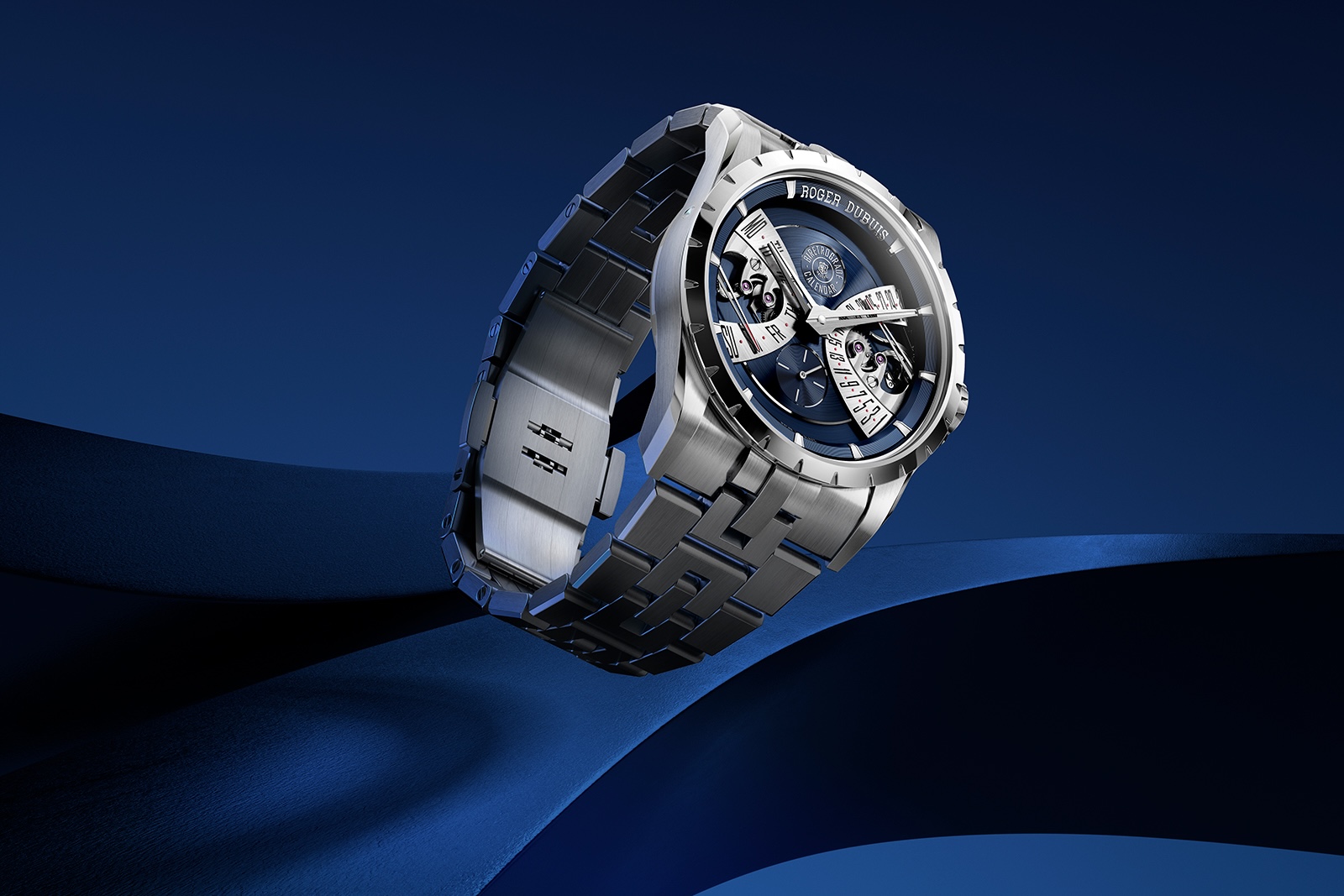
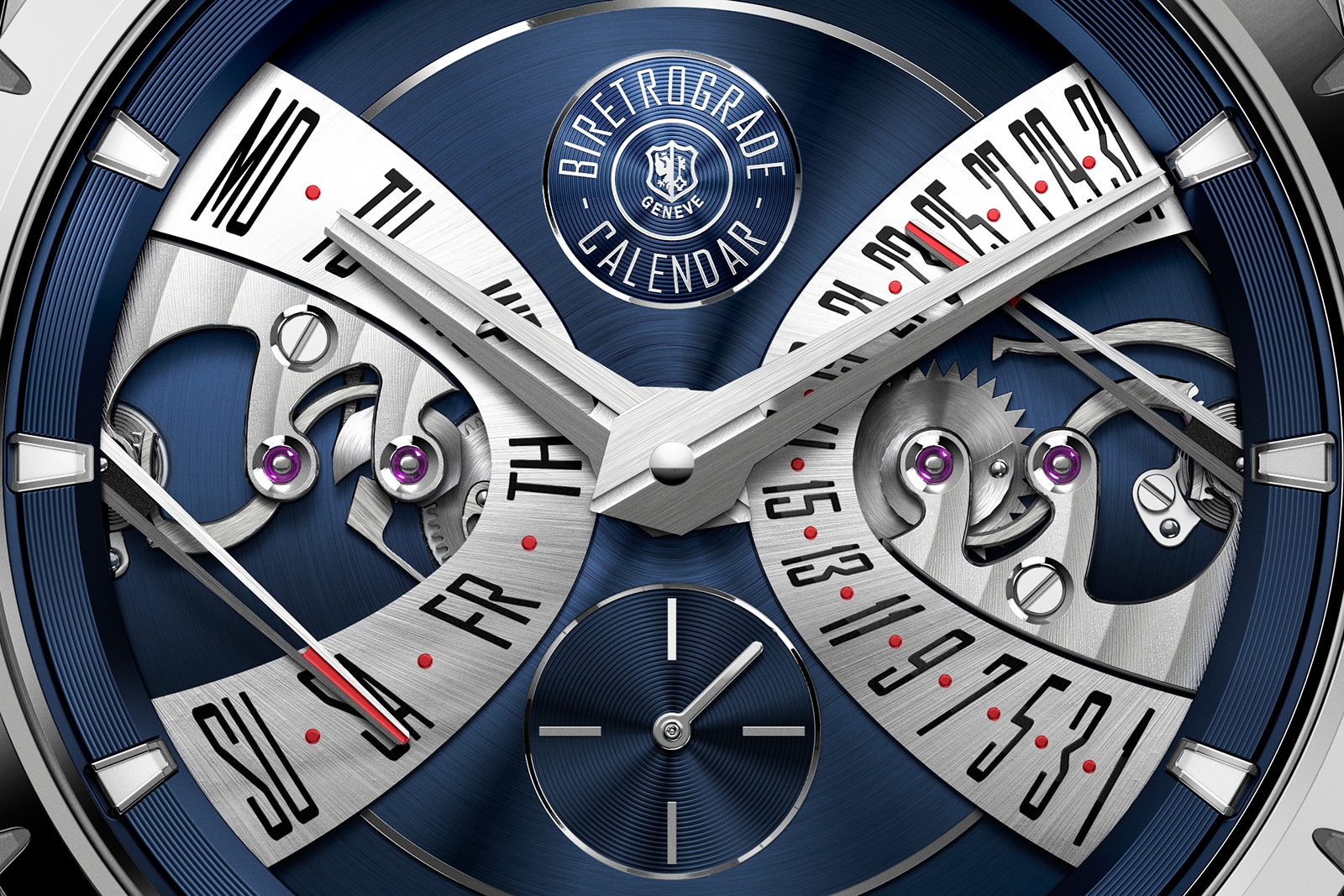
Following the introduction of the same model (sans bracelet) in 18k pink gold last year, the new ‘cosmic blue’ variant of the Roger Dubuis (RD) Excalibur Biretrograde Calendar offers the brand’s signature retrograde day and date complication in a more accessible stainless steel package.

Initial thoughts

As a maker of big, bold, avant-garde watches, RD has found itself out of step with mainstream collector culture, which lately has favoured smaller, more elegant designs. The brand seems to understand the implications of these latent trends, and just last year introduced the Hommage La Placide, which was widely praised.

The new 40 mm Excalibur Biretrograde Calendar is another step in the right direction, bridging the gap between RD’s more flamboyant instincts and contemporary collector preferences.

In this context, the Excalibur Biretrograde Calendar is clearly a watch designed to resonate more widely — the 40 mm stainless steel case paired with a blue dial is a commercially popular and almost universally appealing configuration. It works in part because the striking Excalibur design and unmistakeable biretrograde day and date functionality keep it from looking too much like anything else.

The stainless steel bracelet is also noteworthy. It’s not the first time the brand has offered a steel bracelet — and it has produced this same design in titanium in the past as well — but it might as well be new since the Excalibur Biretrograde Calendar will probably appeal to a wider audience that may not be familiar with more niche references like the Excalibur Monotourbillon and the Monobalancier.

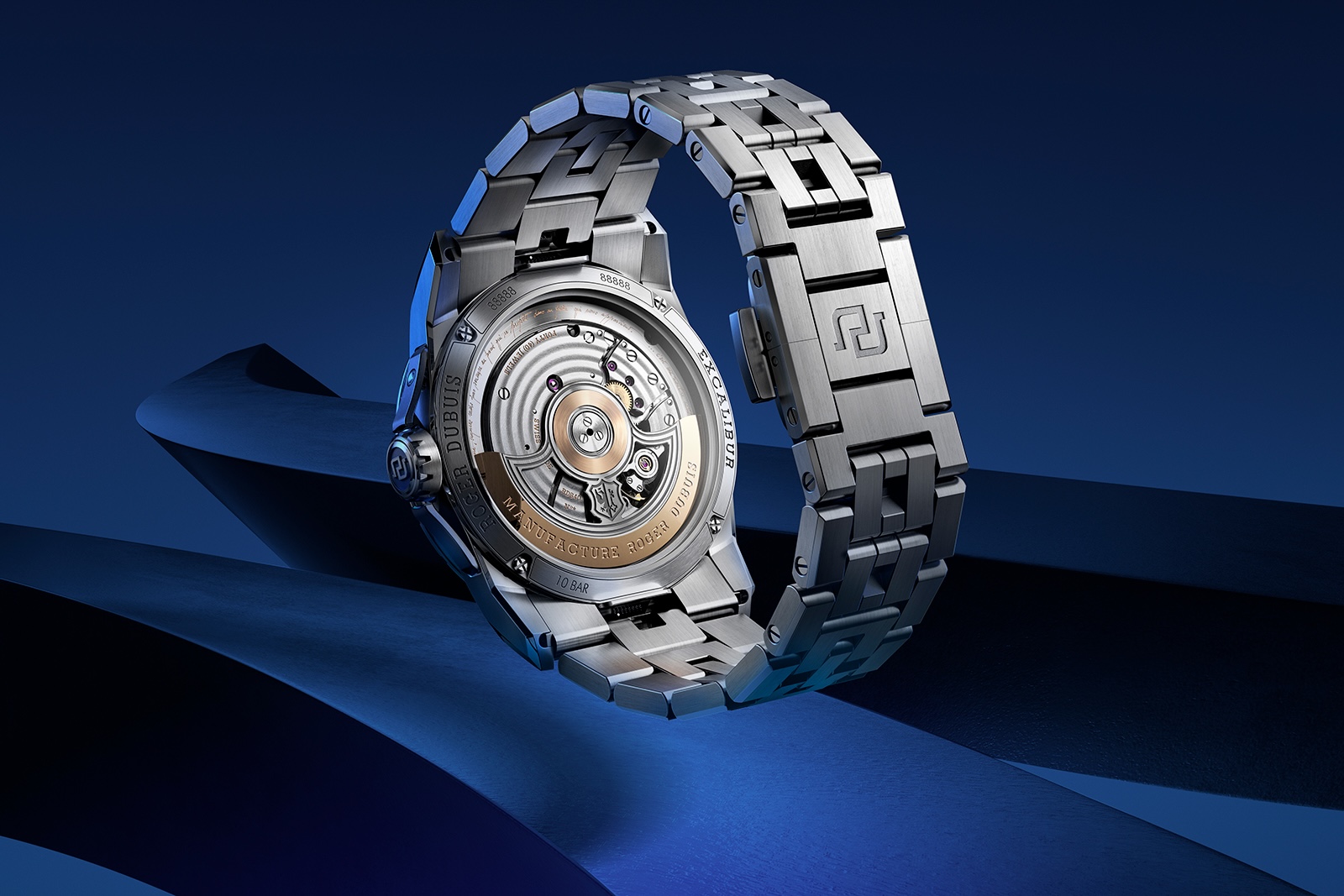
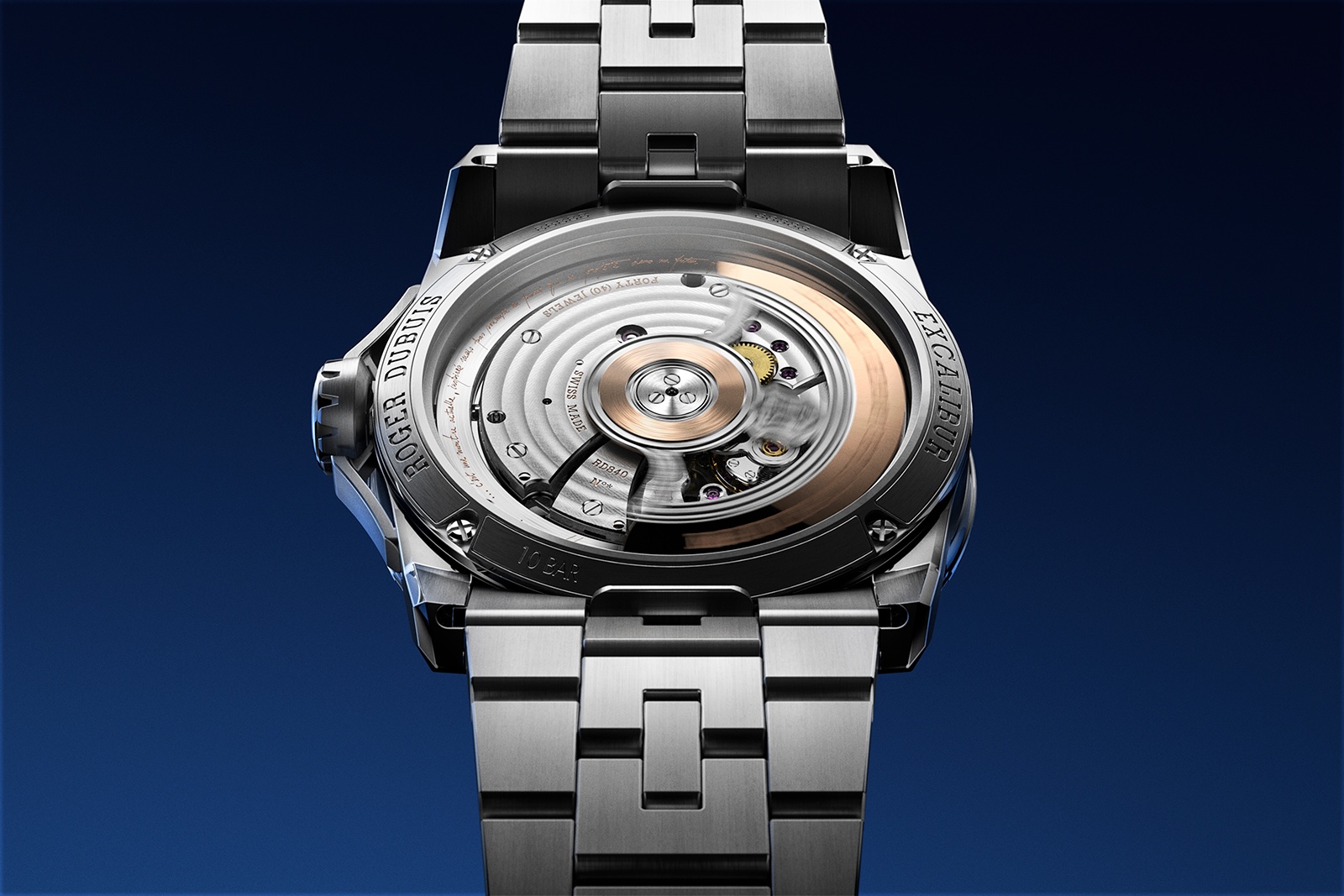
Despite the brand’s aggressive, often sporty styling, RD is a true haute horlogerie brand and even its ‘entry level’ calibres qualify for the Poinçon de Genève. The cal. RD840 clears this benchmark easily, and features a number of elegant details. It also features some technical upgrades, with a lightweight silicon escapement that helps boost the power reserve to a modern 60 hours.

The otherwise traditional Genevan manufacture started adding diamond-coated silicon escape wheels to certain references in recent years, so it’s nice to see this technology trickle down to a simple day and date model.

Case and dial

The Excalibur case design has been around since 2005 and has changed very little in its 21 years. Earlier models tended to be quite large — often in excess of 45 mm — but the design works just as well in the smaller 40 mm size.

The design is as expressive as ever, with its notched bezel, thick lugs, and bold angular details. The maximalist styling continues on the dial, which is built up of seven layers, and the exposed cams and levers of the retrograde indicators are richly decorated.

Then there’s the bracelet, which holds its own next to the bold case styling. While there are actually many ways to construct a bracelet, most reference the same handful of historical designs and end up looking generic as a result. The Excalibur bracelet is refreshing in its originality, even if it might not appeal to more classical sensibilities.

The angular multilink design won’t be confused for anything else, though the absence of built-in micro-adjustment is a mark against its ergonomics compared to contemporary bracelets from other brands.

For those who prefer a strap, the Excalibur Biretrograde Calendar also comes with an additional calf-leather strap, which is easily interchangeable thanks to the built-in quick release system.

In-house biretrograde

Unlike RD’s first biretrograde modules from the 1990s, which were developed externally by Agenhor, the entire cal. RD840 has been developed in-house. While Agenhor is a well-regarded supplier today, the original biretrograde mechanisms were a product of an earlier era and had a penchant for getting stuck. The new platform benefits from lessons learned.

Notably, the inner workings of the biretrograde complication are revealed in the dial, imbuing it with a degree of technical dynamism normally missing from non-skeletonised designs.

Much of the finishing is evidently done by hand, and the movement easily earns the Geneva Seal that it wears proudly on the dial. There are some details — like the curb-pin regulator — that feel out of place in a modern high-grade movement but otherwise the cal. RD840 is executed to a standard typical of the industrial-haute horlogerie segment.

A charming Easter Egg that embodies RD’s particular philosophy is the cursive script around the periphery of the movement that translates as “This is a modern watch, inspired by but not bound by the past, projecting itself into a future that belongs to us.”


Key facts and price

Roger Dubuis Excalibur Biretrograde Calendar
Ref. RDDBEX1209

Diameter: 40 mm
Height: 11.25 mm
Material: Stainless steel
Crystal: Sapphire
Water resistance: 100 m

Movement: Cal. RD840
Functions: Hours, minutes, seconds, retrograde day and date.
Winding: Automatic
Frequency: 28,800 beats per hour (4 Hz)
Power reserve: 60 hours

Strap: Stainless steel bracelet with interchangeable leather strap

Limited edition: No
Availability: Roger Dubuis boutiques and authorised retailers
Price: CHF35,000 excluding taxes

For more, visit Rogerdubuis.com


Back to top.

You may also enjoy these.

Blue Steel: Chopard L.U.C 1860

Simple but handsome.

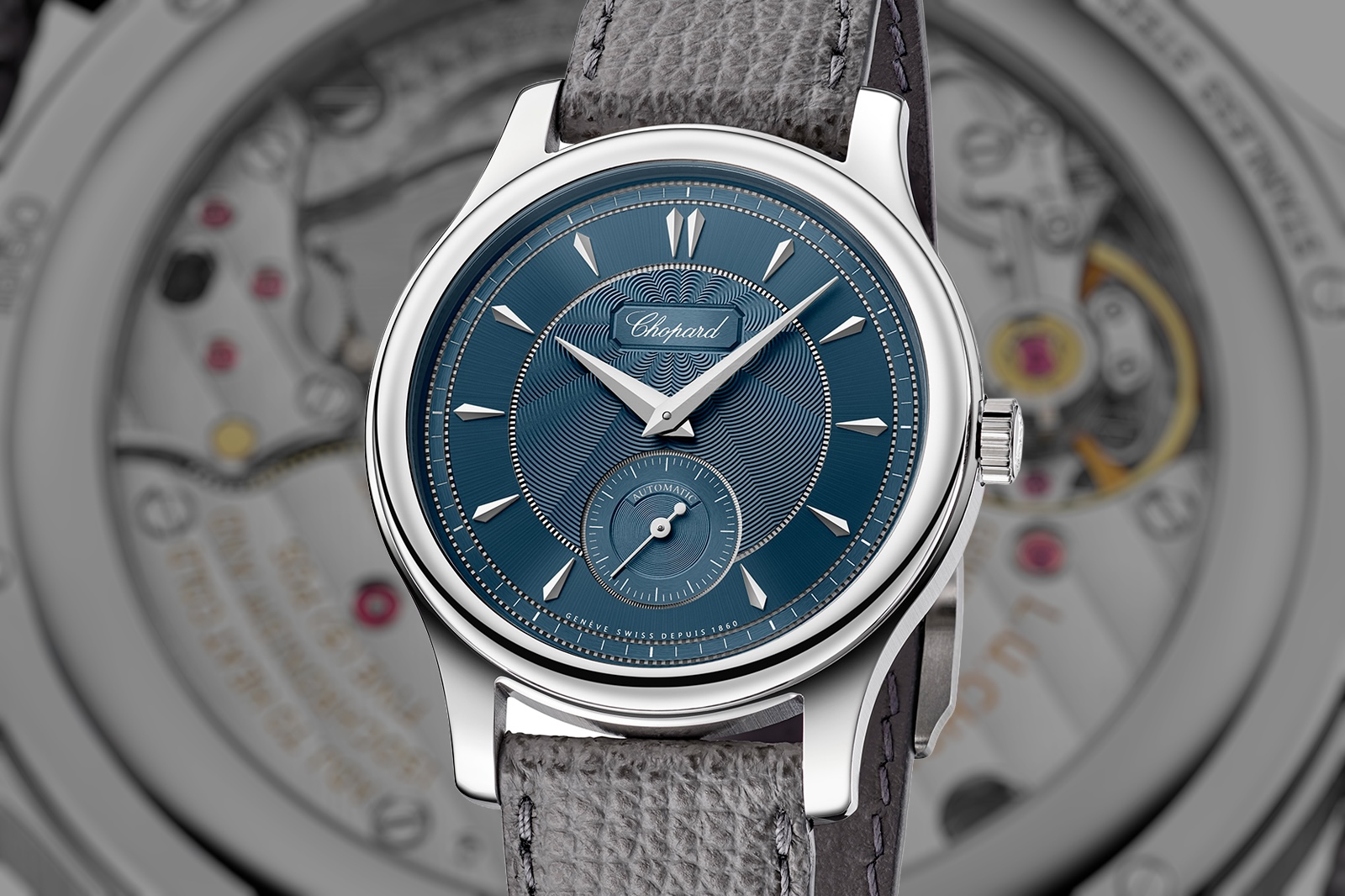
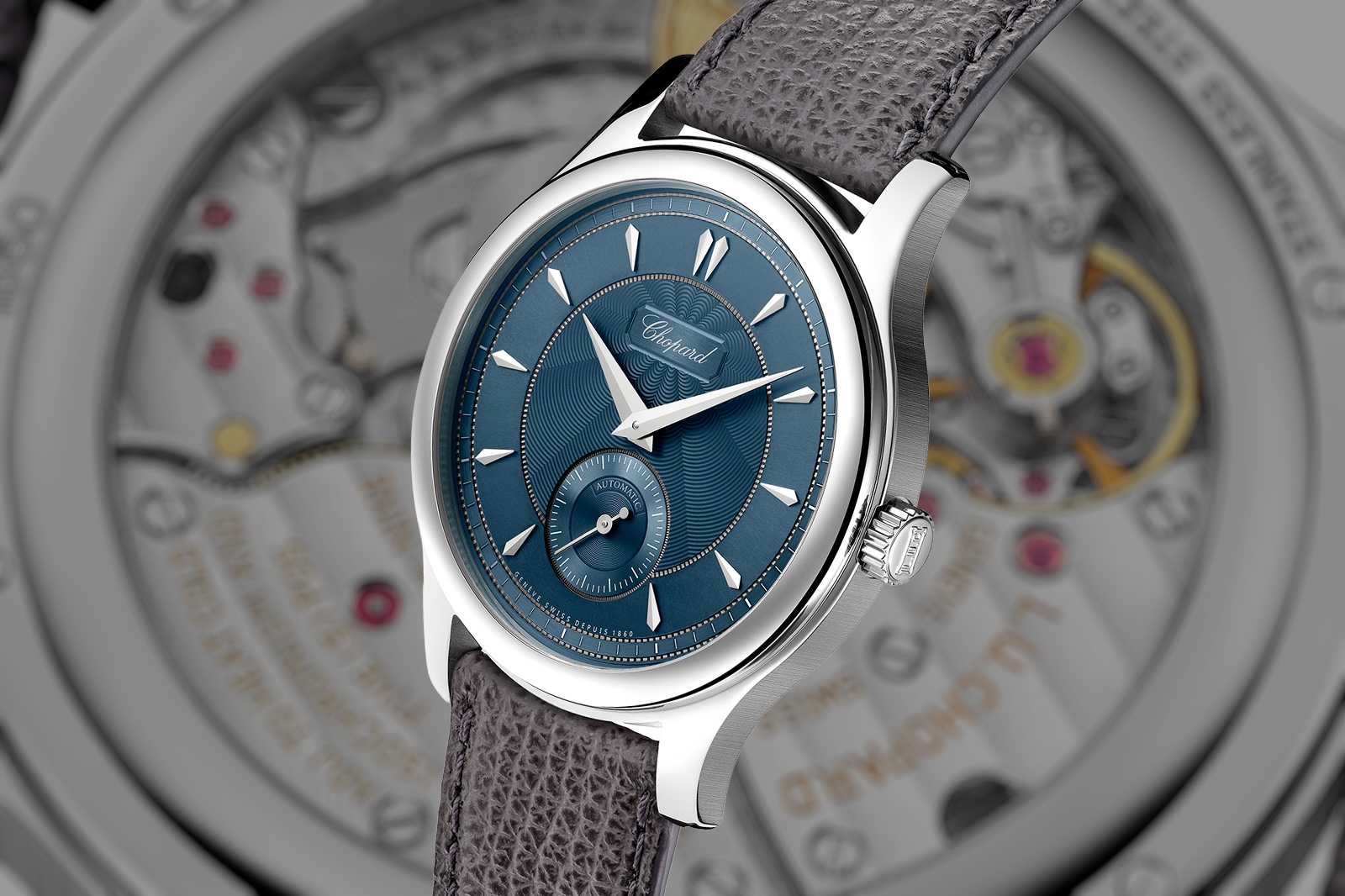
To mark 30 years of its Fleurier manufacture, Chopard has introduced a new variant of the watch that started it all. The new Lucent steel L.U.C 1860 adds a blue dial to the brand’s flagship time-only dress watch.

The L.U.C 1860 is short on novelty, being merely a new colour for a model that debuted in 2023, but the incremental improvements result in a sleek and sophisticated steel dress watch.

Initial thoughts

The L.U.C 1860 is very traditional dress watch in the sense that nothing feels exaggerated. At the same time, it doesn’t feel boring thanks to its guilloché dial and the obvious quality of the movement within.

While there are some who believe that a proper dress watch must come in precious metal, the popularity of the steel-and-salmon L.U.C 1860 released in 2023 proves there’s an alternate perspective.


The brand’s proprietary ‘Lucent’ steel makes the watch more accessible, especially in the age of near-record gold prices. Despite the use of a comparatively humble material, the case finishing remains high-end — though the design is generation behind the new case profile introduced for the Grand Strike.

Since the original L.U.C 1860 debuted in 1997, it has always been a small watch. For a time, that left it out of step with consumer preferences, especially in the early 2000s, but tastes have once again shifted back in favour of smaller cases. In this context, the vintage-leaning 36.5 mm size feels just right.

That said, while it makes sense for Chopard to celebrate its milestone anniversary with what will likely be a popular new colour for one of its signature watches, it would have been interesting to see the brand mark the occasion with a new original design or calibre.

Familiar but refined

The design stays very close to that of the original L.U.C 1860. Collectors will appreciate the continuity offered by the subtle updates, including the deletion of the date and a different origin point for the hand-turned guilloché dial.

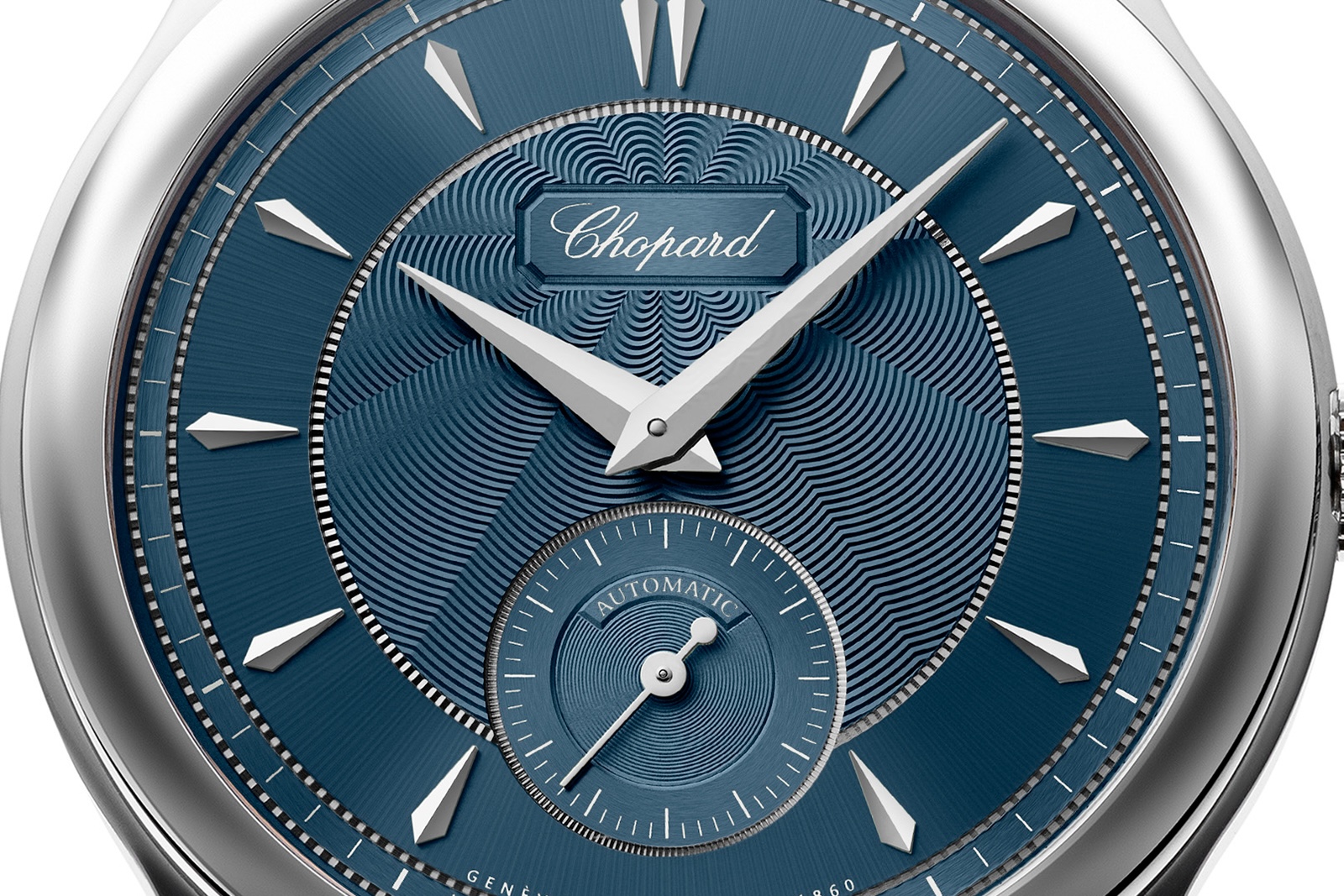
The new dial is offered in a shade called Areuse Blue, said to be inspired by a river near the brand’s manufacture. Thanks in part to the varying textures, the colour shifts between deeper and brighter tones depending on light. The dial is made of solid 18k white gold, and is hand-turned on a rose engine.

Chopard is one of the few brands that has this capability in-house, thanks to its acquisition of specialist dial maker Metalem. If the dial looks familiar, it might be because Metalem once made similar dials for Philippe Dufour’s Simplicity.

The pattern is similar to that of the first generation L.U.C 1860, but features a relocated focal point. In early references, the guilloché pattern radiated outward from the centre of the dial.

The new pattern originates at the brand logo below the 12 o’clock position, differentiating the design and emphasising the maker’s mark.

A landmark calibre

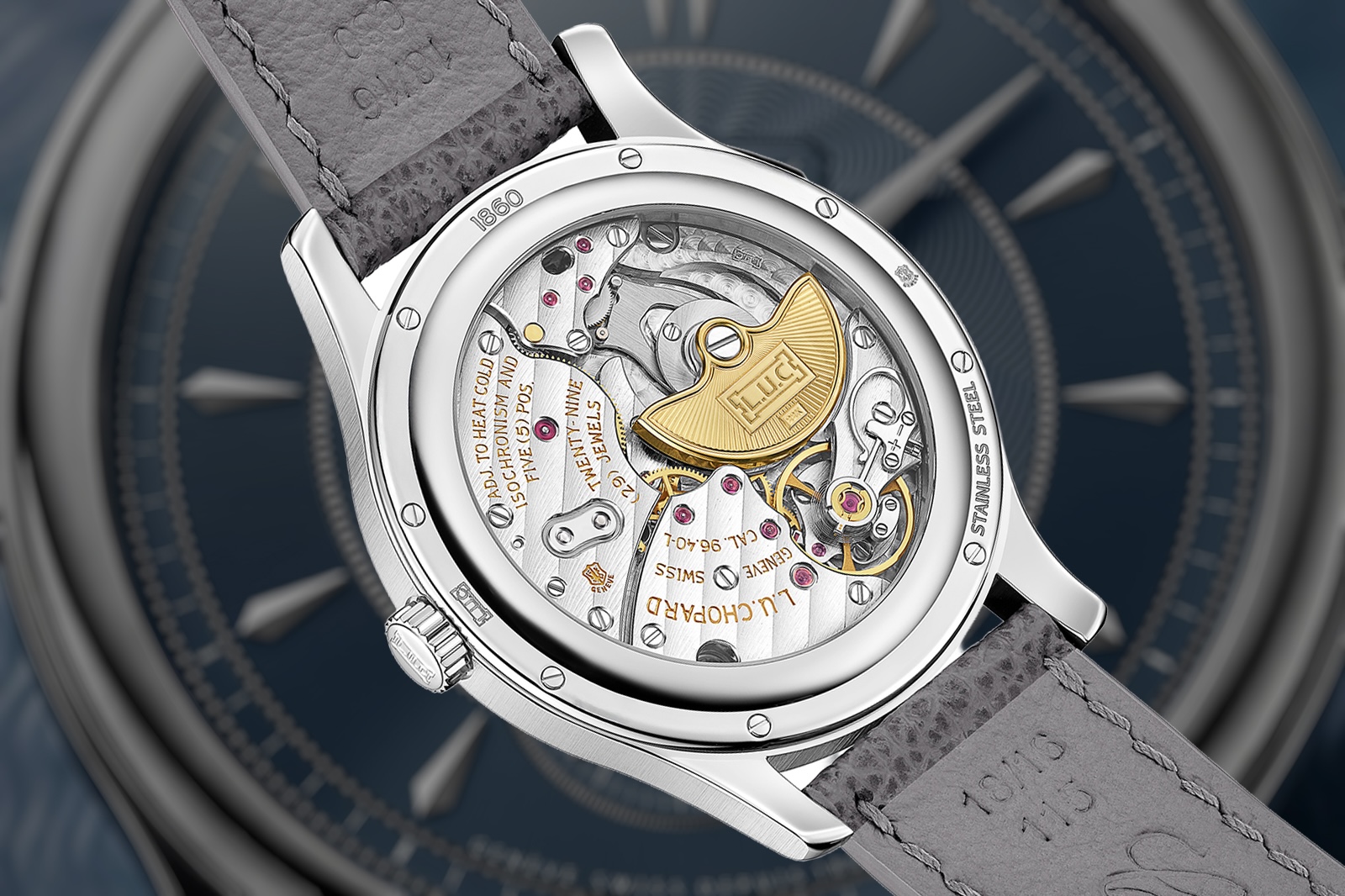
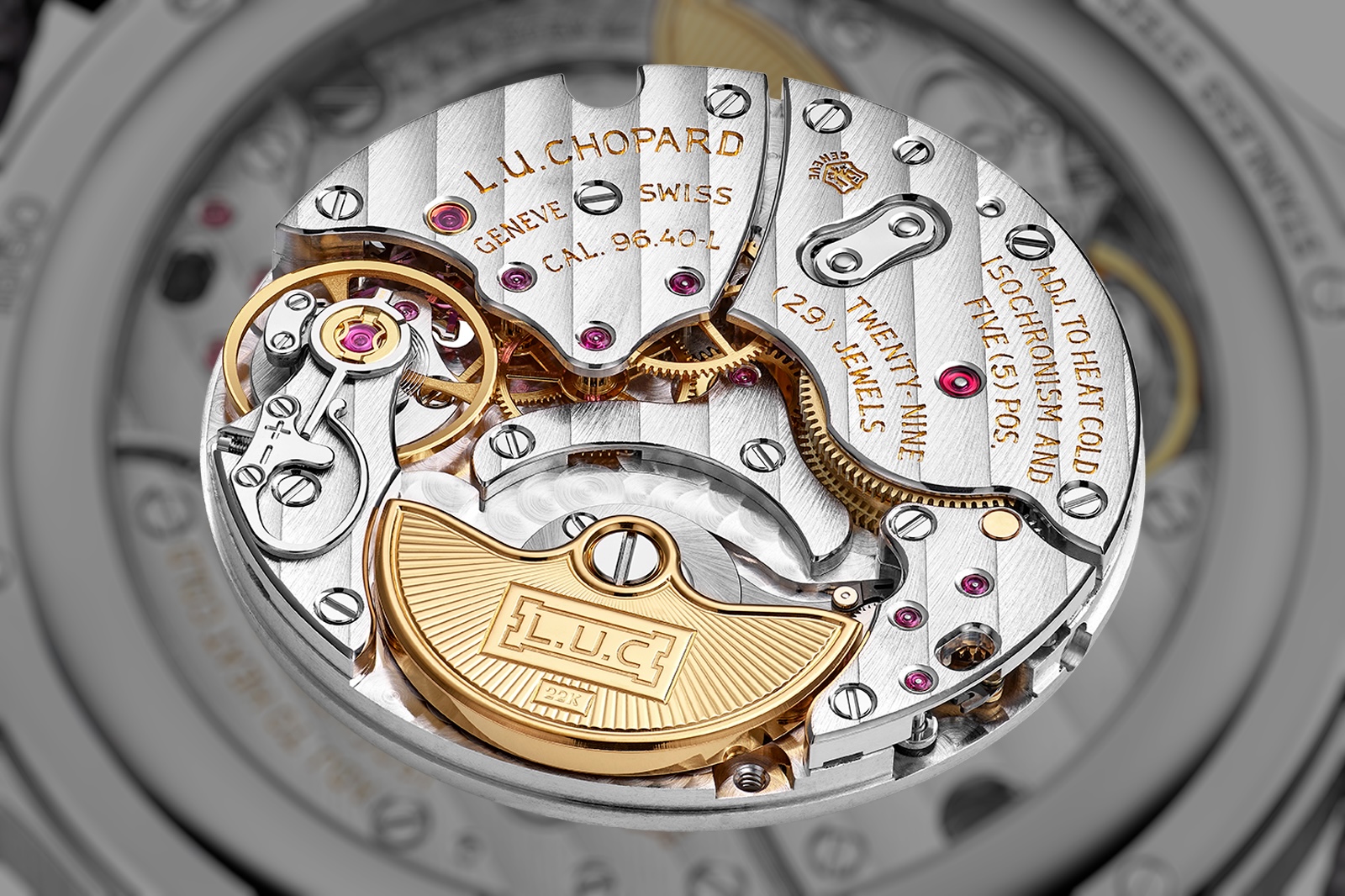
The cal. 96.40-L is an evolution of the cal. 1.96 that put Chopard on the map as a serious watchmaker in the late 1990s. Designed by Michel Parmigiani, the cal. 1.96 had dual mainspring barrels and an overcoil hairspring — features that were unheard of in a micro-rotor format — and expert finishing that put other Genevan watchmakers on notice.

It’s proven difficult to improve upon this excellent platform, which is probably why it still underpins the brand’s top-shelf time-only watches, albeit with subtle refinements like the finer engraving of the movement markings.

Impressively, it still looks good on the spec sheet three decades after its debut. It’s quite thin at just 3.3 mm and winds efficiently in both directions thanks to a 22k gold micro-rotor.

Another key detail is the twin barrel system. This setup gives the watch a power reserve of around 65 hours — extremely long in 1997 and more than adequate by contemporary standards. Furthermore, the arrangement helps deliver steady torque to oscillator. As a result, it’s a svelte calibre that still earns COSC certification.

The finishing of the cal. 96.40-L is a cut above that of mainline Chopard calibres, and easily qualifies for the Poinçon de Genève hallmark. The lustrous Geneva stripes and hand-finished anglage are the outward signs of quality, but even the unseen components are finished with care.


Key facts and price
Ref. 168860-3005

Diameter: 36.5 mm
Height: 8.2 mm
Material: Lucent steel
Crystal: Sapphire
Water resistance: 30 m

Movement: L.U.C 096.40-L
Functions: Hours, minutes, and seconds.
Winding: Automatic
Frequency:  28,800 beats per hour (4 Hz)
Power reserve: 65 hours

Strap: Alligator leather with pin buckle

Limited edition: No
Availability:
From Chopard boutiques and authorised retailers
Price:

For more information, visit Chopard.com.


Back to top.
You may also enjoy these.

IWC Expands Ingenieur 35 Collection

A crowd-pleasing colour for the compact format.

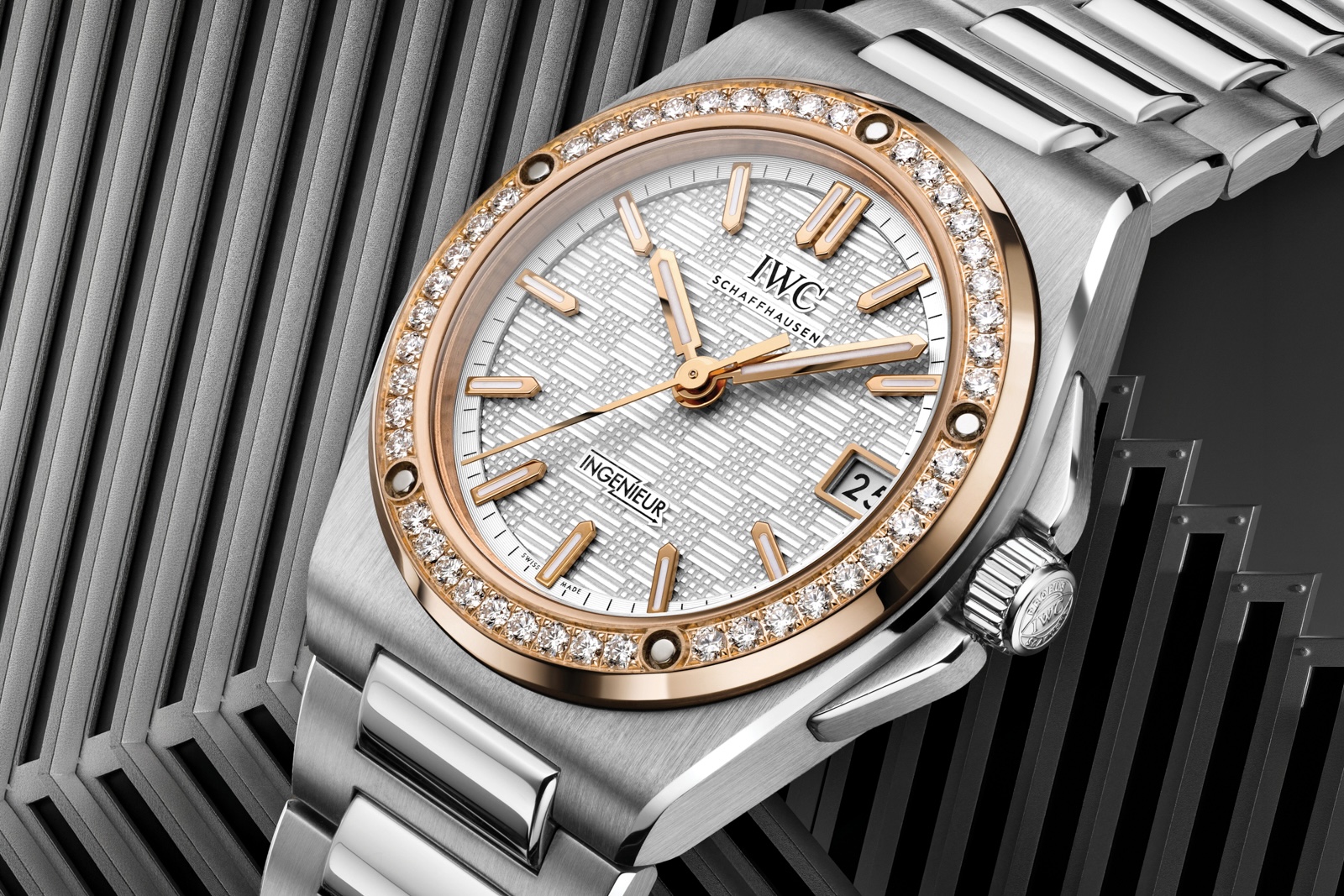
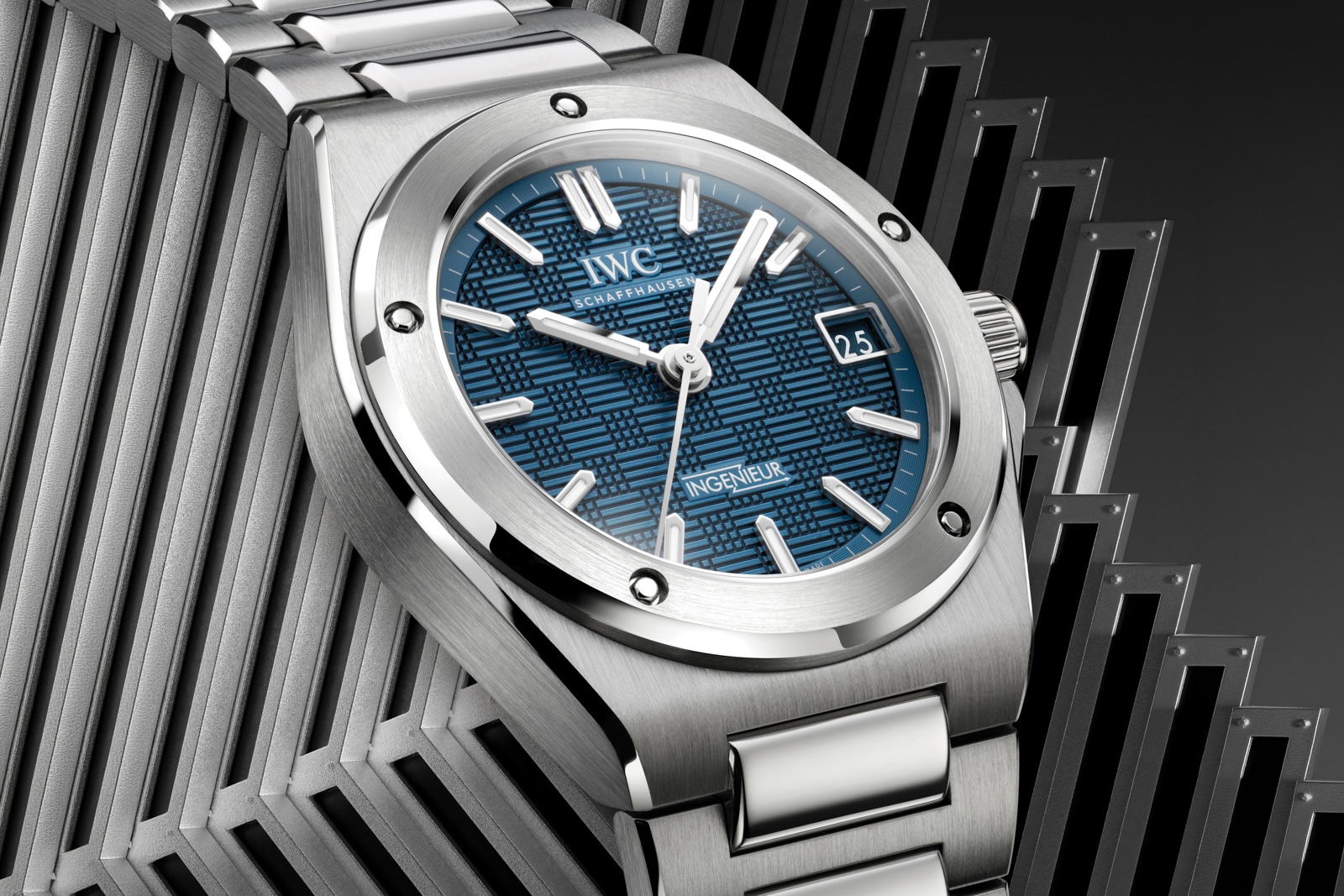
True to form, IWC has expanded the Ingenieur Automatic 35 with two new references: a blue dial that completes the mid-sized lineup’s colour palette, and the first gem-set Ingenieur of the modern era.

Both are straightforward line extensions but should prove commercially successful, especially in the context of current trends favouring smaller watches.

Initial thoughts

Vintage watch enthusiasts and buyers with smaller wrists will appreciate these additions to the catalogue, though many mainstream watch buyers dismiss any watch under 36 mm out of hand. That instinct is understandable, but misleading here: integrated bracelet watches wear more substantially than their diameters tend to suggest, and the Ingenieur 35 is a watch best understood on the wrist rather than on paper.

With the introduction of a diamond-set two-tone reference, it appears IWC is positioning this size as the unisex choice for both men and women while exploring new formats for a broader appeal.

New references in the Ingenieur lineup have arrived in a recognisable pattern. Reintroduced in 2023, the current-generation Ingenieur draws on the design language of Gerald Genta’s original but in a 40 mm steel case, offered from launch with silver and black-dialled variants.

The ever-popular blue dial joined the 40 mm lineup a year after the collection’s refresh. The 35 mm size is following a similar pattern after launching last year with black and silver dial options.

Inevitably blue

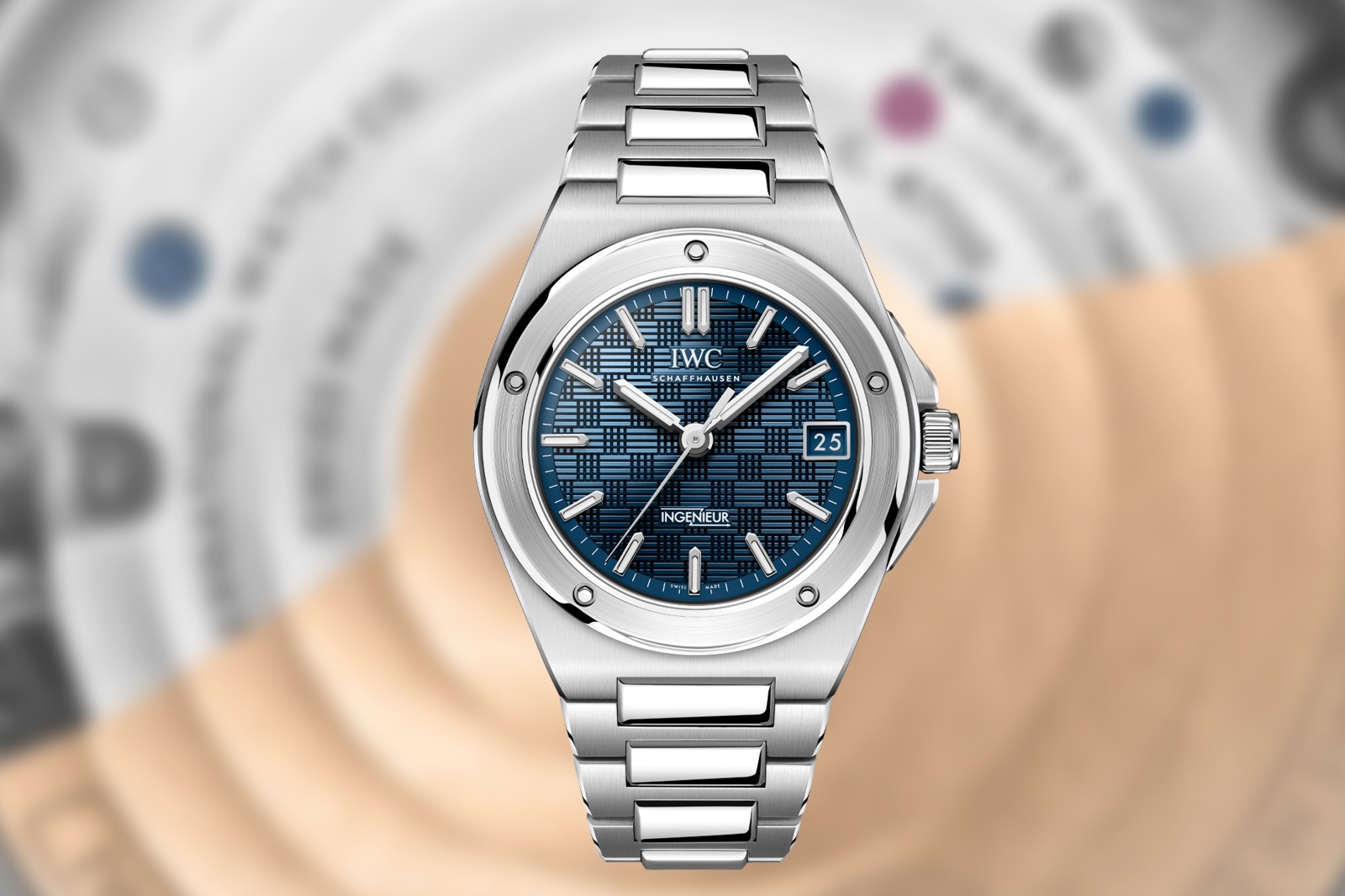
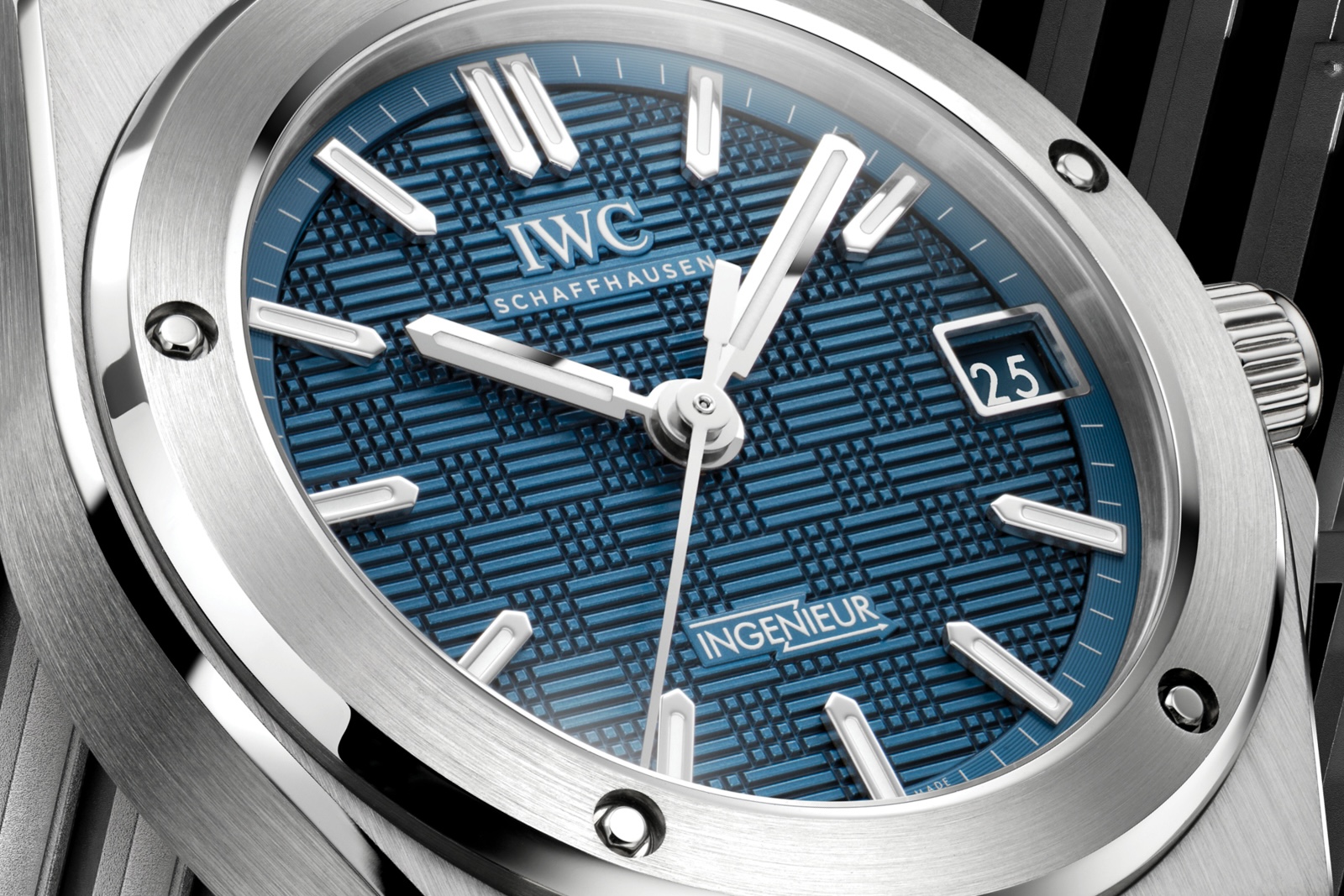
The ref. IW324907 will be welcomed by collectors who’ve been waiting for a compact Ingenieur with a blue dial — doubtless the most popular colour for integrated-bracelet sports watches across all brands. In that sense, the blue debut was inevitable.

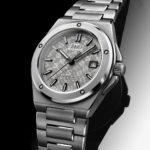
The dial itself features IWC’s “Grid” pattern, oscillating between a deep navy within the grooves and a rich, royal blue at the surface. It’s a radiant colour and is paired with a colour-matched date wheel that helps integrate the complication seamlessly into the design.

Beyond the new dial it’s business as usual, with identical specs — including an appealing 9.4 mm case thickness — and the now-familiar integrated H-link bracelet with butterfly clasp.

Sporty and sparkly

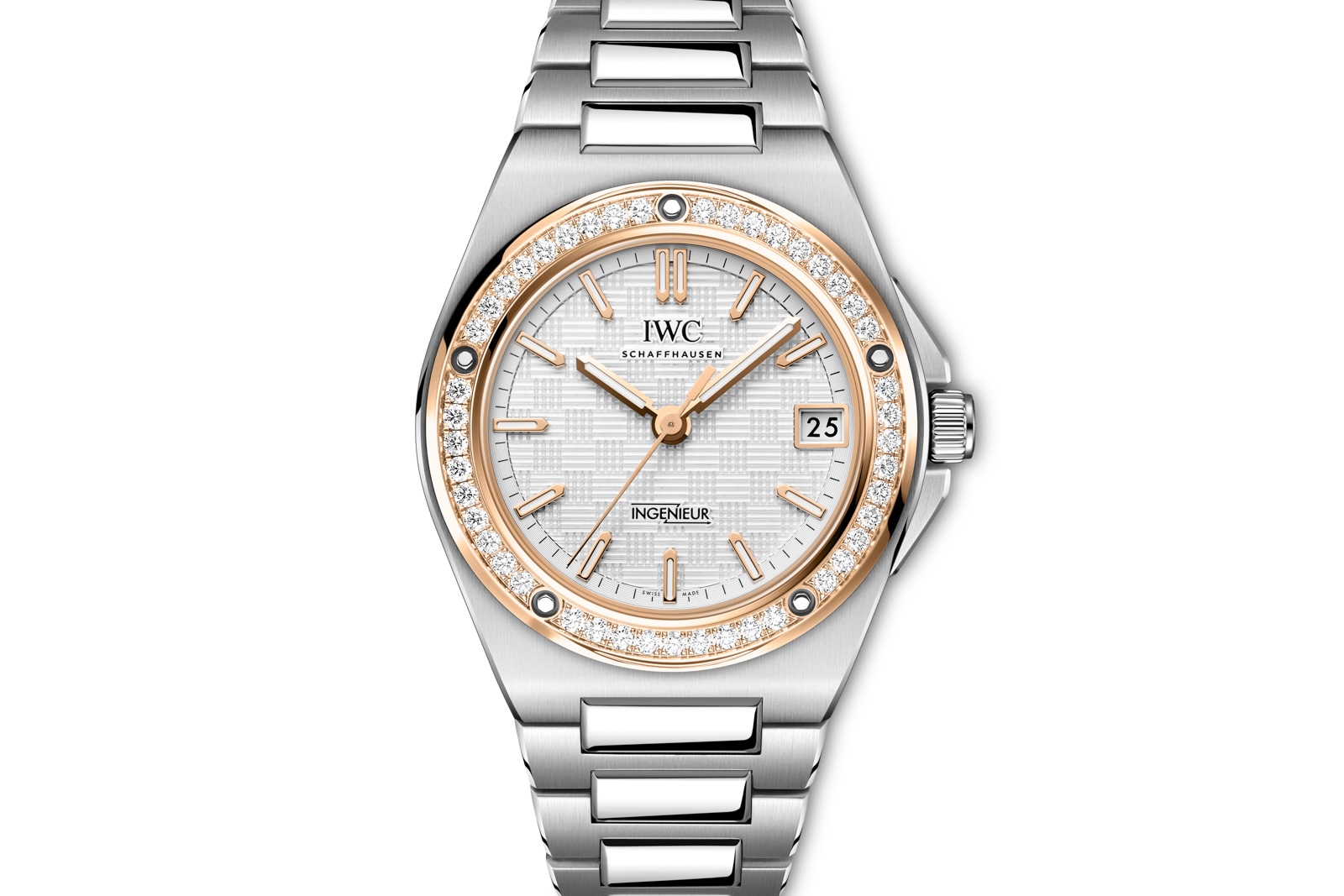
Joining the Ingenieur 35 lineup is the first contemporary Ingenieur to feature gemsetting. The normally smooth bezel is made of 18k red gold and set with 45 white diamonds. The total weight of the stones is just 0.7 carats, a detail that positions the ref. IW324911 at the more accessible end of the gemsetting spectrum.

Crucially, the five signature bezel screws remain on display, providing visual balance to the diamond-set ring while preserving the Ingenieur’s function-first design DNA. Both edges of the gold bezel are polished, drawing out the lustre of the luxurious material.

No-frills calibre

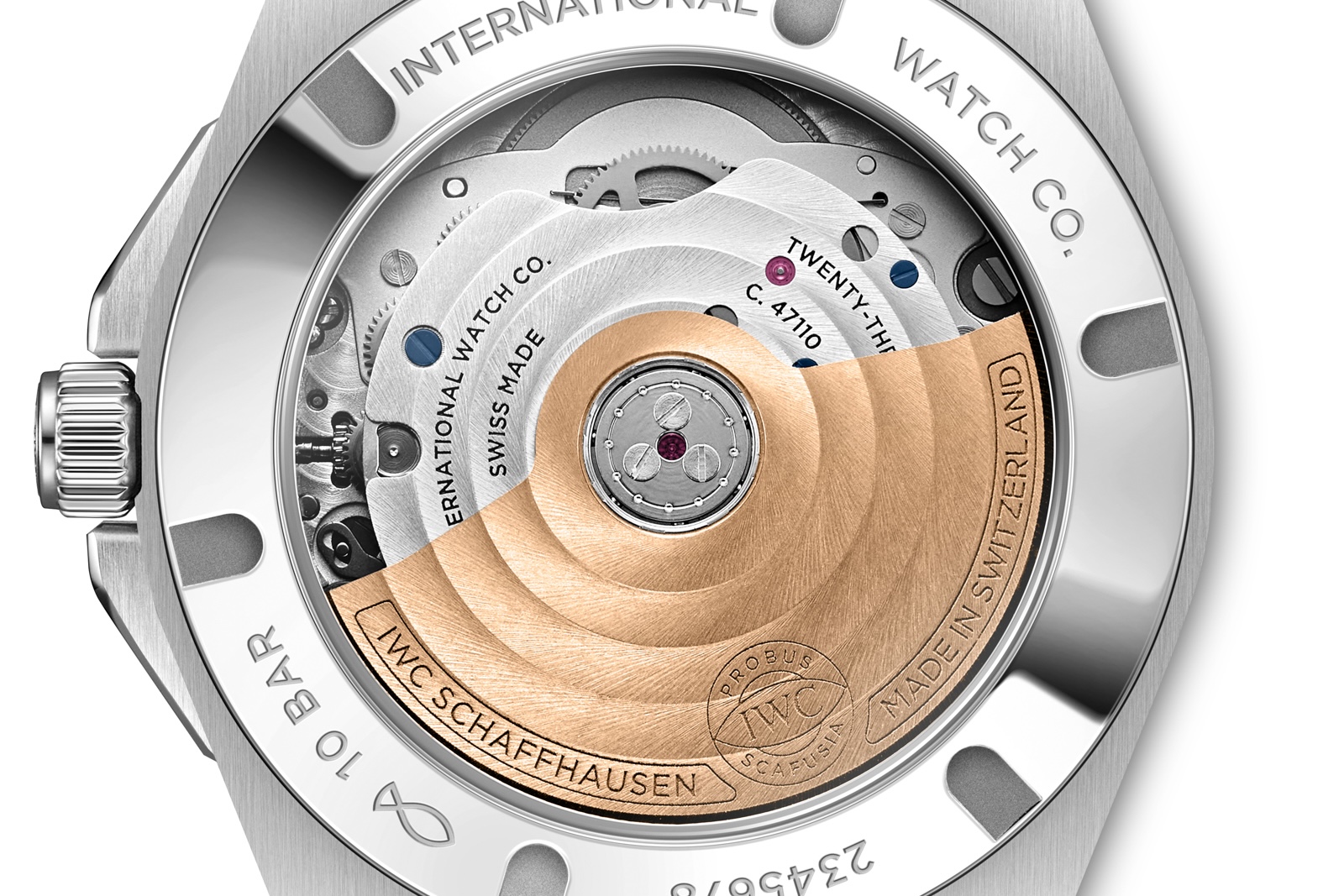
Like its predecessors, the Ingenieur 35 is powered by the familiar cal. 47110, derived from sister brand Cartier’s cal. MC 1847. The use of this more mainstream calibre differentiates the smaller Ingenieur from its larger 40 mm sibling, which is large enough to house the superior cal. 32111.

Though neither movement is exclusive to IWC, the cal. 32111 features an especially long 120-hour power reserve. For collectors fixated on specifications, this difference alone might justify a move up to the larger size.

That said, the rest of the specs are pretty similar, as both movements are modern 4 Hz automatic calibres with hacking seconds and a date. In addition, the Ingenieur 35 features a sapphire crystal case back to provide a view of the gold-plated winding mass.


Key facts and price

IWC Ingenieur Automatic 35
Ref. IW324907 (stainless steel with blue dial)
Ref. IW324911 (gem-set)

Diameter: 35 mm
Height: 9.4 mm
Material: Steel; 18k 5N red gold
Crystal: Sapphire
Water resistance: 100 m

Movement: Cal. 47110
Functions: Hours, minutes, seconds, and date
Frequency: 28,800 beats per hour (4 Hz)
Winding: Automatic
Power reserve: 42 hours

Strap: Matching integrated bracelet

Limited edition: No
Availability: Now at IWC boutiques and retailers
Price: CHF10,500 (steel) excluding taxes (gem-set upon request)

For more, visit iwc.com.


Back to top.

You may also enjoy these.
Welcome to the new Watches By SJX.

Subscribe to get the latest articles and reviews delivered to your inbox.