
Rolex Bestows a ‘Grand Feu’ Enamel Dial on the Daytona
The iconic chronograph with a traditional twist.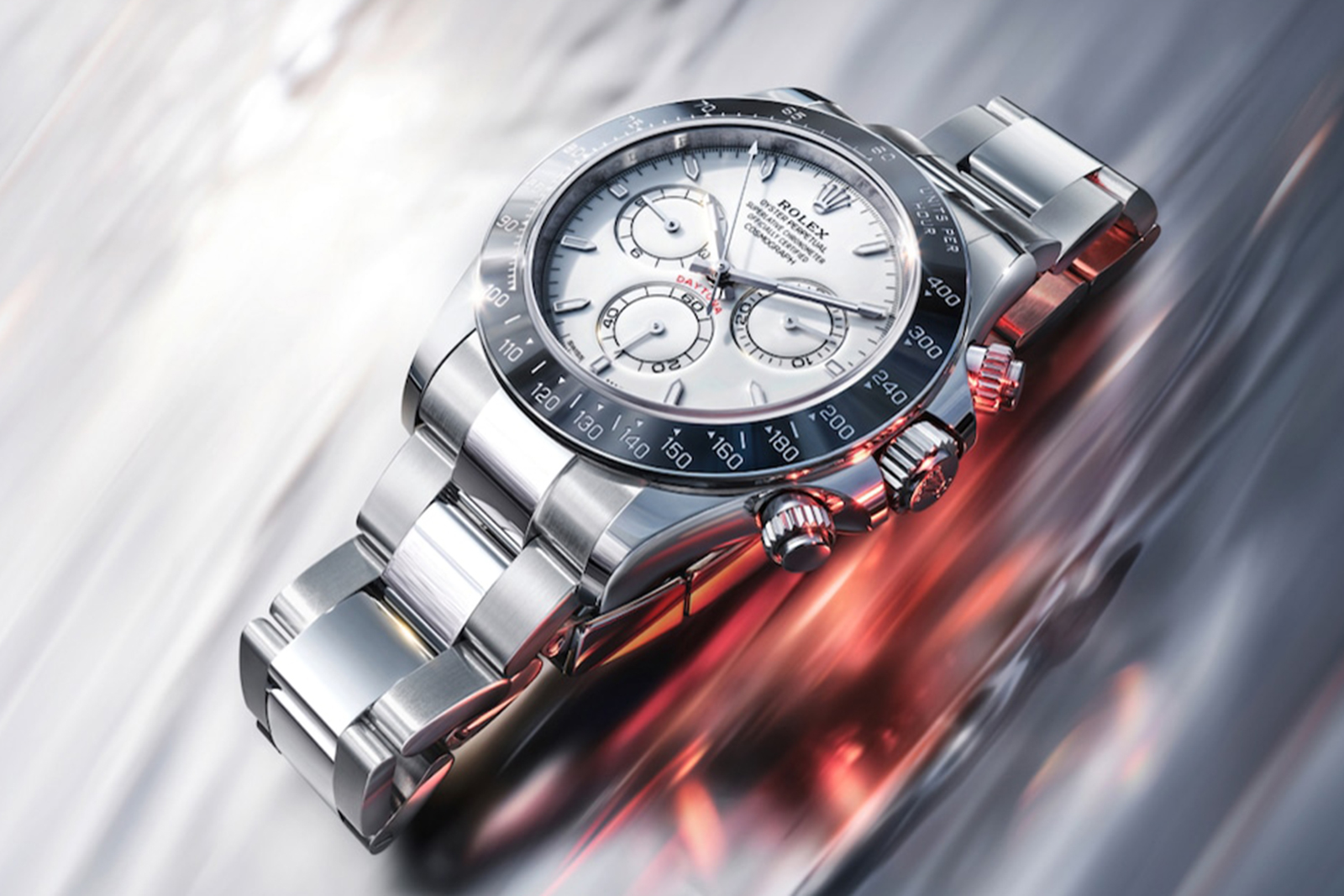
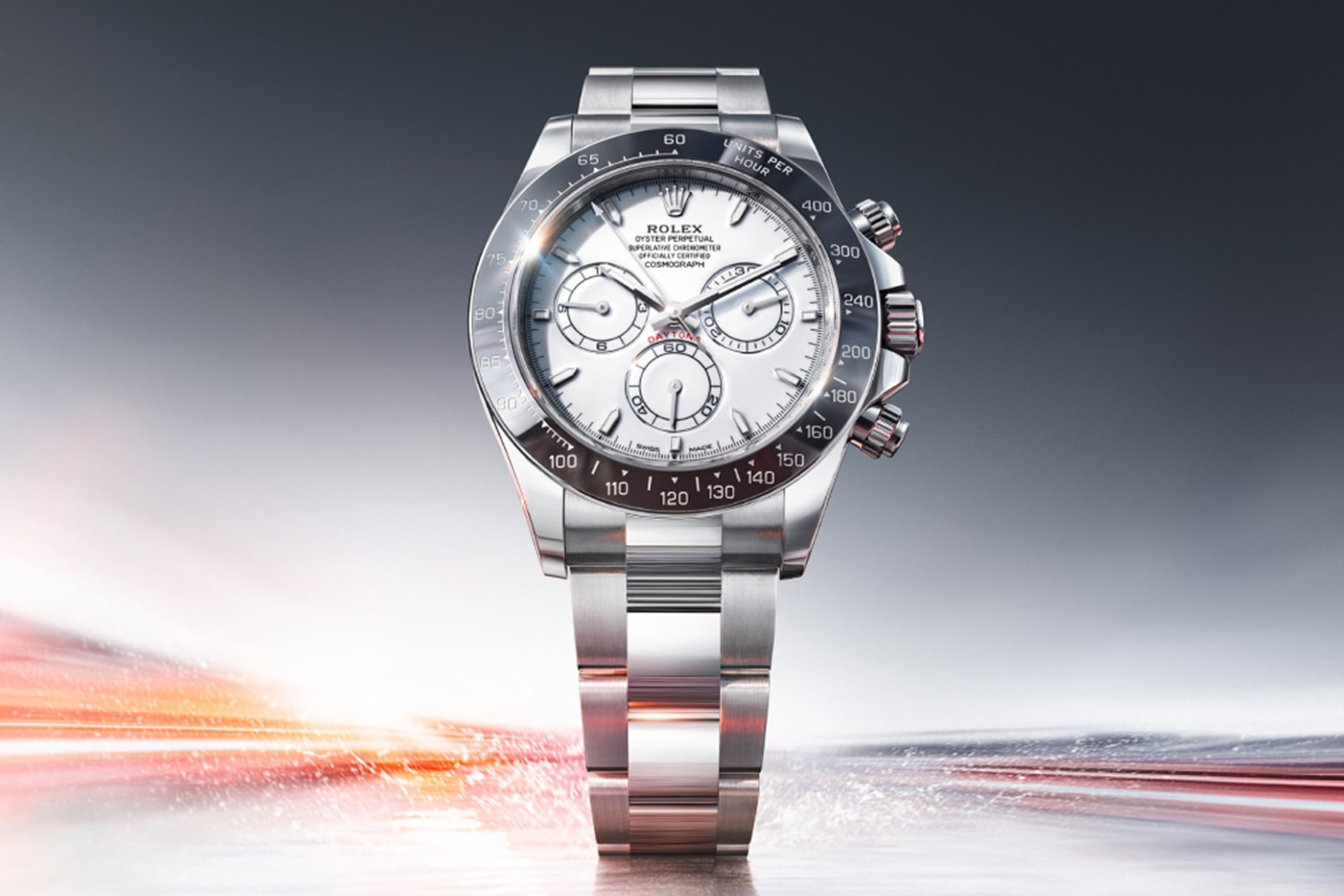
This year’s Watches & Wonders got off with a strong start with Rolex unveiling a number of new models, with a surprising Daytona that is all about novel materials. In a first for the landmark sports chronograph, the Cosmograph Daytona Rolesium combines a platinum and steel in its case, while having a fired grand feu enamel dial.
Initial thoughts
Rolex is known in modern times for its mastery of both industrialised mechanical watchmaking and sound material science. The new Daytona is a product of the latter — it benefits from a new sort of ceramic bezel and notably a white enamel dial executed in an entirely different fashion that results in record thinness for the traditional material.
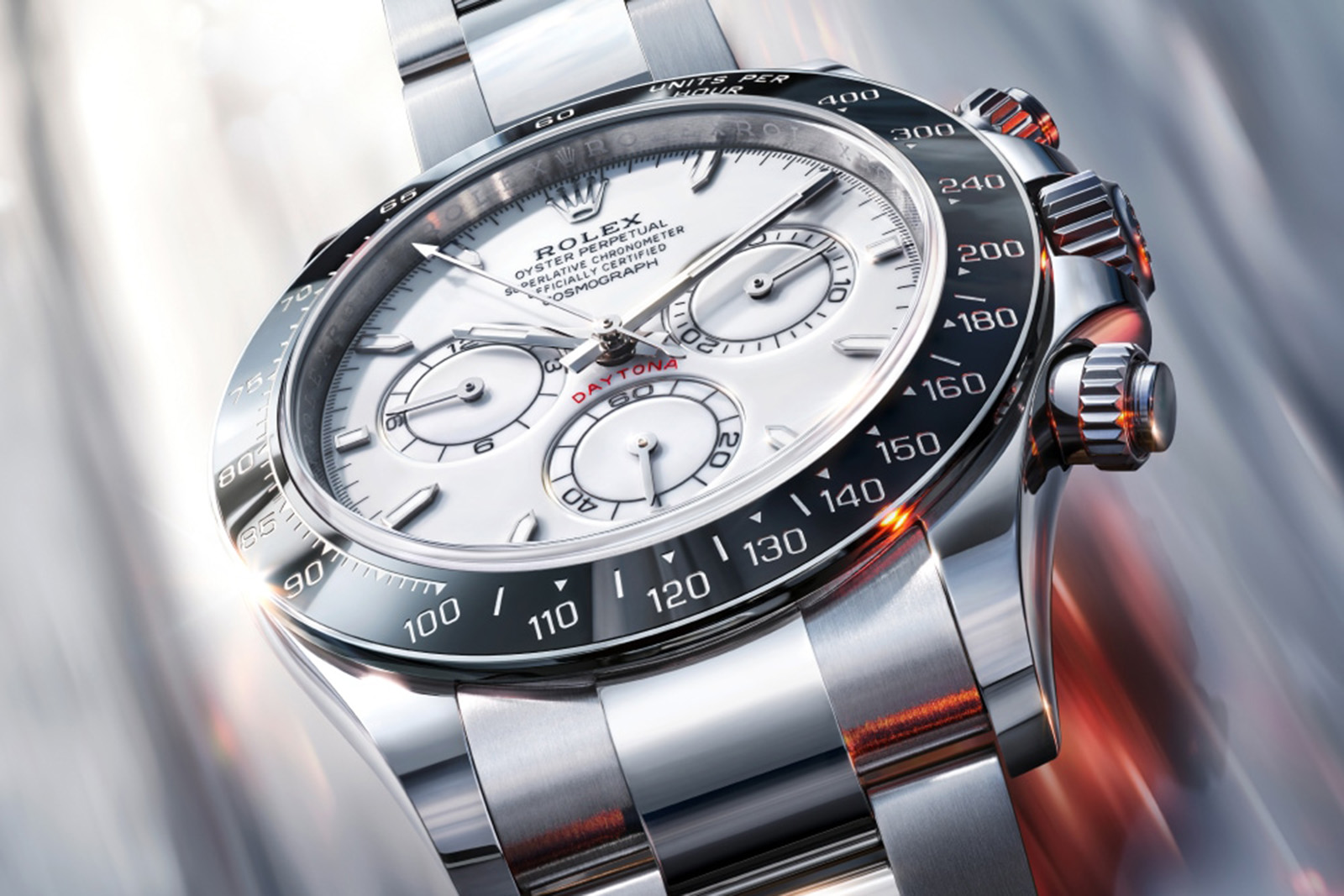
At first sight, the new model reminds of the “Porcelain” Zenith-powered Daytonas. A sought-after configuration of pre-2000 Daytonas, the “Porcelain” was nicknamed as such due to the glossy finished white dial, which carried some resemblance to classic porcelain. But this enamel dial was the result of years of research to develop an enamel dial of comparable thinness to conventional metal dials.
Thanks to a ceramic substrate with an identical coefficient of thermal expansion, the enamel dial inside the new Daytona is equivalent in thickness to an ordinary dial, resulting in no change in case dimensions. While that might seem like a minor achievement on its face – no pun intended – it is the result of tremendous research and development of the sort that only Rolex can undertake.
With this Rolex successfully raises the appeal of the Daytona in a more intellectual manner, without resorting to extravagant gem setting or more precious metals. The result is a model that is very close to the basic steel configuration, at least in terms of aesthetics. The new Daytona will retail for US$57,800 which seems a bit excessive for a watch that is mostly steel, but arguably justified by the enamel dial and “off catalogue” status of the model.
Anthracite ceramic
Anthracite is a sort of coal with a high carbon content, which gives it a particular metallic sheen. Rolex emulates that look and feel with their new ceramic composition, which is based on tungsten carbide enriched zirconia.
Ceramic bezels (and any other components for that matter) are known for their dull shine, but the bezel fitted to this new Daytona feels very metallic, sheening more like a precious alloy rather than a piece of industrial ceramic. The particular tungsten-zirconia composition was subject of a patent filed by Rolex as early as 2024.
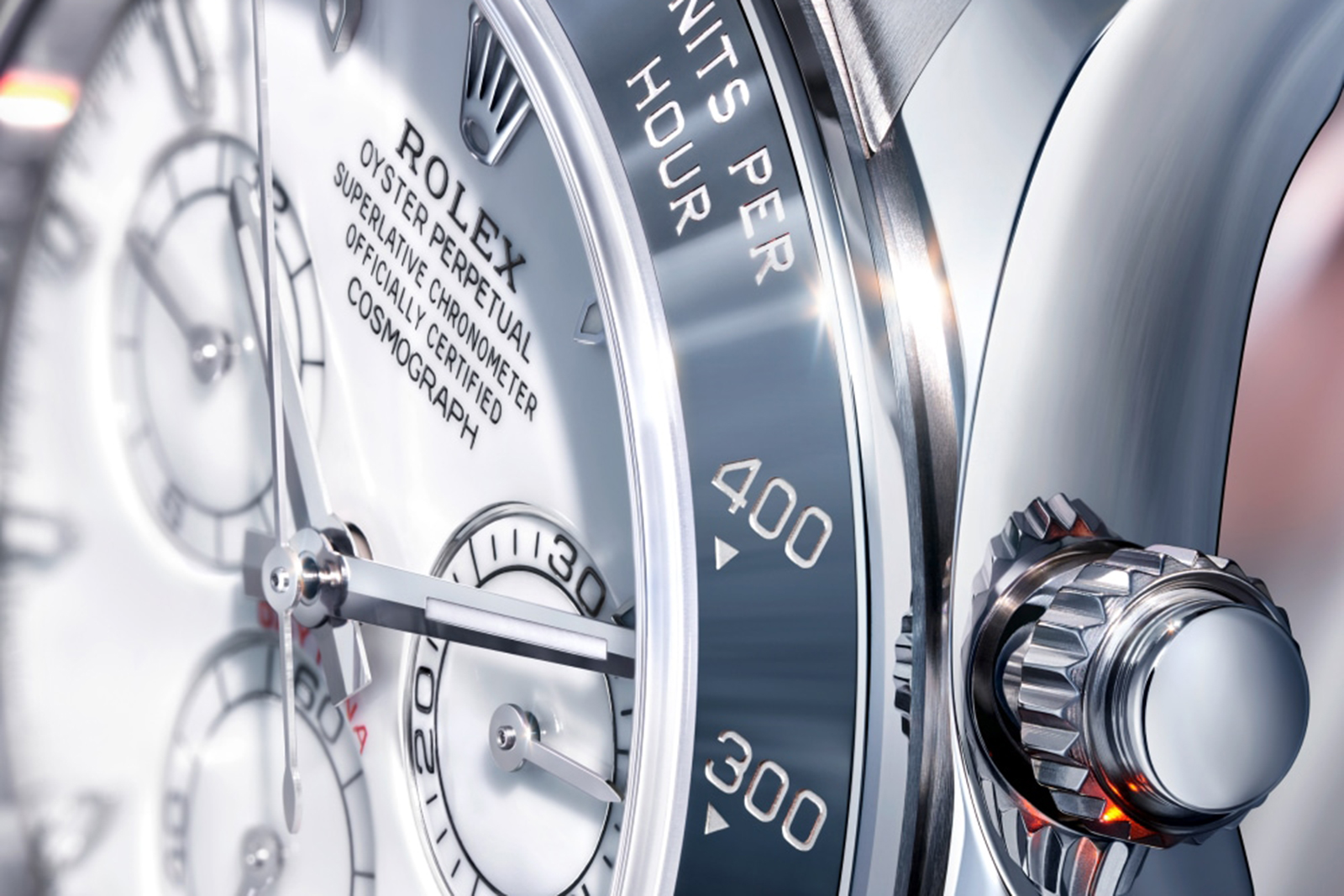
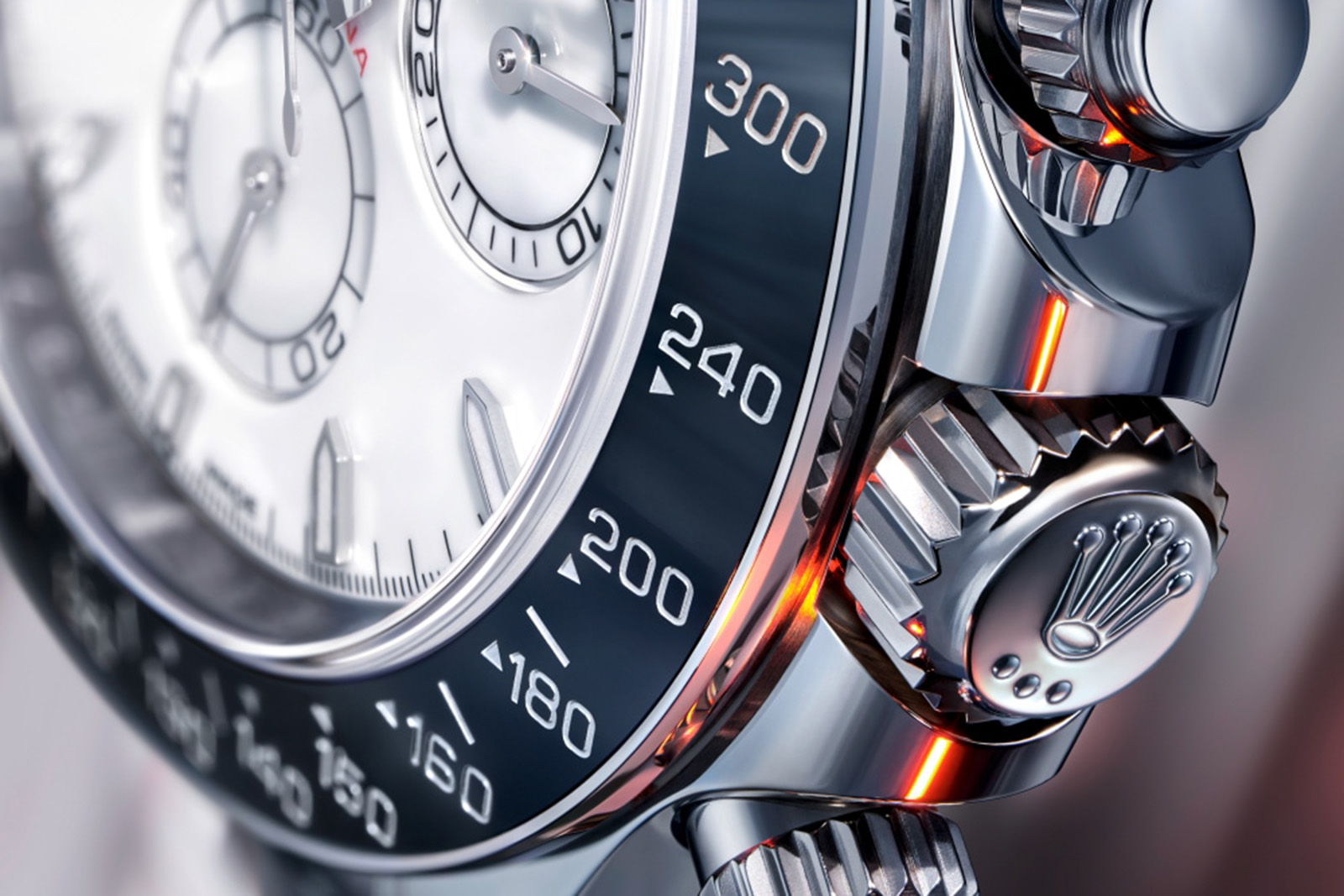
The particular composition also modified the basic black colour of other Daytona bezels — the new model might look black in certain lighting scenarios and then appear grey in others. The particular nuance works rather well with the milky white enamel dial.
The tachymeter scale is “vertical”, meaning all the numbers area easy to read. The same design was used in original Daytonas from 1963, while most post-2000 versions have the tachymeter markings follow the curvature of the bezel.
Rolex enamel
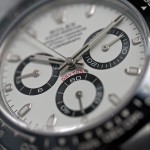
The enamel Daytona Dial is made of four pieces, the main dial and the three sub-dials for the chronograph functions. When assembled this way, the dial gets a dynamic, layered look, which aids with legibility. The lack of coloured rings for the sub dials might look odd at first sight, but the clean, milky white surface was kept the main point
Enamel is among the most traditional ways to finish a dial, but the process is tedious and relies heavily on artisanal craft. Linking grand feu enamel with a regular production Rolex model would be rather counterintuitive. Regardless, Rolex went all in on enamel production, which has a notoriously high defect rate. Traditionally enamel powder mixture is applied to a metal blank, then fired at about 800°C in specialised kilns for multiple times. Due to air bubbles forming, creasing or improper handling, many dials are discarded for being defective or tainted.
Rolex seems to have perfected a large-scale manufacturing of grand feu enamel dials. They did this by first applying ceramic to the metal dial base, and only then firing the enamel on top of the ceramic substrate. The result is not only a much thinner enamel, but also one that forms more uniformly and presumably has a lower failure rate.
The use of ceramic as base instead of metal also prevents warping — when fired the enamel can contract, slightly bending its base. The rigidity and thermal coefficient of the industrial ceramic employed here ensures this does not happen.
A familiar watch
Rolesium is Rolex’s trade name for a two-metal mix, in this case 950 platinum and 904L “Oystersteel”. We’ve seen a fair share of all-platinum Daytonas, but this is the first in Rolesium.
The 40 mm case and bracelet of this Daytona are made from Oystersteel but the bezel ring and case back are platinum. It is a bit disappointing to see such little precious metal paired with an enamelled dial, but the steel construction keeps the piece’s price in check.
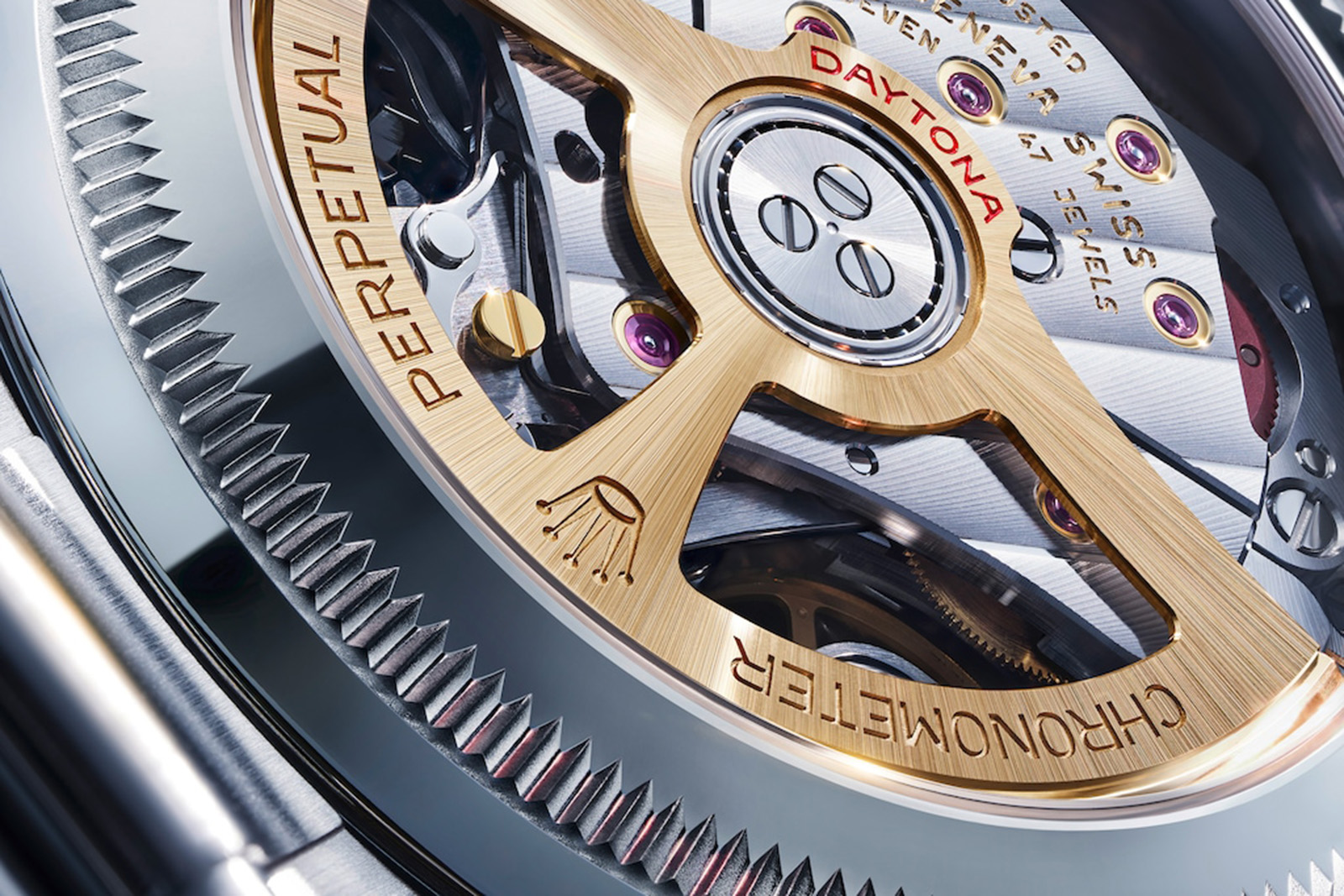
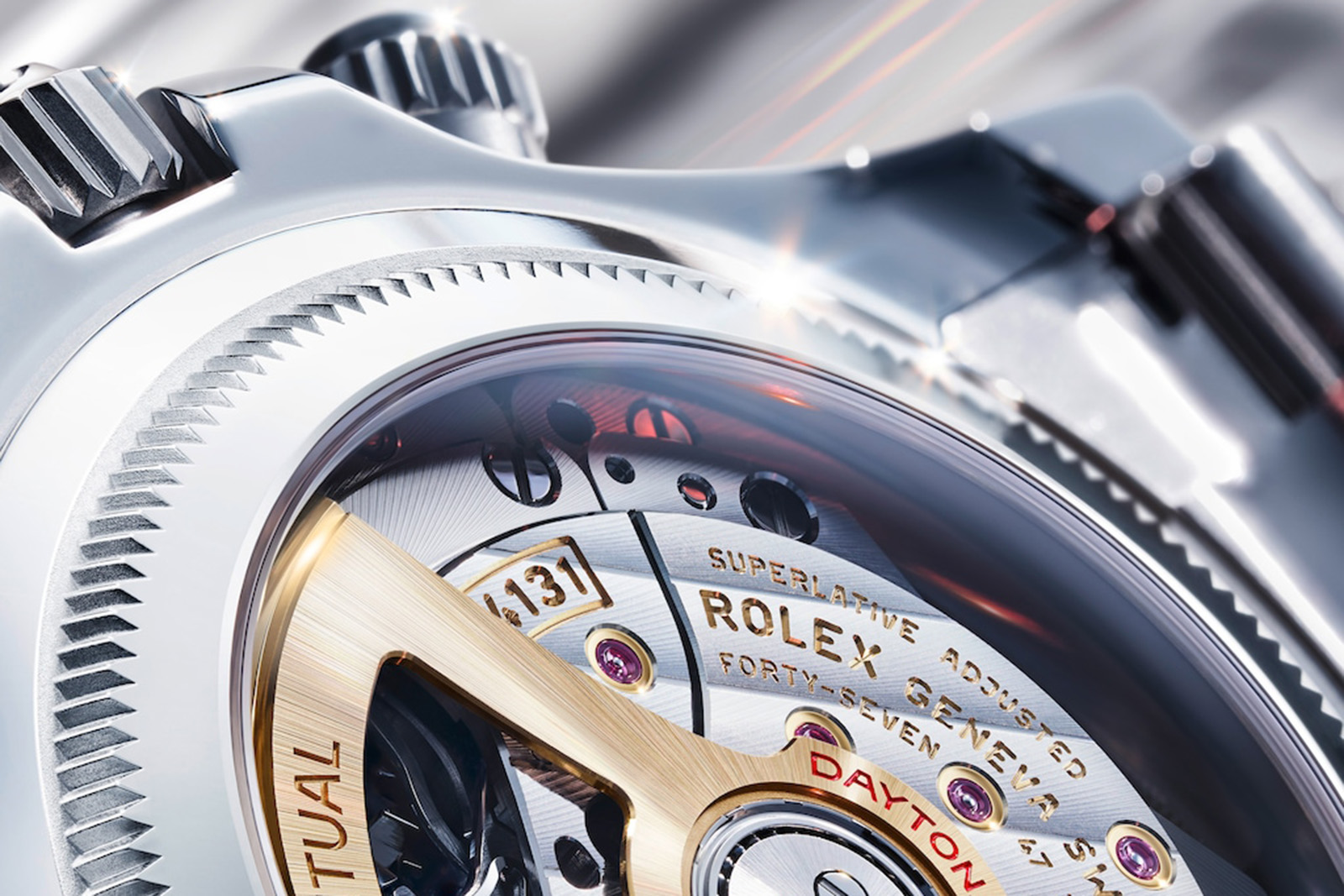
The new Daytona is powered by caliber 4131, an evolution of the landmark cal. 4130. The movement streamlined all the kinks and (few) weaknesses of its predecessor and comes with better finishes, such as the gleaming Rolex Côtes de Genève and in this configuration a solid gold rotor.
The movement runs for 72 hours and beats at the industry-standard 4 Hz while being certified to keep time at -2/+2 seconds per day.
Key facts and price
Rolex Cosmograph Daytona Rolesium Enamel Dial
Ref. 126502
Diameter: 40 mm
Height: 12.2 mm
Material: 904L Oystersteel with platinum case back and bezel ring
Crystal: Sapphire
Water resistance: 100 m
Movement: Cal. 4131
Functions: Hours, minutes, seconds, and chronograph
Winding: Automatic
Frequency: 28,800 beats per hour (4 Hz)
Power reserve: 72 hours
Strap: Oyster bracelet
Limited edition: Off-catalogue
Availability: From Rolex boutiques and retailers starting
Price: US$57,000 before taxes
For more, visit Rolex.com.
Clarification April 21, 2026: Rolesium is the two-metal combination of platinum and steel, and not an alloy in itself.
Back to top.