Monochrome Turns to Habring² for the Seconde Morte

Discreet dial, discrete function.
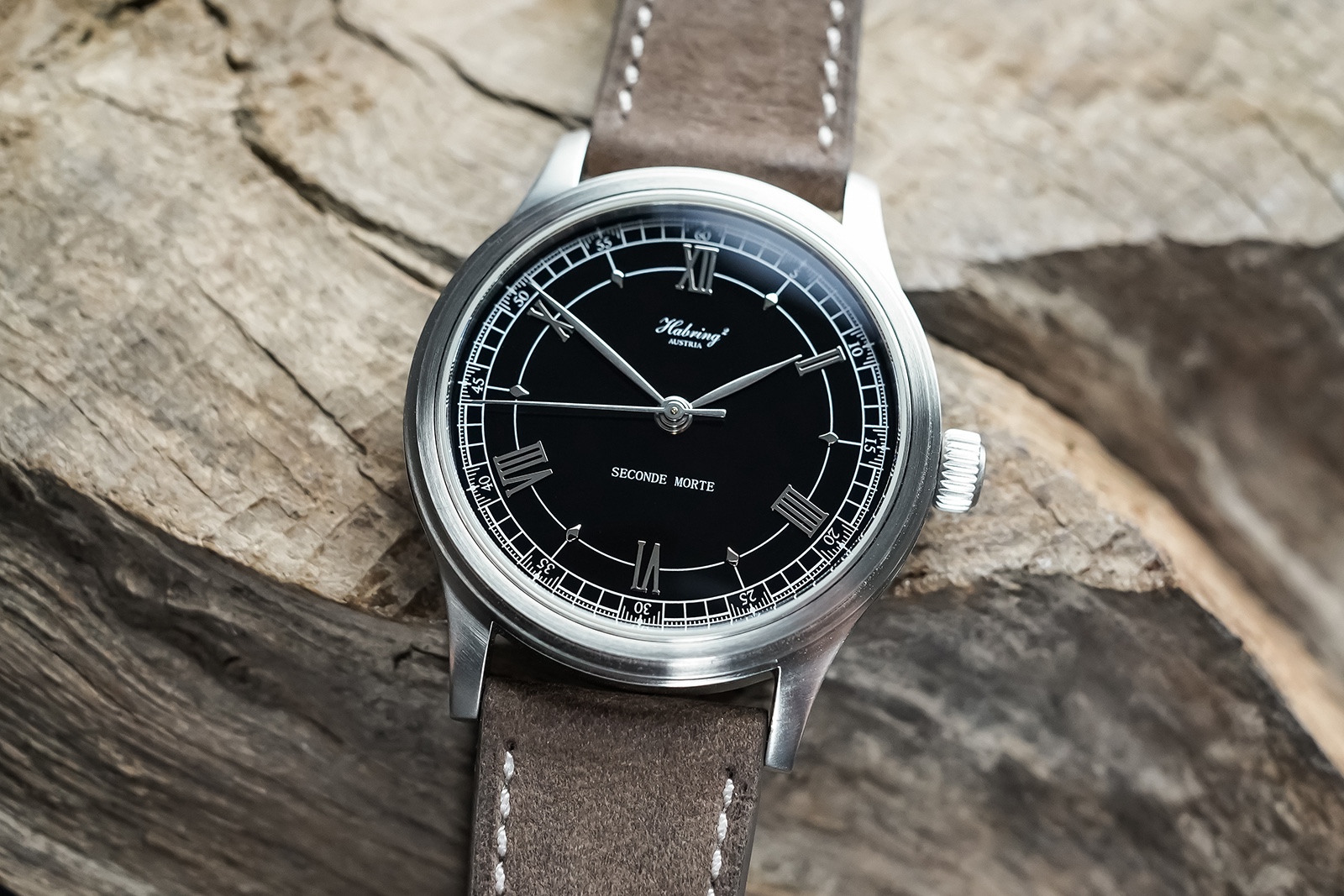
The Monochrome Montre de Souscription 4 Seconde Morte (MdS4) is a limited-edition collaboration between the team at Monochrome Watches and Austrian independent Habring², built around the brand’s signature jumping seconds complication. Powered by the hand-wound A11S calibre, the watch reflects the marque’s focus on technically robust, thoughtfully refined movements and offers a straightforward value proposition.

Limited to 33 individually numbered pieces and sold exclusively through a short souscription-style sales window, the MdS4 highlights both Habring²’s technical merit and Monochrome’s aesthetic sensibilities.
Initial thoughts

Richard and Maria Habring are outliers in the field of independent watchmaking. Among the sole guardians of the Austrian watchmaking tradition, the husband and wife team produce a range of deceptively technical (yet honestly priced) watches. This rare combination makes the brand’s watches appealing to many insiders like the team behind the Dutch website Monochrome Watches, that have just announced their latest 1930s-inspired collaboration.

While the watch and its movement are the work of Habring², the team at Monochrome turned to designer and Time+Tide contributor Pietro Pilla for the Art Deco-inspired dial design.
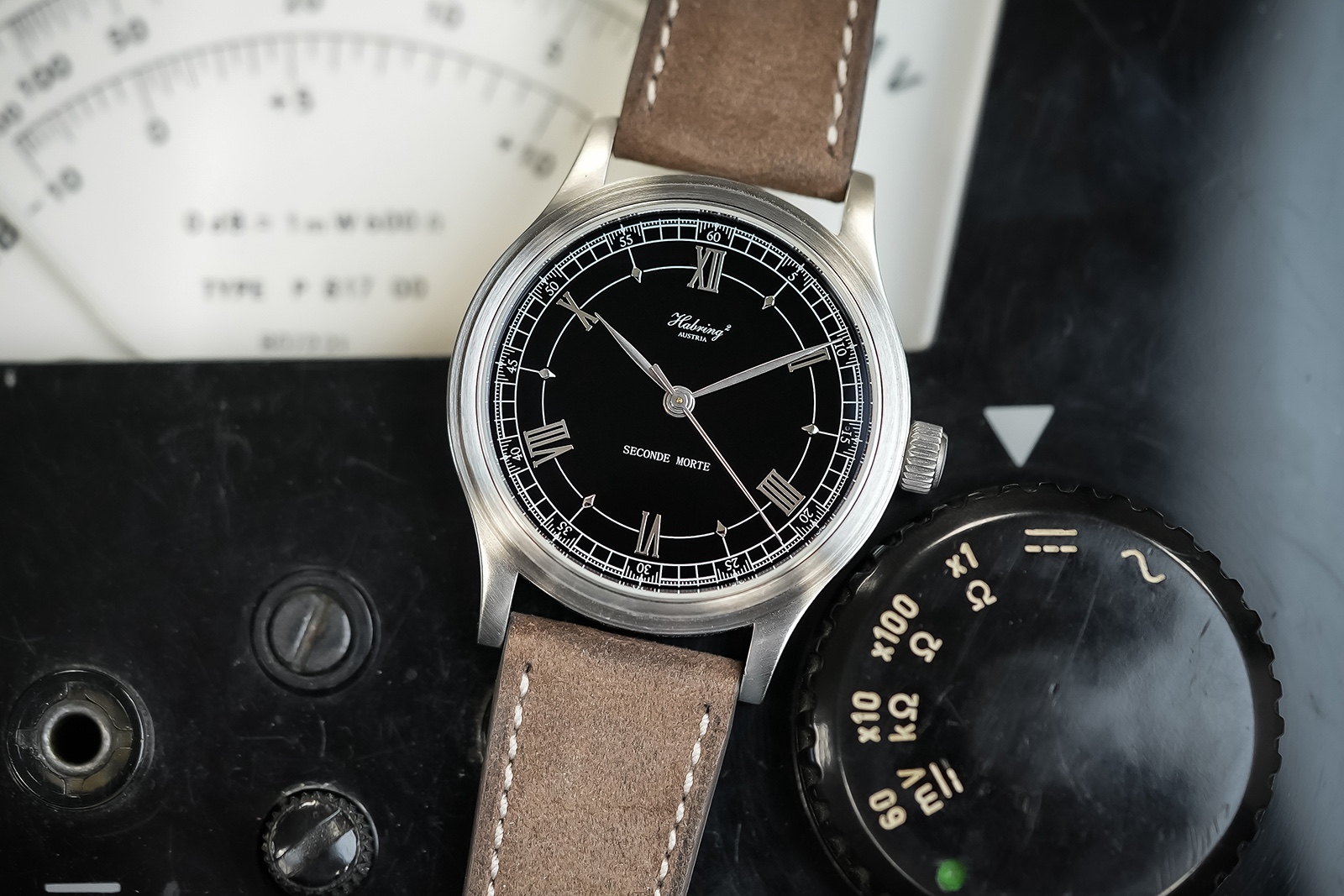
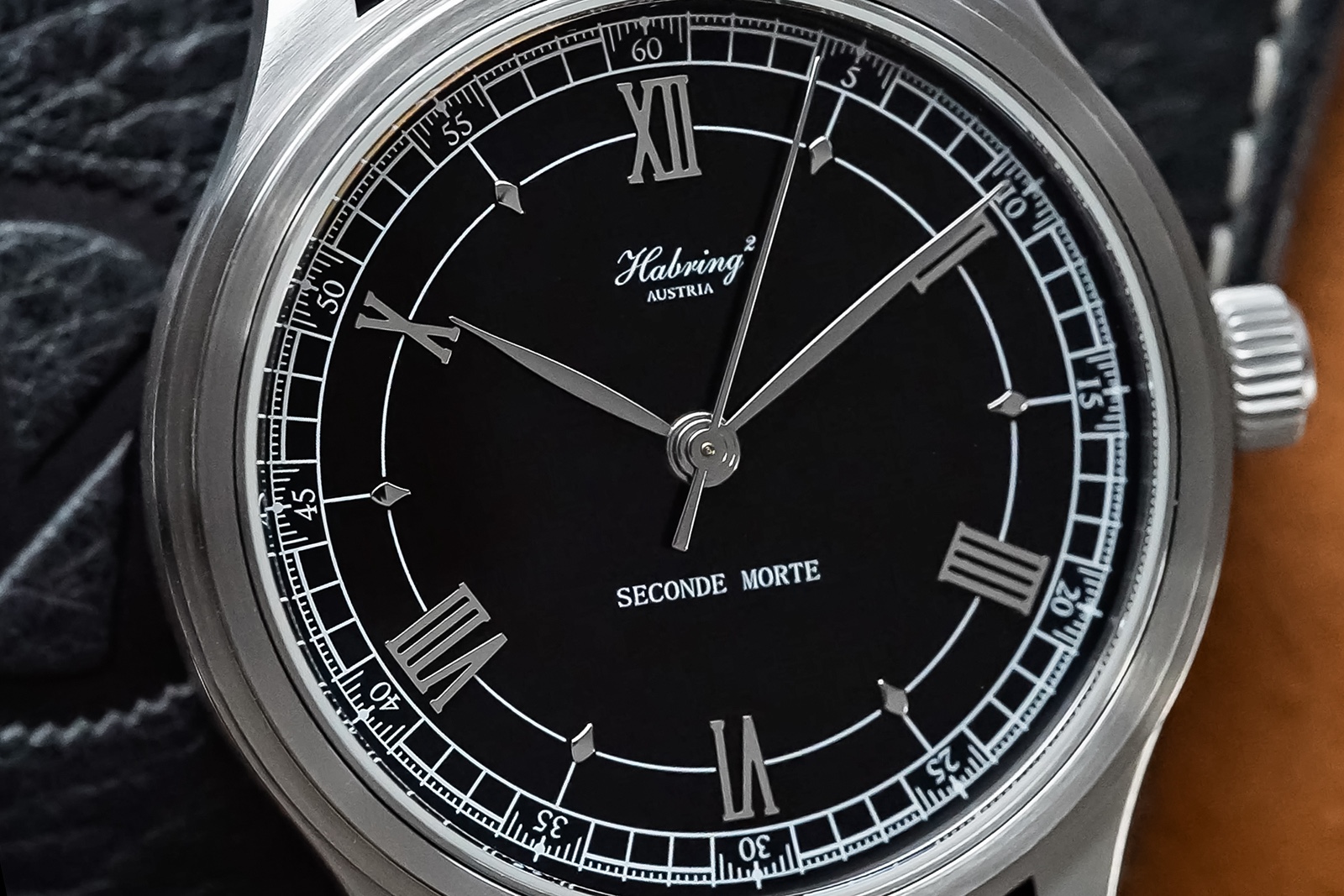
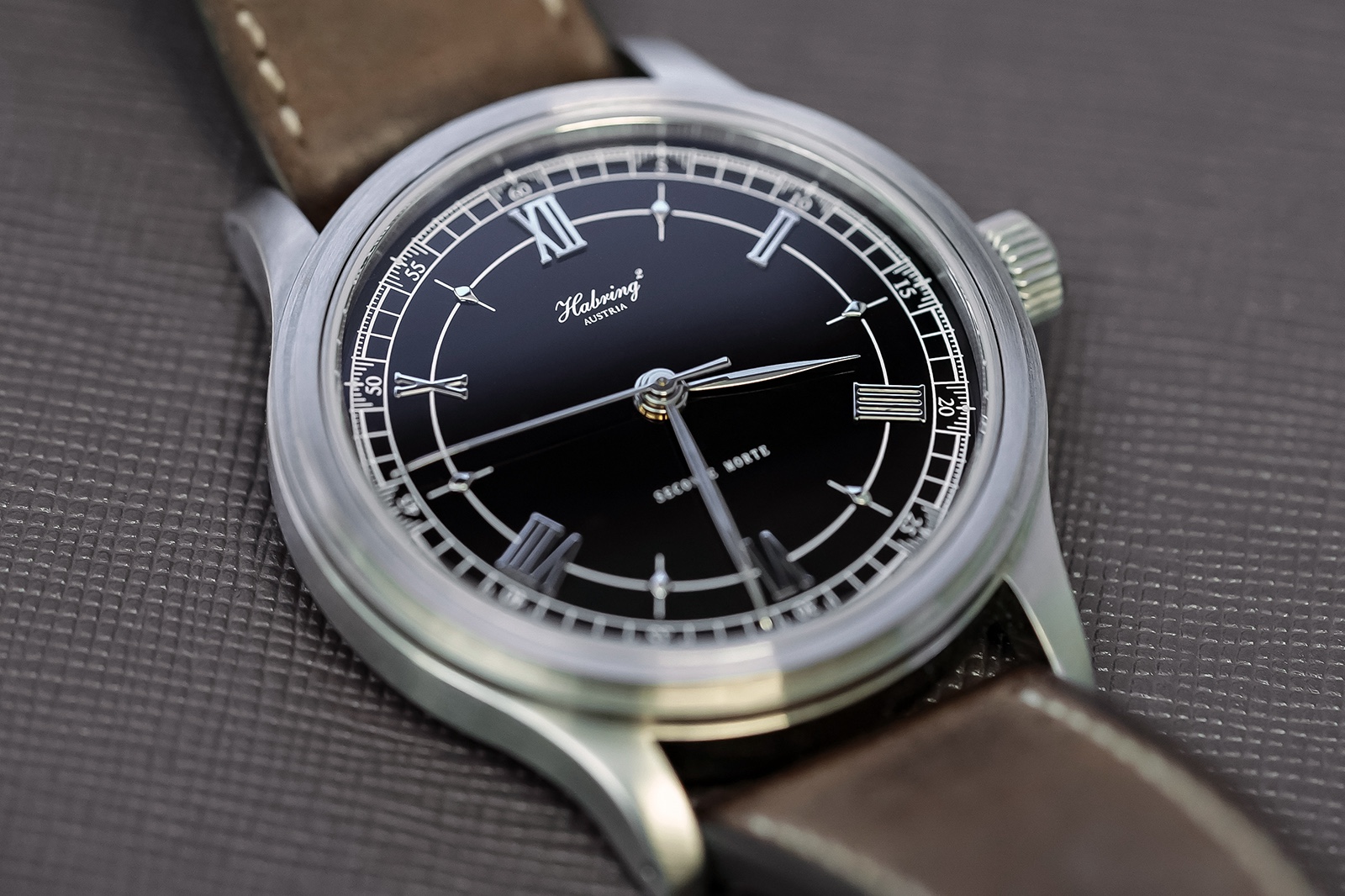
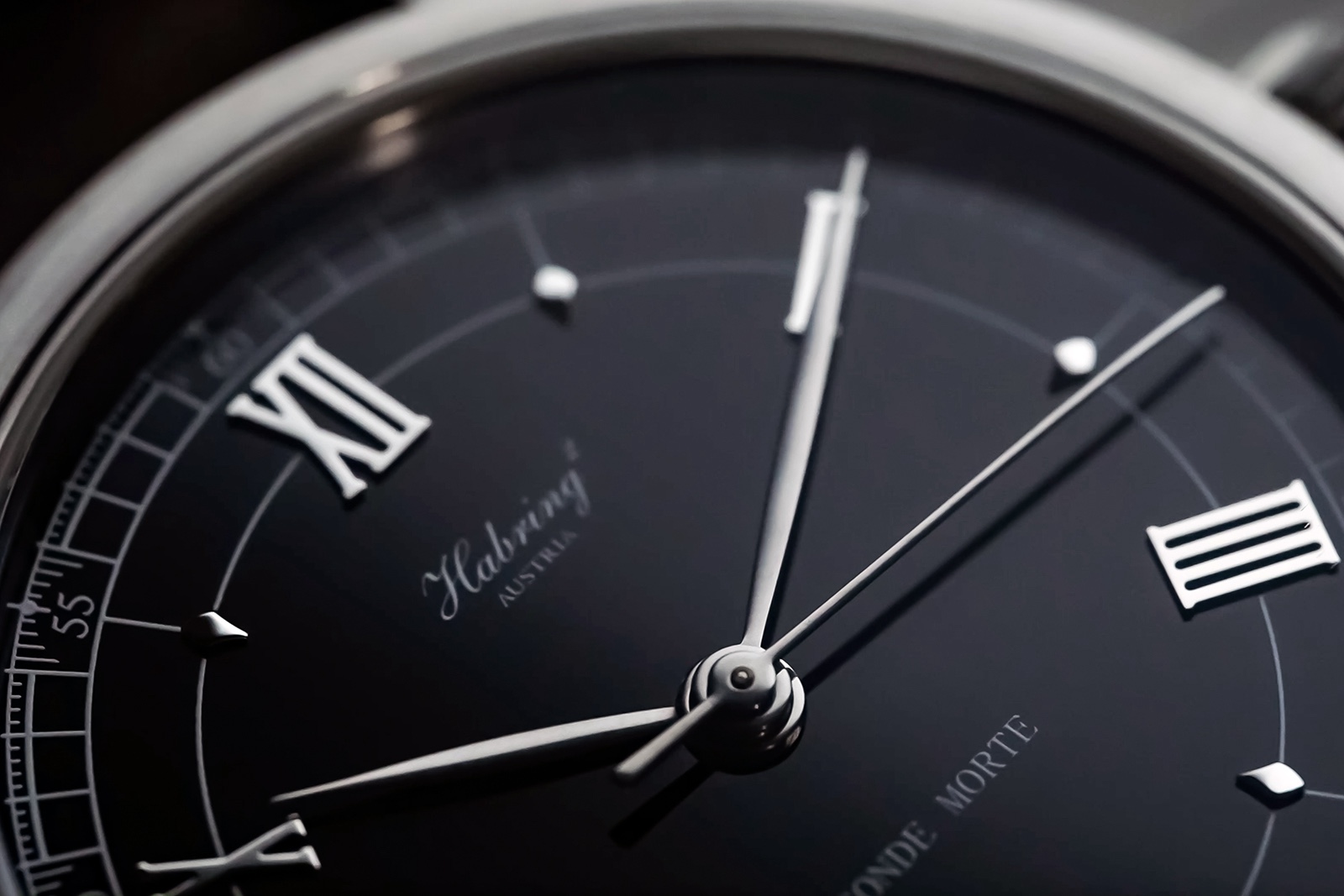
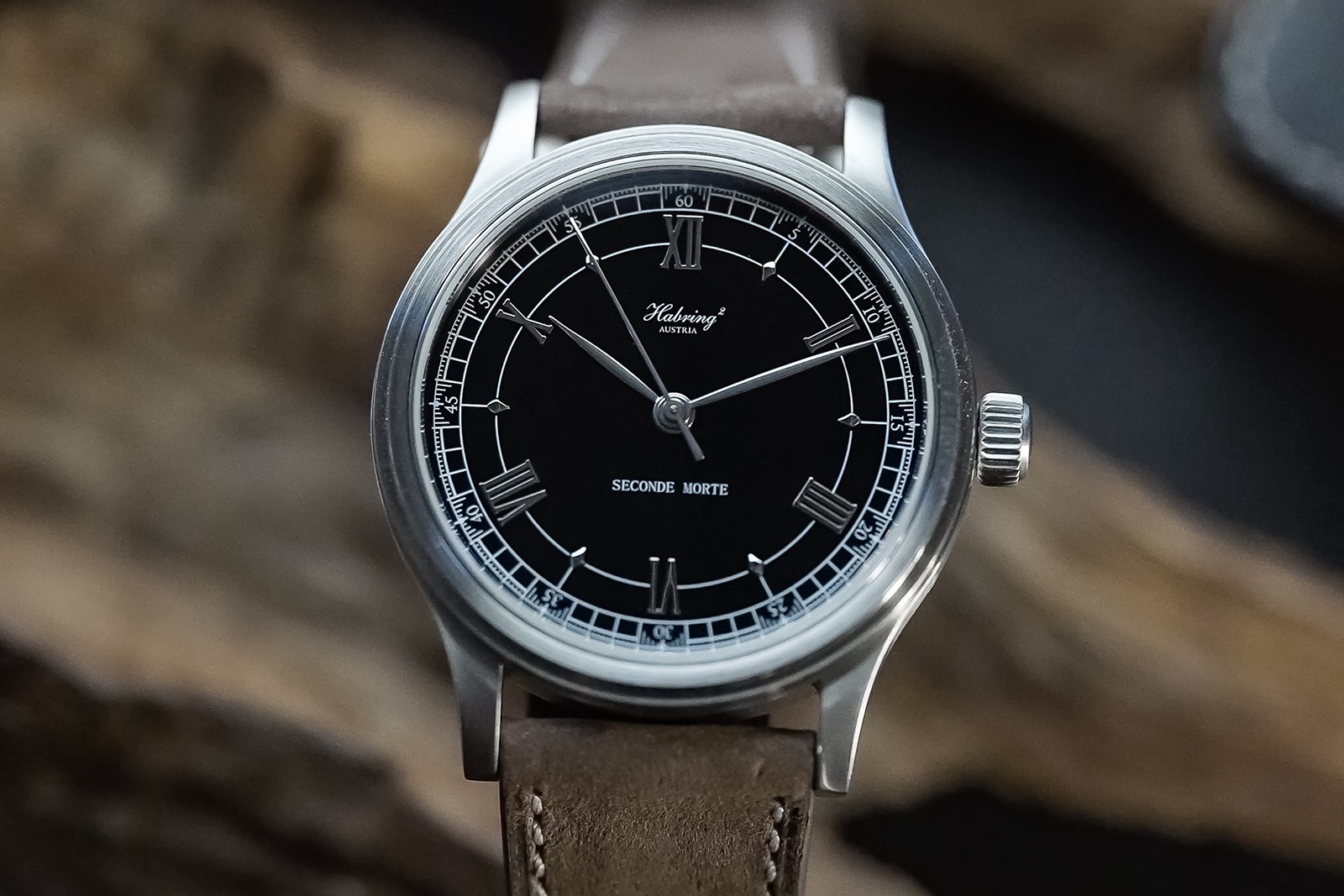
The discreet black dial features applied Roman numerals that alternate with delicate teardrop-shaped indexes, a choice that helps prevent the dial from looking too crowded. The printed railroad scale that rings the dial is more instrument-like, with five hash marks per unit. Normally I’d consider this outermost chapter ring the seconds scale, but since the seconds hand jumps in discrete one-second increments, the smaller graduations only serve to indicate the minutes with a higher degree of resolution.

An appealing touch is the bridge-like arch over each of the five-minute markers, a detail that gives the otherwise pared-back and purposeful dial a bit of period-correct ornamental flair.

Inside, the MdS4 is powered by the well-known Habring² A11S, which features Mr Habring’s own jumping seconds function visible through the sapphire crystal case back. While the movement has utilitarian roots, Habring² has refined the source material, both technically and aesthetically, to the point that its origins are barely recognisable. In short, it’s difficult to do any better in this segment of the market.
The MdS4 is priced at €6,000 excluding taxes. Habring²’s watches are almost always a compelling value, and that’s true in this case as well; the thoughtful touches applied by the team at Monochrome make it an appealing new iteration of an already strong platform. The distribution model is unusual, so collectors should be aware that the watch will only be on sale for a period of two weeks, or until all 33 individually numbered units are sold.
Art Deco-inspired

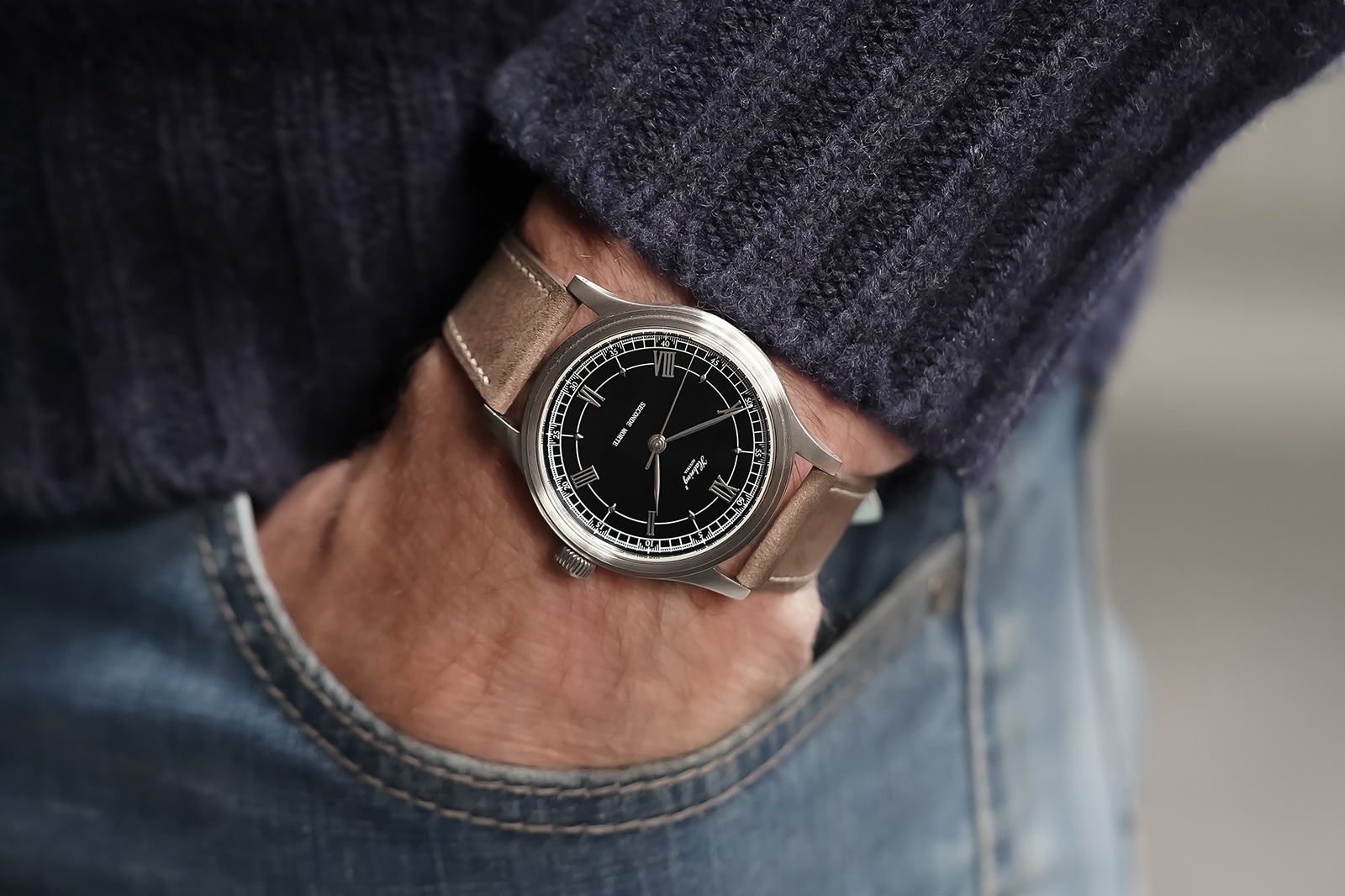
The MdS4 will feel familiar to collectors who have come into contact with a Habring² Erwin, which features the brand’s jumping seconds complication. The fully brushed stainless steel case resembles that of the Massena Lab collaboration from 2020, and is distinguished by its flat, stepped bezel and nearly perfect proportions.
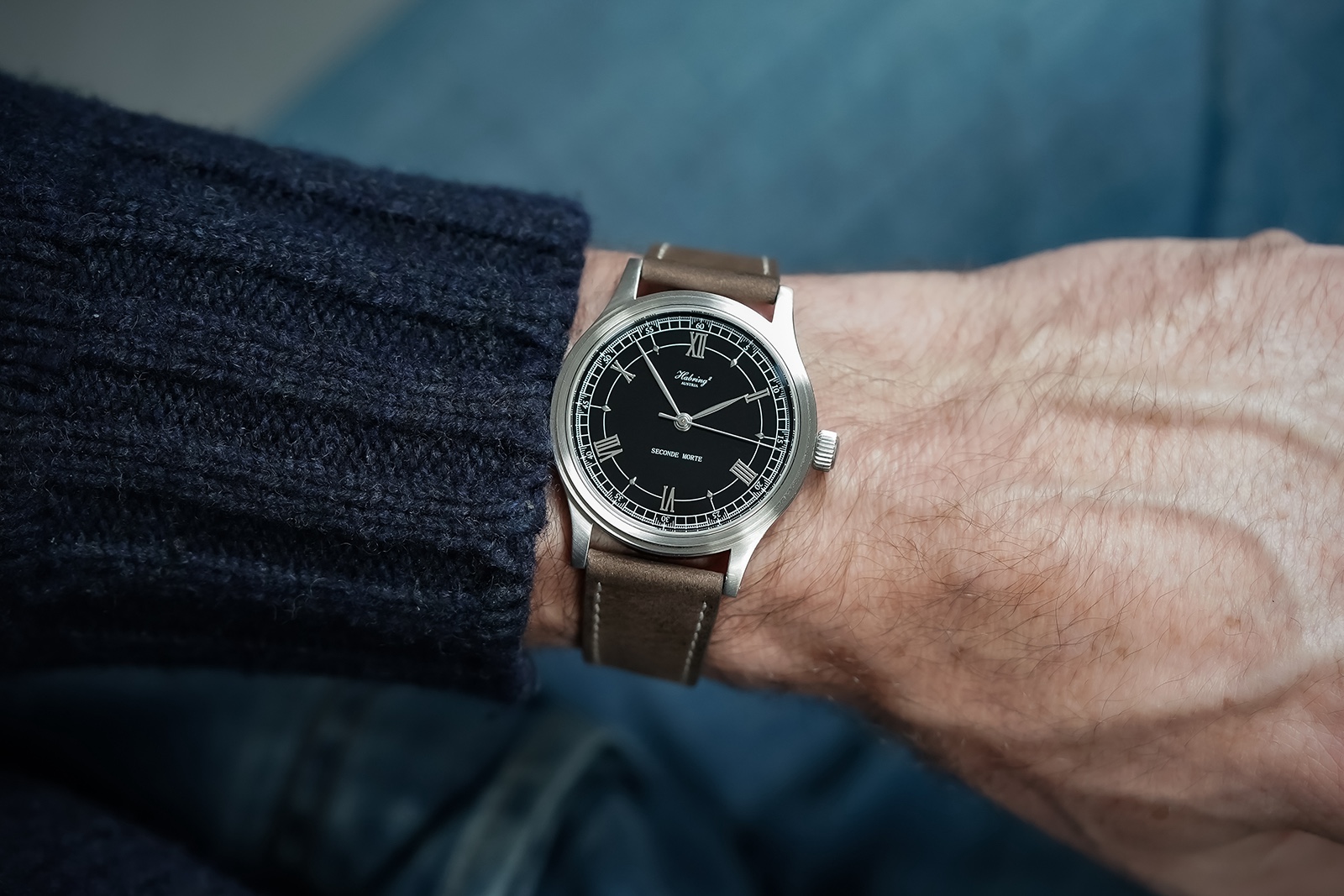
Designed to embody the spirit of 1930s-era dress watches, the MdS4 blends Art Deco motifs with an instrument-like feel to reimagine a gentleman’s wristwatch from the interwar period. The 38.5 mm size is small enough to carry off the vintage-oriented theme, but large enough to suit contemporary tastes.

The dial is a glossy black to create visual contrast with the printed white scales and dial text. The markings are thin and neat — a factor that makes the elegant serif fonts feasible.

The polished handset matches the applied Roman numerals and teardrop hour markers. That is to say there’s no lume, but low-light reading should be possible at most angles thanks to the reflectivity and contrast of the polished hands.
Discreet dial, discrete movement

Most independent watchmakers targeting this segment of the market rely on a handful of off-the-shelf calibres; it’s simply too costly for most watchmakers to develop something unique, and many watchmakers lack the engineering experience required to make reliable new constructions. But Richard Habring is not most watchmakers, and his depth of experience with the Valjoux 7750 platform, gained during his influential tenure at IWC, set him on a course to be more self-sufficient.
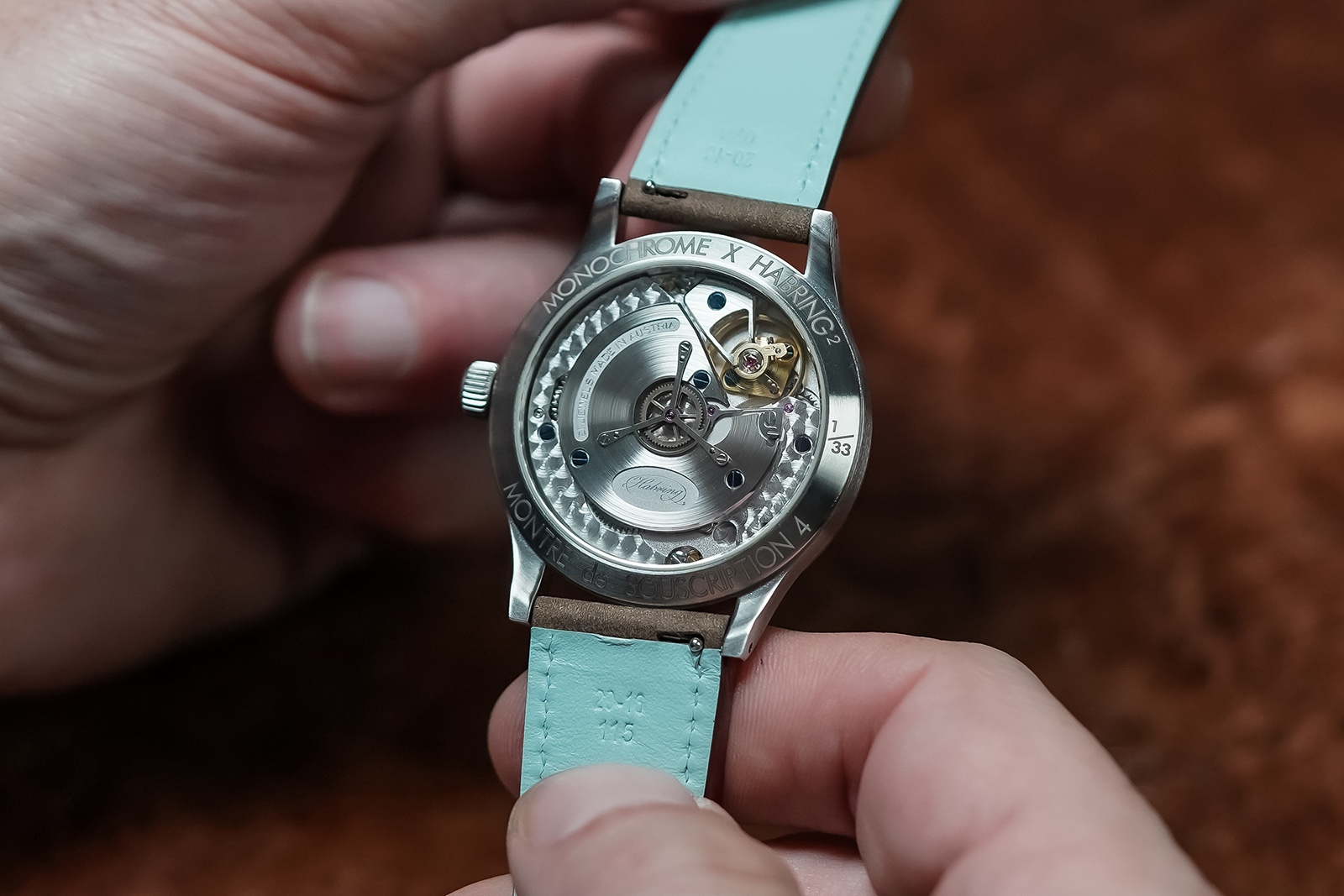
The A11 platform, which spans both chronograph and time-only variants, can trace its origins to the humble cal. 7750, and retains many of that movement’s best characteristics, such as its sporty 4 Hz frequency and high-torque barrel. But it would be reductive to equate the two calibres.

For one thing, Habring² has redesigned and reworked nearly all of the critical components to reduce tolerances and improve material quality. For example, many components that are stamped in a typical cal. 7750 are remanufactured by Habring² using more precise techniques like laser cutting.
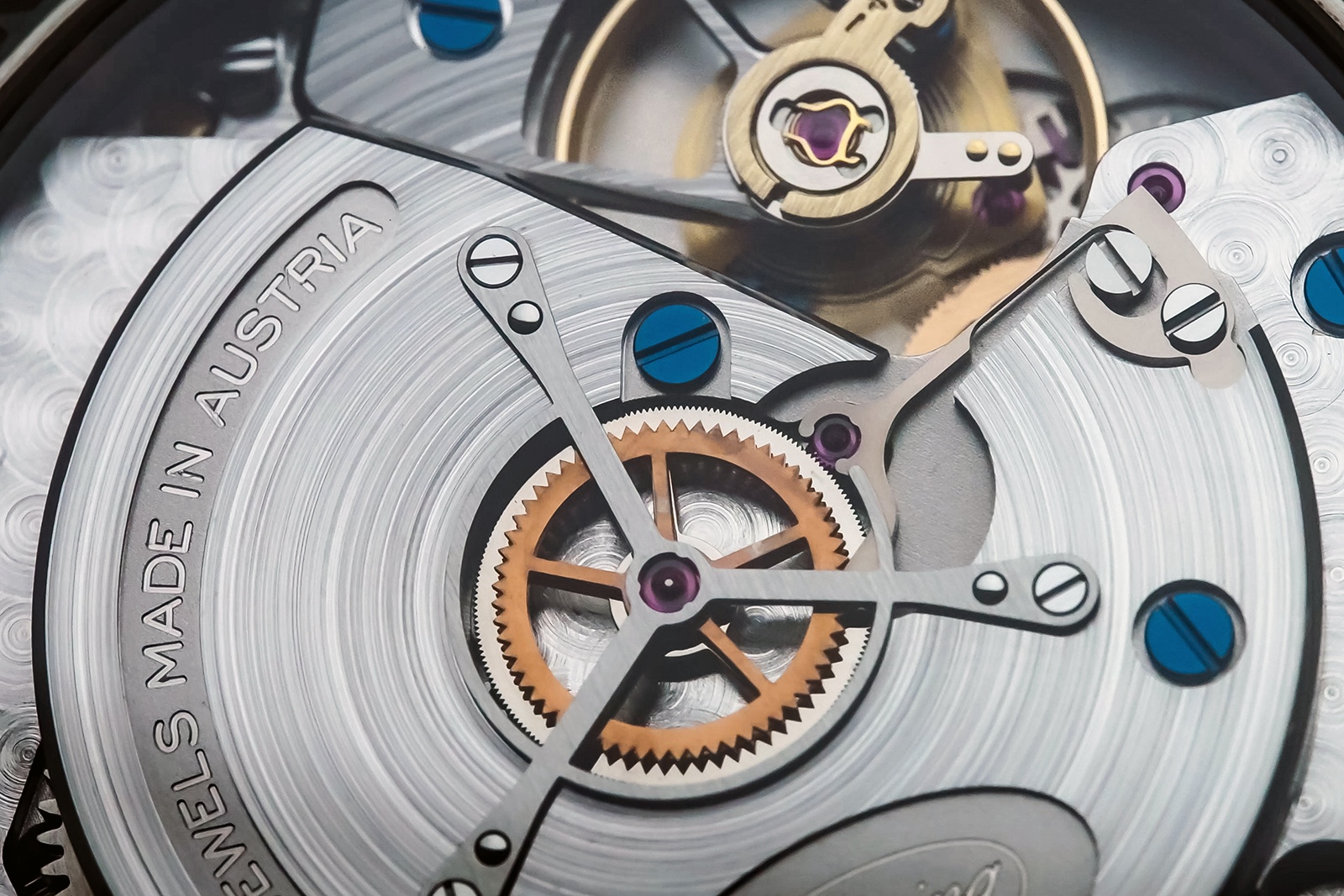
This process results in components that are more amenable to traditional finishing, which is why the circular brushing and perlage look as good as they do. The care in construction extends to the heat-blued screws, which enrich the look of the A11.

Of course, the movement’s signature feature is its jumping seconds complication, inspired by historical precision clocks, which can be seen in action in the centre of the movement.

Key facts and price

Monochrome Montre de Souscription 4 Seconde Morte

Diameter: 38.5 mm
Height: 9 mm
Material: Steel
Crystal: Sapphire
Water resistance:
 30 m

Movement: A11S
Features: Hours, minutes, and jumping seconds
Winding: Hand-wind
Frequency: 28,800 beats per hour (4 Hz)
Power reserve: 48 hours

Strap: Leather strap

Limited edition: 33 pieces
Availability:
On the Monochrome shop for a period of two weeks (or until all 33 pieces are sold), starting on December 18, 2025 at 3PM CET. Deliveries are expected in February 2026 and March 2026.
Price: €6,000 excluding taxes (including a non-refundable deposit of €2,000 plus taxes due at the time of order)

For more, visit shop.monochrome-watches.com


Back to top.

You may also enjoy these.

Seiko Pours a “Root Beer” Prospex LX GMT

A Spring Drive only for the American market.

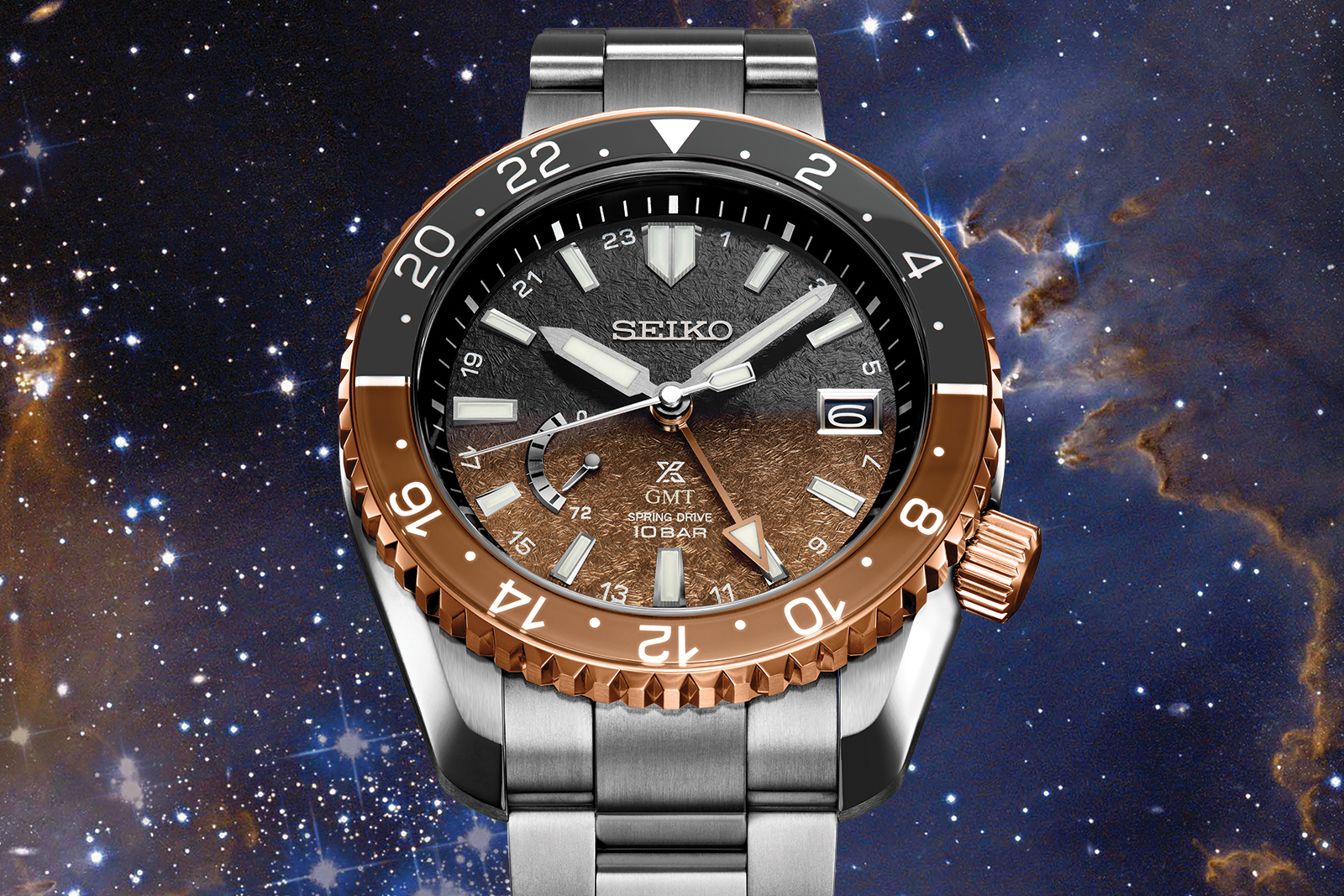
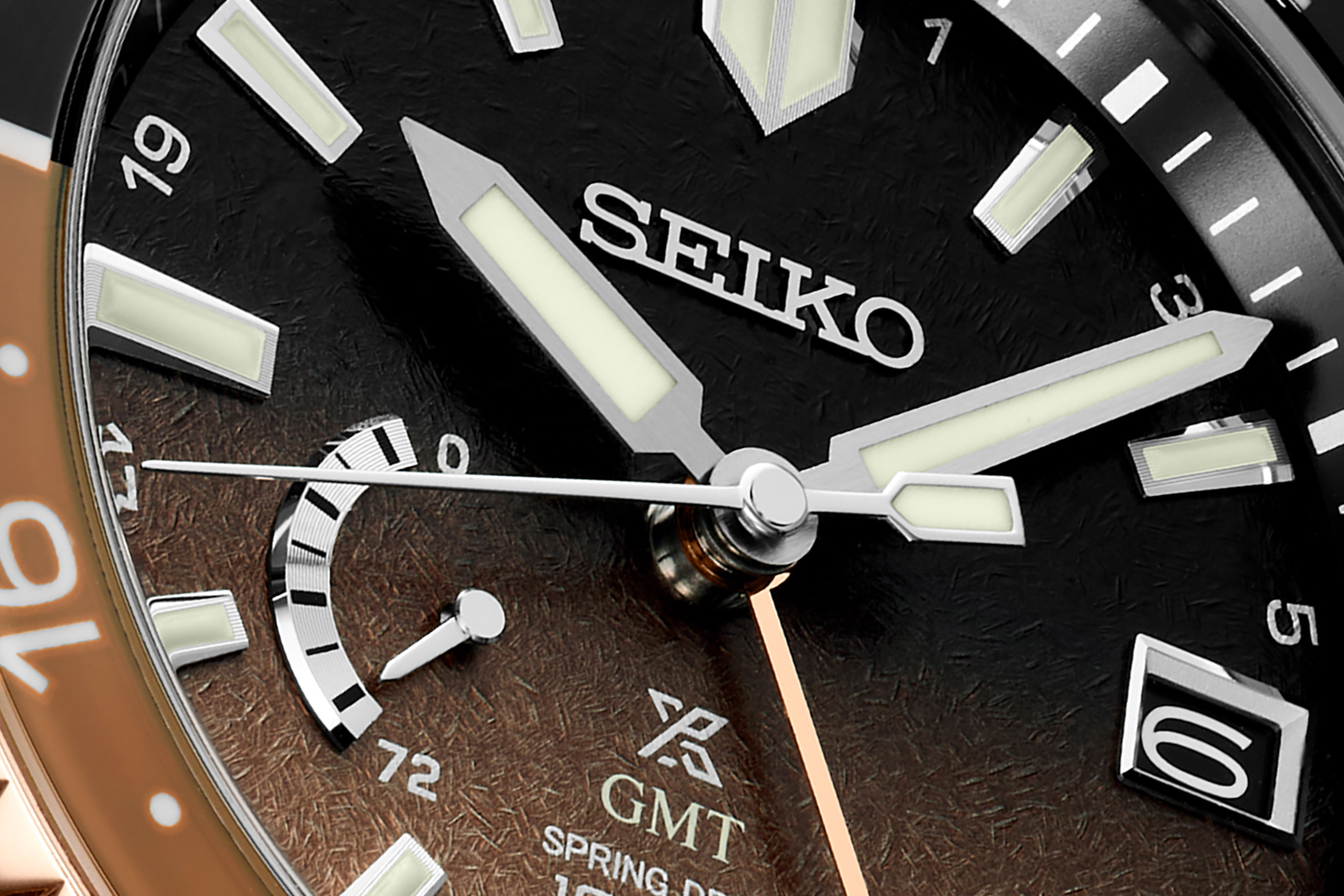
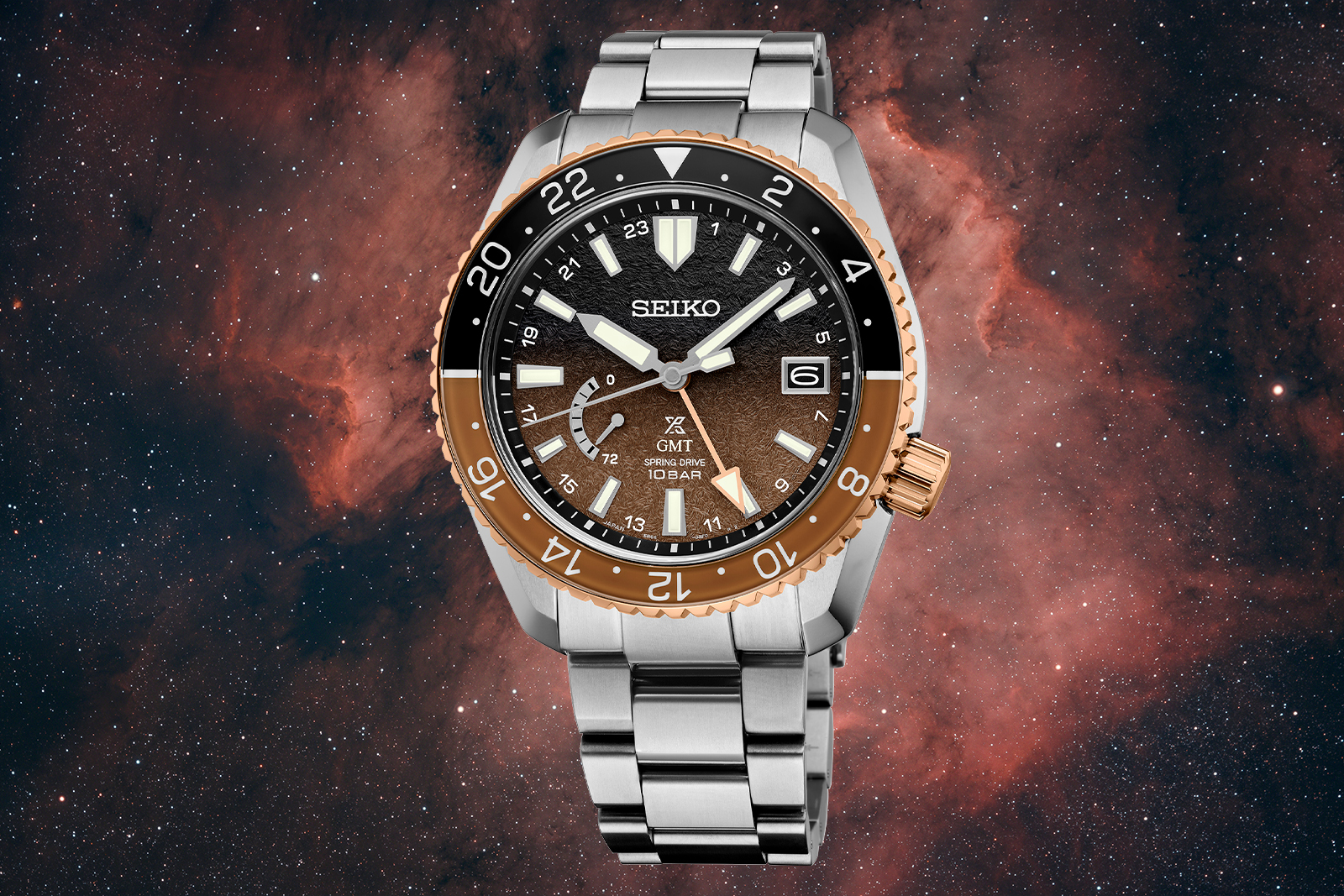
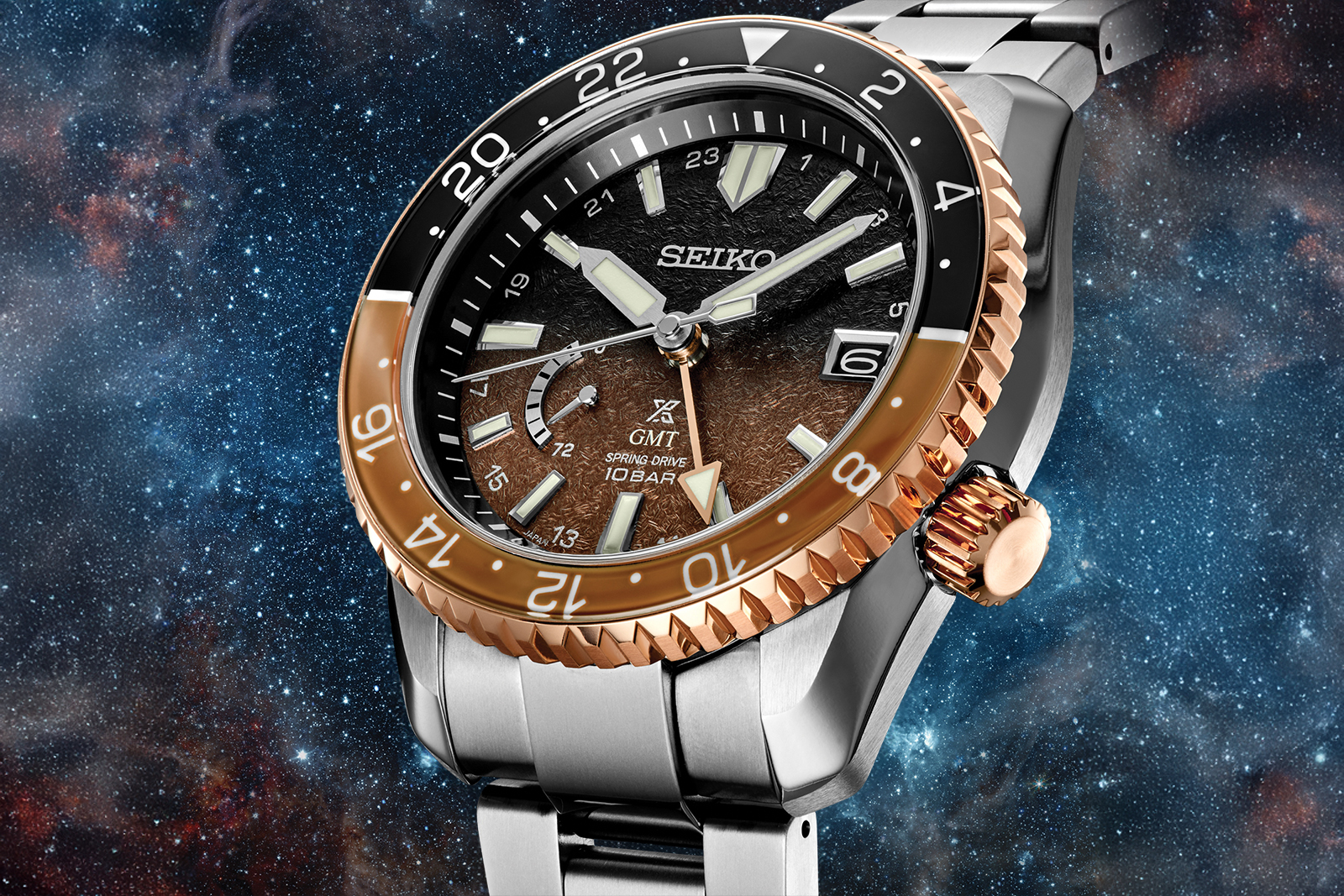
Seiko has introduced the Prospex LX GMT SNR058, a luxury-leaning sport watch inspired by the constellation and intended exclusively for the US market. Executed in Zaratsu-polished titanium with Diashield coating, it pairs a richly textured gradient dial with a Spring Drive GMT movement more commonly associated with Grand Seiko. In doing so, the SNR058 blurs the line between Seiko and its grander cousin, inviting comparison not on branding, but on tangible quality.

Initial thoughts

According to Seiko, this US-exclusive special edition evokes the North America Nebula in the Cygnus constellation, named for its resemblance to the continent. It is, presumably, a coincidence that the dial also recalls a frosted glass of root beer; arguably a more recognisable symbol of the US market than any nebula. Regardless, either reading feels apt for a United States-only edition.

On paper, the Prospex LX line blurs the line between the Seiko and its grander cousin. The collection holds up well next to similar watches from Grand Seiko, pairing a more assertive, utilitarian aesthetic with a more cohesive bracelet design. Branding aside, it also presents stronger value proposition thanks to its Diashield-coated titanium case and bracelet; the equivalent models from Grand Seiko come dressed in heavier stainless steel, which scratches (but can also be refinished) more easily.

The Prospex LX GMT also benefits from a toolless micro-adjustment system for the bracelet, something increasingly sought-after by collectors. By comparison, the closest equivalent in the Grand Seiko catalogue, the SBGE277, houses essentially the same movement but is cased in steel and lacks a user-friendly comfort extension. In other words, the SNR058 will be lighter on the wrist and is likely to fit just slightly better than its Grand Seiko equivalent.

That said, watch buyers remain a brand-conscious group overall, and a US$6,600 Seiko may be a difficult proposition for many without the “Grand” qualifier on the dial. High-end Seikos such as this, however, tend to make a far more persuasive case in the metal, and the ‘sleeper’ appeal of such a watch should be enticing for some.

Let there be LX

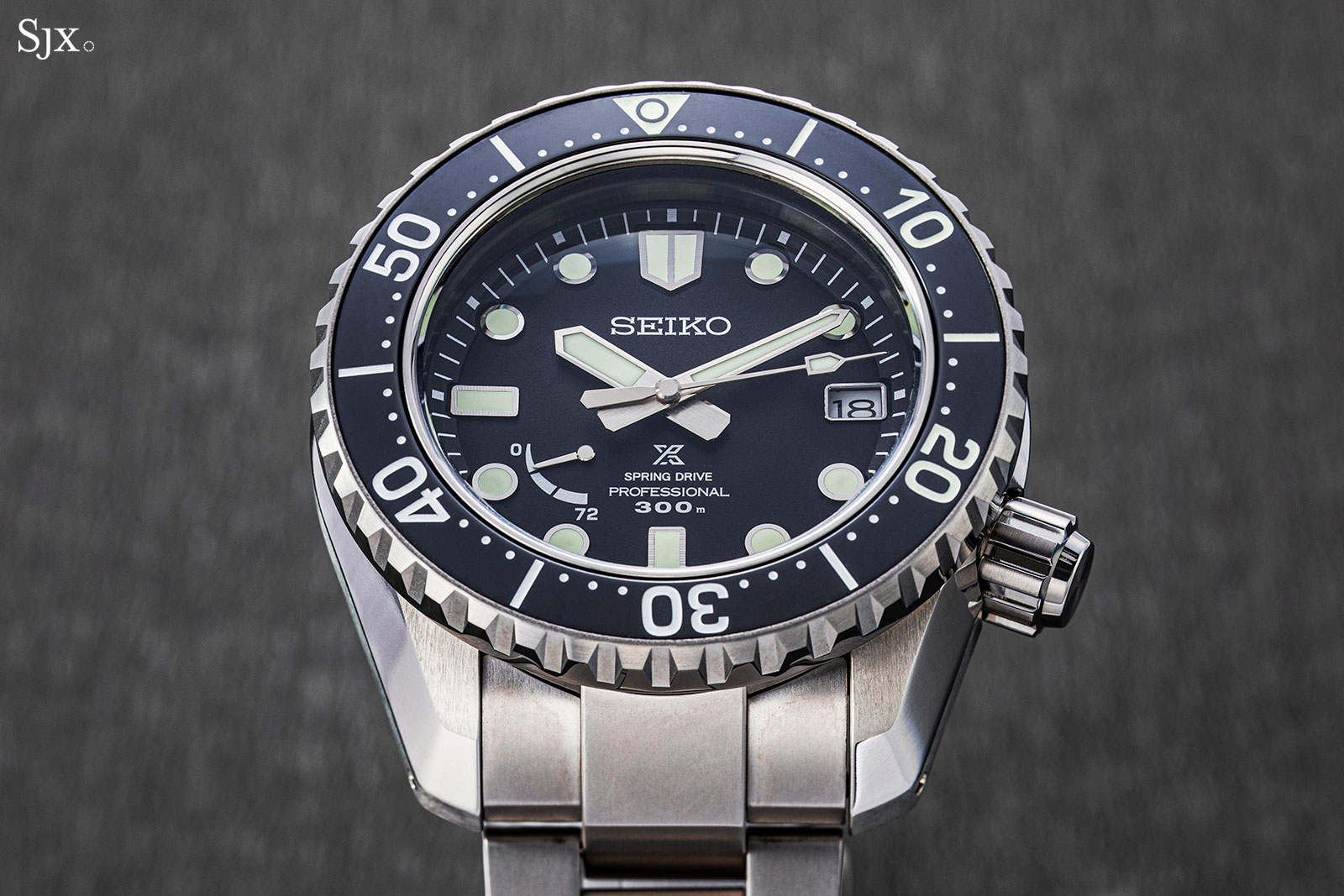
In 2019, Seiko launched the Prospex LX line, a trio of luxury sport watches equipped with Spring Drive movements representing the domains of sea, air and land. While clearly inspired by professional dive watches of the late 1960s, Seiko turned to Ken Okuyama – designer of the Ferrari Enzo, among other things  – to modernise and elevate the design language for a modern luxury sport watch.

According to Seiko, the LX name is not arbitrary; it’s derived from lux, Latin for “light”, and is a nod to the play of light across the numerous facets of the case. The case flanks are polished against the side of a spinning tin plate, a technique Seiko calls “Zaratsu polishing” and which produces a near distortion-free finish.

The Seiko Prospex LX Sping Drive diver SNR0293

In practice however, titanium is difficult to polish to the same degree as steel, which means there tends to be a very slight orange peel-like waviness in the surface. But at arm’s length the effect largely disappears, and the benefits of titanium will probably justify the trade-off for most buyers.

Flyer GMT

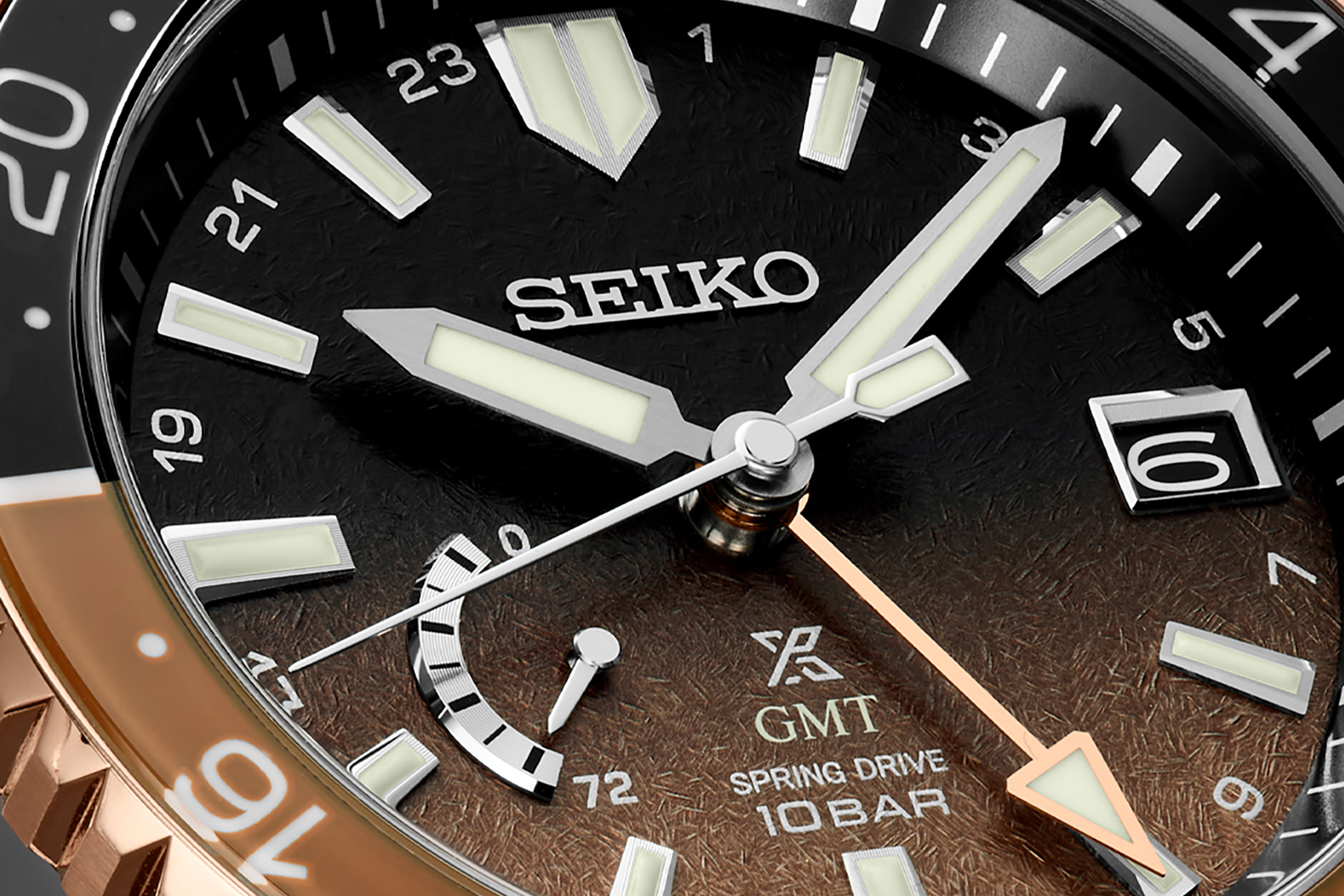
Building on that the design codes established by earlier Prospex LX GMT models, the SNR058 distinguishes itself with its warmer palette. The crown and bezel are rose gold-plated to complement the nebula-inspired gradient dial, a treatment echoed by the sapphire bezel insert. While this marks the third LX GMT to feature a gradient dial — and the third with this specific dial texture — it is the first to combine the two.

While the SNR058’s dial is made in the same studio where pricier Grand Seiko dials are produced, the design is more pared-back and utilitarian. That said, there are several details that exude quality and elevate the dial above the norm, including the finely formed seconds hand, power-reserve hand, and applied power-reserve scale; these elements appear noticeably more polished, both literally and figuratively, than expected.

Contributing to the LX theme, every hand and index is treated to a generous application of Lumibrite, including the pennant-like tail of the gliding seconds hand, while the bezel markings are fully lumed as well.

Inside is the Spring Drive cal. 5R66, which is essentially identical to the cal. 9R66 used in Grand Seiko-branded GMTs, differing chiefly in its rotor and a more utilitarian level of decoration. While mechanical Seiko and Credor movements are typically regulated to looser tolerances than their Grand Seiko equivalents, the cal. 5R66 matches the cal. 9R66 with a 72-hour power reserve and an accuracy rating of ±15 seconds per month.

The movement is a true ‘flyer’ GMT, meaning it features an independently adjustable hour hand that allows for simple correction when crossing time zones without disturbing the seconds, minutes, or GMT hand; it also doubles as a reasonably quick means of correcting the date. A red band on the crown tube serves as a visual reminder to screw the crown back down once adjustment is complete; a convenient reminder for jet-lagged travelers.

Curiously, the rotating bezel dispenses with the 24-hour detents found on most modern GMT watches, instead rotating smoothly in both directions, in the manner of a Rolex GMT-Master ref. 6542. If this approach offers any practical advantage, it is that it does not entirely preclude setting the bezel to non-standard time zones such as India (GMT+5:30) or Newfoundland (GMT-3:30). For context, Grand Seiko Spring Drive GMTs — assembled in the same Shiojiri manufacture — employ 20-minute detents, for a total of 72 clicks.

A promising bracelet

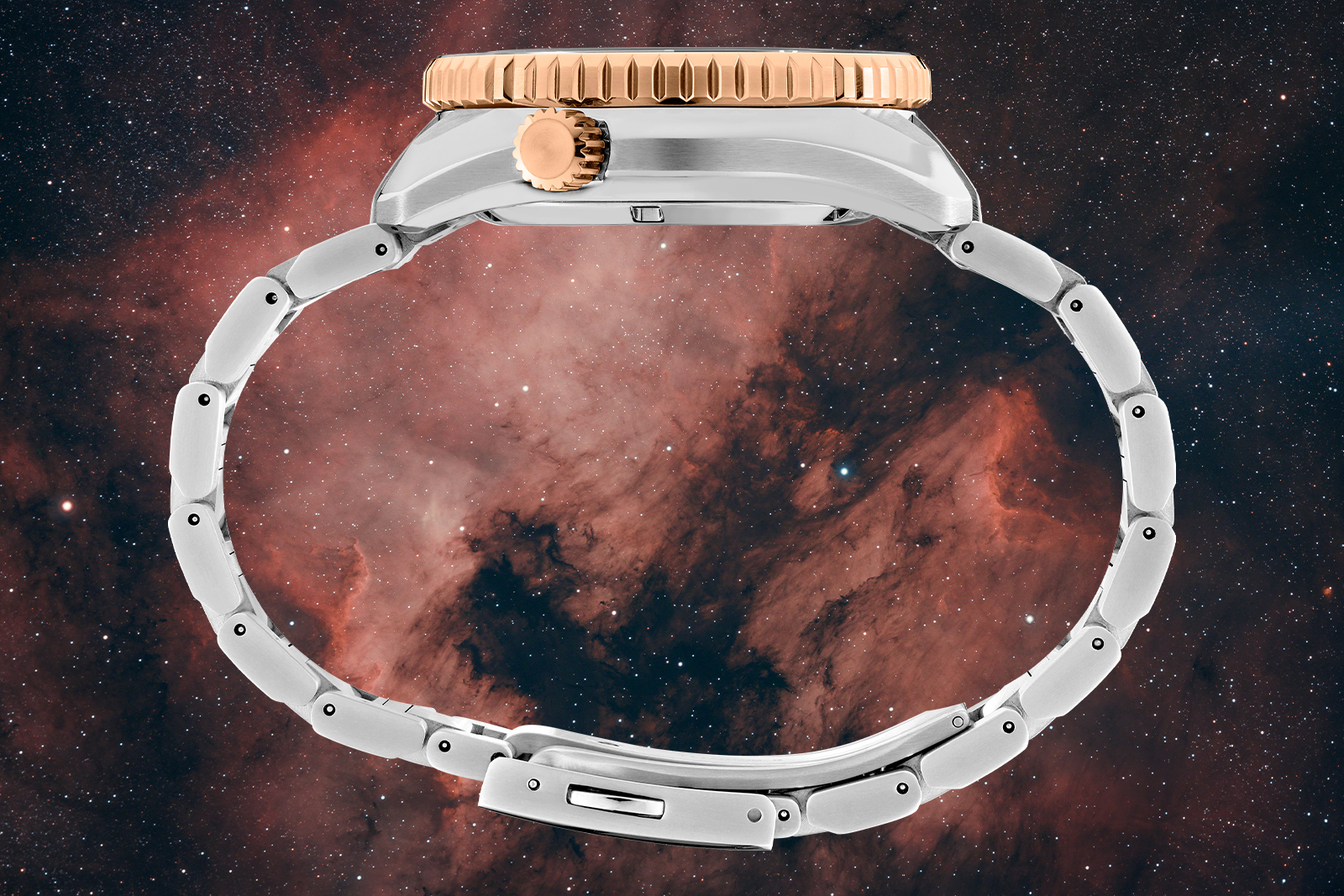
Seiko bracelets have a poor reputation, though the brand is working to change that, as seen on the latest generation of the Marinemaster. The titanium bracelets found on the Prospex LX line are solidly built and the slightly angular profile of the links suits the case. This detailing is enough to make the bracelet distinctive, rather than just another three-link Oyster-style bracelet. Like the case, the bracelet is protected by Seiko’s Diashield scratch-resistant surface treatment, which makes the titanium more hard-wearing.

Conveniently, the clasp incorporates 5 mm of toolless adjustment across three positions, a system previously seen on certain Astron models. Pressing the two buttons in the usual manner opens the clasp, while applying firmer pressure releases the comfort extension, which can be pushed back in without depressing the buttons. The clasp’s construction is not especially high-end, relying on several stamped components, but it is notably slim as a result.


Key facts and price

Seiko Prospex LX U.S. Special Edition “North America Nebula”
Ref. SNR058

Diameter: 44.8 mm
Height: 14.7 mm
Material: Titanium
Crystal: Sapphire
Water resistance: 100 m

Movement: Cal. 5R65
Functions: Hours, minutes, seconds, date and power reserve indicator
Frequency:  32,768 Hz
Winding: Automatic
Power reserve: 72 hours

Strap: Titanium bracelet with tool-less comfort extension

Limited edition: No, but limited production
Availability:
At Seiko boutiques and authorised retailers in the United States
Price
: US$6,600 excluding taxes

For more information, visit SeikoLuxe.com.


Back to top.
You may also enjoy these.

The Watch Lord Nelson Left Behind

A tragic Victory.

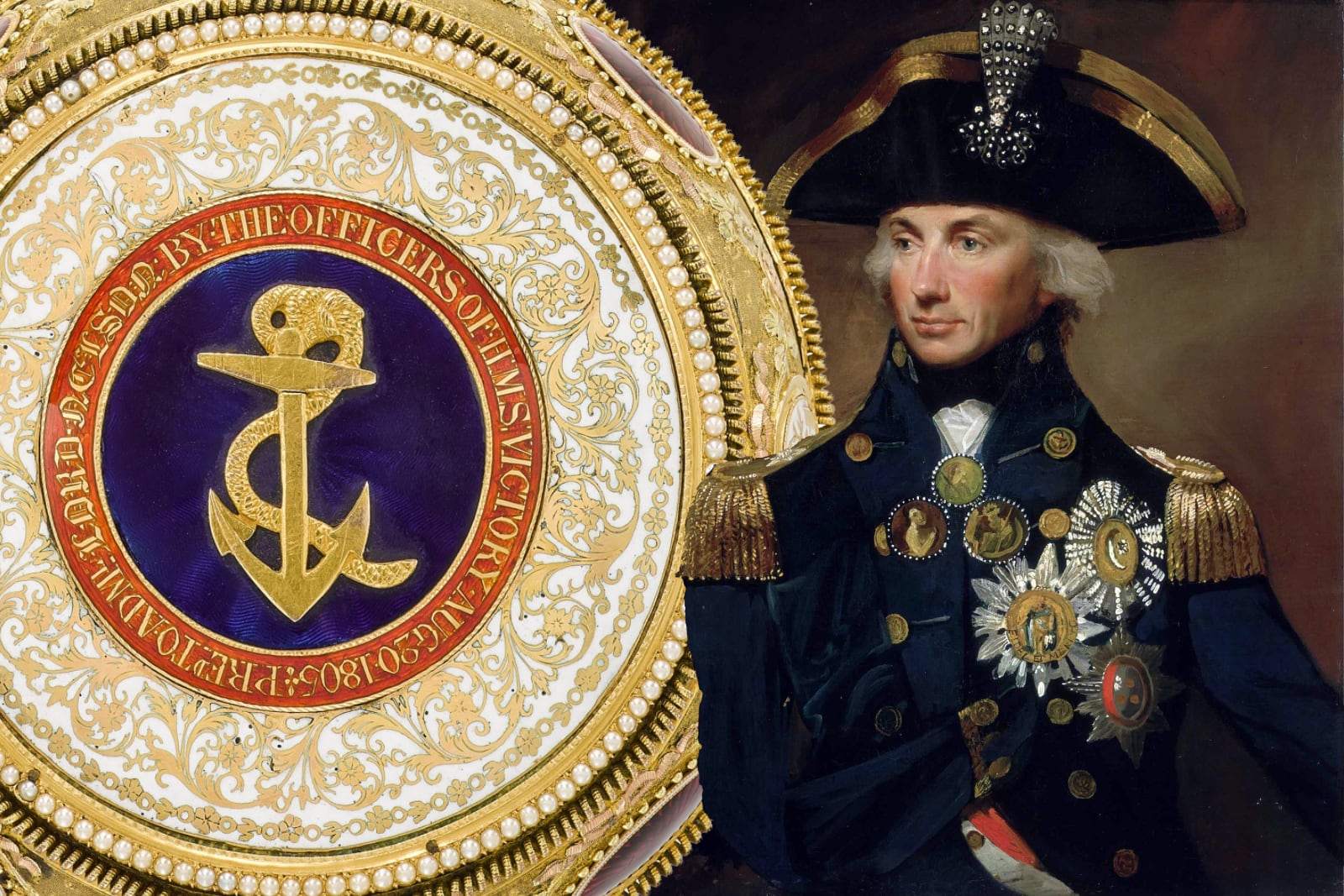
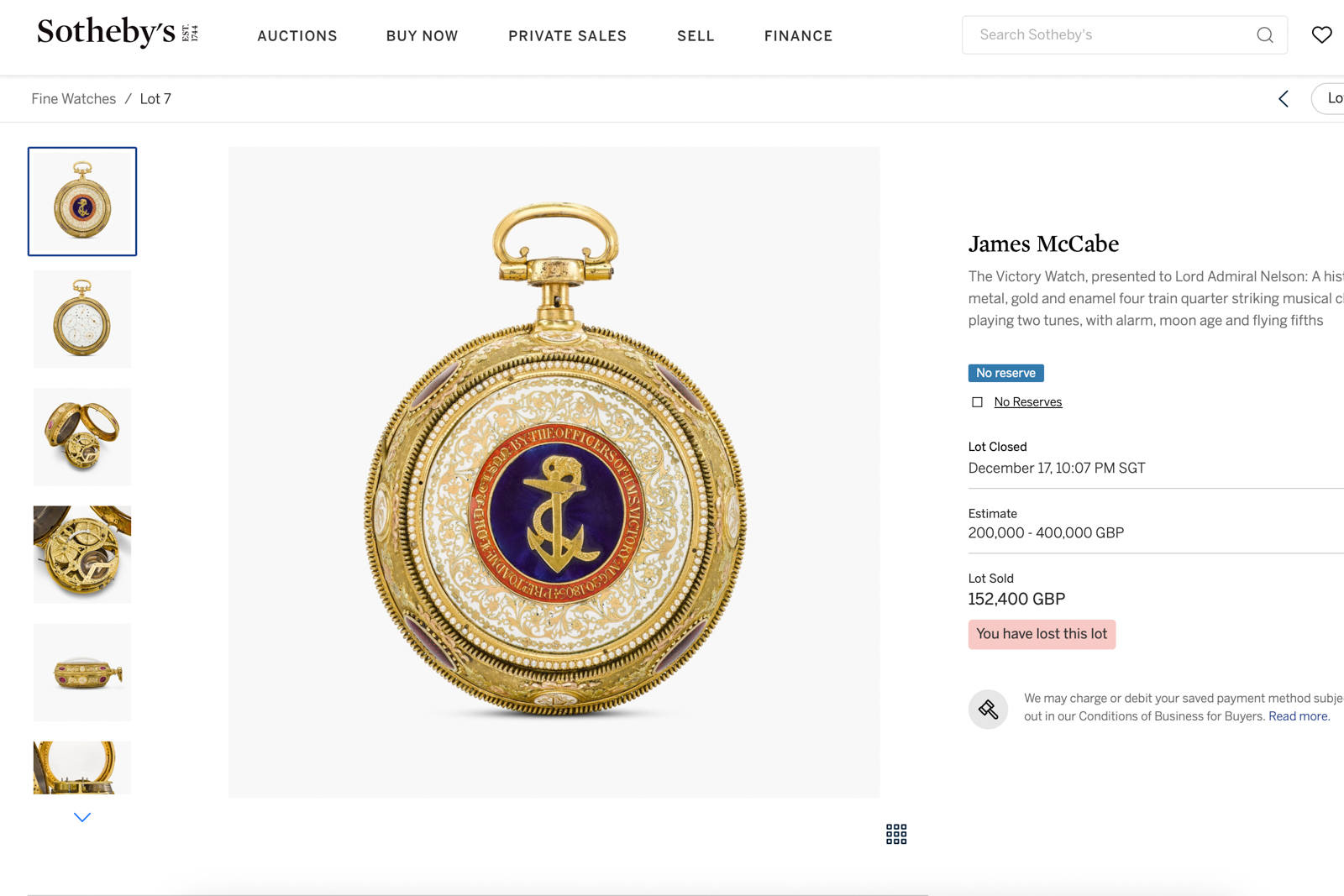
When Sotheby’s closed its Fine Watches online auction in London on December 17, the Victory Watch made by James McCabe and presented to Admiral Lord Horatio Nelson by the officers of HMS Victory sold for £152,400, fees included; below the low estimate. The price was unexpected for an object with an unusually intimate Nelson provenance: a gift from his officers that belongs to Nelson’s last weeks on land, before his victory and death at the Battle of Trafalgar, and to the choice he made to keep the watch at home.

The Victory. Image – Sothebys (Turner, the battle of Trafalgar) Wikipedia

Understanding the Victory

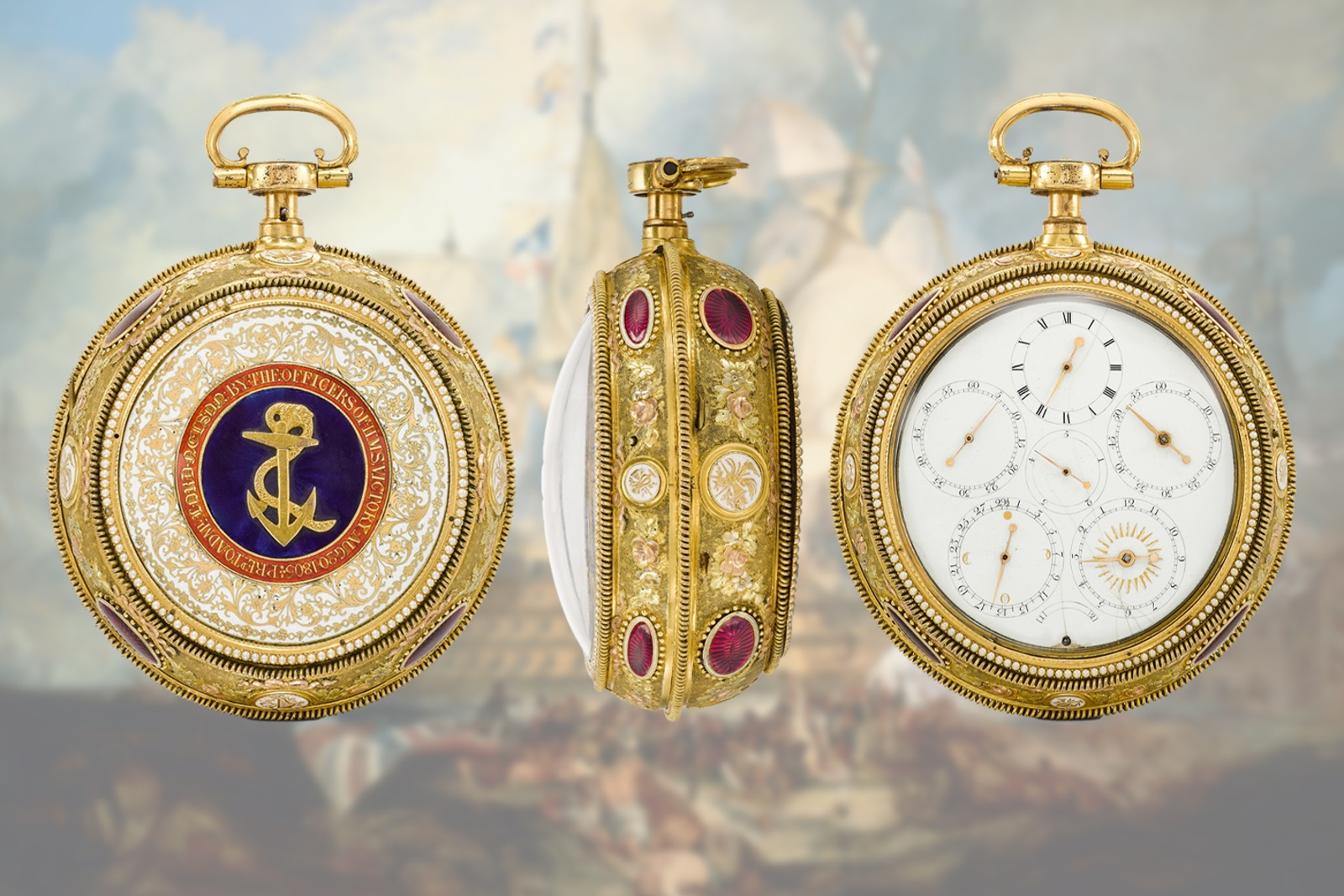
The case bears the presentation inscription, “Pres. to Adml. Lord Nelson By the Officers of HMS Victory Aug 20 1805”. That date sits in the hinge of his final summer. Nelson had returned to England after a long, grinding command, and the country treated him as a national hero.

He slipped away to Merton Place in Surrey to live, briefly, in the domestic scene he valued: a house shaped around his wife, Emma Hamilton, their daughter Horatia, and the familiar ritual of guests, dinners, and the small civilities of being ashore. The officers who commissioned the watch gave it to the man they knew at sea, and to the man they sensed existed elsewhere; the man who also wanted beauty, music, and calm within reach.

Within a fortnight the strategic situation tightened. News that the French and Spanish fleets had combined at Cádiz brought recall. On September 14, 1805, Nelson left Merton before dawn, returned to Portsmouth, set sail on HMS Victory within hours. He would never return.

View of the case. Image – Sothebys (Turner, the battle of Trafalgar) Wikipedia

First sold in 2005 by Sotheby’s as part of the Matcham Collection, the McCabe watch does not appear in the inventories of Nelson’s possessions after his death, a point Sotheby’s itself has long used to argue that it remained at home. The 2005 press coverage of the Matcham Collection sale made the same observation, and it remains the cleanest clue we have. The absence makes practical sense once you understand what this object is. It presents itself as a watch, yet its size and purpose pull it into a different category: a small domestic instrument, timekeeper, musical mechanism, and ceremonial object.

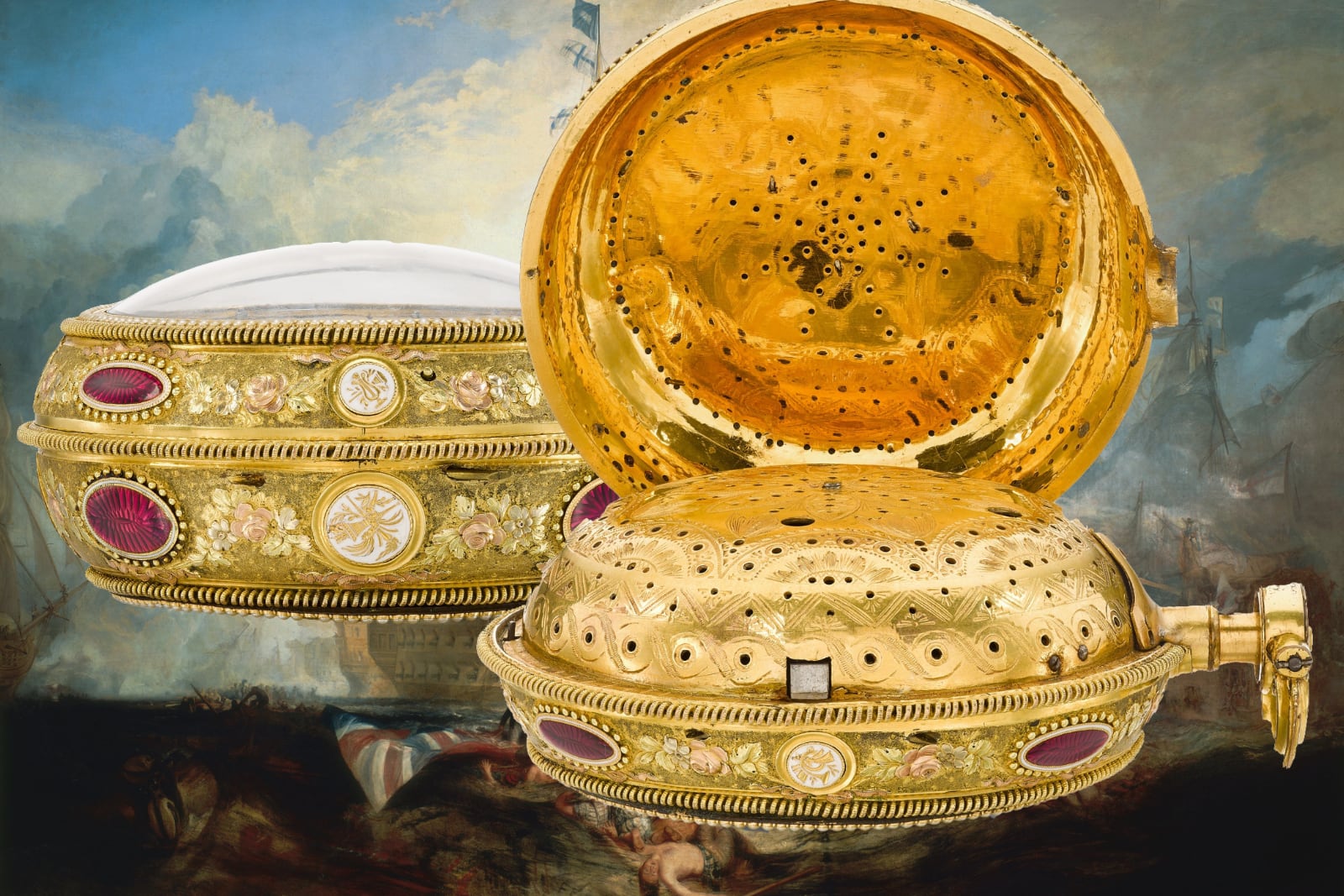
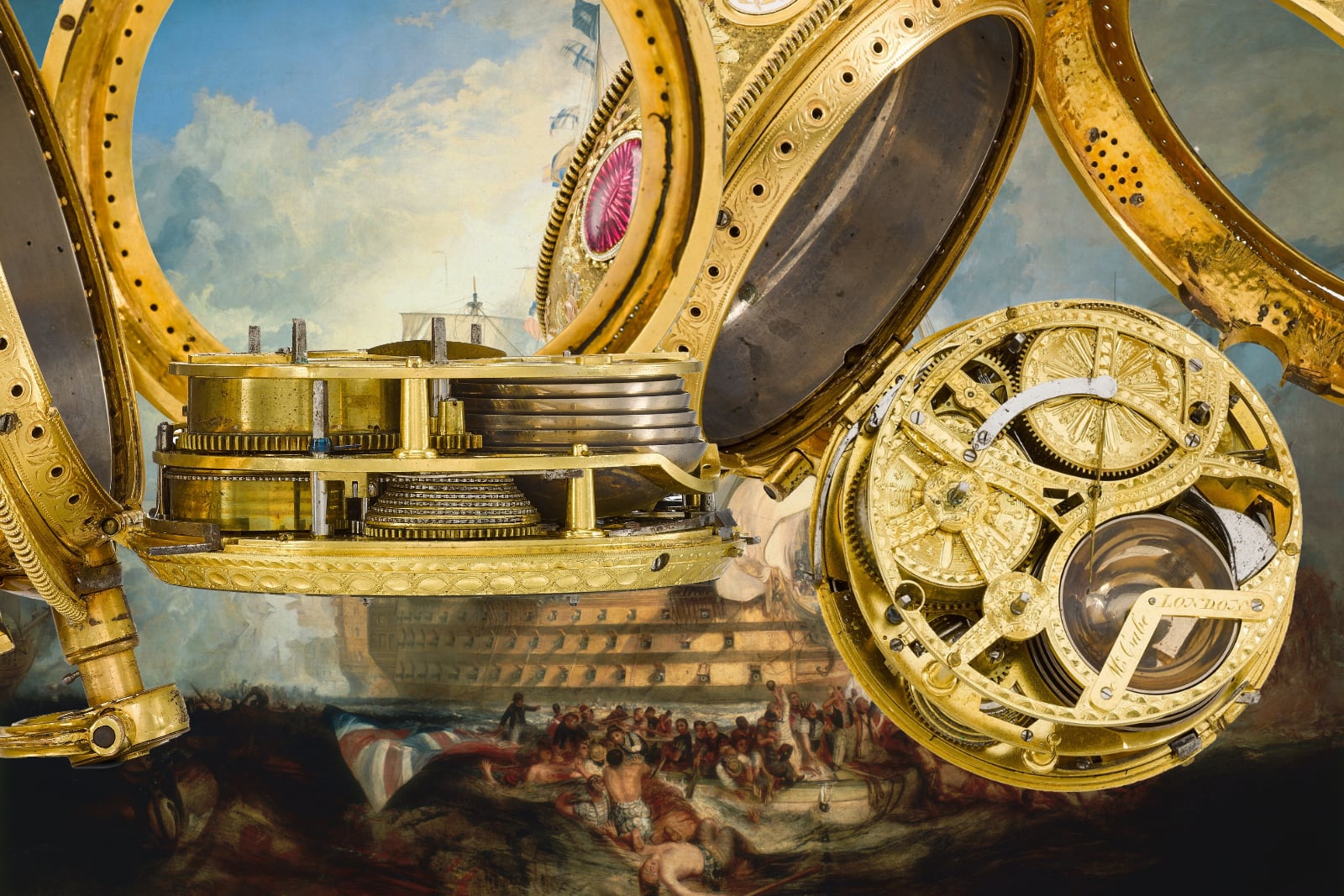
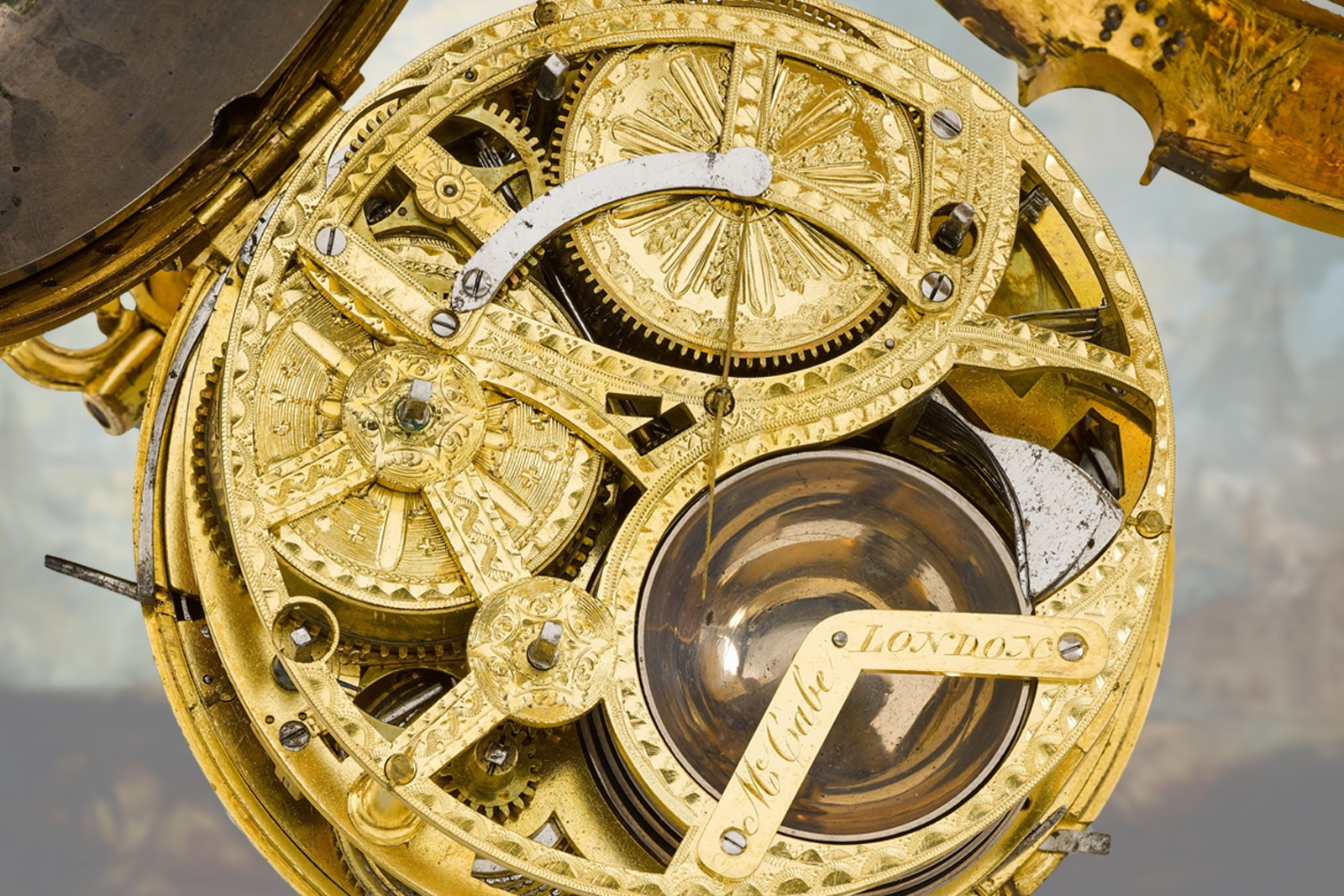
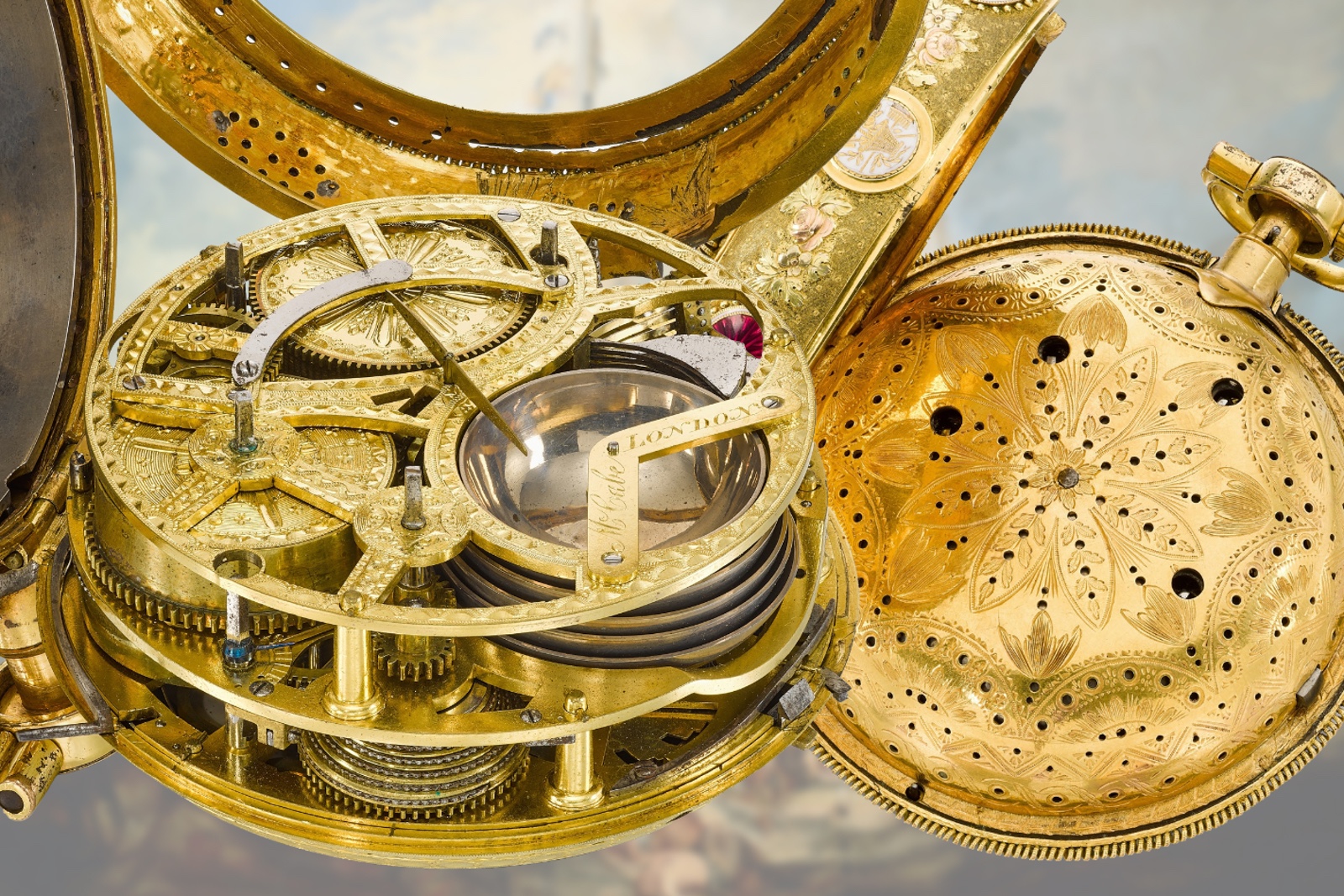
At 120 mm across, close to 5 in, it was never built for the pocket of an officer working the quarterdeck. Rather, it is almost a portable clock. Inside is a four-train, two-tier movement with a fusee and chain and a cylinder escapement for the going train, with separate trains for striking, alarm, and music. The musical work sits on a pinned barrel that drives a dense linkage, eleven levers, 11 hammers, and six bells, plus a larger seventh bell mounted within the case back to deliver quarter striking. The sound would have been bright, insistent, and designed to be heard in a room with people talking. It belongs to the refined world of Merton, not the inferno off Cape Trafalgar.

View of the movement. Image – Sothebys (Turner, the battle of Trafalgar) Wikipedia

The dial states the same purpose in enamel. Alongside hours and minutes, it carries subsidiary indications that turn the face into a compact theatre: seconds, alarm, lunar age, and a central fifths-of-a-second display, with a tune selection arc arranged near six o’clock. This layout makes the point that the watch was conceived to entertain, to demonstrate mechanical abundance, and to reward close attention.

The case leans into that language of abundance. Both bezels are set with half pearls and edged with rope-twist decoration. The sides carry enamel panels alternating with trophies of music and war in three-colour gold. The back centres on a gold anchor-and-rope motif on blue enamel, encircled by the presentation inscription set against translucent red flinqué enamel. It is patriotic, personal, and proudly metropolitan, the sort of luxury object London could produce at the height of its confidence in craft.

Meeting its maker

James McCabe was a sensible choice for such a commission. By 1805 he was established near the Royal Exchange, operating in the commercial heart of the city and trading on a name associated with technical competence and a polished finish. He was Irish-born, London-based from the 1770s, and linked to the Clockmakers’ Company as an Honorary Freeman from 1781. The family business outlived him, and the McCabe signature became part of a longer nineteenth-century story, though the Victory watch sits firmly in the early nineteenth-century moment when English work still expected to lead the field in complexity and execution.

View of the movement. Image – Sothebys (Turner, the battle of Trafalgar) Wikipedia

If you place the watch back into Nelson’s September, the decision becomes readable. When he returned to sea, he had no reason to carry a large musical showpiece. A simpler personal watch, the kind a commander could consult without fuss, suited active service. The McCabe belonged to the life he had just resumed at home, and to the life to which he certainly hoped to return.

Leaving it at Merton protected it from salt, shock, and loss, and it preserved the gift in the setting where it made sense. It also carries an emotional implication that is hard to avoid. The watch marks the domestic interval as something real enough to deserve its own object, a token that expected future evenings, future dinners, and future time.

Then and now

This post-sale moment invites comparison with the watch’s previous appearance at auction, since that sale fixed the contemporary valuation of the object. On October 5, 2005, during Sotheby’s London sale that included items associated with Nelson’s sister, Catherine “Kitty” Matcham, the watch sold for £400,000, almost 10% of the whole auction’s tally of £4.65 million. It was widely reported at the time as the most expensive Nelson relic sold at auction, and it outperformed several headline lots, including the admiral’s undershirt, which failed to sell.

Movement and case view. Image – Sothebys (Turner, the battle of Trafalgar) Wikipedia

The 2025 result of £152,400, fees included, places the watch in a different register. Part of that is time, part of it is category. The piece sits across two constituencies, Nelson material culture and serious English musical watch collecting. Either world can sustain a strong price on its own terms, story on one side, horology on the other.

Here they meet, and the watch asks bidders to carry both ideas at once, since its pull comes from the overlap. In an online sale, that overlap can be harder to price with confidence. Even so, the watch remains what it has always been, substantial English work, and a relic that fixes Nelson to a specific address and a specific mood, the brief calm before he returned to duty.

There is another reason the watch keeps returning to the centre of Nelson’s material culture, it refuses to join the battle narrative. Many Trafalgar objects draw their force from proximity, the deck, the shock, the aftermath. The McCabe draws its force from distance. It stayed in a quiet room while the outcome of Europe’s naval war was decided off Cape Trafalgar. It sits beside the legend, yet it points elsewhere, to the private machinery of a life cut short.

Reflections on the result

Given the remarkable history of the watch, the hammer price below the low estimate left bidders surprised, perhaps explaining the frantic climb in the final moments – with 12 minutes remaining, the price had yet to break six figures.

We managed to reach one of the underbidders on the watch, who explained his rationale. “The historical importance of this watch is undeniable, but it is far from what I normally collect so I did not pursue it,” he says, “In hindsight, I slightly regret it because it might just be the most historically significant watch sold in 2025 – and it sold for a song!”

According to the underbidder, “The importance of this watch is so profound one can almost hear Rule Brittania playing when you look at it.”

And we also managed to reach the winner, who fortunately clearly understands the significance of his own ‘victory’. “By coincidence, several Nelson watches appeared at auction this season. Among them, this is the most compelling to me mechanically — defined by its high level of complication and a rare musical complication played on a nest of bells,” he explains, “A watch not only to own, but to display, study, and use as a tool to educate the public.”


Back to top.
You may also enjoy these.

Welcome to the new Watches By SJX.

Subscribe to get the latest articles and reviews delivered to your inbox.