
Hands On: Grand Seiko Spring Drive UFA Ushio 300 Diver SLGB025 and SLGB023
Finally, an uncompromising dive watch from Grand Seiko.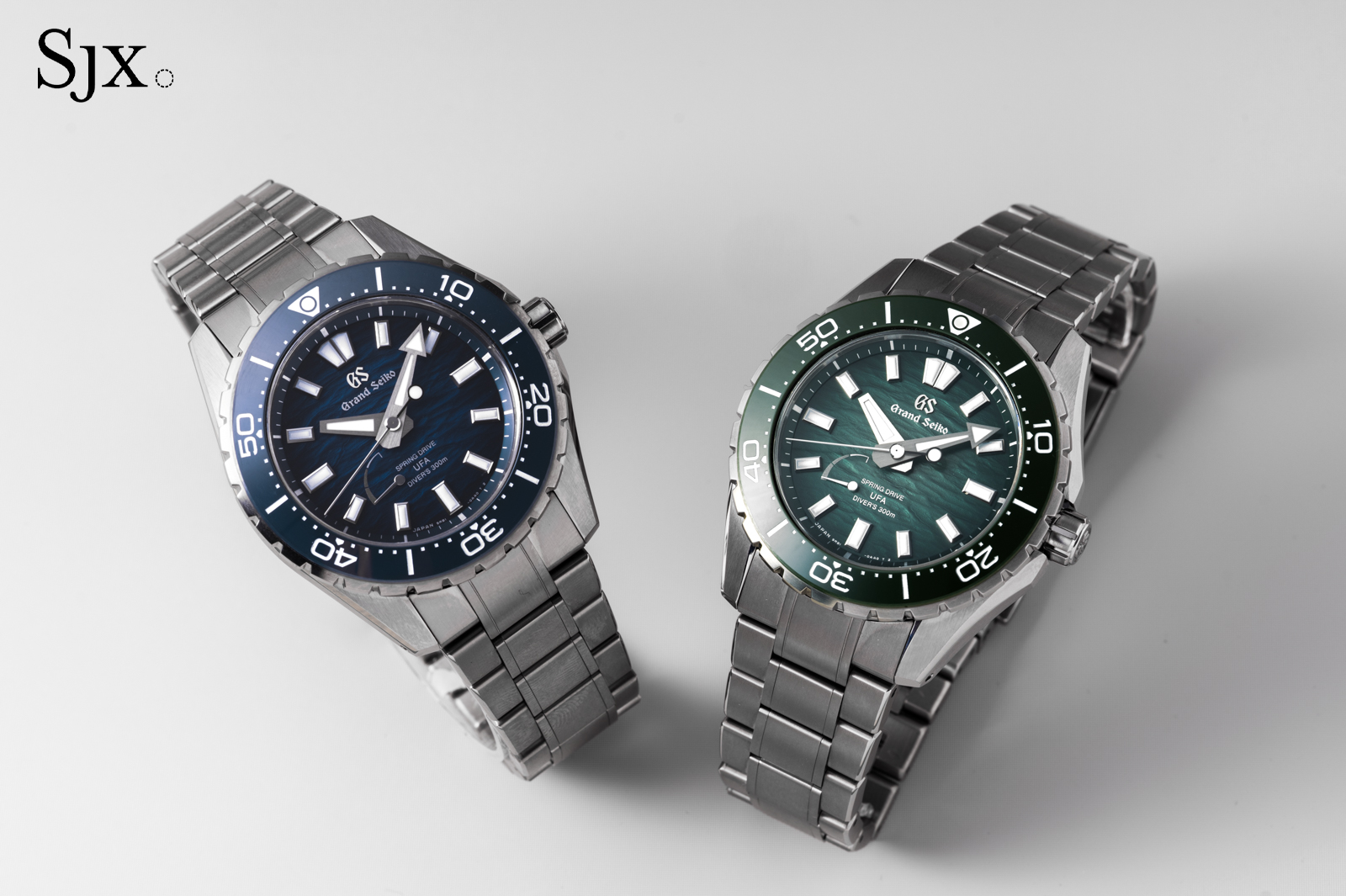
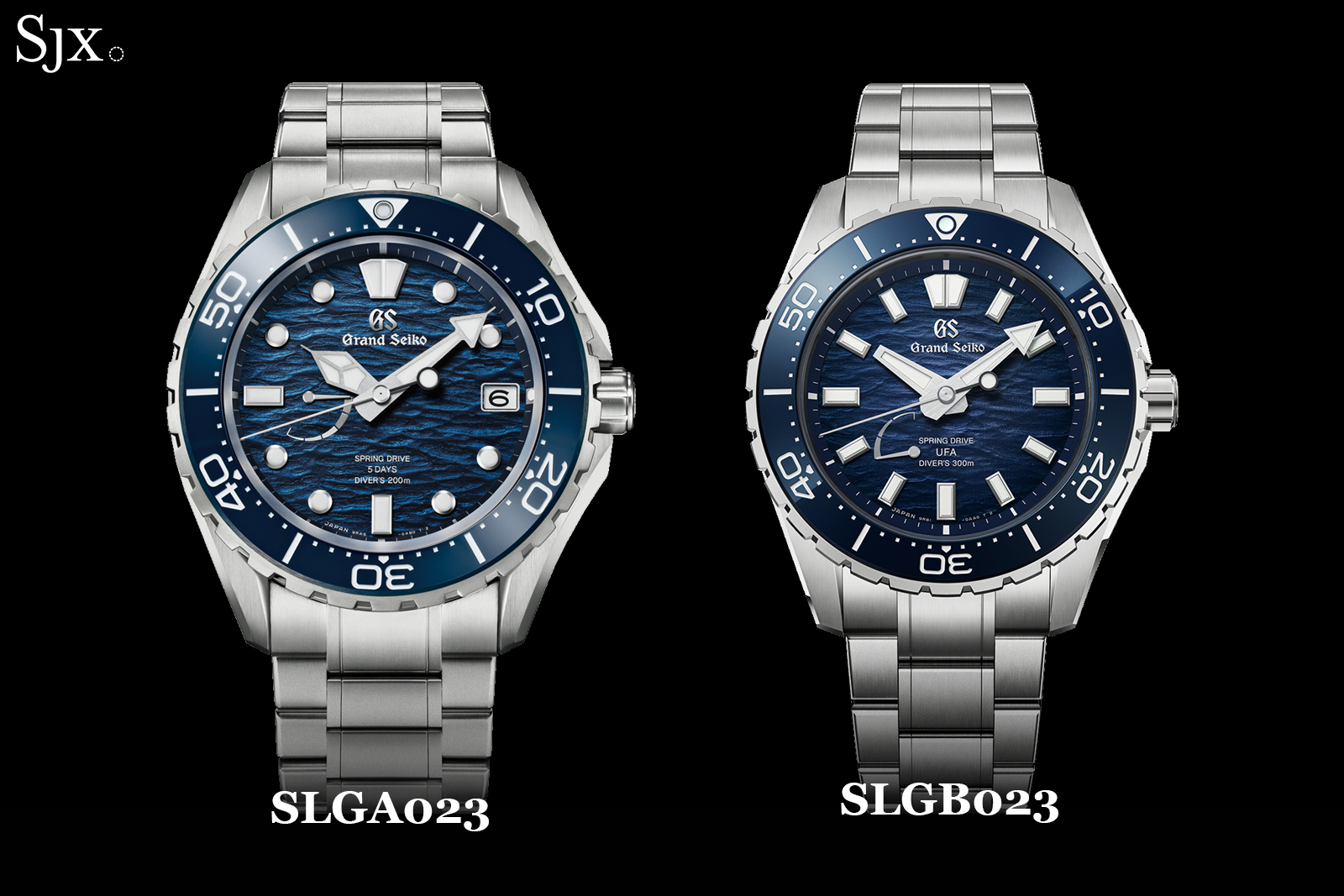
At Watches & Wonders, Grand Seiko launched its best dive watch yet, the Evolution 9 Spring Drive Ultra Fine Accuracy (UFA) Ushio 300 Diver SLGB023 and SLGB025. As a product, it is both shocking and obvious, combining everything Grand Seiko collectors have longed for: a moderately sized case, an improved bracelet and clasp, and a 300 m depth rating.
It all comes packaged in a titanium case and an enthusiast-favourite no-date format, and retails for slightly less than Grand Seiko’s existing premium dive watches. It’s a strong statement from a brand looking to gain traction in the luxury sports watch segment.
Initial thoughts
Seiko’s dive watch pedigree is one of the strongest in the industry, from their iconic saturation divers of the late 1960s to the gone but not forgotten SKX. Yet the flagship Grand Seiko brand has struggled to field a compelling dive watch. Bulky cases, strange proportions, odd depth ratings, and clumsy clasps held back past offerings. Fortunately, Grand Seiko has finally overcome these shortcomings and can finally boast a highly competitive diver’s watch.
I made a wishlist for Watches & Wonders 2026 not long ago, at the top of which was my vision for a Grand Seiko UFA Spring Drive diver. To be clear, I’d already known a dive watch using the new cal. 9RBx family of Spring Drive movements was coming based on trademark filings, but I wished for something that many Grand Seiko collectors have wanted for years – a moderately sized dive watch, with the industry standard 300 m test depth.
In my rendition, I also dropped the calendar to better differentiate it from the existing five-day Ushio, and added the thick bezel expected on high-end Seiko dive watches of today. While the rendering seems prescient, all of these ideas have been floating around for years — I just compiled them, as did Grand Seiko.
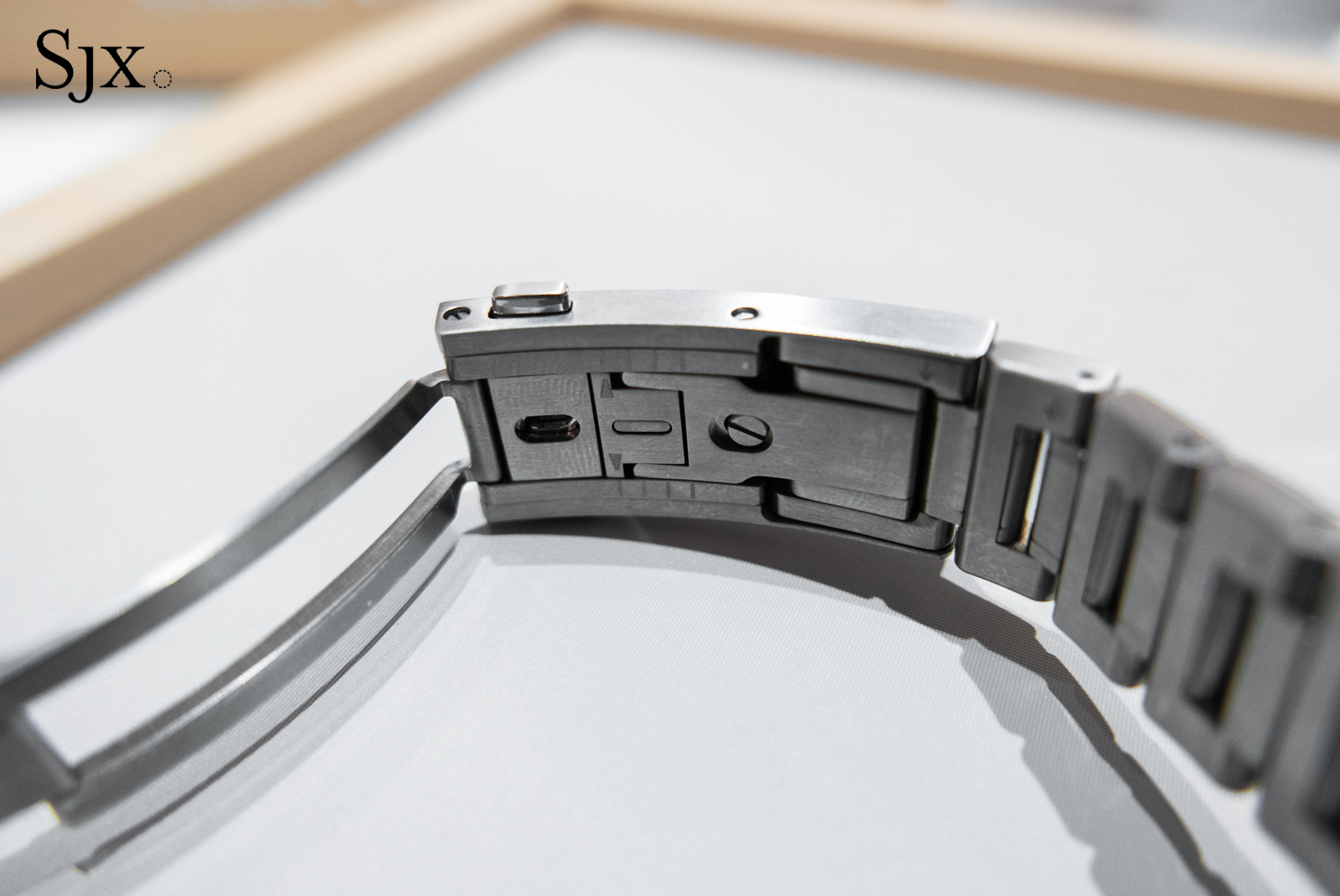
The new, much improved, clasp of the Ushio 300 Divers.
Perhaps most surprising is the price, which is a hair below that of the five-day Ushio divers. My first instinct is that the simpler and less-decorated cal. 9RB series movements cost less to produce than the cal. 9RA series, which is probably true, but doesn’t explain the deduction — the steel and titanium UFA models from last year were both more expensive than existing EVO9 models in the same metals.
While out of character for Grand Seiko, the missing date could explain the discount – similar to the difference in price between Rolex’s Submariner and Submariner Date. This is something I explicitly wished for just last month, along with a steel case; frankly, I expected neither.
New case and face
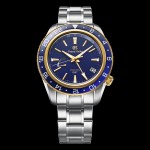
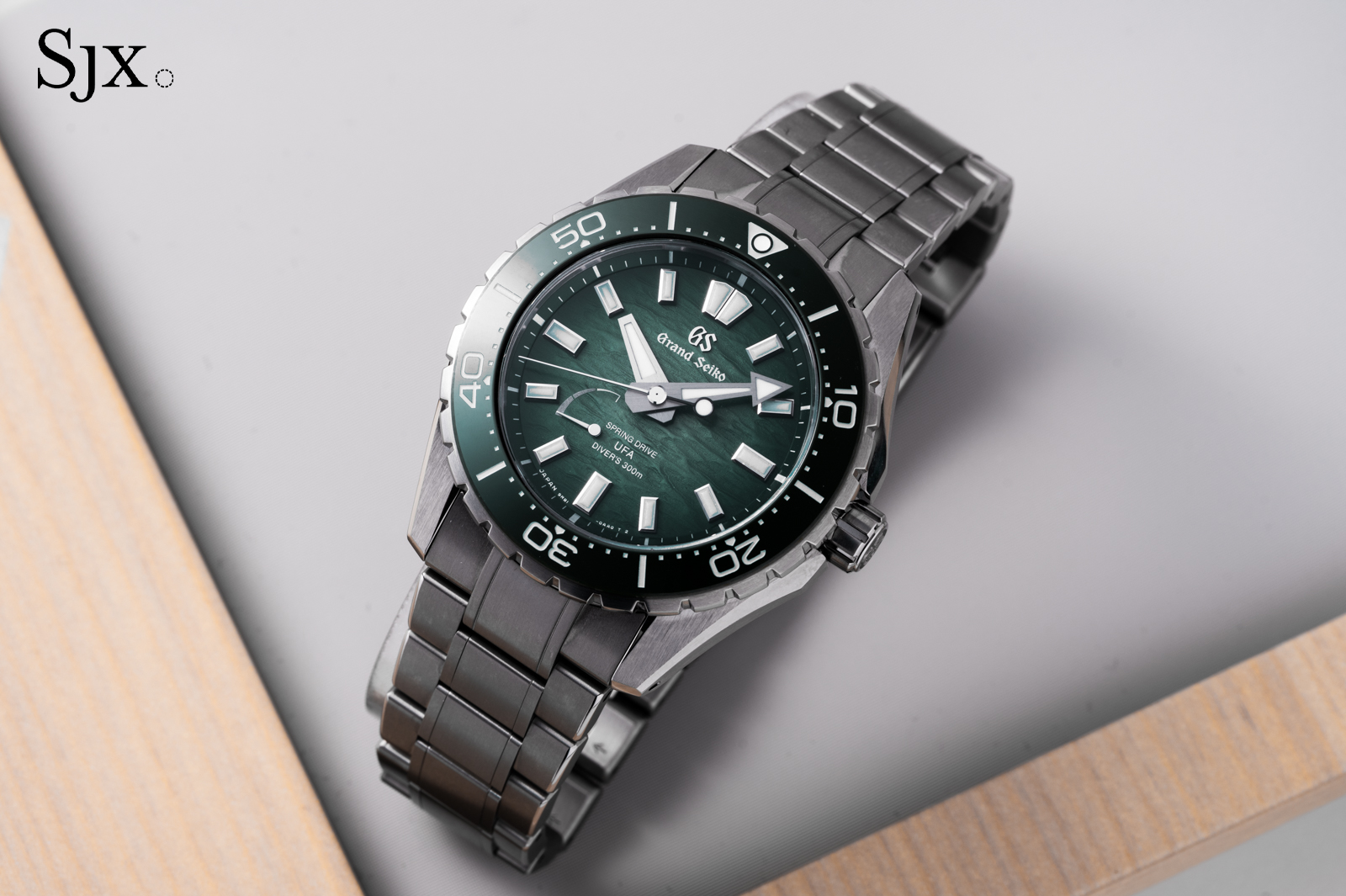
The “Ushio” moniker — meaning wave or tide in Japanese — comes from the oceanic dial pattern offered in both blue and green, with a black “Kuroshio” variant notably missing. Both sport a fumé effect which smooths the transition from bezel through the chapter ring to the dial. A new look for Grand Seiko divers, these dials use only rectangular indices.
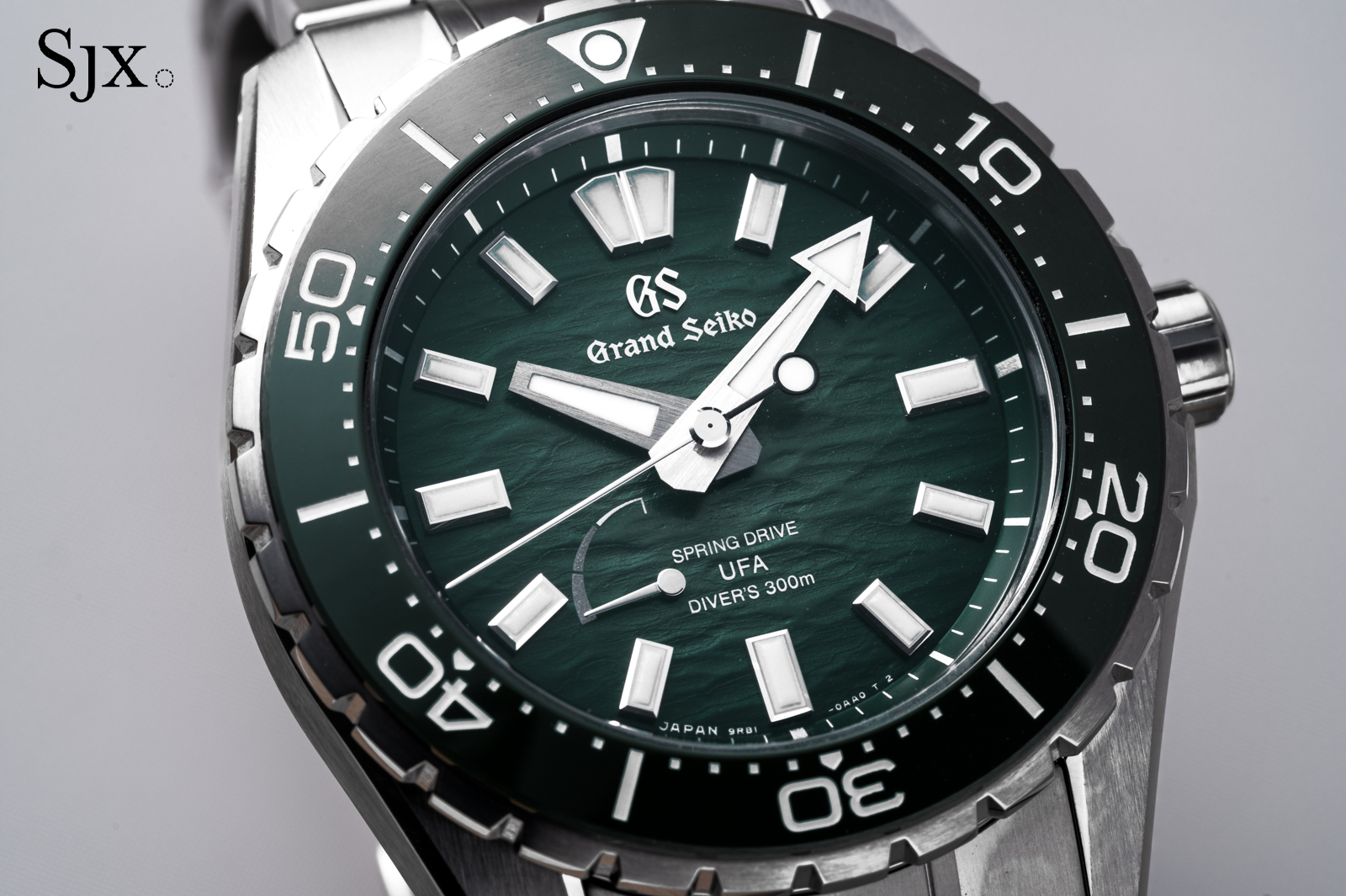
This handset is also novel, replacing the “cathedral” hands of past GS divers with a more utilitarian look. Dial work is, as usual, impeccable. Indexes are faceted on a jeweller’s lathe using diamond cutting tools which produces an extremely flat mirror surface while the hour and minute hands are coarsely brushed. These, along with all twelve hour markers, are endowed with a generous amount of green Lumibrite, in compliance with ISO 6425:2018.
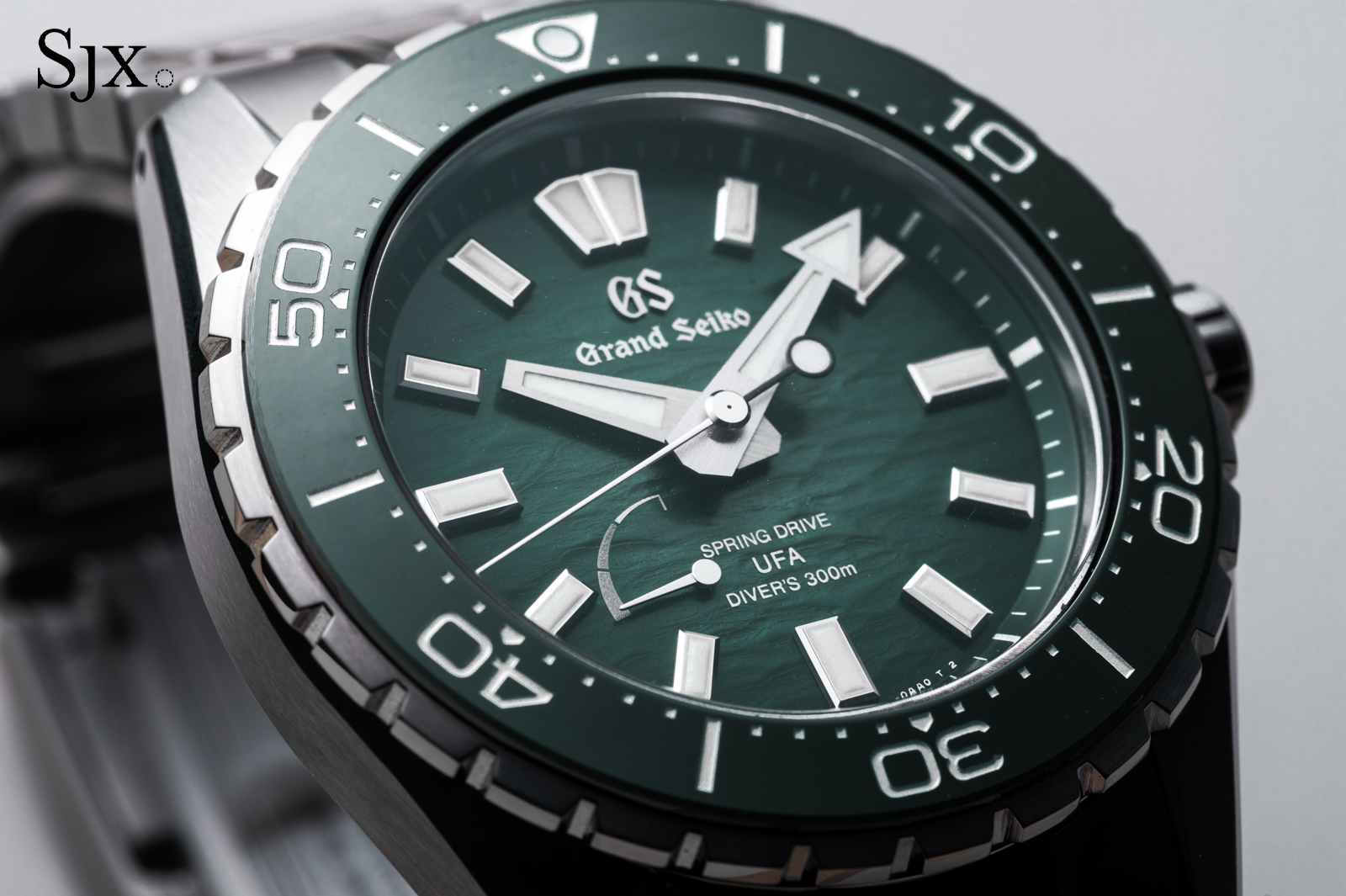
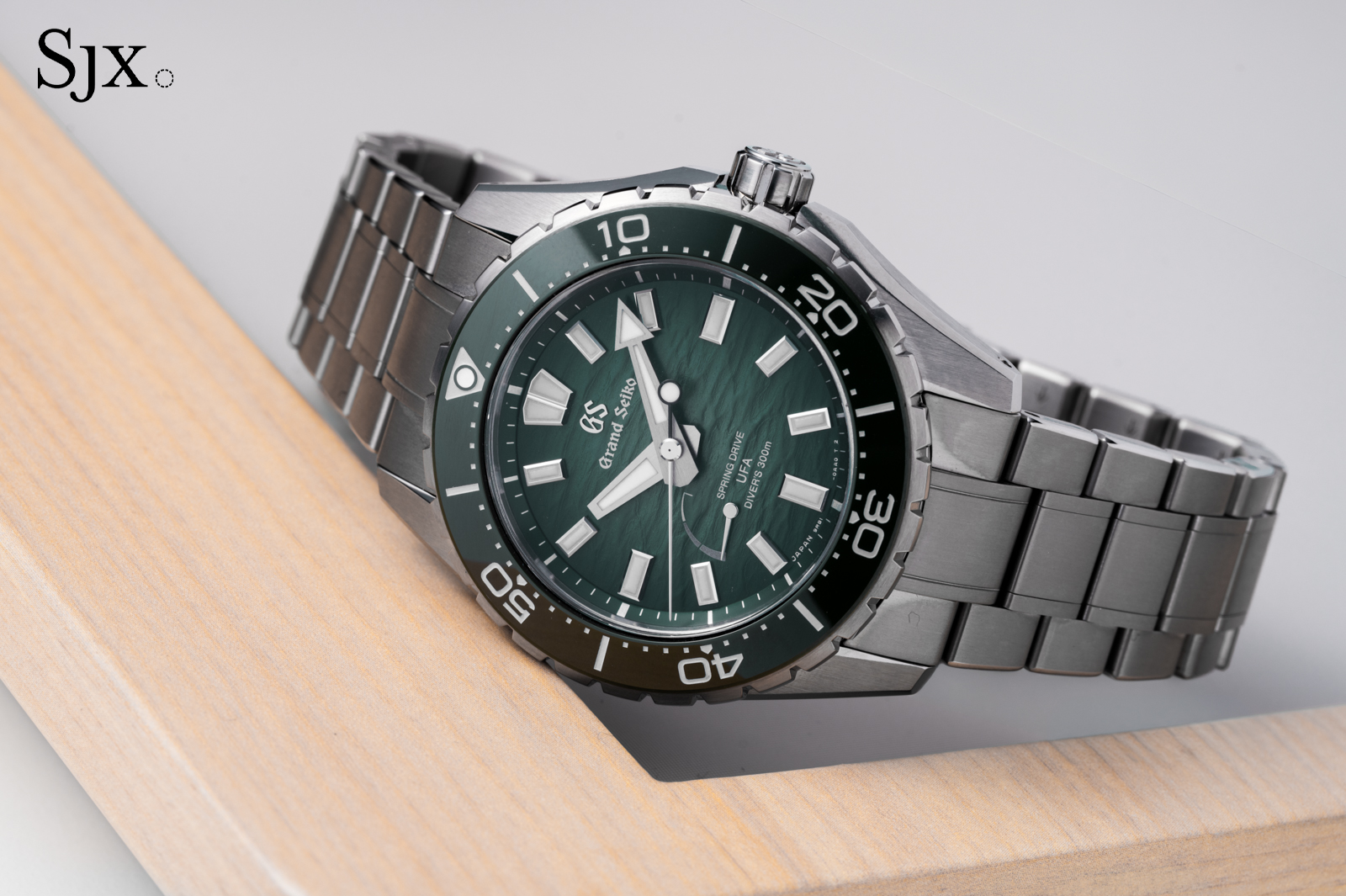
Not just smaller and slimmer at 40.8 mm in diameter by 12.9 mm tall, the new Ushio case is a complete redesign. While the five-day cases are almost cushion like, the UFA divers are proportionately longer and leaner. The diameter, thickness, and even the 48.5 mm span from lug-to-lug isn’t from that of the current Rolex Submariner, though the case hugs the wrist more than the slab-like Submariner case.
A 300 m depth rating (likely very conservative) was once strongly associated with Seiko’s saturation divers, but these are normal dive watches without any protection from helium ingress. The case is still solidly built, made from Grand Seiko’s usual “High Intensity Titanium”, as is the bracelet, while the 120-click unidirectional dive bezel uses colour-matched ceramic inserts and a new flush-fitting lume pip design.
The crown tube — which can be replaced during service if the threads become damaged — is also marked in red to remind the user to screw it back down after time setting.
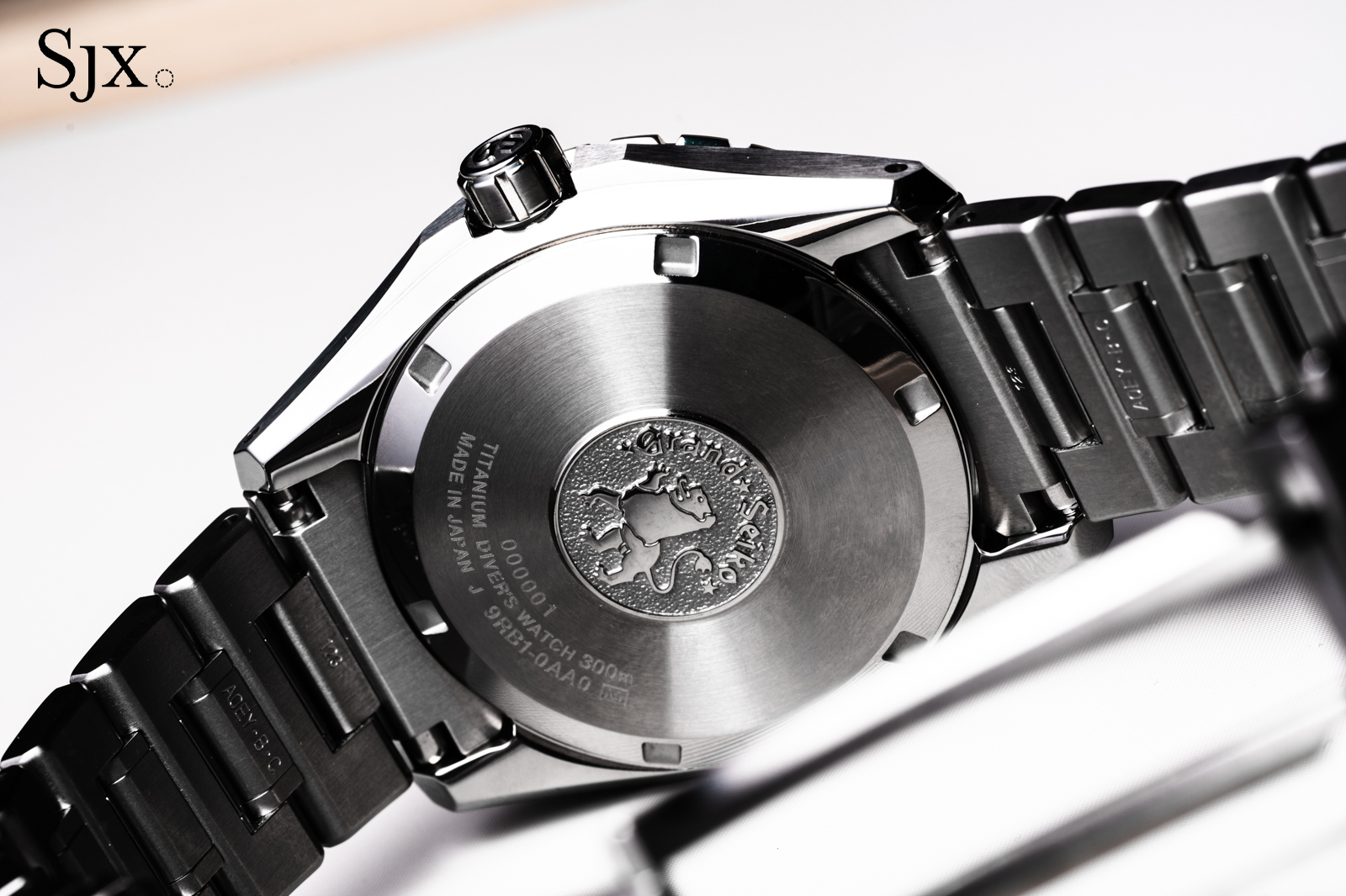
Display case backs are increasingly common on luxury dive watches, but not for Grand Seiko. Also note the thick, extra-strength spring bars common to Seiko dive watches.
Bracelet and clasp
Past Grand Seiko divers used the infamous — and decades old — ratcheting Marinemaster Clasp, which could be easily extend up to 30 mm without removing the watch from one’s wrist. While fantastic for fitting the watch over a wetsuit, these clasps are extremely thick, and built to the standards of the early 2000s. The new clasp, which is made in-house, comes with an enormous improvement in build quality and comfort.
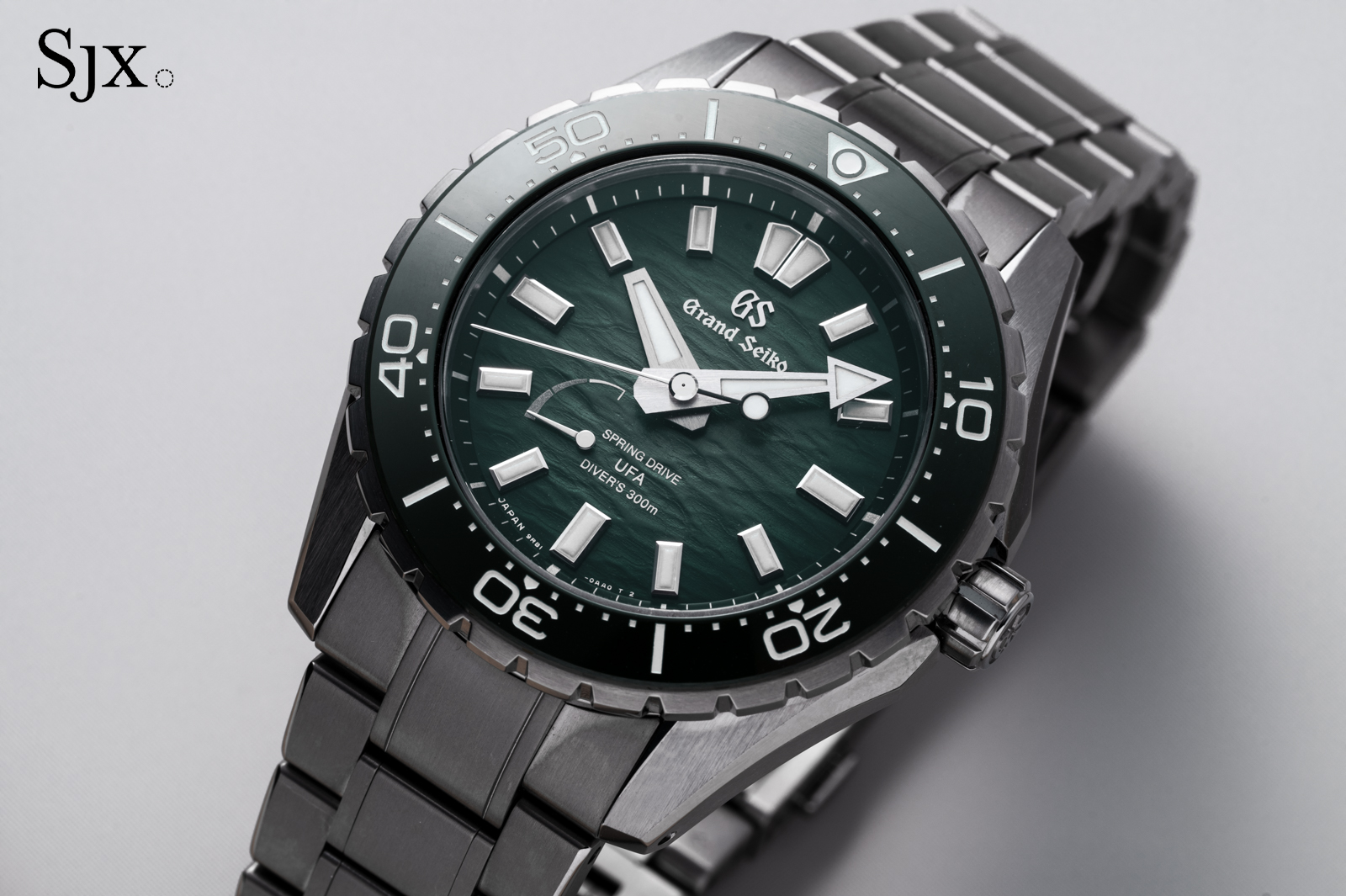
It allows for tool-free length adjustment in 2 mm steps, up to 6 mm in total. This is supplemented by a fold-out dive extension which adds a further 18 mm of length to fit over a wetsuit. The bracelet itself is little different from other EVO9 models other than a more noticeable taper as it approaches the clasp
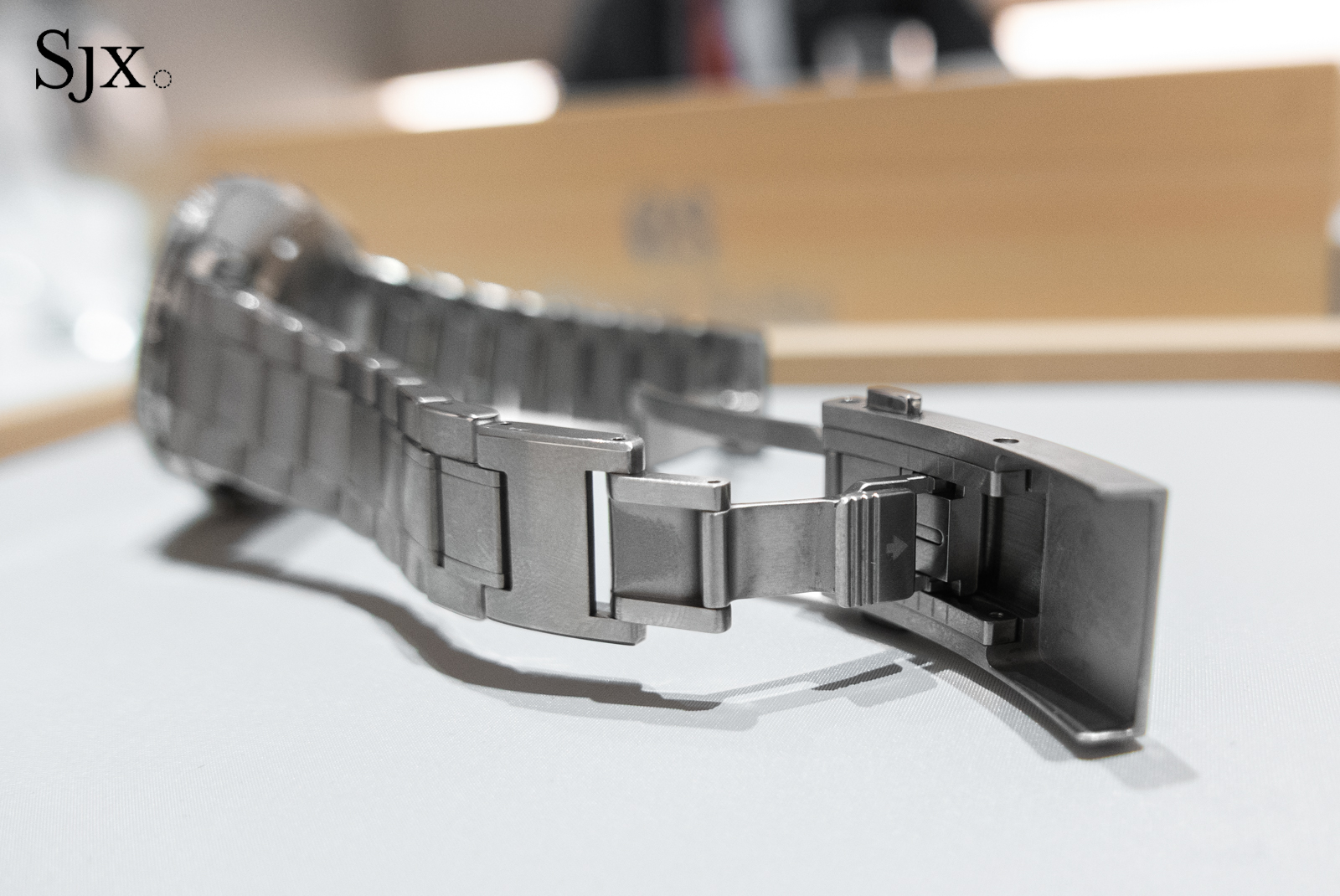
The new security lock deserves extra attention. It is unlocked by sliding the GS emblem down — only then can you use the twin triggers on the side to open the clasp. This arrangement can’t scratch the bracelet like the usual flip-over locking mechanism can.
Just as a red ring on the crown tube reminds the user to screw the crown back in, there is a red mark to show when the clasp is unlocked. Use of the security lock is, of course, optional and the twin trigger system alone is secure enough for a dive watch.
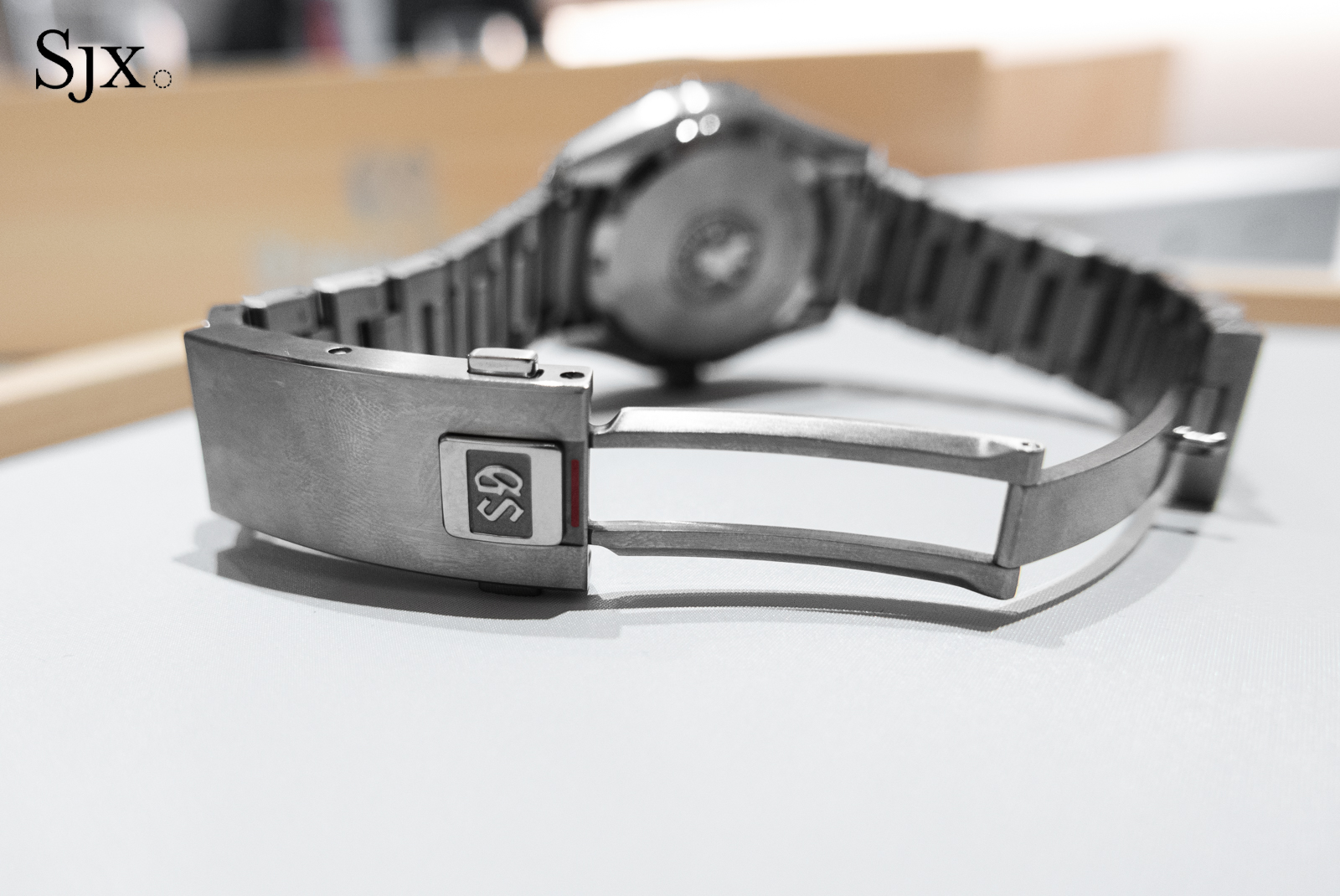
Finally, Grand Seiko includes a pair of 21 mm silicone straps to its lineup in blue and green. The design is identical to those the brand currently offers in 22 and 32 mm widths, with a springy accordion design that doubles as an escape for sweat and saltwater.
UFA movement
The new Spring Drive cal. 9RB1 is the first self-winding Spring Drive movement without a date, which contributes to it also being the thinnest at just 4.7 mm tall — only about 0.1 mm taller than an ETA 2824.
A combination of active temperature compensation and passive vacuum insulation makes the movement extremely insensitive to temperature fluctuations, allowing it to keep time to 20 seconds per year, or better, hence the Ultra Fine Adjusted designation, which debuted last year.
If the rate drifts, it can be adjusted by a watchmaker without reprogramming the integrated circuit thanks to a rotary step switch by the stem.
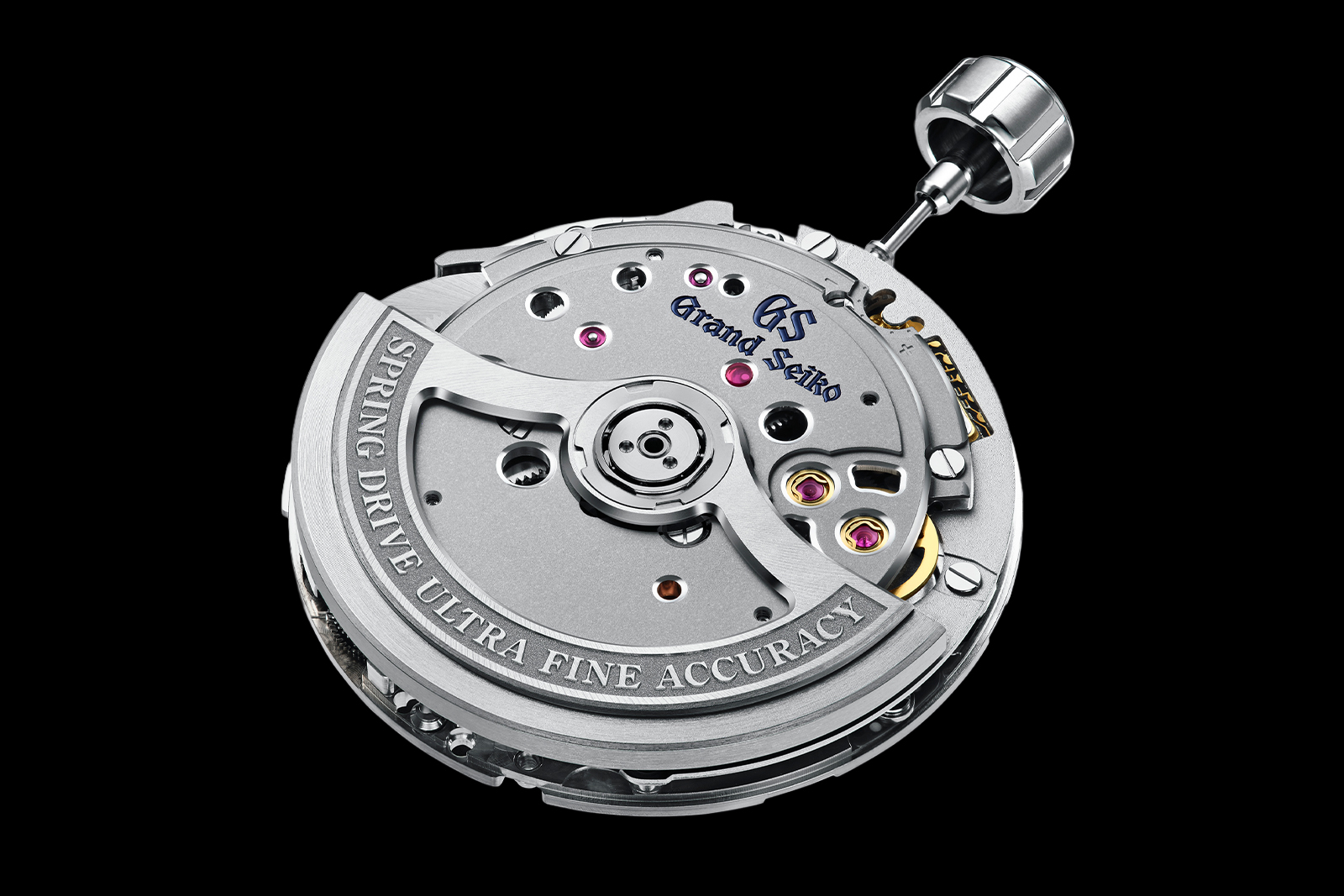
The cal. 9RB1 manages the same 72 hour power reserve — as tracked by a hand on the dial — as its non-UFA predecessor despite the increased power usage of the high-accuracy Application Specific Integrated Circuit (ASIC). This is thanks to a larger mainspring barrel.
To enlarge the barrel, the engineers Seiko Epson’s Shinshu Watch Studio took an out-of-the box approach normally reserved for high-end watches from brands like Greubel Forsey, allowing the barrel to jut out from the movement. This is just one of the many examples of good engineering contained within Grand Seiko’s most important launch of the year.
Key facts and price
Grand Seiko Evolution 9 Spring Drive U.F.A. Ushio 300 Diver 9RB1-0AA0
Ref. SLGB023 (Blue)
Ref. SLGB025 (Green)
Diameter: 40.8 mm
Height: 12.9 mm
Material: “High Intensity” titanium
Crystal: Sapphire
Water resistance: 300 m
Movement: cal. 9RB1
Features: Hours, minutes, seconds, power reserve indication.
Frequency: 32,768 Hz
Winding: Automatic
Power reserve: 72 hours
Strap: Titanium bracelet with quick-adjust folding security clasp
Limited edition: No
Availability: At Grand Seiko boutiques and retailers starting June 2026
Price: US$12,400 excluding taxes
For more, visit Grand-seiko.com.
Back to top.