Audemars Piguet’s Latest Gen Perpetual Open-Worked or All-Ceramic

Iterations of a clever calendar.
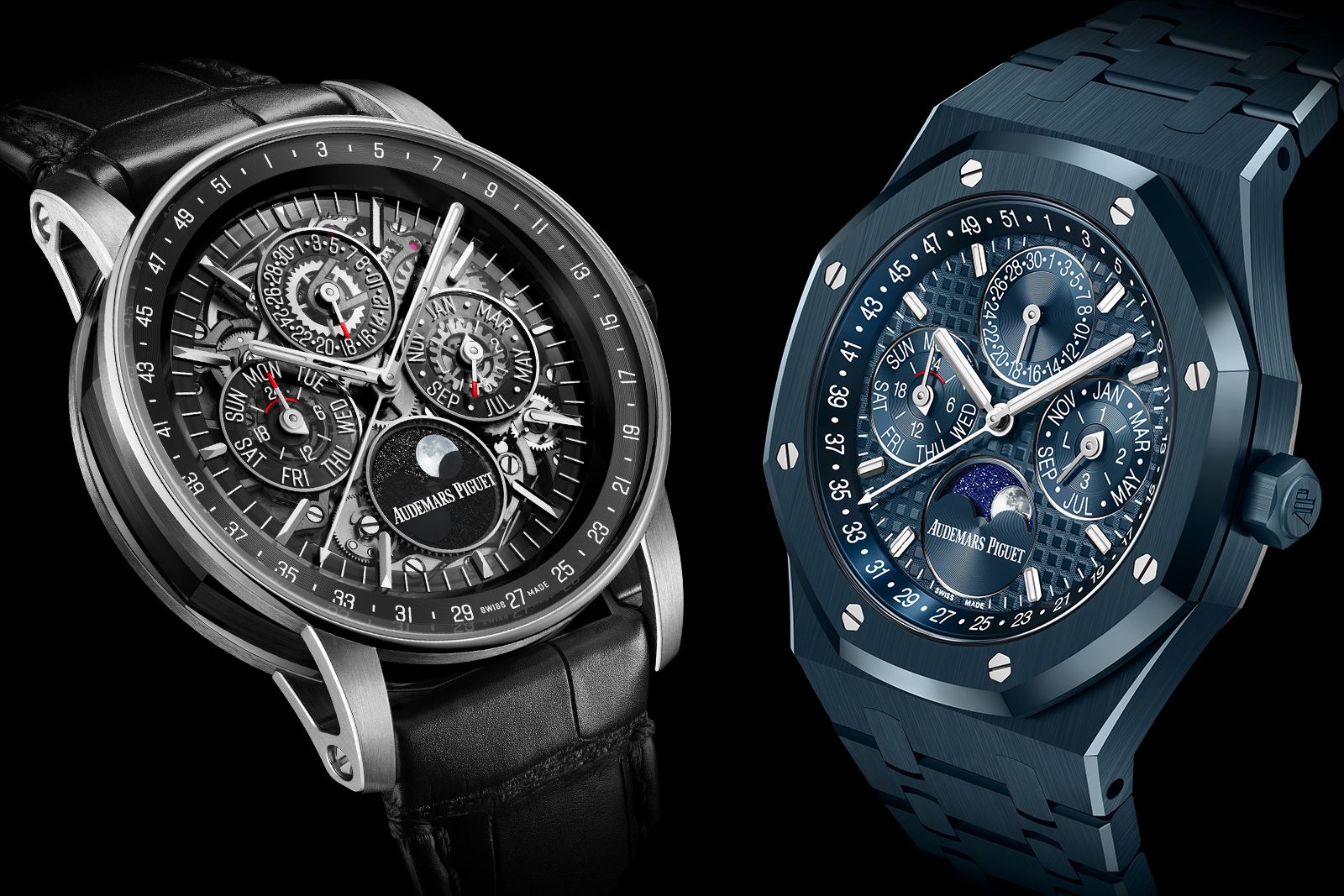
Audemars Piguet (AP) debuts a trio of new perpetuals calendars, led by the first open-worked version of brand’s cutting edge perpetual calendar launched last year with the skeleton cal. 7139 inside the Code 11.59 and Royal Oak. And rounding out the trio is the first all-ceramic Royal Oak Perpetual Calendar powered by the cal. 7138.
Initial Thoughts

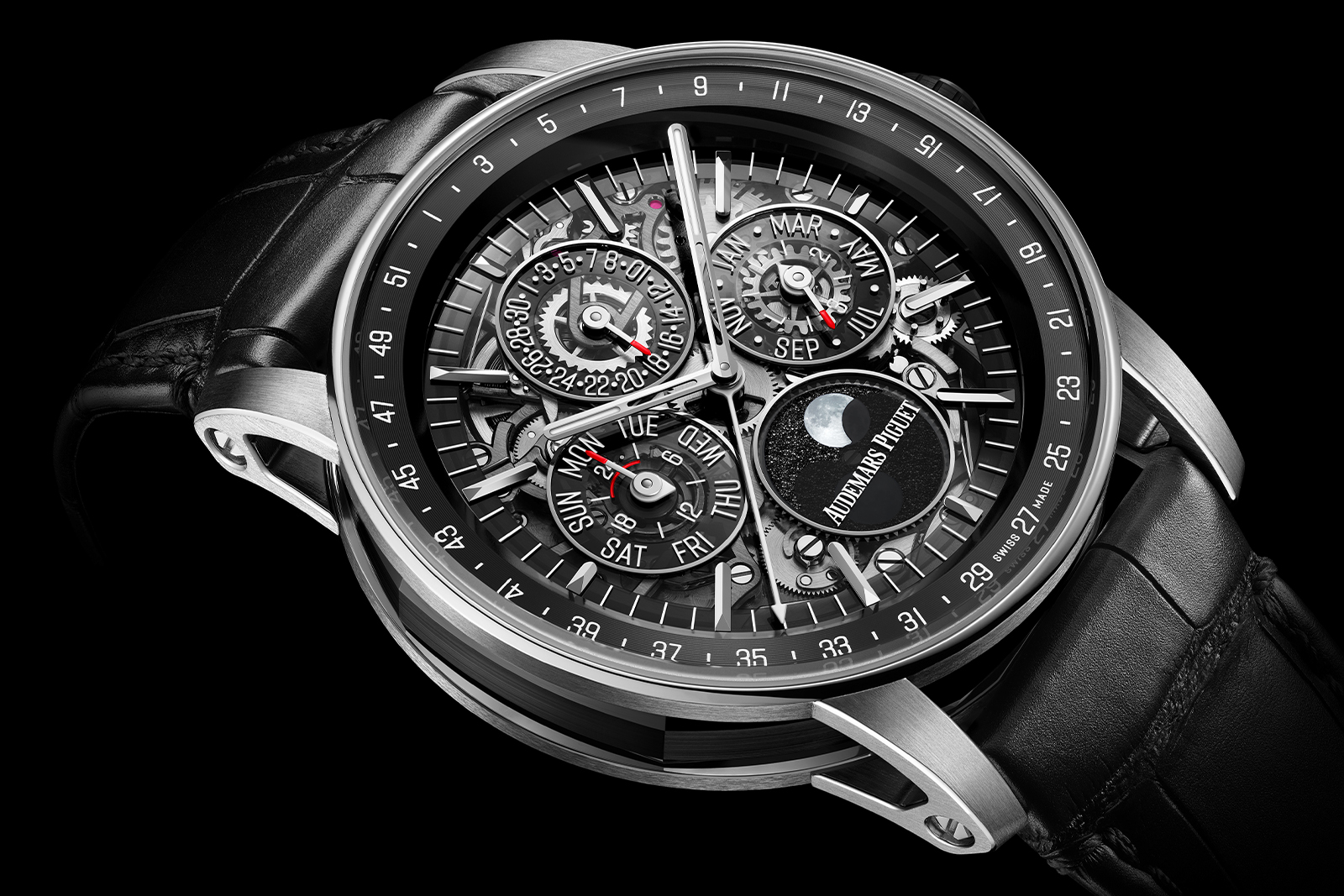
The open-worked version of AP’s latest-generation perpetual calendar movement arguably does most justice to a clever movement that is one of the most notable such movements on the market.

While there was little visual difference between solid-dial versions of AP’s new perpetual calendars and the preceding versions, the open-worked examples are less similar, at least up close, as the perpetual calendar works are so clearly different. The new open-work dial givers owners a look at what is going on under the hood as they adjust the calendar, which I see as a significant value add given the unusual and innovative mechanics.
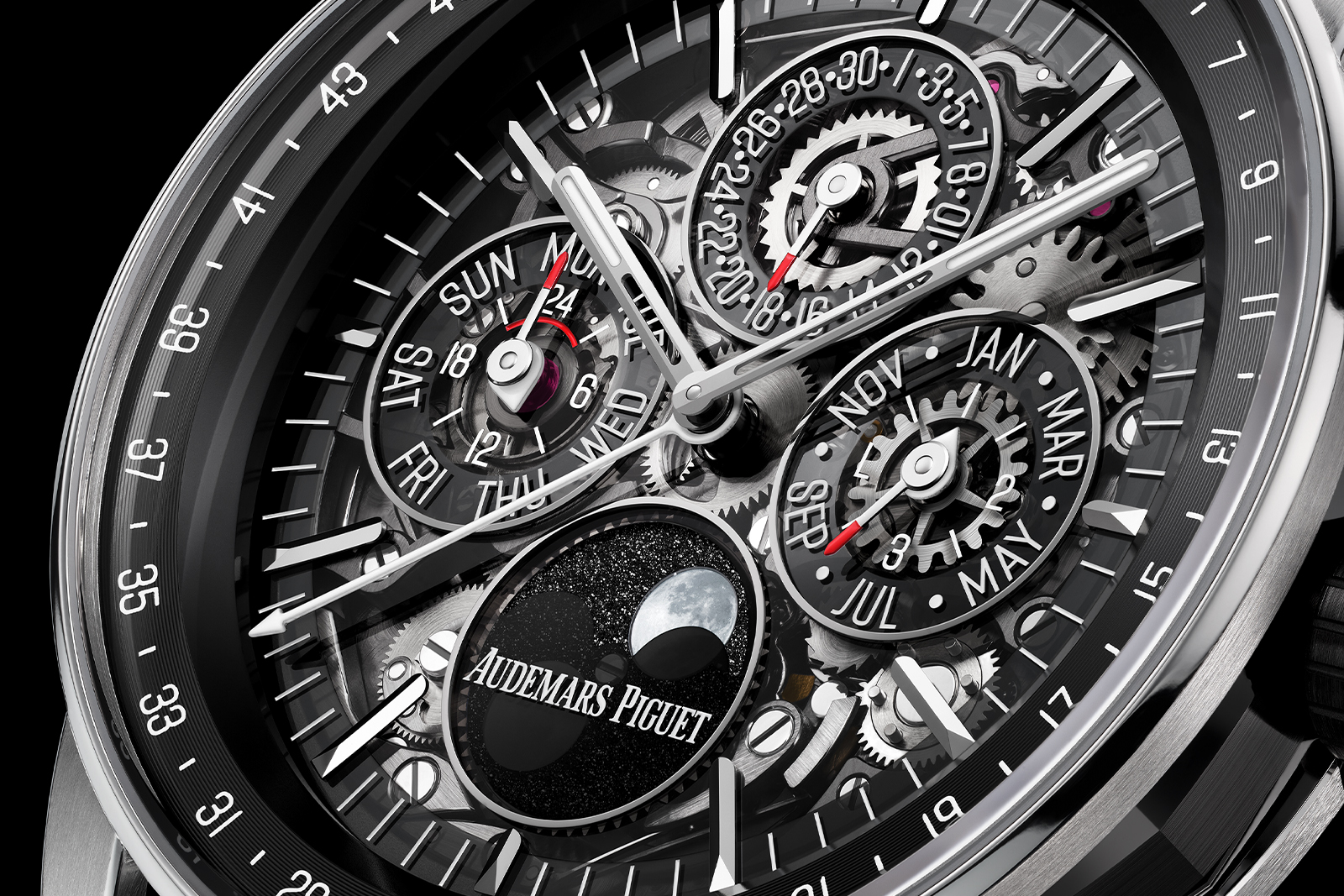
While AP could have been more daring, the last year’s crop of Royal Oak Perpetuals were good looking watches. The new pair, in both Code 11.59 and Royal Oak formats, look nearly identical from an arms length to their predecessors.

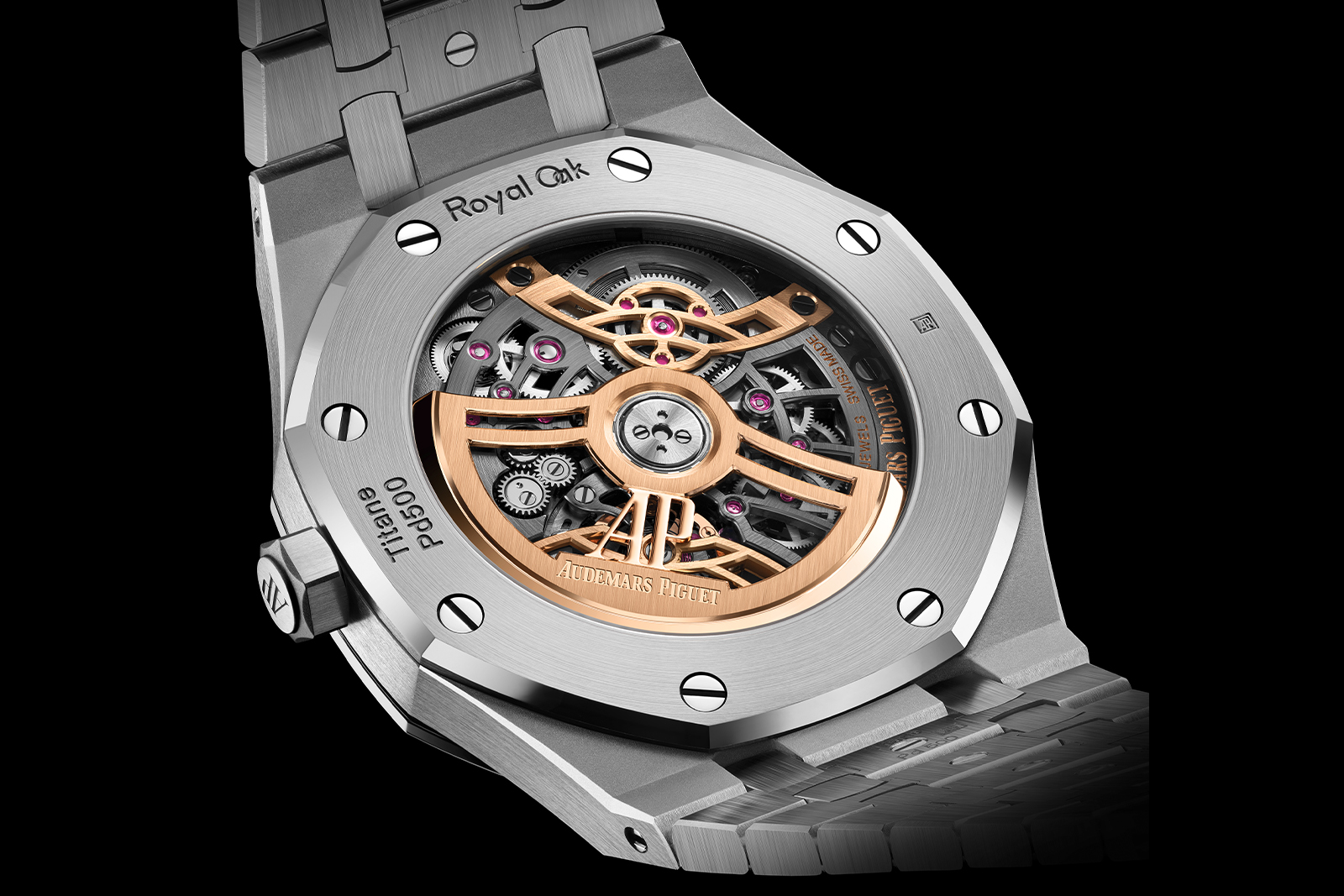
The open-worked models are mostly monochrome, the Code 11:59 is rhodium-plated white gold with a black ceramic mid-case while the Royal Oak is titanium with polished Palladium 500 bulk-metallic glass (BMG) accents and rose gold dial furniture. Neither break new ground for the brand, not that they need to.

Essentially metal with the morphology of a glass, the Palldium alloy BMG bezel is much hardier than the polished platinum bezels of Royal Oaks past.

AP seems to understand that many of its products, such as these and the Royal Oak Chronograph 38 mm, don’t need major design overhauls to stay relevant.

That is, except for the all-ceramic variant, using a shade of ceramic specially formulated to match the Royal Oak’s “Bleu Nuit, Nuage 50” dial, which is a significant departure – and improvement – from the generic and excessively bright cobalt blue ceramic used previously. This looks great, though I’d also like to see the low-key black ceramic model return.

It’s what’s inside that counts

Launched last year, AP’s latest perpetual calendar arguably the most advanced in its segment, despite following the “grand lever” approach codified during the 19th century. The day, date, month, moon phase, and week can all be set entirely though the clever four position crown.

A 48-tooth wheel is pre-programmed with the lengths of each month in the quadrennial leap year cycle, meaning the watch will need its next correction in the year 2100, when we skip a leap year. Unlike many other crown-set perpetuals, this correction won’t require intervention from a watchmaker.
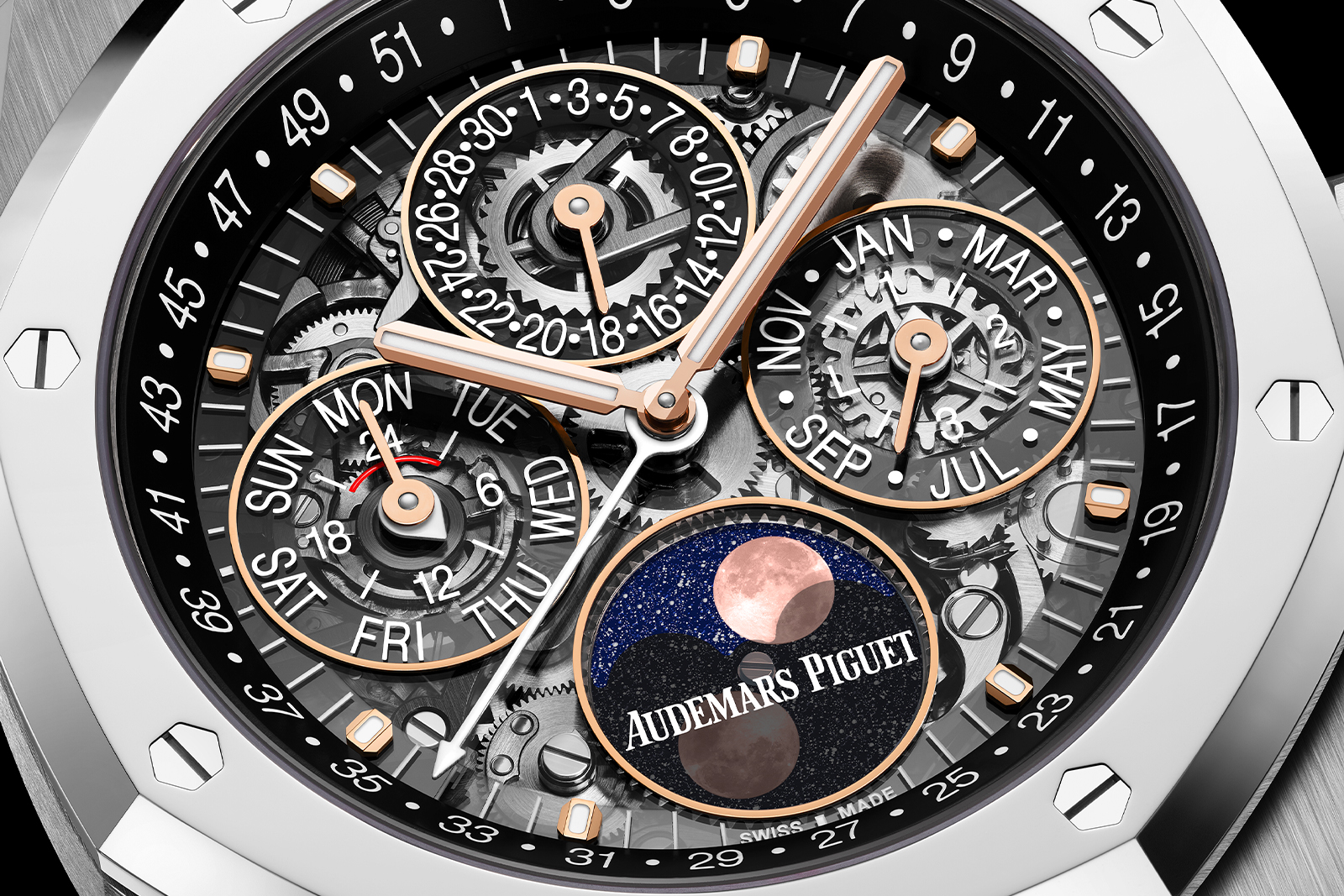
For better or worse, sharp interior angles have become an indicator of superior finishing to many collectors, and this movement has over a hundred of them. According to AP, the bridges and manufactured using EDM machining (though the exact techniques were not disclosed) before being finished by hand, which takes 30 hours.

Even allowing for ample machine assistance, which still requires skilled machinists (whose work is often minimized or ignored in this industry), this movement reveals very involved manufacturing and finishing processes compared to AP’s ranks and file calibres.

Key specs and price

Code 11.59 By Audemars Piguet Selfwinding Perpetual Calendar Openworked
Ref. 26443NB.OO.D002CR.01

Diameter: 41 mm
Height: 10.6 mm
Material: White gold and black ceramic
Crystal: Sapphire
Water resistance: 30 m

Movement: Cal. 7139
Features: Hours, minutes, moon phase, perpetual calendar, weekly calendar.
Frequency: 28,800 beats per hour (4 Hz)
Winding: Automatic
Power reserve: 55 hours

Strap: Alligator with white gold folding clasp

Limited edition: No
Availability:
At AP boutiques, AP houses, and Authorised Retailers
Price: CHF118,000 excluding taxes (~US$152,000)


Audemars Piguet Royal Oak Selfwinding Perpetual Calendar Openworked
Ref. 26685XT.OO.1320XT.01

Diameter: 41 mm
Height: 9.5 mm
Material: Titanium and palladium 500 BMG
Crystal: Sapphire
Water resistance: 50 m

Movement: Cal. 7139
Features: Hours, minutes, moon phase, perpetual calendar, weekly calendar.
Frequency: 28,800 beats per hour (4 Hz)
Winding: Automatic
Power reserve: 55 hours

Strap: Titanium and palladium 500 BMG integrated bracelet

Limited edition: No
Availability:
At AP boutiques, AP houses, and Authorised Retailers
Price: CHF180,200 excluding taxes (~US$232,000)


Audemars Piguet Royal Oak Perpetual Calendar Selfwinding
Ref. 26674CD.OO.1225CD.01

Diameter: 41 mm
Height: 9.5 mm
Material: “Bleu Nuit, Nuage 50” ceramic and titanium
Crystal: Sapphire
Water resistance: 50 m

Movement: Cal. 7138
Features: Hours, minutes, moon phase, perpetual calendar, weekly calendar.
Frequency: 28,800 beats per hour (4 Hz)
Winding: Automatic
Power reserve: 55 hours

Strap: Bracelet in “Bleu Nuit, Nuage 50” ceramic and titanium

Limited edition: No
Availability:
At AP boutiques, AP houses, and Authorised Retailers
Price: CHF133,900 excluding taxes (~US$173,000)

For more, visit AudemarsPiguet.com.


Back to top.

You may also enjoy these.

Audemars Piguet Upgrades the Royal Oak Chronograph 38 mm

If it ain't broke... make it slightly better.

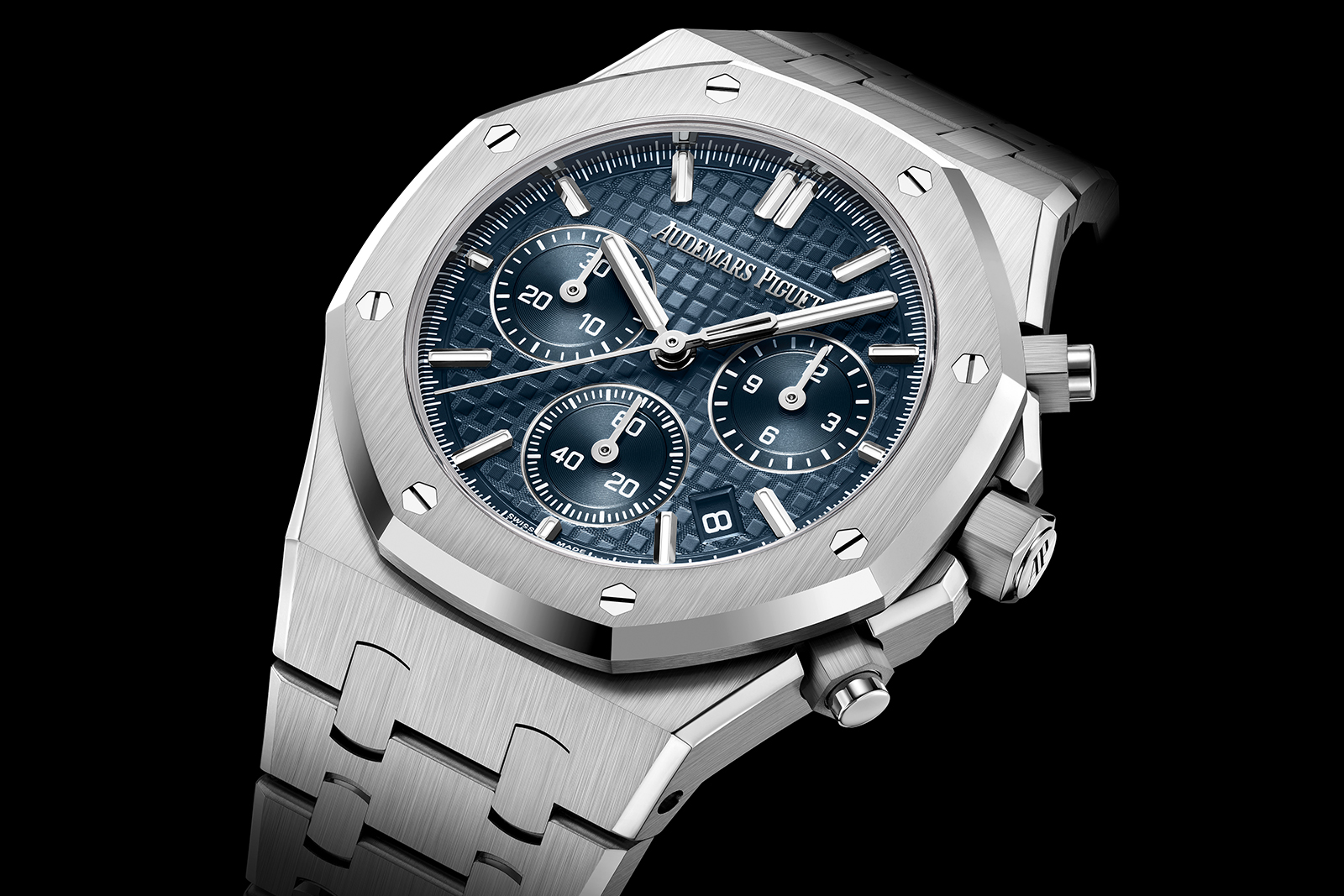
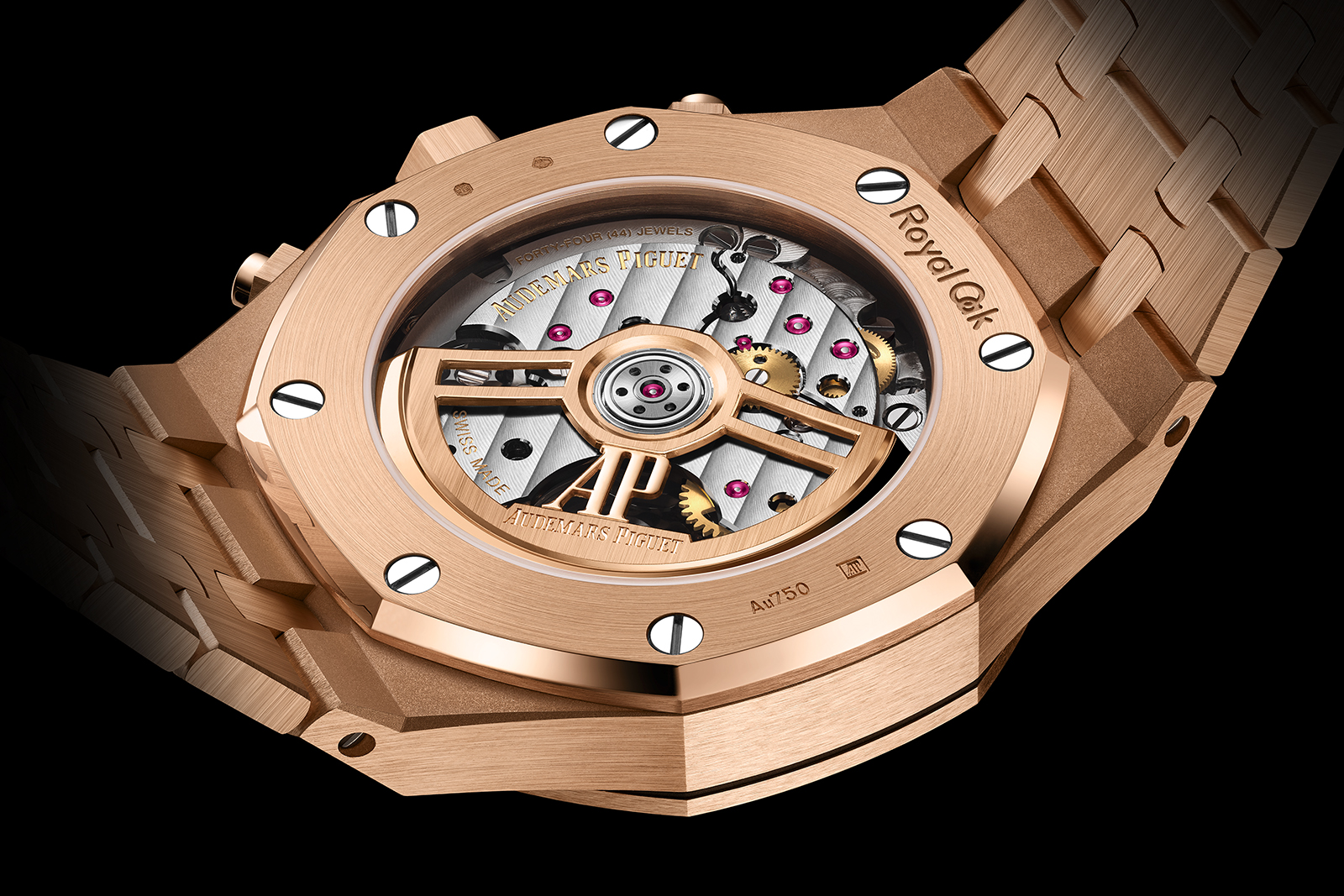
Audemars Piguet (AP) updates the Royal Oak Selfwinding Chronograph 38 mm with a new manufacture calibre, sapphire display back, while slightly tweaking the iconic design – and retaining the price of its predecessor.

The new cal. 6401 comes with welcome quality-of-life improvements such as a longer power reserve and instantaneous date without tradeoffs in wearability, beat rate, or even cost, making this compact chronograph one of the most sensible and compelling offerings in the Royal Oak line.

Initial Thoughts

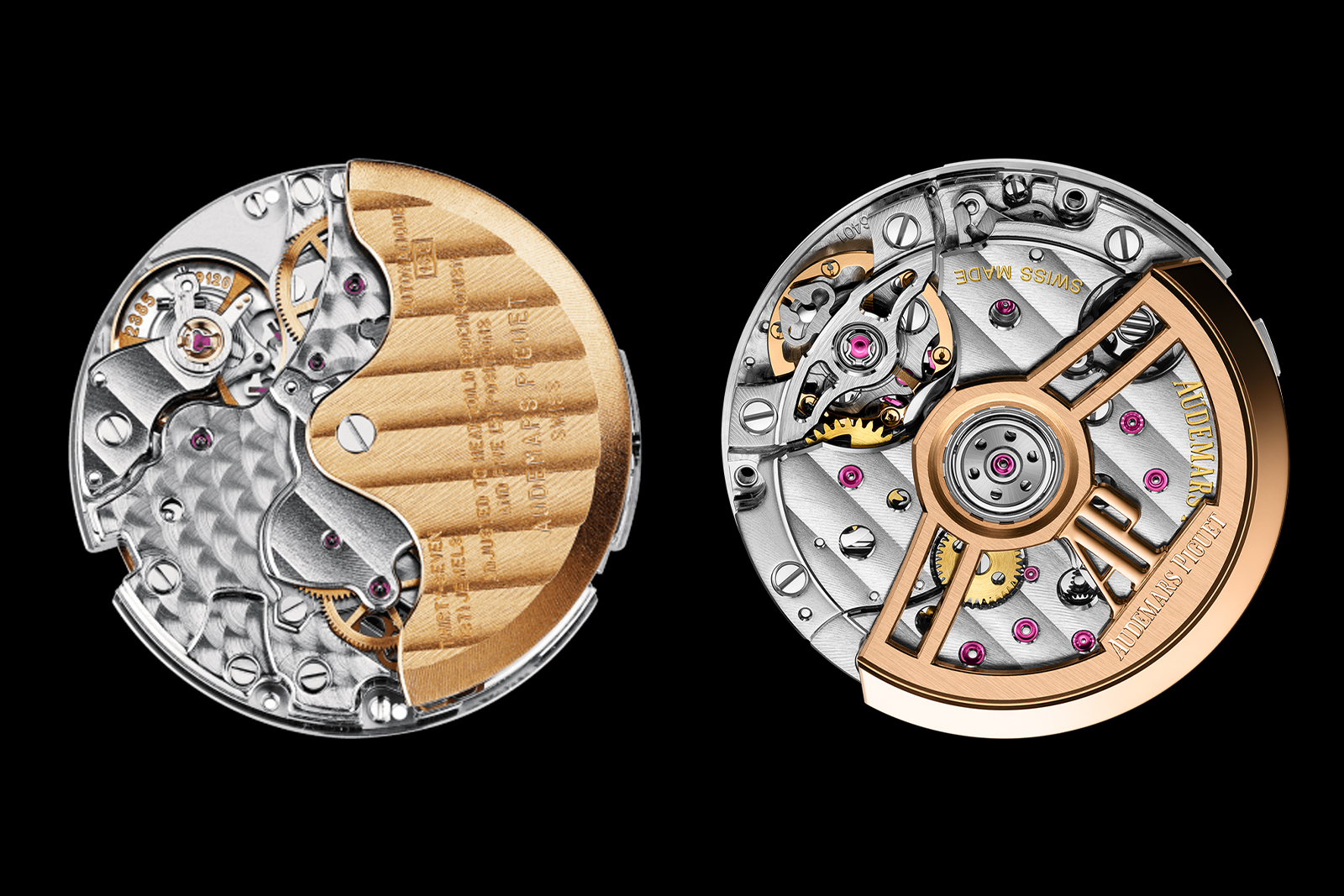
AP debuted the first Royal Oak chronograph in 1997 and it was powered by the Frederic Piguet cal. 1185, a landmark movement for automatic chronograph design. Now, nearly three decades later, AP is a true industrialised manufacture, and the cal. 1185 has been replaced with the new cal. 6401, a modern movement that with meaningful upgrades under the hood.

This also comes with some minute tweaks to the dial and a crowd pleasing display case back, while the case and bracelet remain as excellent as always. Laudably, this comes without a significant price increase, with the new Royal Oak Chronograph 38 mm in steel costing only 3.6% more than its predecessor.

New Engine

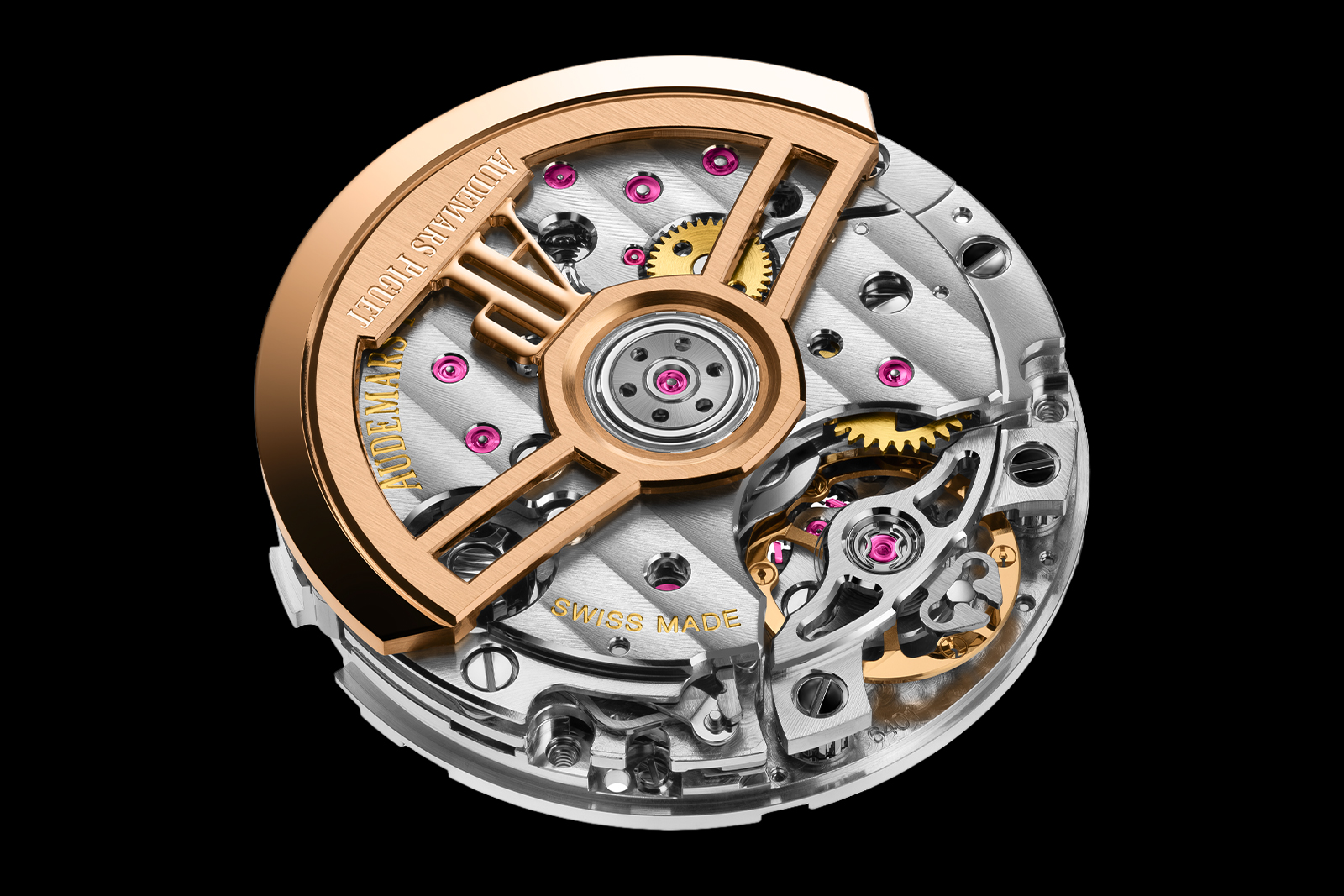
AP’s new cal. 6401 is a solidly-spec’ed movement despite being small and thin for a modern chronograph. It’s wide and taller than the Frederic Piguet cal. 1185 but only slightly. It is 27 mm in diameter (up from 26.2 mm) and 5.7 mm tall (up from 5.5 mm) though even with the addition of a sapphire case back the watch is only 0.1 mm taller.

The cal. 1185 (left) and the new cal. 6401

Despite the negligible change in dimensions, the new Royal Oak Chronograph will run for 15 hours longer than its predecessor (for 45 hours total), at a higher beat rate, and with an instantaneous date change.

The cal. 6401 is also equipped with a free sprung balance that looks to have a greater mass than the previous calibre, though AP hasn’t disclosed exact figures. It also features a balance endshake adjustment system, and more tenacious ball bearing support for the rotor.

It is worth mentioning that the calendar can be quickly corrected using the crown, unlike Patek Philippe’s automatic chronograph movement with a date.

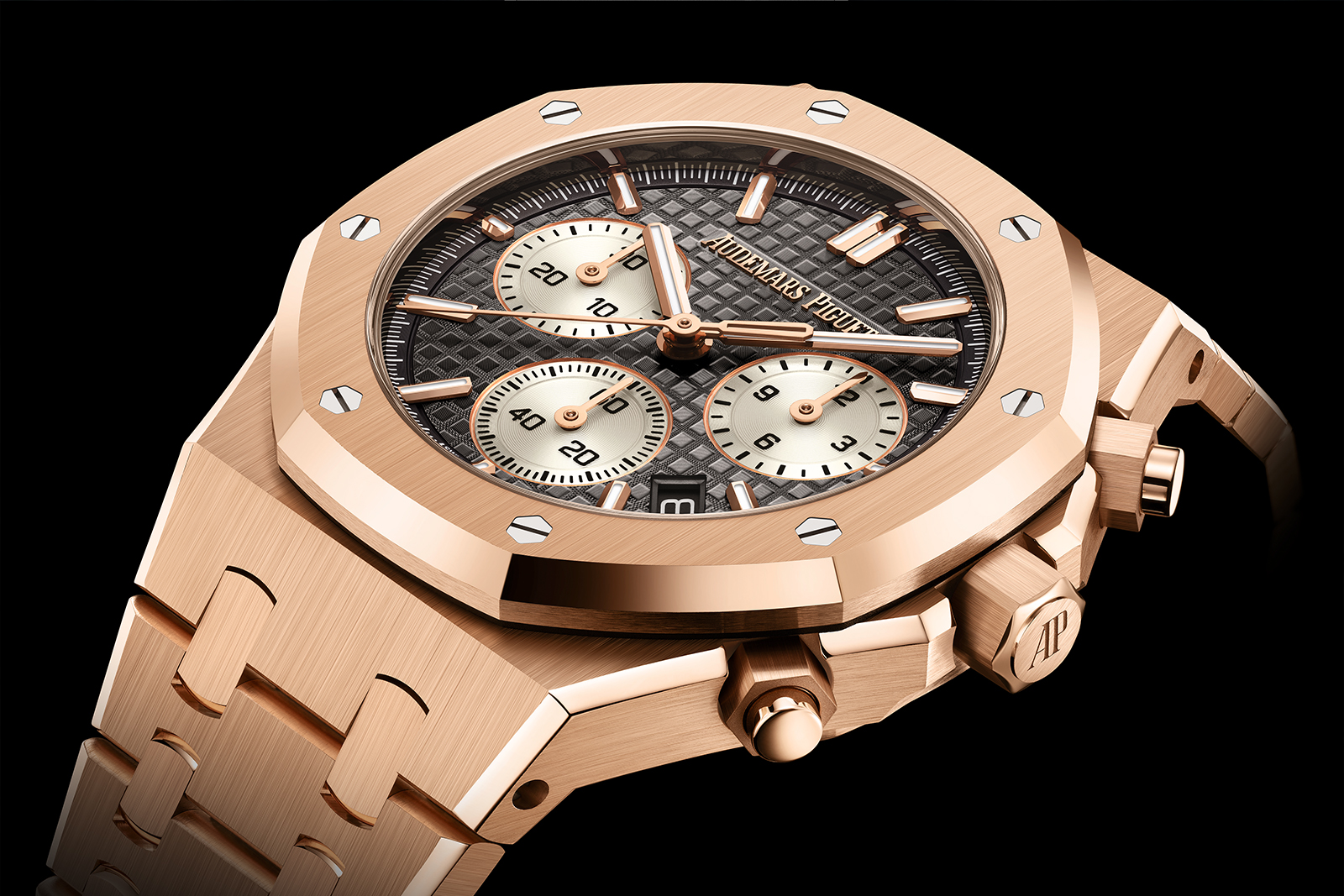
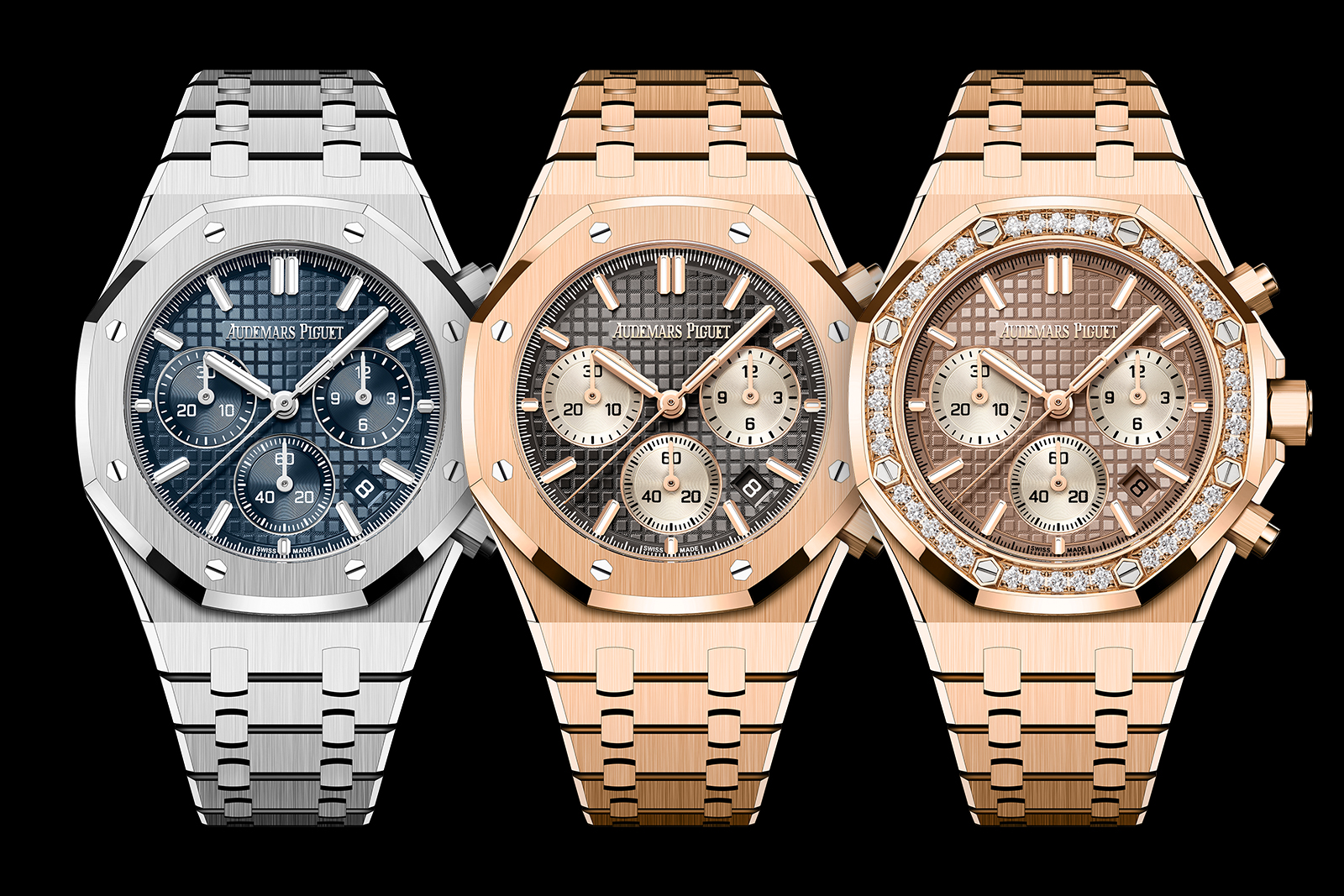
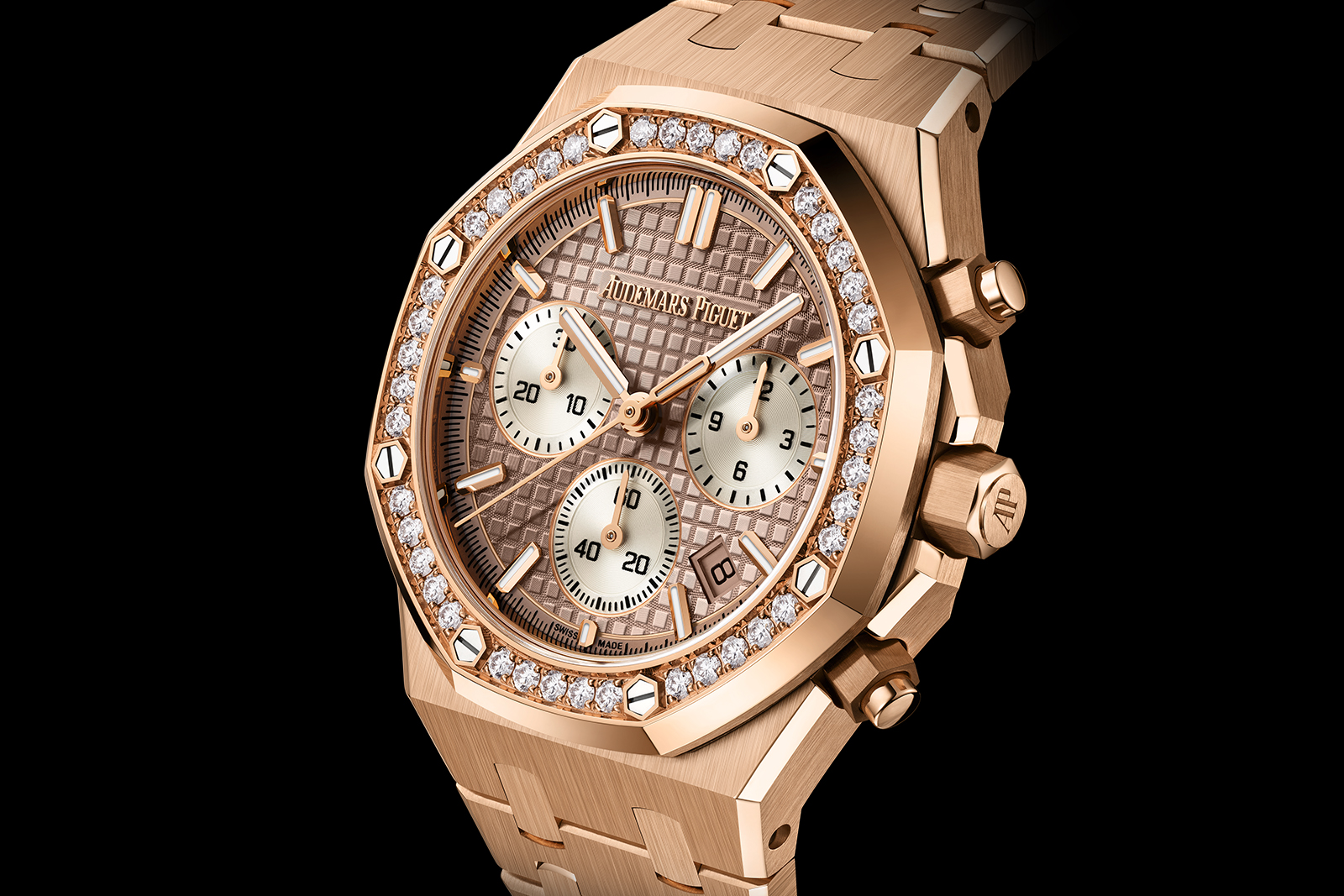
For now the new movement is only available in three models: steel with the Royal Oak’s signature “Bleu Nuit, Nuage 50” hue dial, in 18k pink gold with grey dial, or the same with a brilliant cut diamond bezel (40 stones, 0.92 carats) and a sand gold dial.

However, according to AP, the cal. 6401 will also come to the Royal Oak Offshore line later this year.

New Dial

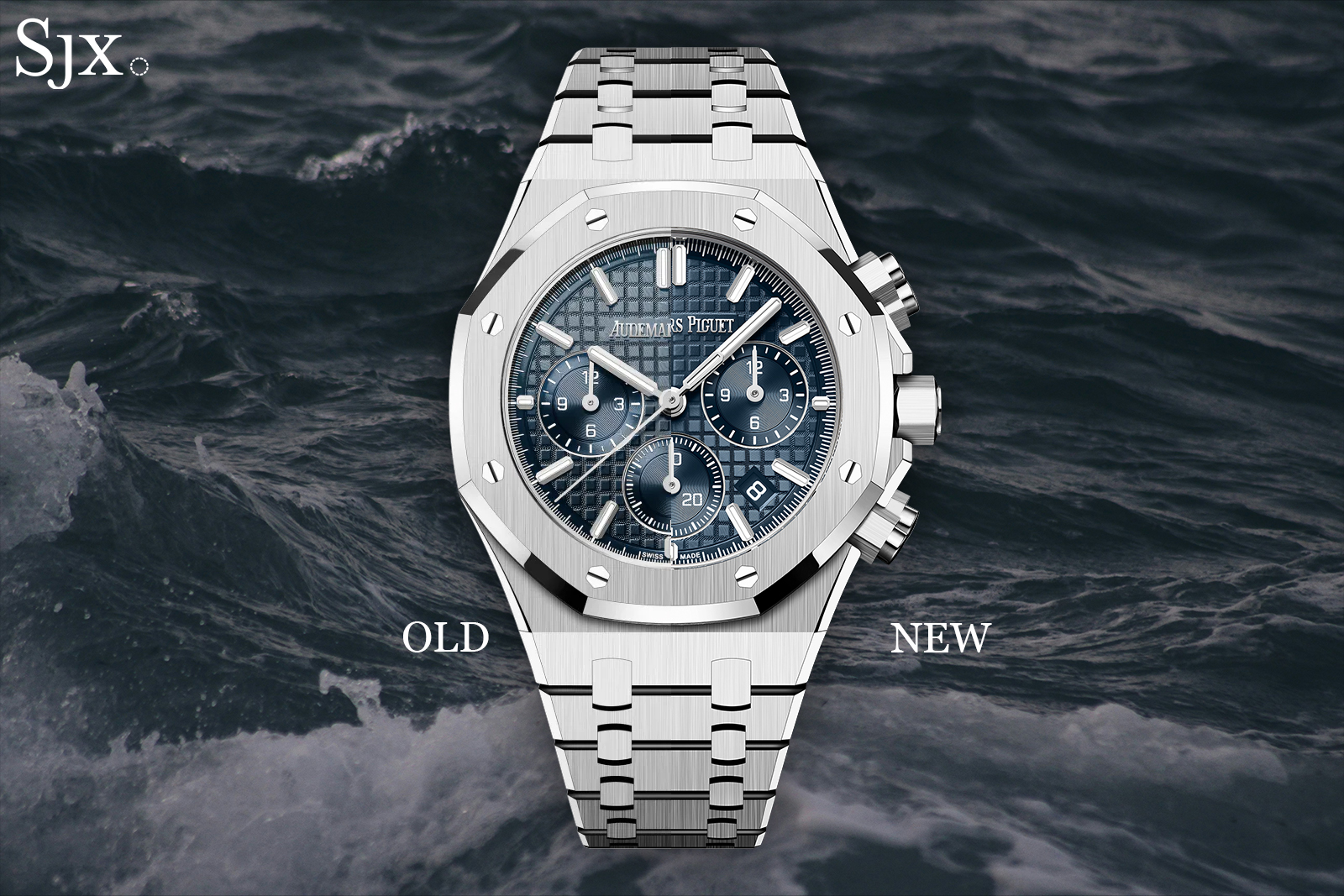
The dial has been redesigned to accommodate the cal. 6401, and the chronograph operating buttons are slightly further apart.

All three sub-dials are slightly further from the centre, while the sub-dials for the hour and minutes totalisers are swapped and sit slightly higher on the dial, leaving them no longer aligned with the six and nine 0’clock markers – giving the dial a layout similar to the Rolex Daytona with the cal. 4130.

AP also recalibrated the seconds scale hash marks to suit the 4 Hz beat rate of the new movement. Also, date window is now halfway between the four and five o’clock markers – it previously abutted the latter.

The outgoing model on the left and incoming on the right. Images – Audemars Piguet, composite by the author


Key facts and price

Audemars Piguet Royal Oak Selfwinding Chronograph 38 mm
Ref. 26450ST.OO.1356ST.01-B (steel)
Ref. 26450OR.OO.1356OR.01-B (pink gold)
Ref. 26450OR.ZZ.1356OR.01-B (pink gold with diamonds)

Diameter: 38 mm
Height: 11.1 mm
Material: Stainless steel or 18k pink gold
Crystal: Sapphire
Water-resistance: 50 m

Movement: Cal. 6401
Functions: Hours, minutes, running seconds, chronograph with minute and hour totalisers
Winding: Automatic
Frequency: 28,800 beats per hour (4 Hz)
Power reserve: 72 hours

Strap: Metal bracelet in same material as case.

Limited edition: No.
Availability:
At AP boutiques, AP houses, and Authorised Retailers
Price: US$43,000 in steel, US$84,500 in 18k pink gold, and US$91,600 in 18k pink gold with diamonds, before taxes

For more information, visit Audemarspiguet.com.


Back to top.

You may also enjoy these.

Audemars Piguet Jumps Retro with the Neo Frame

A stylish new digital display watch.

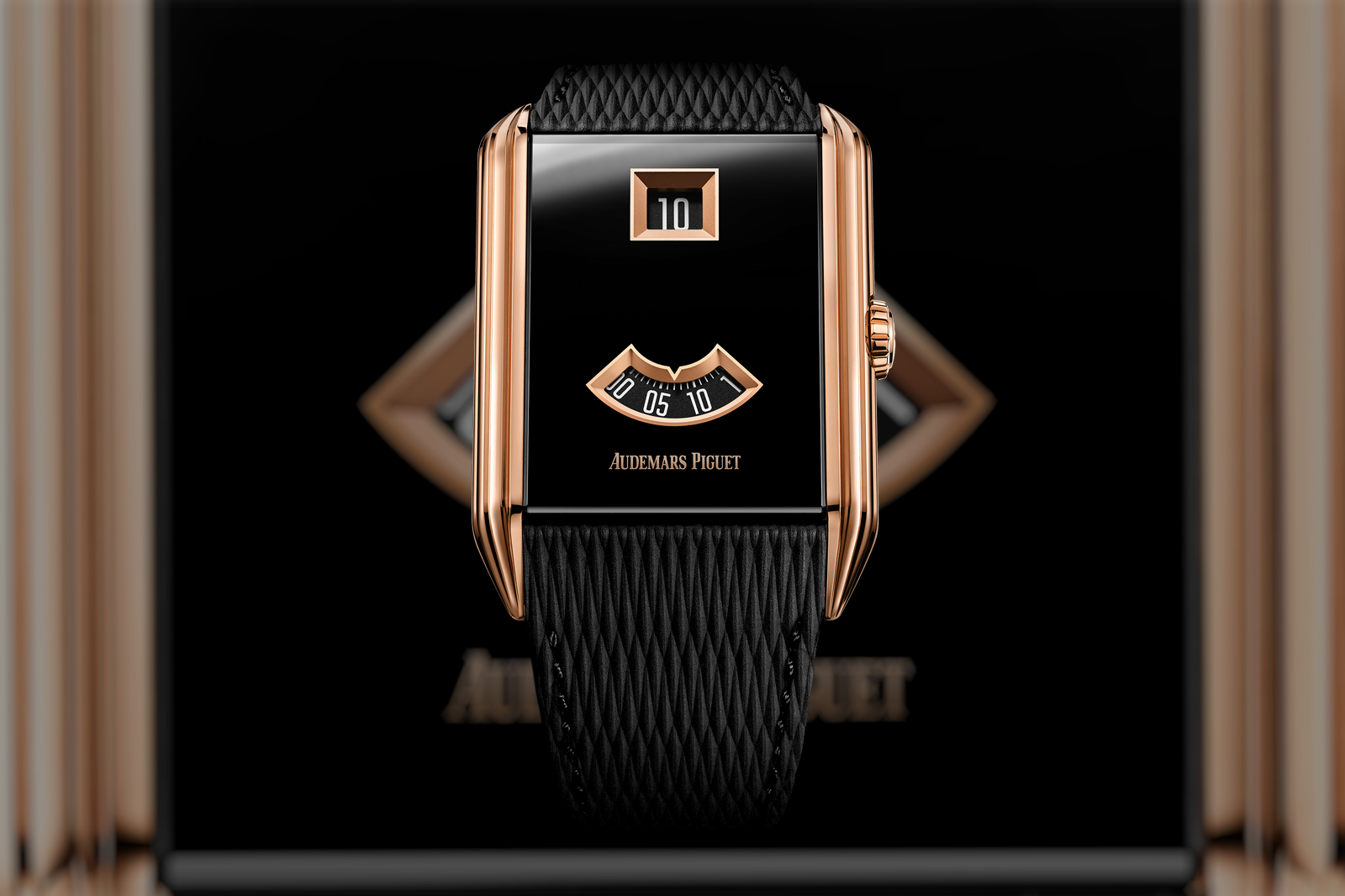
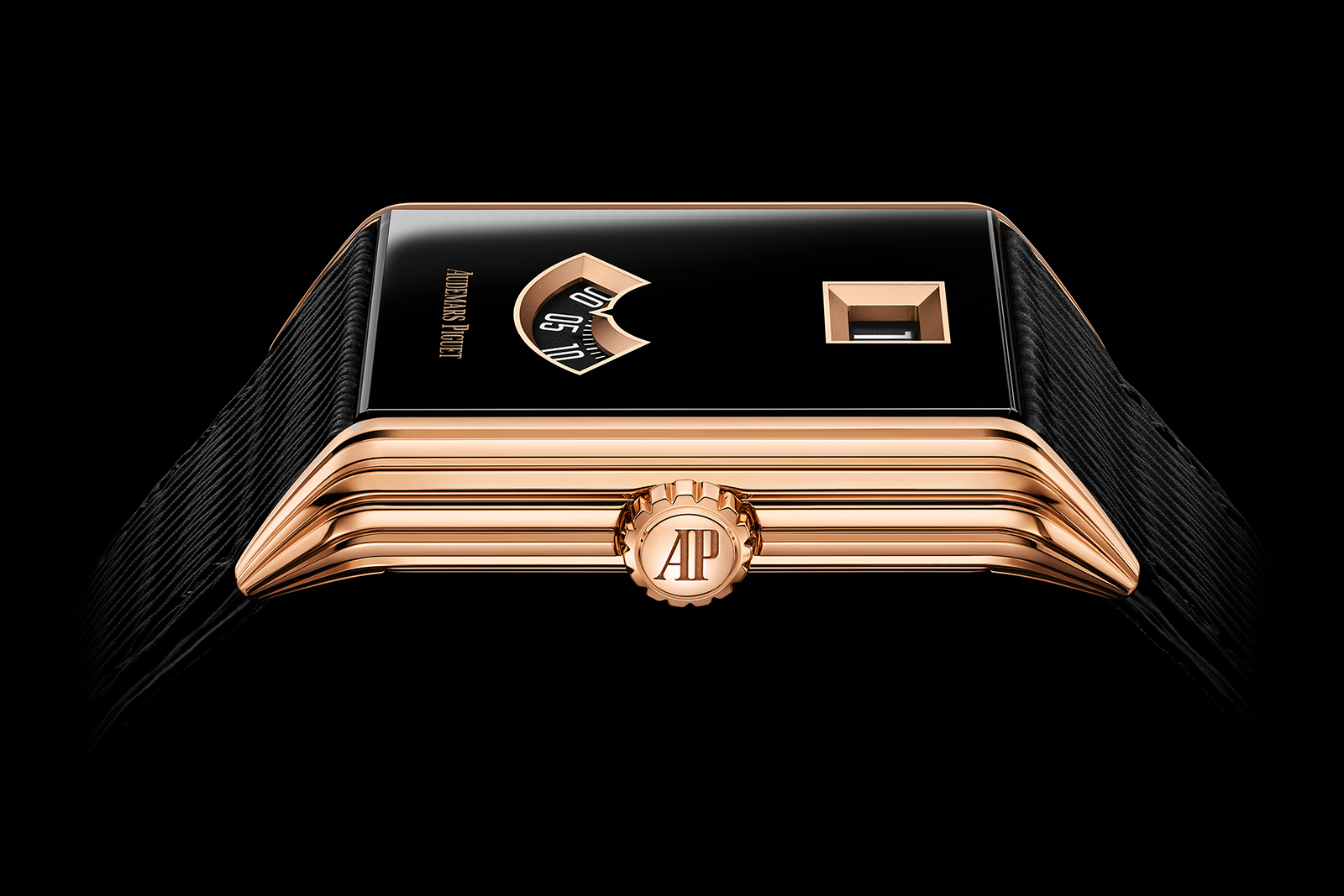
Ahead of its much anticipated Watches & Wonders return, Audemars Piguet (AP) has reached deep into its archives for what in past years would have been a [RE]Master model. But now AP has renamed its vintage reissues, and it is the Neo Frame Jumping Hour that takes inspiration from a similar guichet model from 1929. This perfectly timed launch comes at a time of renewed interest in the digital display format.

Initial thoughts

Each time an established brand launches a completely new collection, the public response can be either positive (think Rolex Land-Dweller) or underwhelming. AP has come face-to-face with this in the past with the Code 11.59, which was bold but not well received initially (though much of the early criticism can be chalked up to cynicism).

That experience hasn’t stopped the brand from continuing to diversify its portfolio away from the Royal Oak, and the latest effort capitalises on the growing interest in guichet watches. In doing so, AP reimagines an obscure piece from its own past, adding strong touches of modern design to create something with a more distinctive visual identity than one might expect from a simple jumping hours watch.

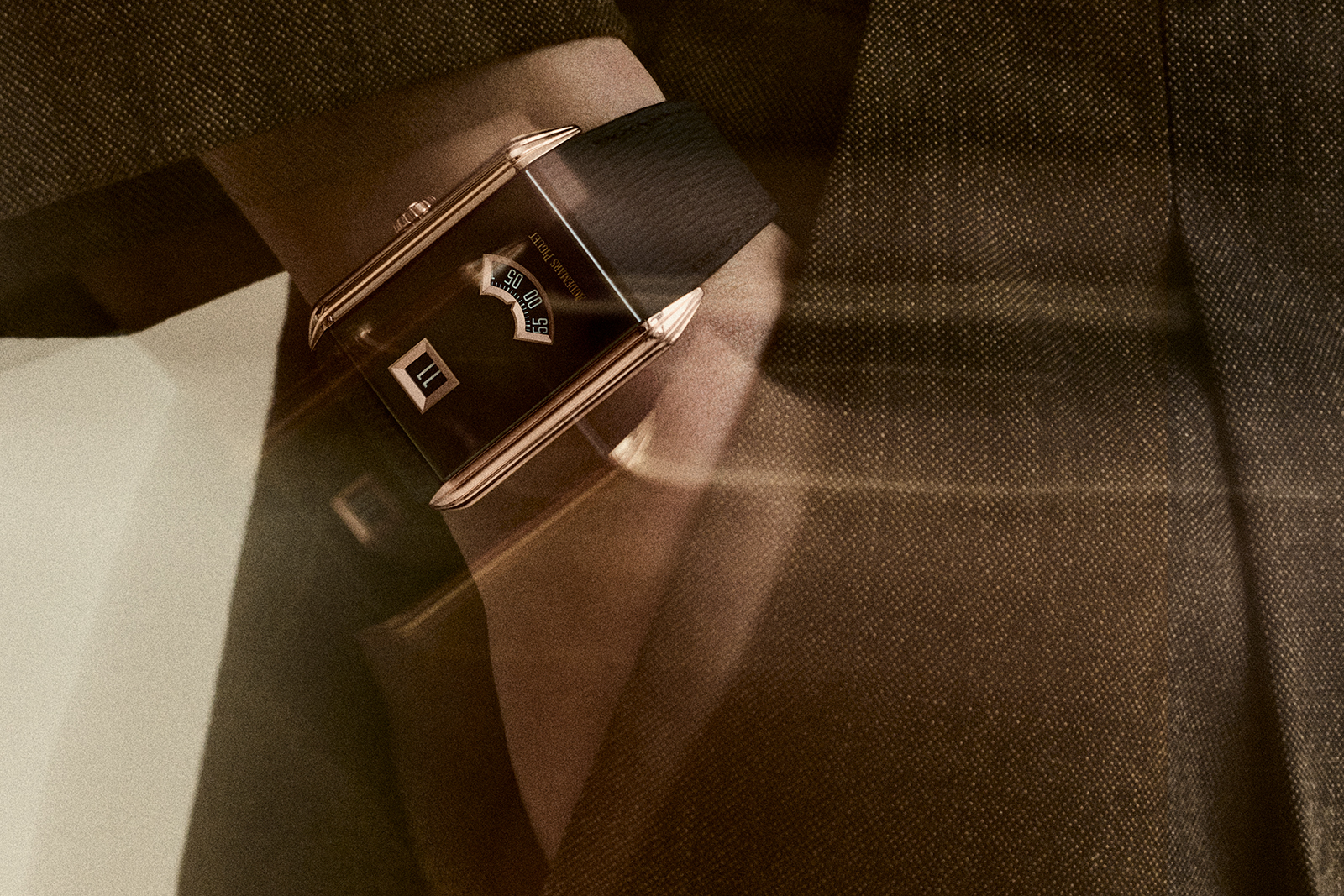
Though the Neo Frame nomenclature might take a while to enter the vernacular, the guichet design feels like it’s coming to market at the right time. Ironically, the sleek profile of the Neo Frame’s case looks much like a sports smart band — albeit much glossier. Specifically, the way the polished black face connects with the strap is suggestive of certain activity trackers on the market.

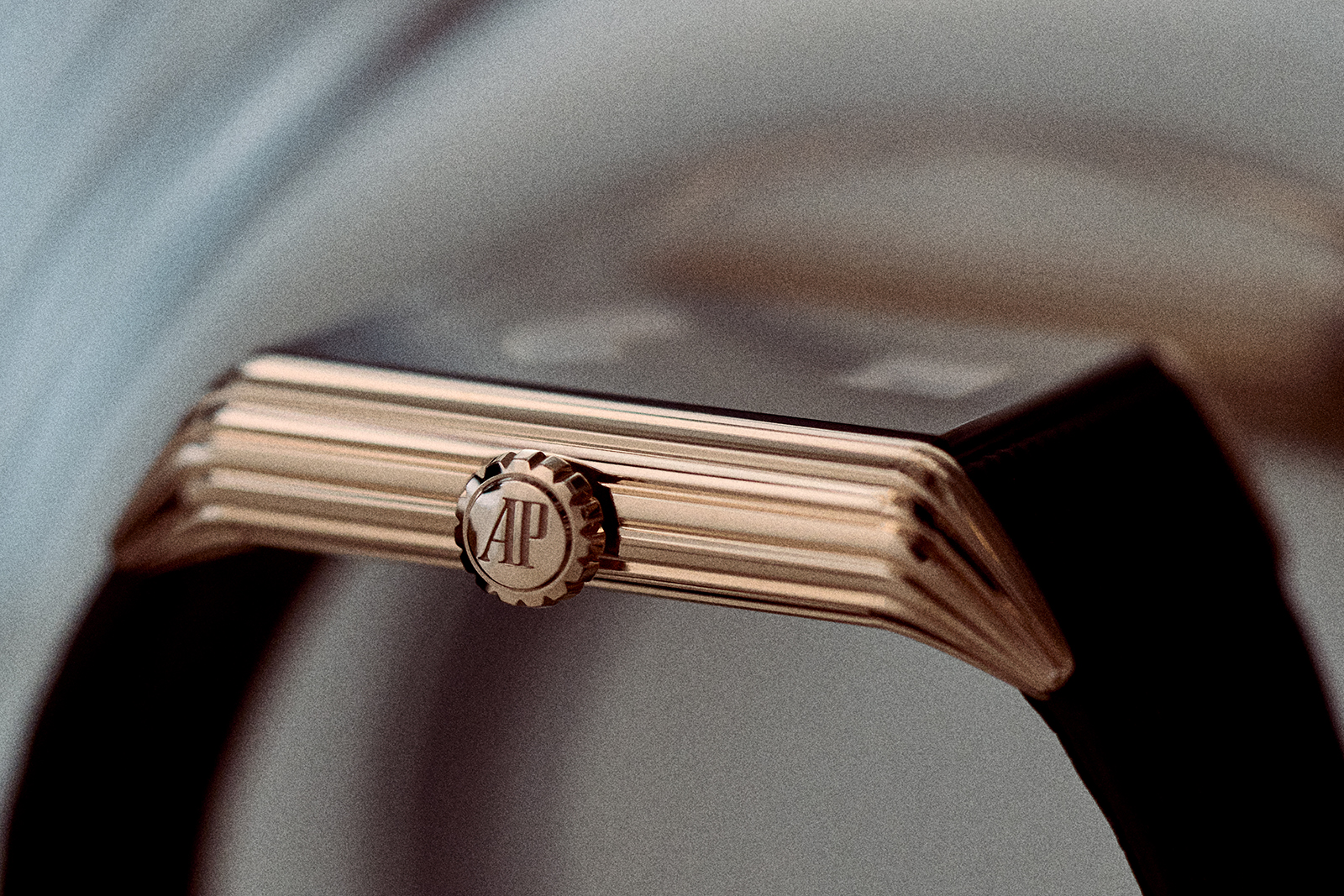
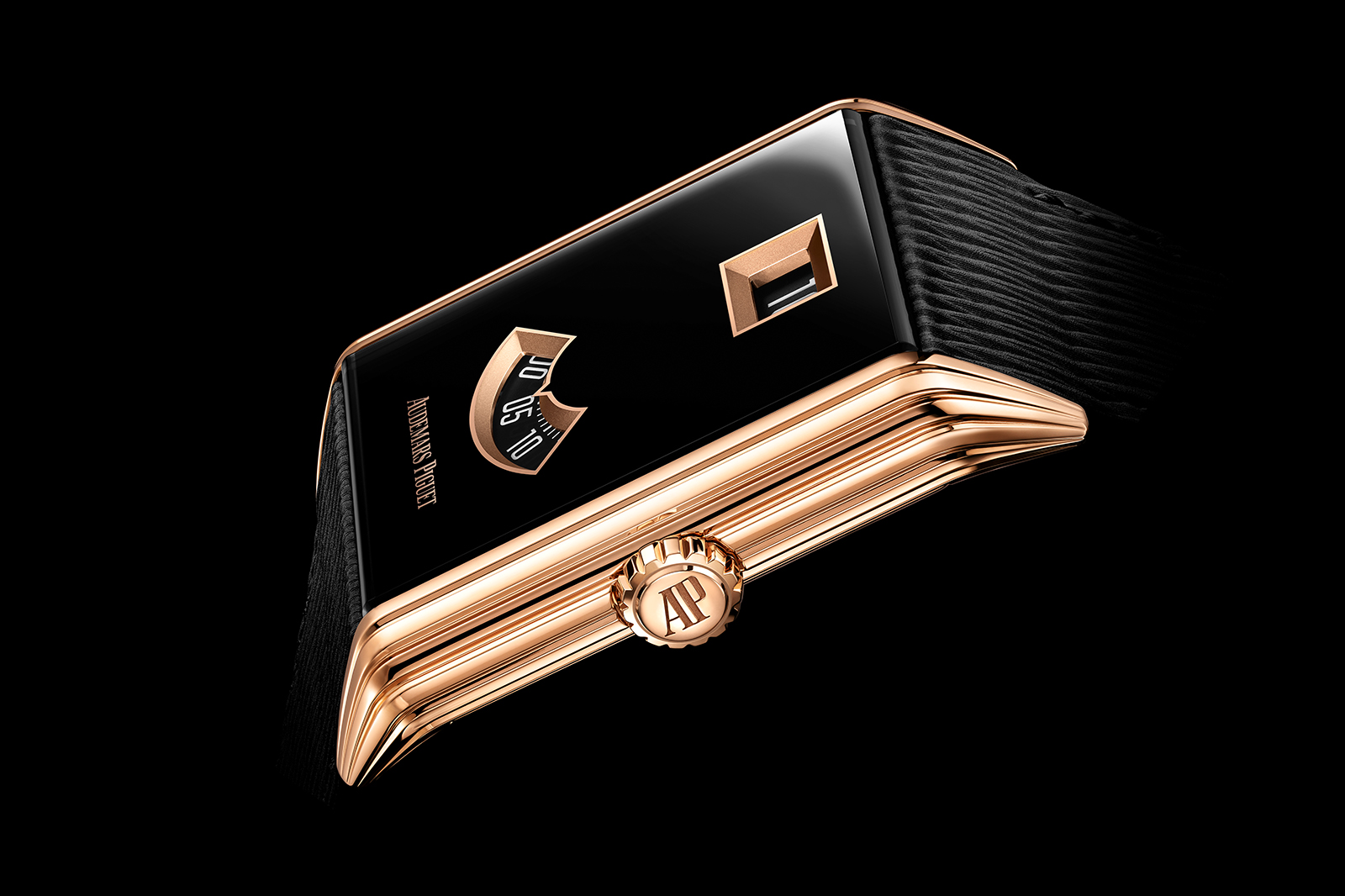
Beyond the deceiving initial look, the Neo Frame case is clearly the result of a strong design effort. The angular piece has soft corners and tapered, short lugs with deep striations — a nod to Art Deco and the lavish 1920s aesthetic.

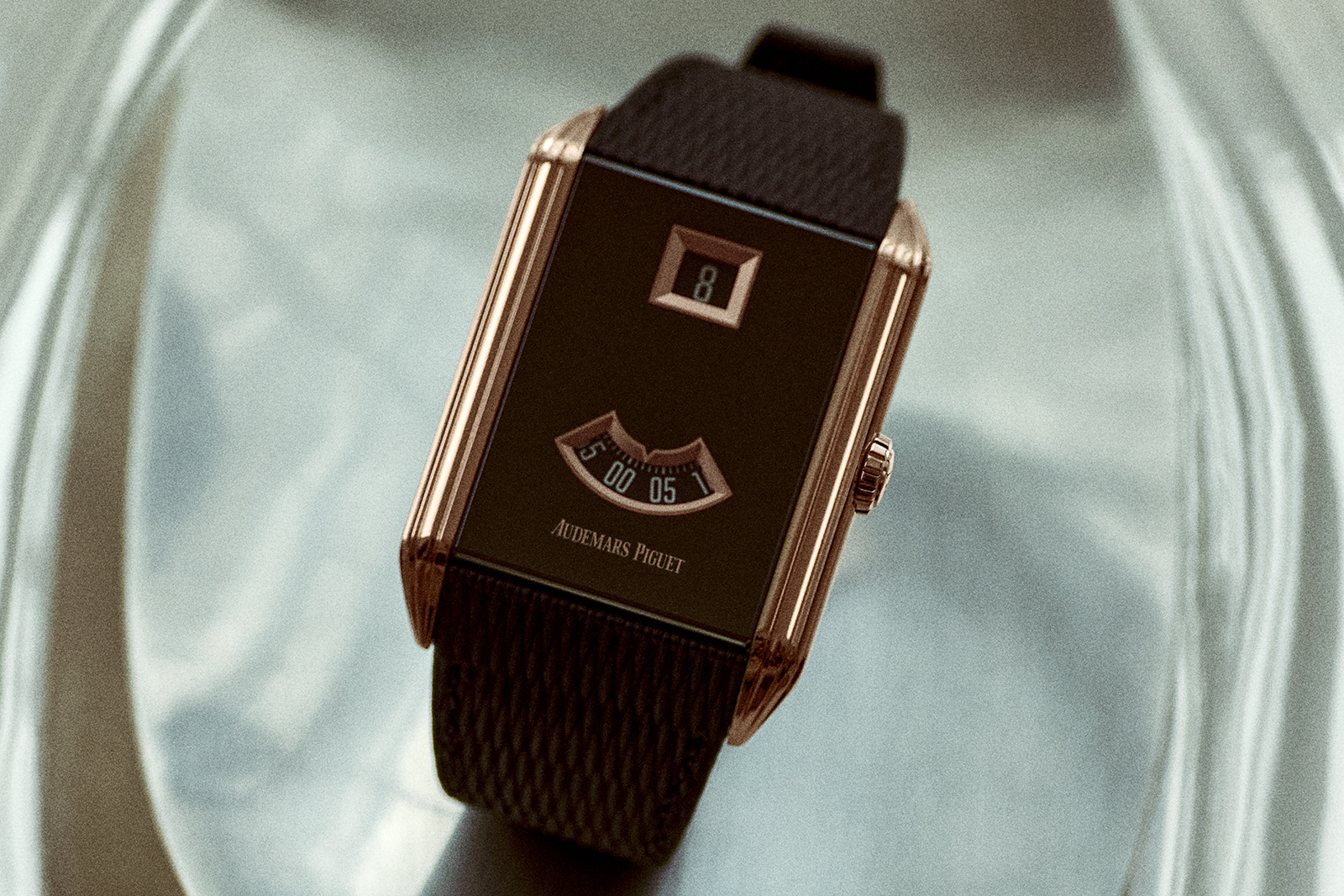
However, the watch face itself is the very opposite of excess, featuring only a discreet brand signature on the dial (that disappears at most angles) and apertures for the dragging minutes and jumping hours.

Though the case has a compact 32.6 mm by 34 mm footprint, it feels a little chunky for a retro design. The ergonomic slope of the lugs, however, give the New Frame good wearing comfort.

All in all, the Neo Frame is a strong first effort in what might evolve into a key pillar of the brand in the future. It’s arguably one of the most appealing watches of its kind and strengthens AP’s bench of new models.

Less is more

The Neo Frame’s glossy presentation is thanks to its shiny upper surface, achieved by PVD-coating a sapphire plate on its underside. This attractive but somewhat pretentious construction, which includes a metalised sapphire crystal screwed into the case, only allows for a meagre 20m of water resistance, but it is nonetheless a central, defining element of the design.

Interestingly, the sapphire crystal is not bordered at the six and 12 o’clock positions, adding a futuristic edge-to-edge look to an otherwise classic design.

The case hugs the crystal on each side with slender gadroon-like lines running from lug to lug. The specific design resembles historic guichet AP watches and is also a nod to the style of the Art Deco period.

There are only two apertures breaking the black surface — a deep, faceted square frame for the hours window and a semi-circular opening that reveals the minutes disc. The movement offers true jumping hours functionality, as opposed to a dragging hours, which improves legibility and helps the Neo Frame live up to AP’s reputation.

Interestingly, the Neo Frame does not strap to the wrist with normal lugs. Instead, the black textured calfskin leather strap, which features a rubber-like surface texture, extends over the lugs and connects with the case body, contributing to the modernist impression.

Vintage looks, modern engine

The jumping hours functionality is powered by Audemars Piguet’s cal. 7122. Derived from the thin automatic cal. 7121 inside the Royal Oak “Jumbo” ref. 16202, the new movement replaces traditional hands with a rolling minutes display and the headline jumping hours mechanism, which features a patented shock resistance system.

In most jumping hours complications, the hours disc is usually indexed and kept in place by a blade spring. The spring needs to be both strong enough to ensure the disc is indexed securely but also sufficiently compliant so that the changeover is crisp and reasonably energy efficient. A spring that is too compliant (compliance being the numerical inverse of stiffness) is naturally prone to be upset by well-timed shocks, so it is good to see AP actively improving an already mature mechanism.

The hours disc is made from titanium, while the rolling minutes disc is made from aluminum. These decision makes sense since the running minutes disc is a continuous load on the movement, so lightness is of the essence. For the isolated jumping disc, AP deemed material strength more important than maximum lightness, hence the choice of still-lightweight titanium alloy.

Otherwise, the cal. 7122 shares the same core architecture with the sophisticated and elegant cal. 7121. Beyond the clean finishing and tidy looks, the movement has some interesting and unorthodox features. For one thing, the barrel is secured by a gold bridge, as is the free-sprung aerodynamic balance with inset inertia blocks.

There are also ruby liners to ensure the stability of the barrel click wheel, and the flat hairspring is pinned to its own finger bridge. The slim movement runs for 52 hours at a modern 4 Hz pace, suggesting that barely any concessions were made in terms of chronometry.


Key specs and price

Audemars Piguet Neo Frame Jumping Hour
Ref. 15245OR.OO.D206VE.01

Size: 32.6 x 34 mm
Height: 8.8 mm
Material: 18K pink gold
Crystal: Sapphire
Water resistance: 20 m

Movement: Calibre 7122
Features: Jump hours, minutes
Frequency: 28,800 beats per hour (4 Hz)
Winding: Automatic
Power reserve: 52 hours

Strap: Calfskin leather textured strap with matching pin buckle

Limited edition: No
Availability: Directly from Audemars Piguet
Price: CHF56,300 excluding taxes

For more, visit audemarspiguet.com.


Back to top.

You may also enjoy these.

Audemars Piguet’s 150 Heritage is a Universal Cultural Calendar

With a first-of-its-kind mechanical calculator.

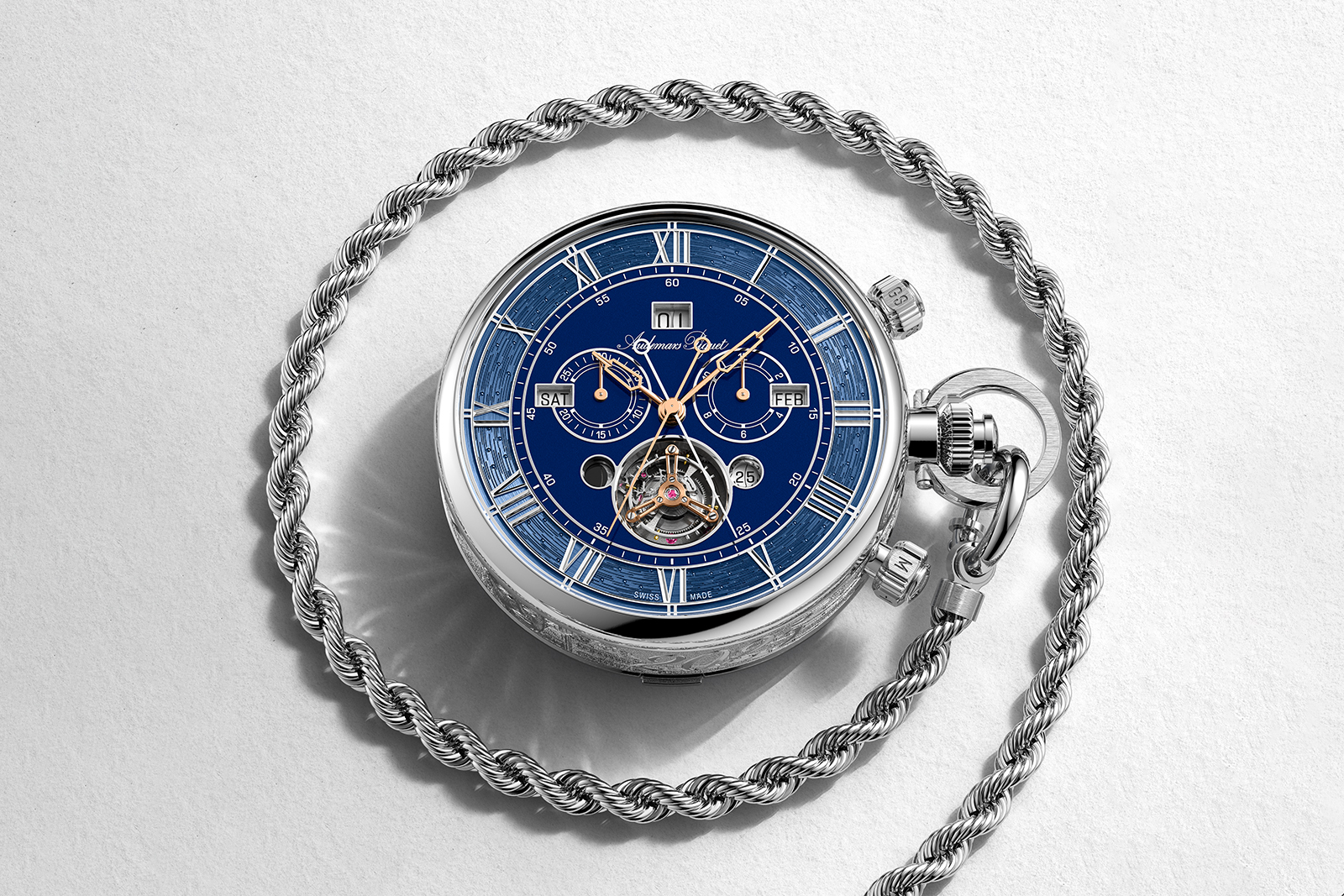
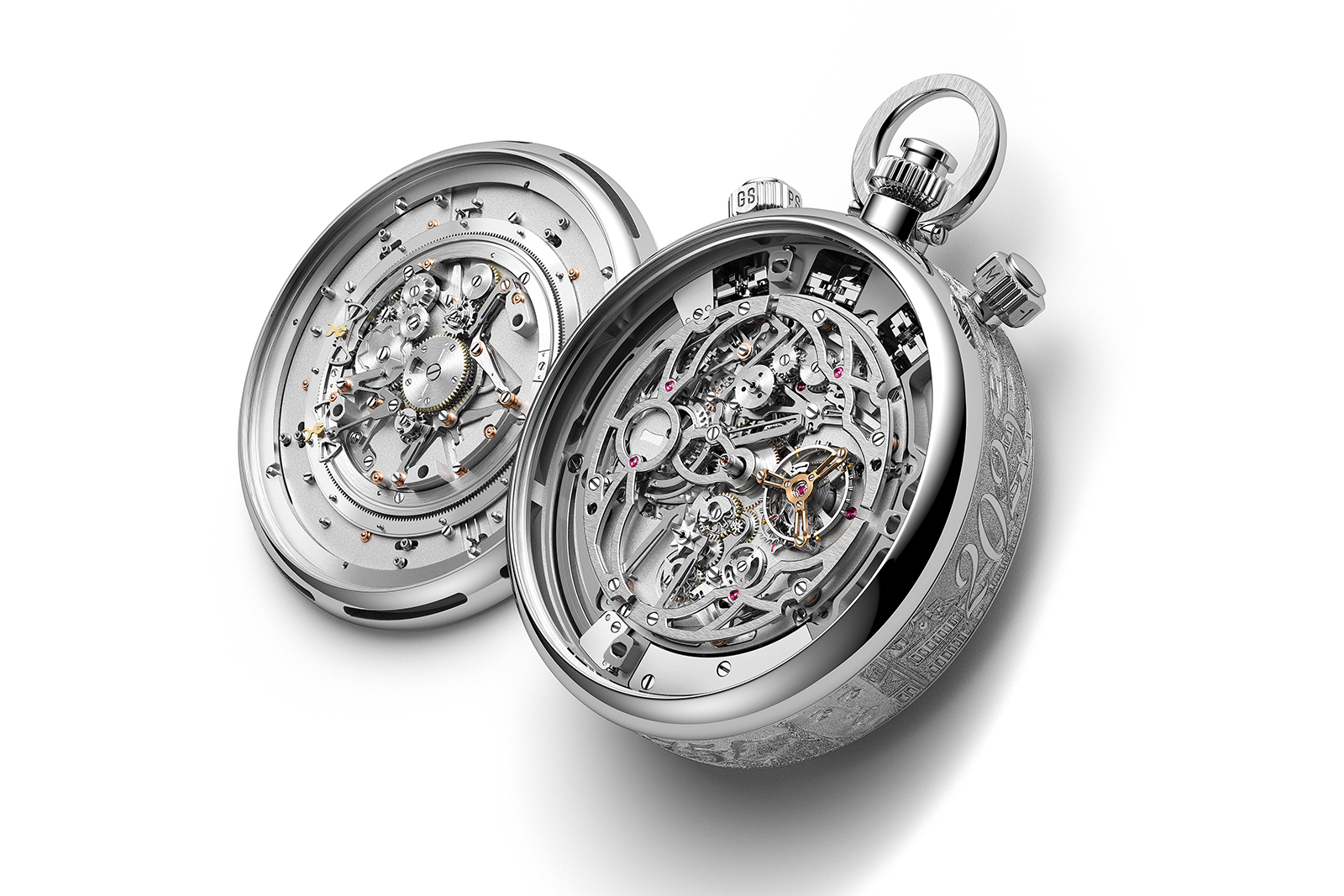
Audemars Piguet celebrated 150 years of existence in 2025, but its celebrations have continued into the new year with the 150 Heritage Pocket Watch. While many large ultra-complicated pocket watches are exercises in nostalgia, the 150 Heritage is a modern marvel of micro-mechanical engineering with never-before-seen functionality inside a surprisingly compact 50 mm case.

Initial thoughts

Few brands can match Audemars Piguet’s track record of producing Grand Complication pocket watches, but the 150 Heritage surprises by adapting a calibre originally intended for the wrist.

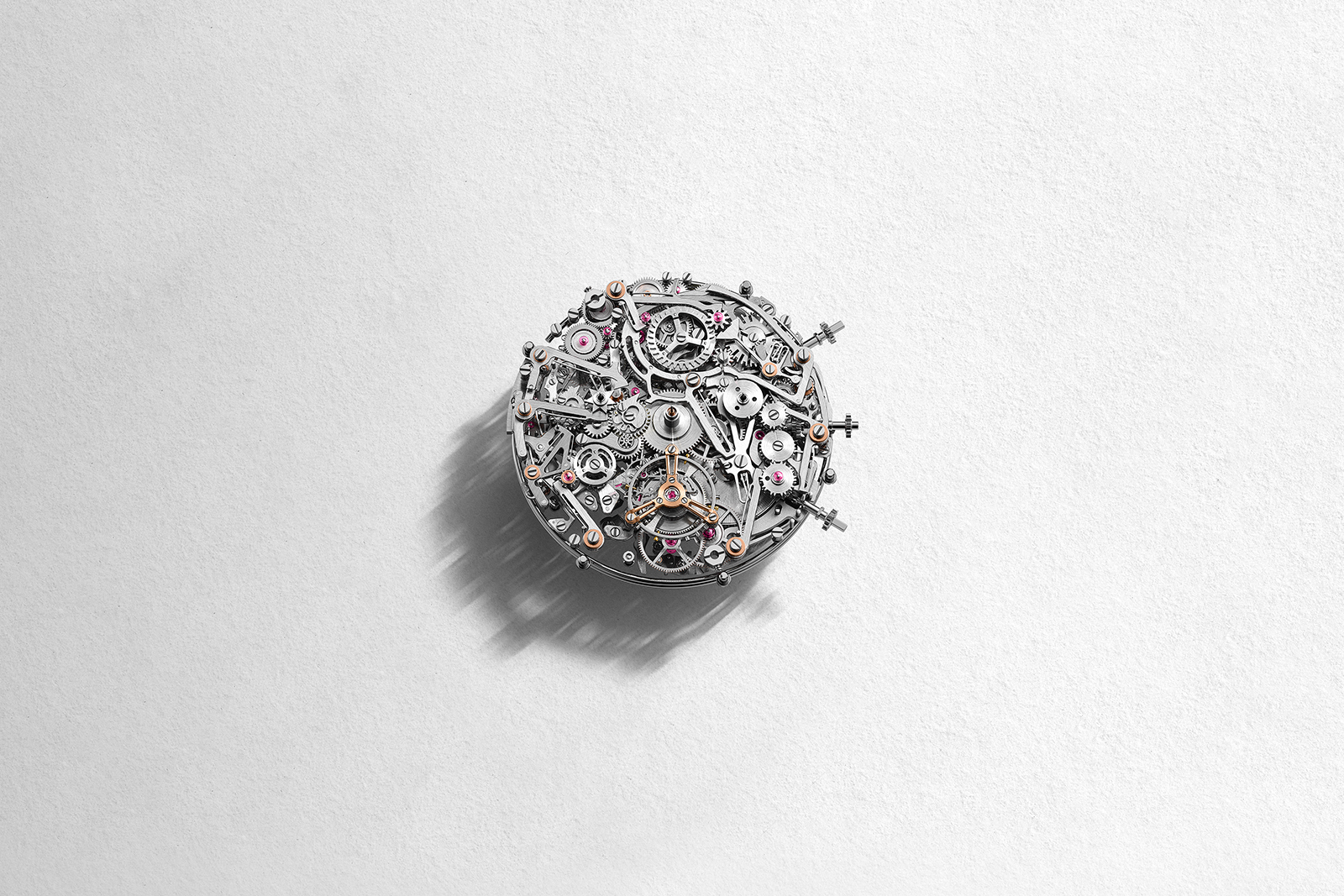
A complicated pocket watch with a simple name, the 150 Heritage is built around the cal. 1150, a newly developed hand-wound movement that adapts the architecture of the ambitious cal. 1000 developed for the Code 11.59 Universelle, and as such it includes past RD-series innovations.

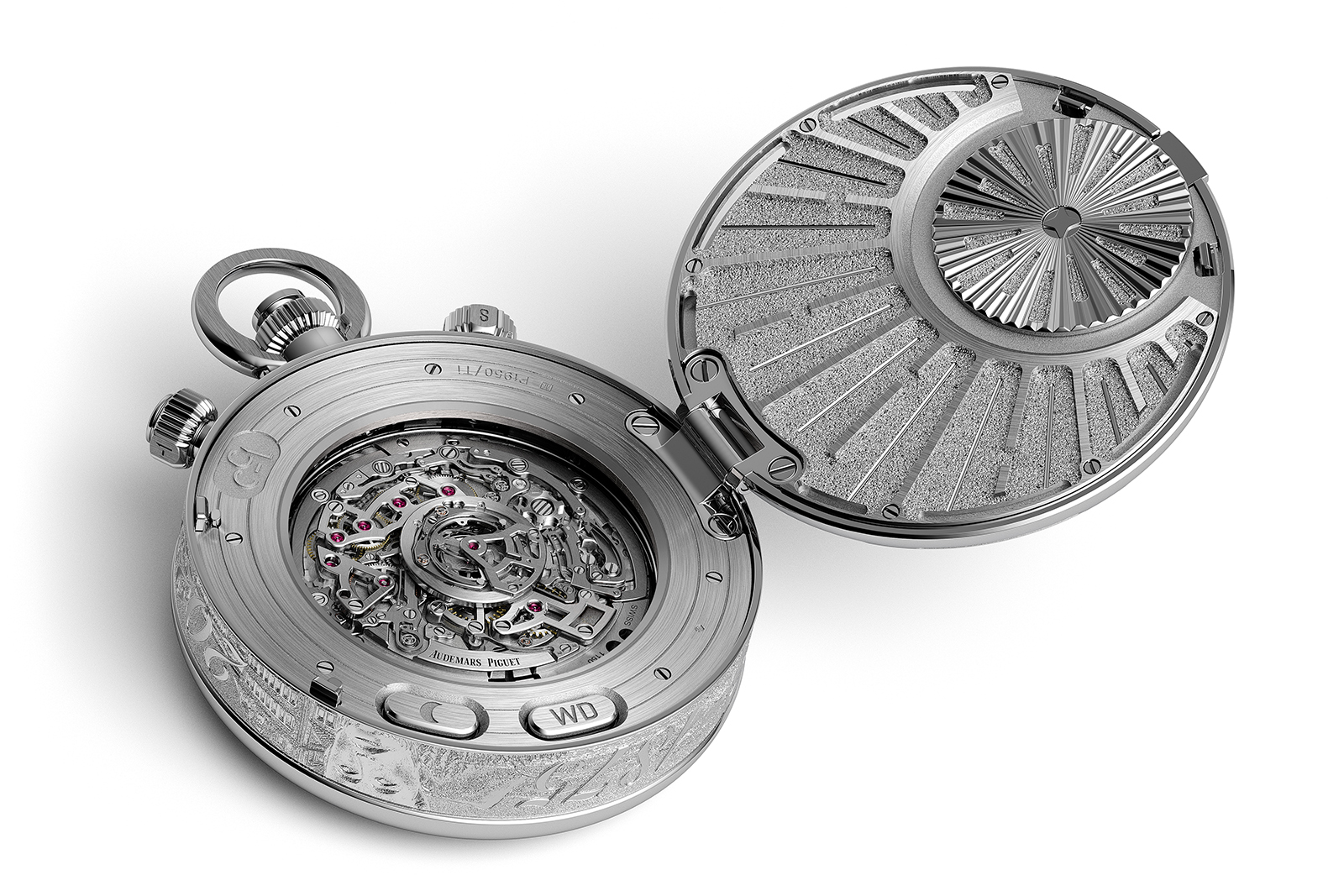
That said, the differences between the Universelle and the 150 Heritage are quite significant, thanks to an intriguing new feature: a hinged mechanical calculator, isolated from the movement.

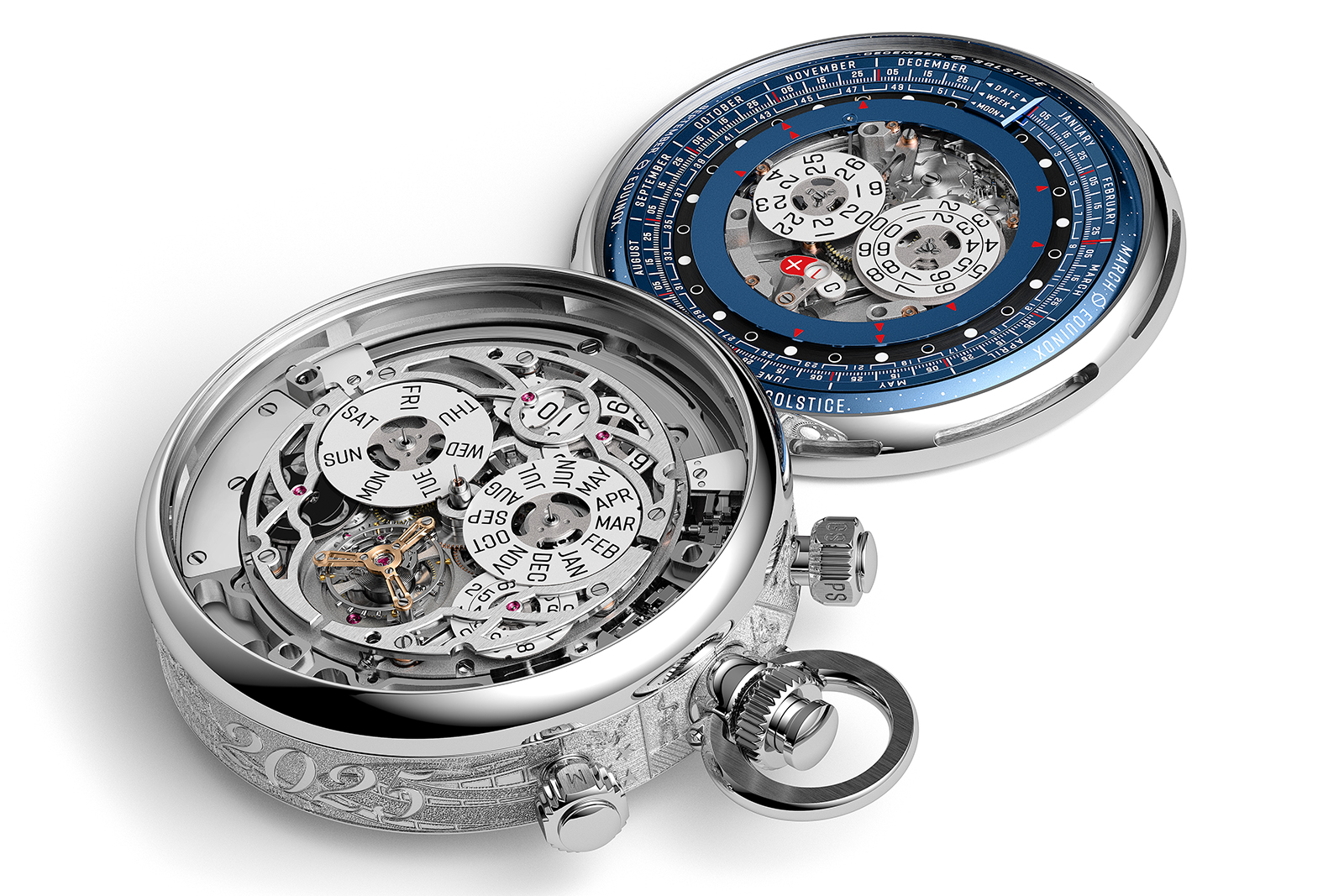
The intricate system is housed inside the case back and allows the user to effortlessly cycle through dates across any year to be able to read a surprising number of culturally-relevant dates based on lunar, solar and lunisolar cycles. 

The device feels a bit like a time machine, as the lucky owner can go into the past or look into the future and find out the exact dates of Catholic Easter, Ramadan, Equinoxes and many others, along with the specific arrangement of days and weeks during any given year.

The visual presentation and slate of complications calls to mind the Code 11.59 Universelle thanks to the arrangement of the chronograph sub-dials, calendar apertures, and the large flying tourbillon, a feature born for the pocket watch format. That said, the cal. 1150 does away with the automatic winding works, and has been subtly tweaked to better fit the larger case format. 

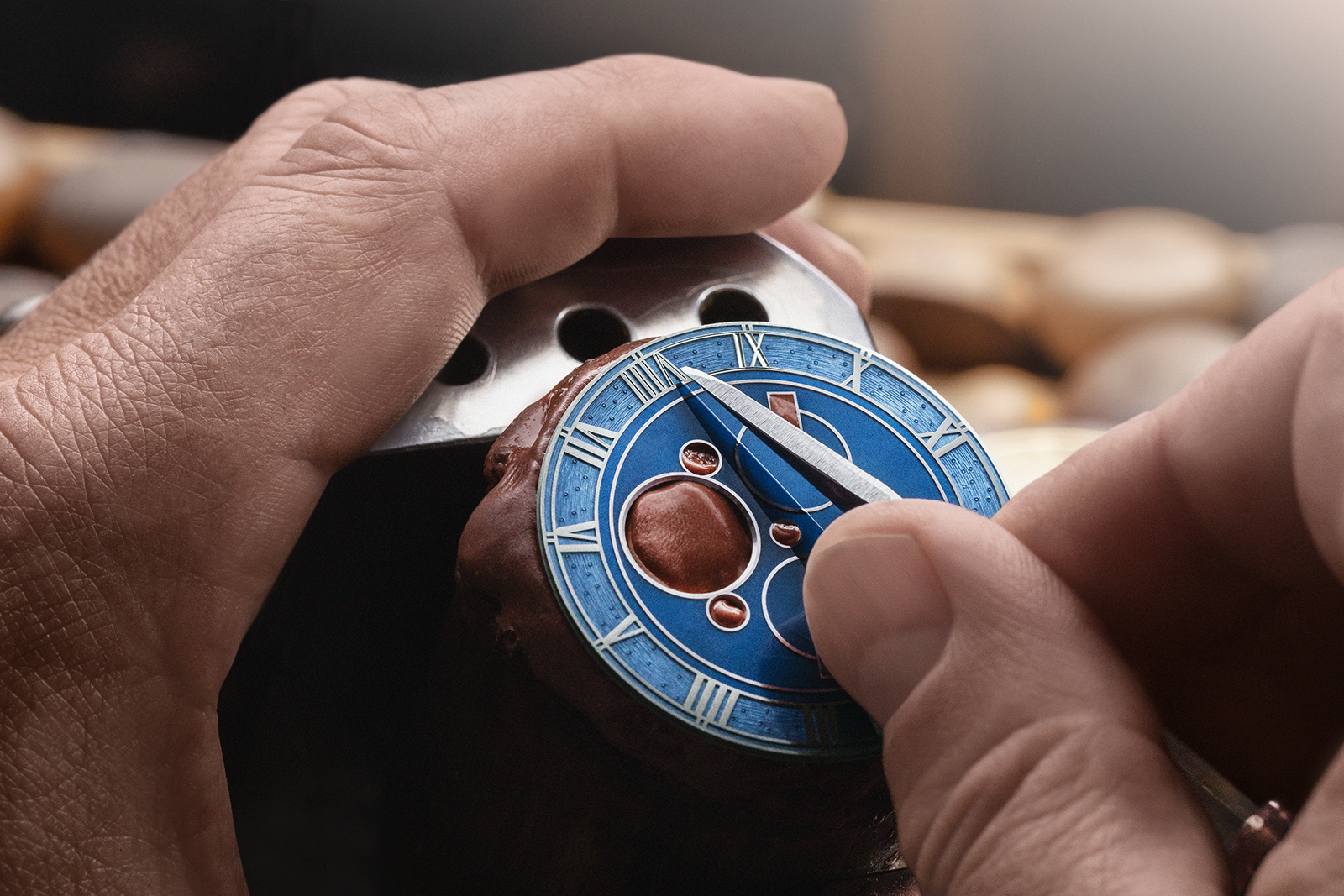
Having a larger size to work with, the artisans of Audemars Piguet also dressed the platinum case with elaborate ornamental engravings and a grand feu enamel dial in a striking blue.

While the case is larger than is typical for a wristwatch, it’s still quite small due to its technical origins. Giulio Papi conceived the 150 Heritage as a pocket watch that would actually fit in the pocket, as opposed to the paths taken by Vacheron Constantin and Patek Philippe, which opted to make massive hamburger-sized grand complication pocket watches.

Of course, a seven-figure watch like the 150 Heritage will most likely be exhibited in a secure environment, but it’s nice to know it actually can fit in one’s pocket. It’s also surprisingly intuitive and user-friendly for something as whimsical and luxurious as a two-piece limited edition anniversary pocket watch.

Complications galore

The complication list of the 150 Heritage reads much like a catalogue of the most demanding horological systems: grande and petite sonnerie and minute repeater with Supersonnerie acoustics, a split-seconds flyback chronograph, flying tourbillon, and a semi-Gregorian perpetual calendar capable of accounting for centennial leap-year exceptions.

In spite of all these indications, the design doesn’t feel cluttered and retains a high degree of legibility. The dial layout is virtually identical to that of the Code 11.59 Universelle, with its large European-style date format and double-digit year indicator. The large balance inside the flying tourbillon cage beats at 3 Hz, is free-sprung and comes mounted on a Breguet overcoil hairspring.

The wristwatch format of the cal. 1000 architecture means the chronograph pushers and crown sit on the right-hand side of the case relative to the vertical orientation the dial — making for an unusual handheld operation of the chronograph.

Usually pocket chronographs have the crown at the 12 o’clock position and the pushers flanking it, making the actuation more natural to the hand. This is one of a few areas where the wristwatch origin makes itself known.

Interestingly, the chronograph pushers also serve in correcting the indications on the dial — the rotatable pusher at four o’clock sets the month indicator, and the pusher co-axial with the crown aids with setting and winding the watch. Impressively, the date can be set backwards and forwards, which is quite rare for perpetual calendars. 

The line between case and movement was intentionally blurred making the case itself feel mechanical and interactive. For example, the day of the week and moon phase are set using broad horizontal pushers on the case back side. 

Métiers d’art crafts

The 50 mm platinum case is entirely hand engraved, a demanding and rare craft typically reserved for exceptional pieces. The functional elements remain grouped along a limited section of the case flank, opening up the remaining surface as a canvas for the engraver.

The case band reimagines scenes from the manufacture’s history, including portraits of its founders and a dedicated anniversary emblem. As is usually the case with hand engraving, the metal gains an organic feel that isn’t found with other decorating techniques. 

The main dial is executed from an 18k white gold base and is finished with translucent blue grand feu enamel. Applied Roman numerals, engraved by hand, sit above a backdrop of starry trails, a discreet and appealing motif that continues onto the Universal Calendar system at the back.

Completing the ensemble is a hand-made platinum chain, produced using traditional techniques. This is notable since chain-making skills have become increasingly scarce and mostly forgotten as pocket watches have fallen out of favour.

The Universal Calendar

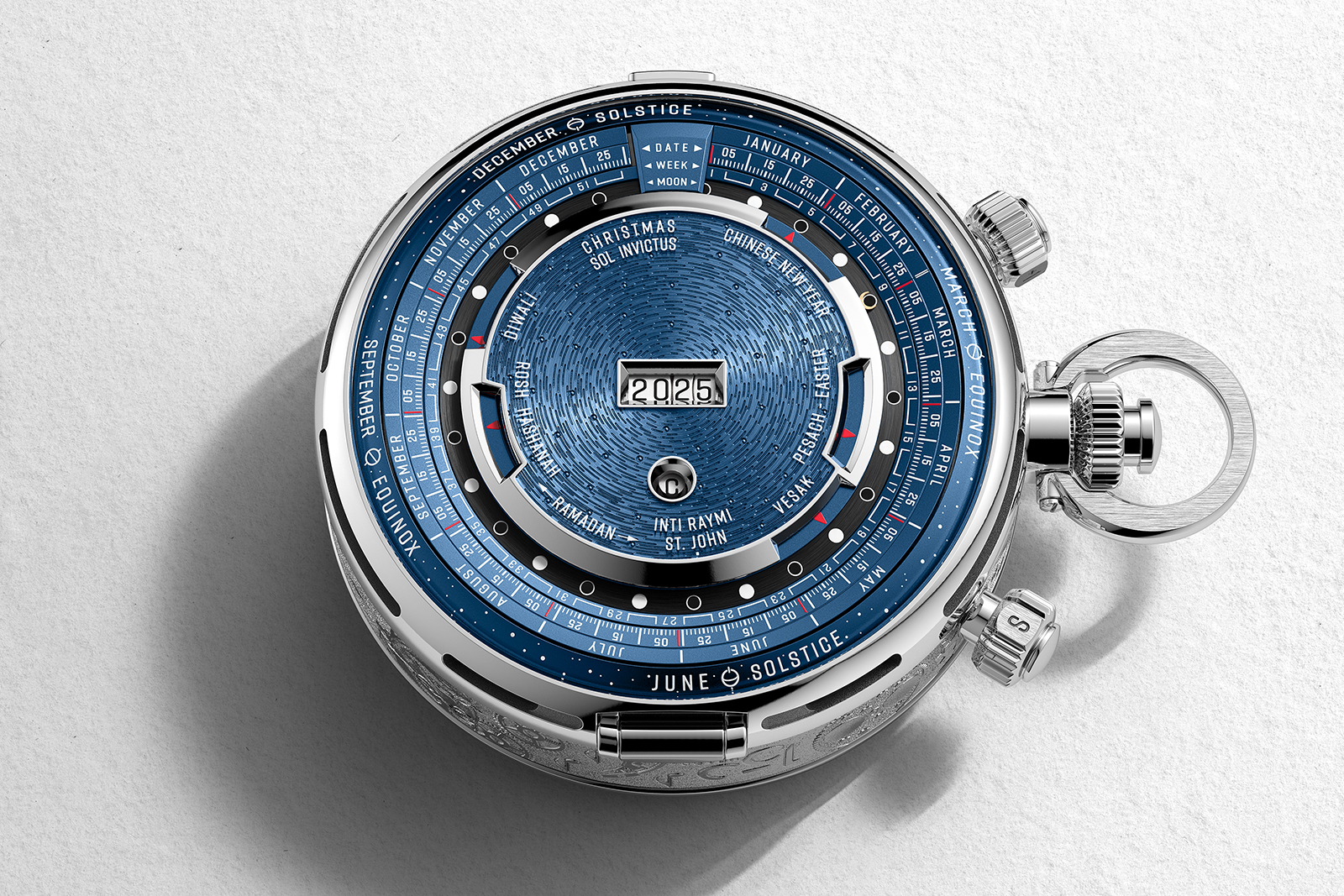
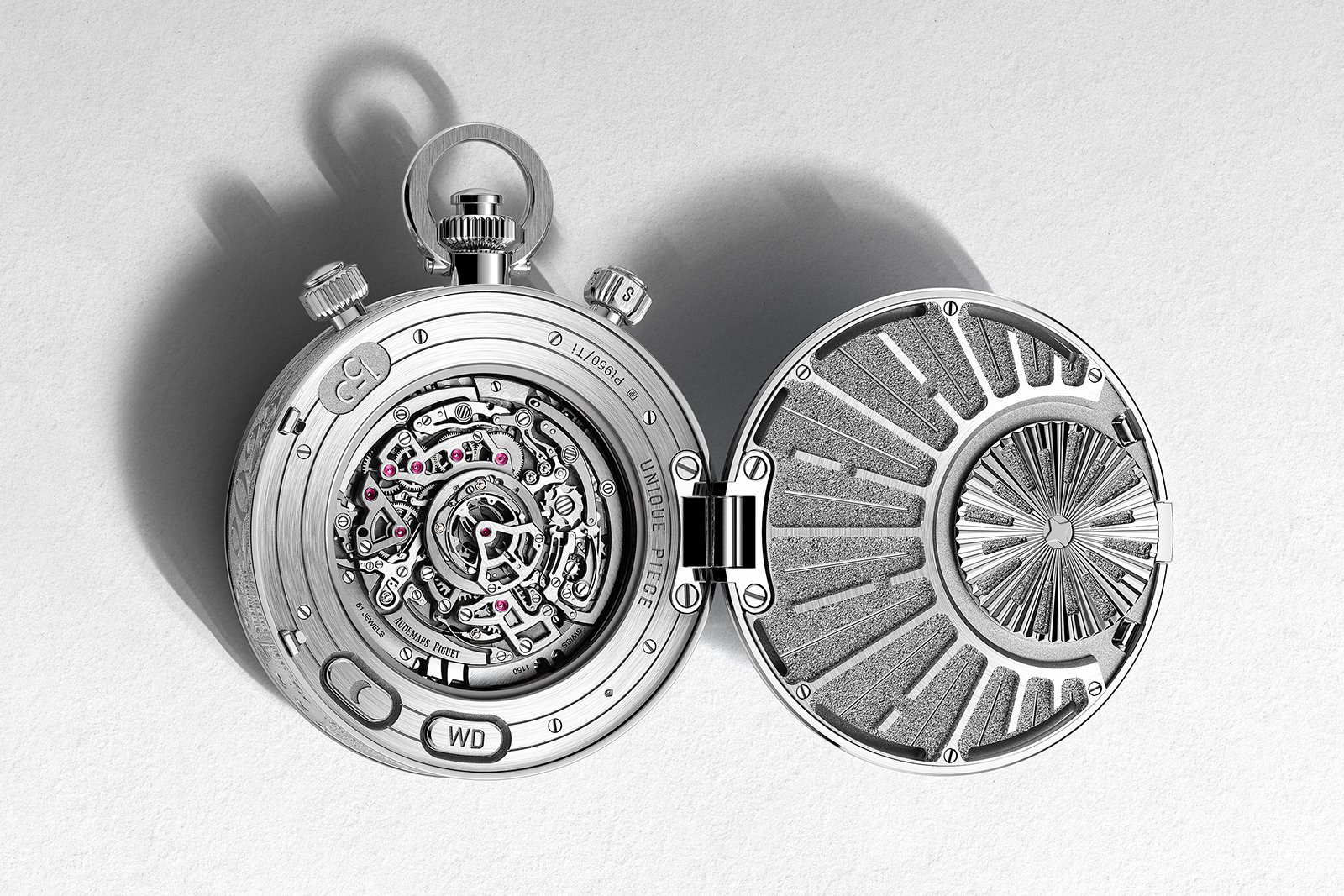
Without question, the most original element of the 150 Heritage is found not on the dial, but is fitted inside the hinged case back. The Universal Calendar is entirely independent of the main movement and works much like a mechanical computer.

Unlike the limited functionality of a traditional Gregorian perpetual calendar format, the Universal Calendar is conceived as a broader reflection of how human societies and cultures have measured time. Using the Gregorian system as a reference point, the device overlays solar, lunar and lunisolar cycles on a single large dial, making for a panorama of temporal information.

The display incorporates 18 indications. Those include years, leap years, months, dates, weeks, moon phases, solstices and equinoxes, as well as nine cultural and religious celebrations drawn from different traditions. 

Exposed mechanics inside the Universal Calendar. The array of levers and gears rivals the complexity of Calibre 1150 itself.

These include solar-based celebrations such as Christmas and Saint John’s Day, lunar-abiding events like the beginning of Ramadan, and lunisolar events such as, Catholic Easter, Chinese New Year, Diwali, Rosh Hashanah and Vesak. The Universal Calendar links each celebration directly to the astronomical phenomenon that defines it. 

By using a rotary selector on the inside of the hinged case back, the user can cycle through years, instantly gaining an overview of the important dates and celebrations. Impressively, the mechanism is programmed for a wide range of dates from 1900 to 2099.

Since the Universal Calendar is not linked in any way to the movement, it doesn’t depend on the power reserve and won’t automatically advance like a normal calendar. Instead, the user can rely on the perpetual calendar on the main dial for the live date, while consulting the mechanical computer on the back to know when certain events and holidays will take place for a given year.

Mechanically programming each of these cycles and events accurately is one of the most important feats of the 150 Heritage. While all these celebrations and religiously-relevant dates are derived from the same natural cycles of Sun and Moon, the calculation rules and rigours vastly differ from culture to culture. Having all these display so naturally on a single device is nothing short of extraordinary.


Key specs and price

Audemars Piguet 150 Heritage Pocket Watch
Ref. 75150PT.OO.01

Diameter: 50 mm
Height: 23.4 mm
Material: Platinum
Crystal: Sapphire
Water resistance: Presumably dust resistant

Movement: Calibre 1150
Features: Hours, minutes, split-seconds flyback chronograph, flying tourbillon, grande et petite sonnerie, minute repeater, moon phase, semi-Gregorian perpetual calendar, Universal Calendar.
Frequency: 28,800 beats per hour (4 Hz)
Winding: Manual
Power reserve: 60 hours

Fixture: Platinum or white gold handmade chain, 40 cm in length

Limited edition: Two unique pieces in platinum, eight more in white gold to follow
Availability:
Directly from Audemars Piguet
Price: CHF2.5 million in platinum (~US$3.2 million) and CHF2.35 million (~$US3 million) in white gold


Updated 4, Febuary 2026 – Added pricing and upcoming white gold variant.

Back to top.
You may also enjoy these.
Welcome to the new Watches By SJX.

Subscribe to get the latest articles and reviews delivered to your inbox.