Hands-On: Audemars Piguet Royal Oak “Jumbo” Extra-Thin Openworked

Radical openness in action.

The Audemars Piguet (AP) Royal Oak “Jumbo” Extra-Thin Openworked 39 mm is an appealing new variant of a watch that’s already in short supply, famous as much for its scarcity as its octagonal bezel. Seen previously in white gold, the Jumbo Openworked returns at the top of its class with a case made from lightweight titanium and palladium bulk metallic glass (BMG), a material that gives the bezel its almost ethereal mirror finish.

The Jumbo Openworked is not a limited edition, but its undeniable appeal will make it hard to come by, even by Royal Oak standards.
Ideal configuration

The Royal Oak is one of the most sought-after watches in the industry, and one of the few collections that consistently trades at a premium to retail, according to WatchCharts. With its iconic Genta design, slim form factor, and high-end calibre, it’s easy to see why.

That said, some configurations are more appealing than others, and this titanium and palladium version of the Jumbo Openworked ranks highly in the Royal Oak pantheon. It’s worth exploring why it works.
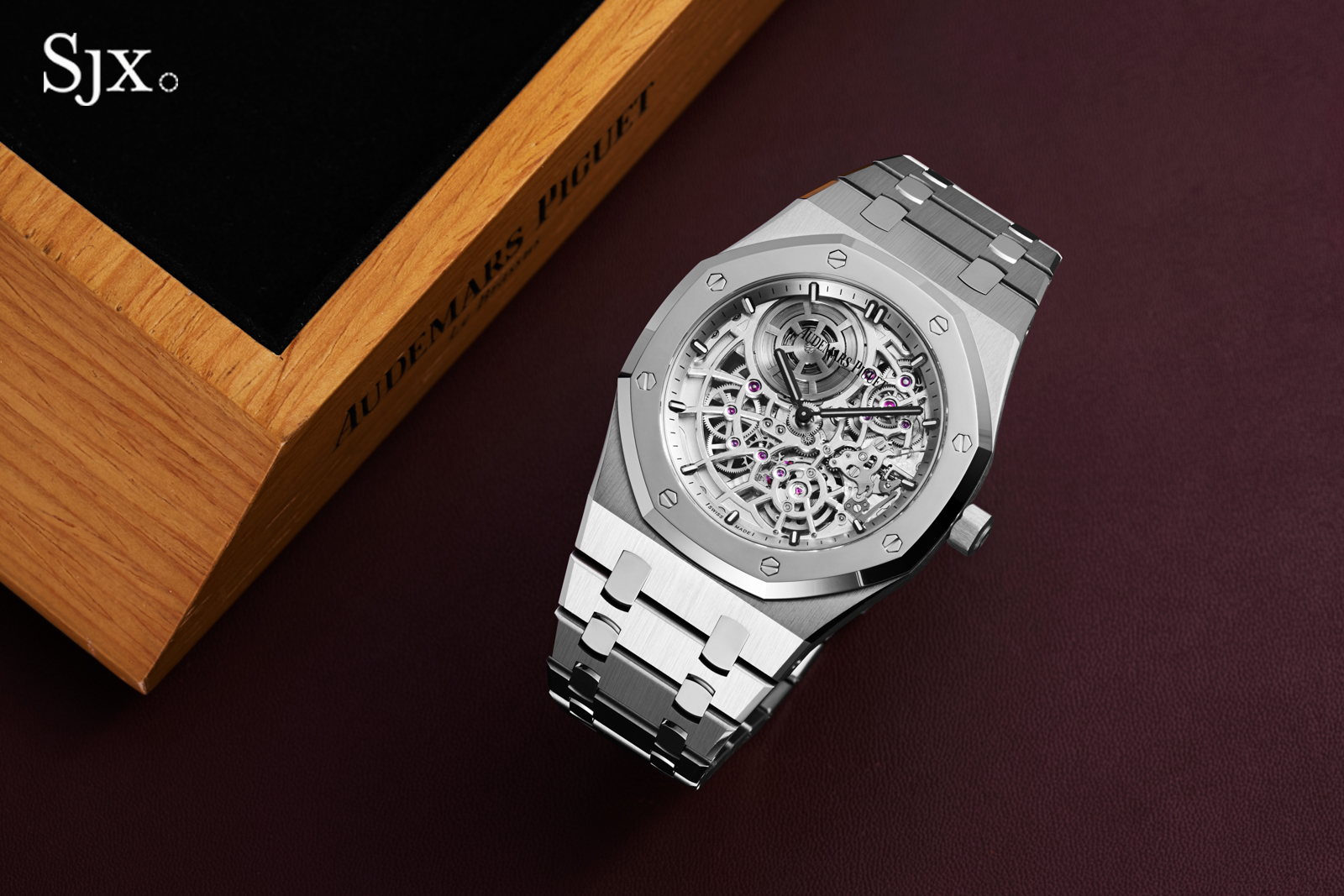
Starting with the sizing. In 1972, the Royal Oak was broad and flat by industry standards, but the “Jumbo” moniker now feels misleading for a 39 mm watch. Ironically, the “Extra-Thin” designation also feels misleading for the opposite reason — 8.1 mm is plenty thin, but there are now so many thinner watches that the terminology feels out of date.

Setting aside AP’s historical naming conventions, the Jumbo Openworked is almost perfectly sized by the standards of an elegant sport watch, large enough to have presence and thin enough to disappear up one’s sleeve. It’s apparently the smallest size that accommodates AP’s latest-generation slimline automatic calibre, and, perhaps as a consequence of that technical rationale, the sizing feels right.
The Royal Oak made a splash originally because stainless steel represented a provocative choice at the time, when gold watches still dominated the high-end segment. Today, no one bats an eye at stainless steel luxury watches, but AP has continued to push the envelope when it comes to shocking, exotic materials.

One of the brand’s latest material developments is BMG, which in this case is an alloy made from 50% palladium. Despite the confusing name, the material is metal, not glass, though it undergoes a special heat treatment process that results in an amorphous glass-like structure with greater scratch resistance — 500 Vickers, according to AP.

The only real downside of BMG, as far as I can tell, is that it’s a magnet for finger prints in a way that I haven’t experienced with other metals. This is a worthwhile trade-off for its brilliant look and enhanced scratch-resistance, but it’s worth keeping a cleaning cloth close at hand.

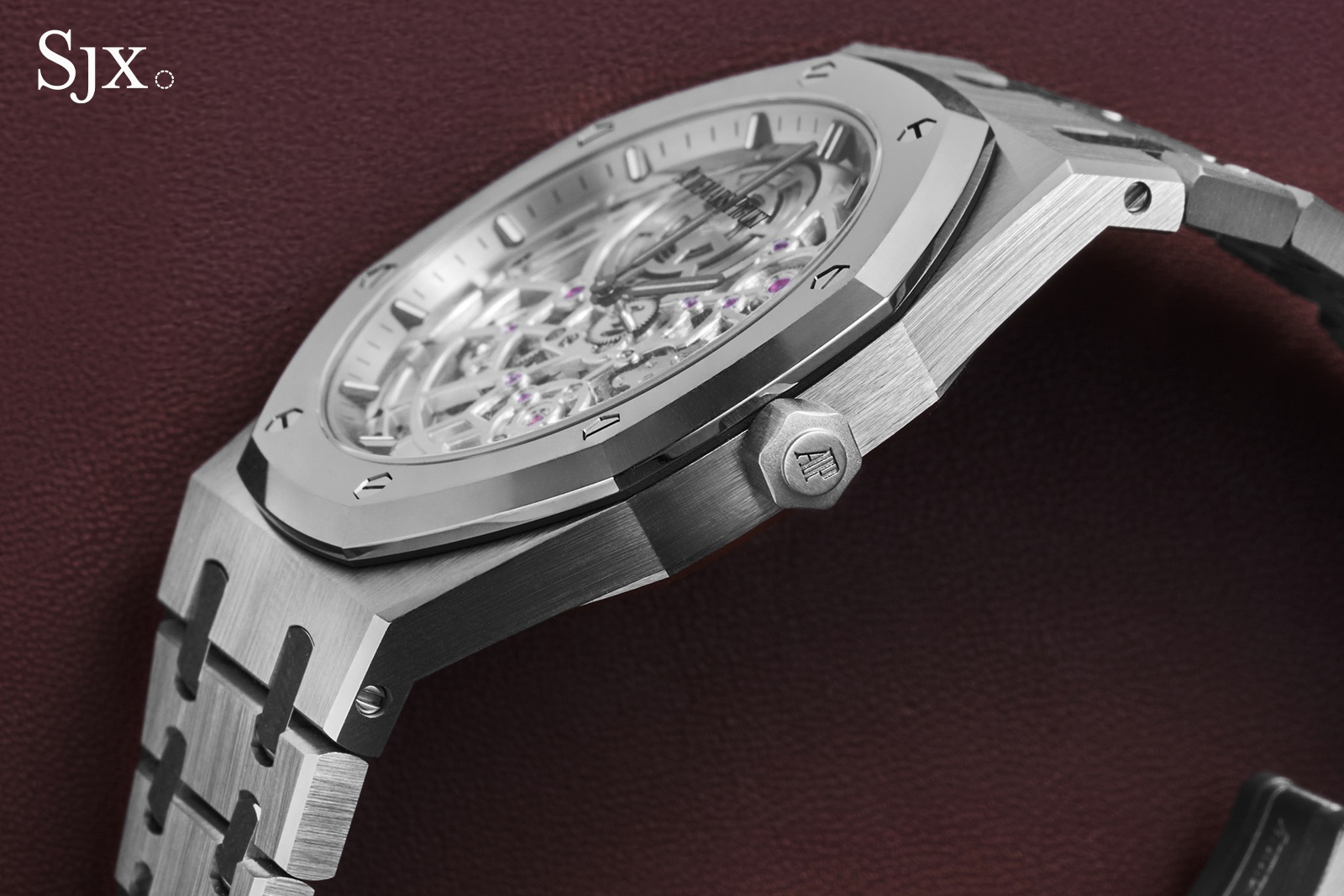
The BMG bezel and intermediate bracelet links are highly polished, devoid of the rich straight graining that the Royal Oak is known for. On the other hand, the case and primary bracelet links are made of lightweight titanium, which gives the watch an effortless feel on the wrist and creates a pleasing contrast between the brushed and polished surfaces, which practically glow.

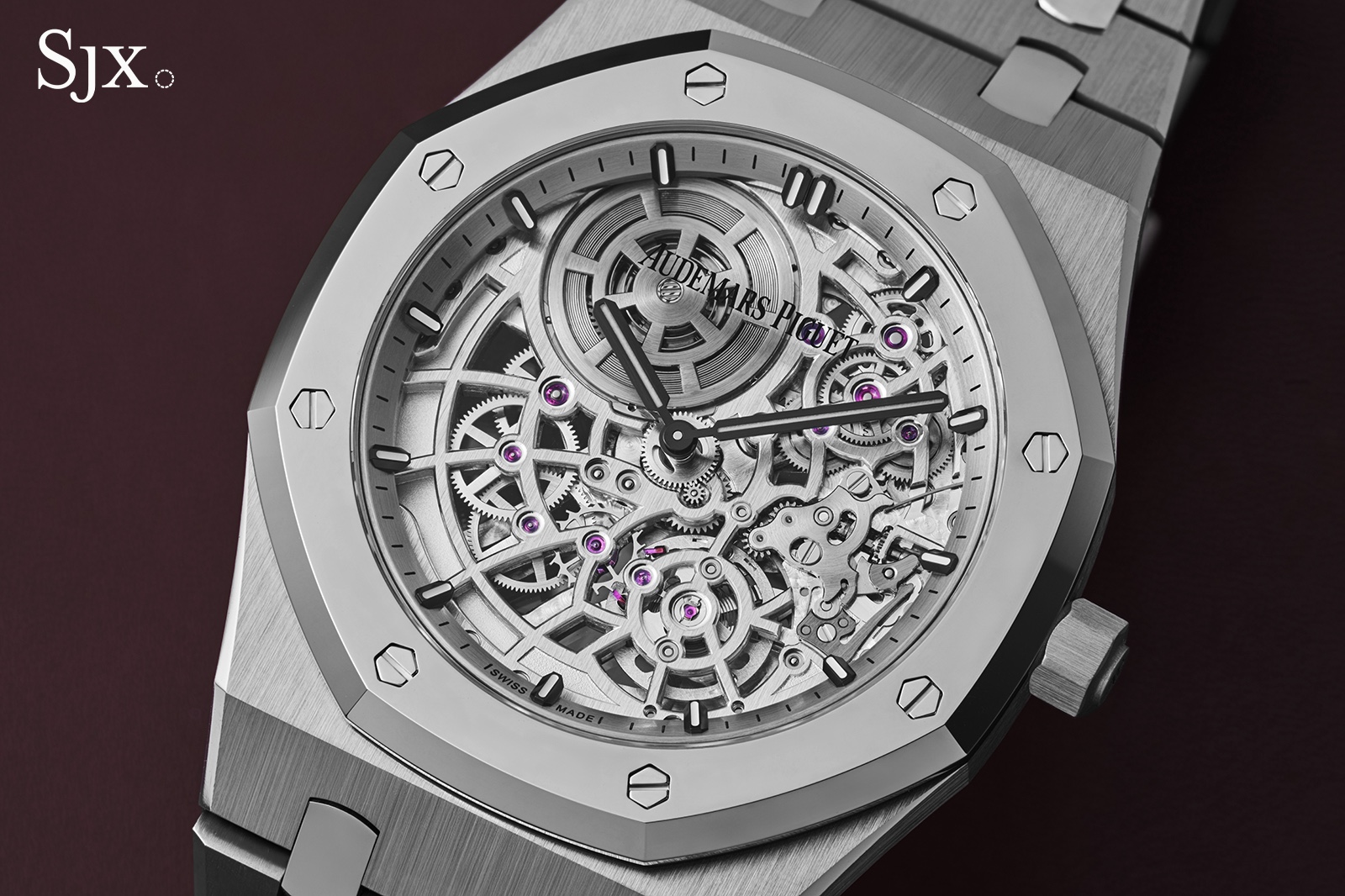
Unsurprisingly, there’s not much to the dial of the Jumbo Openworked. Traditionalists may regret that absence of the iconic petite tapisserie dial, but the cal. 7124 is well-suited to its starring role and the excellent finishing puts a lot of eye candy front and centre. What little dial remains is confined to the perimeter flange, which is set with applied (lumed) lozenge-shaped 18k white gold hour markers.

Another desirable trait of the ‘Jumbo’ compared to other Royal Oak models is it retains the printed Audemars Piguet wordmark, rather than an appliqué. The applied wordmarks on most other Royal Oak models are undoubtedly more costly to pull off, but to my eye the design cheapens the look. In the case of the Jumbo Openworked, the wordmark is printed on the underside of the crystal to keep the bridges uncluttered.

Industrial quality

AP’s industrial strategy intends to strike a balance between industrial quality and hand craftsmanship. These priorities converge in several areas, including the numerous inward angles found in the movement — a hot topic among collectors of late.
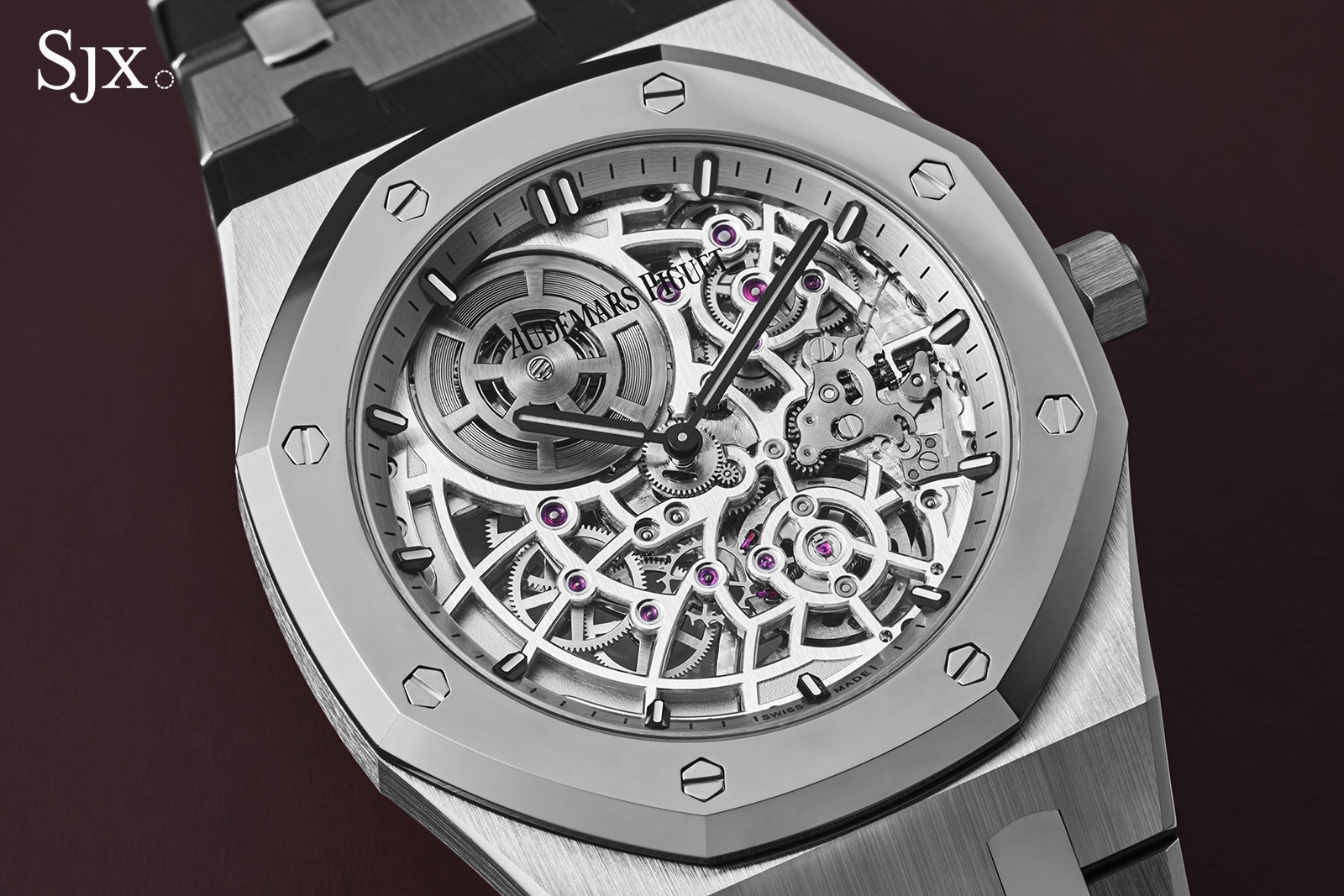
The cal. 7124 features hundreds of polished inward angles, and their regularity is suggestive of the processes used to create them. Take the barrel cover, a component produced by one of AP’s suppliers. In most watches, the barrel cover is a cheap, forgettable, functional component. In the cal. 7124, AP has dressed it up with 48 inner angles on each side — more than most haute horlogerie calibres offer in the entire movement.

The size and uniformity of the cutouts, which are but few among many, offer a clue about how this is done. The cutouts are first machined using a technique like Electrical Discharge Machining (EDM), which is capable of cutting precise corners. This preparation simplifies the finishing process, increasing the speed with which hand-polished inward angles can be finished. It’s hard to argue with the results.

Radical openness

During the model’s launch event in the chic mountain village of Andermatt, AP CEO Ilaria Resta presented three key pillars intended to guide the brand for its next 150 years. The first is manufacturing excellence, with an emphasis on hand craftsmanship, and the second is inclusivity — specifically, connecting with collectors across generational and gender divides to build the customer base of the future.

The third pillar is radical openness, and while the intent refers to making the brand intellectually accessible, the Jumbo Openworked does a pretty good job of embodying this objective in a tangible form. The cal. 7124 leaves little to the imagination, revealing remarkable finishing inside and out.

The simplified design has a technical benefit as well — without a date mechanism, the movement gains an extra two hours of power reserve relative to the cal. 7121, up to 57 hours. That’s a big number for a thin calibre, especially one that beats at a robust 4 Hz.
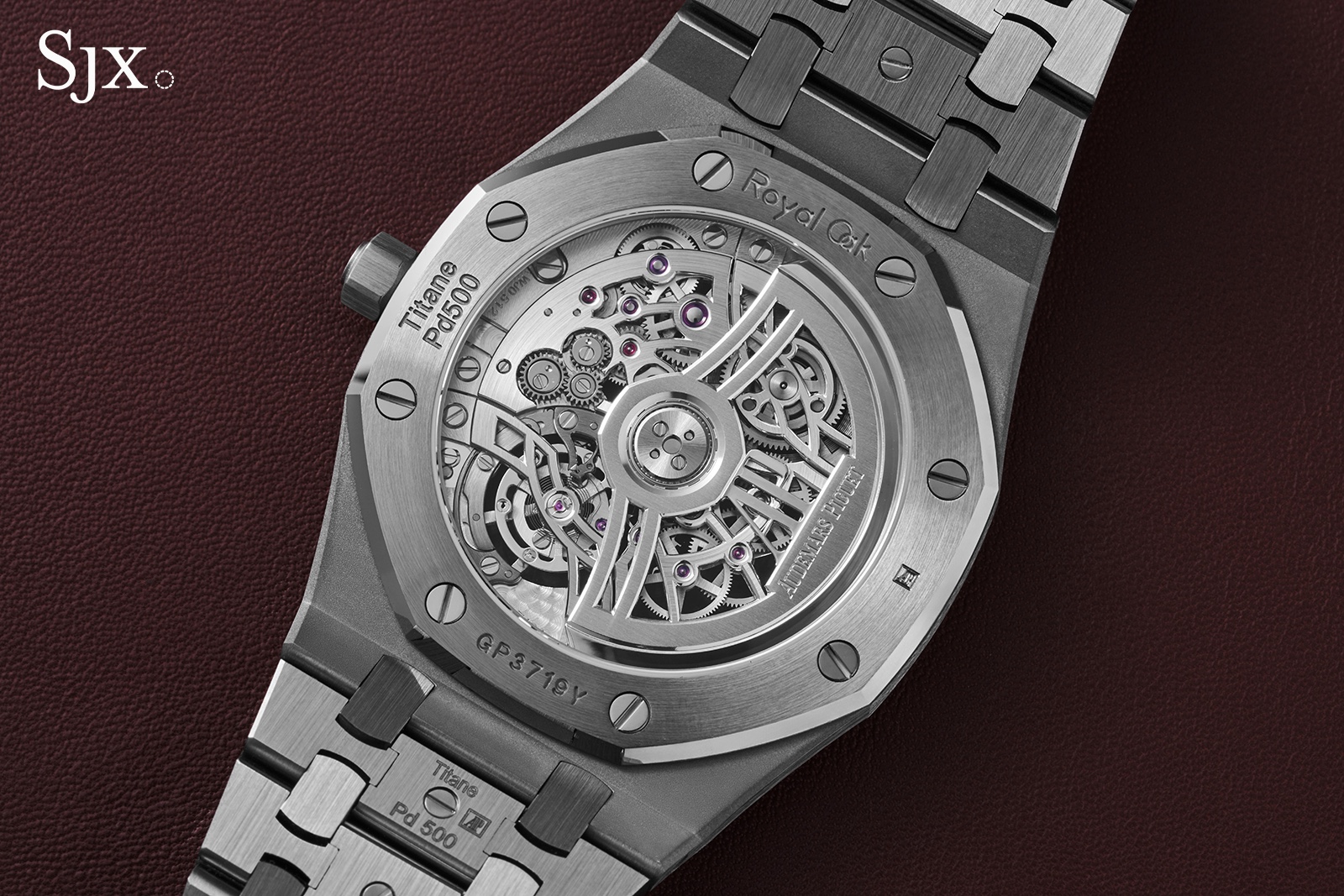
Having gotten used to the look of the cal. 7121 with its solid bridges and contrasting colours, the monochromatic palette of the cal. 7124 is almost shocking in its austerity. Traditional Cotes de Geneve give way to large-diameter circular graining on the little surface area that remains, while tidy (almost geometric) openings reveal the movement’s inner workings, including the going train, the keyless works, and the bidirectional winding system.

Regarding the latter, there remains disagreement within the industry about the relative technical superiority of bidirectional winding, but in an upscale, refined watch like this, utmost efficiency is arguably beside the point. The slower-moving rotation of the rotor, which is partly visible through the openworked dial, offers a more graceful experience on the wrist.


Key facts and price

Audemars Piguet Royal Oak “Jumbo” Extra-Thin Openworked 39 mm
Ref. 16204XT.OO.1240XT.01

Diameter: 39 mm
Height: 8.1 mm
Material: Titanium and palladium 500 BMG
Crystal: Sapphire
Water-resistance: 50 m

Movement: Cal. 7124
Functions: Hours and minutes
Winding: Automatic
Frequency: 28,800 beats per hour (4 Hz)
Power reserve: 57 hours

Strap: Titanium bracelet with palladium 500 BMG intermediary links

Limited edition: No
Availability:
At AP boutiques and AP Houses
Price: Upon request

For more, visit audemarspiguet.com.


Back to top.

You may also enjoy these.

A Wishlist for Watches & Wonders 2026

What-ifs from Patek Philippe, Grand Seiko, Credor, and Tudor.

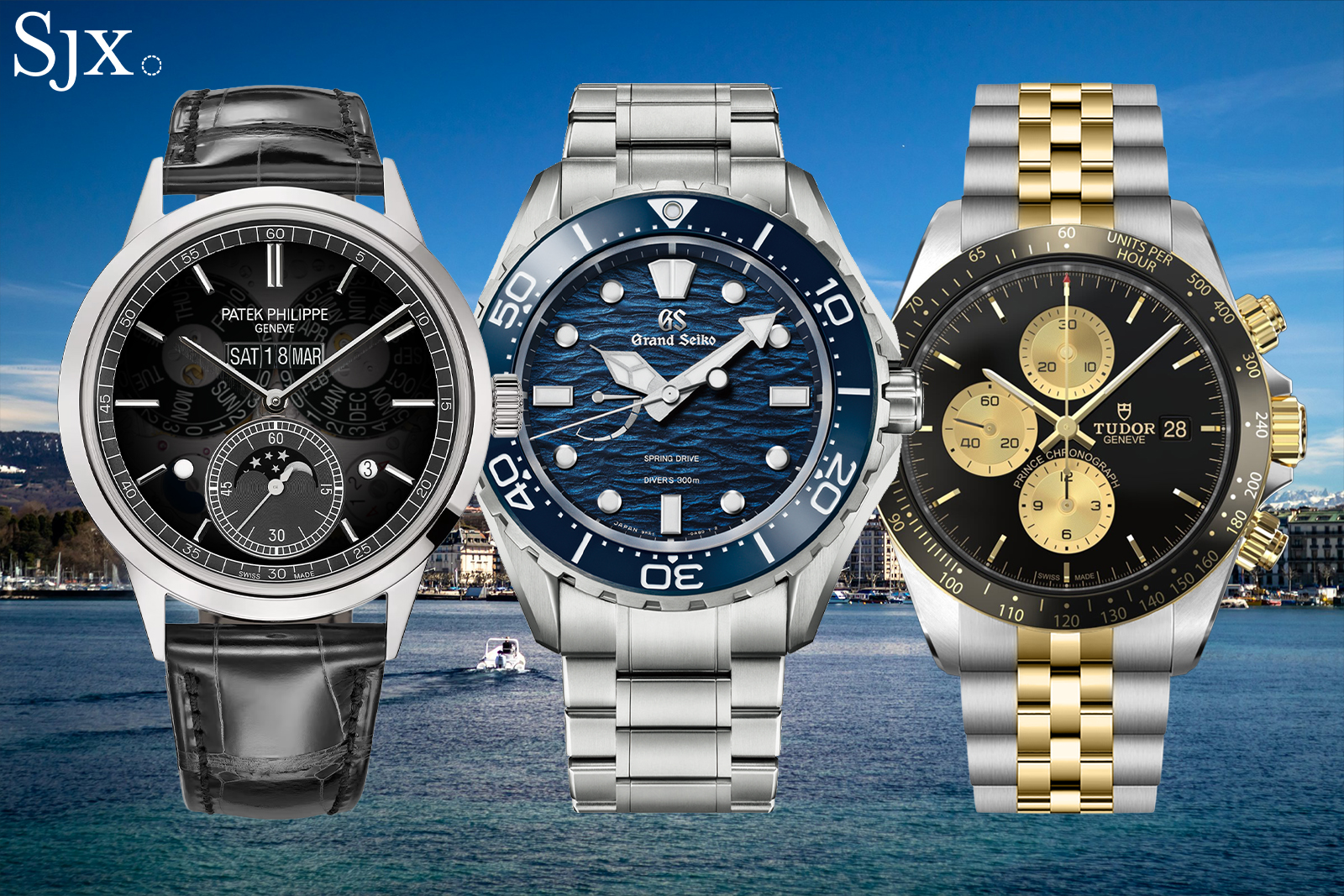
Each year I find it surprisingly difficult to crystalise what I want to see from Watches and Wonders – perhaps I find it hard to hope for things I know will never come. Sometimes dreams aren’t logistically possible. For example, a compact Spring Drive chronograph probably isn’t reasonable given Grand Seiko already has its hands full scaling production of another new Spring Drive movement. At other times, imagination is bound by brand strategy: Cartier could easily steal the show with a quartz Crash Must priced along the same lines as a Tank Must – but never will. But I believe that the following watches, which I’d like to see from Patek Philippe, Grand Seiko and Credor, and Tudor are plausible enough to hope for.

The following images were created without the use of generative AI.


Patek Philippe

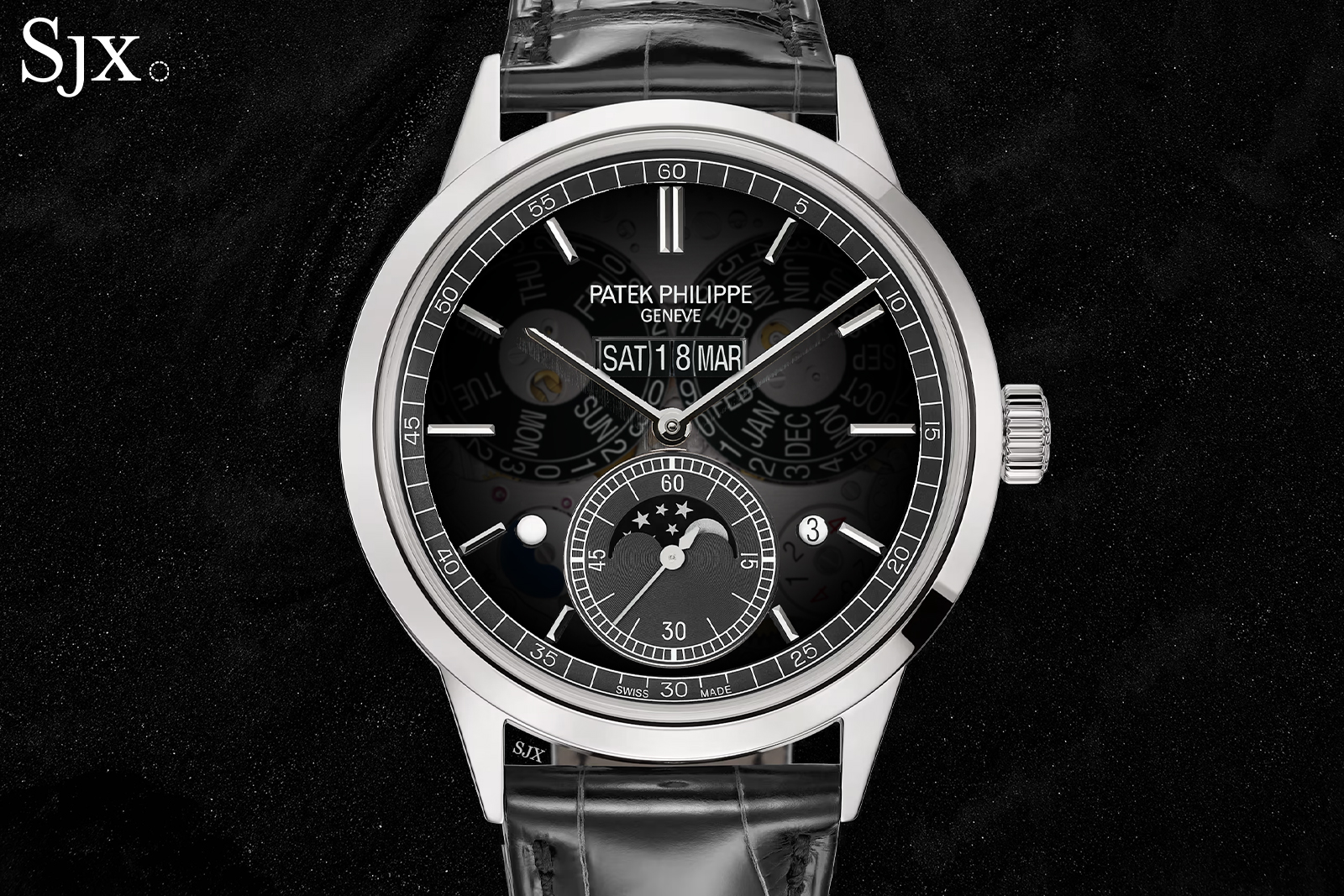
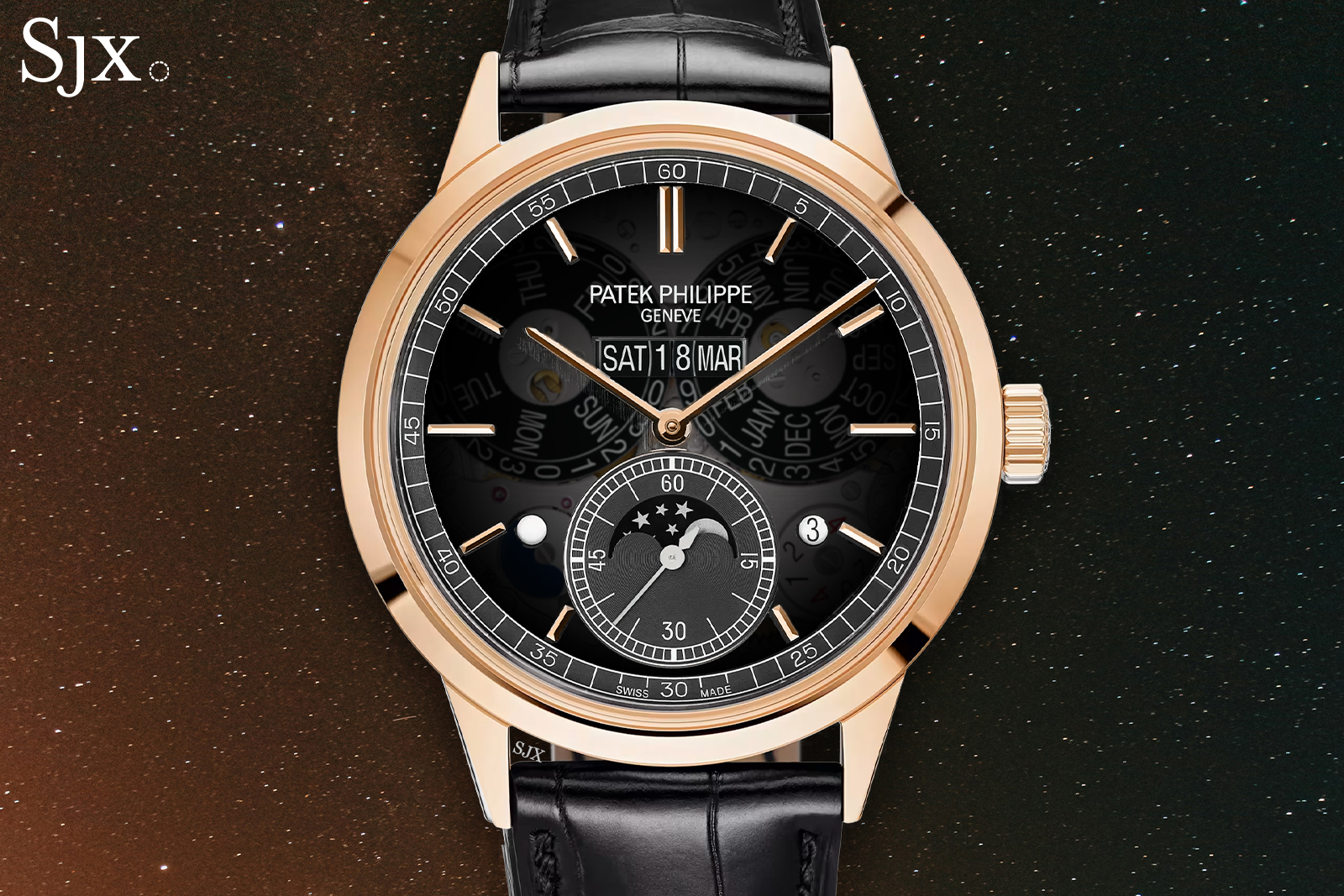
In 2023, Patek Philippe launched the ref. 5316/50P, a minute repeating tourbillon with retrograde perpetual calendar and smoked sapphire dial. It remains among the brand’s best complicated offerings, other than the ref. 6301p, at least in my view. Last year Patek Philippe followed up with the ref. 6159G, which featured a smoked sapphire dial and the same perpetual calendar on a more pedestrian base movement. But if there is one reference more deserving of the smoked sapphire treatment than any other, it is the ref. 5236p in-line perpetual calendar, as imagined below in platinum.

In 2021, Patek Philippe revived the historic in-line perpetual calendar, which is strongly associated with American-market pocket watches of the 20th century, in a wristwatch form factor with the blue-dialled ref. 5236P-001, followed by the ref. 5236p-010 in salmon a few years later. Patek Philippe will probably add a third iteration to the catalogue this year, the ref. 5236P-011 (based on the brand’s numbering scheme). A smoked sapphire dial would also make a good jumping off point for coloured gold, as envisaged below.

Of course, Patek Philippe needs to be careful to avoid diluting a very special look, but the inline perpetual would arguably step on the ref. 5316/50P minute repeater’s toes less because of the different calendar module. In a perfect would this would also come with an updated movement, allowing the displays to be set through the crown, as on Audemars Piguet’s latest generation of perpetual calendars. This technical update is not realistic in the short term, but a wish is simply that.


Grand Seiko

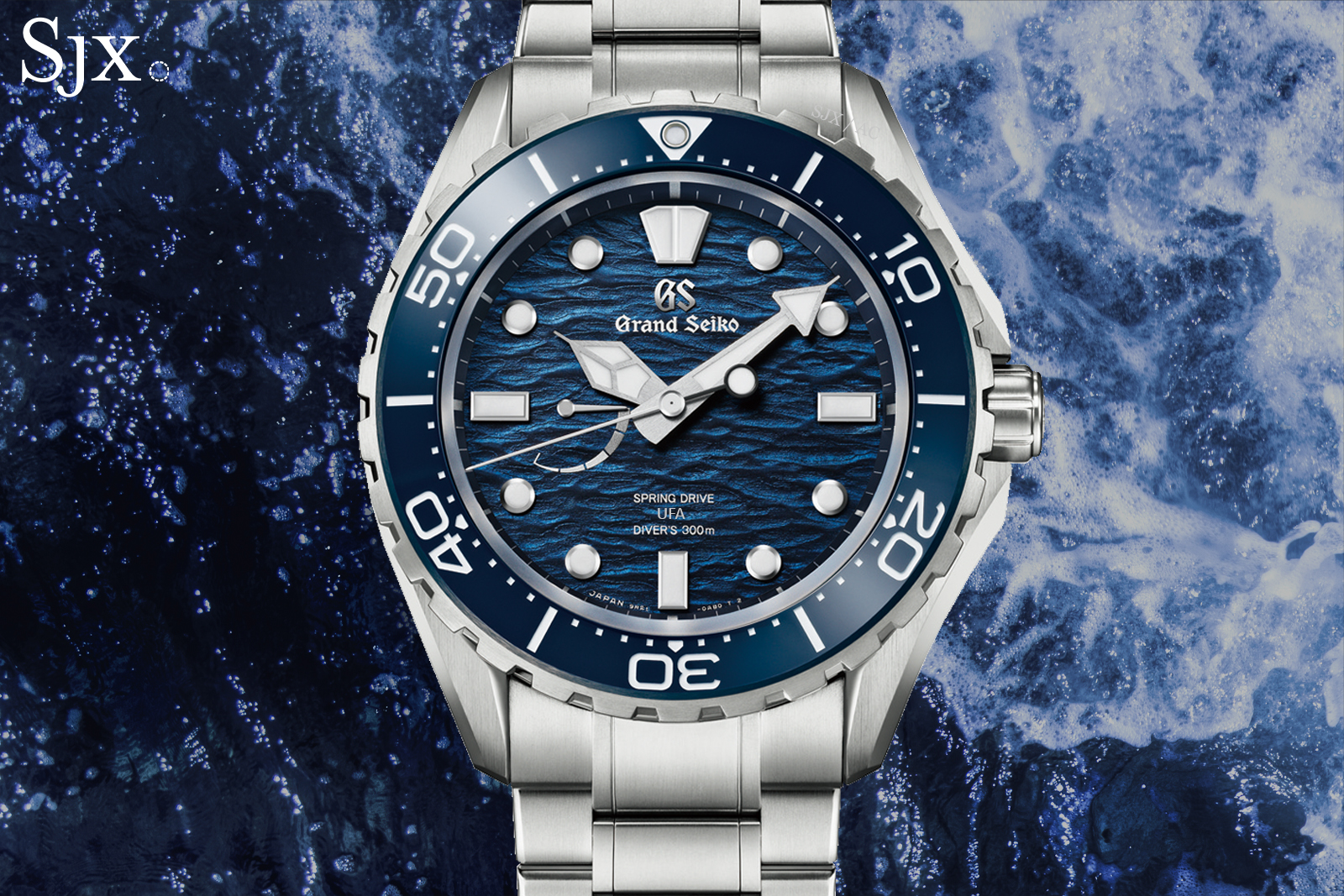
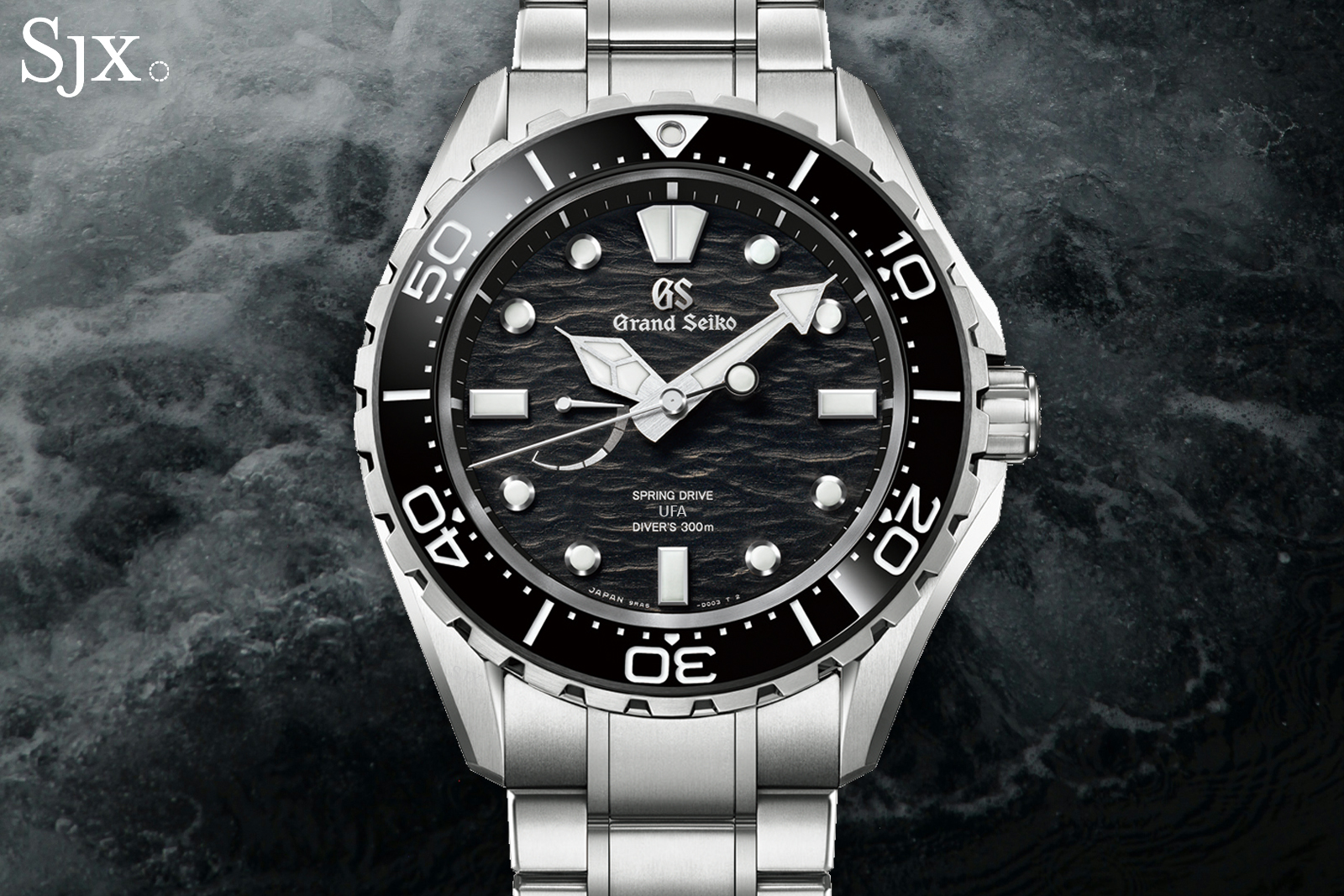
Previously, a circa 40 mm Grand Seiko Spring Drive dive watch would have been an unrealistic wish, but that changed with last year’s cal. 9RB2 which is the same diameter as the ubiquitous cal. 9R65 but dispenses with the antimagnetic ring needed by that movement, allowing it to squeeze into smaller cases. We also know a “Grand Seiko Spring Drive UFA Ushio” is likely in the pipeline thanks to trademark filings by Seiko.

This could simply be a smaller version of the existing Ushio Divers (perhaps 41 mm), powered by cal. 9RB5 with an updated micro-adjust clasp and higher price tag, but that sounds too much like a prediction. With some more imagination – on both our part and Grand Seiko’s – it is possible to fill some gaps in the Grand Seiko catalogue.

Notably, the brand has never offered a watch with 300 meters of water resistance, despite it being the industry standard for luxury divers for decades. For context, the Rolex Submariner Date graduated to 300m in the late 1970s. Nor does Grand Seiko offer a dive watch without a date, and never has with a Spring Drive movement.

With those points in mind, meet the proposed SLGB023 (blue) and SLGB015 (black) which are essentially smaller versions of the existing Ushio divers (SLGA023 and SLGA015) with a 300 m depth rating, sans date. While Seiko tends to charge the same – or more – for watches without a date, ideally these would be priced below the existing models, especially if offered in steel rather than titanium, like the “no-date” Rolex Submariner.

Despite the UFA badging, the cal. 9RBx Spring Drive movements presumably cost about the same, if not less, to manufacture than the larger and more elaborate cal. 9RAx line, which makes such a proposition reasonable, though it would break from Grand Seiko’s established pricing scheme for the UFA calibres.

While conventional wisdom is that watches with a calendar sell better than those without (the Submariner Date famously outsells the Submariner a few times over) though that logic increasingly challenged by today’s market. For example, Tudor’s Black Bay collection is overwhelmingly date-less.


Credor

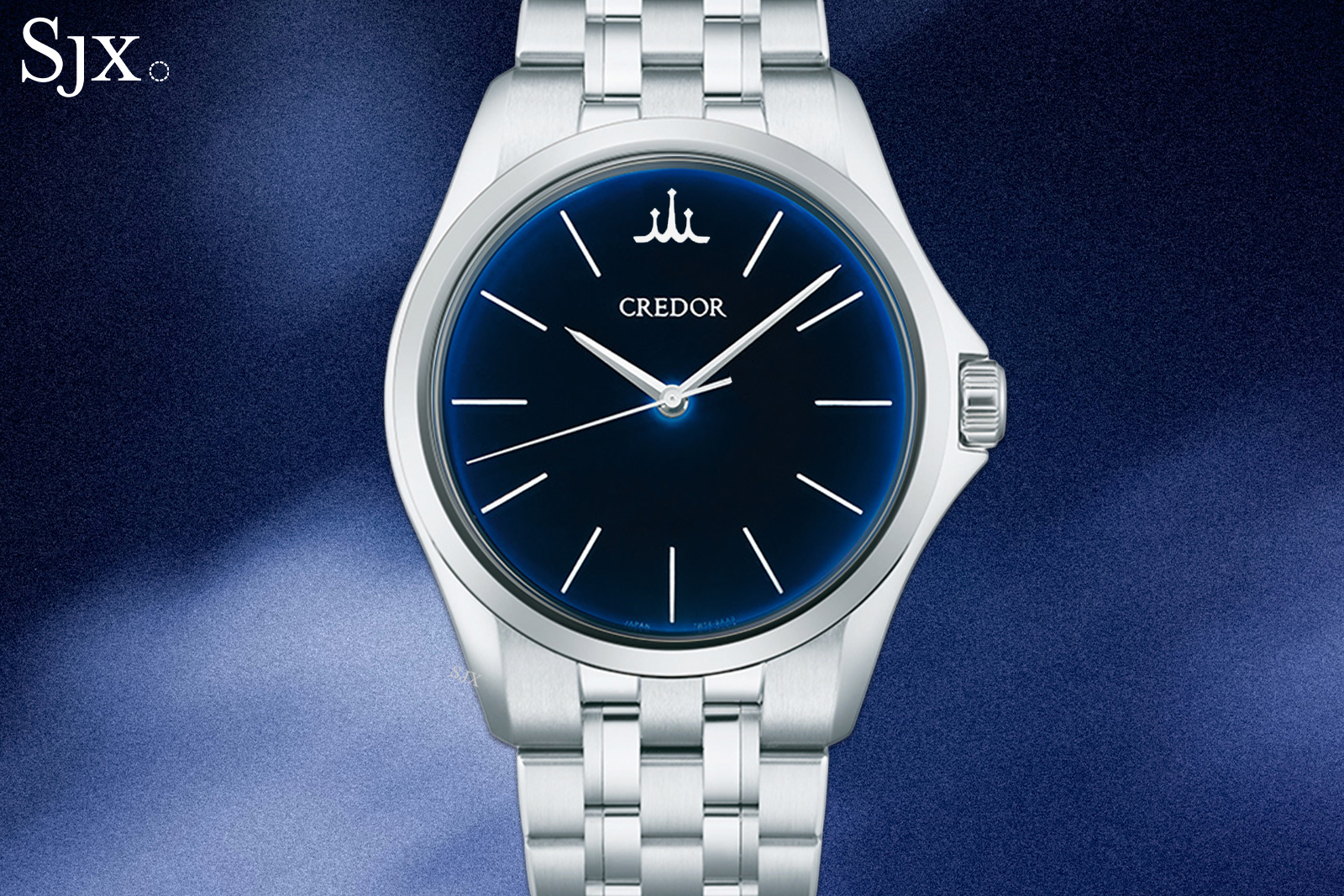
On that note, this year is extra significant for Seiko’s luxury business as Credor will make its Watches and Wonders debut. While Grand Seiko’s sales are dominated by two major markets – the United States and Japan – Credor remains focused on the Japanese domestic market, mainly exporting very high-end models such as the Eichi II. However, the Credor catalogue includes at least one other model that I expect would be successful abroad: the porcelain-dialled Kuon, which I envision below with a blue dial.

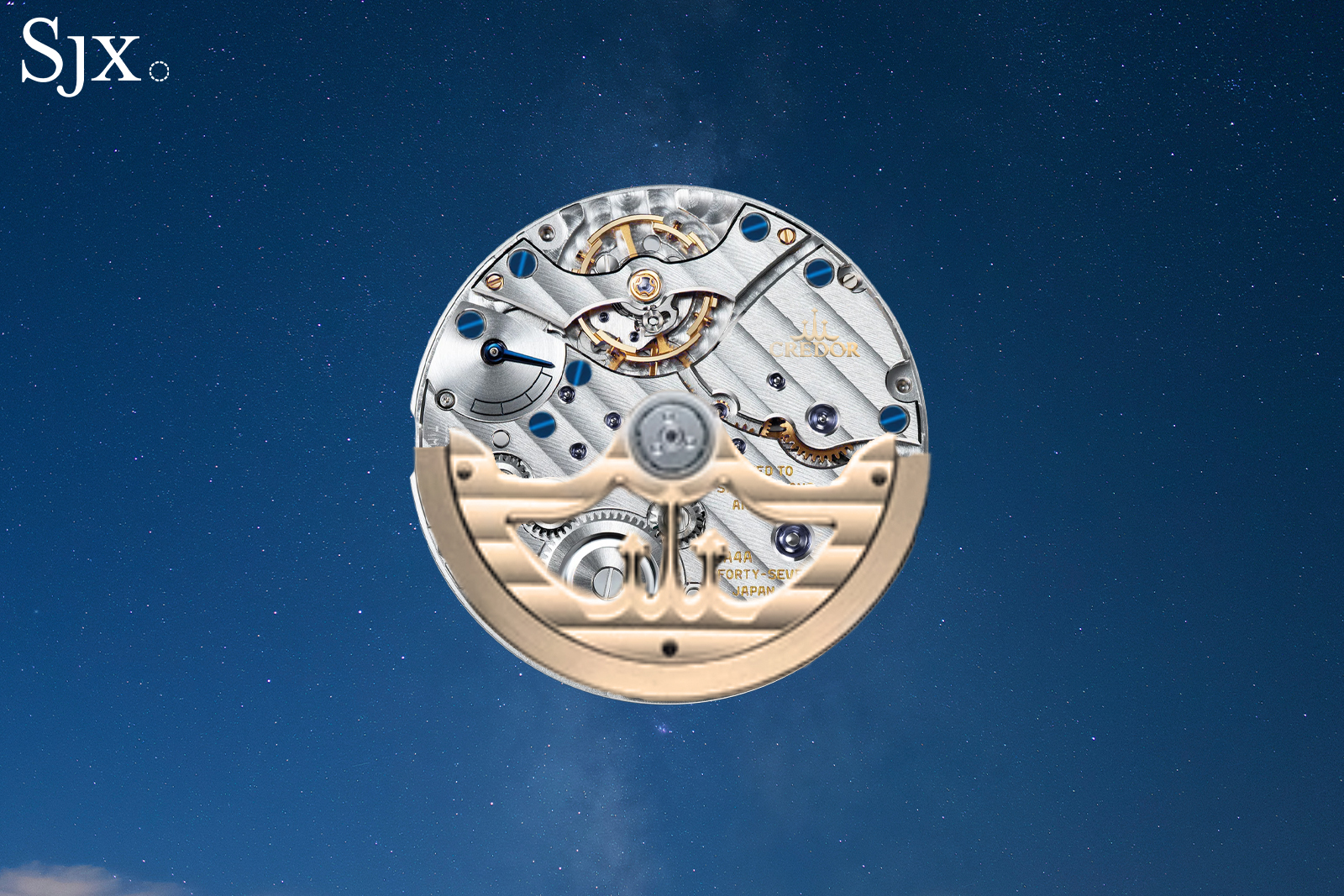
Dial variants aside, a line of next generation movements sits at the top of my Credor wishlist. Credor quietly added a pair of Linearx models powered by the new Spring Drive cal. 7RA2 – based on the Grand Seiko cal. 9RA2 – to its website in early 2021. But these were removed within months with no news since, presumably cancelled due to known issues scaling cal. 9RA movement production. But I would argue that Credor actually needs a new family of mechanical movements, in line with Grand Seiko’s latest and greatest, as imagined below.

A hypothetical next-generation Credor calibre, in actuality a Grand Seiko 9SA4 with a Credor 7RA2 rotor.

Such a movement should feature the same high-end construction and decoration as the Grand Seiko cal. 9SA series in a smaller and slimmer package, with a normal lever escapement, 4 Hz beat rate and less autonomy. It would be nice to see another free-sprung balance from Seiko, though the overcoil should remain Grand Seiko’s domain. I’d also welcome further use of the blue jewels seen on the Kodo from last year.


Tudor

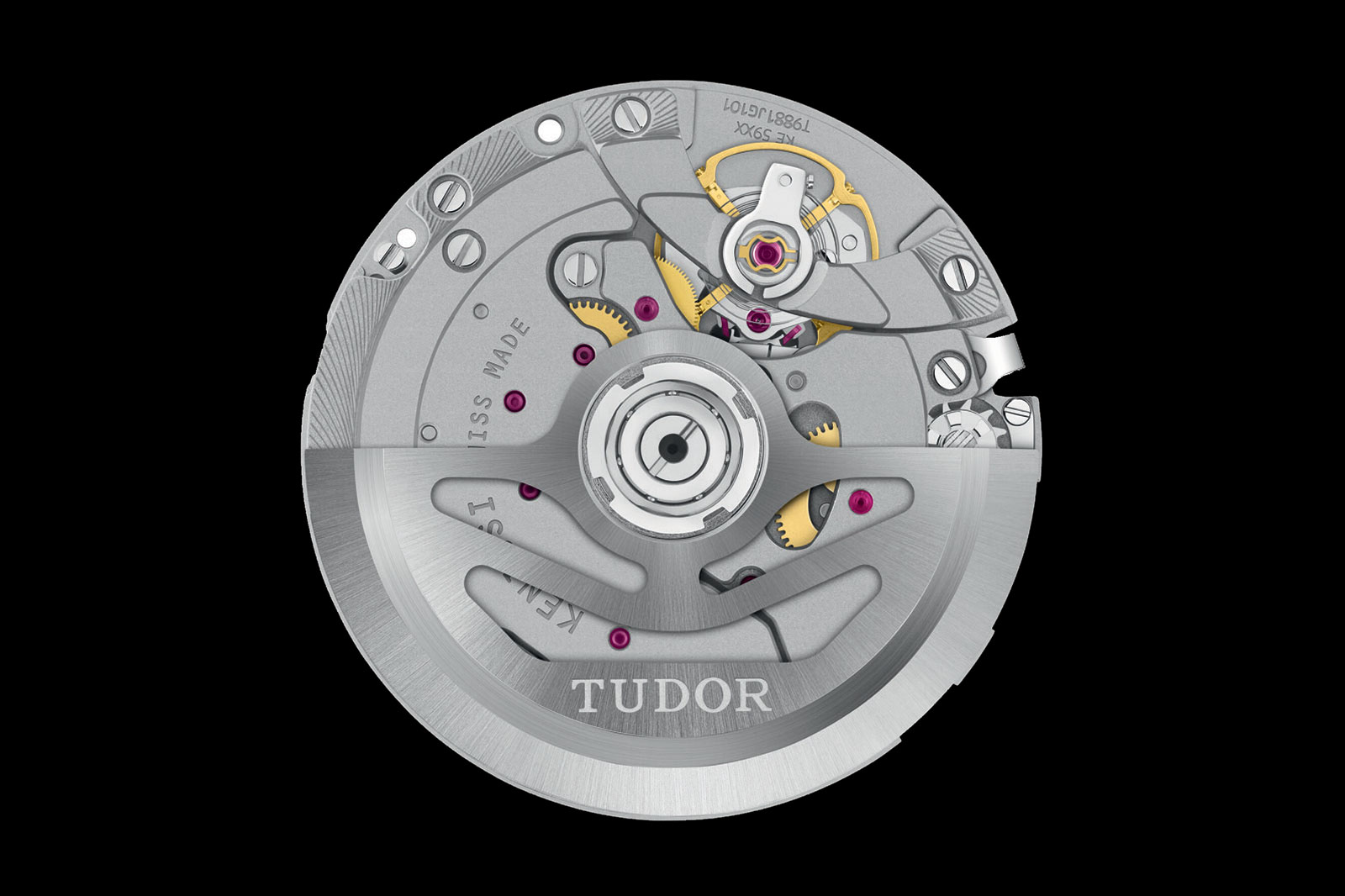
Tudor celebrates its 100th anniversary in 2026. Conveniently, it’s also the 50th anniversary of the Valjoux 7750-powered “Big Block” Oysterdate chronograph from 1976, and to ignore it would be a missed opportunity. Tudor offered a modern, unique, and solid gold variant of the “Big Block” for Only Watch 2023 powered by a prototype “in-house” automatic chronograph movement from its movement division, Kenissi.

Only Watch postponed the 2023 auction following calls for financial transparency. When it returned the next year following an audit by KPMG and some changes to Monaco’s law, Tudor chose not to participate and the watch was forgotten, until now.

The prototype cal. MT59XX checks all the boxes of a modern sports chronograph calibre – automatic winding, column wheel control, a vertical coupling, and a weekend-proof 70-hour power reserve. Of course, the Breitling B01-derived MT5813 in the Black Bay Chronograph offers the same features, making this new movement more of a lateral move when just looking at the spec sheet.

There are a few reasons for Kenissi to field an “in-house” chronograph calibre. The obvious being general cost savings for Tudor chronographs thanks to cutting out the middle man (Breitling), greater reuse of existing parts from other Kenissi movements, and so on. Additionally, Kenissi’s other stakeholder, Chanel, remains reliant on the ETA 2894 for its J12 chronographs, which isn’t sustainable.

However, the new calibre family enables both a 3-6-9 and a nostalgic 6-9-12 sub-dial layout, similar to Audemars Piguet’s cal. 4404 (which the B01 platform doesn’t support), suggesting a new Big Block as a potential impetus for the project. Thanks to the solid gold prototype, we have a good idea of what such a watch would look like – the image below is a simple colour swap with the Black Bay Chronograph bracelet.

There is some ambiguity around the bracelet; the solid gold version sports polished centre links and lacks the faux rivets, which wouldn’t necessarily be true of a steel version. My vision for a modern steel Big Block includes a fully brushed bracelet and – likely controversially – a rivet-style bracelet, which is ahistoric but feels right – at least to me.

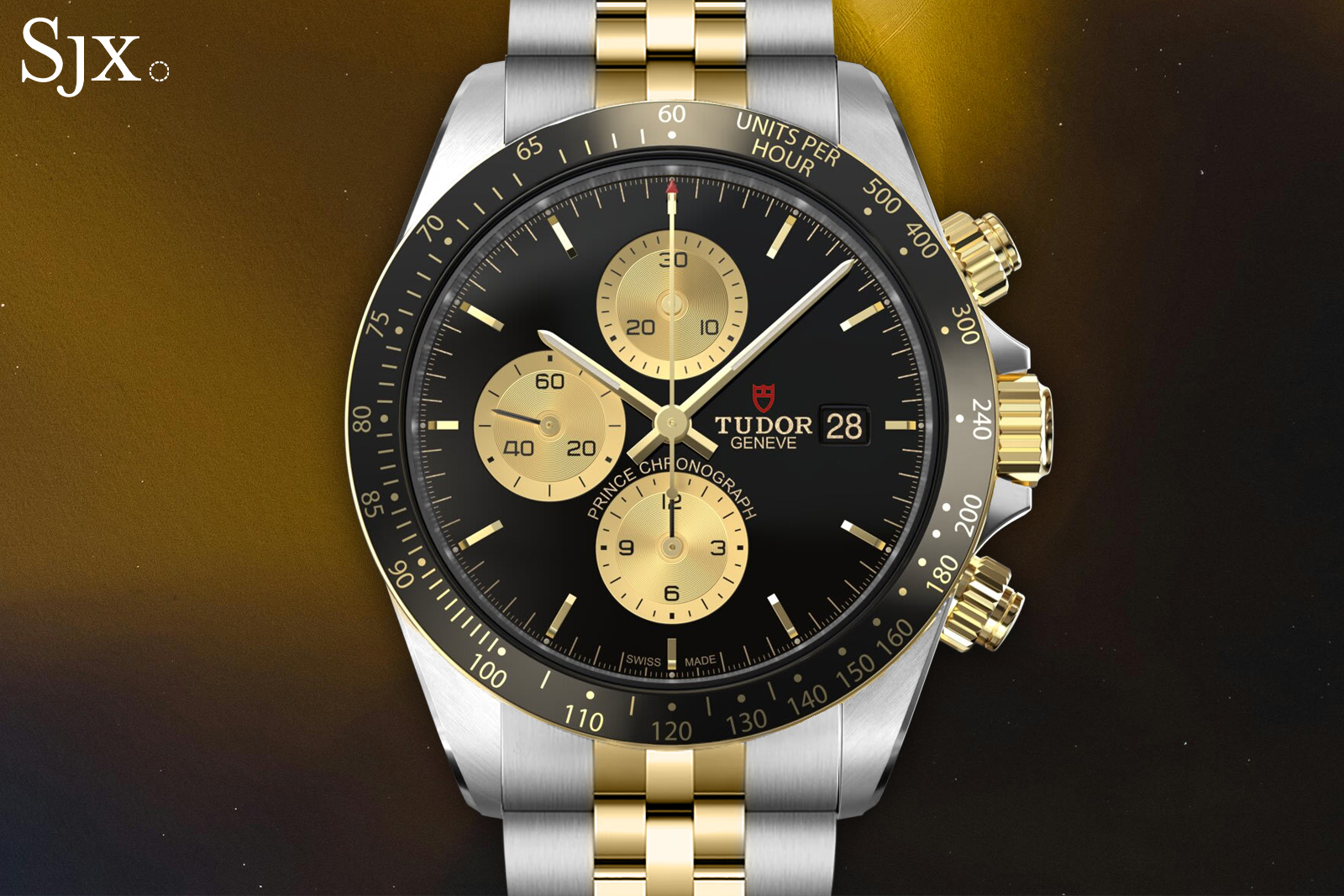
Tudor did not historically offer the Big Block in two-tone, as that was the Rolex’s Daytona’s domain. But today Tudor offers several two-tone “steel and gold” variants of the Black Bay Chronograph, so a two-tone Big Block clearly has a place in the modern brand’s catalogue – perhaps even on a Jubilee-style bracelet, as proposed below.


Back to top.

You may also enjoy these.

Welcome to the new Watches By SJX.

Subscribe to get the latest articles and reviews delivered to your inbox.