
Hands On: Victor Kullberg Tourbillon Pocket Chronometer
Elaborate simplicity.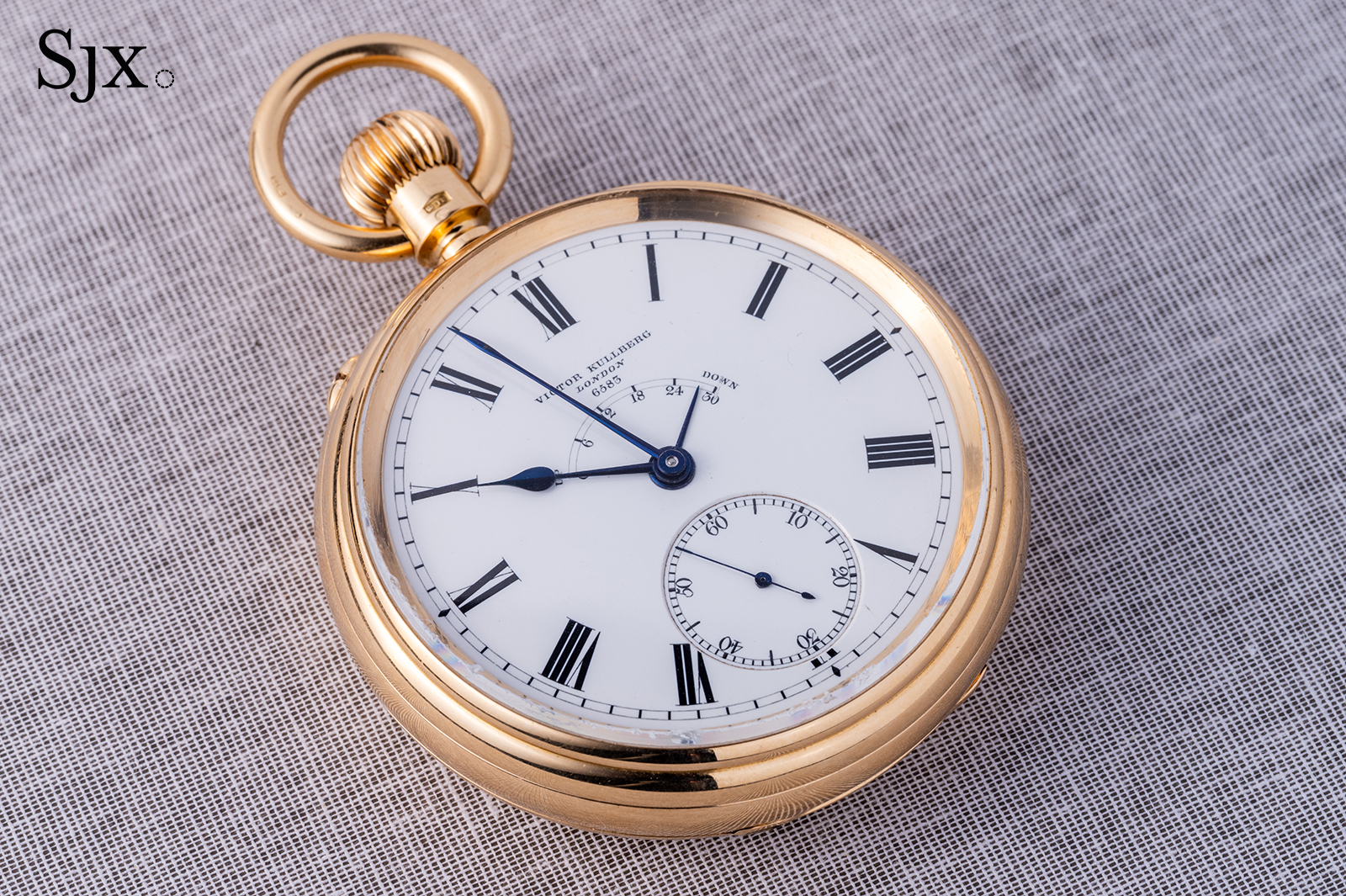
Phillips’s upcoming sale The Geneva Watch Auction: XXIII is packed with spectacular watches, including some already well known to collectors like the extra complicated La Royale by Louis Audemars, an unsual Patek Philippe worldtime ref. 2523, and the Golay Fils & Stahl astronomical watch.
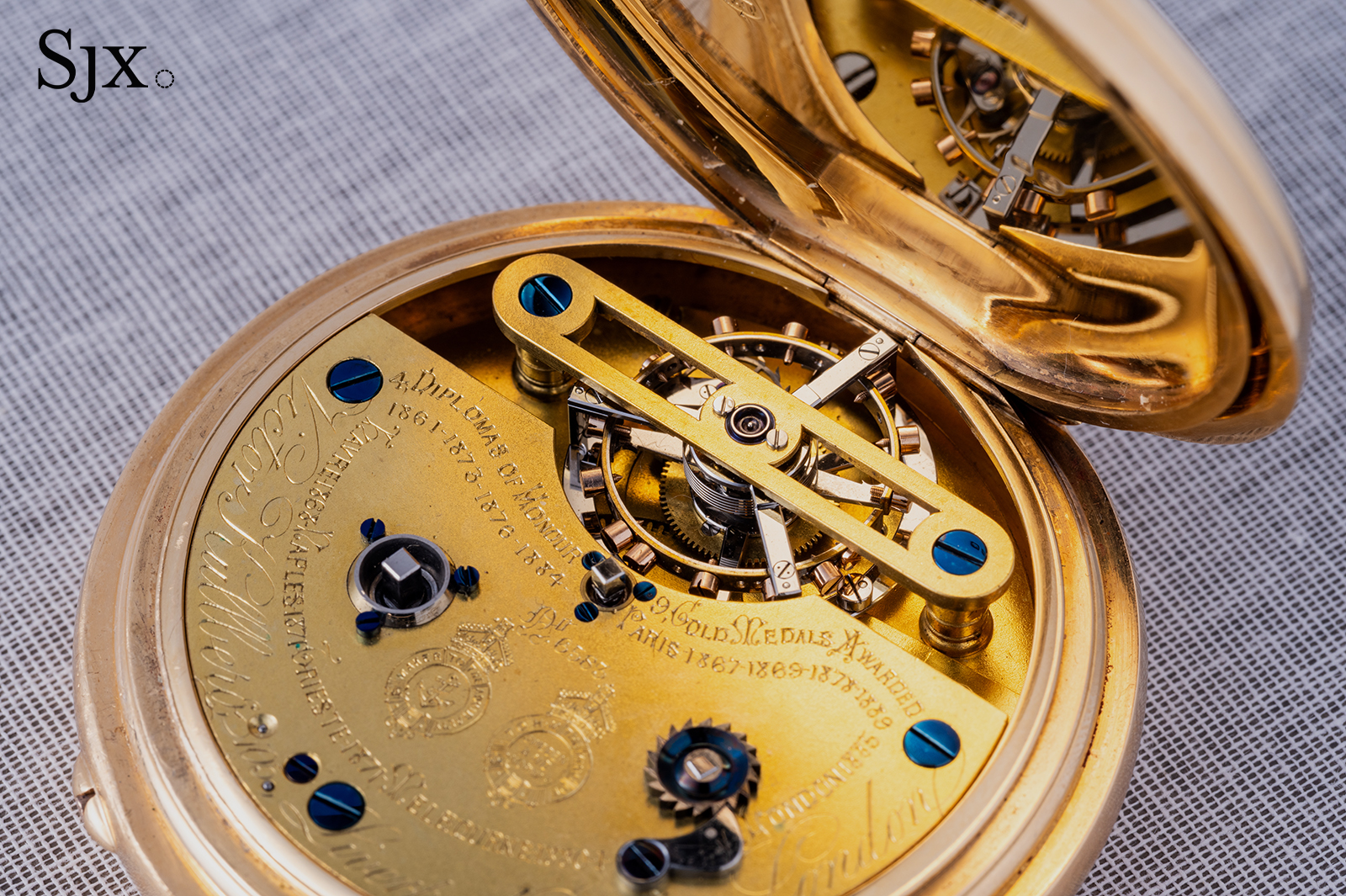
But among the finest is a simple watch that tracks only the time and state of wind, yet is comprised of several hundred parts: Victor Kullberg No 6583. Behind those three hands is a one-minute tourbillon equipped with an Earnshaw detent escapement, a massive free-sprung compensation balance, anti-magnetic helical balance spring and reverse chain and fusee, making it one of the most elaborate three-hand watches imaginable.
Even at its high estimate of US$102,000, this pocket chronometer amounts to something of a steal, especially in an auction where multiple steel sports watches carry much greater estimates.
The cult of the chronometer
Swiss and English horologists disagreed on a great many things, from the ideal shape and material of escape wheels to the definition of a chronometer. To the Swiss, the title of chronometer was bestowed based on merit as a timekeeper. Any watch could be one if it kept good time, especially with a trusted, independent attestation of its accuracy. Watches submitted to observatory trials — or tested according to the ISO 3159:2009 standard today — are chronometers by this reckoning.
England was dominated by the cult of the [marine] chronometer, unsurprising as it sat at the heart of the seafaring British Empire. According to the English, a chronometer must use a chronometer (detent) escapement, while a watch that merely kept good time with a lever or other escapement was termed a “half-chronometer”. While Pierre Le Roy can be credited with inventing the detent escapements in general, the chronometer escapement as we know it today was the work of two Englishmen, John Arnold and Thomas Earnshaw.
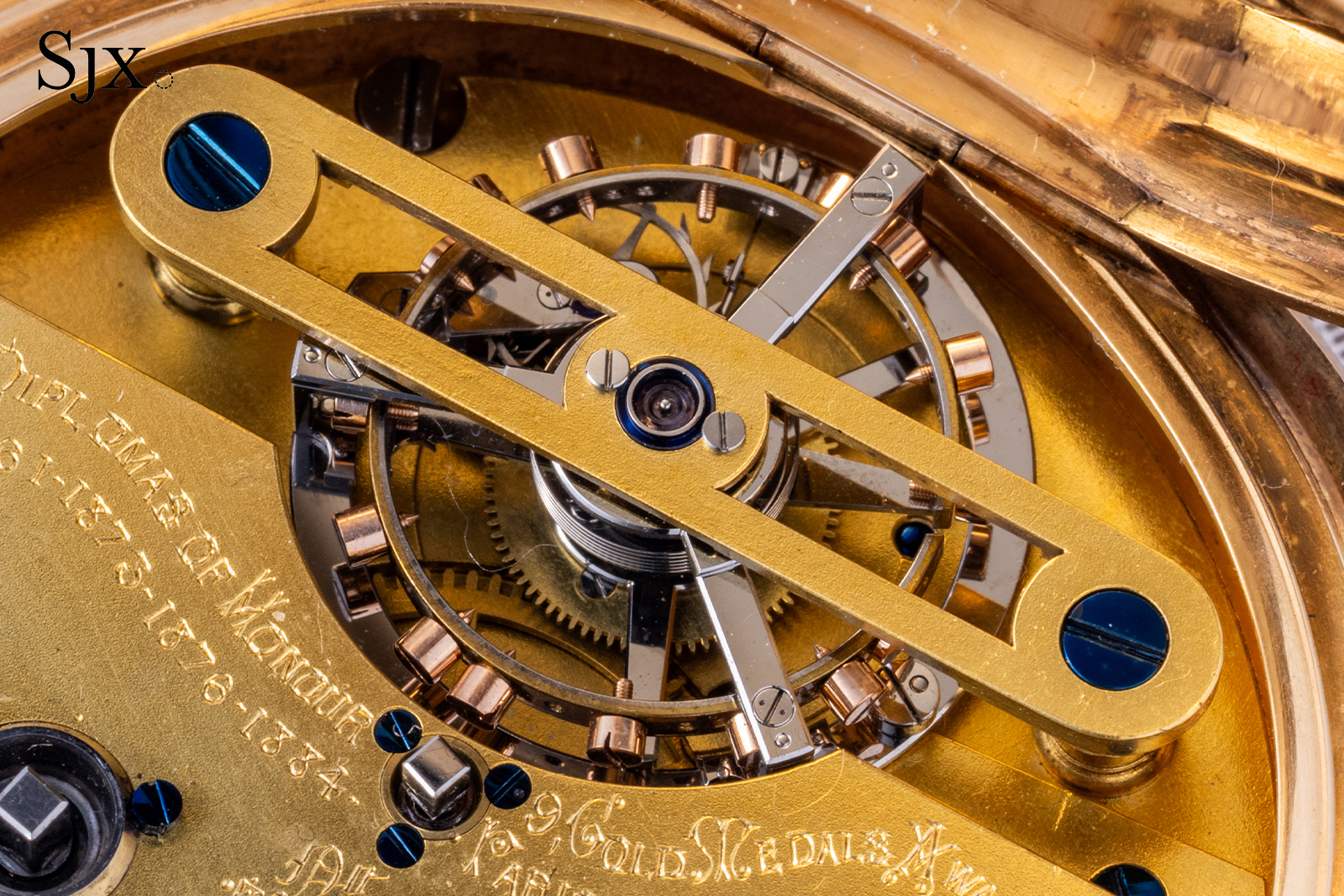
Other English chronometer makers built on their work, such as Charles Frodsham, Edward Dent, Thomas Mercer, and, of course, Victor Kullberg. The latter, born 1824, was actually Swedish, but worked for Louis Urban Jürgensen in Copenhagen before moving to London in the 1840s.
He was very good at his craft and had his own firm by 1856. In fact, in 1882, one of Kullberg’s chronometers (No. 4066) set a record with the best performance in the Greenwhich trials’ history. Amusingly, according to The Horological Journal in November 1882, Kullberg was disqualified from first prize of the Clockmakers’ Company, as he’d won it the year before.
Chronometer trials and tribulations
The chronometer escapement, as it shall be called from here on, is ideal for semi-portable timekeepers. Box chronometers live sheltered lives, protected by their boxes and gimbals, but the escapement is a poor fit for watches. There are a few problems with pocket chronometers, from accidental unlocking under shock to difficulty adjusting for positions, that, when combined with the difficulty of manufacture, explain the lever escapement’s dominance.
In his 1887 Treatise on Modern Horology, Claudius Saunier went so far as to say “The remarkable regularity, mainly due to it [the chronometer escapement], that is observed in the chronometers employed by astronomers, naval and scientific men, and constructed chiefly by English and French makers, has led the manufacturers of ordinary watches to fancy that they would secure more accurate timing by the mere employment, in their best watches, of more or less accurate copies of detent escapements. Their attempts have always turned out to be failures.”
Work started on this watch soon after in 1897, and while it’s not a cost-effective, rugged pocket timekeeper like a good lever watch, I certainly wouldn’t call it a failure.
Elaborate but not complicated
The reputation of Kullberg watches in their own time is captured by the official record of the 1880 Melbourne International Exhibition, which describes the firm’s showing at the fair as “A small exhibit of very high-class watches of exquisite workmanship. The points which most attract attention of the just were the high finish and well-made and heavy compensation balance. The prices were, however, considered somewhat high.”
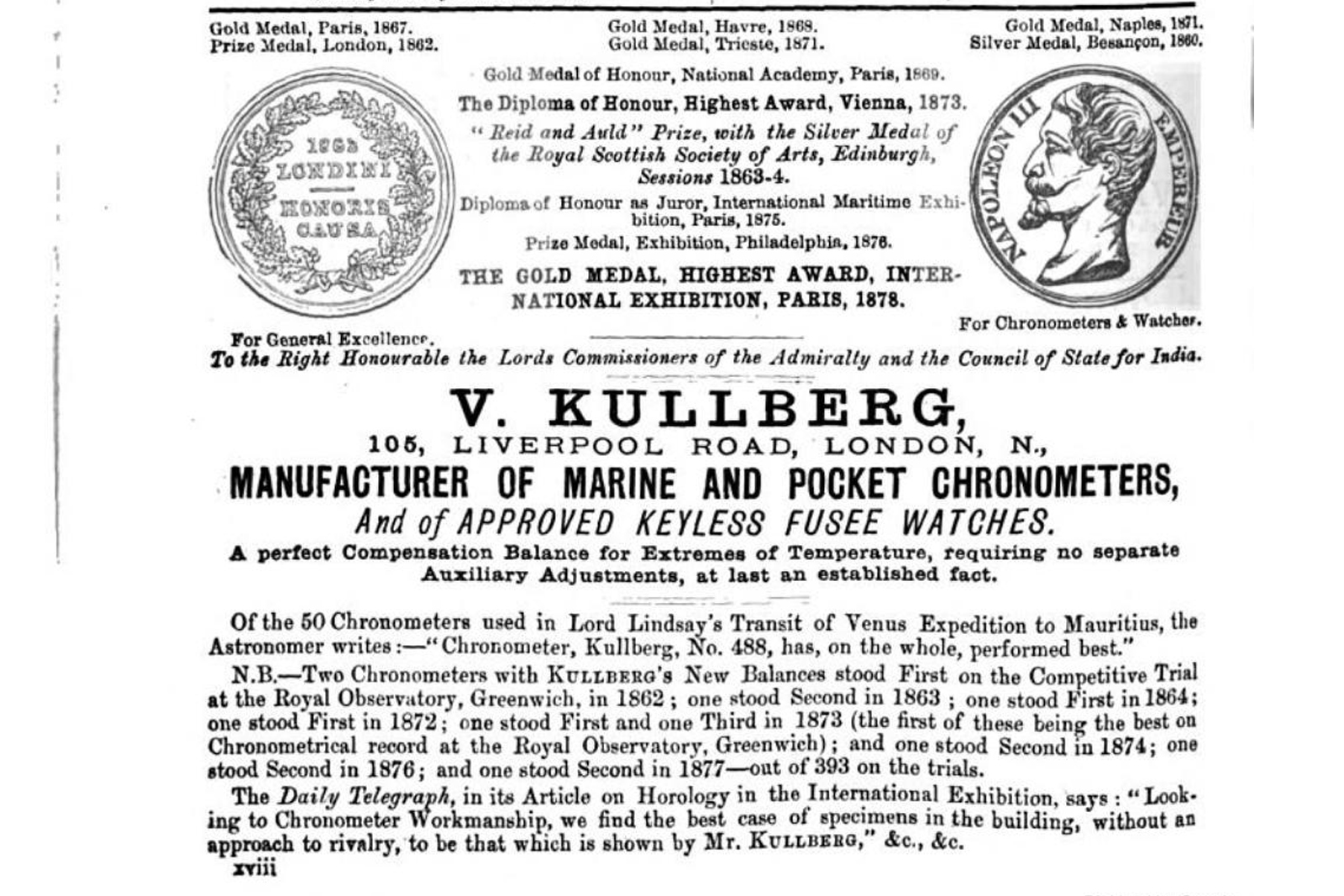
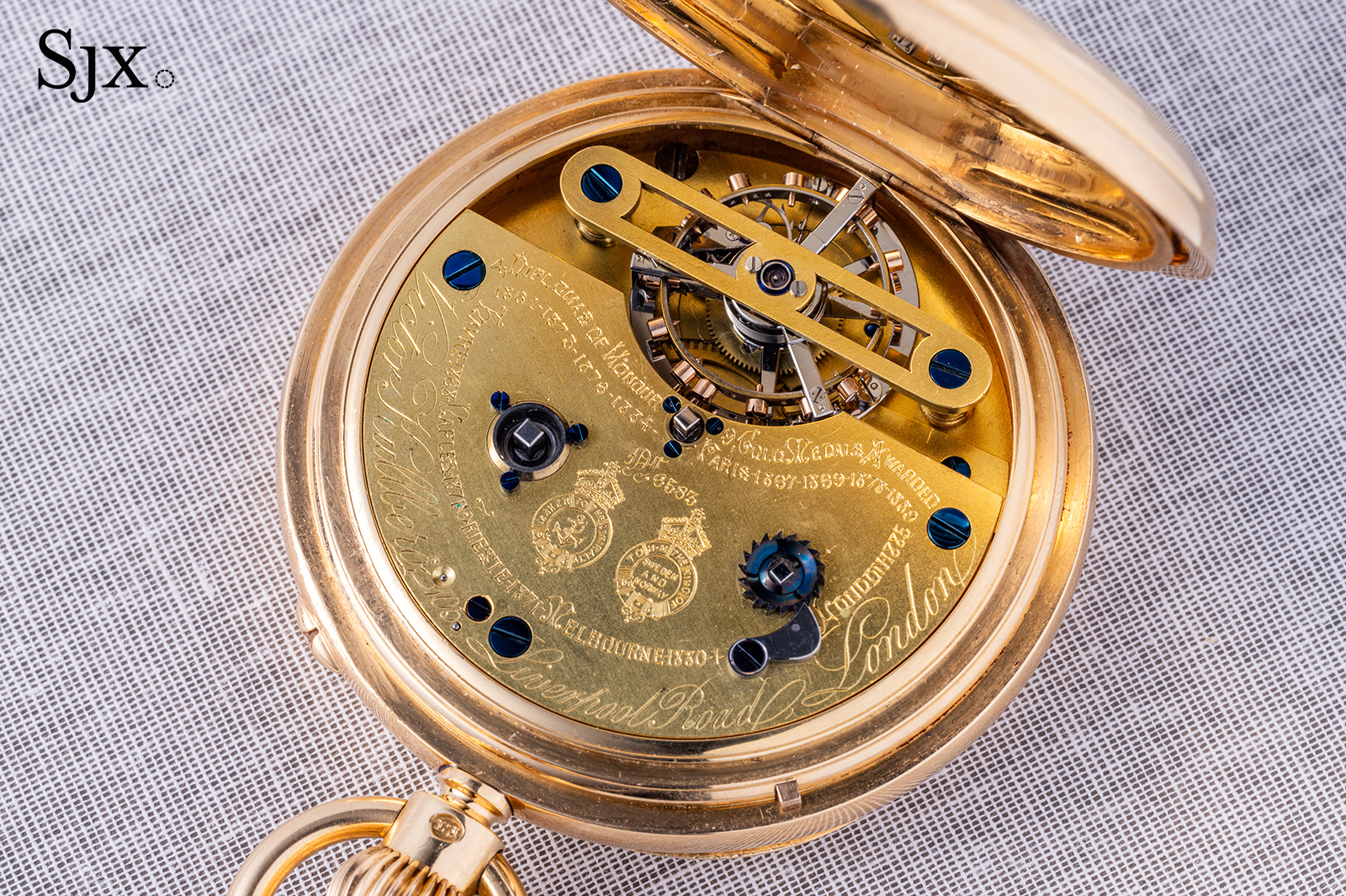
While this is Kullberg’s only known tourbillon pocket chronometer, this tourbillon bridge can be found as a balance bridge in many other Kullberg watches, especially those with sweep seconds hands. Made to the highest possible standards, the movement is far from modest, openly boasting Kullberg’s many achievements, including a royal warrant from the king of Sweden and Norway, and the years of the firm’s various chronometric conquests.
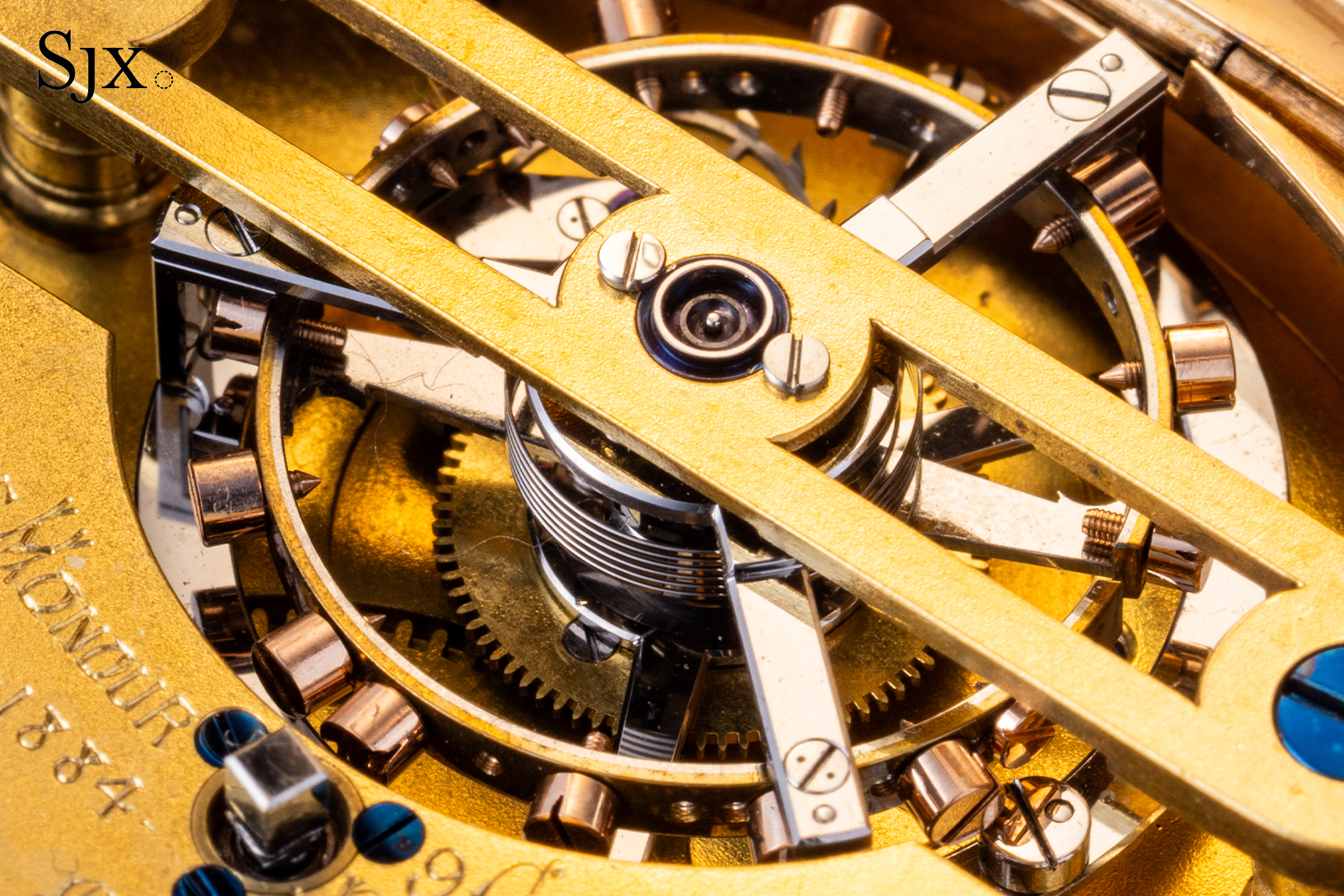
The massive balance inside the cage is free-sprung, as is the case for most tourbillons, and many fine watches, built in England, which wouldn’t become the standard for Swiss manufactures until well into the wristwatch era. The white metal hairspring is likely a palladium alloy, which is more resistant to weathering and magnetism than steel hairsprings. But the raw material was much more expensive, and these springs demanded more exacting adjustment due to their greater weight.
If you compare this watch — or most full-sized Kullberg box chronometers — to fusee watches or chronometers from another maker you’ll notice the locations of the barrel and fusee are swapped. Kullberg favoured this reverse fusee arrangement, and while it can be found on other watches, it was rare enough to be a signature of his firm’s work. You may also notice this stem wind watch still has squares on the movement for hand setting and winding,
Elliot C. Lee
This watch was sold for GBP85 in August 1913, which comes to about US$415 at a fair exchange rate. For comparison, S. Smith & Son offered karrusels with class A Kew certificates starting at GBP35 around the same time, while a fusee lever tourbillon from Nicole Nielsen cost GBP72. Perhaps unsurprisingly, it was purchased by perhaps the English watch industry’s greatest private patron at the time, Elliot Cabot Lee of Boston.
Upon taking custody of the watch Lee wrote “I beg to send you my best thanks for the chronometer 6583 which came this morning. It is a beautiful watch. I do not remember having seen that special combination of a Karrusel (sic) and chronometer escapement before and should expect it to give a very close rate as it gets rid of the position errors with the additional advantage of chronometer escapement.”
This was just one of many tourbillons Lee owned, but the only I know of with a chronometer escapement. Indeed, this is the only Kullberg watch to combine the two features, which were already esoteric in isolation, which, when coupled with its price, explains why this watch took over a decade to sell.
But, thanks to the wealth of information easily available over the interest, as well as depressed pocket watch prices, this simple but very elaborate watch is the most accessible it has ever been.
The Victor Kullberg One Minute Tourbillon Chronometer carries an estimate of CHF40,000–80,000 ($50,800–102,000).
The watch will be sold in Phillips’ The Geneva Watch Auction: XXIII running from May 9-10, 2026 in Geneva.
For more, visit Phillips.com.
Back to top.