
Hands On: Patek Philippe Calatrava 24-Hour Alarm Ref. 5322G
A streamlined alarm, now with 75% fewer crowns.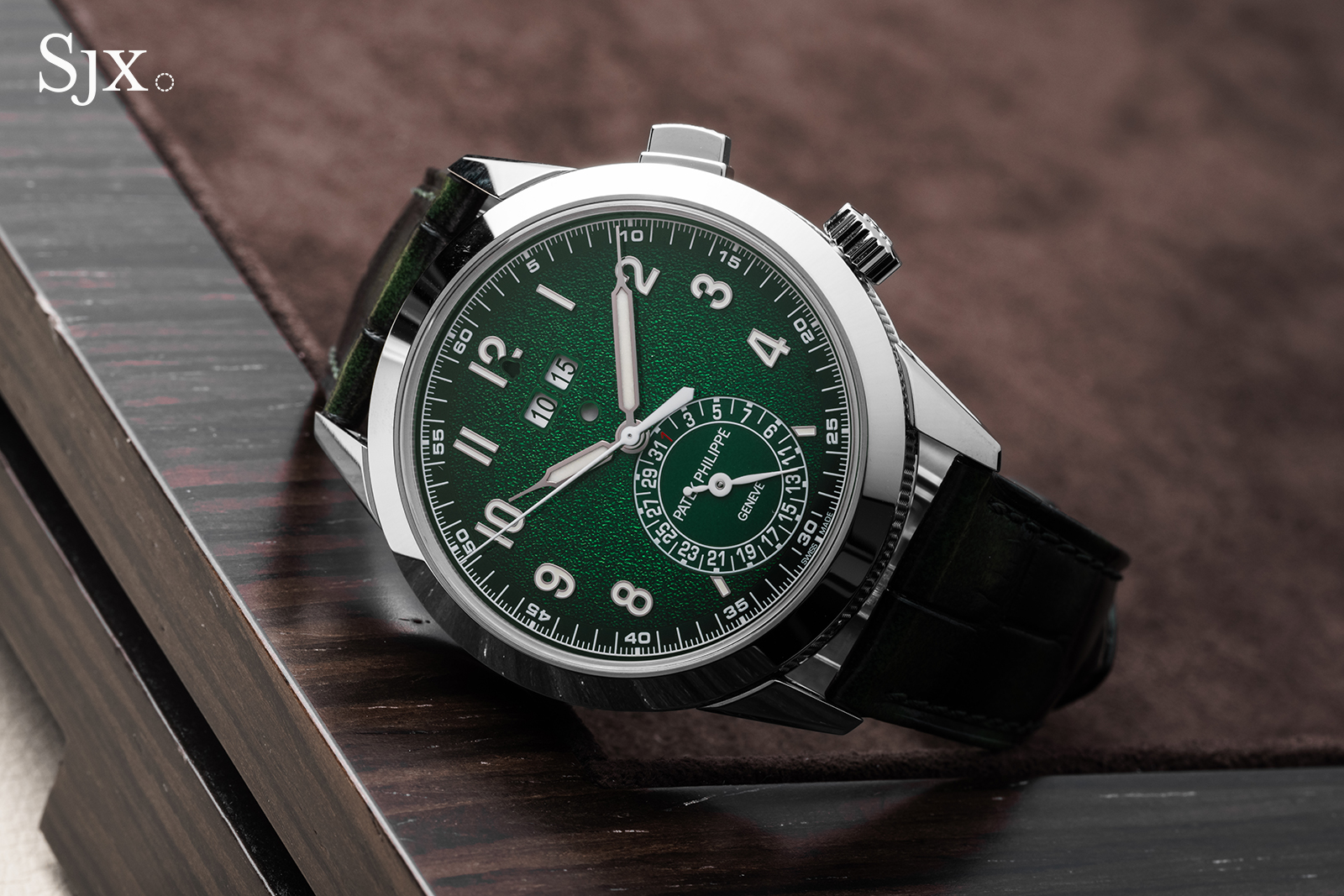
Patek Philippe’s mastery of complications is evident at all levels – its ability to elevate even simple complications is on full display with the Calatrava 24-Hour Alarm Ref. 5322G, a smaller and more focused take on the alarm watch than the discontinued spider-like Alarm Travel Time ref. 5520P.
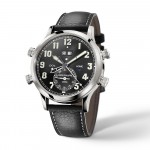
This puts the most refined alarm movement on the market – the chime is similar to that of a minute repeater – in the popular hobnail-flank Calatrava case, capped with punchy green or blue dials decorated with translucent fumé lacquer.
Initial thoughts
Launched in 2019, the Alarm Travel Time ref. 5520 was a polarising design from the start thanks to its four crowns — three of which were actually screw-locked pushers — when combined with the four lugs giving the watch an octopoid appearance. Looks aside, it was Patek Philippe’s first wristwatch with an alarm, and introduced a refined new calibre that employed a hammer and gong for the alarm function.
This year Patek Philippe builds on that foundation without the travel time functionality and streamlined looks, eliminating the appearance of an awkward double crown setting system. There is no actual change to the base movement’s functionality — save the deletion of the travel time module.
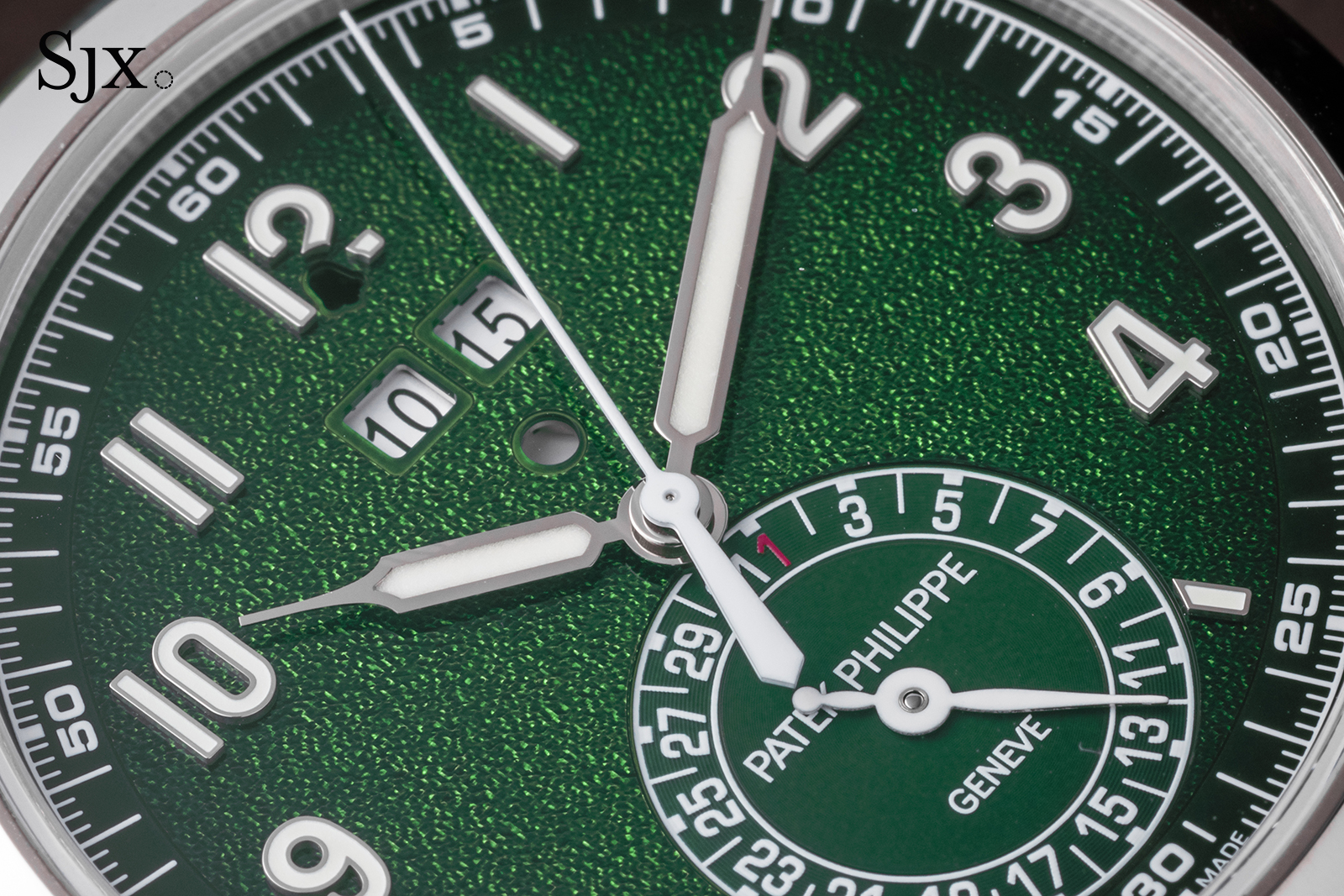
The ref. 5322G debuts the streamlined movement inside a refreshed aesthetic. Perhaps a decade ago this bright green dial, or even the blue, would feel out of place in a high-grade watch, but today it fits right into the brand’s extremely colourful and contemporary catalogue. Even so, the dial design is sure to be polarising, especially the conflict between the 12 o’clock marker and alarm indicator, which the latter seems to have won.
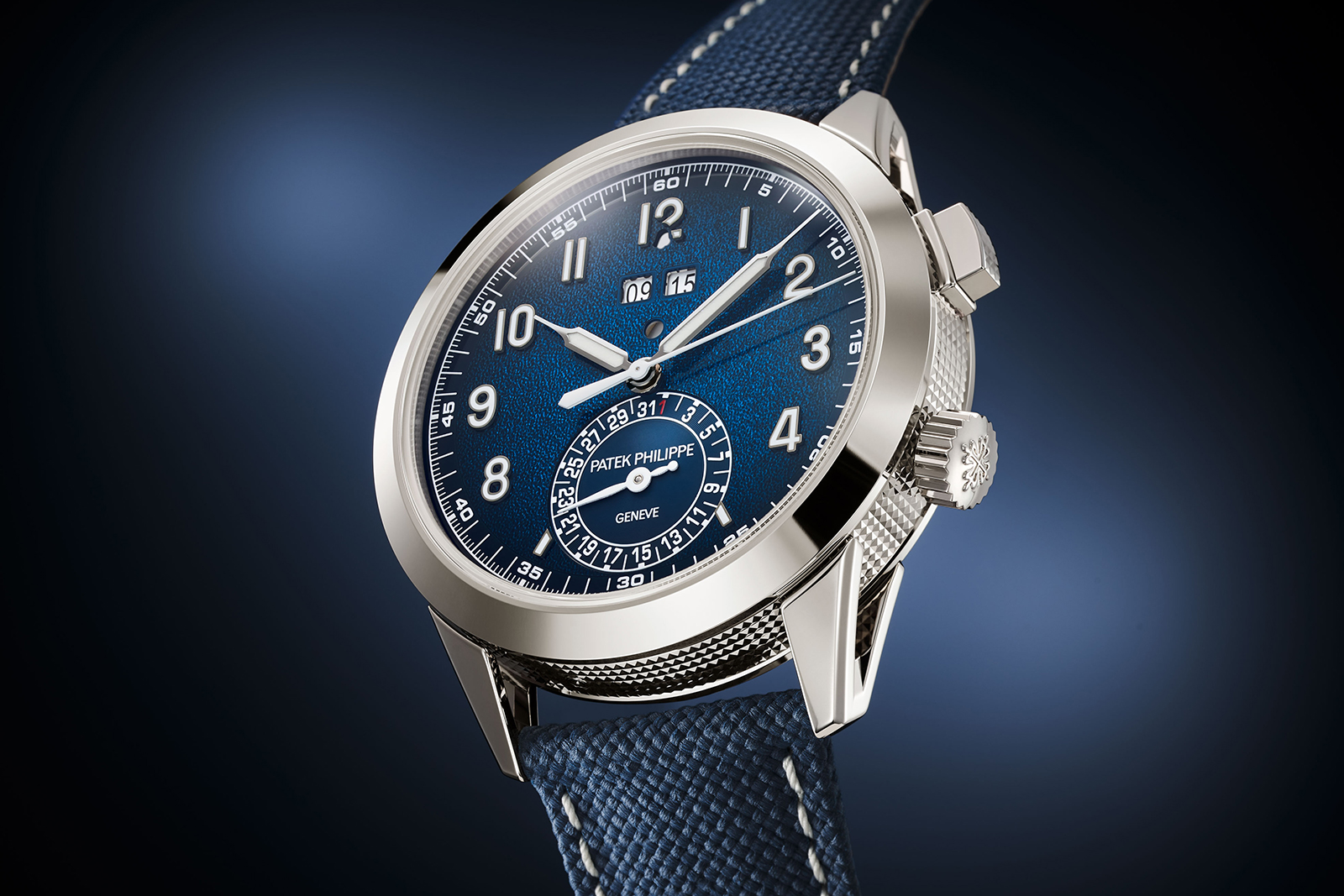
The blue iteration. Image – Patek Philippe
The stark white disks with generic font for the alarm time display don’t do any favours to the dial either. Yet, despite its aesthetic quirks, the case and movement are indisputably excellent, as they must be considering the US$281,321 price tag, which makes it by far the most expensive standalone alarm watch on the market.
One question this raises is how much of a premium can you charge for being the best? Or rather, how much are consumers willing to pay for something that — on paper — seems just a bit better than the rest. Up close, however, the ref. 5322G stands head and shoulders above its class in sound and “UX”. While most alarm wristwatches usually rely on somewhat primitive vibrating mechanisms, the ref. 5322G relies on a hammer striking a gong, just like a minute repeater or the brand’s fine alarm pocket watches of the past.
Case like-a camera
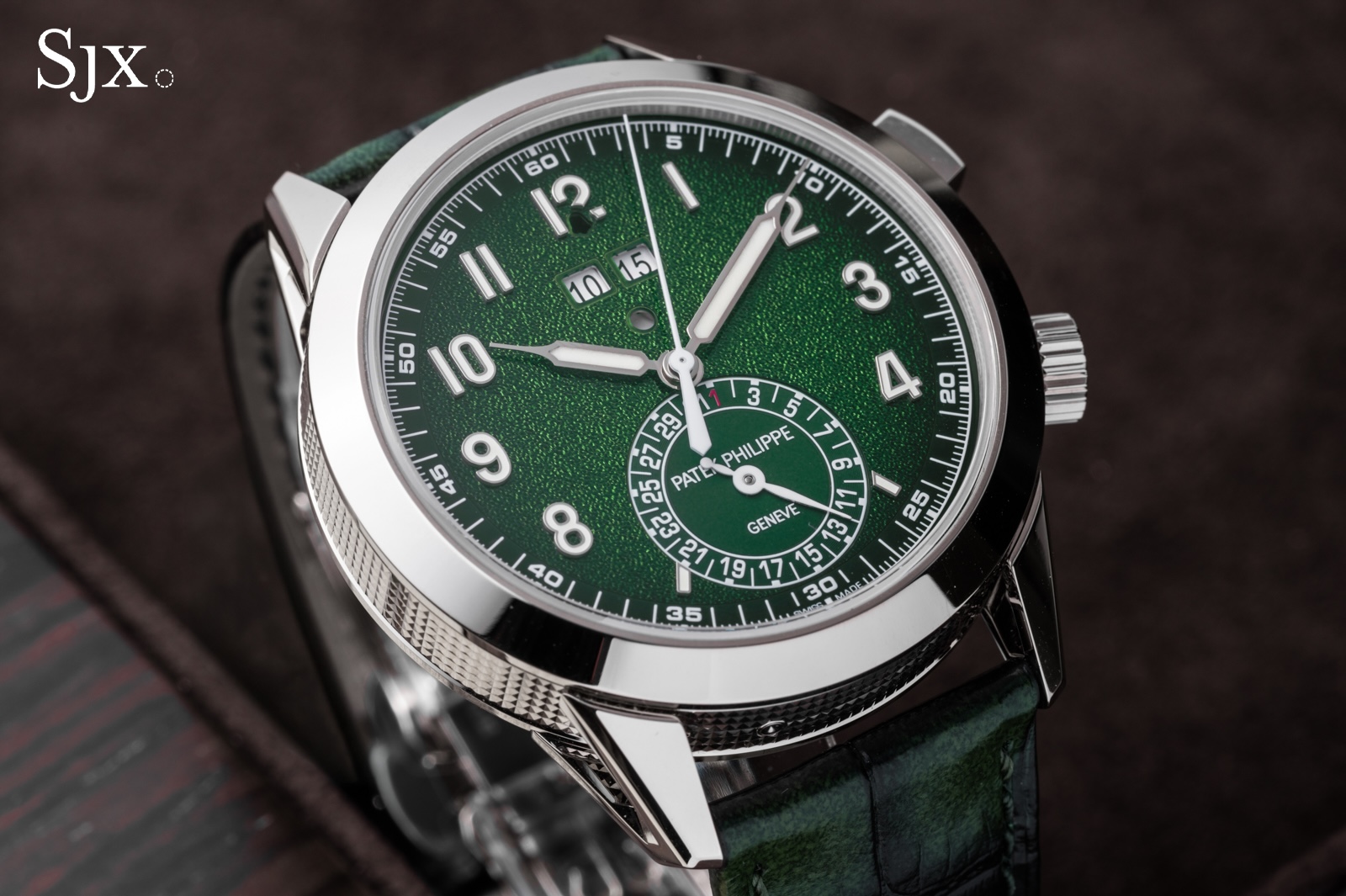
Patek Philippe launched the worldtime minute repeater ref. 5531 in 2017, which introduced a new case style. It combined excavated lugs with a Clous de Paris (or hobnail) case band, with the later more than resembling the knurling of adjustment knobs on vintage cameras. In 2022 this motif trickled down to the much more affordable Calatrava ref. 5226.
The design language established by that watch has since spawned a miniature sub-collection within the brand’s catalogue, including the Calatrava Annual Calendar Travel Time and last year’s eight-day Calatrava ref. 5238.
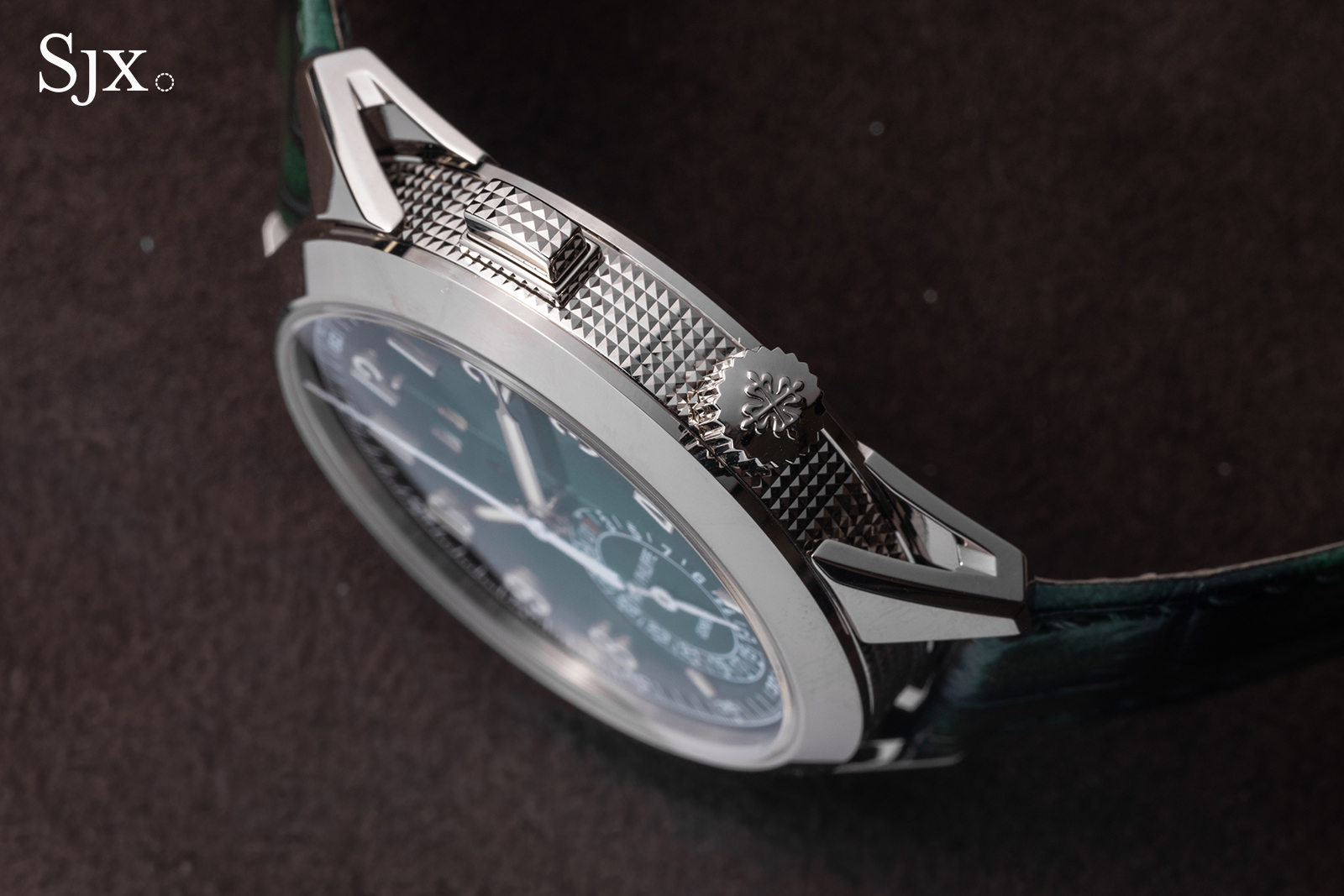
The ref. 5322 introduces a new complication for this case style. And, like the repeater slide of the aforementioned worldtime, the pusher to toggle the alarm on and off continues the hobnail motif, making it surely one of the most richly detailed pushers in the industry. Patek Philippe tweaked the formula by reintroducing the skeletonised lugs, which are are actually part of the case back, and do not connect to the top of the watch at all.
At 41 mm and 12.22 mm tall, the ref. 5322 is a hair smaller than outgoing Alarm Travel Time but follows the more contemporary approach to sizing Patek Philippe has pursued for many years, even as other brands lean into smaller sizes.
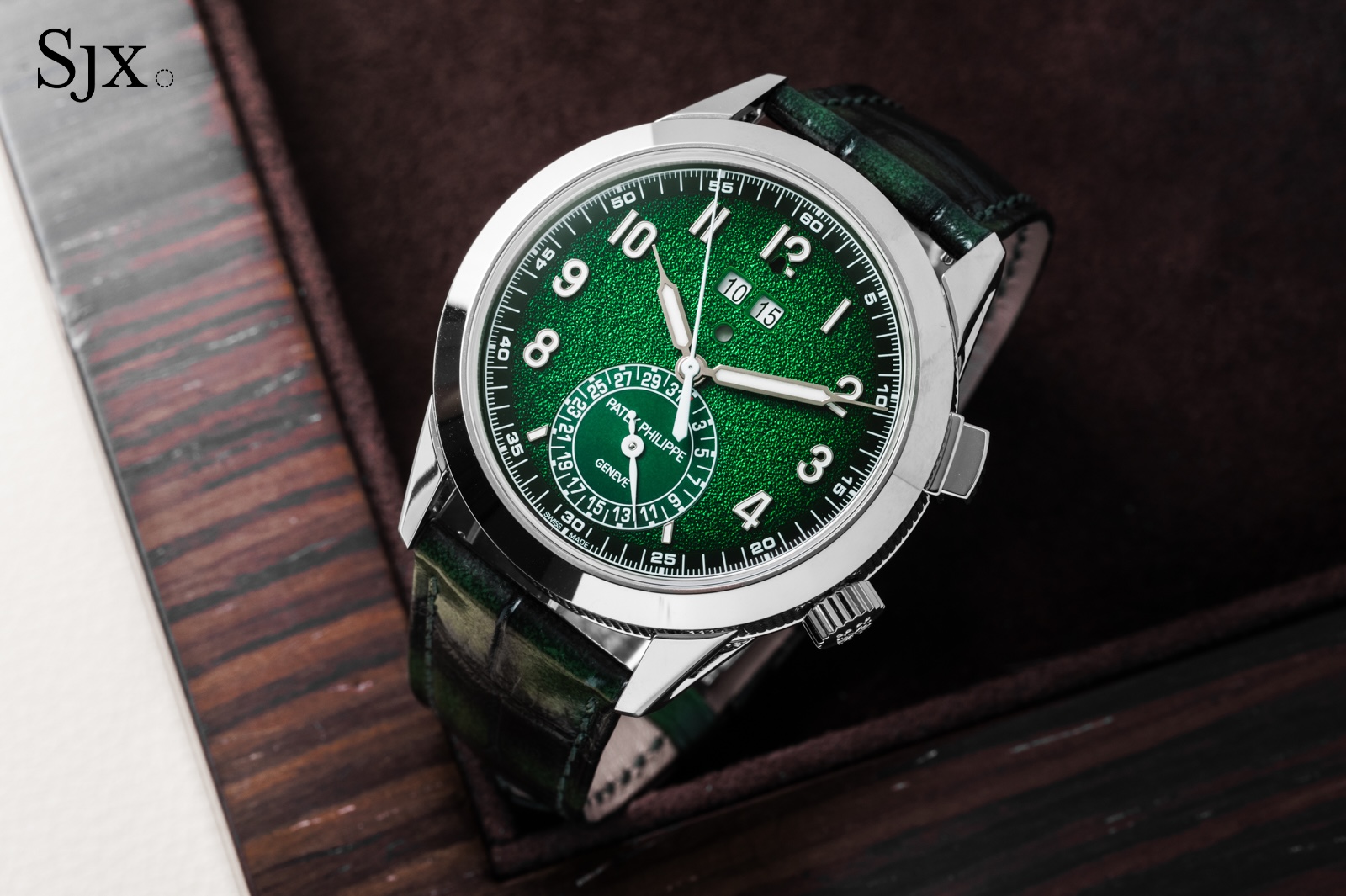
It has a single crown, and one button, which in combination allow you to set the watch, and set and arm the alarm. Despite being a chiming watch, Patek Philippe states a depth rating of 30 m. Water resistance ratings can be quite nebulous, and many brands are overly cautious, but Patek Philippe says you can take this, and all of its other water resistant watches, skin-diving if you so choose.
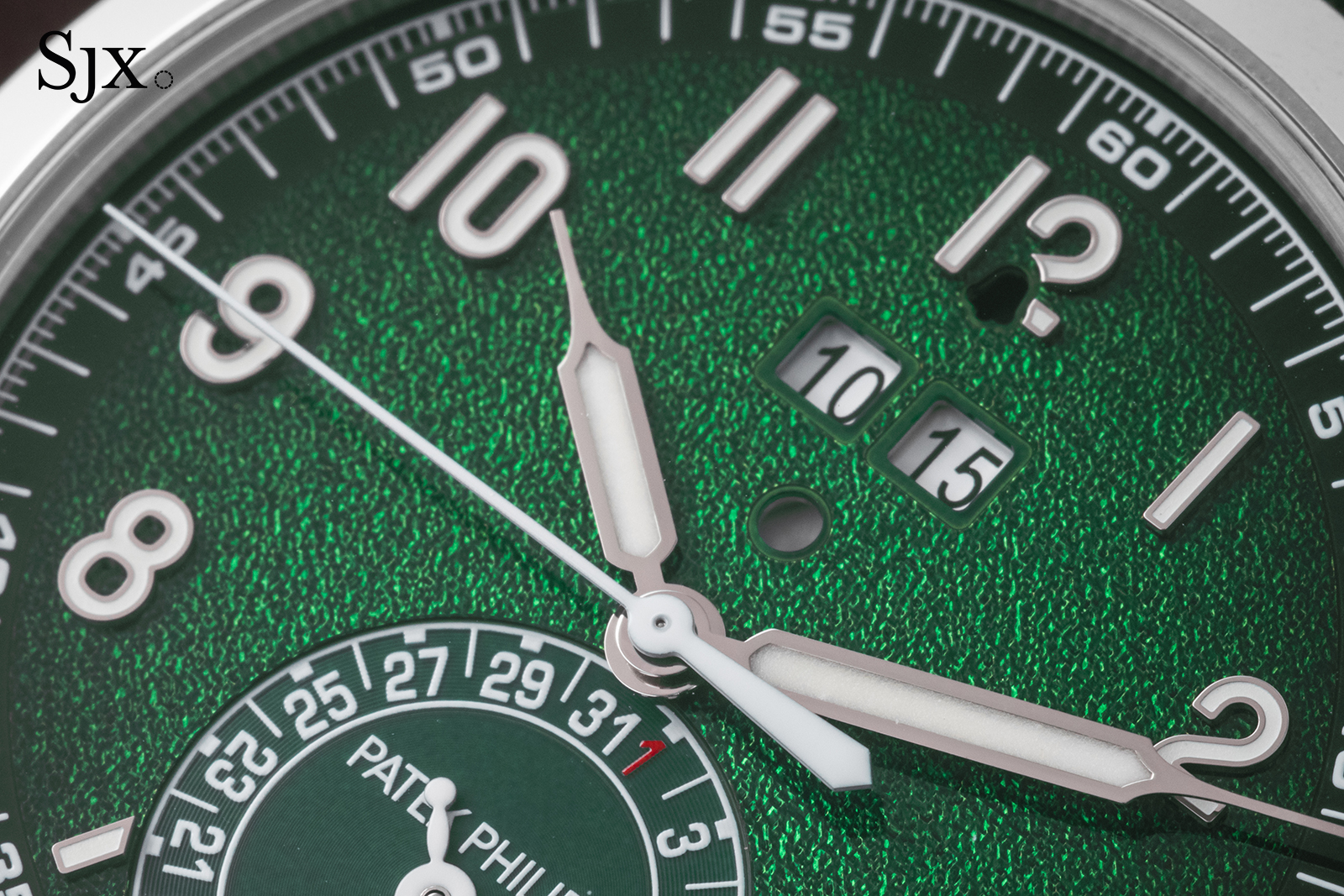
The dial base is a brass plate, stamped with a grained texture inspired by vintage cameras. Following application of the green colour, the dial is spun and spayed with black lacquer to produce an even fumé effect.
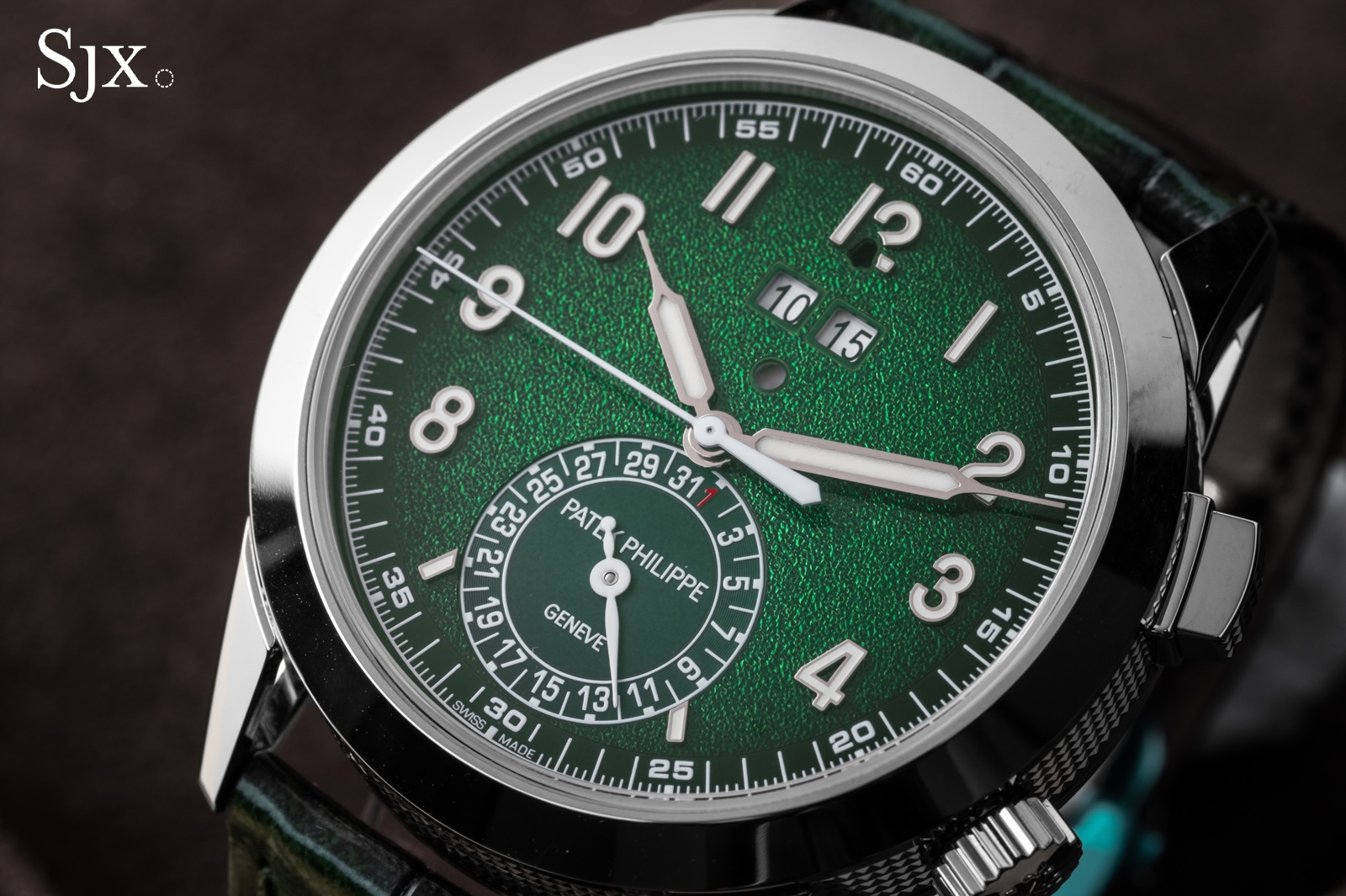
With aid of a highly legible digital display, the alarm can be set to the nearest quarter hour, which is more limiting than typical alarms, but few can be set precisely enough for the extra freedom to offer a meaningful advantage. As an added feather in its cap, it is a 24-hour alarm, able to tell AM and PM apart, which is indicated in an aperture below the digital display. The bell shaped cutout above indicates if the alarm is activated or not.
Streamlined movement
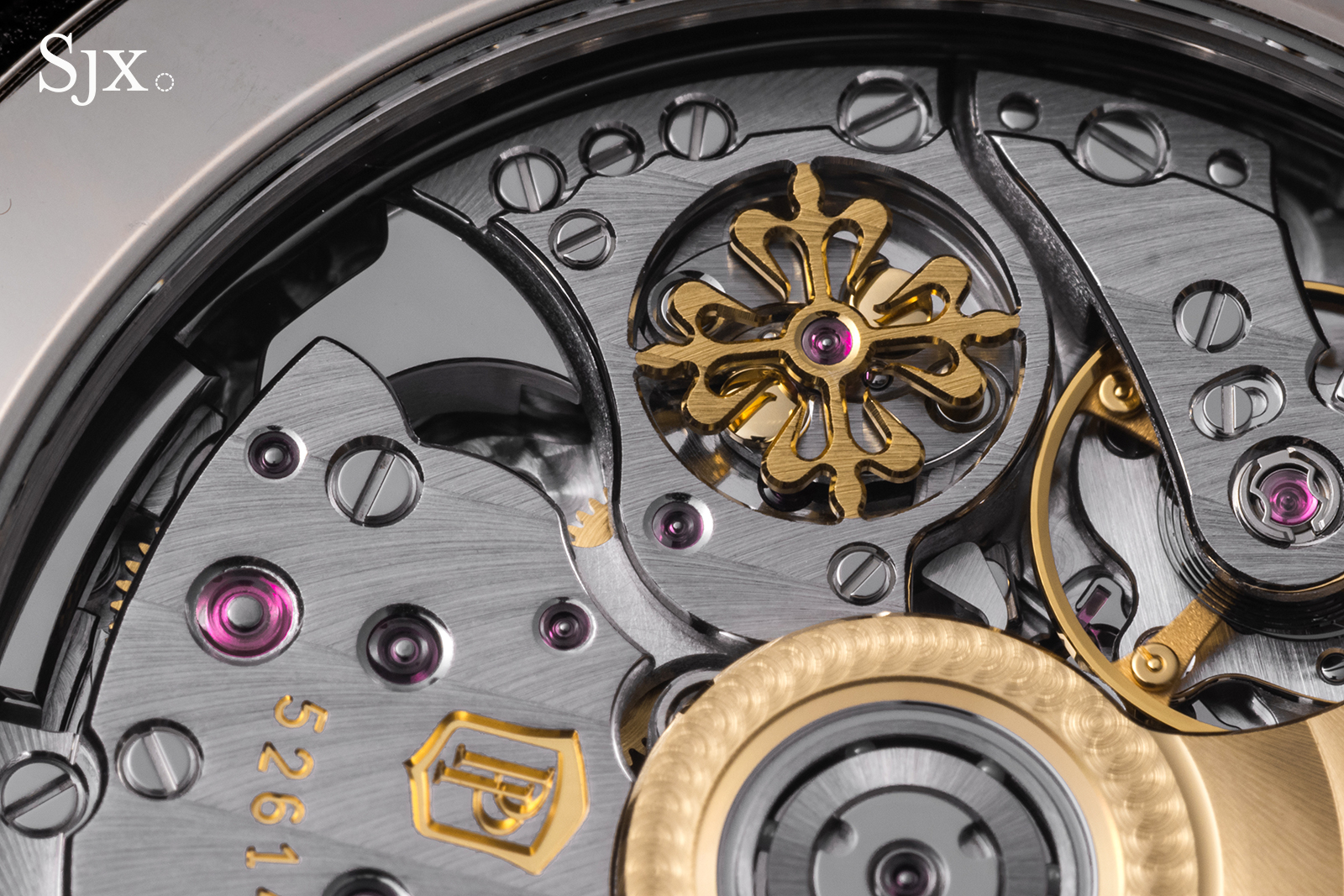
While the Grandmaster Chime, launched in 2014, was the first Patek Philippe wristwatch with an alarm functionality, it worked by triggering the trip minute repeater two minutes before the selected time. The cal. AL 30-660 is Patek Philippe’s first, and still only, wristwatch-sized base calibre with a traditional standalone alarm complication.
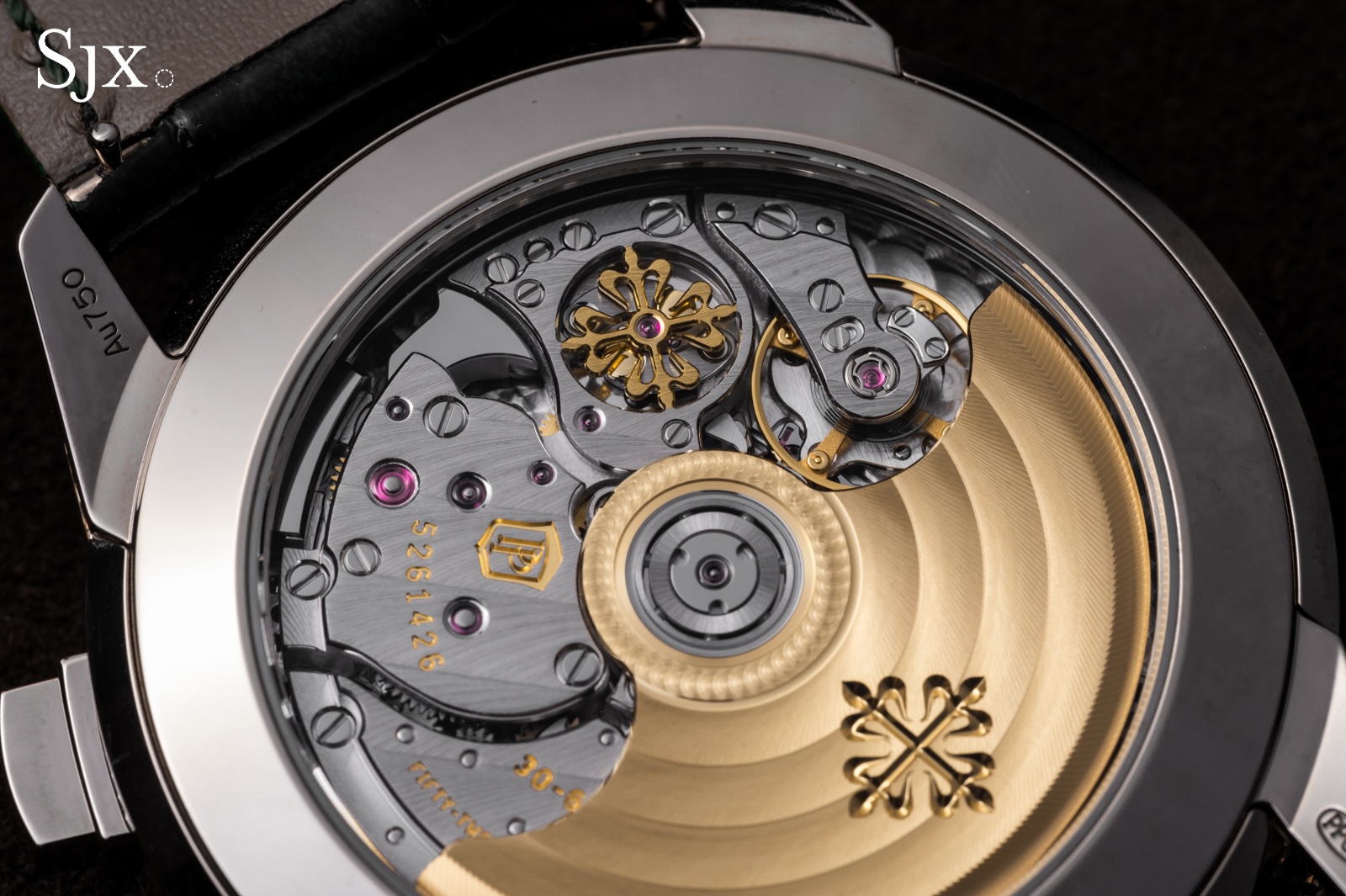
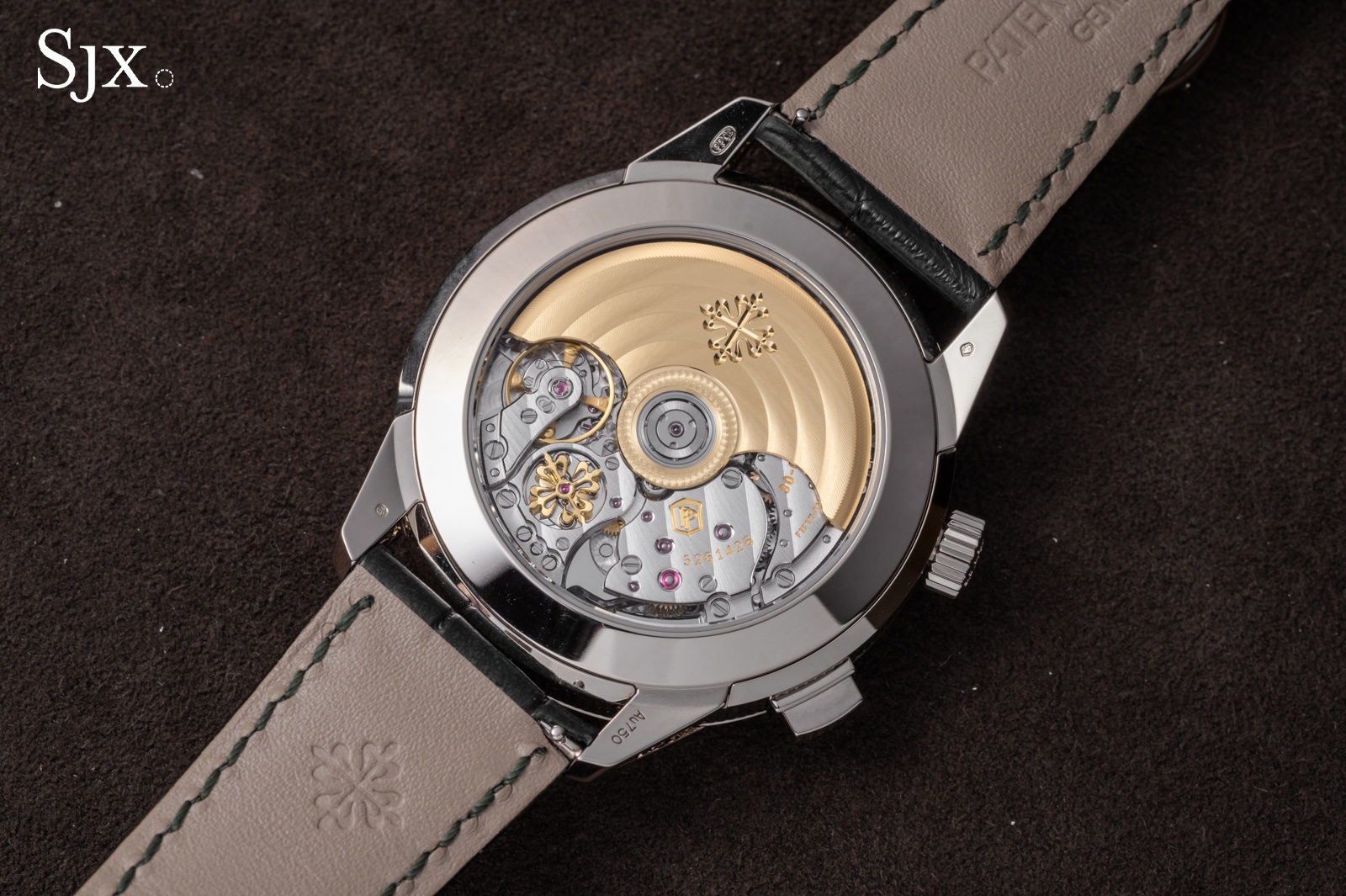
For a complicated watch, the operation could hardly be more straightforward. Turning the crown clockwise while pressed home against the case winds the alarm barrel, while turning it counterclockwise winds the going barrel. The watch is self-winding, but this does not extent to the alarm barrel, which must be wound manually before use. An all-or-nothing mechanism prevents the alarm from sounding if the alarm barrel is not fully wound.
Pulling the crown out one click allows adjustment of the alarm both forwards and backwards. One more click brings the crown to its final position, for time setting, also in both directions. This also stops the movement for precise adjustment. Unfortunately, the date cannot be quickly corrected by the crown. That is instead the task of a pin-pusher secreted between the lugs, which Patek Philippe still relies on for many models, despite recent movement away from them.
Two barrels drive the movement — one is responsible for timekeeping, which is wound automatically by a central rotor, the other powers the alarm. A star wheel in the alarm train trips the hammer as the train unwinds and ends with a centrifugal governor to pace the train’s unwinding. Wound from the crown, the alarm train is locked by a lever until the set time arrives.

A column wheel is used to toggle between the alarms active and inactive states. Image – Patek Philippe
The alarm train unlocks when slots in two cams align. One of these cams has a single slot and sits on a wheel that turns once in 24 hours. Setting the alarm to 10:00 am, for example, turns this cam so that the unlocking lever falls into the slot when the hands show 10:00 am.
This would be sufficient to activate an alarm, but to ensure the alarm only triggers at the correct time, Patek Philippe added a second unlocking cam into the mix. This cam has four slots and turns once per hour, resulting in an alarm that triggers within 10 seconds of the selected quarter, according to Patek Philippe.
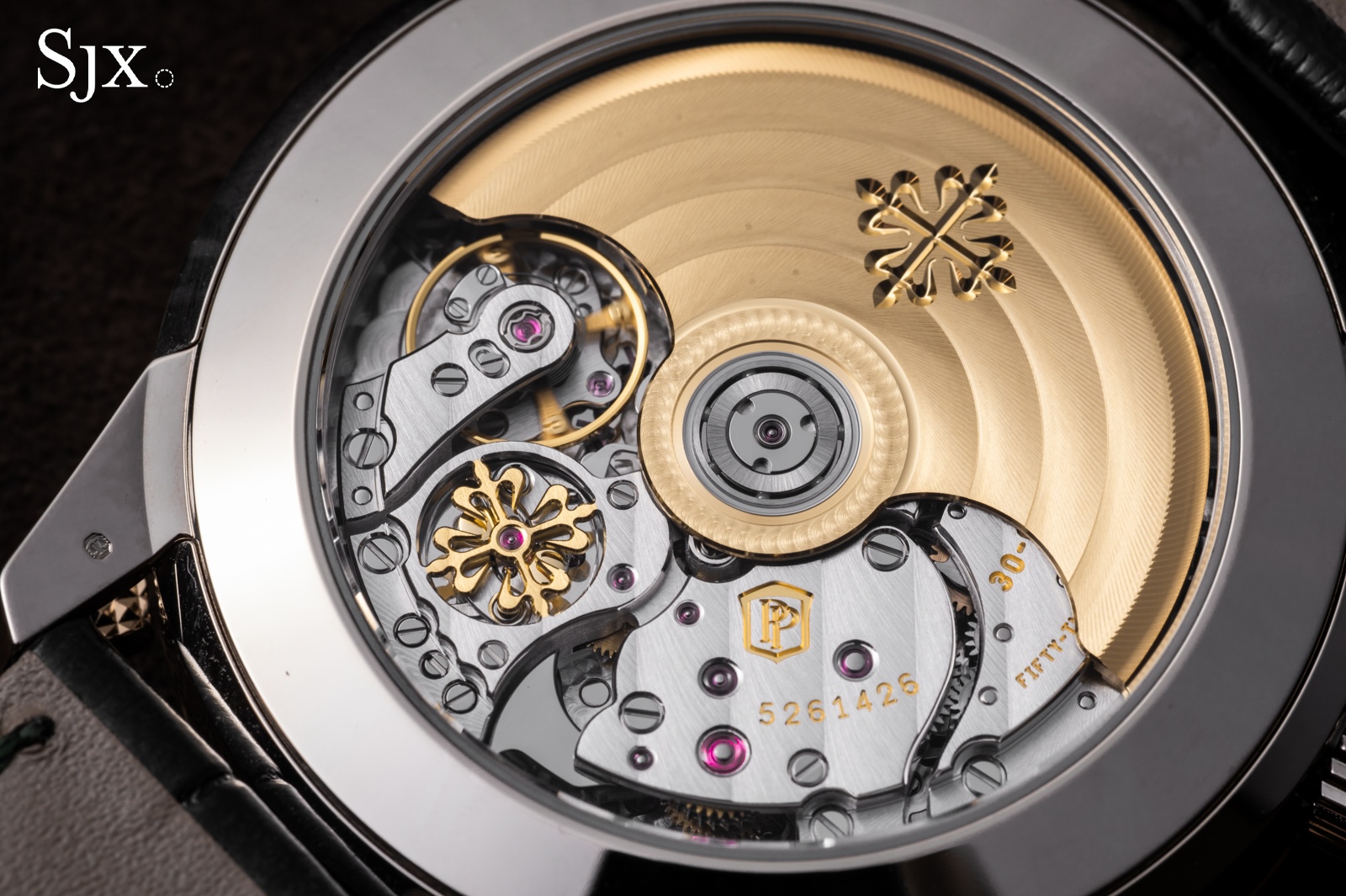
Striking is oddly leisurely for an alarm, around 2.5 strikes per second as adjusted from the factory, while most alarms strike dozens of time per second, in part because they use the striking itself as the brake. Even Patek Philippe’s alarm watches made during the early 20th century struck much faster.
A key element that differentiates the ref. 5322G from other alarm watches is that the black-polished hammer strikes a circular gong, just like a minute repeater. This gives the alarm a more melodic and less frantic sound than other alarm watches on the market.
Key facts and price
Patek Philippe Calatrava 24-Hour Alarm
Ref. 5322G-001 (blue dial)
Ref. 5322G-010 (green dial)
Diameter: 41 mm
Height: 12.22 mm
Material: 18k white gold
Crystal: Sapphire
Water resistance: 30 m
Movement: Cal. AL 30-660 S C
Functions: Hours, minutes, running seconds, date, 24-hour alarm
Frequency: 28,800 beats per hour (4 Hz)
Winding: Automatic
Power reserve: 42-52 hours
Strap: Fabric pattern composite strap with white gold clasp.
Limited edition: No
Availability: At Patek Philippe retailers and salons.
Price: US$281,321 excluding taxes
For more, visit Patek.com.
Back to top.