Hands On: Jaeger-LeCoultre Gyrotourbillon à Stratosphère

Pushing the limits of the multi-axis tourbillon.
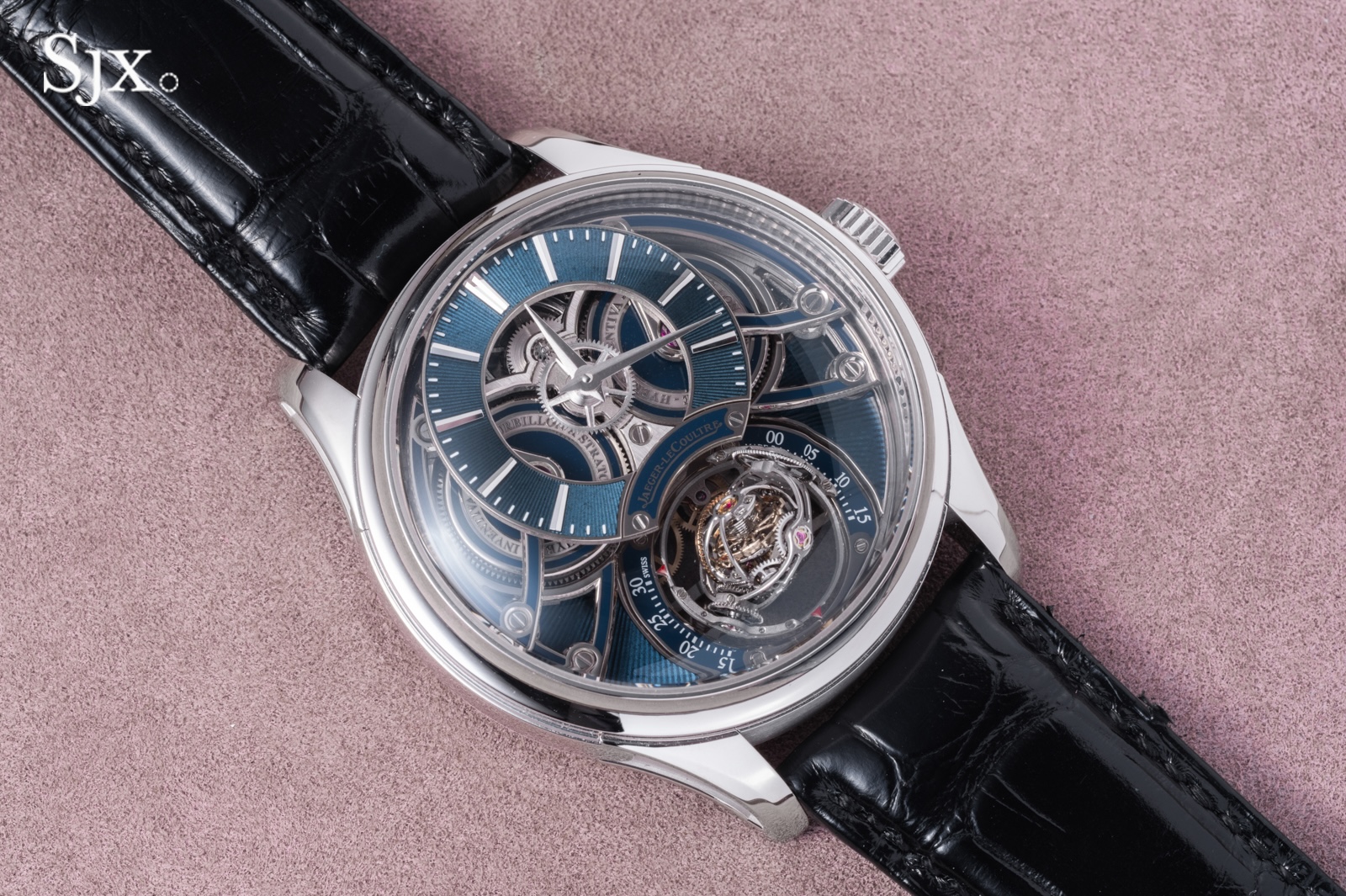
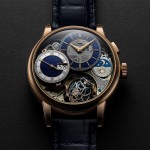
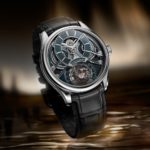
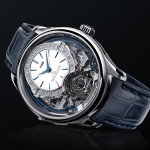
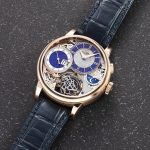
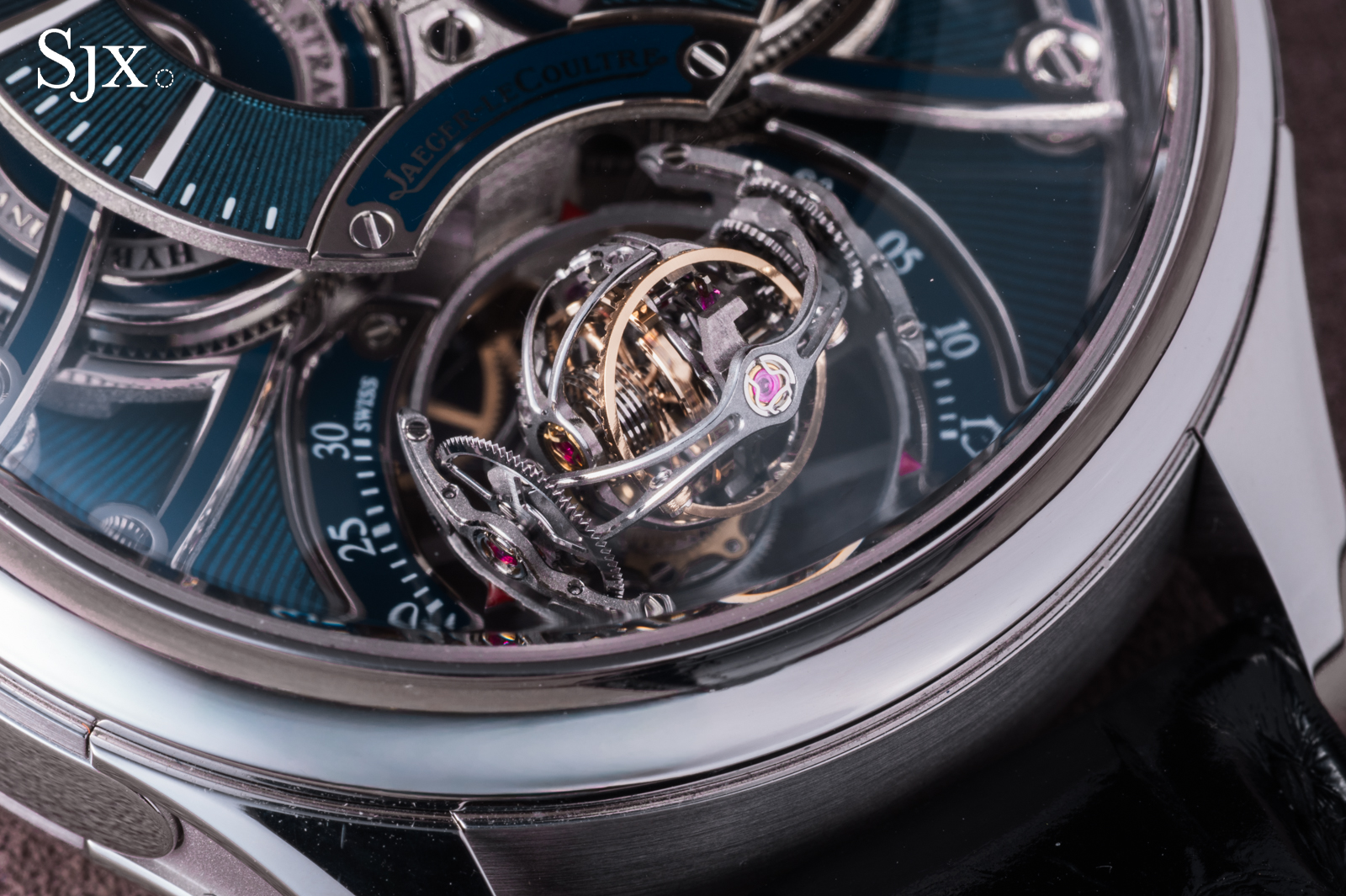
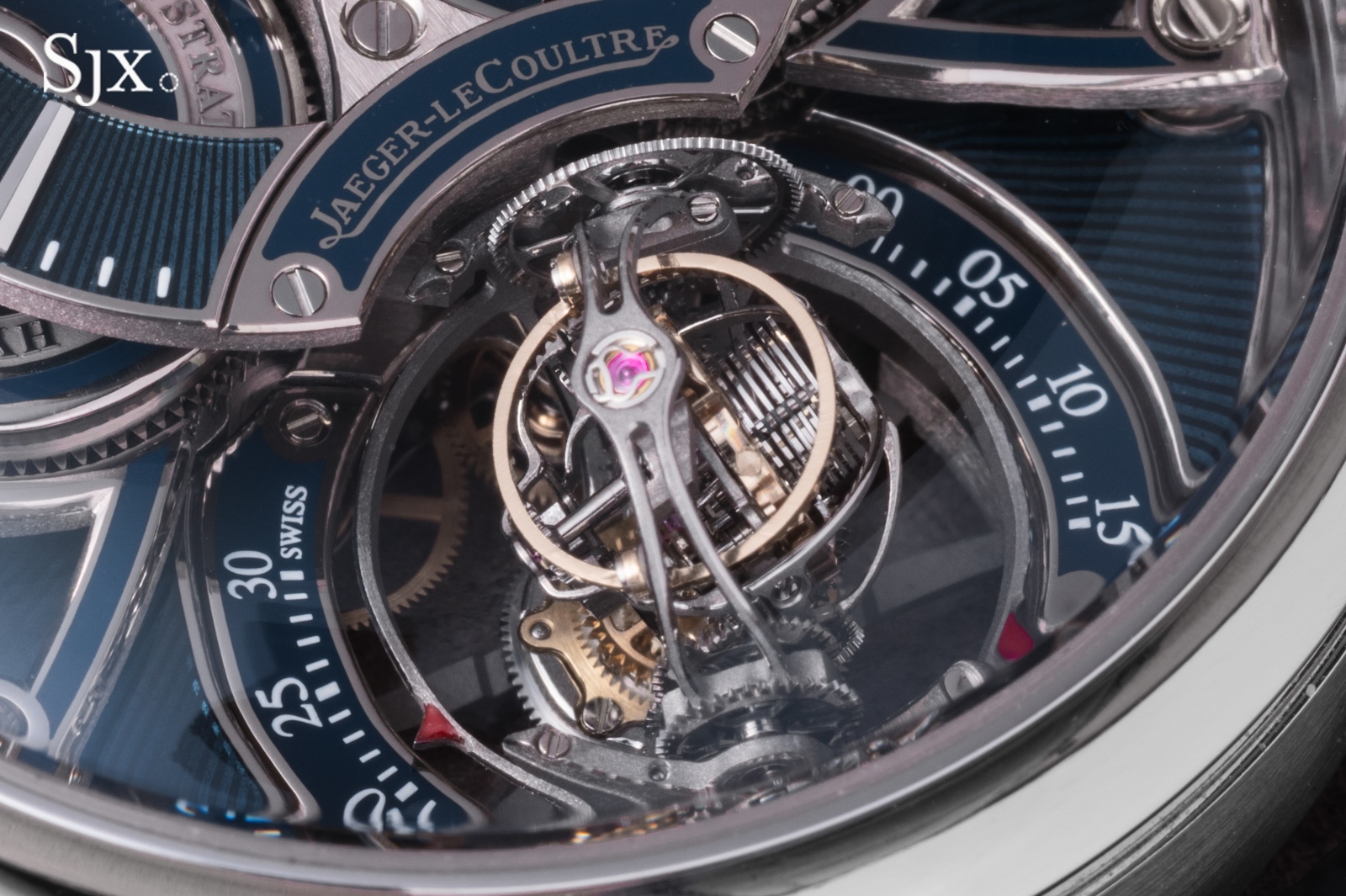
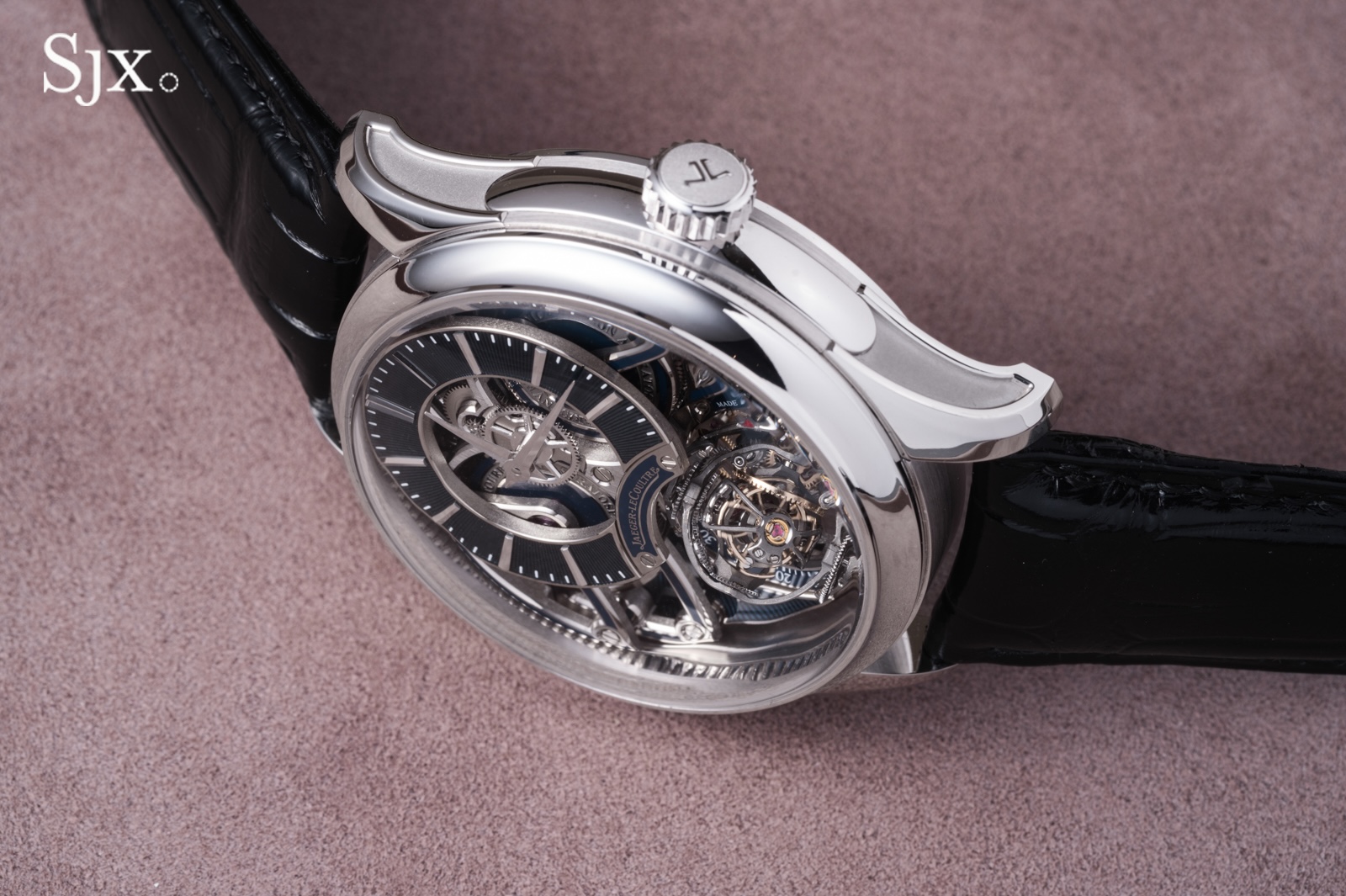
A tourbillon within a tourbillon, itself within yet another tourbillon. The Master Hybris Inventiva Gyrotourbillon à Stratosphère is Jaeger-LeCoultre’s sixth-generation multi-axis tourbillon, 22 years after the first Gyrotourbillon launched in 2004. The revised tourbillon architecture now covers close to 100% of possible positions in space to dilute the effects of gravity across nearly all possible orientations. But is it a genuine precision instrument, or an exploration of the limits of contemporary mechanics?

Initial thoughts

Two decades after the first Gyrotourbillon in 2004, multi-axis tourbillons are no longer exceptional. What was once experimental has become an established sub-genre of high-end watchmaking. In this context, the Gyrotourbillon à Stratosphère reads less as a breakthrough than as the sixth step in a continuous internal trajectory. Its placement within the newly defined Hybris Inventiva collection, introducing experimental innovation pursued within the manufacture, is also telling.
The brand’s emphasises on internal development – from conception to decoration – underscores its capacity for sustained horological research within a single, integrated structure. Under the leadership of Jérôme Lambert – already at the helm during the 2000s and closely associated with the emergence of the Gyrotourbillon – the narrative reflects a more structured and explicit articulation of its capabilities, at a time when the competitive landscape has matured. Mr Lambert has long emphasised technically demanding flagship models, from chiming watches to multi-axis tourbillons, not as volume drivers but as markers of legitimacy.

The recent concentration of technically and artistically ambitious launches reinforces this direction. It also continues to shape the brand’s historical identity, and a label it has long grappled with: not solely as a supplier of movements, but as a fully integrated manufacture capable of uniting mechanical engineering and métiers d’art.

Evolution or revolution?

The calibre 178 that powers the Stratosphère builds on more than two decades of research into multi-axis tourbillons, during which Jaeger-LeCoultre (JLC) has explored variables such as axis multiplication, different hairspring geometries, miniaturisation, and new forms of energy management.

This logical evolution of the Gyrotourbillon concept remained theoretical until recently. “Its realisation has only been possible thanks to the current maturity of the Manufacture’s expertise and technologies – it would have been difficult to envisage just a few years ago,” notes Takahiro Hamaguchi, Product & Innovation Director at JLC.
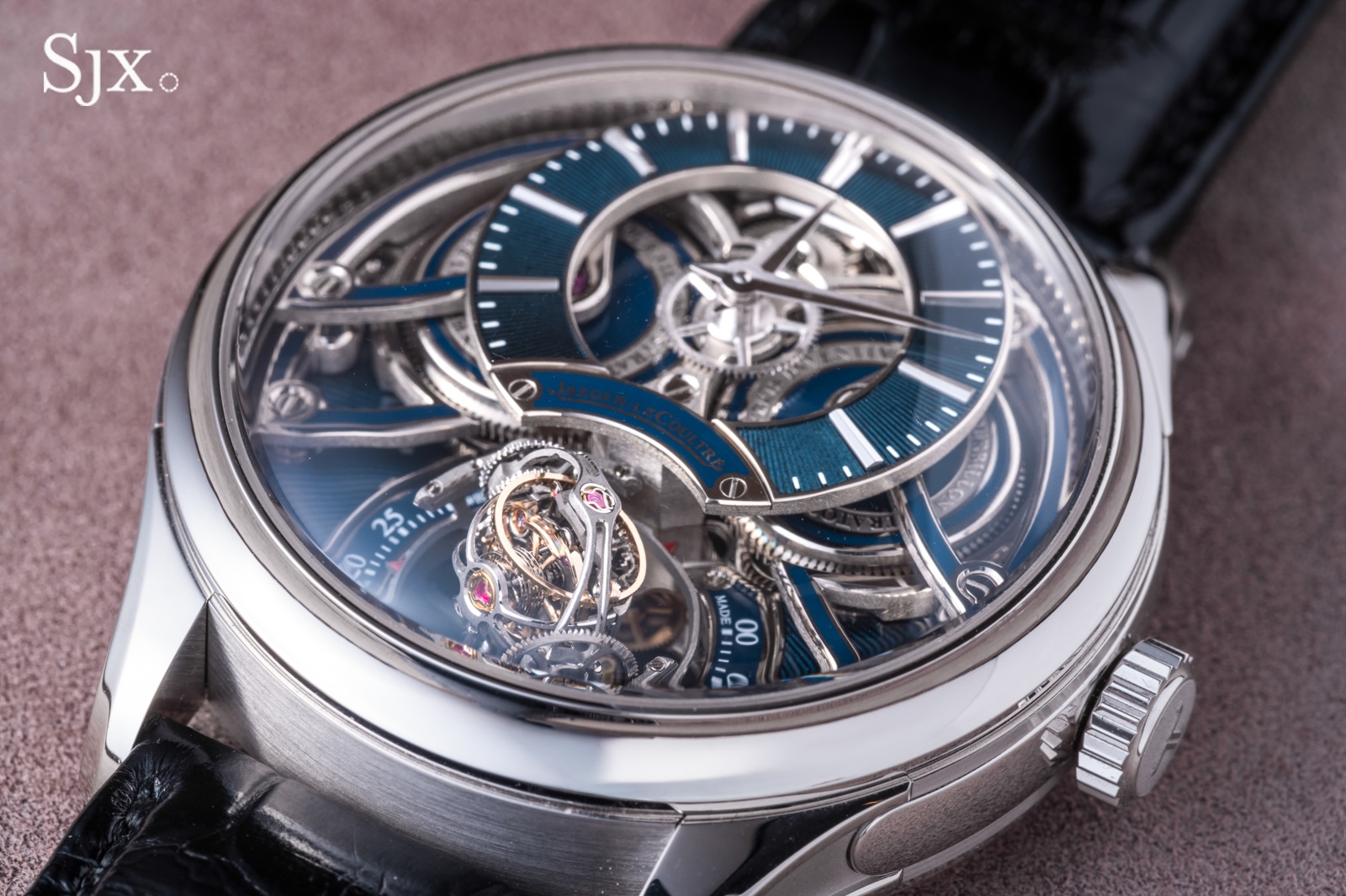
This capability also stems from the brand’s internal structure, which enables the conception and production of a movement from scratch, and is reflected in the new Hybris Inventiva line, which will grow into a showcase of watches that isolate a single innovative complication developed through multi-year internal research.

Decoding the 98% coverage

The notion of positional coverage refers to a geometric reality: “We consider the trajectory of a multi-axis tourbillon as the evolution of a fixed point on the inner cage – for example, the tip of the balance staff,” Mr Hamaguchi explains. The percentage corresponds to the portion of a sphere’s surface effectively swept by that point. With three axes, this coverage reaches 98% — up from 70% in 2004 — approaching near-perfect positional immunity.

What about the remaining 2%? “The final percentages would require disproportionate effort for marginal benefit. Our objective is not to reach 100%, but to pursue optimal and relevant precision,” Mr Hamaguchi clarifies.

Kinematics and constraints

The three cages rotate at three distinct speeds: 20, 60 and 90 seconds. Their selection results from “a compromise between precision and autonomy,” says Mr Hamaguchi. “Theory suggests that the faster the rotation of the cages, the better the chronometric performance – much like increasing the frequency of the balance to 4 Hz, here used for the first time in a Gyrotourbillon.” The inner cage, which rotates fastest, plays a decisive role in overall performance.
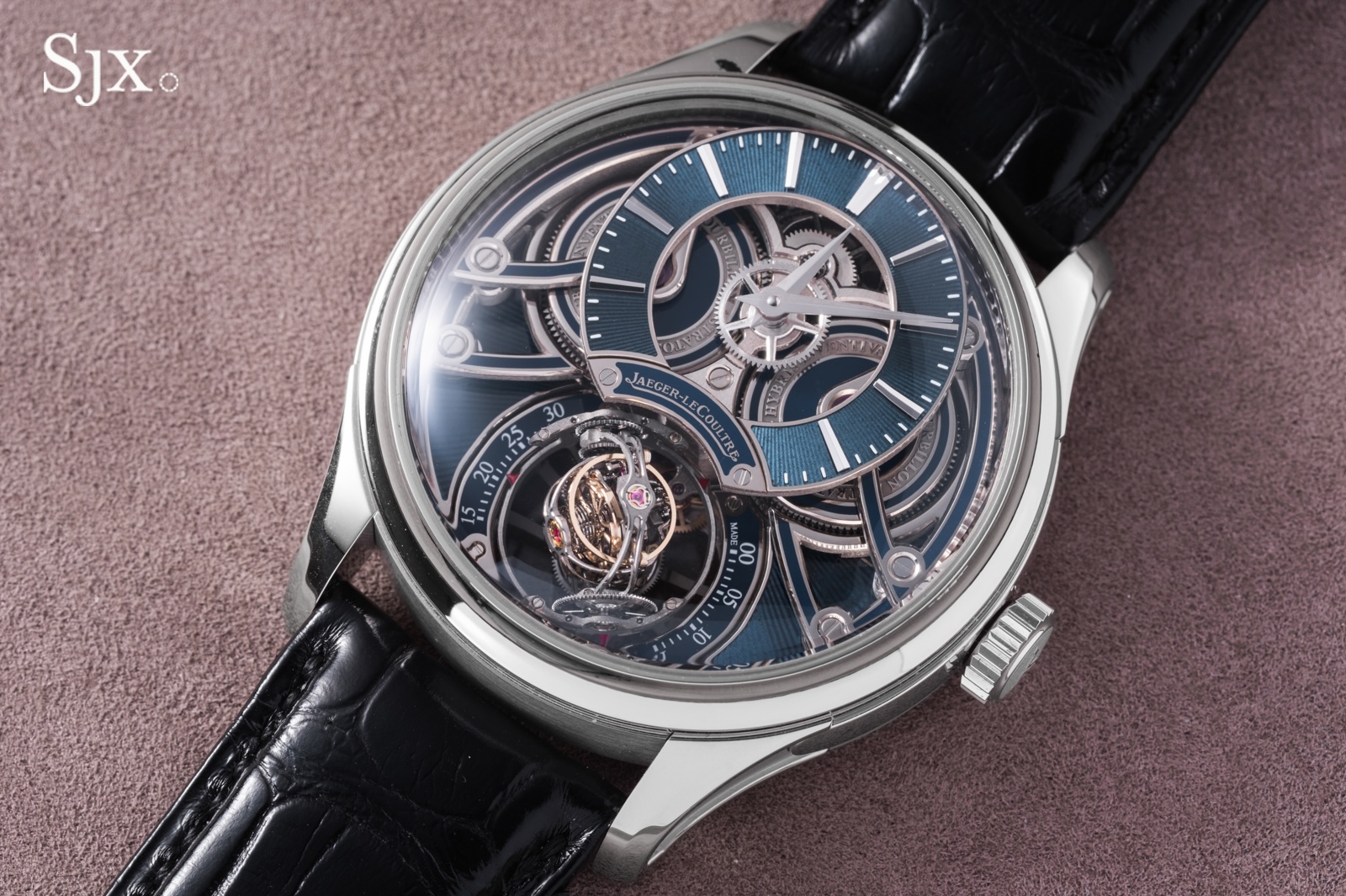
In earlier Gyrotourbillons, JLC employed inclined axes, without formally disclosing their exact angles. While the balance axis itself was inclined at 90°, the outer cage was also tilted relative to the mainplate. This inclination was driven as much by chronometric considerations as by spatial constraints. “It allowed the cage to ‘graze’ both the dial-side and case back crystals,” thereby reducing thickness, explains Mr Hamaguchi.

The Gyrotourbillon à Stratosphère now shifts away from that to an orthogonal X/Y/Z architecture. This transition is fundamentally kinematic: the former inclined configuration becomes incompatible with the addition of a third axis. A new patent specifically concerns this novel combination – a balance inclined at 90° paired with a third rotational axis.
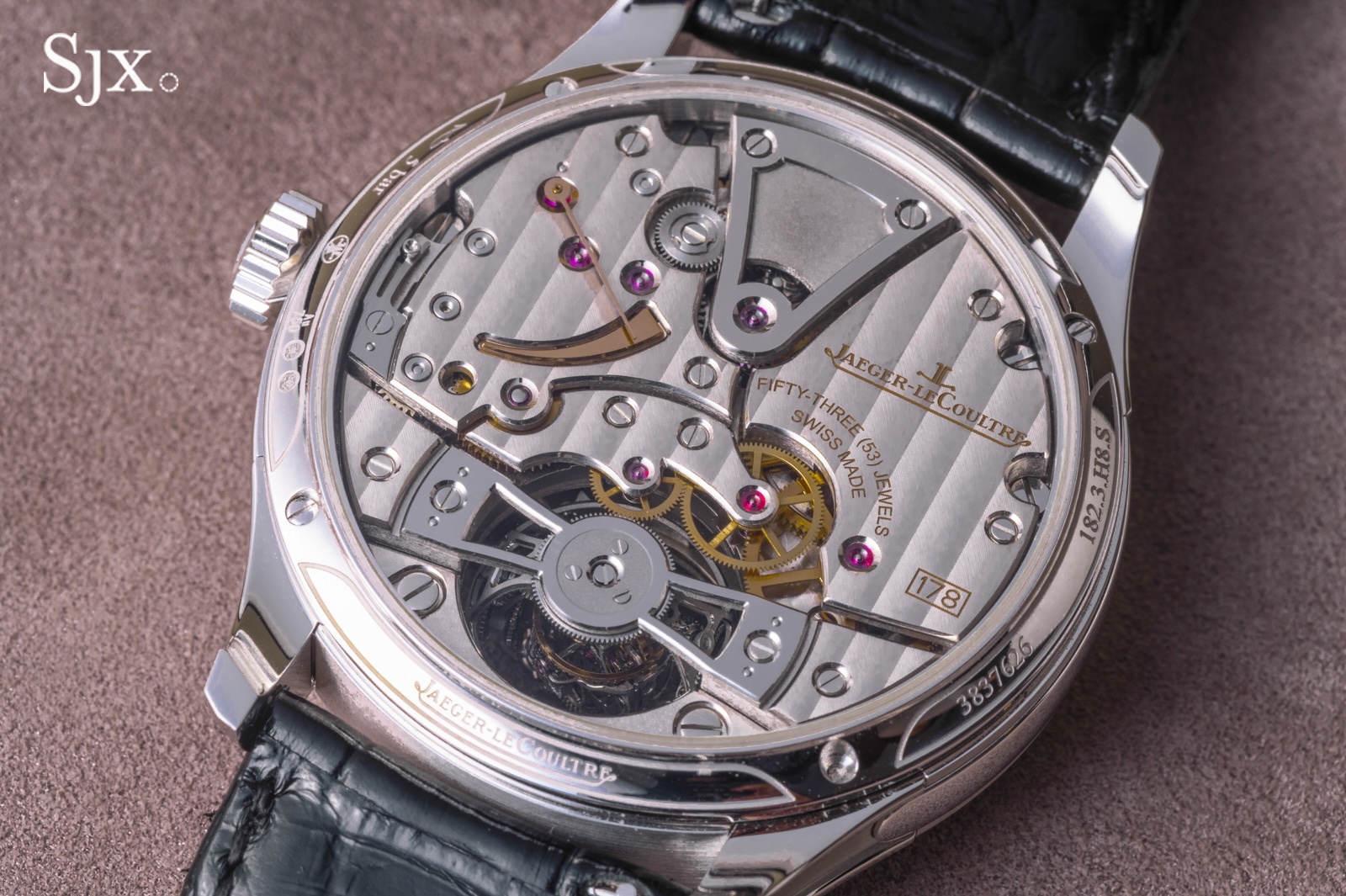
More complexity, less volume

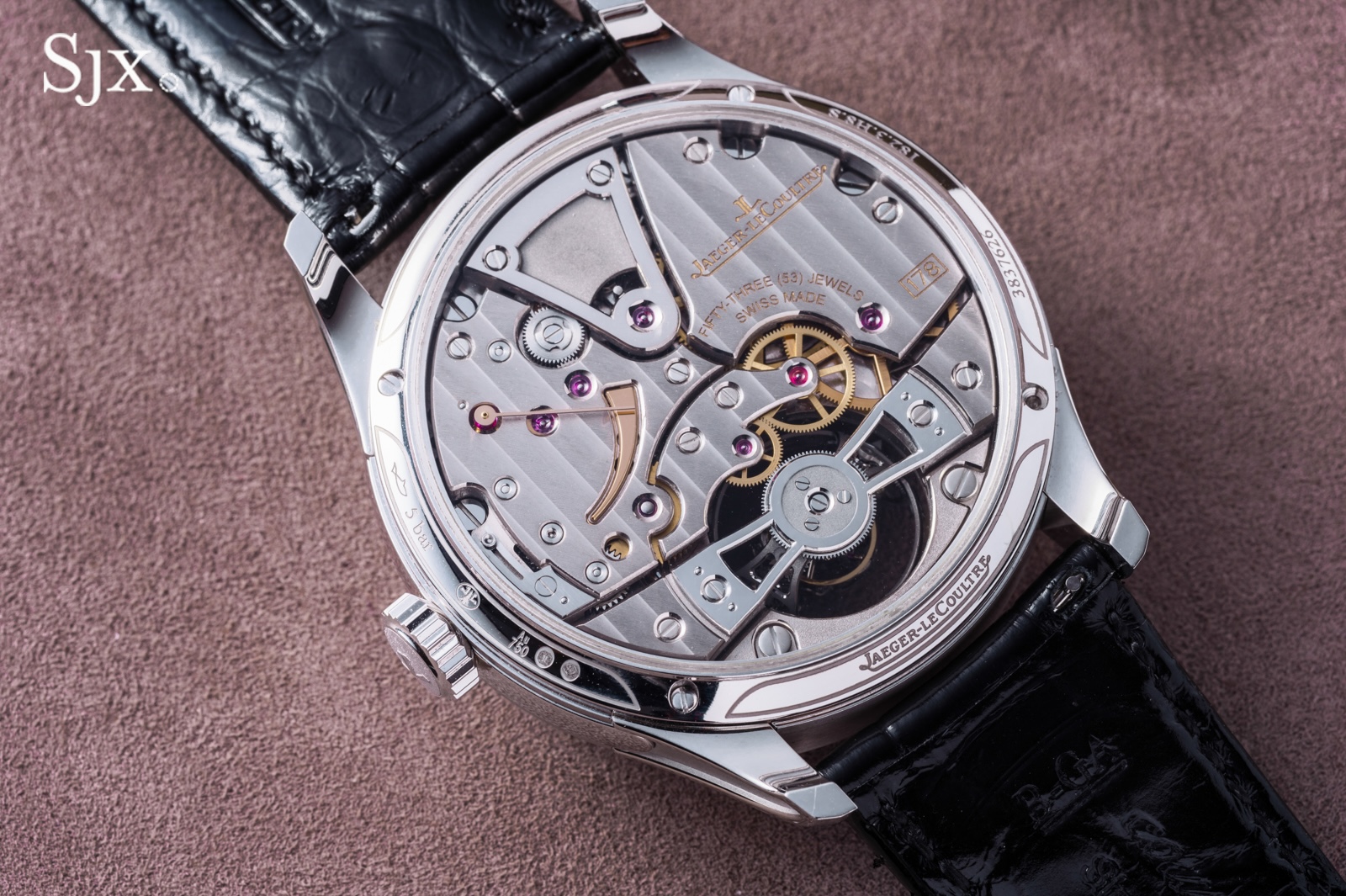
This shift is accompanied by a sustained effort in miniaturisation. While the diameter of the cage has been progressively reduced – from approximately 12-13 mm in the original Gyrotourbillon I to around 10 mm for this latest generation. Meanwhile, the complexity contained within that volume has increased, with 189 components inside the outermost cage.
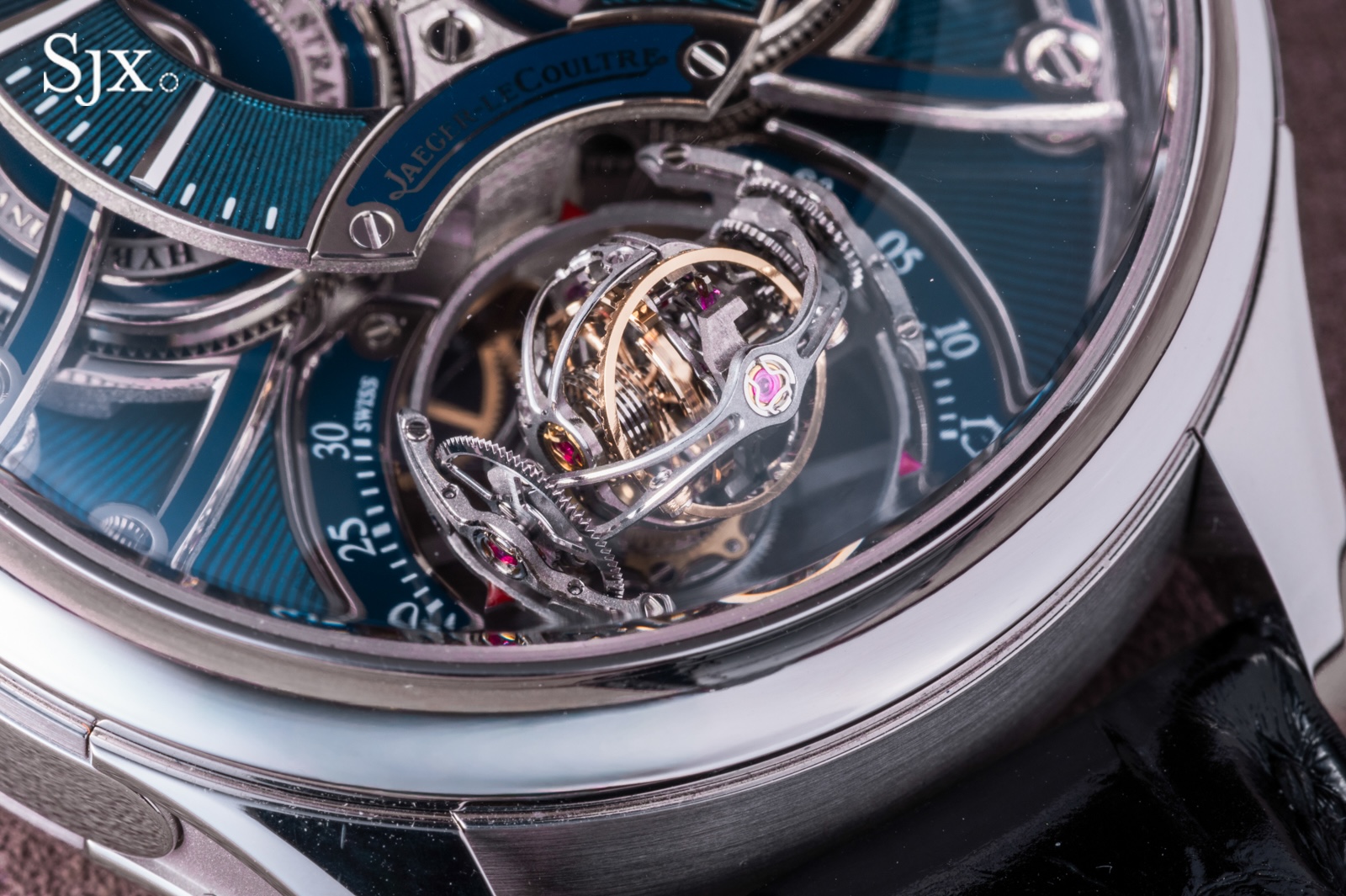
More than the absolute number of components, it is the density that has evolved: at a near-constant diameter, mechanical complexity has almost doubled since the first Gyrotourbillon. 

Regarding case dimensions, early Gyrotourbillons were already substantial, often between 16 mm and 18 mm thick. Subsequent generations saw modest optimisation, generally remaining within a range of about 14-17 mm. The Stratosphère, despite its added complexity, measures 16.15 mm thick, underscoring a stable volumetric envelope. Rather than reduce thickness, JLC prioritised integrating greater mechanical complexity within comparable dimensions.
Energy optimisation

The Stratosphère places a fundamental watchmaking requirement at the forefront: energy. The system consumes approximately five times more energy than an equivalent calibre with a traditional escapement. “The goal is to achieve a balance between chronometric performance, power reserve, and dimensional constraints” says Mr Hamaguchi.
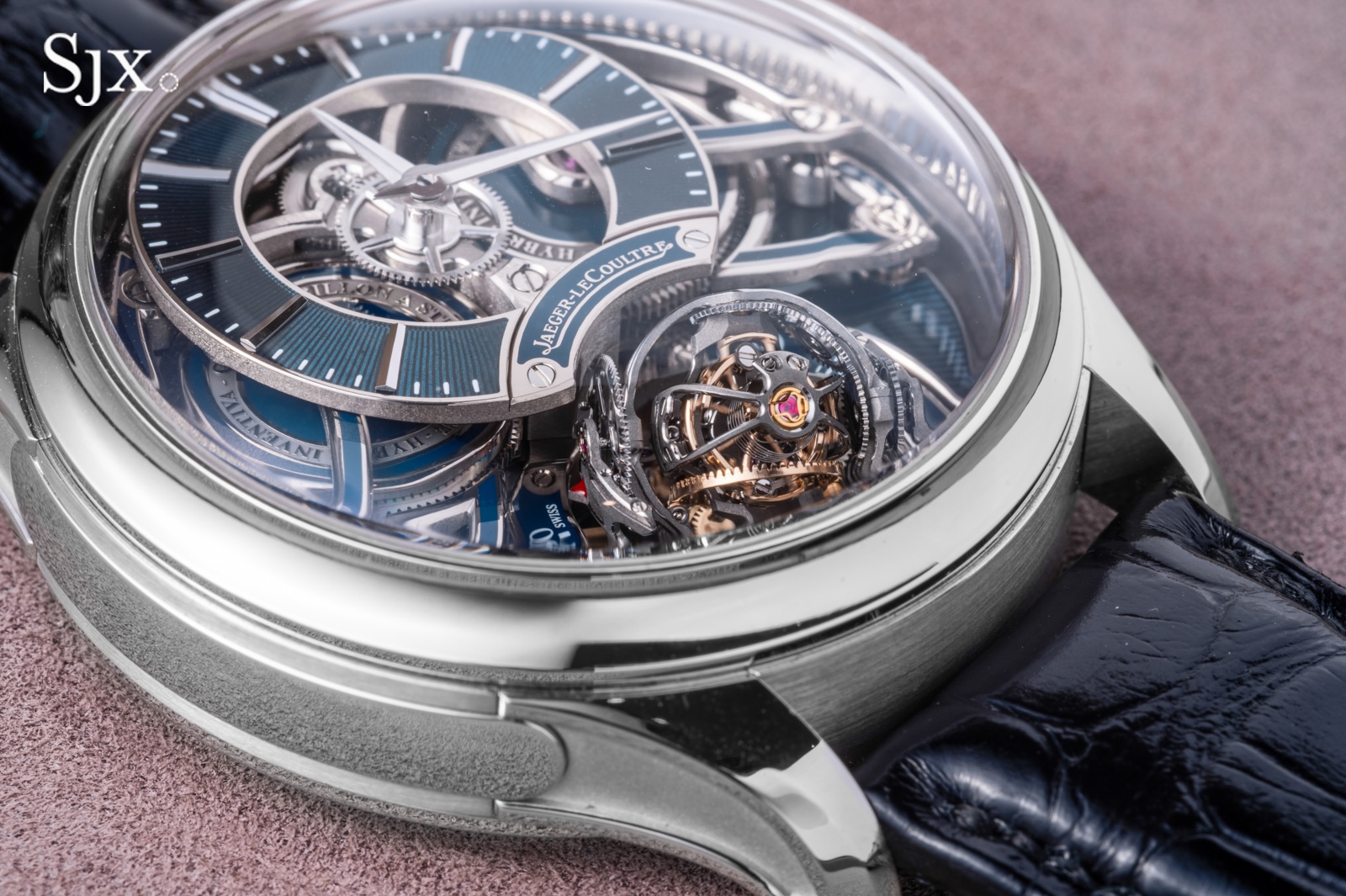
Reconciling a triple cage, a 4 Hz frequency, and a 72-hour power reserve relies on “overall optimisation, working on architecture, materials, and transmission.” The use of lightweight materials – particularly titanium for the tourbillon cages – also plays a key role, reducing inertia despite the increased number of components and helping to minimise energy consumption. The choice of ceramic ball bearings – which operate without lubrication – offers a significant long-term advantage.

Architecture and decoration

The Gyrotourbillon à Stratosphère’s three-dimensional architecture is enhanced by decorative crafts. “The openworked movement reveals its structural aesthetic, aiming to create a piece that is both legible and expressive,” Mr Hamaguchi explains. 
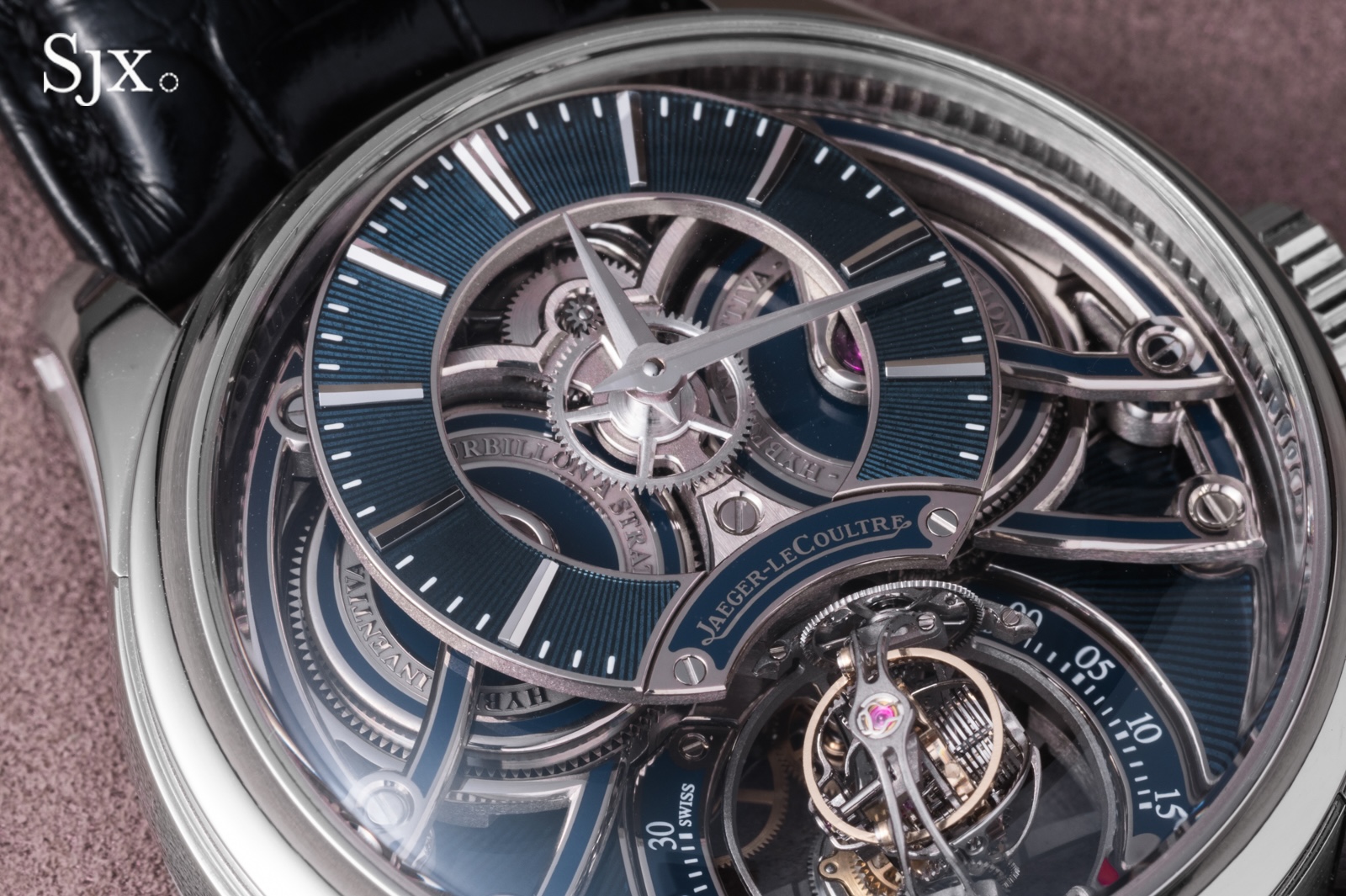
Yet each decorative technique – guilloché, enamel, and lacquer among others – affects structural components in terms of tolerances, vibrations, and thickness. Decoration here is thus integrated from the design stage. “Managing space and all these elements represented a real project challenge, which we addressed by integrating technique and aesthetics from the outset,” explained Lionel Favre, JLC’s Product Design Director.

So, where does it lead?

The answer to the initial question – precision instrument or exploration of mechanical limits – becomes clearer. The Gyrotourbillon à Stratosphère operates at the intersection of both. It extends Breguet’s original intent by seeking to average out the effects of gravity, yet reframes the problem entirely: precision is no longer optimised around a dominant position, but distributed across a near-complete range of spatial orientations.

At the same time, this pursuit is constrained by physical realities – energy consumption, kinematics, and volume – turning the watch into a study in balance as much as performance. “The project has a strong experimental dimension,” Mr Hamaguchi explains, suggesting that the combination of 98% positional coverage and a 4 Hz frequency should translate into tangible gains under real wearing conditions.
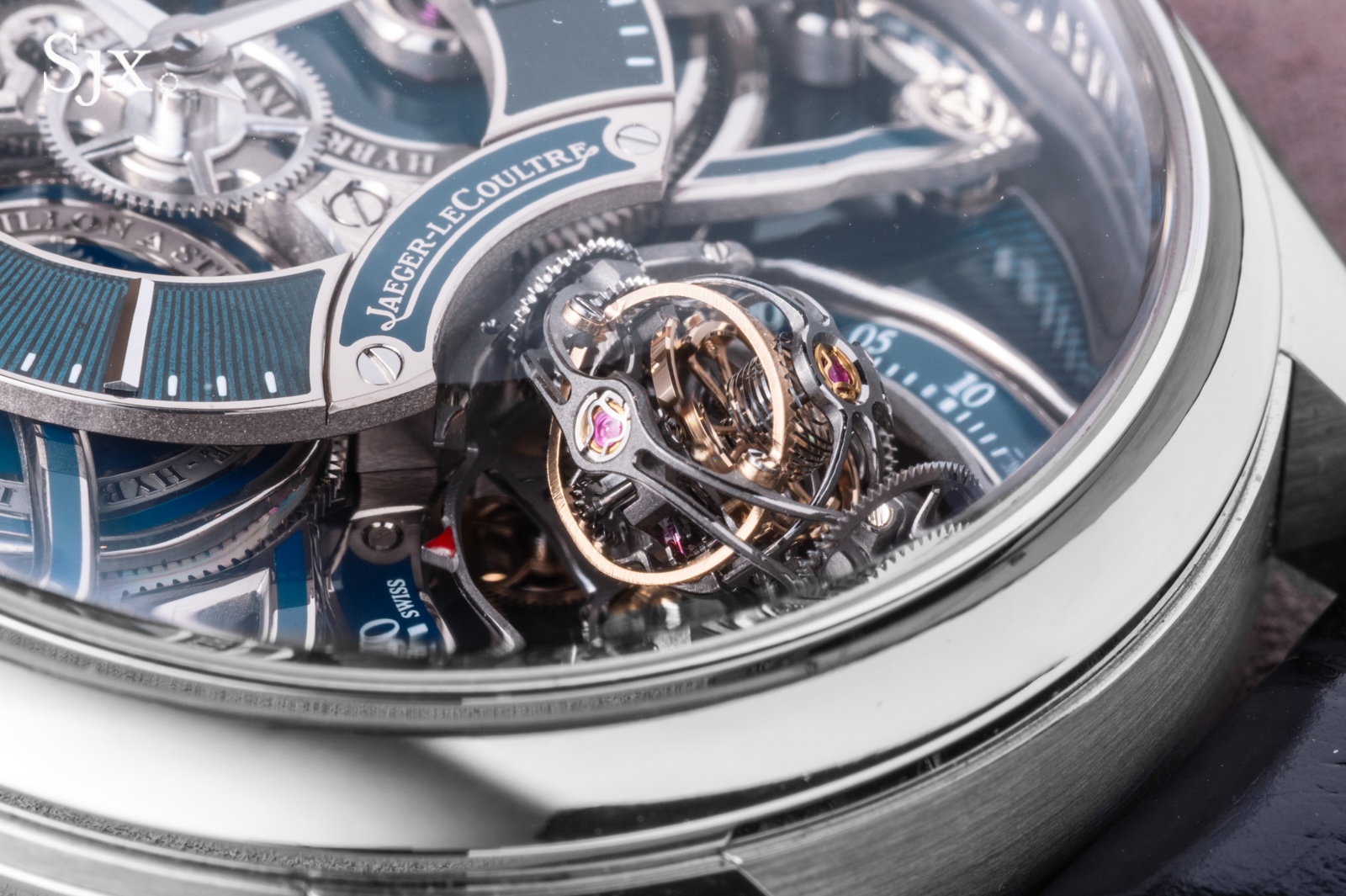
The three-dimensional architecture of the timepiece, conceived alongside its decoration, further reinforces this dual nature: a mechanical system designed not only to function, but to be understood and seen.

Ultimately, the Gyrotourbillon à Stratosphère does not eliminate gravity; it redistributes its effects across space. Precision becomes a question of probability, and the tourbillon a mechanism for exploring it. Whether this translates into measurable gains remains to be demonstrated – through real-world use or formal testing.

Key facts and price

Jaeger-LeCoultre Master Hybris Inventiva Gyrotourbillon À Stratosphère
Ref. Q5306480

Diameter: 42 mm
Height: 16.15 mm
Material: Platinum
Crystal: Sapphire
Water resistance: 50 m

Movement: Cal. 178
Functions: Hours, minutes, seconds, gyrotourbillon, power reserve
Winding: Manual wind
Frequency: 28,800 beats per hour (4 Hz)
Power reserve: 72 hours

Strap: Alligator with folding buckle

Limited edition: 20 pieces
Availability: Now at Jaeger-LeCoultre boutiques and retailers
Price: Upon request

For more, visit Jaeger-lecoultre.com.


Back to top.
You may also enjoy these.

Hands On: Rolex Oyster Perpetual 36 ‘Jubilee’ Dial

Continuing the celebration.

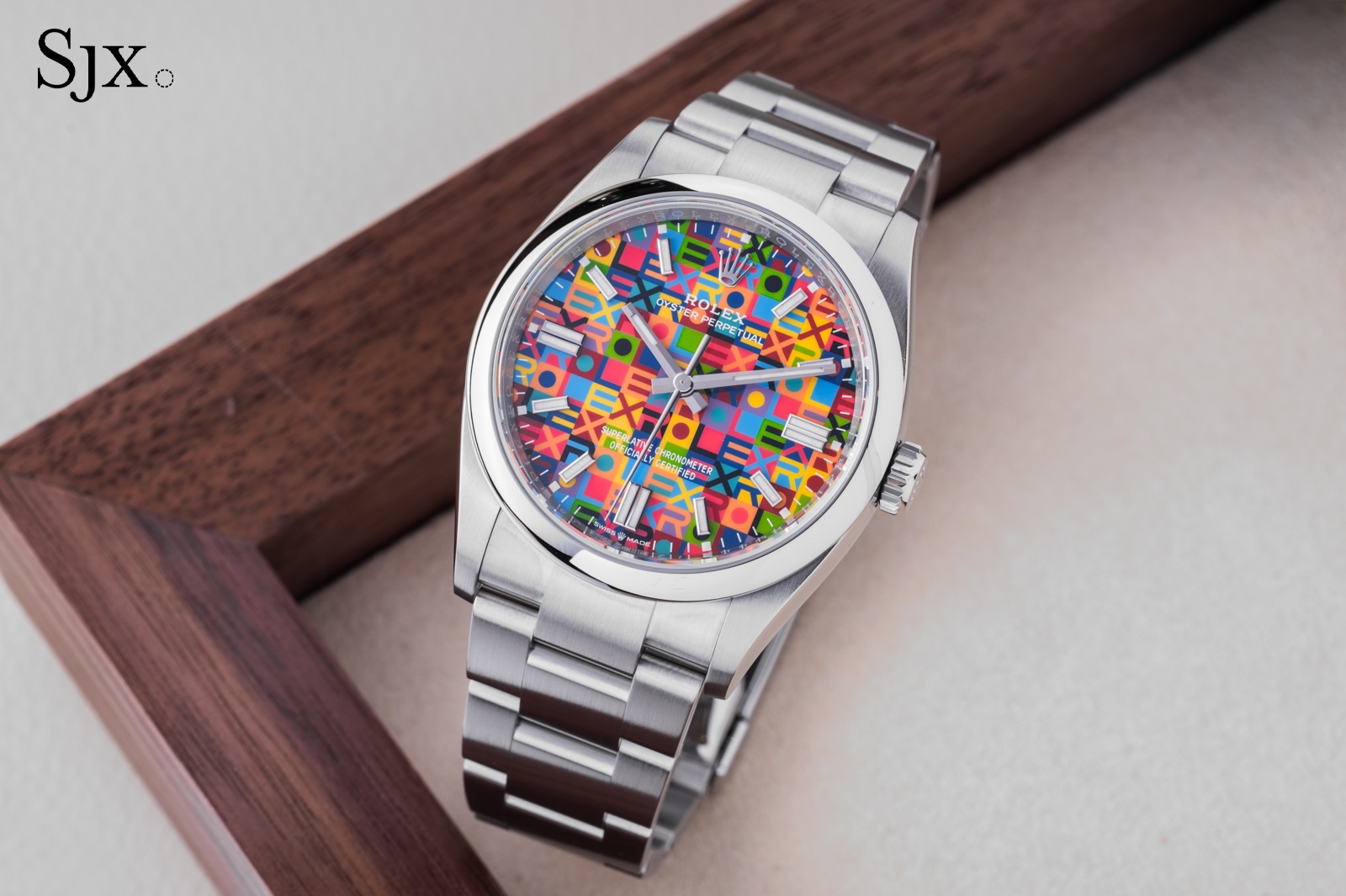
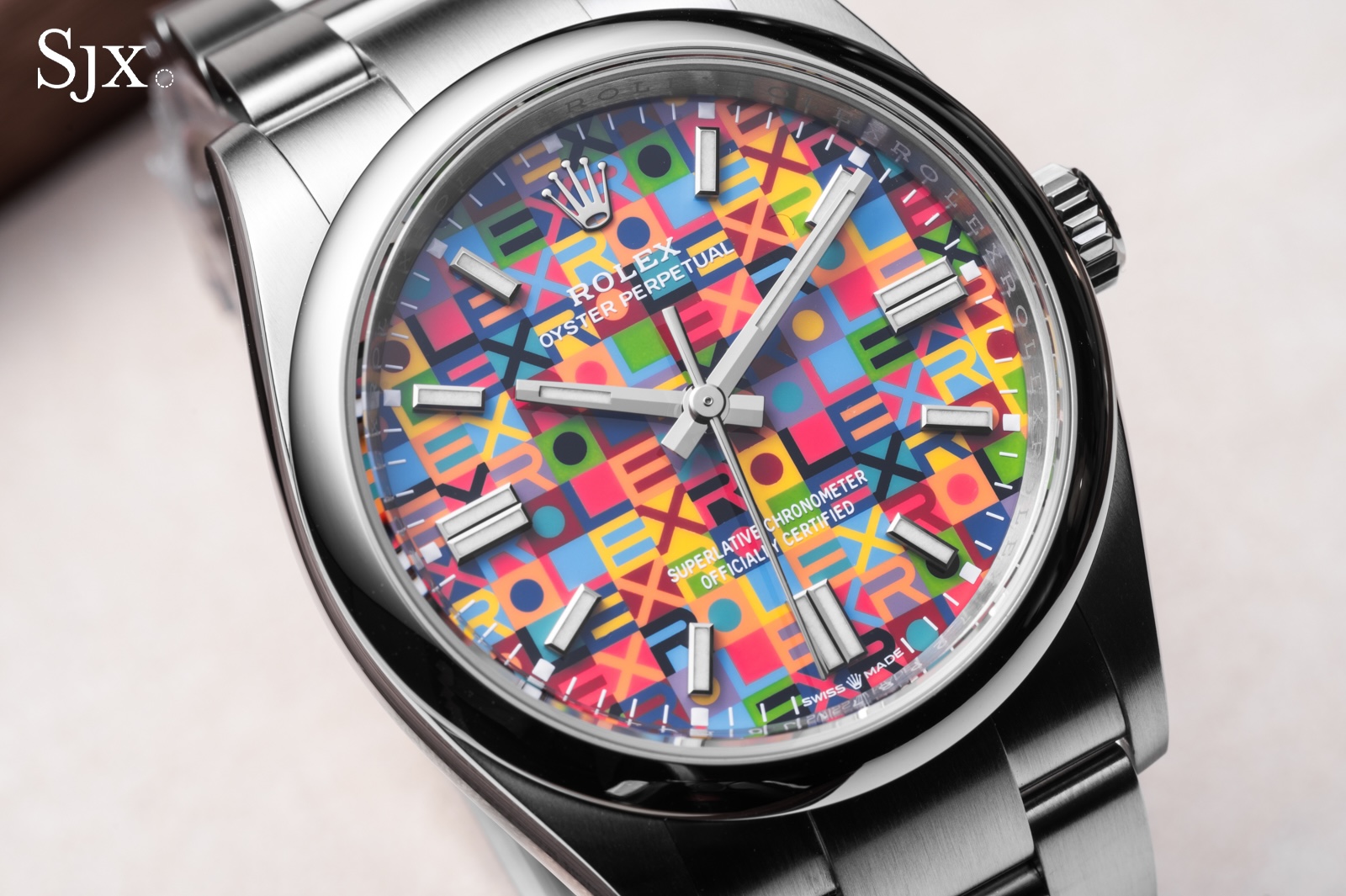
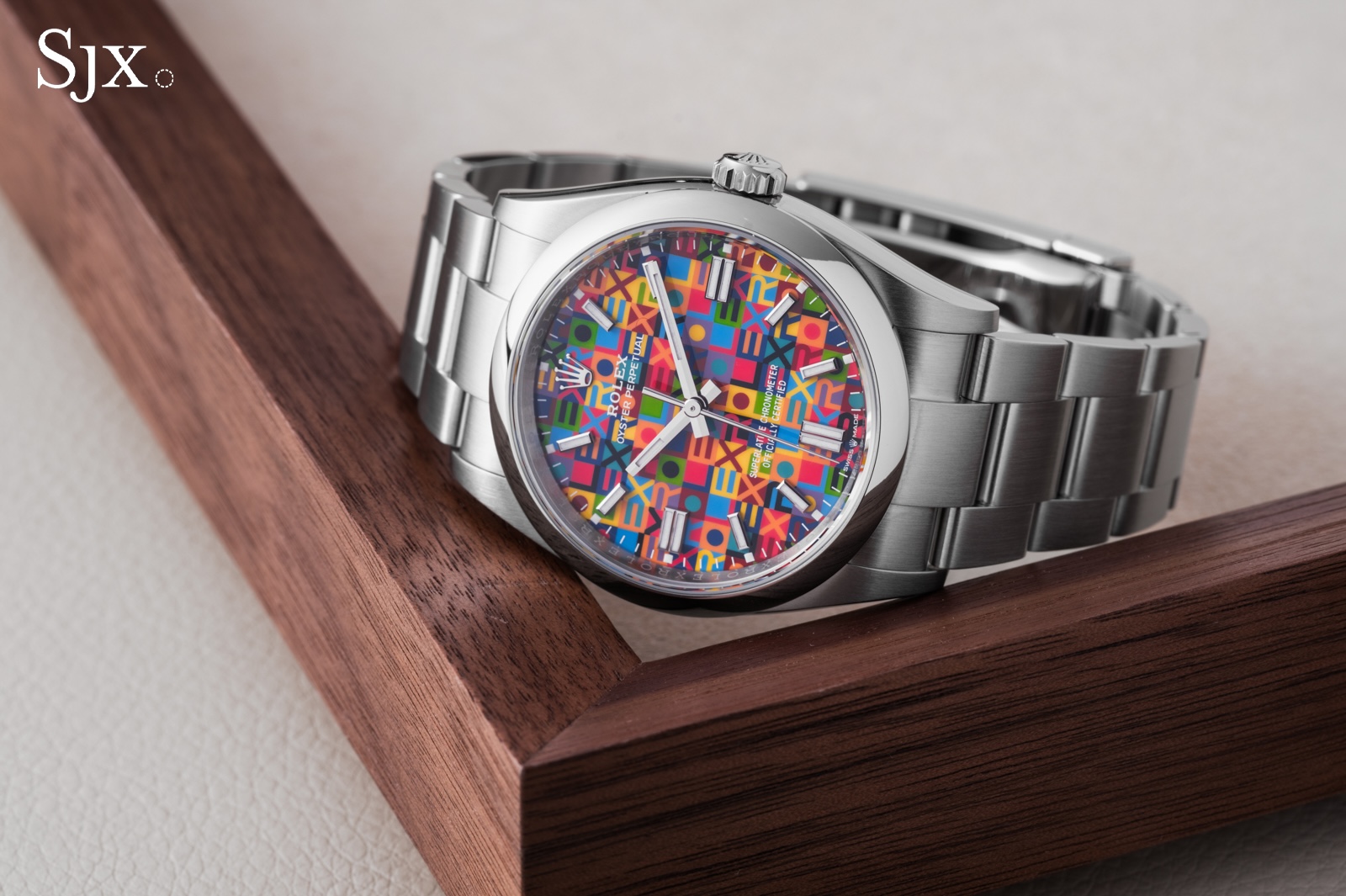
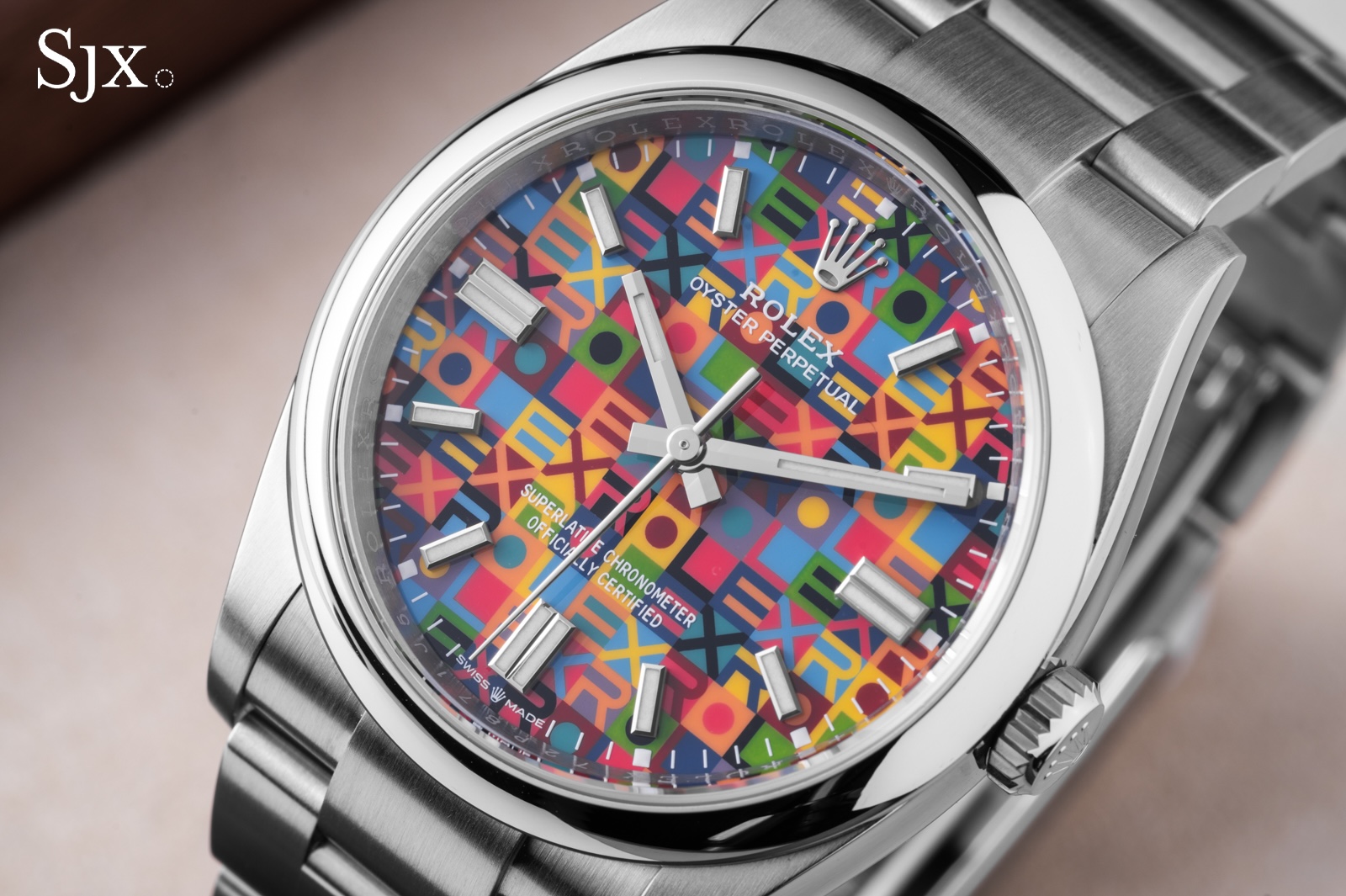
Marking the centenary of its signature Oyster case, Rolex has introduced a new polychrome ‘Jubilee’ dial for the Oyster Perpetual 36. An appealing new variant of a tangibly excellent product, the Jubilee dial will likely appeal to both experienced Rolex collectors as well as those who have historically found the brand’s designs too sedate.

Initial thoughts

Rolex is a brand that takes itself seriously. At times, the brand’s product development cycle seems to move at a glacial pace, but this is part of the discipline that has made Rolex the most successful maker of luxury watches by some margin — collectors have learned they can trust Rolex to keep a good thing going.

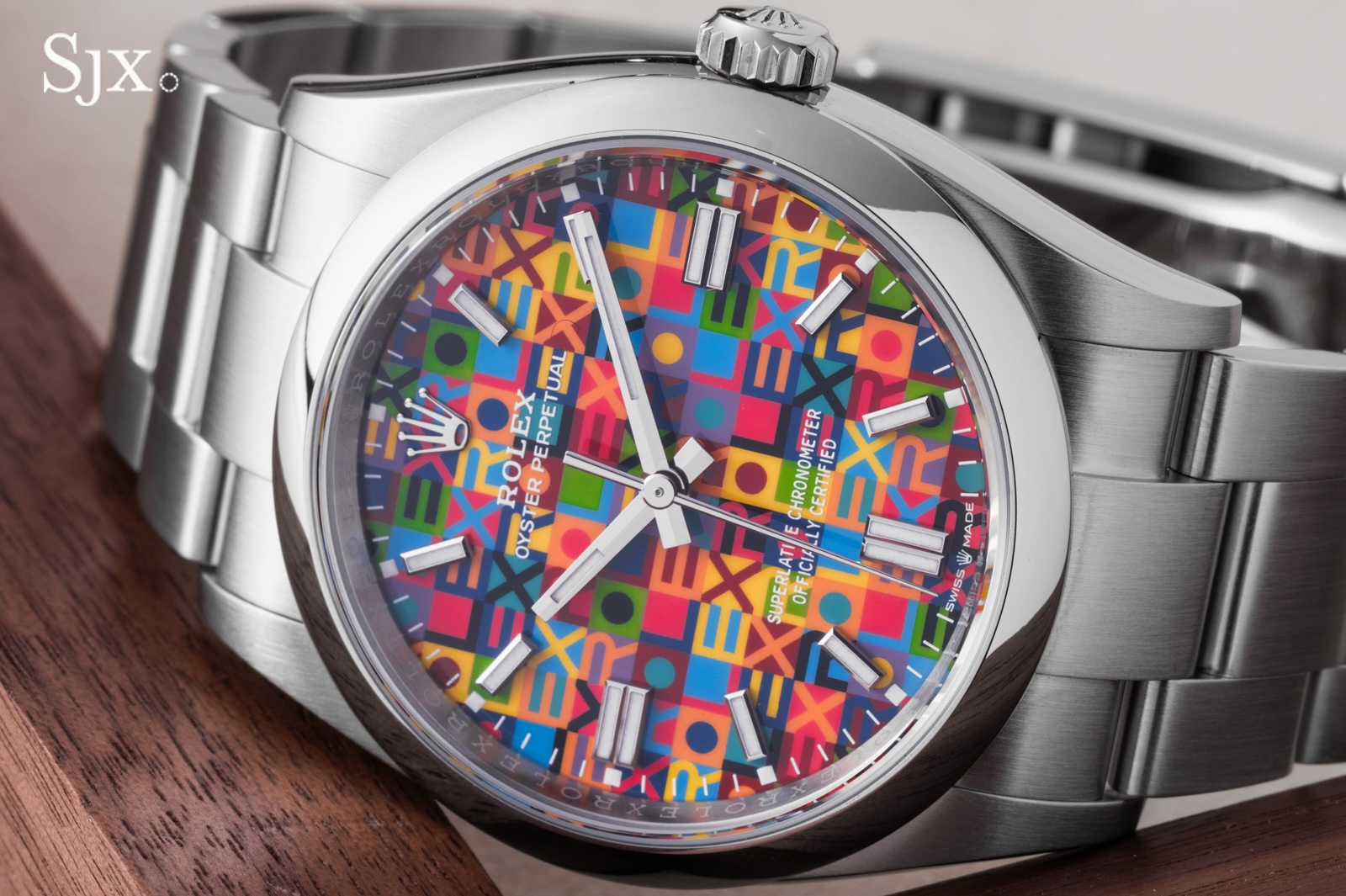
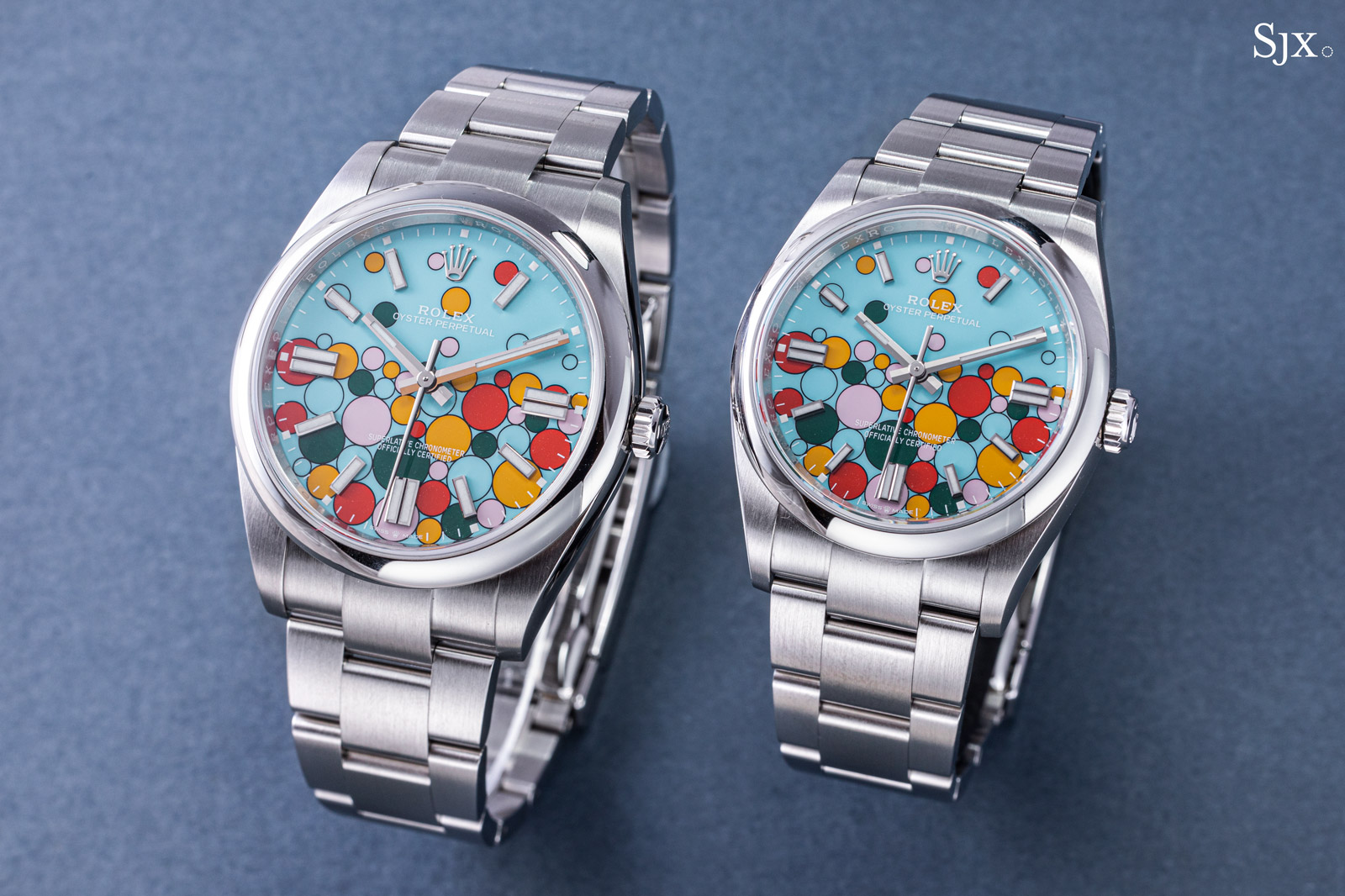
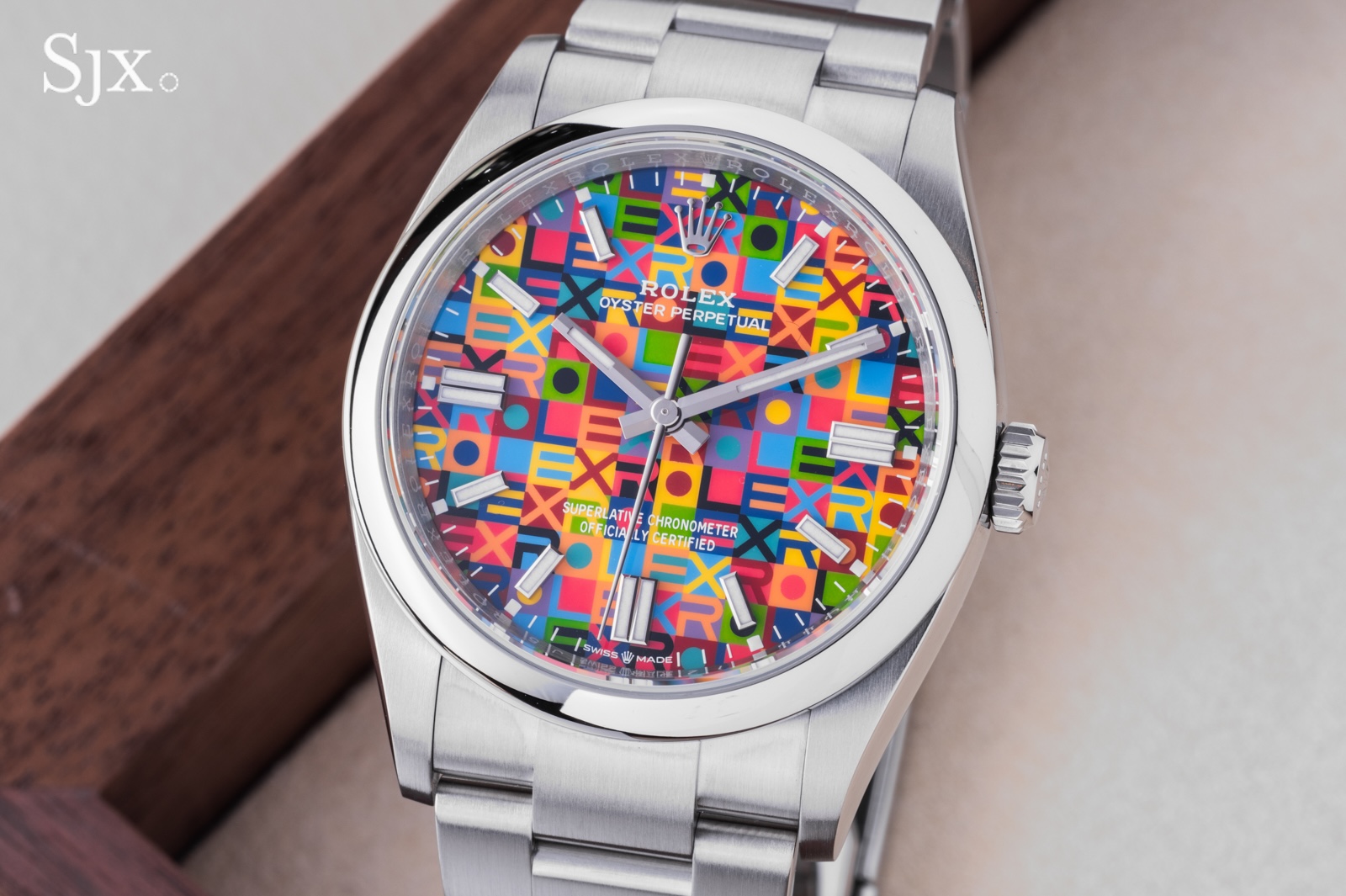
So when the brand decides to have a little fun, it’s almost shocking. The brightly coloured Jubilee dial motif — built up of 10 layers of coloured lacquer — is certainly fun, and reminiscent of the ‘Celebration’ dial launched in 2023 in both 36 mm and 41 mm sizes. The Jubilee model pictured is the 36 mm size, but the design is also available in 41 mm (ref. 134300) and 31 mm (ref. 277200).

The ‘Celebration’ dial was launched in 2023 in both 41 mm (left) and 36 mm sizes.

The Oyster Perpetual 36 case keeps its nearly ideal proportions — small and sleek enough to disappear under a shirt cuff but chunky enough to hold its own with short sleeves. Substantively, it could make a proverbial ‘one-watch collection’ but given its exuberant dial will probably appeal most to seasoned collectors.

The vibrant dial gives the otherwise unassuming Oyster Perpetual design an instantly recognisable look that should prove popular both on and offline. For better or worse, the Jubilee is priced attractively, which might make it difficult to obtain at retail.

While Rolex has a reputation for making expensive watches and is almost synonymous with wealth and success in the public consciousness, the brand’s entry level watches are value leaders in their respective categories. That’s true of the Oyster Perpetual 36, which is priced at just US$6,750 but features the same base calibre — with numerous proprietary innovations — that powers the brand’s flagship collections like the Day-Date.

The quality of construction is apparent on the outside as well. The fit and finish of the bracelet — especially where it meets the case between the lugs — is the envy of rival brands that still haven’t quite figured this out.

A century of the Oyster

The introduction of the Rolex Oyster case, with its the screw-down crown, case back, and bezel, was a watershed moment in the development of the wristwatch. The final piece of this puzzle — the screw-down crown — was actually patented by Paul Perregaux and Georges Perret in 1925, and Rolex founder Hans Wilsdorf acquired the patent a year later.

The simple and robust screw-locked crown gave consumers more confidence in the wristwatch, a format that hadn’t yet caught up with pocket watches in terms of total production. The Oyster case was a major coup for Rolex, but it helped change the perception of wristwatches in general, accelerating adoption.

The Oyster Perpetual name didn’t crop up until 1950, but since then it has formed the basis of the Rolex portfolio. Today, the Oyster Perpetual is among the highest quality ‘entry level’ watches in the industry, with a category-leading calibre and a high level of fit and finish from the case to the bracelet.

The Jubilee dial

Naturally, the Jubilee model is distinguished by its colourful namesake dial — it is otherwise identical to other models in the Oyster Perpetual 36 collection and carries the same ref. 126000 prefix. It also carries the same price tag as its more monochrome siblings.

This aspect makes it an appealing value, since it offers a more distinct and elaborate dial. The Jubilee motif refers to the repeating ‘Rolex’ pattern on the dial. The brand has used this formula since the late 1970s, but never in such vivid colour.

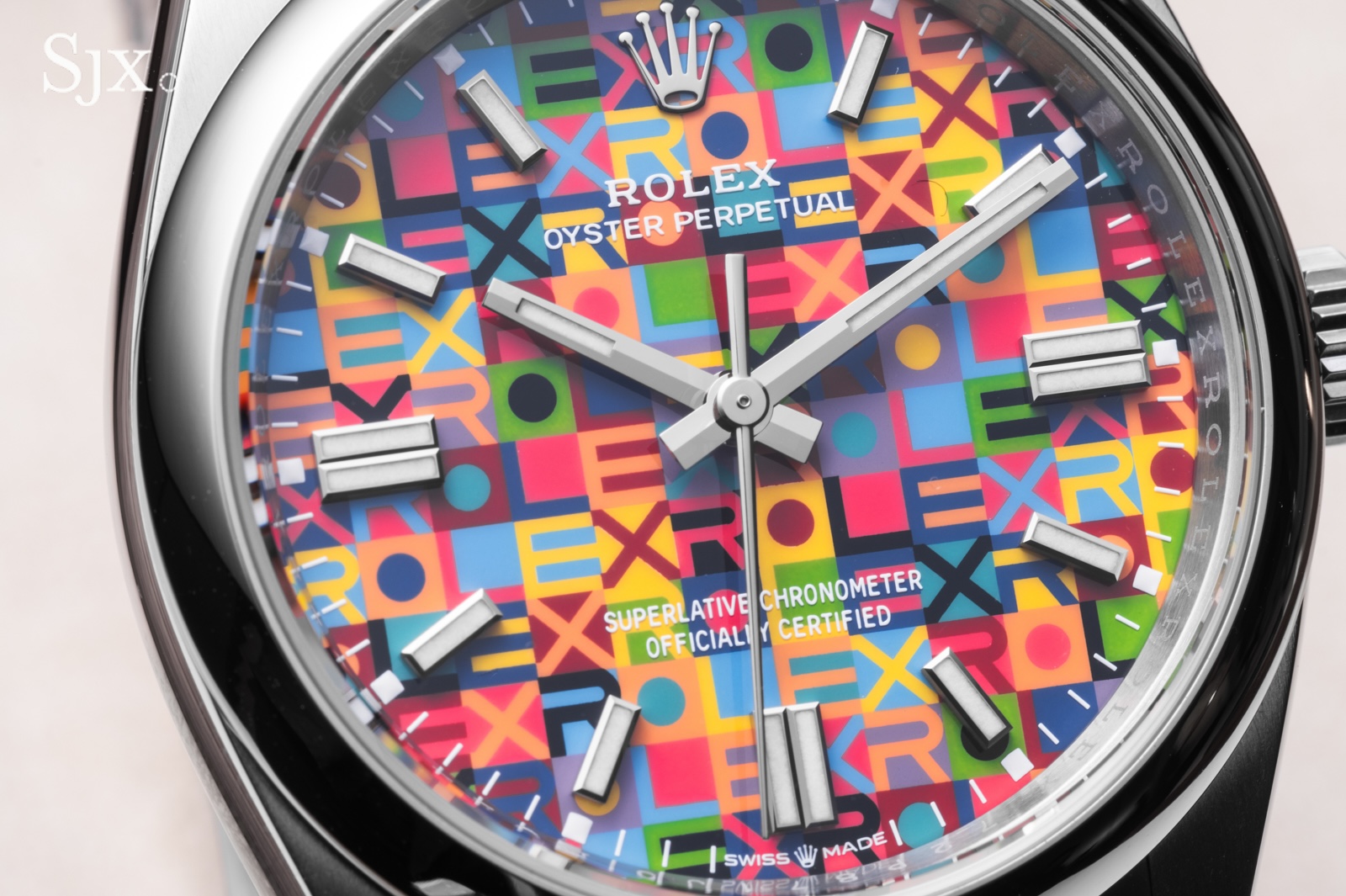
The Jubilee motif itself is strongly evocative of the work of Italian artist Alighiero Boetti. The influence feels even stronger in this case given the vibrant colours used, but Rolex has made the design its own with its unique font — the stylised ‘O’ in particular gives the design a look all its own.

The dial is comprised of 10 different colours, printed one colour at a time. This process is no-doubt industrialised — Rolex doesn’t do anything that can’t be executed at scale — but the approach is similar in concept that used to create the vivid enamel bezel of the Louis Vuitton Escale Worldtime Tourbillon, which is painted and fired colour by colour.

Despite the difficulty of printing 10 layers perfectly atop one another, the pattern is impressively precise up close, with minimal bleed at the edges between the squares.

Class-leading calibre

While Rolex has recently signalled its interest in moving away from metallic hairsprings and lever escapements, the Oyster Perpetual is still powered by the cal. 3230, concealed behind a solid case back. Though a generation behind the 5 Hz Dynapulse-equipped cal. 7135, the cal. 3230 remains class-leading in the sub-US$10,000 segment and is the cornerstone of the brand’s time-only watches.

This praise is rooted in several tangible characteristics. For one thing, it’s one of the only movements in this segment — along with Grand Seiko’s cal. 9SA5 — to feature an overcoil hairspring, which is one of the factors that helps the cal. 3230 perform to Superlative Chronometer standards — Rolex’s in-house testing regime that certifies each cased-up movement to run within +/- 2 seconds per day.

The movement also features Rolex’s proprietary version of the lever escapement, which it calls the Chronergy escapement. With revised geometry that makes it more efficient than an ordinary Swiss lever, the Chronergy system helps the cal. 3230 run for up to 70 hours from a single mainspring barrel.


Rolex Oyster Perpetual 36 Jubilee
Ref. 126000

Diameter: 36 mm
Height: 11.6 mm
Material: Steel
Crystal: Sapphire
Water resistance: 100 m

Movement: Cal. 3230
Features: Hours, minutes, and seconds
Frequency:  28,800 beats per hour (4 Hz)
Winding: Automatic
Power reserve: 70 hours

Strap: Oyster bracelet

Limited edition: No
Availability: 
Available at Rolex authorised dealers
Price: US$6,750 excluding taxes

For more, visit Rolex.com.


Back to top.
You may also enjoy these.

Observations and Takeaways at Watches & Wonders 2026

Favourites, surprises, and value buys.

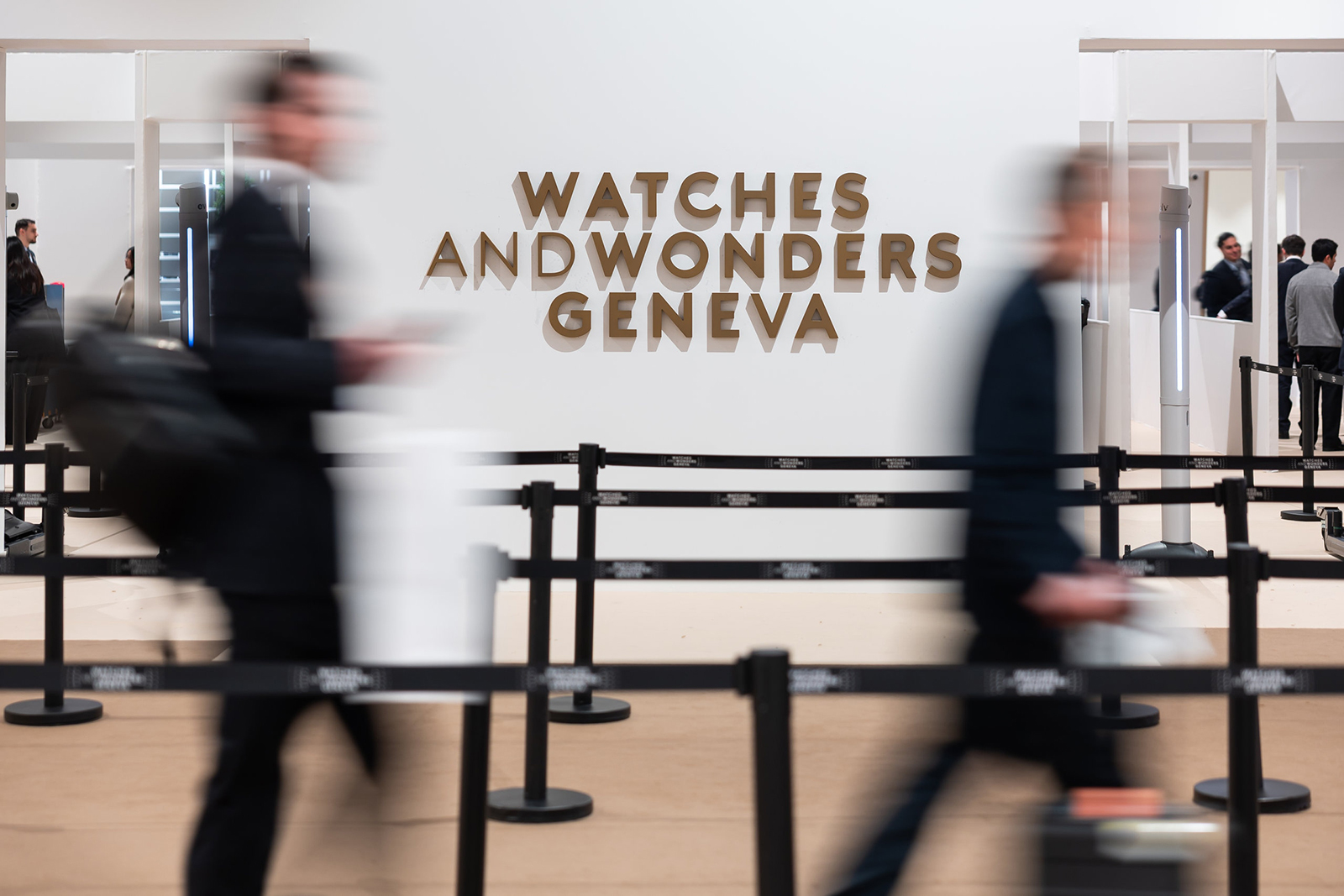
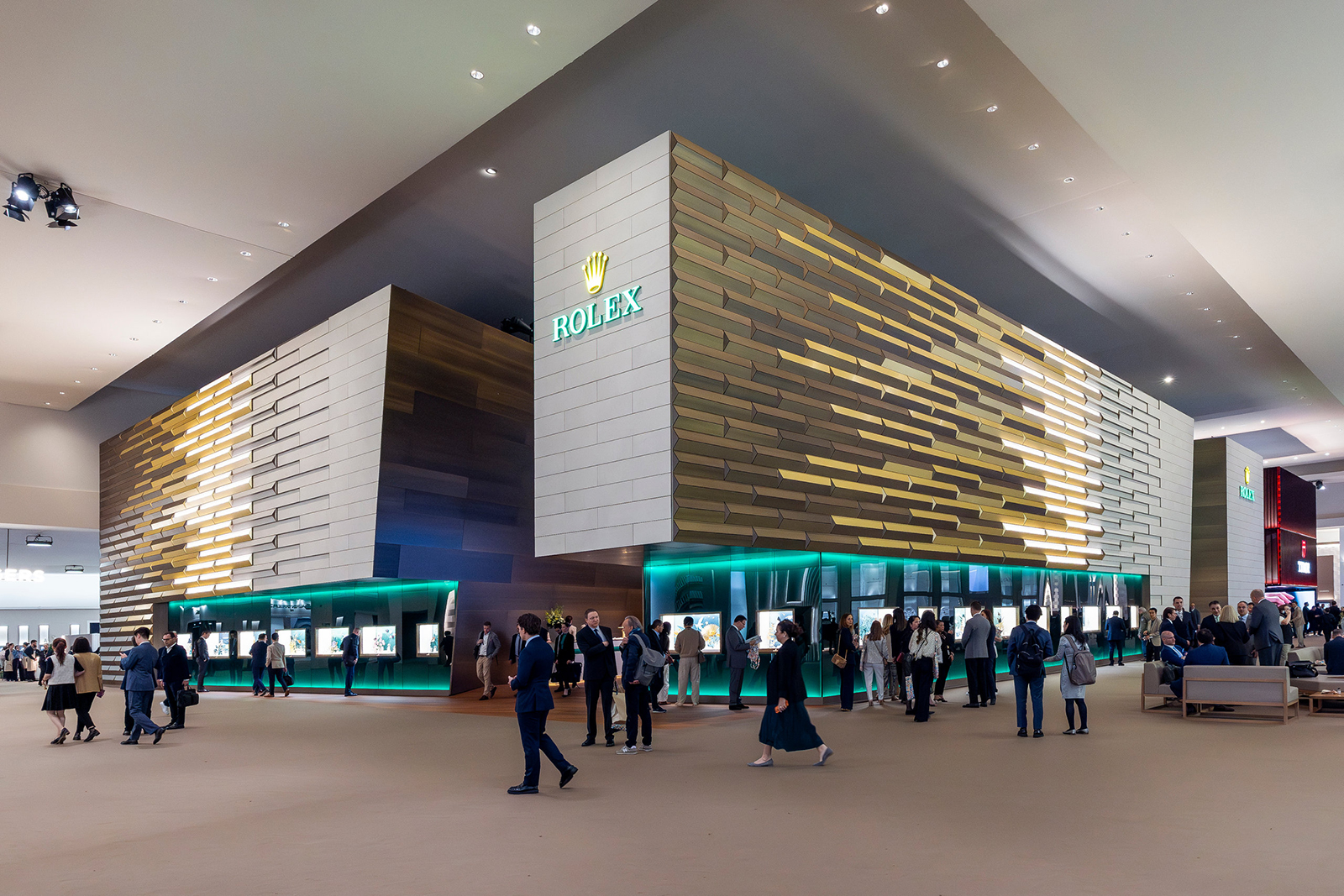
The biggest booth at Watches & Wonders 2026 (W&W) belonged to Rolex, as it always does. Looming three stories high, the Rolex booth was home to some of the most talked-about and polarising watches of the fair, as it always is.

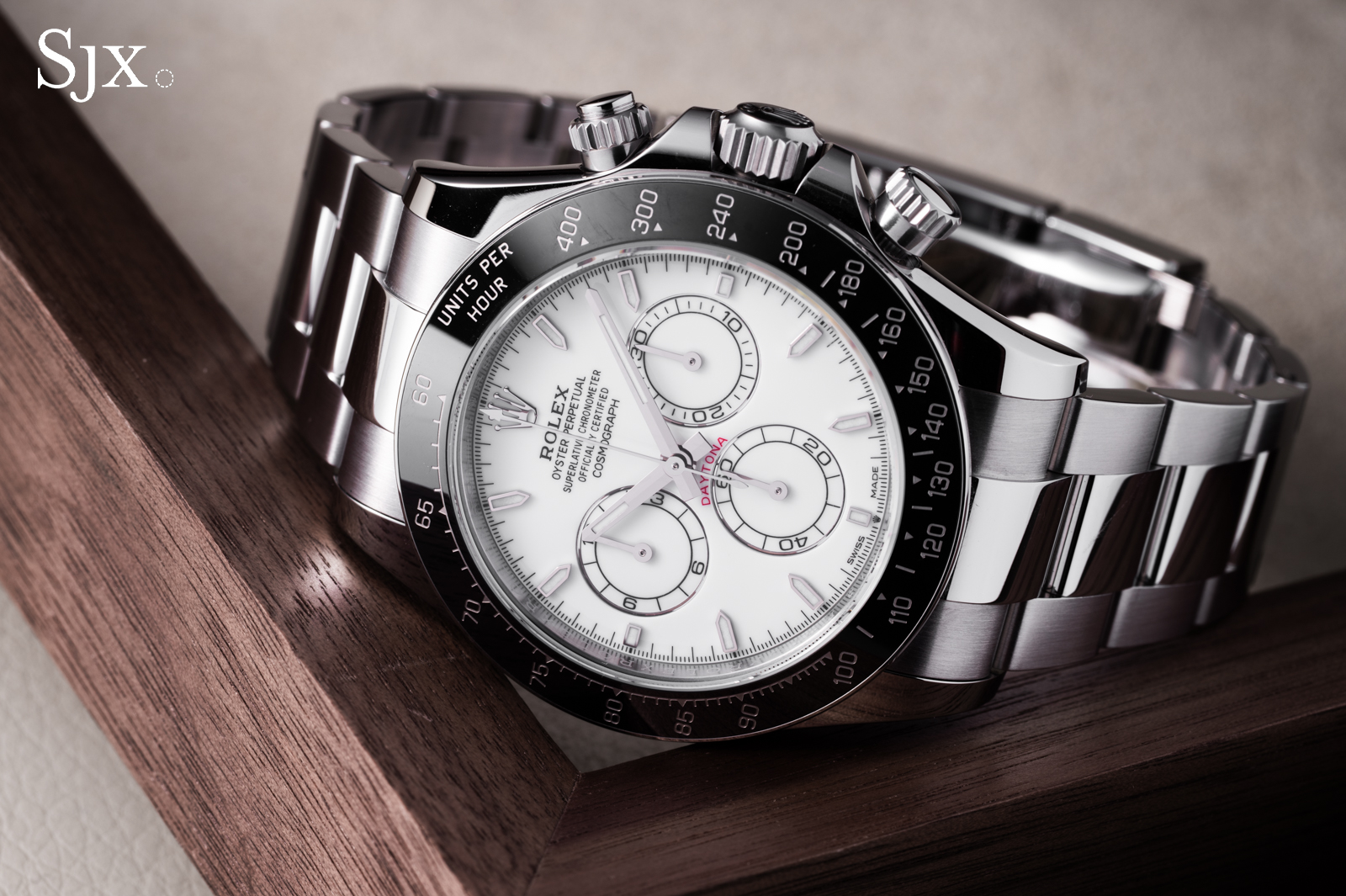
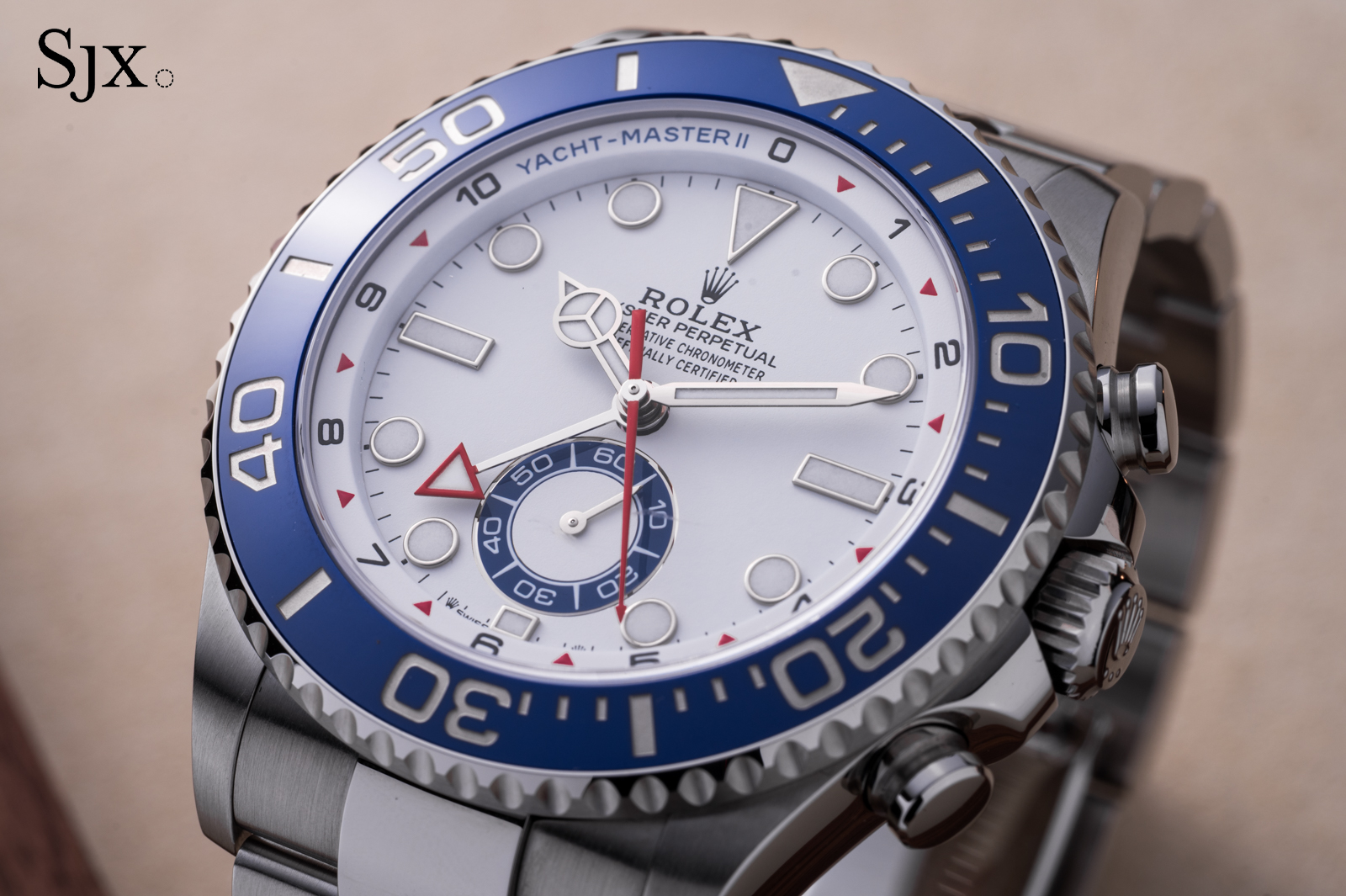
Rolex took the occasion of the centenary of its water-resistant Oyster case to roll out a line-up of surprising watches, perhaps the most unexpected from Rolex in a while. The collection included a Daytona with a fired enamel dial, Boetti-esque Oyster Perpetual, and a return of the little-loved but technically impressive Yachtmaster II.

The vast, three-story Rolex booth. Image – Watches & Wonders

In a first, Rolex gave its popular sports chronograph a vitreous enamel dial, or grand feu enamel in watchmaking parlance. The industrial and engineering achievement is impressive; it’s not just a new livery and this Daytona is more than meets the eye.

The enamel is melted glass, as is tradition, but instead of a metal base, the enamel is on a ceramic substrate that is in turn mounted on a brass plate. While there is some debate whether the ceramic substrate makes it enamel in the traditional sense of the word, I consider it enamel.

The new enamel dial harks back to the “porcelain” dial Daytona of yore

More importantly, the key characteristic of the dial is thinness, recording-setting thinness in fact, which means that Rolex has achieved an enamel dial with all of the qualities of enamel, lustre, fade-resistance, colour, without compromising thickness at all. Credit where credit is due and Rolex has notched up a win here.

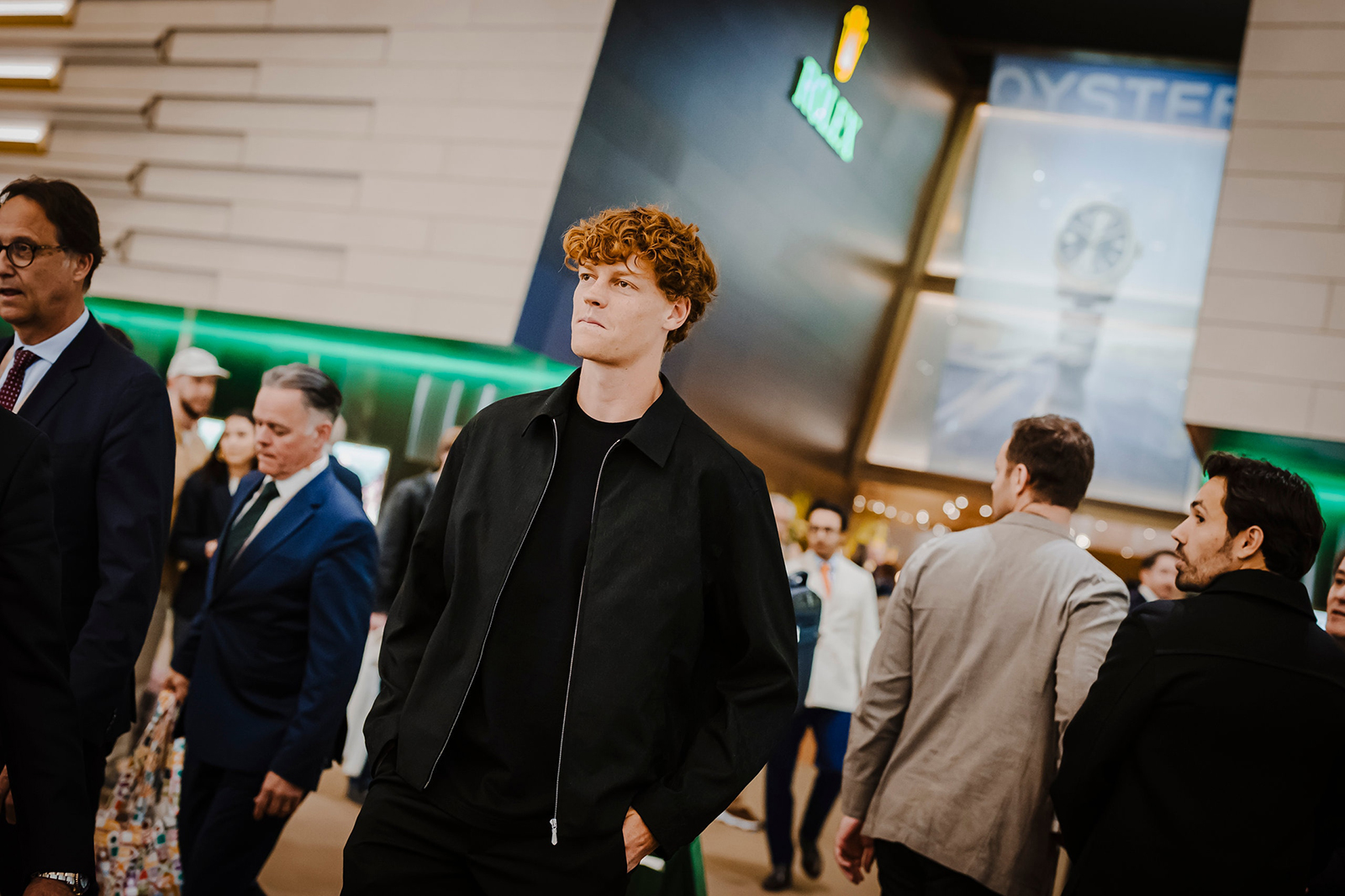
Rolex ambassadors turned up, including Jannik Sinner (above) and Roger Federer. Image – Watches & Wonders

But the enamel dial on the Daytona is barely discernible at the distance, more eye-catching is the “Jubilee Dial” for the Oyster Perpetual. Basically a new look for a historical Rolex dial sometimes nicknamed “Computer”, the Jubilee Dial renders its motif in bright colours like an Alighiero Boetti painting (though Rolex did not cite the painter in any of its materials).

Available in three sizes of the Oyster Perpetual, the Jubilee Dial continues the Technicolour trajectory of Rolex dials that started a few years ago, showing that the venerable Geneva brand might be conservative, but not as old fashioned as it once was. The dial is not for everyone, but illustrates the slow and subtle evolution at Rolex.

Most significant in terms of movement engineering is the cal. 4162 inside the latest generation Yacht-Master II. It’s basically a variant of the Daytona cal. 4160, but with the addition of a programmable regatta countdown function, which arguably makes this the most advanced chronograph Rolex has ever made.

While the Yacht-Master II was never a bestseller due to its large case and niche complication, the latest version is a major improvement in terms of size and style. It’s still big but not overly so, and the revised design is far more appealing. I would buy one for the sheer engineering prowess of the movement.

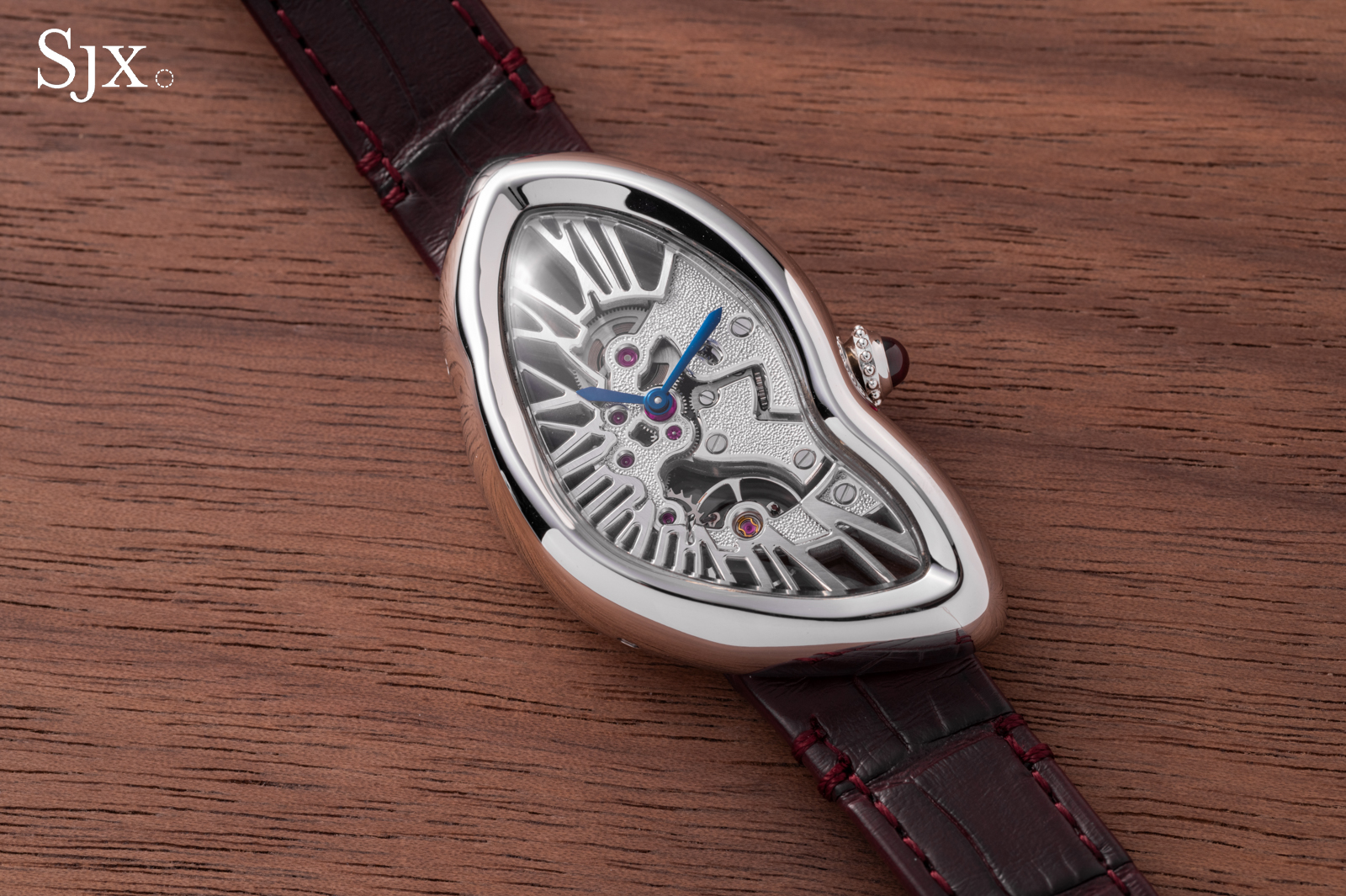
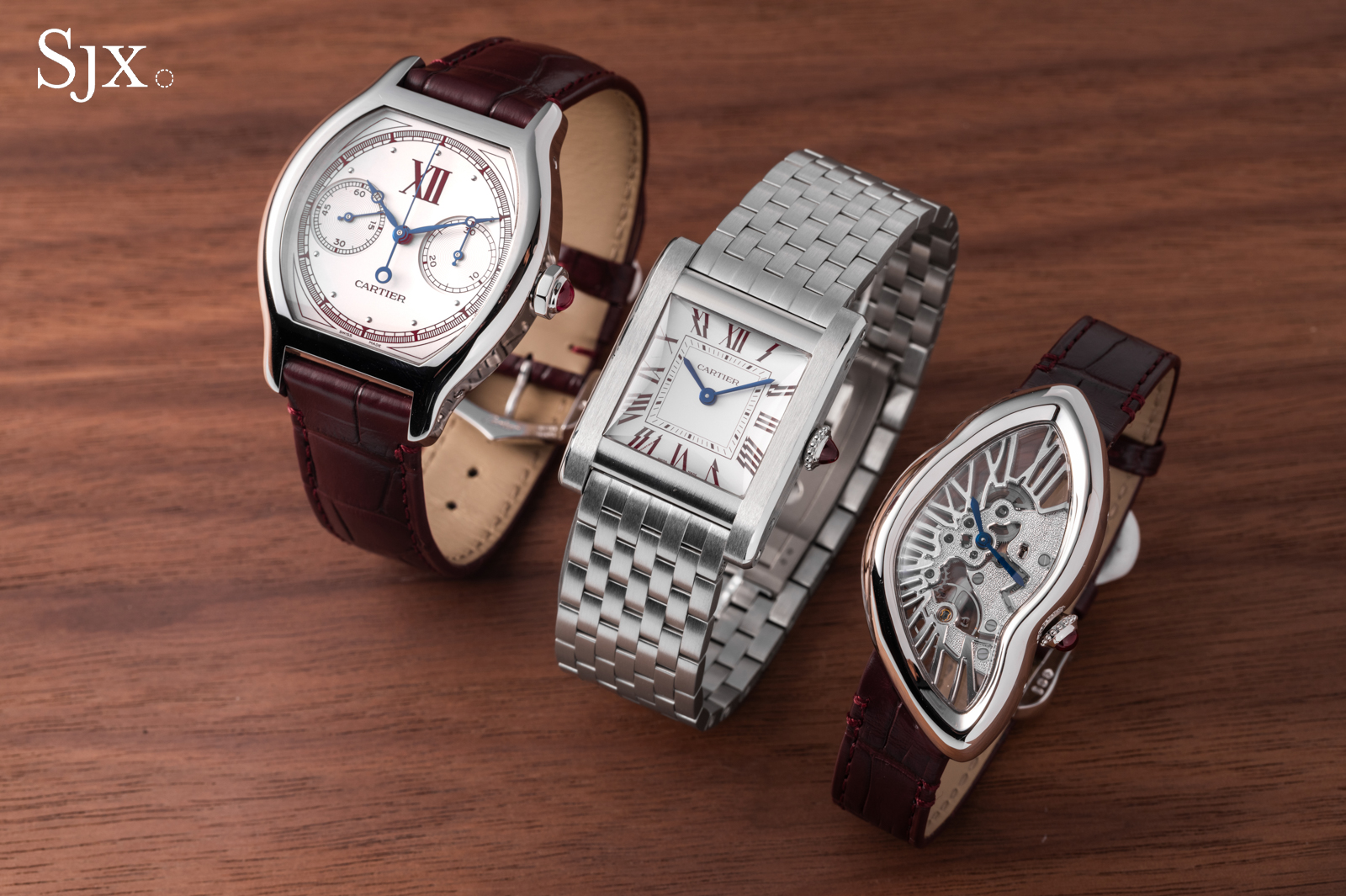
Over at the other luxury giant, it was a parade of greatest hits in new iterations. The watches are all beautiful and quintessential Cartier, though not quite imaginative.  The greatest hits theme is exemplified by the Cartier Privé Les Opus and La Collection, each a set of three historical models.

Cartier Privé Les Opus

Interestingly, all of the these are regular production, save for the Les Opus Crash Skeleton, which is a striking, beautiful watch, though let down by an oddly positioned crown. Inside the Crash is a newly developed calibre with a hammered finish on the bridges that’s a pleasing artisanal touch that reduces the industrial aspect of the calibre.

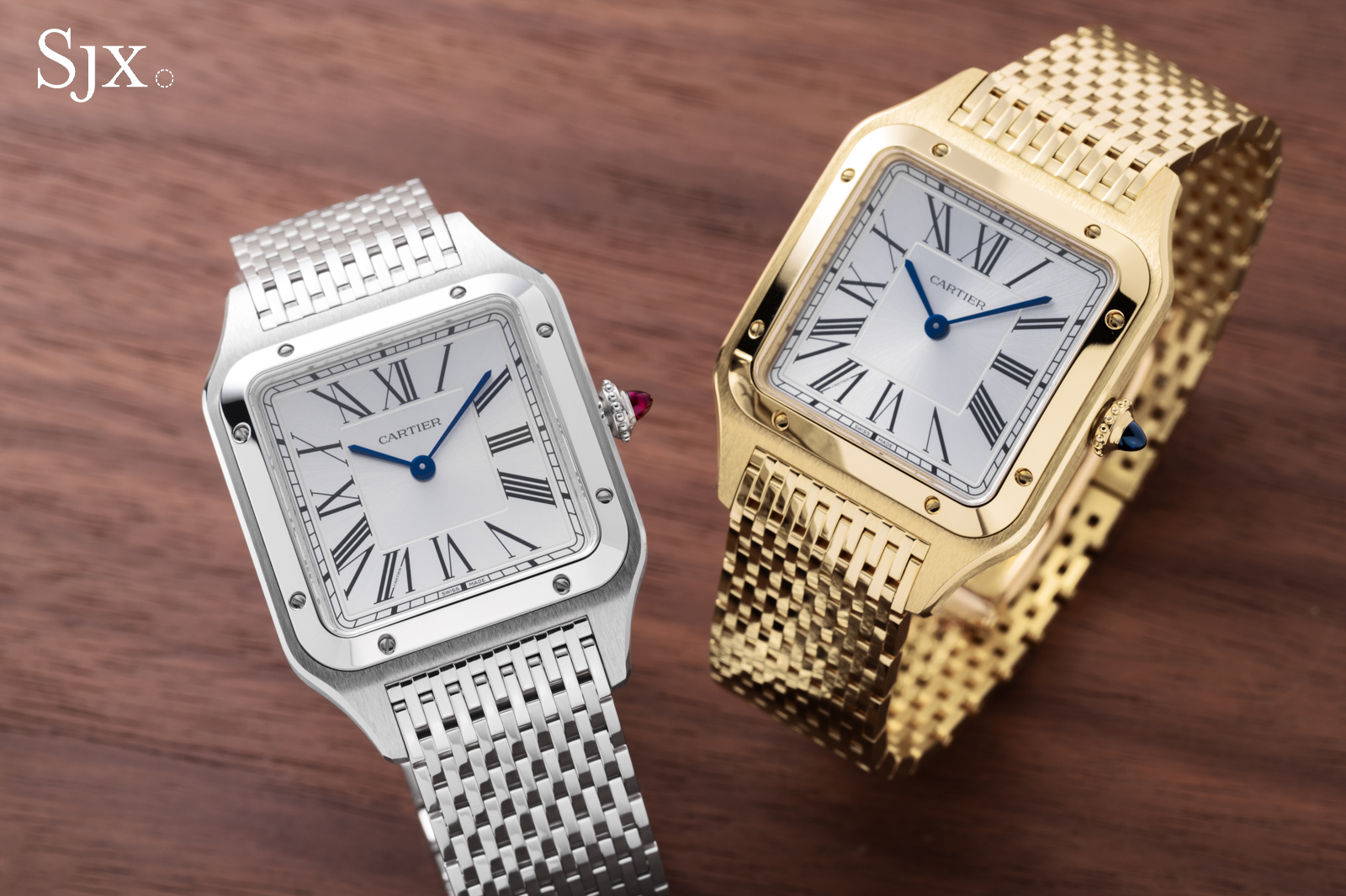
Amongst the other highlights were a mesh-link bracelet for the Santos Dumont; the yellow gold version with an obsidian stone dial was a personal favourite, appealing and priced decent-ish.

Impressive complications

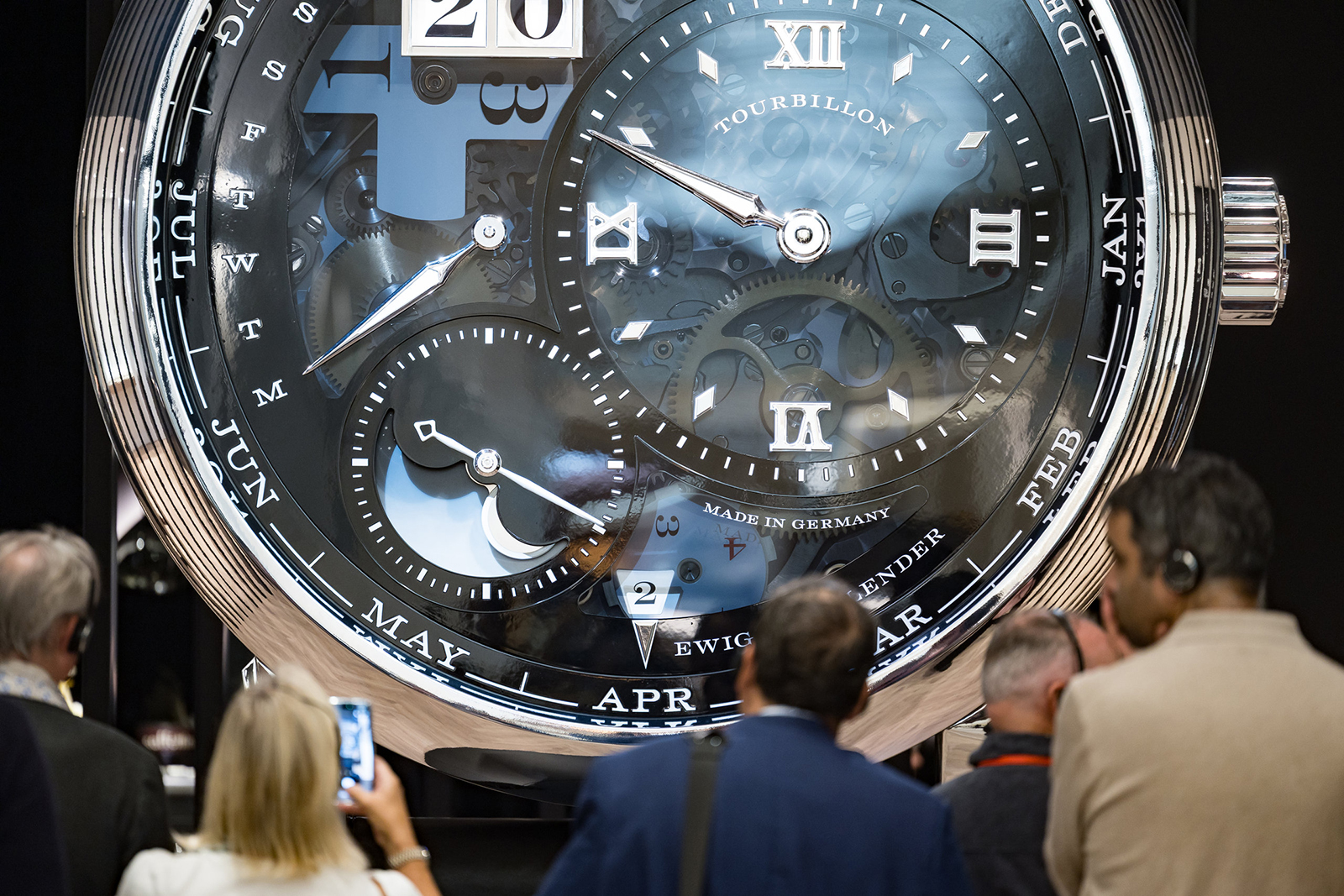
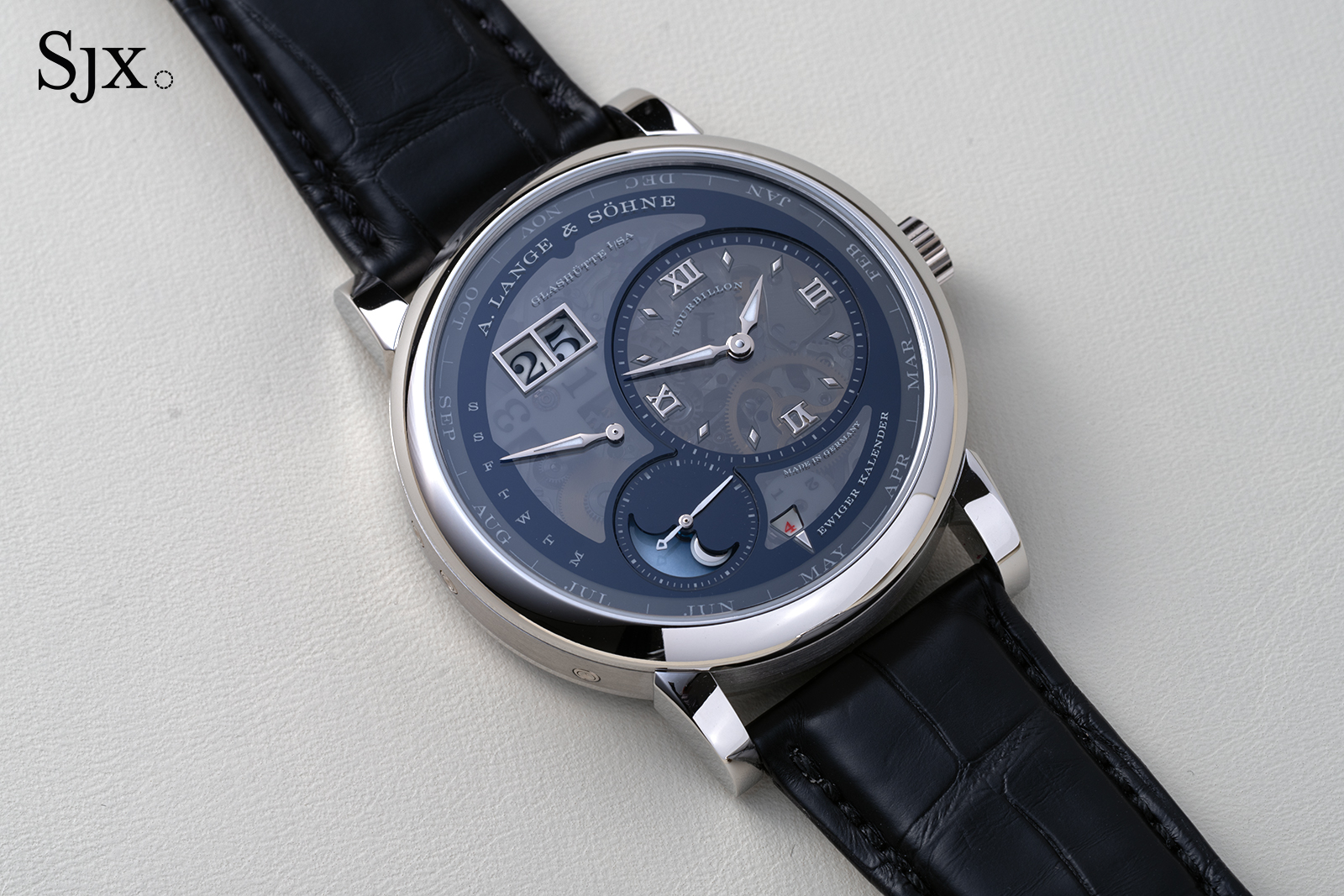
My favourite big “comp” of the fair is the Lange 1 Tourbillon Perpetual Calendar “Lumen”. Even though it is unsurprising, the new Lange 1 is impressive. The watch is typical Lange, it’s big, complex, and perfection in its engineering, especially in the movement.

As is tradition, Lange had an enormous working model of its flagship launch inside its booth. Image – Watches & Wonders

It’s not merely the earlier version of the model with a see-through dial, but the movement has been reengineered, most notably with a rearranged going train for a better view of the tourbillon. But like all recent Lange complications, it is expensive at US$530,000, even considering all of its merits.

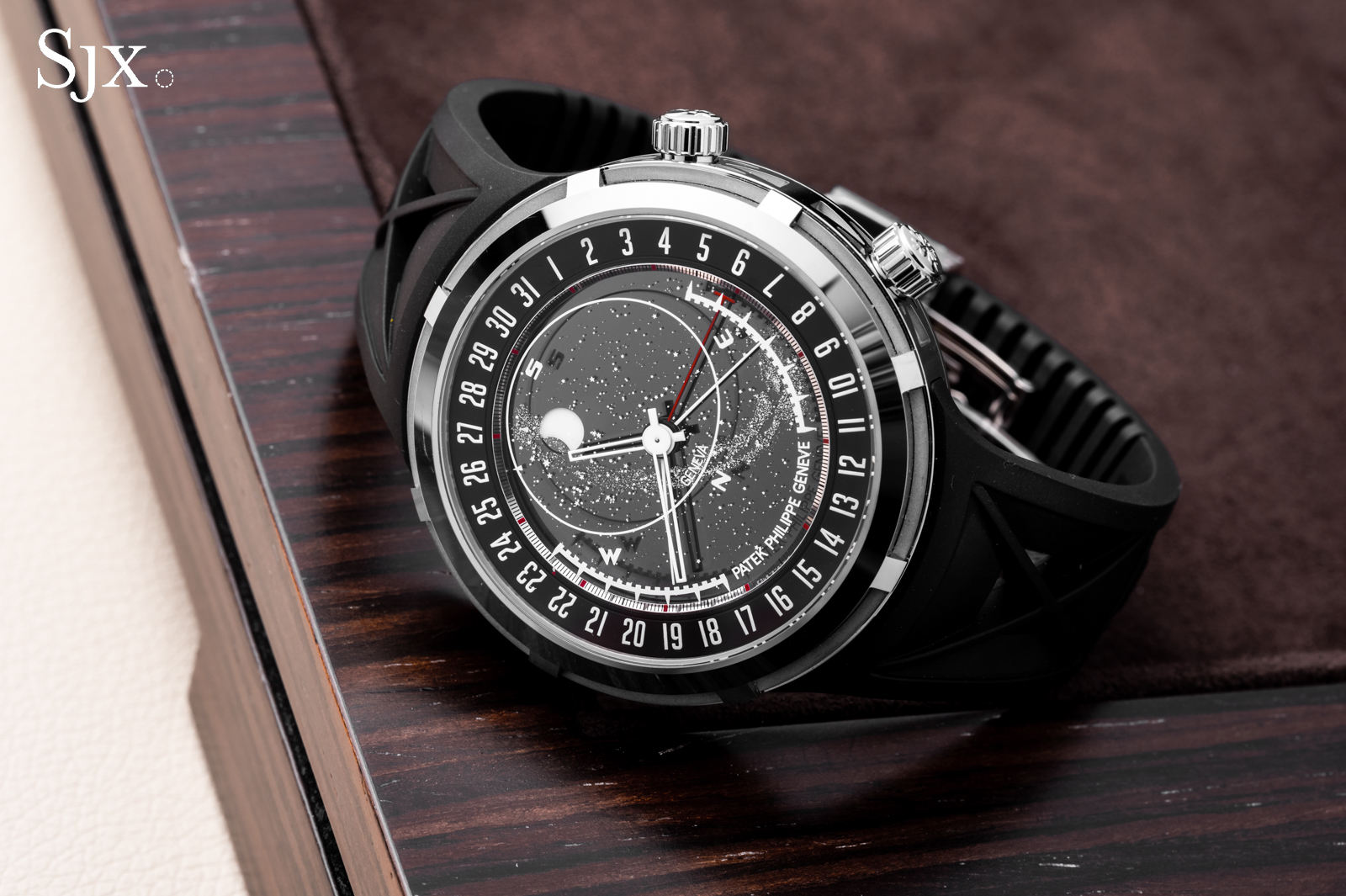
Equally large and impressive – but far more surprising – is the Patek Philippe Celestial Sunrise Sunset Ref. 6105G. It is 47 mm in diameter with a case that resembles a flying saucer, in fact Patek Philippe cites spaceships as design inspiration, and fitted to a moulded rubber strap. The ref. 6105G looks and feels entirely different from earlier iterations of the Celestial, and the best way to describe it would be: weird, but cool.

Like the Lange, however, the ref. 6105G is not merely a cosmetic update. The cal. 240 C LU CL LCSO inside is an upgrade on the previous version of the movement, gaining sunrise and sunset indicators with a summer and winter time corrector. Despite being a seemingly modest update, the sunrise and sunset displays are cleverly and elegantly implemented; both are read against the date scale on the dial. More notably, the mechanism itself is clever, relying on a compliant mechanism for the daylight savings time adjustment that moves the sunrise and sunset indicators back or forth as needed as the seasons change.

Jaeger-LeCoultre attempted to reclaim some of its lost glory of the 2000s with a slew of complicated watches, with the flagship being the Master Hybris Inventiva Gyrotourbillon À Stratosphère. The first in a new collection of “invention” watches, the latest Gyrotourbillon is maximalist: triple-axis tourbillon, skeletonised movement, solid gold bridges, enamelling and lacquer on the movement parts. It is impressive, but doesn’t land with force as the original Gyrotourbillon did 20 years ago. That said, it’s still early days for the brand under its new-old leadership, so there is surely more to come.

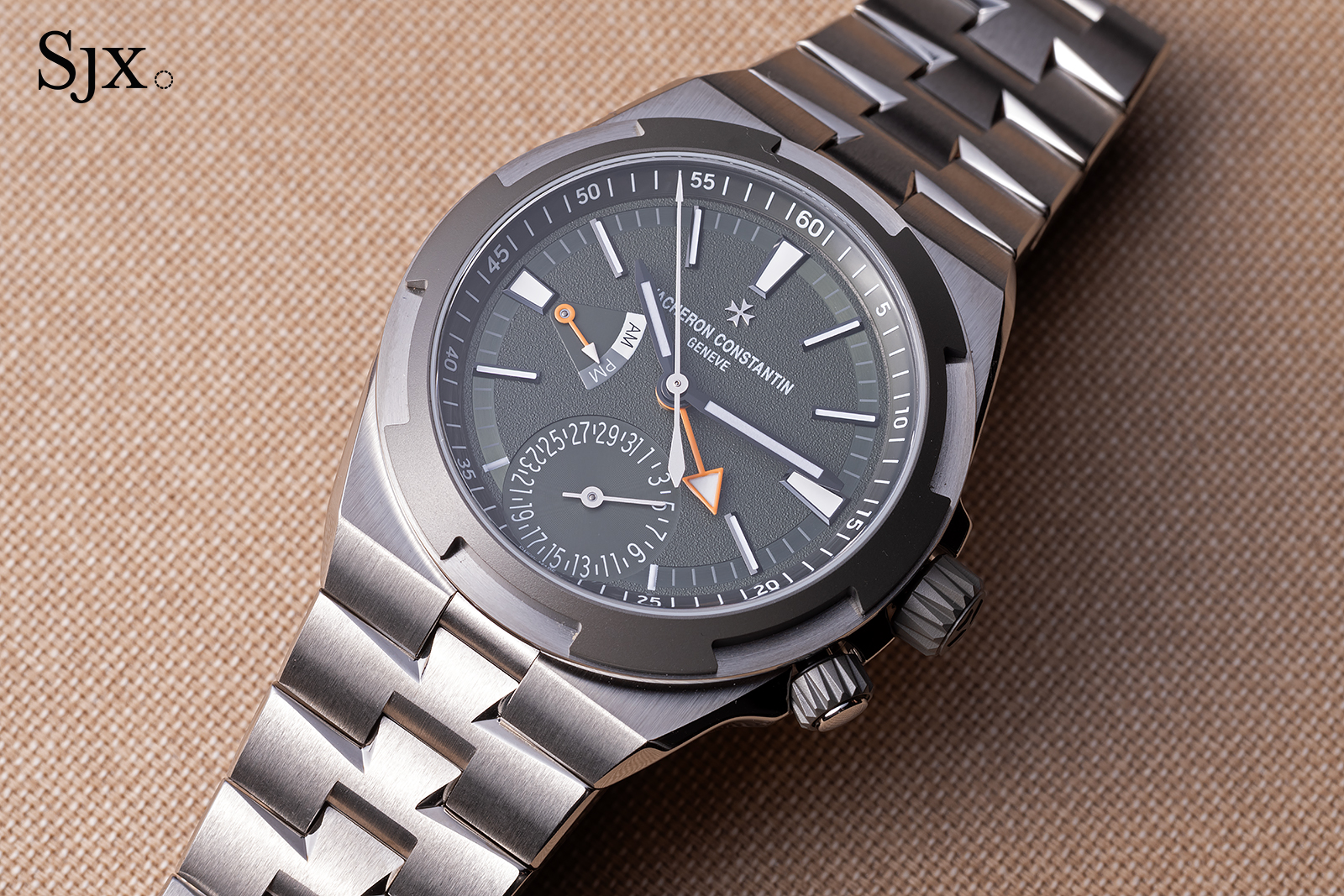
Much less complex, simple even, is Vacheron Constantin’s latest iteration of the Overseas Dual Time. Dubbed “Cardinal Points”, the model debuts in four variants, all sharing the same titanium case and bracelet that makes it lightweight and ergonomic.  The brown-grey dial is my absolute favourite.

Though not fancy or complex, the Overseas Dual Time is a useful watch executed well – and priced unexpectedly decently at US$41,000, or a little over CHF33,000. While not inexpensive by any means, the new Overseas is a reasonable aspiration, unlike the complications above.

The “South” iteration of “Cardinal Points” in brown-grey

Technical innovations

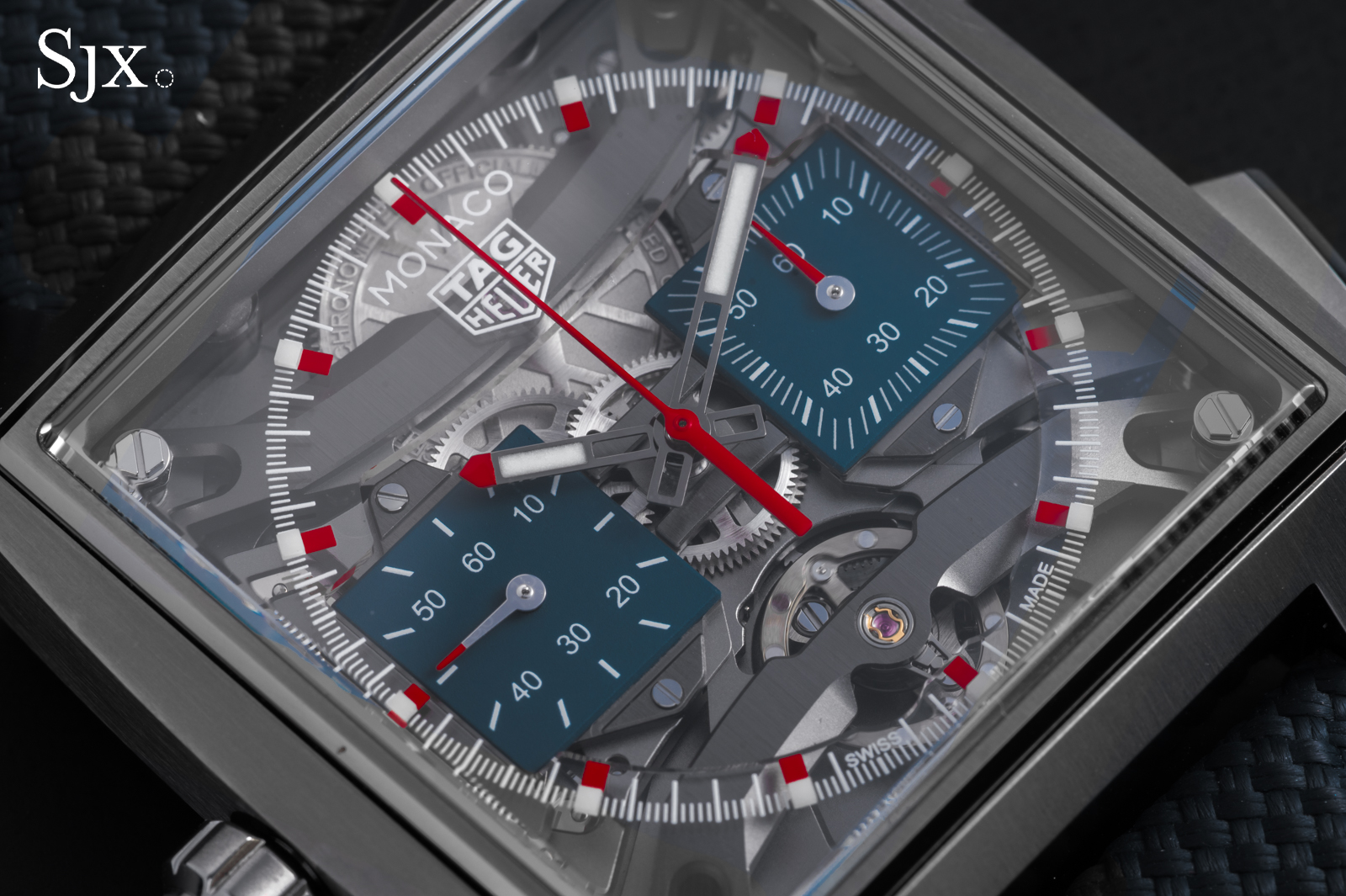
Perhaps the most interesting complication at the fair was the TAG Heuer Monaco Evergraph. Though still easily recognisable as the square-cased racing watch, the Evergraph is an intriguing new take on the chronograph mechanism that is priced accessibly as such things go.

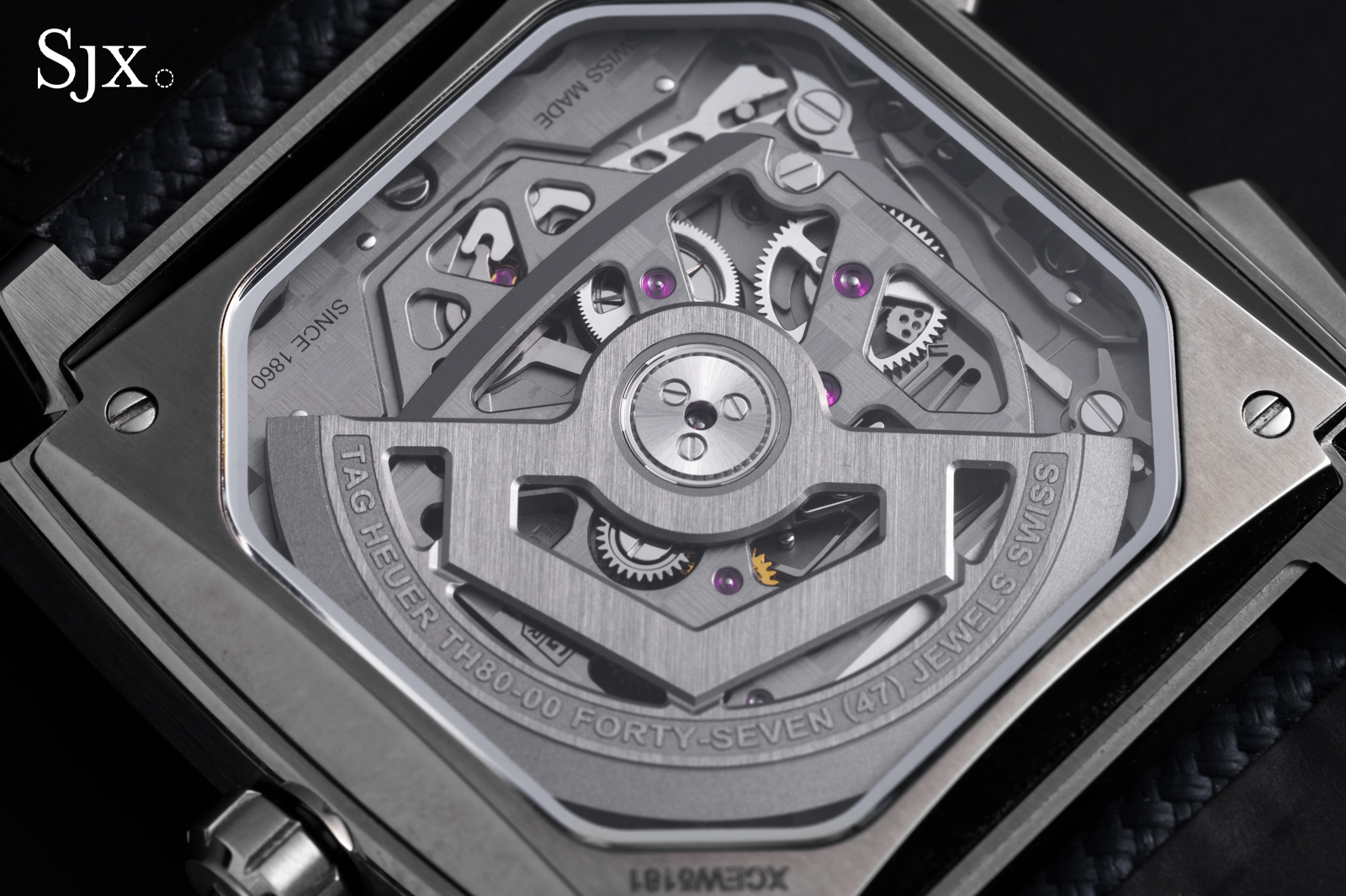
The TH80-00 movement inside (that also contains the brand’s recent carbon composite hairspring) adopts a pair of compliant mechanisms for the chronograph, one for start-stop and another for reset, doing away with the conventional levers and springs of the complication. The chronograph still retains the usual vertical clutch and cam.

This results in a thinner chronograph mechanism, albeit one with a slightly wider footprint, but crucially, it also delivers a pleasing tactile feel. Paradoxically, the compliant mechanism chronograph feels more like a vintage chronograph movement than a modern calibre – it feels good to operate and should get even better in serial production (the watches on show were prototypes).

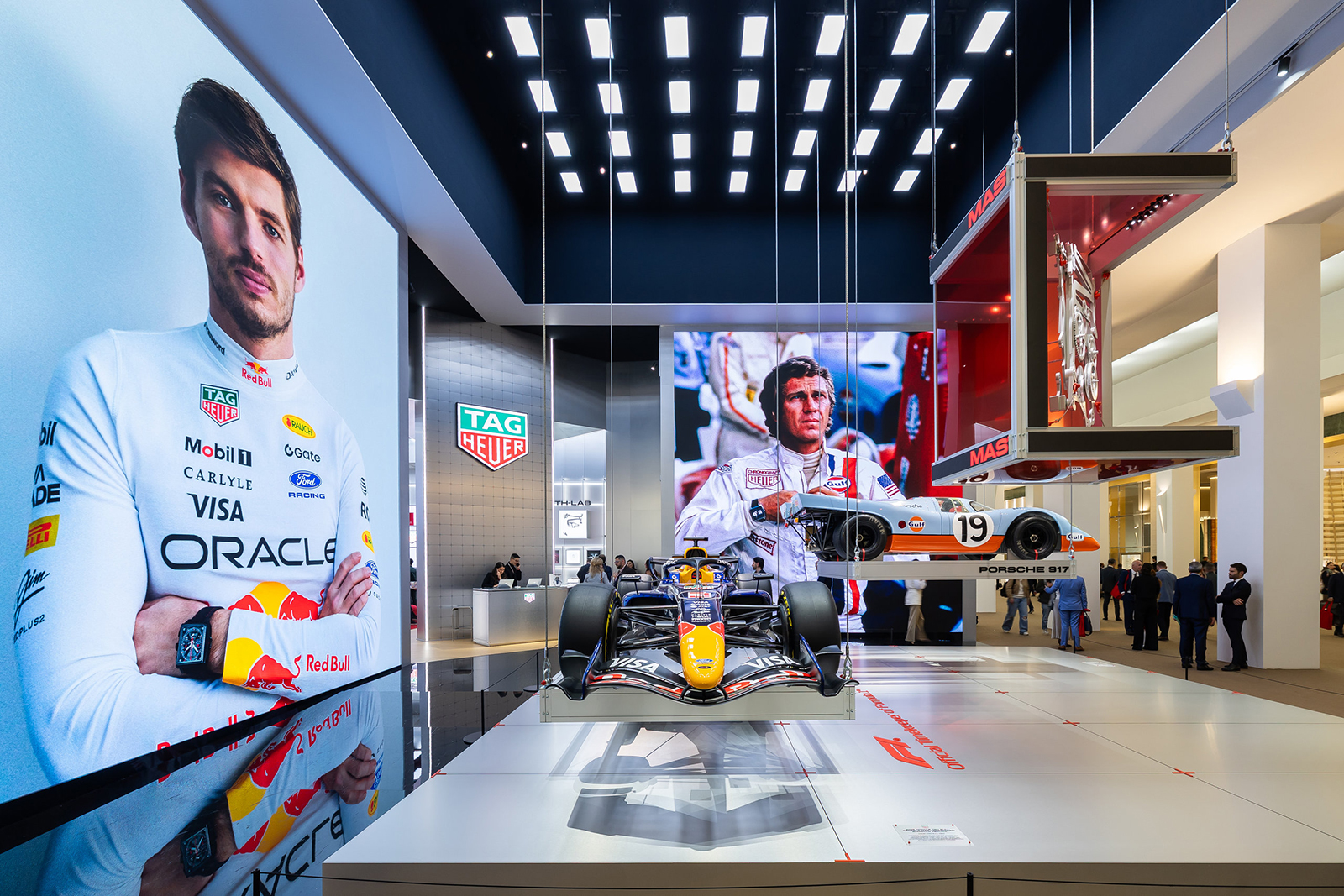
TAG Heuer showed its wares in a booth fronted by historical racing cars. Image – Watches & Wonders

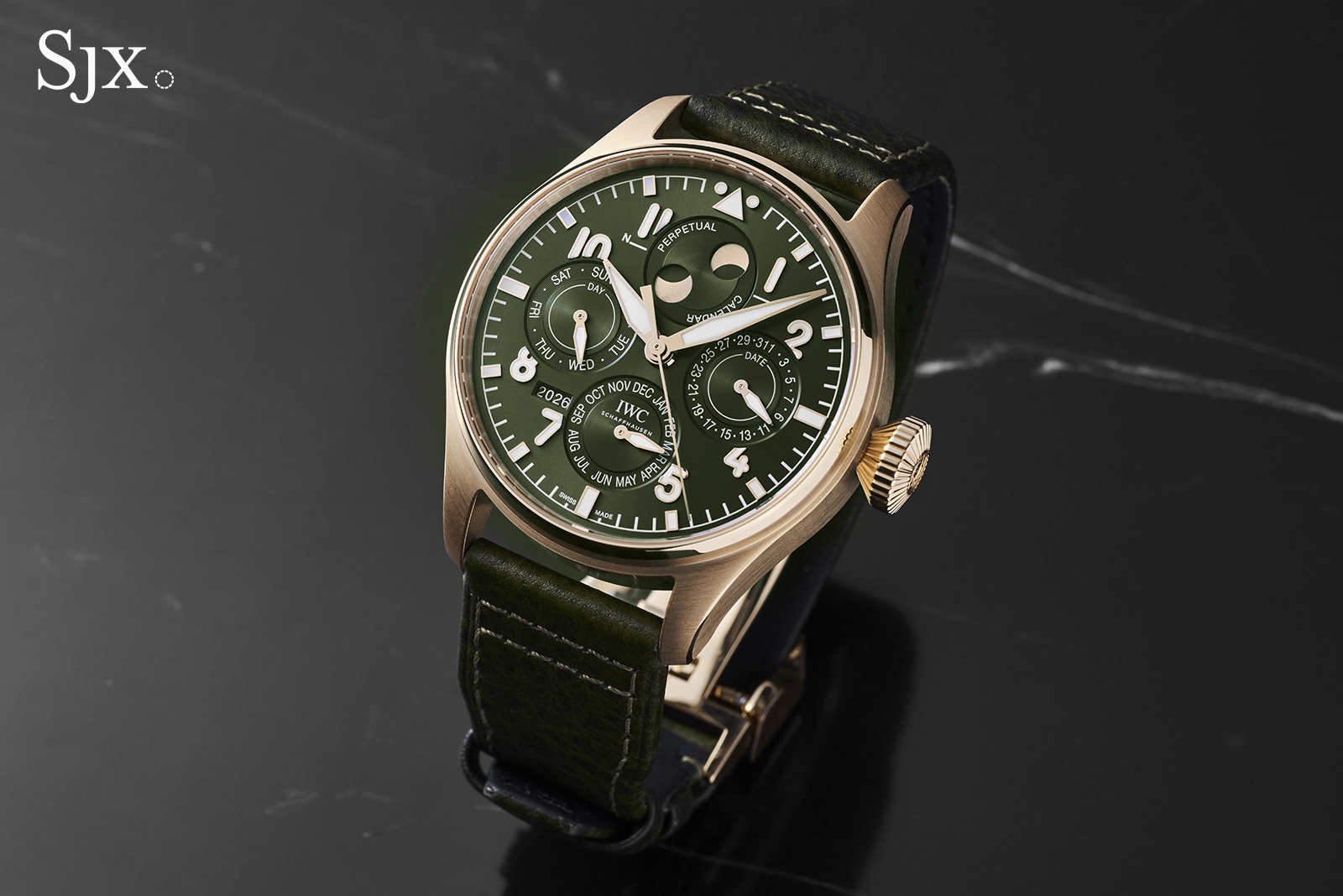
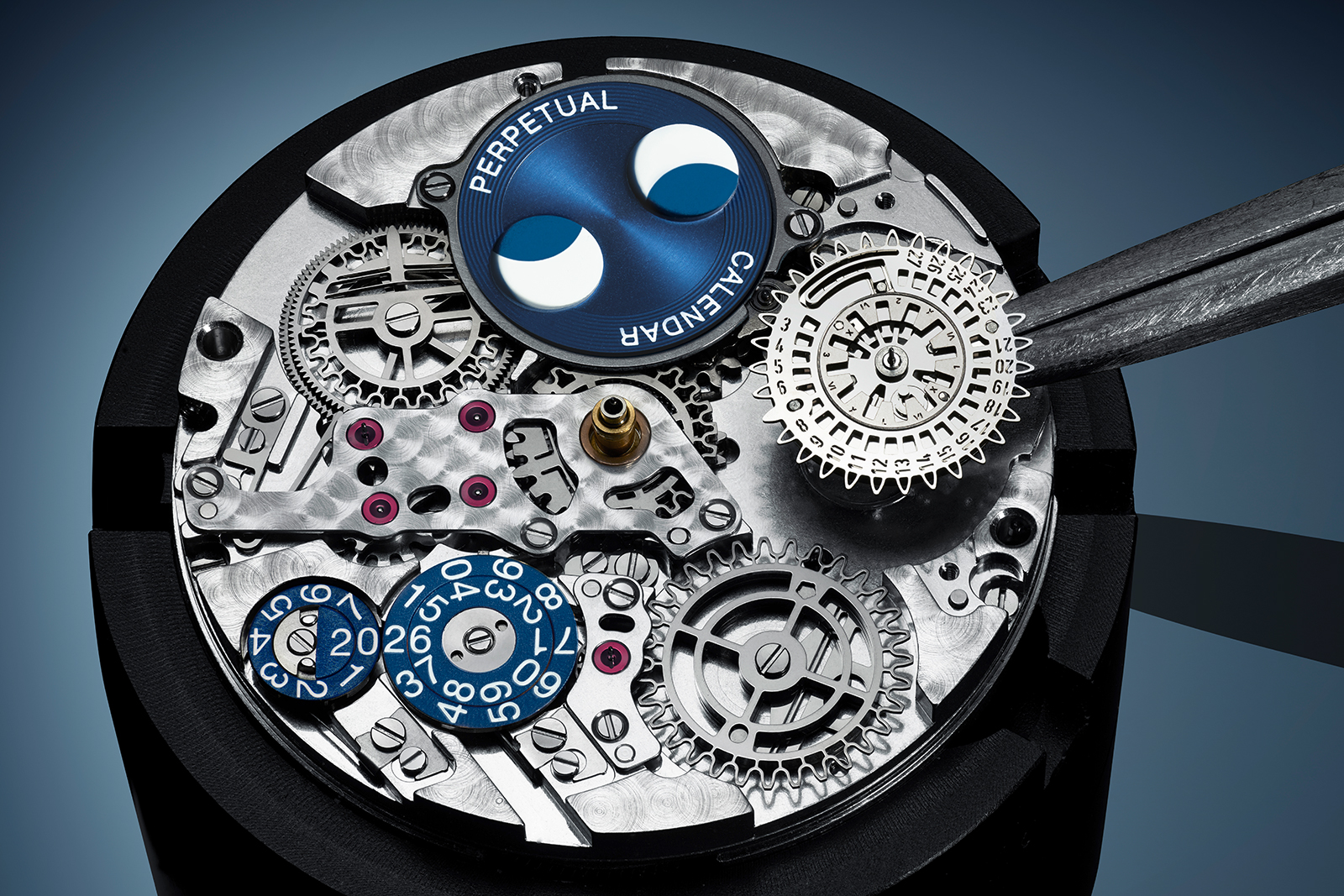
Also clever but more incremental than the Evergraph is the IWC Perpetual Calendar ProSet, which debuts inside the (smaller) Big Pilot’s Watch. A long overdue upgrade to the forward-only Kurt Klaus perpetual calendar that has defined the brand, the ProSet allows the calendar to be set via the crown backwards and forwards, eliminating the hassle of needing a watchmaker to reset the calendar as is the case with the Kurt Klaus mechanism.

The Big Pilot’s Watch is now smaller but smarter

The ProSet does this with a stack of LIGA wheels featuring sprung, pivoted, and extending teeth. While it is impressive, the ProSet suffers from the same weakness that many recent IWC movements do, which is a so-so quality of execution in terms of construction and decoration.

The many LIGA wheels that underpin the ProSet calendar. Image – IWC

Value buys

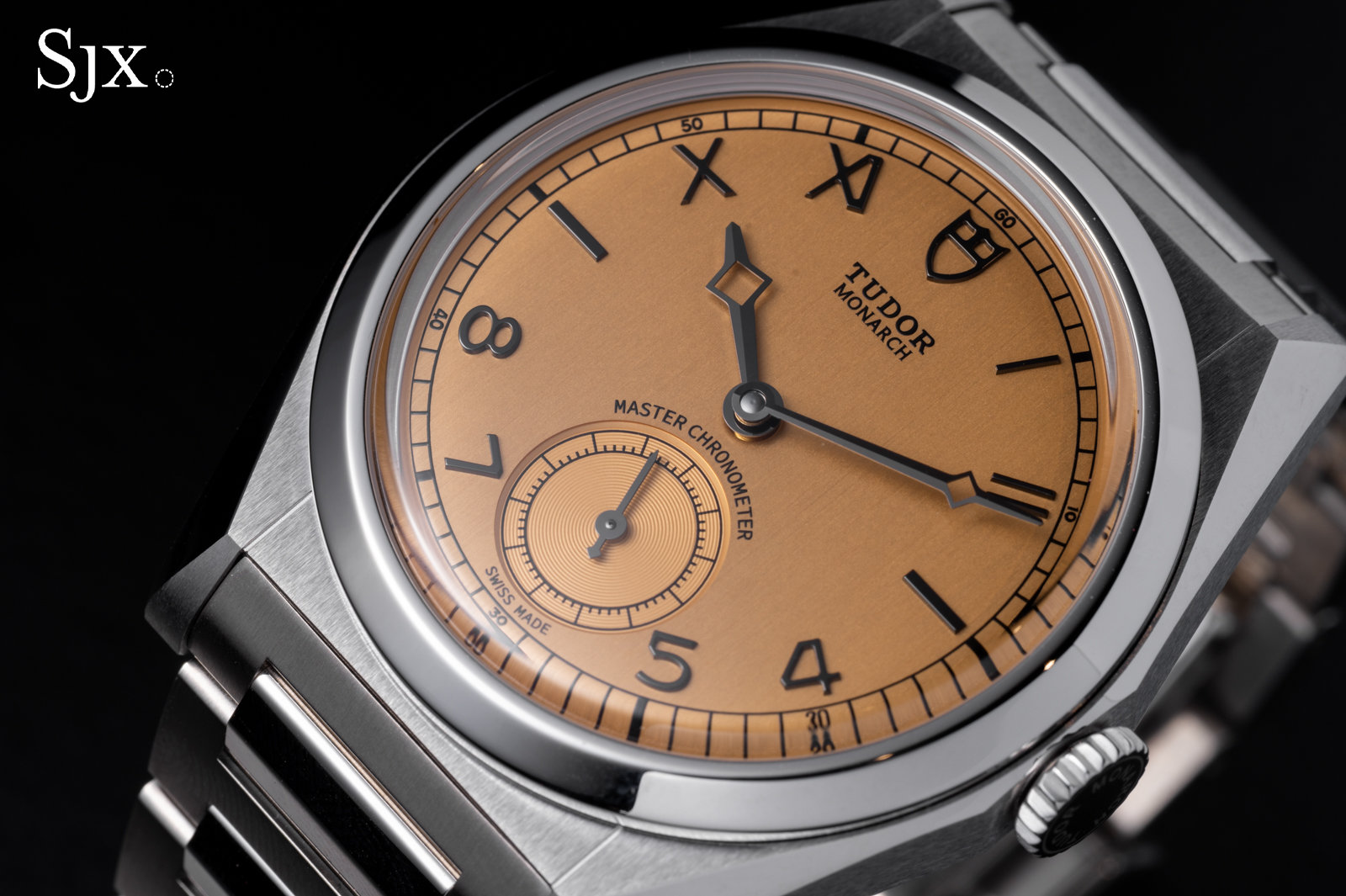
One of the quirkiest value propositions at W&W – and probably my favourite affordable watch – is the Tudor Monarch. While not quite a dress watch, it is dress-adjacent, especially if paired with a strap, making this a useful diversification of Tudor’s dive watch-centric offerings.

Though not officially touted as such, the Monarch is an anniversary edition to mark 100 years of the brand. A major departure from the brand’s prevailing style, the Monarch combines a facetted, angular case with an “error proof” dial combining Roman and Arabic numerals, a style better known as “California”.

Moreover, the Monarch contains a new calibre that is high spec as is typical of the brand, but endowed with decorative finishing of the sort previously eschewed by Tudor. The calibre feature Geneva stripes, bevelling, and even some modest, but actual, gold inlay on the rotor. With a retail price of US$4,800, the Monarch continues to demonstrate Tudor’s strength in offering outstanding value.

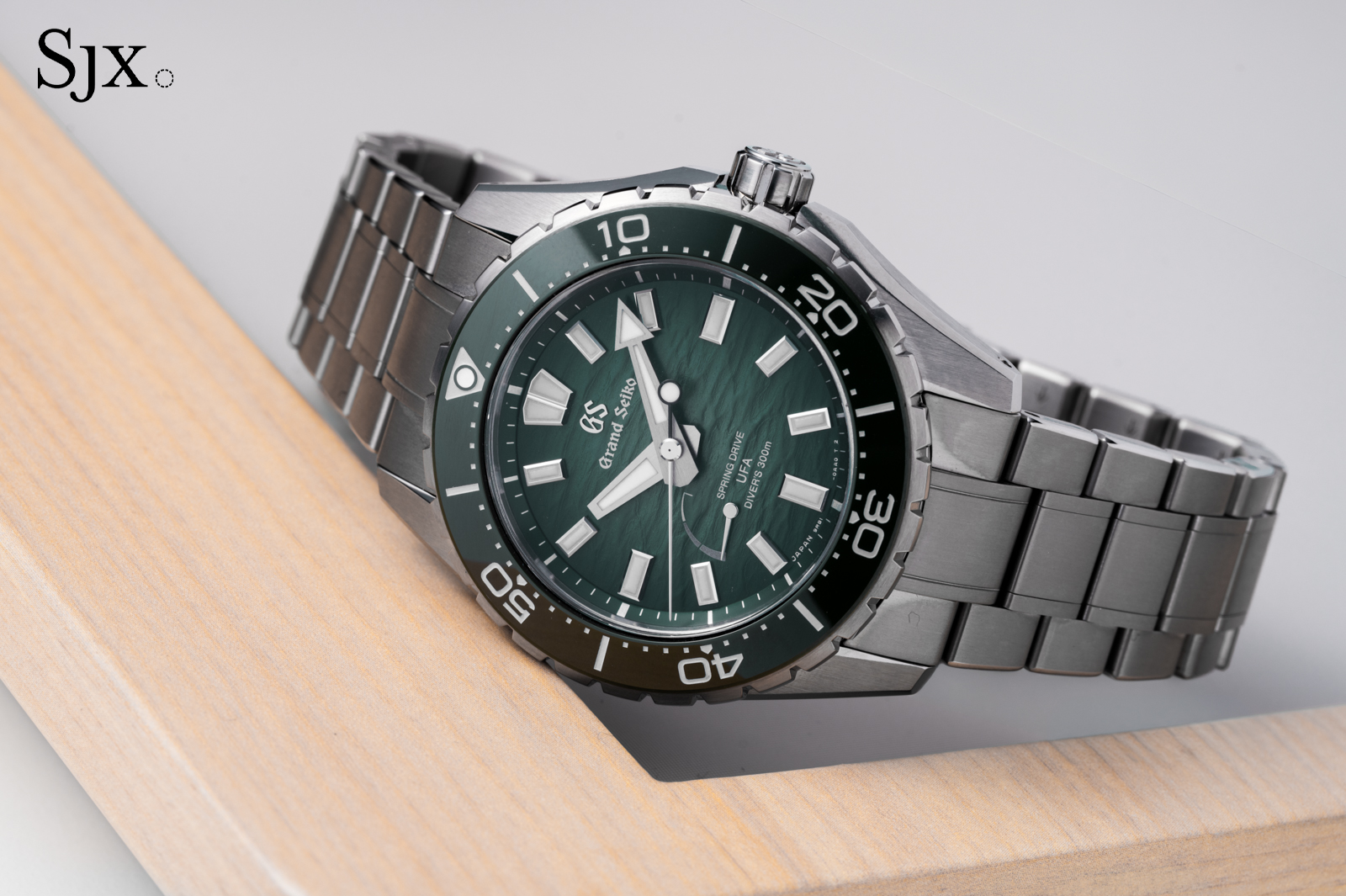
Also notable for its value proposition is the Grand Seiko Spring Drive UFA “Ushio”, the smallest and cleanest Grand Seiko dive watch yet. The Ushio costs US$12,400, putting it at the higher end of the spectrum for a non-precious metal Grand Seiko, but still competitive given the quality and competition.

At just under 41 mm in diameter, the Ushio is entirely titanium. It’s not only lightweight but also seemingly a little smaller than it measures, making this a refreshing change from earlier Grand Seiko dive watches that were all oversized.

The Ushio does without a date, which many will applaud, but contains the latest generation Spring Drive Ultra Fine Accuracy (UFA) movement, ranking it amongst the most advanced Grand Seiko watches on the market. Besides taking away the date, Grand Seiko also fulfilled the wishes of enthusiasts with an improved bracelet that incorporates a hidden safety lock, dive extension, and ratcheting micro-adjustment. While not yet the best bracelet on the market, this is now very good.


Back to top.
You may also enjoy these.
Welcome to the new Watches By SJX.

Subscribe to get the latest articles and reviews delivered to your inbox.