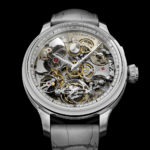
The 30th anniversary of the Chopard L.U.C. manufacture was one anniversary among many this year, but it will likely be remembered thanks to the Grand Strike, the most complicated watch in Chopard’s history and its first grande sonnerie.
Building on the successful Full Strike minute repeater architecture and making full use of the brand’s patented sapphire gongs, the Grand Strike is a chronometer-certified two-train clock watch with a push-button minute repeater. In this context, the presence of the tourbillon is almost a footnote.
Initial thoughts
I can count on one hand the number of brands that have created their own grande sonnerie wristwatch. It’s one of the few things in watchmaking that’s proven challenging enough to still be rare, even in the days of computer-aided design (CAD) and advanced manufacturing technology like wire erosion.
For this reason, the grande sonnerie has a towering cultural presence among watchmakers and collectors, looming above all other complications. For Chopard, the Grand Strike represents the culmination of 30 years of the L.U.C. manufacture, the brand’s haute horlogerie division.
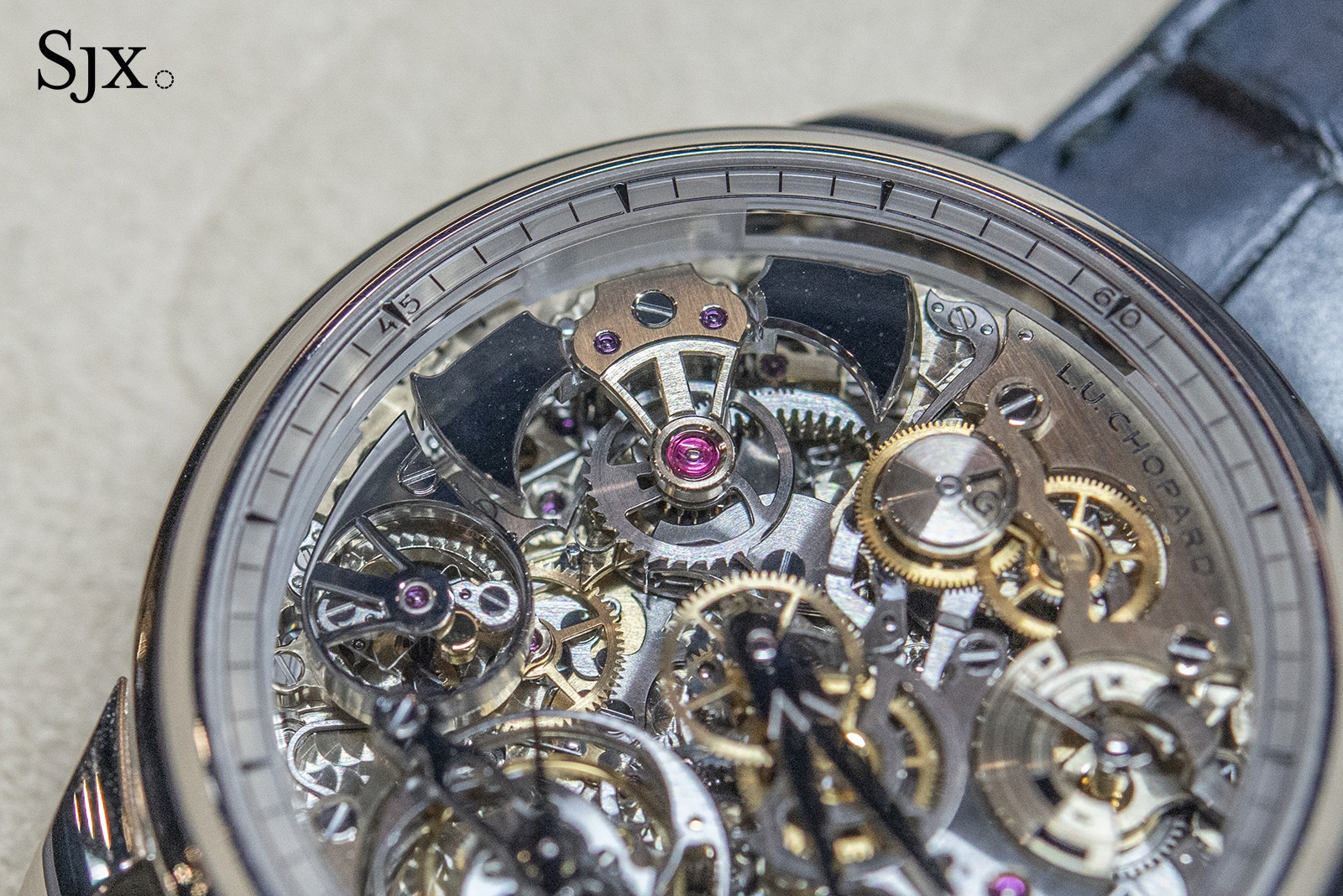
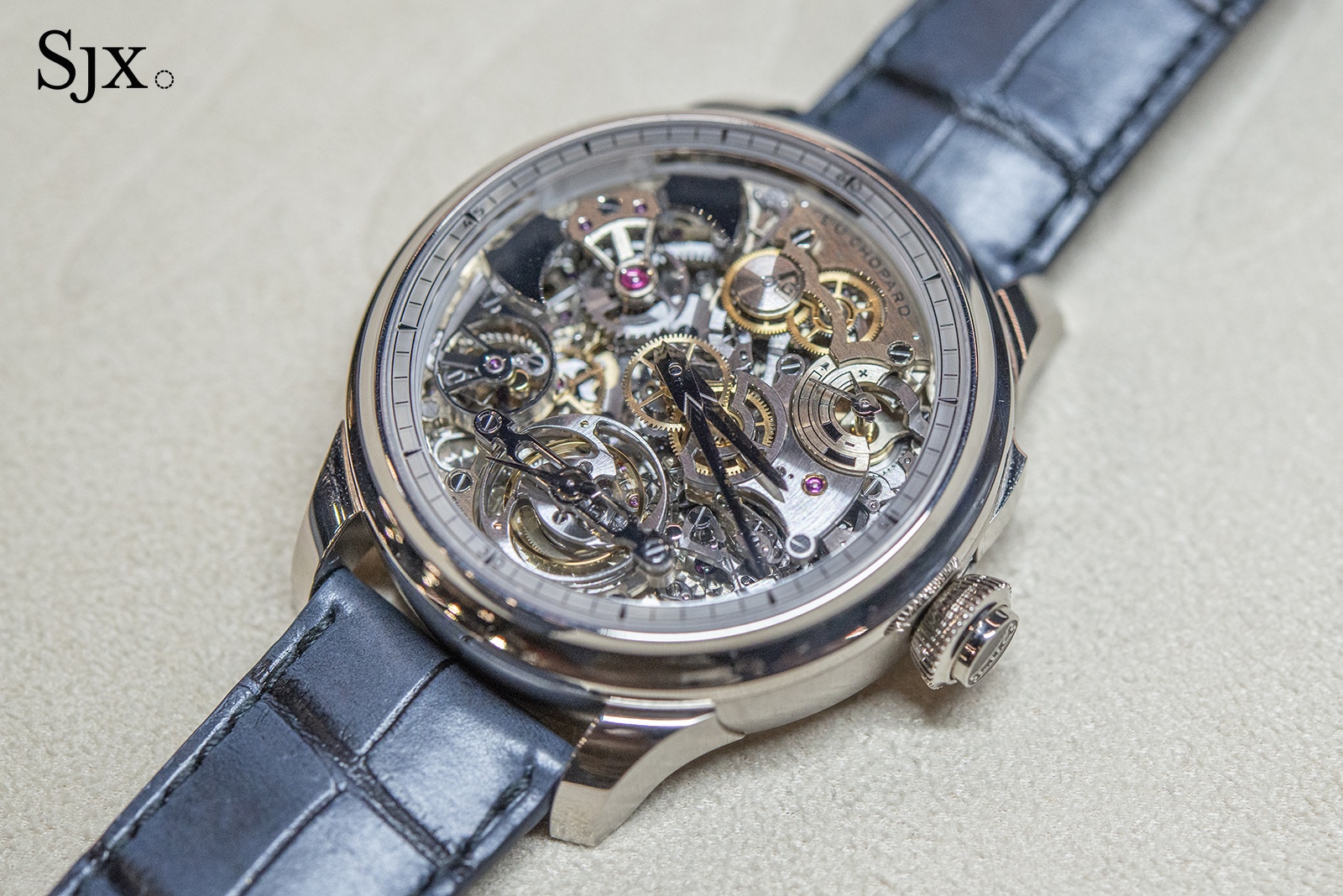
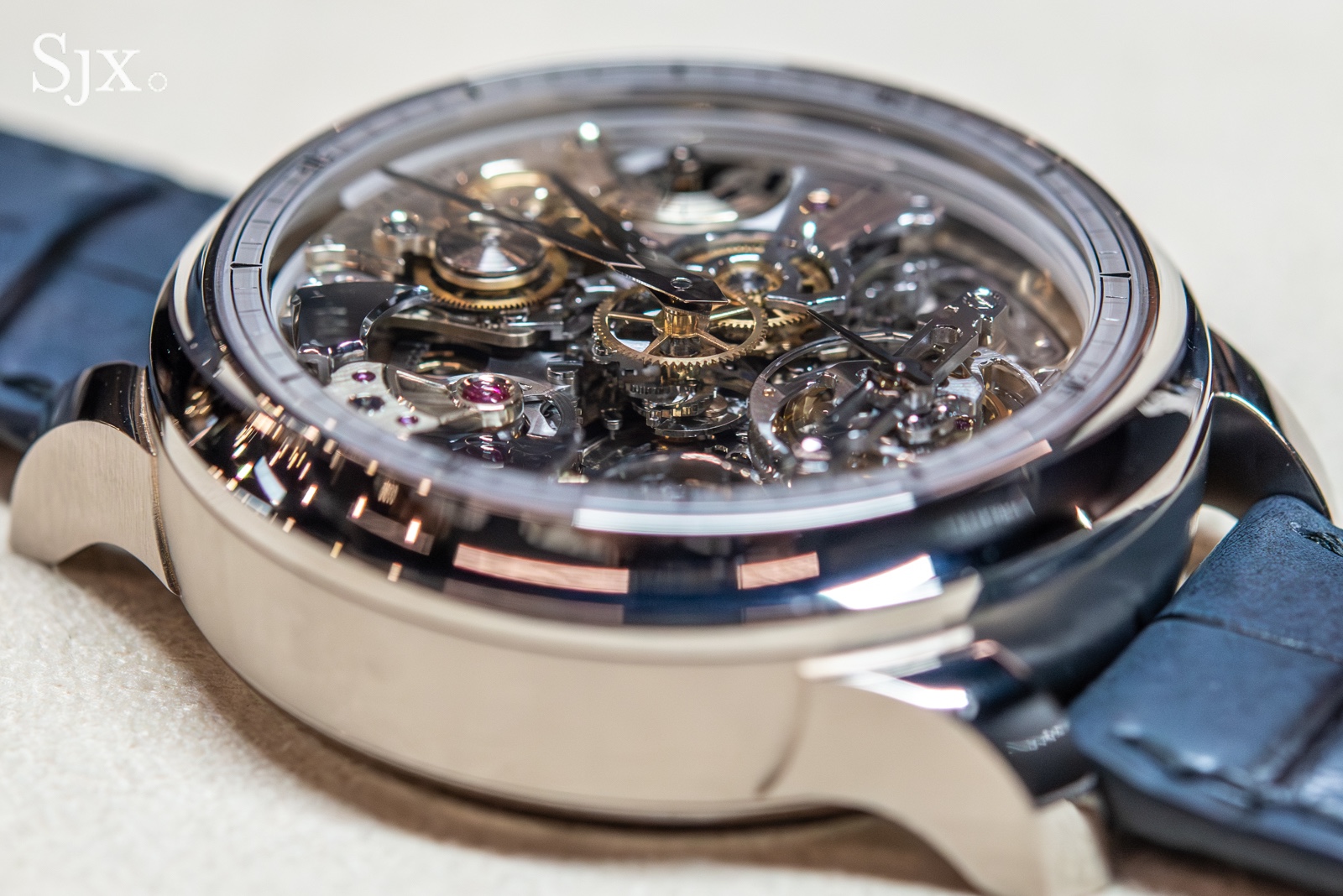
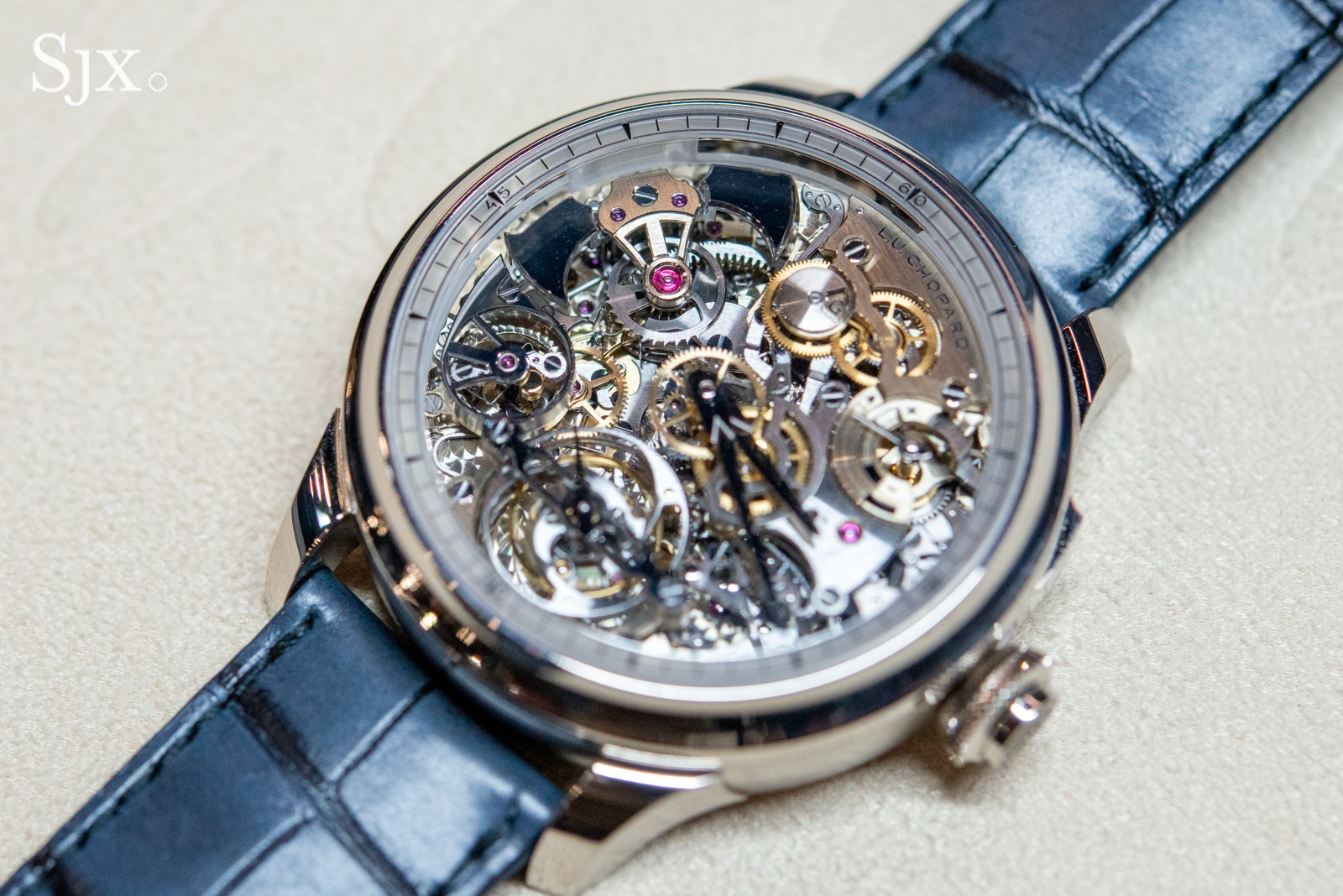
The first impression of the Grand Strike is one of extraordinary depth. There’s not much of a dial, save for the minutes scale etched on the inside of the sapphire crystal, and the small concentric sub-dials for the dual power reserve displays.
This depth shrinks the watch visually, and it feels dense and compact despite its rather large 43 mm size and 14 mm thickness. Part of this compact feeling is due to an elegant new case design that I hope to see more of in the future.
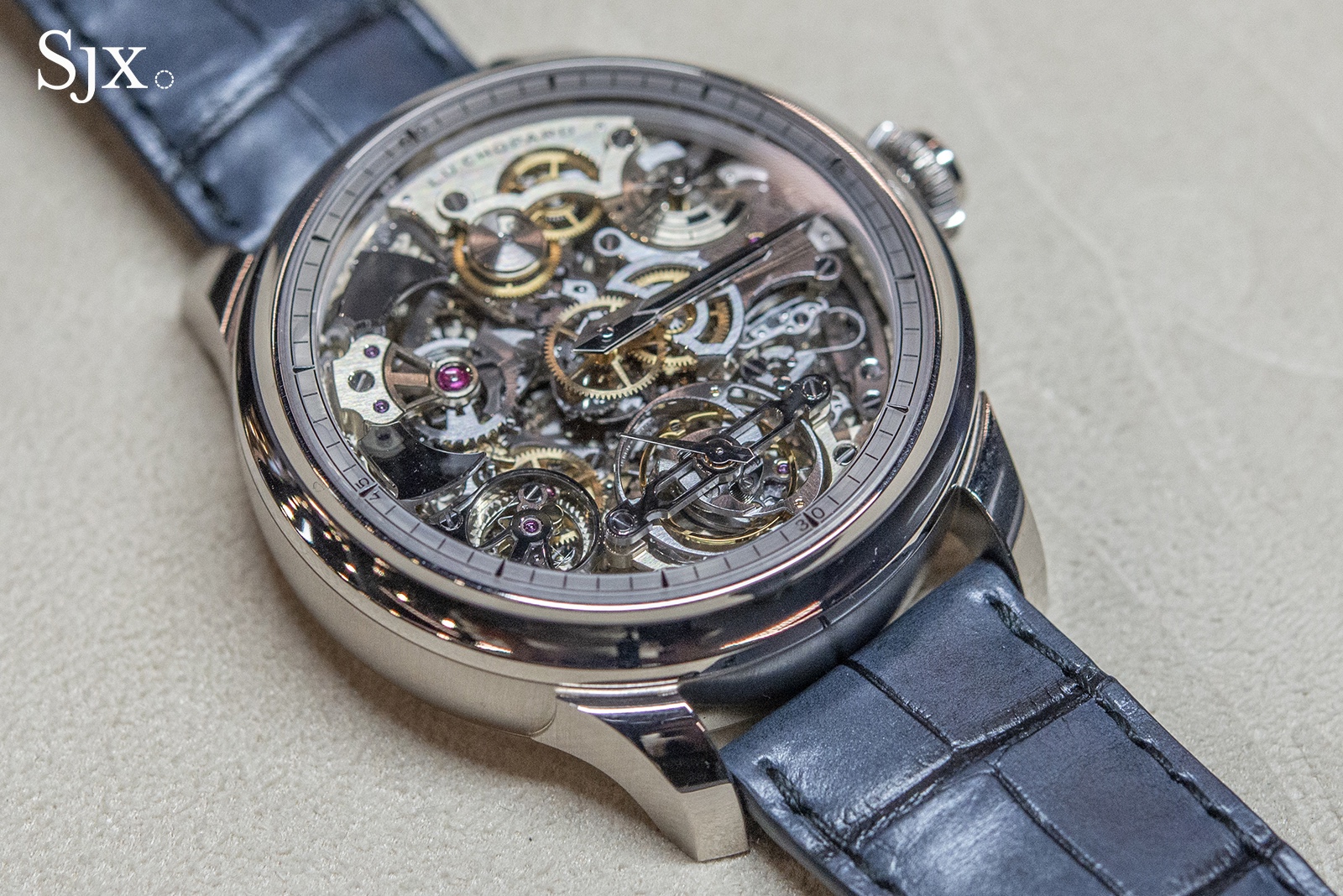
A grande sonnerie wristwatch naturally has a celebratory feel about it, and the Grand Strike takes this to a new level. Inspired by the crystalline chime of tapping a champagne coupe to call a room to order, the gongs deliver clear, resonant tones that feel fittingly ceremonial.
In this context, the lofty list price of CHF780,000 (nearly US$1 million at the time of this story) is justifiable. Setting aside exclusivity — the brand plans to make less than a handful each year — the Grand Strike is not just ‘another’ grande sonnerie, though even that would still be something. Its technical distinctiveness and the unique acoustic signature of the sapphire gongs contribute something genuinely new to the canon of this revered complication.
A city in miniature
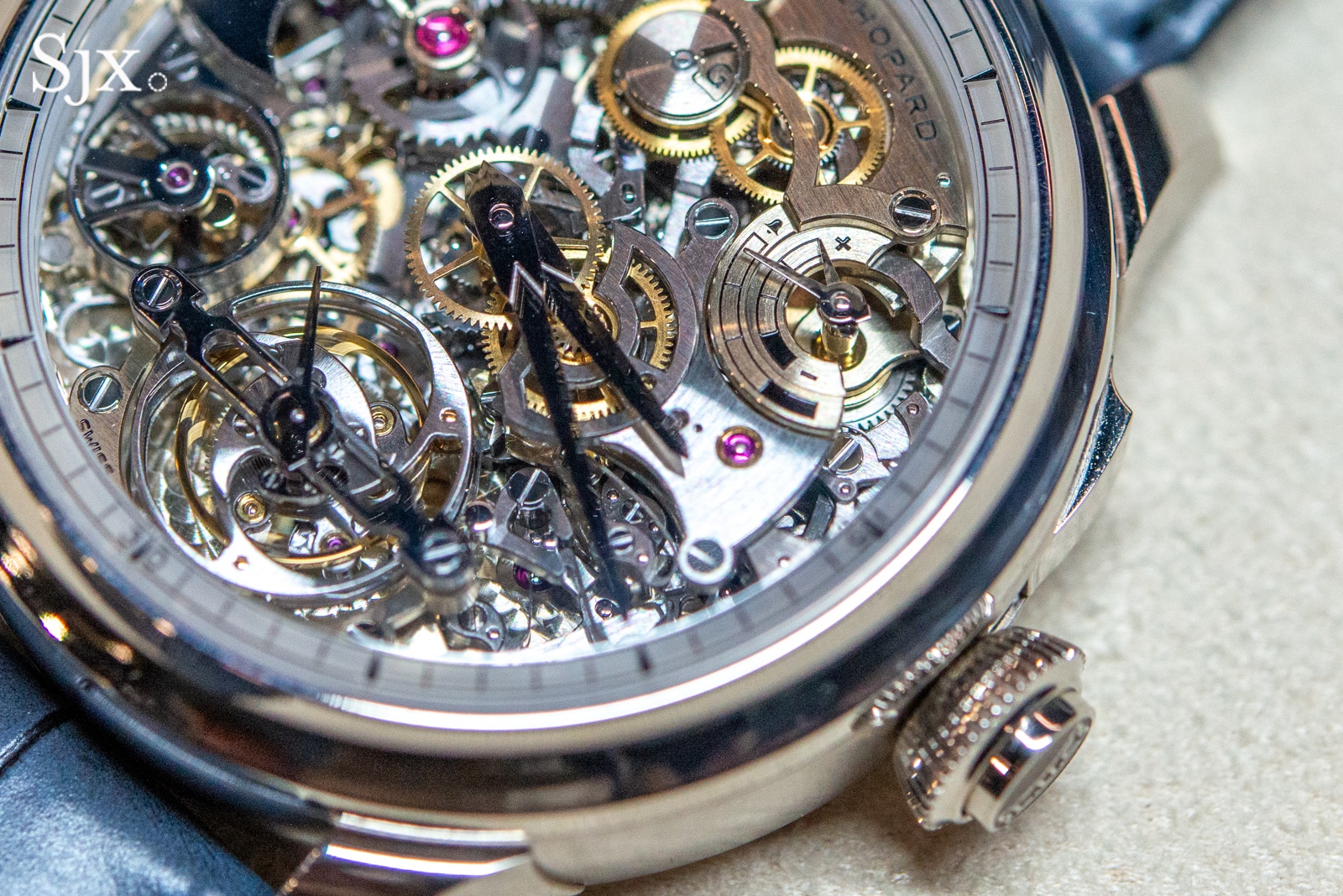
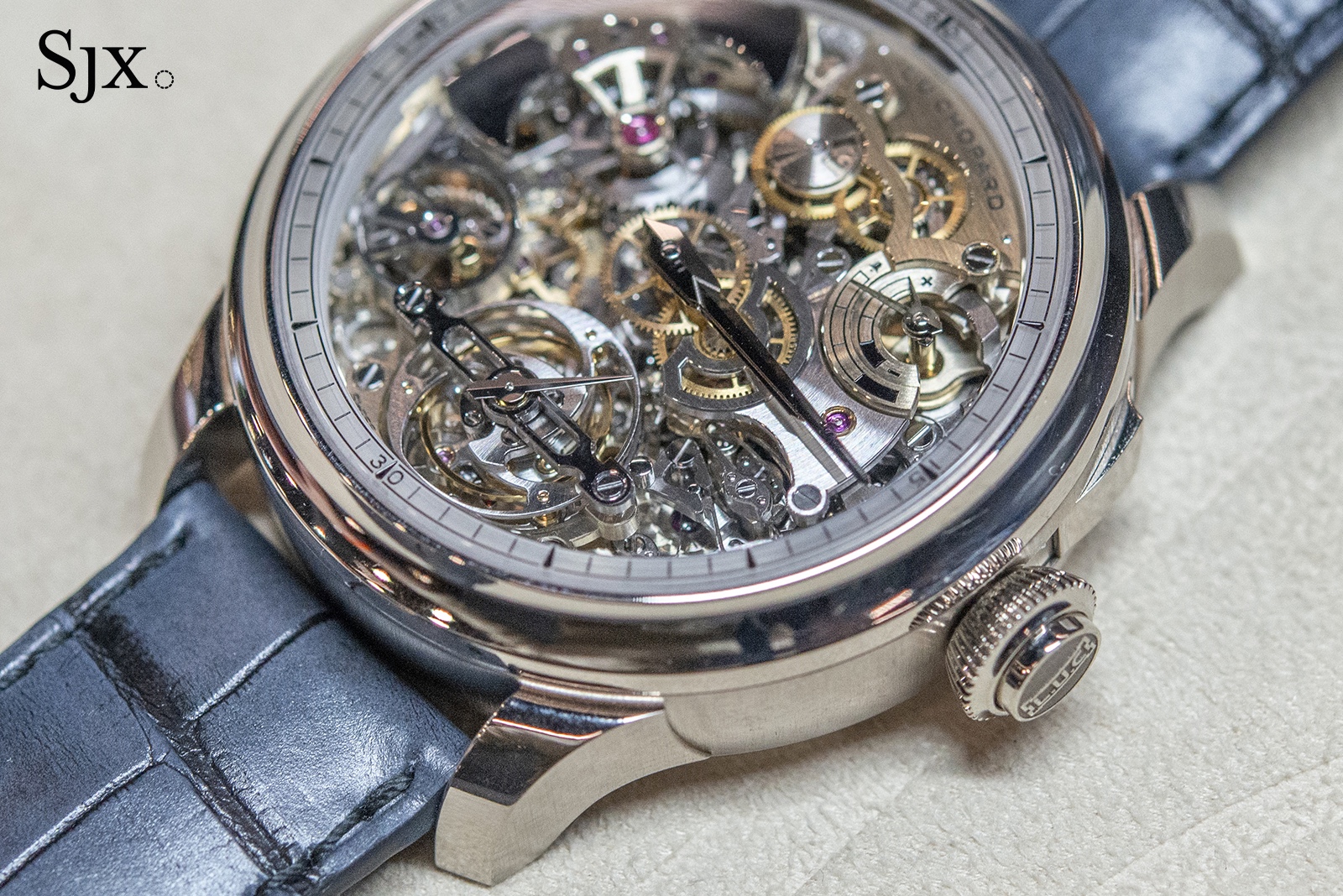
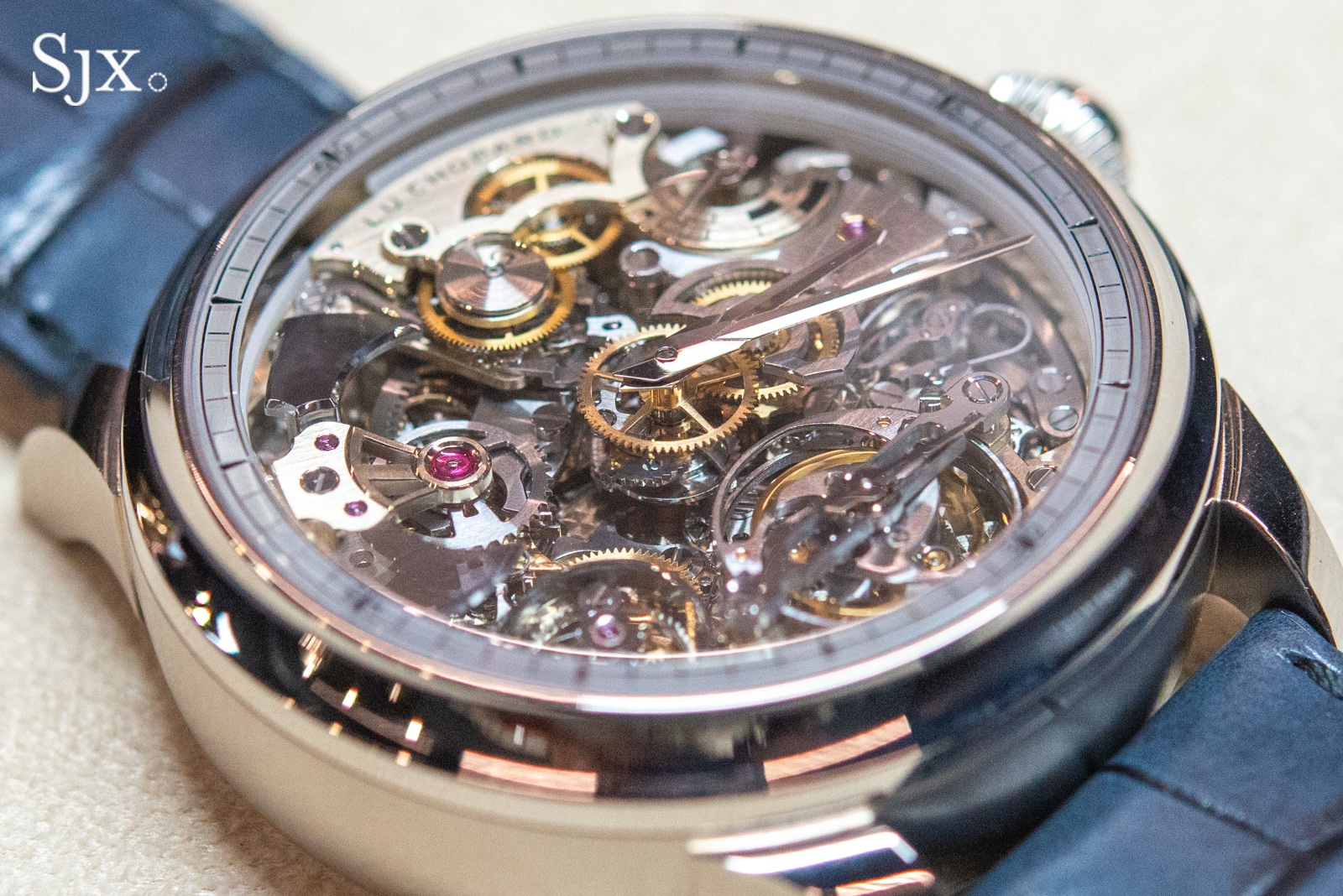
As described, there is scarcely a dial to speak of. Most of the dial side is open, revealing a cityscape-like architecture that shows off details like the silent strike governor, the release star on the canon pinion, and the black-polished hammers.
It’s an almost overwhelming display that feels just right to maximise the ‘shock and awe’ factor for the Grand Strike’s debut, though I can imagine a ‘sleeper’ version with a partially closed dial would be an appealing addition down the road.
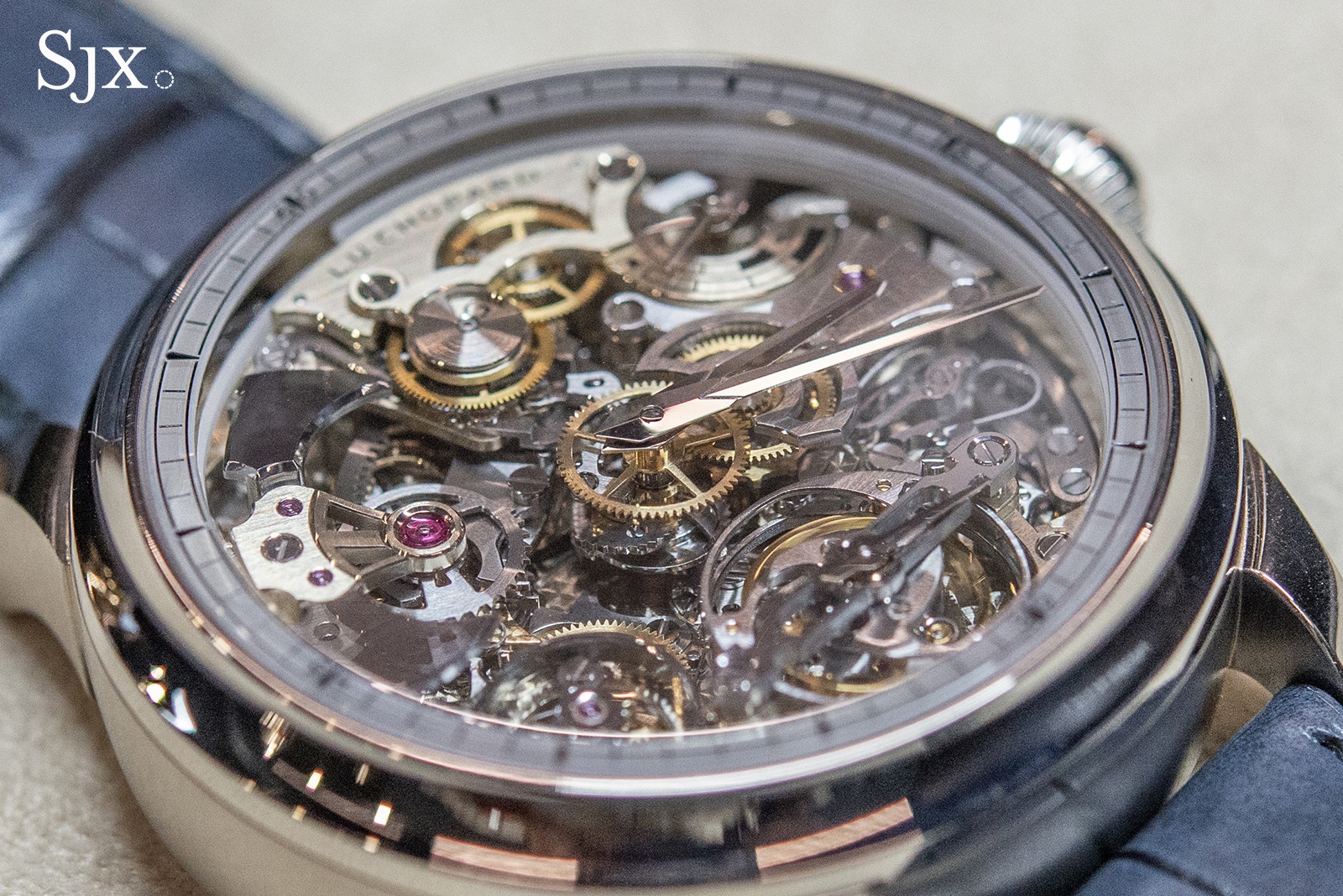
The case is something else I’d like to see rolled out in more guises. Compared to the somewhat blocky cases used for watches like the Full Strike, the case of the Grand Strike features a more curvaceous shape and lugs that are produced separately and soldered to the case band. This multi-part construction offers a level of nuance in finishing that is not possible with a monobloc case.
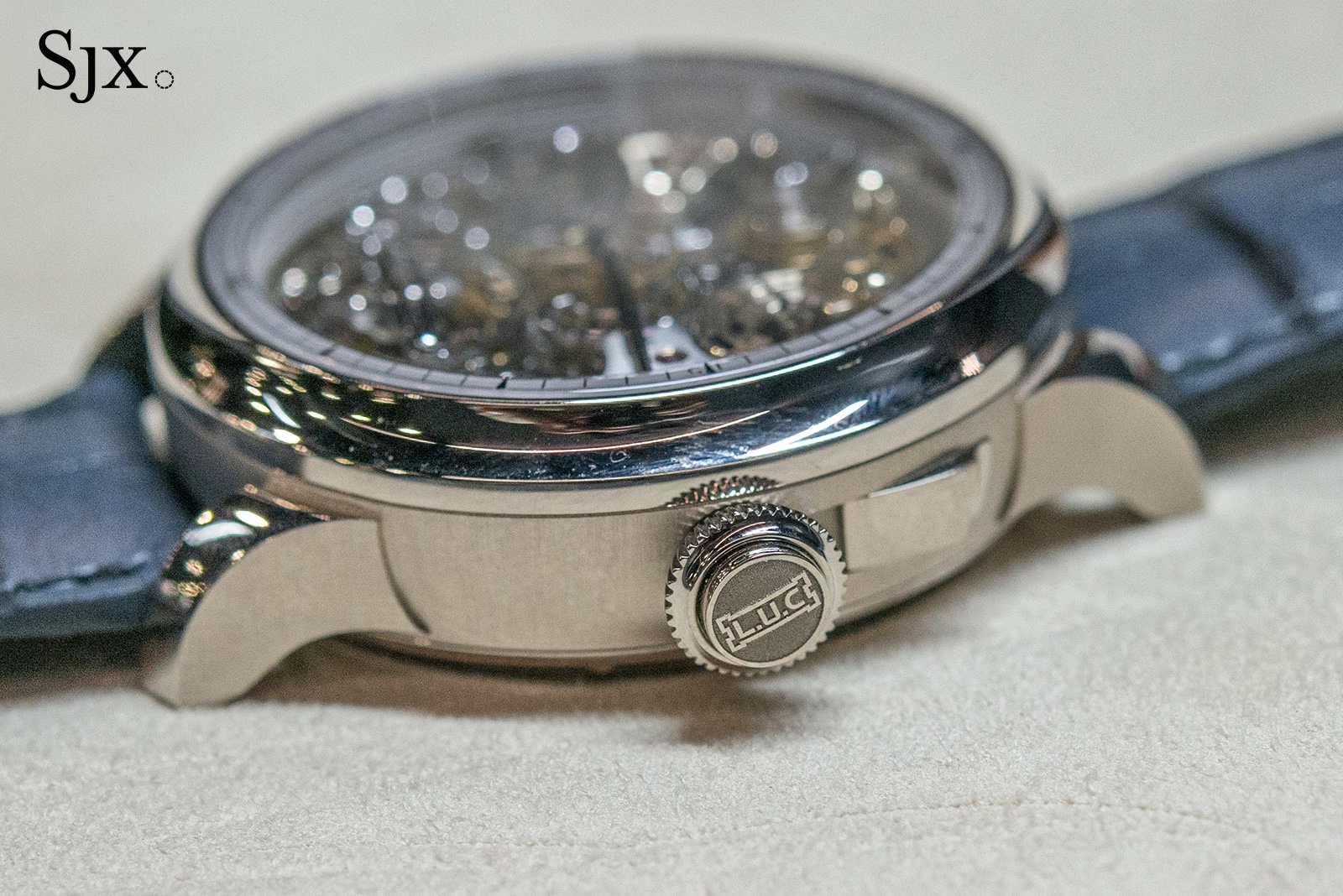
The 18k white gold case is rather chunky at 14 mm in height, but the Grand Strike doesn’t feel overly thick. This is thanks in part to one of the oldest tricks in the complicated watch playbook: concave bezels. In the case of the Grand Strike, both the front and rear bezels are concave, concealing much of the height.
The user interface is intuitive and rewarding from a tactile standpoint. The easy-to-use onion-shaped crown is a new design, though it retains the Full Strike’s familiar co-axial pusher for the minute repeater. Next to it sits the slider for the strike mode selection. It slides toward the crown with a light but unambiguous detent that toggles the mode indicator at 12 between silent, petite, and grande sonnerie modes.
Loud and clear
Chopard’s patented sapphire gongs are a critical factor in the appeal of the Grand Strike. Built from a single block of material contiguous with the crystal, this construction gives the sound waves a clear pathway to the outside of the case.
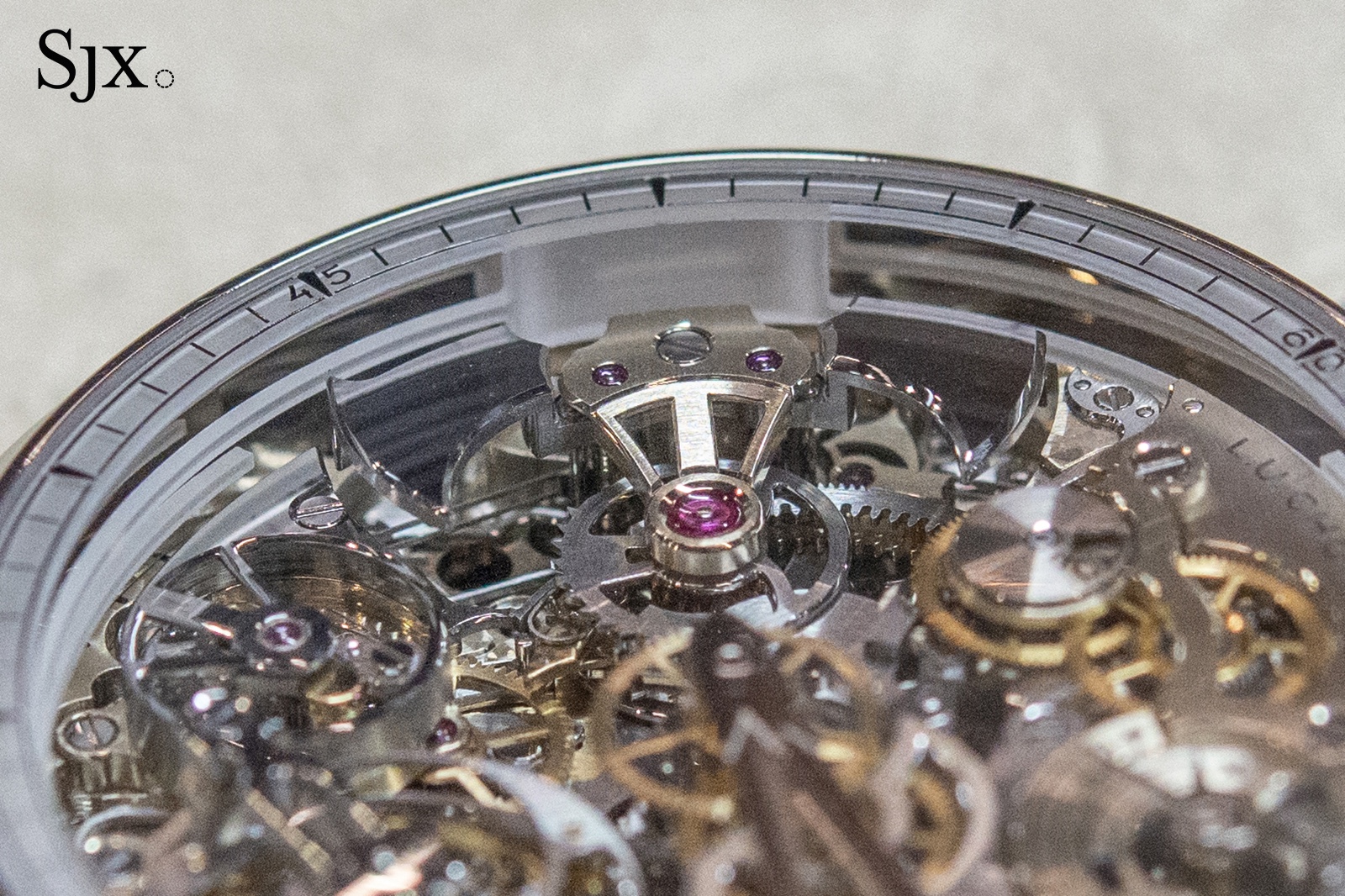
The gongs are engineered to produce clear, resonant tones in C-sharp and F-natural, and the results, quite literally, speak for themselves. Many minute repeaters and a few grande sonneries strike quite quietly, or worse, sound dull and dissonant. In contrast, the Grand Strike manages to be both loud and clear.
Construction and trade-offs
To understand why the production of a grande sonnerie is so difficult, it’s worth exploring the differences between watches like this that chime as time passes, and minute repeaters that chime only on command.
In short, the difference is energy — swinging hammers hard enough to resonate a set of gongs every 15 minutes all day long takes a lot of it.
In most minute repeaters, this energy comes directly from the user’s thumb actuating the slide on the case; this action gives the minute repeater all the energy it needs. In fact, a minute repeater that has long since stopped running will continue to chime out the (probably incorrect) time as many times as the user actuates the slide.
Grande sonneries, on the other hand, which chime automatically, can’t rely on this additional energy source. Instead, this energy has to be captured during winding and stored inside. Historically, the solution to this was to separate the timekeeping and striking systems, and give each their own power source (i.e. a mainspring barrel). Both power reserves are displayed on concentric scales at two o’clock.
This is where Chopard had a head start when developing the Grand Strike. Nearly a decade ago the brand introduced the Full Strike minute repeater, which didn’t rely on a minute repeater slide and instead drew power from its own mainspring. This construction is known as a trip repeater, since it’s constantly armed and must only be tripped to begin working.
When the Full Strike debuted, it was clear that Chopard had the building blocks for a grande sonnerie. This development process explains why there are so many component groups reminiscent of those found in the Full Strike.
This development cycle explains one of the few shortcomings of the Grand Strike, which is its short 12-hour power reserve in either of the sonnerie modes. This compares unfavourably with the pricier Patek Philippe ref. 6301P, which manages to strike on three hammers for up to 24 hours in grande sonnerie mode.
Curiously, grande and petite sonnerie modes consume similar amounts of energy despite the different number of strikes, due to how the hour strikes are muted on the quarters in petite sonnerie mode.
And while the Chopard is more compact than its Genevan rival at 43 mm compared to 44.8 mm, this may not be a durable advantage; the Patek Philippe GS 36-750 PS IRM movement is actually smaller than the Grand Strike’s L.U.C 08.03-L in both diameter and thickness.
Another trade-off has to do with water resistance. Most minute repeaters are not water resistant, either because the maker chose to emphasise the sound quality, or because the opening for the slider proved too difficult to seal effectively. Chopard’s own Full Strike dodges both of these issues with its sapphire gongs that produce sound outward through the crystal, and its push-button activation for the repeater function.
All else being equal, the Grand Strike should be similarly water resistant, but the brand opted for a construction that further elevates the sound quality instead. As a result, the Grand Strike is merely dust and humidity resistant, like grande sonneries from Patek Philippe.
The chronometric grande sonnerie
What the movement dimensions don’t explain is the fact that the Chopard packs a punch the ref. 6301P does not: a tourbillon. In most watches, a tourbillon would be headline news, but in the Grand Strike it barely cracks the top three defining features.
Not only does the Grand Strike feature a tourbillon, it offers an unusual stop-seconds capability to set the time against a reference time signal. Such features are table stakes when it comes to fixed-escapement watches, but with tourbillons it’s more difficult since the carriage rotates and any stop-seconds lever must steer clear of the pillars of the cage.
Articulating levers are a common solution, but at least one brand uses a brush made from human hair to bring the balance to a halt. The Grand Strike uses a simple lever that acts as a brake on the outside of the tourbillon cage.
This is a thoughtful touch that is coherent with another aspect of the Grand Strike, which is its COSC chronometer certification. The movement was even tested in petite sonnerie mode, which speaks to the effectiveness of the two-train configuration. In other words, the energy held in reserve for the strikework is partitioned from the timekeeping train, so that quarterly strikes don’t negatively impact balance amplitude.
Radiant finishing
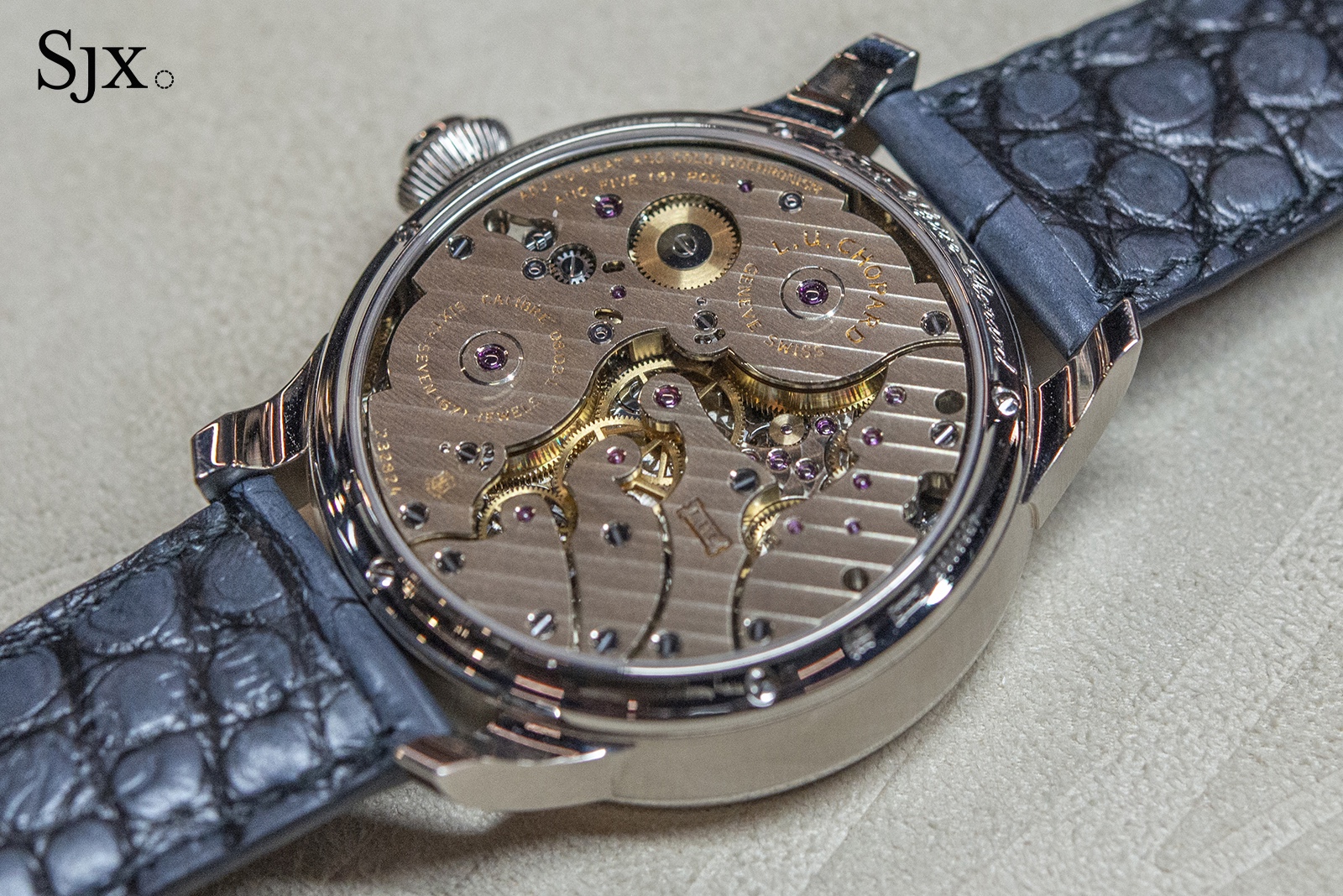
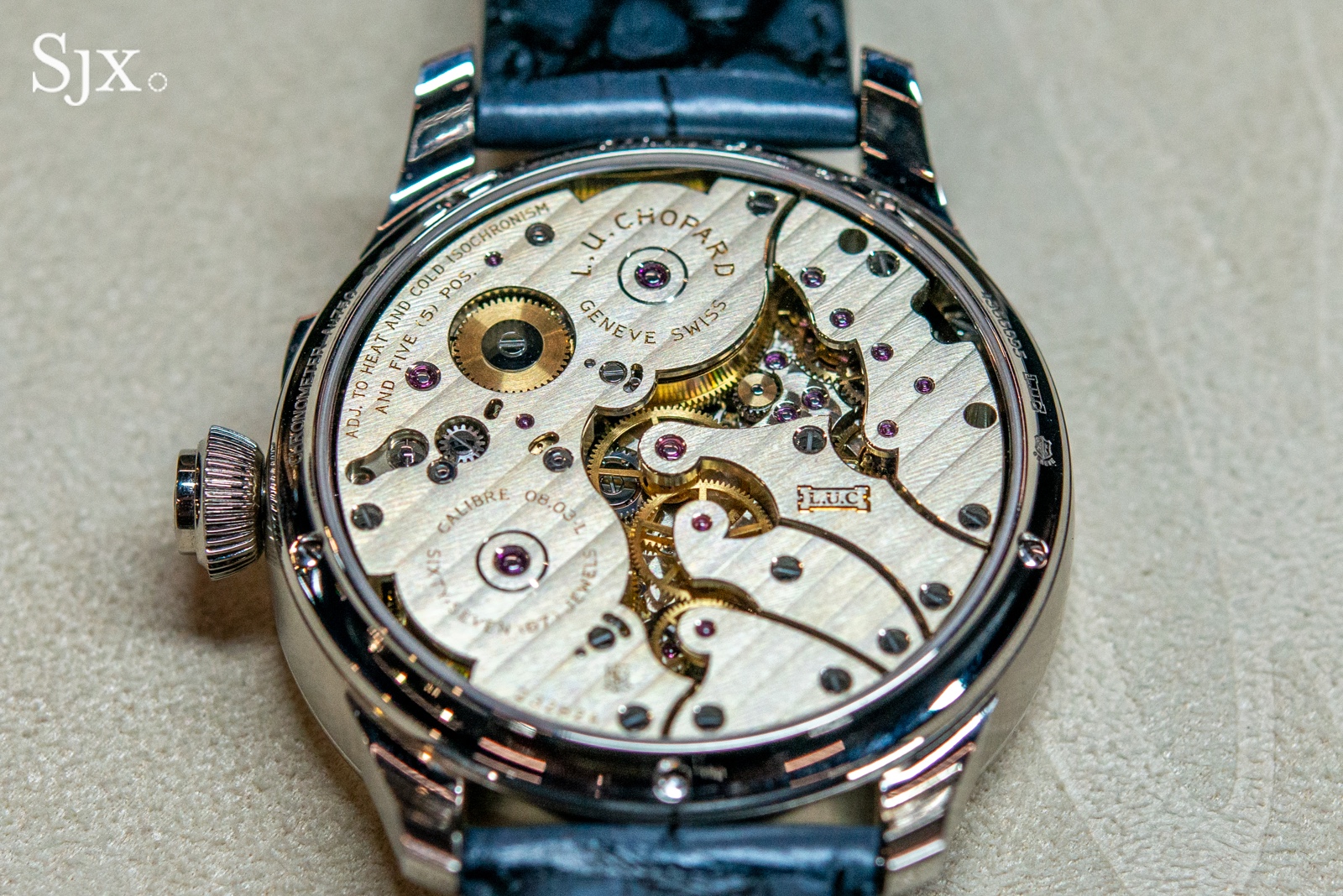
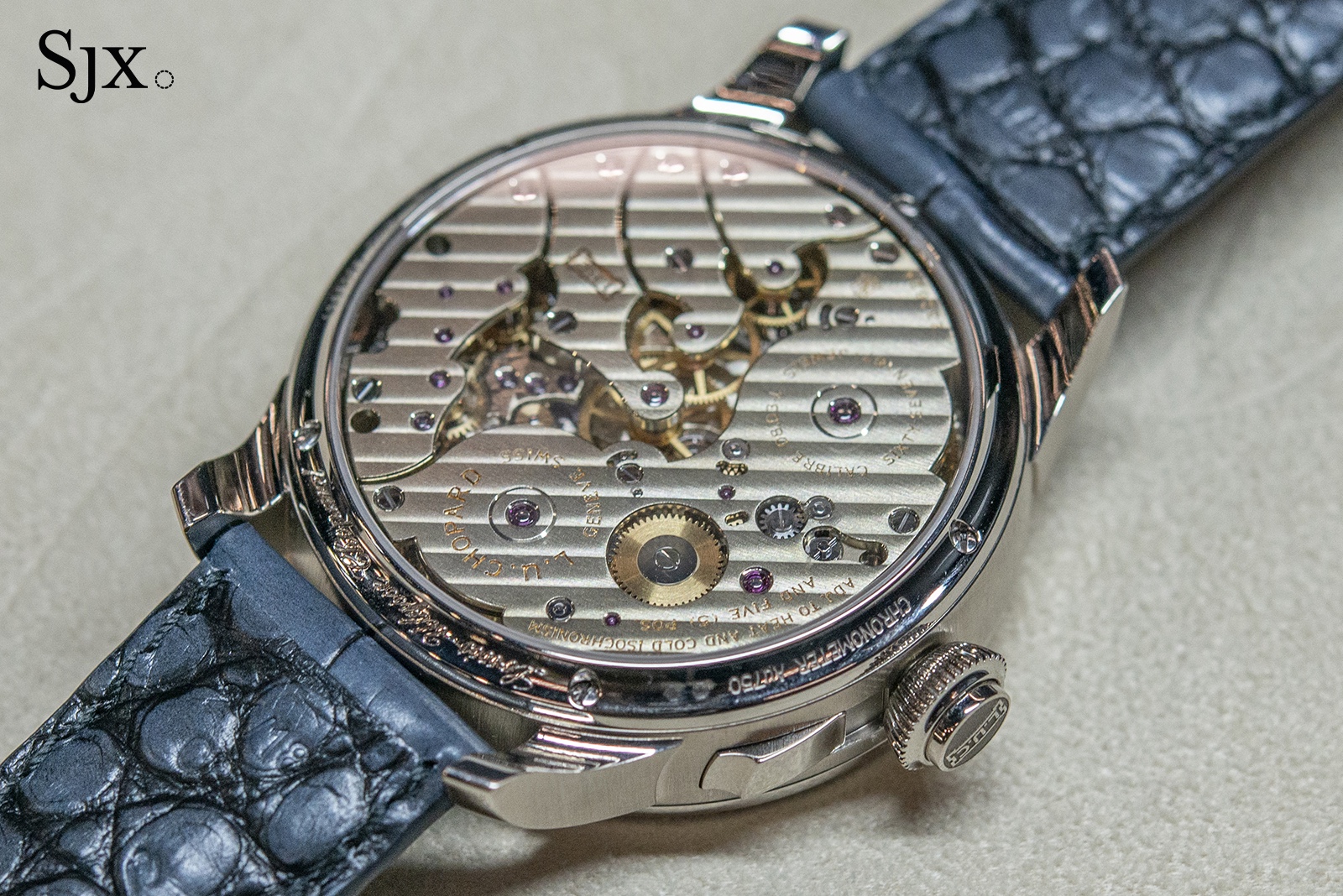
Chopard has endowed the Grand Strike with a level of finishing that befits its flagship status. The bridge forms from the Full Strike are instantly recognisable, though many changes have been made to accommodate the additional complexity of the sonnerie and tourbillon.
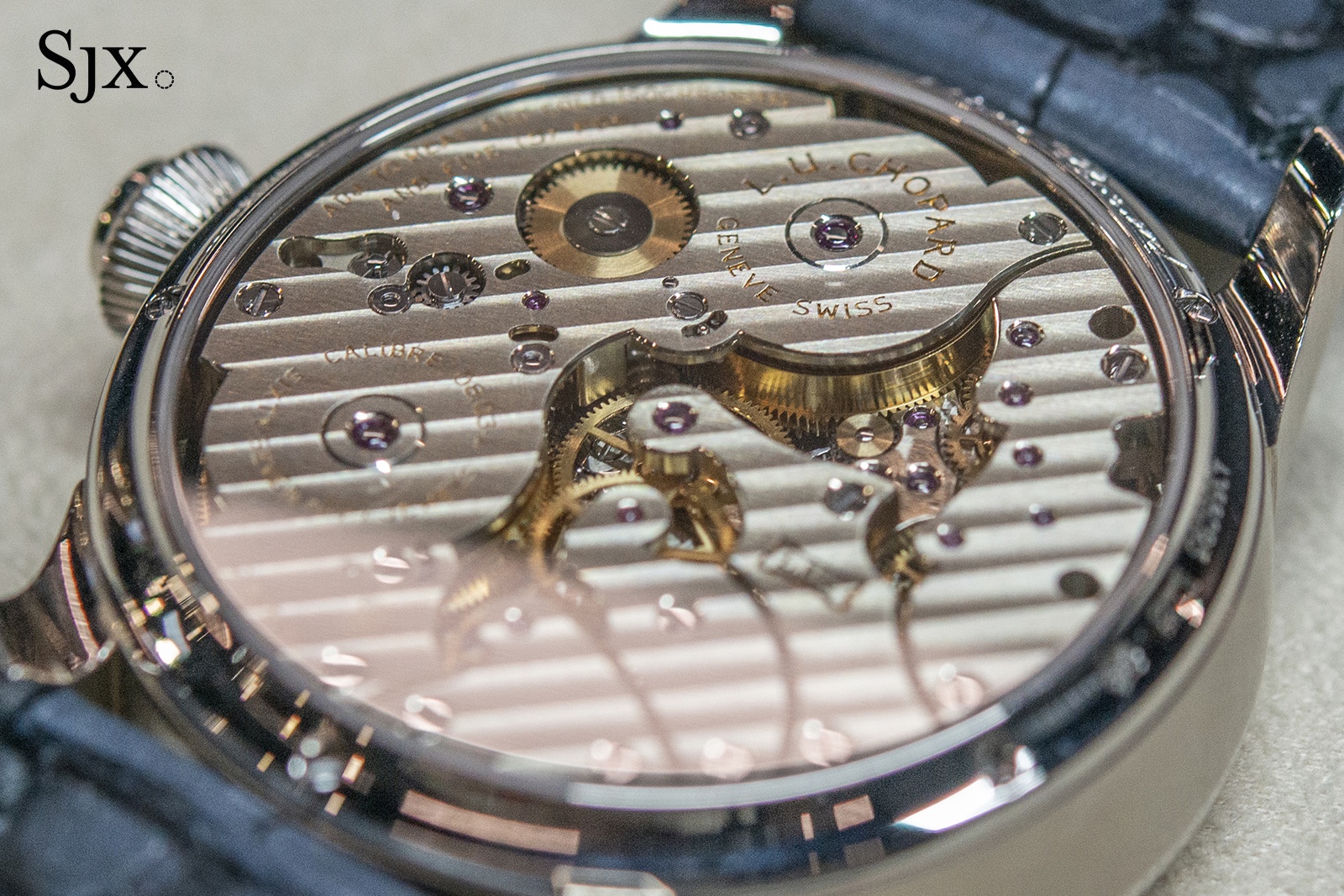
The Grand Strike is a watch that feels very full; the movement uses every bit of space inside the case. Through the case back, it almost looks as if the bridges are touching the crystal, emphasising the sensation of ‘fullness’.
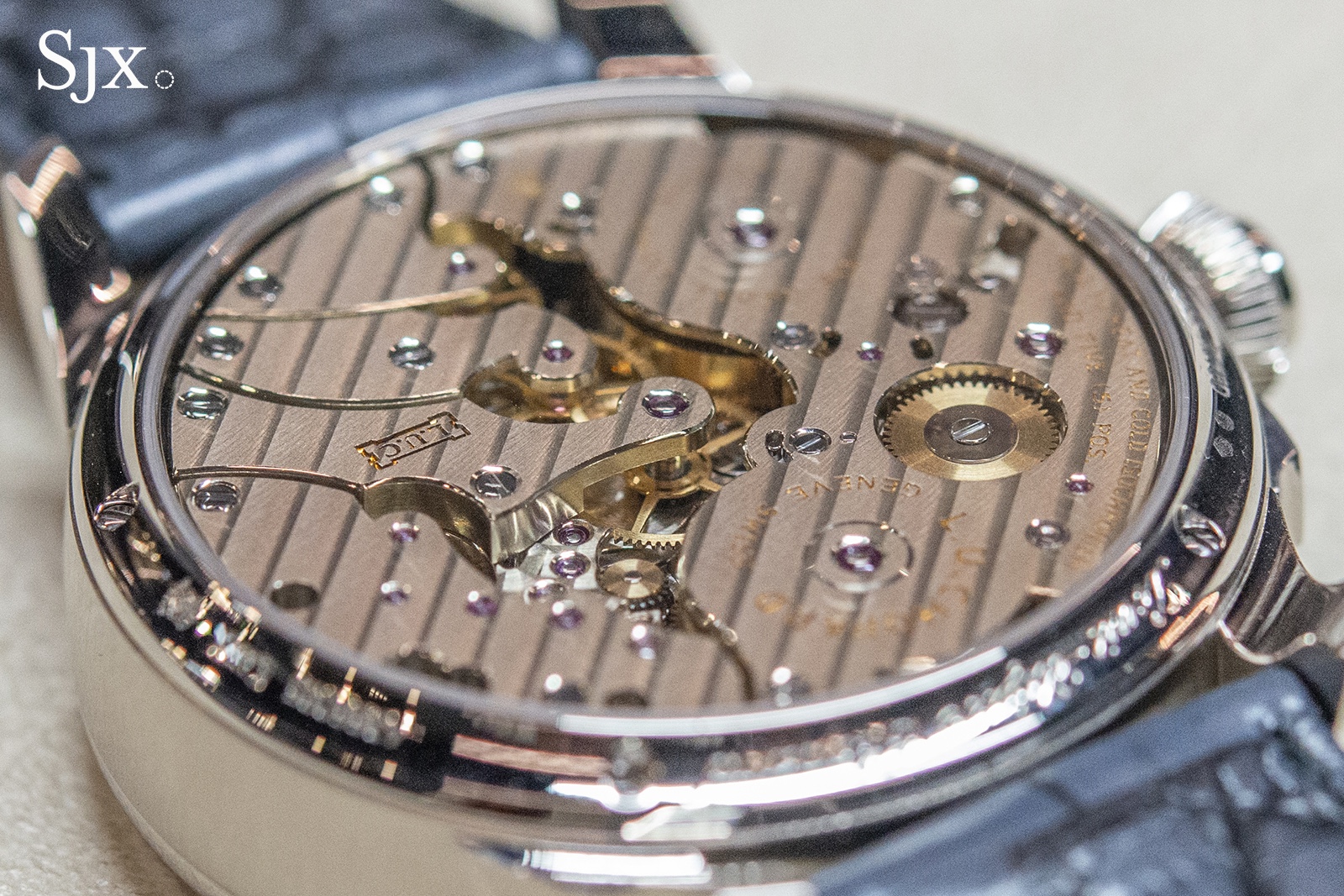
This makes it easy to appreciate the neat and orderly striping, which can accurately be called Côtes de Genève given the point of final assembly at the Chopard manufacture in Meyrin. This is also what qualifies the Grand Strike for the Geneva Seal, making it one of just a few grande sonneries carrying this distinction.
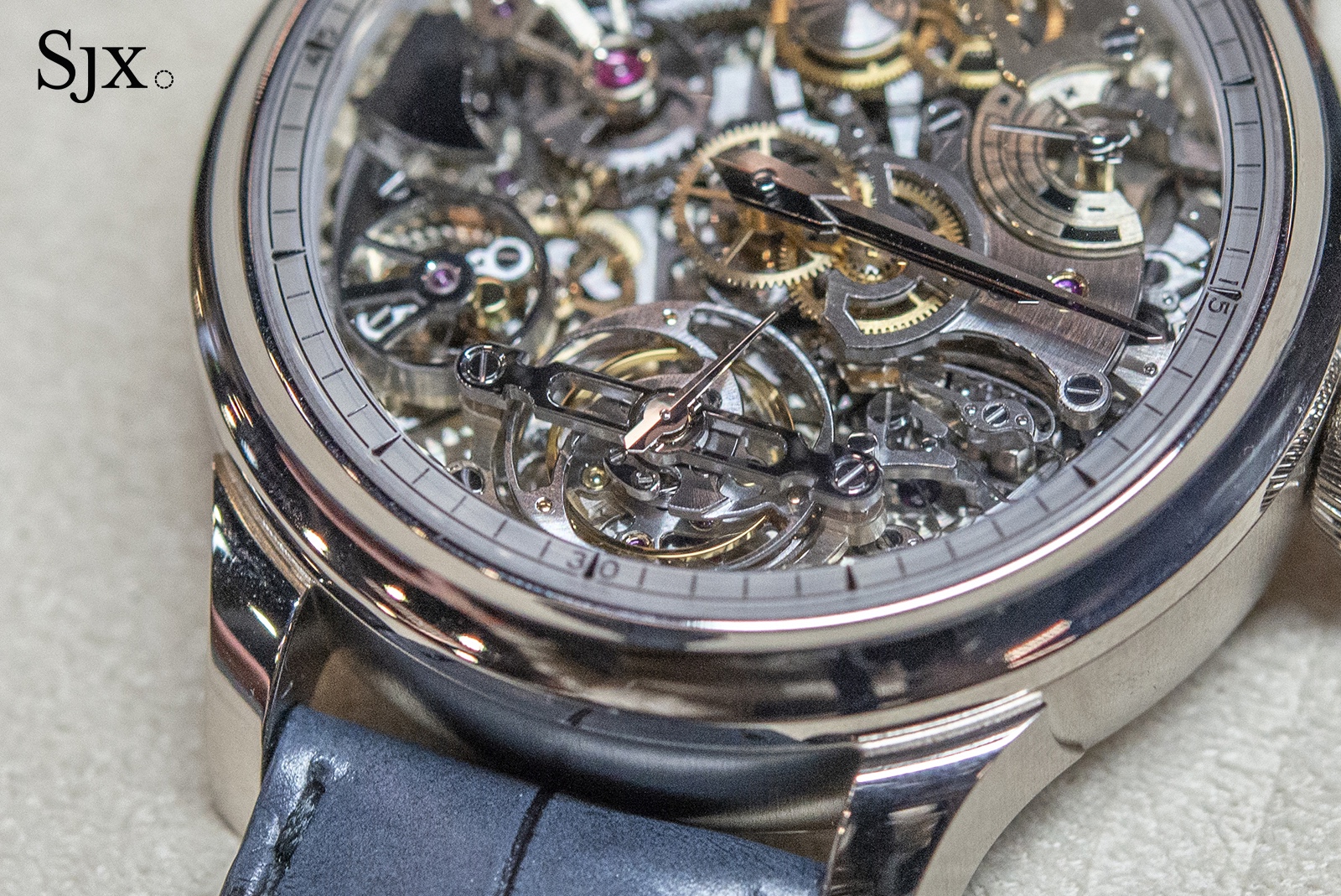
On the dial side, it’s easy to become overwhelmed by the number of different surfaces, finishes, and textures. Black-polished steelwork and straight-grained warm German silver dominate the tableau, and there’s very little to nitpick in terms of the quality of construction and finishing.
That said, the design of the tourbillon cage could arguably be improved to be visually lighter; the curving arms of the carriage are quite broad, giving it a somewhat stodgy look.
Concluding thoughts
Few brands possess the multiple overlapping technical competencies that are required to produce something like the Grand Strike. With its sapphire gongs, Chopard was uniquely positioned to produce a truly grand grande sonnerie, and the brand has delivered.
Granted, the company gave itself a head start on this path by developing its own trip repeater, but the result speaks in a loud, clear voice that feels right at home in the ultimate complication.
Key facts and price
Chopard L.U.C Grand Strike
Ref. 161994-1001
Diameter: 43.00 mm
Height: 14.08 mm
Material: White gold
Crystal: Sapphire
Water resistance: Dust resistant only
Movement: L.U.C 08.03-L
Functions: Hours, minutes, tourbillon, power reserve indicators for both strikework and timekeeping barrels, grande and petite sonnerie, trip minute repeater.
Winding: Manual wind
Frequency: 25,200 beats per hour (3.5 Hz)
Power reserve: 72 hours for time, 12 hours for strikework
Strap: Alligator leather with folding clasp
Availability: From Chopard
Price: CHF780,000 (before taxes)
For more information, visit Chopard.com.
Back to top.