
Hands-On: TAG Heuer Monaco Evergraph
The show-stopping chronograph.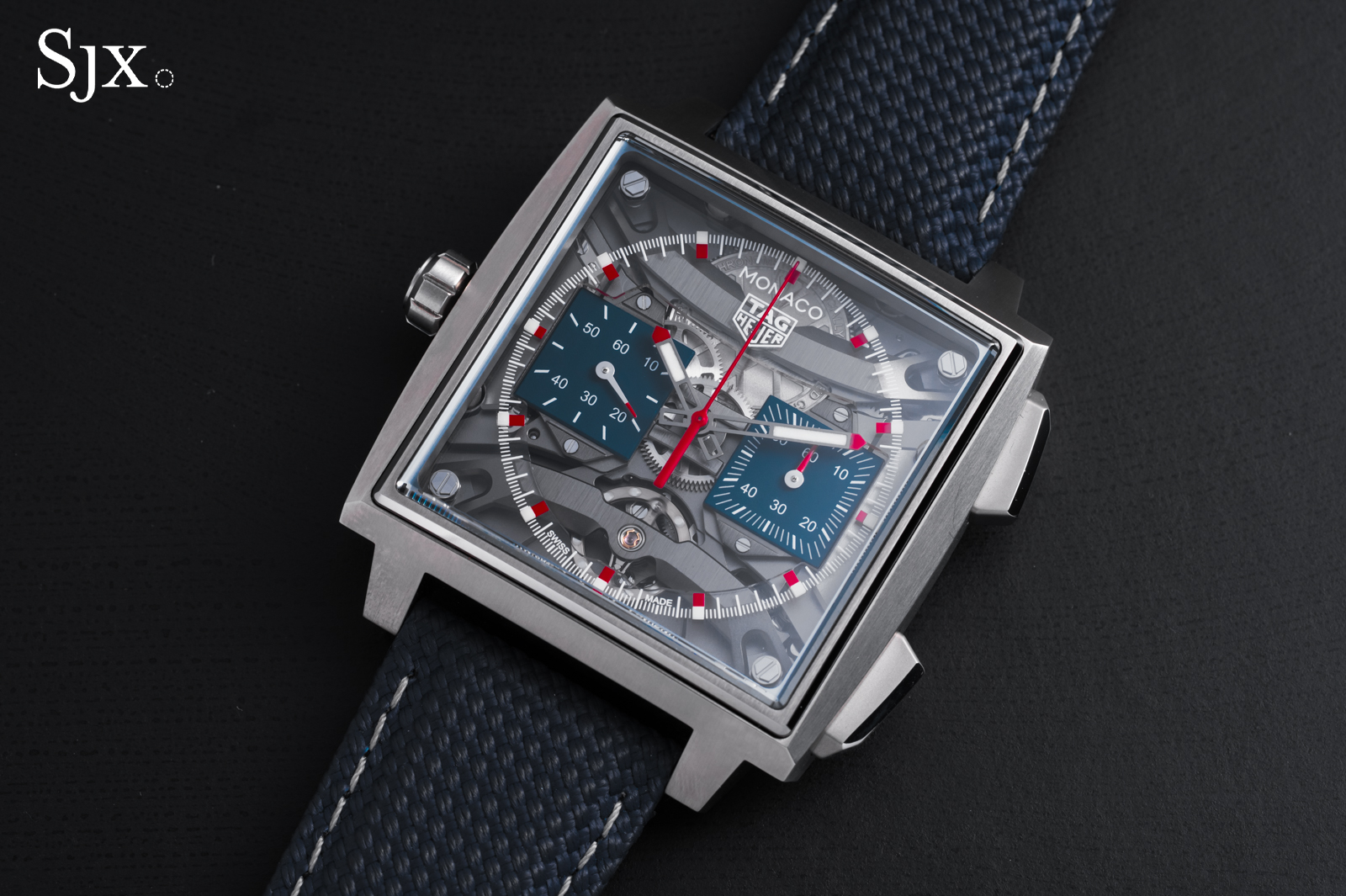
Among the great surprises from Watches & Wonders 2026 was the Monaco Evergraph from TAG Heuer. The new model not only brought some welcome aesthetic changes to the iconic square chronograph, but also benefits from a core rethinking of the chronograph mechanism itself.
The Evergraph’s movement is notable in many respects, but the most interesting is the use of bi-stable compliant structures for the chronograph mechanisms.
Initial thoughts
This year’s Watches & Wonders was marked by some interesting developments — not least some renewed emphasis on technical substance from a subset of brands. While mainstream luxury still dominates the market, there was a shift toward thoughtful engineering and incremental innovation that could be felt across many releases. One such remarkably technical release was the Evergraph from TAG Heuer.
While there’s no shortage of chronographs coming to market — from solid entry-level pieces to low-volume artisanal offerings — few are as genuinely forward-thinking as the Evergraph and its innovative TH80-00 movement.
The TH80-00 was created by TAG Heuer in partnership with Vaucher Fleurier — a specialist noted for its expertise in chronographs — over a period of four years. TAG Heuer chose the longer road of developing a movement from ground up and not just applying its novel flexure chronograph mechanism to an existing base.
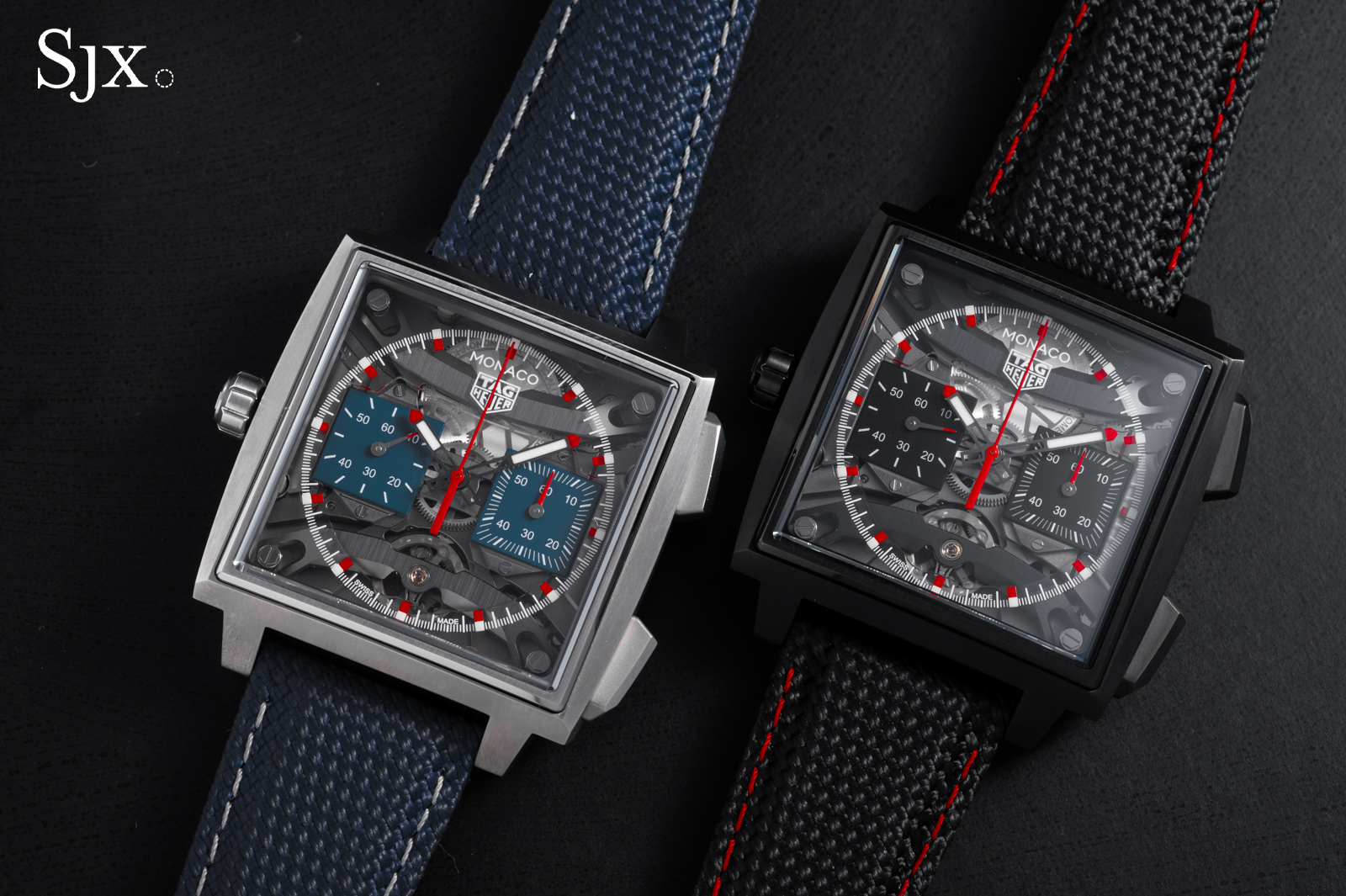
As a result, the brand had a clean slate to incorporate signature elements like the nine o’clock crown placement, mirroring the historic Caliber 11. This approach also resulted in an inverted, technical look for the movement and a high 5 Hz frequency for tenth-of-a-second resolution. The aesthetic works well, bridging both the brand’s strong chronograph heritage and its current focus on research and development.
Of course, the long-term durability of the unconventional chronograph remains to be seen, and the reliance on advanced manufacturing techniques will limit independent servicing and repair. That said, it is precisely this willingness to explore new mechanical solutions that keeps modern watchmaking from becoming purely iterative.
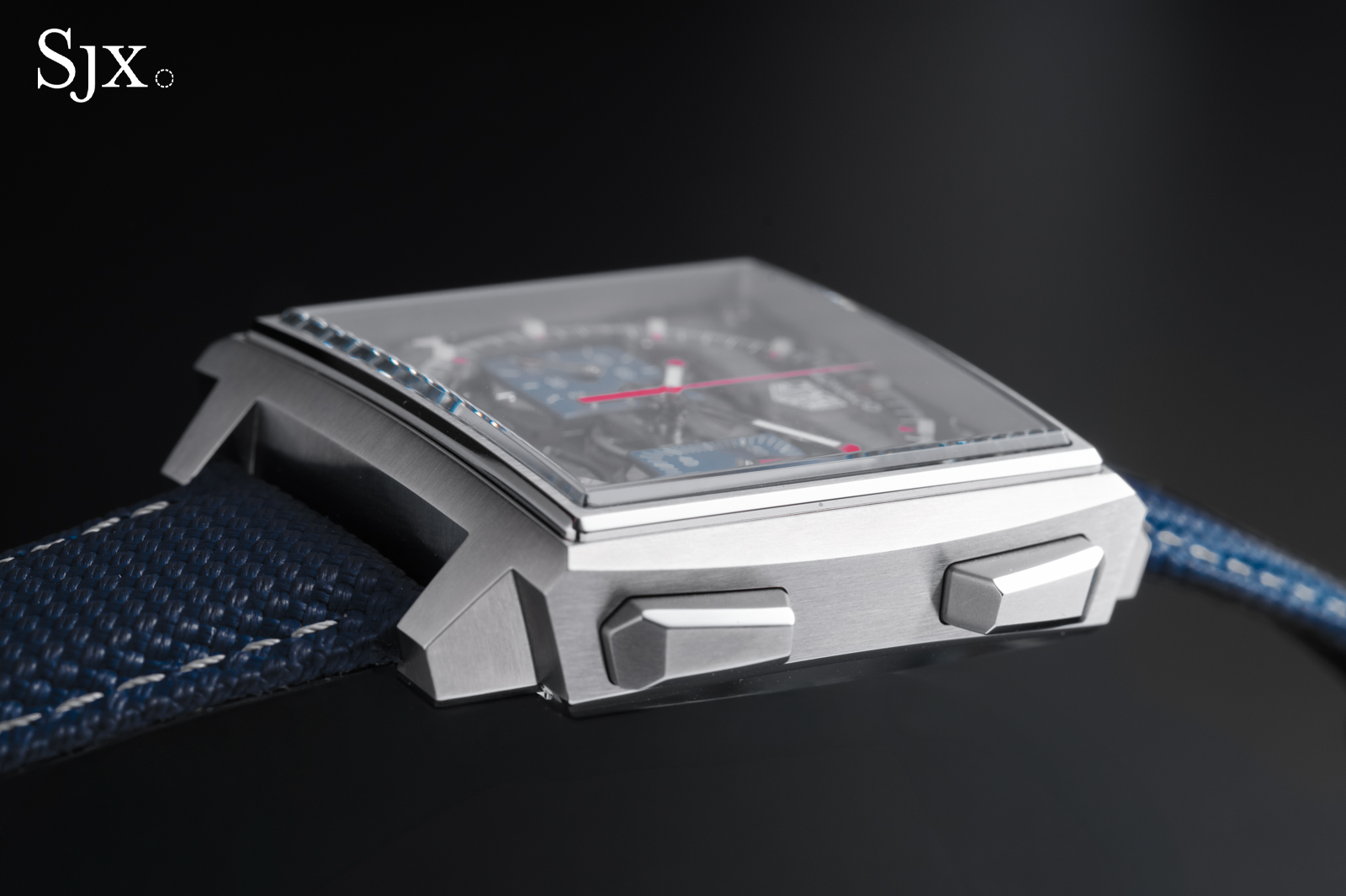
Priced at CHF23,000 the Evergraph is a fair value proposition. Arguably the most interesting timepiece to come from TAG Heuer in recent years, there is a lot of exciting mechanical substance for the price point.
Familiar silhouette
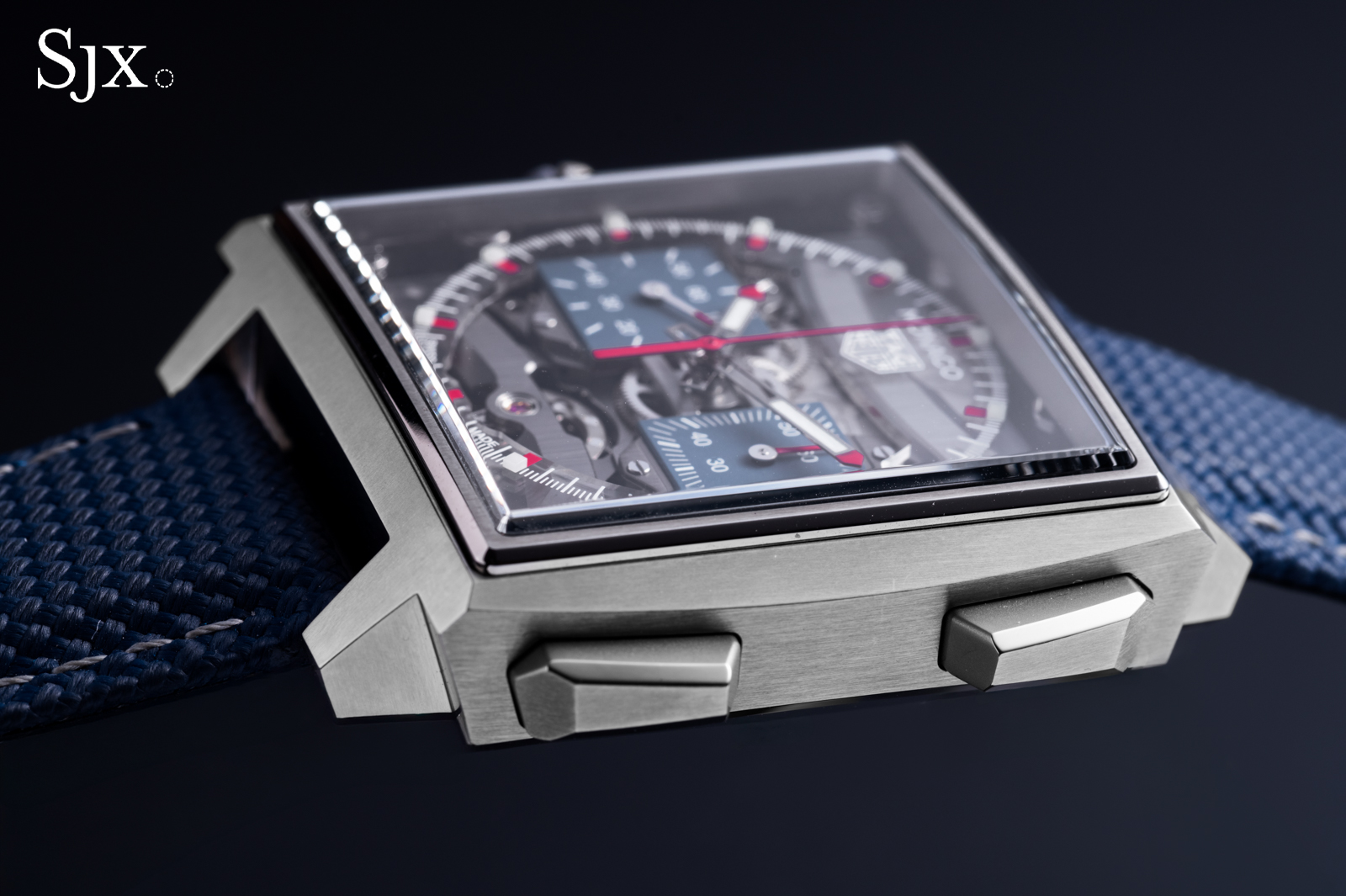
For fans of the Monaco, the Evergraph will feel familiar. The square 40 mm case is cut from grade 5 titanium and is brushed all over. This material results in a lightweight case, but the sharp lines and square corners of the Monaco give the Evergraph an imposing, industrial presence that’s equal parts instrument and accessory.
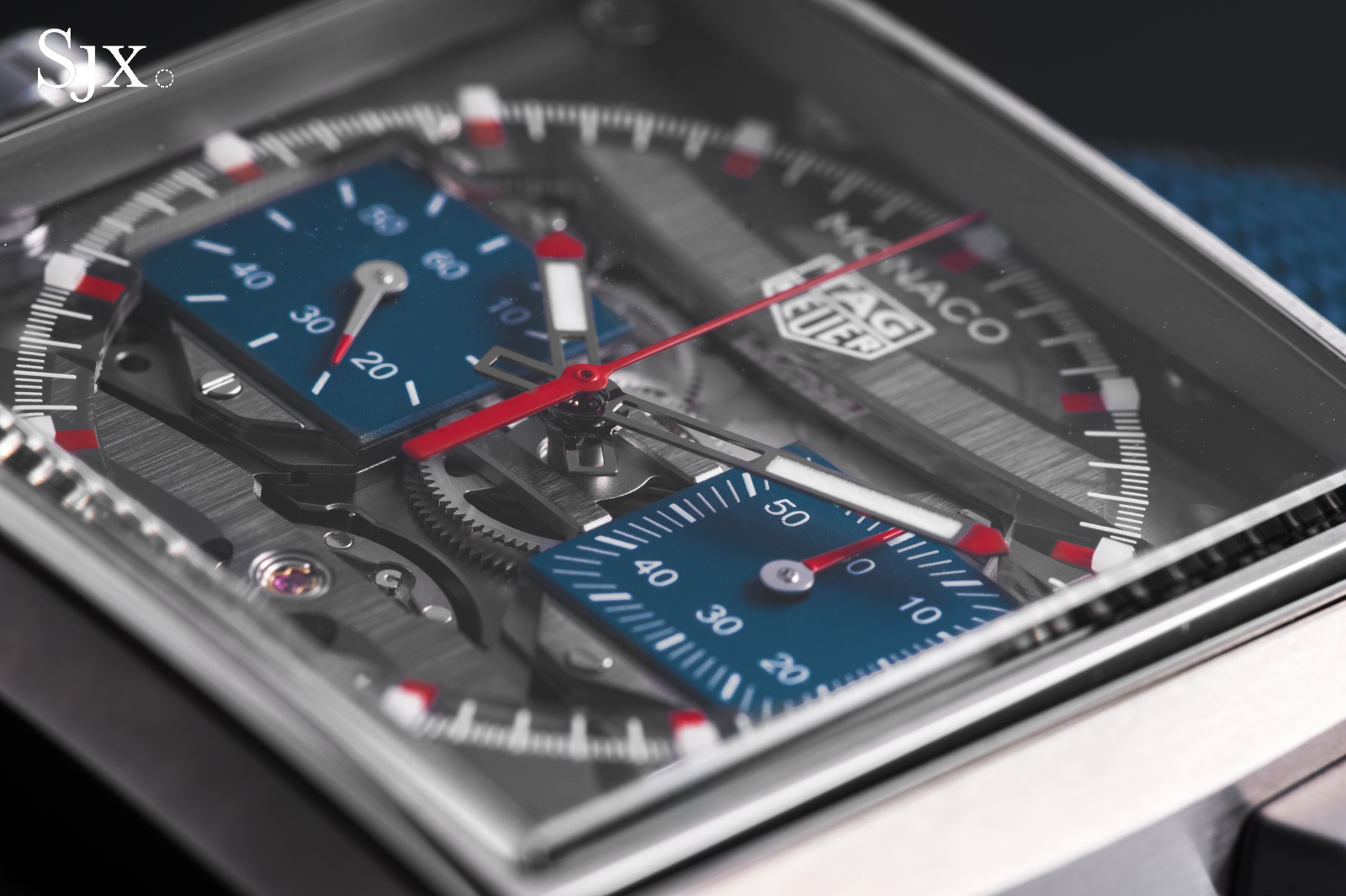
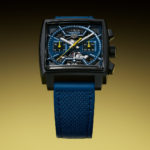
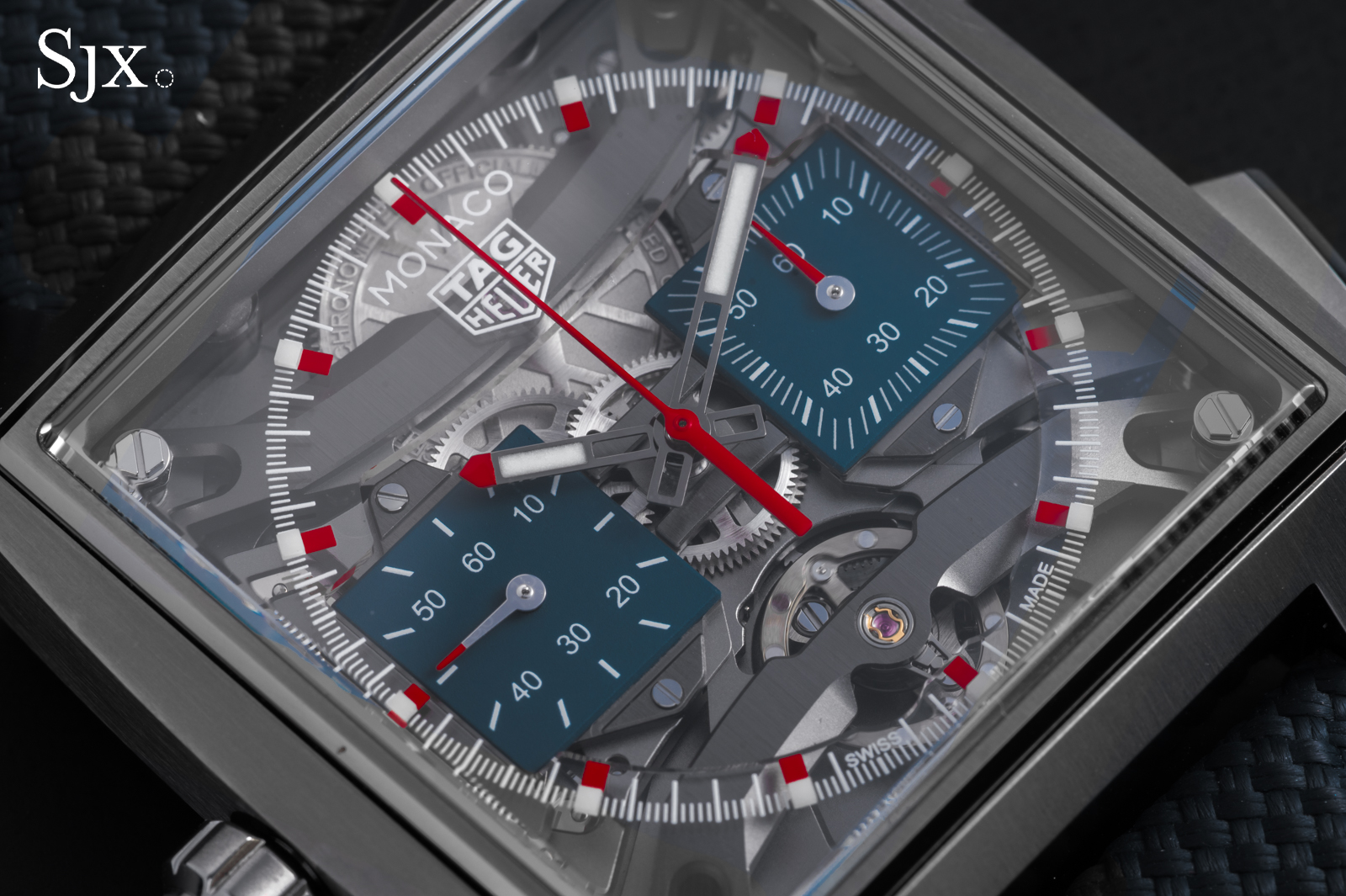
The dial is made from transparent acrylic, with printed and applied markings. Although the watch face is mostly open, two small square sub-dials reinforce the iconic blue-and-red livery — famously associated with the Monaco — and should please Steve McQueen fans.
The chronograph is quite legible thanks to thoughtful colour-coding — the chronograph hands are fully red top to bottom, while the time-telling hands are merely tipped in red. Given its transparent dial, there are some inherent challenges reading the time at some angles, but the dark hues of the movement underneath provide a mostly neutral background.
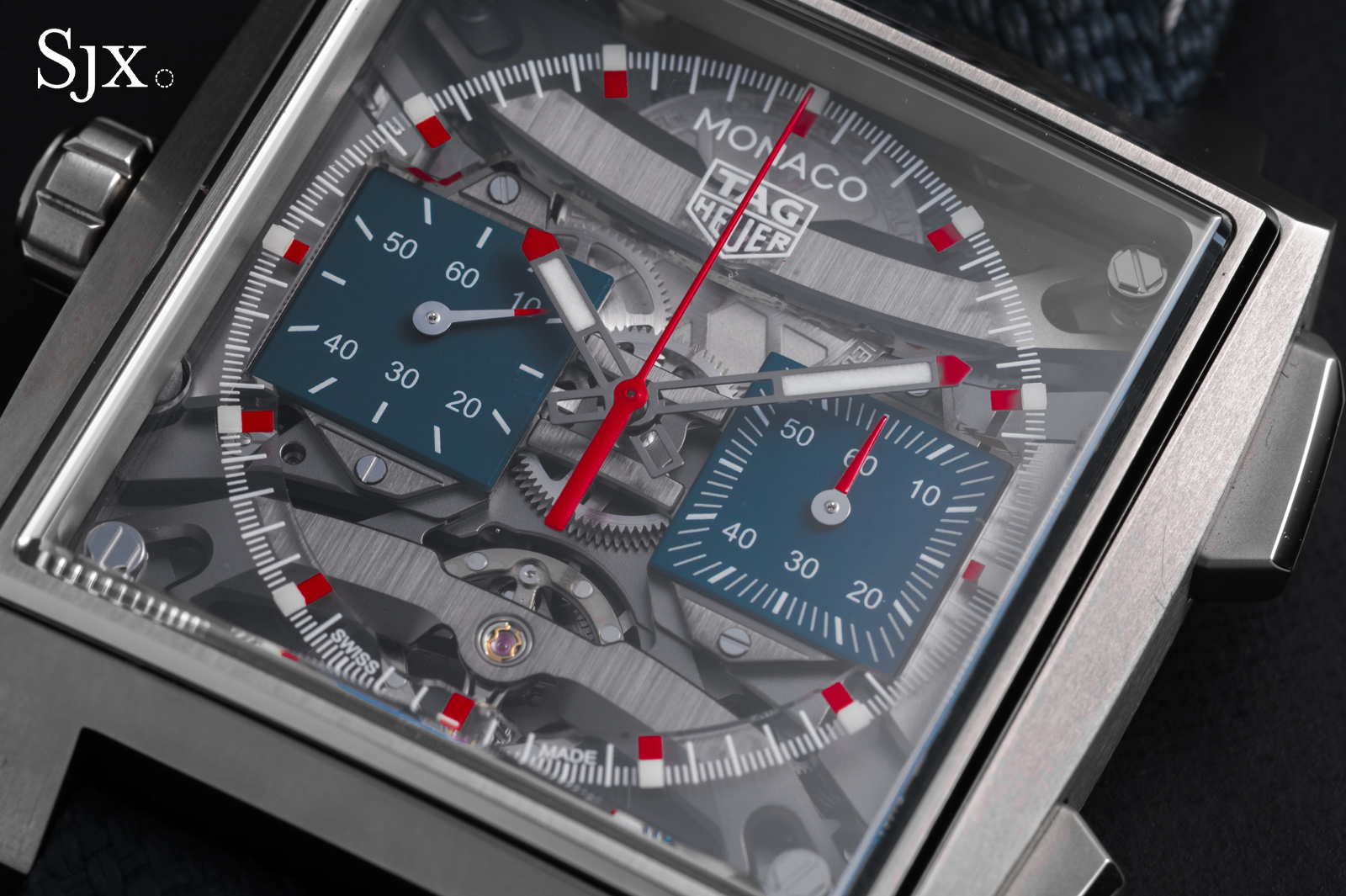
The most instantly dynamic element on the Evergraph’s dial is the fast-paced 5 Hz regulator. Although I generally find balances on the dial side tacky, sometimes a special regulator deserves a prominent position.
Under the large balance bridge — incidentally one of the longest in watchmaking — the 5 Hz oscillator has a remarkable construction. The free-sprung balance is made from aluminium and is weighted on its rim.
Notably, the balance is paired with a non-metallic TH-Carbonspring hairspring, TAG Heuer’s bold bet on a silicon alternative. The carbon nanotube spring is formed with special interior and exterior end curves, which ensure even “breathing” of the coils. This advanced regulator helped the TH80-00 movement comfortably pass COSC chronometer testing.
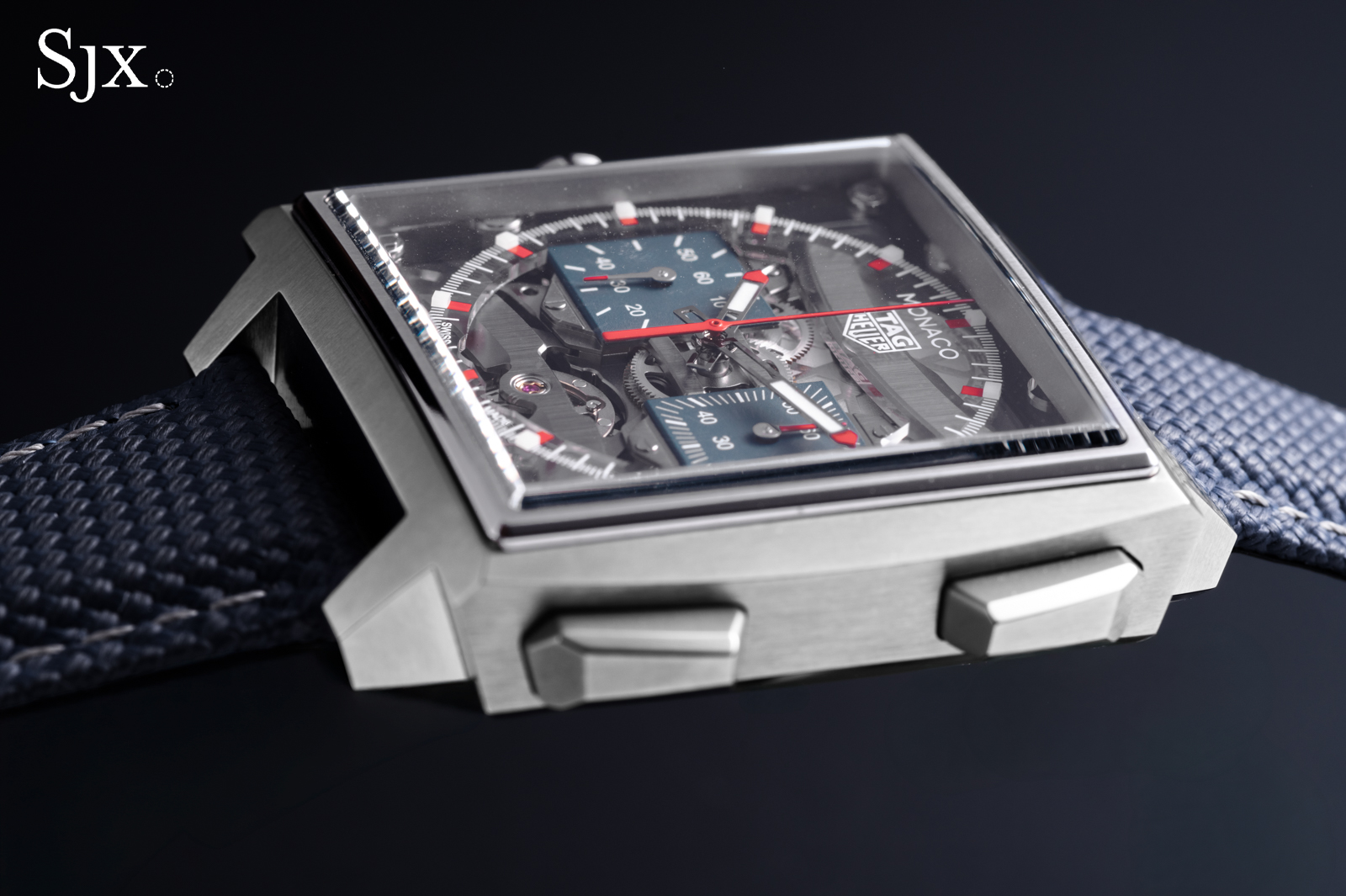
Pleasingly, the TH80-00 movement is square, so it truly fills the case. There is no cumbersome movement ring to be concealed, so the openworked design feels natural and not forced.
The movement was clearly designed with an open dial in mind — the dial-side layout is nearly symmetrical, with the barrel — visible at 12 o’clock — balanced by the fast-beating oscillator at six o’clock. The symmetry is only slightly broken by some gearing for the hands, but otherwise the movement architecture conceals the less interesting components like the keyless works.
A digression on compliant mechanisms and bi-stability
In the field of compliant mechanisms, bi-stability means that a structure that is elastically tensioned in a certain way will remain in that specific shape until further external action is applied. Depending on the design, compliant mechanisms can posses more than two stable states (multi-stability).
The simplest way to obtain a bi-stable spring is by bending it (inside the elastic limit) and fixing the ends at a distance smaller than the relaxed length of the blade. This sort of compressive stress is usually called “geometric preloading” and causes a behaviour known as “beam buckling”. The buckling effect of the blade spring is responsible for the multi-stable behaviour, as the the spring is always storing elastic potential energy.
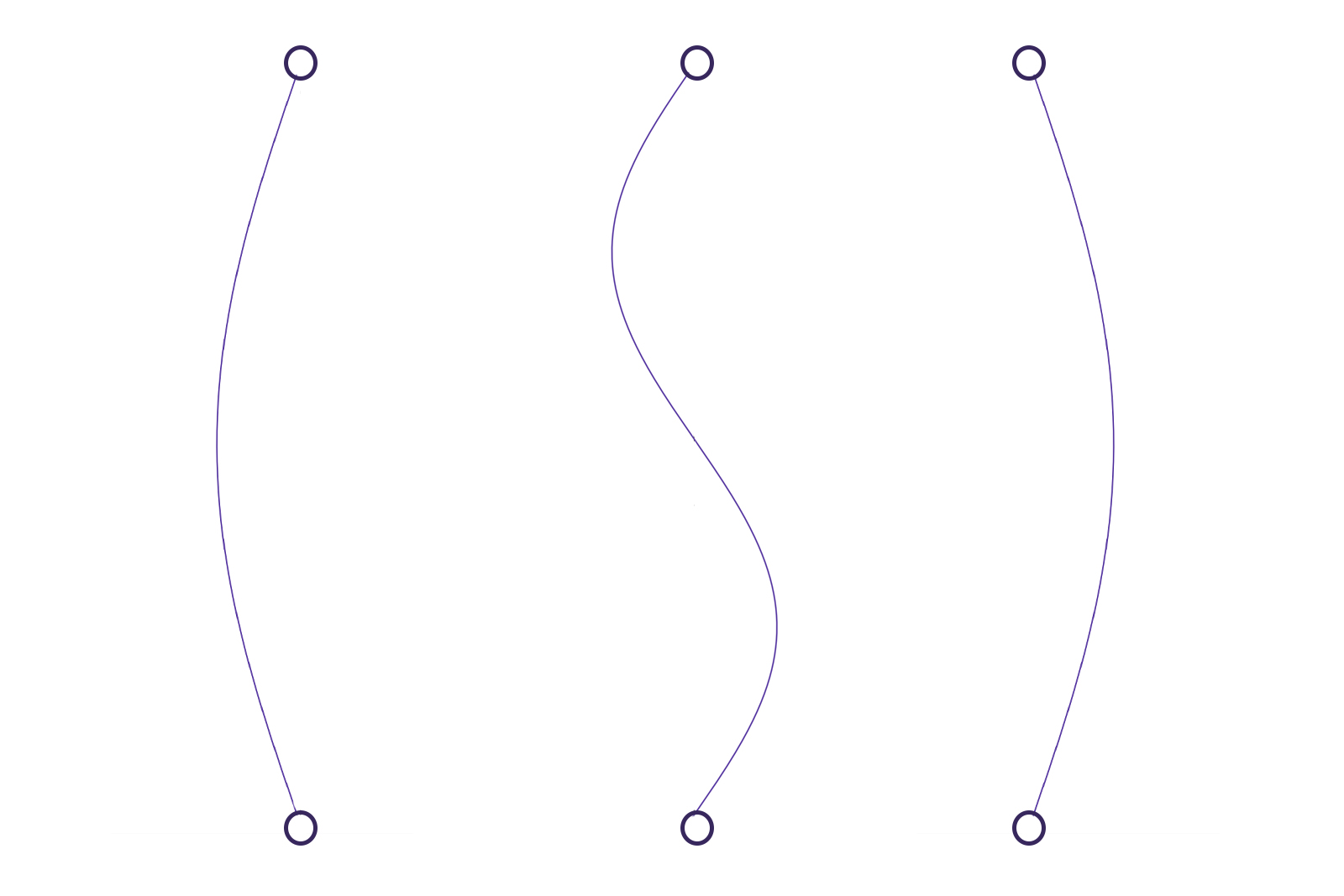
Figure I. Slim buckled beam. Stable states are can be seen the sides and an unstable equilibrium shown the middle.
In order for a bi-stable mechanism to transition from one stable state to the other, under the action of external actuators, the component “whips” through an unstable state of equilibrium (Figure I, middle), hence the distinctive snap. During that transition it is said that the spring has “negative stiffness”. The kinematics of the mechanism are related to the storage of strain energy — which is always the same, leading to consistent and reliable behaviour.
When resting in any of the two stable positions, the curve of the blade follows a half-period sinusoidal shape. When one end is actuated, the beam briefly takes a full sinusoidal curve and when the critical force is attained it snaps to the second bi-stable position.
The sinusoidal shapes are not a some approximation but actually follow from Bernoulli-Euler beam theory, as the solution for an Euler buckled beam deflection takes the form of a sinusoidal function. This function depends on the geometry of the beam (quadratic moment), its Young modulus and the preload. In other words, the engineer will know precisely how the system will behave kinematically from the outset.
The main selling points of compliant mechanisms lie in their lack of lubrication, repeatable precision and predictable behaviour over many cycles. In short, properties watchmakers have sought for centuries.
There are medical applications for these sort of curious mechanisms, along with other industry-specific equipment. With the introduction of the Girard-Perregaux Constant Force escapement, bi-stable mechanisms have found their way into watchmaking as well. TAG Heuer’s application of bi-stable mechanisms inside the Evergraph is quite different, and surprisingly advanced.
The trick to behind the Evergraph’s movement lies in a profound — but not fundamental — reinterpretation of the chronograph system. The usual sea of control levers, springs and reset hammers is gone, but there is still a clear separation between the start-stop function (directly governed by a cam or column wheel) and the reset function (indirectly dependent on the cam/column wheel).
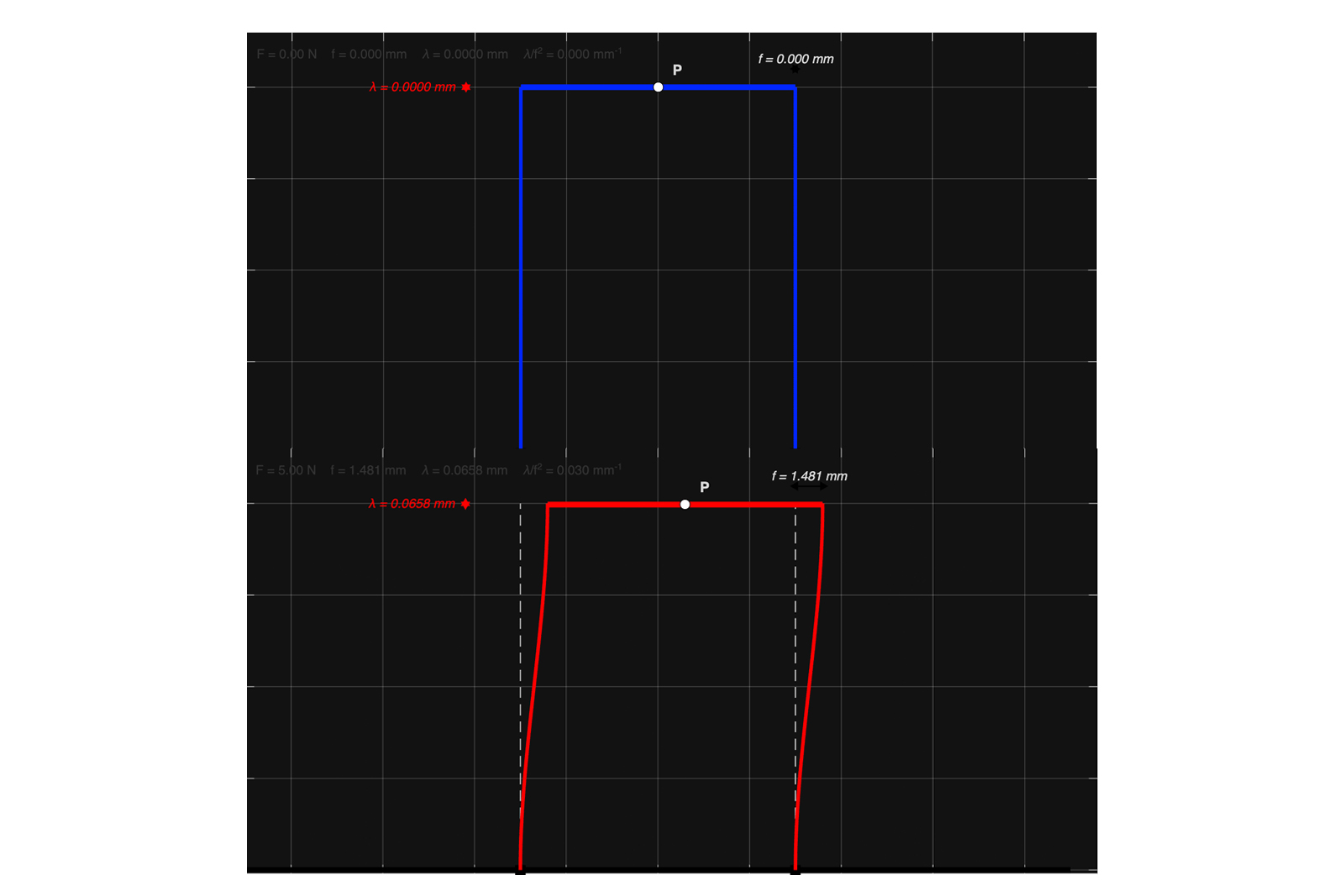
Figure II. MATLAB simulation of a basic parallel flexure.
More specifically, the start/stop function is now controlled by a long, bi-stable control spring with cam-like ends. The reset function is achieved by the large monolithic structure which hammers on conventional heart reset cams.
Both mechanisms are preloaded, so that each can rest in two stable states. The monolithic hammer structure is a compound compliant mechanism, which replicates quasi-rectilinear motion over short strokes (there are parasitic shifts involved). A very basic parallel flexure model can be seen in Figure II above, first in a relaxed than in an actuated state.
Start, stop, reset
The control spring is a textbook example of the pinned-pinned buckled beam model. This is to say that the two ends each posses one degree of rotational freedom while remaining immobile in translation.
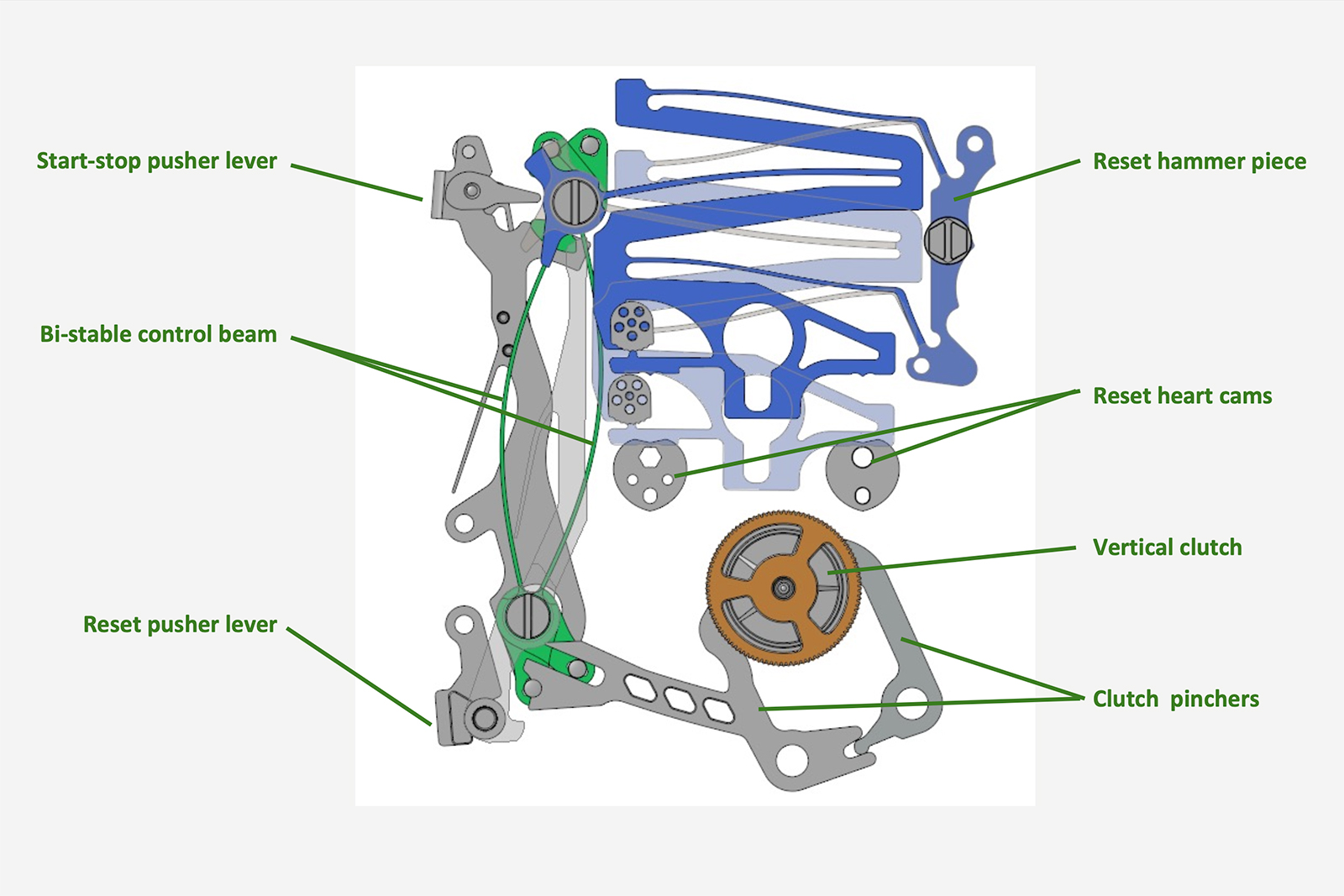
Figure III. Components of the chronograph mechanism. Image — TAG Heuer, annotations by the author.
The long blade (green in Figure III) has cam-shaped endings, which feature vertical pins. The pins interact in the classic fashion with levers. The upper cam is actuated by the start-stop case pusher. As the user starts the chronograph, the spring is pushed from one stable position to the other, snapping during the process. The actuation is light but consistent— not unlike vintage chronographs. There is a pleasantly mechanical-feeling jolt that follows the actuation, which results in satisfying feedback.
As the spring buckles, the lower end actuates a pair of pincers (orange), thus engaging the vertical clutch. At the same time, the upper pin causes the large hammer component (blue) to rise, snapping it to the second stable position. The start of the chronograph causes both compliant structures to snap into a second stable state.
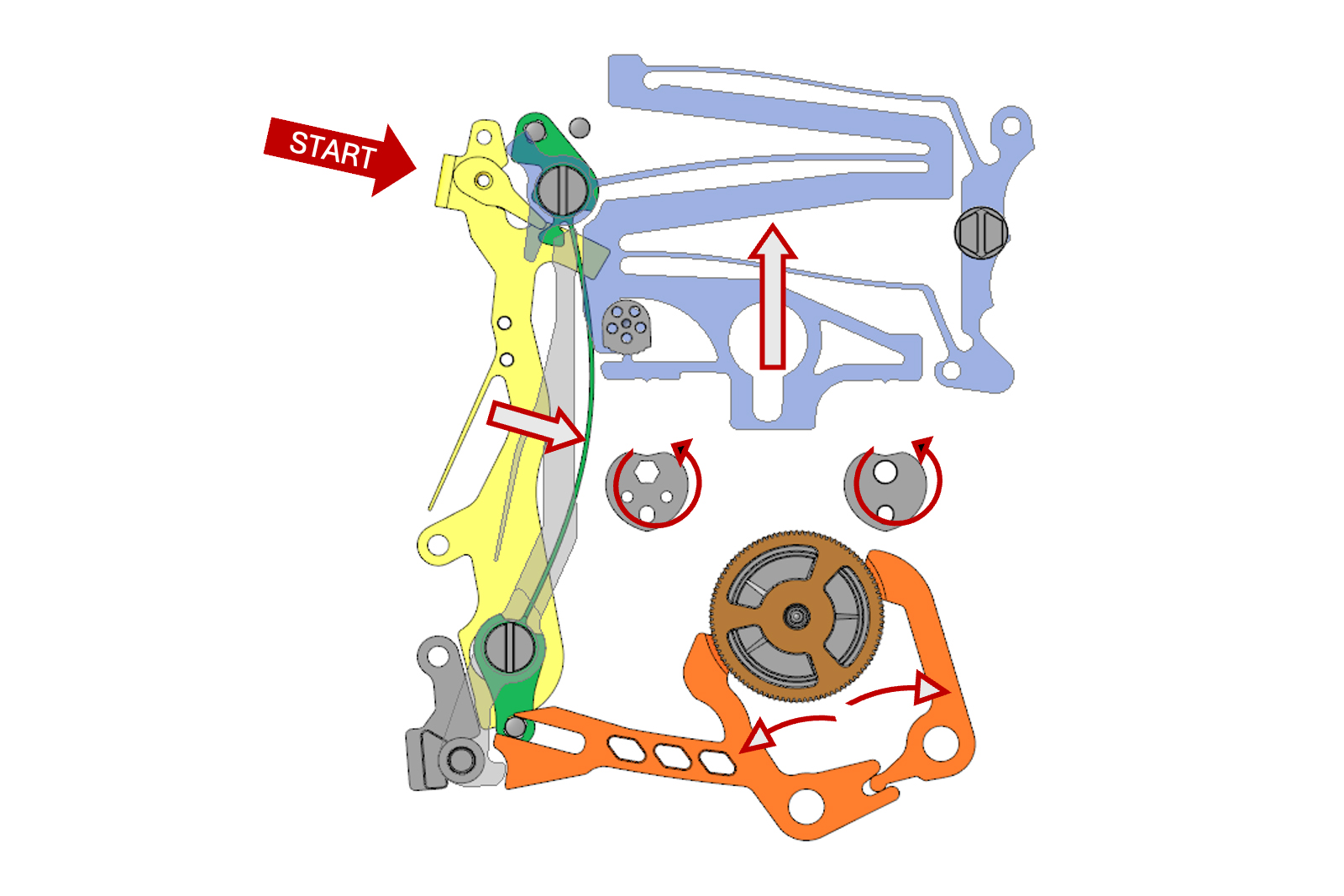
Figure IV. Start of the chronograph. Image — TAG Heuer
Interestingly, the vertical clutch mobile doesn’t carry the chronograph seconds hand directly. Instead it turns a separate gear which also accomplishes the reset function. This execution is uncommon but is notably shared by Rolex’s cal. 4130 and related calibres.
When the chronograph is then stopped (Figure V), the control spring is snapped back to the first stable position, causing the clutch pincers to disengage. The hammer piece remains immobile, but due to the geometry of the cams can now be actuated directly by the user. When the chronograph is running, the hammer piece is secured by the components’ geometry as to not snap back by accident.
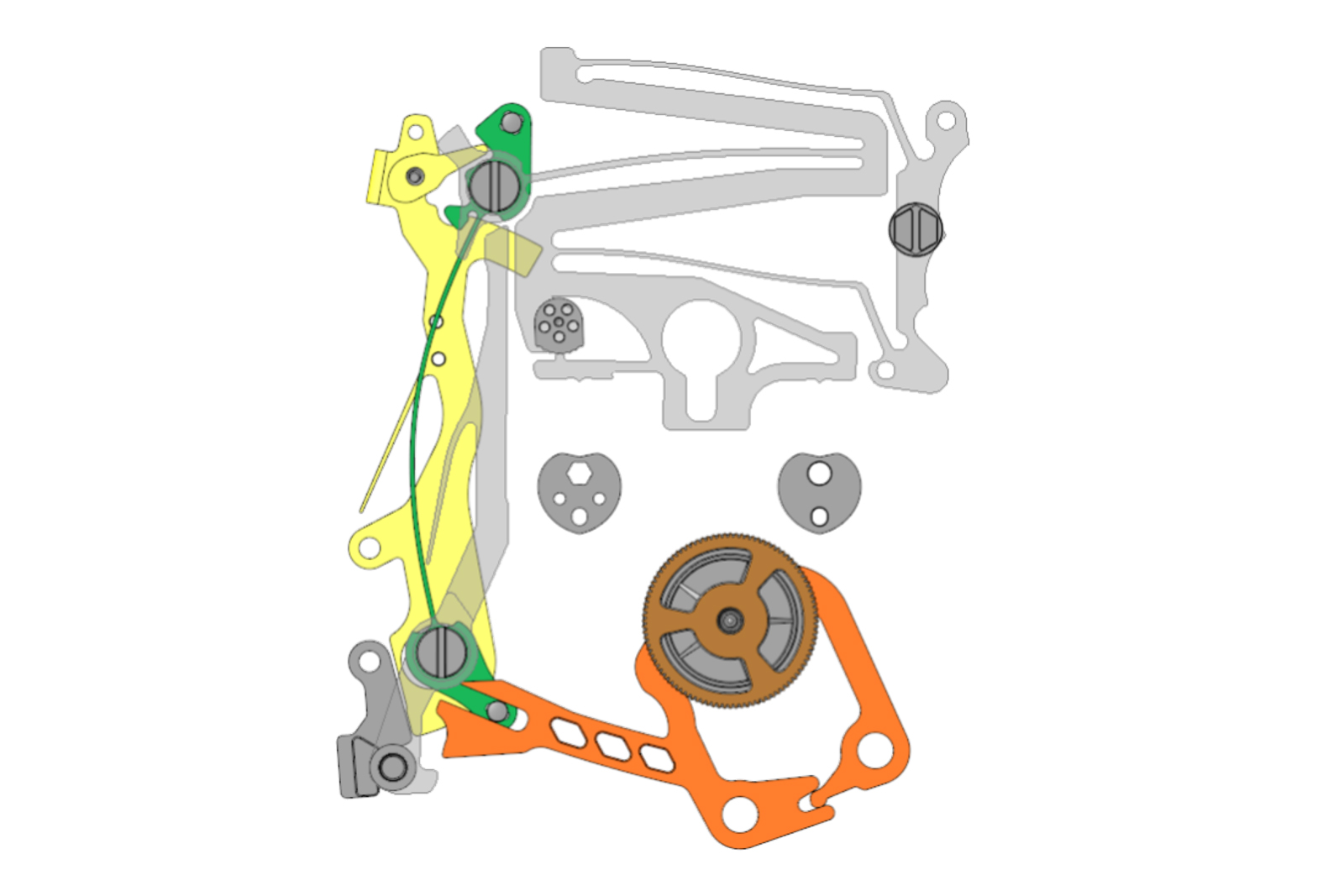
Figure V. Chronograph stopped. Image — TAG Heuer
The reset lever (pink) engages with the preloaded end of the hammer piece (specifically the blue finger). This cam portion of the hammer piece component reminds slightly the navette-style cams found in some chronograph movements like Omega’s cal. 3861 and its forebearers.
The hammer piece is crafted from a nickel-phosphorus alloy using a LIGA processes. As such, the component is mono-block while remaining elastic. However, the watchmaker can still slightly adjust the angle of the of the reset surface using a screw-like device.
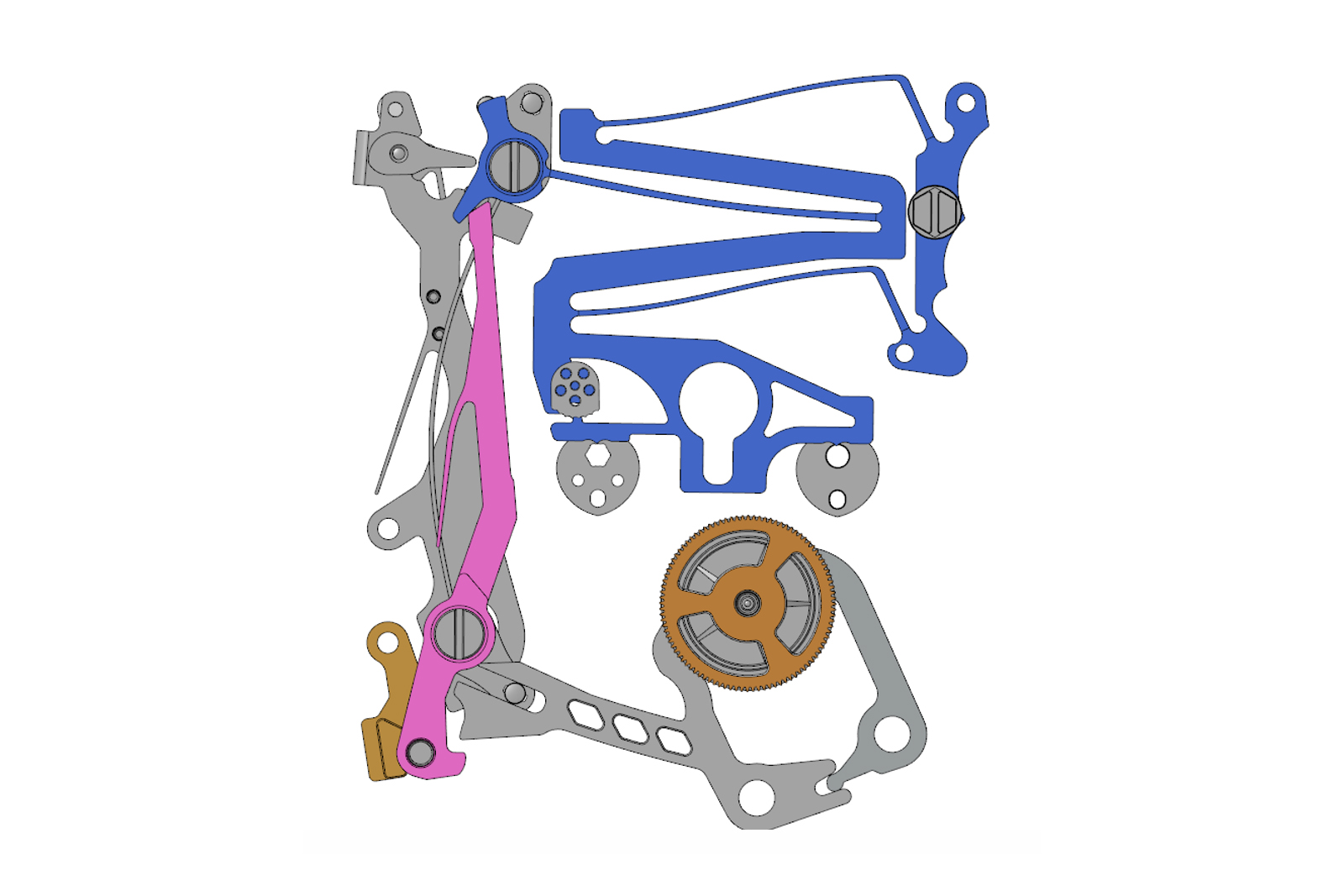
Figure VI. Chronograph reset. Image — TAG Heuer
Much like the start and stop action, the reset is crisp. The overall tactile feel of the Evergraph is unique since over any full stroke, half of the components’ motion is driven by the springs buckling. The pusher feel is sufficiently firm without the sense of hard engagement between any components.
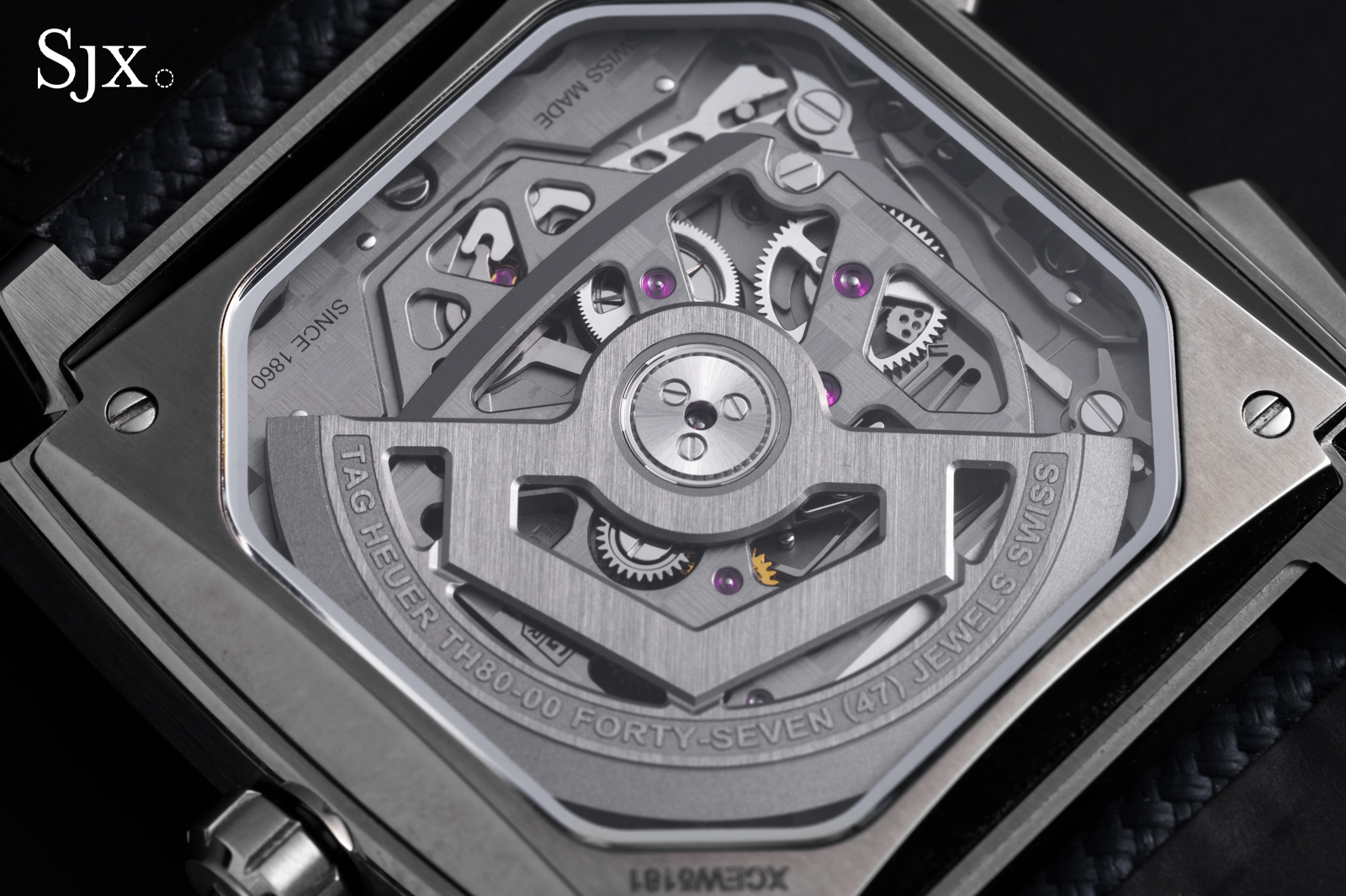
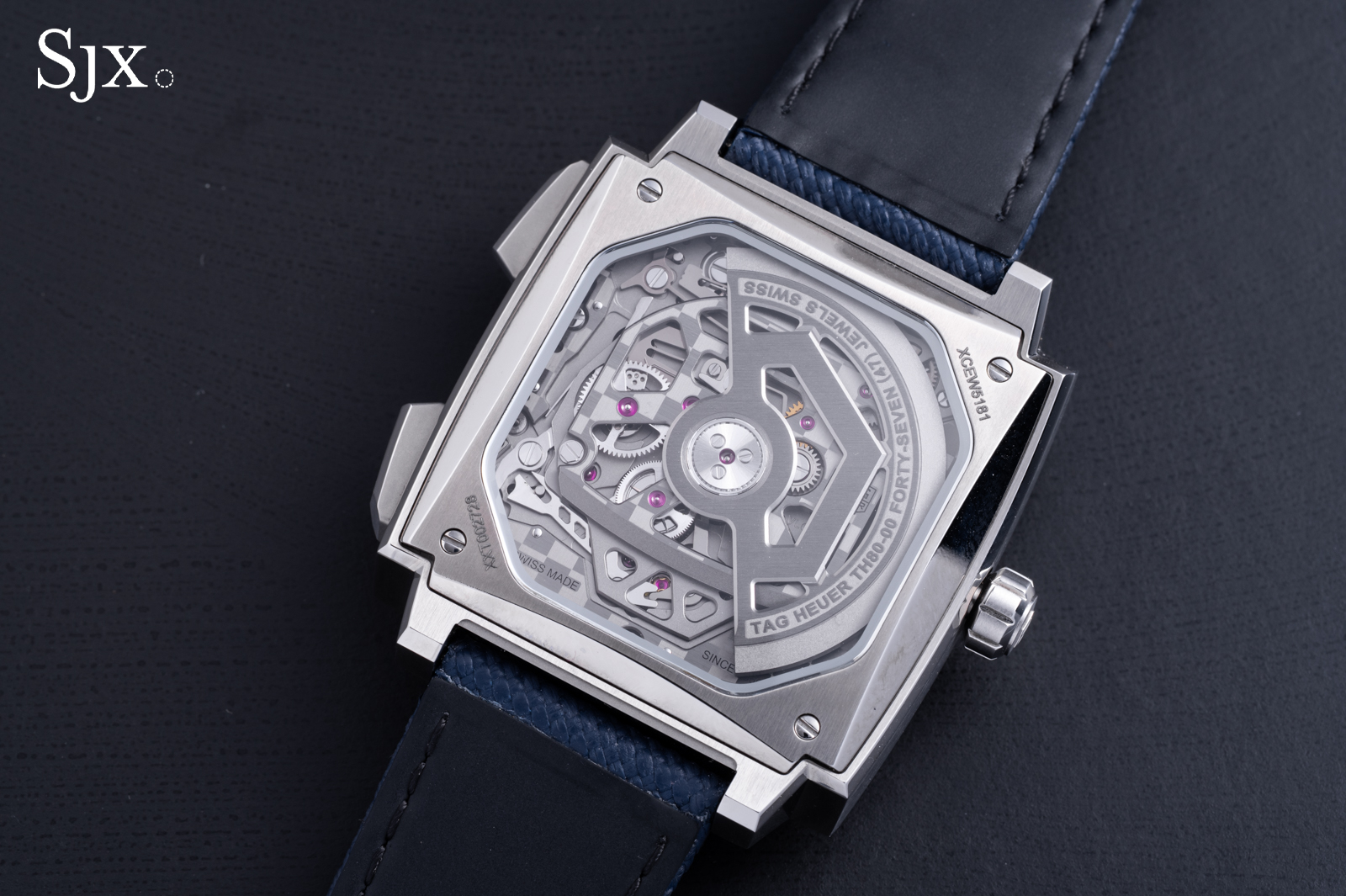
On the Evergraph’s caseback, most of the compliant chronograph mechanism can be glimpsed under openworked bridges. The general movement architecture is rather spread out, and the buckled hammer structure makes for an exotic sight. Otherwise, the TH80-00 doesn’t look very much like a normal chronograph and the view may puzzle even true watch connoisseurs.
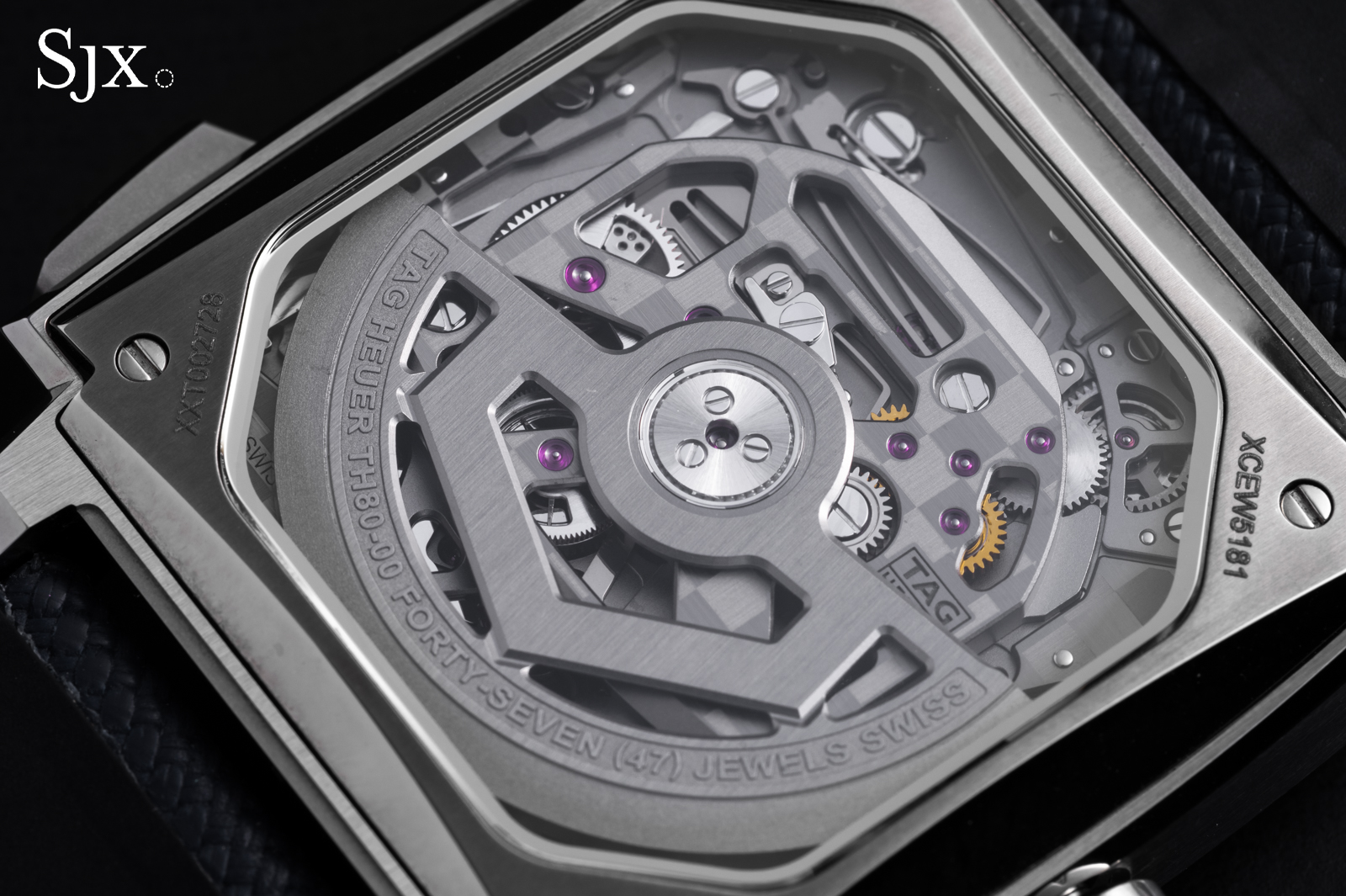
By construction, the chronograph mechanism is rather thin but not compact. The contraption appears easy to assemble and won’t require any special adjustments during service. Crucially, the mechanism’s action should always remain repeatable and consistent, qualities hinted at by the Evergraph moniker. TAG Heuer has conducted extensive testing of the chronograph action, simulating cycles of wear. Despite its novelty — or perhaps because of it — the Evergraph is delivered with a five-year warranty and a suggested 10-year service interval.
Concluding thoughts
The innovative TH80-00 movement is an important development in terms of chronograph design. It also represents an interesting shift towards simplification. It feels more like an engineer’s device, rather than a classic exercise in watchmaking. Compared to traditional chronographs that require some level of human interaction and adjustment during assembly, the compliant TH80-00 requires almost none.
Key facts and price
TAG Heuer Monaco Evergraph
Ref. CEW5181.FT8123 (Blue)
Ref. CEW5180.FT8122 (Black)
Diameter: 40 mm
Material: Grade 5 titanium (DLC coated for the black version)
Crystal: Sapphire
Water resistance: 100 m
Movement: TH80-00
Functions: Hours, minutes, small seconds, chronograph
Winding: Automatic
Power reserve: 70 hours
Strap: Embossed rubber strap with titanium folding clasp
Limited edition: No
Availability: Starting April 2026 at TAG Heuer boutiques and retailers
Price: CHF23,000 excluding taxes
For more information, visit TAGHeuer.com.
Back to top.