
Highlights: Exotic Mechanics at Christie’s Hong Kong
From double movements to double splits.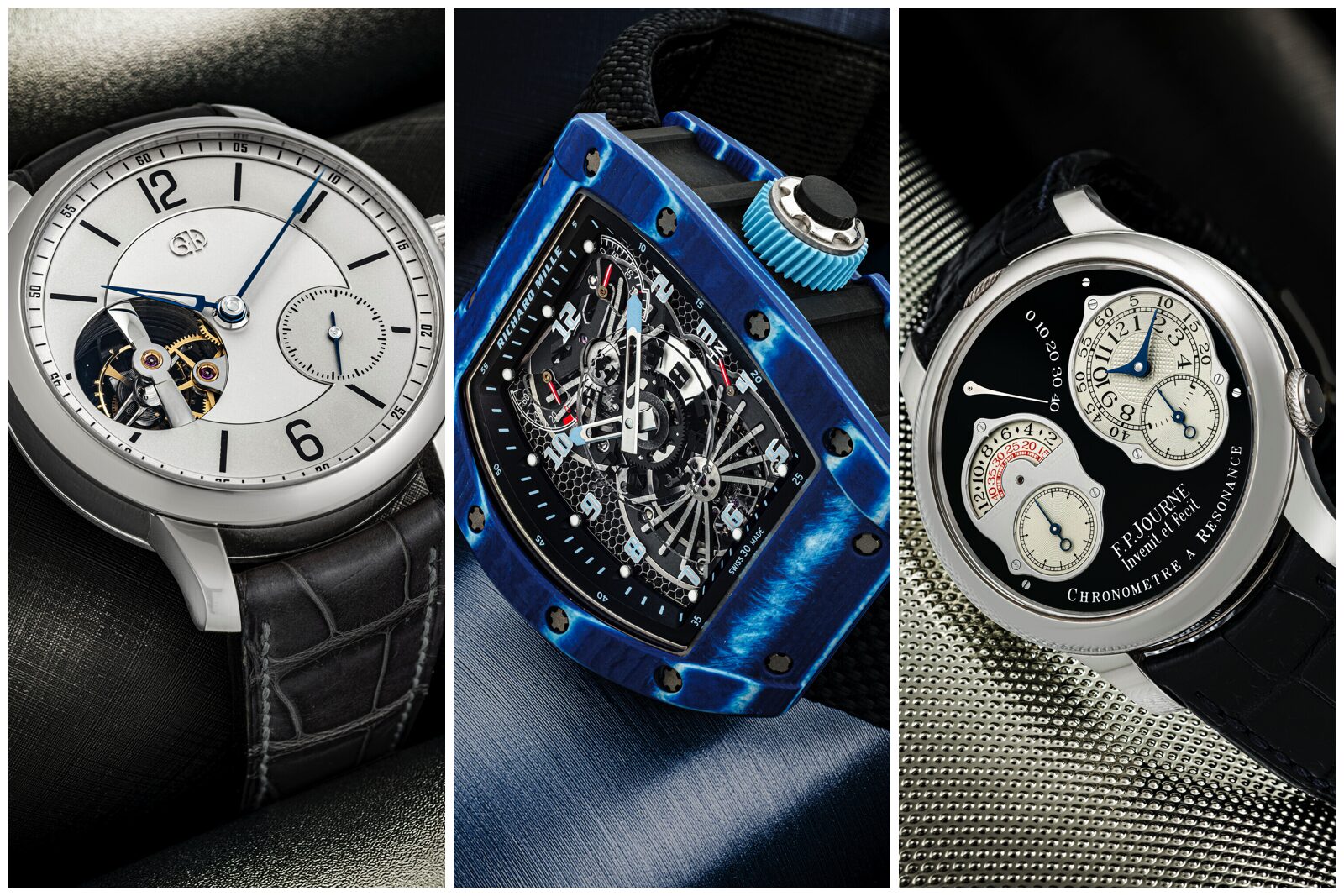
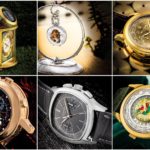
A menagerie of exotic movements features in Christie’s upcoming Hong Kong auction, Important Watches: Featuring “Kronos: Titans of Time”, “The Eternity” and “The Chronicle” Collections, from Double Splits and double movements to torque management and monitoring.
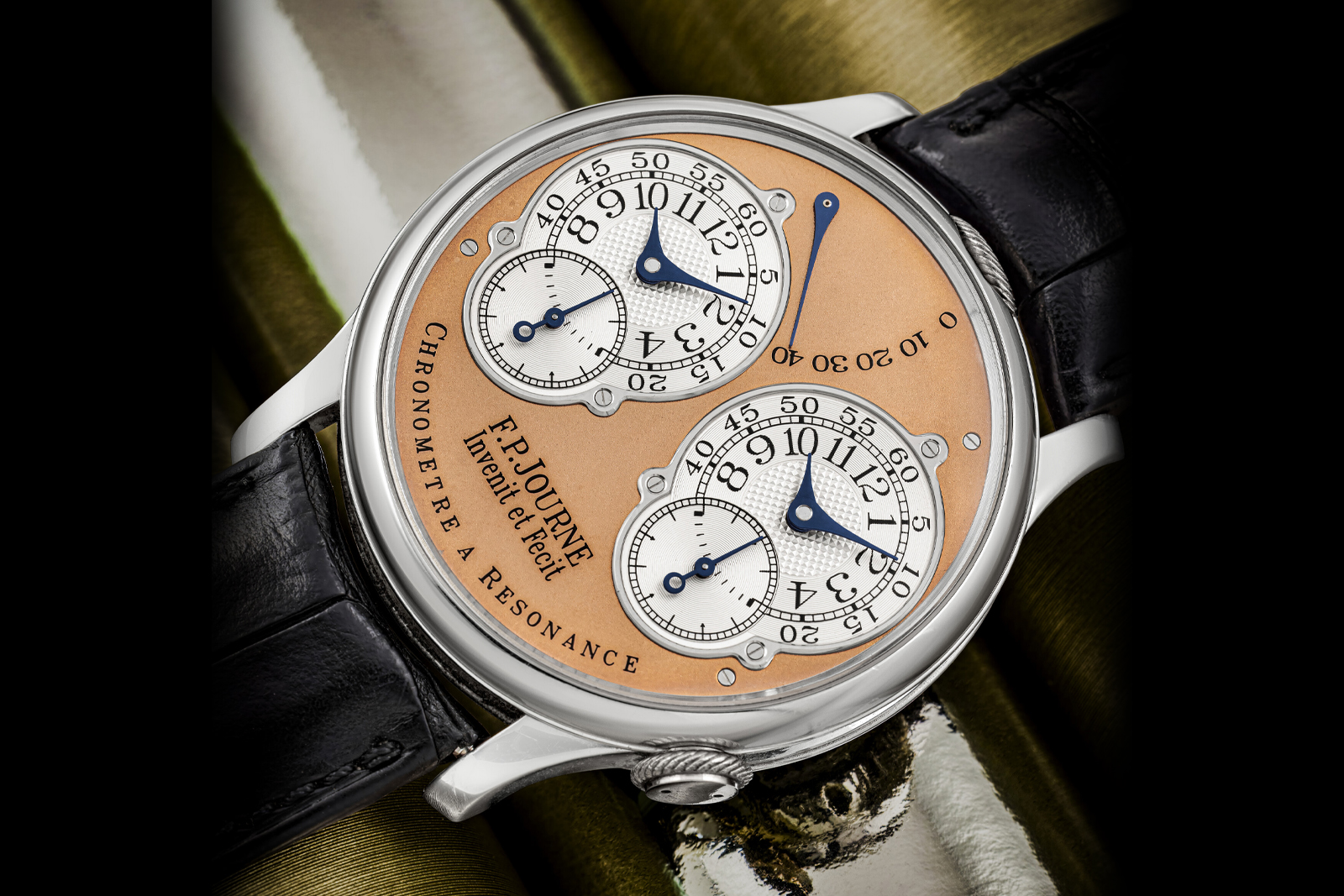
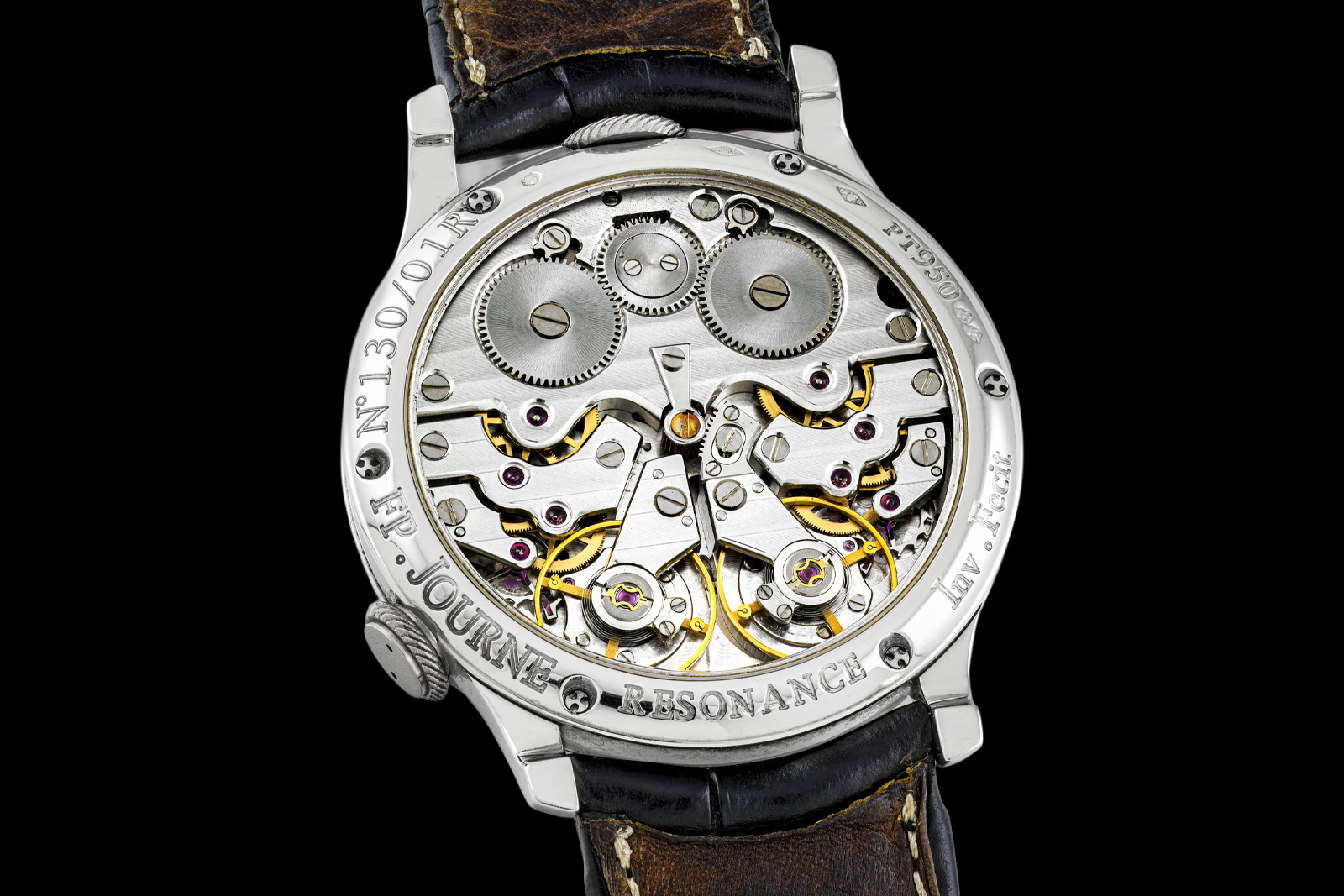
Lot 2352 – F.P. Journe Chronomètre À Résonance (Brass Movement)
While the current iteration of the Chronomètre À Résonance is far more elaborate, using a differential to split the trains — each of which contains its own constant force device — this early F.P. Journe Chronomètre À Résonance with its 18k pink gold dial was much more ambitious in its time, developed by an upstart restorationist from Paris in a market that was hostile to independent brands compared to today.
Resonance timepieces, or more accurately, those using coupled oscillators, can be traced all the way back to Christiaan Huygens, also known for inventing the pendulum clock and many, many contributions to mathematics and the sciences. He described the coupling of his pendulum clocks as an “an odd kind of sympathy” and sought to exploit this dampening effect to make pendulum clocks viable at sea, though this was ultimately unsuccessful.
It would take more than a hundred years for Abraham-Louis Breguet — often hailed as the greatest watchmaker — to bring this phenomena to a watch, and then almost two hundred more for arguably the greatest living watchmaker to bring it to the wrist. That was, of course, François-Paul Journe and his Chronomètre À Résonance.
And when is brass worth more than gold? When its in an F.P. Journe movement. That detail marks the brand’s early production and is especially sought after as a result. The market for Mr. Journe’s watches is red hot, resulting in an estimate of HK$4.3 – 9 million (US$550,000 – 890,000), which seems conservative.
Lot 2354 – F.P. Journe Chronometer À Résonance Black Label “Parking Meter”
The so-called “Parking Meter” is the best-looking Résonance to some, but strange looking to others, modifying the same movement from the previous watch to add a disc-based 24-hour indicator. Strange as it is, it has a distinct appeal. Of course, not everyone is so open minded and the parking meter faced derision for its questionable legibility and asymmetric look. As a result, it’s among the less-common configurations.
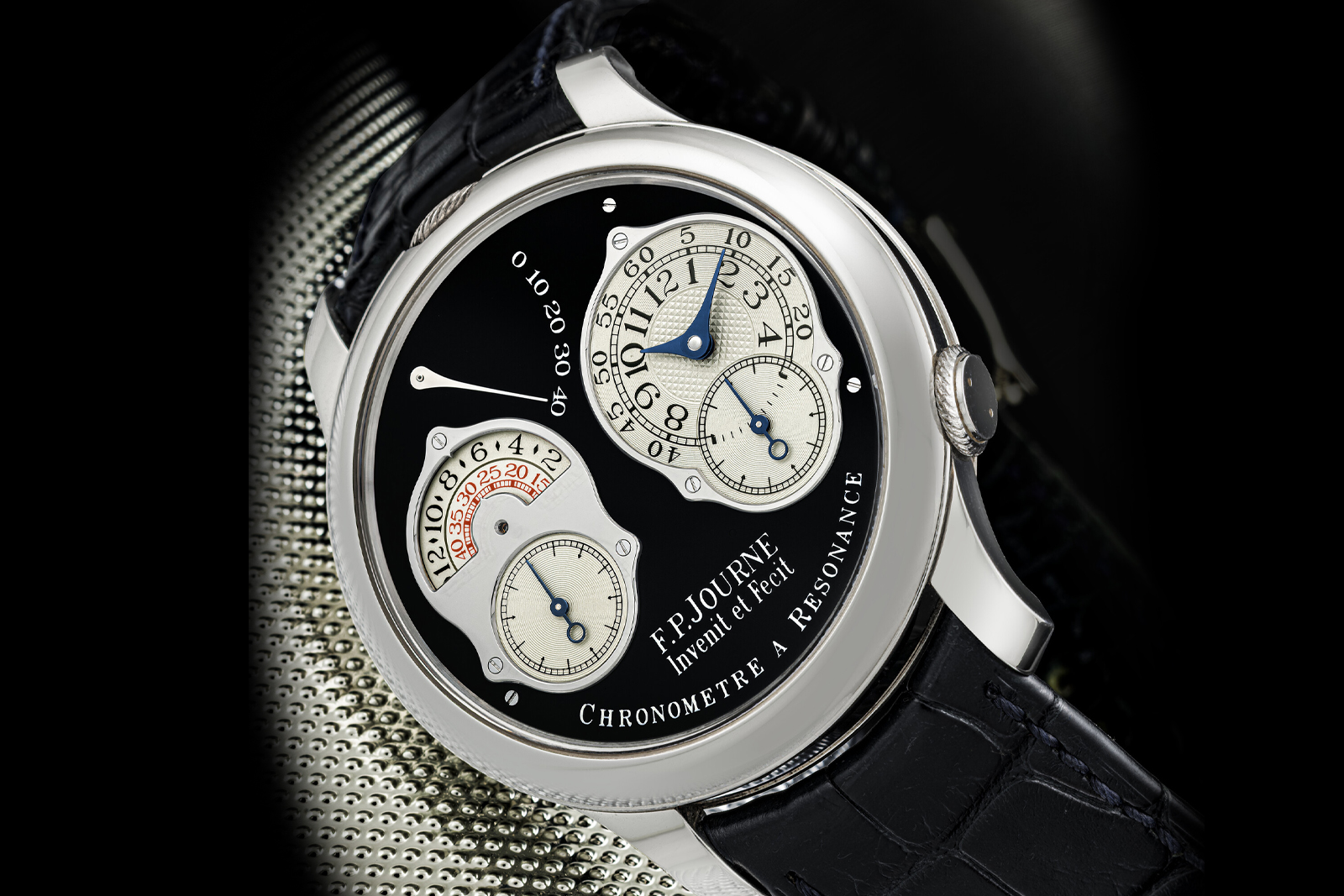
The Black Label configuration makes it even less common. While almost every model in the catalogue can be had in Black Label form, at least for existing customers, they are made in tiny numbers. Each of the brand’s 12 boutiques receive just 12 black label watches per year, and no more than two of each reference.
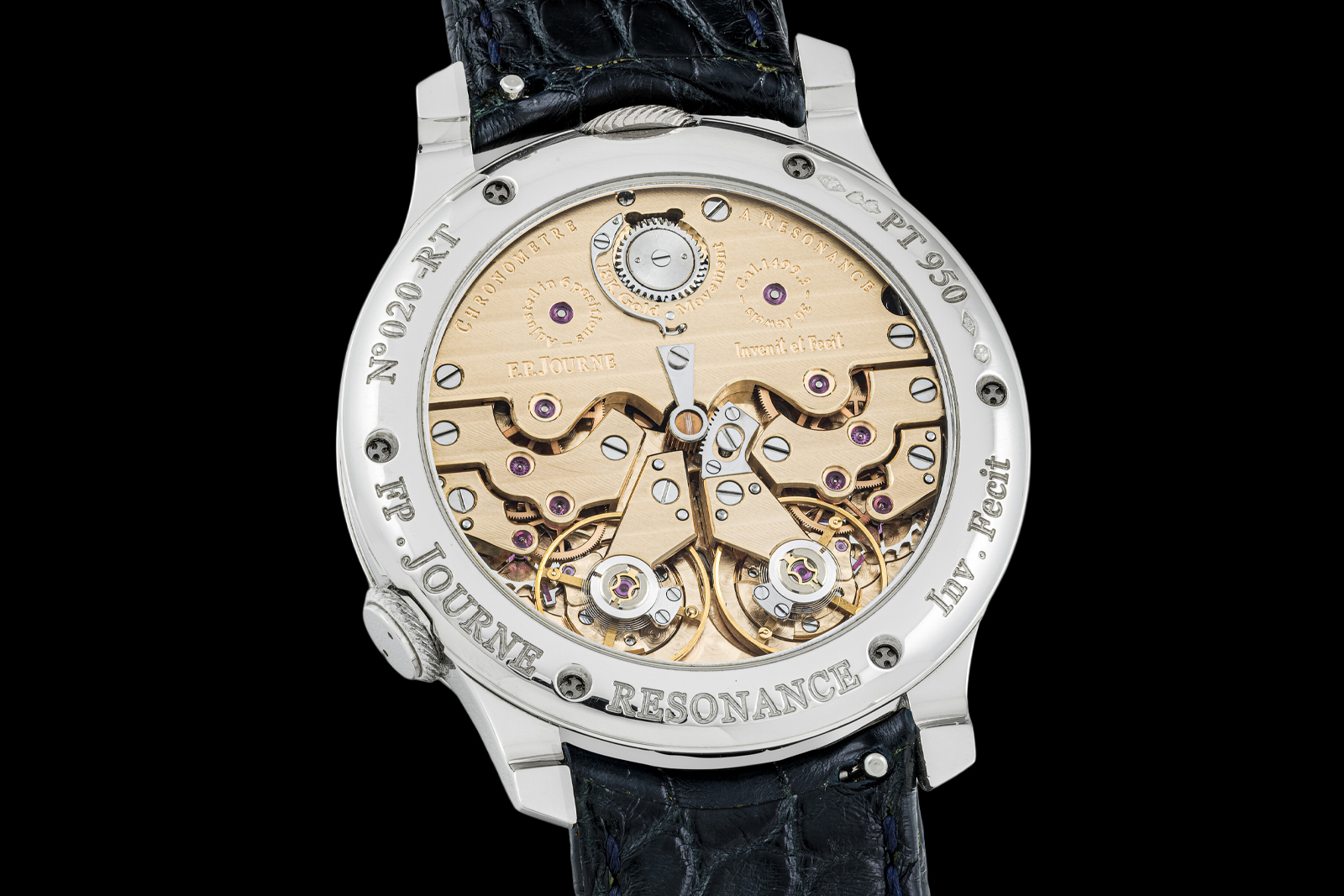
This is one of only four known Black Label ‘Parking Meters’ so the estimate of HK$6 – 12 million (US$770,000 – 1.54 million) isn’t surprising. And it won’t be surprising when this watch hammers above this range.
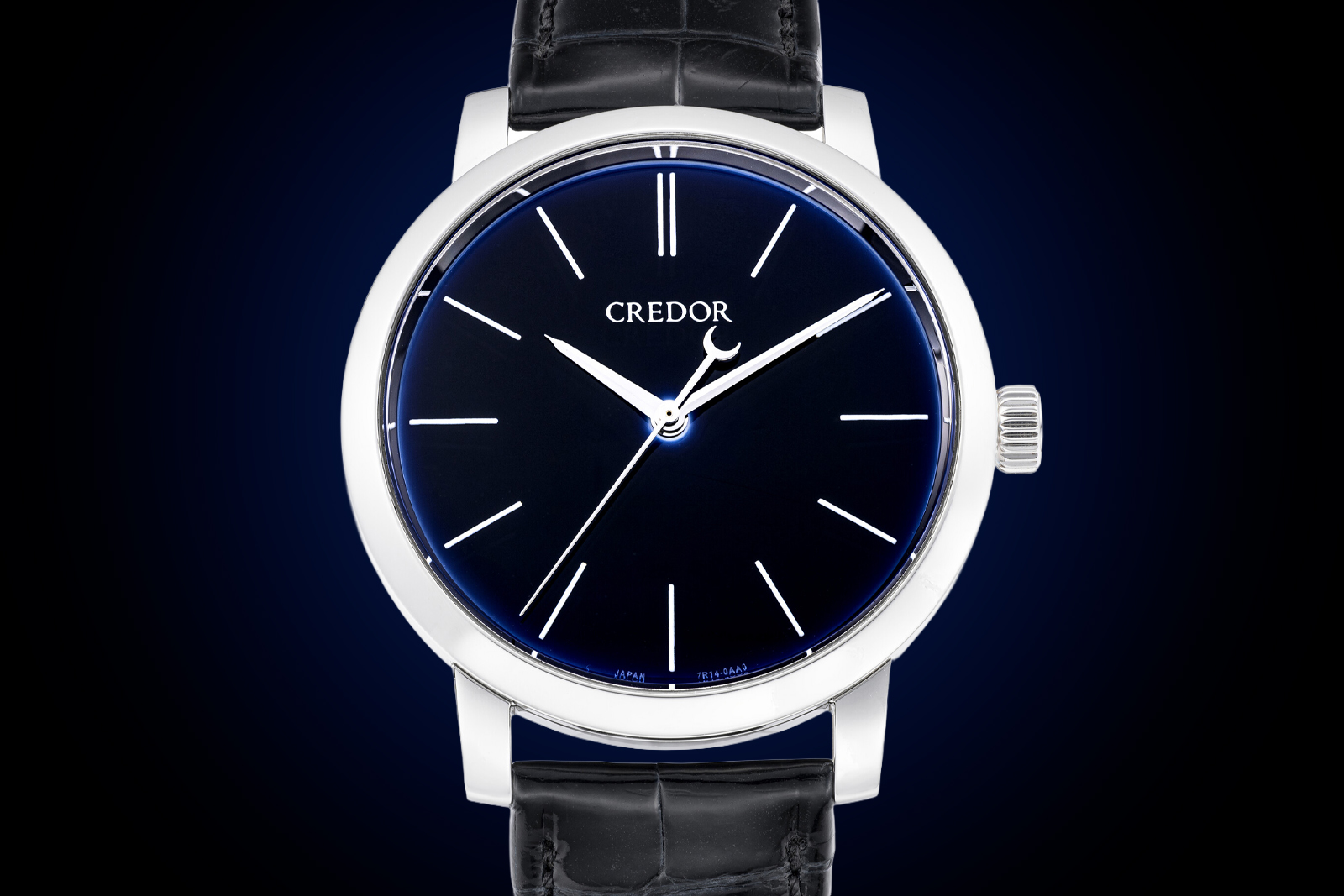
Lot 2448 – Credor Eichi II ref. GBLT997 (7R14-0AA0)
While the Credor Eichi II is known first for its hand-painted porcelain dials and bevelling inspired by the work of Philippe Dufour. This version features arguably the Eichi II’s best dial, a deep blue with light blue halo created to mark 140 years since K. Hattori opened his Ginza clock shop.
It also features a unique, but often overlooked feature – the Torque Return System. When it comes to Spring Drive movements, timekeeping is independent of torque as long as it remains above a minimum value. For this reason, the power reserve indicator found on all Spring Drive watches has a secret second function of stopping the watch before it falls below this torque floor.
This means the watch keeps the same time at full wind as it does the moment before it stops and the extra torque at full wind is wasted. Seeking to extend the movement’s power reserve, Seiko Epson’s engineers invented a novel Torque Return System that siphons off excess torque to rewind the mainspring, thereby extending the power reserve from 48 to 60 hours.
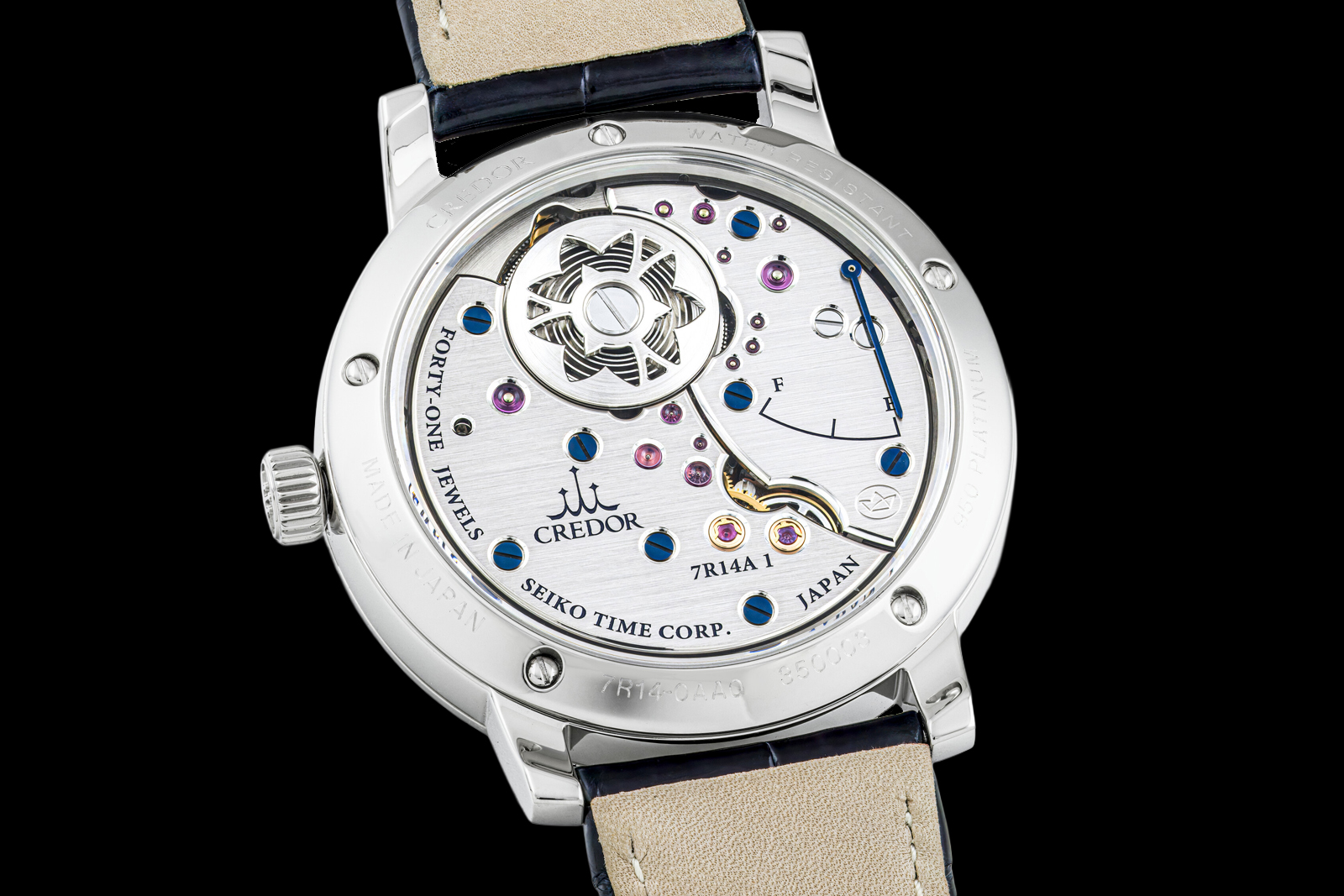
Despite being Credor’s best known model outside of Japan, the Eichi II remains something of a value buy, with this example carrying an estimate of HK$260,000 – 400,000 (~US$33,000 – 51,000). For a platinum watch with perfect anglage, a striking dial and interesting movement, the value proposition is hard to ignore.
Lot 2342 – Greubel Forsey Tourbillon 24 Secondes Vision
If there is one brand that can match, or even surpass, Seiko Epson’s Micro Artist Studio in terms of movement decoration, it is Greubel Forsey, which is more than able to hold its own in terms of mechanics as well.
Per the ISO 3159 standard, all “wrist-chronometers with spring balance oscillator” are tested in five positions: two horizontal (dial up and dial down) and three vertical (three, six, and nine up). The rating systems used by chronometric observatories in their heyday, based on the work of Professor Emile Plantamour, also emphasized constancy across positions.
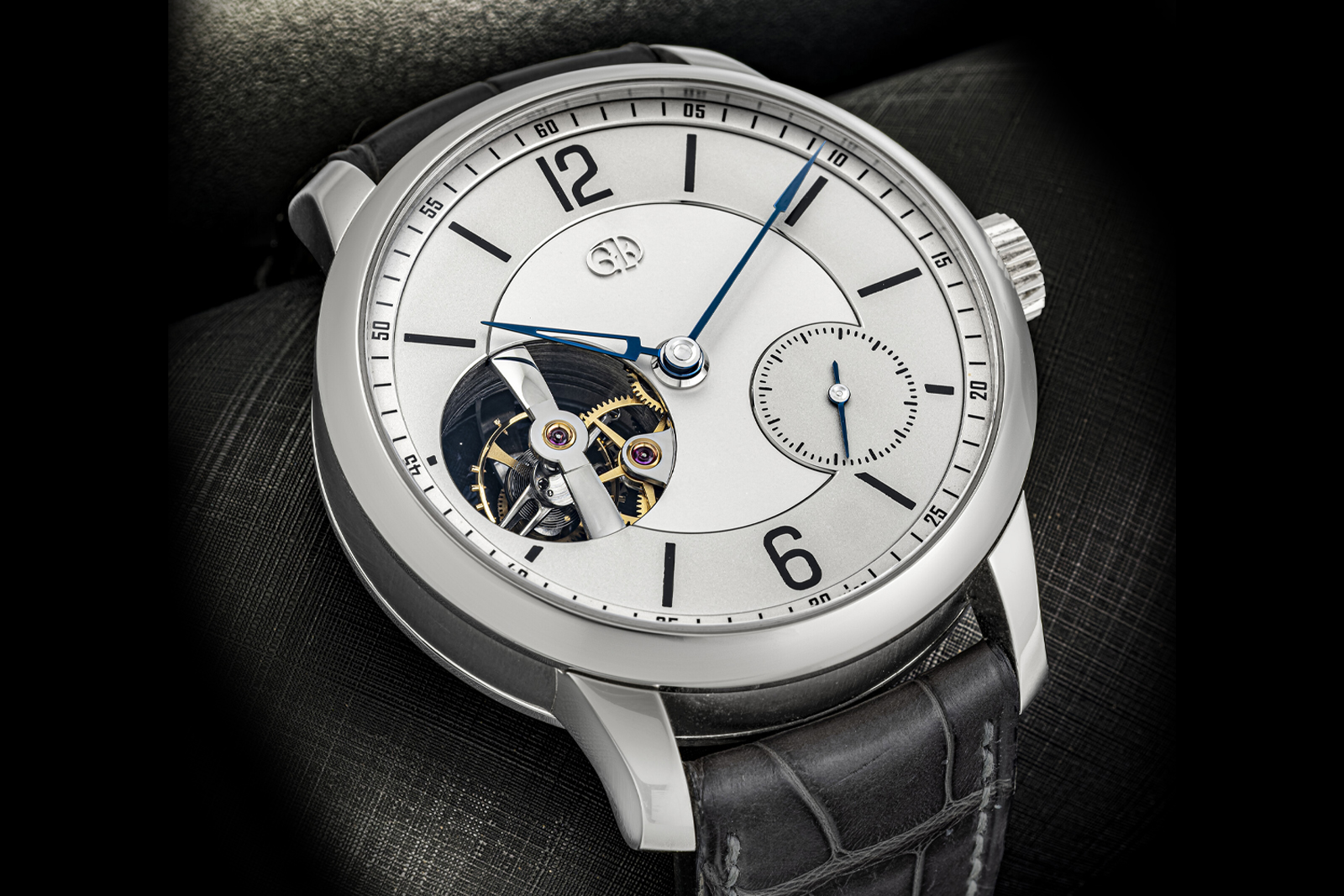
But there was a way to cheat the system, as devised by A.-L. Breguet. The tourbillon rotates the balance assembly and escapement, theoretically making any arbitrary vertical position the same as any other when measured over sufficient lengths of time. By turning the tourbillon two and a half times faster, once every 24 seconds, Greubel Forsey makes it more effective in the face of sudden changes in position, as experienced in real-world use.
But the greatest difference is not intra-between vertical positions, but inter-between vertical and horizontal positions. Ordinarily, the balance staff sits atop the cap jewel like a spinning top in the horizontal, but rests on the jewel bearings in vertical positions, which comes with greater friction. By inclining the balance, Greubel Forsey decoupled the horizontal and vertical positions of the watch from those of the balance.
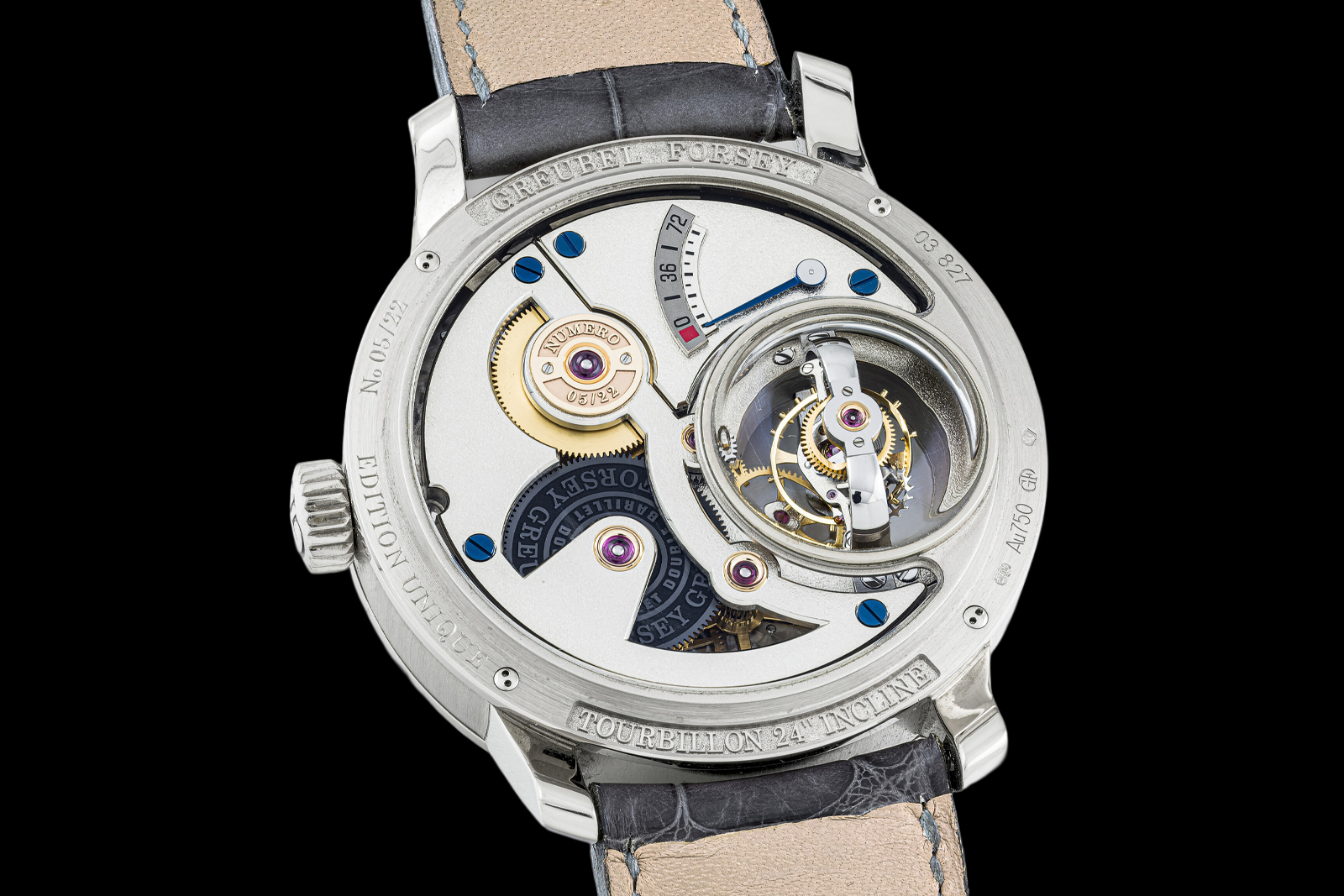
The Vision puts that tourbillon, and its flawless finishing, on full display, letting it jut out from the back of the watch, protected by a sapphire dome. While it looks like an ergonomic nightmare at first glance, from personal experience wearing other watches with protrusions on the back, they tend to hunker down in the valley between the radius and ulna, and the bump isn’t normally an issue.
Greubel Forsey makes perhaps the finest watches it is possible to make. Of course, its watches are prohibitively expensive as a result, but through the magic of deprecation this watch caries an estimate of HK$1.2 – 2.4 million (~US$150,000 – 300,000), which is less than its original retail price a decade ago. It is still a lot of money, but its also a lot of watch.
Lot 2466 – Richard Mille RM022 CA FQ
One of Richard Mille’s signature complications is also torque related, though it measures torque rather than manages it. The dynamograph is a signature of Audemars Piguet Renaud & Papi (APRP) — which is why it can also found on many high end AP watches — and is much more than just a power reserve with a different scale printed.
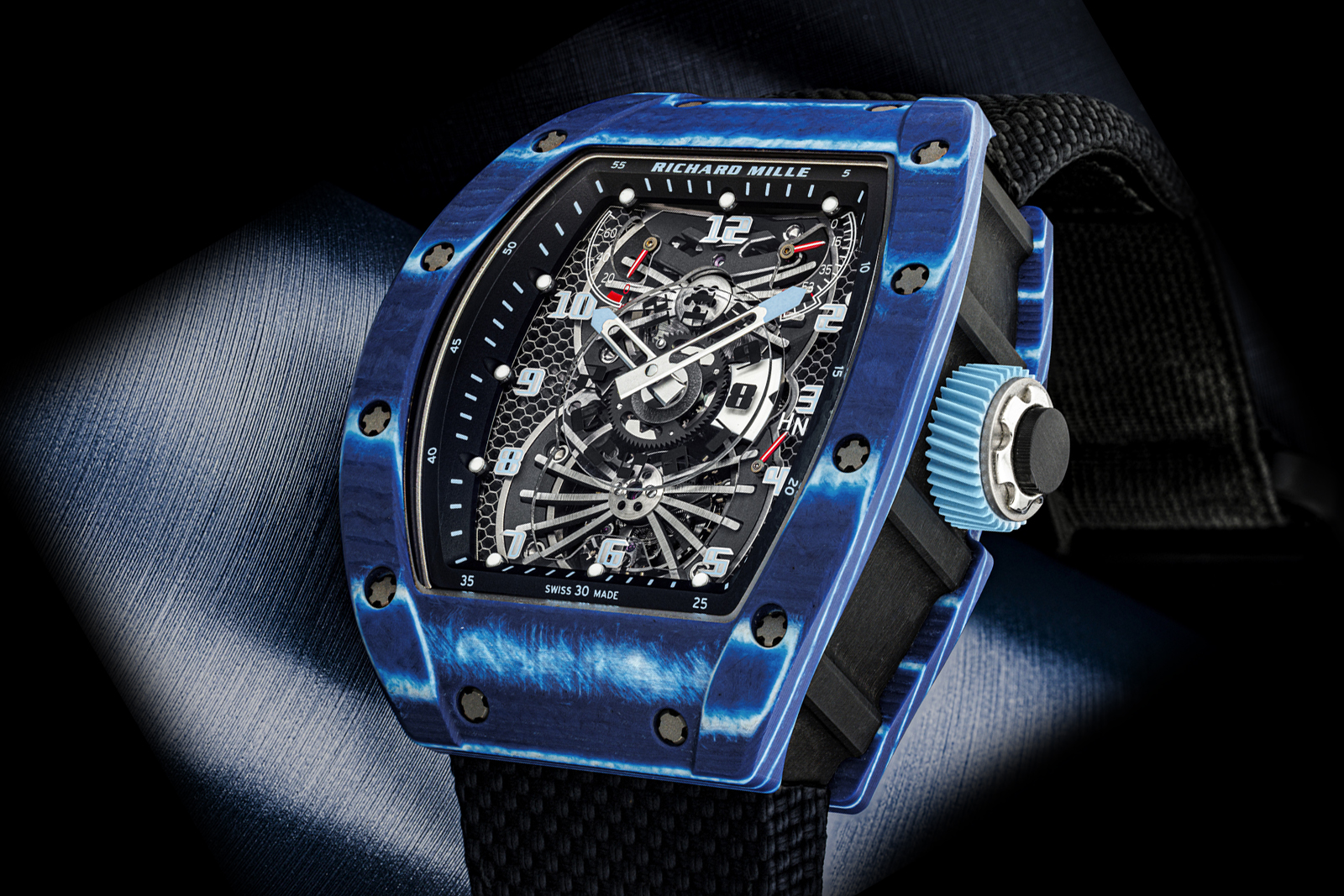
The mechansim splits the train in two using a differential. One end of the differential pushes against a finely tuned spring, the deflection of which determines the value shown by the dynamograph. As if to prove it isn’t just a re-badged up/down, it is mirrored by a power reserve indicator, and as the watch winds down you’ll notice the relationship between the the two gauges is non-linear.
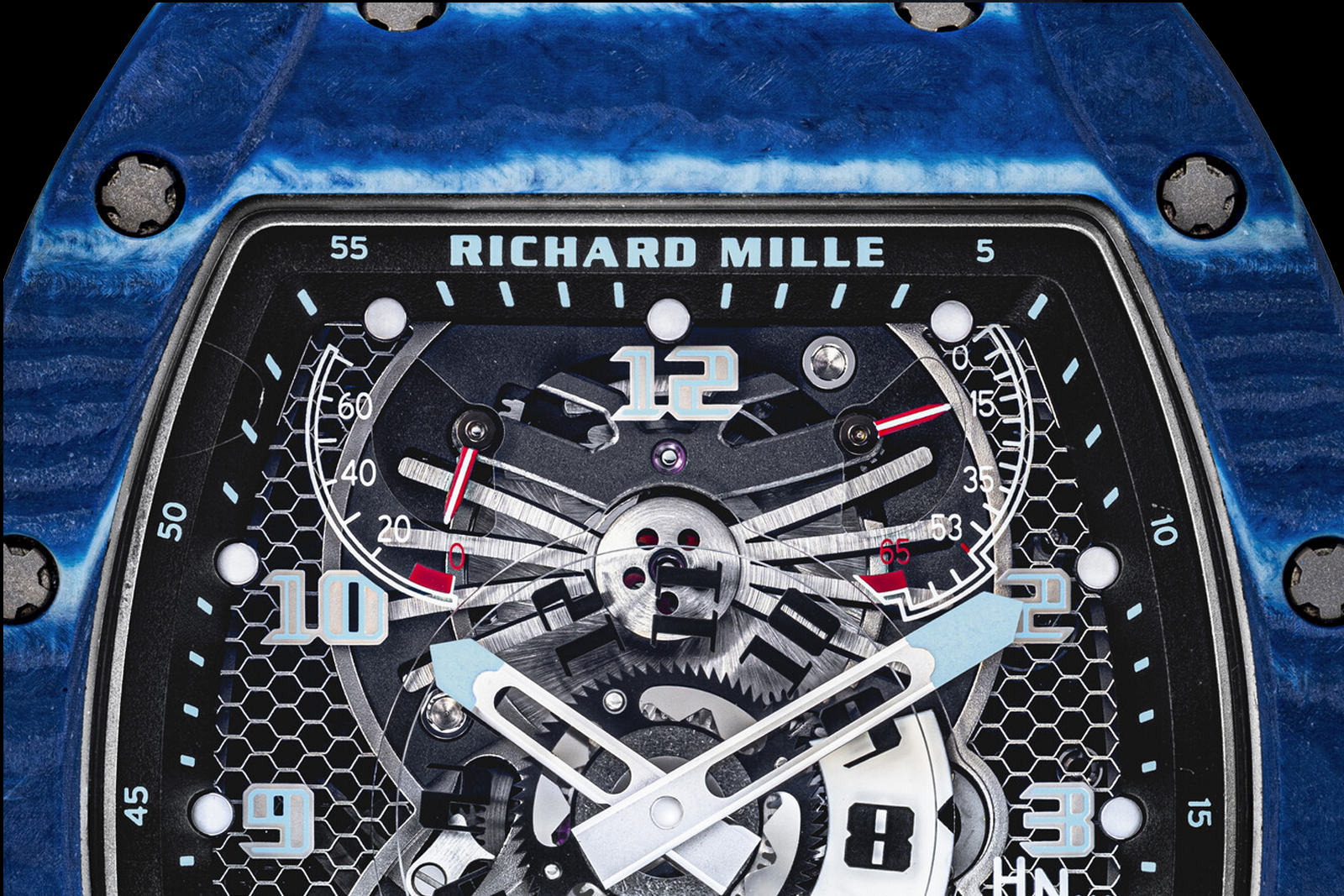
Another unusual feature is the push-button function selector built into the crown — another APRP hallmark and one of the few alternatives to negative setting on modern watches. The case is also worth mention for its use of exotic materials. While some dismiss composite cases as just being fancy plastic — which isn’t completely wrong — there is a world of difference between Quartz TPT and something like Bioceramic.
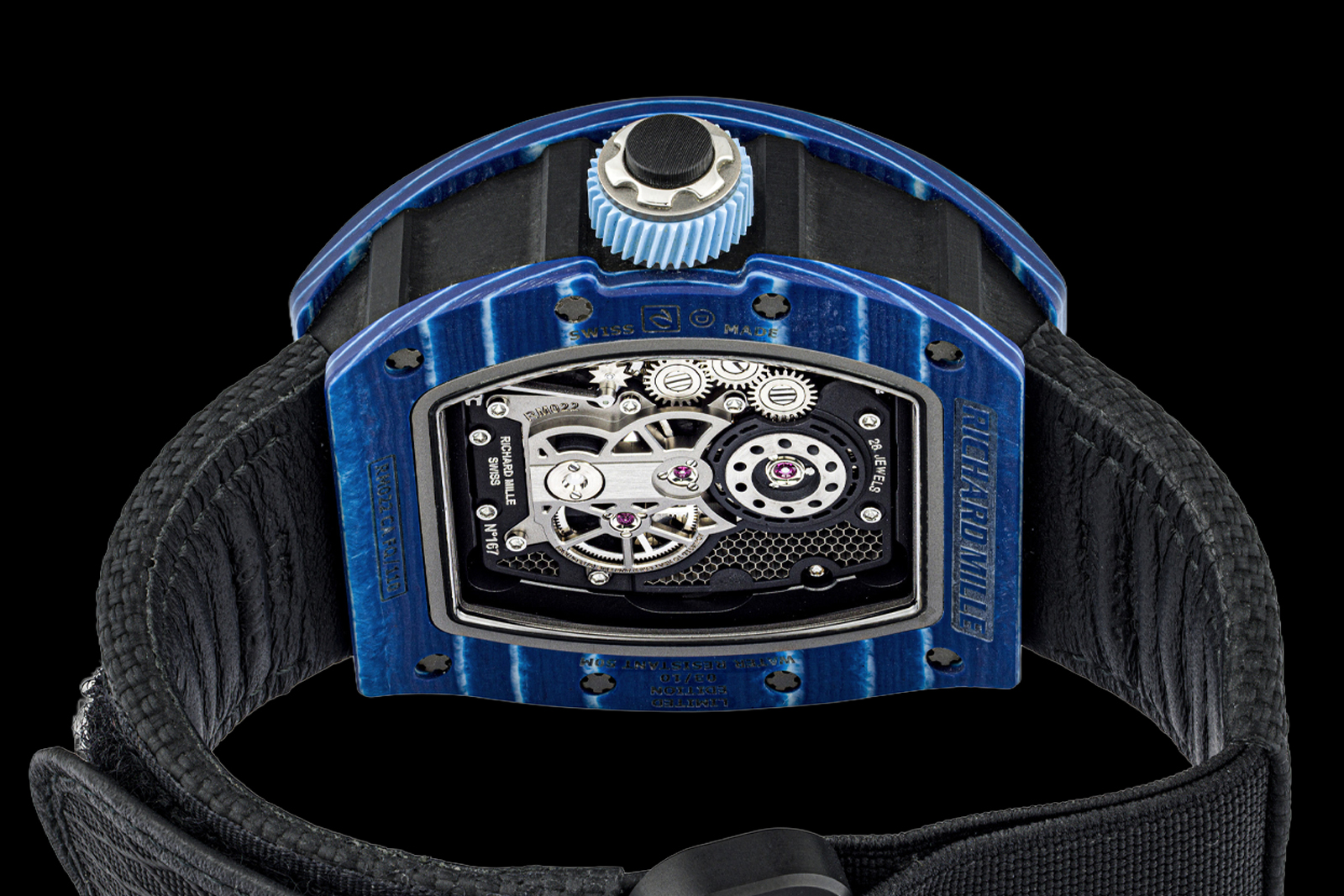
This material uses quartz fibers — which are stronger and stiffer than the E-glass or S-glass fibers uses in normal fiberglass composites — within an extremely strong epoxy matrix. Furthermore, the material is cured in an autoclave, which is comical overkill for just a watch case but all but eliminates possible weak points caused by voids in the composite.
Lot 2421 – A. Lange & Söhne ‘Double Split’ Ref. 404.035
While split-seconds mechanisms are common in mechanical timers — from Soviet stopwatches to fine multi-complications — split minutes are vanishingly rare. While occasionally found in dédoublante pocket watches, it wasn’t until 2004 that A. Lange & Söhne brought it to the wrist, using the Datograph’s calibre L951 as a base.
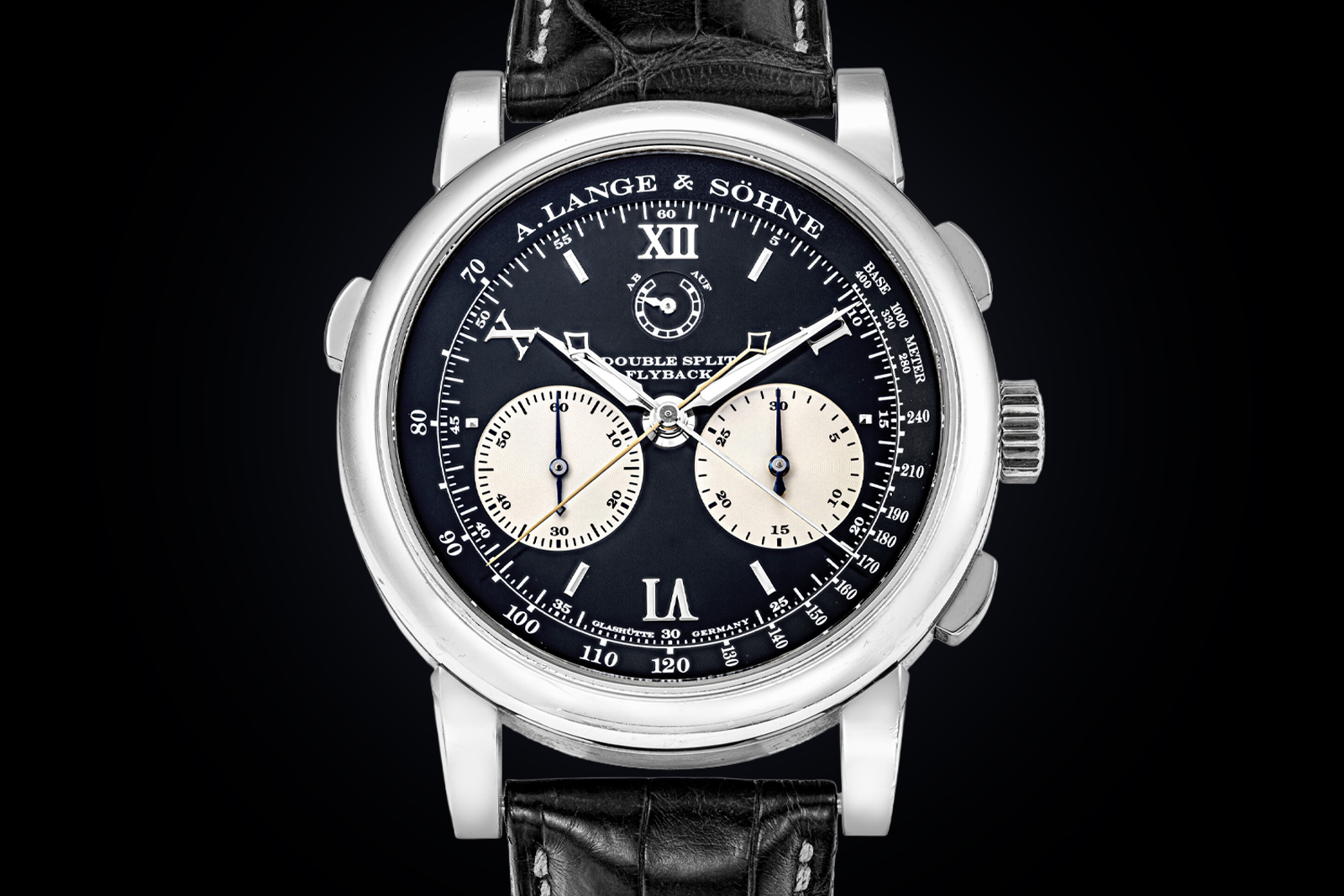
The base calibre, designed by Annegret Fleischer, brings with it a two-button flyback chronograph with an instantaneous jumping minutes counter. It is easy to forget what a revelation this movement was when launched in 1999. To put into perspective how special this movement was at the time, Patek Philippe, Vacheron Constantin, and Audemars Piguet all relied on the humble Lemania cal. 2310 for manual-wind chronographs, and hadn’t yet invested in their own differentiated platforms.
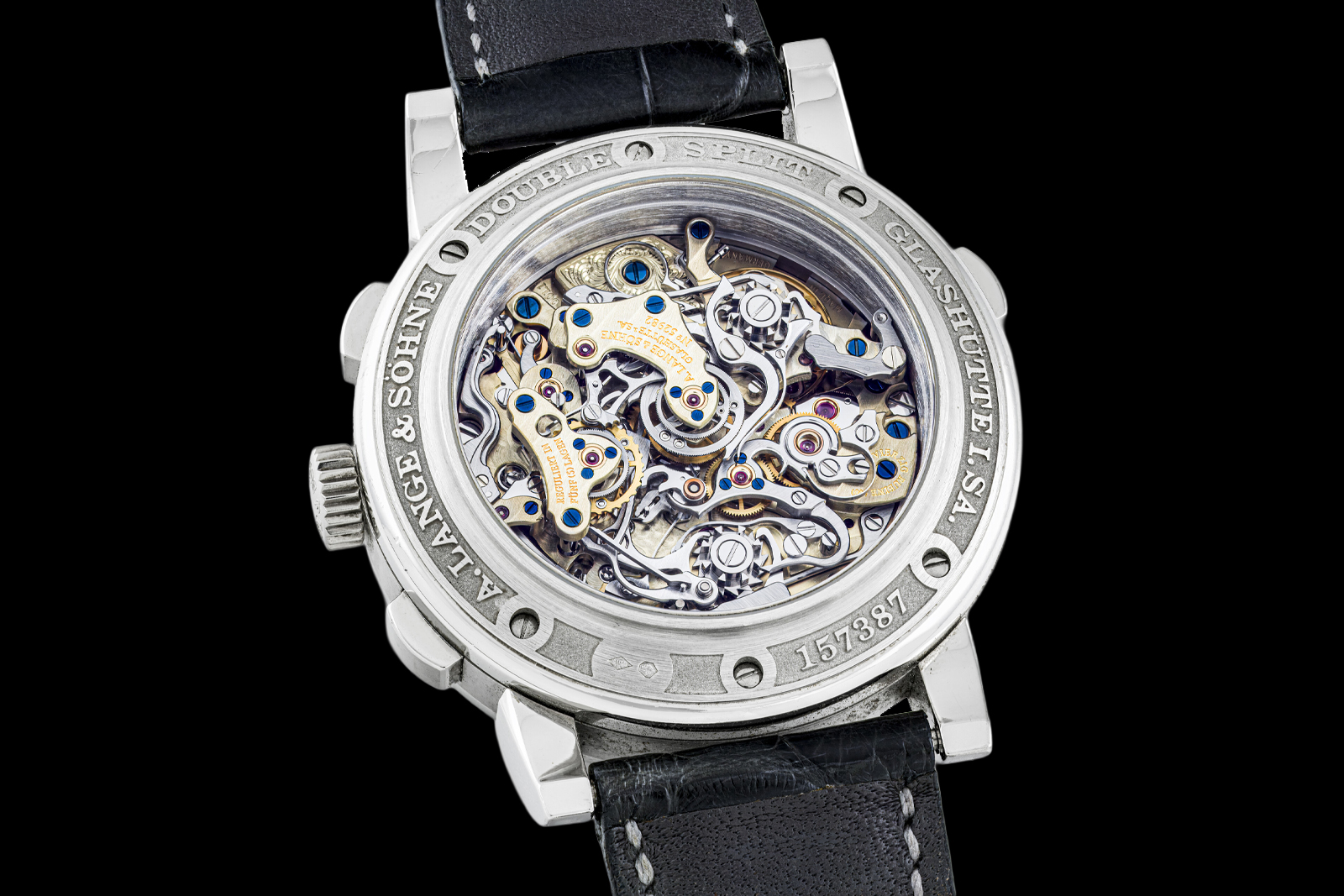
With the Double Split, Lange extended its lead in the field of high-end chronographs. The movement also introduced an isolated rattrapante — like that found in the Patek Philippe ref. 5004 — along with a second rattrapante for the elapsed minutes hand. The result is an incredible amount of depth from the case back, resembling a city in miniature.
While it is sometimes suggested this watch might be best worn upside down, that undersells Lange’s teutonic design, and the excellent hands (all eight of them). Lange is another enclave of value in a soaring market. This watch carries an estimate of HK$400,000 – 800,000 (~US$51,000 – 102,000).
Preview and auction
The sale and preview exhibition will take place at The Henderson on Murray Road in Hong Kong.
Preview
Auction
May 27 – 2:00 pm (Session I lots 2201-2354)
May 28 — 2:00 pm (Session II lots – 2355-2494)
(All times are local to Hong Kong, GMT+8.)
The Henderson
6th Floor
2 Murray Road, Central, Hong Kong
For the full catalogue, visit Christies.com.
This was brought to you in partnership with Christie’s.