
Observations and Takeaways at Watches & Wonders 2026
Favourites, surprises, and value buys.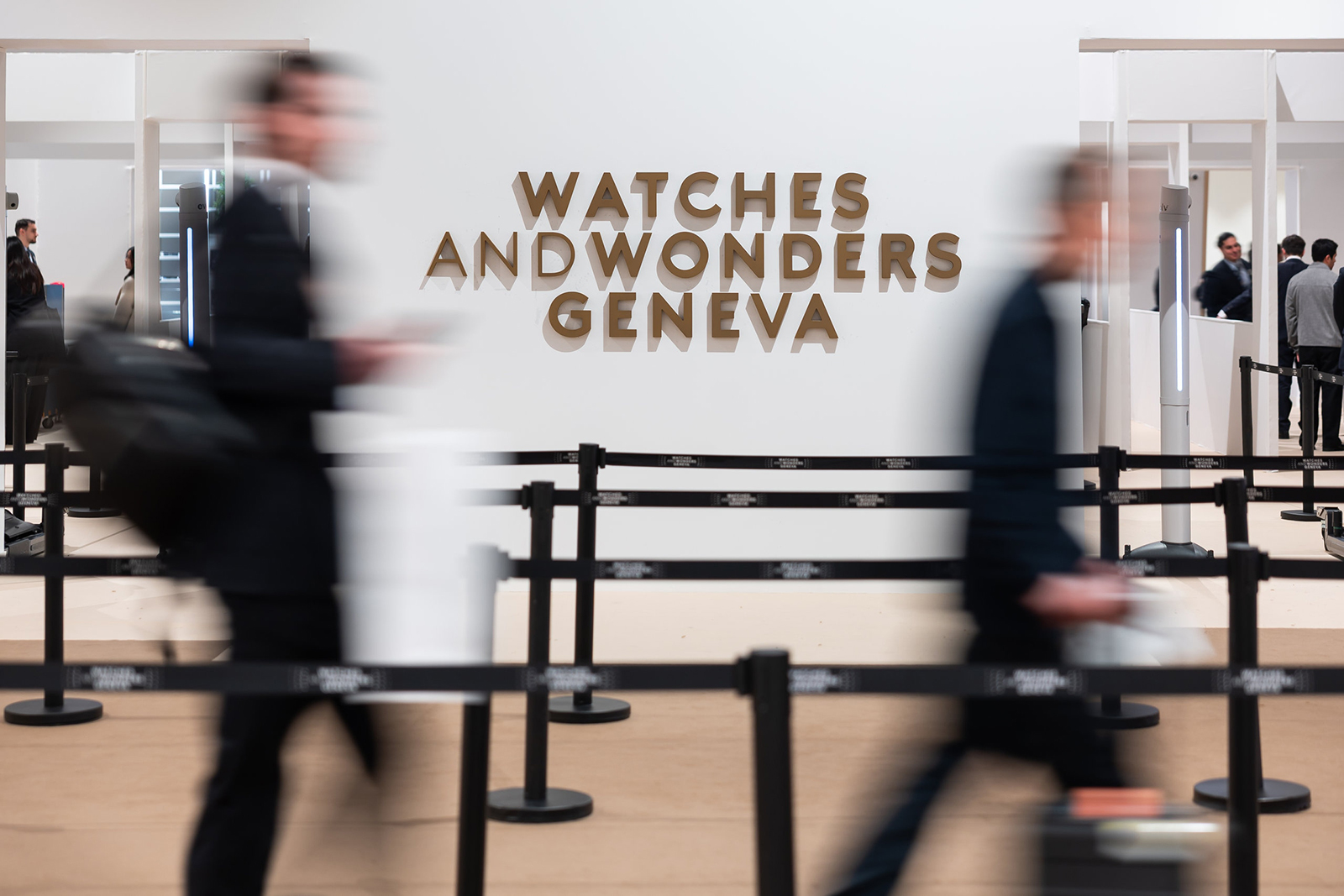
The biggest booth at Watches & Wonders 2026 (W&W) belonged to Rolex, as it always does. Looming three stories high, the Rolex booth was home to some of the most talked-about and polarising watches of the fair, as it always is.
Rolex took the occasion of the centenary of its water-resistant Oyster case to roll out a line-up of surprising watches, perhaps the most unexpected from Rolex in a while. The collection included a Daytona with a fired enamel dial, Boetti-esque Oyster Perpetual, and a return of the little-loved but technically impressive Yachtmaster II.
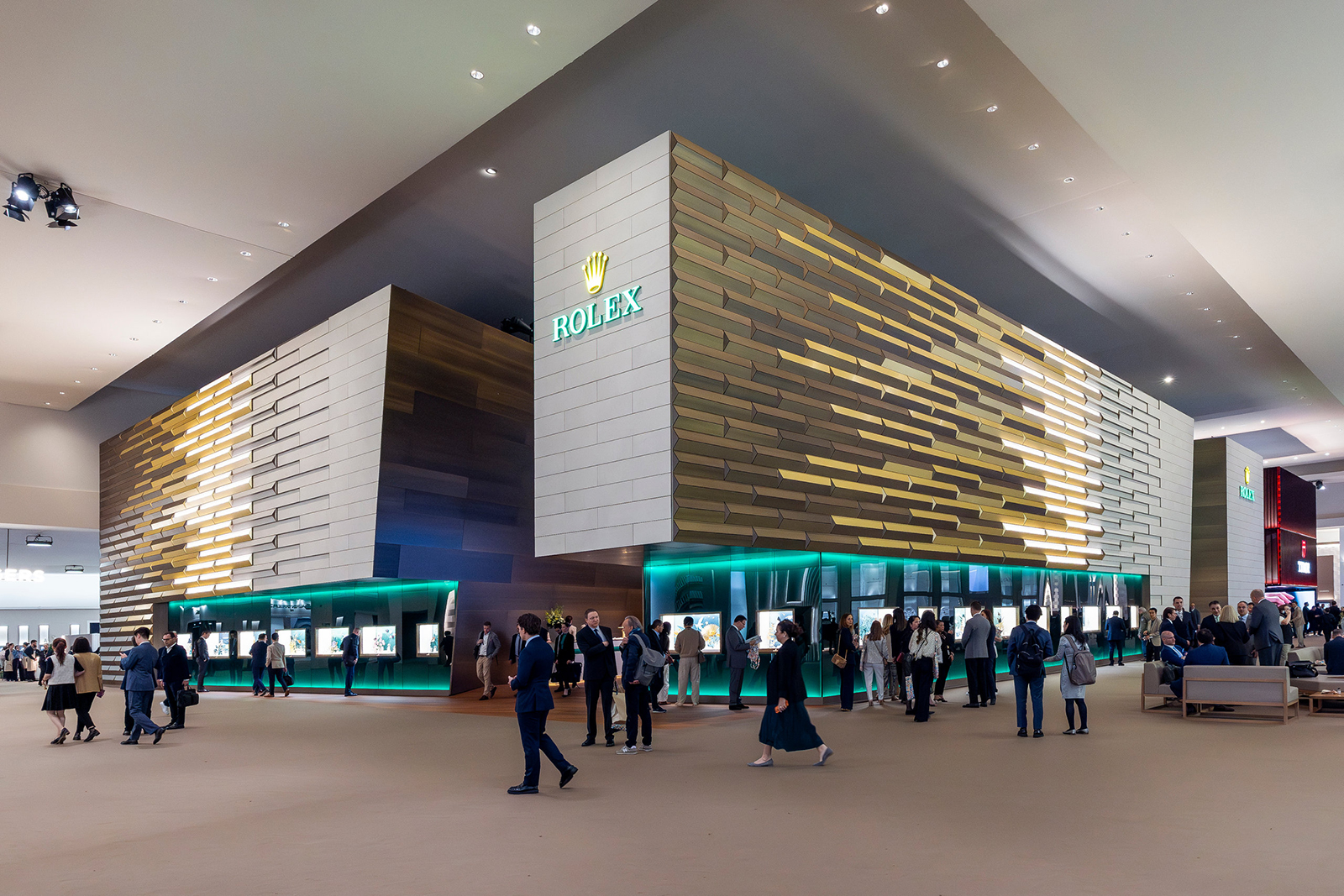
The vast, three-story Rolex booth. Image – Watches & Wonders
In a first, Rolex gave its popular sports chronograph a vitreous enamel dial, or grand feu enamel in watchmaking parlance. The industrial and engineering achievement is impressive; it’s not just a new livery and this Daytona is more than meets the eye.
The enamel is melted glass, as is tradition, but instead of a metal base, the enamel is on a ceramic substrate that is in turn mounted on a brass plate. While there is some debate whether the ceramic substrate makes it enamel in the traditional sense of the word, I consider it enamel.
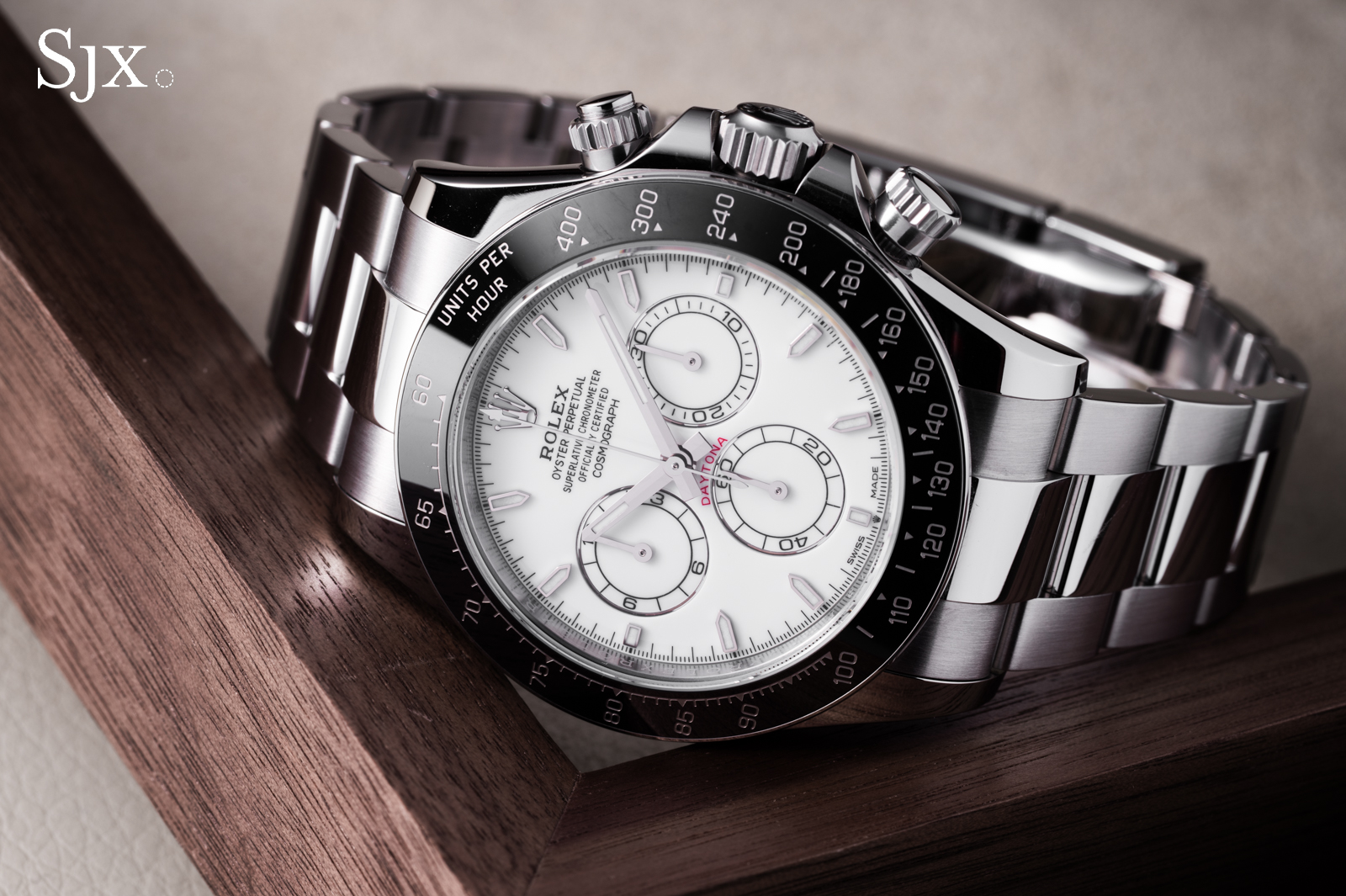
The new enamel dial harks back to the “porcelain” dial Daytona of yore
More importantly, the key characteristic of the dial is thinness, recording-setting thinness in fact, which means that Rolex has achieved an enamel dial with all of the qualities of enamel, lustre, fade-resistance, colour, without compromising thickness at all. Credit where credit is due and Rolex has notched up a win here.
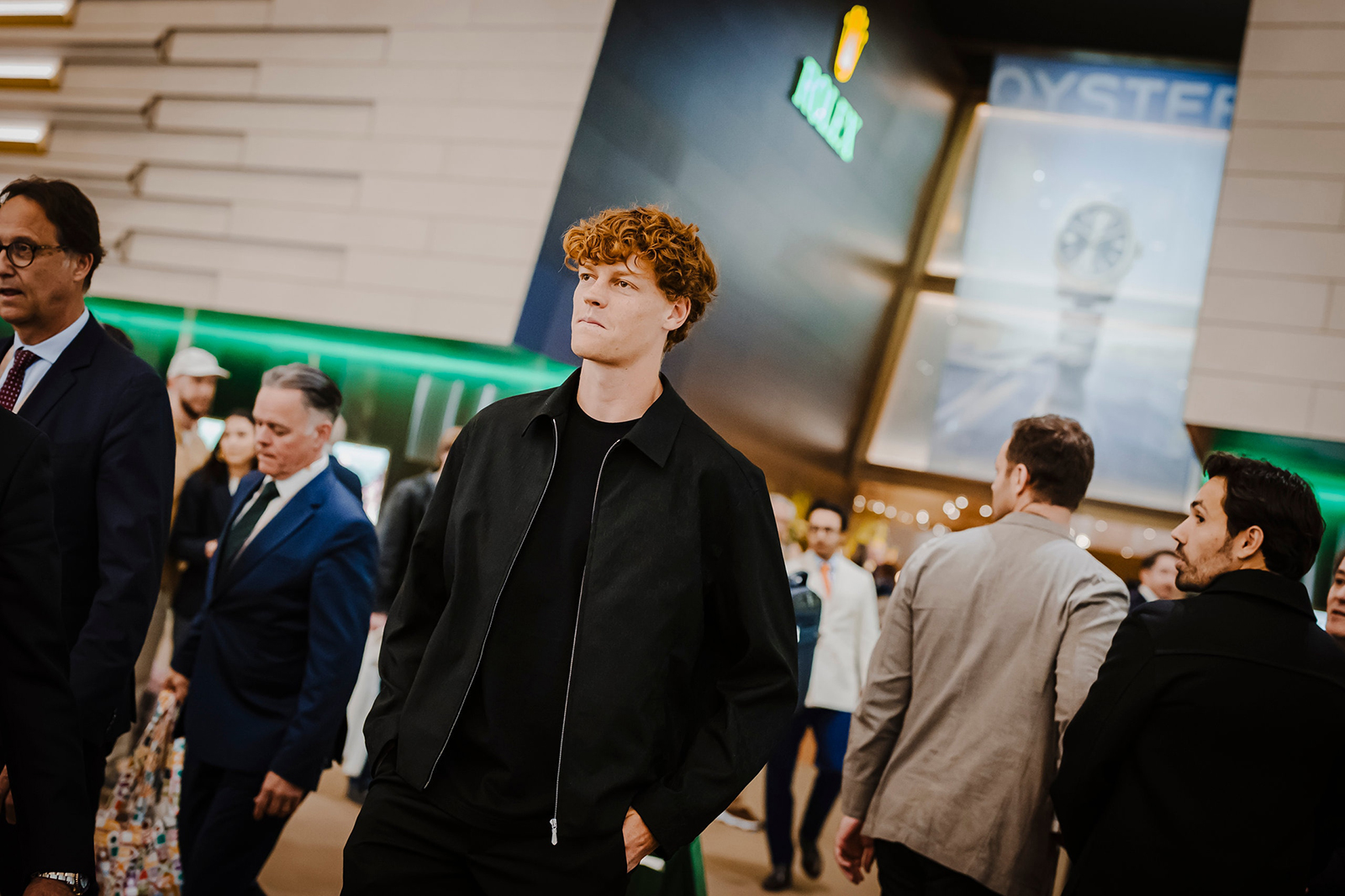
Rolex ambassadors turned up, including Jannik Sinner (above) and Roger Federer. Image – Watches & Wonders
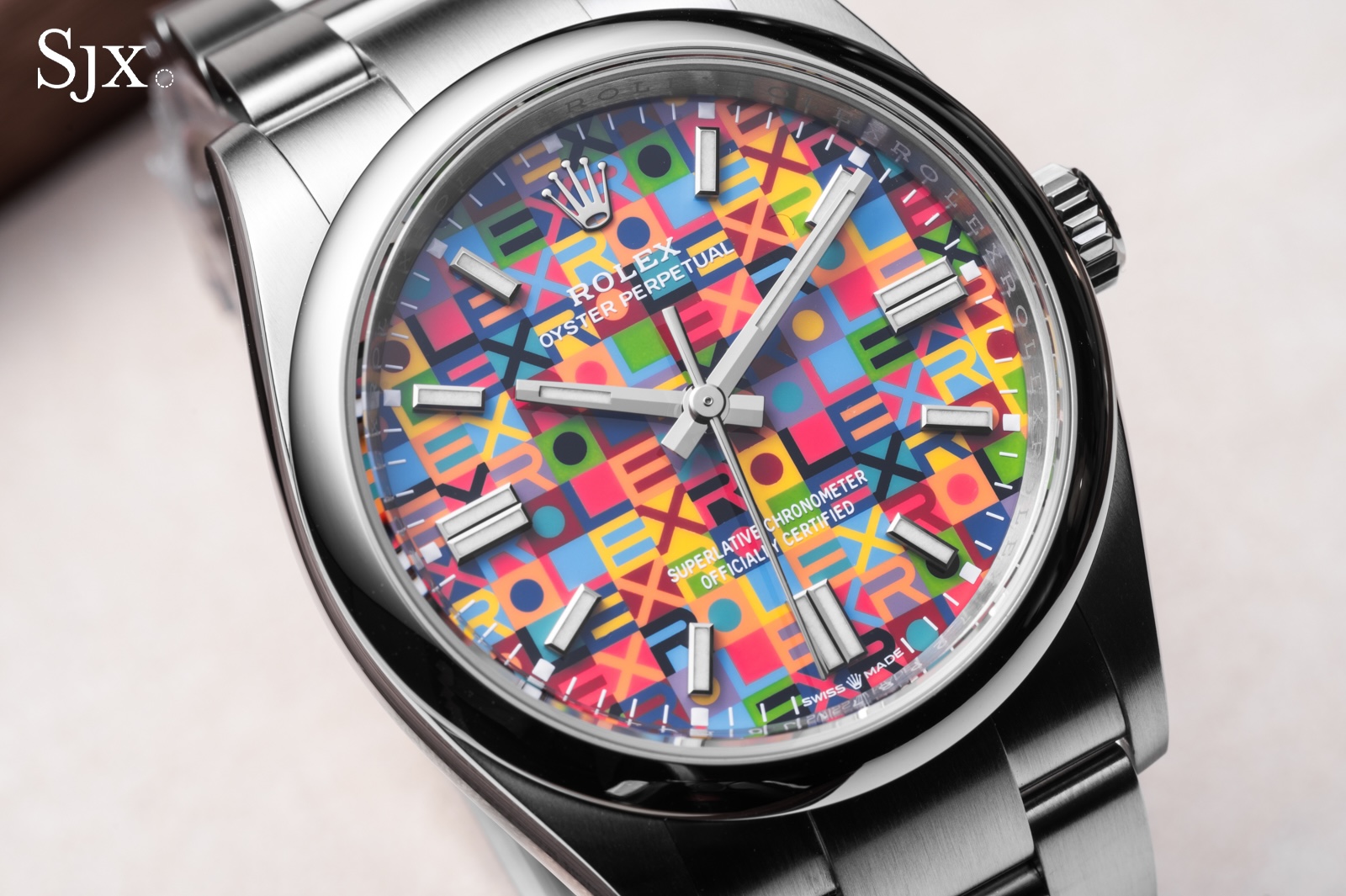
But the enamel dial on the Daytona is barely discernible at the distance, more eye-catching is the “Jubilee Dial” for the Oyster Perpetual. Basically a new look for a historical Rolex dial sometimes nicknamed “Computer”, the Jubilee Dial renders its motif in bright colours like an Alighiero Boetti painting (though Rolex did not cite the painter in any of its materials).
Available in three sizes of the Oyster Perpetual, the Jubilee Dial continues the Technicolour trajectory of Rolex dials that started a few years ago, showing that the venerable Geneva brand might be conservative, but not as old fashioned as it once was. The dial is not for everyone, but illustrates the slow and subtle evolution at Rolex.
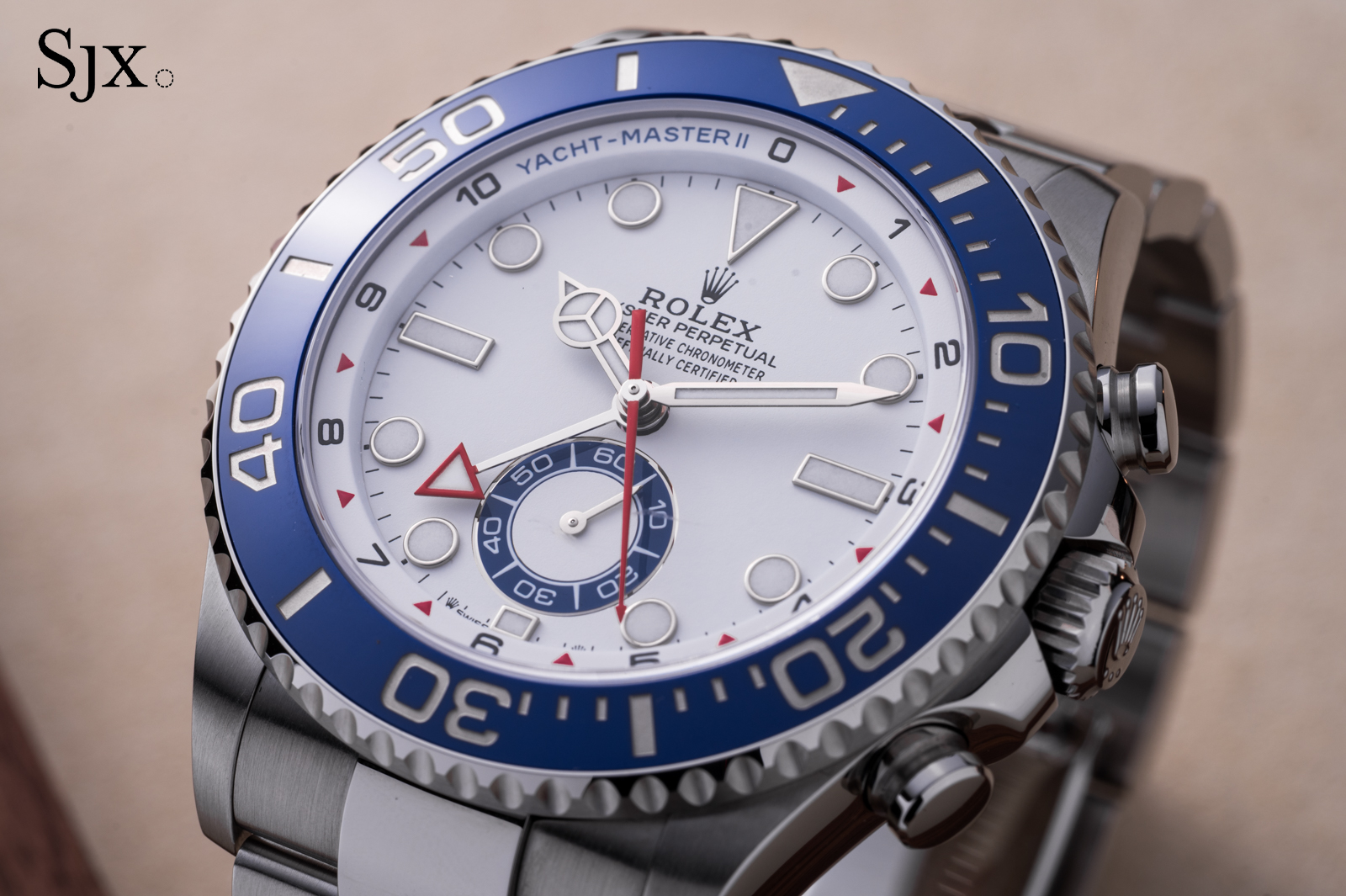
Most significant in terms of movement engineering is the cal. 4162 inside the latest generation Yacht-Master II. It’s basically a variant of the Daytona cal. 4160, but with the addition of a programmable regatta countdown function, which arguably makes this the most advanced chronograph Rolex has ever made.
While the Yacht-Master II was never a bestseller due to its large case and niche complication, the latest version is a major improvement in terms of size and style. It’s still big but not overly so, and the revised design is far more appealing. I would buy one for the sheer engineering prowess of the movement.
Over at the other luxury giant, it was a parade of greatest hits in new iterations. The watches are all beautiful and quintessential Cartier, though not quite imaginative. The greatest hits theme is exemplified by the Cartier Privé Les Opus and La Collection, each a set of three historical models.
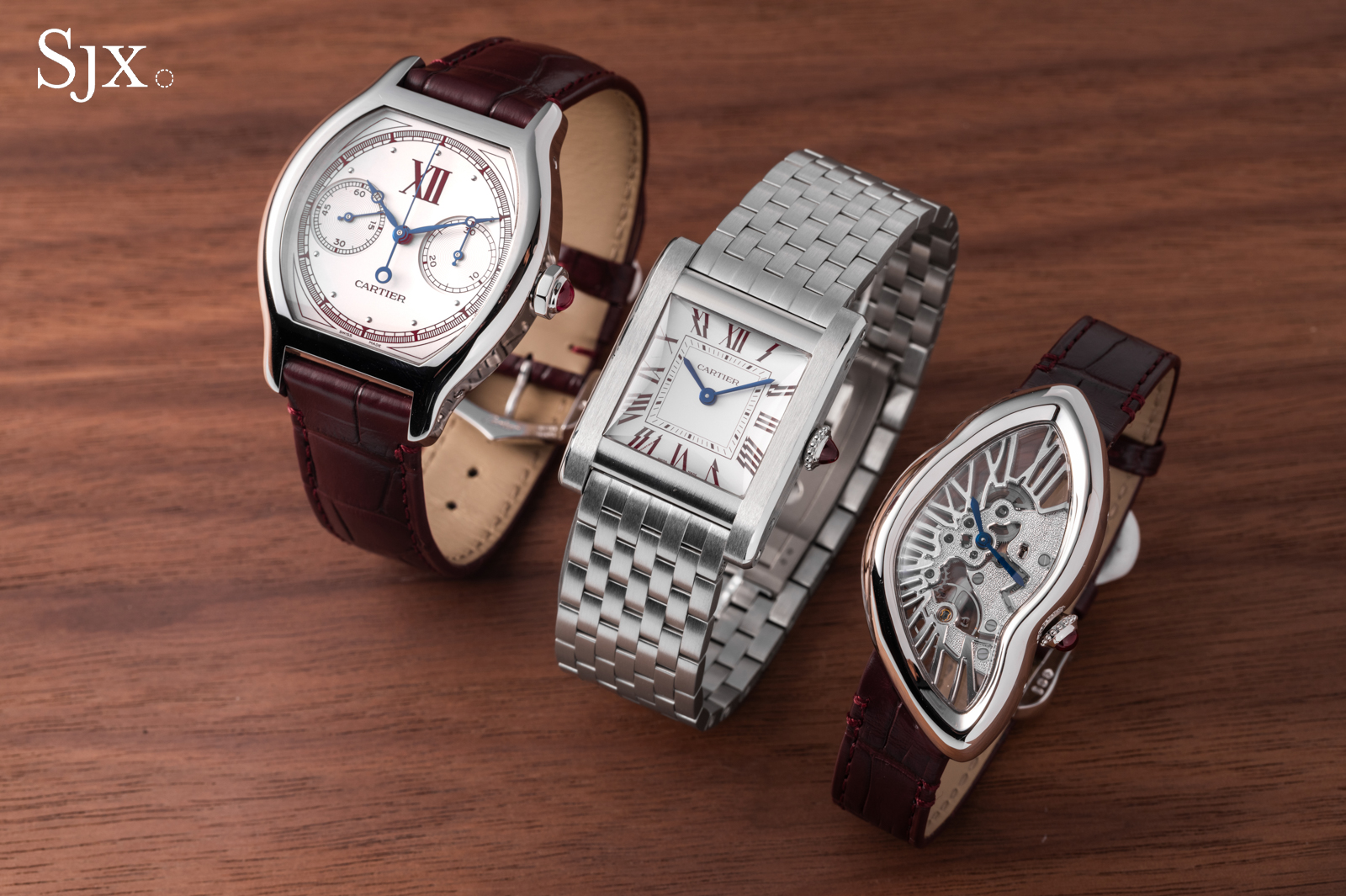
Cartier Privé Les Opus
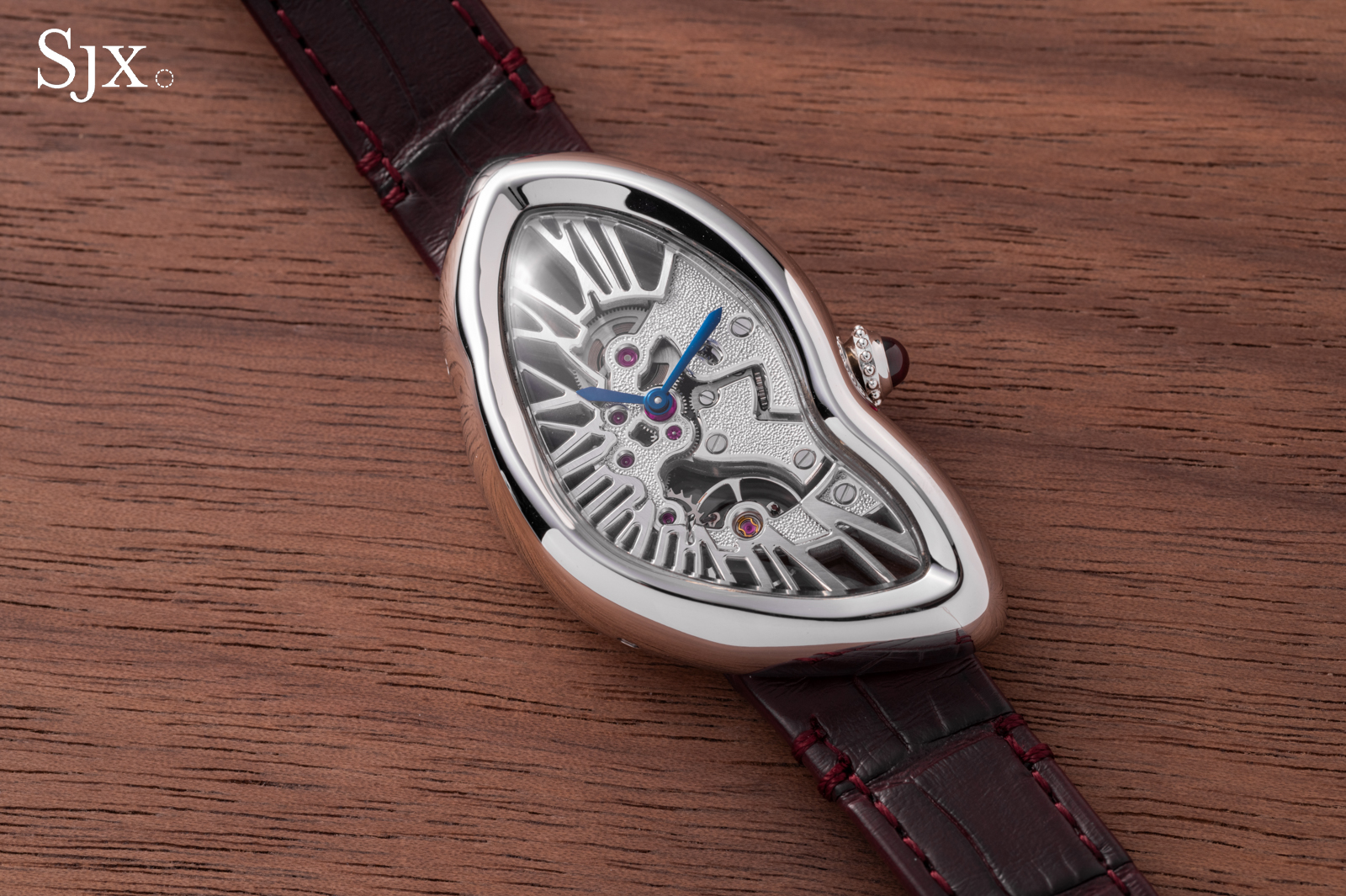
Interestingly, all of the these are regular production, save for the Les Opus Crash Skeleton, which is a striking, beautiful watch, though let down by an oddly positioned crown. Inside the Crash is a newly developed calibre with a hammered finish on the bridges that’s a pleasing artisanal touch that reduces the industrial aspect of the calibre.
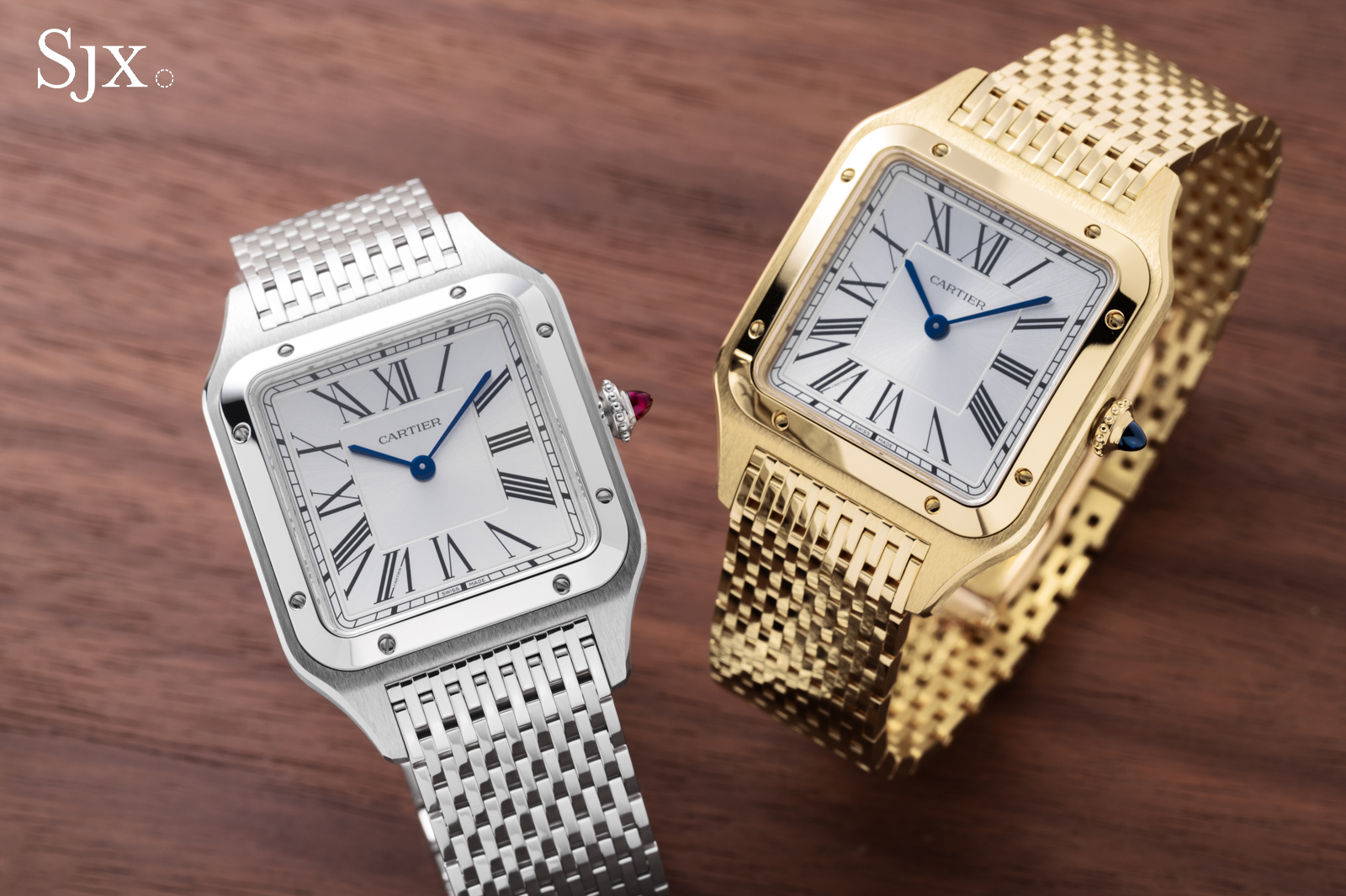
Amongst the other highlights were a mesh-link bracelet for the Santos Dumont; the yellow gold version with an obsidian stone dial was a personal favourite, appealing and priced decent-ish.
Impressive complications
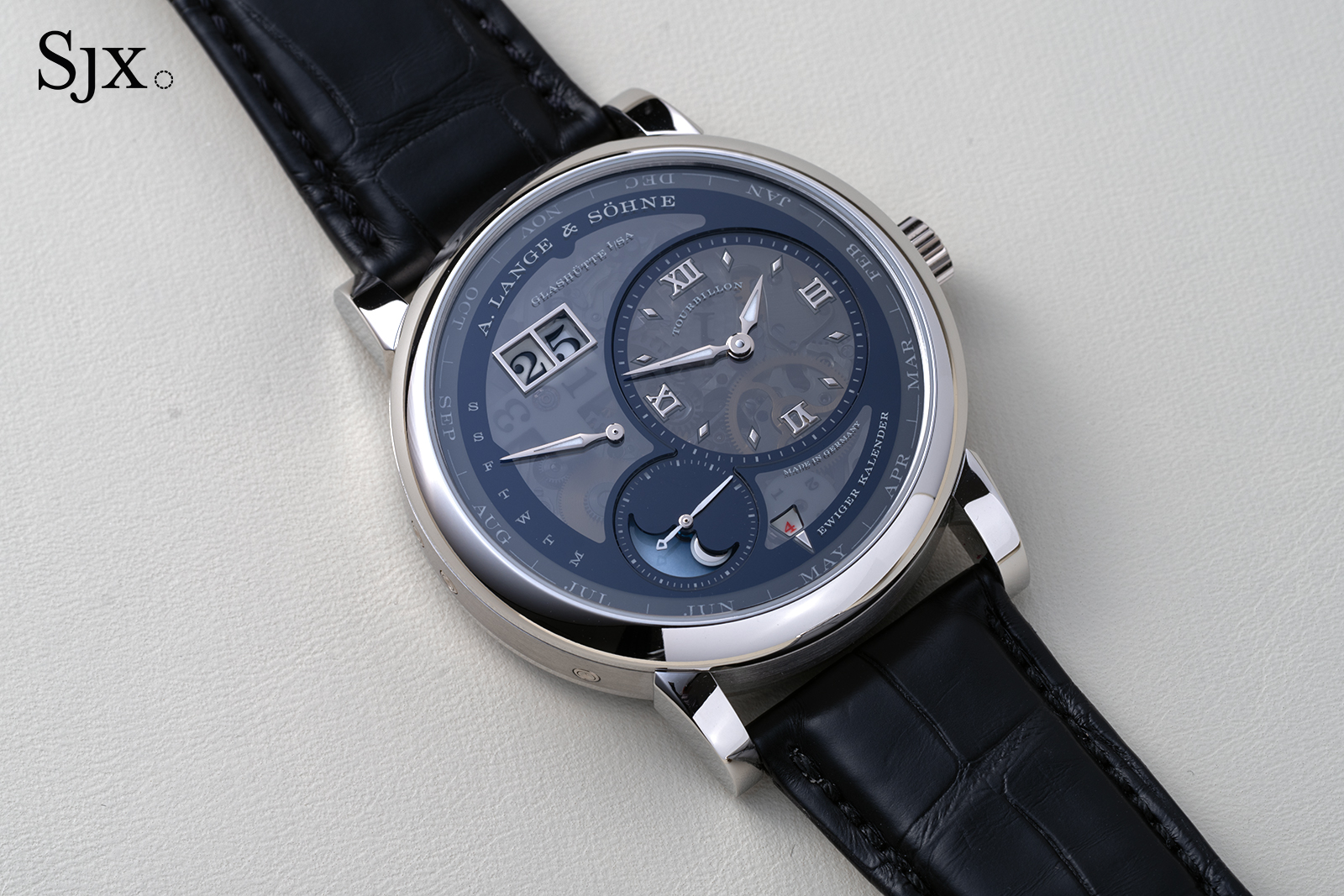
My favourite big “comp” of the fair is the Lange 1 Tourbillon Perpetual Calendar “Lumen”. Even though it is unsurprising, the new Lange 1 is impressive. The watch is typical Lange, it’s big, complex, and perfection in its engineering, especially in the movement.
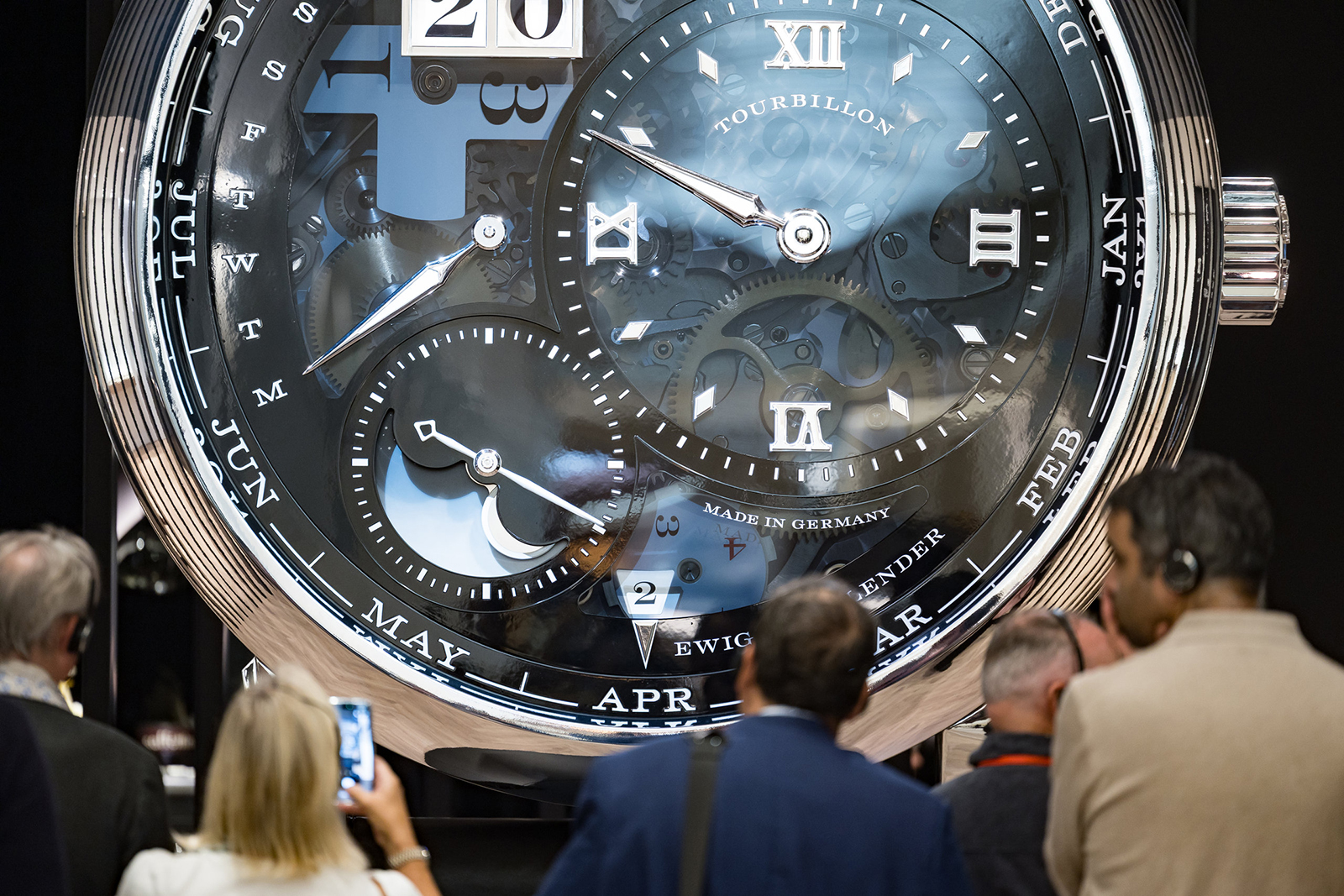
As is tradition, Lange had an enormous working model of its flagship launch inside its booth. Image – Watches & Wonders
It’s not merely the earlier version of the model with a see-through dial, but the movement has been reengineered, most notably with a rearranged going train for a better view of the tourbillon. But like all recent Lange complications, it is expensive at US$530,000, even considering all of its merits.
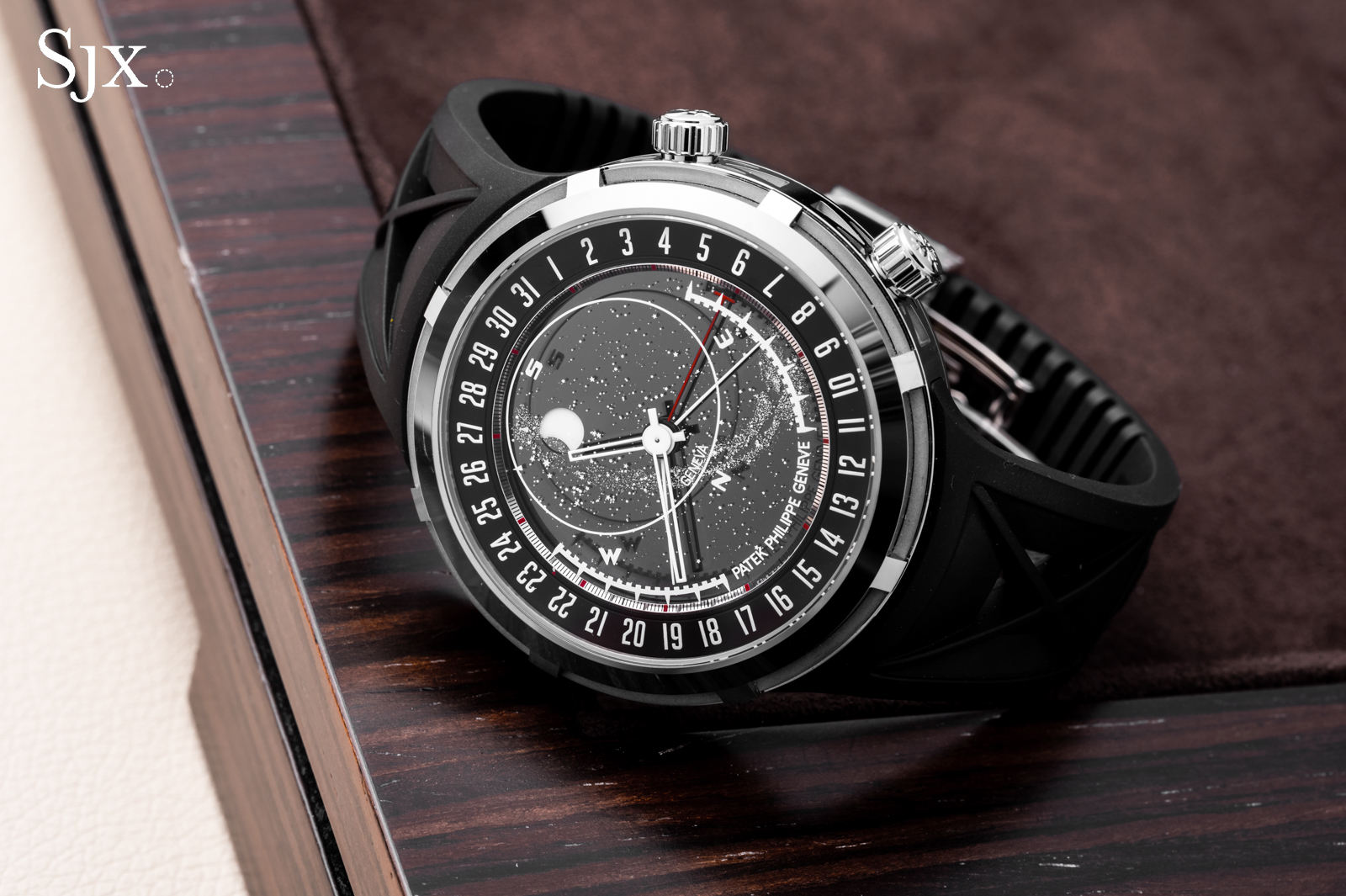
Equally large and impressive – but far more surprising – is the Patek Philippe Celestial Sunrise Sunset Ref. 6105G. It is 47 mm in diameter with a case that resembles a flying saucer, in fact Patek Philippe cites spaceships as design inspiration, and fitted to a moulded rubber strap. The ref. 6105G looks and feels entirely different from earlier iterations of the Celestial, and the best way to describe it would be: weird, but cool.
Like the Lange, however, the ref. 6105G is not merely a cosmetic update. The cal. 240 C LU CL LCSO inside is an upgrade on the previous version of the movement, gaining sunrise and sunset indicators with a summer and winter time corrector. Despite being a seemingly modest update, the sunrise and sunset displays are cleverly and elegantly implemented; both are read against the date scale on the dial. More notably, the mechanism itself is clever, relying on a compliant mechanism for the daylight savings time adjustment that moves the sunrise and sunset indicators back or forth as needed as the seasons change.
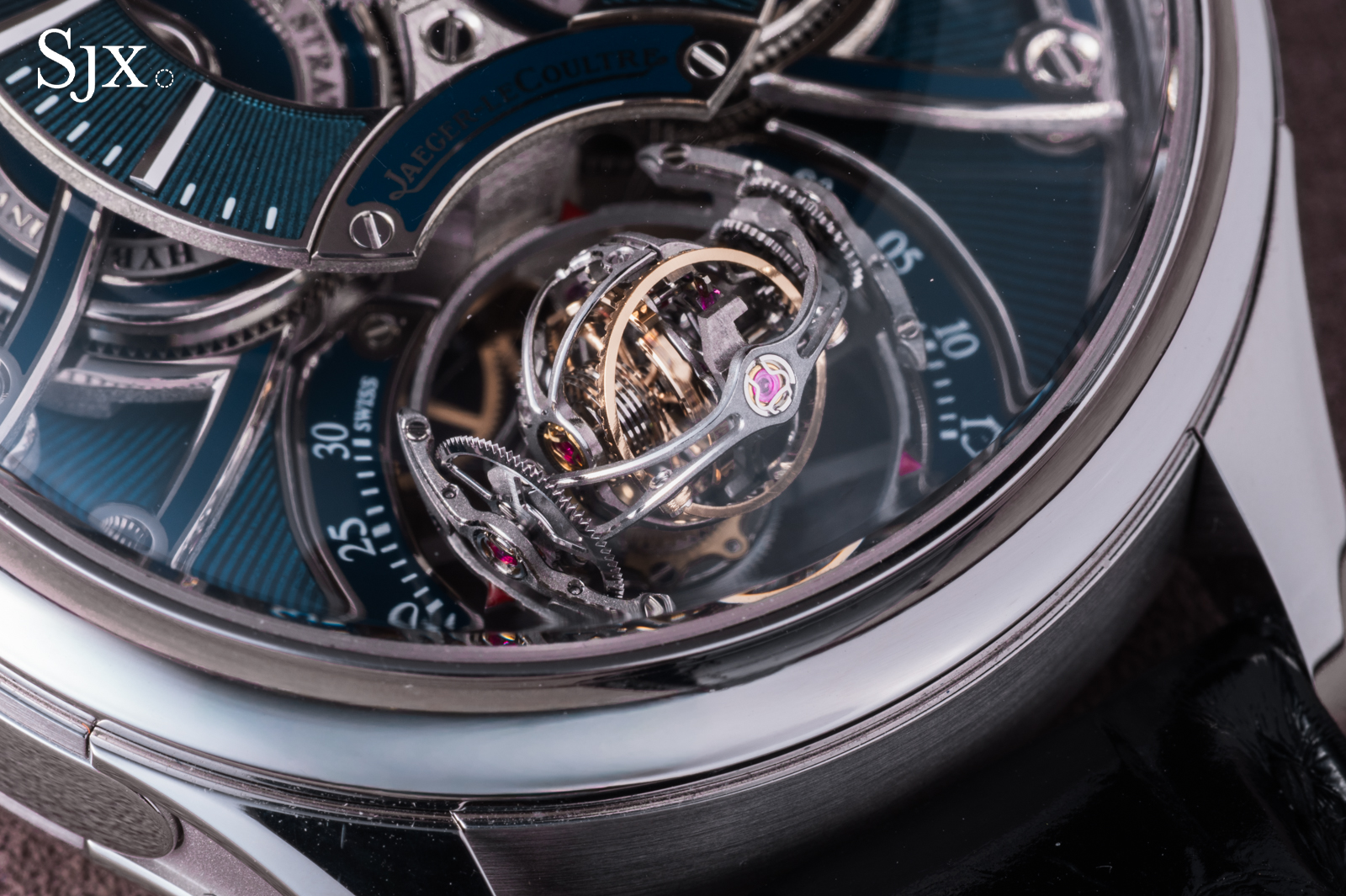
Jaeger-LeCoultre attempted to reclaim some of its lost glory of the 2000s with a slew of complicated watches, with the flagship being the Master Hybris Inventiva Gyrotourbillon À Stratosphère. The first in a new collection of “invention” watches, the latest Gyrotourbillon is maximalist: triple-axis tourbillon, skeletonised movement, solid gold bridges, enamelling and lacquer on the movement parts. It is impressive, but doesn’t land with force as the original Gyrotourbillon did 20 years ago. That said, it’s still early days for the brand under its new-old leadership, so there is surely more to come.
Much less complex, simple even, is Vacheron Constantin’s latest iteration of the Overseas Dual Time. Dubbed “Cardinal Points”, the model debuts in four variants, all sharing the same titanium case and bracelet that makes it lightweight and ergonomic. The brown-grey dial is my absolute favourite.
Though not fancy or complex, the Overseas Dual Time is a useful watch executed well – and priced unexpectedly decently at US$41,000, or a little over CHF33,000. While not inexpensive by any means, the new Overseas is a reasonable aspiration, unlike the complications above.
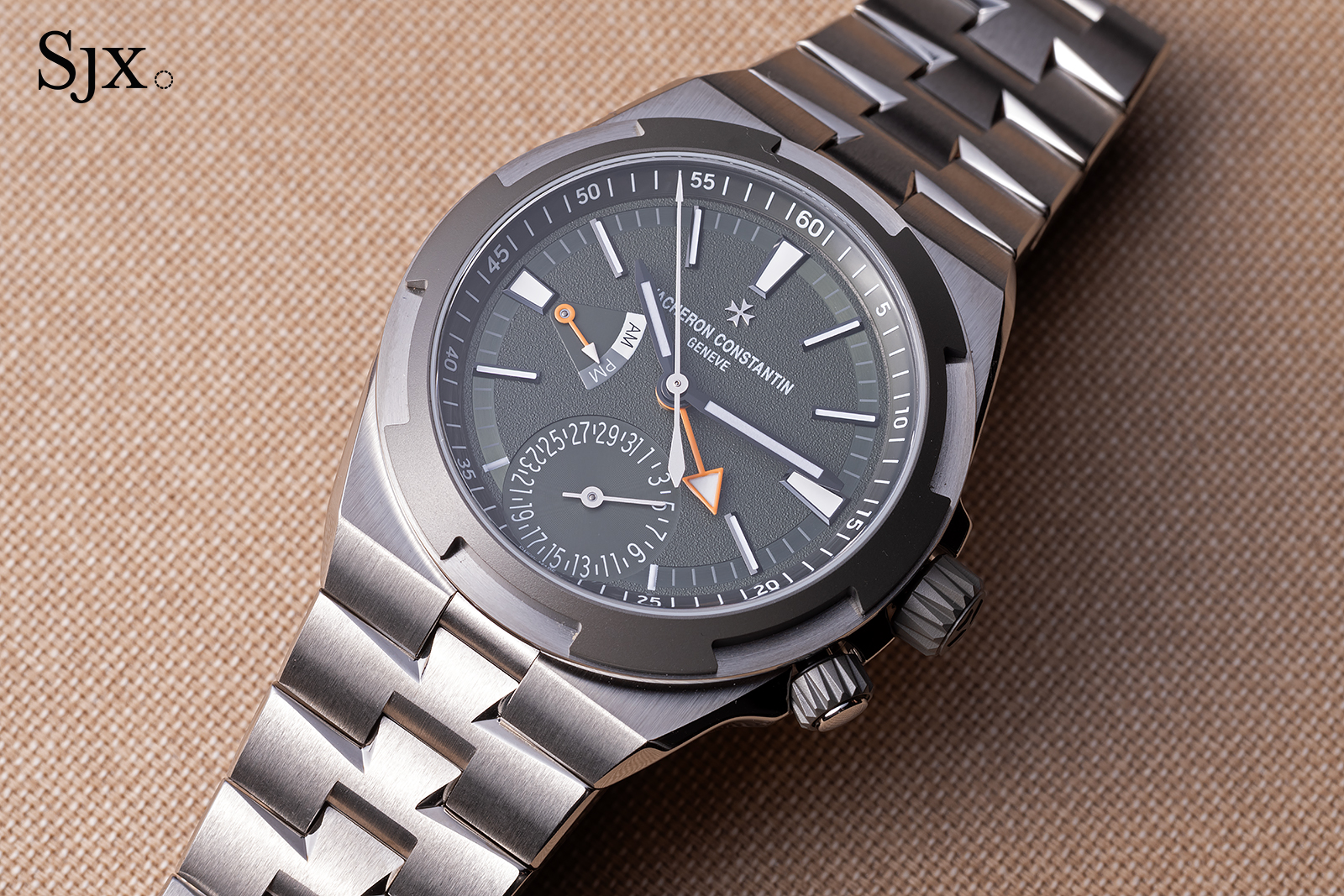
The “South” iteration of “Cardinal Points” in brown-grey
Technical innovations
Perhaps the most interesting complication at the fair was the TAG Heuer Monaco Evergraph. Though still easily recognisable as the square-cased racing watch, the Evergraph is an intriguing new take on the chronograph mechanism that is priced accessibly as such things go.
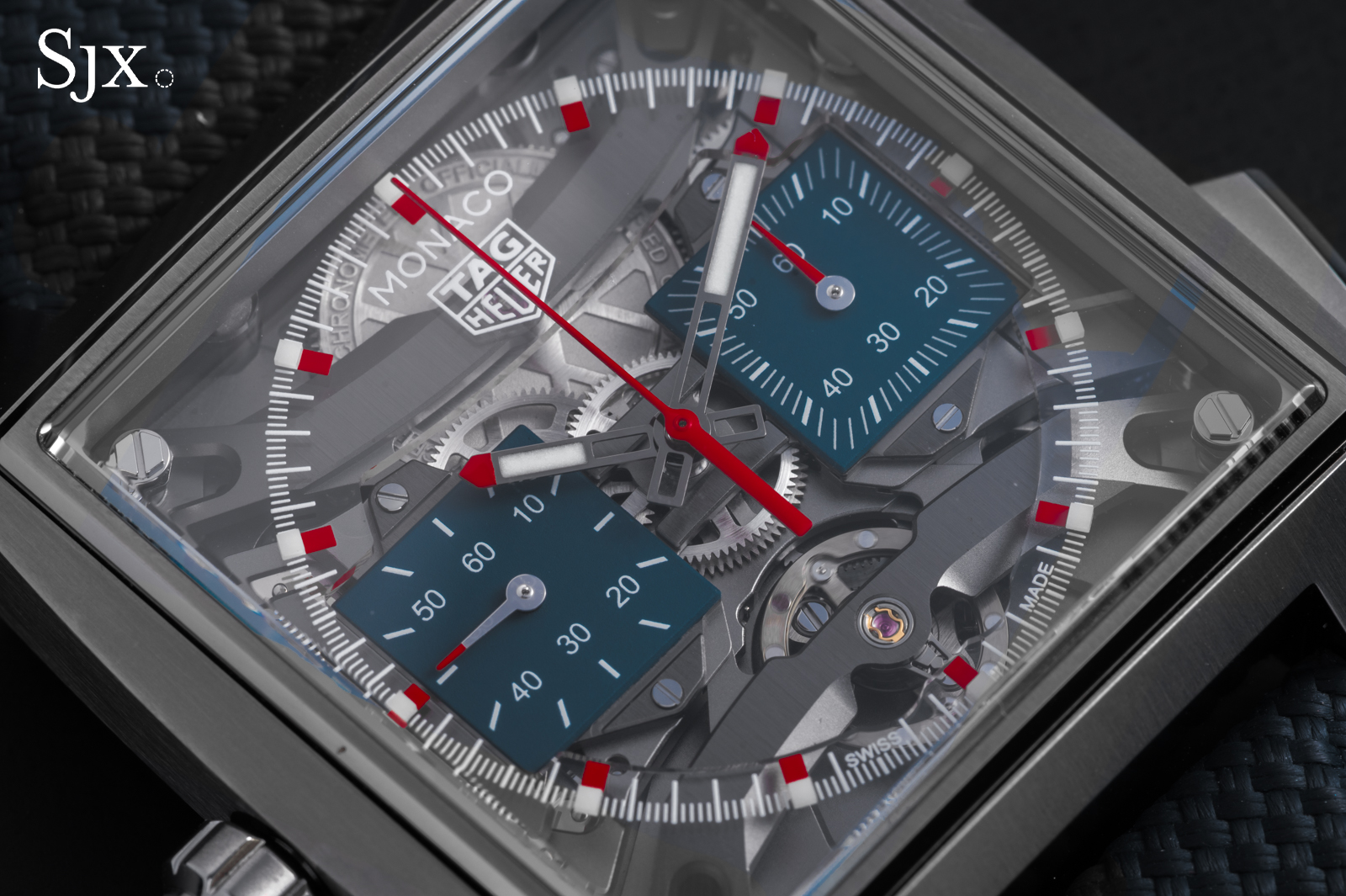
The TH80-00 movement inside (that also contains the brand’s recent carbon composite hairspring) adopts a pair of compliant mechanisms for the chronograph, one for start-stop and another for reset, doing away with the conventional levers and springs of the complication. The chronograph still retains the usual vertical clutch and cam.
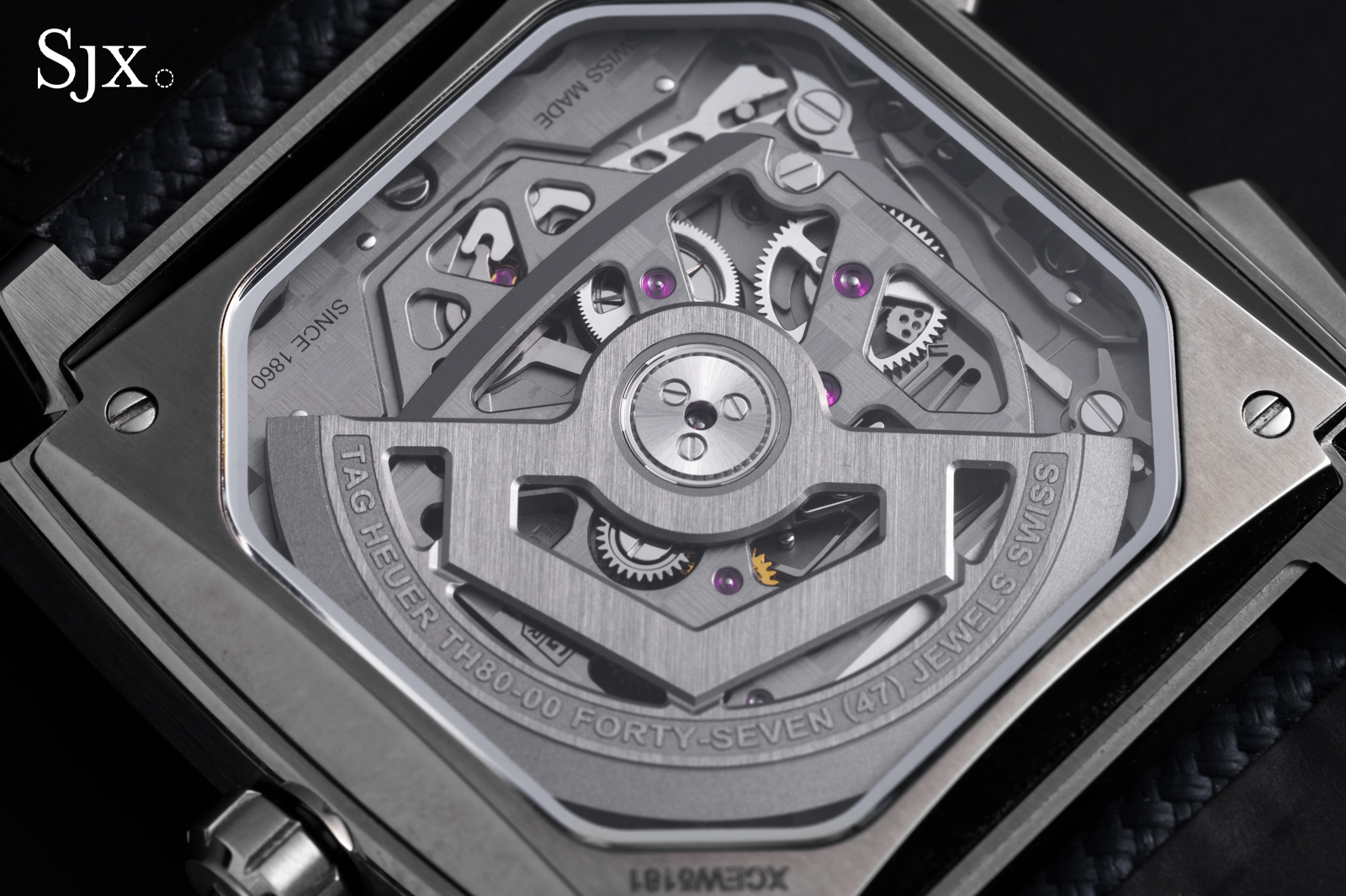
This results in a thinner chronograph mechanism, albeit one with a slightly wider footprint, but crucially, it also delivers a pleasing tactile feel. Paradoxically, the compliant mechanism chronograph feels more like a vintage chronograph movement than a modern calibre – it feels good to operate and should get even better in serial production (the watches on show were prototypes).
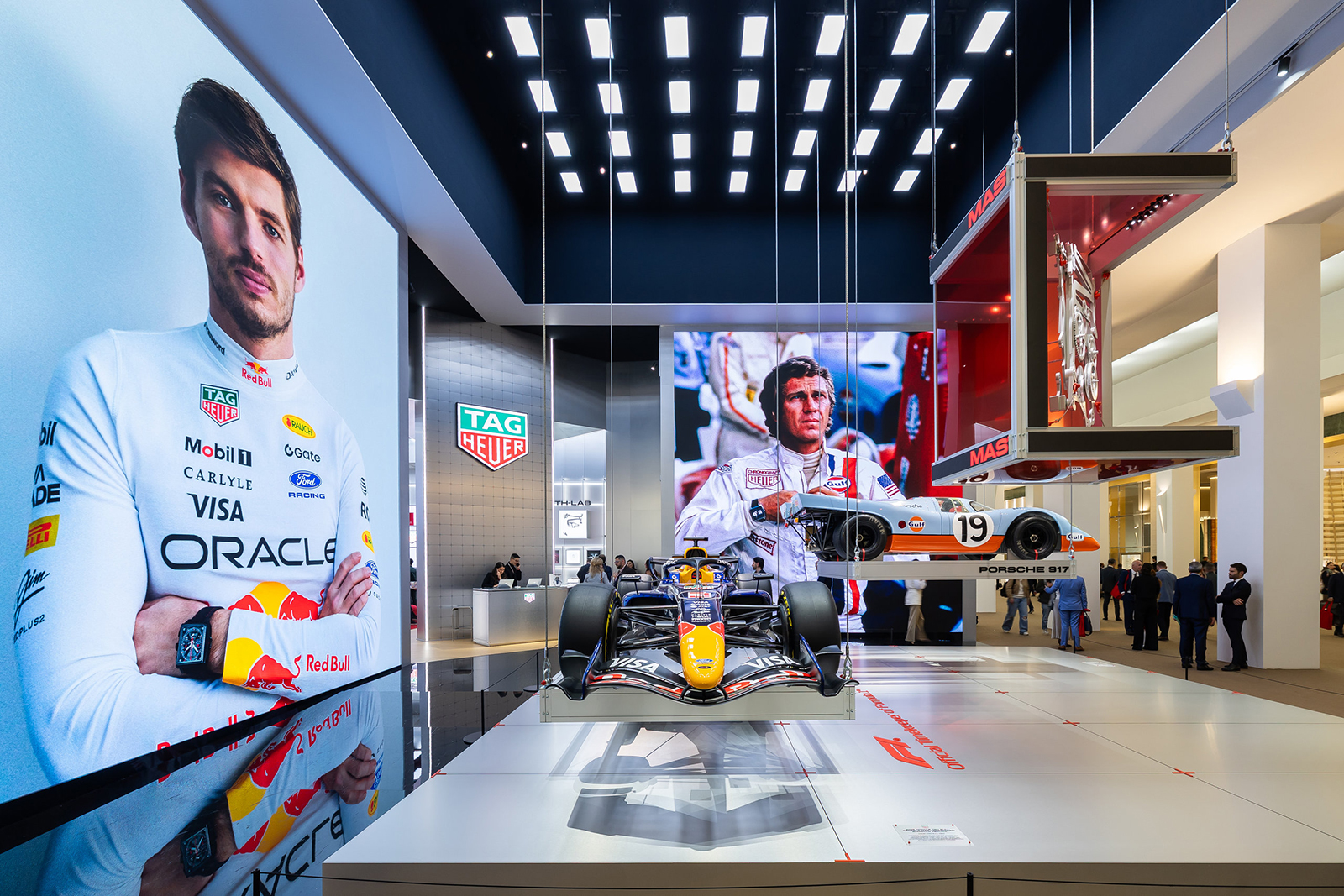
TAG Heuer showed its wares in a booth fronted by historical racing cars. Image – Watches & Wonders
Also clever but more incremental than the Evergraph is the IWC Perpetual Calendar ProSet, which debuts inside the (smaller) Big Pilot’s Watch. A long overdue upgrade to the forward-only Kurt Klaus perpetual calendar that has defined the brand, the ProSet allows the calendar to be set via the crown backwards and forwards, eliminating the hassle of needing a watchmaker to reset the calendar as is the case with the Kurt Klaus mechanism.
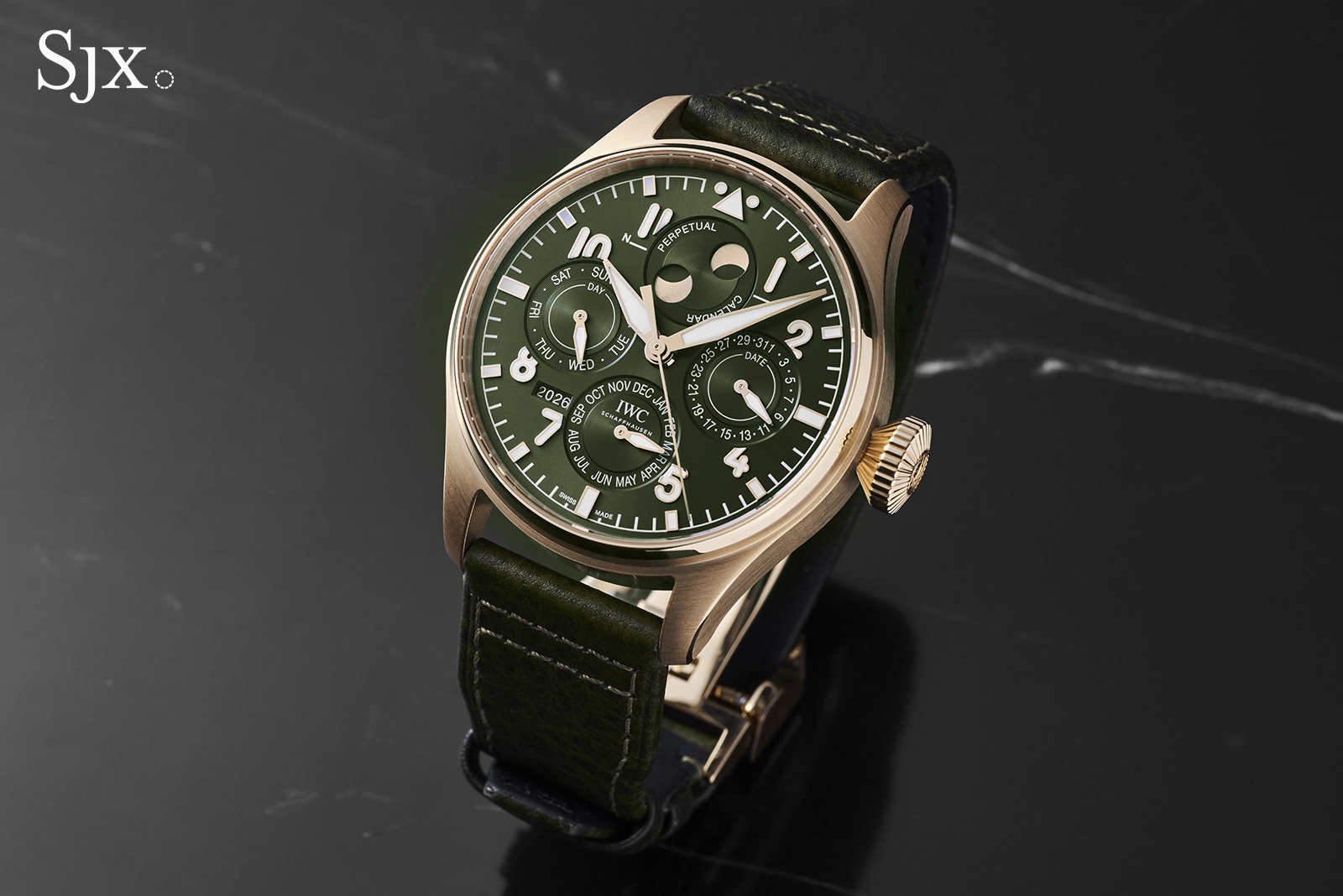
The Big Pilot’s Watch is now smaller but smarter
The ProSet does this with a stack of LIGA wheels featuring sprung, pivoted, and extending teeth. While it is impressive, the ProSet suffers from the same weakness that many recent IWC movements do, which is a so-so quality of execution in terms of construction and decoration.
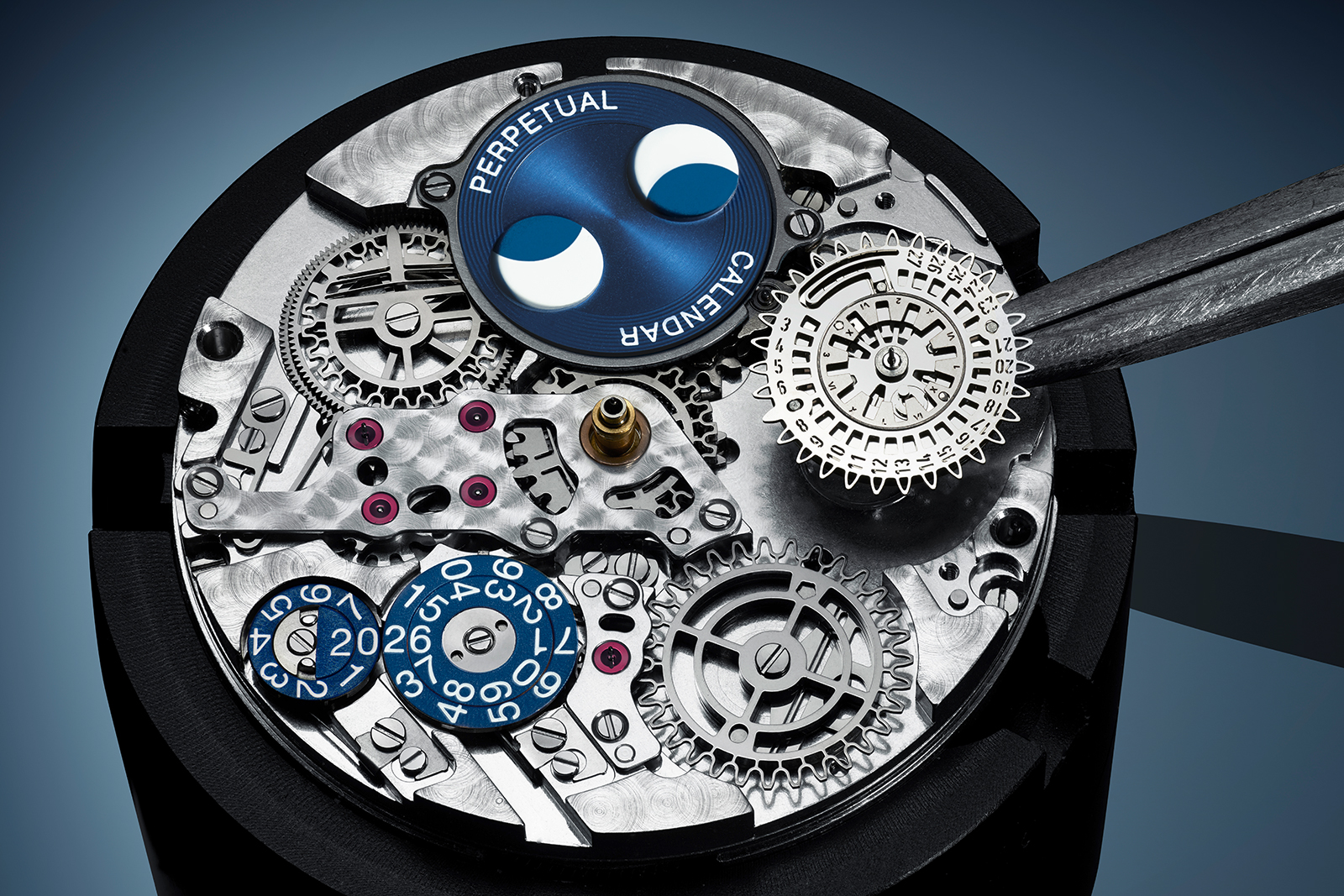
The many LIGA wheels that underpin the ProSet calendar. Image – IWC
Value buys
One of the quirkiest value propositions at W&W – and probably my favourite affordable watch – is the Tudor Monarch. While not quite a dress watch, it is dress-adjacent, especially if paired with a strap, making this a useful diversification of Tudor’s dive watch-centric offerings.
Though not officially touted as such, the Monarch is an anniversary edition to mark 100 years of the brand. A major departure from the brand’s prevailing style, the Monarch combines a facetted, angular case with an “error proof” dial combining Roman and Arabic numerals, a style better known as “California”.
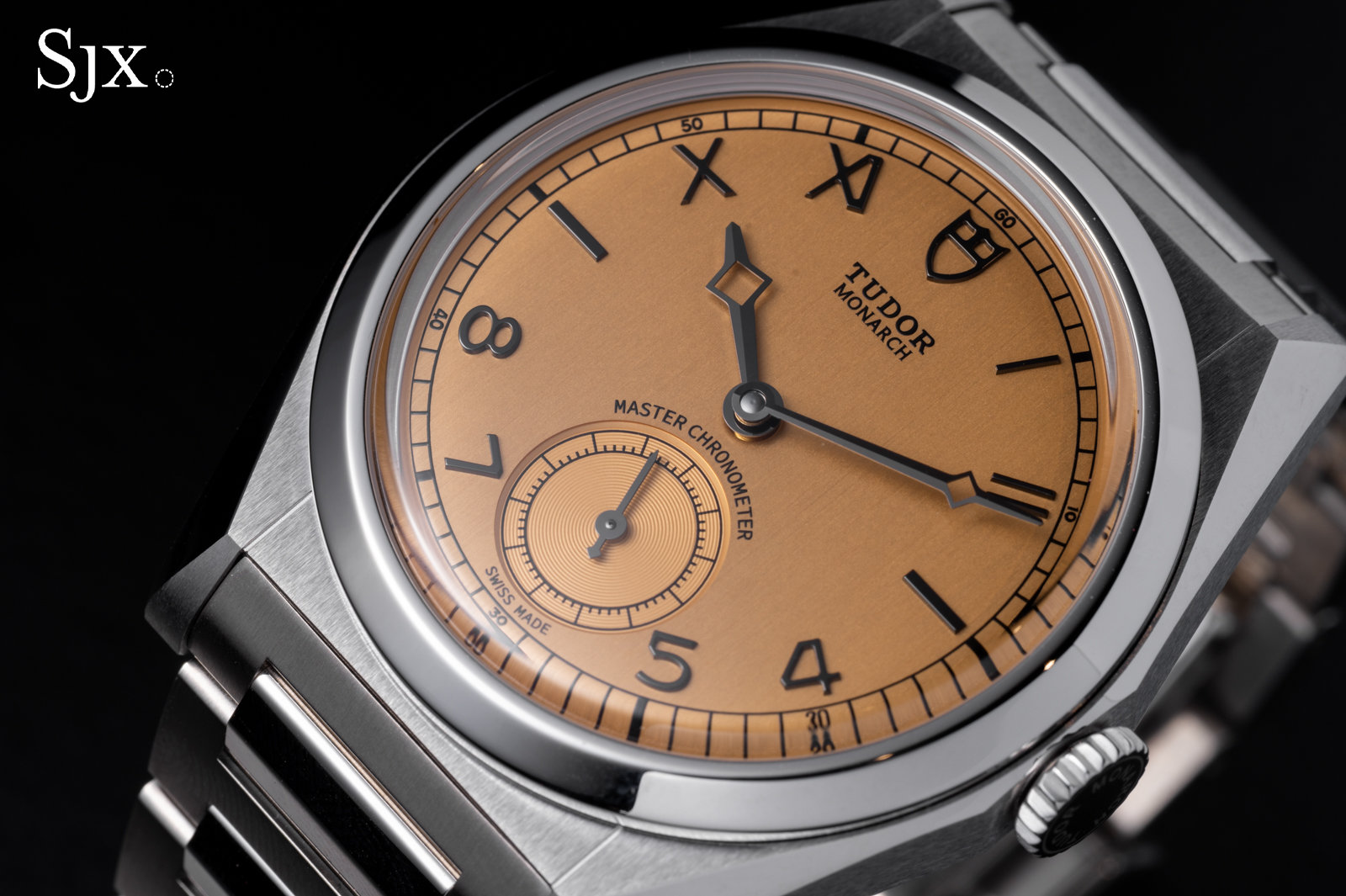
Moreover, the Monarch contains a new calibre that is high spec as is typical of the brand, but endowed with decorative finishing of the sort previously eschewed by Tudor. The calibre feature Geneva stripes, bevelling, and even some modest, but actual, gold inlay on the rotor. With a retail price of US$4,800, the Monarch continues to demonstrate Tudor’s strength in offering outstanding value.
Also notable for its value proposition is the Grand Seiko Spring Drive UFA “Ushio”, the smallest and cleanest Grand Seiko dive watch yet. The Ushio costs US$12,400, putting it at the higher end of the spectrum for a non-precious metal Grand Seiko, but still competitive given the quality and competition.
At just under 41 mm in diameter, the Ushio is entirely titanium. It’s not only lightweight but also seemingly a little smaller than it measures, making this a refreshing change from earlier Grand Seiko dive watches that were all oversized.
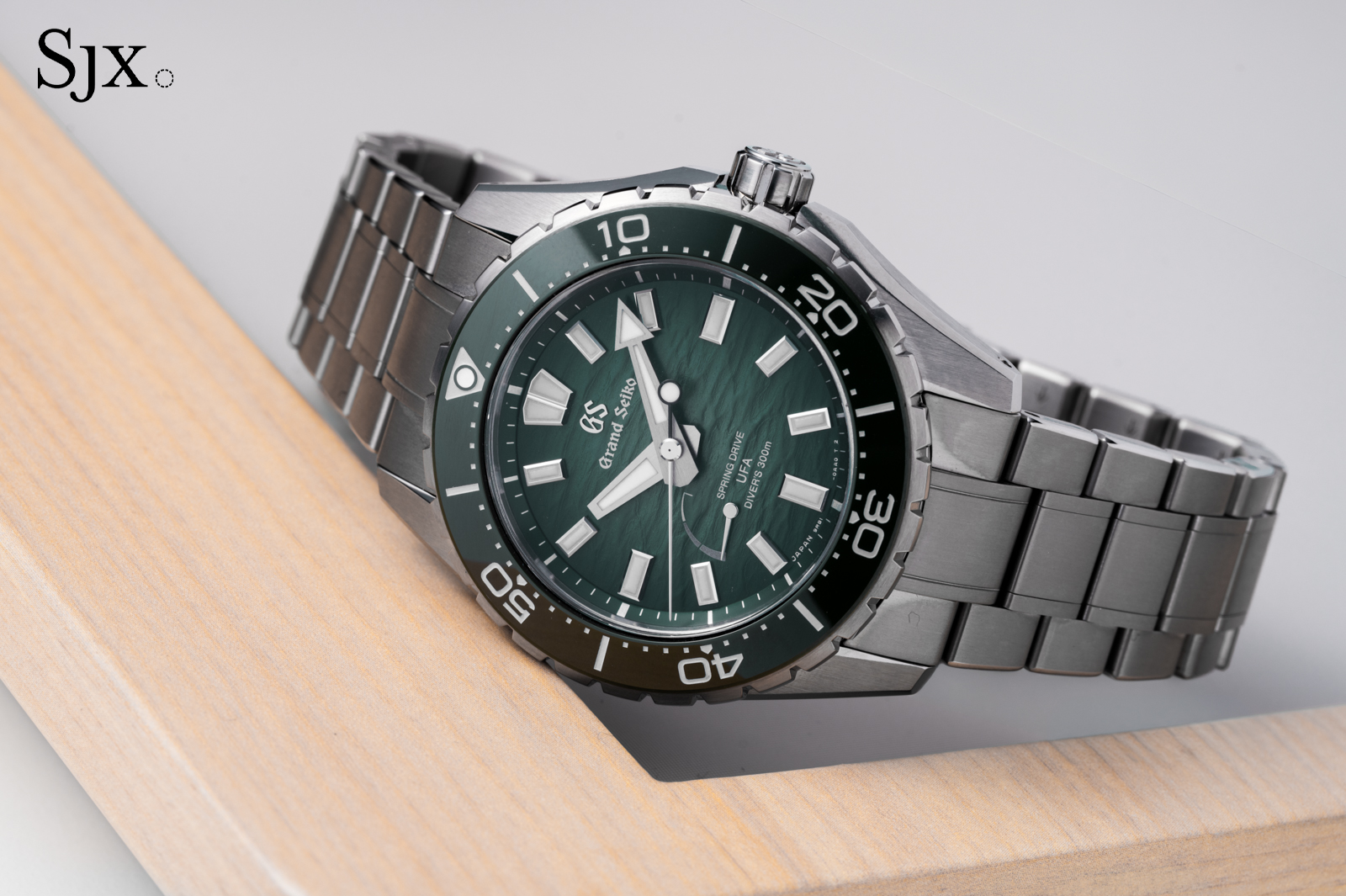
The Ushio does without a date, which many will applaud, but contains the latest generation Spring Drive Ultra Fine Accuracy (UFA) movement, ranking it amongst the most advanced Grand Seiko watches on the market. Besides taking away the date, Grand Seiko also fulfilled the wishes of enthusiasts with an improved bracelet that incorporates a hidden safety lock, dive extension, and ratcheting micro-adjustment. While not yet the best bracelet on the market, this is now very good.
Back to top.