
Patek Philippe’s New Celestial Blasts Off
With a new look, and clever sunrise and sunset indications.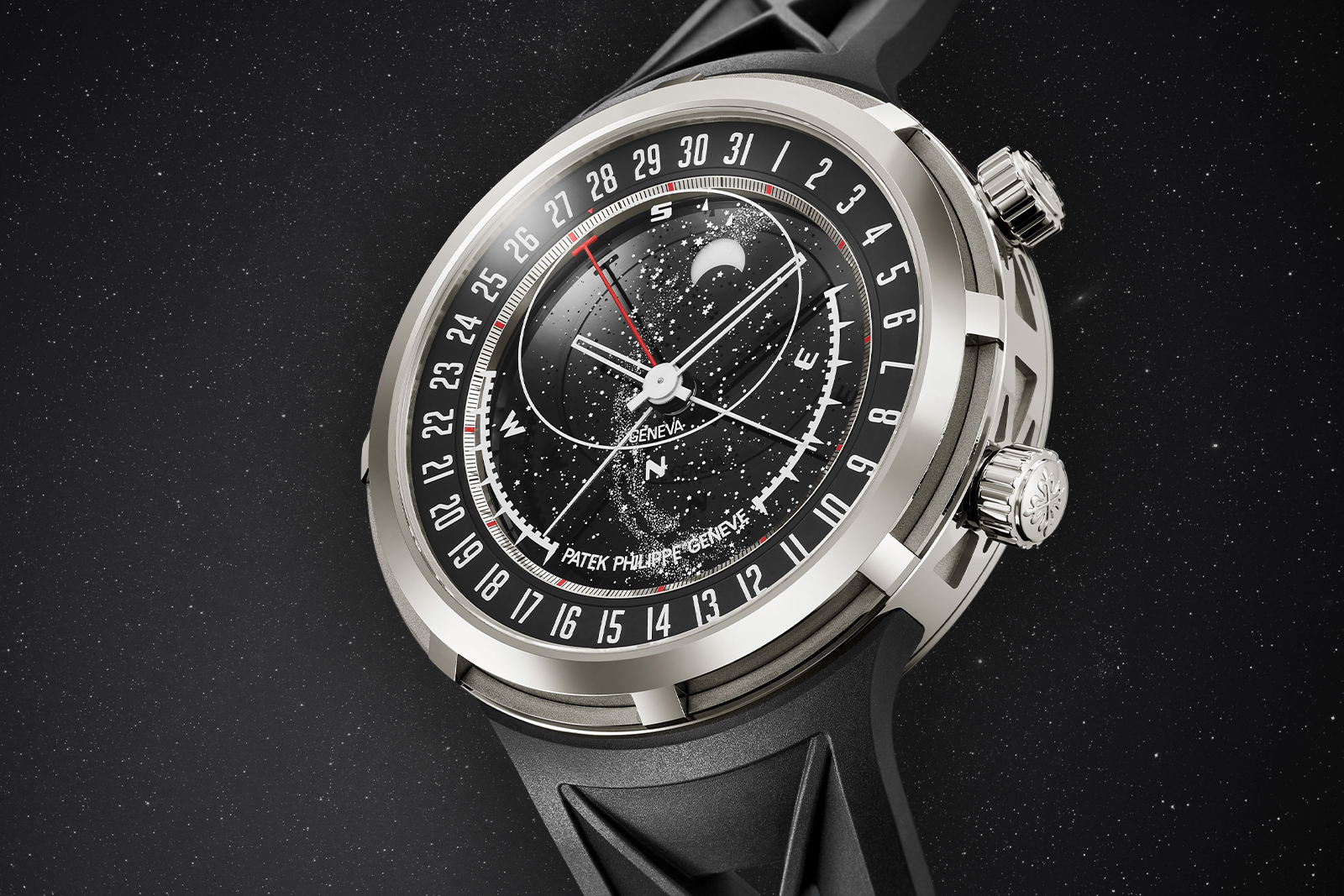
Patek Philippe updates its Celestial line for the third time, following the addition of a pointer date in 2012 this generation adds the time of sunrise and sunset, and a daring new design for the formidable, space-age 47 mm lug-less case.
It also introduces a novel way to account for the transition between summer and winter time, solving a significant shortcoming of astronomical watches for users in Europe and the Americas.
Initial thoughts
I’ve long thought that Patek Philippe’s greatest strength, other than its massive industrial investments, was its remarkable design diversity. Today brands seem to pursue a unified design language across all of their watches. And while this result is a strong visual identity for the brand, it is extremely limiting.
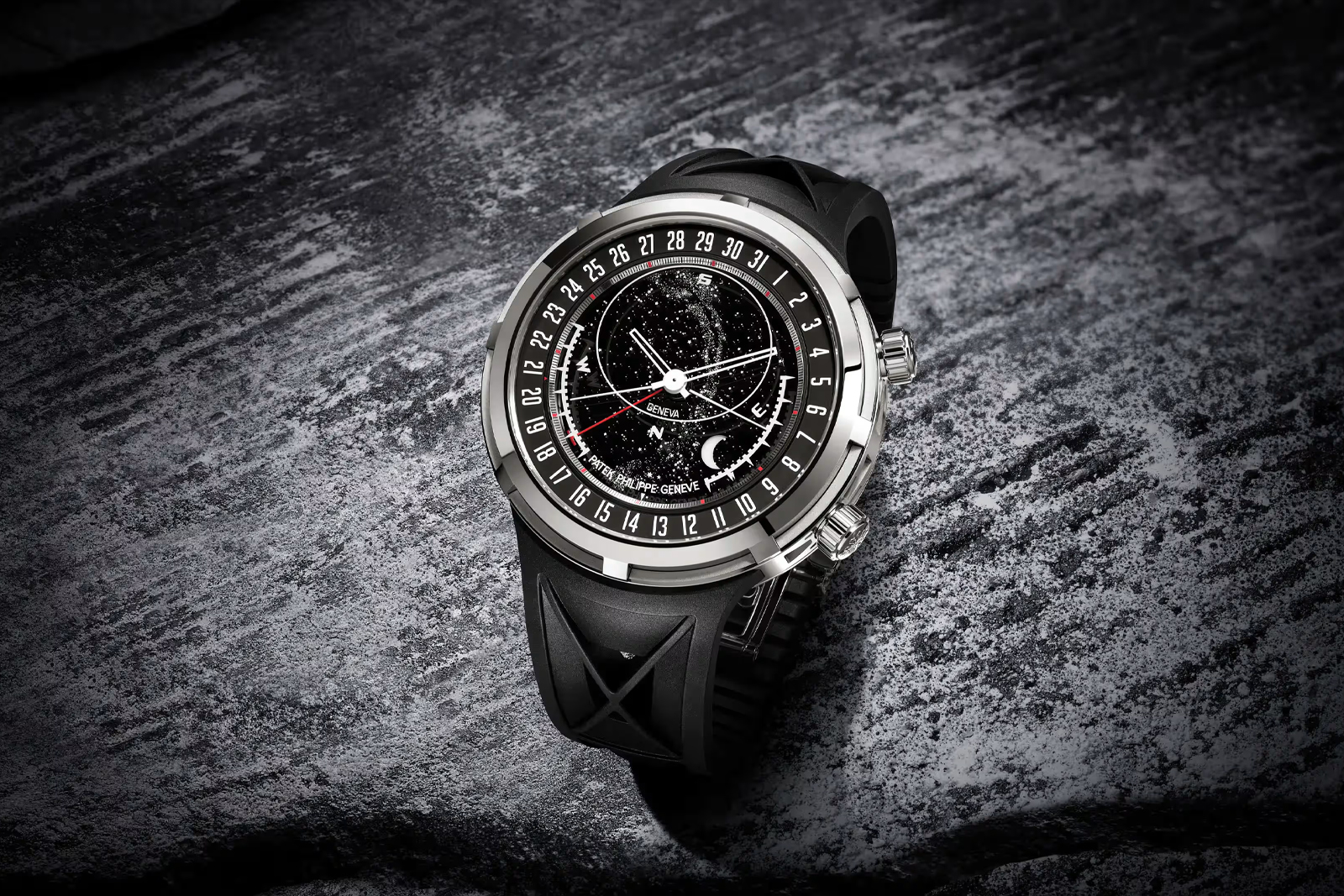
Patek Philippe has no such limits, and the brand has about two dozen different case styles in the current collection, and hundreds in its back catalog. While this leads to its fair share of design misses, at least to my sensibilities, it can also lead to striking successes. I’m sure many will disagree, but I see the new Celestial as the latter.
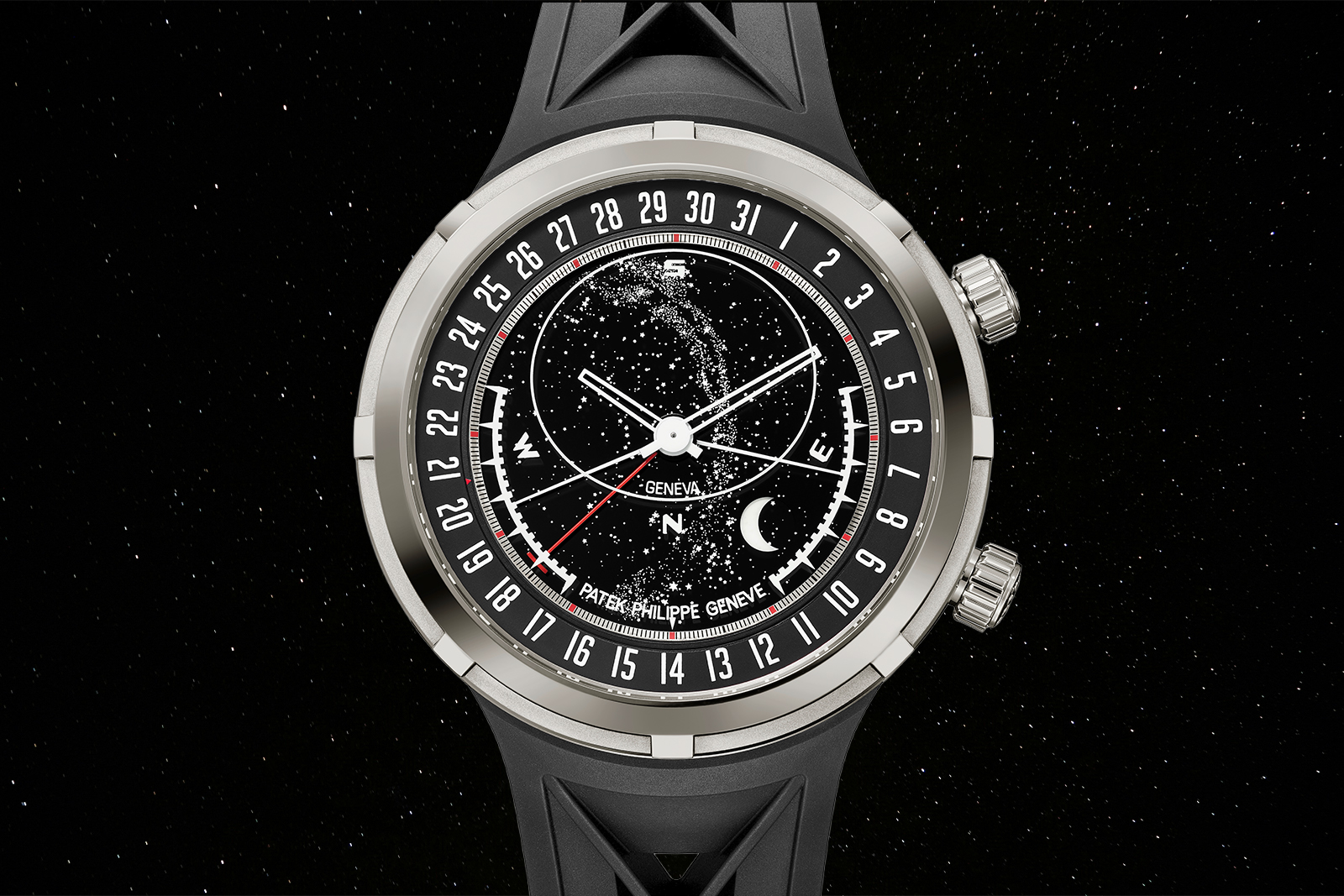
A wristwatch with the time of sunrise and sunset is long overdue from Patek Philippe, and this watch adds the ability to adjust those indications to account for daylight savings time. This addresses the complication’s greatest flaw, but as it is pre-programmed for Geneva, it is somewhat moot is you live at very different latitudes, a flaw the planisphere also shares.
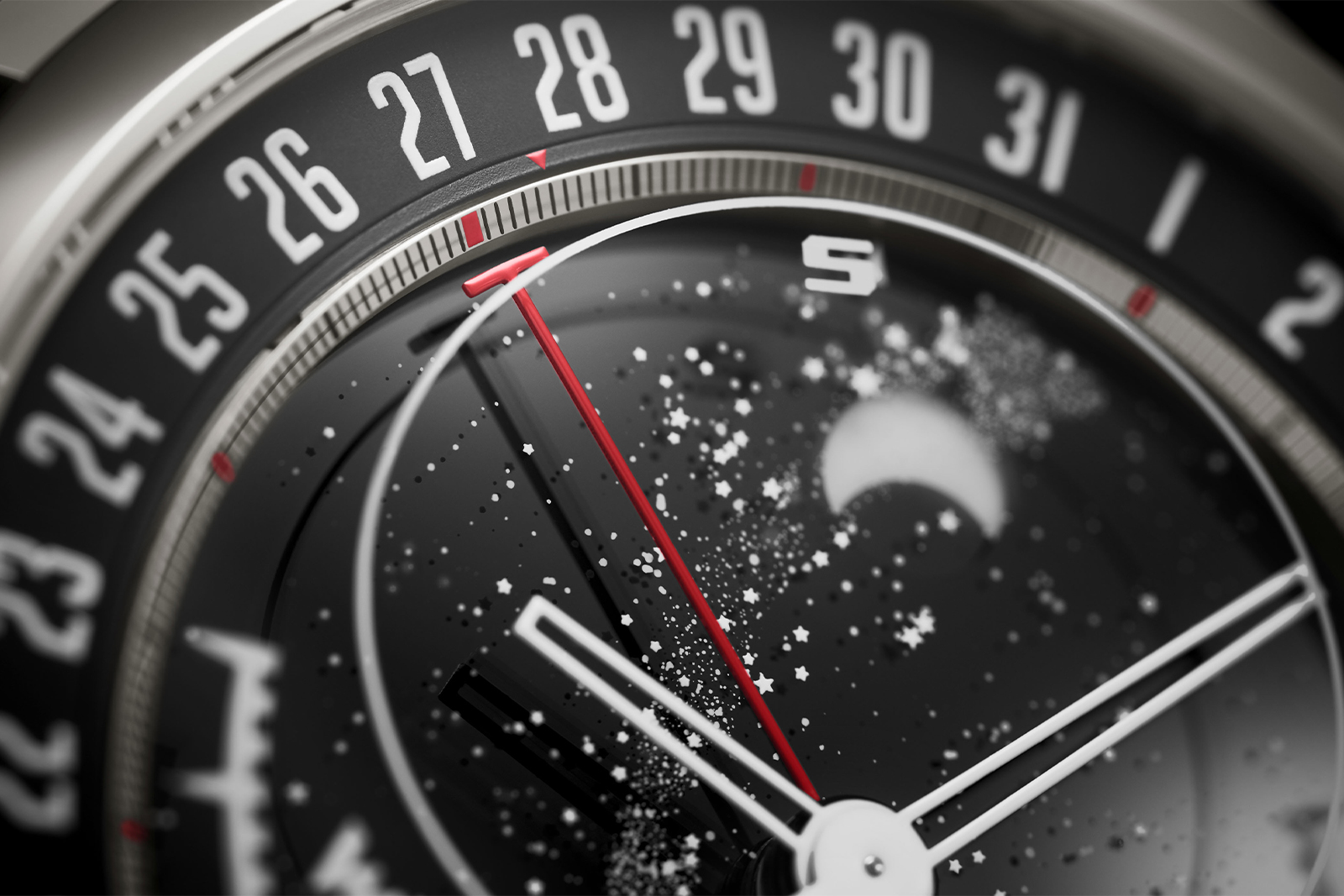
Historically, astronomical watches were deeply personal to their owners, take those of James Ward Packard and Henry Graves Jr. which were programmed for their primary residences. Audemars Piguet’s now-discontinued Equation of Time proved it is possible for a big brand manufacture watches like this add scale, switching out the sunrise and sunset camps, and equation of time chapter ring, for the owner’s city.
Star Calibre 2026
The Celestial roots lead back to the monumental Star Caliber 2000, a massive duoface astronomical Westminster clock watch. It was also astronomically expensive, both to make and at retail. Patek Philippe followed up with the more economical Sky Moon Tourbillon, which uses miniaturised version of the Star Calibre’s 2000 planisphere on the back of the ref 5016’s movement, with some small tweaks.
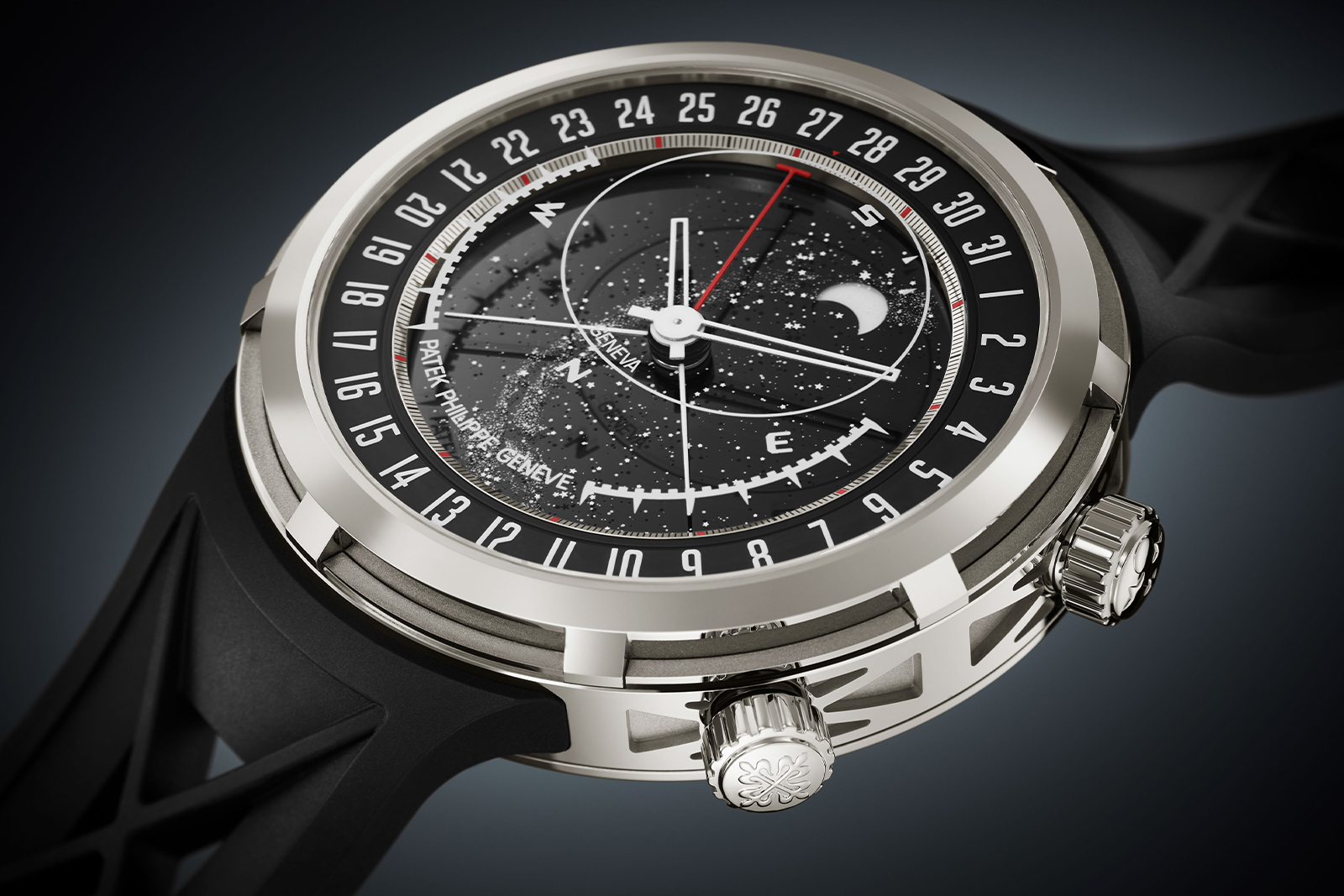
An even more approachable Celestial ref. 5102 soon followed, transposing the planisphere onto the cal. 240, which was then updated in 2012 with a point date. Now, Patek Philippe adds a third layer of complications. The complete roster of complications is now: planisphere, phases and passage of the moon, date, and time of sunrise and sunset.
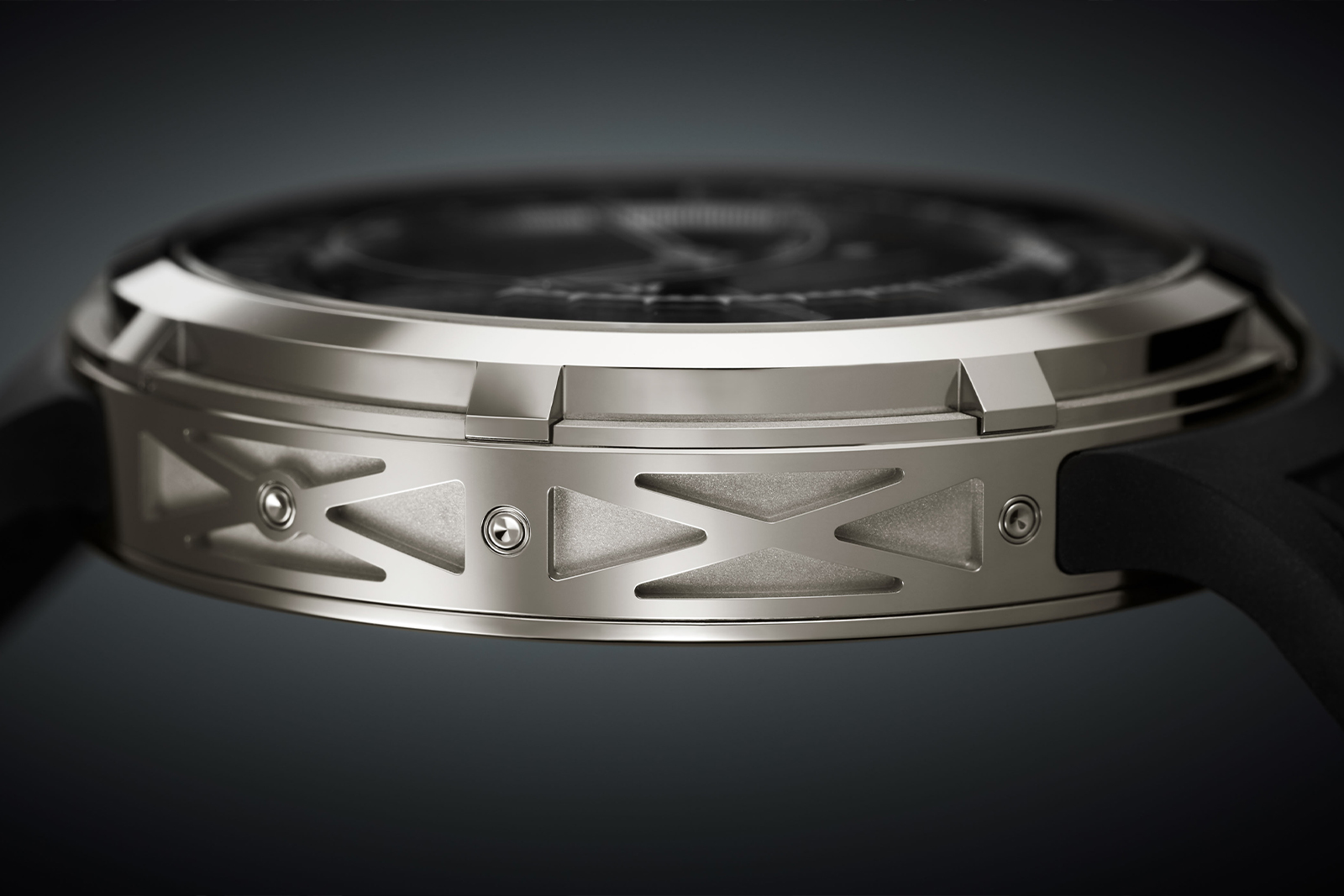
It is not an annual or perpetual calendar, so the date must be corrected manually at end of months with less than 31 days using a pusher in the case band. This is similar to the Krayon Anywhere, which also uses a simple calendar to drive its time of sunrise and sunset complications. Cleverly, the pointer date ring also acts the as scale for the sunrise and sunset hands.
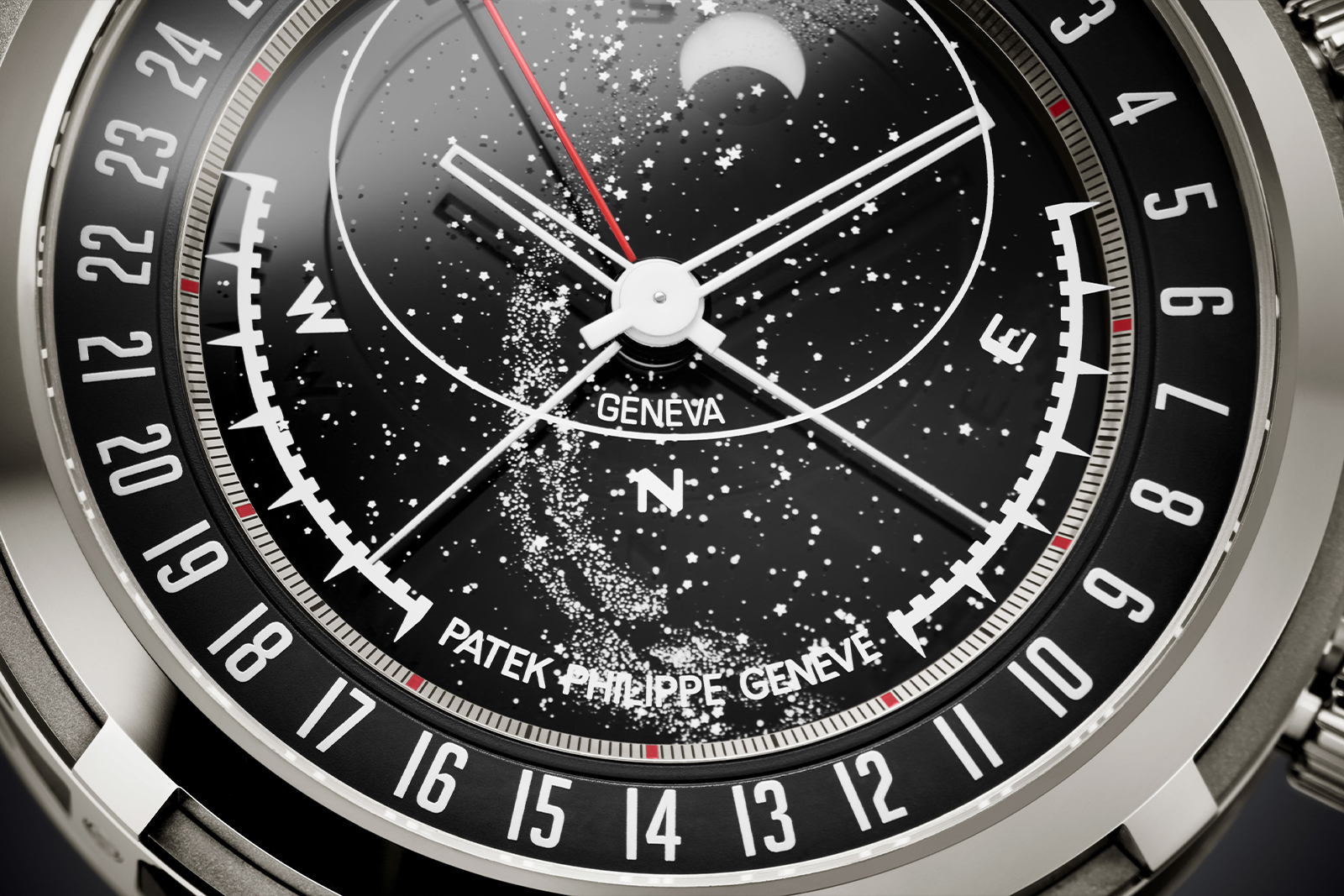
Pressing the pusher at 9 o’clock advances the times displayed by one hour to Summer Time, while the single corrector at 10 o’clock pulls the times back by one hour to Winter Time. Lastly, the second crown adjusts the planisphere by turning in one direction, and the moon in the other. Once set, the moon will take over a thousand years to accumulate an error of one day.
Space case
Patek Philippe describes the case as a “striking modern design” which is perhaps an understatement. The case is white gold and an expansive 47 mm, though the legless design should make it more wearable than the specifications suggest. The reoccurring x motif along the case band and on both sides of the strap is inspired by the tubular trusses common on spacecraft and man-made satellites.
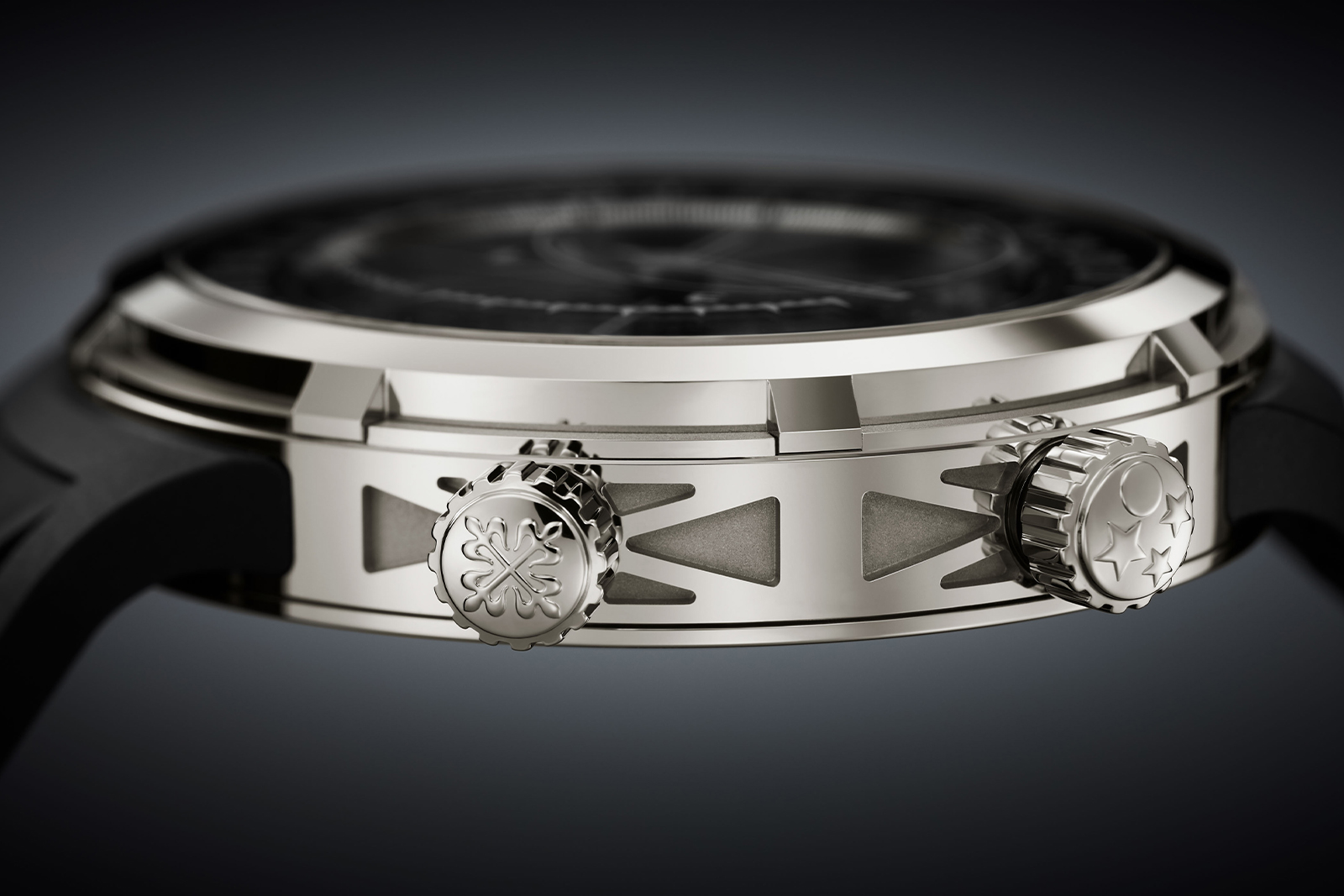
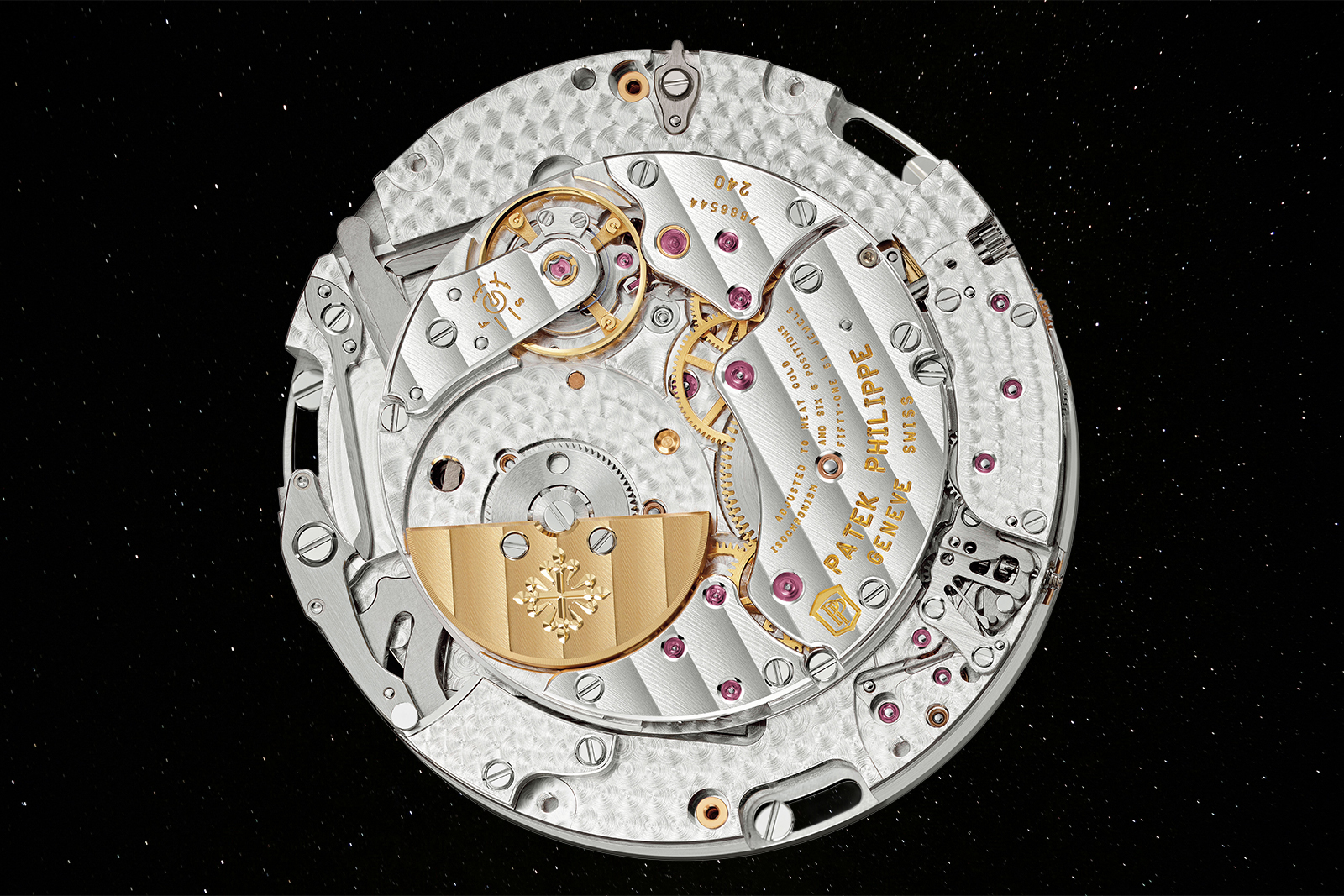
While Patek Philippe launched a larger micro-rotor calibre several years ago, which already powers the in-line perpetual calendar and some travel time complications, Patek Philippe continues to use the 49 year old cal. 240 as a base. The 27.5 mm movement was already too small for the 44 mm ref 6102, and a display back would look comical on this 47 mm case, especially as the module on top is almost twice the size of its base. While this sizing incongruity is unfortunate, Patek Philippe thankfully only offers this watch with a solid case back.
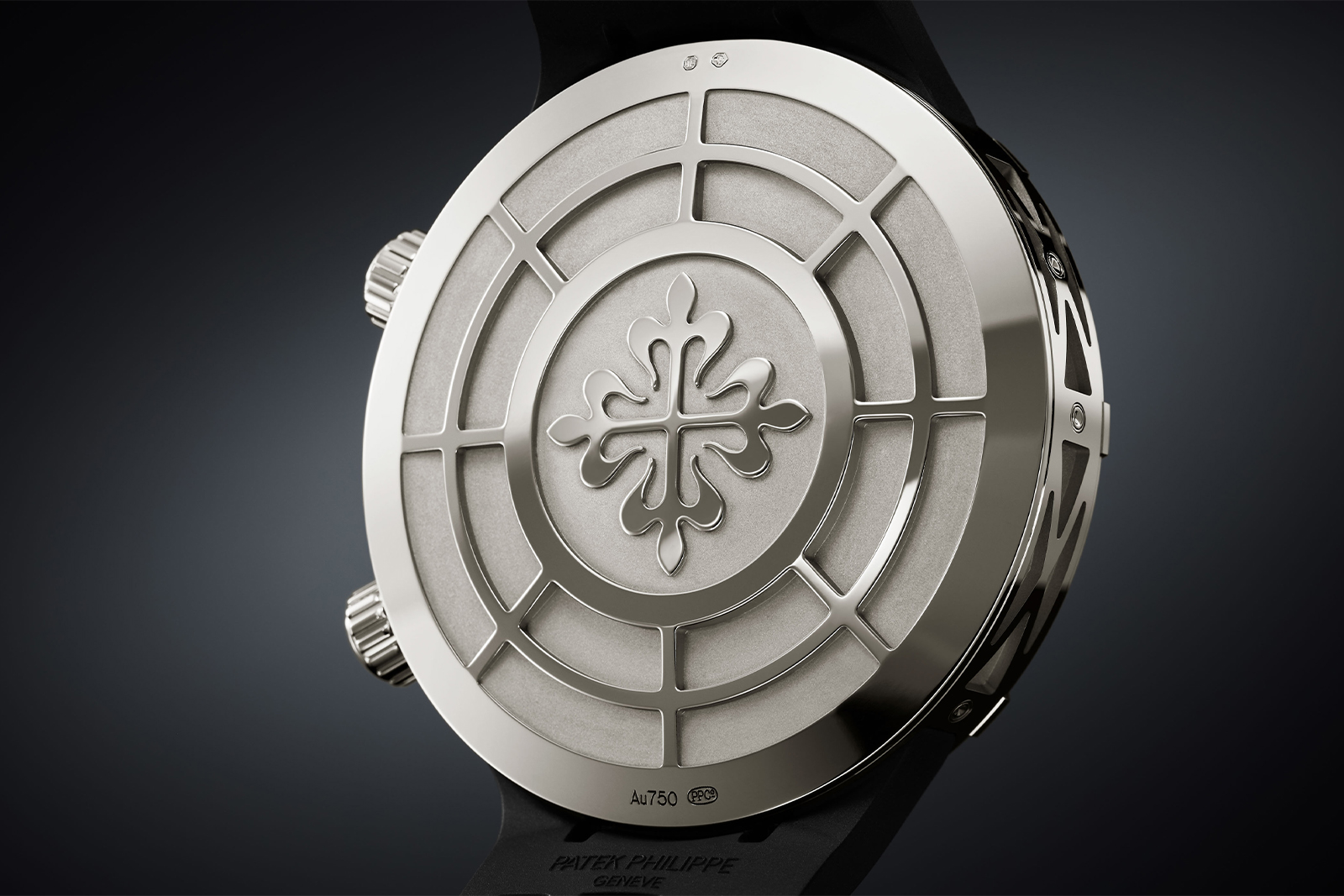
When the cal. 240 is out of sight and out of mind, it is a fine workhorse calibre, capable of keeping good time while somehow supplying enough torque to the massive module while keeping the watch quite slim for what it is, at only 12.29 mm tall.
Key facts and price
Patek Philippe Celestial Sunrise and Sunset
Ref. 6159G-001
Diameter: 47 mm
Height: 12.39 mm
Material: 18k white gold
Crystal: Sapphire
Water resistance: 30 m
Movement: Cal. 240 C LU CL LCSO
Functions: Hours, minutes, date, planisphere, time of sunrise and sunset, date
Frequency: 28,800 beats per hour (4 Hz)
Winding: Automatic
Power reserve: 45 hours
Strap: Rubber with triple-blade clasp
Limited edition: No
Availability: At Patek Philippe retailers and salons.
Price: US$437,610 excluding taxes
For more, visit Patek.com.
Back to top.