
The Longines Legend Diver 59 is Bigger and Better
Diving like it's 1959.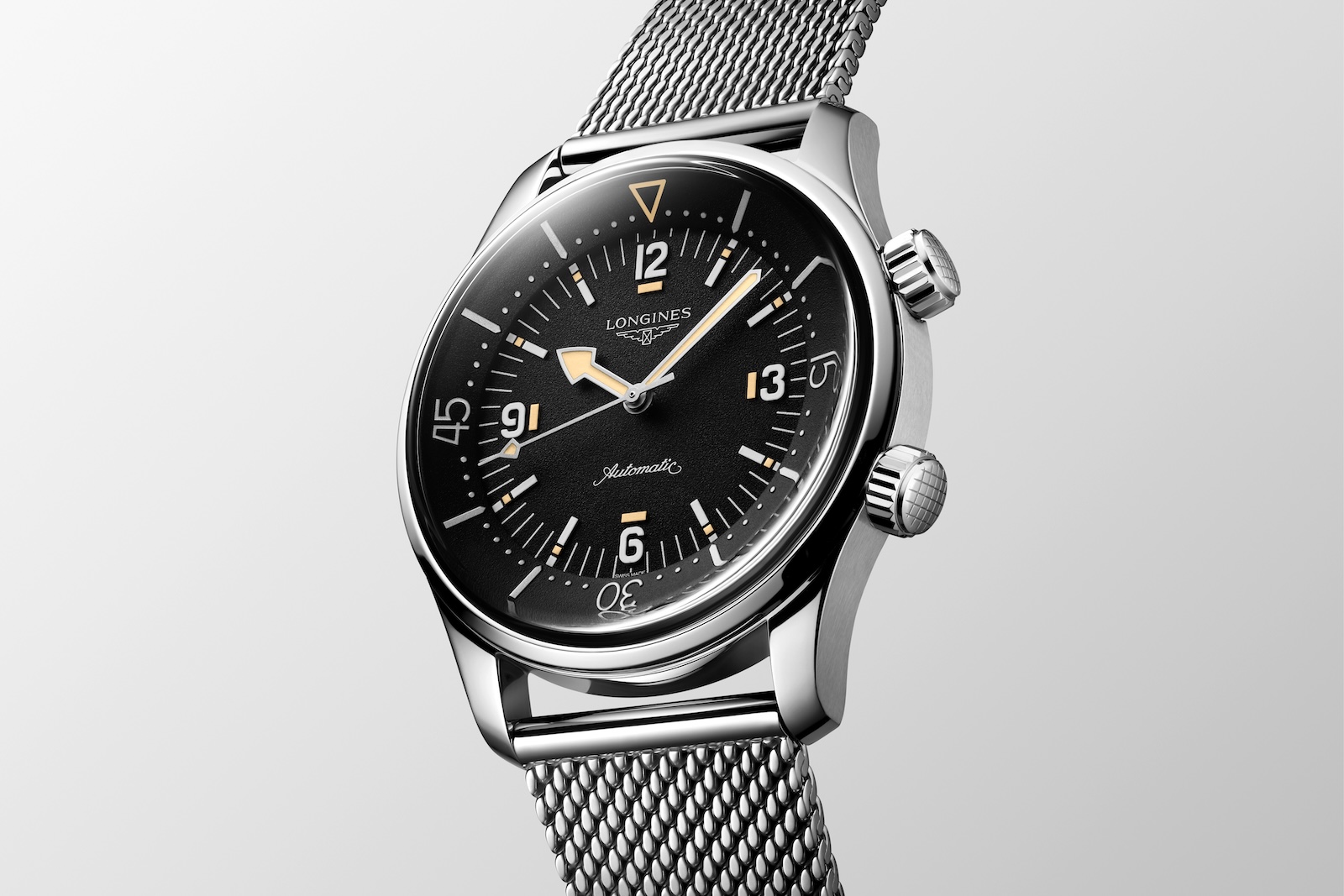
Longines is carrying momentum into the summer after the well-received launch of the refreshed Hydroconquest line. The brand hopes to continue that winning streak with a nipped and tucked 42 mm Legend Diver 59.
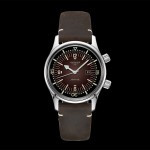
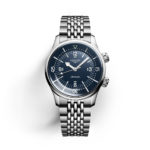
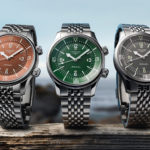
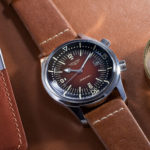
As the name suggests, the new “LLD” references the 42 mm ref. 7042 launched in 1959, and offers a different take on the dive watch that gives it a distinct character compared to many Submariner-inspired peers. With subtly reworked dimensions, the LLD 59 is closer to the vintage original in proportions.
Initial thoughts
The original LLD of 2007 was a pioneer of the now-common practice of reissuing historical models. While faux patina and period-correct details seem to be everywhere today, they seemed novel back then. Many brands followed — quickly enough to suggest concurrent development — but the launch of the LLD helped usher in a design trend that still dominates the industry.
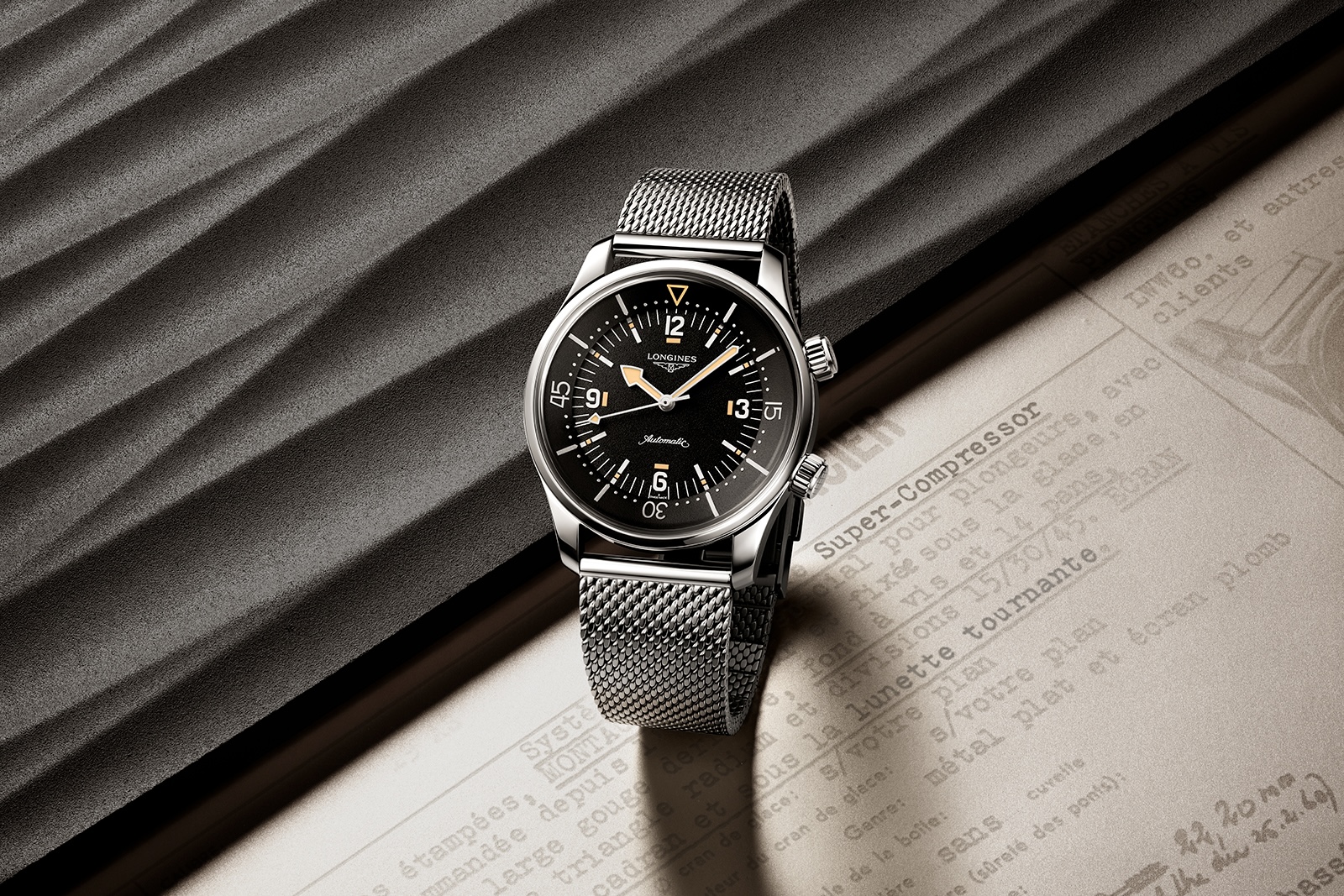
The LLD 59 offers a straightforward value proposition — a high-fidelity historical design, an advanced proprietary calibre, and an affordable price of US$4,100. The ‘Super Compressor’-style case — characterised by its dual crowns and internal rotating bezel — offers an alternative perspective on the dive watch compared to category mainstays like the Tudor Black Bay.
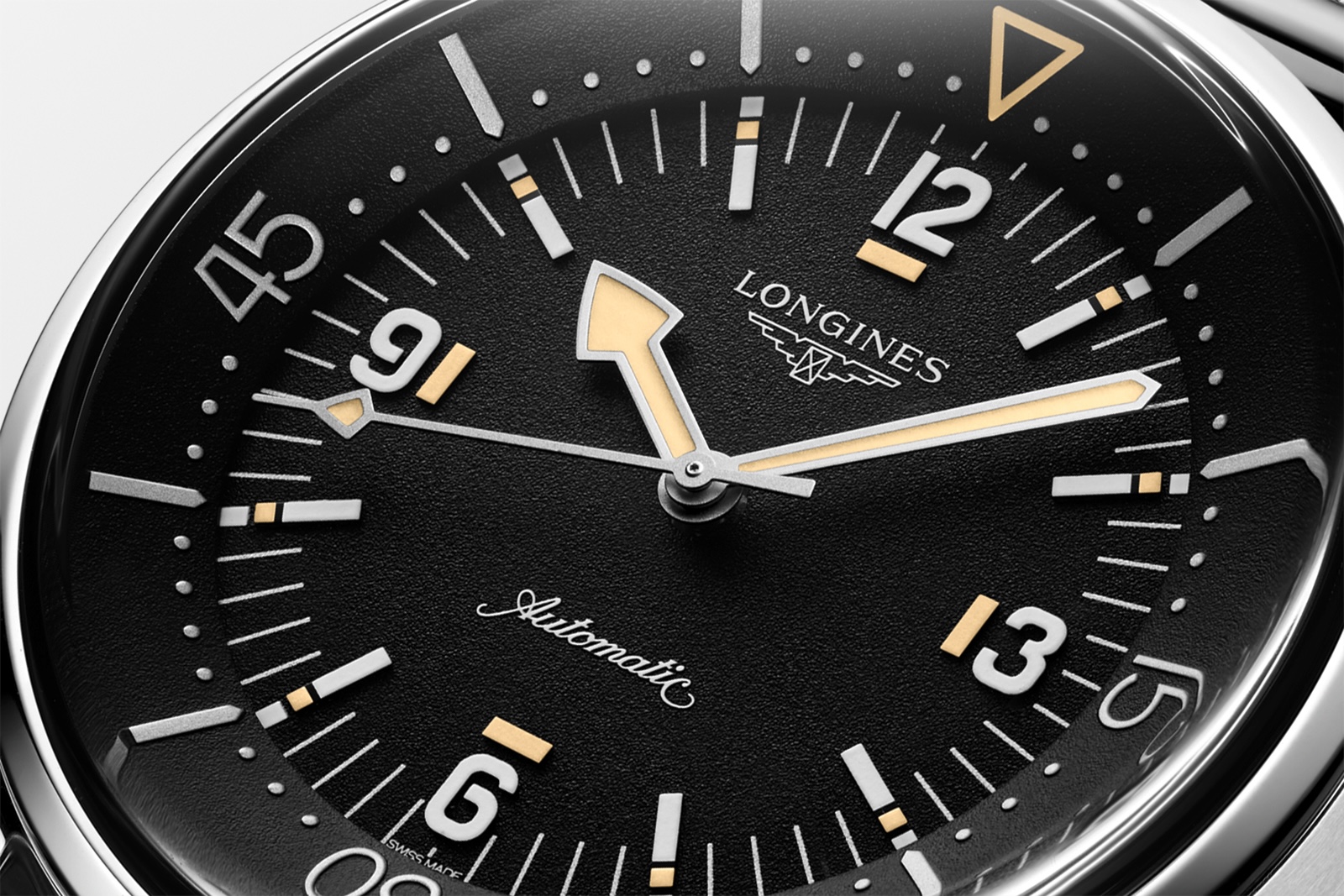
For collectors and enthusiasts troubled by the notion that a Black Bay might been perceived as a ‘poor man’s Submariner’, the LLD is a similarly priced and similarly equipped vintage-inspired diver with an entirely different look. While Tudor might be the most obvious point of reference, the LLD 59 will likely also capture some market share from micro-brands.
A new 42 mm case
Tangibly, the LLD 59 has a lot in common with the rest of the LLD collection, which is fairly concise at just 16 current models. Longines introduced smaller sizes in 2018 (36 mm) and 2023 (39 mm) but the 42 mm format is historically correct. Even the things I don’t like about the watch — including the flowing ‘automatic’ text on the dial — were present on the vintage originals.
Interestingly, the LLD 59 is not identical to the existing 42 mm references. For one thing, it lacks a date, suggesting it’s targeted at the enthusiast market. Second, the case features shorter lugs that decrease the lug-to-lug length from 52.6 mm to 50.1 mm — this difference should be enough to transform the on-wrist experience for collectors who felt earlier 42 mm models were too big.
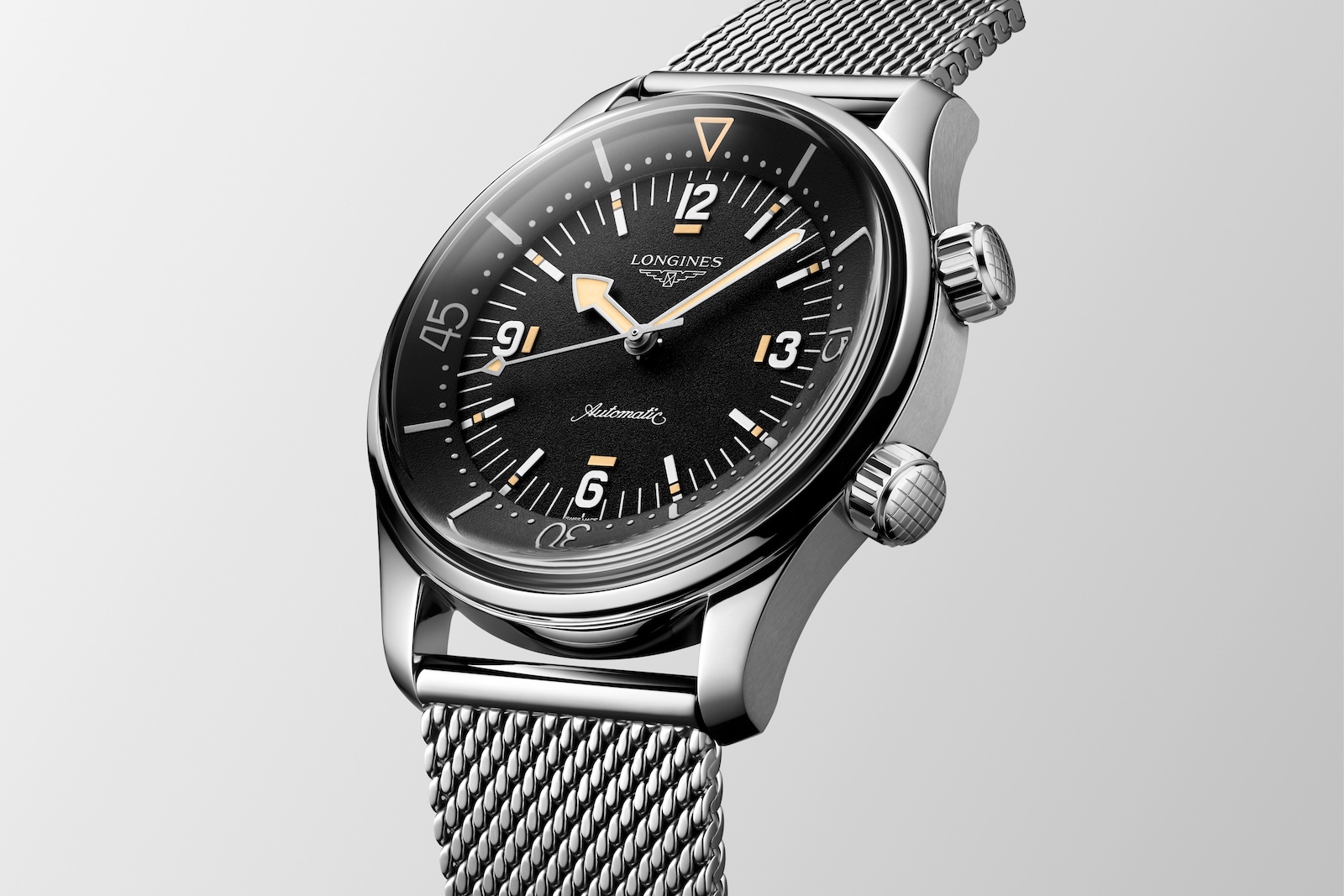
As the name suggests, the LLD 59 is an ISO 6425-compliant dive watch, and is tested to a depth of 375 m despite its 300 m rating. The bezel is bi-directional, but it’s set via a screw-down crown, which prevents inadvertent adjustment during use.
This means the LLD 59 is more than happy to get wet, which it can do on either of the included straps — an adjustable Milanese-style steel bracelet, or a black rubber strap.
The LLD 59 is powered by the familiar Longines calibre L888.6, which is the Swatch Group’s answer to Tudor’s MT5400. The L888.6 is smaller and thinner than its peer, but manages a similar 72-hour power reserve.
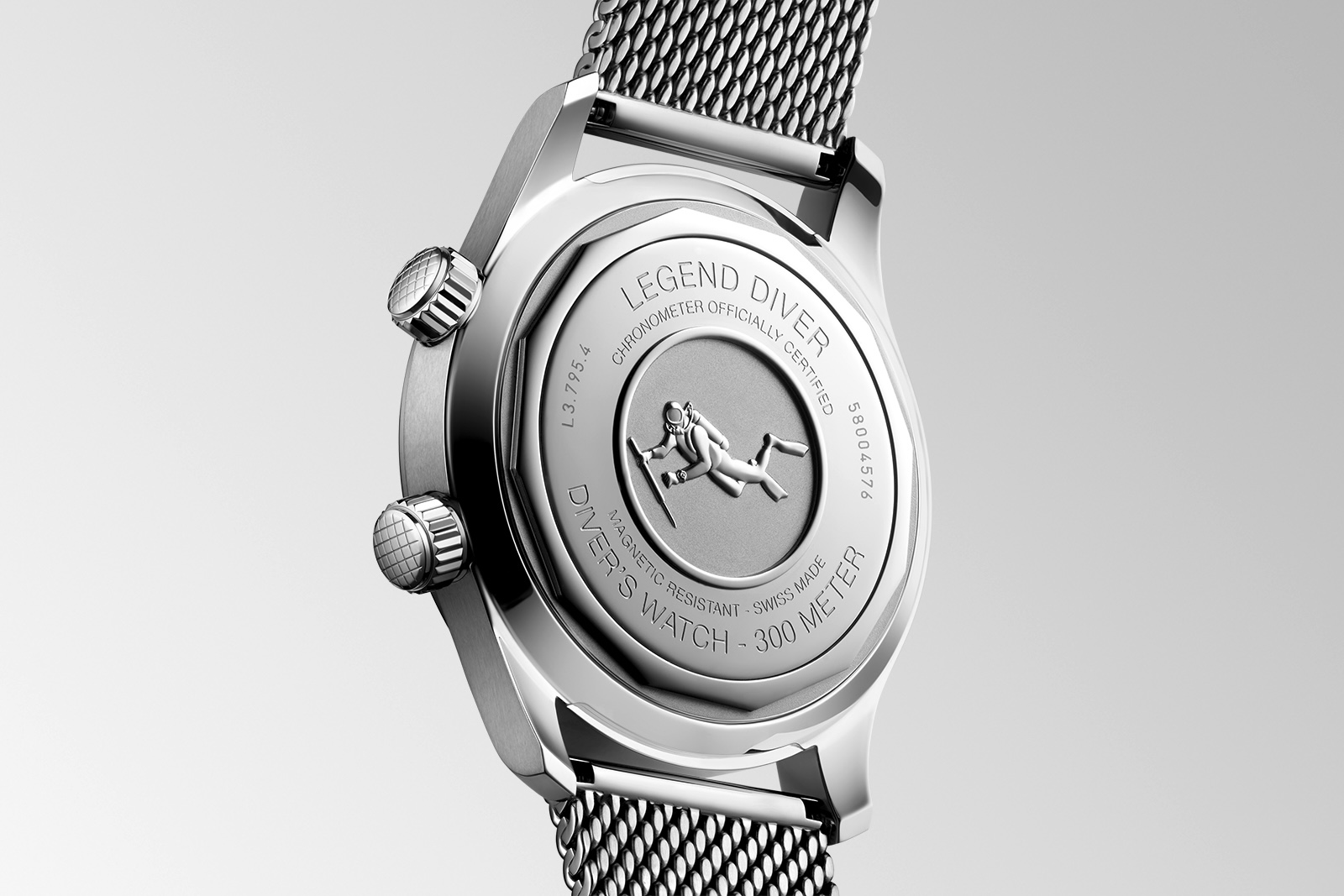
While it’s not a Master Chronometer, that’s likely a commercial distinction to give sister brand Omega a wider competitive moat within the group — given its silicon hairspring, it probably wouldn’t take much to make the L888.6 pass the Master Chronometer test.
Is bigger better?
The LLD 59 makes the case that bigger is better — in more ways than one. In the most obvious sense, the case has been sized up to 42 mm — the size of the 2007 model and the 1959 original, after years of emphasising smaller cases. But the larger case is just part of the story. The LLD 59 is a reminder that big, legacy watchmakers hold several advantages over smaller upstart brands.
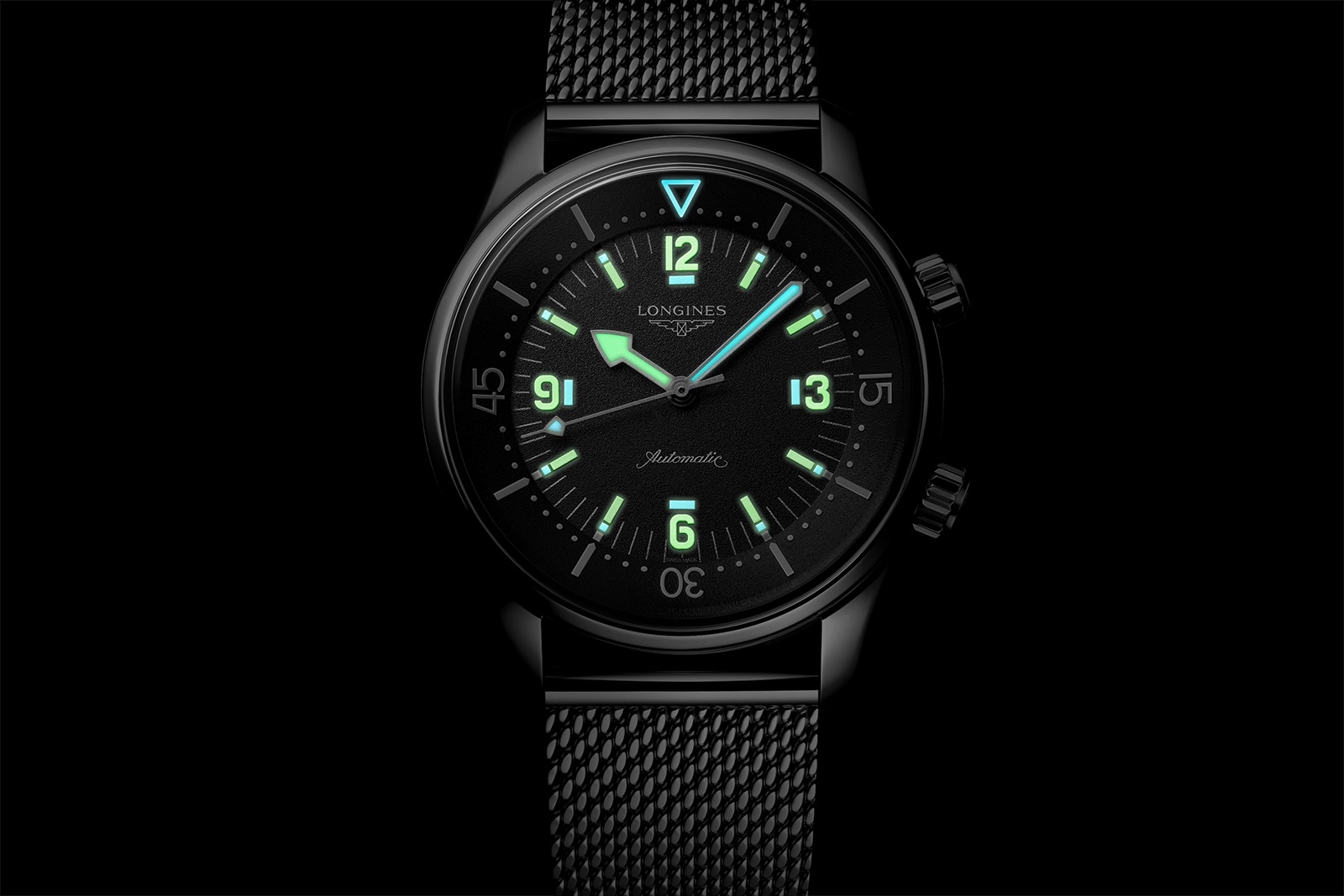
The first advantage is design history — brands like Longines and Tudor can offer period-correct designs with high-fidelity historical motifs without the end result coming across as a so-called ‘homage’ watch.
Second, integrated industrial brands have access to patent-protected technologies that improve performance. When the first LLD launched in 2007 this was less of a factor, but the benefits of features like silicon hairsprings are difficult to ignore.
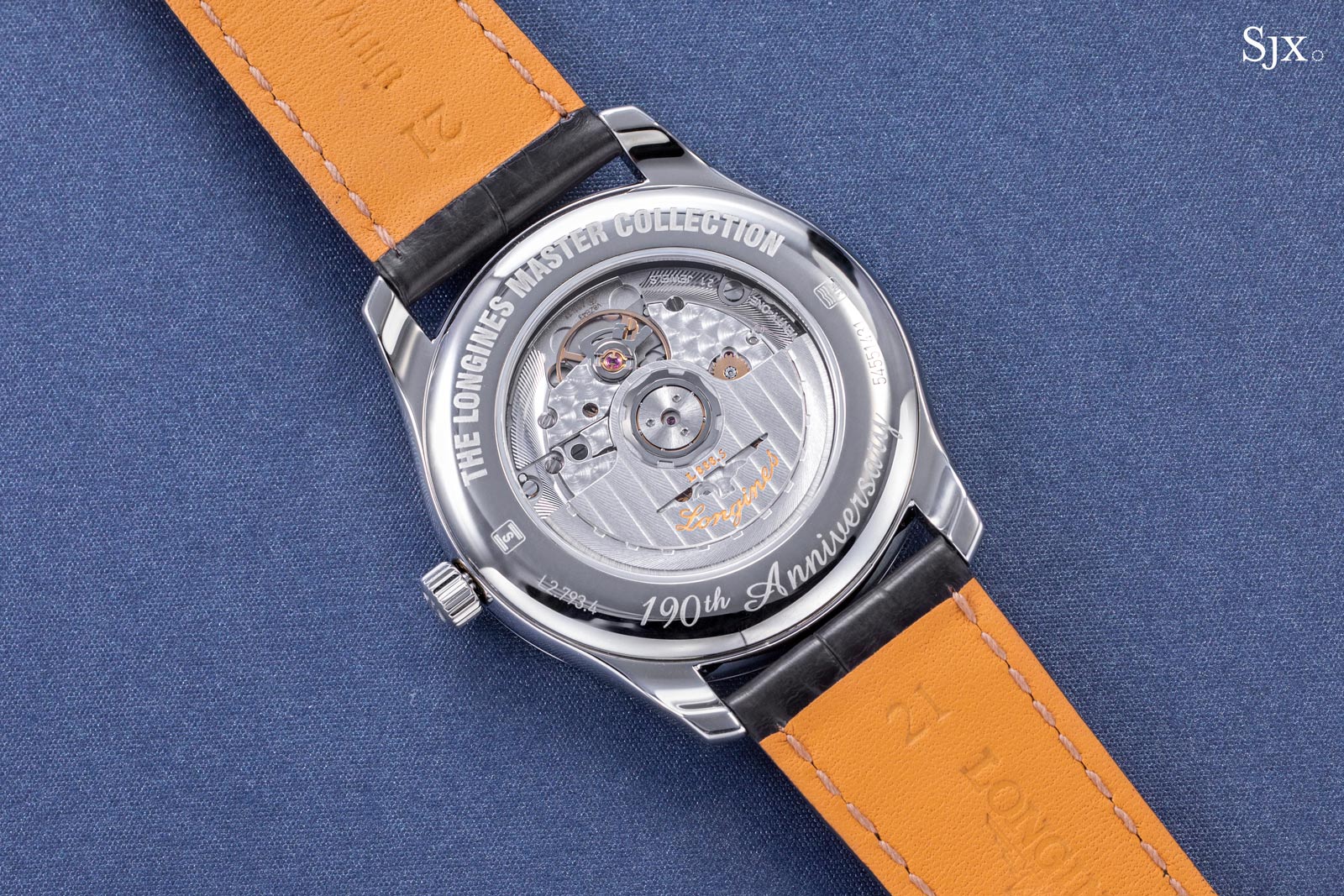
The related calibre L888.5 seen here in the Longines Master Collection.
Even if two similar watches are both COSC-certified chronometers, the silicon-equipped model will likely perform better in day-to-day wear thanks to the benefits of engineered terminal curves and resistance to magnetic fields.
Of course, there will always be a place for traditional metallic hairsprings — especially in higher-end products that emphasise craftsmanship — but for rank-and-file automatic movements, a silicon spiral represents a step up.
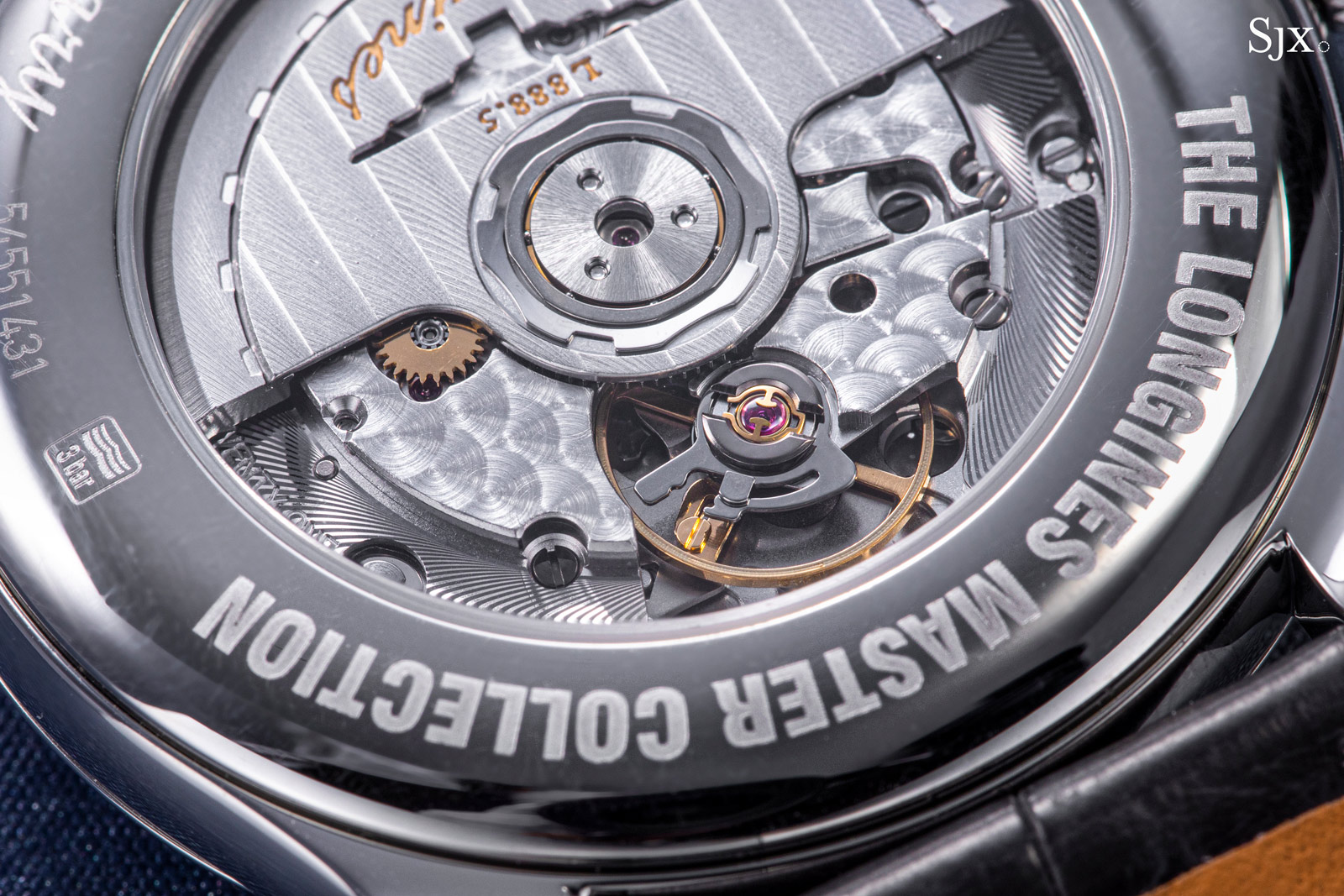
A closer look at the closely related cal. L888.5 in the Master Collection.
Finally, the watch industry is built on brands. Name recognition matters — for better or worse — and in this domain legacy brands hold a durable advantage. Their names are familiar because many of them have been around for a century or longer.
Longines in particular has a long and noble history, and was a first mover in mechanised industrial watch production in the late 1860s. And while the brand lost its own industrial base in 1986 through forced consolidation, Longines has recently recaptured a bit of its historical magic, and boasts a long list of ‘firsts’ and ‘bests’ that new brands cannot hope to match.
Key facts and price
Longines Legend Diver 59
Ref. L3.795.4.59.9
Diameter: 42 mm
Height: 12.85 mm
Material: Steel
Crystal: Sapphire
Water resistance: 300 m
Movement: Cal. L888.6
Functions: Hours, minutes and seconds
Winding: Automatic
Frequency: 25,200 beats per hour (3.5 Hz)
Power reserve: 72 hours
Strap: Matching bracelet with folding clasp and rubber strap
Limited edition: No
Availability: At Longines boutiques and retailers
Price: US$4,100 excluding taxes
For more information, visit Longines.com.
Back to top.