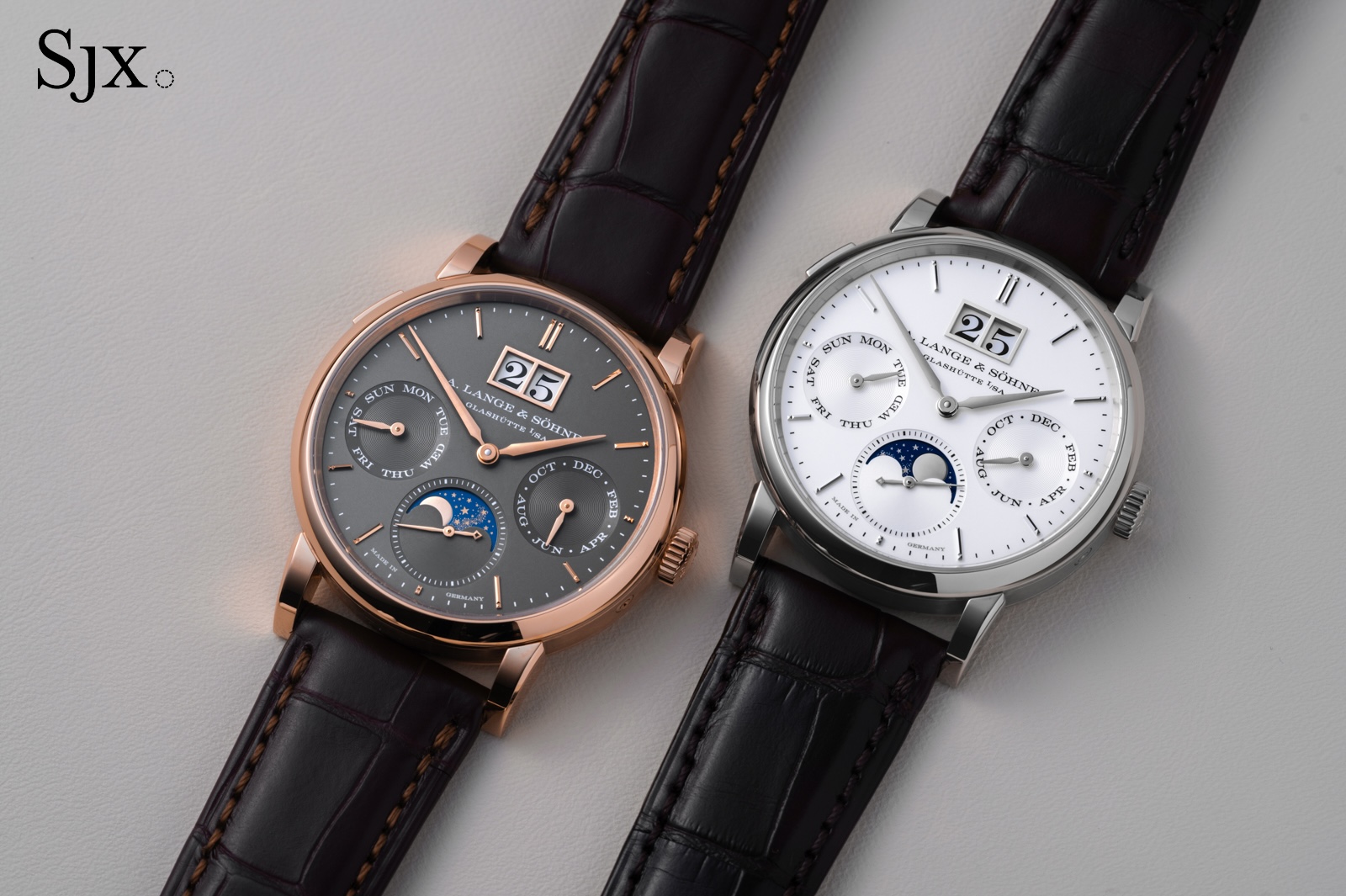
A. Lange & Söhne has repeated last year’s bifurcated release format with the launch of the compact, value-oriented Saxonia Annual Calendar alongside the flagship Lange 1 Tourbillon Perpetual Calendar “Lumen”.
Available in both 18k white and pink gold, the Saxonia Annual Calendar is not a limited edition, but will be made in small numbers as a consequence of the brand’s diverse portfolio and limited output of about 5,000 watches per year.
Initial thoughts
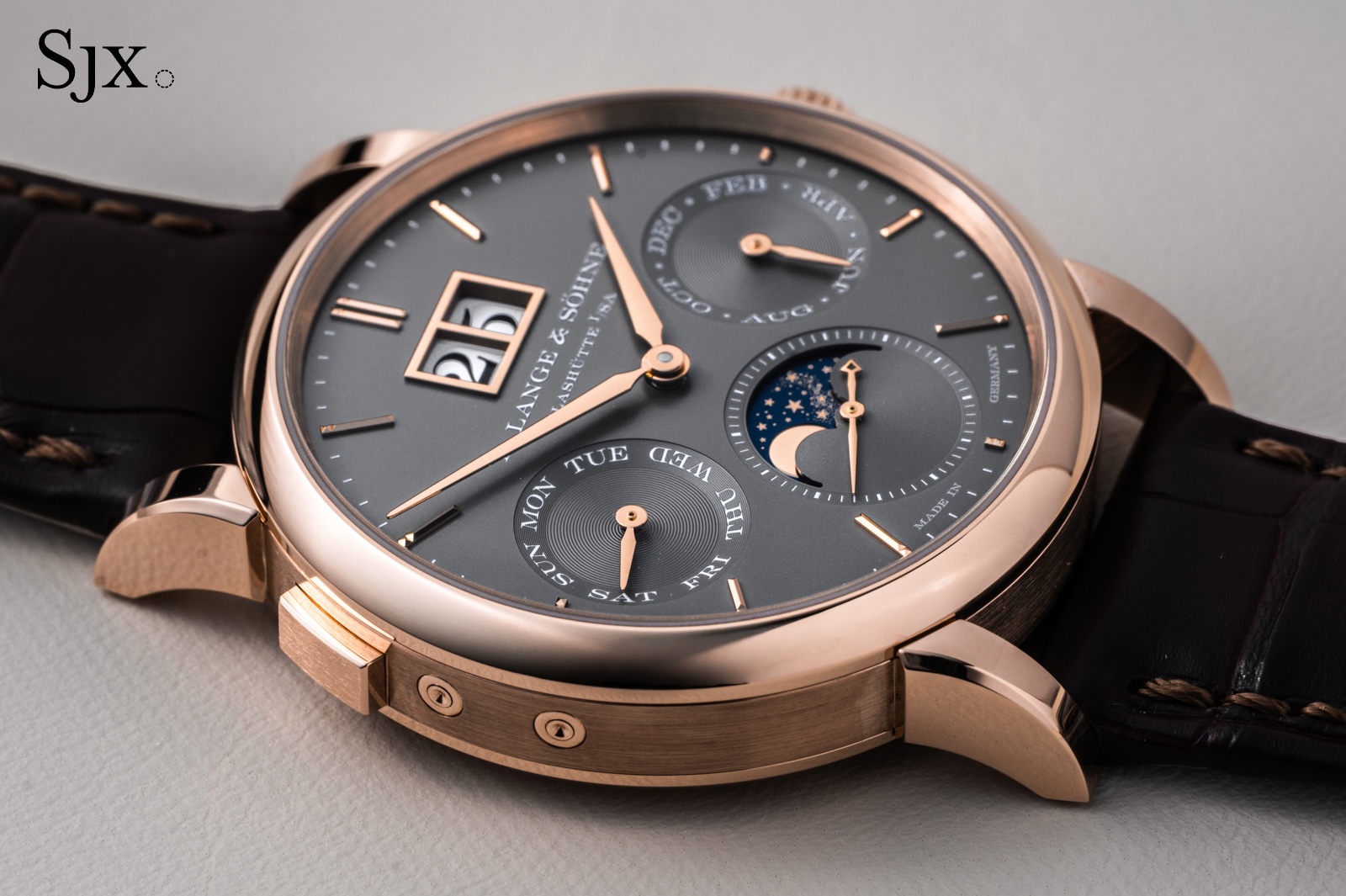
The Saxonia Annual Calendar was one of the more talked-about watches of the fair, not because it’s particularly novel or exciting, but instead because it gets all the small things right. It looks good on the spec sheet, with nearly perfect dimensions, the brand’s signature big date complication, and an upgraded and well-dressed automatic base calibre.
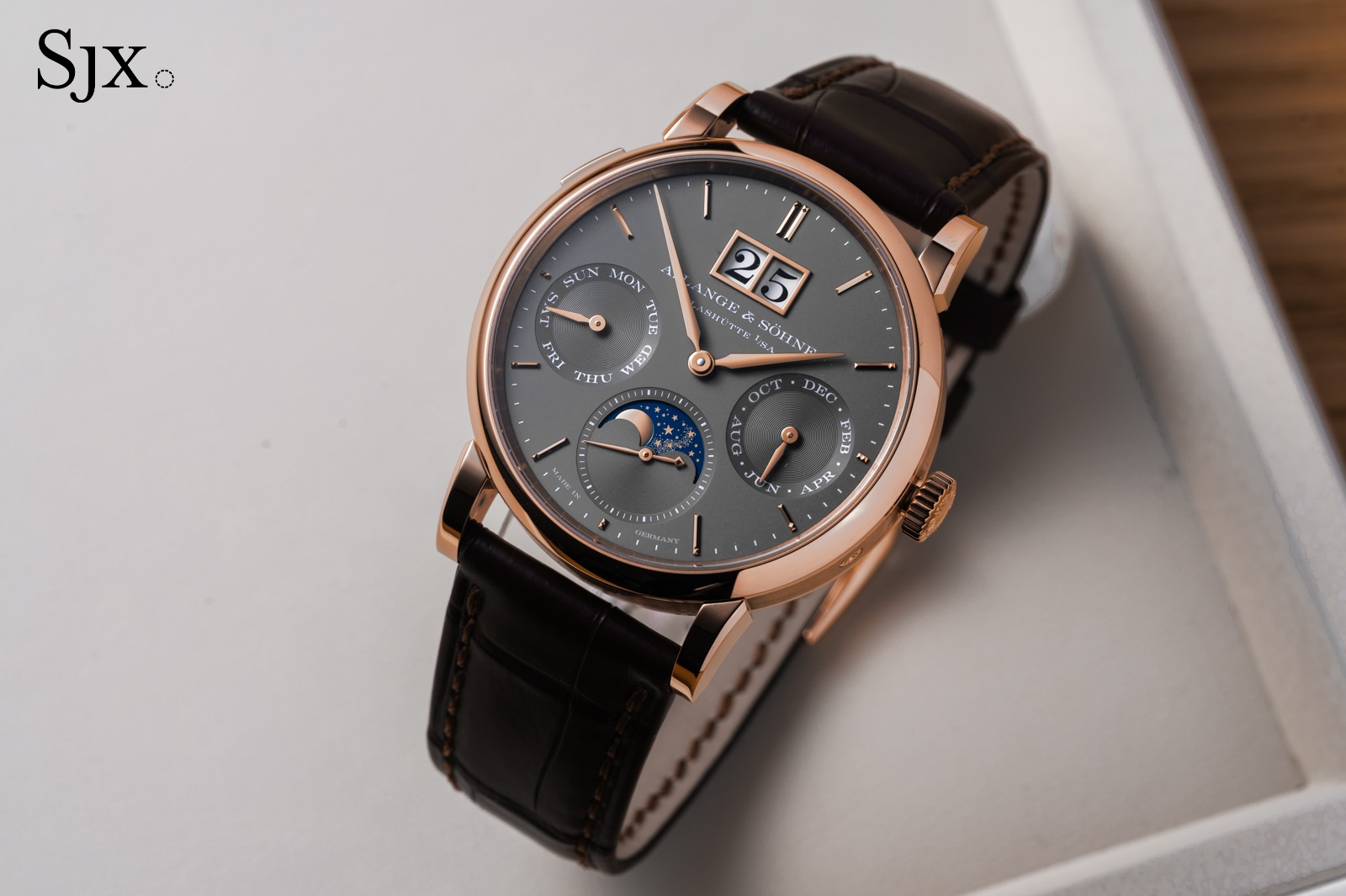
But as good as the Saxonia is on paper, it’s even better up close. The brand’s typical alpha-shaped hands — common to all Lange models — are brilliantly sharp, and the dial text is finely printed. A detail I especially like on the white gold model is the nearly tone-on-tone typography for the ‘Made in Germany’ text, which is something I’d like to see more of from the brand.
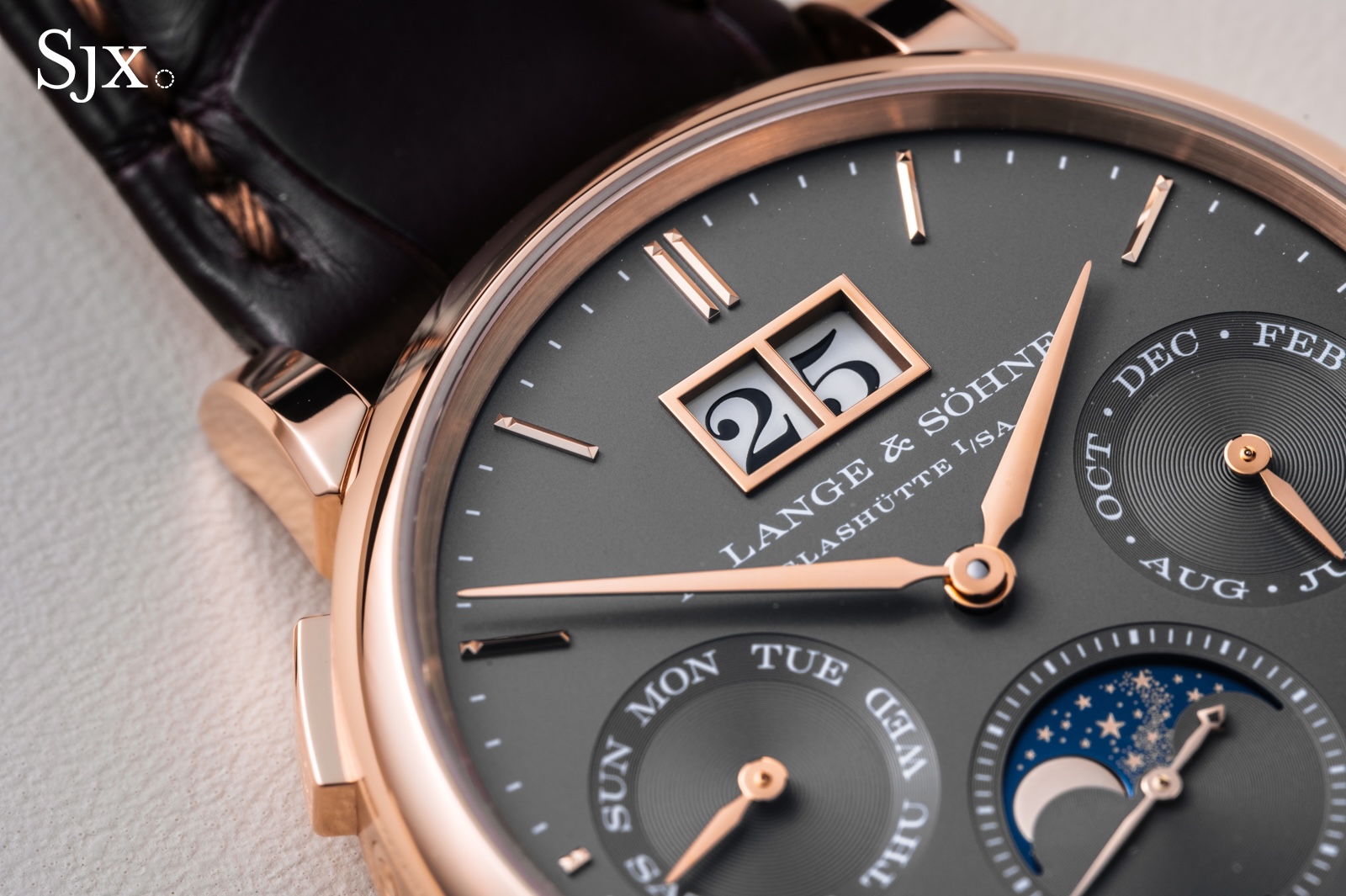
A new aesthetic detail is an additional facet at the outer end of each hour marker, effectively creating a tiny pyramid, akin to Cote de Paris. This design appears to be a subtle nod to the previous generation of the Saxonia, which featured baton indexes punctuated with gold studs. It’s a good look, and I wouldn’t be surprised to see this detail trickle down to other Saxonia models in the future.
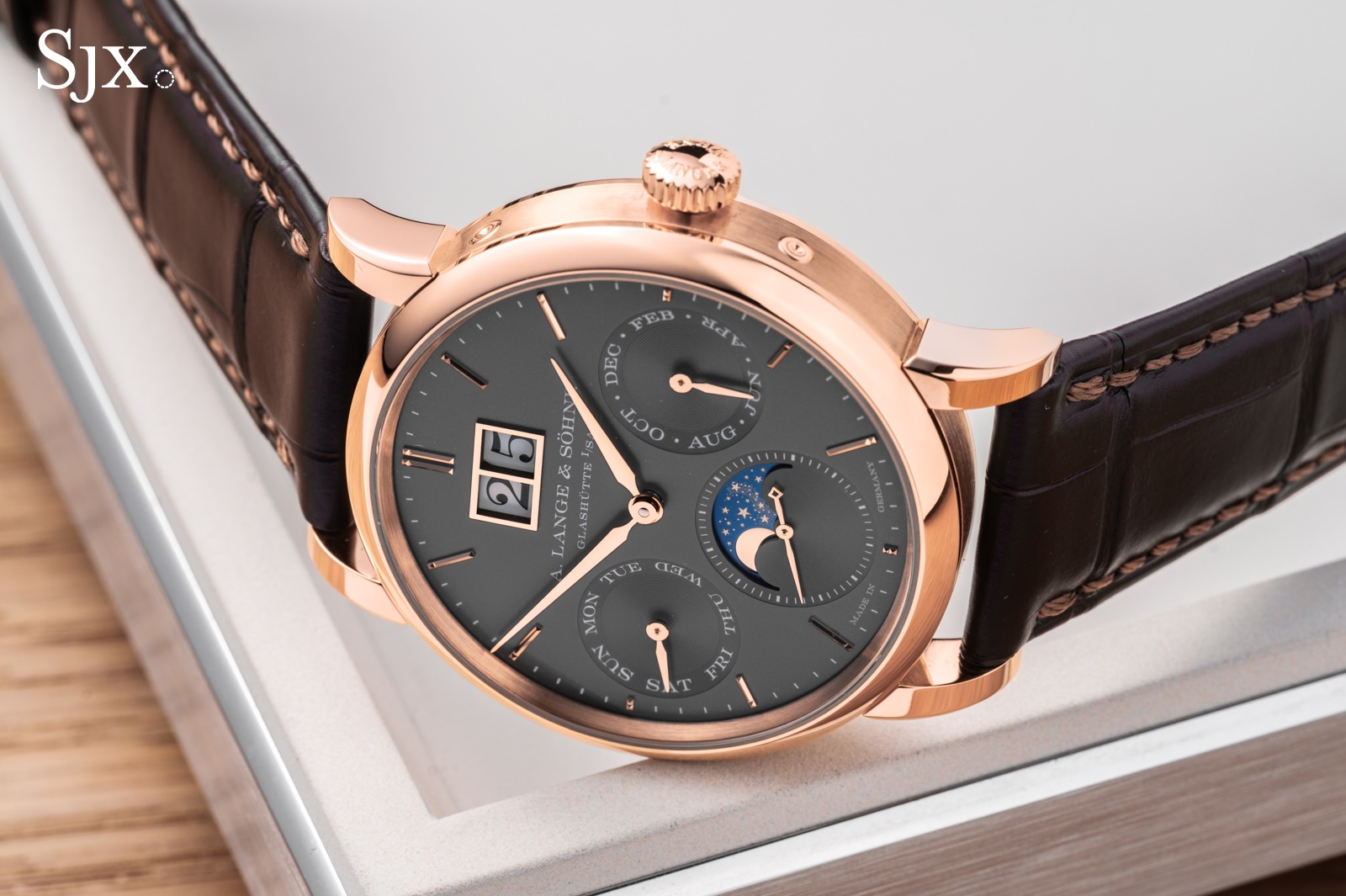
Probably the worst thing you can say about the Saxonia Annual Calendar is that it’s boring. In fact, it looks like it could have been in the collection for years. But that fact alone arguably speaks to the design coherence at Lange — all of the brand’s signature motifs are present, and it would be immediately recognisable as a Lange even without the logo.
In terms of the competitive landscape, it’s natural to look to Geneva. Patek Philippe invented the annual calendar complication three decades ago, and the Annual Calendar ref. 5396R is the Saxonia’s natural peer, priced about 7% more than its German rival.
This comparison accentuates the value offered by the Saxonia, which offers a big date format, a more wrist-friendly size, and a more finely finished movement for less money.
Compact case
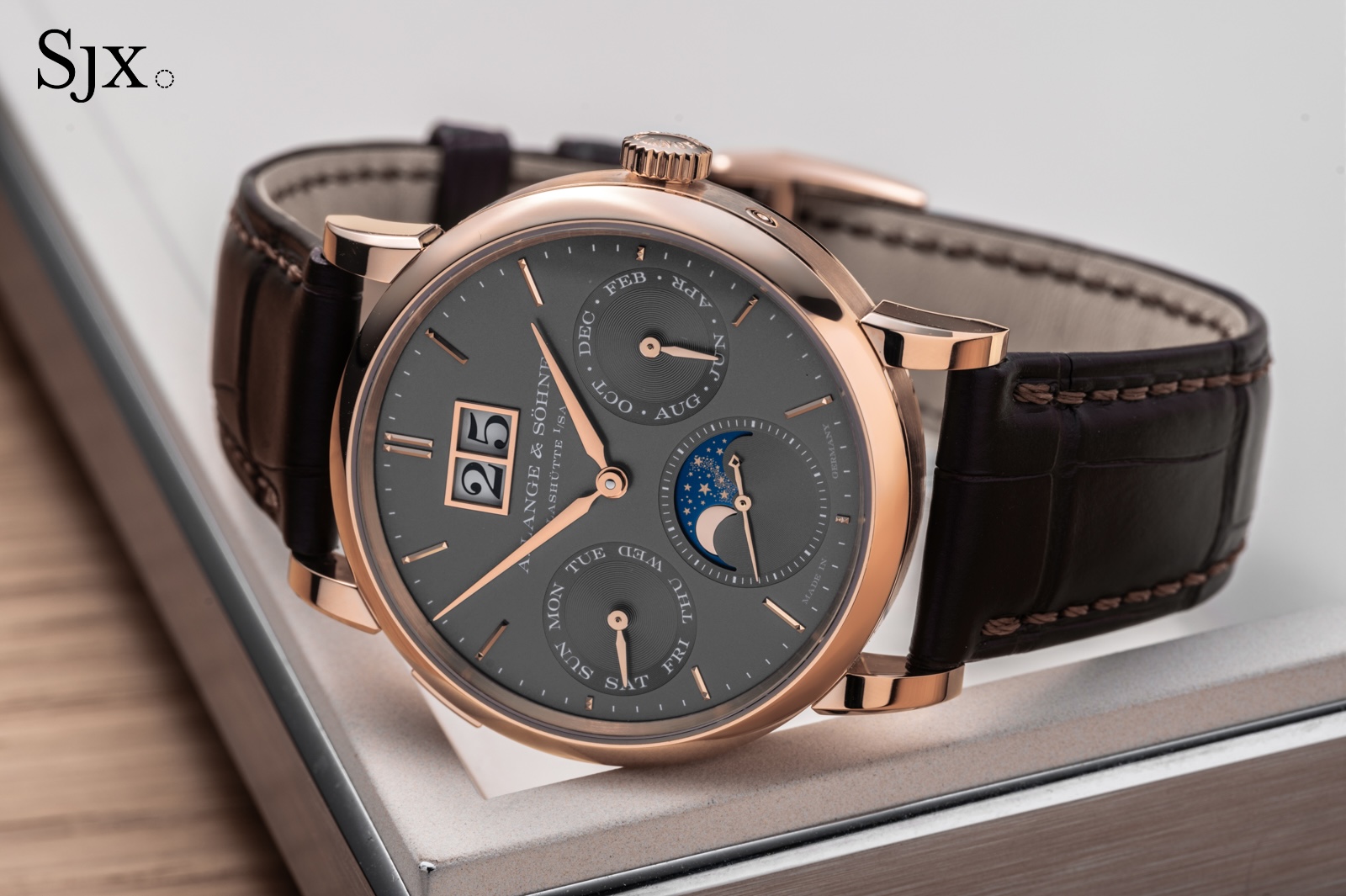
Last year’s 34 mm 1815 was a big hit, offering modern Lange quality in a vintage-leaning form factor. The Saxonia Annual Calendar is similar in that regard, and should appeal to collectors who find most of the brand’s complicated models a little too large.
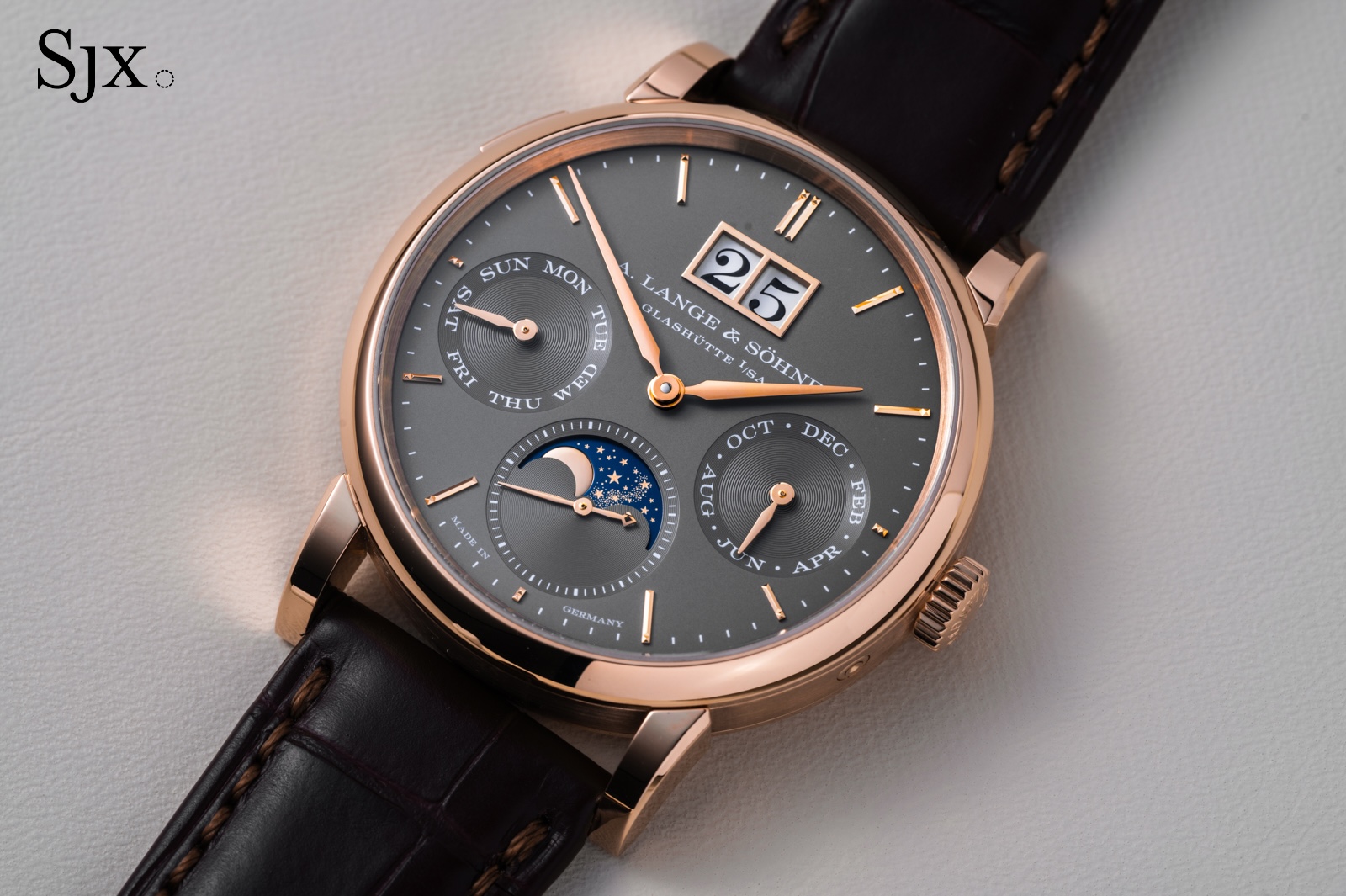
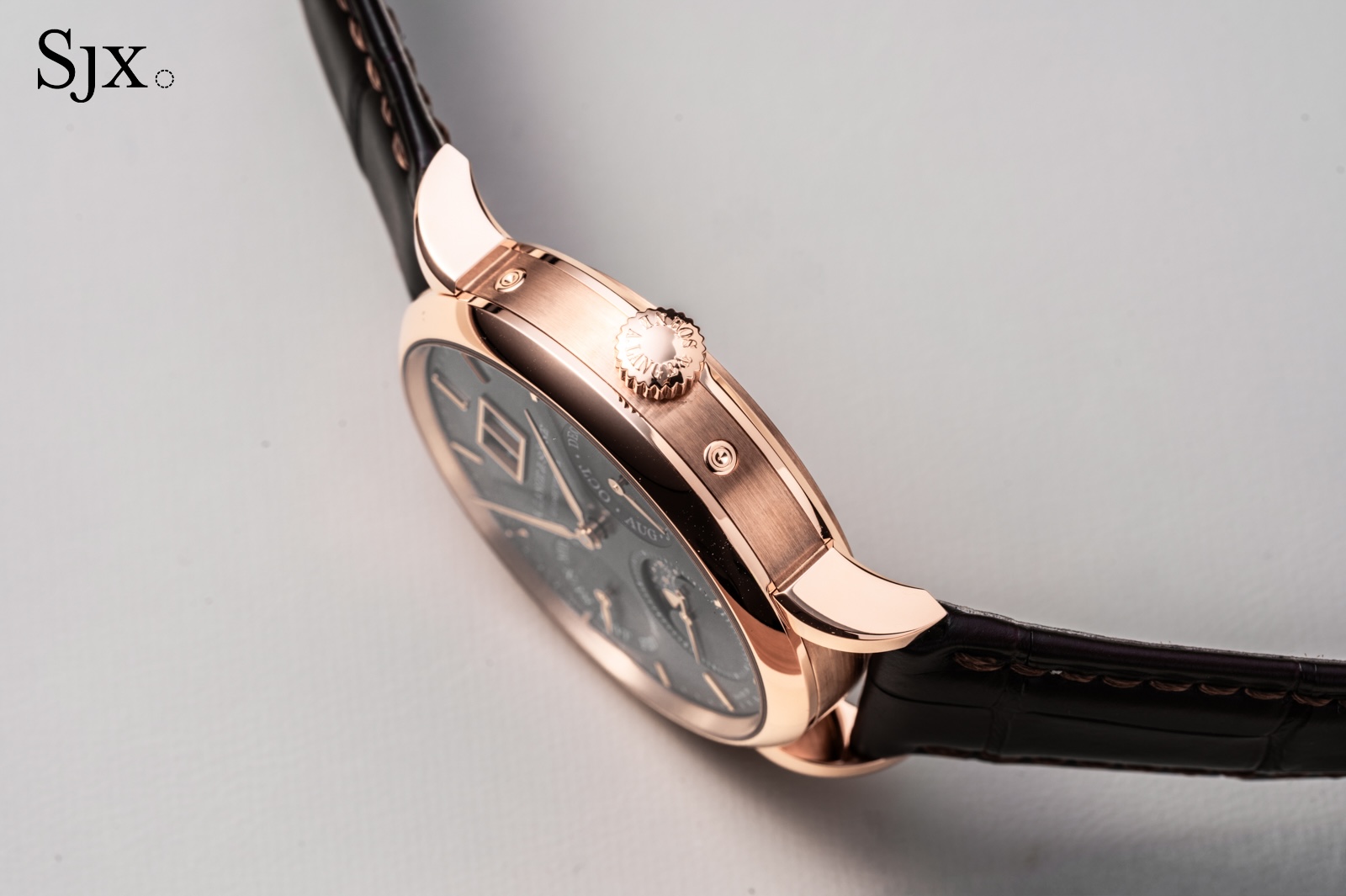
And at just 9.8 mm thick, the Saxonia challenges the heuristic notion that Lange only makes big, chunky watches. This makes it thinner than many time-only watches from established brands and independents.
But because of its top-quality materials — even the dial is solid sterling silver, rather than brass — the Saxonia offers an appealing sense of density, giving it a solid presence on the wrist that belies its size.
Big date
Small watches can pose a problem for legibility. This is especially true for calendars, chronographs, and other complications that display a lot of information. A smaller dial almost always means smaller sub-dials, and for calendar watches with pointer dates or small date windows, this can make them difficult to read for many users.
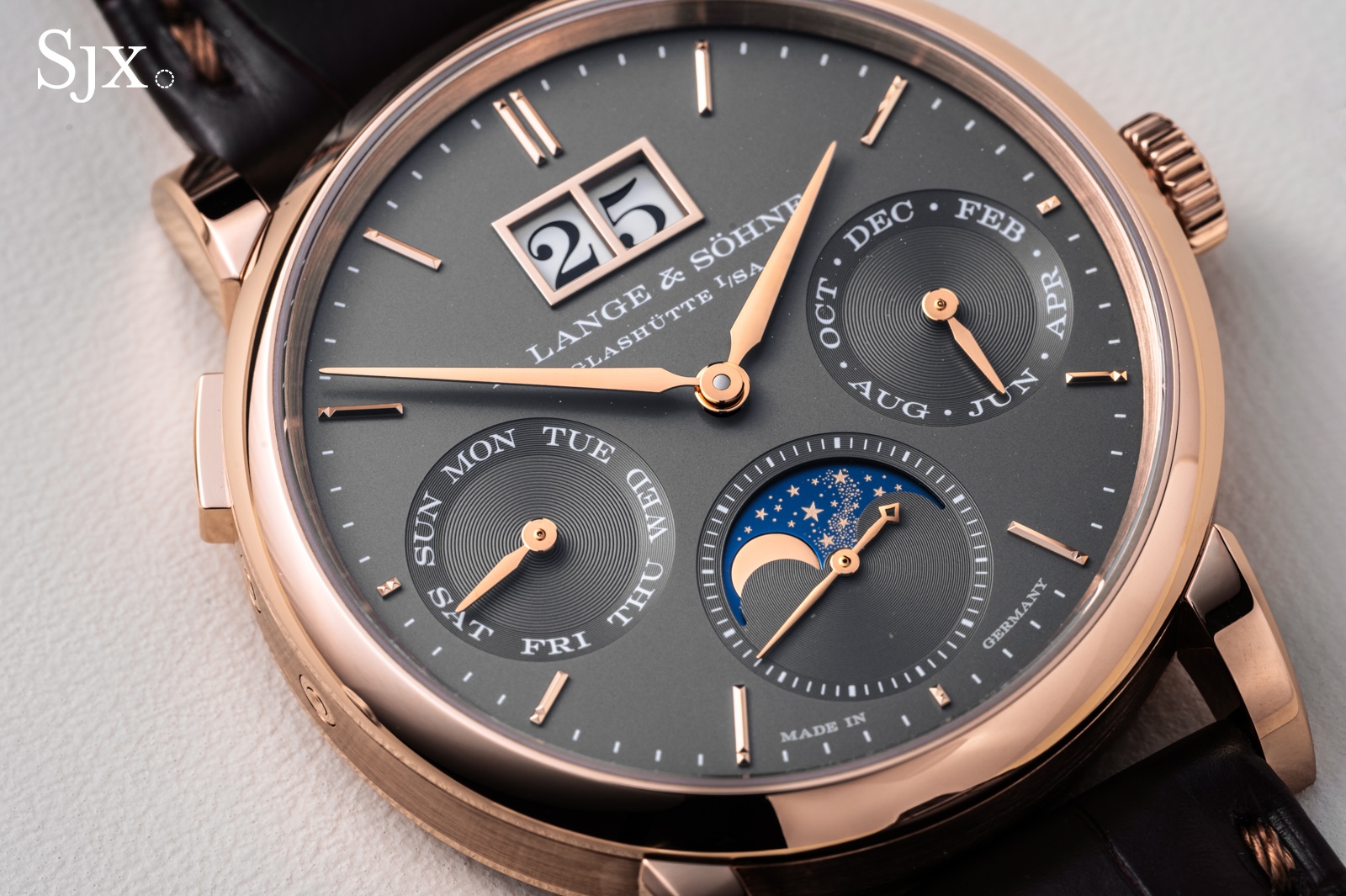
This makes Lange’s big date format ideal for the compact Saxonia, because it puts the calendar’s most important piece of information — the date — front and centre. The month and day are displayed on secondary sub-dials, but remain legible enough — naturally, at small scale it’s easier to distinguish among the 12 months and seven days than it is the 31 days of the month.
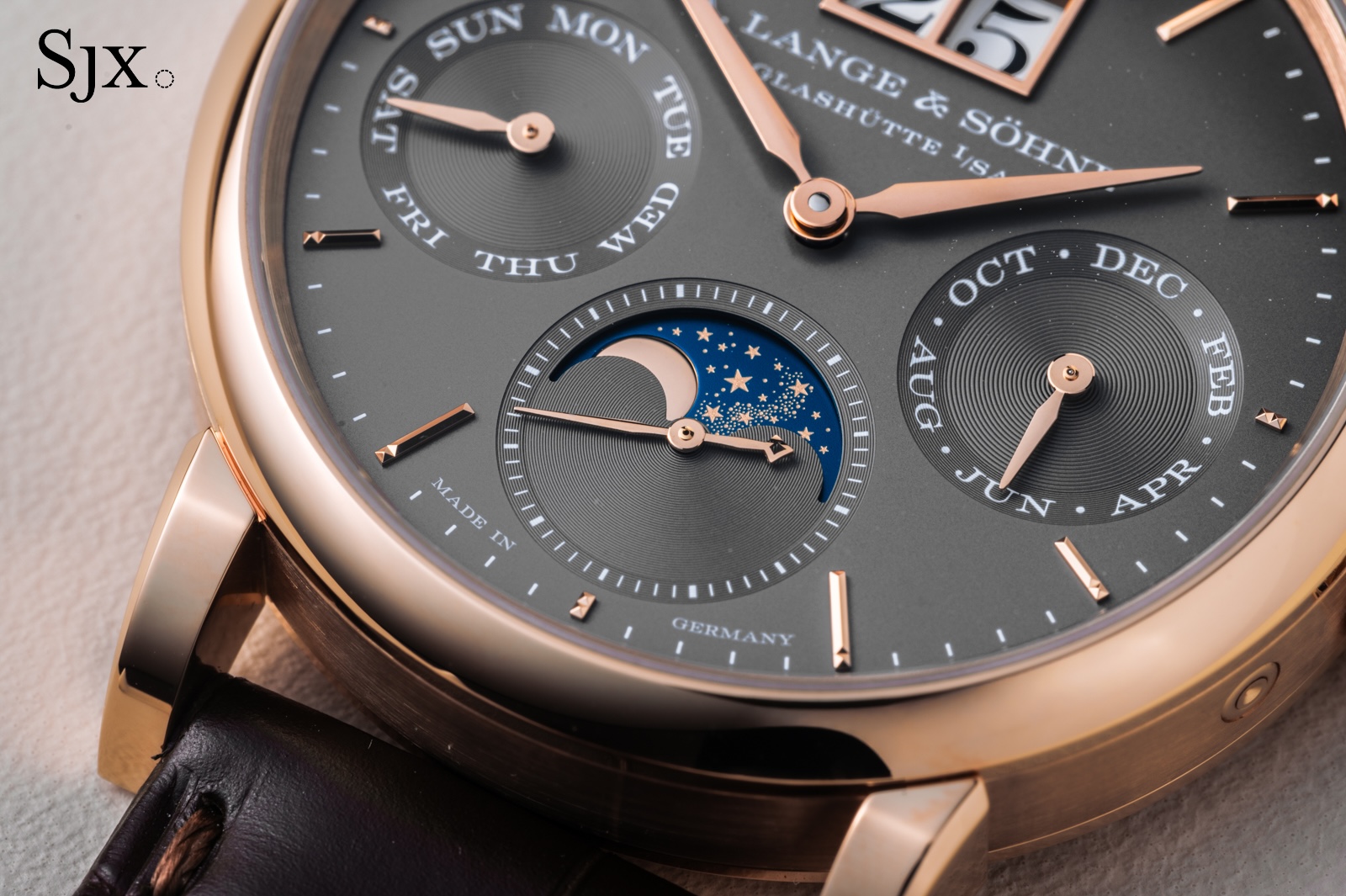
The moon phase at six is rendered in the familiar Lange style, but it’s probably the one thing I would change about the watch. In a perfect world, I’d prefer the moon phase from the Lange 1 Perpetual Calendar with its discreet day/night indication.
Upgrades inside
At first glance, the cal. L207.1 looks a lot like the L086.1. It looks similar because it is, in fact, quite similar, with the same 30.4 mm diameter, 3 Hz frequency, and platinum-ringed rotor. But one difference stands out: the new calibre has a shorter power reserve of just 60 hours, compared to the 72-hour power reserve of its stablemate.
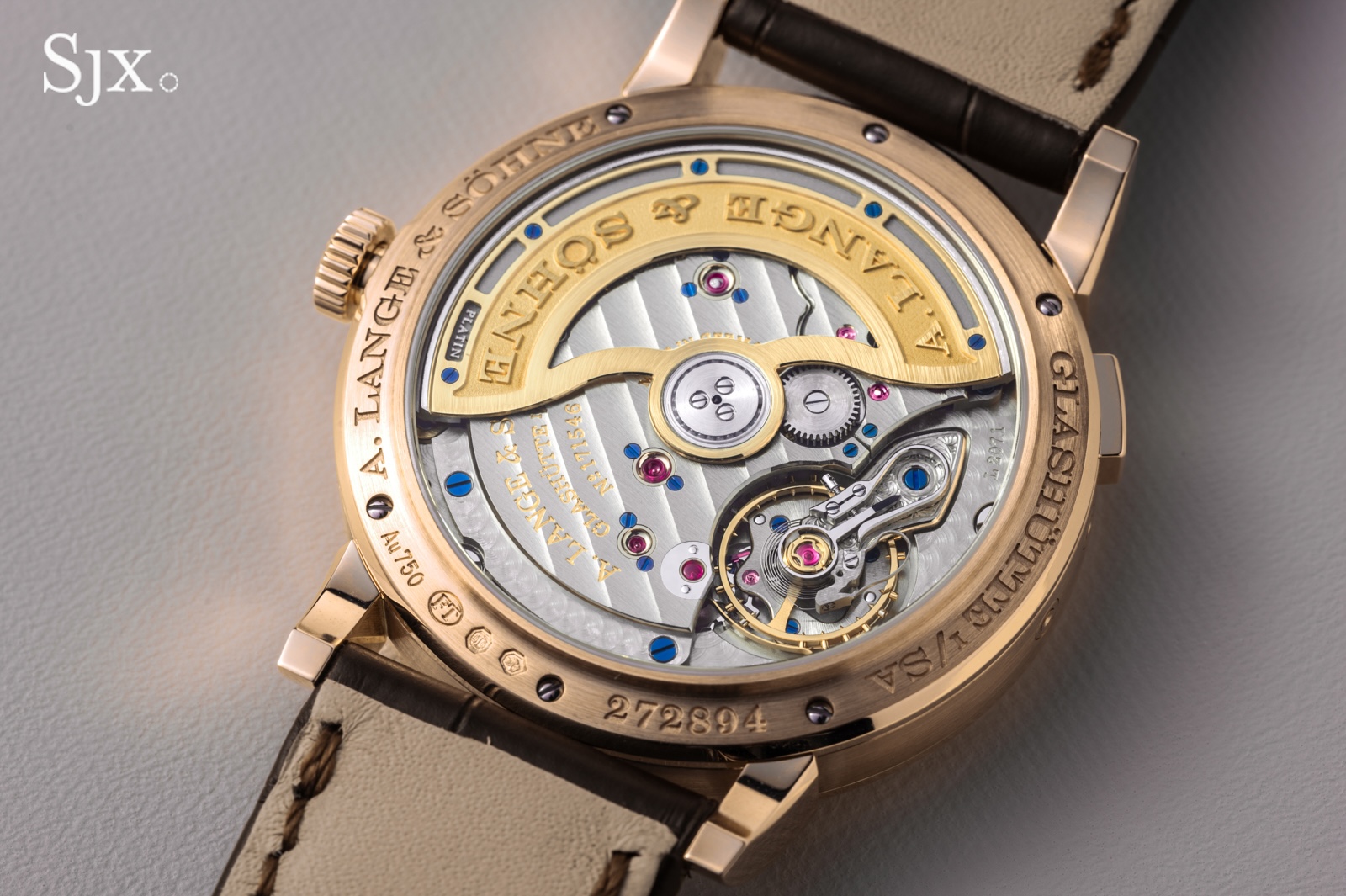
This difference suggests that the engineers at Lange chose to shift the balance from autonomy to torque to power additional complications without decreasing chronometric performance. In contrast, the L086.x platform never powered any complications beyond the date — or the date and day in the closely related cal. L155.1 found in the Odysseus.
The difference in complexity between a big date and an annual calendar might seem insignificant for a brand with the technical resources of Lange, but annual calendars are actually challenging complications with a lot of moving parts. Counterintuitively, they often require more components than perpetual calendars.
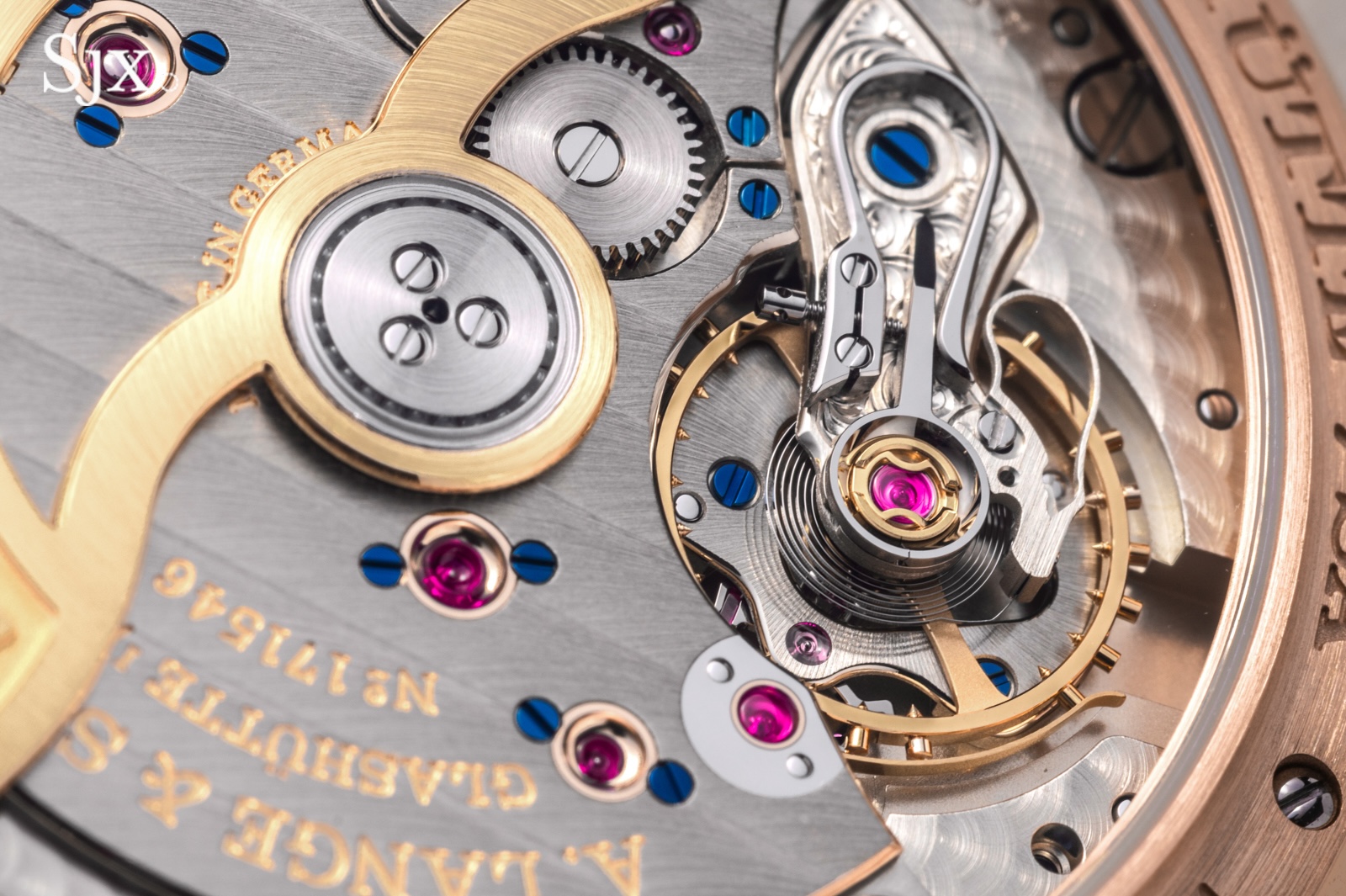
In the case of the Lange L207.1, the movement features 491 components — 13 more than the L922.1 that powered the Langematik Perpetual. Lange isn’t alone in this respect — Patek Philippe’s annual calendar cal. 26-330 S QA LU 24H actually has 23% more components than the brand’s cal. 240 Q perpetual calendar.
Fortunately, Lange has ensured the complex movement is easy to manage, with a prominent pusher at 10 o’clock to advance all calendar indications forward with a single click. The only other intervention required comes once a year — at the start of March or when first setting up the watch — when the user must use a stylus to engage the flush correctors recessed into the case to update the displays individually.
While the engineers at Lange made trade-offs for the sake of torque, very few trade-offs were made in the class-leading decoration of the movement. All the key traits of Lange movements are present: untreated German silver plates, lustrous ribbing, black-polished steelwork, and a hand-engraved balance cock. And though it’s indistinguishable to the naked eye, the movement features an in-house hairspring.
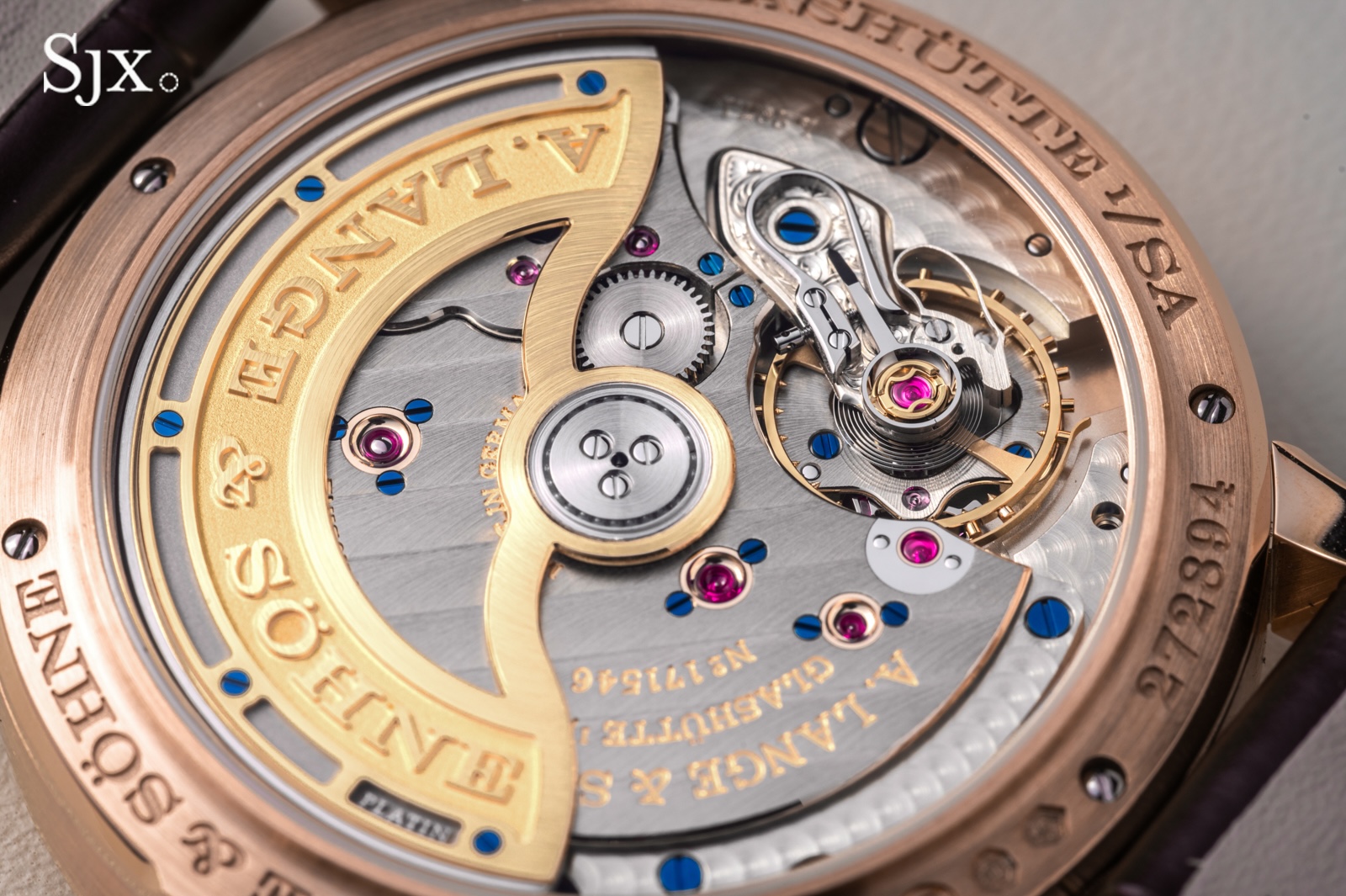
The gold chatons are worth a special mention. A traditional Lange signature, they were nonetheless absent from the cal. L086.1, likely due to thickness constraints. This issue has been resolved for the L207.1, which features visible gold chatons for the jewelled pivots for the mainspring, third, and fourth wheels.
The decoration of the rotor is somewhat sparse by Lange standards, but overall the movement leads its category in terms of finishing — as it should given the brand’s lofty reputation.
Key facts and price
A. Lange & Söhne Saxonia Annual Calendar
Ref. 331.026E (white gold)
Ref. 331.033 E (pink gold)
Diameter: 36 mm
Height: 9.8 mm
Material: 18k white or pink gold
Crystal: Sapphire
Water resistance: 30 m
Movement: L207.1
Functions: Hours, minutes, seconds, big date, annual calendar, moon phase
Frequency: 21,600 beats per hour (3 Hz)
Winding: Automatic
Power reserve: 60 hours
Strap: Alligator with matching pin buckle
Limited edition: No
Availability: At A. Lange & Söhne boutiques
Price: US$63,000 excluding taxes
For more, visit Alange-soehne.com.
Back to top.