
In-Depth: Orient Star’s Smart Silicon Escape Wheel
Horological innovation from Japan.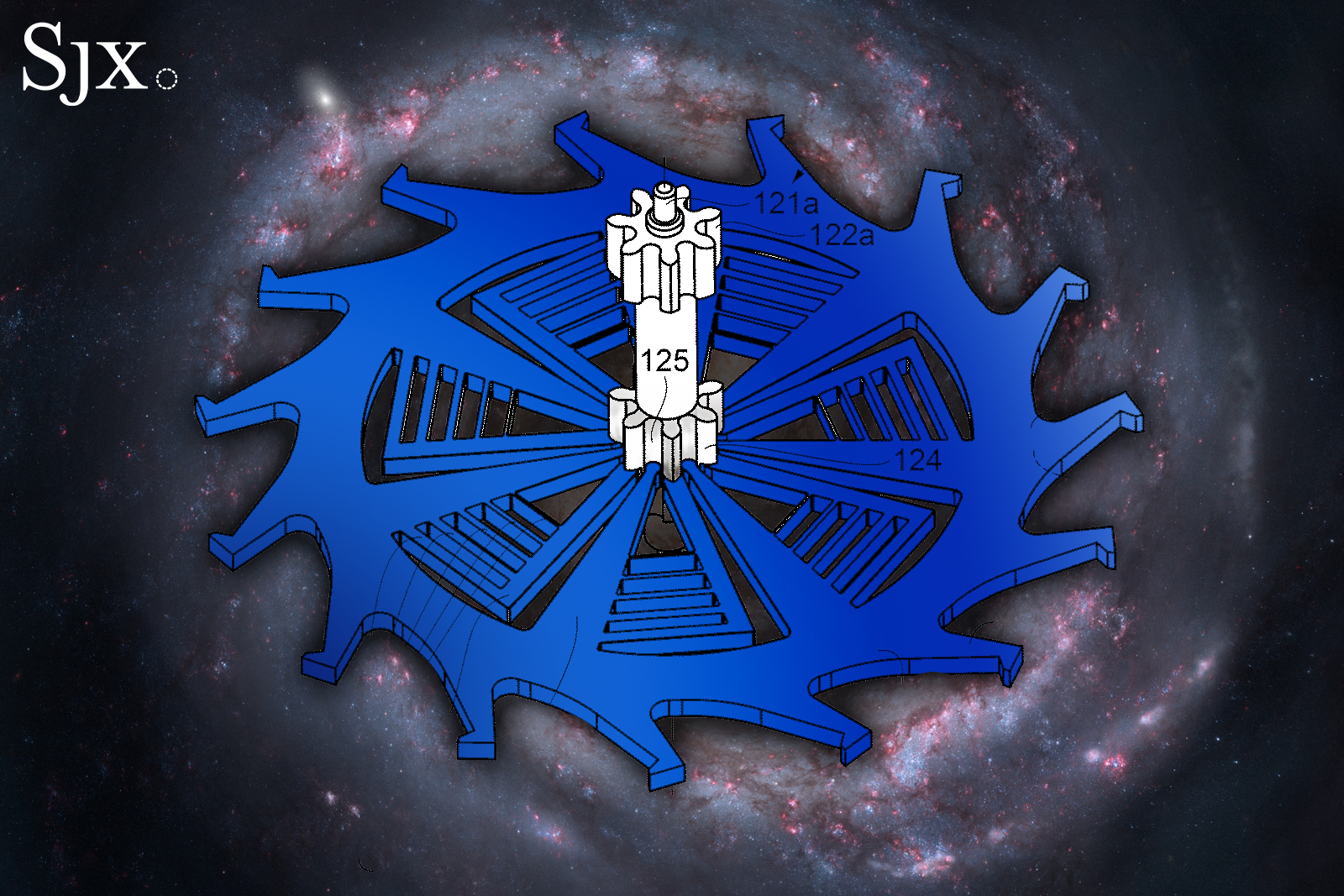
While silicon mechanical movement components have swept across Switzerland, adoption has been slow within the Japanese watch industry, stymied by Swiss patents and professed concerns over the material’s durability. To this day, it remains the unlikely domain of Orient Star, a small brand with priority access to Seiko Epson’s massive industrial base.
This positions Orient Star to capitalise on consumer demand for increasingly long power reserves, without sacrificing performance. Thanks to an ultralight and geometrically efficient escape wheel with a patented design, Orient Star is able to deliver a 70-hour power reserve without resorting the same counter-productive trade-offs to balance energy made by some Swiss peers – here’s how it was done.
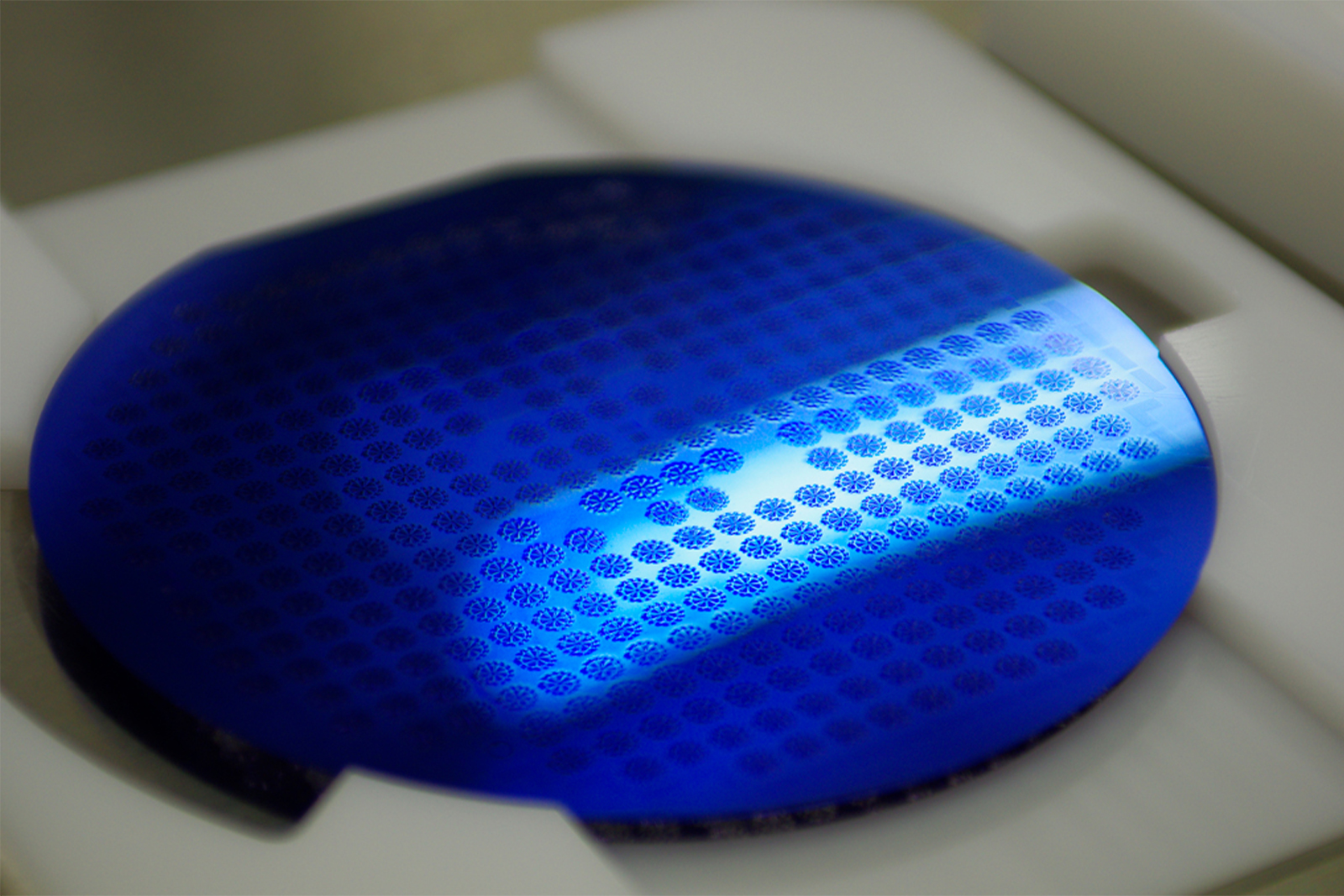
A silicon wafer of escape wheels. Image – Seiko Epson
The quest for longer power reserves
Recent consumer demand for longer power reserves has sent the industry’s engineers scrambling for ways to increase the autonomy of existing movement platforms. A movement’s power reserve is dictated by the length of the mainspring, which unwinds at a constant rate. That is why using a chronograph doesn’t cause a watch to run down faster – usually.
Of course, you need to find somewhere to fit that extra length of mainspring while maintaining the movement’s dimensions, such as by thinning out the barrel walls, narrowing the inner barrel arbour radius, or, reducing the thickness of the mainspring. However, while decreasing the mainspring’s thickness allows for a longer mainspring and thus a longer power reserve, it will also reduces the mainspring’s power output.
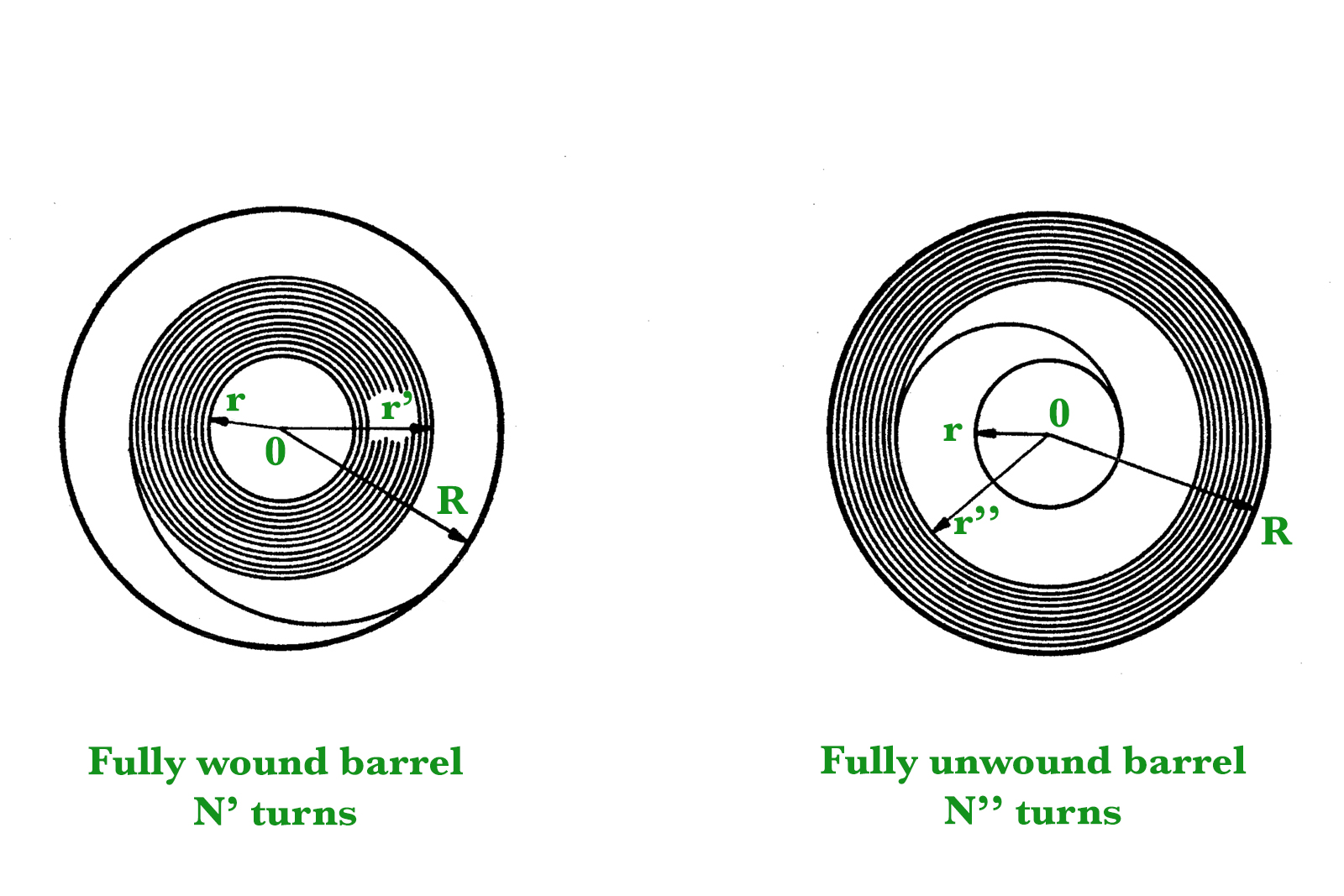
Figure I. The mainspring in fully wound and unwound states.
All else being equal, this will result in lower balance amplitude, and thus worse precision in everyday wear. However, according to Seiko Epson’s engineers, about 20% of the mainspring’s power is consumed in the wheel train, and around 50% is lost in the escapement, with only about 30% reaching the balance. Naturally, reducing those losses would allow for a longer power reserve without sacrificing performance. Additionally, a weaker mainspring is generally desirable to reduce stress on components.
For Seiko Epson, the company behind the Orient and Orient Star brands – also known for its printers – the obvious target was the traditional nickel silver escape wheel. The engineers calculated that some of these loses could be eliminated by reducing its weight – nickel silver has a density of seven to nine g/cm^3, depending on the specific alloy, at standard temperature and pressure, while silicon sits around 2.3 g/cm^3, varying a little based on crystallinity.
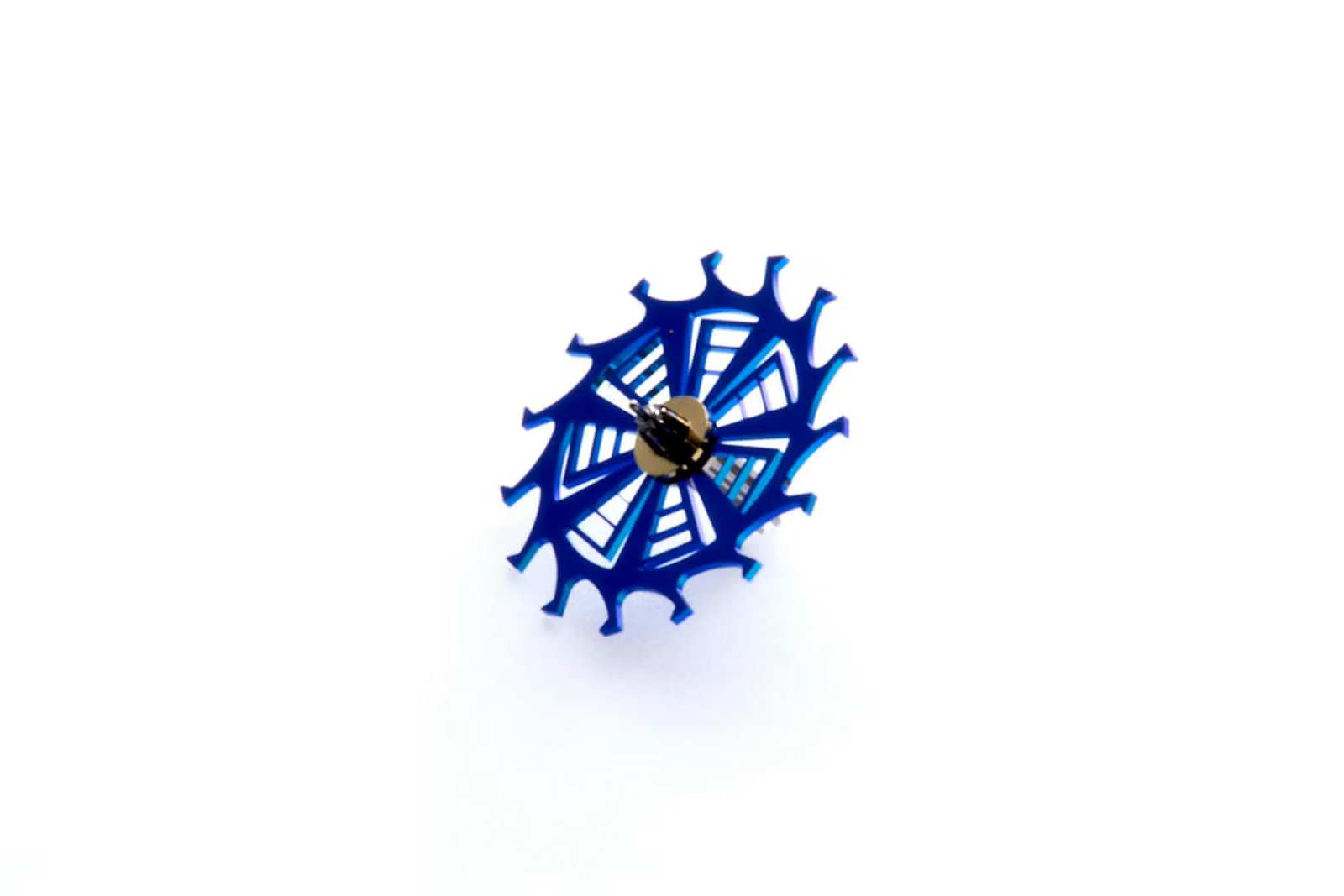
The assembled silicon escape wheel. Image – Seiko Epson
Additionally, the alloy escape wheels are designed with a small amount of extra engagement between the escape wheel and pallet stones. As Mr Takano explains, this tolerance is needed because the existing manufacturing process is only accurate to around 10 microns, but this introduces frictional losses. This can be reduced (but not eliminated in the real world) with skilful adjustment and/or tighter manufacturing tolerances. The latter is possible with the microelectromechanical systems (MEMS) techniques used to manufacture silicon parts.
Orient Star’s silicon escape wheel weighs about 65% less than its nickel silver counterpart. That weight savings helps increase the energy that reaches the balance by about 30%.
Fab-ulous
Poetically, watchmaking was the impetus for Seiko Epson’s semiconductor business. One of its historical predecessors, Suwa Seikosha, relied on American fab Intersil for the integrated circuits used in the Seiko Quartz Astron of 1969, the world’s first commercially available quart watch. According to Electrifying the Wristwatch, a history of the electronic wristwatch, Suwa Seikosha licensed the technology from Intersil and was producing integrated circuits in-house by the early 1970s, which debuted in the cal. 38 series quartz movements.
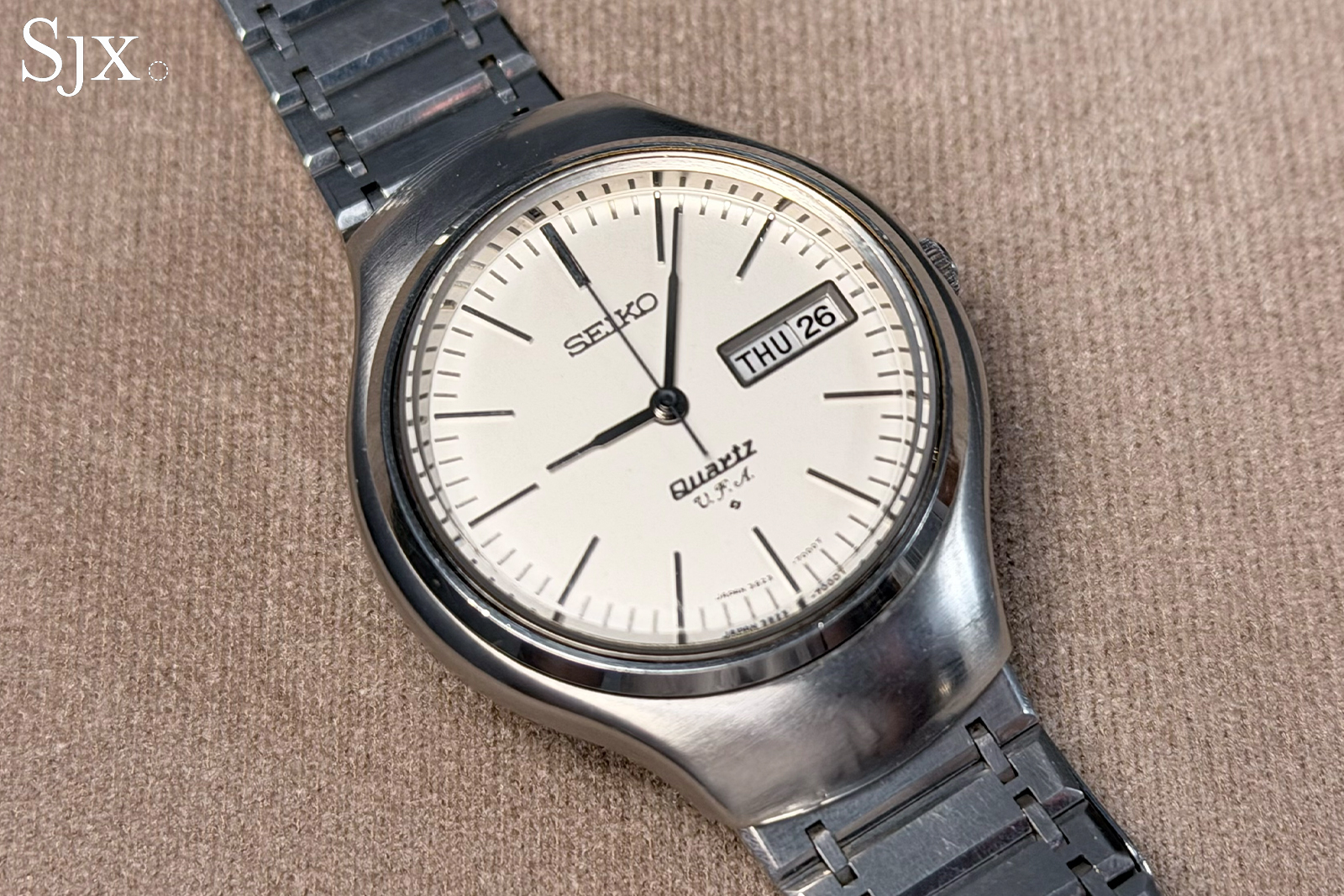
The Seiko Quartz VFA 3823-7000, which contains the start of Epson’s semiconductor business.
While Seiko Epson’s semiconductor business has expanded greatly since, its fabs continue to produce integrated circuits for quartz watch movements. Orient Star’s silicon escape wheels are a product of a plant in Fujimi, just outside of Suwa. Image – the author’s collection
The fab is part of a 240,000 square-metre complex that dwarfs watch factories, but is small by the standards of the electronics industry. For context, Seiko Epson operates another plant up north in Tohoku that is part of a 540,000 square-metre site (that’s larger than all four Rolex production sites combined), while Samsung’s campus in Pyeongtaek, South Korea, has a staggering three million square metres of floor space.

The Alps of Nagano, as viewed from the roof of Seiko Epson’s Fujimi site. The region’s nickname of “Oriental Switzerland” is fitting in many ways. Image – Seiko Epson
Semiconductor fabs are famously secretive. Fortunately, Seiko Epson is one of the world’s most prolific patentees, well within the top 50 patent holders worldwide. Also helpful, two of the engineers behind Orient Star’s innovative silicon authored a paper on the endeavour, which was published last year in Micromechatronics volume 66, issue 227. The authors are Eiichi Nagasaka, an engineer at the Shiojiri site (which houses the famous Shinshu watch studio), and Takeo Funakawa of the Fujimi plant.
Process
According to the paper, the process beings with a round silicon wafer, 0.625 mm thick and ~152 mm in diameter. It is then coated with a light-sensitive polymer, called a photoresist. A photolithography machine shines UV light through a stencil in the shape of the escape wheels. This process is depicted in Japanese patent JP2021081299A, shown below with added annotations and colour.
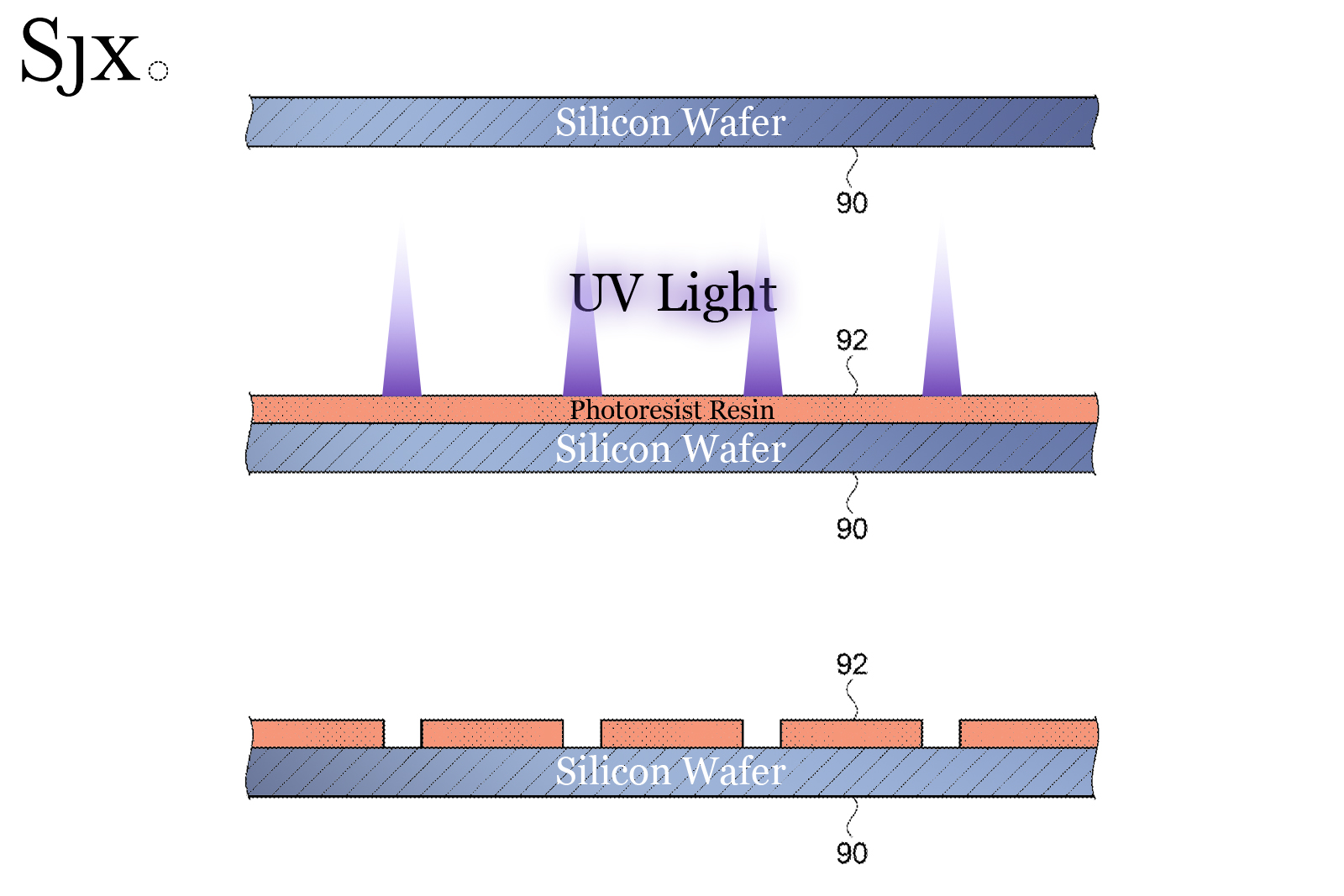
Image – JP2021081299A, coloured and annotated by the author.
The UV light affects the solubility of the polymer, making it more soluble in the case of positive photoresist or less soluble in the case of a negative photoresist. Either way, the more soluble regions of the photoresist resin are dissolved in a solvent, leaving a trench of exposed silicon wafer around the escape wheels, and between the spokes.
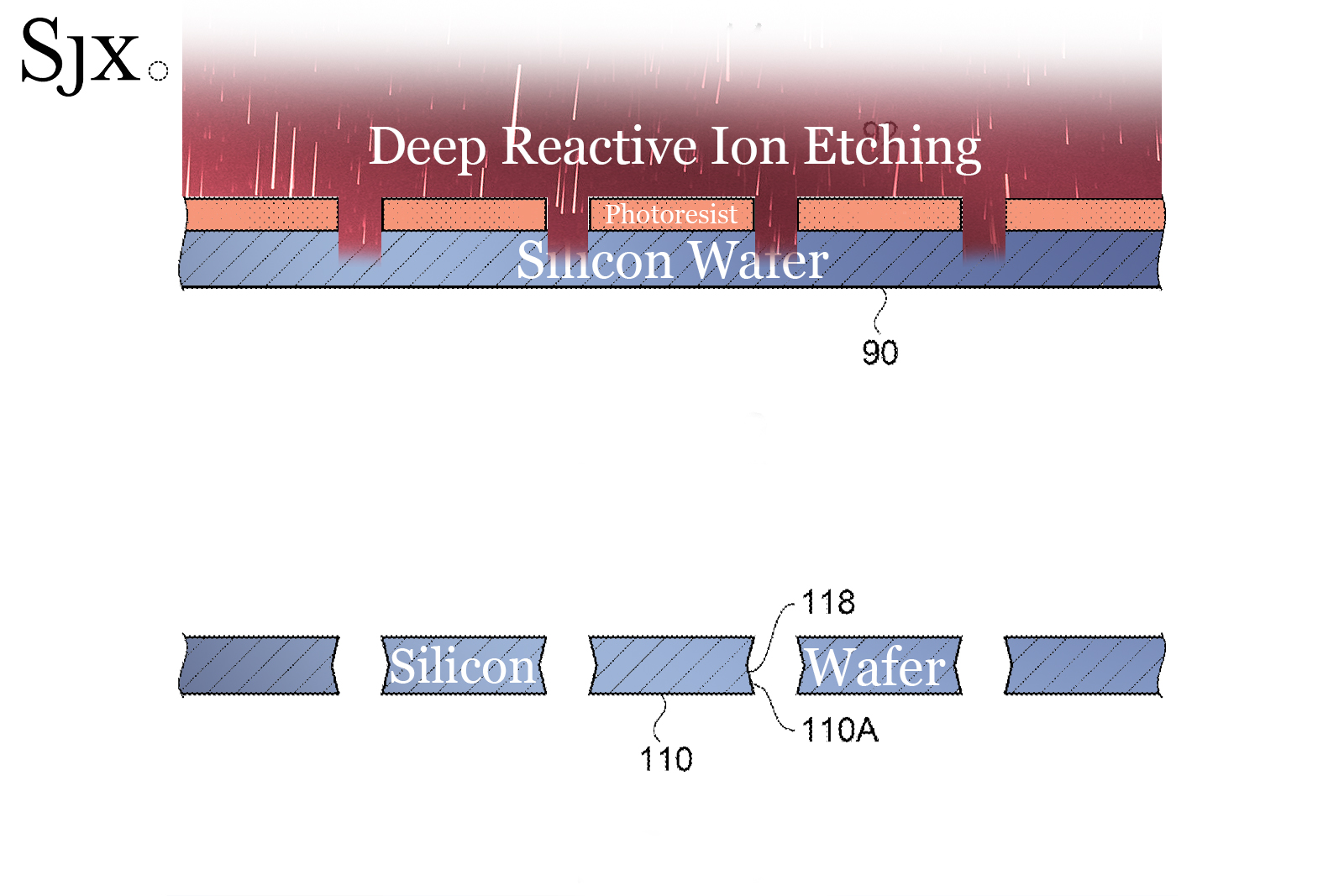
Image – JP2021081299A, coloured and annotated by the author.
The wafer is then subjected to deep reactive ion etching (DRIE) which destroys regions of the wafer that aren’t shielded by the photoresist resin. Another, stronger solvent is used to remove the remaining photoresist, which leaves a hundreds of escape wheels just barely connected to the wafer, as shown in patent JP7087873B2.
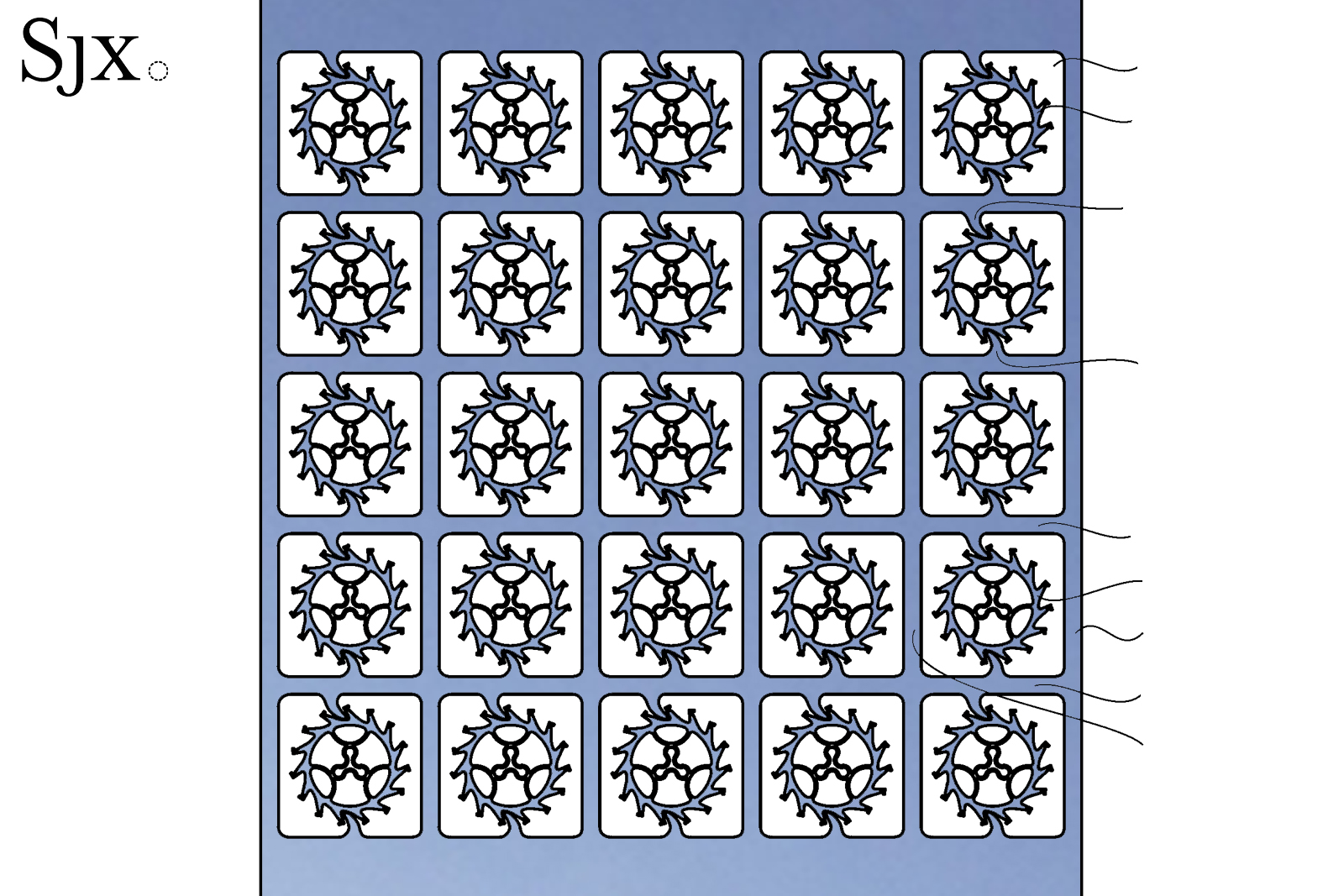
Image – JP7087873B2, coloured and edited by the author.
These connections are strategically placed between the teeth, on surfaces that do not contact the pallet fork, as shown below. Note these illustrations depict an earlier design.
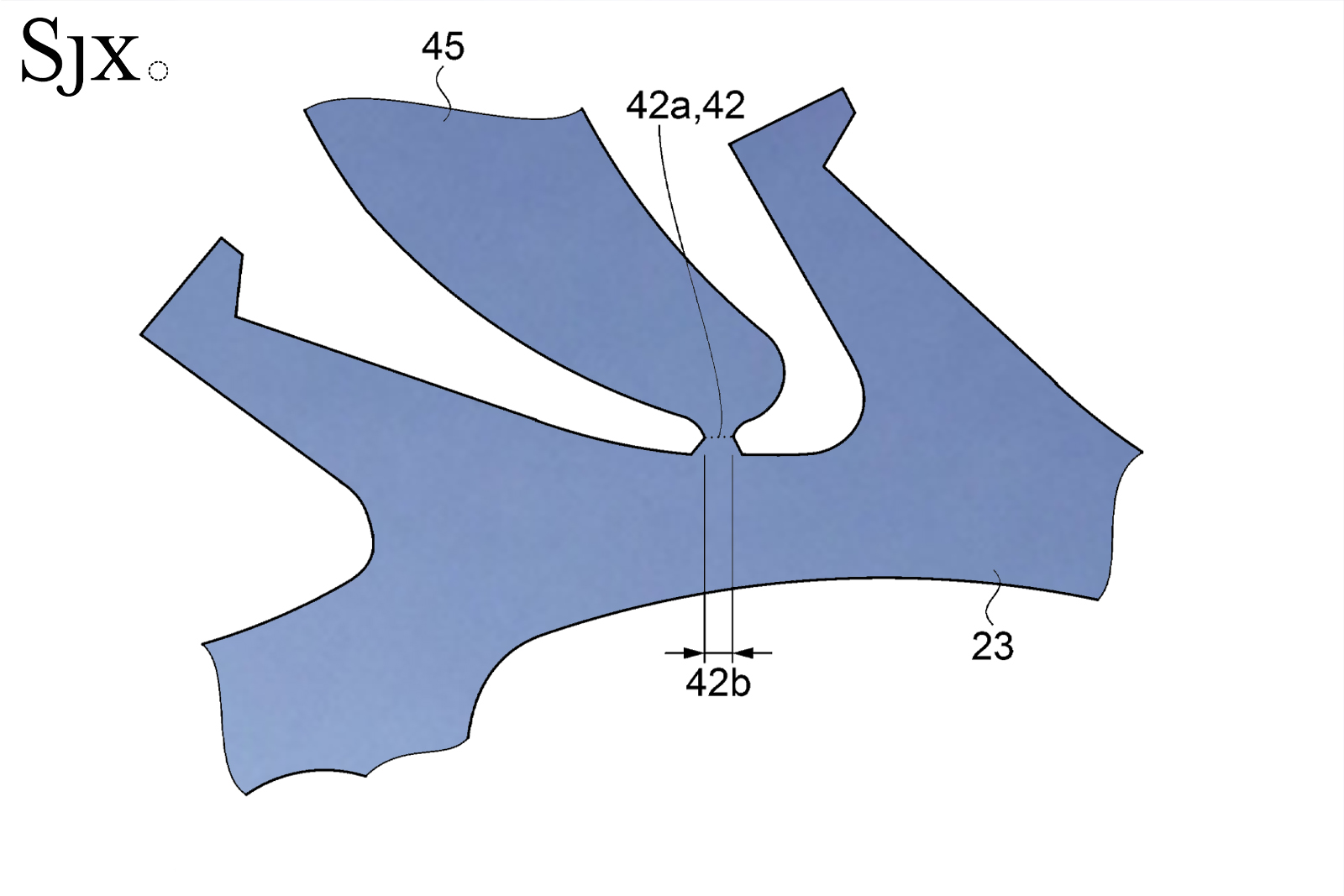
The detatch point, reminiscent of injection molding gates. Image – JP7087873B2, coloured and edited by the author.
Post-processing
At this stage, the monocrystalline silicon escape wheels are too fragile for use in watches, so they are heated to 1000°C in an oxygen-rich environment to form a silicon oxide (SiO2) layer which creates a smooth surface and rounds out sharp angles. Silicon oxide is quickly dissolved by hydrofluoric acid, while silicon isn’t, which allows for quick removal of the oxide layer, leaving a smooth silicon escape wheel behind.
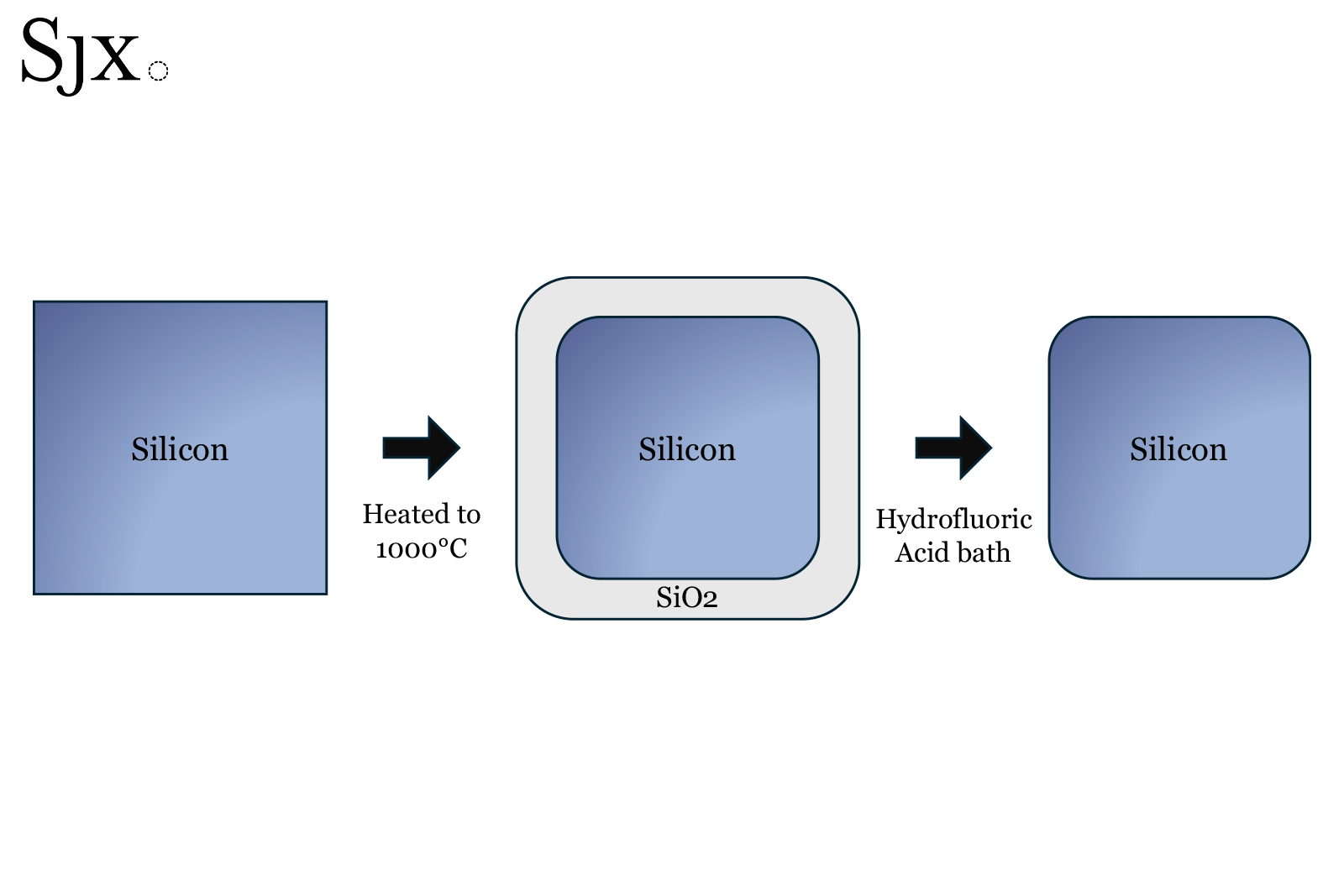
Image – created by the author
Then another, much thinner silicon oxide layer is added, then poly-crystalline silicon, and finally a second silicon oxide layer for wear resistance. According to the aforementioned paper, this outer oxide layer imparts the silicon escape wheels with superior wear resistance when compared to the nickel silver alloy wheels.
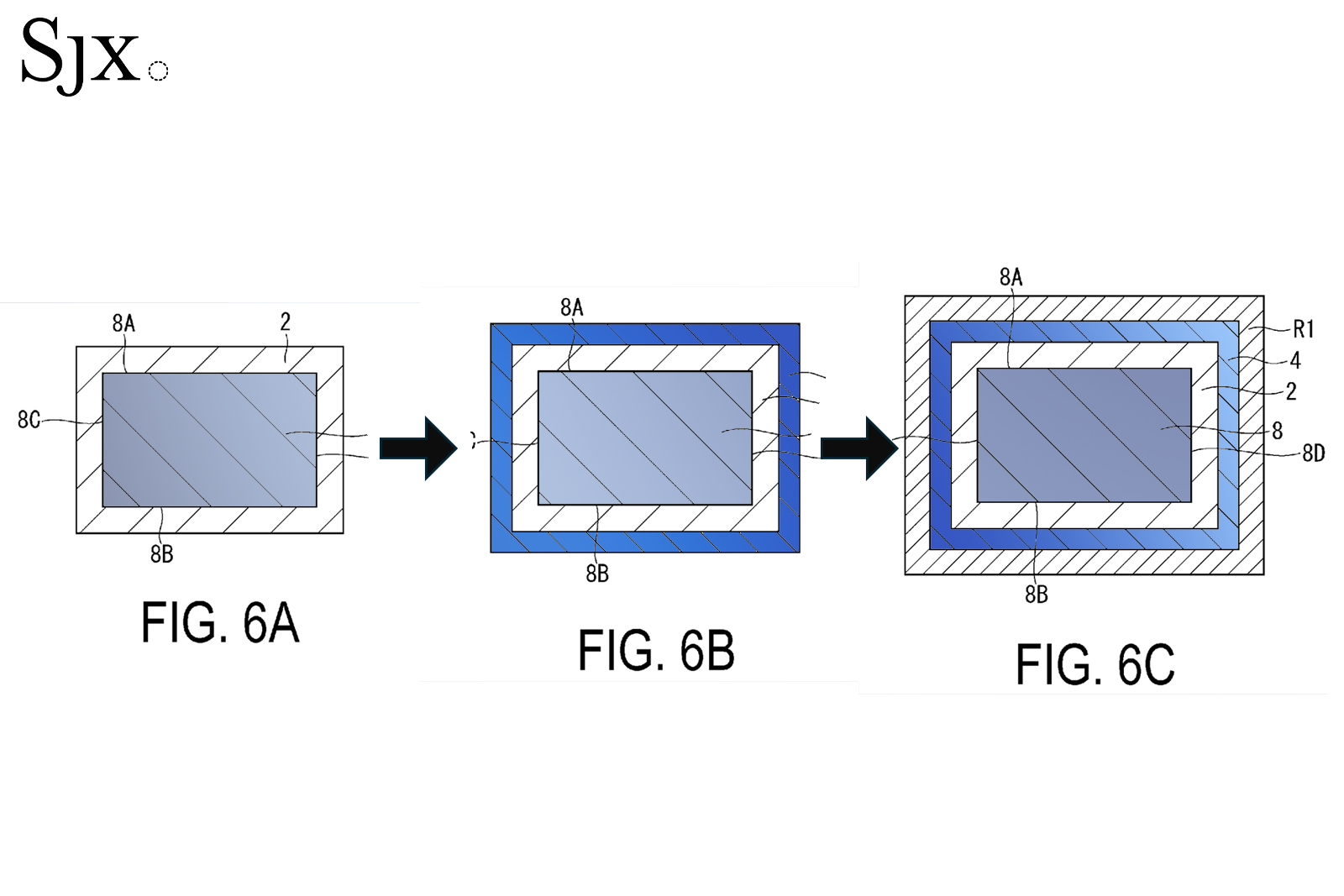
Image – JP7238657B2, coloured and edited by the author.
The intermediate poly-crystalline silicon layer, on the other hand, is purely aesthetic. As with the oxide layer that gives blued steel components their hue, the thickness of each poly-crystalline silicon layer determines which wavelengths of light transmit back to the observer. Based on the brilliant blue colour, the film is presumably between 75 and 80 nanometres thick.
It would also be possible to produce other colours, such as blue-green with a ~95 nm thick film, or purple at around 70 nm. As a reminder, this requires controlling the coating thickness down to a few millionths of a millimetre.
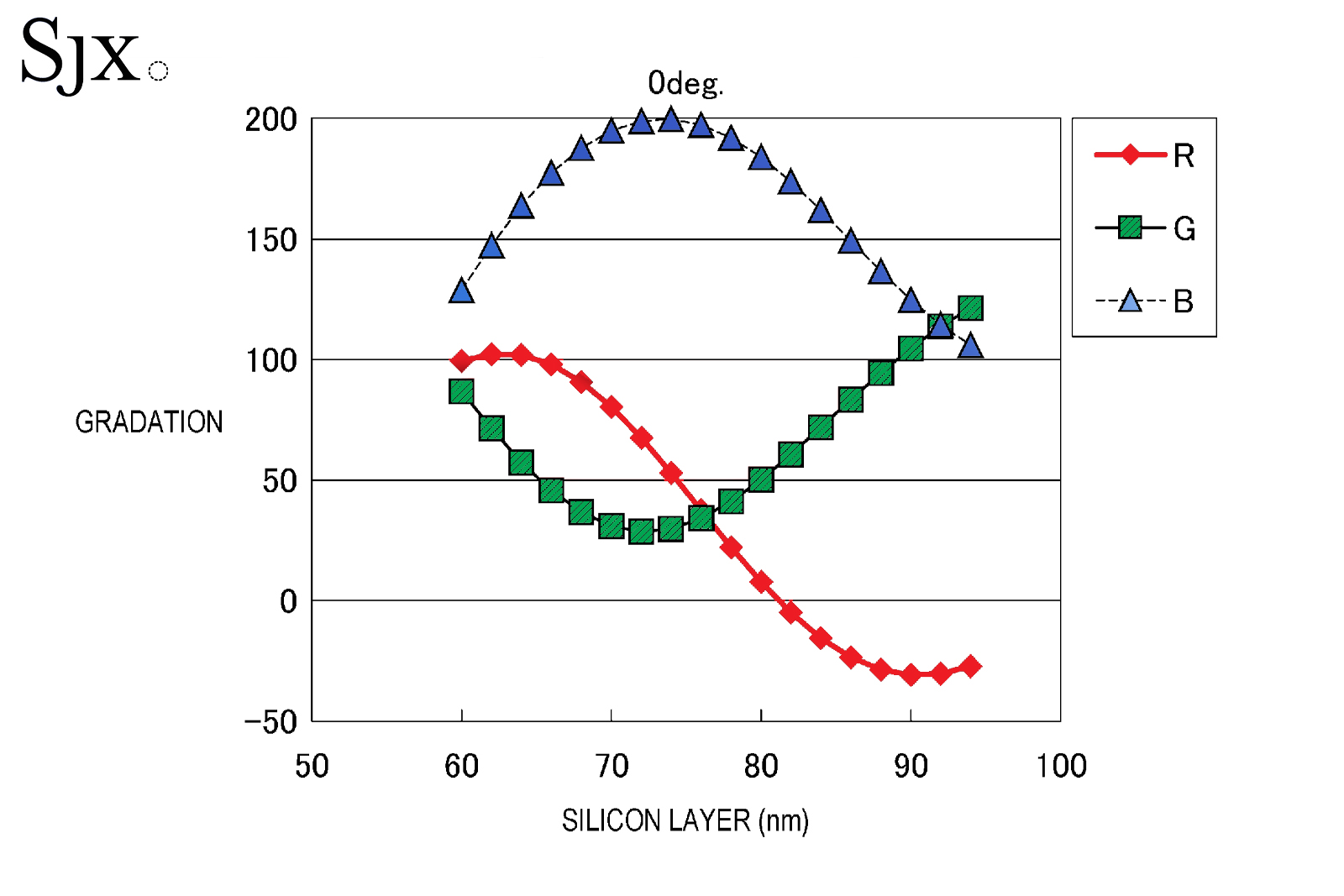
Image – JP7238657B2, coloured by the author.
No-glue
Once cut from the wafer and inspected, the escape wheel must be mounted onto its axle. Typically, metal escape wheels are press-fit or riveted into place, which is problematic when it comes to comparatively brittle silicon parts. Rather than gluing the escape wheel into place, which is the most common Swiss solution, Seiko Epson engineers designed a series of flexible arms into the escape wheel that tightly hug the escape pinion, as seen below in a drawing from patent JP6891622B2
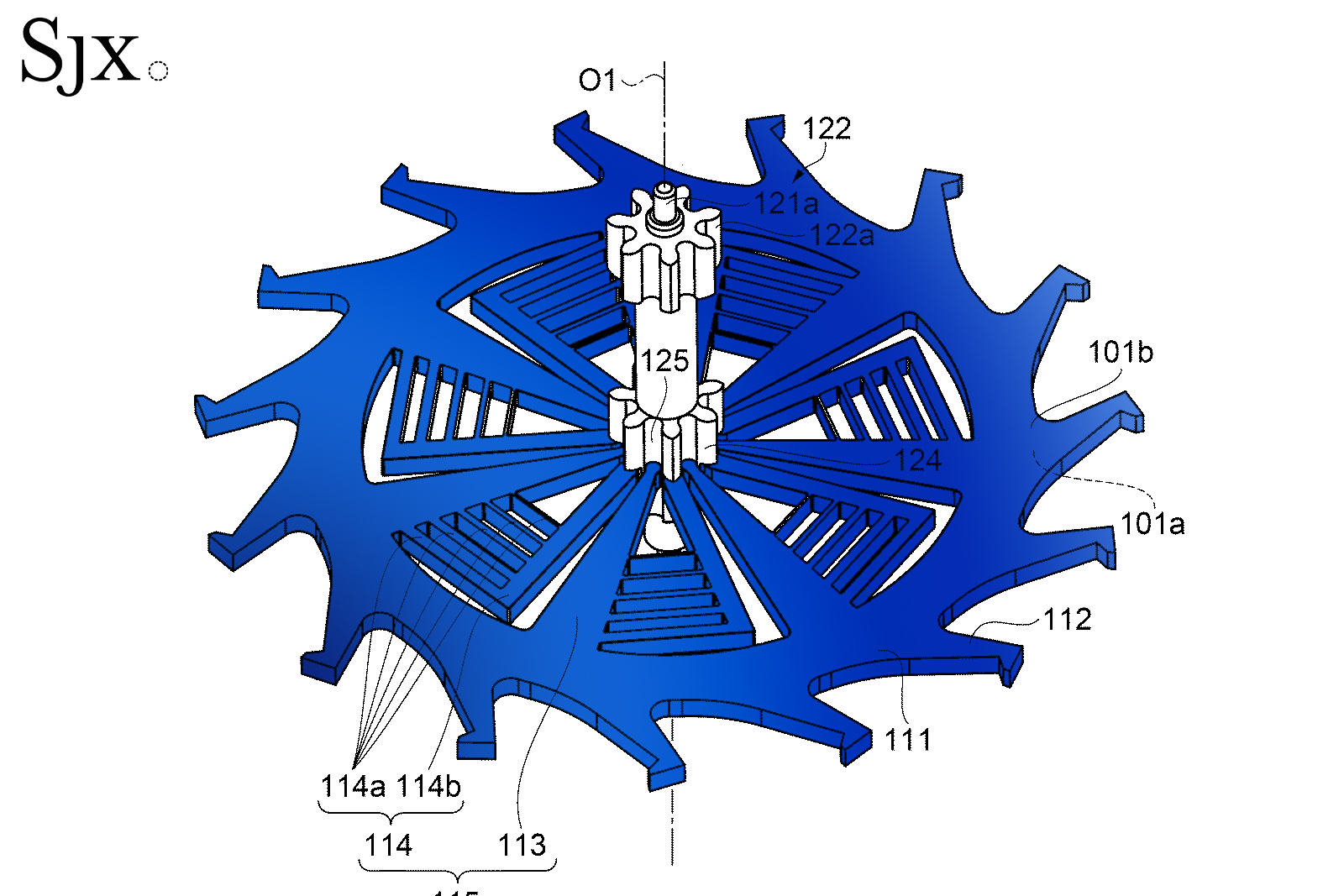
Image – JP6891622B2, colured by the author.
Then the wheel is also sandwiched between two metal washers to limit axial movement. Note: this is only one of several possible designs, meant to evoke the arms of the Milky Way galaxy. At least three others can be found in patent JP6772790B2, which are illustrated below.
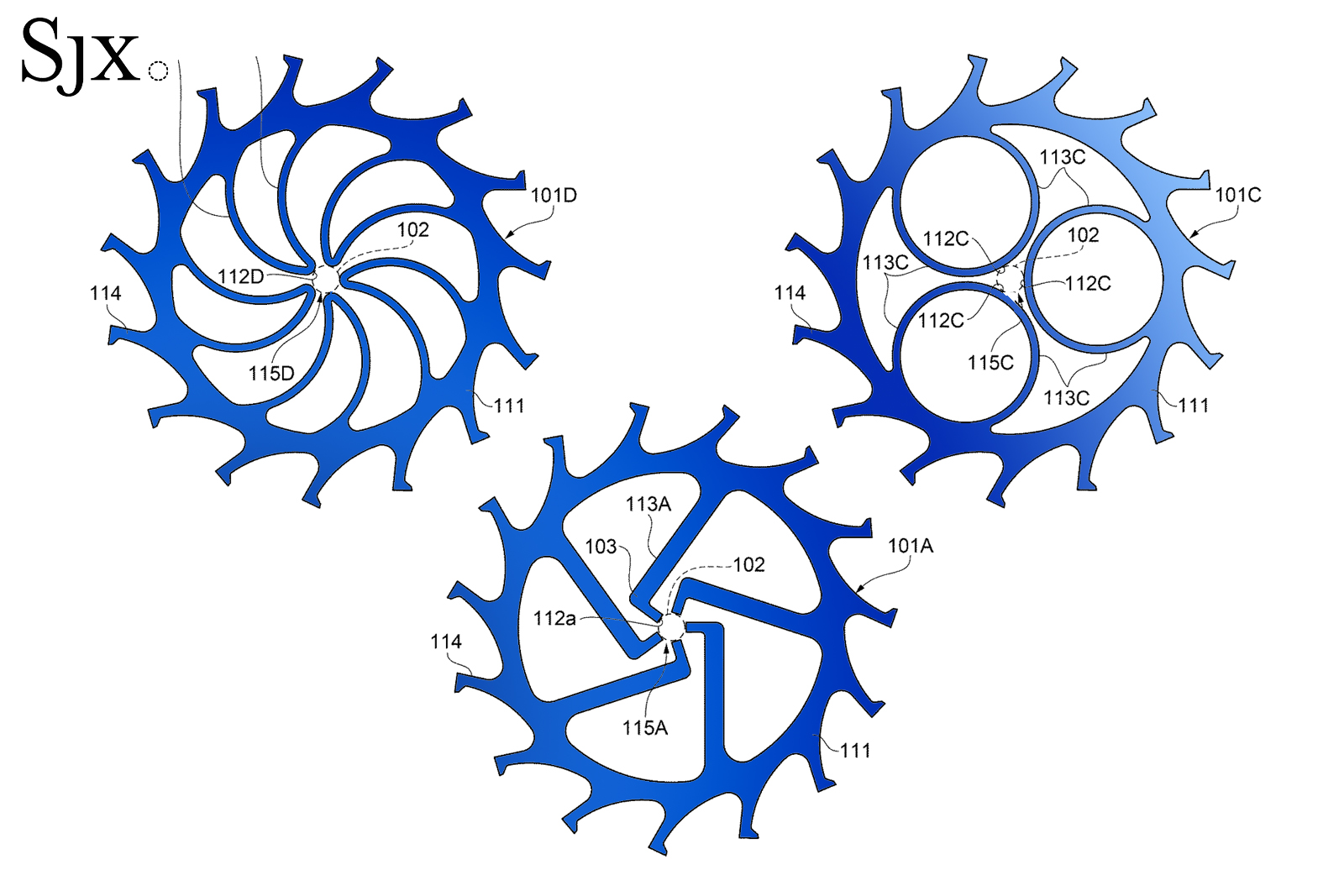
Several other escape wheel designs that seemingly didn’t make the cut. Image – JP6772790B2, edited and coloured by the author.
Another as-yet unseen component can be found in patents – a silicon pallet fork. Rather than using an adhesive or press-fit, the pallet fork grips its axis, like the arms of the escape wheel. Perhaps more notably, it combines what is normally a four-part assembly (the pallet fork, two jewels, and the safety dart) into a single piece. This part would require a second round of masking and etching, making it slightly more complicated to produce than the silicon escape wheels.
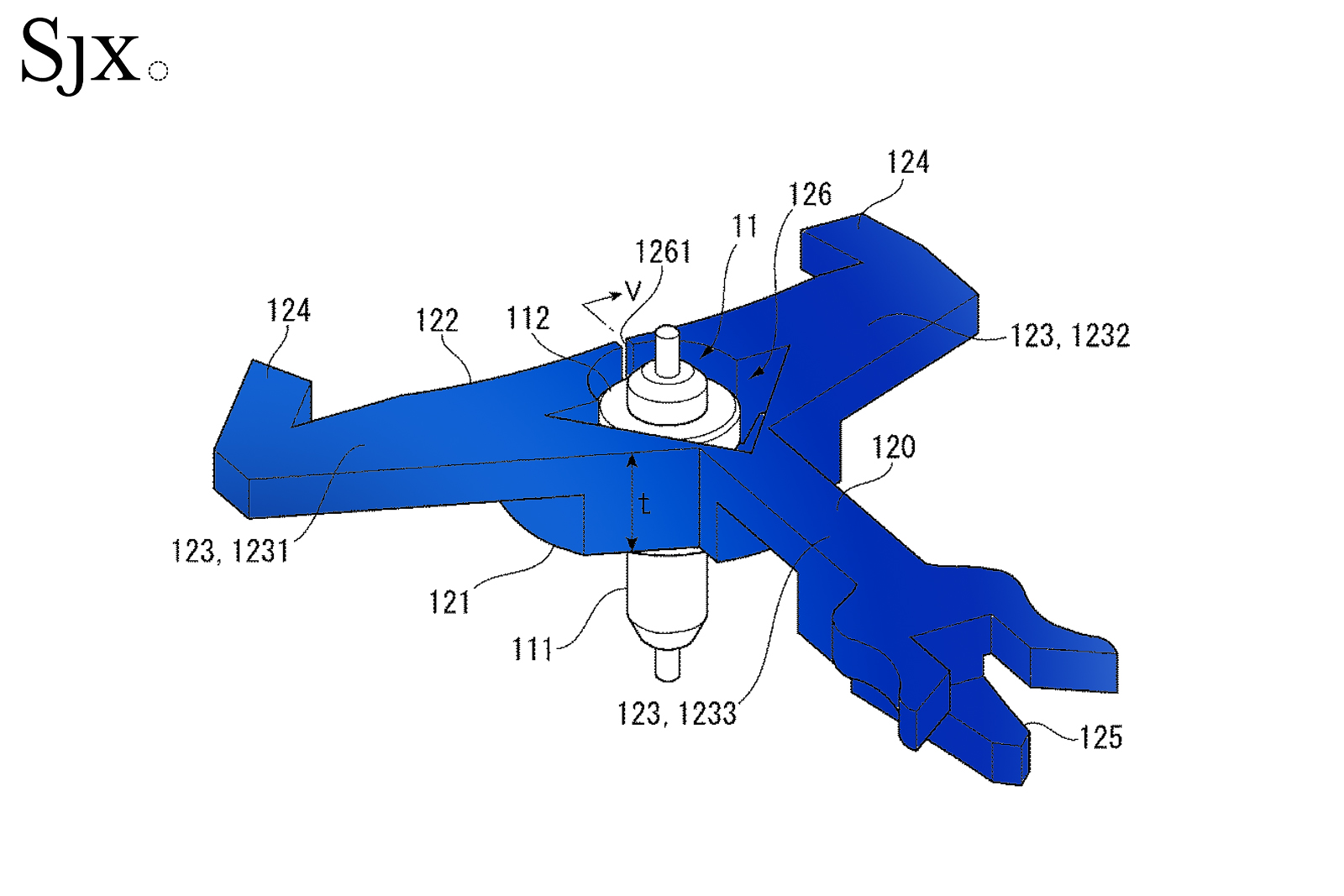
The prospective silicon pallet fork. Image – JP7143675B2
Commercialisation
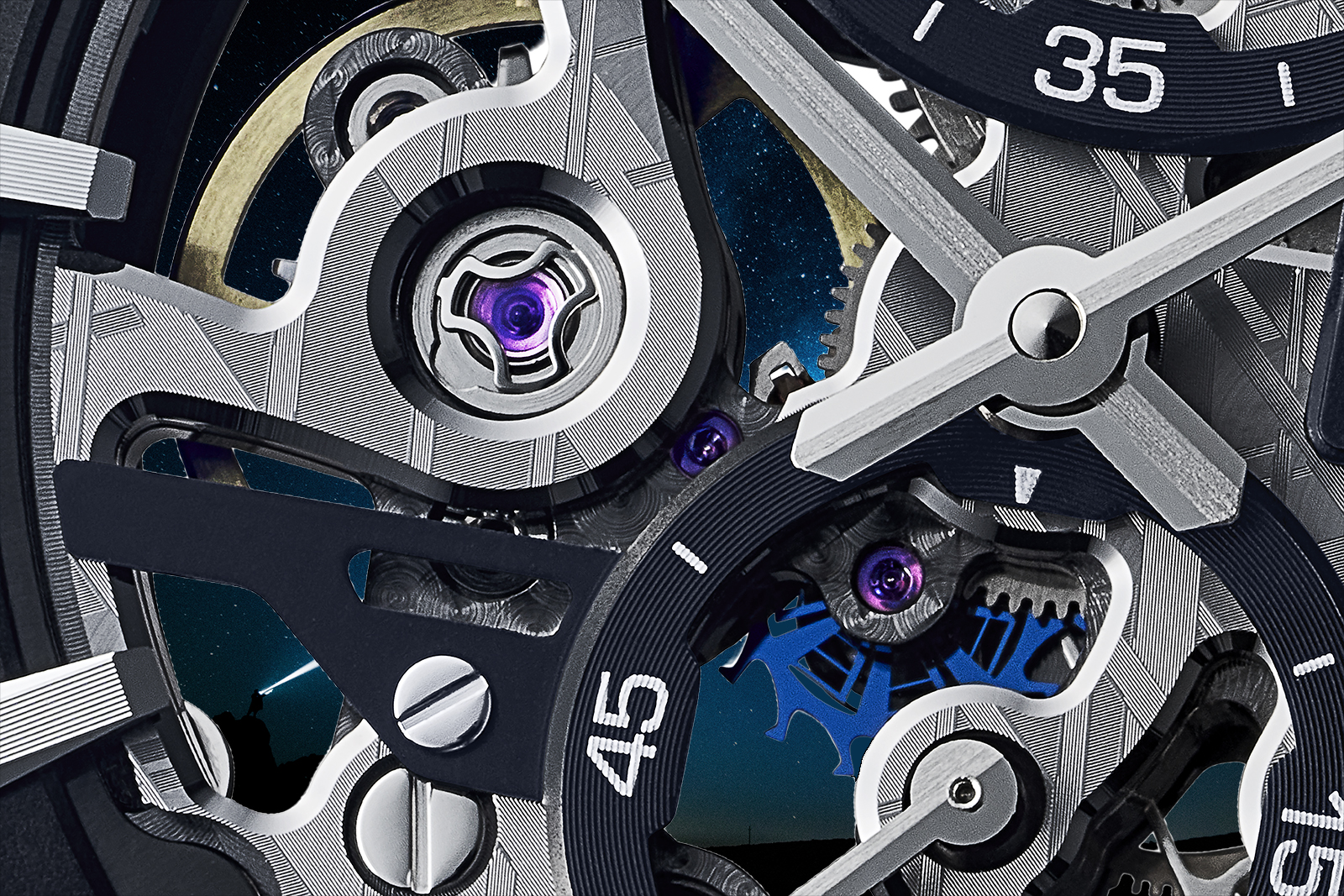
Due in part to the industrial nature of the processes outlined above and the immense capabilities of Seiko Epson, the company has managed to commercialise this technology in an affordable package via its Orient Star subsidiary; watches like the M34 F8 Skeleton bring this technology within reach.
This was brought to you in partnership with Orient Star.
Back to top.