
Habring² and SJX Introduce the Chrono-Felix “Medicus”
Just what the doctor ordered.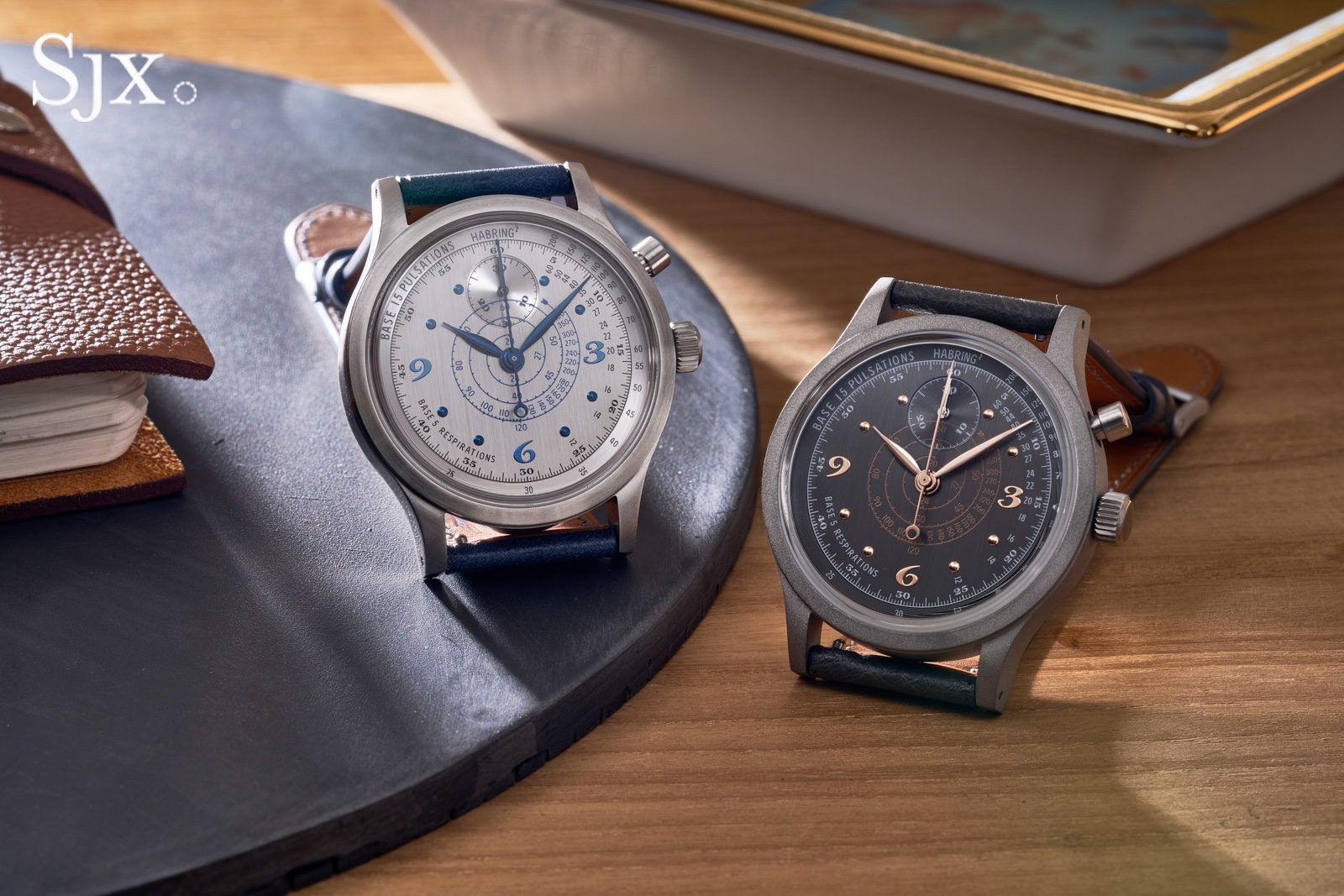
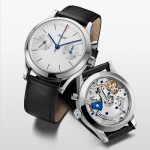
Habring² has built a loyal following among collectors who appreciate technical ingenuity over recognition. The independent Austrian brand has earned its reputation by creating inventive, low-volume complications at accessible prices. Its latest release, the Habring² x SJX Chrono-Felix “Medicus”, continues that philosophy with a variant of Habring²’s signature chronograph movement conceived exclusively for this 50-piece collaboration.
The second collaboration with SJX Watches, the Medicus revives the concept of the “doctor’s” chronograph with both pulsation and respiration scales, while offering the refined execution and modern reliability that define the work of husband-and-wife team Richard and Maria Habring. And to acknowledge the true spirit of the concept, a portion of the proceeds from the sale of each watch will be donated to children’s cancer charities in Singapore and Austria.
To express interest, please contact us. Both versions are sold out here. Thank you for the interest. A handful are still available at Shellman in Tokyo.
The key facts
A vintage-inspired, multi-scale chronograph with a twist originated from a doctor’s request
- Dial conceived to have classical elements but different from most retro-inspired chronographs
- Pulsations, respirations, and tachymeter scales – all colour coded
New variant of Habring² A11 movement developed for this edition with single, 30-minute counter at 12 o’clock
- Steel parts of chronograph mechanism finished by German independent watchmaker Pöhlmann-Bresa
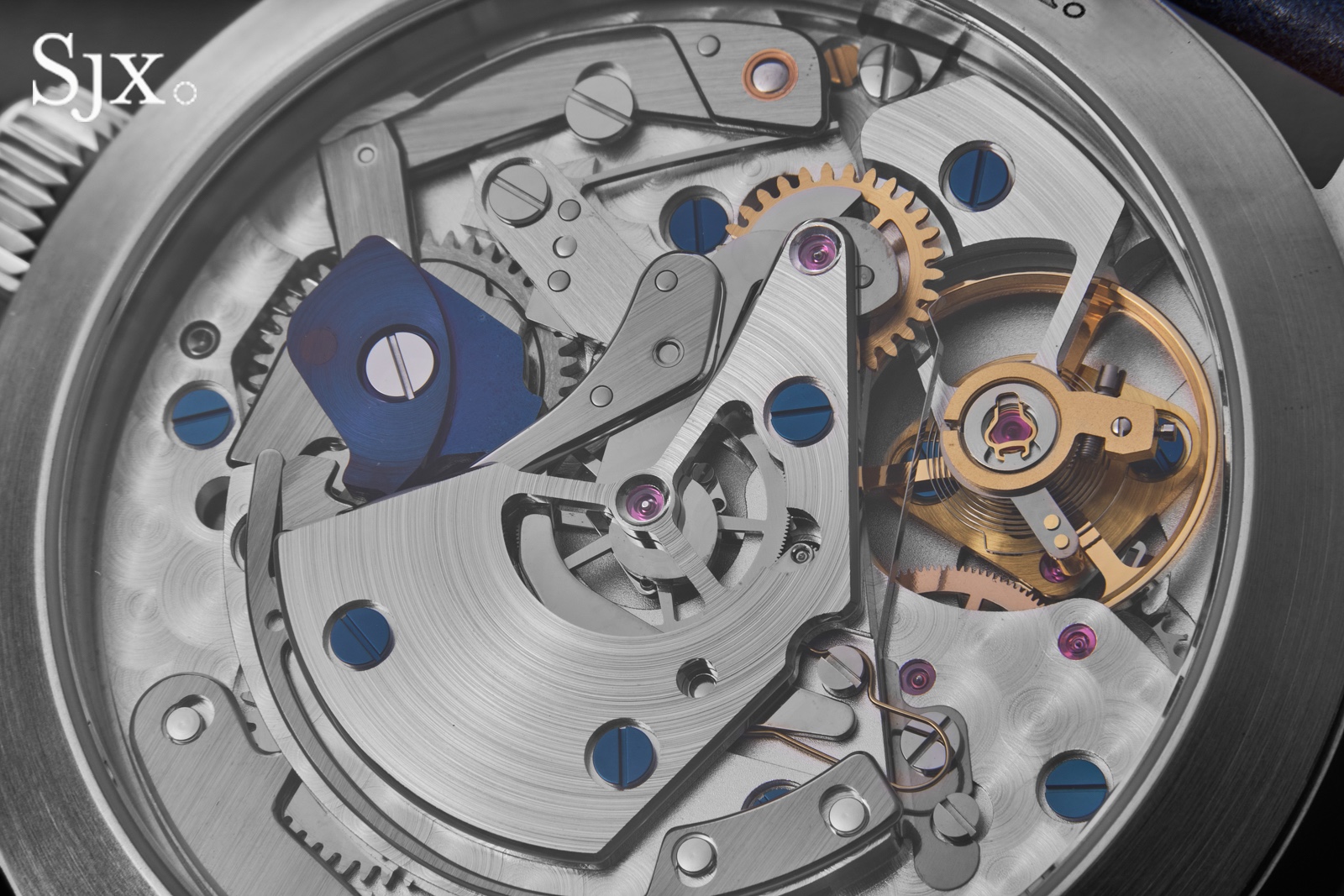
The debut of a new variant of the Habring movement, the Habring² A11C-H0
New case style for Habring² with flat bezel and domed crystal
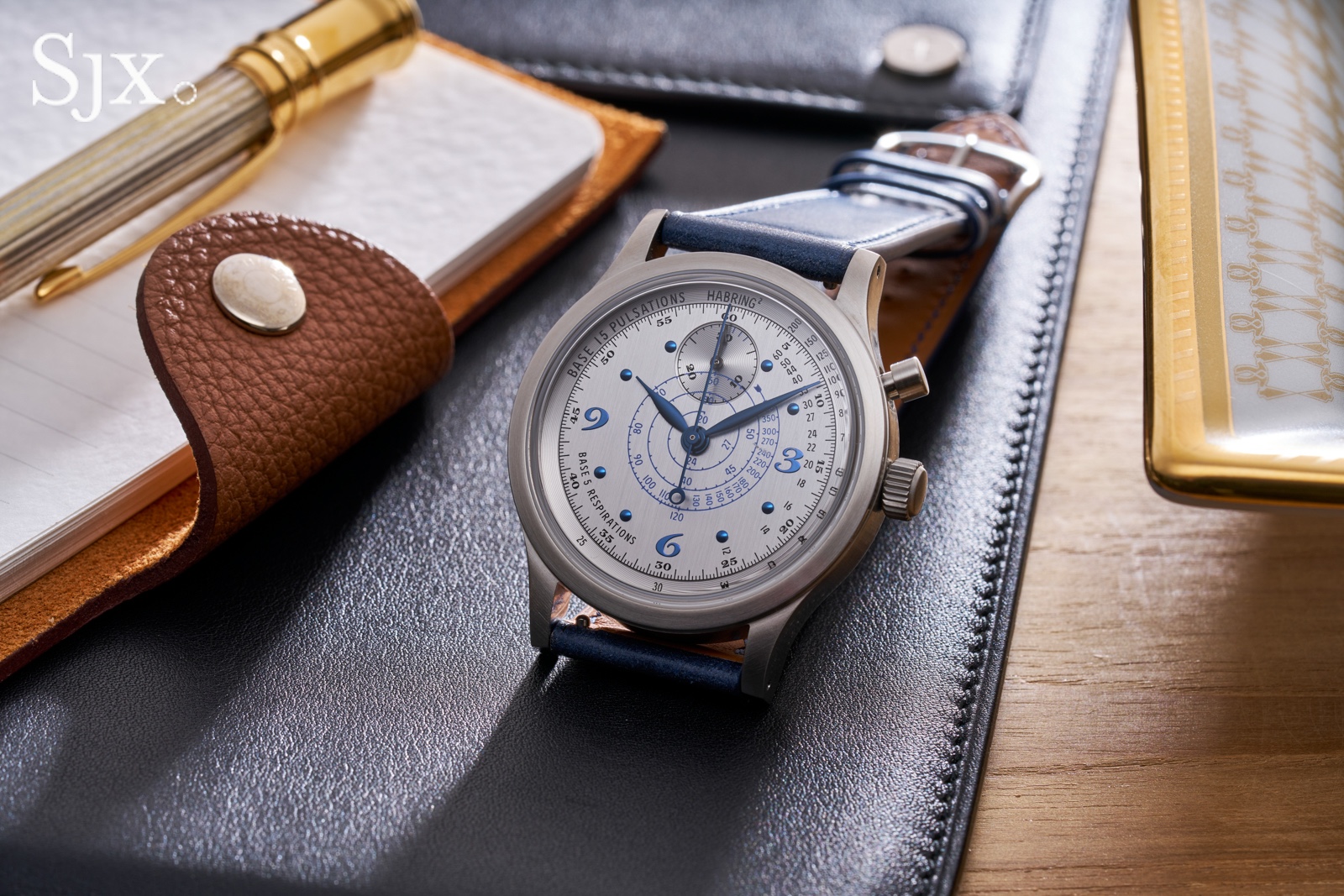
- Brushed case with silver dial
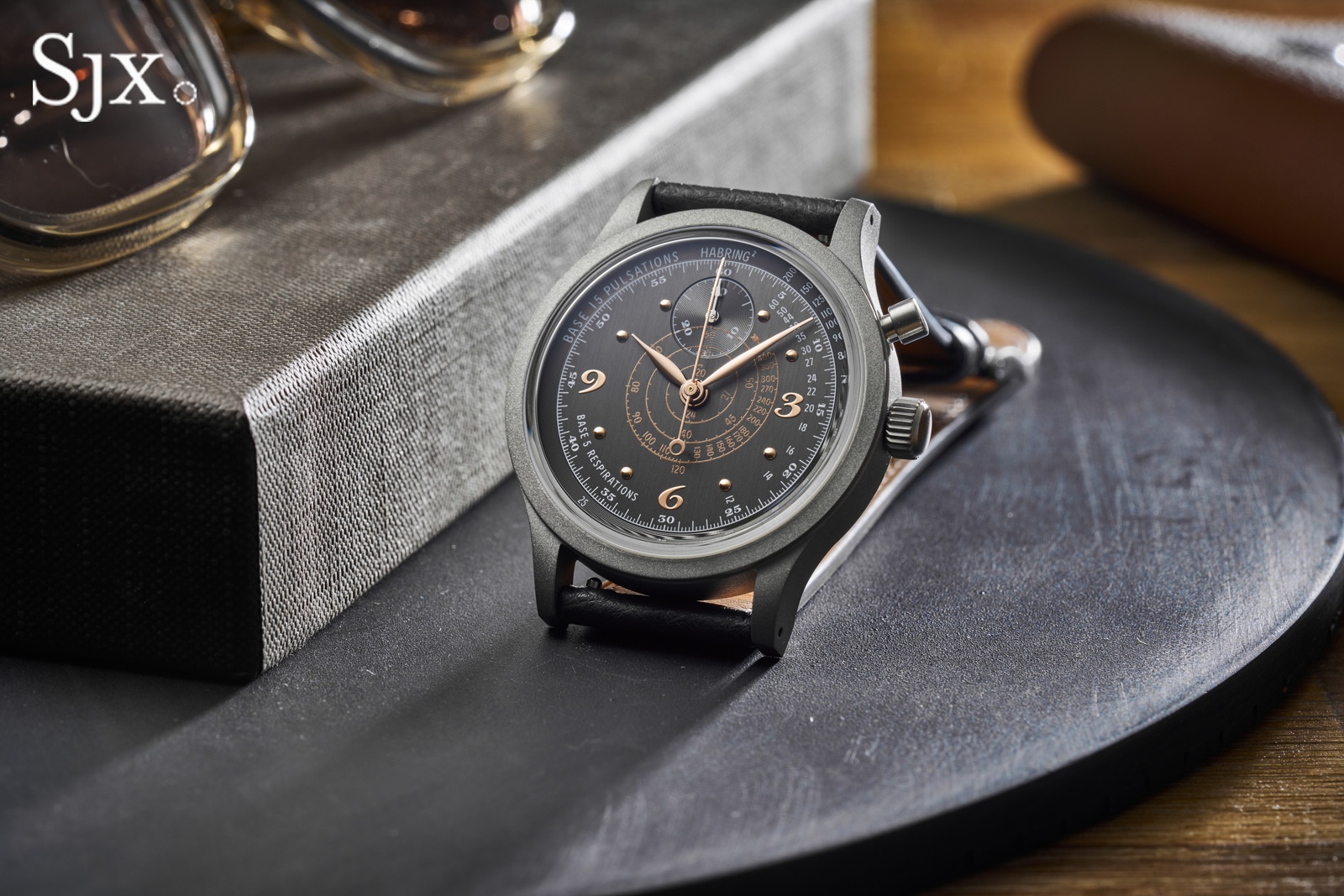
- Blasted case with grey dial
Limited to 25 in each colour
- Priced at €7,750 or US$9,250 before taxes
- Equivalent of €700 per watch sold by SJX will be donated to children’s cancer charities in Austria and Singapore
- Also available now in limited numbers at Shellman in Tokyo, priced at ¥1.75 million before tax
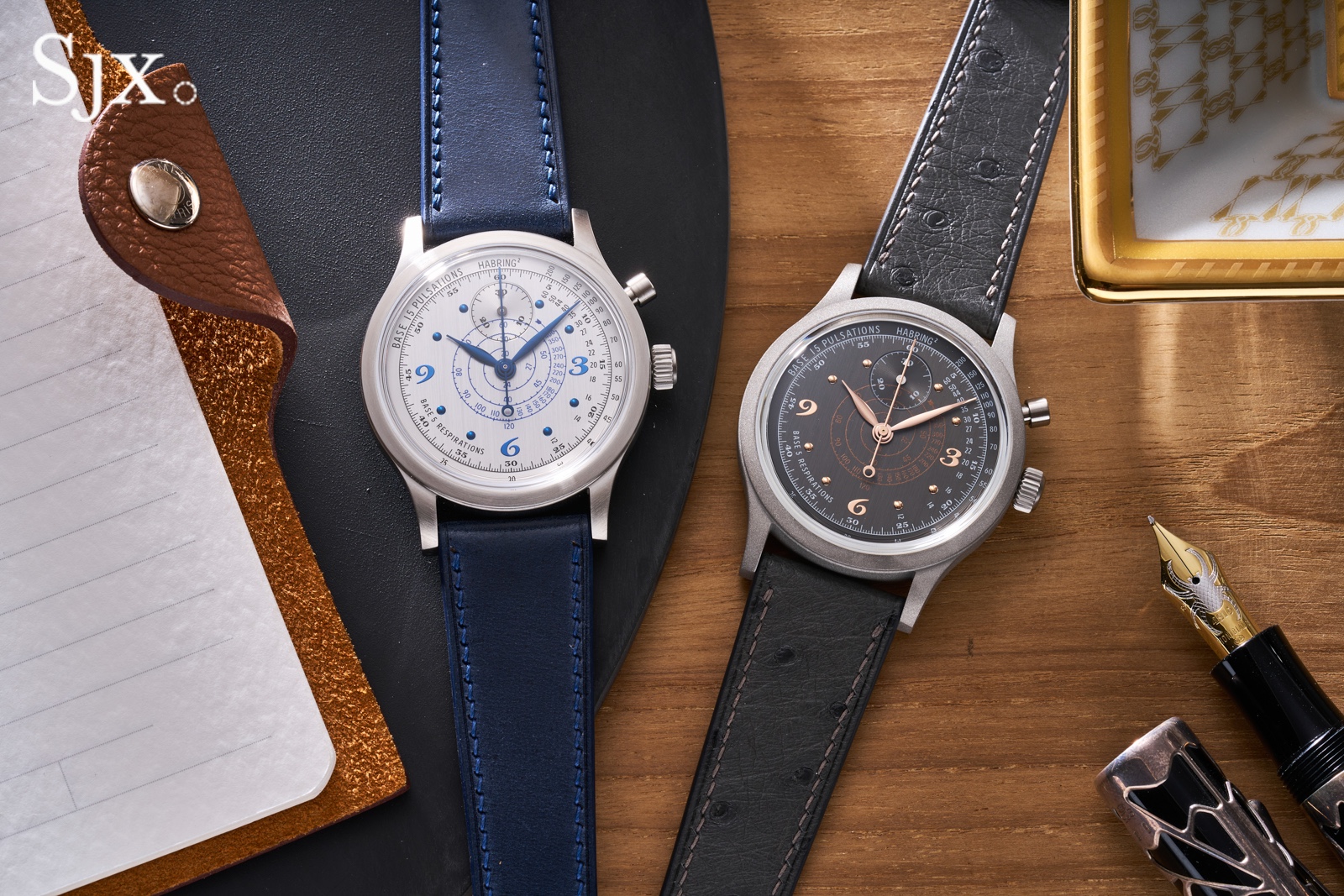
The silver dial is paired with a blue shell cordovan strap, while the grey dial gets matching ostrich
Austrian watchmaking
The flavour of the day may be expensively finished time-only watches, but Habring² has long pursued a different path. Its niche lies in producing technically inventive, low-volume watches at prices that compete directly with those of large industrial brands. It’s an unusual business model that succeeds thanks in part to the inventive mind of Mr Habring, and his rare ability to distill complex mechanisms into simpler, more robust, and more economical constructions.
Mr Habring is perhaps best known for developing the simplified split-seconds mechanism for IWC in the early 1990s, an innovation that remains in production more than three decades later. Yet it’s just one example from a career defined by practical ingenuity. Since founding Habring² with Mrs Habring in 2004, the pair have stayed true to their vision of functional, purpose-driven watchmaking executed to a high standard and offered at attainable prices.
The Medicus marks the brand’s second collaboration with SJX, following the Erwin Star released in 2021 to celebrate the site’s 10th anniversary. This new project is a more ambitious undertaking, powered by a newly developed variant of the brand’s trademark movement that was designed specifically for this limited edition of 50 watches.
Despite the new calibre and small production run, the Medicus upholds Habring²’s reputation for value. Priced at €7,750 or US$9,250, it undercuts mainstream chronographs while offering finer finishing, a slimmer case, and a more distinctive aesthetic rooted in thoughtful engineering.
In addition, a portion of proceeds will support real-life life-savers. “The doctors who first mooted the idea of the watch had a request: part of the proceeds from their sale would go to a medical charity,” explains SJX, “It was a terrific idea that both myself and the Habrings instantly agreed to. As such, the equivalent of €700 from the sale of each watch will go to children’s cancer charities in Austria and Singapore, with ourselves and Habring² sharing the donation equally.”
The design
The idea for the project originated with a collector who owns our first Habring² edition. A doctor by profession, he and several medical colleagues wanted a timepiece suited to their field, specifically, a multi-scale chronograph featuring both pulsation and respiration scales. While largely obsolete in modern medicine, such features are steeped in tradition. The design brief called for a vintage-inspired, multi-scale chronograph – with an additional element of Breguet numerals.
“[The collector and his friends] are all doctors and they liked several of the vintage-inspired chronographs Habring² had done in the past, giving us a natural starting point for the design,” says SJX. “However, I absolutely wanted to avoid a generic, two-counter chronograph with a retro design.”
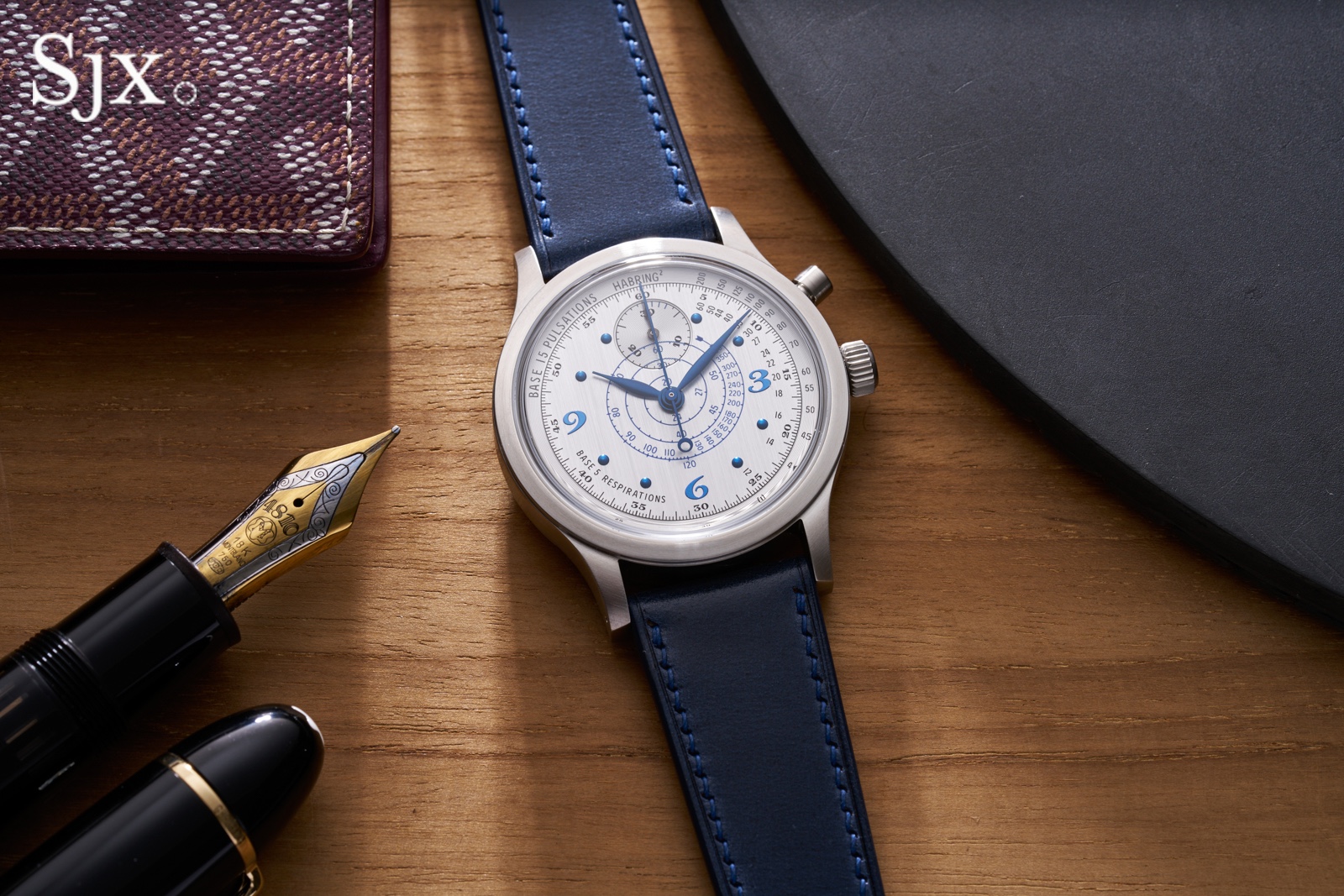
From the earliest stages of development, SJX was aware of how saturated the market has become with vintage reissues, especially those dressed in fashionable tones such as “salmon” pink. Rather than simply recreating a mid-century doctor’s chronograph, SJX and Richard Habring set out to design something that acknowledged the genre’s heritage while feeling unmistakably modern.
“It took a little brainstorming with Richard and repeatedly iterating the design to create something that was vintage-inspired, featuring Breguet numerals – yet entirely different from past models and also easily distinctive,” continues SJX.
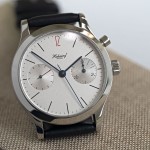
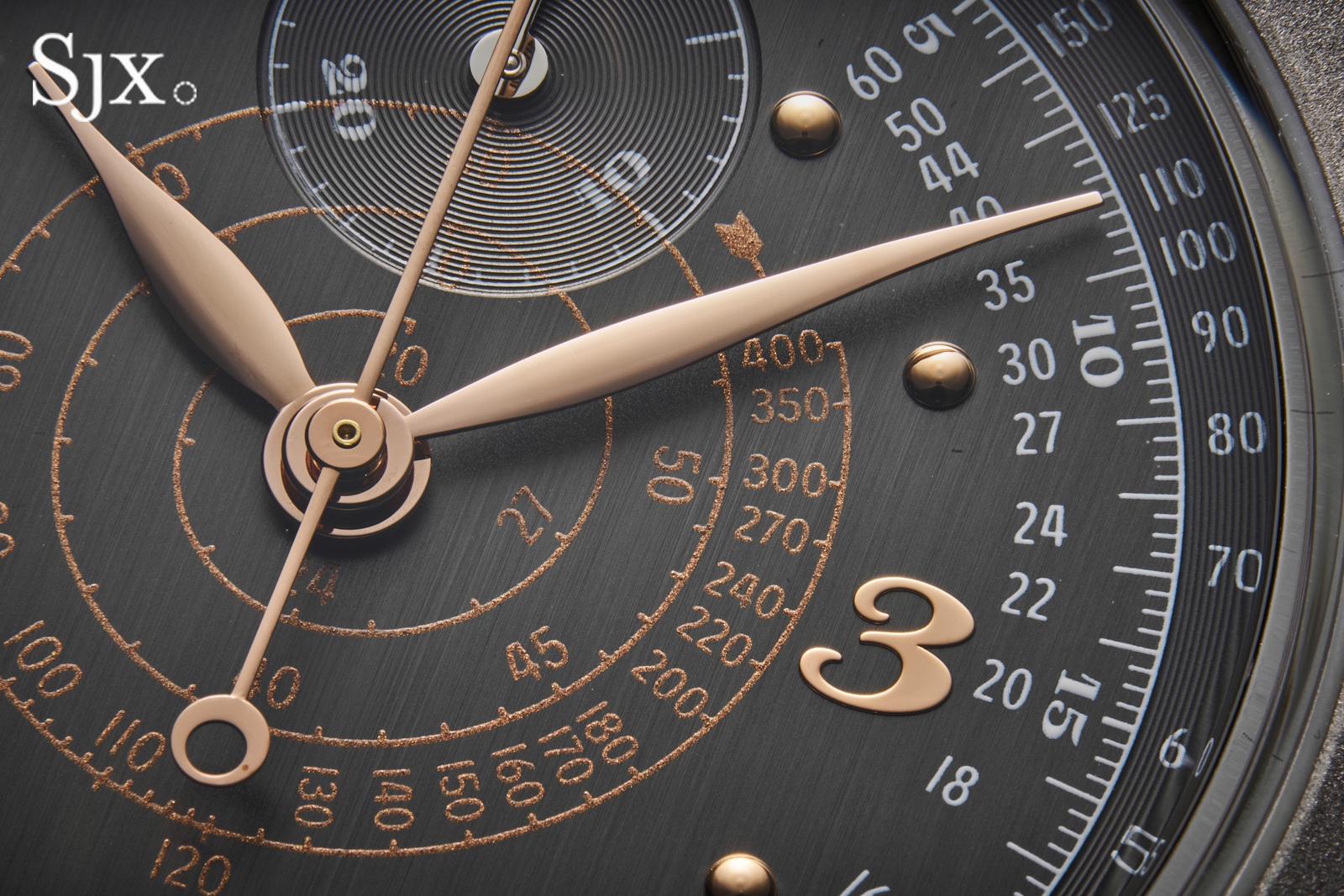
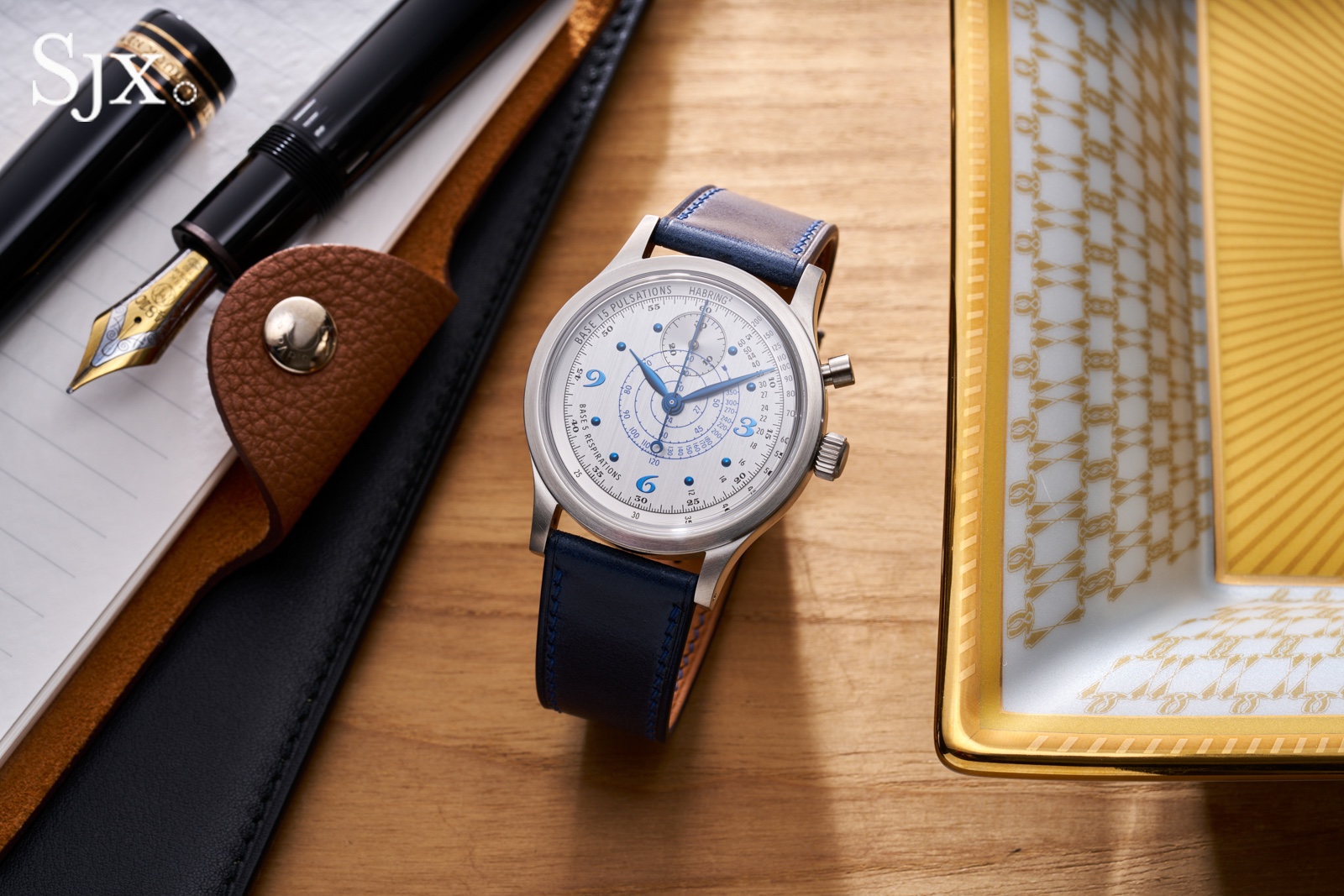
The result was a single-register chronograph with the minutes totaliser positioned at 12 o’clock, a distinctive layout that also marks a first for Habring². The medical scales are positioned on the periphery of the dial, while the central portion is occupied by the tachymeter “snail” scale colour-coded to match the time display. The different colours distinguish the medical scales from the other indications.
The origins of the “doctor’s” watch
The origins of the pulsation scale are somewhat obscure, though attempts to measure one’s pulse using a timekeeper date back to antiquity. The modern incarnation of the scale—like so many other practical innovations in watchmaking—can be traced to Breguet, which was producing watches with pulsometer markings as early as 1880.
While Breguet’s examples may not have been the very first pulsation watches, they are the earliest known. And what Breguet did, others copied; the brand’s work clearly influenced the pulsation and respiration scales we know today.
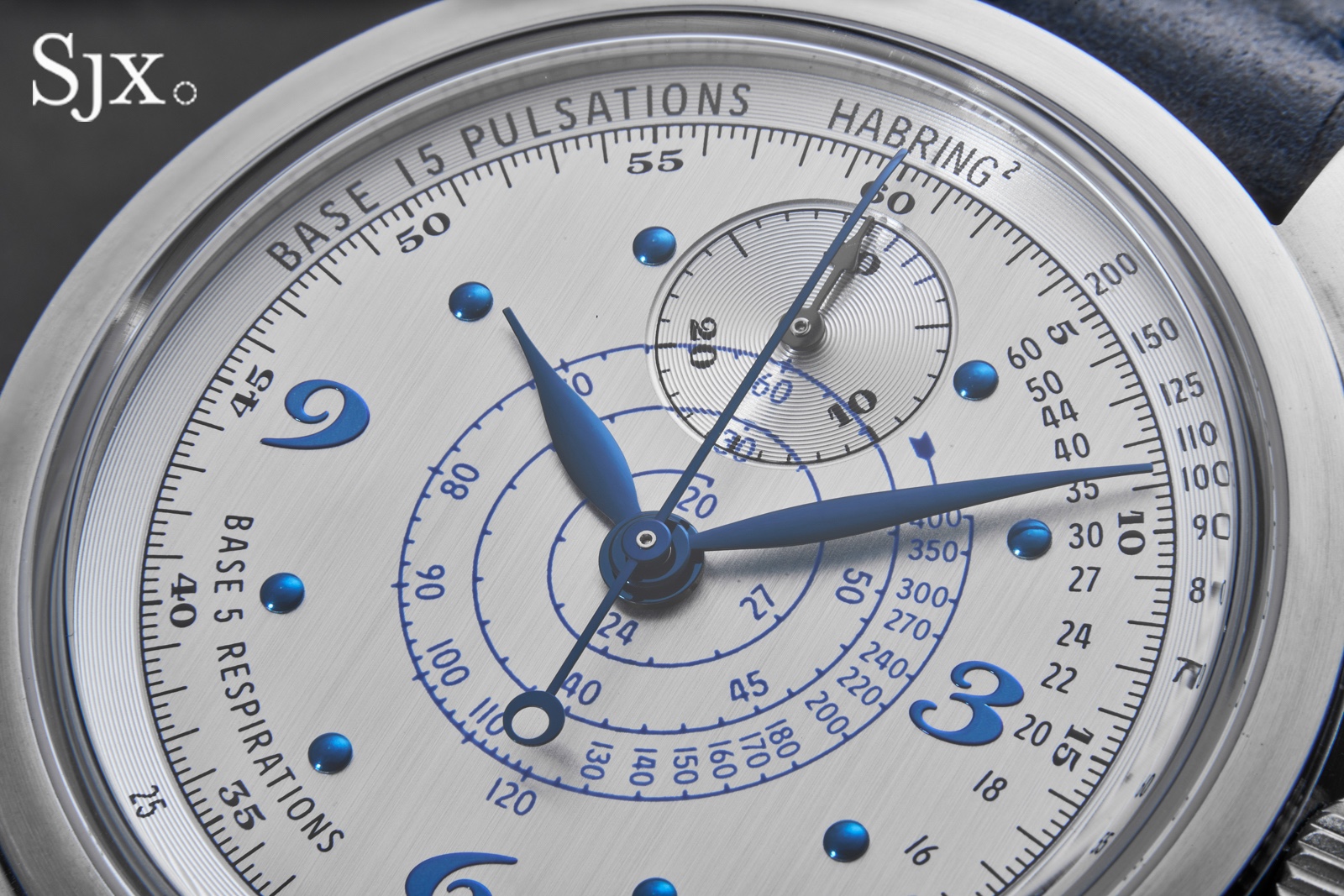
That Breguet influence continues in the Medicus through its applied numerals at three, six, and nine, interspersed with large domed hour markers. Though these numerals originated in the 18th century, their use here nods to their later resurgence in purposeful mid-century chronographs such as the Patek Philippe ref. 1463 that combined functionality and refinement.
Vintage inspiration, with a twist
The desire for something subtly different influenced not only the aesthetics but also the underlying, mechanical architecture of the watch — from the movement layout and sub-dial arrangement to the overall sense of proportion, everything was reconsidered from the ground up.
In particular, the twelve o’clock position of the 30-minute totaliser represents a genuine first for Habring² and a rare deviation within the pulsometer genre. Historically, pulsometer watches were adapted from existing movements, which typically placed the running seconds at nine and the minute counter at three to maintain visual symmetry. The Medicus, by contrast, eliminates the running seconds entirely, resulting in a vertical layout that feels more balanced and contemporary.
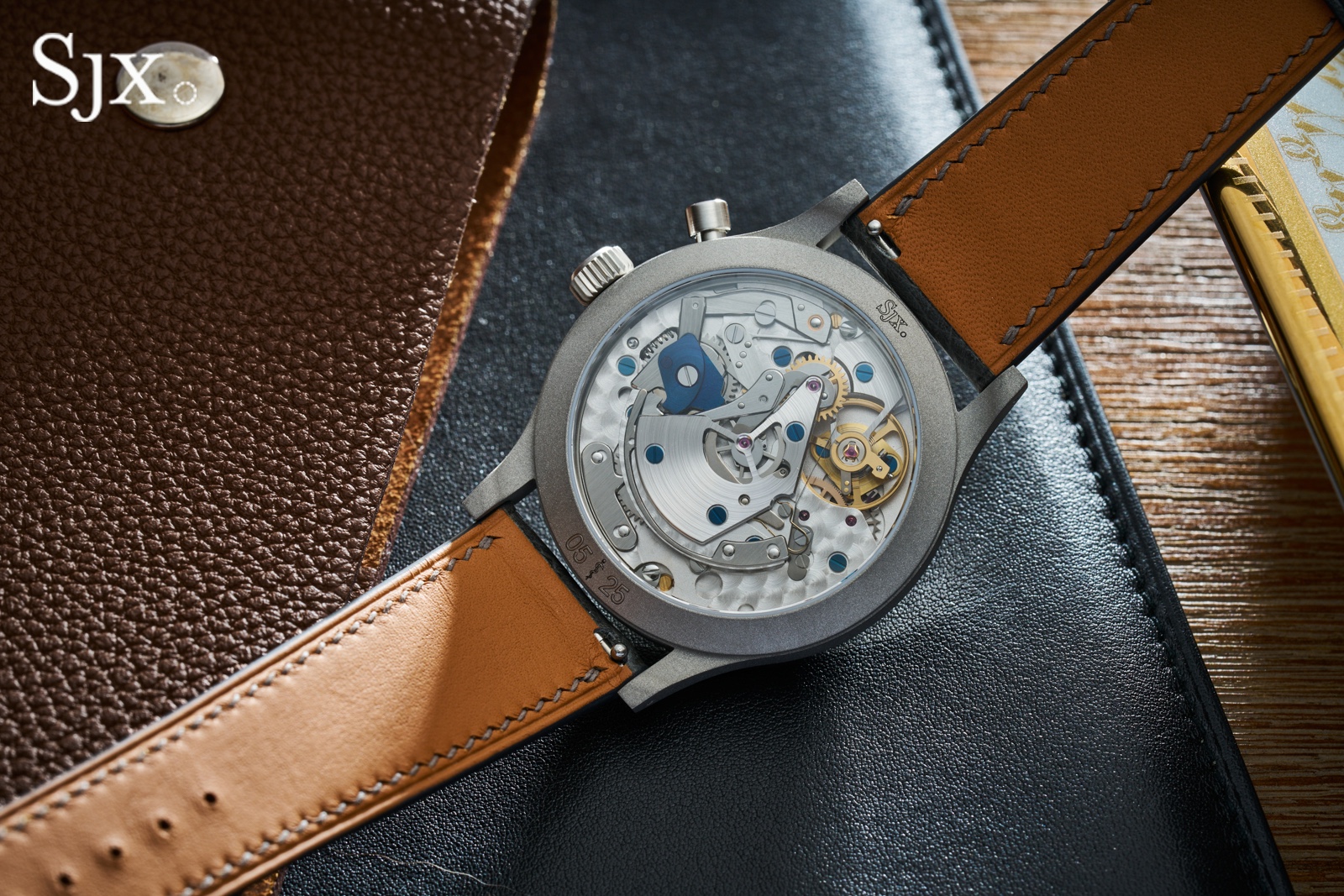
This also reflects a subtle reconfiguration within the movement itself, achieved through the development of a new variant of Habring² ‘s workhorse calibre, the A11C-H0. The result is a chronograph that remains firmly rooted in tradition yet forward-looking in execution.
Two configurations
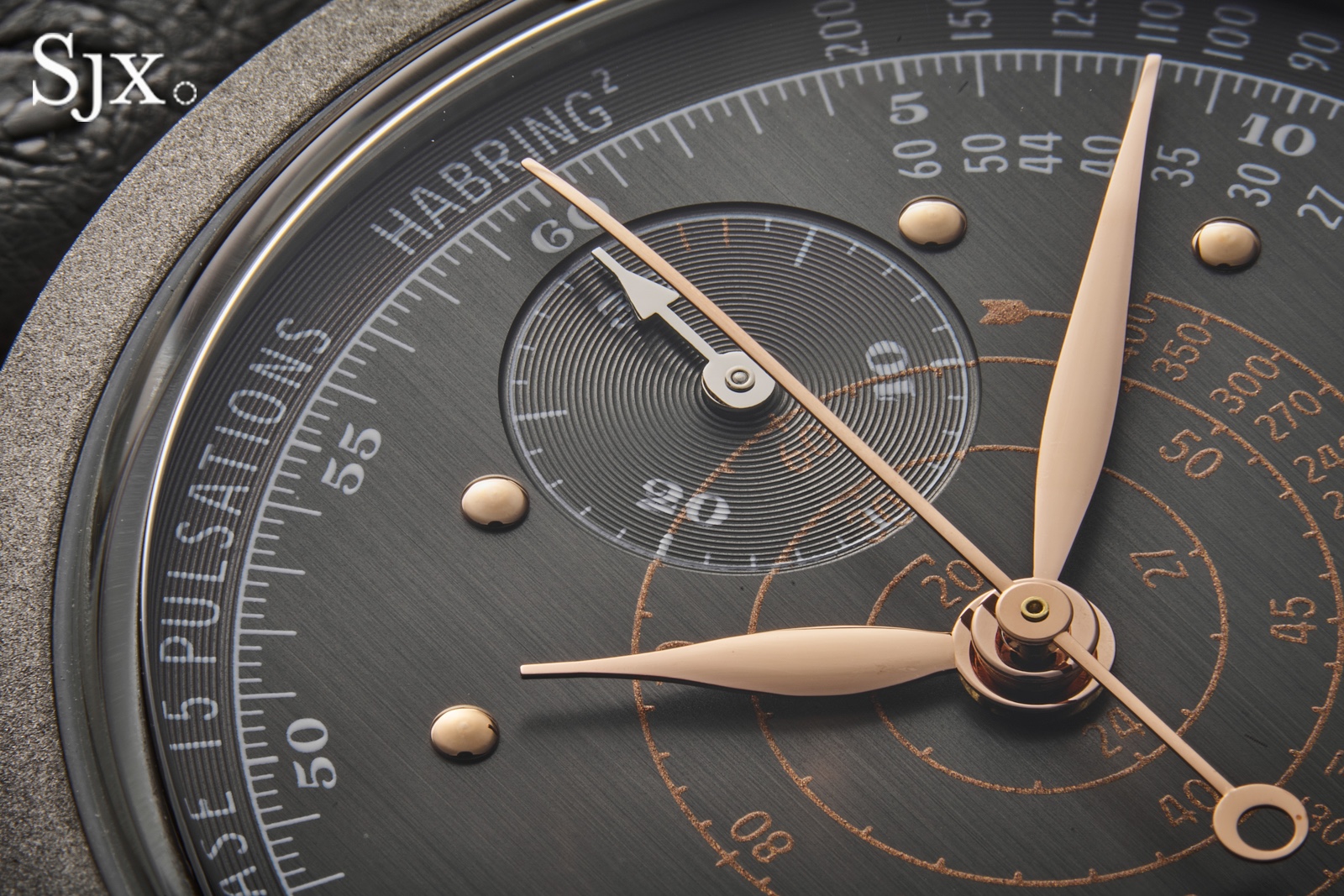
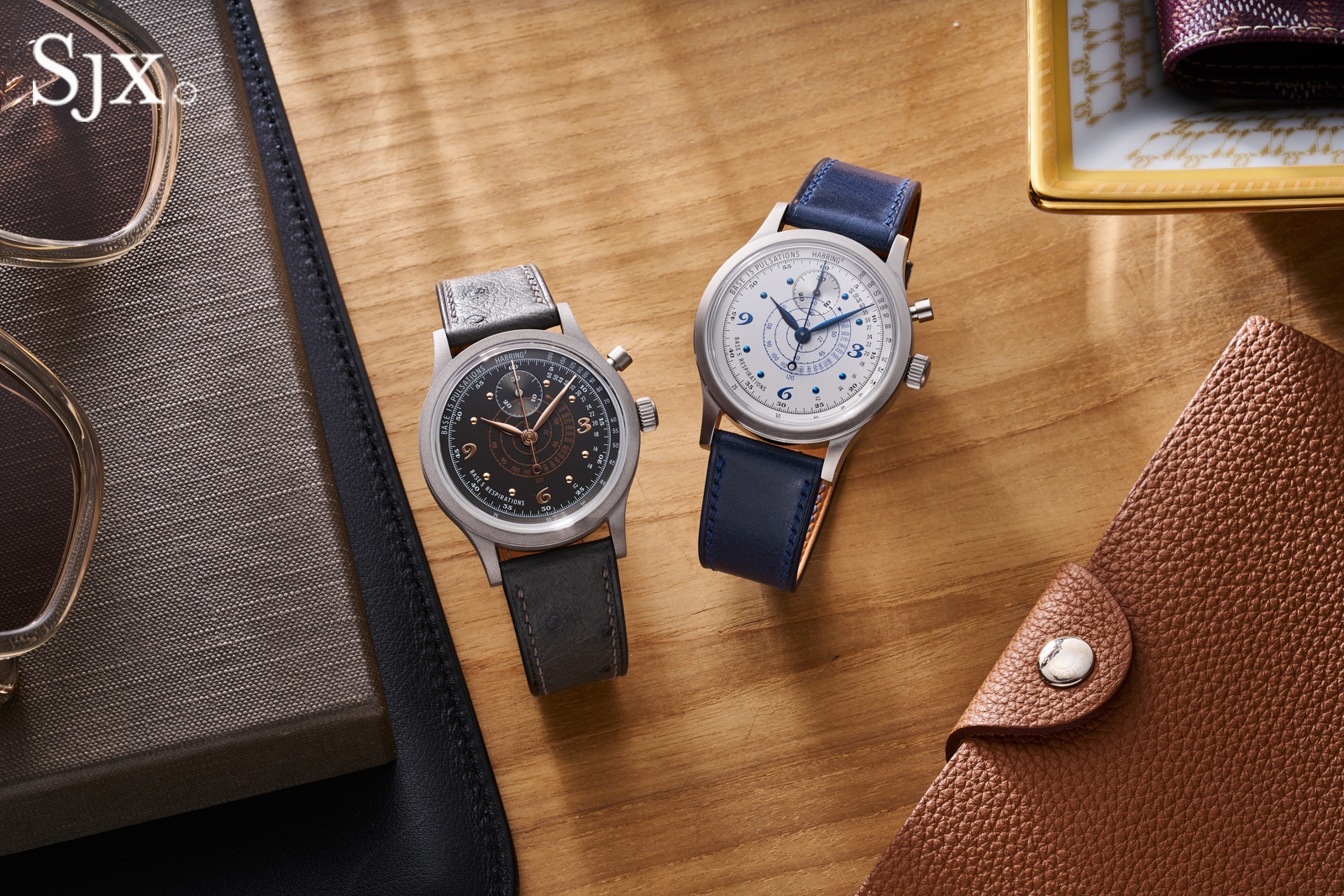
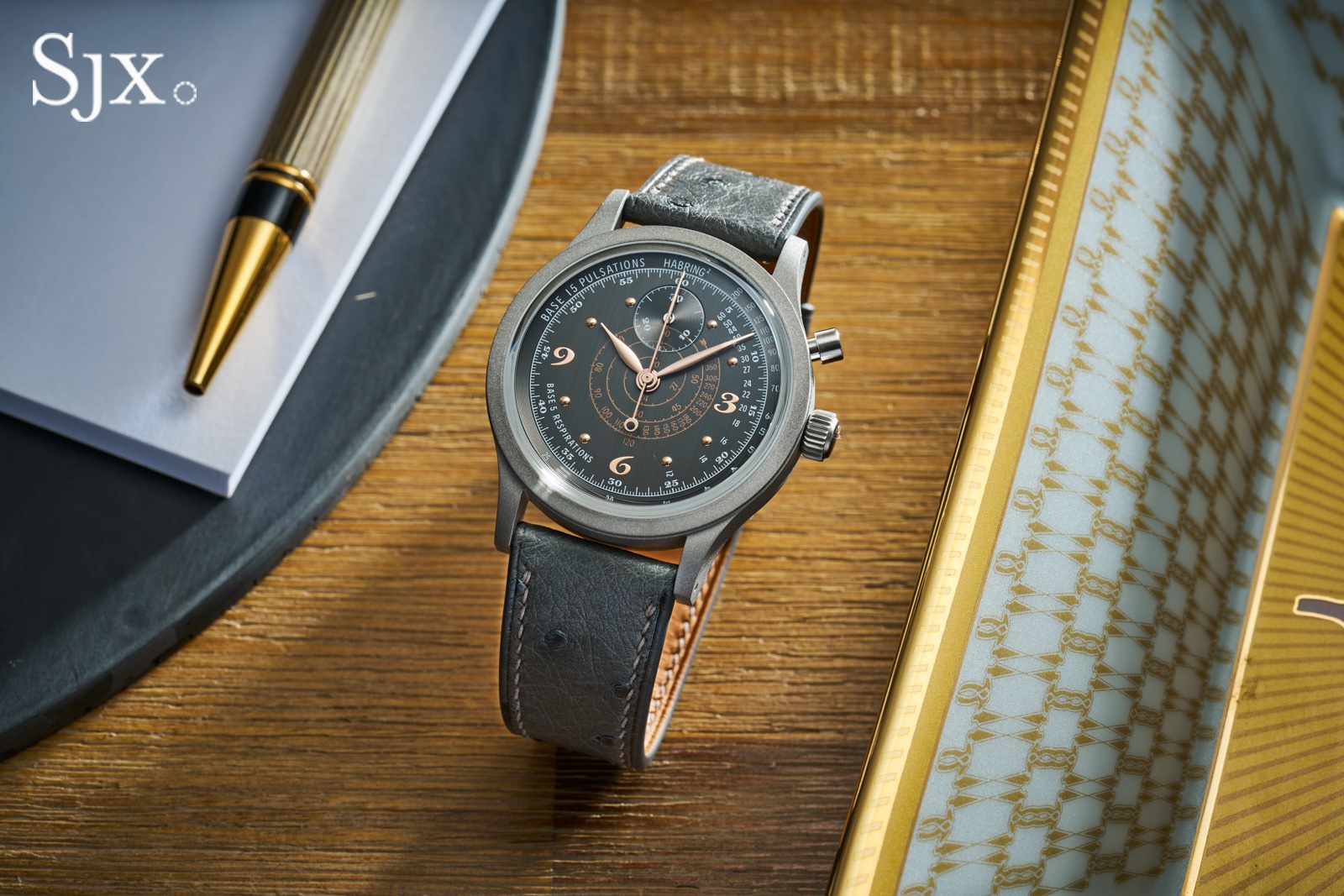
The Medicus is available in two colourways. The silver-dial variant features blued steel hands and hour markers, while the grey version pairs rose gold-plated hands and markers with matching printing on its tachymeter scale.
“Building on the basic idea of vintage-but-different, I decided on two colour combinations for the watch” says SJX. “One is a blasted steel case with a grey dial and rose gold accents; a little evocative of nickel-plated cases and gilt dials. And the other is a classic silver-and-blue that brings out the textures on the dial.”
Regardless of colour, both dials share the same strong vertical brushing and an embossed sub-dial for the 30-minute totaliser at 12 o’clock. The sub-dial’s snailed texture echoes that of the pulsation chapter ring around the outer edge, creating a cohesive and finely detailed surface.
“The result is a dial with a single counter at 12 o’clock, a first for Habring², but also uncommon amongst chronographs in general. Although the layout is novel, it is practical, both legible and symmetrical. Moreover, the Habring² logo is discreet, which evokes ‘anonymous’ vintage chronographs,” explains SJX. “But it is not only the dials that are different, but also the case. Habring²’s cases typically have a stepped or sloped bezel, so I decided to go for a flat bezel with a domed crystal.”
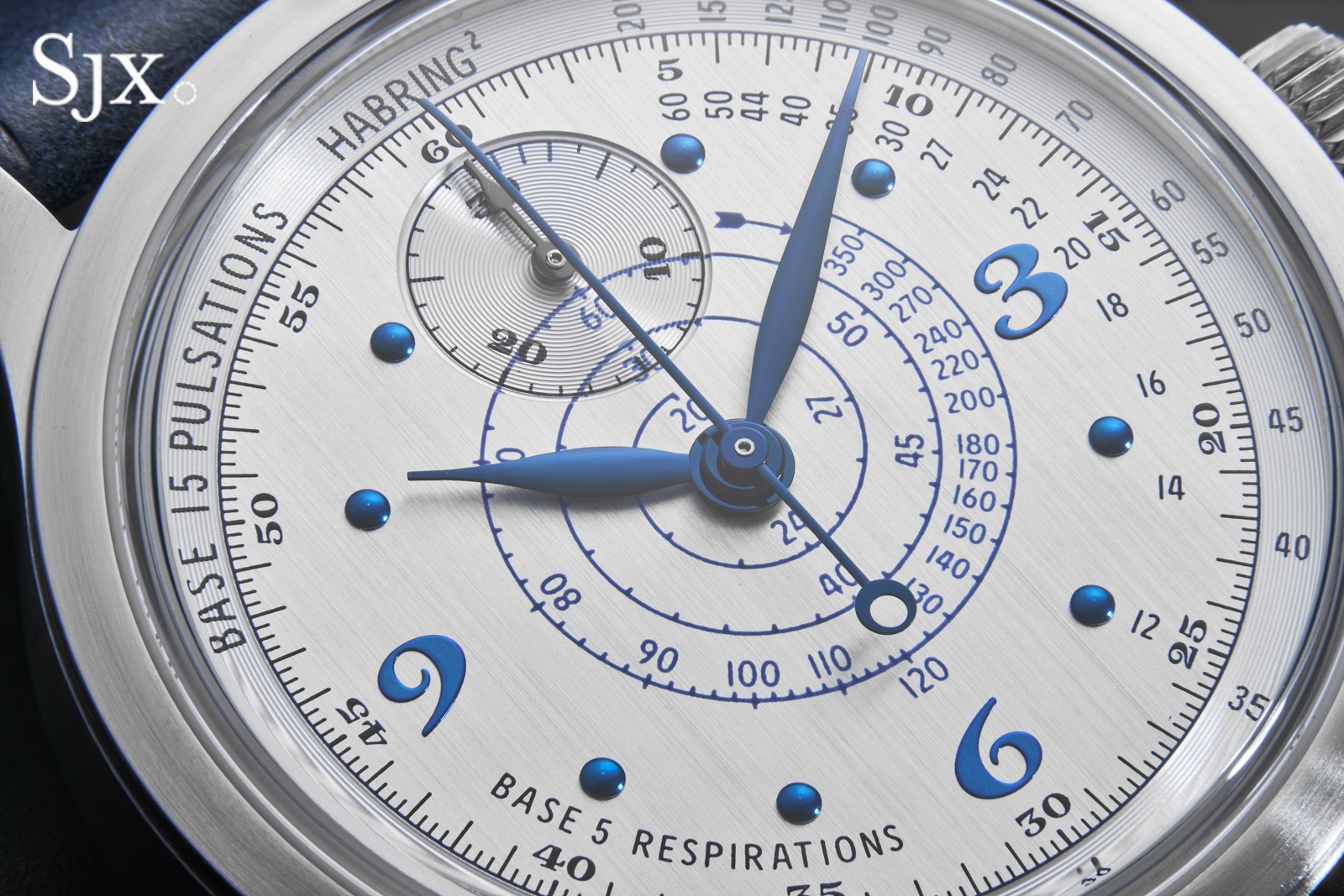
The silver dial features medical scales in black, while the tachymeter scale is blue to match the time indication
An instrument-like case
Unlike previous versions of the Chrono-Felix, the Medicus features a flat bezel, giving it a decidedly instrument-like feel appropriate for a doctor’s watch. The vintage flavour continues with the box-form sapphire crystal, which rises above the 8.75 mm thick case to a total height of 11.2 mm.
In terms of design and proportion, the flat bezel and domed crystal of the Medicus brings to mind midcentury wristwatch chronographs like the Rolex ref. 2508 and Omega CK988; the latter also featured a similar multi-scale dial and monopusher configuration.
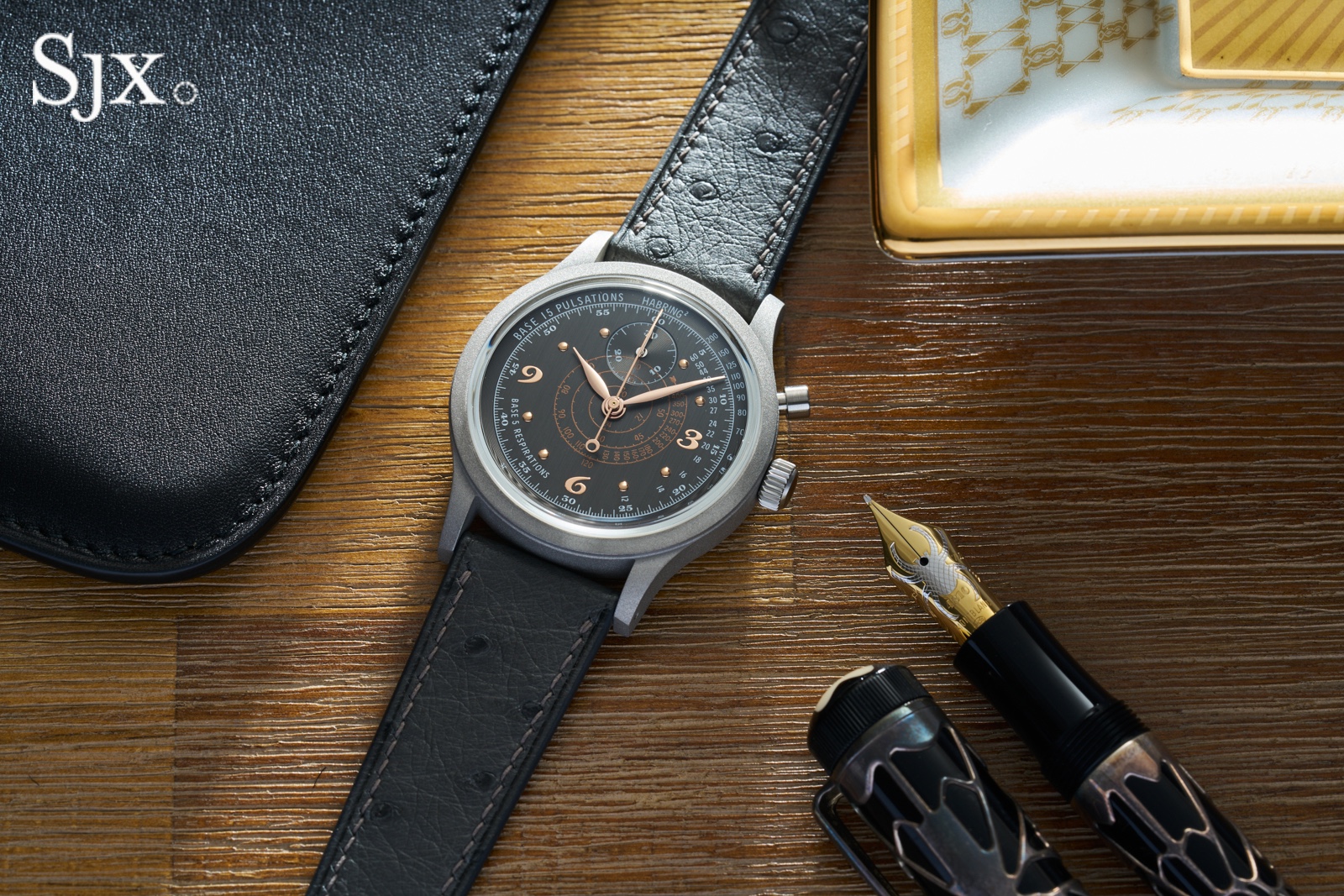
The purposeful look continues on the case flanks, which offer practical and period-correct drilled lugs. While the look is vintage, the build quality marks the Medicus as a modern watch. Even the grey variant, which offers a special sandblasted case treatment inspired by the aged look of heavily worn vintage chrome-plated watches, features the tell-tale evenness of modern industrial methods.
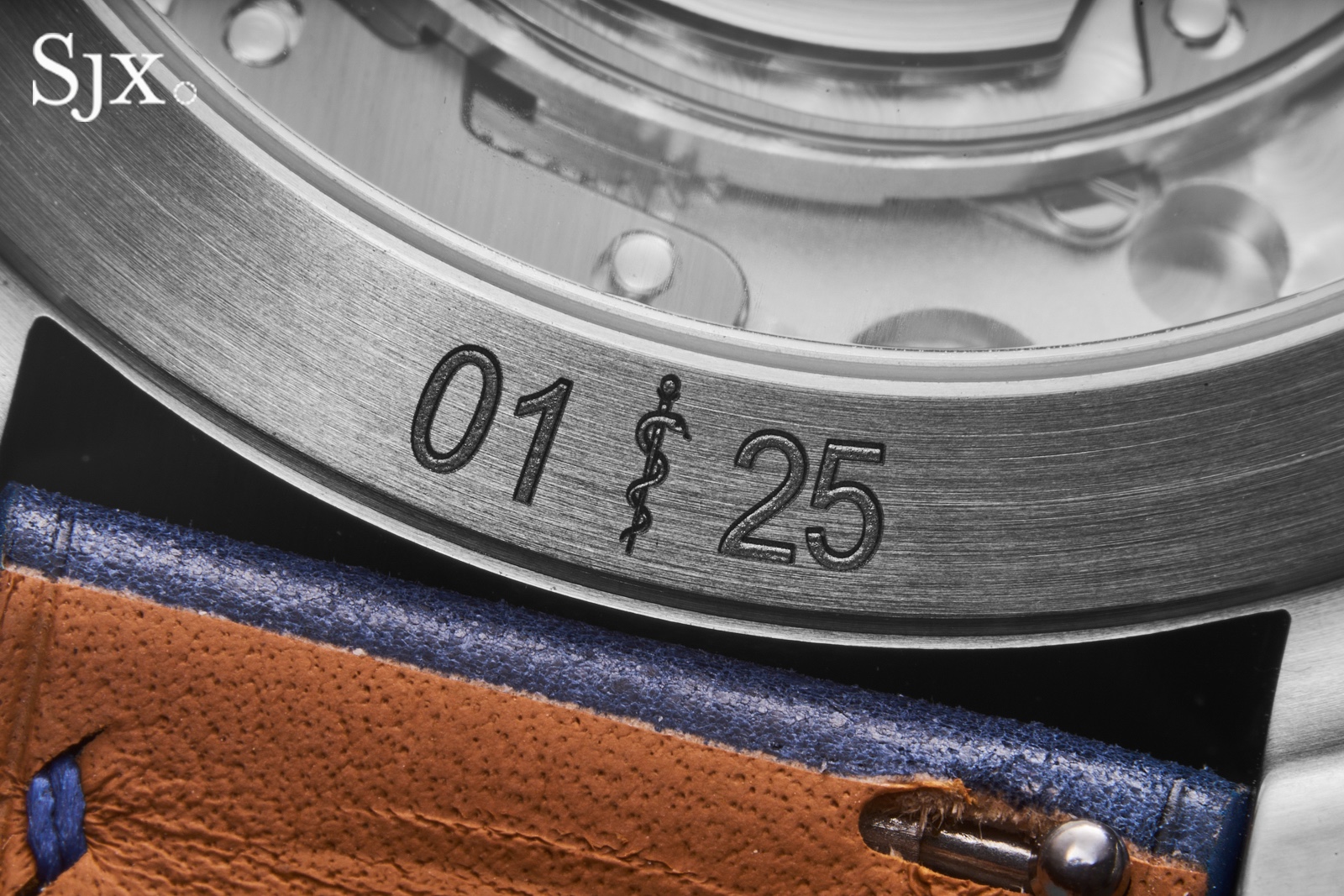
Each case is individually numbered, out of the 25 pieces available in each colourway. But in lieu of the common slash mark or dash between the case number and the edition size, the Rod of Asclepius makes an appearance.
Named for the Greek god of healing, the Rod of Asclepius is part of the official iconography for dozens of major health institutions worldwide, including the World Health Organization (WHO) and the American Medical Association (AMA). This thoughtful detail ties the case to both the functionality of the movement and the expression of the dial.
“There’s a funny story here: halfway through the design phase I found out the rod I was using in the renderings was the wrong one after the doctor who suggested the concept pointed it out,” recounts SJX, “As it turns out, the staff carried by the Greek god Hermes is similar but entirely different.”
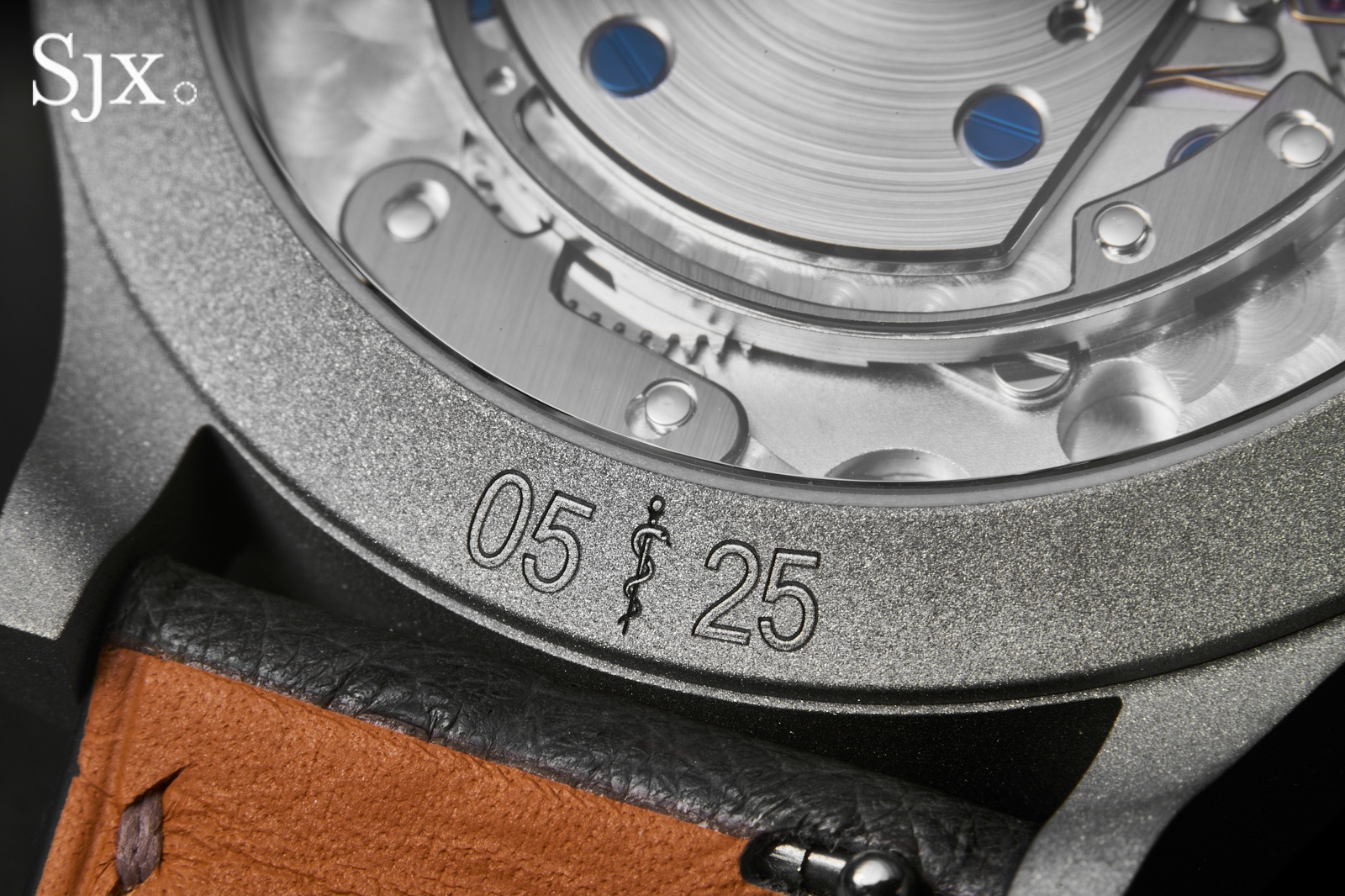
The differences between the two variants continue in the case finish. The silver-dialed version is fully brushed with a fine linear graining across the bezel and lugs, giving it a clean, utilitarian look that matches its crisp dial.
The grey version, on the other hand, features a heavily textured matte sandblasted finish that nods to the prewar and mid-century era, when many mid-market chronographs (and also military watches) were housed in chrome-plated brass cases.
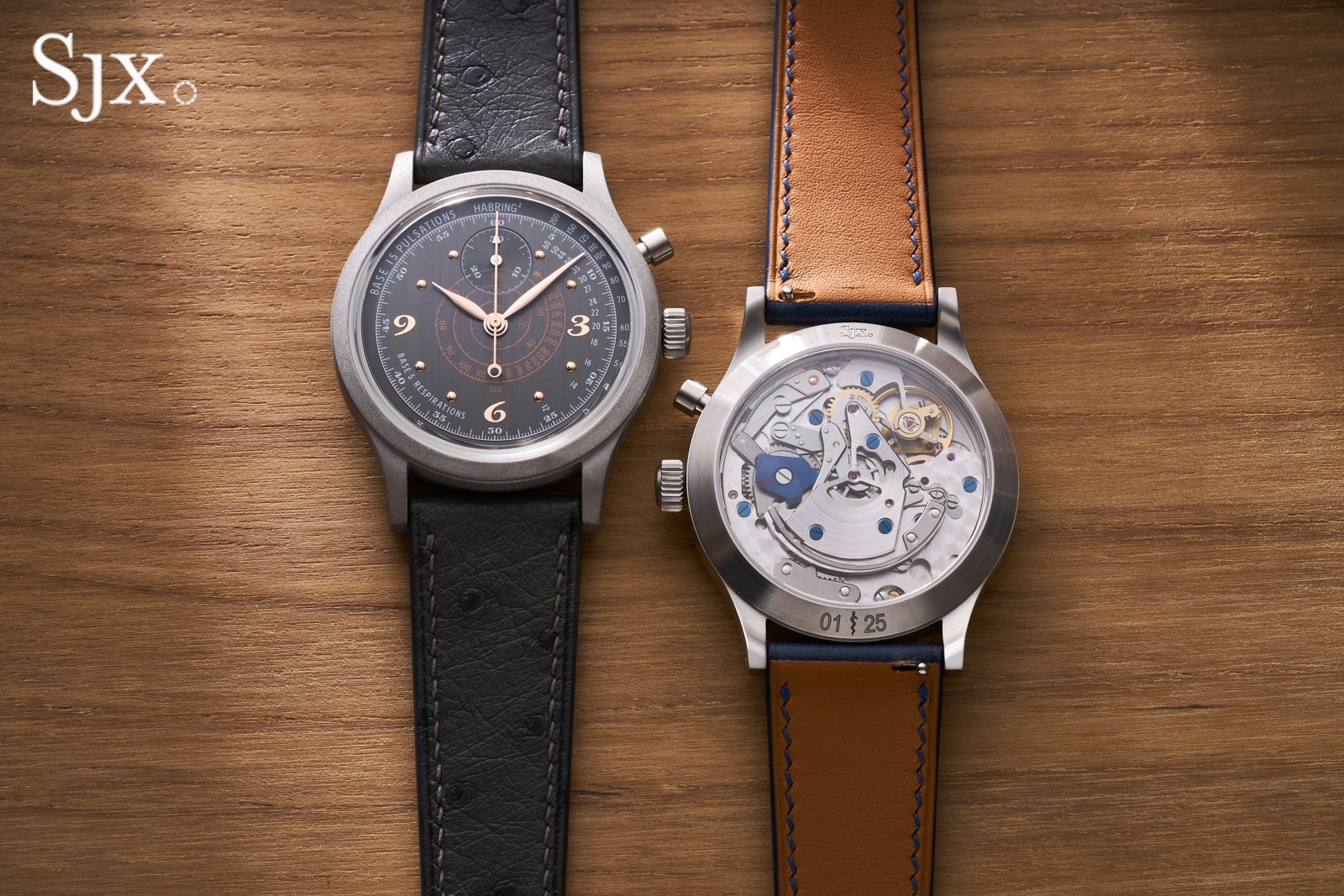
Here, that wabi-sabi aesthetic is reinterpreted in solid stainless steel with modern precision, giving the surface a tactile richness and uniformity worthy of a contemporary high-end watch. The case finish is replicated on the simple buckle, which is engraved with the SJX logo.
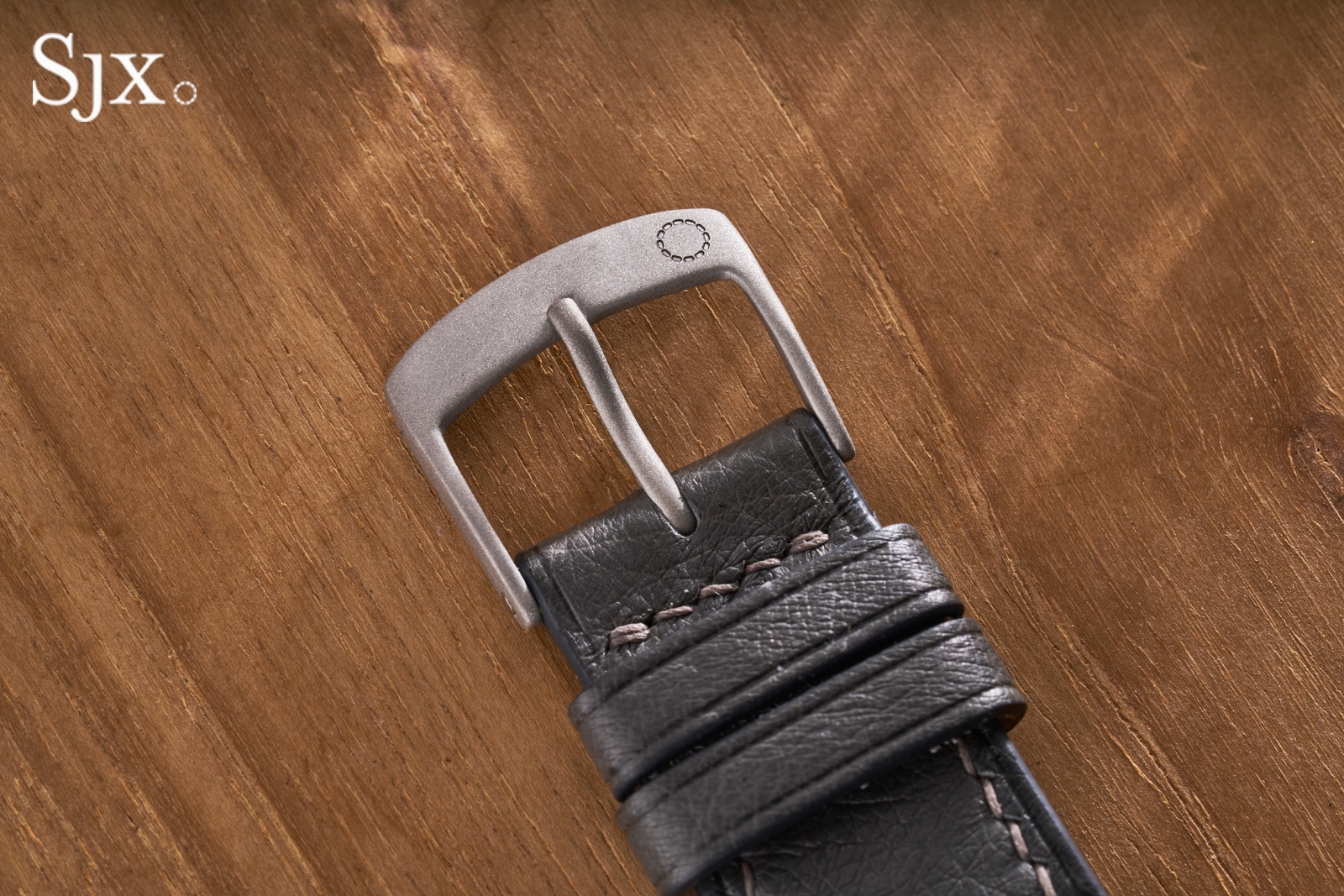
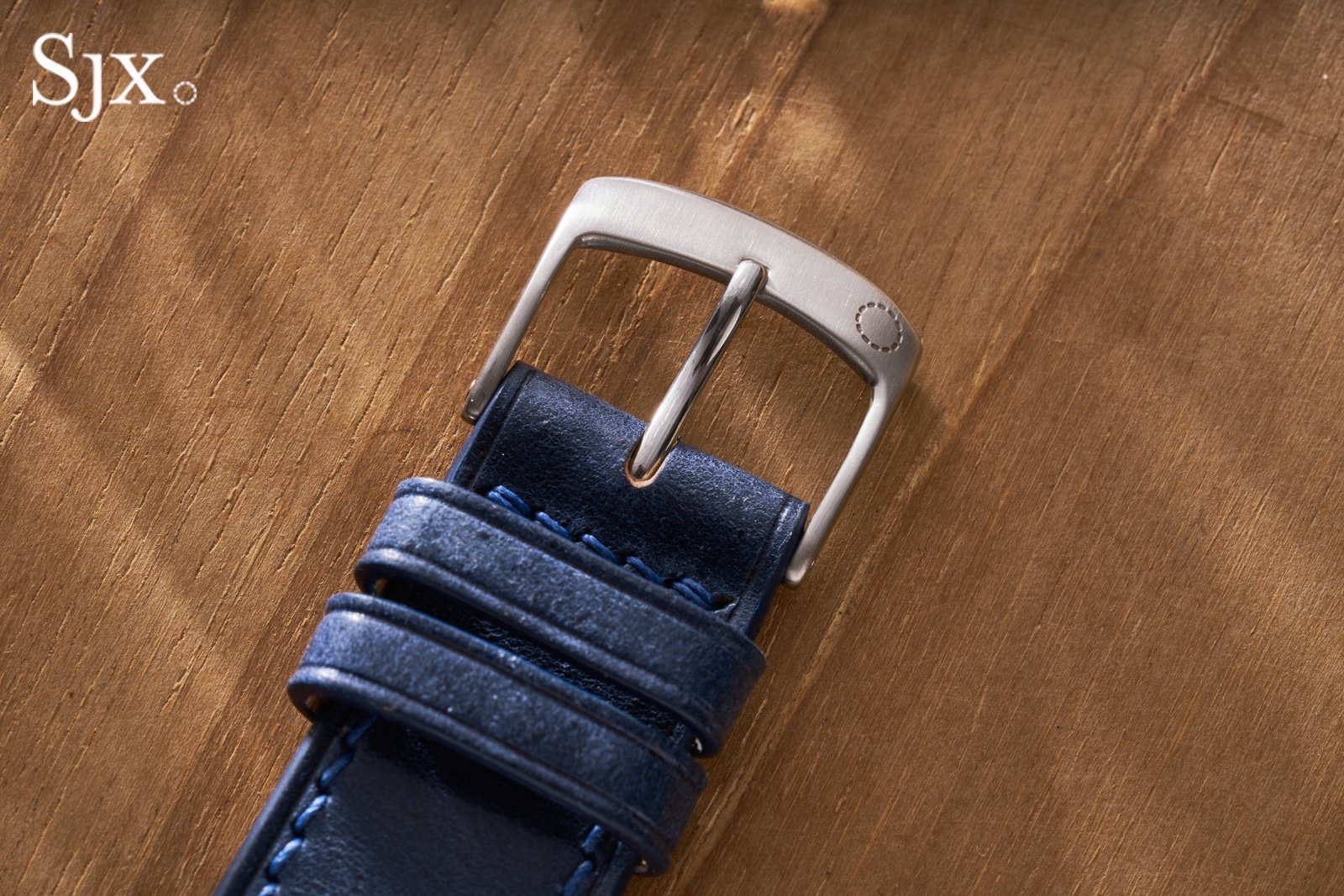
Each version is delivered with a buckle finished to match the case
A sturdy foundation
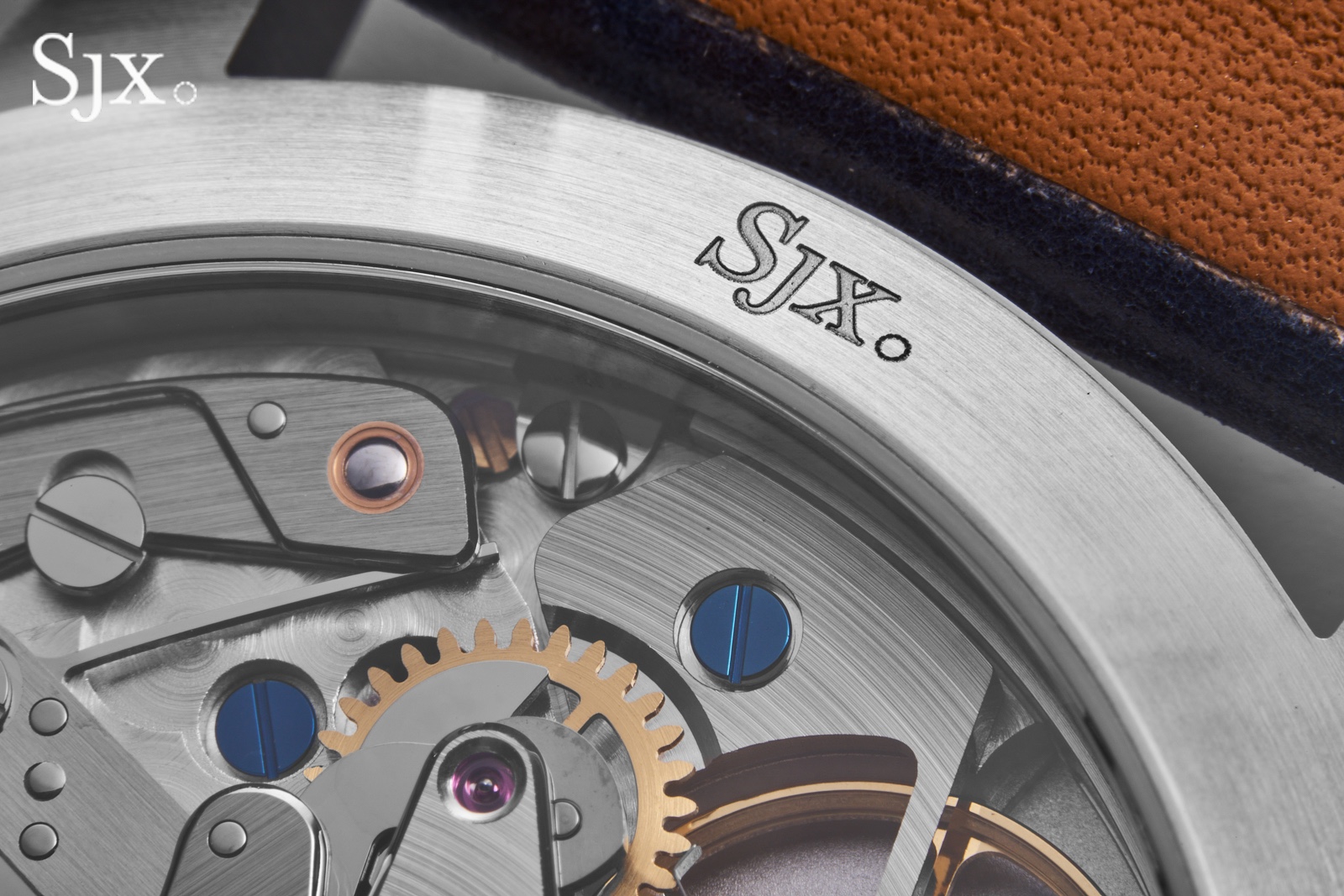
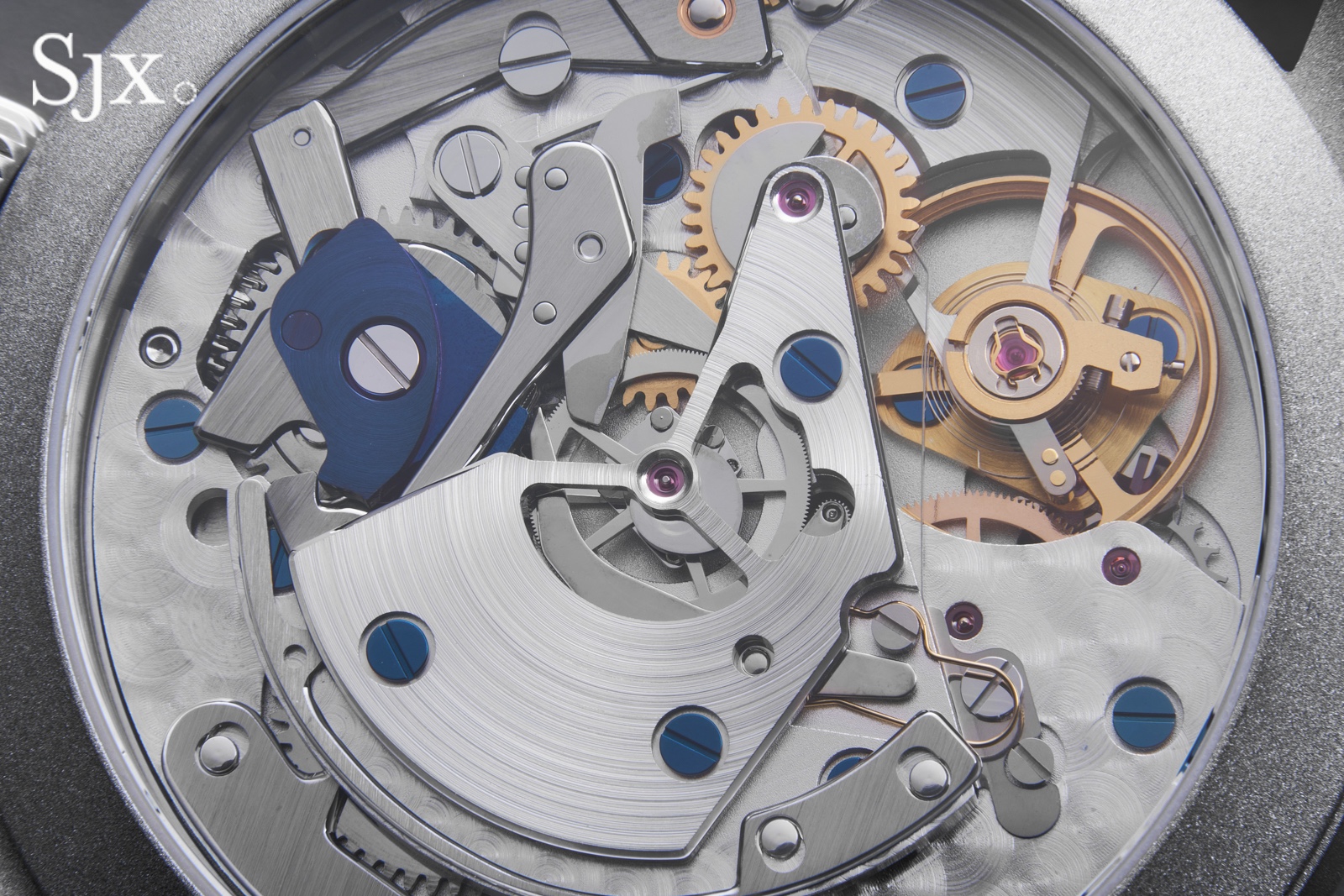
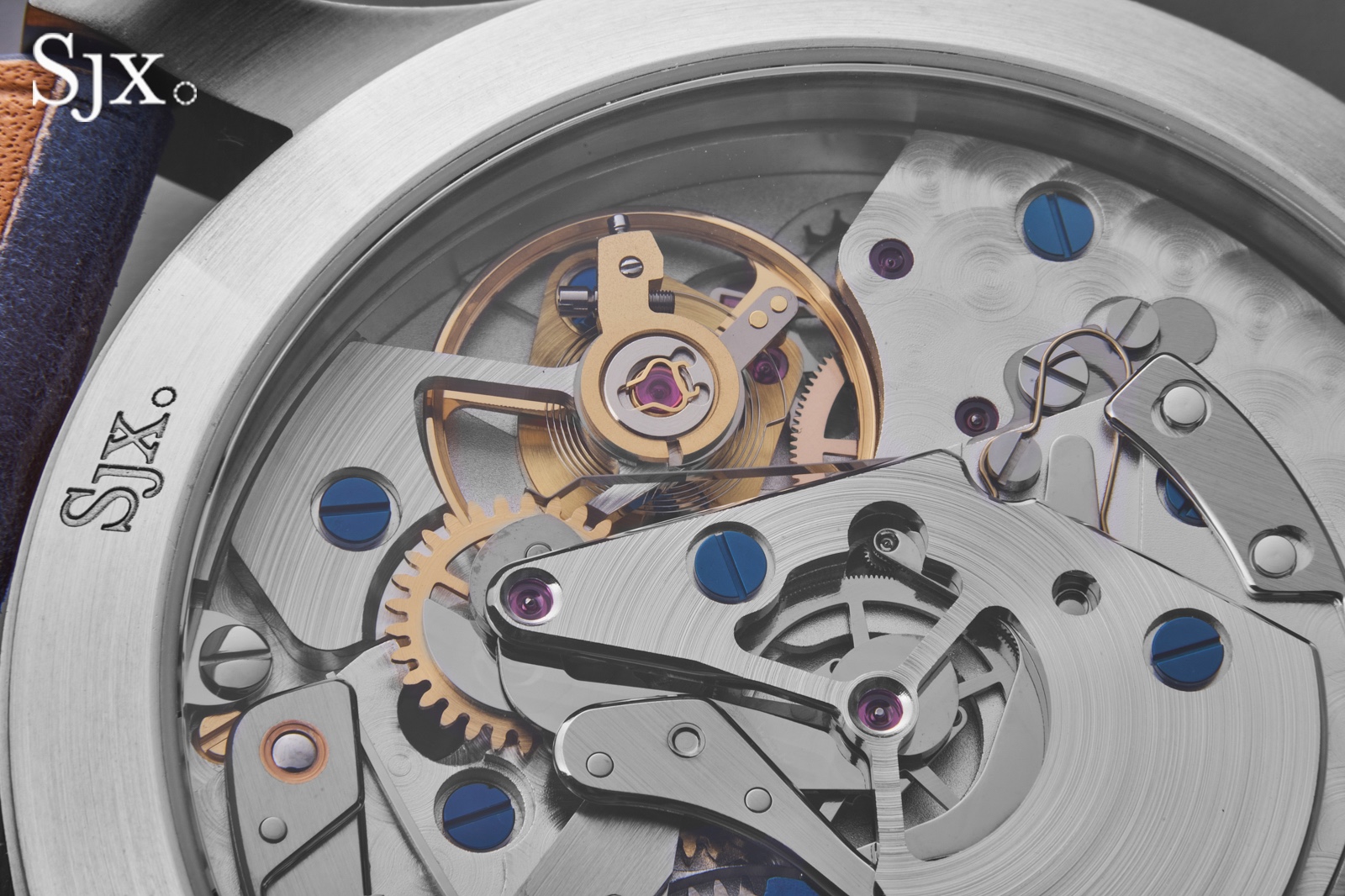
The new A11C-H0 is the latest evolution of Habring²’s in-house chronograph calibre, part of the A11 family of movements developed nearly a decade ago. While the new movement retains the fundamental monopusher architecture of its predecessors, it introduces a notable change in display layout: the 30-minute totaliser has been shifted to 12 o’clock, while the running seconds has been eliminated entirely for a cleaner, more symmetrical dial.
This subtle but significant update underscores the versatility of the A11 platform, which remains rooted in the bulletproof engineering of the Valjoux cal. 7750 but surpasses it in both mechanical execution and aesthetic sophistication.
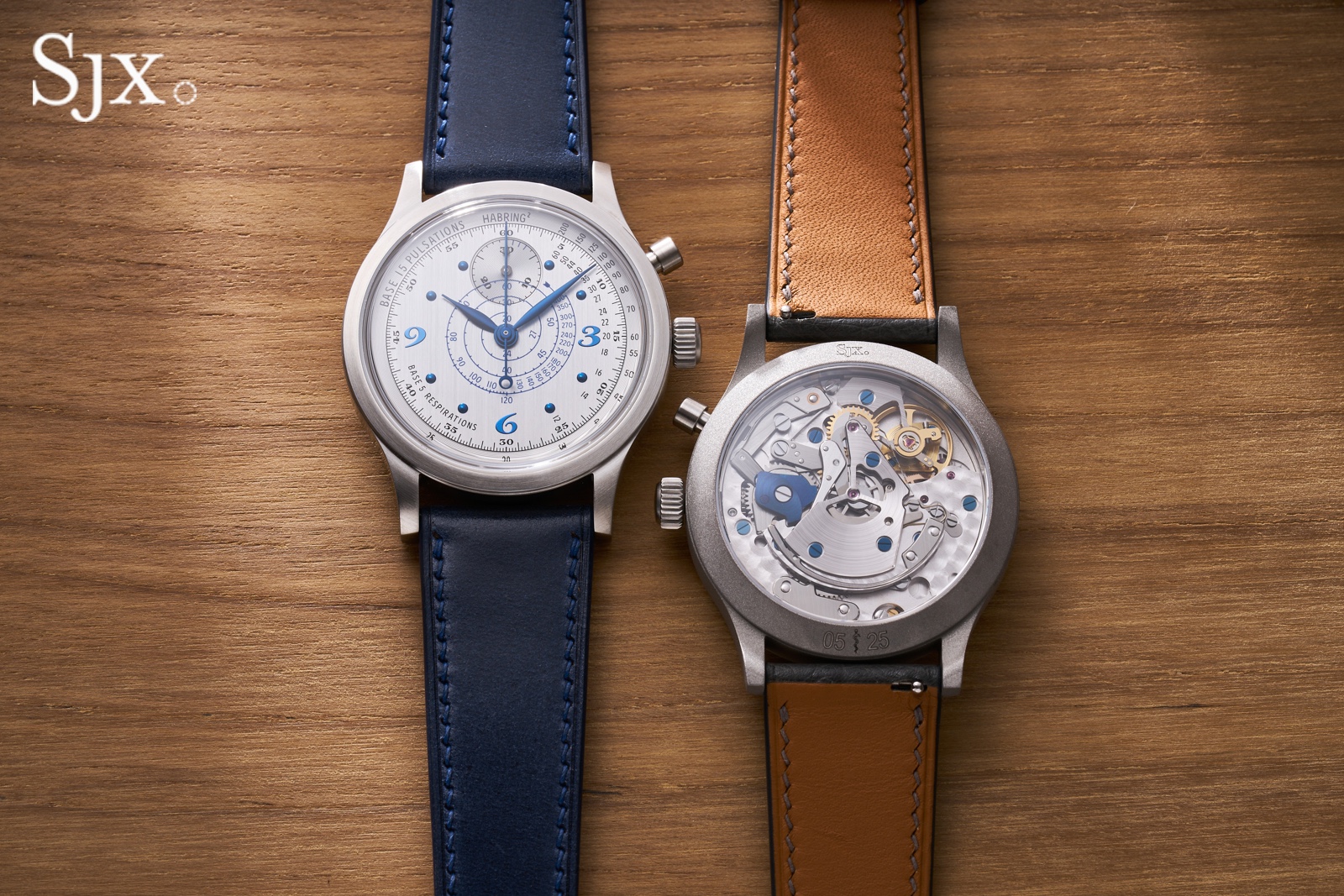
As with previous iterations, the A11C-H0 is built on the robust framework of the cal. 7750 but shares few interchangeable parts. Mr Habring’s goal has always been to retain the dependability and serviceability that made the cal. 7750 legendary, while stripping away its compromises and industrial shortcuts.
The result is a movement that looks and feels entirely different: each component has been re-engineered for longevity, ease of repair, and tactile refinement. The chronograph cam, for instance, is a two-piece construction joined by a pin instead of the cal. 7750’s welded construction, allowing for easy disassembly and a noticeably crisper pusher feel. Likewise, the Triovis regulator allows for precise adjustments via a tangential screw a detail more commonly found in higher end movements.
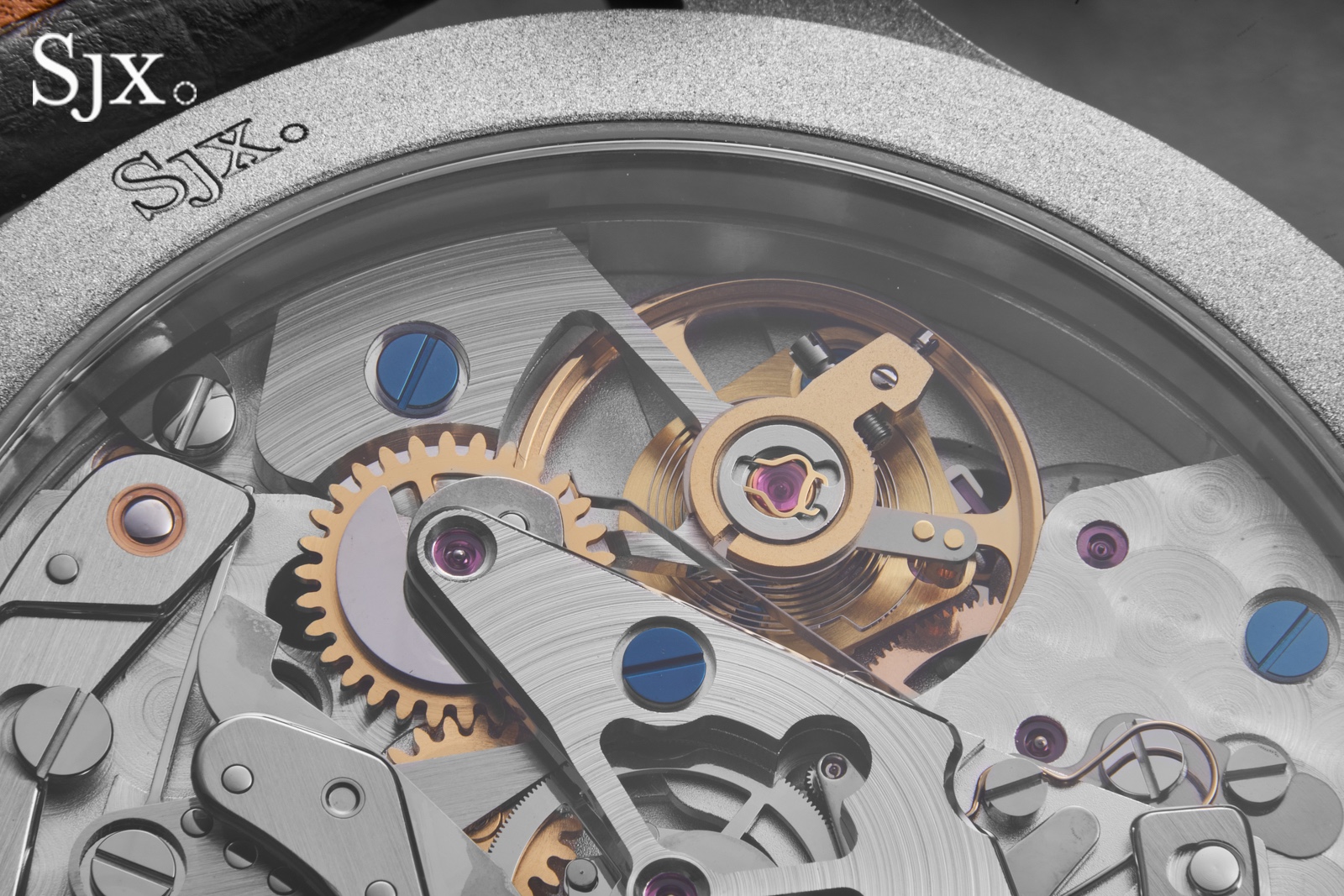
Mechanically, the A11C-H0 remains a monopusher, with all chronograph functions — start, stop, and reset — controlled via a single pusher at two o’clock. Despite its simplicity of operation, the movement offers a noticeably improved feel: the pusher delivers a clean, precise click thanks to tighter tolerances, smoother surface finishing, and upgraded materials in key components such as the cam, operating lever, and return spring.
These refinements reduce friction and backlash within the mechanism, improving operation. The A11C-H0 thus encapsulates Habring²’s ethos of mechanical honesty that has made the brand a favourite among technically inclined collectors.
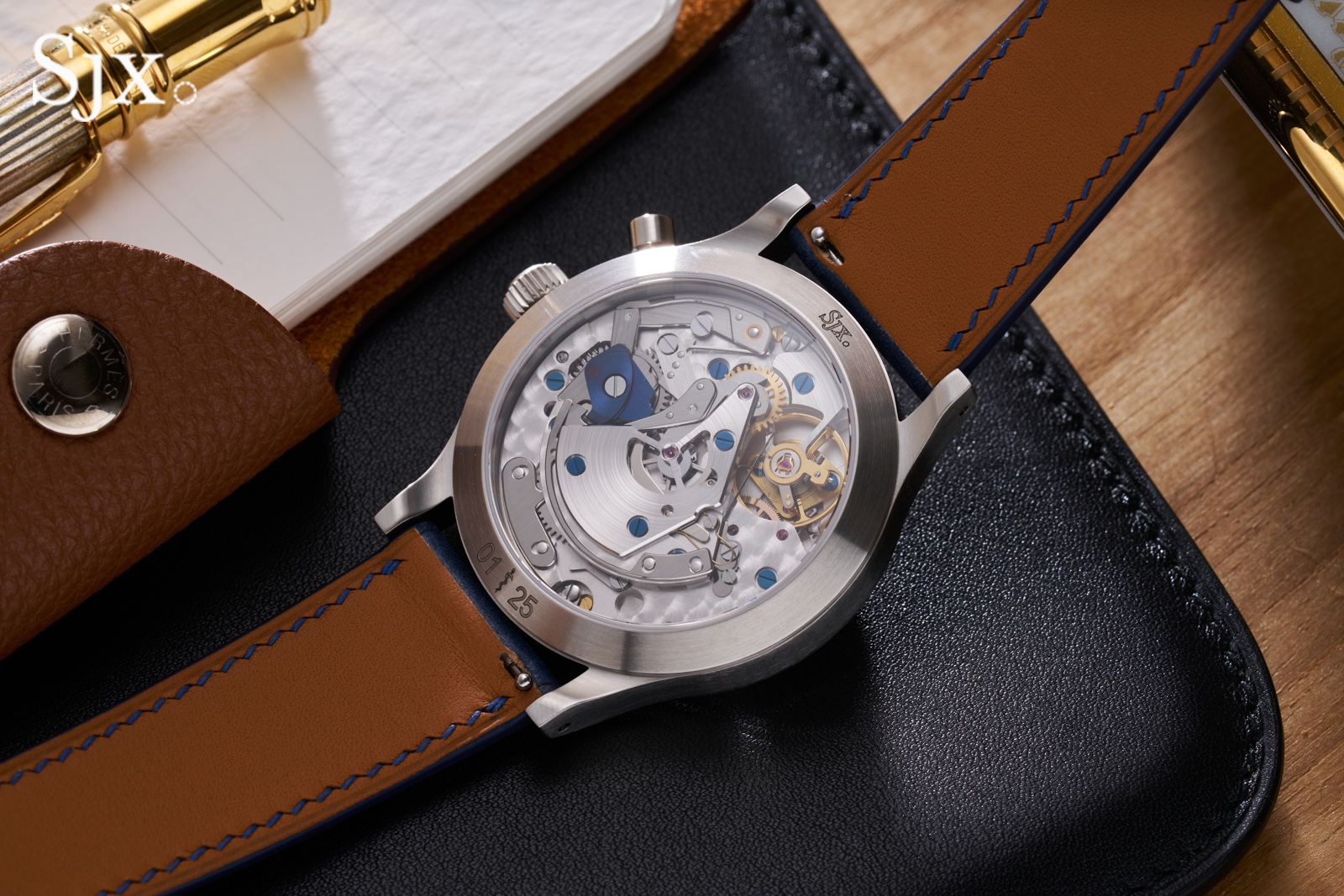
Beyond these structural enhancements, the A11C-H0 continues Habring²’s practice of sourcing components from small, independent specialists rather than from conglomerate suppliers whenever possible.
Most notably, the steel chronograph levers are hand-finished by Pöhlmann-Bresan, the Dresden-based duo known for transforming Soviet-era calibres into finely finished movements of Saxon character. Pöhlmann-Bresan’s contribution brings an artisanal layer to the A11C-H0 rarely seen at this price level.
Concluding thoughts
The Medicus reflects the Habrings’ hallmark approach of simplifying complex mechanisms to make them robust and affordable, offering hand-assembled, Austrian-made craftsmanship at a price point that undercuts mainstream Swiss chronographs, and stands apart through thoughtful engineering and understated design rooted in midcentury medical instruments.
Key facts and price
Habring² Chrono-Felix Medicus – SJX Edition
Case diameter: 38.5 mm
Height: 11.2 mm
Material: Steel
Crystal: Sapphire
Water resistance: 30 m
Movement: A11C-H0
Features: Hours, minutes, and chronograph with 30-minute totaliser at twelve
Winding: Hand-wind
Frequency: 28,800 beats per hour (4 Hz)
Power reserve: 48 hours
Strap: Shell cordovan for silver dial and ostrich for grey dial, each with pin buckle
Limited edition: 25 pieces in each colour
Availability: Direct from SJX, with down payment of 40% required at order, with delivery taking place from May to July 2026 in sequence of order placement
Price: €7,750, or US$9,250 excluding taxes (SGD12,590 including GST)*
To order, please contact us. Both versions are sold out here. Thank you for the interest. A handful are still available immediately at Shellman in Tokyo, priced at ¥1.75 million excluding taxes.
*The equivalent of €700 from each watch sold by SJX will be donated to children’s medical charities in Singapore and Austria
Back to top.