
Louis Vuitton’s Tambour Converges on Guilloché
Engine turning for the guichet timepiece.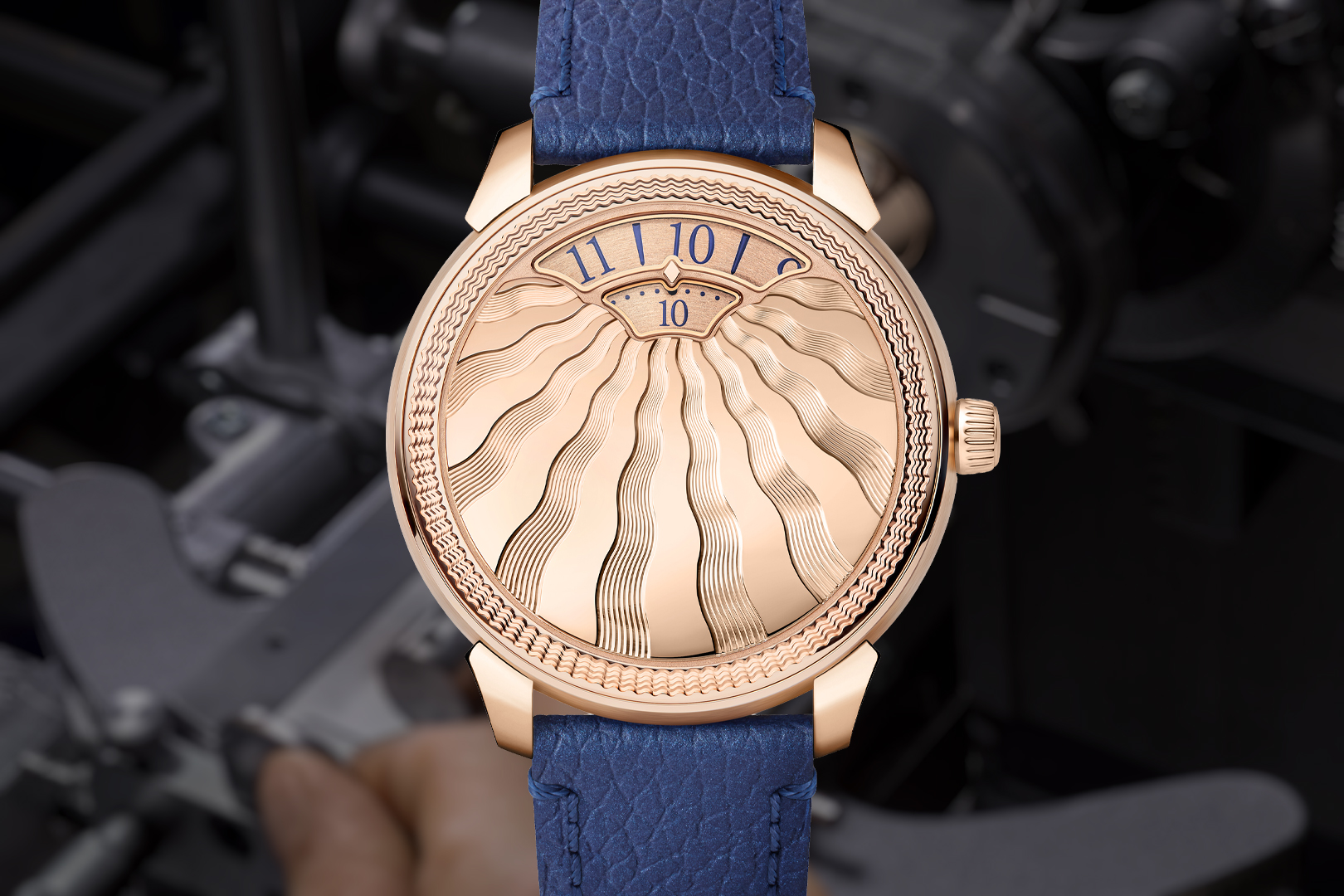
Louis Vuitton iterates on last year’s surprise launch with the Tambour Convergence Guilloché. The brand’s unexpectedly elegant take on the montre à guichets now gains an engine-turned decor on its front.
Initial thoughts
Louis Vuitton (LV) surprised when it unveiled the Convergence last year. Not necessarily the sort of watch one would expect from Louis Vuitton, the Convergence was a strong sign of the brand’s pivot towards in-house manufacturing and more creative high horology.
The Convergence was chic and unique, leaning more into the craft of watchmaking, compared to the sportier Tambour on a bracelet. And the LFT MA01.01 inside serves as a good example of what time-only movements inside watches above a certain price point should be like.
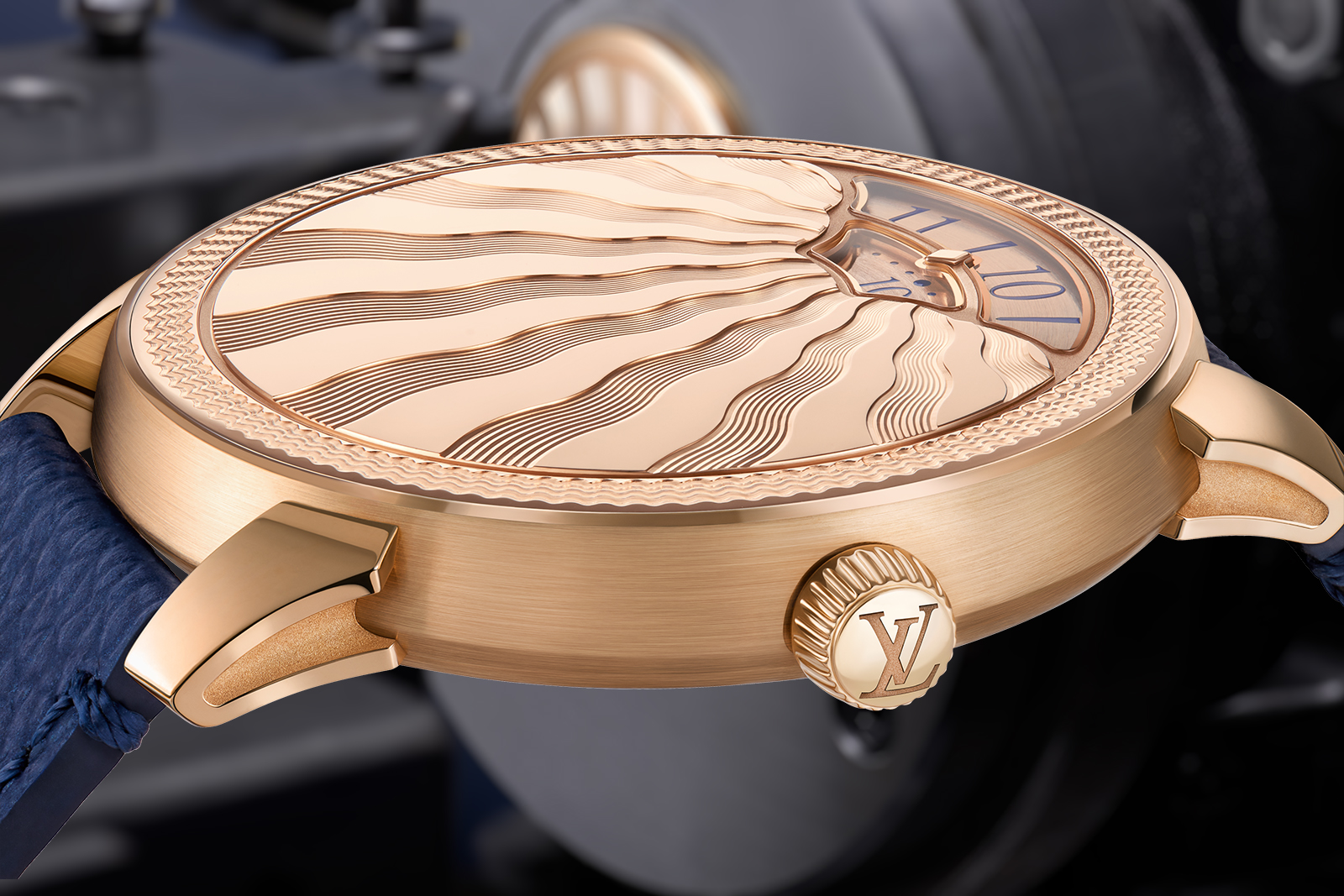
The Convergence Guilloché builds on the appeal of the original. By using a radial, wavy decoration executed on a hand-operated rose engine, LV has kept the 1930s allure of the Convergence while adding value in terms craftsmanship with the hand-applied engine turning.
And the engine turning is not merely an aesthetic feature but also experiential. Guillochage is typically found on dials, shielded behind glass, so the tactile interaction with the rose-cut pattern on the case is certainly interesting.
While this is probably not the best idea for wear-resistance, it is beautiful and historical. Guillochage was traditionally meant to be experienced in a tactile manner: pocket watches in the past were often engine turned in order to improve grip — think of it as luxurious knurling.
Familiar case, new decorations
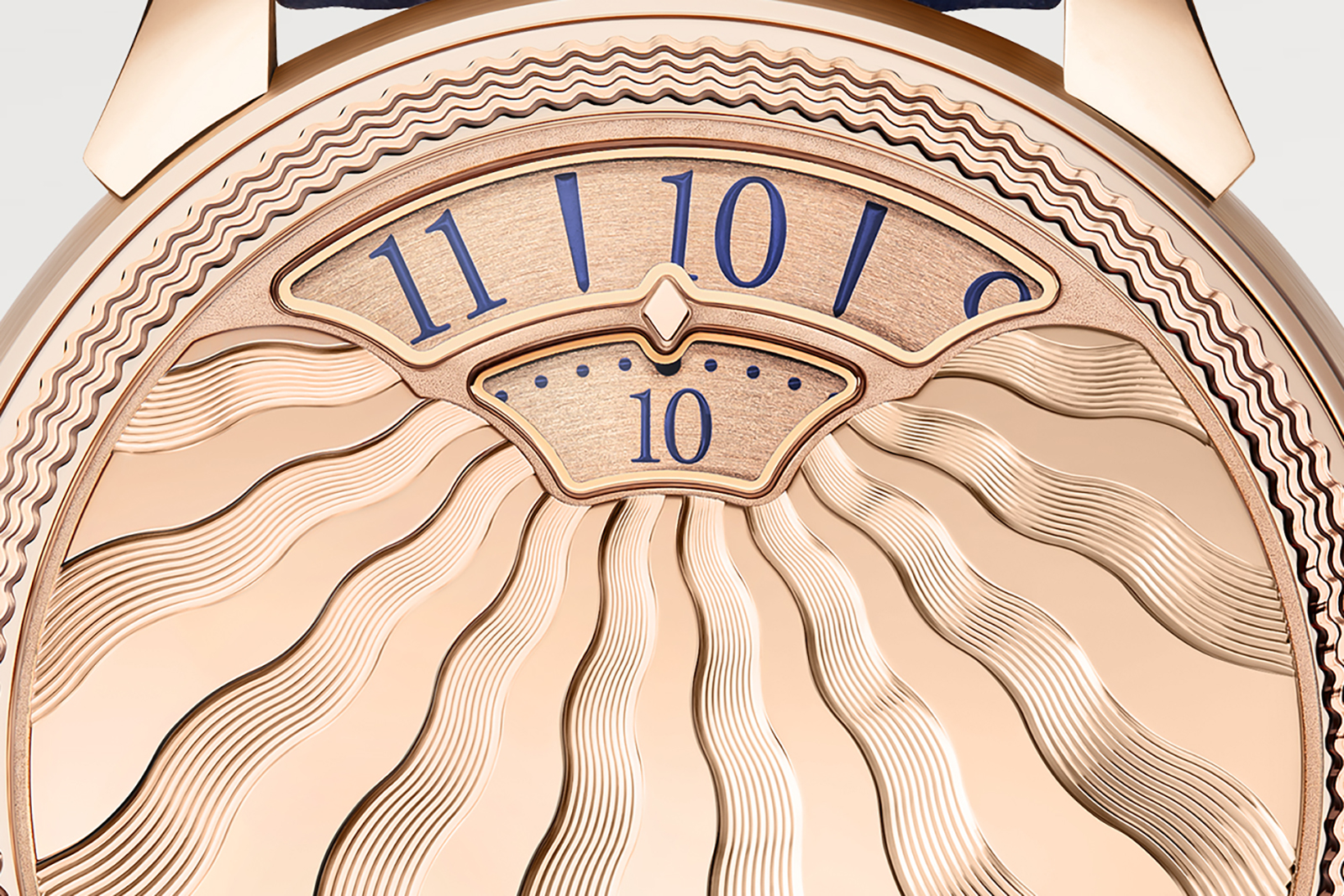
Much like most montres à guichet, the Convergence features a rather small aperture for reading the hours and minutes and a lot of empty real estate on the watch face.
It was almost a given that future models would fill up the space with some sort of artistic expression: painting, enamelling, engraving and so on. LV delivered on that potential with the texture-rich guilloché version launched today.
The Convergence Guilloché keeps the same case as last year’s model: 37 mm in 18k rose gold with short, hollowed lugs and a brushed case band.
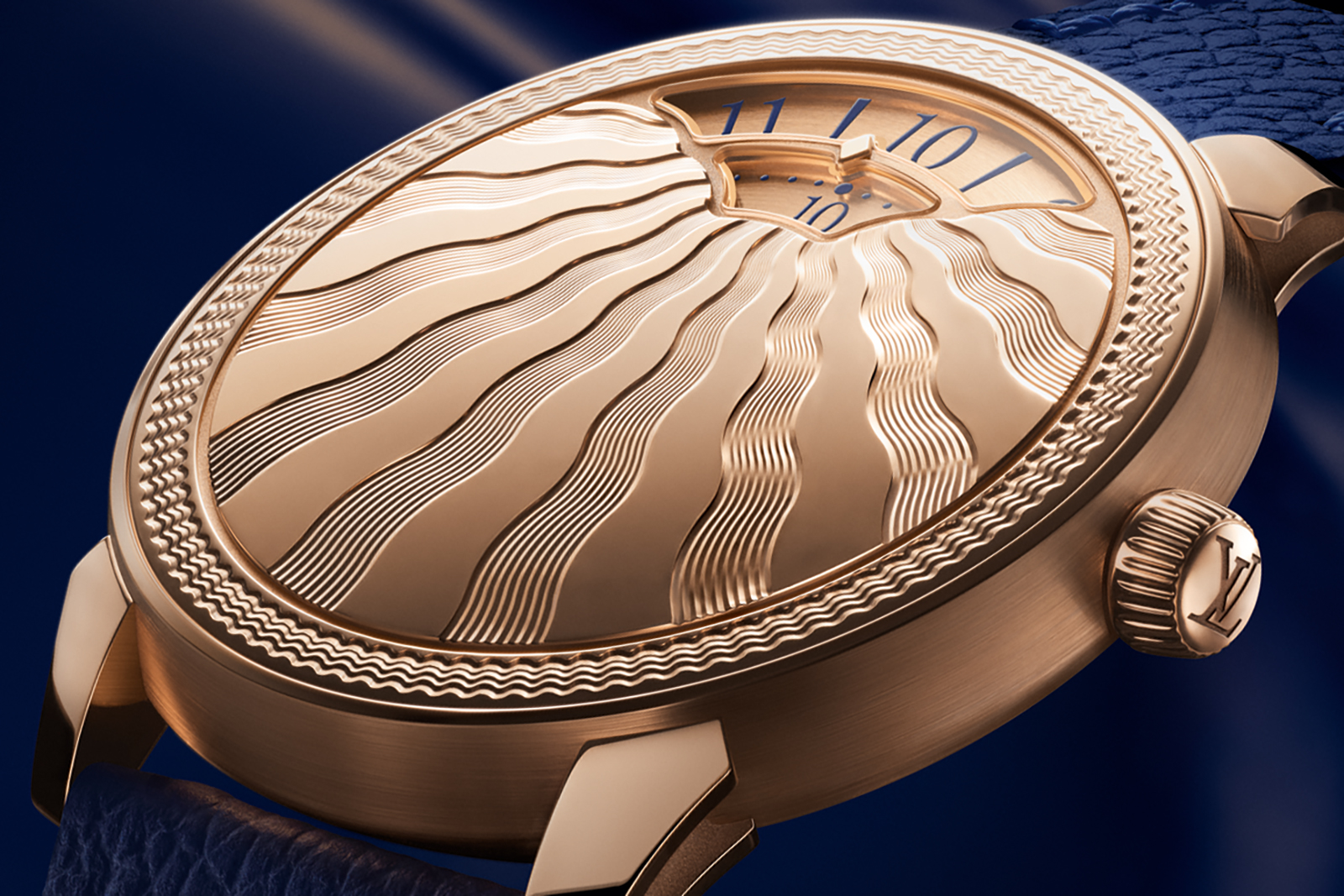
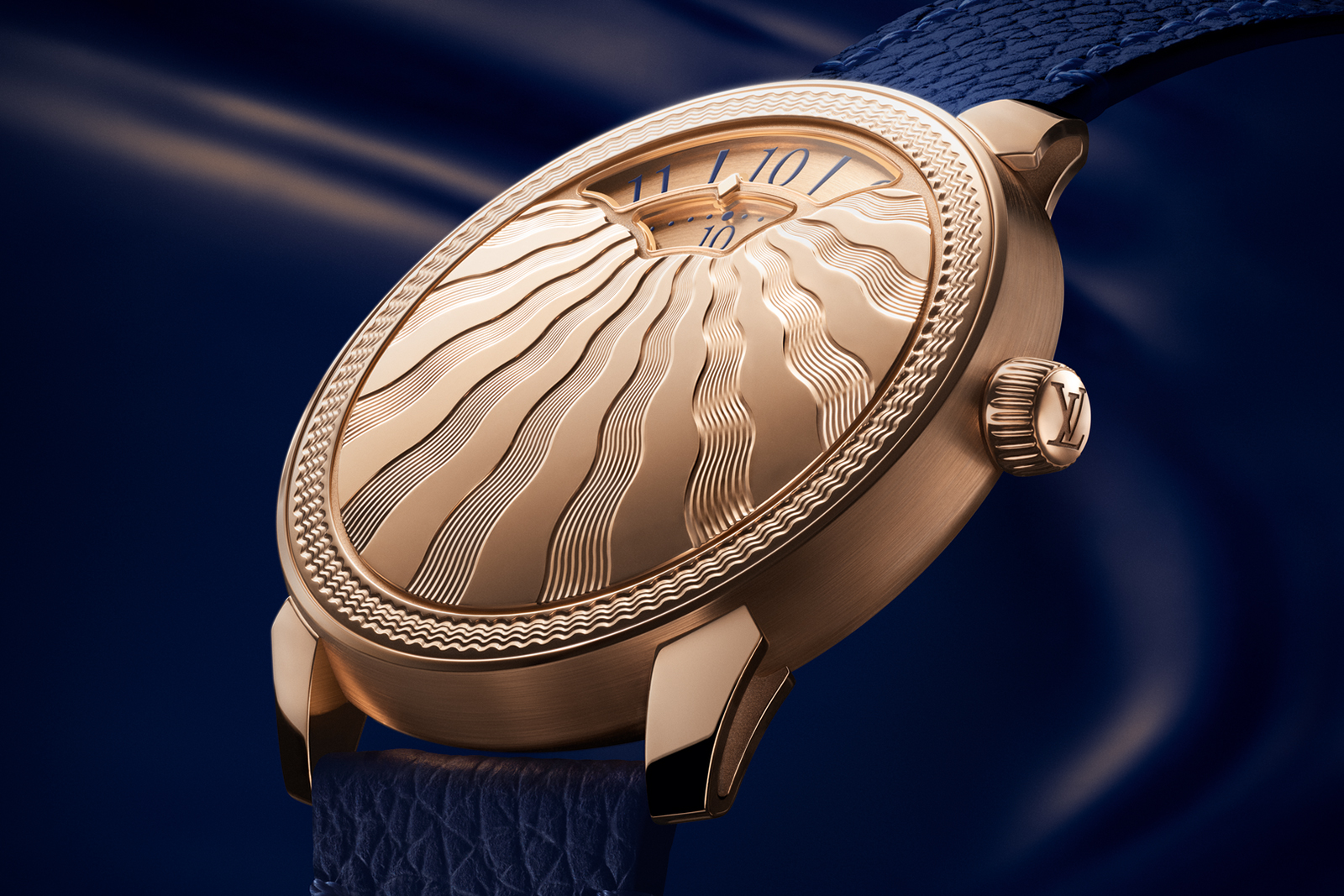
But the face of the watch has been enhanced with engine turning. Moving inwards from the edge we are greeted by a wavy engine turned ribbon circling the timepiece’s face. The pattern is a classic and slightly reminiscent of traditional Breguet guillochage.
Inside the circle are found the two apertures for the hour and minute disks. The hour aperture is wider and both disks are slow rolling; while some argue a jumping hour would have worked better, personally I enjoy the charm of leisurely dragging hours.
Seemingly emanating from the two apertures are wide guilloché rays, meant to suggest sunlight peeking through clouds. While the ribbon on the edge may be a familiar pattern, this sort of straight engine turning is a rarer sight but does evoke historical pocket watches.
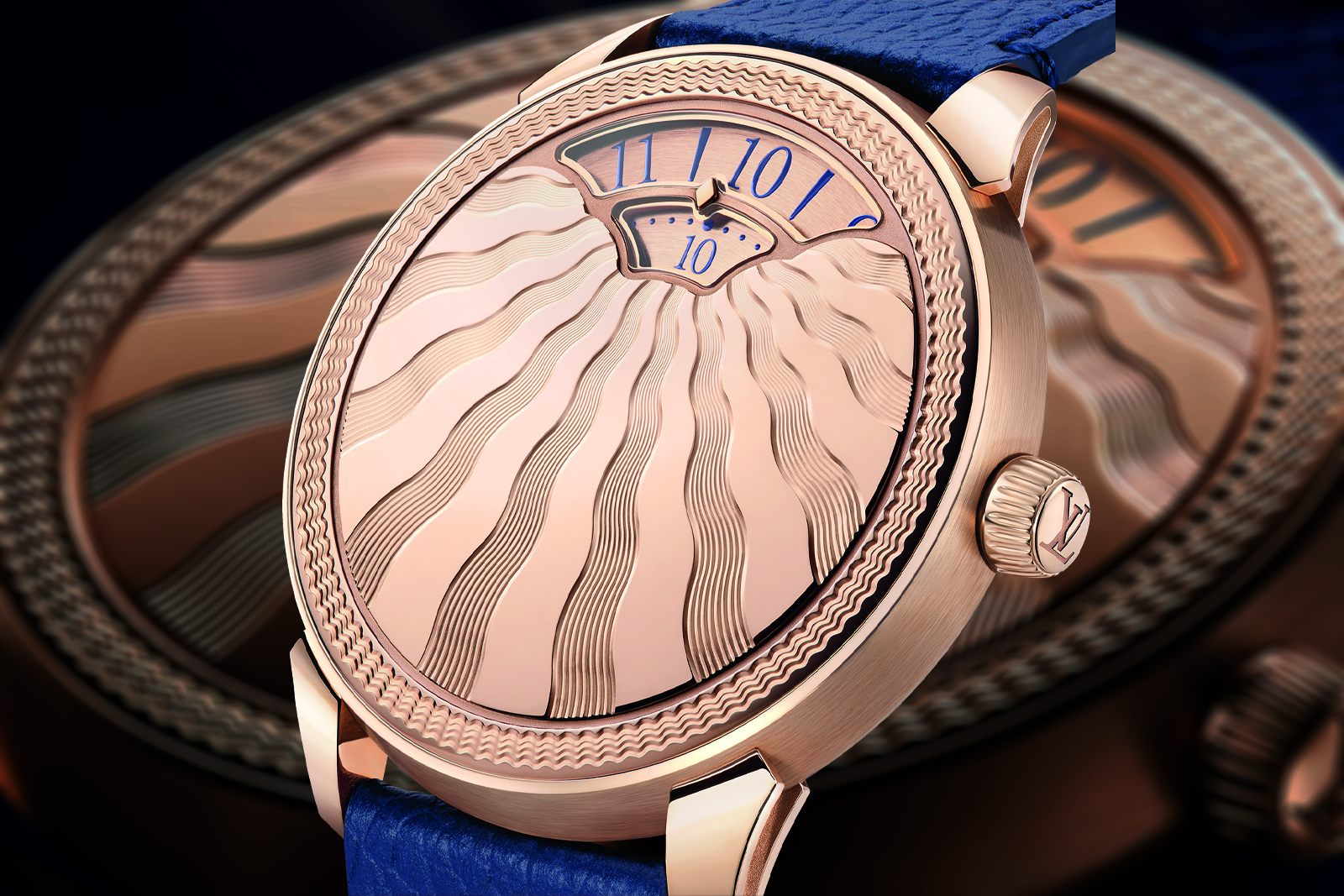
The wavy pattern is quite deeply engraved into the metal, creating an interesting play on textures. The lines radiate outwards from the aperture, growing wider and spreading further apart as they reach the opposite edge. In-between the waves are mirror polished planes, adding to the layered play of light created by the overlapping textures.
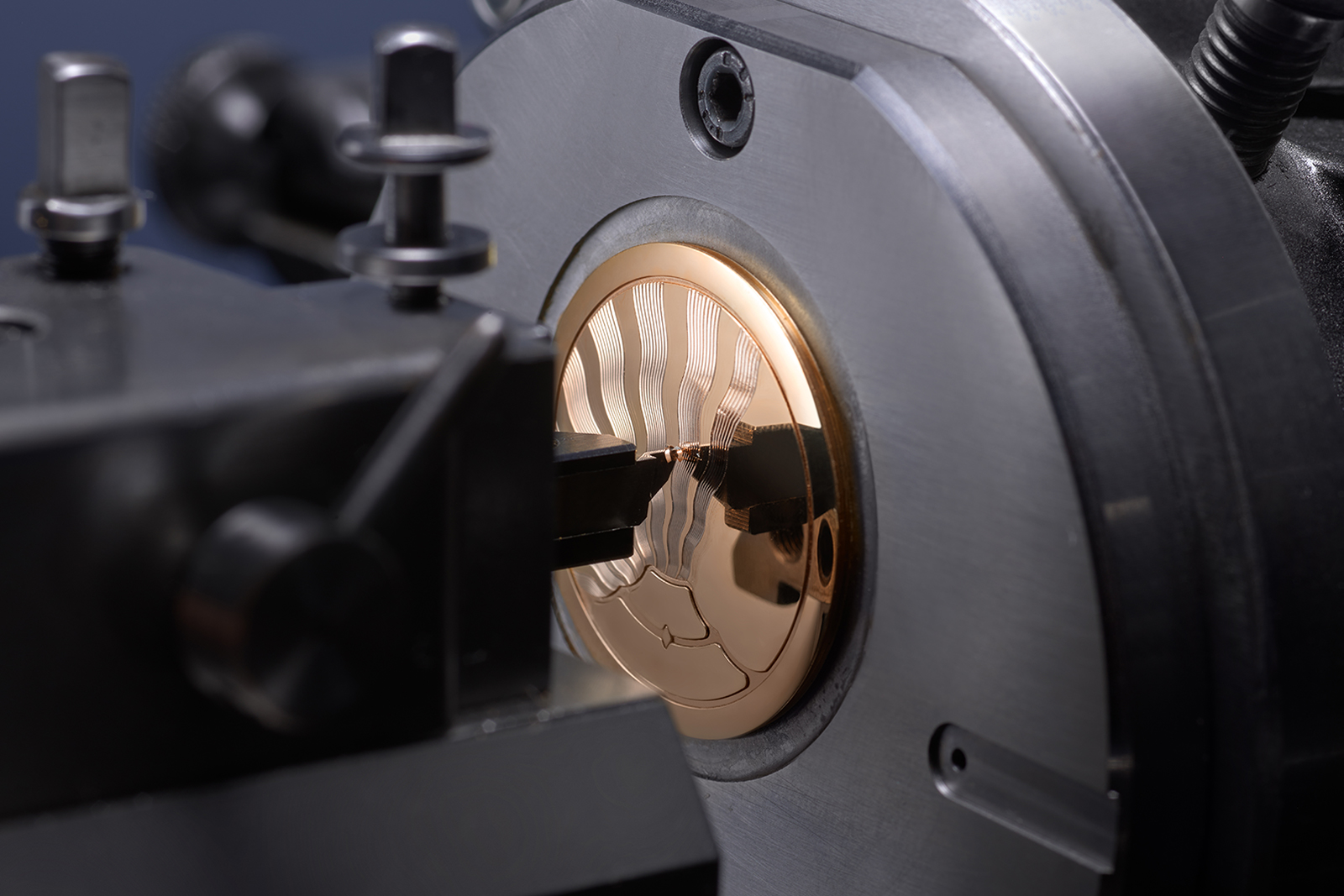
The guilloche reflects the brand’s investment in restoring 19th and 20th-century straight-line and rose engine lathes in its La Fabrique des Arts workshop, signalling its desire to preserve and further perpetuate horological crafts.
LV acquired and restored different sets of engine turning lathes over the course of a full year. Now housed within La Fabrique des Arts, the machines are hand operated by skilled artisans (who were incidentally recruited from brands famous for engine turning). Each Convergence Guilloché case takes about 16 hours of work on two different types of rose engines: one for the round pattern and another for the linear waves.
The quality of the guilloché work is undeniable yet it leaves the decoration is too exposed. Having the patterns on the most prominent part of the case will probably prompt the lucky owners to baby their timepieces more than usual. It’d be a great shame for the delicate pattern to get scuffed or dulled over time. With rose gold being a soft metal the risk is even greater.
In-house mechanics
The Tambour Convergence Guilloché is powered by the same LFT MA01.01 movement as last year’s model, the first caliber developed and built in-house by La Fabrique du Temps Louis Vuitton.
The small caliber is a modern and laudable exercise in top-tier, industrial workhorse movement construction. LV certainly cut no corners when building the movement. Its engineers went for a stable free-sprung balance, equipped with inertia regulating weights and Geneva-style stud carrier.
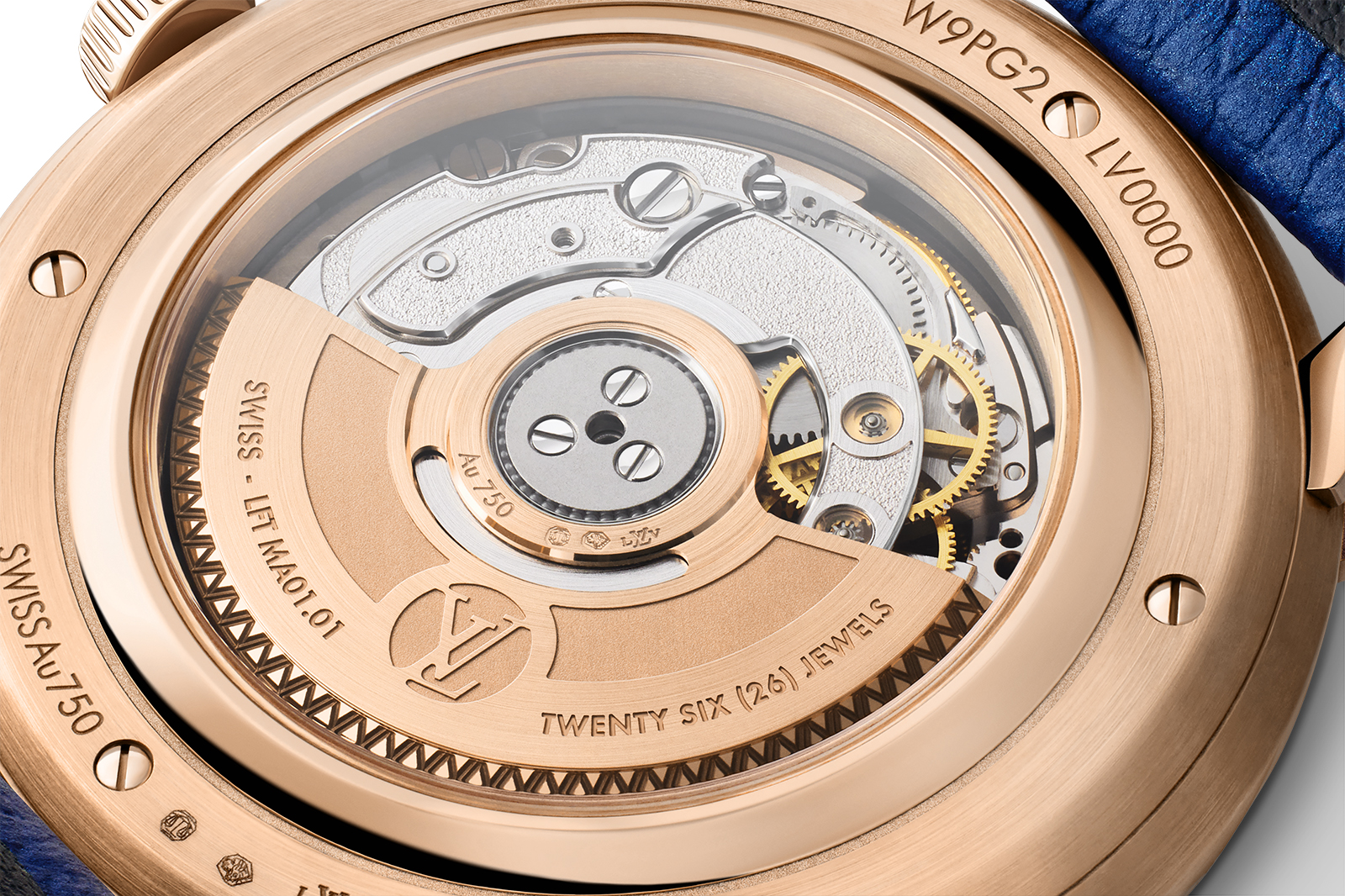
It shows off well-finished components, a sturdy build, and quirky details. The jewels are all clear for example, while the barrel click and springs are integrated into one piece. Due to its small diameter, the movement looks slightly cramped, with components overlapping each other.
LFT MA01.01 runs at a modern 4 Hz for 45 hours, which is not great but excusable given the reduced size of the movement. A variant of the calibre with a longer power reserve is foreseeable given the adaptability of the construction.

Key facts and price
Louis Vuitton Tambour Convergence Guilloché
Ref. W9PG21
Diameter: 37 mm
Height: 8 mm
Material: 18k pink gold
Crystal: Sapphire
Water resistance: 30 m
Movement: Cal. LFT MA01.01
Functions: Dragging hours and minutes
Winding: Automatic
Frequency: 28,800 beats per hour (4 Hz)
Power reserve: 45 hours
Strap: Blue calf leather strap
Limited edition: No
Availability: Now at Louis Vuitton boutiques
Price: —
For more information, visit LouisVuitton.com.
Back to top.