
Finnish Finishing: Kortela Valta Unveils the Toka
With a sector-inspired champlevé enamel dial.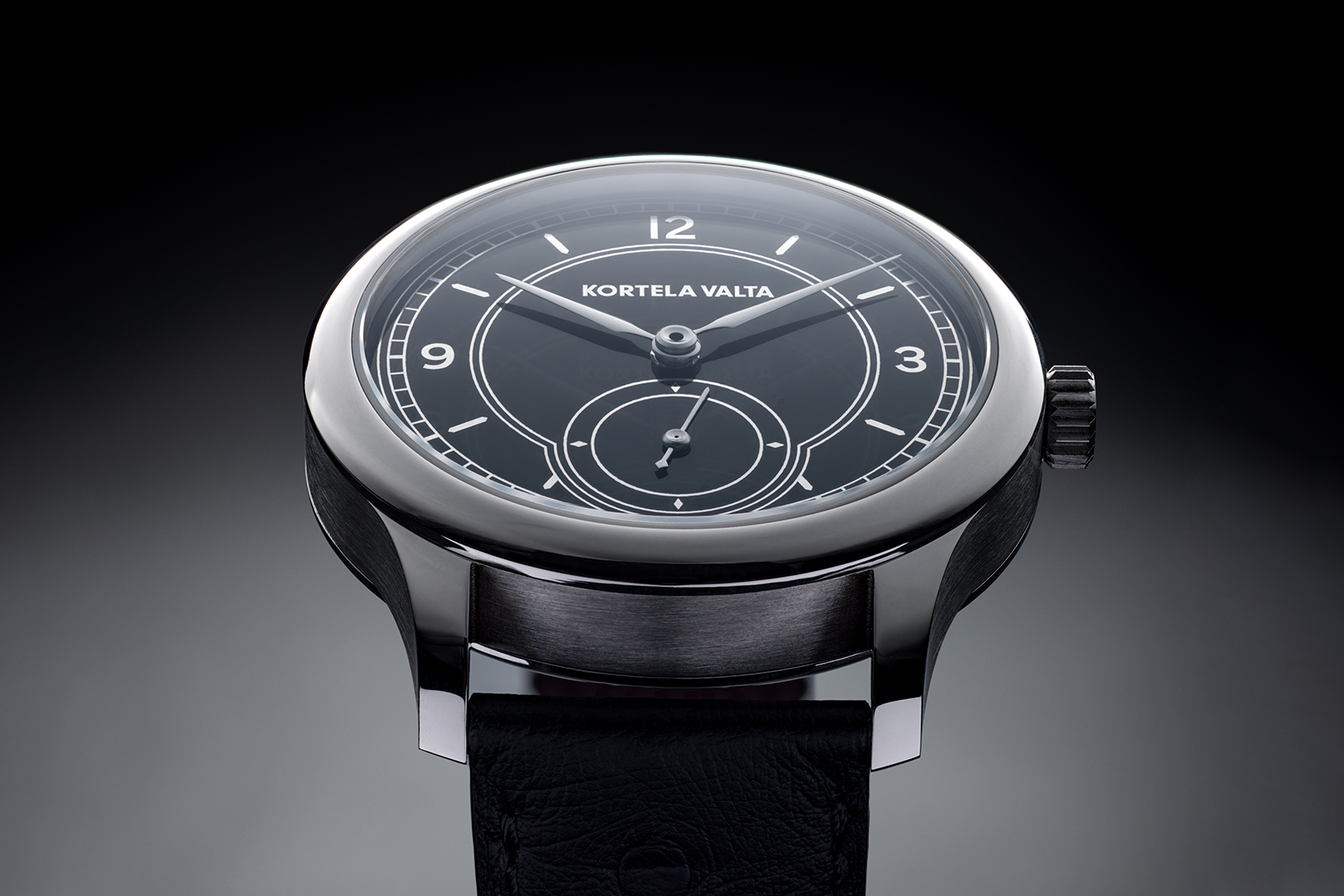
The Toka from Finnish duo Roope Kortela and René Valta reflects the ongoing appeal of beautifully finished, time-only watches, combining a thoughtfully reworked historical calibre with the brand’s first champlevé enamel dial.
With an emphasis on high-grade finishing and increasingly in-house components — including a proprietary free-sprung balance — the Toka is a strong sophomore effort from the startup independent.
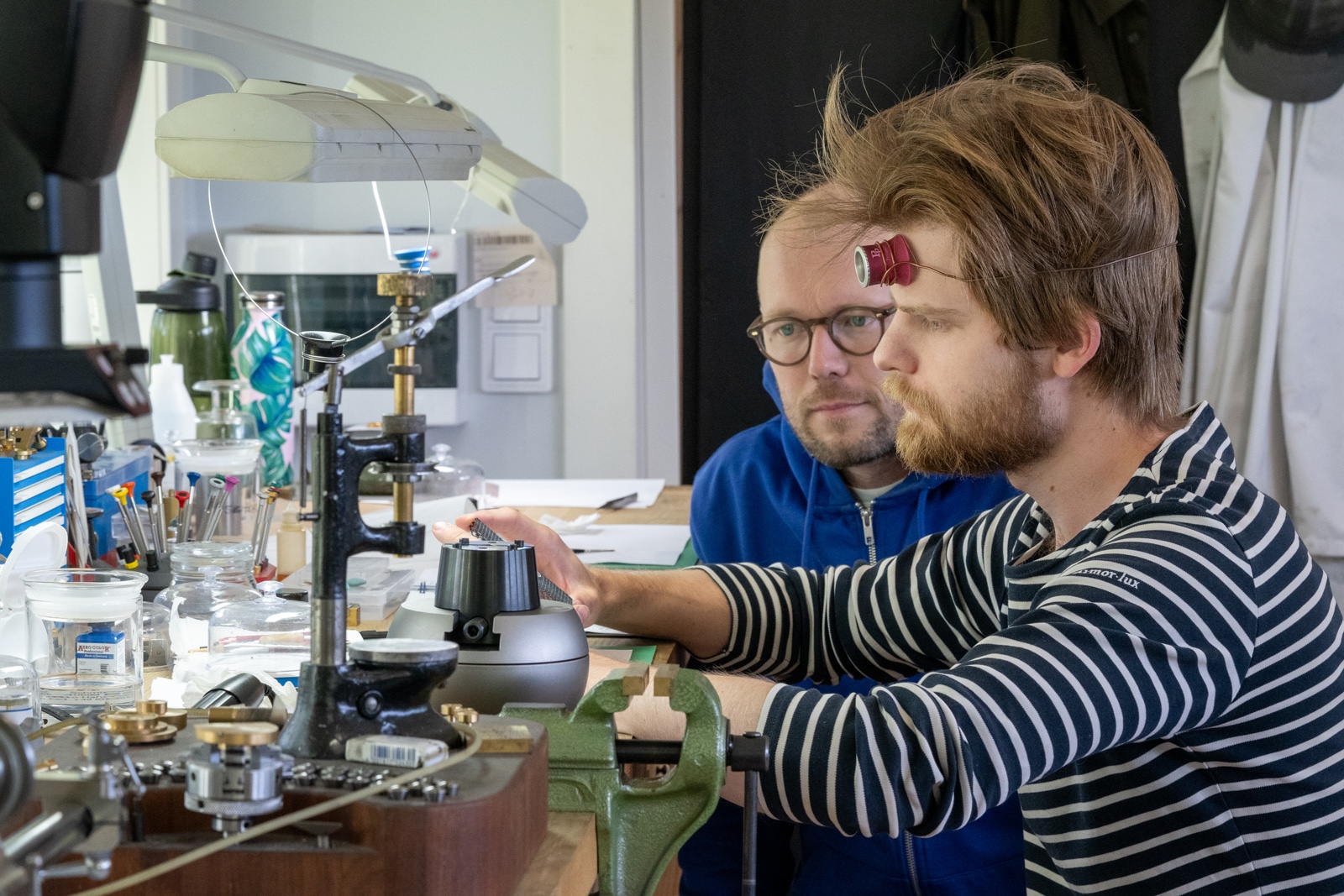
Rene Valta (foreground) and Roope Kortela
Initial thoughts
It’s been more than 25 years since Philippe Dufour unveiled the Simplicity, a watch that challenged prevailing wisdom about what fine watchmaking was all about. Launched at a time when brands and collectors were focused on complications, the Simplicity arguably created the niche for highly finished time-only watches and intensified collector focus on independent watchmaking in general. Though the field has become crowded over the past quarter-century, collector demand has proven durable. The Toka is a watch built in this tradition.
The Omega calibre inside the Toka has been heavily reworked by Kortela Valta. The watchmakers kept most of the original architecture intact, while applying high-end finishing top to bottom. Furthermore, since the start of 2025, the watchmaking duo has expanded the list of components they’re able to make in-house, including the new free-sprung balance that differentiates the Toka from the Eka and Oma models that preceded it.
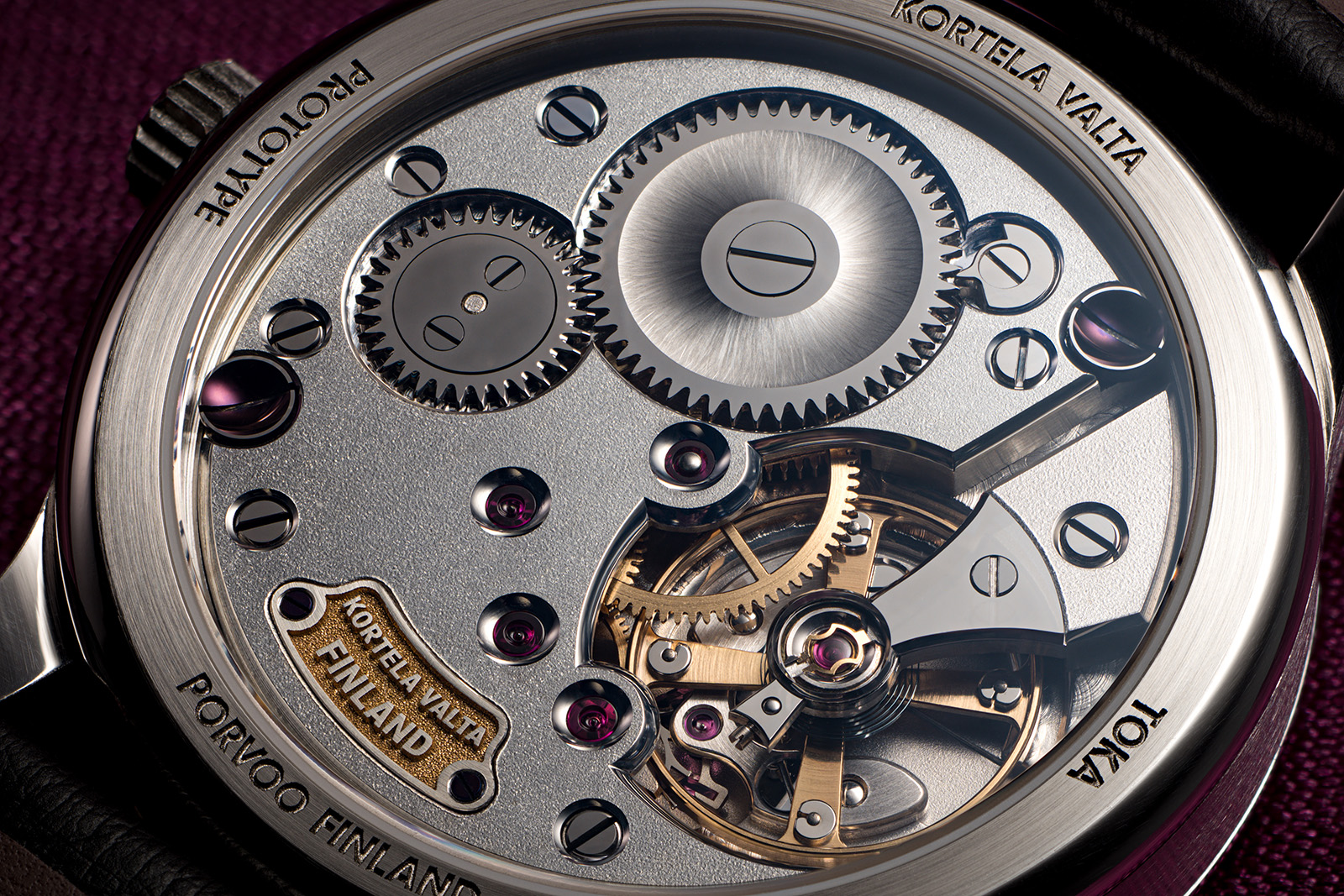
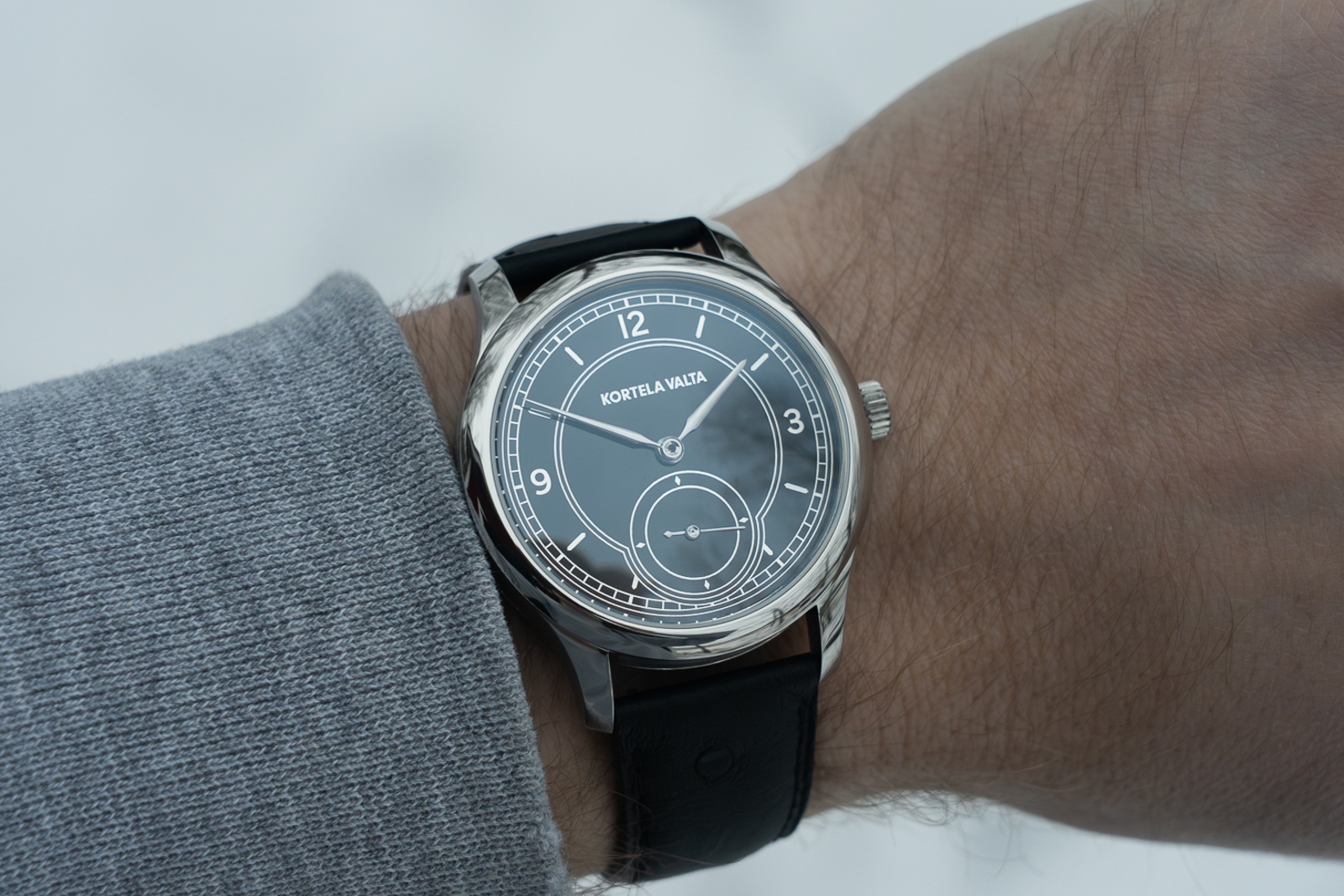
The Toka features a fairly traditional stainless steel case which is EDM-cut locally in Finland, then throughly finished by hand with both brushing and polishing. The plain lines of the case mean there’s little to distract from the movement finishing and the brand’s first champlevé enamel dial, available in blue or black.
One slight critique of the Toka is that it’s arguably ‘more of the same’ within the genre of hand-finished time-only watches. While that’s a reasonable criticism, the Toka’s price point of €25,500 can be considered affordable by today’s market standards. Kortela Valta’s Toka offers a high level of artisanal craft, hand finishing and a fair share of uniqueness for a reasonable enough price.
Champlevé enamel
Based in Finland, the independent marque is run by two young watchmakers: Roope Kortela and Rene Valta. Much like the other newcomers to the independent watchmaking scene, their creations have so far been time-only, finishing-oriented watches. Like the brand’s prior models, the Toka’s movement is openly based on the Omega cal. 266 architecture, a well-regarded platform that also served as the basis for the launch of Atelier de Chronometrie about a decade ago.
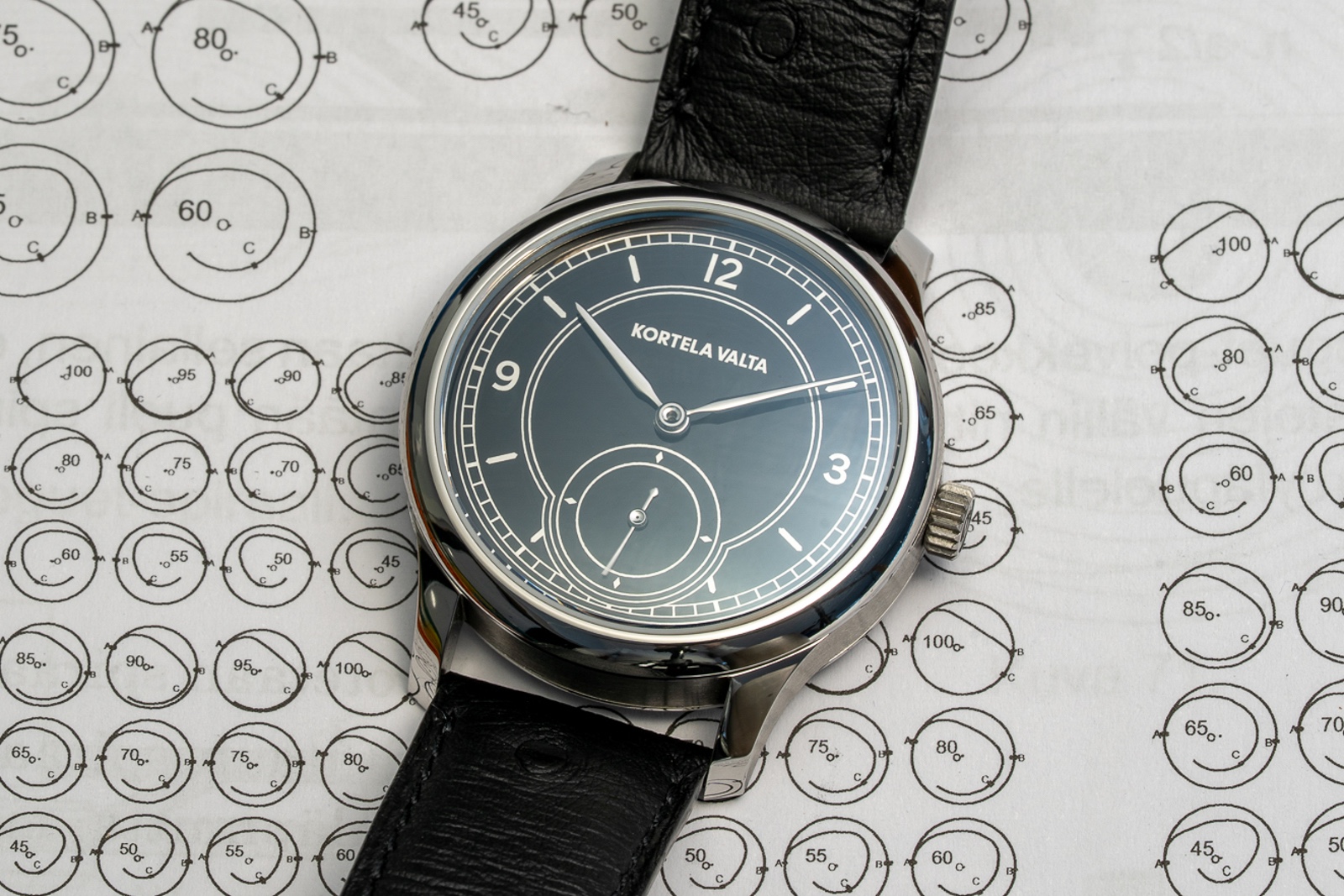
Toka’s dial offers a subtle variation of a sector design, with no-nonsense arabic numerals, sans serif fonts, and a quirky ‘chin’ that extends below the small seconds sub-dial. It’s difficult to assess the quality of enamel dials from photographs, but the supplied press images are promising.
While at first sight one would be tempted to assume the sector tracks and numerals are simply printed on the glossy surface, Toka’s dial is a very different affair. The technique of champlevé enamel involves sculpting a metal base, then filling the depressions with enamel — thus creating indelible markings and three-dimensionality beneath the glossy surface.
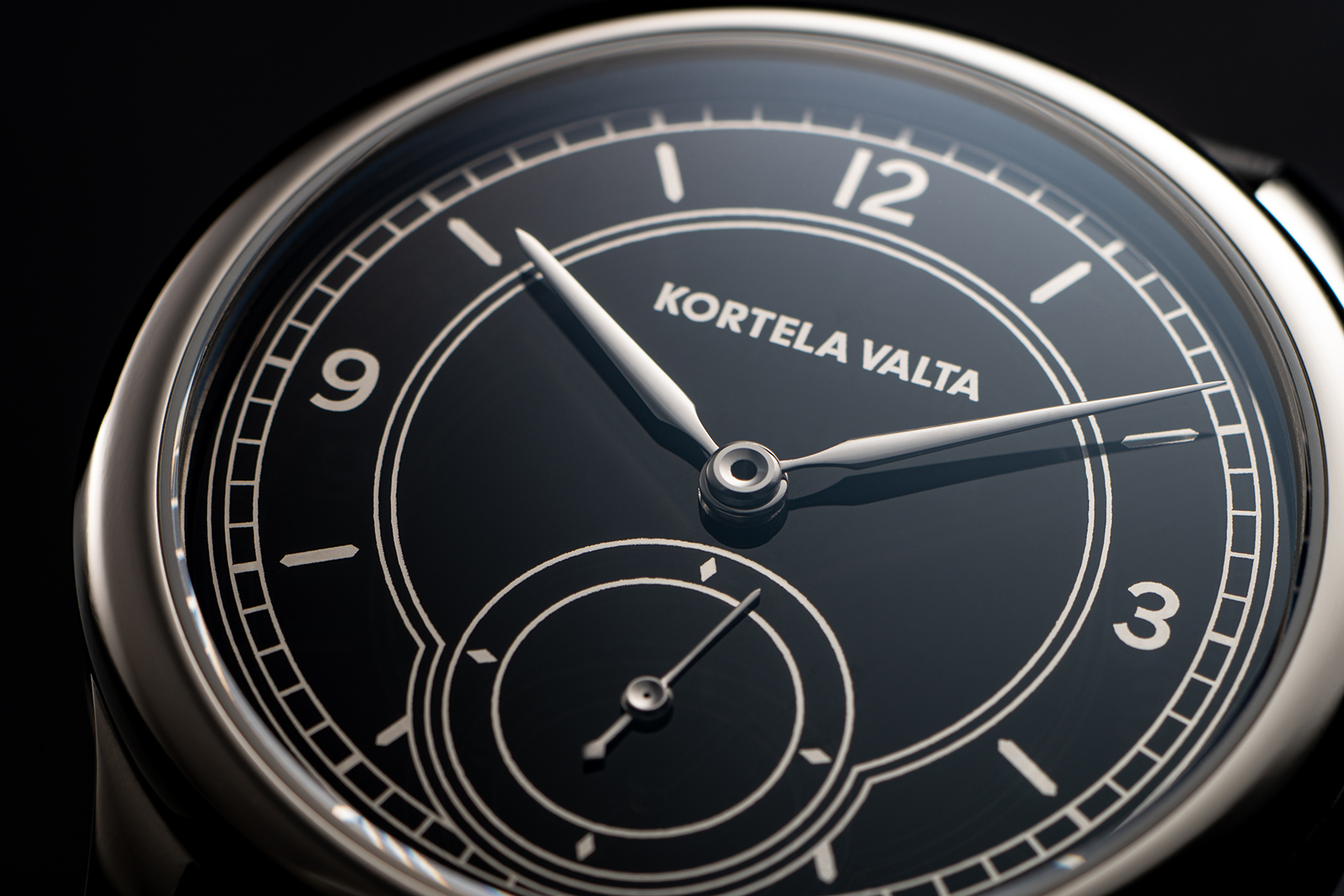
The Toka’s dial, including all of its sectors, indexes, numerals and its wordmark, are milled in-house from a sterling silver blank. The brand ships the milled blanks to a specialist enameller in Switzerland that paints liquid enamel into all of the crevices before firing. The final product is then polished carefully to ensure the raised borders of the dial base sit flush with the enamel surface. A final layer of translucent enamel creates a seal.
The result is a vibrant dial that combines the glass-like gloss of enamel with the shine of silver. This kind of enamelwork tends to be artisanal in nature, so the production is naturally constrained. Just 12 examples of the Toka will be made, with six in black enamel as pictured, with another six in blue enamel.
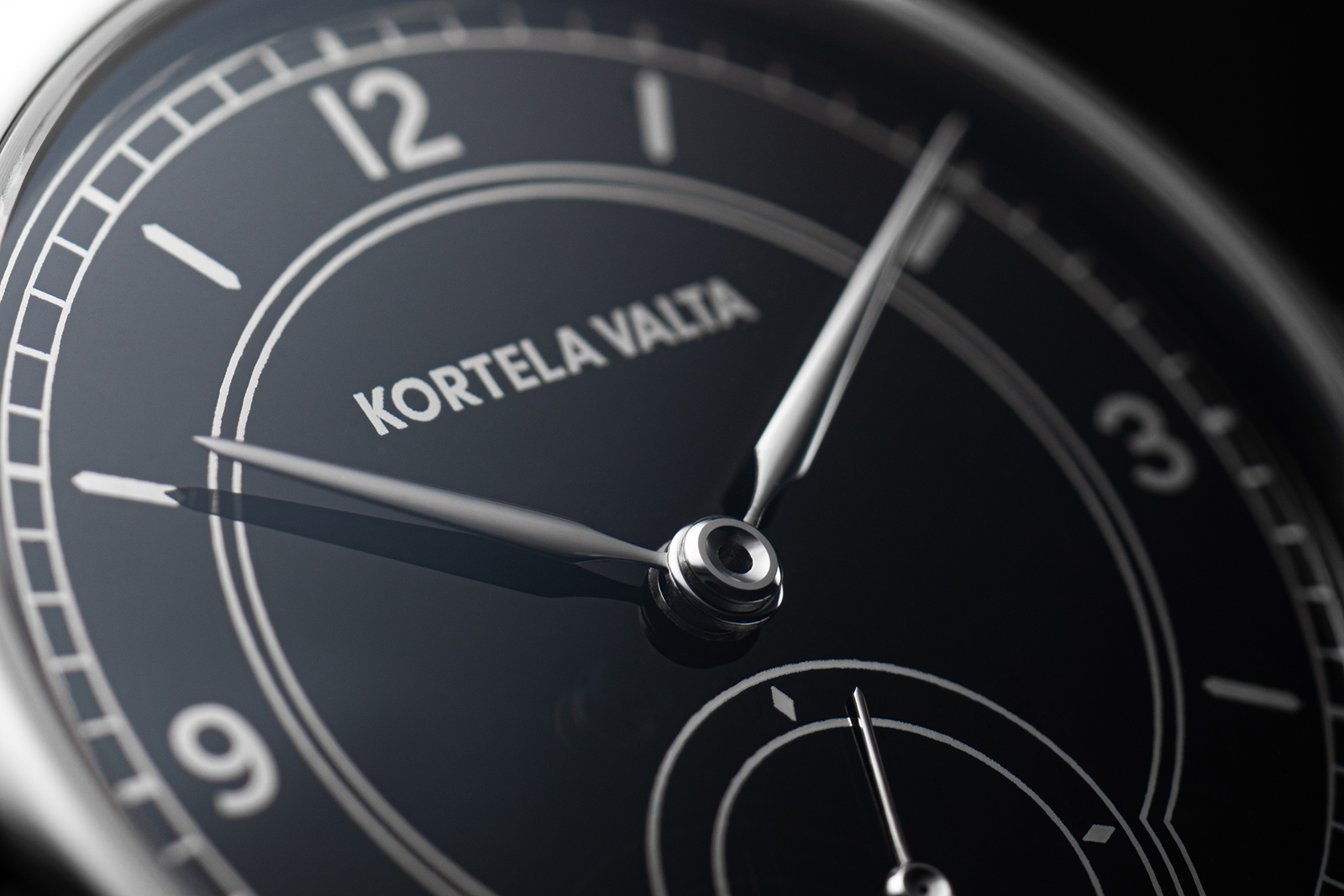
The dial is capped with a pair of handmade alpha-style hands, crafted from carbon steel. The small seconds hand has an elegant concave center and slim profile, while the hours and minutes hands feature stronger lines. The hands appear thick and are polished to a degree that is consistent with the quality of the movement finishing.
An in-house balance
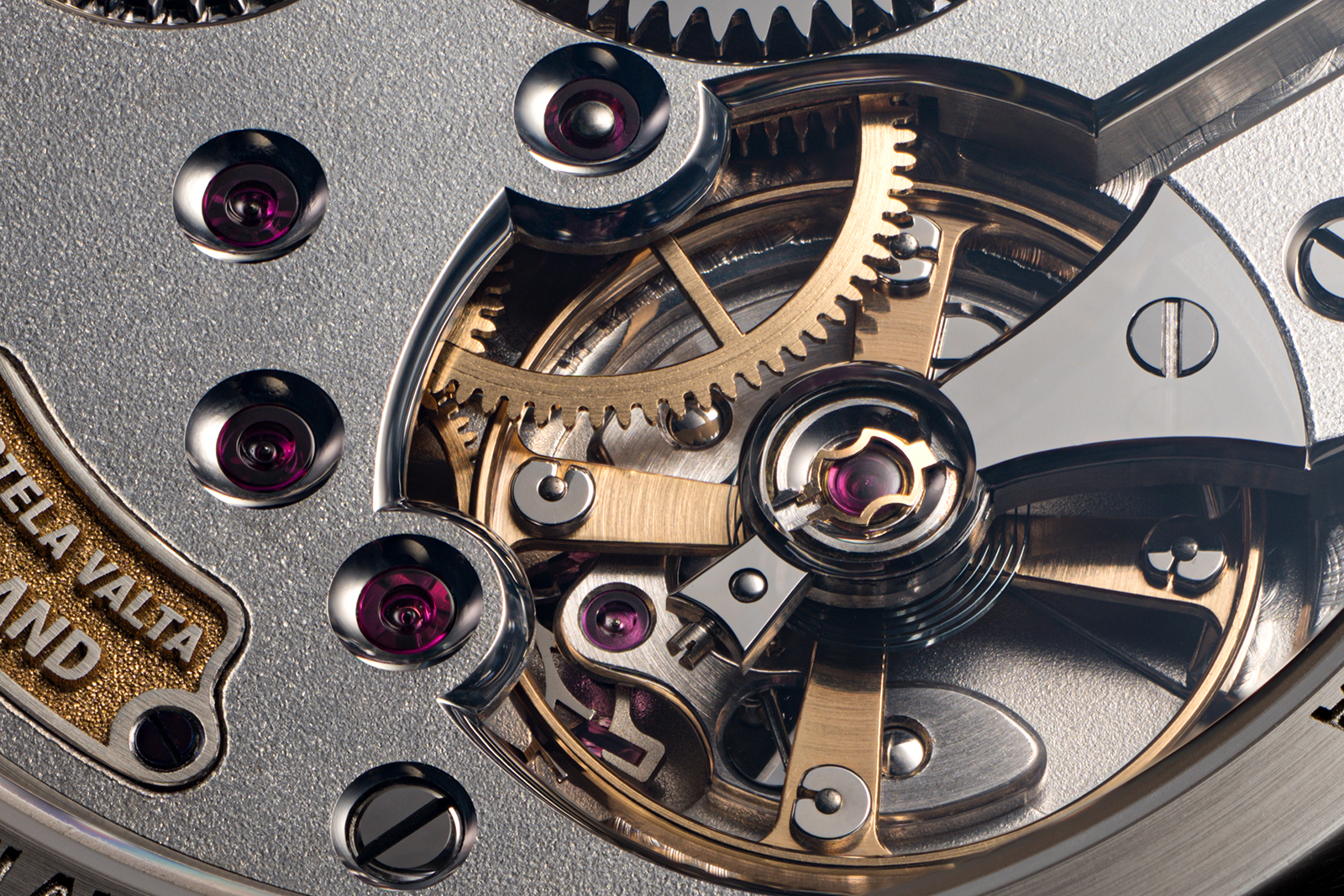
A big step taken by Kortela Valta for the Toka is the implementation of an in-house balance wheel. The large free-sprung balance takes on a classic four-arm design with circular masses for regulation. The balance is paired with an overcoil hairspring, which is expected for a high-grade movement like this, especially one with historical roots.
Raw balance springs are sourced from Carl Haas (the same supplier used by Habring²) and then counted and bent with Breguet curves at the Kortela Valta workshop. The balance itself is made from Declafor (a CuNiSn alloy) and then plated with gold. This particular setup is interesting and frankly unexpected from such a small outfit.
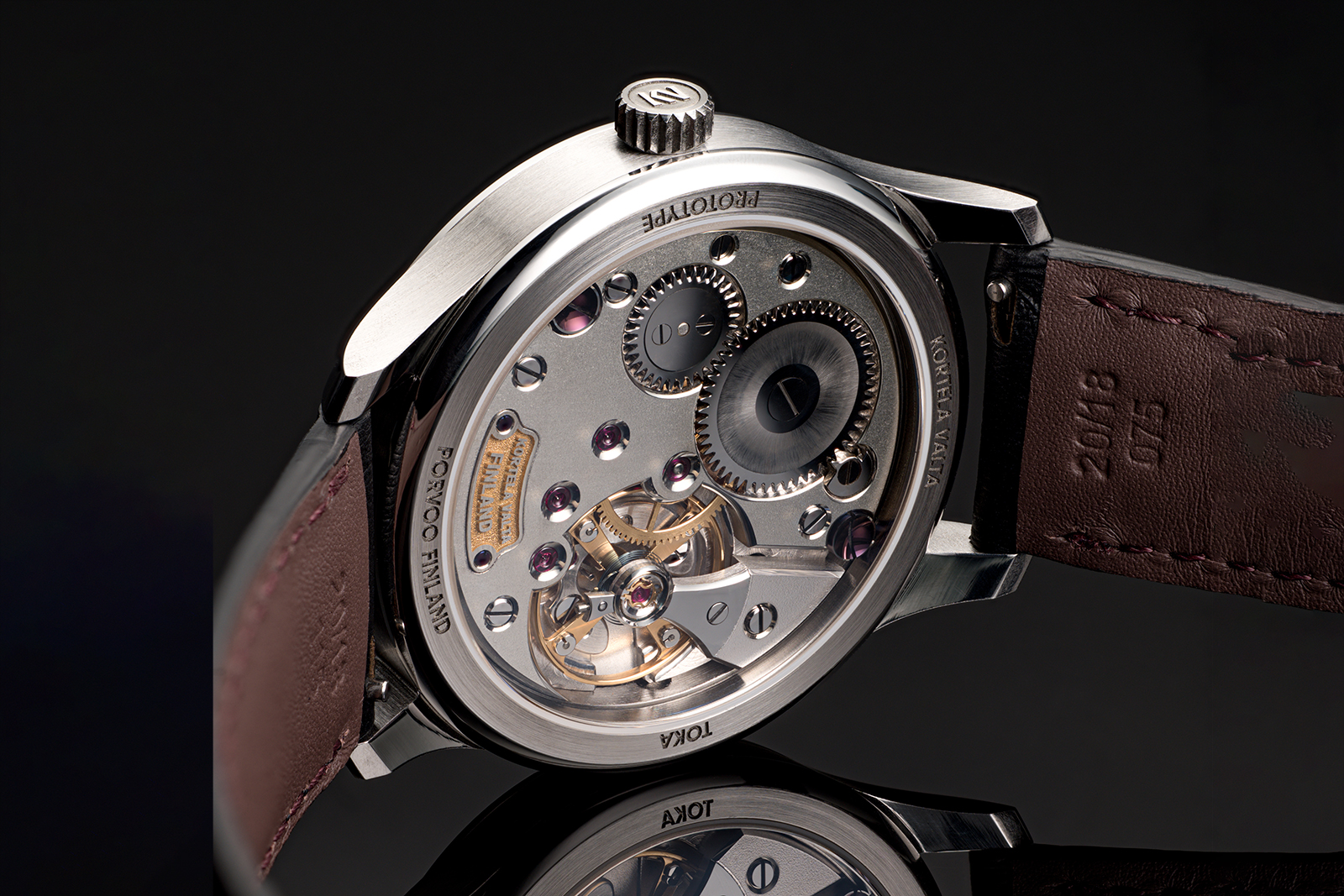
Some will argue that the movement is simply a new-old-stock Omega cal. 266 at its core; others will appreciate the use of a chronometer-grade mid-century calibre. Regardless, there are only so many ways to arrange a gear train and using a well-known formula makes logical sense. Furthermore, the proprietary balance wheel is an important differentiator and a signal that an in-house calibre may be on the roadmap.
The going train and escapement indeed stem from historical Omega calibres, but the movement also includes a rather large three-quarter plate made of German silver, finished and plated in-house. While the design is simple and appealing, the primary rationale is functional, increasing the sturdiness of the bridge and ensuring perfect alignment of pivots.
That said, it also makes the watchmaker’s job a bit harder when it comes to assembly, since all the going train axles need to be carefully arranged in order for them to easily fit in their respective jewels.
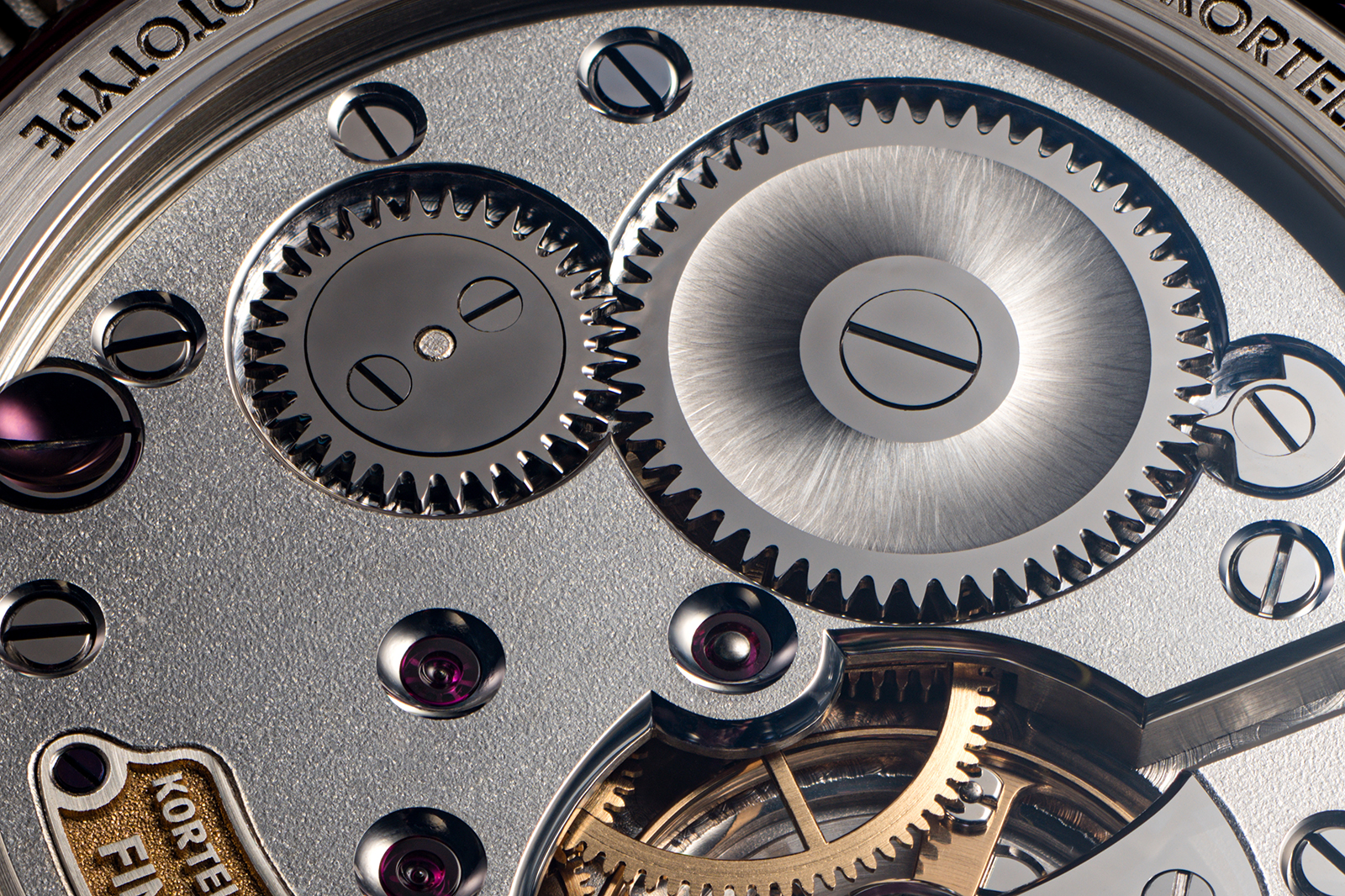
Messrs Kortela and Valta evidently put a great deal of effort into the finishing, which exhibits a degree of uniformity often missing from small-scale artisanal work. The polished counter sinks for the jewels are wide and consistent, and the graining on the plates is soft and even. The faceted screw heads and black-polished steelwork contribute to the (mostly) monochromatic palette and provide a sense of comfortable uniformity.
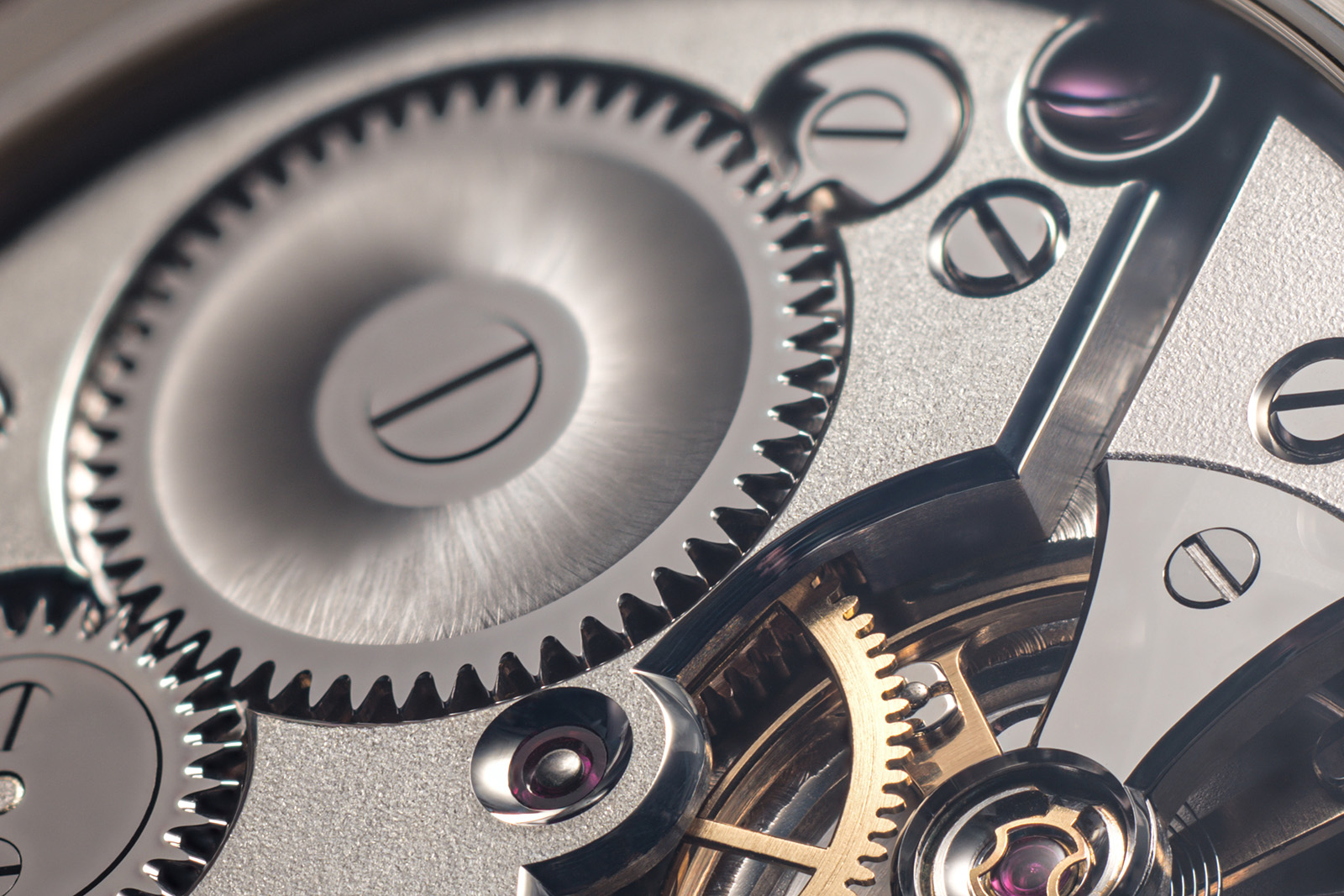
The crown and barrel click wheel are clearly Omega parts, but finished to a very high degree; the crown wheel is cleanly mirror polished, with rounded and beveled teeth. The barrel click wheel is slightly concave, with sunray finishing in the recess and a clean border with the mirror-polished upper surfaces.
The highlight of the finishing is a broad, rounded bevel runs along the three quarter plate that includes no less than four internal angles (and as many outward angles as well). The subject of internal angles is sensitive, since brands are increasingly finding ways to work around having to execute them the traditional way.
That said, the anglage present in the Toka is clearly executed to a very high standard, with even borders around the jewels and crisp, unambiguous transitions between grained and polished surfaces.
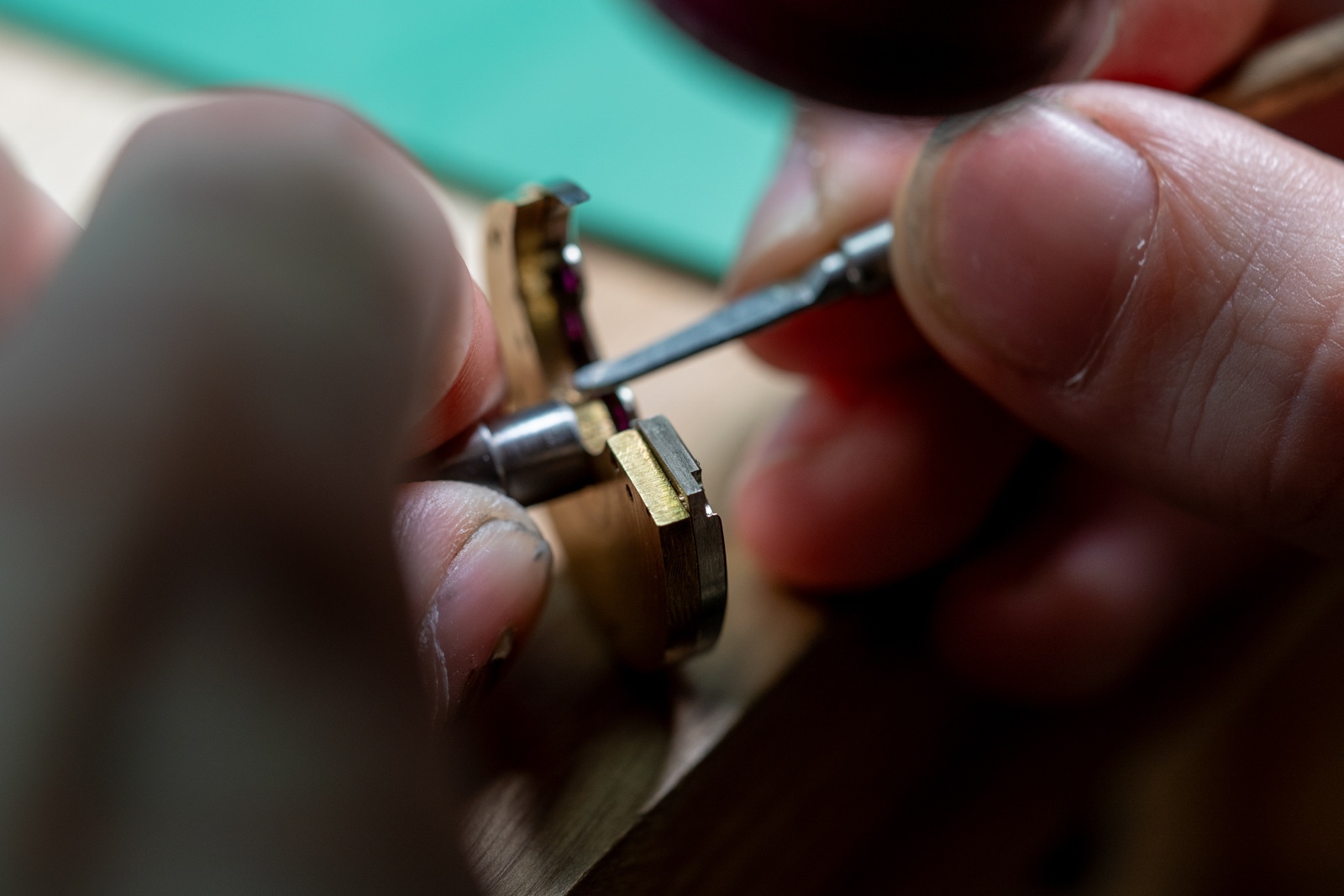
Hand polishing the large German silver bridge.
The quality of the movement is conveyed through other thoughtful details as well. For example, the large bowl-shaped case screws are flame blued to a violet shade and feature black-polished rims. Giving so much consideration to a pair of functional and usually unpretentious screws is a quirky but delightful detail, making them probably the most elaborately finished case screws on the market today.
There is also a small recessed name plate, which proudly denotes the country of origin in relief against a gold-plated backdrop. The train wheels are also gold-plated in-house, along with the balance wheel itself. Plating and electroplating are processes usually outsourced to Swiss specialists, but Kortela Valta does all plating in its own workshop.
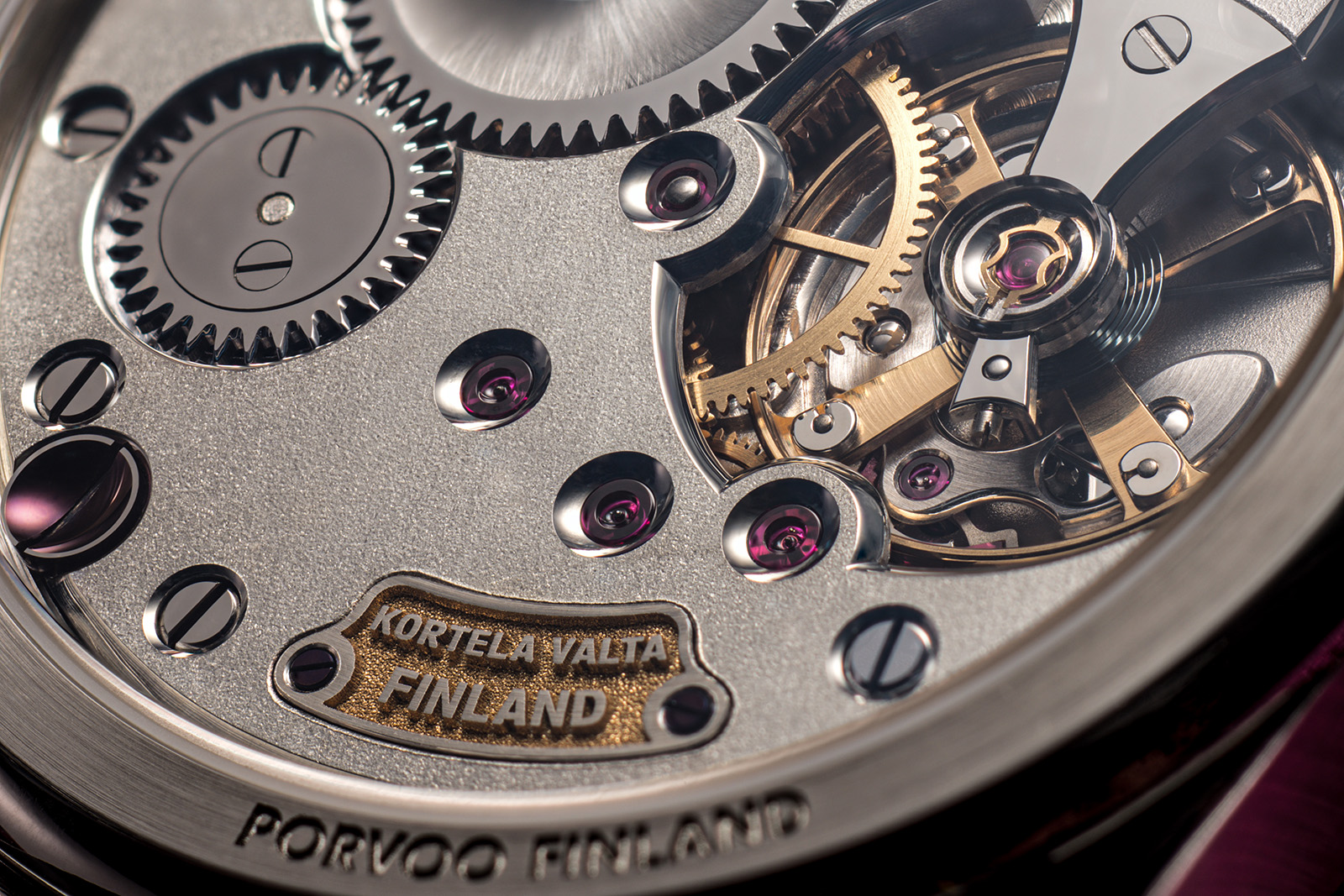
The appearance and design of the balance cock, stud holder and balance call to mind the work of Finland’s most famous watchmaker: Kari Voutilainen. The balance cock in particular differentiates the Toka from the brand prior models, with a design that thins out towards the balance and is capped with a polished steel plate. The tapered stud holder, the balance jewel seat and the small hairspring paired to the large balance all seem to have been inspired by some of Voutilainen’s own movements.
Key facts and price
Kortela Valta Toka
Diameter: 38.5 mm
Material: Stainless steel
Crystal: Sapphire
Water resistance: Splash resistant
Movement: Kortela Valta calibre based on the Omega cal. 266
Functions: Hours, minutes and small seconds
Winding: Manual
Frequency: 18,800 vibrations per hour (2.5 Hz)
Power reserve: About 43 hours
Strap: Leather strap
Limited edition: Six each with a black dial or blue dial
Availability: From Kortela Valta
Price: €25,500 excluding taxes
For more, visit Kortelavalta.com.
Back to top.