
Insight: Shaping the Rolex Identity with a Century of Strategic Positioning
Rolex marketing from 1905–2025.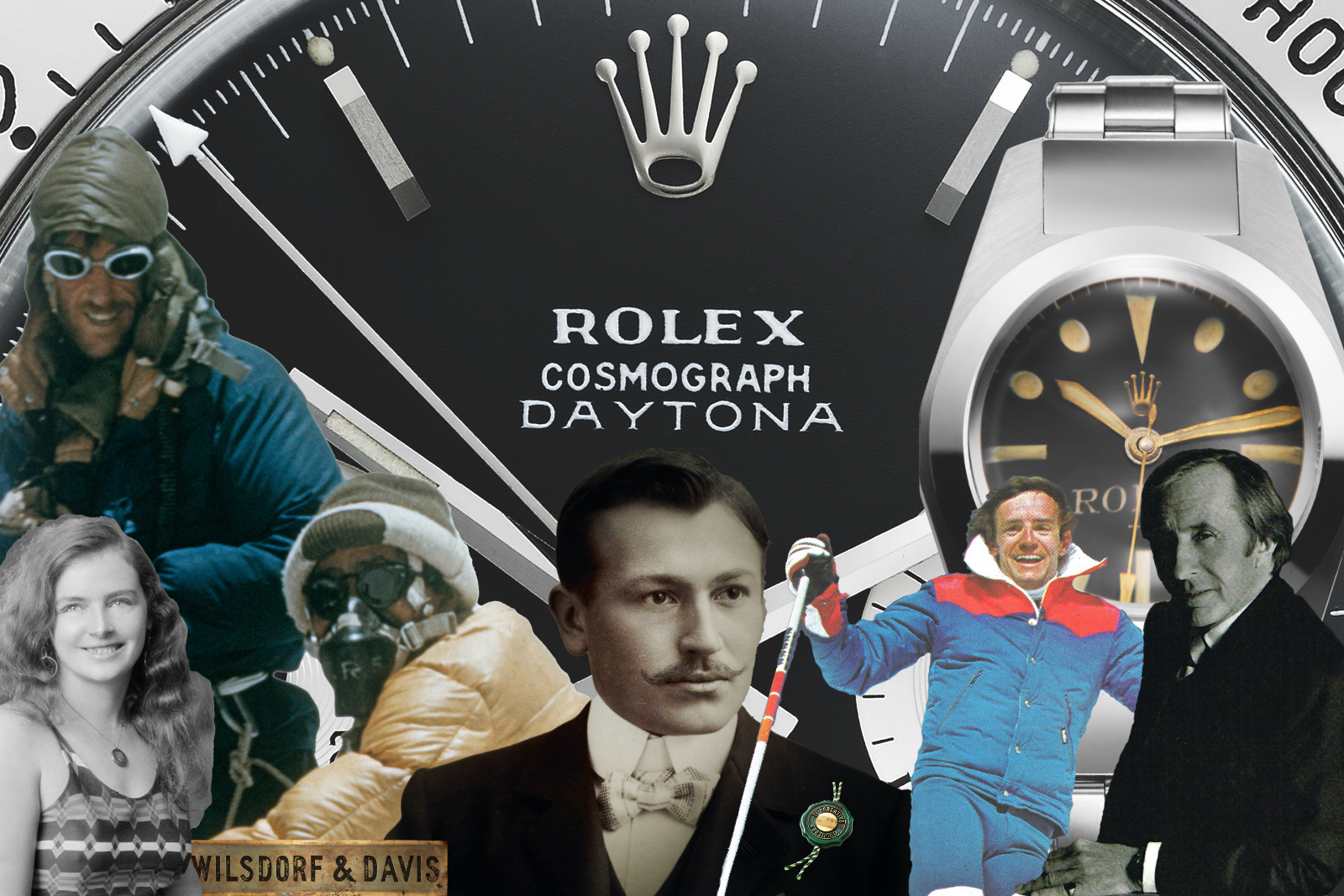
The marketing history of Rolex shows a brand building its public face step by step through symbols, carefully chosen moments, and tightly controlled messages. From its beginnings in 1905, Rolex shaped a clear, recognisable image, with a strong emphasis on visibility, control and consistency. The company spent real effort defining what the name Rolex should evoke and how that image would appear in print, in shop windows and on people’s wrists.
Where many watchmakers leaned on language around heritage and handcraft, Rolex developed a communication style rooted in achievement, trust and broad recognition. The brand favoured association: with pilots, swimmers, climbers, tennis players, orchestras, laboratories and prize-giving institutions. Sponsorships, endorsements and even model names formed a linked pattern, presenting the Rolex watch as the natural companion of records, frontiers and public success.
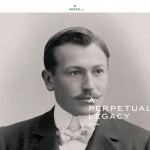
Hans Wilsdorf, the founder, treated promotion and product as parts of the same task. He saw that a claim about performance gained weight when tied to a visible test or public event, and that reputation could grow through displays of endurance, accuracy and elegance under pressure. The waterproof Oyster case, observatory trials, Channel swims, aviation flights and Himalayan expeditions all served as stages on which the watch and the story moved together.
Across the decades this approach produced one of the most coherent brand stories in modern watchmaking. Through long-standing ties to sport, exploration and the arts, Rolex built a web of relationships that lent the name a steady, institutional presence in public life. Repeated, consistent use of this framework gave Rolex a profile that now feels unusually stable and sharply defined in the luxury field.
What follows traces the main steps in that strategy across time, from early experiments in publicity to a global system of partnerships and recurring themes that continue to shape how Rolex appears in the world.
1905–1930s: the construction of credibility
Rolex began in London in 1905 as Wilsdorf & Davis, the firm Hans Wilsdorf set up to import and distribute watches fitted with Swiss movements. Wilsdorf already thought in international terms and wanted a name that would travel easily. In 1908 he registered “Rolex”, a short invented word chosen because it was easy to pronounce in several languages and sat cleanly on a dial. Its compact form matched his view that a brand name should act as both a signature and an emblem.
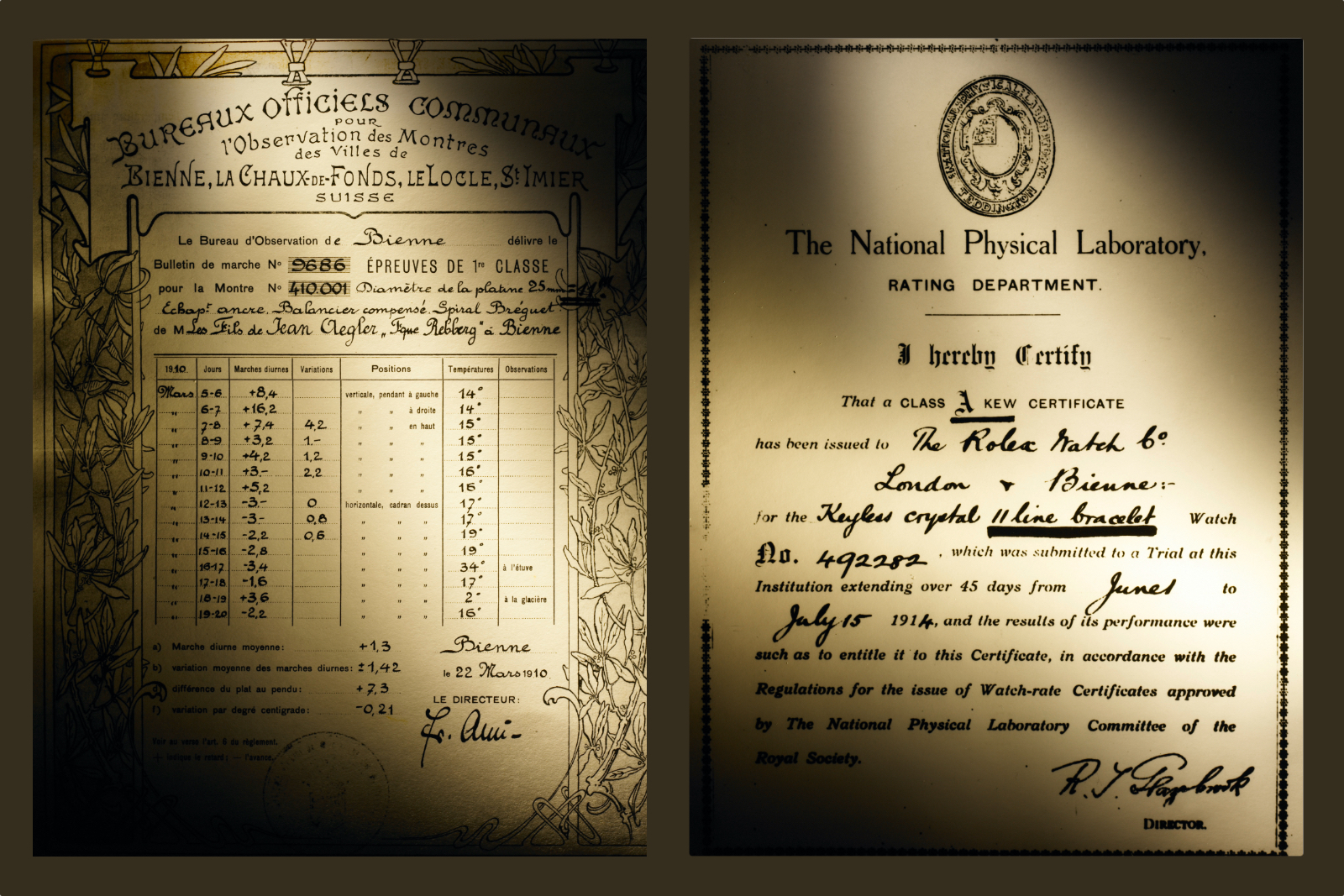
First Chronometer certificates from Bienne and Kew. Image – Rolex
During the early years of the wristwatch, when many people still treated it as a delicate offshoot of the pocket watch, Rolex set out to present its pieces as dependable, precise and suited to daily use. Wilsdorf tied this ambition to tangible proofs. In 1910, a Rolex wristwatch received a chronometer certificate from the Official Watch Rating Centre in Bienne, a rare distinction for a wrist-worn watch at that stage. Four years later, a related model passed the Kew Observatory trials in England with Class A certification, a level normally associated with marine chronometers.
Rolex publicised these results with carefully placed advertisements, showing the certificates and naming the institutions involved. Accuracy moved from an internal claim to something documented and visible, with the wristwatch linked directly to observatory testing and professional standards. This helped Rolex present its watches as precision tools as well as personal objects, and encouraged buyers to see the wristwatch as a serious timekeeper rather than a passing fashion.
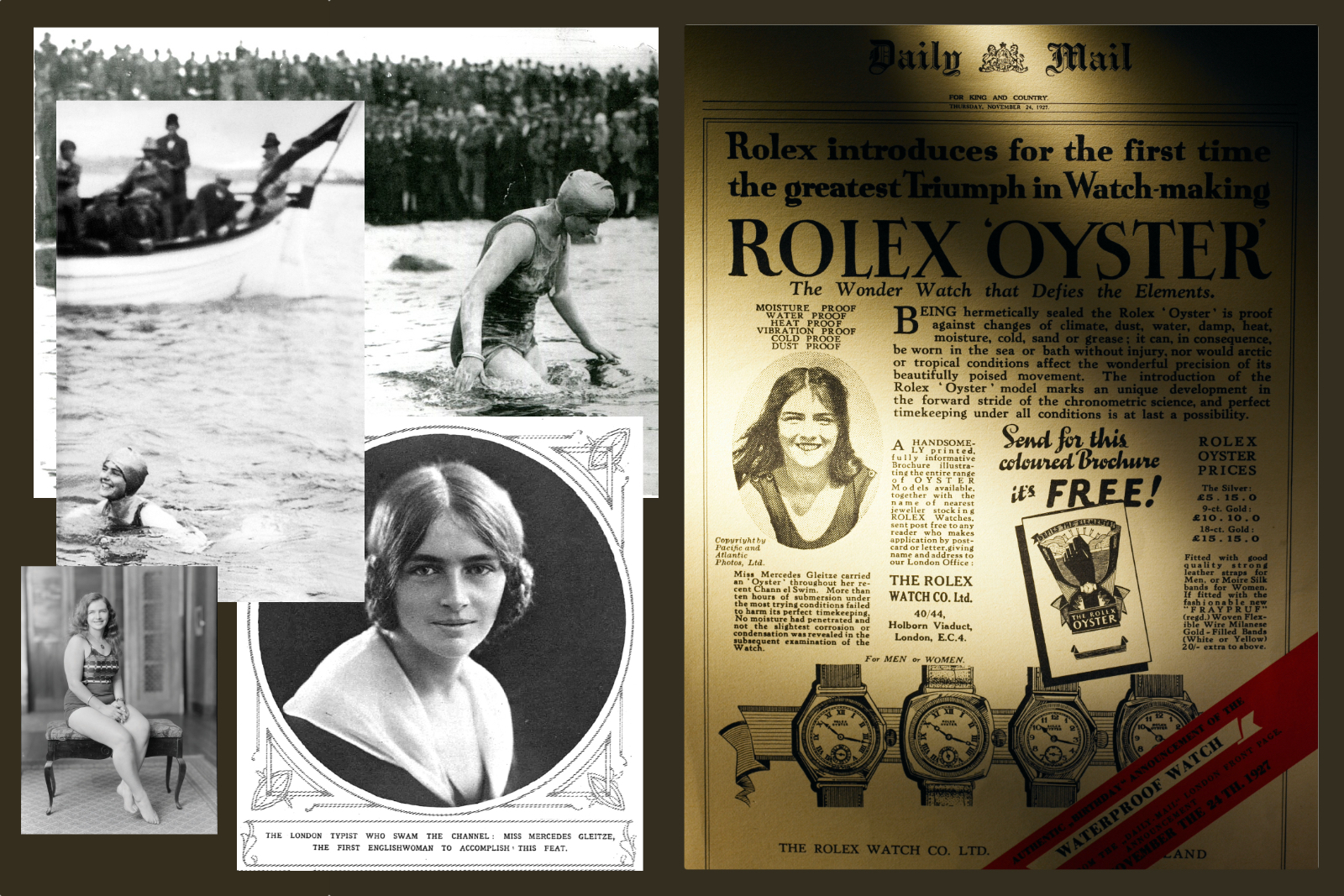
Mercedes Gleitze and the crossing of the English Channel. Image – Rolex and general press.
The 1920s marked a new phase of visual marketing. Wilsdorf established Rolex headquarters in Geneva in 1919, relocating from England to the symbolic home of high watchmaking. Soon after, he introduced the Rolex Oyster, a sealed wristwatch case designed to resist water and dust, based on a patent acquired from Paul Perregaux and Georges Peret.
To demonstrate its resilience, Rolex arranged for British swimmer Mercedes Gleitze to wear an Oyster on a necklace during her 1927 attempt to cross the English Channel. The watch functioned throughout the swim, and Rolex followed the event with a full-page advertisement in the Daily Mail, declaring the Oyster’s triumph over the elements. This marked one of the earliest instances of public performance used as marketing theatre, a template Rolex would refine over the decades.
Throughout the 1930s, Rolex deepened its association with challenging environments and professions that demanded precision under pressure. Explorers navigating uncharted territories, aviators reaching new altitudes and distances, and racing drivers pursuing mechanical limits all relied on Rolex as a trusted companion. These associations emerged from genuine use in the field, where watches accompanied their wearers in the pursuit of speed, navigation, and endurance.
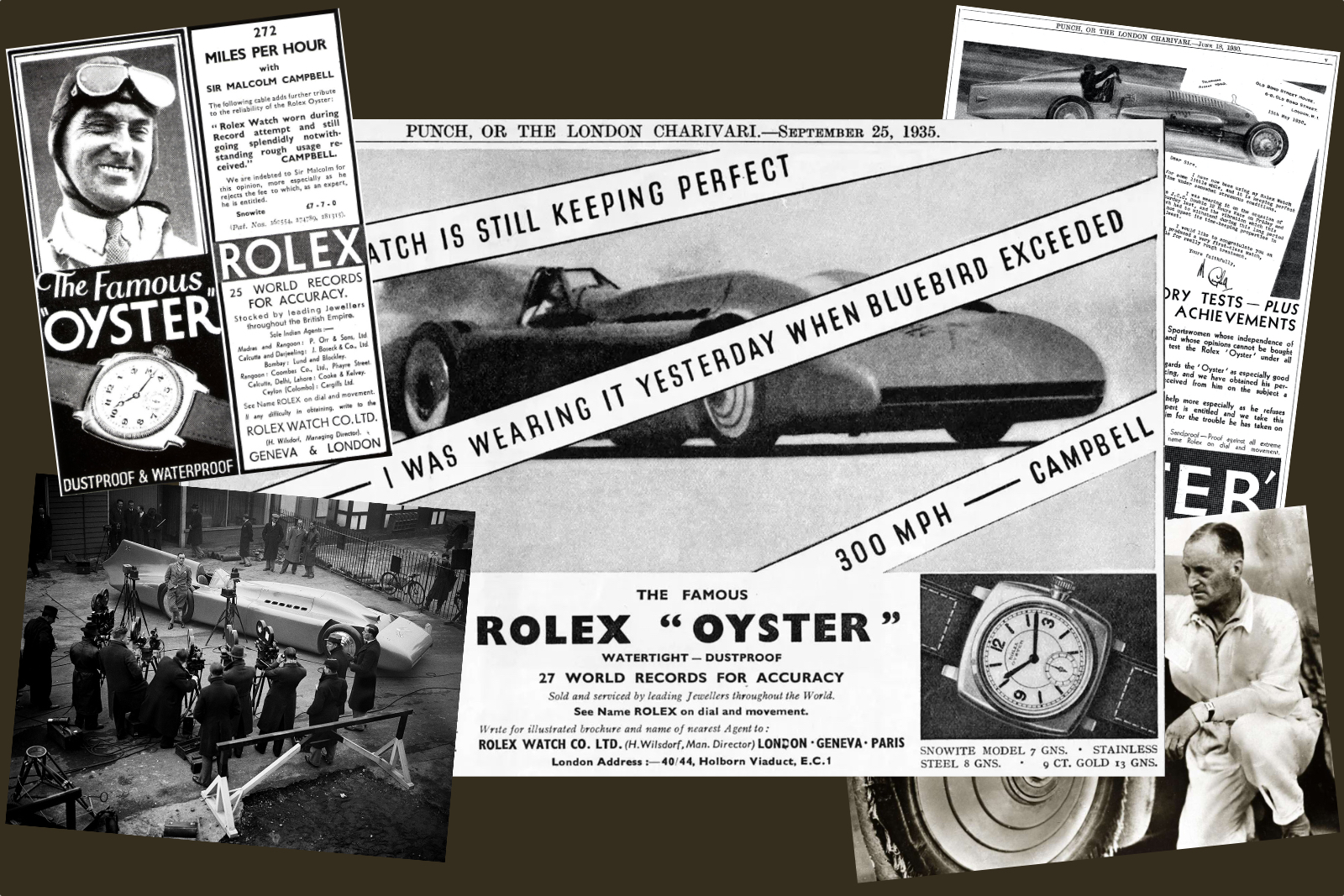
Malcolm Campbell and the Land speed Record. Image – General press.
Hans Wilsdorf ensured that these stories reached the public. Testimonial letters, illustrated advertisements, and window displays translated individual feats into an unambiguous narrative. Pilots crossing continents, scientists working in polar conditions, and drivers completing long-distance races brought Rolex into public awareness as a watch tested through action.
This period established the foundation for a communication strategy guided by alignment: product with performance, brand with endurance, timekeeping with trust.
1940s–1950s: the birth of the professional watch
The postwar decades brought a shift in Rolex’s marketing focus, from demonstrations of technical reliability to the creation of institutional presence. Rolex aligned itself with activities and professions that embodied precision, endurance, and global relevance. This period marked the emergence of what would later be known as the professional watch category — timepieces designed and presented as tools for achievement.
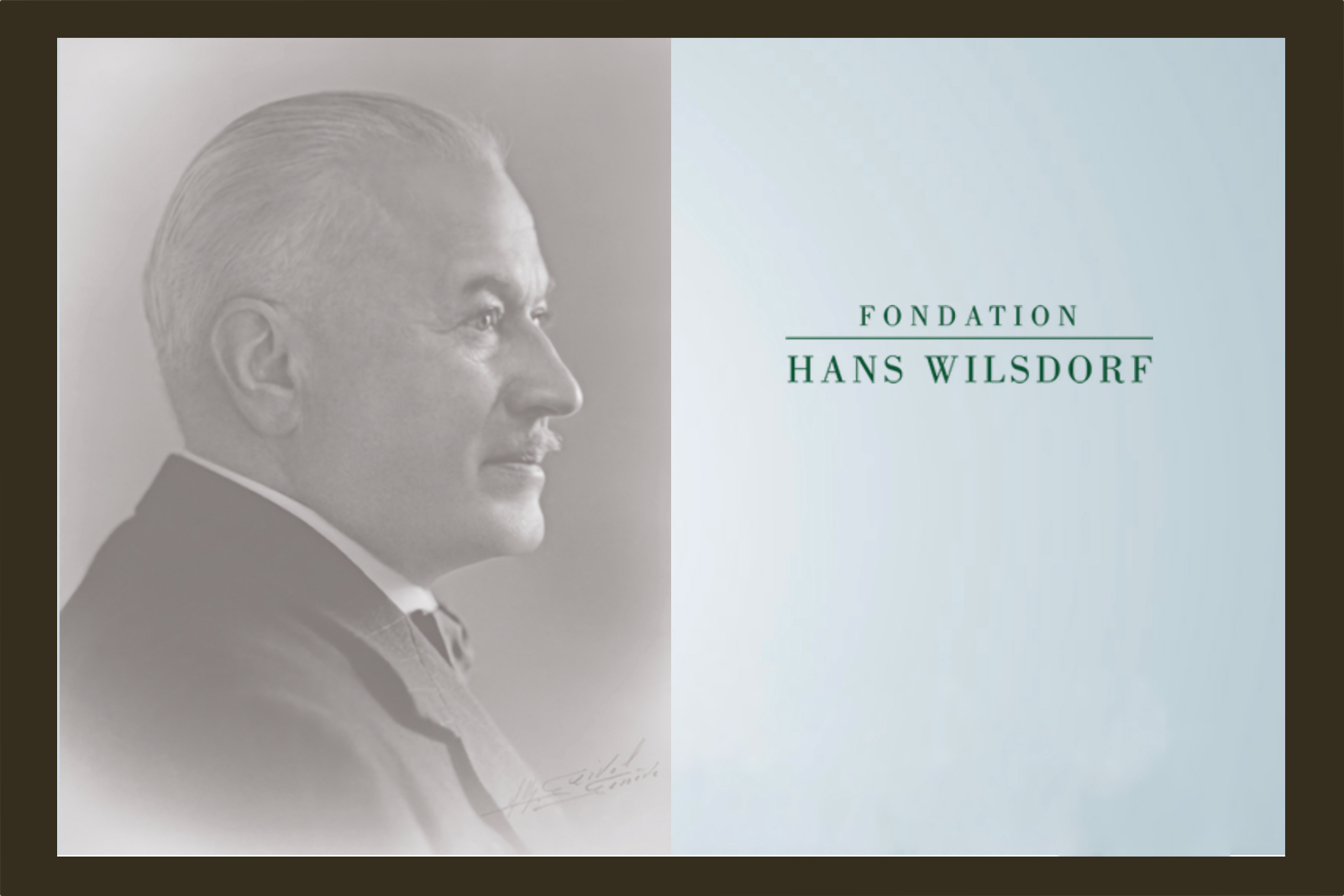
The Hans Wilsdorf Foundation. Image – The Hans Wilsdorf Foundation
In 1945, Rolex introduced the Datejust, the first wristwatch to automatically change the date in a window on the dial. The watch was launched to mark the company’s 40th anniversary and was presented as a symbol of progress. That same year, Hans Wilsdorf transferred his ownership of the firm into the Hans Wilsdorf Foundation, a private trust established to ensure the long-term independence of Rolex.
Though rarely referenced in public-facing materials, this structural decision shaped the brand’s future. Without shareholders or external investors, Rolex operated with unusual autonomy, enabling long-term planning and a marketing strategy guided by continuity and insulated from short-term market cycles.
The Datejust, the Foundation and the wider postwar shift all show a company settling into a stable, long-term identity. Rolex moved past simple technical demonstrations and began to build a wider field of credibility around its watches, tied to working lives, public roles and a growing international presence.
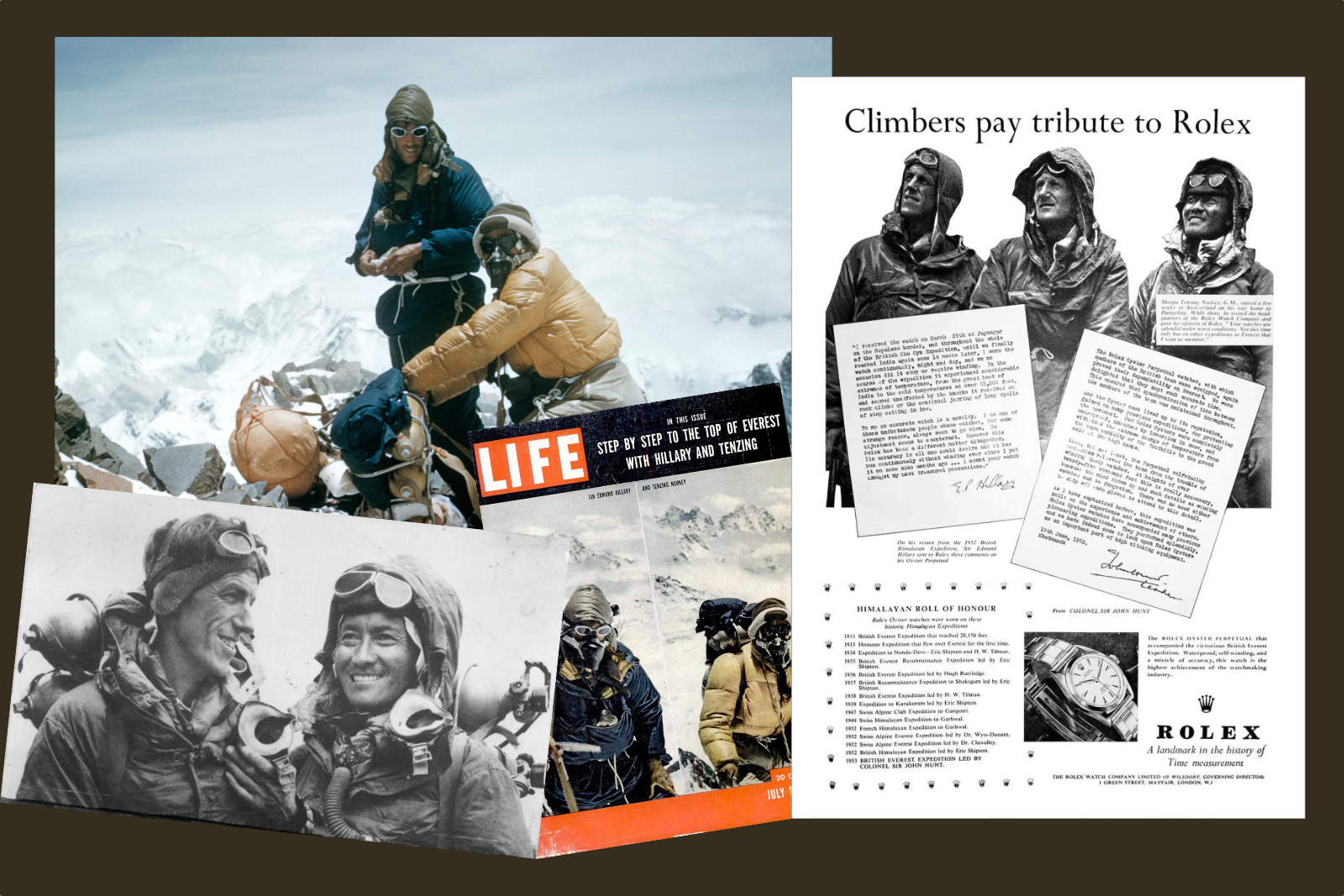
Sir Edmund Hillary and Tenzing Norgay conquer Everest. Image – Rolex and general press.
The 1950s expanded this positioning through purposeful collaborations. In 1953, the Rolex Oyster Perpetual accompanied Sir Edmund Hillary and Tenzing Norgay during their successful ascent of Mount Everest. Rolex publicised the expedition as a natural proving ground for its timepieces, reinforcing the message that the Oyster case offered robust performance in extreme conditions. While Rolex was not the only brand to send watches on the expedition and it was in fact a Smiths watch that was the first to reach the summit, the expedition remains indelibly tied to Rolex thanks to the brand’s aggressive marketing.
That same year, the Submariner was launched as a watch for professional divers, equipped with a waterproof depth rating and a rotating bezel. Marketing materials described the Submariner both as a functional instrument and a companion for exploration, linking the product with the emerging identity of the underwater professional.
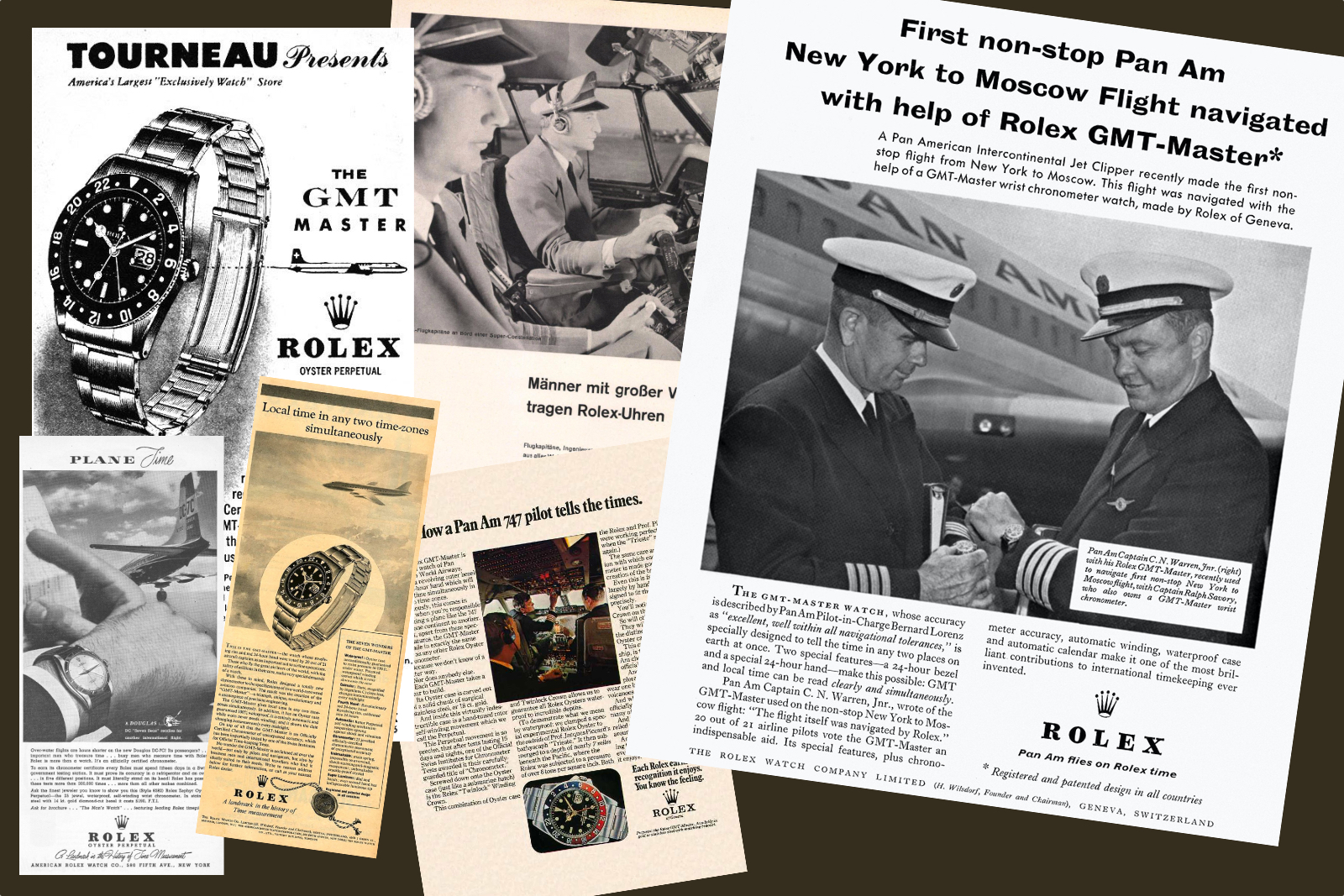
The GMT-Master makes its appearance in partnership with Pan American World Airways. Image – Rolex and general press.
In 1954, the GMT-Master debuted in partnership with Pan American World Airways, offering pilots the ability to track two time zones simultaneously. The collaboration gave Rolex access to a new symbol of internationalism, civil aviation, and the campaign positioned the GMT-Master as essential equipment for the jet age.
As these models were introduced, Rolex expanded its chronometric strategy. Building on earlier milestones such as the Kew Observatory and Bienne certifications, the brand began submitting movements in large numbers to the Contrôle Officiel Suisse des Chronomètres (COSC), the official Swiss chronometer testing institute.
This alignment formalised Rolex’s pursuit of accuracy and brought it to the dial itself. The phrase “Superlative Chronometer Officially Certified” began to appear across flagship models, turning laboratory-grade precision into a visible and permanent element of brand communication.
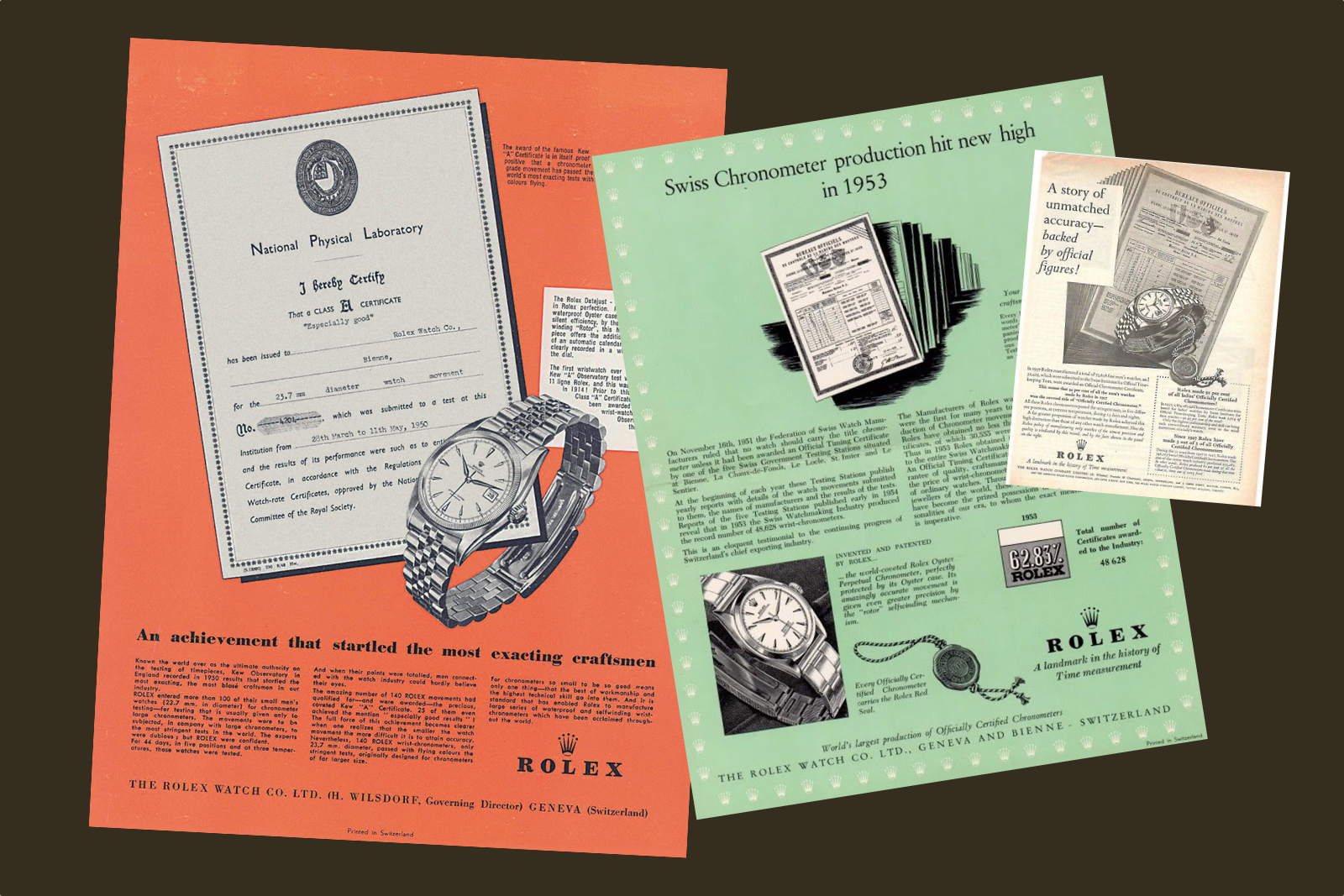
Rolex starts submitting its watches to the Contrôle Officiel Suisse des Chronomètres (COSC). Image – Rolex and general press.
In doing so, Rolex integrated technical validation directly into product language. Precision became an intrinsic part of the watch’s visual and symbolic grammar, fully integrated into its language and presence.
By the end of the decade, Rolex had created a full suite of models tied to specialised use: the Submariner for divers, the Explorer for mountaineers, the GMT-Master for aviators, and the Datejust for everyday reliability. These watches were marketed through achievements, affiliations, and institutional trust. Each model stood for a purpose, and each purpose reinforced the Rolex identity as a standard for professionals across fields.
1960s–1970s: public achievement, sponsorships, and media presence
The 1960s and 1970s marked a period of broad public expansion for Rolex, during which the brand extended its visibility across new fields while reinforcing its message. Marketing became more structured and far-reaching, supported by a growing network of retailers, targeted editorial placements, and a media strategy shaped by repetition and authority. Rolex watches were presented as personal instruments with public resonance, associated with achievement, refinement, and global relevance.
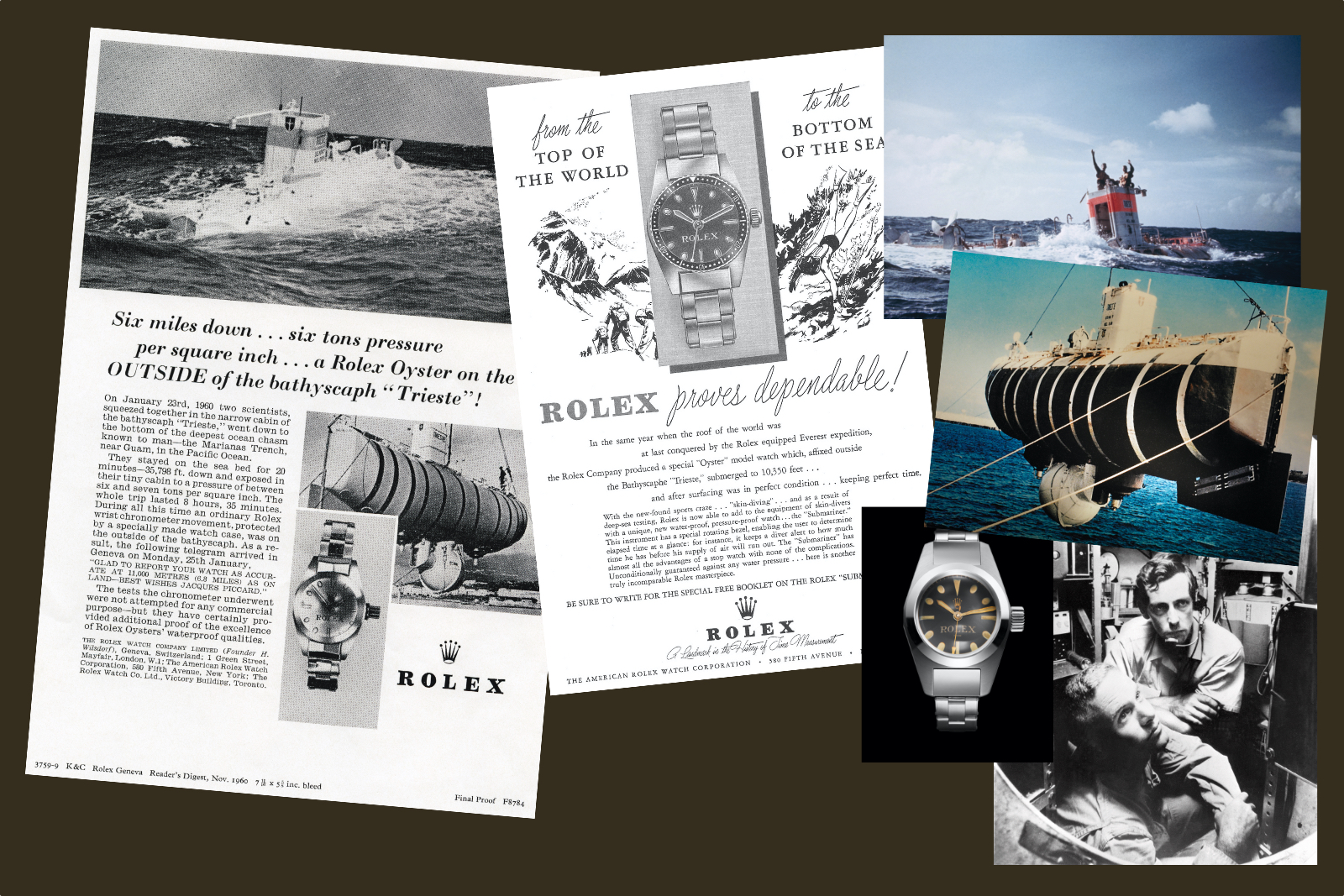
The Deep Sea Special reaches the bottom of the Mariana trench. Image – Rolex and general press.
In 1960, Rolex reinforced its connection to exploration when an experimental Deep Sea Special watch was attached to the exterior of the Trieste bathyscaphe during its descent to the bottom of the Mariana Trench; the watch withstood the immense pressure at nearly 11,000 m below sea level. Rolex framed the moment as an affirmation of technical mastery and resilience.
Photographs and newspaper reports gave the event narrative weight, and Rolex preserved its impact in advertising, displays, and communications for decades to come. The Mariana Trench descent became a reference point in Rolex storytelling, expanding the brand’s archive of verifiable performance.
This strategic use of public achievement reflected a broader internal evolution under André Heiniger, who became managing director in 1963. Heiniger introduced greater discipline to Rolex’s communications and helped define the brand’s tone: calm, controlled, and symbolically aligned.
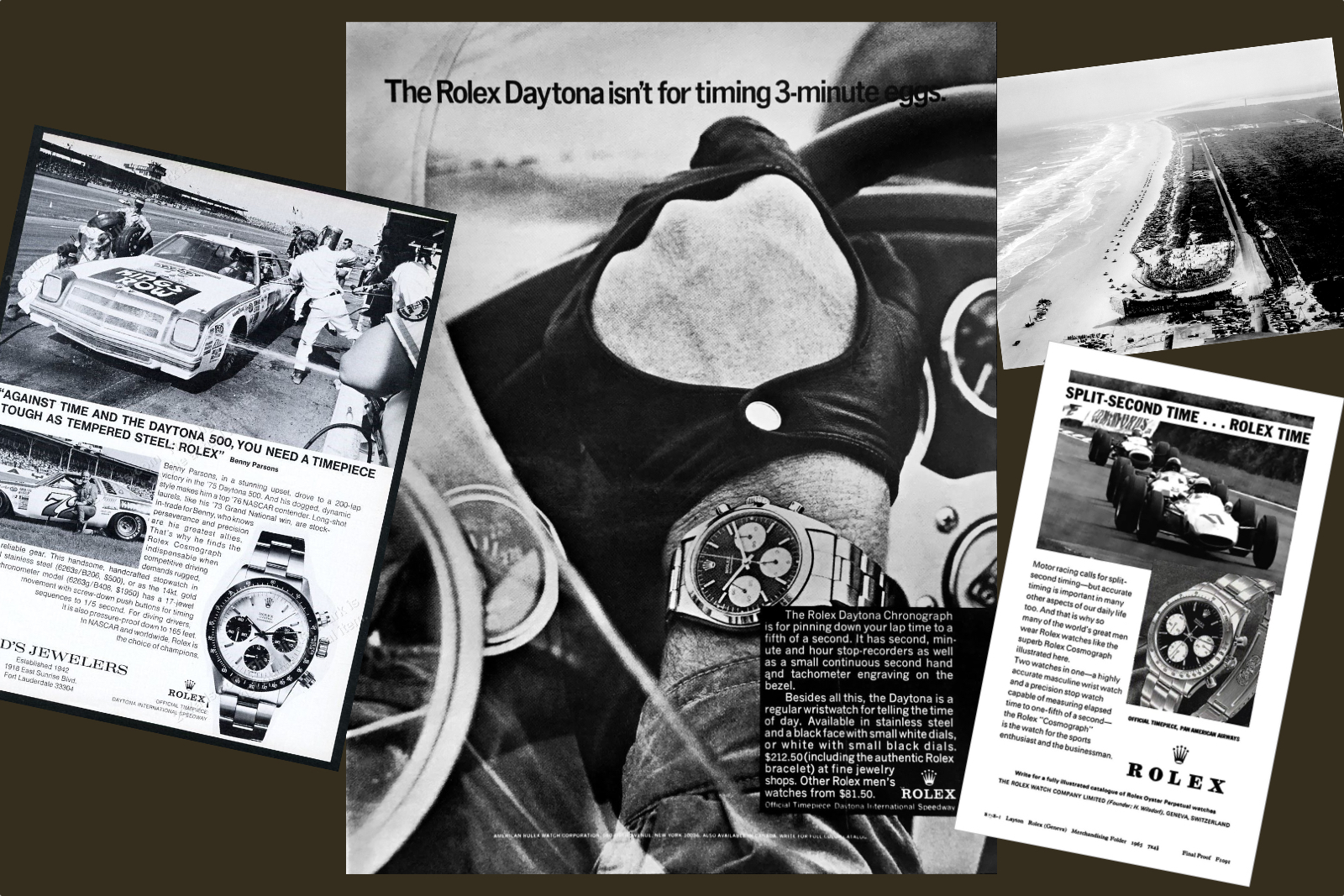
The Daytona embodies the essence of the Rolex sports watch. Image – Rolex and general press.
To implement this vision, Rolex collaborated with agencies such as J. Walter Thompson and Publicis, building a communications structure that blended consistency with regional adaptability. These agencies translated the brand’s identity into language and imagery for different markets, ensuring that Rolex appeared across countries with uniform clarity and symbolism.
By the late 1960s, Rolex had expanded into motorsport, aligning itself with events such as the Daytona endurance race. The Cosmograph Daytona, introduced in 1963, developed an identity rooted in speed, concentration, and mechanical accuracy. Advertising highlighted its tachymeter bezel and chronograph layout, while photography linked it to the rhythm and discipline of the racetrack. The name “Daytona” itself reflected Rolex’s strategy of embedding location and legacy into its product lines, reinforcing the idea that performance could be both geographical and symbolic.
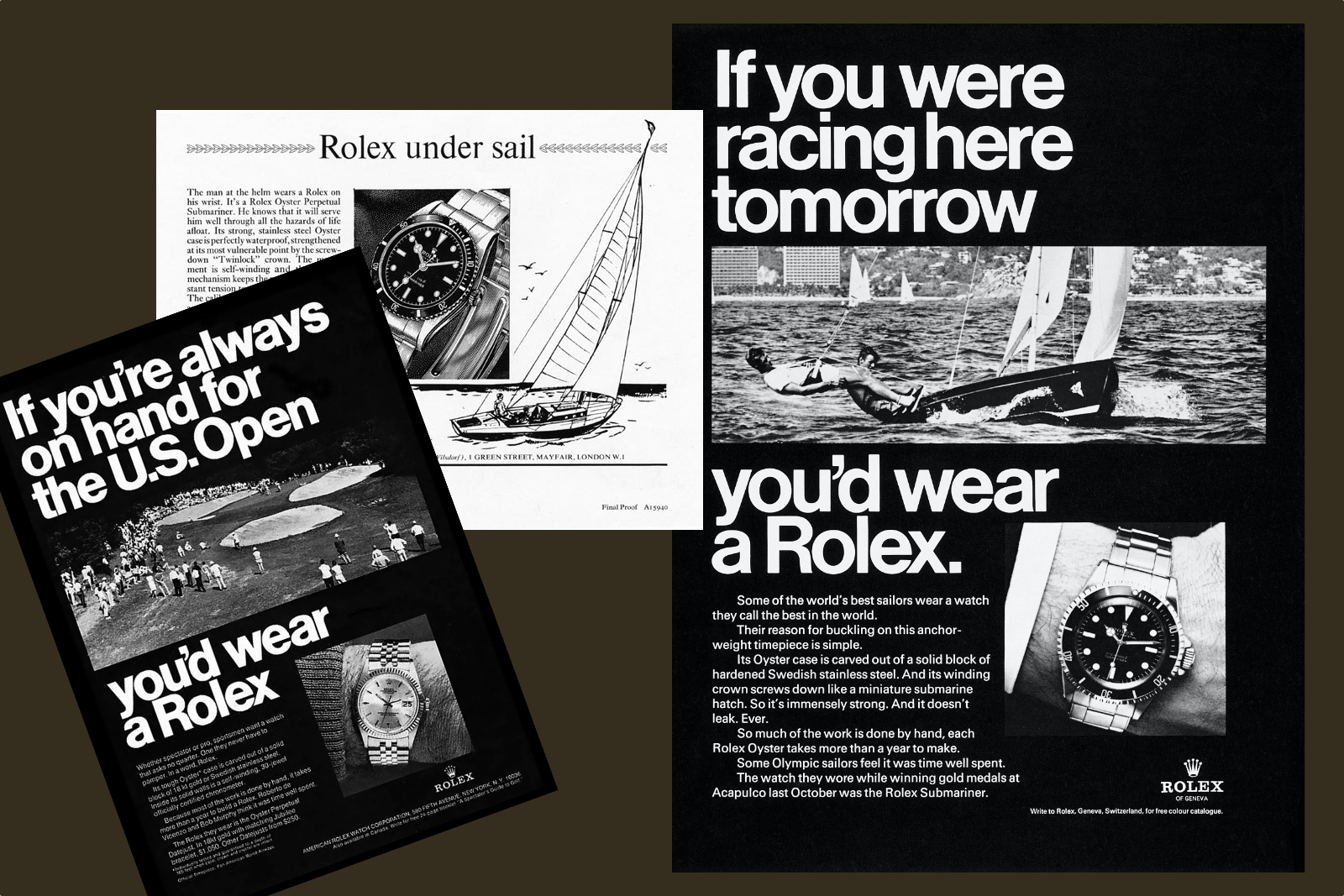
Long-term partnerships become the cornerstone of Rolex communication strategy. Image – Rolex and general press.
At the same time, Rolex broadened its presence through sponsorships across disciplines. From equestrian competitions to sailing regattas, the brand built long-term partnerships with institutions that shared its values of continuity, refinement, and measured excellence. These alliances appeared in event photography, programme booklets, and broadcast visuals, placing the watch within a framework of trust, tradition, and technical capability. Each placement extended the brand’s language into new social spaces.
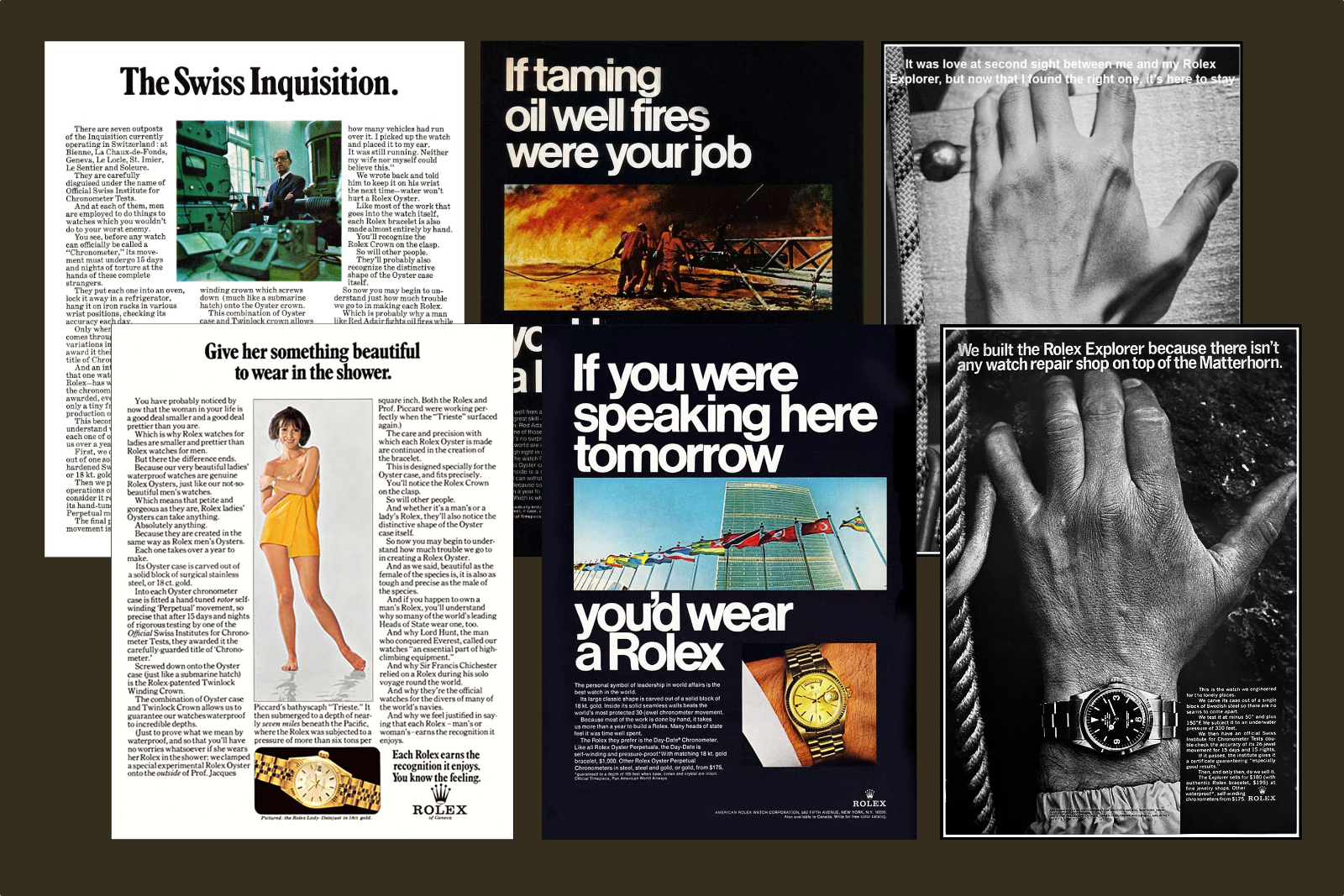
Rolex advertisement starts to consolidate. Image – Rolex and general press.
Throughout the 1970s, Rolex continued to invest in long-form print advertising and integrated editorial content. Campaigns featured specific models accompanied by declarative headlines and restrained product descriptions. The tone remained composed. Rolex advertisements appeared across newspapers, travel publications, cultural journals, and specialist magazines, reaching audiences with varying degrees of expertise and aspiration. Model texts emphasised durability, accuracy, and lineage, affirming that a Rolex offered meaning through purpose and design intent.
1980s–1990s: global expansion, iconography, and the cultivation of permanence
During the 1980s and 1990s, Rolex refined its image into a universally recognised symbol of achievement. The period was marked by global expansion, controlled visibility, and a deepening of brand identity through repetition and clarity. Marketing evolved from regional activity into a synchronised global structure, with campaign tone, visual language, and placement strategy unified across markets. Through decades of brute force marketing, Rolex became a fixture in the cultural imagination, a signal of success, precision, and continuity.
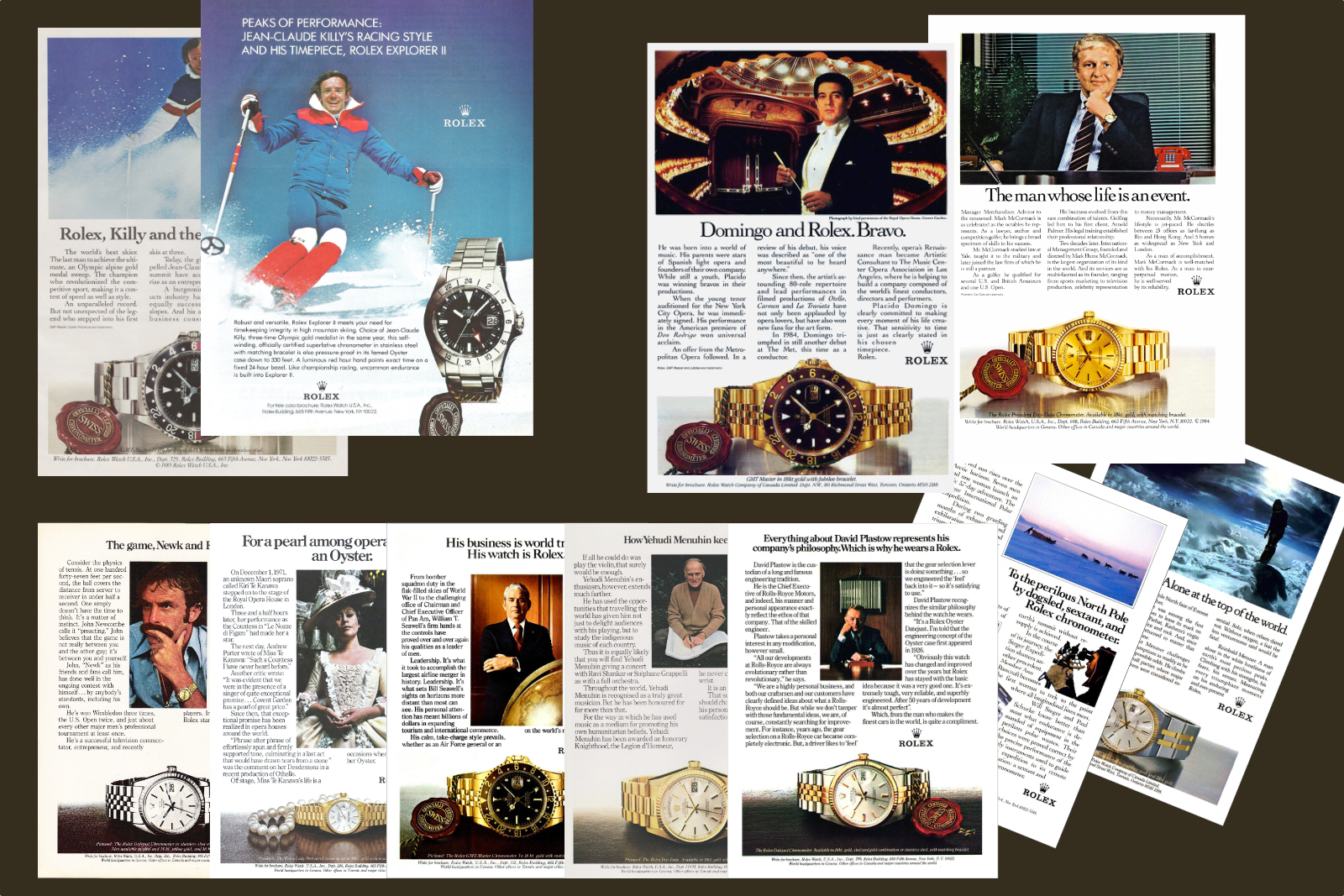
During the 1980s the watch became more visible along the different campaigns. Image – Rolex and general press.
The direction established under André Heiniger reached full maturity. His emphasis on discretion, structure, and institutional association shaped every element of Rolex’s communication. The brand’s message no longer relied on novelty or intervention. It drew strength from pattern, design discipline, and symbolic coherence. This gave Rolex a position of unusual stability during a period when many luxury houses redefined themselves for expanding markets.
The visual language of Rolex campaigns became more codified. Product photography presented watches with frontal clarity, highlighting bezels, dials, and emblematic case shapes. Headlines used declarative phrasing with minimal tonal variation. The Oyster Perpetual, the Datejust, and the Day-Date featured prominently in advertising that balanced product with message, reinforcing the idea that Rolex watches carried both precision and cultural significance.
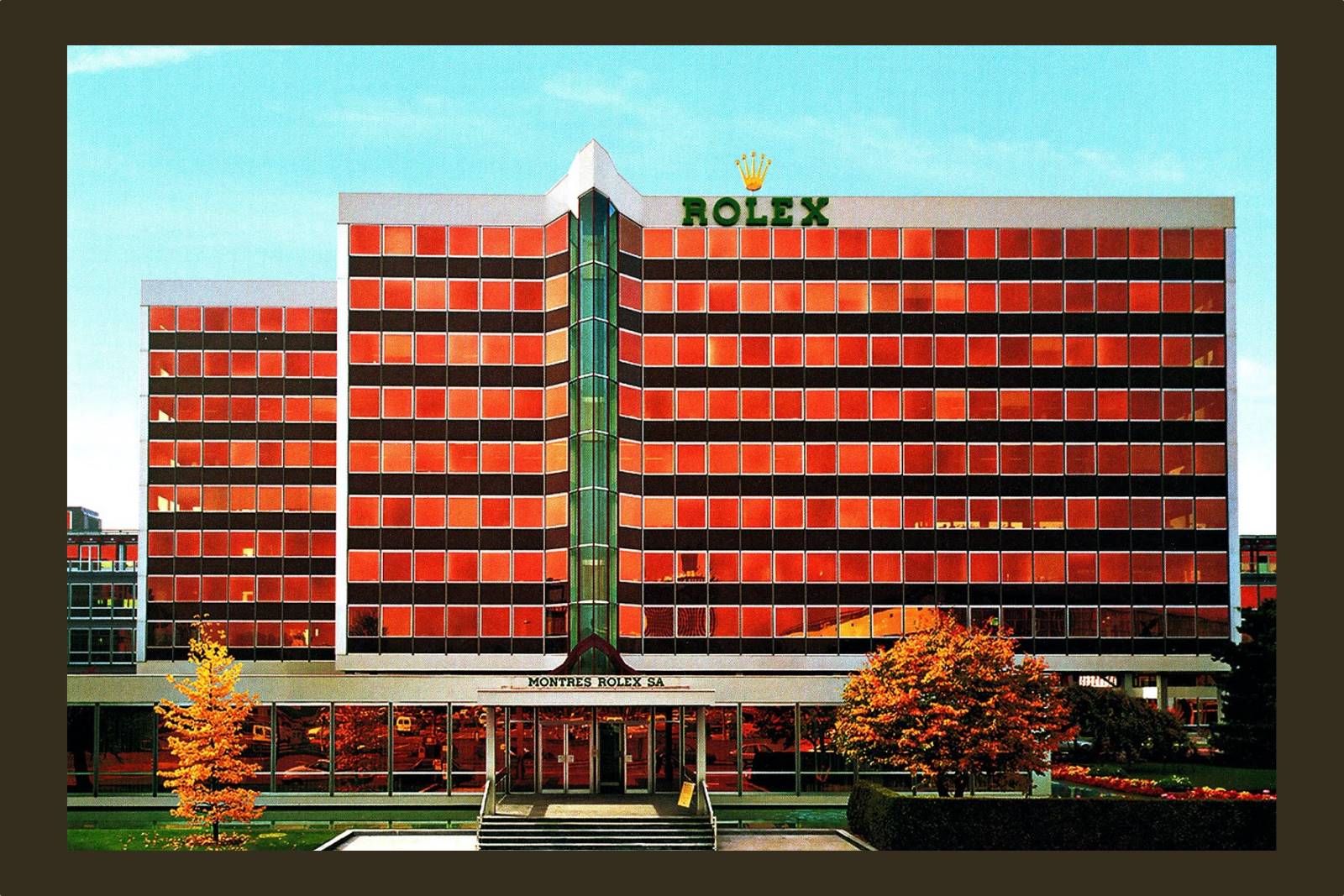
The Rolex headquarters in the 1980s. Image – postcard.
Retail architecture followed the same logic. Boutiques and authorised points of sale adopted a unified material vocabulary: green leather, light wood, stone textures, and subdued lighting. The design language extended from shop windows to service desks, from warranty cards to presentation boxes. Each element supported the idea that a Rolex watch belonged within an ordered, intentional, and dignified system of presentation.
Sponsorships and institutional ties continued to grow. Rolex deepened its support for tennis, golf, sailing, and equestrian disciplines, aligning the brand with events such as Wimbledon, the Masters Tournament, and the Sydney to Hobart Yacht Race. These affiliations positioned Rolex within worlds shaped by control, rhythm, and discipline. In parallel, Rolex expanded its cultural presence through partnerships in classical music, opera, and architecture, fields that shared its values of structure and refined expression.
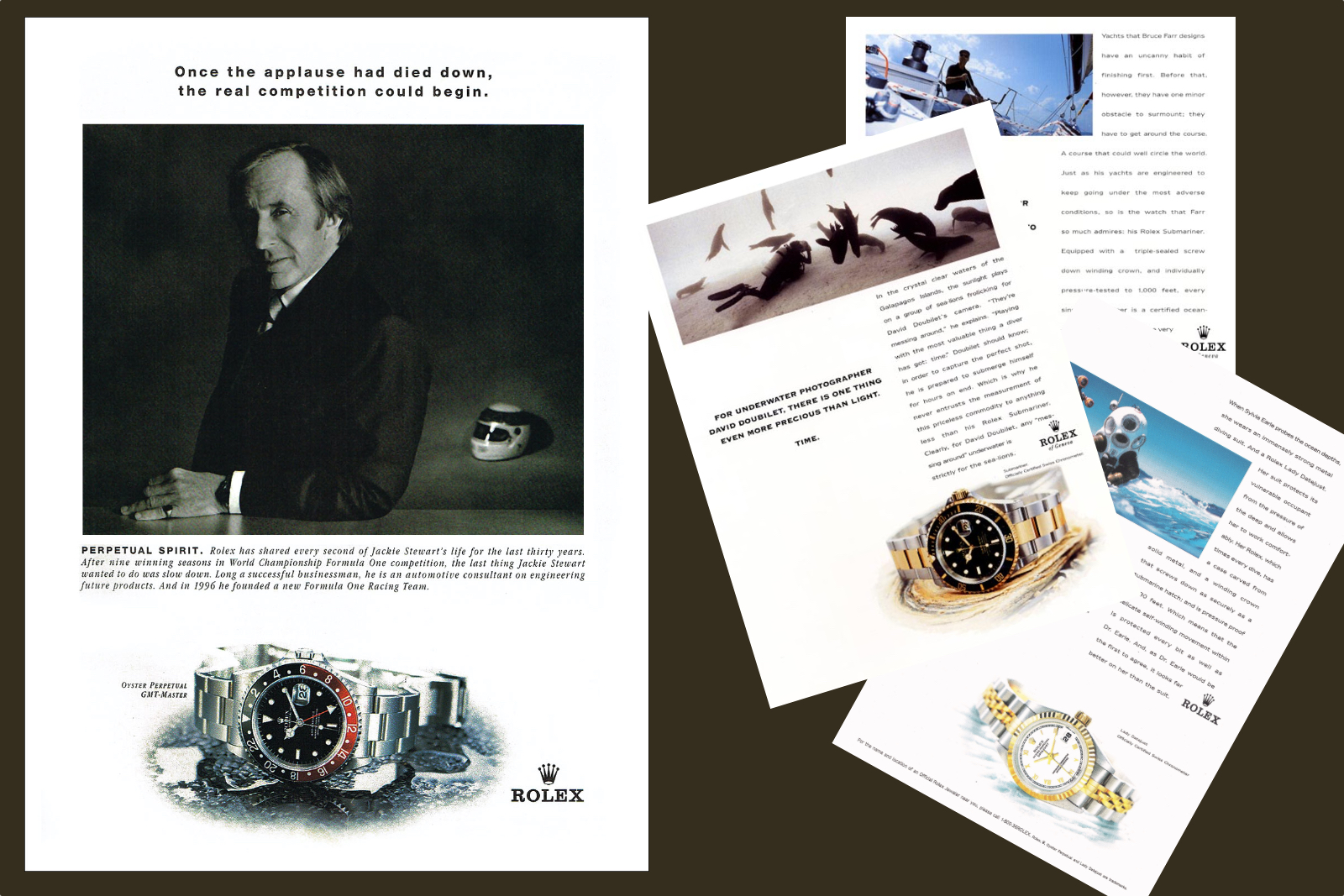
Visual clarity is imbued in the Rolex advertisement campaigns of the 1990s. Image – Rolex and general press.
Product families developed more defined symbolic roles. The Day-Date acquired the moniker “President”, reflecting its adoption by statesmen and senior business figures. The Submariner and GMT-Master II grew in visibility as references that combined functional heritage with cultural weight. The Cosmograph Daytona gained momentum among collectors and watch enthusiasts, its identity shaped by association with motorsport, scarcity, and mechanical balance. Each model held its own space within a unified system, distinct in purpose, aligned in philosophy.
By the end of the 1990s, Rolex had established one of the most consistent brand positions in the global luxury sector. Every element, from product naming to sponsorship to point-of-sale design, contributed to a single, synchronised message: Rolex endures. The strength of this message came from structure, from repetition, and from the accumulation of meaning through form.
2000s–2020s: legacy management and the power of restraint
In the early 21st century, Rolex entered a phase defined by refinement, stewardship, and structural clarity. The foundations established over the previous century, technical credibility, institutional presence, and design continuity, were maintained through deliberate control. Marketing activity shifted from expansion to preservation. Fewer campaigns were needed. The message had already been written. Rolex focused on reinforcing what was established, amplifying its visibility through coherence and global alignment.
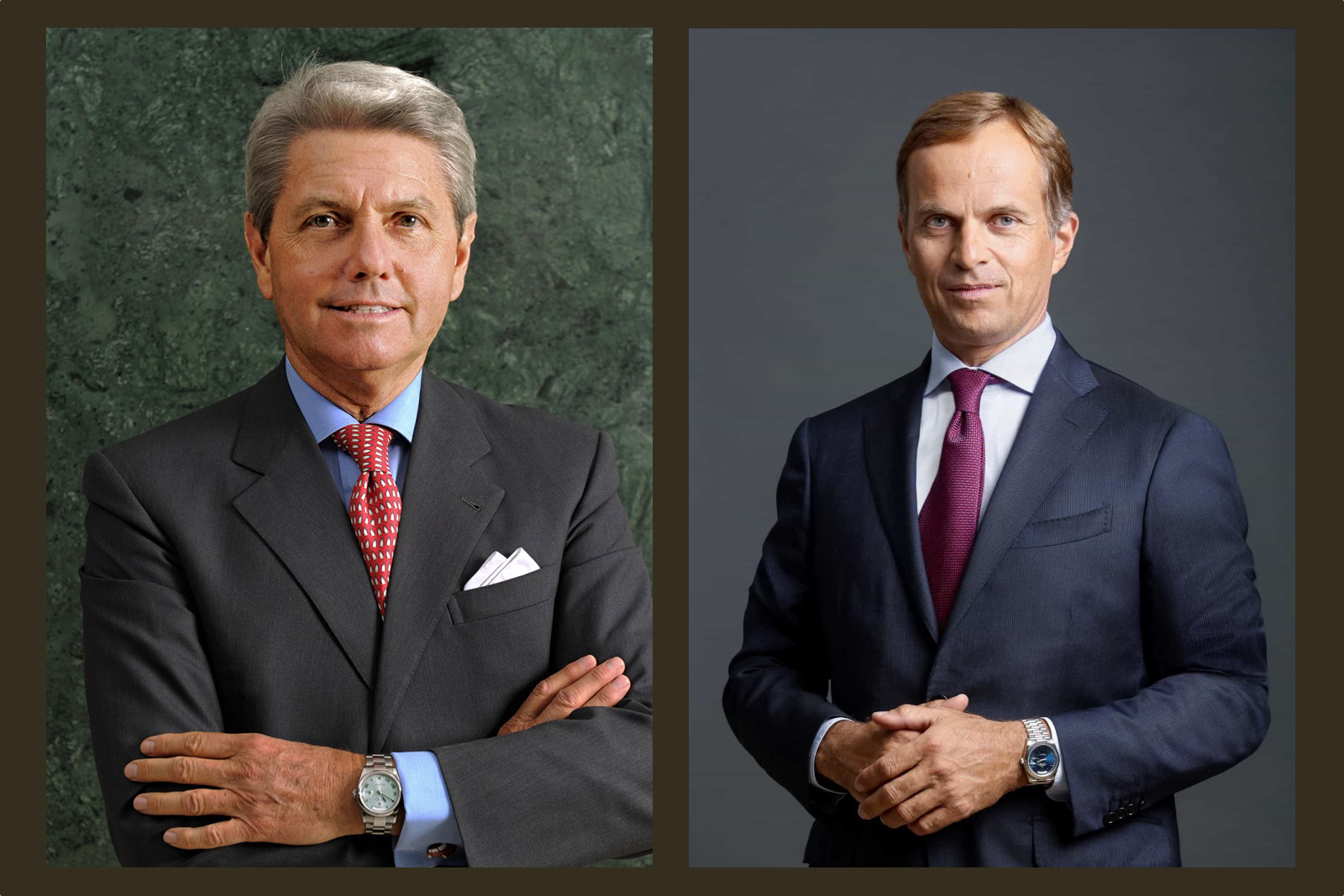
Rolex former and present President Gian Riccardo Marini and Jean-Frédéric Dufour. Image – Rolex
This era was shaped by a leadership model rooted in the Hans Wilsdorf Foundation. The company’s private ownership structure allowed it to navigate generational transition without pressure from investors or public shareholders. Under directors such as Gian Riccardo Marini and Jean-Frédéric Dufour, Rolex preserved its equilibrium. Every facet of brand voice, product rhythm, and institutional presence reflected the same philosophy that had guided earlier decades: discipline, permanence, and calibrated visibility.
A consolidation of iconography defined the catalogue. The Submariner, Daytona, GMT-Master II, and Datejust formed the symbolic core, each model clearly distinguished by design markers and cultural associations. Marketing materials placed these watches in precise thematic contexts, underscoring continuity in shape, name, and symbolism. Copy remained succinct and imagery remained consistent.
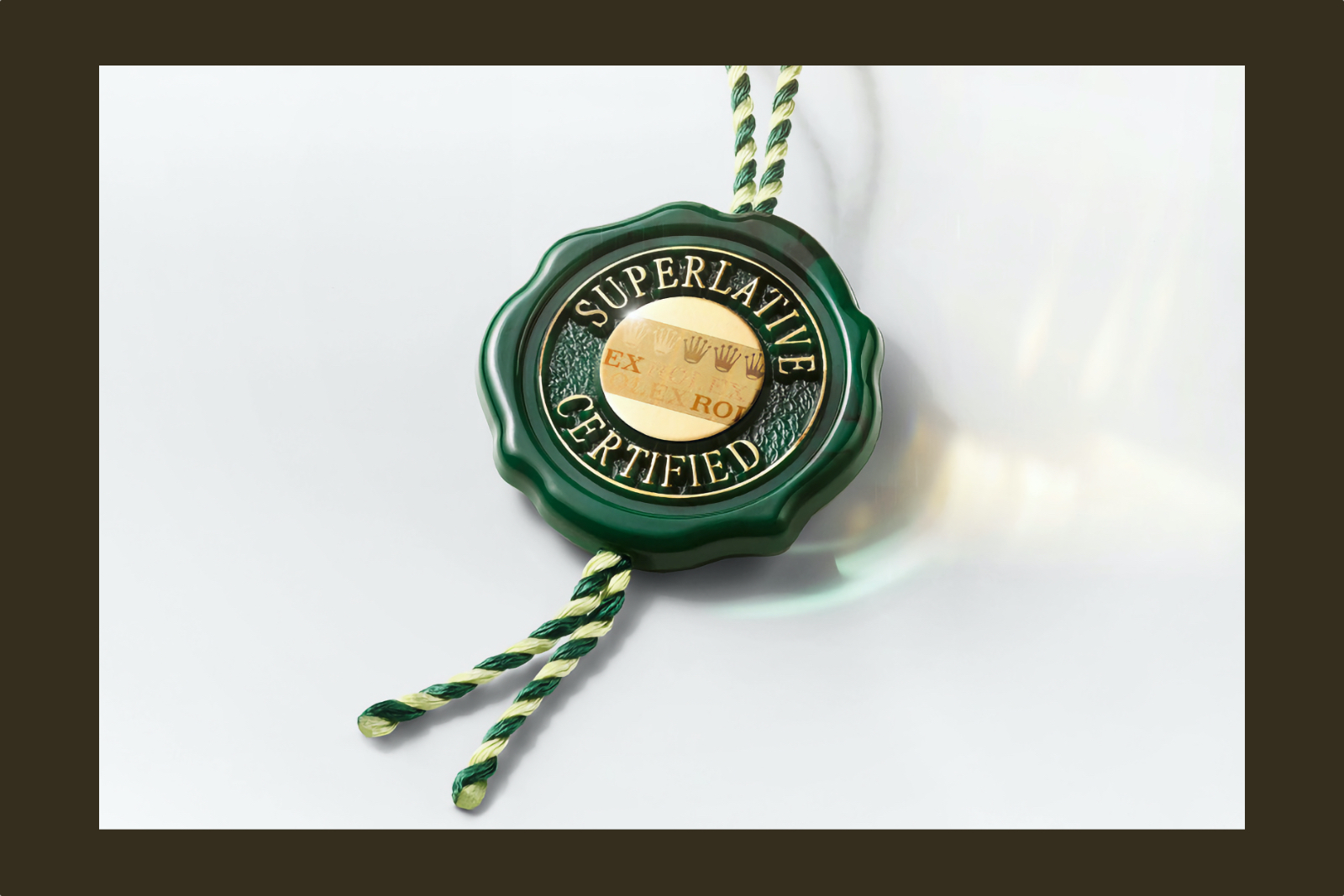
Superlative Certified, the ultimate Rolex guarantee of overall quality. Image – Rolex.
From 2020 onward, demand for Rolex watches grew significantly. A combination of supply chain constraints, pandemic-era production pauses, and increased digital exposure contributed to a global surge in interest. Rolex maintained its output strategy and continued to rely on authorised dealers. The waiting list became part of the customer experience, a ritual that shaped desire, framed access, and in a way, reinforced symbolic value.
The brand approached the moment with measured consistency. Marketing volumes remained steady, and Rolex sustained its core strategy: to communicate through institutions, objects, and calibrated presence. Sponsorships expanded in both depth and scope. Enduring associations with tennis, golf, yachting, and equestrianism continued to anchor the brand in established arenas of excellence. At the same time, new alignments in architecture, cinema, and science extended Rolex’s presence into evolving cultural spaces.
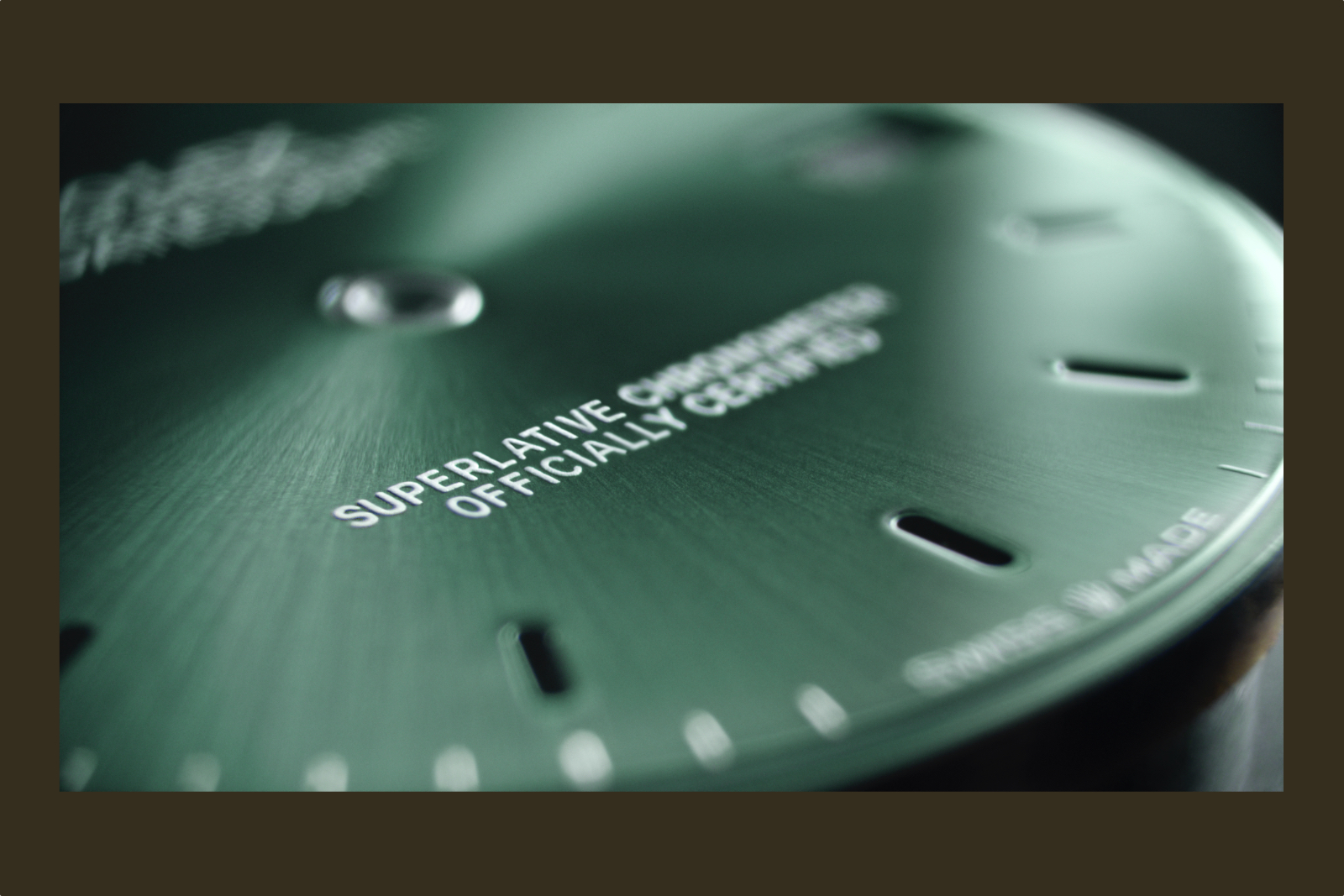
Rolex dial with the inscription “Superlative Chronometer – Officially Certified”. Image – Rolex.
Digital communications followed the same logic. Rolex adopted new platforms slowly and selectively. The website, product videos, and social media presence were all constructed to reflect the same visual symmetry and composure found in retail spaces and print campaigns.
By the 2020s, Rolex had reached a position of clarity rarely matched in luxury marketing. Public attention intensified, fueled by resale visibility, collecting culture, and third-party commentary, but the brand’s own posture remained composed. The Rolex watch continued to be presented as an instrument of discipline and a companion to human purpose. Design was held constant.
In a period marked by quick cycles and short-lived trends, Rolex treated continuity as its main source of strength.
Conclusion
The marketing history of Rolex shows a brand building its public face with care and patience. Over more than a century, Rolex has relied on clear messages, a tightly organised product range and long-standing links to people and institutions associated with achievement. Early claims about precision set the pattern. Later, sponsorships, long-term partnerships and a recognisable visual language carried that pattern into sport, exploration, the arts and civic life so that the watch, the message and the setting reinforced one another.
Model names, catalogue layouts, showroom design and advertising all fed into the same structure. A Rolex came to stand for a certain kind of personal milestone, a promotion, a crossing, a record, an award. The brand turned these moments into a stable framework of meaning by showing its watches in similar ways, year after year, across different countries and media.
As Rolex moves through its second century, its communication still follows this logic. The tone remains even, the imagery familiar, the emphasis on accuracy and reliability as strong in the language as it is in the mechanics. The result is a brand that feels less like a series of campaigns and more like an ongoing conversation carried forward in a consistent voice.
Back to top.