
Breguet’s Magnificent Magnetic Expérimentale 1
The most advanced chronometer yet.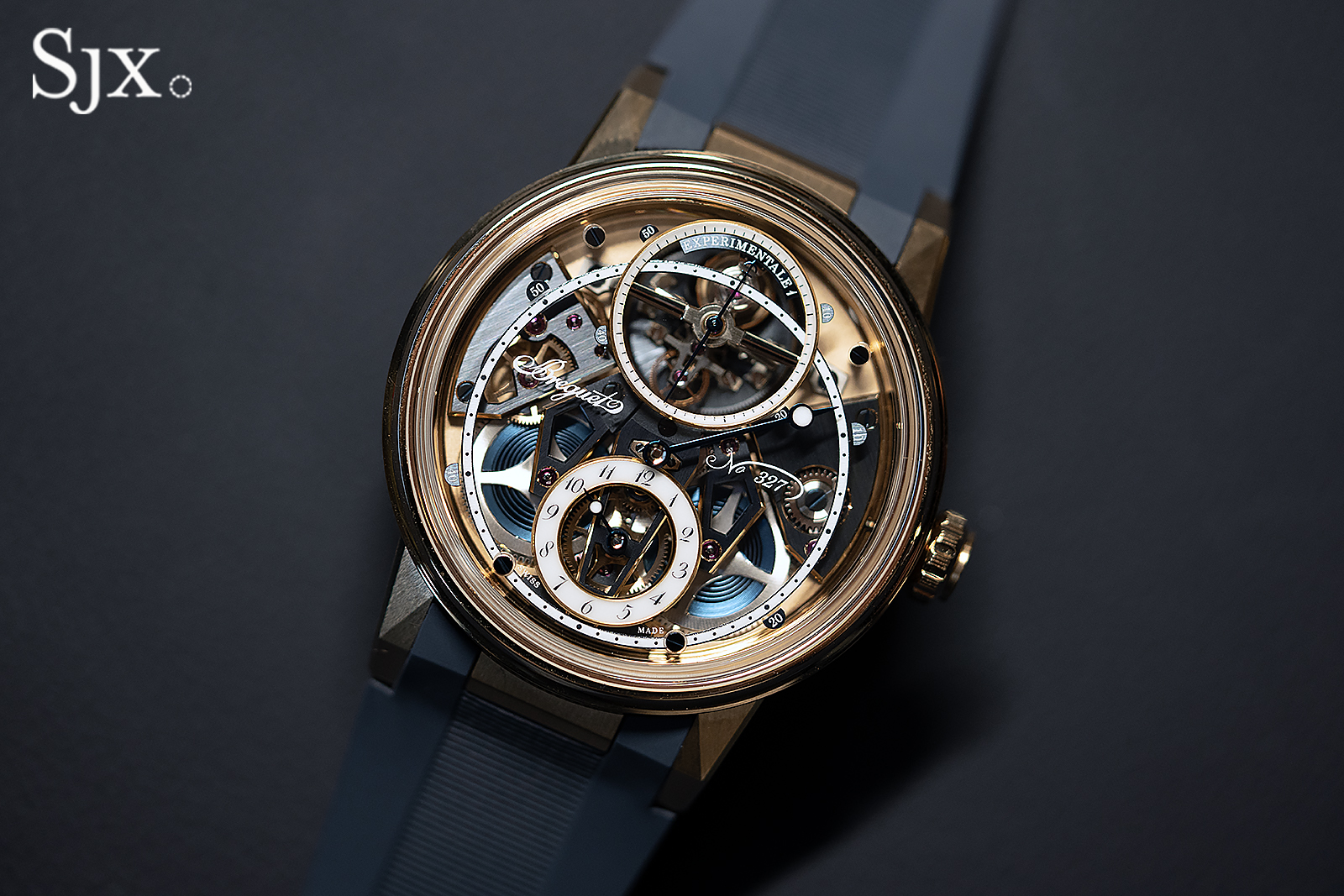
Breguet concludes its 250th anniversary with the brand’s most forward-thinking watch, the Expérimentale 1 that boasts a magnetic, true constant force escapement. Equipped with a frictionless escape wheel and pallet lever driven by magnetic forces, the movement runs at 72,000 beats per hour, or 10 Hz – arguably making the Expérimentale 1 the ultimate Breguet chronometer.
Impressively innovative with its use of silicon, magnets, and clever teeth geometry, the limited edition watch also marks the start of the Expérimentale line, a collection that will serve as a platform to debut new complications, technology, and designs.

Initial thoughts
While some might have been expecting an updated Sympathique, Breguet instead surprised with perhaps the most advanced wrist-borne mechanical chronometer in modern watchmaking.
Taking cues from Abraham-Louis Breguet’s own “constant force” escapements, Breguet today harnessed the power of permanent magnets and unique teeth geometry to built a genuinely friction-less, constant torque escapement. In fact, the new escapement appears to be the only truly frictionless and constant force escapement on the market today.
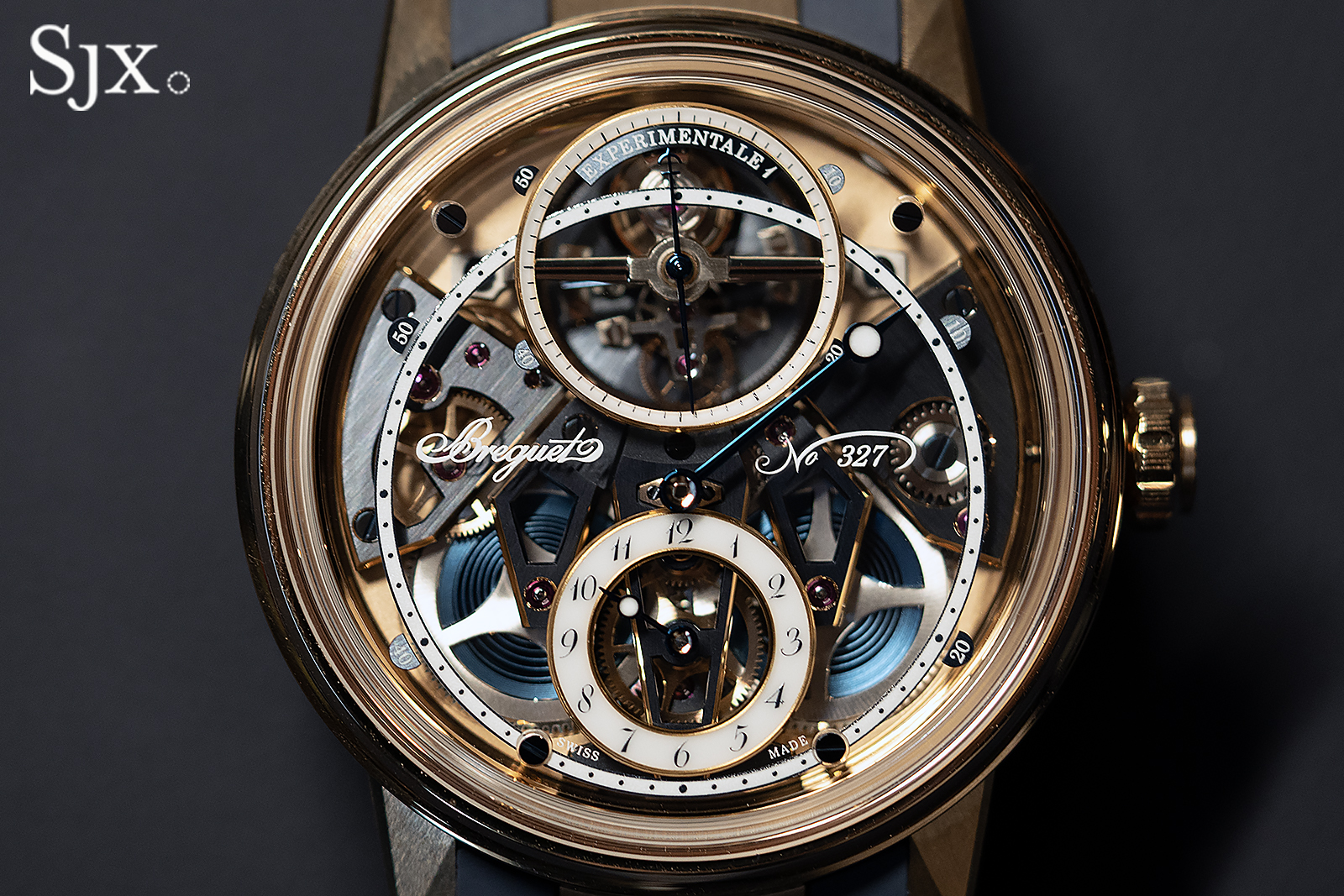
Magnets have been employed in escapements in the past, but this approach was historically unreliable. Breguet appears to have discovered the right formula for a magnetic escapement.
Several functioning prototypes were on show at the launch event. Moreover, Breguet chief executive Gregory Kissling explained that the magnetic escapement was developed over a decade ago, and has been extensively tested in the years since. If this constant force tourbillon works reliably at scale, while delivering on the promised level of accuracy, again at scale, then the future of mechanic chronometry is bright.
Notably, the Expérimentale 1 is an entirely new watch, from movement to case to dial. While the preceding anniversary watches primarily evolved from existing models, the Expérimentale 1 was developed from scratch. In fact, Mr Kissling says a mere three components of the movement are shared with other Breguet calibres, with the rest being unique to the Expérimentale 1.
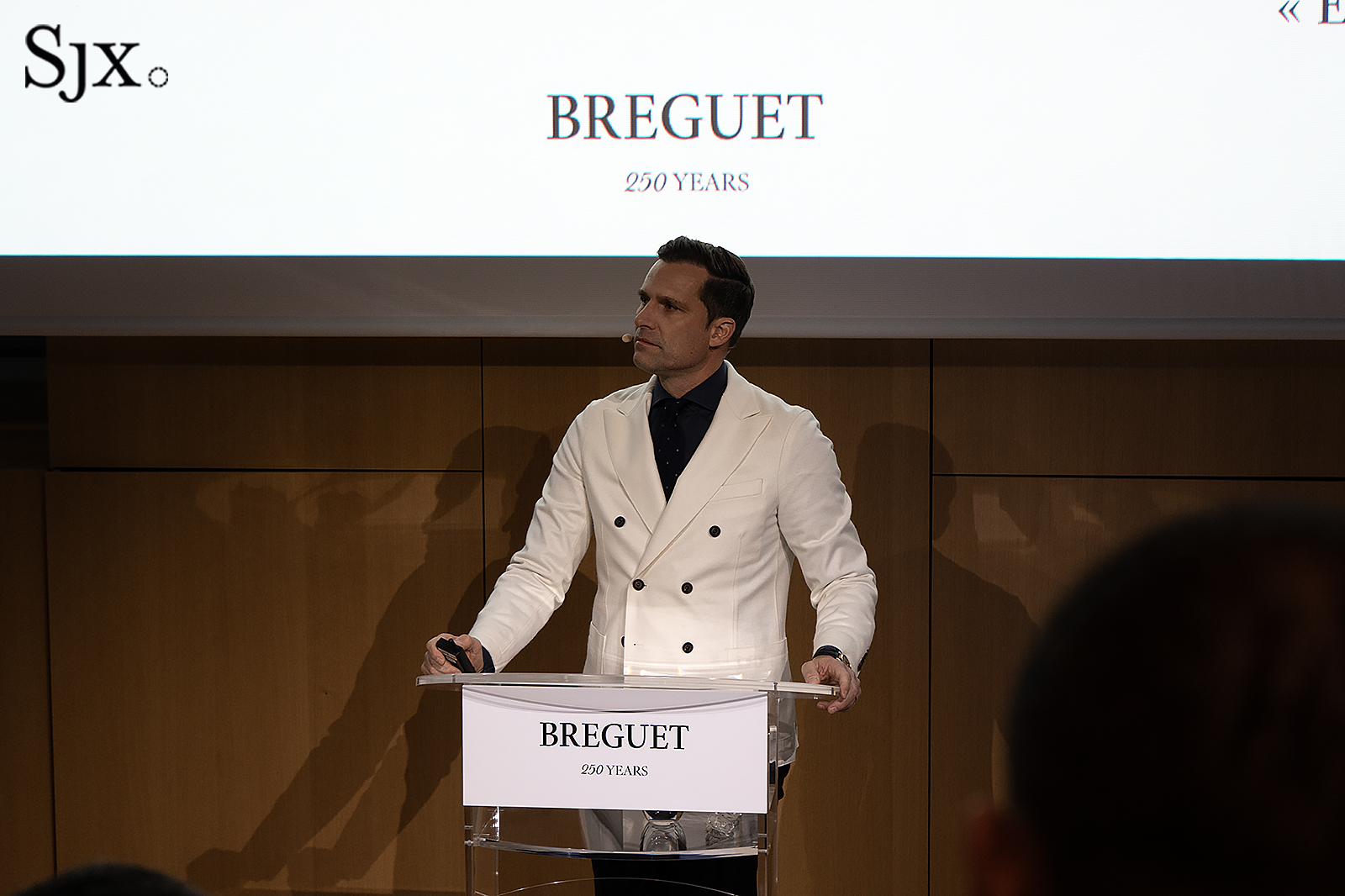
Gregory Kissling launching the Expérimentale 1
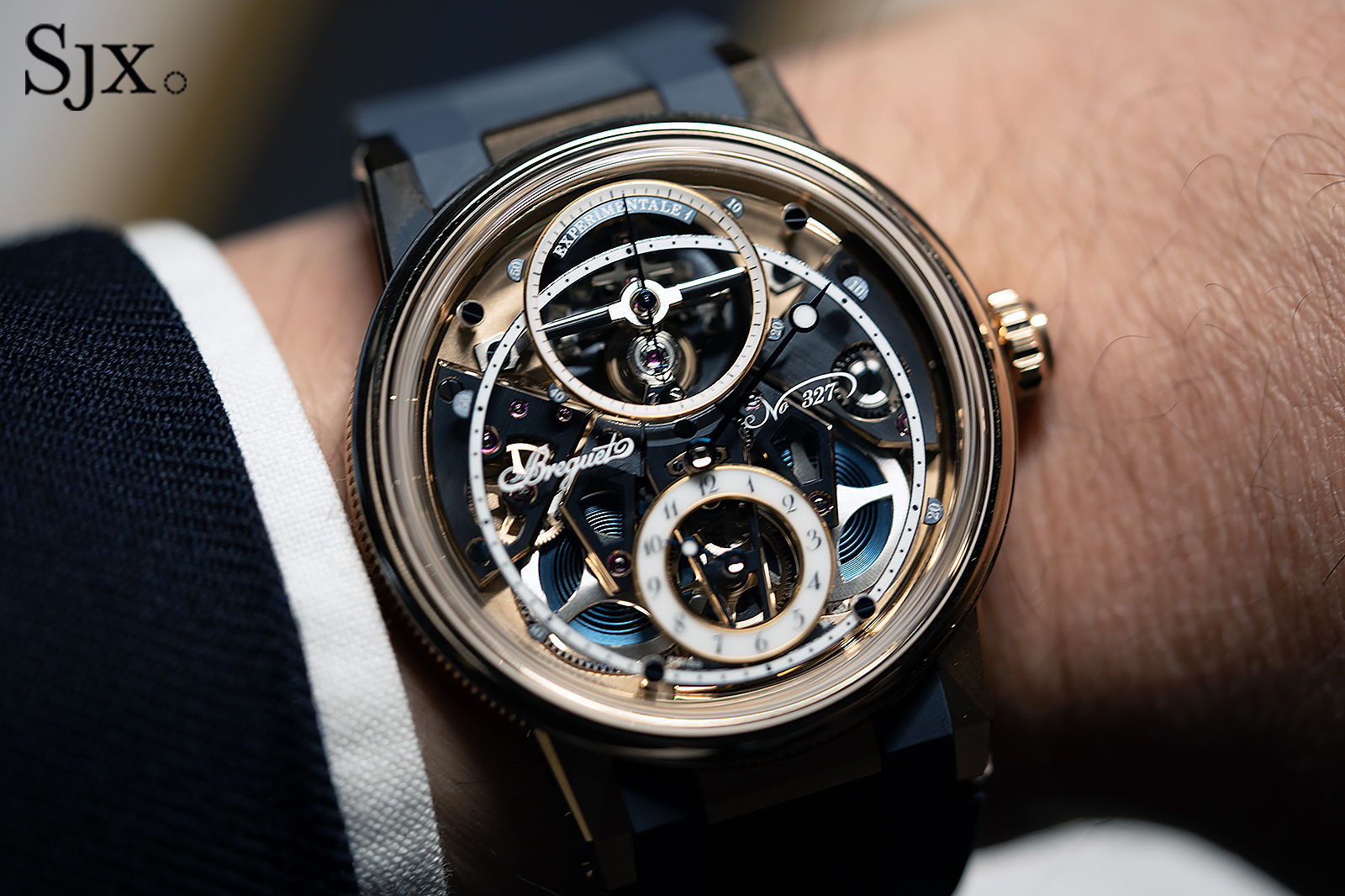
Style wise, the Expérimentale 1 much more contemporary than the preceding 250th anniversary launches. It is housed in a futuristic Marine case, with a movement that is heavily open worked and visible through a sapphire dial.
While the angular, modern design is perhaps too aggressive for a Breguet, the technical merits of the Expérimentale 1 go beyond its aesthetic sensibility; its appeal and strength is intrinsic in the movement and innovation.
Despite the modern styling, the basis of the design is historical. The regulator layout traces its lineage to the marine chronometer pocket watch no. 3448 that was sold to astronomer Alexis Bouvard in 1820.
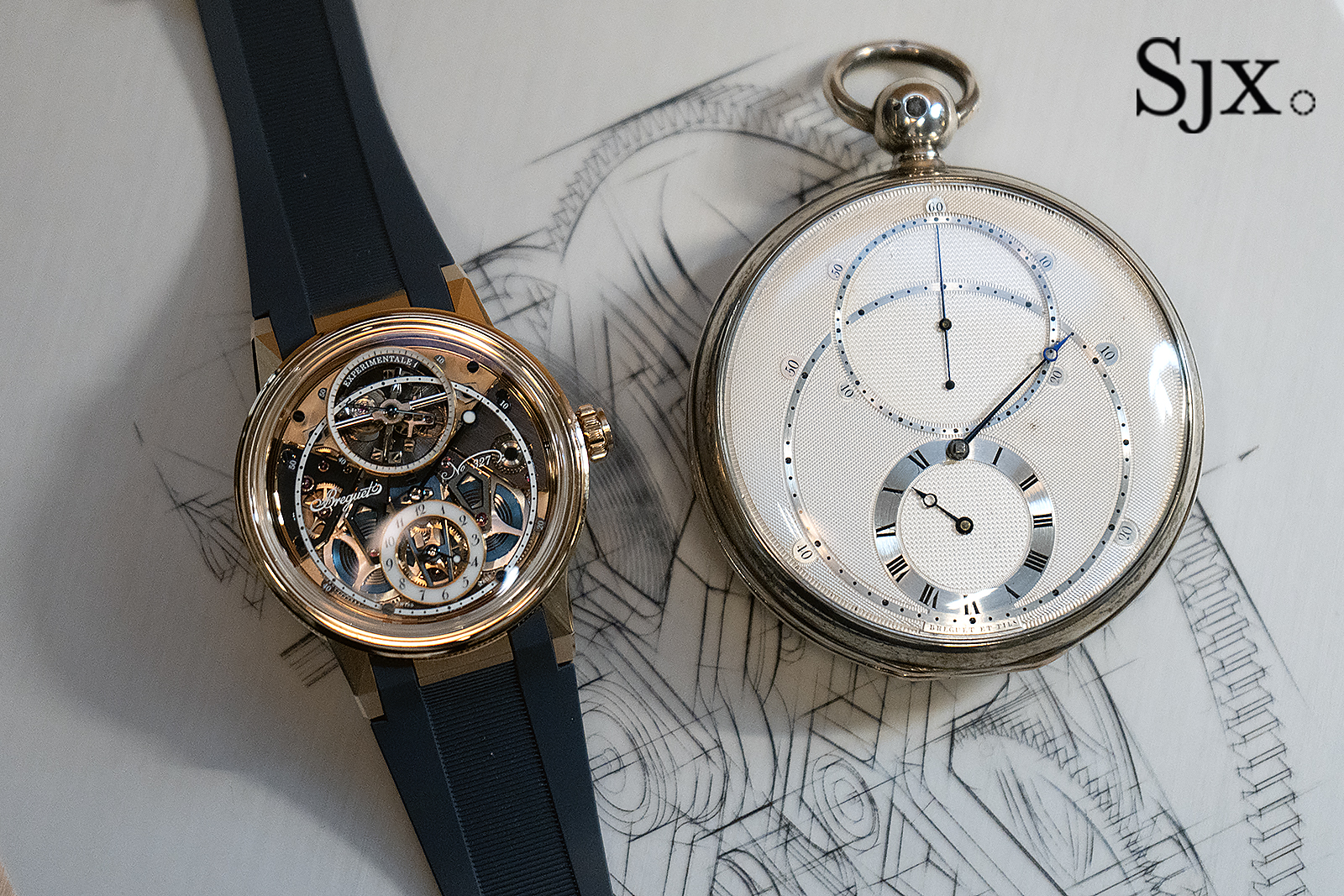
The Expérimentale 1 with pocket watch no. 3448
This historical inspiration hints at the chronometry-focused, scientific direction of the Expérimentale collection, which will be heavy on fundamental research according to Mr Kissling. Simultaneously, it also reflects the renewed emphasis on Breguet’s grand history as perhaps the most storied watchmaker of them all.
The launch of a scientific-oriented collection is surprising, but welcome giving the inventive nature of A.-L. Breguet himself. The Expérimentale’s echoes A.-L. Breguet’s approach to watchmaking and innovation in many respects, and underlines the surprisingly sudden and rapid rejuvenation of the brand under Mr Kissling’s stewardship.
The magnet in the room
The 10 Hz oscillator in the Classique 7225 is familiar, and the tourbillon even more so, but a magnetic constant force escapement is genuinely novel. In a nutshell, it’s an escapement that is constant force because it is magnetic.
Constant force refers to a device’s ability to transmit a consistent level of torque supply to the oscillator even as the mainspring’s power gradually depletes. Such devices are also known as remontoirs, serving as a recharging buffer between the mainspring and escapement.
A constant force escapement, however, is much rarer. Such an escapement is required to impart constant impulse to the oscillator directly, instead of a remontoir mounted upstream on the going train.
Pendulum gravity escapements are a sort of constant force escapements, relying on the gravitational potential energy to provide constant impulse. The Girard Perregaux Neo Constant Escapement is another example, but paired to a sprung balance and taking advantage of elastic potential energy within buckling silicon blades.
Breguet’s take on the constant force escapement makes use of magnets to transmit both constant and frictionless impulse, making it an exceptionally accomplished invention in the horological context, since both energy transmission and friction are perennial challenges in watchmaking. More than that, Breguet sought to counter accuracy defects stemming from all possible sources, ranging from gravity to magnetism, in conceiving the Expérimentale 1.
The seemingly perfect solution: a 10 Hz balance to resist shock and acceleration, a tourbillon to rotate the balance through all vertical positions and nullify the biasing effects of gravity, and finally a frictionless, constant force escapement driven by magnets to ensure the oscillator vibrates at equal amplitude regardless of available barrel torque.
While the full functioning of this escapement (and the Expérimentale 1 as a whole) will be the subject of a more in-depth story, the gist of the device is simple but subtle genius. The trick lies in the fact that both the escape wheel and lever only engage through permanent magnets. While reminiscent of the Swiss lever, the Breguet magnetic escapement works very differently and does not directly rely on the mainspring torque to impulse the balance.
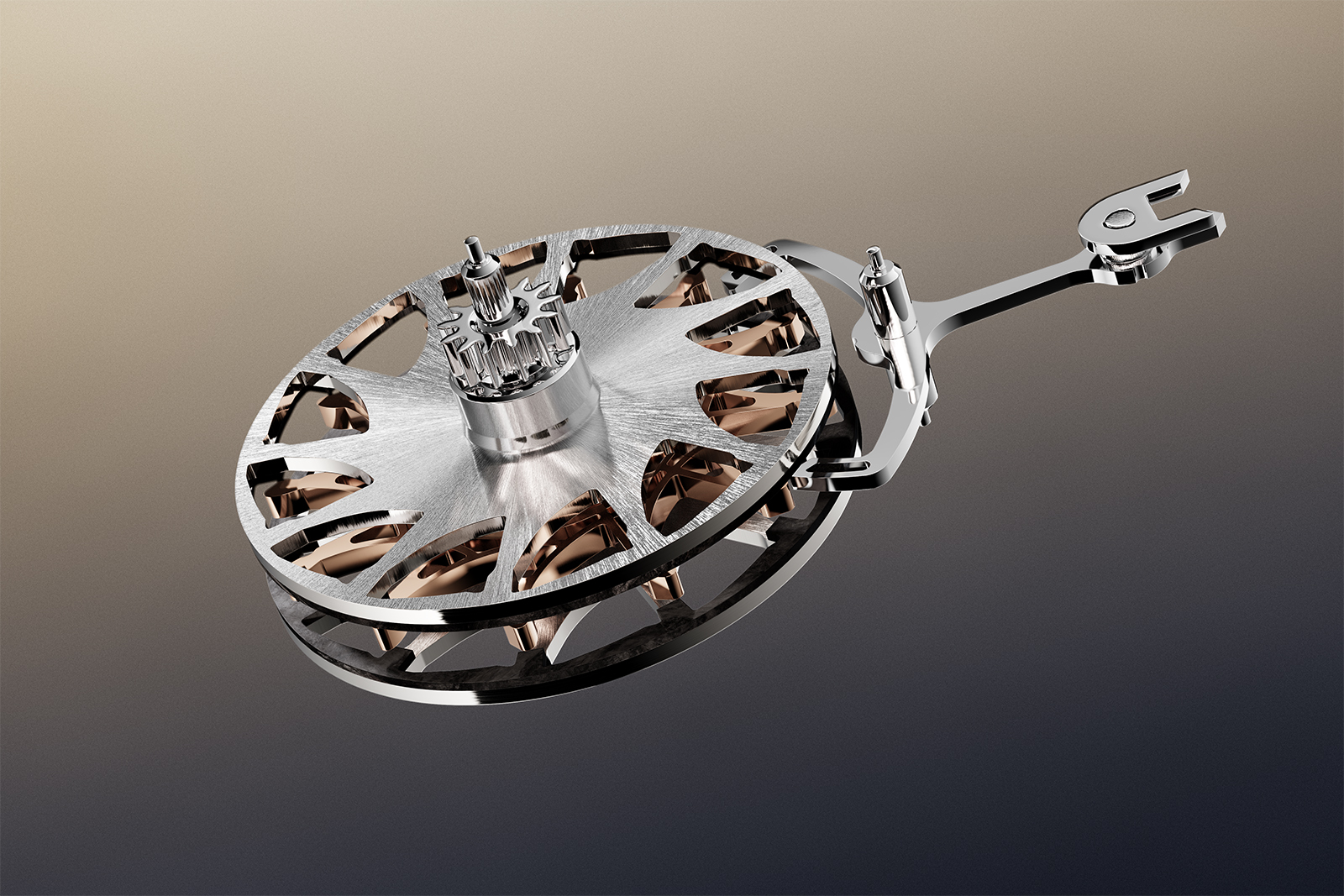
The double level magnetic escape wheel assembly and the impulse lever. Image – Breguet
The balance is impulsed by the lever in a traditional fork-pin fashion, while the lever itself is pushed just by opposing magnetic fields; the escapement advantageously exploits the predictable and constant interaction between magnetic fields and potentials.
The subtleties of the full escapement cycle are nuanced, but the important observation here is the impulse is imparted while the escape wheel remains stationary — thus liberating the impulse from the mainspring torque.
The escape wheel only turns after the impulse phase is done, along with the wide tourbillon platform. In classic iterations the revolving cage can itself influence the strength of the impulse if there are any slight imbalances in its construction. The rotation of the cage, much like the mainspring torque, has no effect on the impulse reaching the regulator.
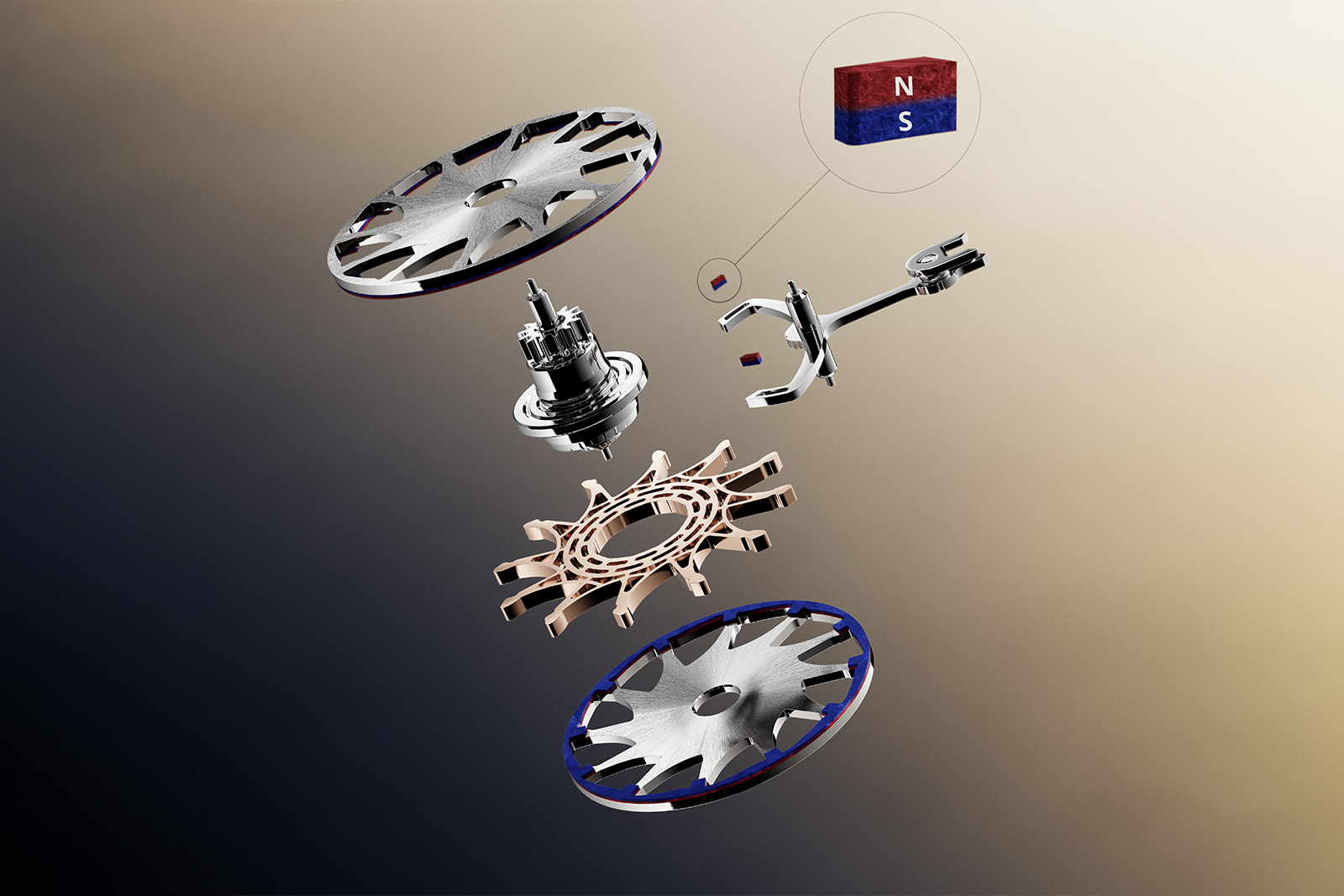
Exploded view the magnetic escapement assembly. Image – Breguet
Equally important is the contactless action of the escape wheel against the lever, with both pushing each other away only through the respective magnets’ opposing fields; there is no metal-to-metal engagement except in the event of an extreme shock.
The free-sprung balance has a small diameter (due to its extremely high 10 Hz frequency), and built to be fully impervious to magnetic influence. The hairspring is etched from silicon and features an optimised geometry. The balance is made from titanium and the arbour is made from another non-magnetic alloy.

The tourbillon assembly. Image – Breguet
Unlike in the Classique 7226, the fast-beating oscillator is not supported by magnetic pivots, but rather by traditional jewels. Due to the intricate escapement construction, the balance’s axis doesn’t coincide with the tourbillon’s revolving axis, making for the off-centred regulator inside the 74-component cage assembly. However, this is still a tourbillon construction and not a carrousel.
Calibre 7250
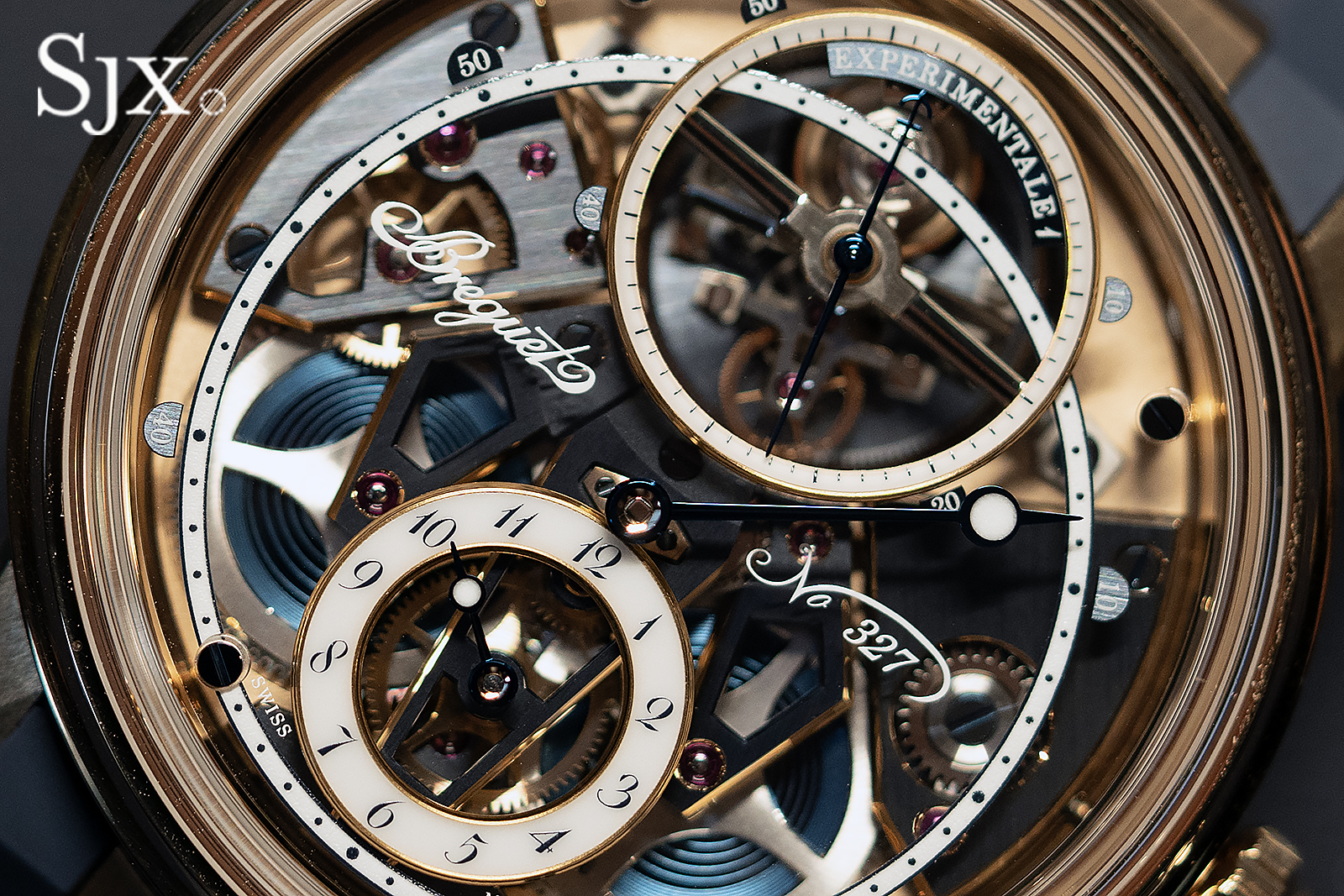
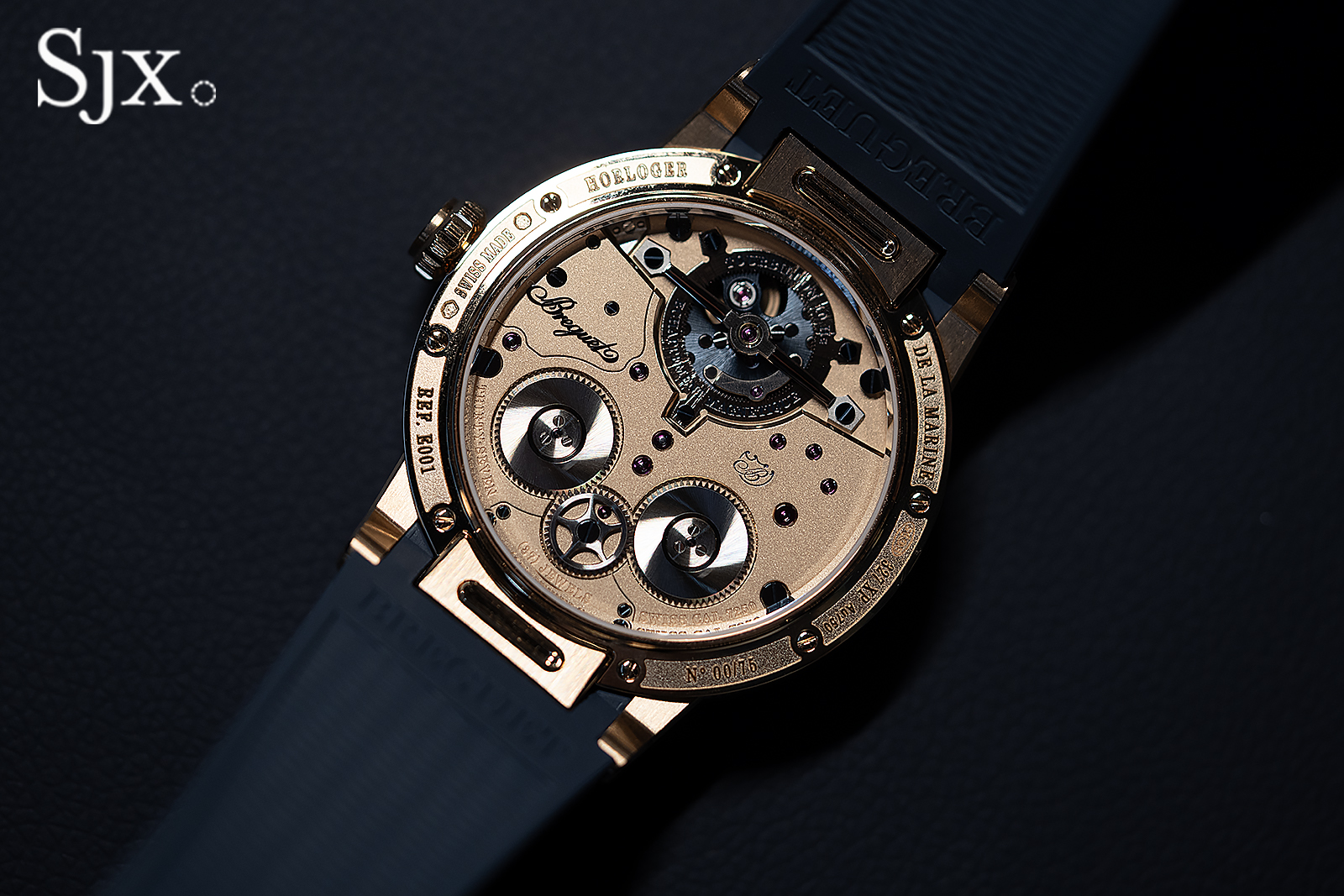
The cal. 7250 is built around the magnetic escapement, and puts newest invention front and centre, with a large tourbillon cage visible at 12 o’clock. And the other complication is the regulator-style time display.
Visually, the cal. 7250 is modern, though the architecture remains true to the French-style watchmaking used by modern-day Breguet.
The cage and bridges of the tourbillon are blued, serving as a neutral background for the intricate magnetic escapement. The main plate and bridges are sculpted from 18k Breguet gold, while some components featuring a blue atomic layer deposition (ALD) coating for contrast and aesthetics. Blue is a recurring colour in Breguet’s anniversary watches.
Most of the movement’s core components are visible on the dial — the dual mainspring, going train, and the tourbillon. Interestingly, the barrels are open-worked to reveal the mainsprings through the dial. According to Mr Kissling, this was done to create a power reserve indicator of sorts, since the coils of the mainspring reveal the state of wind.
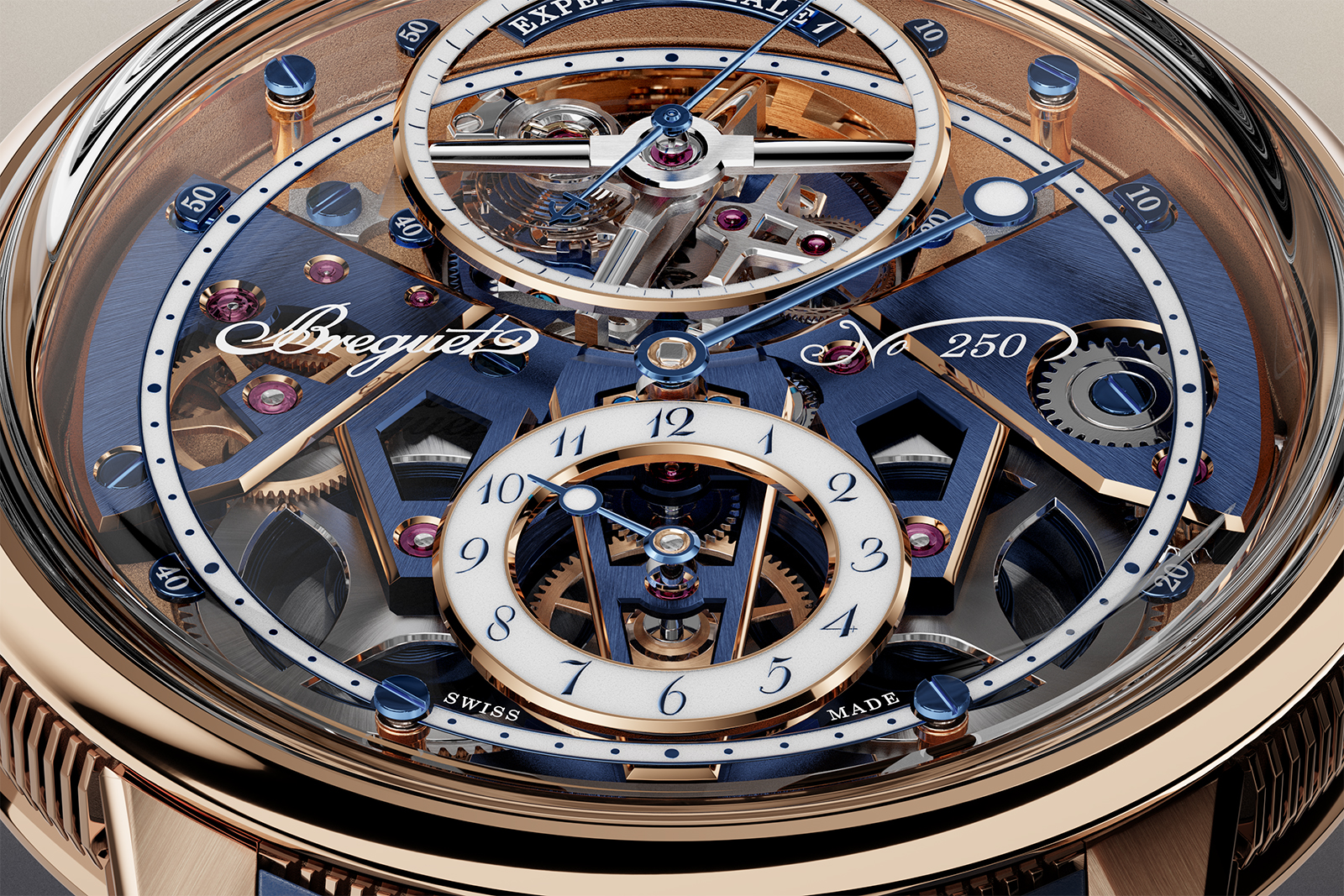
The open-worked dial. Image – Breguet
The barrels themselves are particularly interesting. As is convention, the barrels are coupled in series to extend the power reserve. But each barrel contains two stacked mainsprings that unwind in parallel, which is equivalent to having two barrels linked in parallel.
In other words, the cal. 7250 runs on two pairs of parallel mainsprings, themselves coupled in series. This elaborate setup accounts for the 72 hour power reserve, which might not seem like much for four mainsprings, but surprisingly lengthy for a 10 Hz tourbillon regulator which is both heavy and energy intensive.
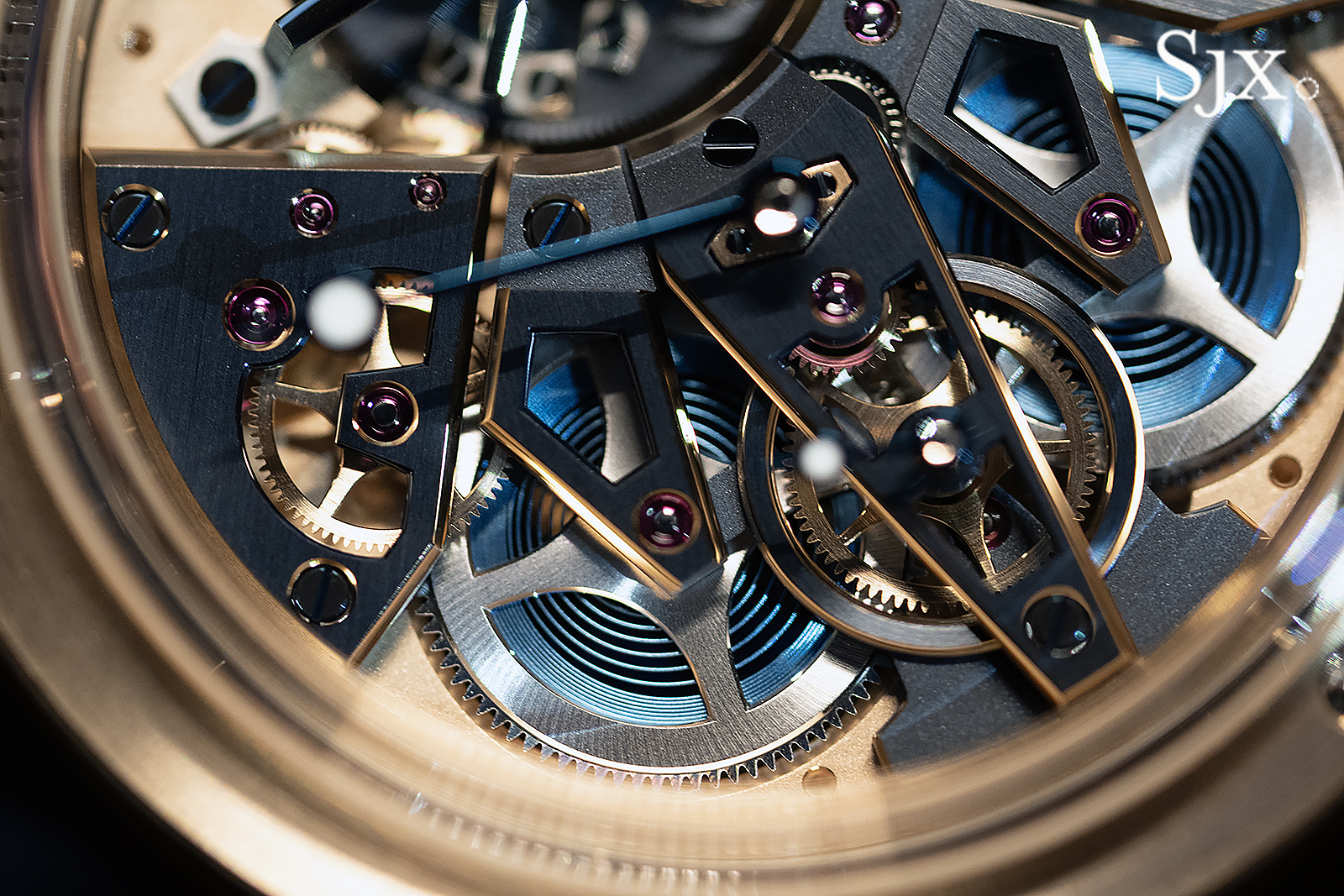
The finishing is true to Breguet’s high standards, with most of it done by hand according to Mr Kissling. One of the most tedious aspects of the decoration, says Mr Kissling, is the bevelling on the blue-coated bridges.
The bridges are first coated blue with ALD, then the bevels are stripped of blue coating by hand, and then mirror polished, again by hand. Removing the blue coating precisely, without damaging the top surface, was one of the most difficult aspects of realising the Expérimentale 1.

Image – Breguet
This powerhouse of a movement is housed inside a 43.5 mm Breguet gold case that is based on past generations of the Marine, explaining the unusual “triple” lugs. The case reconciles angular and circular forms, giving it a modern, yet somewhat soft profile. Though relatively large, the case is slim and wears well due to the downward sloping lugs.
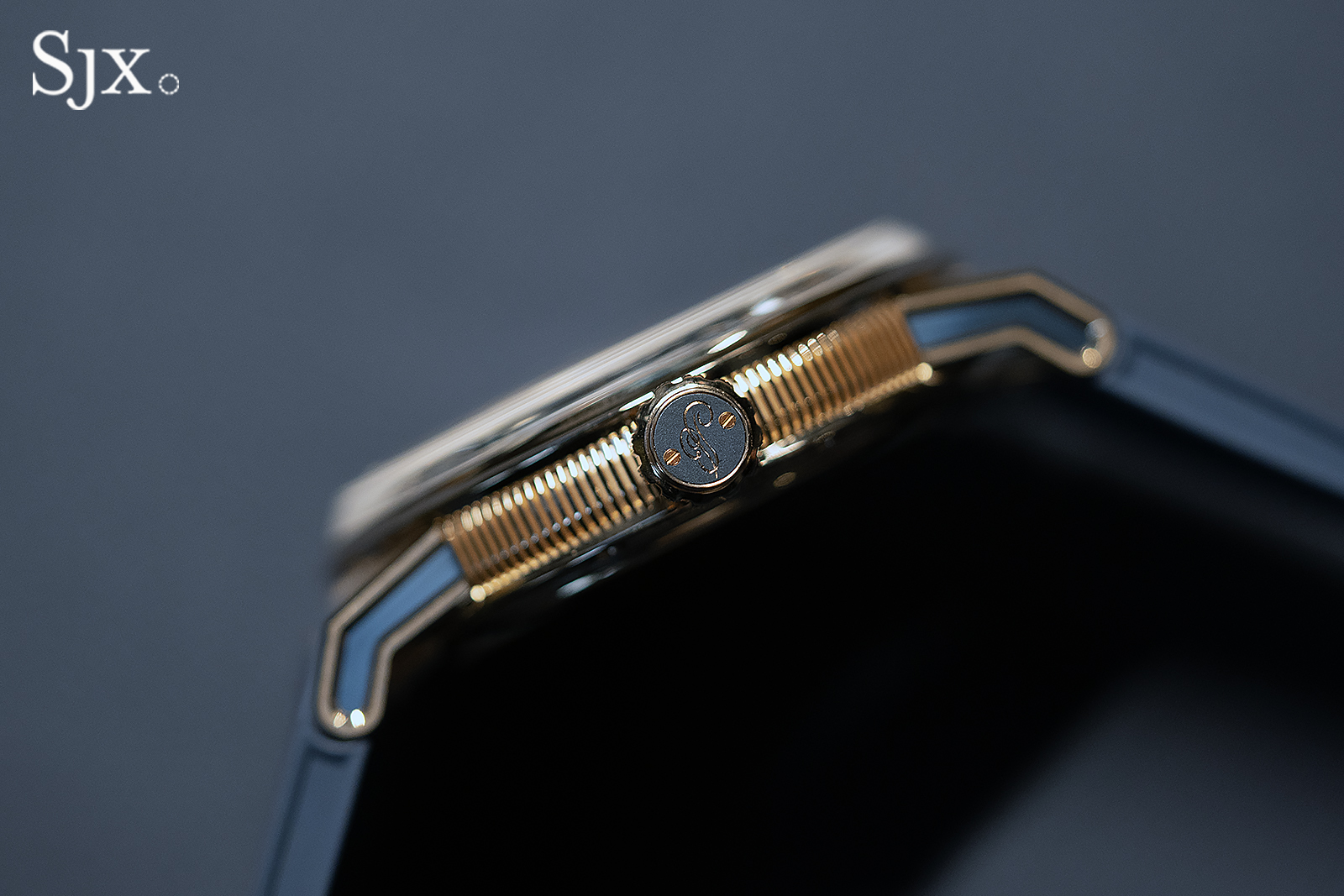
Like the Classique 7225, the Expérimentale 1 carries the Breguet hallmark, specifically certified in the “Scientific” category that guarantees a +/- 1 second accuracy per day, a concrete testament to the movement’s timekeeping ability.

Image – Breguet
Key facts and price
Breguet Expérimentale 1
Ref. E001BH/S9/5ZV
Diameter: 43.5 mm
Height: 13.3 mm
Material: 18k “Breguet” gold
Crystal: Sapphire
Water resistance: 100 m
Movement: Cal. 7250
Functions: Regulator Hours, minutes, seconds, tourbillon with magnetic escapement
Winding: Manual wind
Frequency: 72,000 beats per hour (10 Hz)
Power reserve: 72 hours
Strap: Blue rubber with proprietary interchangeability system
Limited edition: 75 pieces, produced over more than two years
Availability: At Breguet boutiques and retailers
Price: CHF320,000 including tax
For more information, visit Breguet.com.
Back to top.