
Seiko’s New Marinemaster Gives the People What They Want
Upgraded across the board.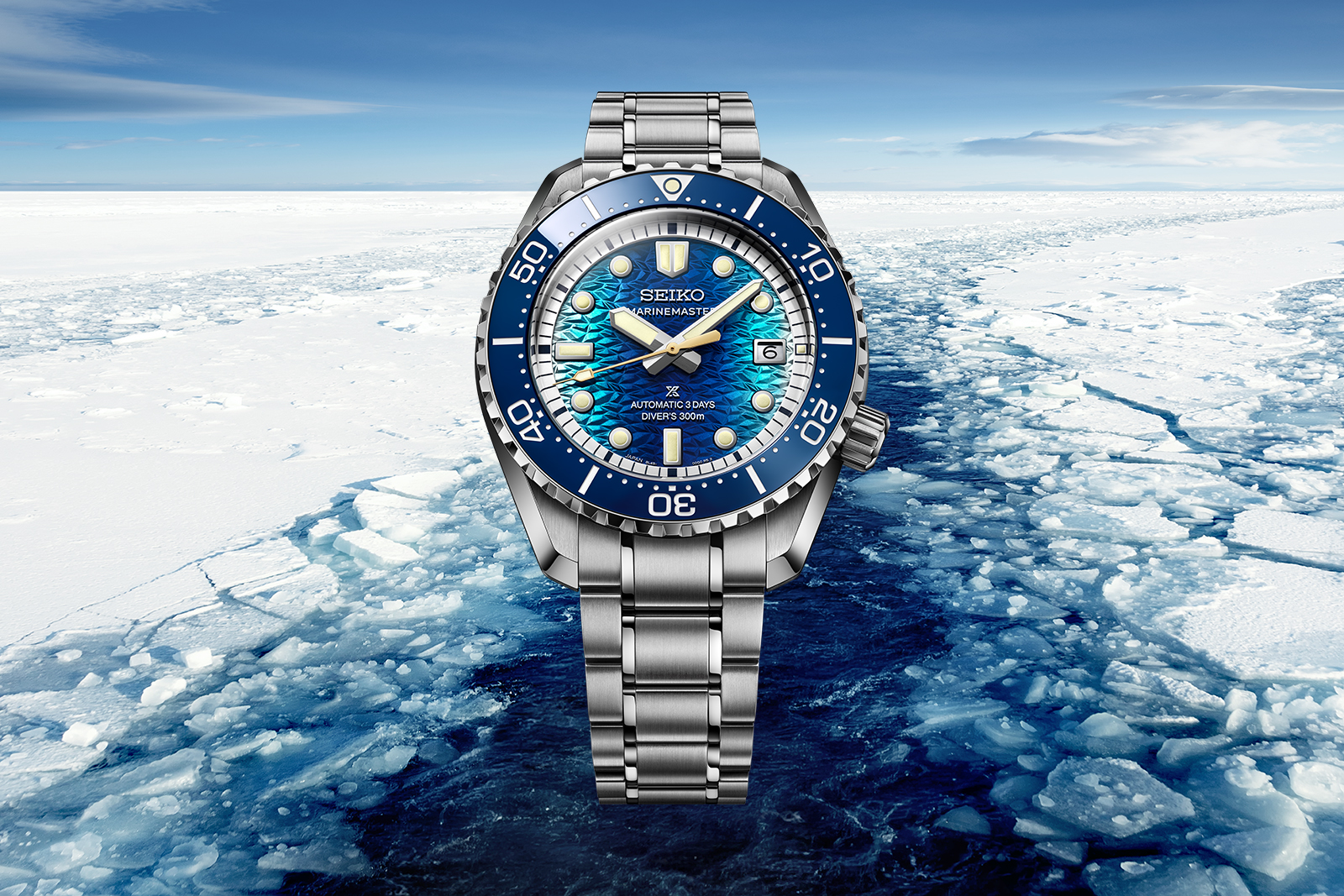
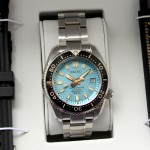
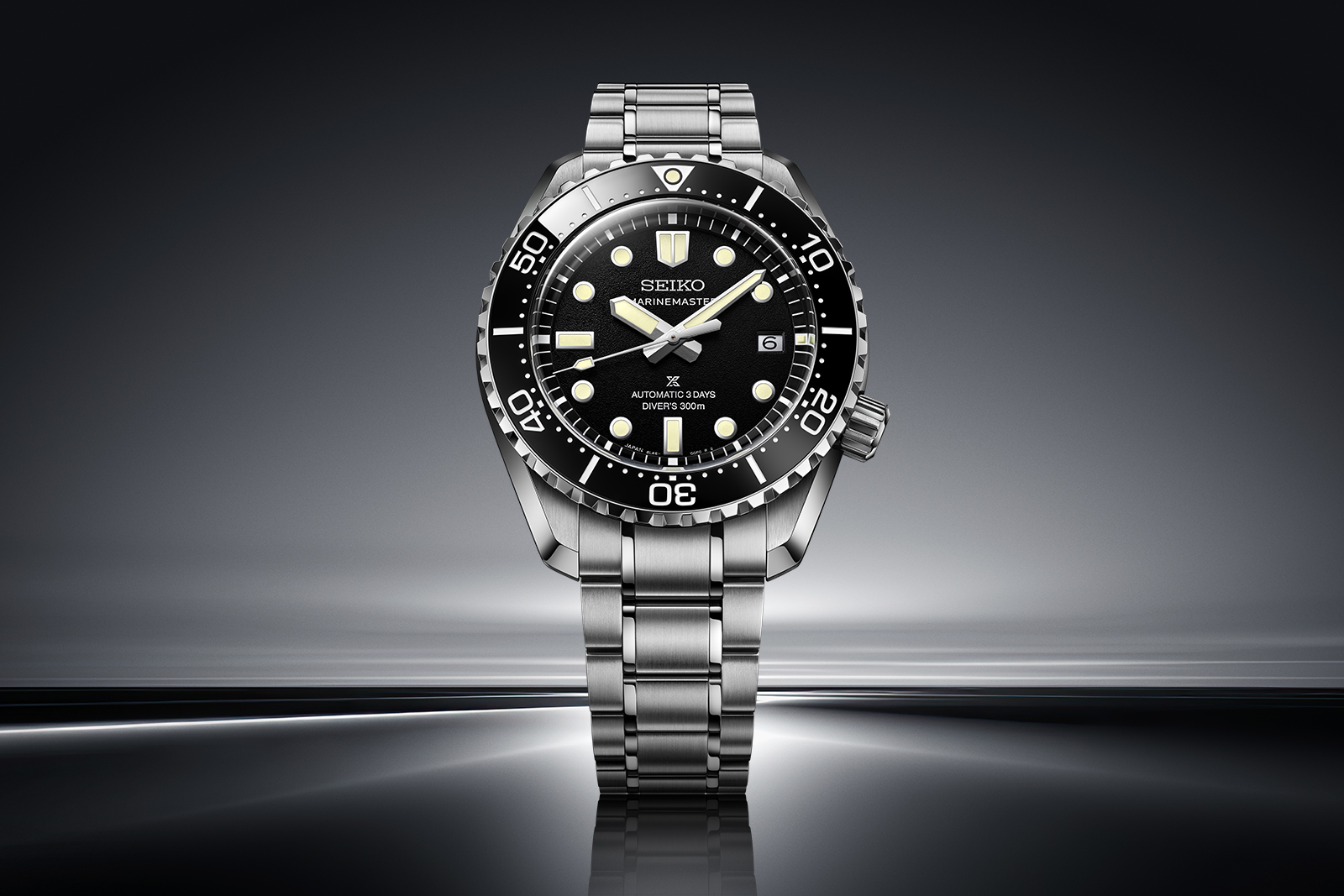
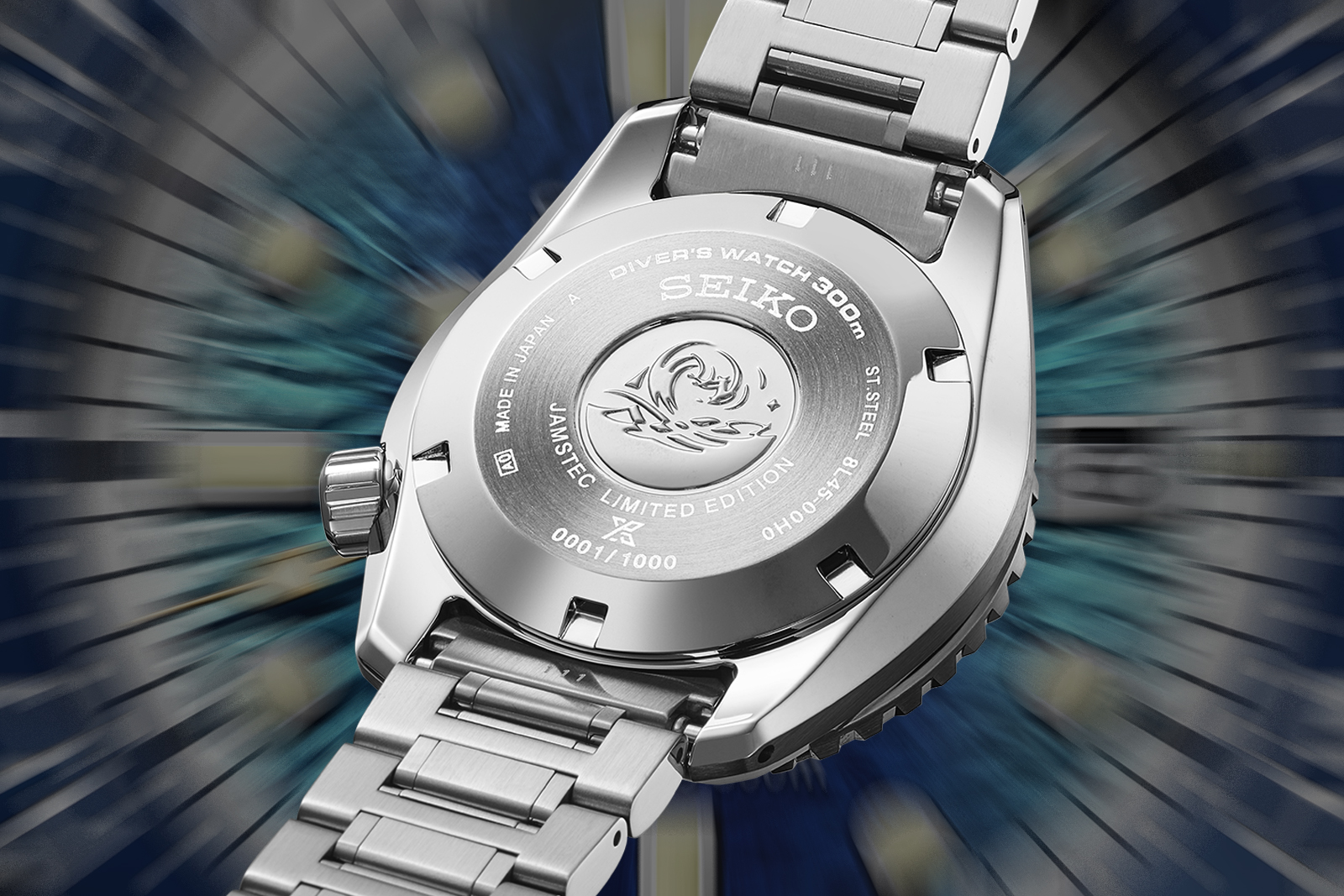
Less than two years out from its 2024 relaunch, Seiko refreshes its flagship dive watch with the new Prospex Marinemaster 1968 Heritage Diver’s Watch HBF001 and its limited edition counterpart, the HBF002. Both models feature a ceramic bezel, longer power reserve, better promised timekeeping, and a much-requested tool-less micro-adjust clasp — tangible upgrades that justify a near 25% premium over the previous generation. The regular production model launches alongside a more flamboyant 1,000-piece limited edition designed in collaboration with the Japan Agency for Marine-Earth Science and Technology (JAMSTEC).
Initial thoughts
Seiko relaunched the Marinemaster brand three years ago with an unexpected trio of compact skin-divers. This was followed by a return to form the following year with a pair of 300 m Hi-Beat Diver-inspired models that dispensed with the “Professional” branding, front-loading case construction, and helium impermeability that distinguished Marinemasters of the past, but offered a more compact 42 mm size and a much improved bracelet.
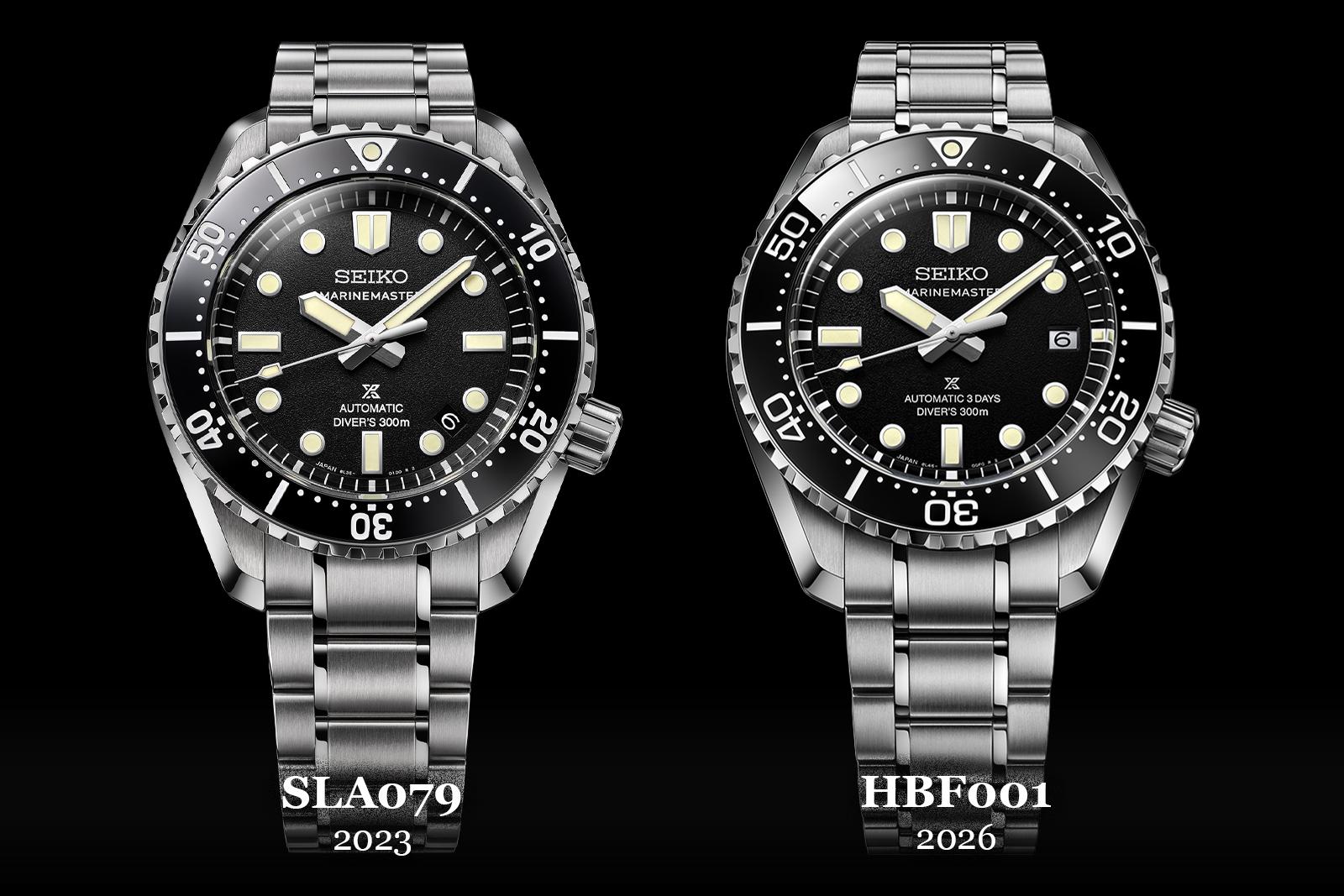
However, it still used the same stamped clasp body found on entry-level divers, just with an upgraded swing arm, and relied on the aging cal. 8L35 movement while Seiko rolled out the improved cal. 8L45 in the similarly priced King Seiko Vanac. The new HBF001 solves all of those problems, and introduces only a few new ones. Given the similarity to the SLA079, Seiko clearly felt the need for unambiguous differentiation, which probably explains the “3 days” text on the dial, though getting rid of the unnecessary Prospex logo would also have done the trick. But fortunately, the crown is spared the unsightly laser-engraved “X”.
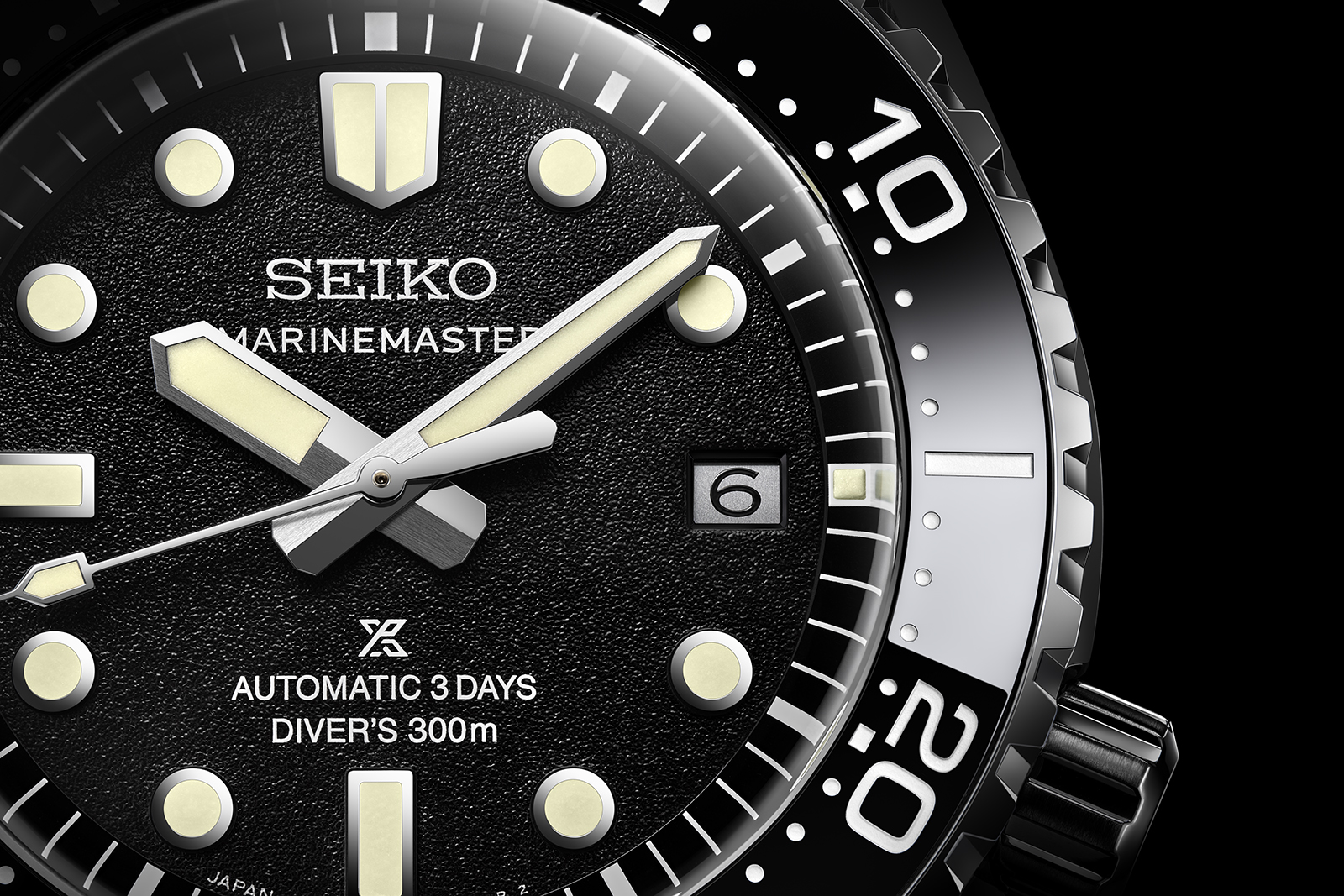
At US$3,600, the regular production variant is a strong contender for the best diver in its price segment, coming in nearly $1,000 under the least-expensive Tudor Black Bay. Perhaps it is even too good, raising the bar for Seiko divers and closing the gap with Grand Seiko’s only current dive watch, the SBGH289. At any rate, the HBF001 proves Seiko is listening to its customers, even if it sometimes seems slow to act.
Case and face
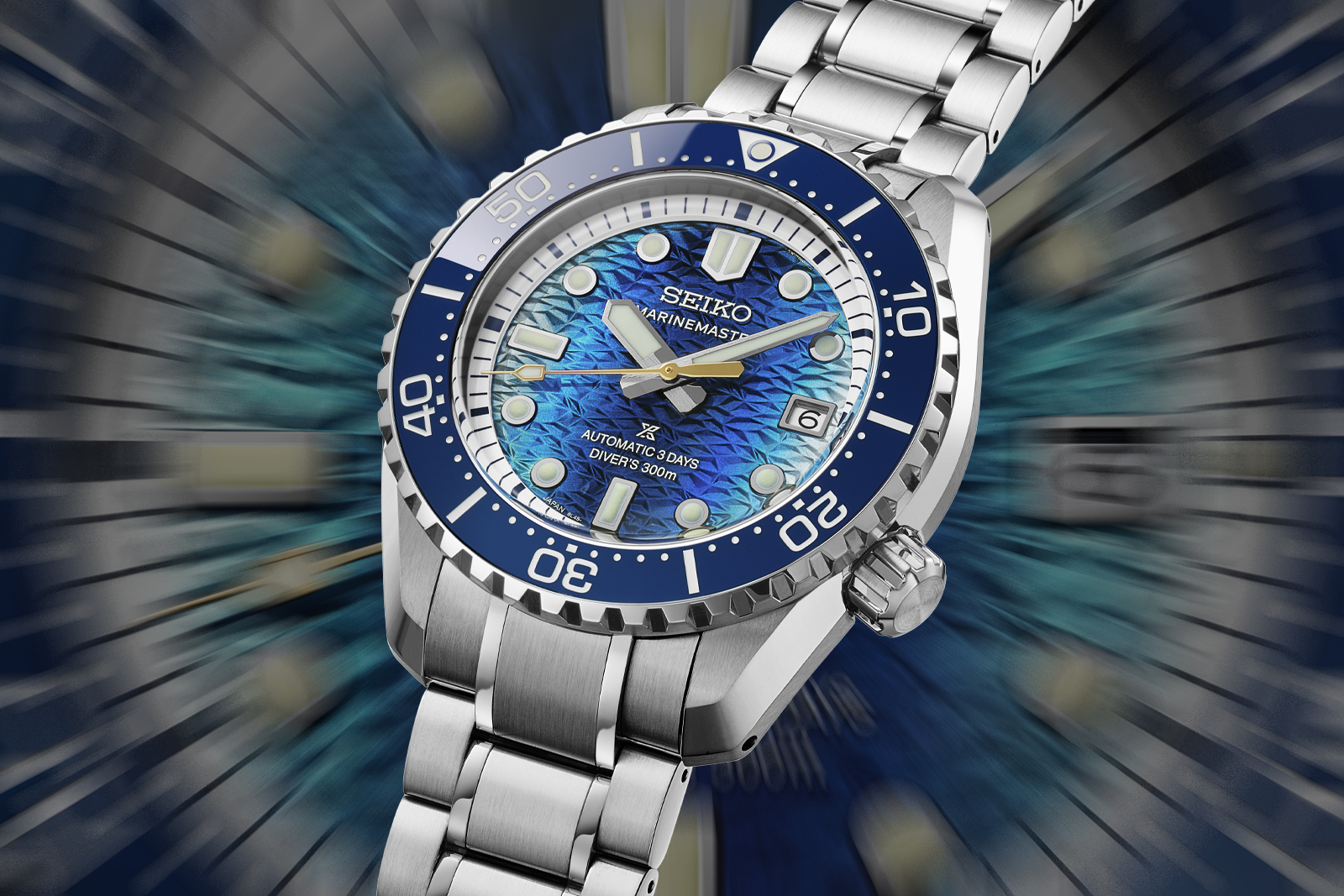
According to Seiko, the grained black dial of the HBF001 improves visibility underwater as it reflects less light. The same probably can’t be said for the limited edition HBF002. Meant to evoke a JAMSTEC Icebreaker cleaving through thick arctic ice, the crystalline dial texture has been given a gradient blue coating topped with a layer of clear varnish. The latter treatment explains why the printed text sits flat above the textured dial. Seiko divers have a reputation for bright, long-lasting lume, which no doubt be reinforced with these models.
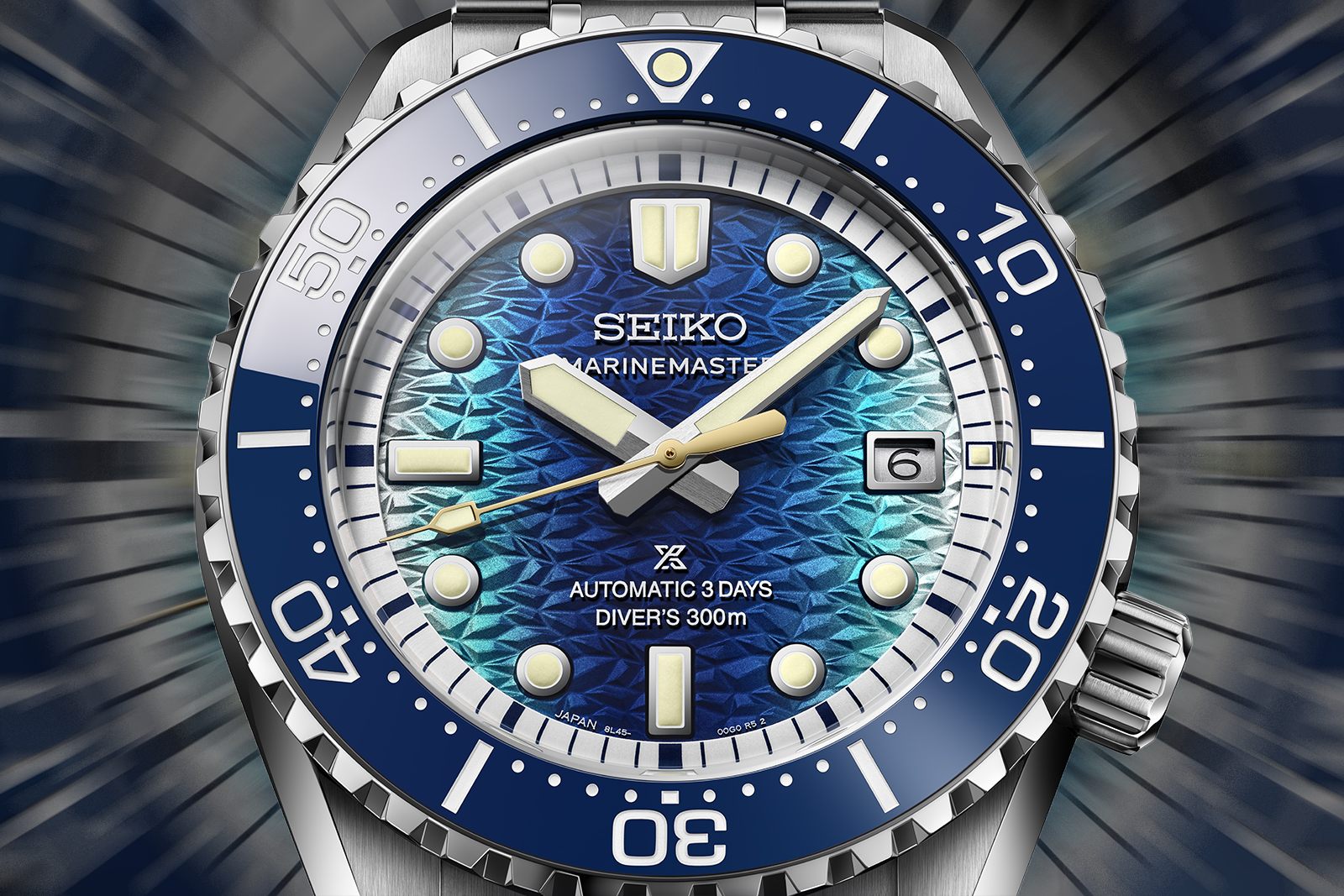
The case is stainless steel and protected by a “super-hard coating” which Seiko once called Dia-Shield. While not as hardy as Citizen’s latest and greatest surface coatings, it goes a long way to protect the finely lapped mirror finish of the case. While no longer purpose-built for saturation divers, the modern Marinemaster solves one of the more serious problems with past professional models – the crown tube. Historically, Marinemaster crown tubes were not removable, meaning a full case replacement was the easiest fix for damaged threads. Seiko finally addressed this in 2023 by adopting a replaceable crown tube.
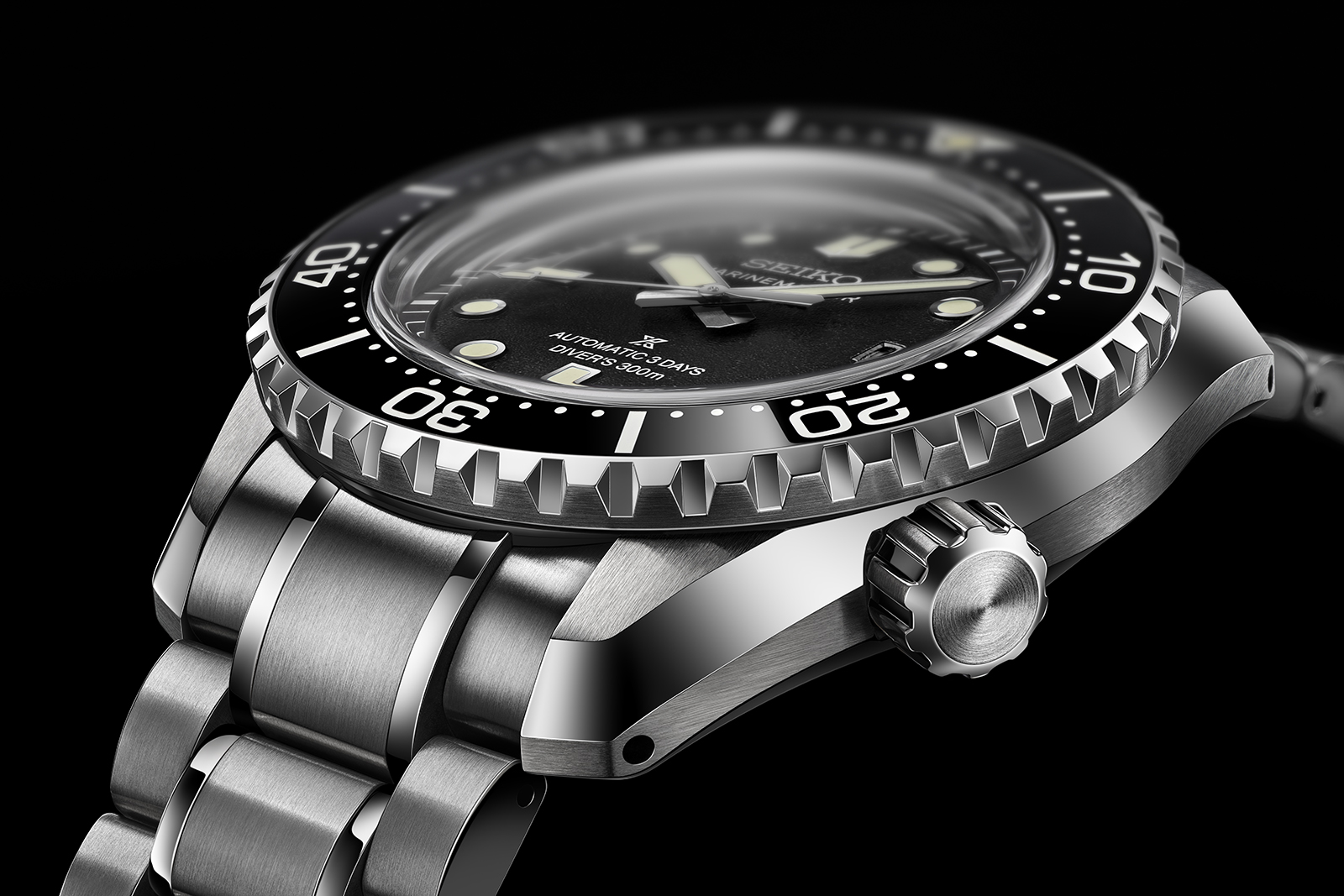
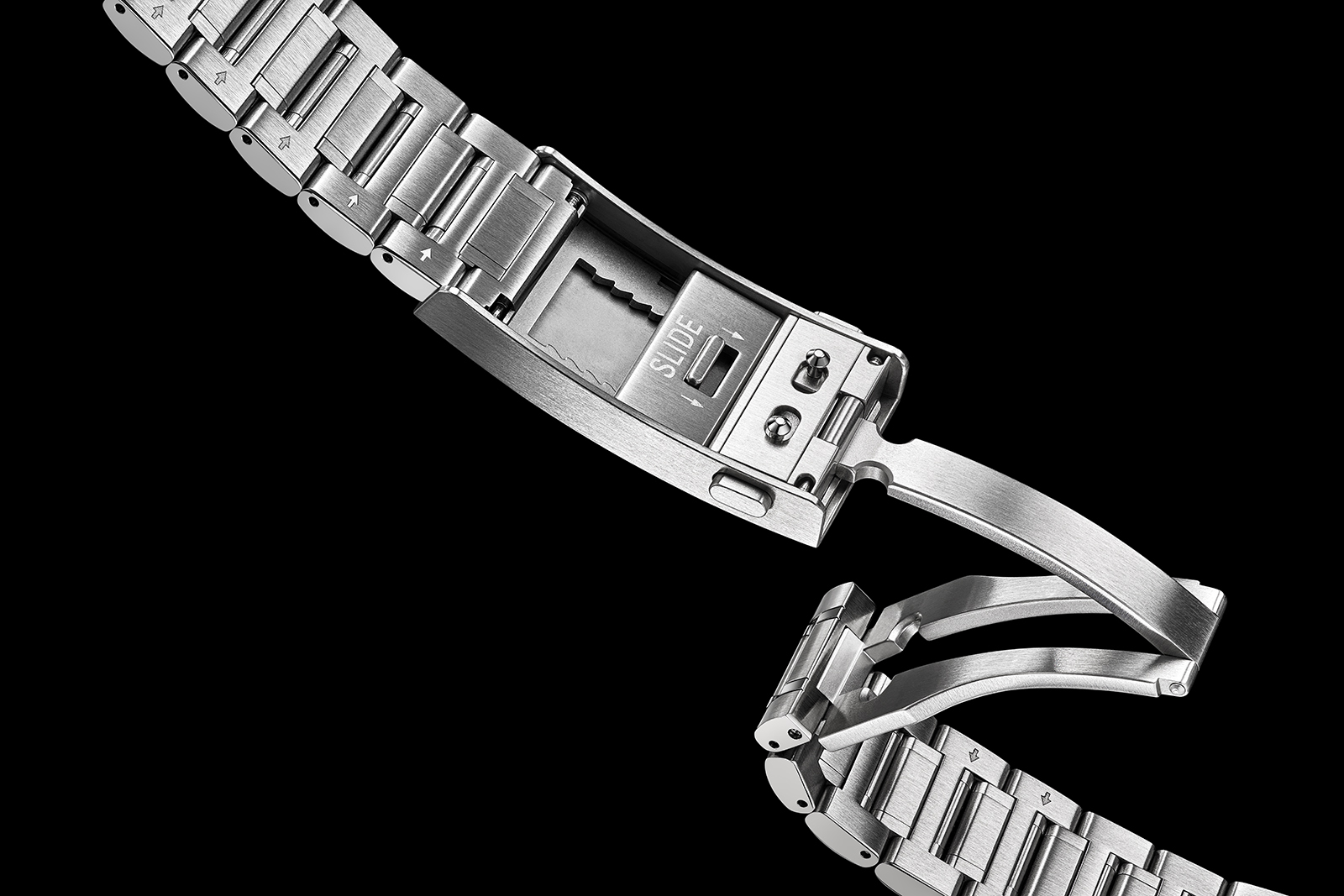
The same super-hard coating extents to the bracelet, where is arguably even more useful. The new clasp introduces a tool-less micro-adjust system which allows the bracelet to be extended by up to 16 mm by pulling the marked slide. It can also be tightened in 2 mm increments while on the wrist. Beyond this ergonomic upgrade, the new clasp has a more premium feel than the stamped clasp bodies found on the previous generation, which, other than the swing-arm and Dia-Shield coating, were the same as you would find on a Seiko Turtle.
New engine
Seiko offers a broad range of movements at different price points, and the cal. 8L45 is currently the top-of-the-range automatic mechanical movement offered by Seiko outside of the Grand Seiko brand. It is essentially the same as Grand Seiko’s cal. 9S65, which explains the 72-hour power reserve and reverser-wheel bidirectional winding system. This is a nearly 50% increase from the cal. 8L35’s 50-hour power reserve, which is charged with the Magic Lever winding system. Compared to the outgoing movement, the cal. 8L45 features a modified assortment (the hairspring coils counterclockwise rather than clockwise) and a tighter accuracy window of -5 to +10 seconds per day.
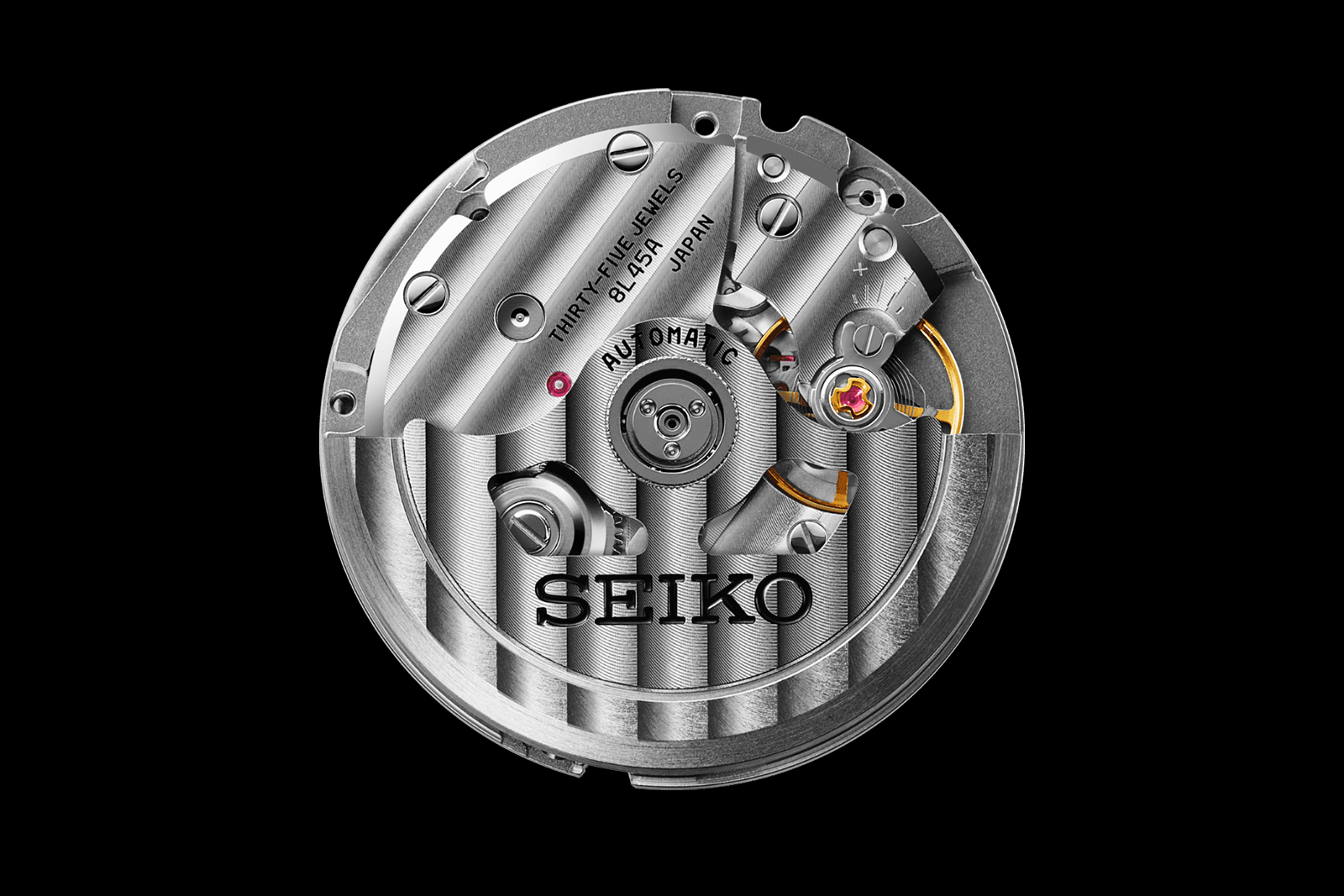
The performance rating is not exceptional for the price, especially compared to what some Swiss brands promise, but Seiko tends to be conservative when it comes to accuracy specifications, often delivering performance well within the stated range. But even as it is, the rating is tighter than what we’re accustomed to seeing from Seiko, superior even to the rating for the Credor Locomotive. It also uses Seiko’s proprietary regulator that is more upscale than the Etachron system found on the cal. 6R and 6L families.
Key facts and price
Seiko Prospex Marinemaster 1968 Heritage Diver’s Watch
Ref. HBF001 (black dial)
Ref. HBF002 (JAMSTEC edition)
Diameter: 42.6 mm
Height: 14.1 mm
Material: Stainless steel
Crystal: Sapphire
Water resistance: 300 m
Movement: Cal. 8L45
Functions: Hours, minutes, seconds, date
Winding: Self-winding
Frequency: 28,800 beats per hour (4 Hz)
Power reserve: 72 hours
Strap: Stainless steel bracelet with tool-less adjustment
Limited edition: JAMSTEC edition limited to 1000 pieces
Availability: From July 2026 at Seiko boutiques and retailers
Price: US$3,600 (HBF001), US$3,900 (HBF002) before taxes
For more information, visit seikowatches.com.
This was brought to you in partnership with Seiko.
Back to top.