
Hands On: Audemars Piguet Royal Oak Chronograph 38 mm
Improved in nearly every way.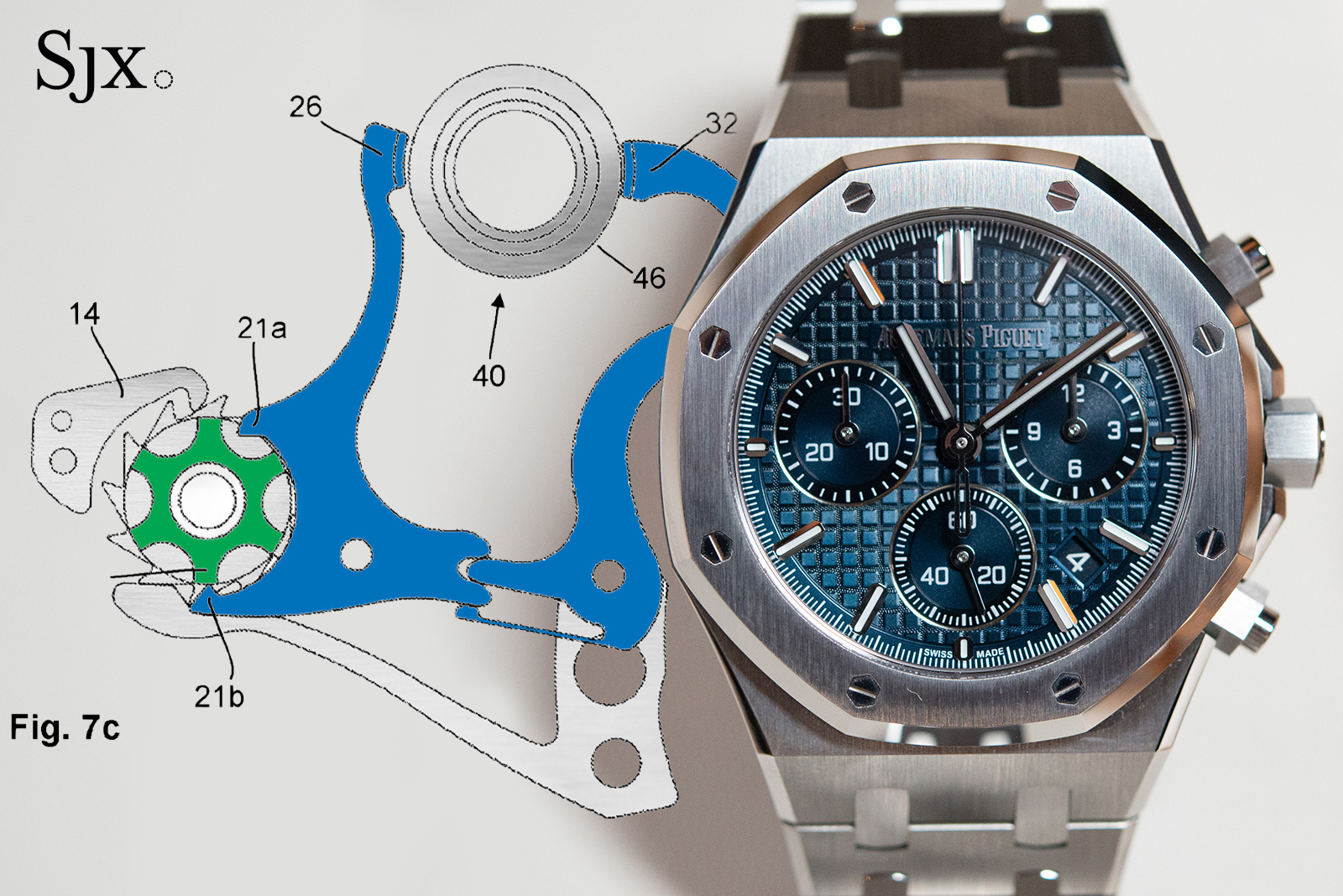
One of the longest tenured models in the Audemars Piguet (AP) catalogue, the Royal Oak Selfwinding Chronograph 38 mm has been upgraded with a new manufacture calibre and sapphire case back for the first time, while only slightly tweaking the iconic design and price tag.
Inside the new ref. 26450 is the cal. 6401 that incorporates with welcome quality-of-life improvements such as a longer power reserve, higher beat rate, and instantaneous date. The new movement accomplishes all of this without significant tradeoffs in size, but it arguably falls somewhat short in aesthetics. Minor shortcomings aside, the modestly sized Royal Oak Chronograph is a strong offering that enters the field at the top of its class.
Initial thoughts
In the same fashion as last year’s updated Royal Oak Perpetual Calendar, the new 38 mm Royal Oak Chronograph takes an evolutionary, rather than revolutionary, step forward, being essentially the same watch, only better. AP clearly knows better than to mess with a winning formula, but the brand also faced challenges, both in manufacturing and customer experience, that came with a nearly four-decade-old movement platform, sourced from Swatch Group no less.
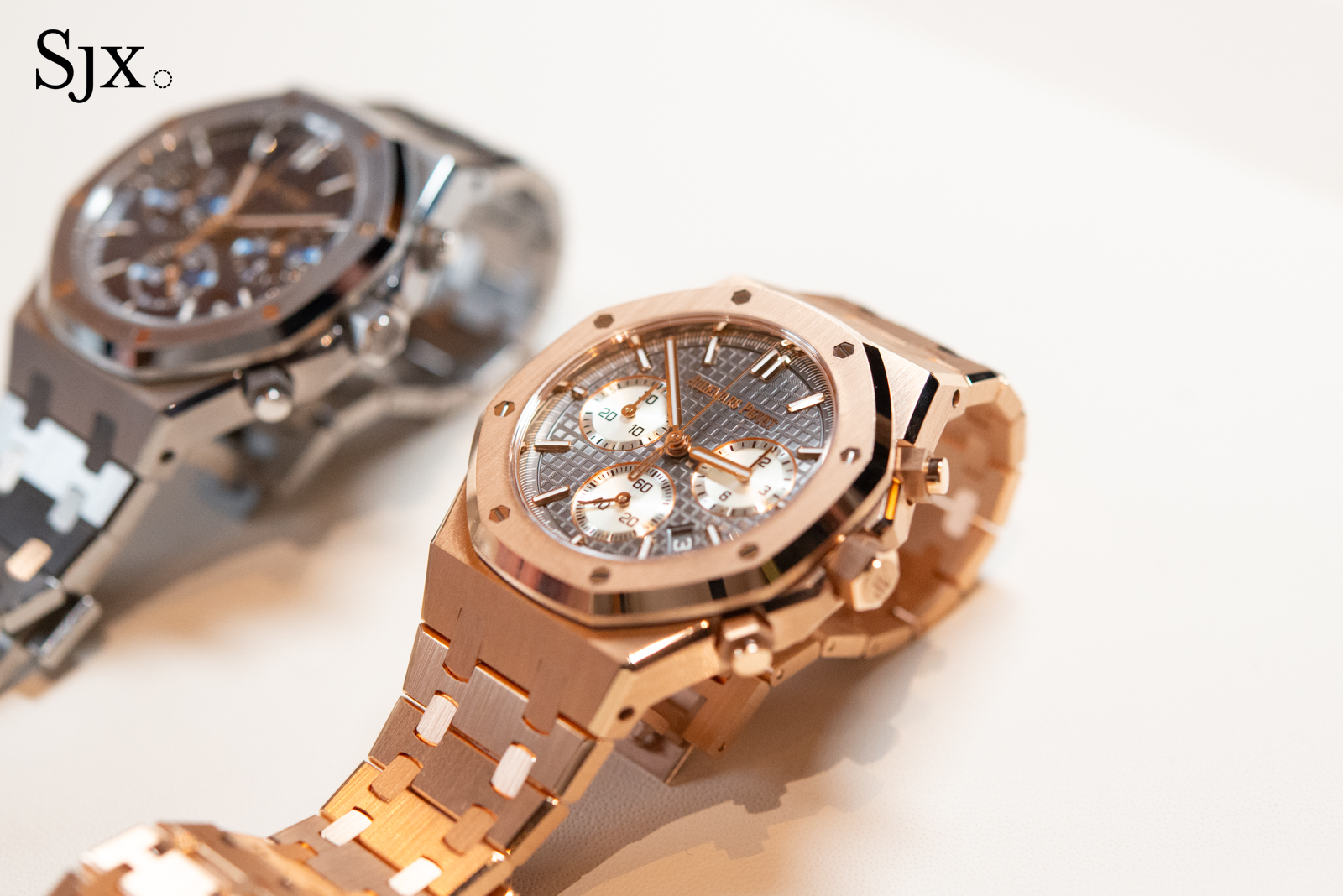
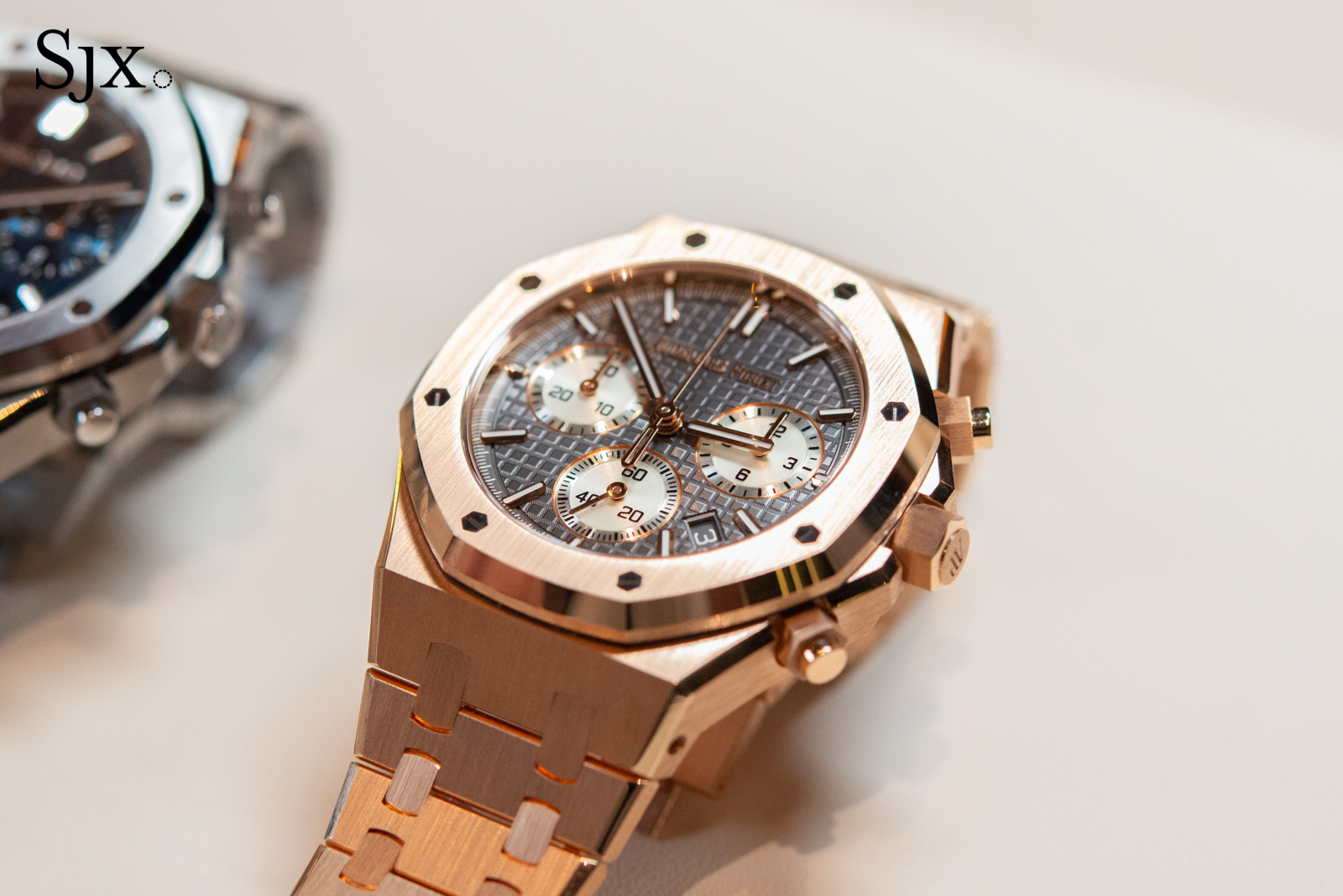
The changes are slight, even insignificant at first glance, but are the sort things that come to be appreciated with long-term ownership, especially within a smaller collection where increases in power reserve and performance are most noticeable. It even looks slightly better – the dial is less cramped due to the tweaked sub-dial, date window, and pusher locations.
The new Royal Oak Chronograph wears the same as the old Royal Oak Chronograph, which is to say, quite well and it remains the obvious choice for those with small to mid-sized wrists. While its integrated bracelet nature makes it feel rather broad across the wrist for a 38 mm watch, its low profile – slimmer than the latest Rolex Daytona – and shallow case back help it hunker down on the wrist.
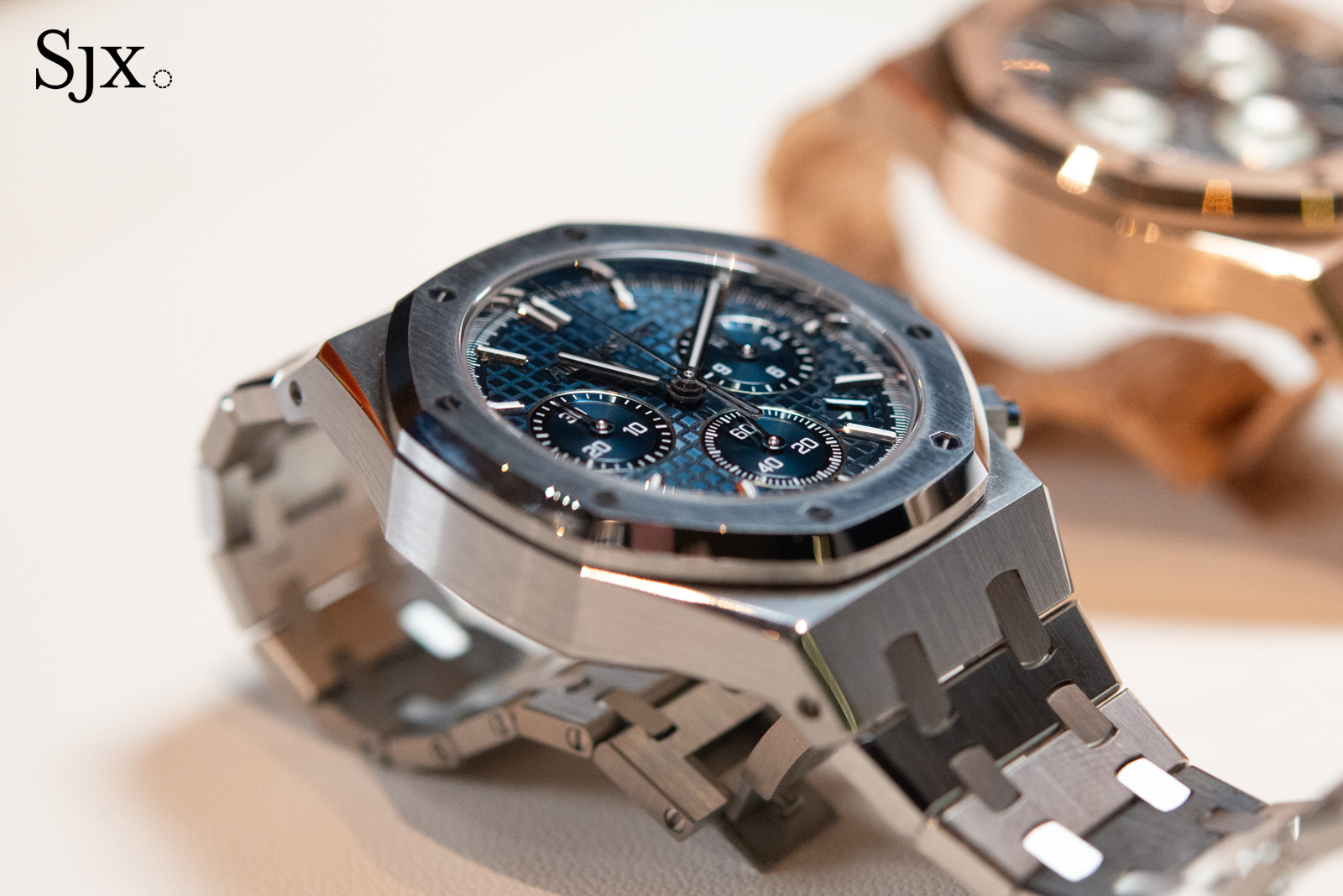
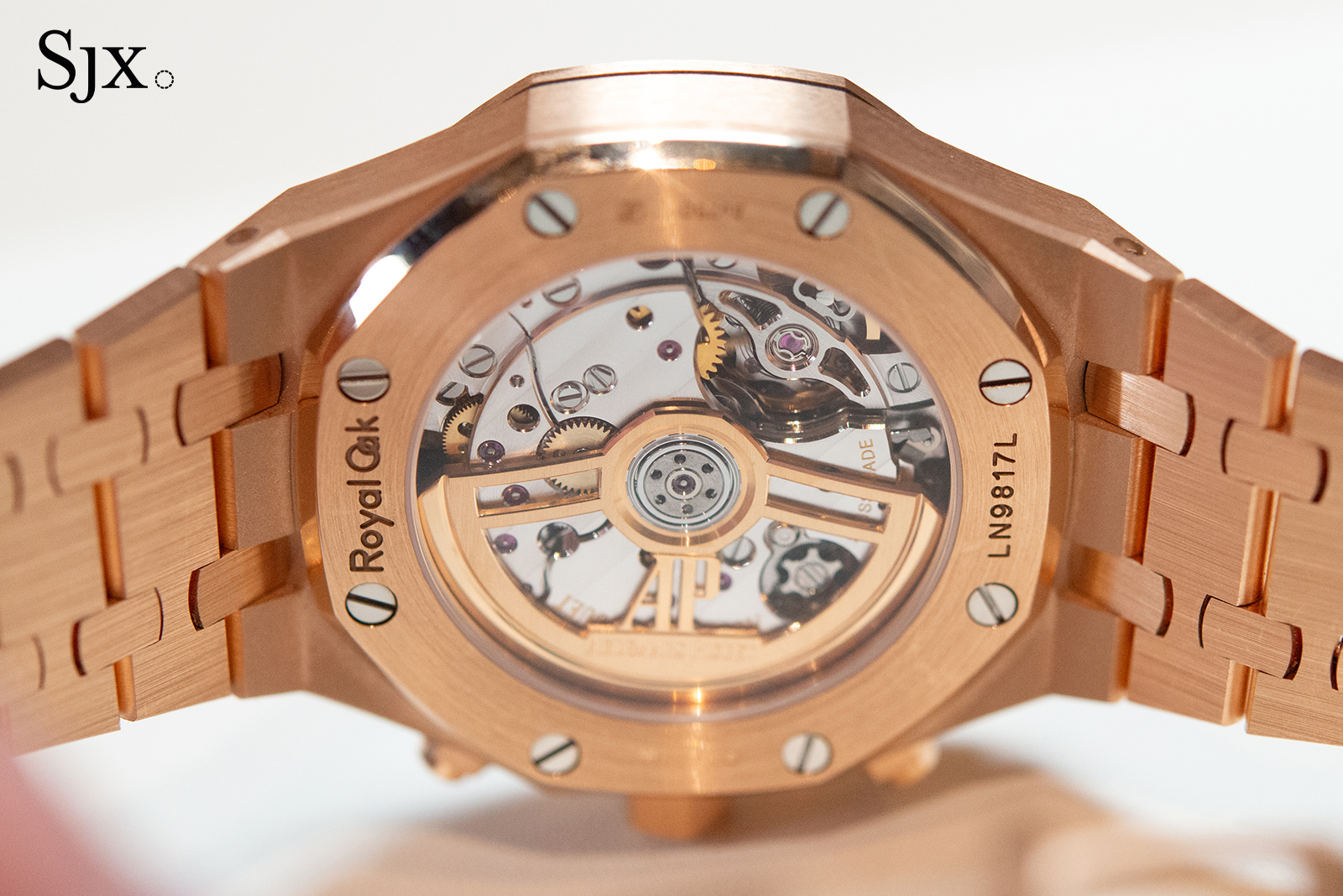
The sapphire display case back is the most noticeable change, which most collectors see as a value-add, while saving a not insignificant amount of gold on the precious metal models, making it a win-win for brand and customer.
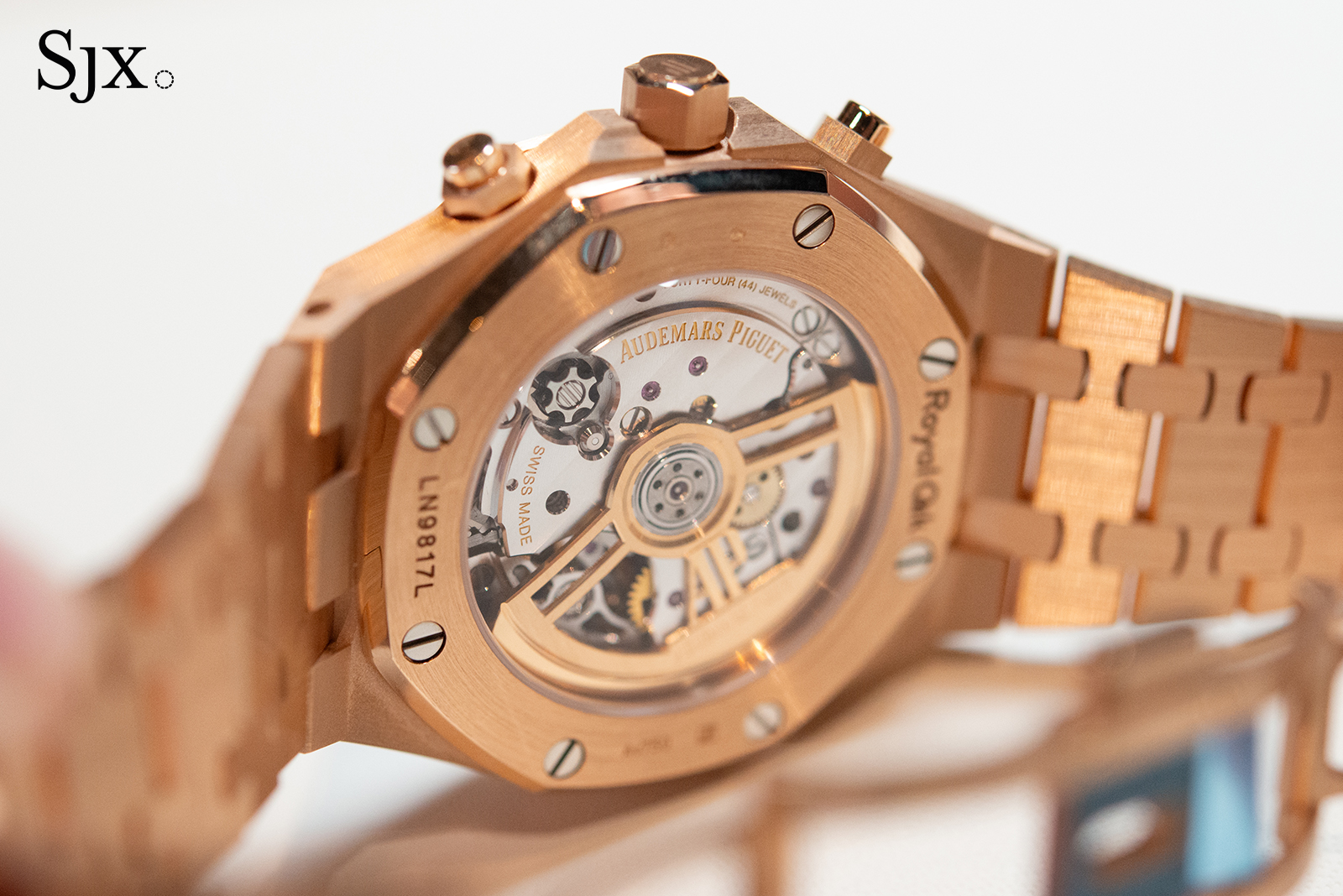
That said, the new cal. 6401 isn’t as visually interesting as its larger sibling, which offers a visible triple vertical clutch bonanza in the larger 41 mm Royal Oak Chronograph. It also means the classic Royal Oak case back design edges closer to extinction, at least in the mechanical models.
At US$43,000 in steel, the upgraded Royal Oak Chronograph is priced at a reasonable premium to the outgoing model, and slots between equivalent chronographs from Patek Philippe and Vacheron Constantin. The pricing feels especially reasonable at the time of launch, when it’s fully supported by its secondary market valuation.
A familiar face
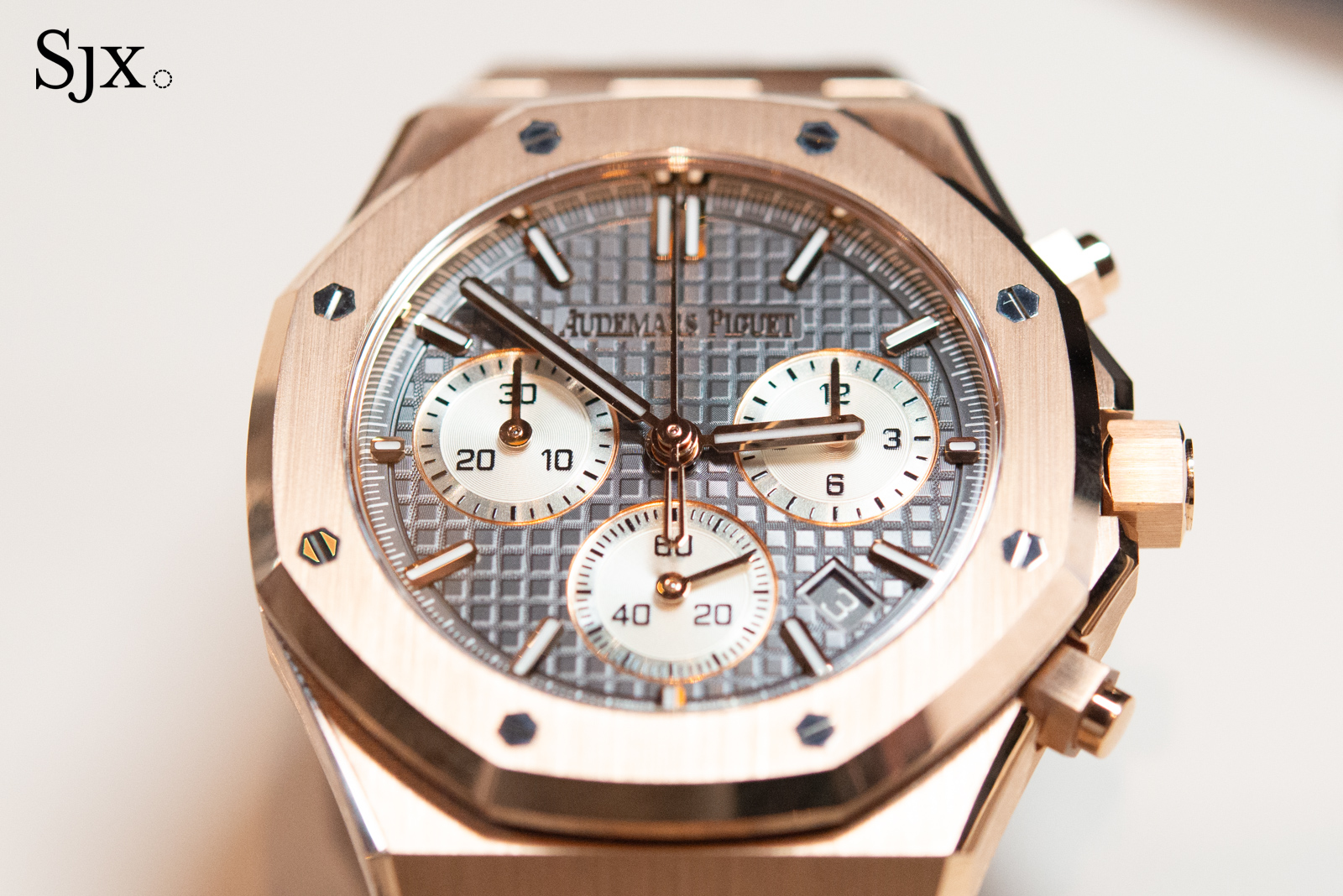
The dial has been tweaked to accommodate the cal. 6401, with all three sub-dials sitting slightly further from the centre. The hour and minute totalisers have been swapped and sit slightly higher on the dial, while the date window now falls halfway between the four and five o’clock markers.
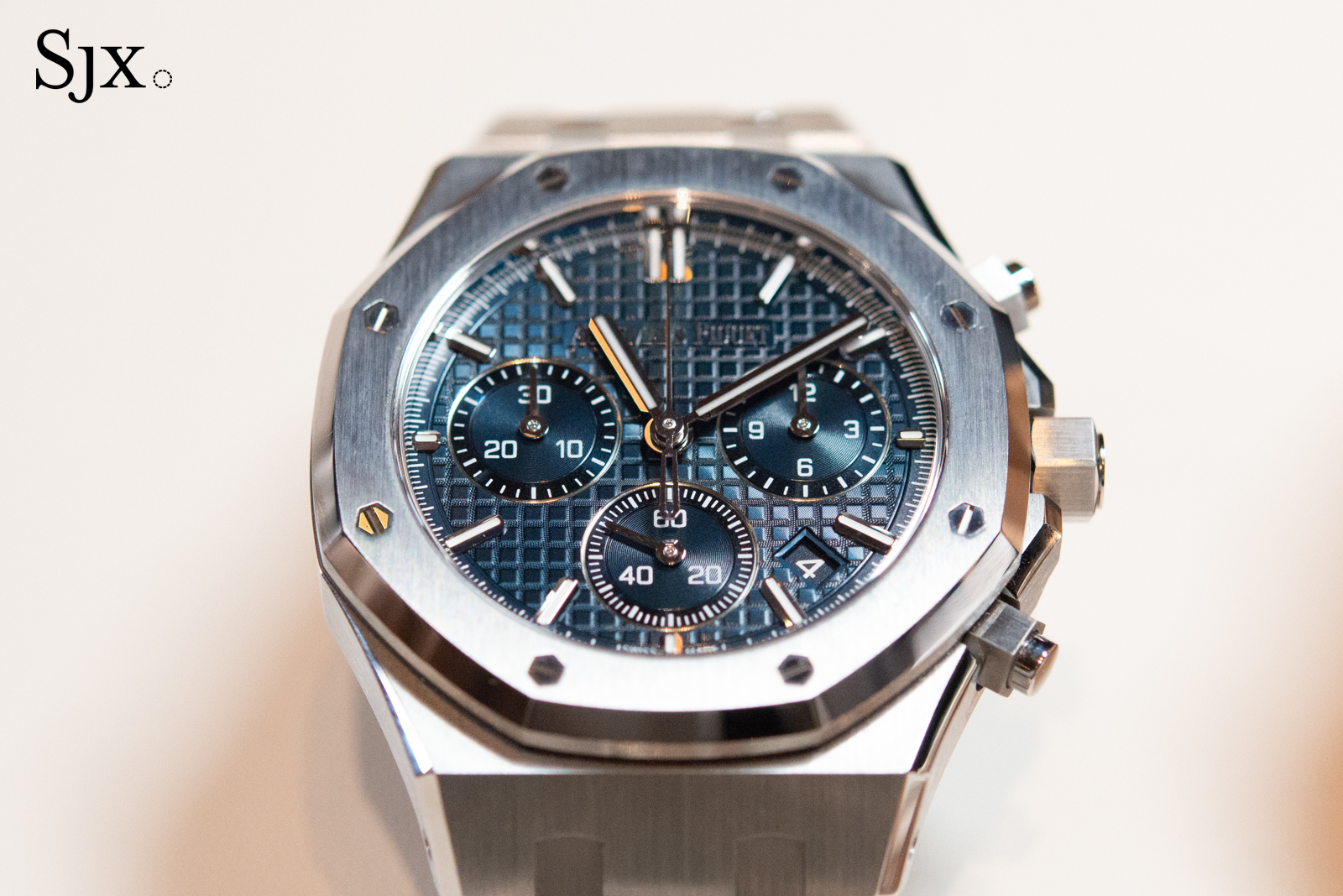
Thoughtfully, AP recalibrated the seconds scale hash marks to match the 4 Hz beat rate of the new movement so the chronograph seconds hand is always exactly on or between the markers.
While this change may seem obvious, many manufacturers continue to use dials calibrated for historical 2.5 Hz movements, and even those that put in the effort to update the dials do so seemingly at random. For example, the hash marks on Patek Philippe’s Nautilus Chronographs do not match the movement’s beat rate, while those on the Aquanaut Chronographs do.
A light touch
Like the Frederic Piguet cal. 1185 that powered this model previously, AP’s cal. 6401 uses a vertical clutch. However the means by which the clutch is controlled differs slightly, resulting in a lighter pusher feel (though not as light has last year’s Royal Oak RD#5) and less wear on the column wheel.
According to an AP watchmaker, the clutch subassembly can technically be disassembled during service like those on Rolex and Omega chronographs, however doing so risks loosening the tolerances of the LIGA parts, and thus the full assembly will be swapped out during service.
A vertical clutch is conventionally operated by a pair of pinchers (illustrated in blue, 5 & 6, below) which are spread open by a spring (red, 7) while the chronograph is running. Pressing the start/stop button turns the column wheel by one step, and the columns (green, 3a) force the pincers together to disengage the clutch. Pressing the same button again advances the column wheel again, exposing the gaps between the columns, allowing the pincers snap open due to the aforementioned spring.
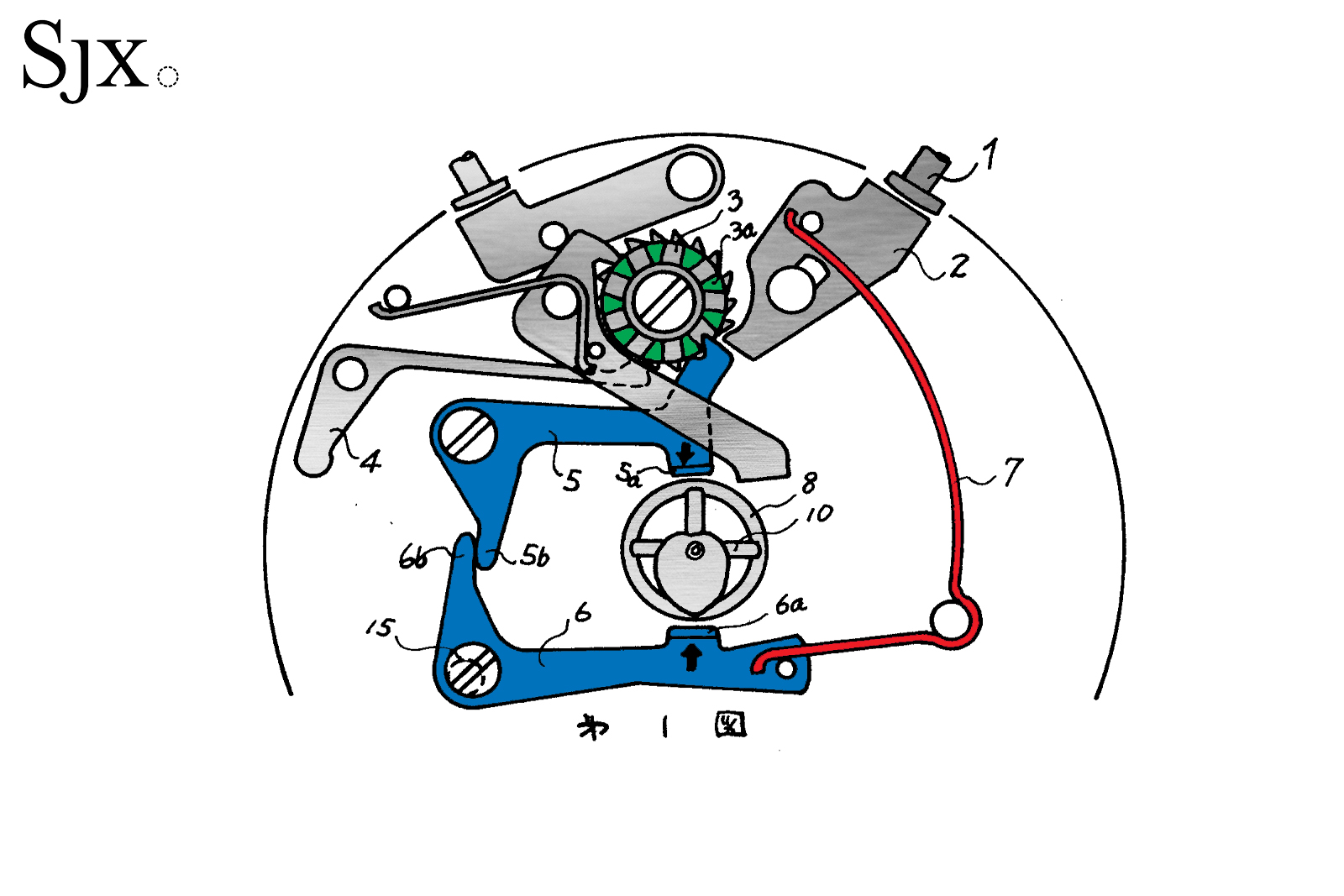
Suwa Seiko’s 1969 patent relating to the vertical clutch of Seiko cal. 6139. Designed by Toshihiko Ohki (大木俊彦), it was the first commercially available automatic chronograph movement. Image – JPS4825155Y1, annotated by the author.
Audemars Piguet’s engineers identified two issues with this solution in their pending patent application: “The force exerted by the clamp return spring has several disadvantages. The torque induced by the pressure of the beak on the column wheel is significant, which can cause non-negligible wear to the mechanism in the long term. In addition, in order to overcome the constraints exerted by the return spring, relatively high pressure must be exerted on the push-button to start and stop the chronograph.”
Thus, AP’s solution, invented by Olivier Gumy, dispenses with this spring and uses only the column wheel (green) to operate the pincers (blue, 26 & 32), and the second pincer (32) includes an integral blade spring that eliminates play between the two pincers.
While these innovations result in an extremely fine tactile feel, this approach does not appear to be compatible with a flyback function, like that found in AP’s larger cal. 4400 chronograph movement, as the clutch cannot be disengaged without turning the column wheel. Though, I suppose it is possible – but maybe not practical – to add a second set of pincers for this purpose.
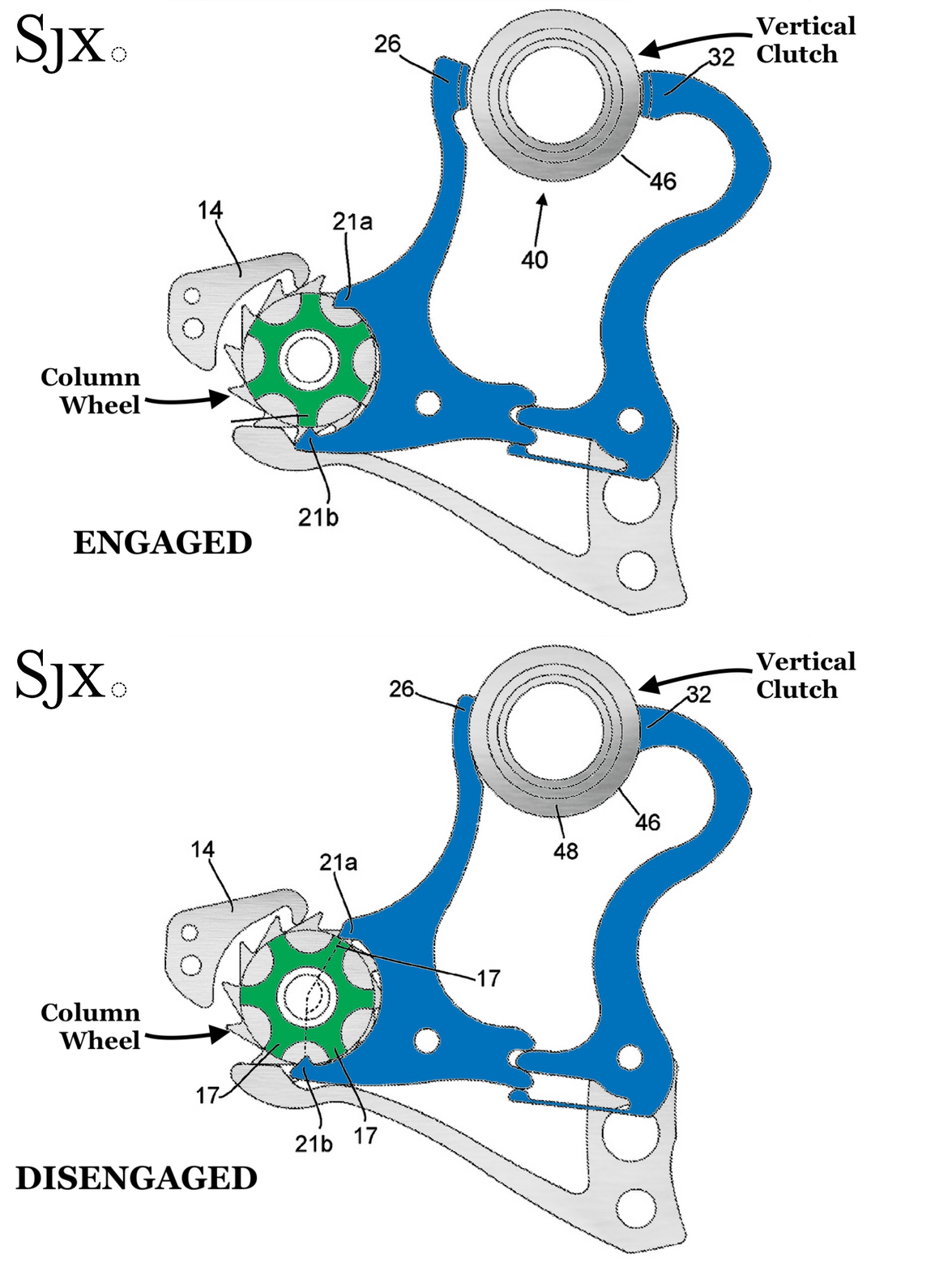
Audemars Piguet’s innovation in action. Image – EP4453666A1, annotated and animated by the author.
Beyond the impressive architecture of the vertical clutch, the new movement includes with some chronometric upgrades as well. Chief among them is a free-sprung balance, a balance endshake adjustment system, an aerodynamic balance, and greater rate stability in the face of shocks thanks to a higher 4 Hz beat rate. AP has not published its precision and accuracy standards for these movements, but anecdotally the brand’s watches perform increasingly well.
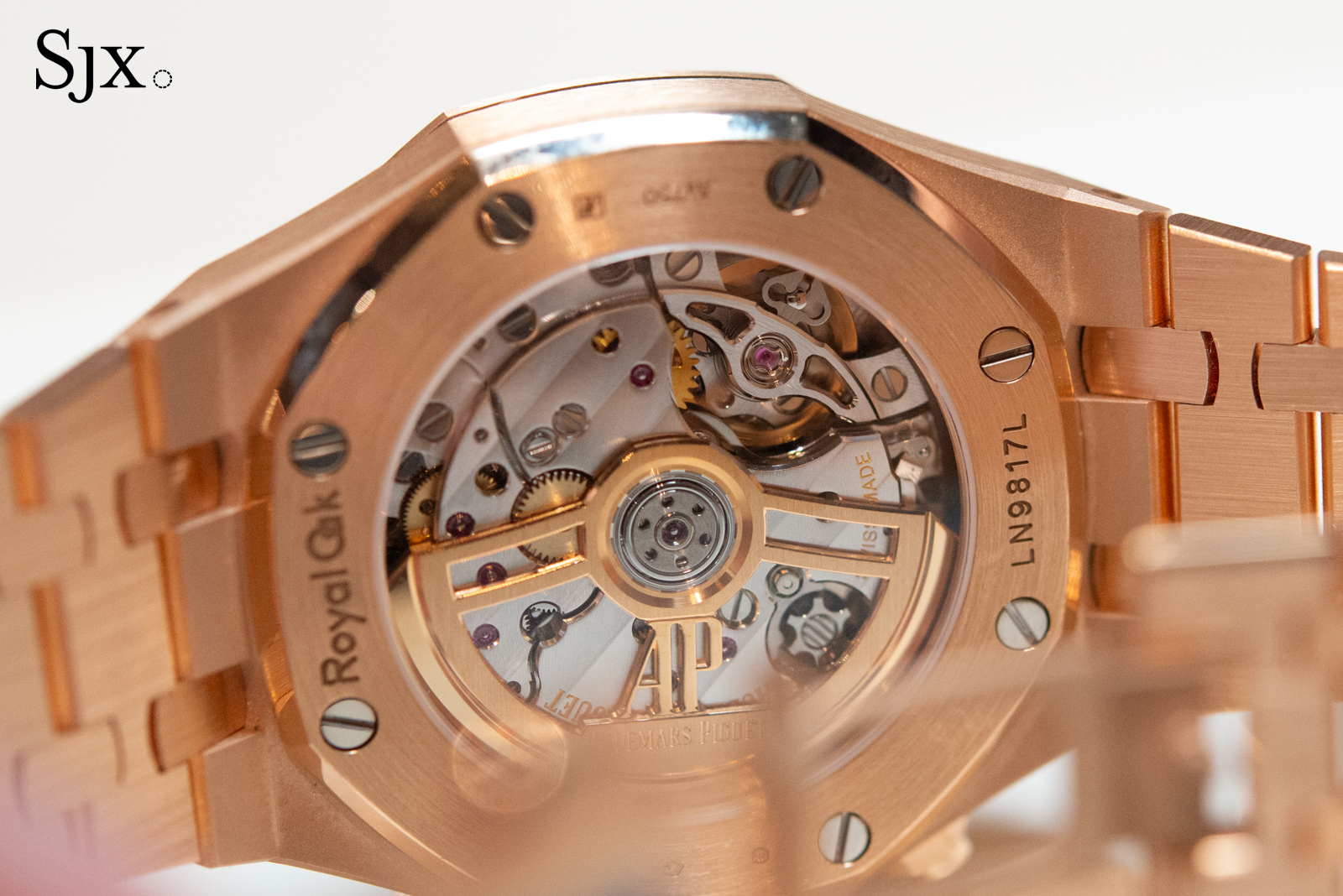
The cal. 6401 is decorated in the emergent house style that began to take shape in 2019 with the launch of the cal. 4300 and 4400 platforms. The industrial –haute horlogerie finishing puts an emphasis on the industrial, with flat-cut chamfers that are more economical than the rounded fillets found on the equivalent automatic chronograph calibres from Patek Philippe and Vacheron Constantin.
The steelwork is brightly polished, and the engravings are finely wrought – note the brand’s wordmark is machined in full detail. Of course, no watch is perfect, and there is room for improvement in the degree to which the chamfers are polished, as there are other movements in the competitive set with mirror-polished anglage. None of them, however, enjoy the benefits of powering a Royal Oak.
Key facts and price
Audemars Piguet Royal Oak Selfwinding Chronograph 38 mm
Ref. 26450ST.OO.1356ST.01-B (steel)
Ref. 26450OR.OO.1356OR.01-B (pink gold)
Ref. 26450OR.ZZ.1356OR.01-B (pink gold with diamonds)
Diameter: 38 mm
Height: 11.1 mm
Material: Stainless steel or 18k pink gold
Crystal: Sapphire
Water-resistance: 50 m
Movement: Cal. 6401
Functions: Hours, minutes, running seconds, date, chronograph with minute and hour totalisers
Winding: Automatic
Frequency: 28,800 beats per hour (4 Hz)
Power reserve: 72 hours
Strap: Matching integrated bracelet
Limited edition: No
Availability: AP boutiques, AP Houses, and authorised retailers
Price: US$43,000 in steel, US$84,500 in 18k pink gold, and US$91,600 in 18k pink gold with diamonds, before taxes
For more information, visit Audemarspiguet.com.
Back to top.