
Hands On: Piaget Polo Signature Date
Defining an identity.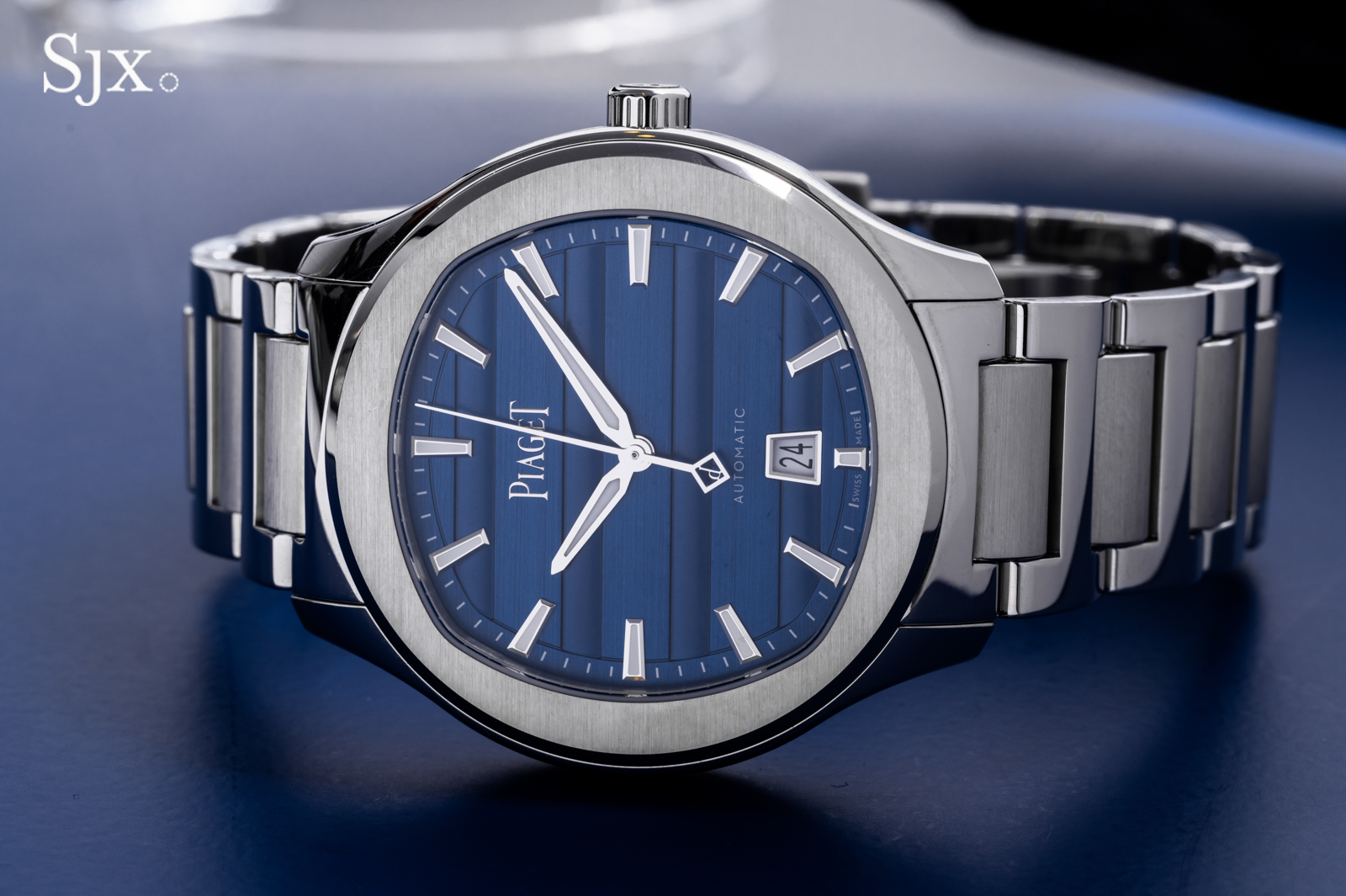
Ten years after the Polo S, Piaget reimagines the contemporary Polo Date with the brand’s signature gadroon motif. The Polo Signature Date is less a new watch than a clarification: a move to anchor the collection around a more explicit identity.
This took place through a two-step process. First, the reinstatement of the historical reference with the Piaget Polo 79. Then, the diffusion of its codes – most notably the gadroons – into the contemporary line, now organised under the Polo Signature name. The result is a watch that remains technically unchanged, but conceptually more defined. The unchanged movement — the automatic cal. 1110P — remains in reliable service.
Initial thoughts
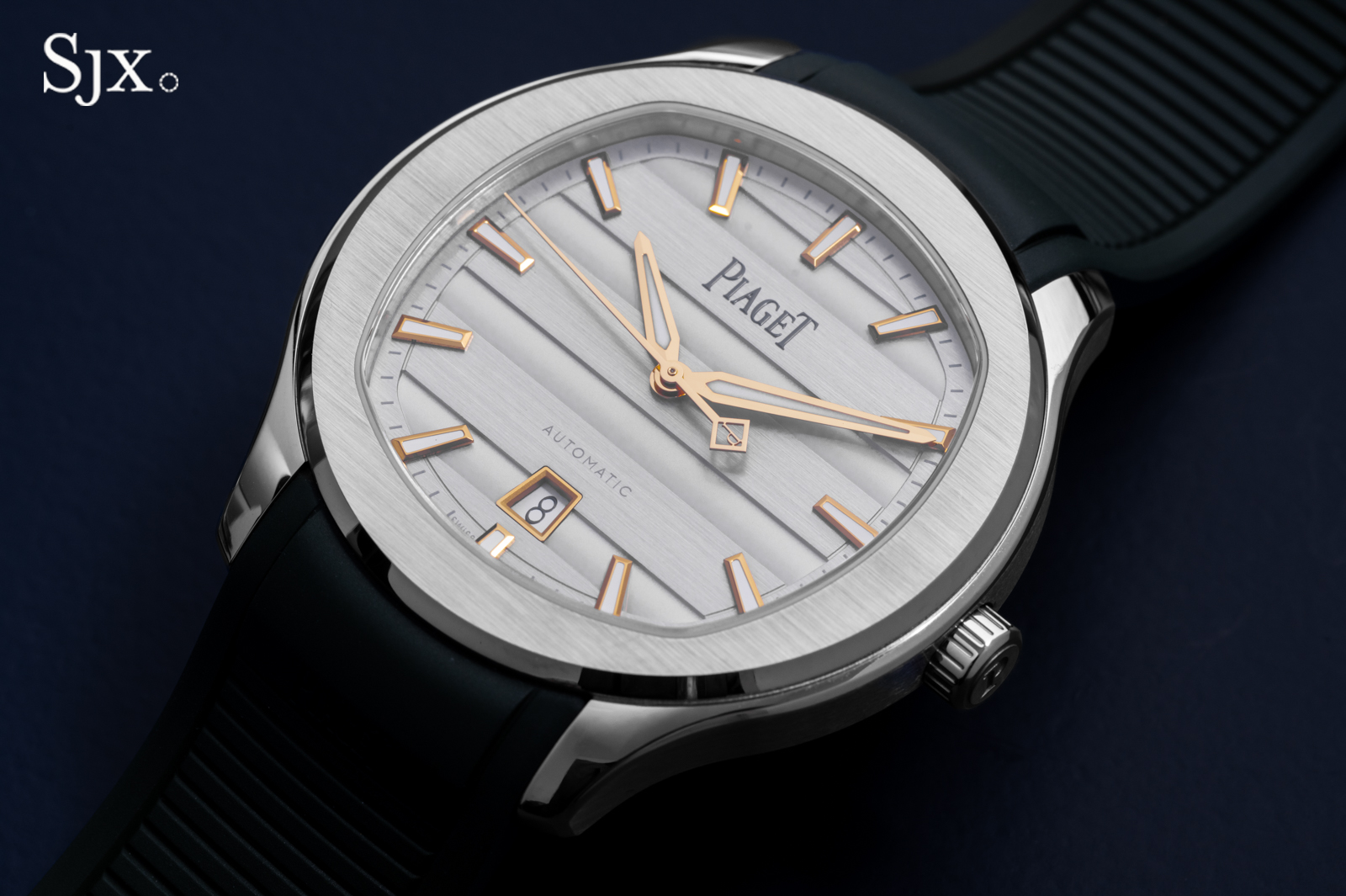
At first glance, the change is straightforward: the dial now carries the gadroon motif. But more importantly, it gives the watch a clearer and more distinctly Piaget presence.
The overall architecture remains familiar – 42 mm case, cushion-shaped dial within a round frame, interchangeable bracelet – yet the visual impression is stronger. Where earlier Polo Date models relied on relatively neutral surfaces, this dial interacts more actively with light, creating contrast and a stronger sense of identity on the wrist.
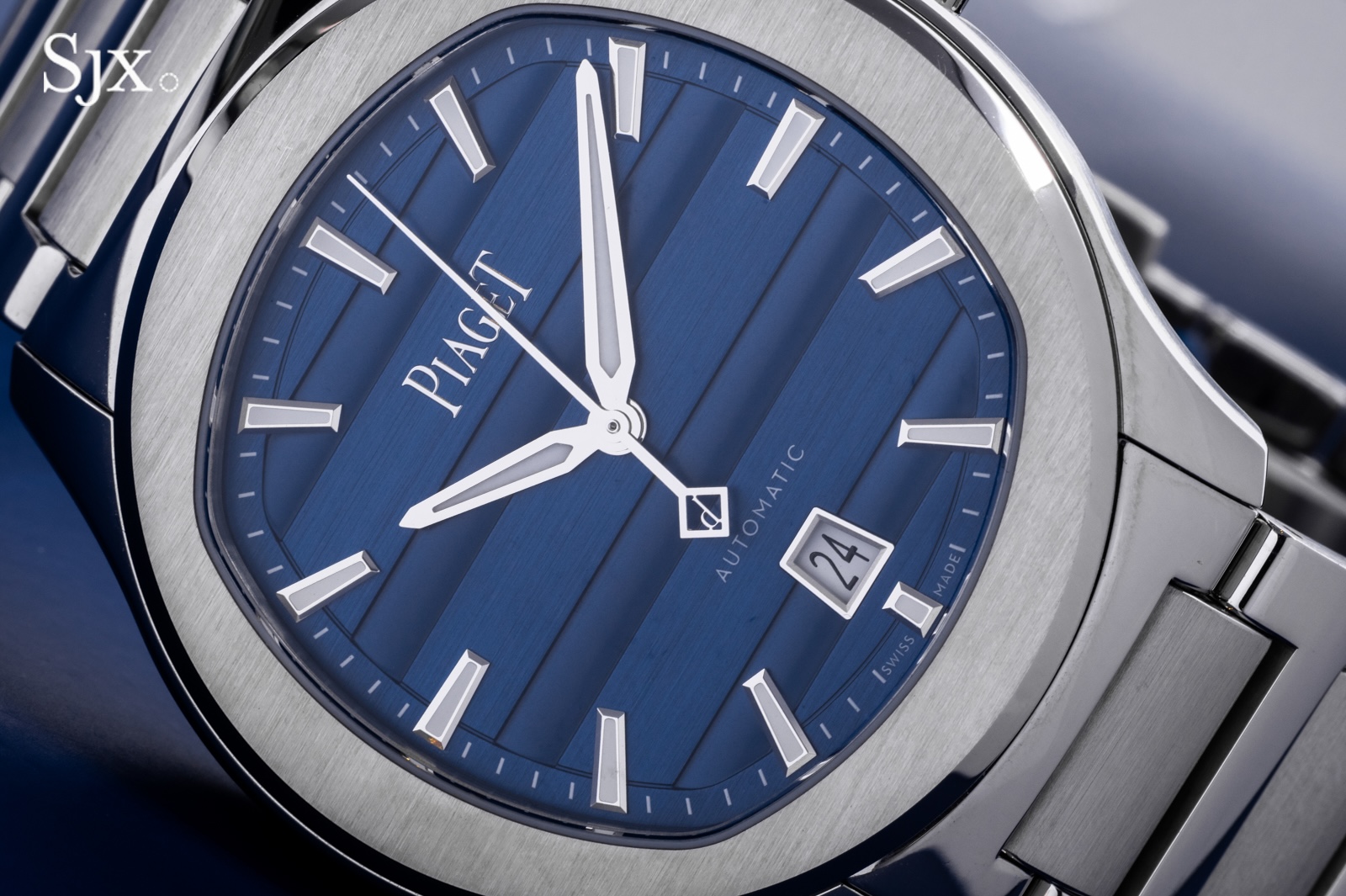
This is perhaps where the update is most effective. The Polo becomes more immediately recognisable, less reliant on its case shape alone. The gadroons do not transform the watch, but they sharpen its character within the crowded luxury sports watch segment.
From motif to signature
The gadroon is not a minor detail at Piaget. Its introduction on the dial is not just a design choice, but part of a broader repositioning.
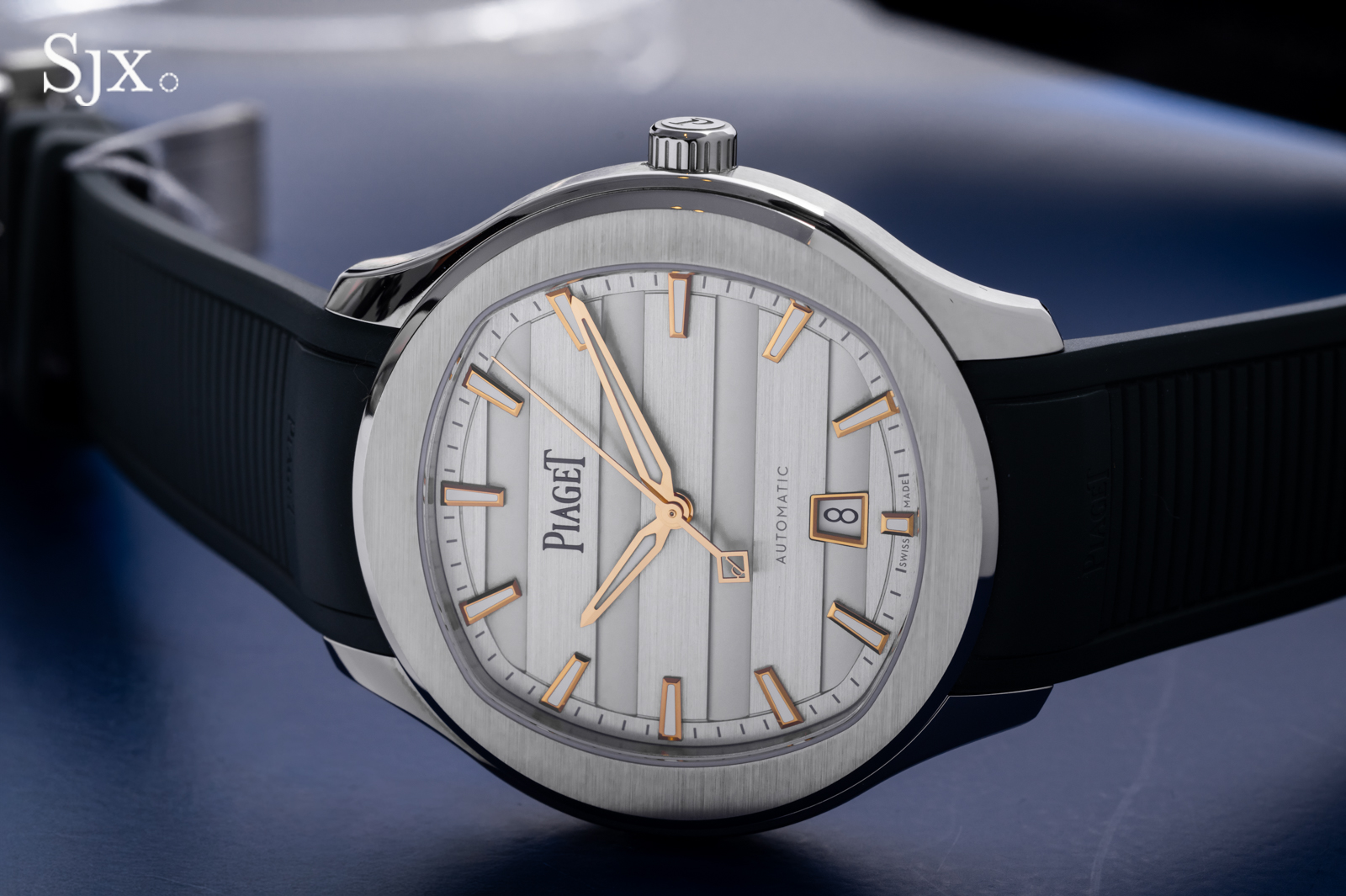
On the original Piaget Polo, the gadroons defined the entire object – merging case and bracelet into a continuous surface. In the contemporary Polo, the motif is used differently. It becomes a visual marker — applied on the dial rather than unifying the dial, case, and bracelet — intended to create continuity across the collection.
This shift reflects the evolution of the Polo itself. Over time, it moved from a singular concept to a more fragmented range – particularly in the 2000s, with models like the Polo FortyFive, which pushed the collection toward more conventional sports watch territory.
The 2016 Polo S attempted to reset that trajectory, introducing a new design language aligned with the sport-chic segment. It marked Piaget’s entry into a highly competitive category, with a deliberately accessible proposition made in steel and priced under $10,000. But while commercially coherent, it arguably lacked a strong identity of its own.
Recent developments have accelerated the Polo’s evolution. The reintroduction of the Polo 79 reasserted the brand’s formal vocabulary. The appearance of gadroons on the 150th anniversary Polo Date marked their adaptation to the modern line. With the Polo Signature, the gadroon-inspired dial joins the permanent collection.
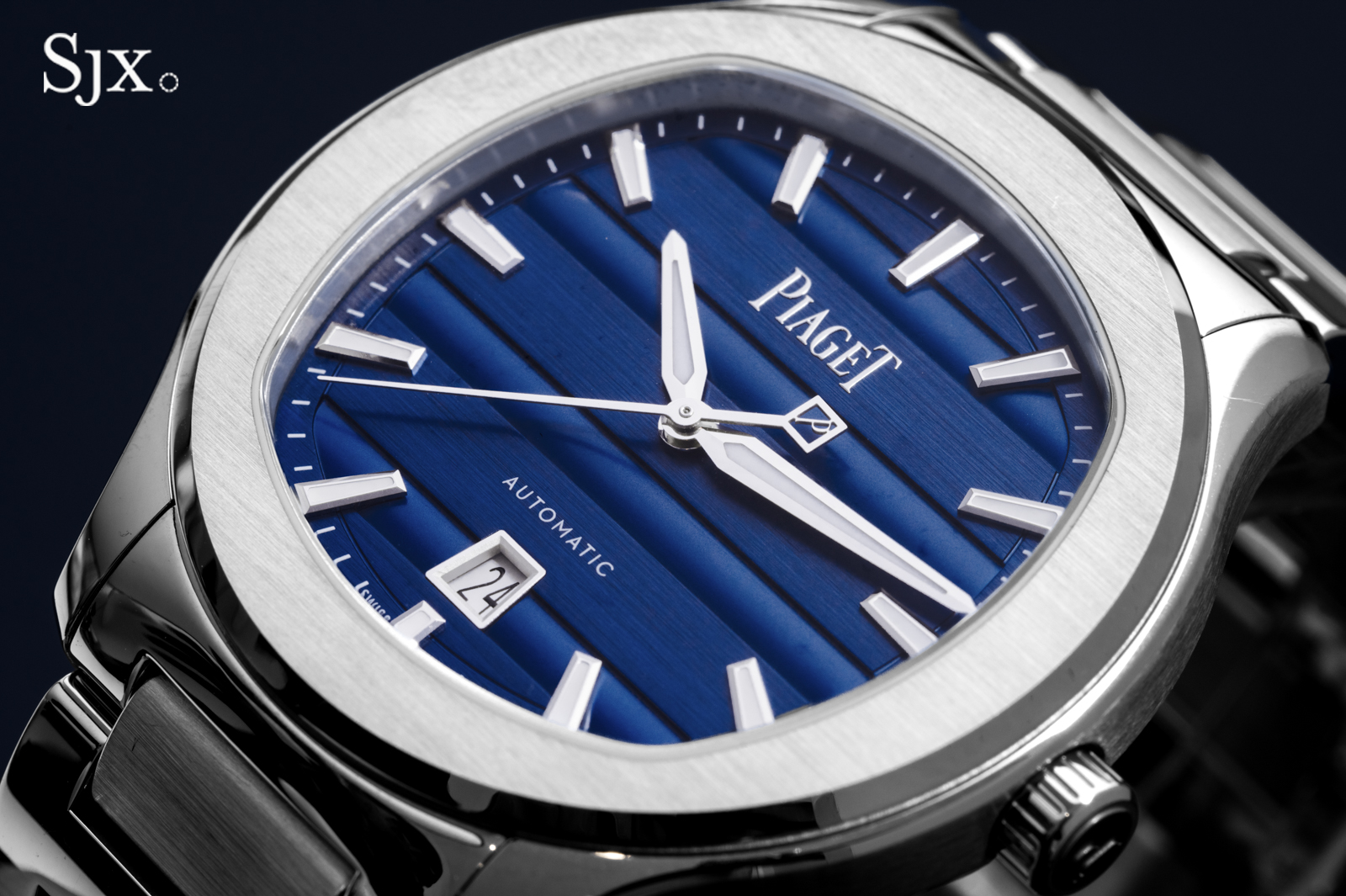
This does not restore the radical nature of the original model, which is instead revived in the Polo 79 reissue and its recent variations. Instead, it creates continuity. The Polo Signature connects different models – steel, gold, gem-set, in 36 and 42 mm sizes – under a shared visual language, while remaining compatible with contemporary expectations (like the option for a blue dial).
In that sense, the cushion-shaped dial within a round case remains the defining feature of the modern Polo — the gadroons reinforce this design, giving it a more recognisable identity.
Relaxed elegance
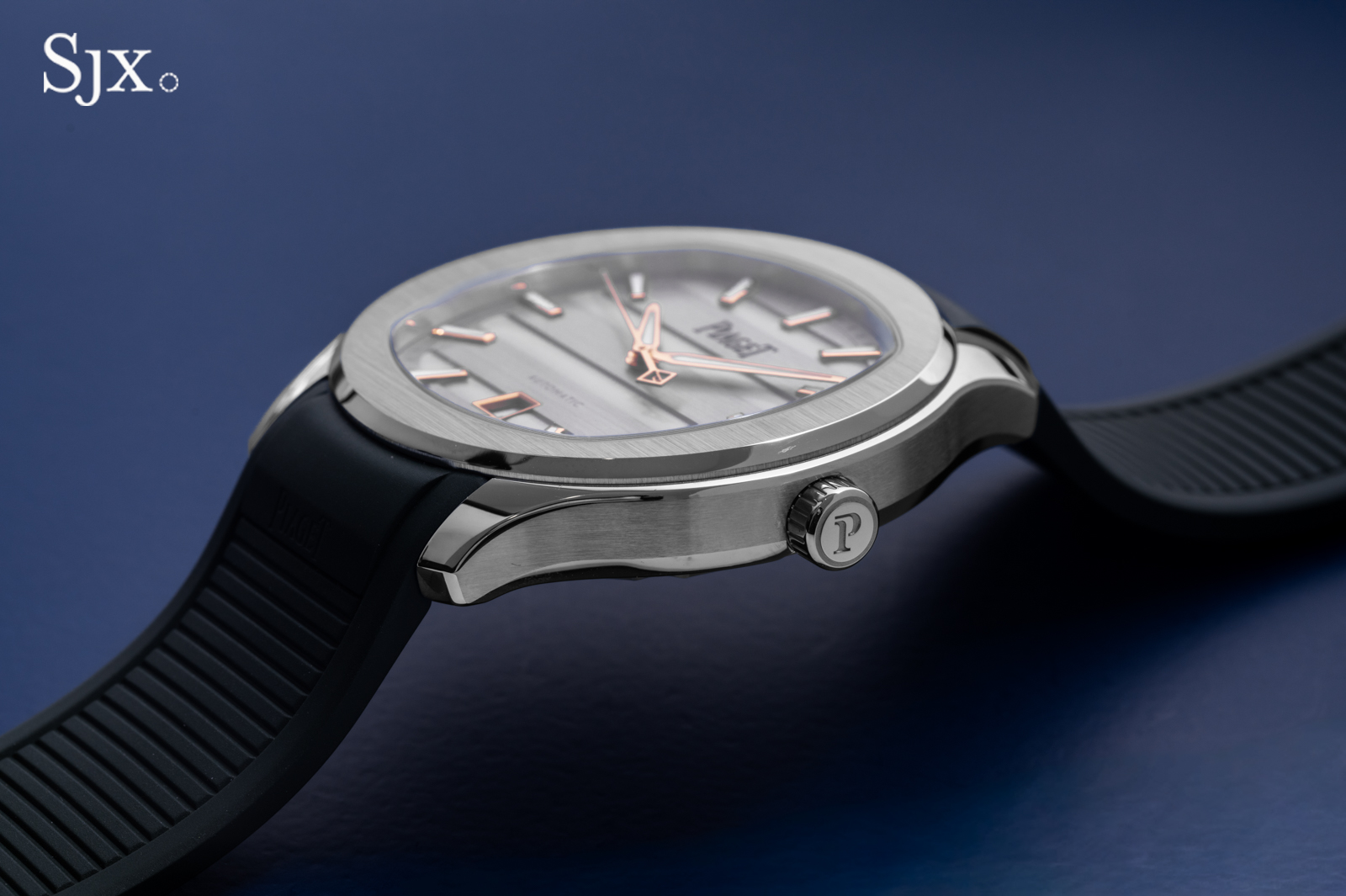
The Polo Signature succeeds in part thanks to its casual elegance — it’s slim enough to slide under a shirt cuff, but substantial enough to hold its own when paired with beach wear. Like the Patek Philippe Nautilus and Audemars Piguet Royal Oak, it’s a unisex design that works well in different sizes. The colour palette ranges from the familiar blue — an almost universal option among contemporary sports watches — to case-matched silver with appealing rose gold accents.
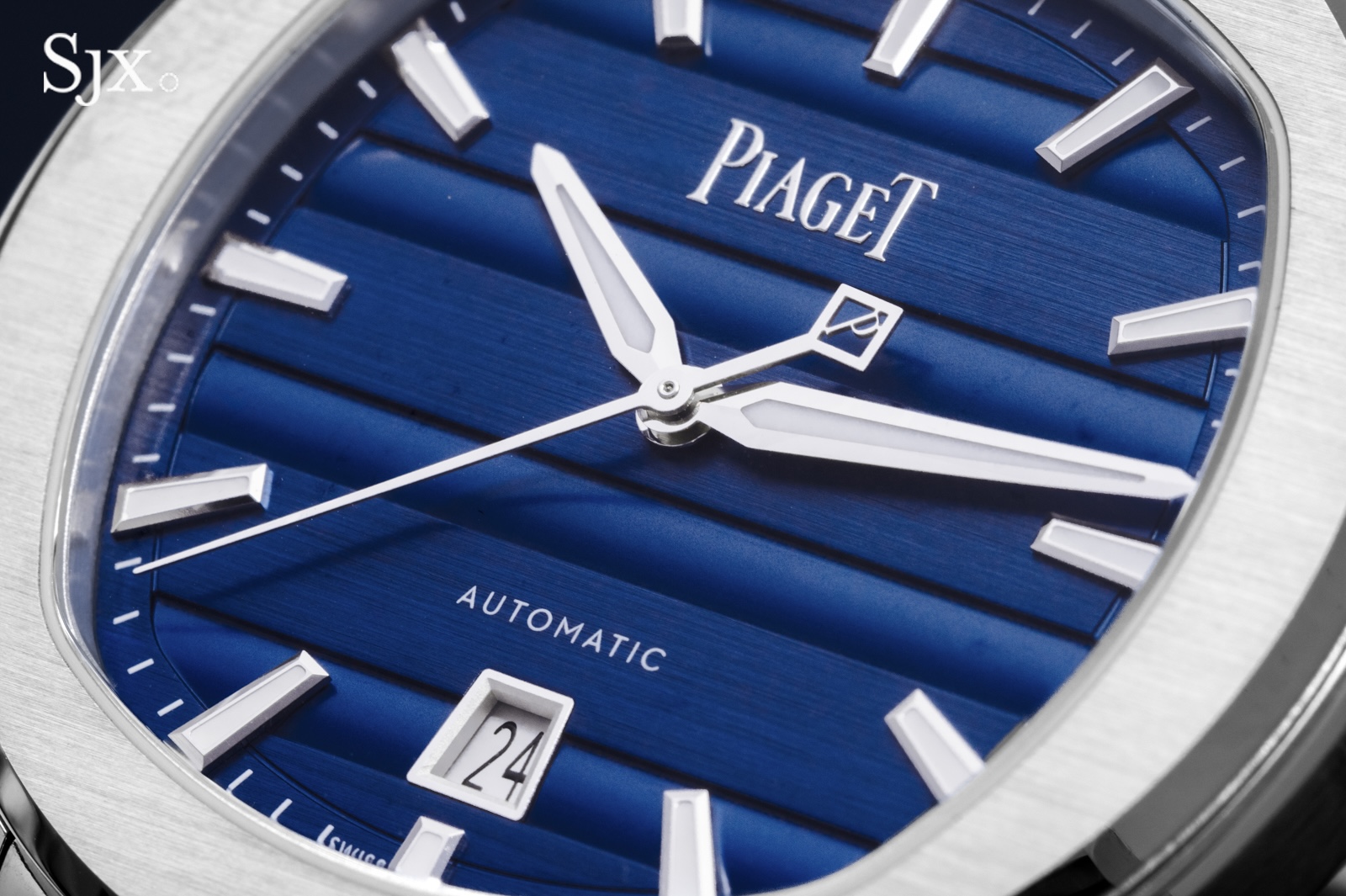
As befitting its luxury positioning, the case is dressed with alternating brushed and polished treatments, and sports a substantial 100 m water resistance rating, meaning it can be worn like a piece of jewellery in and out of the pool. The interchangeable bracelet — which detaches from the case without tools — can be easily swapped for a case-fitted rubber strap in seconds.
A coherent but discreet movement
Like the 2016 model, the Polo Signature Date is powered by the automatic cal. 1110P, derived from the cal. 800P introduced in the early 2000s. It is a proven and reliable in-house movement, measuring just 4 mm thick – relatively slim for a standard automatic movement. The movement is decorated with circular Côtes de Genève on the bridges, perlage on the base plate, and a slate grey-coloured oscillating weight engraved with the charming Piaget coat of arms.
While the movement finishing is largely representative of the industrial-haute horlogerie segment, the rotor engravings are a cut above industry norms, with remarkably crisp borders for both the crest and the Piaget wordmark.

The in-house cal. 1110P, seen here in the Polo S.
While this in-house movement reflects Piaget’s legitimacy as a manufacture, it is not the differentiating element of the watch. Although the brand has a strong heritage in thin (and ultra-thin) watchmaking, this mechanical expertise is not the main focus here and remains a supporting element, secondary to the Polo Signature’s elegant design.
This is consistent with Piaget’s long-term strategy. From the earliest days of the Polo, the collection has emphasised design and craftsmanship first and selected the movement — whether quartz or mechanical — best suited to bring the design concept to life. With the Polo Signature, Piaget continues in that direction, placing greater emphasis on elegance over mechanics, in line with its “Extraleganza” concept. In doing so, it also echoes Yves G. Piaget’s well-known definition of the 1979 Polo as a “bracelet watch” rather than merely a wristwatch.
Key facts and price
Diameter: 42 mm
Height: 9.4 mm
Material: Stainless steel
Crystal: Sapphire
Water resistance: 100 m
Movement: Cal. 1110P
Functions: Hours, minutes, seconds, date
Winding: Automatic
Frequency: 28,800 beats per hour (4 Hz)
Power reserve: 50 hours
Strap: Stainless steel bracelet or interchangeable rubber strap
Limited edition: No
Availability: Now at Piaget boutiques and retailers
Price: US$16,200 (bracelet), or $14,000 (rubber strap) excluding taxes
For more, visit Piaget.com.
This was brought to you in partnership with Piaget.
Back to top.