
Sylvain Pinaud Returns with 30-Second Tourbillon
High-speed high horology.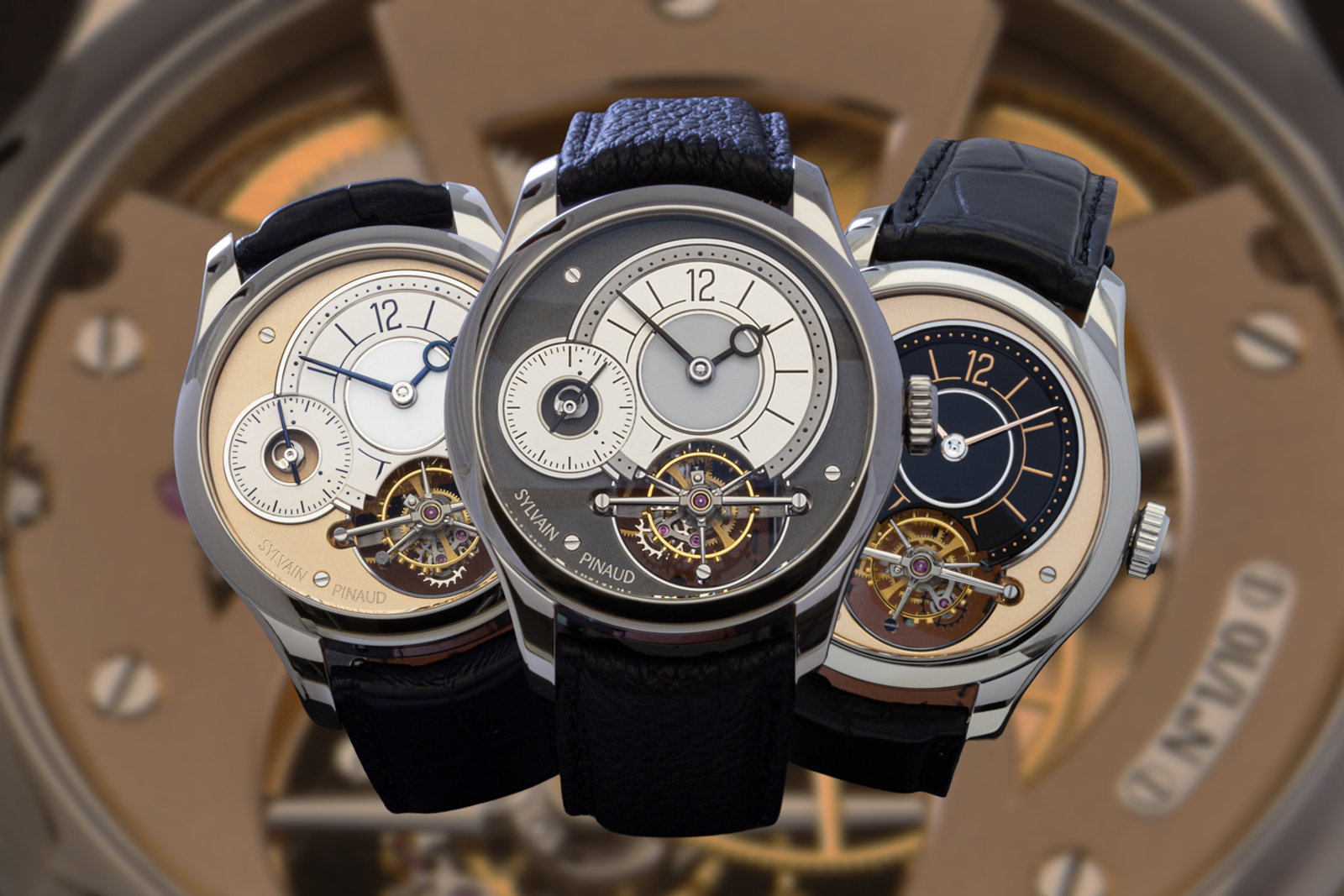
With wind in his sails following the successful Origine series, independent watchmaker Sylvain Pinaud returns with his most ambitious project yet, the succinctly named Tourbillon. The watch looks and feels a lot like its time-only predecessor, but the movement is in fact completely different, with twin mainspring barrels and a fast-rotating 30-second tourbillon.
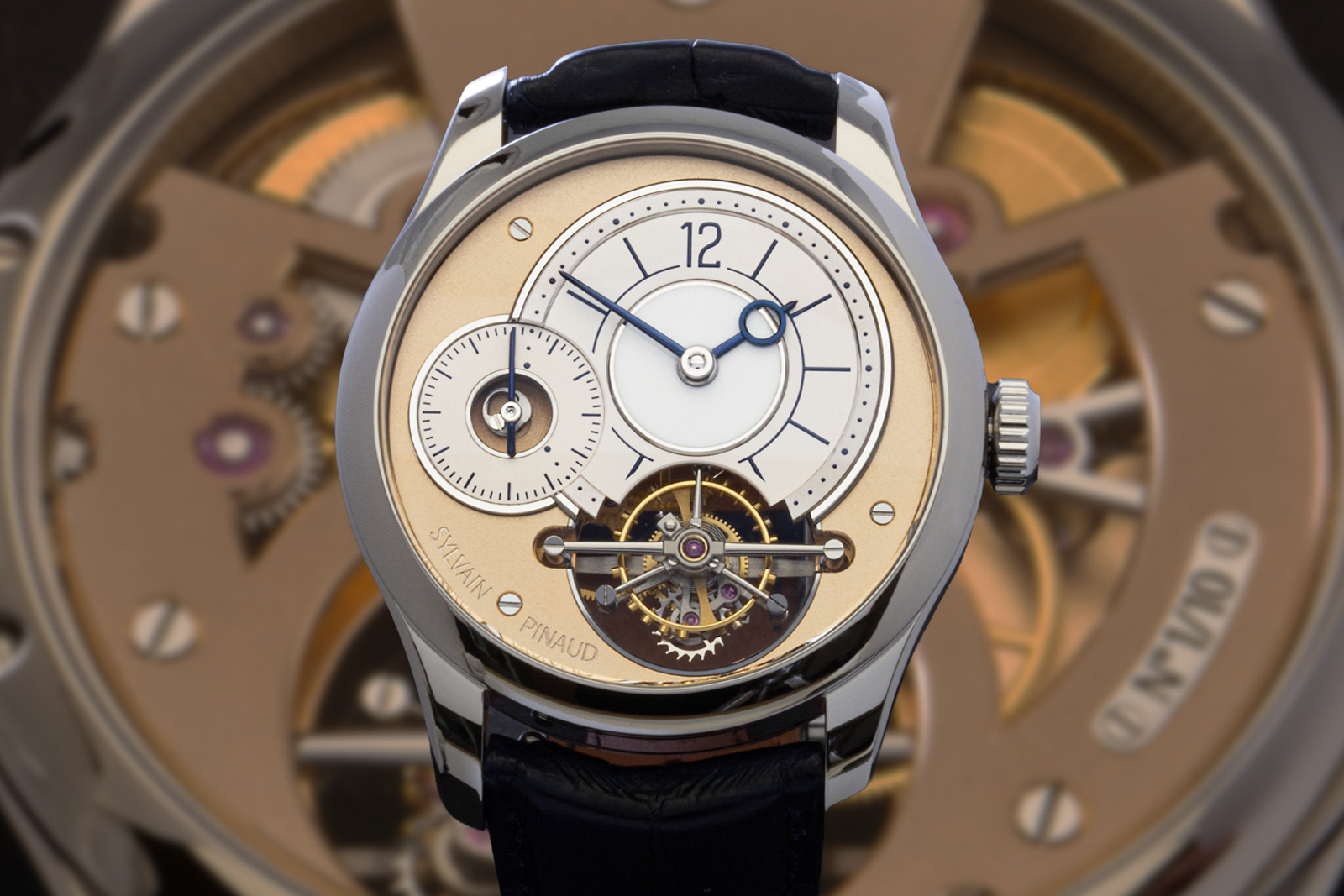
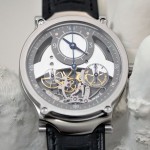
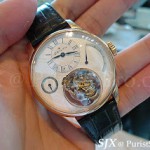
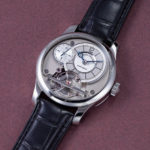
The Tourbillon in platinum with a white agate dial.
Initial thoughts
Appetite remains strong for high-end time-only watches, but the leading independents are increasingly leaving simplicity behind and treating their collectors to additional complications. Mr Pinaud’s Tourbillon exemplifies this shift.
Despite the greater complexity of its movement, the Tourbillon is no larger than the simpler Origine. In fact, it’s about 1 mm smaller in diameter. That’s impressive considering it fits an extra mainspring barrel and adds a zero-reset seconds functionality to its namesake tourbillon.
This latter functionality — specifically its heart cam — is on full display through an opening in the running seconds sub-dial at nine o’clock.
But its the 30-second tourbillon that gives the watch its name, and which warrants special scrutiny. Fast-rotating tourbillons — which rotate more quickly than once per minute — are quite rare. They require more energy and greater care in assembly, since they almost invariably use lighter components.
In the case of the Tourbillon, the slender three-armed cage is made of titanium, resulting in a structure that’s about 20% lighter than it would otherwise be, according to Mr Pinaud. This pays dividends in terms of power reserve, which is a substantial 100 hours.
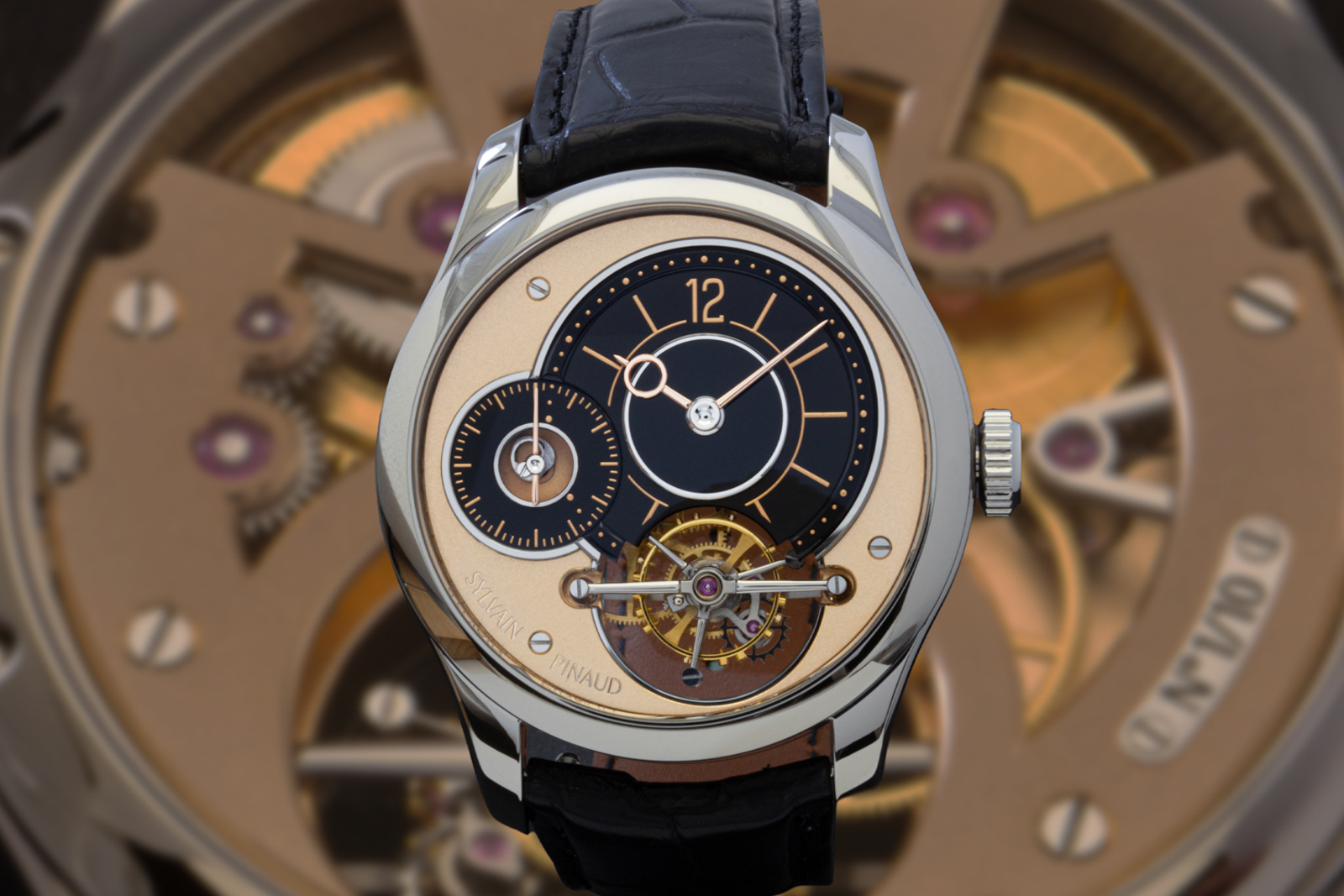
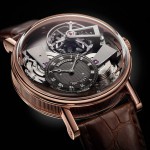
The Tourbillon in platinum with a black dial.
While not record setting, the rotational speed of the cage is more than enough to differentiate the Tourbillon from most of its peers — side by side, the difference between a 30-second tourbillon and a one-minute tourbillon is quite obvious.
The CHF180,000 asking price is more than double that of the similar-looking Origine, but the quality of the work on display is arguably worth it in a market that puts a premium on rarity, complexity, and hand craftsmanship.
Three configurations
The Tourbillon is available in three distinct 10-piece limited editions. The lightest of the trio features a titanium case — and movement — and a contemporary silver-and-grey livery with a white agate dial. Agate is increasingly popular, used by both Raúl Pages and David Candaux, offering the milky white look of enamel with the earthy magic of natural stone.
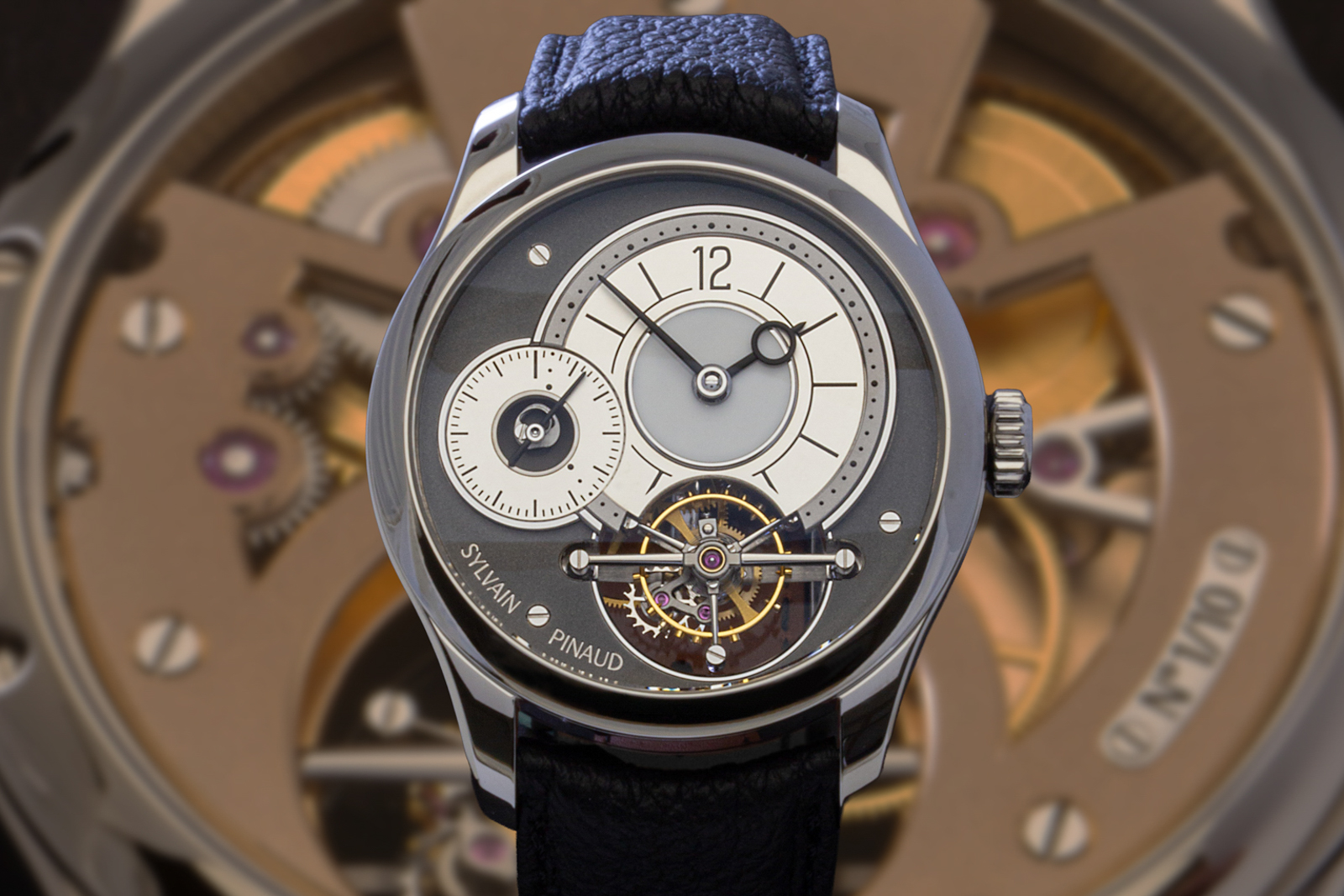
The Tourbillon in titanium.
The other two editions feature a platinum case and German silver bridges, as well as more traditional colourways.
While the choice between the platinum editions will come down to looks alone, the all-titanium edition will wear completely differently, weighing in at just 39 g compared to the platinum models’ 105 g.
An architectural design
The Tourbillon’s design closely echoes that of the Origine, with the same offset time display and exposed oscillator. This visual similarity results in a pleasing sense of cohesiveness, but it might also be a drawback — many will likely mistake the Tourbillon for an Origine.
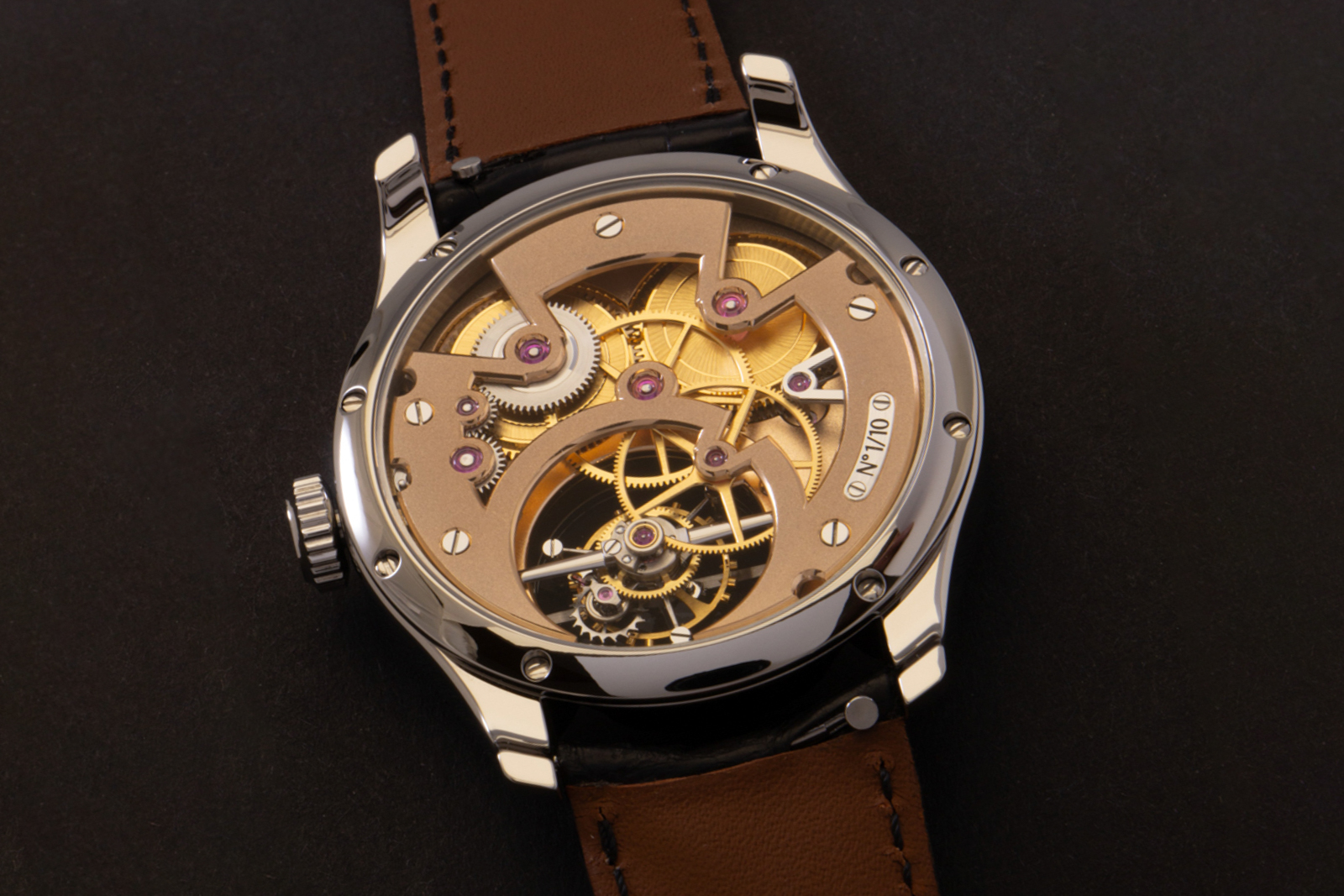
Interestingly, while the front of the watch looks similar to that of the Origine, the view through the case back could hardly be more different. Gone is the solid plate and its singular barrel, along with — thankfully — the strange vacant area underneath the dial-side balance wheel.
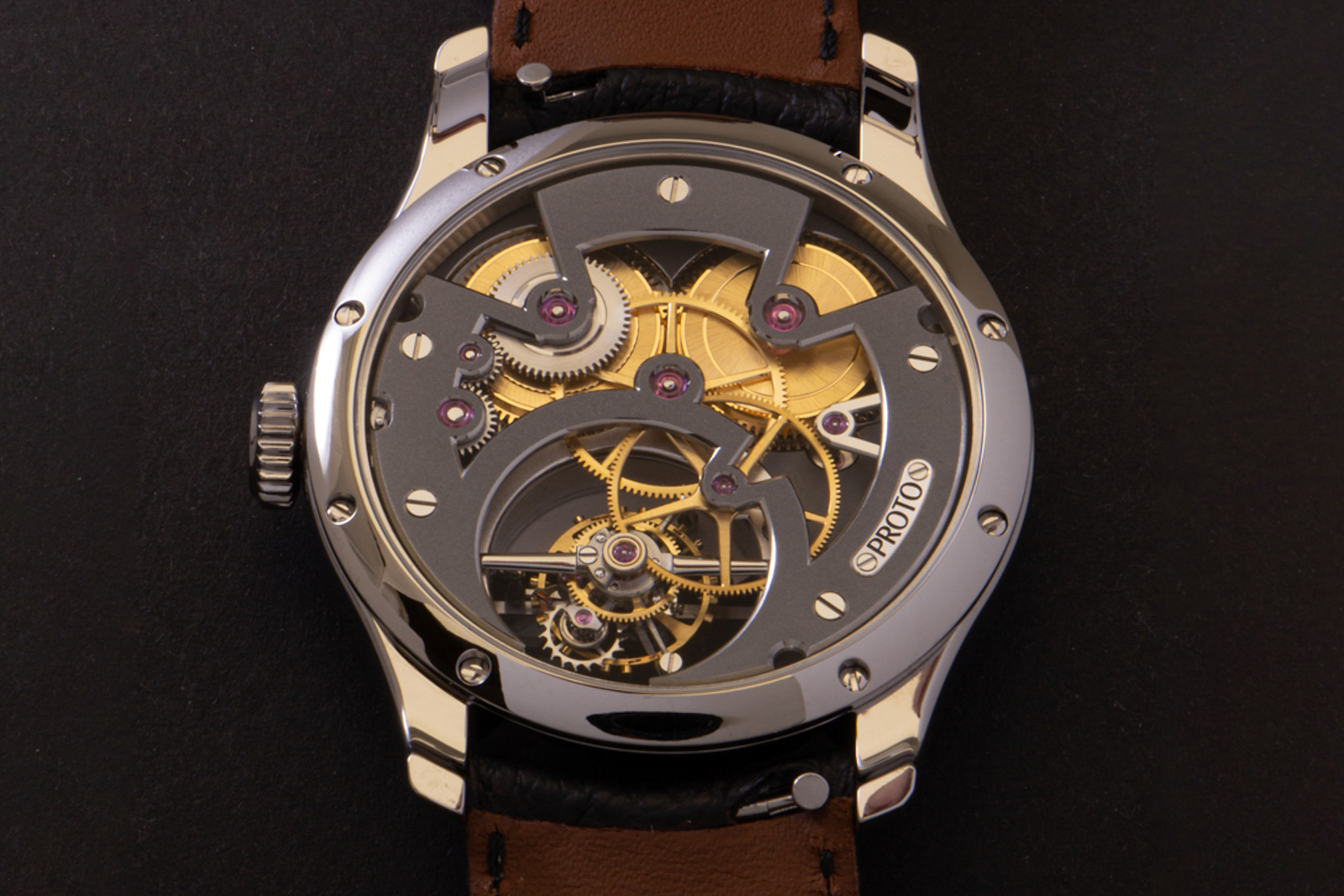
The titanium Tourbillon features lightweight titanium bridges in the movement.
Instead, the Tourbillon features twin mainspring barrels supported by an open-plate architecture. The view through the case back is substantially improved by these changes, which reveal a number of thoughtful and attractive details.
For one thing, the moving parts are characterised by their architectural lightness, giving the entire movement a refined and elegant appearance. For example, the wheels of the going train are quite large, but appear very light due to their slender tapering arms and thin rims.
Likewise, the tourbillon components, both those visible from the front as well as the back, are open and airy, suggesting a keen understanding of the forces at play inside the movement.
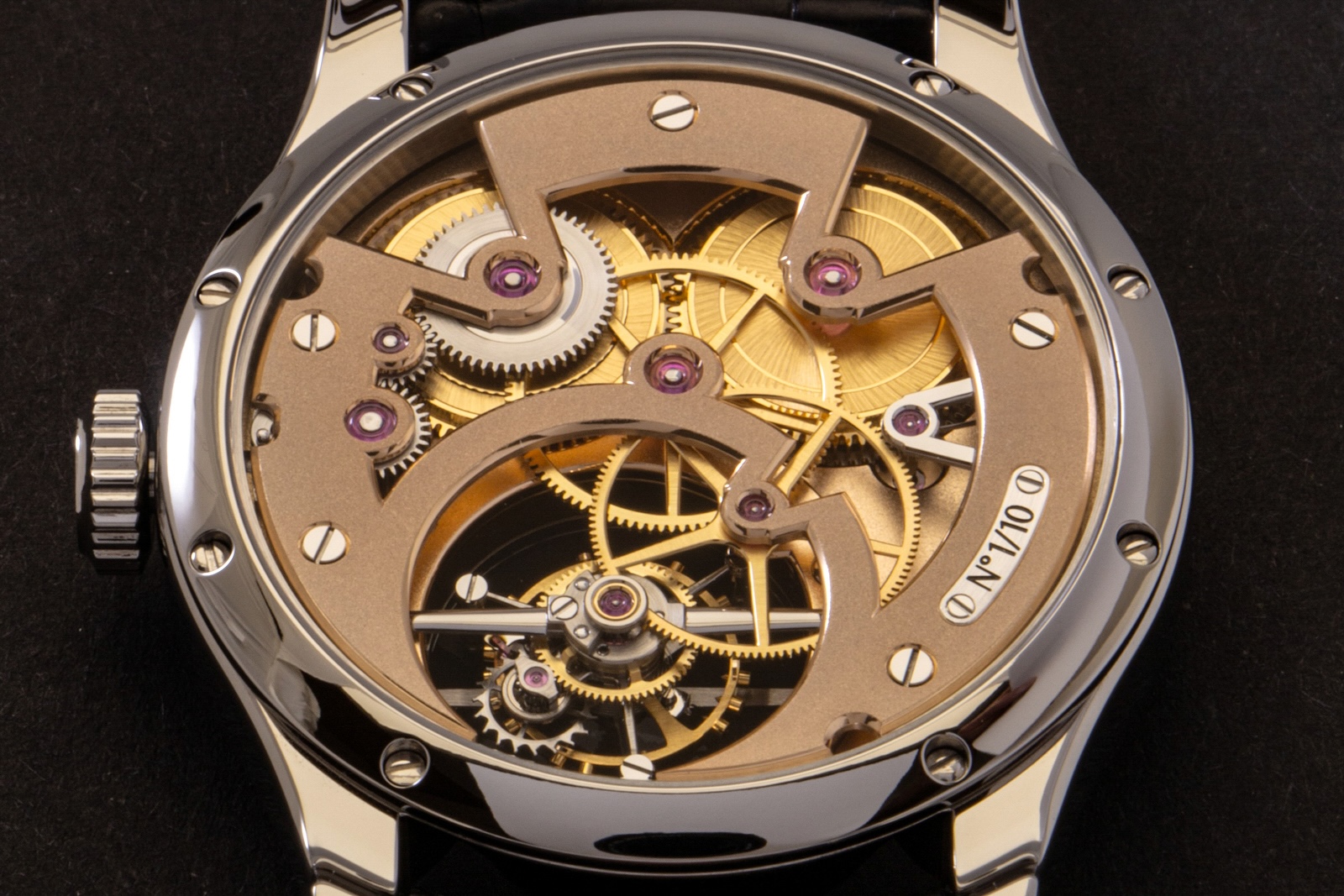
The platinum editions feature gilded German silver plates and bridges.
The openworked bridges are just as impressive. While the over-emphasis on inward angles has become somewhat tiresome, the Mr Pinaud’s Tourbillon exemplifies why these seemingly small flourishes are so prized to begin with.
The bridges are shaped to create several attractive intersections that demonstrate mastery of anglage on both straight and curved surfaces.
Key facts and price
Sylvain Pinaud Tourbillon
Diameter: 39 mm
Height: 11.2 mm
Material: Titanium or platinum
Crystal: Sapphire
Water resistance: 30 m
Movement: Tourbillon
Functions: Hour, minute, and zero-reset seconds
Winding: Hand wind
Frequency: 21,600 vibrations per hour (3 Hz)
Power reserve: 100 hours
Strap: Leather with pin buckle
Limited edition: 30 pieces total
Availability: Direct from Sylvain Pinaud
Price: CHF180,000 excluding taxes
For more, visit Sylvain-pinaud.com.
Back to top.