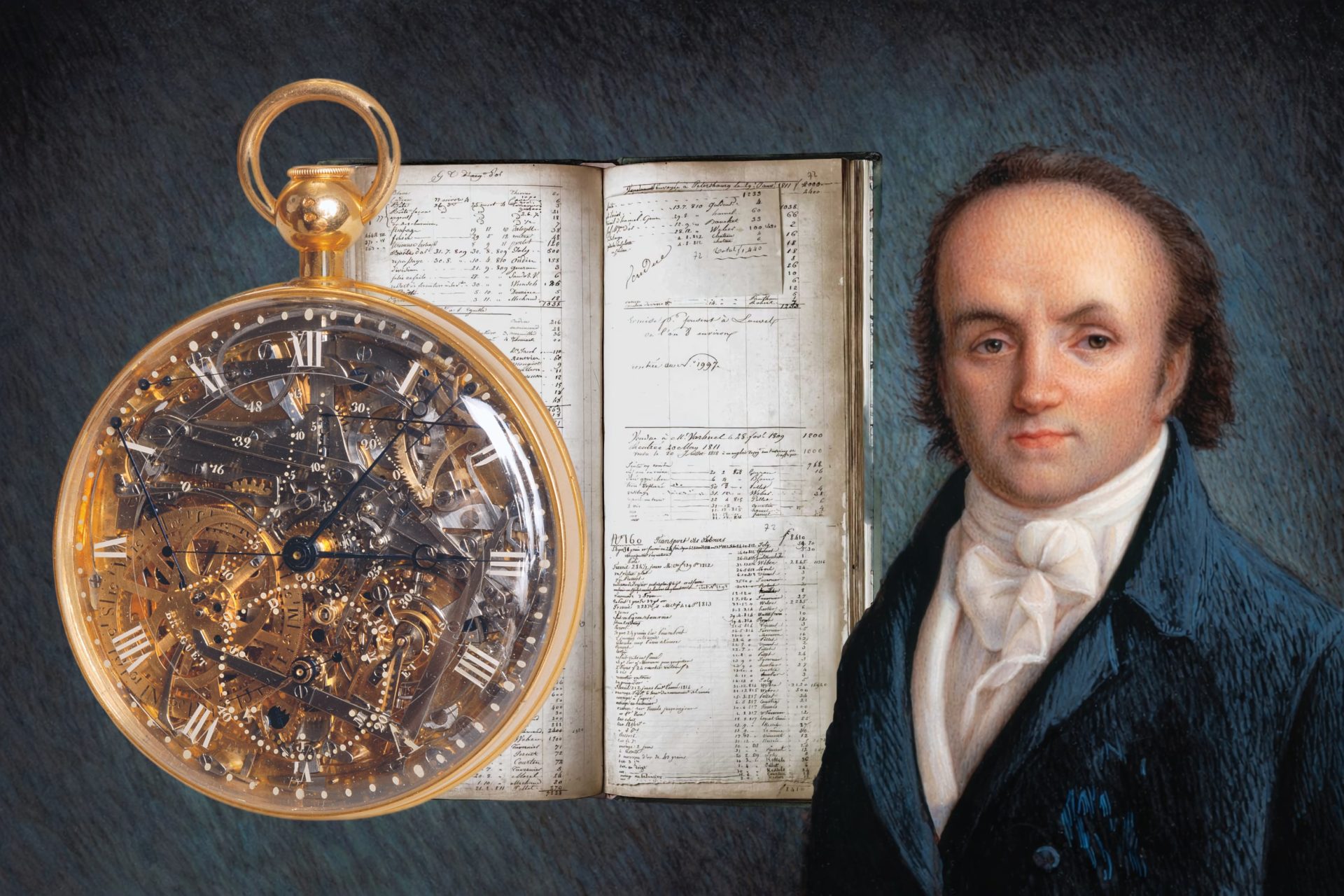
Abraham-Louis Breguet’s No. 160 exists first as legend. The standard account describes a secret commission for Marie Antoinette, incomplete when she faced execution, requiring forty-four years to finish. Theft, recovery, mystery, and royal romance: the narrative contains all the necessary elements of mythology.
Yet this fame is recent. From its 1783 inscription in the order books through the 19th century, the watch remained largely unknown outside the Breguet workshop but for a few private collectors. Only when Sir David Lionel Salomons acquired it, nearly 140 years later, did the wider horological world learn of its existence, thanks to his careful cataloging and the watch’s public exhibition in 1923. Salomons gave credit to Breguet’s mastery on a scale previously unrecognised, establishing No. 160 as the supreme example of complicated watchmaking and the prime masterpiece of its maker.
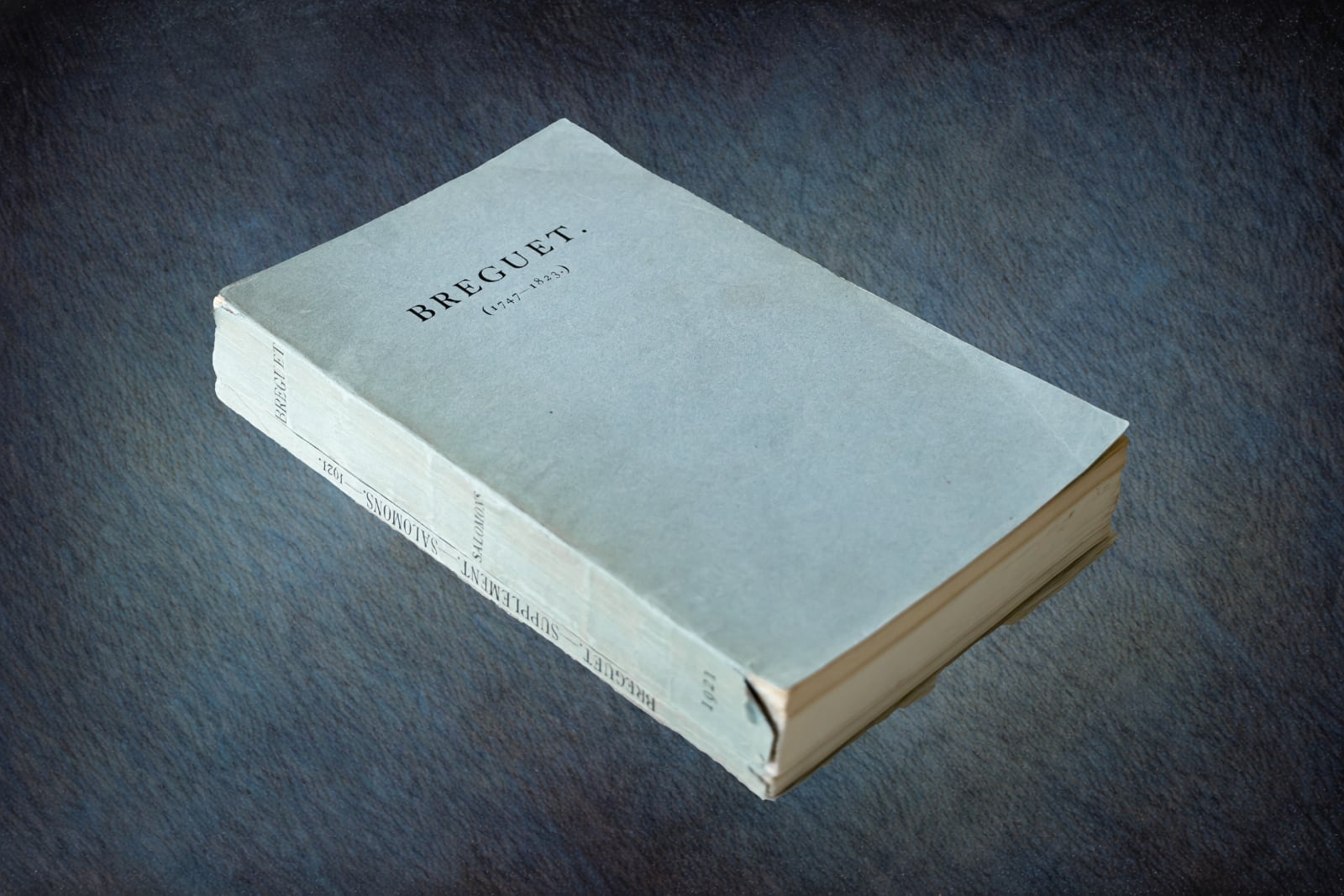
Sir David Lionel Salomons’s 1921 work on Breguet and the collection he assembled seems to be the first source to mention Marie Antoinette. Image SJX composite – Sotheby’s
Subsequently, many sources have reported that the commission demanded every known watch complication and that no time constraints or limits were placed on its design or cost. The workshop records, however, tell a story that differs from both obscurity and legend.
No. 160 appears in the 1783 order books as three words: “No. 160, Montre d’Or.” The entry stands alone, anonymous, unexplained and without context. From that documentary absence emerges a watch that changed fundamentally during the decades it remained under construction. What the cost records and technical interventions reveal is a mechanism that exists simultaneously in multiple eras of its maker’s history, a veritable palimpsest, written, erased, and rewritten, with earlier layers still visible beneath later interventions.
The watch that took forty-four years
In 1811, watchmaker Charles Merceron removed a perfectly functional escapement from the Breguet No. 160 and discarded it. Henry Jacob had fabricated that ruby cylinder escapement in 1787, twenty-four years earlier. At the time, it represented the best French solution available, a high-grade execution of the cylinder principle, efficient within the limits of its type. It performed its task with consistency.
The mechanism Merceron substituted was of an entirely different character: a so-called equal-lift lever escapement fitted with sapphire pallets, invented by Breguet and applied for the first time in 1802 in No. 1135, commissioned by the 13th Duke of Infantado, Pedro de Alcántara Álvarez de Toledo y Salm-Salm.
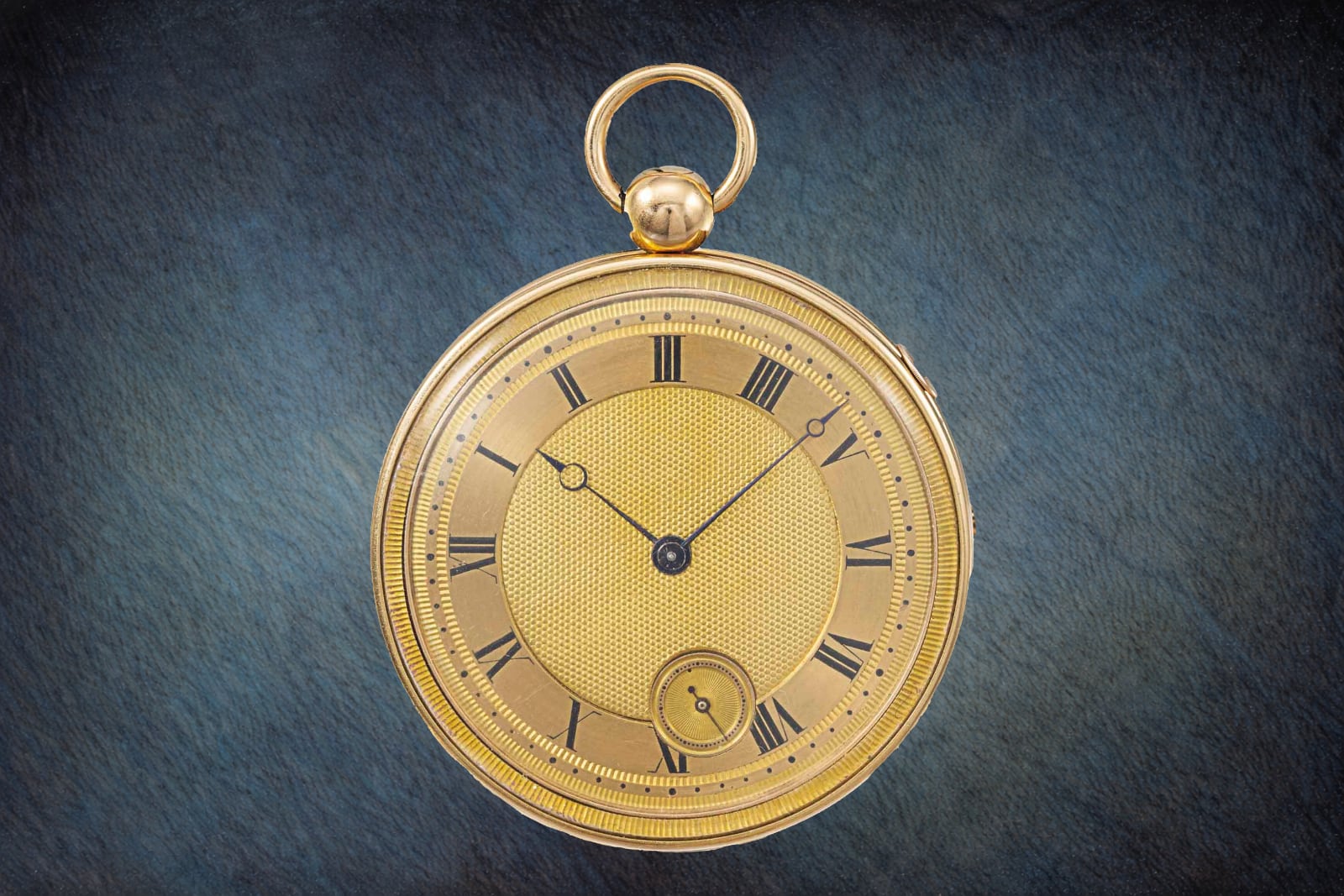
Breguet No. 1135, sold in 1806 to Le Duc de l´Infantado. It was Breguet’s first watch to include a equal-lift lever escapement. Image SJX composite – Christie’s
The sheer depth of this intervention turns obvious when the escapement’s role is stripped to its essentials. It acts as the gatekeeper of the mainspring’s energy and provides the vital impulse to the balance, effectively establishing the environment in which regulation occurs. Consequently, replacing it is never a simple matter of swapping, since the process requires a full teardown of the movement to rework the train geometry and integrate a new regulating organ. It is, in every sense, a surgical procedure since the movement’s identity remains, even as its physiological core is entirely transformed.
In that same year, 1811, English jewelling specialist James Hooker, now working in Paris, installed 63 sapphire jewel bearings throughout the movement, a figure that surpassed the jewel-count of even the finest marine chronometers. Not to be outdone, François-Pierre Courtin produced a new, compensated balance with double pare-chute shock protection, replacing the earlier, simpler balance arrangement.
From 1812 to 1815, Michel Weber devoted 725 hours to the adjustment, regulation, and reconciliation of these new features with the rest of the watch. The records preserve both the duration and the payment, 7,250 francs, a sum that exceeded Hooker’s fee by more than an order of magnitude and was consistent with the annual earnings of an accomplished master craftsman.
The work carried out in 1811–1815 reads as a programme of rebuilding carried out with techniques unavailable when the project began. This marks the boundary between finishing and rebuilding, and motive becomes the critical question.
Three words
In the Breguet order books for 1783, between entries associated with commissions for the Comte de Lort and the Duc de Praslin, a terse notation appears: “No. 160, Montre d’Or” (Gold watch). No client name accompanies the entry, a sharp contrast with the way other major commissions are recorded, like, for example, “No. 1, Duc d’Orléans,” “No. 92, Duc de Praslin,” “No. 5, Comte de Golovkine.” No. 160 appears without patron, without explanation, without framing. The order books offer no surviving specification details. Deposits, payments, correspondence, and instructions remain absent from accessible records.
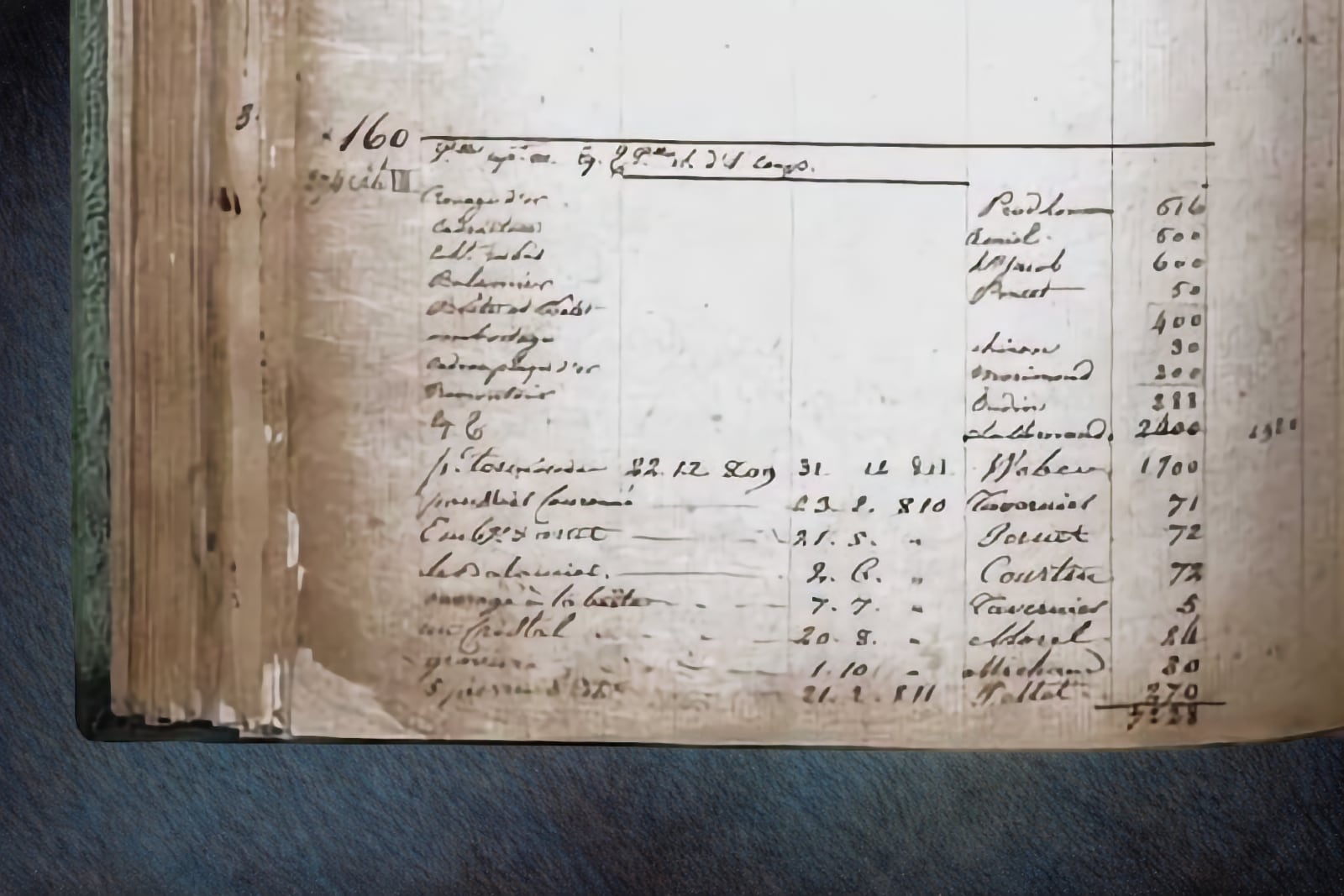
Breguet’s ledger entry for the “No. 160, Montre d’Or”. Image SJX composite – Montres Breguet
But workshop records and comparative study still permit a reconstruction of what the Breguet atelier could plausibly have planned and attempted in 1783. At that moment, Breguet’s workshop already had a proven repertoire of advanced mechanisms. A minute repeater employing gong springs, replacing bells with coiled steel wire, offered a clearer sound with a more compact mechanism, and a self-winding system, the perpétuelle, had moved beyond the experimental stage and into commercial reality.
Calendar work with a retrograde display, showing the date, month, and day, was also within the workshop’s competence. Independent seconds with dead-beat action, combined with extensive use of gold in the construction, represented some of the workshop’s best capabilities.
In other words, there’s little to suggest that No. 160’s final slate of complications, which would have stretched the limits of portable horology in 1783, was planned from the beginning. That said, a complete watch on these terms could probably have been finished within a decade under stable conditions. Records, however, show a different outcome, with completion arriving decades later, after 44 long years.
The revolutionary gap
In 1789, the Bastille fell, and by 1793, Breguet´s friends could no longer protect him; he left Paris for Switzerland, preserving his life and the continuity of his practice as the Terror intensified. His workshop carried on under supervision, yet the social and economic base that supported his watchmaking art — aristocrats, courtiers and other wealthy patrons — had collapsed under pressure.
During his exile and the early years of return, the workshop confronted technical problems which demanded new solutions. One of the most consequential was the perpetual calendar, a mechanism capable of accounting mechanically for varying month lengths and leap years through a forty-eight-month programme cam. George Daniels’s chronology places Breguet’s first use of a perpetual calendar in 1795, a date that matters because it sets a clear boundary between what a 1783 commission could specify in detail and what would only became possible later on.
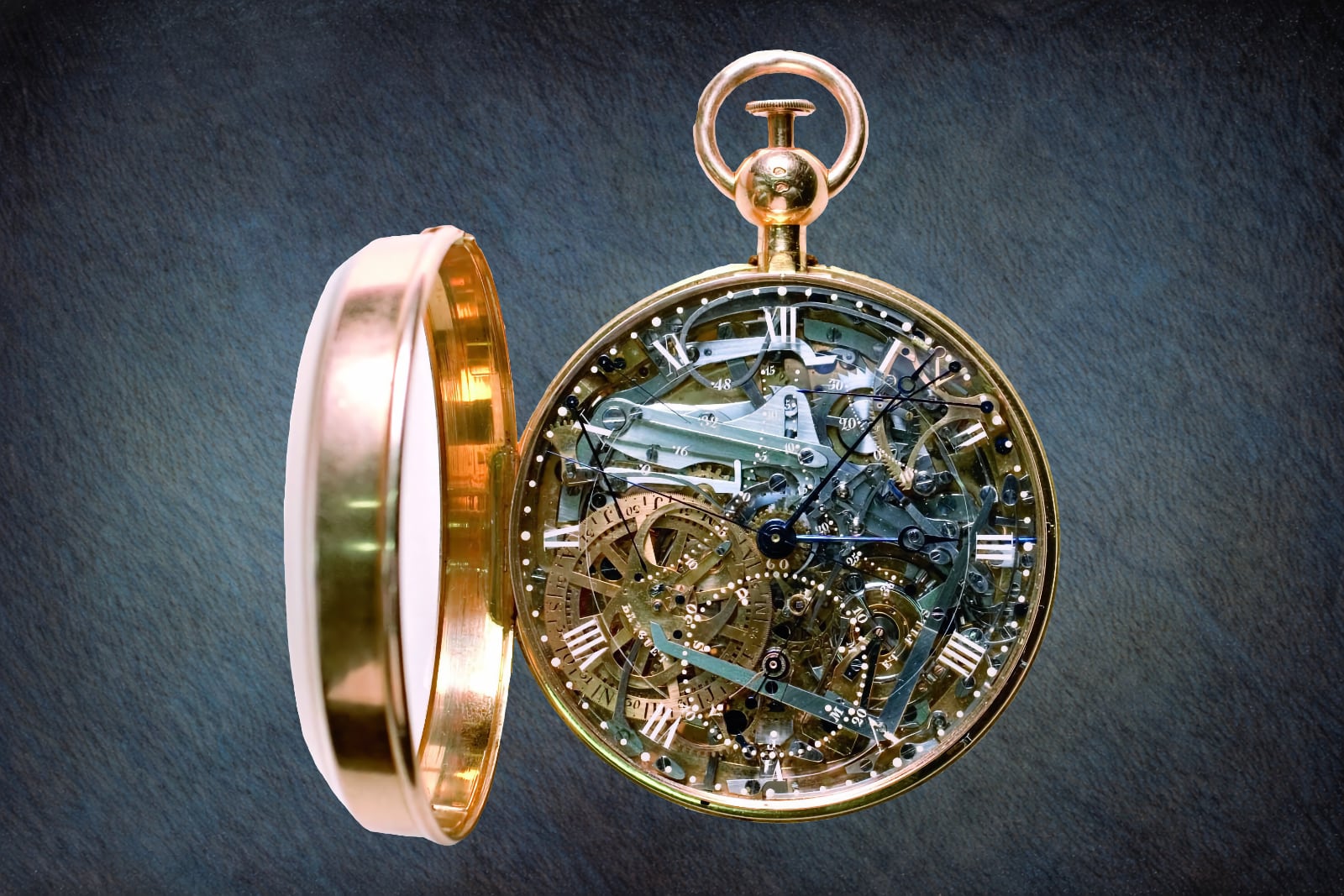
The Breguet “No. 160, Montre d’Or” showing the transparent dial revealing the complex movement underneath. Image SJX composite – L.A.Mayer Museum for Islamic Art, photo by Avshalom Avital.
The completed No. 160 contains features characteristic of later technical regimes. Pare-chute shock protection is dated to 1790 by Daniels. The equal-lift lever escapement, although rooted in earlier principles, reaches stable workshop execution much later, with Daniels noting continuing difficulties in manufacture in the early 1790s. Extensive jewelling on the scale seen in No. 160 relied on hard-stone drilling and fitting practices, for which English execution enjoyed a clear advantage until the early 19th century.
The finished watch incorporates all of these then-cutting-edge details. The mechanism completed in 1827, therefore, differs in fundamental ways from what was possible at the outset of the project, making it unlikely that it was specified as delivered.
Theseus’s Paradox
The workshop records for the period between 1811 and 1815 describe a coordinated campaign aimed at No. 160’s core timekeeping system. Three specialists worked in parallel on escapement, jewelling, and balance.
For his part in the effort, James Hooker earned 619 francs. Hooker’s English background is of particular relevance. By 1810, English watchmakers had refined hard-stone drilling beyond the routine reach of many Paris workshops. Bow-driven drills with diamond-dust-charged wire permitted repeatable production of accurately-drilled jewel holes, and the fitting practices around those holes, polishing, setting, and burnishing, were likewise highly developed.
Hooker installed 63 sapphire jewels throughout No. 160. For scale, quality timepieces often carried 15 jewels, grand complications might reach twenty to 25, and premium marine chronometers typically remained well below this figure. Clearly, a jewel-count of 63 placed No. 160 beyond normal practice.
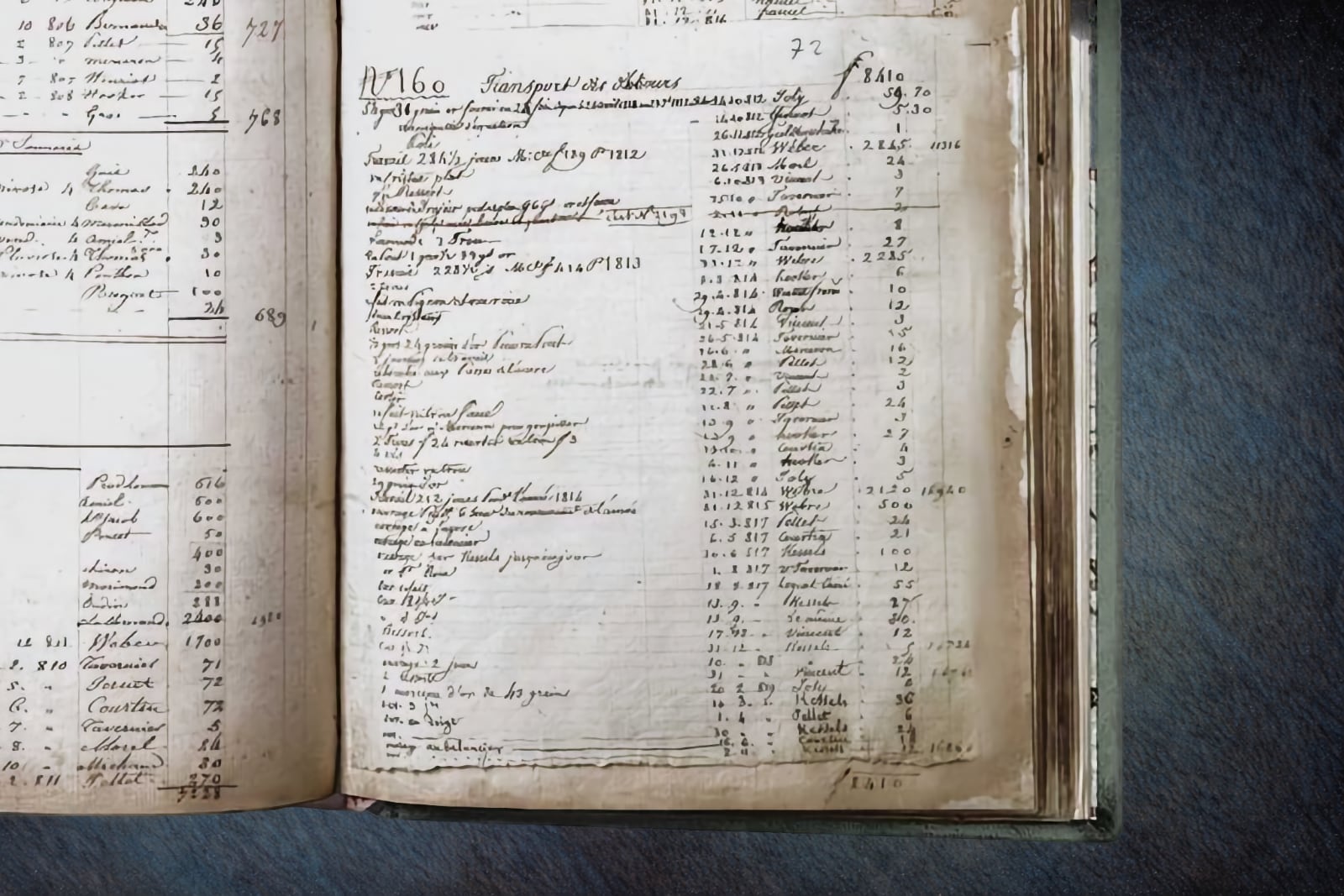
Breguet’s supplementary ledger entry for the “No. 160, Montre d’Or”. Image SJX composite – Montres Breguet
The purpose was functional since jewels reduce friction at pivot points, and polished sapphire against polished steel offers lower resistance than brass-on-steel. In a self-winding watch that expends power on its calendar work, equation-of-time indication, and repeating trains, friction reduction is of utmost consequence.
While Hooker worked on jewelling, Charles Merceron produced the equal-lift lever escapement, Breguet’s refined execution of the lever principle first established by Thomas Mudge in 1754. The goal was efficiency through geometry, forming the impulse to minimise sliding friction during energy transfer.
The intervention required removing Jacob’s 1787 ruby cylinder. By 1811, the lever escapement offered advantages such as lower friction at impulse, improved amplitude, better positional stability, and greater chronometric potential.
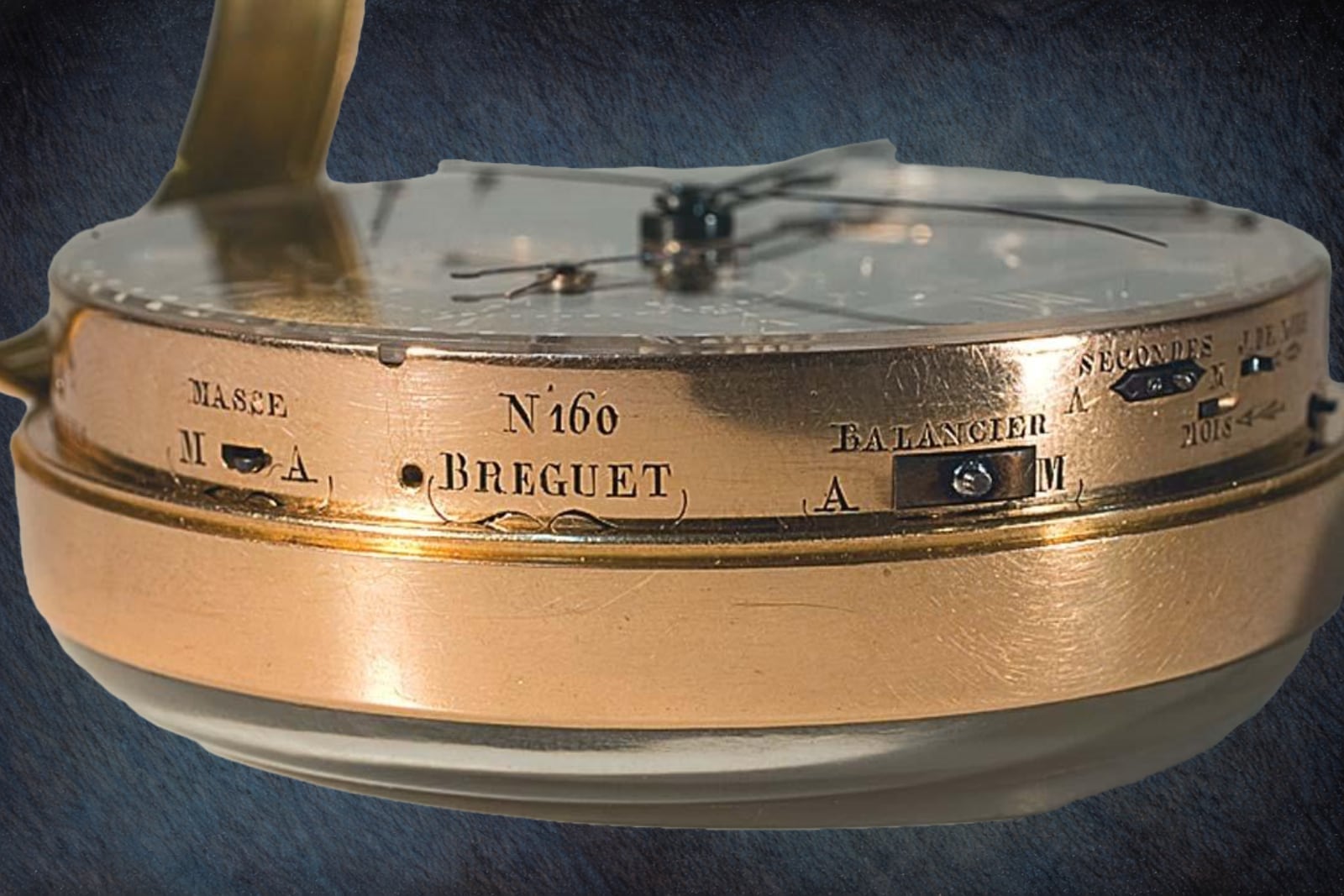
A rare side view of the case of “No. 160, Montre d’Or” with open front lid. Image SJX composite – Montres Breguet
Yet lever escapements require high-quality, carefully shaped, and precisely positioned jewel pallets. This ties Merceron’s work directly to that of Hooker. An equal-lift lever executed at this level depends on the same hard-stone competence that enables extensive jewelling. The sapphire pallets form part of the overall jewel count.
The then-novel escapement was paired with a new oscillator produced by François-Pierre Courtin. He built a thermo-compensated balance with a bimetallic rim to counter the balance spring’s temperature-dependent elasticity. A work whose aim was the stability of rate across ordinary temperature variation. The balance design also had to meet escapement requirements, since a cylinder escapement and a lever escapement differ in impulse delivery, timing and amplitude behaviour.
With these upgrades in place, the movement’s governing system becomes, in effect, a product of 1811 know-how. In other words, the functional centre of No. 160 reflects that year, not 1783. Theseus’s Paradox would question whether it was still the same watch at all.
Bringing it all together
From 1812 to 1815, as France passed through military collapse, coalition war, abdication, the Hundred Days, and Waterloo, régleur Michel Weber worked on No. 160. The records preserve the figure of 725 hours and the payment of 7,250 francs.
A watch contains interdependent mechanisms, each responsive to the behaviour of the others. The perpetual calendar must advance at the correct moment of midnight transition for coordination with other programmed indications. The equation-of-time reading depends on the correct relationship between the cam and the displayed mean time. The power reserve must be accurately indicated throughout the wind and unwind cycles. The repeating work must strike the time shown. The independent seconds must engage and disengage cleanly without disturbing the rate.
Testing goes beyond function into position. Dial up, dial down, pendant up, pendant left, pendant right: each introduces different gravitational loads on the pivots and changes the frictional behaviour. Weber’s work implies systematic trials across positions and across combined states, including edge cases where two events coincide, such as a repeater activation during a calendar change at midnight. Interference, safety, clearance, and rate stability must all be confirmed through repeated testing.
The financial records for the intervention that began in 1811 testify to the comprehensive nature of the upgrades. Adding up the fees paid to Hooker, Merceron, Courtin, and Weber adds up to approximately 10,000 francs — more than half the total documented construction cost of 17,070 francs.
The palimpsest
When Antoine-Louis Breguet declared No. 160 complete in 1827, four years after his father’s death, the watch contained technologies spanning decades.
Elements rooted in the 1783 horizon include the gong-spring minute repeater, the perpétuelle self-winding system, the equation-of-time system encoded through an annual cam, and extensive gold componentry.
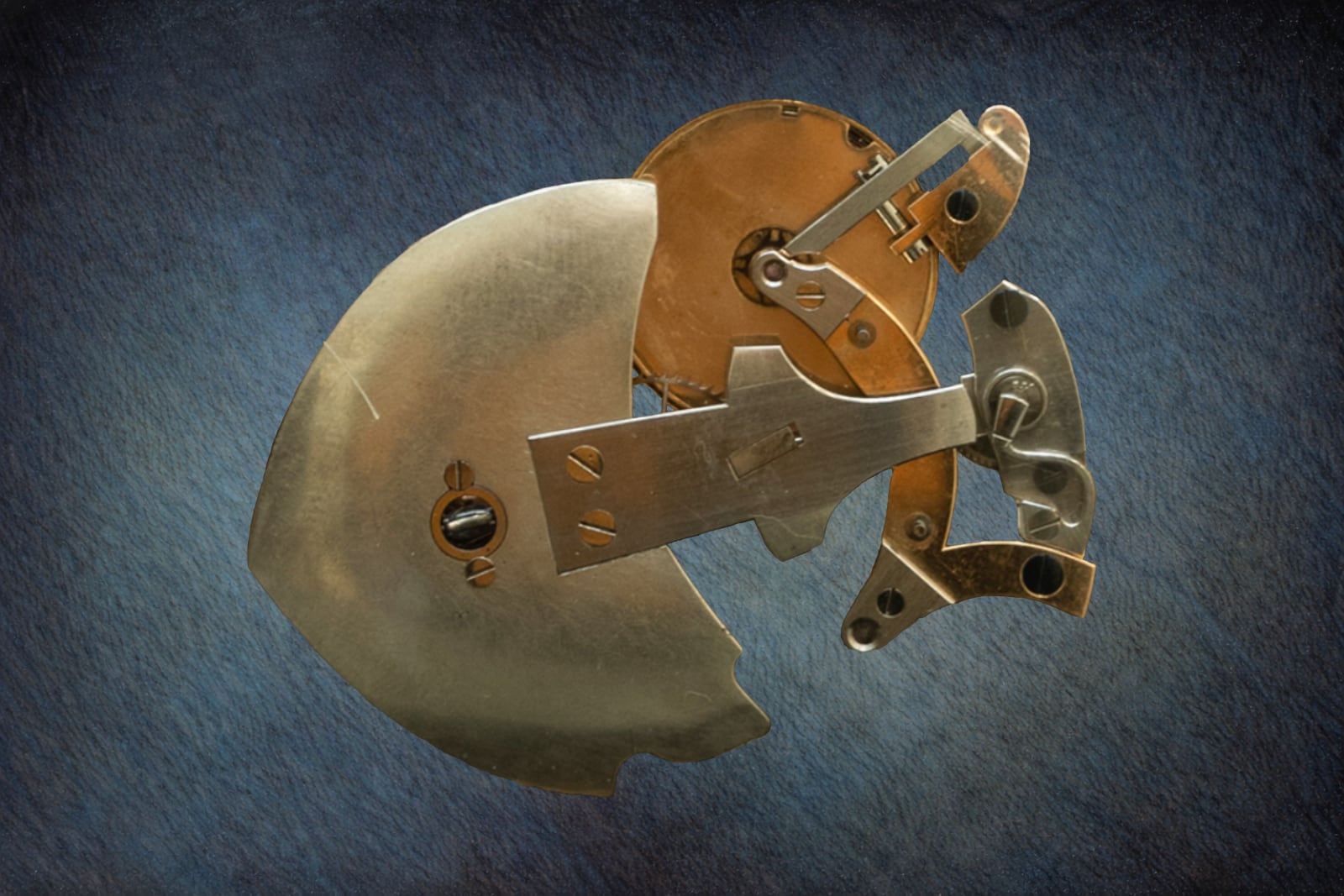
Breguet´s “No. 160, Montre d’Or” perpetuelle system with pare chute and oscillating mass in platinum. Image SJX composite – L.A.Mayer Museum for Islamic Art, photo by Avshalom Avital.
Elements associated with later practice include the pare-chute shock protector, the perpetual calendar with a 48-month programme cam, a detached lever escapement with sapphire pallets, a temperature-compensated bimetallic balance, and 63 sapphire jewel bearings. The oscillating weight may have also been upgraded from gold to higher-density platinum at some point.
Palimpsest is the right term for this structure. A manuscript palimpsest carries new writing laid over older text, with earlier traces still visible beneath. Similarly, No. 160 carries early solutions overwritten by later interventions, and the earlier layers persist legibly in the object’s logic and structure.
The Marie Antoinette question
For more than a century, No. 160 has carried the label “the Marie Antoinette watch,” commonly framed as a commission from someone in her circle — some speculate it was Count Axel von Fersen. According to legend, the watch was undelivered because the Queen’s execution preceded its completion.
This story appears widely, repeated across publications, museum catalogues, and auction records. Even George Daniels includes it in his own retellings.
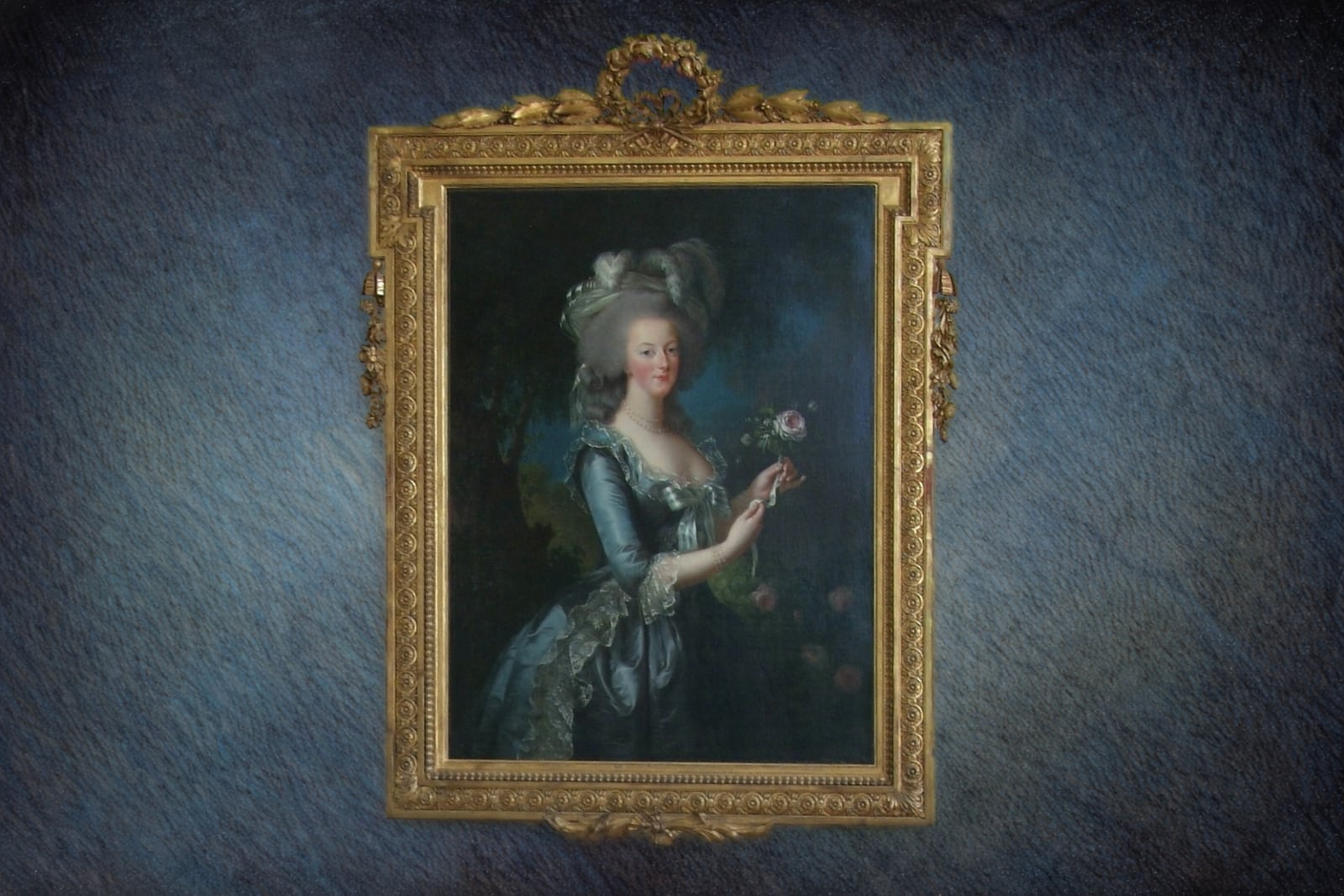
1783 Portrait of Queen Marie Antoinette by Élisabeth Vigée Le Brun, on display at the Petit Trianon. Image SJX composite – Montres Breguet
But primary documentation from the period offers no support for this theory. Recent scholarship by Bernard Roobaert tracked the attribution to its earliest known appearance, in Salomons’s 1921 publication on his Breguet collection, thus weakening the conventional pedigree narrative.
For decades, Salomons’s catalogue carried authority as the most complete reference work of its time, and later writers relied heavily on it. Salomons’s source, however, appears to have been a label in an antique dealer’s shop window.
Around 1920 or 1921, No. 160 appeared in Louis Albert Dessoutter’s shop in London, at 4 Hanover Street. Dessoutter, a French-born watchmaker and dealer, displayed the watch with a tag identifying it as having belonged to “Marie Antoinette”. Mr Roobaert’s assessment, based on correspondence and documentation, concludes that Dessoutter likely wrote the label Salomons saw, whether by a misunderstanding of earlier notices or through a commercial instinct to enrich the watch’s appeal.
The chain of reference becomes clear. Later writers cite Salomons. Salomons’s attribution traces to Dessoutter’s tag. The tag’s source remains unknown, and could have arisen from misreading, oral tradition, or salesmanship.
No primary source from 1783 seems to connect No. 160 to Marie Antoinette. The order book does not include any client name, which is unusual judging by the roster of noble names listed next to their commissions in elsewhere in the same ledgers. Workshop records through 1827 contain no royal link. The 1887 sale record to Brunton offers no such provenance.
One later workshop note, dated March 15, 1838, mentions a “Marquis de la Groye” depositing No. 160 for service, adding that he “had been a page to Marie Antoinette in his youth.” Even this detail fails to provide much clarity, since the man in question died six months earlier, in October 1837. The discrepancy invites several possible explanations: misdating, an executor acting in his name, or later interpolation of provenance commentary into the record.
Why forty-four years
The royal intrigue is arguably a distraction from No. 160’s self-evident horological significance. Completion of the watch took 44 years, whereas comparably complex timepieces often took no more than 5 to 10 years. This duration demands an explanation grounded in workshop behaviour, which points away from a straightforward client commission carried forward without interruption.
The technical record shows systematic upgrading incompatible with a fixed specification locked to 1783 practice, functional components replaced long after installation, later inventions integrated into the watch, and a high-cost transformation campaign undertaken decades into the project.
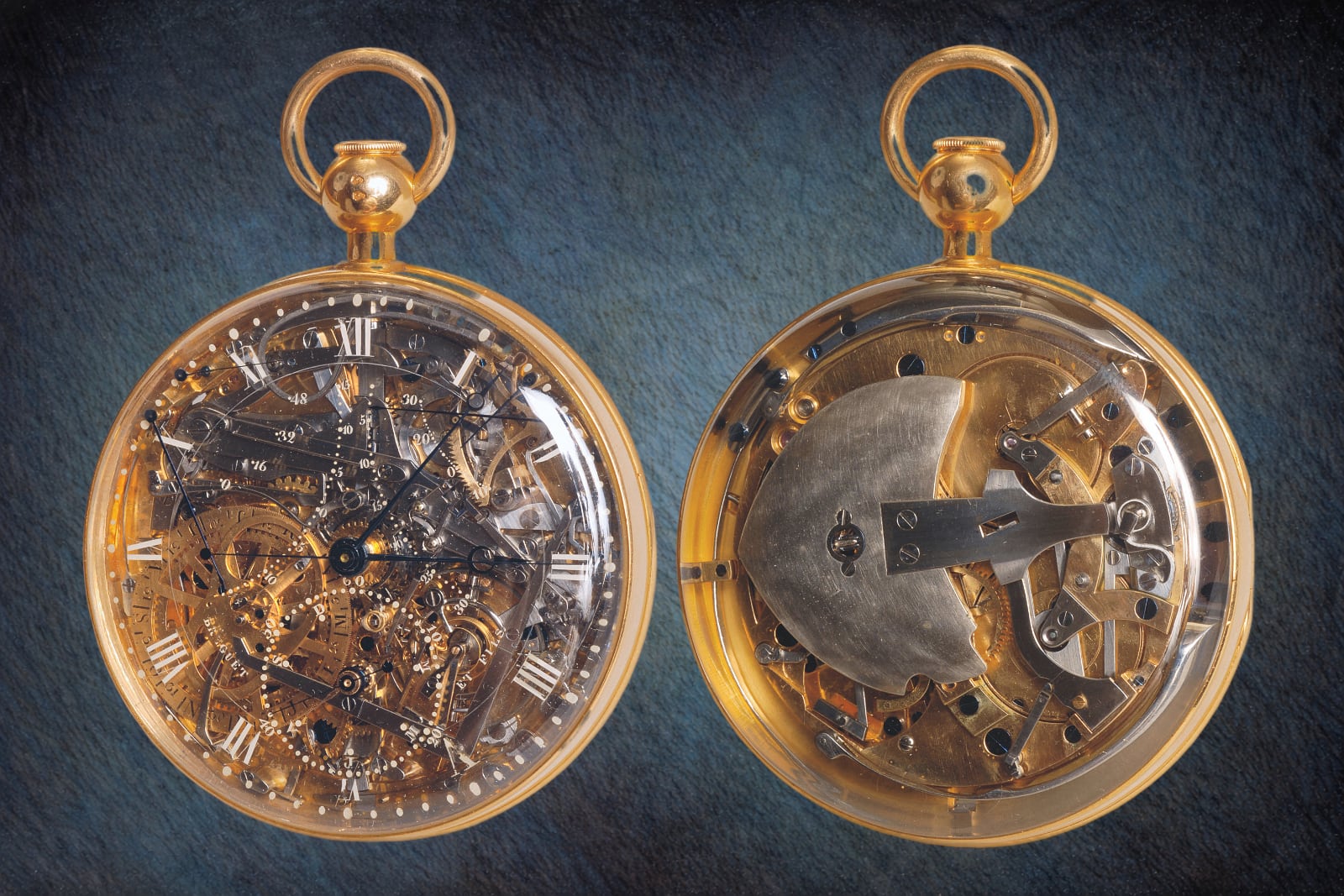
Front and back view of the Breguet “No. 160, Montre d’Or”. Image SJX composite – L.A.Mayer Museum for Islamic Art, photo by Avshalom Avital.
After completion, the watch remained workshop property for 60 years. When it finally sold in 1887, the price fell below its documented cost — suggesting obligation rather than opportunity.
The construction history divides into active and inactive periods. Active work, including initial construction, the systematic transformation campaign of 1809–1815, and posthumous completion under Antoine-Louis, accounts for roughly 16 to 20 years — more than double what would have been normal for a complicated watch, but less than half the total production duration.
During the remaining 24 to 28 years of the saga, the watch simply waited. These inactive periods included the disruptions of the Revolution, a long pause while techniques matured, and an uncertain interval after Breguet’s death. The extended duration reflects the watch’s changing role and the deliberate choice to incorporate later solutions once they became feasible.
What it means
Much like a core sample taken from an arctic glacier, Breguet No. 160 reveals the evolution of watchmaking that occurred throughout the time that it was made. The production records reveal persistence, revision, replacement, and refinement sustained across decades.
A watch completed on 1783 terms would have embodied the best available technology of the era: a ruby-cylinder escapement, a simple balance, an equally simple calendar, gold construction, and moderate jewelling. Such a watch would have represented the peak of late 18th-century complication.
The watch completed in 1827 incorporates later technology, including an equal-lift lever escapement, a compensated balance fitted with pare-chute protection, a perpetual calendar, 63 jewels, and, likely, a denser oscillating weight in platinum. The transformation indicates the workshop’s choice to pursue the best available execution as capabilities advanced, even when earlier components continued to function.
The 1811–1815 investment of roughly 10,000 francs, more than half the project’s total cost, makes sense in the context of an internal project oriented toward ultimate performance and demonstrative value, with freedom to revise specifications as practice advanced.
The completion of No. 160 also illustrates distributed authorship. The watch emerges through the work of Prudhomme, Jacob, Hooker, Merceron, Courtin, Weber, and Antoine-Louis Breguet, specialists operating across decades, each supplying techniques that earlier phases could not readily access. The result reflects this collaboration and the transfer of knowledge across generations.
The popular story focuses on provenance, theft, recovery, and courtly romance. The object’s deeper value, I would argue, lies elsewhere. Its componentry documents horological progression across multiple technical eras, preserving those traces within a single mechanism. It resists containment within any one moment, functioning instead as a chronicle of continuous transformation — and that, rather than any named owner, accounts for its enduring importance to the history of horology.
Acknowledgments
The author wishes to express his sincere gratitude to the L.A. Mayer Institute for Islamic Art in Jerusalem for providing access to high-resolution images of the Breguet No. 160 “Montre d´Or” and for supporting this research. Special thanks to Idit Sharoni, Curator, and Deena Lawi, Registrar, for their prompt assistance and professionalism.
The museum’s stewardship of the Sir David Salomons Collection and its commitment to facilitating scholarly research continues to be invaluable to the horological community.
Back to top.