
Retrospective: A. Lange & Söhne Zeitwerk Handwerkskunst
Like a Labubu.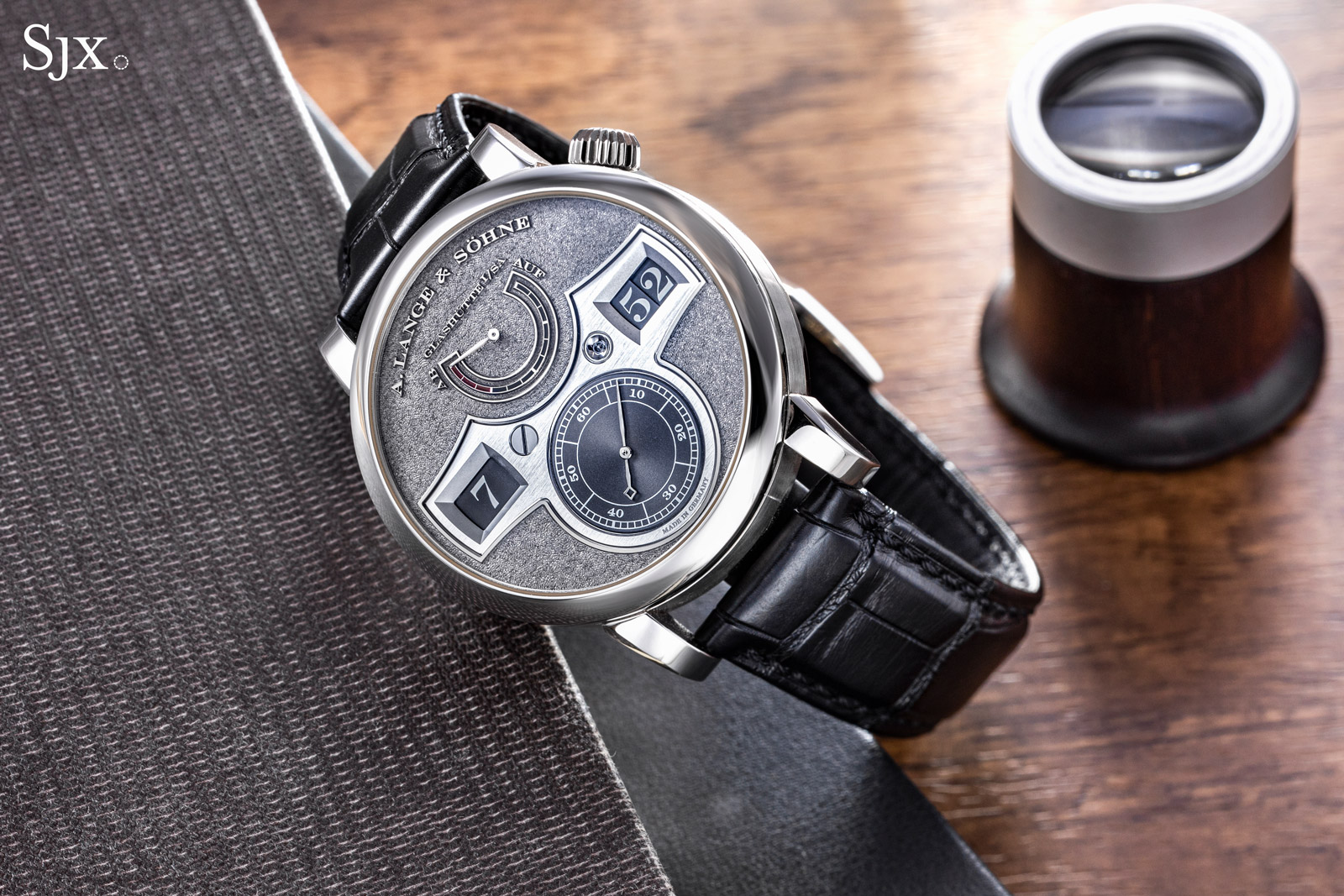
One of the most important complications of A. Lange & Söhne is undoubtedly the Zeitwerk. And the fanciest iteration of the digital watch is undoubtedly the Zeitwerk Handwerkskunst. A limited edition of 30 pieces launched in 2012, this Zeitwerk is part of the Handwerkskunst collection of watches dressed up with hand-applied decoration – handwerkskunst being German for “craftsmanship”.
One of Lange’s most important creations, the Zeitwerk is quirky, weird, yet appealing, especially in the first generation format; the Handwerkskunst is probably the pinnacle of that generation. Like a Labubu, it is weird but adorable. I recently got to spend an extended period of time with the Zeitwerk Handwerkskunst, and I thought it worth revisiting.
Initial thoughts
Lange’s Handwerkskunst collection is eight-watches strong, but I rank the Zeitwerk and Datograph as the best, even though they are neither the most complex nor the most elaborately decorated, because the two models are amongst the brand’s most significant models (alongside the Lange 1).
The Zeitwerk is historical for being one of the first digital-display watches – and probably the most reliable, still – and is visually distinctive enough to be one of Lange’s most recognisable models. Moreover, the Handwerkskunst version is not merely dressed up, but it also incorporates a novel escapement that Lange has not used in any other model except for the monumental Grand Complication (that is more complicated and impressive but arguably less interesting). The escapement one of a handful of features in the Zeitwerk that are not found on other models in the Handwerkskunst line.

The watch itself is typical of complicated Lange, which means it’s large, dense, and a little top heavy on the wrist. That is as it should be; the weight and size give it presence and importance. Practically all of the complicated Lange models that I love have the same top-heavy feel on the wrist.
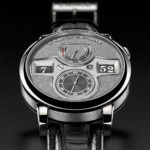
Visually, the Zeitwerk Handwerkskunst retains the same design as the standard model, but done in Handwerkskunst style. The relief engraving and textured surface gives the dial more depth, so the face feels different despite being the same.
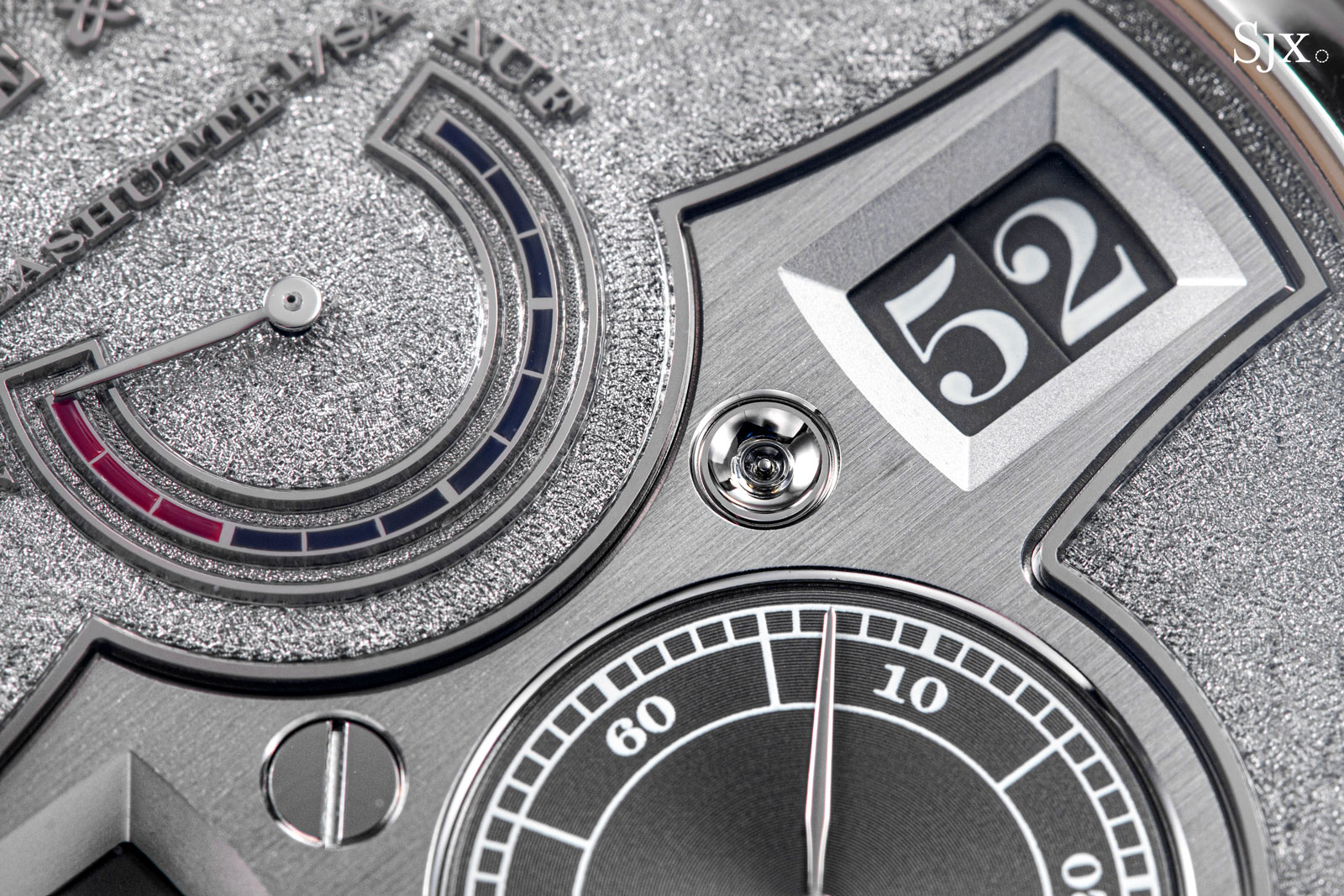
Because this is identical in technical terms to the standard Zeitwerk, the Handwerkskunst has all the quirks of the model. Chief amongst them is the oddly positioned crown. I found this extremely peculiar when the Zeitwerk was first launched, but have now gotten used to it. The screw and bearing visible on the “wing” bridge on the dial are also odd. And the first-generation Zeitwerk, of which this is a part, has an inconveniently short 36-hour power reserve. All of these quirks don’t detract from the watch; they’re part of its appeal.
Handwerk-ed
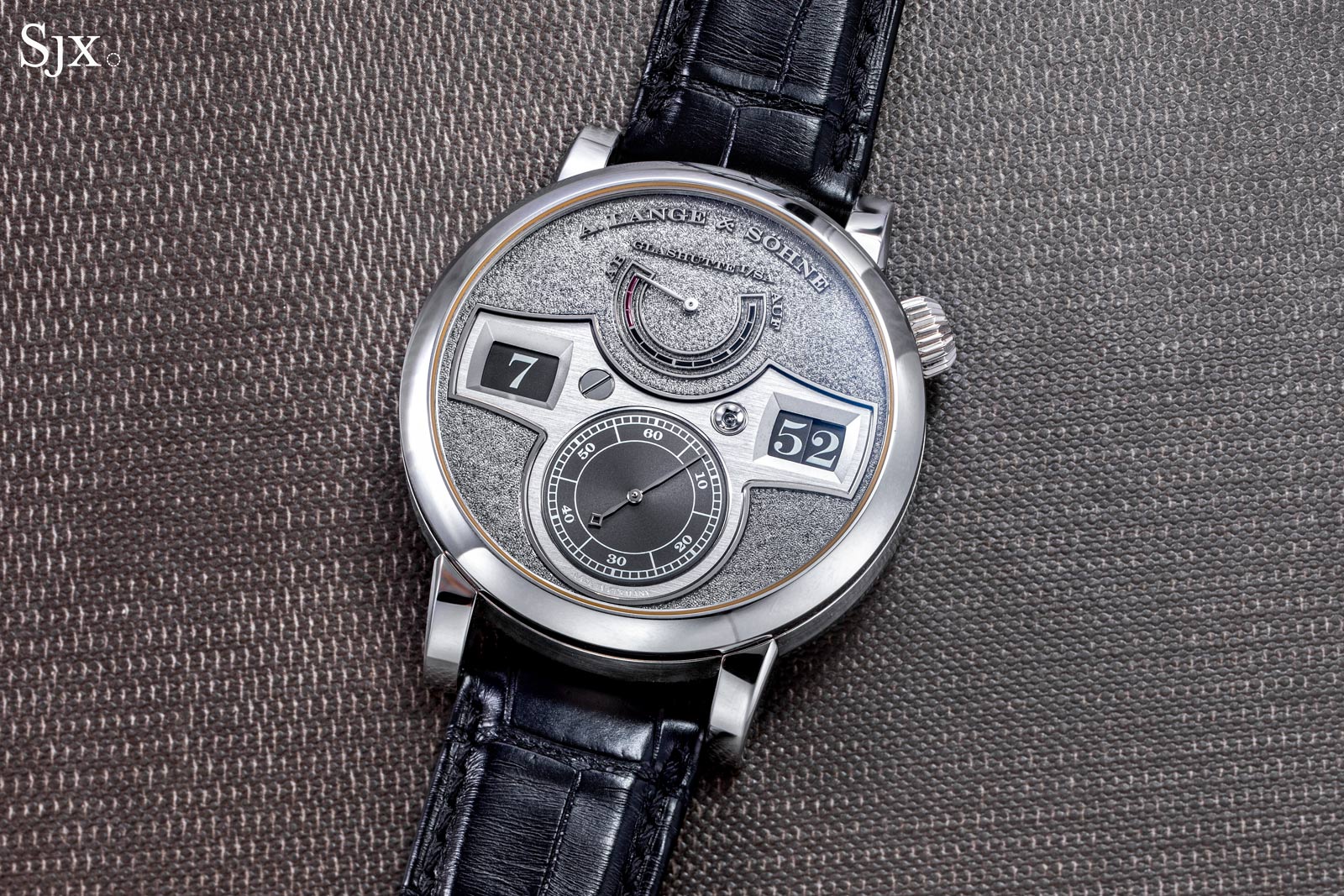
Much of the exterior of the Handwerkskunst edition is identical to that of the standard Zeitwerk, featuring the same dimensions and (almost) the same weight. The case is wide and thick, with a domed bezel that makes it seem larger. It wears that way on the wrist as well, but as I said, it’s a good, solid feel. The dial, however, is entirely different from the regular production Zeitwerk, which makes this look very different.
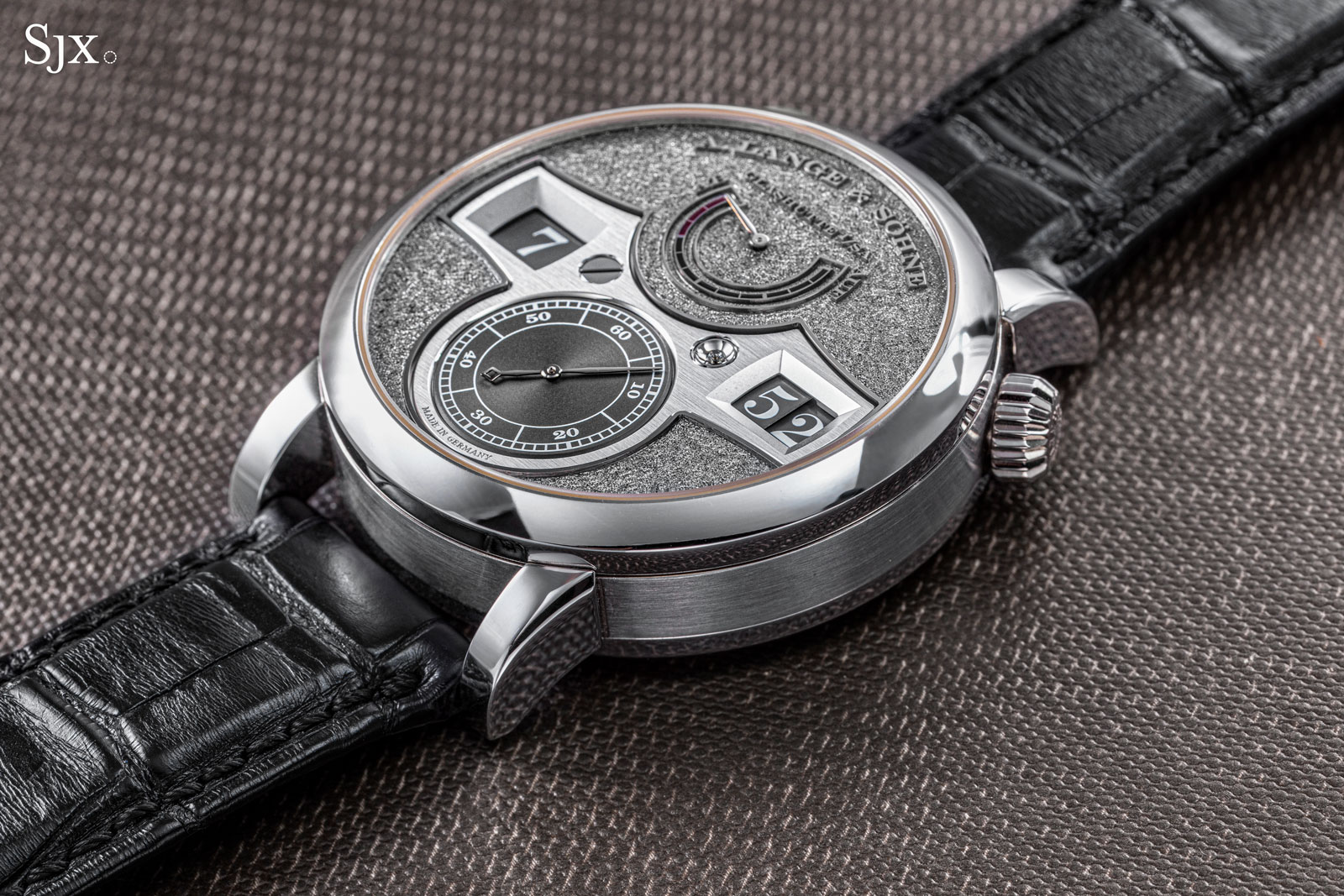
The dial is all handwerkskunst. It starts a solid white gold blank that’s smooth but bearing milled relief elements in the rough. It’s then entirely worked over by hand.
A sharp-tipped burin is used to create tiny divots on the dial, a process repeated across the entire surface to create the granular tremblage finish. Lange has employed tremblage on other Handwerkskunst models, making it something of a signature for the line.
Then the relief elements, namely the text and power reserve scale, are refined by hand. Finally, the power reserve scale is filled with lacquer, with three segments filled in red to indicate low power. This splash of red is essentially the only colour on the dial, which is otherwise entirely in shades of grey, right down to the time discs.
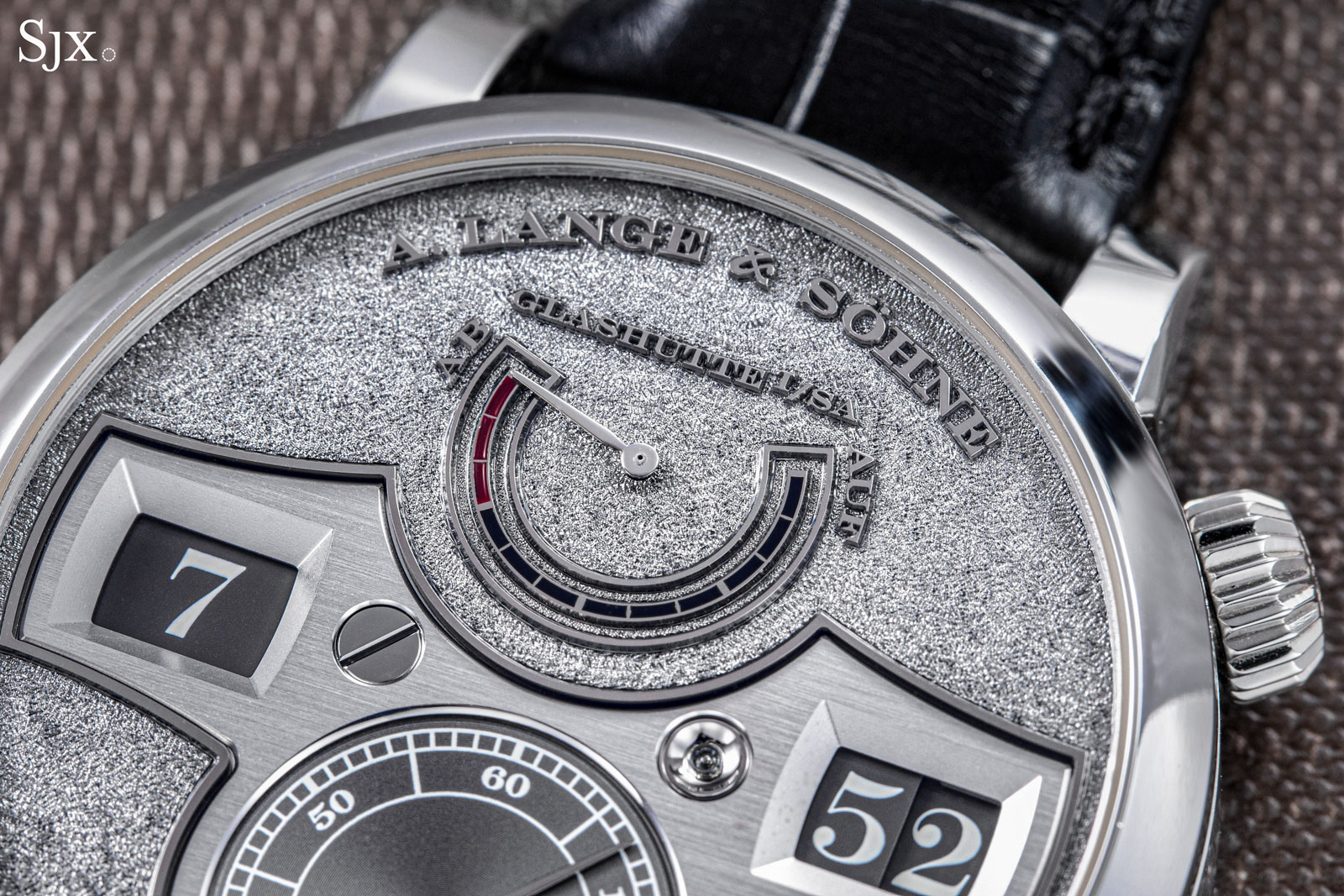
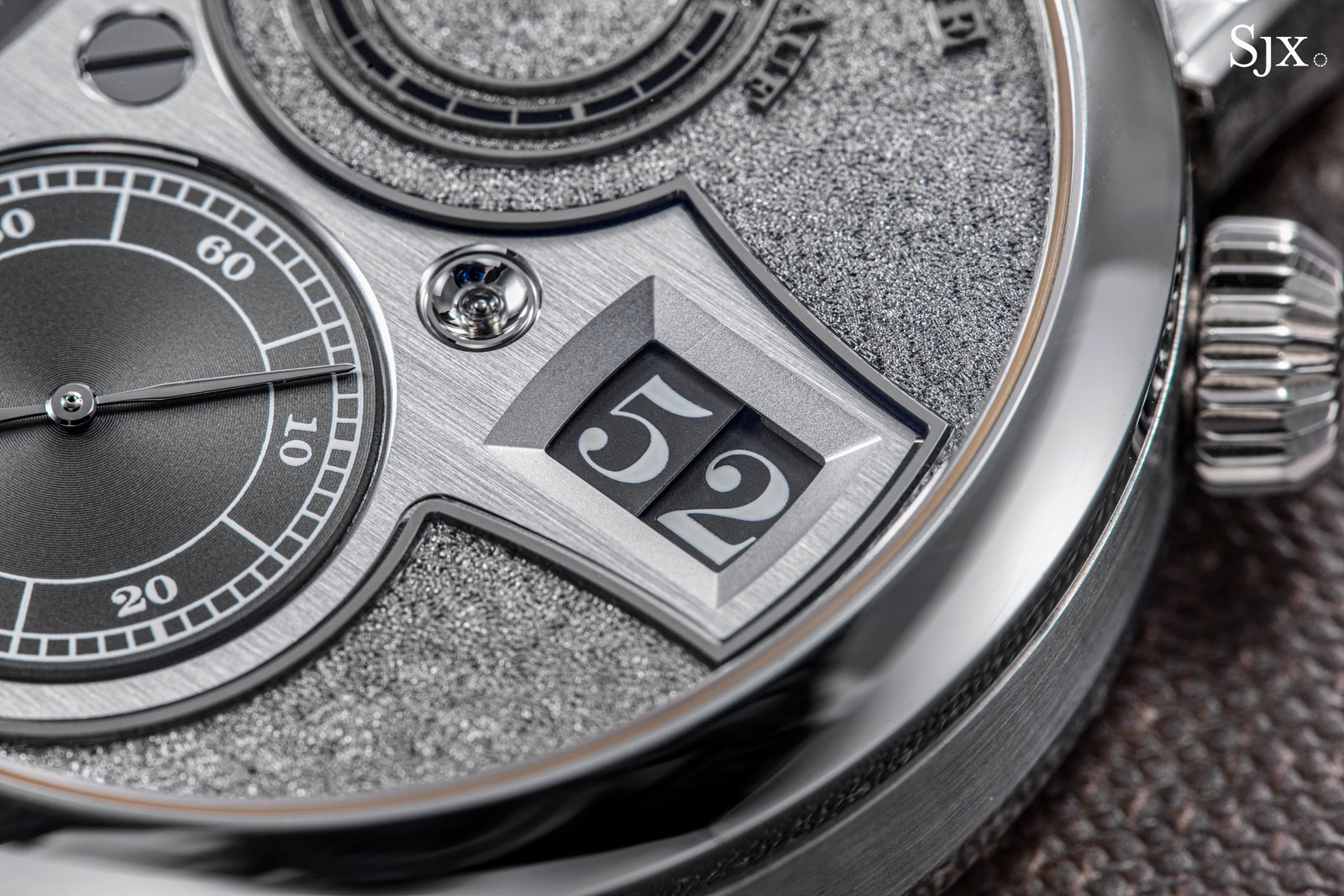
Legibility, as expected, is outstanding. The size of the watch gives it equally large digits, making the time easy to read. More notably, the time is indicated linearly left to right, as it is conventionally read in most places. This was a distinguishing feature of the Zeitwerk when it was launched, and remains unique amongst digital display watches.
Most such watches indicate the time vertically or in some other format, primarily as a technical necessity stemming from movement construction; pulling off the horizontal time display required the oddly positioned crown.
Engraved and elaborate
Instead of the concave base back rim that is standard for Lange, this has a domed rim; this was likely done to accommodate the engraving that is done by hand. Only some of the Handwerkskunst models sport hand engraving on the case back.
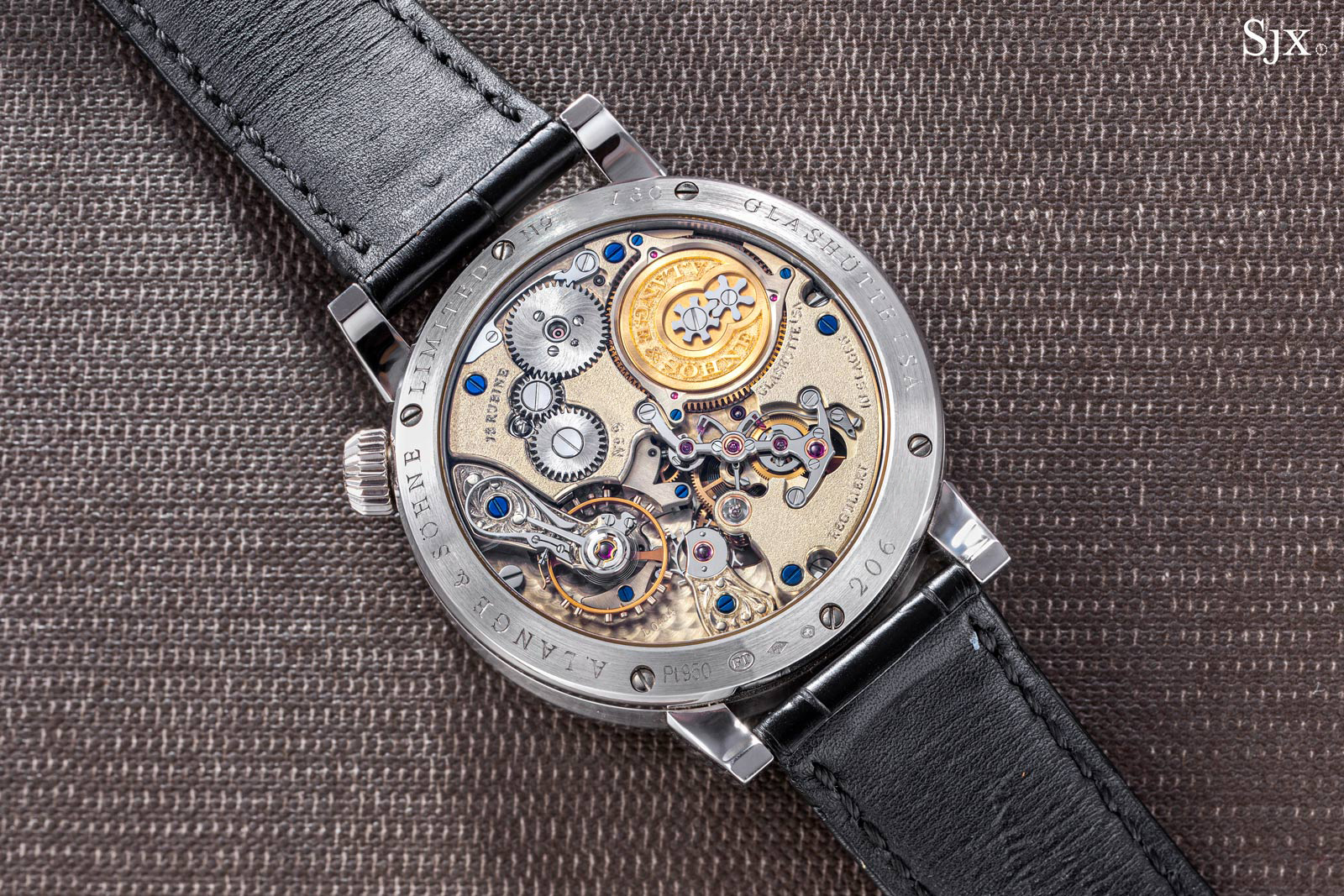
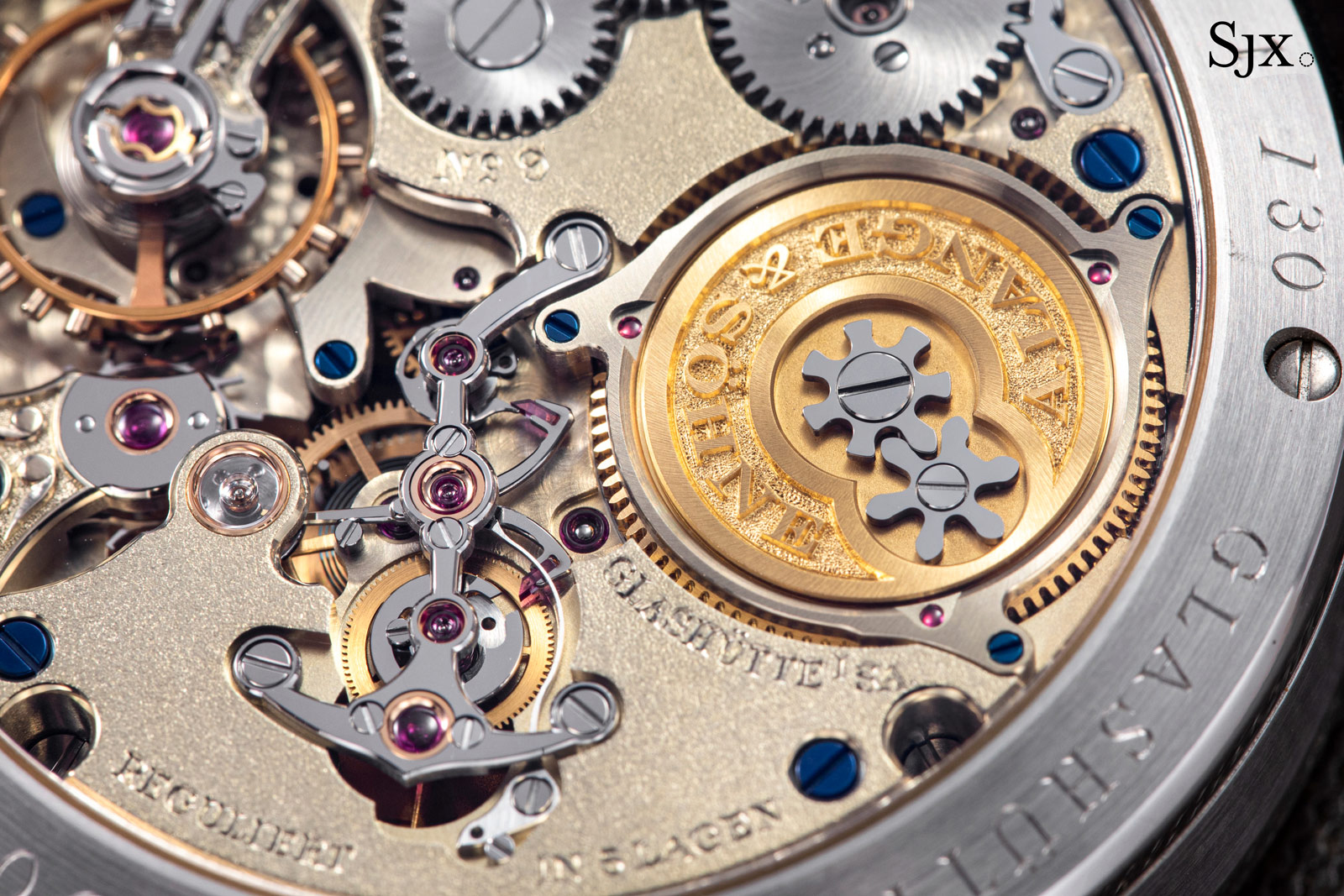
The L043.4 movement is instantly identifiable as a first-generation Zeitwerk movement. Amongst the hallmarks is the anchor-shaped bridge for the remontoir, which is oddly kinked at its end. Also eliminated in the second generation is the Geneva stop work on the barrel ratchet wheel. The new generation movement is definitely cleaner and neater in style, but this has a weird charm – remember ugly but adorable.
Like the other first-gen movements, this also has visible “arming” of the minutes disc before it jumps: at the 57-second mark or so, the single-unit disc for the minutes slides downwards as the jumping mechanism is “armed”. It only moves by a fraction of a degree, but enough that is apparent at arm’s length. The arming and switching action is shown at the beginning of the video below.
Though identical in technical terms, the L043.4 is decorated differently than the standard movement, just like the rest of the Handwerkskunst series. The difference in decoration is substantial, with the most obvious difference being the frosted three-quarter plate. Because the frosted finish is more restrained than the usual striping, the L043.4 actually looks messier than its regular production counterpart since the visible components stand out more.
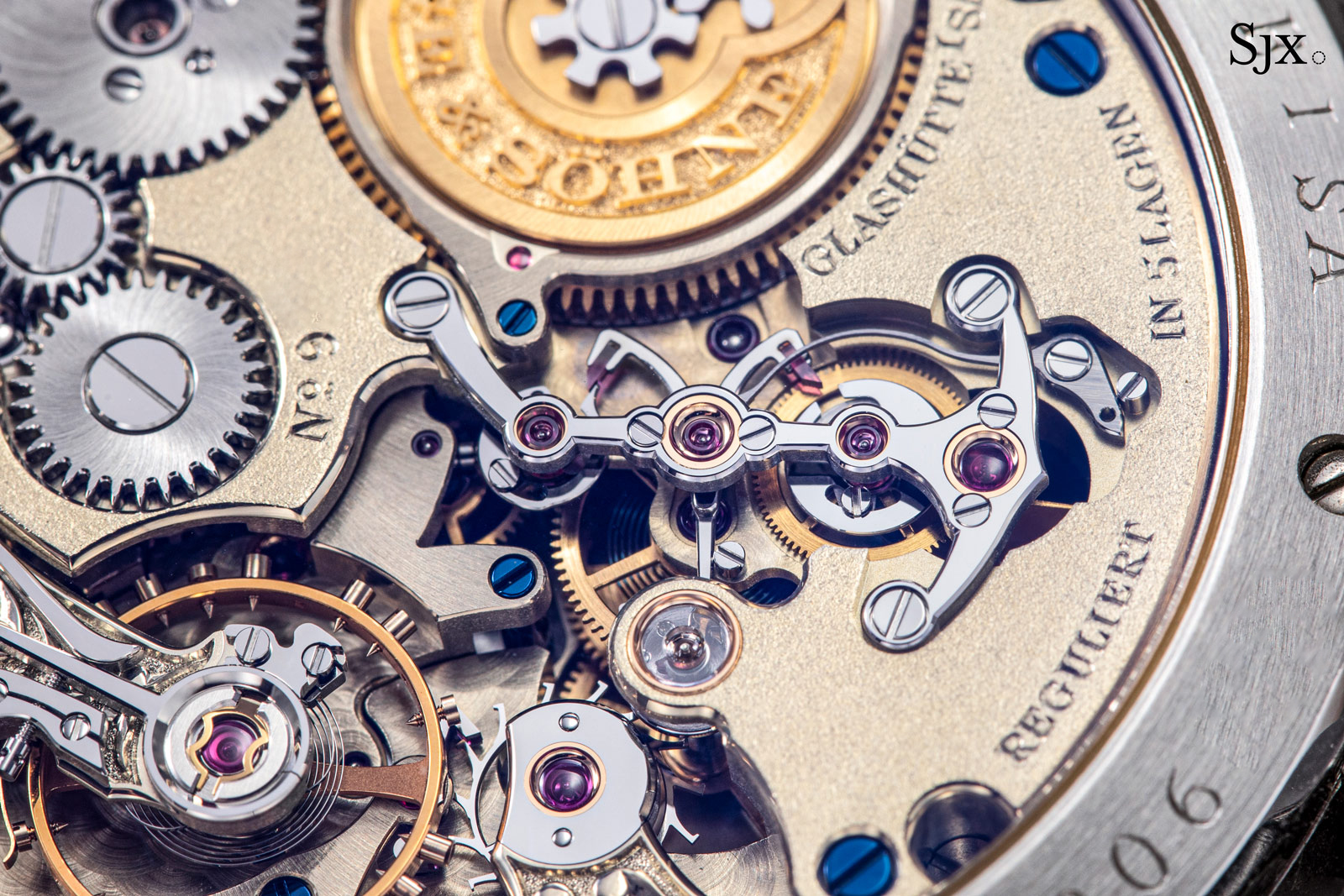
Another decorative bonus is the engraving on the balance and escape wheel cocks. Both are engraved by hand, as is the norm at Lange, but instead of the usual recessed engraving, the decor is in relief.
Both the frosted bridges and relief engraving are found on other Handwerkskunst models, but the Zeitwerk also sports hand engraving on the three-quarter plate, which only some Handwerkskunst editions feature.

Surprisingly, one of the most unique elements of this edition is not handwerkskunst, but instead a functional, technical detail, albeit one that is still hand made. And it is also discreet, practically invisible when examining the movement from the back.

Instead of the conventional Swiss lever escapement found in all other Lange movements, the L043.4 is equipped with a Glashütte lever escapement with a pallet lever and escape wheel in solid 18k gold.
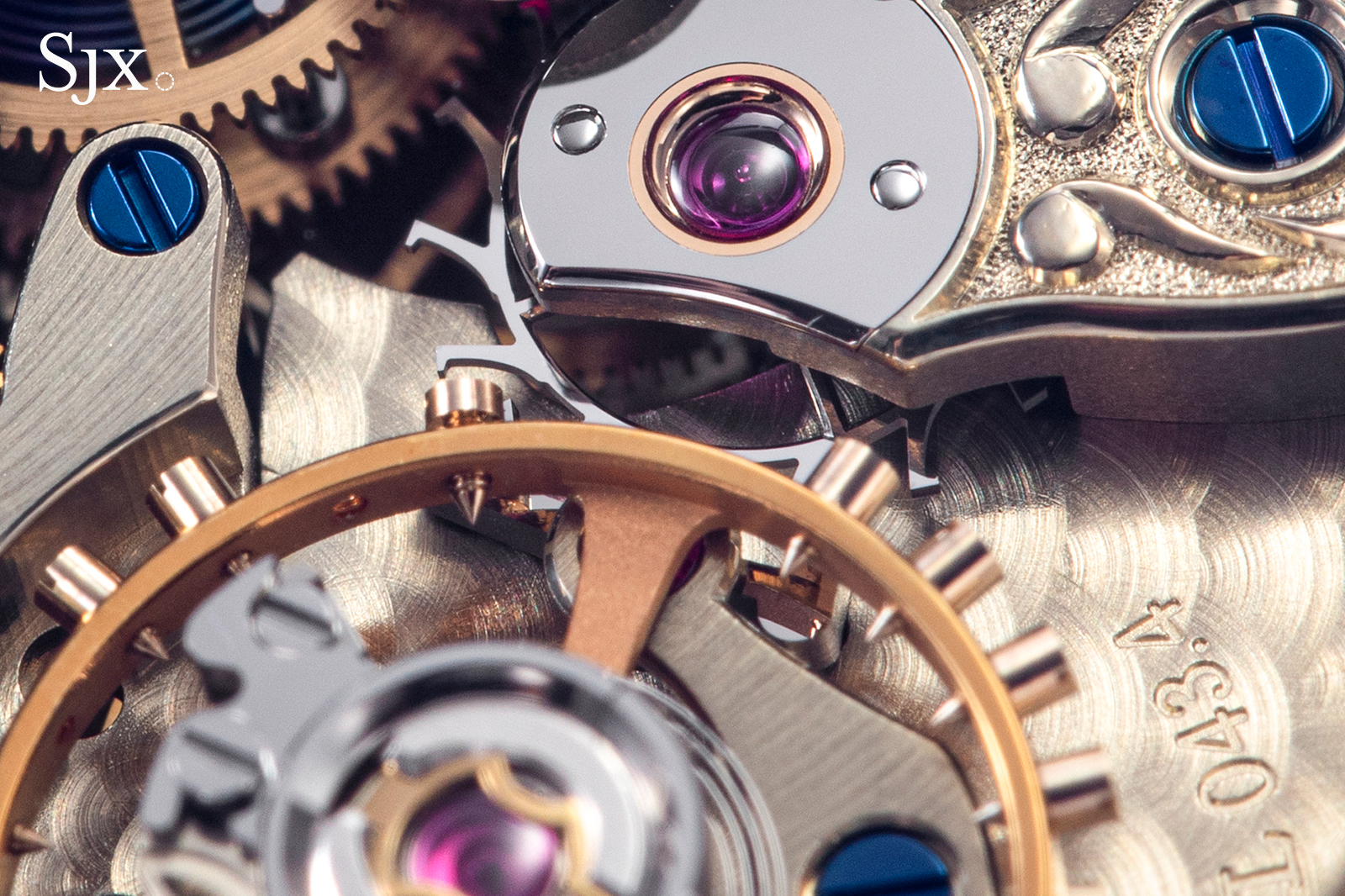
Introduced sometime in the mid 19th century by Ferdinand Adolph Lange, the Glashütte anchor escapement is a variation of the conventional Swiss lever that has the jewel pallets flush with the pallet lever. It was last used in antique pocket watches, before being resurrected by Lange for the Zeitwerk Handwerkskunst.
According to Lange, a retired employee in her nineties provided the know-how to reproduce the Glashütte lever; the 30 Glashütte lever escapements for the Handwerkskunst edition were all made by hand. This was almost experimental for Lange as the Glashütte lever escapement has not been revived for any other movements (though other Lange limited editions have had a solid gold escapement upgrade).
The escapement explains why the Zeitwerk Handwerkskunst movement has a different calibre number, L043.4, despite being functionally identical to the standard model at the time, which was powered by the L043.1.
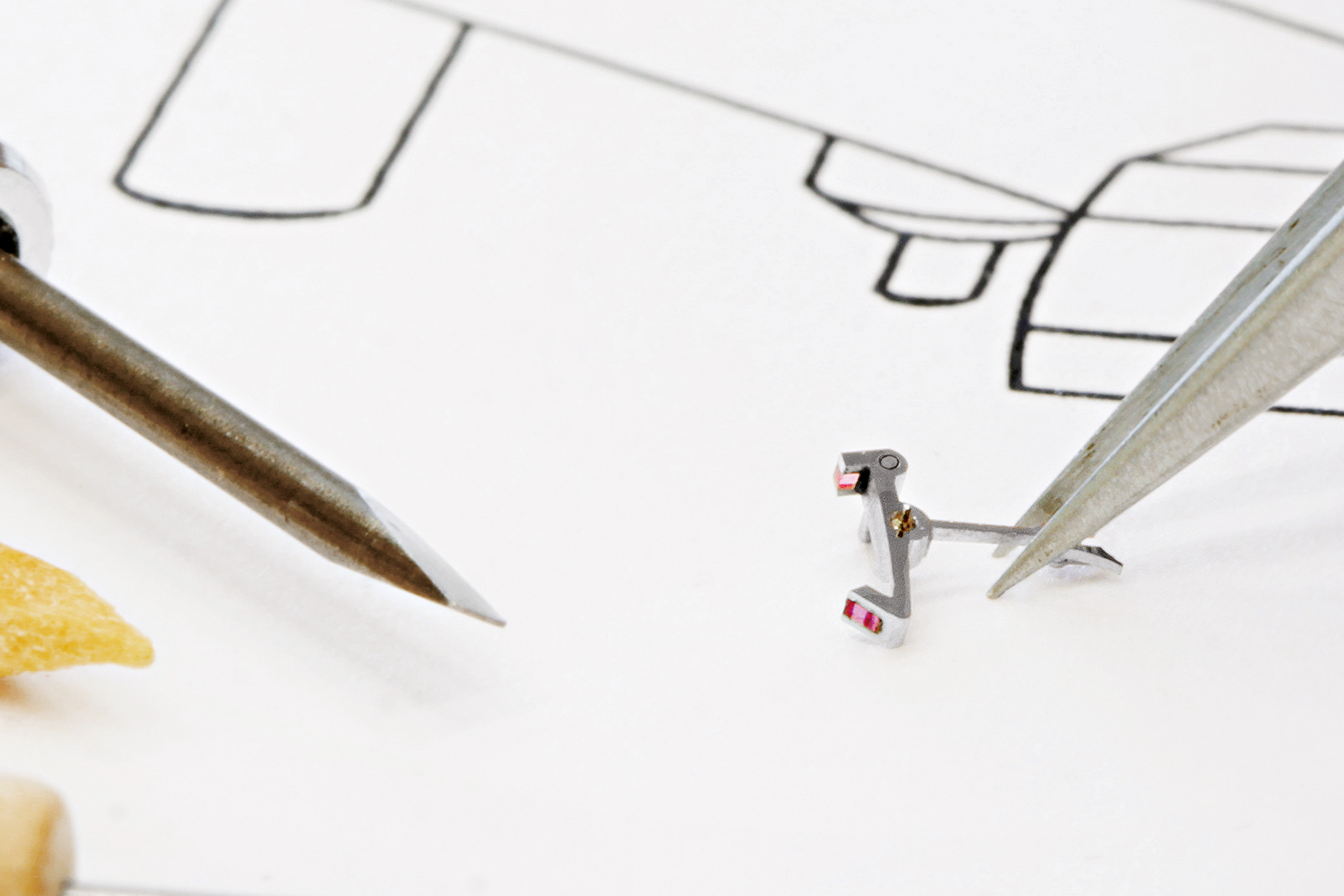
The Glashütte pallet lever in 18k white gold. Image – A. Lange & Söhne
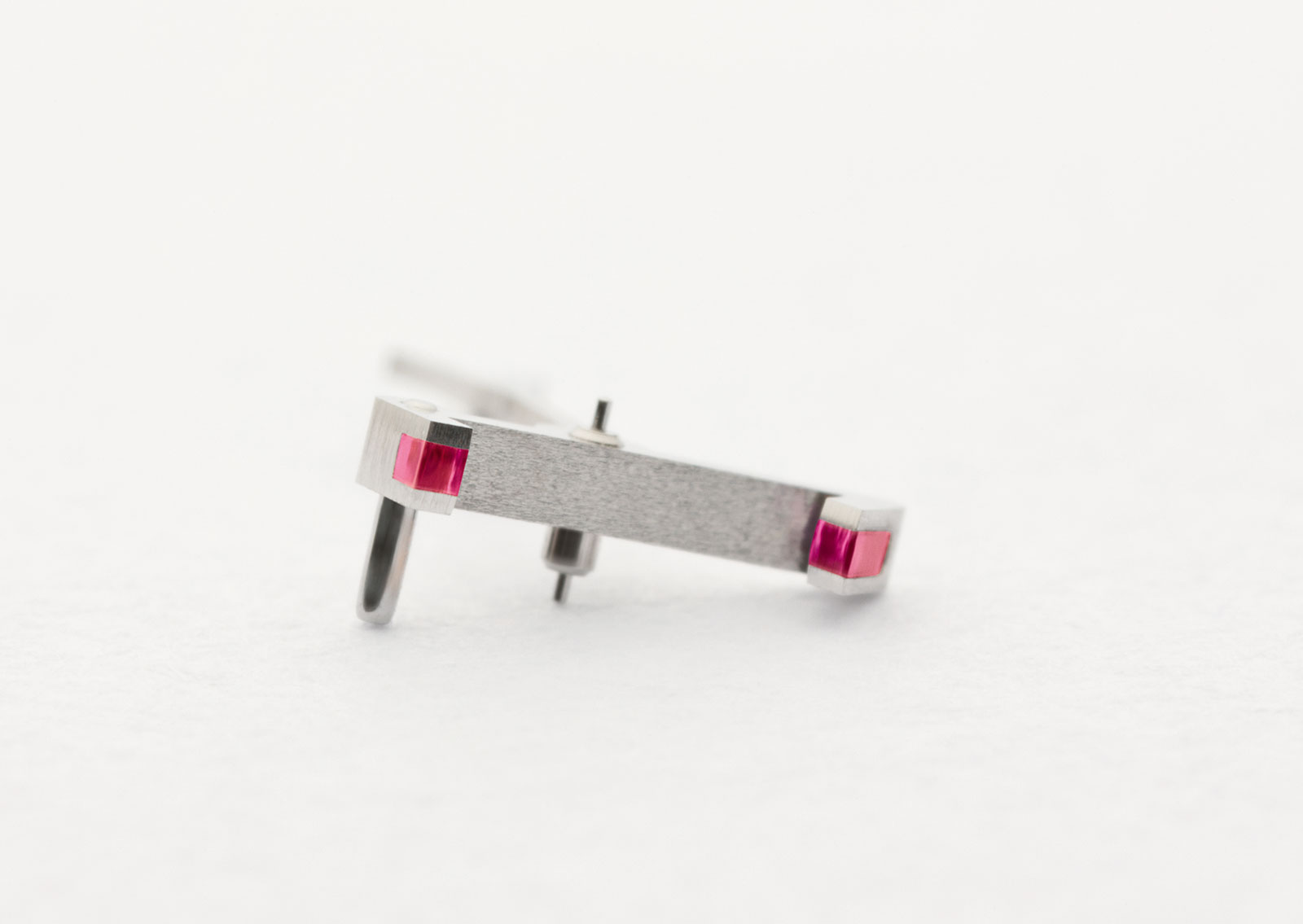
The unusual enclosed pallet jewels of the Glashütte escapement. Image – A. Lange & Söhne
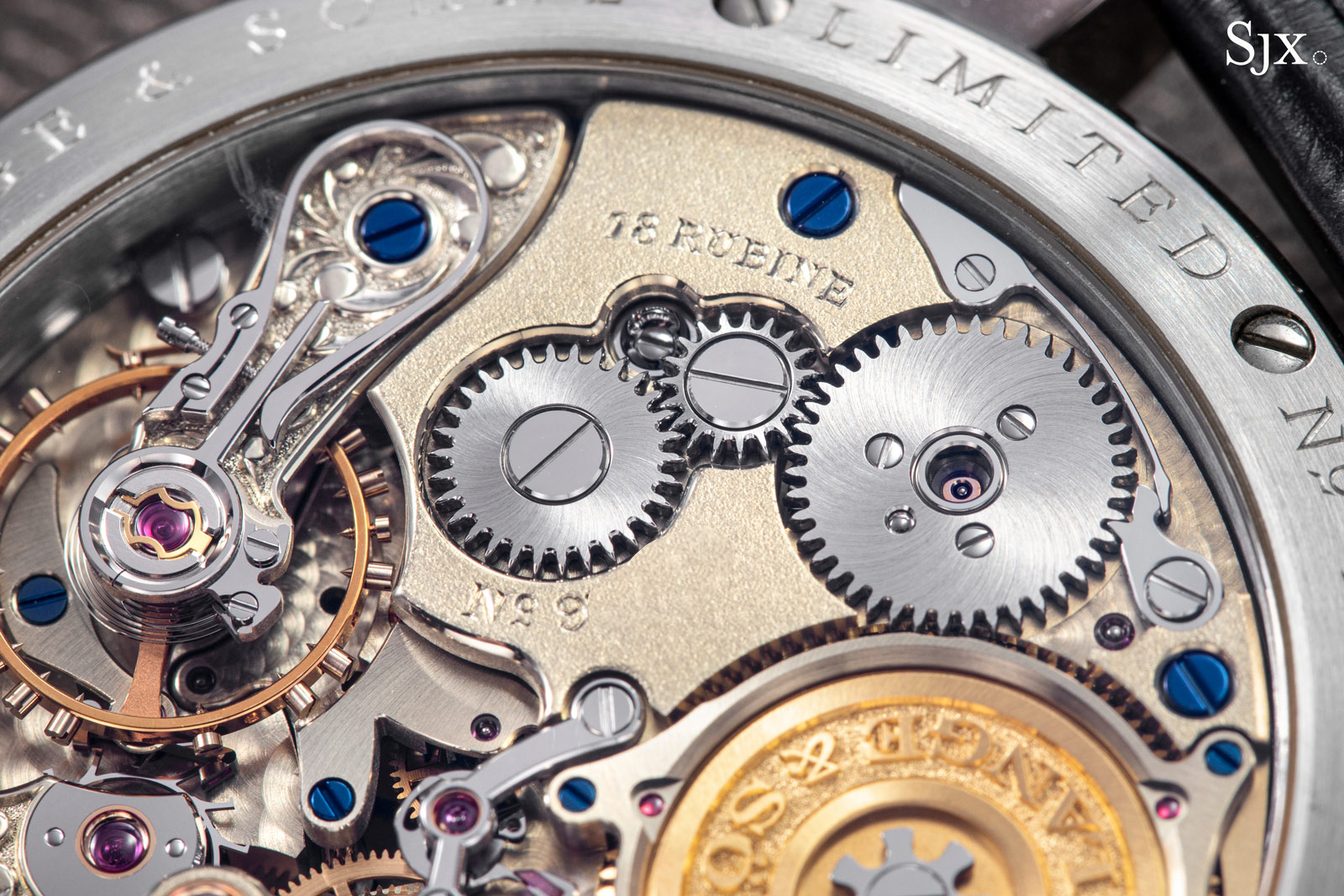
Another intriguing Easter Egg contained within the movement of some Zeitwerk Handwerkskunst pieces is actually an error: a portion of the 30-piece run has “78 Rubine” engraved the barrel bridge, instead of the correct jewel count of 68.
The watch pictured is so engraved, but I have also come across those correctly engraved. Lange rarely makes mistakes so obvious, which makes the Zeitwerk Handwerkskunst one of the few erroneous watches to have left the factory.
Concluding thoughts
An unusual watch on multiple levels, the Zeitwerk Handwerkskunst is an important watch for Lange on both technical and aesthetic grounds. Here the whole is greater than the sum of the parts; together they exude an elevated artistic sensibility that complements the impressive technical accomplishments underpinning the digital display. It’s now almost over 14 years old, and its importance is now recognised given the solid results for recent examples at auctions; thought this also reflects an across-the-board desirability of rare Lange models.
Key facts and price
A. Lange & Söhne Zeitwerk Handwerkskunst
Ref. 140.048
Diameter: 41.9 mm
Height: 12.6 mm
Crystal: Sapphire
Material: Platinum
Water resistance: 30 m
Movement: L043.4
Features: Digital hours and minutes, power reserve indicator
Winding: Hand-wound
Frequency: 18,000 beats per hour (2.5 Hz)
Power reserve: 36 hours
Strap: Alligator with pin buckle
Limited edition: 30 pieces
Availability: No longer available, launched in 2012
Price: €95,000 at launch
For more, visit Alange-soehne.com.
Back to top.