
Hands On: Marco Lang Seven Spheres
An emotive mechanical sculpture.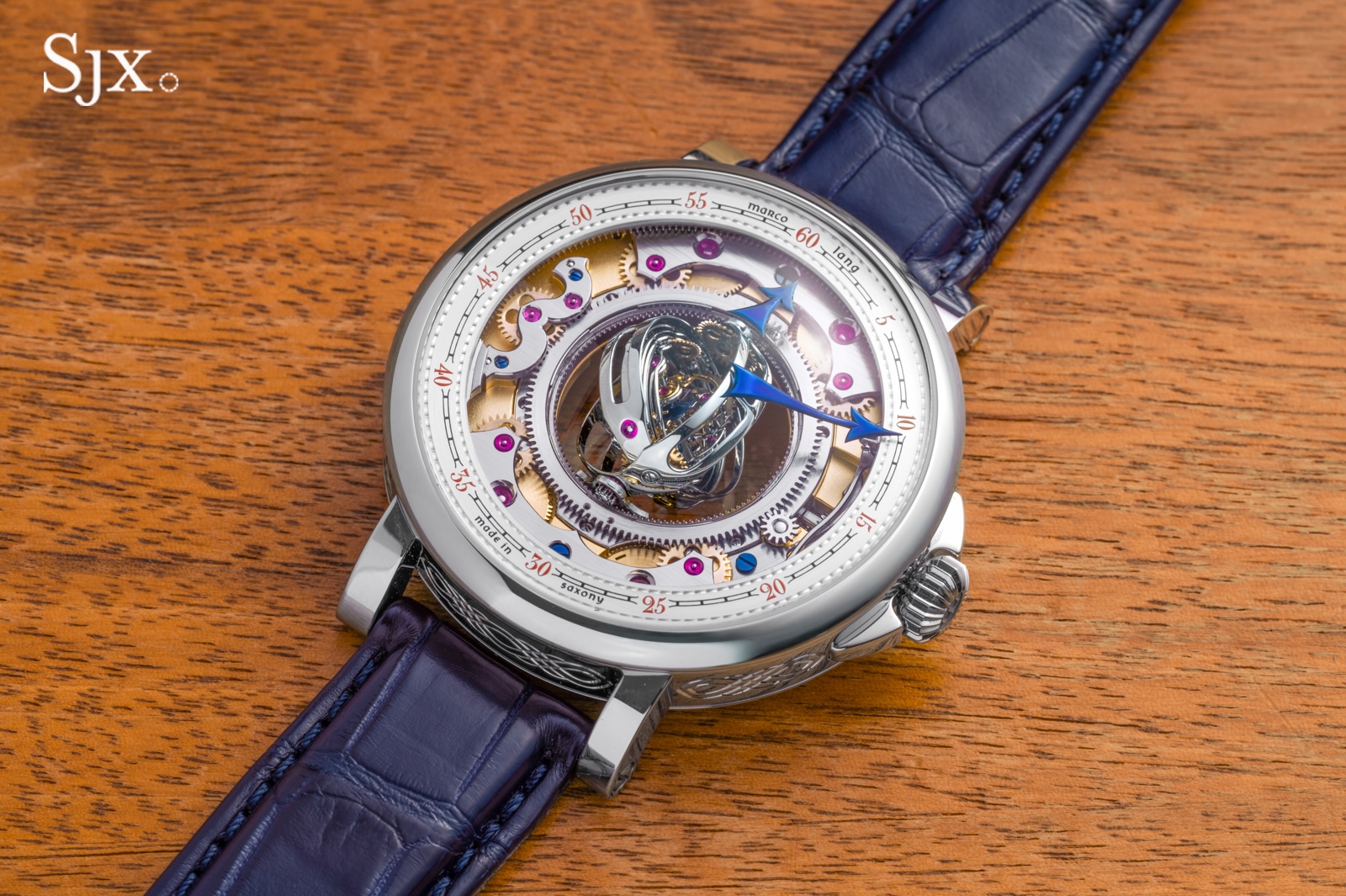
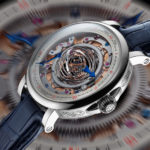
German independent watchmaker Marco Lang launched the Seven Spheres, the first multi-axis tourbillon wristwatch from Germany, and one of the few made with traditional materials and techniques. While the rotational speed is necessarily gradual, the central position of the massive seven-axis regulator affords a good view of the fine Saxon finishing from all sides.
Initial thoughts
Multi-axis tourbillons tend to be the domain of industrial brands, or independents that rely on industrial suppliers. It’s also a genre that’s overwhelmingly Swiss — Thomas Prescher is German, but produced his pioneering multi-axis tourbillons in Switzerland.
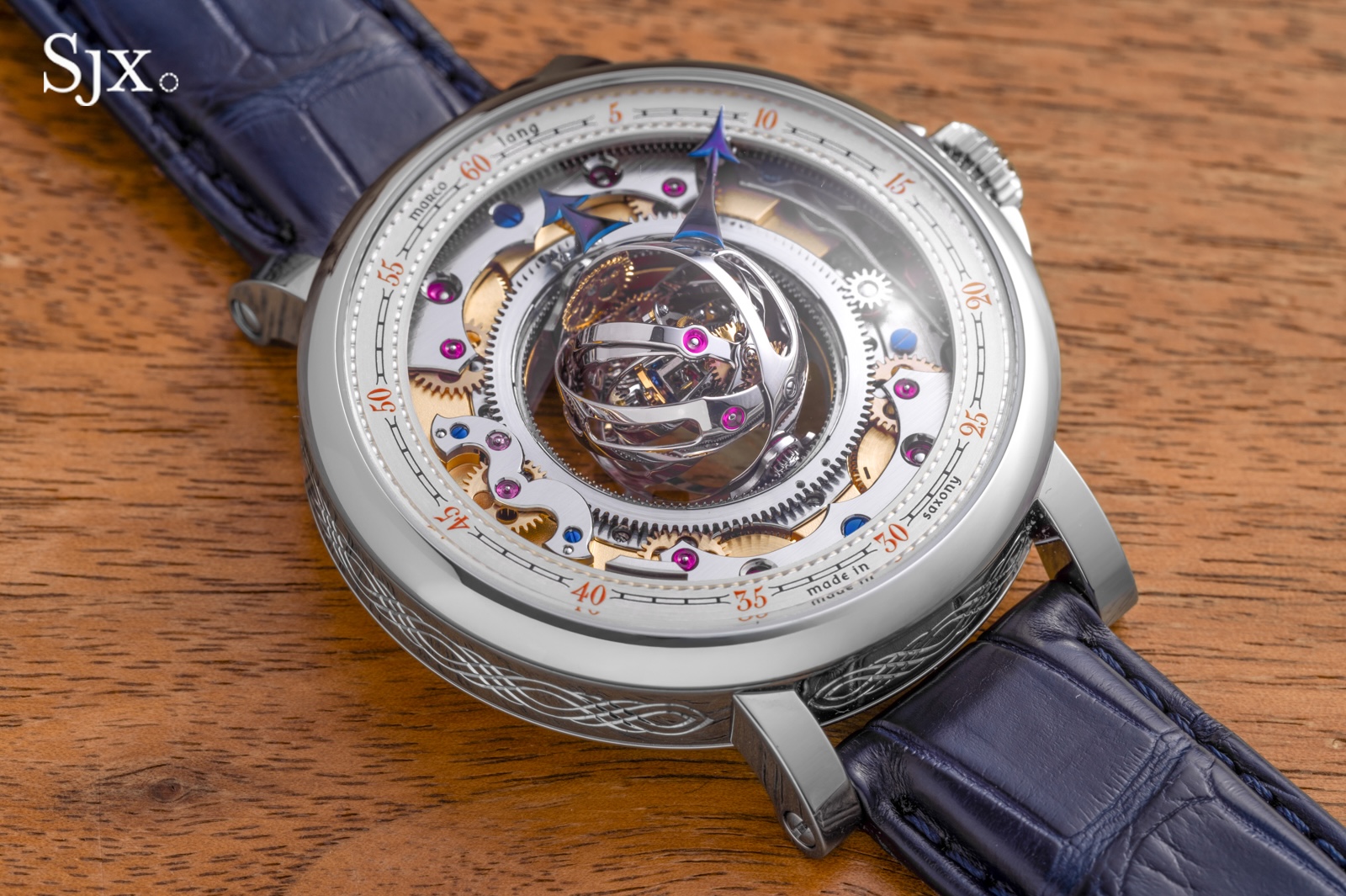
In this context, the Seven Spheres is a departure from the norm in several respects. It’s Marco Lang’s first tourbillon since branching out on his own in 2019, and it’s the first multi-axis tourbillon made in Saxony. Without historical precedent to contend with, Mr Lang has produced something quite unlike any other German watch — a central, multi-axis tourbillon suspended within a donut-shaped movement.
Despite its artisanal quality and low-volume production, the Seven Spheres costs no more than an equivalent from a big brand. It’s counterintuitive to suggest that a wristwatch that costs a quarter-million Euros is a good value, but on a comparative basis the pricing makes sense.
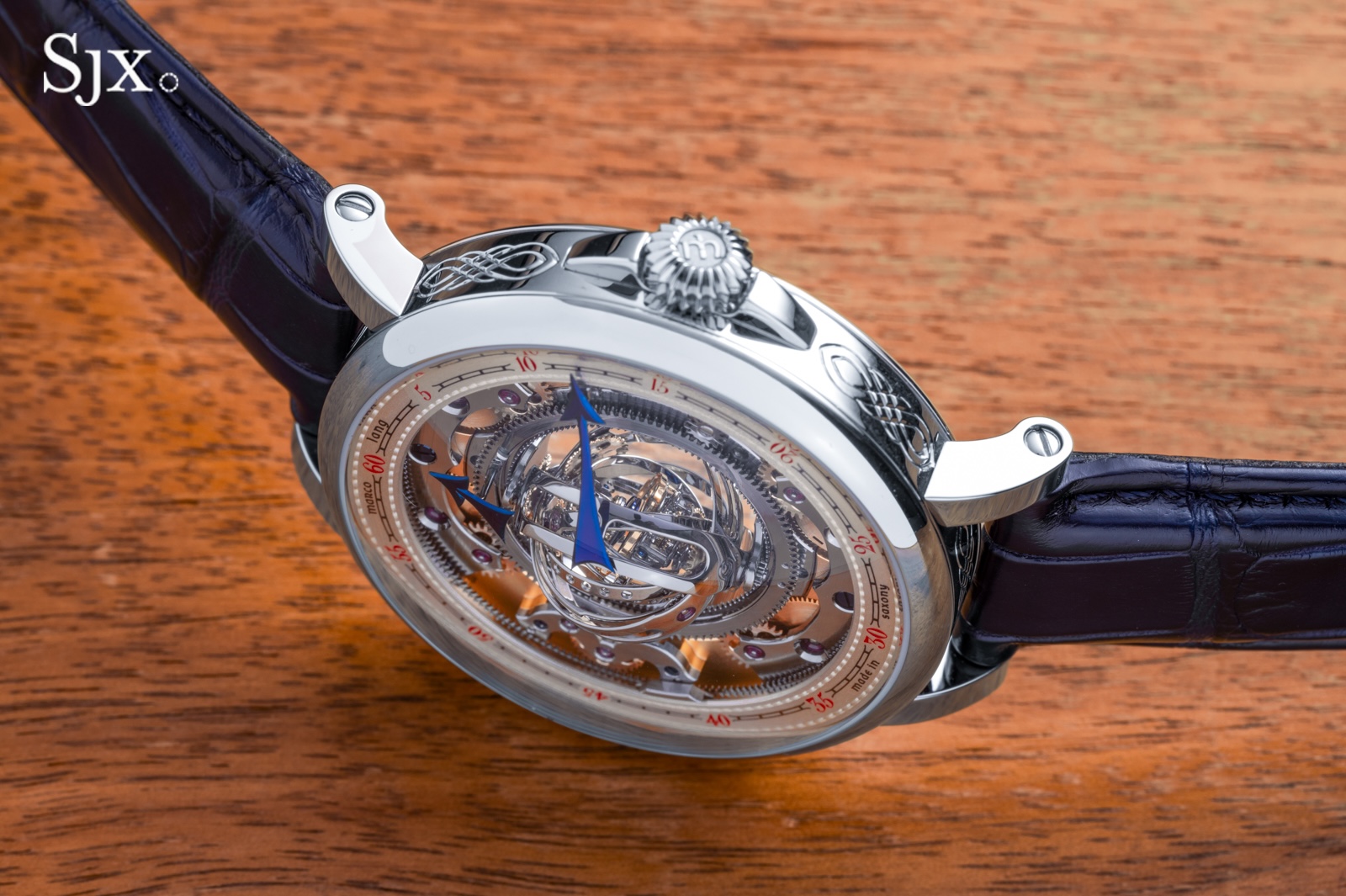
Seven spheres, front and back
Marco Lang cites the work of both Ptolemy and Carl Sagan as inspiration for the Seven Spheres’ architecture. The seven rings reference the Ptolemy’s early geocentric model of the solar system, and their motion is inspired by Mr Sagan’s 1985 novel Contact (and the 1997 film adaptation).
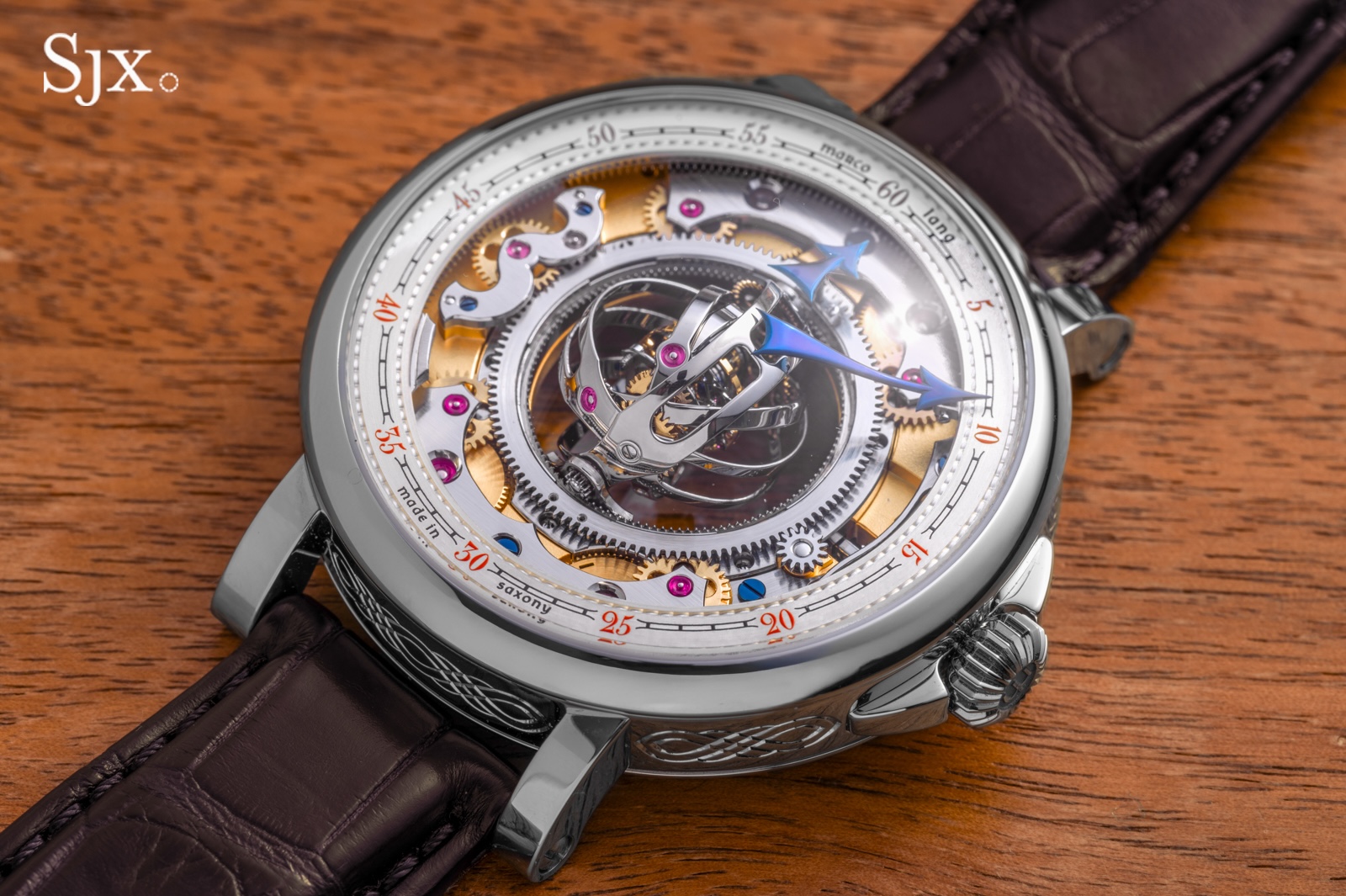
Viewed from this lens, the Seven Spheres is as much an emotive mechanical sculpture as it is a timekeeper, and this artistic quality reinforces the value proposition.
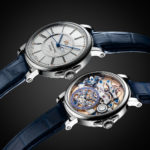
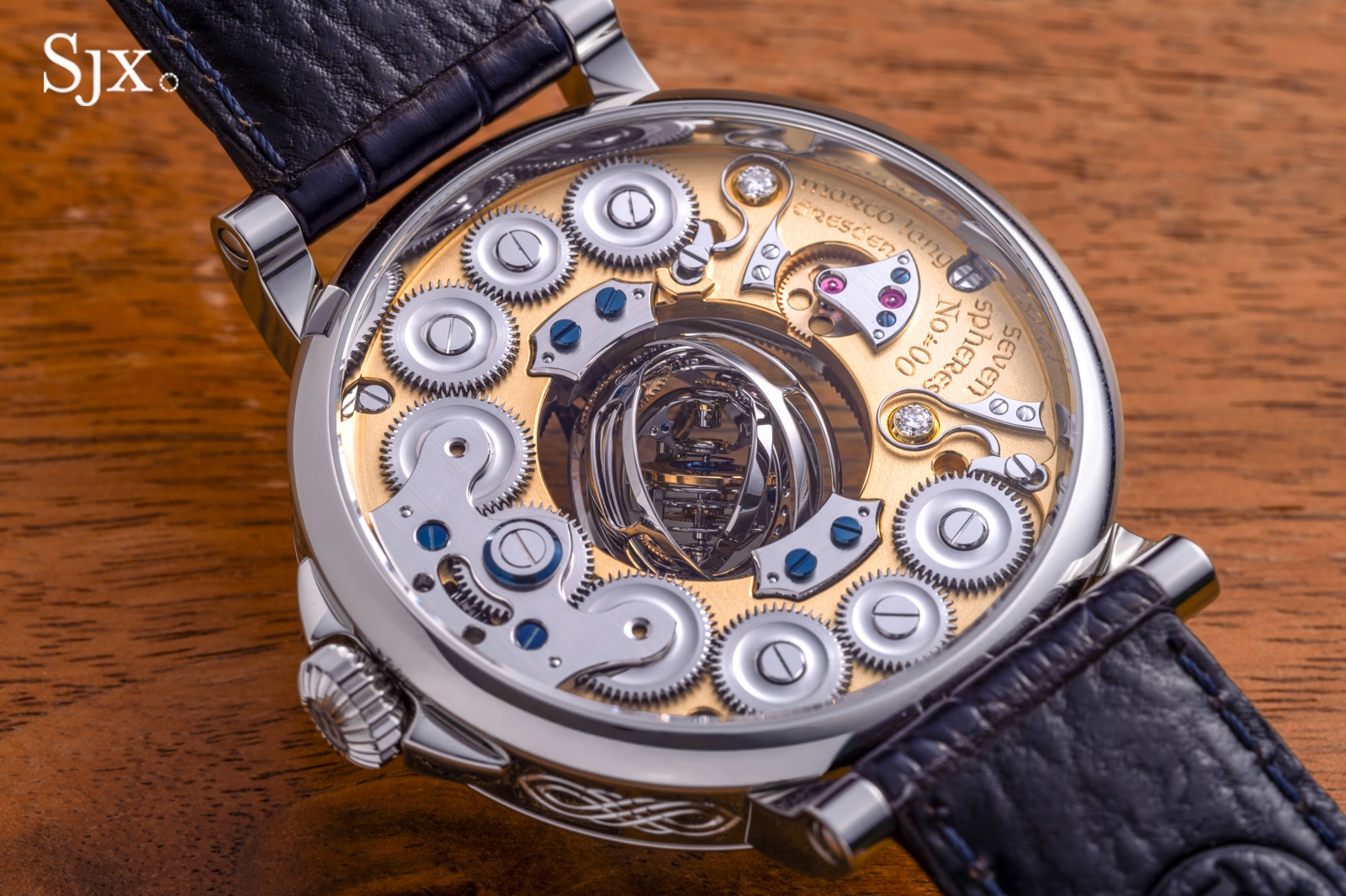
One fairly novel aspect of the tourbillon architecture is that the construction is visible from the back. This is generally not the case with central tourbillons — examples from Omega, Bulgari, Haldimann, Franck Muller, Vianney Halter, Kross Studio, Roger Dubuis, and others mount the central tourbillon on the dial side of the movement.
This affords an outstanding view of the mechanism, revealing its thoughtful execution. The balance is free-sprung, and oscillates on a blued overcoil hairspring.
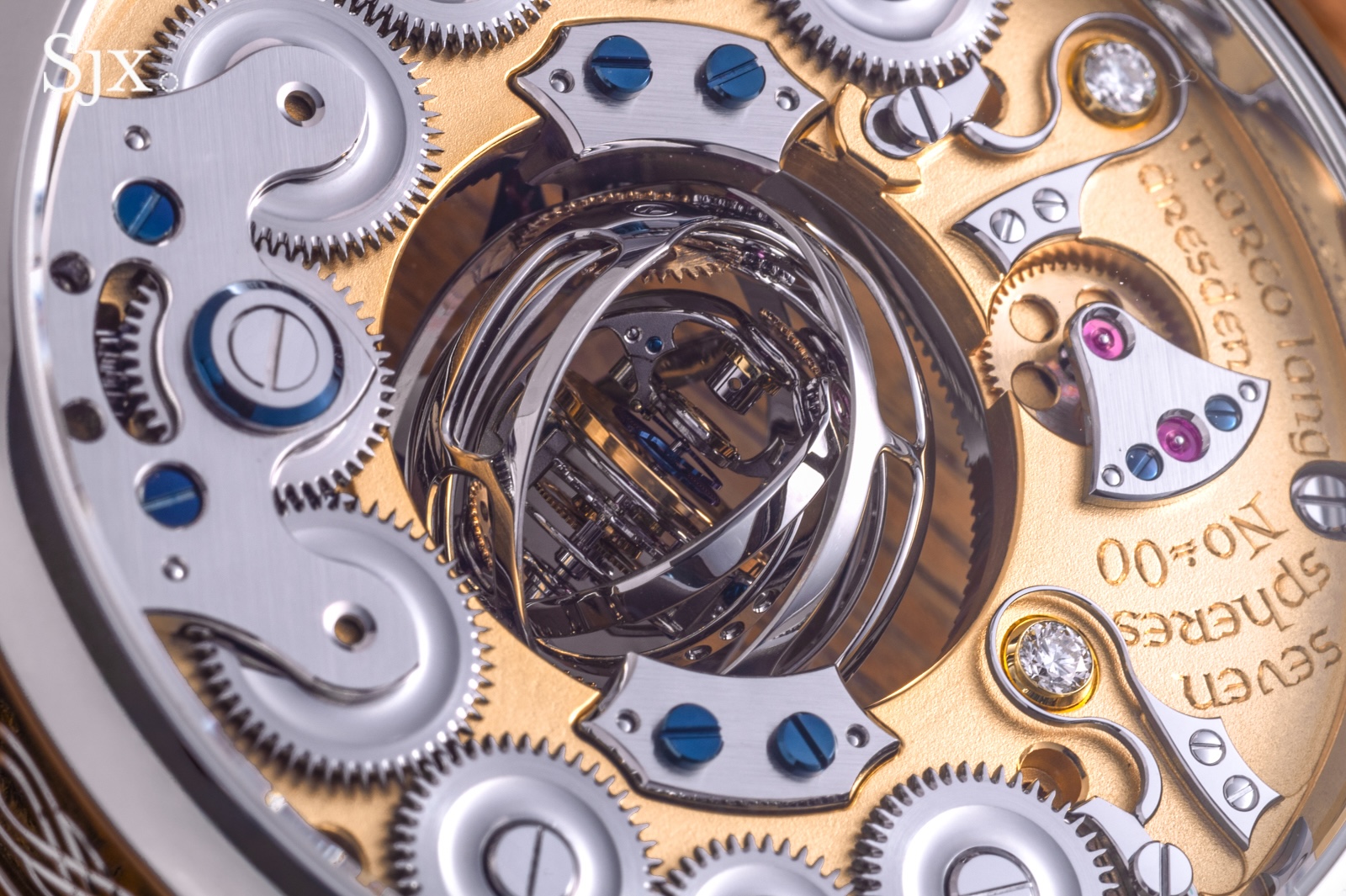
Unfortunately, the dance of the tourbillon is quite slow, which limits the spectacle somewhat. There’s a valid technical reason for this: the energy from the mainsprings must pass through seven levels of gearing to reach the escapement, and every additional level adds unwelcome inertia. In short, the relatively slow rotational speed of the outer rings helps limit energy losses.
Some brands have managed to accelerate their multi-axis tourbillons with novel gearing, small cages, and ultra-light materials, but these tend to be large industrial brands and suppliers. In contrast, Marco Lang’s construction relies on traditional materials and techniques, and what it lacks in speed it makes up in its sheer size, fine finishing, and front-and-back visibility.
On the wrist
One of the challenges of central tourbillons is what to do with the hands. Omega was the first brand to encounter this issue in 1994 when it debuted the world’s first central tourbillon, with ‘mystery’ style hands attached to rotating sapphire crystal plates. Since then, watchmakers like Beat Haldimann and Vianney Halter have overcome this challenge with orbital hands mounted to toothed rings encircling the tourbillon.
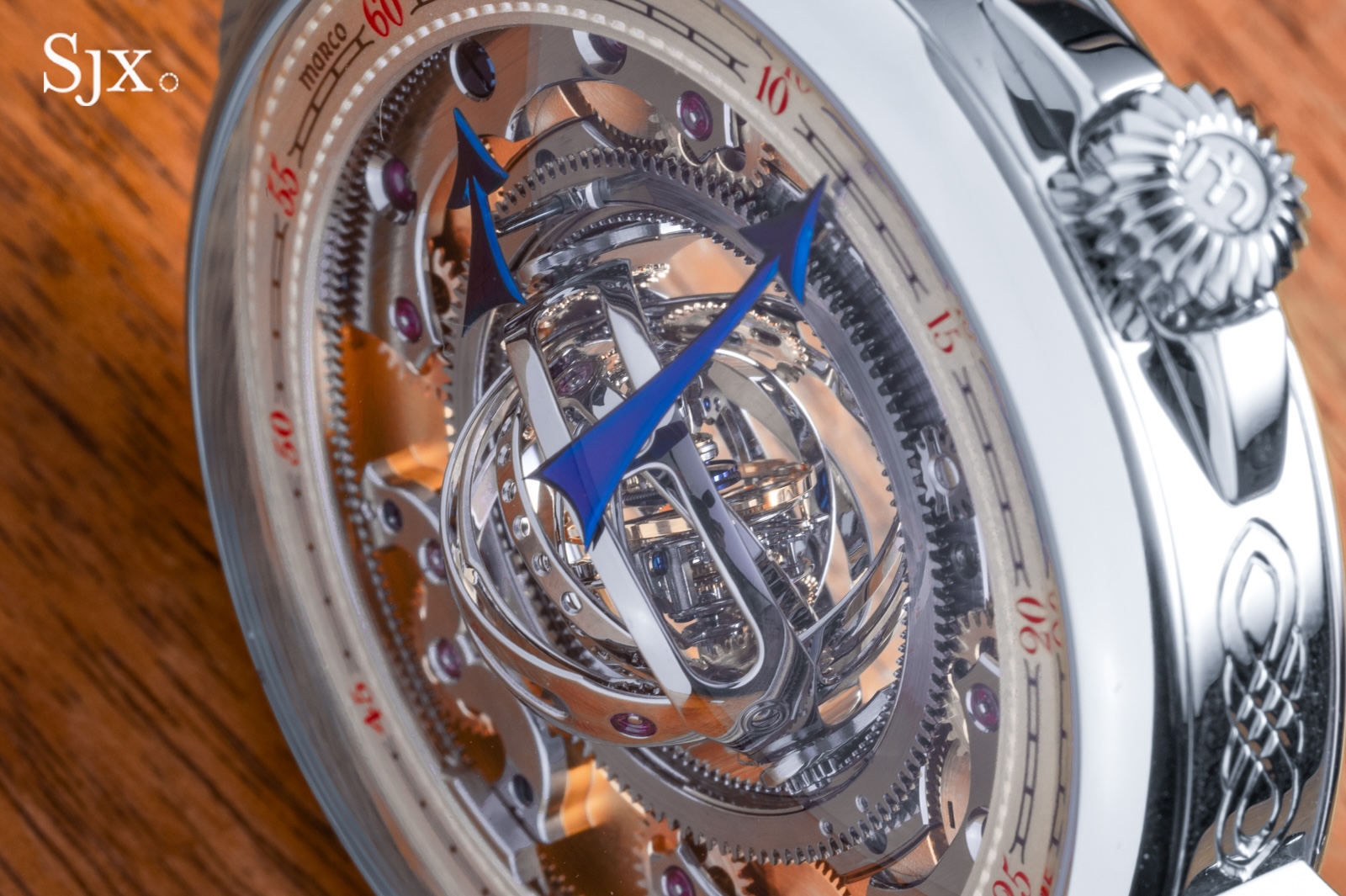
That’s the approach Mr Lang has taken, albeit with an exaggerated, flamboyant style. Each hand is crafted from steel that’s been beveled, polished, shaped, and blued by hand. The hands are mounted on posts attached to rotating rings, but the mounting is only obvious from certain angles. At arm’s length, it looks like the hands are floating inside the case. This is especially true of the minutes hand, with its long tail that curves up and partially over the tourbillon.
The hands point to a peripheral chapter ring, which is decorated with filet sauté guilloche. The 42 mm platinum case can be had with or without ornamental scrollwork. The downturned lugs ensure a stable feel on the wrist, and the domed sapphire crystal minimises the visual bulk of the watch despite its 18 mm total thickness.
Traditional finishing
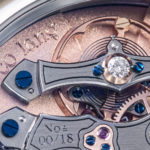
The finishing of the Seven Spheres is a visual feast. The donut-shaped mainplate is frosted and gilded in Mr Lang’s typical style, providing a warm-toned backdrop for the substantial steelwork front and back. Much of the steelwork is straight-grained, but the rings of the tourbillon and several elements in the winding works — like the click springs — are black polished.
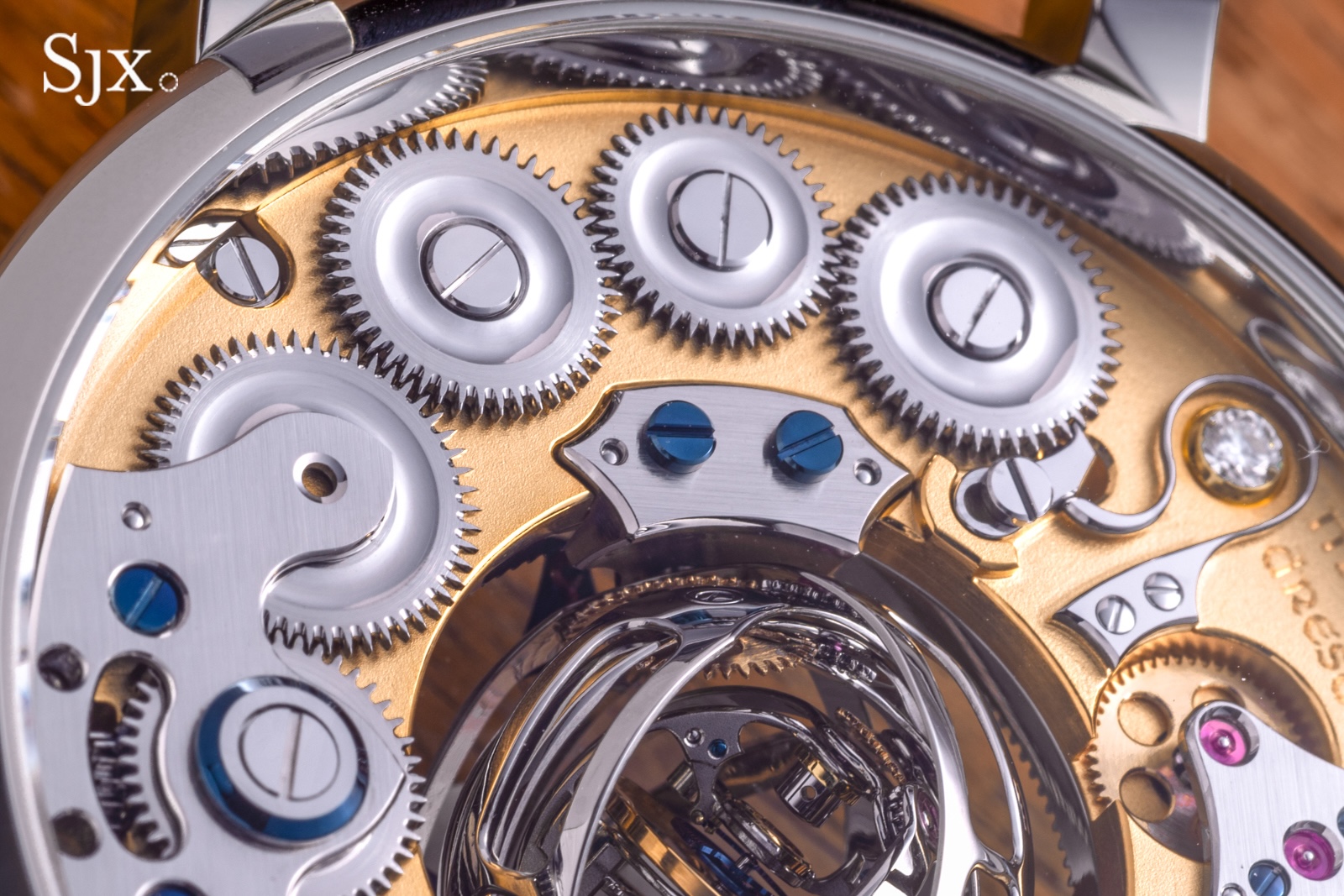
Speaking of the click springs, there are two of them — double the normal count. The swan’s neck shape of each spring frames a brilliant-cut diamond. Though decorative — like the diamonds that adorn the Lang & Heyne Anton Tourbillon — they reference Mr Lang’s past use of functional diamond endstones.
Two Glashütte-style winding clicks — slotted for recoil — secure a total of four small mainspring barrels arranged around the perimeter of the movement. This unusual arrangement evidently requires a large number of winding wheels — nine in total. Each wheel is gorgeously wrought with widely beveled and mirror polished teeth.
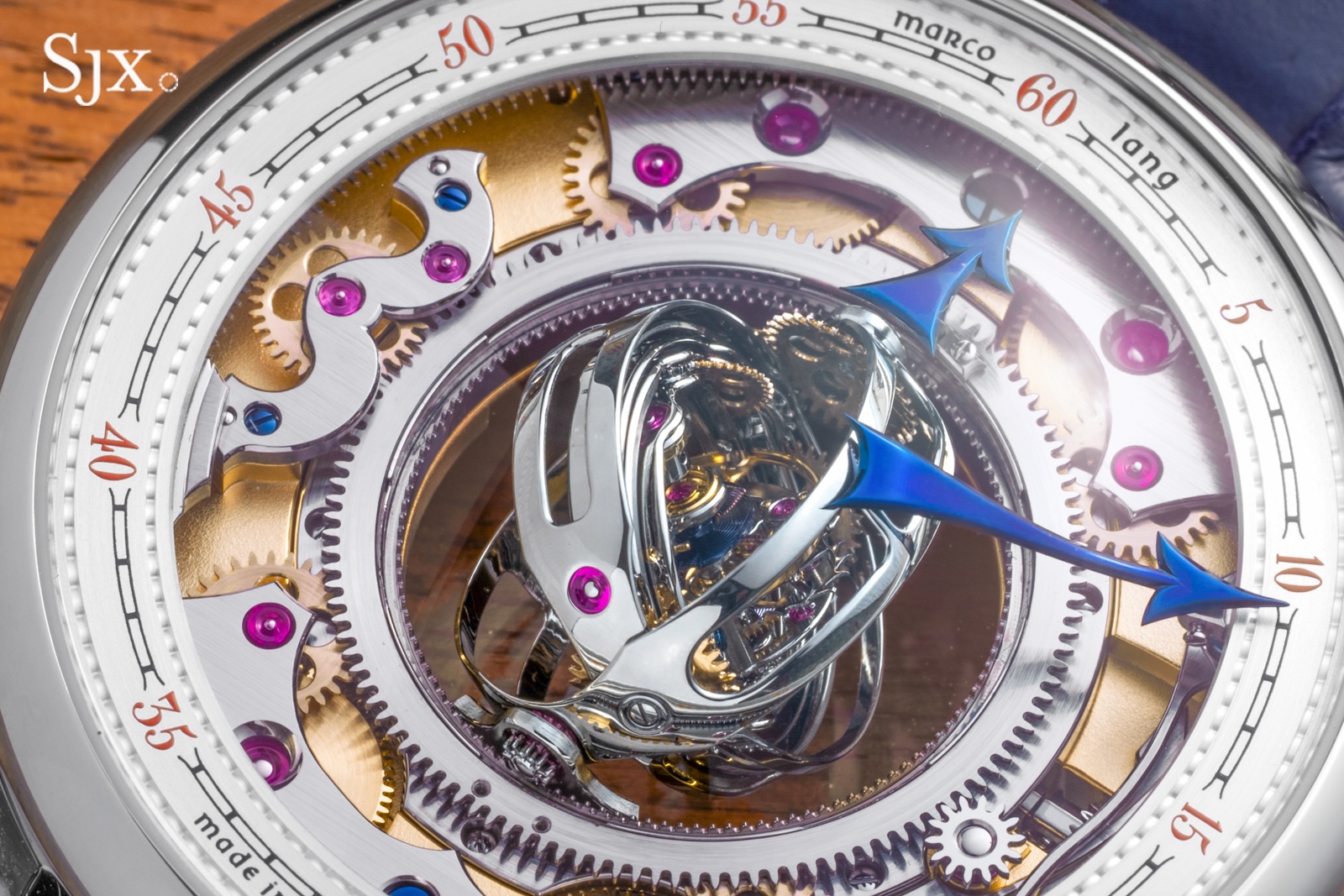
Given the obsessive attention to finishing, some might question the general lack of inner angles throughout the movement. Generally speaking, inner angles feature less prominently in the German watchmaking tradition, but perhaps as a concession to contemporary collector expectations there are two crisply beveled corners on the mustache-shaped bridge at nine o’clock, and another pair on each arrow-shaped hand. Regardless, the quality of the movement finishing leaves no doubt as to its artisanal nature, with or without inner angles.
Key Facts and Price
Marco Lang Seven Spheres
Diameter: 42 mm
Height: 18 mm
Material: 950 platinum
Crystal: Sapphire
Water resistance: 50 m
Movement: ml02/7sp
Features: Hours, minutes, and multi-axis tourbillon
Frequency: 21,600 beats per hour (3 Hz)
Winding: Hand wound
Power reserve: 55 hours
Strap: Alligator strap with platinum pin buckle
Limited edition: No
Availability: Direct from Marco Lang
Price: €250,000 before taxes
For more, visit Marcolangwatches.com.
Back to top.