

Audemars Piguet – The Établisseur, Rehabilitated
Making etablissage great again.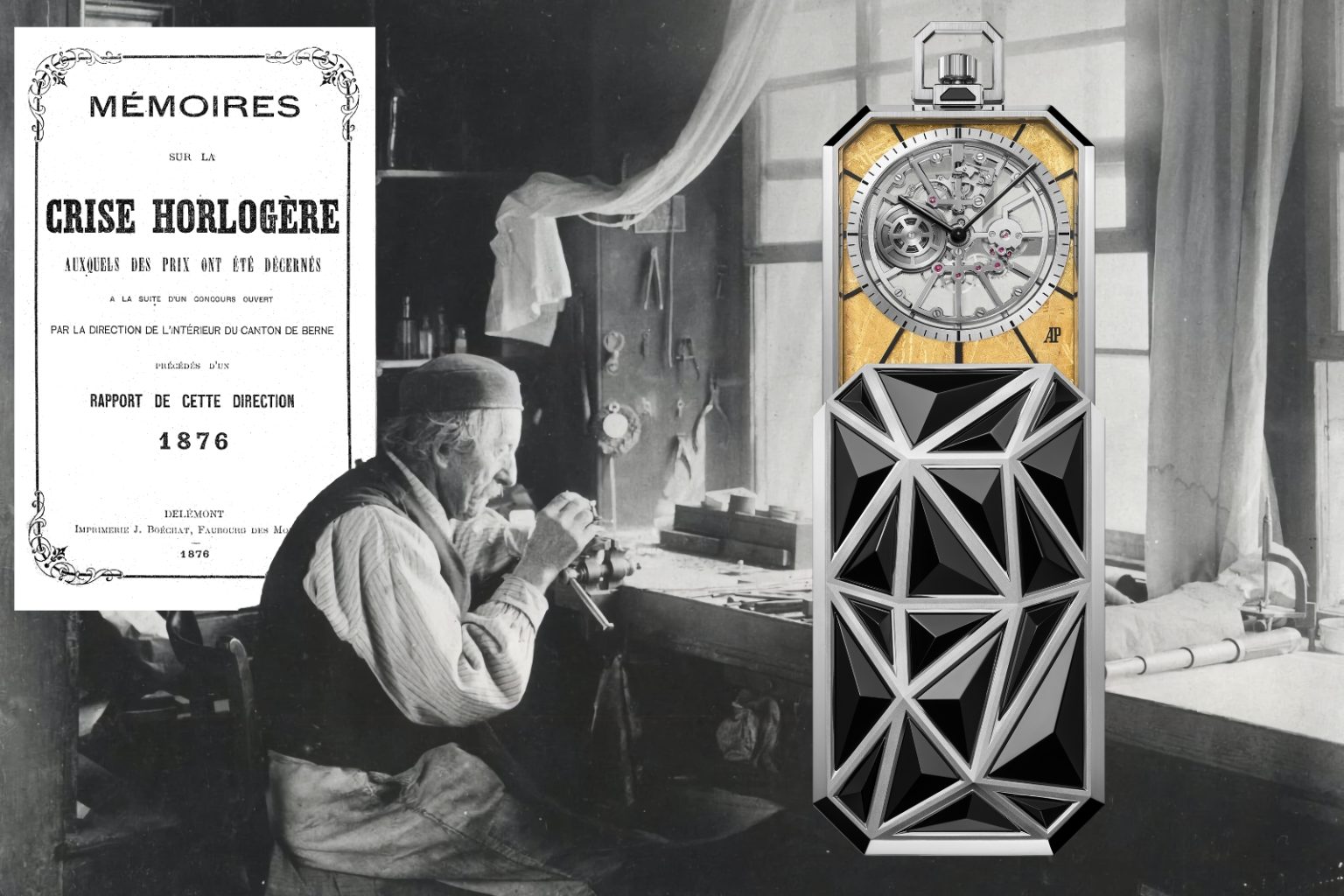
This year Audemars Piguet (AP) walked into Watches & Wonders Geneva for the first time in seven years, and it did so carrying a word it had not used in public for the better part of a century. The brand had departed the predecessor of the fair, the Salon International de la Haute Horlogerie (SIHH), in 2019 alongside Richard Mille, declaring its intention to forge direct relationships with collectors through its own channels and AP Houses rather than through the shared theatre of a trade fair.
The return to Geneva in 2026, under CEO Ilaria Resta, was already a signal of strategic realignment, but the word it brought with it made the move more interesting: établisseur. The watches it presented — three of them — each made in very limited numbers by a network of named artisans working within and around the Musée Atelier in Le Brassus, were introduced under the name Atelier des Établisseurs, a project AP described in its launch communications as a revival of the collaborative spirit that had driven the watchmaking industry for generations.
The établissage system
The framing was historically accurate, as far as it went. The établissage system did shape the Vallée de Joux from the late 18th century onward. Farmers working through the long alpine winters crafted individual components like wheels, bridges, and screws in home workshops, coordinated by an établisseur who assembled the finished watch and brought it to market.
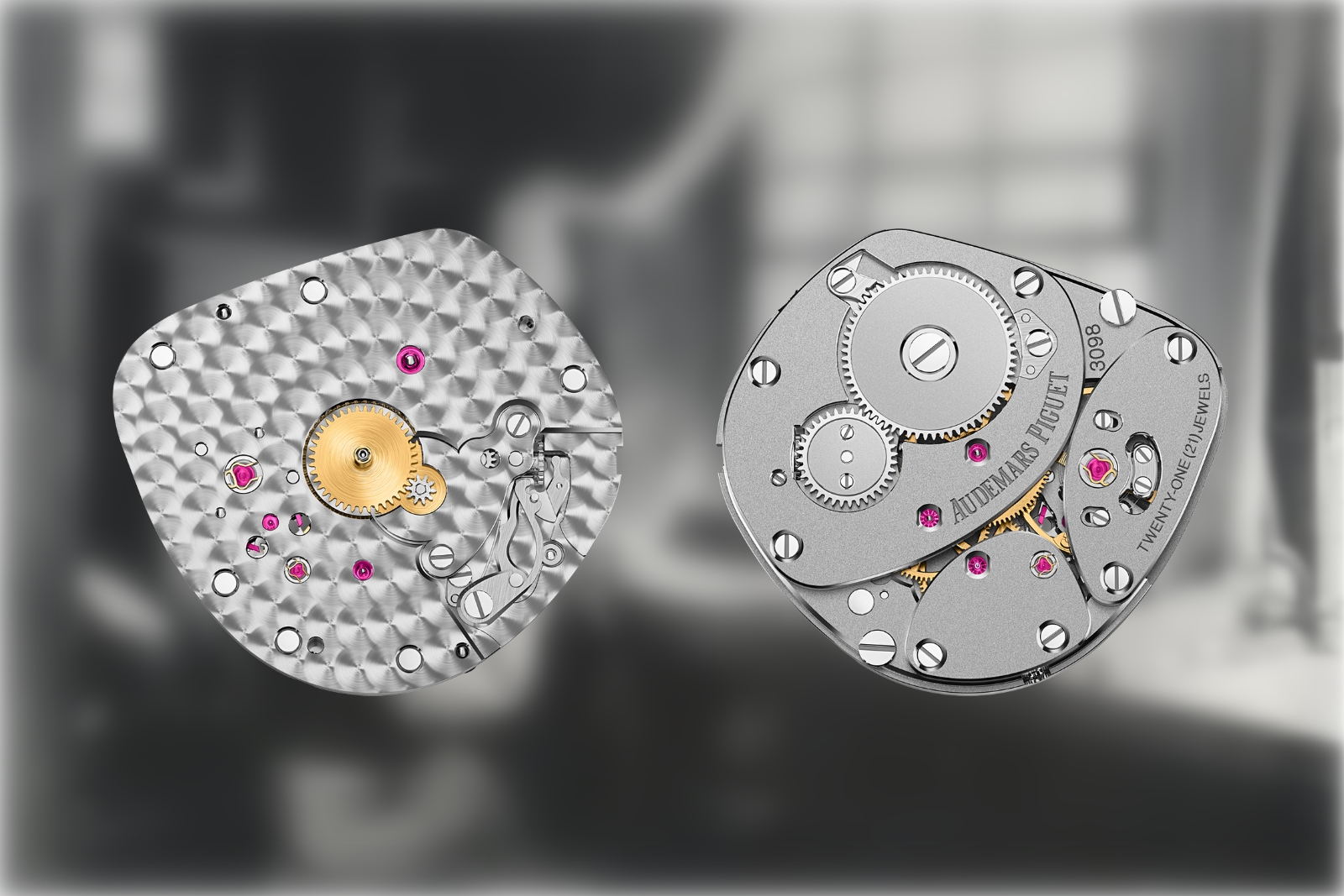
The Audemars Piguet Établisseurs Gallets hand-wound Caliber 3098. Image – SJX composite/Audemars Piguet
Audemars Piguet was founded within that structure in 1875, acting as precisely such a coordinator in its early decades before gradually internalising production through the 20th century.
What AP’s launch communications did not mention, and what gives the project its more interesting dimension, is that the word établisseur spent much of the 19th century as a term of reproach. In 1876, the Direction de l’Intérieur of the Canton of Berne commissioned a public essay competition on the causes of the crisis then devastating the Swiss watchmaking industry.
Eleven memoirs were submitted. Three were awarded prizes and published together in a slim volume printed in Delémont. Taken together, they constitute the most detailed contemporaneous diagnosis of what had gone wrong with the établissage system at the moment of its worst structural failure, and the picture they paint is rather different from the one AP has chosen as a founding narrative.
Delémont, 1876
The Swiss watch industry of the early 1870s had overproduced catastrophically. Export figures to the United States, the industry’s largest market, had collapsed from a peak of nearly CHF15 million in 1872 to under CHF7 million by 1875, and were still falling.
The Besançon manufacture, supported by French government subsidies and protected by punishing import duties, had captured the domestic French market almost entirely. American manufacturers, capitalising on the division of labour with a rigour and capital investment that Swiss producers had never matched, were producing standardised movements of sufficient quality to displace Swiss watches from markets where Swiss supremacy had previously been assumed.
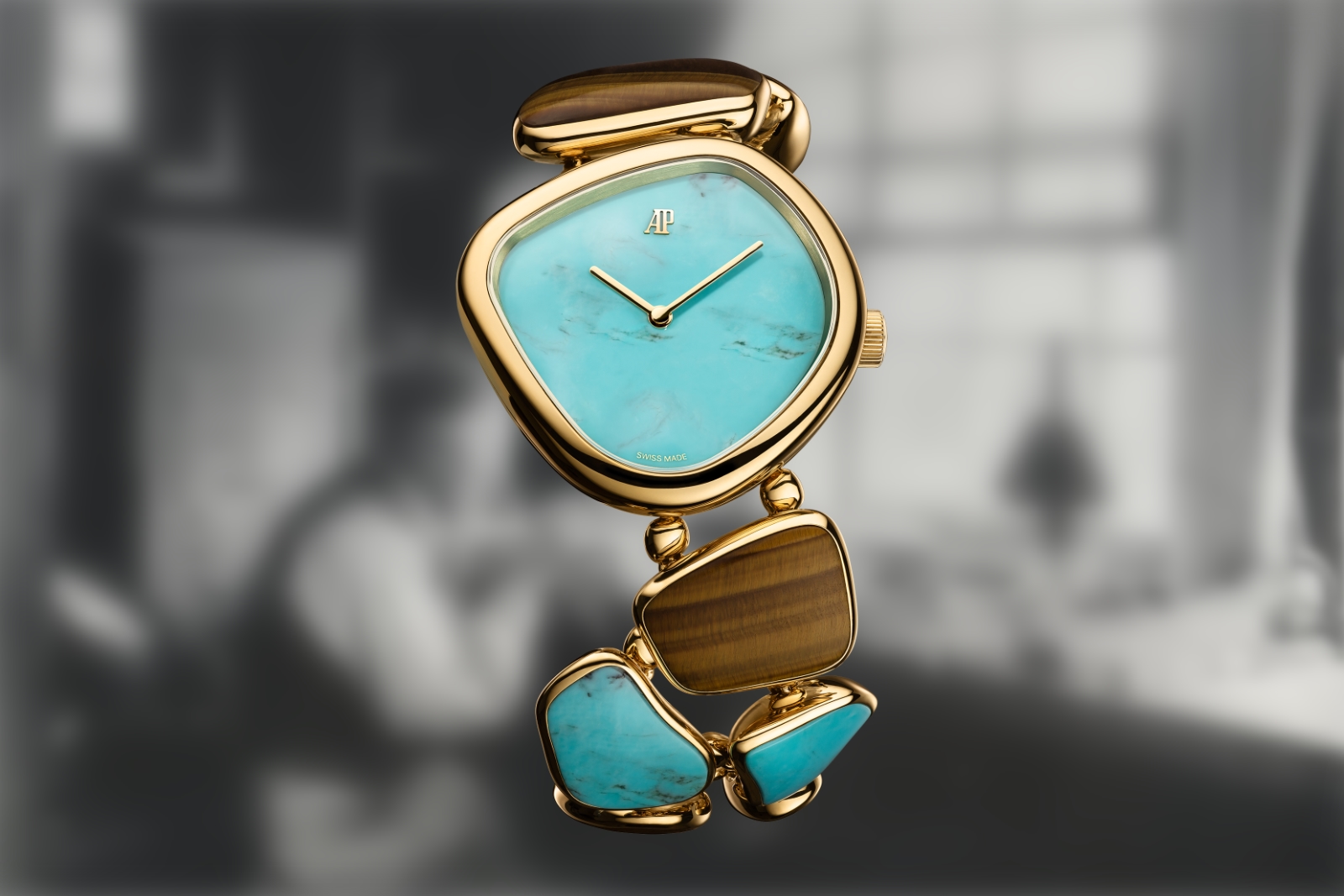
The Audemars Piguet Établisseurs Gallets. Image – SJX composite/Audemars Piguet
The first prize went to a memoir submitted by the Cercle Démocratique Romand de Bienne, whose president was Élie Ducommun, later a Nobel Peace Prize laureate, though in 1876 still a 33-year-old civic organiser with a precise analytical mind and a low tolerance for comfortable fictions. His memoir identified the établisseur as a central figure in the catastrophe, not because the role was inherently corrupt, but because the system had expanded without any mechanism for enforcing accountability.
Merchants had become fabricants without understanding manufacture. Fabricants had become merchants without understanding markets. Apprenticeships had been shortened to the point of meaninglessness, producing what the memoir calls ouvriers-machines — machine-operators rather than watchmakers — capable of executing one subdivision of one process and nothing more.
Quality had been sacrificed to volume with such consistency that Swiss watches had been discredited in their most important foreign markets. The Ducommun memoir called for trademark legislation, hallmarking reform, commercial courts, and the restructuring of apprenticeship contracts. It called, in essence, for the replacement of a system built on trust and informal coordination with one built on enforceable standards and institutional accountability.
The third-prize memoir, submitted by one J. Thevenat of Courtemautruy under the motto Pauca sed bona — few things, but good — pushed the argument further still. Its central contention was that the crisis would persist until the entire Swiss watchmaking community committed to making less and making it better.
Thevenat was particularly sharp on the damage caused by the speculative manipulation of ébauche and finissage prices by a handful of large producers — sudden and arbitrary price movements that destabilised the smaller ateliers dependent on those components and forced them into precisely the quality compromises the market was punishing them for.
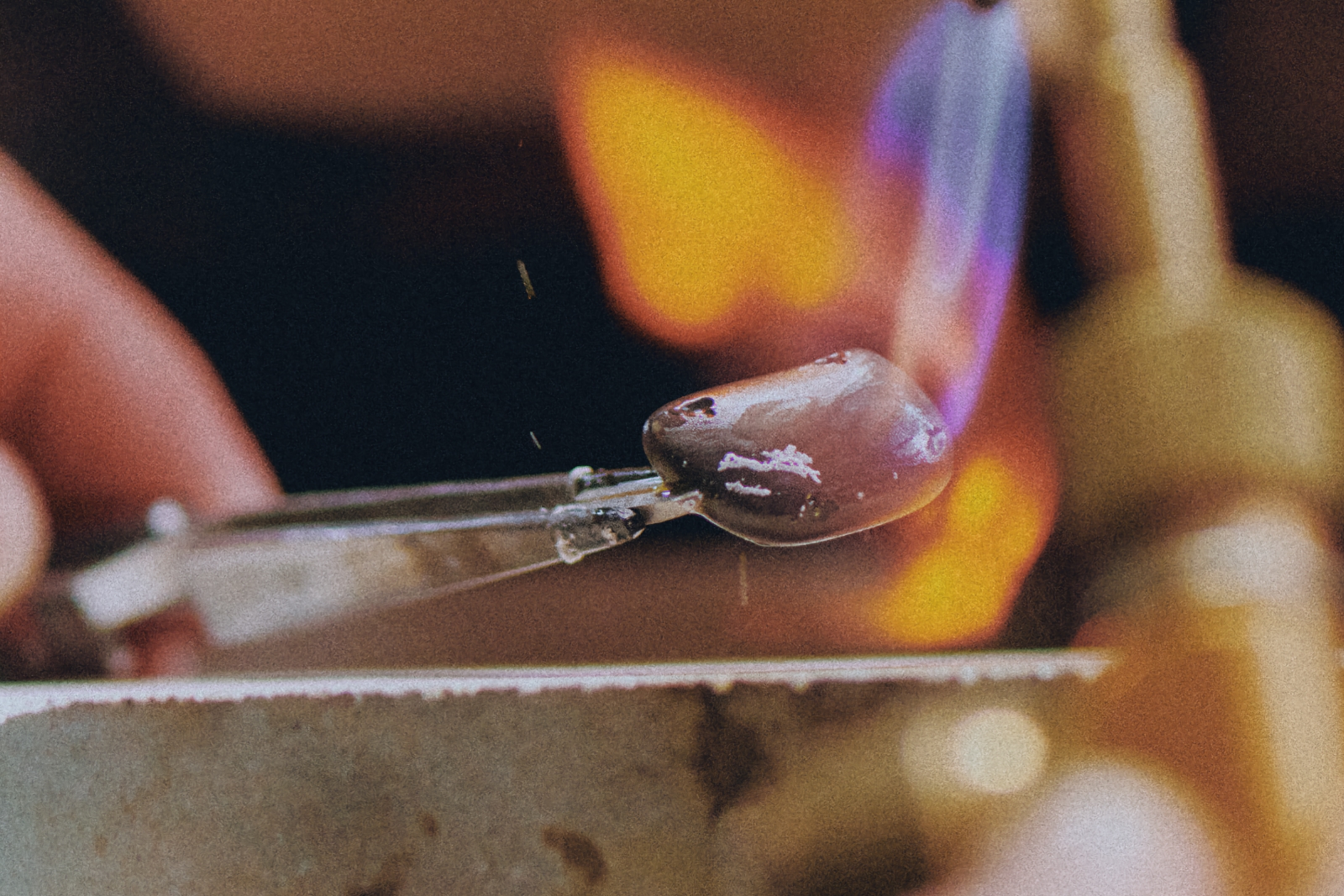
Making of the Audemars Piguet Établisseurs Gallets. Image – Audemars Piguet
The word he used for the remedy was not revival but reform, and his vision of what reform meant was austere: fewer watches, more accountable supply chains, and the elimination of the informal credit arrangements that allowed the weakest établisseurs to keep producing long past the point at which the market had signalled it had enough.
Read alongside AP’s account of the Atelier des Établisseurs, these memoirs produce a curious effect. The language the brand uses to describe the project — collaboration, rare craftsmanship, distributed expertise, the creative freedom that comes from working outside the constraints of industrial production — maps almost precisely onto the qualities the 1876 writers were mourning the loss of, rather than the system they were actually describing.
The établissage system of the pre-crisis period, as all three memoirs describe, was one in which apprenticeships were serious and long, in which the watchmaker who had spent four years learning his craft to the point where a master was prepared to sign off on his competence produced work of a quality that commanded genuine international respect.
The crisis of the 1870s was the crisis of what happened when that standard was abandoned in pursuit of volume. AP’s Atelier is reaching back past the crisis to the world the crisis destroyed, which is historically coherent, but it is worth being precise about what that world actually was and why it ended.
The intervening century
The more immediate context for the Atelier des Établisseurs, however, is not 1876 but the two decades that preceded its launch. From the early 2000s onward, the dominant strategic logic of Swiss haute horlogerie was verticalisation.
The trigger was the Swatch Group’s 2002 announcement that it intended to restrict the supply of ébauches and components to competitor brands, a decision that forced every serious manufacturer to confront its dependence on external supply and to begin, if it had not already, the process of bringing production in-house.
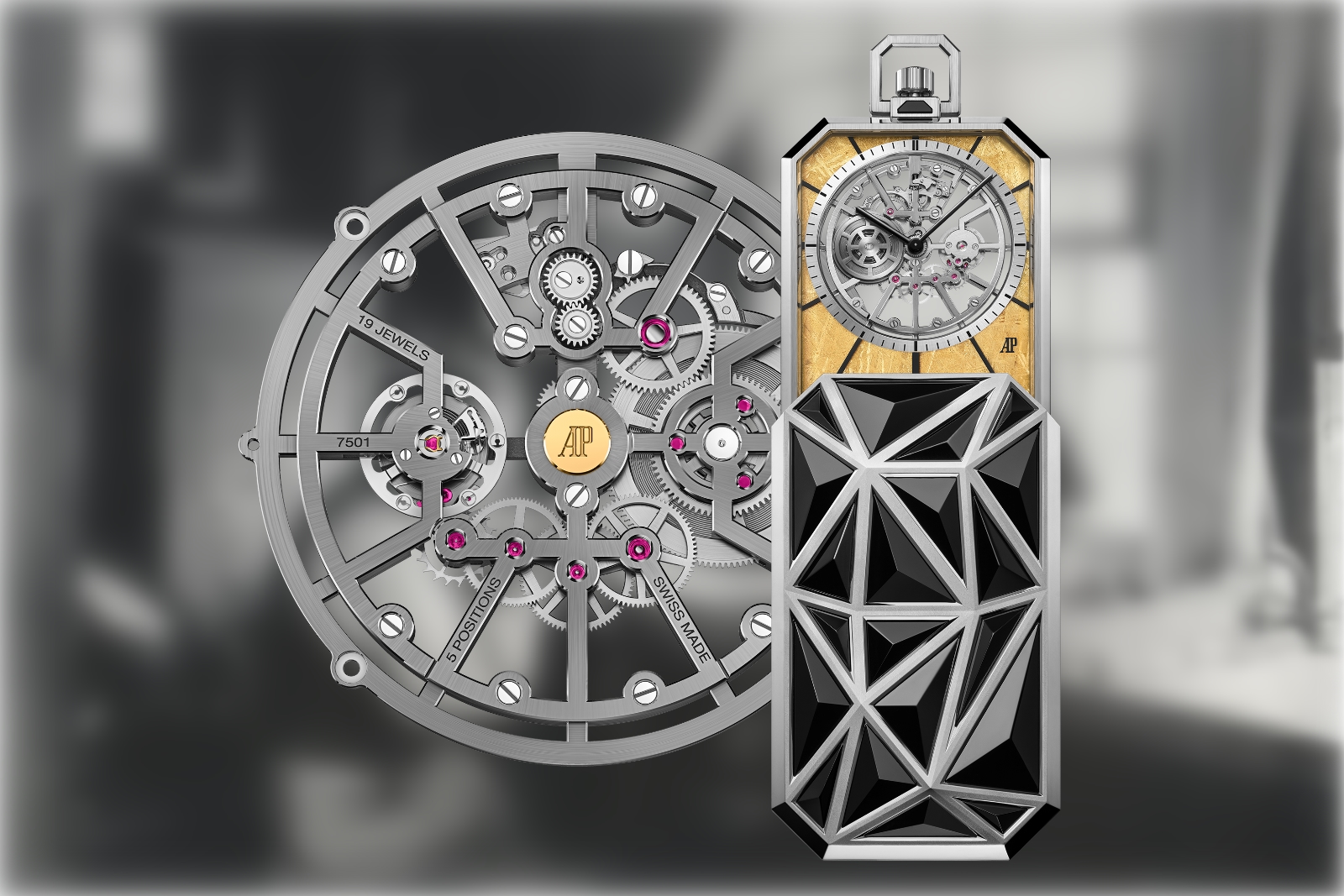
The Audemars Piguet Établisseurs Nomade and its hand-wound Caliber 7501. Image – SJX composite/Audemars Piguet
The result was one of the most capital-intensive periods in the industry’s modern history, as brand after brand invested in manufacturing infrastructure, movement design departments, and the full spectrum of component production. The marketing language that accompanied this investment was equally unambiguous: in-house production became synonymous with legitimacy, with seriousness, with the right to call oneself a manufacture in anything more than a nominal sense.
A movement that came from somewhere else was, in the implicit hierarchy of the era, a lesser thing, a concession to commercial reality rather than an expression of genuine horological ambition.
This logic was never quite as clean in practice as it appeared in official communications. Patek Philippe, whose movements have for generations been regarded as among the finest produced anywhere, has always maintained relationships with specialist external suppliers for particular components and complications.
The finest hand-engravers, enamellers, and gem-setters working in the Vallée de Joux and beyond have rarely been employees of a single manufacture. The kind of expertise that comes from spending an entire career in devoted practice to one discipline — the engraver who works for a dozen different clients across a decade, or the enameller whose reputation is built precisely on her independence from any single house’s aesthetic agenda — is almost by definition the kind of expertise that verticalisation tends to absorb, routinise, and eventually diminish.
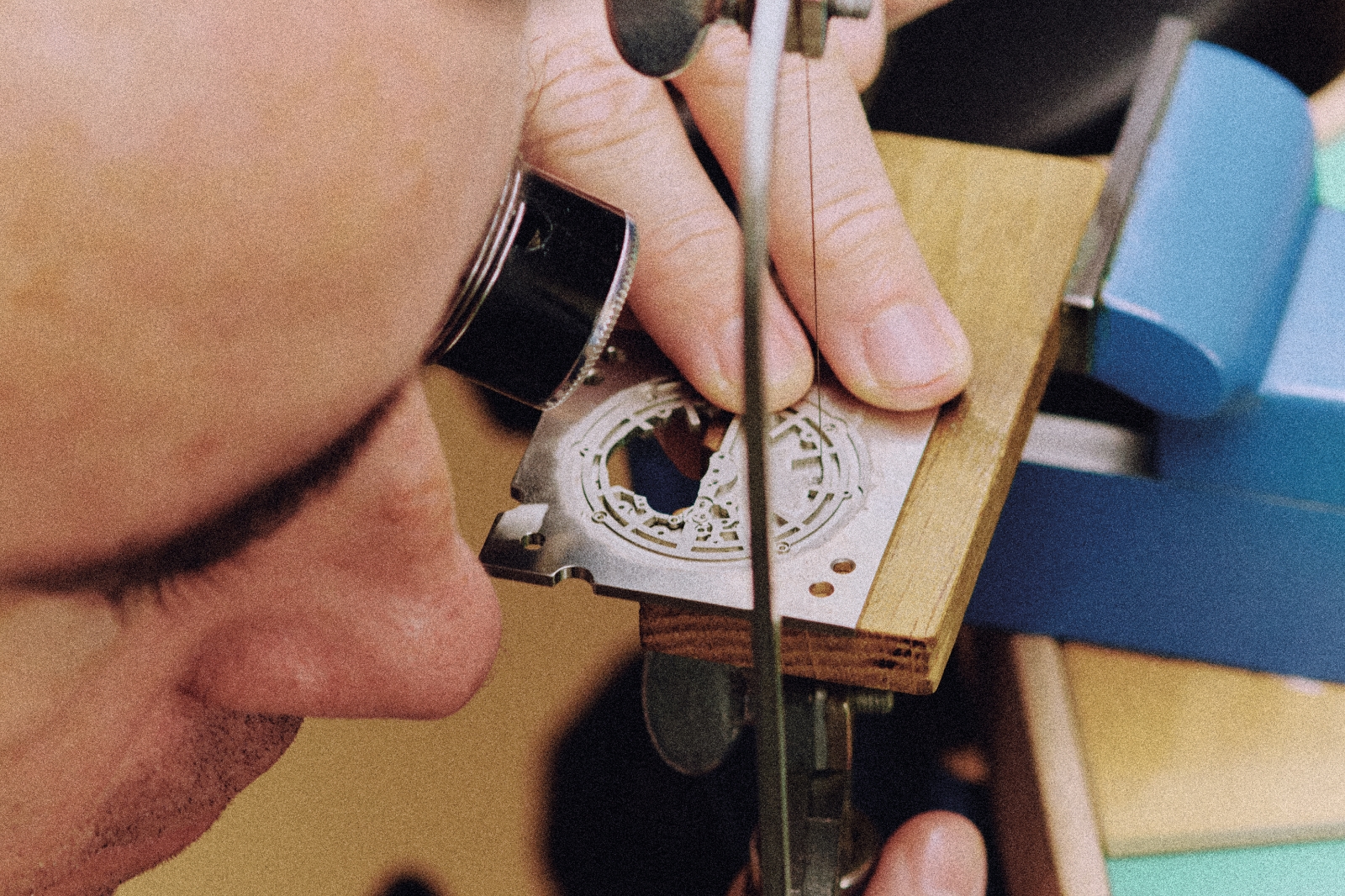
Making of the Audemars Piguet Établisseurs Nomade. Image – Audemars Piguet
A craftsperson who is a salaried employee of one manufacture develops a different relationship to their work than one whose professional identity is constituted entirely by the standard of what they produce and the reputation it earns them across the market as a whole.
This is the argument the Atelier des Établisseurs is making, even though AP’s own account of the project does not frame it in those terms. Sébastian Vivas, AP’s Museum and Heritage Director, comes closer to it in interviews around the launch, describing the project as a structure that creates a playground for craftspeople inside the company who have not previously had the freedom to participate in the development of watches, alongside independent specialists whose skills are at risk of disappearing because there is insufficient demand within any single large manufacture to justify maintaining them at the required level of practice.
The secret mechanism of the Établisseurs Peacock, a hand-engraved automaton secret watch of considerable technical ambition, was conceived by Giulio Papi, AP’s most significant technical collaborator in the domain of grande complications through the APRP partnership.
The Calibre 7501 powering the Nomade was skeletonised by hand using a hacksaw, a technique AP claims to have preserved in-house since the 1930s and one that Mr Vivas notes takes up to a month of work per movement, with no margin for error.
Demonstrations, not products
The three inaugural pieces of the Atelier des Établisseurs are, in this light, best understood as demonstrations rather than products in any conventional sense. The Établisseurs Galets — a pebble-shaped yellow gold bracelet watch with a natural stone dial and bracelet links of varying silhouettes connected by gold ball joints — is assembled, adjusted, and cased by a single watchmaker, a deliberate inversion of the fragmented piecework that the 1876 mémoires identified as the root of the quality collapse.
The Nomade, with its hand-skeletonised movement and tripartite case that converts from pocket watch to desk clock, is a formal proposition about what a watch can be when it is freed from the constraints of catalogue logic.
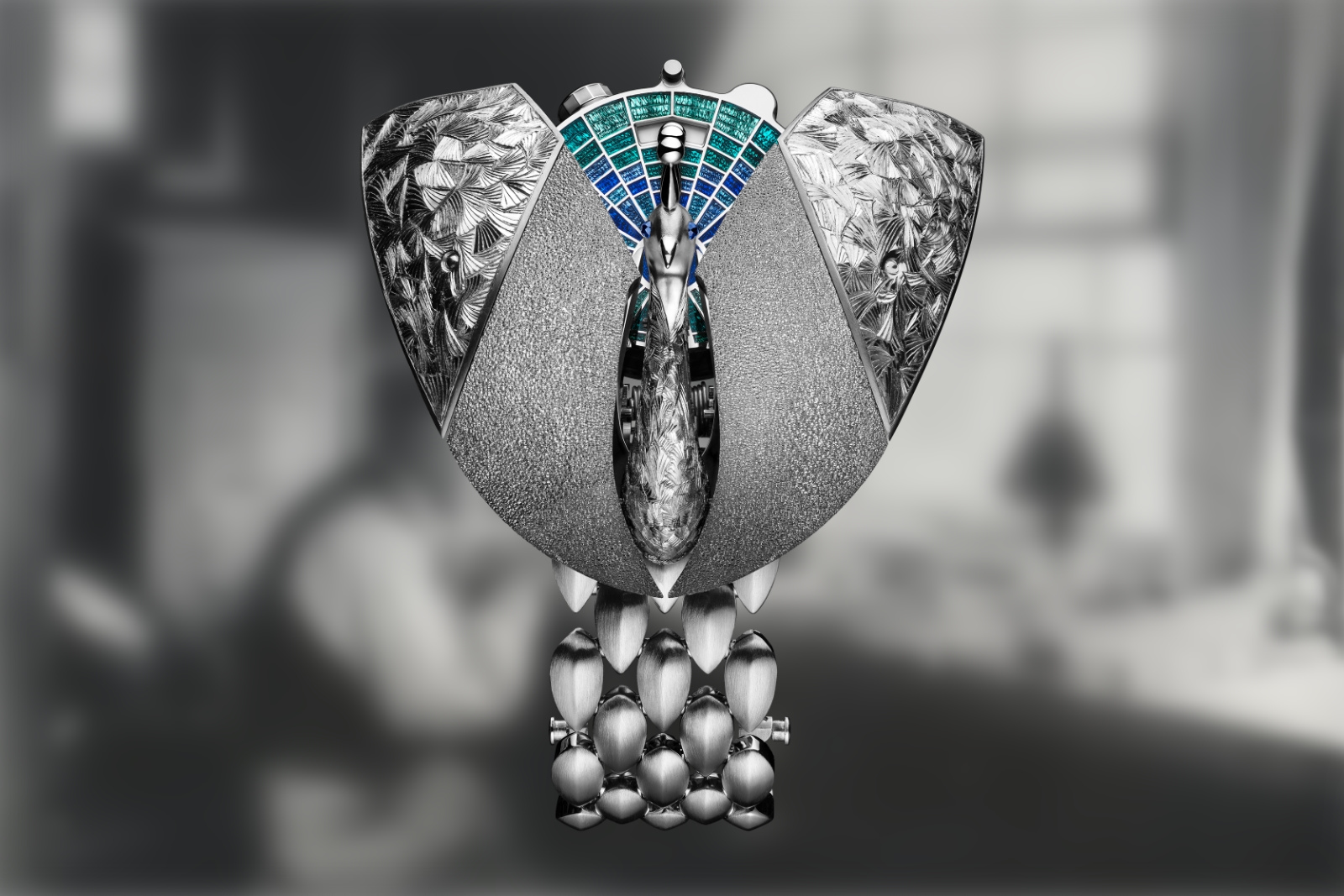
The Audemars Piguet Établisseurs Peacock automaton. Image – SJX composite/Audemars Piguet
The Peacock, the most technically ambitious of the three, draws on the skills of jewellers, enamellers, engravers, and watchmakers in a collaboration whose contributors are all named in the technical documentation — transparency that stands in direct contrast to the anonymous assembly that the 1876 writers were condemning.
What AP has done, then, is something more specific than a revival of the établissage system, and more interesting than a straightforward exercise in heritage marketing. It has taken a word that carried — in its own historical moment — a freight of failure and reproach, and rehabilitated it by inverting every structural condition that made the original system go wrong.
The 1876 établisseur was accountable to no one, constrained by no enforceable standard, operating in a market so flooded with product that quality had ceased to be a differentiating factor. The Atelier des Établisseurs operates under conditions of extreme scarcity, complete attribution, institutional location, and brand guarantee — the precise remedies the Ducommun memoir called for in 1876, applied 150 years later in a context the authors of those prize-winning essays could not have imagined.
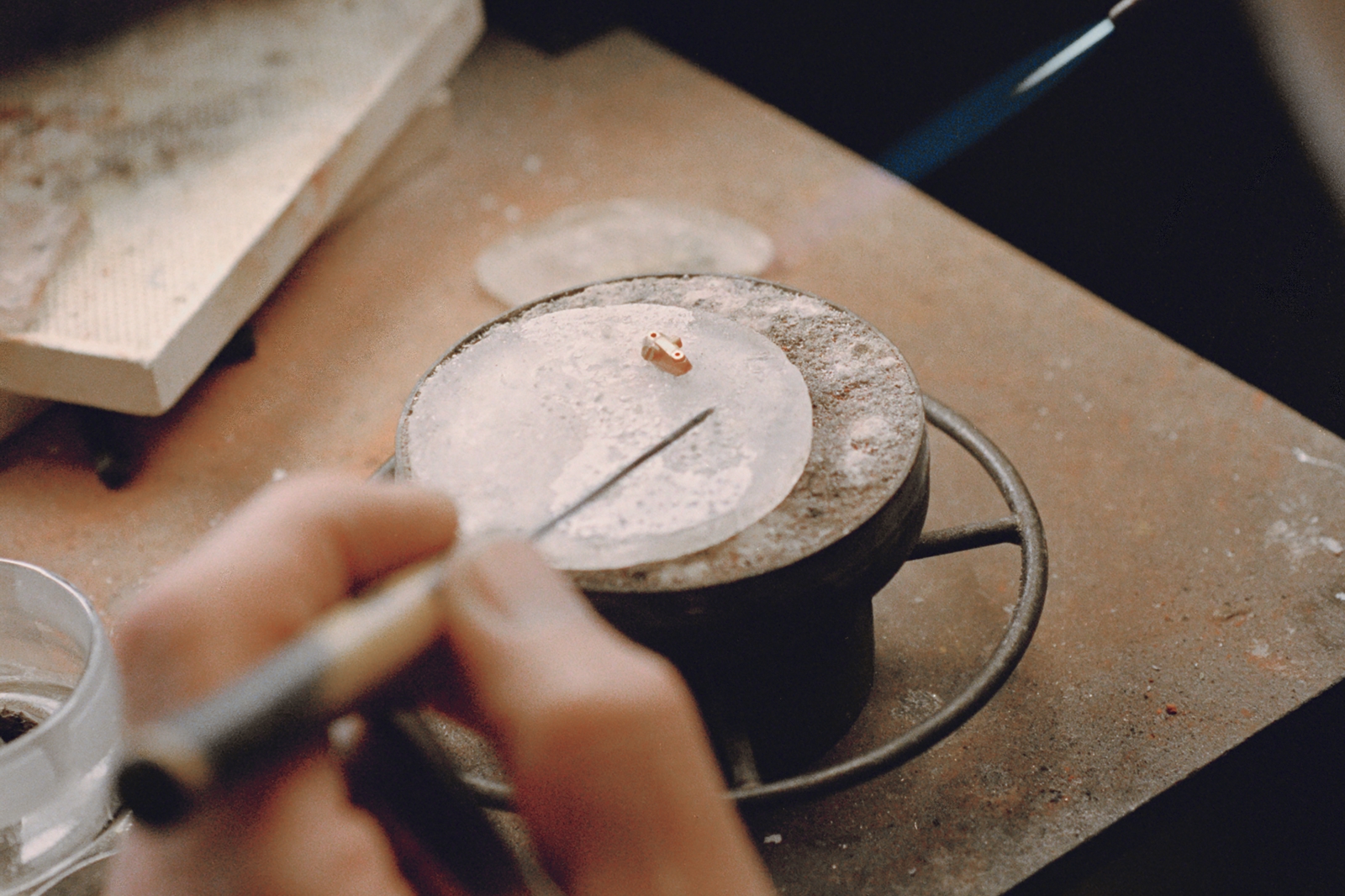
Making of the Audemars Piguet Établisseurs Peacock automaton. Image – Audemars Piguet
Whether the model can be sustained beyond its inaugural three pieces — and whether it will influence how other manufactures think about the relationship between verticalisation and specialist external collaboration — remains to be seen.
What is already clear is that a brand of AP’s stature making this argument, at this moment, at this fair, after two decades in which the industry moved in precisely the opposite direction, is a signal worth taking seriously.
The Atelier des Établisseurs is an assertion that the industry’s dominant production ideology of the last twenty years solved one problem while creating another, and that the answer to the second problem may lie, improbably but coherently, in a working model that the 19th century tried, broke, and never quite managed to fix.
Audemars Piguet seems to have found a fix. The question the rest of the industry will be asking is whether it can be replicated.
For more, visit audemarspiguet.com.
Back to top.