
Vacheron Constantin’s Ultra-Thin Overseas Returns
The next generation dawns.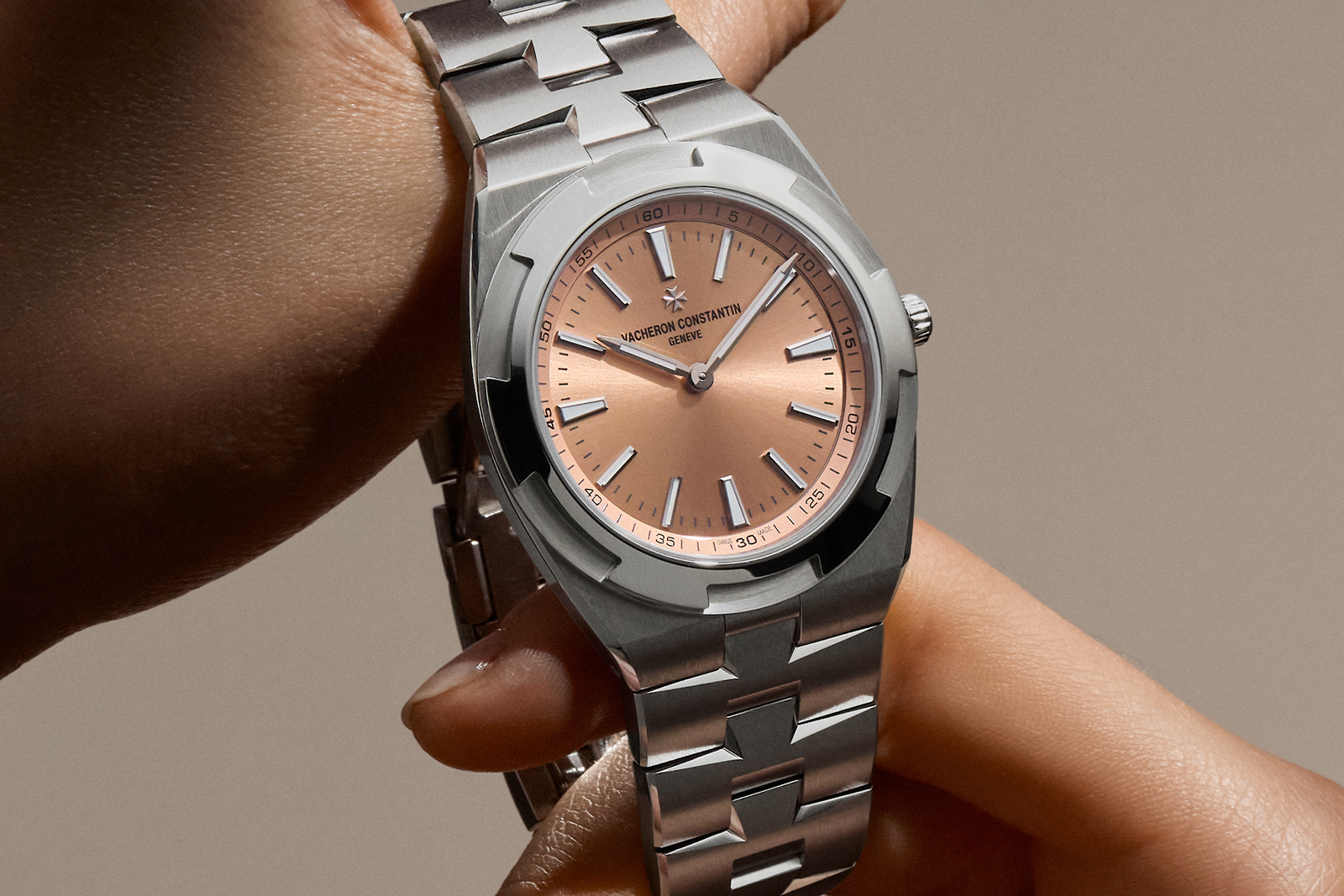
Following a belter of an anniversary year during which the brand launched, among other things, the world’s most complicated wristwatch and a quarter-ton astronomical clock, Vacheron Constantin (VC) kicks off Watches & Wonders with something more low-profile, both literally and figuratively — the Overseas Self-Winding Ultra-Thin.
While small in stature at just 7.35 mm thick, it’s what’s inside the counts — namely, an all-new micro-rotor calibre with 80 hours of power reserve and seemingly limitless potential.
Initial thoughts
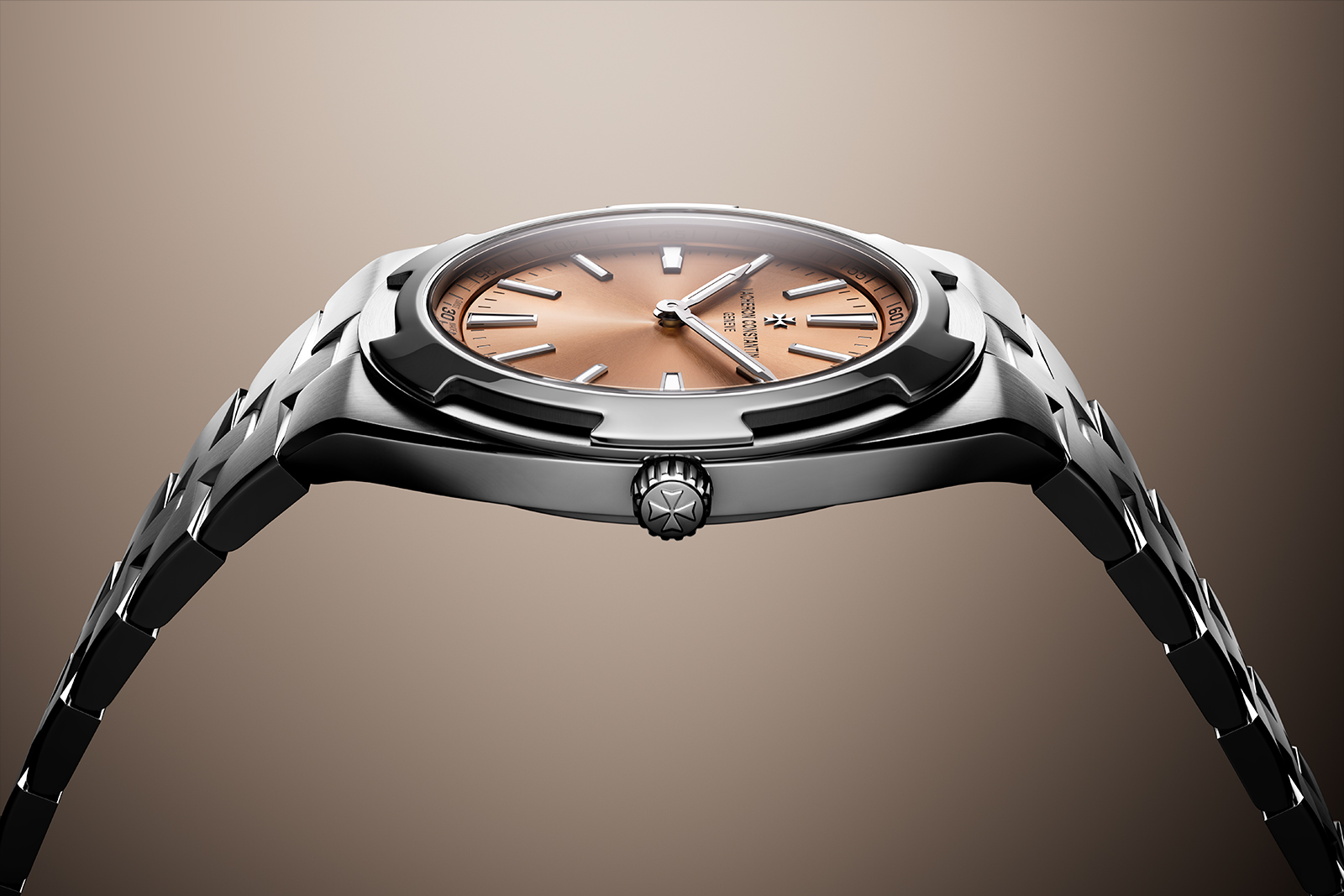
The new Overseas Ultra-Thin is little different from the model that preceded it, though the ref. 2000V remained rare enough throughout its production run that the format still feels fresh. It also helps that despite the visual similarity, the ref. 2500V is a completely new watch inside and out, catapulting a model that arguably lagged behind its one obvious competitor into instant parity.
The ref. 2500V is best understood from the inside out. Audemars Piguet replaced the well-loved historical cal. 2121 with its more modern cal. 7121 in 2022, and now it’s VC’s turn, being the last of the big three purveyors of mass-market fine watchmaking to replace its aging Jaeger-LeCoultre cal. 920-based movements with an in-house alternative.
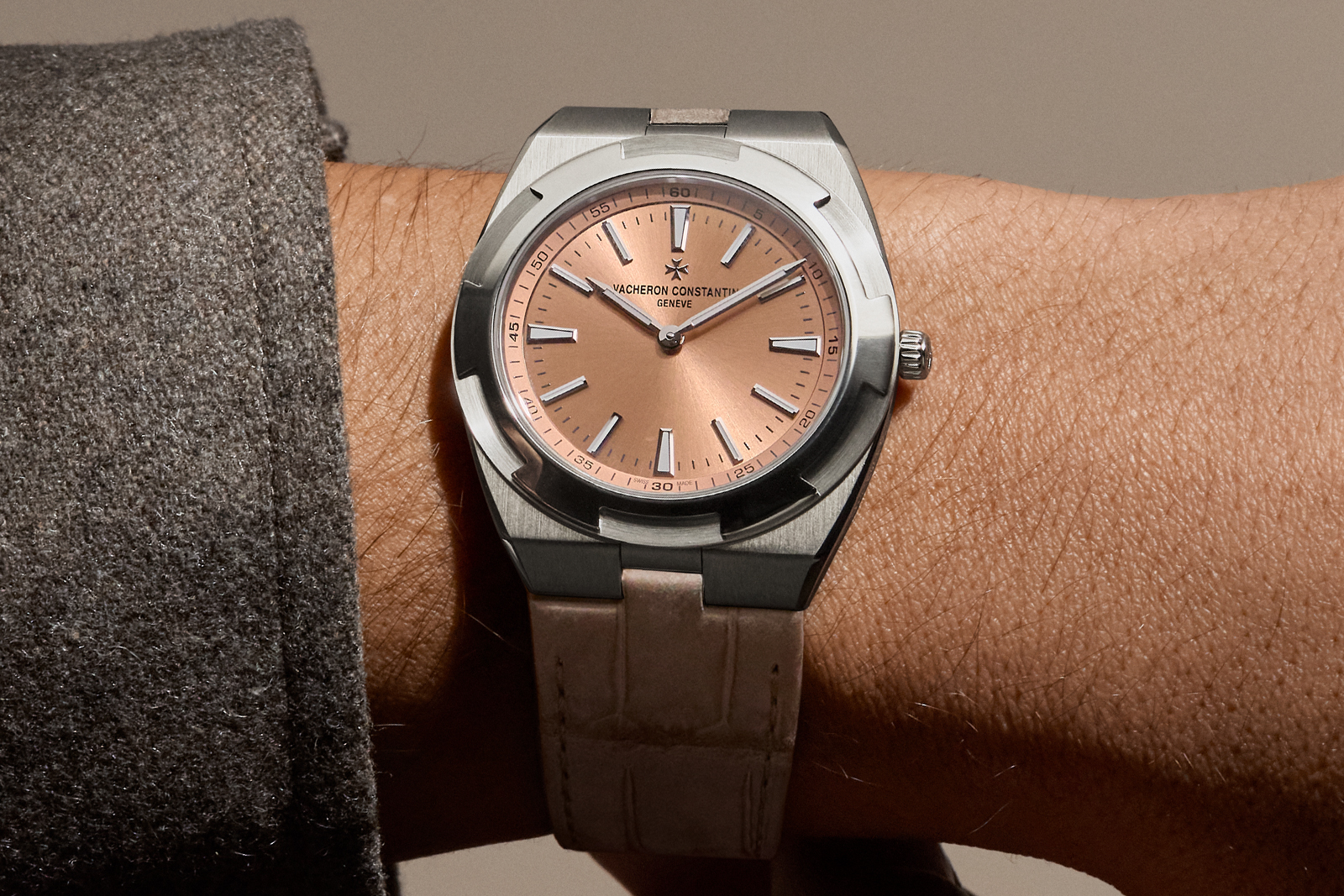
The reluctance to replace this venerable platform is understandable. What VC calls the cal. 1120 is one of the last movements of its generation still in use, and carries a historical weight missing from many modern movements. But the ultra-thin calibre’s tedious construction, slow beat rate, short power reserve, and lack of a quick-set date have finally caught up with it.
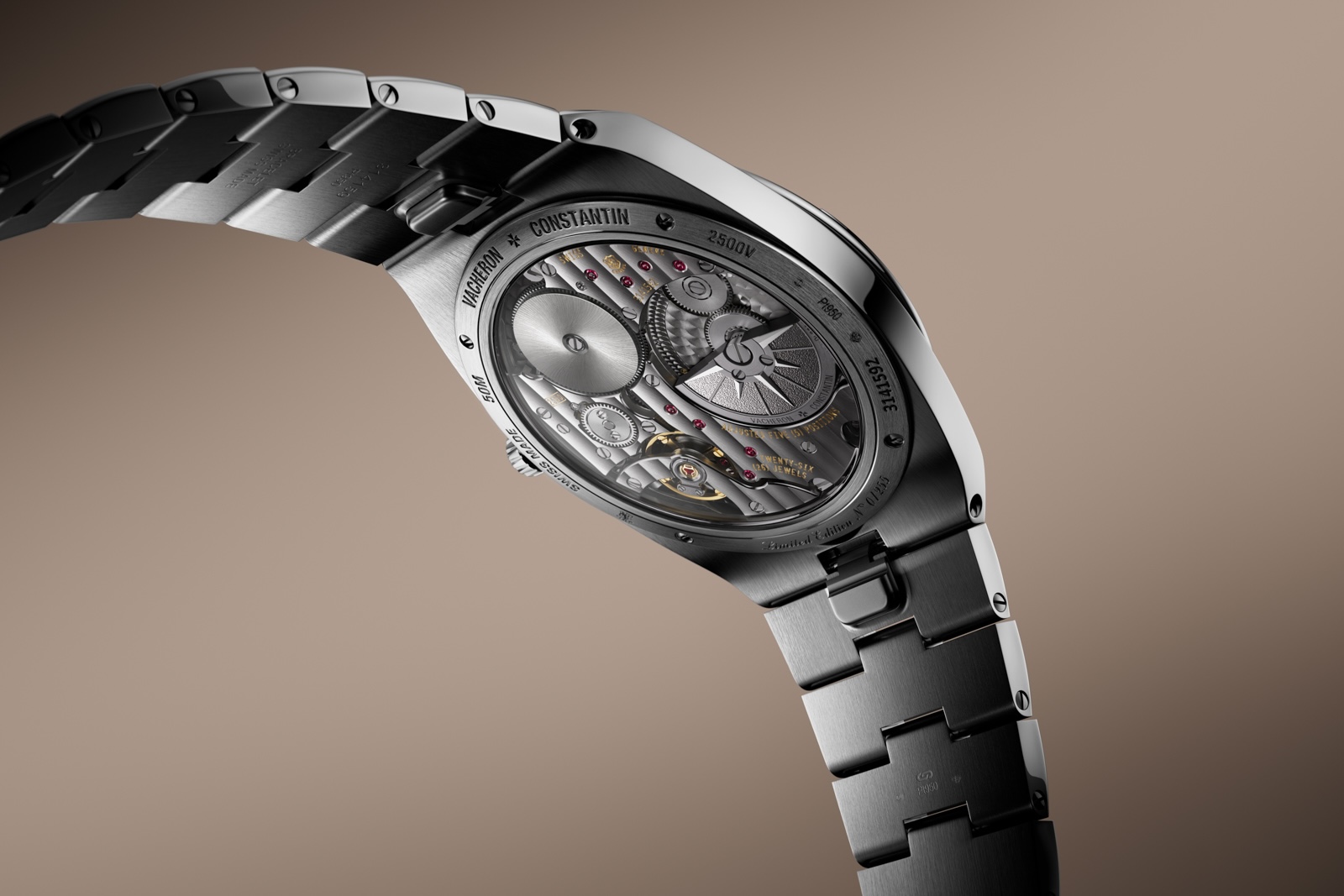
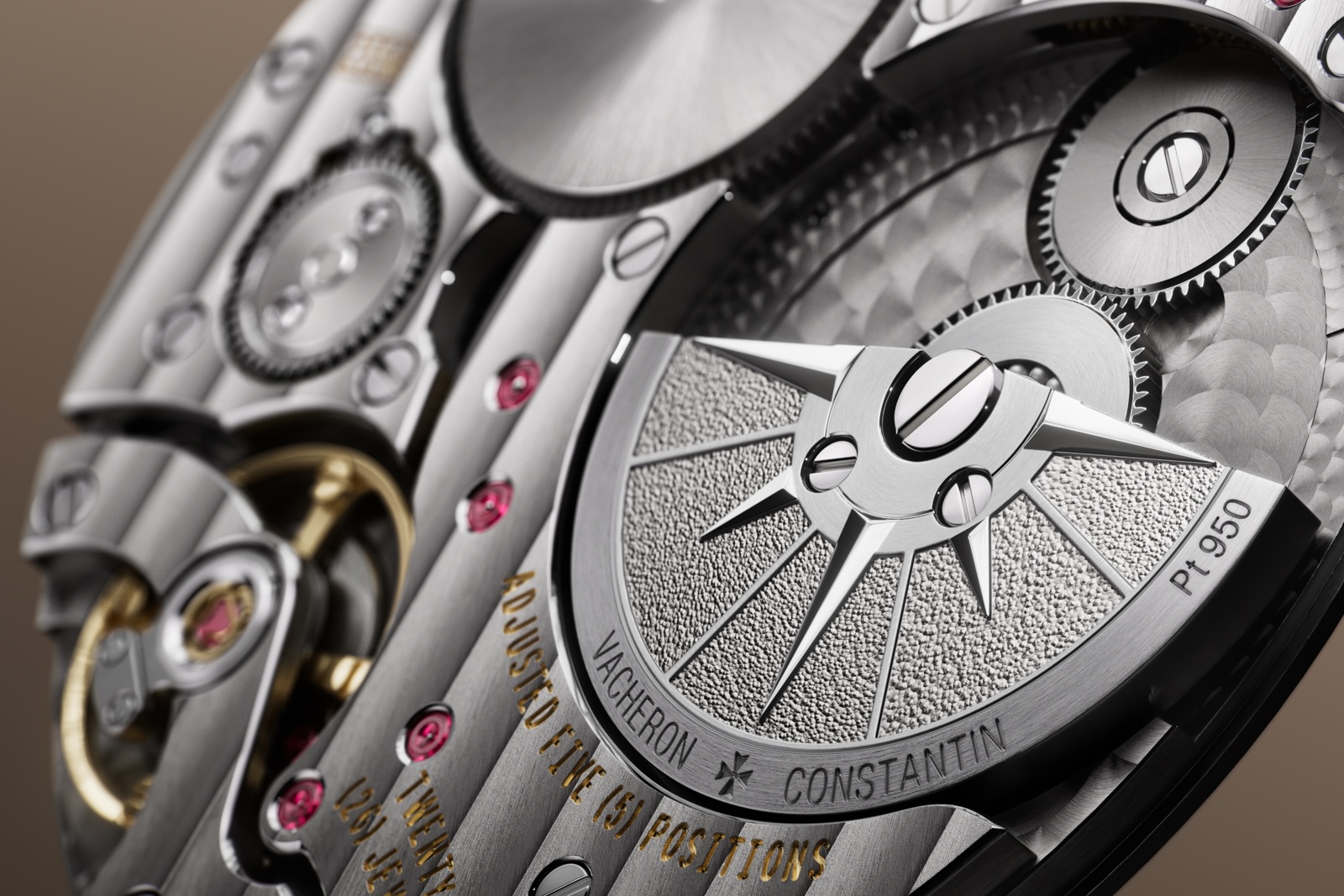
While not the most classically beautiful movement, lacking the elegant bridges of the Genevan tradition, VC’s new cal. 2550 boasts an impressive spec sheet, is well decorated, and should prove to be a promising platform for a future 222 or Overseas perpetual calendar.
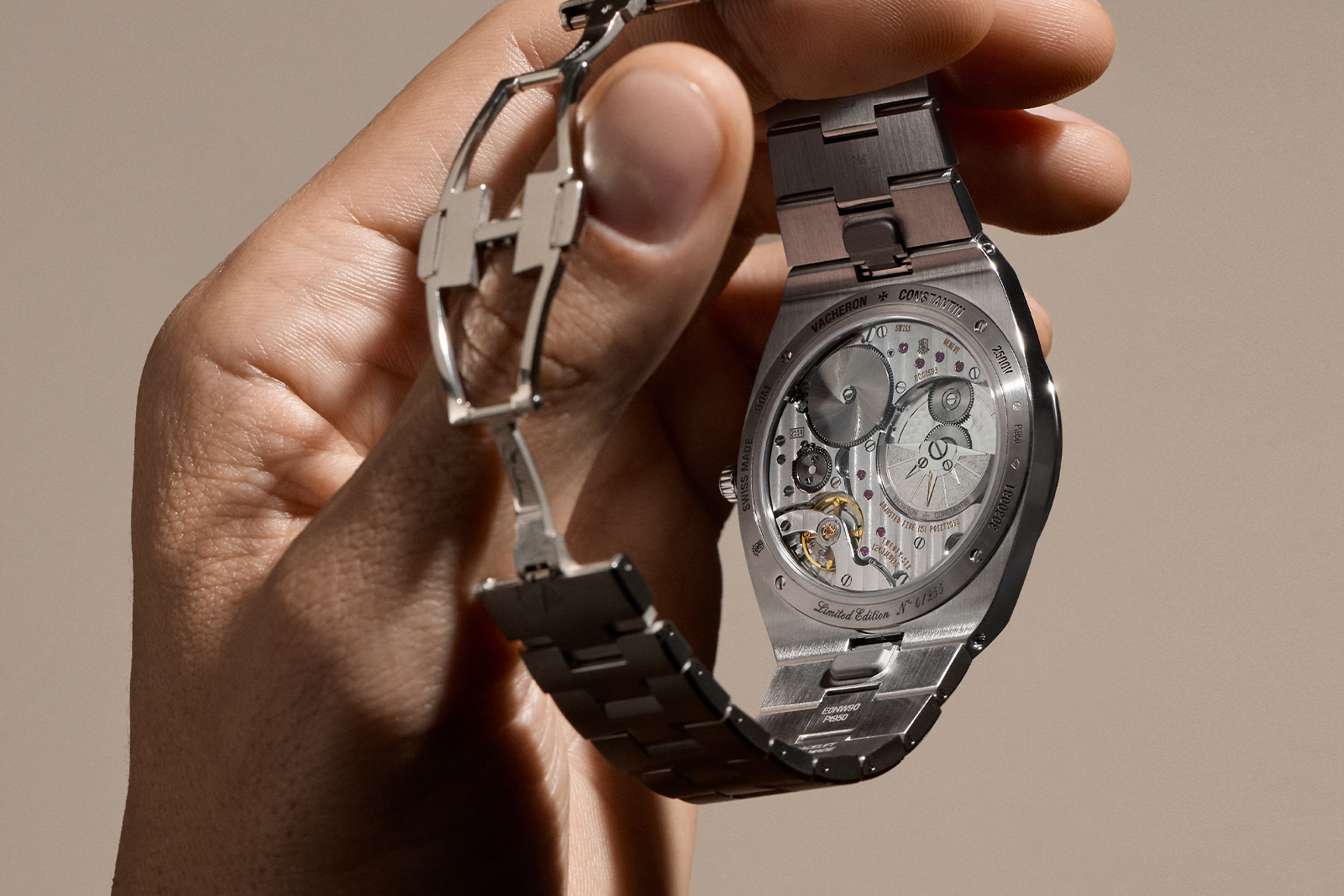
Visually, the watch breaks little new ground, featuring the once-rare but ever-popular salmon and platinum colourway. This configuration is far from novel, even for VC, but is appealing and versatile.
That versatility should make it appealing to both enthusiasts and casual collectors alike — it’s a luxe but low-key watch that someone could wear five days a week, year after year. And now, thanks to the extended power reserve of the new calibre, the watch will still be running on Monday morning.
A watch only Vacheron Constantin could make
The Overseas case is built and finished to the standards of its price, but isn’t as complex as its counterparts from Audemars Piguet (AP) and Patek Philippe. While the Royal Oak and Nautilus designs are now inseparable from the identities of their respective makers, this has more to do with familiarity than anything else.
In contrast, the Overseas is a watch that only VC could make, featuring the brand’s Maltese cross motif repeated cleverly throughout its case and bracelet. The bezel shape, for example, is a stylised Maltese cross of sorts, and the design is actually functional — used to screw the bezel down — rather than being pressed into place as on most watches.
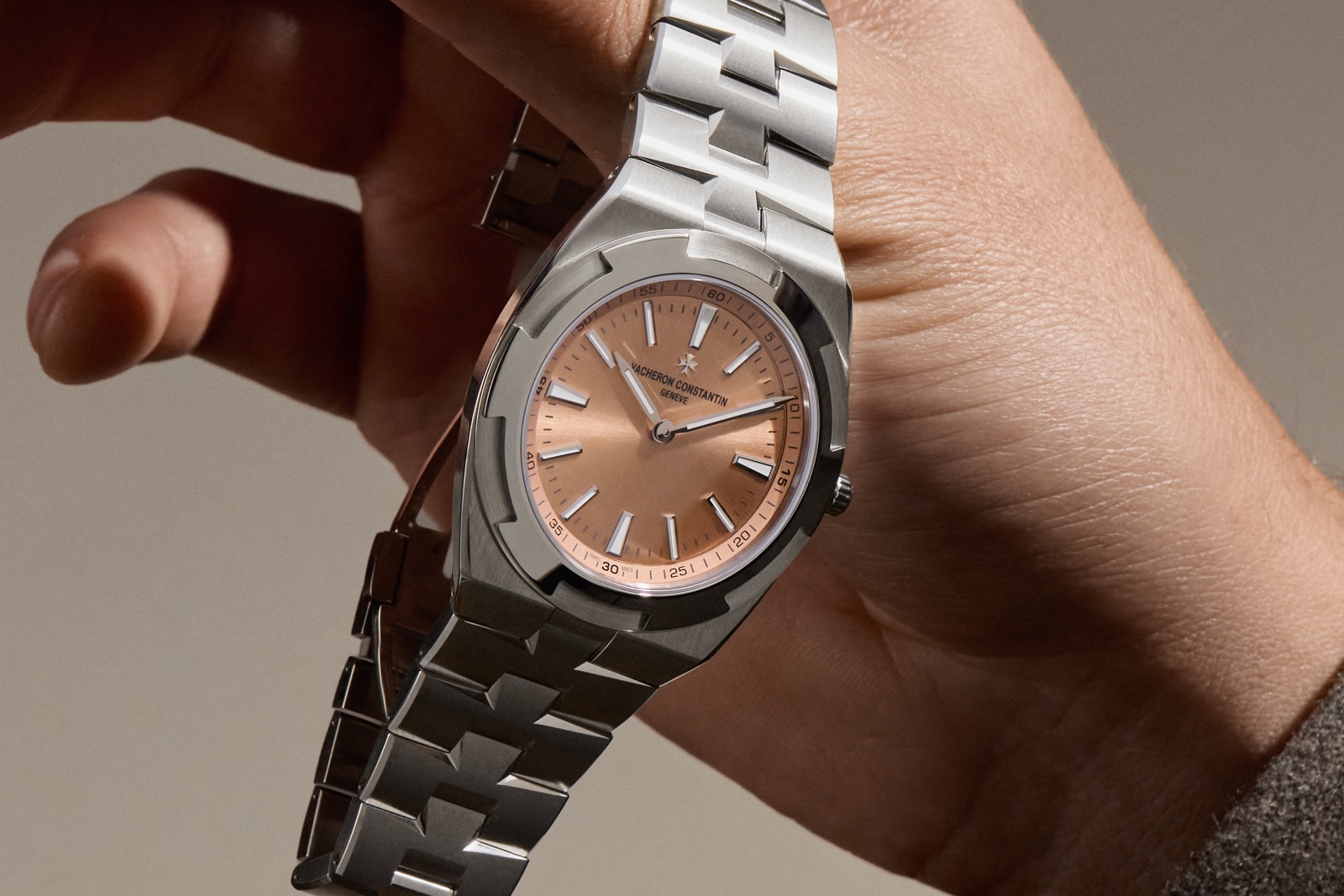
The solidly built bracelet perhaps deserves more praise than the case. While it is common knowledge that sharp inner corners are challenging to machine and finish when found on movement bridges, makers rarely extend such exacting standards to external components subject to greater wear — yet the high-polished interior creases of the Overseas bracelet do exactly that, continuing the Maltese cross pattern from the bezel to the clasp.
Richemont is among the industry leaders in bracelet technology, as demonstrated by the Overseas which offers a toolless comfort extension built into the clasp and individually removable, screw-fixed links. A defining feature of the current generation of Overseas models is the quick-release mechanism, allowing for quick strap changes without the risk of marring the case with spring bar tools.
Naturally, besides the platinum bracelet, the watch comes with salmon-coloured rubber and leather straps which share an interchangeable deployant clasp.
The case is platinum, a tedious material to work with, but one that has become significantly more viable because of rising gold prices. Indeed, the ref. 2000V was released in 18k white gold, so the choice to launch in platinum may be a sign of the times.
Historically, platinum 950 was alloyed with iridium, though today most brands use ruthenium, which is much less expensive, and yields superior properties. But according to VC, this is no ordinary platinum watch. In fact, it is 2.7 times harder than common platinum 950 alloys thanks to its revised composition that replaces ruthenium with copper and gallium. I also suspect there’s a heat-treatment process involved, though the brand hasn’t yet provided technical details or a specific Vickers hardness.
This hard-wearing case contributes to the overall versatility of the ref. 2500V. And despite the sleek dimensions of the 7.35 mm case it still manages a 50 m water resistance rating, and features an antimagnetic ring around the movement.
The year of the micro-rotor?
Vacheron Constantin, Patek Philippe and Audemars Piguet were the last bulwarks of fine watchmaking at scale before the industry’s post-quartz pivot to luxury in the 1980s. As an aside, it’s for this reason that they are often called the ‘holy trinity’ and it’s also why that club is not accepting new members.
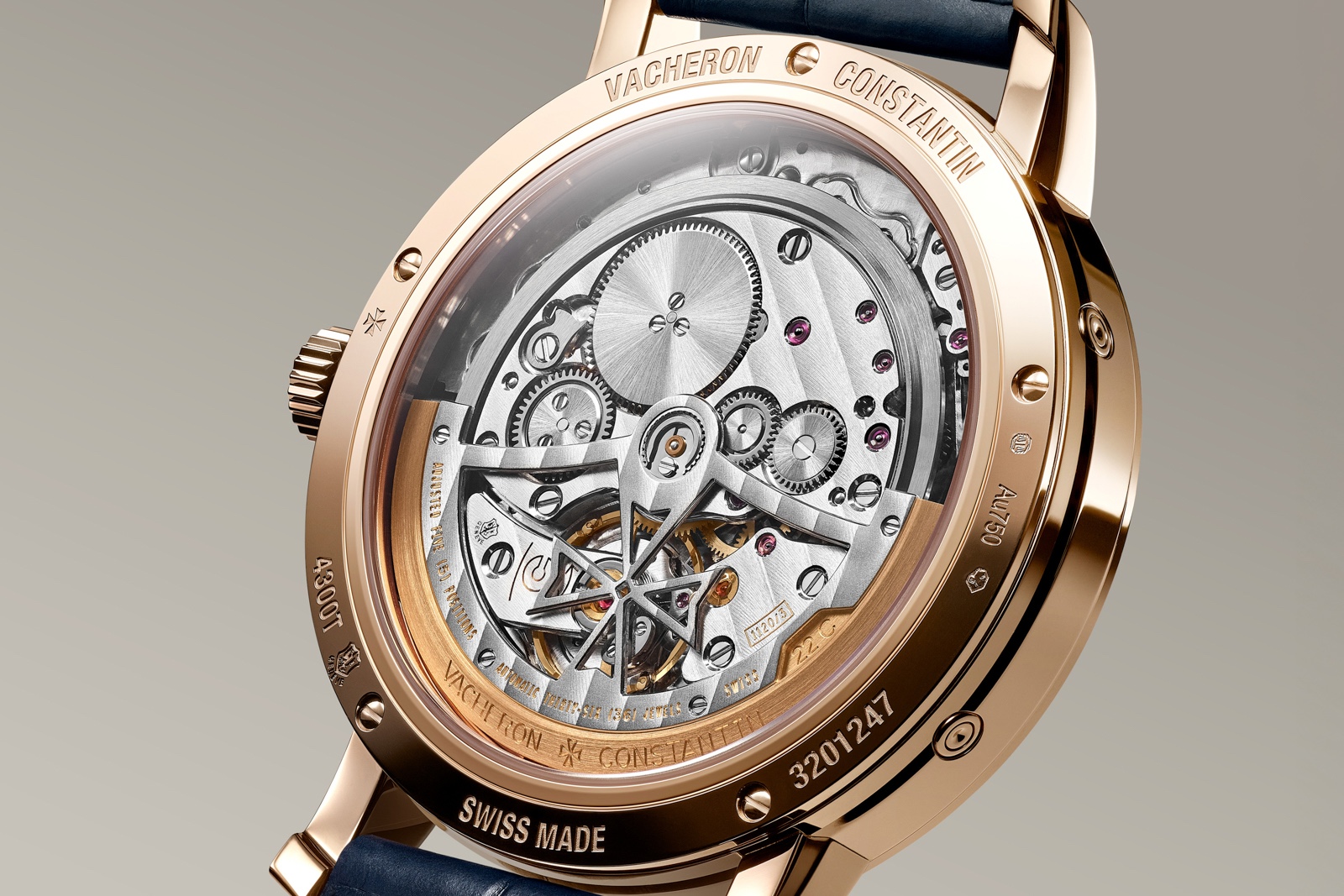
Vacheron Constantin’s cal. 1120 is derived from the Jaeger-LeCoultre cal. 920 platform, which was the thinnest automatic movement of its era.
In the late 1960s, this triumvirate collaborated on the development of an ultra-flat self-winding movement to power their watches. Jeager-LeCoultre did a lot of the work and supplied its illustrious customers with an ebauche it called the cal. 920. Patek Philippe was least reliant on this platform and the first to give it up, but the movement stayed in the AP and VC catalogues for decades, and still powers select VC perpetual calendars.
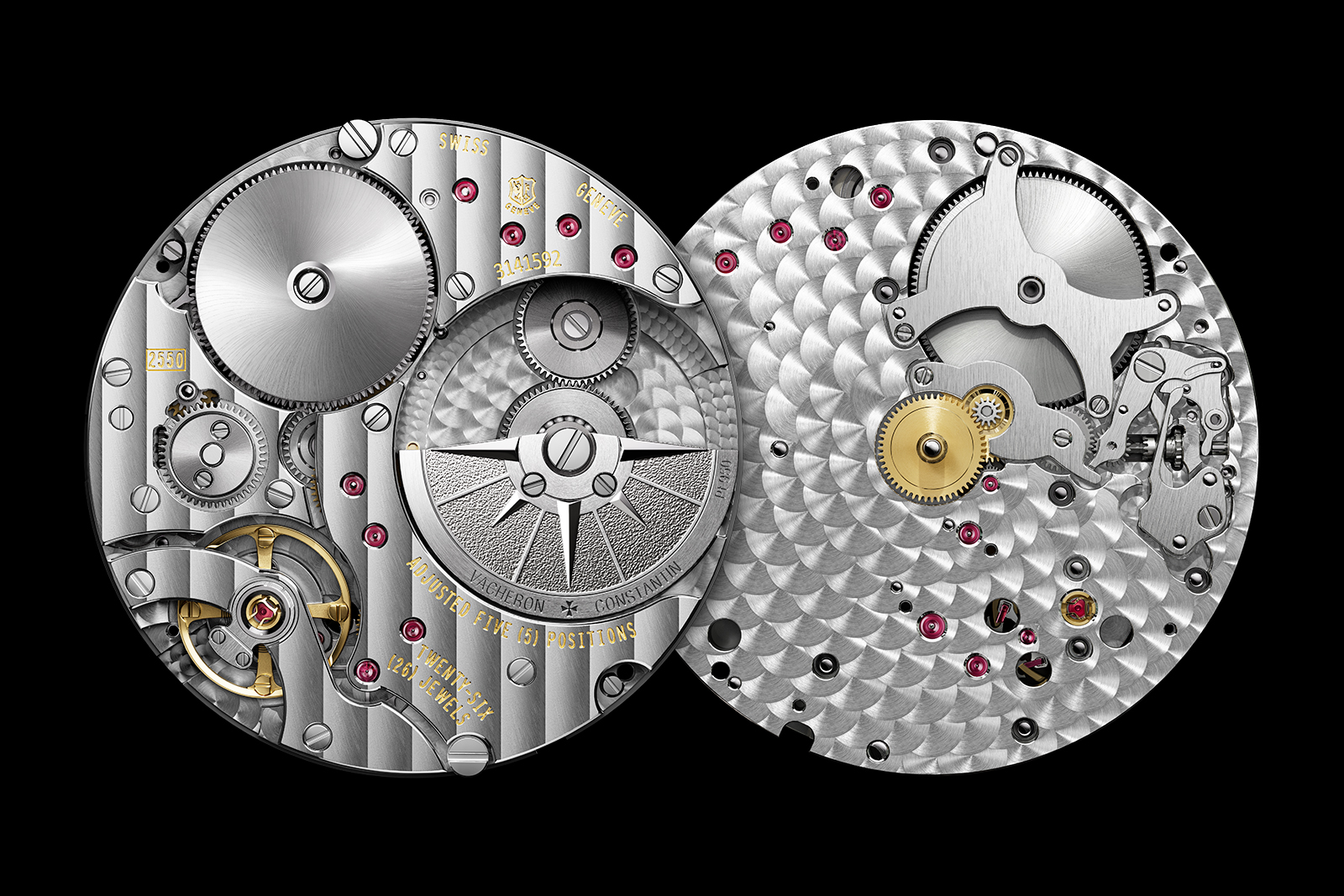
The new cal. 2550 that supplants it is extremely slim at just 2.4 mm thick, undercutting Patek Philippe’s cal. 240, which is nominally 2.4 mm thick – hence the ‘240’ designation — but is actually 2.53 mm with the rotor installed, which stands proud of the plates.
The cal. 2550 also features a free-sprung balance — a more refined and isochronous solution compared to the curb-pin regulators seen in the brand’s other contemporary mainline calibres.
Despite its low profile, the new movement manages to pack bi-directional automatic winding, support for a natural six o’clock seconds hand, and an 80-hour power reserve. It does all of this while meeting the Geneva Seal’s accuracy requirements.
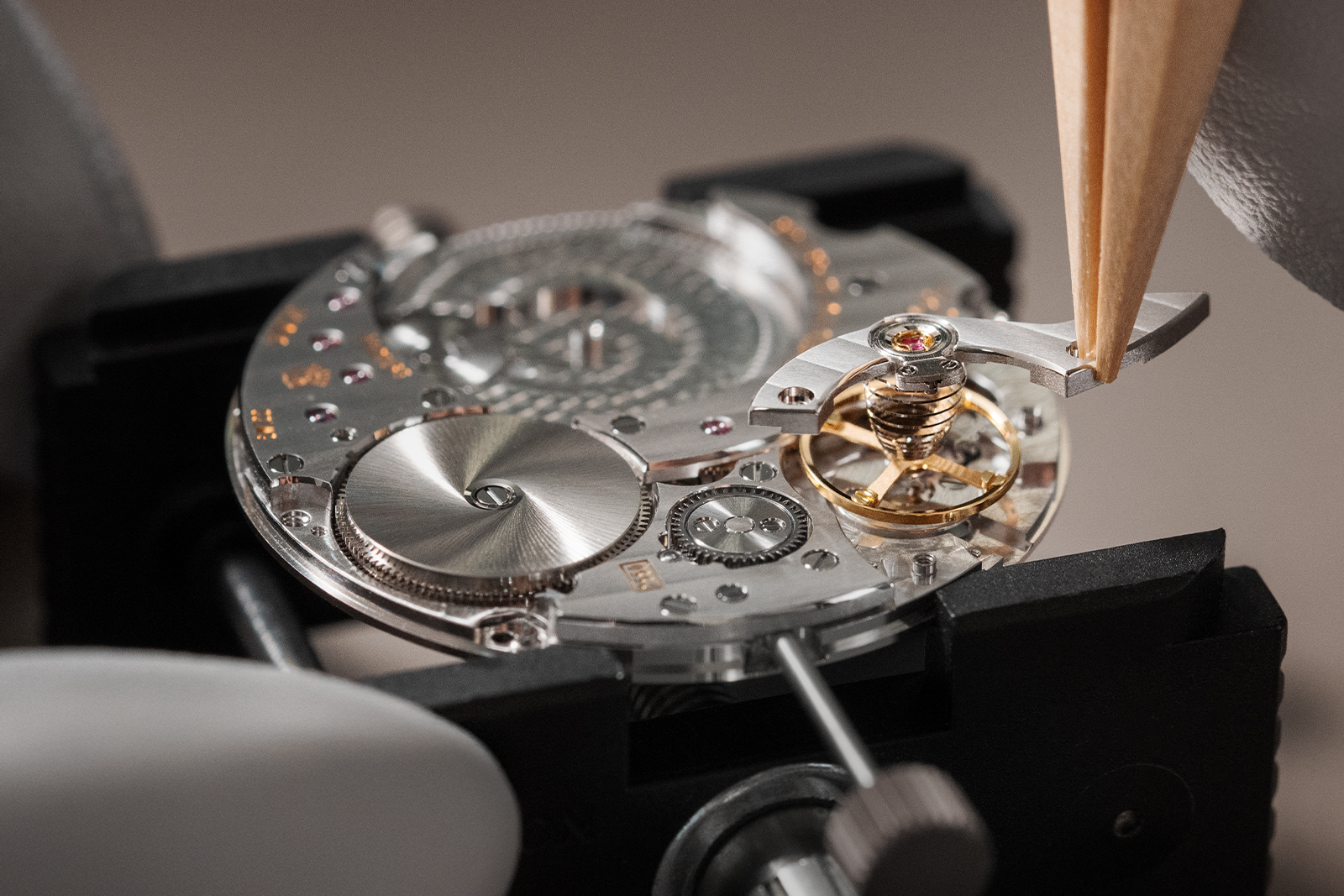
There’s been a lot of attention on chronometry standards of late, so it’s worth acknowledging that the performance standards specified by the Poinçon de Genève are rather lax compared to the internal protocols of brands like Rolex and Omega. Of course, comparing the cal. 2550 to an industrial chronometer movement like the cal. 7135 found in the Rolex Land-Dweller is like comparing a grand tourer to a Formula 1 car.
But unlike the more chronometrically demanding Master Chronometer and Superlative Chronometer standards, the Geneva Seal ensures the movement is built to the exacting aesthetic and technical benchmarks of traditional Genevan fine watchmaking — guaranteeing thorough finishing and honest construction in even the smallest details.
Key Facts and Price
Vacheron Constantin Overseas Self-Winding Ultra-Thin
Ref. 2500V / 210P–H028
Diameter: 39.5 mm
Height: 7.35 mm
Material: Platinum 950
Crystal: Sapphire
Water resistance: 50 m
Movement: Cal. 2550
Functions: Hours and minutes
Winding: Automatic
Frequency: 21,600 beats per hour (3 Hz)
Power reserve: 80 hours
Strap: Matching bracelet and additional strap in rubber and leather with folding clasp
Limited edition: Yes, 255 pieces
Availability: Exclusive to Vacheron Constantin boutiques
Price: On request.
For more, visit vacheronconstantin.com.
Back to top.