Ressence Introduces First Proprietary Movement

The Type 11 and its RW-01 calibre.
Independent watchmaker Ressence unveils the Type 11, powered by a proprietary movement for the first time. The trailblazer of oil-filled mechanical modules, Ressence has so far relied on third-party base movements to power its eccentric creations. The Belgium-based watchmaker has finally taken the next step and developed its own calibre, dubbed the Ressence-Werk RW-01. 

Initial thoughts 

Ressence watches are instantly recognisable for their inventive and minimalist way of telling the time, using the patented Ressence Orbital Convex System (ROCS) to put a new spin on the classic time display. Using a clever arrangement of planetary gears powered by a base movement, Ressence has achieved an original functional design that remains unique to this day. 

In terms of design, Ressence has an unmistakable, contemporary look, not unlike that of Apple. As a result, partnerships like those with industrial designer Marc Newson feel natural.

The concept behind Ressence’s signature time display is the use of clear silicone-based oil which fills the hermetically sealed ROCS module to the crystal. The fluid medium cancels out total internal reflection, leading to the illusion that the turning disks sit right under the crystal itself. In this respect, Ressence dials can at times look like an OLED screen in a smartwatch.
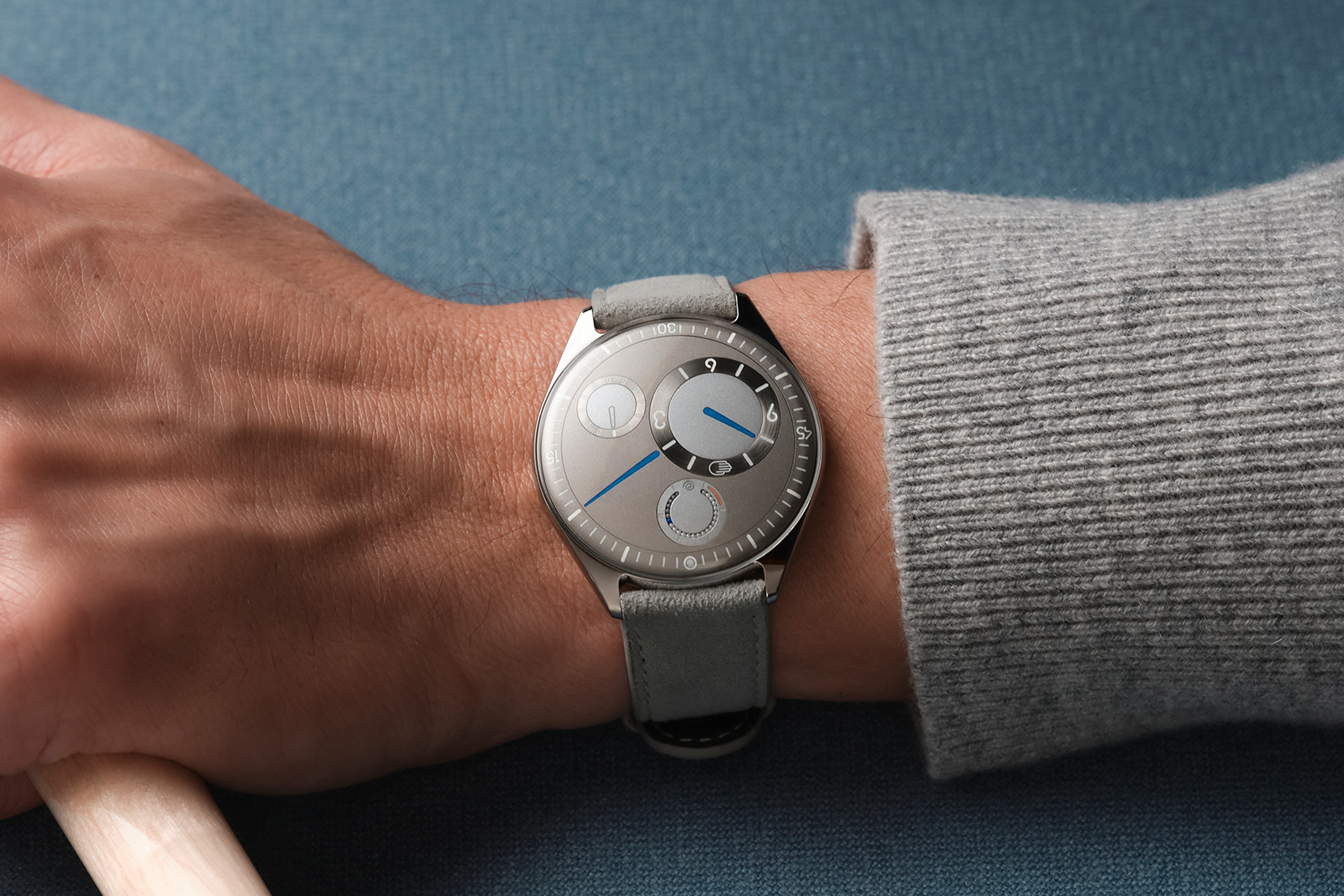
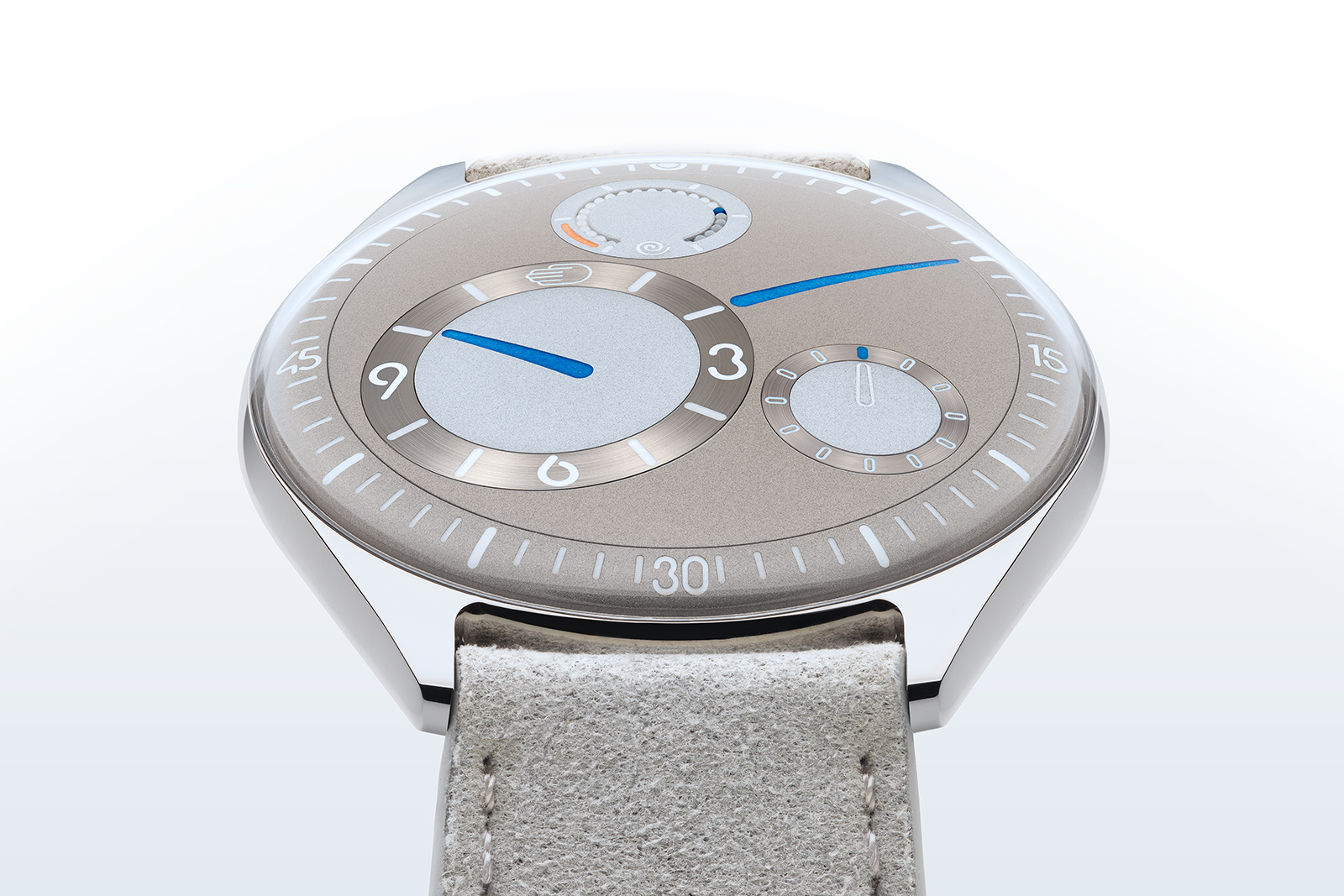
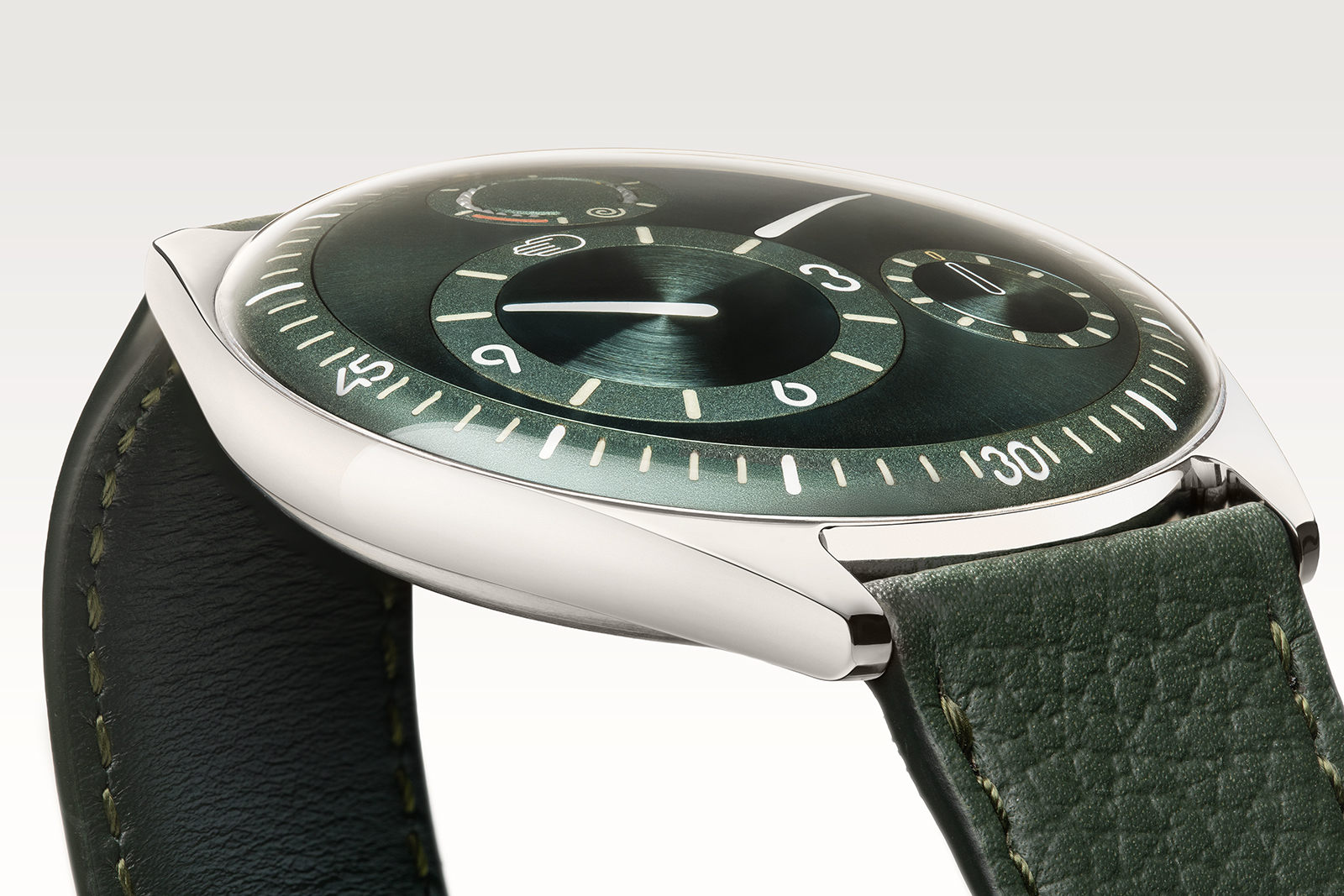
The Type 11 continues the signature streamlined minimalism of past Ressence models, but adopts a less complicated display. There are hours, minutes and seconds, arranged in the brand’s particular regulator layout, with the minute hand being in fact a large revolving domed platform which carries the other indicators along with it.

Much like any other Ressence, the Type 11 is rather intuitive to read once one recognises the familiar indications, and the reinterpretation of a classic regulator display is both inventive and charming.
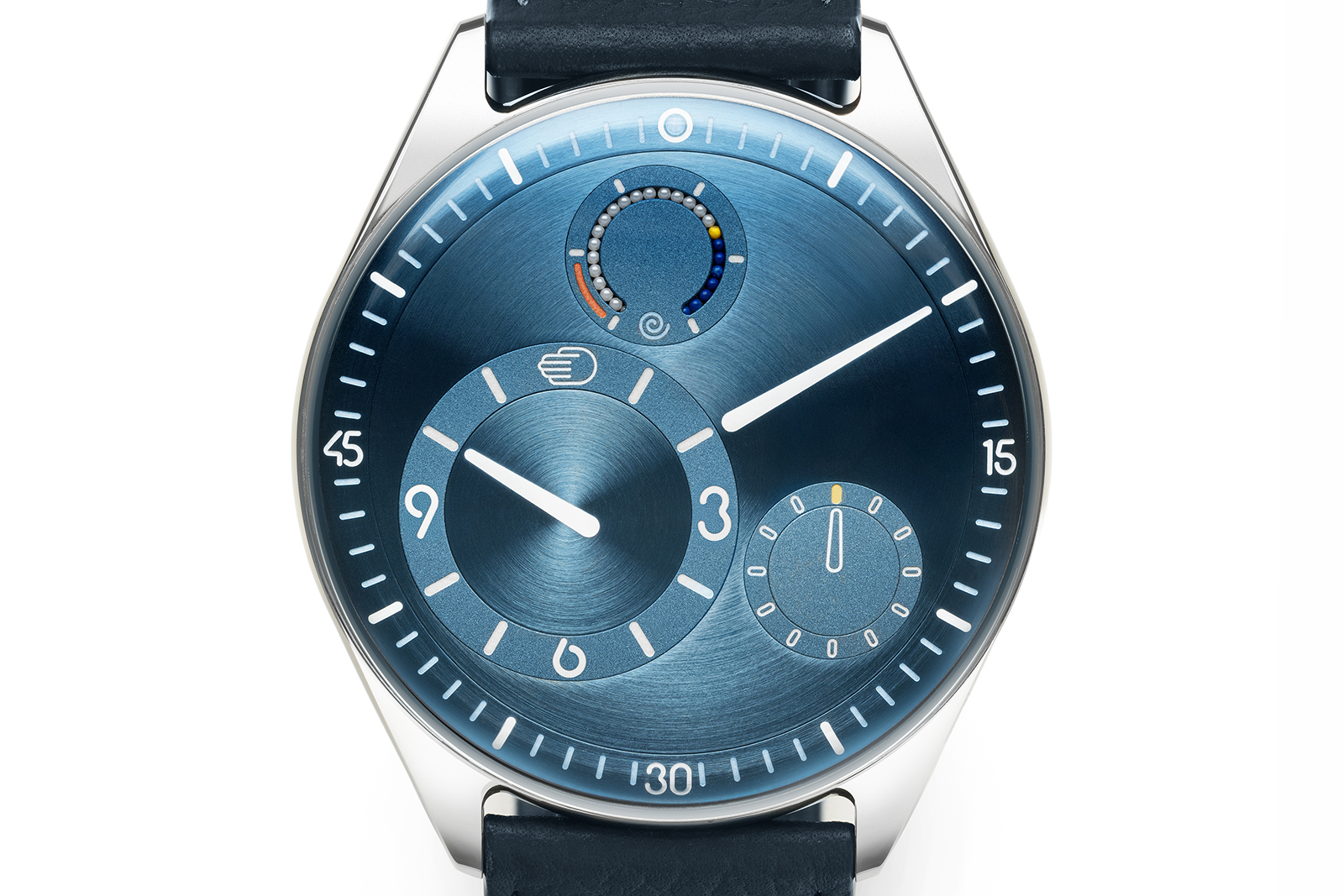
But no matter how advanced the ROCS modules and complications became, the base movement remained the disappointingly familiar ETA 2824 or 2892. The choice to focus on the key differentiator is understandable, and not uncommon. Urwerk employs a similar approach, developing only the satellite time display modules and relying on third-party suppliers like Zenith and Vaucher for base calibres. 

Sixteen years on from its founding, Ressence has developed both the following and the confidence required to invest in the development of a proprietary calibre, which is produced in collaboration with an unnamed movement specialist.
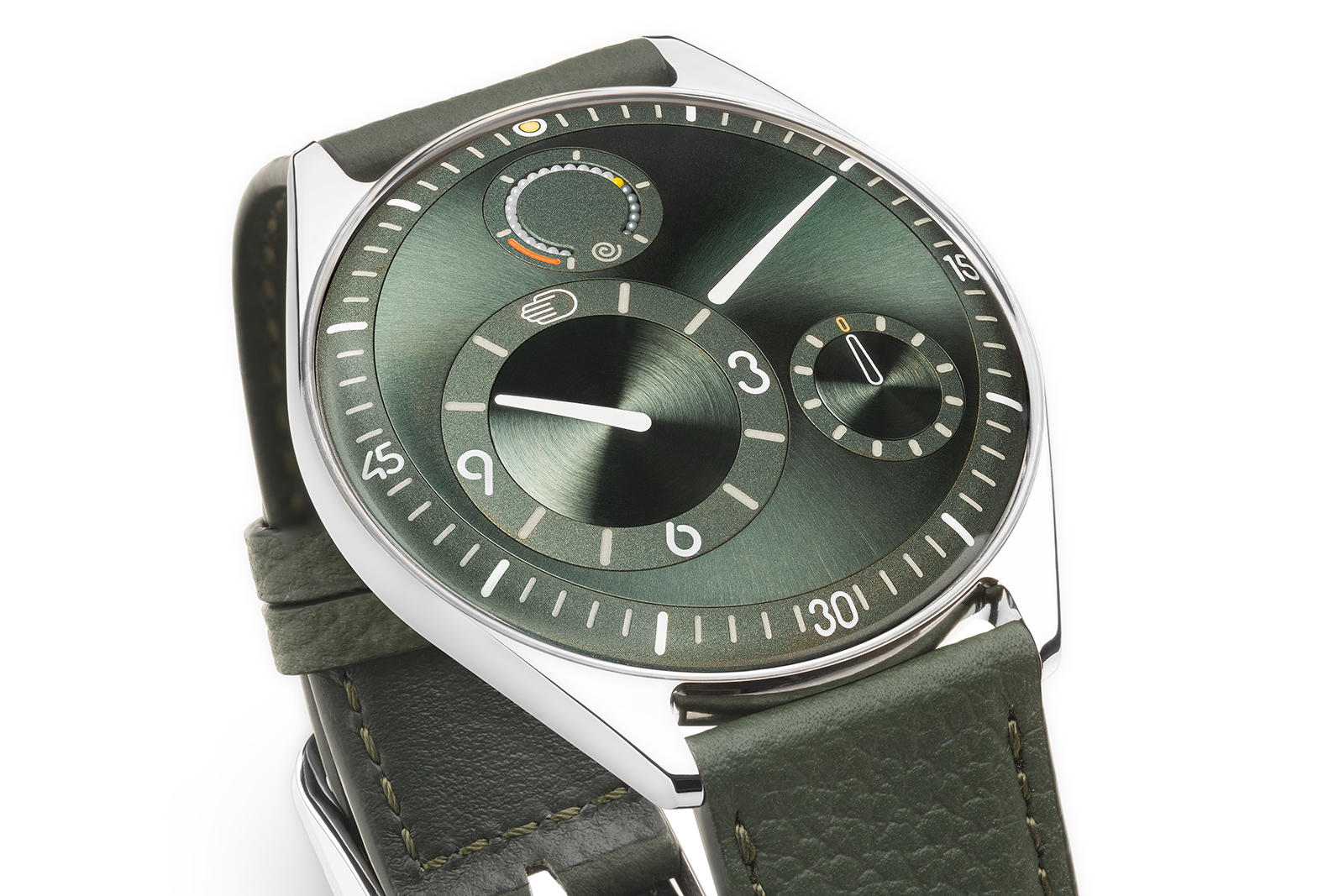
A particular addition to the Type 11 is a ball-based power reserve complication. Using coloured ceramic marbles, the small sector indicator shows the user how much charge is left in the twin mainspring barrels. The feature is as useful as it is playful, and the visually tactile display adds some layering to the pebble-like surface of the watch face. 

At launch, the Type 11 is available in three colourways — themselves reminiscent of Apple product nomenclature — Pine, Sky and Latte. The Grade 5 titanium case has a warm industrial sheen to it, which works very well paired with these pastel colour schemes. 
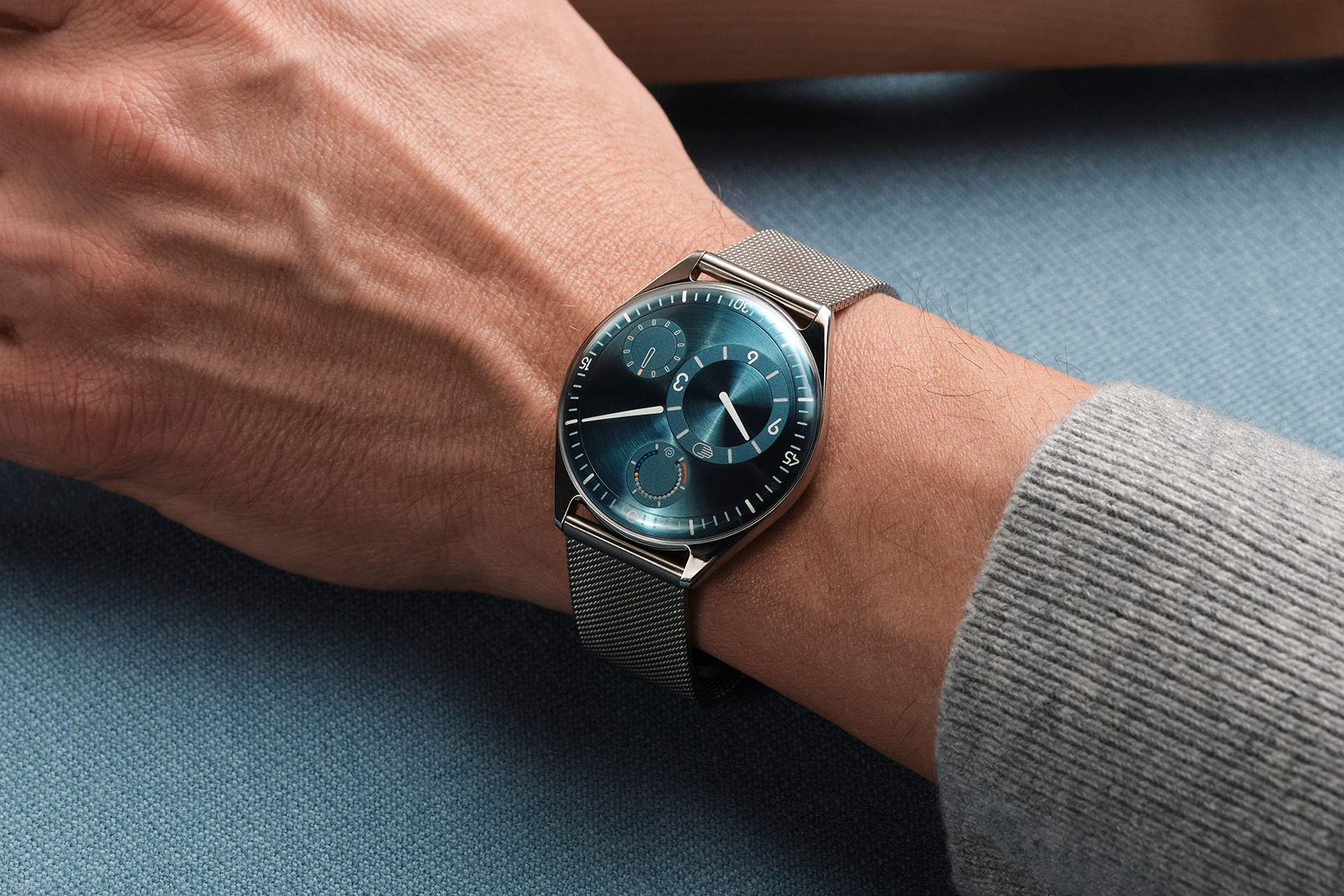
This is a brave and well-executed step towards greater vertical integration. Moving away from stock calibres is a sign that Ressence is consolidating its place within independent watchmaking — and suggests there are more exciting things to come. Perhaps most surprisingly, the Type 11 is priced below some of its ETA-derived stablemates at just CHF23,000.

Dial in ultra HD

For anyone remotely familiar with traditional watchmaking, the experience of seeing a Ressence timepiece for the first time can be peculiar. Apart from some cues that the pebble-like object may be telling the time, there is little that links any given Ressence watch to what might be classified as classical horology. 

Such is the case with the Type 11, which looks more like a wearable tech gimmick than a five-figure mechanical luxury wristwatch. In typical Ressence fashion, there is no winding crown — a fact that further alienates it from traditional design norms. 
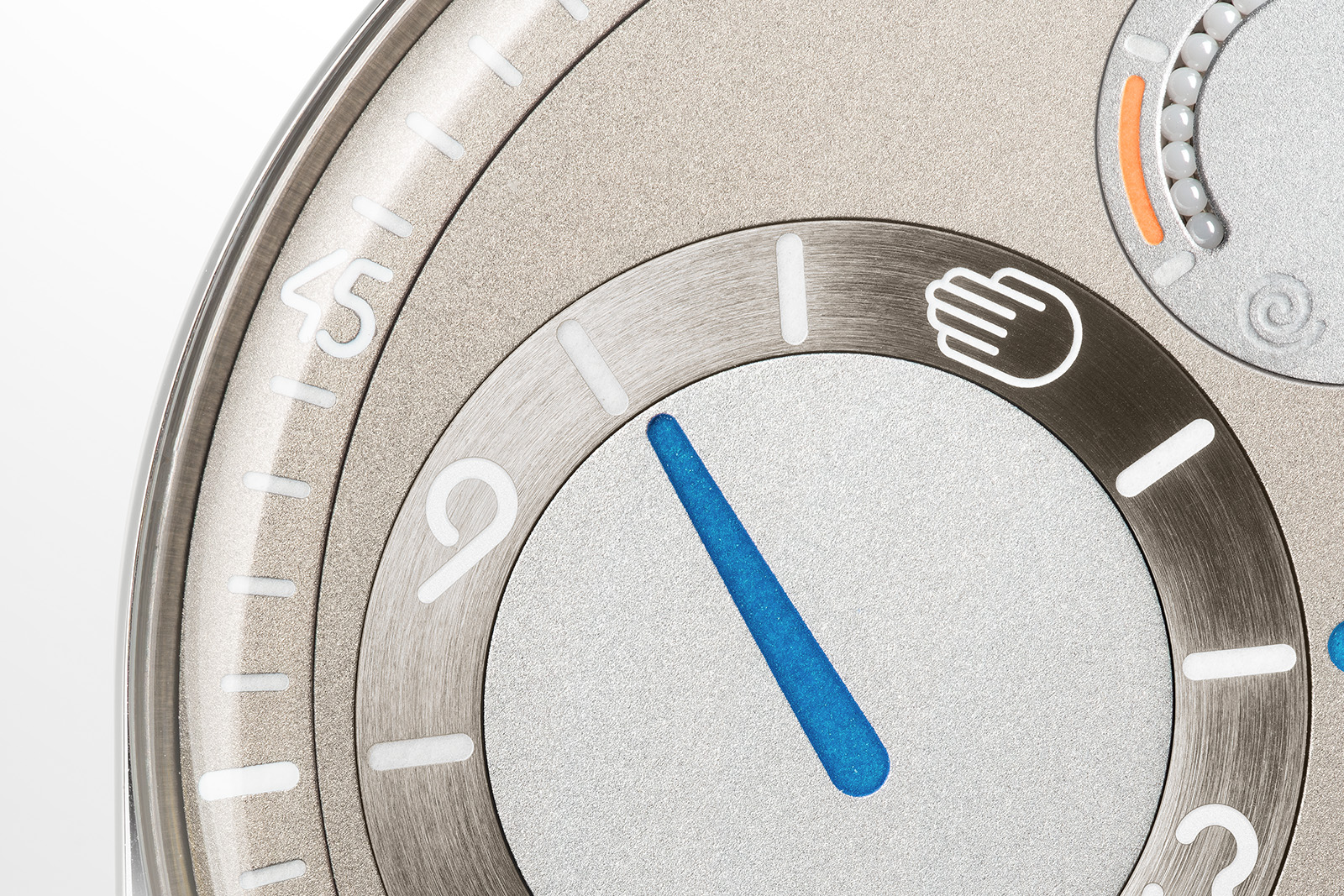
The lack of a crown also means that the Type 11 can be worn on either the left or right wrist with the same degree of comfort. The Grade 5 titanium case is 41 mm diameter, but Ressence watches tend to wear larger since there is no bezel and the dial stretches from edge to edge.  

The layout of the Type 11 traces its roots back to the landmark Type 3 in terms of overall design language, while adopting the minimal complication pack of the sleek Type 1. The central, slightly domed platform turns once every hour and is engraved with a Super-LumiNova-filled minutes hand. Despite the unusual layout, it’s surprisingly legible, as there is a broad minutes ring at the edge of the crystal. 

Depending on the colour, the minutes platform is either radially brushed, or simply grained in the case of the taupe ‘Latte’ configuration. The different textures lend each configuration a distinct personality. 
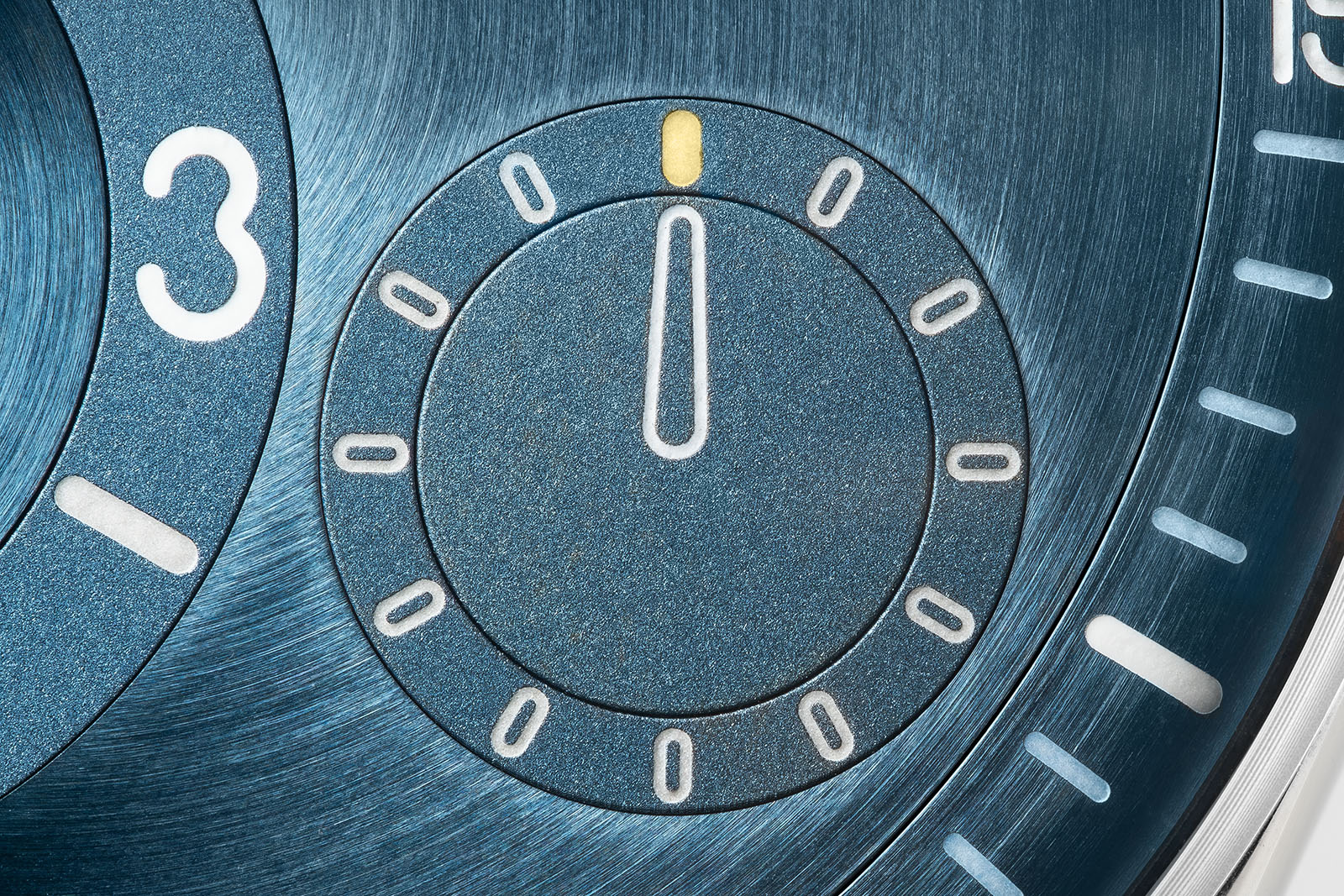
Nested on the central platform are three eccentric indications, namely a rather large hours sub-dial, small seconds and the marble power reserve indicator. The hours and seconds sub-dials are fairly typical, at least by Ressence standards, while the power reserve indicator is genuinely unusual.

The display is comprised of more than two dozen small ceramic ‘micro-balls’ — reminiscent of the rollers in rotor ball bearings — which are captive in a circular channel.
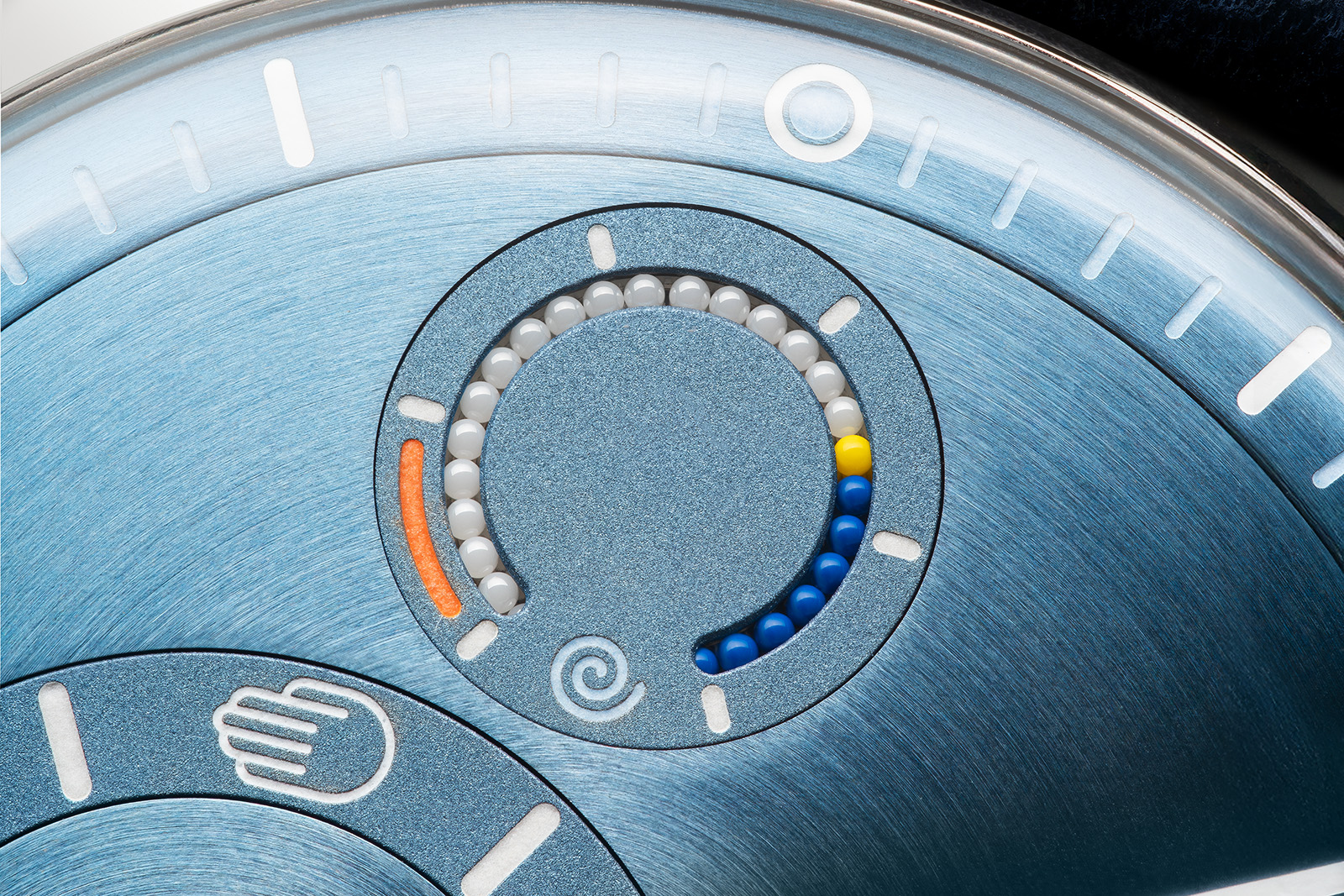
When the watch is fully wound, only the bright marbles are on show. As the power runs down, the ratio changes in favour of the dark-hued balls. When the power reserve gets critically low, the darker marbles will reach an orange sector, encouraging the wearer to wind the watch. 

The Ressence-Werk RW-01

Beyond its novel power reserve indicator, the defining feature of the Type 11 is undoubtedly the newly-developed RW-01 calibre, which was designed by Ressence in collaboration with a specialist constructor.

The choice to outsource some of the construction and the production activities of the movement makes sense, since Ressence is not a fully integrated watchmaker in the traditional sense. 

Ressence founder Benoît Mintiens is an industrial designer by trade, so his practical experience with functional watchmaking was limited from the get-go. Early Ressence timepieces were actually assembled by Ludovic Ballouard’s workshop in Geneva. Although the brand has clearly outgrown its new-comer status, very few brands have the resources to develop and build reliable mechanical movements from ground up without help— making the choice to enlist a movement specialist reasonable, even commendable. 
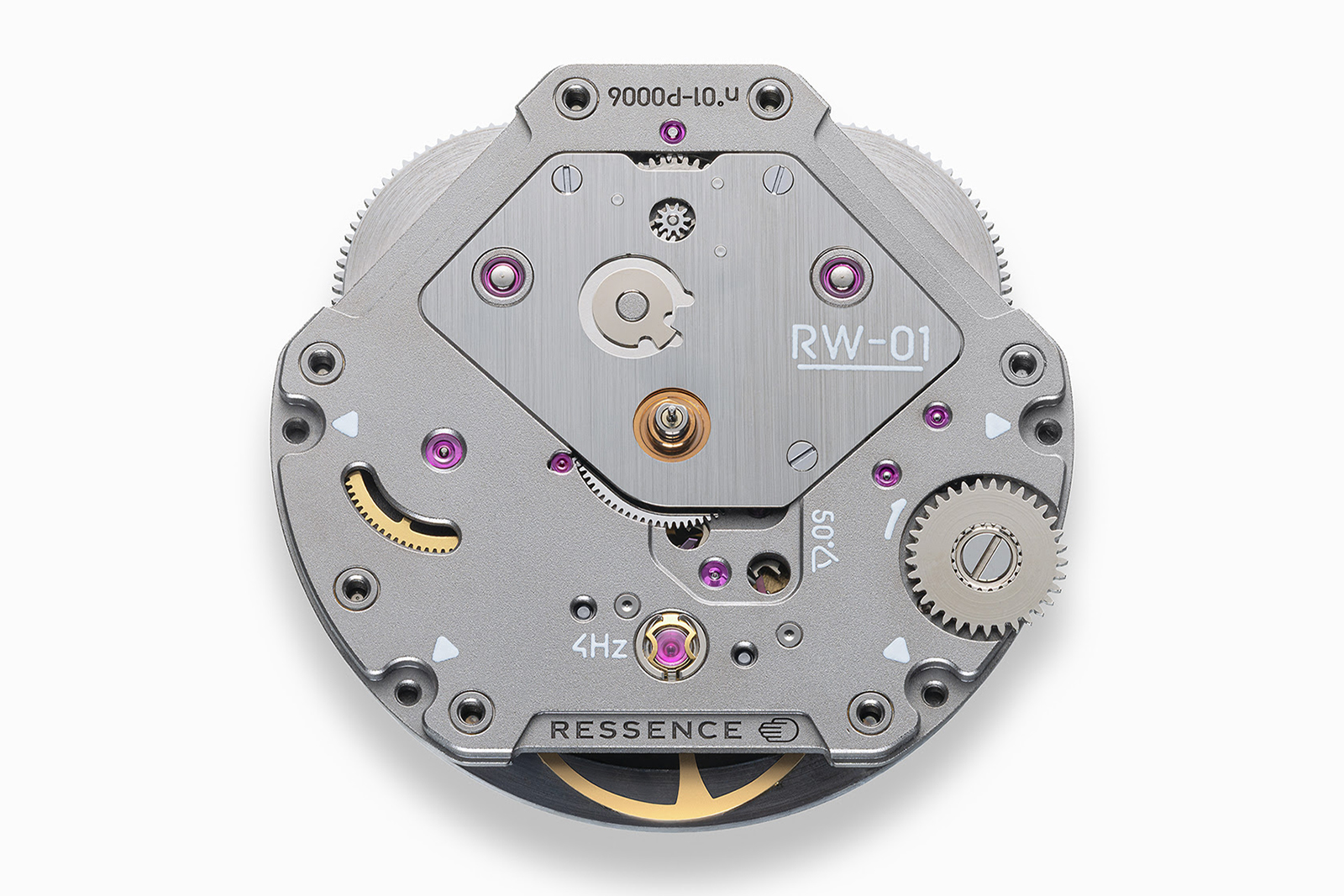
Designing the RW-01 from a blank sheet allowed Ressence to tailor the movement to its own particular needs. The iconoclastic no-crown design, for example, requires the movement to be set and wound solely through the case back. This was accomplished through a complicated “Control Interface” in past models.

With the RW-01, the movement is specifically designed to accommodate a case back-only mechanism, allowing for more efficient winding and setting. The operation is straightforward: turning the case back in one direction sets the time, and turning it the opposite direction winds the movement.

The RW-01 is also an automatic calibre, with a small case back aperture showing a glimpse of the rotor. The rotor’s edge is engraved with some technical specs, such as the balance frequency, and the escapement’s lift angle. These details add an industrial, machine-like quality to the watch. 
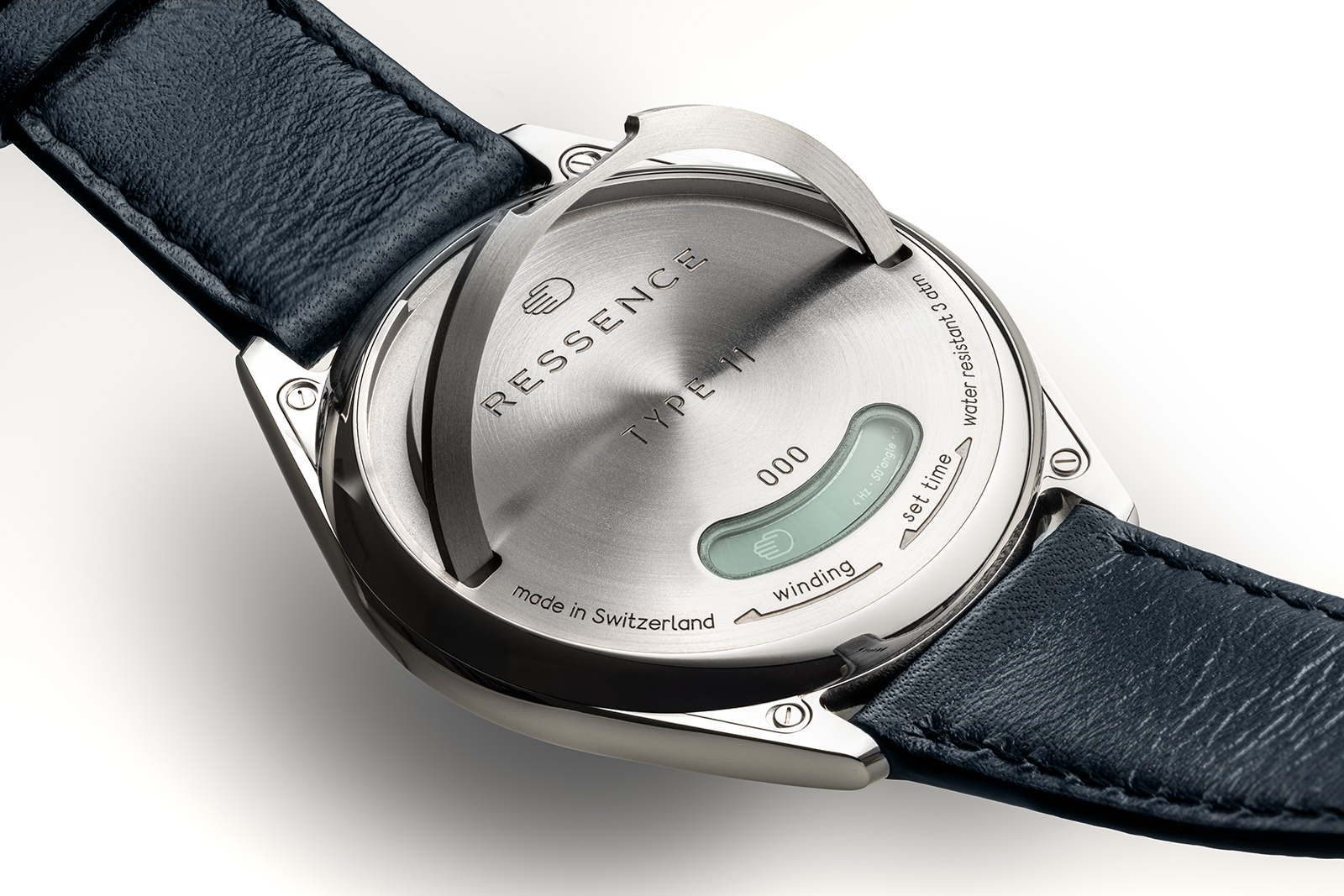
Interestingly, the RW-01 comes equipped with two mainspring barrels. The movement is not entirely round and the barrels peek out from the slanted mainplate. The look is odd, but fitting for Ressence.

The two barrels appear to be serially-coupled for delivering the 60-hour power reserve and the movement features what looks to be an original stop-work system, not unlike a Maltese cross, that limits the winding and unwinding of the mainsprings. 

The movement is destined for life behind a solid case back, so the finishing decisions make sense. There’s little in the way of haute horlogerie decoration, but the appearance is neat and tidy with a mix of matte and straight-grained finishes on the plates and bridges.
The magnetic interface for the ROCS 11.1 module is now more deeply integrated with the movement, although it remains contained within a sealed, oil-filled chamber. Since the silicon oil permeates all the layers of the ROCS module, its components are particularly well-lubricated at all times.

Much like all the modern ROCS modules, there is a system of mechanical bellows to compensate for changes in oil temperature, and the planetary gearing compensates for the platform’s continuous rotation, keeping the sub-dials vertical at all times.


Key Facts and Price

Ressence Type 11
Ref. TYPE 11L (Latte)
Ref. TYPE 11P (Pine)
Ref. TYPE 11S (Sky)

Diameter: 41 mm
Height: 11 mm
Material: Grade 5 titanium
Crystal: Sapphire
Water resistance: 30 m

Movement: In-house developed RW-01 movement with ROCS 11.1 module
Functions: Hours, minutes, seconds and power reserve indicator
Winding: Automatic
Frequency: 28,800 beats per hour (4 Hz)
Power reserve: 60 hours

Strap: Leather, rubber or Milanese mesh titanium bracelet

Limited edition: No
Availability: From selected Ressence retailers worldwide starting May 2026
Price: CHF23,000, excluding taxes

For more information, visit Ressencewatches.com.


Back to top.

You may also enjoy these.

Bonniksen Reborn with Handmade Le Carrousel

The fourth chapter of the Naissance d’une Montre project.

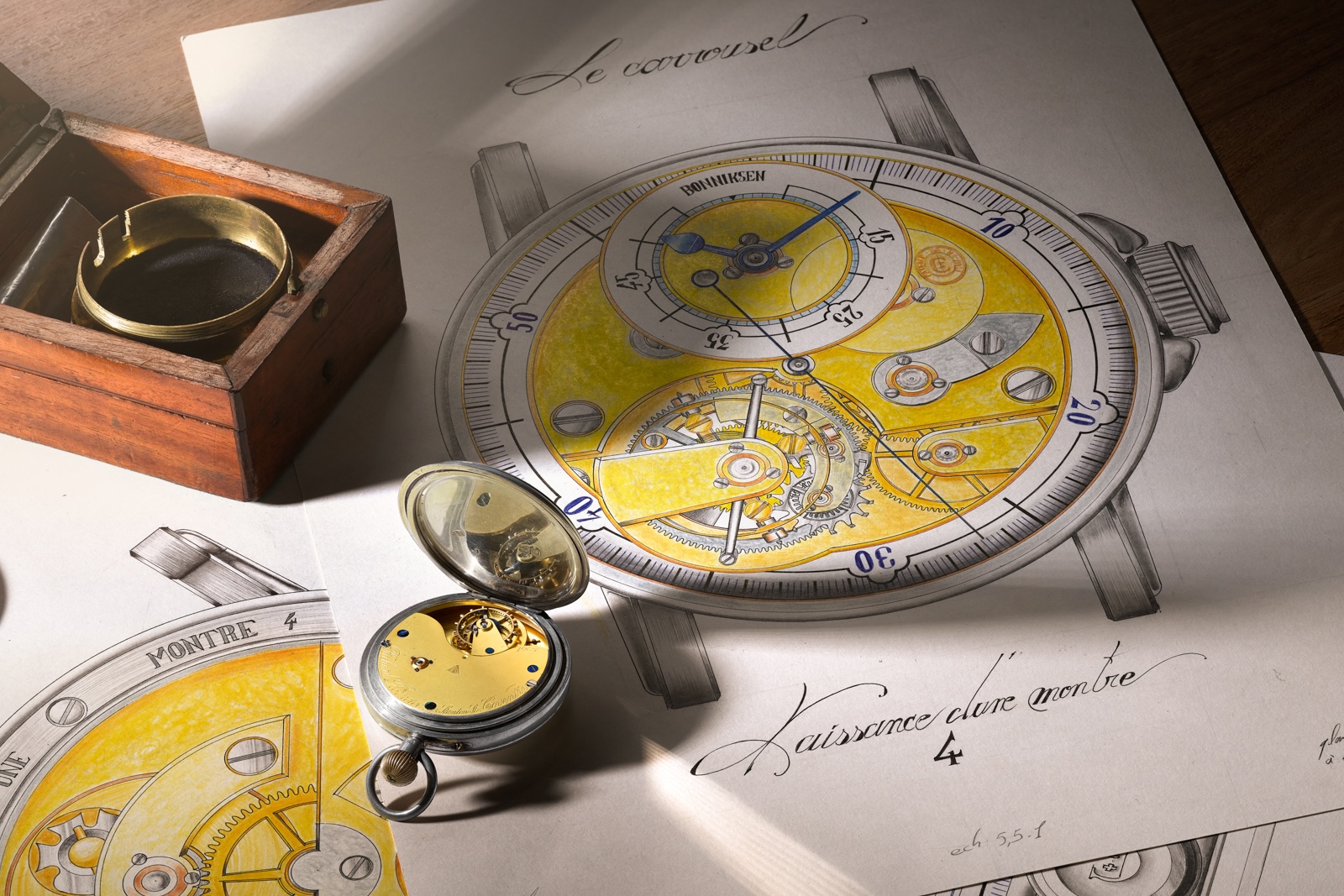
Bonniksen makes its debut with the aptly named Le Carrousel, a 30-second carrousel wristwatch that will launch under the secondary banner of Naissance d’une Montre 4, which means it will be fully handmade. Le Carrousel’s completion date has not been announced, but good things take time, especially when made without the assistance of automated machinery.

Left to right: Bonniksen co-founder and CEO Jason Chevrolat, Greubel Forsey CEO Michel Nydeggar, Bonniksen co-founder Maximin Chapuis, and David Bernard from the Time Æon Foundation.

Initial thoughts

It’s shaping up to be a big year for independent watchmaking, with a number of new and old names making their debuts. Bonniksen is among the latter, and looks to be a good-faith effort to do justice to the legacy of the inventor of the carrousel.

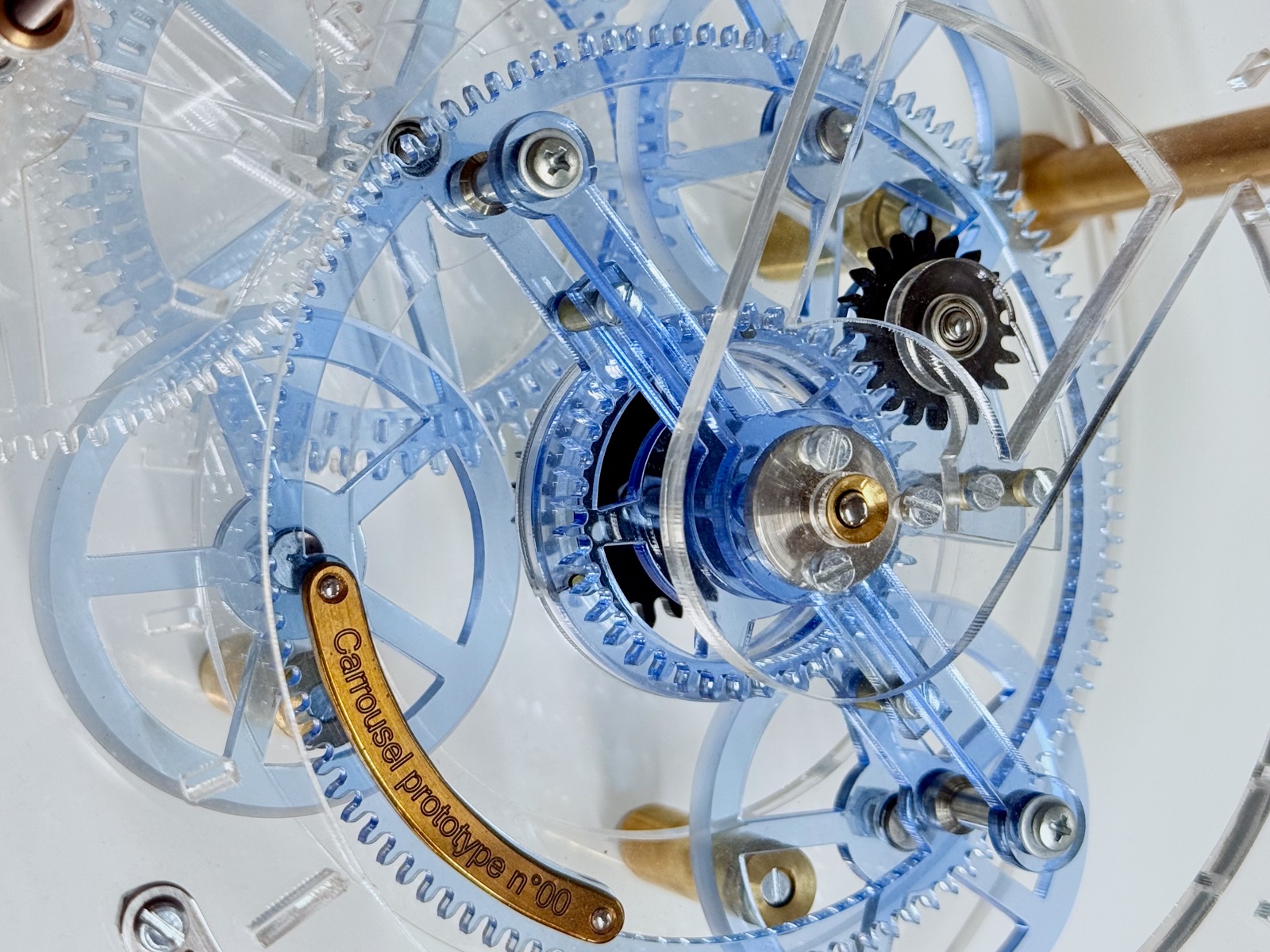
While the rebirth of an old name is a familiar (if not tiresome) formula, one can’t help but appreciate the care with which the name of Bonniken makes its return. For one thing, the movement, which still exists only in sketches and models, is a true carrousel, built to co-founder Maximin Chapuis’ design after 5,500 hours of technical research. In other words, it’s not just an old name attached to an off-the-shelf calibre.

The fact that it will debut as a Montre 4 in the Naissance d’une Montre project is another reason to take the effort seriously. If that weren’t enough, the brand has apparently been given the blessing of Bonniksen’s living descendants, which helps too.

Though it lacks the backing of a major brand like Chopard, the thoughtful rebirth of Bonniksen has echoes of the debut of Ferdinand Berthoud, which was re-established in Berthoud’s native Val-de-Travers in 2015. In contrast, Bonniksen is an independent brand, but will receive guidance and advice from Greubel Forsey throughout the production of Montre 4.

Bonniksen is dead — long live Bonniksen

The debut of Le Carrousel marks the rebirth of the Bonniksen brand, which has been dormant since its founder’s death in 1935. Bahne Bonniksen was a Danish watchmaker who moved to England in 1882, when he was 23 years old. After first settling in London, Bonniksen moved to Coventry where he would leave a lasting legacy.

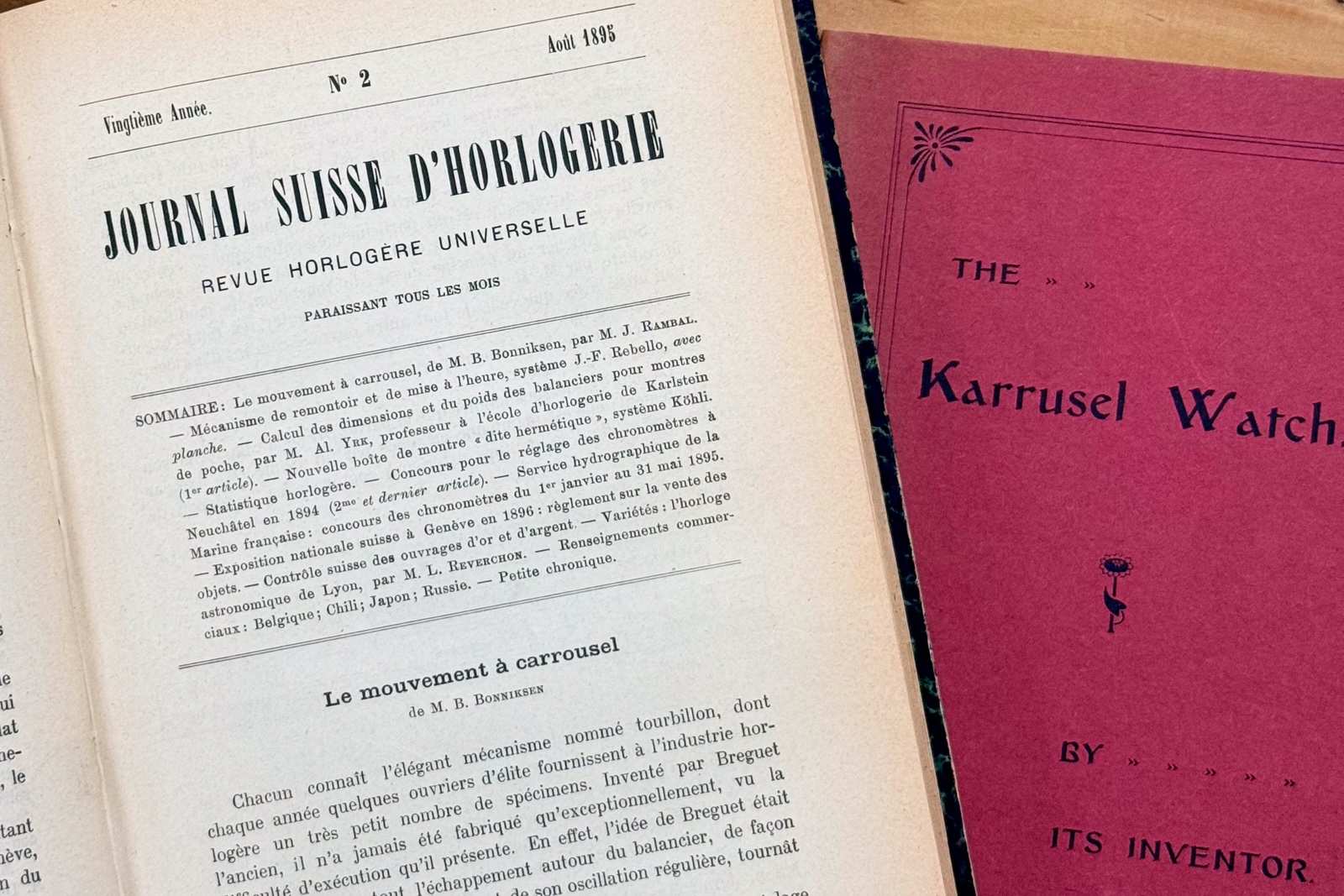
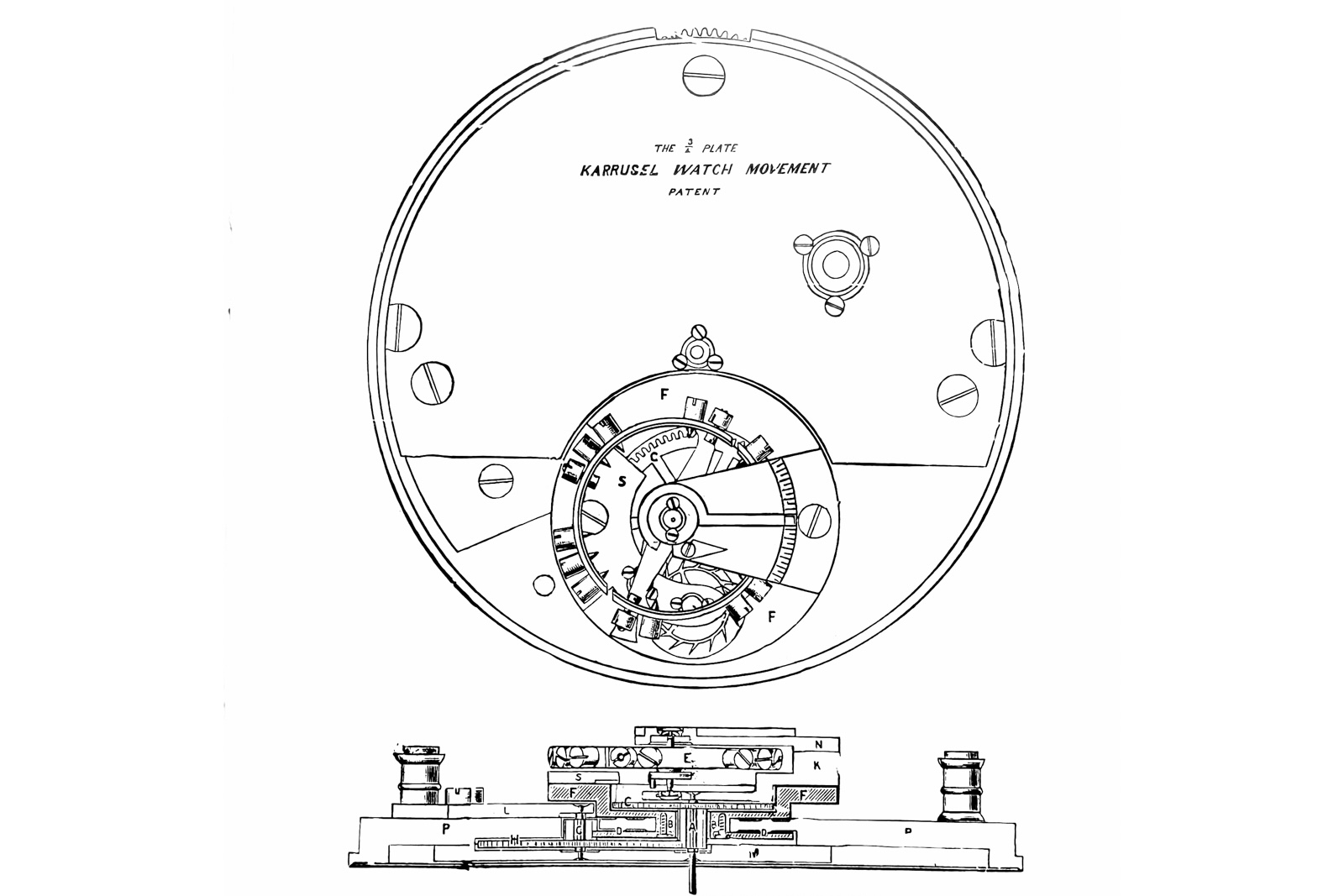
Around 1892 he invented the Karrusel — more commonly known by its continental spelling, carrousel — a movement with a rotating escapement intended to produce the same benefits as those of a tourbillon.

Like the tourbillon, the escapement was mounted within a rotating platform. Unlike the tourbillon, which is defined as a platform that rotates within a fixed gear, the carrousel features no fixed gears, and in its historical layout was powered independently by the third wheel pinion.

The escape wheel, which is fixed to the cage, rotates at a slower rate than the fourth wheel — this relative speed difference powers the escapement. This aspect of the operation is what inspired the “+/-” design of the Bonniksen logo.

These differences resulted in a design that was more robust and easier to produce than a tourbillon. Though the carrousel was capable of excellent performance, and nearly 400 were tested at the Kew Observatory, the typical 52.5-minute rotation required careful adjustment to run slightly below 2.5 Hz to display correct civil time.

Bonniksen and his staff, which peaked around 25 watchmakers, produced several hundred carrousel movements, mainly for client brands.

The carrousel fell out of favour after Bonniksen’s death, which happened to coincide with the transition to wristwatches and the decline of the British watchmaking industry. In 2010, Blancpain was the first brand to miniaturise the carrousel to wristwatch scale, and in the process accelerated the rotational speed to the normal one-minute pace.

Bonniksen co-founders Maximin Chapuis (left) and Jason Chevrolat.

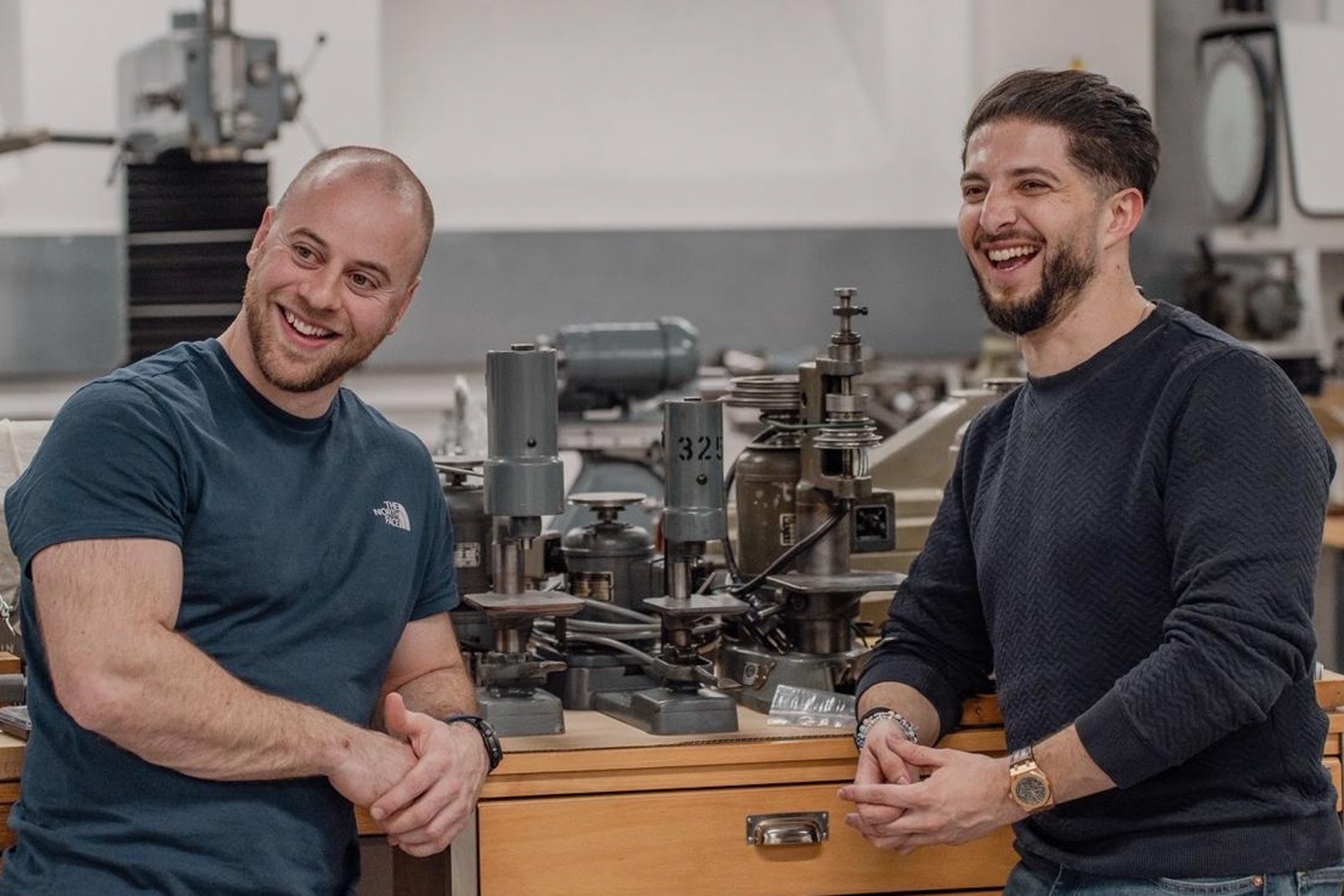
The new Bonniksen brand has been established in La Chaux-de-Fonds by co-founders Maximin Chapuis and Jason Chevrolat. Mr Chapuis is the technical mind behind the venture, a Freeman of The Worshipful Company of Clockmakers who trained under Michel Boulanger in Paris and has taught courses in several watchmaking fields at WOSTEP. Mr Chevrolat serves as CEO, having spent time in management functions at both Christophe Claret and Bovet.

Third-wave handcraft

There’s never been a better time for handmade watchmaking. Though truly handmade wristwatches remain vanishingly rare, more hands than ever are undertaking the seemingly Quixotic task of making every part of a watch without the aid of modern automated tools.

While a portion of credit goes to George Daniels for showing the way, what we might call third-wave hand craftsmanship traces its roots to the creation of the Time Æon Foundation in 2006.

Naissance d’une Montre 1 by Michel Boulanger.

This organisation was created to safeguard and transmit fundamental handcraft techniques, a mission that resulted in the Naissance d’une Montre project. Translating as ‘birth of a watch’, each project seeks a new challenge, in order to broaden the skillset that is documented and preserved.

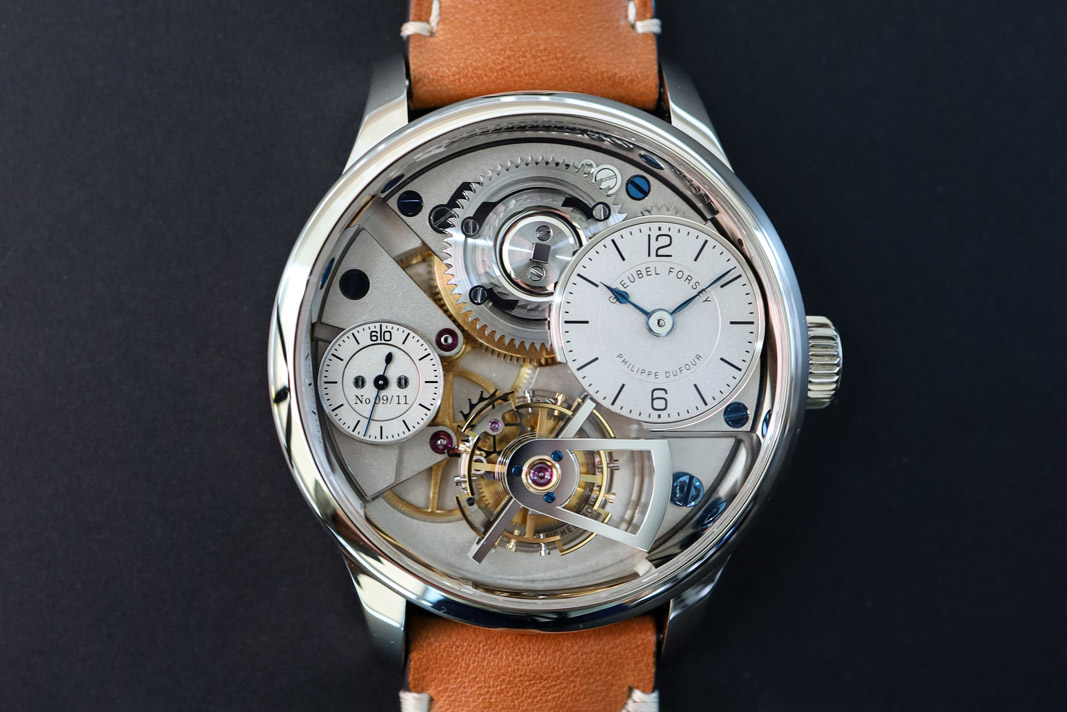
The first Naissance d’une Montre watch, Montre 1, was a fully handmade tourbillon wristwatch built by Michel Boulanger in 2012, with guidance from Philippe Dufour, Robert Greubel, and Stephen Forsey.

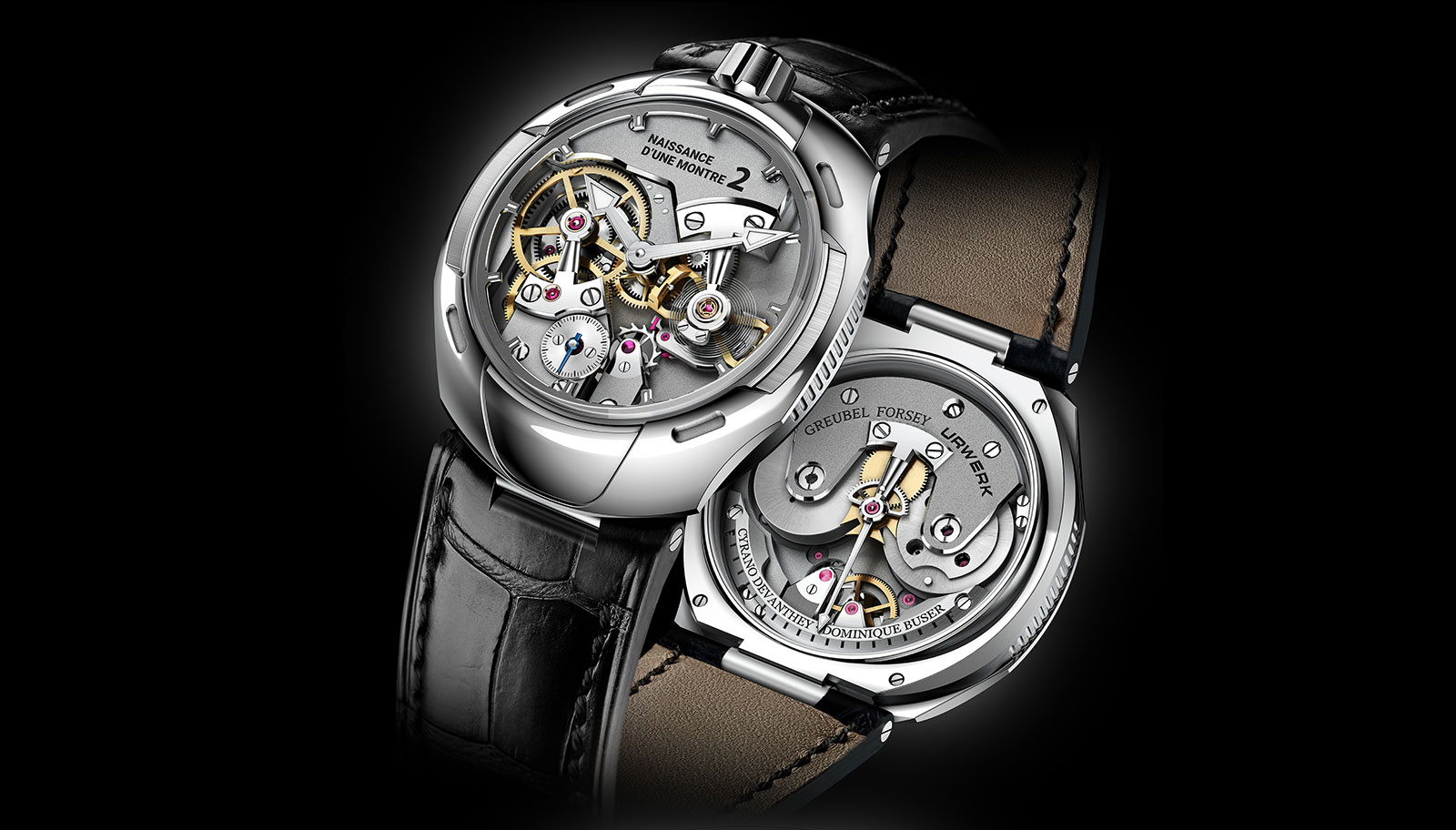
Naissance d’une Montre 2 by Dominique Buser and Cyrano Devanthey.

The second project, Montre 2, commenced in 2015. These watches were made by Dominique Buser and Cyrano Devanthey, who would later found Oscillon. Montre 2 featured a tensator spring designed to supply constant force to the escapement.

Most recently, Ferdinand Berthoud debuted the Montre 3, which was the first handmade wristwatch with a chain and fusee mechanism.

Naissance d’une Montre 3 by Ferdinand Berthoud.

In the meantime, Greubel Forsey, a brand that’s been closely involved with the Time Æon Foundation since its inception, has introduced two handmade watches of its own — the Hand Made 1 tourbillon, and the simpler Hand Made 2.

Montre 4

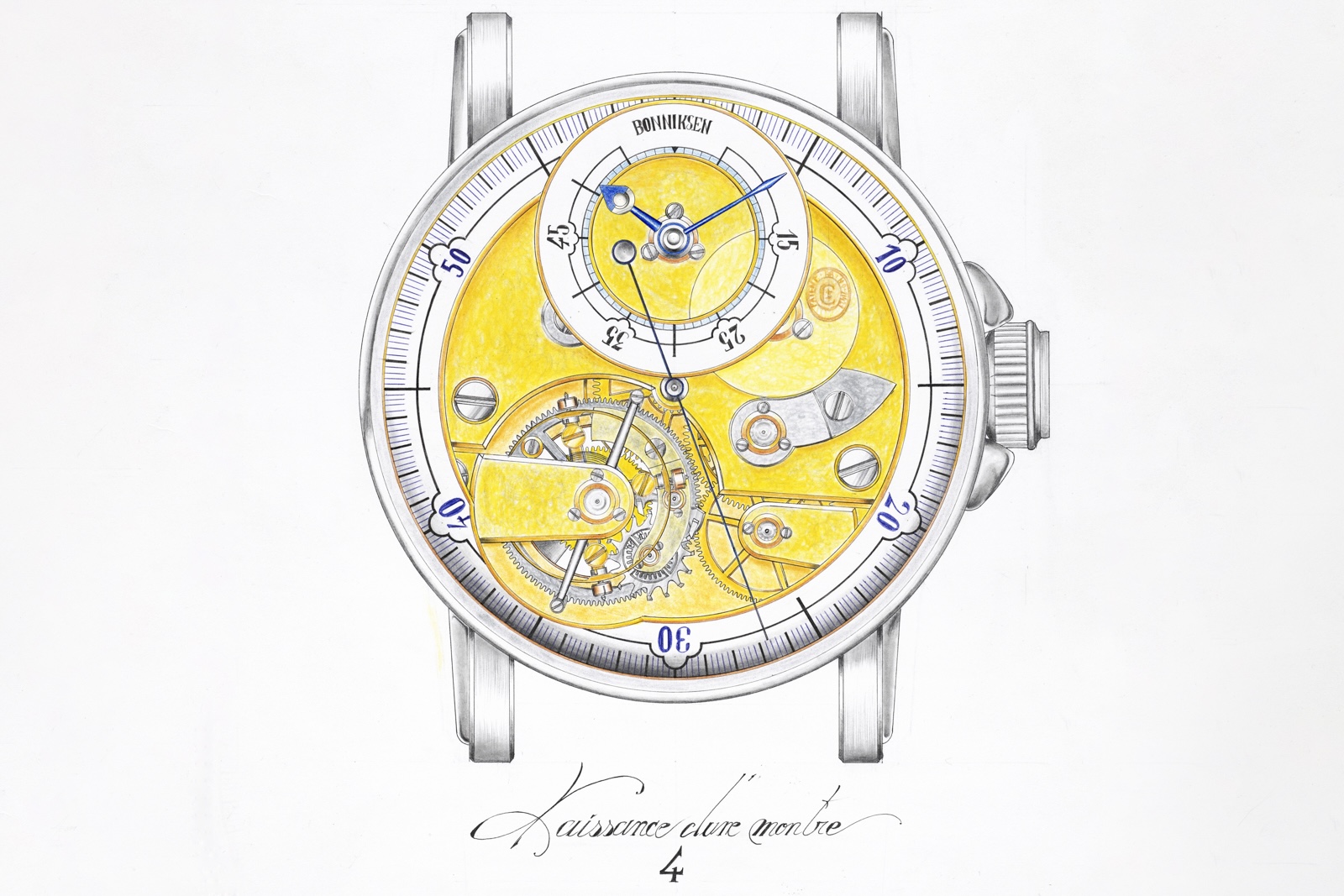
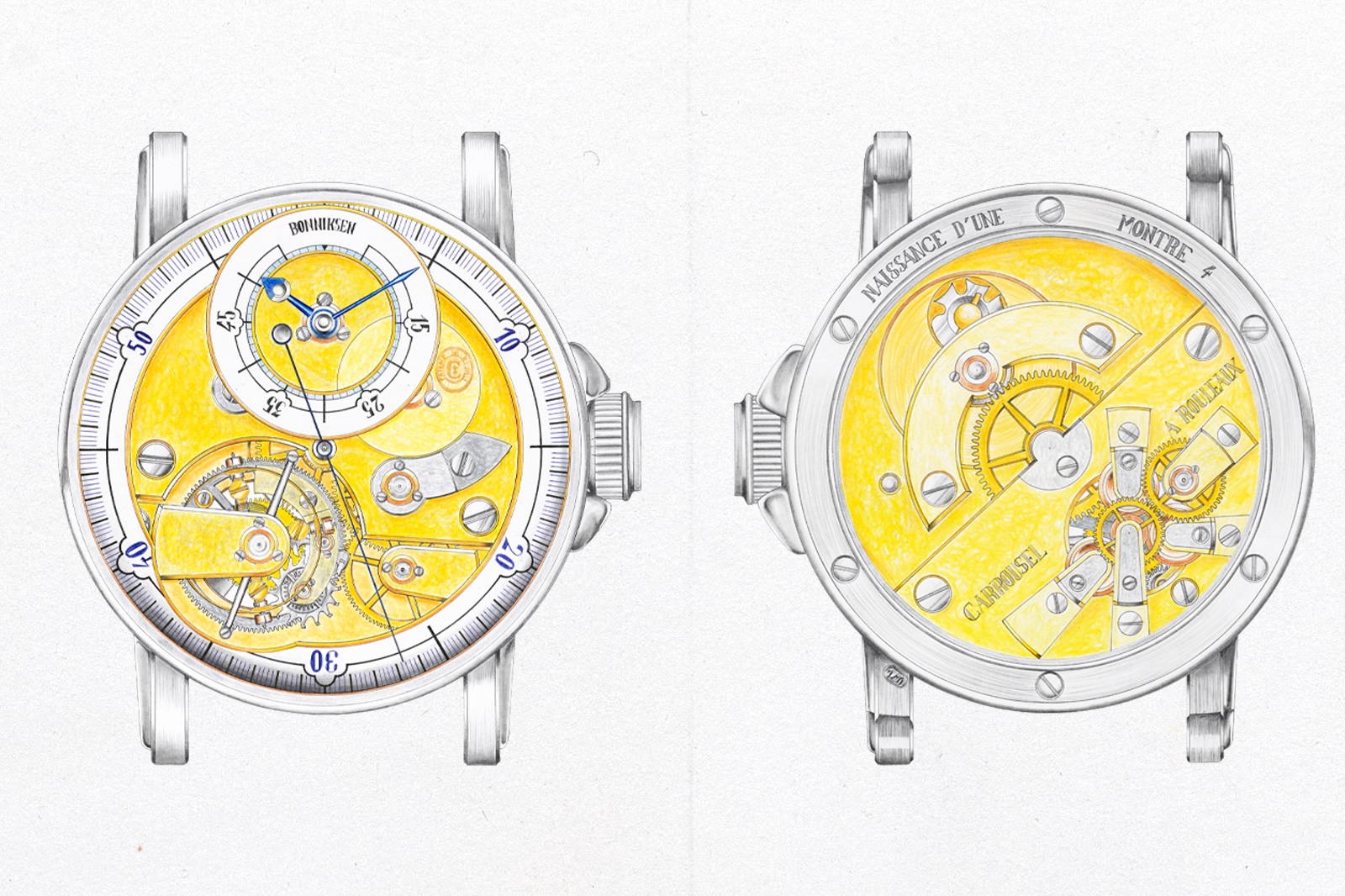
Montre 4 comes by way of a reborn Bonniken, and should prove to be a worthy challenge for the founding duo, but especially Mr Chapuis. Montre 4 currently exists only as a sketch, but several details are worth examining.

A sketch of Naissance d’une Montre 4 (Le Carrousel) by Bonniksen.

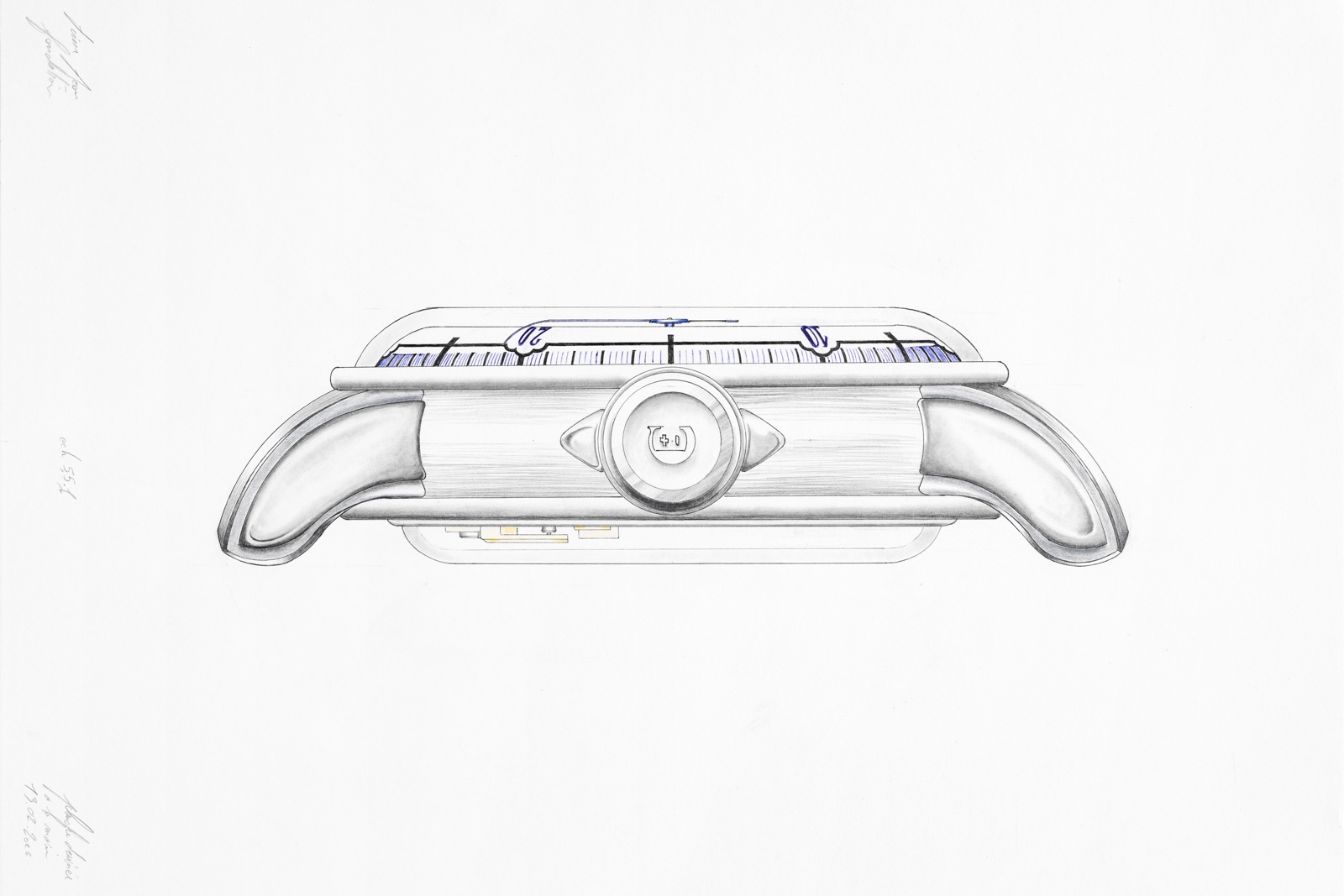
The first is the case, which is promised to be under 40 mm, and appears unusually elegant for a handmade product, which tend toward simple, blocky forms due to the limitations of manual tools. In this context, the case profile is quite slim and the lugs and crown guards are surprisingly nuanced.

The details are traditional, but the design is contemporary. Instead of Bonniksen’s original three-quarter plate design with the carrousel on the back, Montre 4 is made in the style of today, with an exposed movement featuring the carrousel on the front of the watch, underneath an offset time display.

Inside, the movement looks to make prodigious use of black-polished steel, which should gleam against the gilded plates and bridges.

For more, visit timeaeon.org.


Back to top.

You may also enjoy these.

Anton Suhanov Returns with the Flamingo

An in-house calibre with a luminous balance.

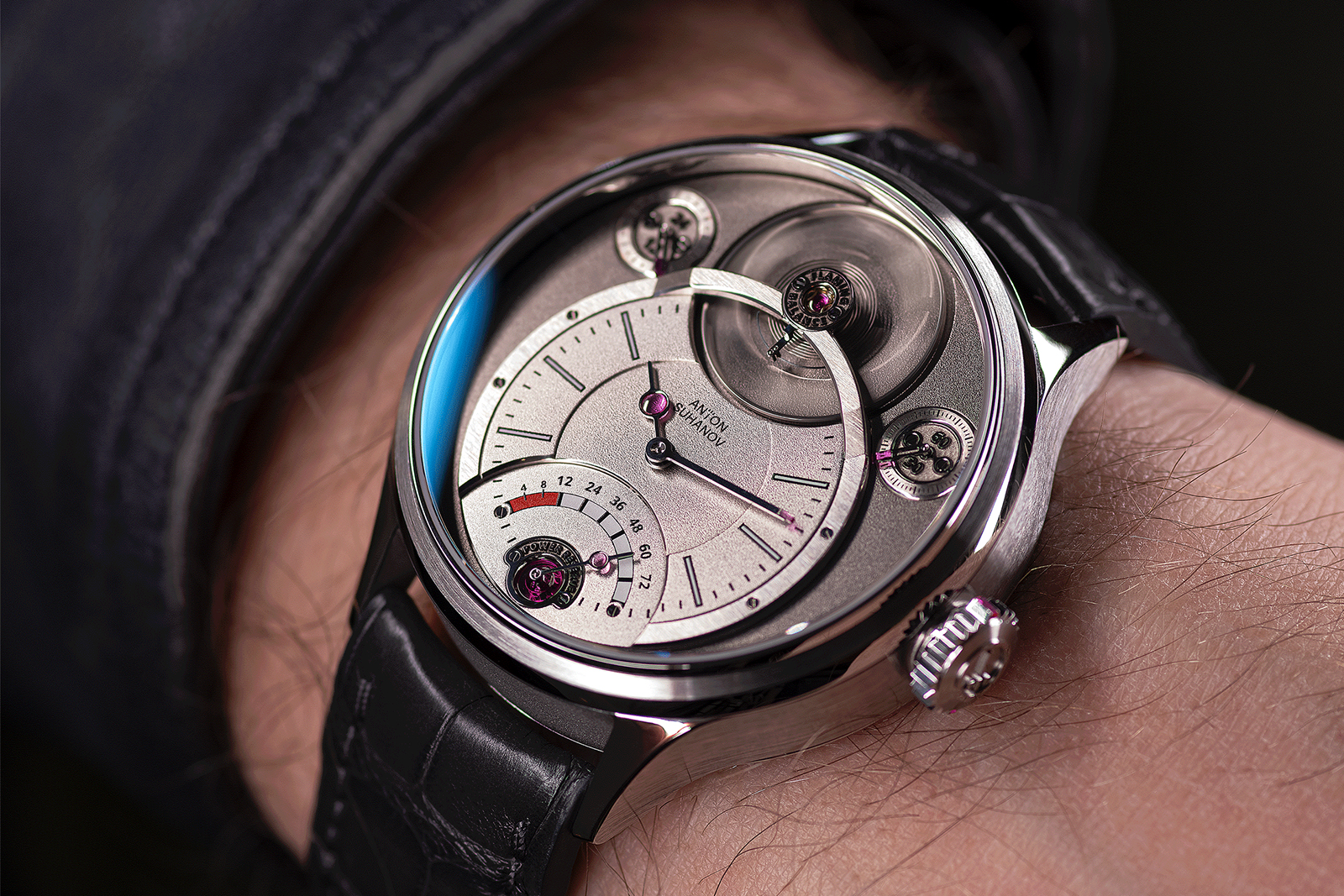
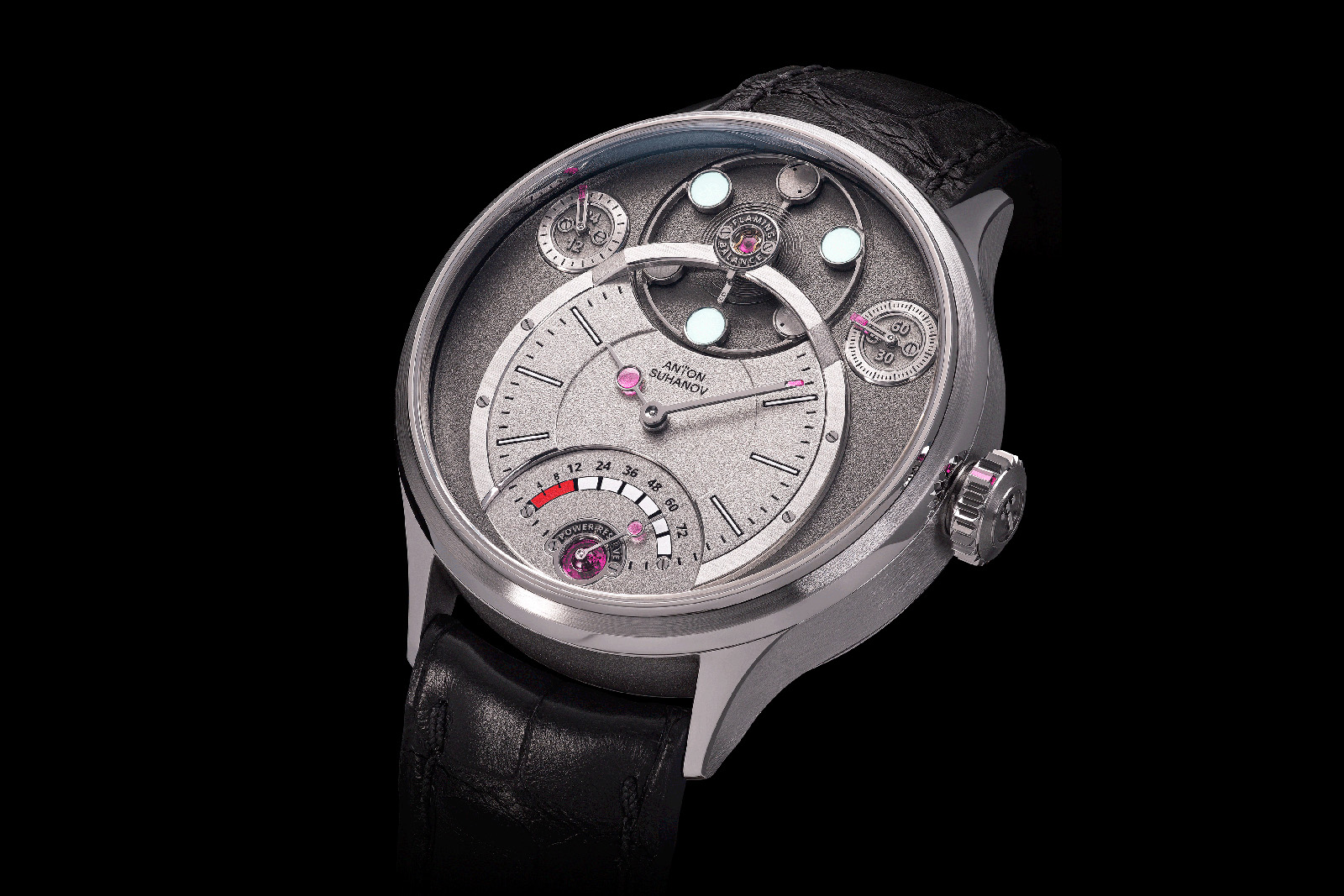
Russian independent watchmaker and ACHI member Anton Suhanov returns with his third wristwatch, the dynamic Flamingo. Featuring Mr Suhanov’s first in-house movement, the Flamingo positions its massive balance wheel dial-side, and has a few other tricks up its sleeve as well. 

Initial thoughts

Anton Suhanov made a name for himself for his inventive clocks, but more recently has turned his attention toward the more lucrative wristwatch market. Mr Suhanov’s first two wristwatches were modular constructions piggybacked on stock movements. Despite this common approach, his modifications were transformative, making his movements feel more personal and “in-house” than some truly in-house movements that are more traditional in concept. This evident commitment to the craft quickly gained Mr Suhanov a good reputation.   

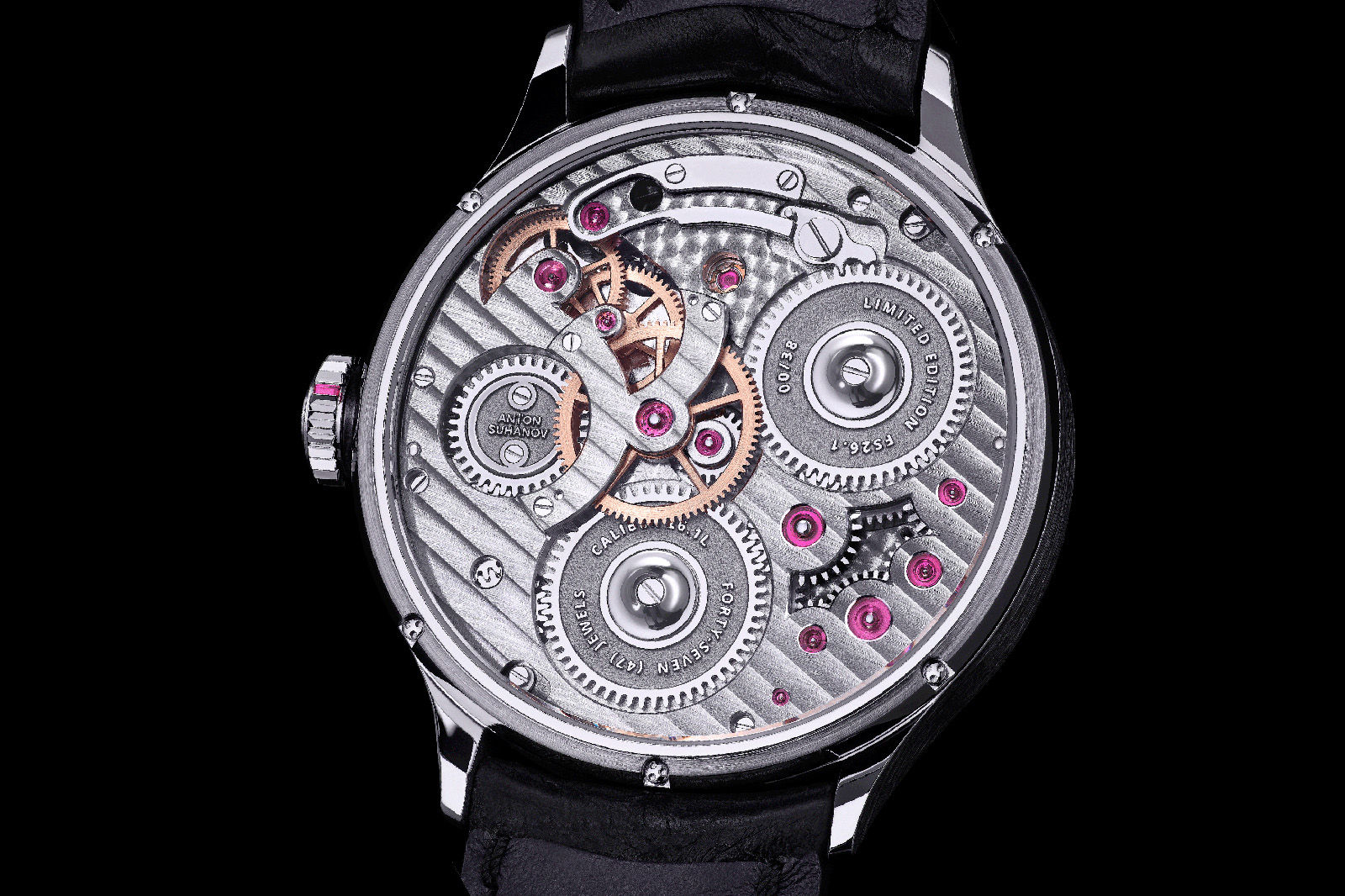
After about four years of development, Mr Suhanov has unveiled a calibre he can truly call his own, the cal. Su26.1L. He built the movement from scratch, which gave him complete freedom both in terms of design and functionality. The result is a movement that possesses a number of unique and charming traits, both technical and aesthetic in nature. 

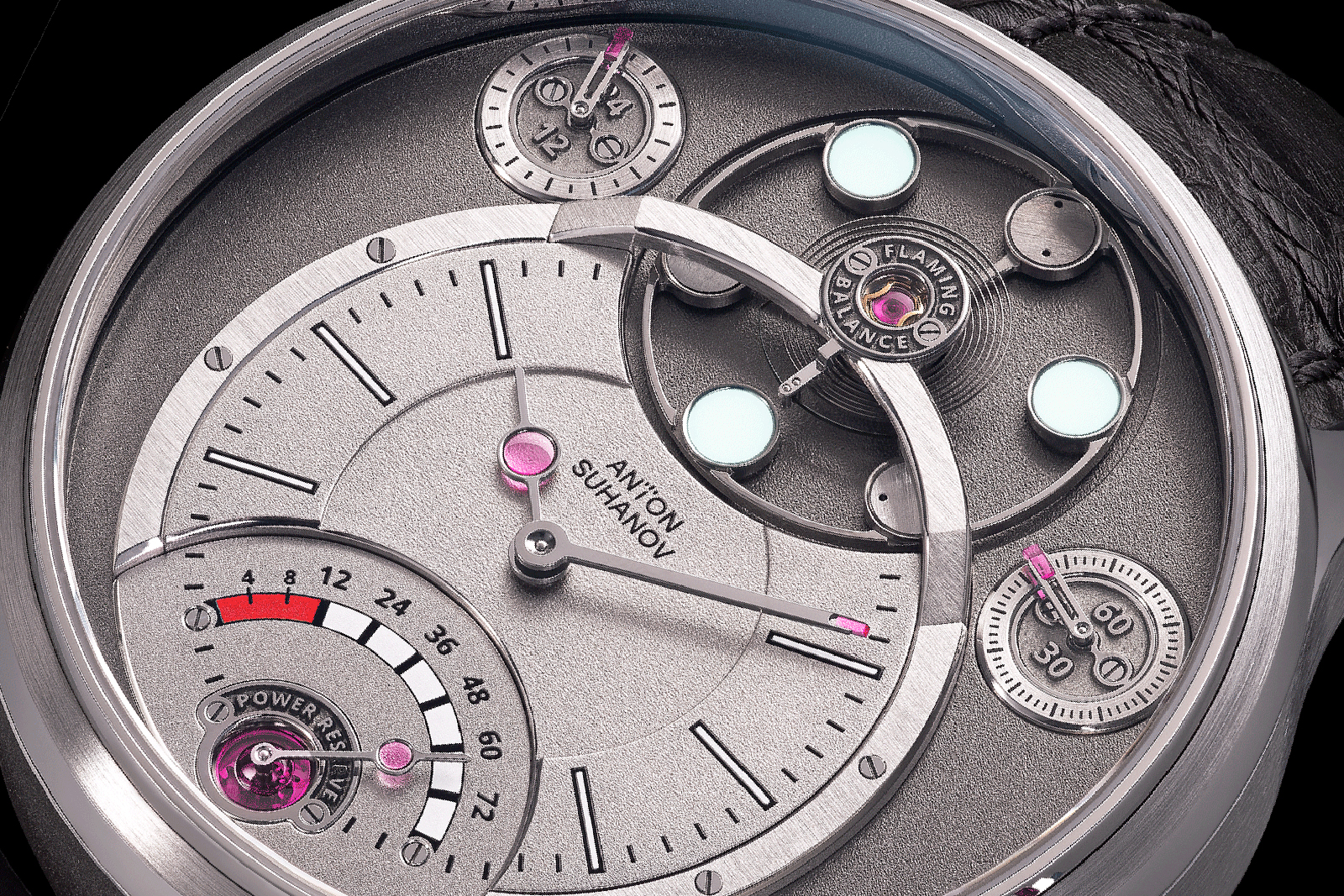
While the design of the Flamingo as a whole is deeply original (especially the use of non-functional ruby pallets for the hands), some elements on the dial side remind me of similar features of Greubel Forsey’s watches. For example, the two small sub-dials — a 24-hour indicator and small seconds — are reminiscent of similarly executed Greubel Forsey indicators. These elements don’t really feel like an imitation, but rather as a subtle tribute to modern artisanal watchmaking. 

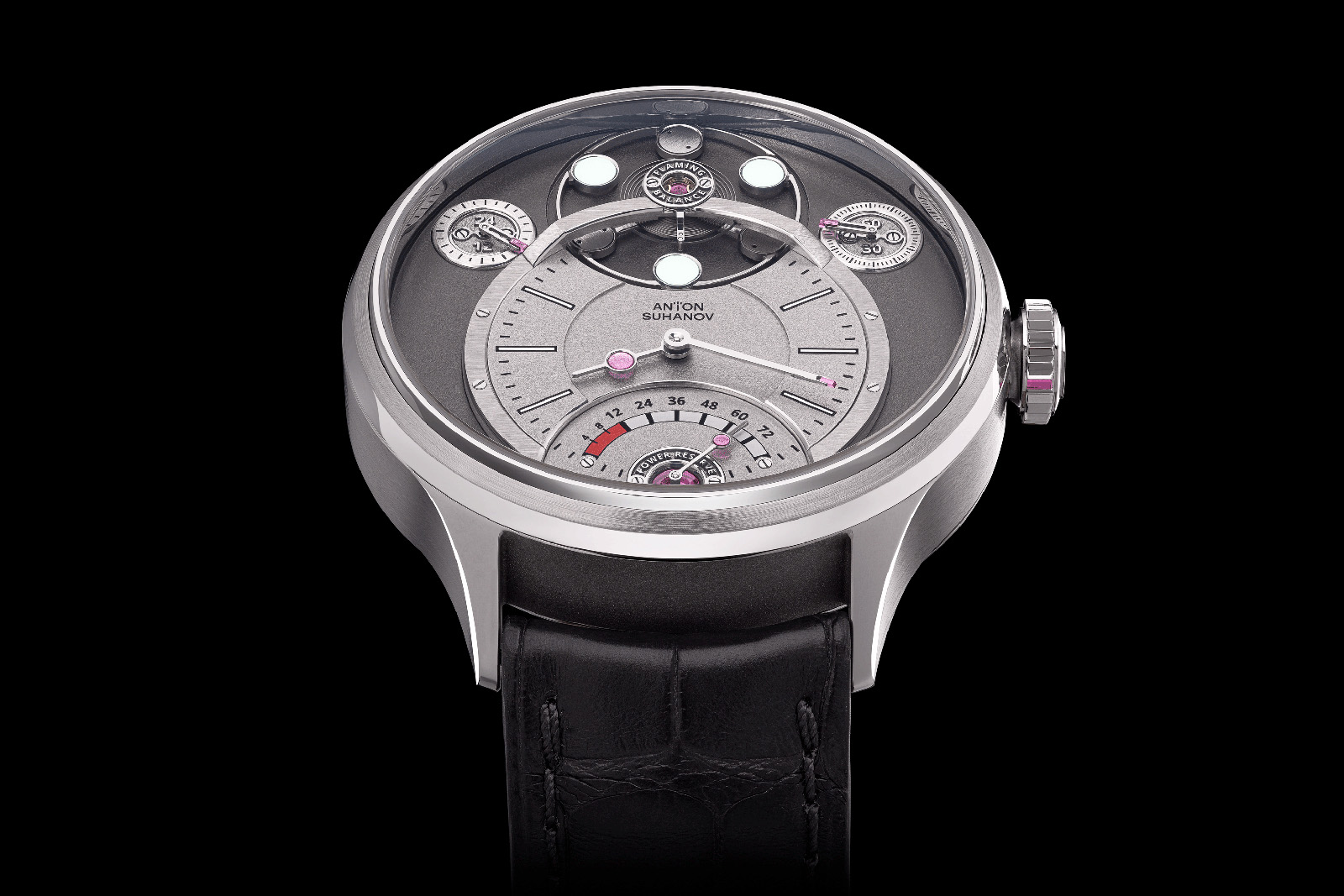
The Flamingo’s aesthetics are, like much of Suhanov’s work, an acquired taste. The blend of classical watchmaking and industrial influence is an interesting, and this tension runs through the structure, design, and colour palette of the dial in equal measure. The large balance wheel dominates the dial — its large size immediately distinguishes the movement as an in-house creation.

Is it a bird? A balance?

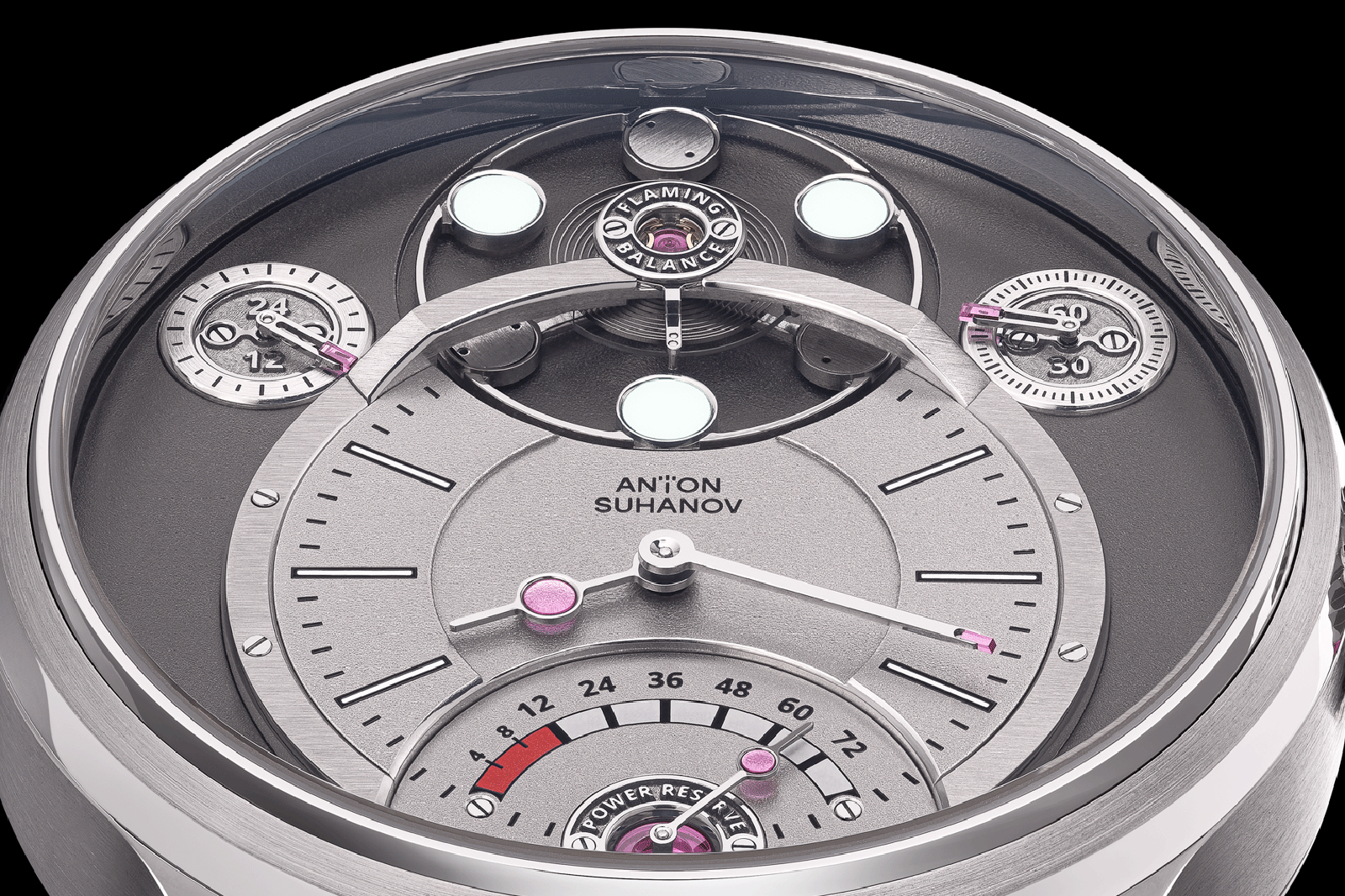
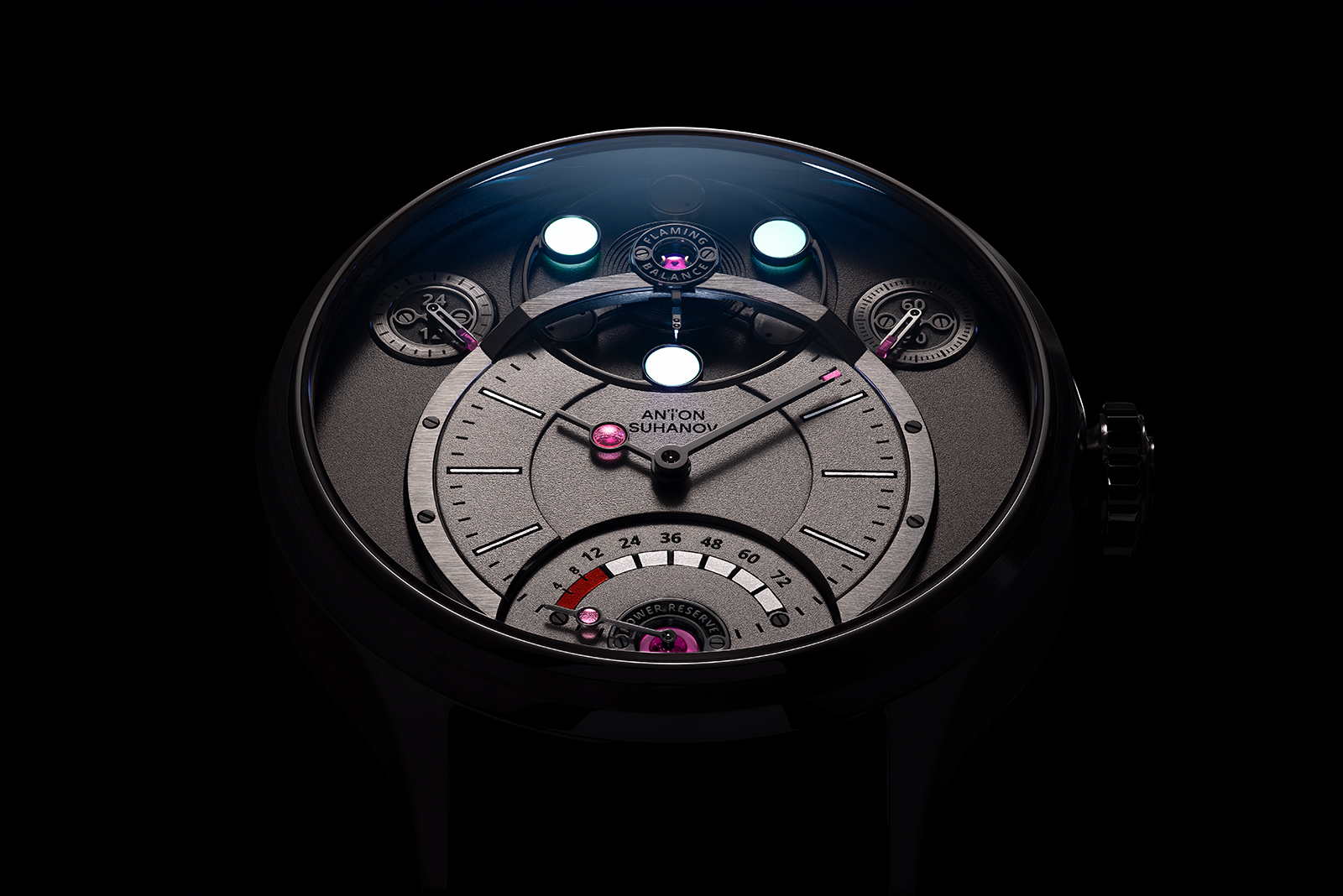
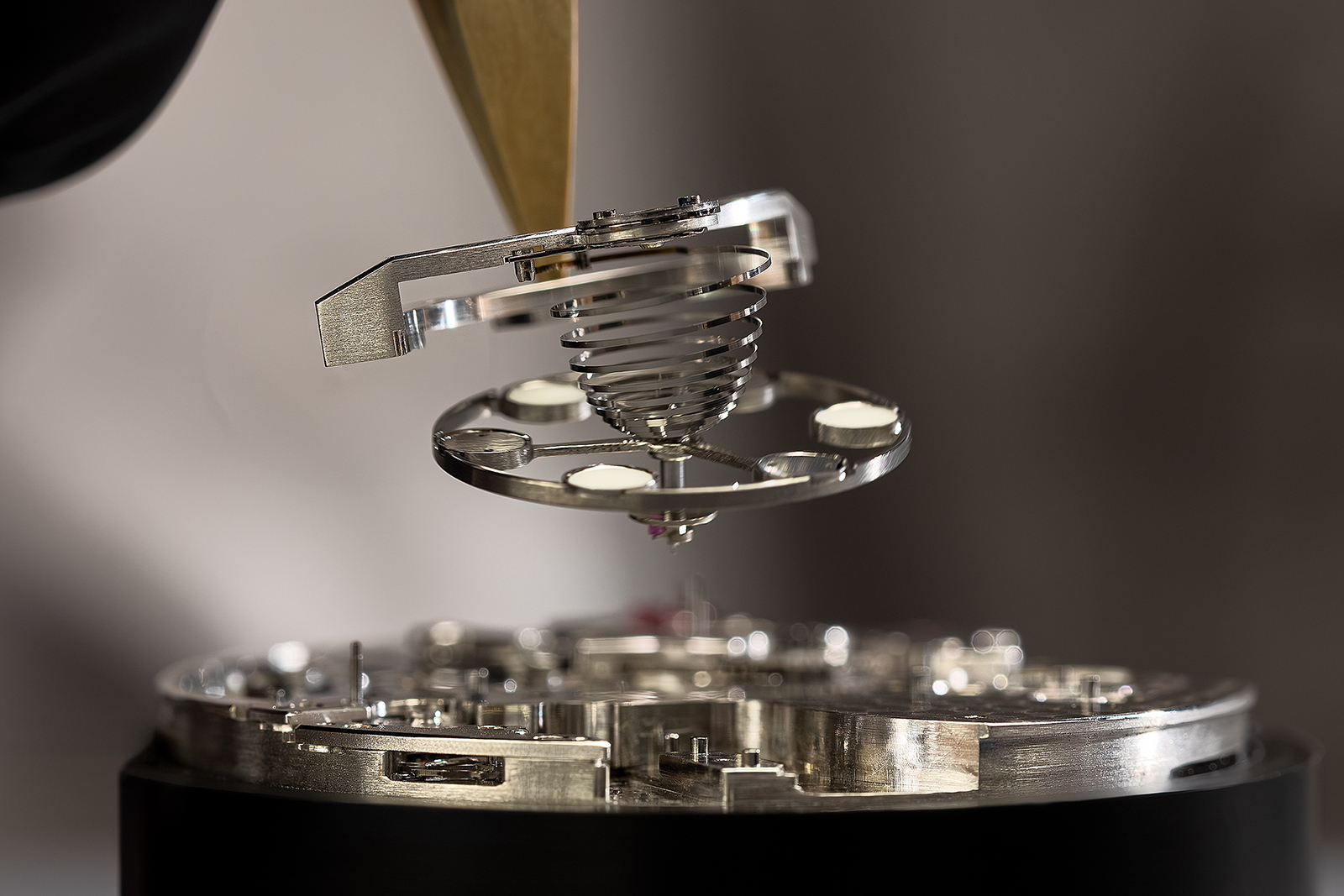
The Flamingo takes its name from its so-called “flaming” balance. A world’s first, the flaming balance is an otherwise ordinary (if over-sized) balance wheel with three large Super-LumiNova discs set into its rim — a trick Mr Suhanov has used to good effect in his clocks. As the balance oscillates in darker environments, the luminescent material glows and creates the impression of a fiery dance.

While the light show is simply that, the effect is interesting and quite unique. In this regard the Flamingo feels more like a wearable kinetic sculpture than a watch — with precisely the kind of singular character that is often lost in the name of tradition.

Beyond the flaming regulator, the dial’s design echoes that of his earlier Chronotope, with a mix of monochromatic grey textures and industrial touches. The screws holding various parts of the dial are on full display and fully polished.

The main dial is slightly raised and framed by a steel sector which doubles as the balance bridge. While the bridge is carefully brushed and polished, graining remains the core finishing technique exhibited on the dial side. 

Of note is Mr Suhanov’s original use of artificial ruby stones and pallets for decorative purposes. Such jewels are commonly used inside the movement as functional bearings or escapement components. Here each hand on the dial incorporates a ruby tip for aesthetic purposes only. It doesn’t hurt that vivid pink rubies are close in colour to the watch’s namesake flamingoes.

This inventive motif continues on the sharply ridged crown, which features its own inset ruby pallets. Mr Suhanov explained that by adding this visual cue, the wearer gets a better sense of the winding cycle when operating the crown. 

Going in-house

The past decade has seen a rise in independent watchmakers starting to migrate toward in-house movements. This trend is especially evident for smaller, artisanal workshops that wish to affirm their place in an increasingly crowded market.

In this context, Mr Suhanov’s workshop is among the smaller outfits to roll out a fully in-house caliber. That this was accomplished in a relatively short period of time, far from existing supply chains, is commendable. 

Arguably the best movement to come from St. Petersburg in recent years — Konstantin Chaykin started there but relocated to Moscow — the Su26.1L is a large hand-wound movement that beats at a classical 2.5 Hz frequency. A quirky but useful detail is the non-linear power reserve indicator, which accelerates as the reserve depletes. In the final 12 hours, it moves at twice the rate it does when the movement is fully wound — a deliberate nudge to keep the watch wound — something we’ve seen before from the likes of A. Lange & Söhne.

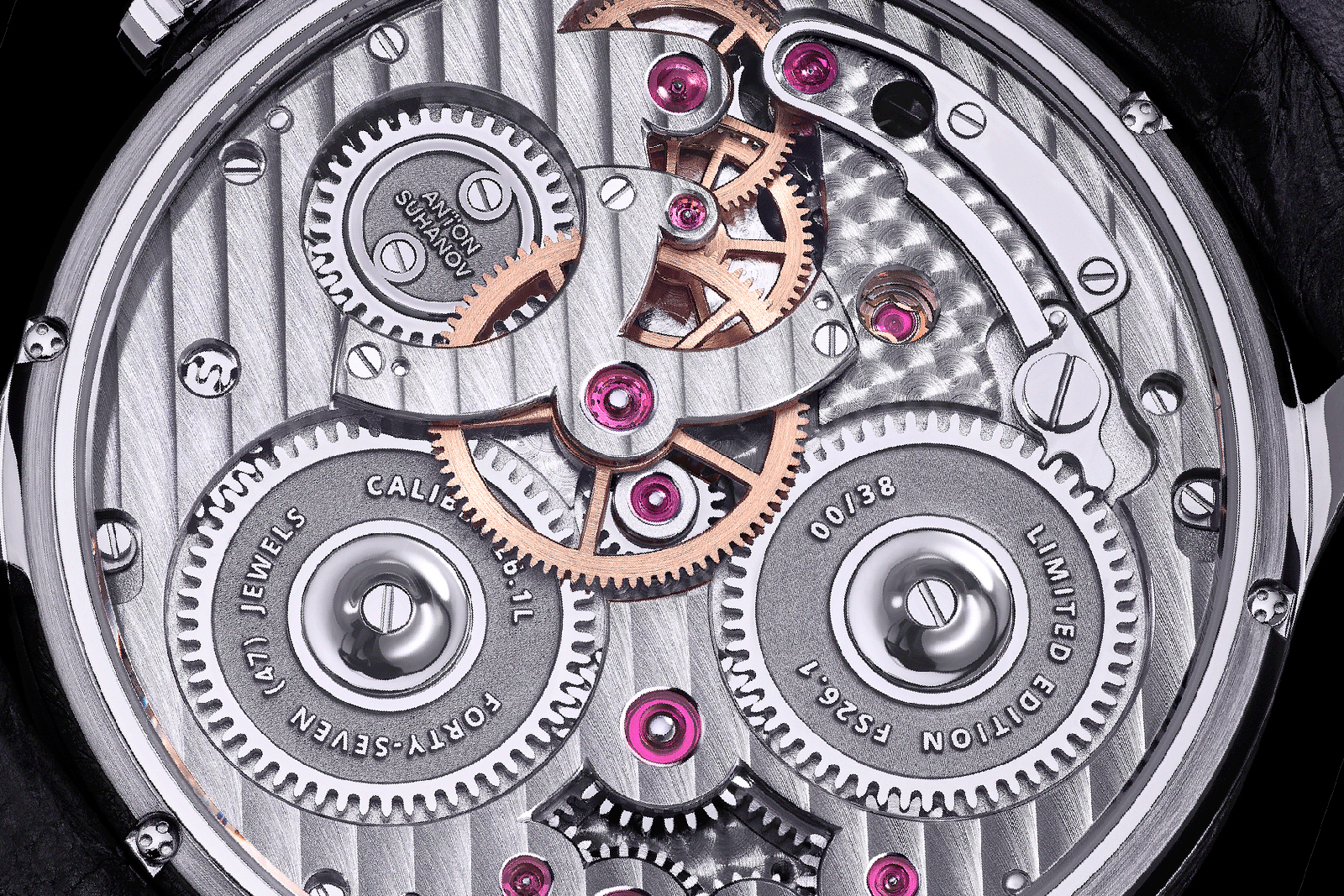
The Su26.1L is laid out unconventionally, with familiar components arranged in unfamiliar positions across the case back. Two mainspring barrels unwind in parallel, delivering a total power reserve of around 84 hours, with the two click wheels sitting at a deliberate distance from the signed crown wheel.

Most watchmakers seeking extended power reserve turn to smaller, serially linked barrels. Mr Suhanov instead took advantage of advances in modern mainspring technology — a single barrel is now capable of delivering three or more days of reserve — and added a second barrel not for duration but for torque stability, ensuring a more consistent power delivery to the going train.

The need for increased, steadier torque over the 84 hours of runtime might be related to the large, 15.7 mm balance wheel. The balance is not only large in the sense of its diameter, but it looks especially heavy due to the large inertia blocks and luminous inserts, making for a what is certainly a large moment of inertia value. The larger the inertia, the more energy is needed to sustain the oscillations at the proper amplitude — hence the need for a strong motor organ. 

The three mobiles of the going train are elevated over the mainplate and are fully visible. The escapement assembly however is concealed, remaining unseen from both the dial and case back side of the movement. This creates the impression that the balance oscillates on its own, engaged by forces unseen. Thanks to its “flaming” design, the regulating organ becomes a display element as much as a functional piece. The three Super-LumiNova discs that create this effect likely complicate the processes of poising and adjustment.

Though the balance wheel is a variable-inertia design, the system is not fully free-sprung, as there is an index regulator working with the flat end portion of the hairspring for regulating the rate. While free-sprung balances have long been a de facto mark of technical know-how, a classic regulator might prove objectively more useful for quick adjustments during servicing given the oversized balance. Disappointingly, there is no Breguet overcoil — a detail that would have added another layer of technical interest and elegance to the dial. 

In terms of finishing, the Flamingo exhibits a mix of industrial and artisanal finishes from machine-engraved text to hand-polished anglage. There are a total of 73 internal angles — 60 of which are found in the exposed gears alone. The remaining 13 are found on the bridges at the intersections of rounded bevels. The larger surfaces feature a traditional mix of narrow Geneva stripes and perlage, which peaks out in a few places.

The two barrel click wheels are concave towards the center and black polished. They also carry engravings of the calibre name is relief, over a grained surface — the same as the brad signature on the crown wheel. 

Finally, the movement takes some inspiration from its St. Petersburg terroir, though it takes some imagination to see it. The Y-shaped train bridge, for example, is meant to mimic the point where the Neva River divides into the Bolshaya Neva and Malaya Neva. The jewel at its center marks the location of the Peter and Paul Fortress, and Mr Suhanov’s logo on the winding wheel cover roughly indicates his workshop’s position in the city relative to these landmarks.


Key facts and price

Anton Suhanov Flamingo

Diameter: 42 mm
Height: 11.5 mm
Material: Stainless steel
Crystal: Sapphire
Water resistance: 30 m

Movement: Su26.1L
Functions: Hours, minutes, seconds, 24 hour indicator and power reserve
Winding: Manual
Frequency: 18,000 beats per hour (2.5 Hz)
Power reserve: 84 hours

Strap: Calfskin with steel pin buckle

Limited edition: Yes, 38 pieces
Availability:
 Direct from Anton Suhanov
Price: Upon request

For more information, visit Anton-suhanov.com.


Back to top.

You may also enjoy these.
Welcome to the new Watches By SJX.

Subscribe to get the latest articles and reviews delivered to your inbox.

Exit mobile version