
Hands On: Ulysse Nardin UR-Freak
A coherent collaboration with Urwerk.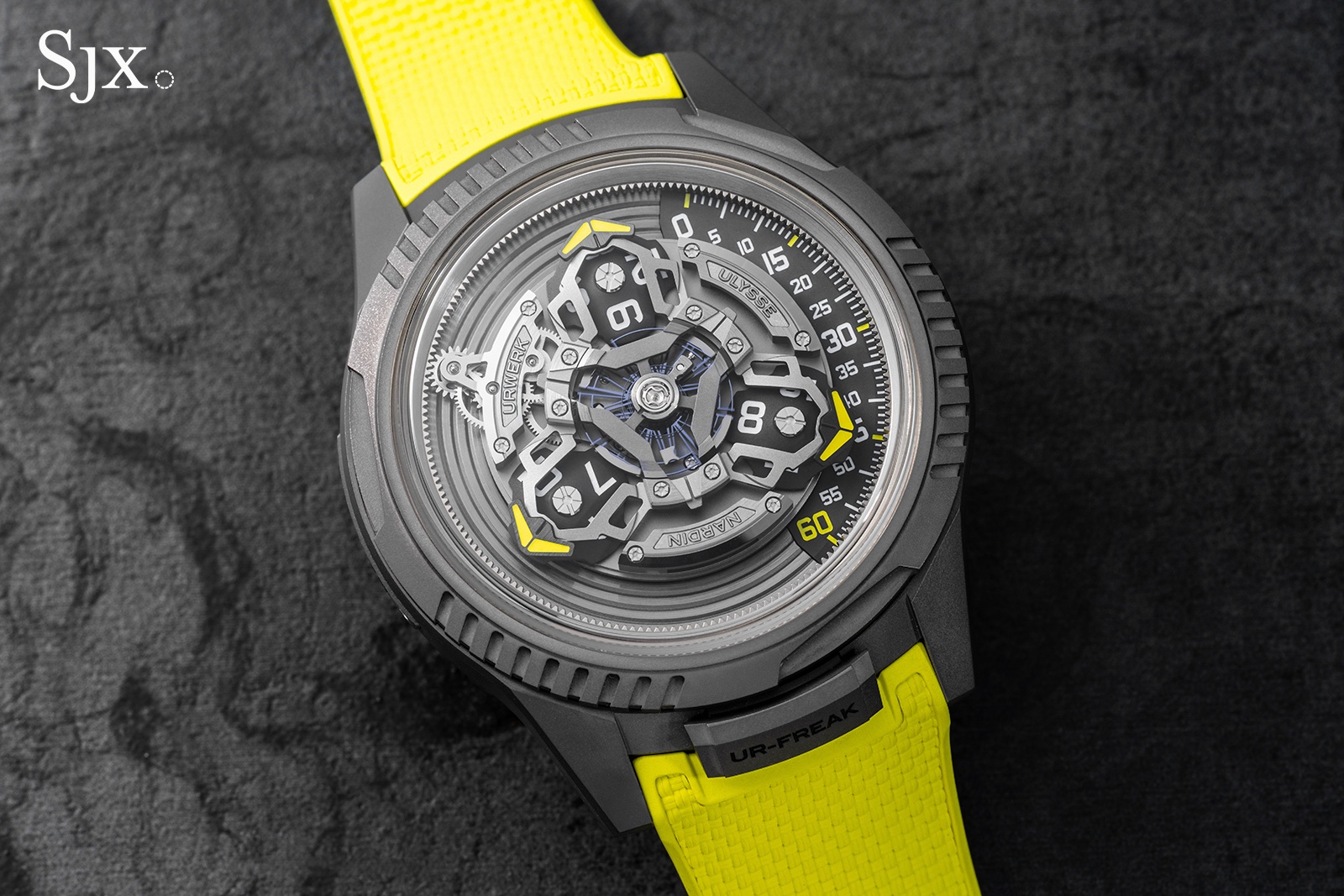
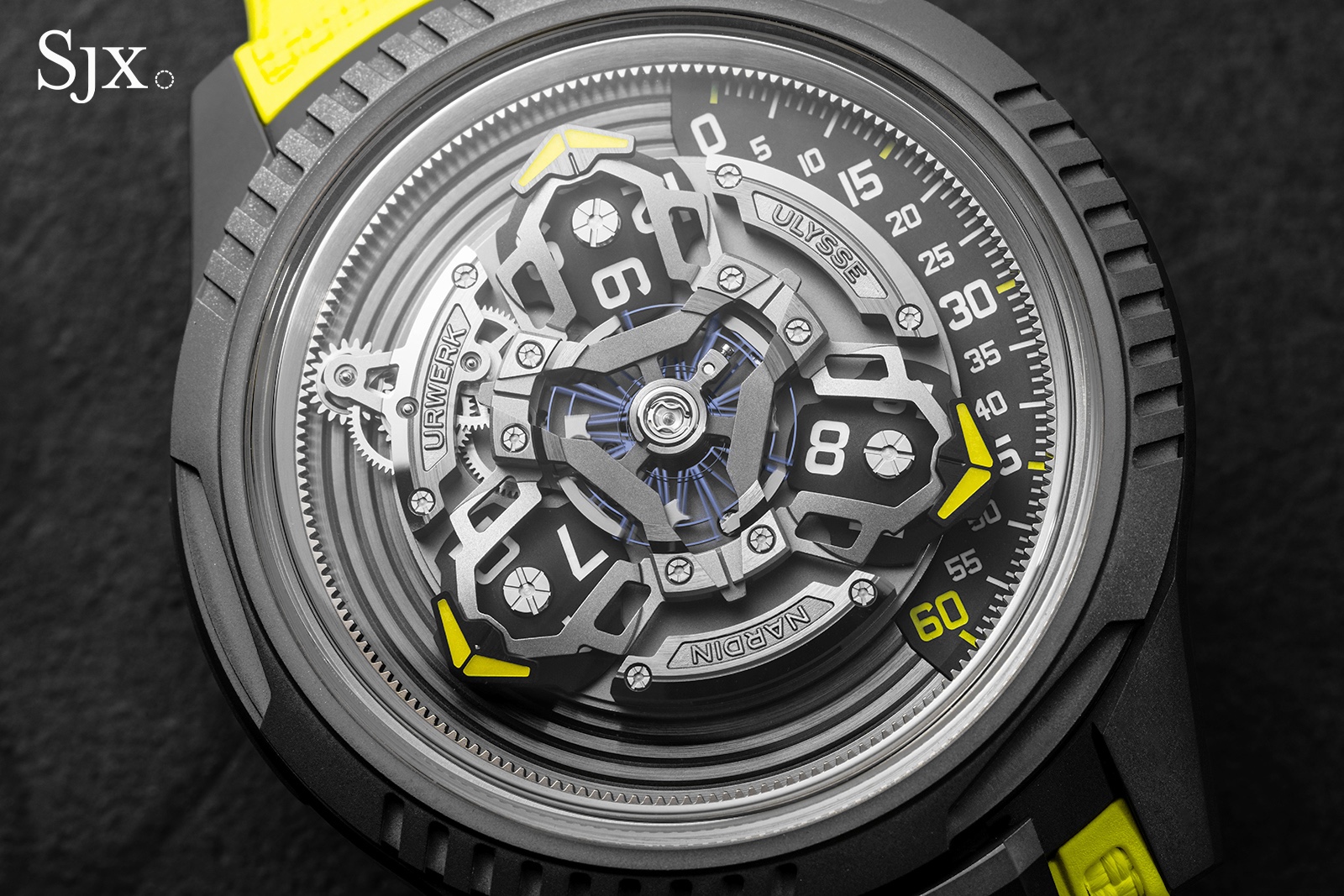
One of the standout releases from Dubai Watch Week was the UR-Freak, a collaboration between Ulysse Nardin (UN) and Urwerk that embodies some of the most enduring motifs of each brand. More UN than Uwerk, the UR-Freak nonetheless incorporate’s the latter’s satellite wandering hours display, adapted to the Freak’s slow-moving flying tourbillon.
A limited run of just 100 individually numbered pieces, the UR-Freak confers some of Urwerk’s disruptive cache to UN, a legacy brand celebrating its 180th anniversary next year.
The wandering hours tourbillon
To understand why the UR-Freak is such a compelling collaboration, one must understand what UN and Urwerk bring to the table, respectively.
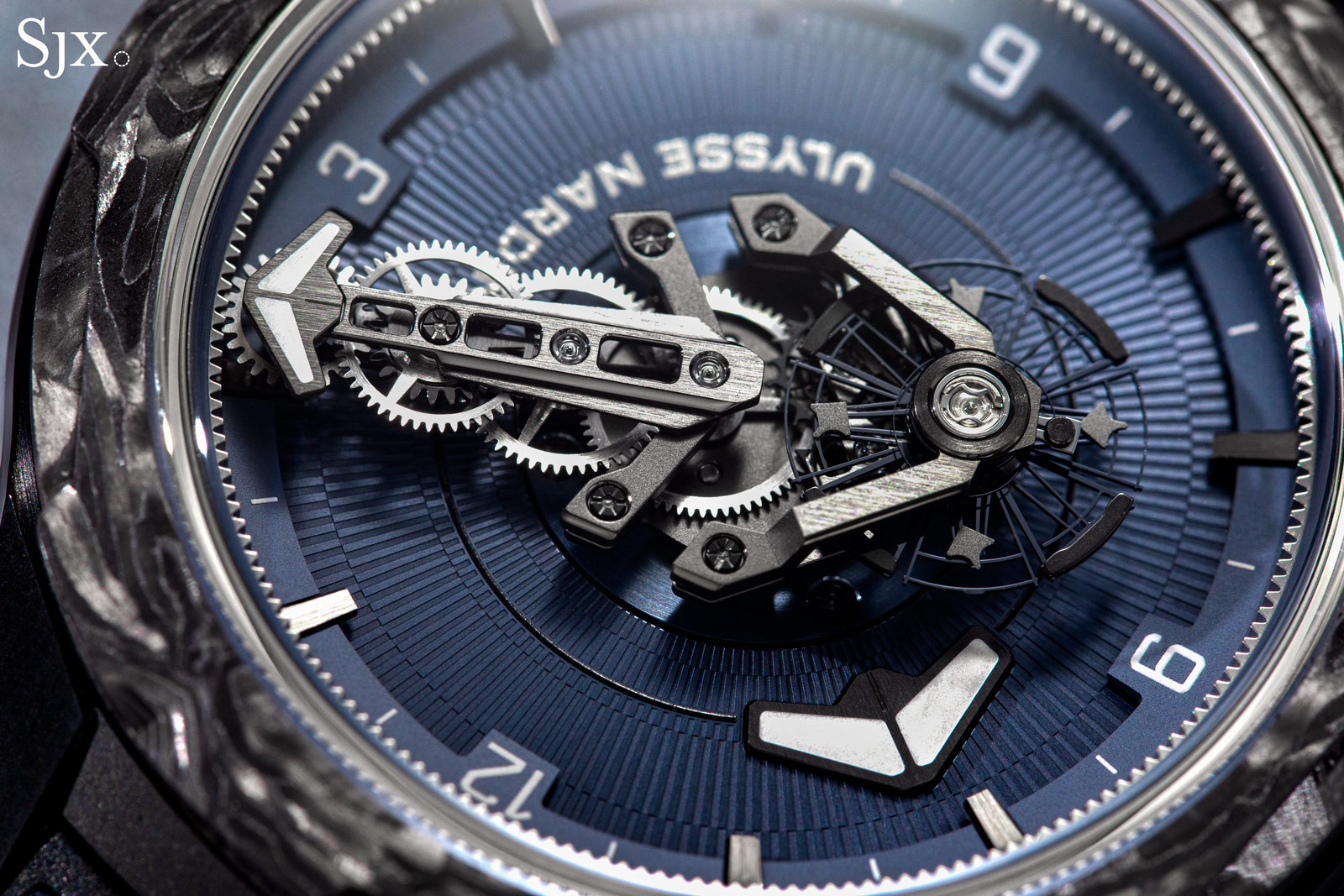
The UN Freak turns 25 in 2026, marking a quarter-century of the quirky tourbillon that introduced silicon to watchmaking. That innovation alone would have secured the Freak’s place in watchmaking history, but it was arguably more memorable for its unusual design that put much of the movement (including the escapement) on a rotating platform on the dial.
The Freak One is an example of the typical Freak architecture.
Ulysse Nardin refers to this architecture as a flying carousel, perhaps to differentiate the standard models from those with a nested tourbillon. Nomenclature aside, it’s technically a tourbillon by nature of its operation, which powers the escapement through a fixed-ring gear (which can be seen around the edge of the dial).
In all previous Freak models to date, the movement rotates once per hour, effectively serving as the minutes hand. The hour ‘hand’ is usually integrated into the revolving dial plate beneath.
Urwerk, on the other hand, built its brand around a science fiction-inspired take on the traditional wandering hours display, rejuvenating this rarely-used display complication and bringing it into the 21st century.

The Urwerk UR-100. Image – Urwerk
Unlike the Freak which features an entirely novel movement architecture, Urwerk models tend to be more traditional in construction, with an in-house time-display module paired to a third-party base calibre. The UR-100, for example, uses a Vaucher automatic base movement to power a satellite wandering hours complication with three arms. The wandering hours carriage makes one full rotation every three hours, indicating the minutes on a 120-degree scale.
The UR-Freak combines these two elements by decelerating the rotational speed of the Freak’s flying tourbillon from 60 to 180 minutes, and incorporating the hours discs into the tourbillon carriage itself. In the process, the oscillator has been relocated to the centre of the movement, but this change is immaterial to the function, since it moves through the same positions, albeit over a longer period of time in this case.
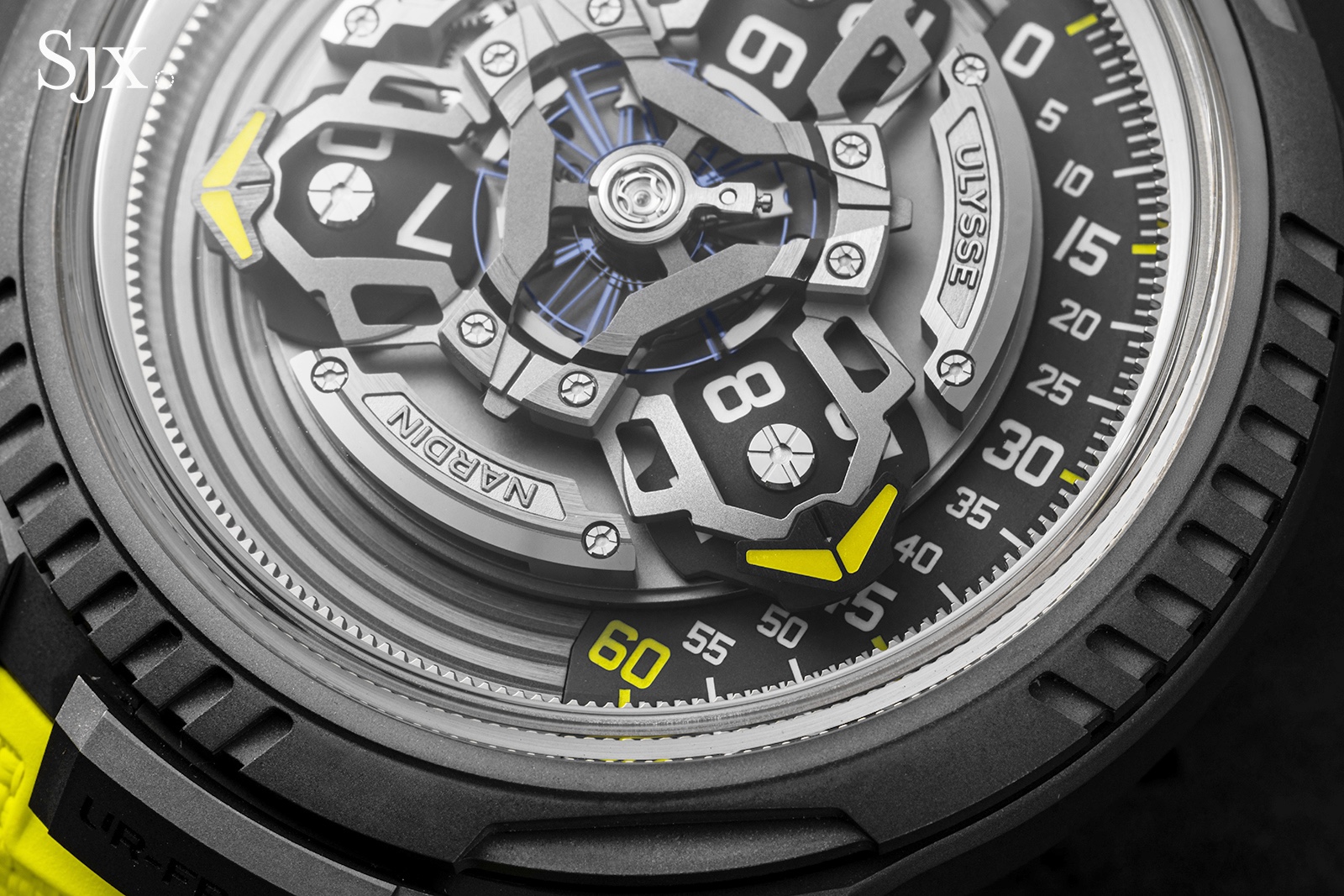
The slower 180-minute rotational speed of the tourbillon is governed by the simple math of the three-armed wandering hours complication, but it serves a coherent purpose: it slightly reduces energy consumption. It’s no accident that most tourbillons are designed to be as lightweight as possible; the mainspring must overcome the inertia of the carriage to power the escapement, rotating the entire structure slightly with every semi-oscillation of the balance.
In an ordinary tourbillon that rotates once per minute, a lightweight carriage is critical for stable timekeeping and a reasonable power reserve. But for tourbillons with longer rotational periods like the Freak, the carriage moves through such a small arc of rotation during each oscillation that the energy loss in minimal.
In other words, while the size of the carriage does consume a lot of energy, the incremental weight of the wandering hours mechanism is naturally offset somewhat by the slower rotational speed of the platform.
This arrangement solves one of the less appealing aspects of the standard Freak, which is the legibility of the hours display. The Urwerk-style wandering hours carriage moves the hour digits right next to the minutes scale, simplifying the process of reading the time.
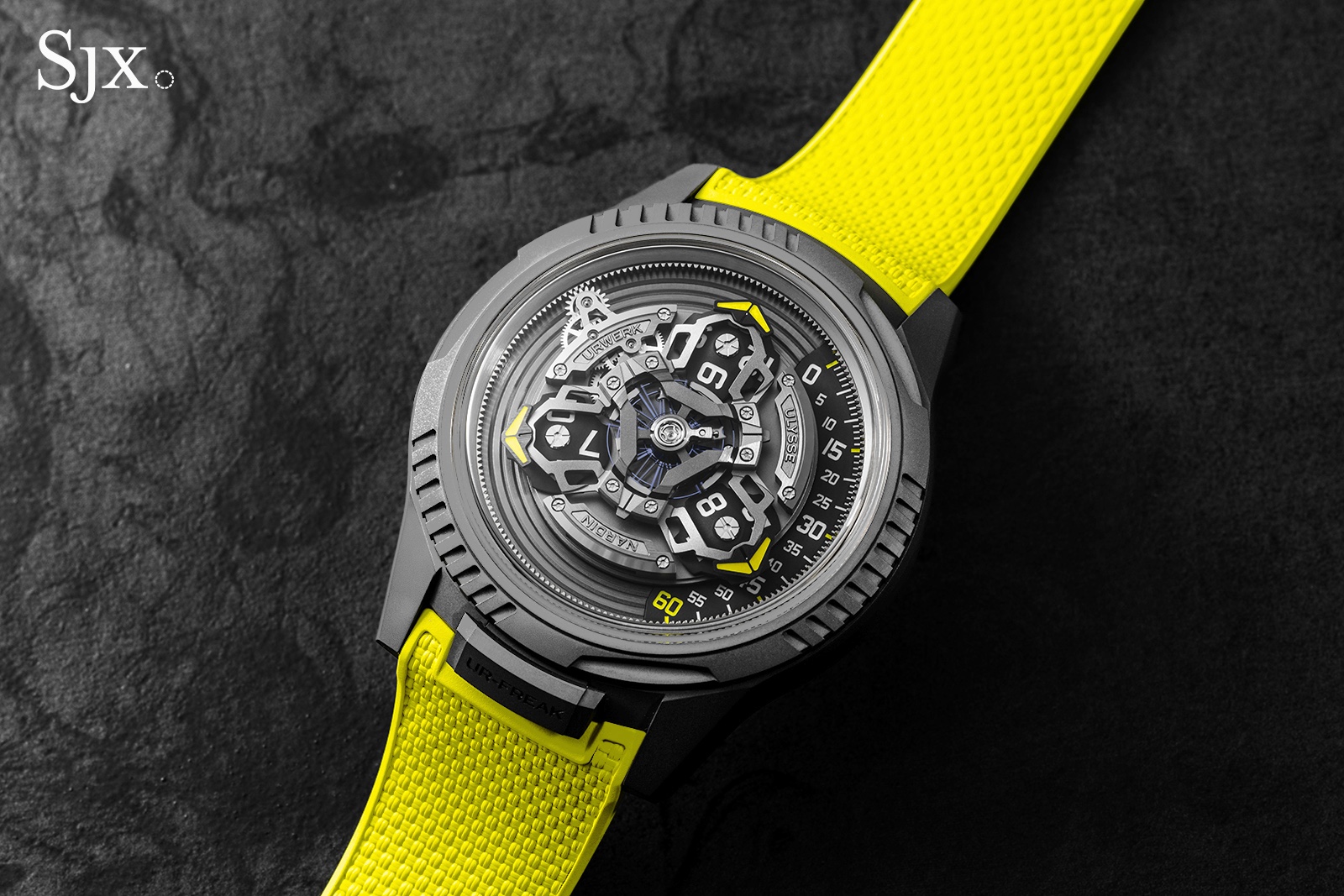
If there’s one element of the design that struggles to find harmony, it’s the 120-degree minutes scale that leaves much of the dial perimeter empty. While this arrangement seems largely unavoidable given the wandering hours design, it feels somewhat incomplete. That said, the configuration does make it possible to surreptitiously check the time with just the leading edge of the watch peaking out from beneath one’s shirt cuff.
Because it’s a Freak, the watch naturally incorporates UN’s latest silicon technology, including a silicon hairspring with an engineered terminal curve for superior isochronism, a diamond-coated silicon escape wheel that requires almost no lubrication, and a silicon balance wheel.

Another look at Ulysse Nardin’s silicon balance wheel, shown here in the Freak One.
The silicon balance wheel is a relatively recent invention, made possible by new production methods that enable the fabrication of ever-larger silicon components. That a relatively small brand like UN can play at this level, rivaling larger brands like Rolex and Patek Philippe for silicon innovation, is due to the brand’s partial control of Sigatec, an industrial supplier of silicon components for a variety of industries.
Industrial textures
The starting point for the case was clearly that of the Freak One, being roughly the same size and sporting a similar construction. The first thing one notices is the texture; the heavily bead-blasted titanium surface has a rich matte finish looks almost die-cast (though it isn’t). That texture gives the case a distinctly industrial feel that complements the futuristic look of the movement.
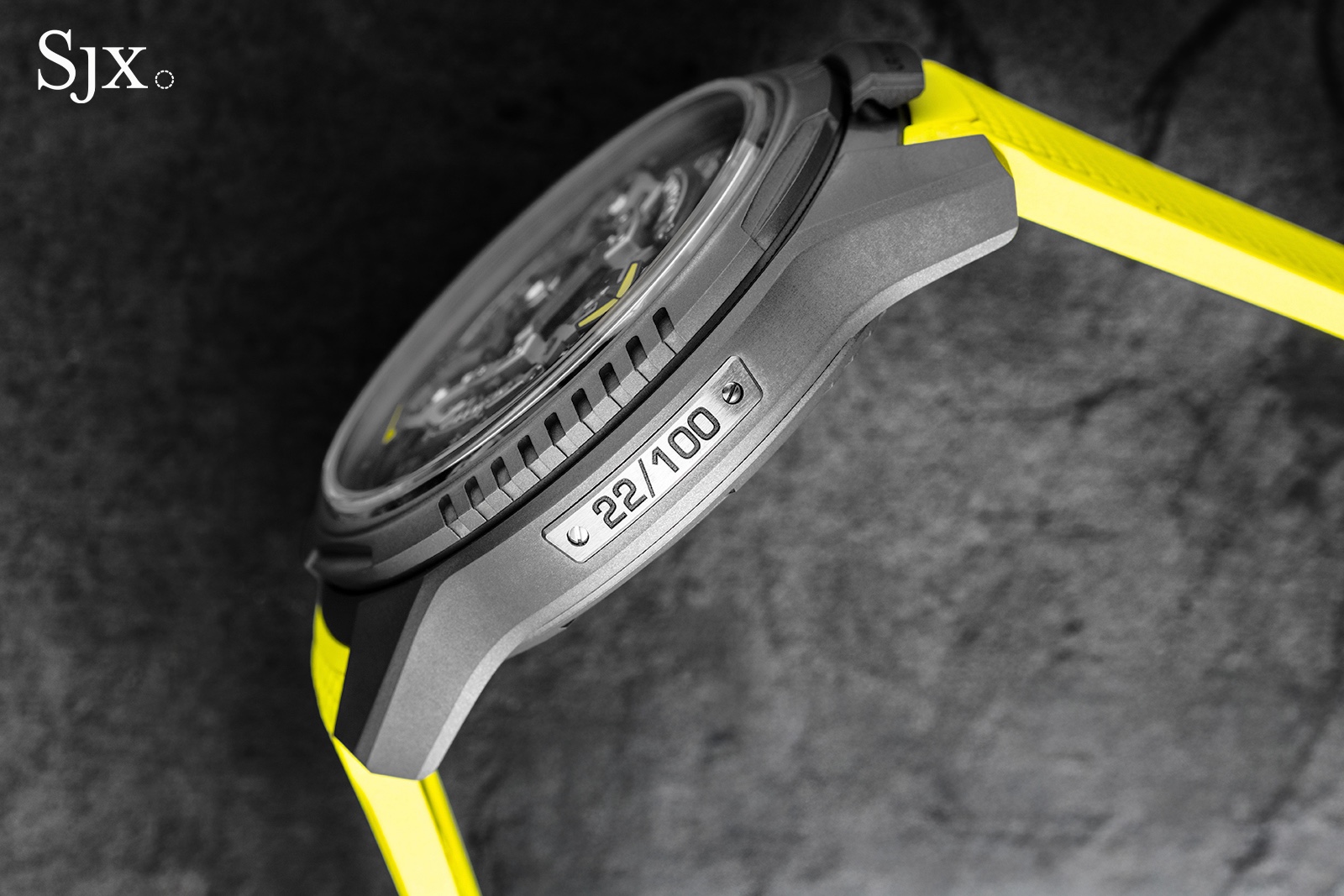
The industrial look extends to the supple rubber strap and its vibrant ‘safety yellow’ colour. The case texture also repeats itself on the titanium folding clasp, which exhibits remarkable attention to detail. The clasp body, for example, is ergonomically faceted to soften the edges most likely to rub the wrist. Overall, the clasp oozes precision and results in a rubber strap that feels suitably de luxe.
On the wrist the watch is big, but it works. It works because the size seems well-considered given the design of the watch, the focal point of which is the flying tourbllon cage with its integrated wandering hours discs. It’s a fascinating mechanism, and its large size makes it easier to appreciate its details without a loupe.
The 44 mm diameter gives the design room to breathe, and the case height is entirely manageable at 12 mm. At about 110 g, the watch is not especially light or heavy; the weight savings from the use of titanium is mostly offset by the presence of a large, highly technical calibre.
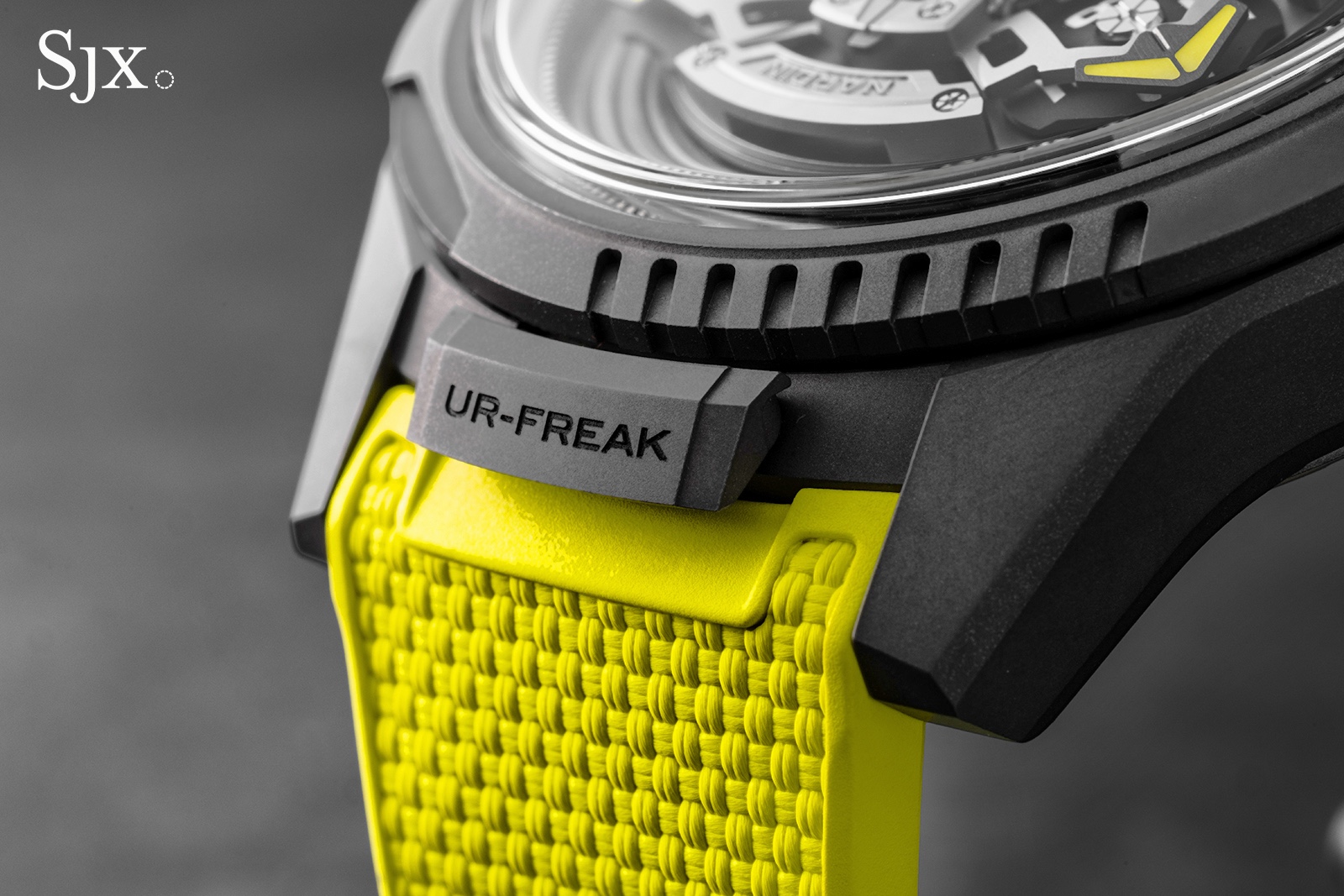
A signature feature of the Freak its bezel-based user interface; the time is set with the bezel and the watch can be manually wound using the case back. A small flange between the lugs at six o’clock locks the bezel to prevent inadvertent time adjustments. This feature was added shortly after the original launch of the Freak; you can imagine why.
In time-setting mode, the process couldn’t be easier: simply twist the bezel until the current time is displayed, and then return the flange to its locked position.
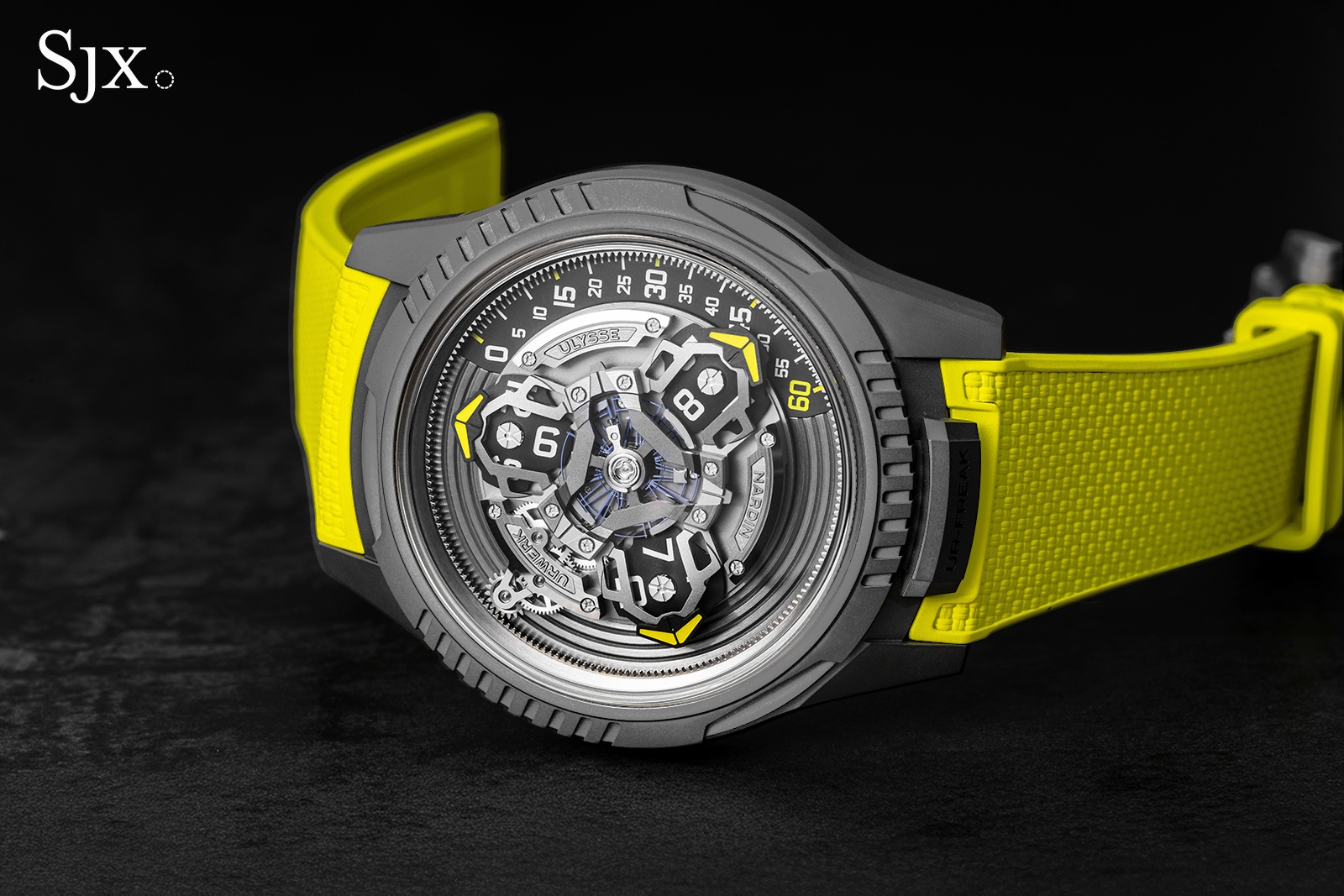
The industrial textures continue inside the watch. Though not an example of expressive haute horlogerie finishing, the palette of brushed and matte-finished textures fits the design and contributes to the coherent feel of this collaboration. Up close, the surfaces are unblemished and immaculate, despite the absence of traditional touches like polished anglage and perlage.
Efficient winding
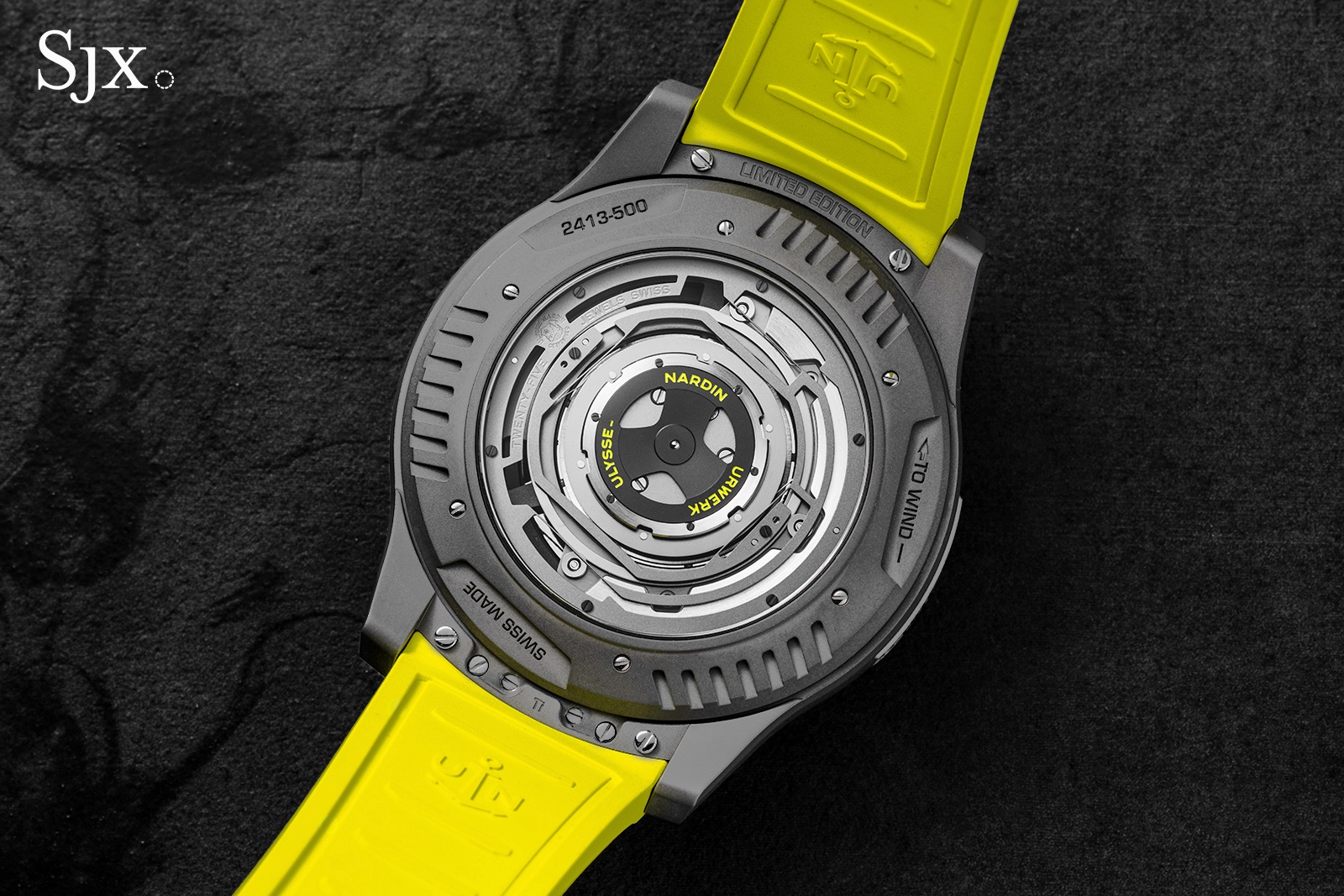
Around back, the UR-Freak is all Ulysse Nardin; the Urwerk influence is limited to the textures and colours. A sapphire crystal case back affords a view of UN’s proprietary Grinder automatic winding system, which gives the UN-241 movement a look quite unlike anything else.
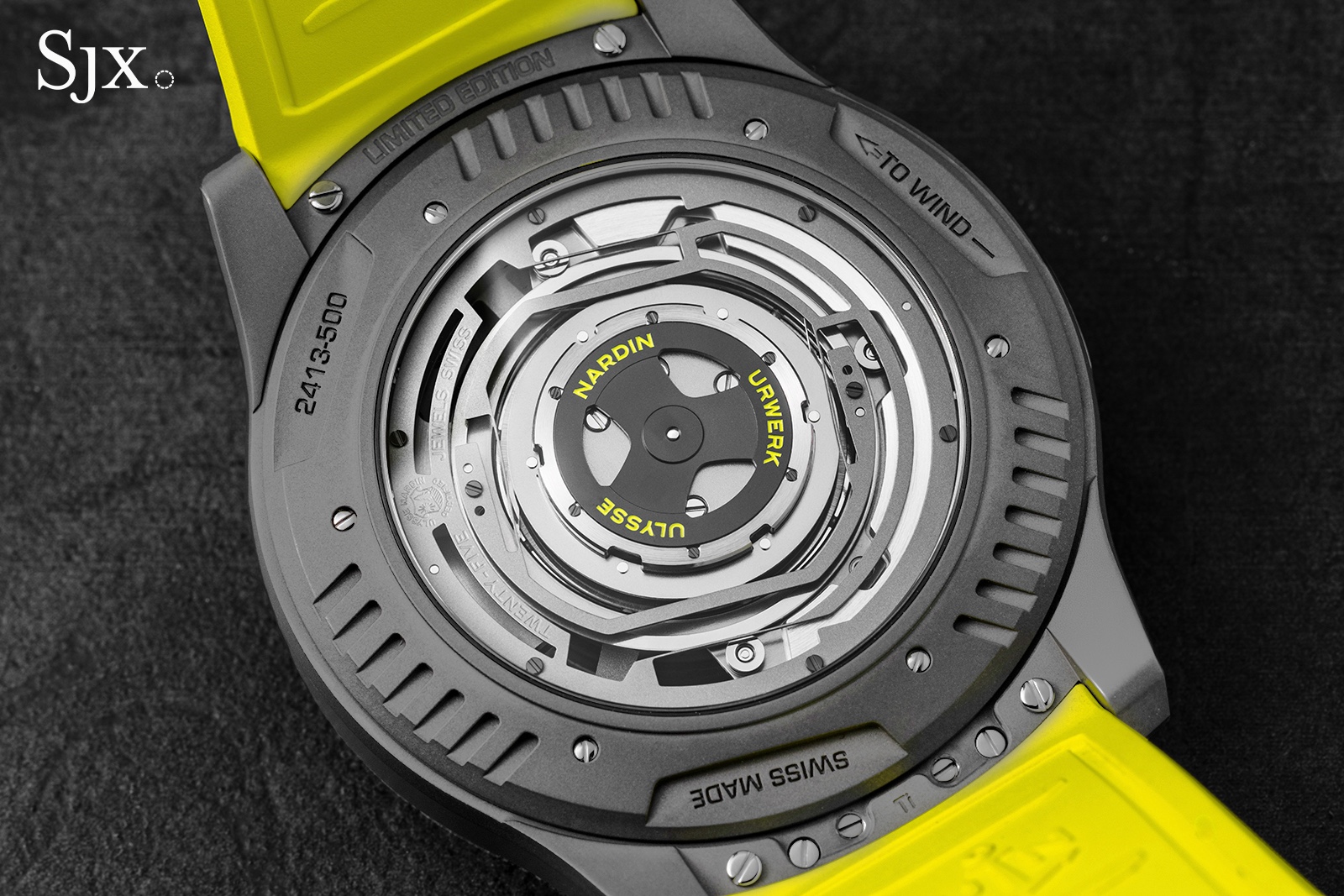
To the untrained eye, it’s difficult to make sense of the components on show, but the animation below breaks down the function. The Grinder system features no fewer than four compliant pawls that wind the mainspring with the slightest movement of the rotor (in either direction).
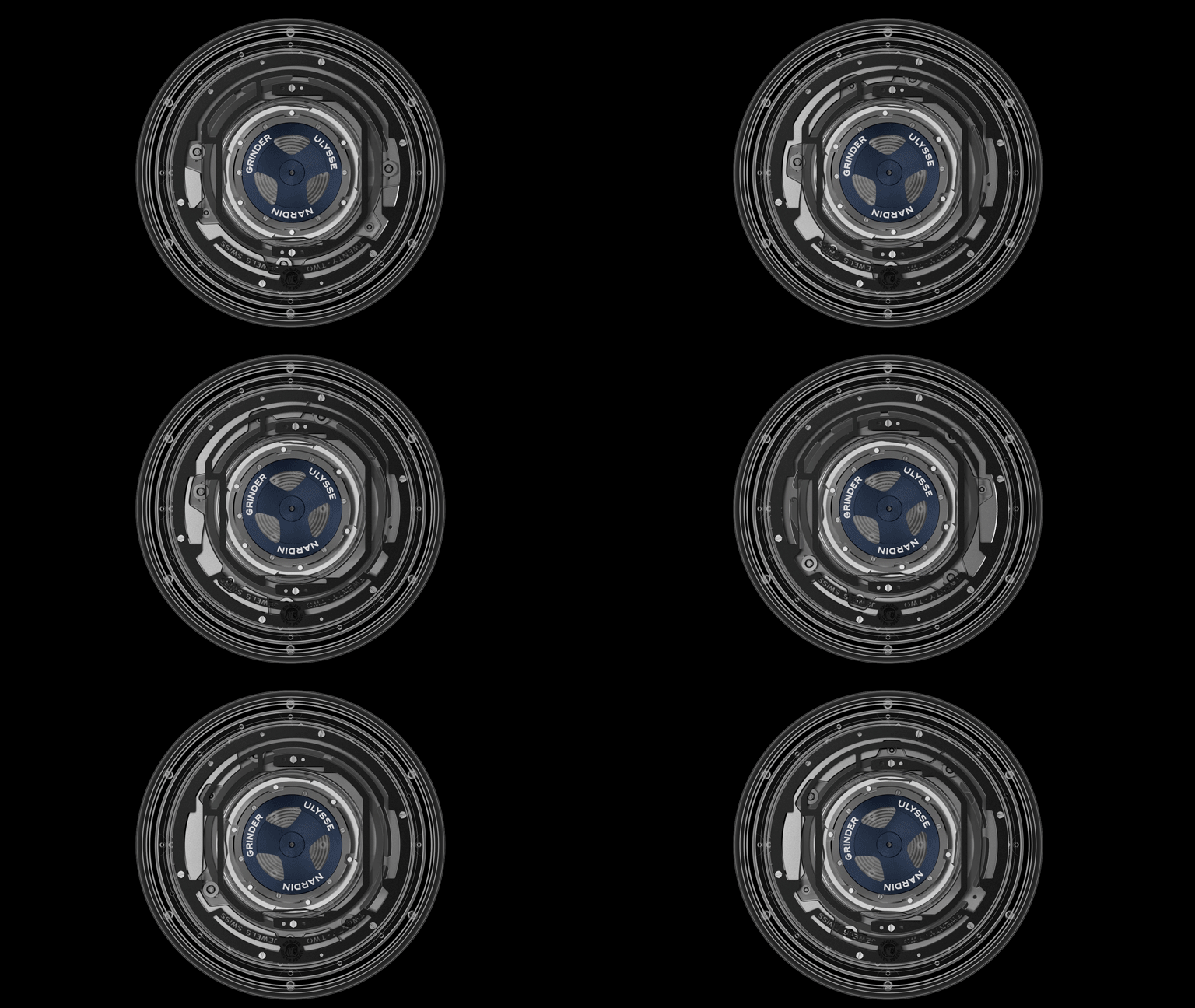
The action of UN’s bidirectional Grinder automatic winding system. Animation – Ulysse Nardin
Adapted from the technology used for the winches on racing yachts, UN claims the Grinder system is twice as efficient as traditional automatic winding systems, and while this would be difficult to verify it seems plausible.
Concluding thoughts
It’s rare to see two brands join forces in a way that compounds their respective strengths to such a degree. With this collaboration, Ulysse Nardin has managed to bring Urwerk’s design language into the world of the Freak without losing itself in the process. This is perhaps a reflection of the strong character of the Freak, which remains distinctive after 25 years.
Key facts and price
Ulysse Nardin UR-Freak
Ref. 2413-500LE-2A-UR/3B
Diameter: 44 mm
Height: 12 mm
Material: Titanium
Crystal: Sapphire
Water resistance: 30 m
Movement: UN-241
Functions: Hours and minutes
Winding: Automatic
Frequency: 21,600 vibrations per hour (3 Hz)
Power reserve: 90 hours
Strap: Rubber strap with titanium folding clasp
Limited edition: Yes, 100 pieces
Availability: At select retail partners common to Ulysse Nardin and Urwerk
Price: CHF100,000 excluding taxes
For more, visit Ulysse-nardin.com
Back to top.