
Ensemble Debut: The Cavasino Inaugural Tourbillon FT60-S
Industrial engineering meets traditional craft.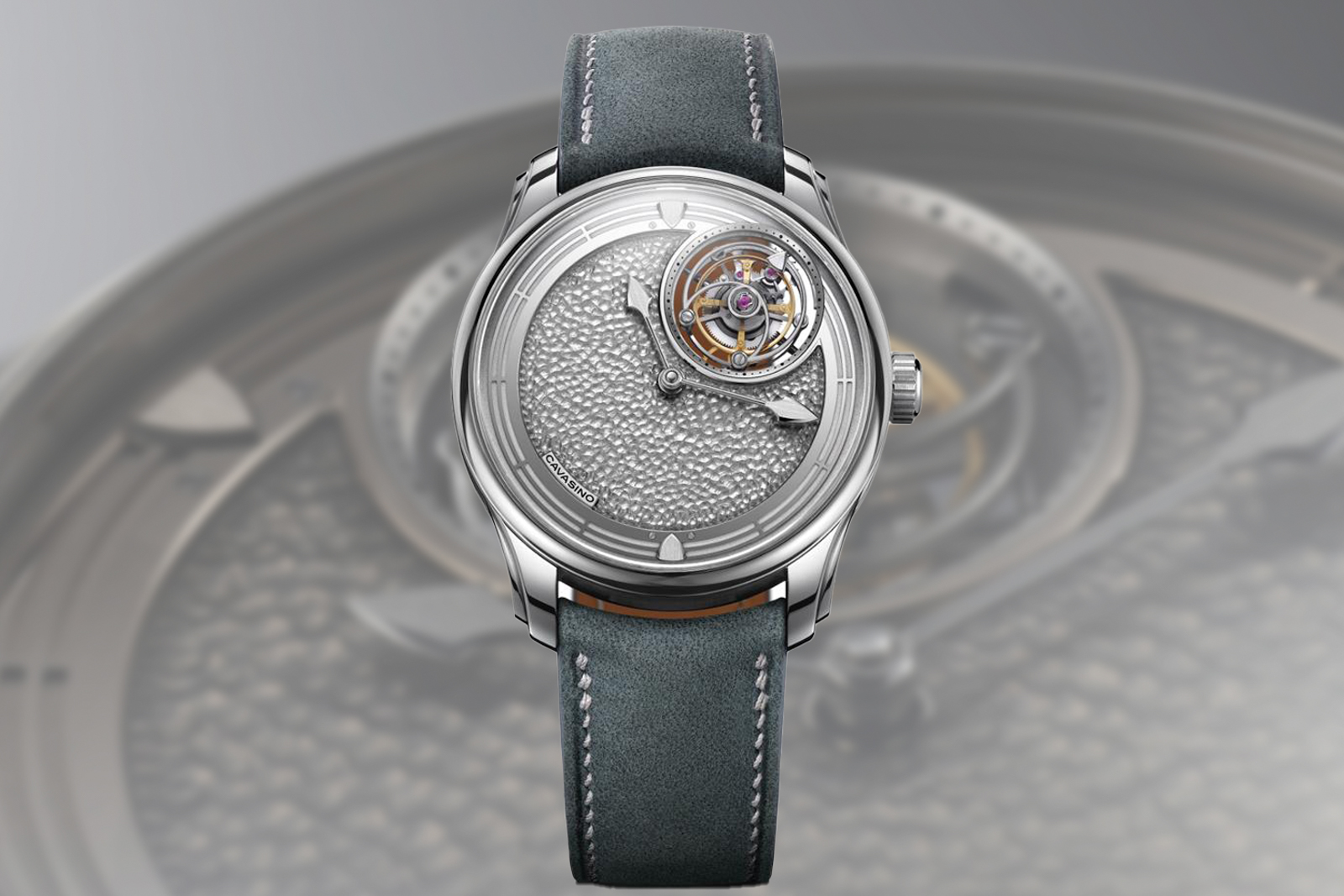
Cavasino makes its debut with the Inaugural Tourbillon FT60, a compact flying-tourbillon wristwatch that reflects the industrial engineering background of its founder, Didier Cavasino. Before establishing his eponymous brand, Mr Cavasino spent more than a decade at Rolex working on the industrialisation of new projects, followed by a leadership role at Bulgari focused on process optimisation.
That experience informs both the FT60’s ensemble execution and supports the brand’s vision, which emphasises modern manufacturing methods and traditional haute horlogerie craftsmanship in equal measure.
Initial thoughts
Cavasino is a new brand making its debut with a deceptively intricate flying tourbillon. An engineer by training with dual degrees from École Nationale Supérieure d’Arts et Métiers (ENSAM) and Karlsruhe Institute of Technology (KIT), founder Didier Cavasino entered the watchmaking industry through industrial engineering roles, including more than a decade at Rolex working on the industrialisation of new projects.
From there, he moved on to Bulgari where he led a team of 20 people focused primarily on process optimisation and continuous improvement.
This background contrasts with the bench training that is more typical among up-and-coming independent watchmakers, but it’s this industrial orientation that makes Mr Cavasino’s plan to produce and deliver 15-20 pieces per year seem quite feasible.
While it’s unreasonable to expect to fully derive a new brand’s design language from its debut product, I have high hopes for what will emerge in the future. Several small details have been handled with aplomb, even the somewhat trivial details like the logo are thoughtful and interesting.
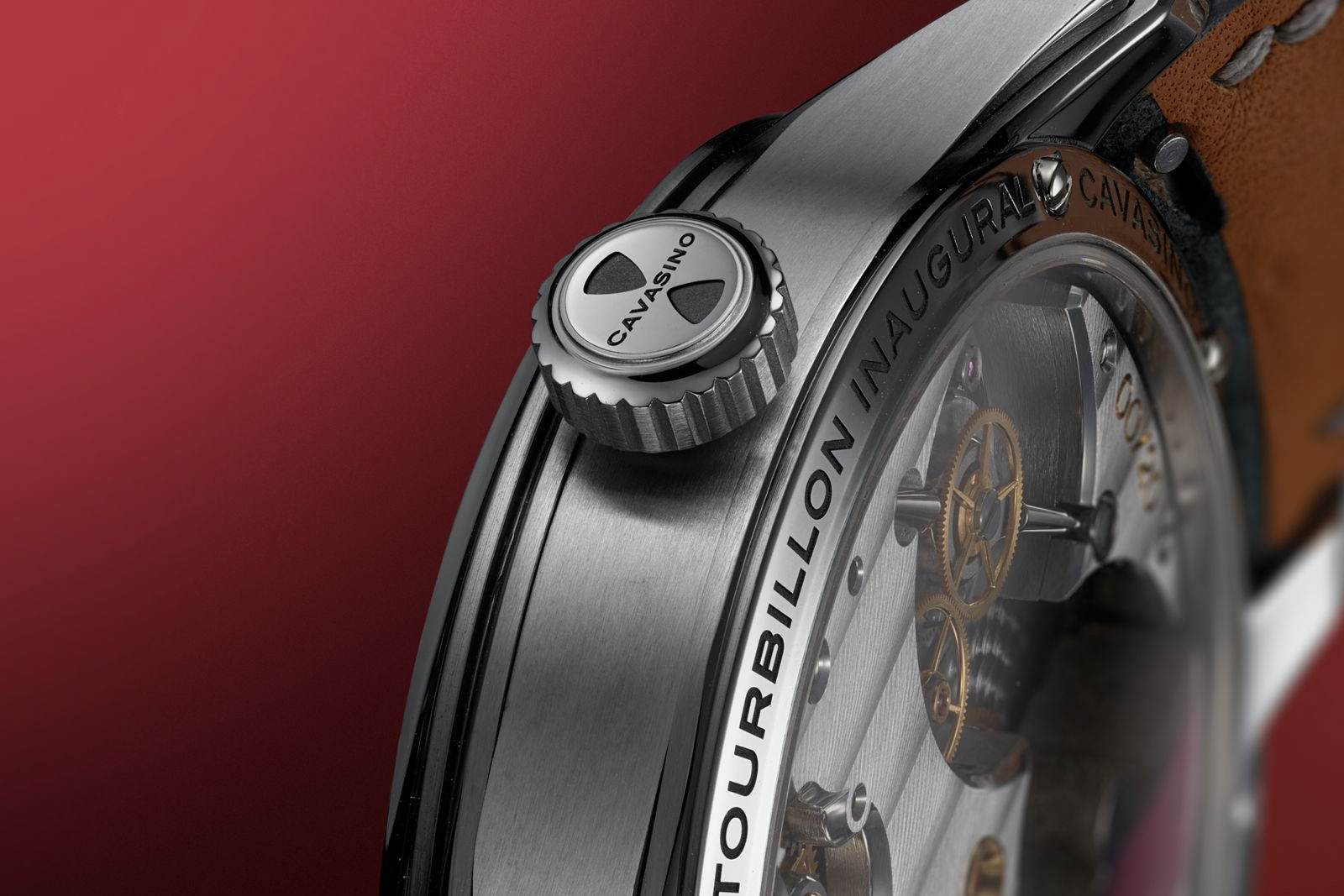
The design takes inspiration from the Cavasino family’s former business making precision scales decades ago. The triangular logo is based on the wedge-shaped display of these scales, and, conveniently, takes the form of an hour glass when mirrored above and below the brand’s wordmark. It’s a simple motif repeated throughout the watch.
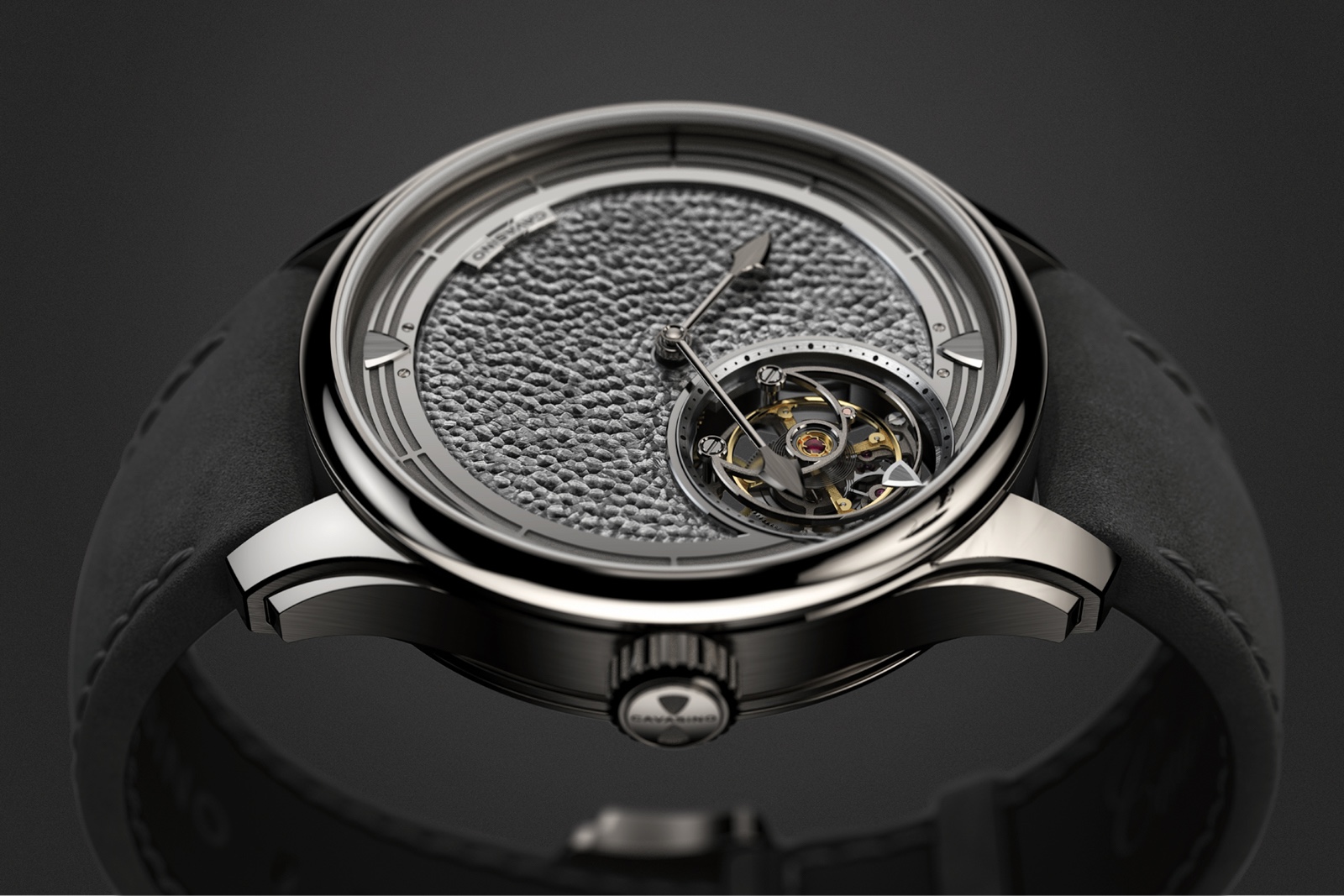
If there’s one thing I’d change about the design of the FT60 it would be the dial. Though finely executed and actually quite distinctive up close, at arm’s length the texture is too much like that of many other recent entrants in the space. That said, I look forward to seeing what else Cavasino has in store for the future.
There’s always a degree of risk taking when backing a new venture, but therein lies much of the appeal of independent watchmaking: the opportunity to become a patron and support creators directly. Fortunately for early adopters, the FT60 is priced reasonably by the standards of contemporary watchmaking. The 20-piece souscription series in titanium, which is now sold out, was priced at just CHF77,000.
Thirty more DCR-01 calibres will be produced, priced between CHF88,500 for steel and CHF95,000 for platinum or rose gold cases. At a time when many simple time-only movements tip into the six-figure range, the flying tourbillon-equipped FT60 is priced reasonably given its thoughtful execution and tangible quality.
An ensemble cast
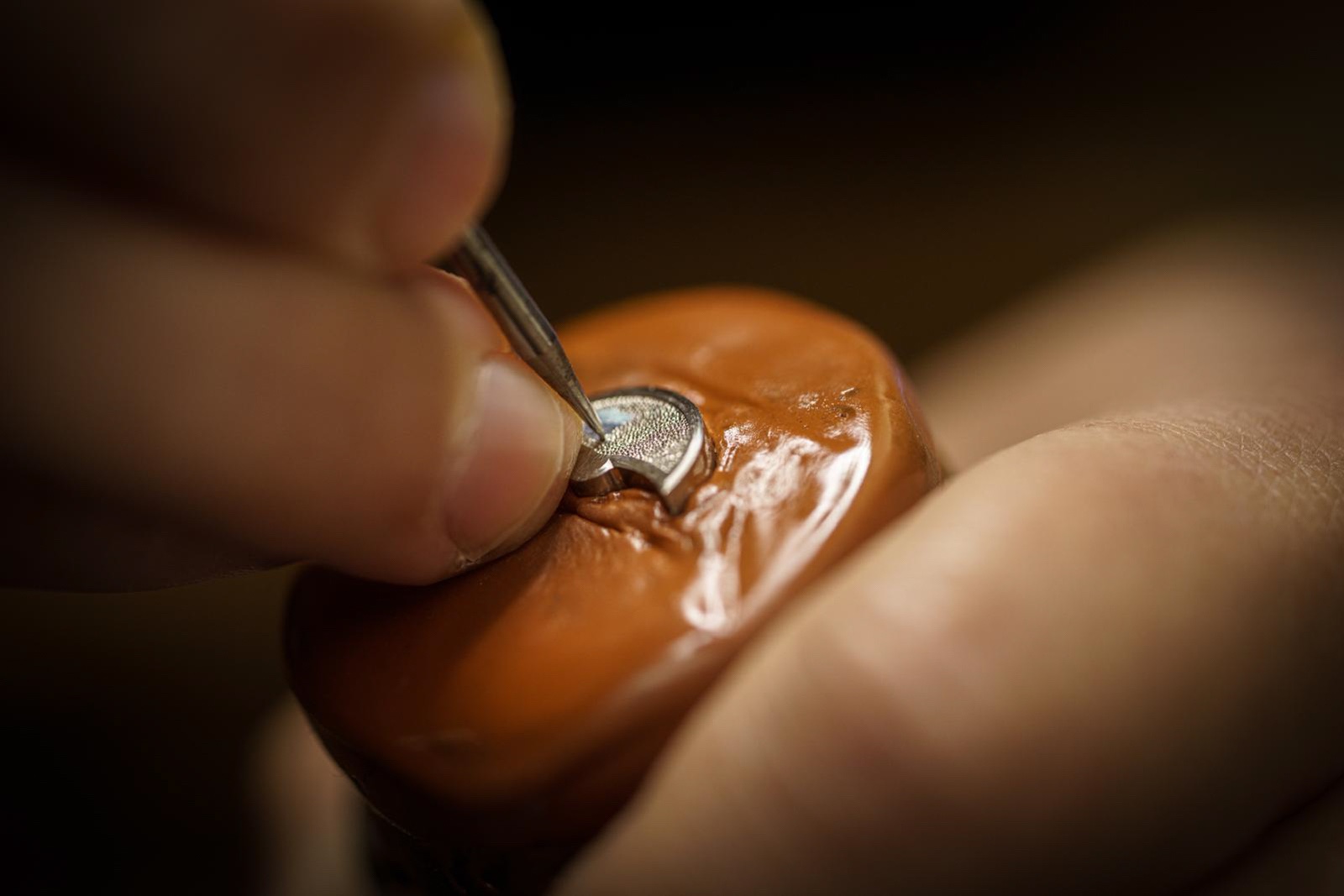
Mr Cavasino is not a watchmaker in the strict sense, so he has contracted out engineering, fabrication, and finishing to suppliers. In this regard, his operation is somewhat analogous to that of Simon Brette, or MB&F in its early days. But Mr Cavasino is an industry insider and he has managed to put together a strong supporting cast of 24 collaborators from across Switzerland for his debut effort.
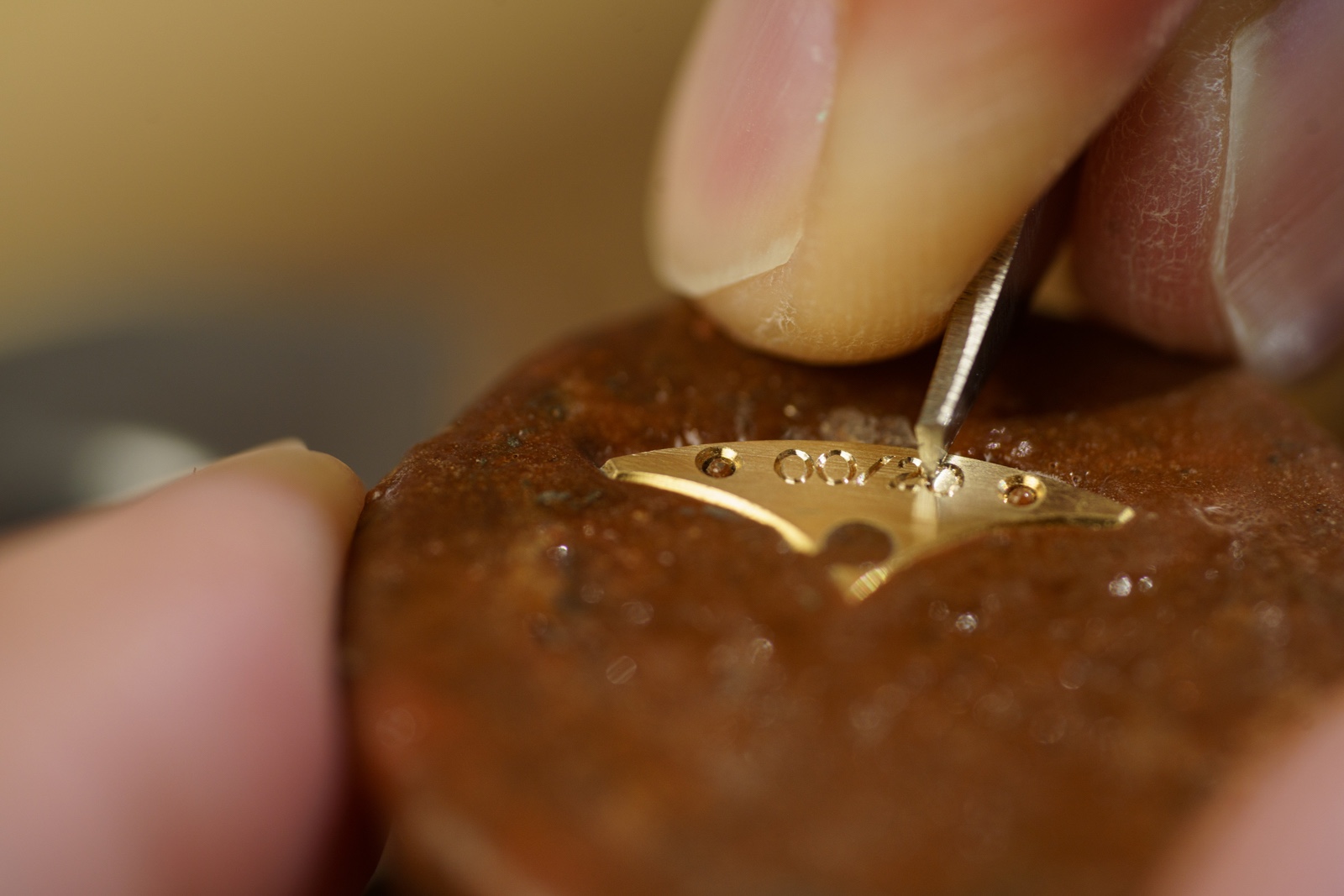
This approach might explain the relative ambition of this FT60. Many new independent watchmakers start with what they know, by finishing off-the-shelf time-only movements like the ETA Unitas 6497/6498 or Peseux 7001. Without this tether to tradition, Mr Cavasino opted to make his debut with a high-beat flying tourbillon engineered by a specialist in La Chaux de Fonds founded by a pair of well-known constructors.
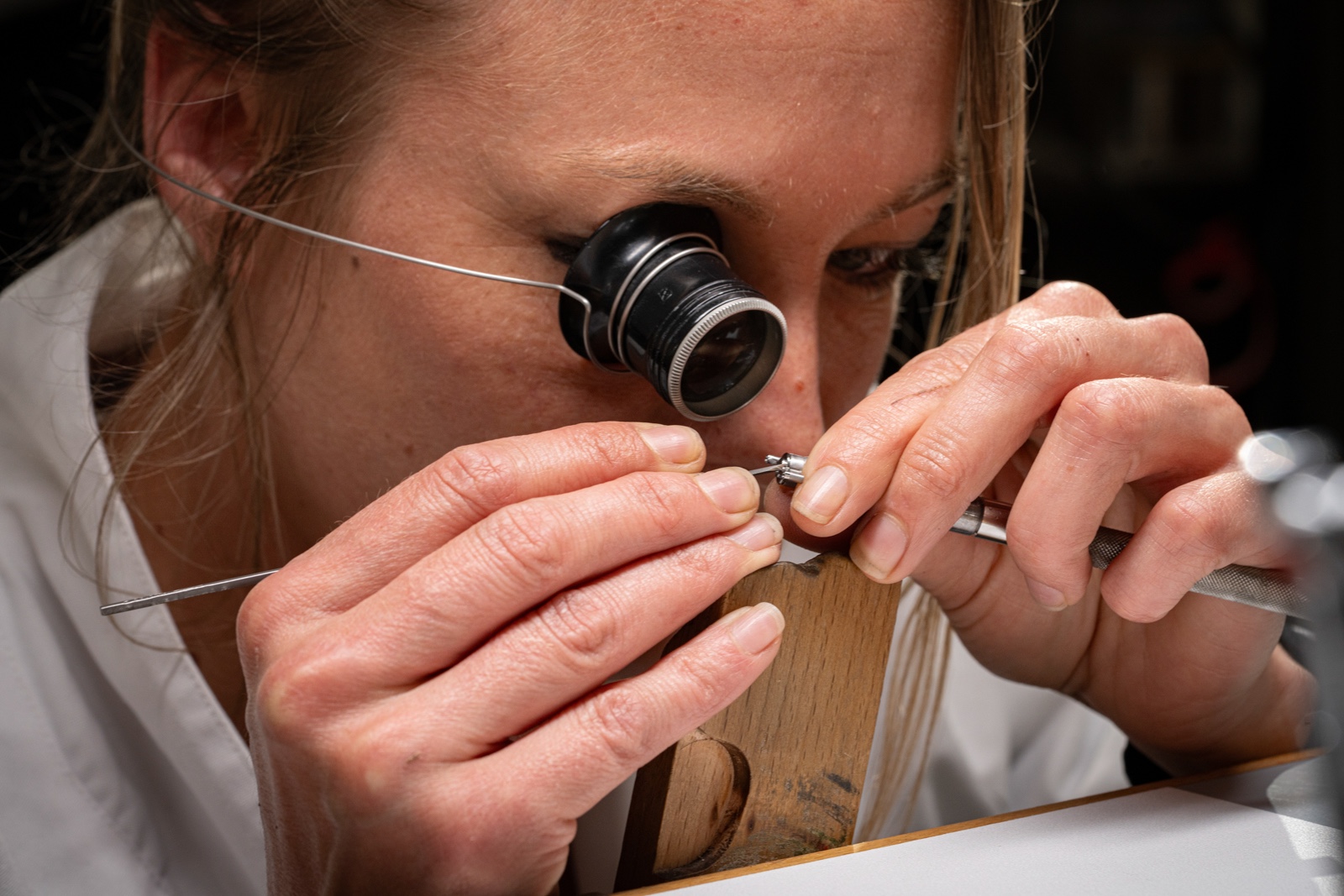
Overall, the suppliers and artisans working on the FT60 have supplied some of the biggest names in the industry including Patek Philippe, MB&F, Ferdinand Berthoud, Audemars Piguet, Ludovic Ballouard, Simon Brette, Kari Voutilainen, and Vianney Halter.
It’s tempting to look at an outfit like this and conclude that the founder simply pulled up a list of suppliers and called around to order components, but this simplistic perspective obscures the fact that Mr Cavasino has known most of these collaborators for many years, and they’ve supported one another on various projects in the past. Thus it’s quite natural that Mr Cavasino would call upon his friends to help execute his personal vision for the FT60 as well as for subsequent releases (the next launch is slated for 2027).
Thoughtful symmetry
While the FT60 features a pleasing degree of asymmetry on the dial side, the movement layout could hardly be more symmetrical. Attention to symmetry in movement layouts can be traced back at least as far as 1867 when Girard-Perregaux introduced what would come to be known as the ‘three gold bridges’ architecture.
More recently, and specifically within the context of independent watchmaking, Akrivia has been an influential force when it comes to symmetrical movement design. As it happens, Akrivia’s bracelet atelier supplies the straps for the FT60.
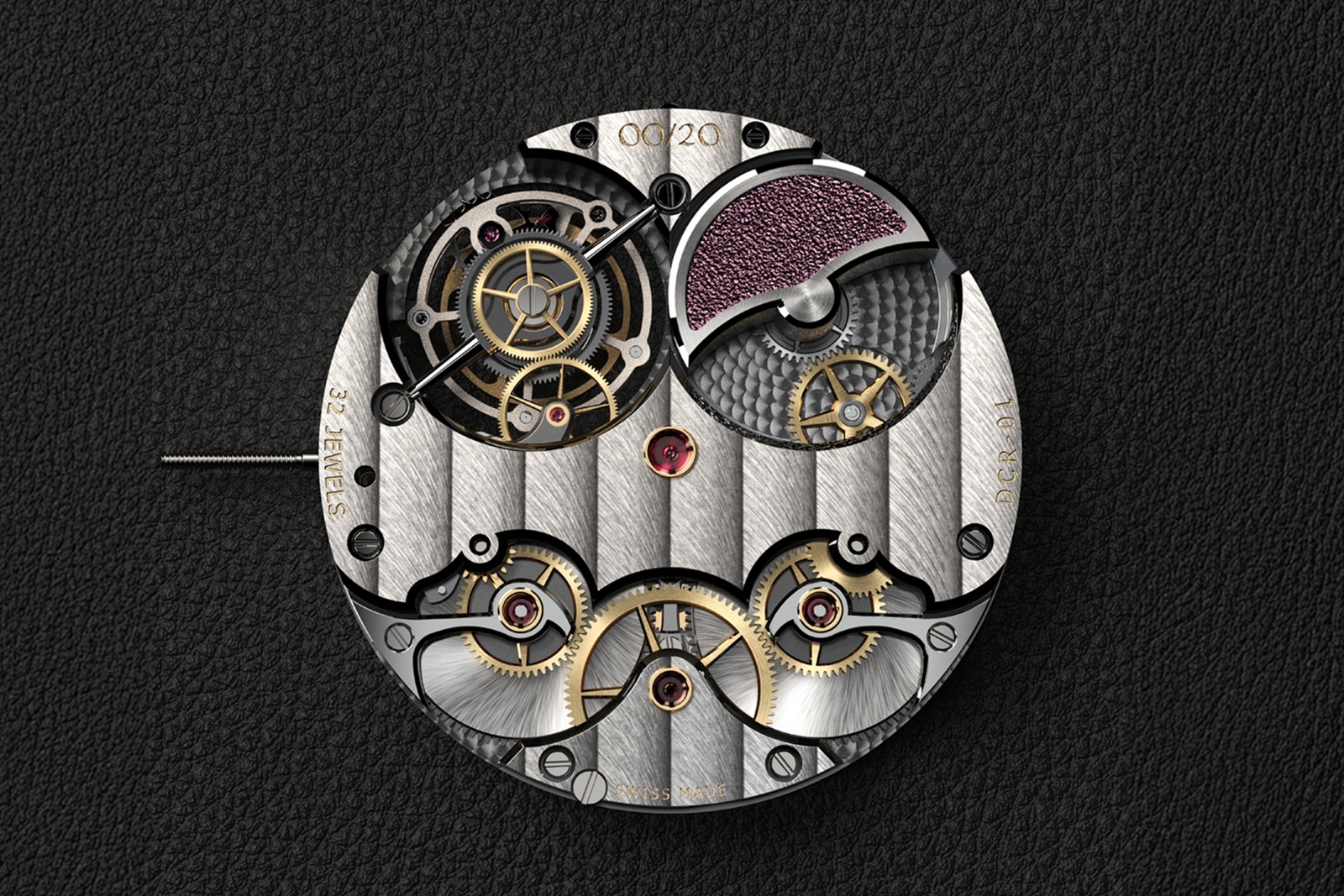
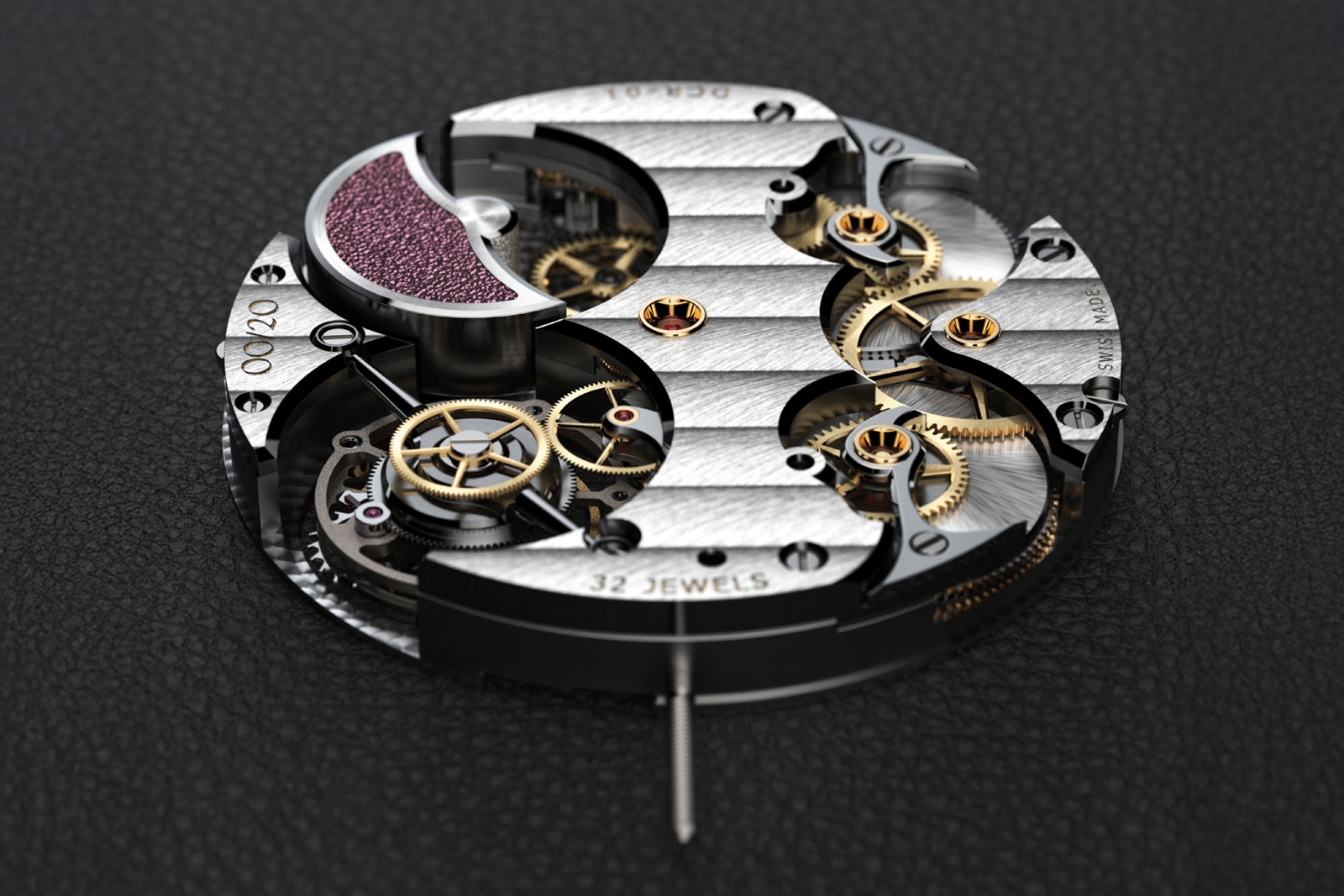
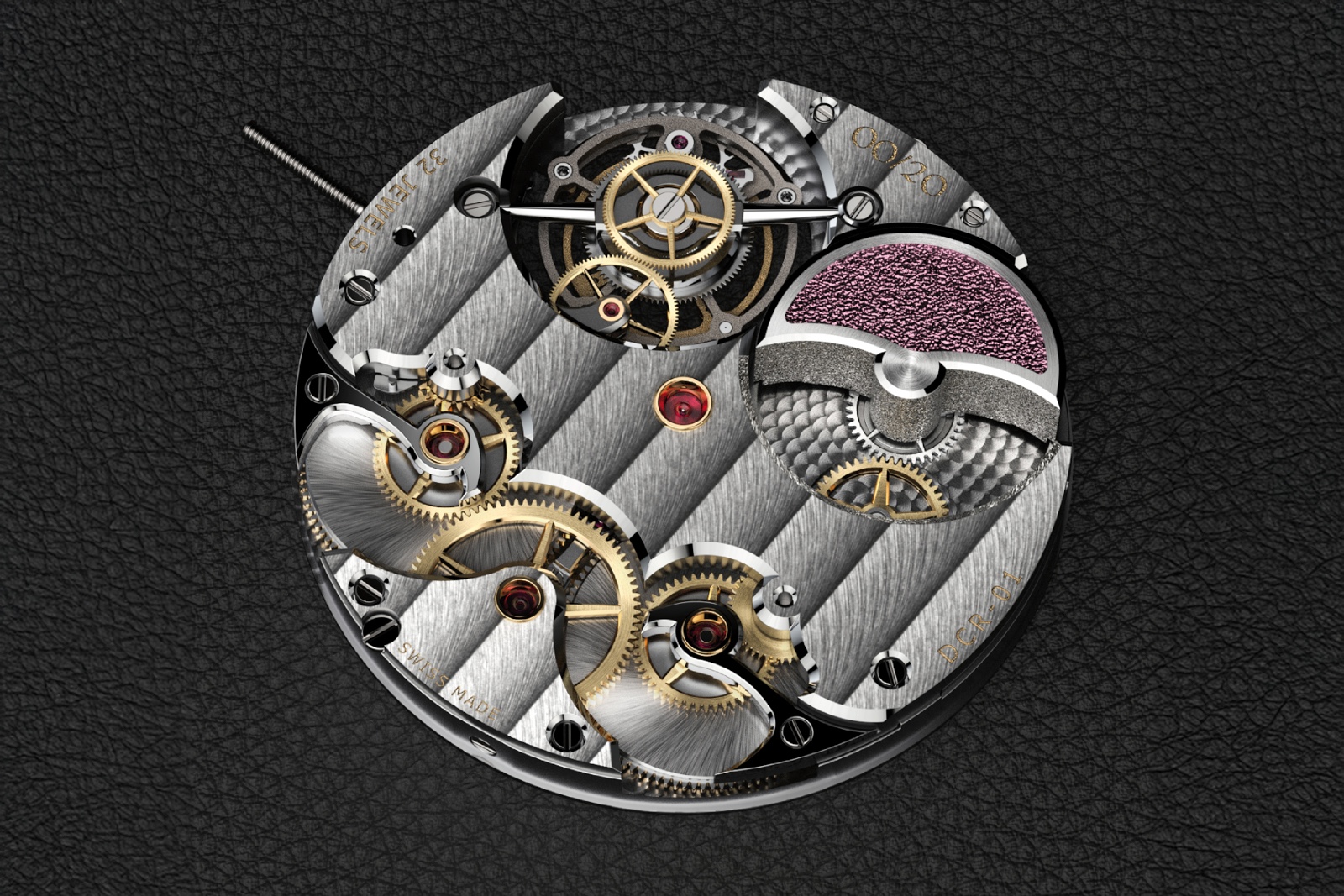
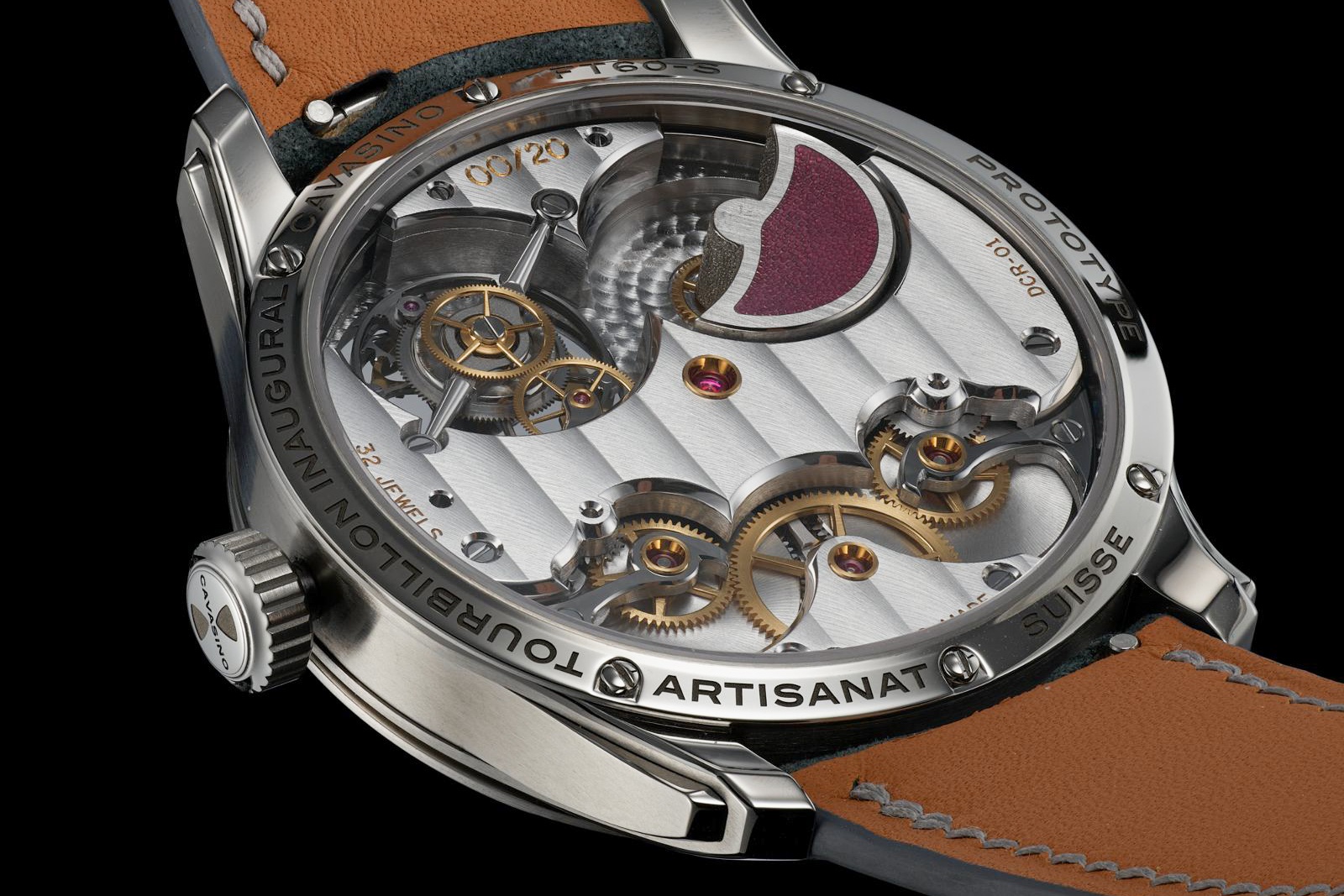
On the back, the DCR-01 movement is dominated by a large batwing-shaped bridge that spans the entire width of the movement. The attention to detail is evident with regard to the spacing of the Geneva stripes, which perfectly dissect the the central jewel for the seconds pinion. On either side, the stripes again line up with the sharp points of the bridge, which follows the curves of the winding wheels.
The pivots for the tourbillon cage, micro-rotor, and each of the mainspring barrels also line up to form a perfect square, a detail that is arguably a bit cute but that speaks to the attention to detail that characterises the movement. In a similar vein, the micro-rotor itself is screwed from underneath to focus attention on the decoration.
A checklist of finishing
Perhaps the only real critique that can be leveled against the finishing of the DCR-01 is the fact that it contains a veritable smorgasbord of techniques, seemingly to check every box that a collector might value. This is not really a problem, since this type of extravagant finishing supports the commercial viability of the endeavour, but it will be something to watch in the future to see which elements will come to define the house style.
In the meantime, the view through the case back affords a good view of generous vertical striping, black-polished steel finger bridges for each of the barrels, a rounded steel bridge for the tourbillon, deep funnel-like gold chatons, tight and tidy perlage on the mainplate, and a micro-rotor embellished with hand-hammered tremblage and flinque enamel. The anglage is also very wide, a style suggestive of Akrivia’s influence on the field.
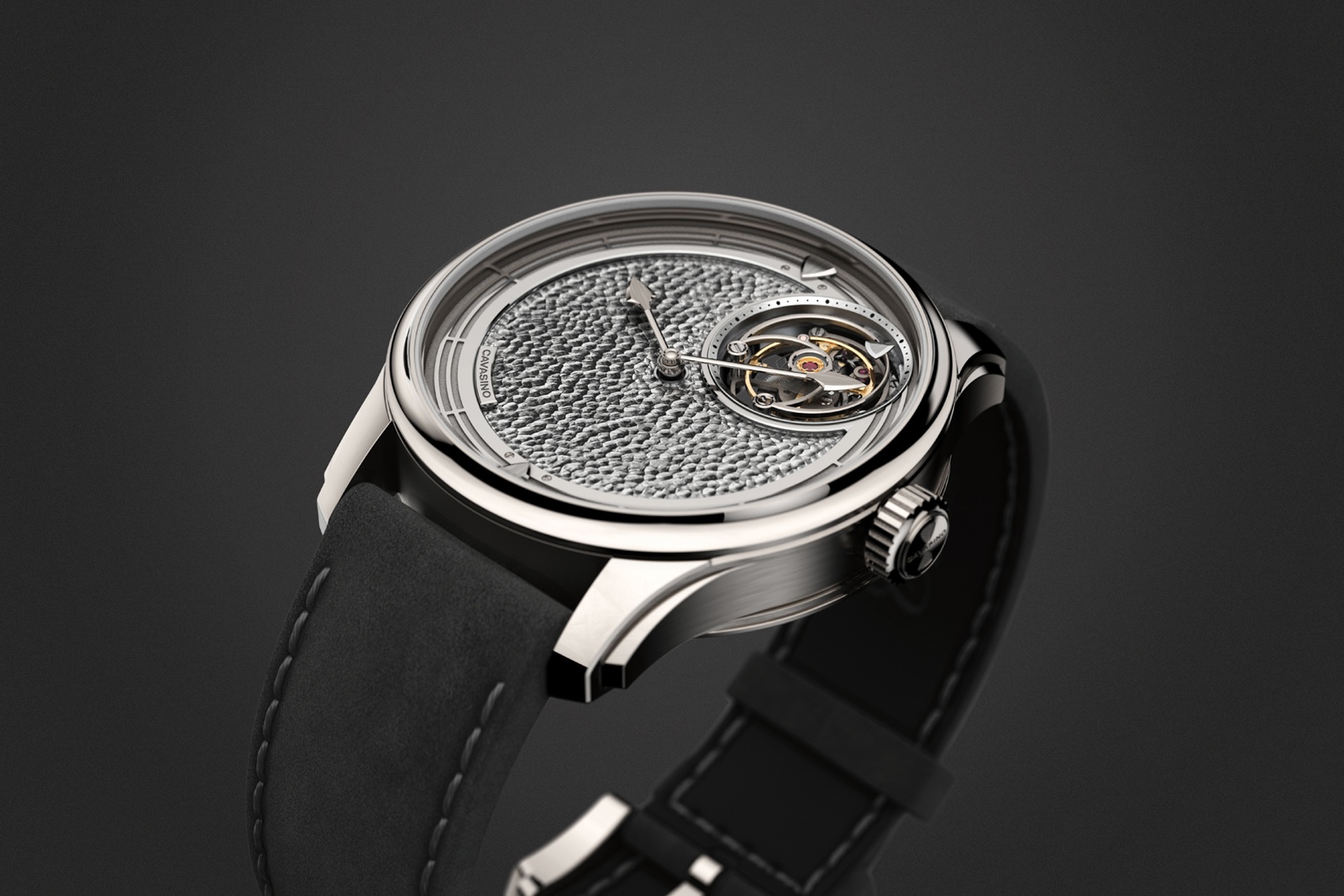
The tour of finishing techniques continues on the dial side, most notably on the flying tourbillon cage, which features the brand’s logo as a running seconds pointer. Tourbillons are no longer as special as they once were, as a growing list of suppliers has sprung up to supply them in all shapes, sizes, and price points. But the Cavasino tourbillon cage manages to stand out from the crowd thanks to it design, construction, and finishing.
For one thing, the cage itself is specific to Cavasino. Even as modern manufacturing methods make it easier than ever to customise the cage shape, this factor is often neglected, and a trained eye can quickly detect the work of suppliers like Olivier Mory, Concepto, and MHC. In this context, the Cavasino tourbillon cage distinguishes the movement and is as noteworthy for its refined and airy design as for its numerous hand-finished inward angles.
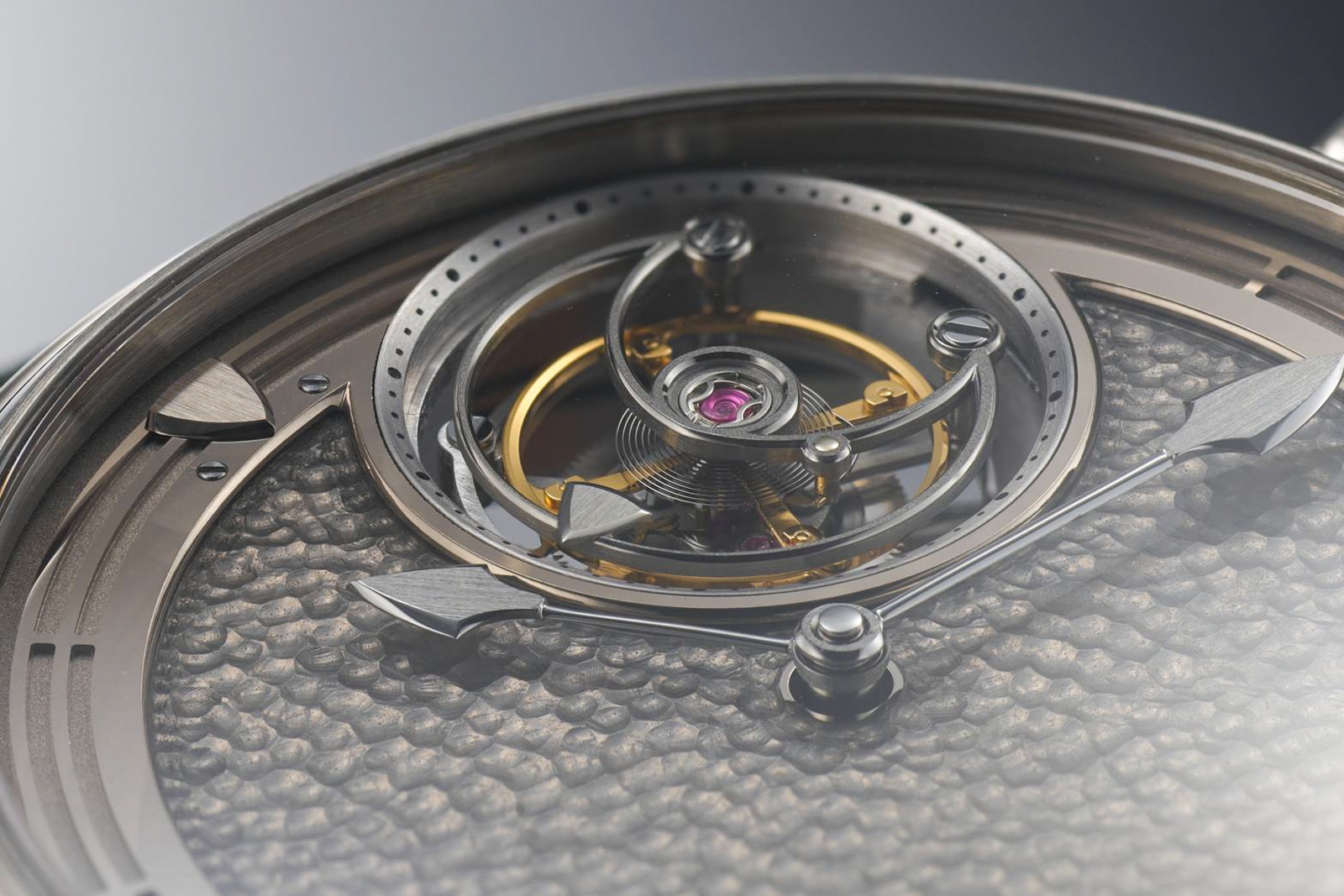
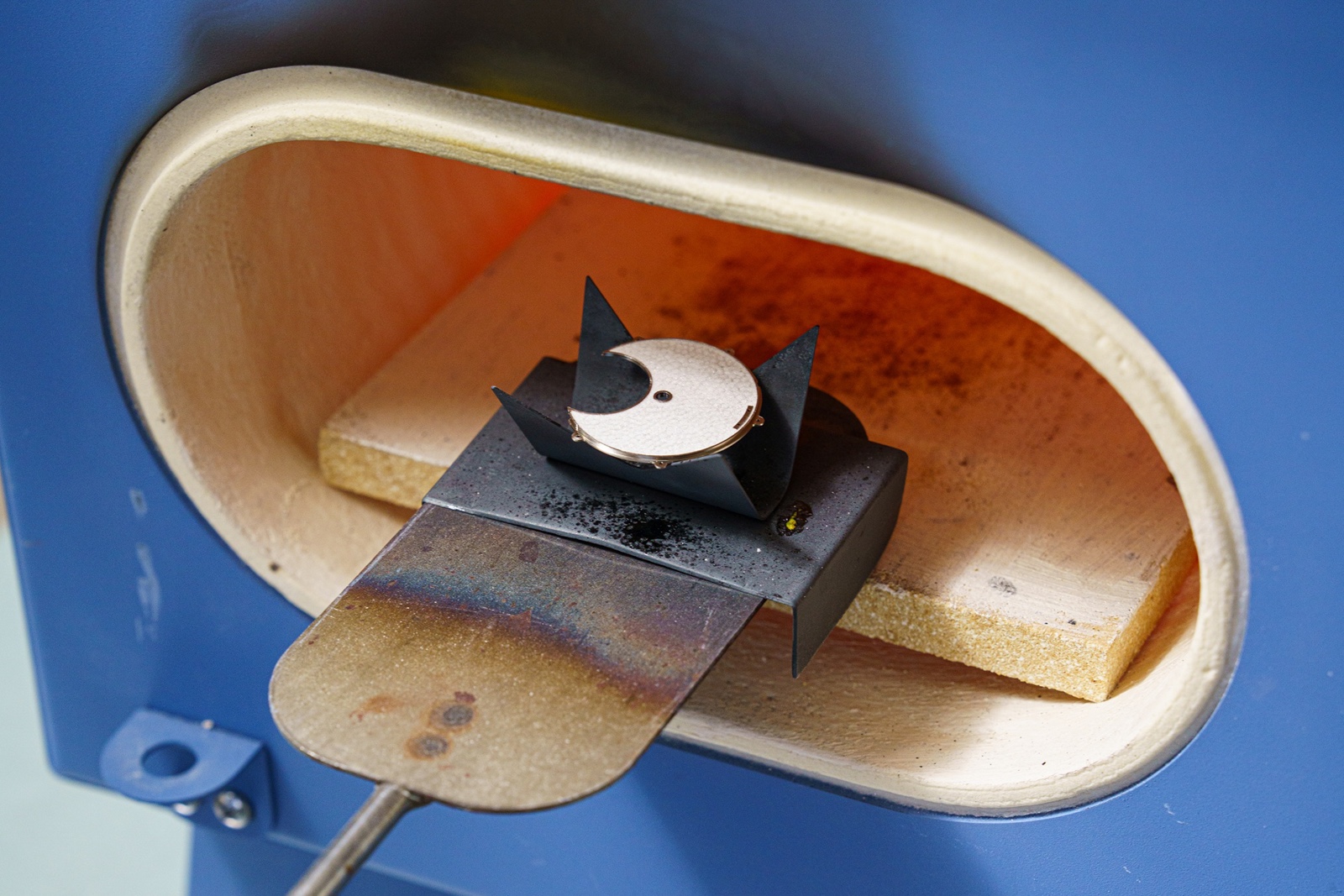
The solid 18k white gold dial, naturally, holds its own when it comes to laborious craftsmanship. What at first appears to be a hammered finish akin to tremblage is actually applied manually with a powered rotary tool that is pressed into the dial at an angle. This textured surface is then painted with clear enamel and oven-fired, a technique known as flinque enamel.
The dial itself is framed by a massive black-polished ring of solid 18k white gold that serves as the chapter ring, with open-worked sections to mark the passing hours and minutes. Though conceptually simple, the dial furniture comes alive in shifting light and features the brand’s logo at the top and bottom. While the centre dial is produced by a small team of artisans in Sainte Croix, the chapter ring and final assembly of the dial are completed by Comblémine.
The logo’s scale motif is also replicated on the two-piece stainless steel hands, which are generously sculpted and three-dimensional. I would have expected the use of gold for the hands, but the use of stainless steel opens up more options for colour. Indeed, the FT60 can be specified with heat-blued steel hands in one of two shades: traditional blue, or deep violet.
The hands are made in two pieces, with the triangular tips faceted with what the brand calls a ‘dying bevel.’ Interestingly, the undersides of the hand tips are decorated with perlage, a small detail that should please even the most fastidious collectors.
Compared to the extravagant finishing on the inside, the FT60’s titanium case is comparatively simple, but it has a trick up its sleeve. The stepped lugs look simple at first glance, but the perfectly crisp transition reveals a two-part nested construction.
Produced for Cavasino by Voutilainen & Cattin, this design ensures that both segments can be finished to the edges, with nothing to dull the transition between polished and brushed surfaces. The tolerances between the case components are impressively close, giving the case a reassuring feeling of precision.
Key facts and price
Cavasino Inaugural Tourbillon FT60-S
Diameter: 38.7 mm
Height: 10.4 mm
Material: Titanium, platinum, rose gold, or stainless steel
Crystal: Sapphire
Water resistance: 30 m
Movement: DCR-01
Functions: Hours, minutes, 60-second tourbillon
Winding: Automatic
Frequency: 28,800 vibrations per hour (4 Hz)
Power reserve: 70 hours
Strap: Leather strap with titanium pin buckle
Limited edition: Yes, 50 movements in total
Availability: Directly from Cavasino
Price:
CHF77,000 for 20-piece souscription series in titanium (sold out)
CHF88,500 for stainless steel
CHF95,000 for platinum or 18k rose gold
All prices exclude taxes.
For more, visit cavasino-watches.com
Back to top.