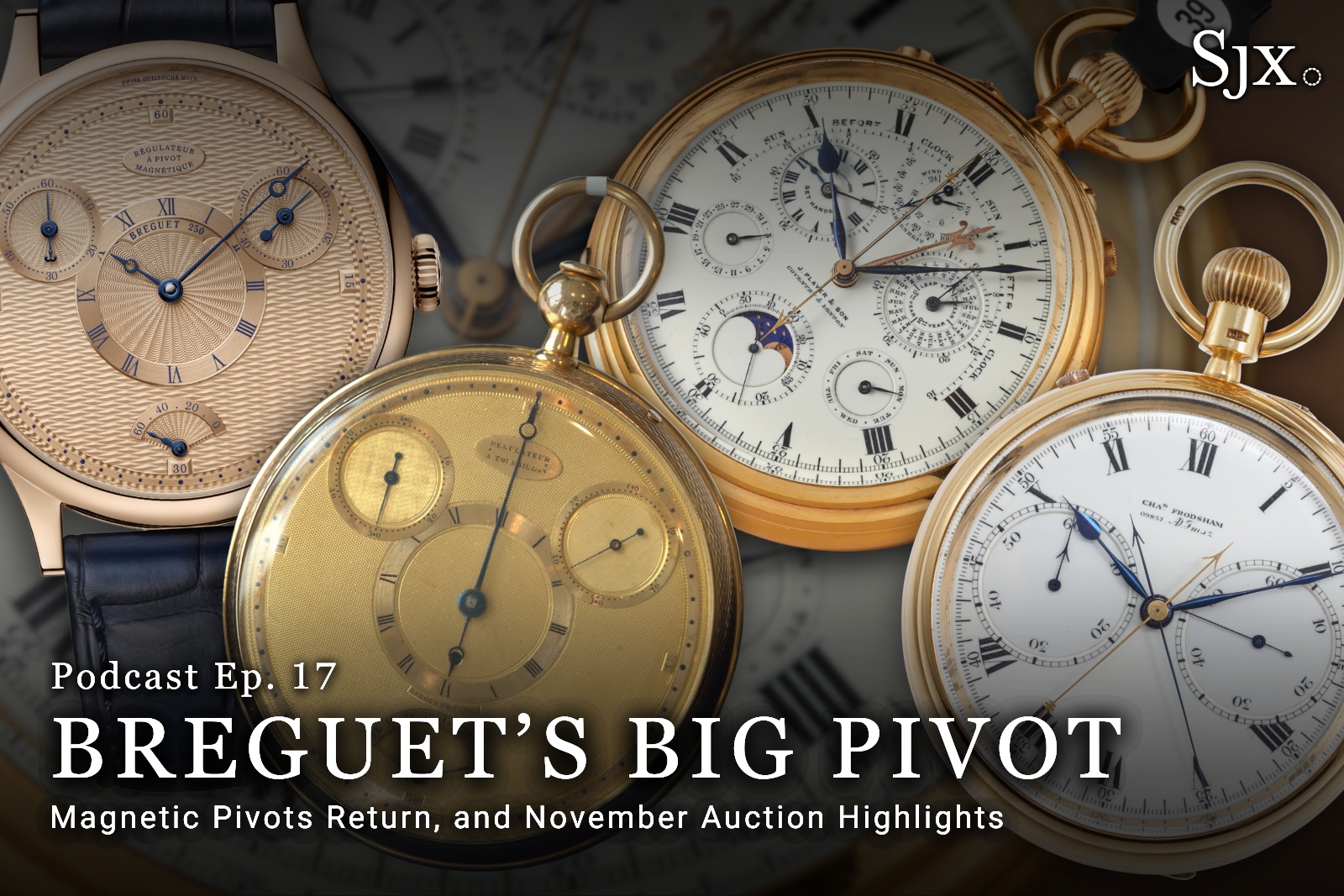
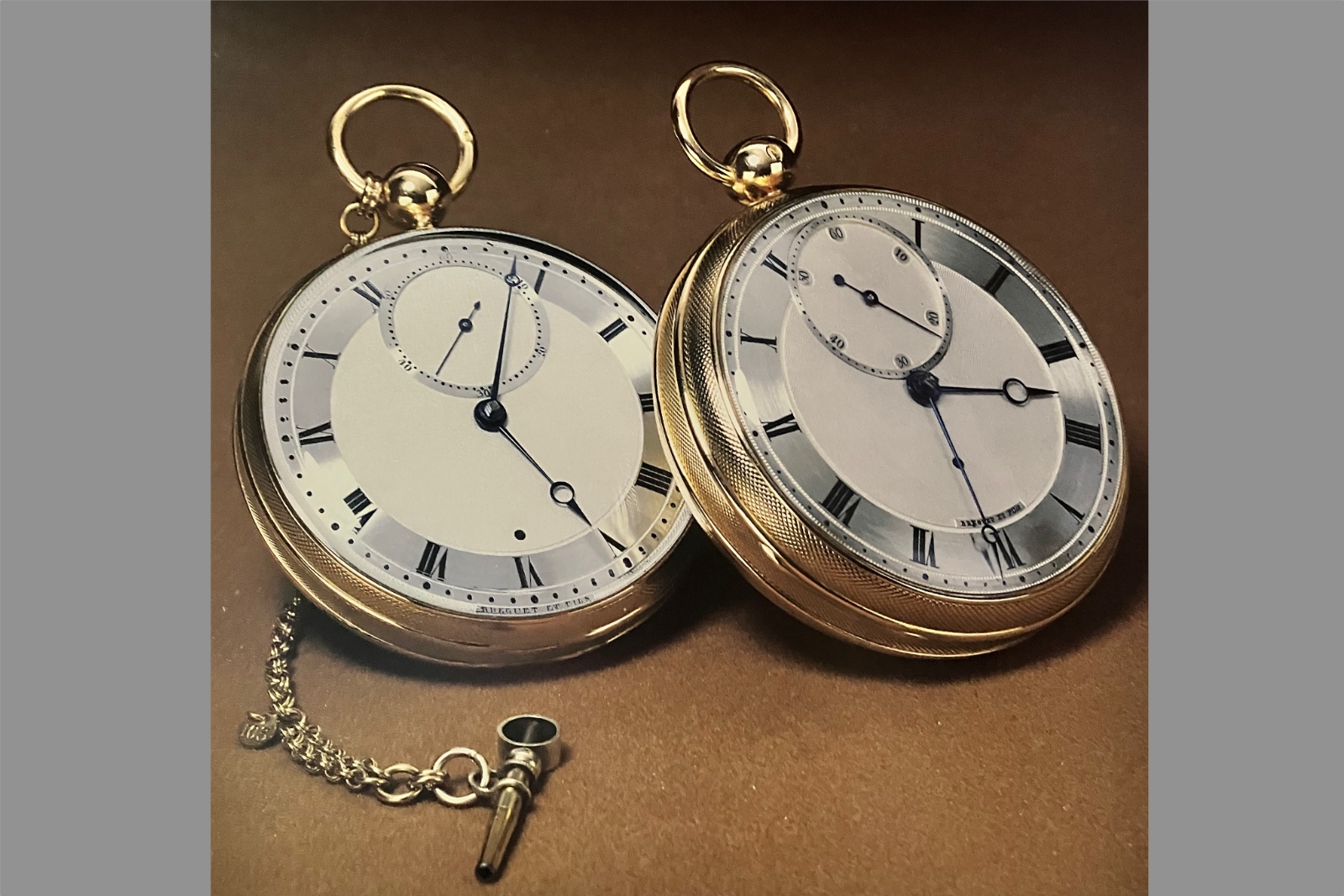
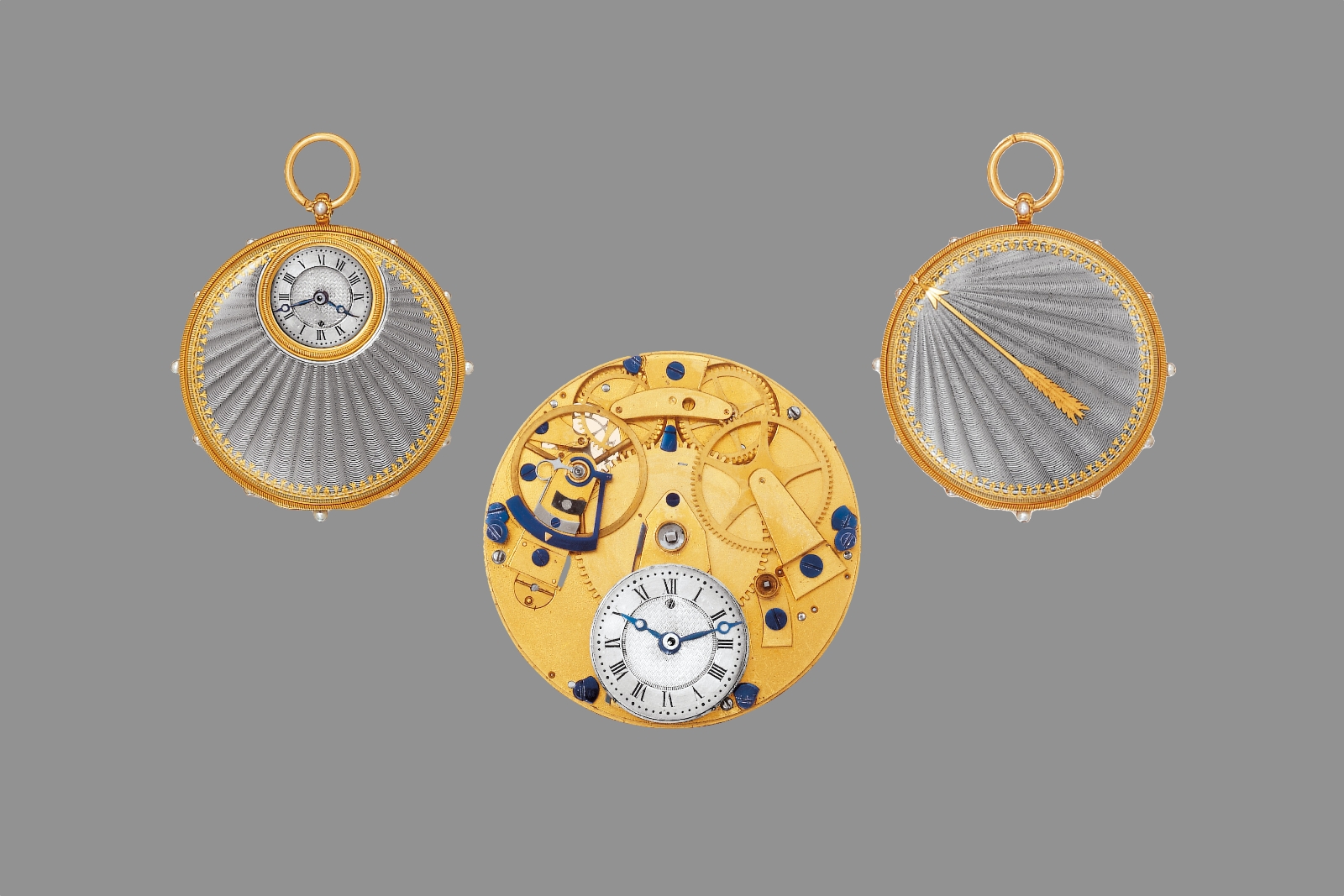
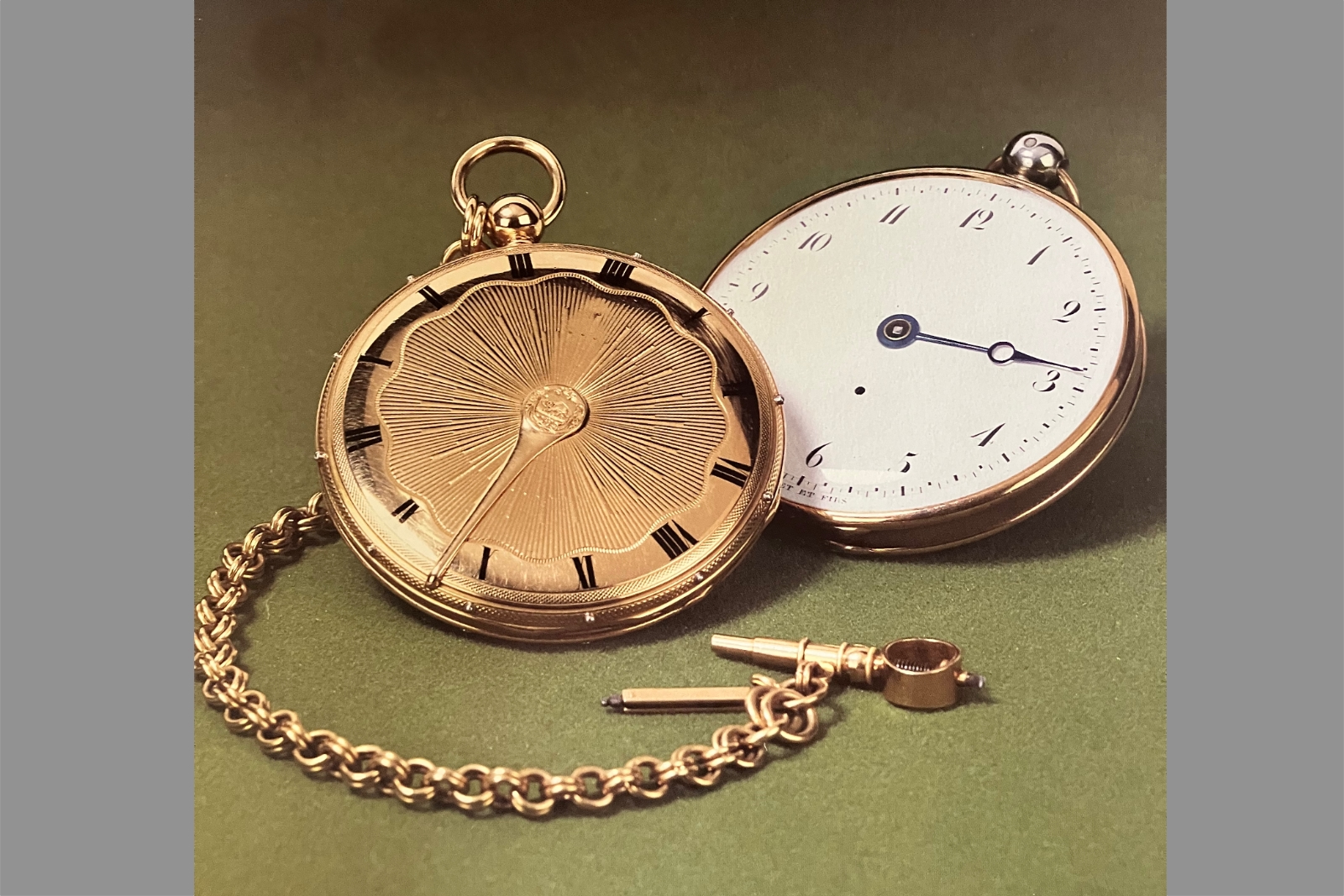
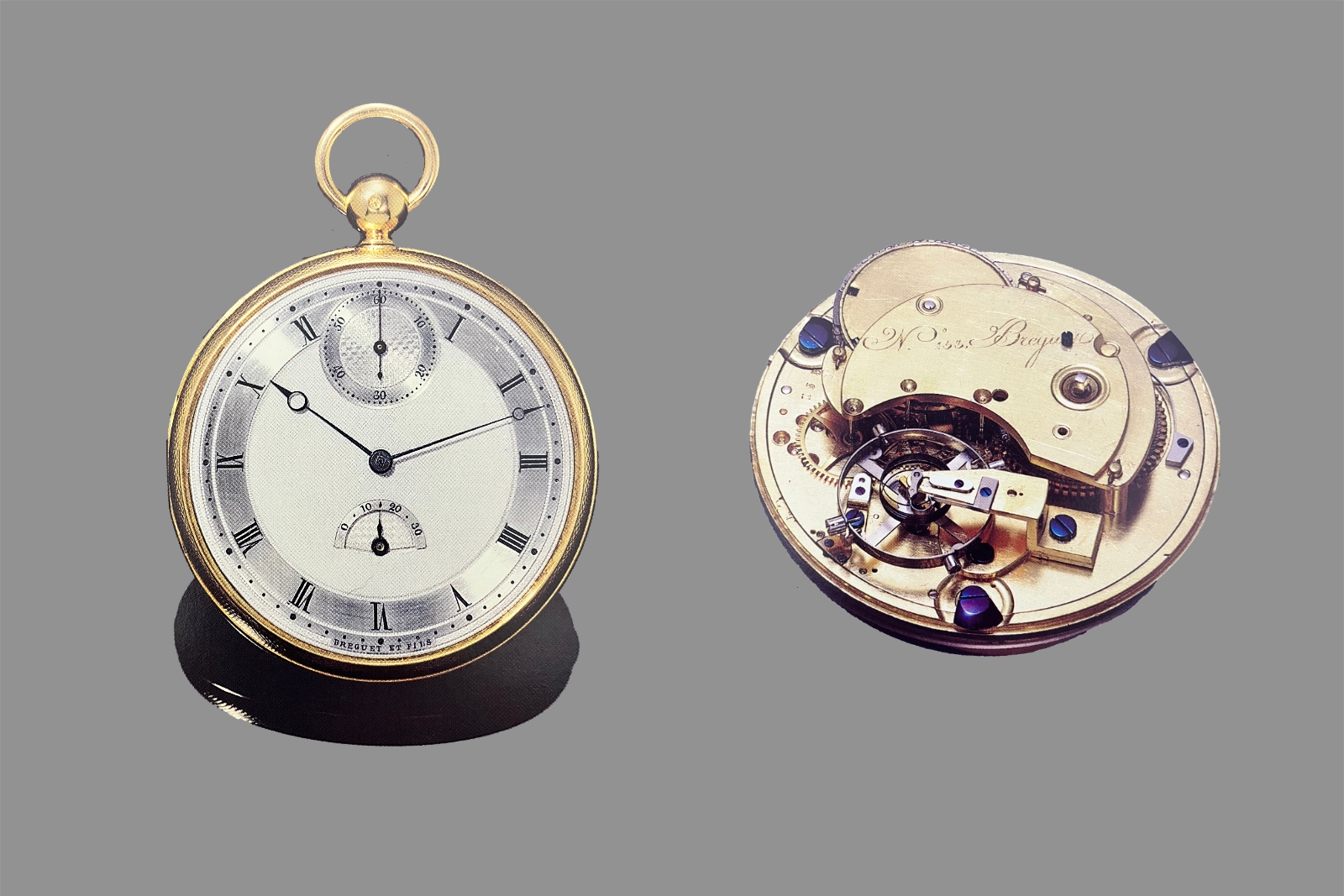
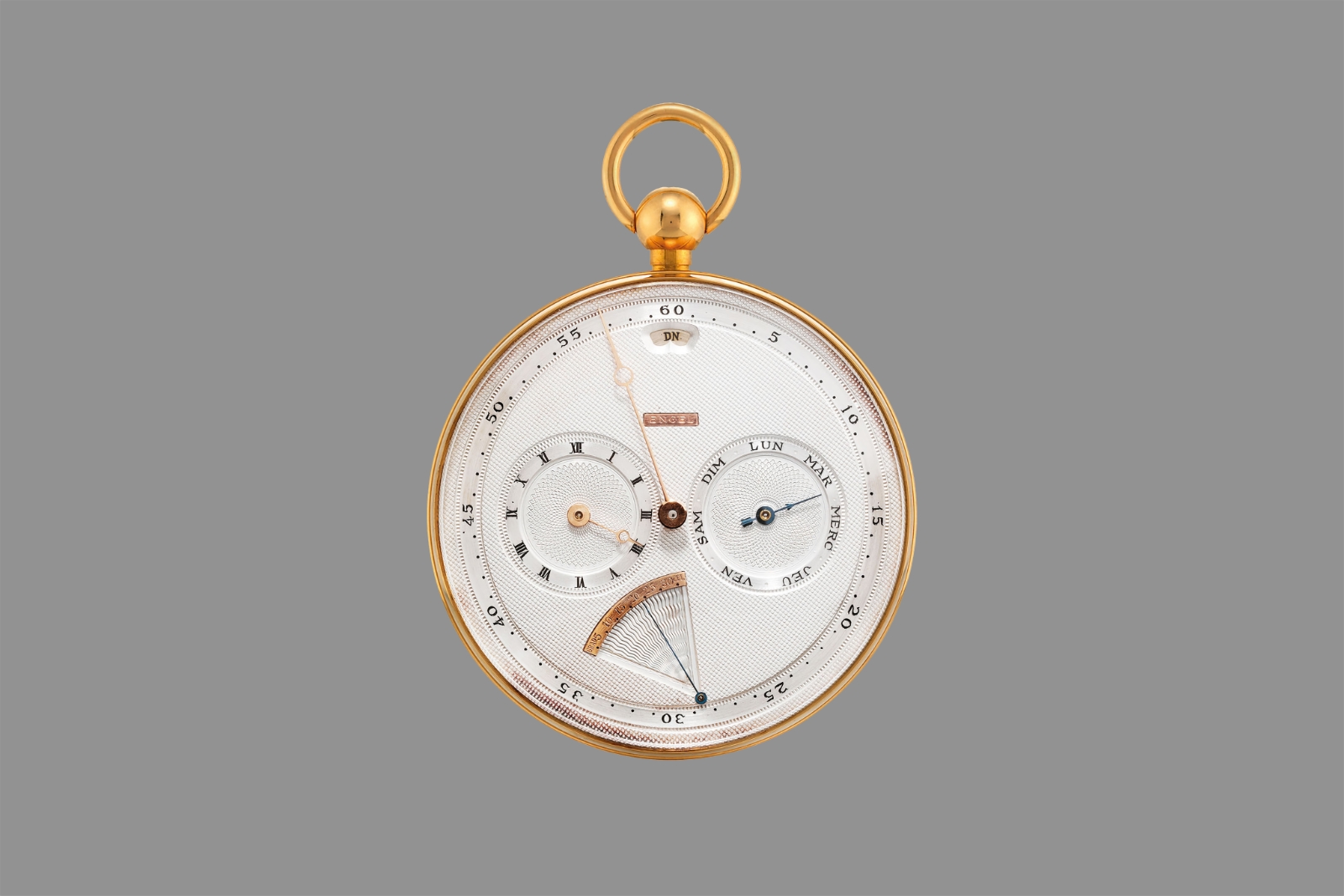
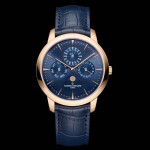
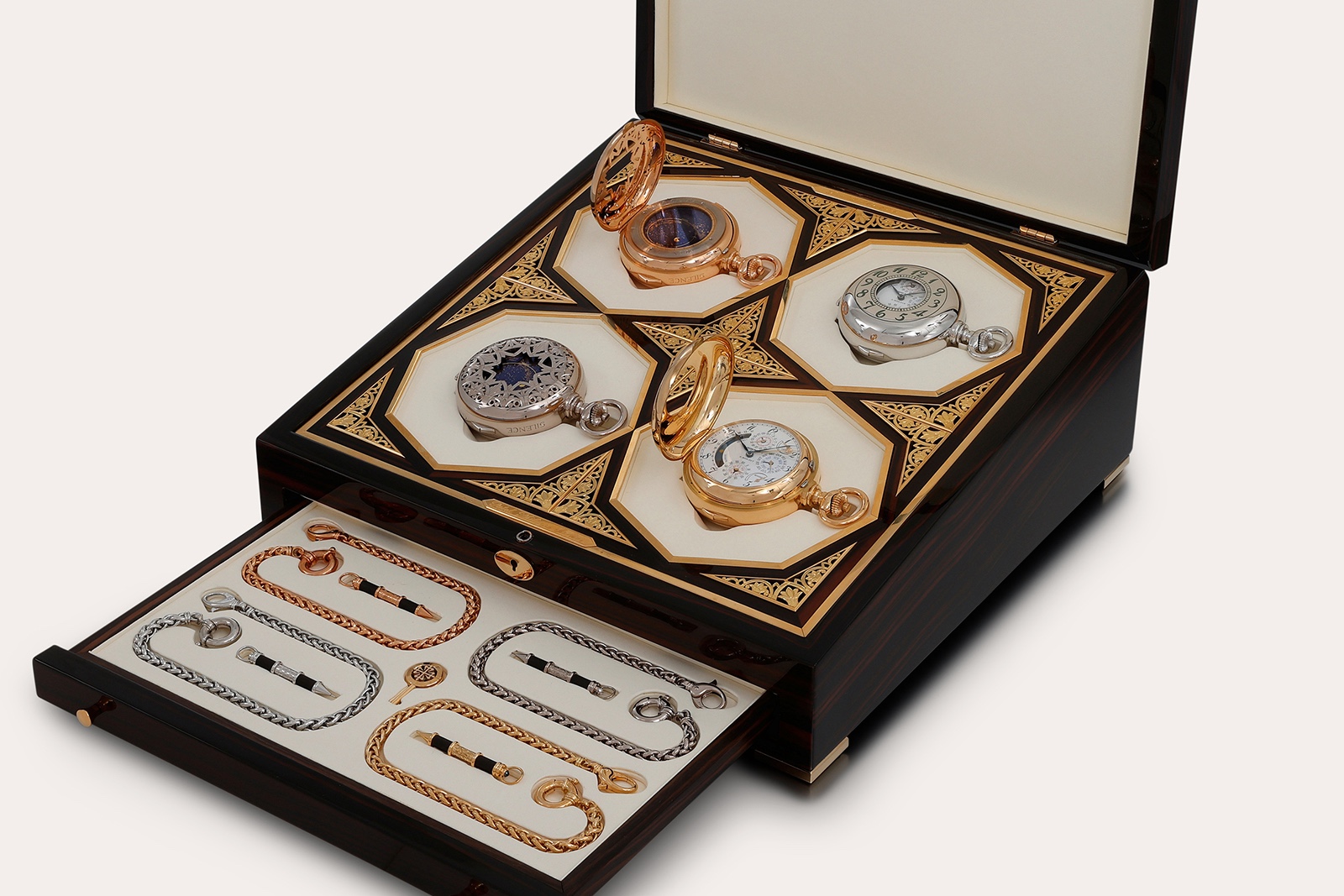
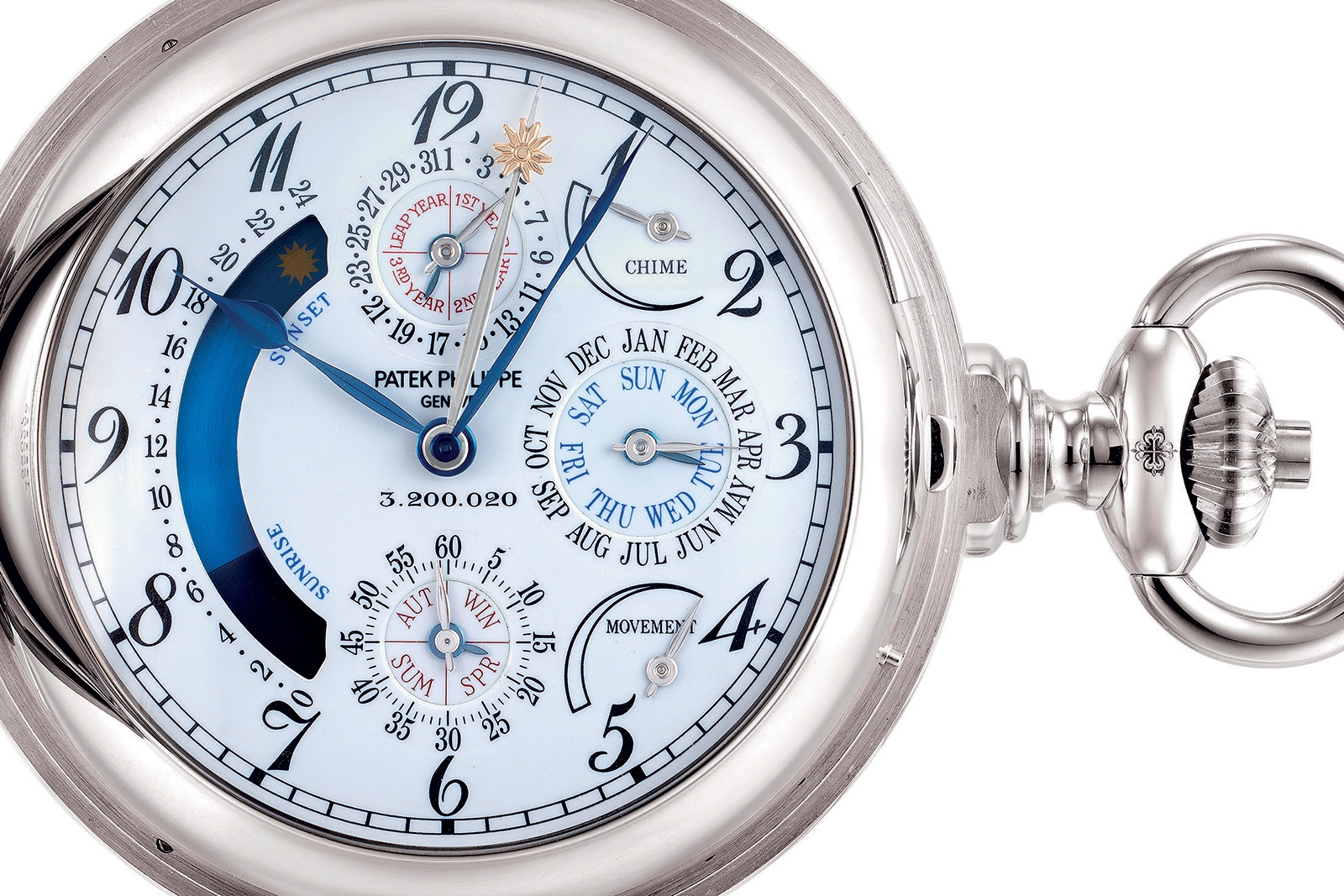
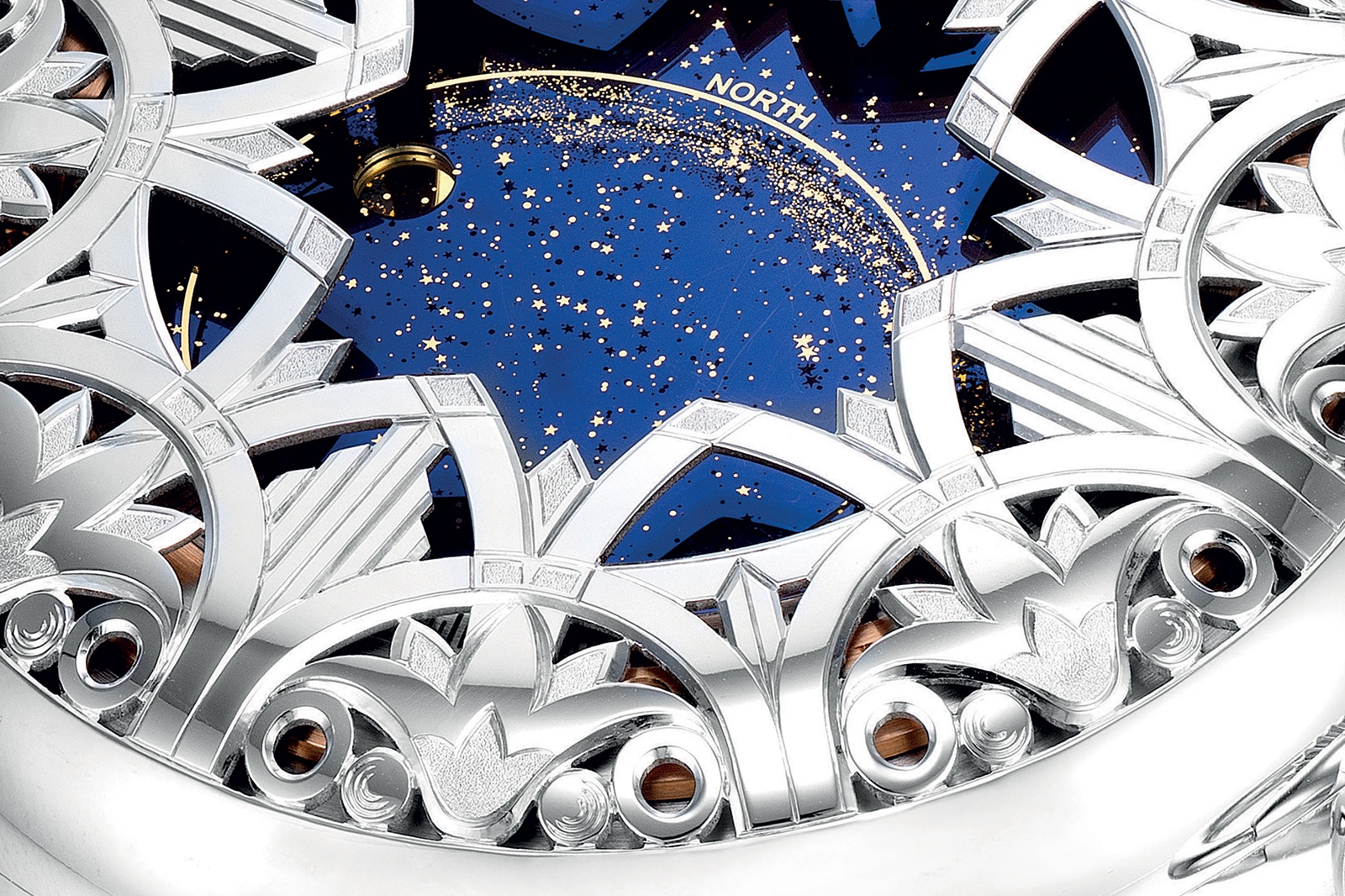
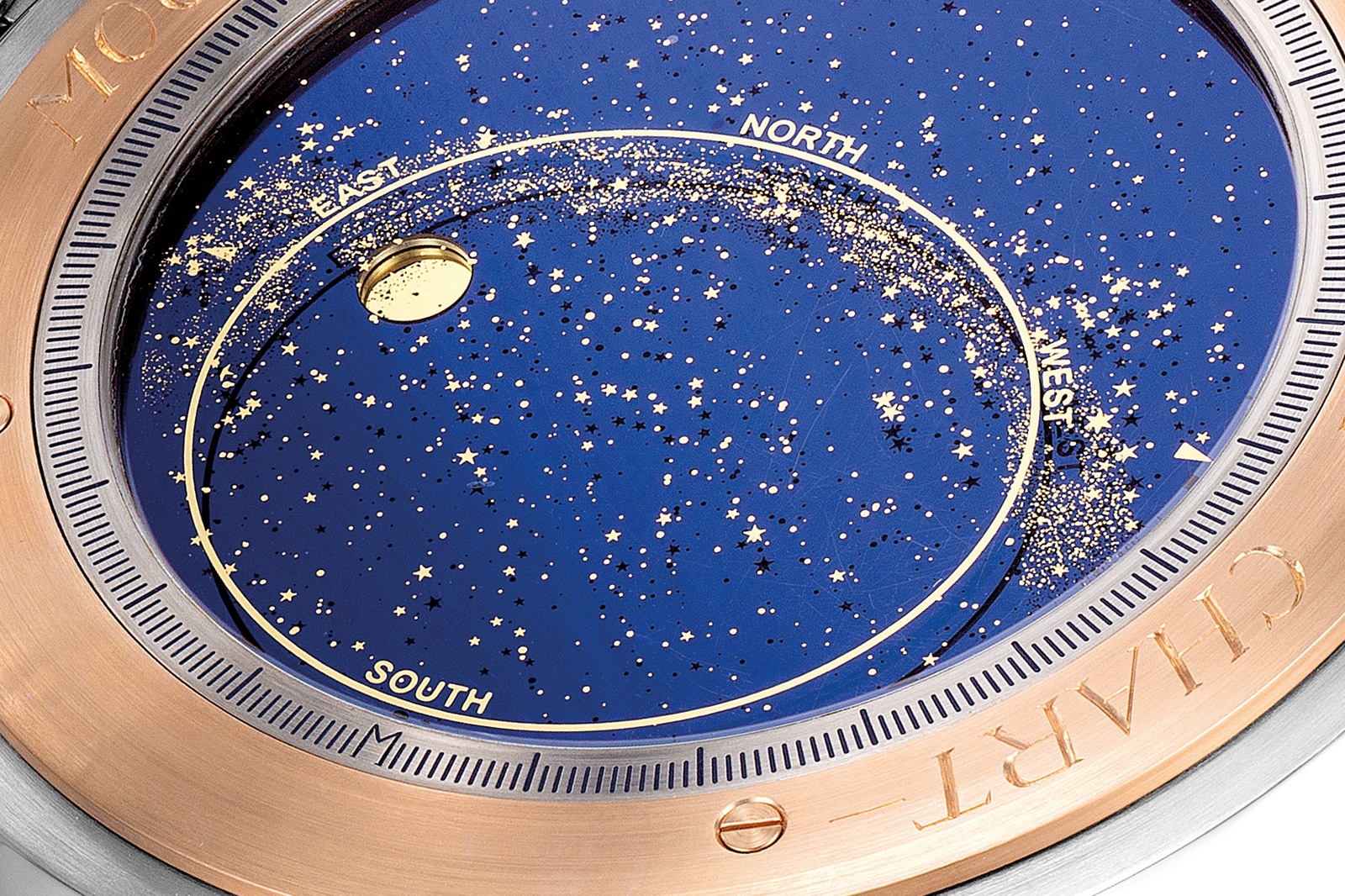
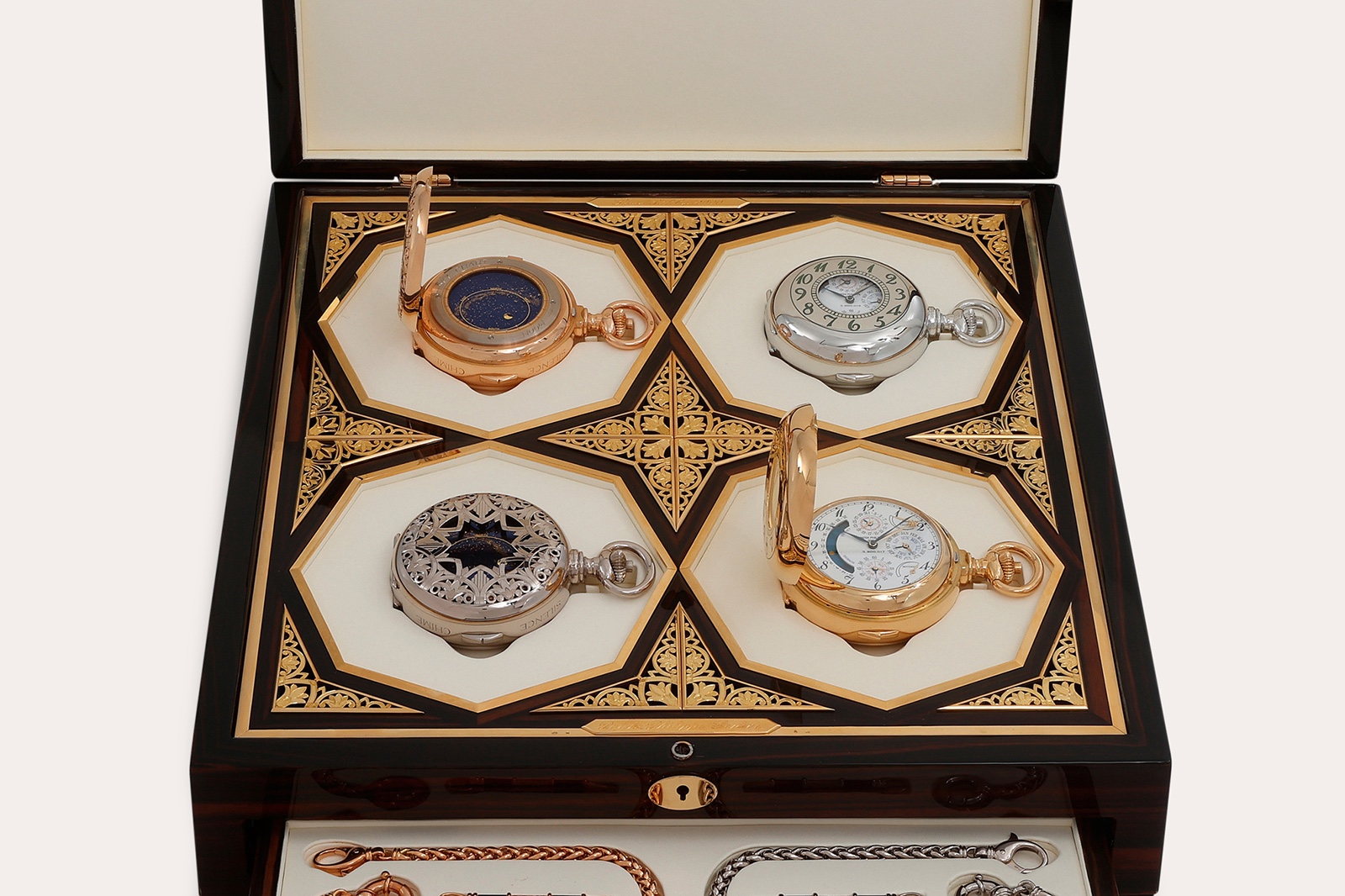
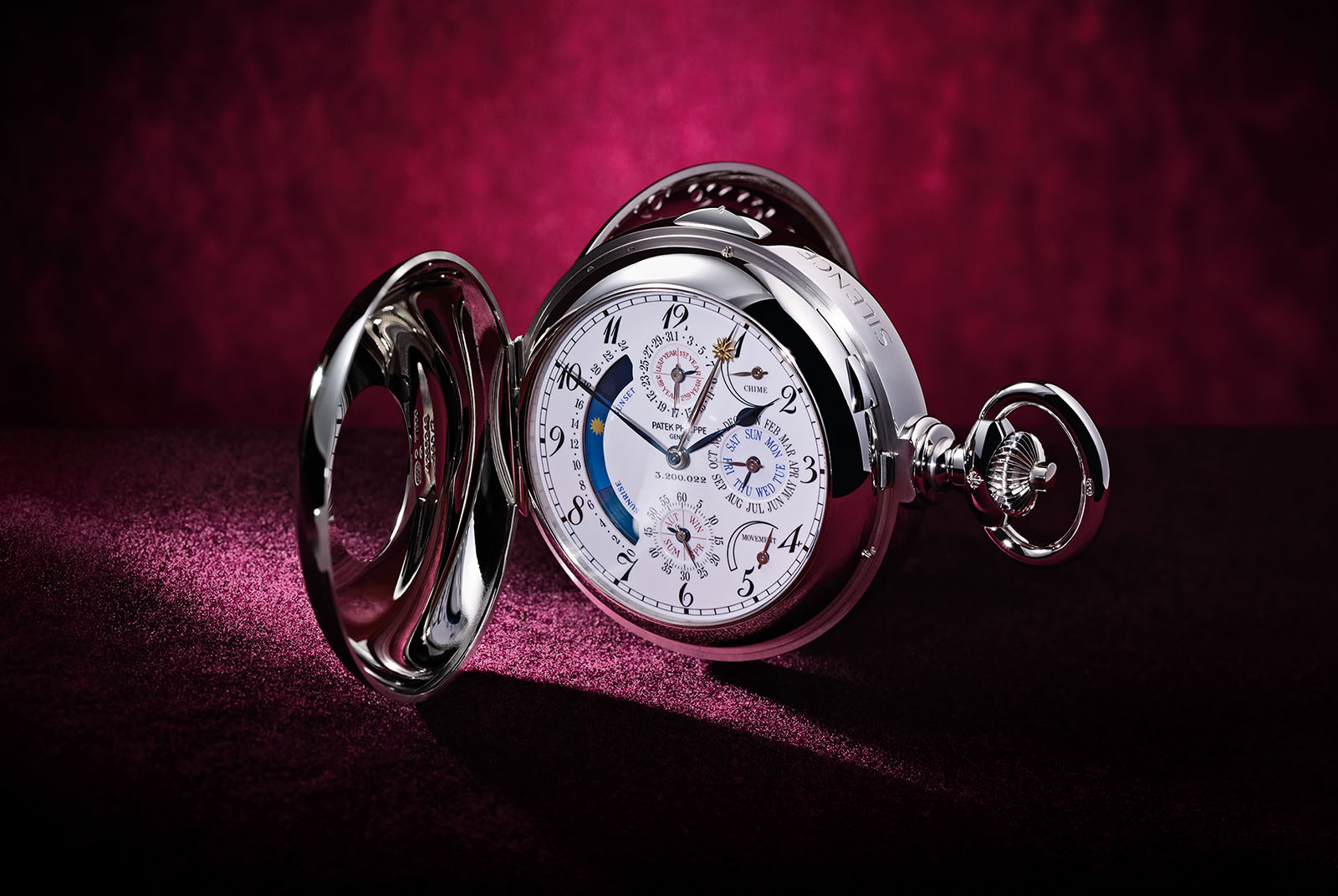
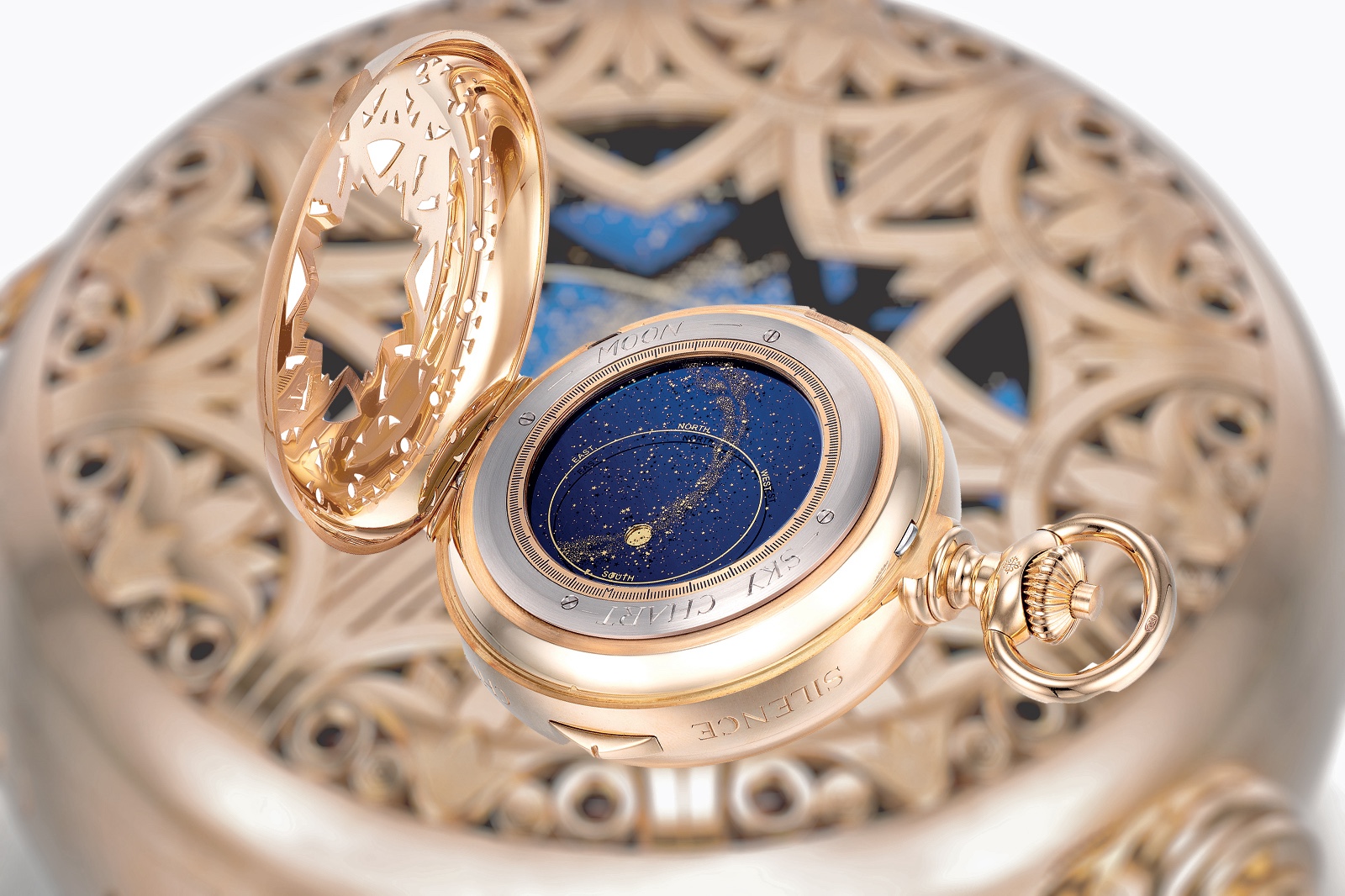
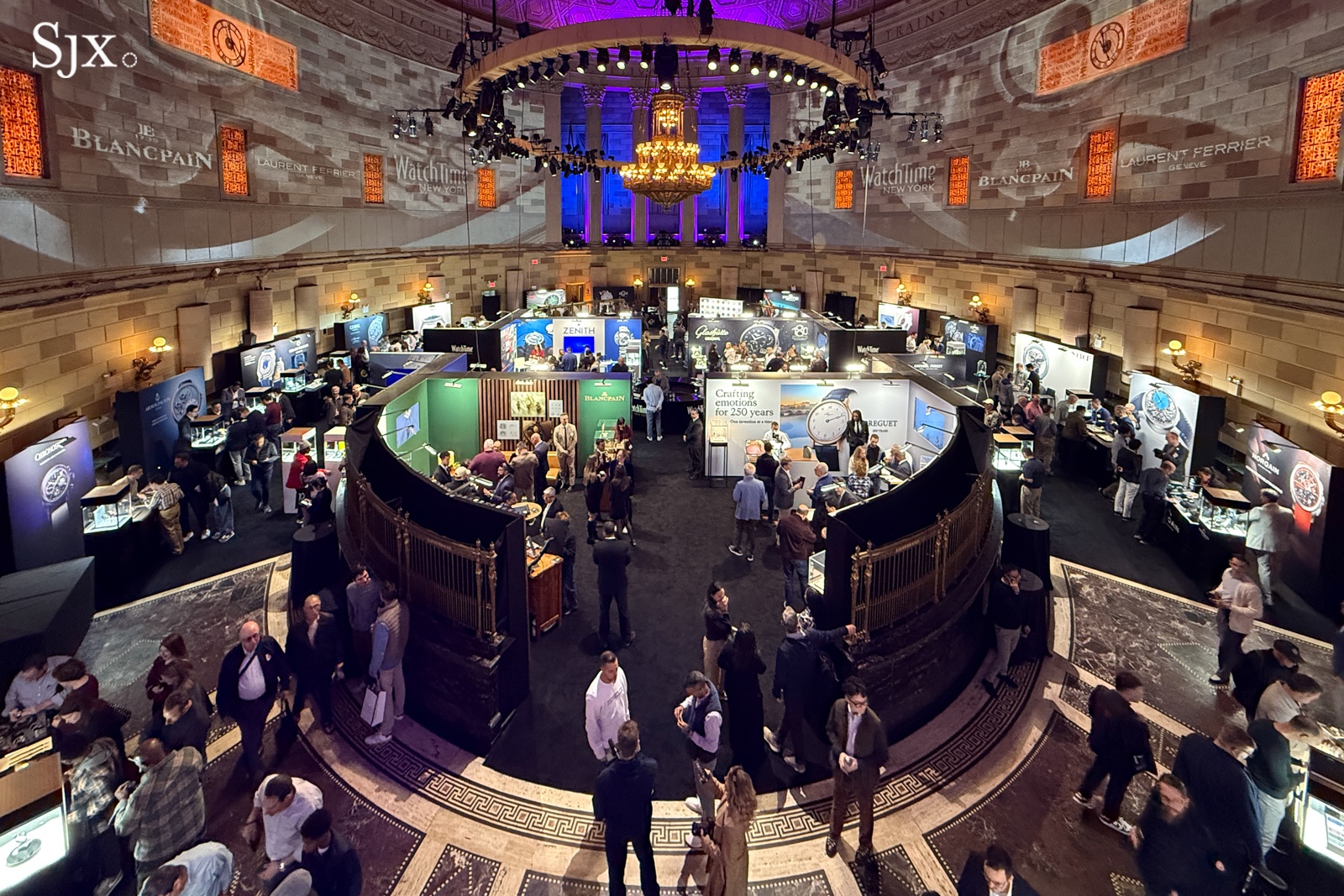
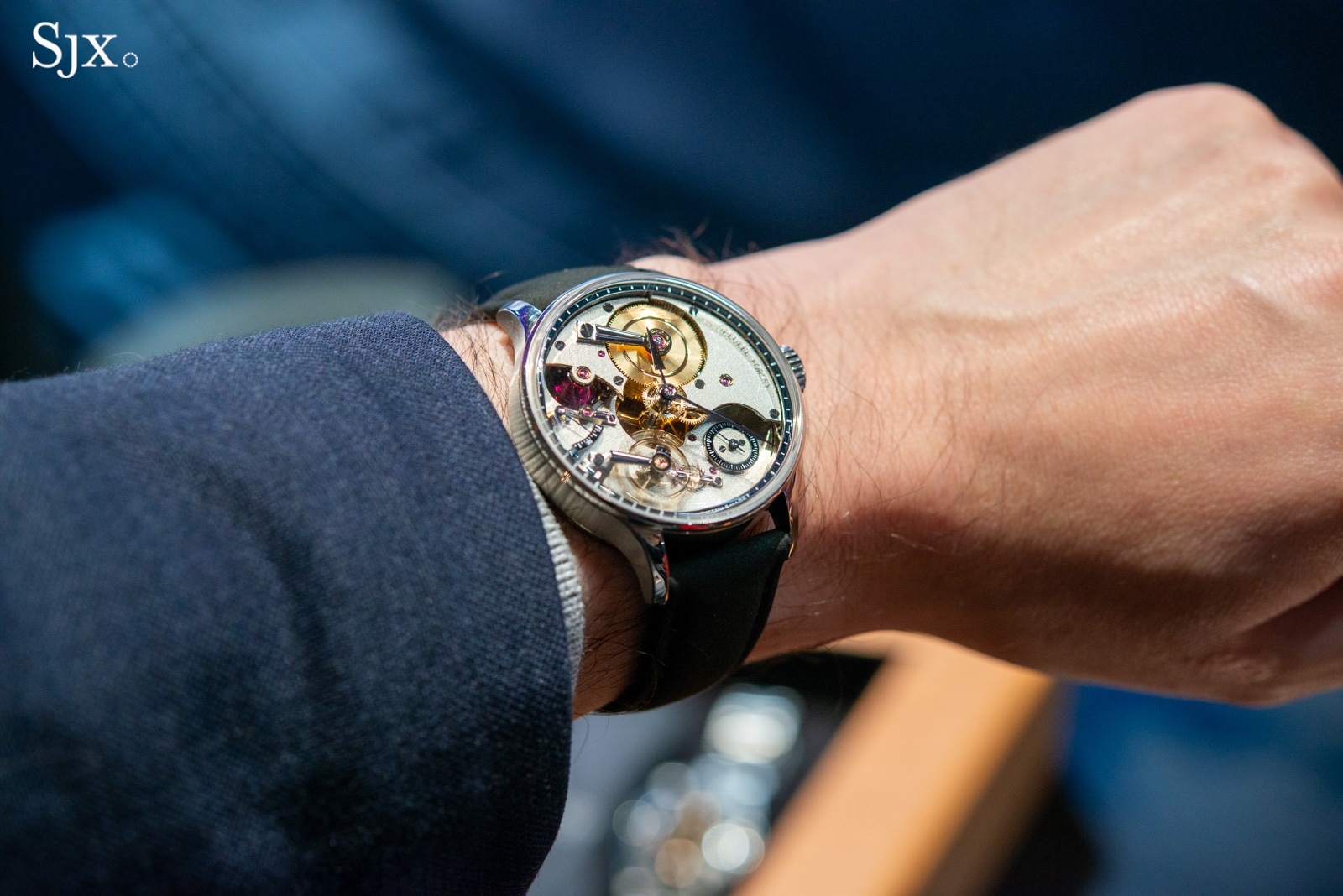
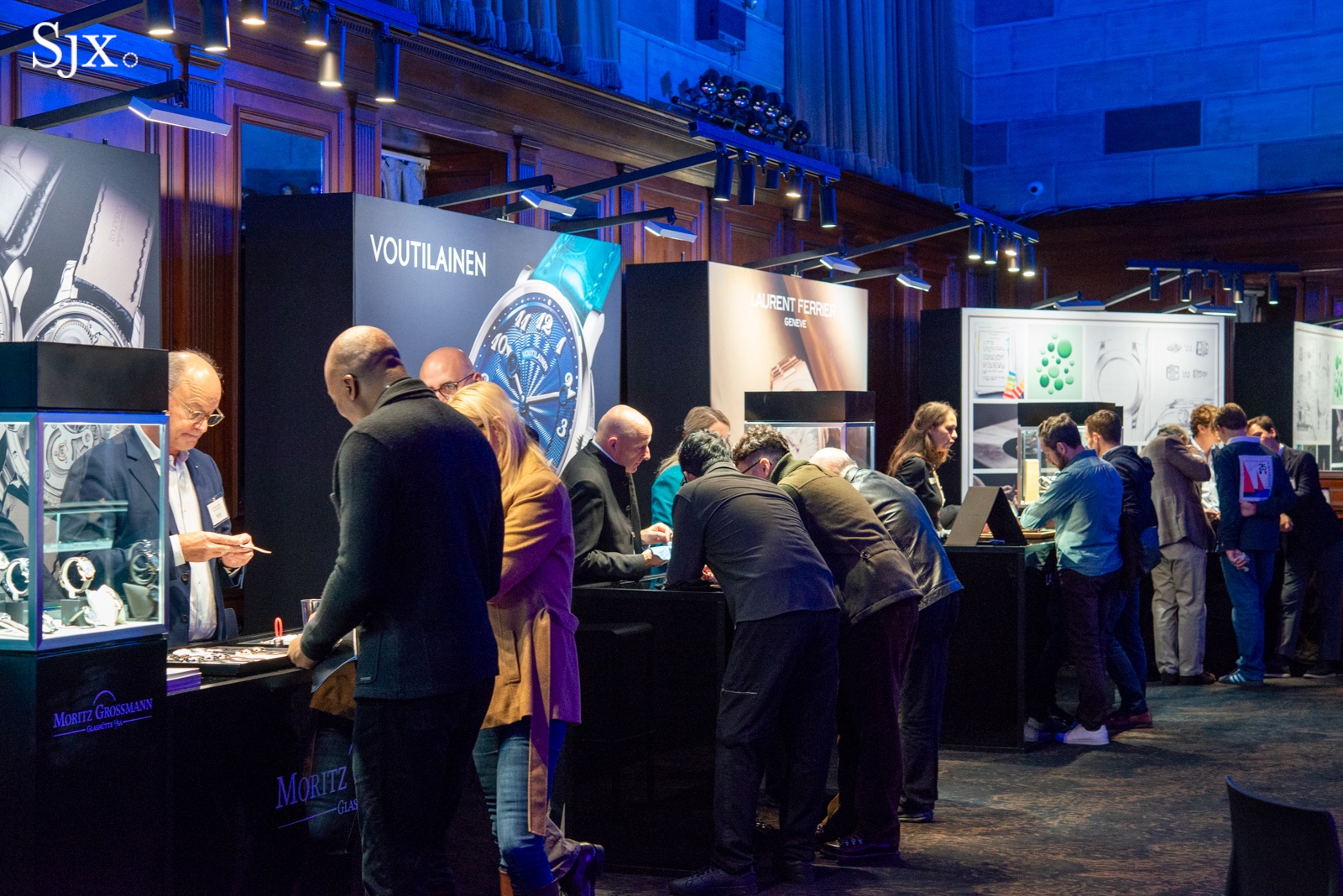
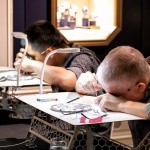
On Episode 17 of the SJX Podcast, Brandon has just returned from WatchTime New York, an event that has emerged as the flagship watch fair in the United States since its debut in 2015. SJX shares his hands-on impressions of Breguet’s new ref. 7225, which features the return of the brand’s magnetic pivots and is the highlight of the 250th anniversary releases so far.
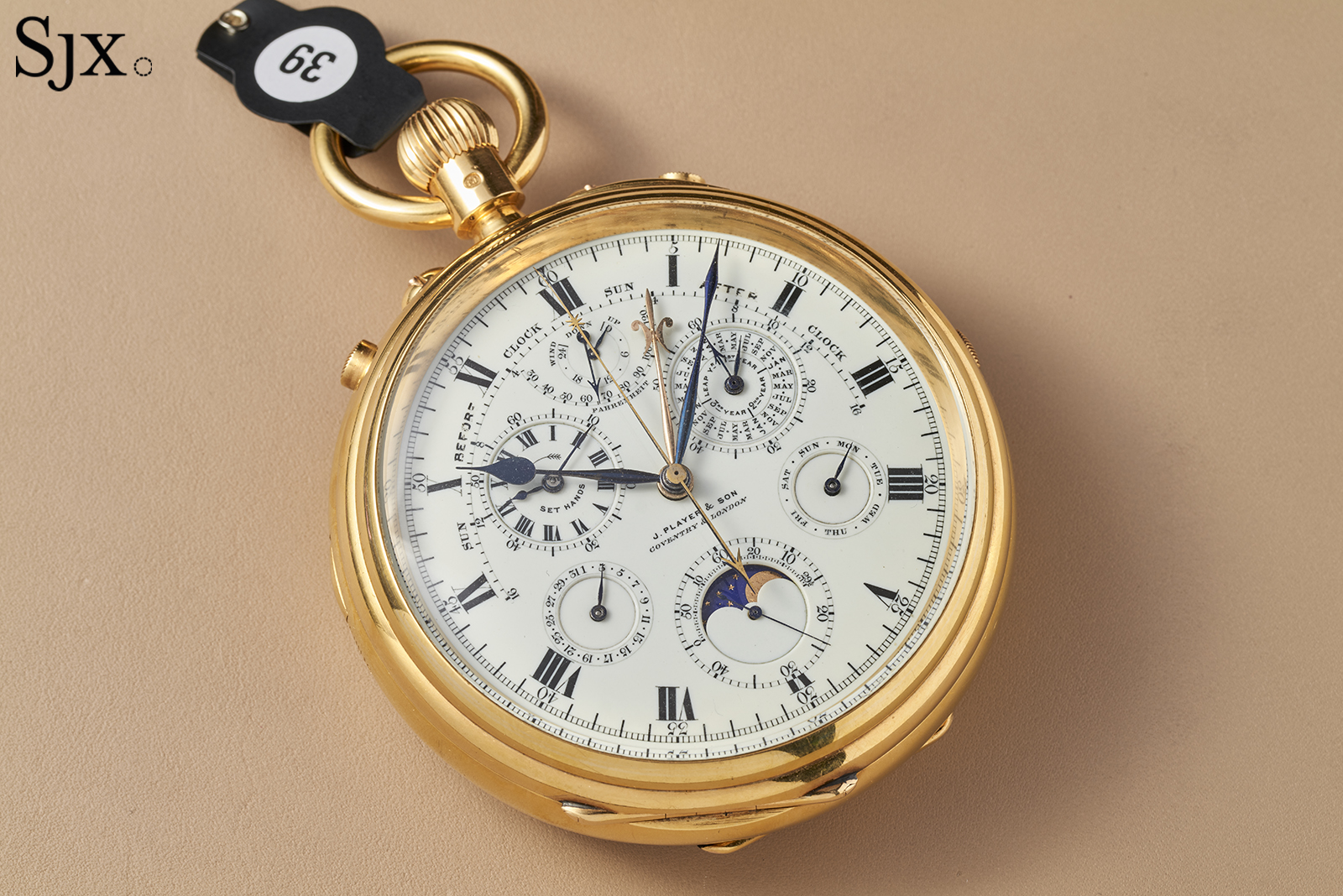
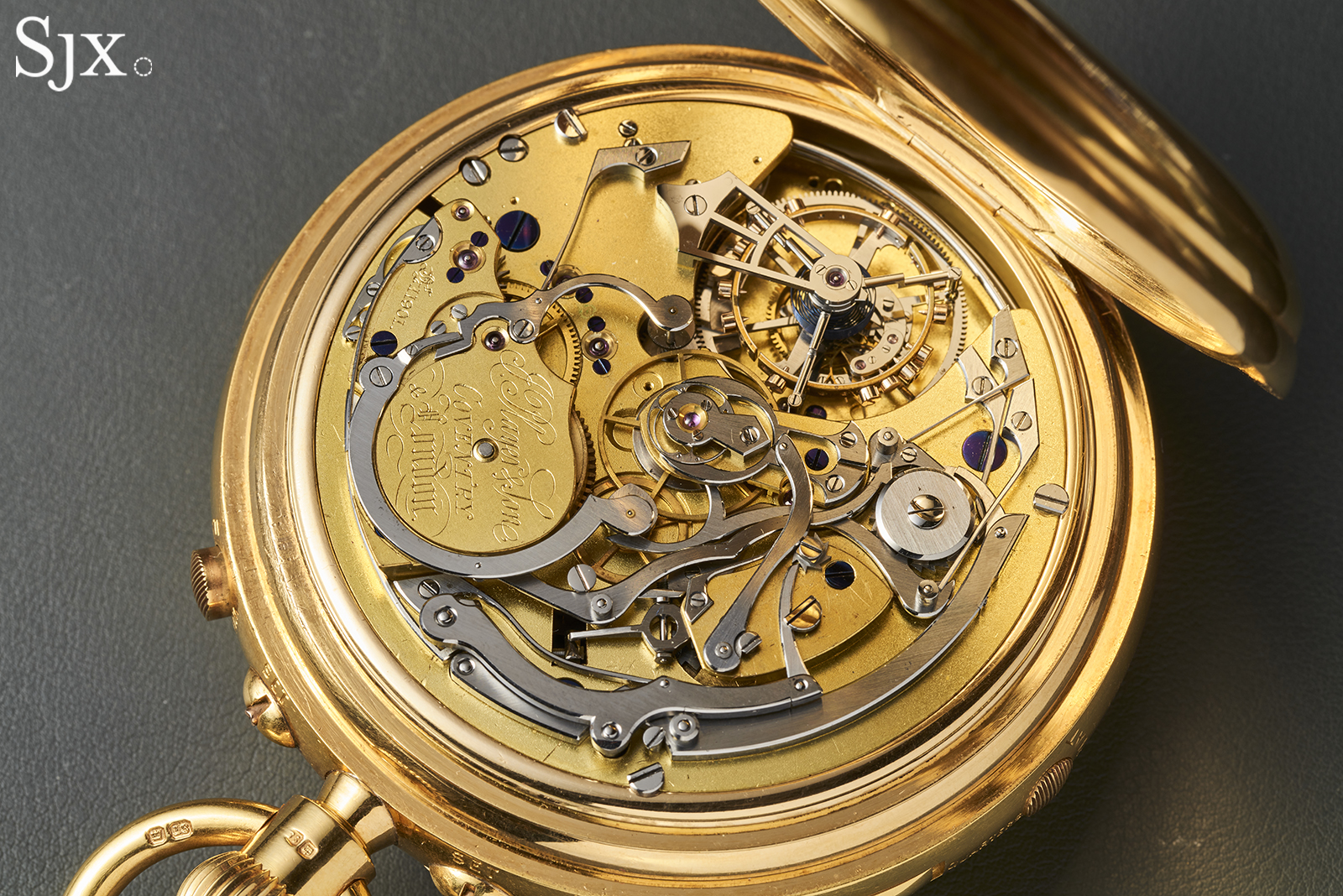
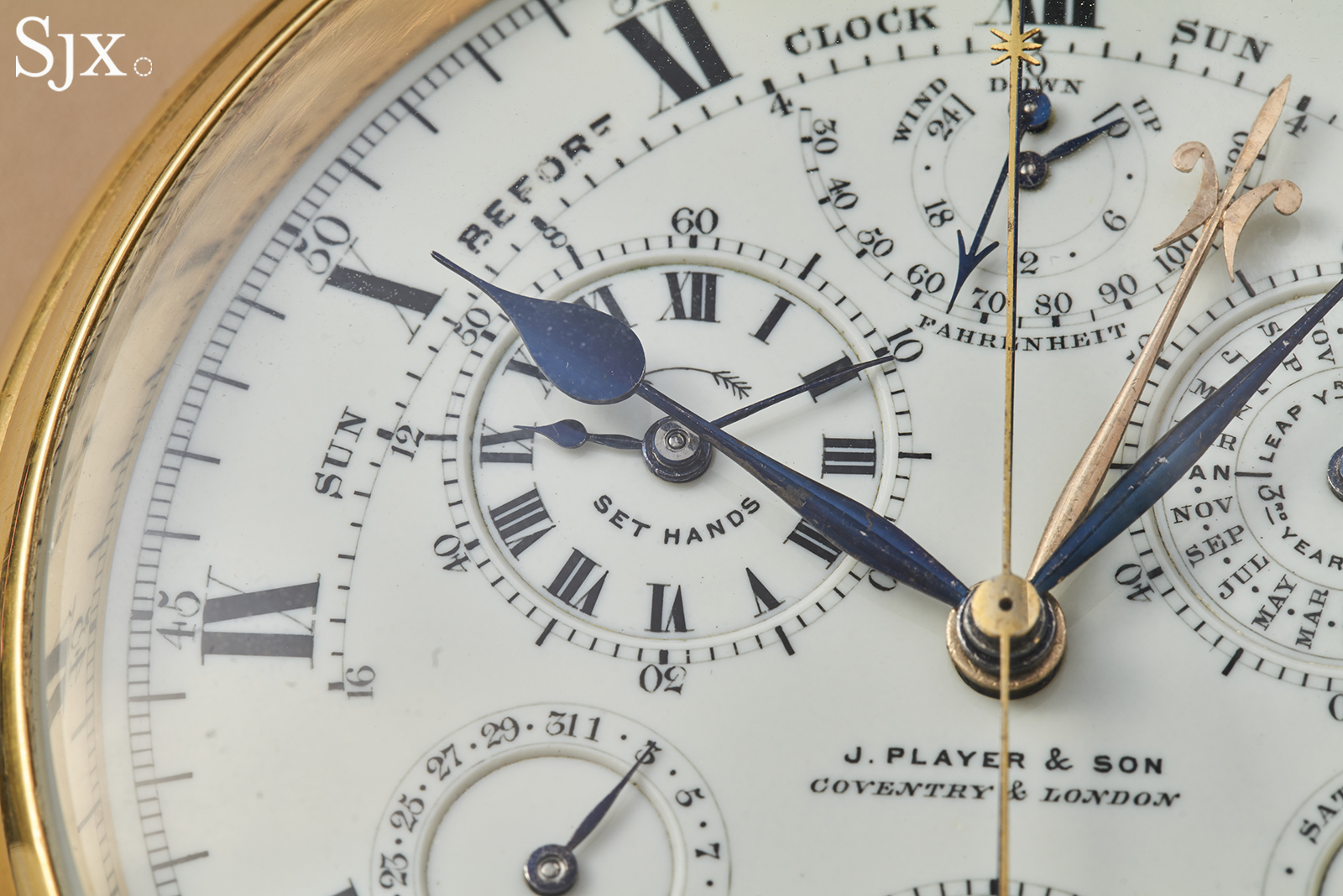
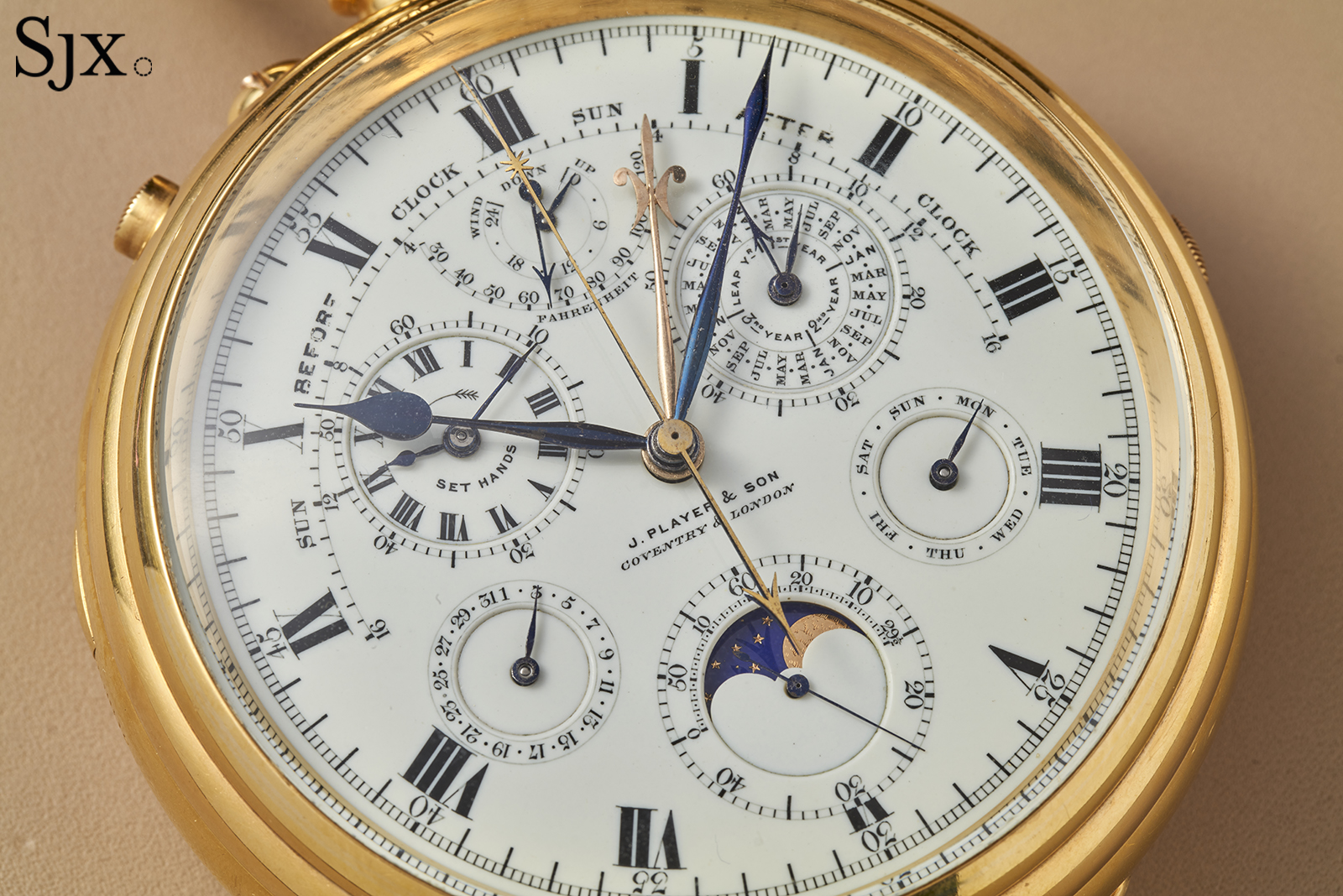
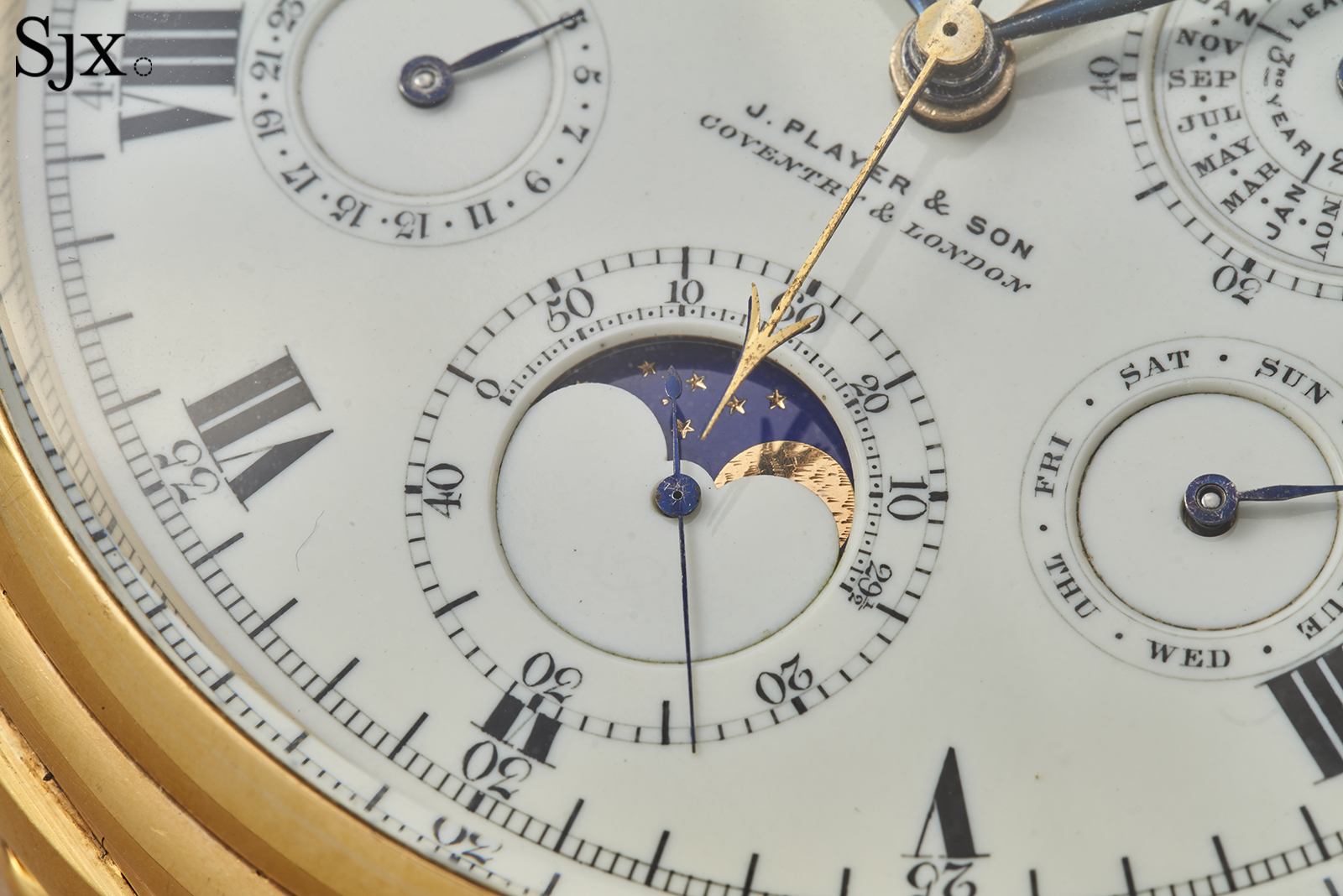
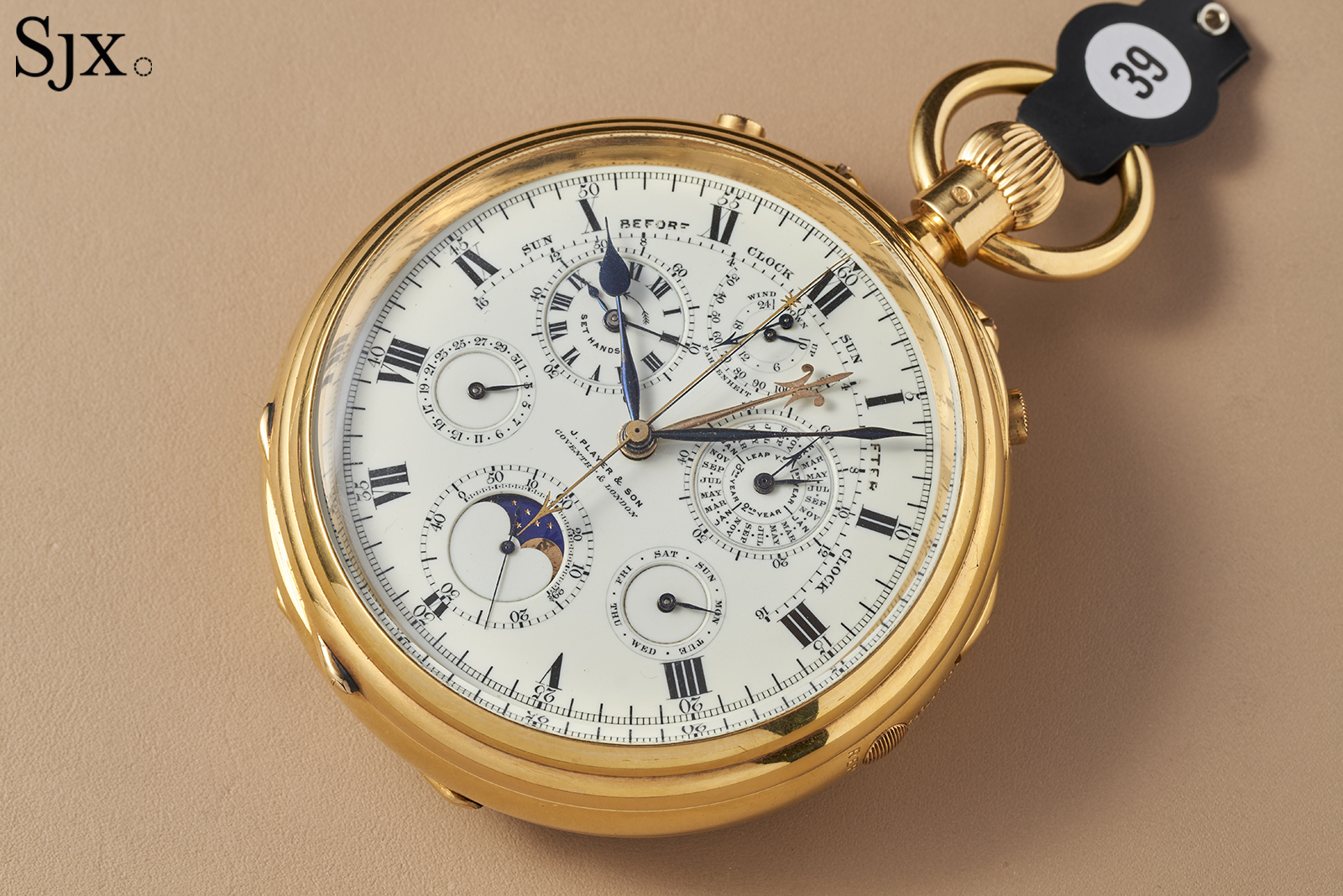
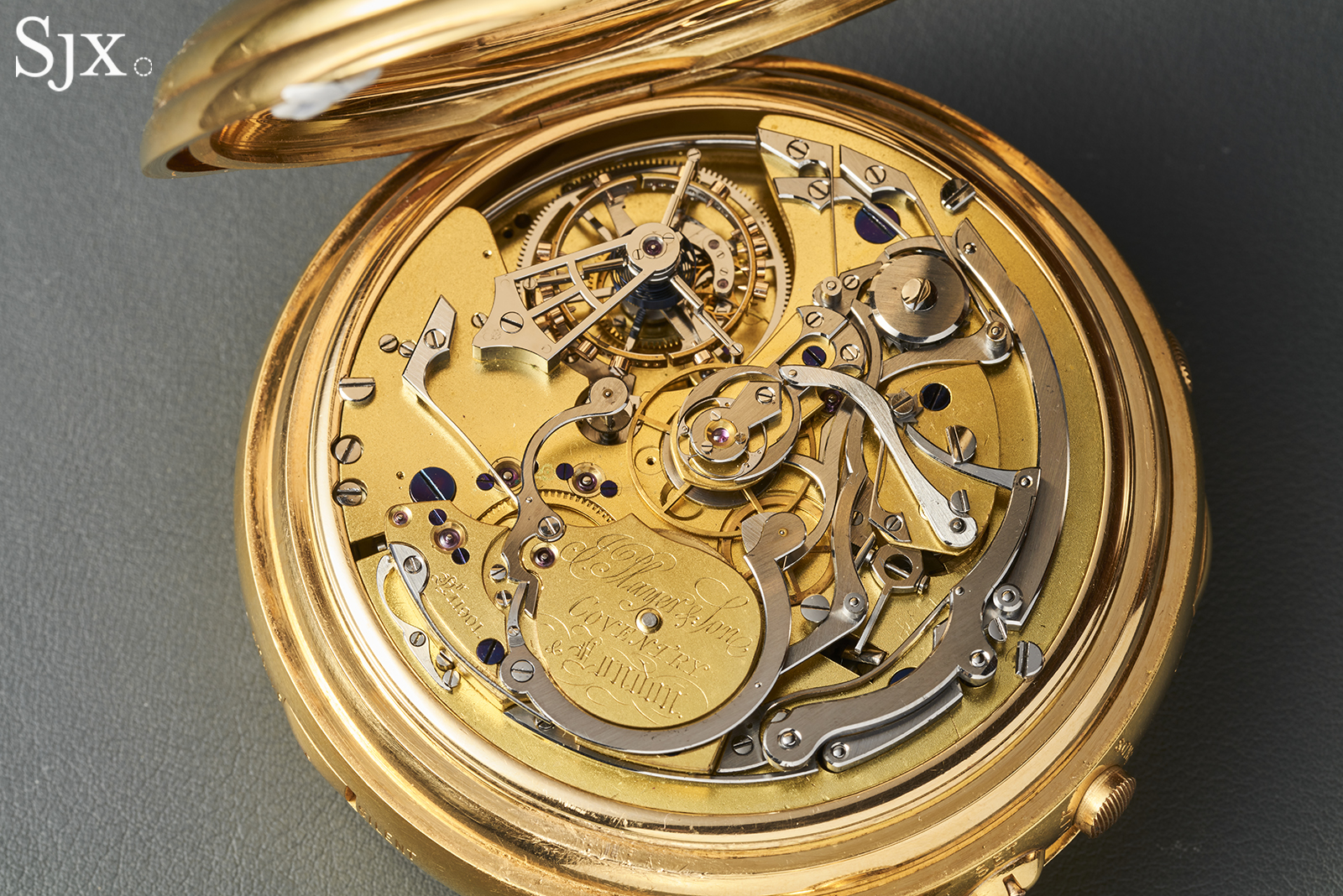
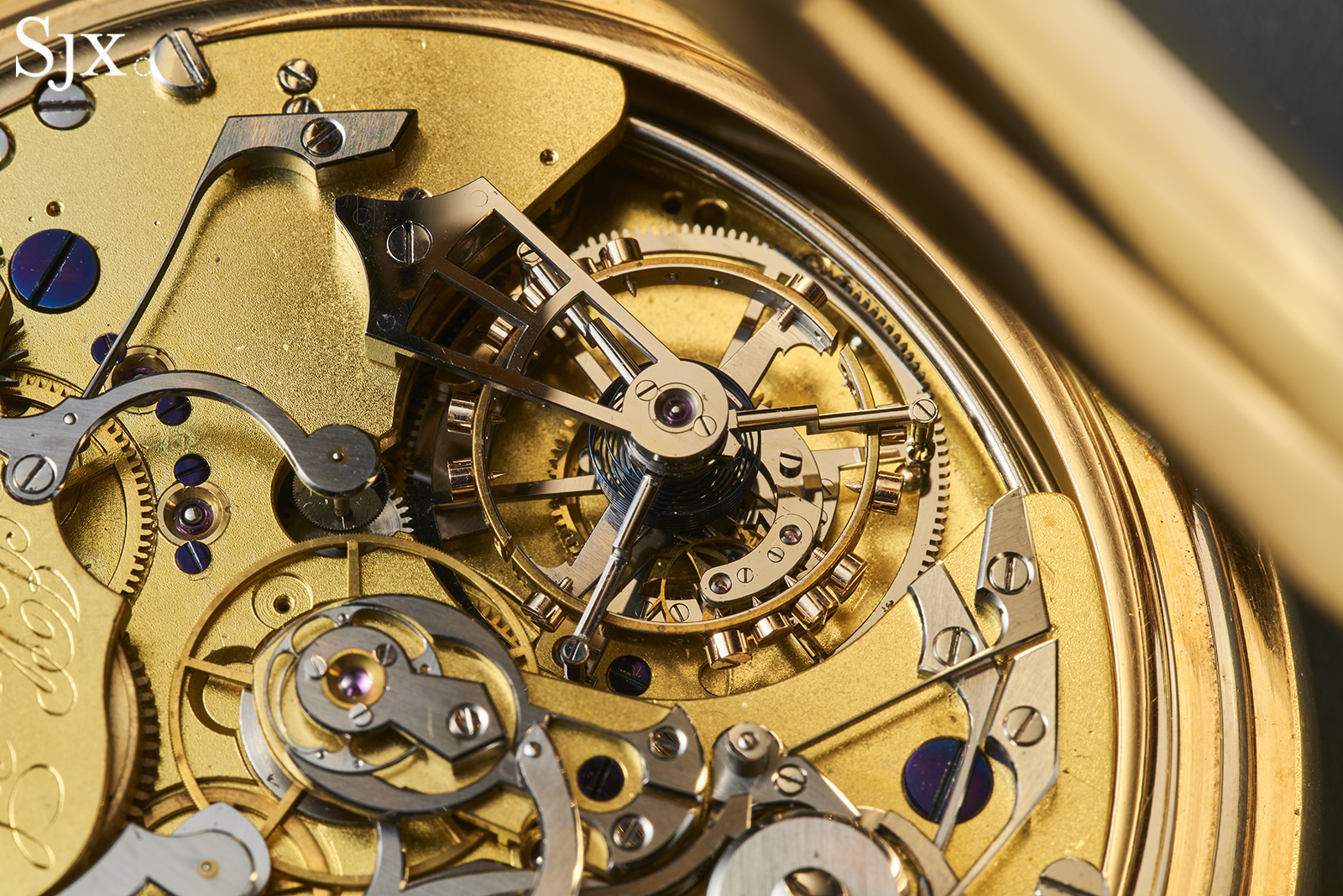
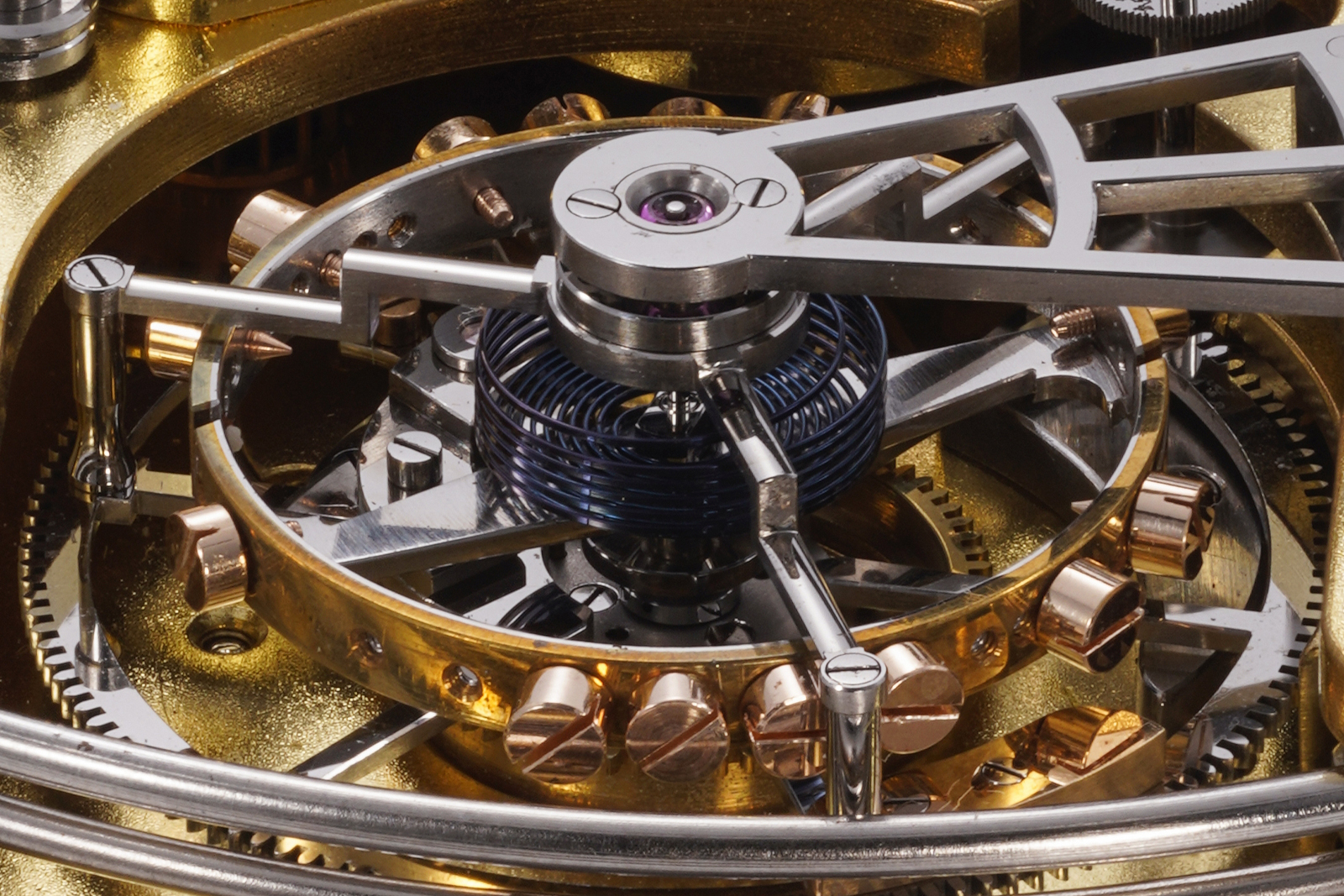
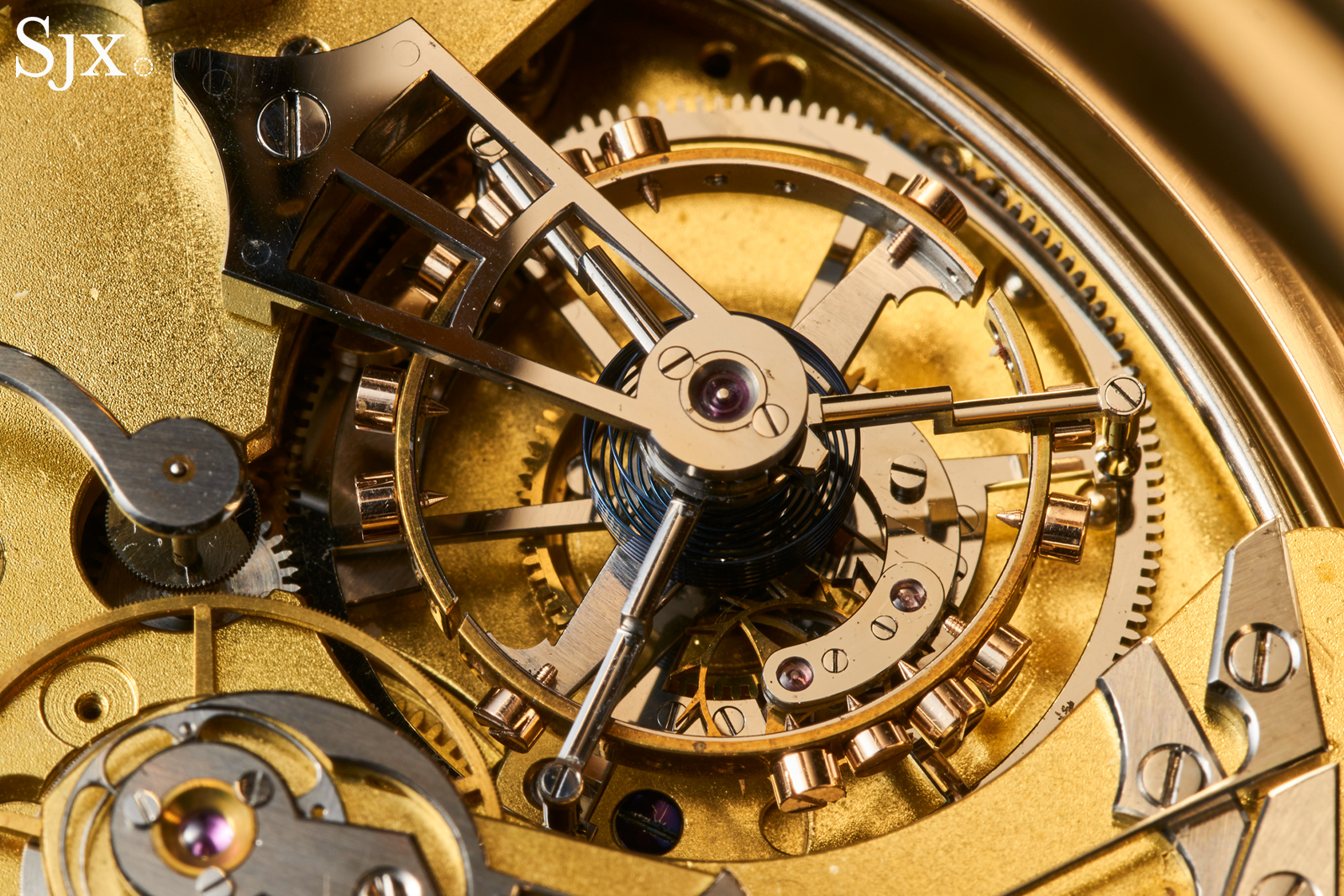
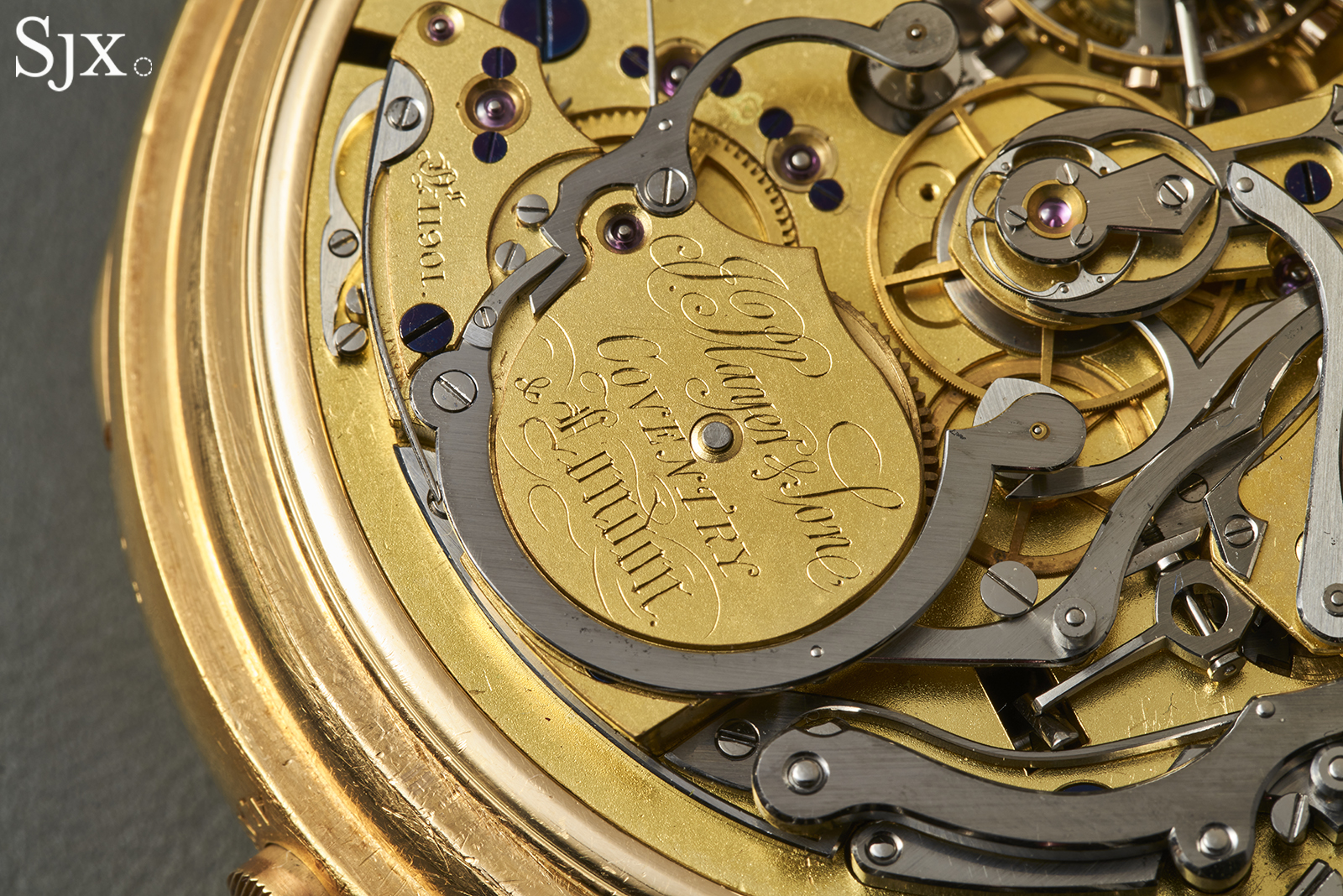
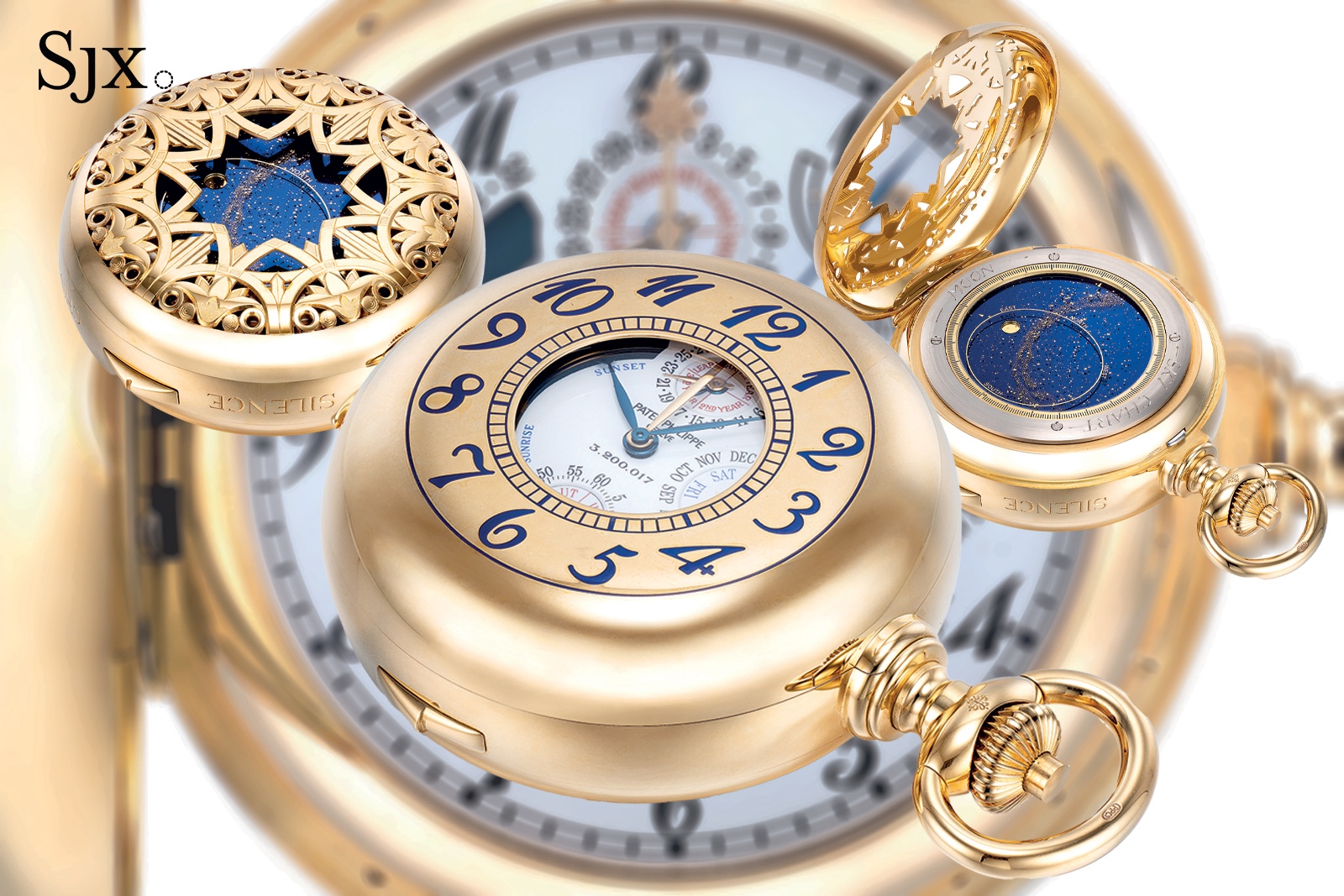
We also examine the hamburger-sized 77 mm J. Player & Son ‘hypercomplication’ at Phillips – one of the most complicated and impressive British watches ever made, before wrapping up with a discussion about some of the pieces from JP Morgan’s own collection coming up in the same auction.
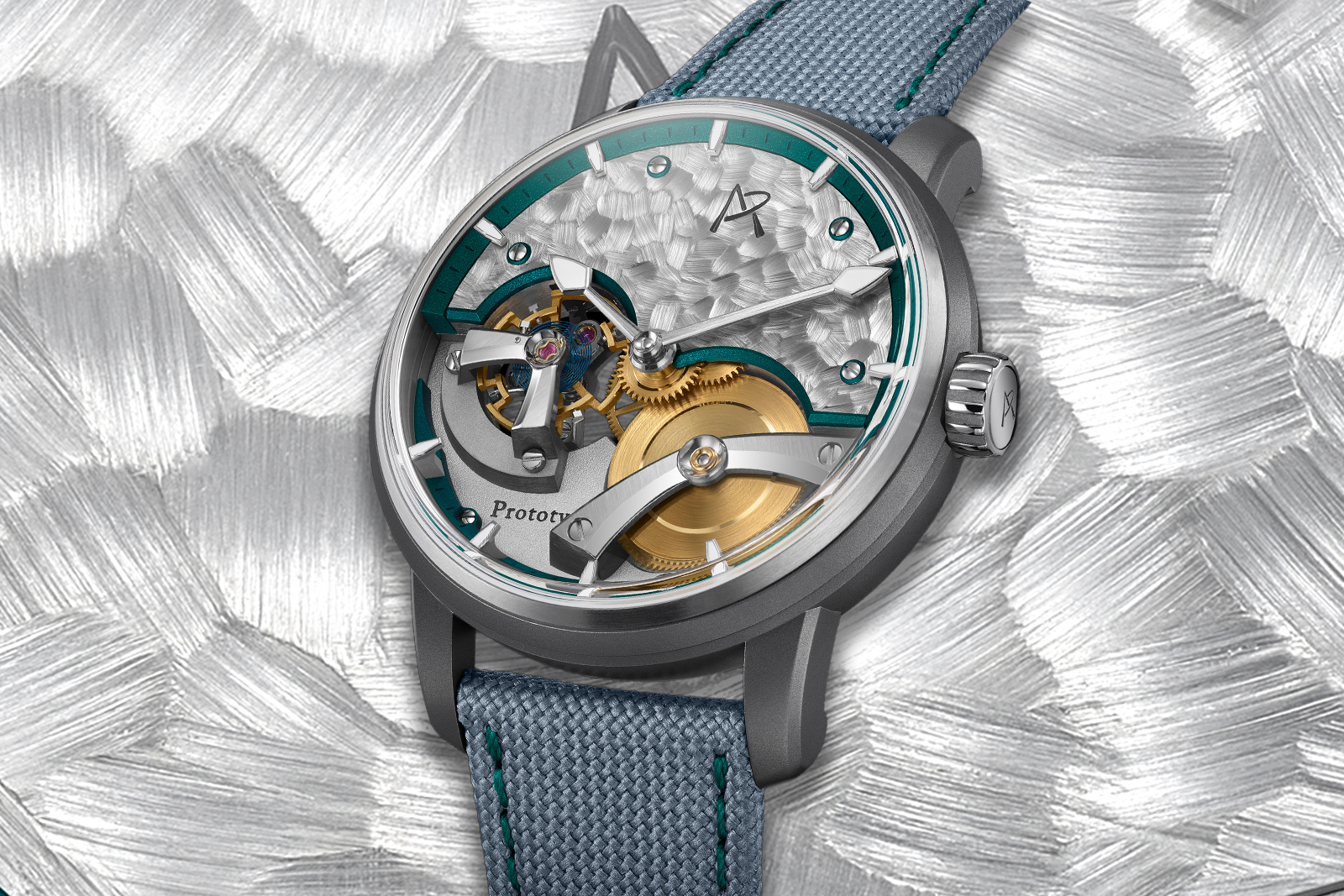
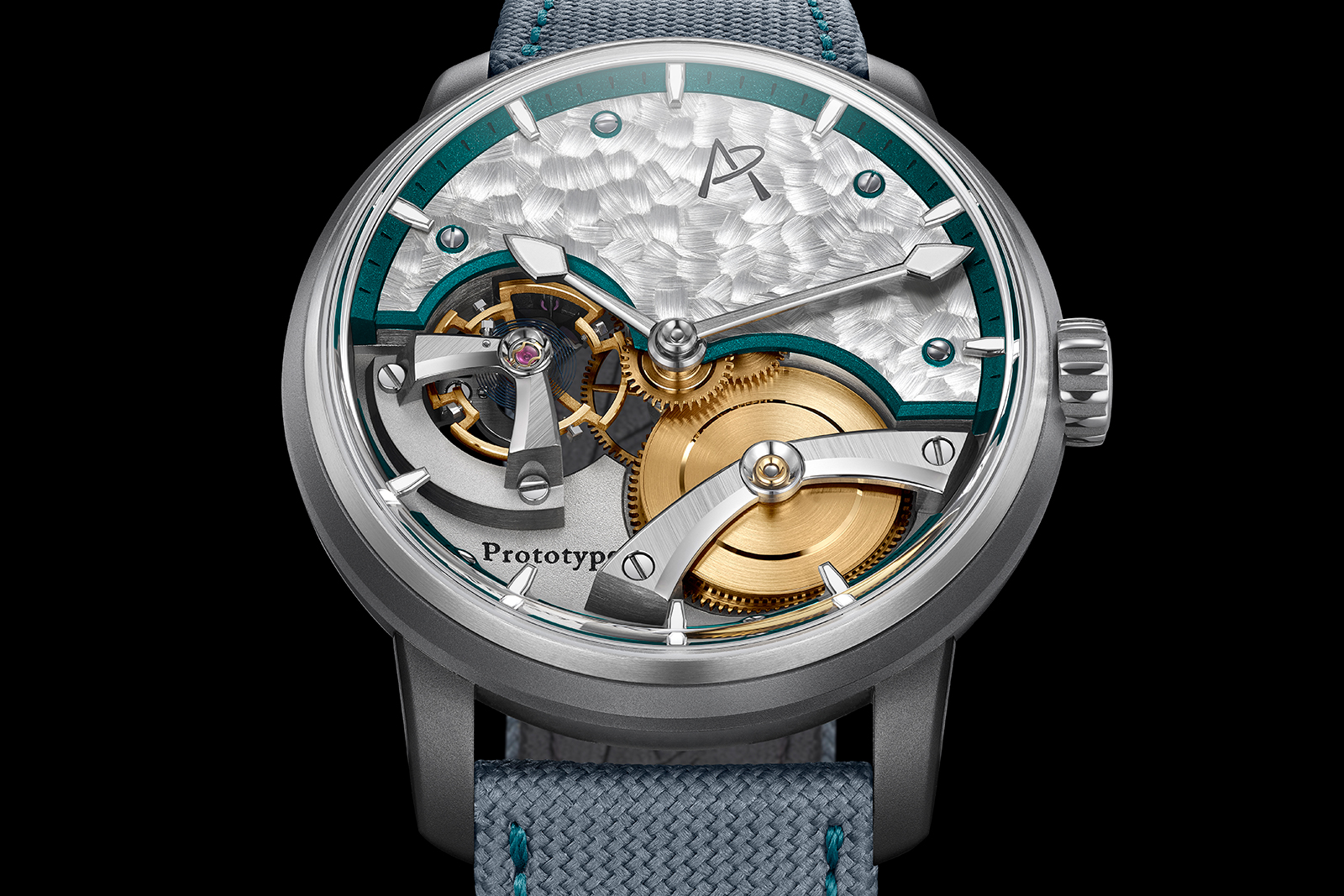
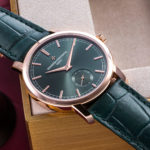
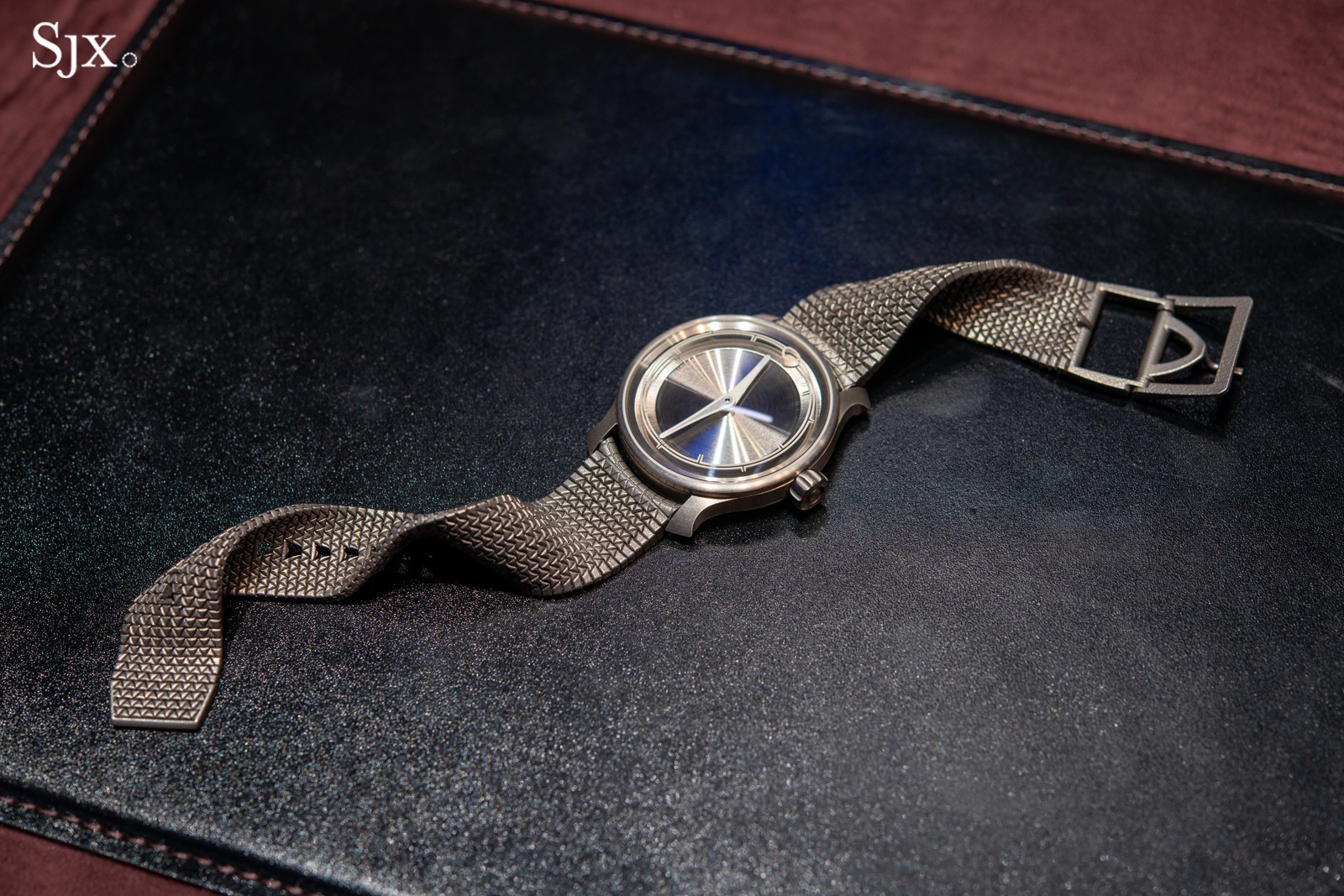
While Aubert and Ramel is a new brand, and the Ouréa is a new watch, Thomas Aubert and Alexis Ramel-Sartori aren’t new to independent watchmaking, both having worked for a prominent name in the space. That experience is evident in a strong – and decidedly on-trend – debut that stands out even in a crowded market.
Initial Thoughts
It seems there are many finely decorated time-only watches on the market today; the two contributed to some of the better ones in their earlier careers. Now the pair strike out under their own name, and unsurprisingly, their first watch is quite good. Though the duo seem to know that already, as they have priced it close to, just a little below, leading independents.
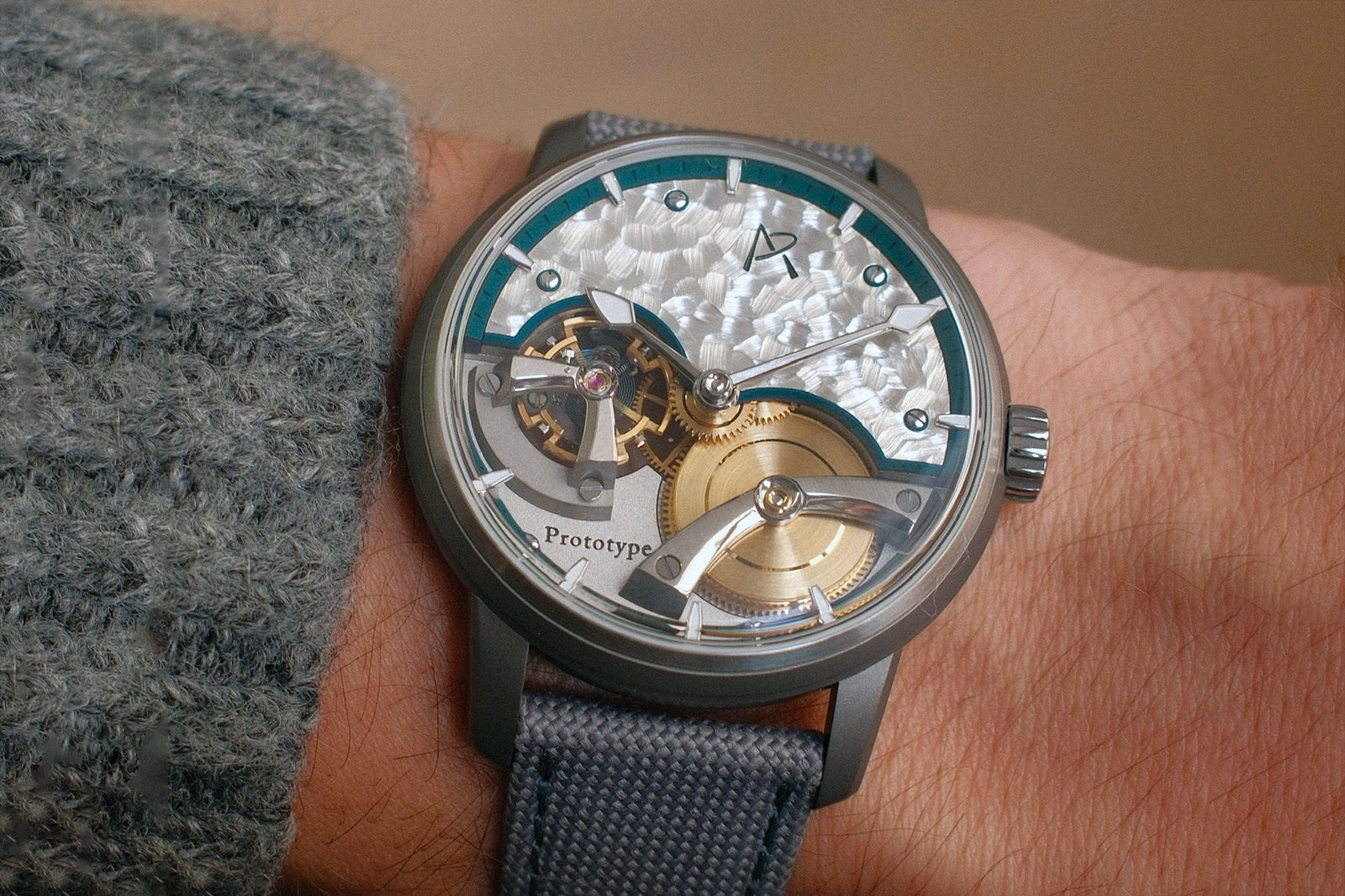
The Ouréa’s “scraped” dial brings to mind the wildly successful Chronomètre Artisans from Simon Brette. That probably isn’t coincidental, as the two both worked for Simon Brette. However, I perceive an even stronger, and more general, influence of Greubel Forsey in the Ouréa. It also calls back to Thomas Aubert’s Séléné, winner of last year’s F.P. Journe young talent competition.
The scintillating teal accents, applied by atomic layer deposition, are a nice touch to set the watch apart, and the hands are incredibly well made. Interestingly, the filling in the hands is white lacquer rather than luminous material. That seems like a missed opportunity as the appearance would be nearly identical if it were lumed. It is also a shame that Mr Aubert’s recoiling shooting star from the Séléné doesn’t make an appearance, as it had a lot of charm, though may not be compatible with a stem wind watch; perhaps a shooting star power reserve indicator is in the stars.
Doing a Little More
The newborn brand plans to build twenty watches total, though the first six are already spoken for, as Messrs Aubert and Ramel soft-launched Ouréa on a subscription basis, as is now the norm for new indie brands. Those half-dozen subscription pieces will have platinum cases, as the early buyers took a risk based on nothing but computer renderings, while the following 14 will be titanium.
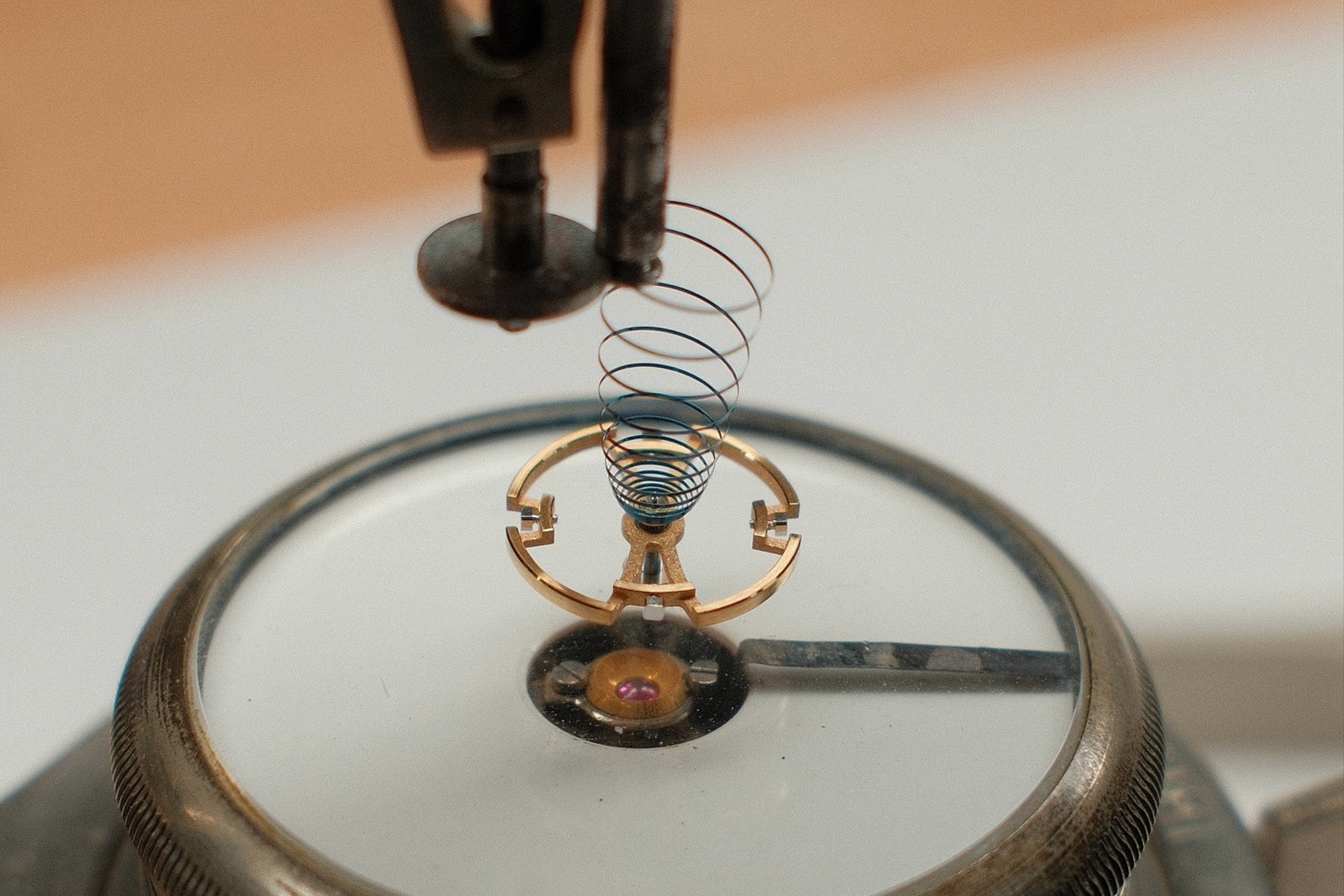
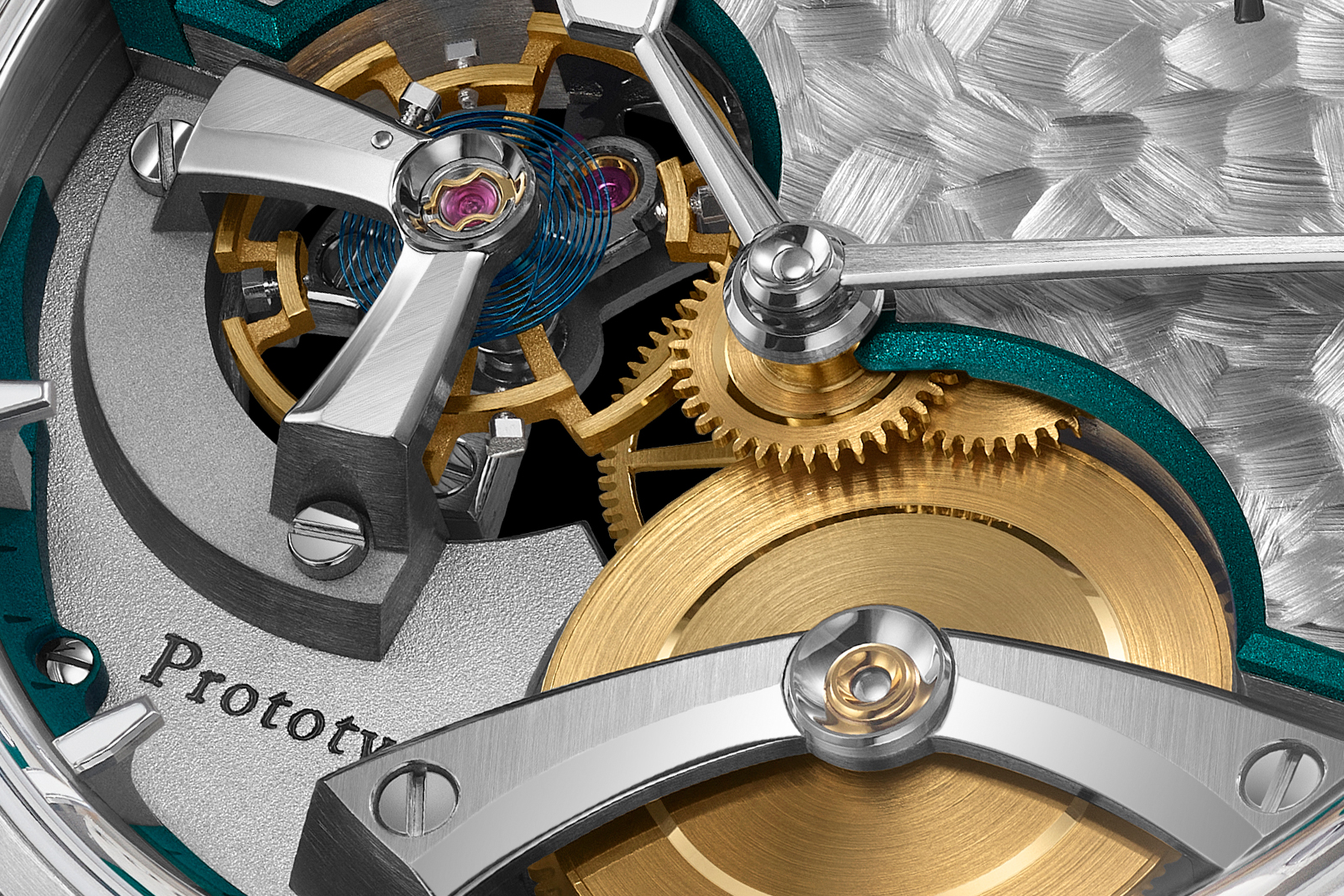
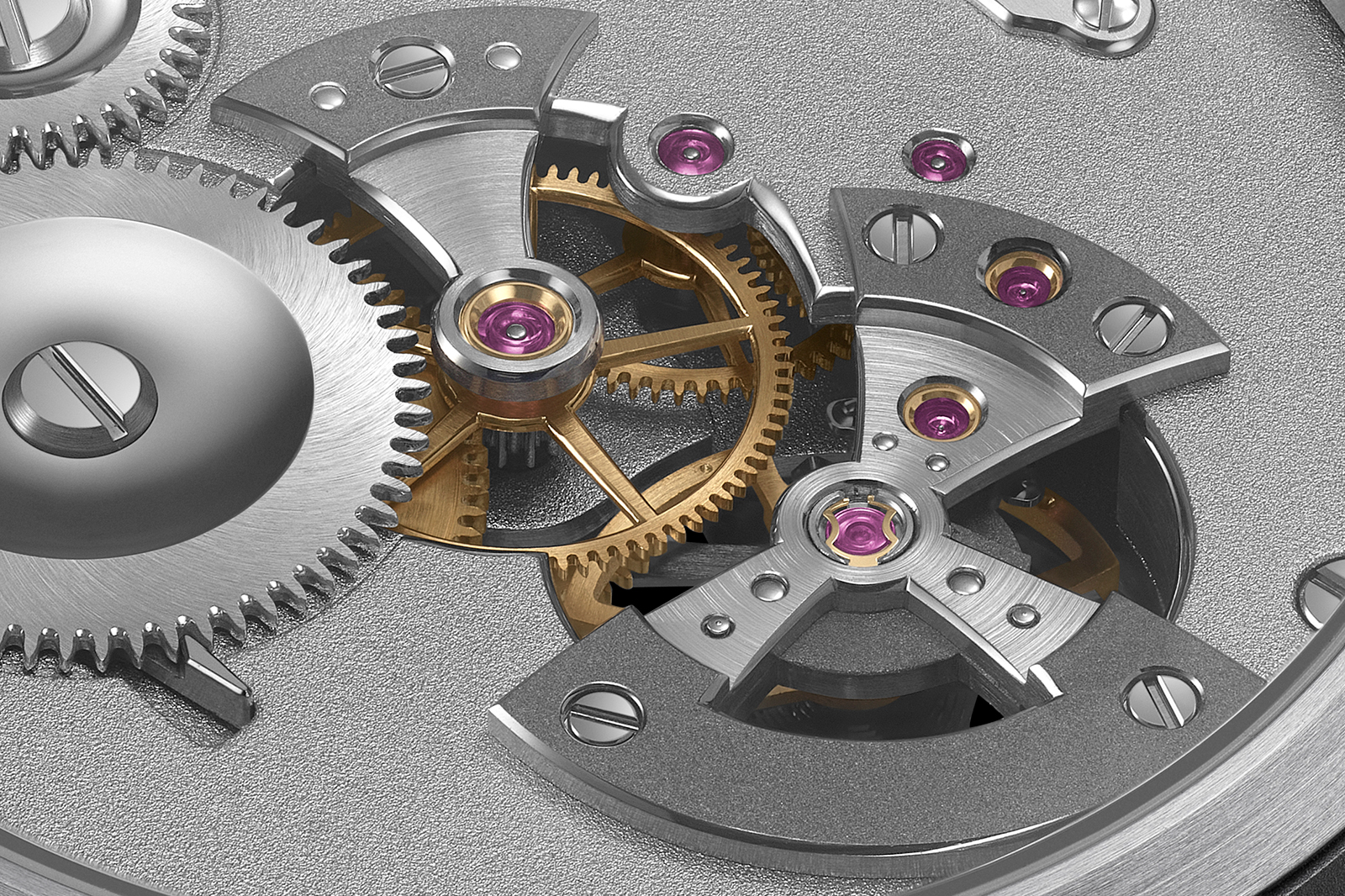
The pair build most of the movement themselves in their La Chaux-de-Fonds workshop, which is more significant than it sounds at first. Balances, for example, are often left to specialty suppliers like Precision Engineering, Atokalpa, or Feller Pivotages. Instead, Ramel-Sartori opted to make its own balance, even folding its own overcoil hairspring in a similar vein to Voutilainen or Greubel Forsey. And it is quite a sightly balance at that, important as the open dial puts it on prominent display.
While not objectively better in terms of performance, doing these things “in-house” makes the watch more distinct. The screws on the balance rim appear to use the same square head as the screw holding the stud in place, which is a nice touch. It makes the watch more visually cohesive and, presumably, means the watchmaker can use the same tool for both.
Soaring Bridges
The balance and barrel bridges are both titanium with a straight grained finish on the top and a generous specular polishing along the chamfers. Those chamfers are asymmetric and much broader on the side of the bridge facing the wearer.
On close inspection, the highly polished bowel-like surrounds are separate parts, creating a sharp transition that would be difficult to accomplish if it were all one piece.
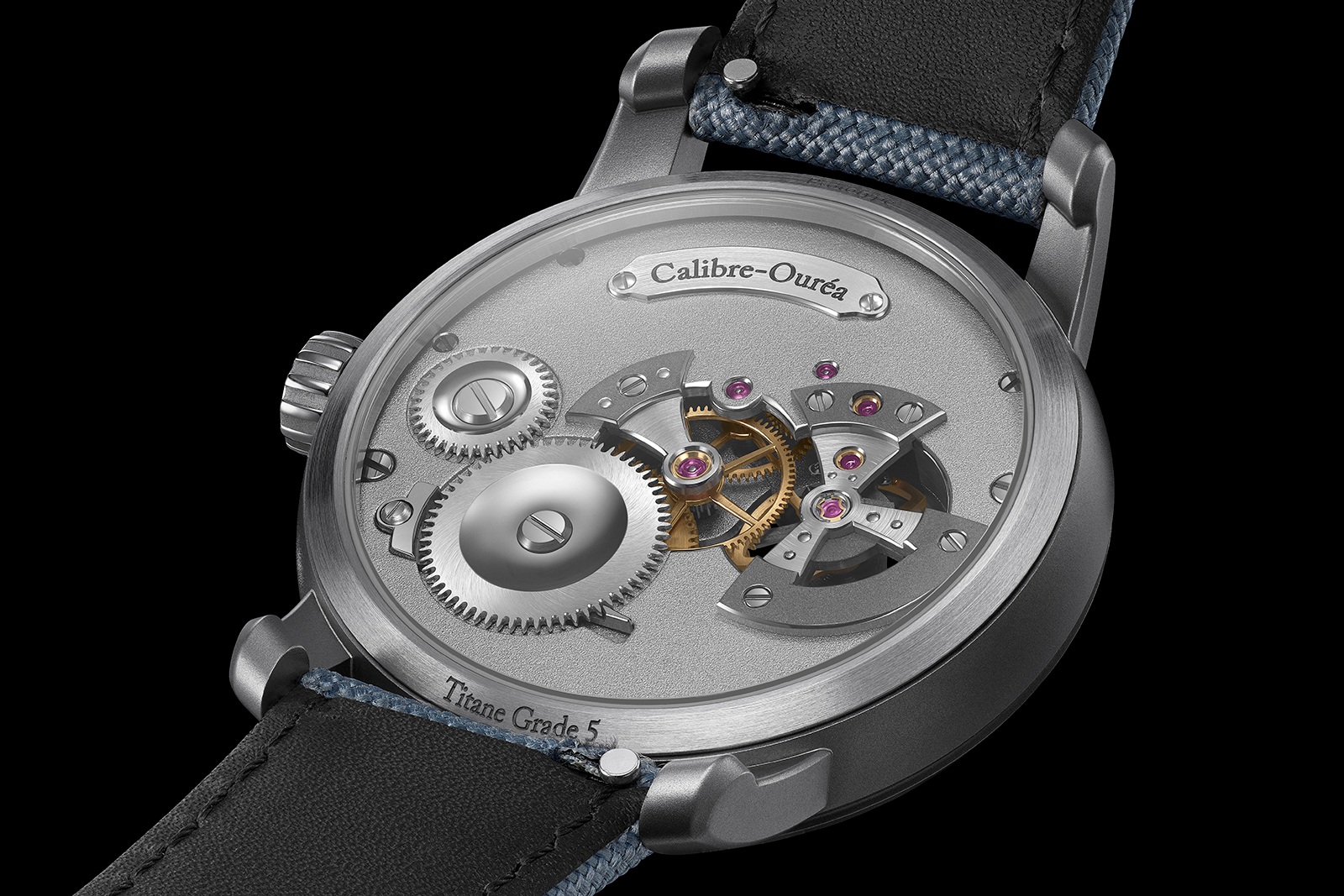
I suspect use of a metal bushing, rather than a jewel, is a consequence of the bridge material, titanium not being especially conducive to jewelling – though it can be done. On the back, a gold chaton sits between the centre wheel and both escapement jewels and the titanium bridge, while the Incabloc jewels sit inside a subassembly.
The Greubel Forsey influence I observed (or imagined) on the front is stronger on the back, especially with the tripod balance bridge and judicious application of hand anglage.
It uses a bar-style click, which has seen a recent resurgence in popularity, probably in part due to Phillipe Dufour, though Aubert Ramel uses a less common arrangement with the ratchet wheel on top and the click underneath.
That barrel holds a weekend-proof 72-hour mainspring, which isn’t needed in the type of watch, but is a nice amenity – and going the extra mile is something of a theme of this watch.
Key facts and price
Aubert Ramel Ouréa
Diameter: 40.40 mm Height: 11.50 mm Material: 18k yellow gold Crystal: Sapphire Water resistance: 50 m
Movement: Ouréa Features: Hours, minutes. Frequency: 18,000 beats per hour (2.5 Hz) Winding: Manual Power reserve: 72 hours
Strap: Leather
Limited edition: 14 in grade five titanium
Availability: Direct from Aubert and Ramel Price: CHF72,000 (~US$90,000 before taxes and tariffs)
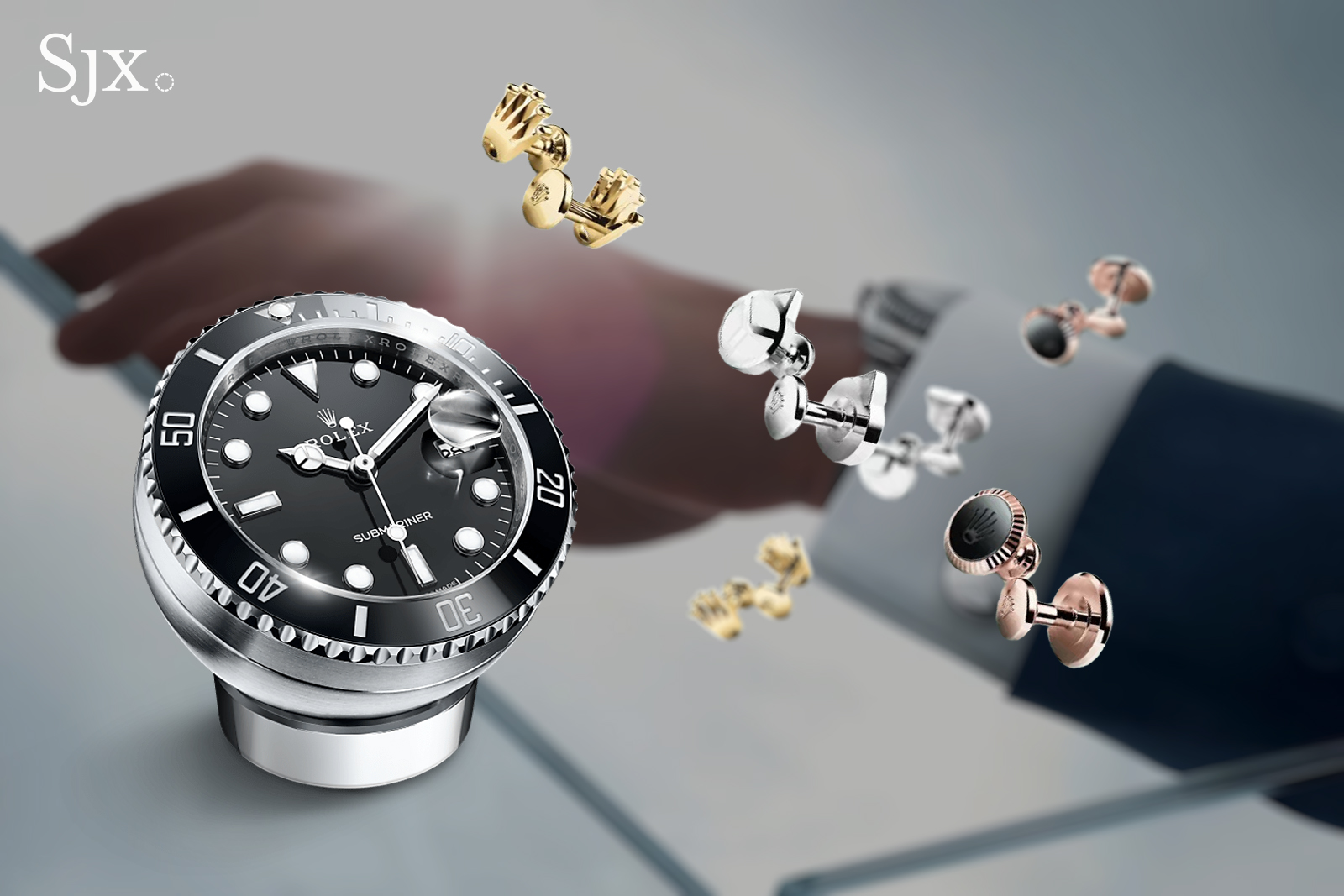
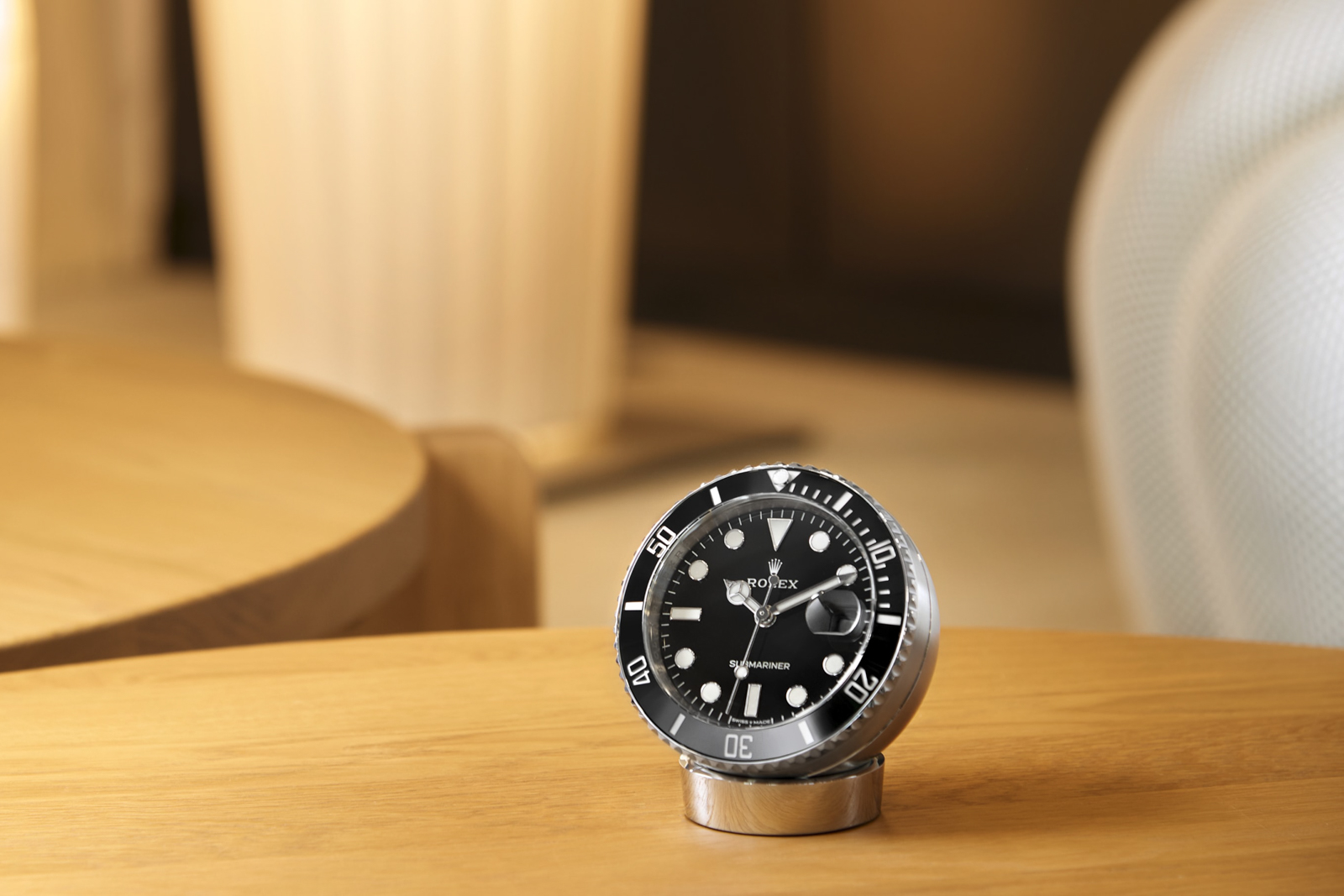
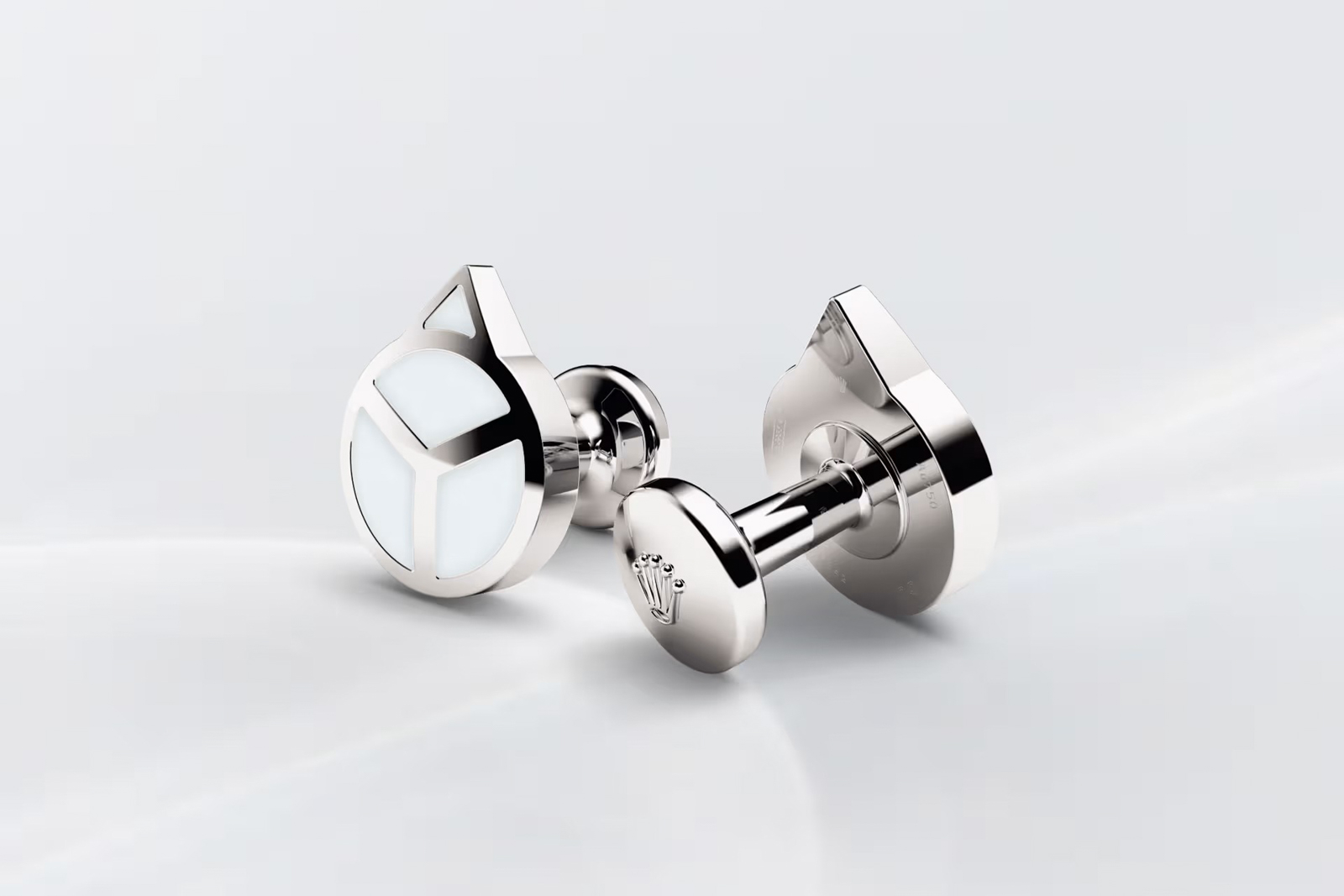
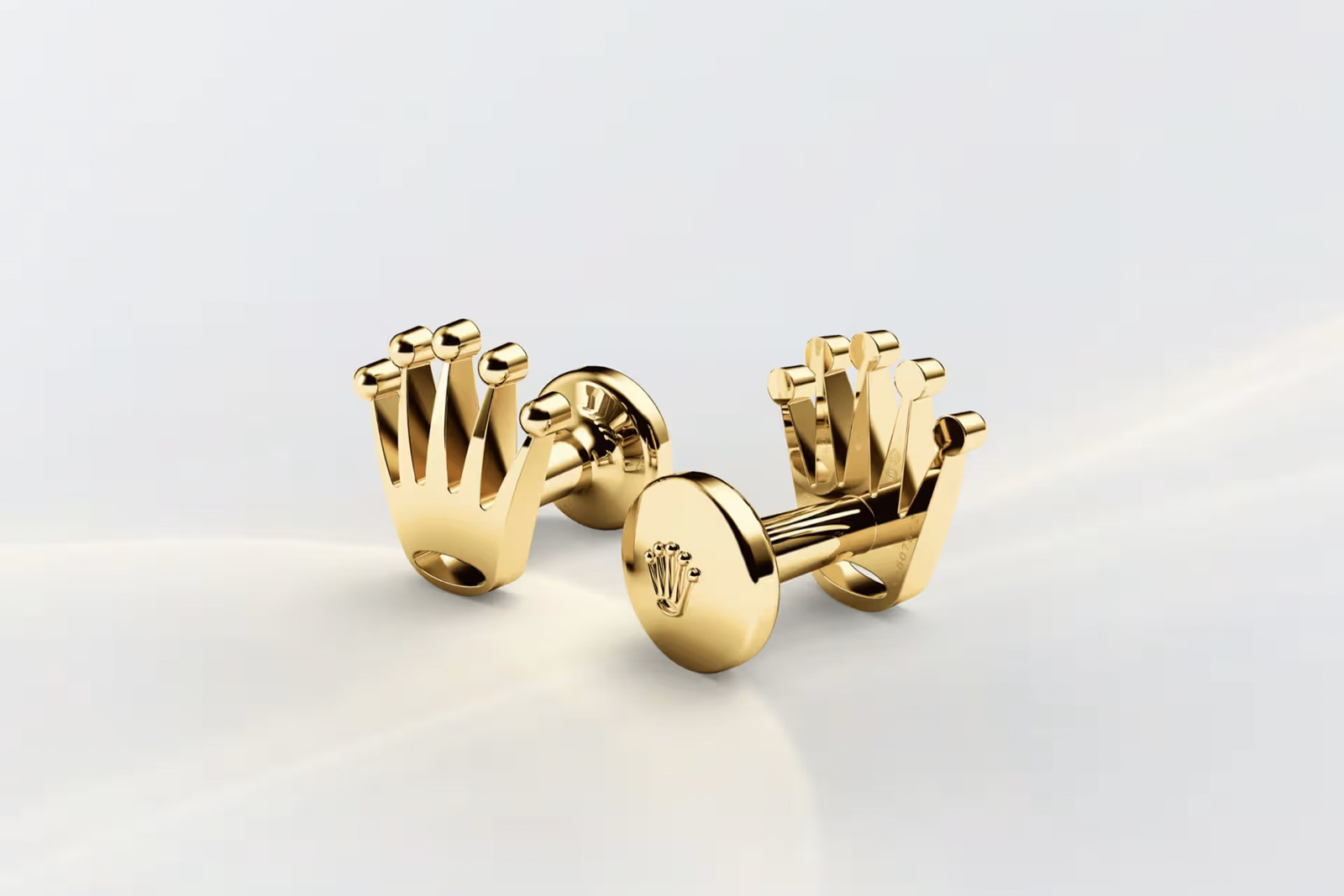
Rolex has just unveiled a fully branded line of accessories for office dwellers, featuring both cufflinks and a genuine Submariner desk clock. The move not only extends the brand’s product range, but reinforces its lifestyle dominance beyond its traditional domain.
With its decades-long reputation for precision, quality and retail discipline, Rolex has planted a new flag: high-end accessories built with the same seriousness and iconic design language as its wristwatches.
Initial thoughts
Rolex has earned its dominant position in the Swiss watch industry in large part by taking everything it does very seriously. So it’s not surprising to see that the formal launch of a full line-up of accessories is treated with due seriousness.
This is not the first time that Rolex has offered cufflinks; some references were exhibited at Watches & Wonders this year and have been quietly available for purchase at brand boutiques for some time. But the formal roll-out on the website is a decisive step, and reveals that Rolex wants to give its legions of fans another touchpoint with their favourite brand.
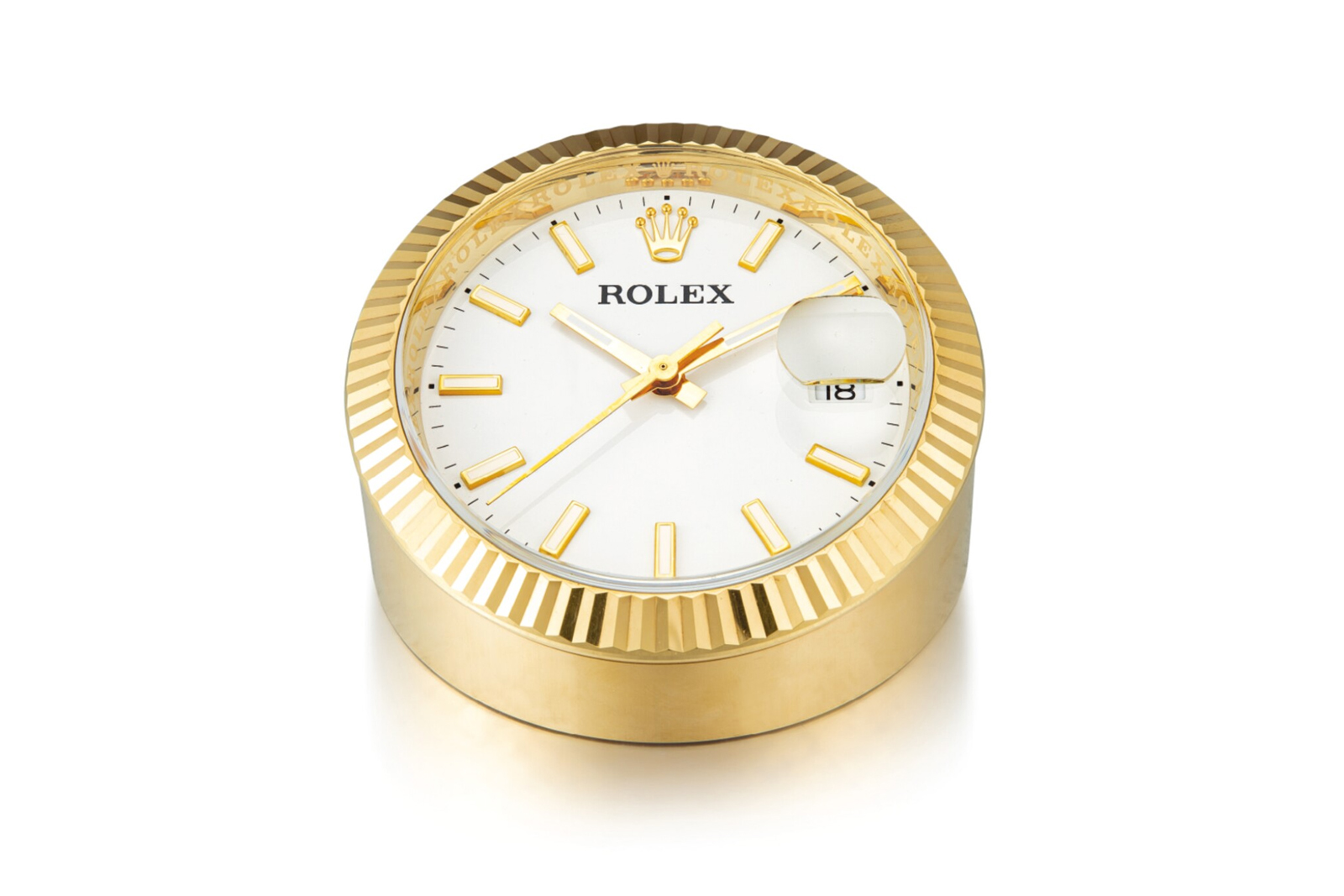
On the other hand, the official desk clock is new and quite surprising in its execution, though perhaps it shouldn’t be. Rendered in a heavy 80 mm stainless steel body with a real Cerachrom ceramic bezel and sapphire crystal, it feels like a true Submariner (albeit one that is not water resistant).
In terms of value, the accessories are expensive in an absolute sense but are priced reasonably enough to remain in short supply. More importantly, the pricing is supported by undeniable quality. The thoughtful movement in the desk clock, in particular, goes far beyond what could have reasonably been expected in both functionality and finishing.
The ultimate desk diver
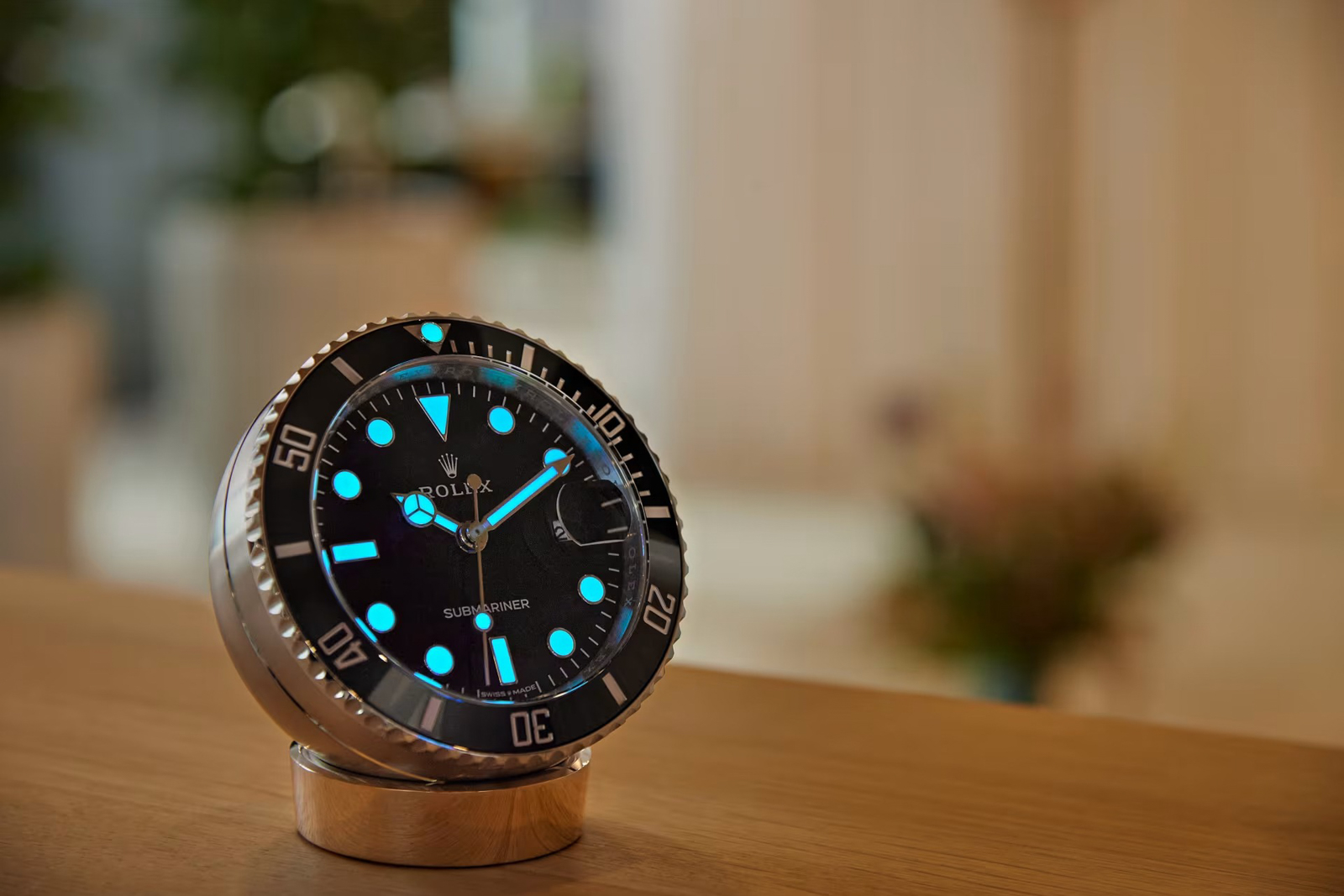
The big story is the desk clock. A quick Google search reveals hundreds of unofficial Rolex clocks, mostly low quality plastic affairs seeking to replicate the brand’s signature models. In contrast, the new Rolex Submariner deck clock is the real deal, made with utmost care from the same materials as the Submariner wristwatch.
Scaled up to 80 mm, the desk clock is big and heavy, with a stainless steel body, Cerachrom bezel, and sapphire crystal. It’s not water resistant, nor is it a certified chronometer, so the usual ‘Superlative Chronometer’ dial text has been correctly omitted, giving the dial a pleasing degree of simplicity.
A simple quartz clock movement would probably have been enough for most buyers, but Rolex went as far as developing a new Swiss-made quartz cal. 8335. The new calibre appears to be derived from the non-secular cal. 8235, which has powered Datejust-style desk clocks for over a decade, though those were never officially for sale.
It’s unclear how much, if any, of the movement is built in-house, and it’s more likely that Rolex partnered with a supplier for something like this, but it’s an official Rolex movement, nonetheless.
What’s more, it features a first for the brand: an LCD display. The display itself is located on the movement, visible only when the case back is removed for time and date setting. When the crown is pulled, the LCD comes to life to display the current date, month, and year. That the calendar is pre-programmed secular perpetual calendar functionality, which accounts for leap years and the unusual non-leap year cycles in the distant future.
The movement is finished to a high standard that looks good alongside the brand’s wristwatch movements, with full metal construction and attractive Geneva striping. It’s powered by a pair of lithium CR2477 batteries, but the battery life has not been disclosed. That said, the movement features an end-of-life indicator, common among high-end quartz movements, that changes the behaviour of the seconds hand before the batteries die, giving the owner time to replace them.
If I have to nitpick, the electronic movement could have been endowed with additional functionality, perhaps an alarm – found in Audemars Piguet’s Royal Oak desk clocks – linked to the rotating bezel. As it is, the bezel is fixed, and the functionality is limited to just the time and date.
A cal. 8235 powered Rolex desk clock given to an employee for 40 years of service in 2010. Image – Sotheby’s
Cufflinks
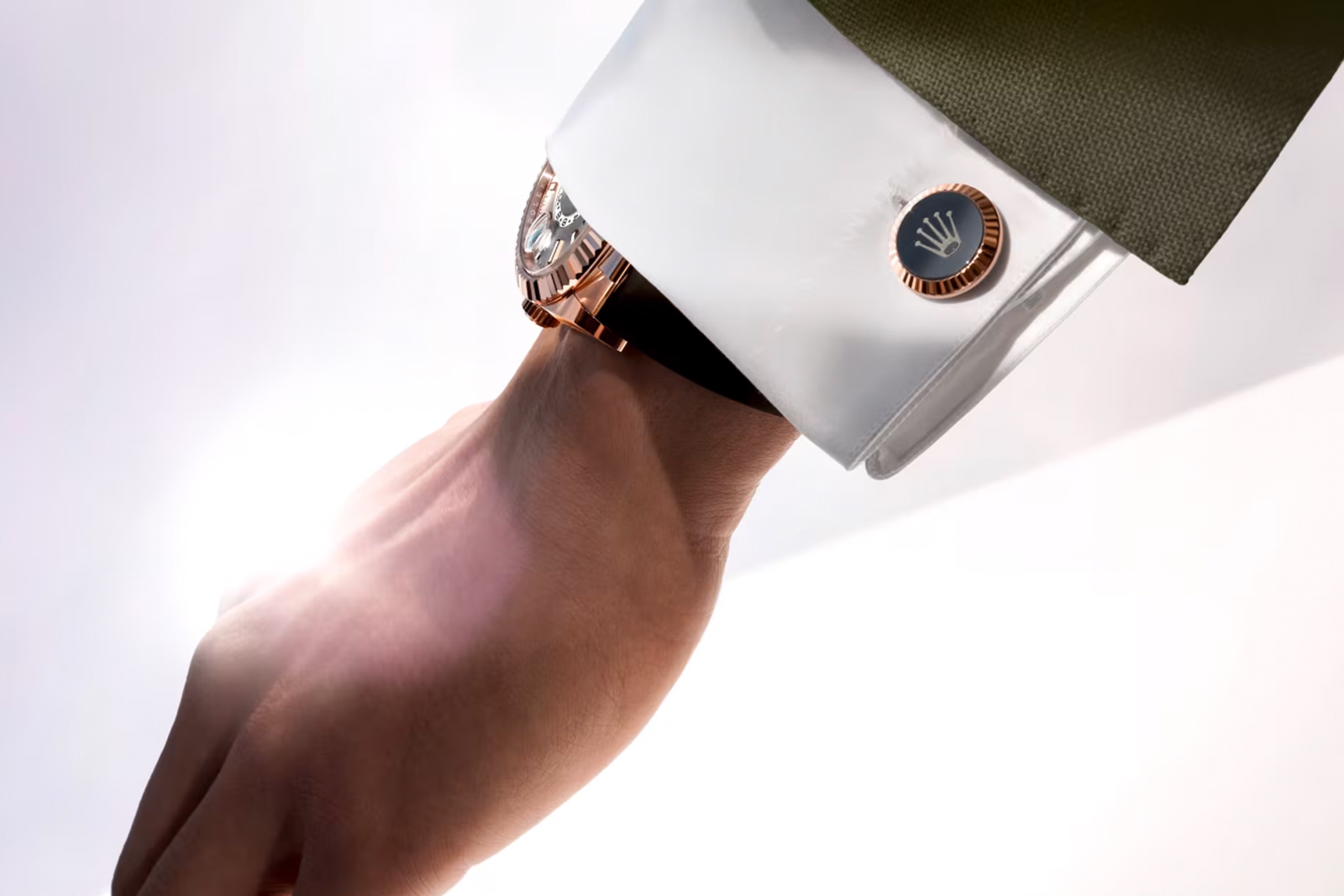
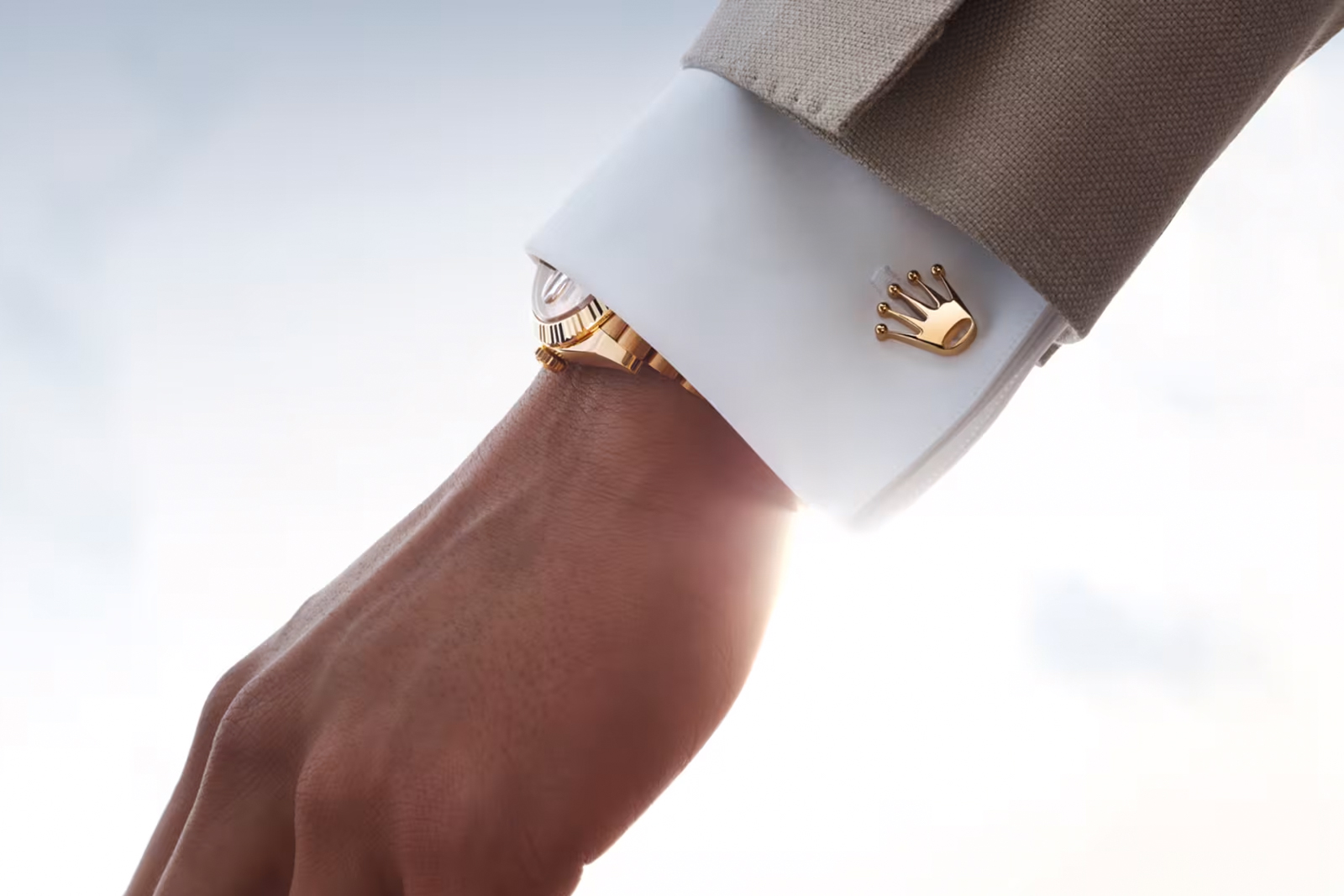
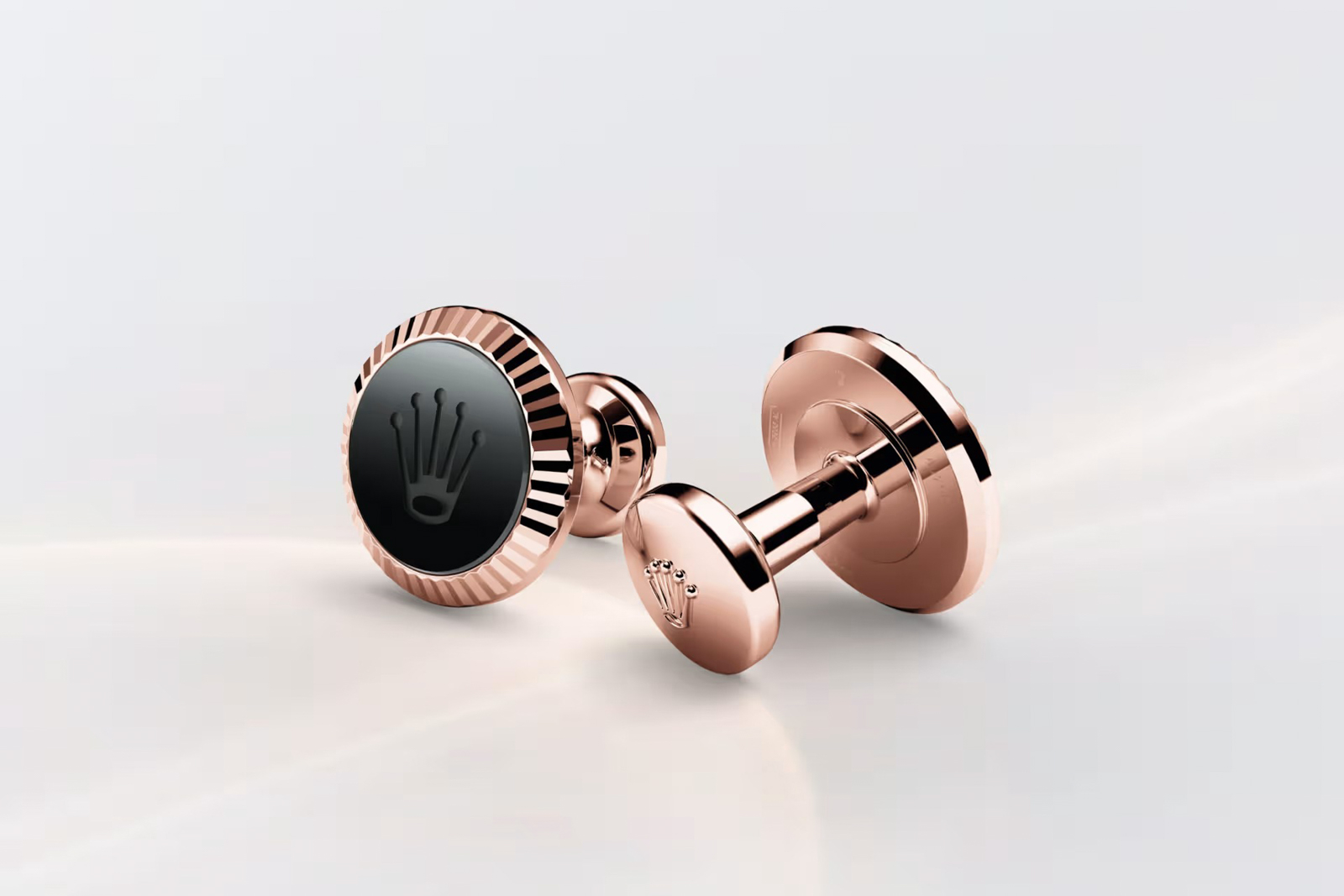
The formal rollout of the cufflinks collection is comparatively straightforward. Made using the brand’s signature materials like Everose gold, Cerachrom ceramic, and Chromalight lume, the cufflinks are otherwise ordinary in functionality, distinguished only by their materials, colours, and designs.
There are three designs to choose from, and each is available in sold 18k yellow, white, or Everose gold, the brand’s proprietary tarnish-resistant rose gold alloy. The first is the signature crown, the second replicates the hour hand design found on most of the brand’s sport watches, and the third is inspired by the fluted bezel, and features a ceramic inlay of the crown logo.
Interestingly, the ‘hand’ cufflinks are lumed with Chromalight, just like the real thing. At this size, they should glow brightly in low light. That said, the design will pair best with a sport watch with matching hands. Proceed with caution; pairing a sport watch with formal wear is thought to be something of a faux pas among those who pay attention to that sort of thing.
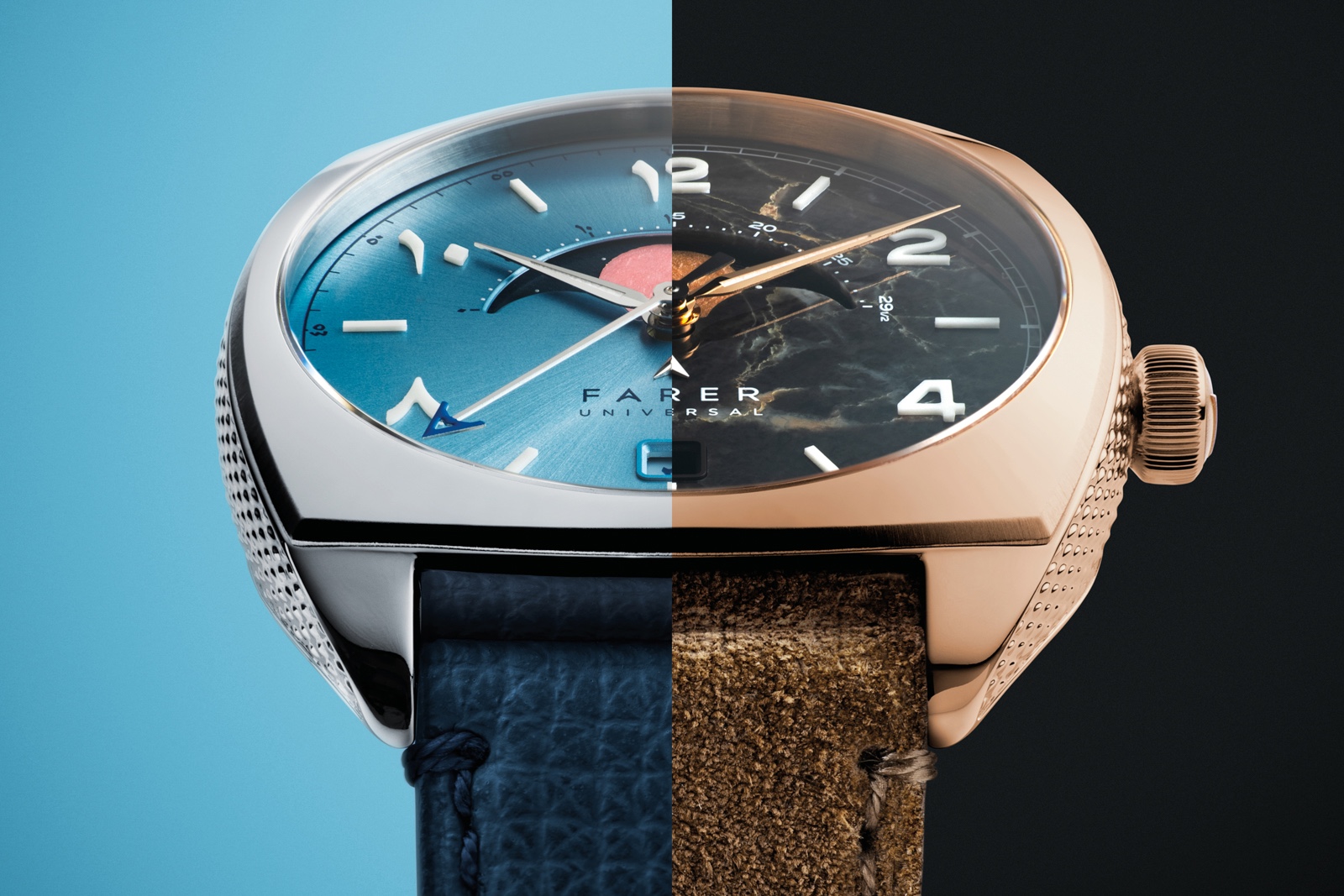
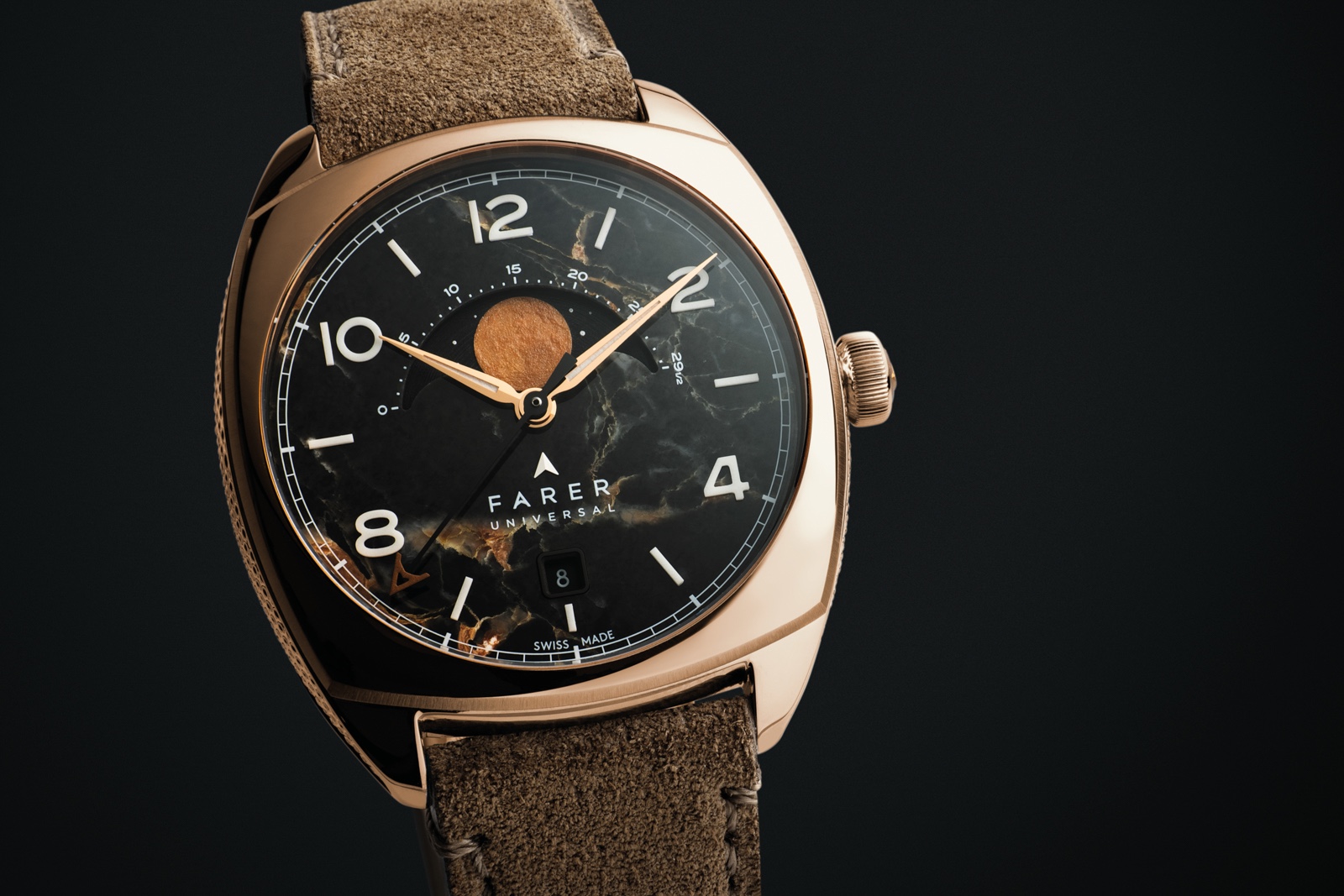
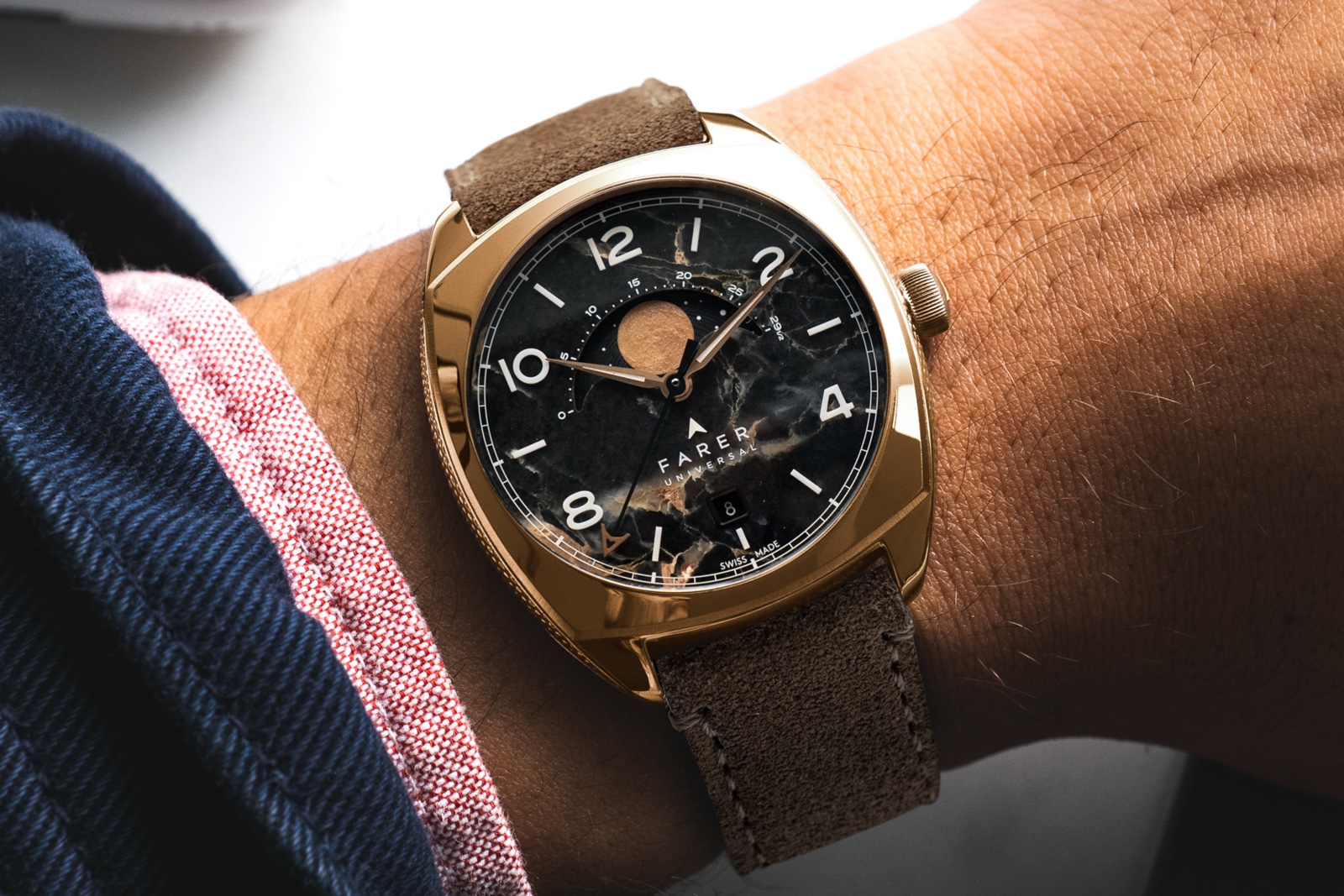
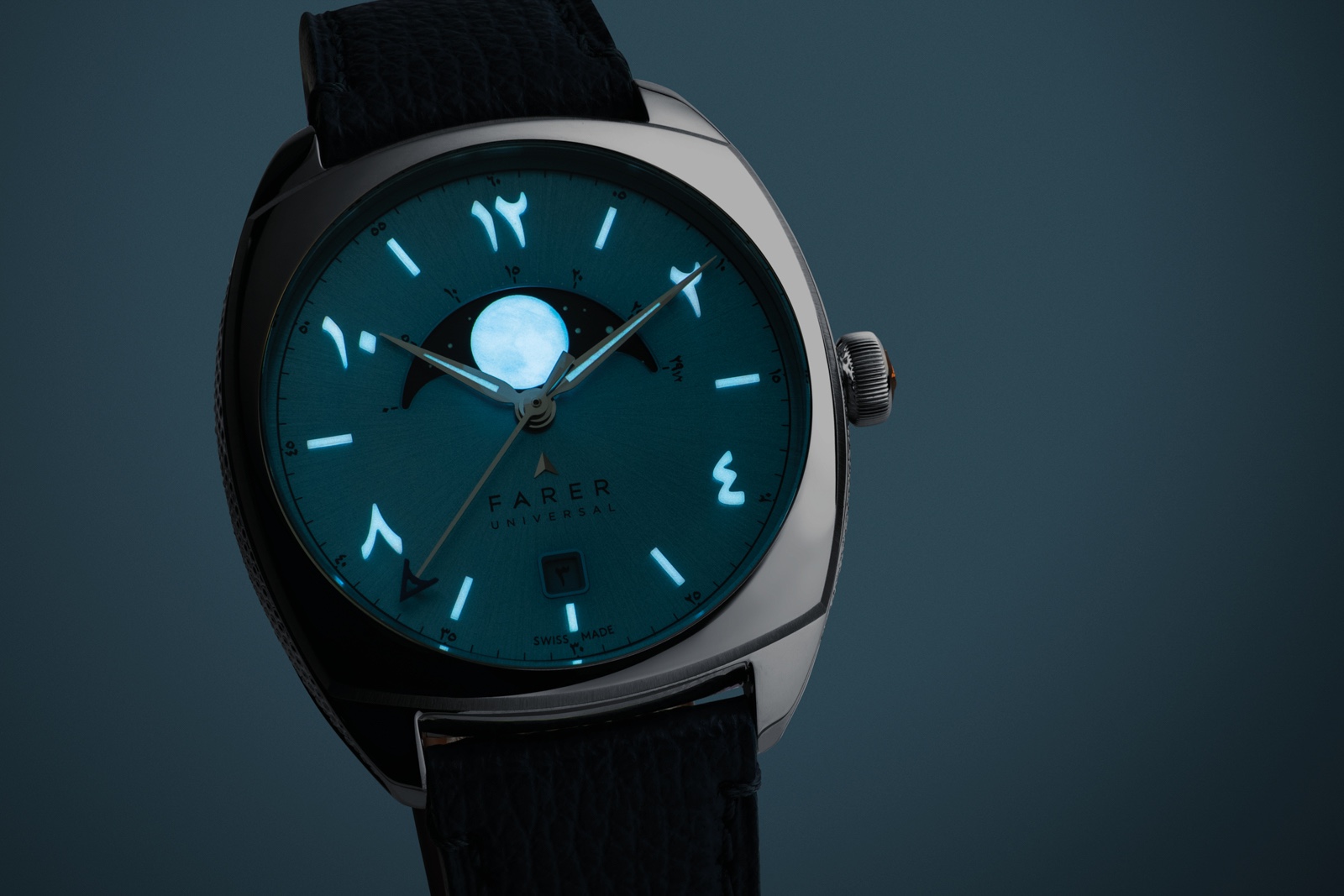
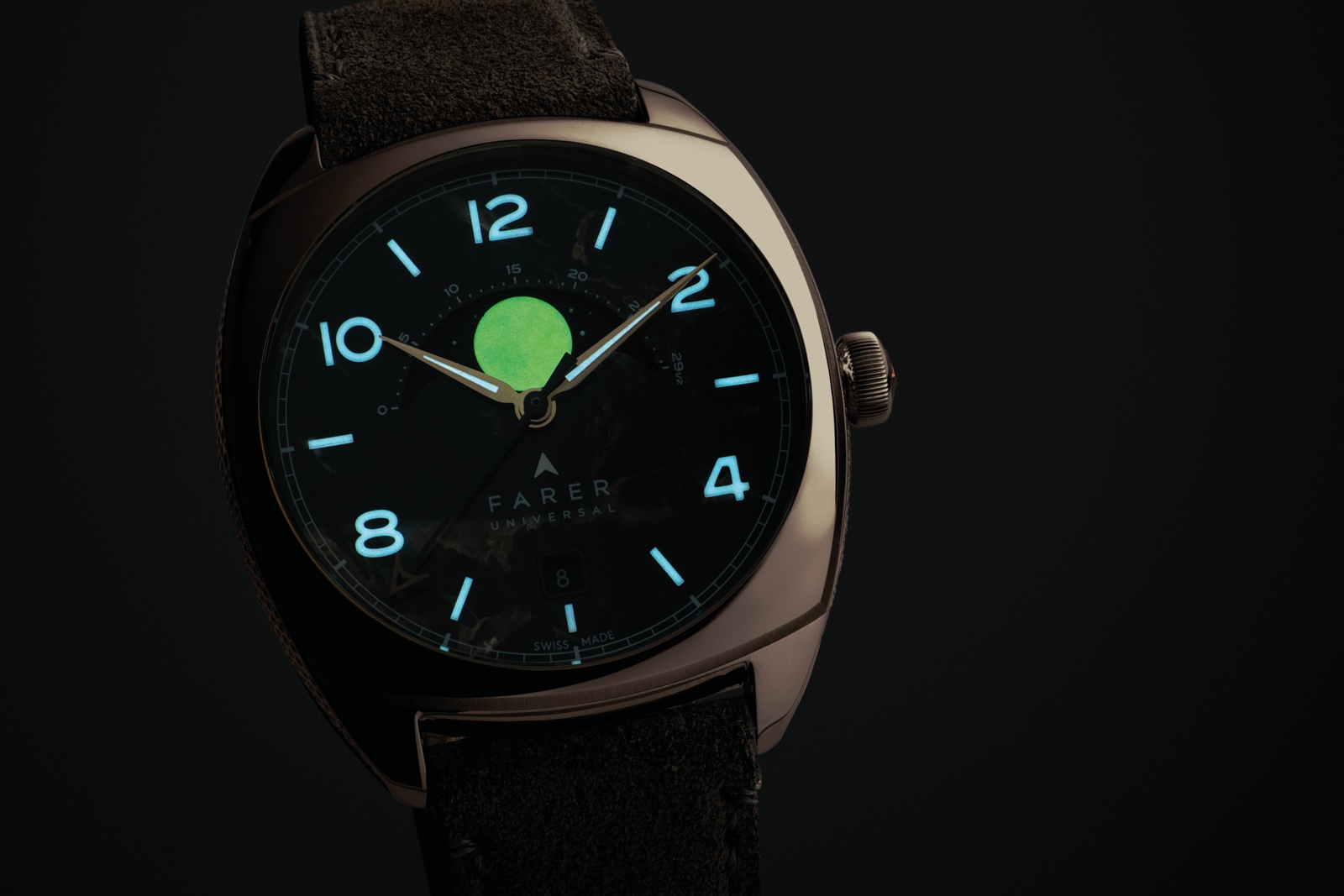
Farer has managed to carve out its own niche in the new wave of British-founded, Swiss-made brands, with playful (and skillful) use of colour and accessible pricing. Two new additions to the Moonphase collection continue that pattern: the Stratton and Burbidge feature Farer’s signature cushion-shaped case and crisp detailing that gives them an unmistakably contemporary feel despite their traditional inspiration.
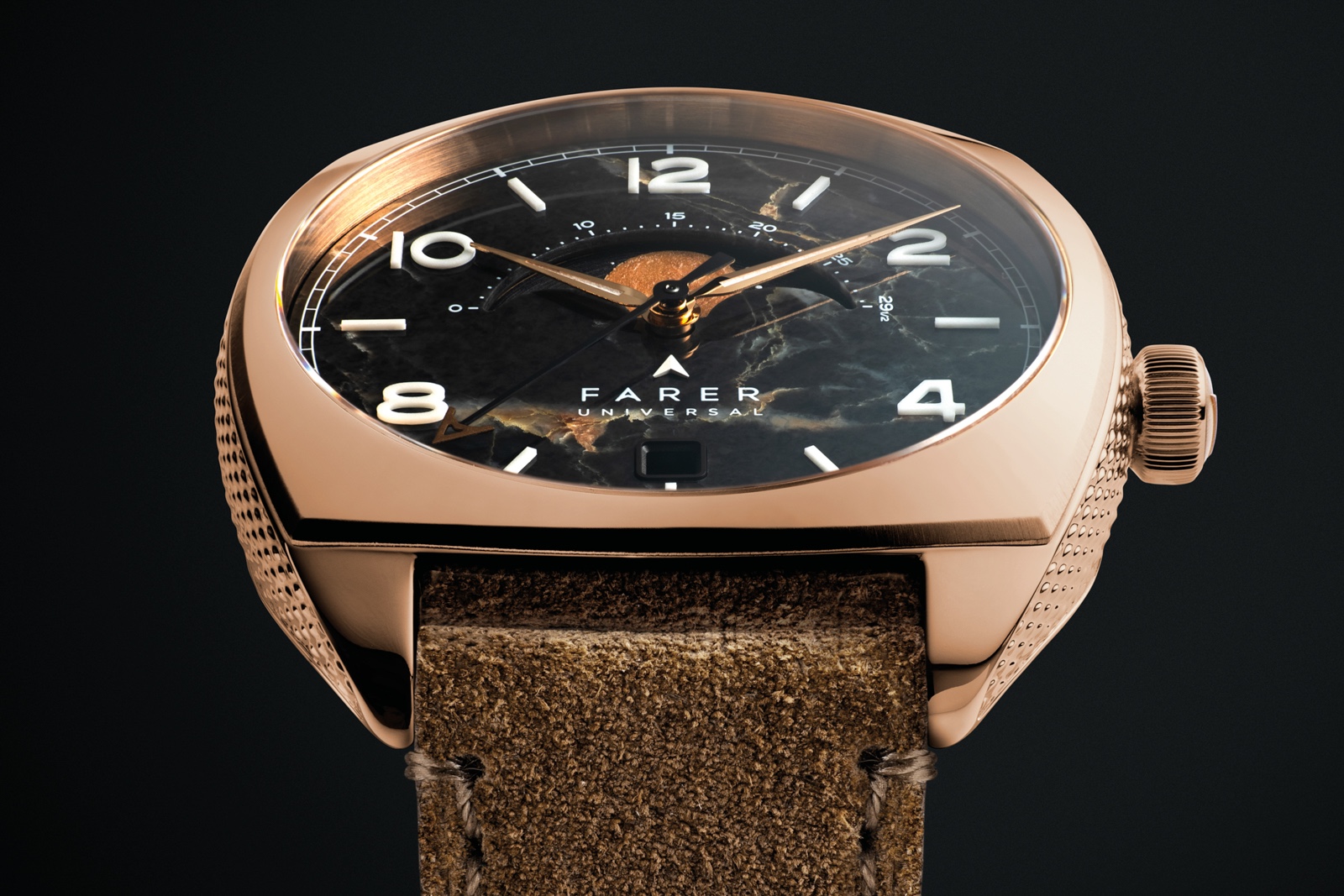
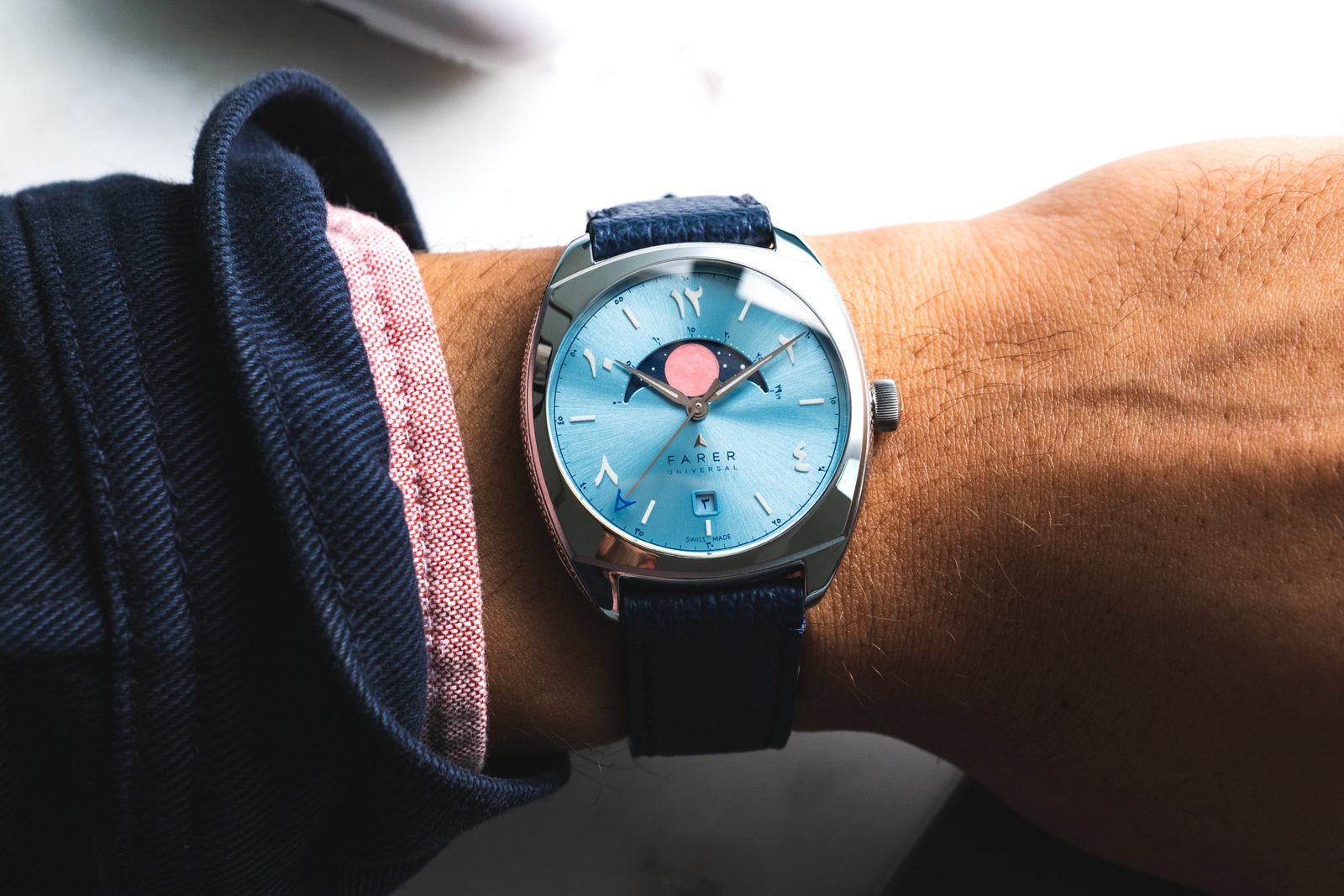
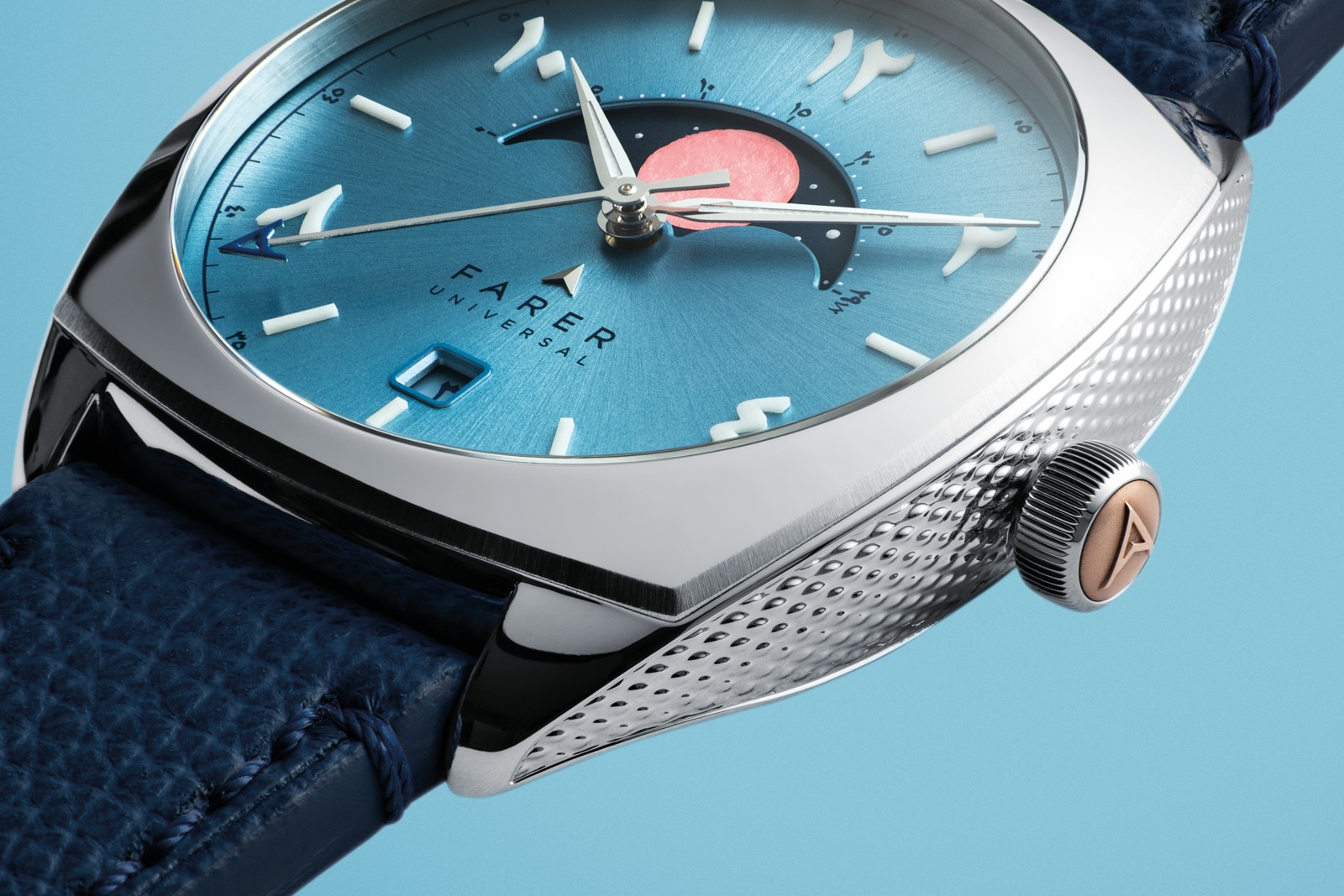
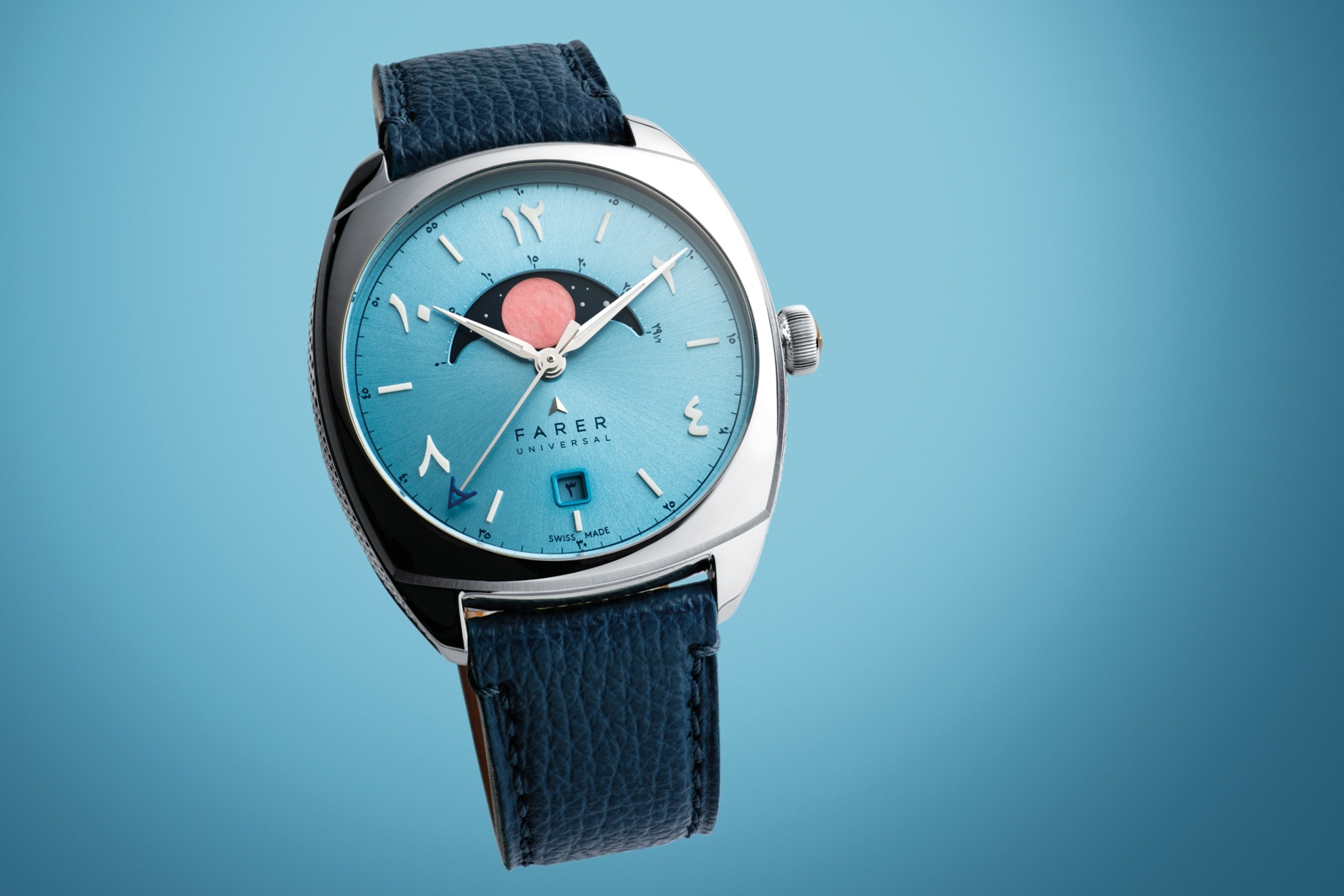
The Stratton is the second Farer model to feature a natural stone dial, this time in Eisenkiesel quartz, while the Burbidge, limited to just 100 pieces, flaunts trendy Eastern Arabic numerals and a playful blue-and-pink palette.
Initial thoughts
Farer’s brand identity is rooted in British design and Swiss production; in this respect it’s similar to Christopher Ward and Fears. The brand offers a playful, and often colourful, twist on traditional tool watch motifs.
The Moonphase collection is among the brand’s dressier offerings, and the Stratton and Burbidge are each interesting in their own right. The most eye-catching of the pair is the limited edition Burbidge with Eastern Arabic numerals for the dial and date wheel. The blue and pink colourway is charming and the exotic numerals will likely prove to be something of a ‘secret handshake’ among those who are up-to-date with collector culture.
The Stratton, named for British astronomer Frederick Stratton OBE, sticks to regular numerals but features a natural stone dial made of Eisenkiesel. The thickness of the stone, which is a type of quartz veined with streaks of iron, adds about 1 mm to the thickness relative to the simpler Burbidge.
Both models feature Farer’s familiar cushion-shaped case, with flanks that are stamped with a grain d’orge pattern. Exterior patterns like this can come across as overwrought, but because it’s not visible straight on, it doesn’t overwhelm the design. In fact, it’s subtle enough to be a fairly private detail, and livens up the tactile experience of the watch.
The moon phase itself is positioned prominently, rotating around the same axis as the central hand stack. On a technical level, the Sellita SW288-1 M uses a 59-tooth moon phase wheel so it will need to be corrected every two to three years. This is not really an issue in reality, since watches like this are geared toward collectors who will wear them in rotation.
An appealing aspect of both models is the aggressive pricing, which undercuts big brand offerings from Tudor and Orient. This is crucial, since industrial powerhouses like Tudor retain the edge when it comes to overall build quality. The Stratton and Burbidge straddle the US$2,000 mark, and despite the low price they feel anything but generic, which enhances the value proposition.
Light and colour
The dials of both watches should glow profusely thanks to Lumicast numerals on the dial; the three-dimensional lume blocks are particularly striking on the Burbidge due to the Eastern Arabic font. Lume blocks are increasingly common, from micro-brands like Farer to industrial brands like Tudor and Omega. Even F.P. Journe uses lume blocks to light up the brand’s Octa Sport collection.
The lume continues on the moon phase disc itself; each moon is hand painted with Super-LumiNova. The gold-coloured lume on the Stratton was actually developed with Tritec (a major supplier of luminous material) specifically to match the warm tones of the natural Eisenkiesel dial and gold-coloured PVD finish on the case. Gold by day, the Stratton’s moon glows green in the dark.
Movement
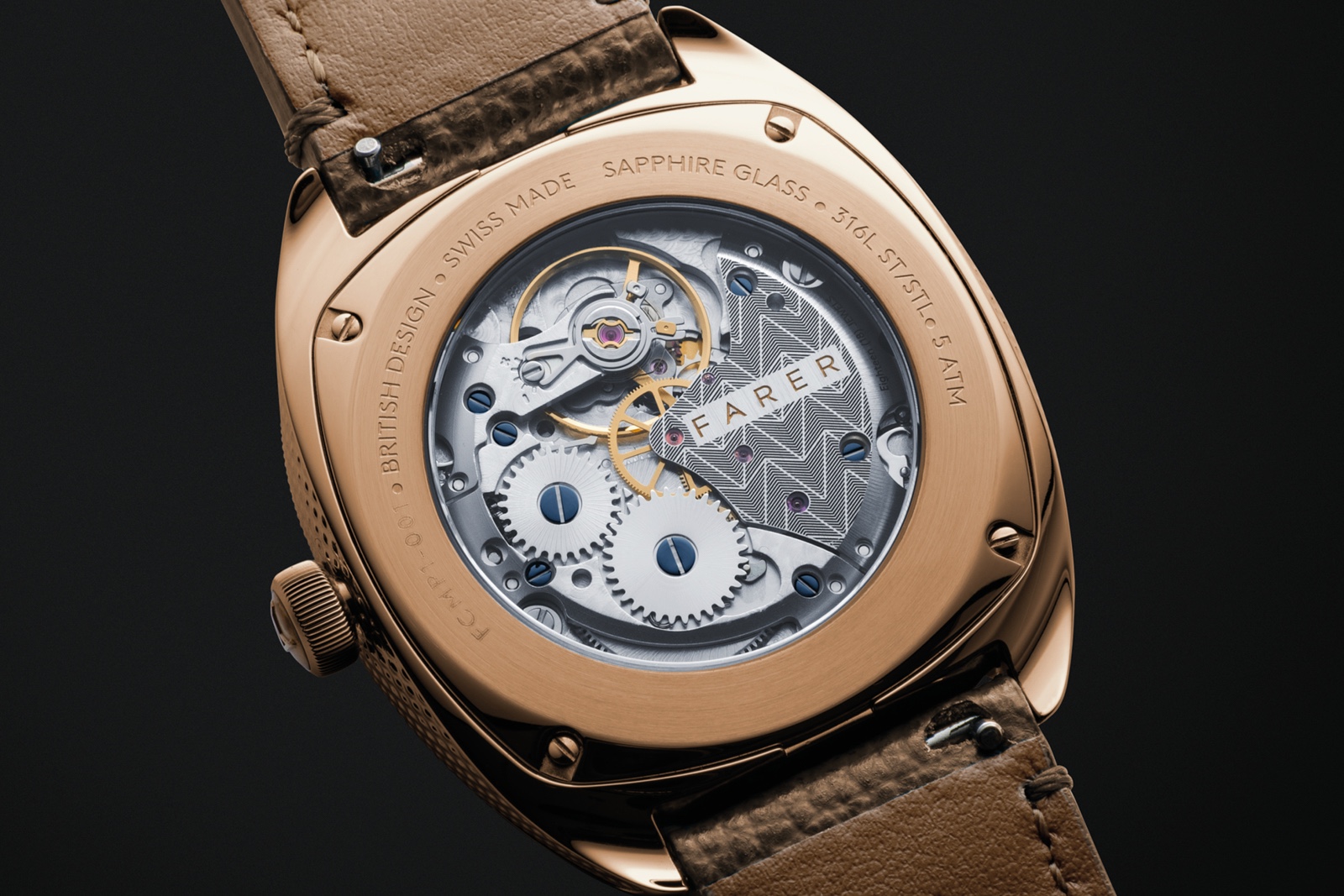
The Farer Moonphase is powered by a manually wound Elaboré-grade Sellita SW288-1 M. A tried-and-true movement used throughout the industry, the Elaboré designation indicates it’s a notch up from the supplier’s standard stock, but isn’t adjusted to chronometer-grade precision.
This limitation is reasonable since the savings are passed to the customer, and even though the movement isn’t much to look at, the bridges are embossed with a repeating pattern based on the brand’s logo, which is a motif we’ve seen before from big brands like Cartier and Hermes.
Diameter: 38.5 mm Height: 11.5 mm (Stratton); 10.5 mm (Burbidge) Material: Stainless steel Crystal: Sapphire Water resistance: 50 m
Movement: Sellita SW288-1 M Functions: Hours, minutes, seconds, date, and moon phase Winding: Manual-wind Frequency: 28,800 beats per hour (4 Hz) Power reserve: 45 hours
Strap: Leather strap pin buckle
Limited edition: Burbidge limited to 100 pieces Availability: Directly from Farer and its retailers Price: US$2,075 (Stratton) and US$1,895 (Burbidge Eastern Arabic Edition) excluding taxes
Every great collection is a reflection of its owner. In the case of Thomas Engel (1927-2015), the imprint is unmistakable; the mind of an inventor, the discipline of a scientist, and the independence of a man who built his fortune by intuition and sheer will.
Engel lived through war, displacement, and postwar scarcity, only to reinvent himself in the 1950s as a pioneer of polymer chemistry. By the time he turned to horology, he had already registered more than a hundred patents, licensed his inventions to multinational firms, and been hailed as a ‘modern Edison.’
The story that follows is drawn from Engel’s own accounts, above all his two books — Breguet: Thoughts on Time and Ein Moderner Thomas Edison — which preserve his memories, methods, and reflections. They allow his voice to guide the narrative, from his earliest mistakes to his most celebrated acquisitions, and from his inventions in plastics to his interpretation of Abraham-Louis Breguet’s works.
Engel brought to collecting the same qualities that had defined his scientific career: a commitment to verification, a reliance on systematic method, and an instinct for invention. Each watch he acquired was studied as an instrument, its mechanism understood and its history traced. To hold a Breguet, for Engel, was to engage in dialogue with a fellow inventor across centuries.
The man
Thomas Paul Engel was born in Leipzig in 1927, amid the uneasy calm between wars. His father, a textile merchant dealing in fine English fabrics, died when Thomas was only two. Guided by his mother, the family moved from Braunlage in the Harz mountains to Düsseldorf and eventually to Offenbach near Frankfurt, where they lived under the protection of her brother, a bank director. These early dislocations, set against the wider upheavals of Germany’s collapse and reconstruction, nurtured in Engel a resilience that marked every stage of his life.
His childhood was marked by small acts of ingenuity. In Düsseldorf he collected sheep dung, selling it to florists as fertiliser. On the family balcony he raised pigeons, which he sold and bartered. He learned early that survival required improvisation, trade, and imagination. These modest schemes foreshadowed the entrepreneurial reflexes that later brought him wealth.
Thomas Engel and his wife Sylvie. Image – Thomas Engel
The war cut short his education. At thirteen, he was drafted as a Luftwaffenhelfer, an auxiliary for the air force. He quickly shifted to the Marine branch of the Hitler Youth, where he learned rowing, navigation, and seamanship. In his memoirs he recalls these years without romance, a time of privation, fear, and interrupted schooling, where books were scarce and hunger constant. Yet they taught him self-reliance, the ability to read situations, and the discipline of working under pressure.
The immediate postwar years were austere. In Ein Moderner Thomas Edison, Engel recalled: “Only twelve years ago, I was a modestly paid pharmaceuticals salesman and English–German translator. Today, I am a millionaire.” His path to fortune grew from libraries, where curiosity and persistence became the foundation of discovery.
The turning point came in 1958, almost by accident. He noticed that plastic-coated buckets in a Frankfurt shop sold for the equivalent of $10 apiece, an astonishing sum for such a simple object. Instead of dismissing the mystery, he went to the Amerika Haus library and borrowed every book on plastics.
Night after night he studied, teaching himself polymer chemistry from scratch. Within months he had absorbed enough to begin experimenting. His autodidactic method became his trademark: immerse in sources, extract principles, test them through thought and trial, then reduce them to practice.
By 1969, Engel had registered sixty patents in polymer technology. His specialisation was cross-linked polyethylene (PEX), a strong but flexible material now widely used in residential piping. He licensed his “peroxide method” for producing PEX-A to 45 international companies, and it is still in use today. International Management magazine profiled him that year as a “one-man thinking machine.” Each patent earned licensing fees in the tens of thousands of dollars, and within a decade Engel was independently wealthy.
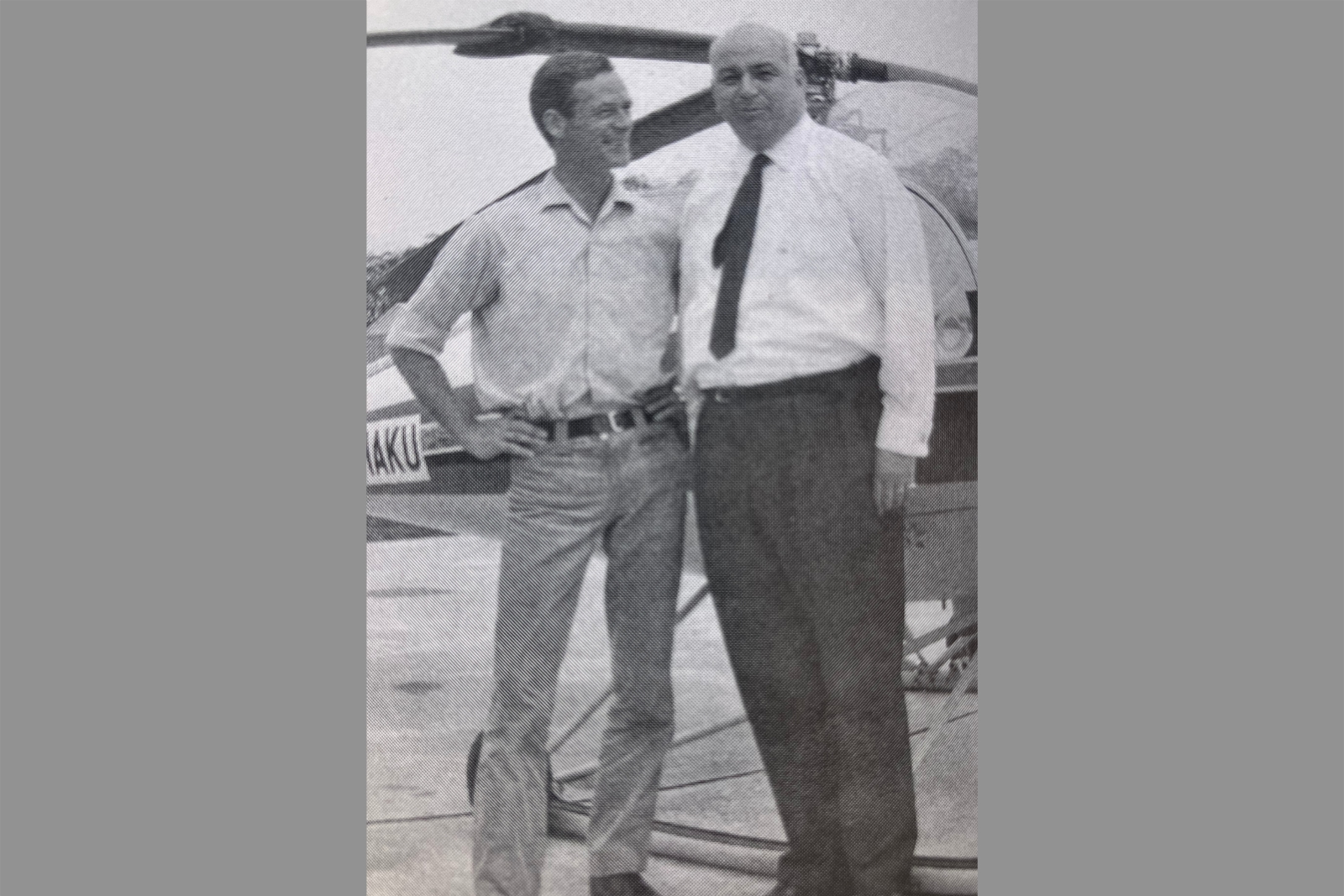
His independence became legend. Corporations courted him with offers of permanent employment, but he refused. “The risks may be greater working alone, but so are the advantages. I like the freedom I have, and I can earn more this way.” He lived in Heusenstamm on a 15,000 square-metre estate that had once been a potato field, building a bungalow with adjoining laboratory, gardens, a swimming pool, and, most dramatically, a heliport. He trained as a pilot, logging over a thousand accident-free hours before reluctantly selling his helicopter when time no longer allowed him to fly safely.
Recognition soon followed. In 1972 Engel received the Rudolf-Diesel Medal for invention at the same ceremony that honoured Wernher von Braun. He was later made an honorary Freeman of the City of London and an honorary member of the Worshipful Company of Clockmakers, distinctions seldom granted to a German entrepreneur.
Journalists described him as a modern Edison, a title he welcomed. He declared in Ein Moderner Thomas Edison: “It is often said the days of a Thomas A. Edison are past, but they aren’t. A basic idea can generally be traced to a single man. That is a credo of mine.”
This creed framed his life. He believed invention thrived through the vision of individuals willing to risk failure. He treated mistakes as essential steps in the cycle of discovery. That philosophy, born with pigeons in wartime Germany, strengthened in the Amerika Haus library, and rewarded through patents and wealth, later shaped his path as a collector.
When he turned to watches, he approached them as he had polymers, as problems to be solved, systems to be understood, and inventions to be preserved.
The collector: the first lesson
Engel’s path into collecting began by chance, through business. On a London trip in the early 1960s he was seeking contacts for his new plastics process, hoping to secure licensing agreements. One of the men he met was Cyril Rosedale, a bachelor and discreet English gentleman with a quiet reputation as a connoisseur.
Their conversation turned unexpectedly to watches. Engel, fresh with success in industry, confessed that he had just bought a pocket watch signed Breguet from a shop in town. Rosedale examined it and delivered the verdict without hesitation. “That is no Breguet,” he said. “It is a Jura watch, made long after Breguet’s time. The signature means nothing. Breguet’s work is always marked by simplicity, never by ostentation.”
Stung, Engel listened as Rosedale produced a cigar box from his cabinet. Inside lay genuine Breguets, each with provenance. He handed Engel one once owned by Jérôme Bonaparte, sold in 1809 for 3,200 francs. The difference was immediate; the balance of the dial, the restrained elegance, the hidden signature beneath the twelve. For Engel, the revelation was decisive.
That evening Rosedale invited him to his home, White Lodge, a Georgian estate outside London. A butler led Engel through a hall with a sweeping staircase and ancestral portraits, into a library where longcase clocks stood against the walls and trays of watches were set by the fire.
Rosedale sat in his armchair, two dogs at his feet and a spaniel on his lap, and allowed Engel to handle them one by one: repeaters, tact watches, tourbillons. Engel recalled, “One was more beautiful than the other… I could not get enough of looking at them.”
White Lodge revealed collecting as scholarship. The firelit library, the atmosphere of continuity, the quiet authority of Rosedale, all showed Engel that ownership required study, and that true authenticity rested in documentation as much as design. Rosedale explained that almost every Breguet could be verified in the Maison’s ledgers in Paris, and that certificates were issued directly from those records.
Engel left White Lodge transformed. He had entered as an industrialist curious about watches; he departed as a pupil beginning an education. Before he left, Rosedale offered a piece of guidance: “Go to Sotheby’s. Speak with Tina Miller. She will guide you.”
The Zurich connection
From London, Engel’s path soon led to Zurich. There he was introduced to Edgar Mannheimer, a dealer whose stock of Breguets was matched by his personality. He lived at Sonneggstrasse 22, a white Cadillac convertible often parked outside.
Inside, the flat smelled of garlic and sauerkraut, with paintings leaning against the walls and porcelain crowding the tables. Mannheimer himself was broad, heavyset, and wore a small black cap. He had survived two years in concentration camps and carried himself with bluntness and humour.
Thomas Engel and Edgar Mannheimer. Image – Thomas Engel
Engel’s first major purchase from him set the tone for their relationship: a red-gold Breguet from 1798, with Turkish numerals, sold originally to a caliph in Constantinople. It came with a certificate, verifiable provenance, and the secret signature beneath the twelve. “From the first moment I knew it was a Breguet,” Engel later wrote.
The relationship grew into friendship. Mannheimer and his wife Janet often visited Engel’s estate in Heusenstamm, arriving with suitcases full of watches. They shared meals and stories; Edgar spoke of the camps in his thick Bohemian-Jewish dialect. Years later, when he was dying, Janet telephoned Engel, telling him her husband wanted to see him one last time.
In the auction room Mannheimer became indispensable. Engel disliked drawing attention, so the two devised a discreet method: a nudge of the knee under the table signalled that he wanted to bid, and Mannheimer raised the paddle. Dealers knew Edgar’s reputation and rarely pressed against him. Engel valued this shield, which allowed him to buy boldly without being seen.
For Engel, Mannheimer was much more than a dealer; he was a partner and confidant. “Without him,” he admitted, “many of the watches would never have come my way.”
The Sotheby’s education
Following Rosedale’s advice, Engel introduced himself to Tina Miller at Sotheby’s. When he asked about Breguets, she replied “We have the next auction in two months, but there is no Breguet in it. That can still change, one never knows. I will gladly send you the catalogue.” For Engel it was the beginning of a friendship that lasted years.
Miller often telephoned him directly when important Breguets appeared, sometimes before they reached the catalogue. As he noted in Ein Moderner Thomas Edison: “I could always rely on her advice, especially when it came to judging the quality of a watch.”
His first great success came with a Breguet described as “in almost new condition, with chain, key, and the original case with certificate signed by Louis Breguet himself.”
Rosedale had seen it too. “I wanted to buy it myself,” he told Engel, “but if you are interested, I will step back.” Engel acquired it, grateful not only for the watch but for the generosity of his mentor.
The jumping seconds
One afternoon the telephone rang in Heusenstamm. It was Tina Miller. “Tom, we have a highly interesting Breguet that just came in. You should come and have a look.”
When Engel arrived in London, she showed him a marvel: a watch with a jumping central seconds, the hand leaping once each second like a station clock. “The special thing was that the second hand stopped between each beat, so one could make very precise measurements of time.” Built in 1808, it had been sold to a Russian count. Its condition was pristine, consigned by an English couple who wished to donate the proceeds to a children’s home.
The auction was fierce. The British Museum bid against him, determined to secure it. Engel held steady, finally winning at 76,000 Deutschmarks. Engel later remembered Tina Miller telling him, “Tom, you’re totally crazy. You just bid against the British Museum.”
Later she traced its provenance back to a Christie’s sale in 1920, when it had been imported from Russia and sold for 112 guineas. For Engel, the discovery confirmed that every watch carried a biography, and each acquisition required research to uncover it.
The Spanish queen’s watch
Another drama unfolded in Germany. A young man inherited a watch from his father, a naval officer. When he took it to a watchmaker, the case was weighed and valued at 350 Deutschmarks, the price of the gold. The watchmaker hesitated, and advised “There may be collectors who would enjoy this watch. Put it into an auction, you may receive more.”
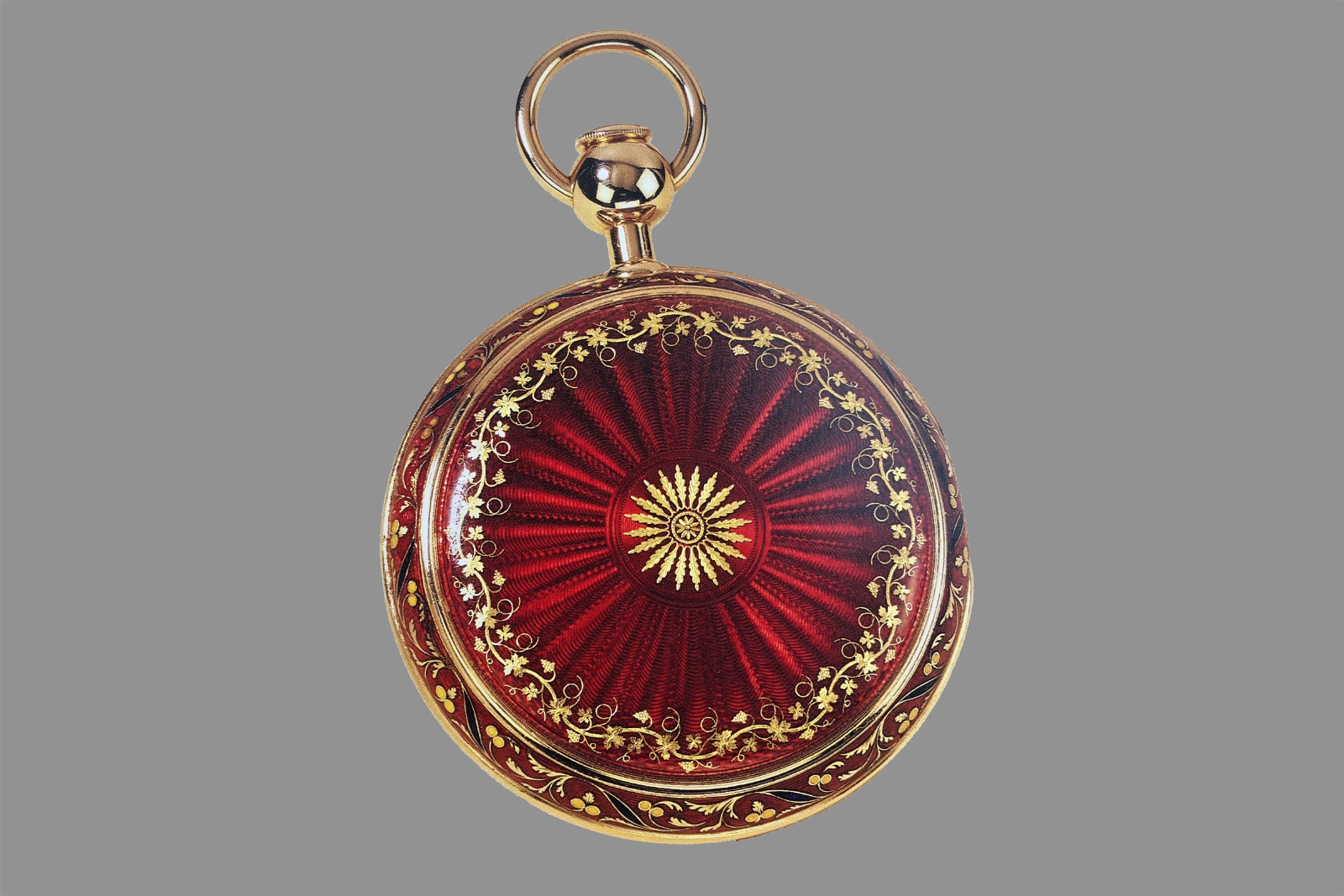
The catalogue entry was spare: “A gold pocket watch with red enamel inlays, signed Breguet, in need of repair.”
Bidding began at 800 Deutschmarks and climbed rapidly. Within minutes the hall reached 100,000 Deutschmarks. The young seller grew pale. Past 150,000 Deutschmarks, the increments slowed. At 300,000 Deutschmarks the hammer fell. The room erupted in applause, first tentative, then unanimous.
The next day newspapers carried the headline: Record price for a pocket watch. Research revealed it had been made for Queen Maria Cristina of Spain, wife of Ferdinand VII. Mannheimer had secured it for Engel, who recorded it simply in Ein Moderner Thomas Edison: “Today this watch is part of my collection.”
The Salomons collection
The greatest opportunity came with the sale of the Sir David Salomons Collection at Christie’s, a landmark in the history of Breguet collecting. One evening Richard Faulkner telephoned: “We have some Breguet watches that just came in yesterday for the next auction. You should come and have a look.”
In the basement vault Engel was shown trays of envelopes, each containing a Breguet with its certificate. “After two hours I had seen all the watches and yet understood none… On the certificates were names like Tsar Alexander I, Napoleon Bonaparte, Alexander von Humboldt, King of Prussia. It was overwhelming. I was simply speechless.”
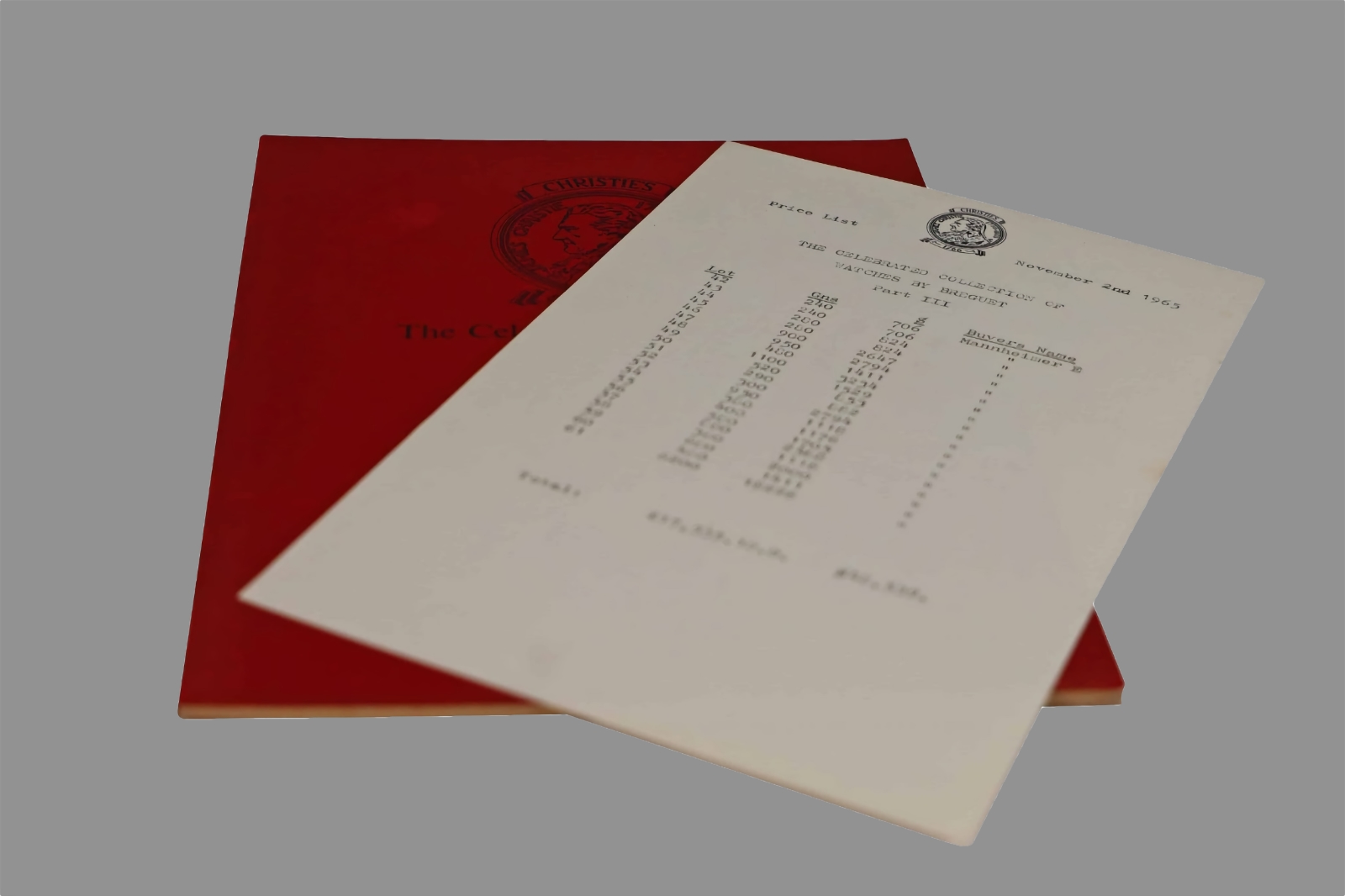
Christie’s 1965 final Salomons sale catalogue. Image – private archive
Christie’s divided the collection into three sales. In the first two, Engel bought selectively through Mannheimer. At the second, Napoleon’s watch appeared, but the price soared too high. Engel learned that the most famous pieces carried premiums that distorted the market.
By the third sale, conditions had shifted. It was a rainy London day, the room half empty, the market saturated. Engel had spent the night at White Lodge, taking counsel from Rosedale. At Christie’s he met Mannheimer and agreed on their signal: a nudge of the knee.
Lot after lot passed; Mannheimer raised his paddle at each nudge. Within minutes they had secured ten watches in a row. A rival tried to resist, but Engel pressed harder, and Mannheimer answered every bid. By the end they had taken the entire catalogue.
British newspaper The Times reported, “Yesterday a dealer from Zurich bought all remaining Breguet watches from the Sir David Salomons Collection. It is rare in the history of auctions that a client purchases an entire catalogue.”
That evening Engel returned to White Lodge, where he and Rosedale divided the watches by the fire. Engel later reflected, “In the following years… they increased tenfold in value. I call that well invested compared to bank recommendations.”
The Halpern affair and the coin toss
The next great adventure came on the advice of George Henri Brown, director of Breguet in Paris. Brown told Engel of a physician in New York, Dr. Halpern, who owned 15 Breguets, each preserved in original red leather cases with certificates. “It is a unique group,” Brown said. “You should go and see them.”
Engel telephoned Halpern, and after tough negotiations they agreed on a price for the collection. With the deal settled in principle, Engel travelled to New York carrying a bank cheque for one million dollars, ready to conclude what promised to be the most important purchase of his life.
At Halpern’s home the watches were laid out for inspection. At first sight the array dazzled: gold cases, complications of every type, and certificates to match. Engel examined each carefully with his loupe. He was prepared to hand over the cheque on the spot. At that moment, Halpern hesitated. Together with his wife he declared that they could not part with the watches after all. The agreed sale was withdrawn, and Engel was left holding his cheque, powerless to complete the deal.
As consolation, Halpern offered him one watch. Engel later recounted how Halpern told him, “This piece is probably not genuine. It does not appear in the archives. You can have it for a thousand dollars.” Engel examined it closely. It was a small gold watch with quarter repeater and calendar, dating from around 1780, earlier than the surviving ledgers. To him it was unmistakably a true Breguet. He accepted the offer, paid the modest sum, and returned to Europe with a single piece instead of a collection.
Seth Glanville Atwood. Image – Rockford Register Star
Two weeks later, while dining with Edgar Mannheimer in Zurich, the telephone rang. On the line was Seth Atwood, the Chicago banker and founder of the Time Museum. Atwood explained that he was in negotiations to buy a collection of 15 Breguets in New York, but had been told by the seller that a German collector had already offered more.
Mannheimer laughed, “That German collector is sitting right next to me.” Engel took the receiver, explained the situation, and proposed a solution: “Proceed with the purchase, and we will divide the watches between us.” Atwood agreed.
Mannheimer flew to New York, Atwood arrived by private jet from Chicago, and the two met in a hotel room to divide the spoils. To ensure fairness Mannheimer suggested they toss a coin to see who could choose first.
He produced one, and flipped it. The coin rolled across the carpet and disappeared beneath the bed. Both men dropped to the floor, laughing as they retrieved it side by side. The toss came out in Engel’s favour. Guided by his instructions, Mannheimer chose almost all the pieces Engel desired.
When he returned to Frankfurt, unshaven and exhausted, Mannheimer told Engel, “Tom, if you ever have another adventure like this, you can call me anytime, day or night.”
The story became legend among collectors. Engel always remembered the Halpern affair as an episode of paradox and theatre: he had travelled to New York with a million-dollar cheque for 15 watches, yet came home with one bought for a thousand.
Through Atwood and Mannheimer, however, he eventually secured the best of the group. For Engel the lesson was enduring — in collecting, knowledge, trust, and improvisation mattered as much as money.
The collection
Thomas Engel regarded his watches as instruments of invention, each a solved problem rendered in steel, gold, and enamel. His cataloguing reflected his life as a scientist: precise measurements, complete provenance, detailed notes on repair history. He regarded his collection as an archive, a working laboratory in which Breguet’s genius could be studied across generations.
Tourbillons: perfection in motion
Among all inventions, Engel reserved special admiration for the tourbillon. It united Breguet’s search for accuracy with mechanical poetry.
Breguet 1809 No. 1176, the Comte Potocky. Image – collage
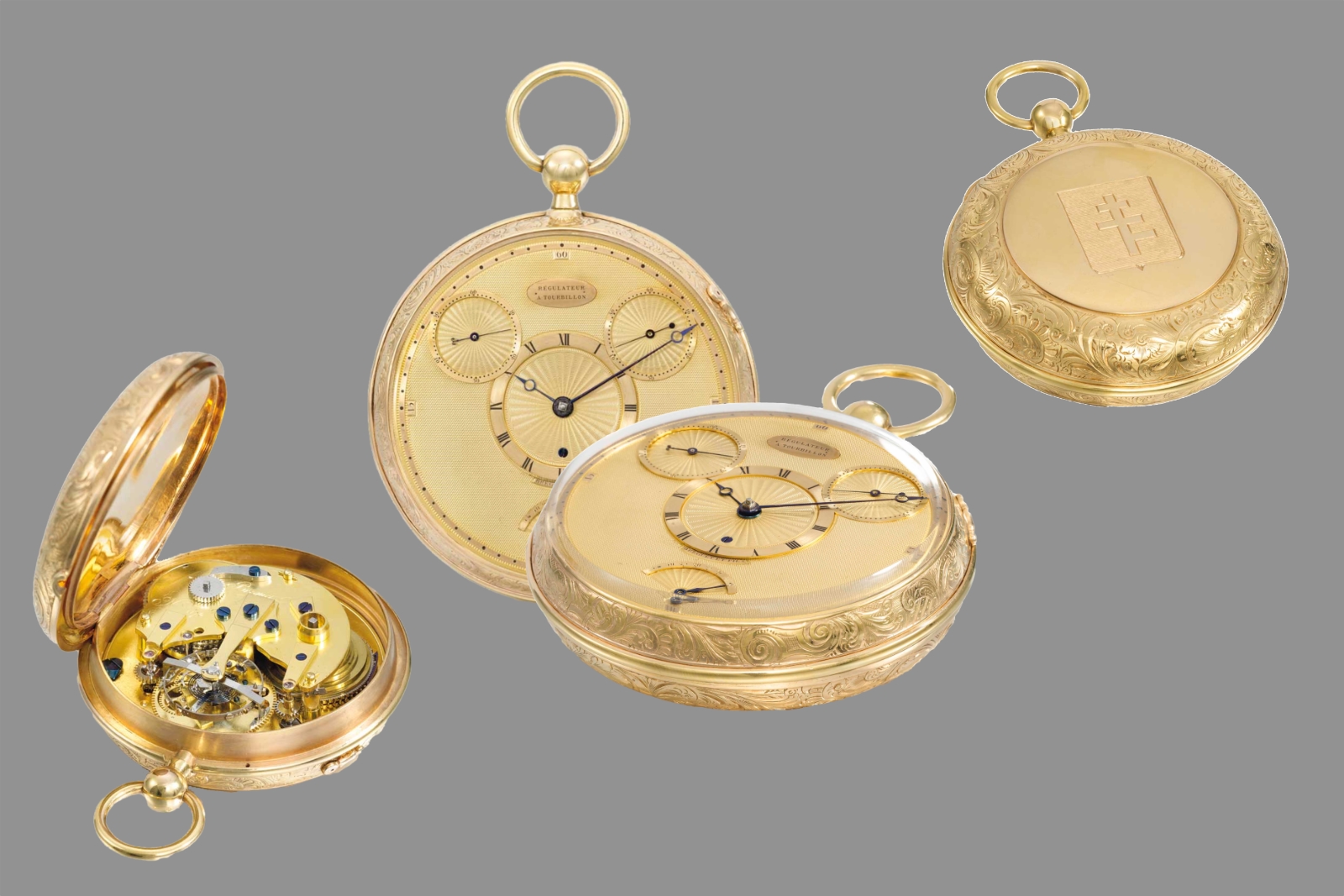
Breguet No. 1176, the “Comte Potocky”, delivered in 1809 for 4,600 francs, was one of Engel’s touchstones. It housed a four-minute tourbillon with échappement naturel, twin subsidiary seconds, and a stop-seconds lever that froze time for precise setting.
The dial design of this watch will likely become much more well known, as it was recently revisited for the Classique ref. 7225, released to mark the brand’s 250th anniversary.
Engel described its inverted fusee and dual escape wheels with the same clarity he once applied to polymer chains. He delighted in the measured rotation of the carriage, one turn every four minutes, and its natural lift escapement designed for minimal friction.
Breguet No. 2568, the Moltshatwff (left). Image – Thomas Engel collection
Equally prized was No. 2568, the Moltshatwff, a one-minute tourbillon with two secret signatures. It had belonged to Sir David Salomons, who bought it in 1923 for £35. When it reappeared at Christie’s in 1965, it fetched 6,200 guineas.
Engel enjoyed retelling the story: how a watch bought for the price of a good suit in the 1920s had become worth thousands within a generation. For him, it was a case study in how knowledge, rarity, and provenance combined to create value.
Complications with history
Engel was drawn to Breguet’s complications, where mechanical ambition and history intersected. Breguet No. 2077, the King of Spain, was a grande sonnerie with minute repeater, encased in gold with translucent red enamel. Engel marvelled at the coexistence of such fragile artistry with one of horology’s most demanding mechanisms.
Breguet No. 2077, the King of Spain. Image – collage
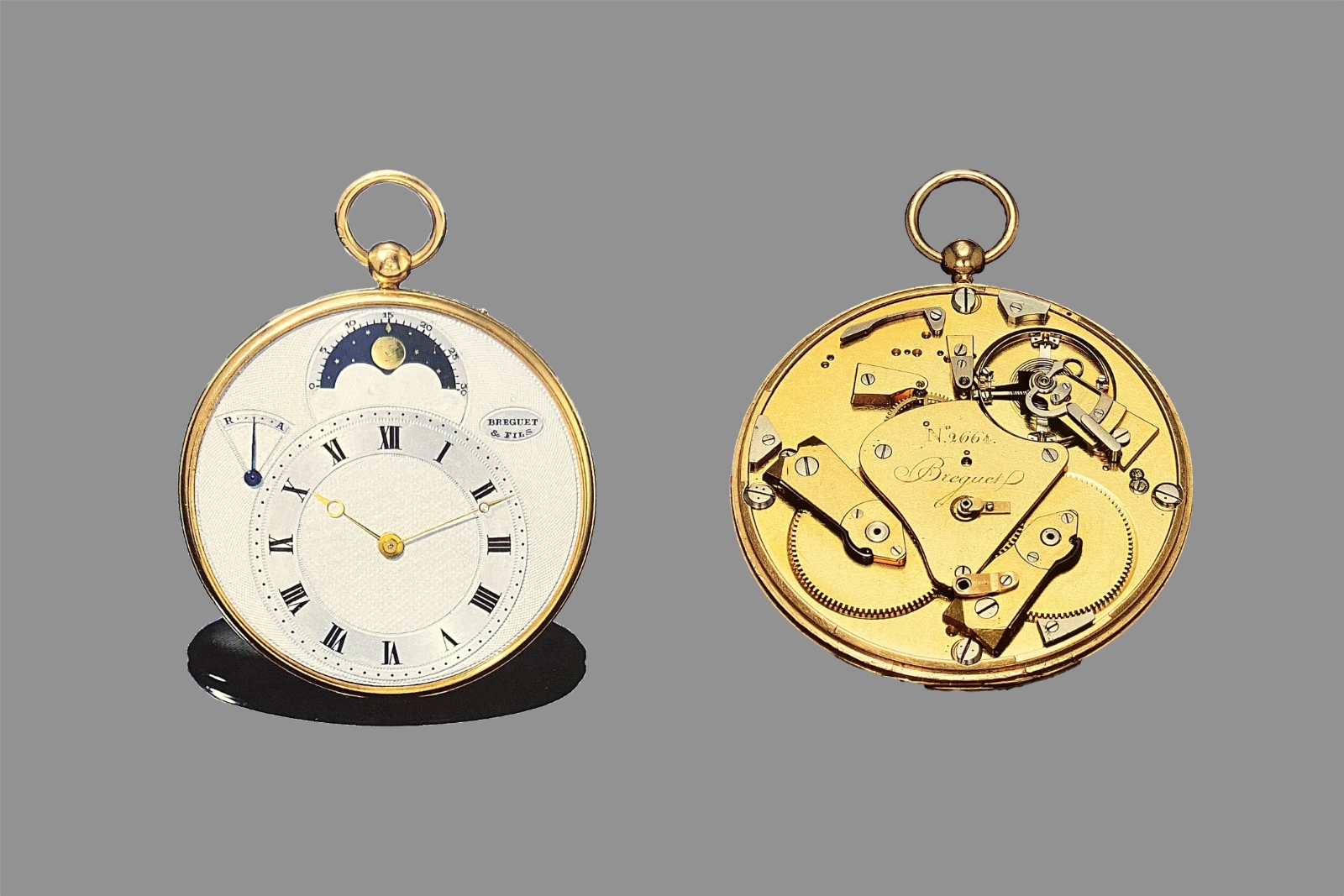
No. 53, the Orloff, was an astronomical watch with moon phases. It fascinated Engel because its history traced the rhythms of the resale market. First sold to Monsieur Hawley of London, it passed to Prince Orloff, and later reappeared in Paris. Engel copied each transfer from the ledgers into his notes, intrigued that even in Breguet’s lifetime his watches circulated like artworks, traded and retraded among the powerful.
Breguet No. 53, the Orloff. Image – collage
Touching the past
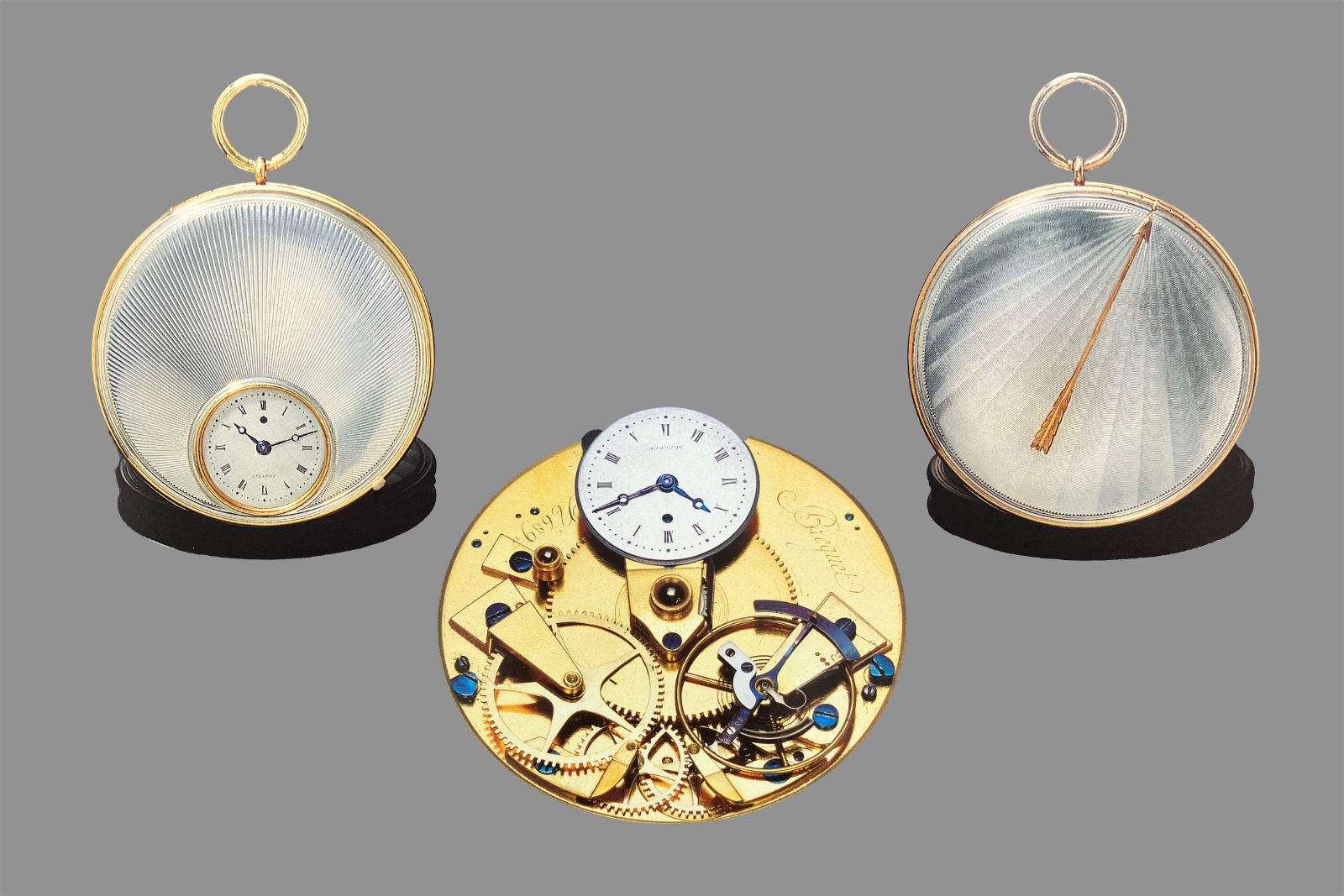
The tact watches, designed to tell time by touch, had particular charm for Engel.
Breguet No. 689/1861, the Lucien Bonaparte. Image – collage
No. 689/1861, the Lucien Bonaparte, had passed through Breguet’s hands four times. Engel traced its resales, from Bonaparte’s secretary to later owners, noting that Breguet himself often bought watches back to place them anew. To Engel, this showed the master as market maker, anticipating the secondary market long before Sotheby’s or Christie’s.
Breguet No. 2292, the Labouchere. Image – collage
No. 2292, the Labouchere, with its grey translucent enamel and pearl touchpieces, embodied discretion and elegance. Engel described it as a philosophical gesture: a watch created to be felt as much as seen. In an age of visual display, he admired its quiet subtlety.
The democratic masterpieces
Engel gave equal respect to the souscription watches, simple single-hand pieces built to broaden Breguet’s clientele. He saw in them a different kind of genius: the ability to democratise excellence.
Breguet No. 3624, the Demidoff (right). Image – Thomas Engel collection
No. 3624, the Demidoff, with its clear dial and single hand, embodied this principle. In Breguet: Thoughts on Time, Engel wrote: “Its construction is so clear and logical that repairs can be done even by less experienced watchmakers.
The souscription ranges within the most ingenious work of Breguet. A masterpiece, indeed.” Where others saw “entry level,” Engel recognised like-minded pragmatic ambition.
Garde-temps: the biography of instruments
The garde-temps chronometers appealed directly to Engel’s scientific temperament. They represented the meeting point between Breguet’s engineering genius and the empirical habits of the laboratory. Built for accuracy, these watches embodied the ideals that had guided Engel’s own work in polymer research: controlled variables, stable conditions, and repeatable performance.
He regarded them as field instruments, each one a self-contained experiment in precision timekeeping. Their austere beauty spoke to him more than enamel or engraving, because it reflected a watchmaker’s understanding of physical law translated into metal.
Breguet No. 153/4570, the Pozzo di Borgo. Image – collage
No. 153/4570, the Pozzo di Borgo, carried parachute protection on both pivots, a pivoted detent escapement, and a service record as layered as a human biography. Engel noted each entry: repairs in 1829, 1830, 1834; an accident in 1847; further overhauls in 1852 and 1857. To him, these records affirmed a life lived in measurement, an instrument that had accompanied generations through work, failure, and renewal.
Philosophy through objects
What united Engel’s collection was coherence. He insisted on documentation, condition, and provenance. He celebrated invention, valued clarity over decoration, and approached collecting as interpretation. He observed in Breguet: Thoughts on Time: “Every Breguet is a problem solved.”
His watches spanned the full spectrum: souscriptions for merchants, tact watches for princes, tourbillons for aristocrats, garde-temps for scientists. Each was chosen to illustrate a chapter in Breguet’s story.
For Engel, the watches stood as teaching instruments, conversation partners, and case studies in ingenuity. His collection formed a museum in miniature and a diary at once, recording the encounter of a twentieth-century inventor with an eighteenth-century genius on common ground.
The collector becomes a creator
Engel’s journey as a collector eventually led him to sign a few watches of his own. After years of studying Breguet’s ledgers, examining escapements, and tracing provenance, he wished to move from interpretation into creation.
He collaborated with Swiss watchmaker Richard Daners, whose tourbillon carriages powered many of the modeller Engel-signed watches, and partnered with Zenith to build movements or source observatory-grade chronometer calibres for his limited editions.
Thomas Engel No. 6, ca 1980. Image – collage
These pieces expressed Engel’s philosophy. Some carried traditional complications, one-minute tourbillons, regulators with power reserve, moon-phases and thermometer indicators, while others offered simpler layouts reflecting his preference for clarity and proportion.
Each was constructed to the standards he applied in his collecting: full documentation, carefully selected movements, and discrete yet precise execution. For Engel, signing a watch was symbolic: it closed the circle between invention, collection and creation. Just as his patents had left their mark on materials science, these watches embodied his belief that the study of horology could lead naturally into practice.
Today, the Engel-signed watches appear occasionally at auction, rare reminders of a collector who sought not only to be custodian and interpreter of Breguet, but to join the ranks of the maker.
Method man
Thomas Engel approached collecting with the same precision he applied in his laboratory. The mistake in London sharpened his eye, and from then on he pursued authentication as a discipline.
He developed a method that followed a clear sequence. Every candidate Breguet was checked against the brand’s ledgers in Paris, the thick leather-bound volumes recording each sale with date, buyer, and price. Engel cultivated access to these archives, working closely with staff such as Emmanuel Breguet, who welcomed him as both client and researcher.
He then examined the watch itself: dial signatures, the secret sous le XII engraving visible only under magnification, the geometry of escapements, the quality of steelwork. Provenance came next: certificates, auction records, correspondence with earlier owners. Engel worked like a forensic scientist, convinced that truth resided in details often missed by casual eyes, a hinge placement, a screw head, or the frustoconical oil reservoir drilled into a wheel tooth.
This method gave him confidence to share his views with others. As Engel remembered, dealers in Paris would tell him, “Times are too restless, people trust watches more than money or stocks. Paintings can be forged, but watches with documents endure.” Engel agreed, and emphasised that the finest pieces, fully documented, could serve as enduring investments.
To illustrate the point he often cited the tourbillon No. 2568: bought by Sir David Salomons for £35 in 1923, resold in the 1960s for more than £5,000. For Engel, that growth reflected how scholarship and rarity together shaped value.
The museum that never was
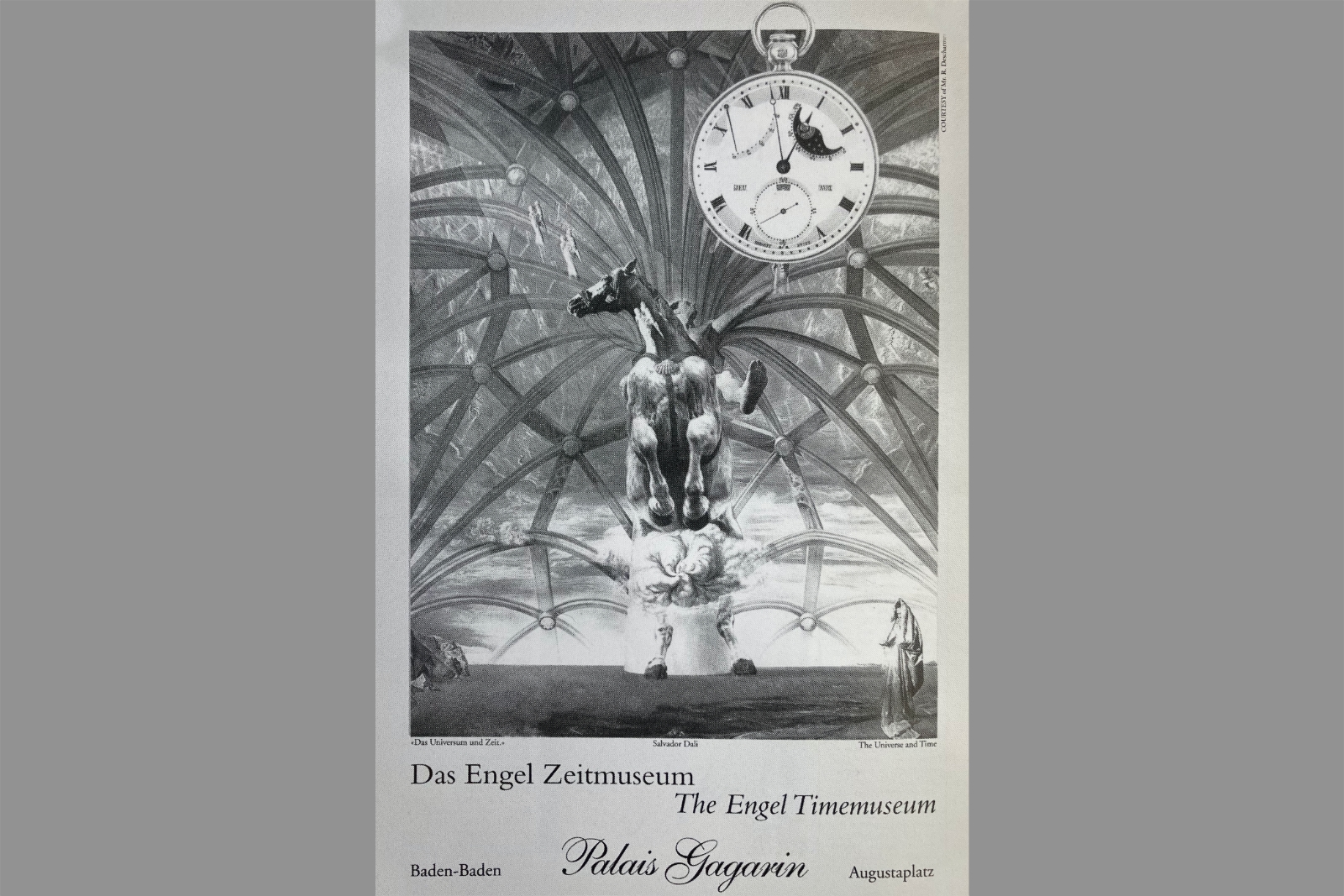
At the height of his collecting, Engel planned to establish a museum in Germany devoted to Breguet. His intention was to offer the public a permanent place where invention could be experienced directly through original works. A site near Frankfurt was proposed, designs circulated, and newspapers reported on the project. Officials welcomed the idea and spoke of cultural significance.
Poster for the museum that never was. Image – Thomas Engel
Progress slowed as bureaucratic processes lengthened and funding commitments dissolved. Despite early enthusiasm, the necessary support failed to materialise. Engel had hoped to create a lasting cultural institution; when the project collapsed, he turned his attention to another form of permanence. If the museum could not be built in stone and glass, it could exist in print.
A legacy of scholarship
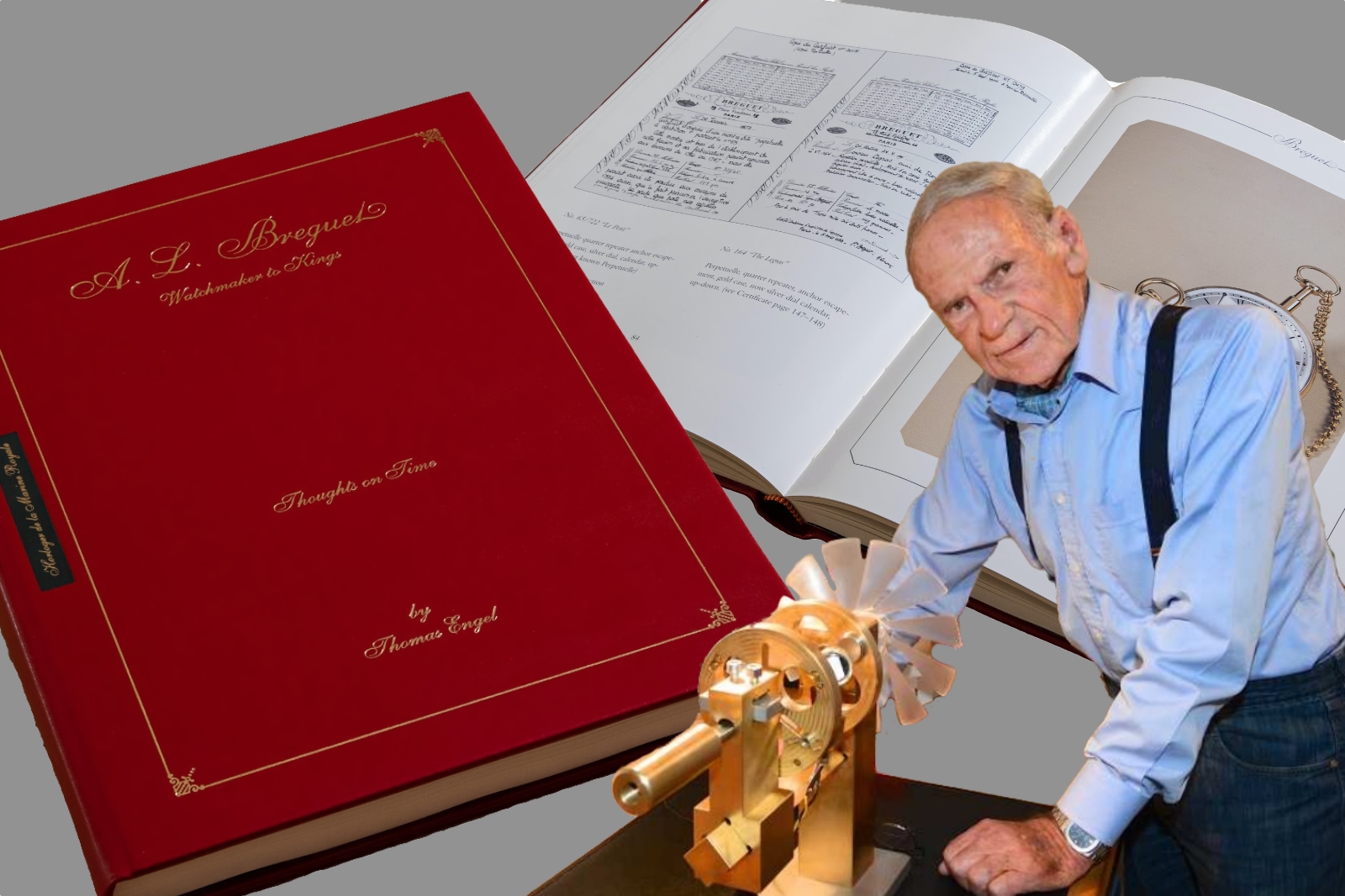
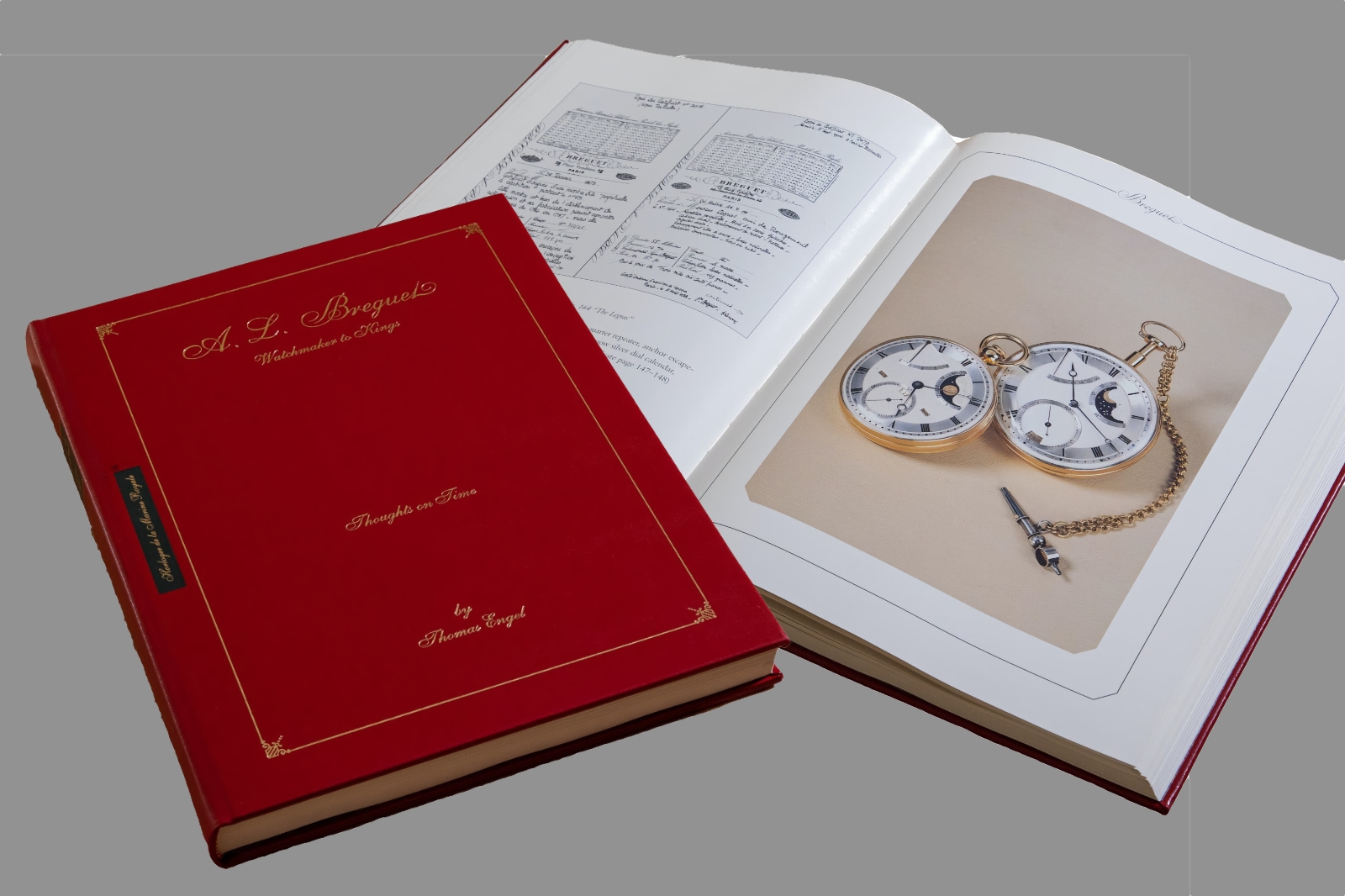
From this determination came Breguet: Thoughts on Time, published in 1994 after three decades of work. The book was part catalogue, part biography, part meditation. Each watch in his collection was described with technical specifications, provenance, and market history.
He explained escapements with the clarity he brought to his patents in plastics: the overhanging ruby cylinder that reduced friction, the oil reservoirs cut into anchor wheel teeth to prolong lubrication.
Thomas Engel´s Breguet book “Thoughts on Time”
The book carried a philosophical dimension. Engel compared Breguet to Stradivarius, concluding that while Stradivarius had perfected, Breguet had invented. Invention, to him, reshaped the possibilities of an art. His declaration “One cannot improve on a Breguet” became his credo and entered the vocabulary of collectors.
The reception was immediate. Dealers cited his research in catalogues. Antiquorum and Christie’s began listing provenance and technical notes with greater precision, echoing the standards he had demonstrated. Collectors used the book as reference; scholars relied on it as a bridge between connoisseurship and history.
Antiquorum founder Osvaldo Patrizzi later observed that Engel’s meticulousness influenced Antiquorum’s catalogue style, pushing it toward greater scholarly depth. Engel took quiet pride in the result. Pleased that he had created something lasting, he noted in Ein Moderner Thomas Edison: “The book became very sought after.”
By the time Engel’s collection dispersed, his legacy was secure. The watches moved into new hands, yet the standards he set remained. He showed that a collector could be custodian, interpreter, and scholar. His greatest invention was not a polymer process or a plastics patent. It was a way of collecting: rigorous, methodical, and enduring.
Conclusion
Thomas Engel’s story is that of a man who refused to accept limits. He emerged from war and scarcity with little formal education, yet taught himself a science, patented over a hundred processes, and became a millionaire inventor.
He then carried the same independence and curiosity into horology, turning a beginner’s mistake into the foundation of one of the finest private Breguet collections of the twentieth century.
What distinguished him was consistency. Whether designing polymers or evaluating a tourbillon, he trusted method over appearances, proof over assertion. He cultivated friendships with scholars and dealers, built trust in auction rooms, and insisted that every watch be read as both mechanism and document. In doing so, he raised standards across the collecting world, showing that scholarship and connoisseurship belonged together.
Engel collected to interpret, to trace invention, to understand markets, and to preserve memory. His book Breguet: Thoughts on Time distilled that philosophy into a form that outlasted his own collection, ensuring that what he assembled would continue to educate long after it was dispersed.
The watches themselves began new lives. Some entered museums, such as the tact watch No. 987 “Prince Russe” and No. 2782 “Hervey” at the Musée International d’Horlogerie, or No. 1320 “Constantinople” in the Montres Breguet collection.
Others resurfaced at major auctions: the grande sonnerie No. 2077, once made for the King of Spain, sold at Dr. Crott in 1980; the Comte Potocky tourbillon No. 1176 and the Moltshanoff No. 2568 drew fierce bidding at Antiquorum Geneva in 2001; and No. 47, the “Lord Spencer,” reappeared at Christie’s Geneva in 2017, carrying with it a link to Winston Churchill. Many remain in private hands, their whereabouts unknown but their identities secure through Engel’s meticulous documentation.
In Engel’s life, invention and collecting converged. Both were driven by curiosity, guided by discipline, and shaped by the search for solutions that endure. His legacy lives in the watches he assembled, in the standards he set for their study, and in the journeys those pieces continue to make through collections worldwide.
Thomas Engel died in 2015, leaving behind a life defined by invention and interpretation. His patents transformed materials science, his scholarship deepened the history of horology, and his standards continue to guide collectors and institutions. He stands as a model of the inventor-collector, a man who transformed personal passion into lasting cultural contribution.
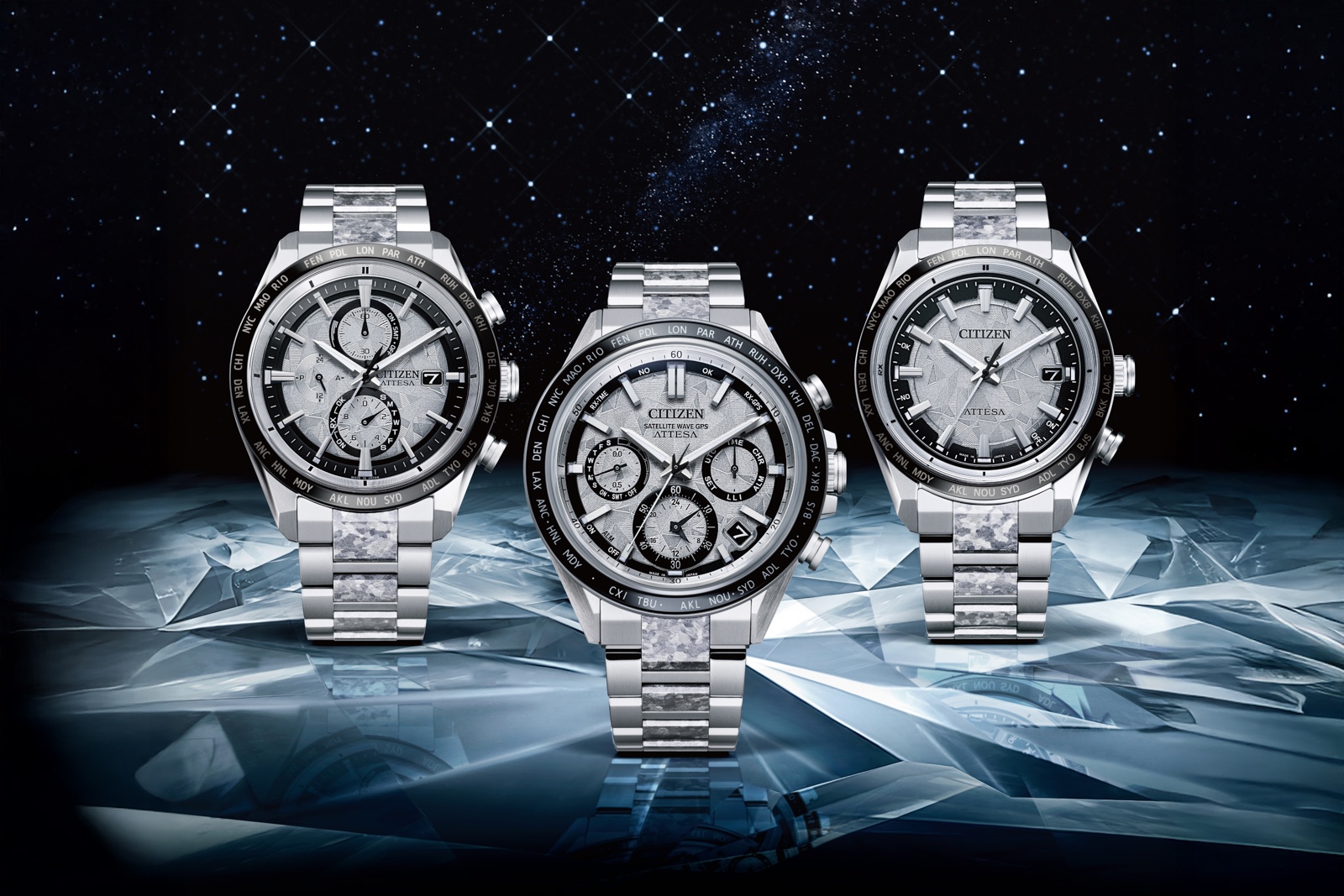
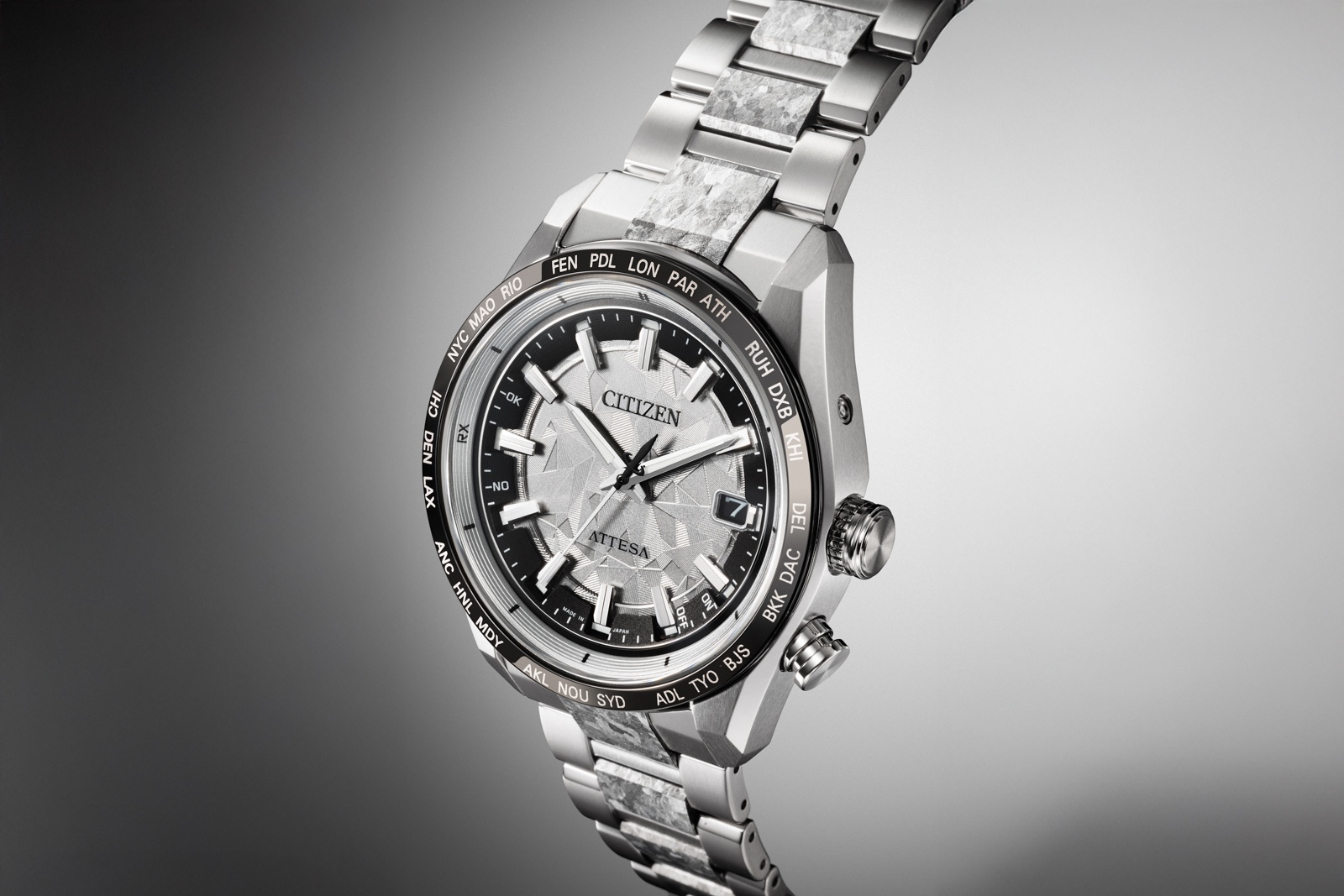
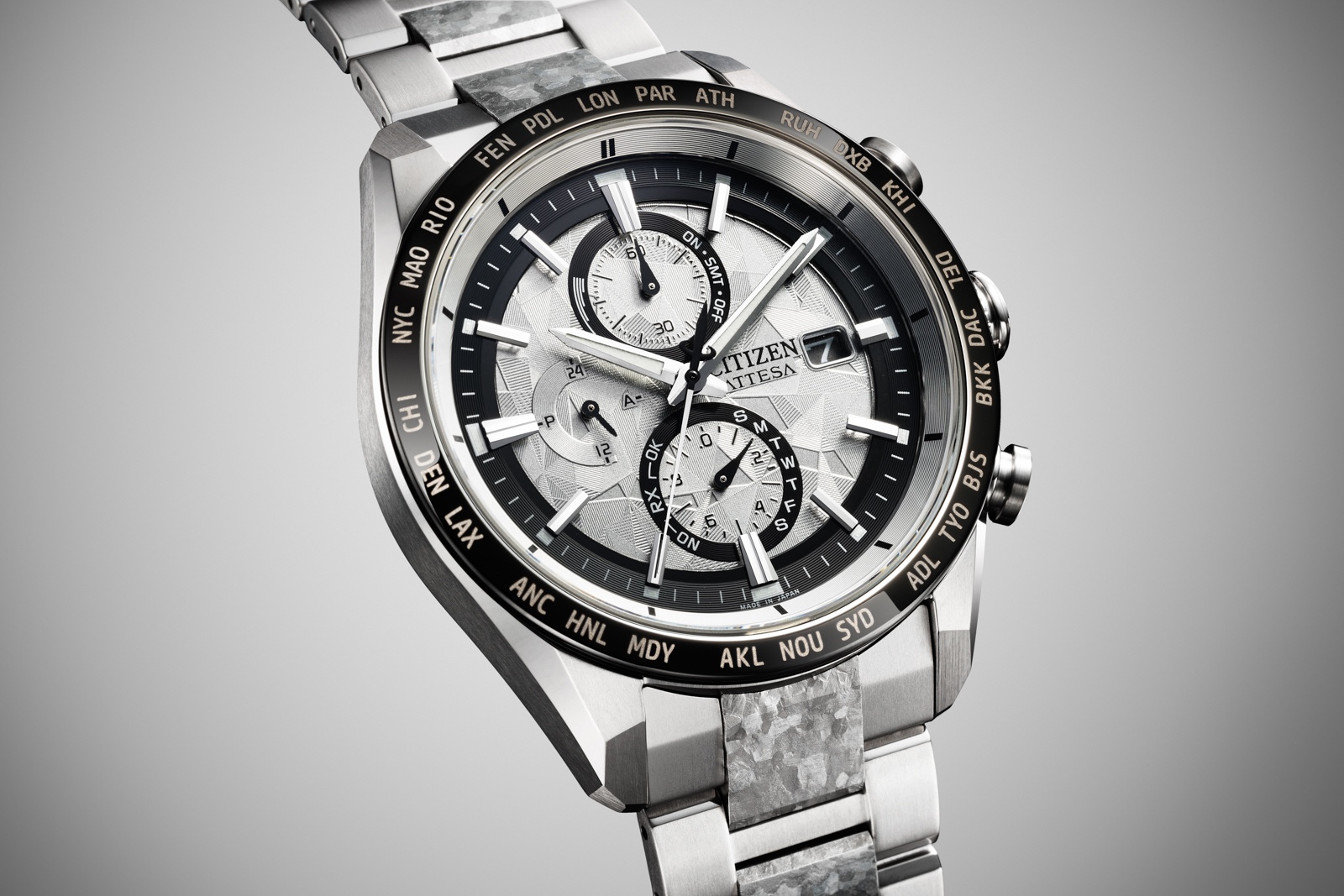
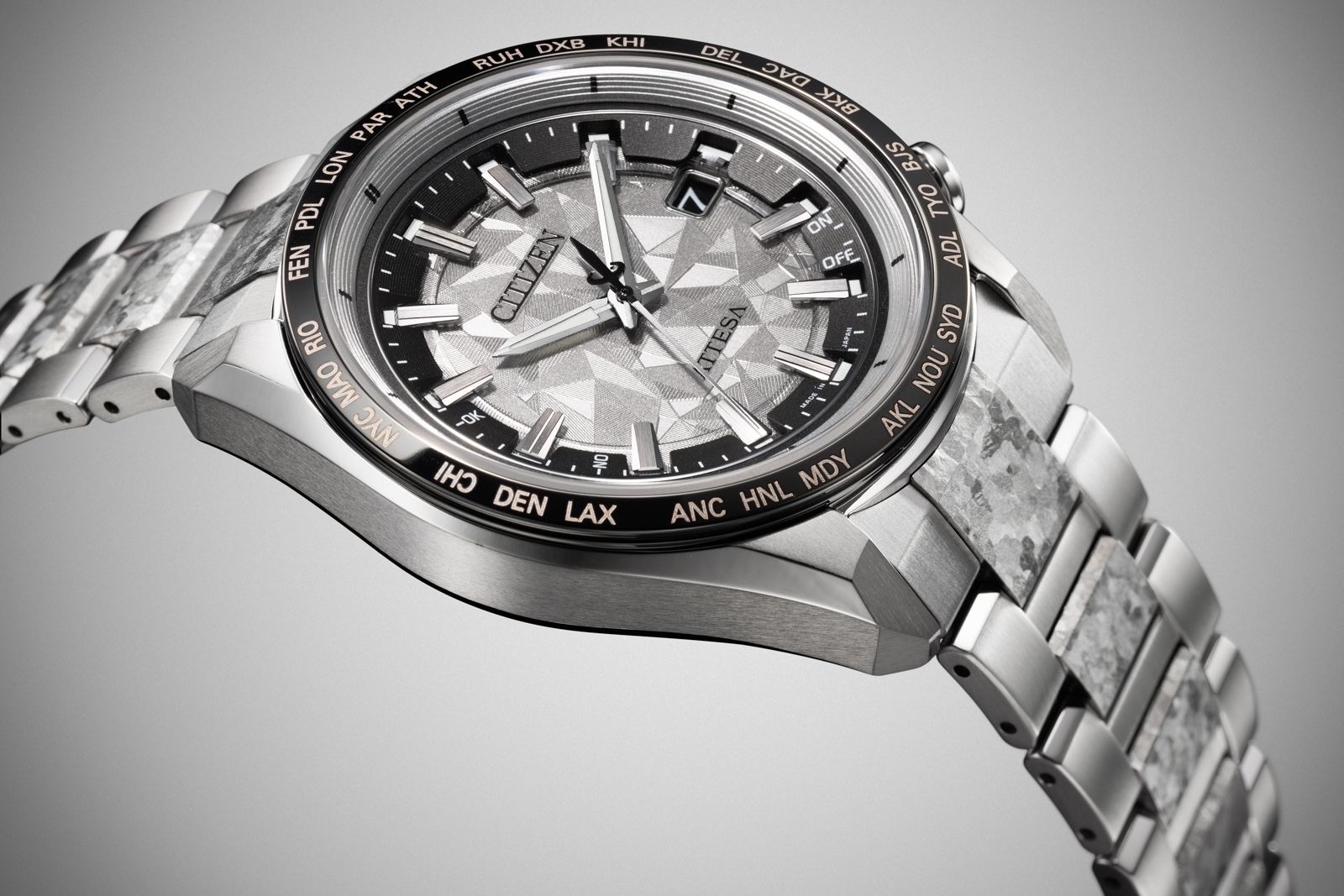
The new Citizen Attesa Platinum Shine collection leans into the brand’s two greatest strengths: cutting-edge quartz technology and mastery of titanium. With three limited edition references in a new platinum-coloured hue, Citizen demonstrates why it’s still the leader in titanium watches, 55 years after making the first one.
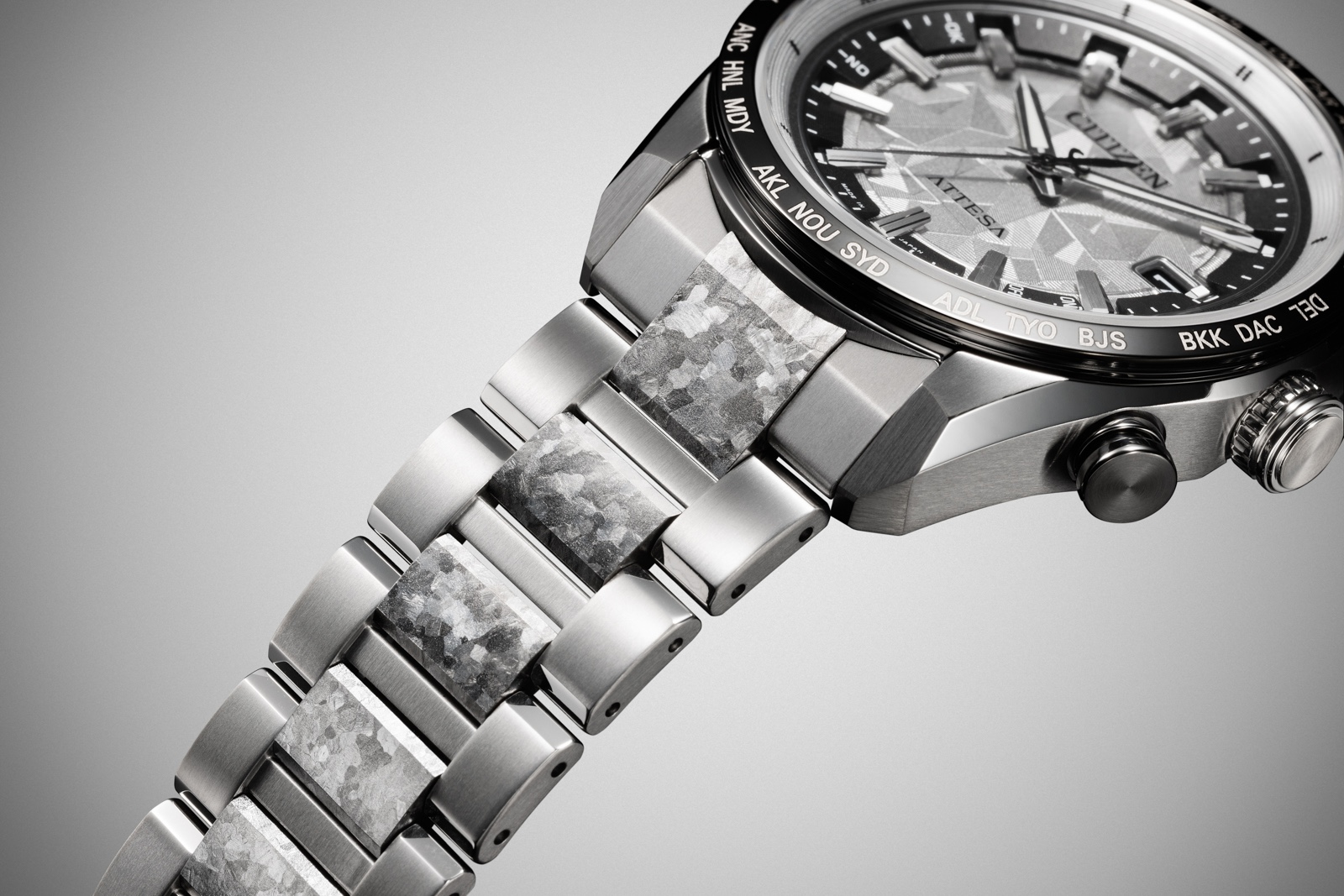
Thanks to a decadent recrystallised titanium bracelet and nearly scratch-proof Duratect coating, the new Attesa proves that quartz can still feel luxurious.
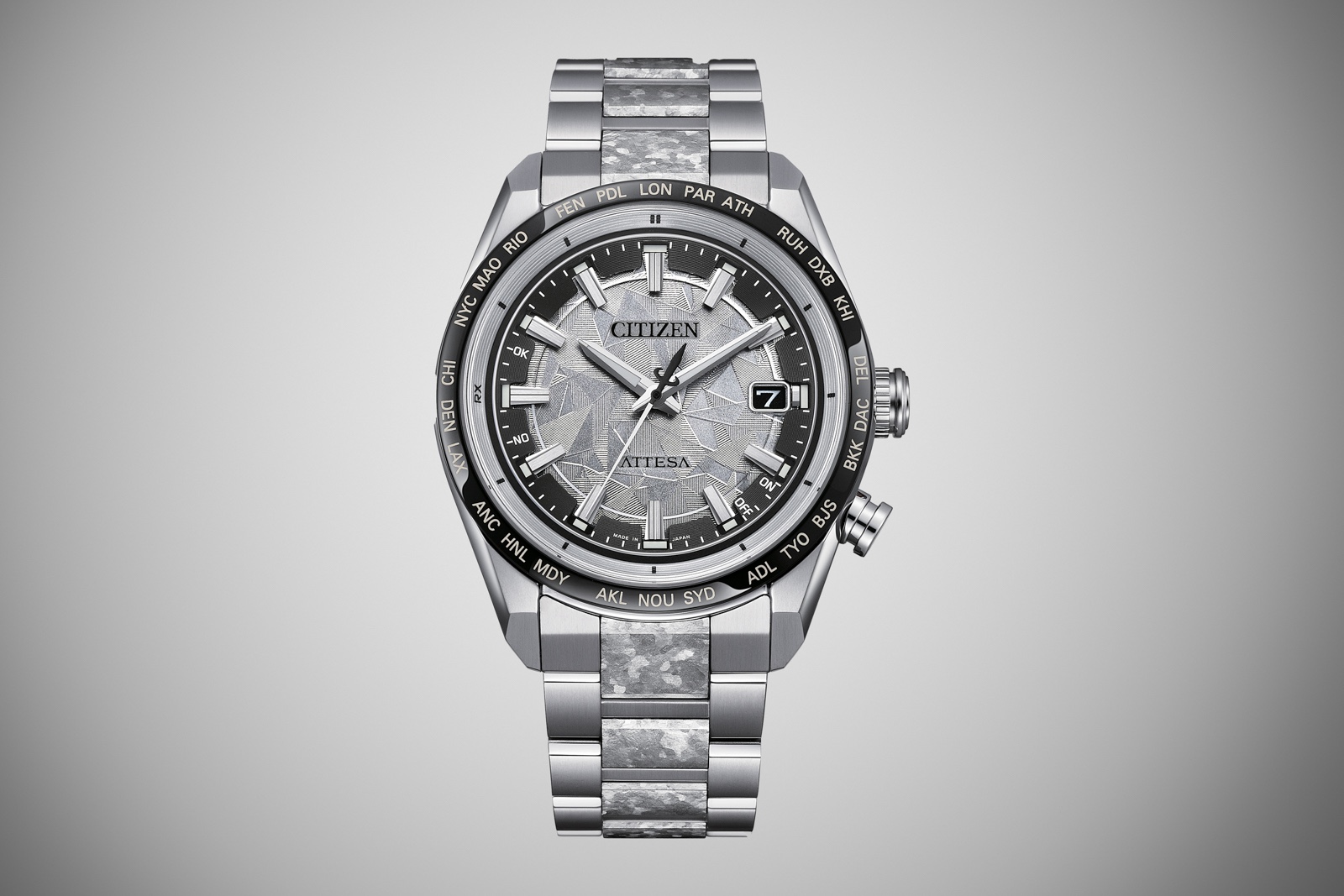
Ref. CB0284-66A.
Initial thoughts
Almost as soon as quartz timekeeping technology began to mature and prices began to fall in the 1980s, makers of quartz watches began to cede the luxury end of market to brands that focused on mechanical watches. But that never stopped a few brands, Citizen and Seiko chief among them, from pursuing the development of ever-better quartz technology and bringing it to market in a premium format. The ultimate expression of this focus is probably the Citizen cal. 0100, the most accurate wristwatch in the world.
The Citizen 0100 – the world’s most accurate wristwatch.
But quartz is just one part of the equation for Citizen, which has also achieved a leading market position in two specific fields. The first is solar power.
Light-powered watches is nothing new, dating back to 1972, but it was Citizen’s advances in the late 1970s that propelled this technology forward. In 1995, the brand debuted Eco-Drive, which remains the leading light in solar-powered timekeeping. In fact, Tag Heuer licenses Citizen technology for its own Solargraph watches.
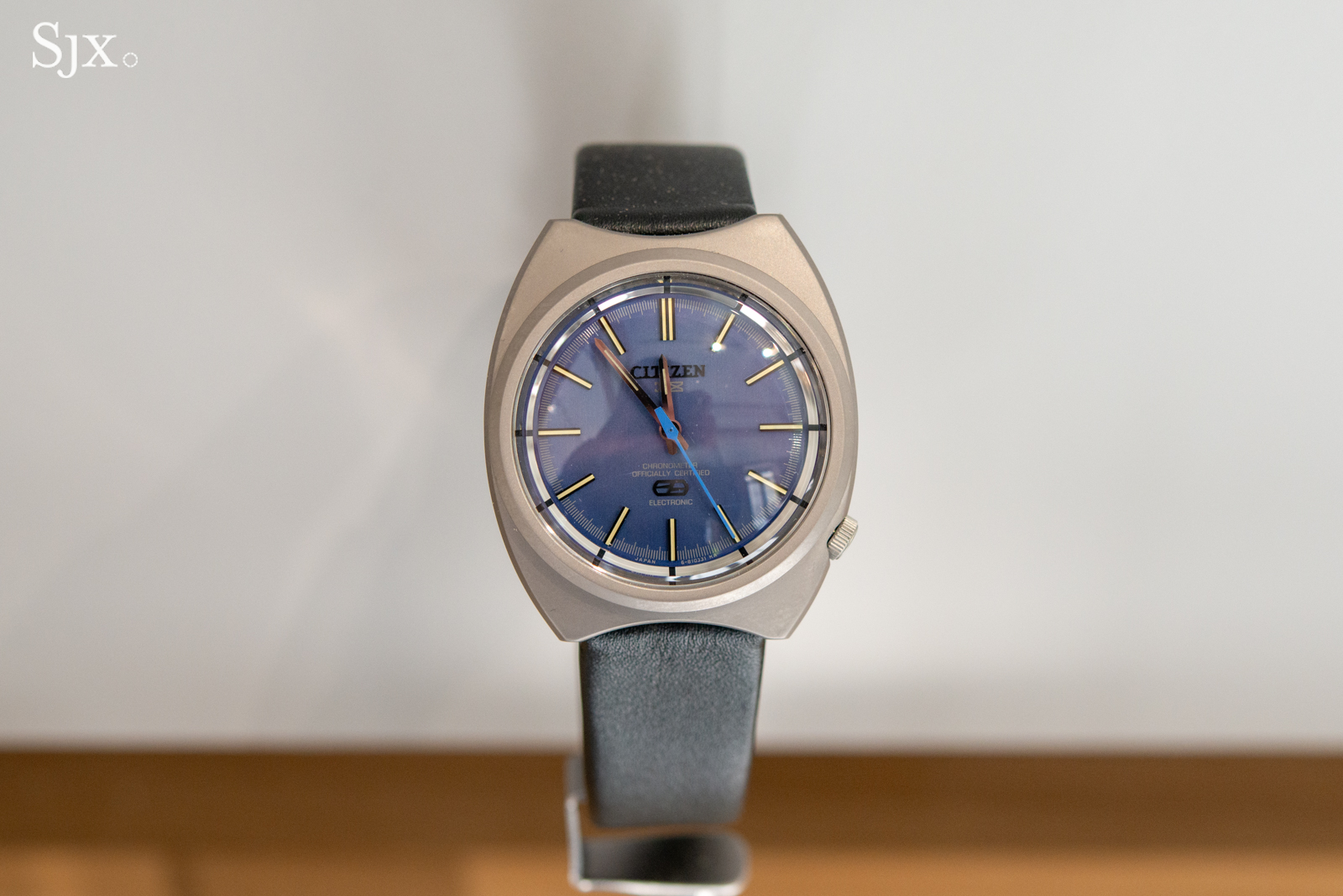
The Citizen X8 – the first titanium watch.
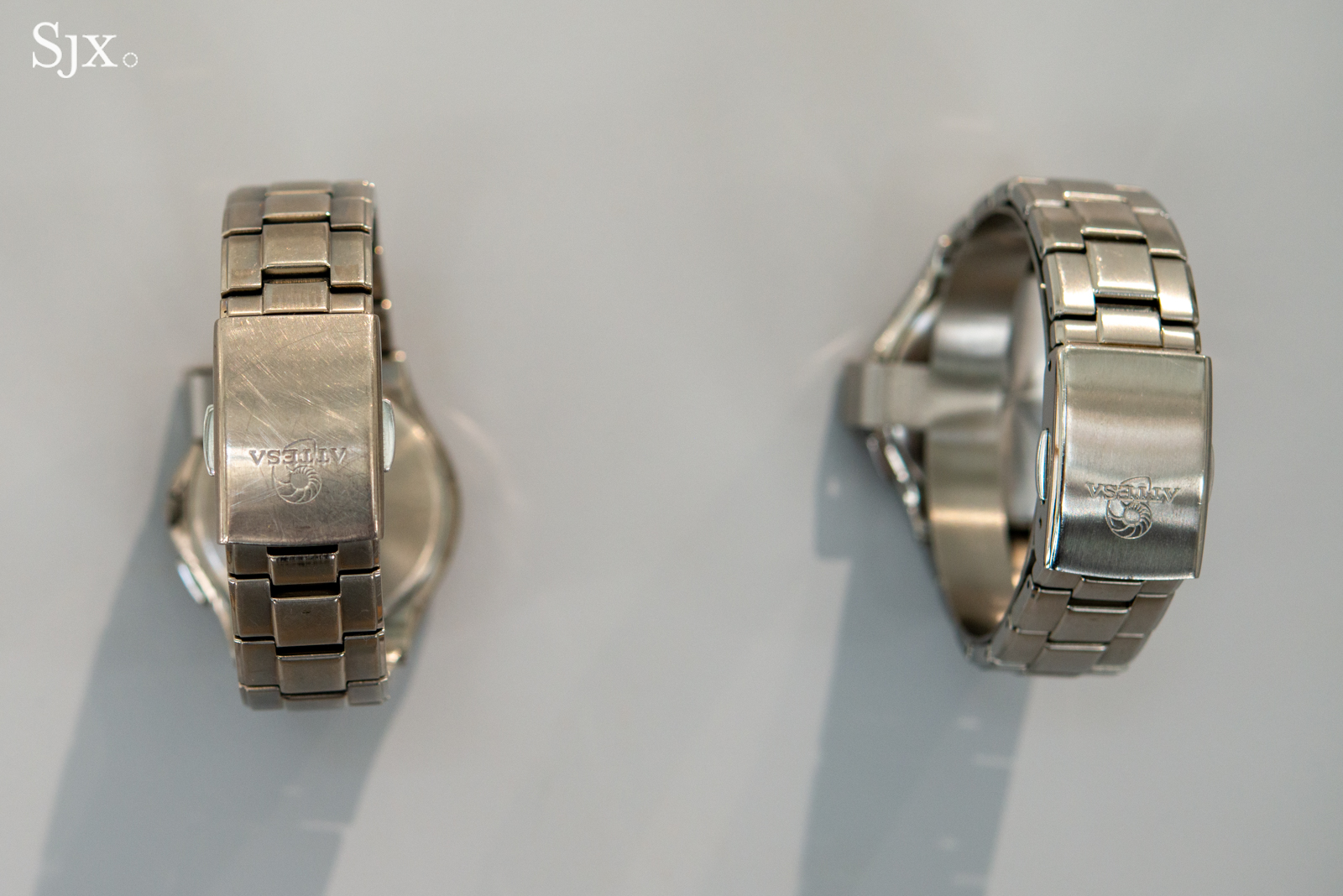
Another field that Citizen pioneered is titanium, creating the first titanium-cased wristwatch in 1970 and paving the way for the preponderance of titanium watches we see today. Interestingly, Citizen never really stopped being at the forefront of titanium development, and in recent years has developed a wide range of ultra-hard coatings that make the brand’s titanium watches nearly as scratch-resistant as ceramic.
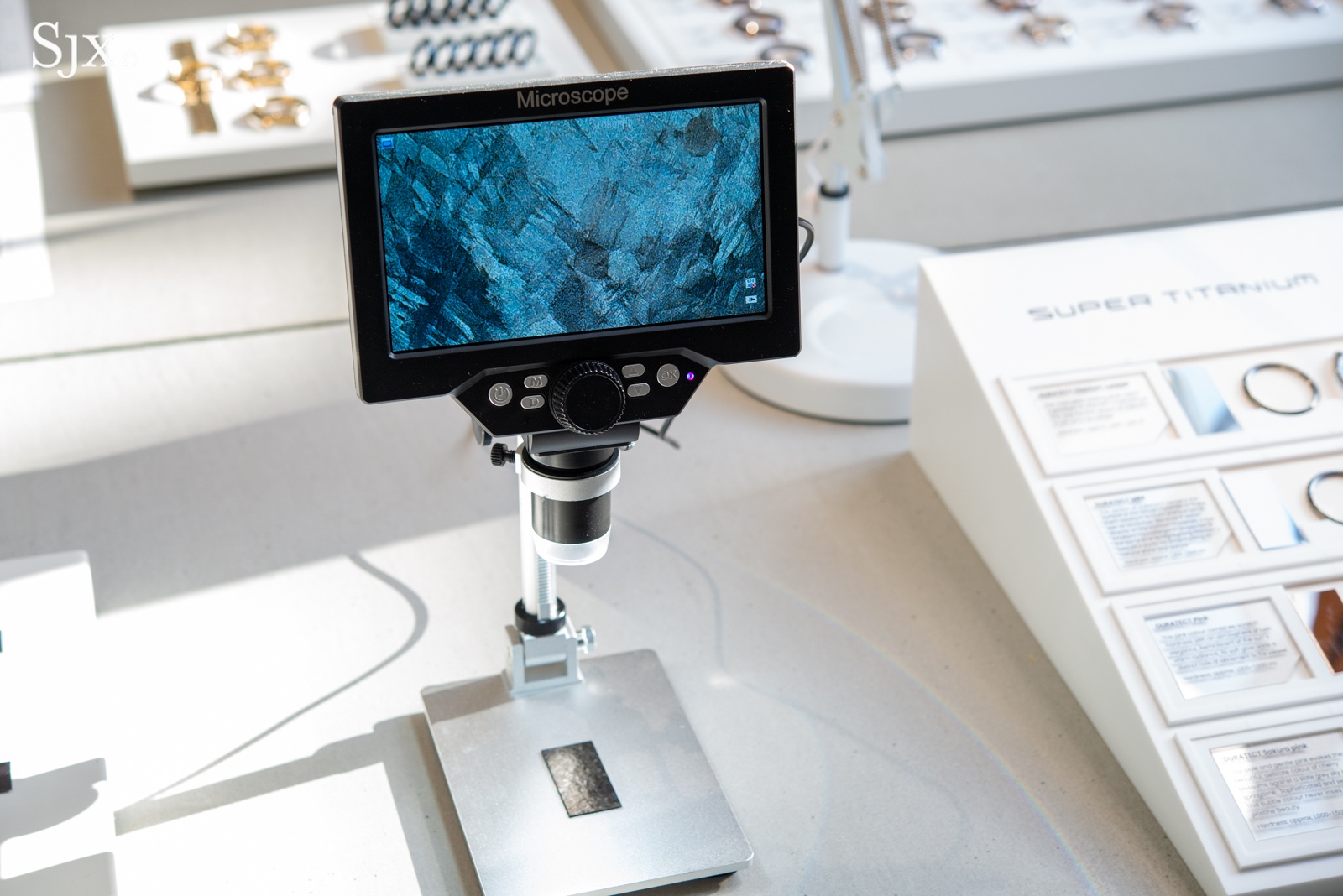
A demonstration of Super Titanium’s robustness – untreated on the left, Duratect-treated on the right.
The Attesa Platinum Shine collection merges these strengths. On one hand the watches feature some of the most innovative multi-function solar-powered quartz movements in the industry, and on the other they’re cased up a new silvery hue of recrystallised titanium, one of the brand’s most appealing Super Titanium offerings.
Ref. CB0284-66A.
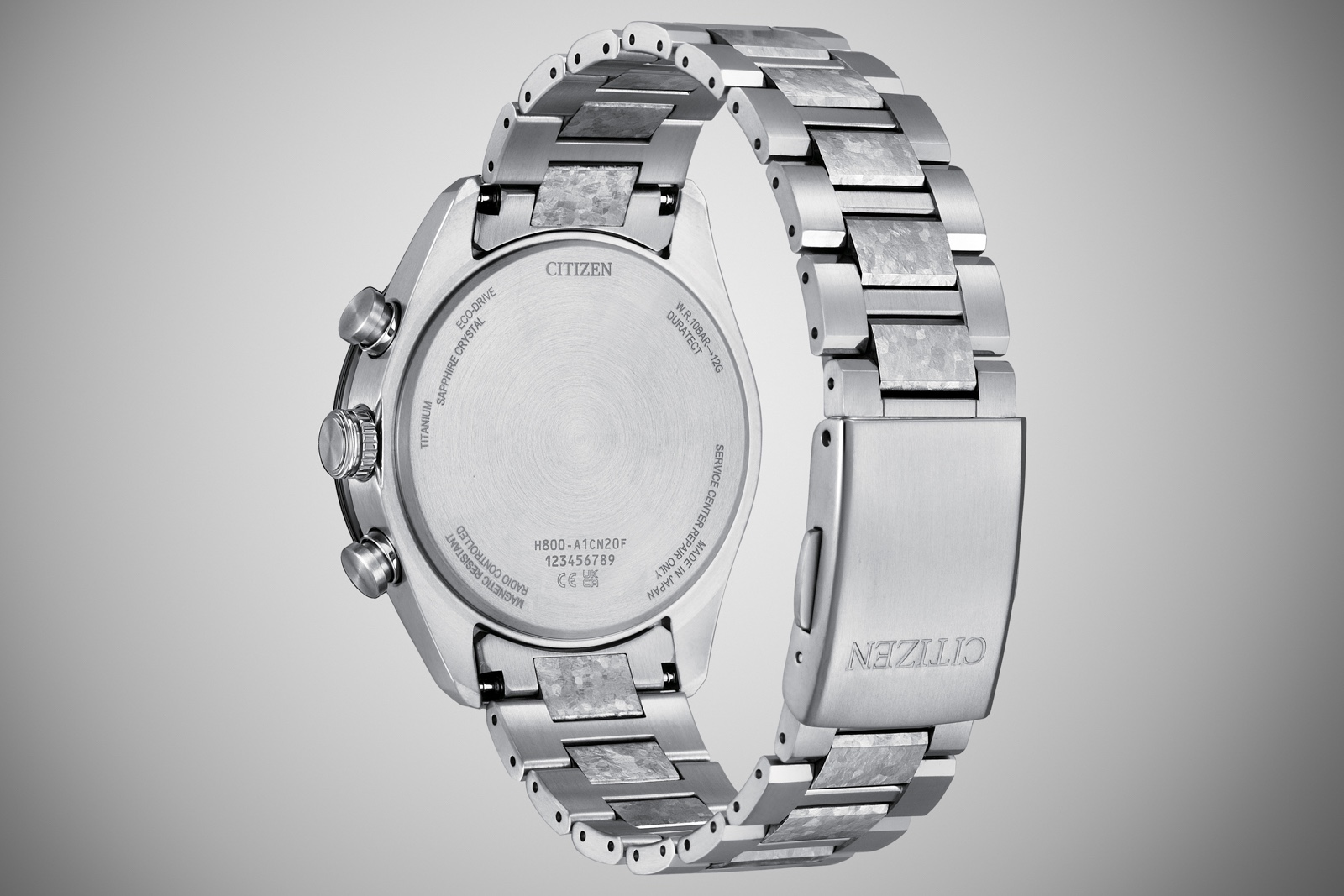
The watches are not cheap; the three-hand ref. CB0284-66A costs more than US$1,000, and the top-of-the-line ref. CC4076-65A costs nearly US$2,500. But the product quality, with the possible exception of the stamped clasp, is obvious. With network time-synchronised solar-powered movements and cases and bracelets that will still look new after years of wear, the Attesa manages to be an expensive quartz watch that feels like a good value.
A timely trio
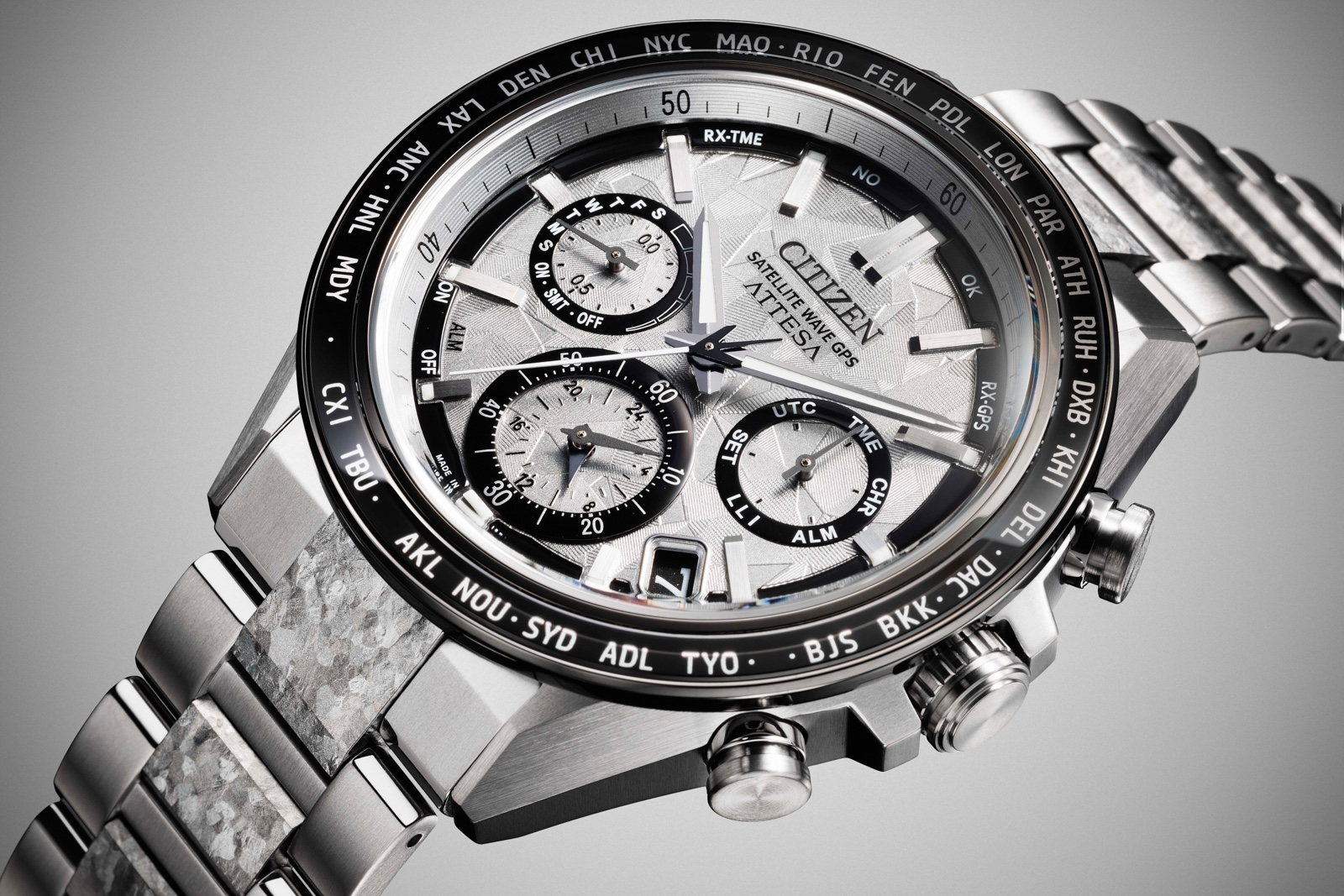
The biggest and baddest watch in the Platinum Shine collection is the ref. CC4076-65A, identifiable by its 3-6-9 sub-dial layout, which is 44.6 mm in diameter and over 15 mm thick.
But the case volume is put to good use, housing the satellite-linked F950 movement, claimed to offer the world’s fastest time-only signal reception, pulling down the current time from GPS satellites in as little as three seconds. The F950 also the most accurate of the three, rated to +/- 5 seconds per month if not satellite updated.
Ref. CC4076-65A.
The other chronograph in the mix is the slightly smaller ref. AT8284-61A, distinguished by its 6-9-12 sub-dial configuration. Finally, the least expensive model, which also happens to be the most wearable at just 40 mm, is the three-hand ref. CB0284-66A.
All three models share the same metallised dial motif inspired by the texture of the recrystallised titanium bracelet that is transparent enough to allow for highly efficient solar charging.
Ref. AT8284-61A.
Unlike the satellite-linked F950, the H800 and H145 in the smaller watches update themselves the old fashioned way, via radio signal from one of the various official public time signals around the world.
Seemingly simple, they offer a novel travel complication: Direct Flight. This feature enables the user to adjust to local time (and date) in any of 26 global time zones quickly via the crown. It’s more impressive than it sounds, with the central seconds hand momentarily transforming into a time zone pointer, read against the DLC-coated bezel.
Ref. CB0284-66A.
Super Titanium
What the three watches have in common is also the main thing that makes them appealing: their Super Titanium cases and bracelets with recrystallised titanium center links. Citizen uses pure titanium, known as grade 2, as the base material for these components. Known for its softness, grade 2 titanium is prone to pick up scratches with a Vickers rating of about 150 Hv. For the purposes of comparison, 316L stainless steel, used by everyone from Omega to Patek Philippe, is rated to about 220 Hv.
Recrystallised titanium center links of the ref. CB0284-66A.
Super Titanium is Citizen’s name for grade 2 titanium treated with an ultra-hard coating, known as Duratect. Depending on the colour, Duratect can boost hardness beyond 2,000 Hv, besting tungsten carbide and rivaling ceramic and sapphire crystal. Citizen developed these processes and continues to manage them in-house.
The properties of Super Titanium make it an almost ideal material for a watch case. It’s extremely lightweight, hypoallergenic, nearly scratch-proof, and won’t crack under tension like ceramic. There are just two downsides. First, the production of Super Titanium is costly, several times that of untreated titanium. Second, the cases can’t effectively be refinished in the event that something does manage to scratch the surface.
In practice, neither of these downsides are significant. Citizen has achieved the scale to produce these components relatively economically, meaning replacement is possible even if refinishing is not.
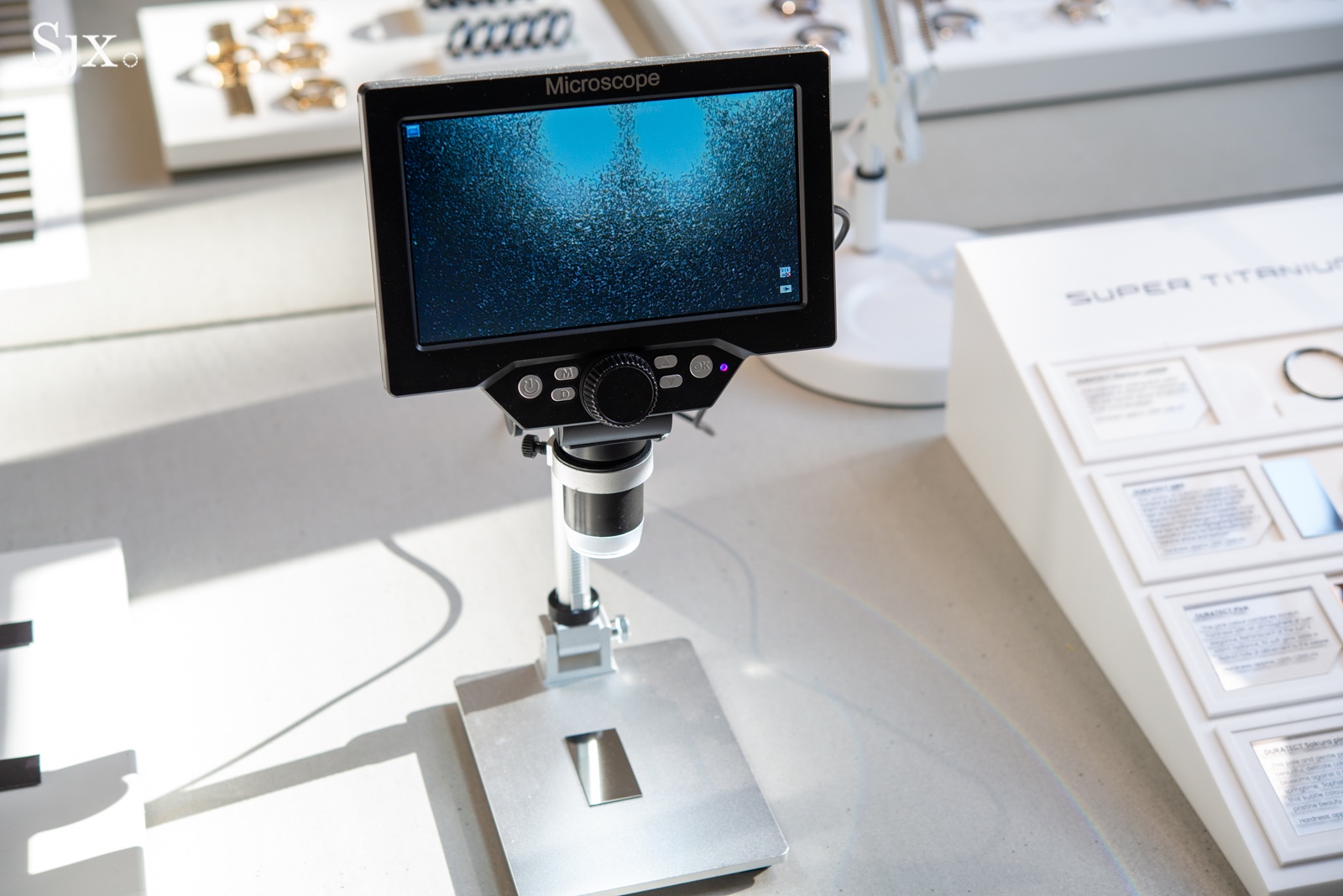
Super Titanium under the microscope.
Citizen also makes what is known as recrystallised titanium, in which grade 2 titanium is heat-treated at extremely high temperatures in conjunction with a controlled cooling process. This process results in a surface pattern that is unique to every piece, since the crystals form naturally, similar to the way in which Widmanstätten patterns form in meteorite.
Previously offered with a black coating, the recrystallised titanium bracelet center links in the Platinum Shine collection get a brighter look that brings out the crystalline surface. With its nearly scratch-proof Duratect coating, likely in the neighborhood of 1,400 Hv, the recrystallised titanium is an appealing accent, managing to be both beautiful and hard-wearing.
Diameter: 44.6 mm Height: 15.4 mm Material: Super Titanium with Duratect Platinum DLC coating and Recrystallised Titanium Crystal: Sapphire Water resistance: 100 m
Movement: F950 Functions: Hours, minutes, seconds, day, date, second time zone, chronograph, alarm, and satellite wave GPS; accuracy of ±5 seconds per month without GPS sync Winding: Eco-Drive Power reserve: Five years
Strap: Super Titanium and Recrystallised Titanium
Limited edition: 2,200 pieces
Availability: At Citizen retailers and boutiques from November 2025 Price: US$2,437 excluding taxes
Diameter: 42 mm Height: 10.8 mm Material: Super Titanium with Duratect Platinum DLC coating and Recrystallised Titanium Crystal: Sapphire Water resistance: 100 m
Movement: H800 Functions: Hours, minutes, seconds, day, date, second time zone, chronograph, and world time; accuracy of ±15 seconds per month without radio sync Winding: Eco-Drive Power reserve: 10 months
Strap: Super Titanium and Recrystallised Titanium
Limited edition: 2,500 pieces
Availability: At Citizen retailers and boutiques from November 2025 Price: US$1,319 excluding taxes
Diameter: 40.6 mm Height: 10.6 mm Material: Super Titanium with Duratect Platinum DLC coating and Recrystallised Titanium Crystal: Sapphire Water resistance: 100 m
Movement: H145 Functions: Hours, minutes, seconds, day, date, and world time; accuracy of ±15 seconds per month without radio sync Winding: Eco-Drive Power reserve: Two years
Strap: Super Titanium and Recrystallised Titanium
Limited edition: 1,400 pieces
Availability: At Citizen retailers and boutiques from November 2025 Price: US$1,220 excluding taxes
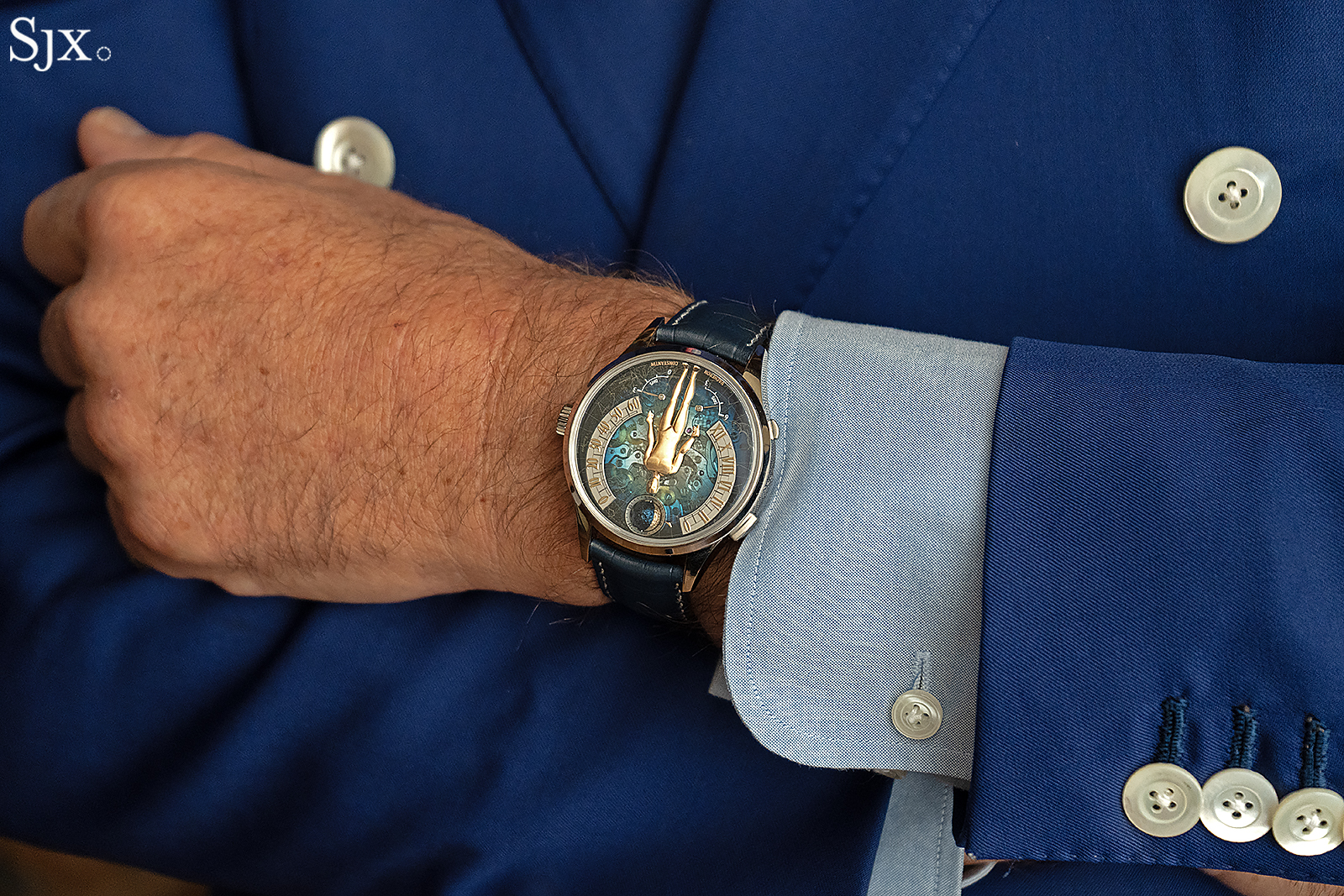
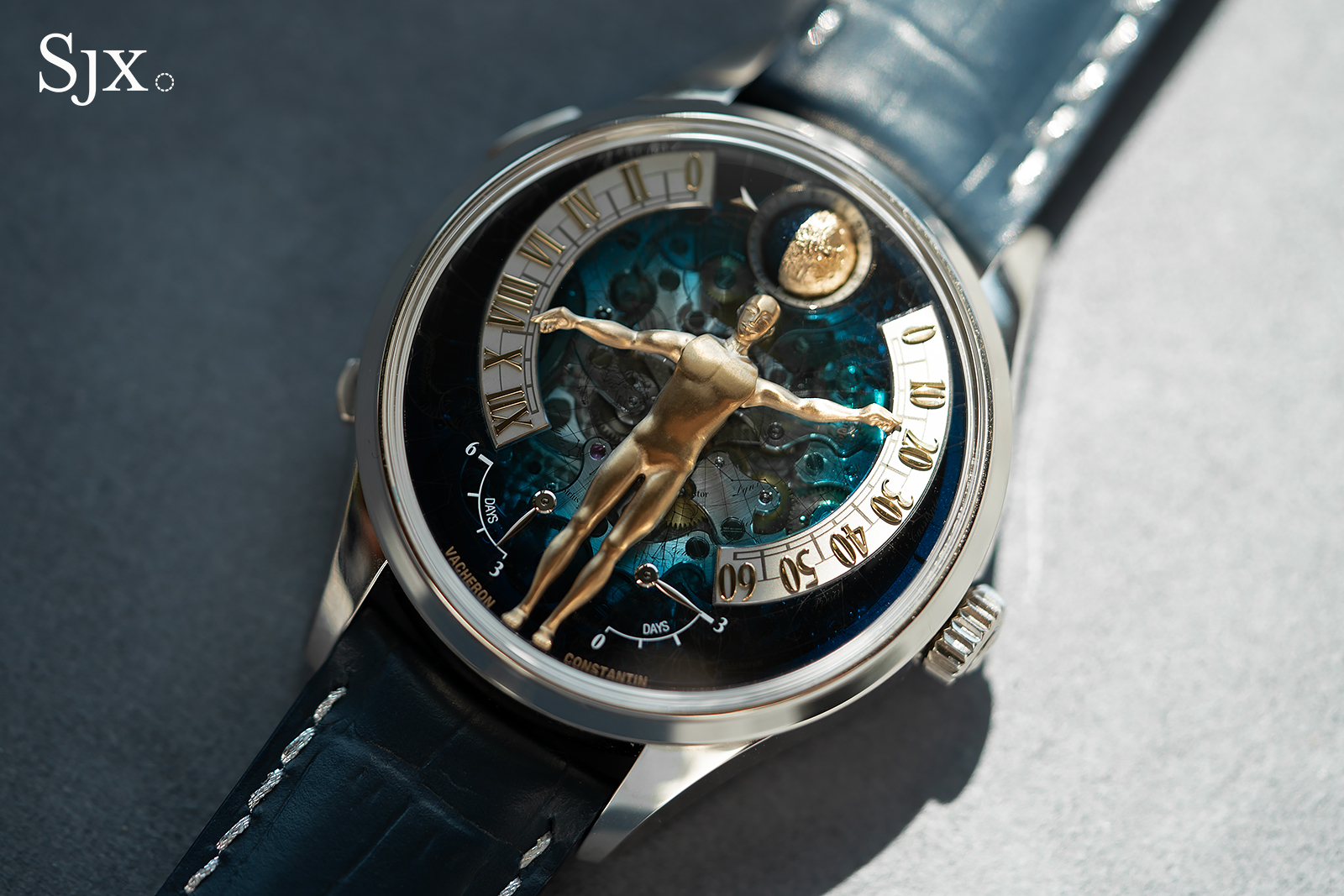
Vacheron Constantin (VC) marks its 270th anniversary this year in grand style with La Quête Du Temps, a monumental, multi-complication clock weighing over 150 kg. A little more wearable is the Métiers d’Art Tribute to The Quest of Time, also a 270th anniversary edition but in wristwatch format.
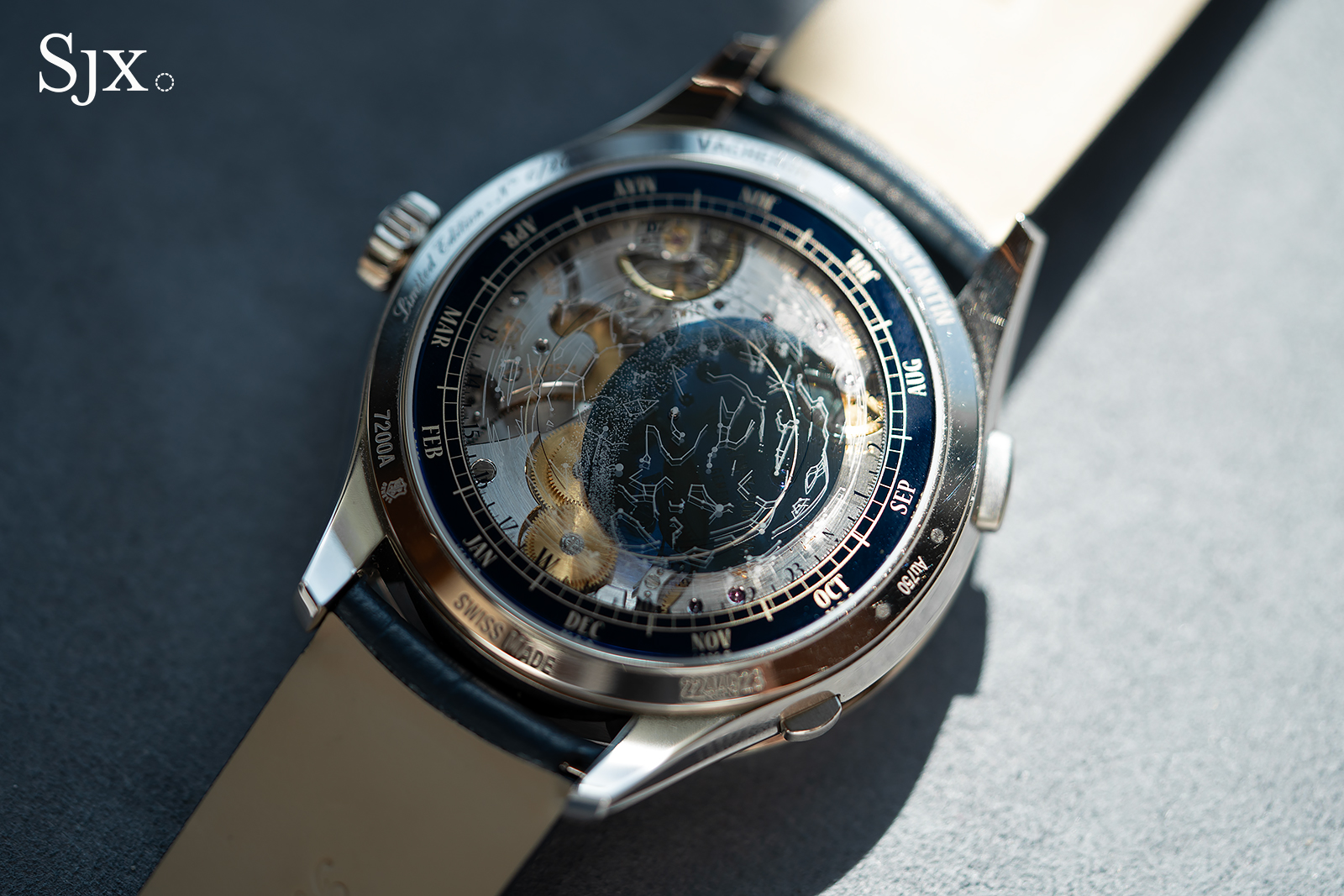
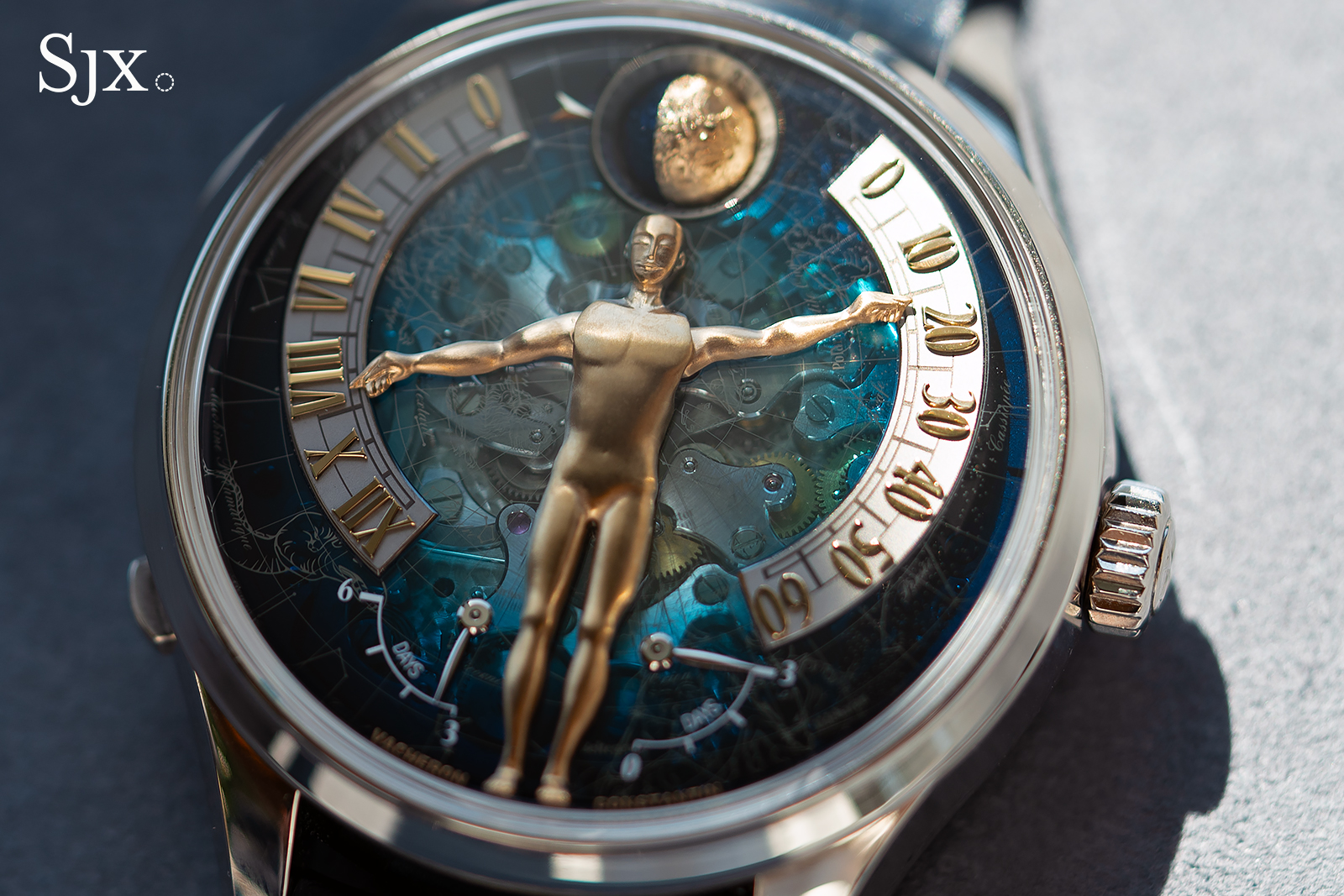
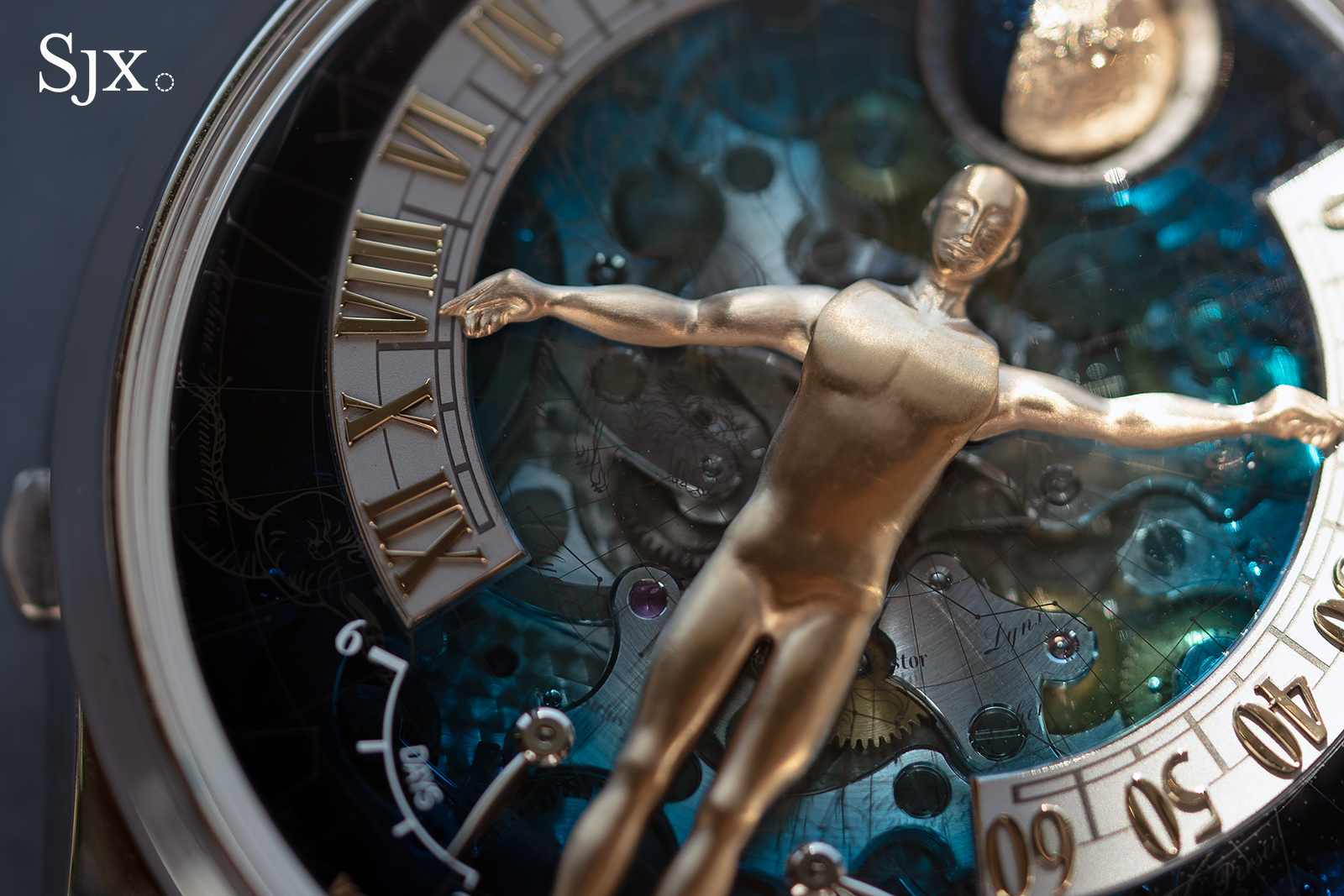
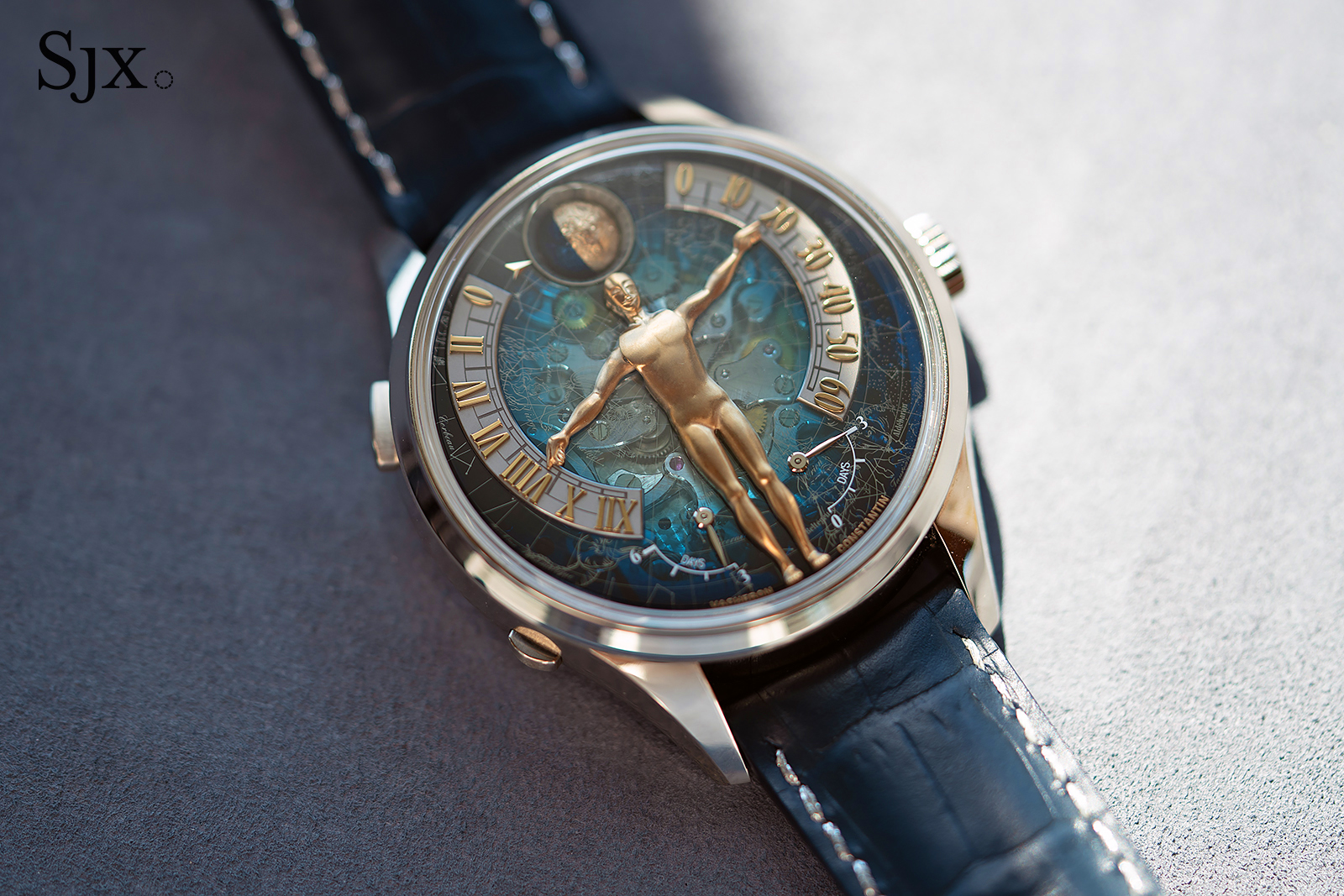
Like many of VC’s high complicated watches, Tribute to the Quest of Time is a double-faced wristwatch. On the front is a double retrograde time display that’s either on demand or en passant, which takes the form of a human figure whose arms tell the time. Also on the front is a spherical moon phase, while the back is home to an astronomical display comprising a sky chart and sidereal day indicator.
Initial thoughts
Tribute to the Quest of Time is a big complicated watch, and it looks and feels the part. In terms of dimensions and feel, it reminds me a little of the Lange Repeater Perpetual Calendar that was also launched this year. Even though small watches are on trend now, complicated watches like this should be large. This succeeds in that respect, and feels good on the wrist.
Despite the mechanical complexity, the time is easy to read, though it takes a moment to get used to the twin scales for the time. The symmetrical dial on the front is straightforward and legible.
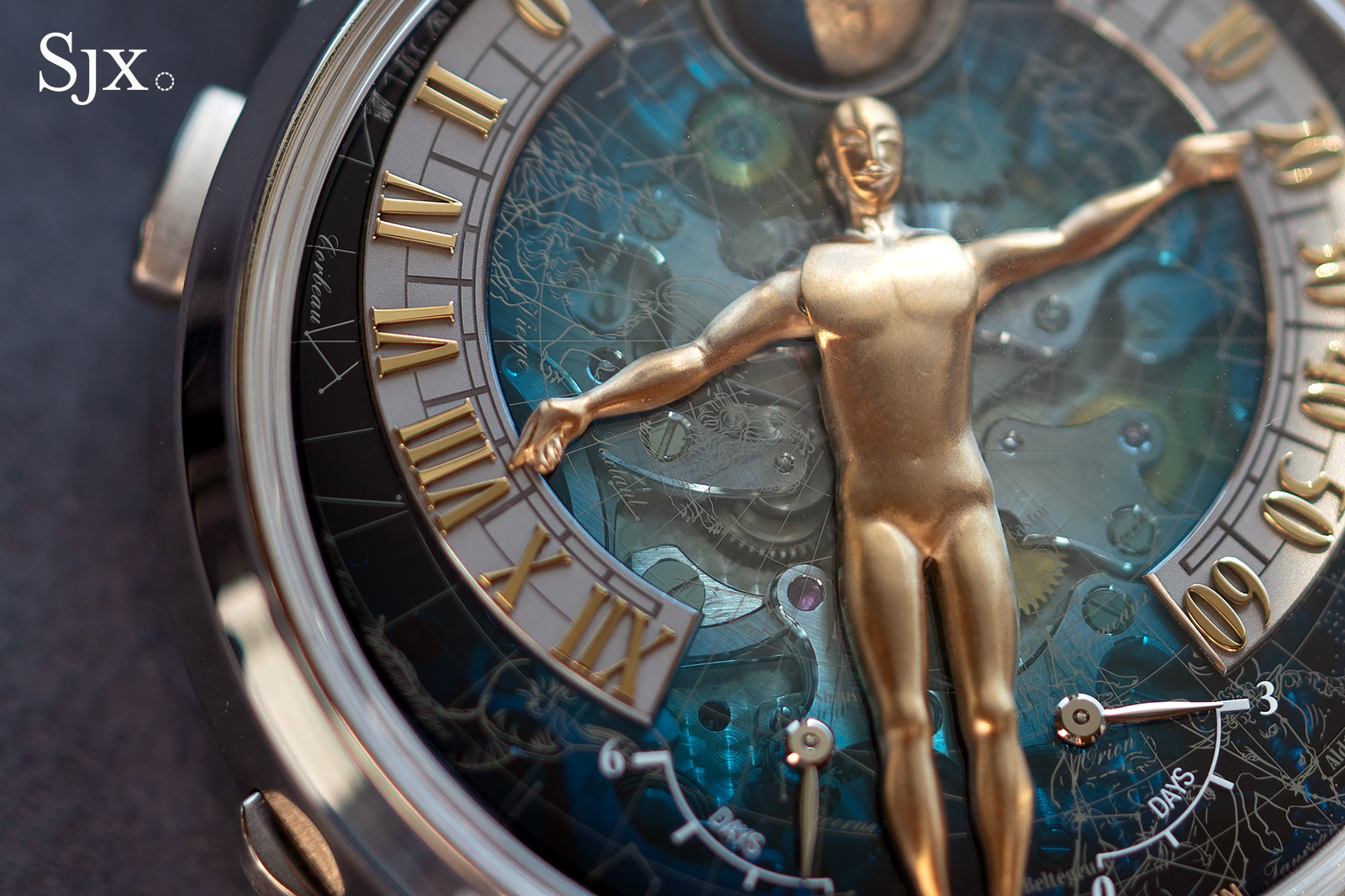
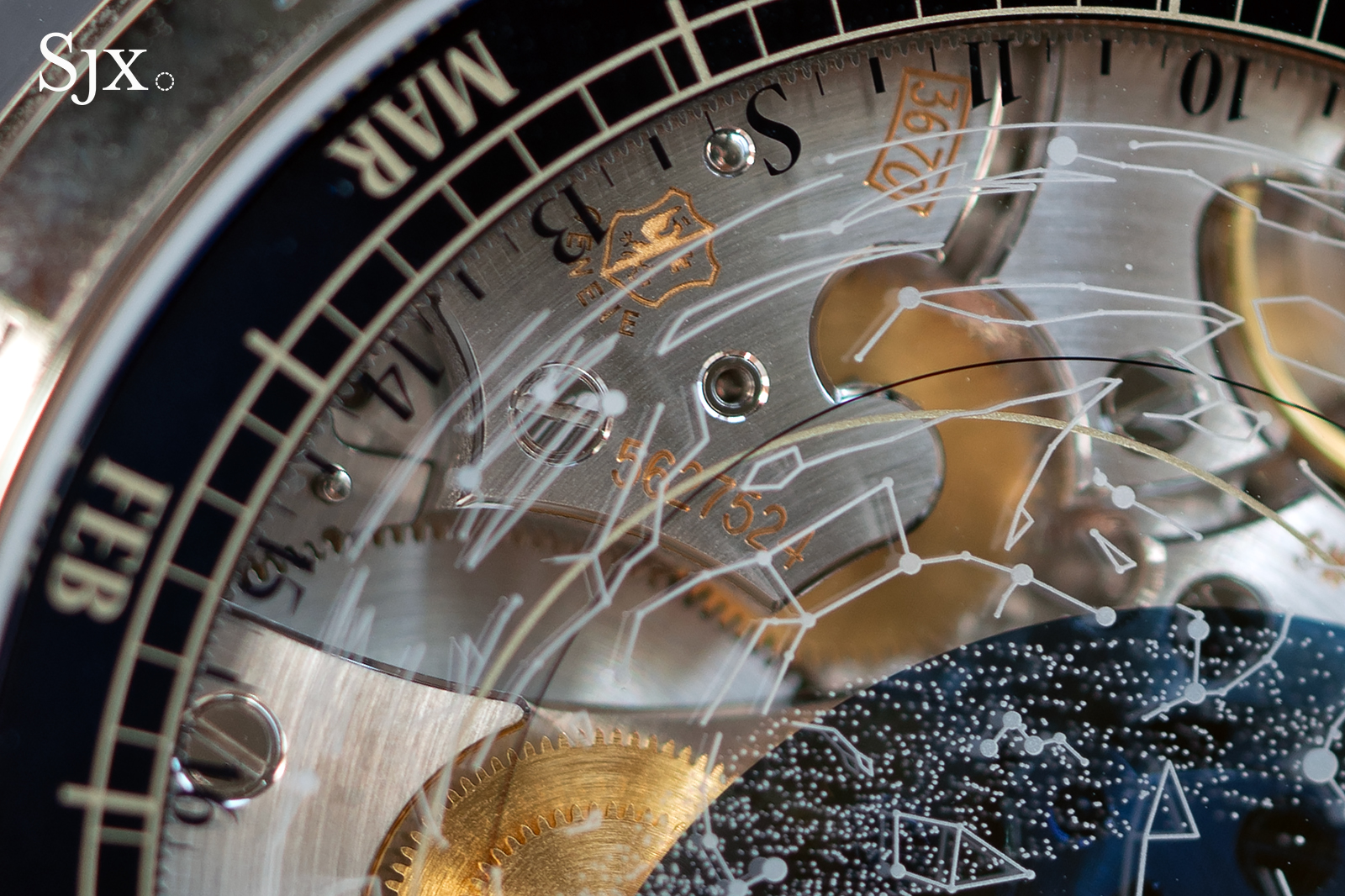
The dial is tinted sapphire and etched with the constellations in the night sky over Geneva on the day VC was established, September 17, 1755. This is not obvious at a distance but reveals itself up close. This leaves the constellations superimposed over the under-dial mechanism for an appealing visual effect.
The back is equally straightforward but more difficult to understand as some knowledge of astronomy is required to decipher (and also set) the sky chart display. But whether or not you understand the sky chart, it looks cool, especially suspended over the movement.
The cal. 3670 is only partially visible through the back, but worth a second look. For one, the movement decoration is evidently better than VC’s run-of-the-mill watches, as it should be.
And besides the obvious complications, the cal. 3670 is also an interesting construction. It’s a large calibre with a six-day power reserve and a high-frequency balance running at 36,000 beats per hour (5 Hz). Together they are an unusual combination of features but make for a logical pairing in terms of chronometry, especially for an energy-intensive set of functions like these.
Overall, I like the Tribute to the Quest of Time, and I rate it highly in terms of mechanics and execution. Beyond the tangible appeal, this has the appeal of rarity as it’s a limited edition of just 20 pieces, a small run even in the rarefied world of such timepieces. It does cost over CHF400,000, which is substantial, but not outrageous in today’s market that is richly valued.
Time-telling hands
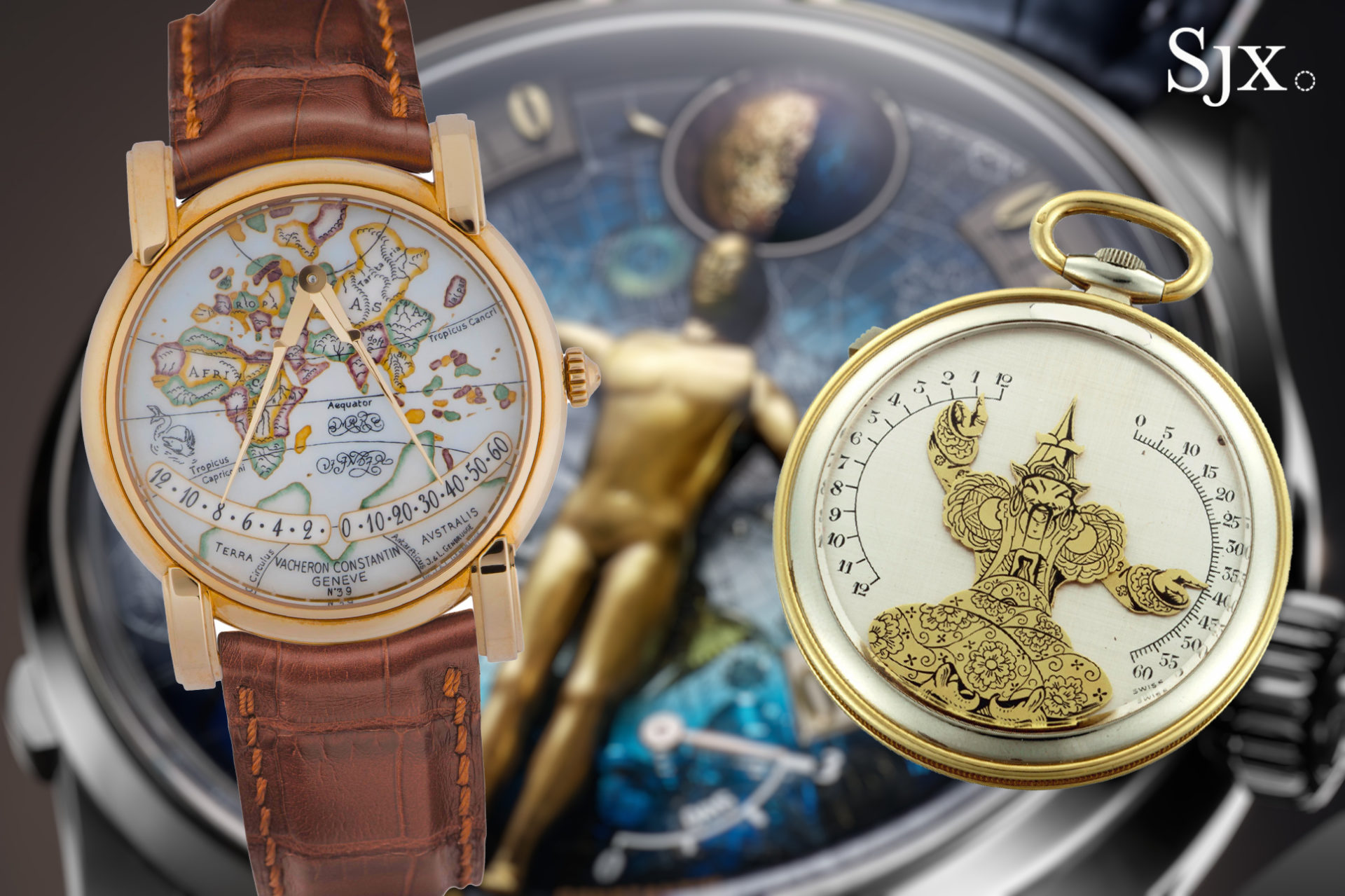
Pocket watches with a figure indicating the time with its arms date as far back as the late 18th century, and a little bit further back for clocks. Various makers produced such watches, known as bras en l’air, French for “arms in the air”, but VC made it something of a specialty starting in the late 1920s. With the help of a Le Locle specialist, VC produced a series of bras en l’air watches and movements, both under its own name and for others, most notably Paris jeweller Verger Frères. The dial motifs were diverse, ranging from a snake charmer to an eagle.
These bras en l’air watches contained on-demand, bi-retrograde displays. One arm indicated the minutes, and the other, the hours, each on a retrograde scale. But these were strictly on demand – depressing a pusher on the case band or crown caused the arms to jump to show the time, and then releasing the pusher sent the hands back to the zero position.
The Mercator (left), and a 1930 bras en l’air pocket watch made for Verger Frères. Images – Vacheron Constantin
Bras en l’air watches went out of fashion by the 1940s, and VC only returned to the bi-retrograde concept in 1994 with the Mercator. Inspired by historical maps, the Mercator indicated the time with a pair of retrograde hands, continuously and without an on-demand function.
The Tribute to The Quest of Time is the ultimate evolution of the concept. It is a bi-retrograde time display that is both on demand an en passant. In other words, the display can be reset to zero with the push of a button, placing the arms by the figure’s sides, or left to run to show the time as it passes. The combination of the two display types, on-demand and en passant, makes the Tribute more complex than either of its historical predecessors.
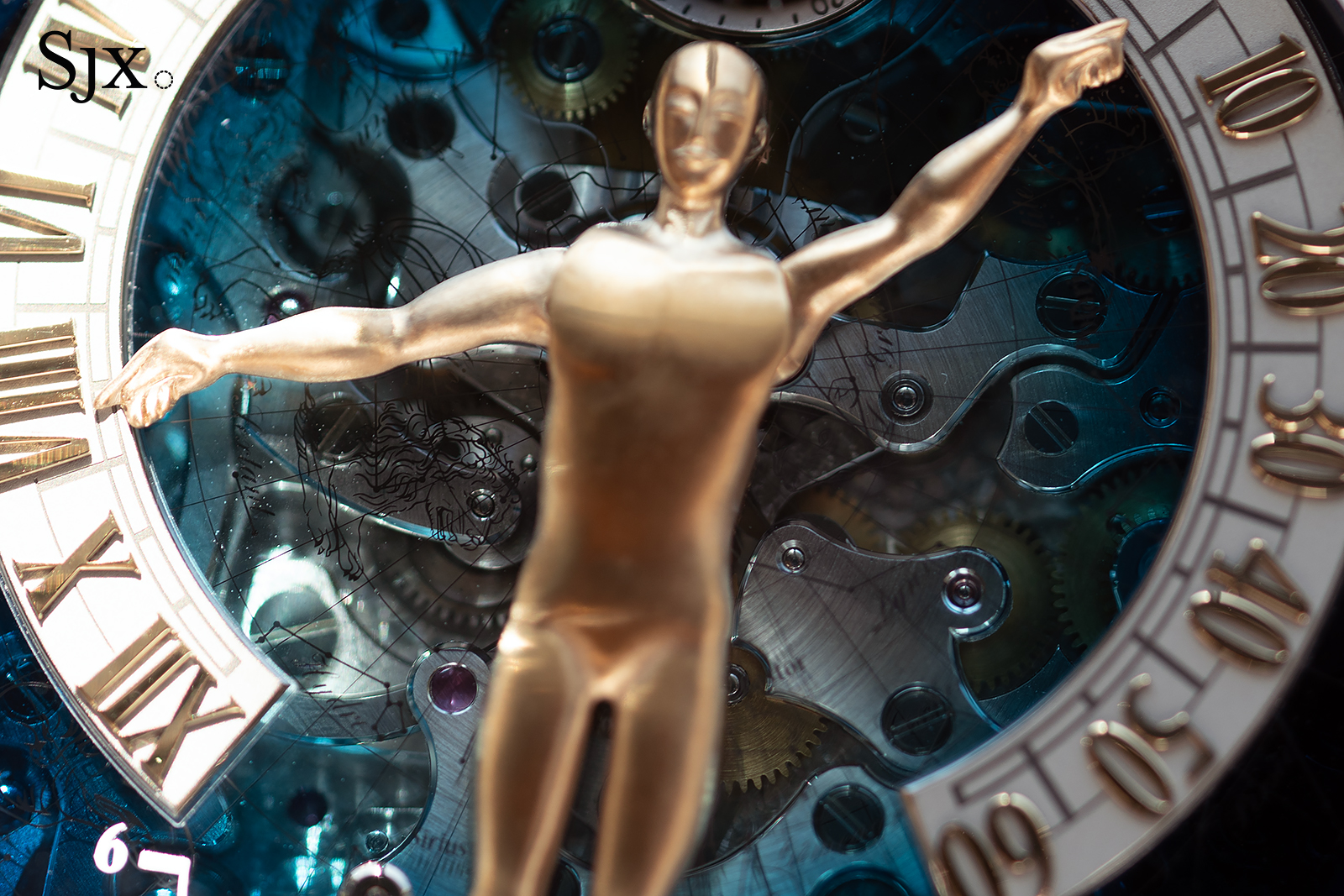
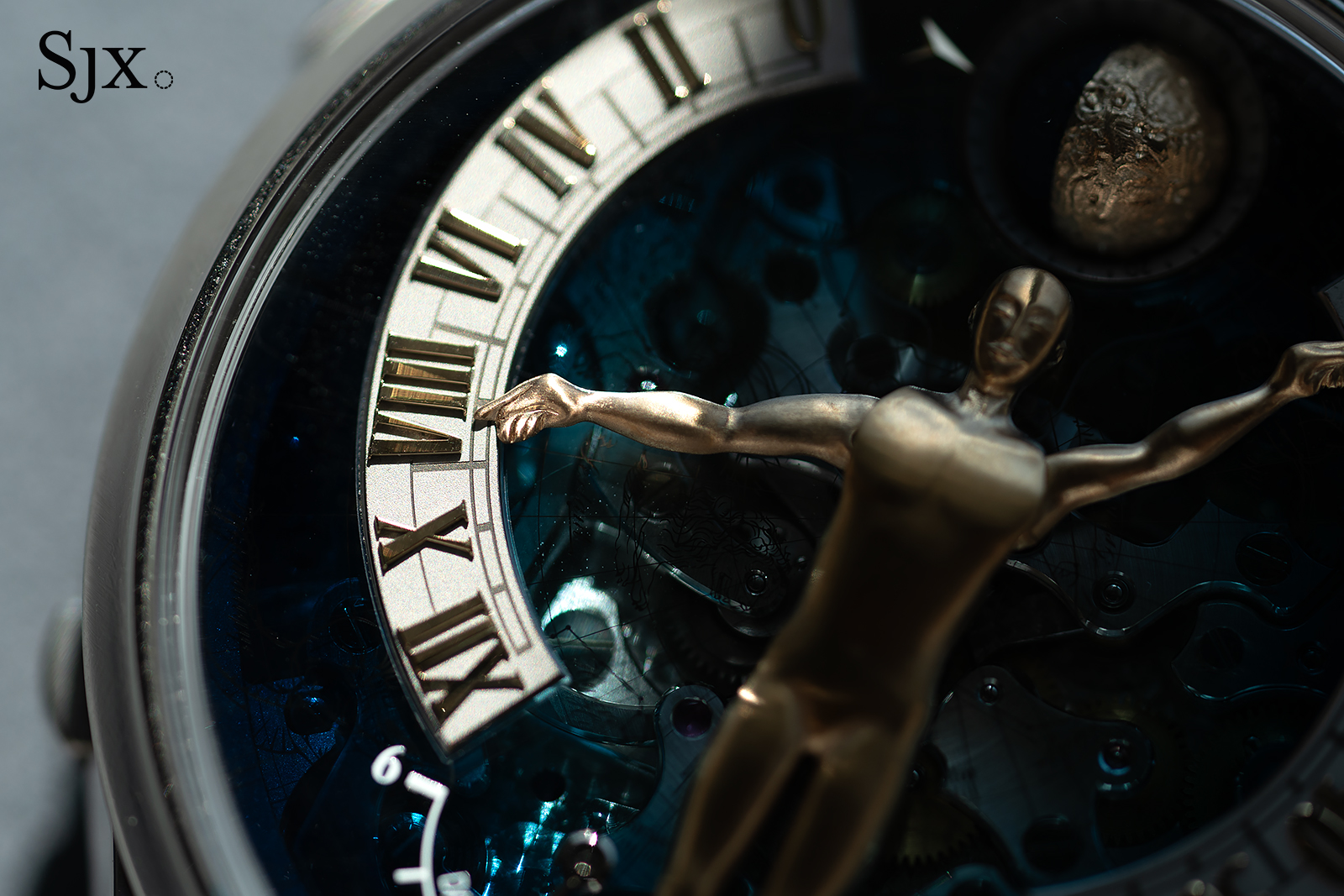
The time display is straightforward and legible, though the format takes some getting used to. Hours are indicated on the leftmost scale with Roman numerals, while minutes are in Arabic numerals on the right. The figure, christened “The Astronomer”, indicates the time with both its hands.
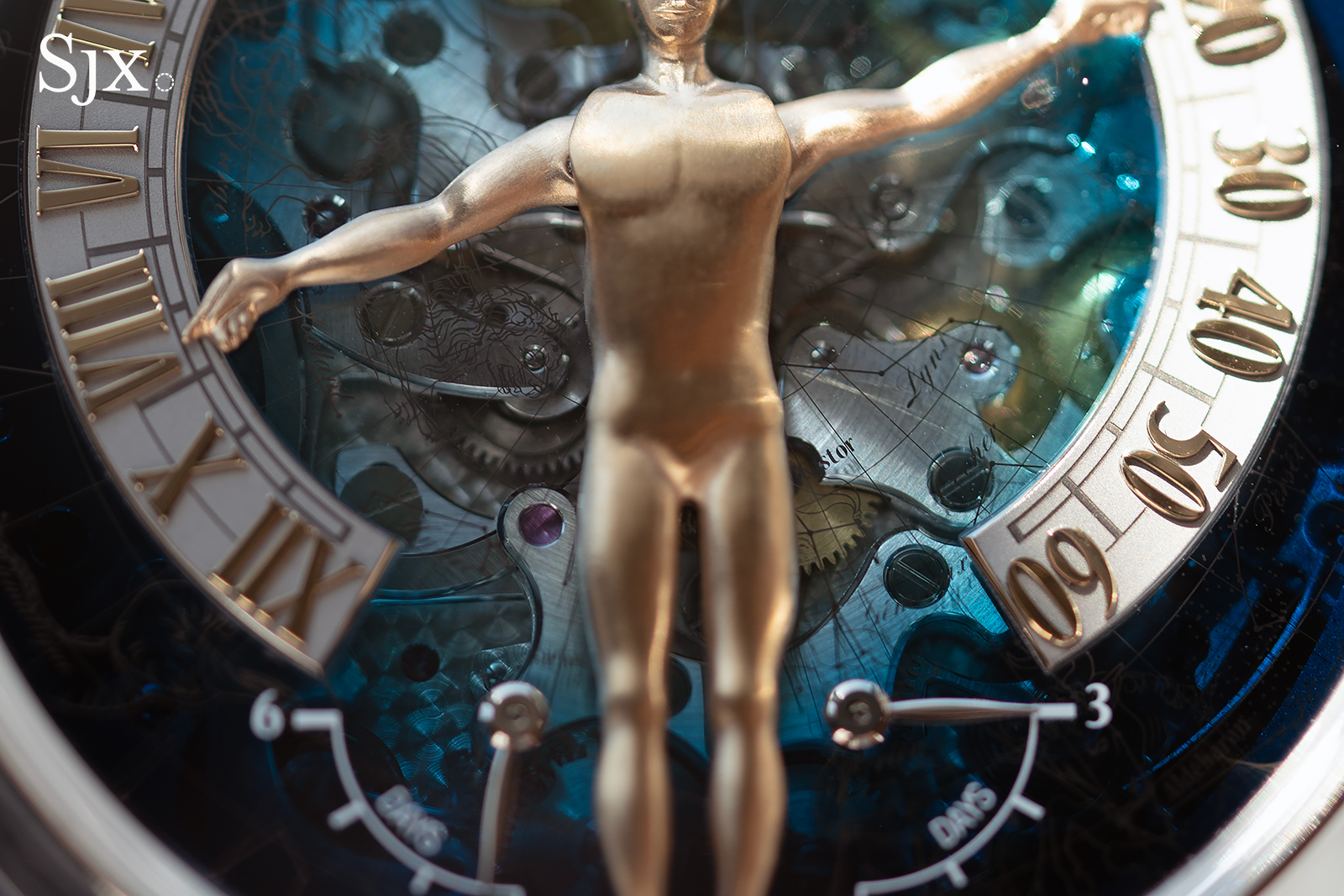
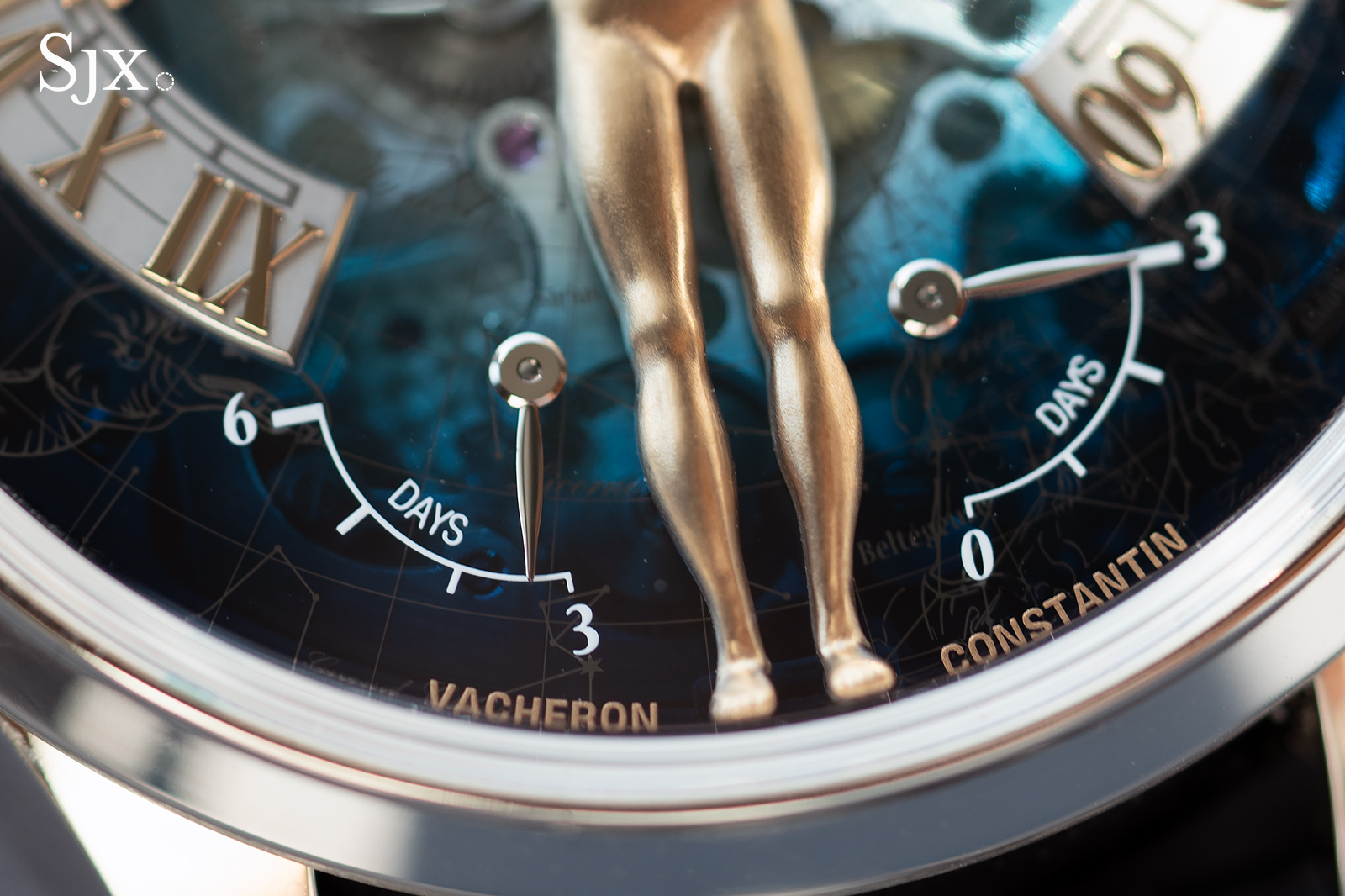
Both the scales and numerals are solid 18k gold – the scales are white gold while the numerals are yellow gold. But the Astronomer is in gold-coated titanium; the motion of both arms require maximum lightness hence the choice of material.
Similarly, the spherical moon is also titanium made up of two halves: one half is hand engraved and gold-plated while the other is coated blue. Both halves, however, are hand engraved to create a “cratered” finish modelled on the actual lunar surface.
The moon phase display has a conventional accuracy of one day in 122.5 years, so it is more performative than a substantial complication. I don’t think it is a weakness, but a more complex astronomical display, like an equation of time or ultra-accurate moon phase of the one-day-in-1,000-years type, would be a bonus.
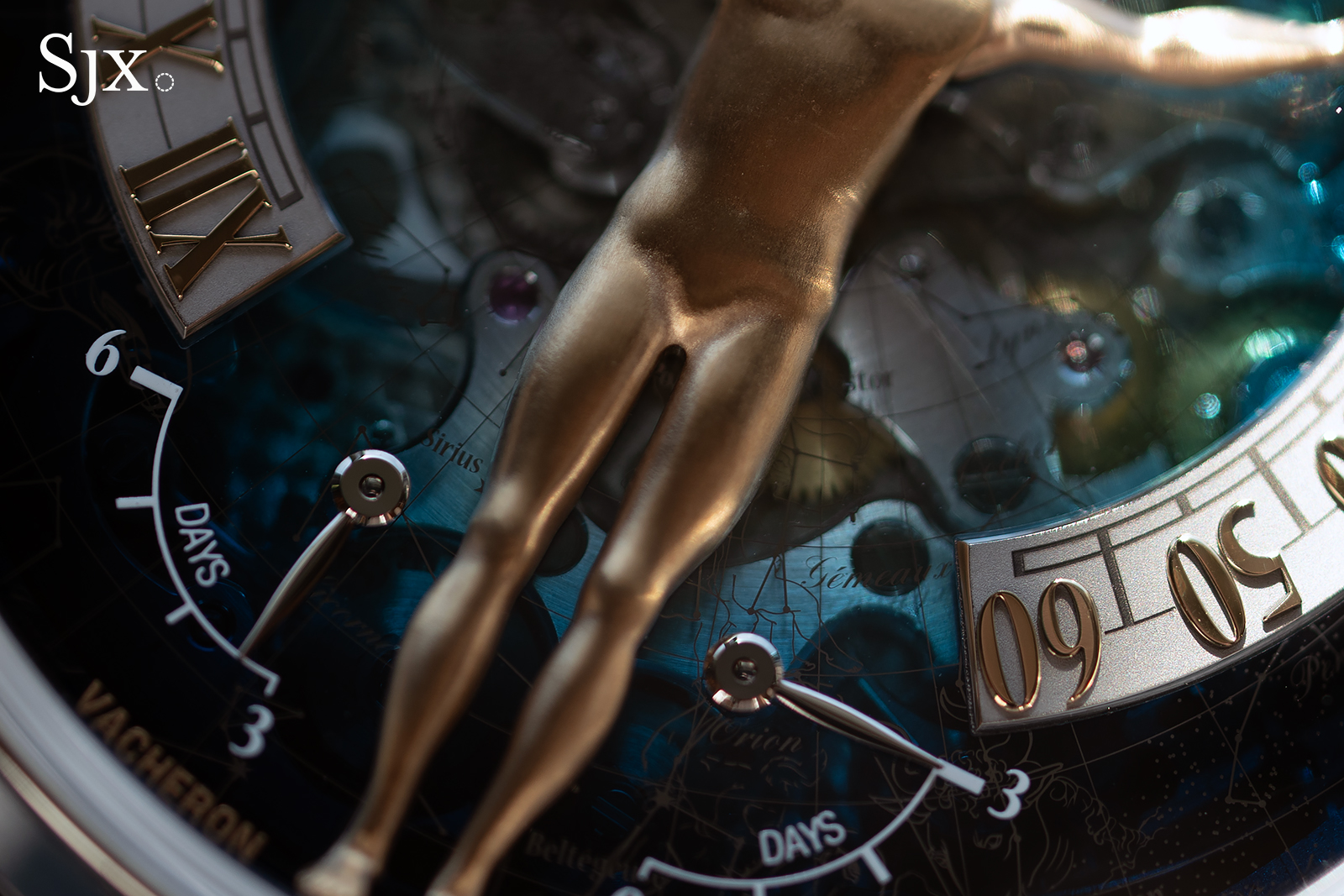
On either side of the figure’s legs are the power reserve displays. Though they are separate, the two displays run sequentially to indicate the total power reserve of the watch. Functionally, the two scales offer the same information as a single conventional display, but here they serve to preserve the symmetry of the dial.
The righthand indicator shows the first three days of power reserve, and the lefthand displays the balance of three days. As the movement winds down, the lefthand indicator drops to “3”, followed by the righthand display going to “0”.
The backdrop for the elaborate display is a tinted sapphire dial that is clear in the centre and gradually darker blue towards its edges. Though not evident initially, the dial bears a “celestial vault”, essentially a star chart that reproduces the night sky over Geneva on September 17, 1755, the day VC was founded. (Or more specifically, the date Jean-Marc Vacheron hired his first apprentice watchmaker; the “Vacheron et Constantin” was formally established in 1819.)
The star chart is the result of metallisation – a chemical process that deposits metal vapour onto the underside of the sapphire dial to create the motif. The same technique is used for the gradient blue finish.
Notably, the sapphire dial is actually two pieces of sapphire superimposed one on top of the other. The upper dial carries the metallised finish on its underside, while the lower dial is clear and simply serves to protect the metallised decoration, which might otherwise be damaged during servicing when the dial is removed.
Even though the tinted finish of the dial obscures the edges of the under-dial works, much of the mechanism that drives the time display is visible. Under magnification, the movement reveals a high standard of decoration that is finer than that found on the average VC movement – as is expected given the price and limited number of the Tribute.
Novel presentation
The Tribute to the Quest of Time has a unique case design to match the movement. The watch employs a case that is distinct from those found in the regular production line-up (think Traditionelle, Patrimony, and so on), though a similar but not identical case design can be found on some Les Cabinotiers watches.
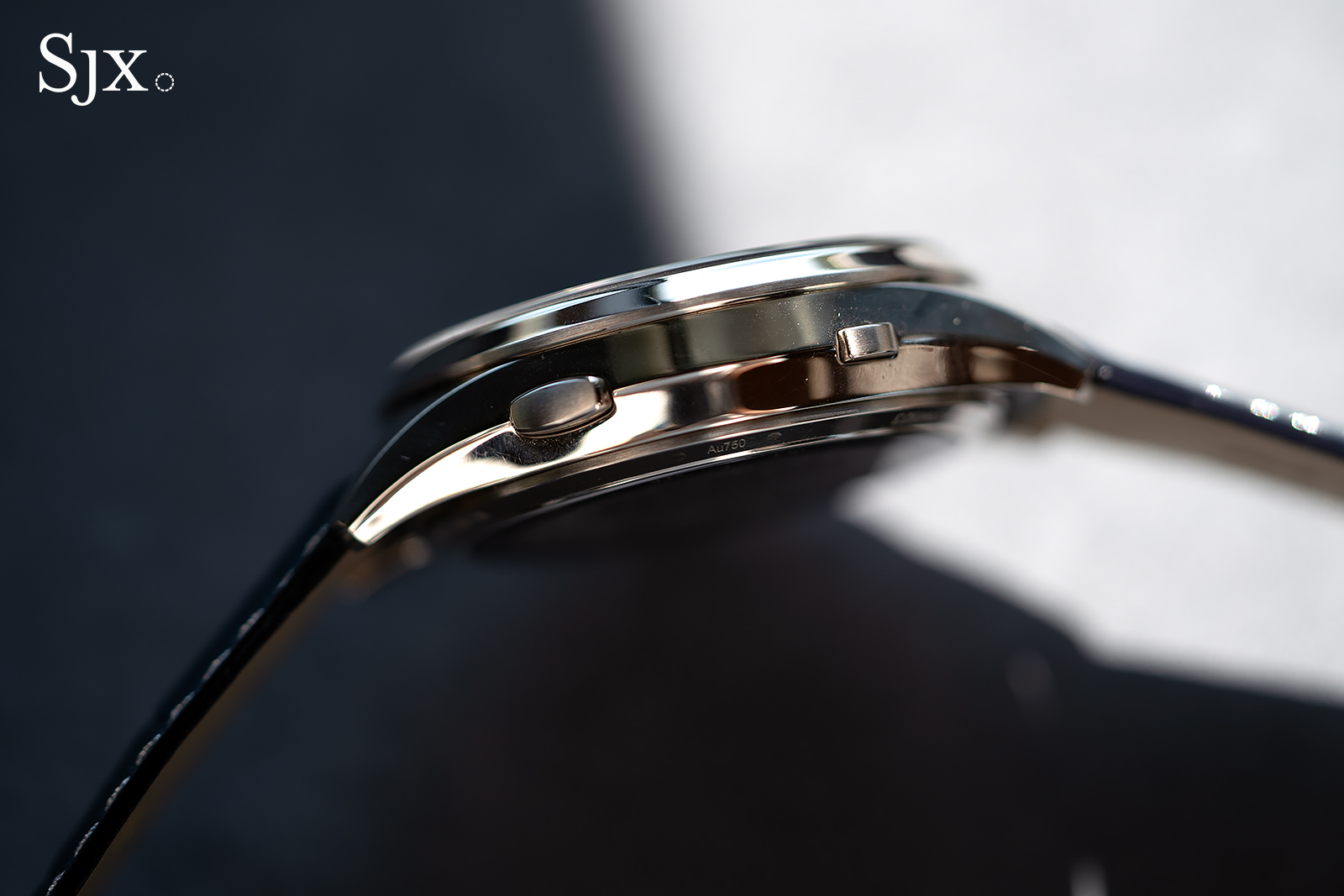
The white gold case is simple in form, with flared flanks and a sloped bezel that actually make the watch look larger than it is. And it is already a large watch at 43 mm in diameter and almost 14 mm thick.
This is either a pro or a con depending on how much you like the size. I think the case works well, though if I had free rein, I’d dress up the case with gem setting or engraving (which I am also sure VC will do at a price).
One astronomer, two hands, three barrels
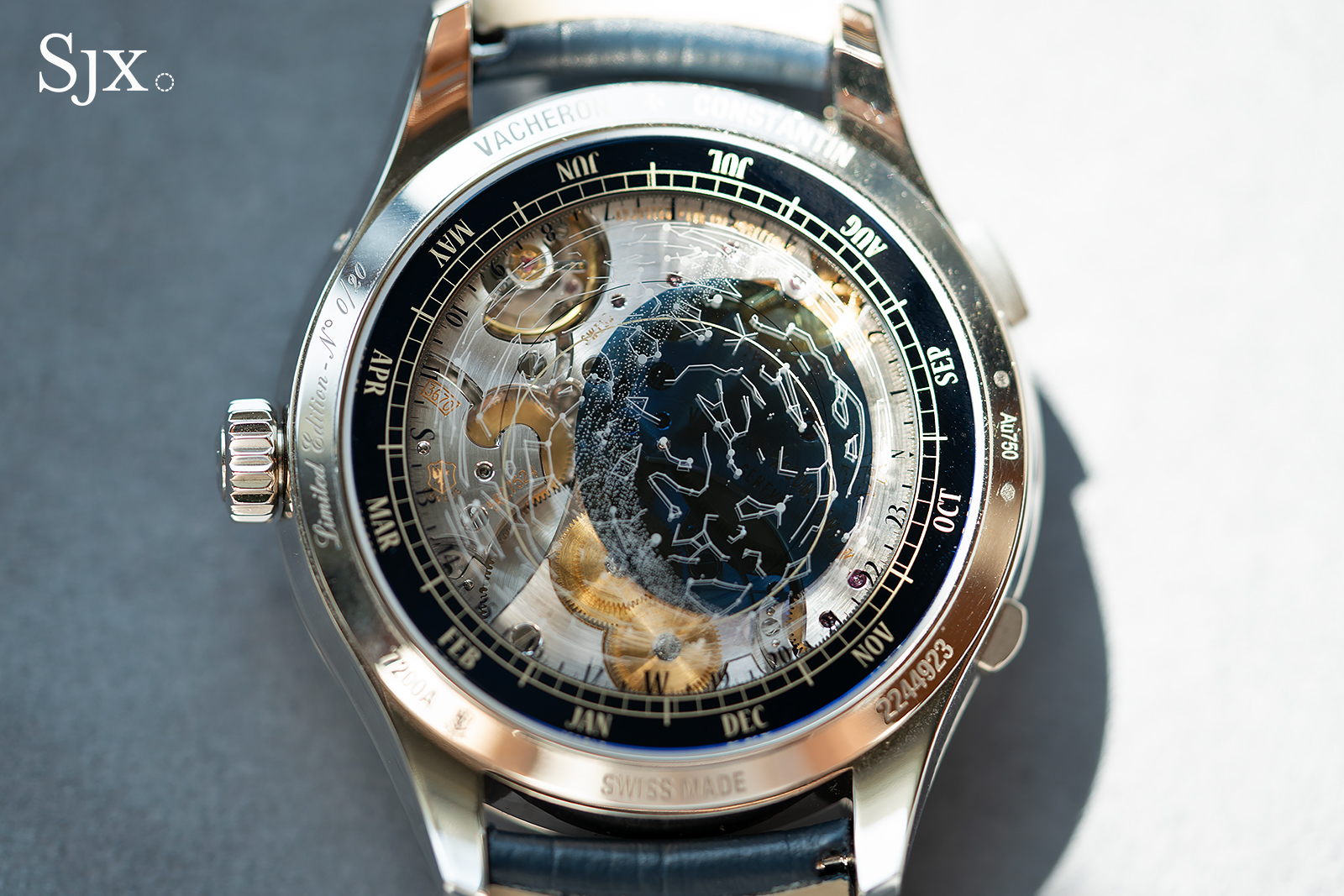
In the tradition of complicated astronomical watches, the Tribute is a double-faced watch. The back reveals both the movement and a sky chart, along with a sidereal day indicator on a scale around the movement marked with dates and months.
The sky chart shows the night sky and constellations as seen from Geneva, though it can presumably be customised to the owner’s location as is usually the case for this complication. According to VC, the sky chart will accumulate a day’s error only after 9,130 years.
Below the sky chart display is the cal. 3670. VC borrowed from the architecture of the innovative Twin Beat of 2019 (that had twin barrels and twin going trains) for the cal. 3670 (that has a single going train). The movement explains the size of the watch; the calibre is large to accommodate three barrels that give it a six day power reserve and optimal amplitude throughout – that’s six days even with the retrograde display running.
Moreover, the movement beats at 36,000 beats per hour, or 5 Hz, which is regarded as high frequency and unusual for this type of highly complicated watch. The high beat balance helps to maintain amplitude over the long power reserve. And the long power reserve is even more of an achievement with the retrograde display and balance, both of which are energy-intensive.
The sky chart covers part of the movement, which is a shame as it’s a good looking movement. It has the typical layout of a calibre with a long power reserve, namely oversized barrels plus a comparatively small balance wheel. Though the size of the balance would ordinarily mean its inertia is lower, the high frequency of its oscillation compensates. The combination of large mainsprings and a small, but high beat, balance promises good chronometry over time.
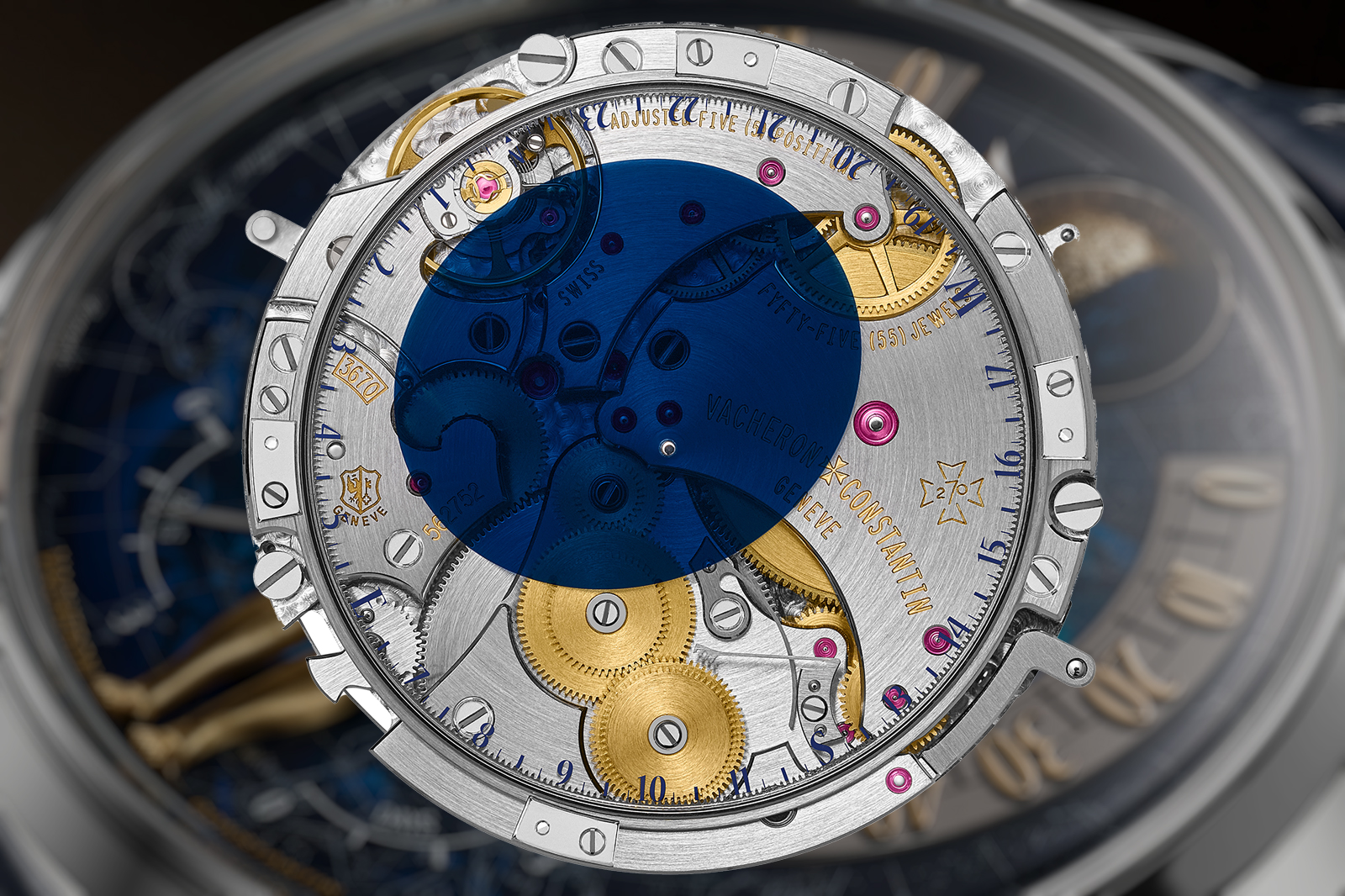
The movement as seen from the back. Image – Vacheron Constantin
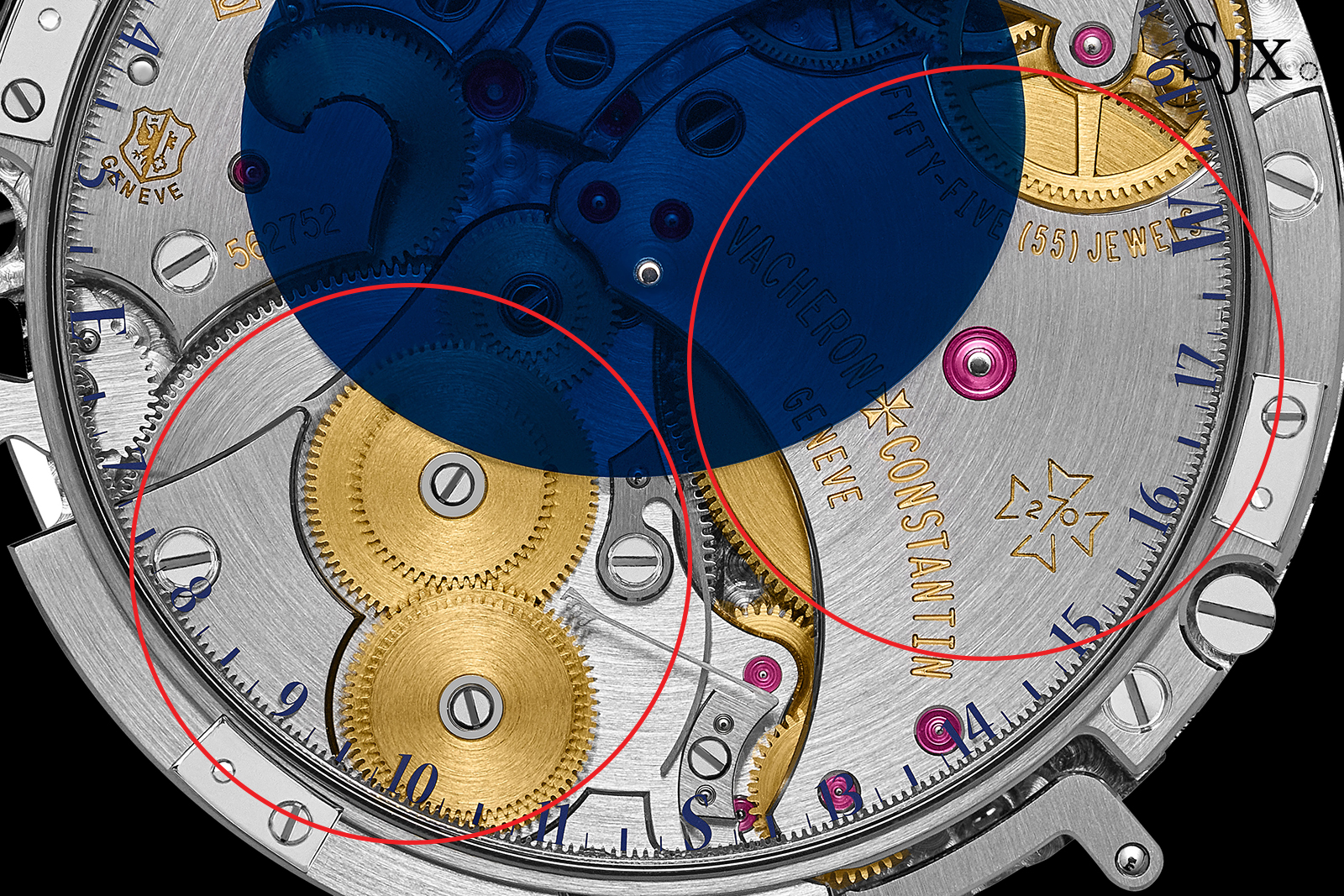
Another notable element of the construction is the barrel arrangement. Two larger barrels are stacked, and power most of the movement, including timekeeping, sky chart, and moon orb. The single, adjacent barrel is slightly smaller in diameter, and is responsible only for the retrograde time display. This division-of-labour approach is a common, historical solution to energy intensive complications that are constantly running, including the grande et petite sonnerie.
The three barrels, one on its own and the pair stacked. Image – Vacheron Constantin
The movement architecture also evokes classical pocket watch movements with the flowing outlines of the bridges, which incorporate enough corners and sharp points to satisfy the finishing fanatics.
The decoration is excellent, though seemingly simple on its face. This is largely due to the circular graining on the flat surfaces of the bridges, a motif found across the brand’s movements inside the 270th anniversary watches. Inspired by similar decoration on historical pocket watches, the grained finish doesn’t have the brightness of Cotes de Geneve or baroque style of engraving, but it done well. And the decoration is also applied by hand according to VC, though presumably with a mechanical tool.
The architecture of the movement with its long power reserve, and presumably robust torque to support energy-intensive complications, makes it an interesting platform for future calibres. I am sure that the team at VC likely has the same thought, so I expect to see more notable movements based on this construction in the future.
Key facts and price
Vacheron Constantin Métiers d’Art “Tribute to The Quest of Time” Ref. 7200A-000G-H103
Diameter: 43 mm Height: 13.58 mm Material: 18k white gold Crystal: Sapphire Water resistance: 30 m
Movement: Cal. 3670
Functions: Retrograde hours and minutes (en passant or on-demand), moon phase, sky chart, sidereal day, and power reserve Winding: Hand wind Frequency: 36,000 beats per hour (5 Hz) Power reserve: 144 hours
Strap: Alligator with matching folding clasp
Limited edition: 20 pieces Availability: Only at Vacheron Constantin boutiques Price: Approximately CHF400,000
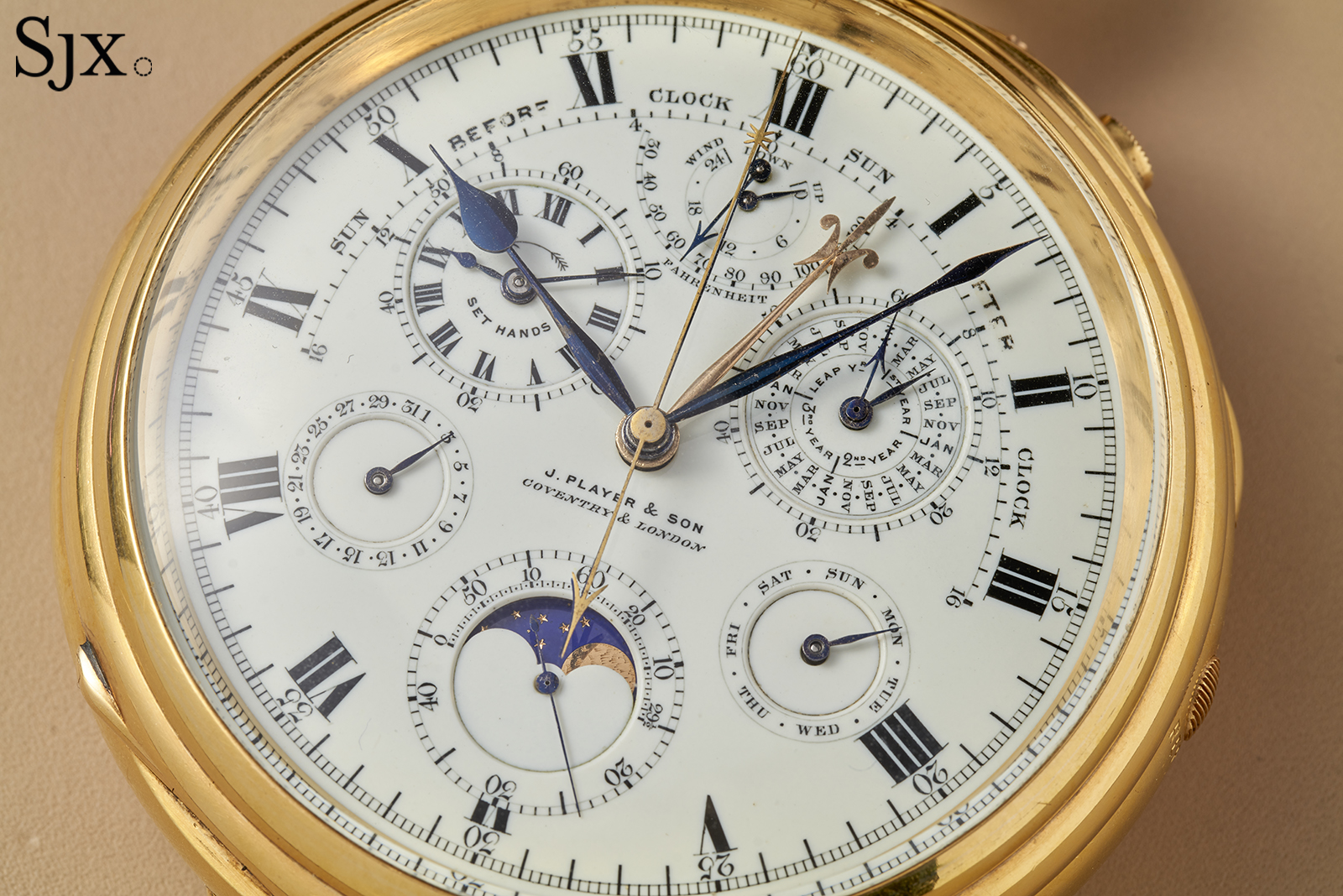
Phillips’s upcoming sale in Geneva has the most attention-grabbing roster of the Geneva auctions, including the return of a record-setting Patek Philippe ref. 1518 in steel. Yet it was the J. Player & Son No. 11’901 that most affected me. Dubbed the “hyper” complication by Phillips, the watch belongs to a rarified group of swan-song supercomplications that memorialise the final days of English fine watchmaking. Despite being over a century old, the watch easily holds its own against the fine watchmaking of today, both in decoration and mechanics.
By the turn of the century, the traditional watchmaking centers of England and France were besieged by vertically integrated American super-factories from the West, and cheap but skilful Swiss labour from the East, both of which benefited greatly from mechanisation. During the waning years of English fine watchmaking, the most prestigious firms responded by attempting to move even further upmarket with highly complicated watches, and the firms remained confident in the appeal of their products.
“If they are more expensive, as they must necessarily be, they last the purchaser a lifetime,” said a representative of Nicole, Nielsen & Co., the company that built this watch, said of English watches in 1912, “The better classes, indeed, have always bought, and will always buy, English-made watches, and will not buy any others”.
Swiss prelude
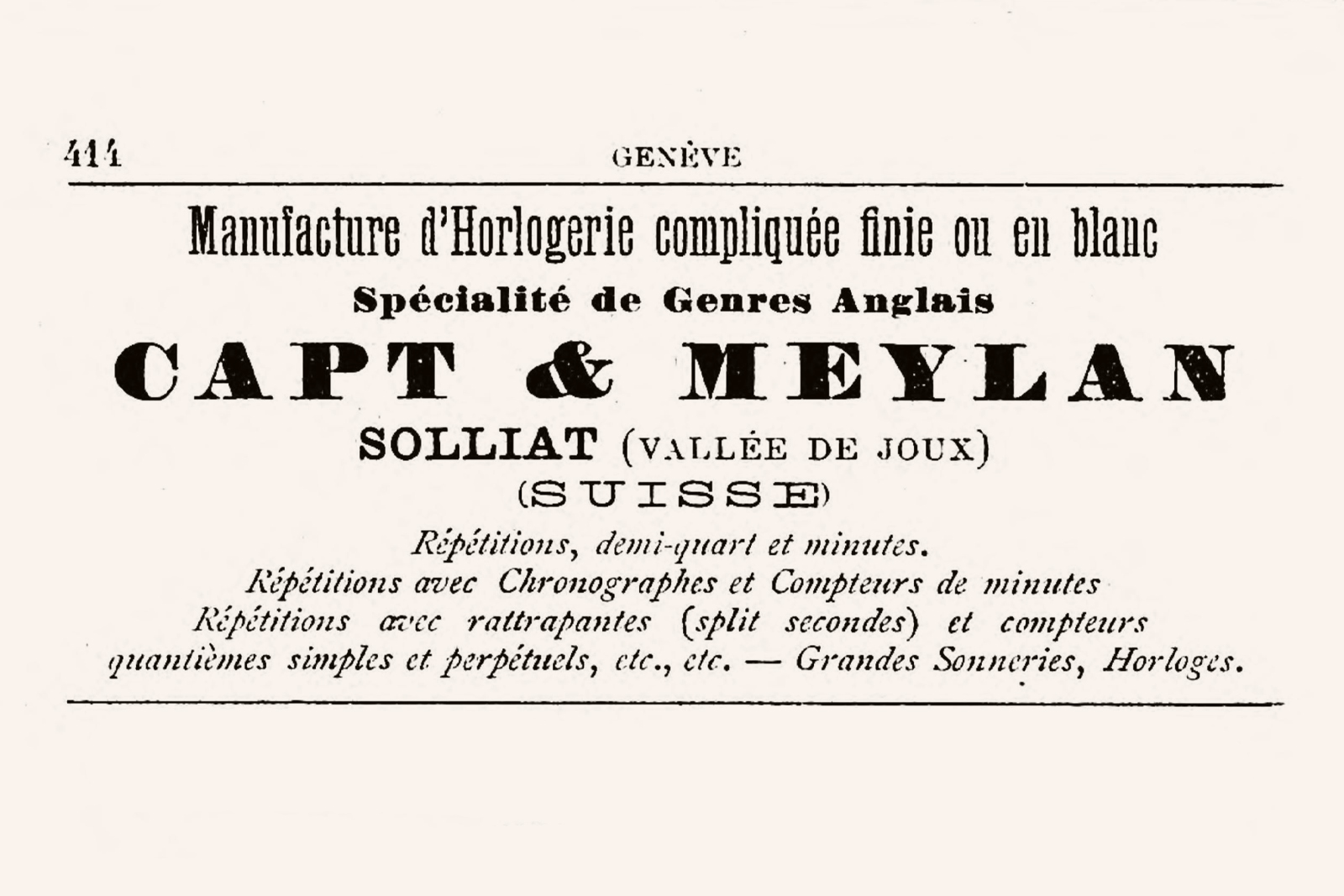
This watch started life in Switzerland as ebauche number 7’321, according to Fritz Von Osterhausen’s book on Louis Elisée Piguet (LEP), a leading etablisseur in the Vallée de Joux specialised in complications. On December 9, 1902, LEP delivered the ebauche – prepped for, but without its present tourbillon – to Capt & Cie. in Le Solliat, the Swiss arm of London-based Nicole, Nielsen & Co., for 2,100 francs. Incidentally, David Candaux now occupies Capt & Cie.’s former workshop, while Philippe Dufour lives and works just down the same street.
Advertisement in Indicateur Davoine by Capt & Meylan (later Capt & Co) circa 1900. Meaning in English, “Manufacturer of complicated watches and ebauches, specializing in the English style”. Image – Indicateur Davoine 1900
This is the third-highest price recorded in LEP’s books, only surpassed by a pair of two Westminster supercomplications, also made for Nicole, Nielsen. It is hard to say exactly where the present lot ranks, but it is easily among the ten most complicated English watches, and is probably the most complicated with only a single dial.
Adolphe Nicole founded his firm in 1839 as Nicole & Capt. The company later became Nicole, Nielsen & Co. when Danish watchmaker Sophus Emil Nielsen joined as partner around 1870. Besides founding the company, Adolphe Nicole – or one of his employees – invented the modern chronograph, and possibly also the rattrapante.
The firm was the leading manufacturer of high-end and complicated English watches, supplying most renowned brands like Dent, Frodsham, Smith, etc. Nicole Nielsen could make most of their simple watches domestically, but still relied on their partners across the channel for highly complicated ebauches. But they were not alone, as the best firms from Geneva, Paris, and Dresden did the same.
The movement probably reached London in 1903, still without a tourbillon. Nicole, Nielsen completed the watch for J. Player & Son, a Coventry firm that retailed J.P. Morgan’s astronomical watch – also furnished by Nicole, Nielsen.
A line engraving of the watch appears in a 1990s reprint of 1910 Nicole, Nielsen & Co. catalog as the “Type 52”, with pricing on request. From there I tracked it to a 1993 Christie’s auction in New York, where the current owner won it for almost US$600,000, after which the trail ran cold, until now.
First encounter
The watch makes a strong first impression, dominating the other watches in its display case. Pocket watches display better than wristwatches – especially 77 mm ones. Bigger is better when it comes to pocket watches, at least to a point, and this is possibly a little past that point.
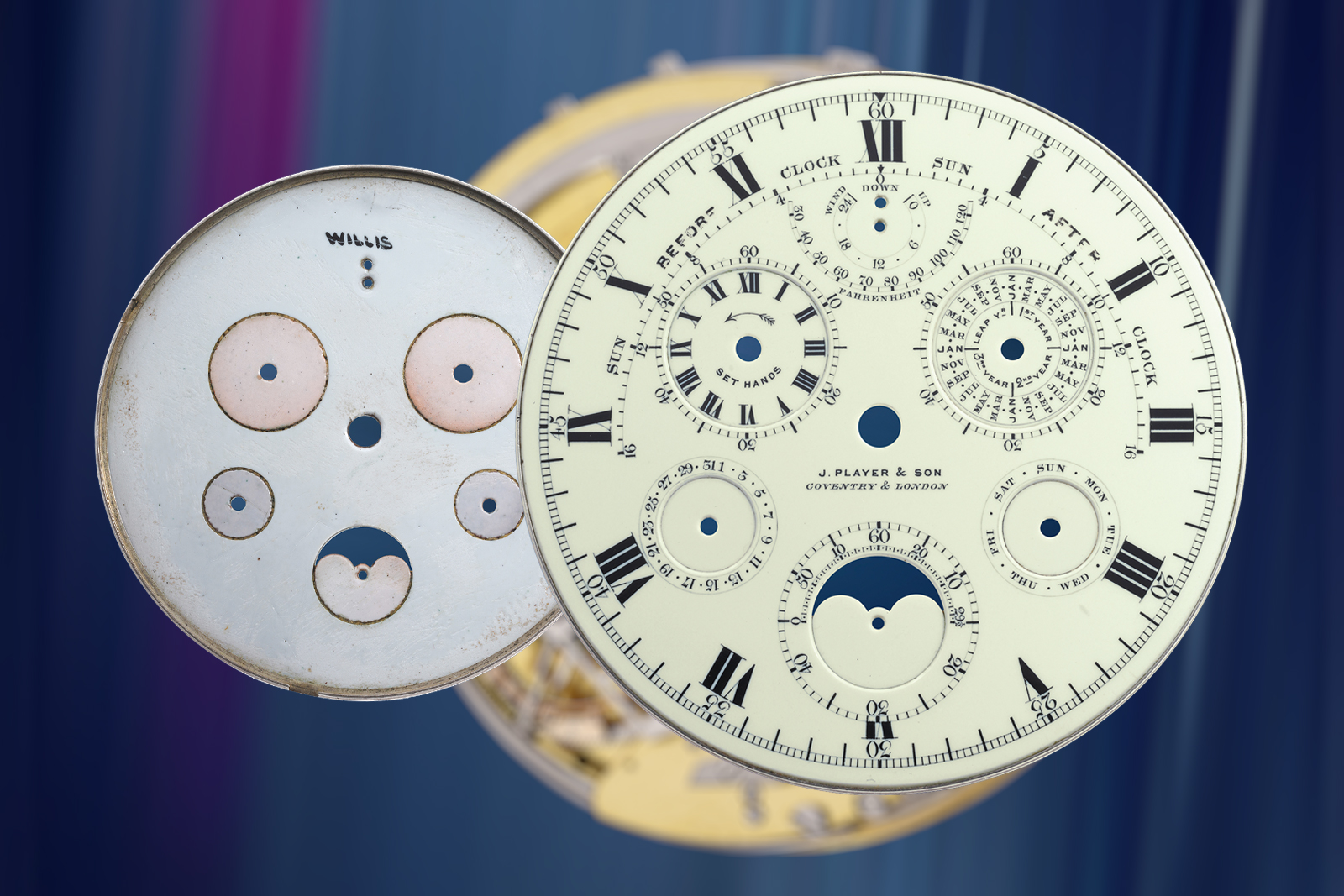
London dial manufacturer T.J. Willis made the enormous vitreous enamel dial for this and most other English complications of the day. Each of the five sunken sub-dials are separate parts, soldered into the main dial. While proportionally small, in absolute terms each sub-dial is quite large and easy to read.
The front and back of the dial, signed “Willis”. Image – Phillips
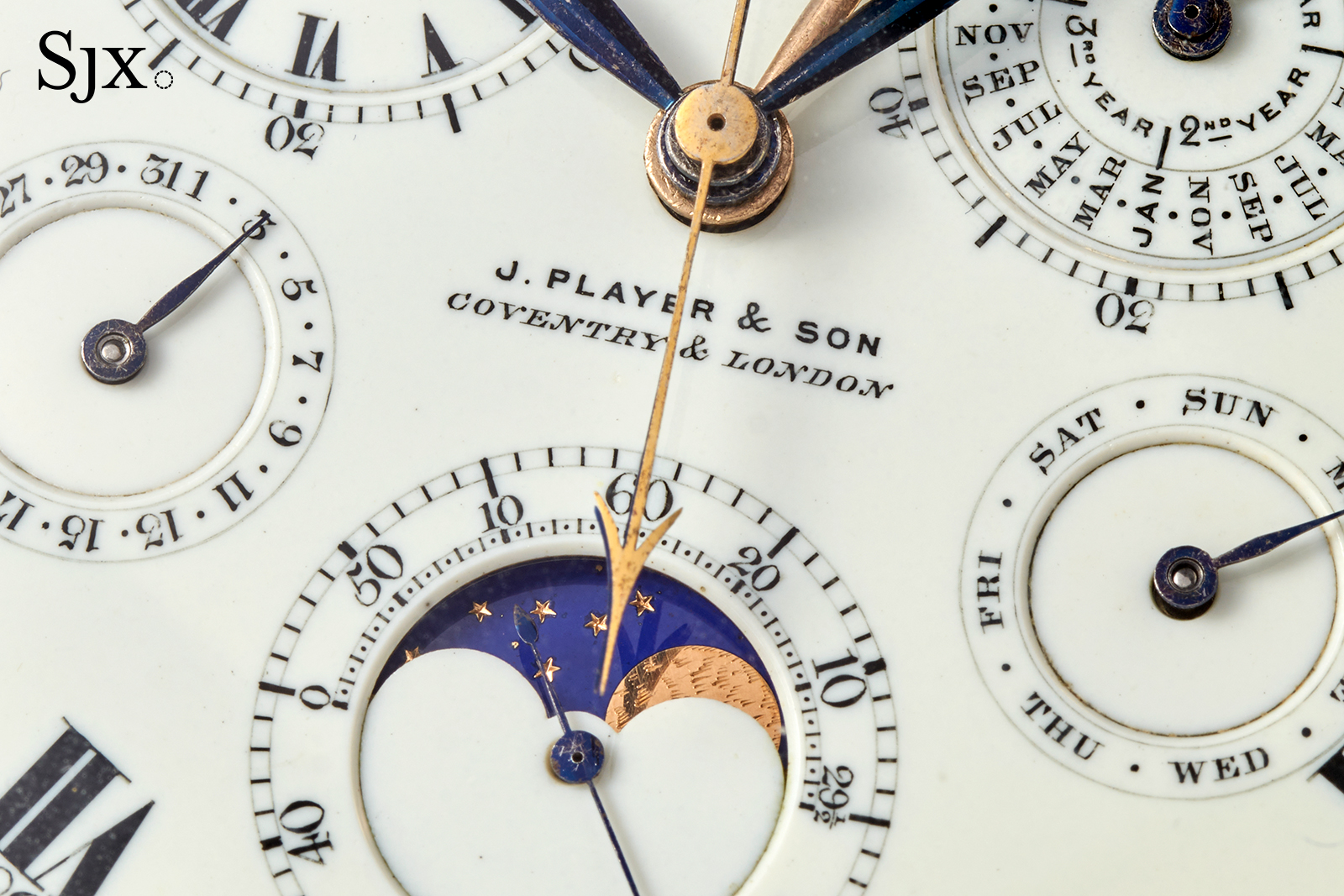
The lettering is hand painted, and intentional. The month sub-dial uses serifed letters for every month except January to mark the new year. The lettering also shifts styles to add emphasis, such as the sans-serif J. Player & Son signature, and “before” and “after” on the equation of time arc.
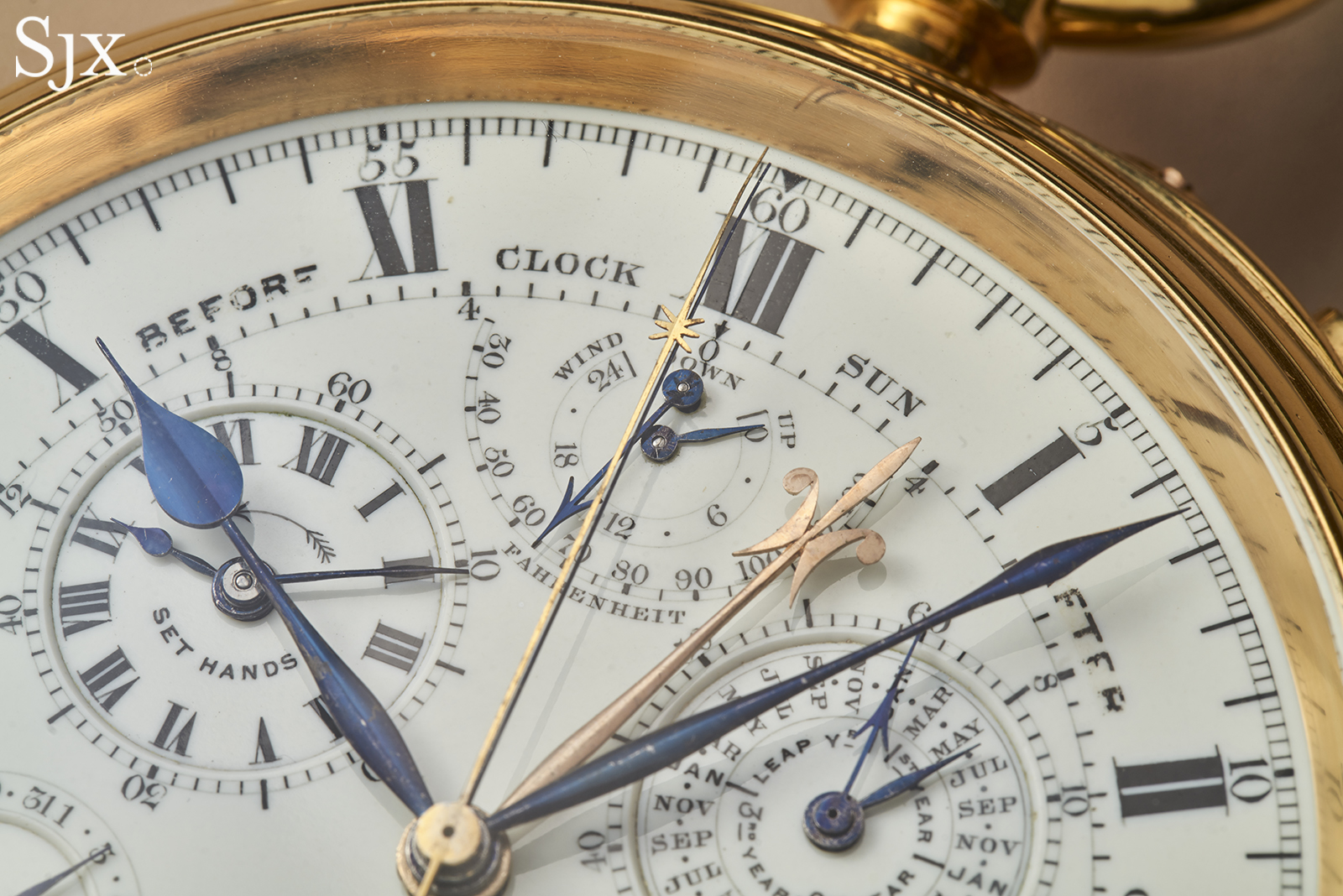
The equation of time expresses the difference between local mean solar time (or clock time) and apparent solar time (or sundial time), which defines noon as when the sun is at its highest point in the sky and varies over the course of the year. Unlike time of sunrise or sunset indications, which must be re-cammed for a different latitude, the equation of time is based on longitude, and will work for any location if you set the watch to local time.
The up/down scale shows the hours since last winding, with “up” being fully wound and “down” being fully exhausted. When fully wound, the watch will probably run for 30 hours or so. However, the scale ends early at 24 hours, marked “wind”, as winding a watch every 24 hours gives the best performance.
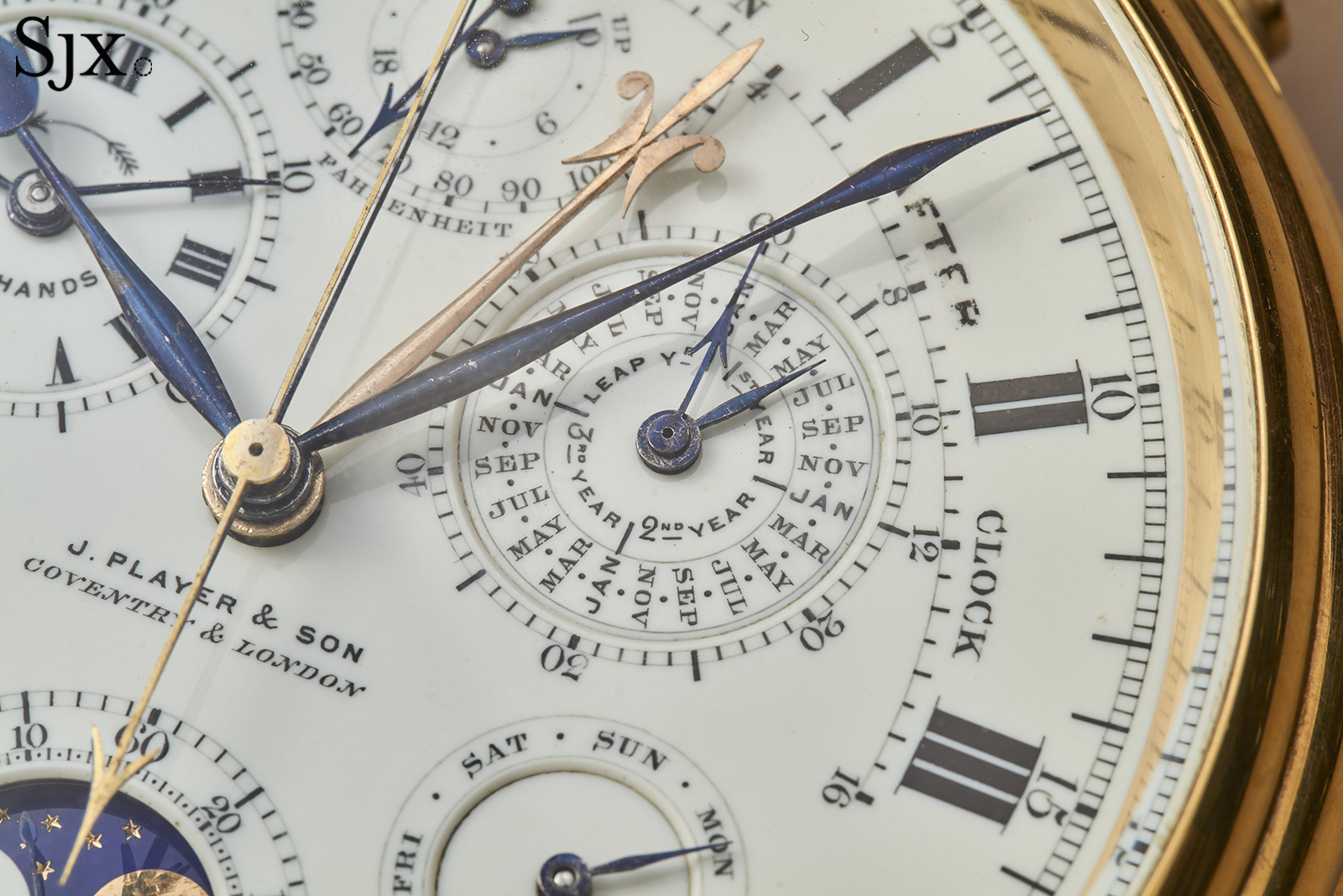
The hands show their age more than the enamel dial, but their quality is still evident. While the hour hand appears ordinary at first glance, it is significantly more substantial and three-dimensional than normal spade hands. The rose gold equation hand is another standout, appearing to be welded together from multiple parts.
To help differentiate the two seconds hands, the split seconds hand is gilt and topped with a star while its counterweight is arrow-shaped. Both hands bend ever so slightly towards the dial, making them easier to read against the sub-seconds scale. And then there is the enamelled gold moon phase disk. It is highly polished, with stars engraved through the enamel to reveal the gold underneath, while the moon is delicately textured.
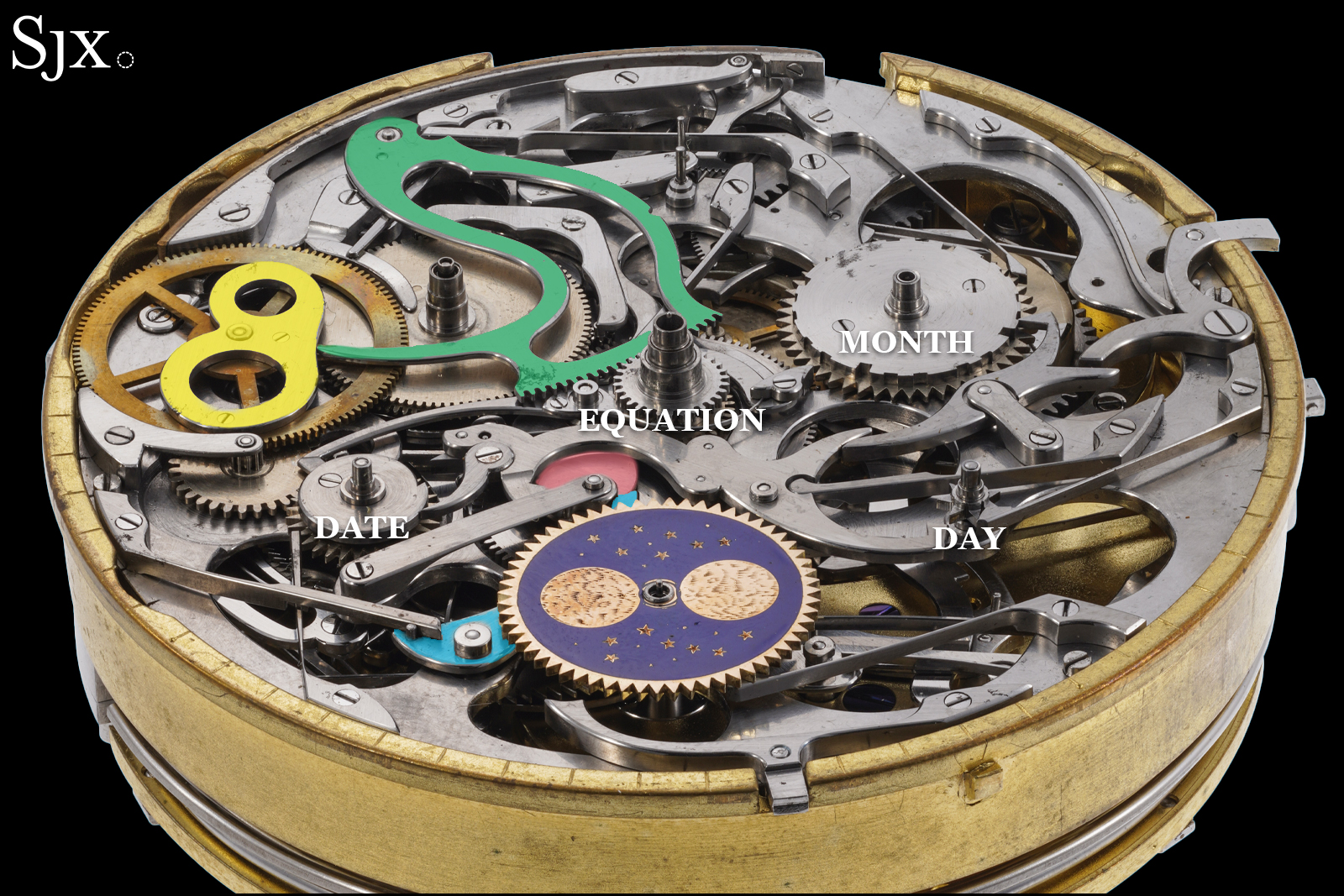
As for the perpetual calendar, from images of the under dial works it appears to be of the instantaneous variety, using a cam (red) and spring (blue) to store energy before releasing it instantly around midnight – which also makes it difficult to damage the calendar by using the quick adjustment tabs (secreted under the front bezel) at an inopportune moment. The calendar is attributable to Leon Aubert, being a perfect match to one of the master’s drawings shared by his grandson Daniel Aubert.
Pressing the tab at three o’clock advances the day, date, month, leap year, and equation of time in sync, while the tab near six o’clock adjusts the moon phase individually. There is no quick correction for just the month, as that would de-synchronise the equation of time, which is controlled by the large kidney shaped cam (yellow) and read by a spring loaded rack (green). You can also spot a bimetallic strip for the thermometer from 10 to 12 o’clock.
Image – Phillips, annotated by the author
A six function crown
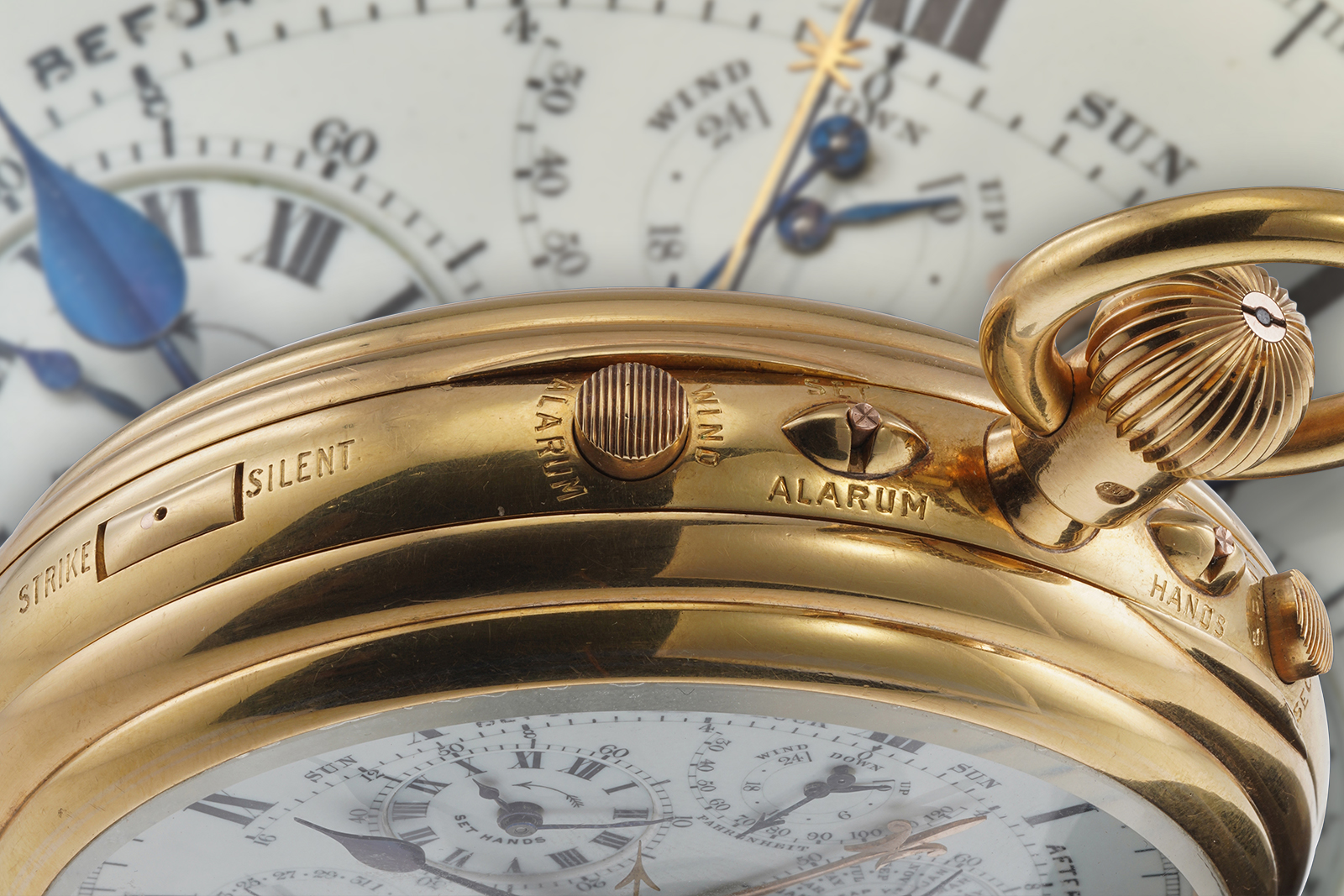
Despite its complication and age, the watch is easy to understand and use as everything is labelled, including the “alarum” – a spelling no longer in use today. Turning the crown clockwise winds the strike barrel, and counterclockwise winds the timekeeping barrel, which is the norm for two-train clock watches.
Holding the button right of the crown allows you to wind the alarm. The crown doesn’t pull out to set – known as negative setting – like on most Swiss or American watches of the time. Rather, turning the crown while holding the pin to the left sets the time (and automatically disables the strikes while doing so) while the pin to the left allows you to set the alarm.
Image – Phillips
A pocket-sized grandfather clock
Traditionally, the term “clock” meant a timepiece that chimes the hours – from the Latin word clocca, meaning bell – which is where the term “clockwatch” comes from. This watch chimes on three gongs, with a fourth for the alarm. During my time with the watch, it happily chimed under its own power, with good cadence. The enormous scalloped case acts as a resonance box, and the chimes sound best with the case back closed.
In “hours” mode, the watch strikes out the full hours and quarters each quarter. Francophones use the term grande sonnerie to describe this functionality. In “quarters” mode (petite sonnerie) the watch strikes out just the quarters on the quarters, and only strikes the hours on the new hour – which is less annoying and also extends the power reserve. Pressing the button at three activates the trip minute repeater on demand.
Watchmaking of the highest calibre
The 27.5”’ calibre is one of the most impressive movements I’ve seen, partially because of its complication and exquisite decoration, but also its domineering size – about 62 mm. For comparison, the movement in the Henry Graves Supercomplication is only 25”’, or about 56 mm in diameter.
A massive, gilt, three quarter plate conceals most of the movement, as is the English way, drawing all focus to the enormous tourbillon. The tourbillon subassembly is approximately 20 mm in diameter, larger than many entire movements.
An English heart
In Watches, George Daniels claimed a Nicole, Nielsen tourbillon “…is as fineawatchashaseverbeenmade,andonewhose performance canhardlybebettered.” Of course, Daniels was more than a little biased towards English watchmaking, but I cannot argue with his assessment. The Swiss were hesitant to combine tourbillons with complications, while the English were eager, going so far as to hide them inside complicated duo-face watches.
This tourbillion in particular is among the finest made by the firm, using a “duo-in-uno” or semi-helical hairspring – half flat and half helical. The justification being it is more compact than a helical hairspring while being similar in terms of performance. Notice how the specular polished arms of the cage step upwards to accommodate the helical section. James Ward Packard and Elliot Cabot Lee both owned complicated Dents with this type of tourbillon. The latter has an extremely similar chronograph, and is coming to auction in New York this December.
Something of a calling card for Nicole, Nielsen, the late horological scholar Reinhard Meis dubbed this style of open-worked half-bridge the “Nielsen 2” style. In fact, there are two other lots in the same auction with it: Frodsham no. 09’857, one of the many minute repeating tourbillon rattrapante watches made for J.P. Morgan, and S. Smith & Son no. 1’900-1, a triple complication with tourbillon.
Image – Phillips
It is equipped with an English lever escapement, using a ratchet-toothed brass escape wheel rather than the typical club-tooth steel escape wheels of the Swiss lever. The latter geometry is more efficient, with smaller drops, though in practice both could perform extremely well. If anything, the English escape wheel’s greatest weakness was its fragility, not its slight inefficiency, requiring a lighter and more careful hand from the watchmaker.
The anchor appears unjeweled at first glance as the jewels are held in place from the top and bottom, rather than the sides as on Swiss levers. The Germans did the same, though their levers (and escape wheels) were often hardened gold rather than steel. There are cap jewels on both the escape wheel and fork pivots, and a gold weight on the other side of the cage to balance the escapement’s weight. I cannot say for sure without partial disassembly of the tourbillon, but the cap jewels for the balance are possibly diamond.
Chronograph
Like many complicated English tourbillons, an oscillating pinion links the tourbillon cage to the chronograph seconds wheel. Pressing the crown starts, stops and resets the chronograph, while the button to the right of the crown toggles the rattrapante. The chronograph works take a circuitous route around the movement. The linkage between the column wheel and oscillating pinion snakes across the alarm bridge, which is free-hand engraved with “J. Player & Son, Coventry & London” and the serial number.
There is an unoccupied screw hole within the chronograph seconds wheel, probably meant to secure the friction spring that prevents the chronograph seconds hand from jittering. Or, it might not be missing at all, and was relocated at the last minute to under the chronograph seconds wheel bridge for aesthetics – like many other English chronographs – leaving an unused screw hole.
If it is missing, it would be an easy replacement for any skilled watchmaker. In theory, every part can be repaired or refabricated if needed, to keep the watch going for centuries ahead.
Key facts
J. Player & Son No. 11’901 (Nicole Nielsen Type 52)
Diameter: 77 mm Material: 18k yellow gold Crystal: Glass Water resistance: Dust and moisture resistant only
Movement: 27.5”’ Functions: Hours, minutes, running seconds, grande et petite sonnerie on three gongs, trip minute repeater, tourbillon, alarm, instantaneous perpetual calendar, moon phase, equation of time, split seconds chronograph with 60 minute counter, wind indicator, thermometer. Winding: Manual Frequency: 18,000 beats per hour (2.5 Hz) Power reserve: ~30 hours
The J. Player & Son no. 11’901 has an estimate of CHF400,000-800,000, or about US$501,000-1,000,000, and it will be sold Watches: Decade One (2015–2025) auction on November 8, 2025 in Geneva.
The Patek Philippe Star Caliber 2000 stands as one of the most technically ambitious pocket watches of the modern era. Launched to mark the turn of the millennium, it was the fourth most complicated watch in the world at its debut, but its true significance lies not in numbers, but in the ingenuity of its mechanisms, which redefined how grand complications could be conceived, engineered, and executed.
An original complete set of four Star Caliber 2000 watches is being offered for sale by Sotheby’s at its first-ever watch auction in Abu Dhabi, which takes place in December. The first complete set to ever appear publicly, the sale will likely draw significant attention from collectors and institutions alike.
The technical significance of the Star Caliber 2000
The Star Caliber 2000 was and is a remarkable achievement in watchmaking, but it was never the world’s most complicated watch. When it debuted, the Star Caliber 2000 ranked fourth in the official tally of complications, behind the Patek Philippe’s own Caliber 89 and the famous Henry Graves Super Complication from 1932, as well as the lesser-known Leroy 01 from 1904.
Over the past quarter century, the Star Caliber 2000 has fallen down the rankings as more complicated watches, for both the pocket and the wrist, have been developed by Vacheron Constantin and Audemars Piguet.
But the Star Caliber 2000 should not be judged solely by this kind of ranking, which is largely superficial. The watch is packed with a number of groundbreaking functions and features six patents (four relating directly to complications and two to utility devices) that have resulted in a significant change to our understanding of how super-complications can be designed.
Moreover, the Star Caliber 2000 is currently the last super-complication pocket watch developed by Patek Philippe, and remains a benchmark reference in contemporary watchmaking.
The most sonorous complication is the grand sonnerie with five gongs, which strikes in the same pattern as Big Ben (and the other bells) in Elizabeth Tower in Westminster. When the grand sonnerie is activated, the quarters always strike first, followed by the hours. The minute repeater also sounds in an unusual order: first the quarter chimes, then the minutes, and finally the hours.
Another outstanding feature is its namesake star chart with orbital moonphase, the first complication of its kind, later seen in the Sky Moon Tourbillon ref. 5002 and Celestial ref. 5102.
Like many great masterworks of haute horlogerie, the Star Caliber 2000 was a team effort. Patek Philippe enlisted legendary case maker Jean-Pierre Hagmann to produce the case, which was hand engraved by Christian Thibert.
The contribution of the watchmaking team, led by Jean-Pierre Musy, who assembled and precisely adjusted each movement from 1,118 elaborately finished components, cannot be overstated.
Details on the present lot
Patek Philippe produced five four-watch sets of the Star Caliber 2000, adding up to 20 pieces in total. One set featured all four pieces in platinum, while the other four sets featured watches in yellow gold, rose gold, white gold, and platinum. The production run began with movement number 3’200’001 and ended with number 3’200’020.
The current lot is the fifth set of Star Caliber 2000 watches, marked with movement numbers 3’200’017 to 3’200’020.
For completeness, it should be added that Patek Philippe made at least one prototype, possibly two judging by the serial numbers. The Star Caliber 2000 prototype displayed at Patek Philippe’s Grand Exhibition in Singapore in 2019 bore the serial number 3’200’022, which is outside the numbering range of the production models.
It is also important to note that the second set of Star Caliber 2000 watches, numbered 3’200’005 to 3’200’008, has been broken up, as the first watch from this set, in 18k yellow gold, was sold by Christie’s in 2012.
The Star Caliber shown at exhibition with movement number 3’200’022. Image – Patek Philippe
Valuing a unicorn
The original retail price of the Star Caliber 2000 set, comprising three gold timepieces and one in platinum, was CHF13.2 million in 2000, equivalent to about US$7.5 million at the time and roughly US$14 million today.
Since then, just one example has surfaced: a piece in yellow gold bearing the movement number 3’200’005. It was offered by Christie’s in late 2012 and sold for about US$3.3 million, near the middle of its estimate, which works out to about US$4.5 million today.
The estimate for the current lot is in excess of US$10 million, which seems reasonable given it’s a complete original set of all four watches. That said, with so few relevant precedents (seven-figure watches are rarely sold in sets as is the case here) its fate will not be certain until the hammer falls.
An auspicious venue
The December watch auction is Sotheby’s first in Abu Dhabi, and comes after ADQ, the emirate’s sovereign investment fund, acquired a minority stake in the firm in late 2024. While many details remain confidential, it was widely understood that Sotheby’s would be obliged to hold auctions in Abu Dhabi as a condition of the investment. With so much attention on this inaugural sale, expect a strong showing.
Autumn has always been a special time in New York, and that’s especially true now that the city plays host to the nation’s flagship watch fair. Held each October in the heart of Midtown, WatchTime New York has become one of the most high profile public watch fairs in the United States, bringing together independent watchmakers, major brands, and collectors under the imposing dome of Gotham Hall.
Now in its tenth year, the 2025 edition was the largest yet, and served as the backdrop for the public unveiling of a few notable watches (and one strap).
The Greubel Forsey Hand Made 2.
Initial thoughts
This was my third year attending WatchTime, and the experience is remarkably consistent from year-to-year. That said, this year’s event was clearly the biggest yet, with 44 brands and more than 2,700 visitors.
Despite this turnout, it’s still a fraction the size of an event like Watches & Wonders, which gives it a more intimate feel that reminds me of SalonQP, which was an annual watch fair in London put on by now-defunct QP magazine.
In other words, it’s big enough to attract big names and small enough to allow the general public to meet watchmakers that they might not otherwise have access to; Kari Voutilainen, Stepan Sarpaneva, Martin Frei of Urwerk, Albert Edelmann of Zeitwinkel, and Roland Murphy of RGM were present throughout the fair to engage with collectors.
A big turnout
Not only did WatchTime attendance set a record, the nearby Windup Watch Fair, a free event focused primarily on entry level watches and micro-brands, saw big numbers. In fact, at points throughout the weekend the queue to get in snaked all the way around the block. It wouldn’t surprise me if Windup starts charging admission in the future, simply for crowd control.
In light of the big turnout, the mood seemed bright. The watch market is facing a challenging moment, but the enthusiasm for both events was palpable.
New products
A highlight of the fair was the chance to see novelties from the likes of Breguet, Urwerk, Voutilainen, Zenith, and Ming. Ming’s new release was not actually a watch, but in fact a 3D-printed titanium “Polymesh” watch strap (or bracelet, depending on who you ask). Designed to fit any Ming with 20 mm lugs, the Polymesh strap drapes on the wrist like a bracelet but offers the flexibility of fabric.
Comprised of 1,693 articulating titanium components, the strap is made without any pins or screws; the entire construction is fabricated in one piece using a laser to sinter powdered titanium one layer at a time. The durability of such a construction is a natural question, but the prototype on display was apparently untroubled by the rough handling of hundreds of visitors to the Ming booth.
Another new product making its public debut was the Zenith Defy Zero G, which features a sapphire crystal case and the brand’s gimbaled escapement, which keeps the balance parallel to the ground at all times. Serving somewhat the opposite function of the tourbillon, the Gravity Control escapement module keeps the oscillator in a stable position, simplifying adjustment.
Another watch making its public debut was the Urwerk UR-10 Spacemeter. Co-founder Martin Frei was on hand to explain his latest design, which tracks Earth’s rotation and revolution. The UR-10 has a lot in common with the UR-100, featuring the same base movement and a similar tapered titanium bracelet. Beyond the intriguing functionality, the silky lightweight bracelet is a standout feature.
Interestingly, the case is not all titanium; it features a steel case back to offer colour contrast on the winglets on either side of the case. The heavier case back also helps lower the watch’s center of gravity, which contributes to a stable feel on the wrist despite it looking a bit large.
I’ve written extensively about Albishorn, covering each of the brand’s models to date, but this was my first time going hands-on with the Maxigraph, a collaboration with Massena LAB. The movement traces its roots to the Valjoux cal. 7750, but founder Sébastien Chaulmontet redesigned it for better tolerances, substantially reducing the movement’s thickness and improving the feel of the chronograph monopusher (relocated to the nine o’clock position).
The pusher feel is short and crisp, as advertised, and the entire package is coherent with the brand’s ‘imaginary vintage’ theme.
Watchmaking in action
There are usually a few demonstrations going on throughout the fair to show off the work that goes into the watches. This year, Breguet and RGM had ongoing demonstrations of movement finishing. On the ever-present topic of inner angles, Breguet had a watchmaker on hand who was beveling neat corners for the mainplate of a Classique Tourbillon Extra-Plat Squelette ref. 5395. The watchmaker’s deft actions were broadcast on a large screen, exhibiting confident dexterity.
I happened to walk by the Breguet booth at a moment when the watchmaker was nearly done with the current workpiece, and the next one on deck was sitting out. It reveals how much work is already done – probably by wire erosion – before finishing begins; several openings already revealed the makings of crisp corners.
American watchmaking was also represented, with RGM attending from (comparatively) nearby Lancaster, Pennsylvania, showing the finishing that is applied to the brand’s higher-end products.
It was nice to see Mr Murphy himself present throughout the fair; these events require a lot of endurance for exhibitors and its a testament to the growing importance of WatchTime New York that so many brand founders put in the work to attend.
Concluding thoughts
While much of the conversation around the watch industry in 2025 has focused on economic uncertainty and shifting demand, the energy at WatchTime New York painted a somewhat rosier picture. Collectors queued around the block and were rewarded with a good turnout from the brands, which saw fit to exhibit some of their newest and most exotic watches.
Having witnessed the demise of events like Baselworld and SalonQP, I hope the enthusiasm on display at WatchTime will continue.