

TAG Heuer Rethinks the Chronograph
The compliant and innovative Monaco Evergraph.
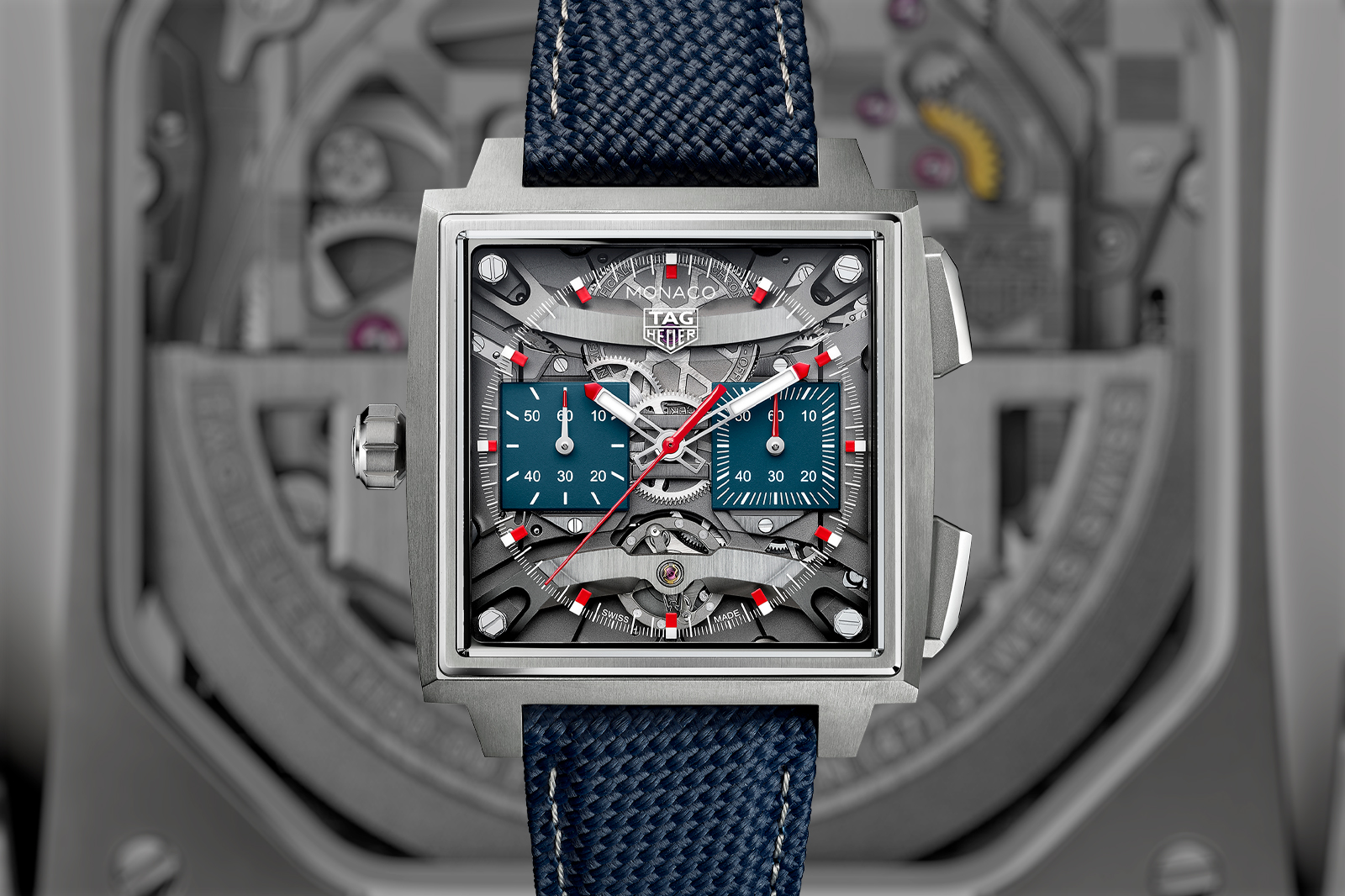
Sure to be among the most talked-about releases of Watches & Wonders, TAG Heuer has just unveiled the Monaco Evergraph. The openworked Monaco marks the debut of the calibre TH-80, one of the most advanced chronograph movements on the market.
The Evergraph’s movement is notable for several reasons, but the most surprising is the use of an innovative compliant structure to simplify the chronograph mechanisms.
Initial thoughts
Beginning with the relaunch of the TH-Carbonspring last year, TAG Heuer has been on something of a road to redemption. Not long ago it seemed like the brand’s brightest days might be behind it, but the Evergraph provides further evidence that TAG Heuer has been retooling to become a new leader in technical innovation.
The famous Breitling-Heuer-Buren Calibre 11 — one of the first automatic chronograph movements to hit the market back in 1969 — debuted in a Monaco, and so it’s fitting that the new TH-80 movement is first glimpsed through the transparent dial of the Monaco Evergraph.
In more ways than one, the Evergraph pays proper hommage to original Heuer Monaco while remaining decidedly future-oriented.
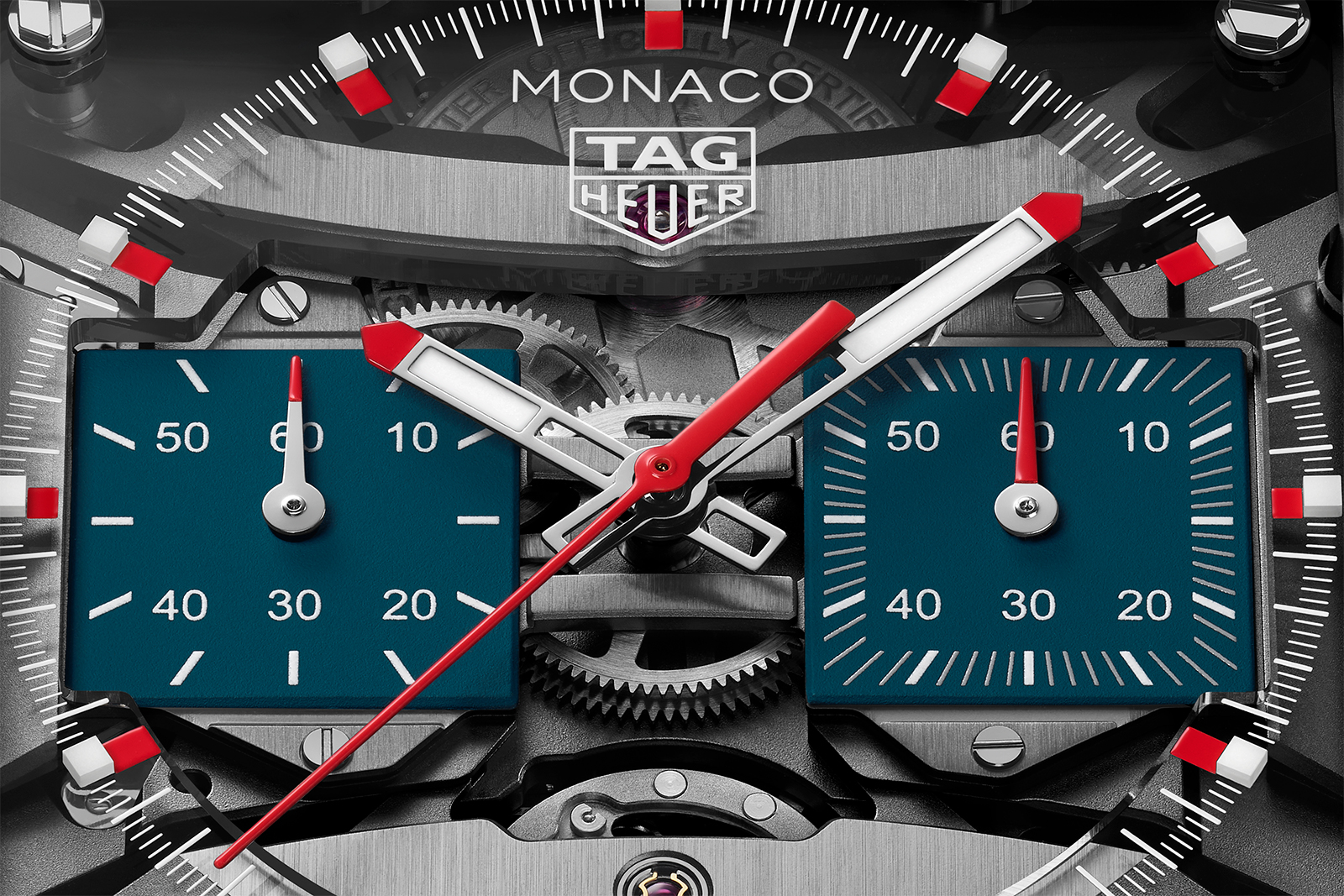

It is also great to see the TH-Carbonspring literally front and centre on the dial side, proof that TAG Heuer is finally delivering on the promise of carbon hairspring industrialisation.
Even before digressing into the distinctive mechanics of the new cal. TH80-00, any chronograph aficionado will greatly appreciate the particular crown and pusher placement of the Evergraph.
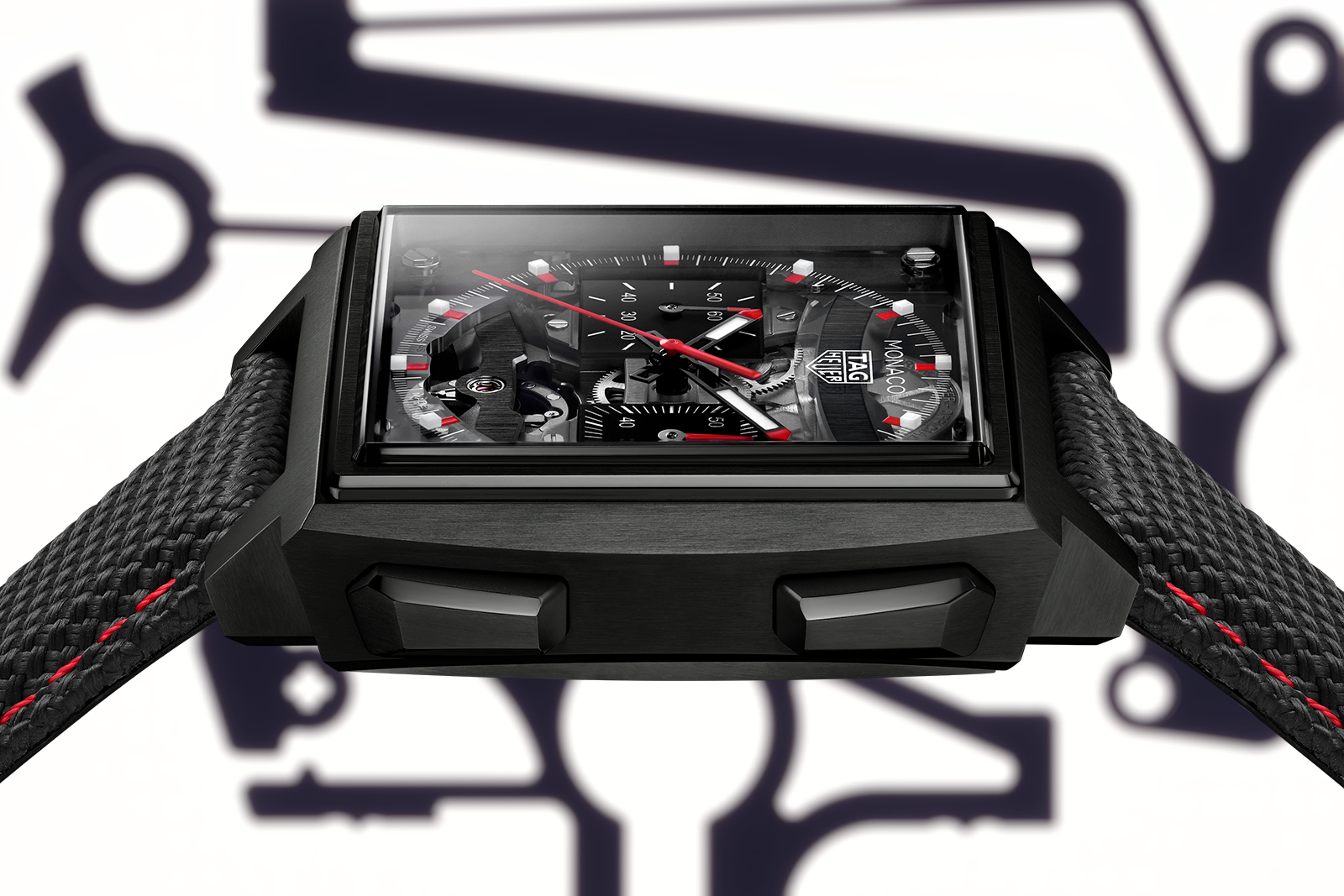
In order to emphasise its then-novel automatic function, the Calibre 11’s crown was placed at the nine o’clock position on the left-hand side of the case, while the pushers remained on the righthand side.
The idea was that the wearer didn’t need to wind the watch manually anymore, so the crown was symbolically relocated. The original Calibre 11 was modular, which made this particular arrangement quite easy to achieve.
The brand returns to this iconic layout for the TH80-00 movement, which is fully integrated and presumably designed to feature a left-hand crown from the very beginning. Though not a like-for-like remake of any historical model, it succeeds as an hommage because it echoes the innovative spirit that guided the novel construction of the Calibre 11.
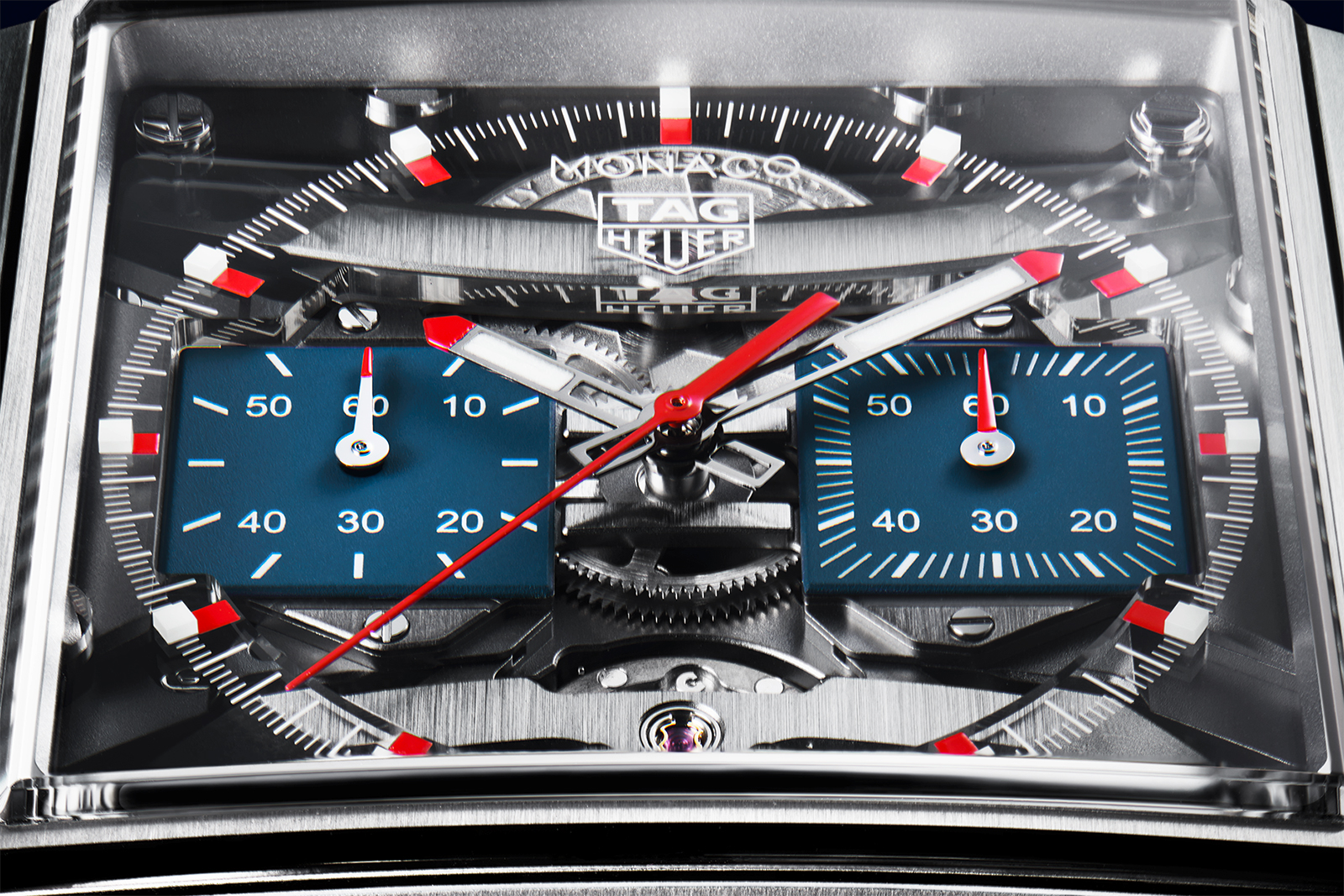
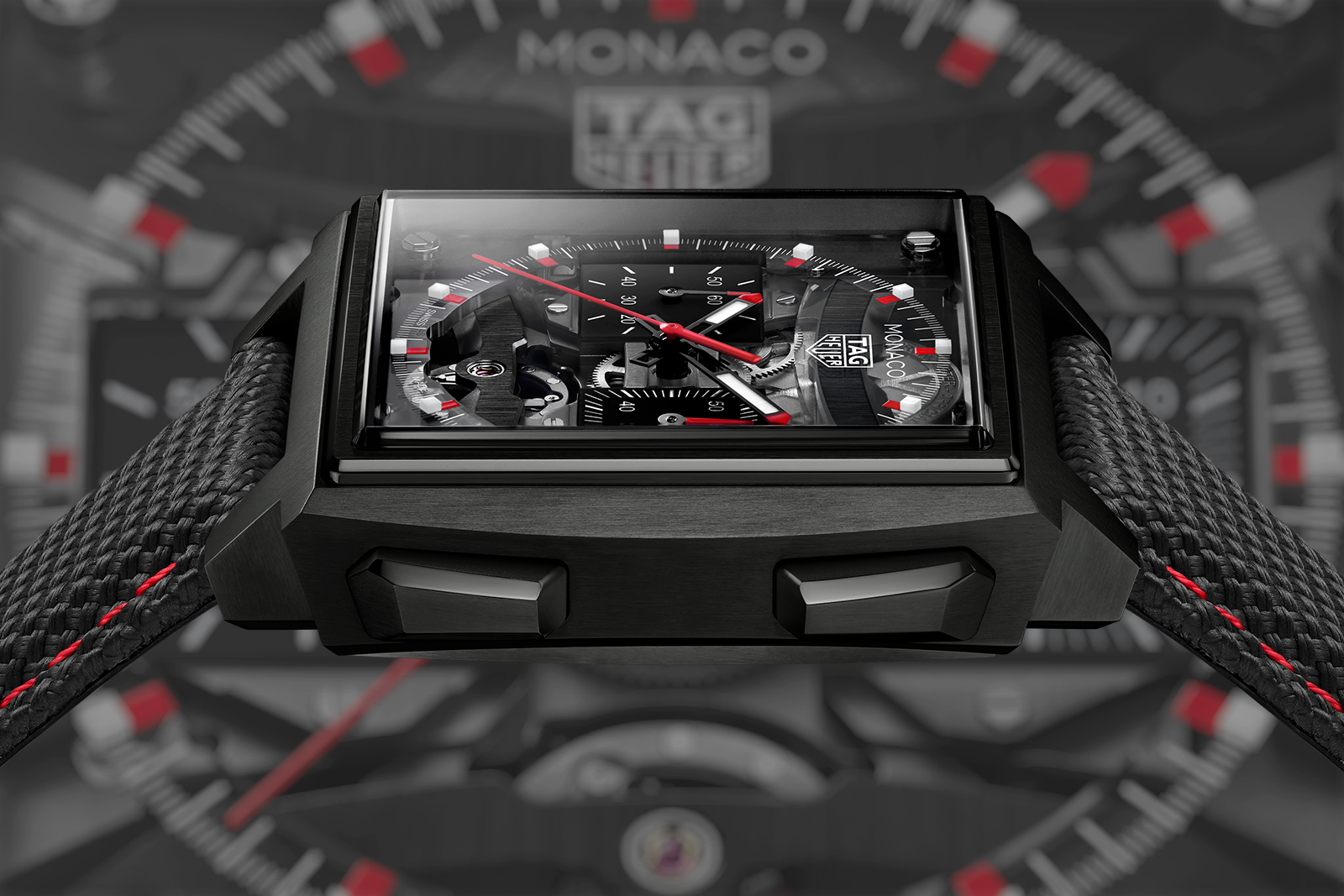
While the Evergraph is fashioned after the standard Monaco, it features a decidedly more modern look, with a heavily openworked dial and industrial-looking architecture. The regulating organ was purposely brought to the dial side, in order to showcase what looks like TAG Heuer’s modern oscillator standard: a free-sprung variable-inertia balance paired with its proprietary TH-Carbonspring hairspring.
While I’m personally not a fan of dial-side balances, the choice is sensible for the technically oriented Evergraph. The lively oscillator will also help differentiate it in the display case, which should help its commercial prospects.
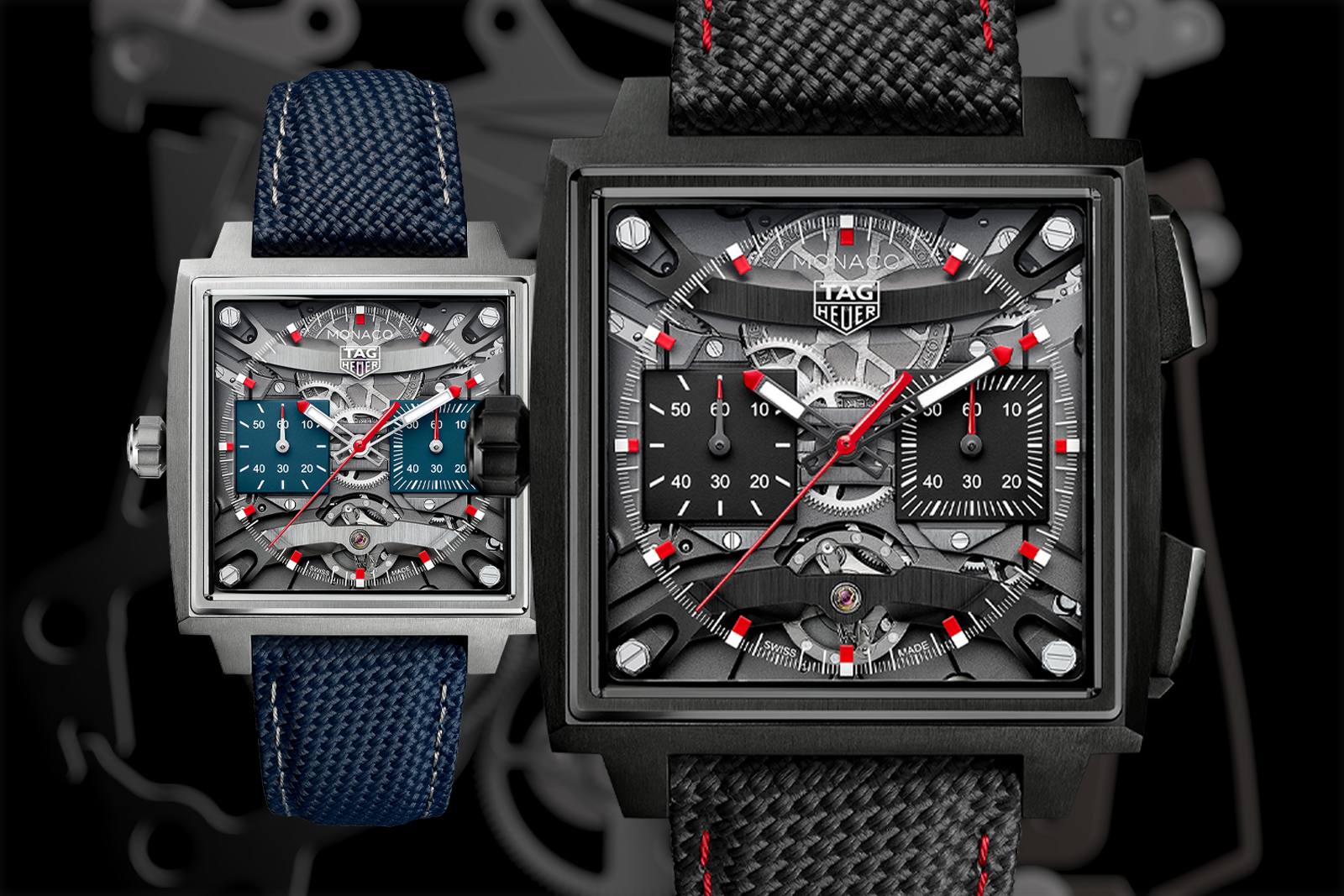
The Monaco Evergraph isn’t a limited edition, which is a good sign vis-à-vis the industrialisation of TAG Heuer’s newer technologies. The CHF23,000 price tag is high compared to most of the brand’s offerings, but it’s reasonable considering the novel technology contained within.
That said, the two key product innovations powering the Evergraph are well-suited to mass production, so I’d expect to see some features trickle down to less-expensive models in the future.
Monaco, reimagined
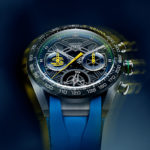
The Evergraph is part of the Monaco collection, so all the familiar lines are here. There are two versions of the Evergraph, one featuring a twist on the iconic blue and red livery and a second blacked-out configuration. While technically the same, the two versions differ greatly in terms of look and feel, especially since the black edition has some dark-hued movement components and a DLC-coated titanium case.
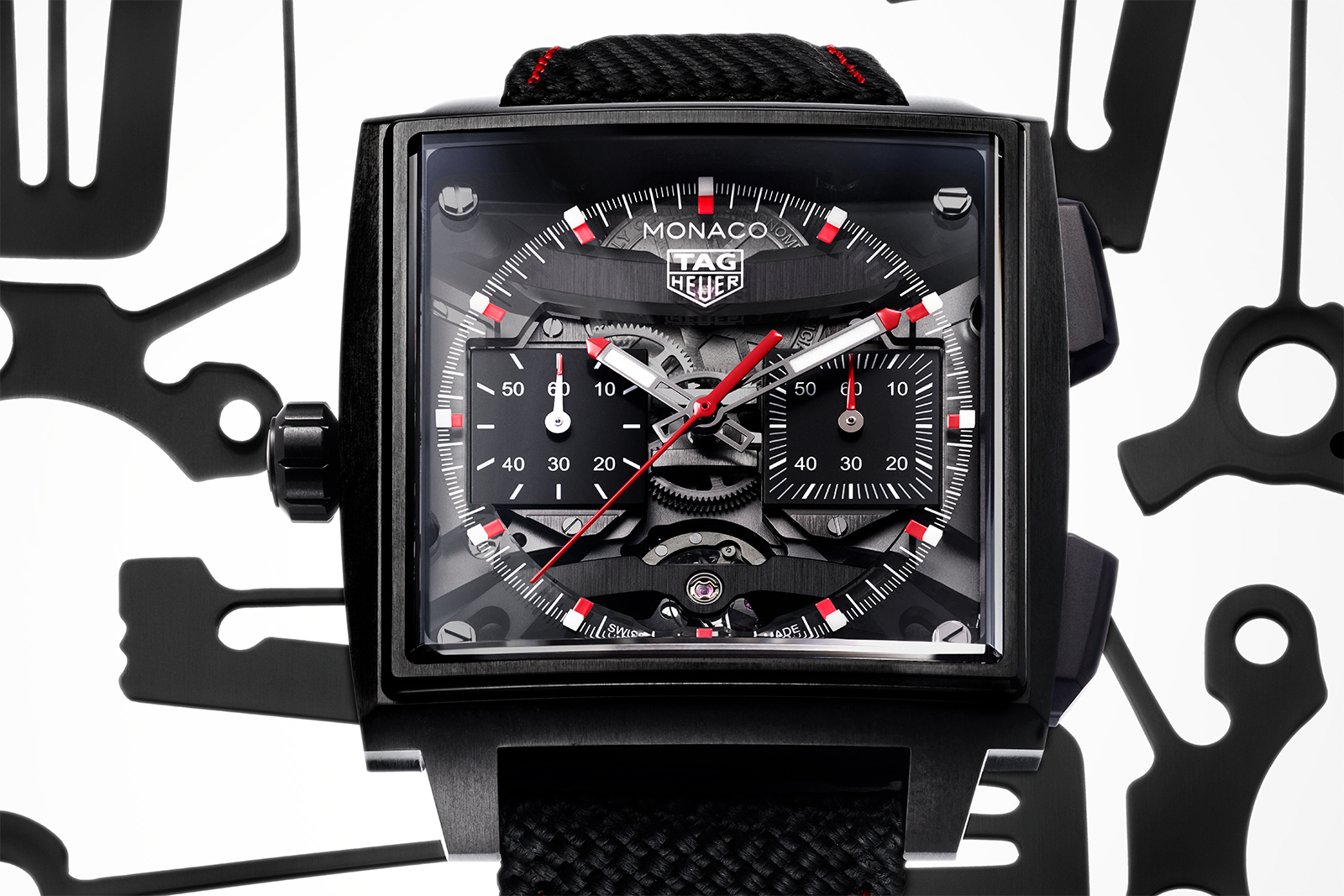
The Evergraph measures 40 mm in diameter (or more precisely corner to corner) and comes dressed in a Grade 5 titanium case. The construction and finishing of the case are rather familiar, with an assortment of brushed and polished surfaces.
Compared to standard Monacos, the dial of the Evergraph is minimal, featuring an openworked glass disc set atop an exposed movement. Only the solid square sub-dials for the running seconds and elapsed minutes are traditional dials. The look is technical and dynamic, especially since the transparent dial full reveals the fast-beating balance at the six o’clock position.
The performant TH80-00
TAG Heuer has seriously upped its game when it comes to in-house movement engineering. The brand’s more esoteric research endeavours are now led by veteran movement constructor Carole Forestier-Kasapi. Under this current direction, TAG Heuer has the potential to reach — and likely exceed — its historical high water mark.
The cal. TH80-00 inside the Monaco Evergraph is the fruit of the close collaboration between TAG Heuer and movement specialist Vaucher Fleurier. TAG Heuer has used split-seconds chronograph movements from Vaucher in the past, but this collaboration goes much deeper.
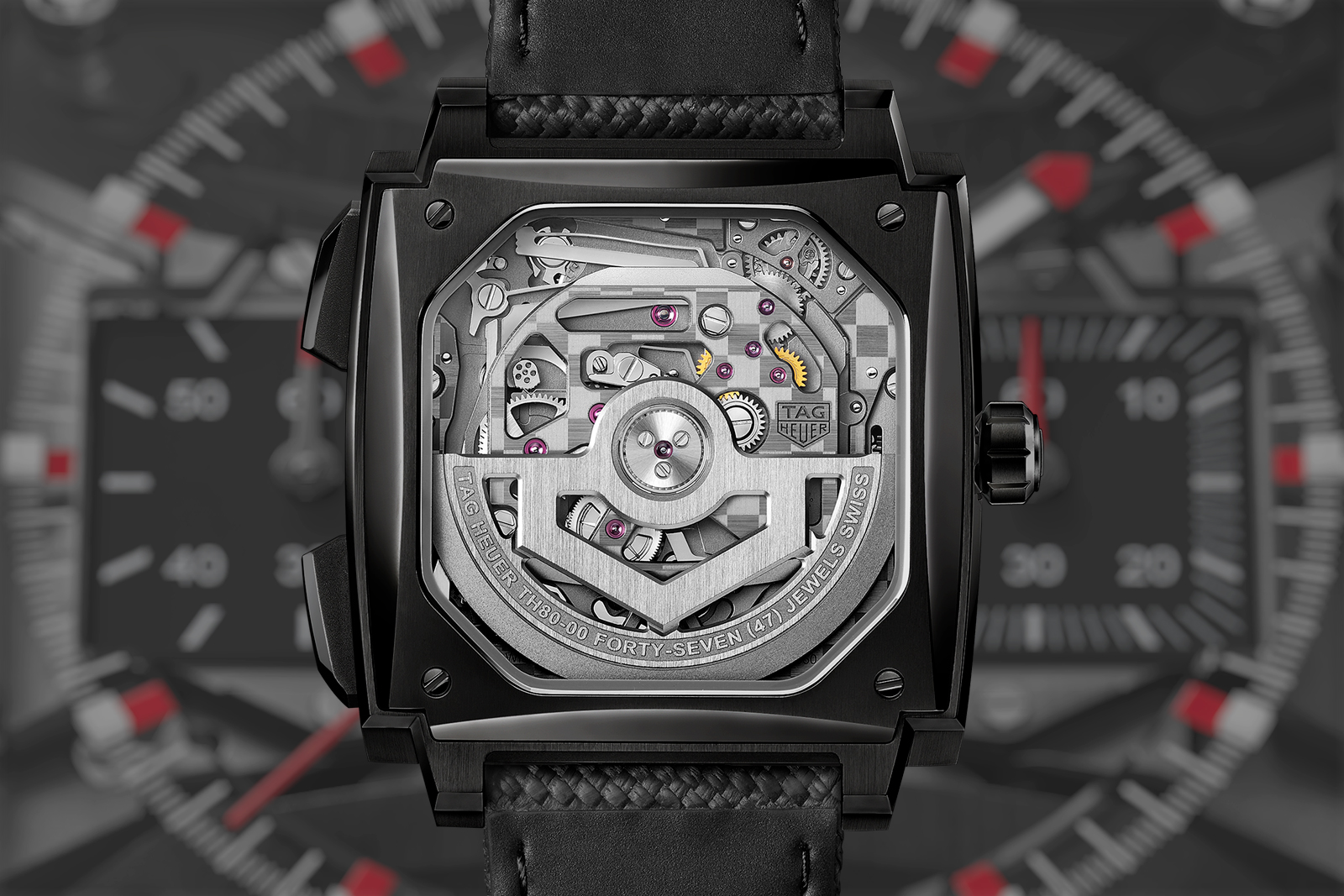
Although the Fleurier-based specialist has extensive experience with modern chronograph movements, the TH80-00 looks more TAG Heuer than Vaucher. Notably, the movement uses TAG Heuer’s TH-Carbonspring oscillator, paired with a free-sprung weighted balance.
The oscillator beats at 5 Hz, which is considered a high beat rate — especially for an alternative material hairspring. It’s noteworthy that TAG Heuer seems confident enough in its proprietary carbon nanotube hairsprings to install them in high-beat calibres.
The TH80-00 is also COSC-certified, which further indicates that TAG Heuer is eager to raise its stature as a maker of highly technical watches and compete in terms of accuracy with the likes of Tudor, Breitling and Omega.
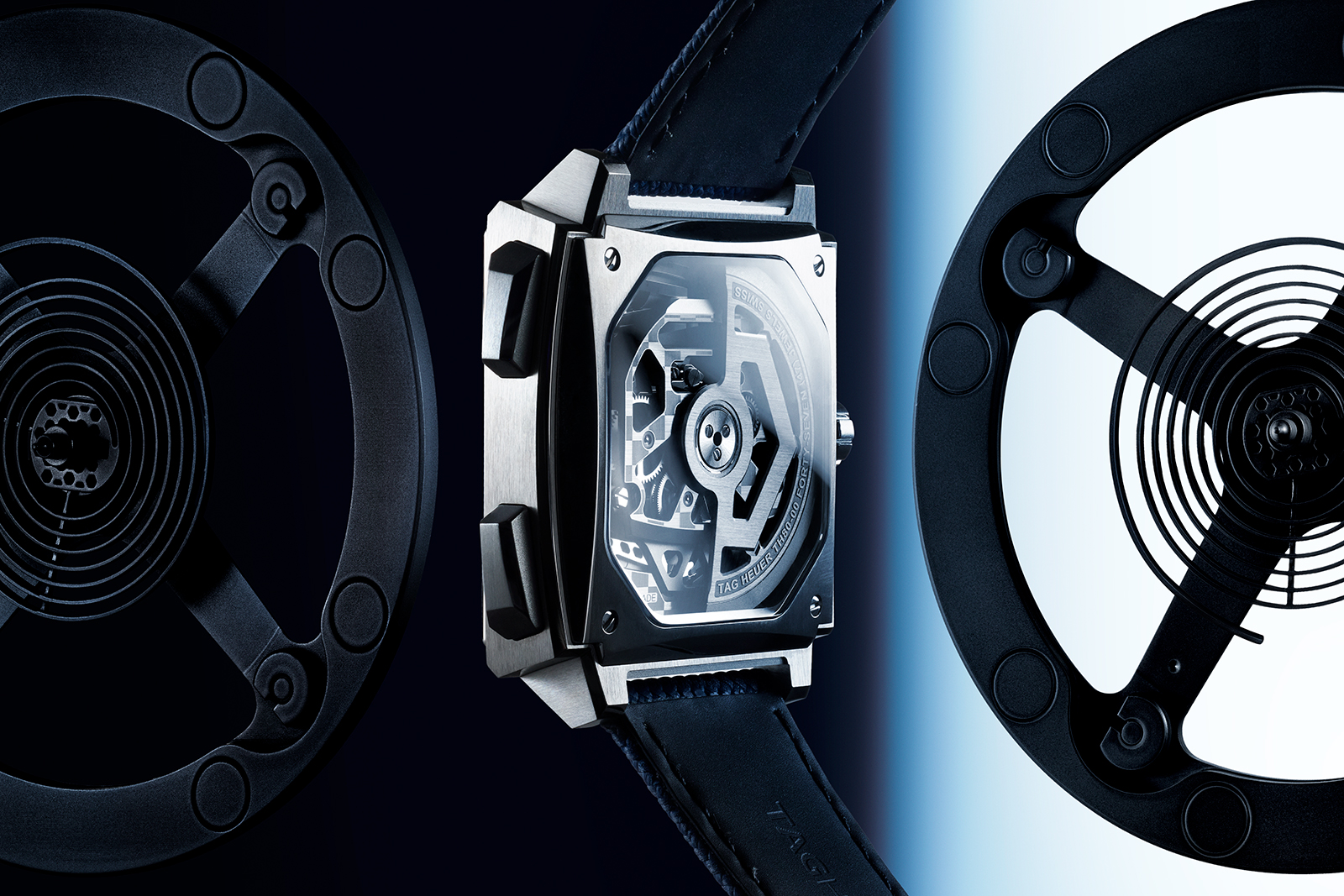
The TH80-00 runs for 70 hours on a single barrel, which is visible at the 12 o’clock position through the translucent dial. Pairing such a generous power reserve with a fast-beating balance is no small feat. Taking the chronometer certification into consideration as well, the cal. TH80-00 ticks a lot of boxes.
With such an emphasis on technical innovation and material science, the finishing is kept industrial, with sandblasted surfaces dominating the bridges and mainplate. On the case back side there is a chequered flag motif engraved on the chronograph bridge, which adds some texture but doesn’t save the movement from monochromatic monotony.
Amusingly, the cal. TH-80 combines the best features of all three original automatic chronographs from 1969. It features the 5 Hz frequency of the Zenith El Primero, the left-hand crown of the Calibre 11, and the integrated, vertical clutch architecture of the Seiko cal. 6139. Of course, it also has some other tricks up its sleeve that could not have been imagined in 1969.
The compliant chronograph
The proverbial heart of the Evergraph’s cal. TH80-00 may not be the regulating organ, but rather the very forward-thinking compliant-based chronograph works. Without digressing too much in the field of flexural pivots, compliant mechanisms and bi-stability, we can roughly outline how TAG Heuer engineers managed to replace the complex traditional chronograph works with just a few clever LIGA-manufactured components.
The cal. TH80-00 works through a profound, yet not entirely fundamental, rethinking of the chronograph mechanism. There still is a control component that governs the clutch action, along with a dedicated piece for the reset hammers.
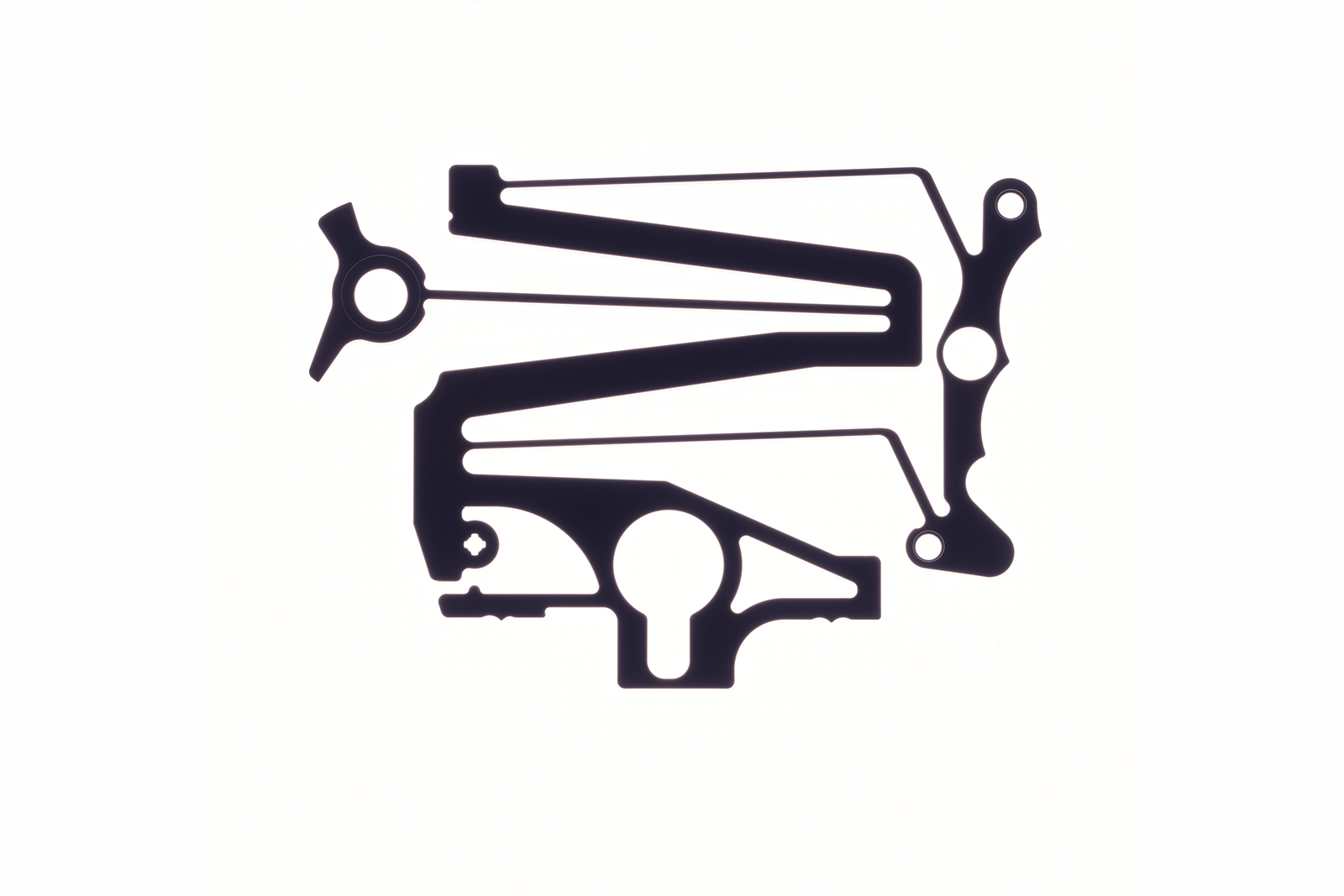
Bi-stable compliant reset hammer piece, manufactured through LIGA process.
The key concept here is bi-stability; a continently buckled beam — a blade spring in this case — can have two (or more) stable positions, where the strain potential energy reaches a sink. As such, the spring can comfortably sit in two compressed positions, snapping from one to another under external actuation.
Inside the Evergraph, one such spring controls the start-stop function. When the pusher is engaged, the spring snaps from one state to the other, engaging or disengaging the vertical clutch almost instantly. This allows not only for precise timing, since the chronograph start is quasi-instantaneous, but also acts as an inherent all-or-nothing mechanism. The clutch is not engaged until the start/stop pusher reaches a threshold and the spring snaps with a controlled kinematic behaviour.
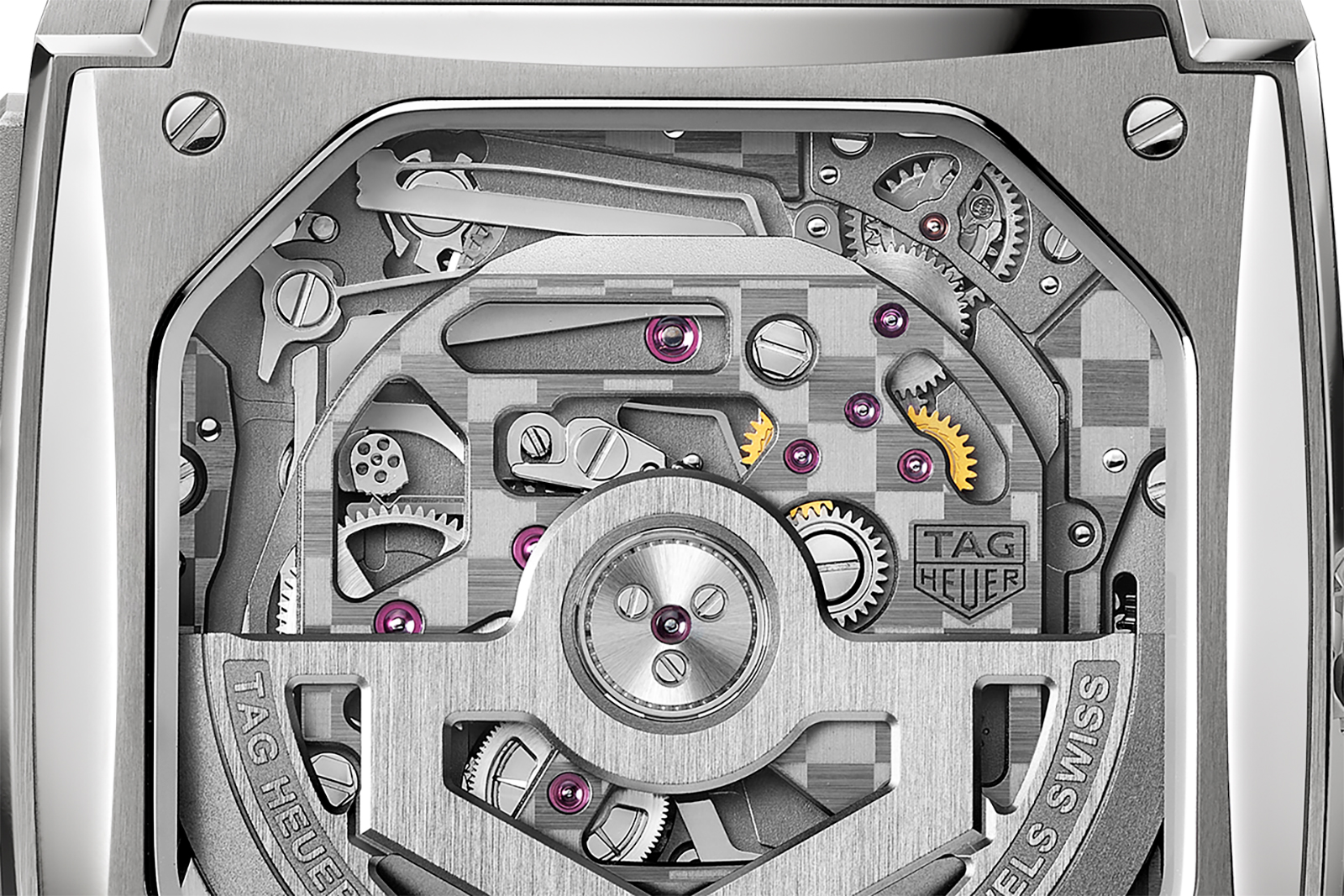
Similarly, a large once-piece reset hammer is placed in a “standby” bi-stable position when the chronograph is started, with the geometry of the components preventing it from snapping back. When the chronograph is stopped, the hammer piece is unlocked but not directly actuated. If the user chooses to reset the chronograph, a lever will snap the hammer piece to a second “active” stable position, effectively resetting the chronograph hands.
The entire mechanism relies only on two bi-stable structures and a couple of levers, which work directly with the pushers. There is no question of a column wheel or cam and there is no sea of slender springs and multi-purpose levers or brakes. In fact, the only traditional chronograph elements are the vertical clutch and the heart-shaped reset cams for the indications. Everything else was rethought from the ground up by TAG Heuer engineers.
The strong selling points of compliant mechanisms lie in their lack of lubrication, repeatable precision and predictable behaviour over long working cycles. This is to say that the cal. TH80-00’s chronograph mechanism won’t require much (if any) adjustment once assembled and will perform the same over long periods of time — making the “Evergraph” moniker more suggestive.
The full mechanism warrants a future in-depth story, as the execution is inventive and well-designed, featuring great examples of mechanical programming applied to compliant structures.
Key facts and price
TAG Heuer Monaco Evergraph
Ref. CEW5180.FT8122 (Black)
Ref. CEW5181.FT8123 (Blue)
Diameter: 40 mm
Height: —
Material: Grade 5 titanium (DLC coated for the black version)
Crystal: Sapphire
Water resistance: 100 m
Movement: TH80-00
Functions: Hours, minutes, small seconds, chronograph
Winding: Automatic
Power reserve: 70 hours
Strap: Embossed rubber strap with titanium folding clasp
Limited edition: No
Availability: Starting April 2026 at TAG Heuer boutiques and retailers
Price: CHF23,000 excluding taxes
For more information, visit TAGHeuer.com.
Back to top.