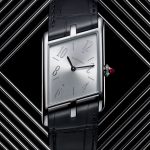


Cartier Privé Les Opus is a Trio of Greatest Hits
Tank Normale, Tortue Monopoussoir, and Crash Squelette.

Cartier’s crowd favourite Privé line is now 10 years old and the jeweller is returning to its greatest hits for the occasion with two offerings, the first being the flagship Cartier Privé Les Opus. “Opus” is a trio of watches, all in platinum, each being of the most desirable models in the Privé collection – Tank Normale, Tortue Chronographe Monopoussoir, and Crash Squelette.
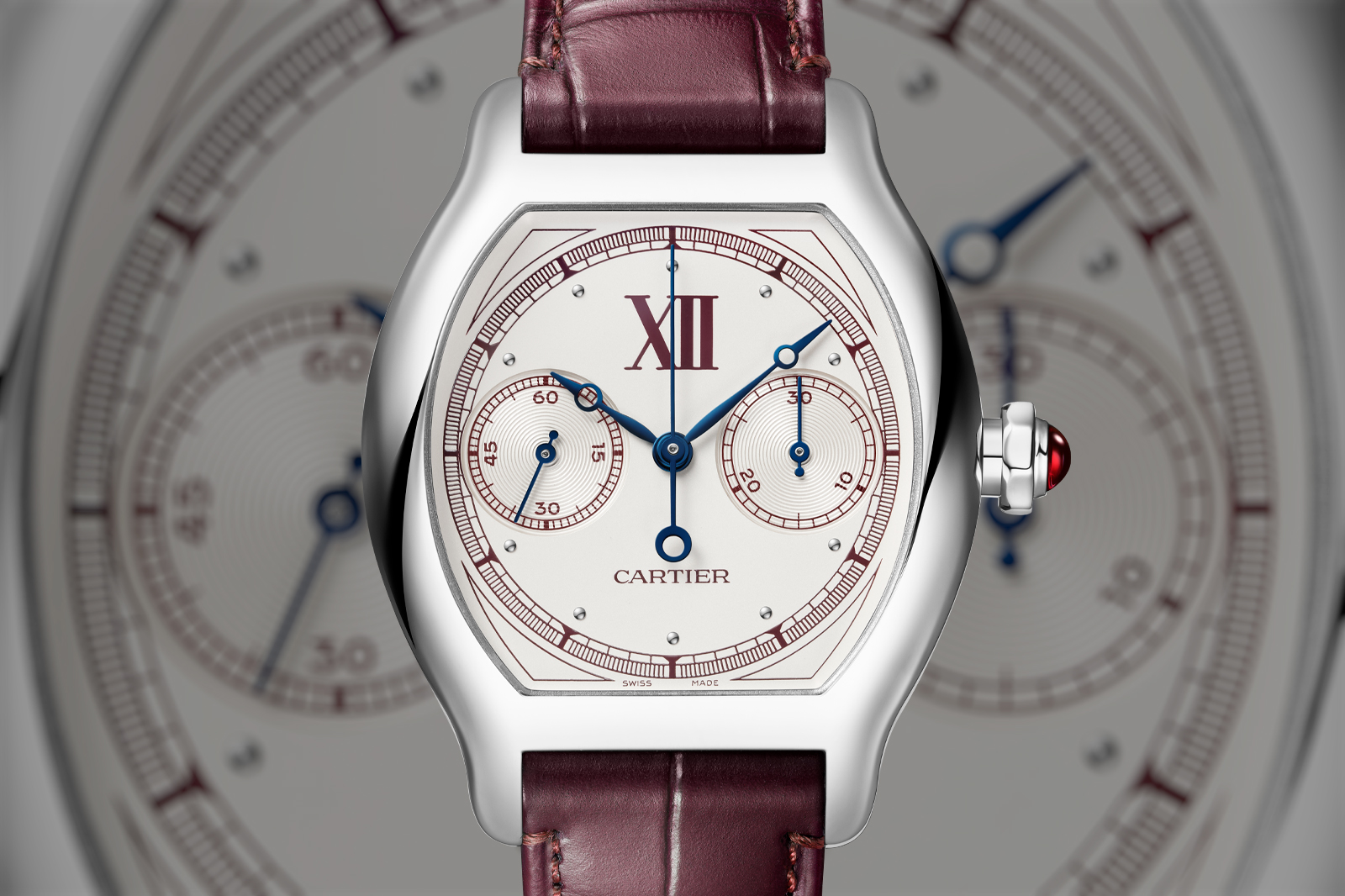
Both the Tank Normale and Tortue Monopoussoir are variants of earlier models, retaining the same case and movement as before, but now with silvered dials featuring red markings. The Crash skeleton, on the other hand, is a new model powered by a new calibre, the 1967 MC, a hand-wind movement with hand hammered bridges.
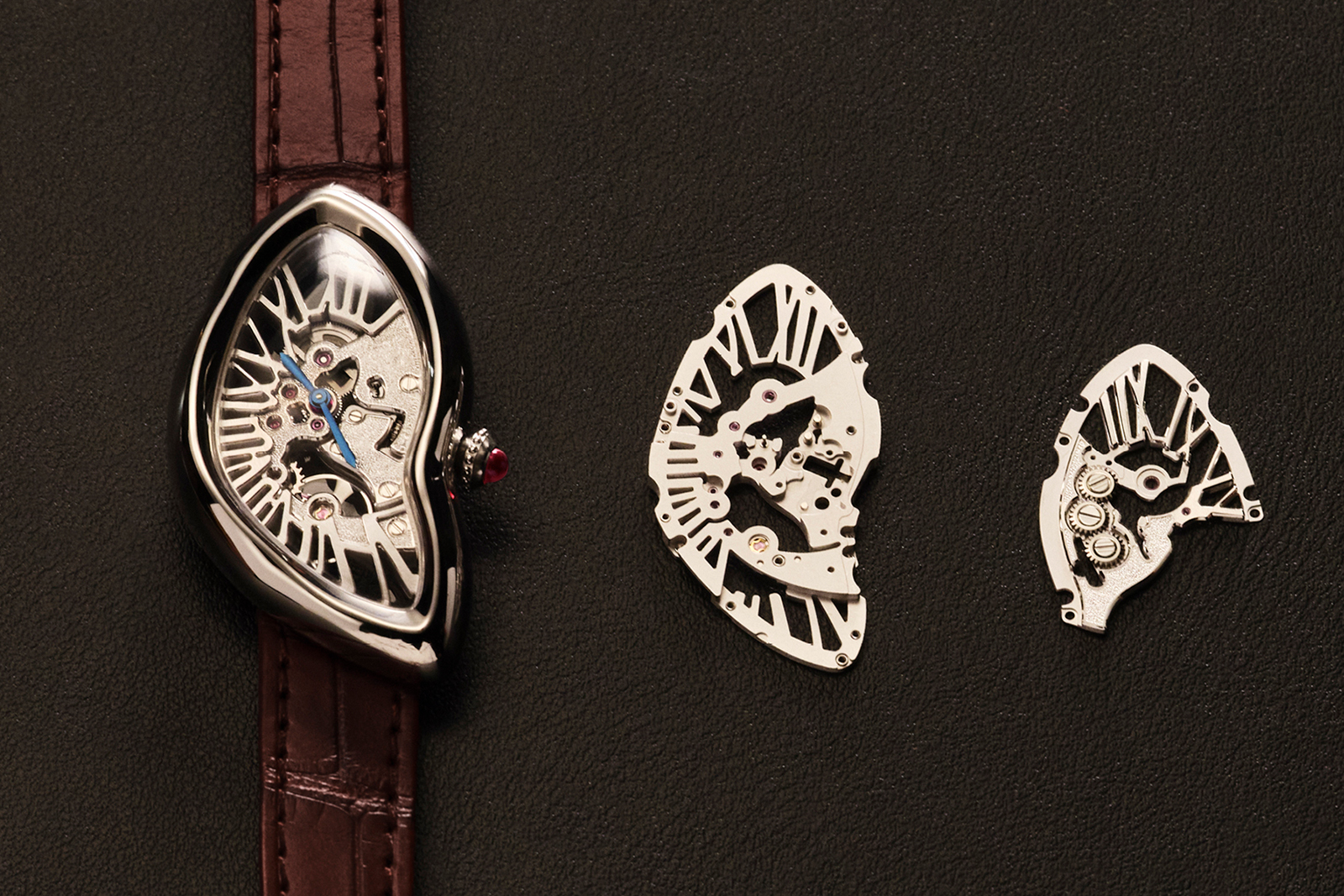
The Crash skeleton is limited to 150 pieces, while the other two models are regular production
The second anniversary trio is Cartier Privé La Collection, yet another trio of greatest hits, but in yellow gold and not limited edition, which we’ll detail in another story.

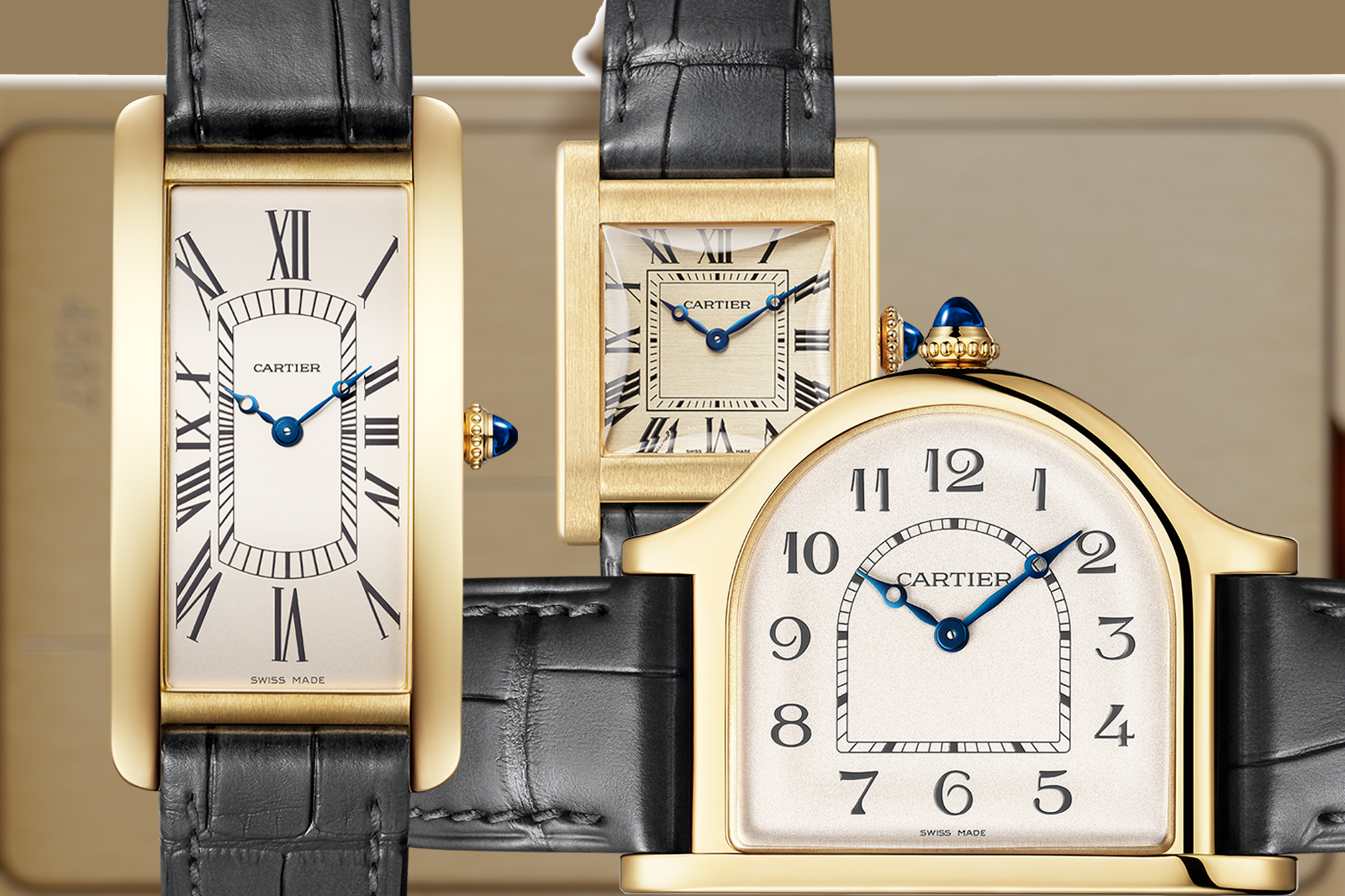
Cartier Privé La Collection made up of the Tank Cintree, Tank Normale, and Cloche
Initial thoughts
It is now a given that Cartier will mine its rich archive for new launches and Les Opus is exactly that. Given the strength of Cartier’s iconic designs, all three watches in the collection are appealing, with the Crash being a little more novel than its siblings in the line-up thanks to its skeleton movement. None of the three watches win any awards for imagination or innovation, but that is arguably besides the point for Cartier watches today.
The Tortue Monopoussoir adopts the design found on the prior generation model, but now in silver and red. The Tank Normale has the same palette, which was historically employed by Cartier on platinum watches in the late 20th century. It is a good look and one that Cartier hasn’t used too often recently, making these two stand out.
While both the Tortue and Tank are cosmetic variants of earlier models, the Crash is entirely new, with the cal. 1967 MC inside being a fresh development created for this watch. No doubt it borrows from other Cartier in-house movements, but the curved, hammered bridges are an interesting departure from the usual style. In the usual style, however, the cal. 1967 MC uses an Etachron-type regulator index that doesn’t feel right for a watch of this price.
Platinum and red
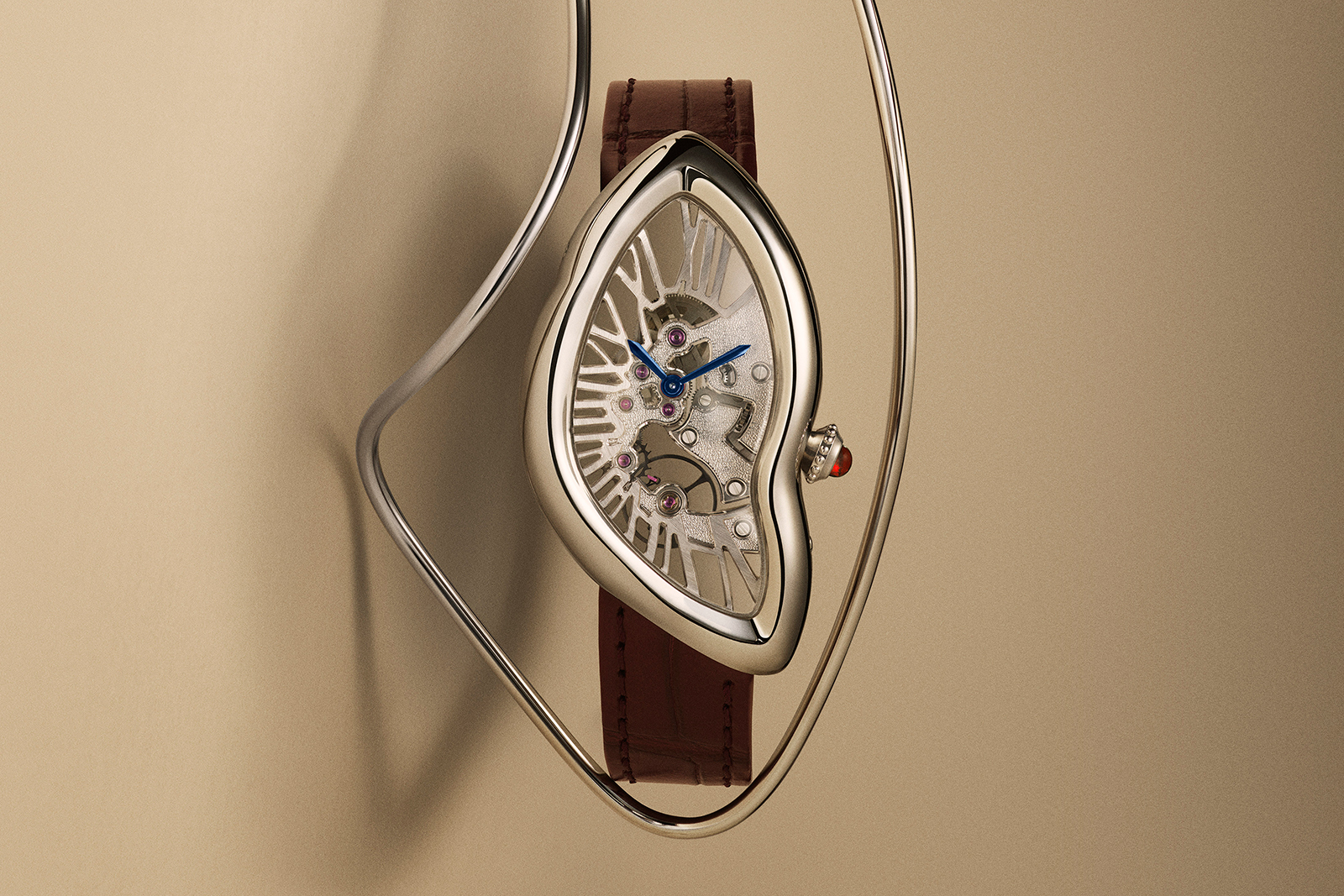
The only limited edition in the trio is the Crash Squelette. A little larger than the current Crash, this is distinct from the first Crash skeleton launched over a decade ago. It’s powered by the cal. 1967 MC, a newly developed calibre named after the year the Crash was created by Cartier’s London outpost. Cartier likely took the moving parts of another of its in-house calibres and then rearranged them to fit inside the asymmetric Cartier, which explains the unusual angle of the crown.
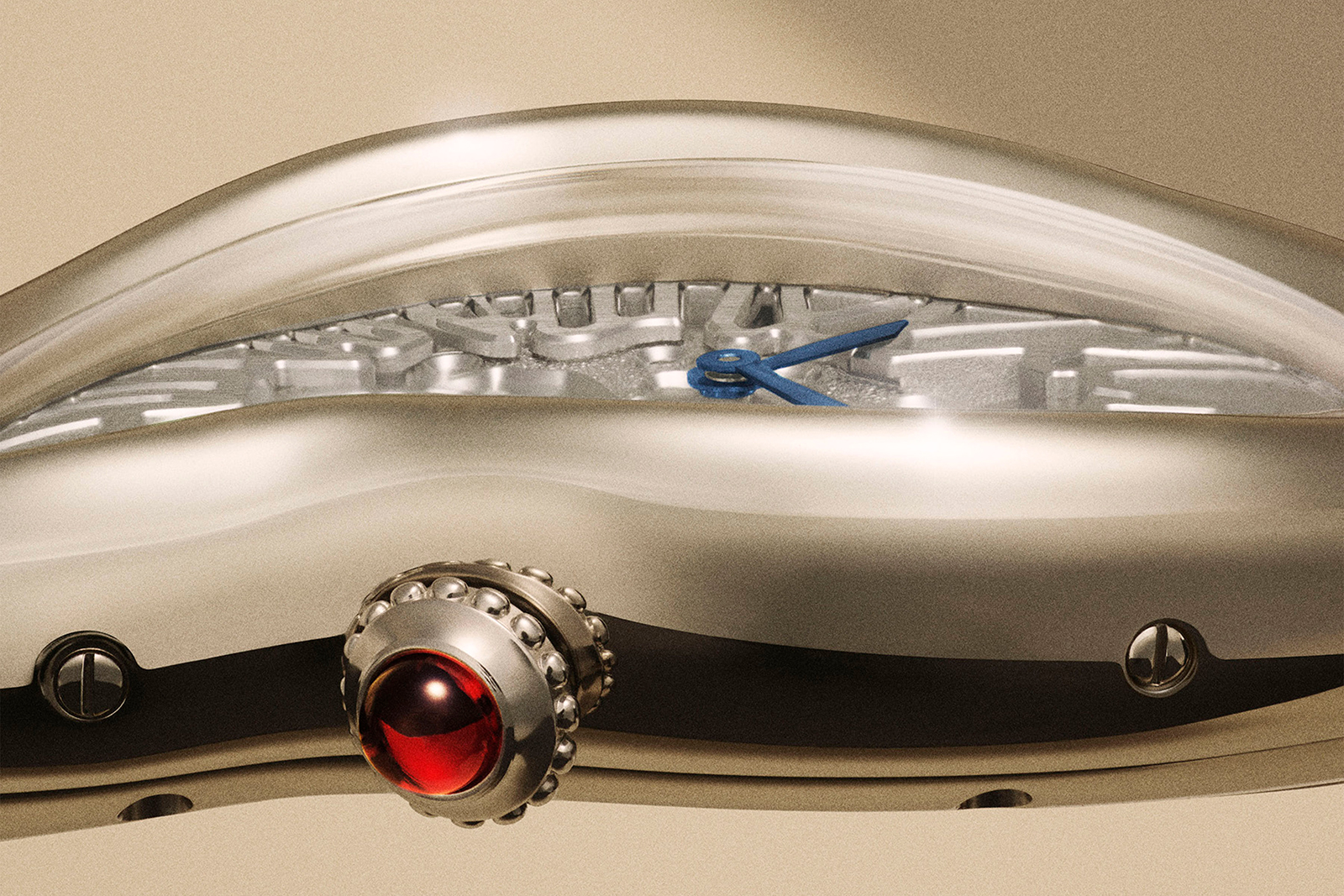
The movement has slightly curved bridges to accommodate the form of the watch case. As is tradition with Cartier’s skeleton movements, the curved base plate has been open worked to form numerals, which are spread out from five to 12 o’clock. The rest of the bridges are hammered by hand to create a dimpled motif, a technique that requires two hours of work per movement.
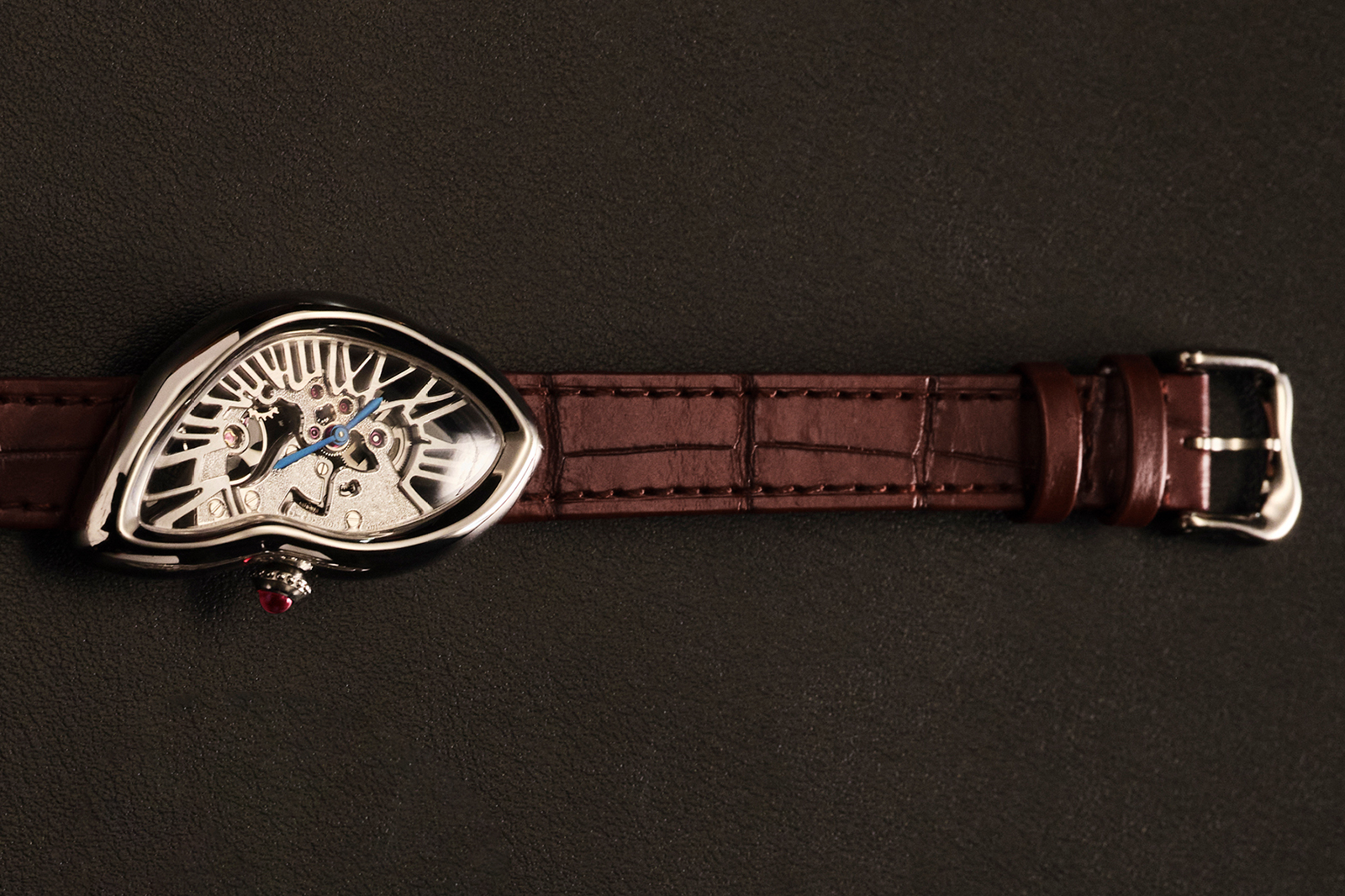
Notably, this accompanied by an asymmetric pin buckle, instead of the “crashed” folding buckle that was historically paired with the Crash. While a pin buckle usually fits better in terms of wearability – the traditional Cartier clasp requires a tailored strap for a perfect fit – the folding clasp is elegant and appropriate given the near-€100,000 price.
The remaining pair in Les Opus are regular production, albeit in small(ish) quantities – this might disappoint those who bought the earlier iterations of the same models that were limited editions.
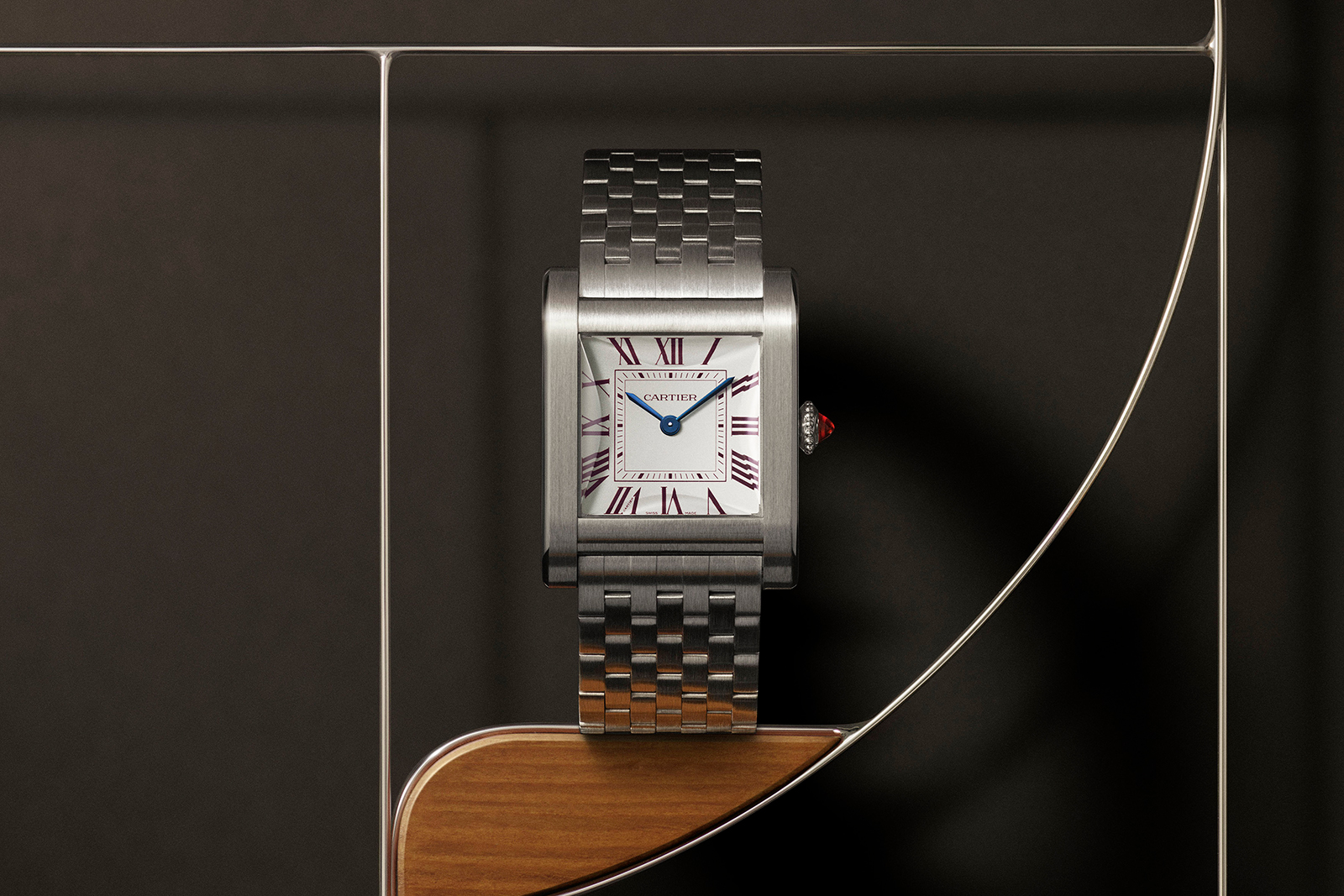
The first is a Tank Normale in platinum with a matching bracelet. It’s essentially identical to the limited edition from 2023, except here the dial is a silvered “opaline” finish with red markings and blued steel sword hands for a look that is classic Cartier.
Similarly dressed is the Tortue Chronographe Monopoussoir, which is also cased in platinum. This harks back to the first-generation Tortue Monopoussoir chronograph of 1998 with its oversized Roman “XII”. While that model had the dial markings in blue, this has a silvered dial with red markings. As with the 1998 model, the hour markers are tiny spheres, save for the “XII”.
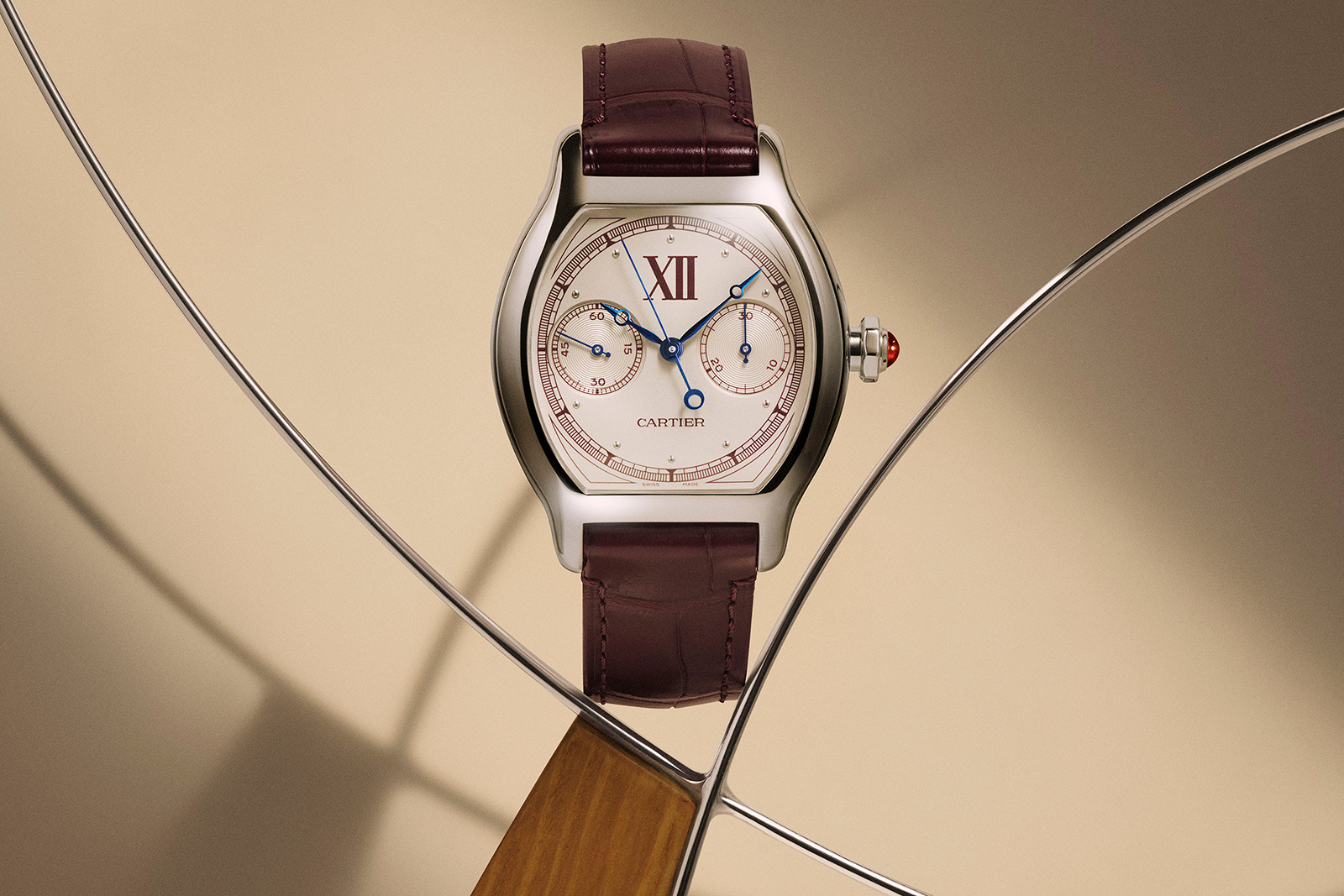
This is otherwise identical to the 2024 model, and contains the cal. 1928 MC, a proprietary hand-winding movement developed by Cartier with the help of specialist Le Cercle des Horlogers.
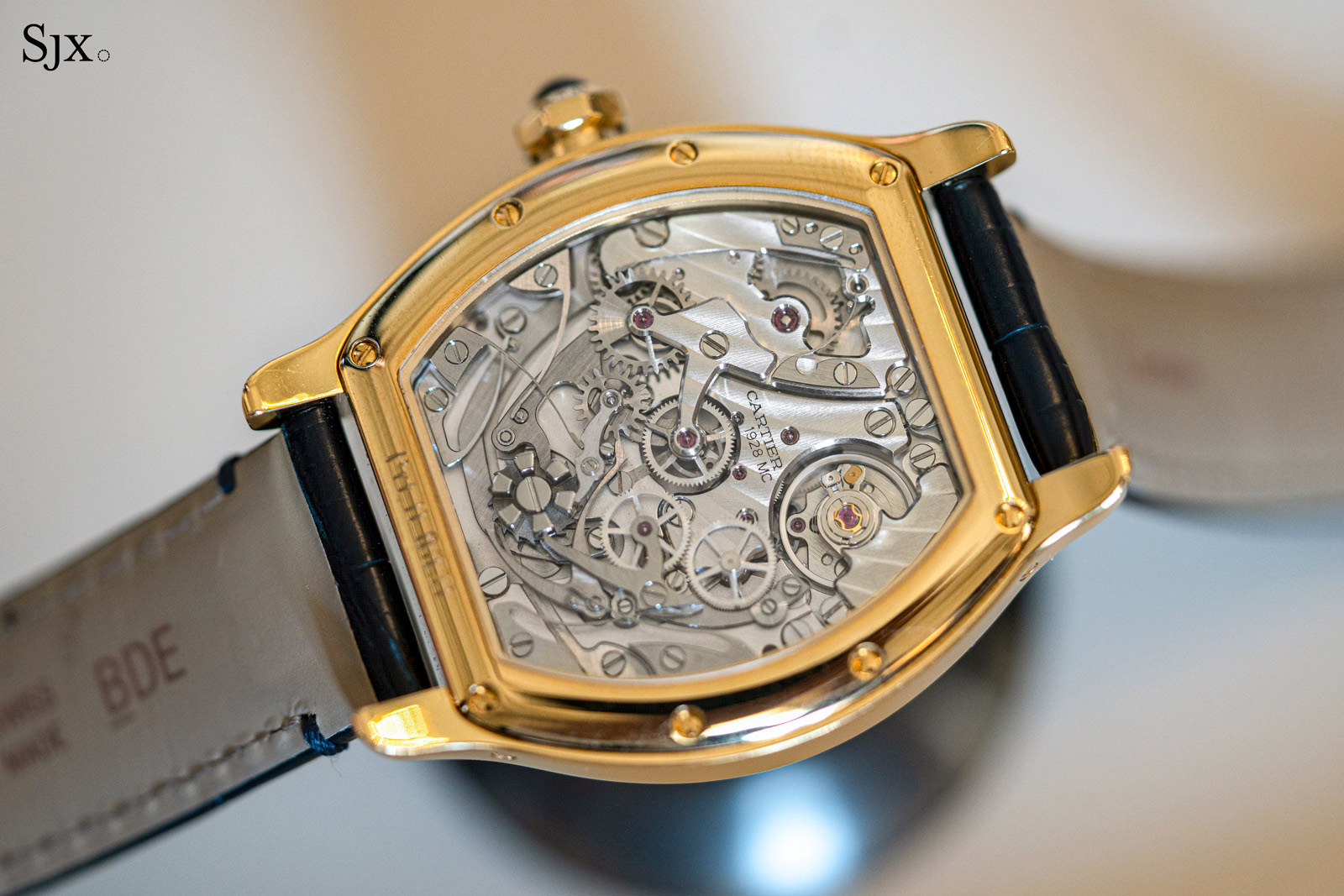
The cal. 1928 MC in the yellow gold version of the watch
Key facts and price
Cartier Privé Les Opus Crash Squelette
Ref. CRWHCH0012
Diameter: 45.34 mm by 25.18 mm
Height: 12.97 mm
Material: Platinum
Crystal: Sapphire
Water resistance: 30 m
Movement: Cal. 1967 MC
Features: Hours, minutes
Frequency: 28,800 beats per hour (4 Hz)
Winding: Manual wind
Power reserve:
Strap: Alligator strap with platinum pin buckle
Limited edition: 150 pieces
Availability:
Price: €97,000 before taxes
Cartier Privé Les Opus Tortue Chronographe Monopoussoir
Ref. CRWHTO0012
Diameter: 43.7 mm by 34.8 mm
Height: 10.2 mm
Material: Platinum
Crystal: Sapphire
Water resistance: 30 m
Movement: Cal. 1928 MC
Features: Hours, minutes, seconds, and chronograph
Frequency: 25,200 beats per hour (3.5 Hz)
Winding: Manual
Power reserve: 44 hours
Strap: Alligator strap with platinum pin buckle
Limited edition: No
Availability:
Price: €53,000 before taxes
Cartier Privé Les Opus Tank Normale
Ref. CRWHTA0031
Diameter: 32.6 mm by 25.7 mm
Height: 6.85 mm
Material: Platinum
Crystal: Sapphire
Water resistance: Not applicable
Movement: Cal. 070
Features: Hours and minutes
Frequency: 25,200 beats per hour (3.5 Hz)
Winding: Manual
Power reserve: 38 hours
Strap: Matching platinum bracelet with white gold clasp
Limited edition: No
Availability:
Price: €58,000 before taxes
For more, visit Cartier.com.
Back to top.