

In Depth: Laboratoire de Précision
The sound of precision.
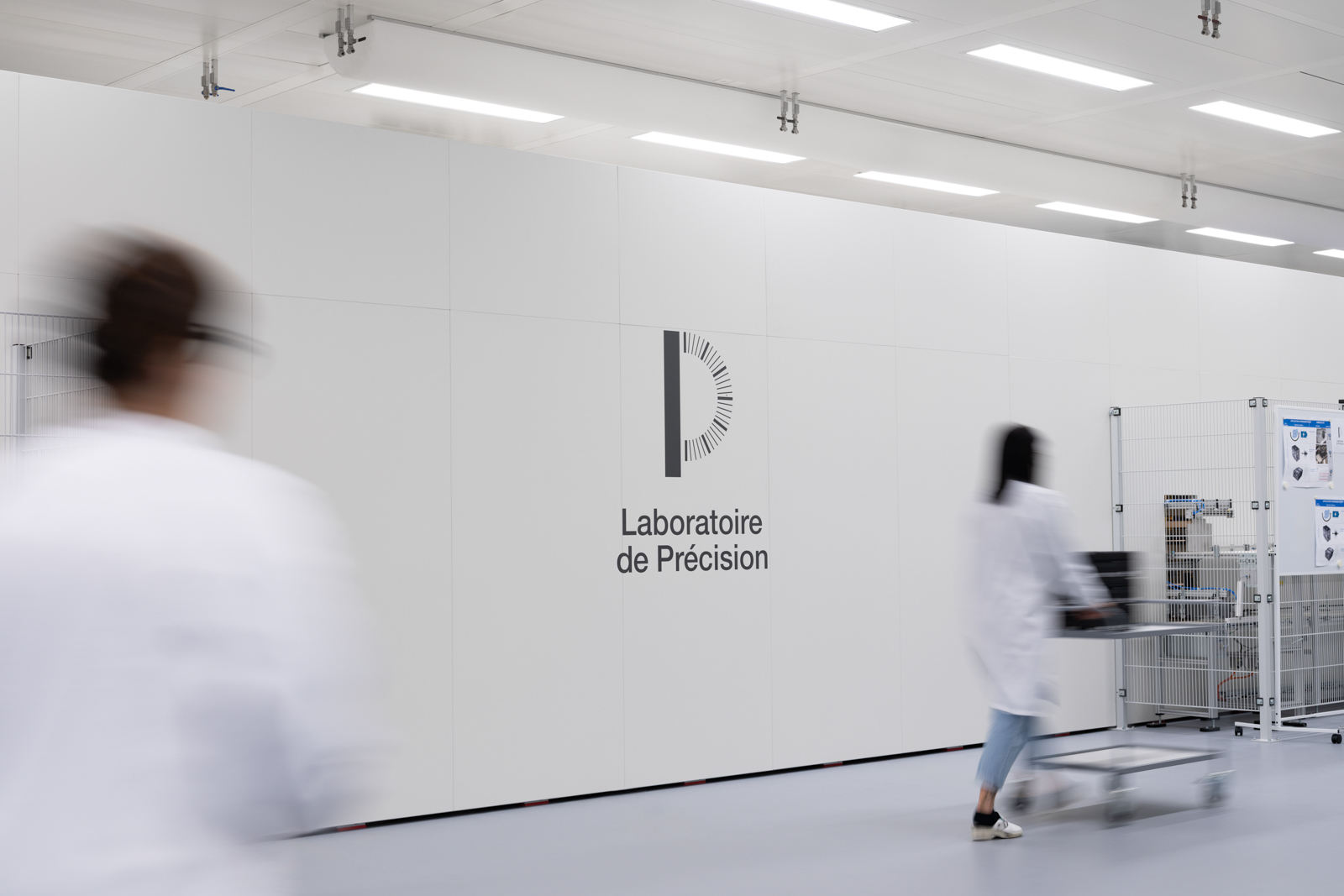
Alongside the launch of the Omega Constellation Observatory, we were among the first members of the public granted access to the Swatch Group’s Laboratoire de Précision (LP), a new independent chronometer testing institute with facilities in Omega’s native Biel/Bienne and Villeret.
The new organisation does not redefine chronometer norms, but it has developed a new acoustic certification process that is more automated and provides client brands with a richer performance data set — a unique capability that has implications beyond mere certification.
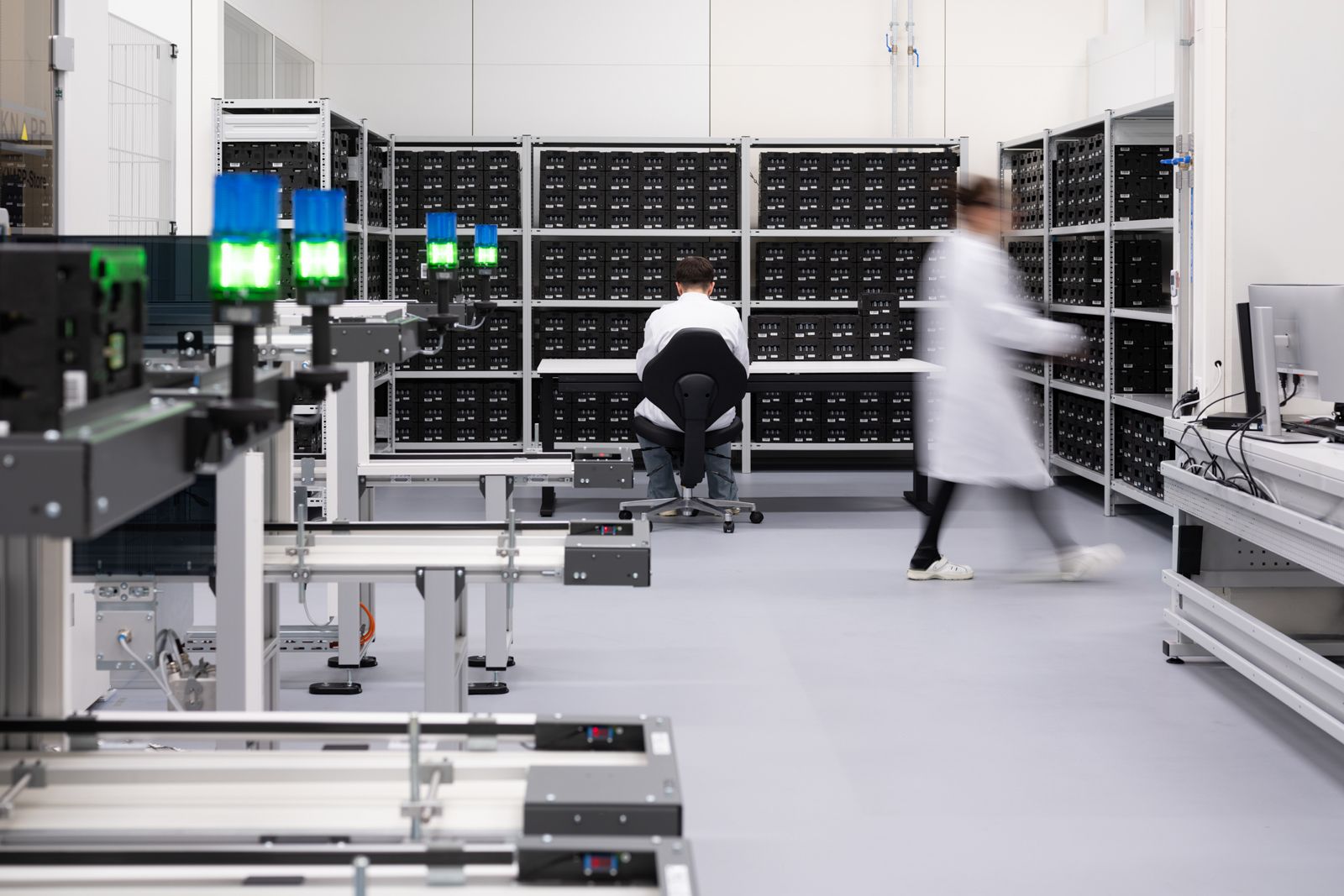
Laboratoire de Précision. Image – Omega
Initial thoughts
The debut of the Constellation Observatory, the first watch certified by LP and the first-ever two-handed Master Chronometer, was greeted with a mixed feedback from both collectors and the press. Some found the choice to launch a chronometer without a seconds hand heretical, viewing it as a gimmick to promote LP’s new testing process.
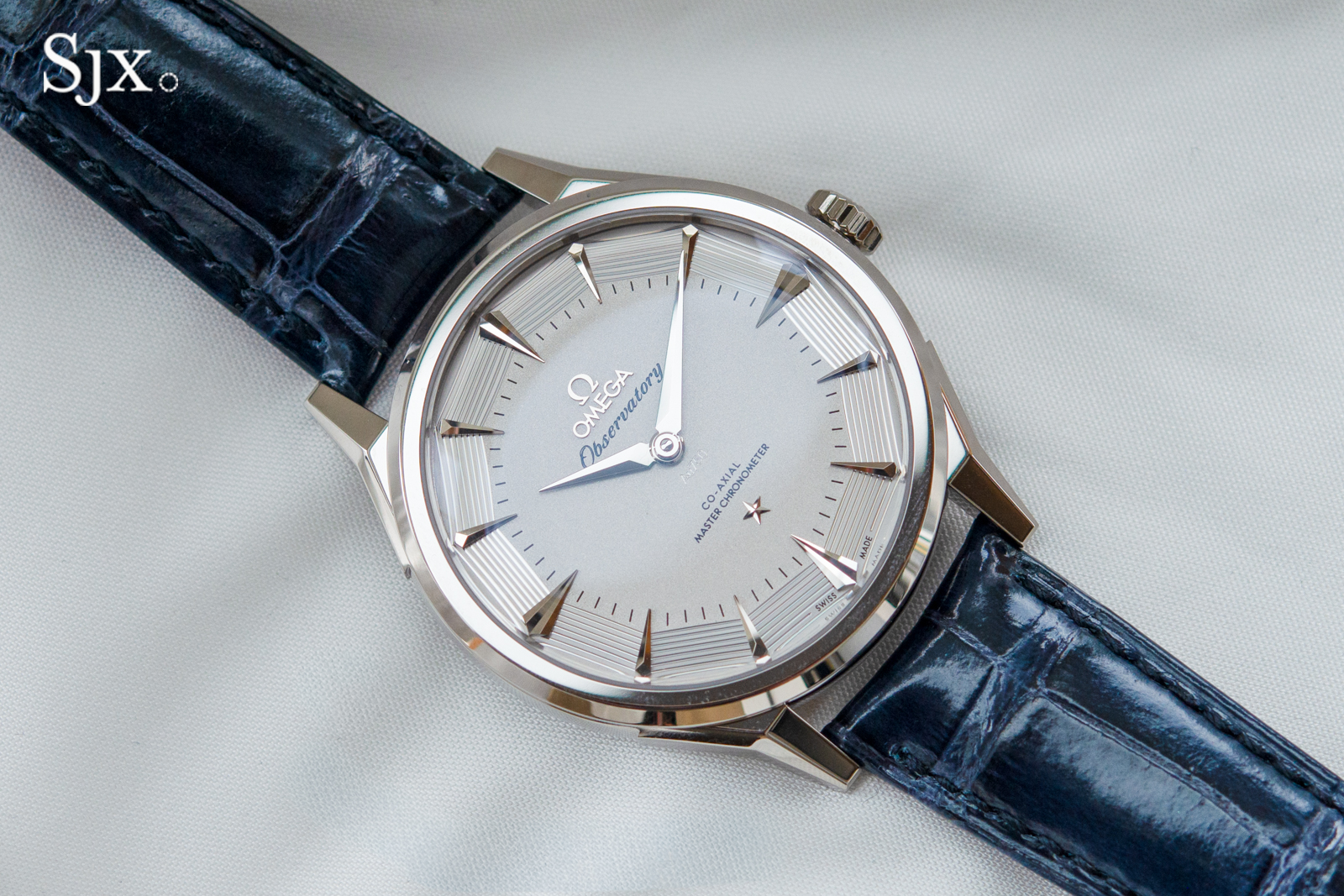
The Omega Constellation Observatory is the first watch to complete chronometer certification at LP.
Regardless of how one feels about the two-handed aspect of the watch — I found the design balanced and appealing, even if the concept is a bit quirky — the launch placed a renewed focus on the way official chronometers are tested and certified.
Many were confused by the claimed novelty of acoustic testing, given the universal presence of Witschi machines on watchmakers’ benches. Indeed, the method is not new.
What is new is the ISO-certified measurement process itself, which is built around what LP’s advanced Dual Metric (DM) testing boxes.
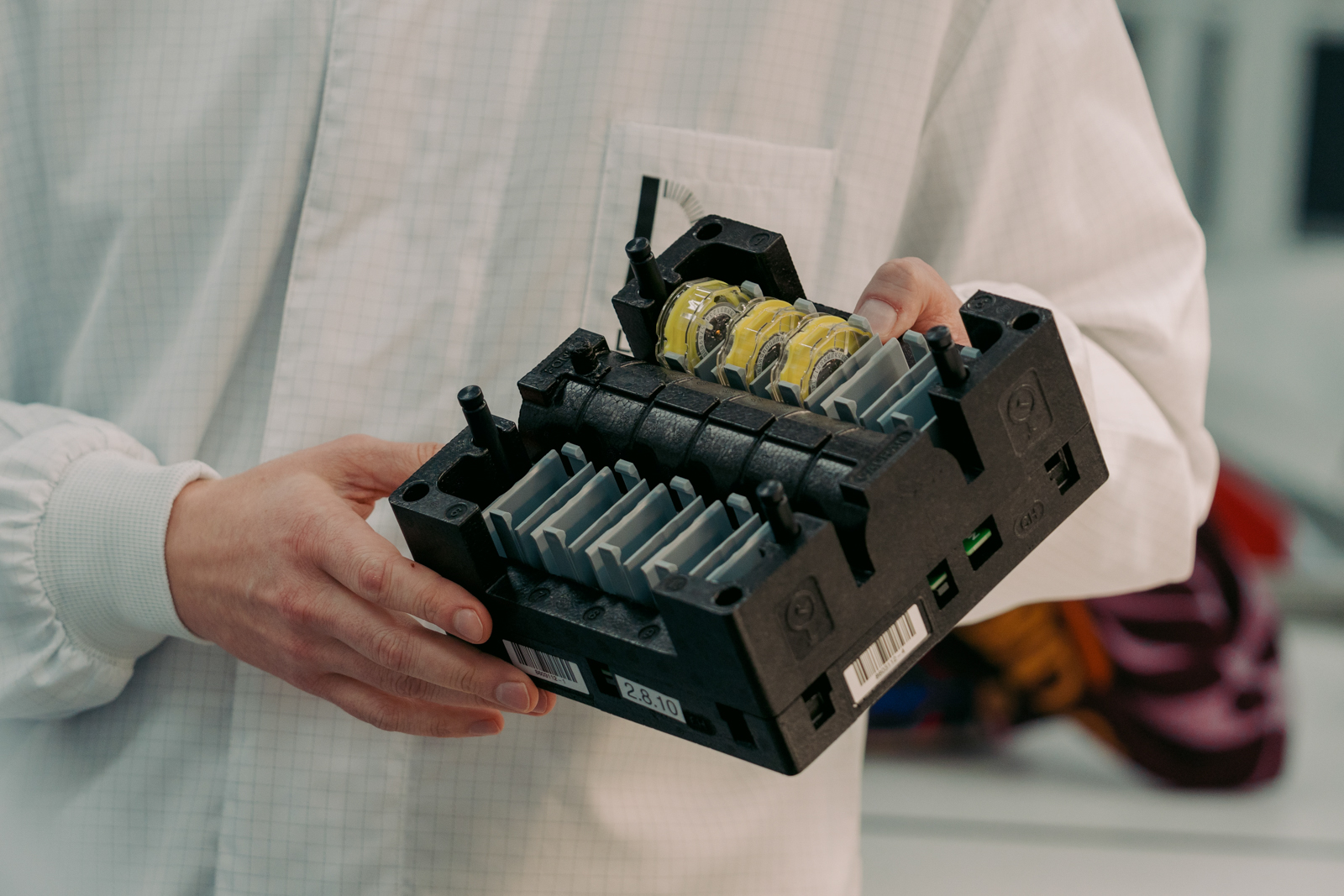
Laboratoire de Précision’s proprietary Dual Metric testing box. Image – Omega
A refresher on chronometer certification
Historically, nearly all official chronometers have been certified by Contrôle Officiel Suisse des Chronomètres, better known by the acronym COSC, an ISO-certified and publicly accredited organisation that has certified more than 57 million movements since its founding in 1973.
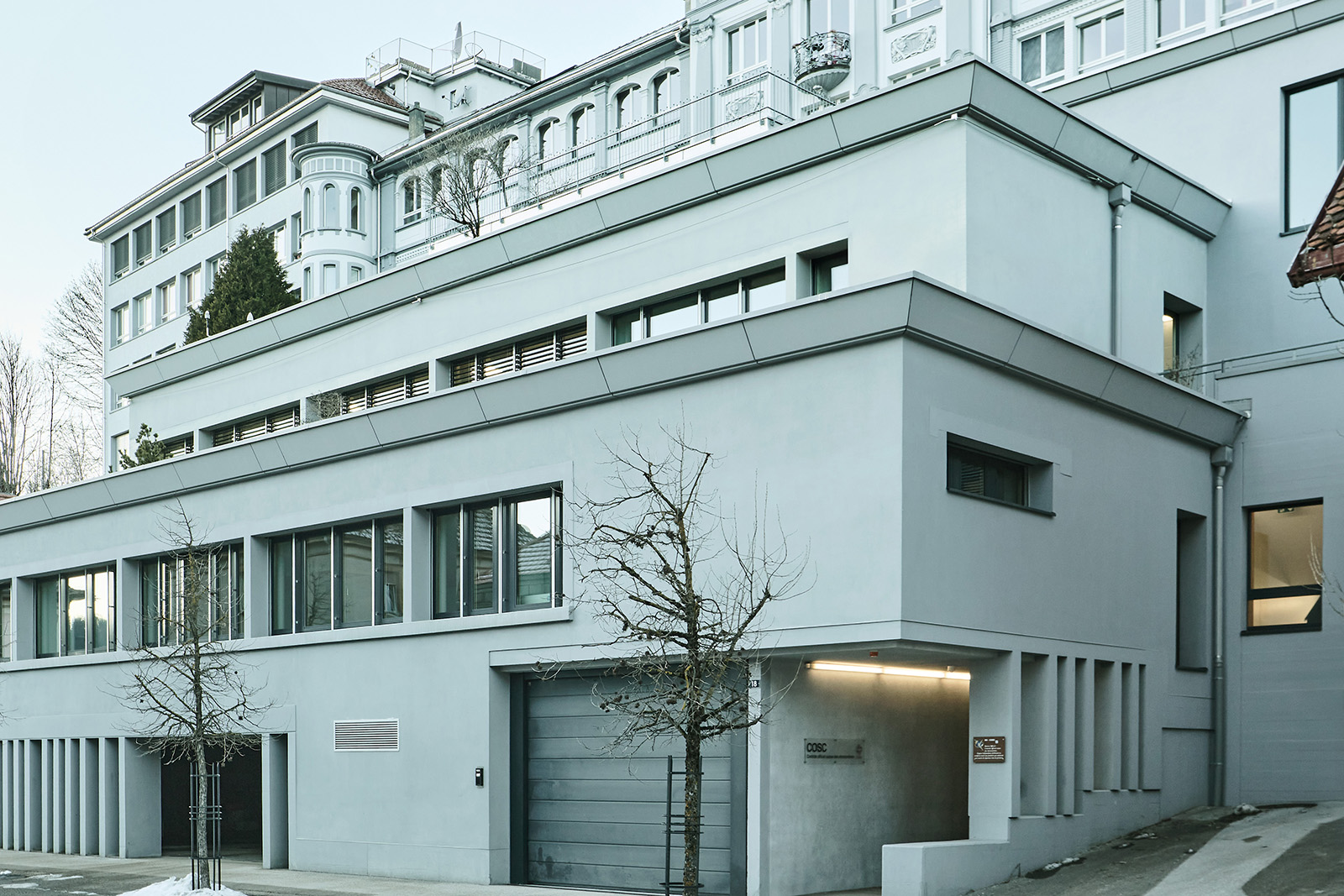
COSC Headquarters. Image – COSC
COSC operates laboratories in Biel/Bienne, Le Locle, Saint-Imier, and, until 2013, Geneva. The latter facility, the Geneva Chronometry Observatory, is now home to Timelab, another accredited chronometer testing institute that works primarily with Geneva-based brands.
Regardless of testing venue, each certified chronometer movement is tested for 15 days, during which it is tested in five positions and three different temperatures. To pass the test and become an officially certified chronometer, movements must perform within -4 to +6 seconds per day throughout the process.
In the context of LP’s innovations, it’s worth pointing out that traditional chronometer certification requires just one measurement per day.
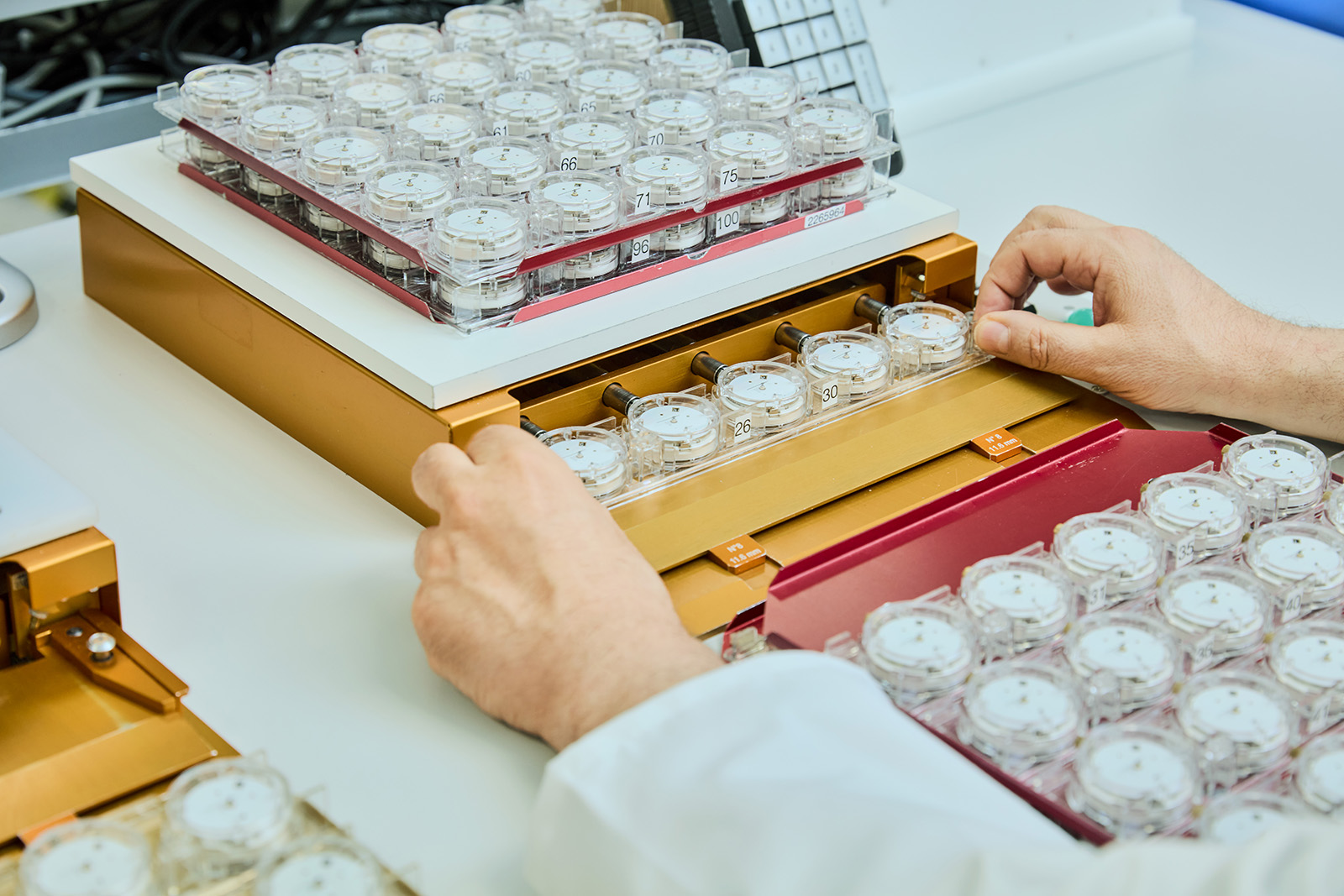
Chronometer testing at COSC. Image – COSC
Typically, the ISO 3159-compliant testing process uses optical reading of the hands to take rate measurements. Because the movements being tested have not yet been cased up, generic test dials and handsets are installed specifically for the purpose of optical measurement.
It’s important to note that even brands with their own more stringent internal standards, like Rolex and Omega, still have to submit their watches to a Swiss Accreditation Service (SAS)-accredited testing facility first to be able to market them as certified chronometers.
An independent laboratory
We visited LP’s primary facility in Villeret, in the same building where most Omega calibres are assembled. Interestingly, LP is also METAS-certified for Master Chronometer testing. This leads me to speculate that LP’s Biel/Bienne facility includes the METAS testing department located within the Omega manufacture; these facilities may even be one and the same.
Like it’s peers, LP is fully accredited by SAS for chronometer testing. This public accreditation carries certain responsibilities. Among them, the facility must be open to third-party customers, and the board of directors must have at least one independent director.
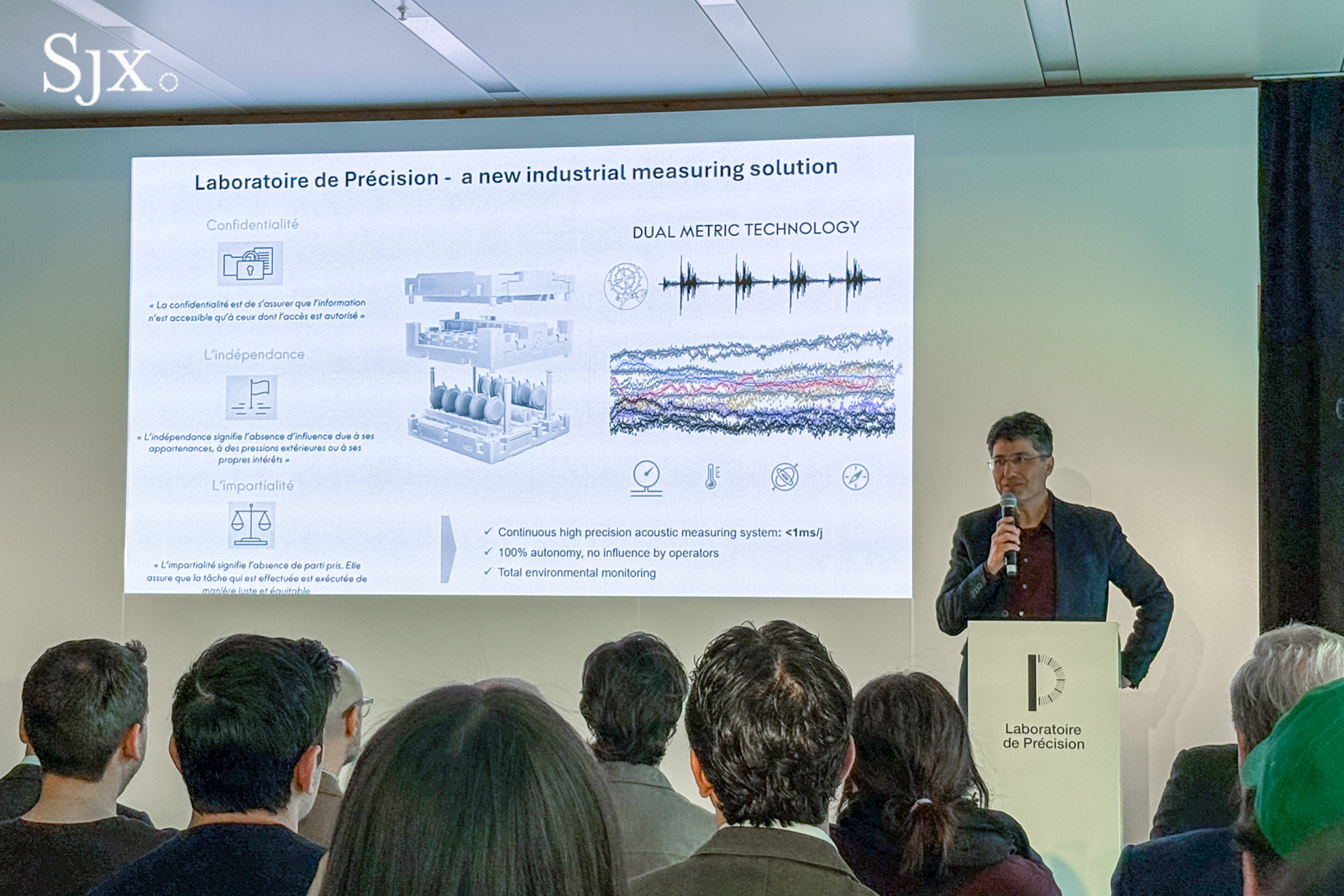
Dr Gaetano Mileti.
In the case of LP, the independent director is Dr Gaetano Mileti of the Université de Neuchâtel — a leading figure in the field of time measurement with more than 200 publications to his name that have been cited nearly 3,000 times.
Prior to assuming is role on the board, Dr Mileti spent 15 years at the Neuchâtel Observatory, and is a member of the Consultative Committee for Time and Frequency (CCTF) at the Bureau International des Poids et Mesures, the body responsible for the definition of the second.
Laboratoire de Précision. Image – Omega
Operationally, LP is run by Alexandre Hundzinger, an EPFL-trained engineer who joined Omega in 2015 to set up the Master Chronometer testing process. For the past three years, he’s been developing the DM testing boxes.
Today LP has 46 staff in total, which is quite large when one realises that COSC certifies millions of movements per year with just 164 employees. The scale of the organisation, along with the highly automated process, suggests that LP does (or soon will) have ample capacity to take significant market share in the chronometer testing space.
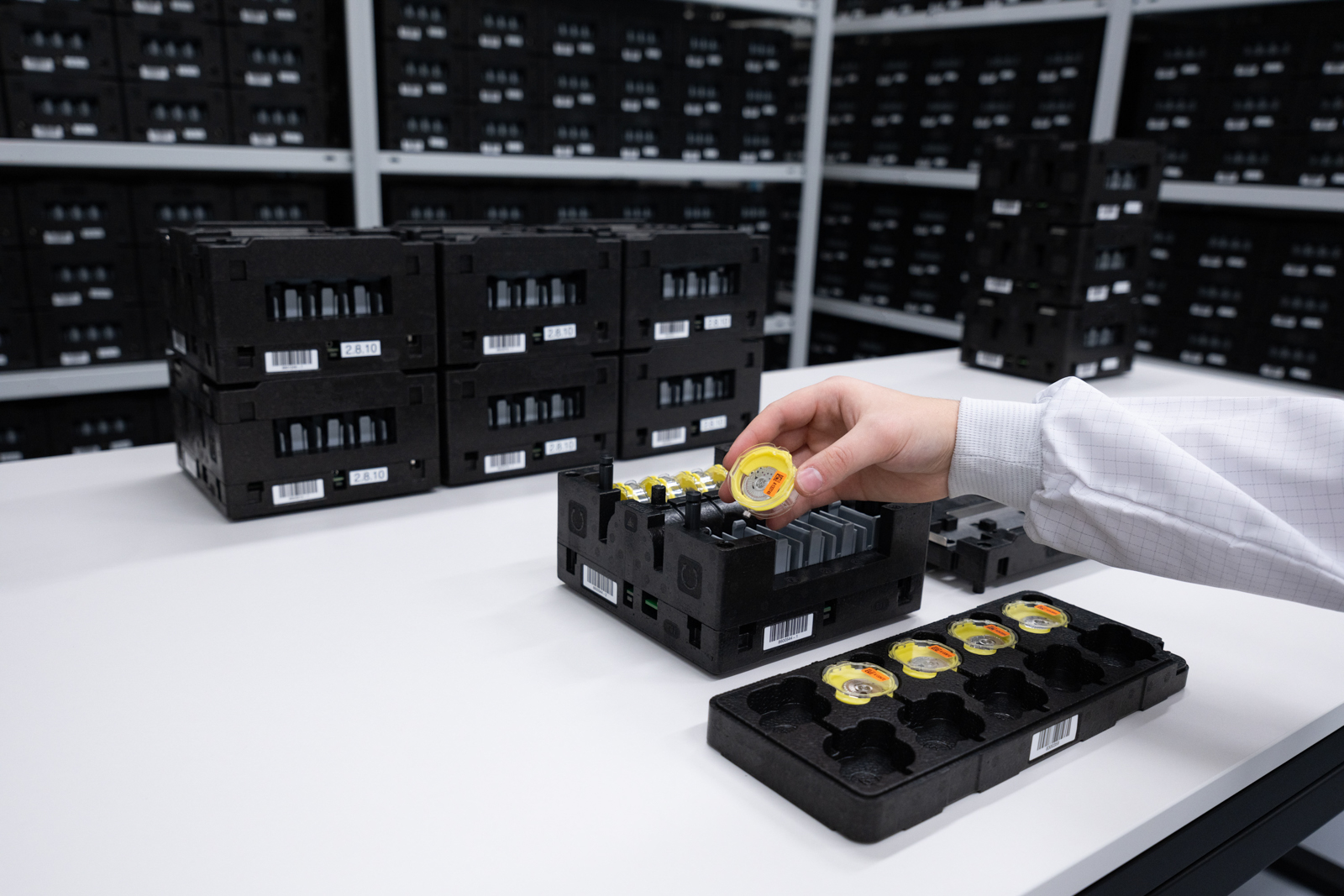
And that seems to be the goal. Omega CEO Raynald Aeschlimann accompanied us on the tour and explained that LP will be cost-competitive with the established players, while offering client brands more substantive and actionable performance insights.
Anything but ‘black box’
The term ‘black box’ usually refers to an unknown quantity. LP’s proprietary DM boxes happen to be black, but they are packed with sensors that reveal everything going on inside with millisecond precision. Each box features its own temperature-compensated quartz reference clock that is calibrated using a rubidium atomic clock before each testing cycle begins.
Each DM box can test 10 movements simultaneously, and is equipped with sensitive microphones to capture every tick and tock of each movement. Because the measurements are taken acoustically, LP avoids the tedious and wasteful process of installing — and later discarding — the temporary dials and handsets normally required for testing.
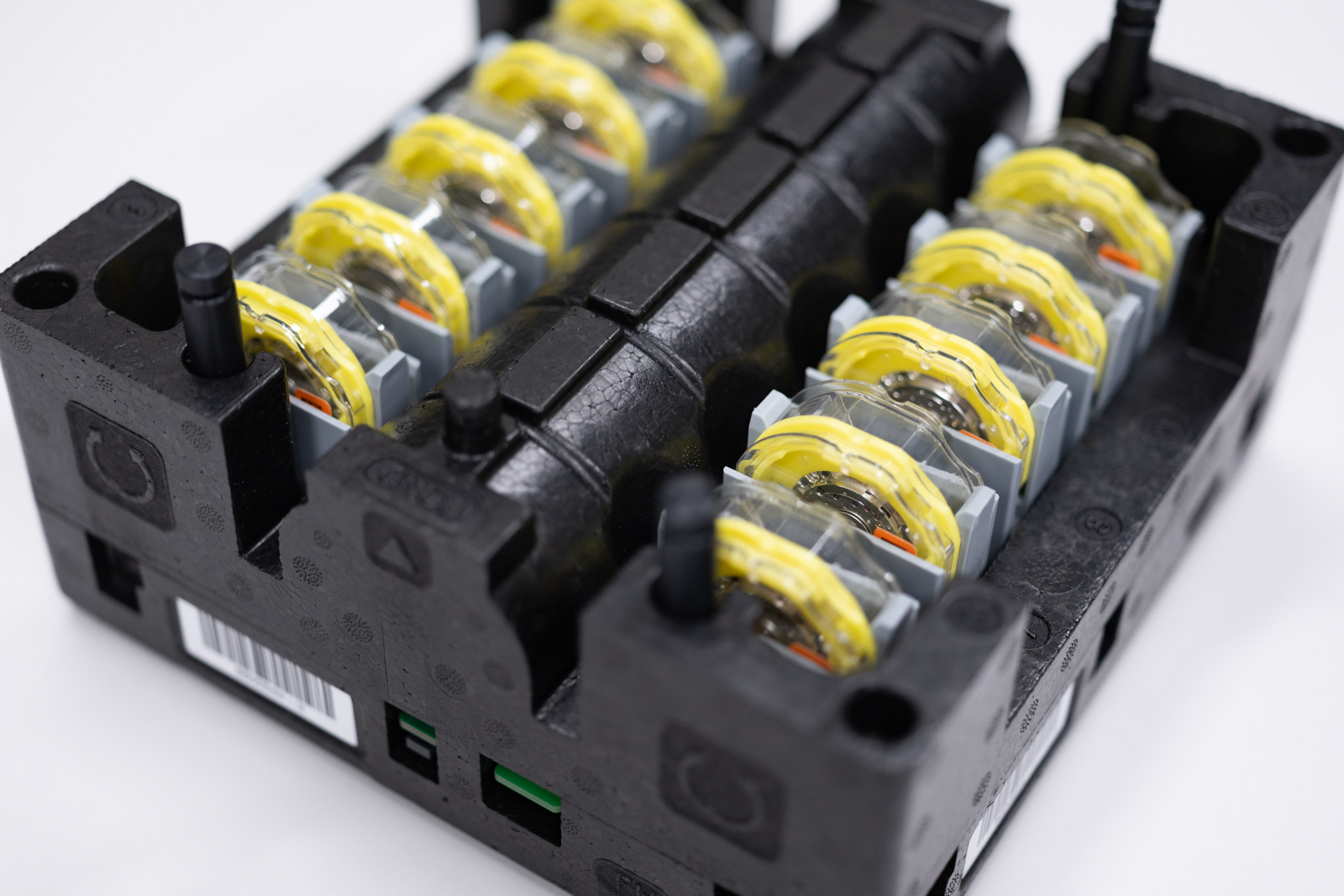
Movements arranged in a DM box. Image – Omega
The box also contains sensors for position, pressure and temperature, so that timekeeping data can always be cross-referenced with environmental factors. The continuous stream of data coming out of the boxes means that LP customers can see how their movements respond to positional and temperature changes with unprecedented resolution.
In total, the DM boxes take 5,000 timekeeping measurements per day, correlated with 3,000 environmental measurements — that’s 120,000 data points per movement over the course of the 15-day testing process. To date, LP has recorded more than 24 billion data points, which suggests about 200,000 movements have been tested.
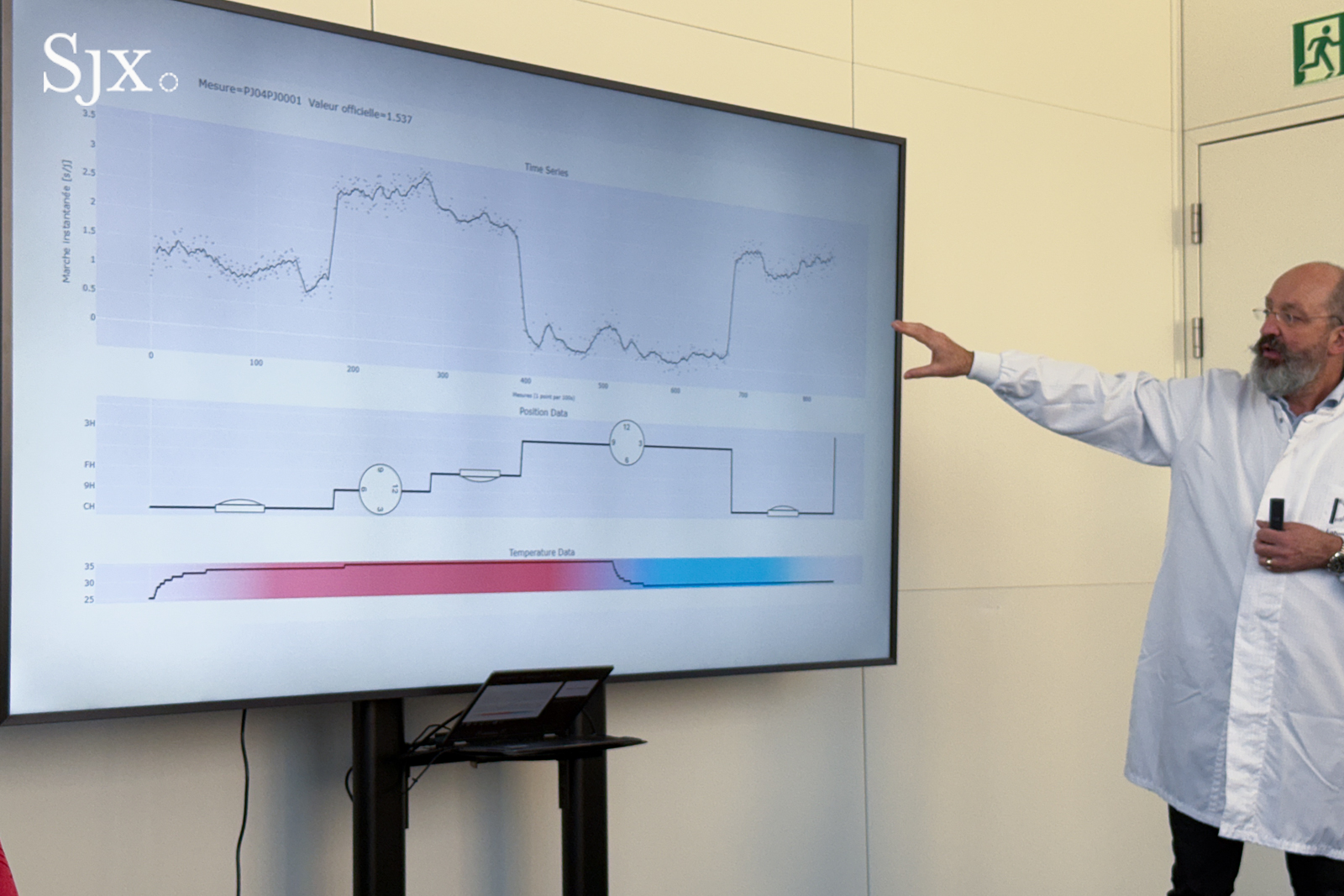
The continuous stream of performance data coming out of LP is useful for more than just certification, because it gives customers a better understanding of how their movements perform. As a result, LP expects that some customers will take advantage of its services during movement development — effectively folding LP into their research and development process.
The process in action
Once a DM box has been loaded with 10 movements and calibrated with the atomic clock, a technician places the box on a small conveyer belt which takes it into a secure vault where robots run the show.
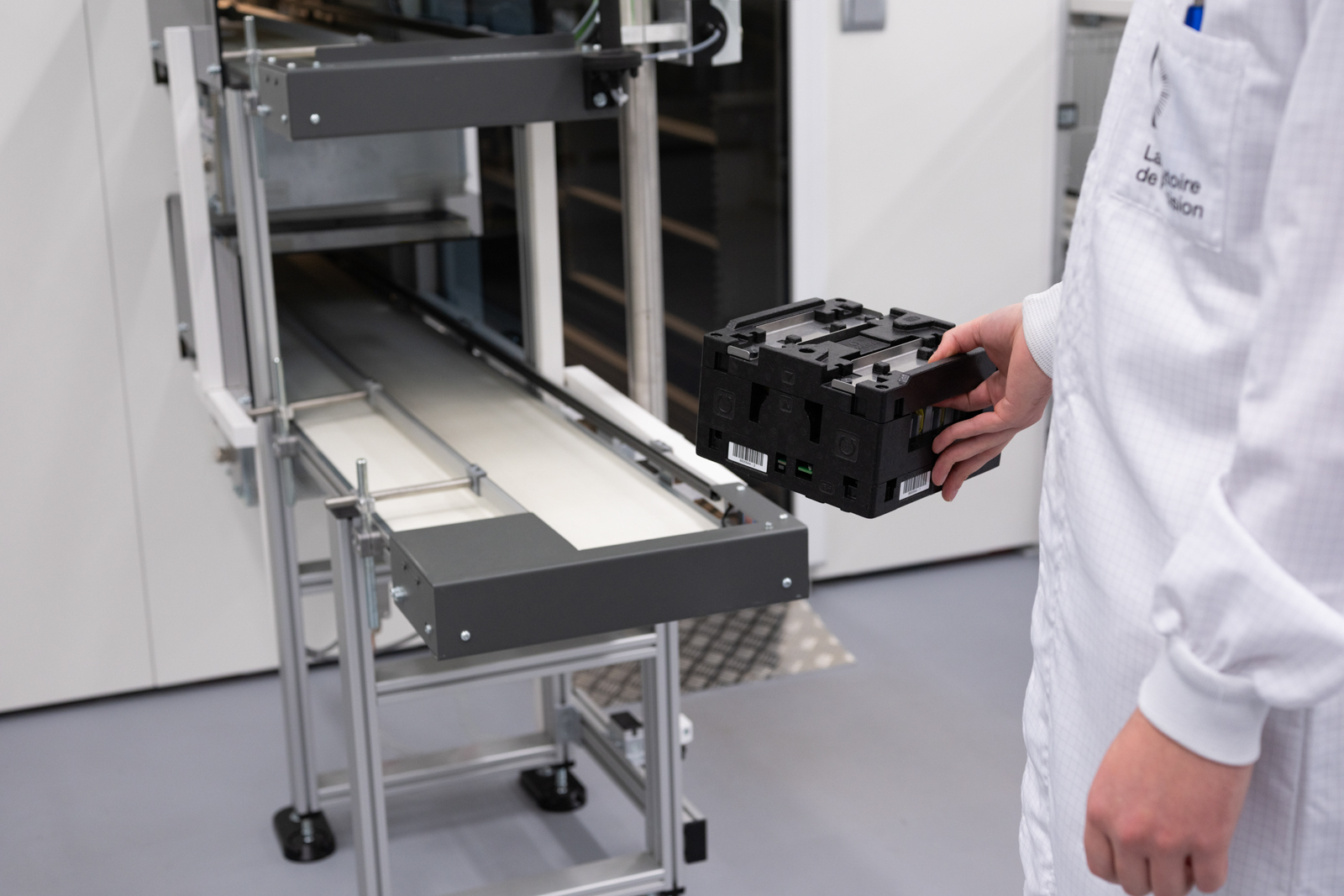
Testing equipment at Laboratoire de Précision. Image – Omega
The winding process is worth describing because it is one aspect of the process that has some human involvement. For winding automatic calibres, a robot inside the vault places the entire DM box inside an industrial winder that looks a little like a slushy machine. This machine rotates the box in a pre-configured direction for a pre-determined number of rotations based on specifications provided by the customer.
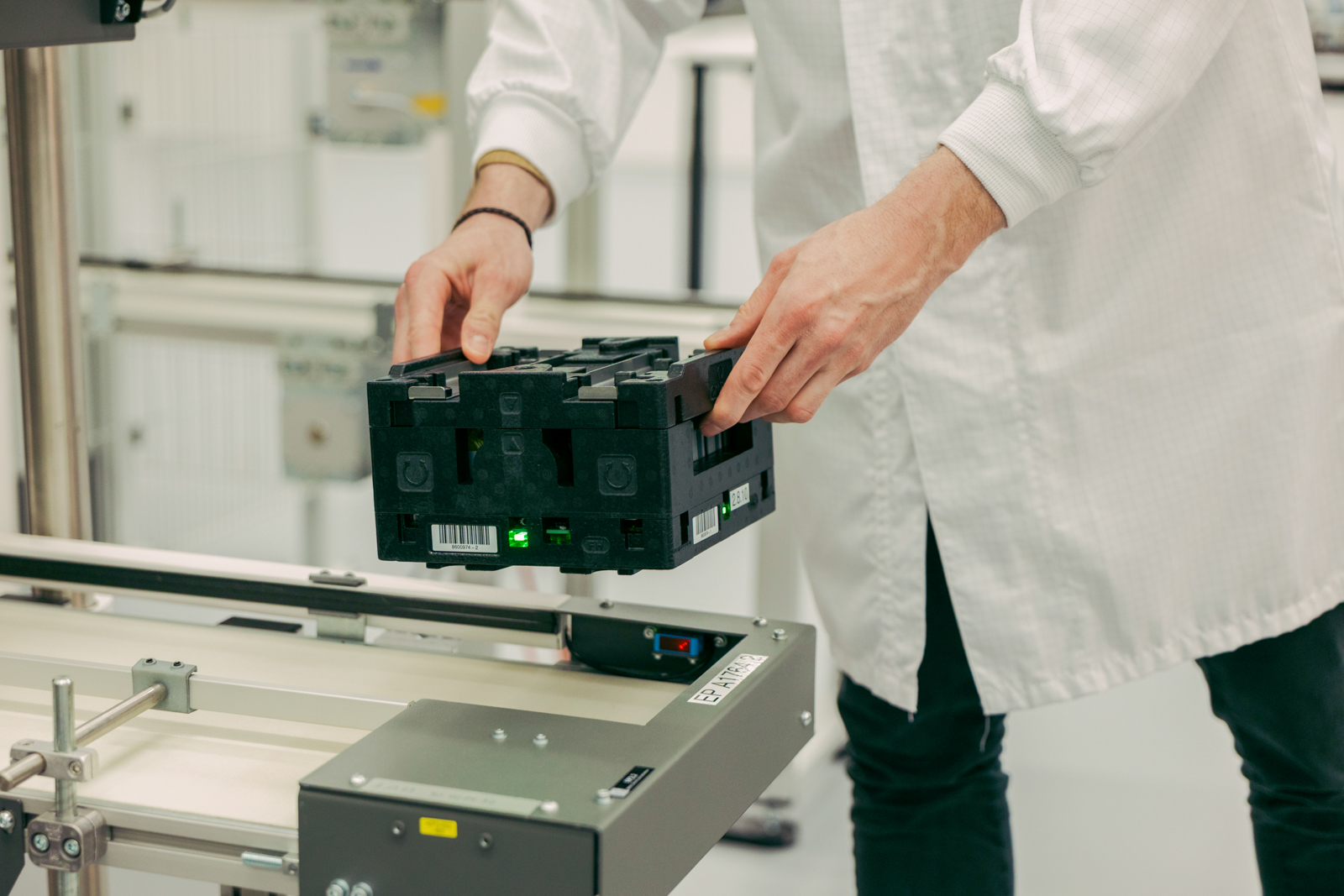
Testing equipment at Laboratoire de Précision. Image – Omega
For manual movements, another conveyer belt ejects DM boxes for manual winding using dedicated tooling, before taking the box back inside for the next phase of testing. Temperature testing also requires some manual intervention when placing the box inside the carefully calibrated climate chambers.
The DM boxes were developed in-house, as was the software that makes sense of the data. This enables movements with different escapement types and frequencies to be tested in the same box.
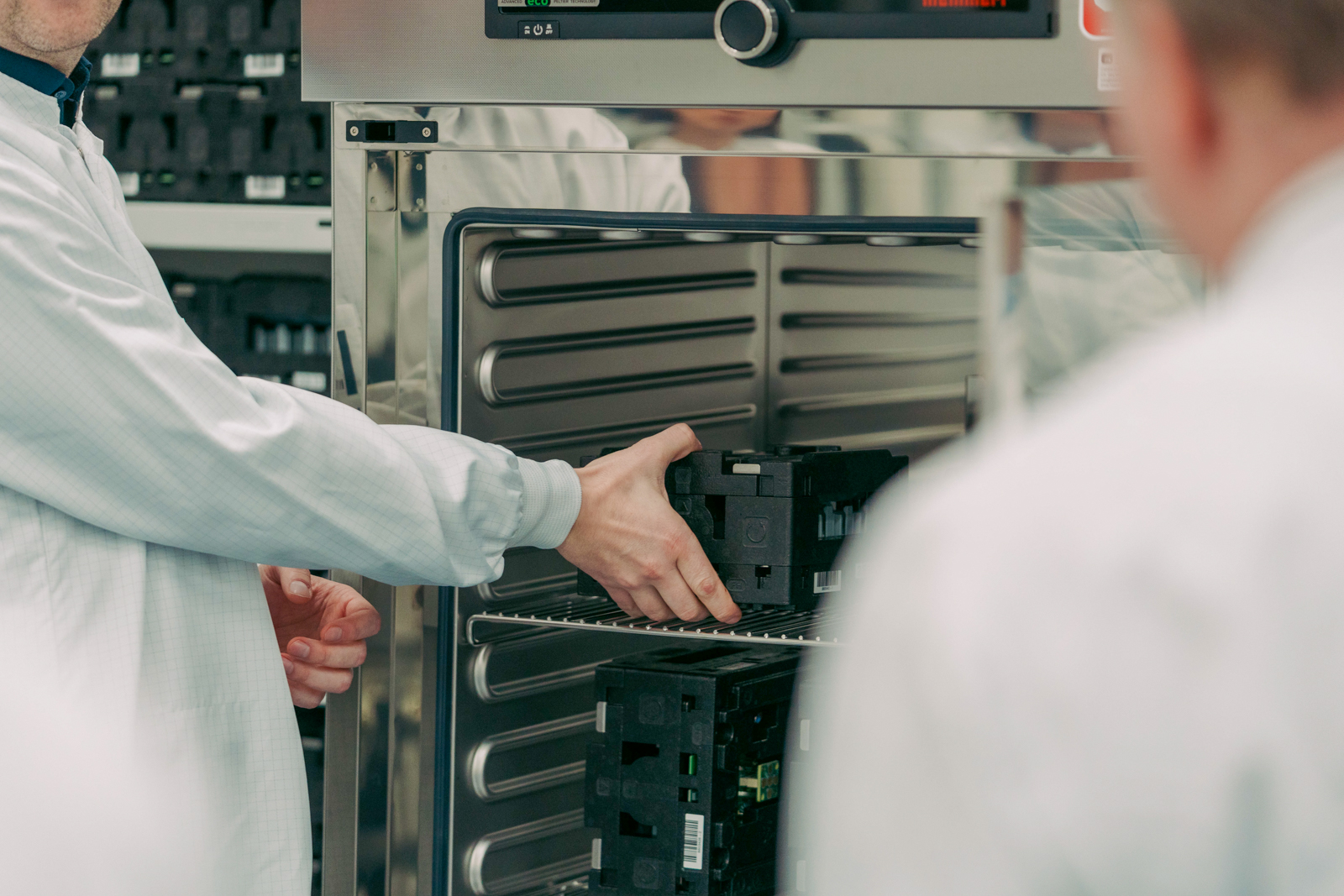
Temperature testing at Laboratoire de Précision. Image – Omega
The software also looks out for any deviations from ISO norms. The robotic testing process all but eliminates the possibility for human interference or negligence, but if a box is left too long in one position or if the temperature fluctuates outside the specified range, for example, the testing process is automatically stopped and the timekeeping data is flagged in the database — maintained in an on-site data centre — as unusable for certification.
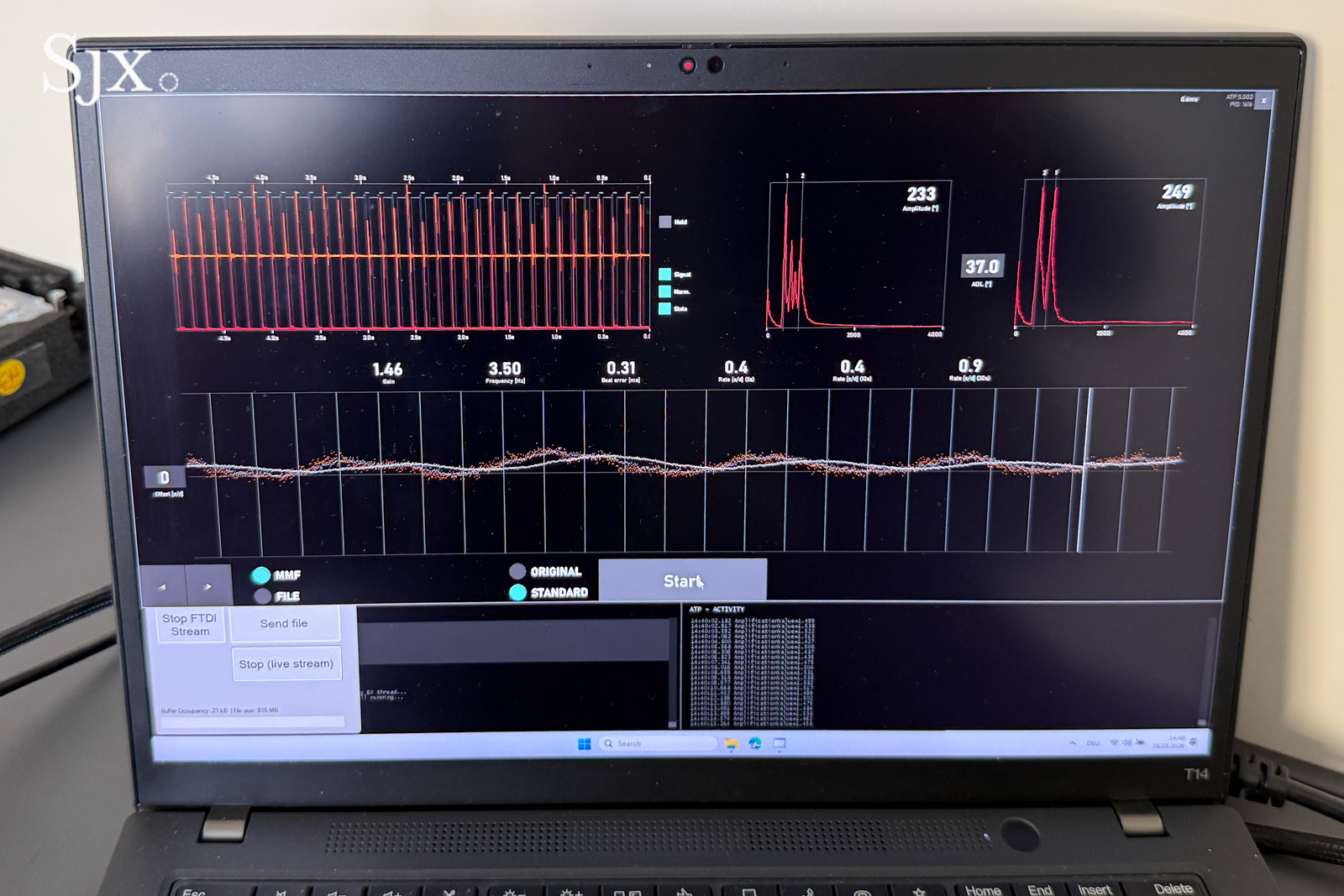
LP’s testing process provides unprecedented resolution on the performance of a watch.
Concluding thoughts
There’s no question that LP has raised the bar for chronometer testing. The continuous data stream means that LP has already recorded more data than all other chronometer testing facilities combined, throughout history.
Whether third-party brands will find this data useful in practice is another question. The diagnostic value of Dual Metric is probably greatest for manufacturers with deep control over their own production — those who can actually act on what the data tells them. For an independent brand that might use a movement from one specialist and an escapement from another, there may be little they can do to influence change, so the value of the additional data may be minimal.
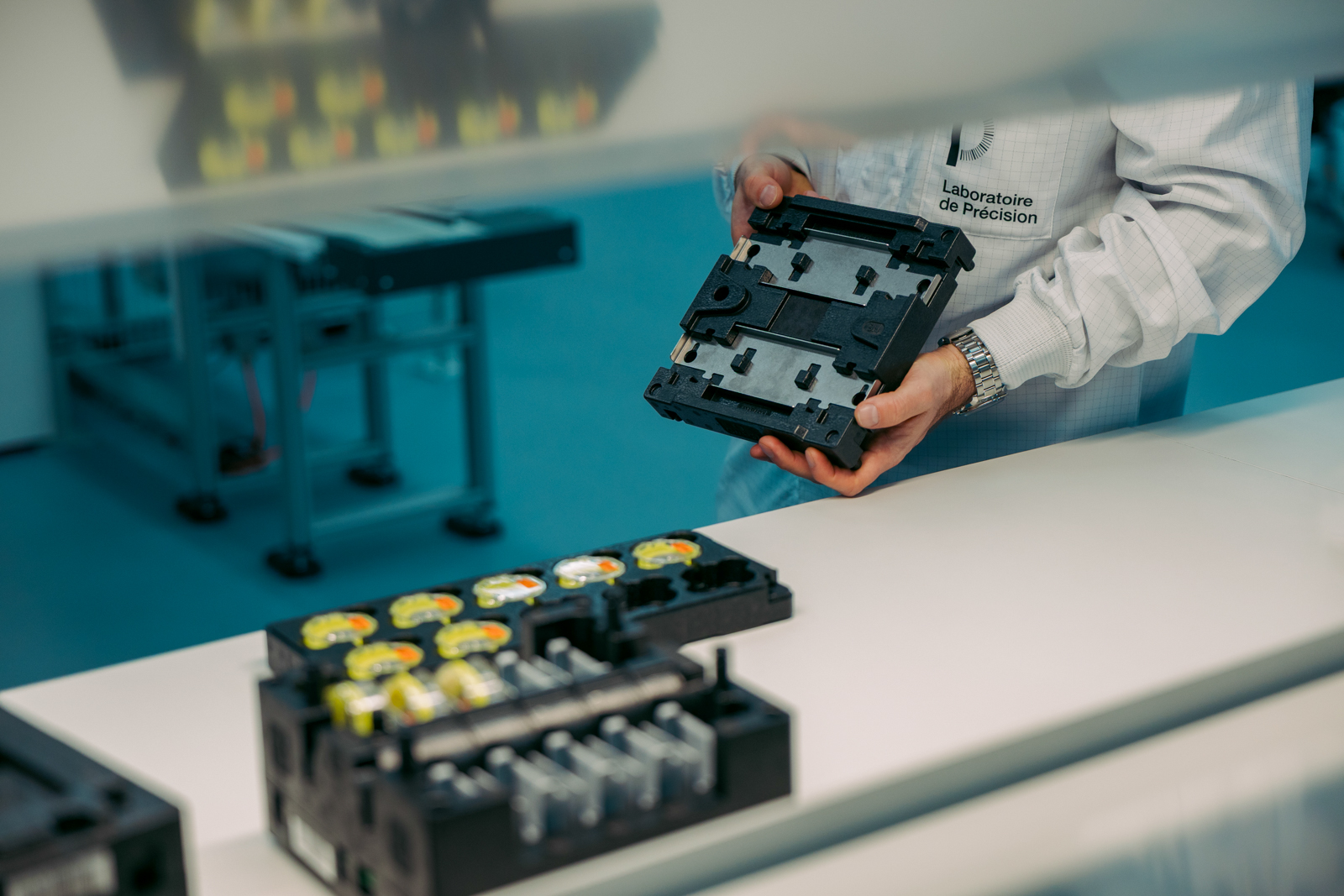
Cataloguing movements at Laboratoire de Précision. Image – Omega
Among the few truly integrated industrial brands, I would expect notable names like Rolex and Seiko to continue conducting their own testing for research and development purposes. But in theory, superior diagnostics should be beneficial for identifying and resolving negative factors, so in that sense it represents progress, even if it ends up primarily benefiting Swatch Group’s own brands.
Whether it matters to enthusiasts and collectors is another matter. Chronometric precision was once the primary aim of any high-grade watch, but as the market shifts to favour more expensive products that emphasise the personal touch of a master artisan, the relative appeal of the mass-market chronometer has been eroded.
But for those who still take precision seriously, the obvious effort Swatch Group has expended developing LP should be heartwarming. In fact, I’d argue the decision to double-down on serious science at a time when collector culture is fixated on finishing is actually somewhat bold and refreshing.
For more, visit laboratoiredeprecision.com.
Back to top.