Albishorn Goes Green with the Thundergraph Khumbu

With an 'imaginary vintage' bracelet for the first time.
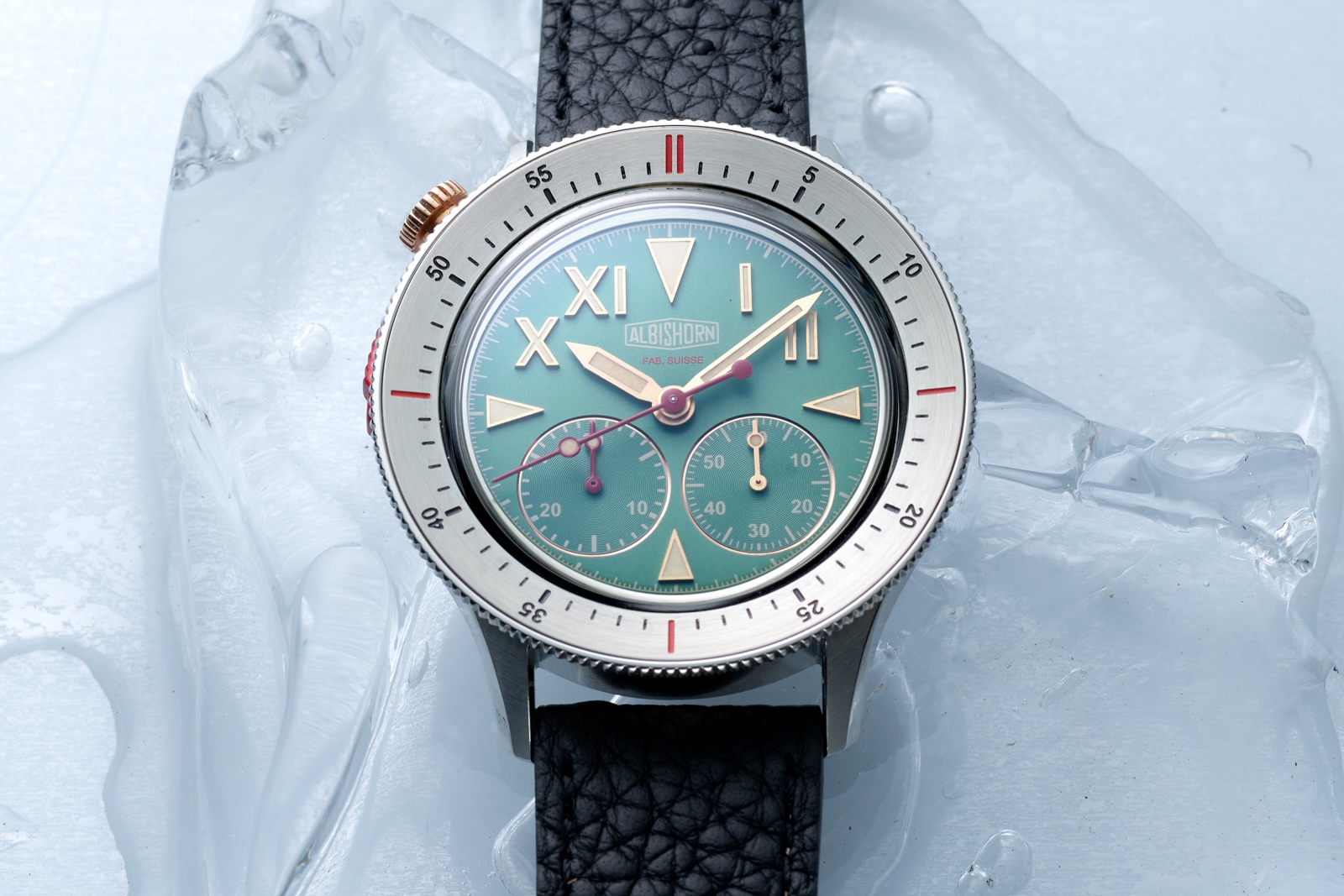
Albishorn returns with a new interpretation of its mountaineering chronograph, the Thundergraph Khumbu, swapping the original’s petroleum blue dial for a green colourway and introducing the brand’s first-ever bracelet option.

Like its predecessor, the watch draws inspiration from the 1952 Swiss expeditions to Everest, this time taking its name from the Khumbu region of Nepal traversed by the climbing party on its approach to the mountain.
Initial thoughts

I was impressed by the original Thundergraph when it launched last year — it was my favourite Albishorn to that point. The Khumbu does not reinvent anything, but the bracelet option is a meaningful addition that should widen the appeal to a new segment of collectors.
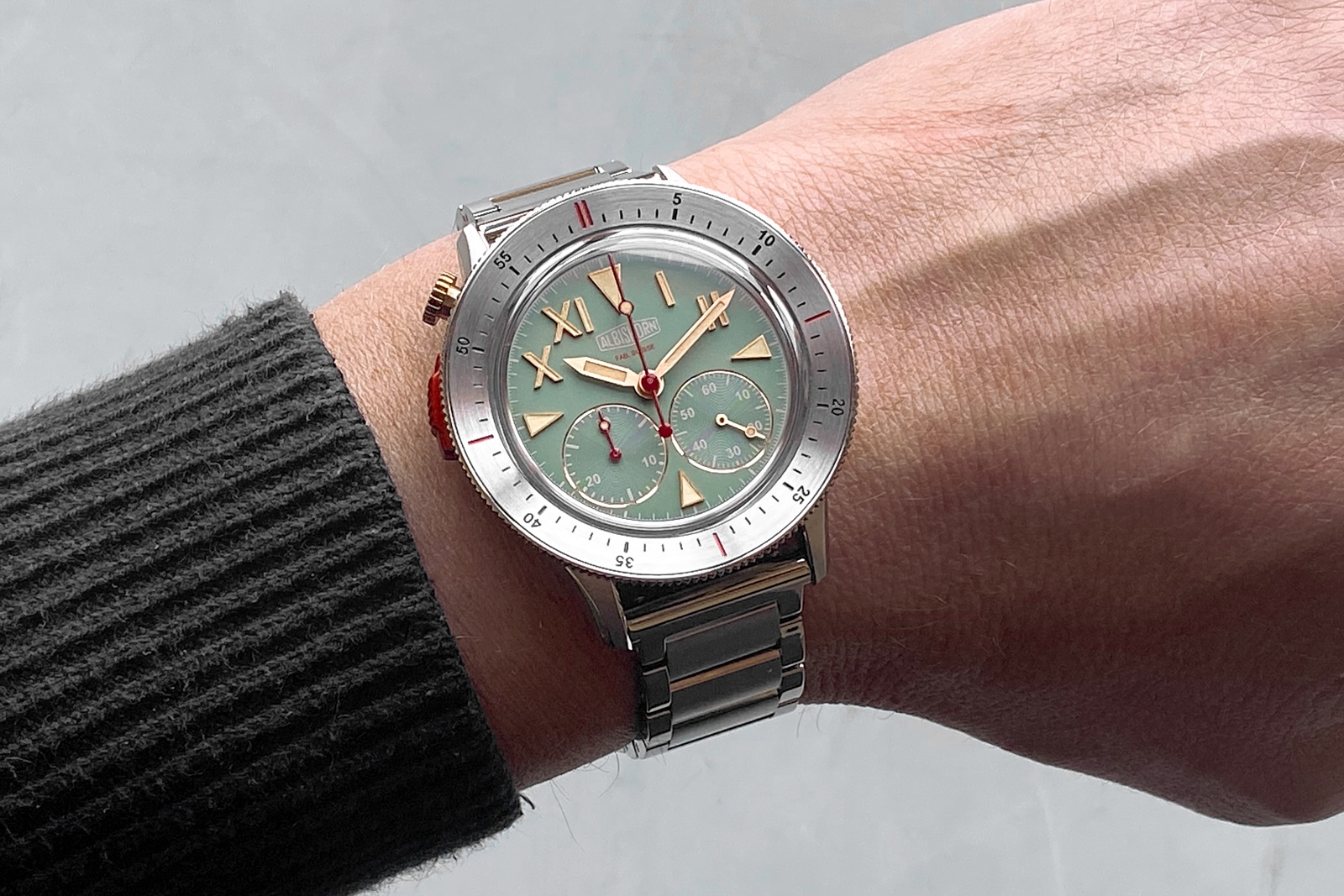
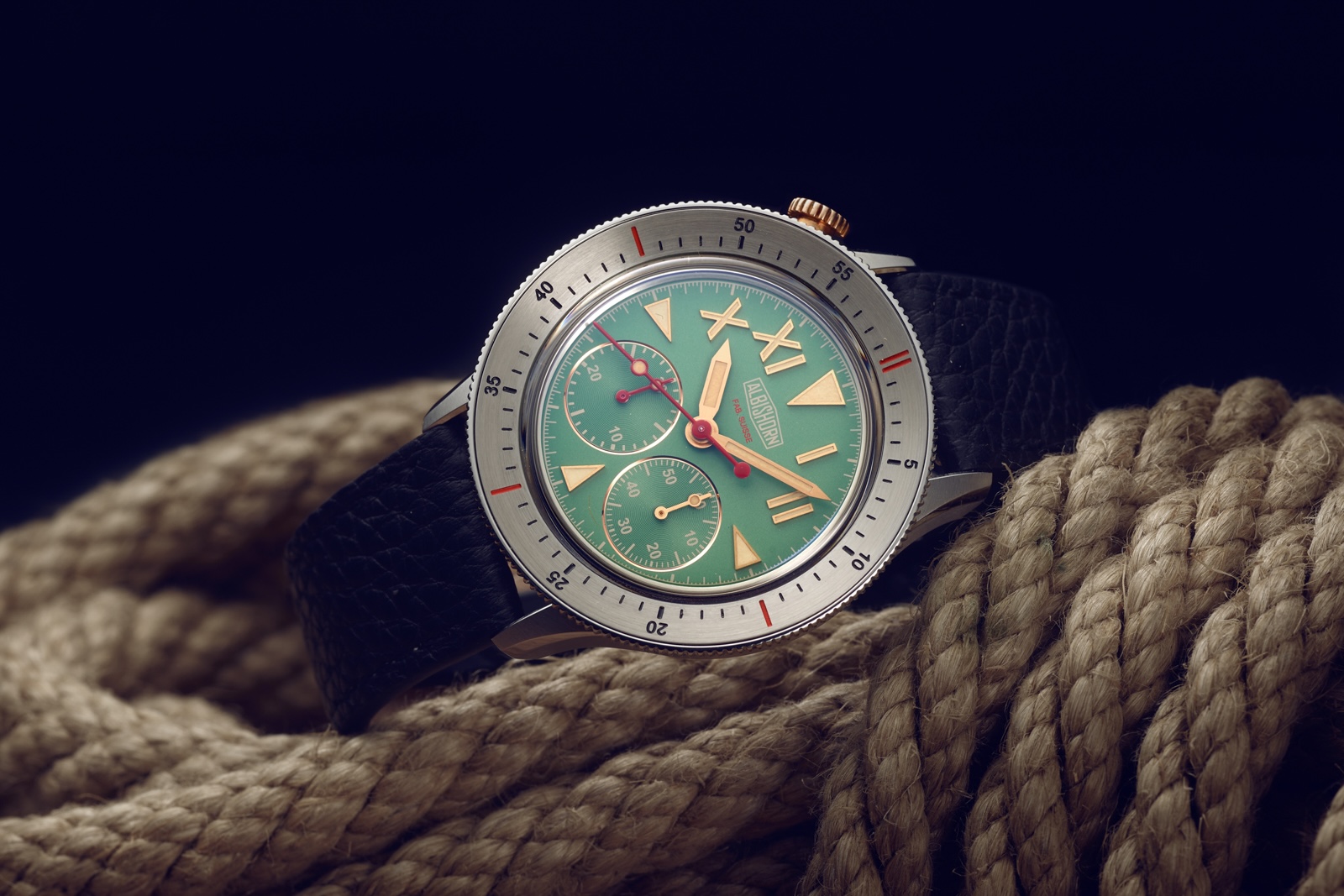
The stainless steel case is carried over unchanged at 39 mm at the case band, expanding to 42.7 mm across the bezel. The asymmetric form, red anodised aluminium monopusher at 9:30, and bronze crown engraved with the Albishorn logo — appropriately modeled on a snow-capped peak — are all retained.

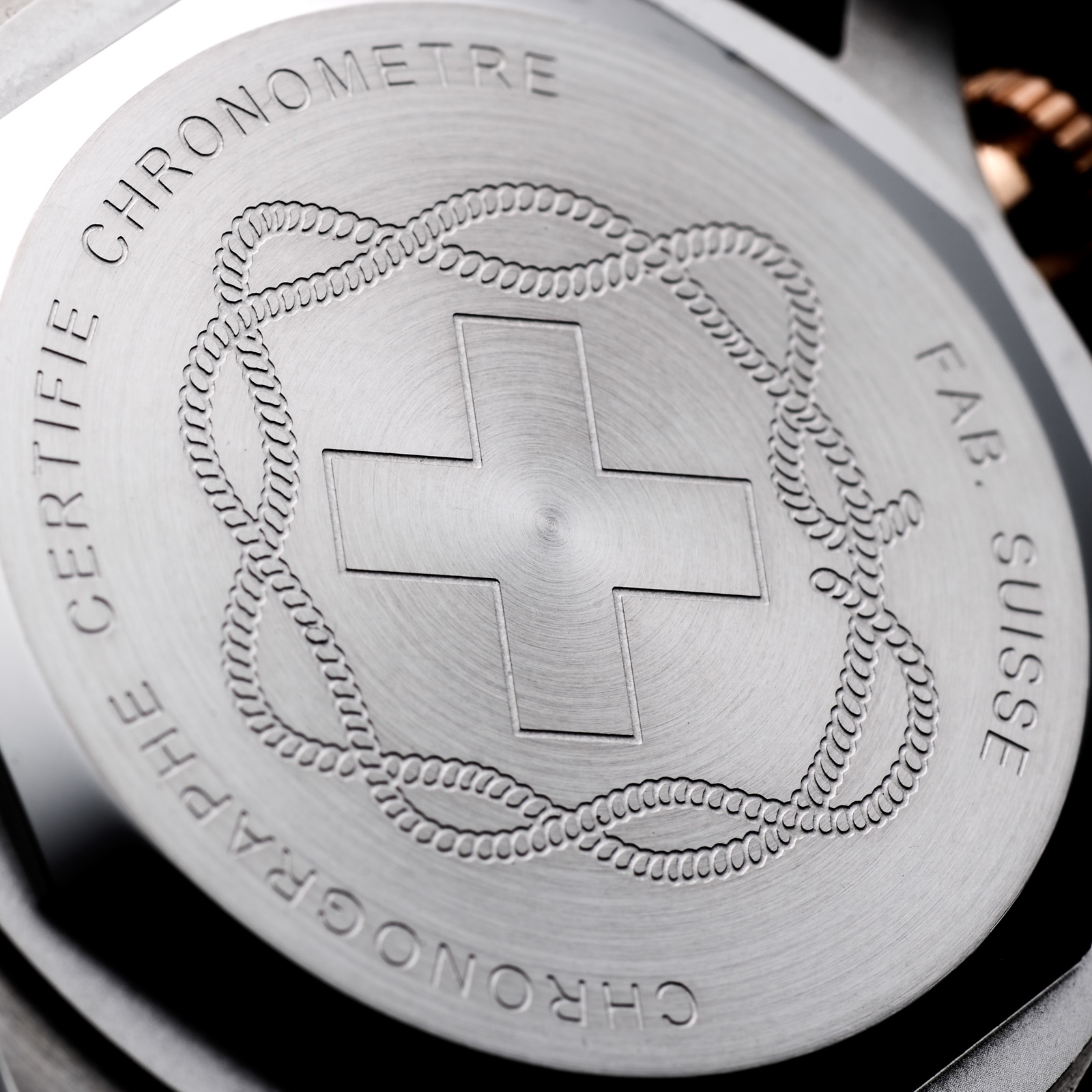
The case back also carries the same Swiss cross and rope engraving, the emblem of the Swiss Foundation for Alpine Research, which remains one of the more convincing elements of the brand’s ‘imaginary vintage’ concept.
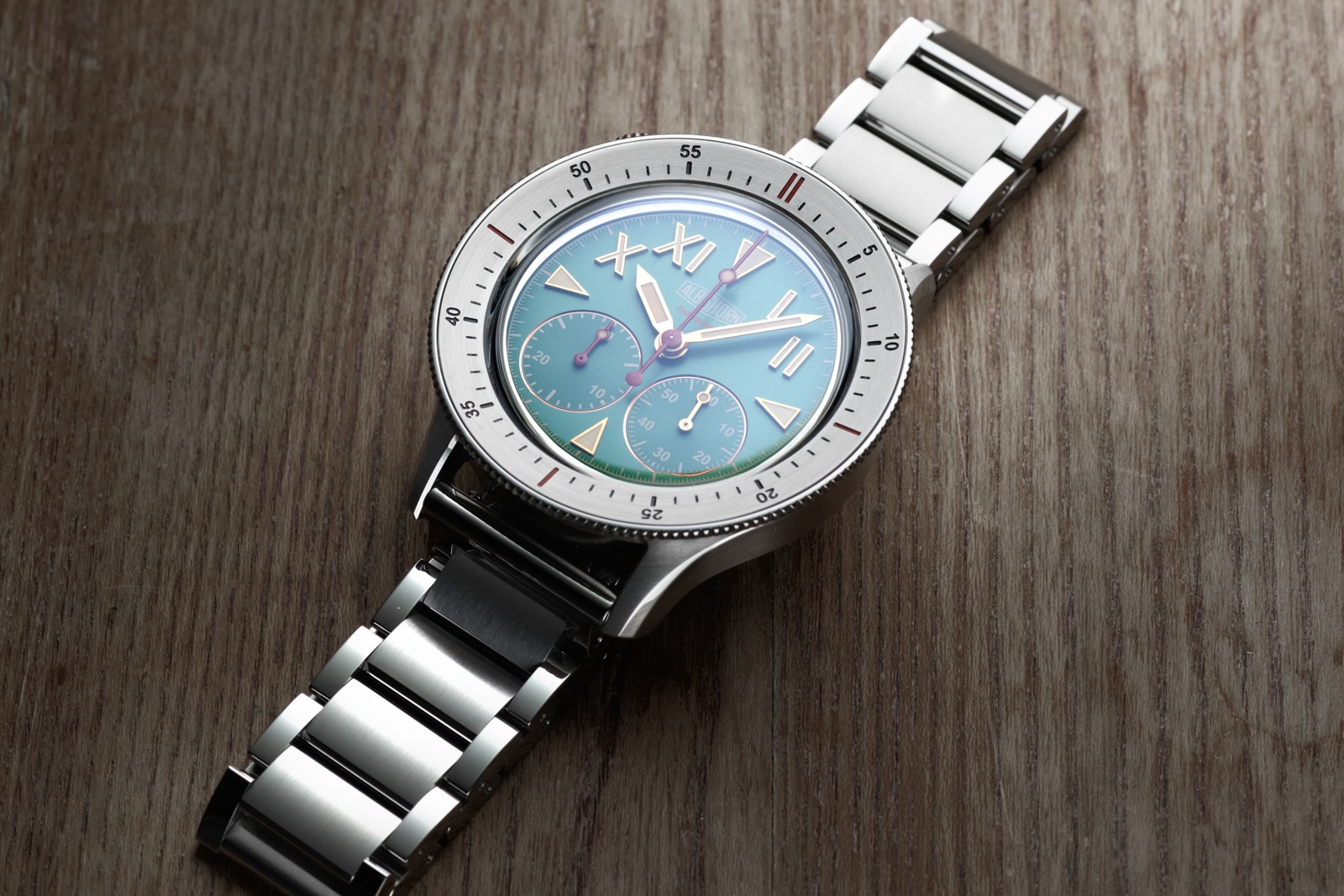
Khumbu green

The petroleum blue dial of the original Thundergraph has been replaced by a mint green opaline hue, said to be inspired by the Khumbu glacier region, where vegetation survives in a harsh environment of ice and rock.

The distinctive “California ghost” layout is unchanged, with Roman numerals occupying the upper half of the dial, with a running seconds at 4:30 and 30-minute counter at 7:30 in lieu of Arabic numerals in the bottom half of the dial.
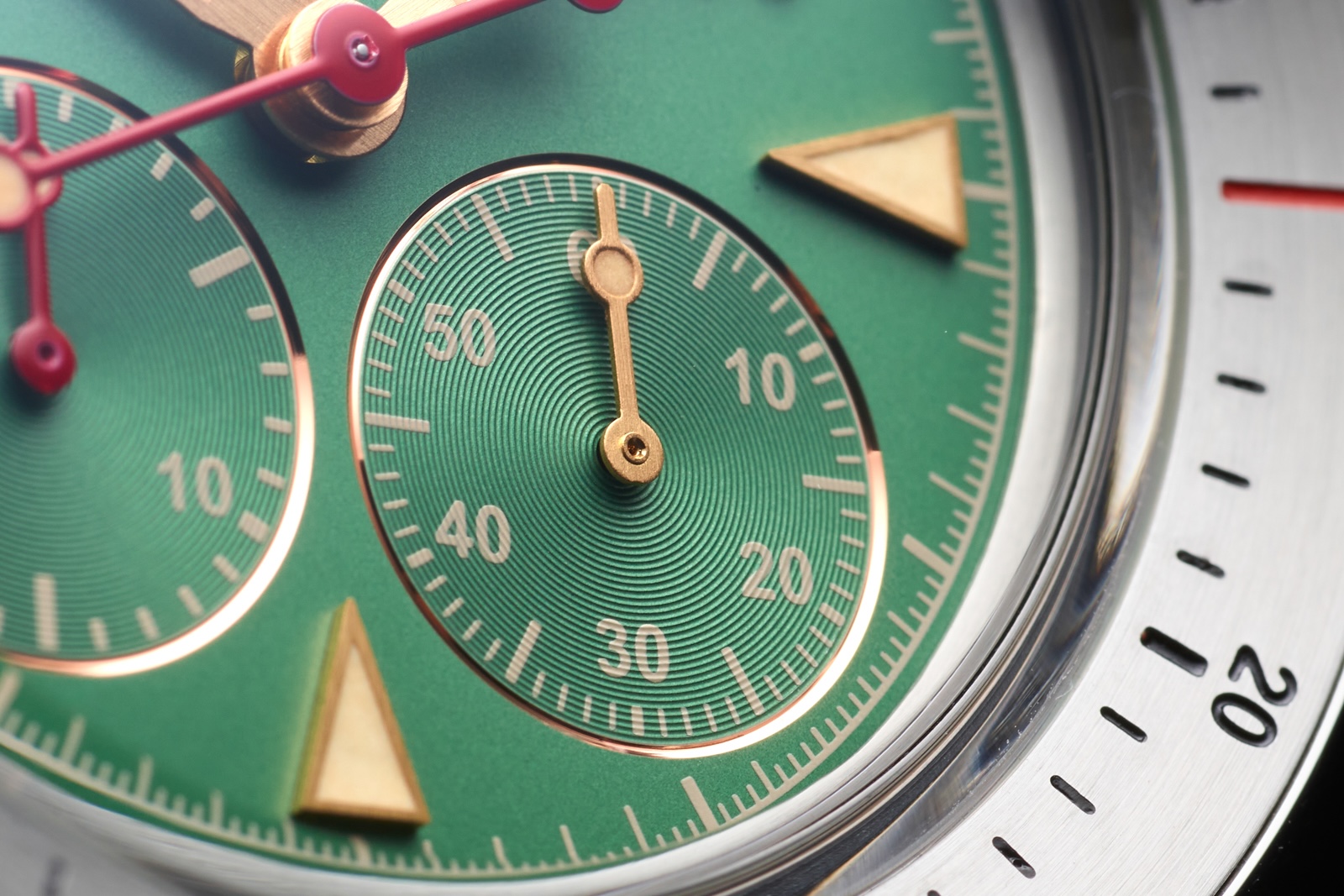
The four cardinal positions are marked with triangular rose gold-plated dial markers, and each piece of dial furniture is generously treated with beige Super-LumiNova, including the pair of red-painted hands for the elapsed seconds and minutes. The green-and-gold colourway is very much on-trend, but attractive enough in its own right to have lasting appeal.
A proprietary calibre

One of the things that differentiates Albishorn within the crowded market of so-called micro-brands is its small stable of proprietary movements conceived by its founder, Dr Sébastien Chaulmontet. Regardless of dial colour, the Thundergraph is powered by the cal. ALB03 M, a COSC-certified manually wound chronograph movement, concealed behind a solid case back.
The ALB03 M shares its DNA with the Valjoux 7750 but has been substantially redeveloped by Dr Chaulmontet to be 16% slimmer, enabling a total case height of just 12 mm including the domed sapphire crystal.

Dr Chaulmontet also worked his magic on the geometry of the chronograph levers, creating a monopusher design with a crisp break for start, stop, and reset. Thanks in part to its convenient placement at the 9:30 position, the pusher feel of the ALB03 M is a cut above most similarly priced chronographs.

At last, a bracelet

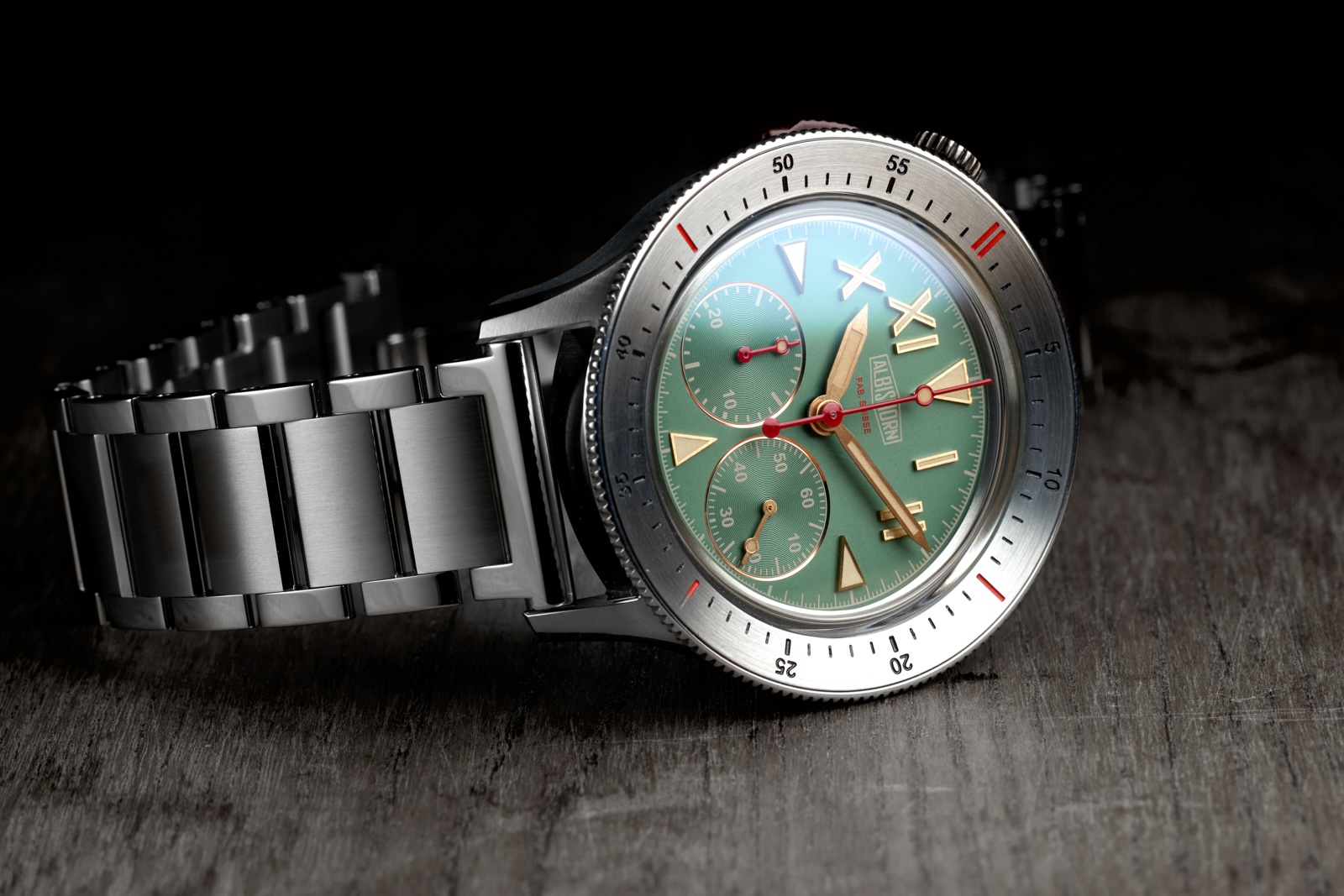
The Thundergraph Khumbu is the first Albishorn offered with a bracelet, and the option feels overdue. The steel bracelet takes its cues from the bamboo-style bracelets popular in the late 1940s and early 1950s, such as the Forstner Bonklip.

The design has been modernised, but the inspiration is clear. The straight end-links give it the informal, slightly awkward look that is period-correct for the theme of the watch.
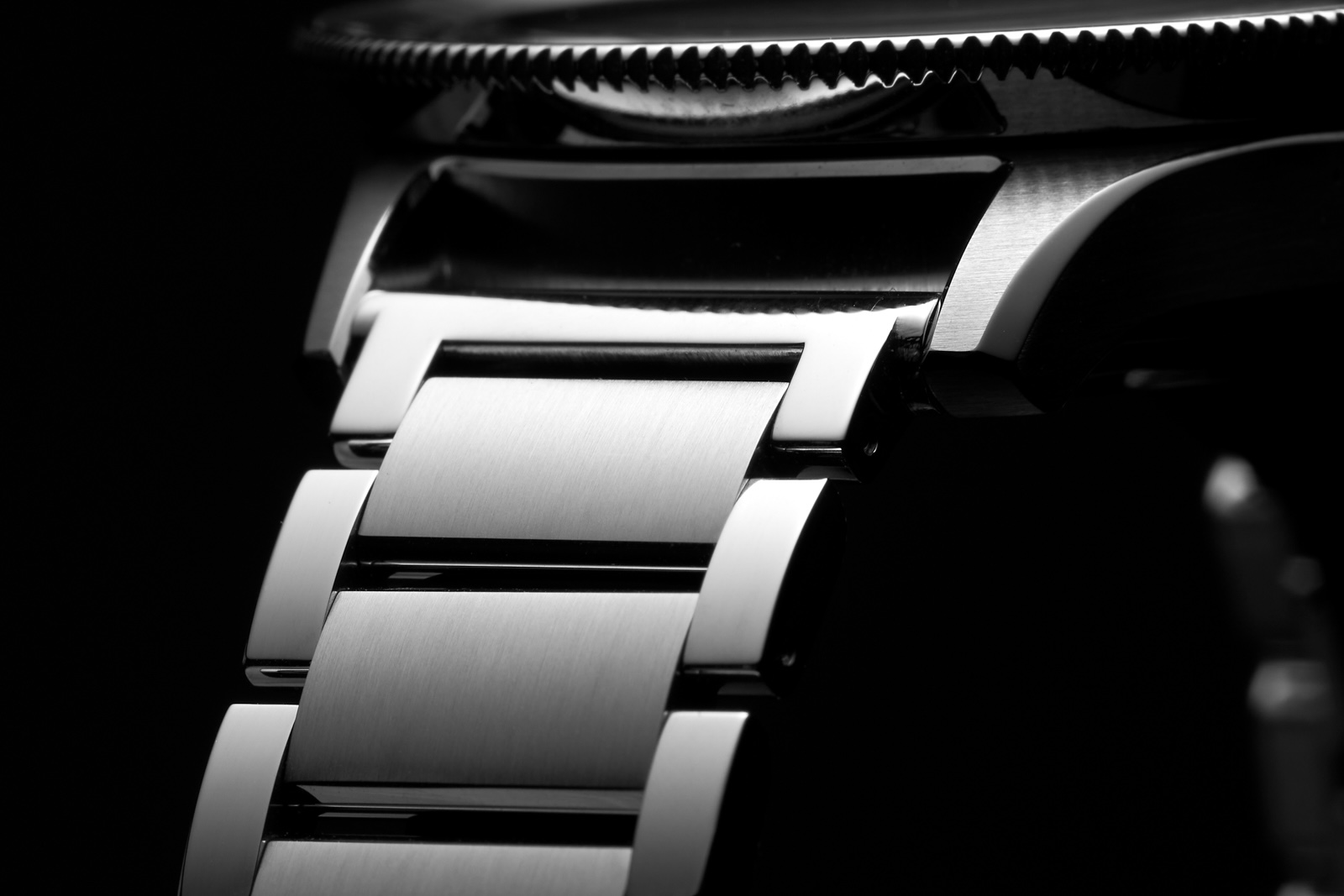
Vintage inspiration aside, the bracelet is a thoroughly modern build, with each link secured by screws for full adjustability. Furthermore, two concealed extension systems, one on each side of the clasp, allow quick on-the-wrist adjustment without tools — a practical feature consistent with the Thundergraph’s tool-watch brief, and one that is sought-after by many collectors today.
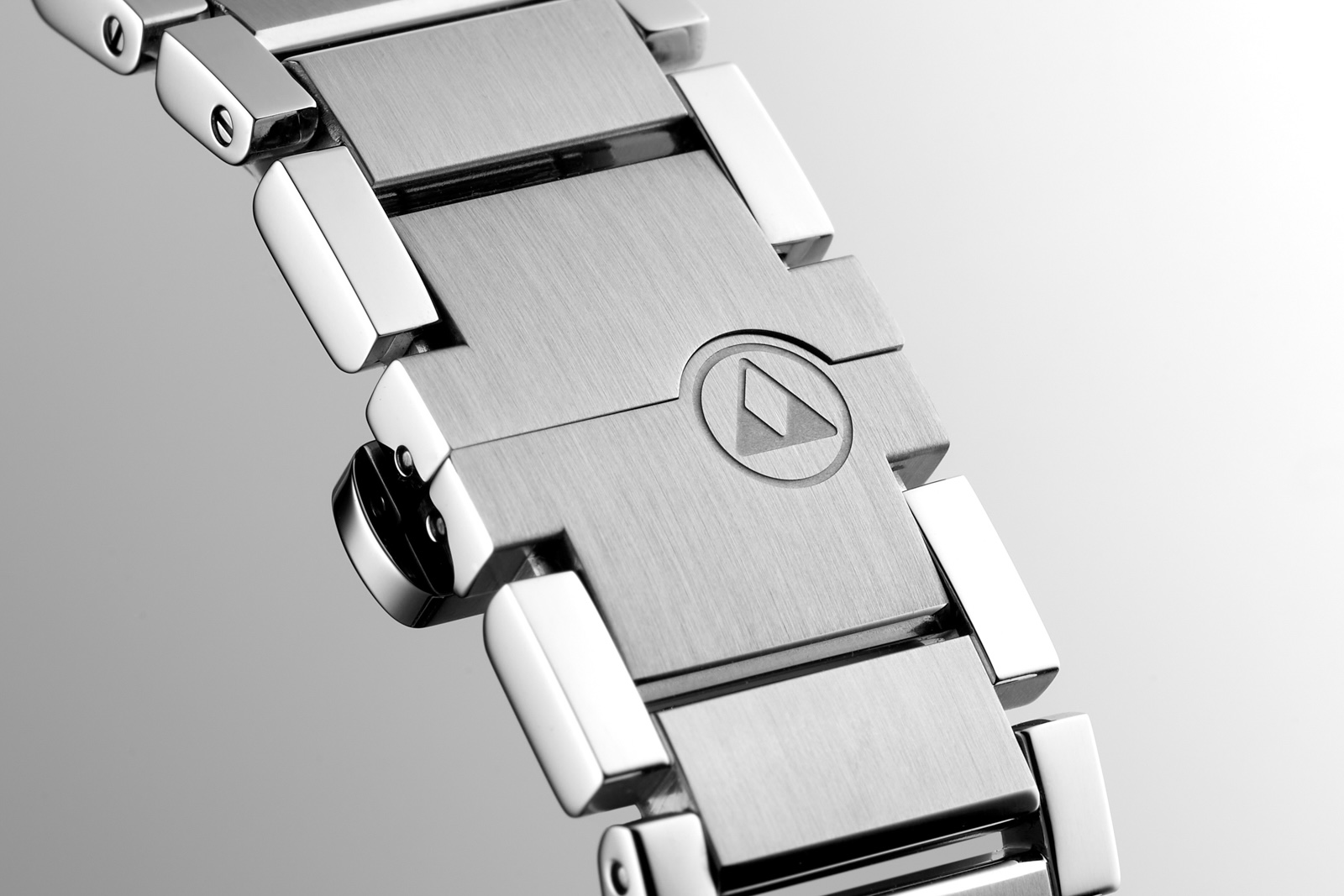
While there’s not (yet) any indication that the bracelet will be sold on a standalone basis, there’s nothing to suggest it isn’t compatible with other Albishorn models.


Key facts and price

Albishorn Thundergraph Khumbu

Diameter: 42.7 mm
Height: 12 mm
Material: Steel
Crystal: Sapphire
Water resistance: 100 m

Movement: ALB03 M
Features: Hours, minutes, seconds, and chronograph
Frequency: 28,800 beats per hour (4 Hz)
Winding: Manual
Power reserve: 65 hours

Strap: Leather strap with pin buckle (optional stainless steel bracelet)

Limited edition: 99
Availability:
Available directly from Albishorn
Price: CHF3,650 (CHF4,100 on bracelet) before taxes

For more, visit Albishorn-watches.ch.


Back to top.

You may also enjoy these.

Konstantin Chaykin Unveils the ThinKing Mystery

Finally, the ThinKing is ready for the market.

Konstantin Chaykin unveils the ultimate version of his ultra-thin opus, the ThinKing Mystery. A 12-piece limited edition that refines the ideas from his original prototype, the ThinKing has reached maturity. The fact that Mr Chaykin achieved this without the help of big-budget research and developments facilities is a testament to the Moscow-based watchmaker’s technical prowess. The thoughtful process of updating the ThinKing platform prior to commercialisation speaks highly of his engineering rigour.

Initial thoughts

We covered the first ThinKing prototype when it launched two years ago in the fall of 2024. The timepiece remains to this day the world’s thinnest mechanical watch, measuring just 1.65 mm from top to case back.

A staggering 1.65 mm thickness.

The ThinKing implemented a number of interesting mechanical choices and made some compromises to fit an entire timekeeper to fit in a meagre 1.65 mm-thick space. Like other ultra-thin record-chasers, the case doubles as the movement mainplate, making the ThinKing, in a sense, a raw movement bound to a strap. To reduce the height of the oscillator, its components were spread out horizontally. The barrel was rethought to incorporate a click wheel inside the mainspring arbour, shaving precious height.

The first prototype was cheating a little too, since it could not be set or wound without a separate docking module called the Palanking. Compared to other ultra-thin watches, which require (at most) a pen-like winding and setting tool, the ThinKing was using a bit of trickery by stripping down the movement to the bare minimum.

This detail was upgraded for the subsequent edition that hit the auction block at Phillips last year, which introduced key winding. The new Mystery retains this key-based winding and setting process, similar to that of the Richard Mille RM UP-01, and also introduces a special winding and setting box.

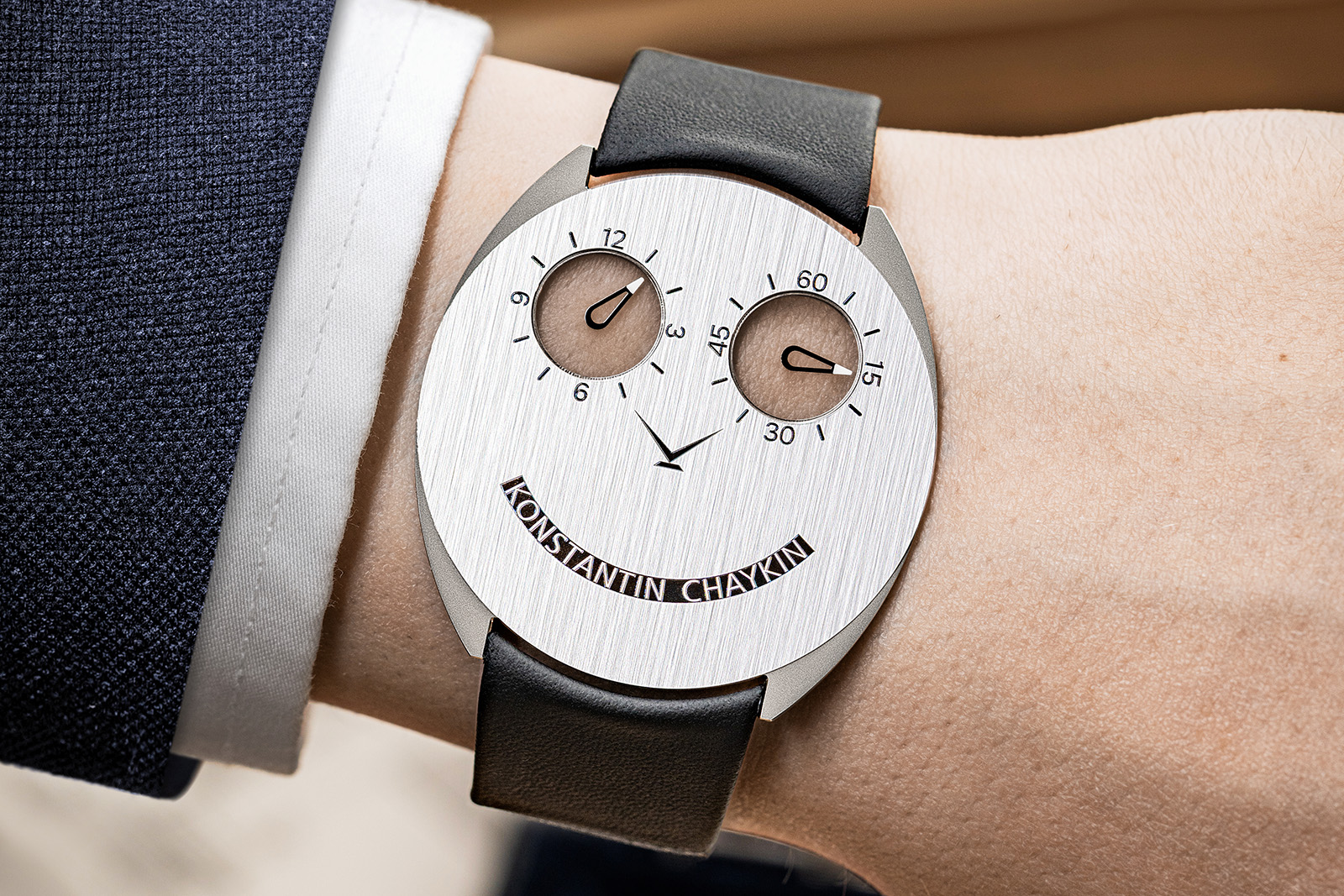
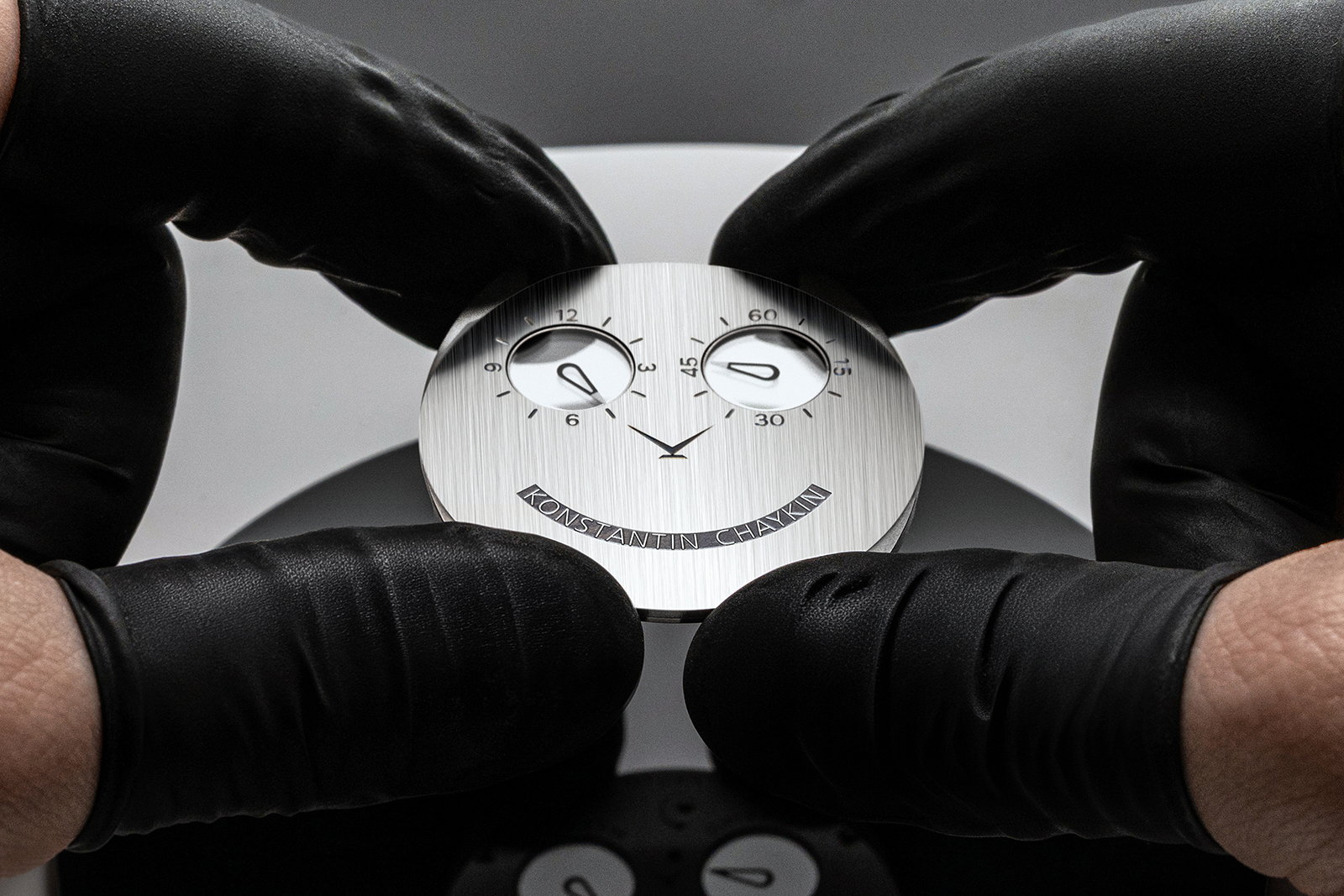
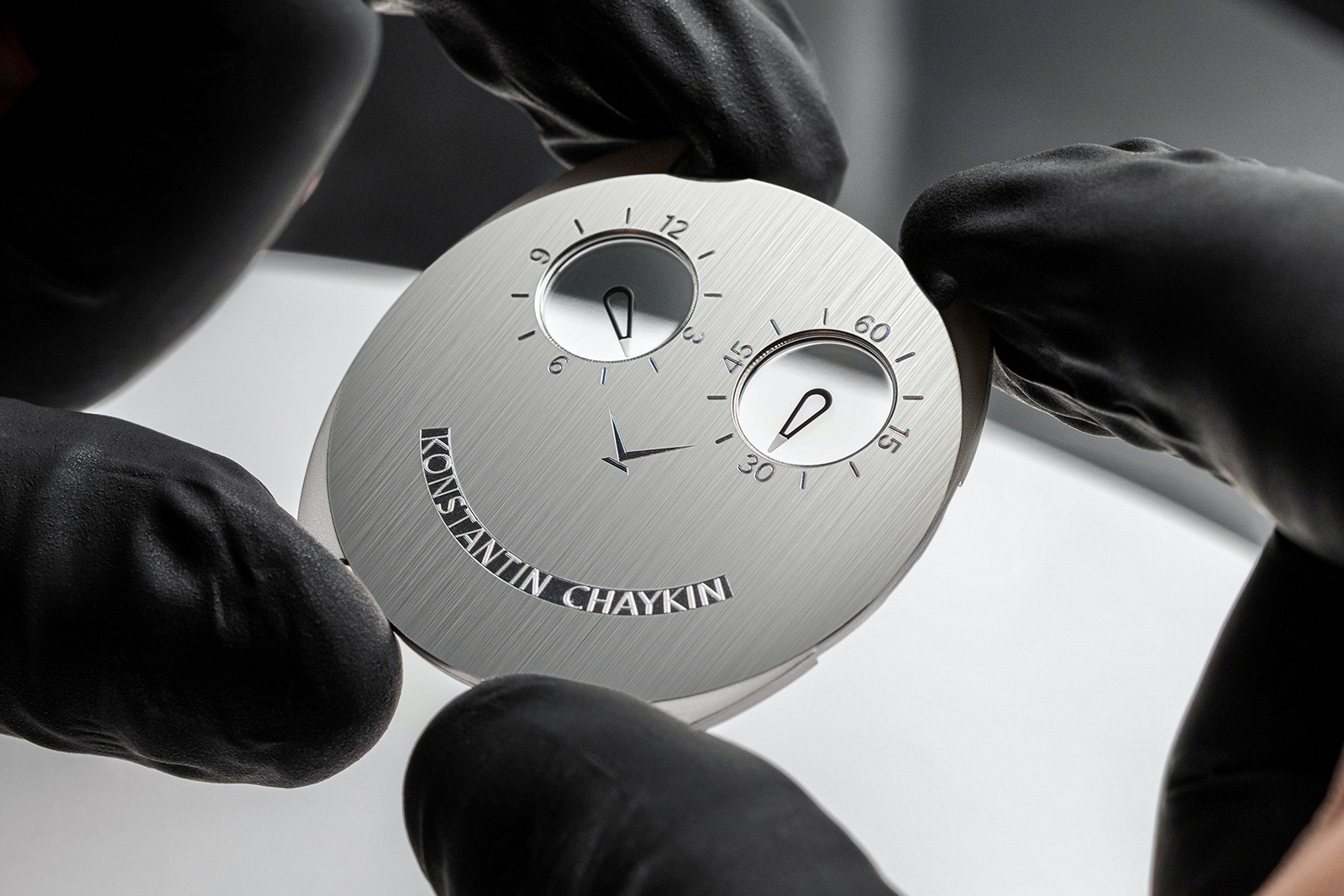
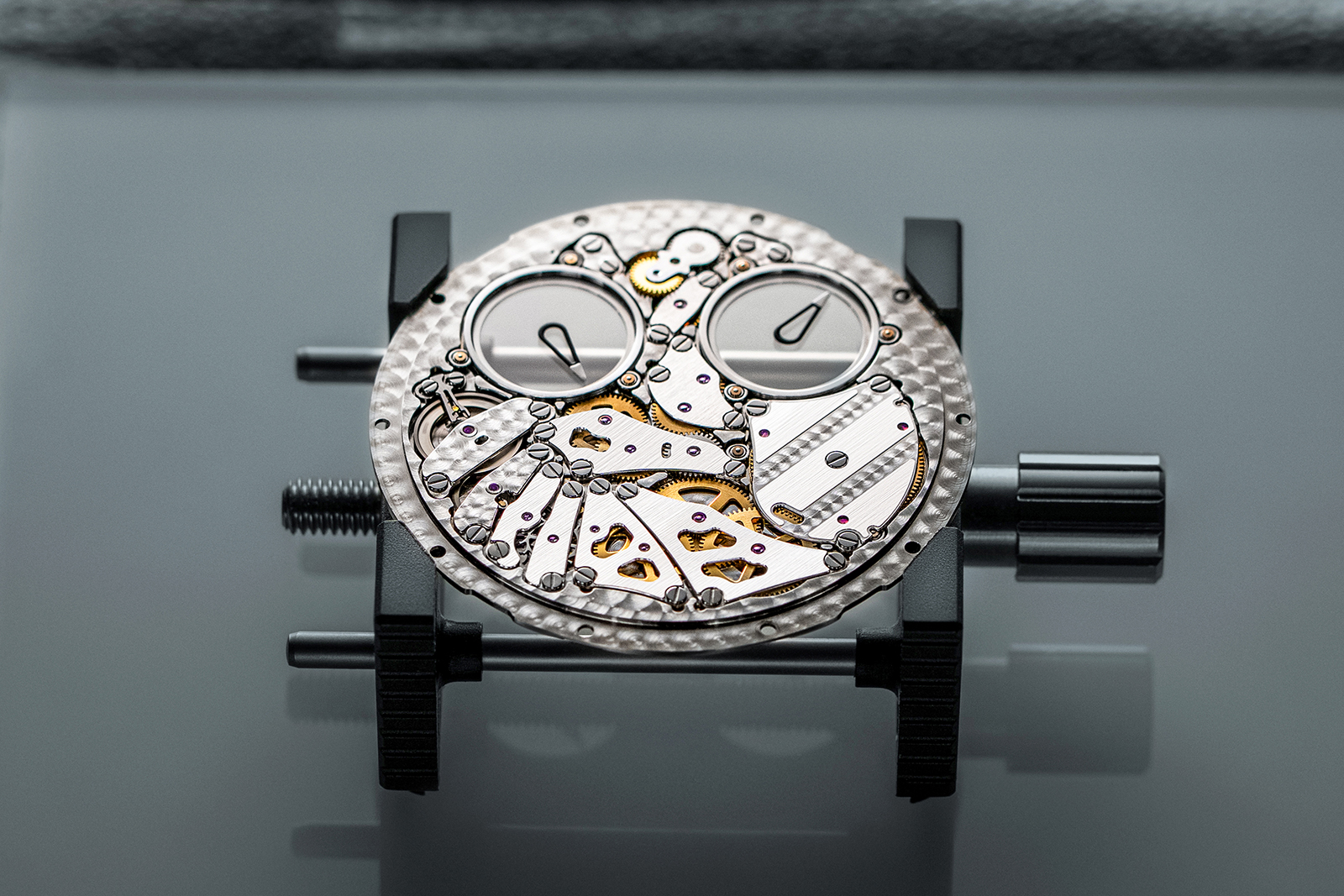
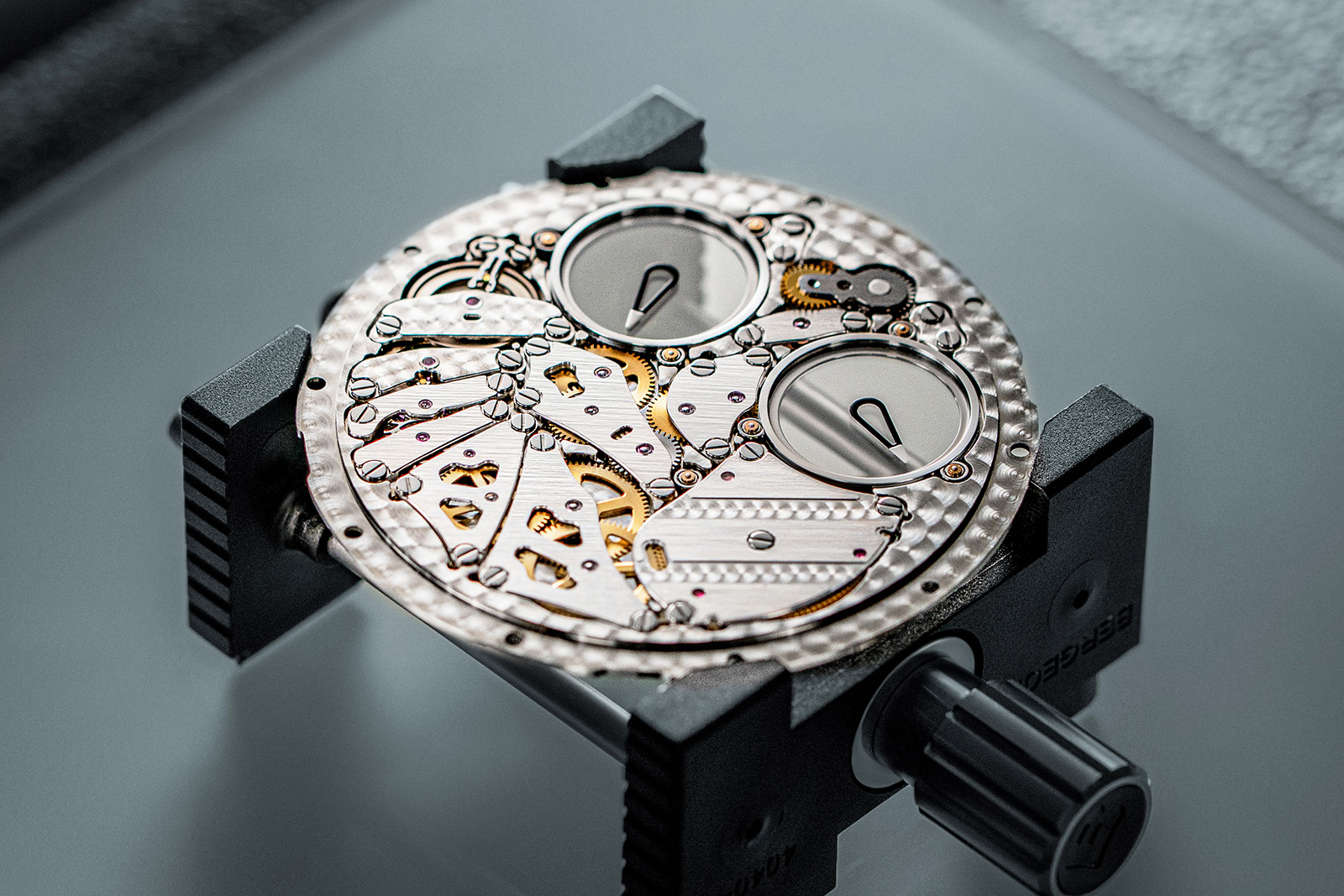
The design was also refined with twin sapphire ‘mystery’ discs for indicating the hours and minutes. The look is minimalist, and even seems more legible than the original — although legibility is rarely a significant factor for buyers of these kinds of exotic, record-breaking watches. The minimalist look is elevated by the coarsely brushed case, bearing only Mr Chaykin’s logo and name, engraved in such a way as to resemble a grinning face — another signature motif of the brand.

Mr Chaykin has produced other so-called ‘mystery’ watches in the past, citing Robert-Houdini as an inspiration. Commercialising a watch this thin is one thing; endowing it with a bonus ‘mystery’ complication adds to the achievement.

While this version is naturally less experimental than the first prototype, it is a mark of Mr Chaykin’s ambition that such an unconventional project has reached production. Mr Chaykin is determined that the watch be a reliable daily wearer, and has implemented a dedicated quality control protocol to ensure it holds up under real wearing conditions.

The ThinKing Mystery is priced at CHF400,000. That is a considerable sum for any watch, but set against the RM UP-01’s lofty price of US$1.9 million, it feels reasonable, and reflects both the significant work that went into its engineering, and the fact that each of the 12 examples will be assembled by Mr Chaykin himself.

Incremental updates

While this ThinKing Mystery looks almost identical to the first prototype, some things have changed on the inside. The calibre got a new designation, K.23-3.1, hinting at the intermediate steps that shaped this final version.

The first prototype was cased in some unspecified special stainless steel, which was swapped for a nickel alloy. The issue was not related to bending stress, but rather to corrosion. While stainless steel is corrosion-resistant by definition, Mr Chaykin was not open to sharing more about the exact alloy used — so it’s difficult to asses the claims. The ThinKing Mystery is 41 mm in diameter, and nearly weightless at just 12.1 g without the strap.

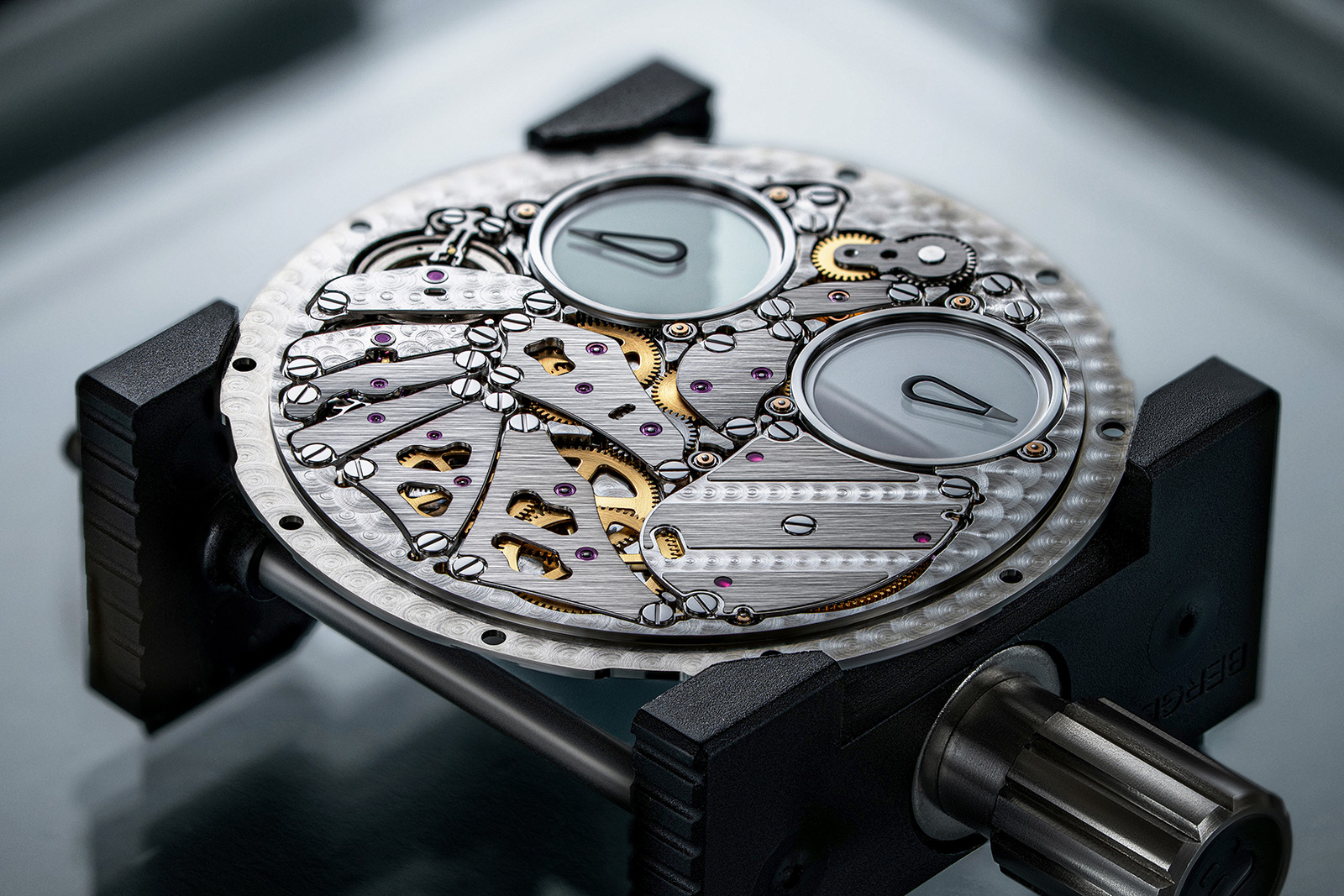
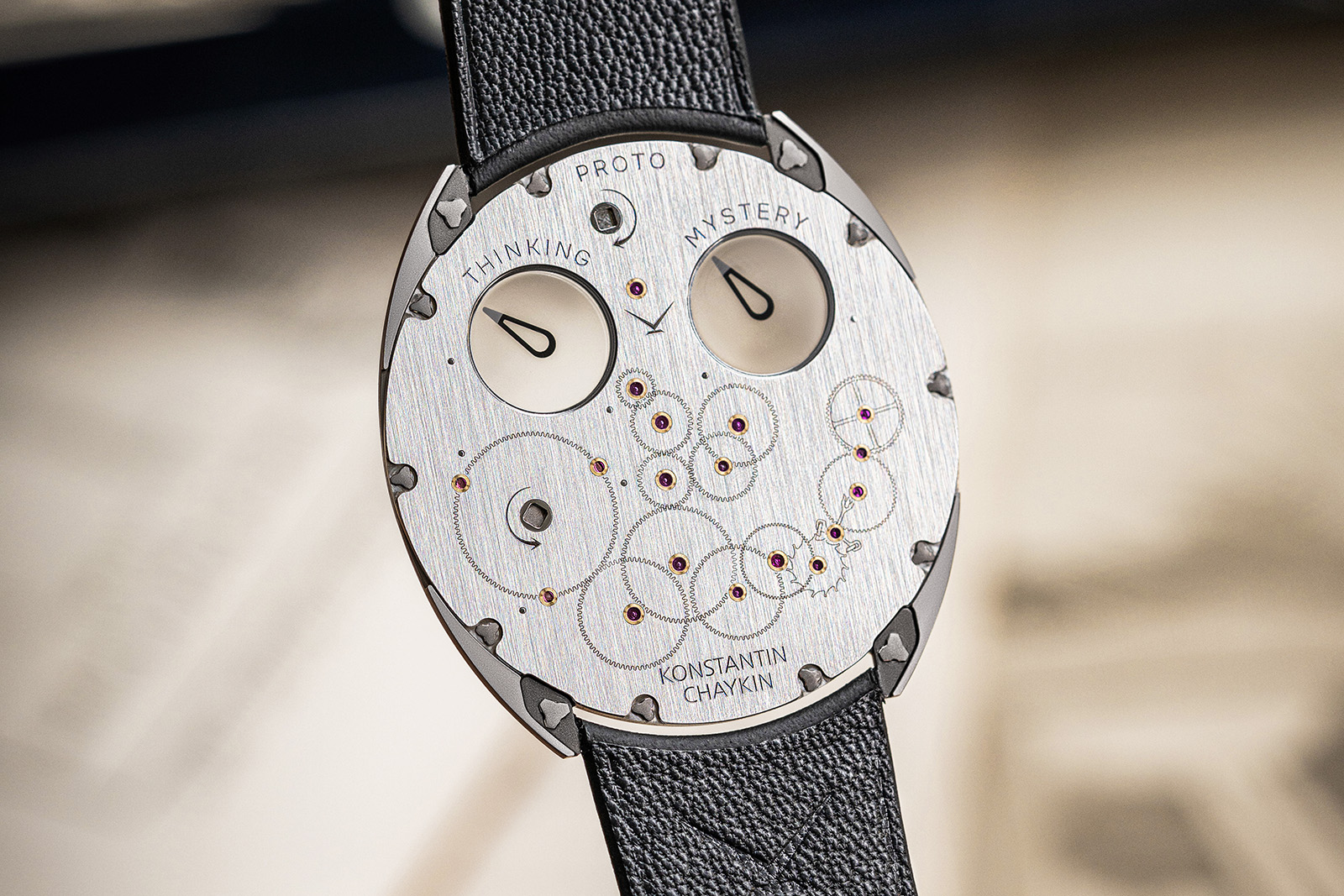
The case itself serves as the movement’s mainplate, most apparent on the reverse, where functional jewel bearings, secured by gold chatons, are set directly into the case back. This method is ingenious but comes at a cost: it precludes any meaningful water resistance and exposes the movement’s oils to air and contaminants. It is a clever mechanical solution, though one with implications for long-term reliability.

Another big change came in the form of the revised regulator, which now more closely resembles a traditional balance wheel. The system is properly free-sprung, with four massive regulating weights on the rim.

The oscillator is spread out horizontally, so that the hairspring and balance share the same axis, but the impulse pin and safety roller are geared off on a second axis. The result is a deconstructed oscillator, which radically reduces the oscillator’s vertical footprint.

The design also allows the Swiss lever escapement to keep a proper geometry — as opposed to the Richard Mille RM UP-01 where the optimal geometry was compromised to a degree. Mr Chaykin’s construction also has all the usual safety implements common to regular Swiss lever escapements.

Details of the movement. Note the mystery disks.

The regulator beats at a slow 2.5 Hz and the ThinKing Mystery has an autonomy of 38 hours, generated by the slim mainspring. The design scores terribly in terms of absolute efficiency, but this is a necessary concession to size constraints. Interestingly, the original K.23-0 movement ran for only 32 hours, so there is a jump in efficiency inside the K.23-3.1.

The ThinKing is rated to a tolerance of -15/+20 seconds per day — unimpressive by chronometric standards, but admirable given the movement’s extraordinary slimness. Beyond conventional positional adjustment, Mr Chaykin also checks rate stability under an imposed bending load on the case.

That’s one of roughly 40 tests and checkpoints developed specifically for the ThinKing. Mr Chaykin’s aim is to ensure the balance maintains proper amplitude and optimal power flow is not compromised even when the movement is under slight tension.

Perhaps the most significant departure from the K.23-0 prototype is the winding and setting system, which now uses a handheld stylus rather than a bulky cradle. The system is compatible with an included winding box, but it’s no longer required. Instead, a special key slots directly into the case back and incorporates a torque-limiting mechanism to prevent overwinding and mainspring strain.

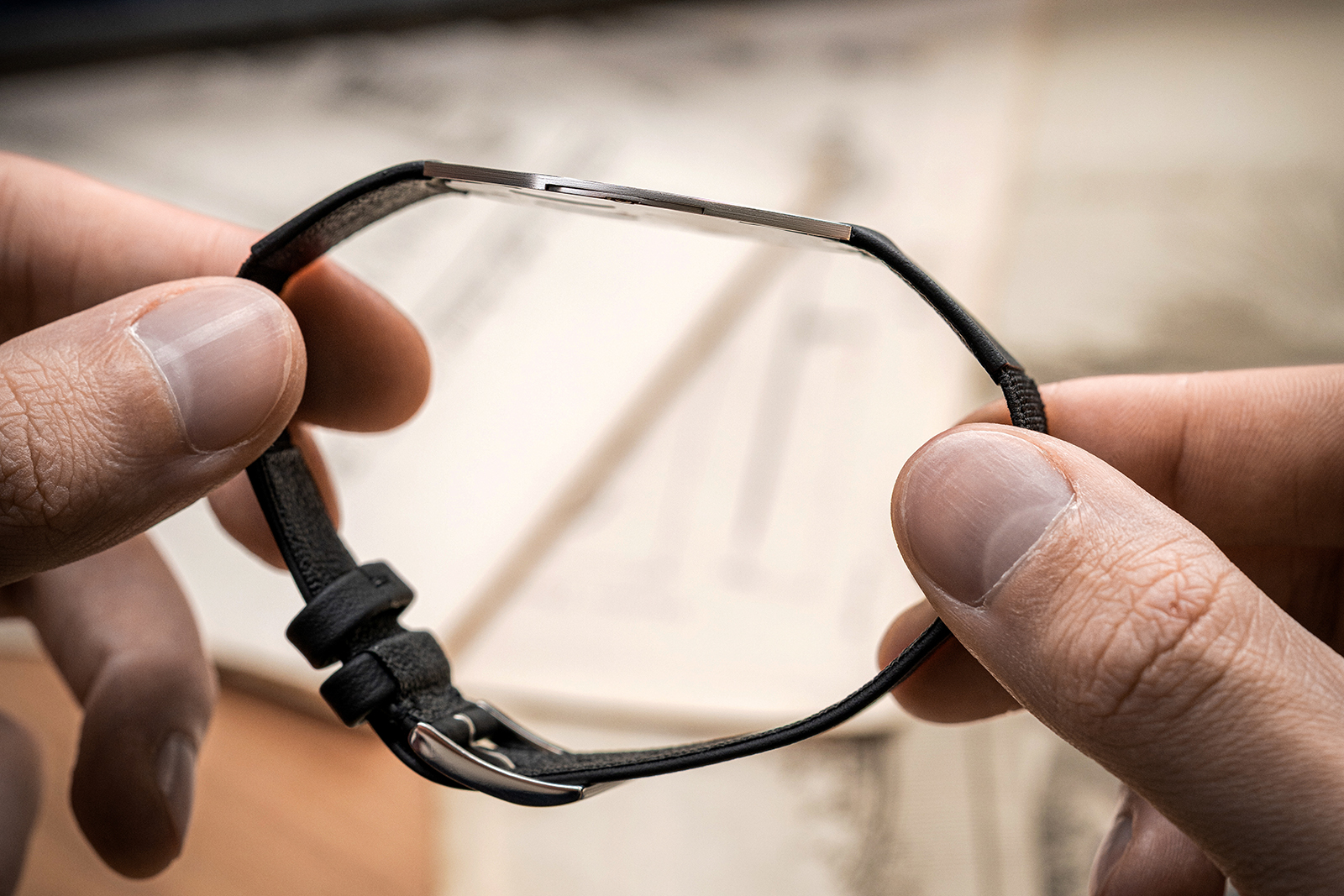
The shock-absorbing strap also returns, apparently unchanged. The slim leather strap features titanium reinforcements and functions as a damper, preventing the ThinKing from being strapped too tightly and protecting the movement from excessive flexion.

The movement is well decorated for so technical a watch — all the more so given that it remains entirely concealed by the case. The bridges are finished with perlage and the steel components are brushed and polished to a high standard, a reminder that Mr Chaykin is as much a craftsman as he is an engineer.


Key facts and price

Konstantin Chaykin ThinKing Mystery
Ref. K.23-3.1

Diameter: 41 mm
Height: 1.65 mm
Material: Non-magnetic nickel alloy
Crystal: Sapphire
Water resistance: No

Movement: K.23-3.1
Functions: Regulator-style “mystery” hours and minutes
Winding: Key-wound
Frequency: 18,000 beats per hour (2.5 Hz)
Power reserve: 38 hours

Strap: Black leather with titanium supports and elastic inserts

Limited edition: Yes, 12 pieces
Availability: Directly from Konstantin Chaykin
Price: CHF400,000 excluding taxes

For more information, visit Chaykin.ru


Back to top.

You may also enjoy these.

Stéphane Pierre’s Inaugural L’Impétrant is Bi-Retrograde

An inventive start for the engineer-turned-watchmaker.

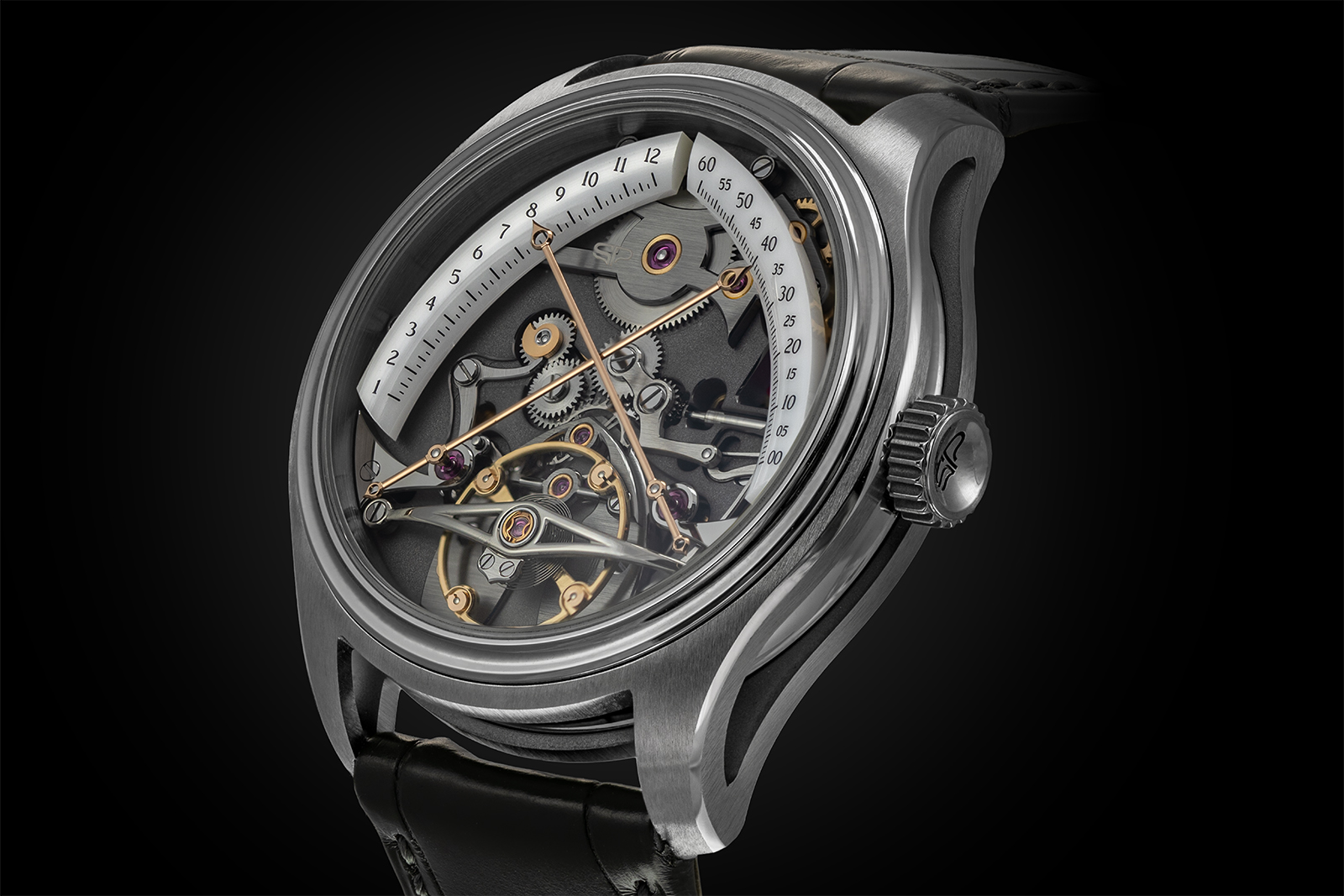
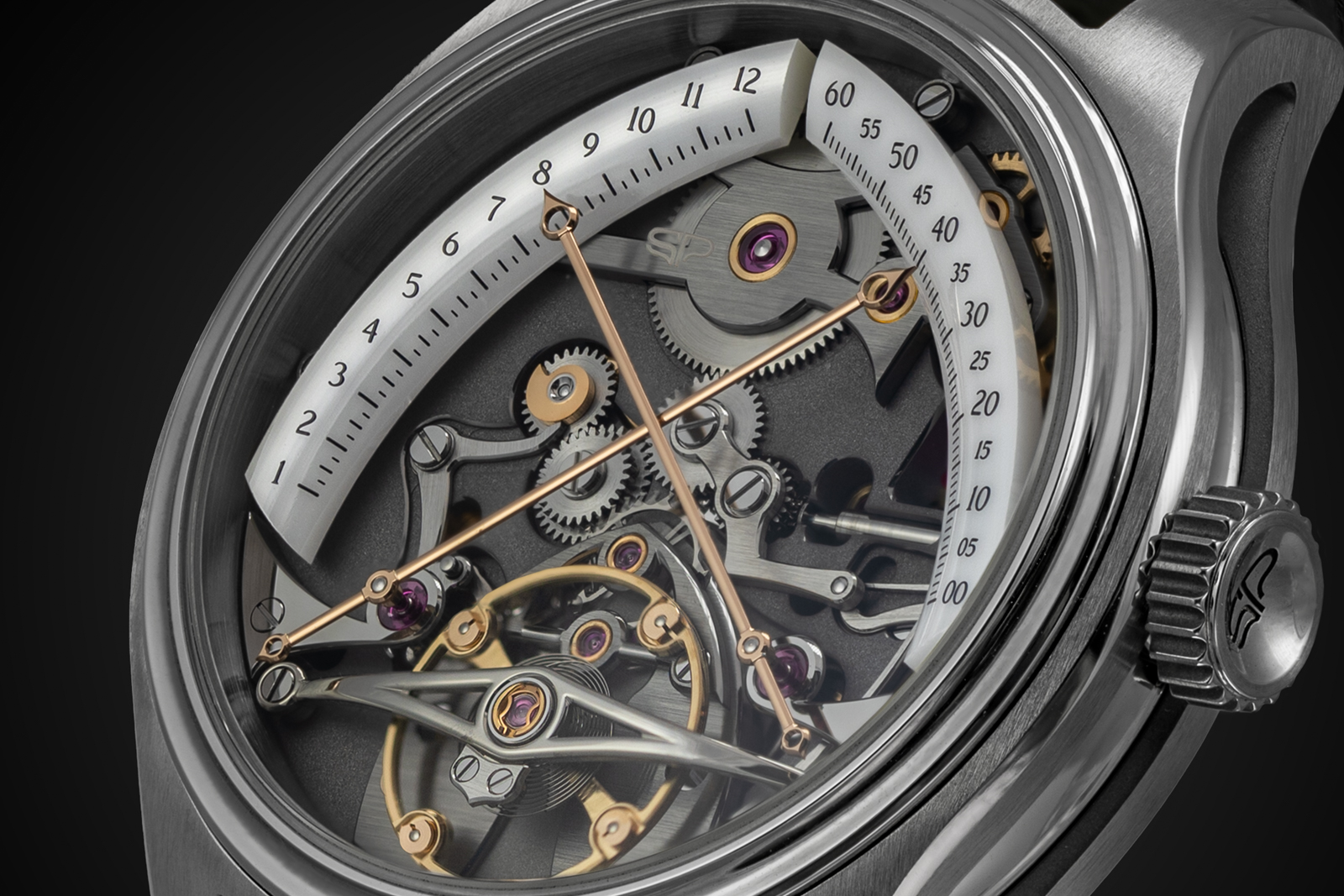
A new independent voice emerges with the L’Impétrant, the debut watch from Stéphane Pierre, combining a bi-retrograde time display with an architecturally distinctive movement. Put together by an all-star roster of specialists, the L’Impétrant is a fresh take on a familiar format.

Initial thoughts

The central question with any debuting independent is whether ambition matches execution. Stéphane Pierre’s L’Impétrant is quirky and eccentric — and just as importantly seems well made thanks to the efforts of some 20 contributing specialists across fields such as movement construction, machining, electroplating, stamping and finishing. Given the evergreen popularity of the high-end, time-only format, it may well find its audience.

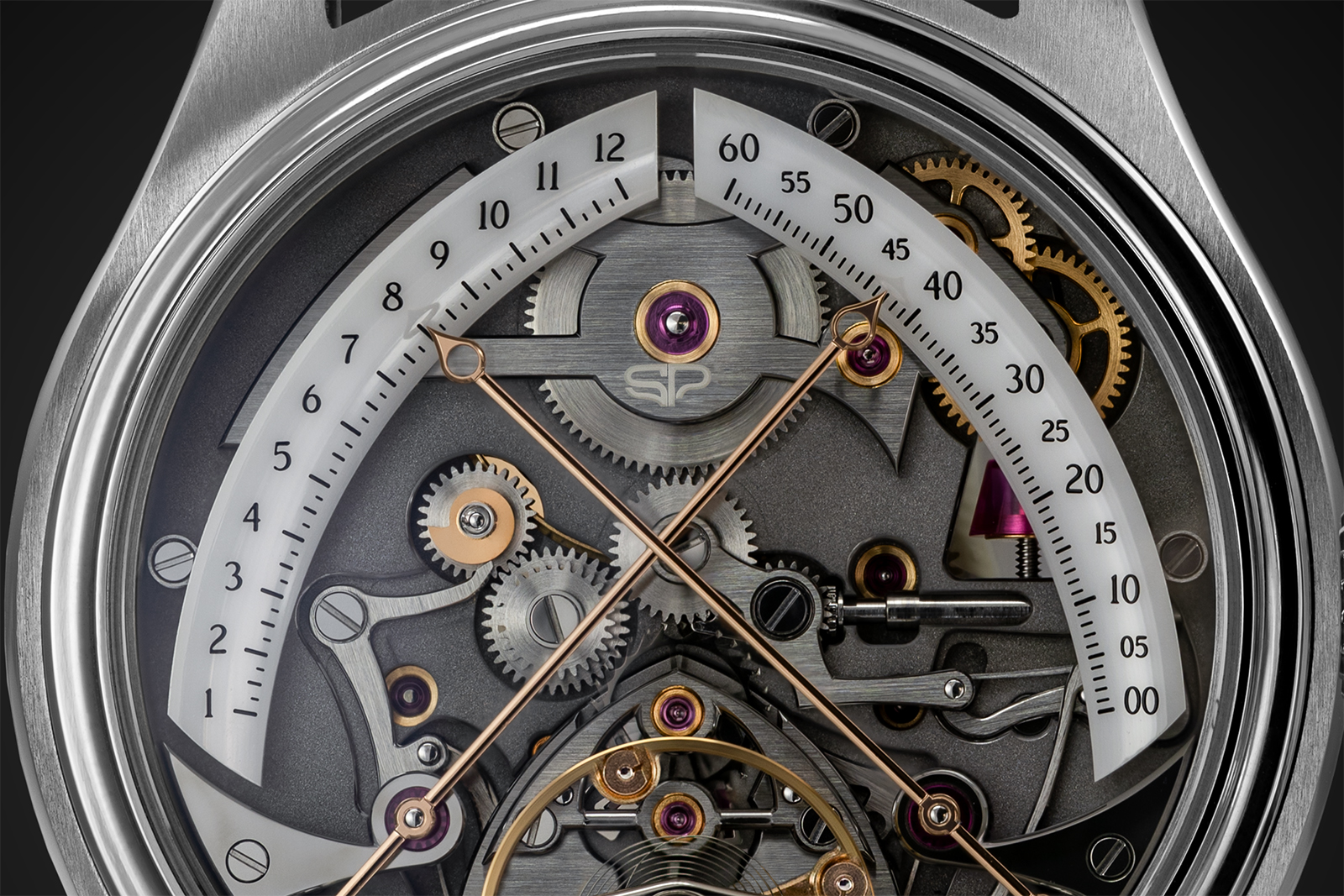
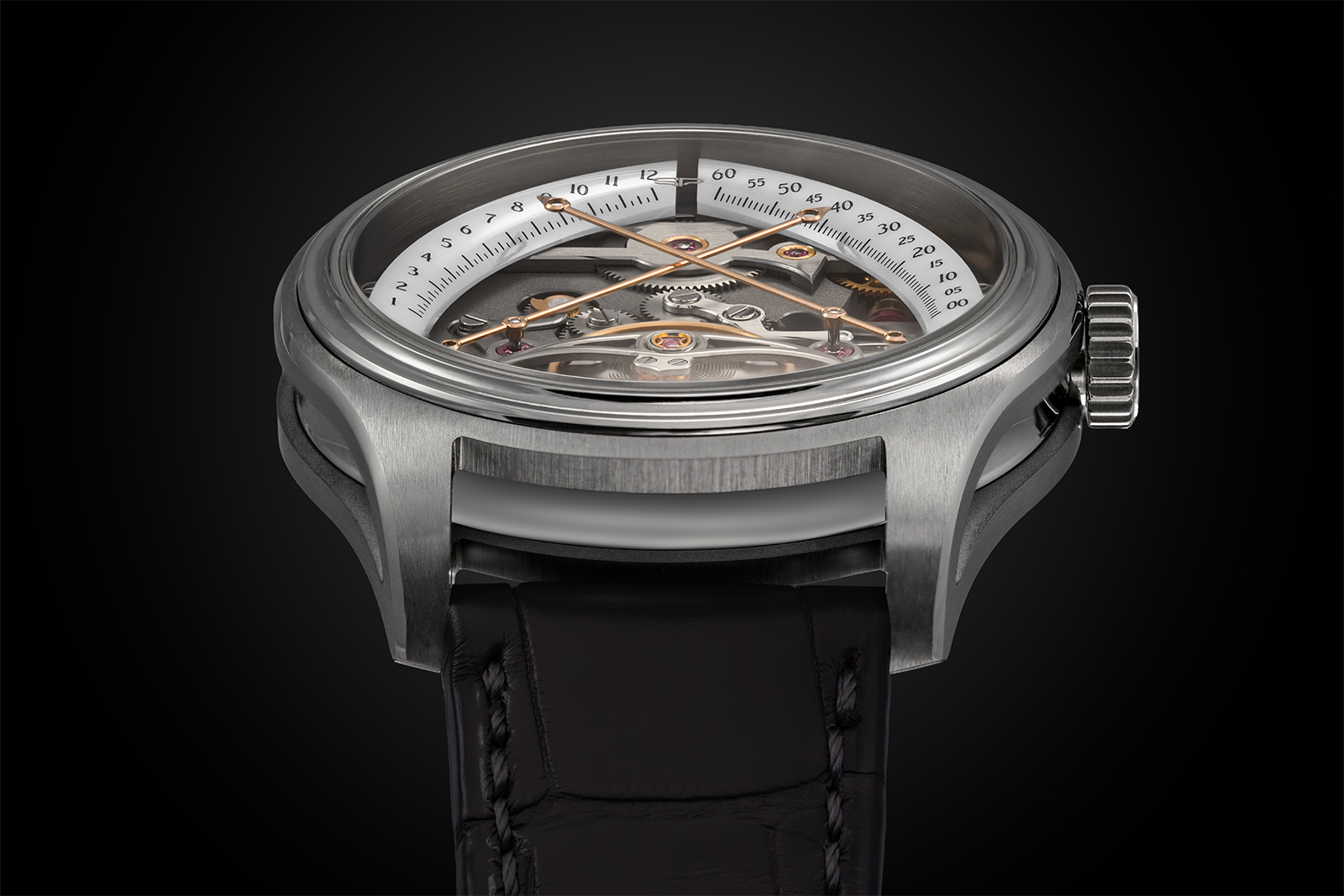
The L’Impétrant’s visual staple is a set of enormous 19 mm retrograde hands — one for the minutes and the other for the hours. The bi-retrograde complication is no longer uncommon, but The L’Impétrant’s overlapping arrangement of the hands, and the luxurious construction of the mechanism, is unusual, helping it stand out within this niche.

The mastermind behind the L’Impétrant has had an unusual career. Stéphane Pierre originally trained as a mechanical engineer and, intriguingly, has spent time working for both the Swatch Group and in the military sector.

The L’Impétrant is essentially a very high-end time-only watch, and as such it enters a crowded market. However, rather than just developing a basic time-only watch, Mr Pierre took the more difficult road and built a double retrograde movement with a complex architecture. The double retrograde function, combined with the dial-side-mounted balance wheel and the power reserve cone make for a watch face that is busy in concept but surprisingly legible in practice.

Notably, the L’Impétrant was realised with the help of prototypist Julien Tixier, and the end product is promising. Mr Tixier is best known for the Renaud Tixier brand, which has yet to establish a differentiated design language. Seeing Mr Tixier’s construction skills applied to such an interesting project is encouraging — the L’Impétrant is arguably a stronger canvas on which to demonstrate his capabilities.

To fund future development, the L’Impétrant will be released first as a souscription series of 15 pieces, featuring a mixed-metal case in 18k rose gold and zirconia alongside bespoke colourways. Once the souscription series closes, the standard L’Impétrant will be produced in limited runs of different configurations, starting with a 50-piece edition.

Bold design

From case to dial, the L’Impétrant is an eccentric watch. The bi-retrograde display features twin 19 mm gold hands that overlap and indicate the time against two pearly-white zirconia sectors. The milky white of the sectors recalls classic enamel dials — a look complemented by the traditional typeface.

The case is machined from grade 23 titanium — the higher-purity, biocompatible alloy preferred in medical and aerospace applications, making the choice feel like a nod to Mr. Pierre’s military engineering background. At 39 mm in diameter and 10.8 mm in thickness (12.2 mm with the crystal), it strikes a balance of being small enough to be easily wearable while larger enough for the time display to have plenty of visual impact.

The L’Impétrant’s case takes a classical round form as its starting point, but the details are thoroughly contemporary. The hollowed-out case band gives it an architectural quality, while the open lugs are an unusual touch.

Strong engineering chops

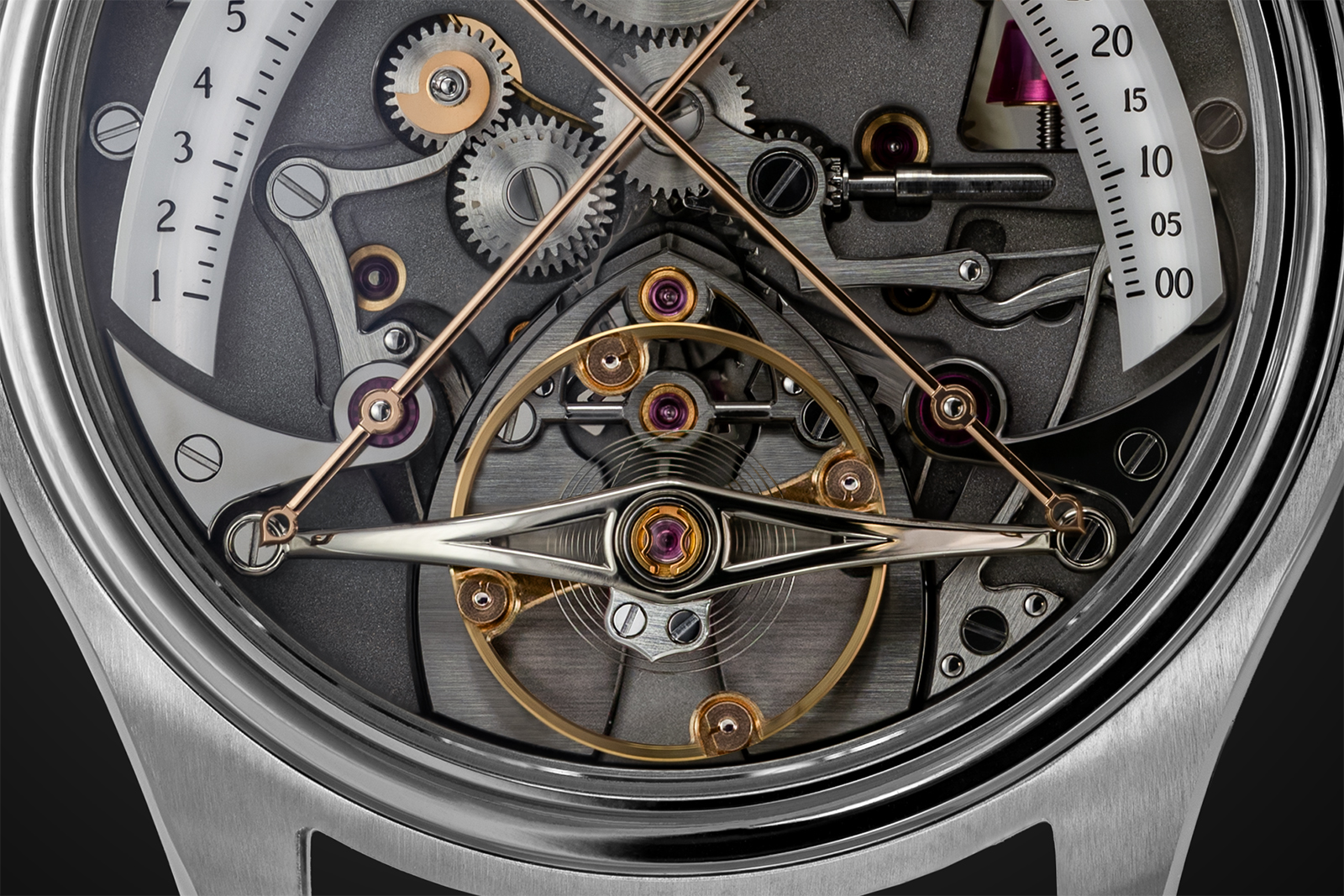
The movement making the L’Impétrant tick is an exercise in architectural watchmaking. Without a traditional dial, the onlooker is immediately treated to a thorough view of the well-decorated calibre.

The most dynamic aspect of the design is naturally its regulator and escapement, which are mounted dial-side up. The large free-sprung balance beats at a leisurely 3 Hz pace and the hairspring features an elegant Breguet overcoil.

Much of the retrograde works are made visible by the lack of a traditional dial and, spotlighting the snail cam and follower mechanism responsible for the retrograde minutes indication.

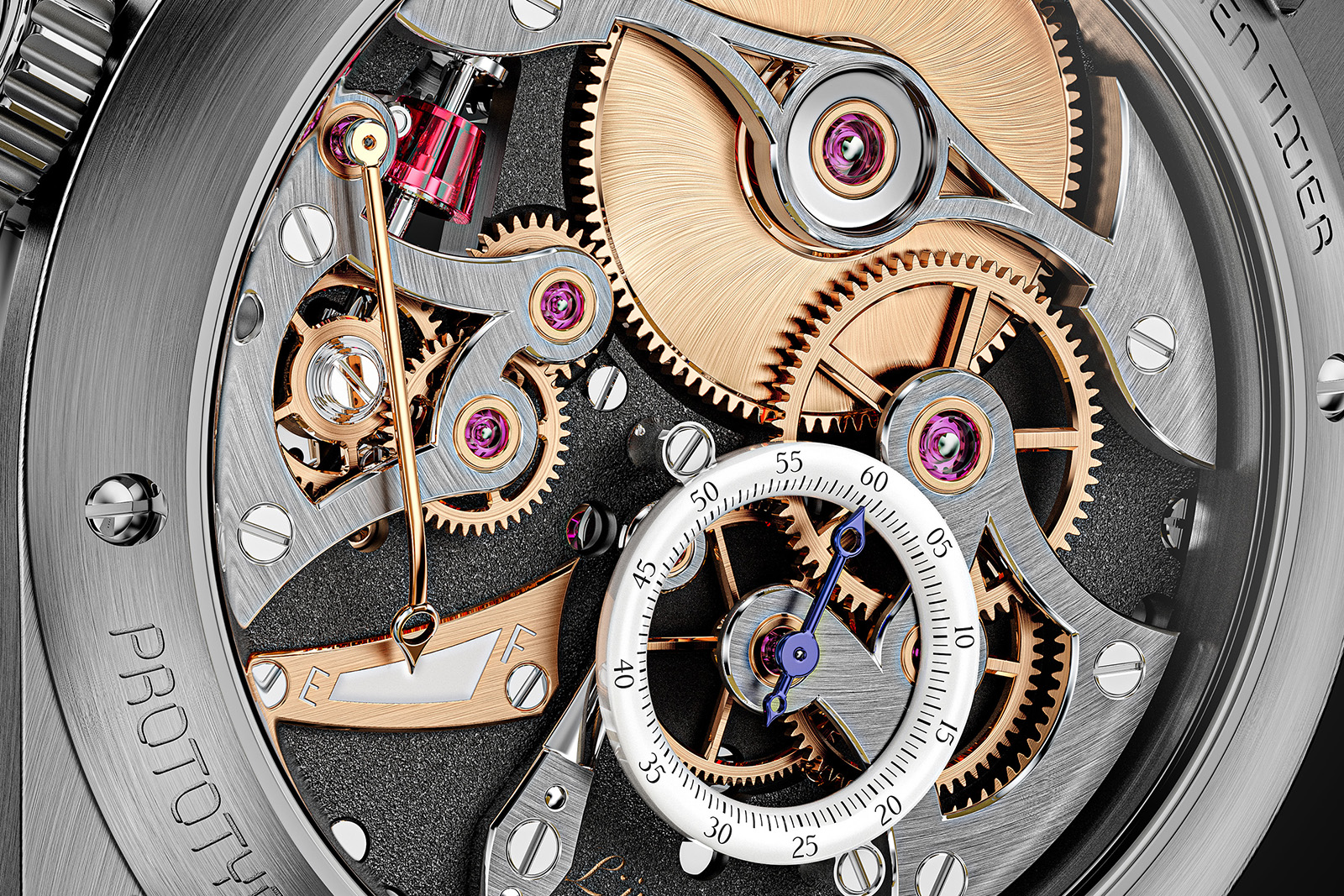
The openworked architecture also reveals the dial-side winding gears. The mainspring barrel is inverted inside the movement, with the barrel drum facing the case back side. There is also a Maltese cross stop-work, which limits the running of the movement to keep it within the sweet spot of the torque curve. On the reverse, the architecture reveals the going train and two quiet complications.

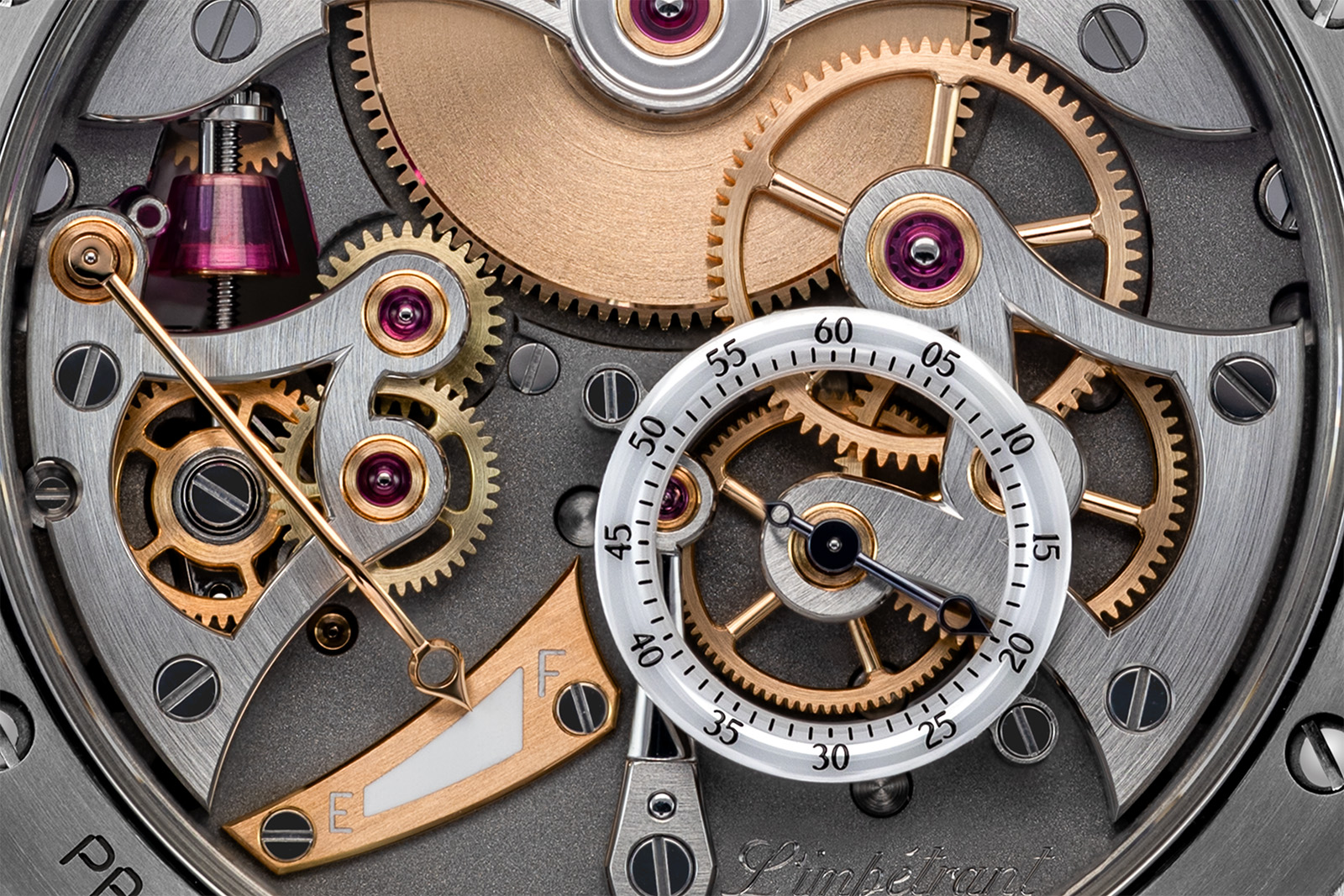
The most dynamic case back-side indication is the small seconds, which reads against yet another zirconia sub-dial. The display reminds of the F.P. Journe Chronomètre Optimum, but here the construction allows the seconds hand to sweep in the clockwise direction.

The second case back-side display is a power reserve indicator, which relies on a ruby differential screw-and-cone system. This sort of mechanism was widely employed by craftsmen such as George Daniels and Derek Pratt, and remains associated with high-grade movements.

But compared to these illustrious predecessors, Mr Pierre went for an alternative construction, placing the ruby cone’s axis in-plane with the movement, as opposed to the more-common perpendicular arrangement. This sort of assembly involves the use of right-angle gearing solutions (such as bevel gears), adding an unexpected degree of complexity to this artisanal time-only movement.

The ruby cone works with a ruby follower, which reads the remaining power reserve off the cone’s sloped surface. As the cone moves up and down, its radius at the follower changes, causing the power reserve hand to move. Usually made of polished steel, the ruby cone stands out, being similar that used in the Greubel Forsey Hand Made 2.

In terms of finishing, the L’Impétrant doesn’t disappoint, being the product of a who’s who of independent artisans including Philippe Narbel and Severine Vitali. Likewise, the model name is hand-engraved by the talented artisan Eddy Jaquet.

There are opulent gold settings for the jewels and hand-finished anglage on the brushed steel components. The ruthenium-plated frosted baseplate offers a matte texture against which the polished surfaces gleam.


Key Facts and Price

Stéphane Pierre L’Impétrant

Diameter: 39 mm
Height: 10.8 mm
Material: Grade 23 titanium
Crystal: Sapphire
Water resistance: Unknown

Movement: In-house developed movement
Features: Retrograde hours and minutes, small seconds and power reserve indicator on the case back side
Frequency: 21,600 beats per hour (3 Hz)
Winding: Hand-wound
Power reserve: 70 hours

Strap: Calf leather strap with matching titanium clasp

Limited edition: 15-piece souscription series followed by regular production
Availability:
Directly from Stéphane Pierre
Price: Upon request

For more, visit @stephanepierrewatches on Instagram.


Back to top.
You may also enjoy these.

Welcome to the new Watches By SJX.

Subscribe to get the latest articles and reviews delivered to your inbox.

Exit mobile version