

Hands On: IWC Portugieser Chronograph Ceratanium
A sharp new look for a classic, but priced ambitiously.
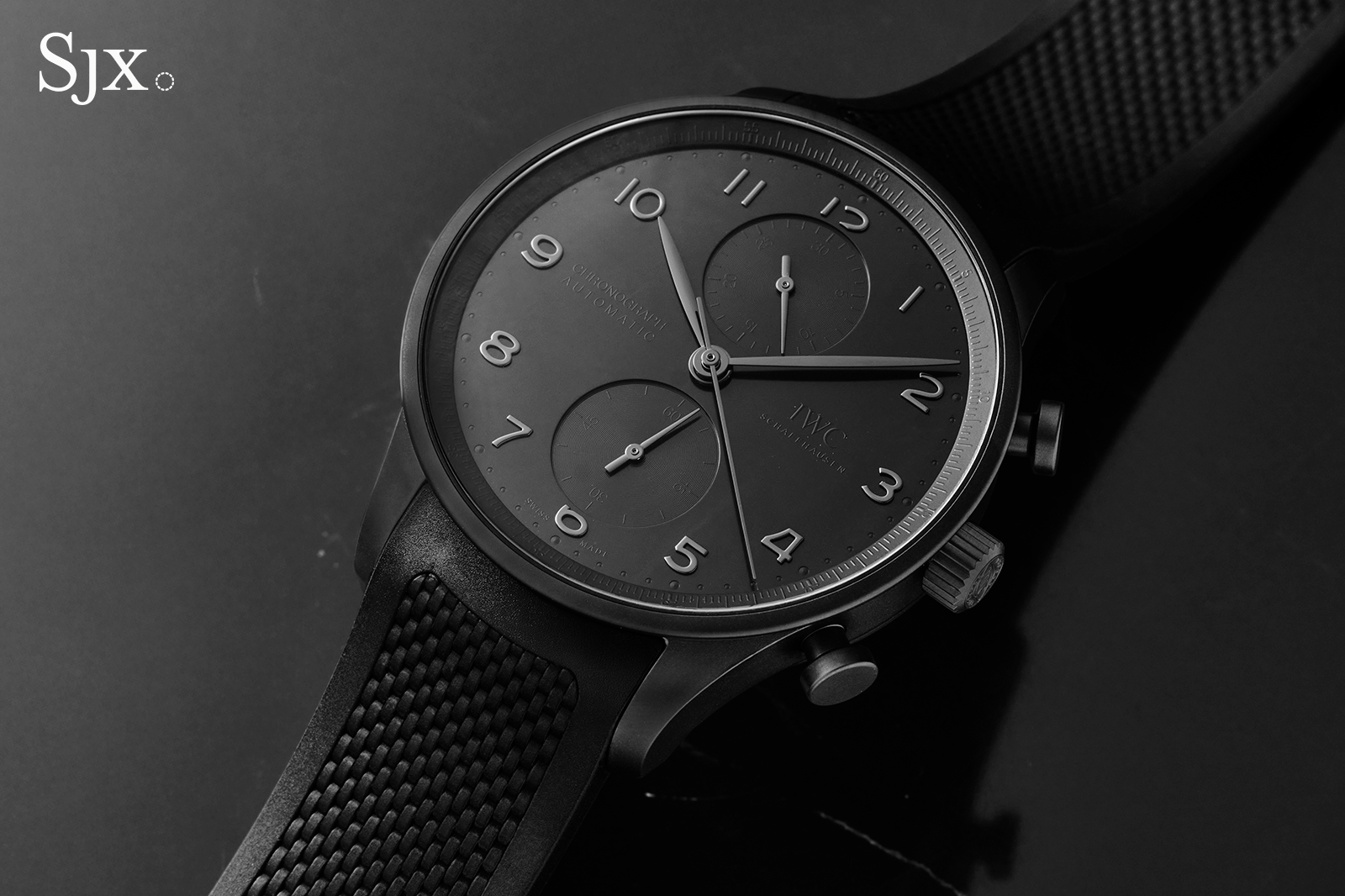
IWC started the year with a dramatic new look for a classic, the Portugieser Chronograph Ceratanium. Almost 30 years old but ageless, the Portugieser Chronograph gains an all-black look and Ceratanium case with this appealing, but pricey, limited edition that encapsulates the brand’s strengths and weaknesses.
Initial thoughts
In the mid to late 2000s, the all-black look was one the major fads in watchmaking, having been pioneered by Hublot, then at the beginning of its renaissance led by Jean-Claude Biver. All-black watches were everywhere yet desirable, and some even sold for multiples of retail.
The Portugieser Chronograph Ceratanium is two decades late for that fad, and too early for the next one. But it is still an appealing watch in itself, though expensive compared to the standard version.

It’s essentially a Portugieser chronograph dressed entirely in black with a case in ceramic-coated titanium. As a result, it has of the elements that make the model appealing: a symmetrical design, good proportions, slimness, and a distinctive style despite the simplicity.
The all-black livery adds to the design, since it goes well with the clean styling. Though complementary aesthetically, the all-black finish and Portugieser design don’t quite pair conceptually, since the Portugieser is a historically inspired dress watch. Despite the incongruity, the Ceratanium chronograph looks and feels good on the wrist.
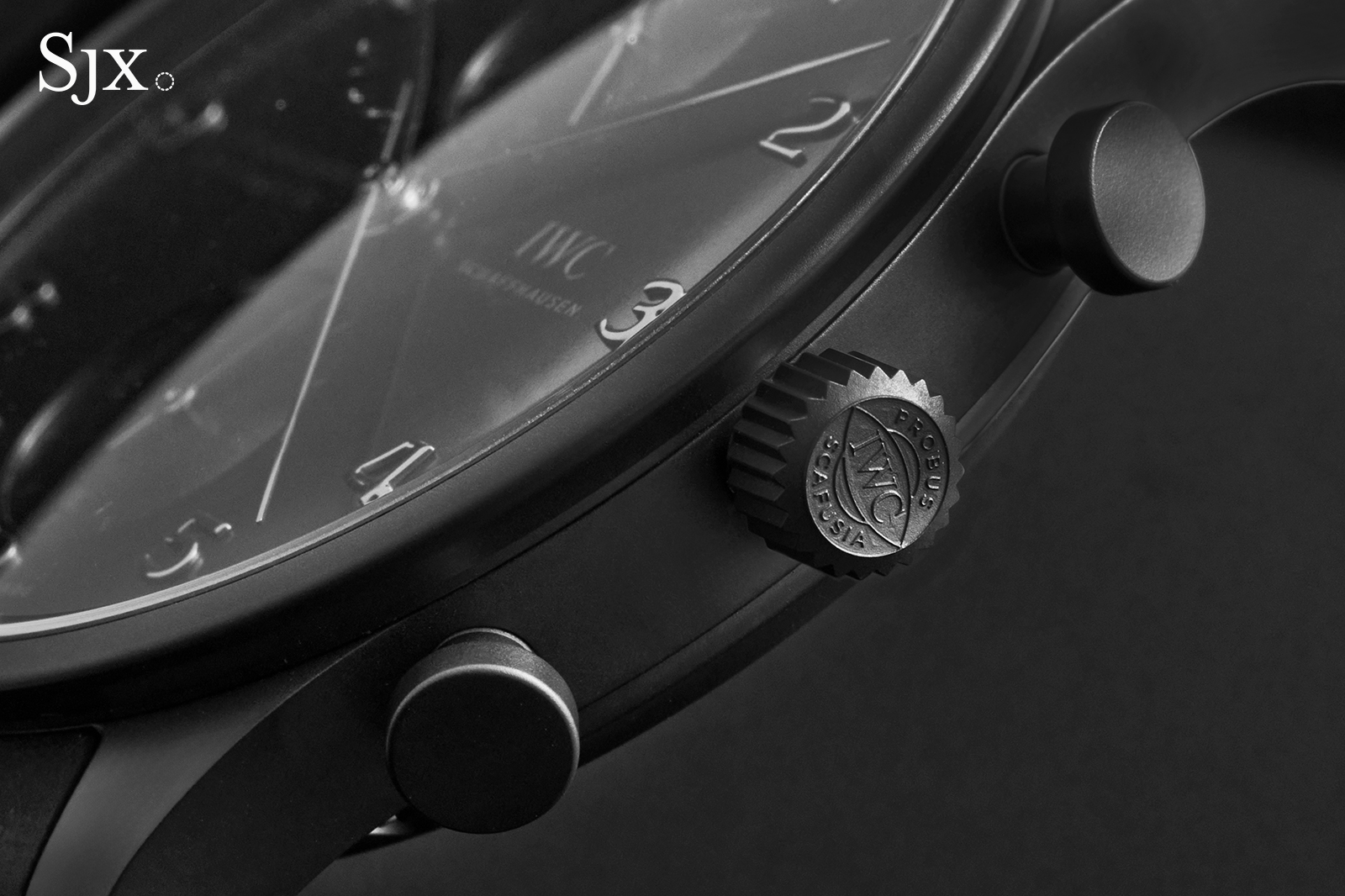
More broadly, the watch illustrates IWC’s strengths and weaknesses. The brand has a stable of much loved, even iconic, designs, a catalogue of decent in-house movements, and an adeptness with case materials. But it iterates endlessly on the same themes, and recent calibres favour industrialisation instead of engineering, so the brand does’t have quite the cachet or novelty it had.
Movements and materials
Ceratanium has been used by IWC for several years now, though only for Pilot’s Watches until now. Ceratanium is actually IWC’s trade name for the material, which is titanium coated in ceramic. Similar ceramicised metals have been used by other brands, including IWC’s sister company Panerai, but IWC is one of the leading adopters of the material, with a half dozen models in this metal.
Ceratanium is created by heating titanium in an oven, a process that naturally creates a titanium oxide layer on the metal’s surface. This layer gives the case its black finish, while also improving scratch resistance. At a distance, Ceratanium is indistinguishable from black ceramic, but it has the lightness of titanium, which gives the watch a good tactile feel.

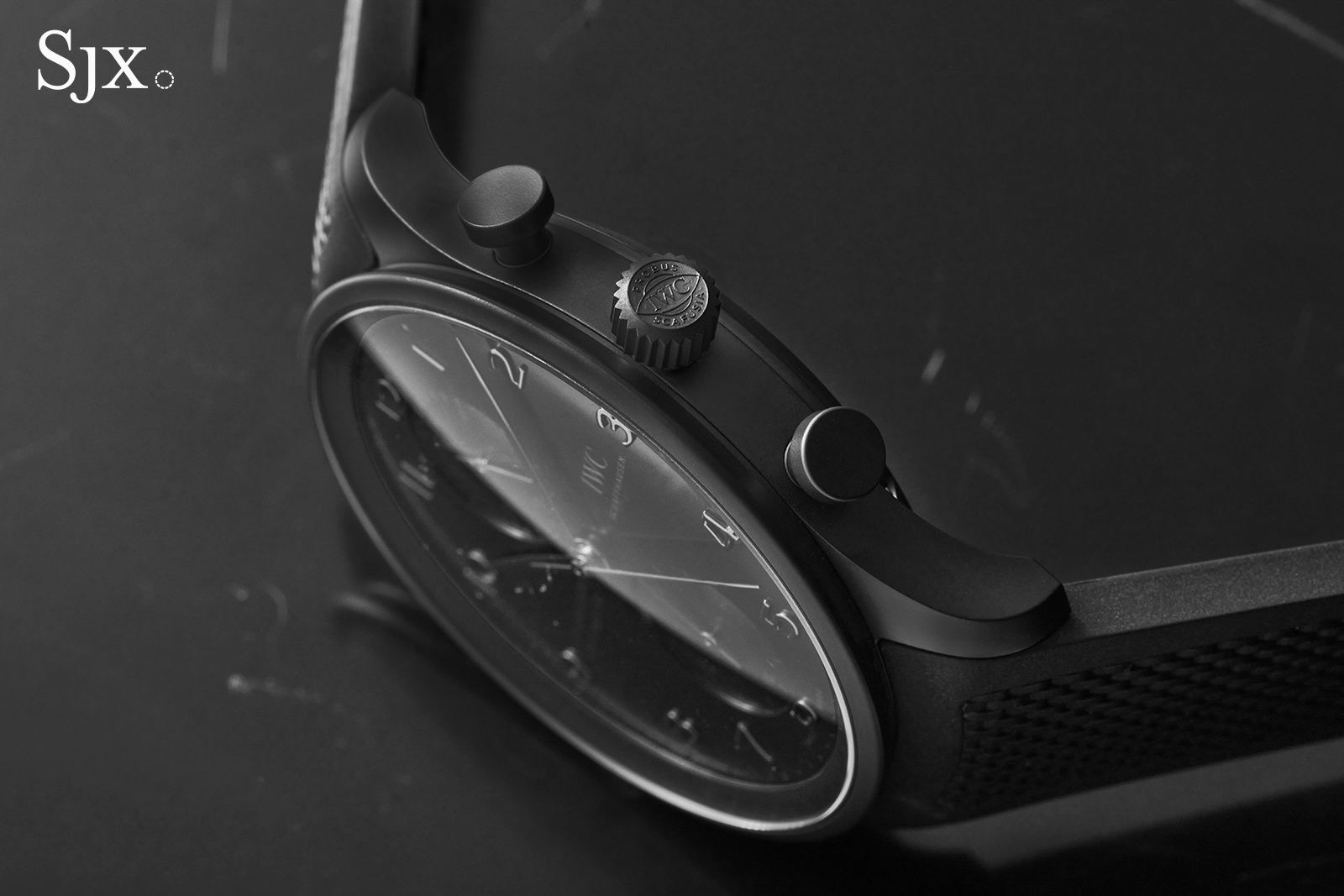
The crown and pushers are also Ceratanium
The Portugieser Chronograph is already a relatively compact watch at 41 mm wide and 13.1 mm – it was an oversized watch by 1990s standards – and the all-black finish makes it look slightly smaller. This gives it an unobtrusive presence on the wrist, making it feel more like a sports or military watch.
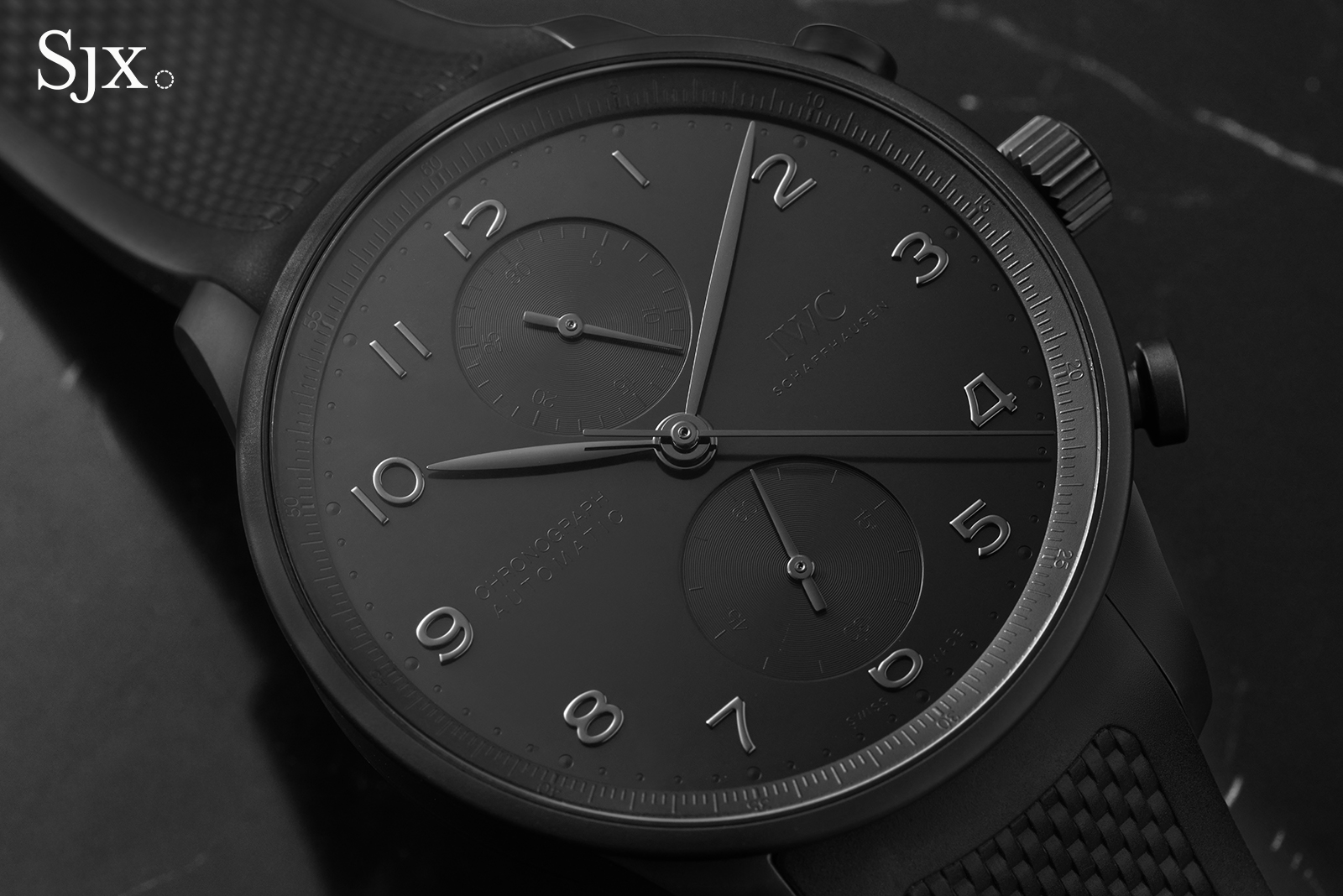
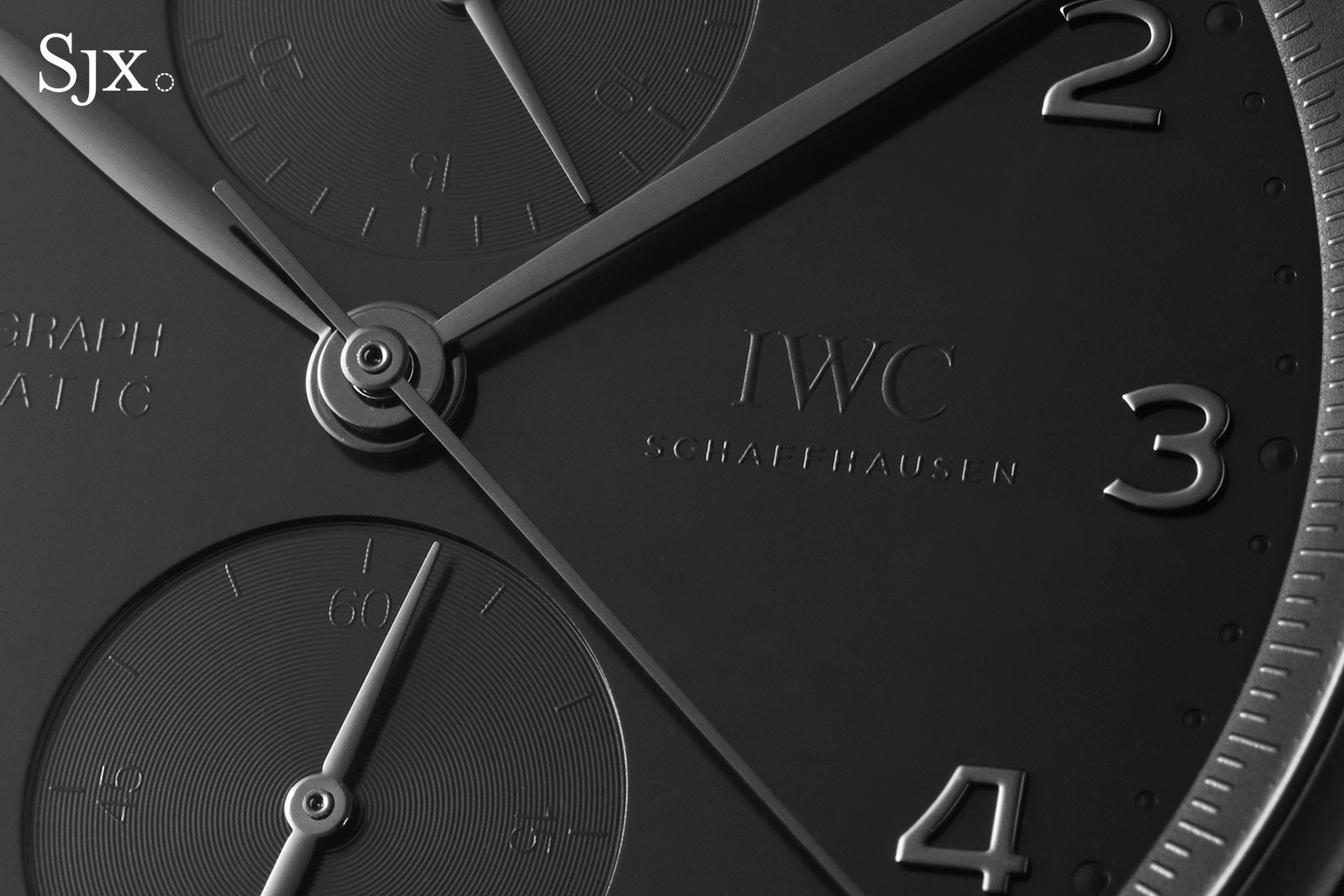
The Ceratanium case is matched with an all-black dial, but not quite. Although every element on the dial is black, or at least dark grey, the surface finishes different, resulting in different shades.
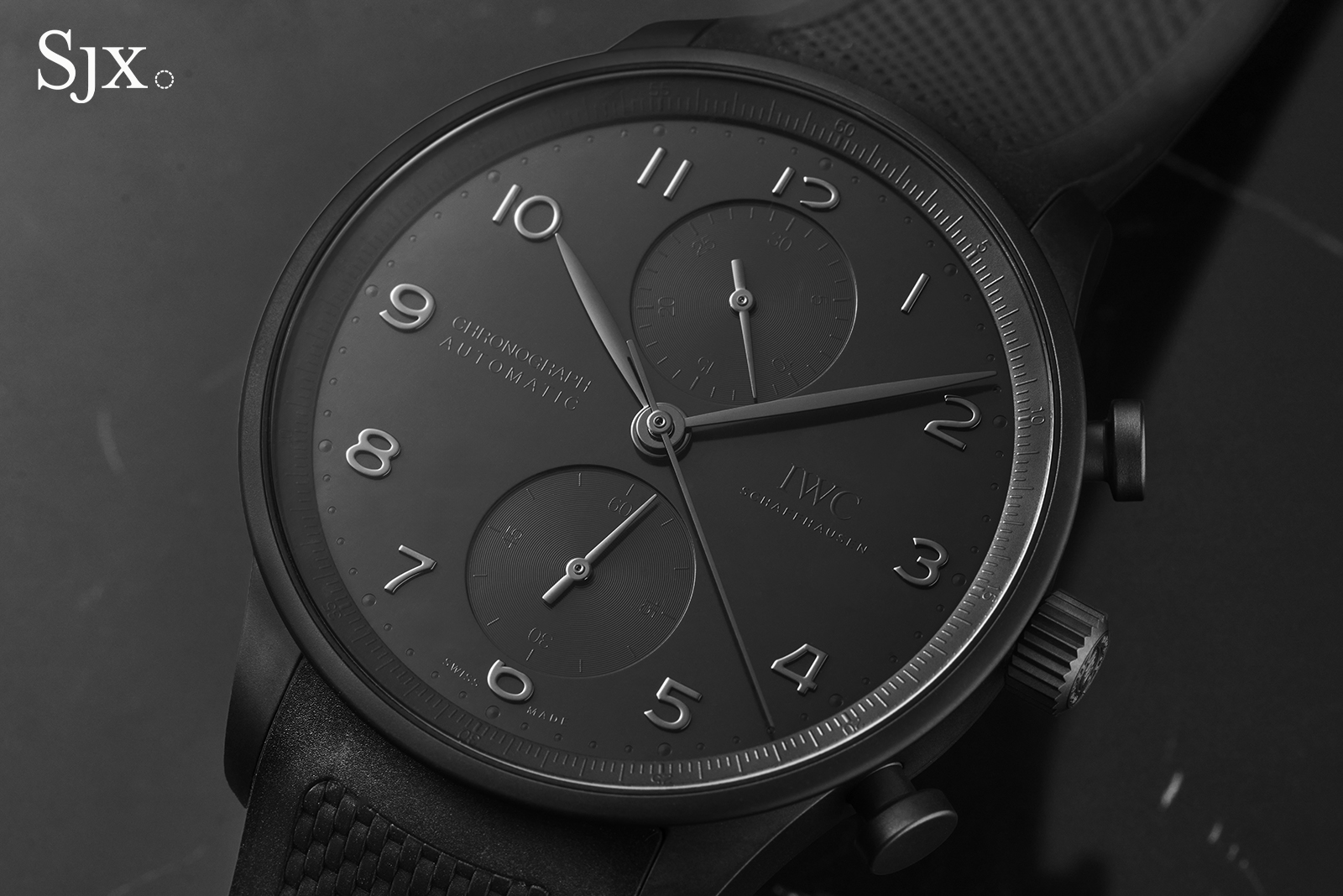
The appliqué numerals and hands are glossy, the dial itself is a matte satin, while the printed markings are granular lacquer. As a result, the dial can be legible in the right light, though it is often difficult to read.
Though the treatment is far from that of the first-generation model, the design of the dial is unchanged from the mid 1990s, a testament to the timeless design of the original. The vertically laid out registers give the dial a pleasing symmetry that goes well with the case design.
The sapphire window on the back is tinted dark grey to match the rest of the watch, making the movement appear to have a dark grey finish. That is entirely due to the tinting, and the cal. 69355 inside is entirely identical to that in the regular production model.
The cal. 69355 is IWC’s entry-level in-house chronograph movement, conceived to replace the Valjoux 7750 that long underpinned its chronograph offers. The original Portugieser Chronograph, both standard and split-seconds, were powered by the 7750.
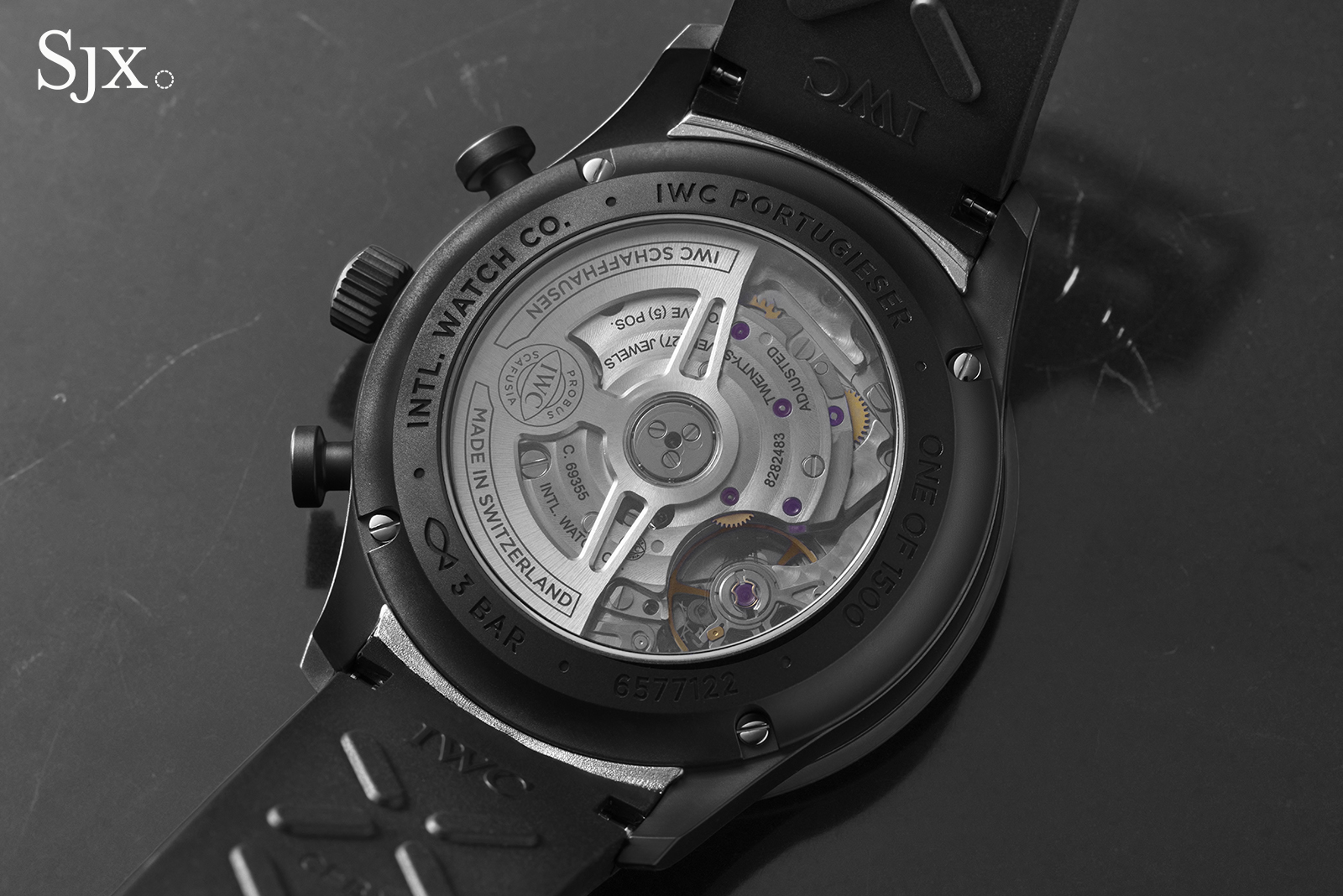
The cal. 69355 is an upgrade over the 7750, and competently constructed. It has amenities including a column wheel, directly-driven seconds, lightweight LIGA escapement, and “Magic Lever” winding. Like IWC’s historical Pellaton winding mechanism, the Magic Lever is a pawl-based, bidirectional system, but simpler and more compact compared to Albert Pellaton’s invention.
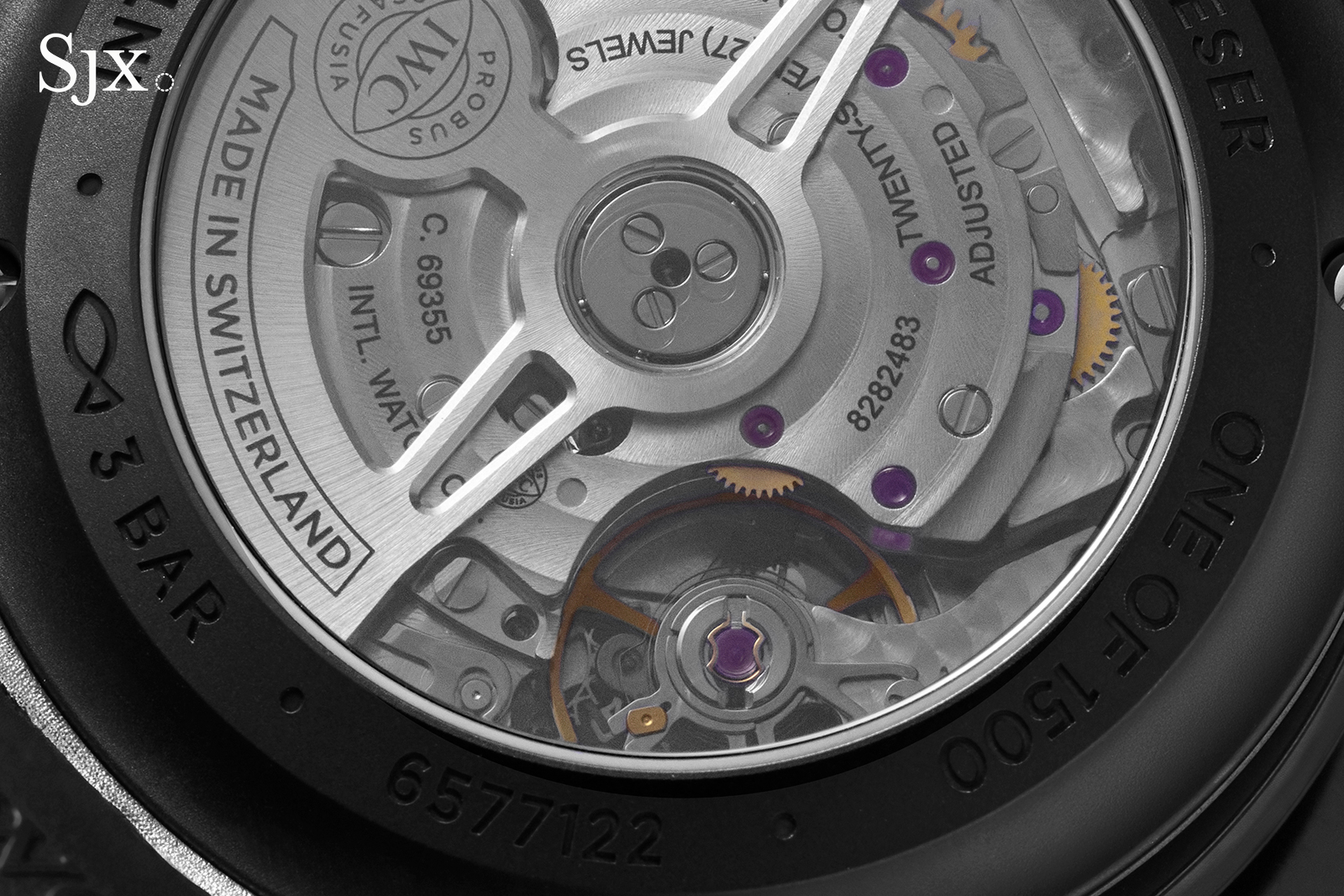
But as one of the brand’s more basic calibres, the cal. 69355 is industrial and looks the part. Like the Valjoux 7750, the cal. 69355 relies on an oscillating pinion to transfer power from the base movement to the chronograph – an effective but basic approach.
At the same time, the regulator and stamped chronograph levers feel out of place in a watch that retails for over US$14,000 in this guise (and about US$9,000 in its basic steel format).

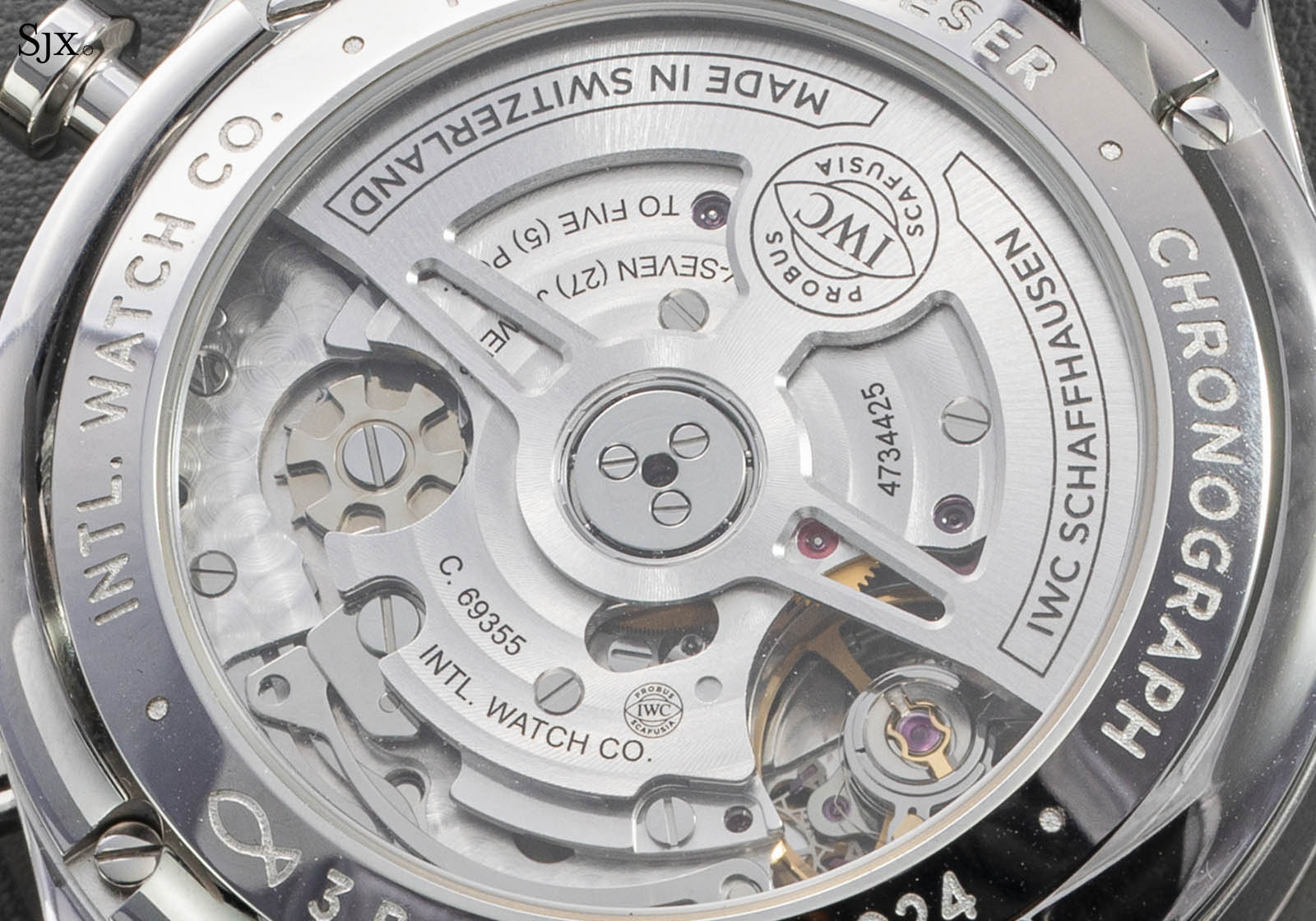
A clearer view of the cal. 69355 inside the standard Portugieser Chronograph without a tinted back
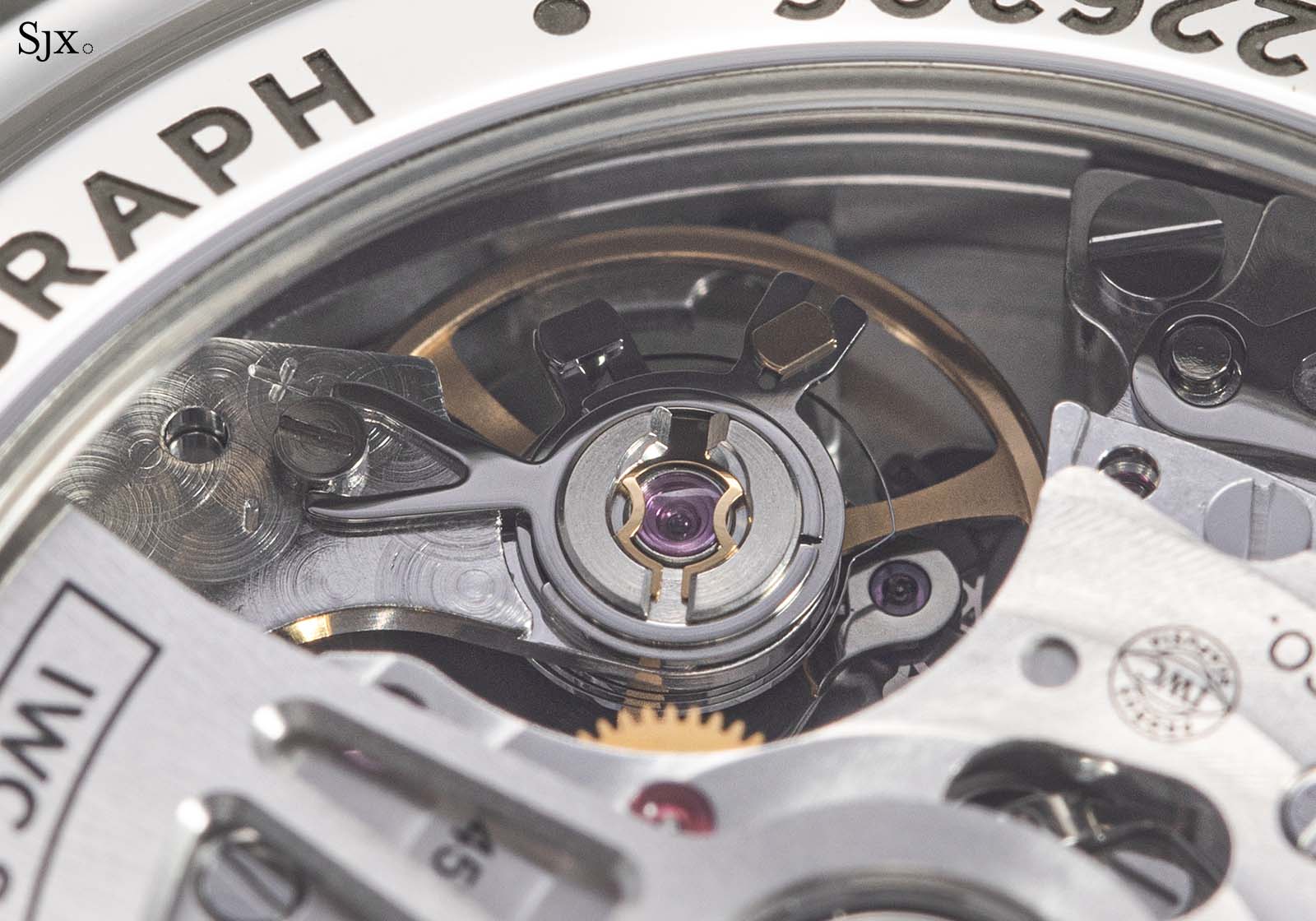
The Etachron-type regulator of the cal. 69355
Key facts and price
IWC Portugieser Chronograph Ceratanium
Ref. IW371631
Case diameter: 41 mm
Height: 13.1 mm
Crystal: Sapphire
Material: Ceratanium
Water resistance: 30 m
Movement: Cal. 69355
Features: Hours, minutes, seconds, and chronograph
Frequency: 28,800 beats per hour (4 Hz)
Winding: Automatic
Power reserve: 46 hours
Strap: Rubber with Ceratanium pin buckle
Limited edition: 1,500 pieces
Availability: At IWC boutiques and retailers
Price: US$14,600 before taxes
For more, visit IWC.com.
Back to top.