I Designed a Swatch with AI

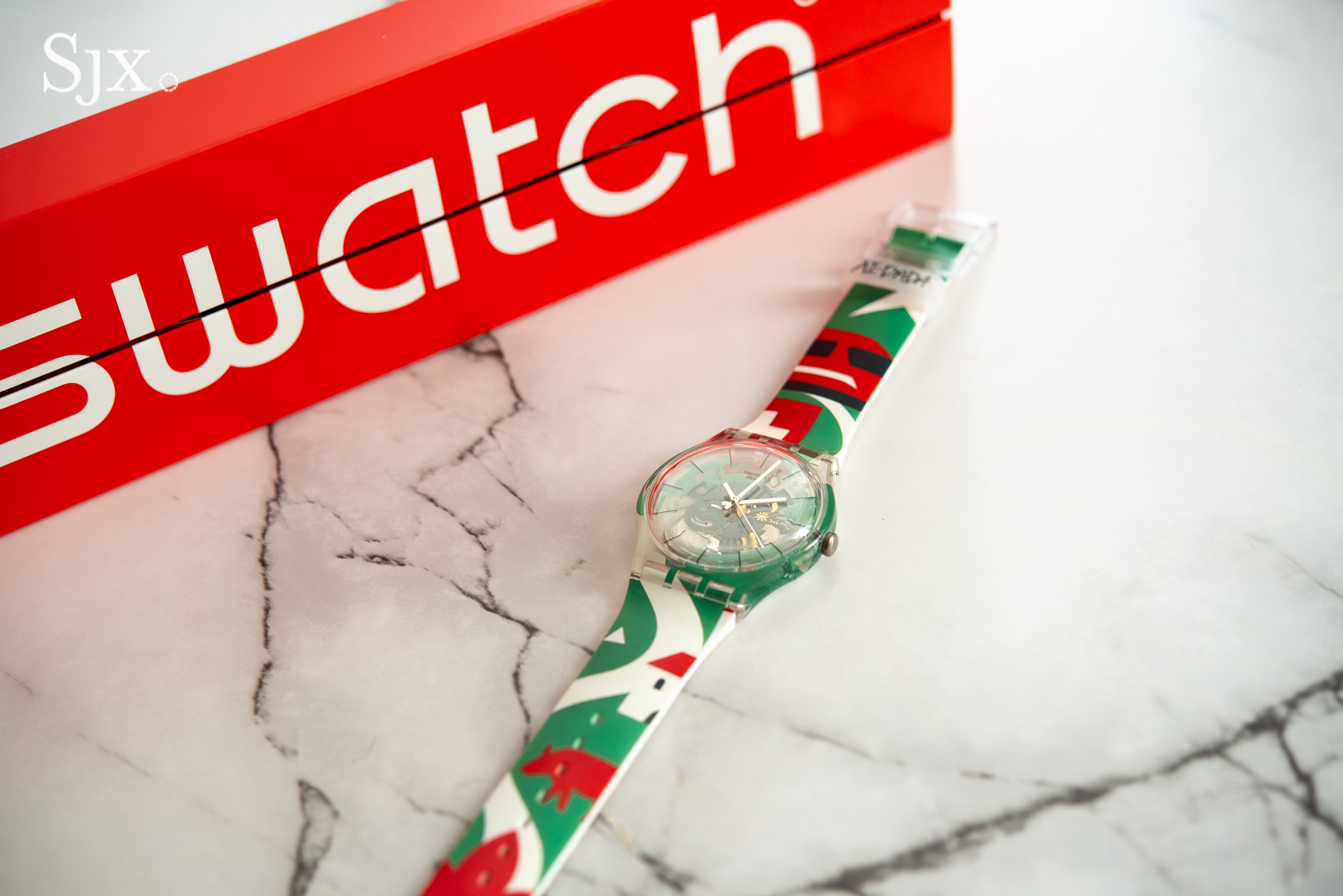
Unboxing my piece unique.
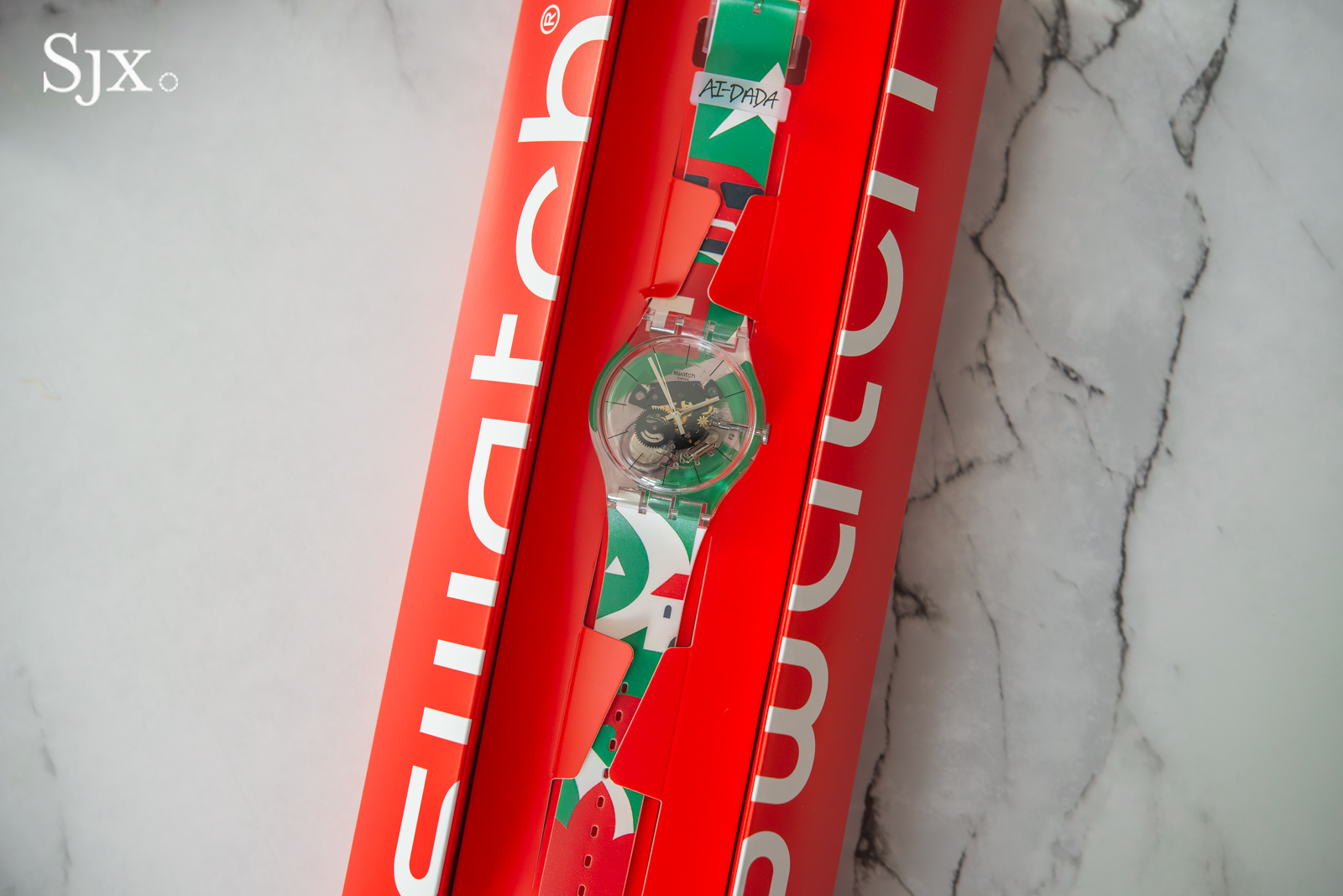
Announced last year, Swatch’s AI-DADA platform is now live, enabling customers to design and build their own custom Swatch with a design that will never be repeated. With a low entry price and quick turnaround, I took the platform for a spin.
Why AI

Swatch has been a design-oriented brand since its debut in 1983. Not only has Swatch produced a dizzying array of original designs of its own, over the years the brand has collaborated with celebrated artists and leading institutions to democratise access to wearable art.

About a decade ago, Swatch’s world-class logistics infrastructure enabled it to offer customised watches via an online configurator that enabled customers to mix and match different elements from a pre-selected range of options. That was quickly followed by the ability to generate a custom-printed design, by dragging a Swatch template over a selection of human-created patterns and designs.
The AI-DADA system, launched earlier this year, builds on this basis in way that only Swatch could pull off. The system leverages an undisclosed large language model (LLM) to generate a custom design based on a user’s 300-character prompt.

The result is a made-to-order Swatch of the customer’s own design, delivered in as few as five days. What’s more, the cost is little more than an off-the-shelf model, at just US$195. With little to lose, I took the plunge.

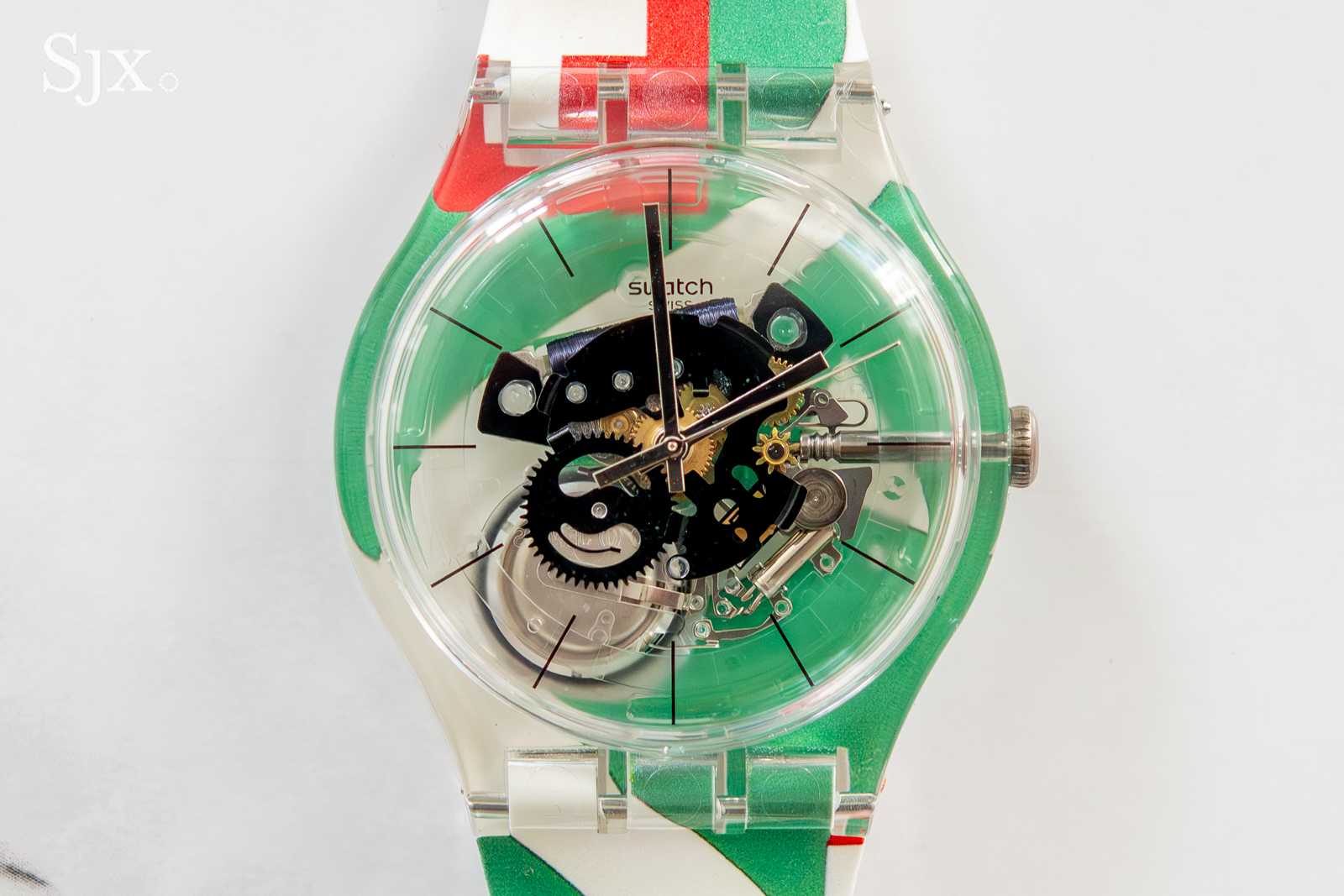
AI-DADA Swatch watches are powered by standard quartz movements in the typical New Gent case size.

Three strikes

The first thing a user will notice when designing their AI-DADA unique piece is the limited number of daily attempts. Perhaps to keep compute costs under control and prevent large-scale bot activity, the system limits users to three prompts per day. It’s also not as instant as what users might be used to from the likes of ChatGPT or Claude.

That said, there are presumably a number of layers of analysis going on behind the scenes to prevent the production of offensive designs, so the lag is understandable.
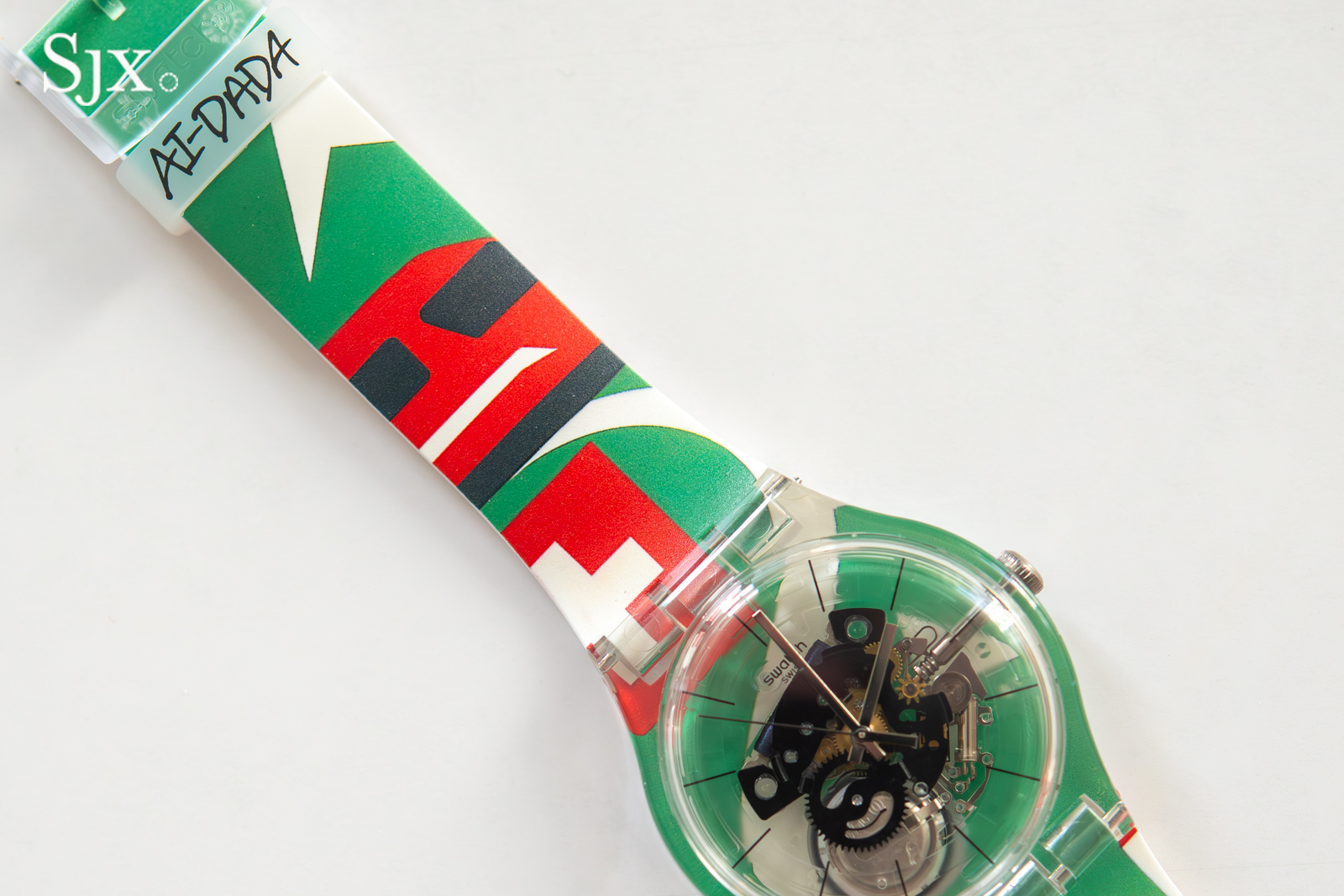
Unfortunately, the three-prompt limit prevents users from getting a good feel for what kinds of prompts produce the best results. I experimented with a wide range of prompt types over four days, from short prompts with just a few words to more complex engineered prompts, generating 12 designs in total. Only one design was to my liking, and it happened to be the second design I generated, suggesting there’s an element of luck involved.
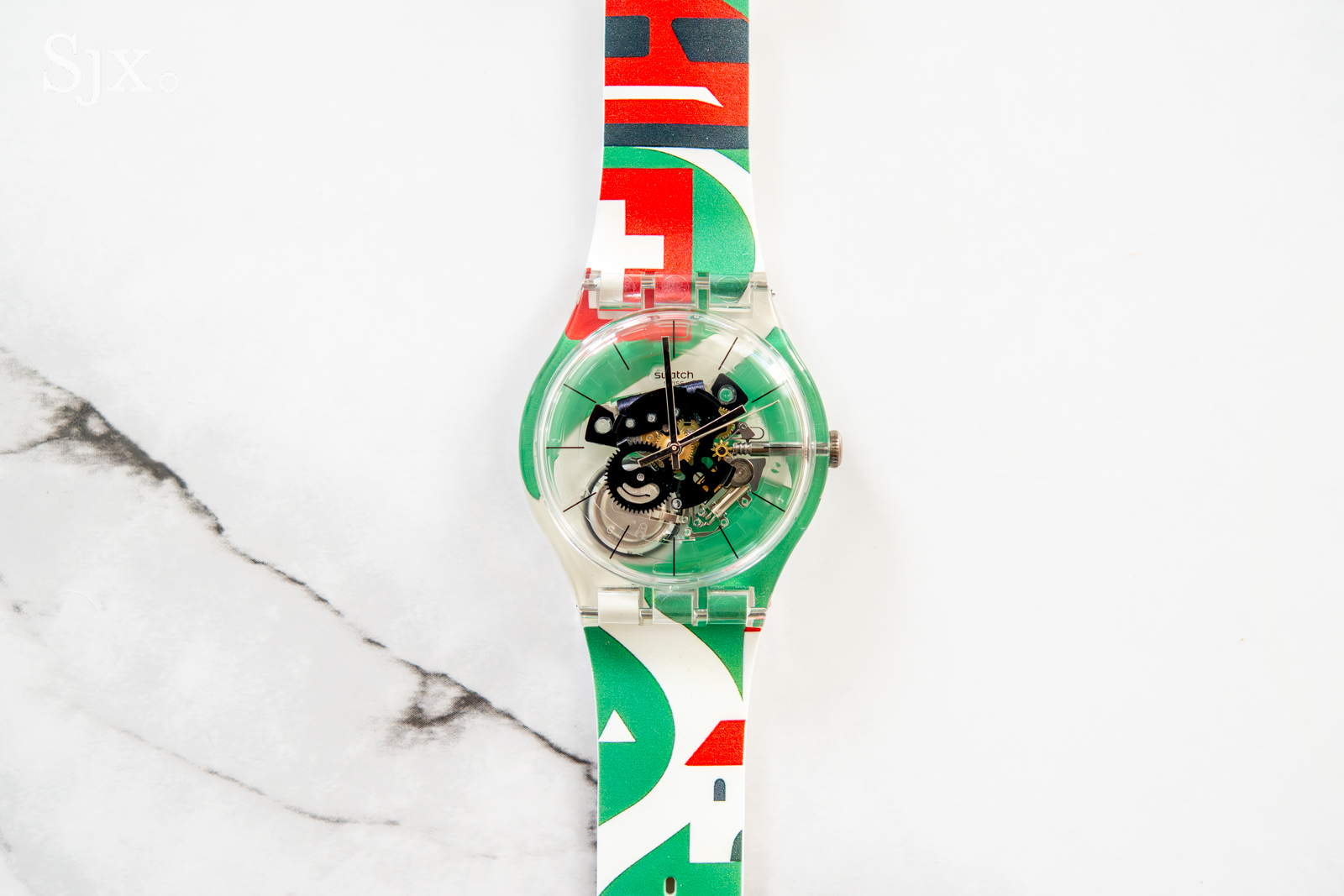
If I had to guess what made this prompt successful, it would be its lack of ambiguity. I asked for a Swatch inspired by the Swiss rail system, featuring a red Swiss train, and showcasing the attractions of Switzerland. That’s it.

The resulting design features a crisp Swiss flag, a red Swiss train, and meandering white railway track that runs across both straps and the dial. The design also features this suggestion of snow-capped mountains, a grazing cow, and what might be a factory with a pitched roof and a chimney (or possibly a church with a bell tower).
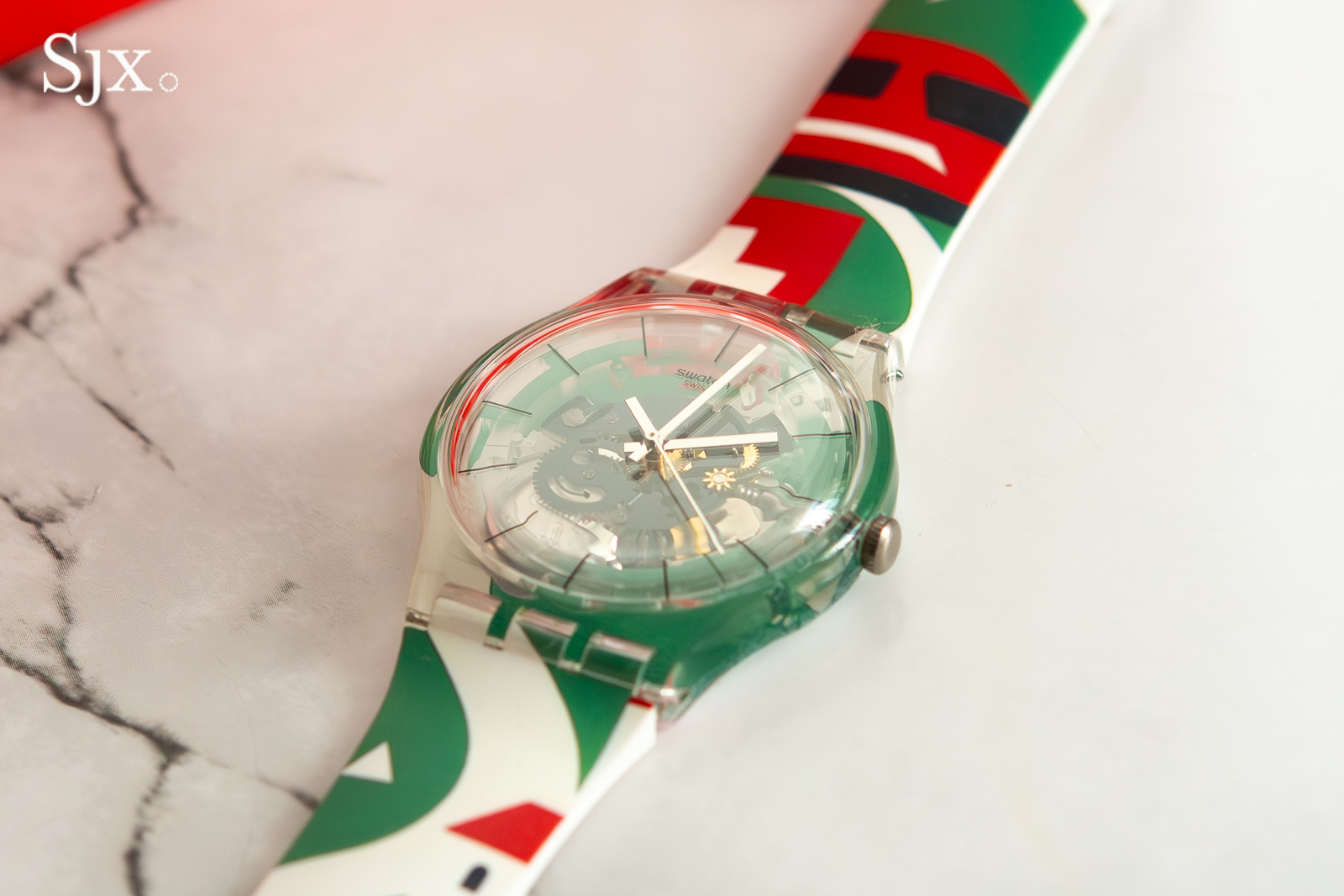
Impressive speed, acceptable quality

I didn’t know what to expect when I clicked the buy button, so I was quite surprised to get the shipping notification two days later, and to find the box on my doorstep just five days after checkout. The combination of mass-customisation and rapid delivery demonstrates the industrial know-how of the Swatch Group.
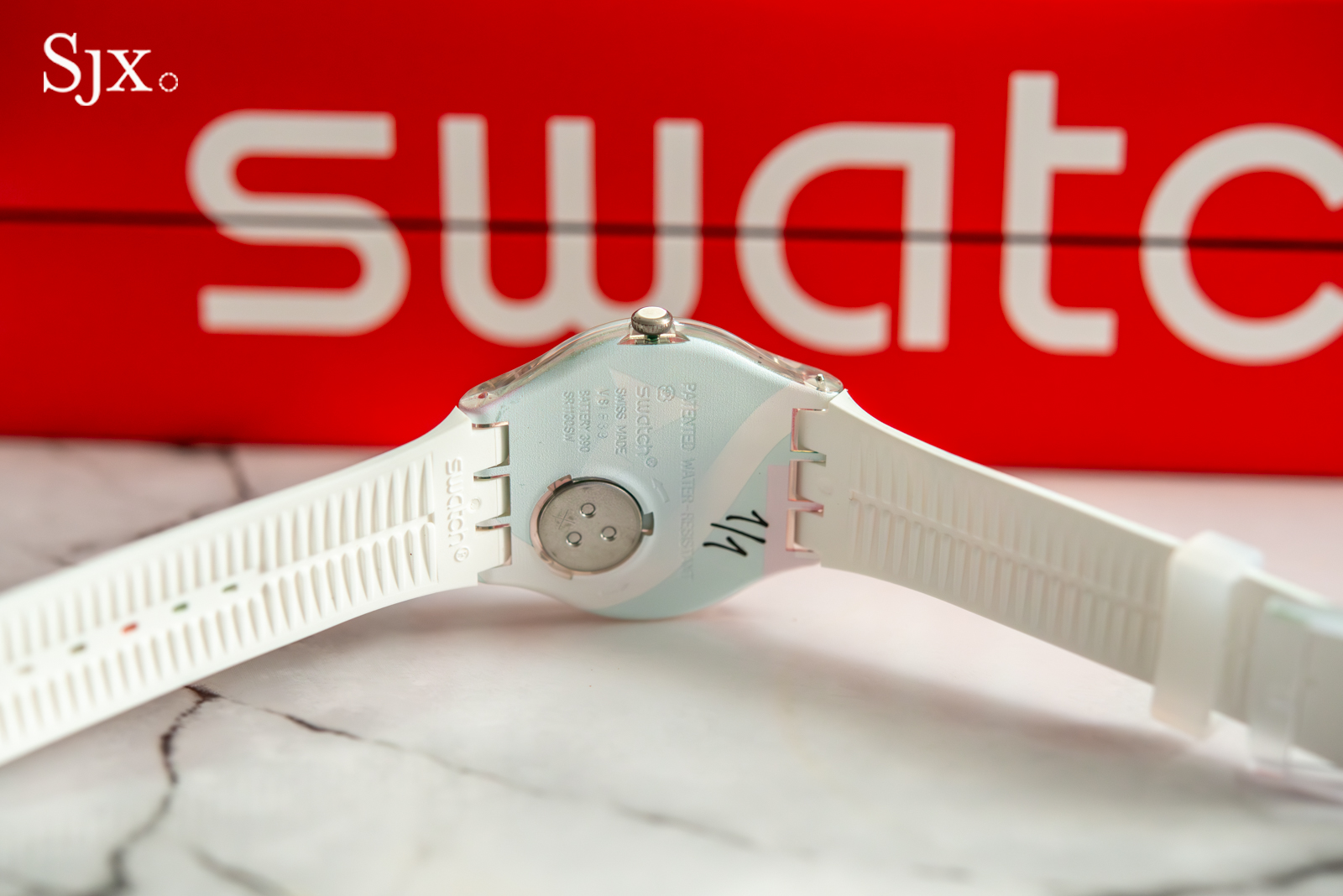
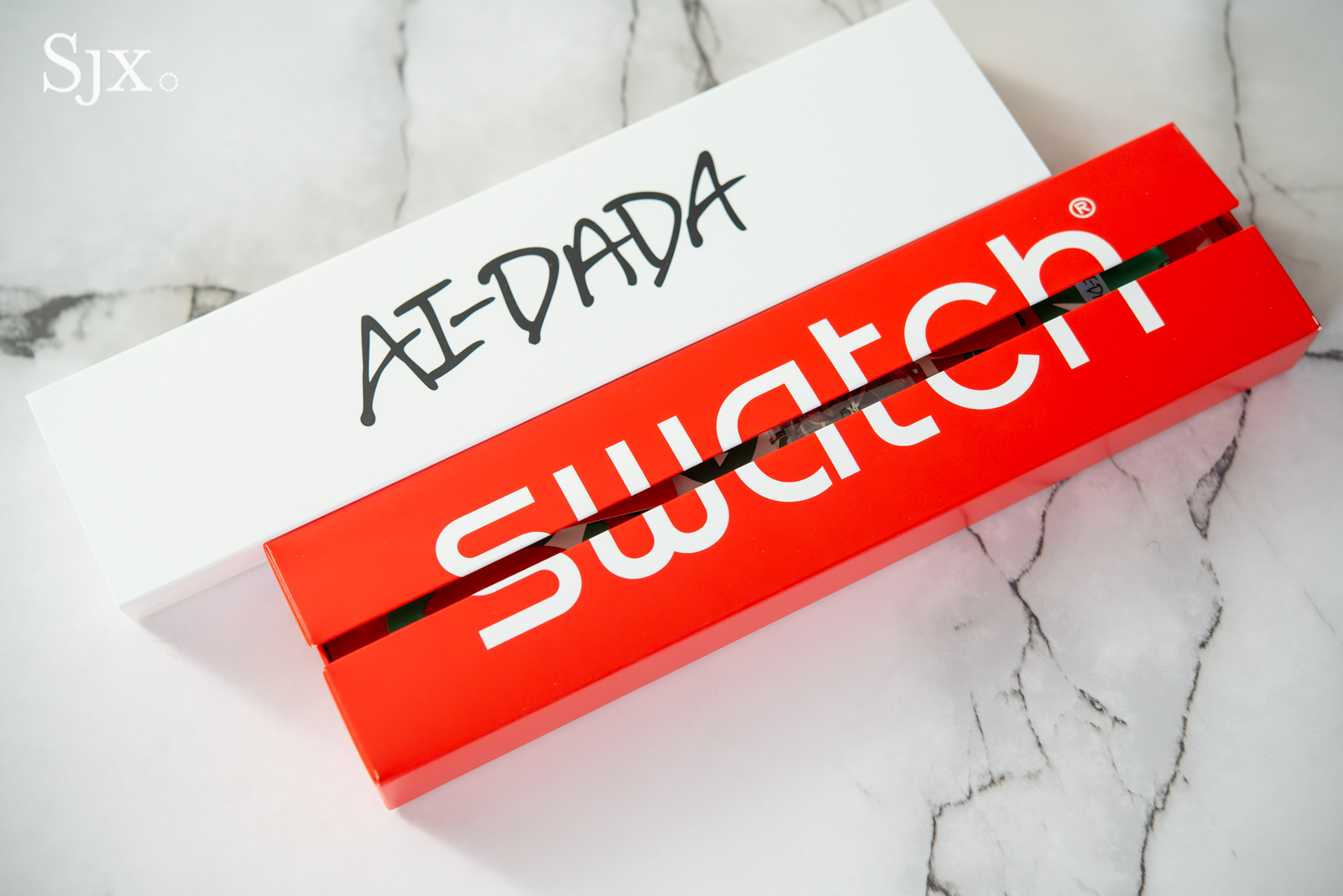
The watch was packaged in a special AI-DADA box marked “1/1”, giving it a sense of occasion. The watch itself is a typical 41 mm New Gent format with a standard Swatch quartz movement. The entire case is made of transparent plastic, and the ‘dial’ design is actually painted on the case back. Judging by the edges of the design, it appears to be some type of spray paint or ink-jet process. By the looks of it, the green colour was sprayed first, following by the white backing.

The quality is perfectly acceptable for the price, but the uneven edges are mildly disappointing. Of course, the main feature of the case back is the amusing “1/1” case number.
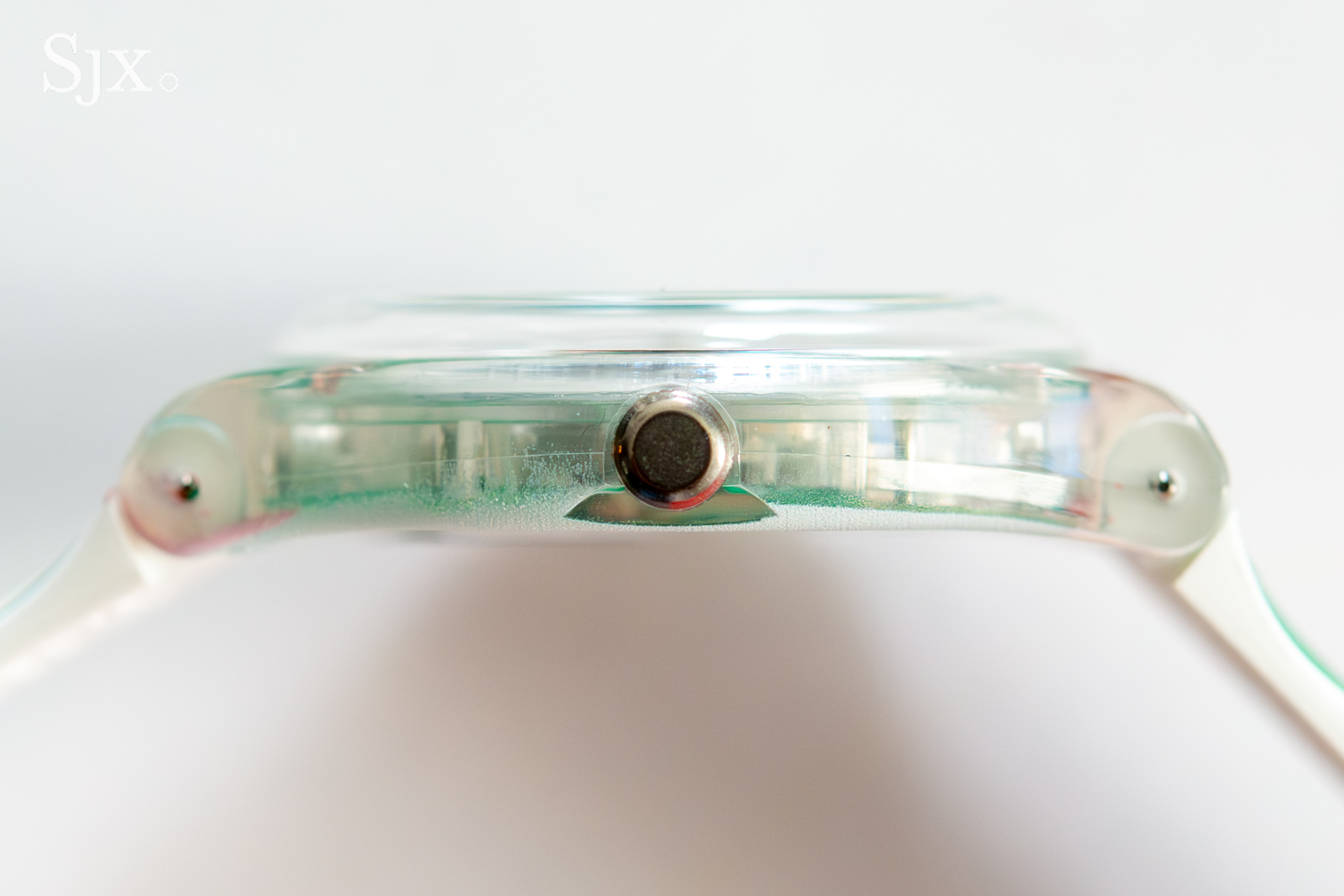
Note the paint used for the case back slightly creeps up the side of the case, providing clues as to the process.


Key facts and price

Swatch AI-DADA ‘Swiss Trains’ Unique Piece

Case diameter: 41 mm
Height: 9.5 mm
Crystal: Plastic
Material: Plastic
Water resistance: 30 m

Movement: Quartz
Features: Hours, minutes, and seconds
Frequency: 32,768 Hz
Power reserve: Up to 3 years

Strap: Silicone strap

Limited edition: Each design is unique, numbered 1 of 1
Availability:
Swatch online store
Price: US$195 before taxes

For more, visit swatch.com.


Back to top.

You may also enjoy these.

Hands On: IWC Portugieser Chronograph Ceratanium

A sharp new look for a classic, but priced ambitiously.

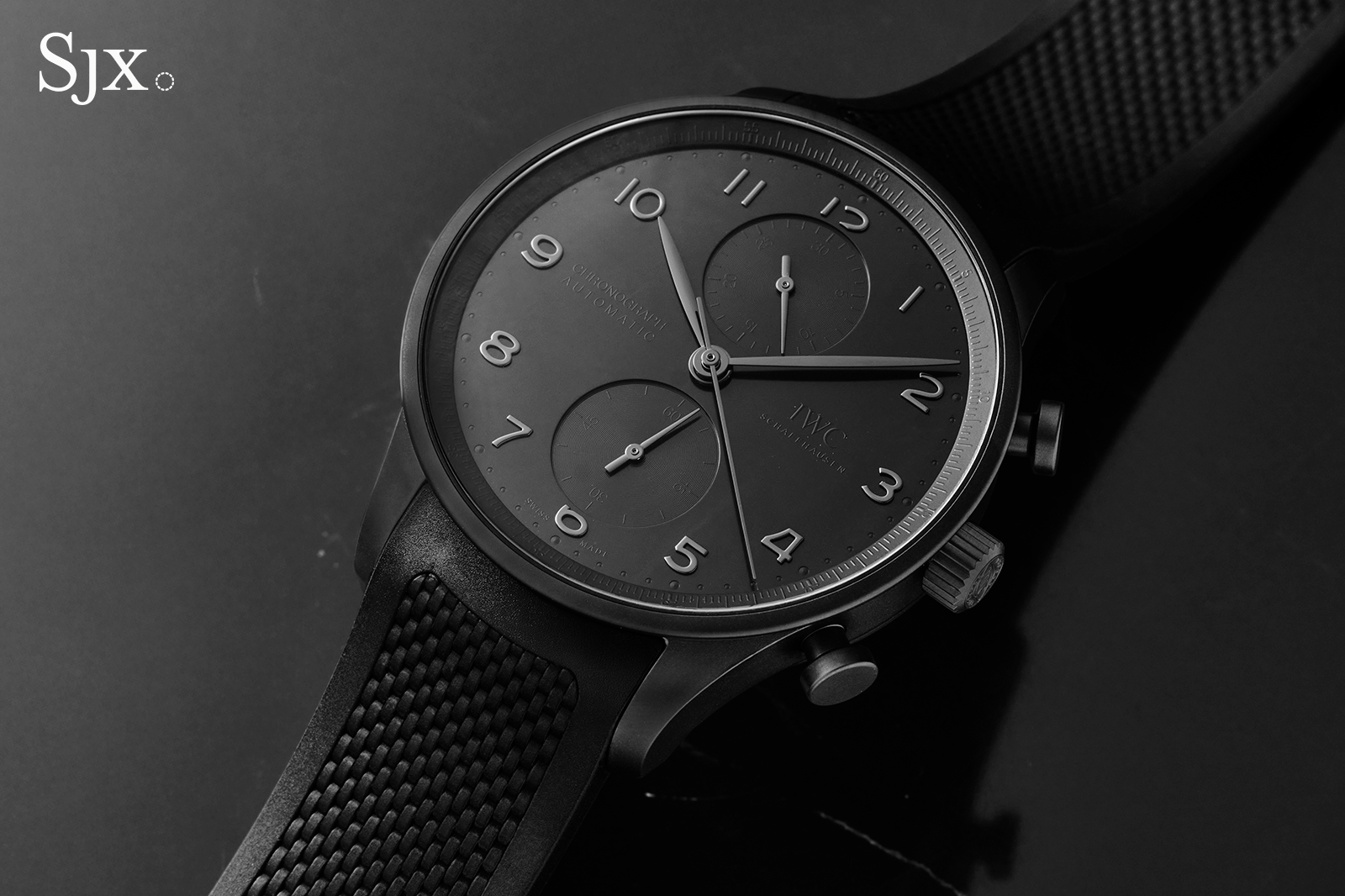
IWC started the year with a dramatic new look for a classic, the Portugieser Chronograph Ceratanium. Almost 30 years old but ageless, the Portugieser Chronograph gains an all-black look and Ceratanium case with this appealing, but pricey, limited edition that encapsulates the brand’s strengths and weaknesses.

Initial thoughts

In the mid to late 2000s, the all-black look was one the major fads in watchmaking, having been pioneered by Hublot, then at the beginning of its renaissance led by Jean-Claude Biver. All-black watches were everywhere yet desirable, and some even sold for multiples of retail.

The Portugieser Chronograph Ceratanium is two decades late for that fad, and too early for the next one. But it is still an appealing watch in itself, though expensive compared to the standard version.

It’s essentially a Portugieser chronograph dressed entirely in black with a case in ceramic-coated titanium. As a result, it has of the elements that make the model appealing: a symmetrical design, good proportions, slimness, and a distinctive style despite the simplicity.

The all-black livery adds to the design, since it goes well with the clean styling. Though complementary aesthetically, the all-black finish and Portugieser design don’t quite pair conceptually, since the Portugieser is a historically inspired dress watch. Despite the incongruity, the Ceratanium chronograph looks and feels good on the wrist.

More broadly, the watch illustrates IWC’s strengths and weaknesses. The brand has a stable of much loved, even iconic, designs, a catalogue of decent in-house movements, and an adeptness with case materials. But it iterates endlessly on the same themes, and recent calibres favour industrialisation instead of engineering, so the brand does’t have quite the cachet or novelty it had.

Movements and materials

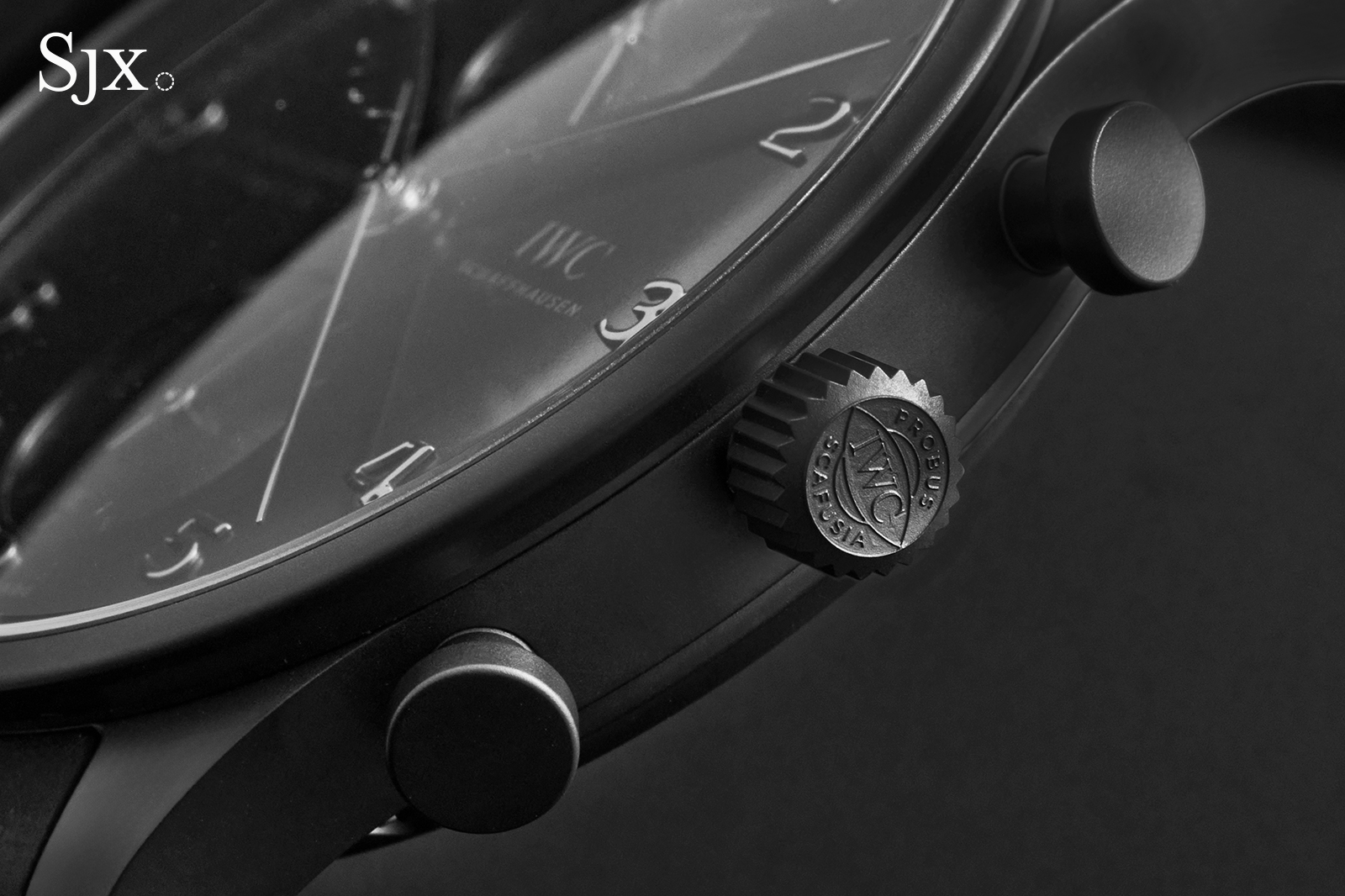
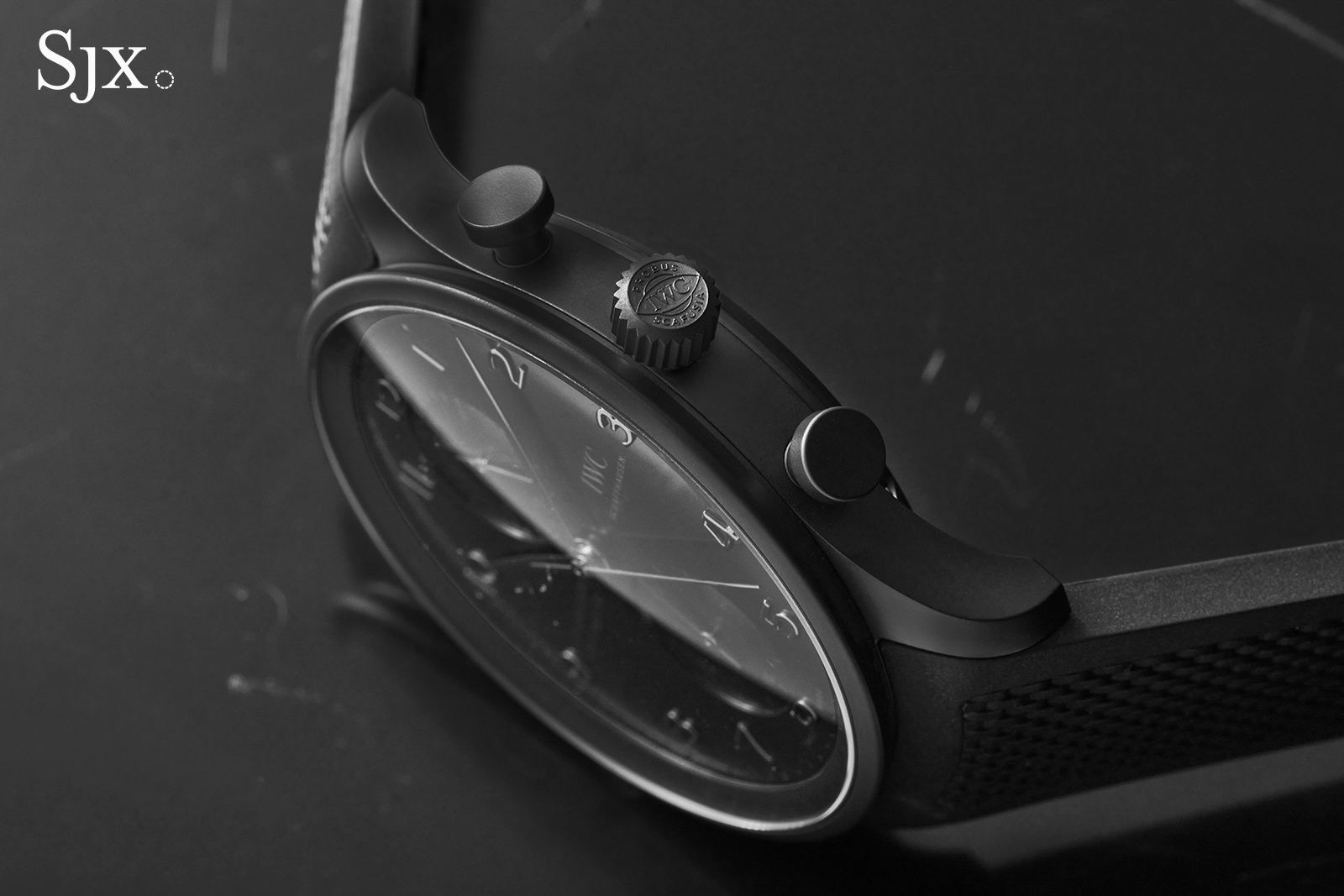
Ceratanium has been used by IWC for several years now, though only for Pilot’s Watches until now. Ceratanium is actually IWC’s trade name for the material, which is titanium coated in ceramic. Similar ceramicised metals have been used by other brands, including IWC’s sister company Panerai, but IWC is one of the leading adopters of the material, with a half dozen models in this metal.

Ceratanium is created by heating titanium in an oven, a process that naturally creates a titanium oxide layer on the metal’s surface. This layer gives the case its black finish, while also improving scratch resistance. At a distance, Ceratanium is indistinguishable from black ceramic, but it has the lightness of titanium, which gives the watch a good tactile feel.

The crown and pushers are also Ceratanium

The Portugieser Chronograph is already a relatively compact watch at 41 mm wide and 13.1 mm – it was an oversized watch by 1990s standards – and the all-black finish makes it look slightly smaller. This gives it an unobtrusive presence on the wrist, making it feel more like a sports or military watch.

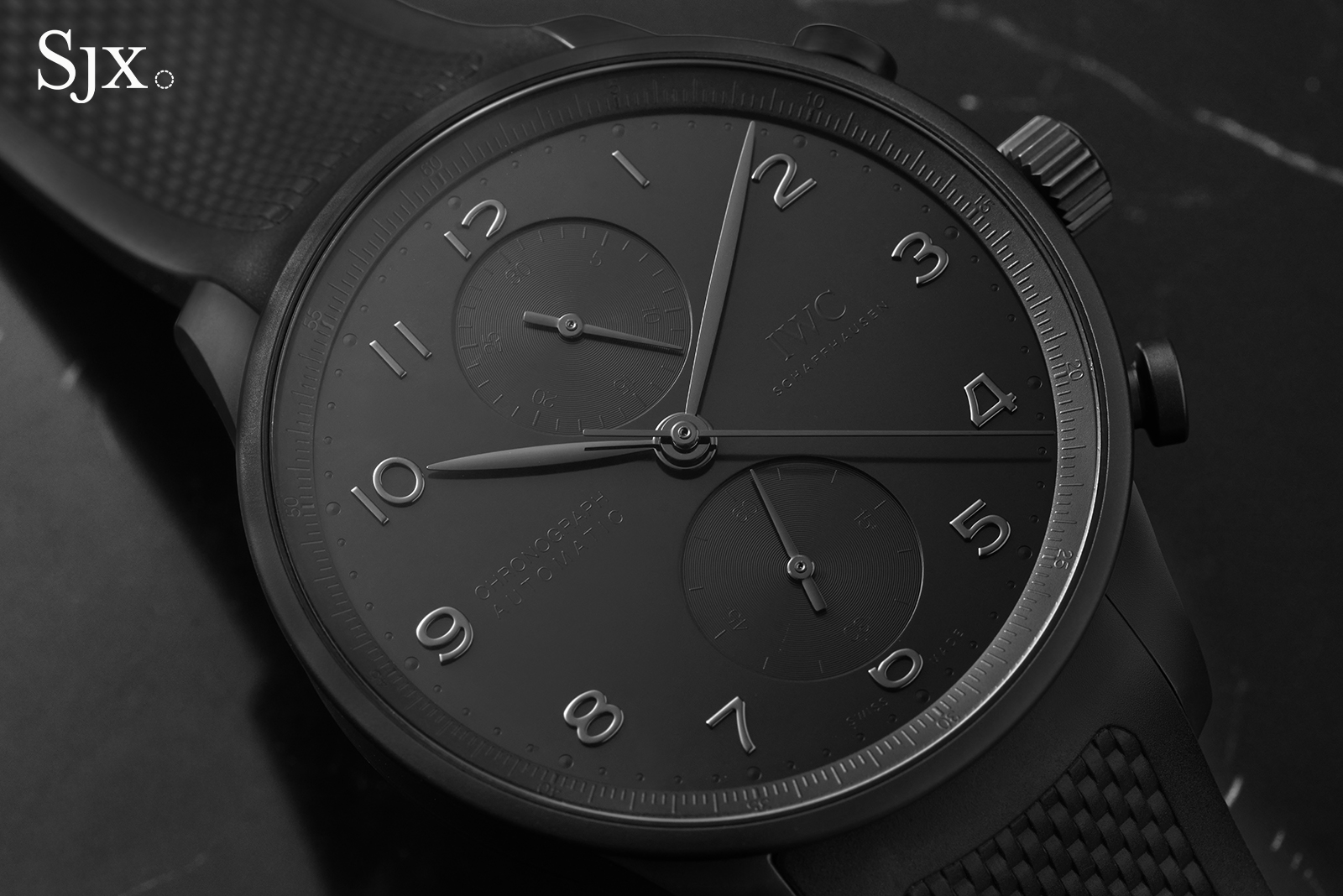
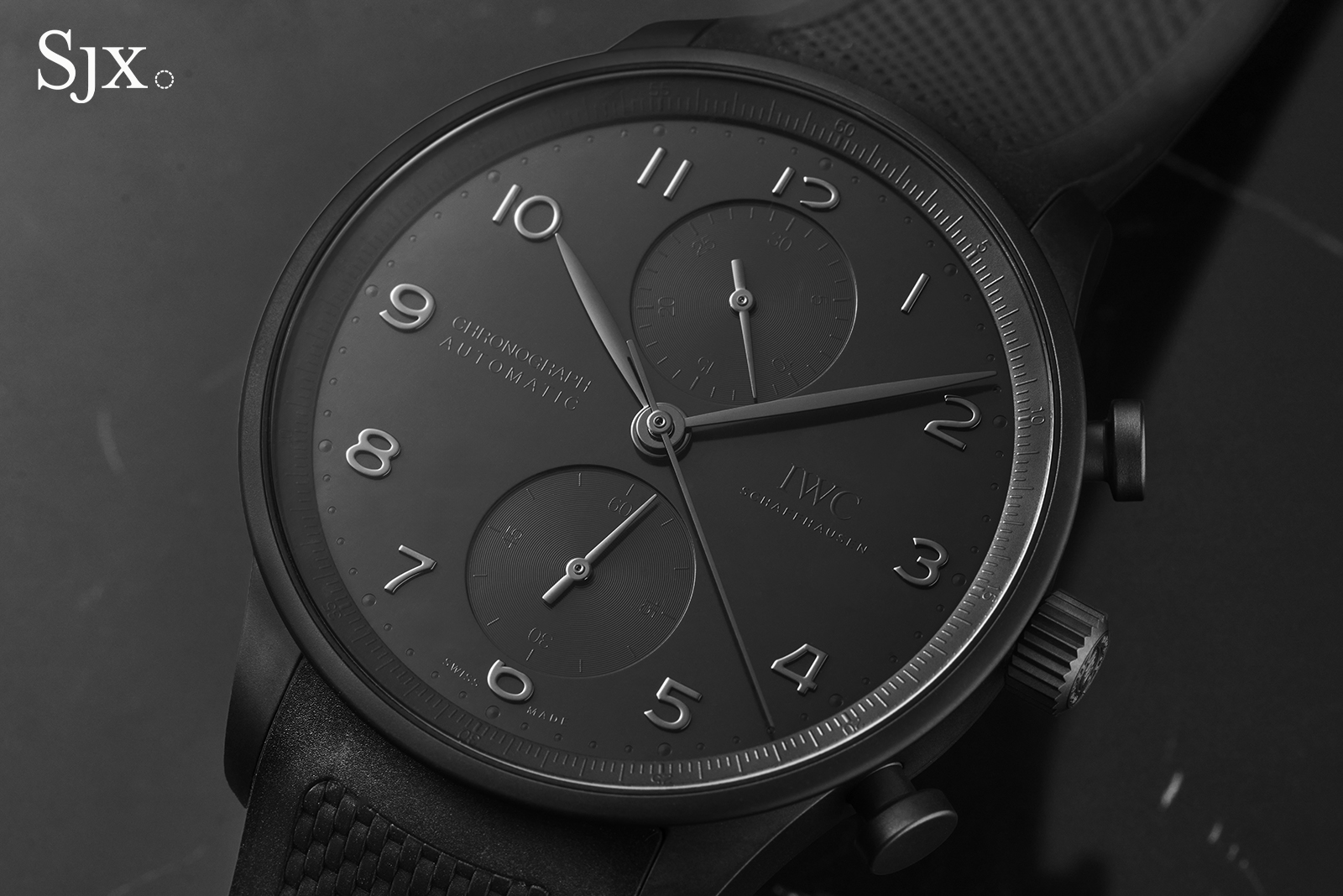
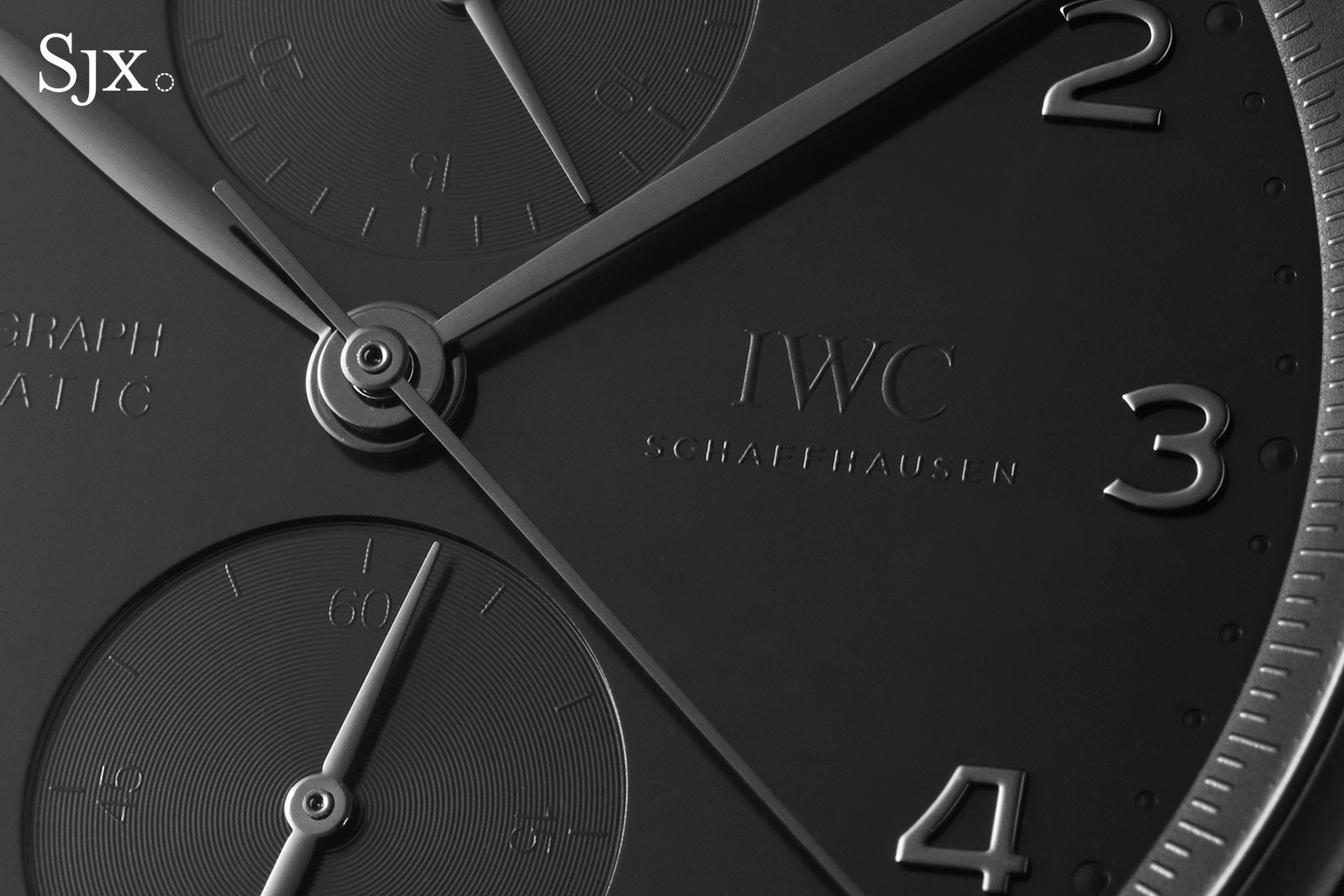
The Ceratanium case is matched with an all-black dial, but not quite. Although every element on the dial is black, or at least dark grey, the surface finishes different, resulting in different shades.

The appliqué numerals and hands are glossy, the dial itself is a matte satin, while the printed markings are granular lacquer. As a result, the dial can be legible in the right light, though it is often difficult to read.

Though the treatment is far from that of the first-generation model, the design of the dial is unchanged from the mid 1990s, a testament to the timeless design of the original. The vertically laid out registers give the dial a pleasing symmetry that goes well with the case design.

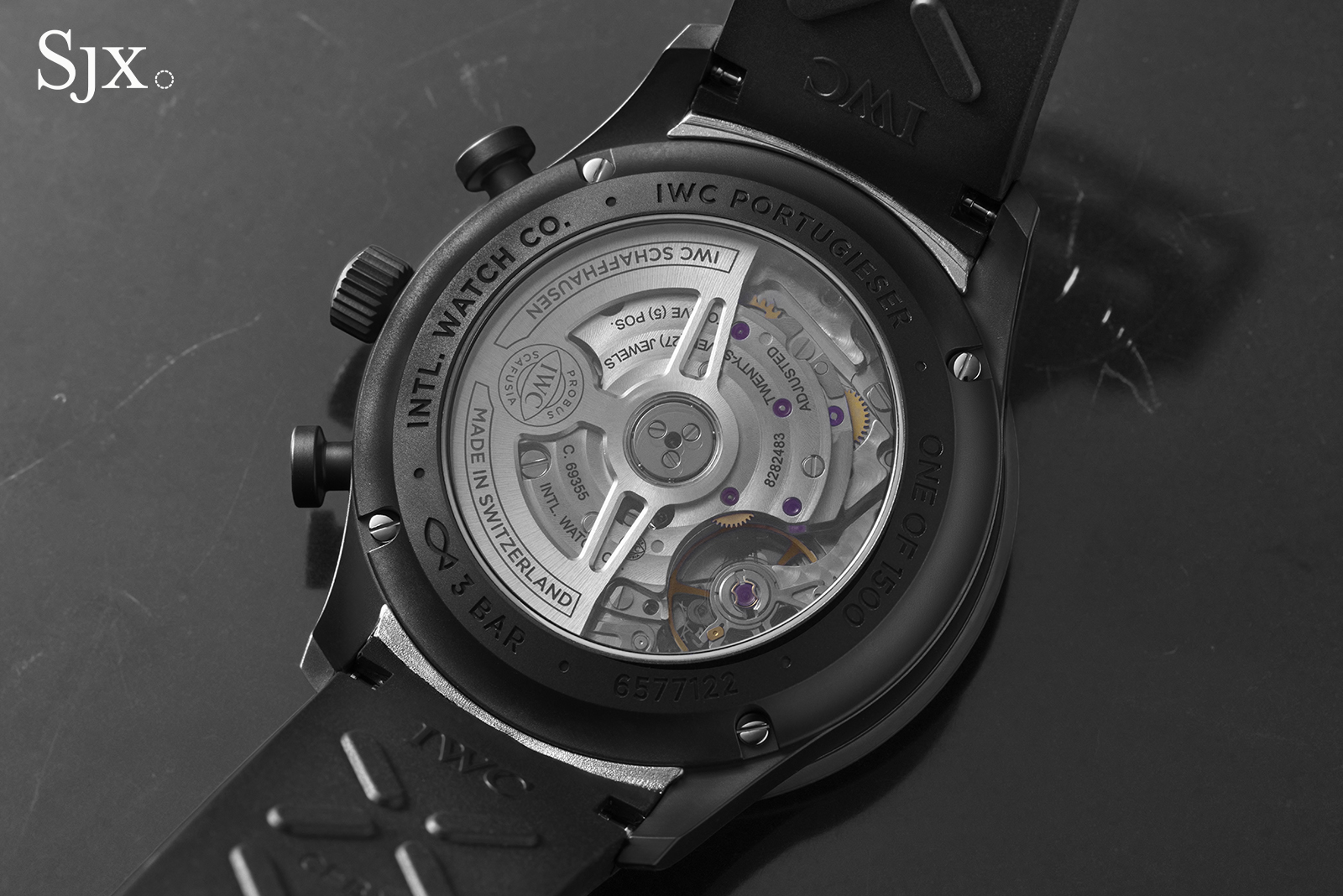
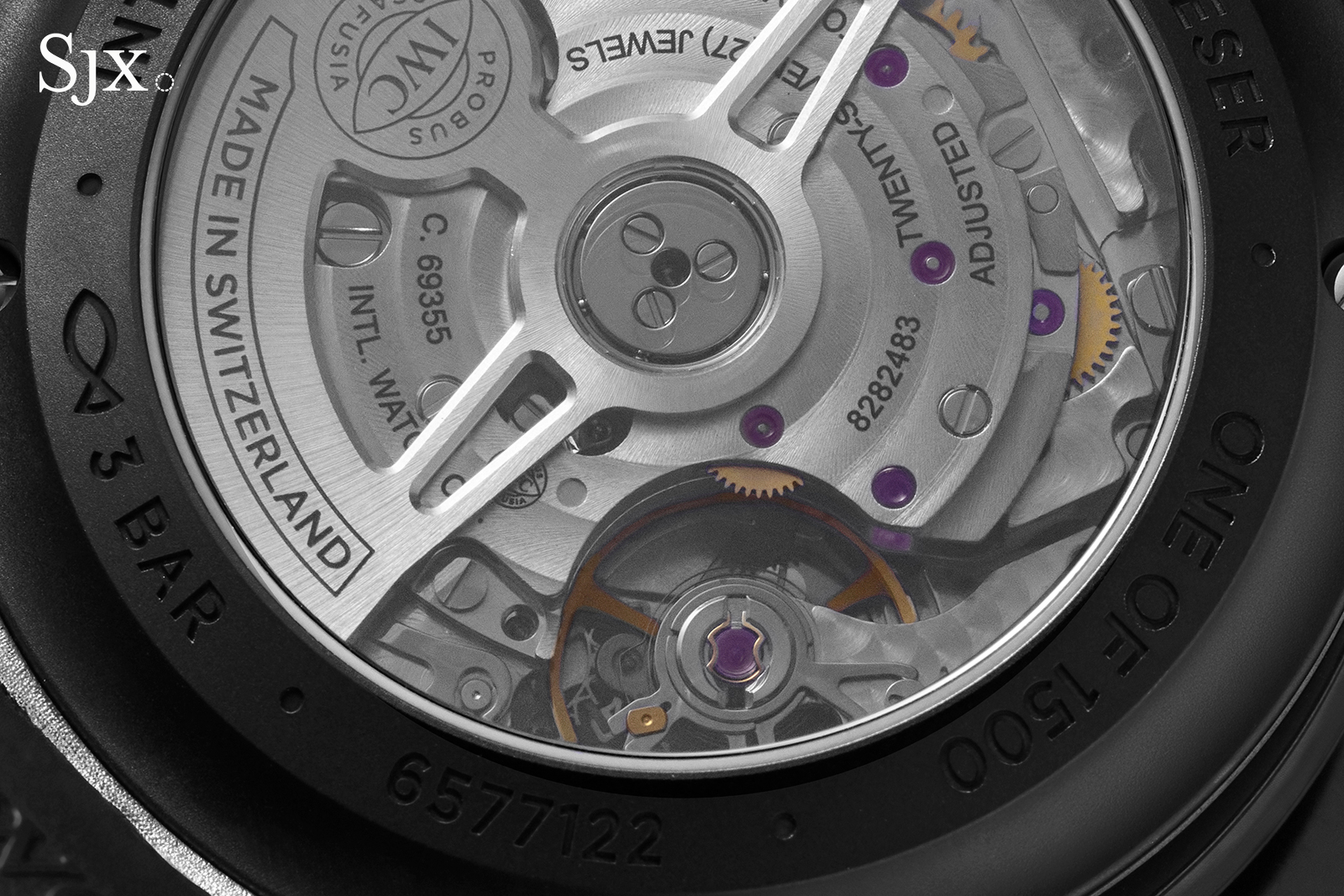
The sapphire window on the back is tinted dark grey to match the rest of the watch, making the movement appear to have a dark grey finish. That is entirely due to the tinting, and the cal. 69355 inside is entirely identical to that in the regular production model.

The cal. 69355 is IWC’s entry-level in-house chronograph movement, conceived to replace the Valjoux 7750 that long underpinned its chronograph offers. The original Portugieser Chronograph, both standard and split-seconds, were powered by the 7750.

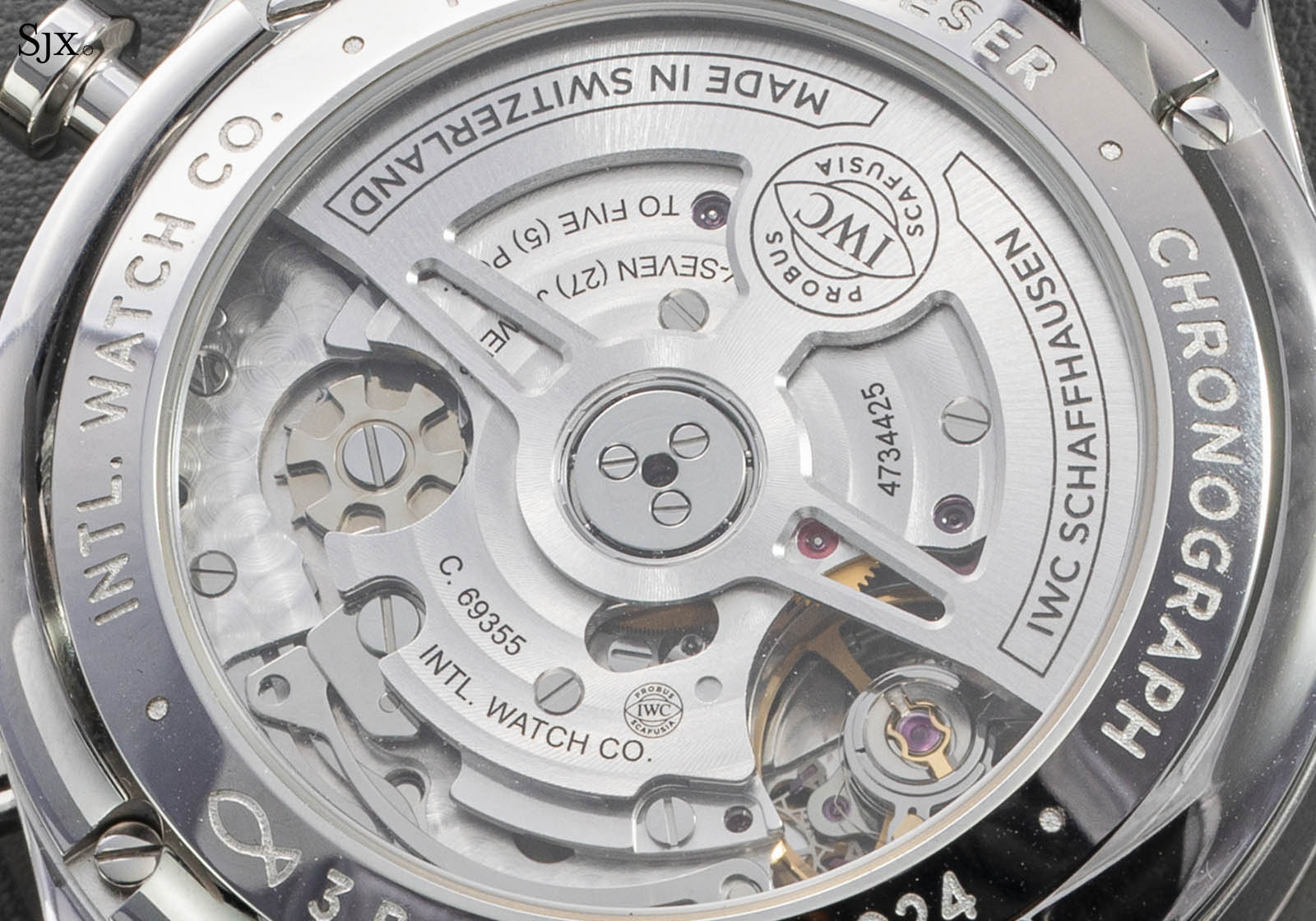
The cal. 69355 is an upgrade over the 7750, and competently constructed. It has amenities including a column wheel, directly-driven seconds, lightweight LIGA escapement, and “Magic Lever” winding. Like IWC’s historical Pellaton winding mechanism, the Magic Lever is a pawl-based, bidirectional system, but simpler and more compact compared to Albert Pellaton’s invention.

But as one of the brand’s more basic calibres, the cal. 69355 is industrial and looks the part. Like the Valjoux 7750, the cal. 69355 relies on an oscillating pinion to transfer power from the base movement to the chronograph – an effective but basic approach.

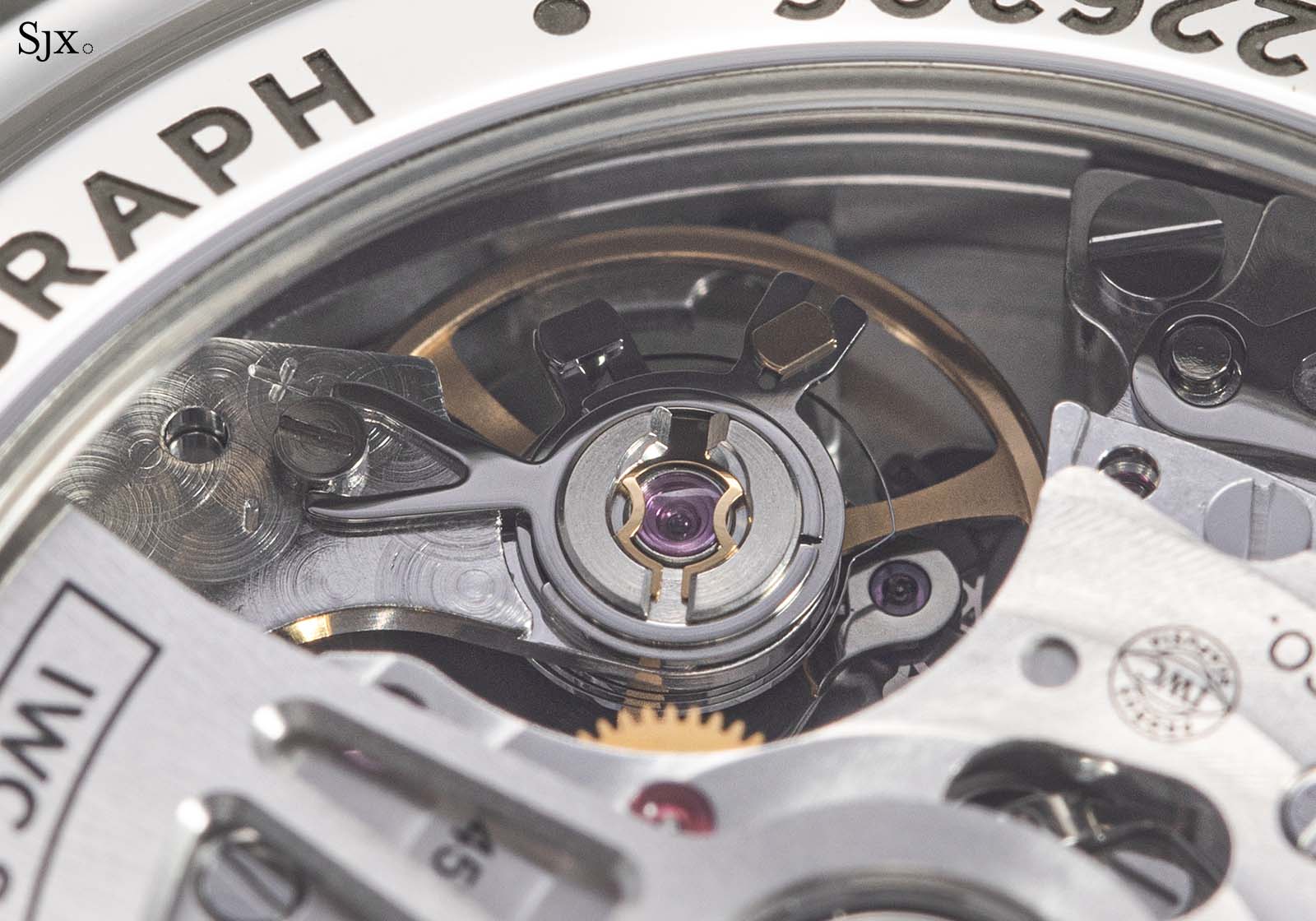
At the same time, the regulator and stamped chronograph levers feel out of place in a watch that retails for over US$14,000 in this guise (and about US$9,000 in its basic steel format).

A clearer view of the cal. 69355 inside the standard Portugieser Chronograph without a tinted back

The Etachron-type regulator of the cal. 69355


Key facts and price

IWC Portugieser Chronograph Ceratanium
Ref. IW371631

Case diameter: 41 mm
Height: 13.1 mm
Crystal: Sapphire
Material: Ceratanium
Water resistance: 30 m

Movement: Cal. 69355
Features: Hours, minutes, seconds, and chronograph
Frequency: 28,800 beats per hour (4 Hz)
Winding: Automatic
Power reserve: 46 hours

Strap: Rubber with Ceratanium pin buckle

Limited edition: 1,500 pieces
Availability:
At IWC boutiques and retailers
Price: US$14,600 before taxes

For more, visit IWC.com.


Back to top.

You may also enjoy these.

Welcome to the new Watches By SJX.

Subscribe to get the latest articles and reviews delivered to your inbox.

Exit mobile version