

Girard-Perregaux Chimes the Time In-House
A new minute repeater calibre.
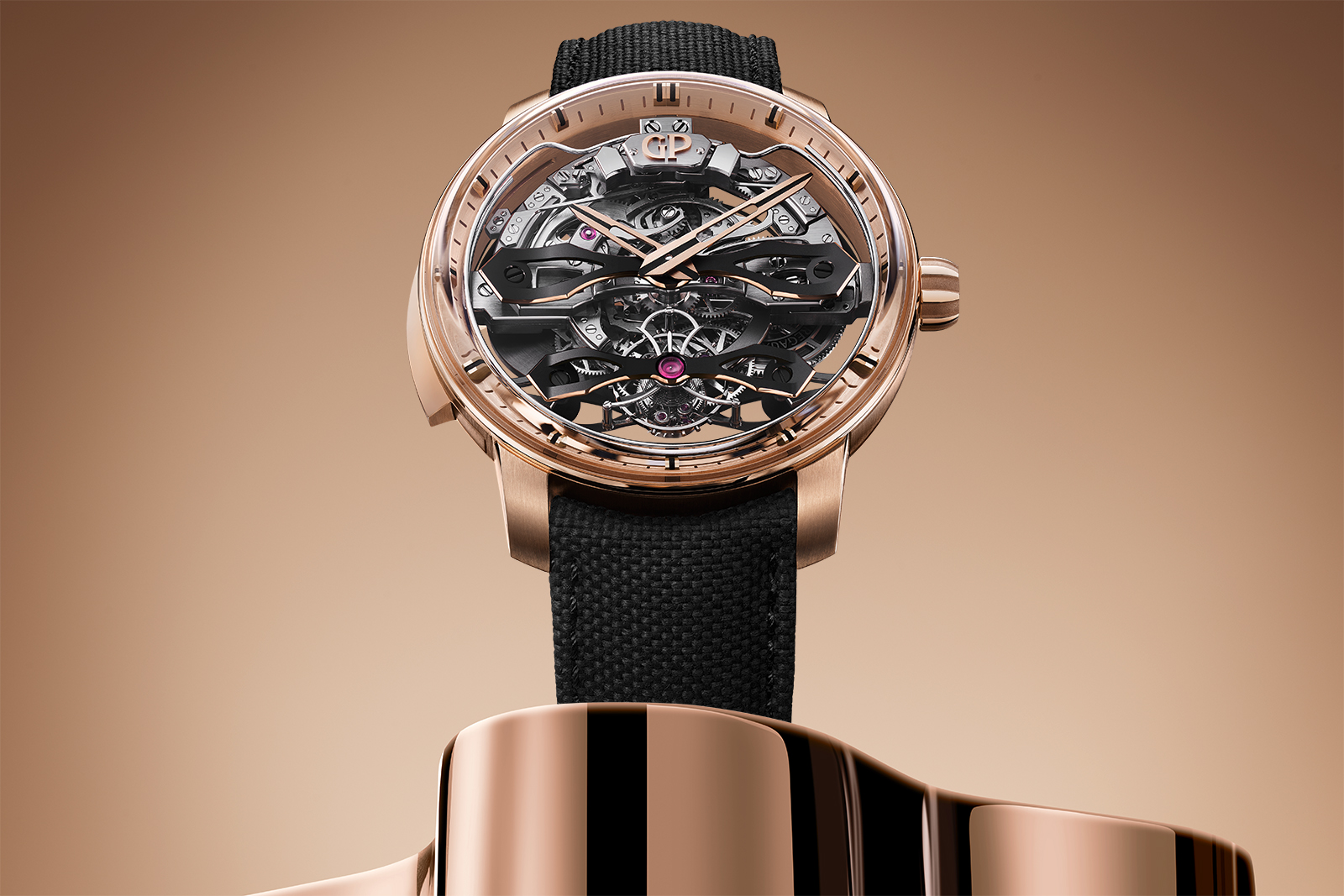
Girard-Perregaux (GP) is starting the year with an ambitious new calibre inside the Minute Repeater Flying Bridges, the in-house GP9530. Also equipped with a tourbillon, the symmetrical, skeleton movement is a micro-rotor automatic, making for an exciting pairing of complications.
Notably, even during GP’s heyday as a manufacture, it depended on specialists for its repeater movements. The GP9530 is the brand’s first in-house minuter repeating calibre (though it does borrow from an earlier striking movement created with the help of a complications specialist).
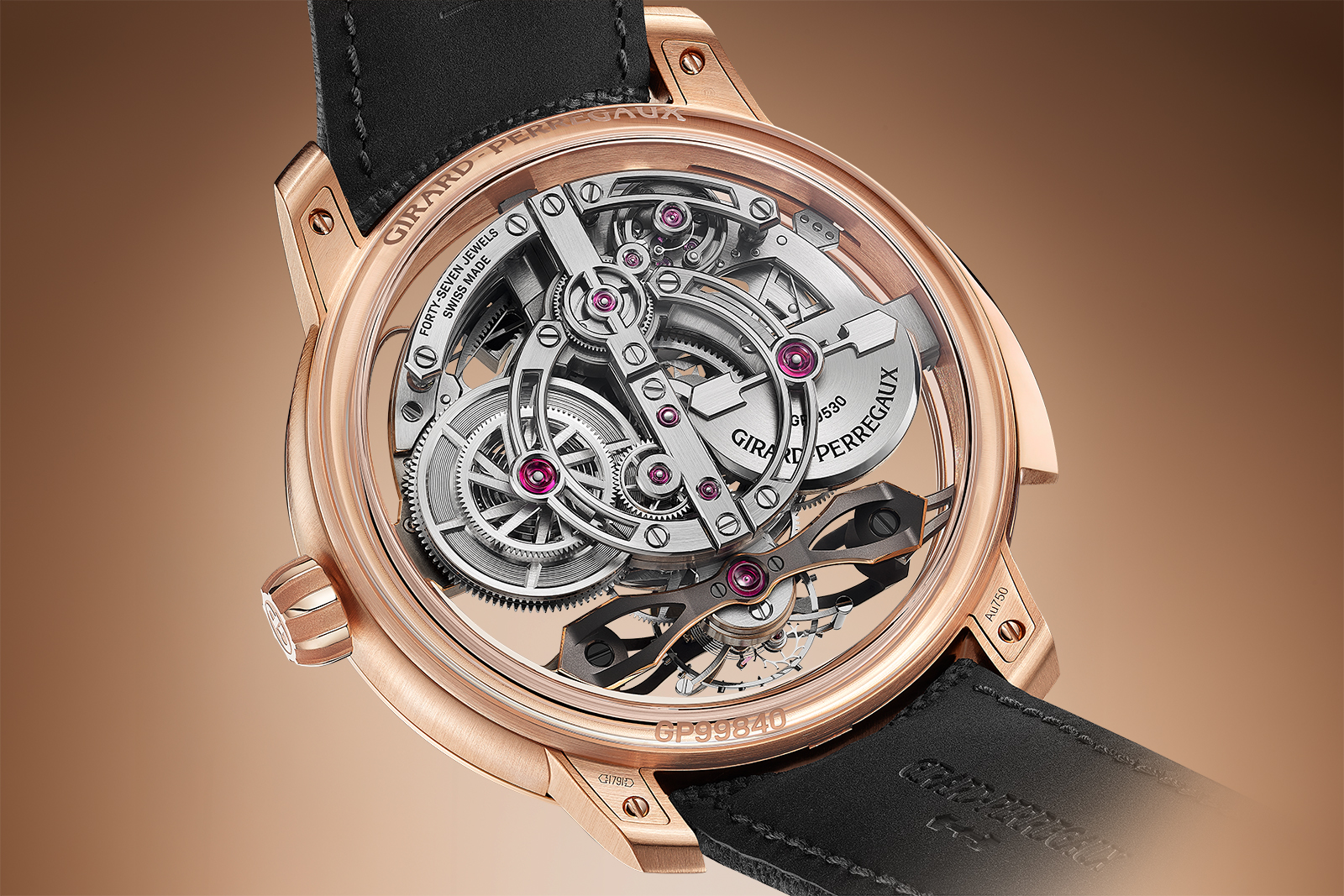
The strikework is exposed on the dial, while the reverse reveals the winding mechanism under circular bridges.
Initial thoughts
In the past couple of years GP has been slowly making a comeback, after a few slow years, as a serious and motivated manufacture. The comeback started with the release of the reworked constant-force escapement and accelerated with last year’s unveiling of the workhorse GP4800 and the GP9620 skeleton tourbillon.
This is in some ways a return to form. Historically GP was a powerhouse in this respect, making complicated movements under its own name as well as supplying movements, both complex and simple, to other high-end brands. At that time, however, GP still did source repeater movements from the likes of Christophe Claret. In time, the evolution of the industry reduced the need for such outsourced movements, and the marquee’s lustre dulled.
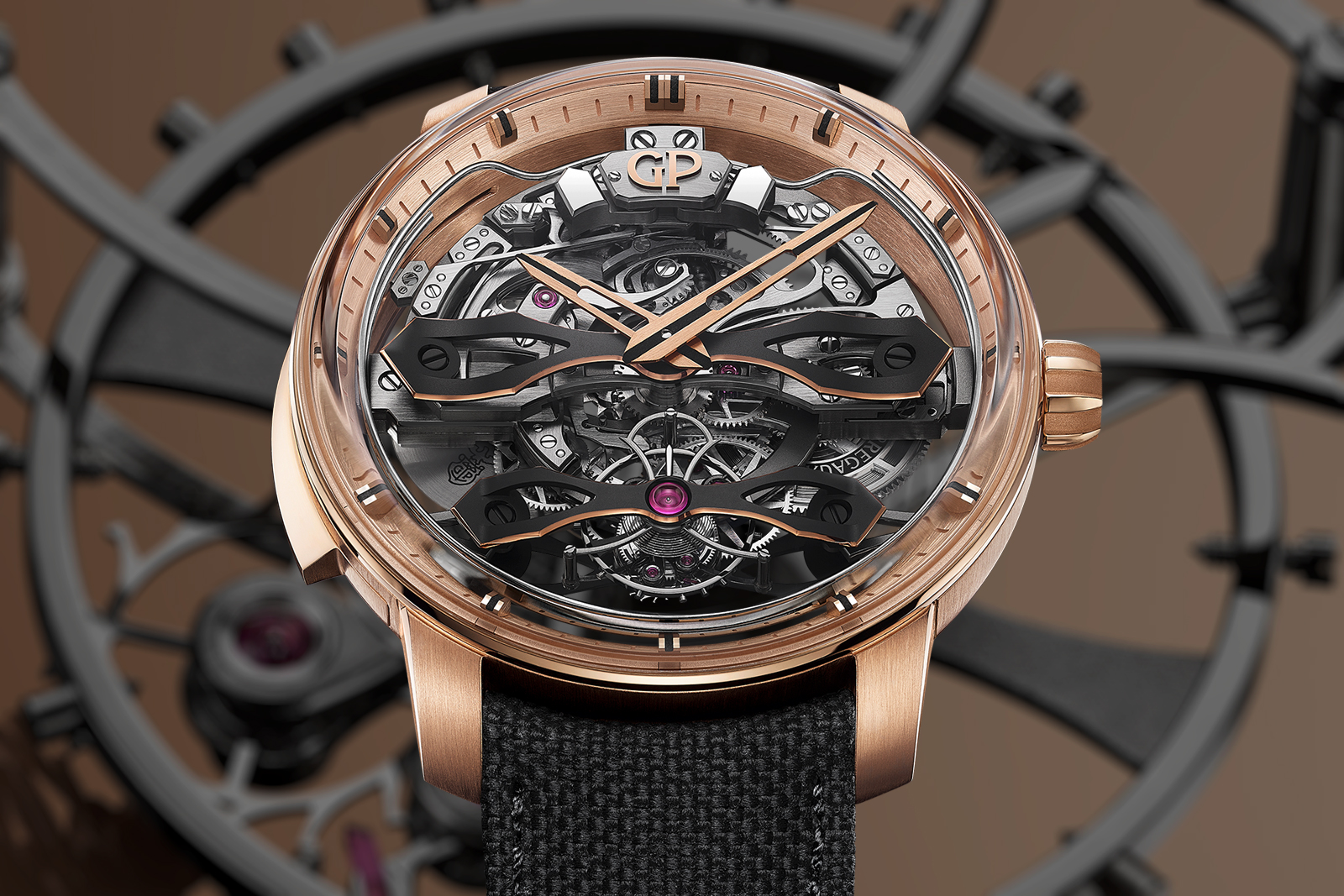
The Minute Repeater Flying Bridges and its new in-house GP9530 continues the manufacture‘s revival; the calibre is a showpiece of traditional complications blended with modern aesthetics. The GP9530 references the brand’s trademark Three Bridges tourbillon with micro rotor, while adding on top a minute repeating mechanism that’s derived from an earlier movement developed by Manufacture Hautes Complications (MHC), a now-defunct specialist.
GP went all in for a mechanical, monochromatic look, opting for grey alloy wheels (instead of the conventional gilt CuBe variety) and leaving out blued screws. The result is a range of grey hues, from the sultry nuance of the titanium base plate to the mirrored polish of the gongs.
While this might not cater to all tastes, the contrast the almost fully-grey movement makes with the rose gold case is definitely a strength of this timepiece’s design language. Refined mechanics are the main course here and GP chose to highlight them with this raw approach to colour and favouring a hand-finished range of textures.
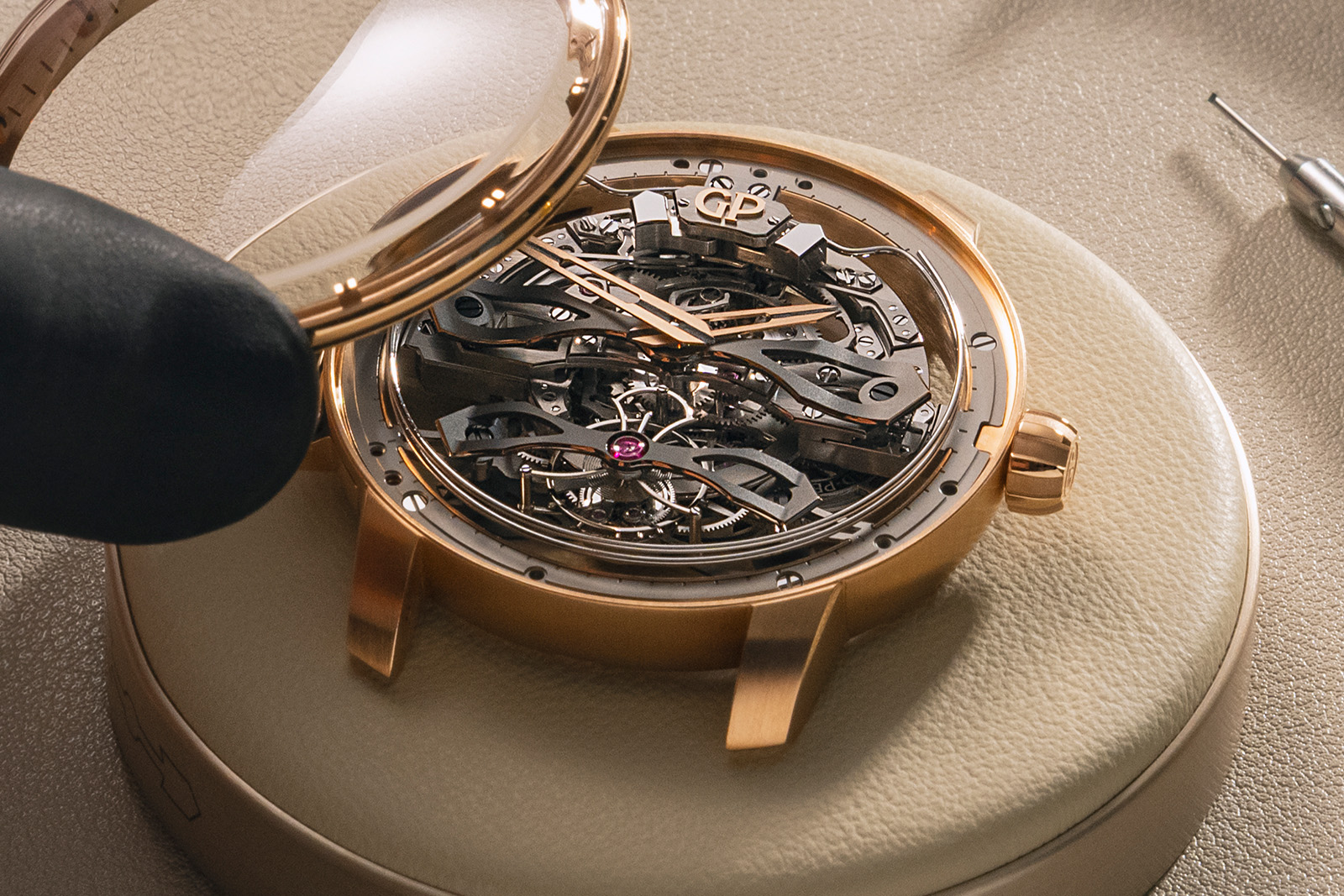
At 44 mm, the large watch would appear almost sporty — were it not for the gongs and hammers on show. Clearly a timepiece for those who prefer opulent watchmaking to understatement, the Minute Repeater Flying Bridges leaves no part of its mechanics hidden.
There is no dial and the large hands don’t help much in terms of actual legibility, which might just be GP’s way of nudging the owner to actively use the chiming complication.
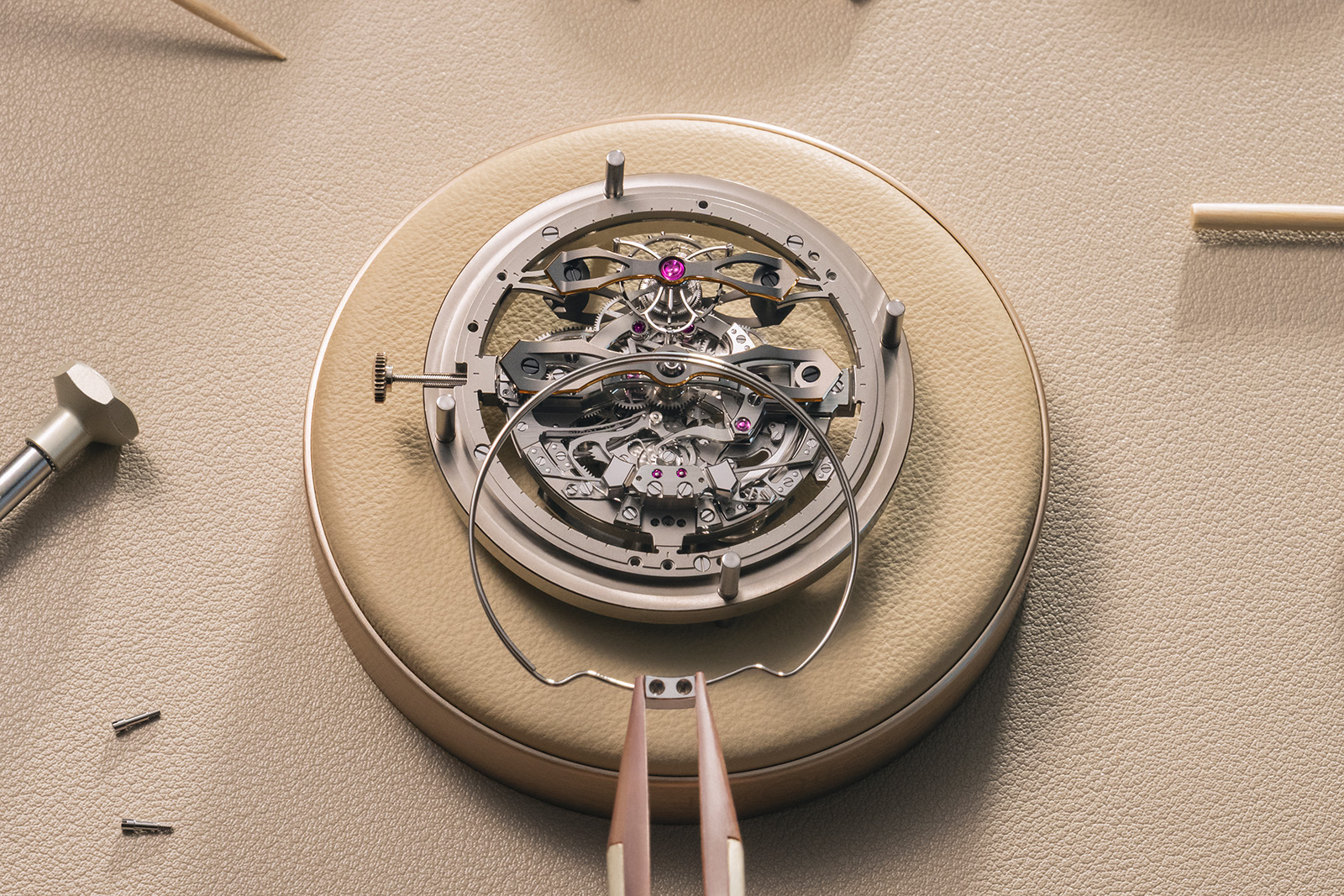
Despite the complexity, the GP9530 is incremental rather than a leap forward in terms of mechanics. Rather than being radical or disruptive, the movement is a gentle reinterpretation of the classic minute repeater system.
Of course, the launch of a third in-house movement in just six months is a feat in itself, especially since the GP9530 is a minute repeater caliber built from the ground up. However, compared to highly unconventional and advanced chiming movements that recently debuted (like Blancpain’s Grande Double Sonnerie from last year), this particular minute repeater feels conservative.
All in all, the Minute Repeater Flying Bridges will speak to those who appreciate well-made chiming watches and avant-garde design, all firmly rooted in traditional, conventional watchmaking. For someone seeking a more technologically-advanced specimen, GP has the Neo Constant Escapement. At its current pace of movement releases, GP is bound to rise once again to the upper echelons of watchmaking — provided the brand remembers to innovate along the way.
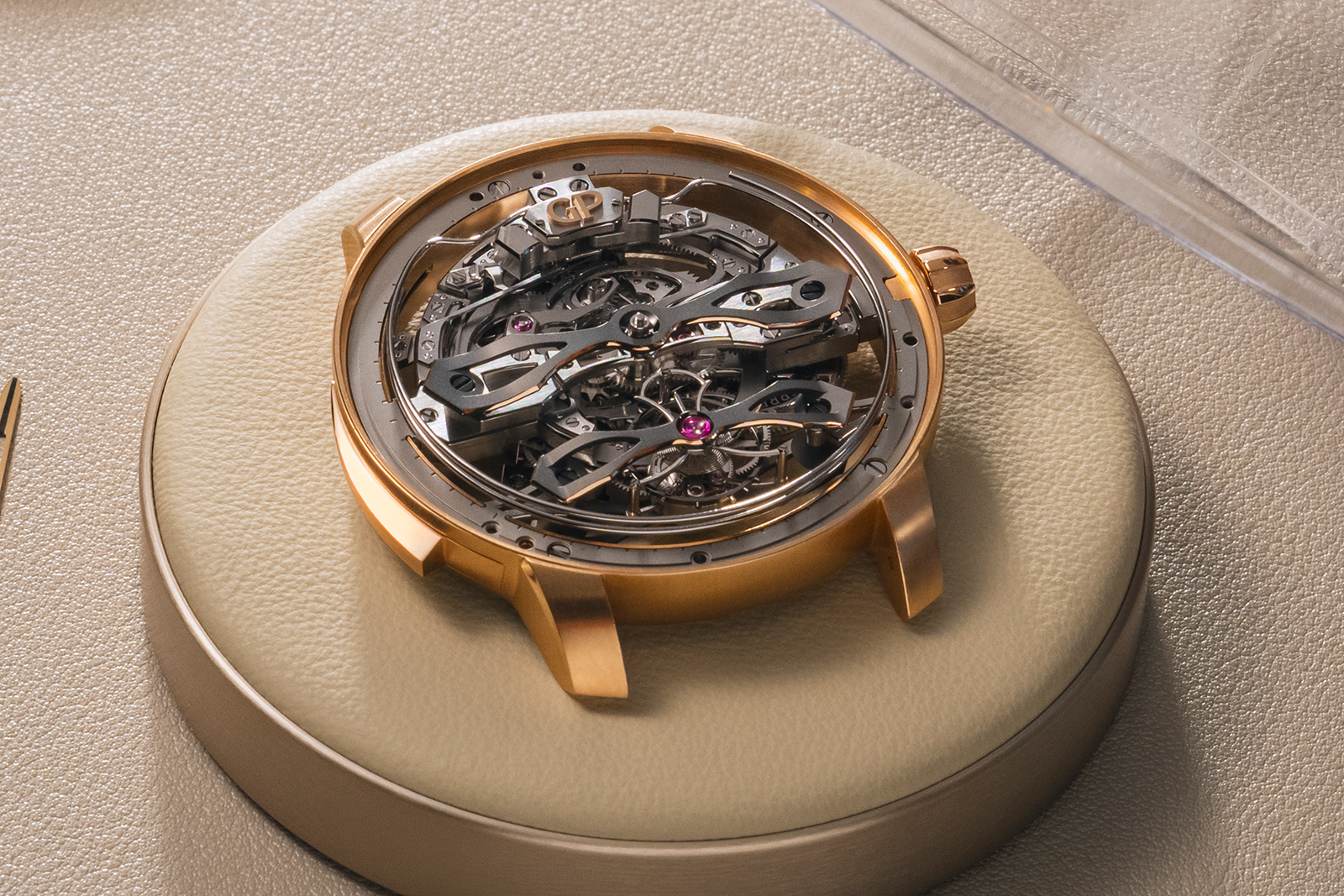
Floating yet hefty
For a minute repeater rooted in tradition, the GP9530 movement is open-worked to the extreme and almost futuristic in its style. While open-worked and skeletonised movements are common, the GP9530 is constructed to create an optical illusion: the movement looks almost as it is floating inside the case since edges of the movement seemingly don’t connect to the case at all – hence “Flying Bridges” moniker.
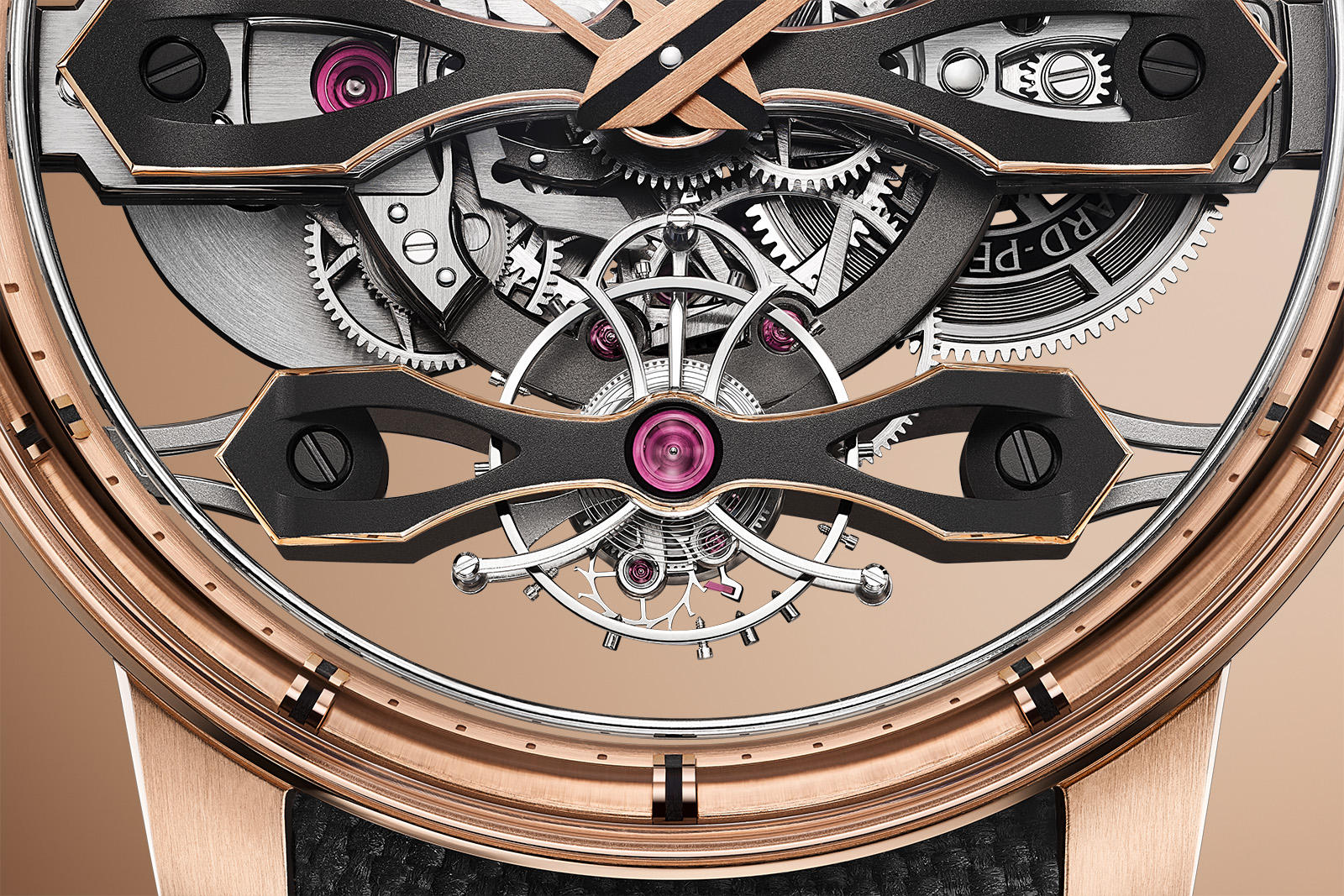
The illusion is achieved with generous cutouts in the titanium mainplate, placed strategically around the “active” center of the movement. The portion to the keyless works is connected to the case and so is the region near the repeater lever. But otherwise, the cutouts bite deep into the movement construction, leaving much of the barrel and, by symmetry, the micro-rotor, looking suspended as well.
Achieving this optical illusion was likely a nightmare in terms of construction, since the numerous components of the GP9530 needed to be squeezed into the central area of the case in order to create the peripheral space for the “floating” effect.
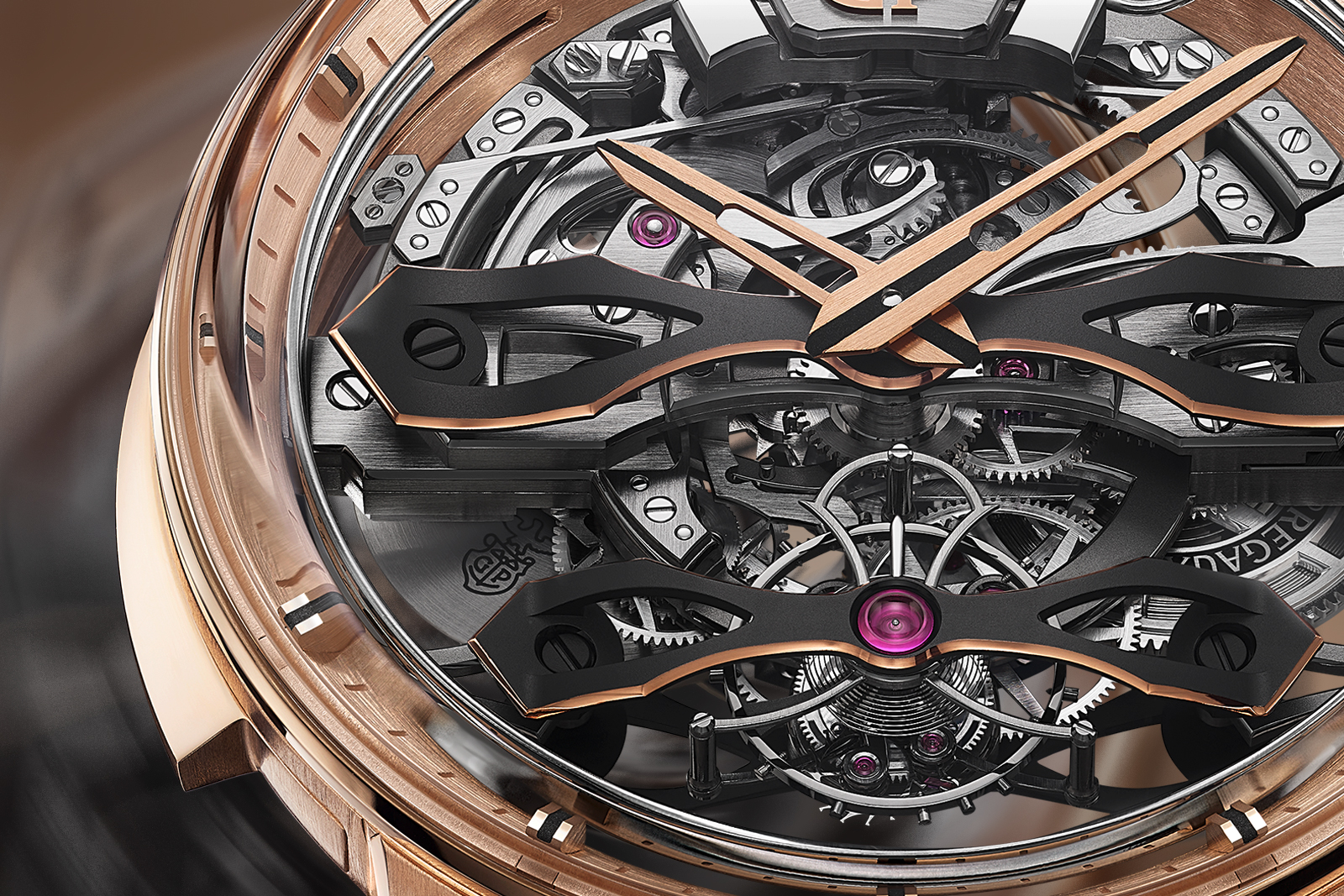
The tourbillon bridge looks suspended in mid-air, detached from the movement
This is all packed inside a largish, 44 mm pink gold case, which stands a commanding 17.9 mm high, with the height chiefly due to the tall, box-style sapphire crystals on both sides.
Undoubtedly a substantial watch, the minute repeater’s case is the standard, rounded design GP has been using for some time. There is practically no bezel and the lugs are short and stubby, bringing the strap very close to the case band, allowing it to wear smaller than the diameter suggests.
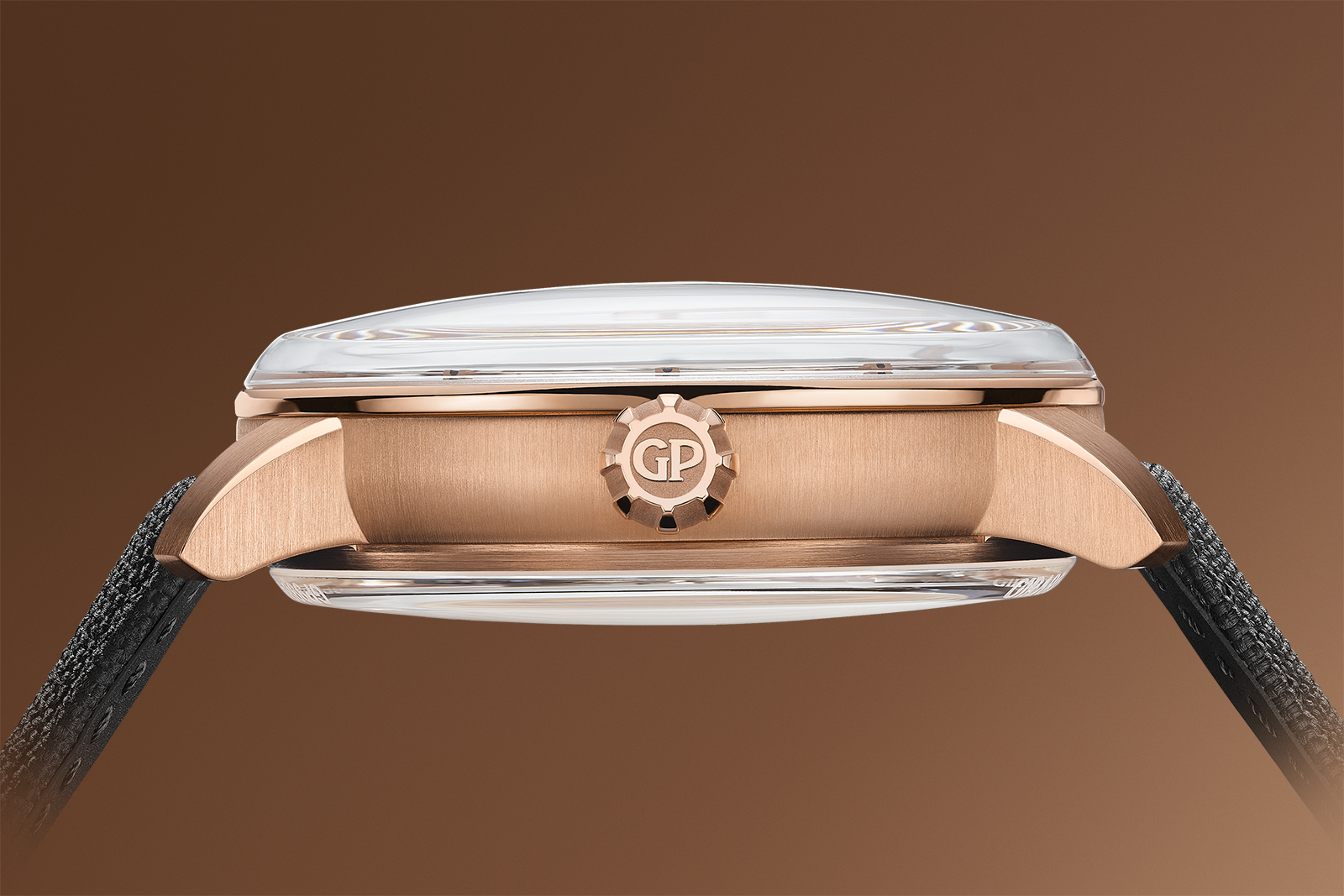
As it is the case with virtually all minute repeaters, there is a slide on the left-hand side of the case, which when activated will charge the strikework and commence the chiming sequence. This is an on-demand complication, so the watch will sound the exact time, to the minute, only when the wearer wishes so.
The Minute Repeater Flying Bridges achieves a 30 m water resistance, which is commendable since most slider-actuated repeaters are only dust-proof, or at most, splash resistant. This particular piece is definitely not made to be taken into water-related activities, but it is nice to know there is a robust level of protection against accidental splashes.
Densely packed mechanics
Like it is the case with most minute repeater movements, the bulk of the strikework, including racks, levers and two hammers, are on the dial side of the movement, fully revealed with the open-worked construction. The symmetrically arranged strikework is tidy and seems almost simple, with only a pair of highly polished hammers striking on two gongs.
Those familiar with GP’s catalogue might recognise the strikework. That’s because the repeating mechanism is based on that found in the GP09500, a manual-wind repeater-tourbillon movement conceived with the help of MHC that debuted in 2015.
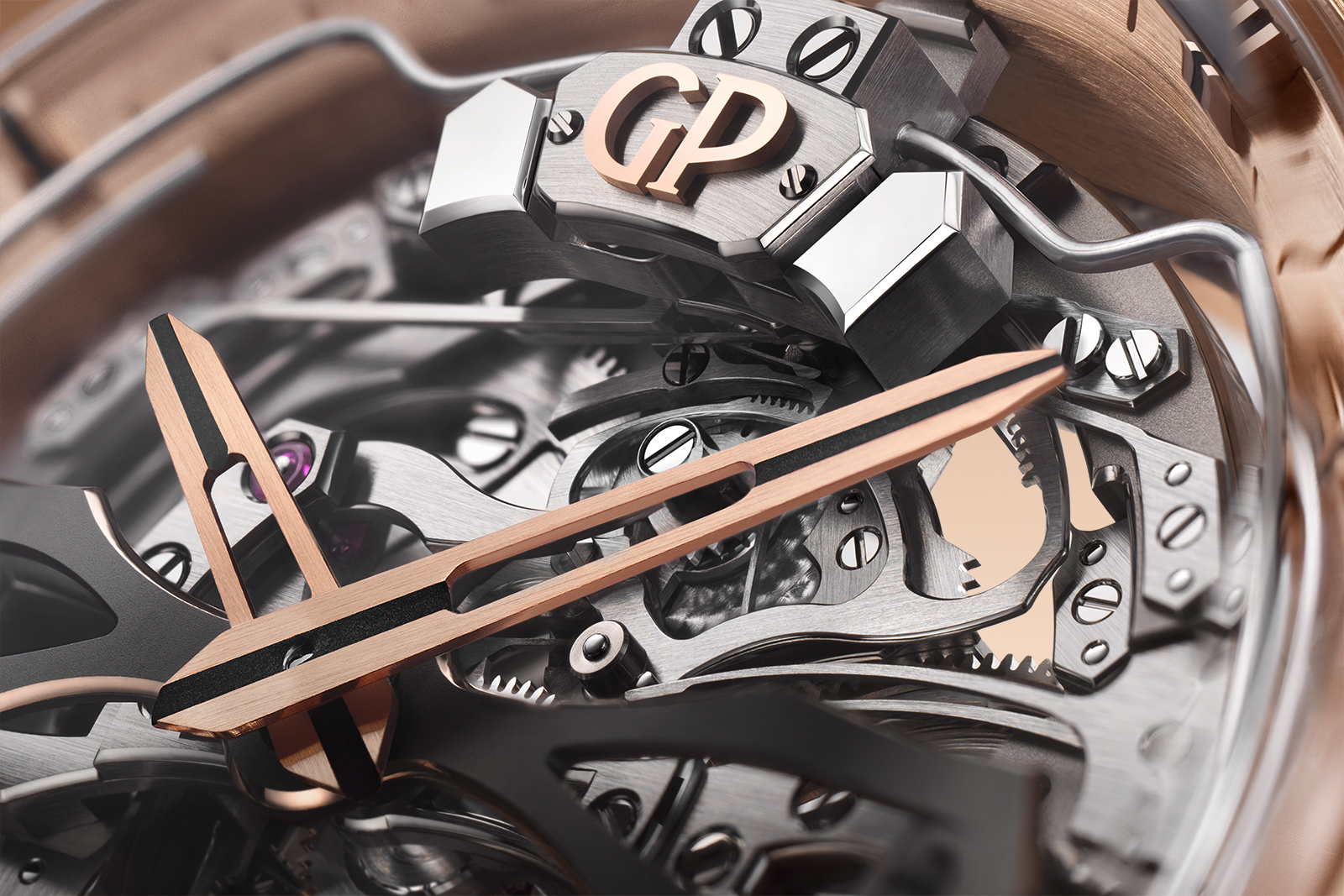
The wire gongs are raised above the movement, encircling the base plate. Since they are slightly wider than the “active” portion of the movement, they hover above the cutouts in the main plate, accentuating the optical illusion that the caliber is floating.
The two tempered steel gongs produce a clean and sharp sound, which was surely the result of GP experimenting with multiple geometries and materials. This illustrates the advantage of a manufacture developing its own chiming movement, since its engineers can fine tune the sound. As a result, such movements arguably have their own acoustic signature, as opposed to the more generic tones of widely used ébauches.
GP argues that placing the gongs on the dial, under the front crystal, prevents the sound from being absorbed by the wearer’s wrist. Also, there is no movement ring inside the case, so the chimes should resonate more loudly without the dampening effect caused by additional layers of components.
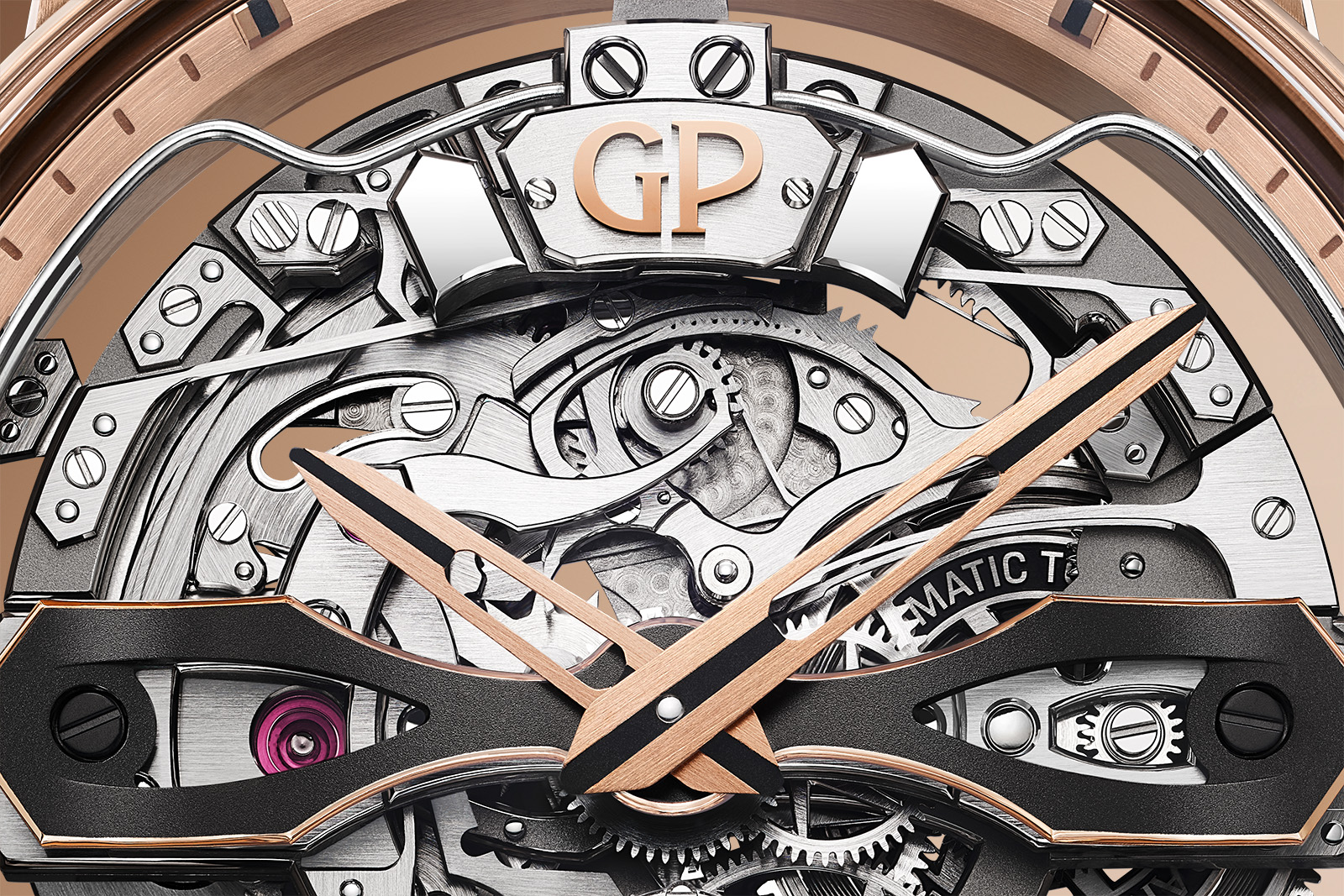
Although the movement architecture is clearly evocative of the iconic Three Golden Bridges, here there are only two such bridges. Of course this choice has to do with the layered chiming works, so it is not a faux pas, but the otherwise familiar layout seems to be missing something. Perhaps for this reason, the minute repeater hammers are styled like the points of the brand’s emblematic arrow-shaped bridges.
The arched, three-dimensional bridges are indeed made from solid pink gold, but black-coated on their top surfaces to create contrast with the polished gold anglage. Known as “Neo Bridges”, these are GP’s modern take of its classic design. Given the nature of this particular piece, the historical arrow-shaped bridges might have worked better, but the modern “Neo” versions don’t disappoint either.
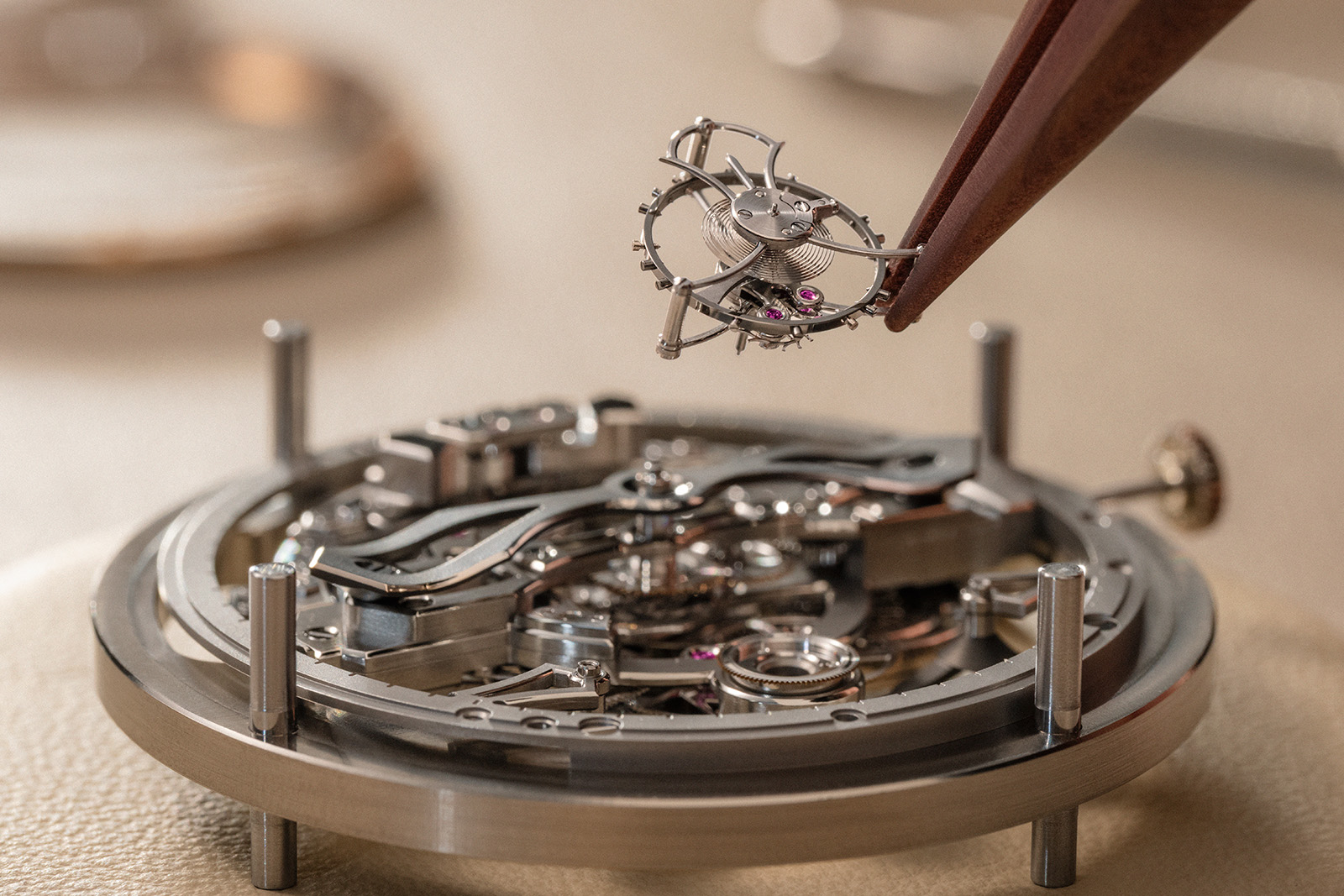
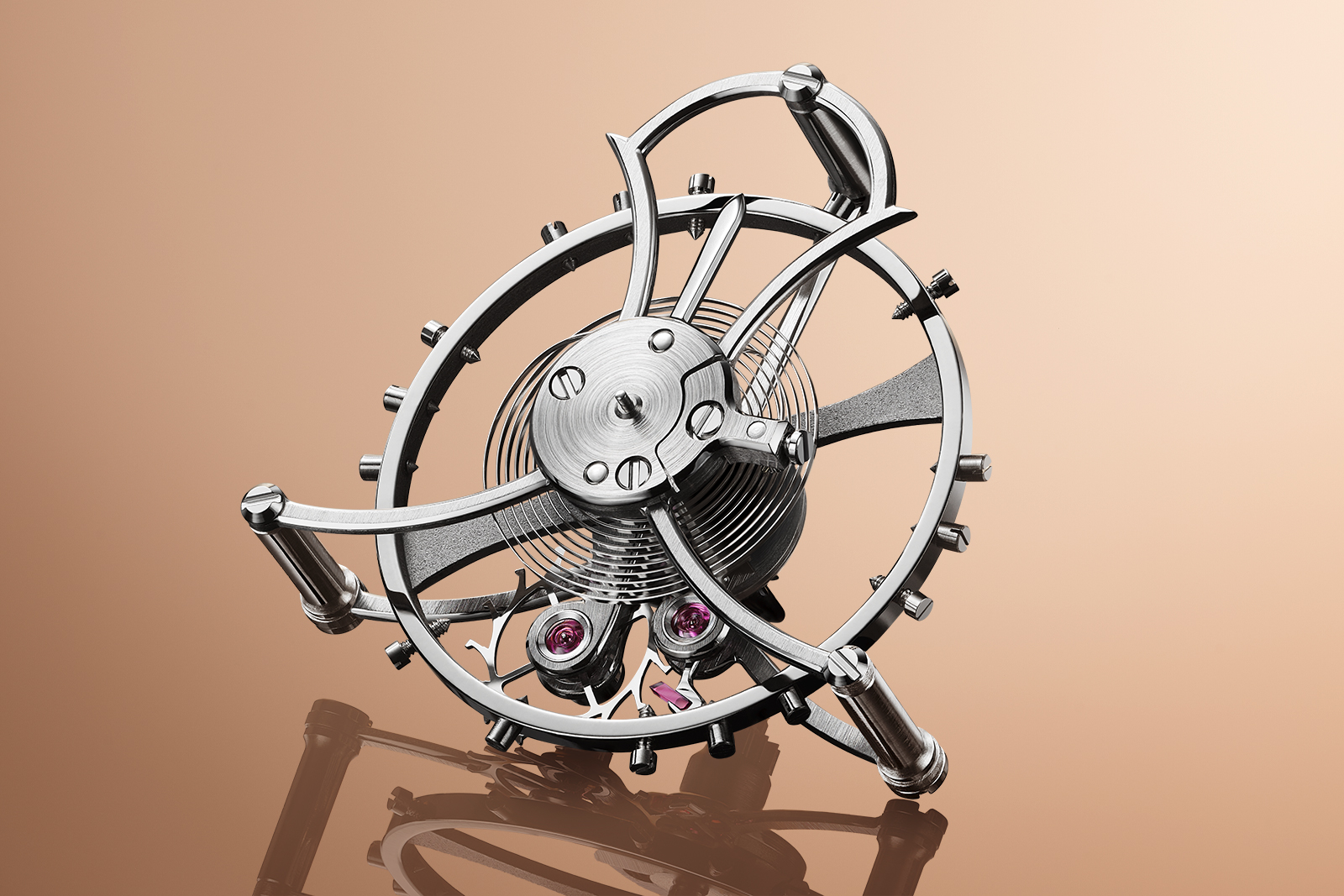
At six o’clock sits the large tourbillon cage, turning once per minute, with the oscillator inside ticking away at 3 Hz. The tourbillon is simple but well crafted from any way you look at it. The large free-sprung balance wheel features both timing and weight screws around its rim and the hairspring features a manually-formed classic overcoil.
In paying tribute to the classic lyre-shaped tourbillons made by GP, the designers also included a pin-regulator within the cage’s shape, which serves no purpose here. The decision may be questionable but the end result is a tourbillon which strongly mirrors the traditional ones previously used by the manufacture.
Turning the watch over, we are greeted by a complete view of the barrel, automatic winding mechanism, and the governor for the repeater. Pairing a minute repeater complication with micro-rotor automatic winding is an unusual choice. The majority of minute repeater movements are hand-wound, but the convenience of automatic winding is undeniable.
GP chose to locate the white gold micro-rotor opposite to the barrel to preserve symmetry. Thoughtfully, the movement’s constructors opted for jewel bearings for the rotor instead of the customary ball bearings on the basis that jewel bearings are more silent, an important trait for a chiming timepiece.
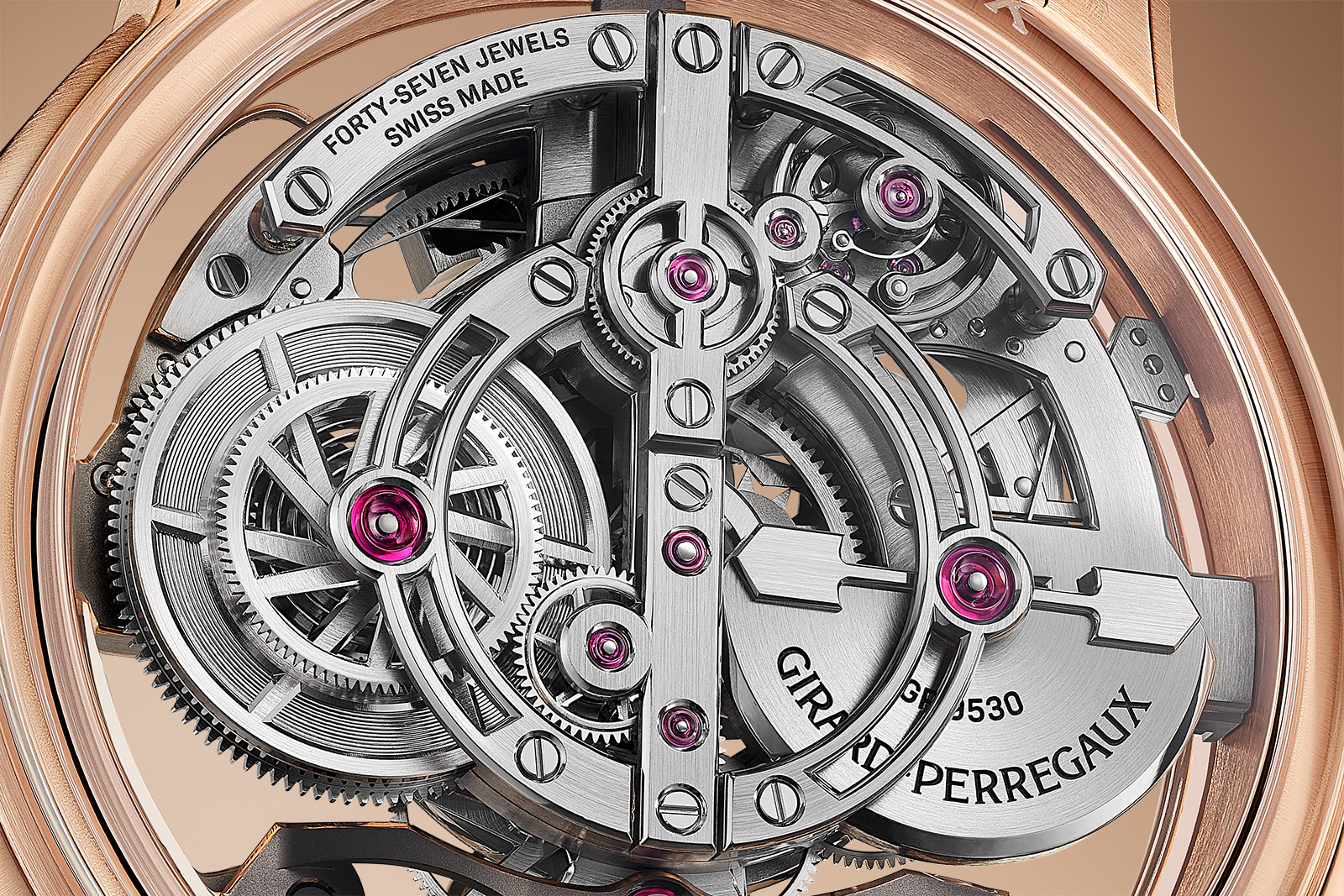
The inertial governor is placed on the back of the movement, which is a fairly common practice. The manufacture claims this position also dampens its intrinsic buzz during chiming (though such inertial governors are not as noisy as anchor governors). This echoes the rationale for positioning the gongs away from the wrist; placing the governor nearer the wrist will silence it.
As we’ve seen totally silent magnetic governors from Breguet and Blancpain, the use of a traditional, friction-based governor is a little disappointing. In fairness, the development of such a system is costly and demanding, but the concept has existed for some time now and it would be interesting to see other brands develop silent systems.
Strong finishing
In terms of finishing, GP didn’t hold back. There are about 1,340 chamfers in total, including some 295 interior angles, which help explain why finishing and assembly takes more than 440 hours, or approximately 11 weeks of full-time work. All assembly and finishing is done by a single watchmaker, who then engraves their signature on a small plate and affixes it to the movement.
Though the craftsmanship is traditional, the aesthetic is the opposite. GP went for a modern, sharp look, while also incorporating traditional finishing techniques. Since the main plate and most of the bridges are crafted from titanium, the diversity of finishes is somewhat reduced, since the alloy does not behave like brass or steel.
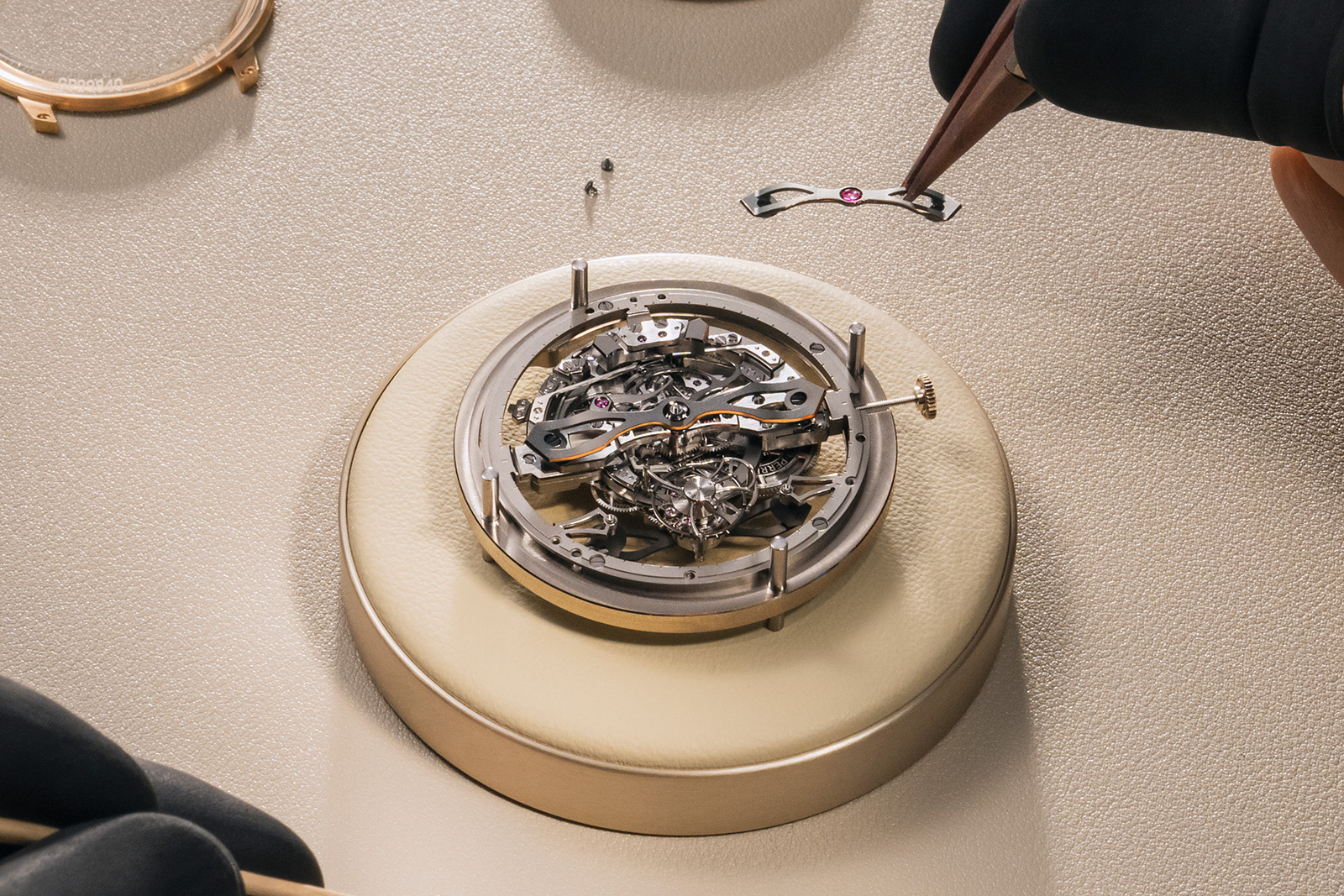
As such, the mainplate is finely frosted, serving as a discreet, dark grey backdrop for everything else. The steel parts are mostly straight grained on their faces and bevelled on their edges, including all the levers, racks and spring fixtures; the gongs are black polished, making for a nice change of texture on the watch face.
Small glimpses of a perlage-covered surface are visible under the racks on the dial, which is the only detail that evokes traditional decoration. Otherwise, the GP9530 is a refined, well-oiled but decidedly modern machine.
Key facts and price
Girard-Perregaux Minute Repeater Flying Bridges
Ref. 99840-52-2013-5CC
Diameter: 44 mm
Height: 17.9 mm
Material: Pink gold
Crystal: Sapphire
Water resistance: 30 m
Movement: GP9530
Functions: Hours, minutes, minute repeater, tourbillon
Winding: Automatic
Frequency: 21,600 beats per hour (3 Hz)
Power reserve: 60 hours
Strap: Rubber strap with fabric effect with pink gold triple folding clasp
Limited edition: No
Availability: At GP retailers and boutiques
Price: Upon request
For more information, visit Girard-perregaux.com.
Back to top.